
GOODWE Company is a high-tech enterprise specializing in power electronics, focusing on photovoltaic building materials (BIPV). Their headquarters’ research and development building was designed by Zhongheng Design Group. The architects integrated Goodway’s own photovoltaic products to optimize the building’s form, spatial use, energy efficiency, carbon emissions, and industrial economics, pushing the boundaries of existing low-carbon building design.
Introduction
In Tadao Ando’s architectural philosophy, “light” consistently holds a supreme place, dominating the essence of architectural expression. The fundamental element of space is shaped by the volume and direction of light. Tadao Ando has undoubtedly elevated “light” to the highest status throughout history.
Western architectural thought views the evolution of construction as a process of carving openings in solid materials to invite light and fresh air, dispelling darkness. Through this, humanity has come to understand light’s significance beyond mere illumination.
Advancements in modern materials such as steel, glass, and concrete have allowed architects greater freedom in manipulating light, enabling more refined and abstract expressions. This fascination with light extends beyond architecture into contemporary art, product design, and technological innovation, where light is perceived, shaped, and reinterpreted in endless ways.
So, how do we engage with light today?
Modern Response: BIPV – Building Integrated Photovoltaics
In October 2021, China released the “Action Plan for Peaking Carbon Emissions Before 2030,” committing to halt increases in carbon dioxide emissions by 2030. Applied to the construction sector, this raises urgent questions about energy savings, carbon reduction, accelerating low-carbon development, and leveraging digital technology to manage emissions.
Building Integrated Photovoltaics (BIPV) has emerged as a mature, pivotal technology for shifting from fossil fuel-based power systems to zero-carbon solar energy systems.
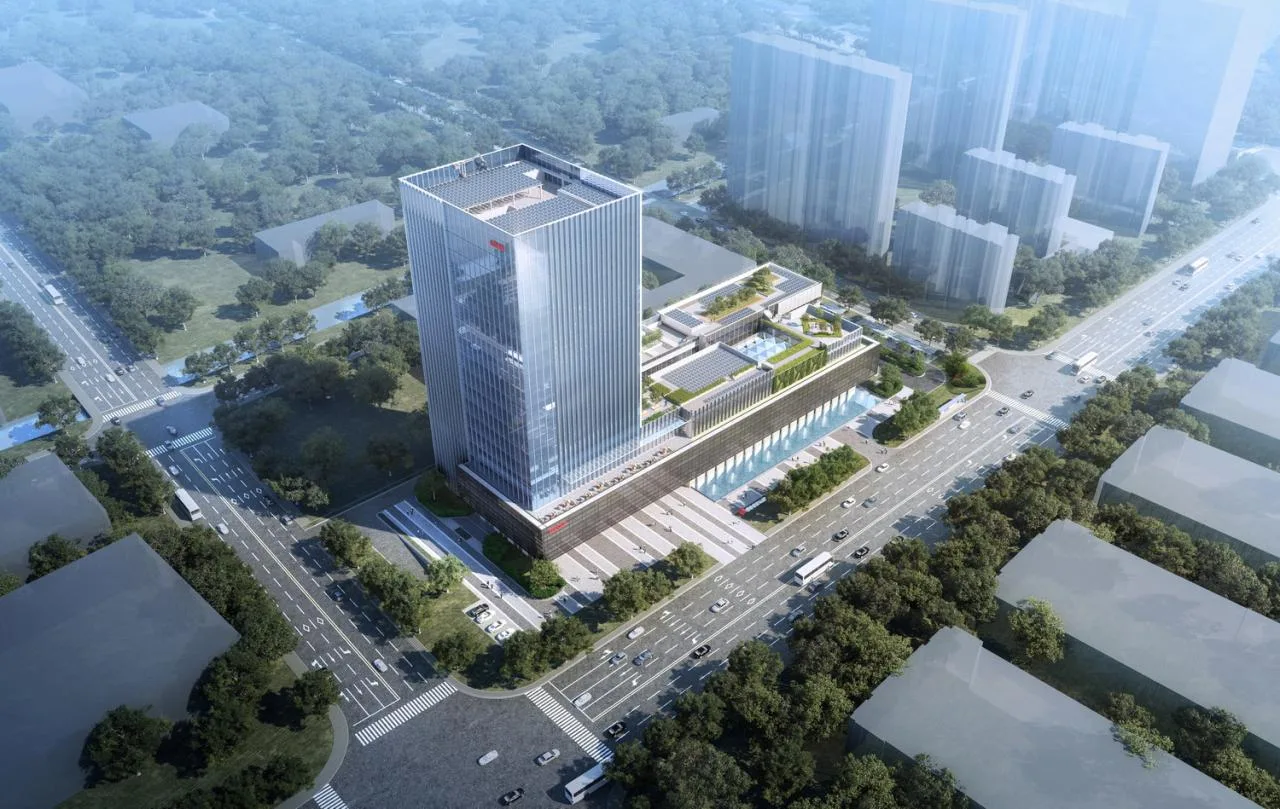
△ Bird’s-eye view of Gudewei Smart Energy R&D Building
Gudewei Smart Energy R&D Building
This building fully integrates Goodway’s green energy innovations throughout its architectural design, embodying principles that respond to and harness sunlight at every stage.
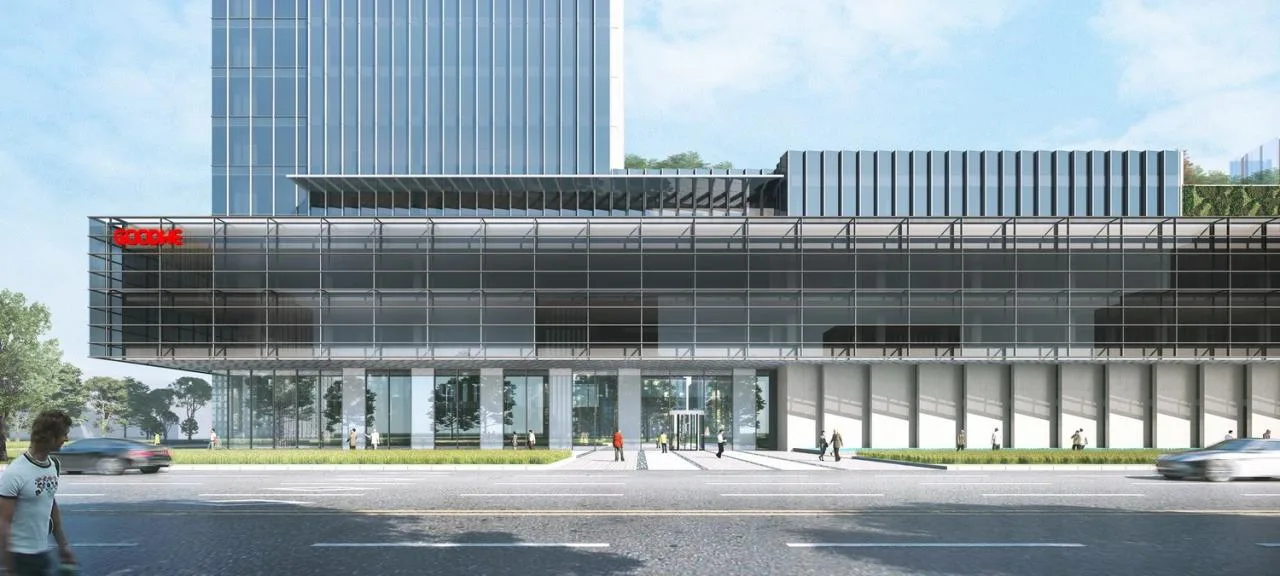
△ View of main entrance personnel
The R&D building maximizes site usage with a five-story podium and a 20-story tower. The tower is positioned southward to shield the nearby northern residential area from direct sunlight. The podium extends along Tayuan Road, featuring a striking 10-meter overhang on the third and fourth floors that emphasizes the entrance. The overhang incorporates cadmium telluride photovoltaic curtain walls, both mitigating direct sunlight and generating solar power.
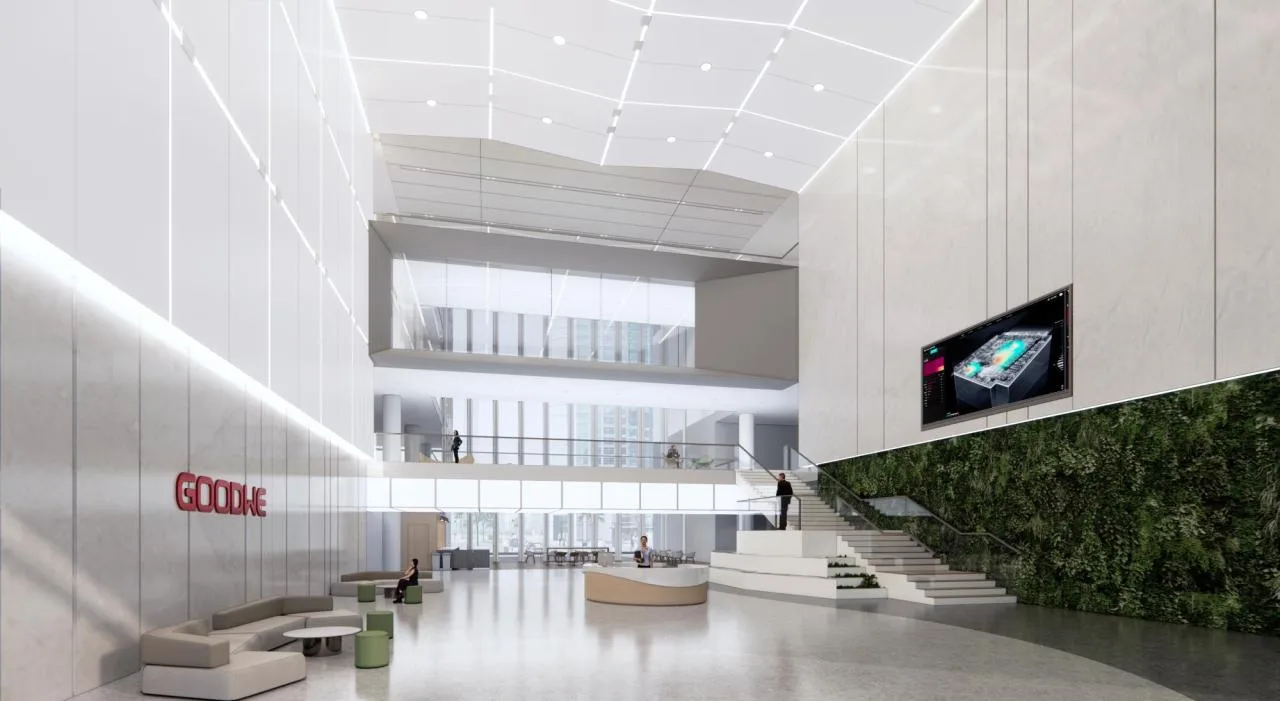
△ Main lobby rendering
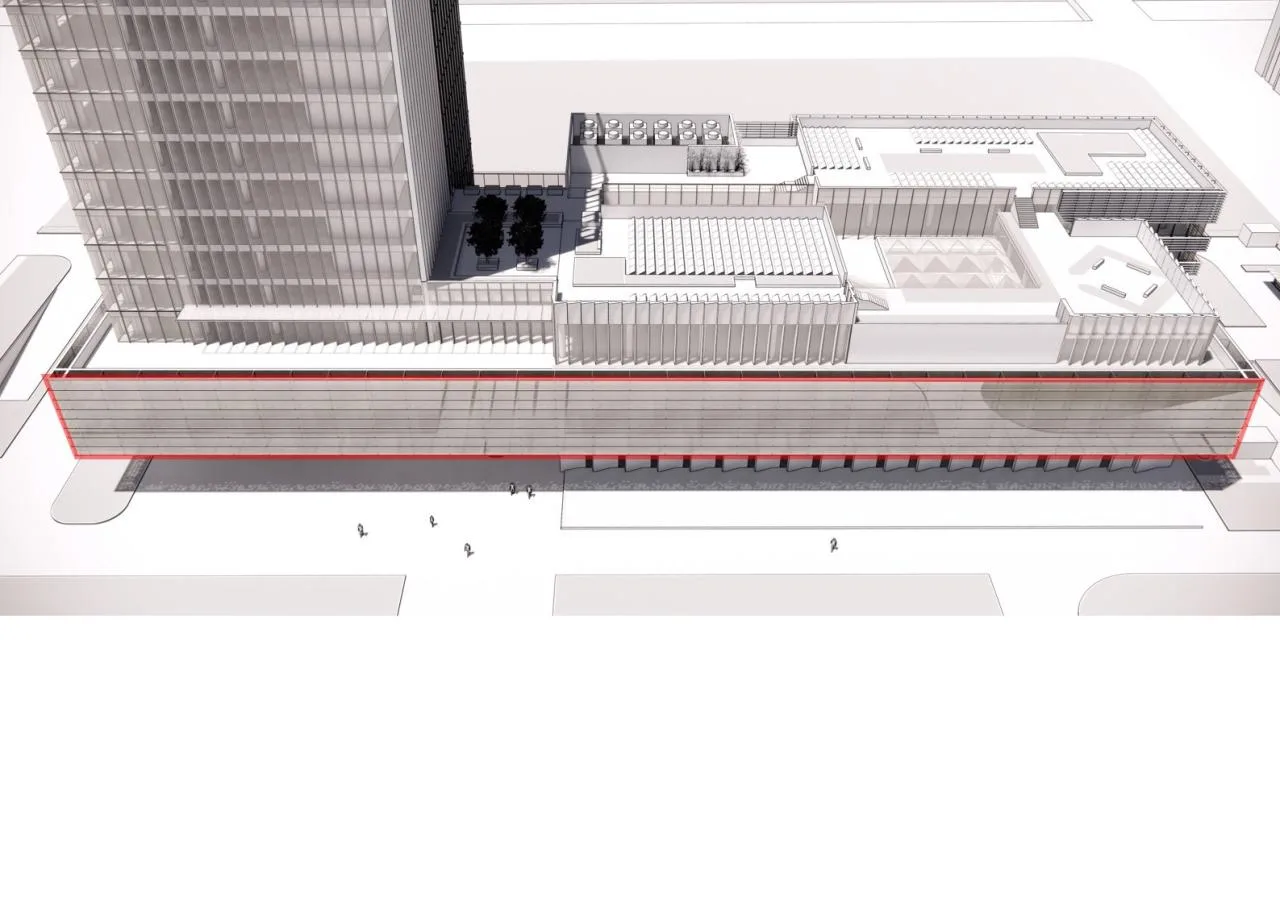
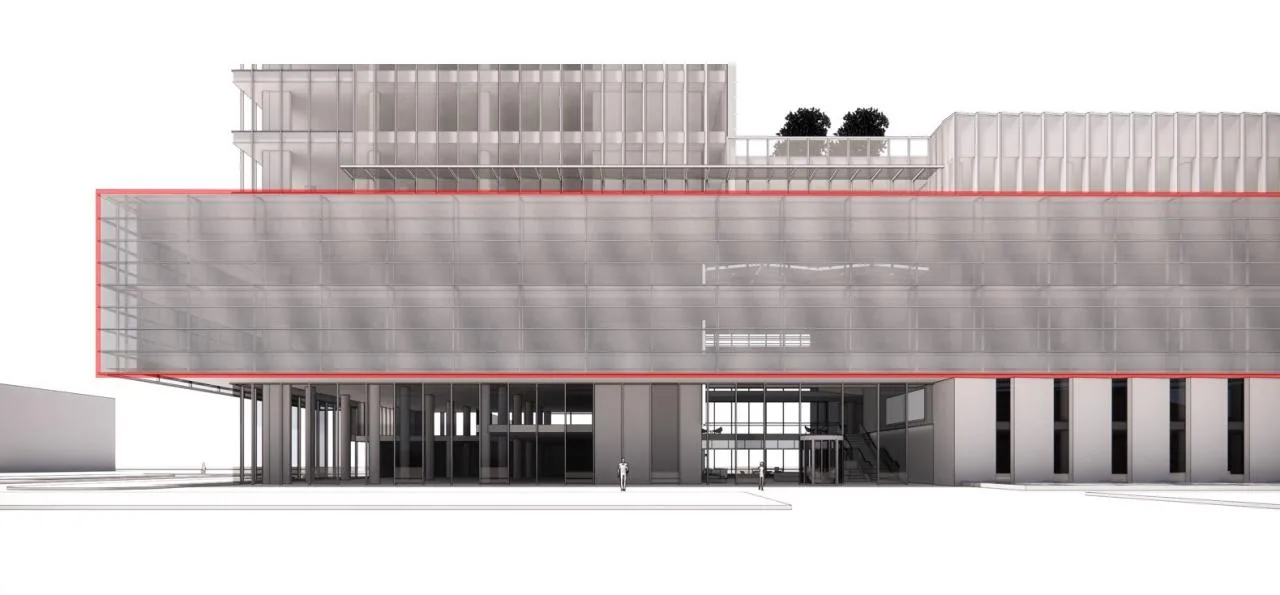
△ Cadmium telluride photovoltaic curtain wall
Two glass skylight atriums within the podium feature Goodway’s latest monocrystalline silicon photovoltaic products. These crystalline materials, developed to withstand high temperature, pressure, and deposition, create a new architectural language. Spaced arrangements gently introduce natural light deep into the building’s interior.
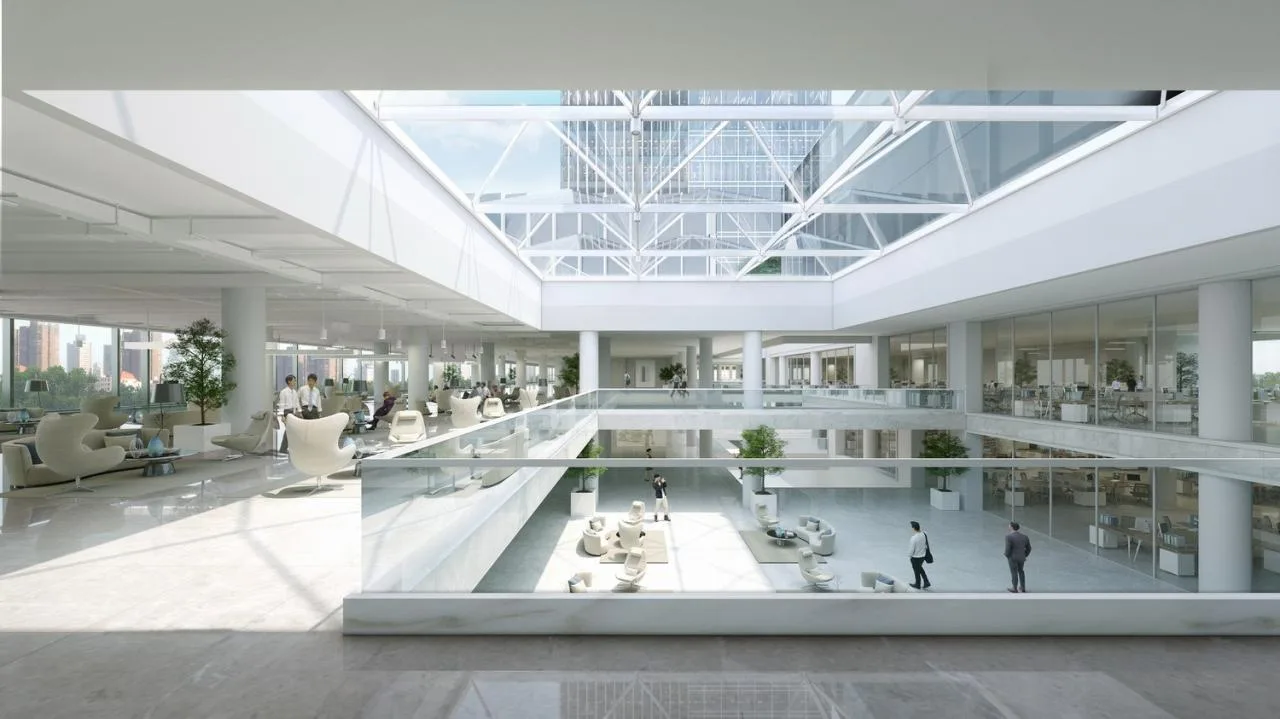
△ Natural daylight introduced into the atrium
On the west side, sunshade louvers integrate Goodway’s photovoltaic tiles, combining adjustable shading and light-generating functions. The smooth curtain wall reflects the sky, while the interplay of light and shadow on the tiles creates a dynamic and textured façade.
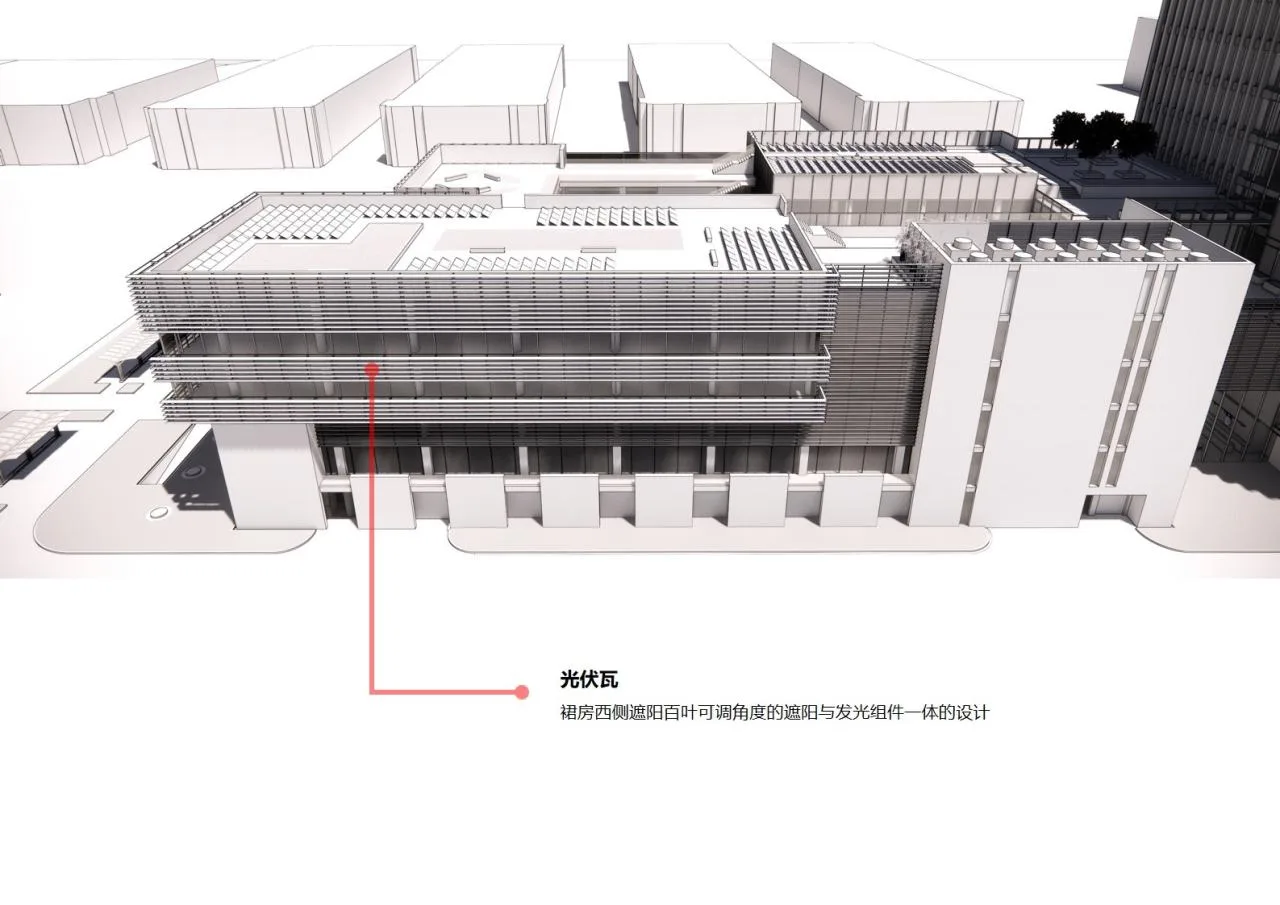
△ West side of the podium equipped with photovoltaic tiles and sunshade louvers
The unused rooftop area of the podium will host photovoltaic modules, turning it into an outdoor showroom for Goodway’s products. The parking lot includes modular, flexible photovoltaic charging carports that provide shade and shelter while supplying electricity to electric vehicles, factories, and enterprises.
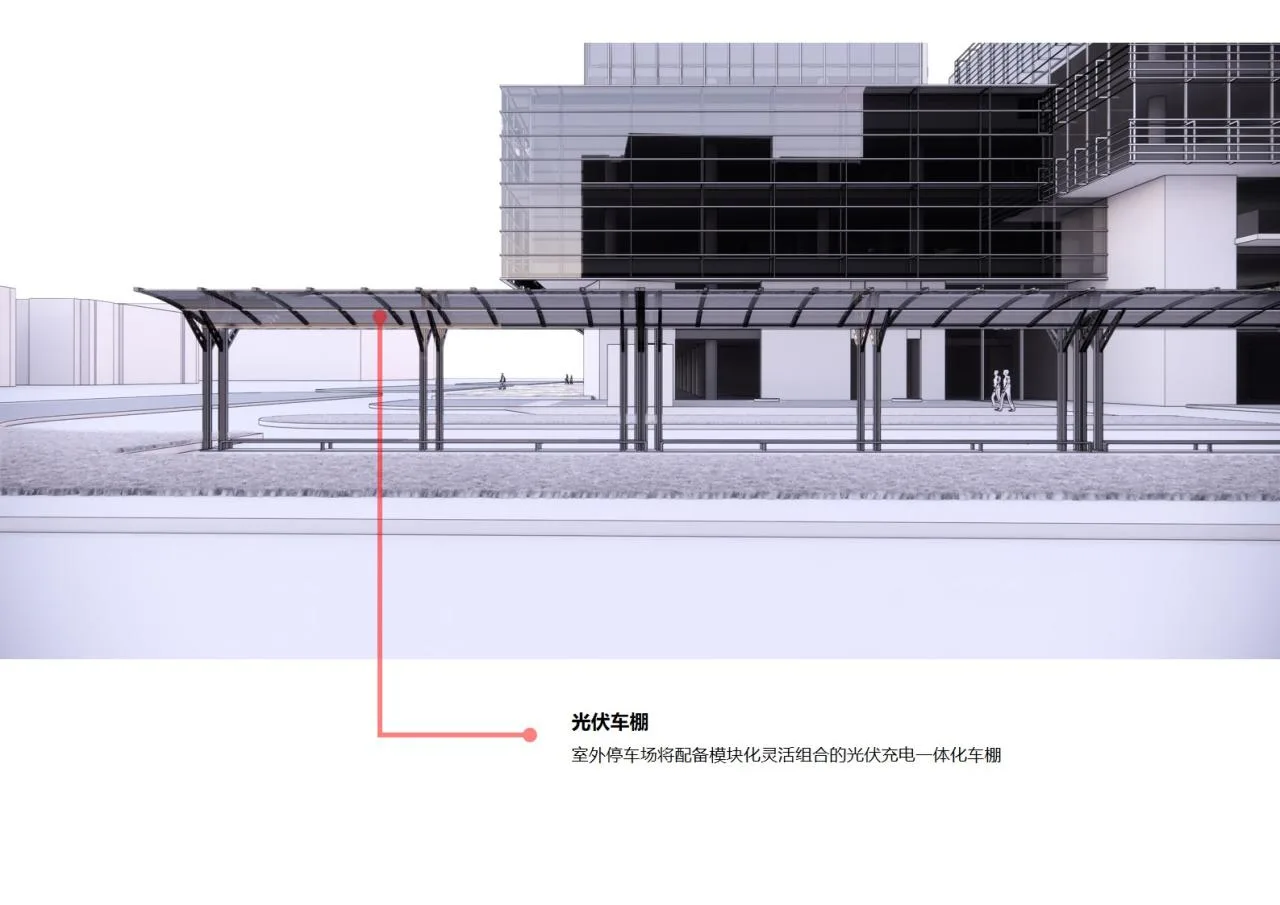
△ Integrated photovoltaic charging carport
The tower’s curved curtain wall uses monocrystalline silicon photovoltaic modules. These modules feature external light treatments that mimic the appearance of metal aluminum panels, effectively transforming photovoltaic modules into architectural materials — a vision championed by Gudewei Optoelectronics: “Let every building generate electricity.”
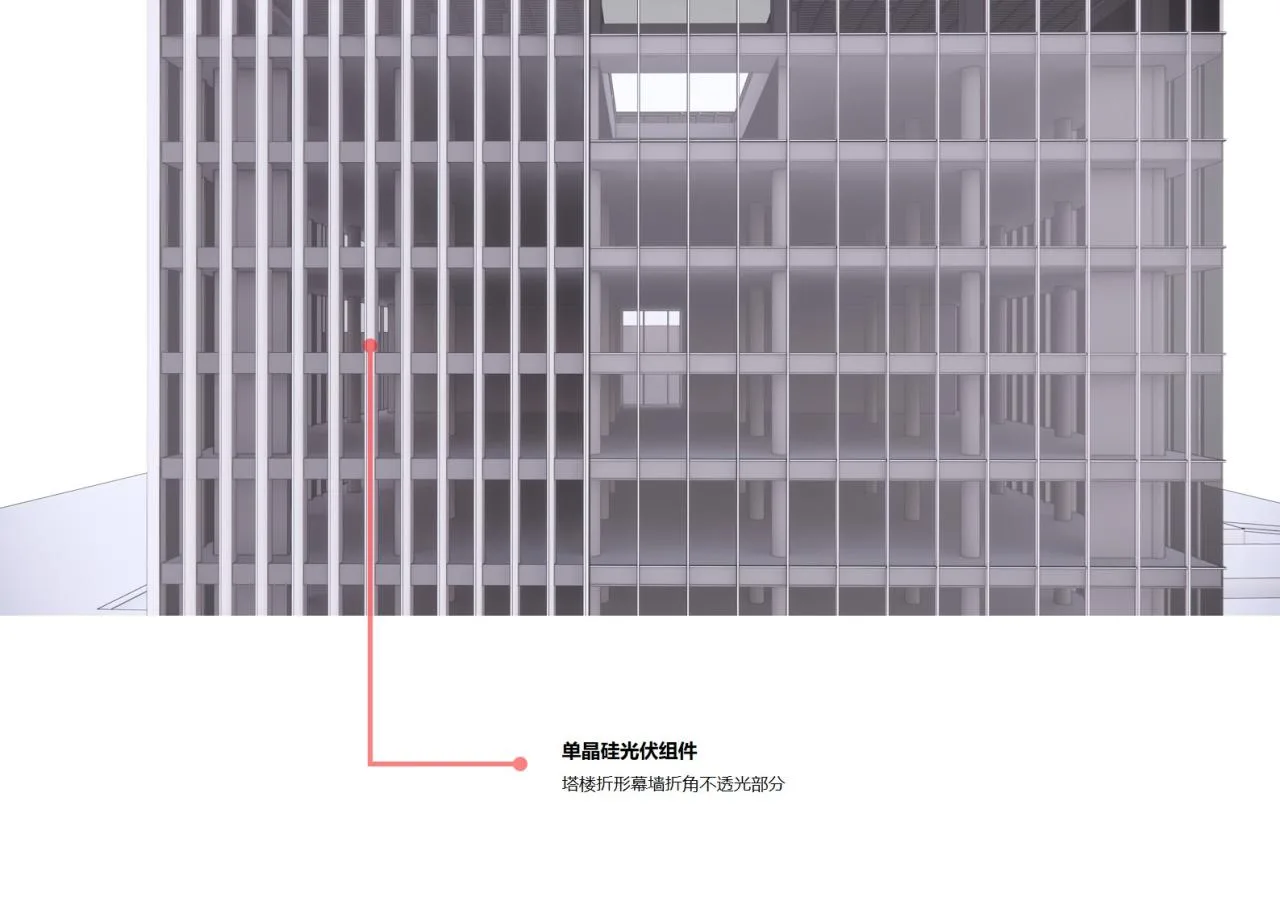
△ Tower curtain wall featuring monocrystalline silicon photovoltaic modules
Guided by national policies for carbon peaking and neutrality, the Gudewei Smart Energy R&D Building exemplifies deep integration of BIPV products into architecture. Its annual photovoltaic power generation is estimated at approximately 490,000 kWh, paving the way for large-scale building complexes to achieve near-zero carbon emissions.
The exploration and utilization of light in architecture is an ongoing journey. BIPV technology stands as a flagship innovation leading us toward a future where sunlight is an integral architectural element.
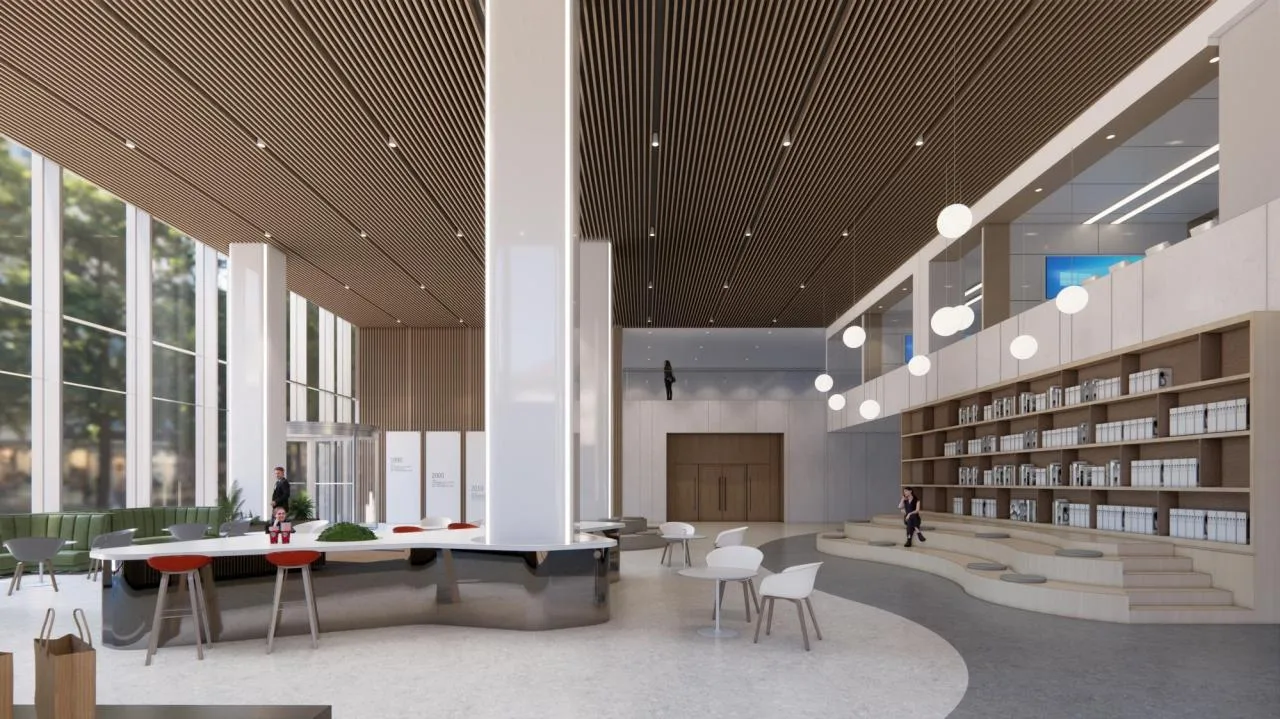
△ Southeast Entrance Hall, 1st Floor Rendering
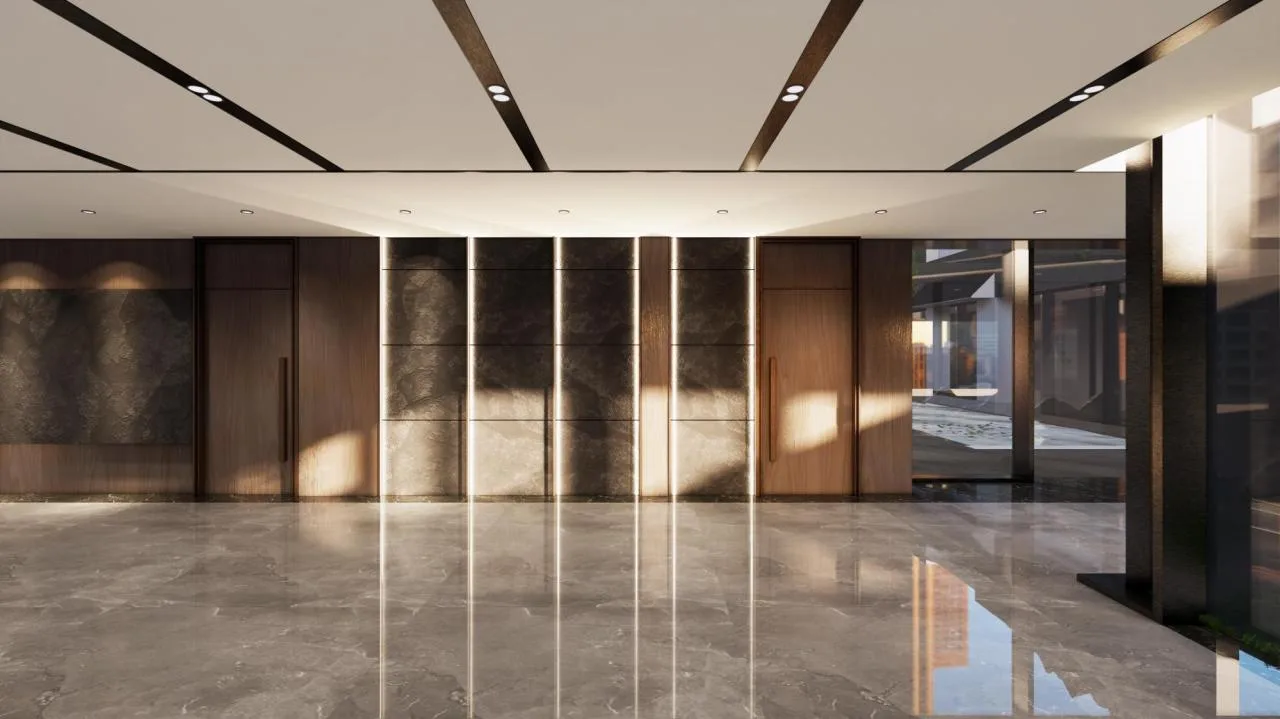
△ Office floor corridor rendering
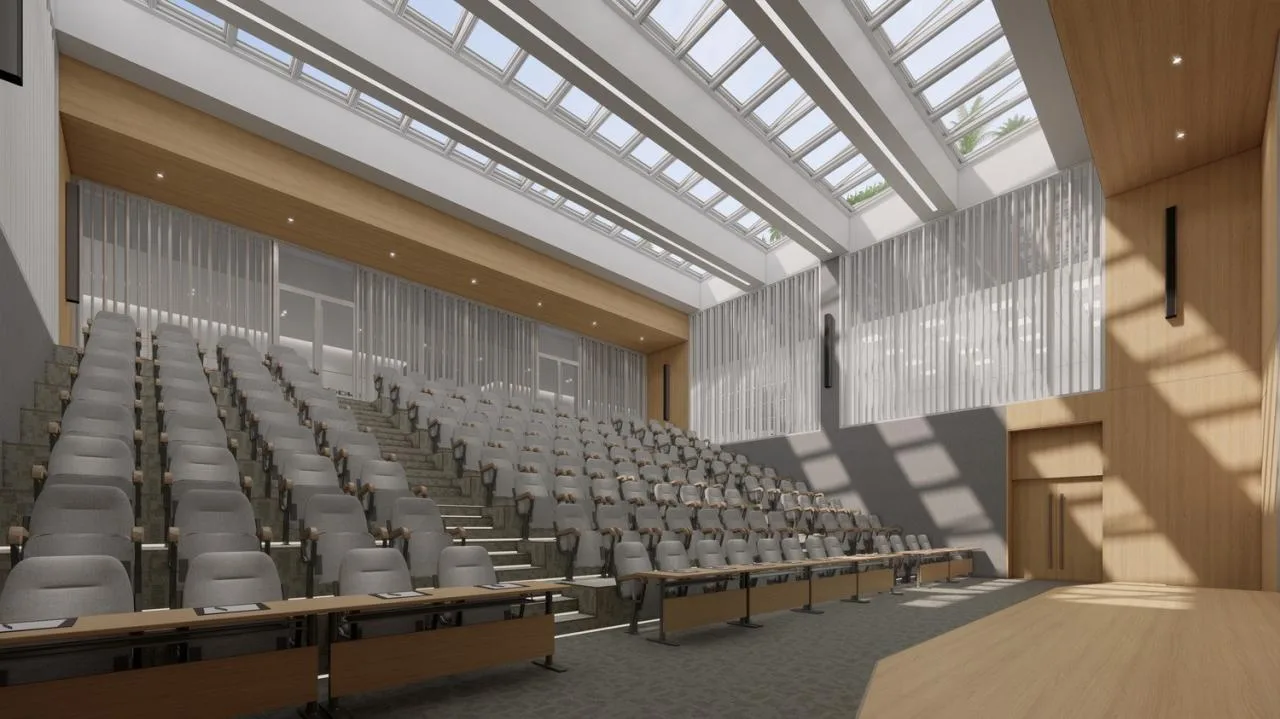
△ Staircase Lecture Hall, 3rd Floor Rendering
Project Drawings
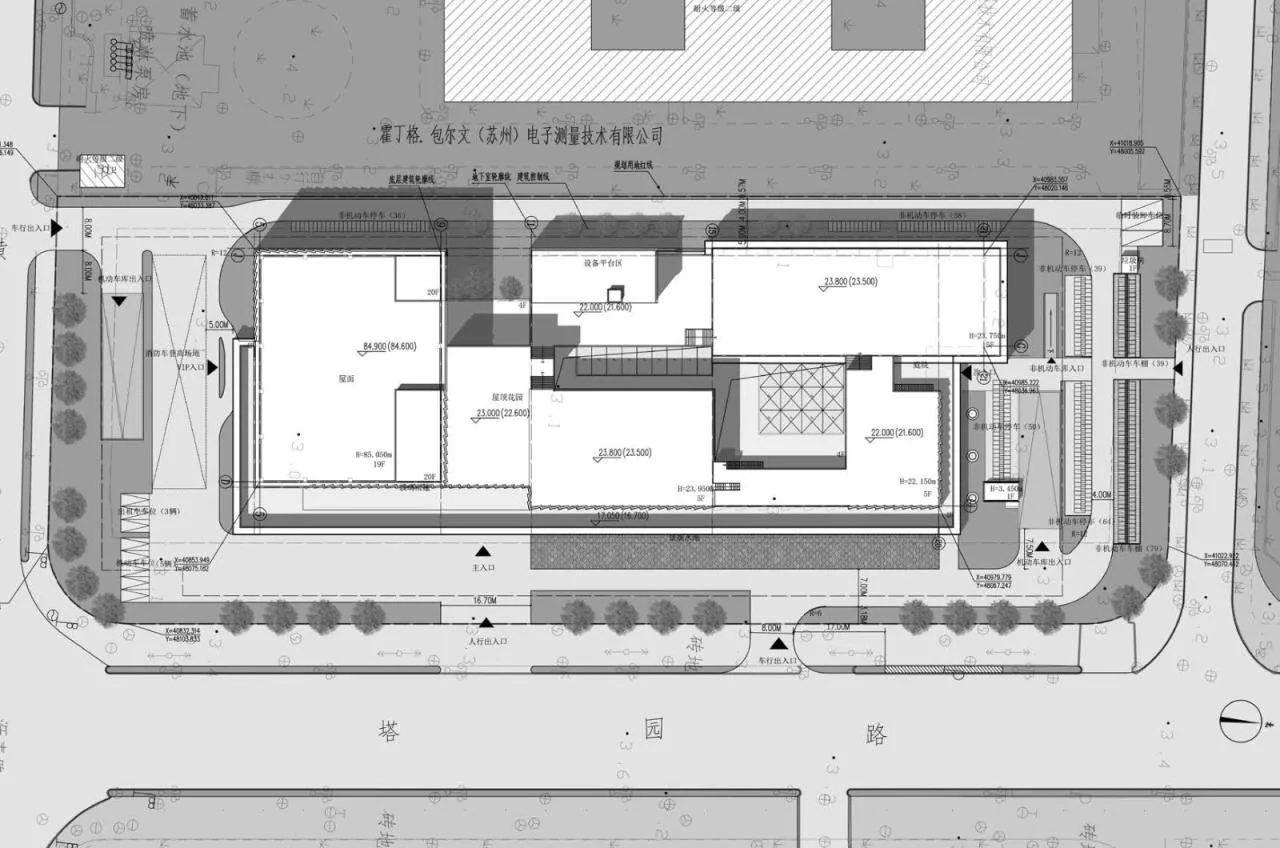
△ General layout plan
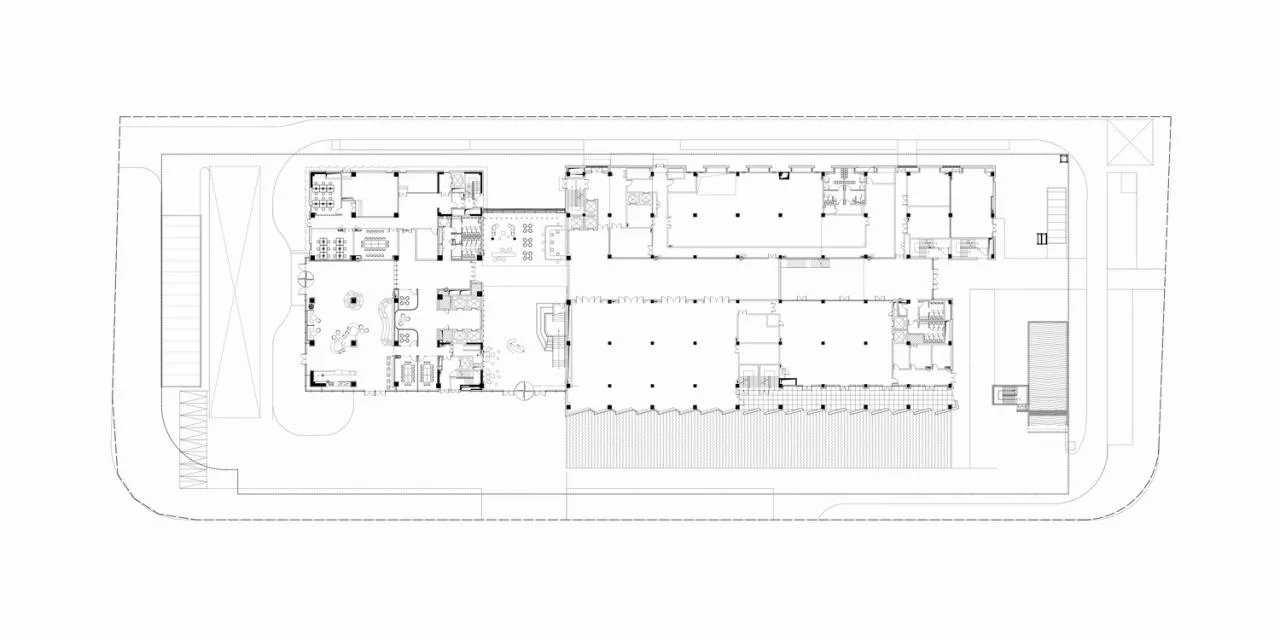
△ First floor plan
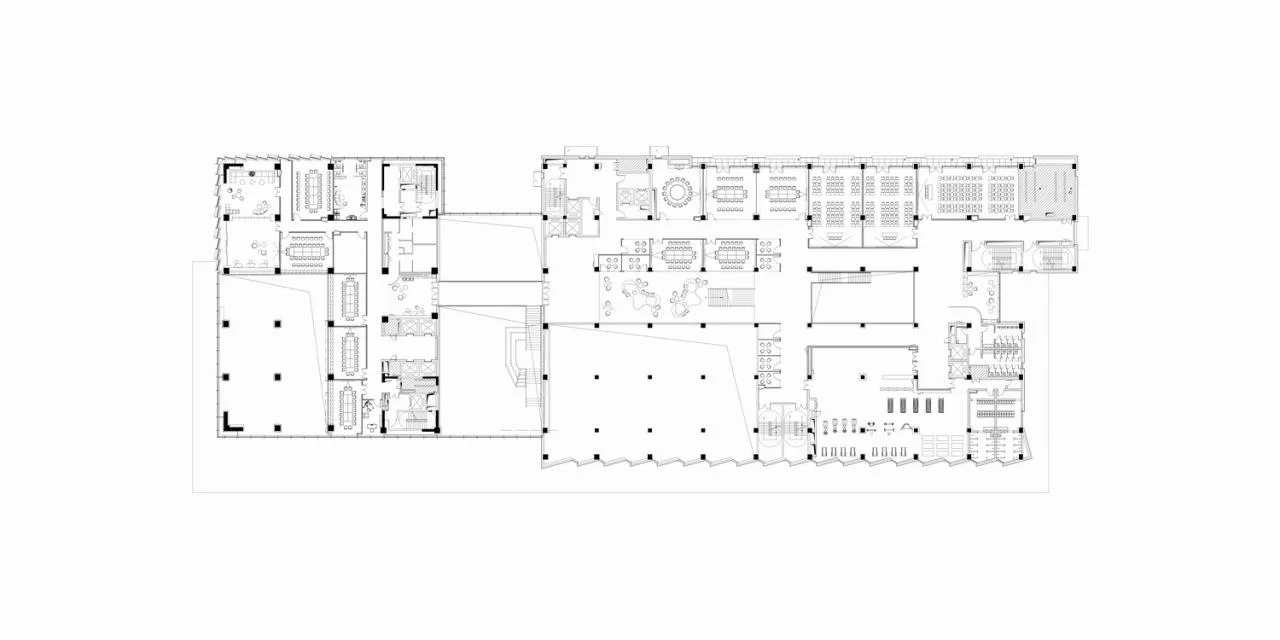
△ Second floor plan
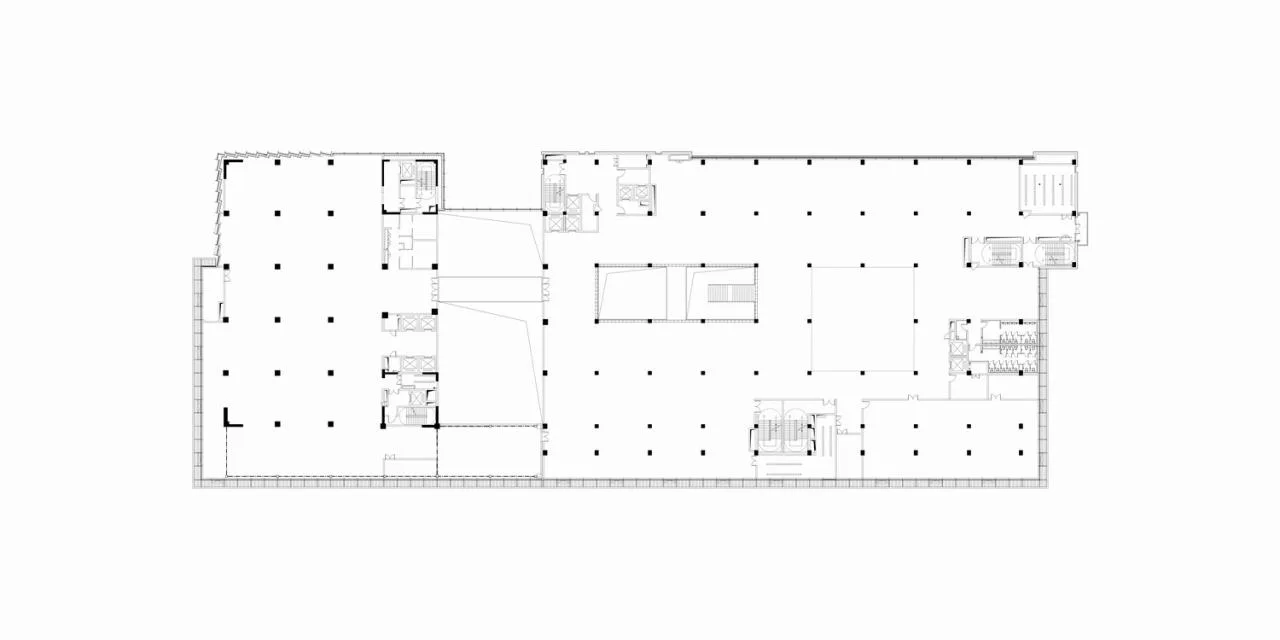
△ Third floor plan
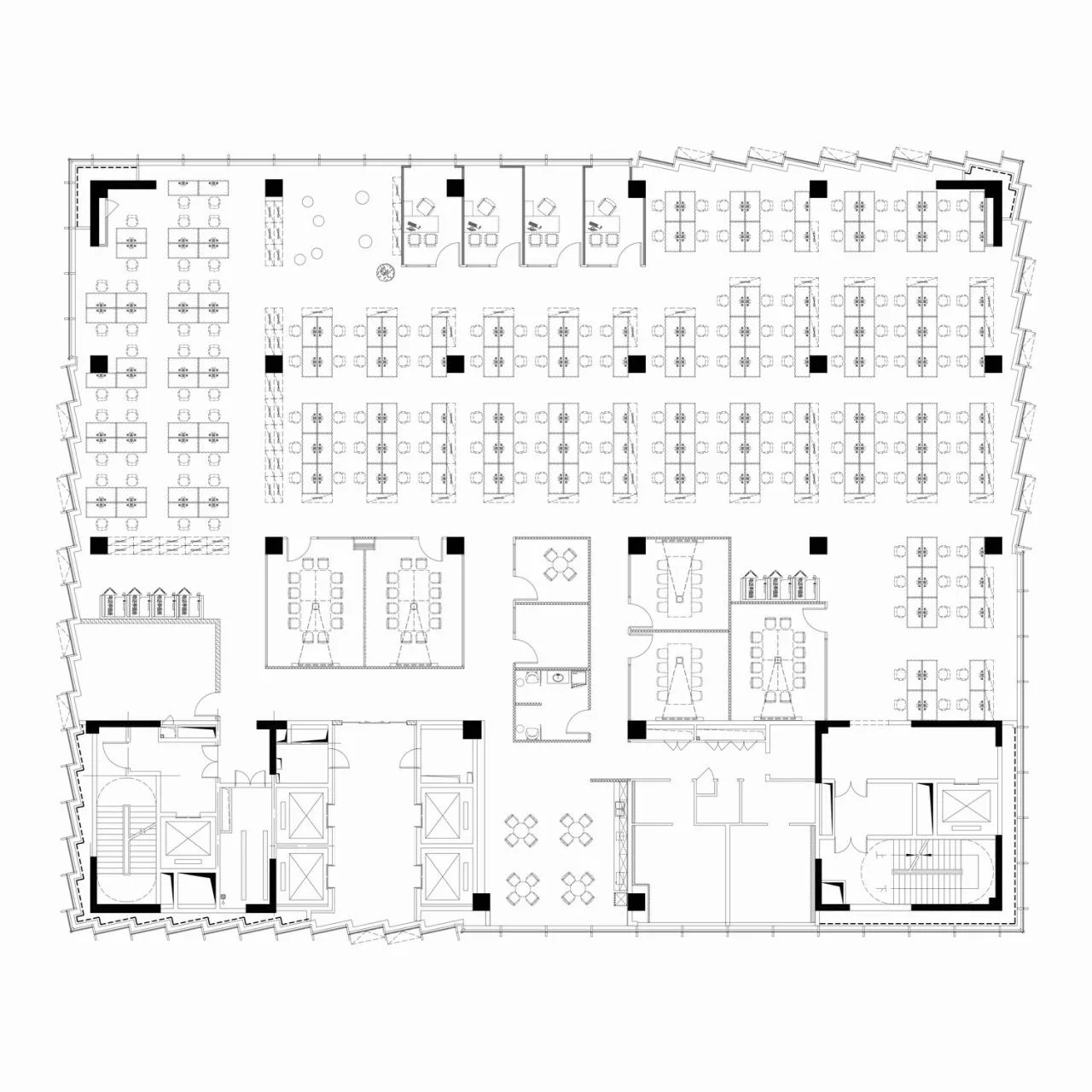
△ Tower floor plan
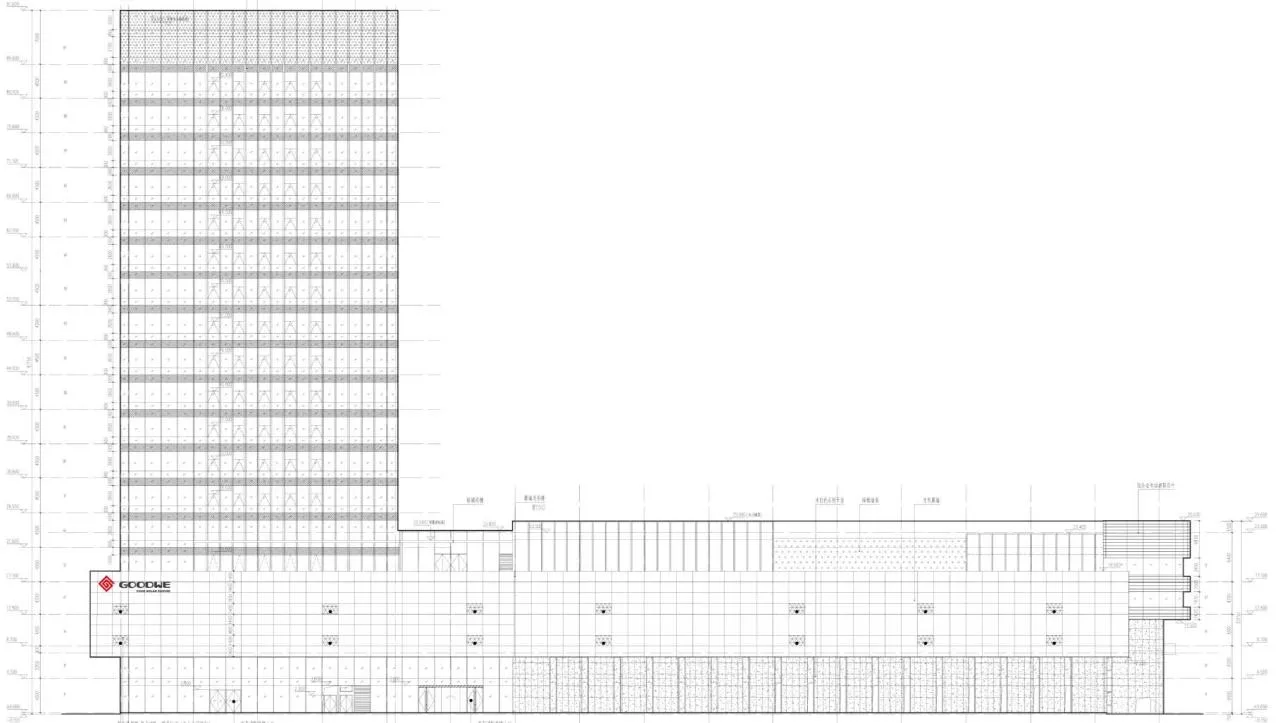
△ Section diagram
Project Information
Project Name: Gudewei Technology Co., Ltd. Smart Energy R&D Building
Location: Intersection of Tayuan Road and Hengshan Road, Suzhou High-tech Zone
Design Date: March 2021
Land Area: 16,439.20 square meters
Building Area: 72,156.56 square meters
Building Height: 89.9 meters
Construction Unit: Gudewei Technology Co., Ltd
Design Unit: Zhongheng Design Group Co., Ltd
Lead Designers: Liu Tian and Tang Bo
Project Director: Ding Jiong
Project Leader: Liu Tian
Architecture Team: Zhao Haifeng, Chen Xi, Zhao Donghui, Zhang Li, and others
Structural Team: Lu Jianglong, Shen Xiaoming, Yang Weixing, Li Gang, Fan Bin, Zhu Wanjun
HVAC Team: Ding Jiong, Feng Wei, Shang Dao Dong, Xue Kedi, Zhao Jiawei, Gu Mingyang, Zhou Linchen
Electrical Team: Han Yuzhu, Shen Bingzhi, Li Yiyang, Liu Wenfeng, Huang Yan, Wu Jian, Han Xiangyang
Water Supply and Drainage: Yang Junchen, Li Zichao, Xu Haoran, Ling Yanchen
Green Building: Guo Dandan, Wu Dingxin
Curtain Wall: Shen Yun, Wu Minghua, Zhang Beihai, Zhang Aijie, Yao Jingtian, Yao Junkai
Interior Design: Ji Shounian, Xu Yiqiu, Chen Fangyu, Ge Shaohua, Jiang Yangli, Zhou Xiaofeng, Zhu Tao
Landscape: Zhou Yaoxing, Shi Tianqi
Floodlighting: Hu Honglang, Wang Lulu, Guo Xiaomin, Yin Huimin, Zhang Zhenyu















Must log in before commenting!
Sign Up