
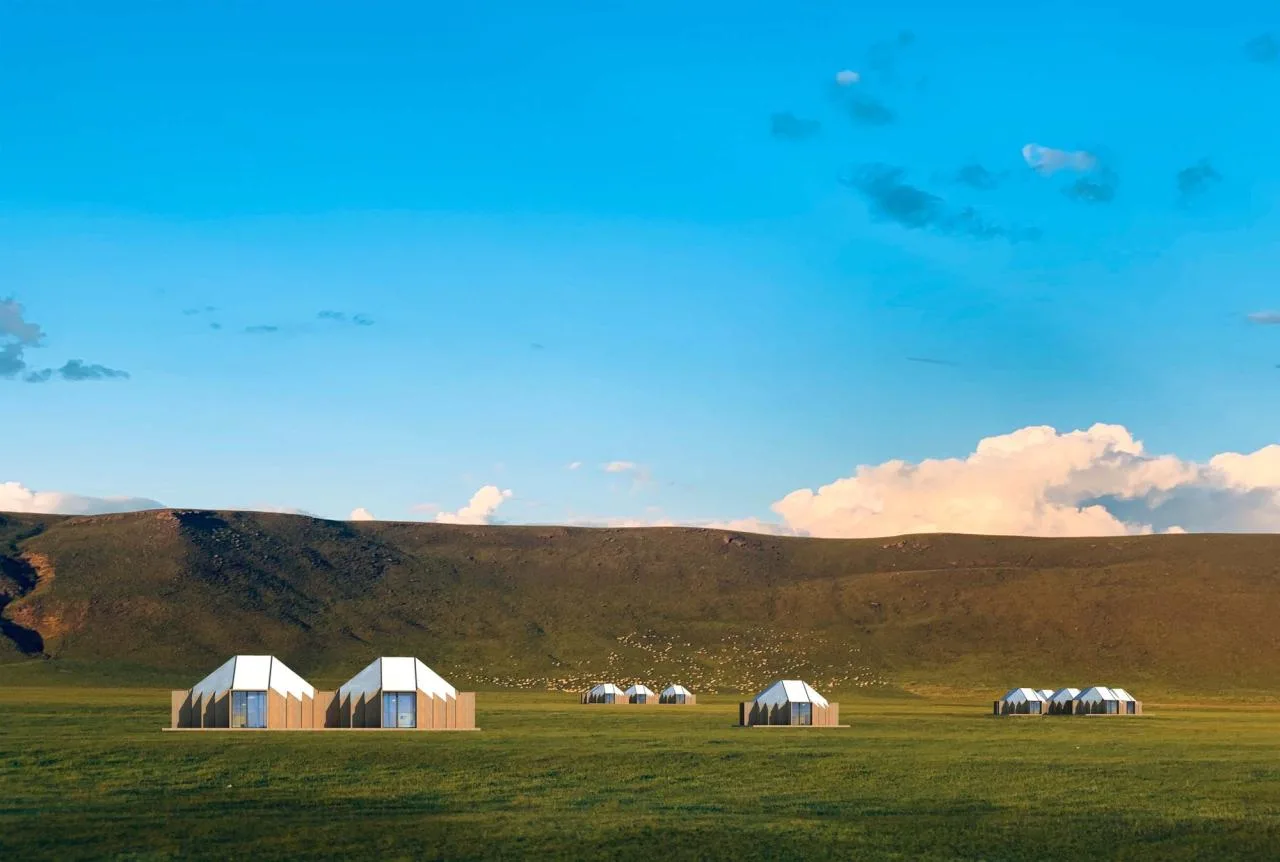
As society evolves, traditional yurts—once the primary dwellings of grassland communities—no longer fully address modern living requirements. The unique spatial characteristics and physical properties of these structures call for thoughtful enhancement and innovation. The Geometric Mongolian Yurt is a lightweight, modular building system designed to explore contemporary grassland housing solutions. It comprises three key phases: prototype design, system design, and implementation.
Prototype Design
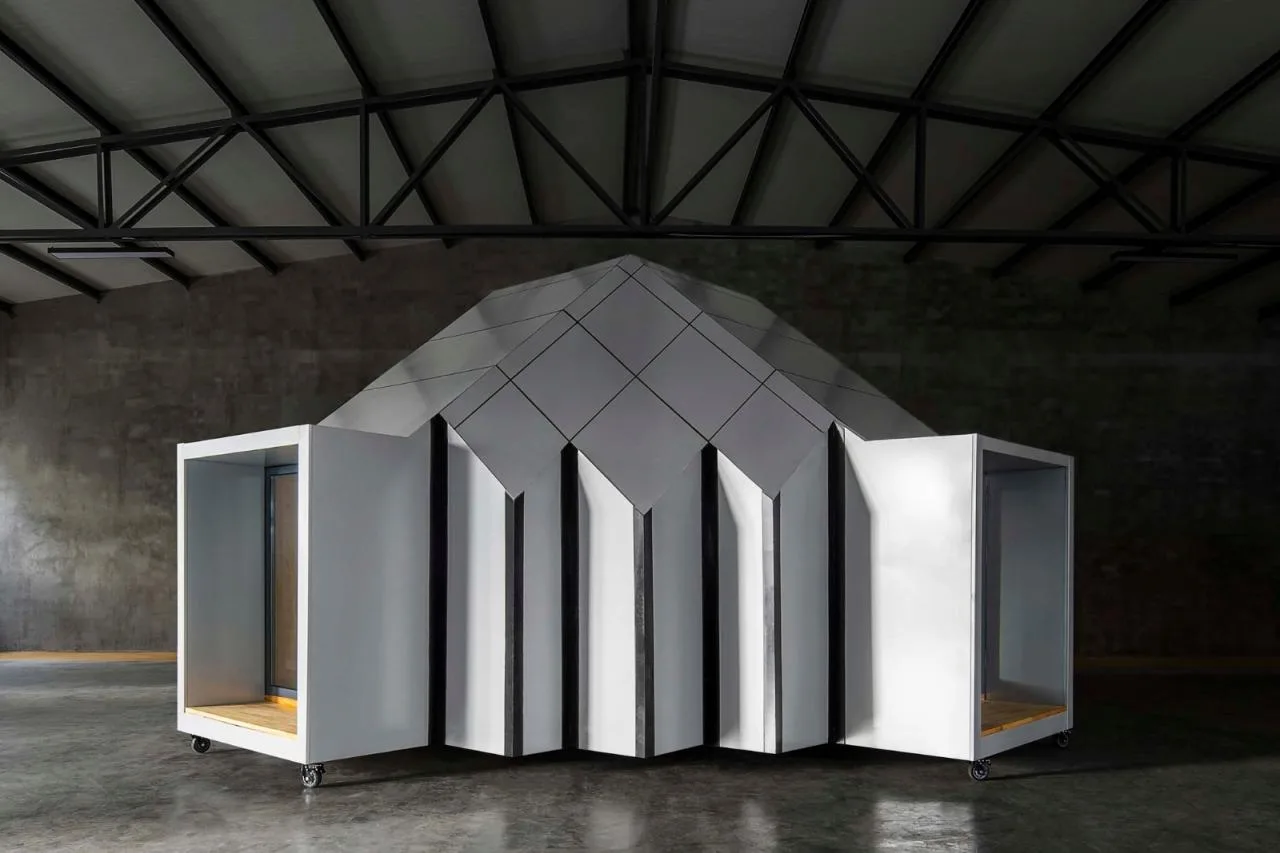
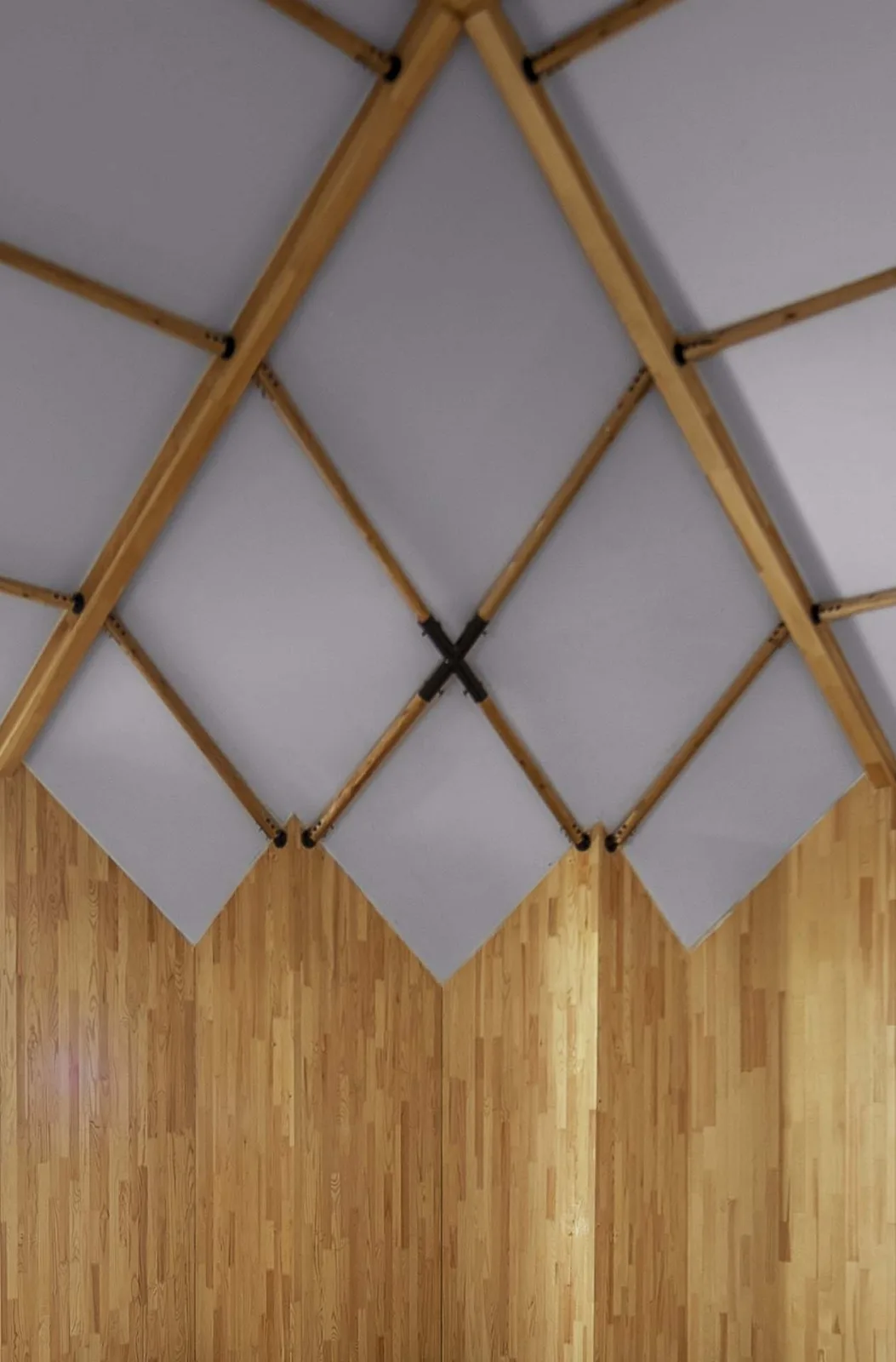
This phase involves the geometric decomposition and reconstruction of the traditional Mongolian yurt’s rope system, resulting in a modular, geometric building prototype. The traditional yurt is composed of a wooden frame, felt insulation, and a rope system. The geometric yurt design draws inspiration from the formal aesthetics and structural logic of the traditional rope system, following its forward and backward flow. It breaks down and reassembles the circular and arched spatial forms typical of yurts into a modular, geometric prototype.
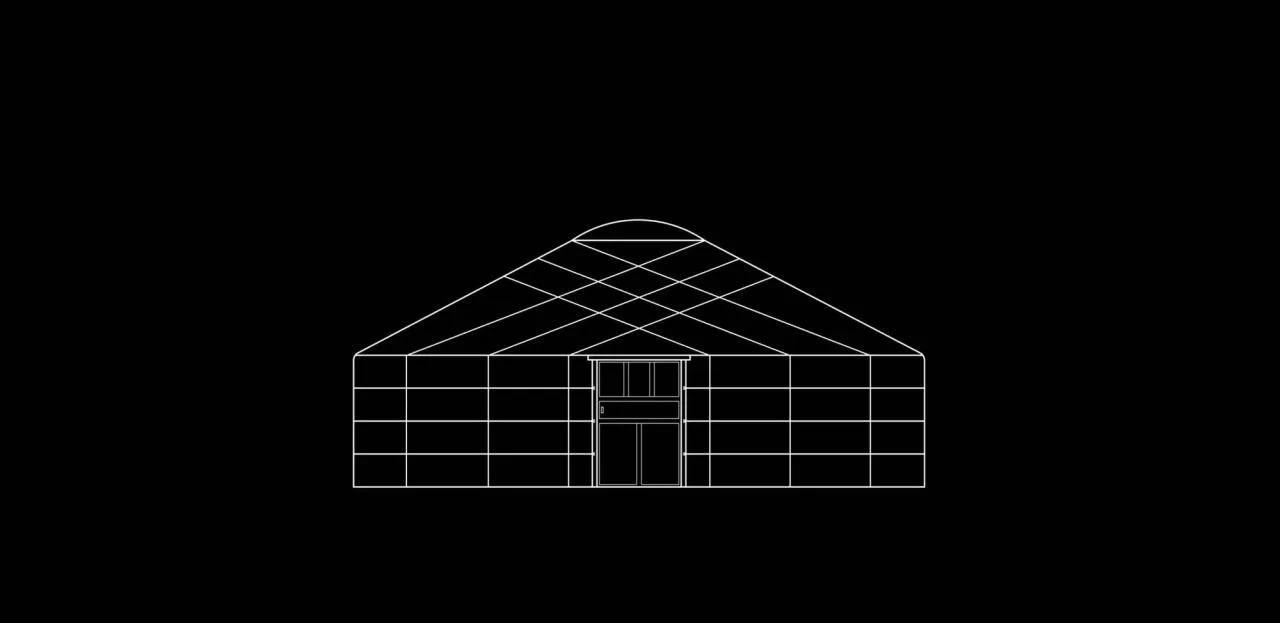
Schematic of the traditional Mongolian yurt rope system
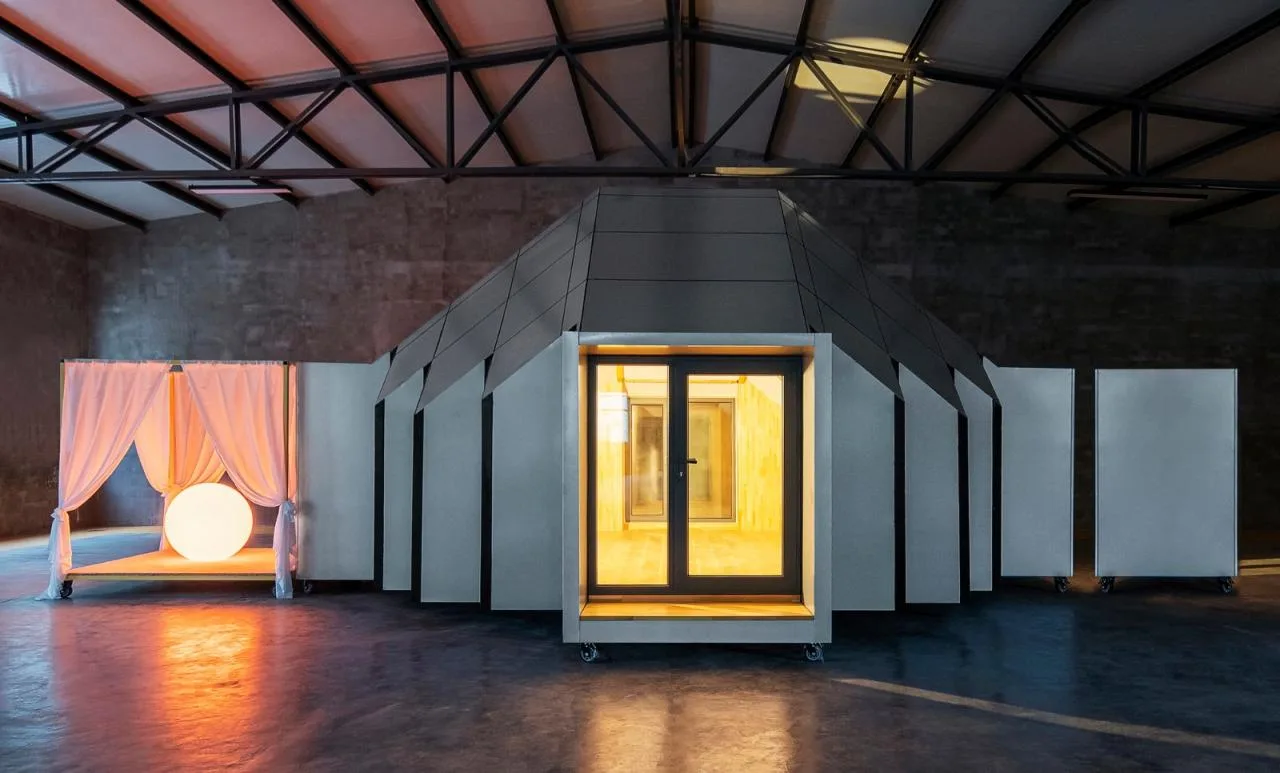
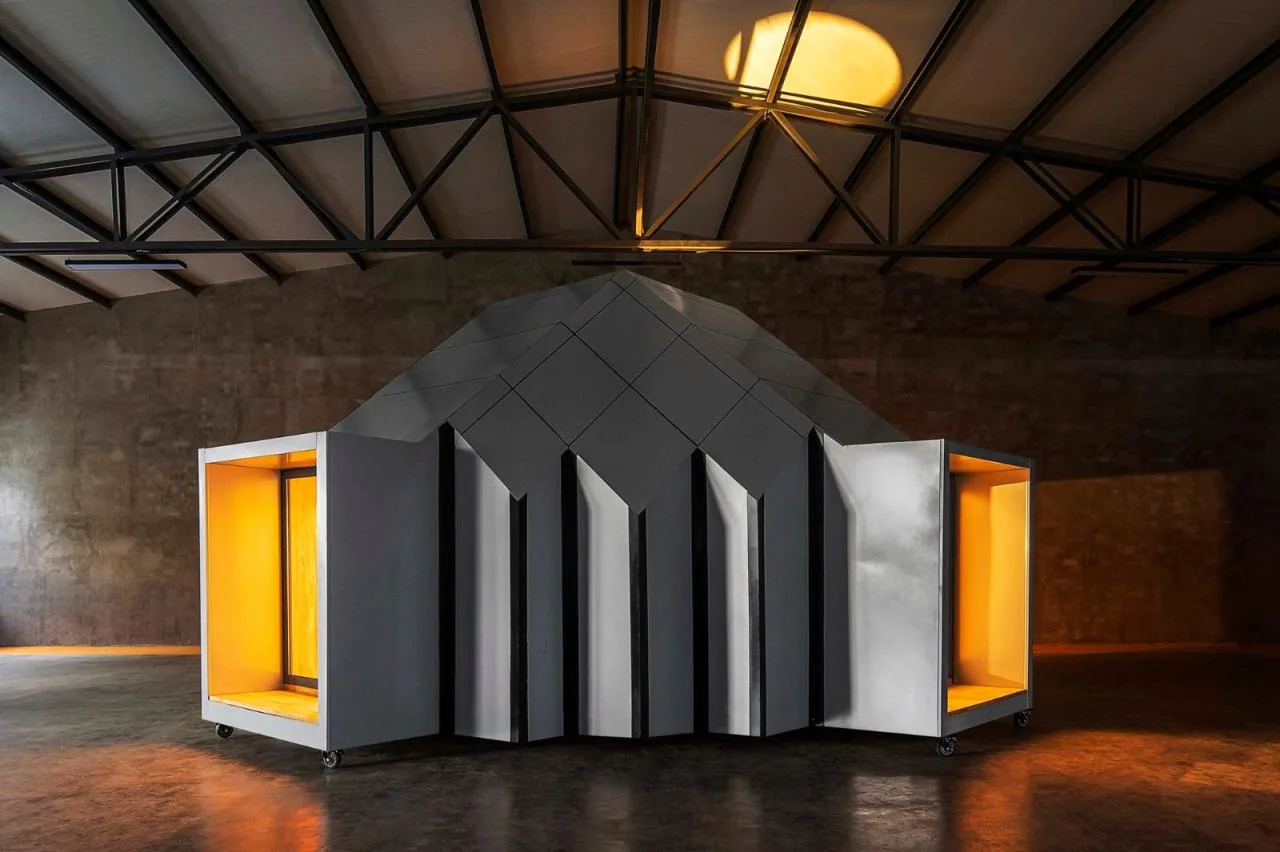
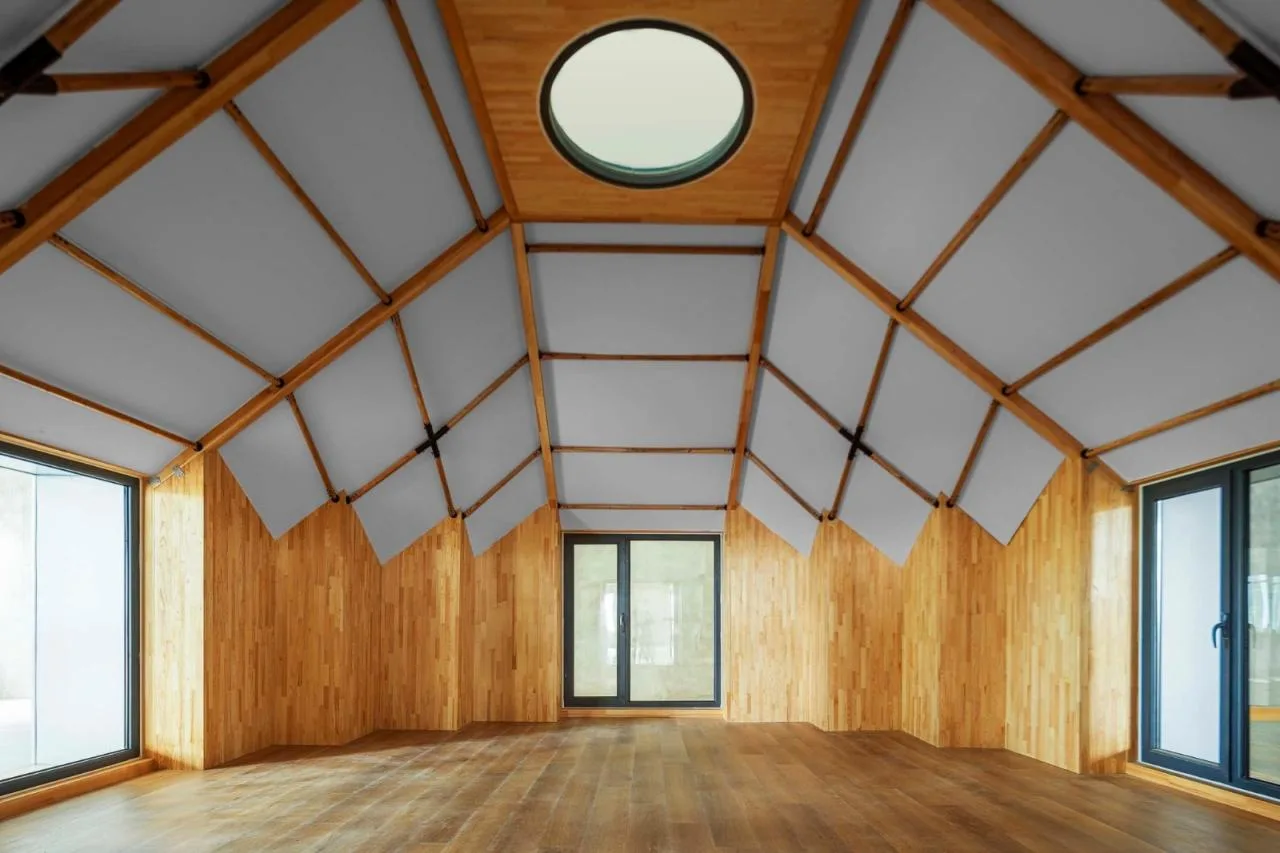
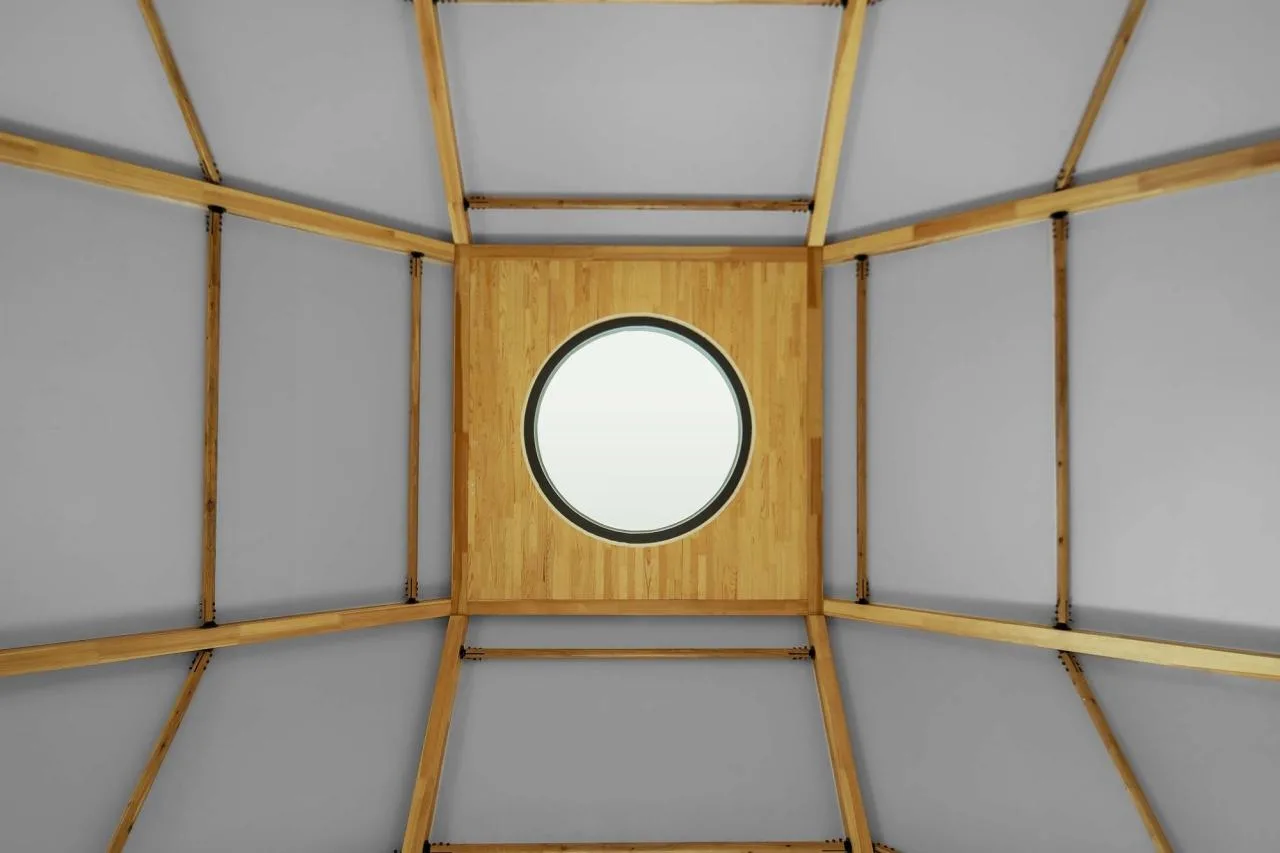
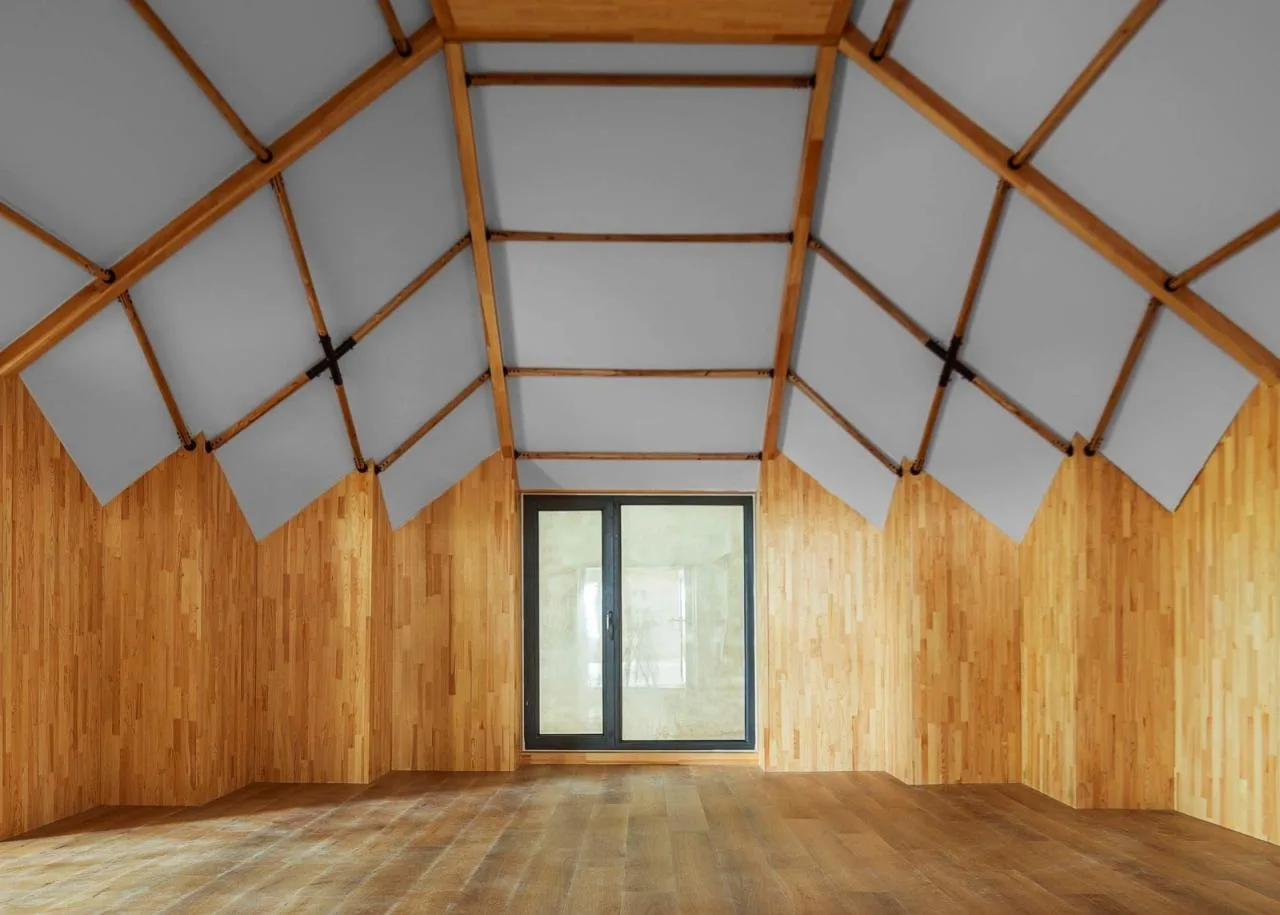
The dome-shaped interior of traditional yurts reflects the spiritual beliefs and core values of nomadic cultures, while also serving as a smart response to natural climate conditions. In designing the geometric yurt, this dome-like spatial form was preserved through geometric reconstruction. The design also addresses practical issues such as roof drainage and snow accumulation. Traditional circular layouts often leave unused negative space when furnished with modern furniture. By eliminating these unnecessary voids, the geometric yurt offers a space better suited to contemporary needs, while allowing for flexible outdoor space development.
System Design
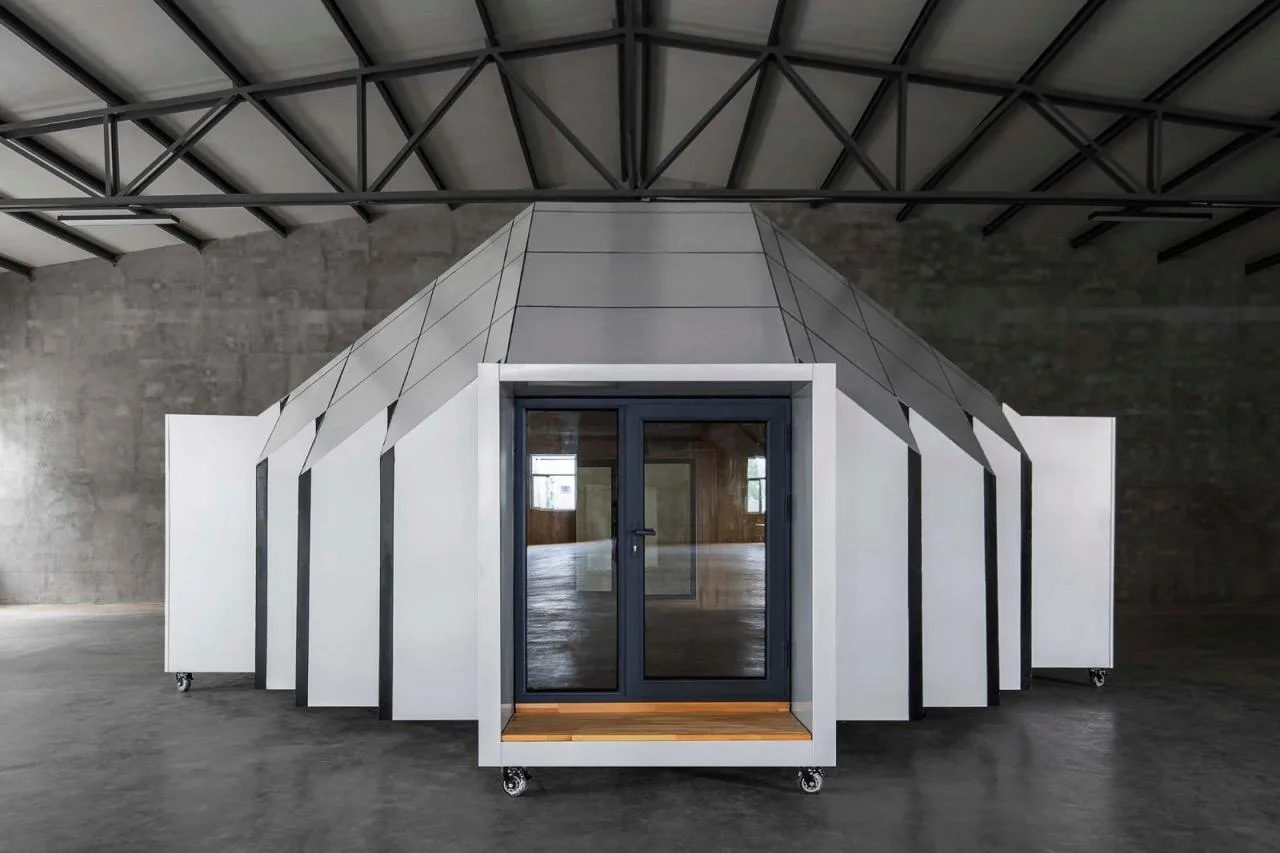
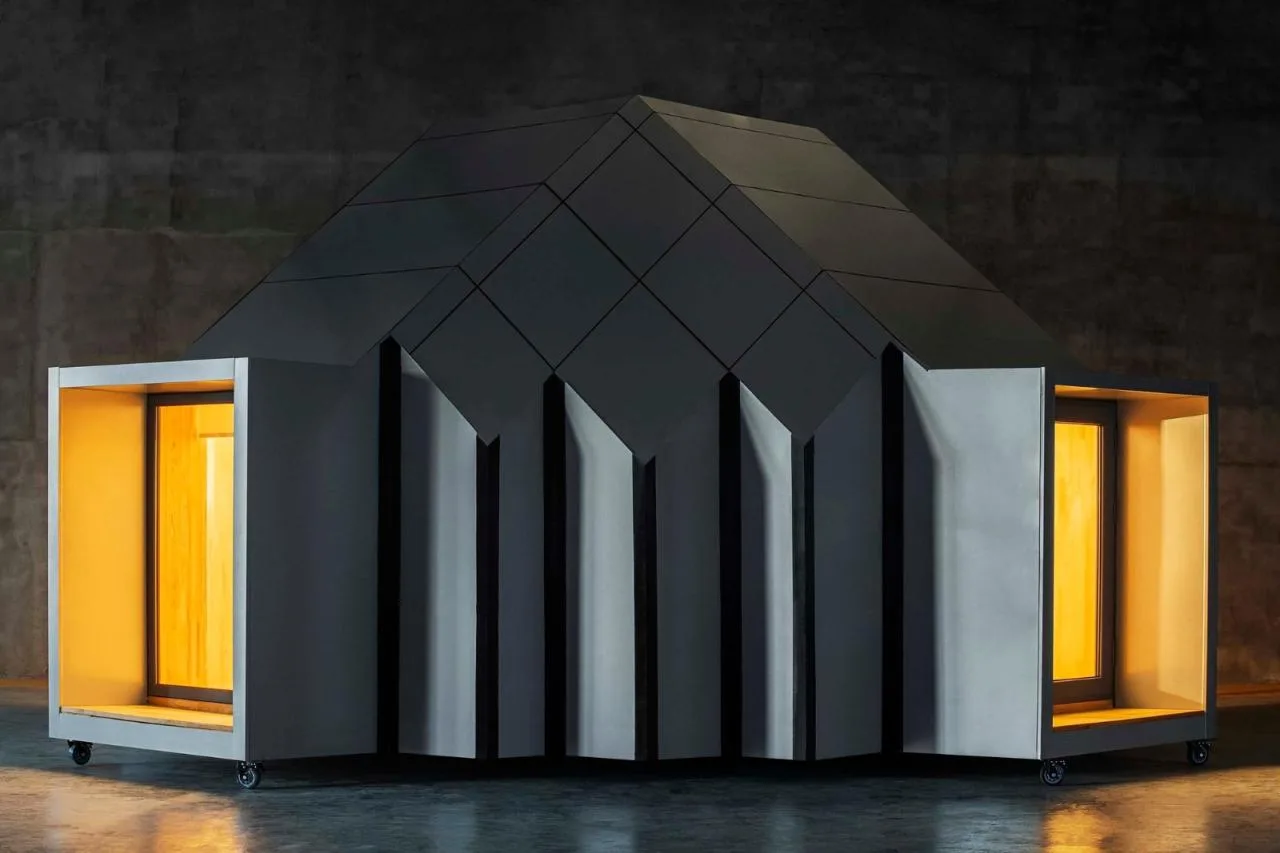
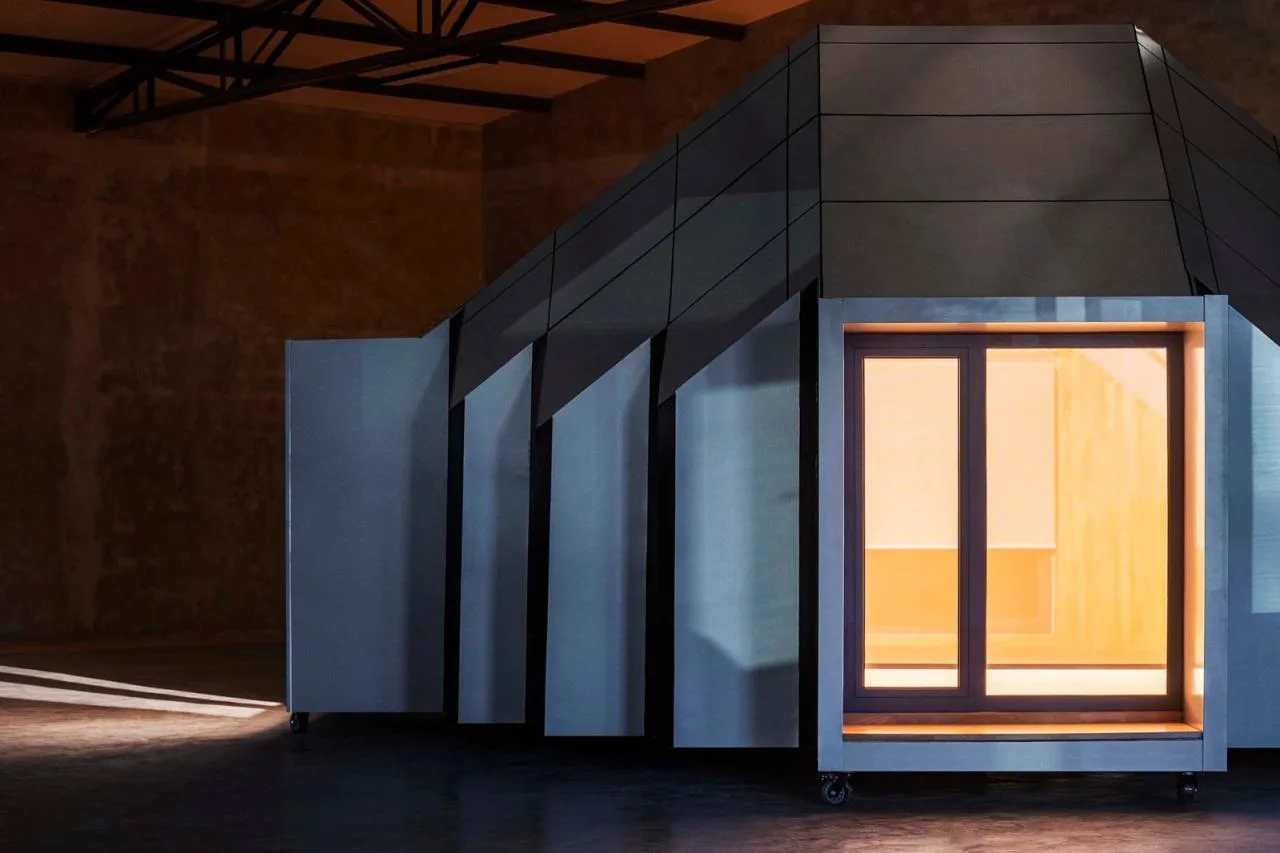
This stage expands and restructures the architectural prototype, overcoming the spatial limitations of traditional yurts to create more diverse and open living spaces. Traditional yurt interiors lack privacy and multifunctionality required by modern lifestyles. Inspired by the behavioral patterns within Mongolian yurts, four rectangular spaces are integrated into the geometric design. These areas address privacy and functional needs while also acting as connectors to expand multiple modular units. This flexible system enables various combinations to form diverse, open architectural layouts.
Material and Energy System Integration
Incorporating advanced materials and energy technologies enhances the physical performance of the yurt, improving airtightness, insulation, and energy efficiency. The primary structure uses wood, while maintenance elements employ modern materials such as aluminum-manganese panels, aerogel felt, polystyrene insulation, and integrated wood boards. Node structures ensure tight seals and thermal performance. Heating is provided by PTC low-temperature radiant electric heating film, controlled wirelessly with an intelligent system that monitors energy use and independently adjusts room temperatures for optimal comfort and efficiency.
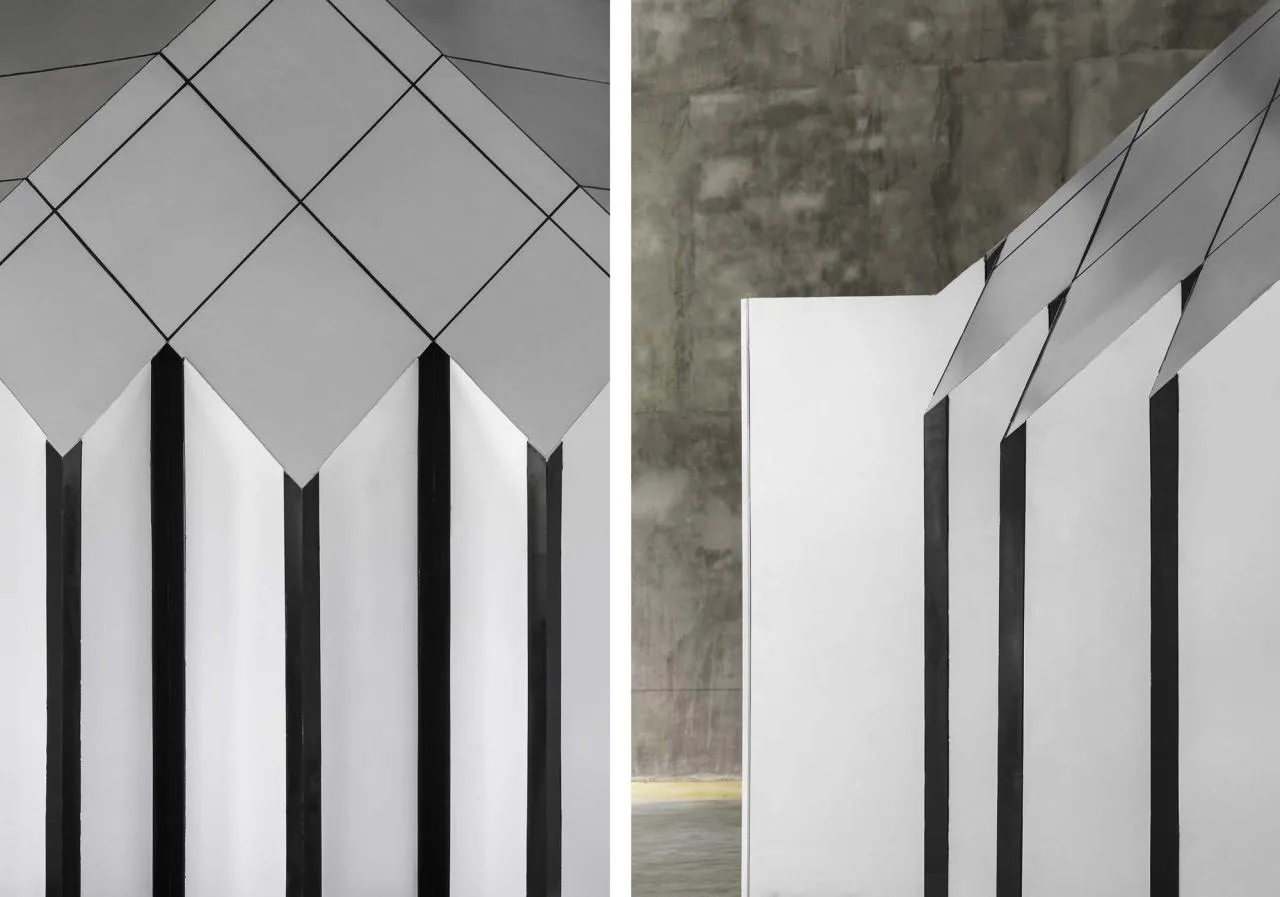
Project drawings
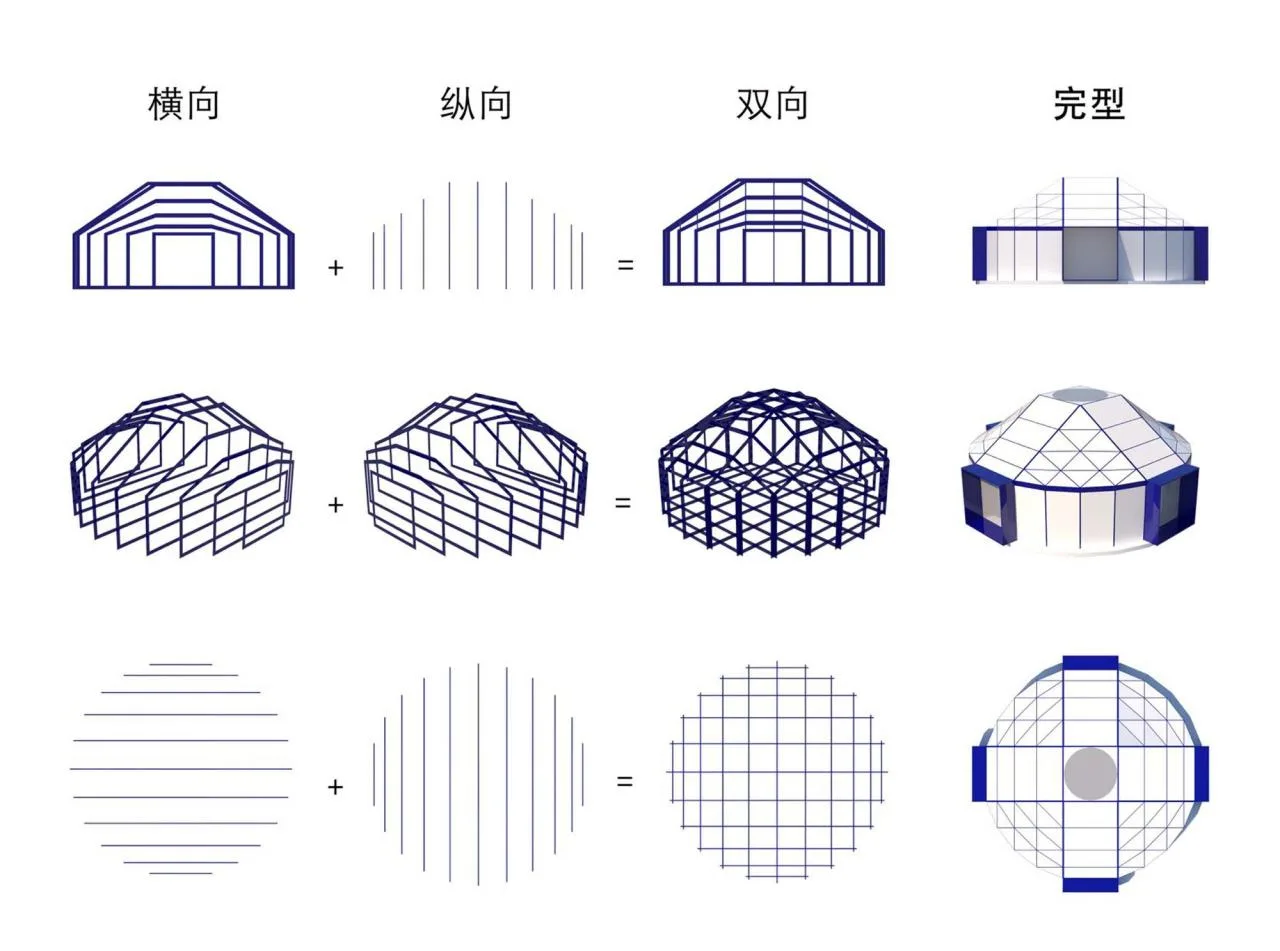
△ Generation Logic
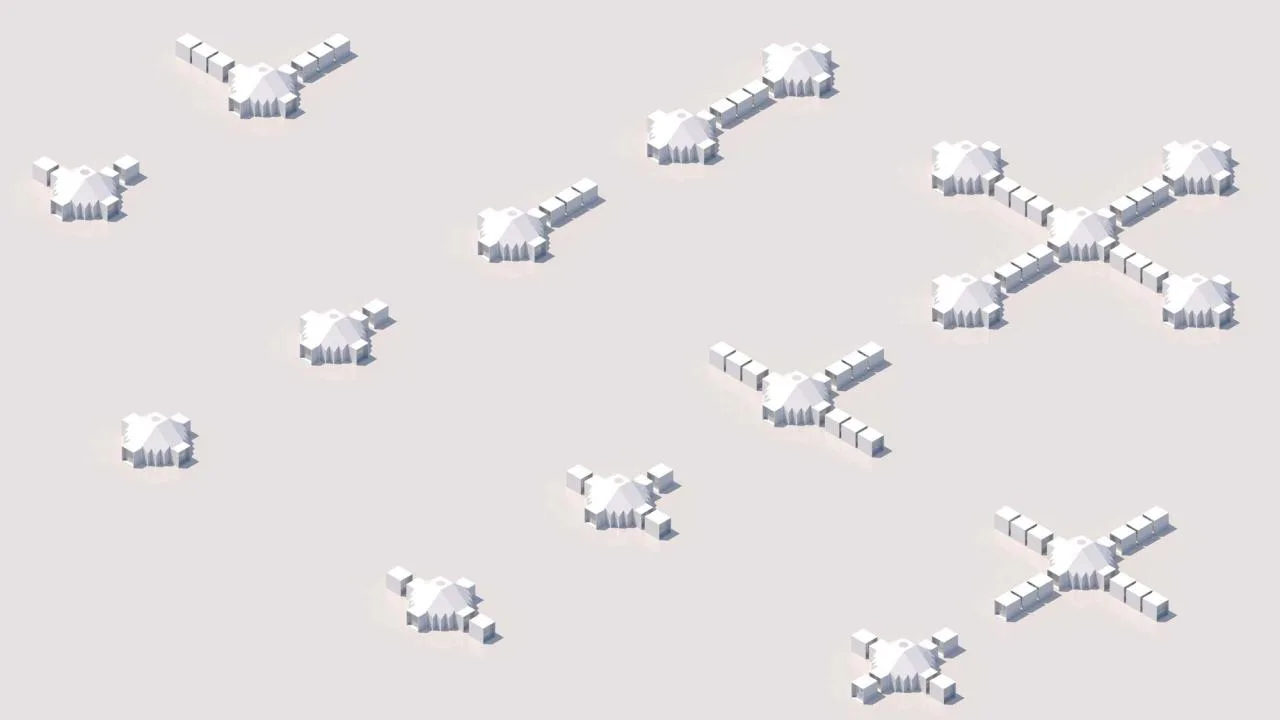
△ Expansion Diagram
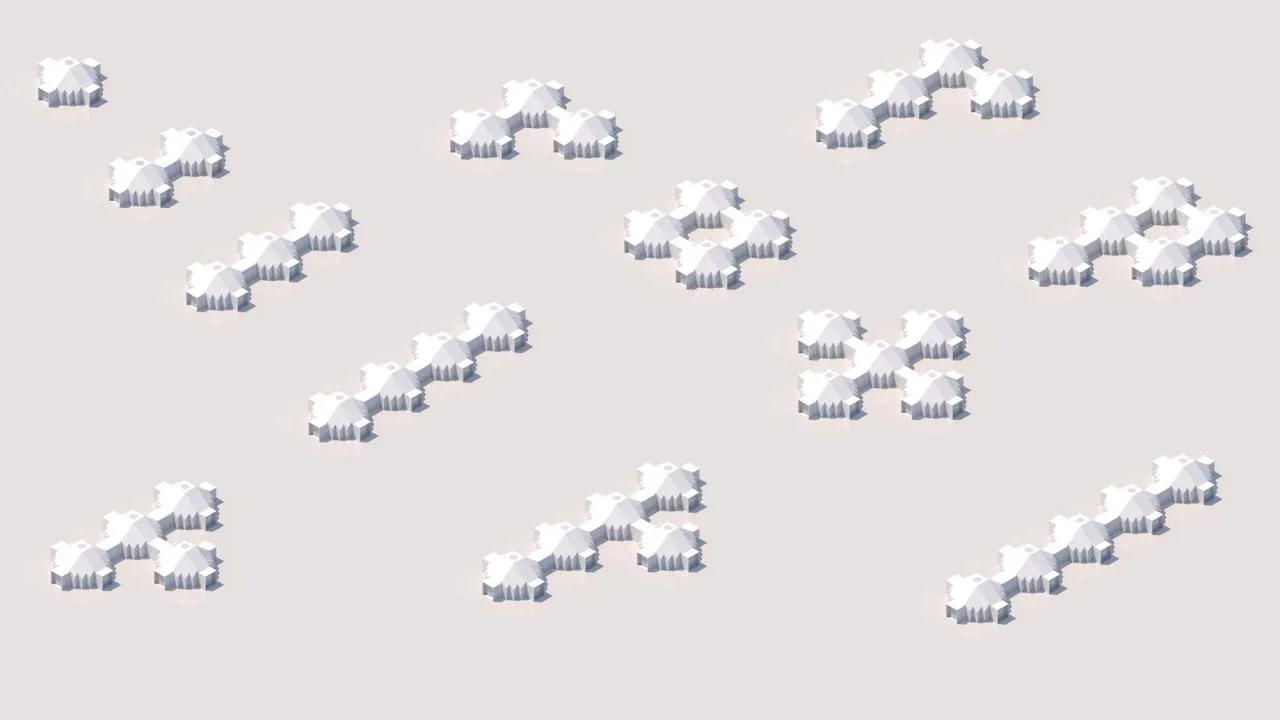
△ Expansion Diagram
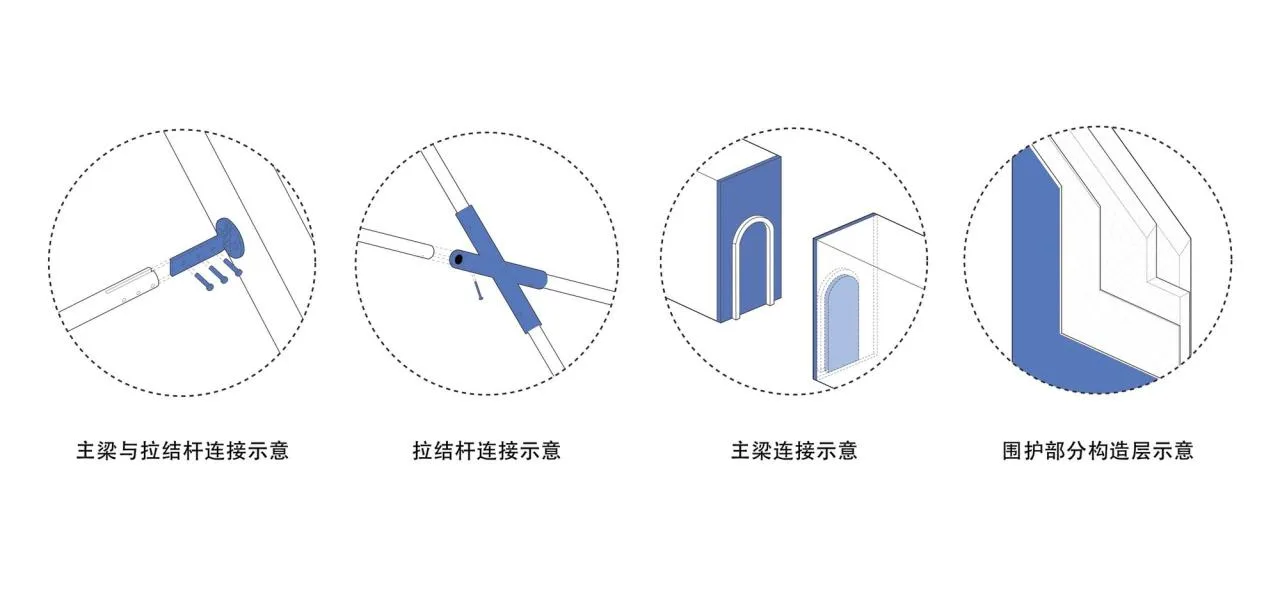
△ Construction Diagram
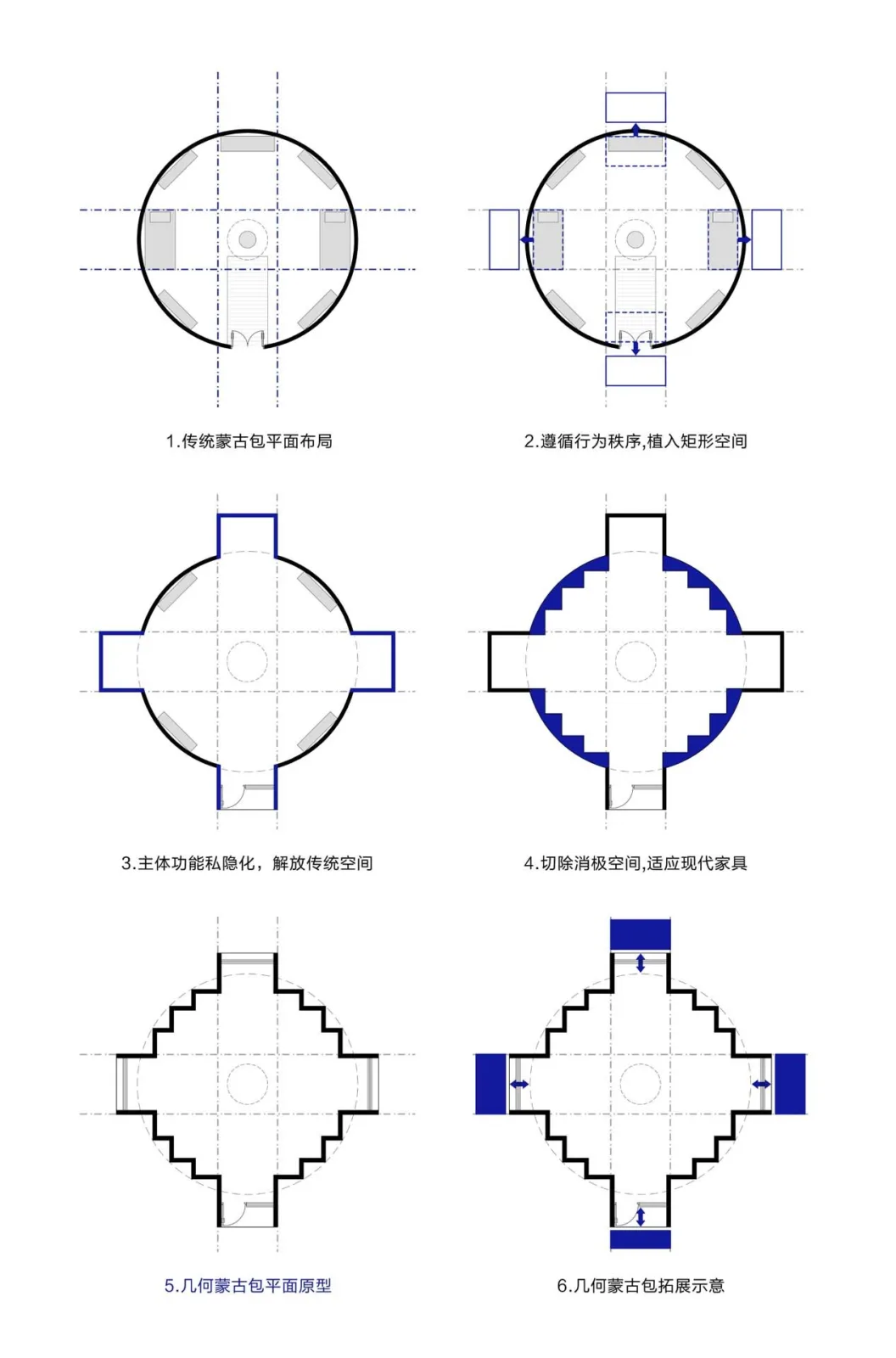
△ Floor Plan Logic
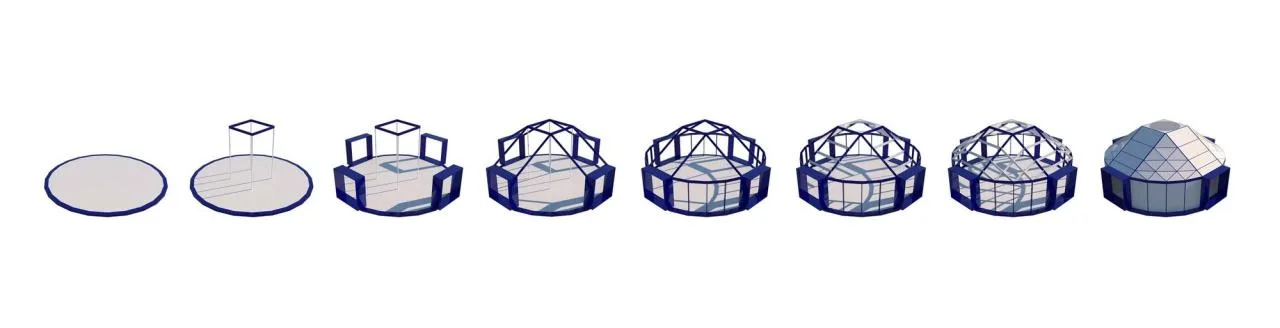
△ Building Logic
Project Information
Architectural Design: Goertek Studio
Area: 35 m²
Project Year: 2021
Photographer: Yujun Dou
Lead Architect: Zaraganbair
Design Team: Huhehada, Tara, Qu Wenyong, Zubin, Han Yajun, Enke Haoribao
Location: Hohhot, China















Must log in before commenting!
Sign Up