
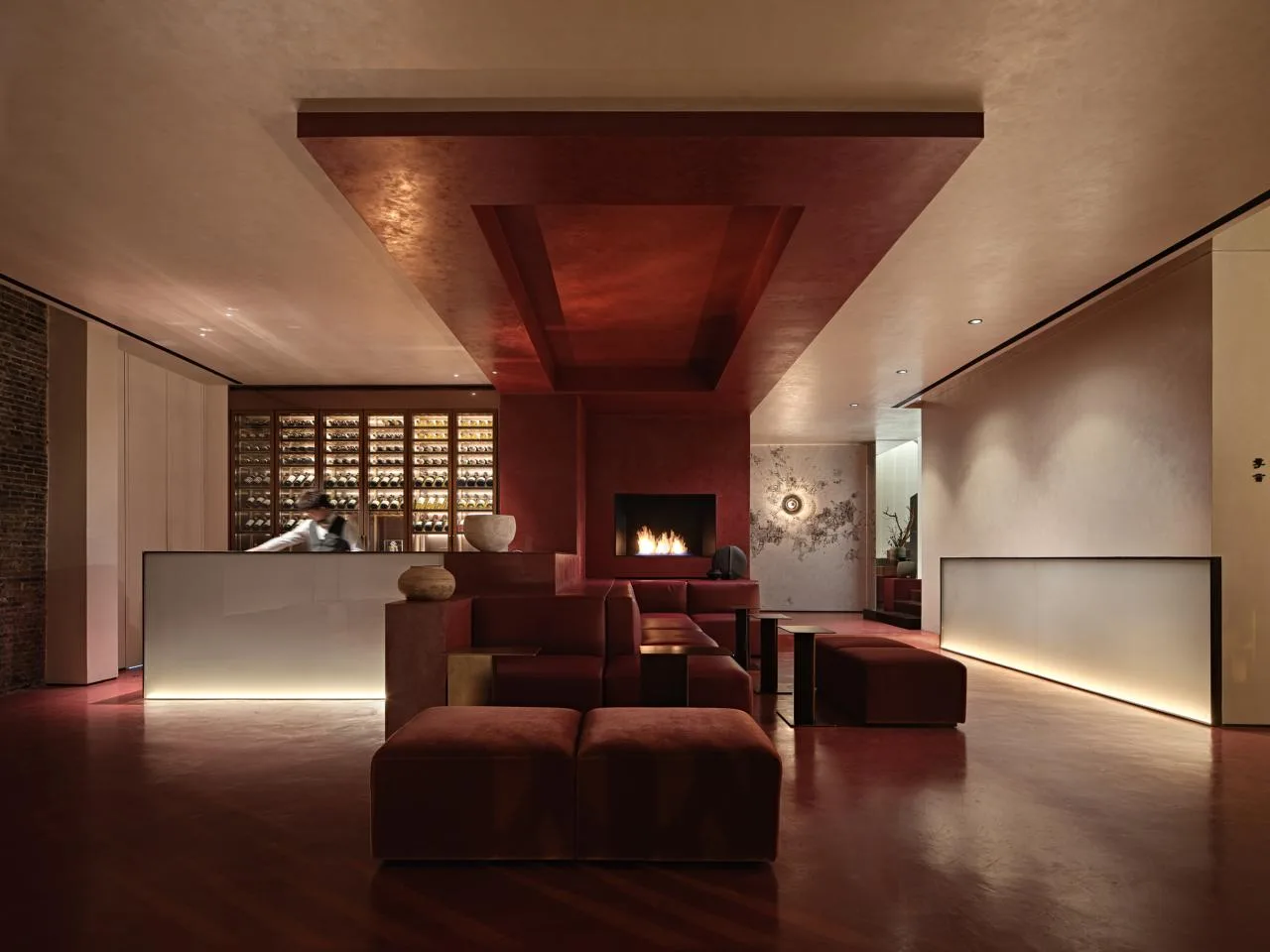
Located in a historic 1930s building in the heart of Hangzhou, GUD Restaurant specializes in hot pot cuisine and cocktails. Eight Wilderness Design was commissioned to renovate the building, design the interior, and develop the visual identity system for this project.
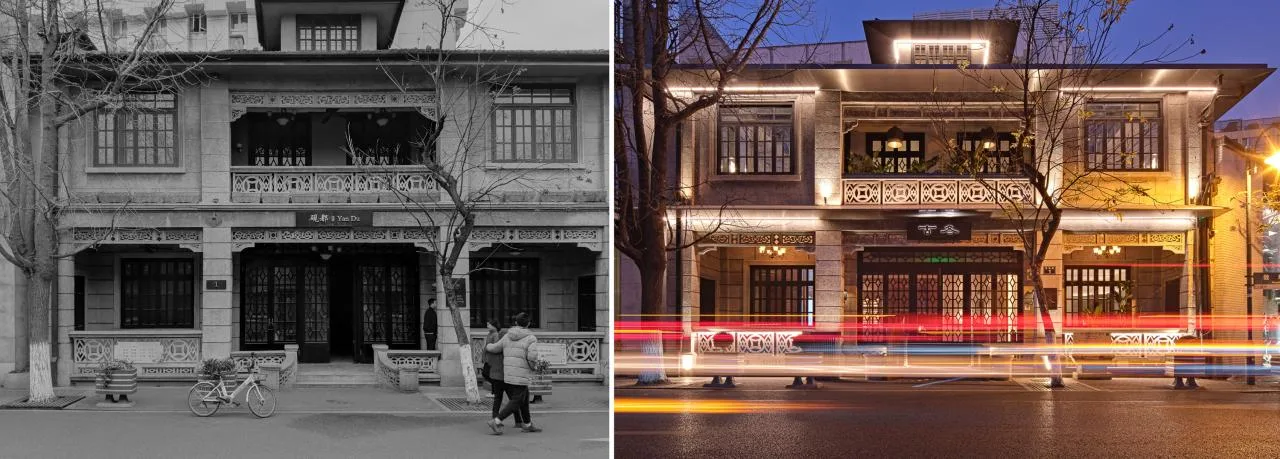
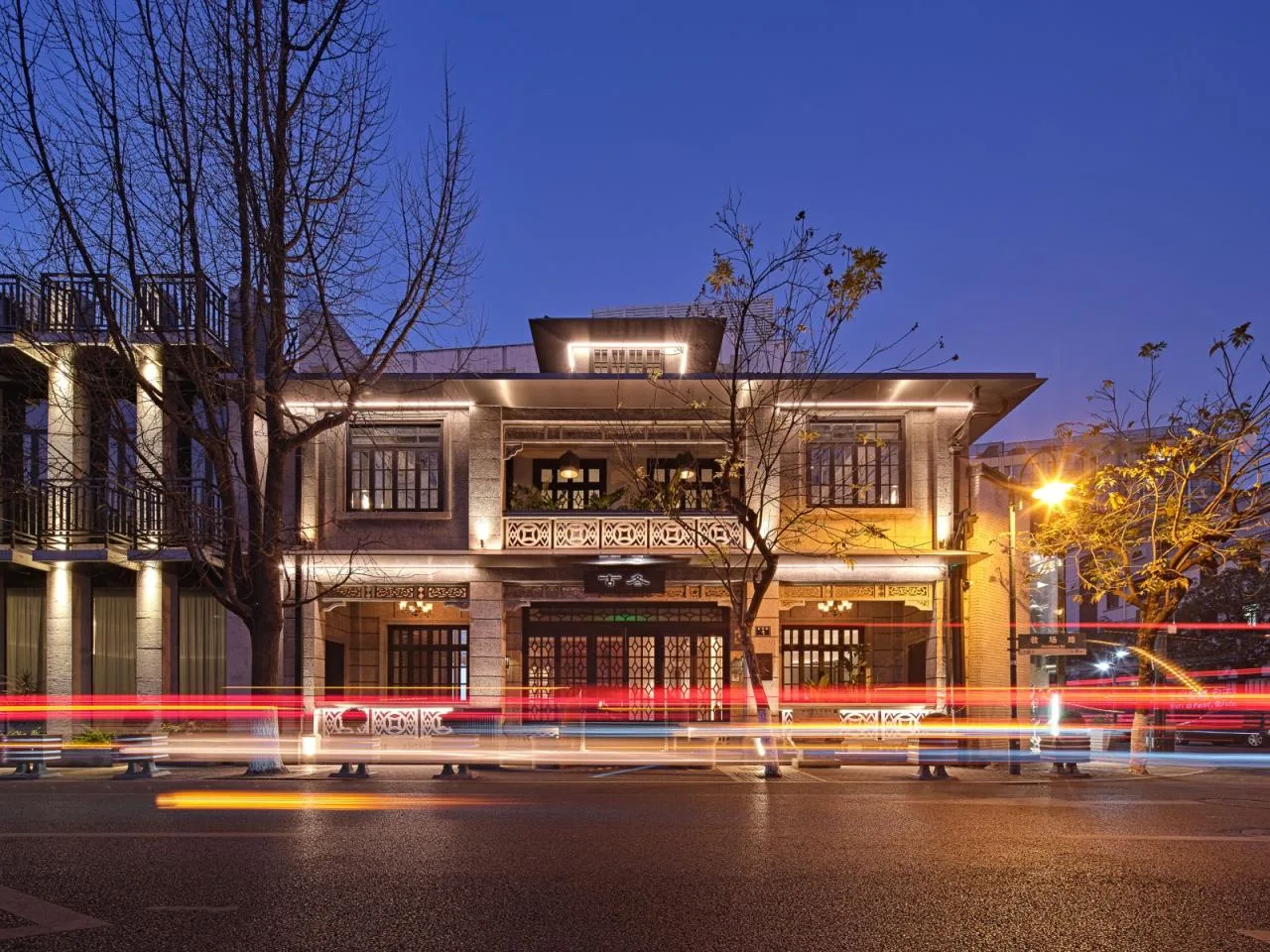
Like many old buildings in China, this villa was nearly lost to urban development since 1939, with only one intact facade facing the street. Over time, the interior underwent numerous renovations and expansions, transitioning from residential to various commercial uses. As a result, the original interior design is no longer recognizable.
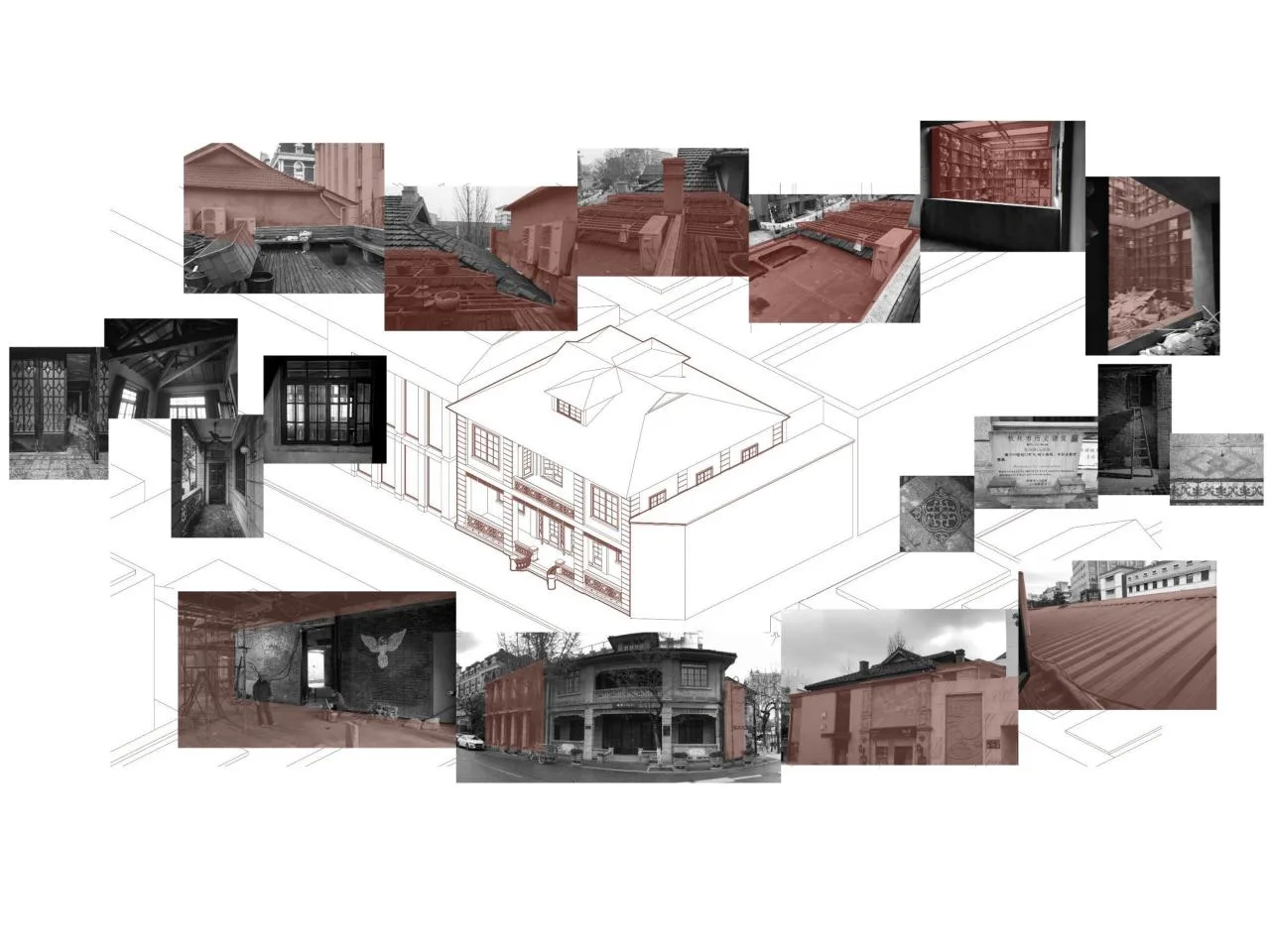
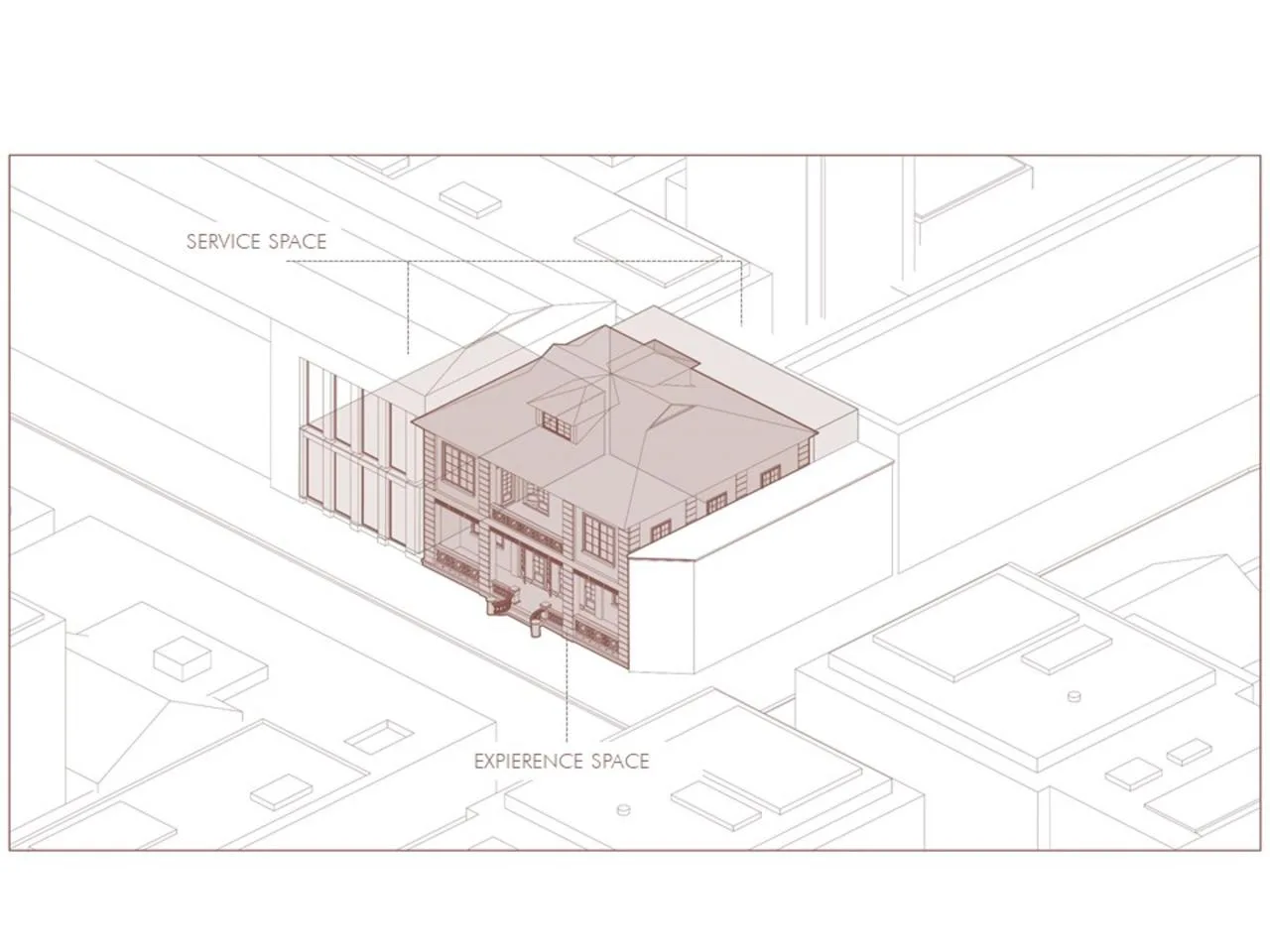
The renovation site comprises the original 1939 villa, its northern expansion, and ground-floor space of an adjacent building on the west side. Ba Huang Design believes the best way to preserve historic buildings is to adapt them to contemporary functions, giving them renewed life. Since the villa was originally a residence without public bathrooms or industrial kitchens, the restoration required meticulous care. Service areas—such as kitchens, bathrooms, and public staircases—were placed in the expansion and adjacent buildings, preserving the 1930s structure as a dedicated dining space.
The spatial design concept draws inspiration from the building’s unique history and Chinese hot pot culinary culture, exploring the relationship between food culture and atmosphere through abstract expression. For Eight Wilderness, the dining space serves as a canvas for culinary experiences, emphasizing the dynamic interaction between food and environment.
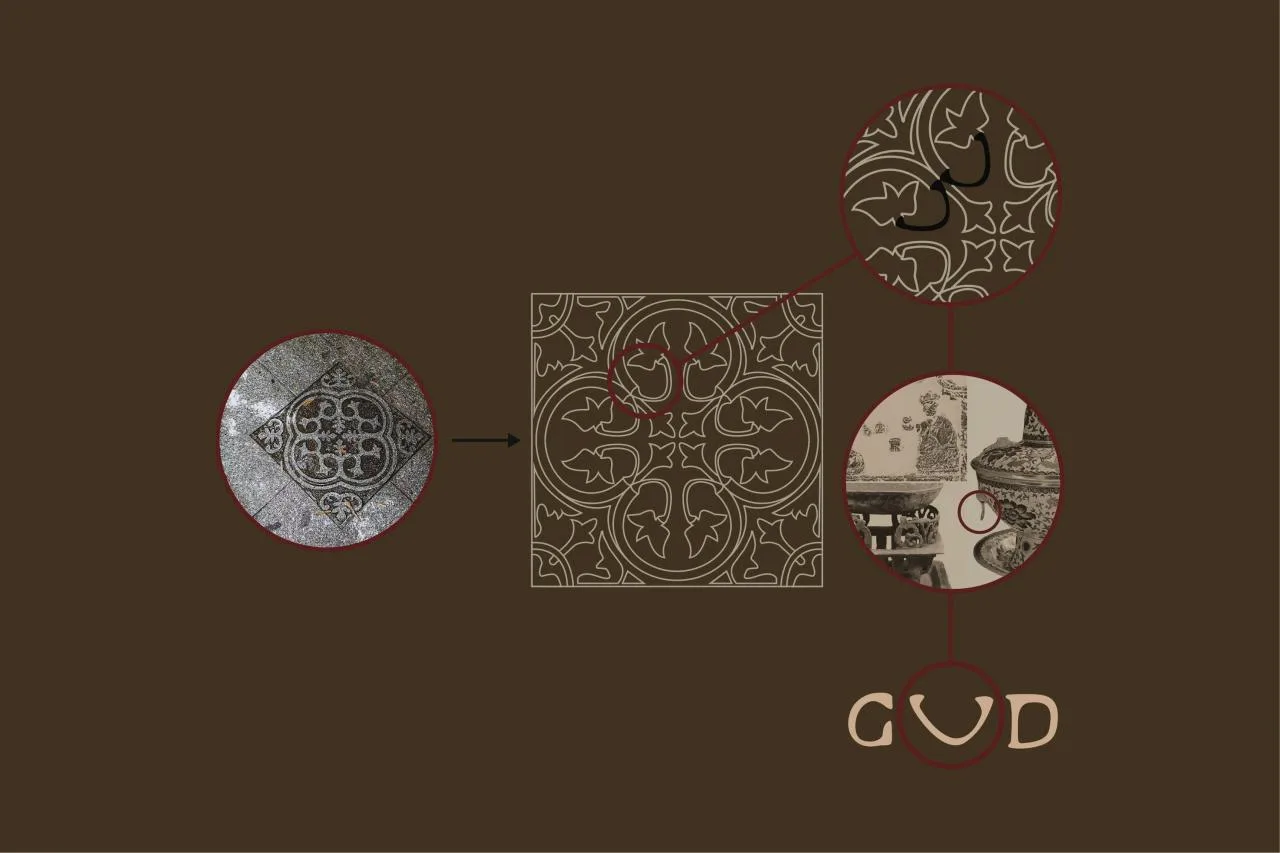
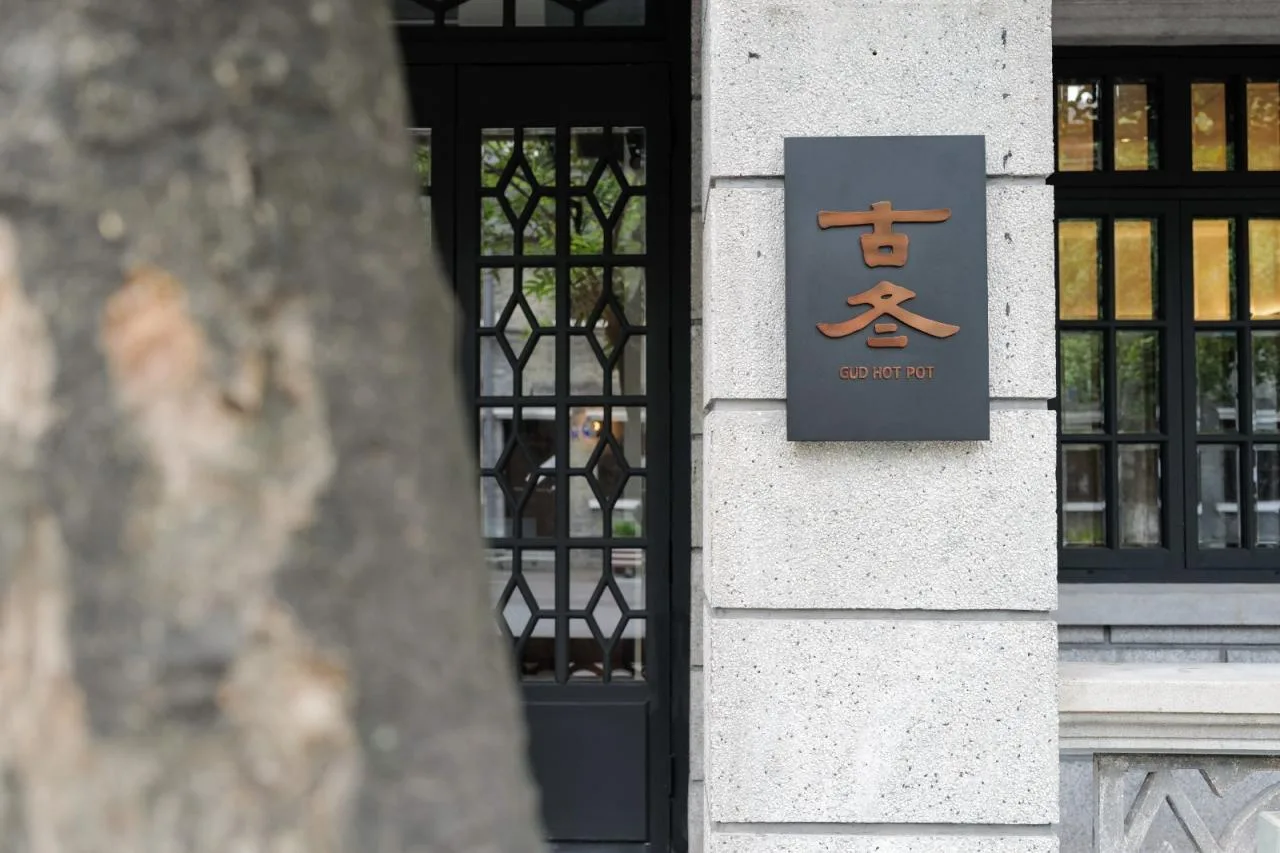
After extensive research on hot pot history and culinary culture, Ba Huang opted to forgo the traditional colorful regional styles, instead integrating core cooking principles with the architectural design. The restaurant was named “GUD Gudong,” referencing the ancient Eastern Han Dynasty term for hot pot, “Antique Soup,” inspired by the sound “gu dong” when boiling water is added. The logo combines the shape of traditional copper pots with fragments of original floor tiles from the building.
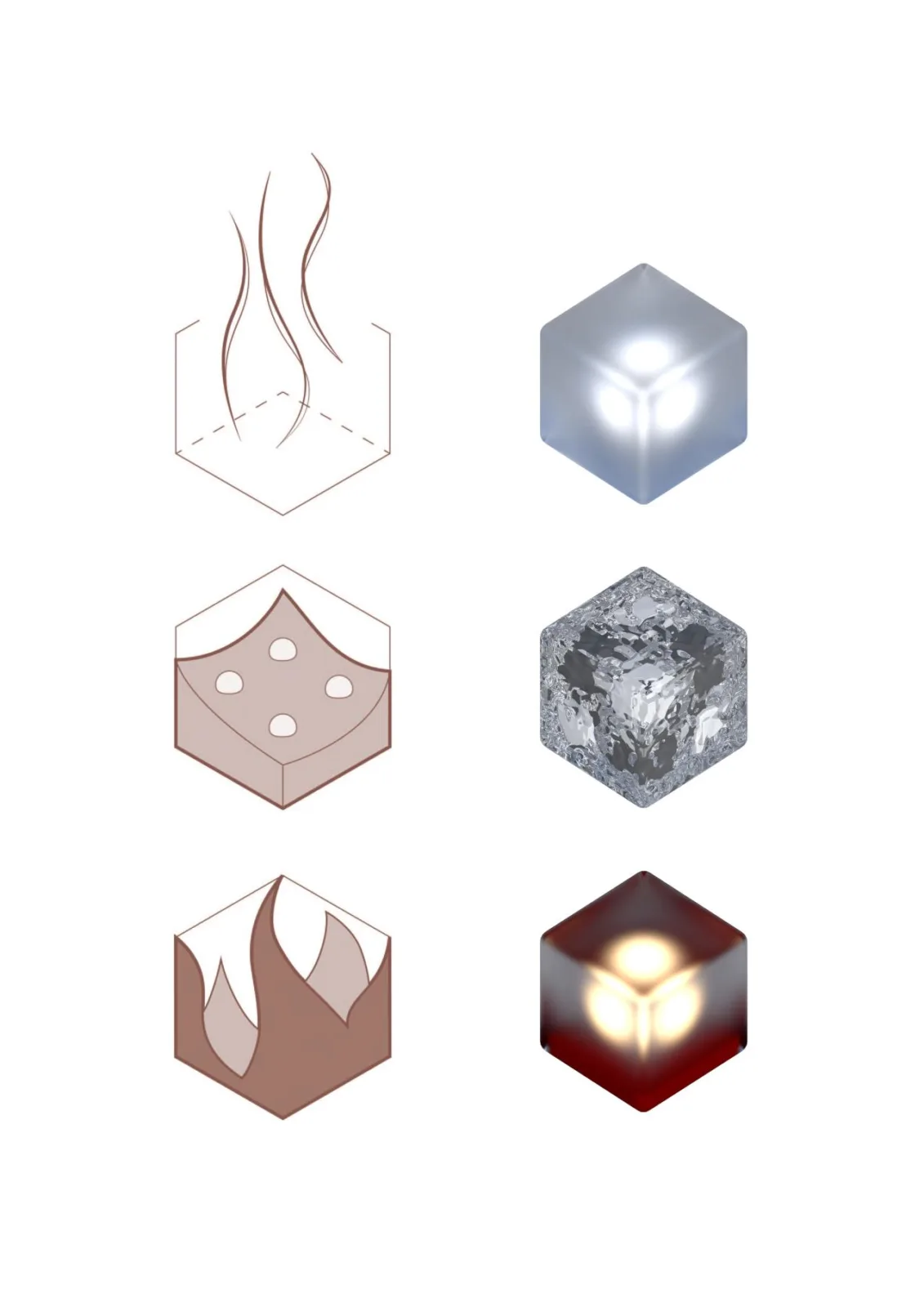
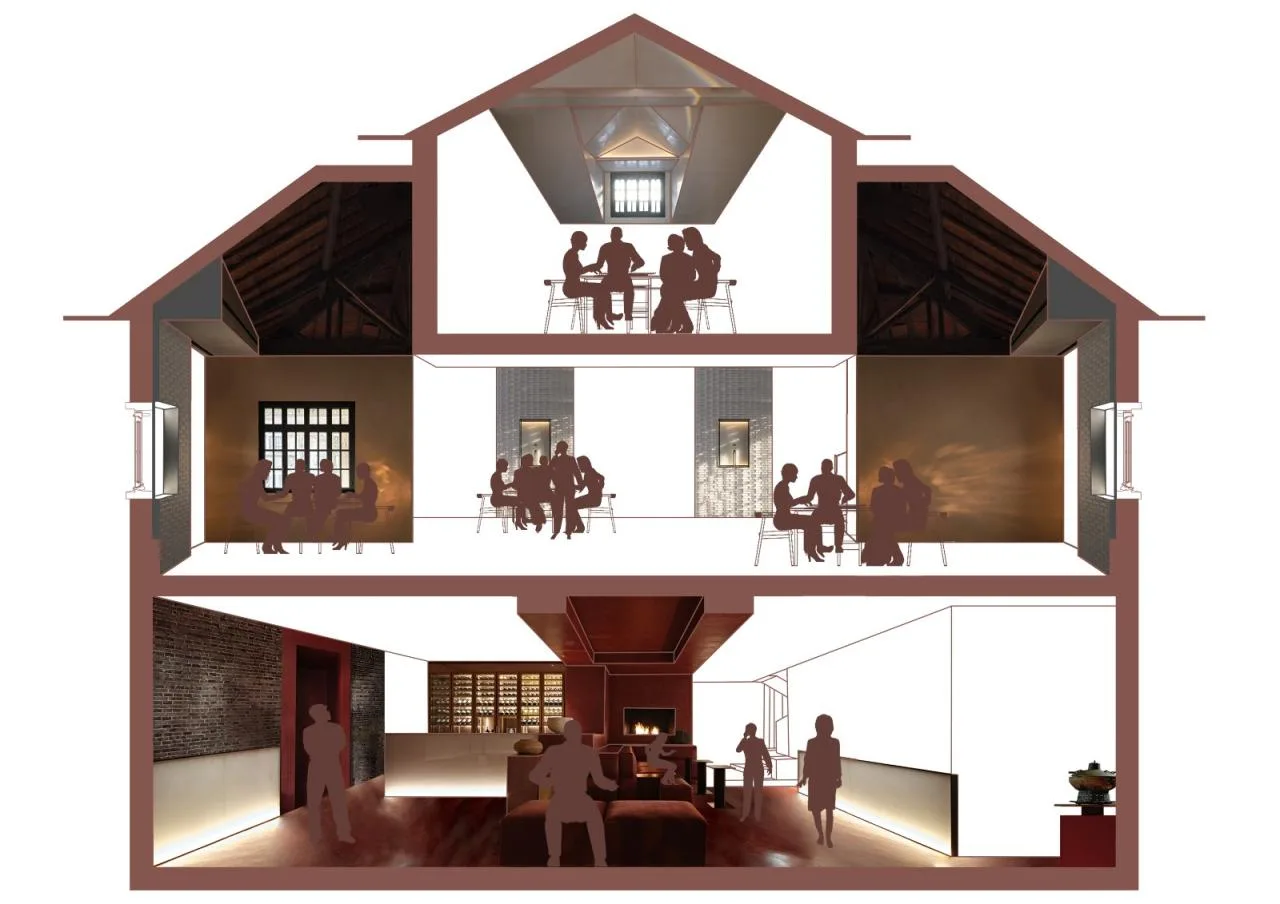
In Chinese culture, hot pot represents a special communal dining experience where friends and family gather to share food and joy. Heat from fire or electric stoves breaks down food molecules, which then recombine in liquid, elevating both flavor and social connection. The design embraces the three key elements of hot pot—heat (fire), medium (water), and flavor enhancement (steam)—across the building’s floors through function, materials, mechanisms, and lighting, offering an abstract, museum-like celebration of hot pot culture.
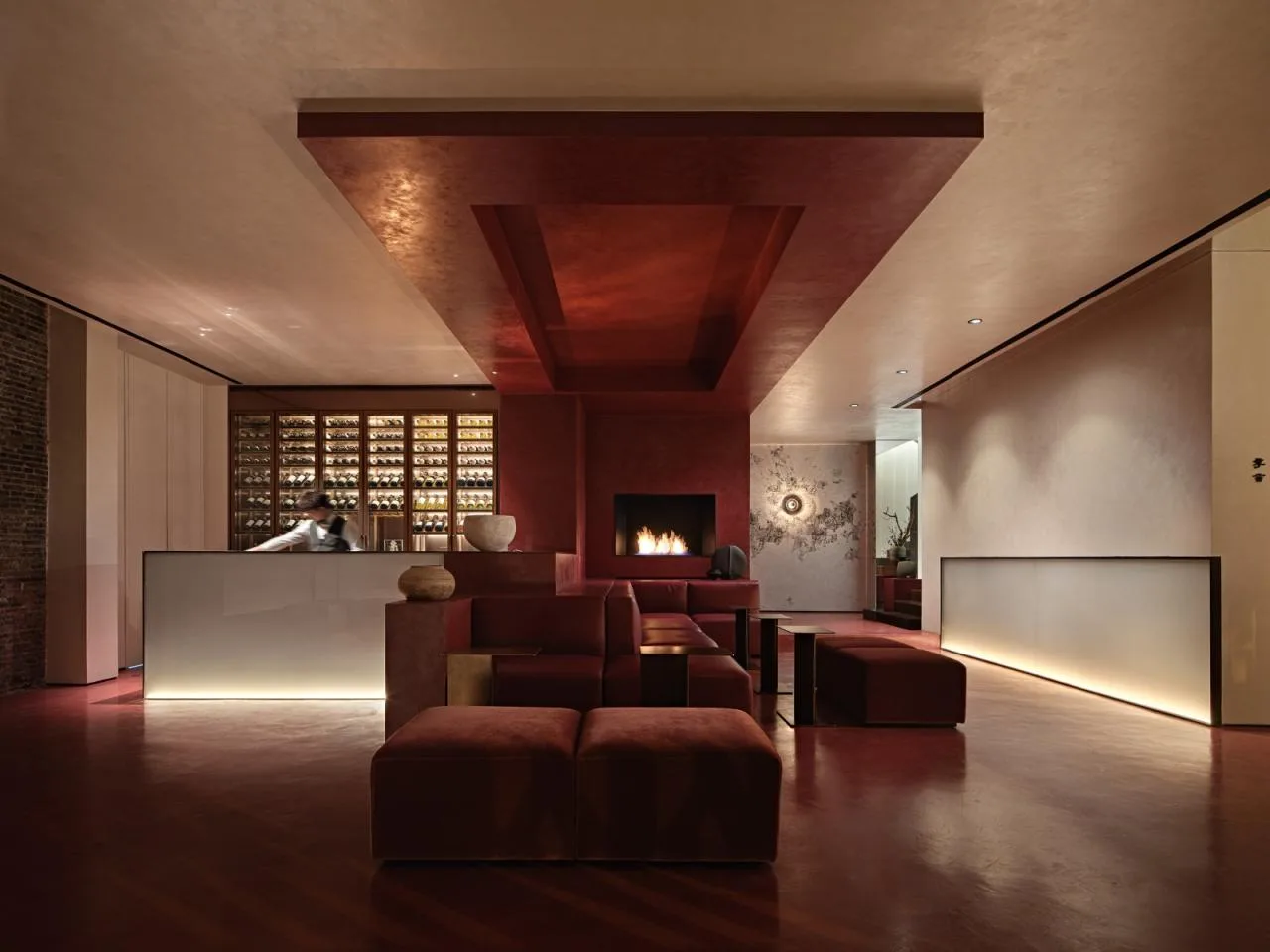
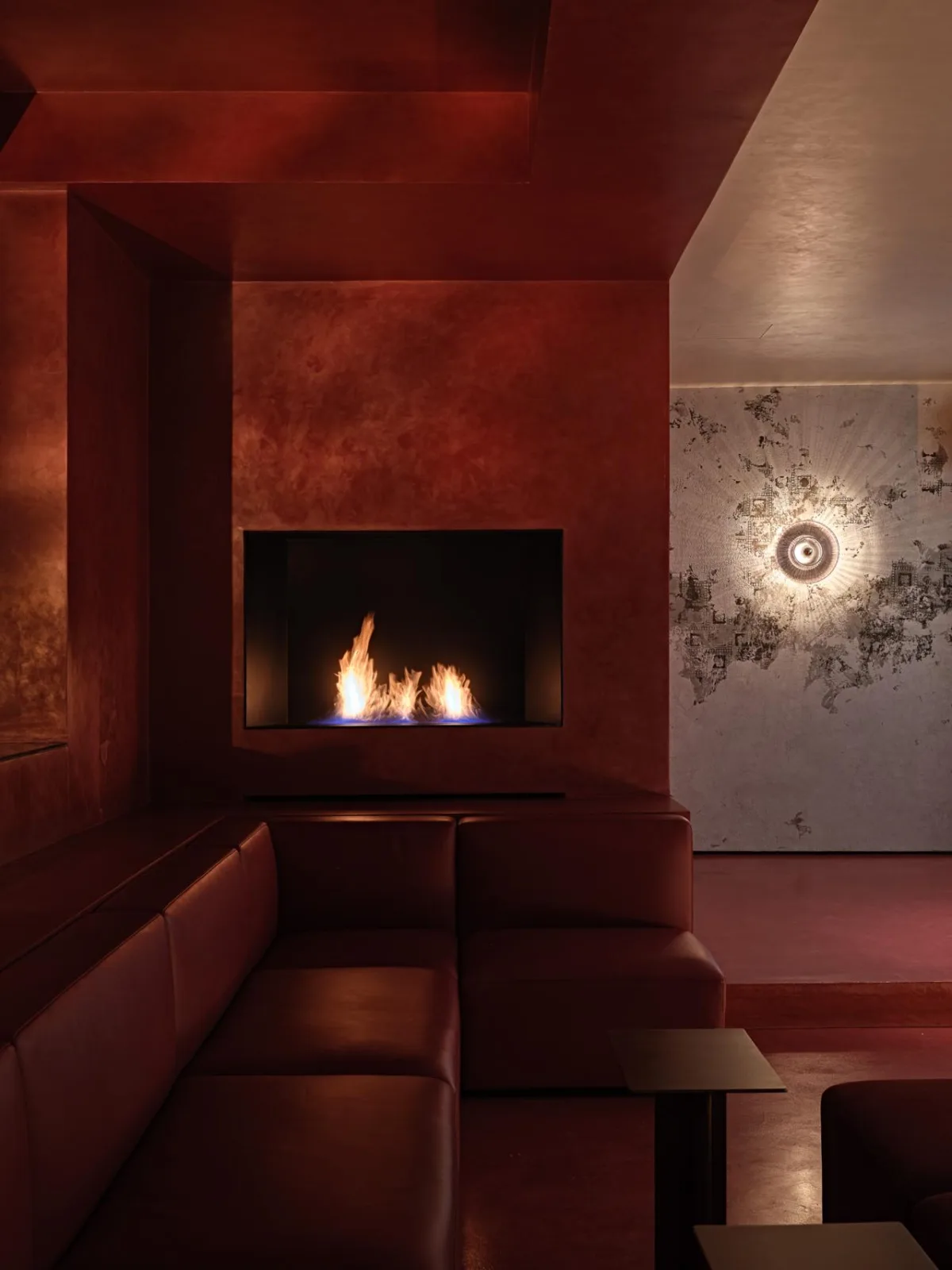
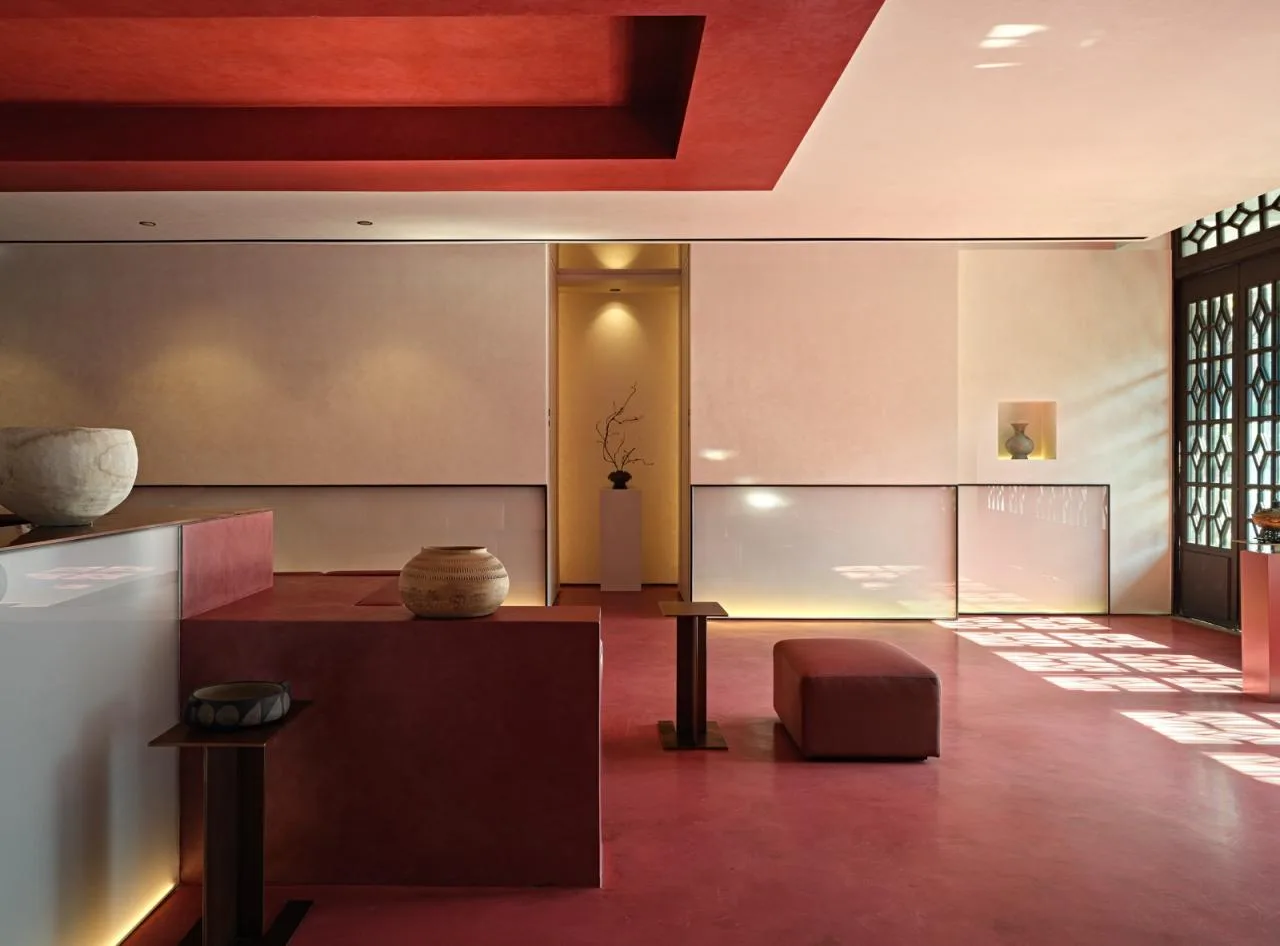
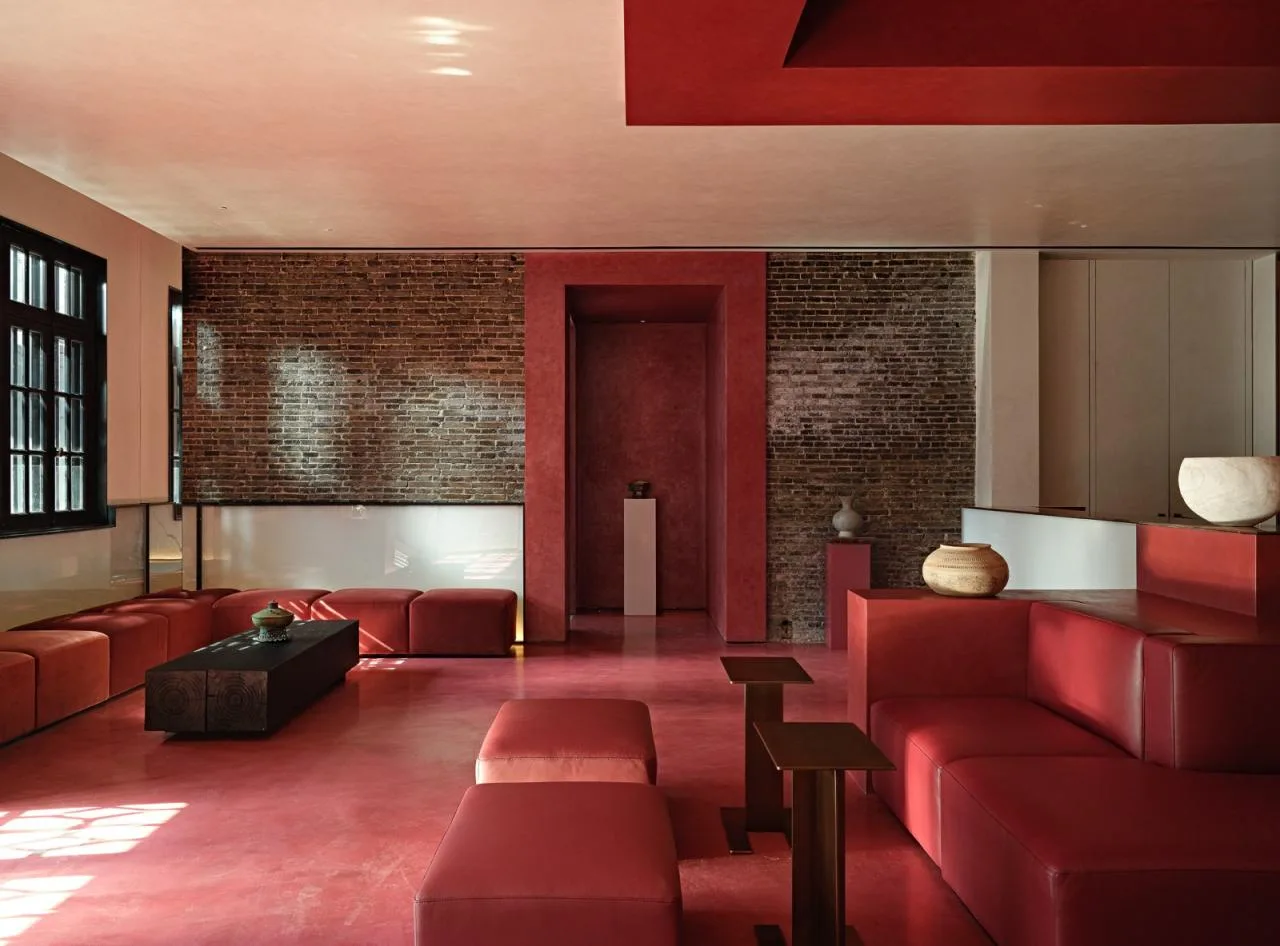
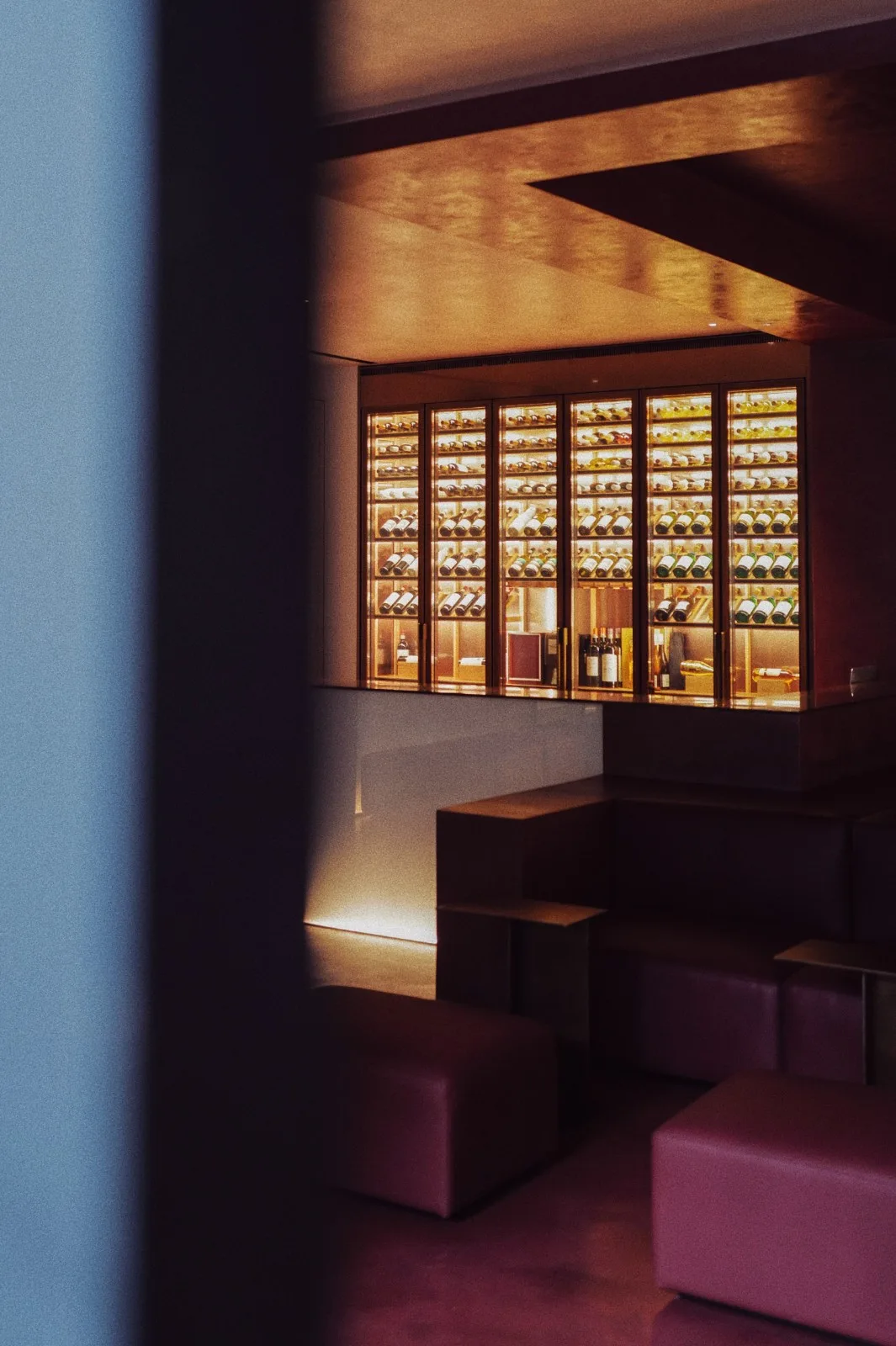
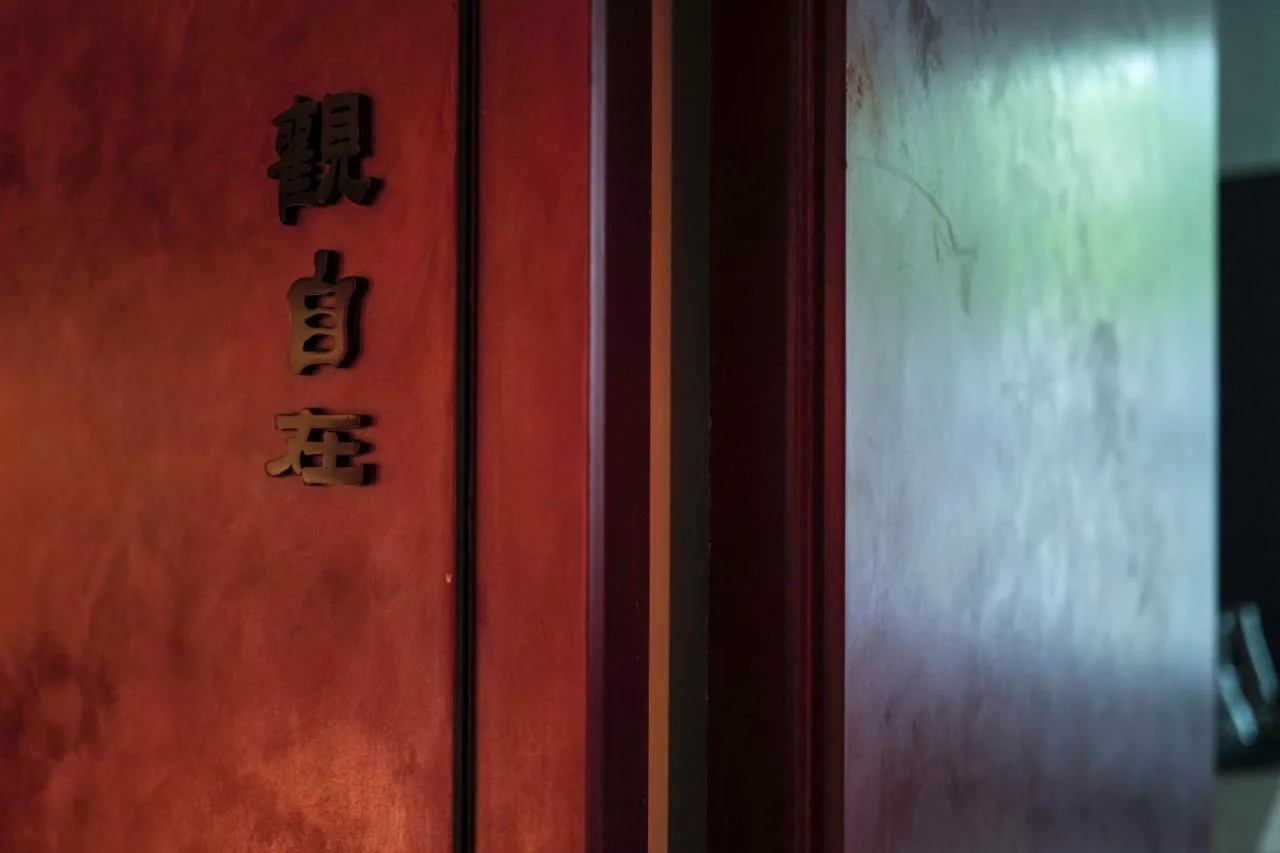
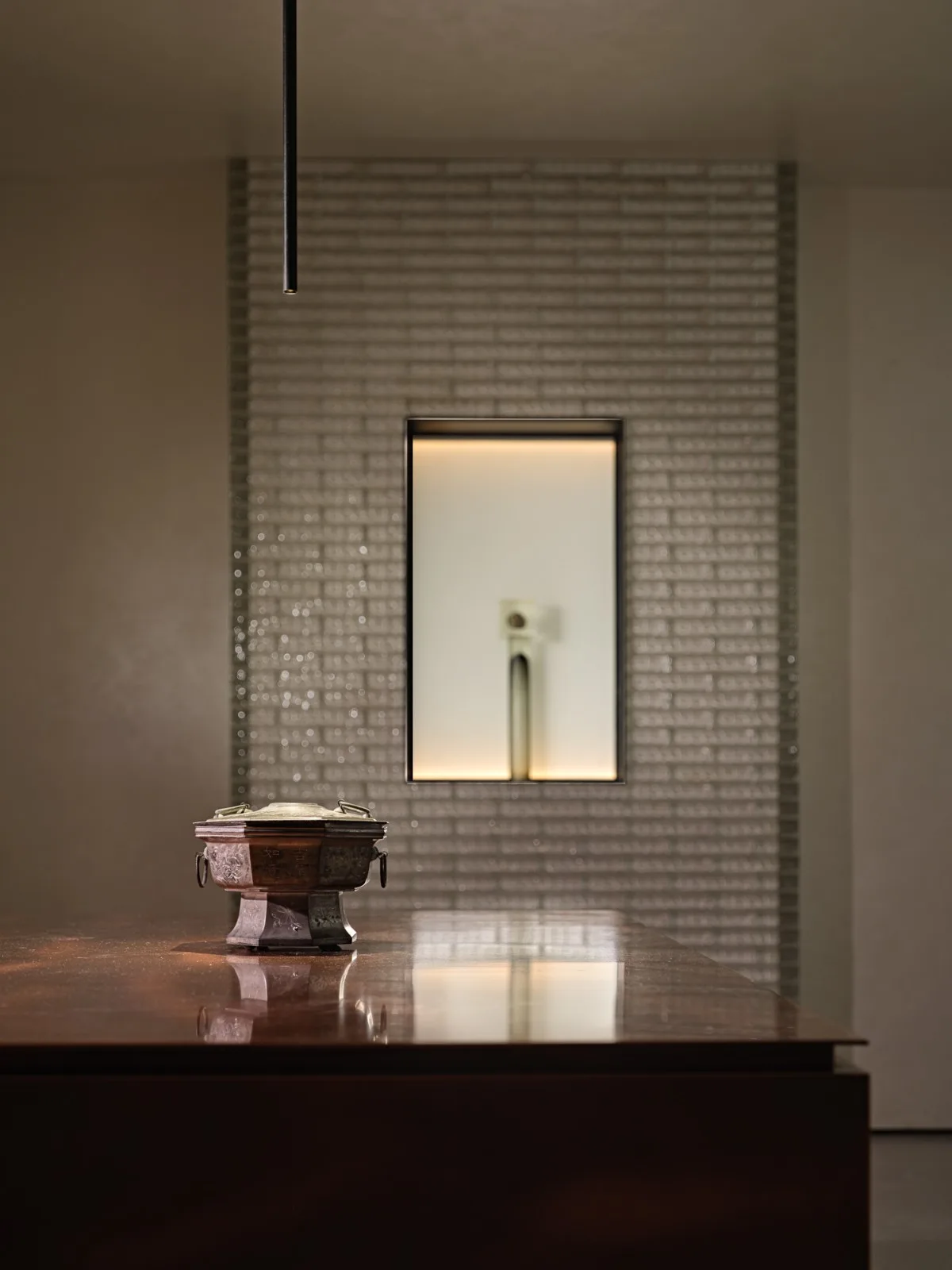
The first element, heat, symbolizes the energy that brings liquid to a boil and defines the design of the first floor. This level serves as a lively cocktail bar, where guests can gather and start their hot pot experience together. The red floor, ceiling-high fireplace, glowing glass wall panels, red columns displaying antique hot pot vessels, and plush red velvet sofas all create a warm, vibrant atmosphere reminiscent of fire’s energy and social interaction. Original brick walls of the building’s facade are preserved here, evoking the building’s history. A concave mirror ceiling near the VIP room entrance hints at the water theme on the second floor.
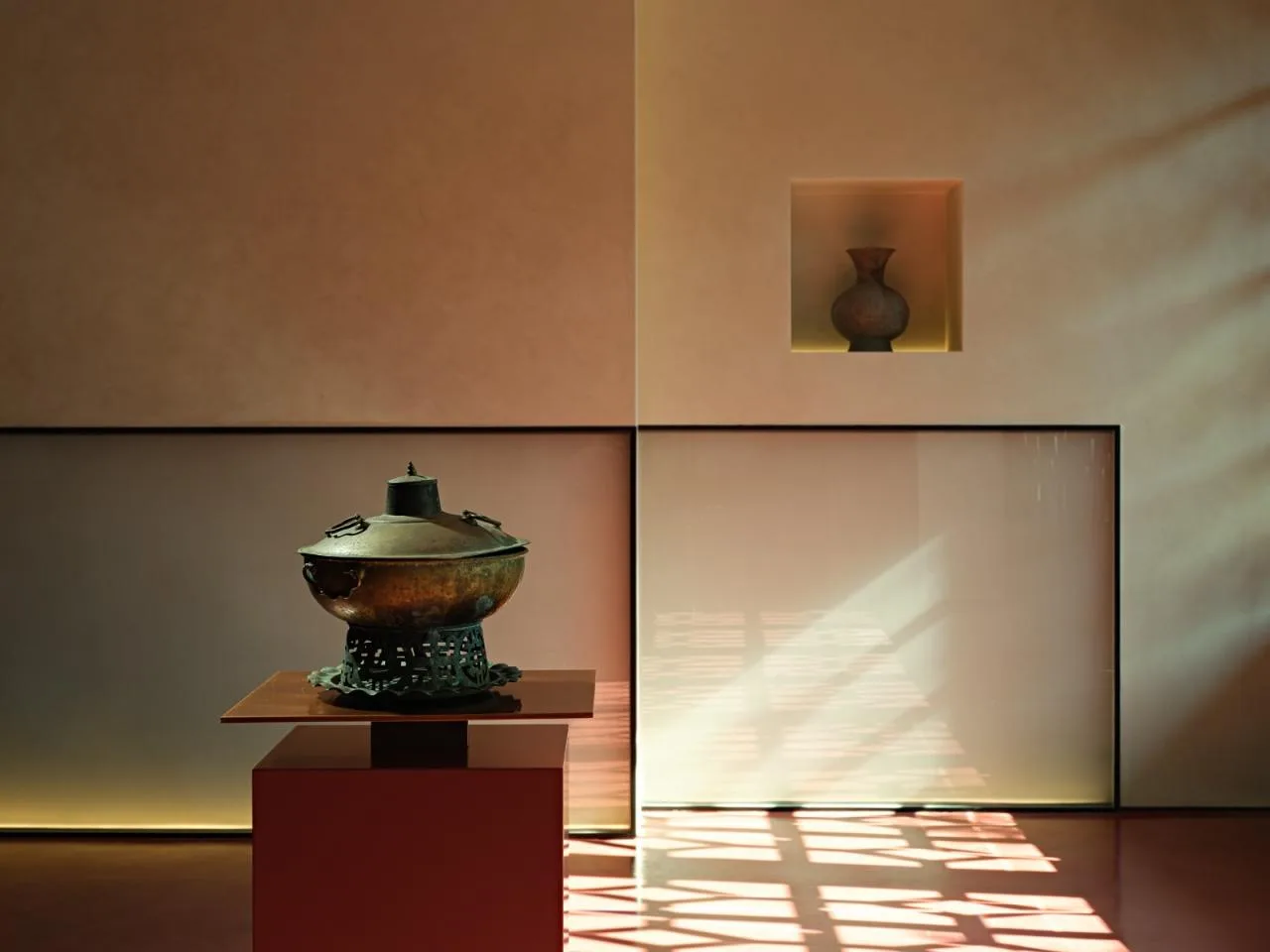
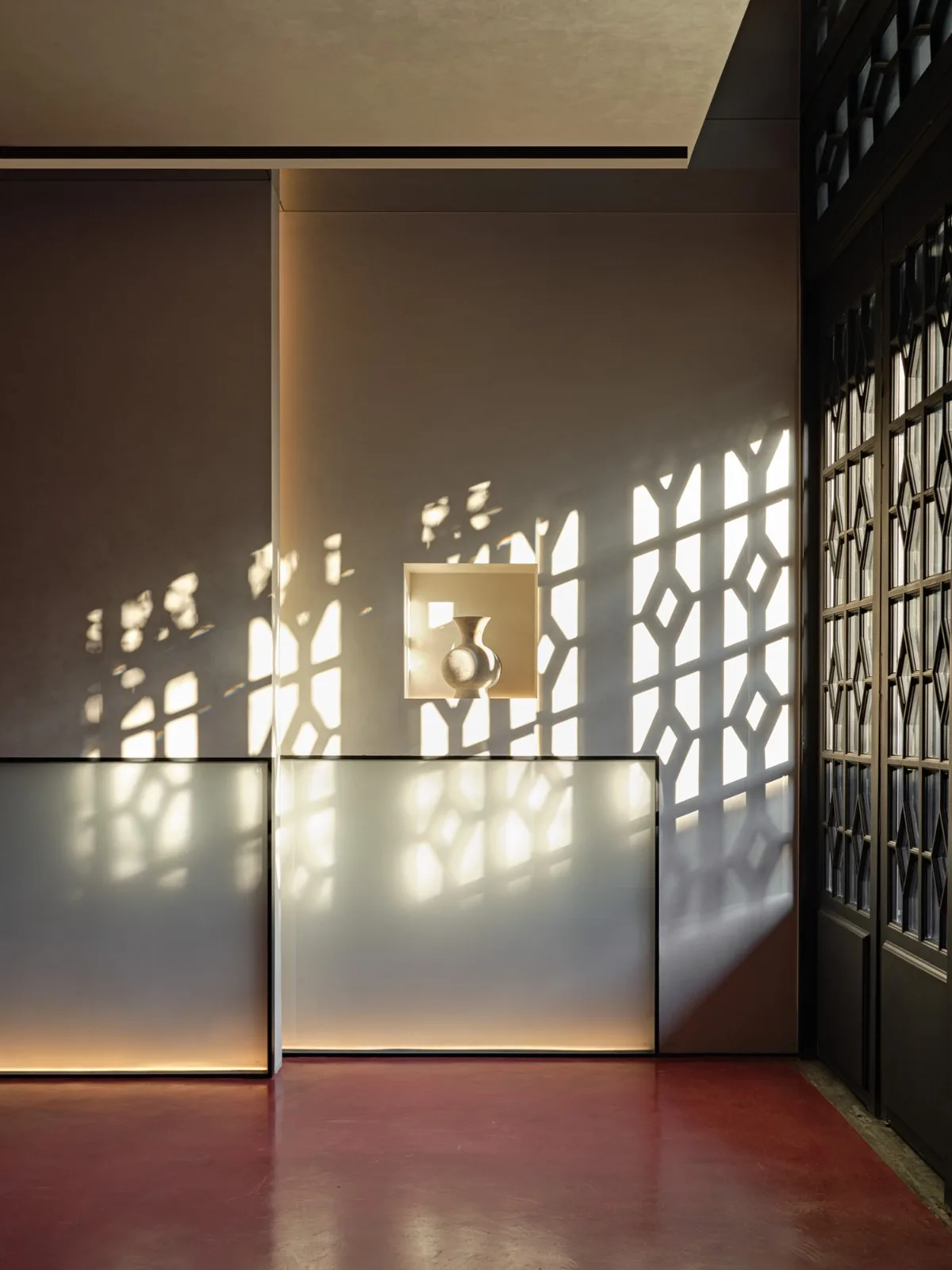
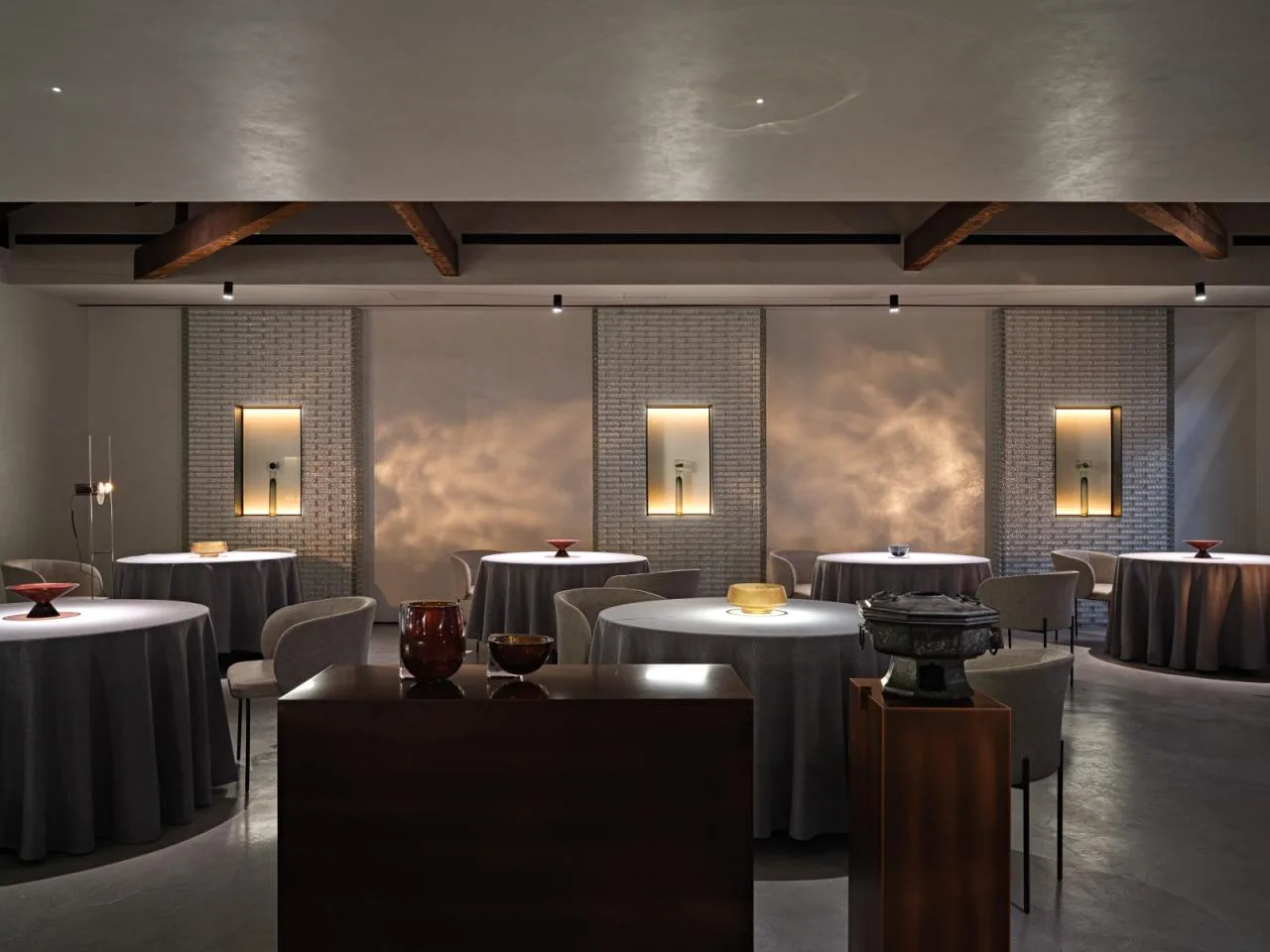
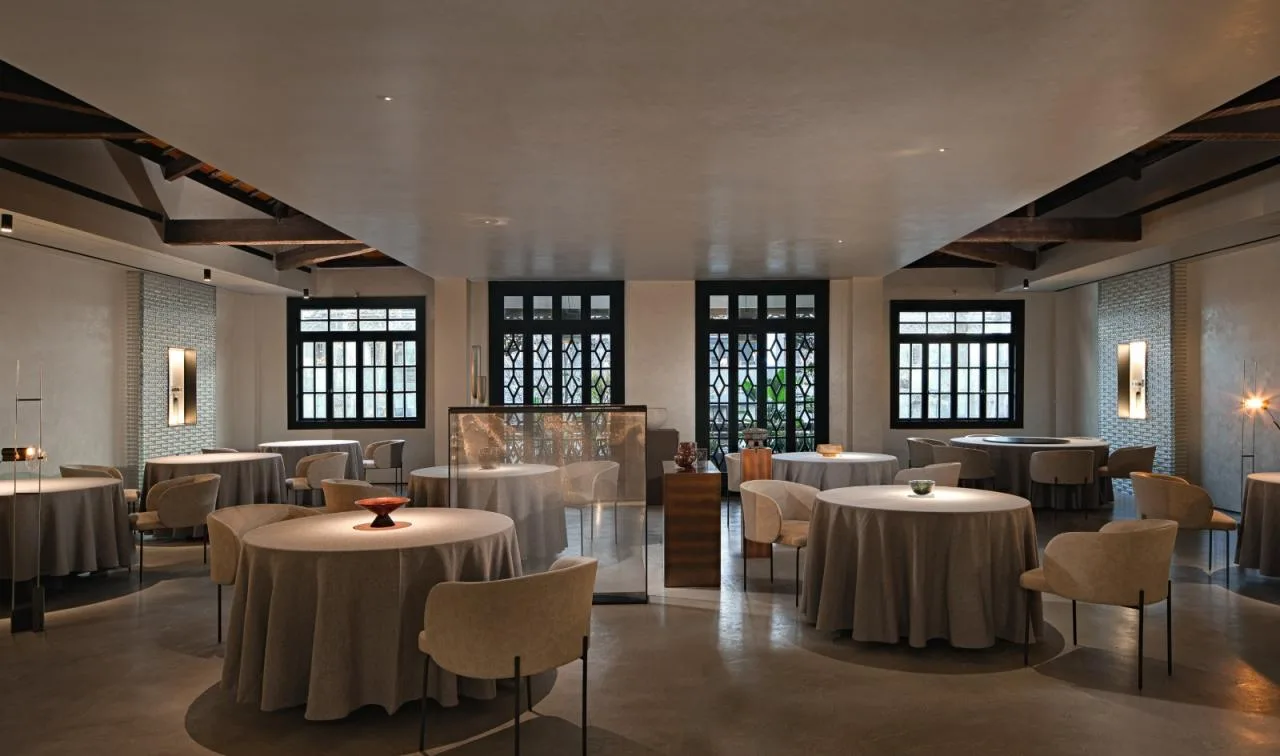
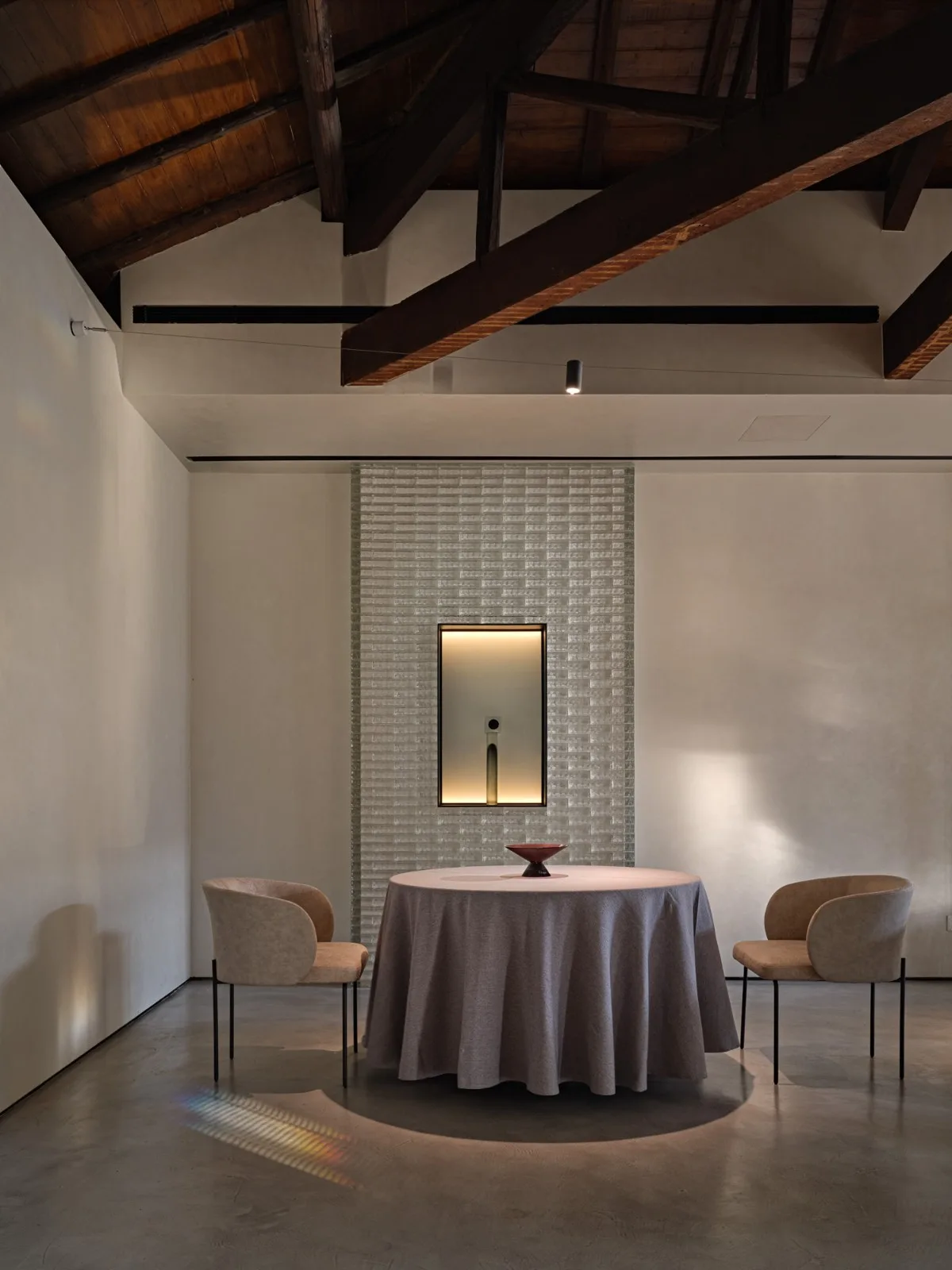
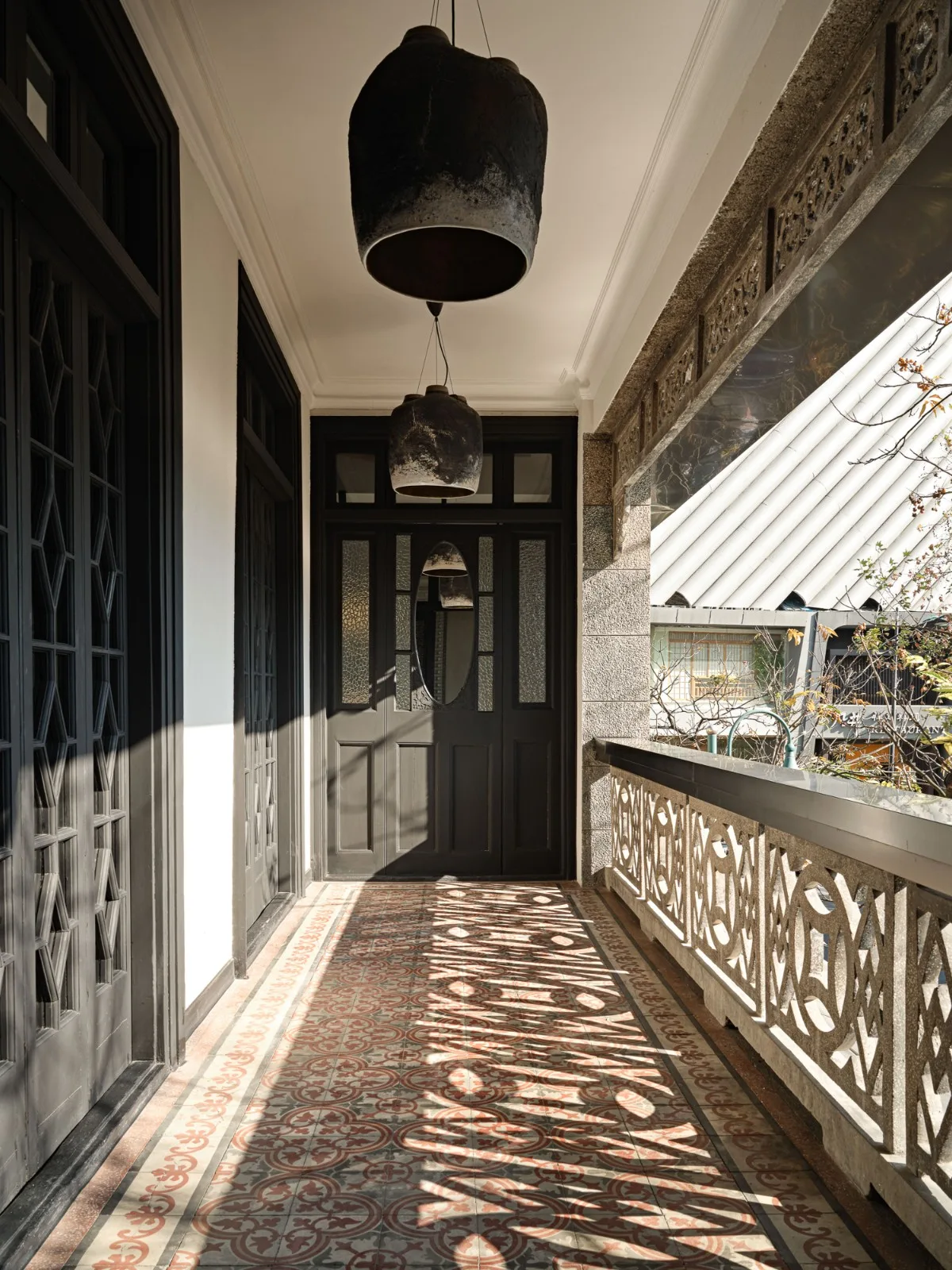
Ascending from the vibrant cocktail bar leads to the second floor, representing the element of water. Just like water dissolves and recombines food molecules, this level offers a communal dining space where friends and family gather around round tables to enjoy hot pot together. Glass brick niches utilize the depth of original windows now obscured by neighboring buildings, displaying raw stones encased in resin—an abstract tribute to the fusion of food molecules in liquid. The floor preserves old stone-framed walls from the original building extension, creating partitions between dining areas. The wooden roof structure and street-facing balcony have been carefully restored to maintain the building’s character.
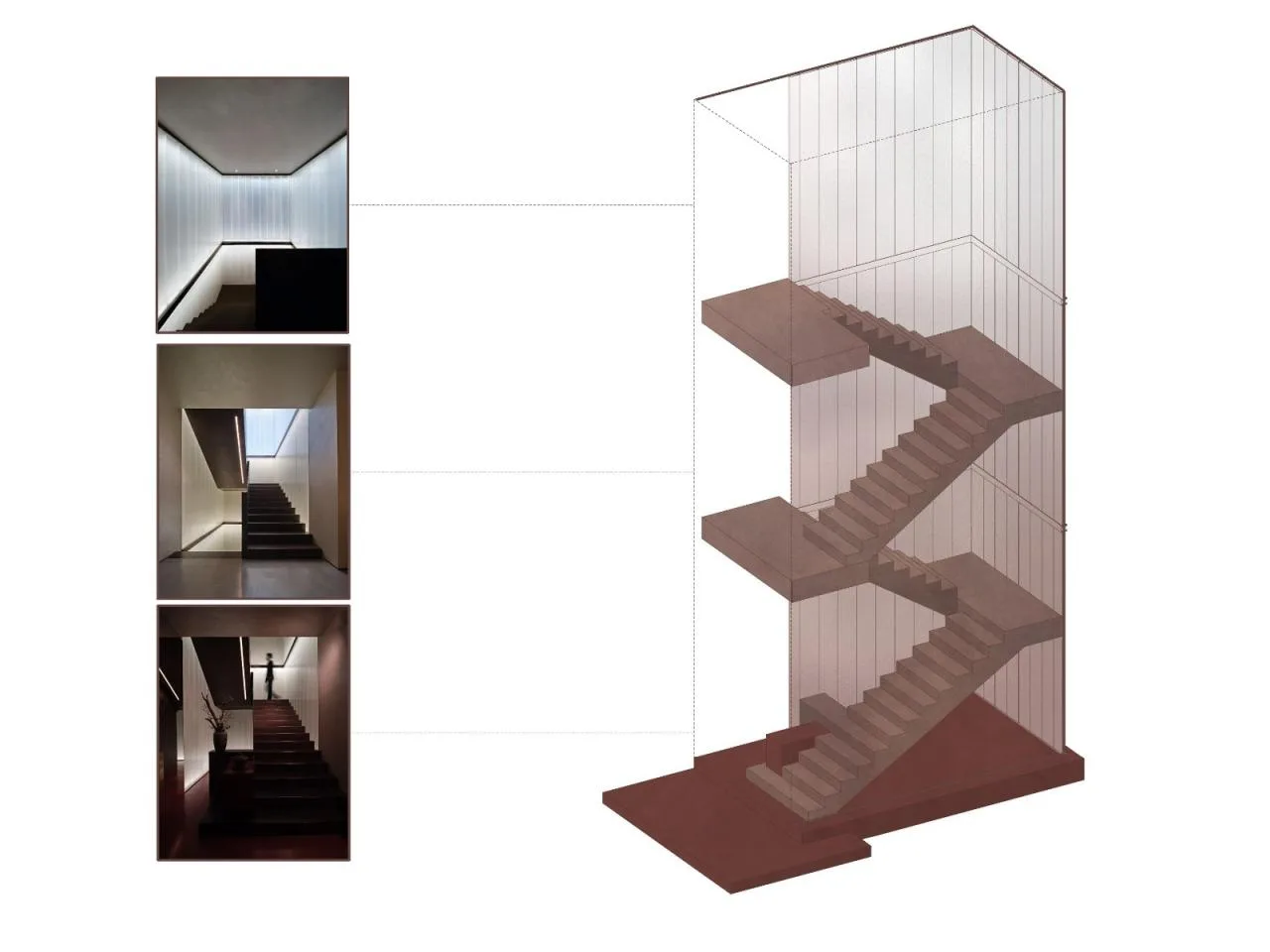
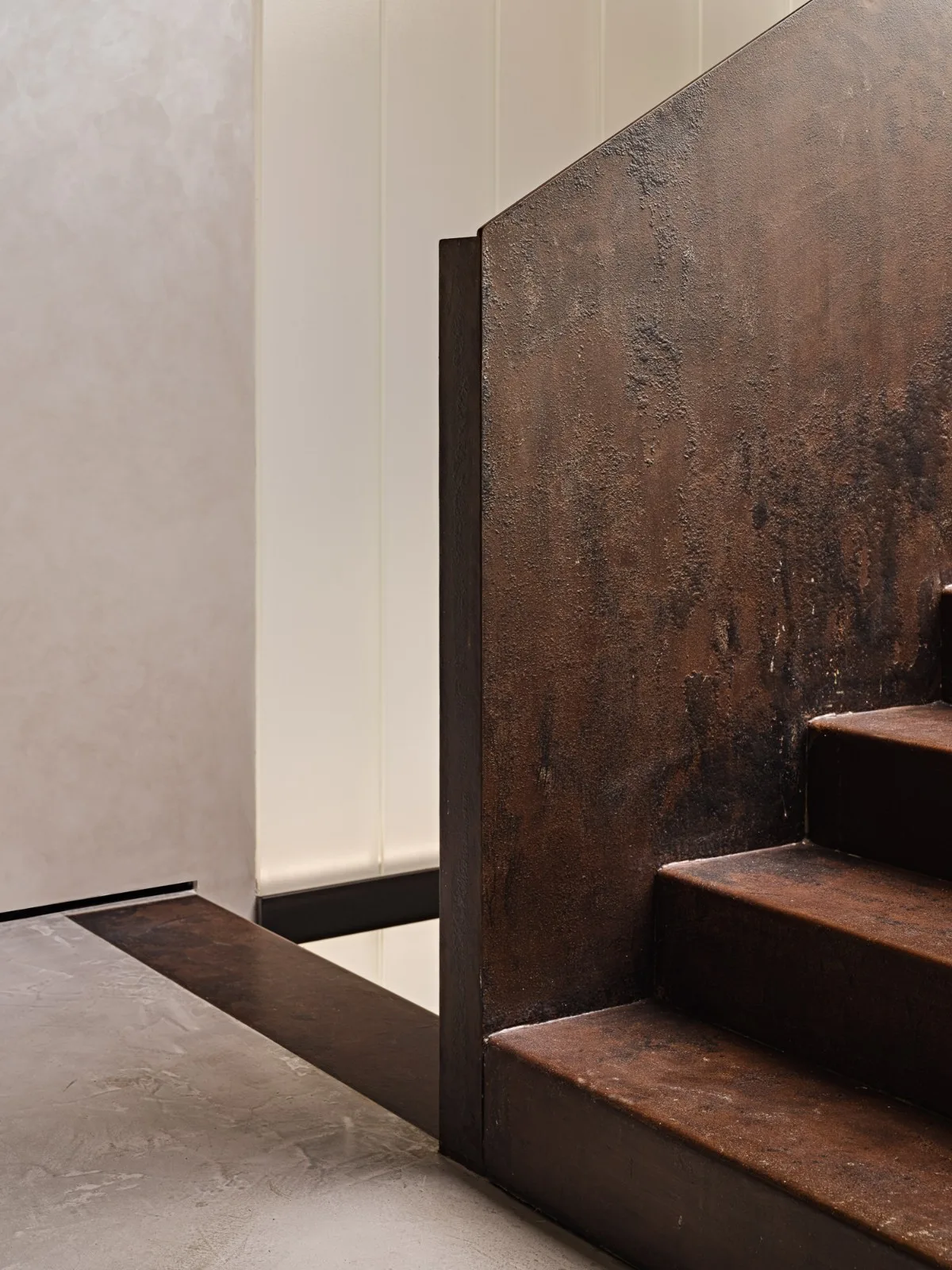
The original villa’s old wooden staircase was narrow, steep, and severely damaged, unsuitable for modern restaurant use. The architects renovated and reconfigured vertical circulation throughout the courtyard. The new staircase features double-layer U-shaped glass panels combined with lighting to create smooth transitions of light and shadow across all floors, enhancing the overall spatial experience.
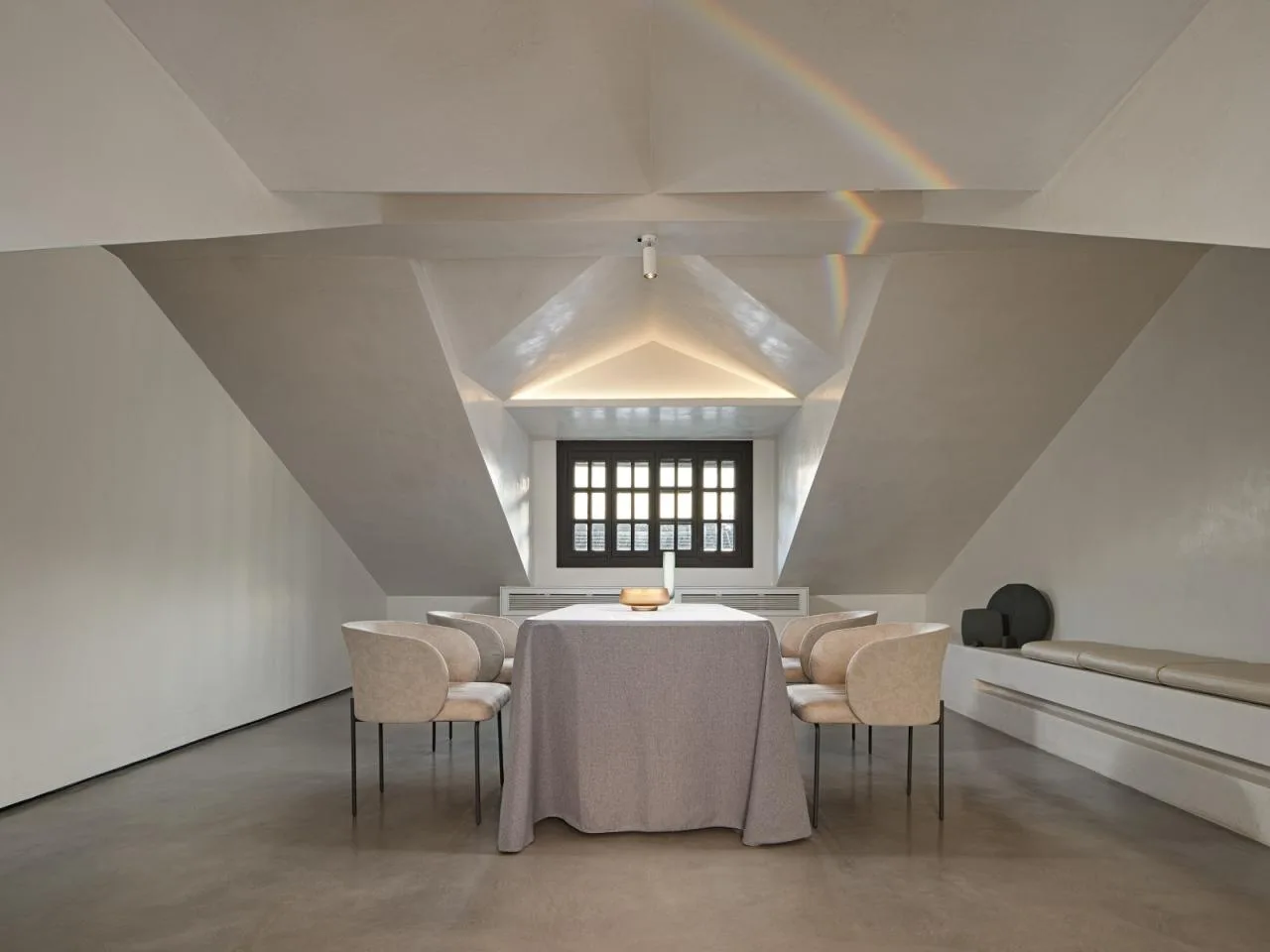
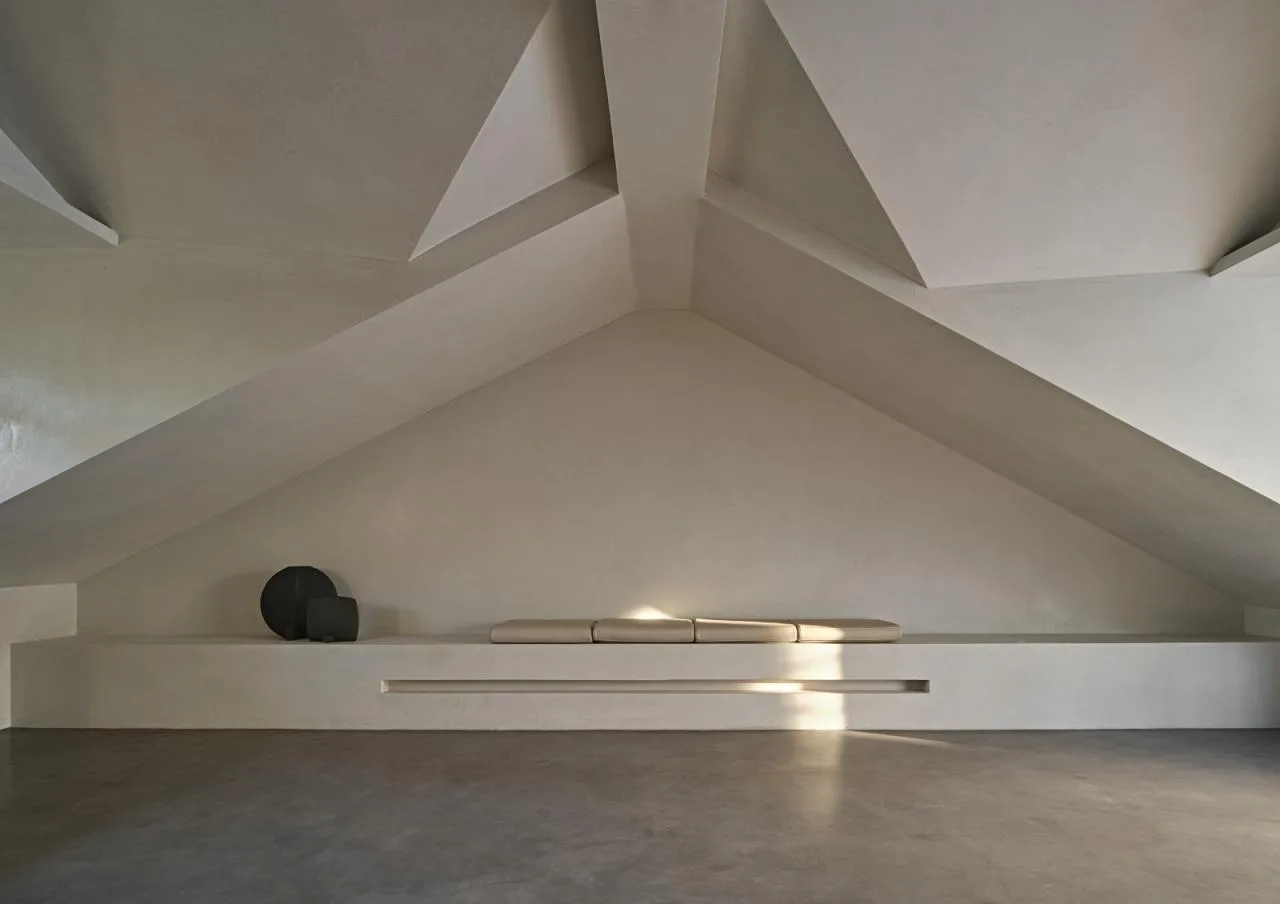
At the top of the staircase, the terrace and attic provide a private VIP space where guests can reconnect with the city from new heights and perspectives. This level reflects the final element of hot pot culture—steam and flavor enhancement. The interior features pure white reflective art paint highlighting the attic’s geometric ceiling, while rooftop benches offer a unique setting for guests to engage with the urban environment.
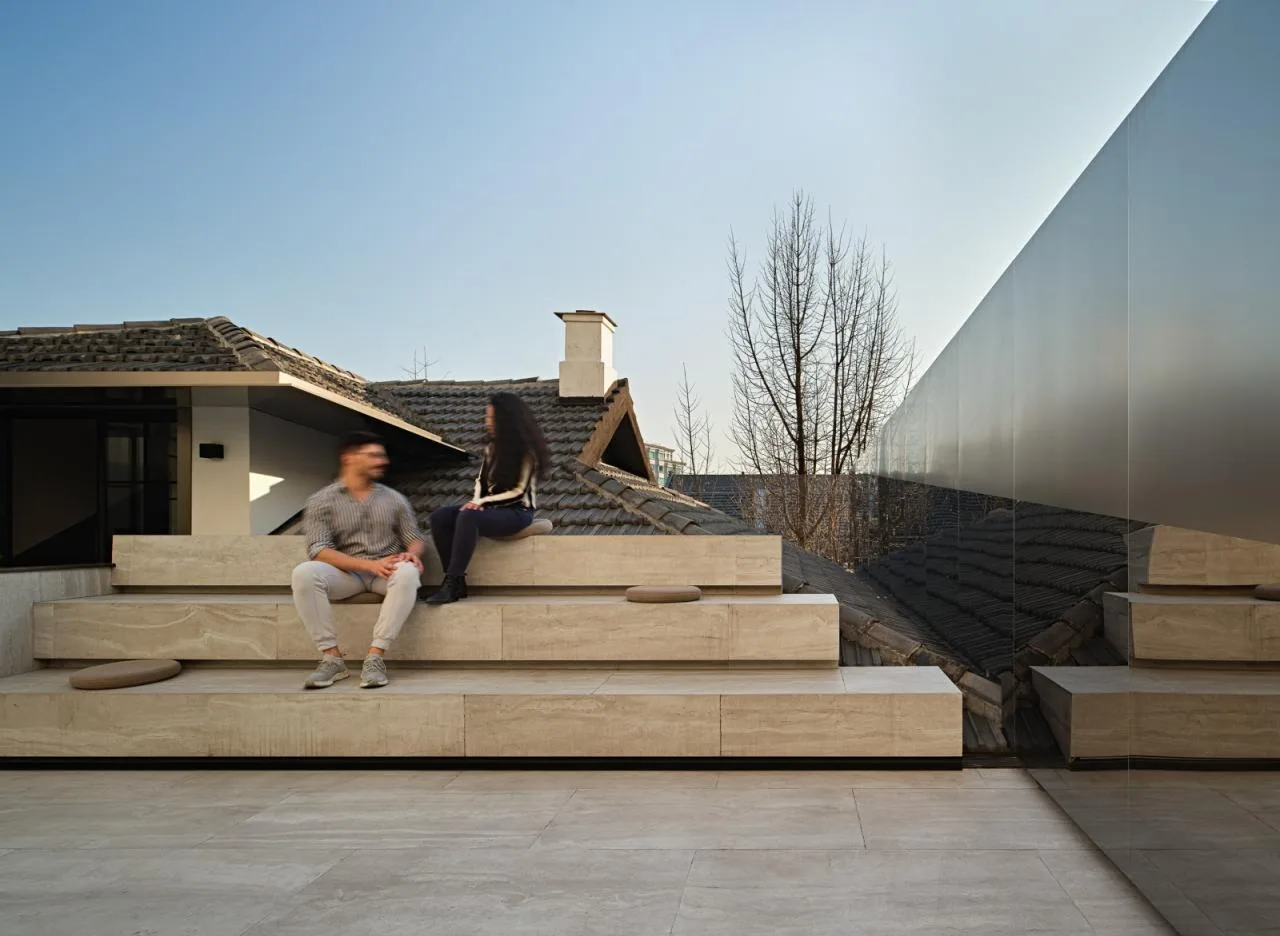
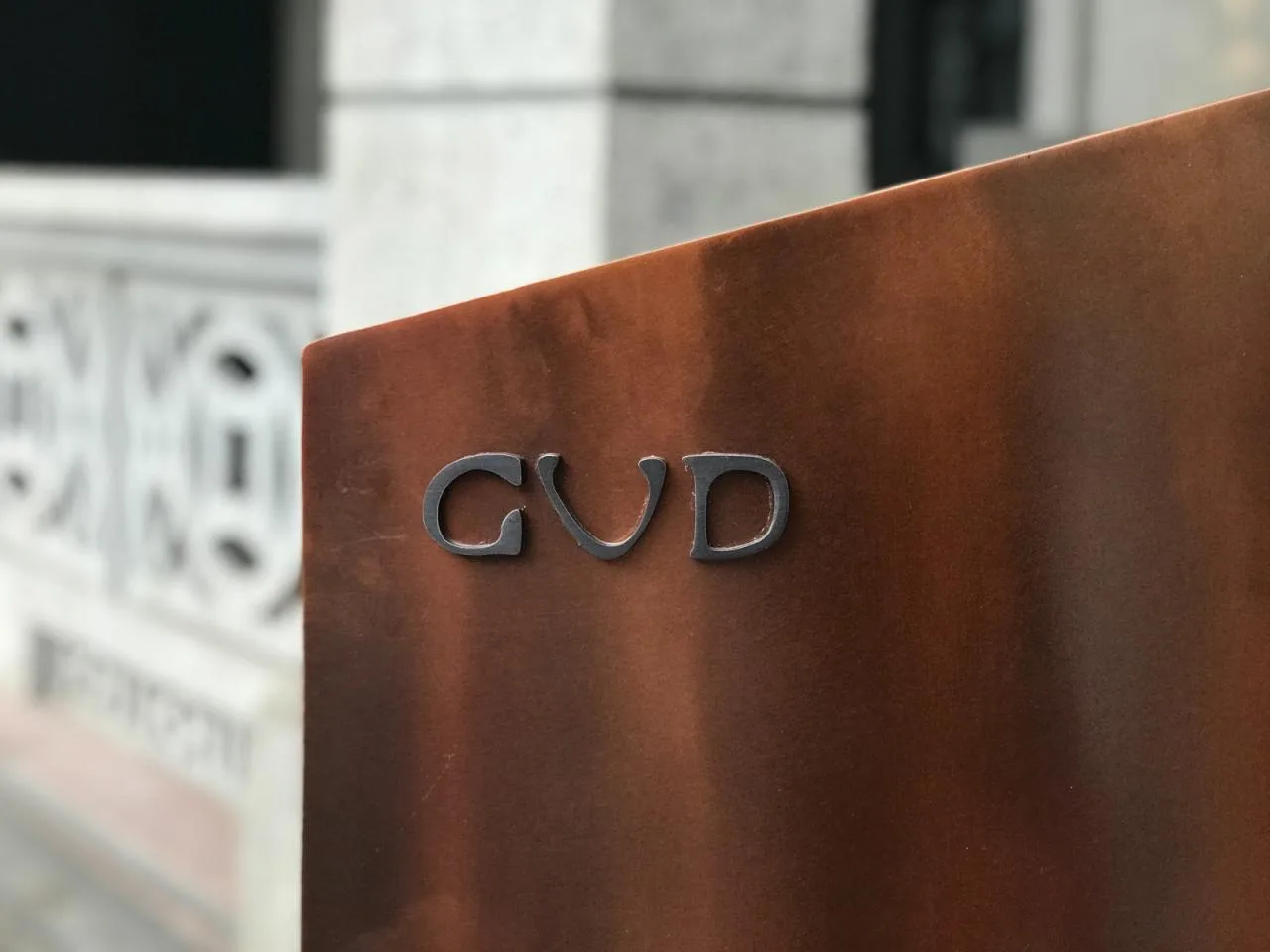
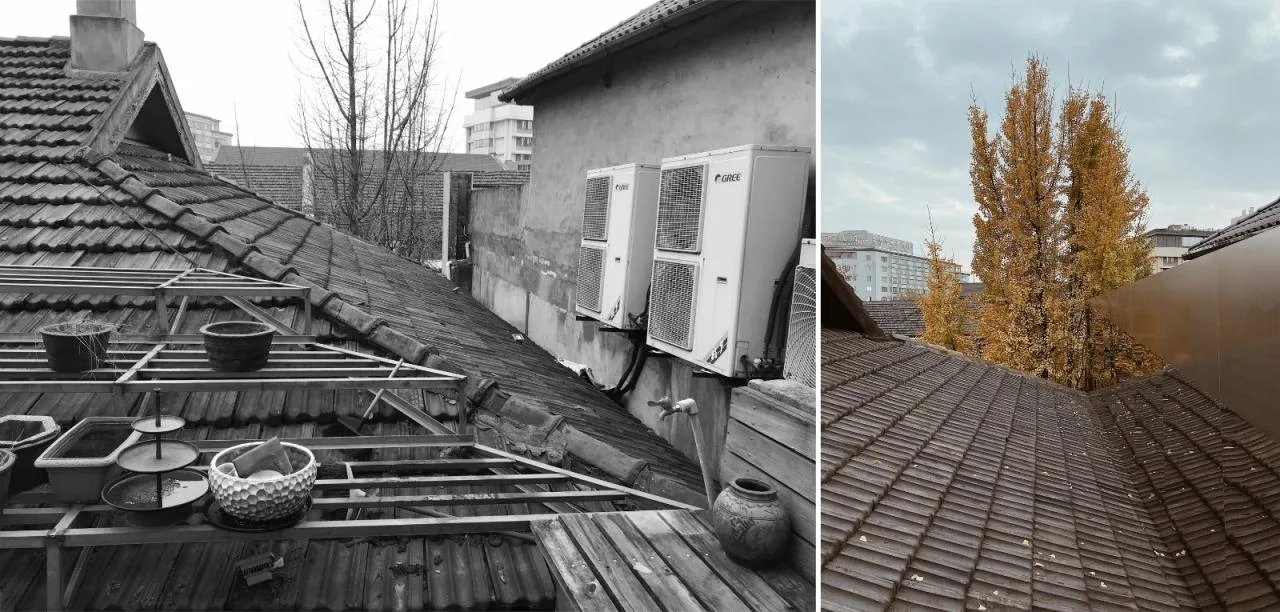
Additional design elements include stainless steel canopies on each floor that conceal drainage ditches and wiring while integrating lighting, preserving and highlighting the original facade’s decorative details. A curved copper plate at the entrance serves as brand signage without damaging the original guardrail. Semi-mirrored and brushed stainless-steel panels on the terrace shield outdoor equipment and neighboring buildings, introducing a modern contrast and enhancing the building’s environment.
In recent years, Ba Huang Design has completed numerous historic renovation projects, including the Yundingbao Boutique Hotel, Qiaoke Restaurant and Cocktail Bar, Yueyang Himalaya (under construction), and the renovation of Xu Chongzhi’s old residence (under construction). As a design firm blending Chinese and European cultures, Ba Huang remains committed to respecting history and local culture while serving contemporary needs, continuously creating enriching spatial experiences.
Project Drawings
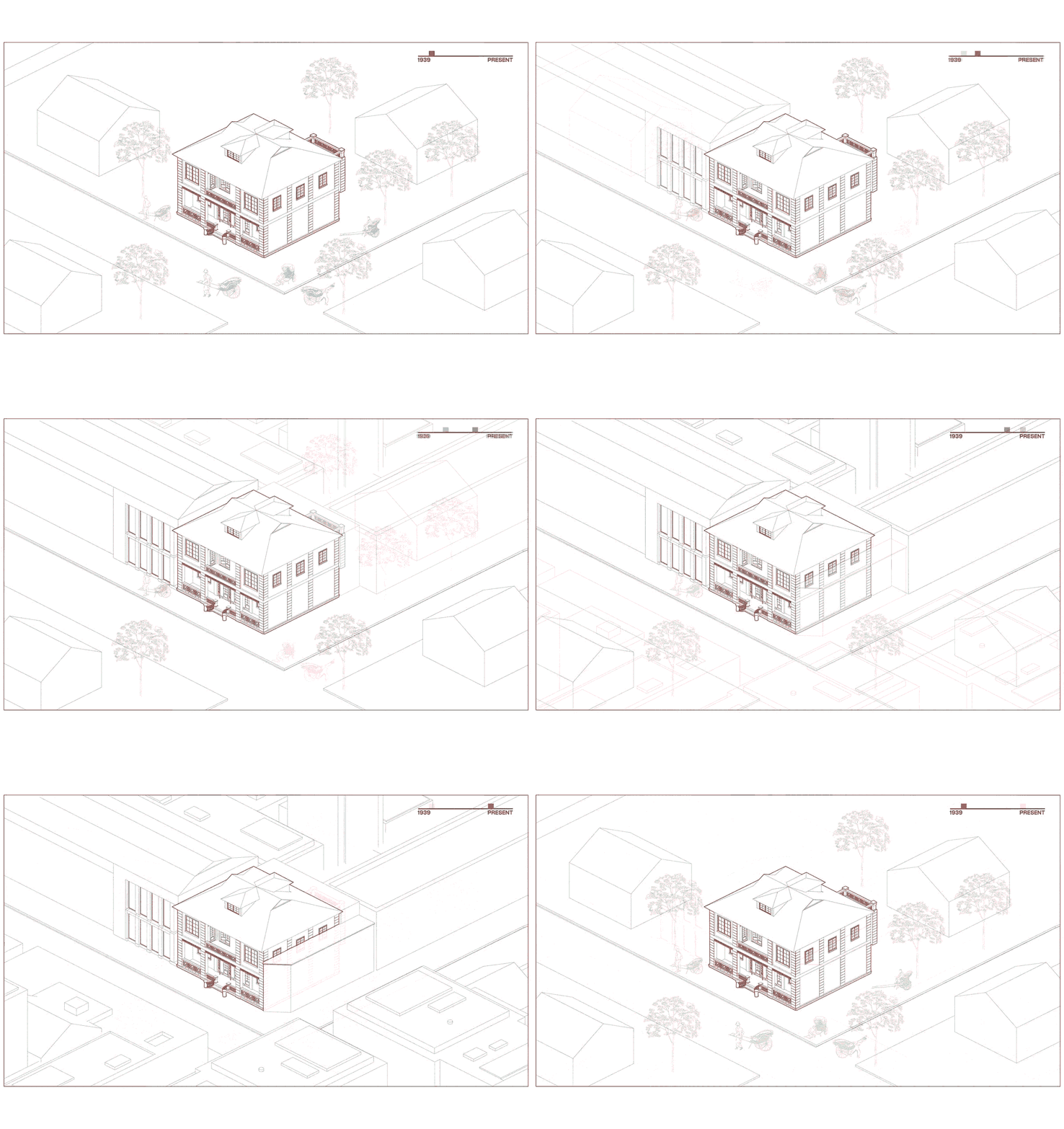
△ Building Facade History
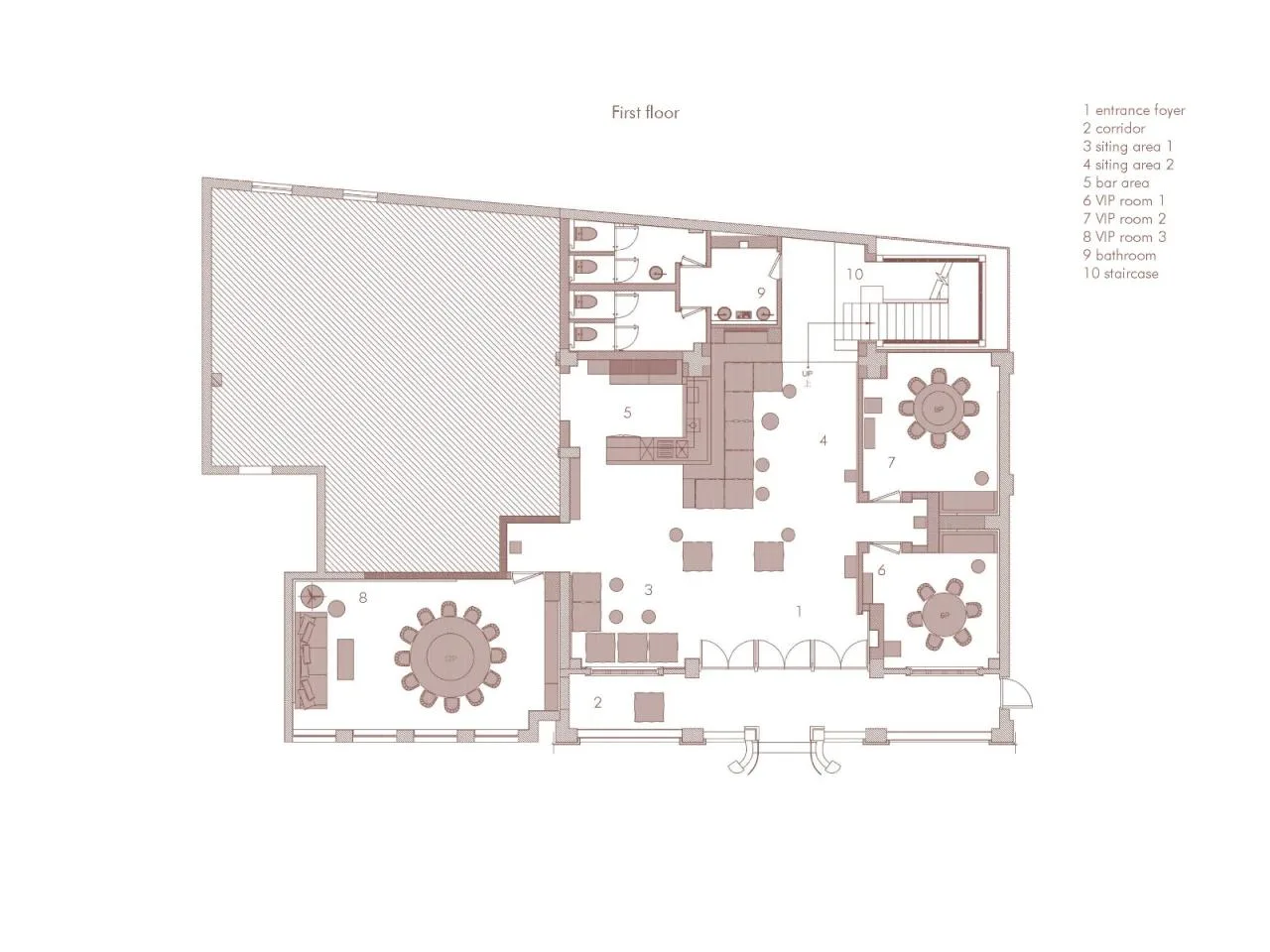
△ First Floor Plan
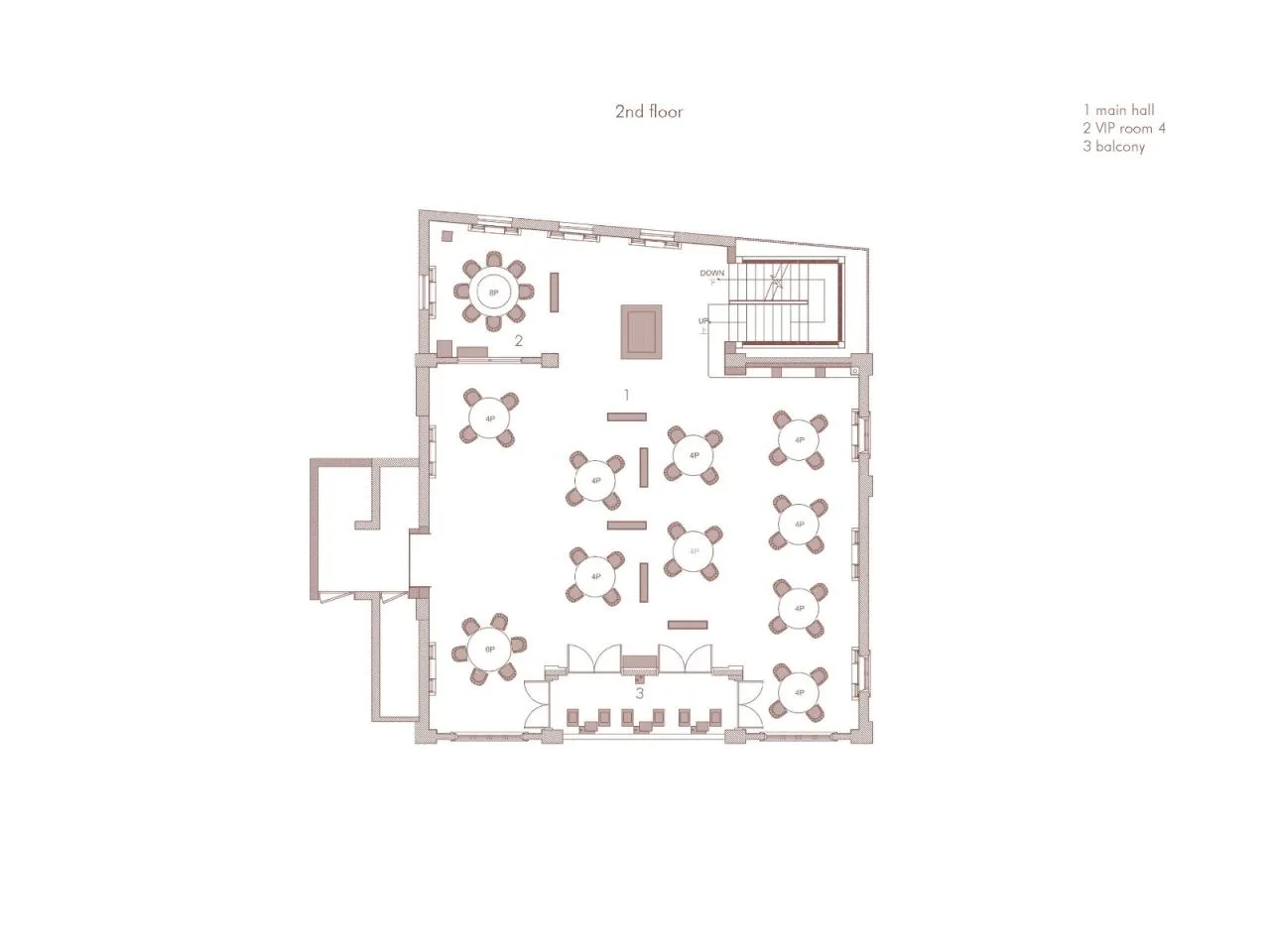
△ Second Floor Plan
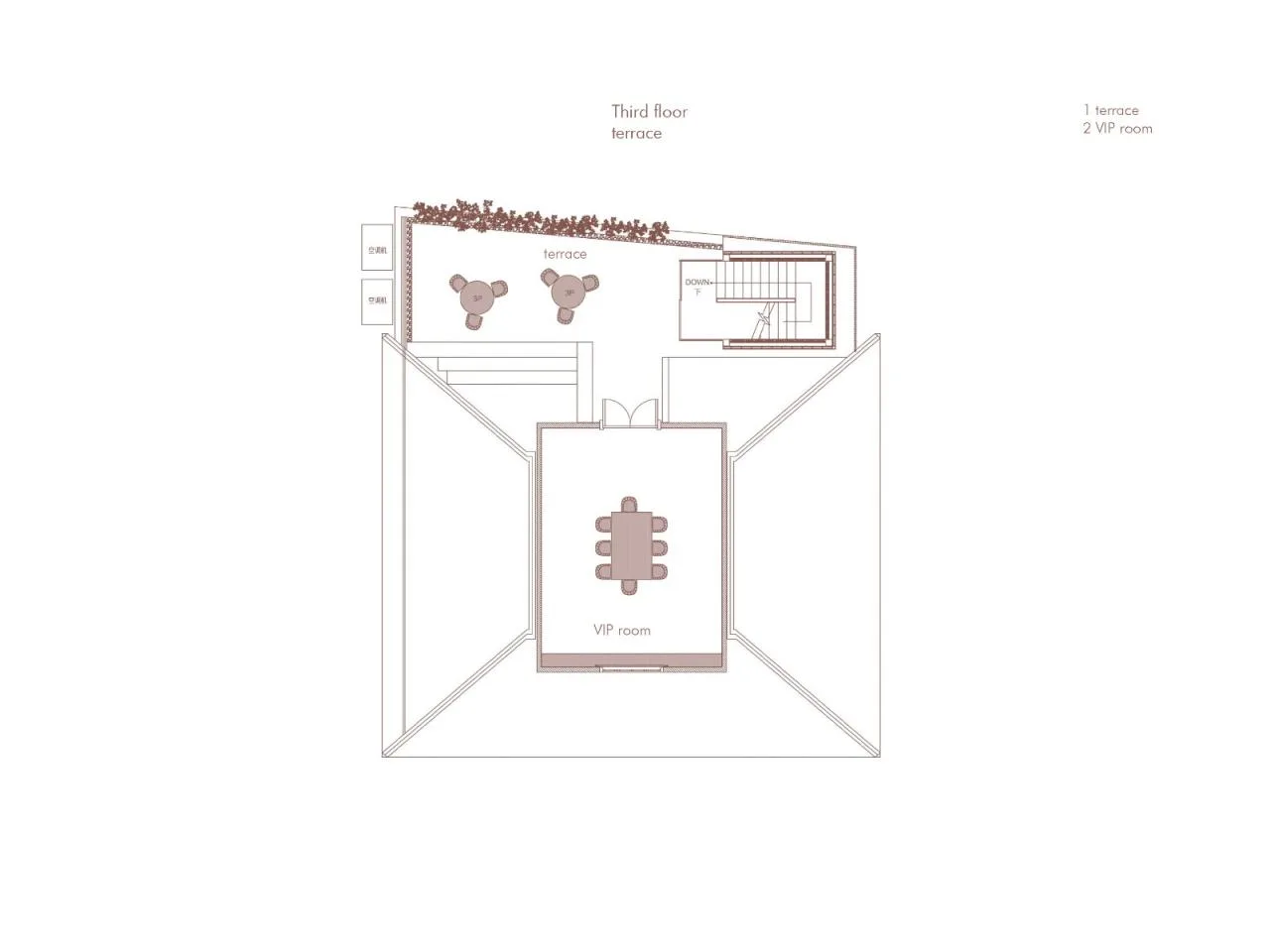
△ Third Floor Plan
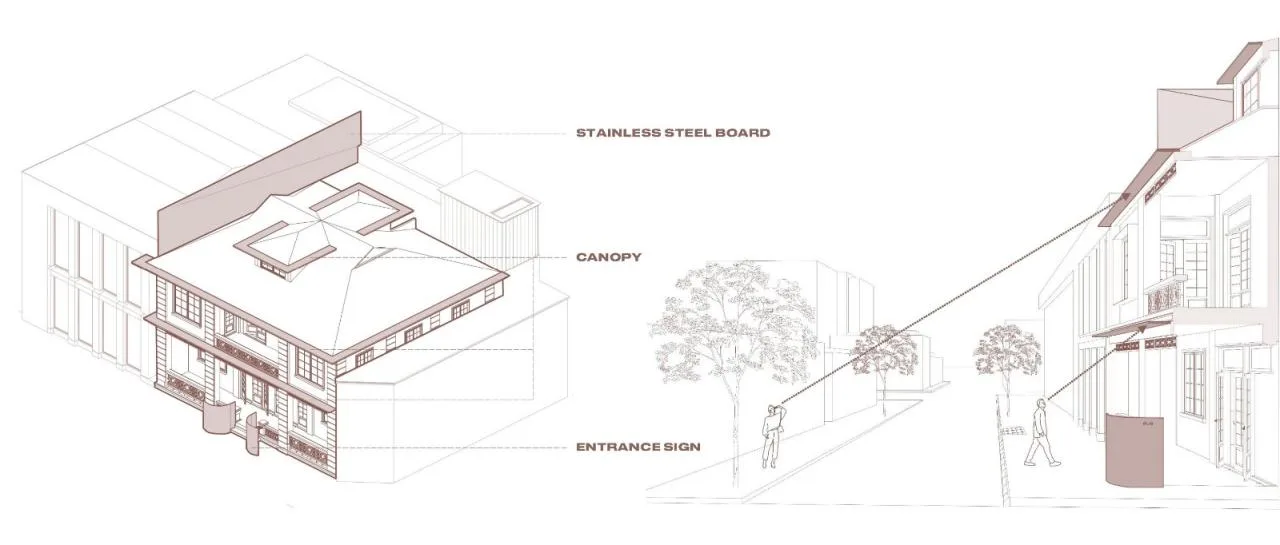
△ Repair and Section Diagrams
Project Information
Project Name: GUD Hotpot Museum
Chief Designers: Dong Xuelian, Andrea Maira
Design Team: Hutsov Yakiv, Yang Yi, Valeria Pernice, Eight Wilderness Design Team
Design Company: Eight Wilderness Architectural Design Consulting (Shanghai) Co., Ltd
Location: No.1 Jiaochang Road, Gongshu District, Hangzhou, China
Completion Date: December 2021
Building Area: 495 square meters
Photography: Zhang Daqi
Owner: Gudong Hot Pot
Materials Used: Art paint, ceramic tiles, glass, U-shaped glass, wood, copper, stainless steel, mirror, weather-resistant steel plate
Brands Featured: 101 Copenhagen, Cedit, Creaking Sound, Kaskade, Danilo












Must log in before commenting!
Sign Up