
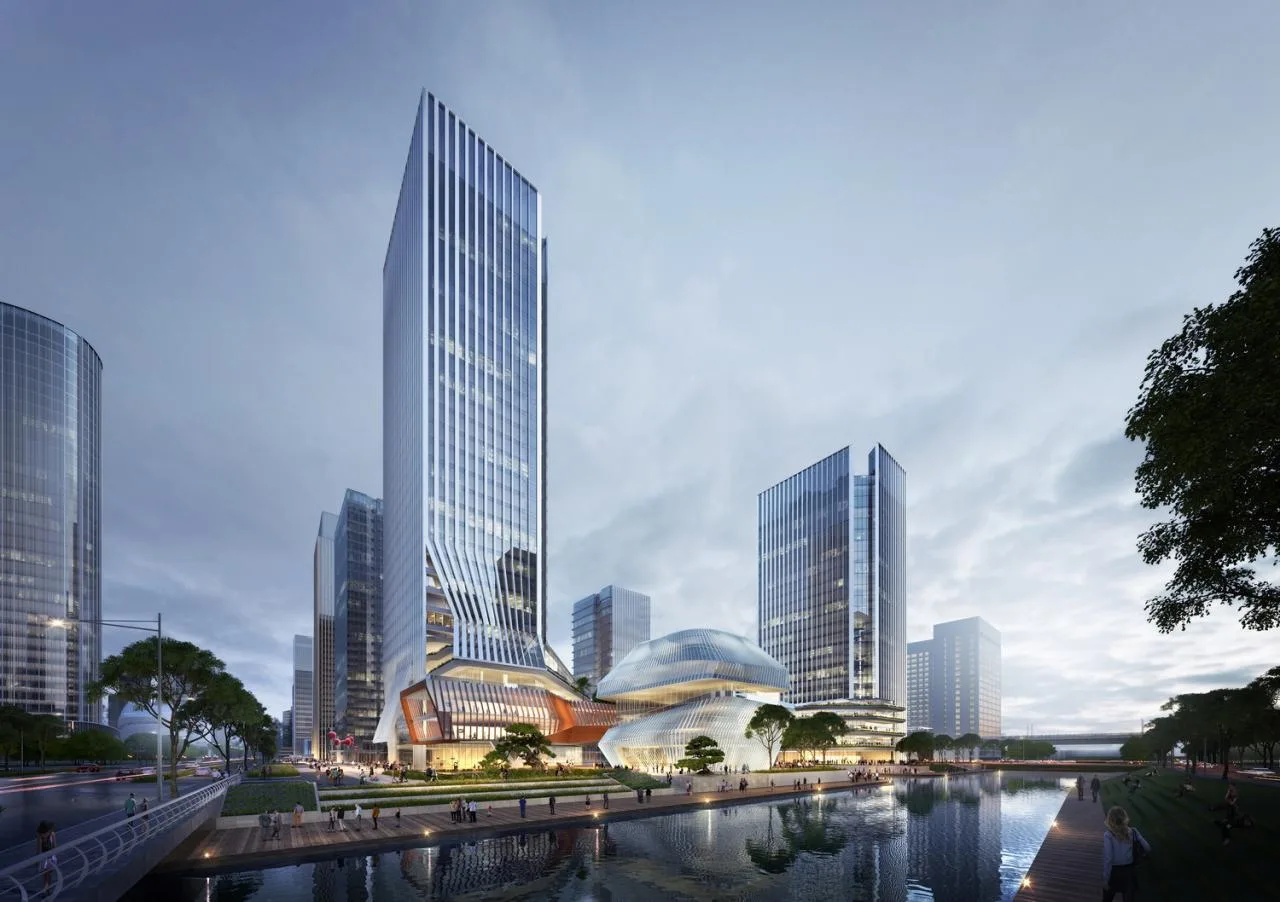
Modern architecture is evolving rapidly in the information age, accommodating increasingly diverse building purposes and spatial functions. Among these, modern commercial and office buildings have emerged as a significant category of high-rise structures. Their usage patterns, management approaches, aesthetic forms, and impact on urban environments represent key areas of study. This article delves into the cultural symbolism, human-centered spaces, technological innovations, functional frameworks, and other contemporary aspects of modern business and office buildings, with insights drawn from a project by GEN.
01 Project Background
This project is situated in the iconic core zone of the northern high-speed rail new city, part of Suzhou’s “One City, Four Cores” development strategy. Xiangcheng District High Speed Rail New City is envisioned as an international, information-driven, modern business hub that seamlessly integrates commerce, research, residential, office, cultural, and tourism functions, all anchored by the high-speed rail network.
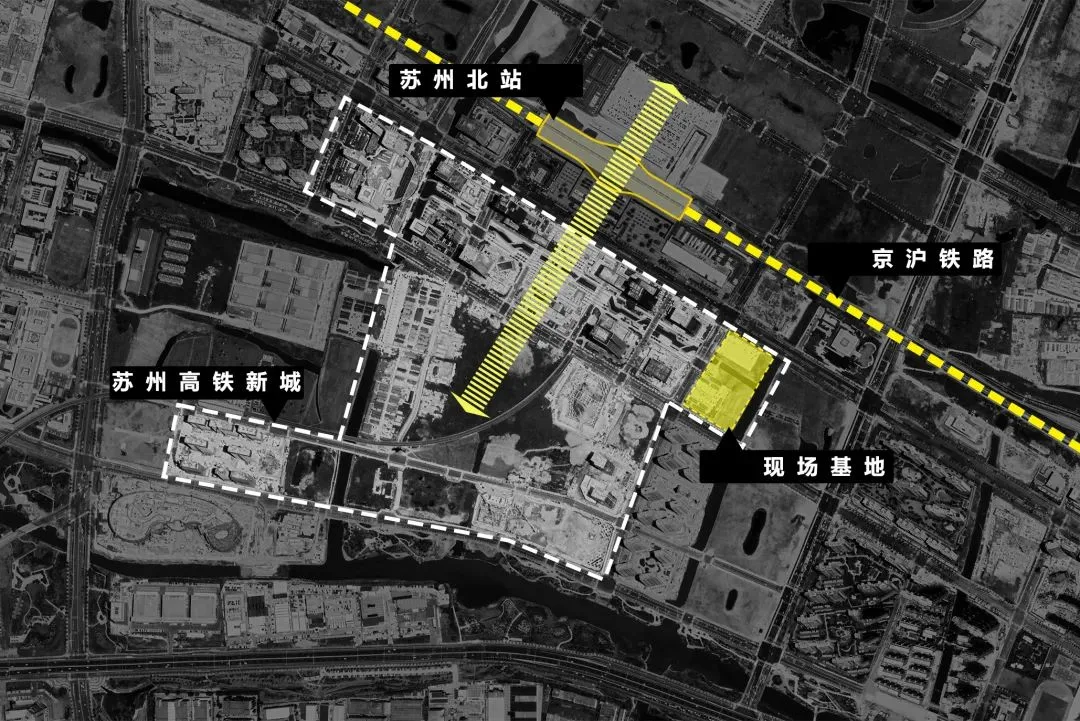
△ Location Analysis
02 Design Challenge
The master plan mandates that the core area of the high-speed rail new city become a landmark complex of super high-rise buildings, exhibiting regional leadership. The design must balance modern international aesthetics with cultural elements unique to Suzhou. As the final commercial office parcel in the core area, the government requires the project to embody the appearance and functionality of a future-oriented technology-driven business office building.
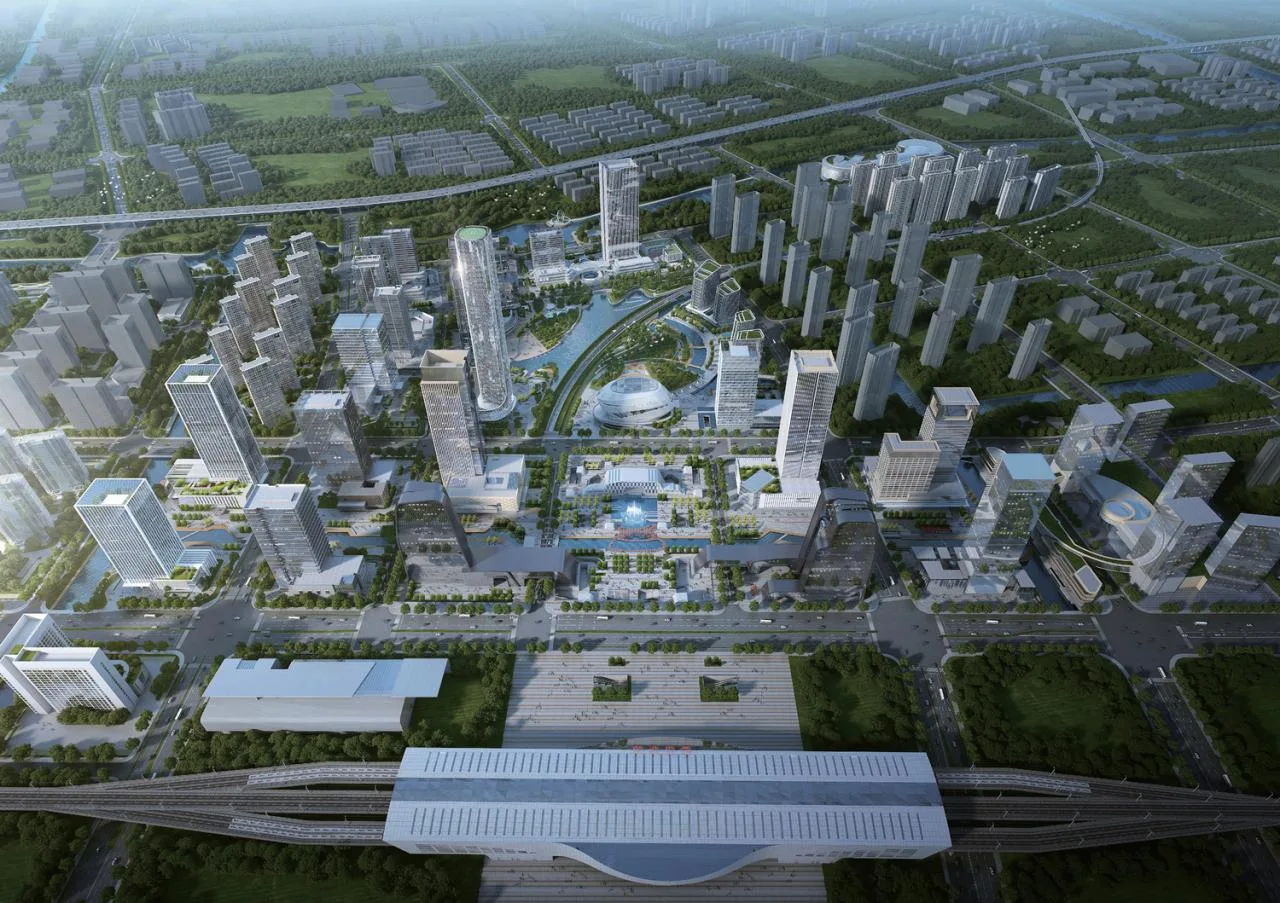
△ Urban Design
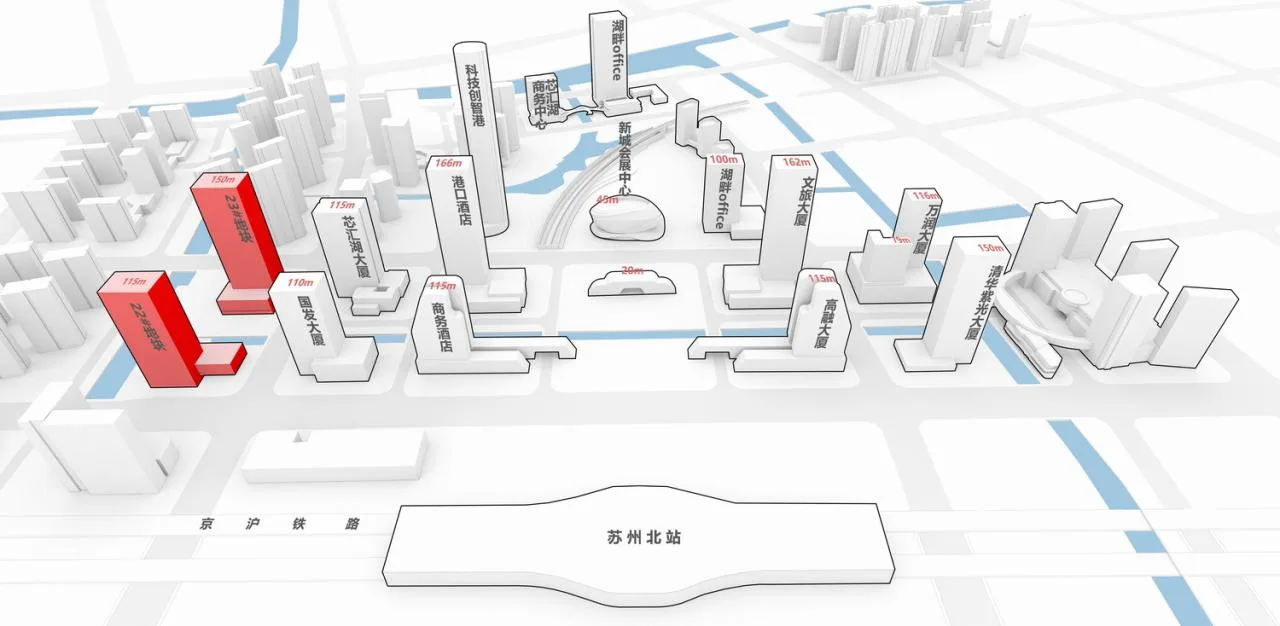
△ Planning Analysis Diagram
03 Urban Spatial Attributes
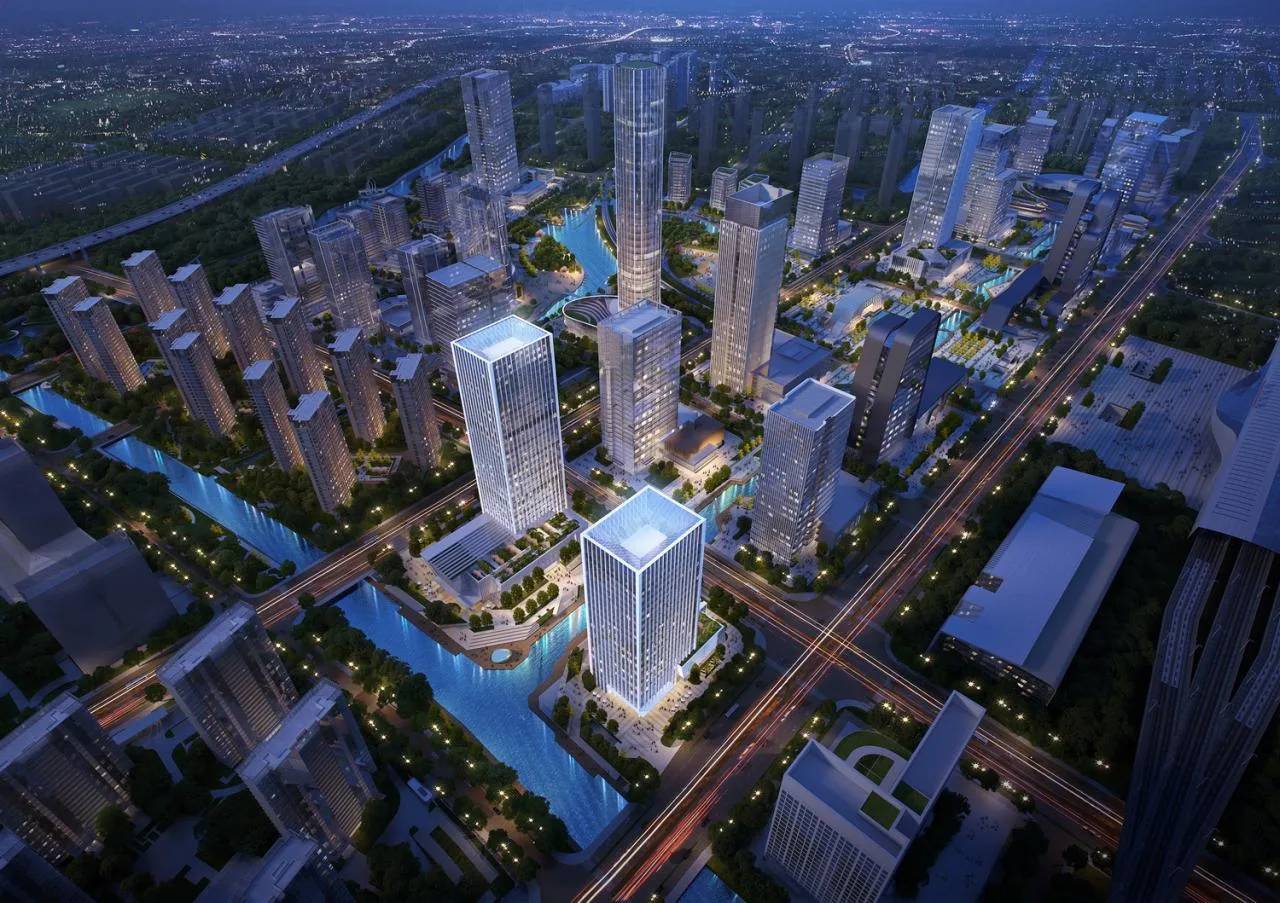
In the urban design, two rows of high-rise commercial and office plots flank the central axis of the high-speed rail plaza. A slow-moving “water street” landscape system, inspired by the Jiangnan water towns of Suzhou, is planned. The project’s two plots are positioned on either side of this water street, creating a mirrored dialogue across the water. Integrating the architectural style with the landscape and overall planning is a key focus, especially for the waterfront building interfaces.
△ Water Street Urban Design Effect
Meanwhile, other plots along Shuijie have been developed with traditional high-rise commercial offices featuring podiums and supporting facilities. These podiums often suffer from low utilization, poor commercial experience, high vacancy rates, and weak architectural-landscape integration. These challenges call for innovative functional designs in new land parcels.
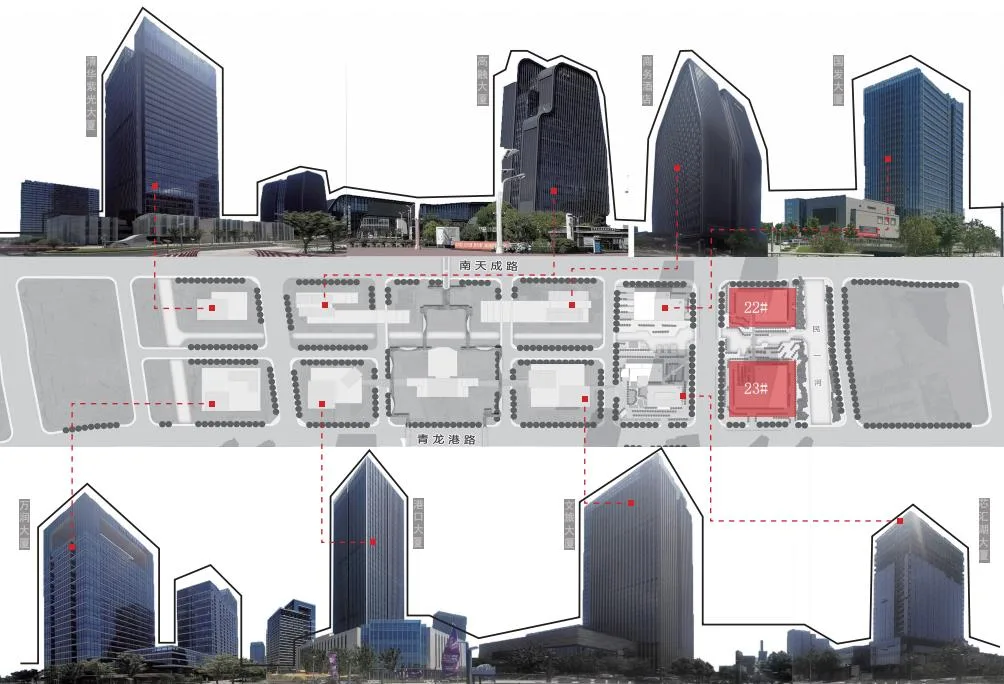
△ Core Building Complex
04 Planning Strategy: Building Bridges
The urban design’s cultural features naturally inspire an interpretation of Suzhou’s traditional Jiangnan water town environment. The “Water Street” evokes the image of stone arch bridges, which serve not only as visual spatial intersections but also as connectors of urban functions and human activities on both sides of the waterfront.
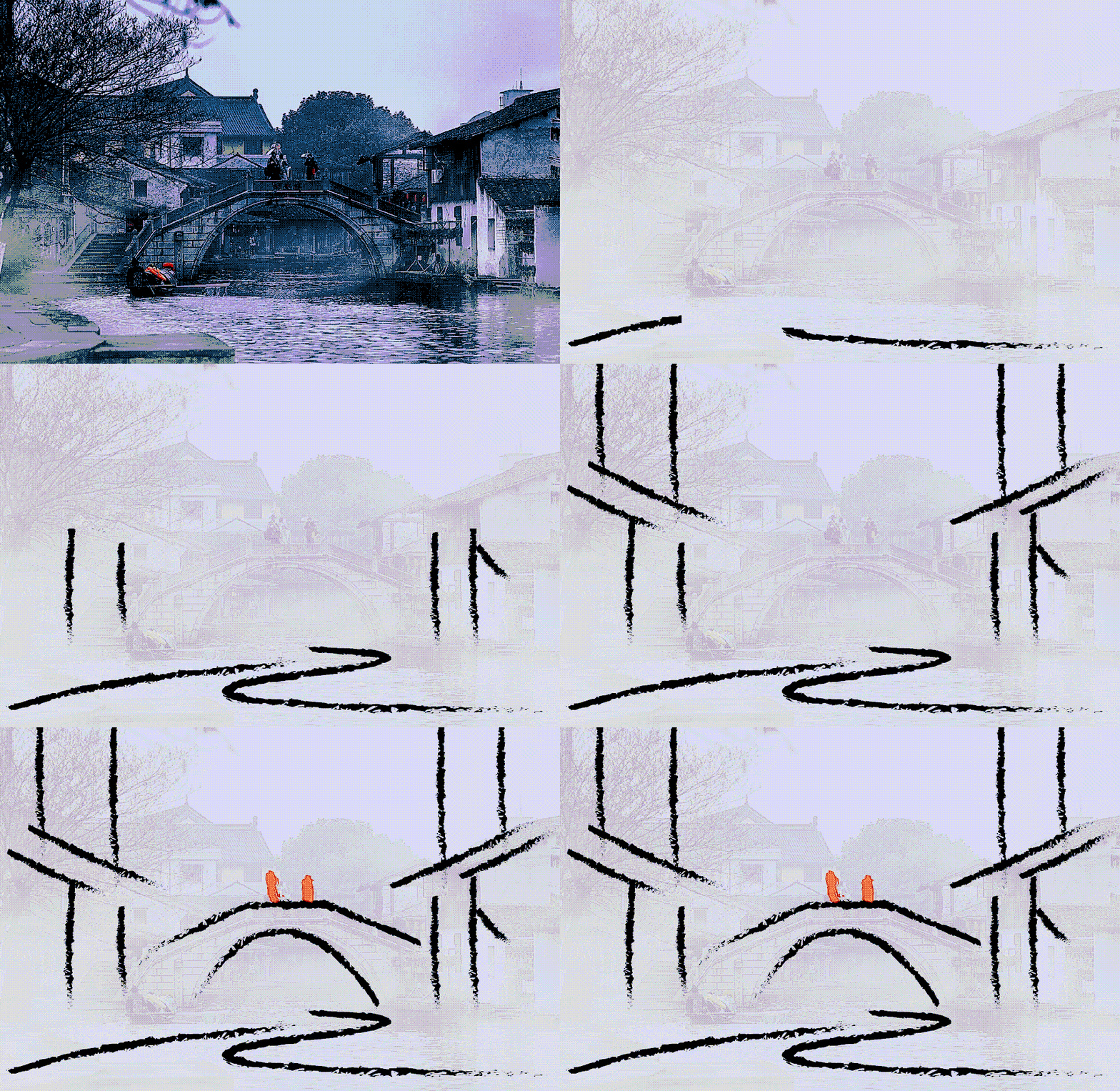
△ Concept Extraction
A corridor bridge on the third floor links the podiums of the two plots, uniting their commercial functions. From an urban design perspective, this bridge forms a distinctive eastern endpoint to the water street, blending organically with the planned landscape and echoing the circular pedestrian bridge at the street’s western commercial square.
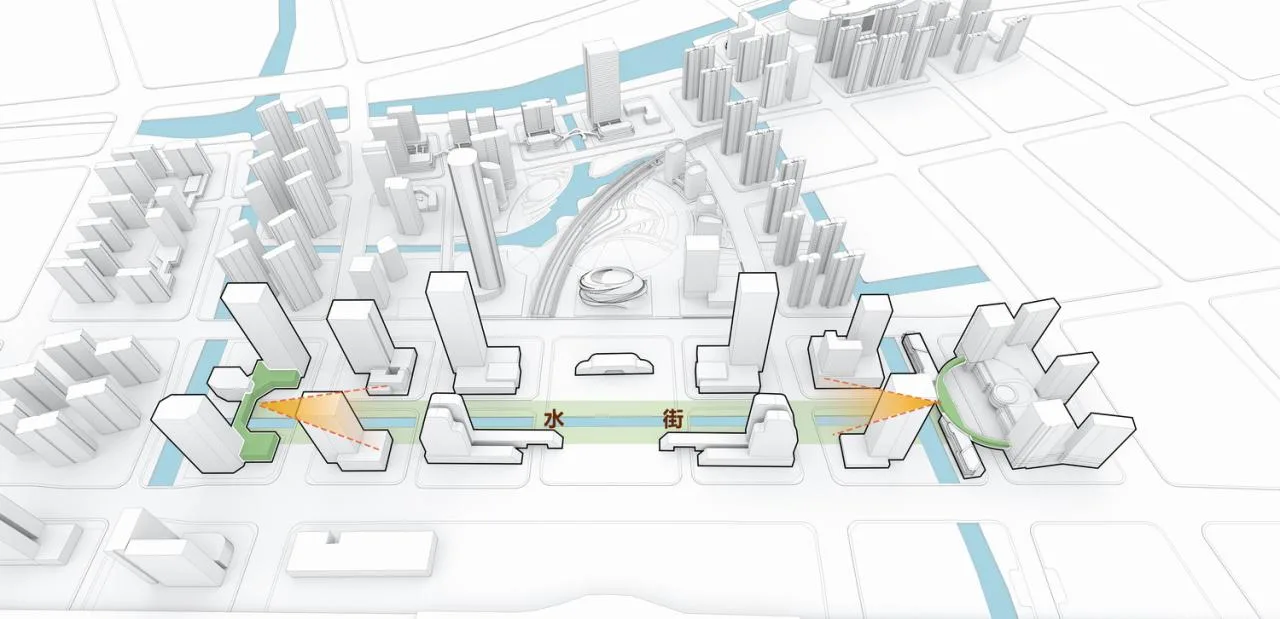
△ Urban Spatial Alignment
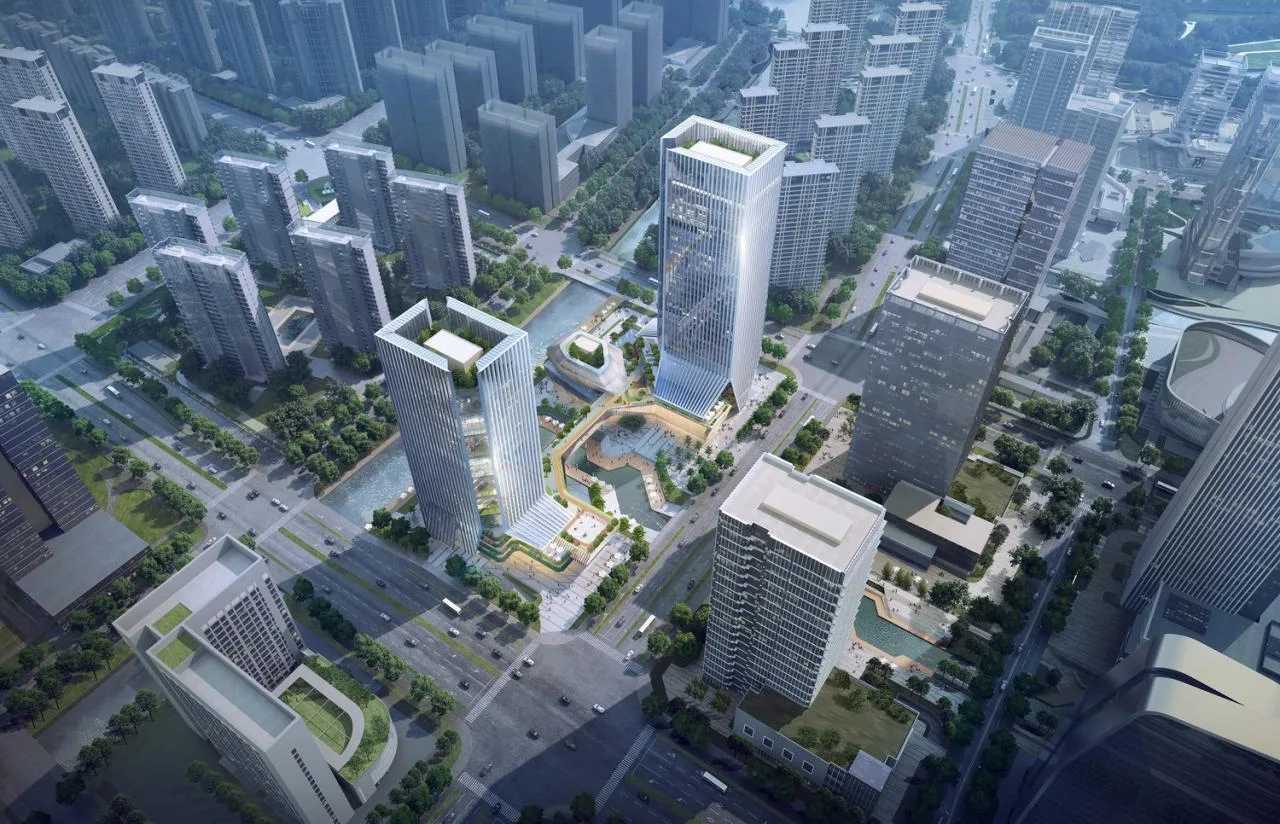
△ Aerial View of Japanese Scenery
To enhance the closure effect of the water street and complement landscape and function, the commercial podium on the southern plot is divided into two sections, bridged by the corridor. The podium separated from the tower is designed as a landscape element, functioning as a commercial display center and creative office incubator by the water, featuring a unique sculptural and informative character.
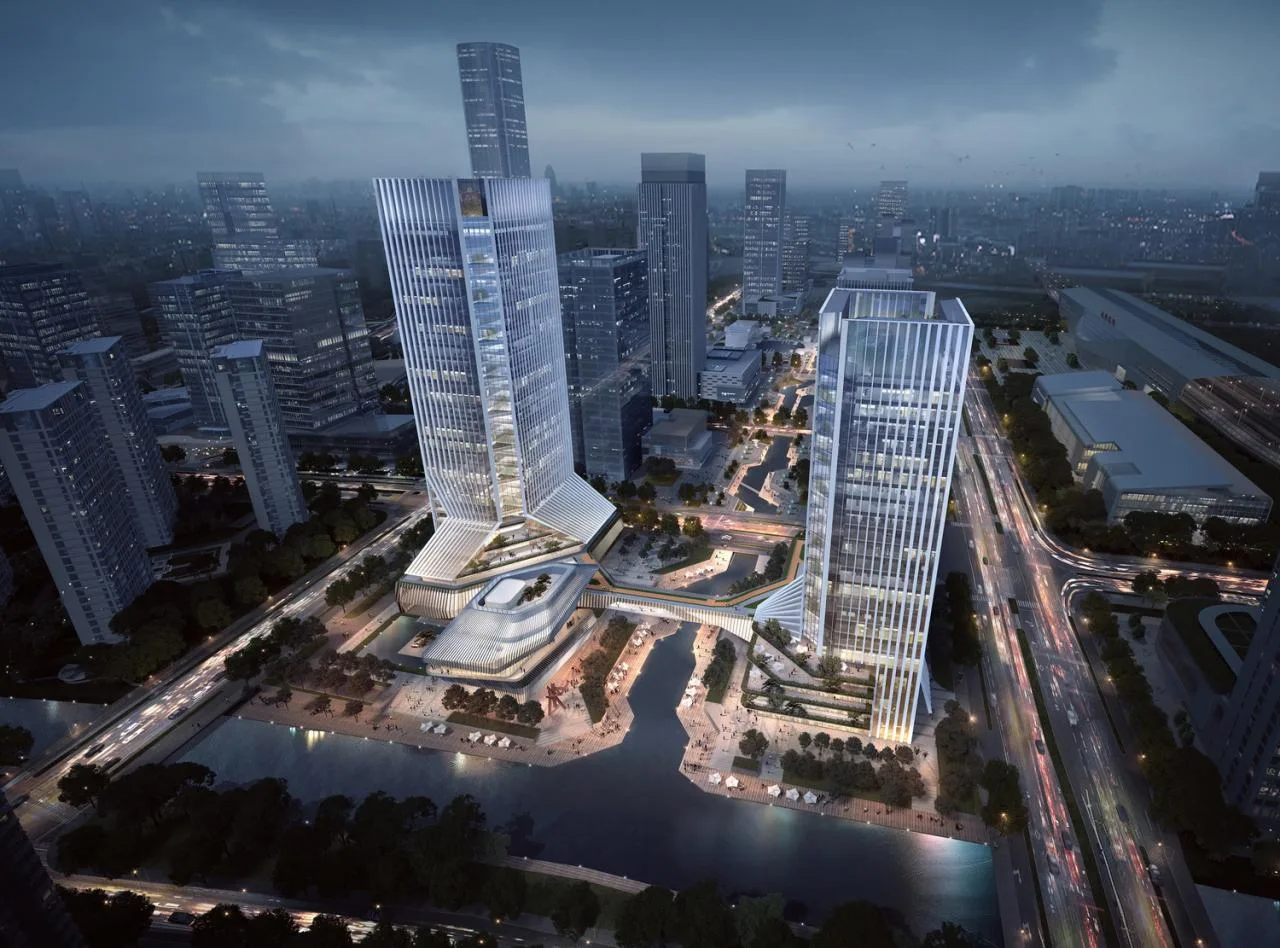
△ Night View Bird’s-Eye Perspective
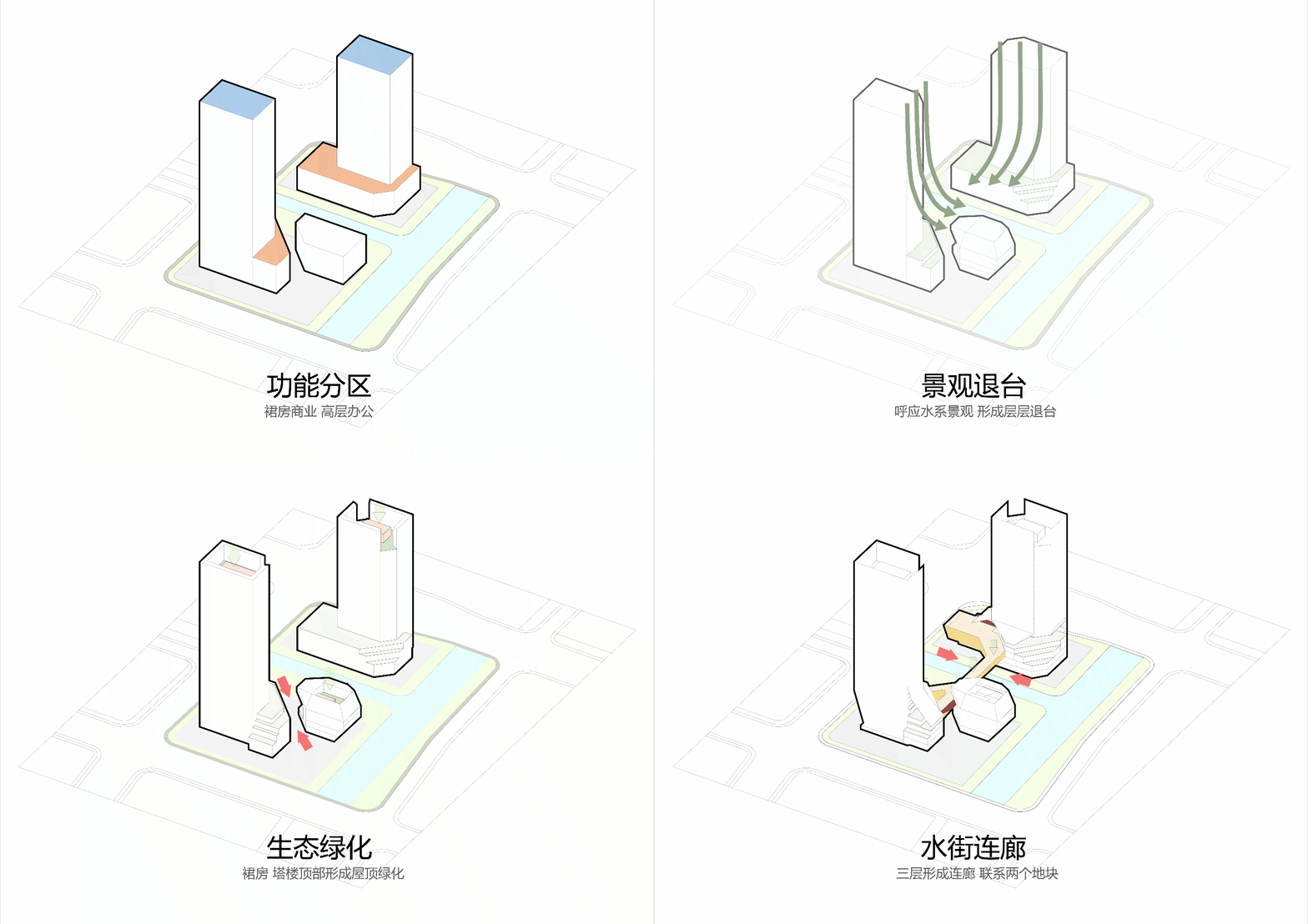
△ Shape Generation
05 Spatial Strategy – Boundless
Connecting the commercial functions and encouraging pedestrian interaction, the design next focuses on the building’s visual identity. To avoid uniformity with neighboring plots, the waterfront facade adopts a more open approach, dividing the commercial frontage into an internal street-like interface. Elements of the water street landscape extend into the first-floor interior space. Additionally, the corridor bridge unites the open podium roof garden with the site landscape across multiple floors, creating a seamless spatial experience that integrates architecture, greenery, landscape, and water features, reinforcing the urban node.
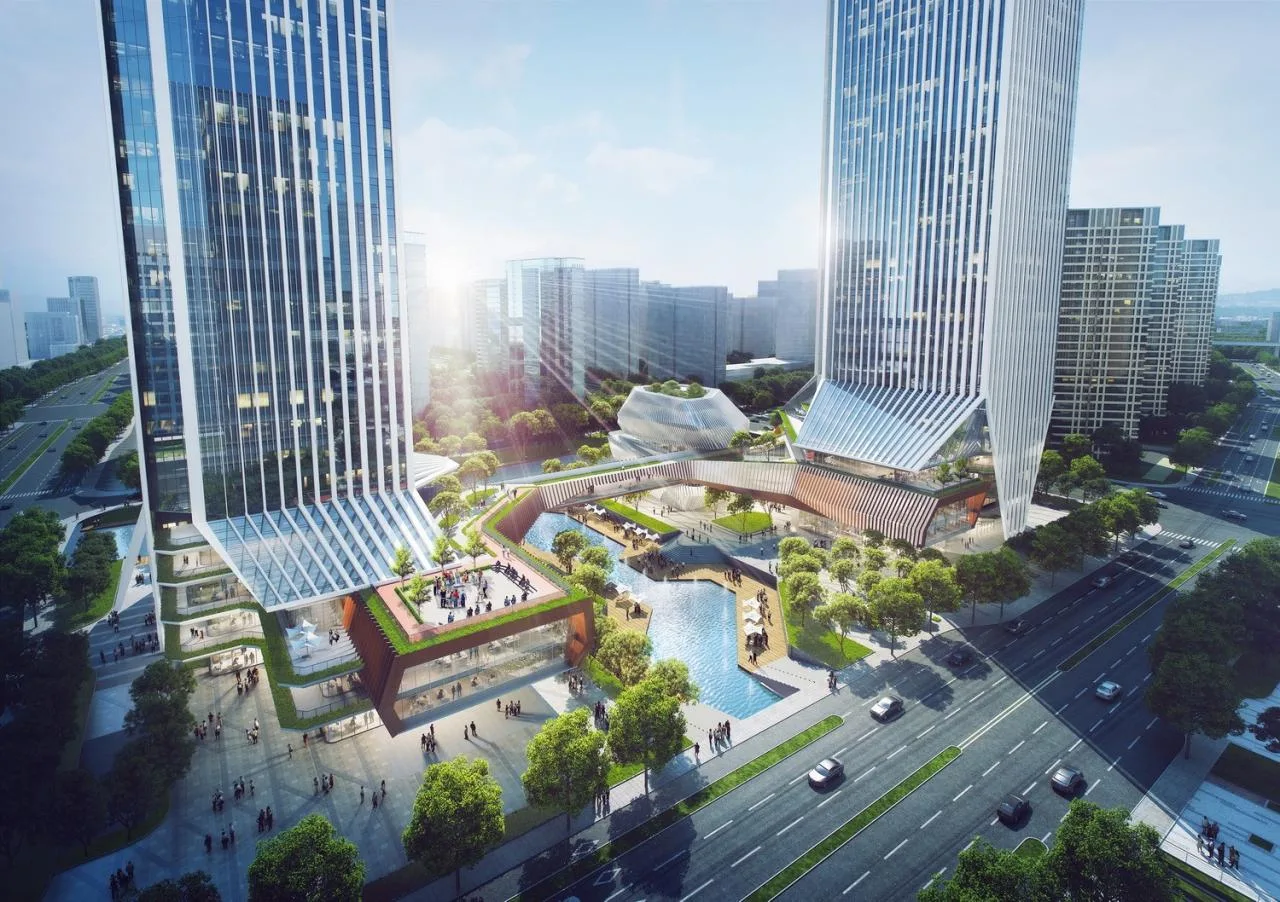
△ Aerial View of Water Street
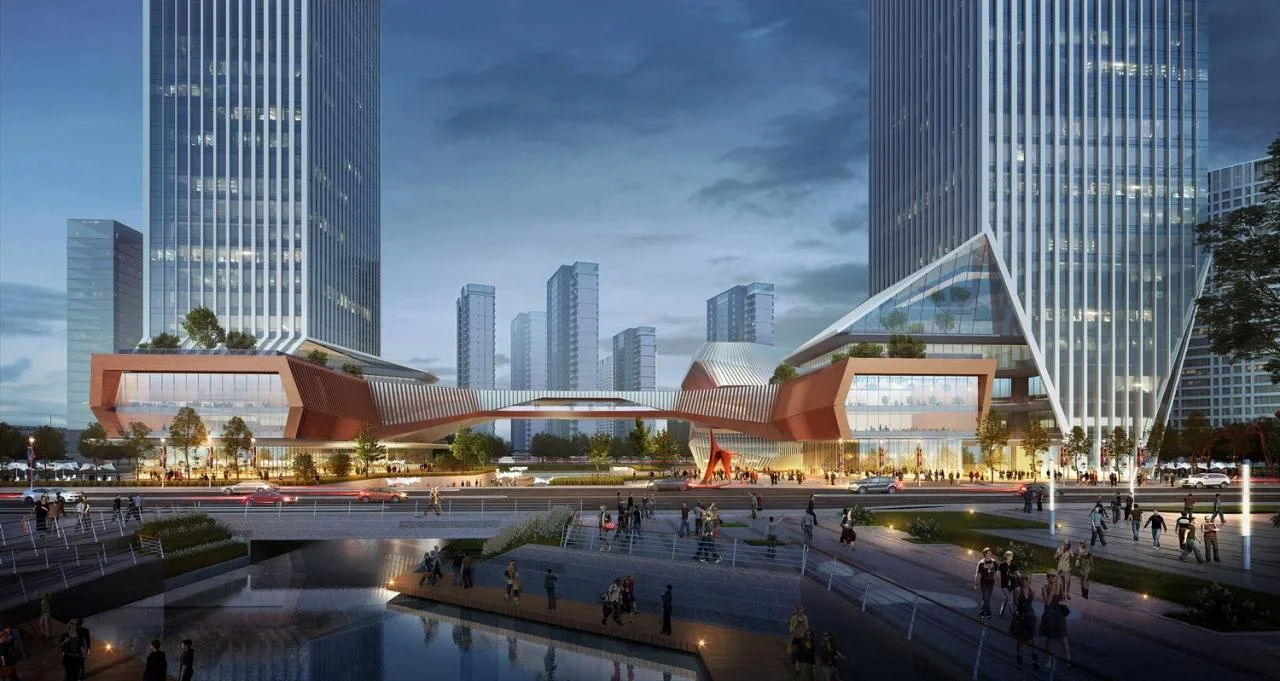
△ Water Street Corridor Bridge Rendering
06 Technical Strategy – Green
This high-standard modern business office building prioritizes human-centric spatial experience alongside green, low-carbon design. Horizontal design elements are emphasized in the podium, which steps back gradually from the first floor to the roof. The curtain wall, serving as the external enclosure, steps back internally along the building’s outline. This design allows office and commercial users to transition naturally between indoor and outdoor spaces. The sloped curtain wall on the podium’s upper portion and the greenery placed below further blur indoor-outdoor boundaries, delivering an exceptional green office environment.
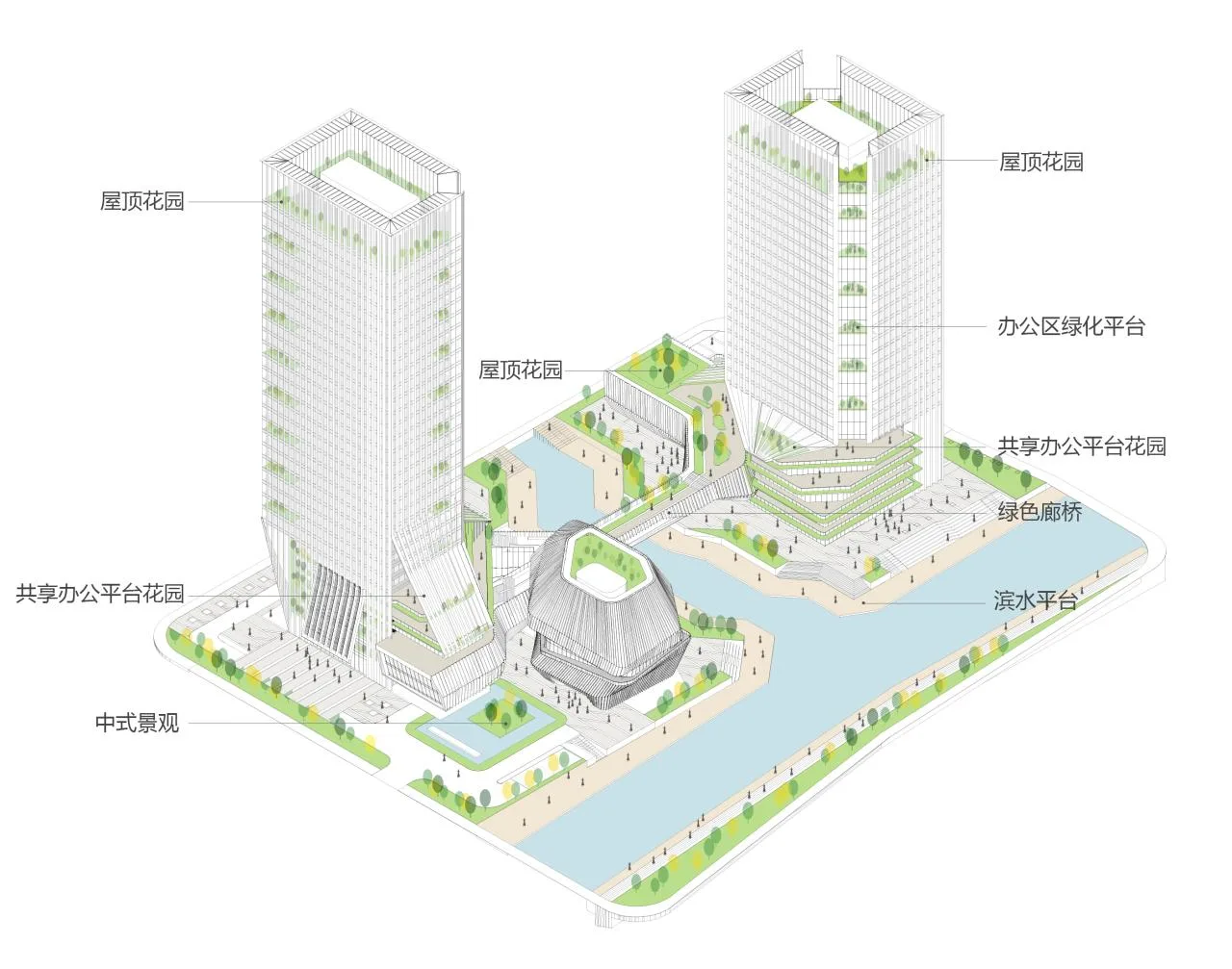
Green Building Analysis
The towers are positioned on two corners of the standard floor level, featuring tiered green terraces that respond to the urban views. Open-ended curtain wall construction techniques conceal building edges, enhancing dialogue with the urban space. Continuous landscaping increases the building complex’s breathability and transparency. The tower roofs also include green sky gardens.
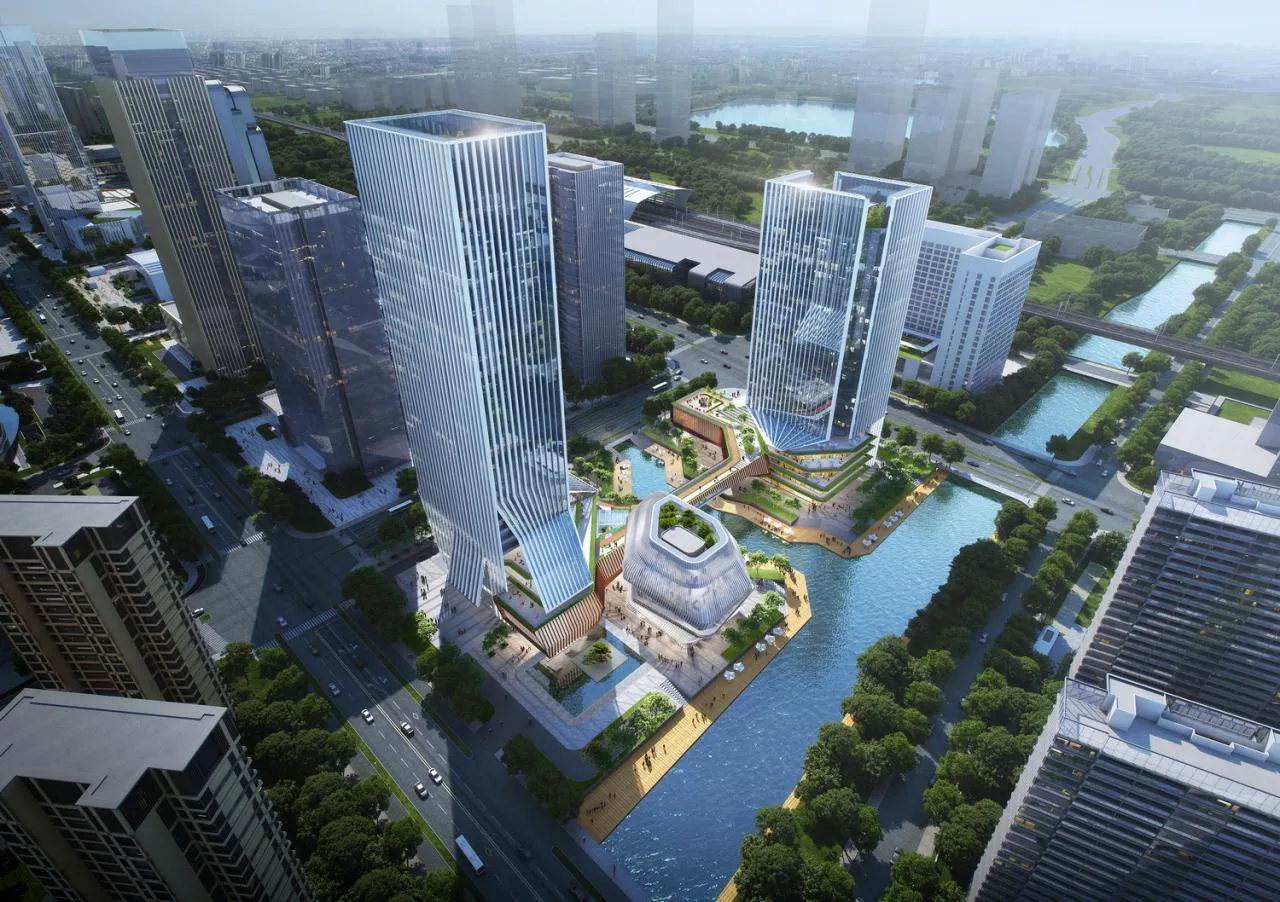
△ Bird’s-Eye View Rendering
07 Functional Strategy – Composite
Before addressing cultural symbolism, spatial qualities, and architectural aesthetics, the design team conducted an in-depth exploration of functional programming. To prevent product homogeneity and adapt to future office models, the project prioritizes user needs within a 24-hour urban ecosystem, offering a variety of office, commercial, and leisure spaces for building occupants.
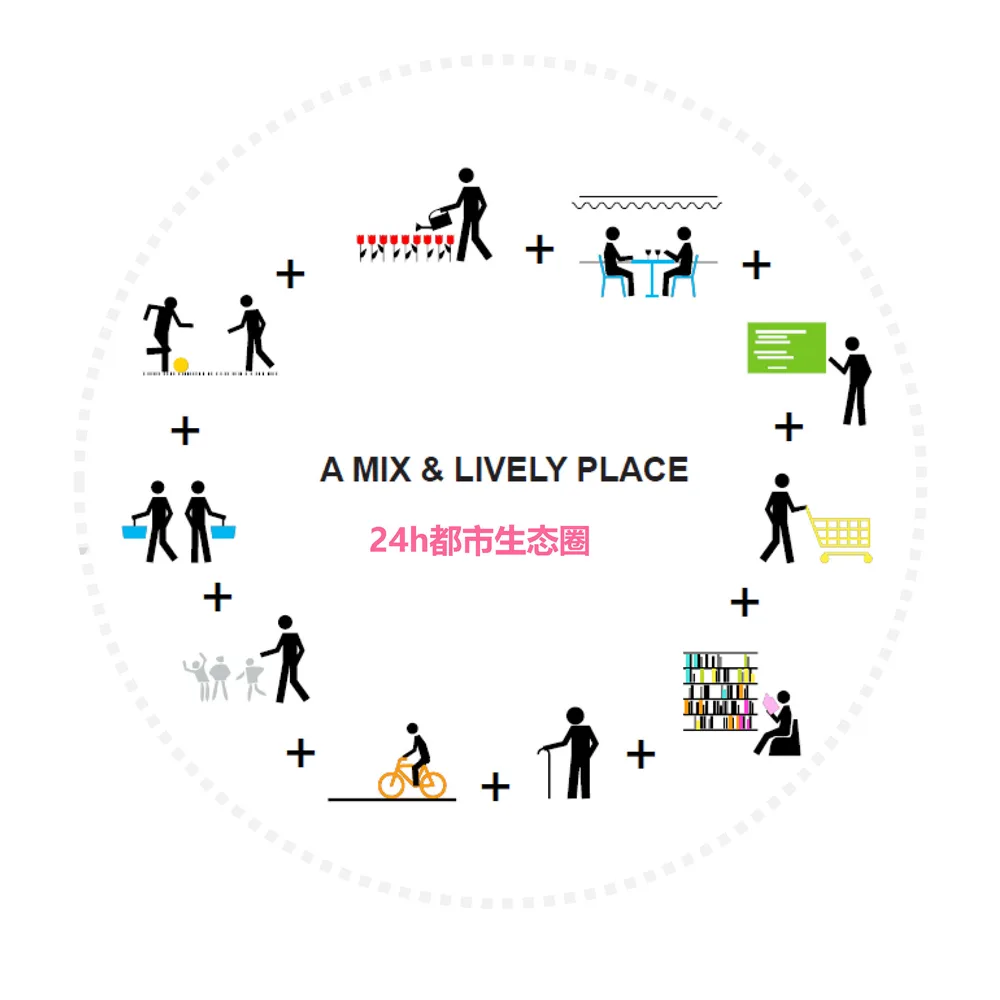
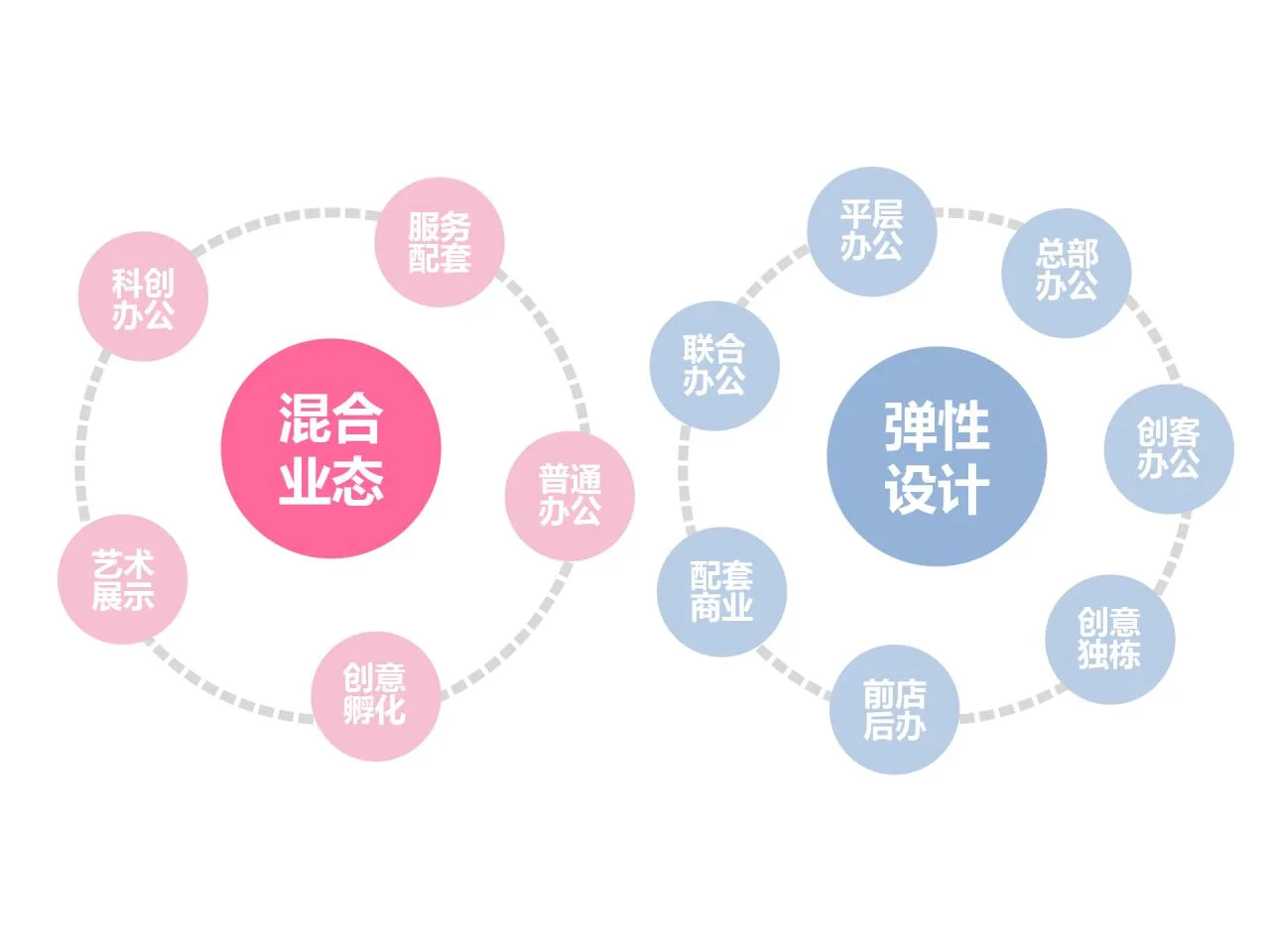
△ Flexible Design
The design explores modern office organization and the lifestyles of office workers by embracing mixed-use and flexible design principles. Commercial, office, display, and support functions are seamlessly integrated.
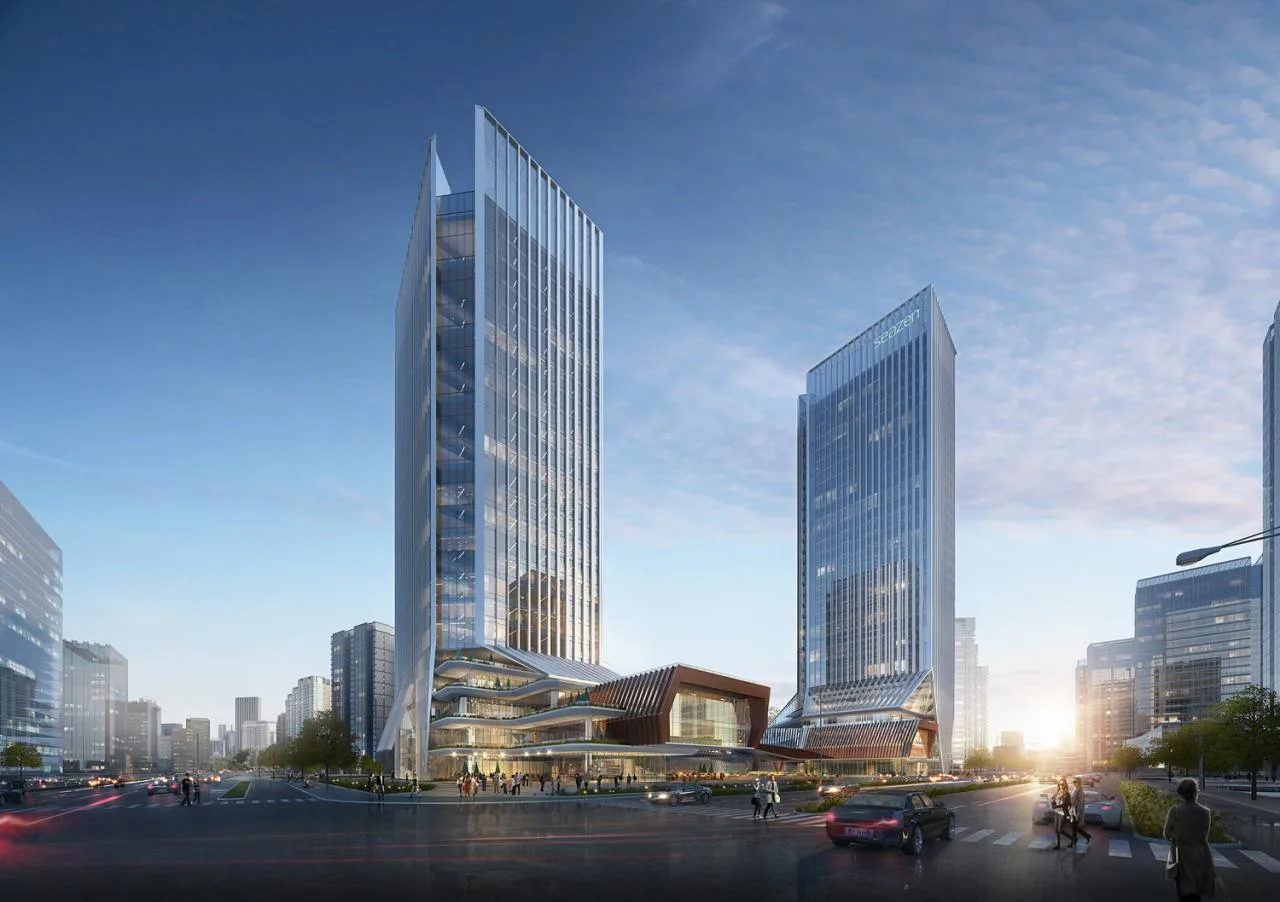
△ Street Rendering
The building’s podium first and second floors are mainly dedicated to commercial, financial, and dining facilities. The first floor’s depth is increased to satisfy diverse spatial demands for front-store and back-office functions. Floors three and four are connected by a corridor bridge, linking indoor and outdoor areas, enhancing commercial viability and rental potential. The lower tower floors offer expanded standard office layouts interconnected with the podium’s rooftop landscape, designed as makers’ offices. Upper floors feature Grade A standard offices, reflecting high business standards. Headquarters offices occupy the tower’s top levels, complemented by elevated courtyards and premium corporate displays.
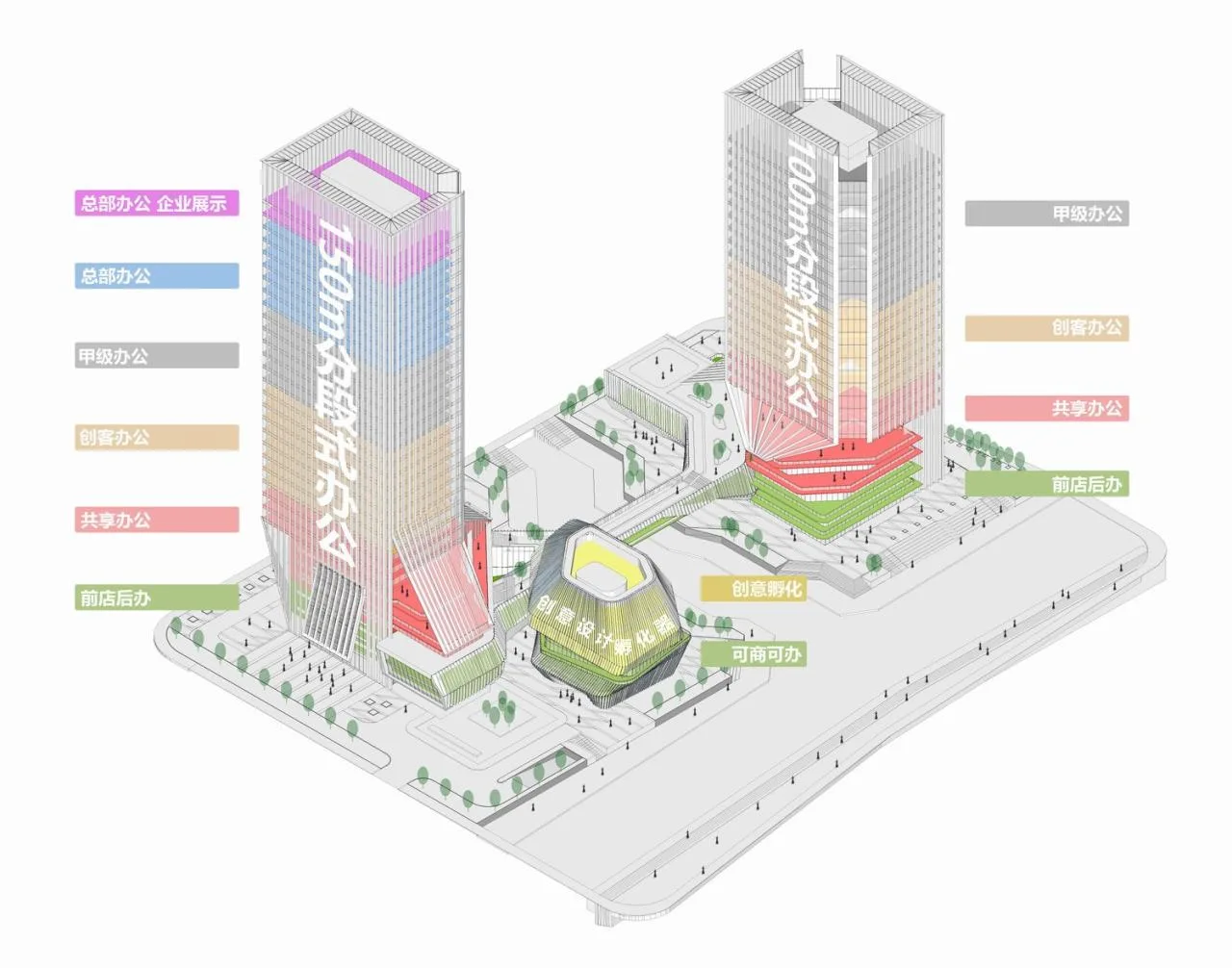
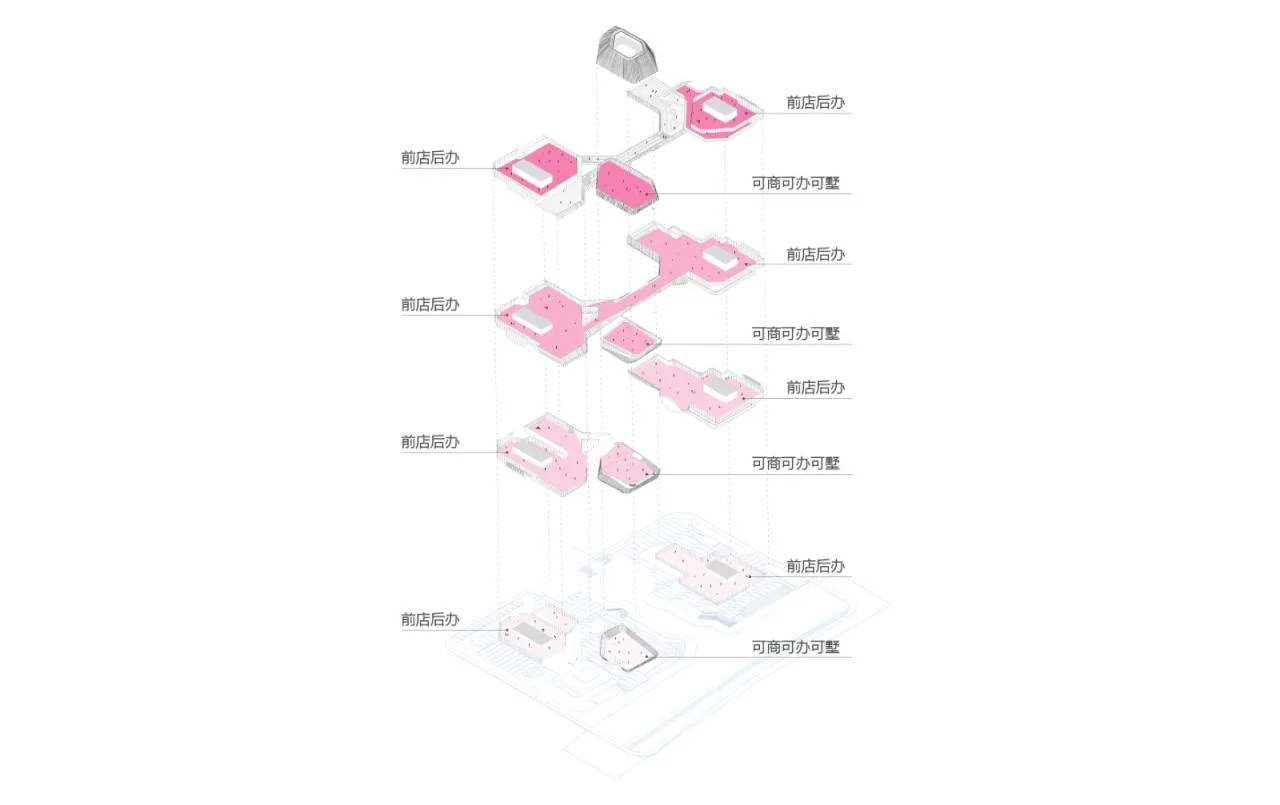
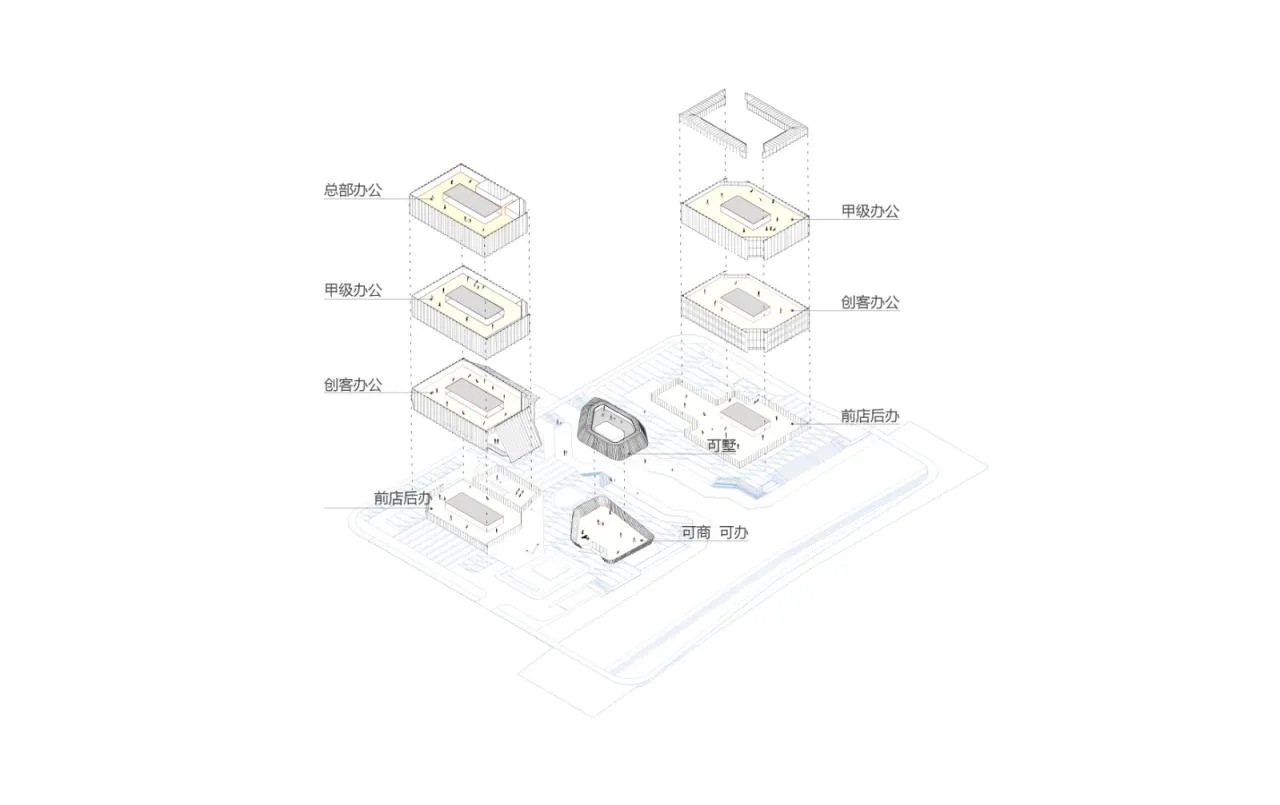
△ Functional Analysis
One standalone building on the waterfront can serve as a display center for the entire complex or function as an innovative office building available for independent leasing or sale. Its prime location and visual prominence grant it high commercial value.
Project Drawings
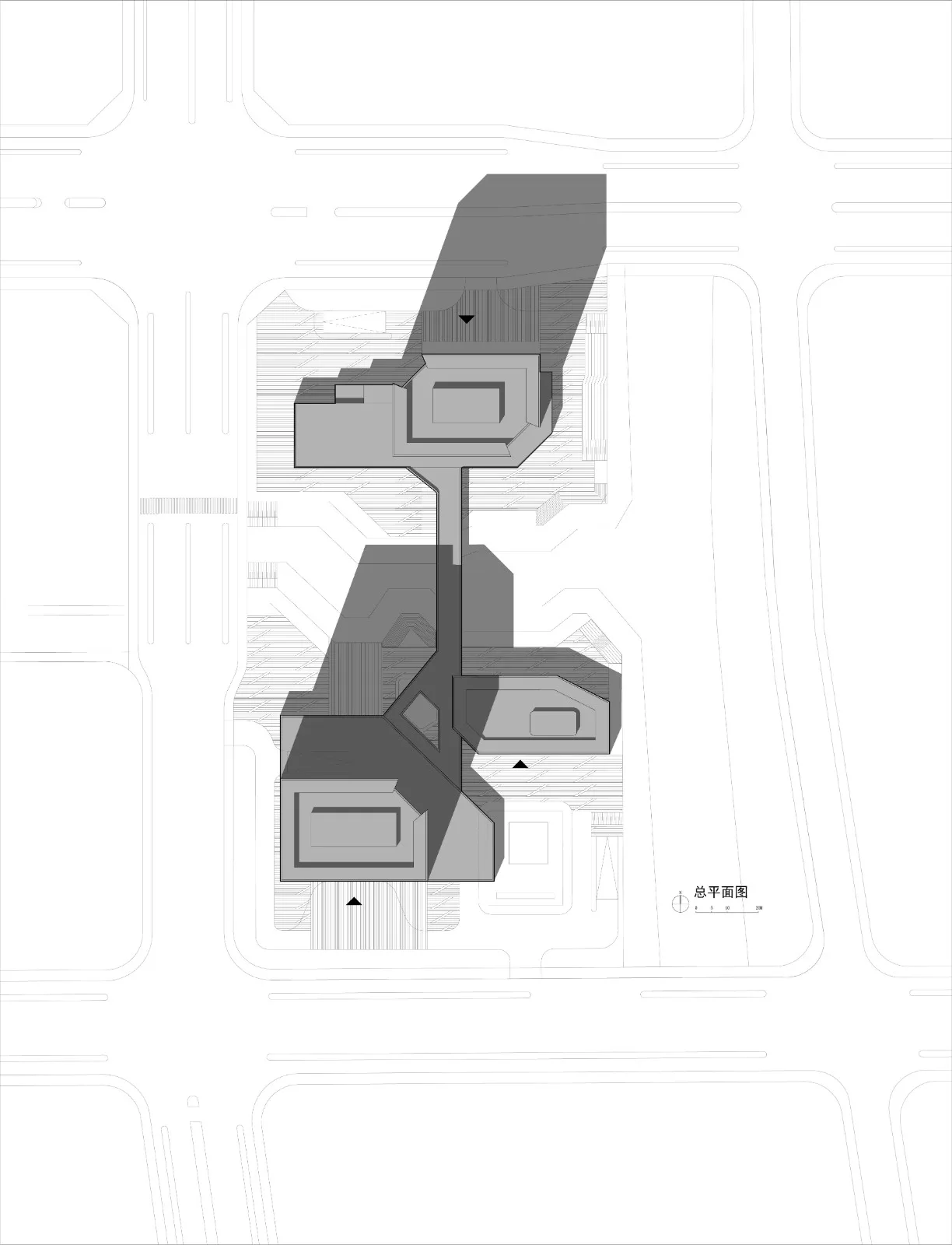
△ General Layout Plan
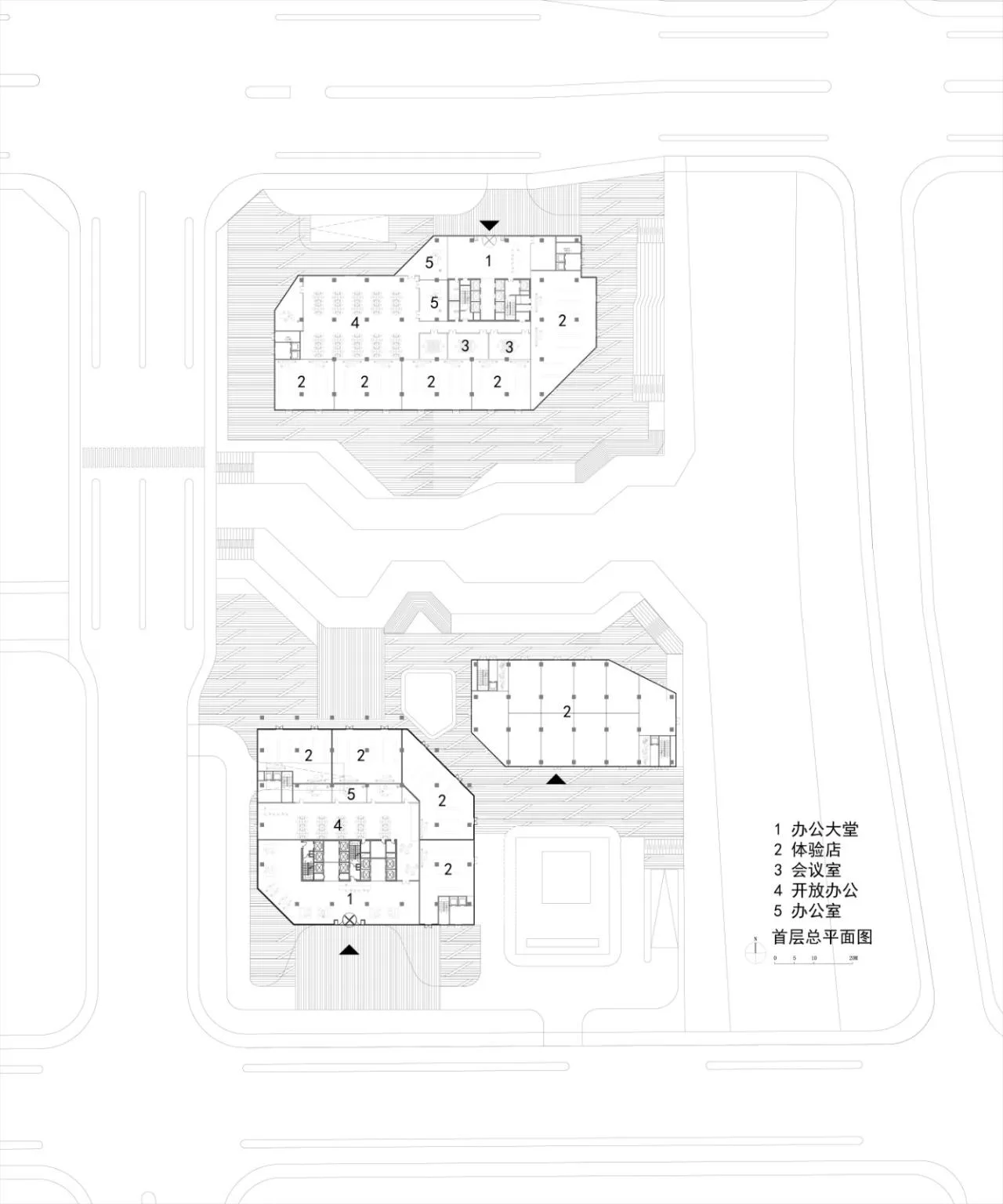
△ First Floor Plan
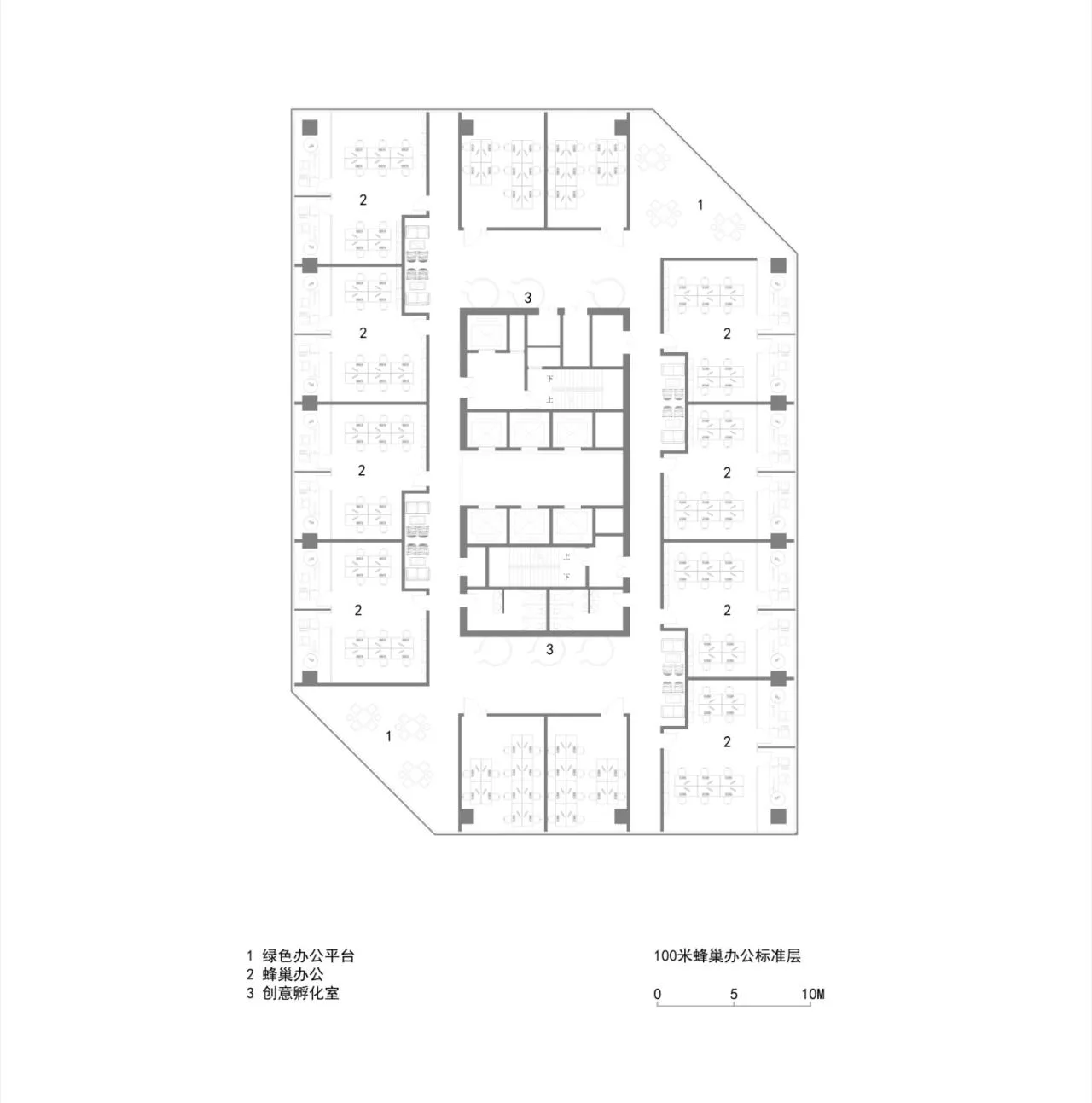
△ Standard Floor Plan
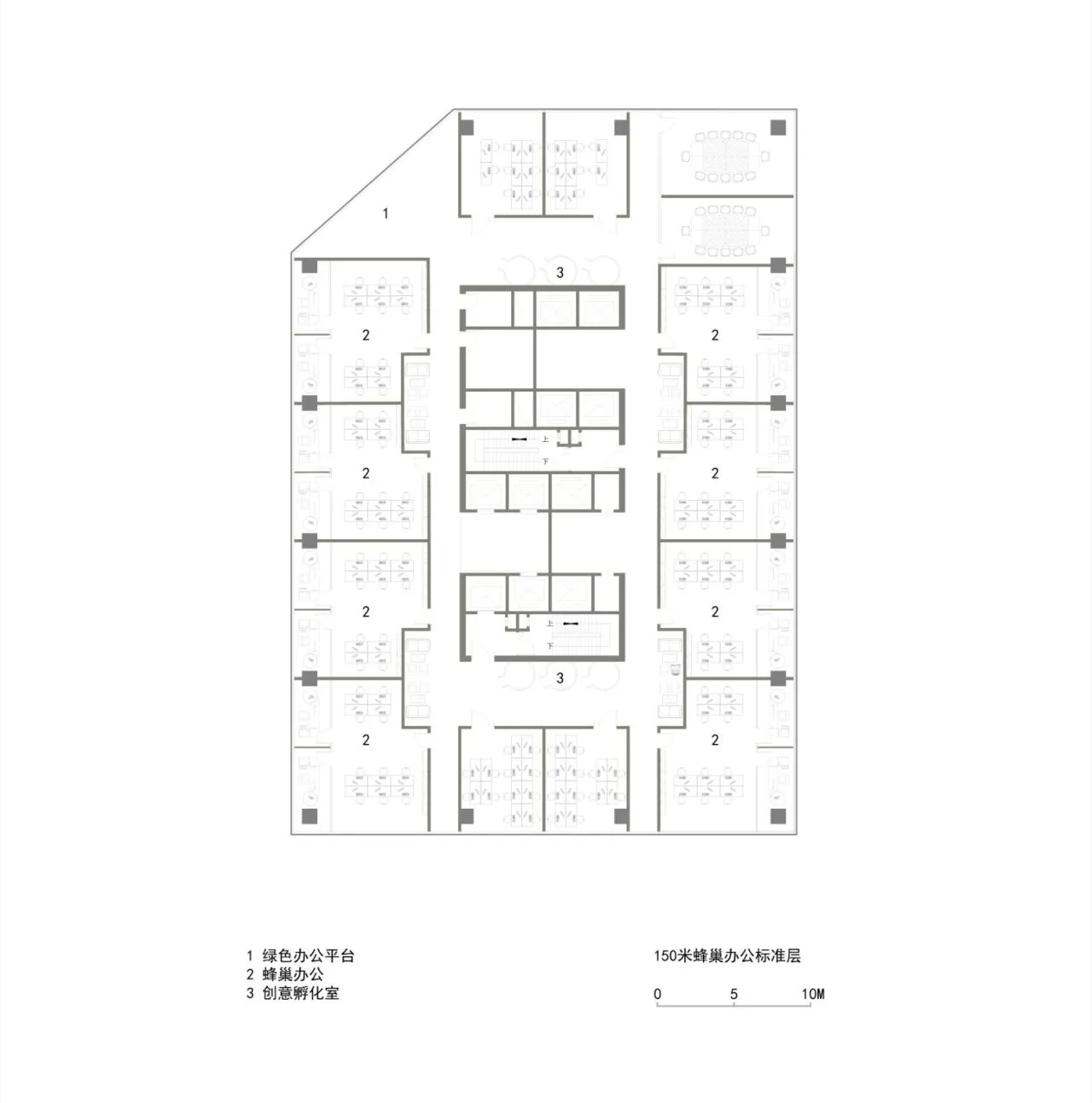
△ Standard Floor Plan
Project Information
Project Name: Suzhou Xiangcheng District High-Speed Rail New City Business Office Building
Project Type: Business Office
Owner: Suzhou Yusheng Real Estate Development Co., Ltd
Design Firm: GEN Jianhe Studio
Design Date: August 2020
Design Phase: Proposal and Bidding
Building Area: 138,000 square meters
Chief Architect: Chen Tao
Design Team: Zhu Qixiang, Xiao Kai, Chen Lei, Li Yue, Sheng Jieye, Liu Pinxi
Awards: First Prize, Architectural Creation Award, Jiangsu Civil Engineering and Architecture Society















Must log in before commenting!
Sign Up