
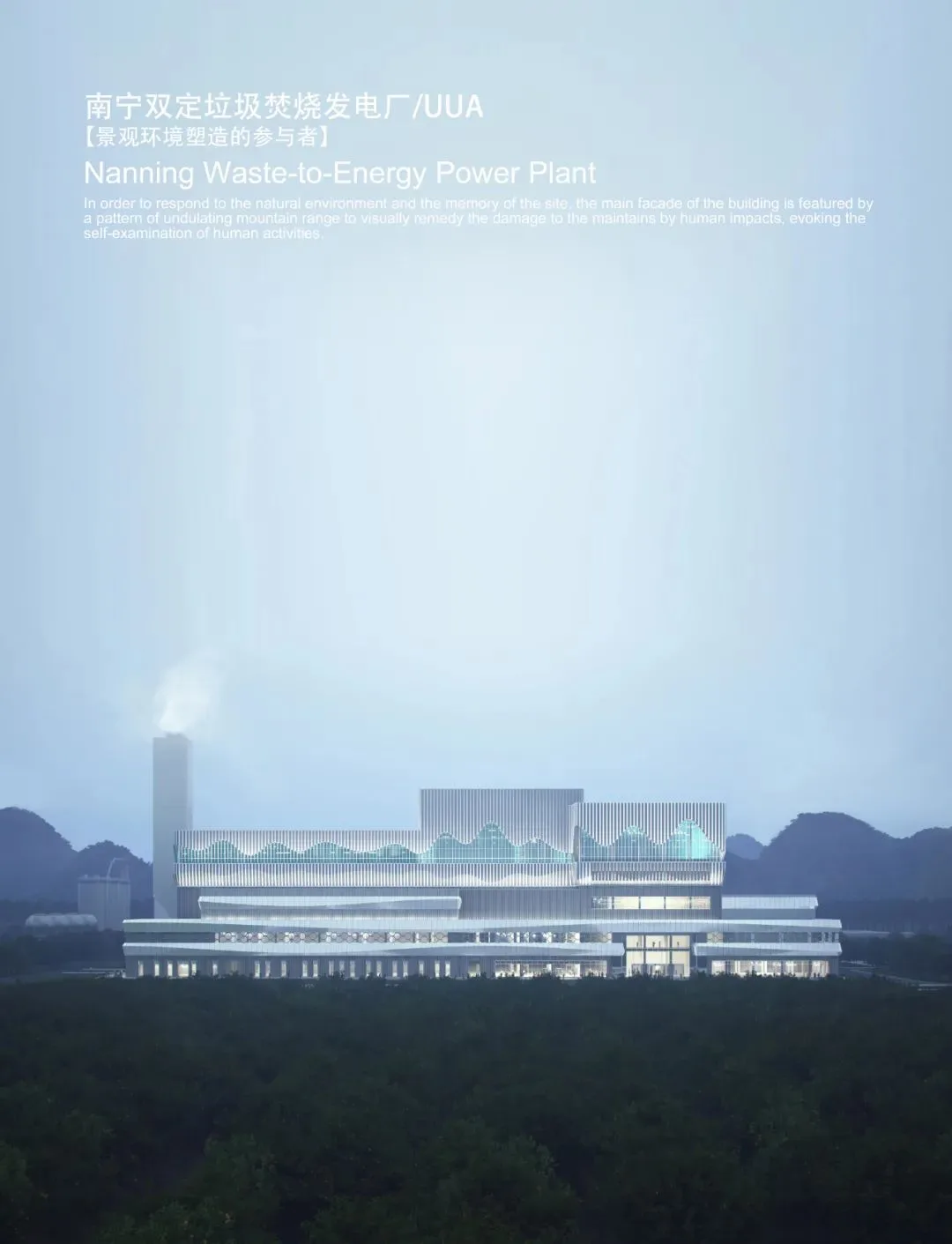
Nanning Shuangding Circular Economy Industrial Park Domestic Waste Incineration Power Plant © UUA
Managing the overwhelming volume of household waste has long been a significant challenge for modern cities. As understanding of waste evolves, new treatment approaches have redefined urban household waste as a valuable “misplaced resource.” Effective waste disposal now prioritizes principles such as reduction, harmlessness, resource recovery, cost-efficiency, land conservation, and resident satisfaction. Among various methods, waste-to-energy incineration power generation stands out as an optimal solution that achieves multiple benefits simultaneously.
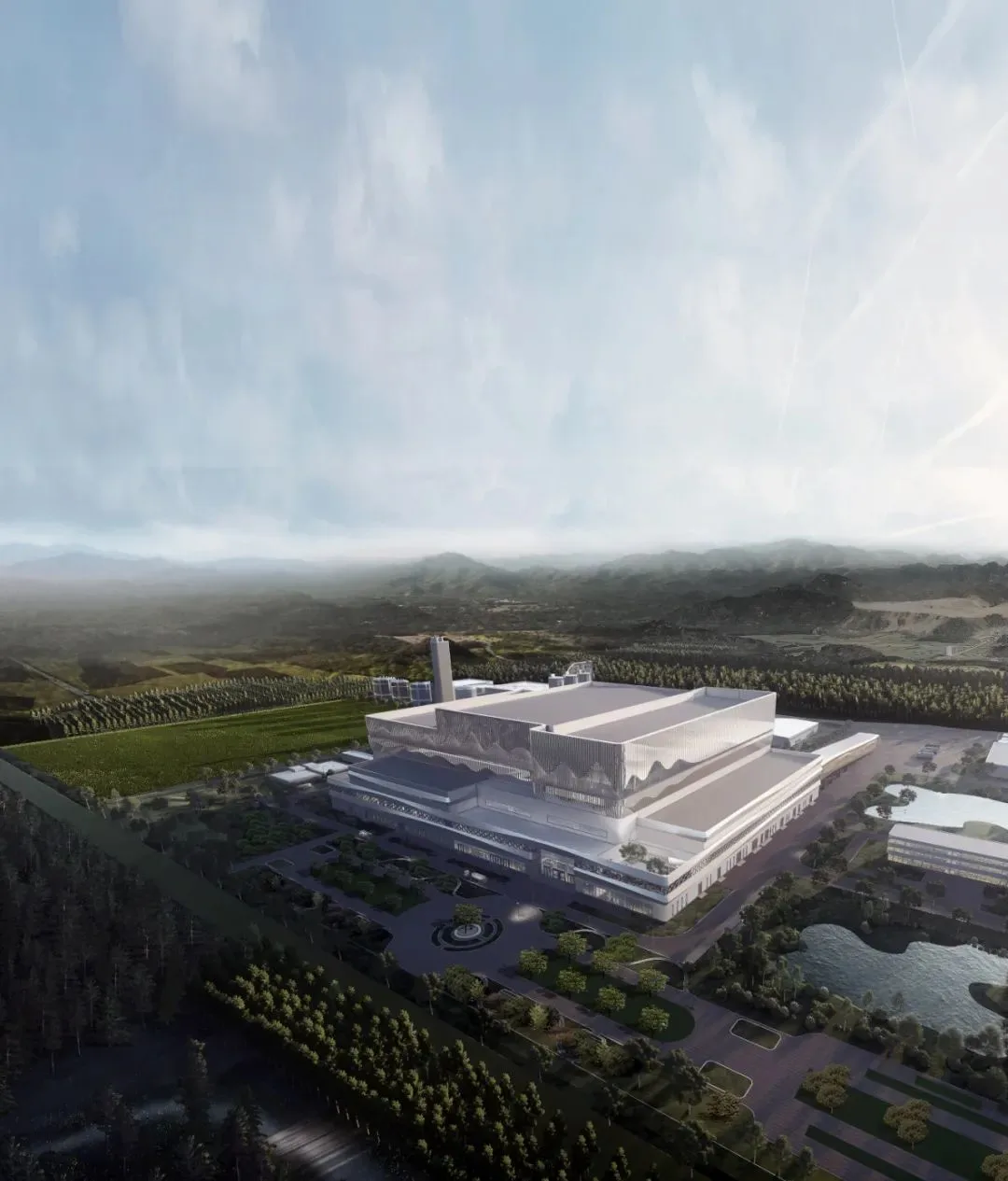
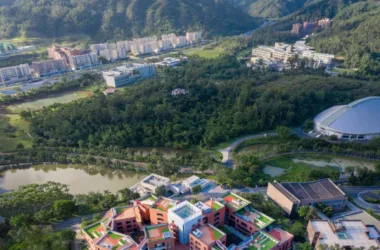
Aerial view of Nanning Shuangding Circular Economy Industrial Park © UUA
The Shuangding Circular Economy Industrial Park, located in Shuangding Town, Nanning City, Guangxi Province, is a newly constructed waste treatment facility positioned away from the urban core. As Nanning expands, existing waste management infrastructure has proven insufficient. This industrial park is designed to collaboratively process various types of waste—including byproducts generated during treatment—and represents a critical component of Nanning’s comprehensive waste management system. Central to this system is the municipal solid waste incineration power plant.
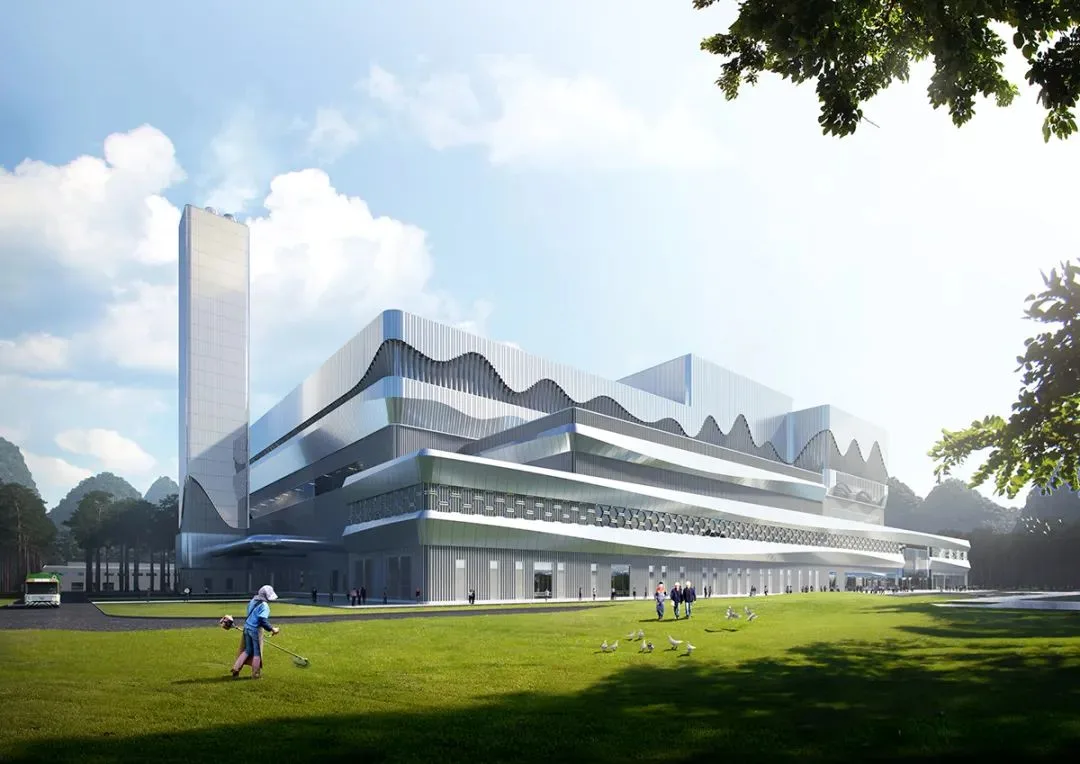
View of the main factory at Nanning Shuangding Circular Economy Industrial Park © UUA
1. A New Era of Waste Incineration Power Plants
Although waste incineration power plants are not new worldwide, their rapid development in China is a recent phenomenon. Early public skepticism—largely due to limited knowledge—raised concerns about secondary environmental pollution, triggering the so-called “not-in-my-backyard” effect and resistance to new plant construction. However, technological advancements have enabled incineration plants to meet stringent emission standards, with effective treatment of exhaust gases, wastewater, and solid residues.
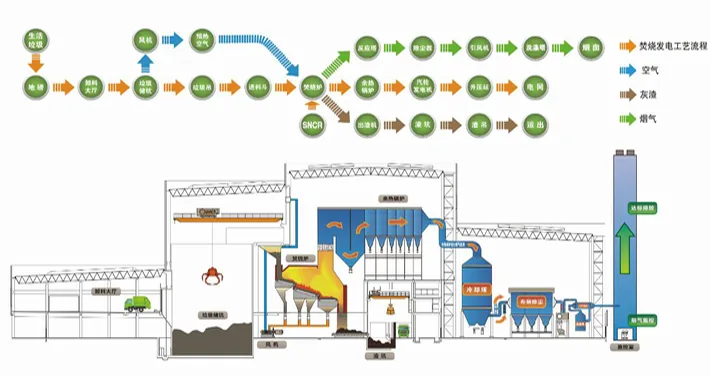
Schematic diagram illustrating household waste incineration power generation
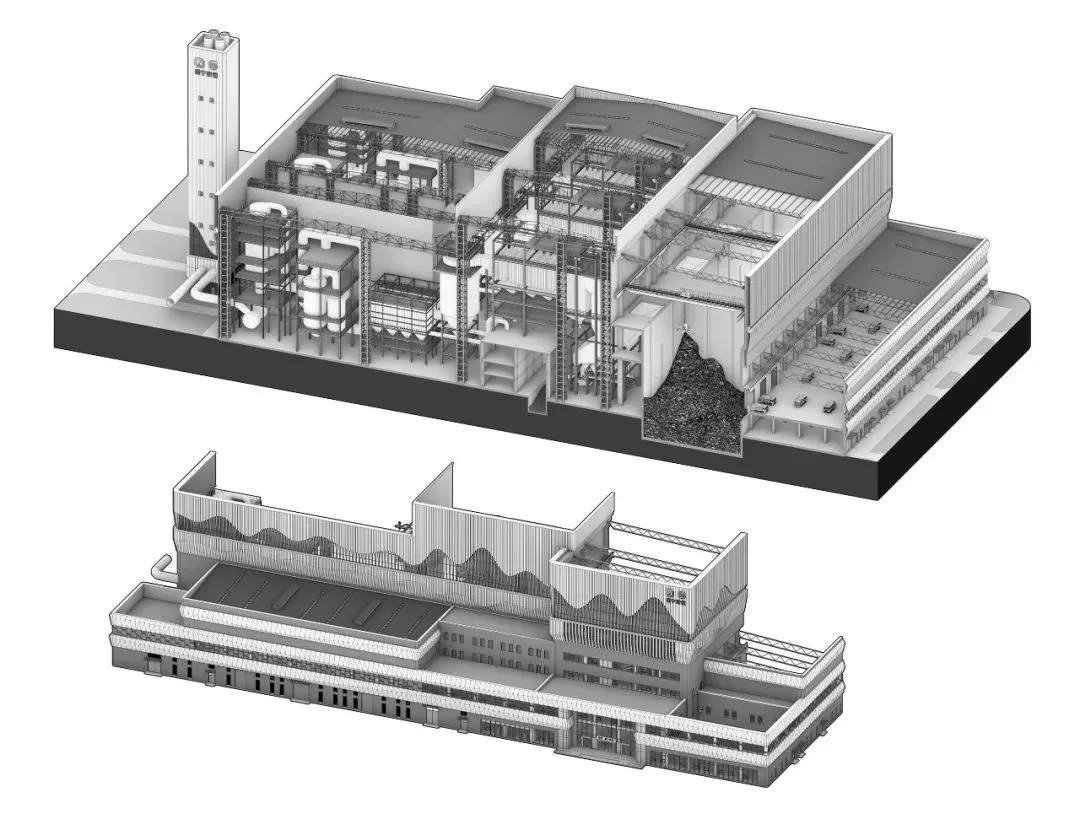
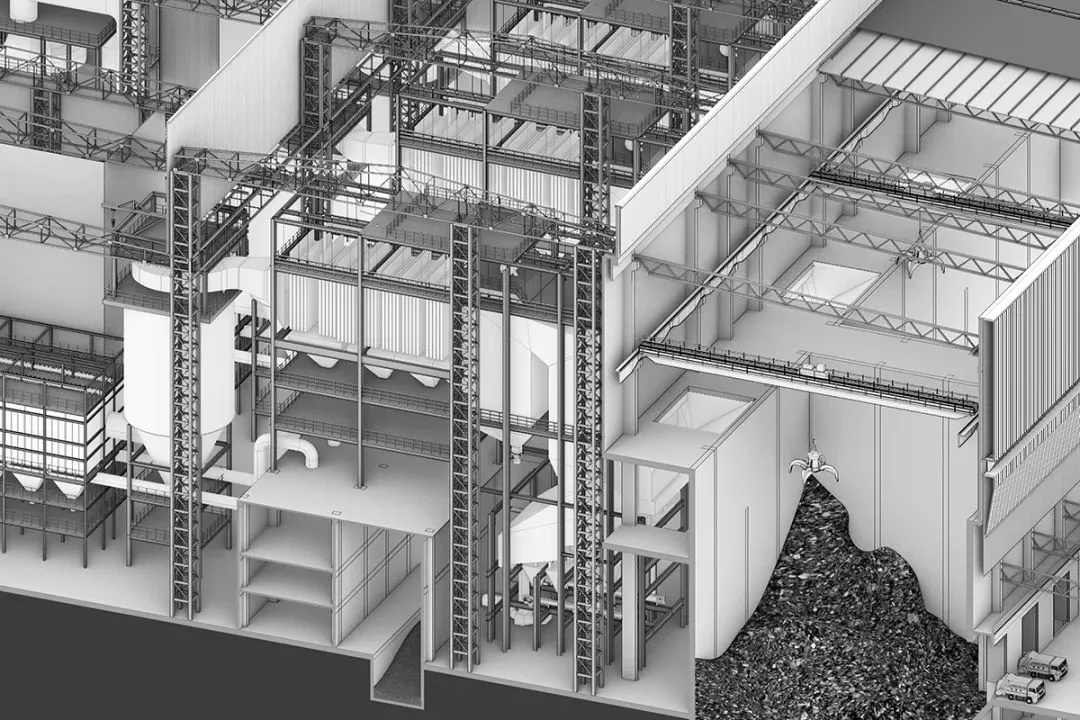
The industrial aesthetic within the power plant © UUA
Promoting waste incineration power generation effectively requires not only cutting-edge technology but also widespread public education and a positive image. The newly constructed incineration plants aim to dispel traditional perceptions of industrial facilities as disorderly, dirty, and unsightly.
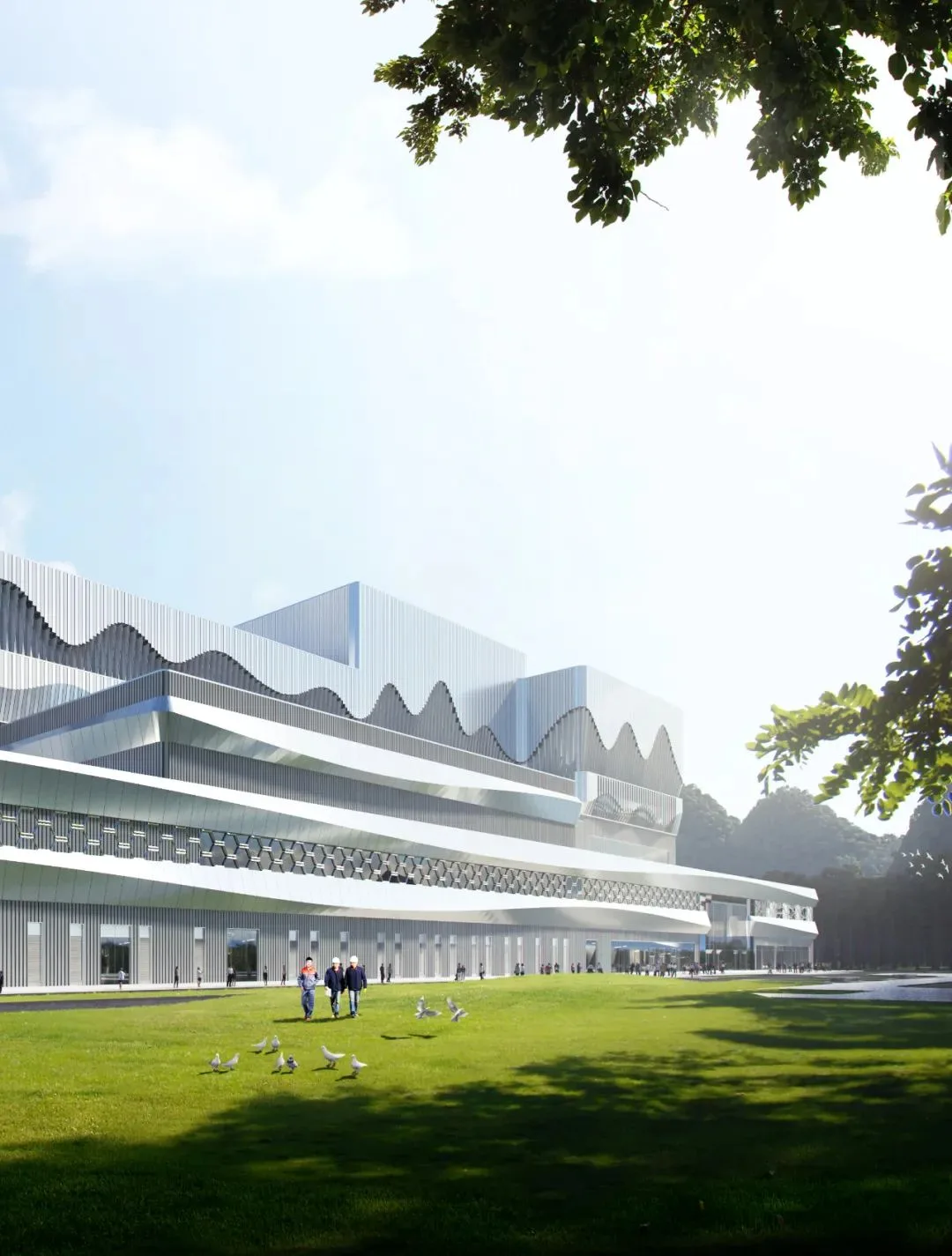
Power plant park environment © UUA
By refining the design of building forms, envelopes, and key structures such as chimneys, designers achieve a visual “deindustrialization” effect. Employing architectural elements—including materials, textures, colors, and lighting—imbues industrial buildings with artistic character and creativity. Integrating visitor-friendly functions and enhancing the landscape environment further positions these facilities as public buildings, fostering a symbiotic relationship with the community.
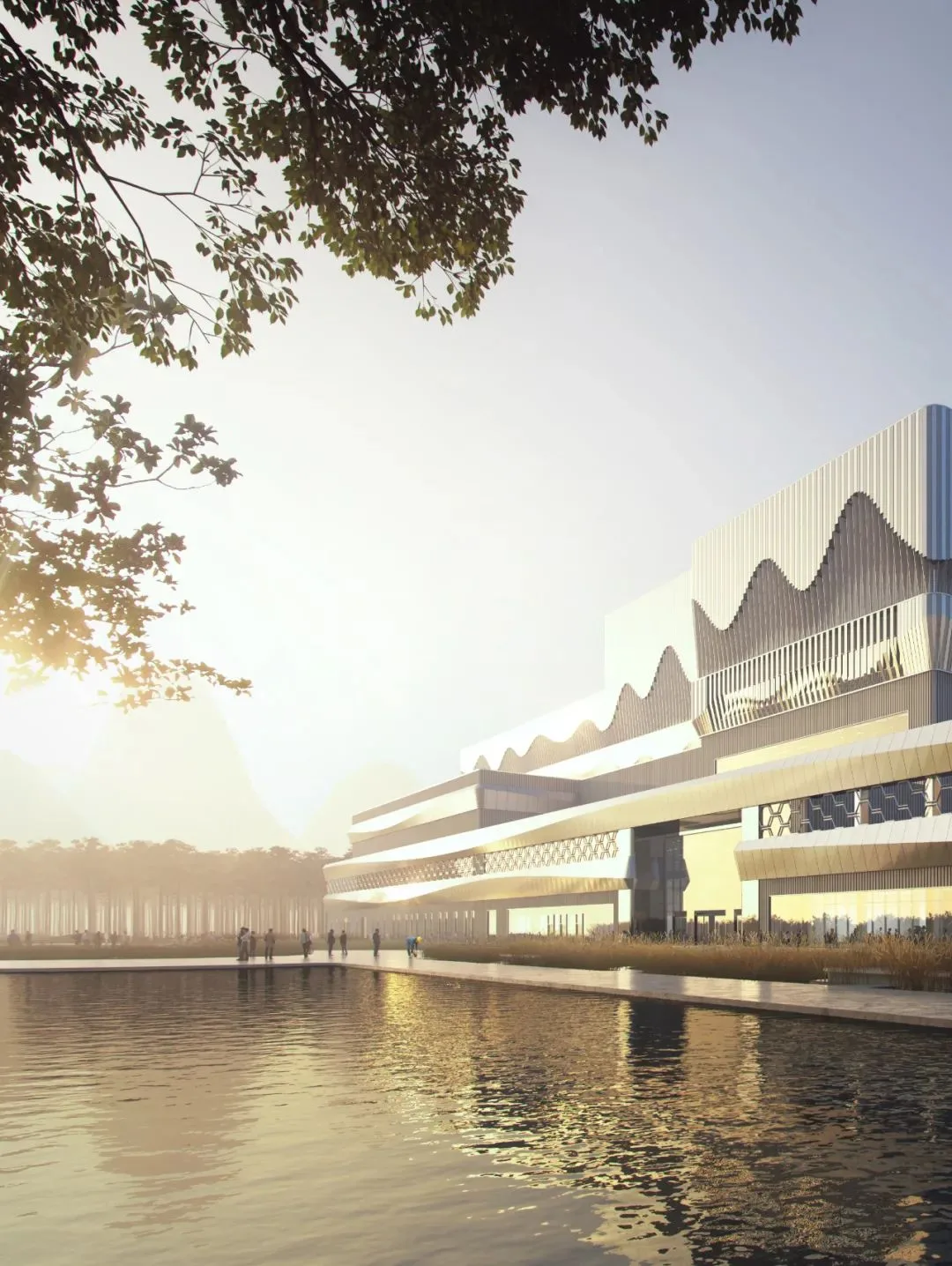
Reflection in the landscape pool visible from the entrance toward the power plant © UUA
2. Connecting Cities, Nature, and Culture
UUA follows the principle that public-oriented buildings must thoughtfully respond to their location’s unique characteristics. Architecture inevitably forms a spiritual connection with its users—whether historical, contemporary, or future; humanistic, technological, or natural. Capturing this connection fosters emotional resonance, allowing architecture to serve as a meaningful cultural carrier. Nanning, with its distinct identity, exemplifies this approach.
As the capital of Guangxi Zhuang Autonomous Region, Nanning is a key hub for China’s cooperation with ASEAN. Known as China’s “Green City,” it attracts domestic and international visitors alike. The city is culturally rich, home to diverse ethnic groups and vibrant folk traditions. Geographically, it sits within a karst landscape of towering peaks, caves, waterfalls, and stone forests.
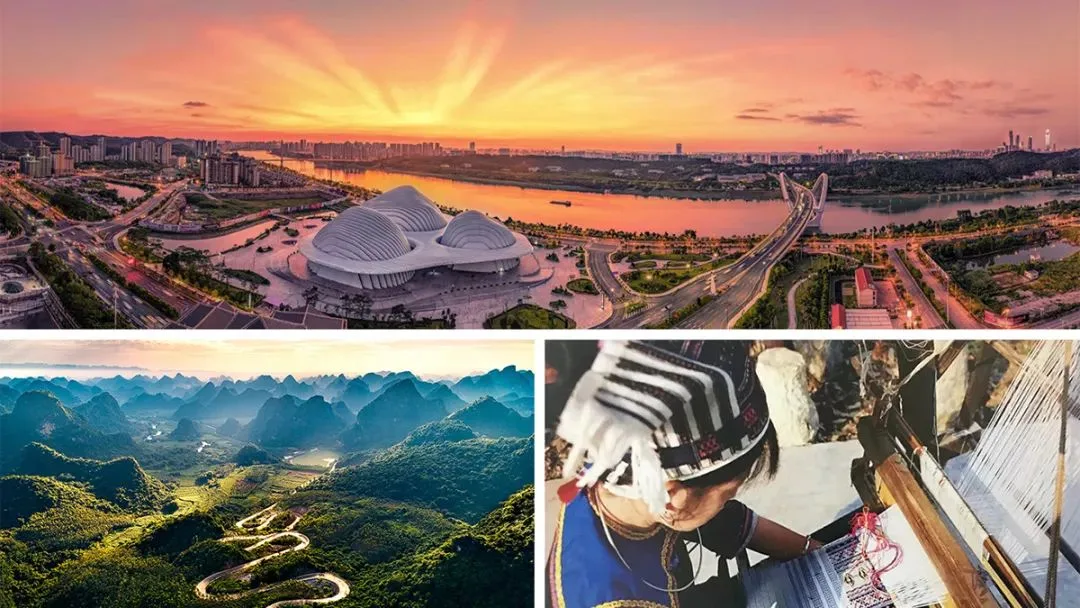
The urban landscape of Nanning, renowned as the “Green City”
Nanning’s rich cultural and natural tapestry provides abundant inspiration for design. The city’s urban style, natural scenery, and historical heritage collectively shape public expectations for meaningful architectural connections. UUA aims to design a waste incineration power plant that overcomes public resistance, transforming it into a welcomed facility where advanced technologies operate seamlessly.
3. Response and Reflection
Despite extensive preparation, UUA’s design team was struck by the natural beauty upon visiting the site. Surrounded by farmland and forest, with only a nearby cement plant, the site is overlooked by a vast karst peak cluster to the north, mostly hidden from view.
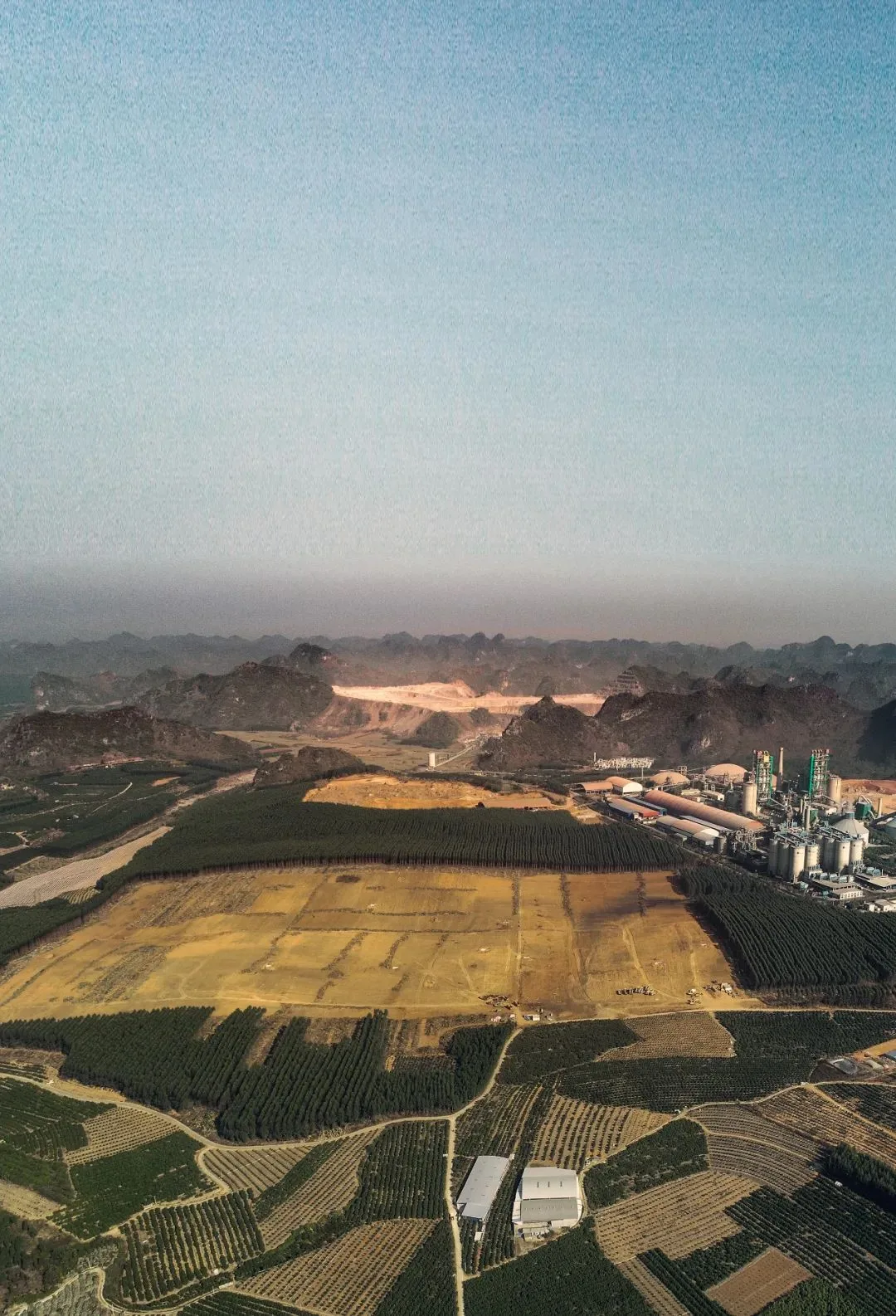
Current condition of the site
Notably, a mountain depression on the north side shows clear signs of human modification, with a plateau further north created by mining activities from the cement factory. This stark bare plateau contrasts sharply with the surrounding greenery, leaving a strong impression on the design team.
The plant’s main facade measures 200 meters wide and 55 meters tall, aligned north-south with this mountain valley. From a visual perspective, the building’s volume roughly matches that of the distant mountain range.
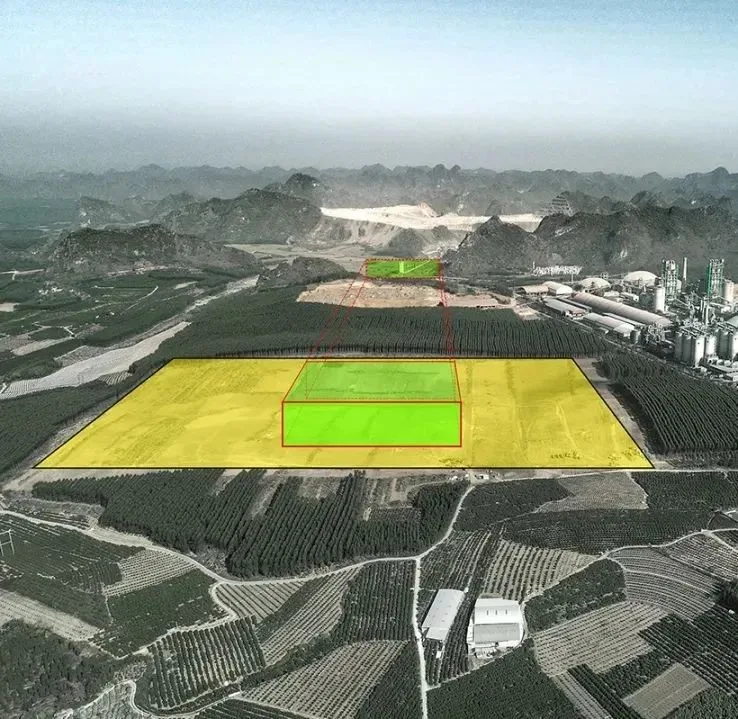
Visual relationship between the building’s main facade and the shaped mountain peaks
Seizing this opportunity, UUA’s design visually completes the flattened mountains altered by human activity, encouraging reflection on environmental impact and human responsibility.
4. The Art of Construction
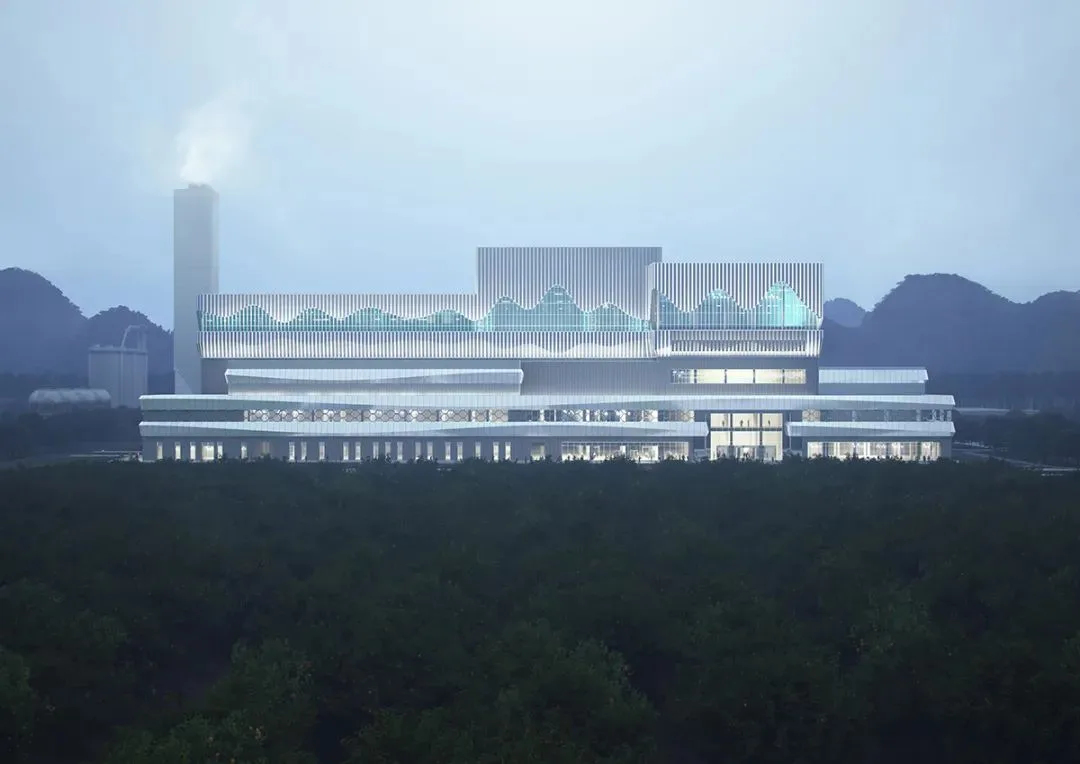
Facade curtain wall mimicking a cluster of peaks against the mountain backdrop © UUA
UUA addresses the site’s challenges through facade design that incorporates rich local cultural elements, infusing architecture with meaningful symbolism.
The main facade’s peak cluster form symbolically restores the damaged mountain in the background. Ethnic culture and landscape impressions are woven throughout the design, making the building an active participant in shaping the surrounding environment.
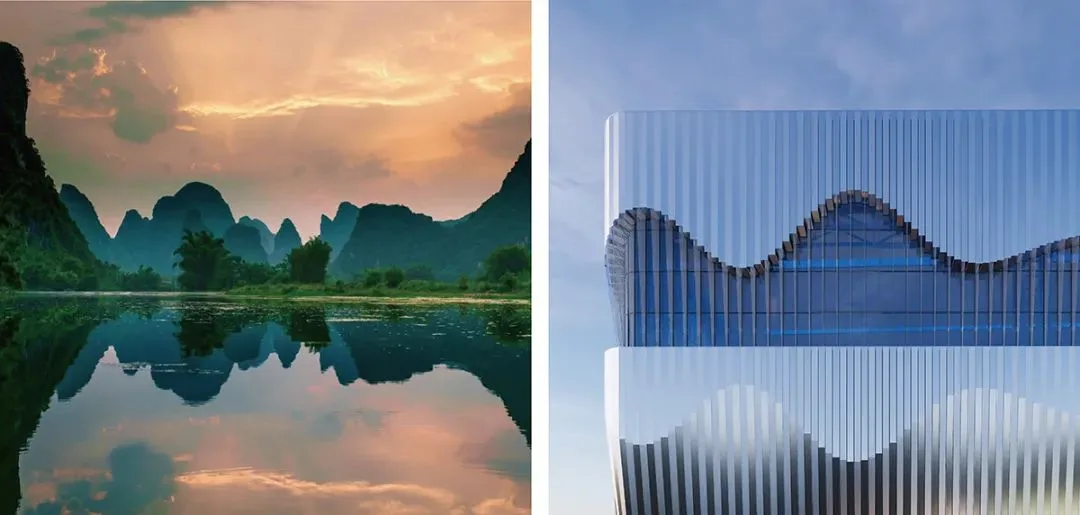
Fengcong – Landscape facade impression © UUA
UUA’s design fosters a sense of harmony between mountains and waters, mitigating the industrial isolation typically associated with power plants. White aluminum strip panels wrap the building’s towering upper sections, creating soft, undulating mountain shapes and reflective effects through angular variation. This design echoes the karst peak cluster landscape and symbolically reconstructs the lost natural scenery.
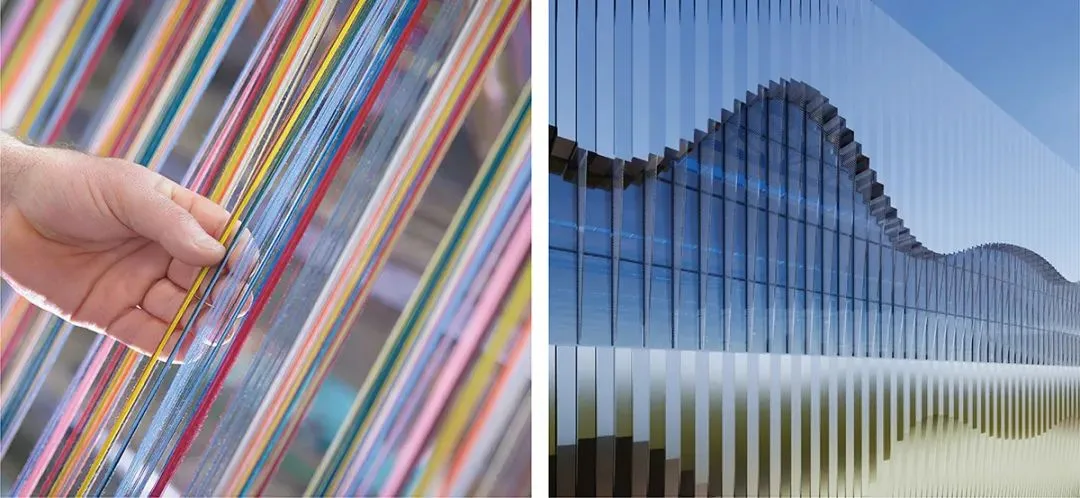
Brocade – woven texture detail © UUA
By emphasizing vertical line elements and incorporating the weaving concept, the design balances cultural and natural themes. This approach brings the building closer to the public by blending it with its natural surroundings.
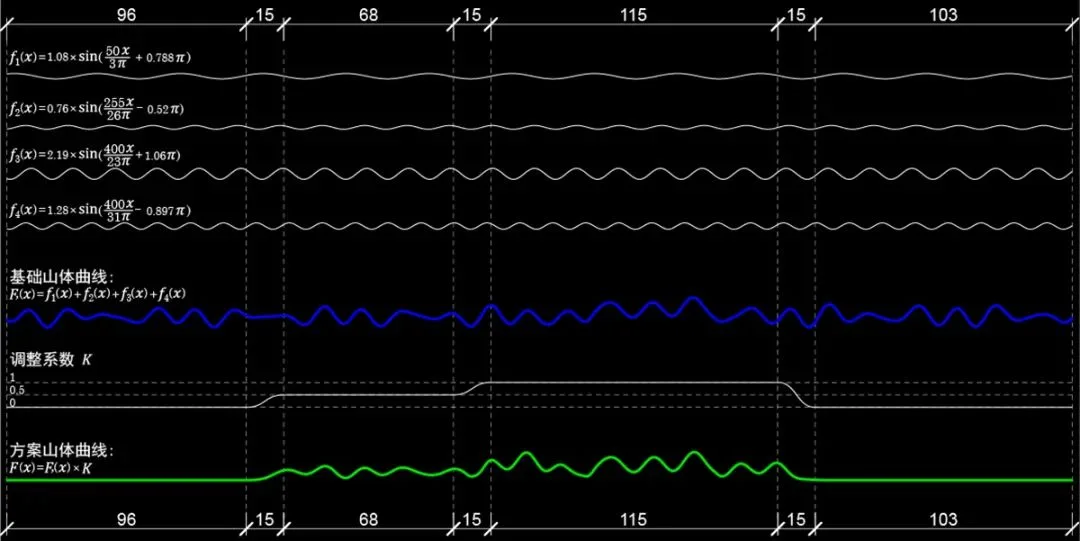
Geometric control: synthesis of four trigonometric function curves © UUA
The peak cluster shape is generated from four sets of trigonometric curves controlled by mathematical functions, ensuring smooth curvature transitions. This method provides visual harmony and detailed data for further development.
The aluminum curtain wall features two types of grilles—mirror and matte finishes—arranged alternately to create a rhythmic pattern of strong and soft reflections. Following the peak cluster curve as a baseline, the grid lengths are varied to produce a three-dimensional surface effect through unidirectional bending. This approach simplifies construction and reduces costs. Additionally, triangular glazed glass panels clad with mirror stainless steel enhance the curtain wall’s linearity.
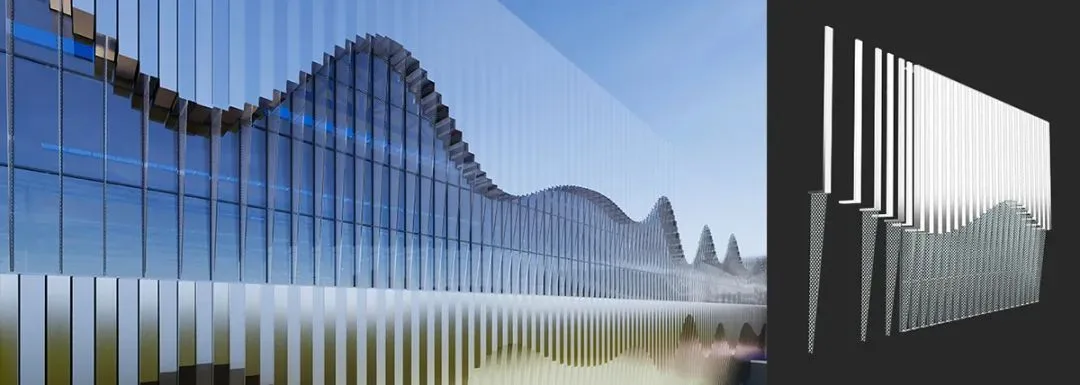
Curtain wall details © UUA
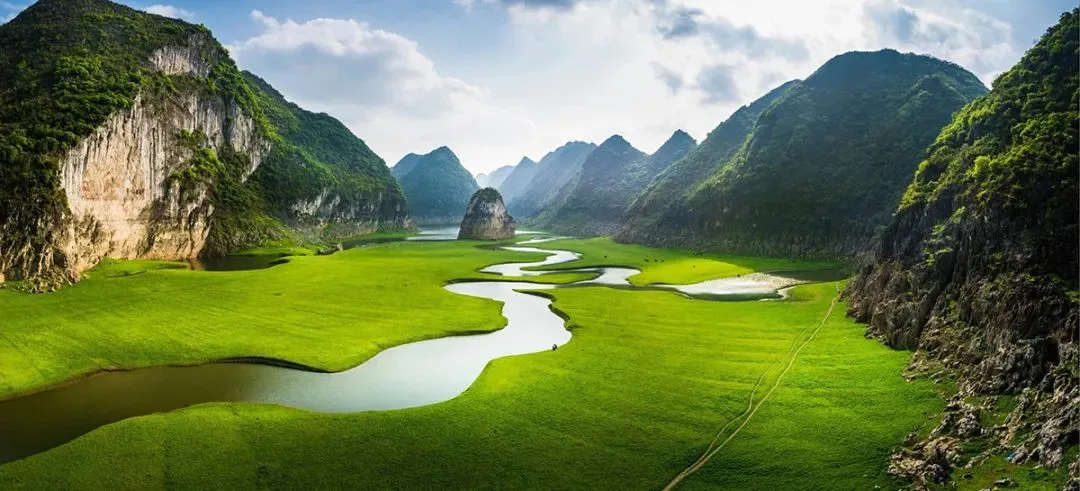
Glistening water reflections
Guangxi’s winding, mirror-like rivers and distinctive peaks create a landscape where mountains and waters coexist symbiotically. The building is encircled by a flowing white ribbon that simulates meandering water, enhancing horizontal fluidity. This is complemented by lush plantings, which improve the visual greenery and create an inviting atmosphere for visitors.
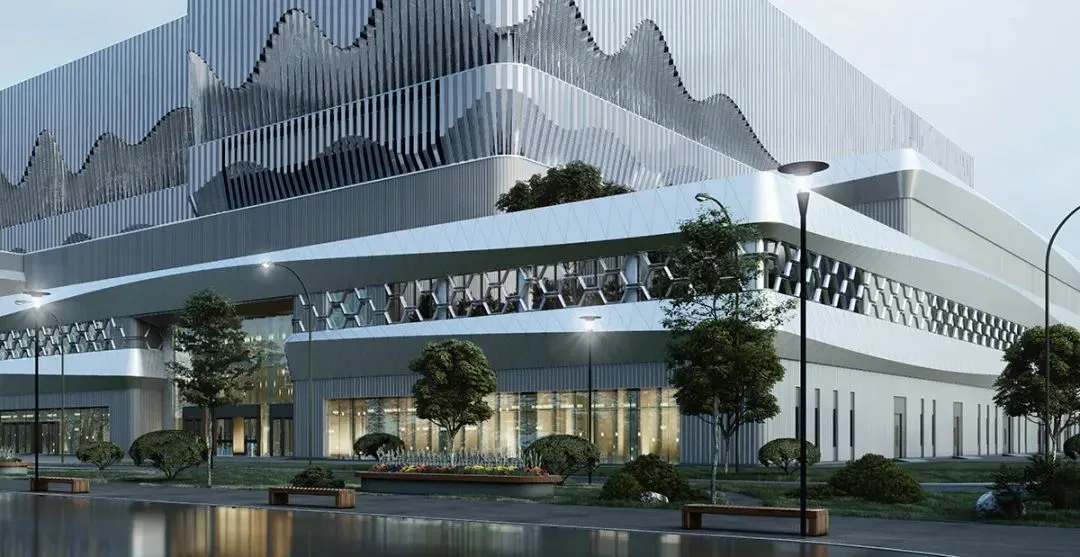
Honeycomb motif © UUA
Honeycomb elements are integrated between the horizontal strip-shaped curtain walls of the podium, symbolizing bees and hives. This metaphor captures the cycle of collection and transformation—just as bees gather pollen to produce honey, garbage trucks collect waste from cities to convert it into valuable energy.
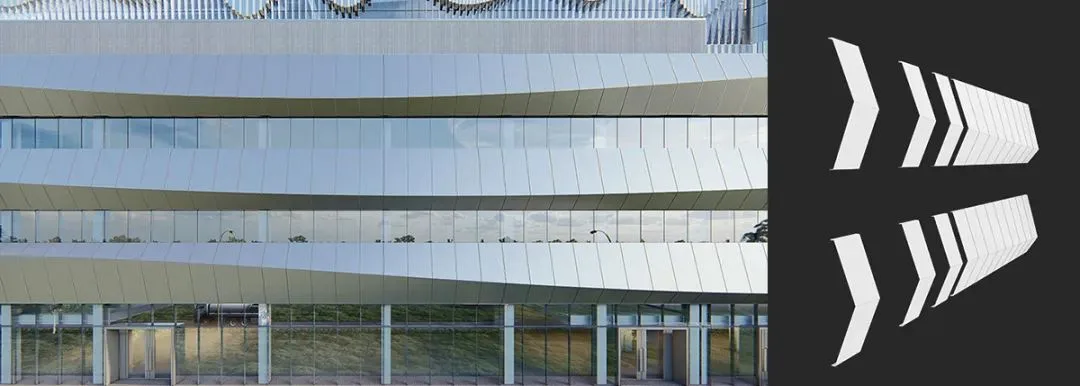
Curtain wall details © UUA
The building podium accommodates various functional spaces requiring ample natural light, achieved through a horizontal aluminum panel curtain wall. This design complements the peak cluster motif of the factory facade.
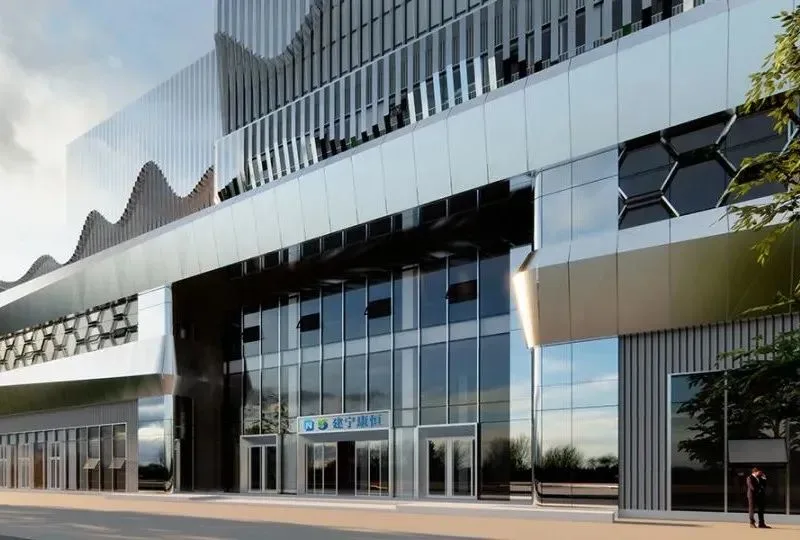
Building entrance © UUA
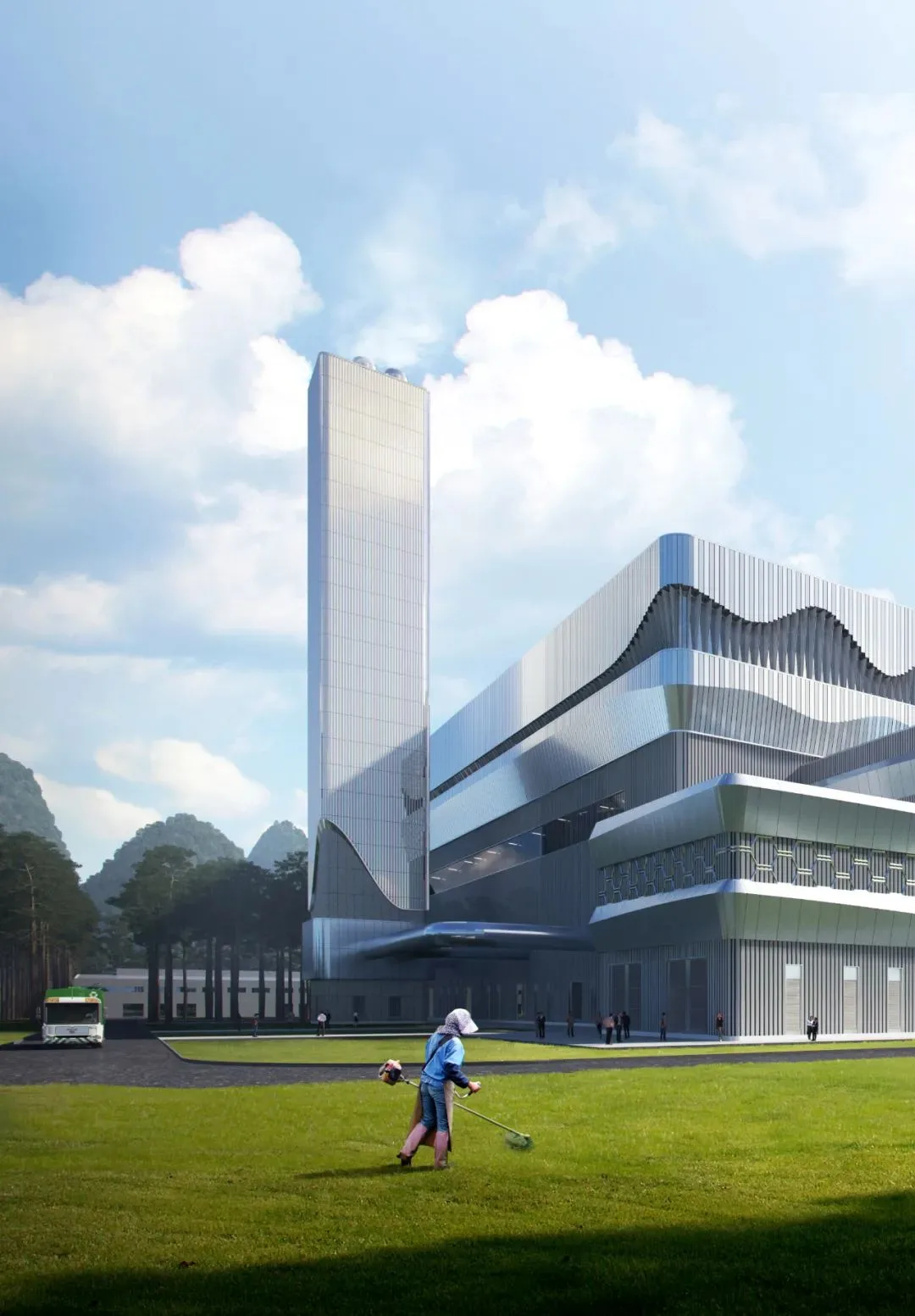
Chimney detail © UUA
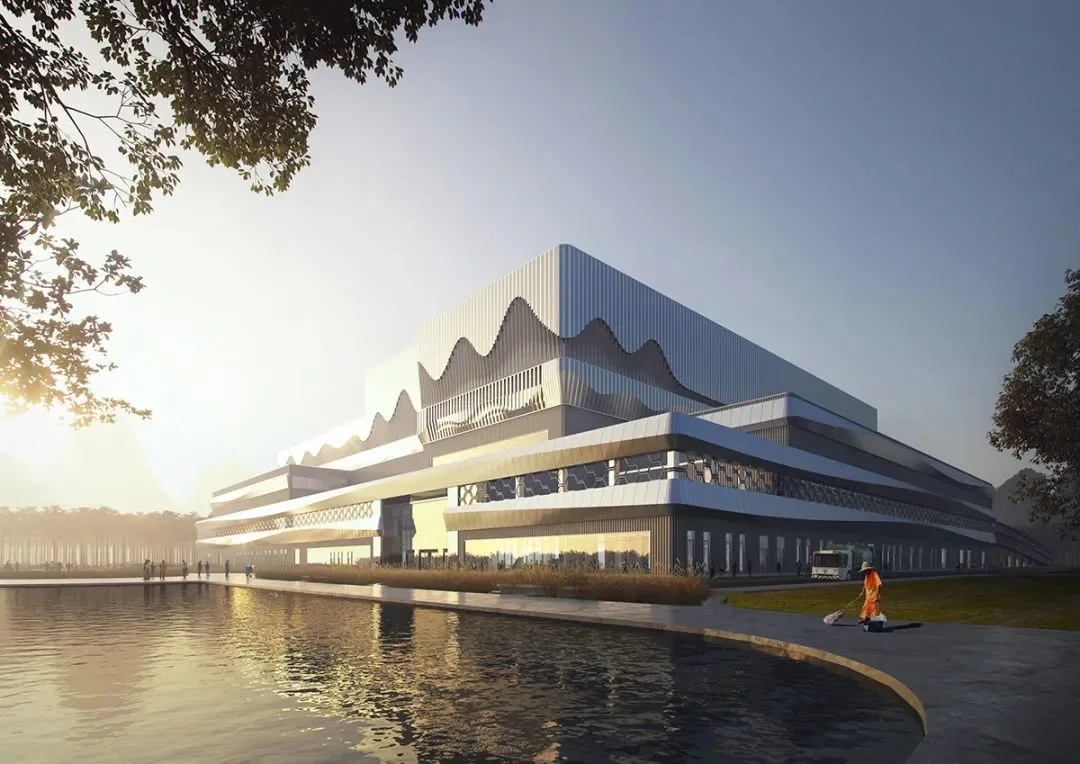
Overall architectural form of the waste incineration power plant within the park © UUA
5. Conclusion
Distinct regional environments often inspire architects to explore the deeper spiritual significance of architecture. Large-scale projects with social responsibility demand bold yet careful design strategies to address environmental challenges with innovative solutions. Good design transcends concepts and ideas, translating these into tangible, impactful realities. We eagerly anticipate the completion of the Nanning Shuangding Waste Incineration Power Plant. Follow UUA to stay updated on the project’s progress.
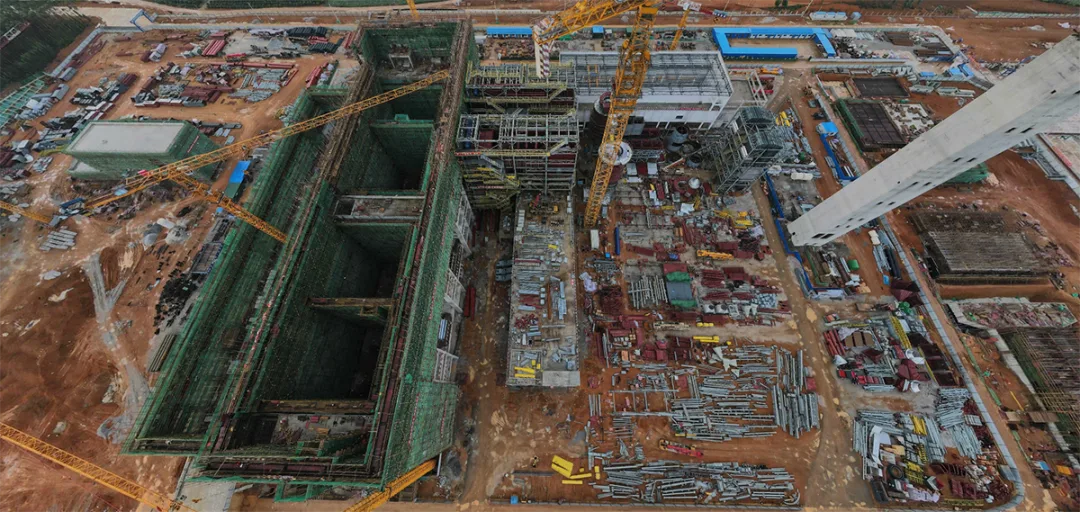
Construction site as of May 4th, 2021
Project Information
Architectural Design: UUA Architects
Project Location: Nanning, Guangxi, China
Project Scale: 54,000 sqm
Project Owner: Nanning Jianning Kangheng Environmental Protection Technology Co., Ltd.
Design Team: Li Yongzheng, Li Qizhi, Wang Falu, He Wenbo, Lv Yanfeng
Main Design: China Urban Construction Research Institute Co., Ltd.
Design Period: January 2020 – January 2021
Construction Period: June 2020 – Ongoing















Must log in before commenting!
Sign Up