
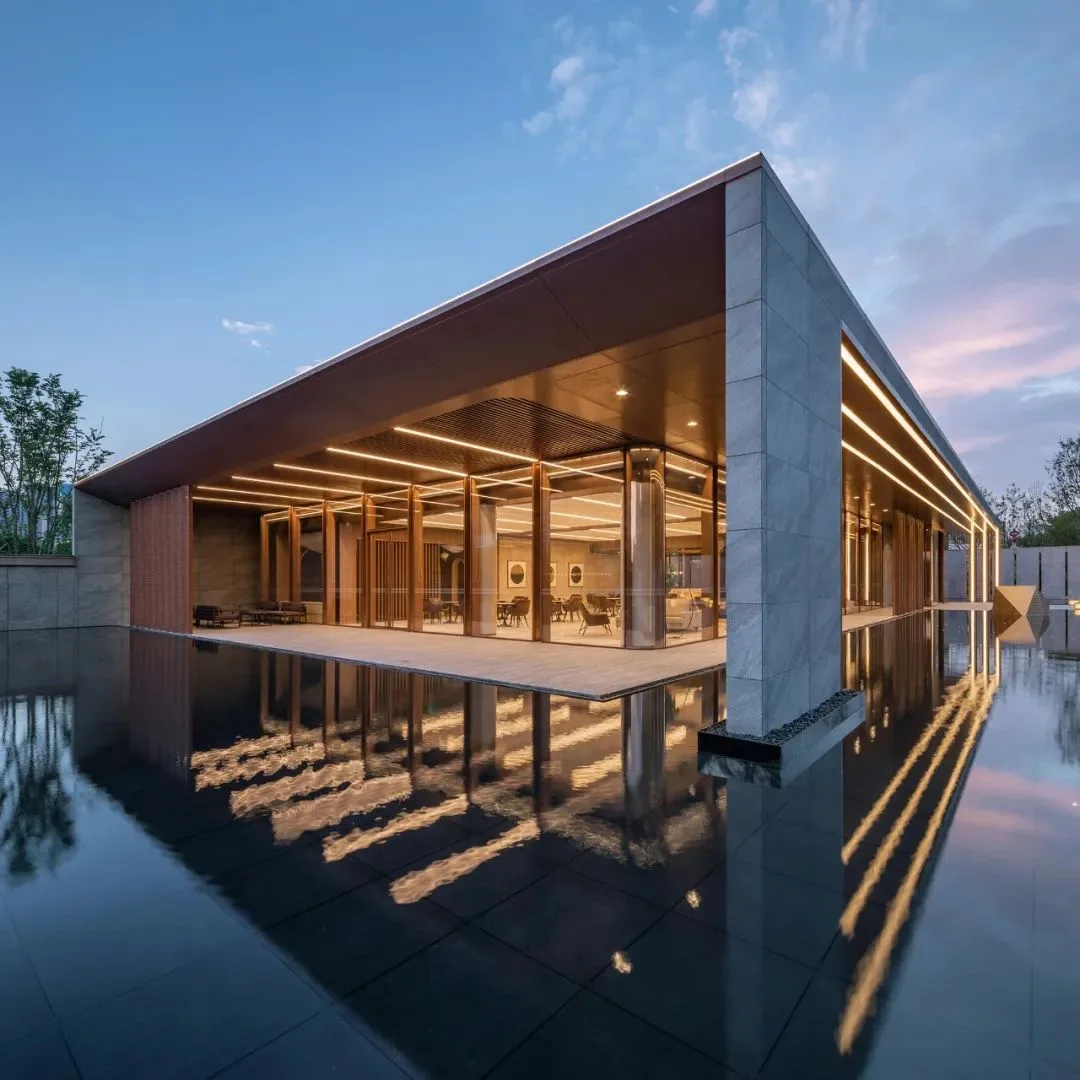
△ Boyuan City Experience Center
The Ankang Boyuan City Experience Center, designed by UUA Architects, offers a fresh vision for the 3.0 version demonstration area. The exhibition hall leverages modular architectural design to deliver an exceptional spatial experience, while efficiently managing indoor and outdoor environments, project completion, construction costs, and timelines.

Integration of building, curtain wall, and interior within the modular system
The design features open, dynamic spaces that flow seamlessly, creating a tranquil and inviting atmosphere. This approach establishes an ideal model of a relaxed, high-quality architectural space that embraces openness and interaction with the environment.
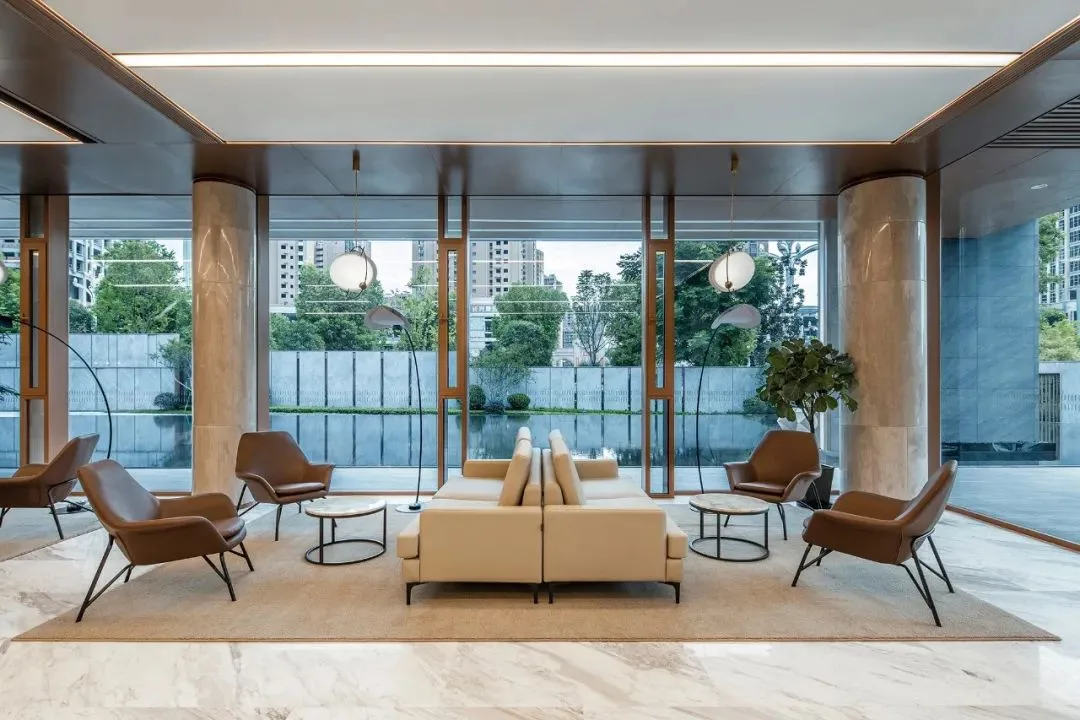
An ideal model of relaxed, high-quality spatial design
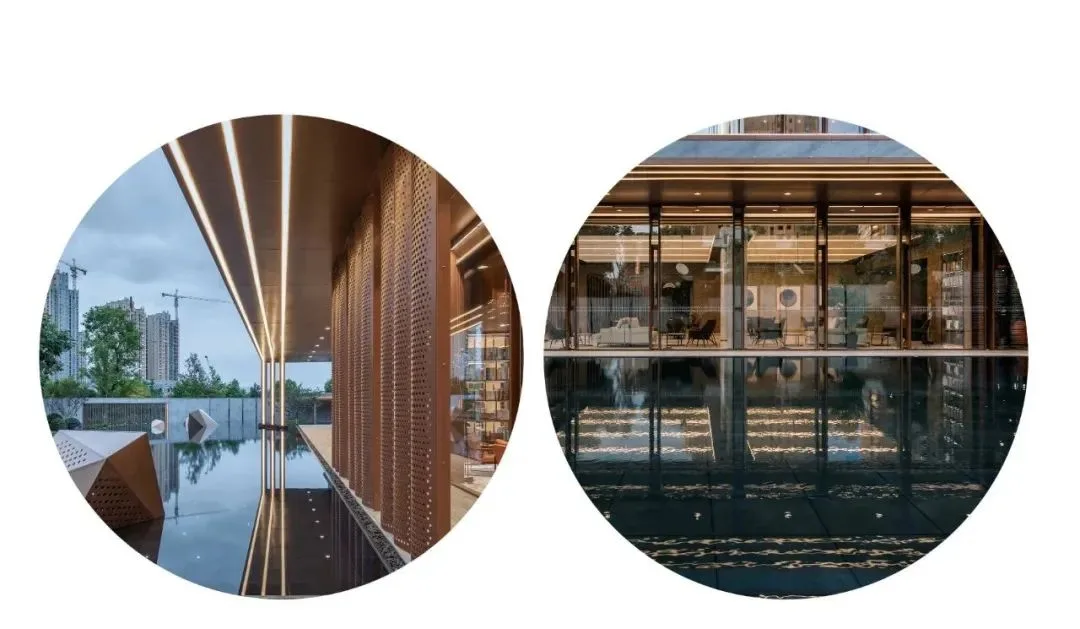
The building’s first floor features large overhanging eaves and corridors along the west facade facing the street, with the main entrance on the south side. This horizontal extension enriches the exhibition hall’s spatial hierarchy. The shaded area beneath the eaves creates a layered space and forms a spacious terrace for the second floor. A wide, slender water pool at the entrance reflects the building, enhancing visual depth and offering a serene landscape experience.
01 Game Line
Triple-stacked building outdoor experience
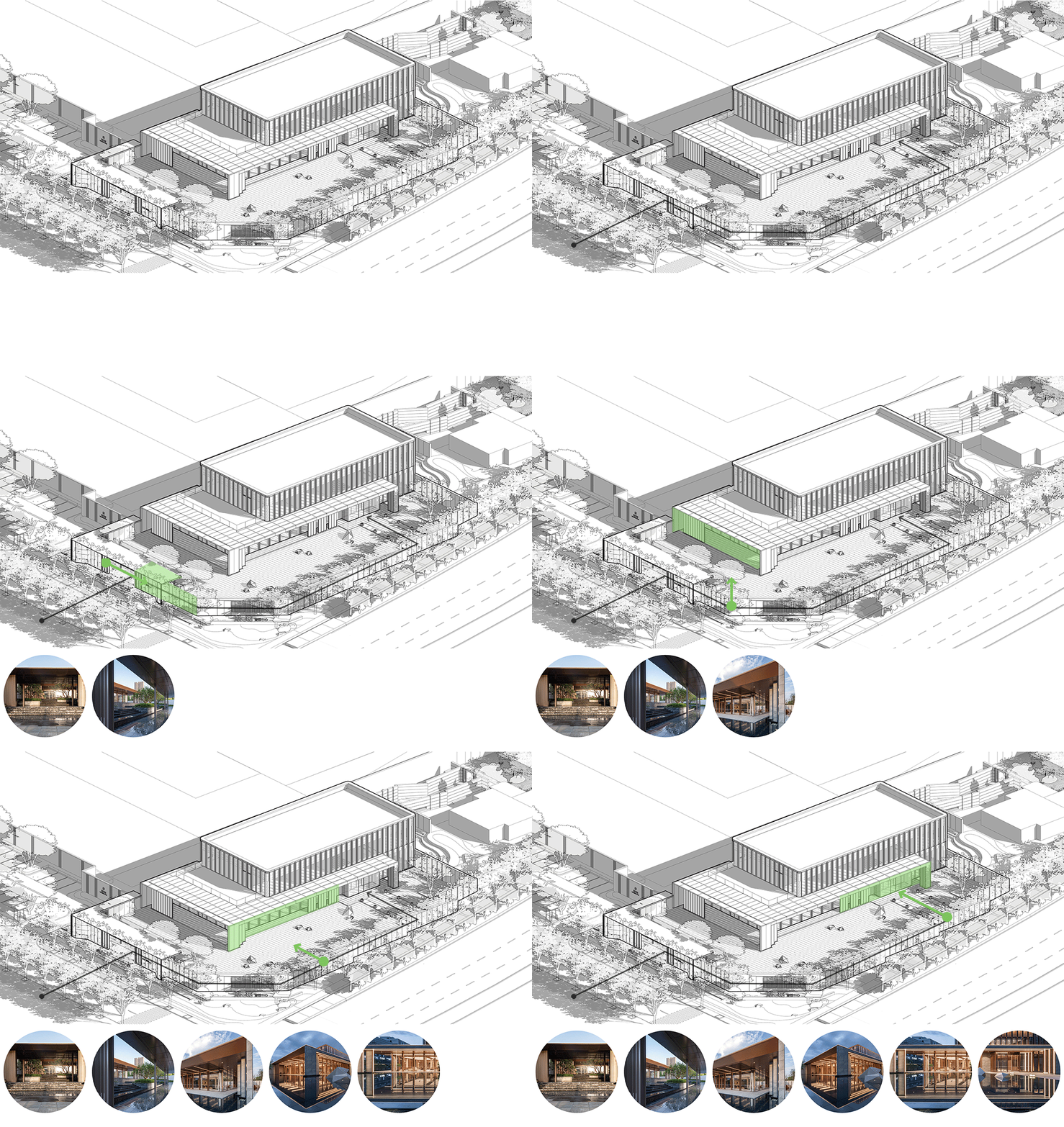
△ A spatial journey revealing new views at every step
Visitors enter the park through the west gate, greeted by a semi-covered entrance and welcoming pomegranate, forming a semi-transparent foyer that heightens anticipation.
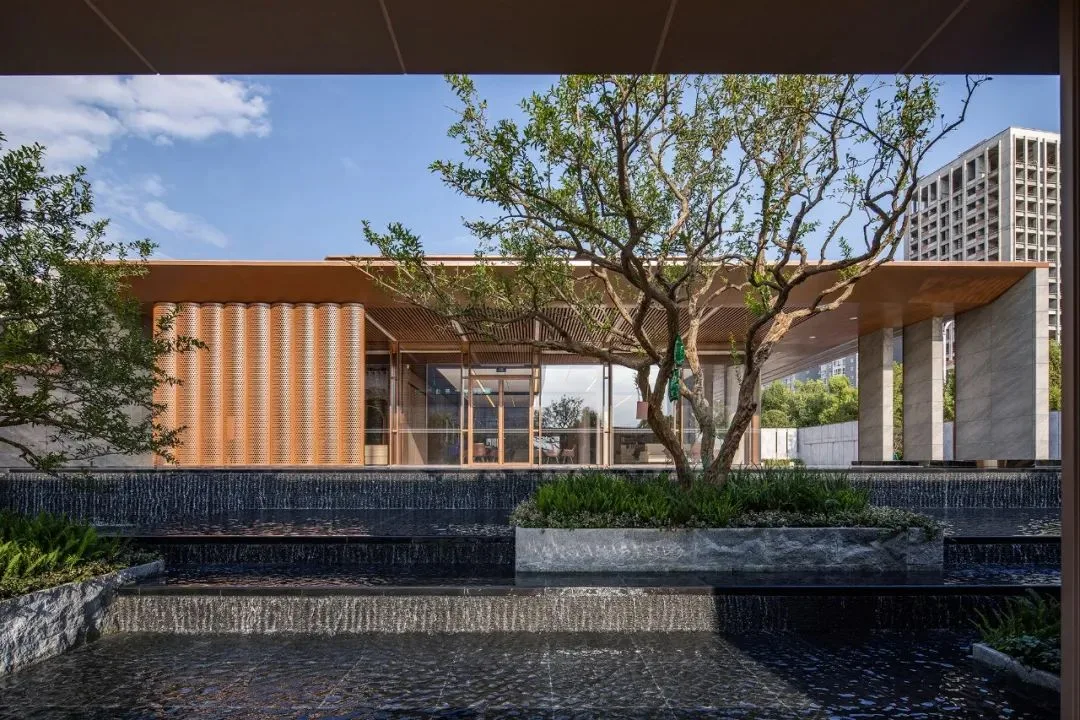
The storefront and welcoming pomegranate are partially sheltered
The west facade forms the first scenic frame, showcasing the building’s simple and elegant architecture. Floor-to-ceiling ultra-white glass reveals the indoor core bar, creating the building’s first external visual climax.
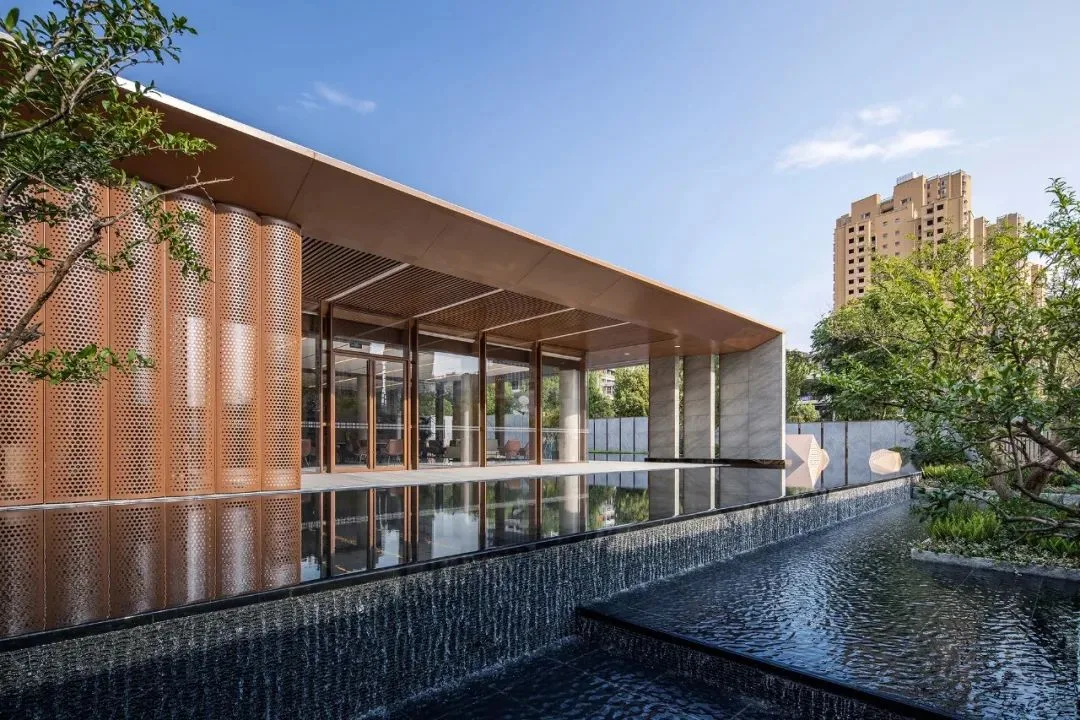
△ Entrance through the west gate of the park
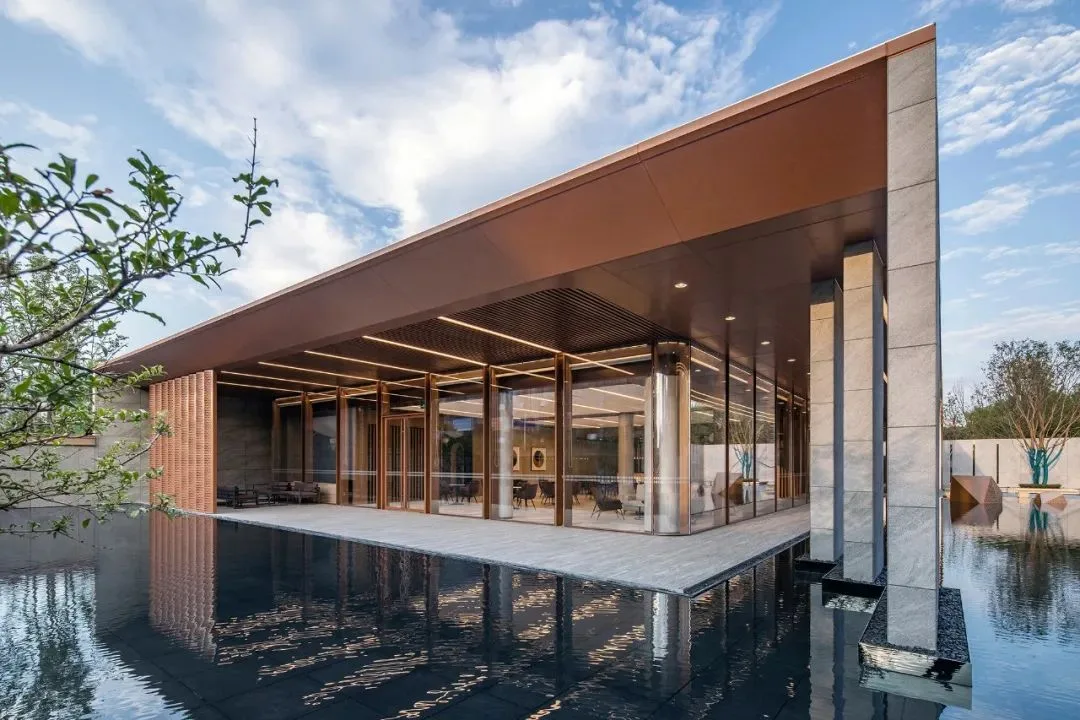
△ West facade as a framed landscape feature
Turning right into the courtyard, a gentle ramp rises alongside an endless water surface before the building. The structure gradually emerges reflected in the water. At the southwest corner, the building is partially submerged, offering an unobstructed view across the vast water, marking the second spatial climax.
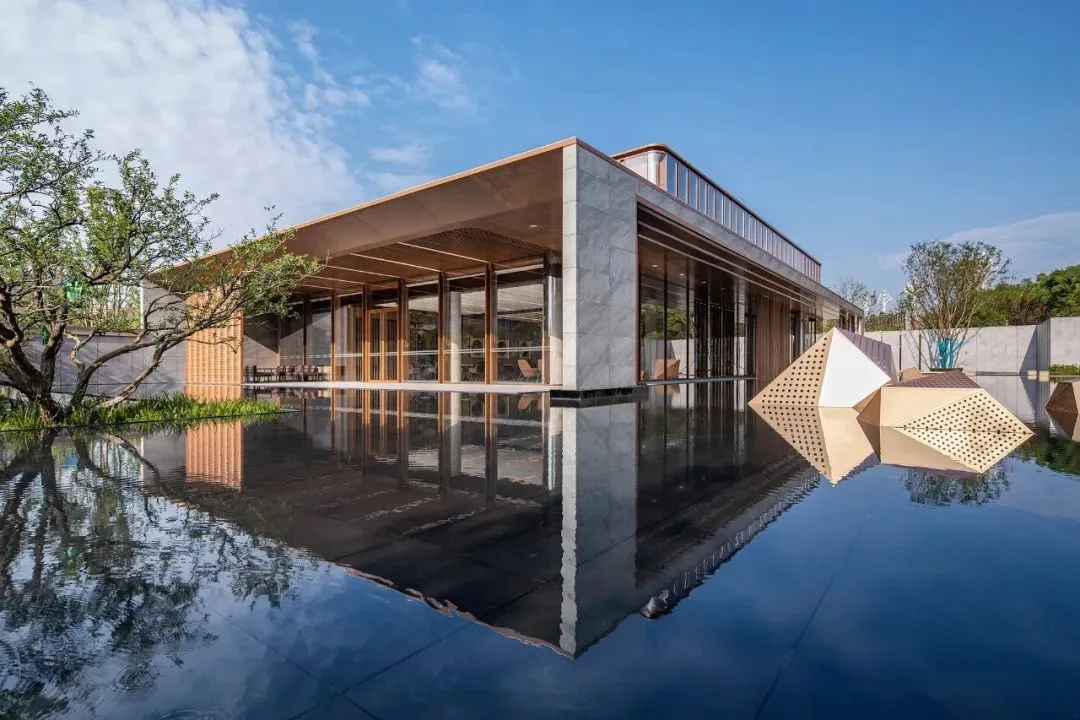
Building gradually emerges and reflects in the water
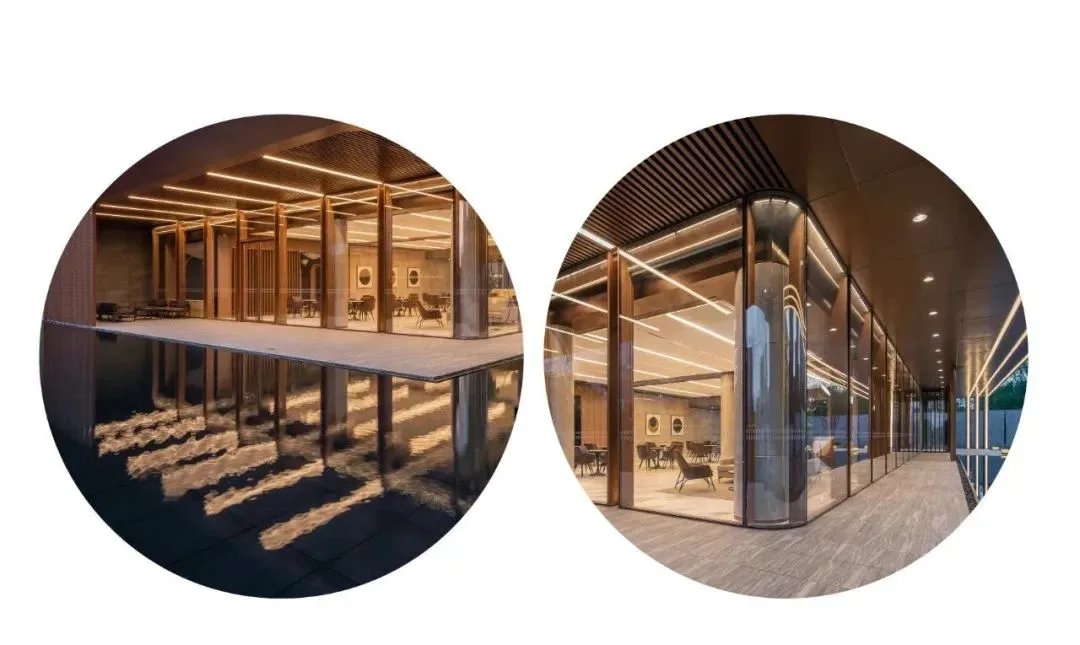
Continuing along the garden path, the building’s south corridor creates a flat framed landscape that encloses a transparent indoor space. Entering the courtyard, the architecture and interior glass evoke a poetic image—“a thousand calls emerge, still holding a pipa to partially conceal the face.” Suddenly, a broad water surface opens up before you. This interplay of architecture and reflection forms a deep, immersive landscape frame, delivering the third and final outdoor spatial climax.
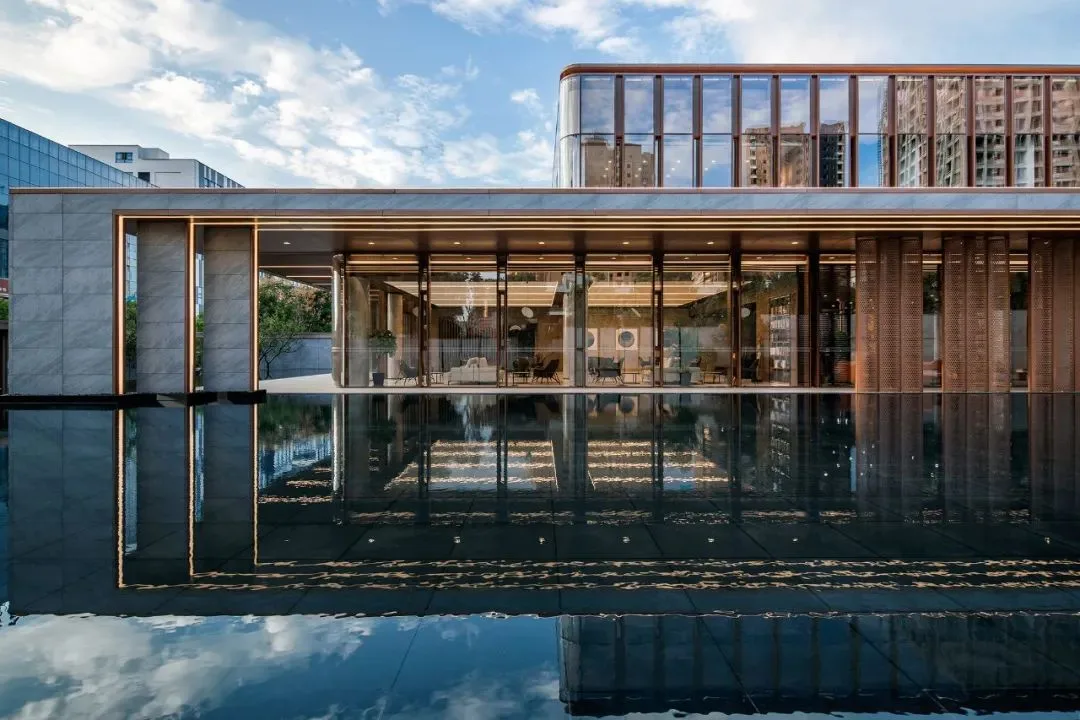
△ Deeply immersive framed scenery
02 Landscape Frame
Mirror-like completion
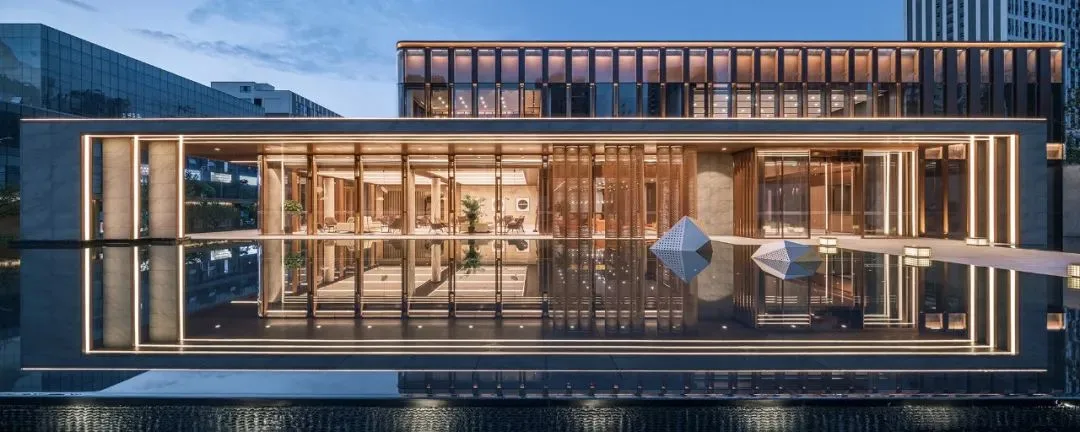
△ Landscape frame blending external reality with internal transparency
The building’s form resembles a box that integrates vividly with the water landscape, creating a solid exterior and a translucent interior frame. The exterior stone curtain wall acts as a strong frame, while the interior glass provides a transparent, virtual display surface. Inside, the bar and meeting areas are unobstructed, emphasizing an open architectural attitude.
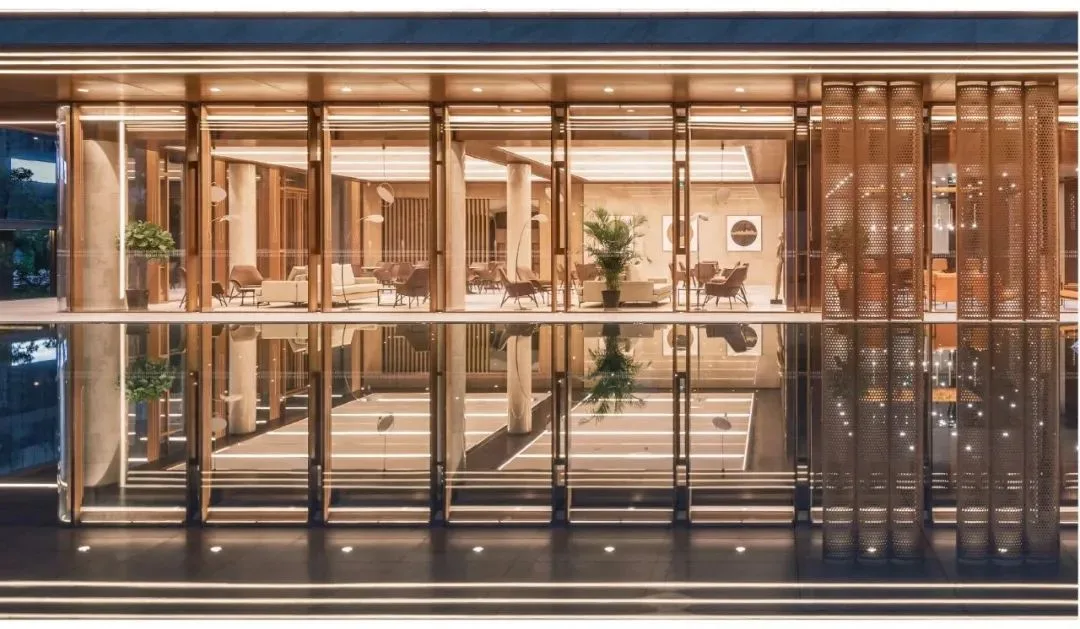
△ Reflection and transparency within interior architectural details
The architecture achieves rich composition through simple form relationships, balanced layering, and the interplay of virtual and real elements, proportions, colors, and textures. The calm interweaving of two square volumes creates a transition from solid to transparent and back, and combined with reflections on the boundless water surface, the building forms a complete geometric composition.
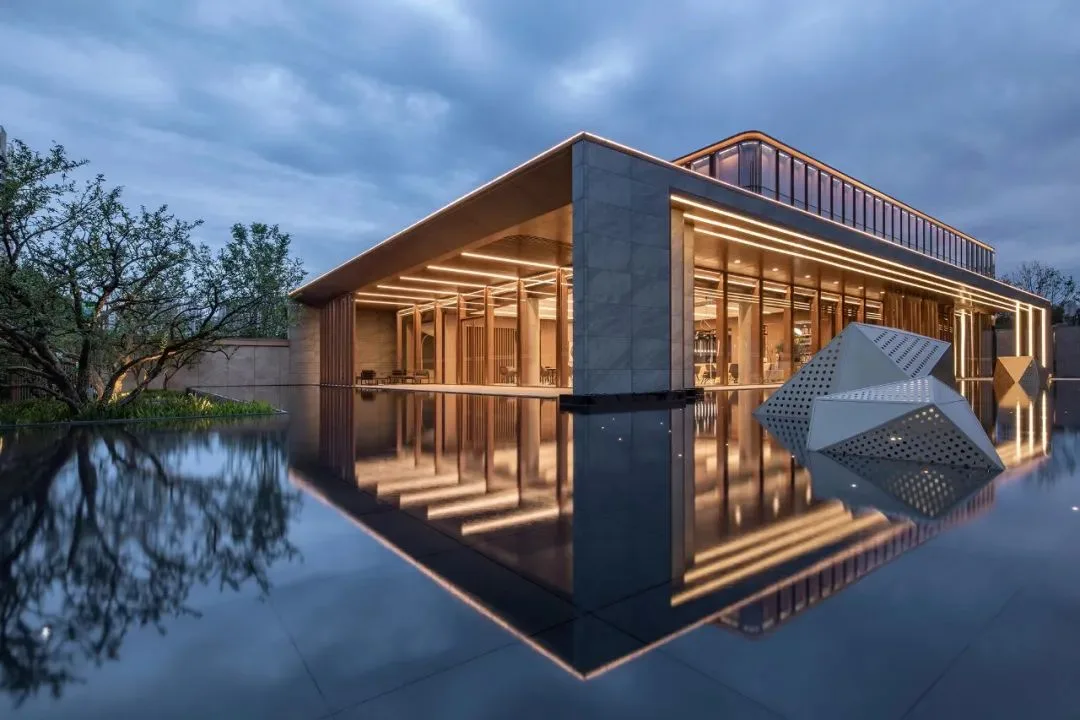
Geometric form completed through water reflections
03 Openness
Monochrome and flowing spatial experience
The building showcases interior views openly, framed by the outdoor corridor, establishing a dynamic relationship between visibility and privacy. Indoor and outdoor spaces are connected through flowing lines, creating a transparent, fluid visual and spatial experience.
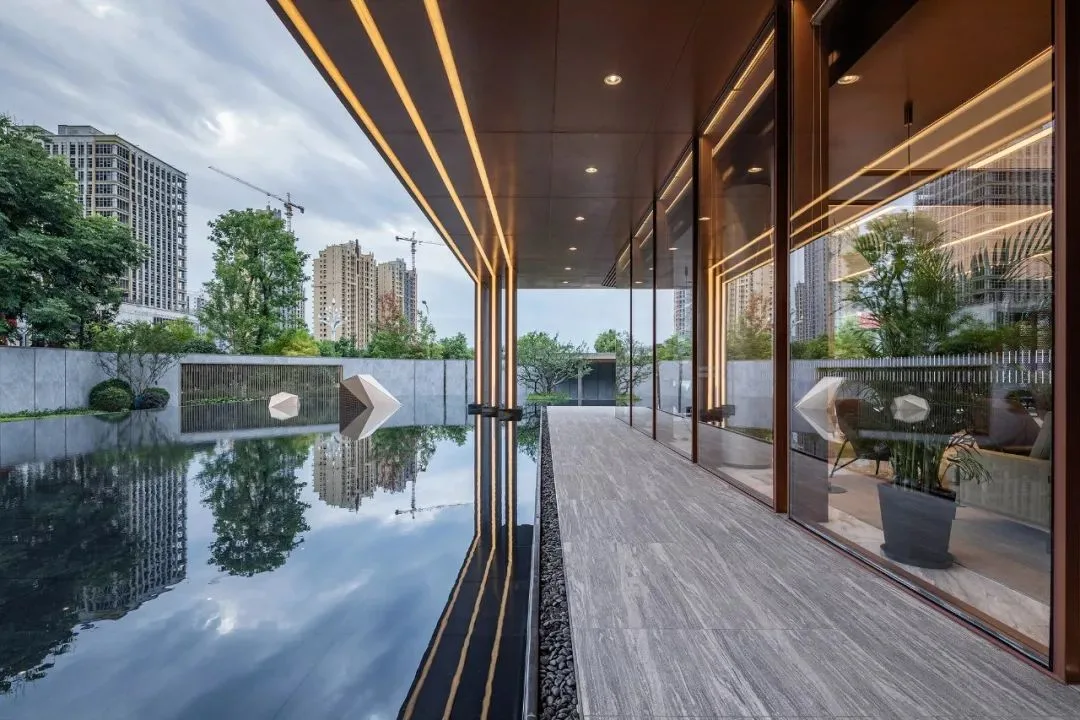
Outdoor views framed by the outdoor corridor
Indoor views framed by glass
04 Integration
Seamless interior architectural design
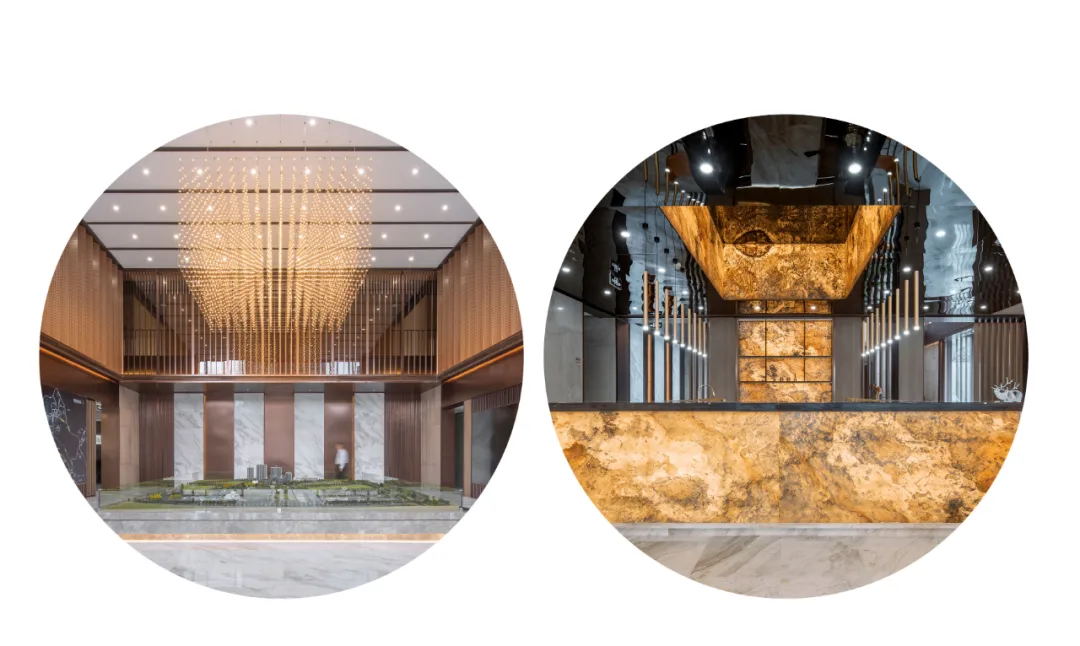
The integrated interior design ensures exceptional building quality and coherence. This unity from exterior to interior supports modular and systematic control. Excellence is achieved through detail, aligning interior walls, ceilings, floors, and furniture under modular coordination.
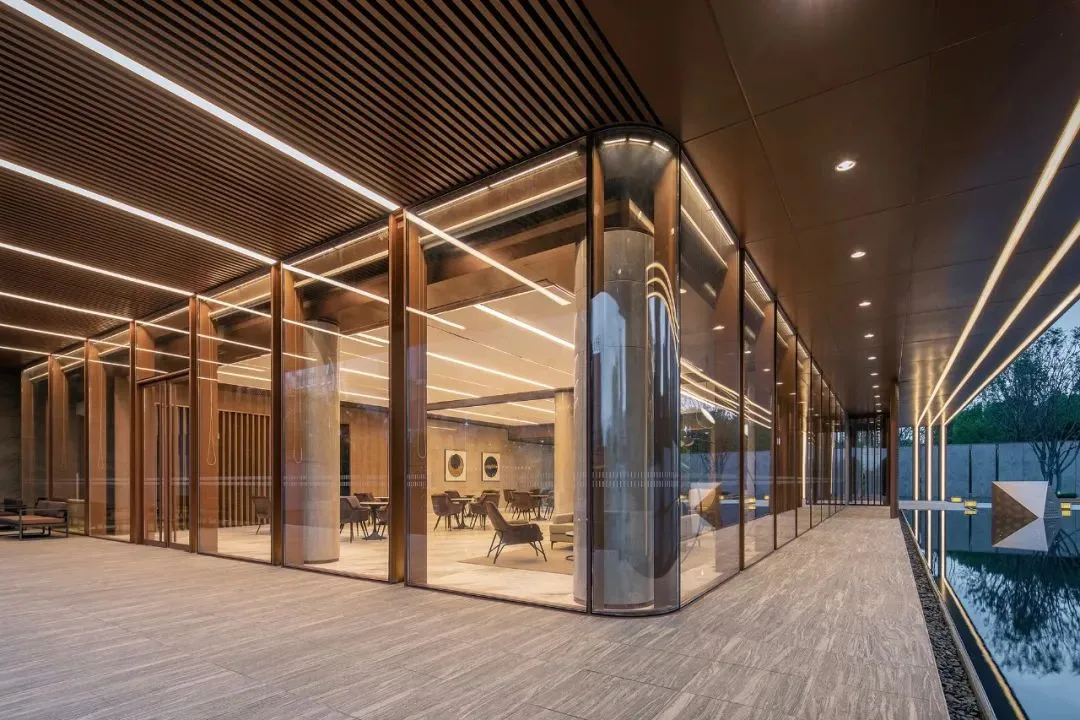
△ Integrated interior architecture
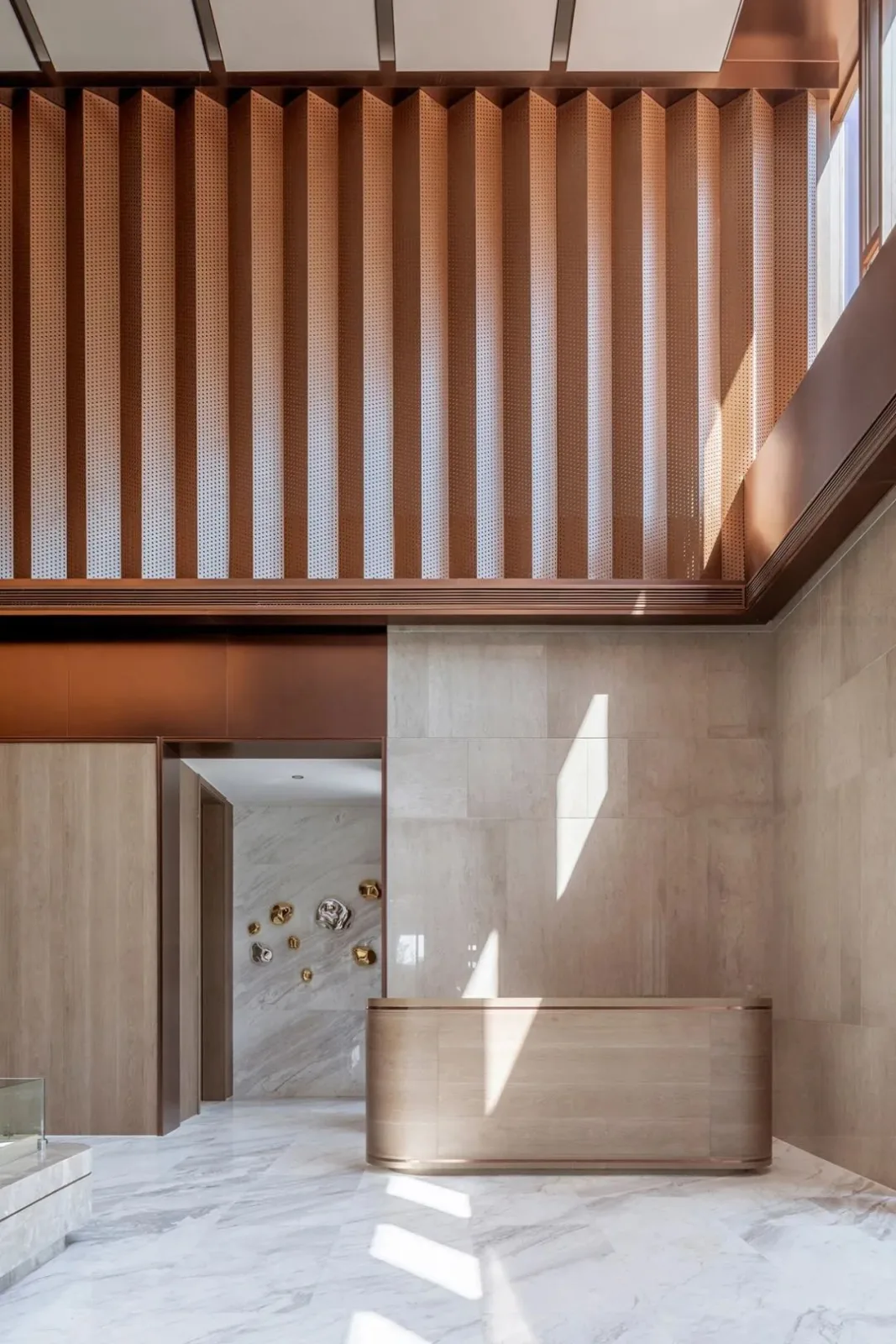
Balanced variation in indoor proportions
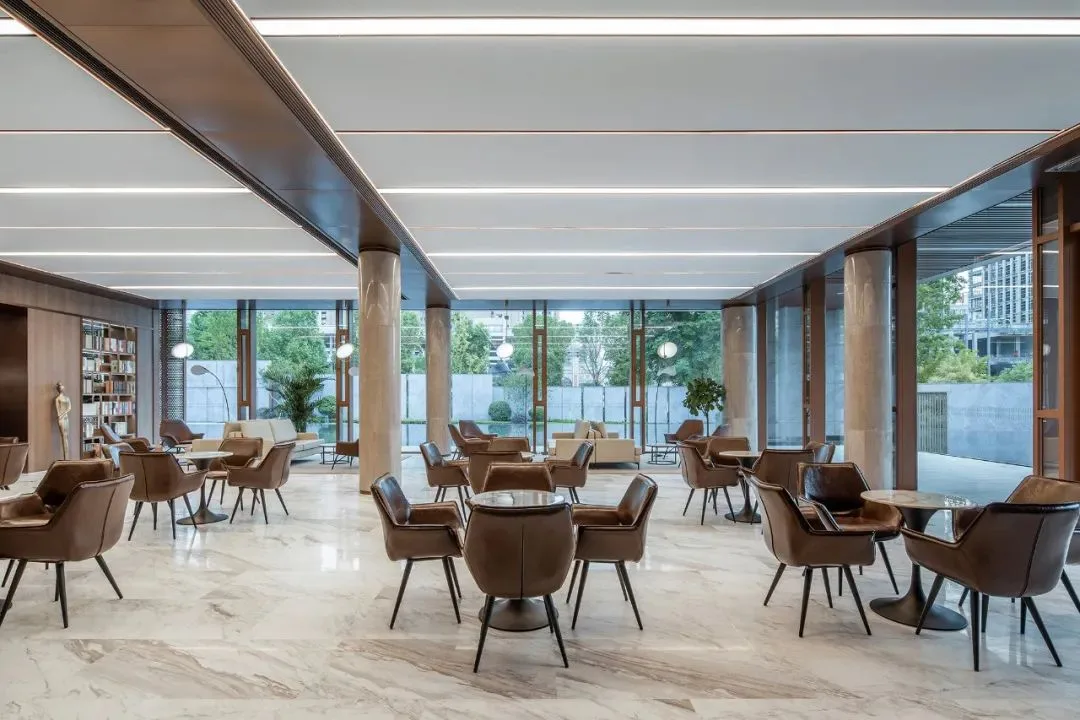
△ Precise alignment of interior walls, ceilings, floors, and furniture
The continuity of open, flowing indoor and outdoor spaces, combined with the building’s transparency, creates a seamless integration between architecture and landscape. The cascading layered landscape and unified indoor-outdoor design resemble a framed painting, showcasing a finely crafted architectural work.
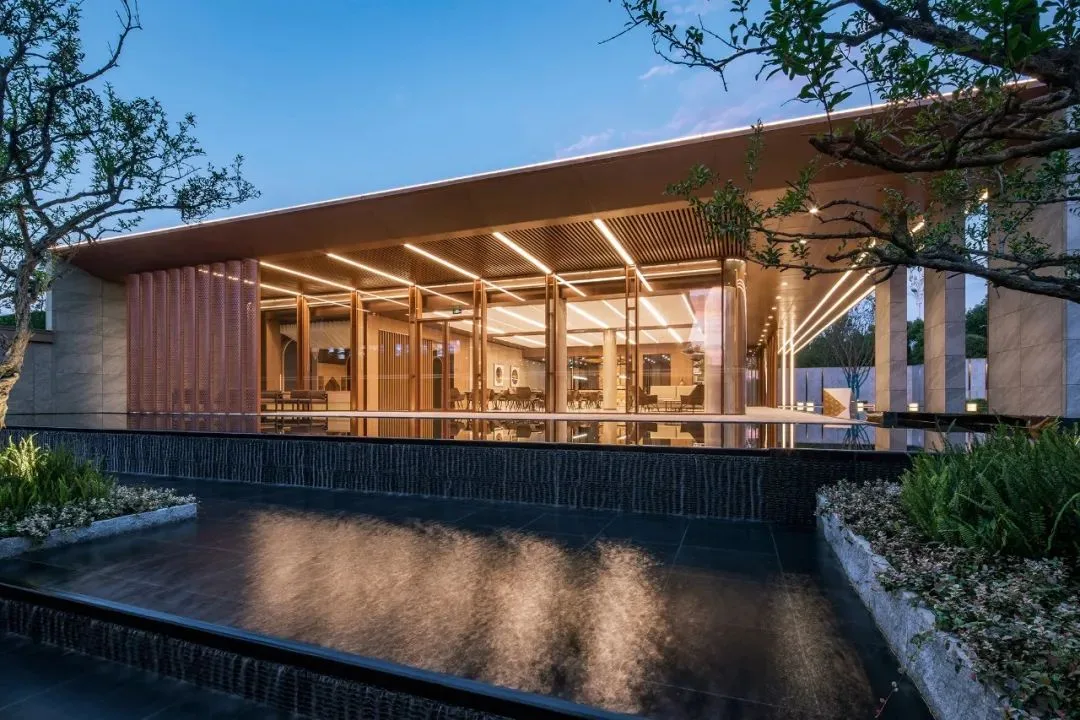
Contrast and harmony between architecture and entrance water landscape
05 Modularization
Standardization, refinement, and control for efficient completion
To enable rapid construction and reduce costs, the main structure uses steel framing with a modular approach. Both the 300mm basic module and 1200mm large module regulate the curtain wall system and interior design, indoors and outdoors. This modular system ensures visible building dimensions and unique quality details.
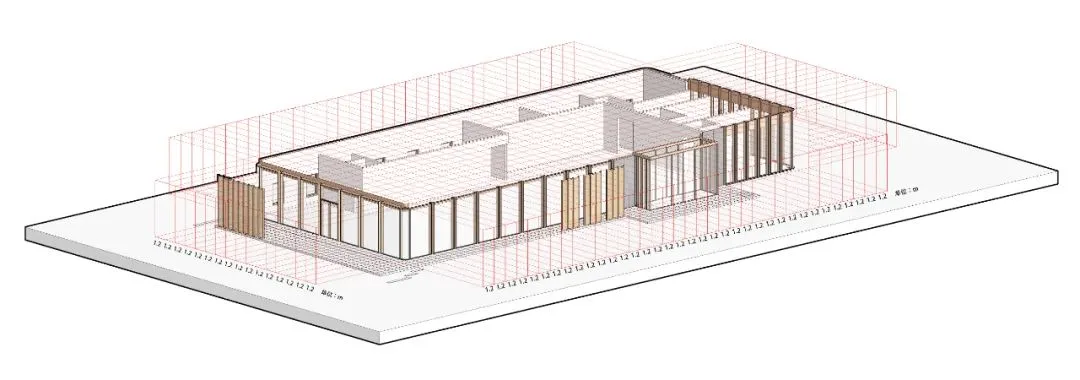
△ Three-dimensional modular control of the first floor building (1.2m module)
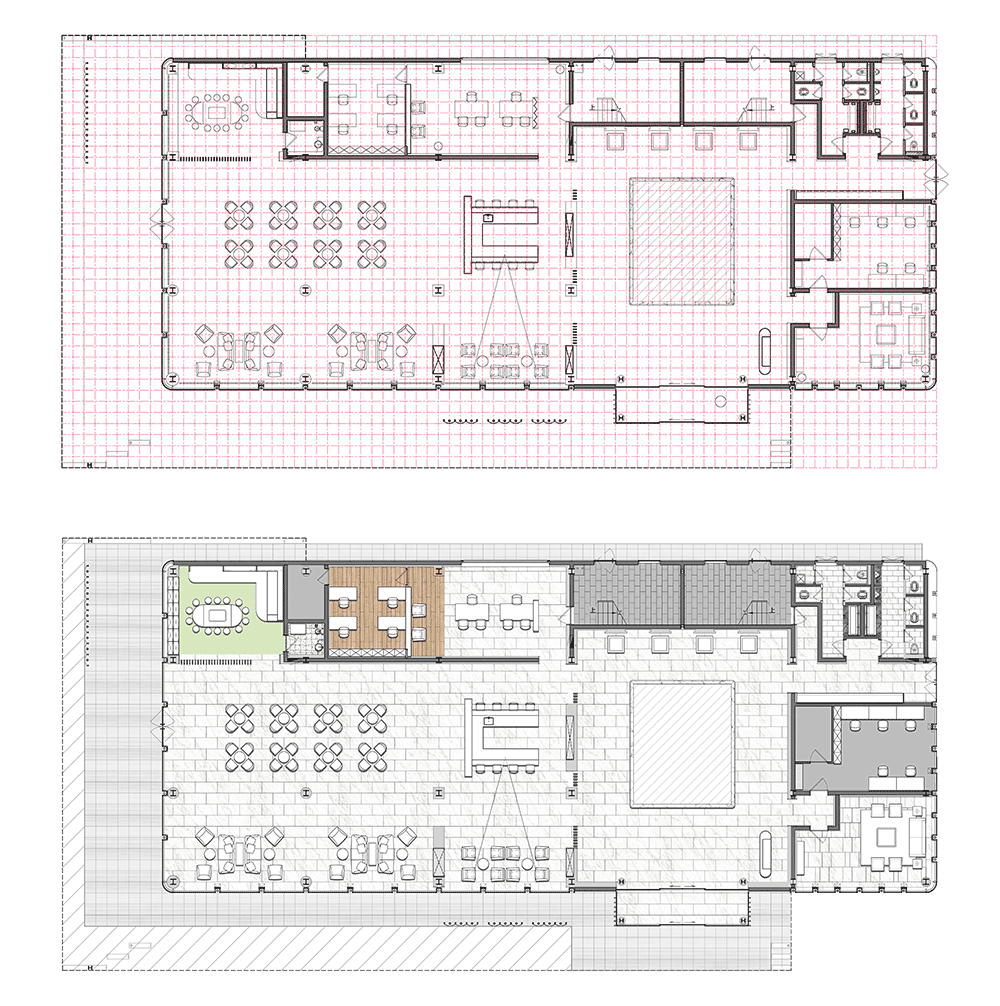
△ First floor plan module control
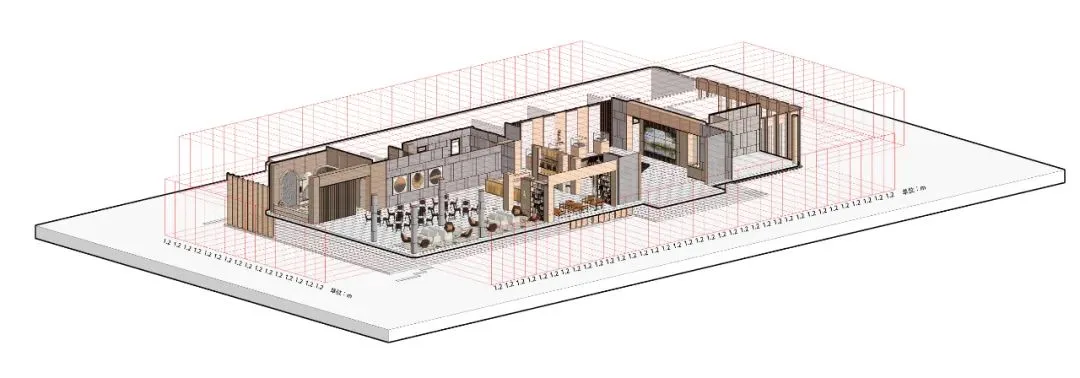
△ Three-dimensional modular control of first-floor walls and floors (1.2m module)
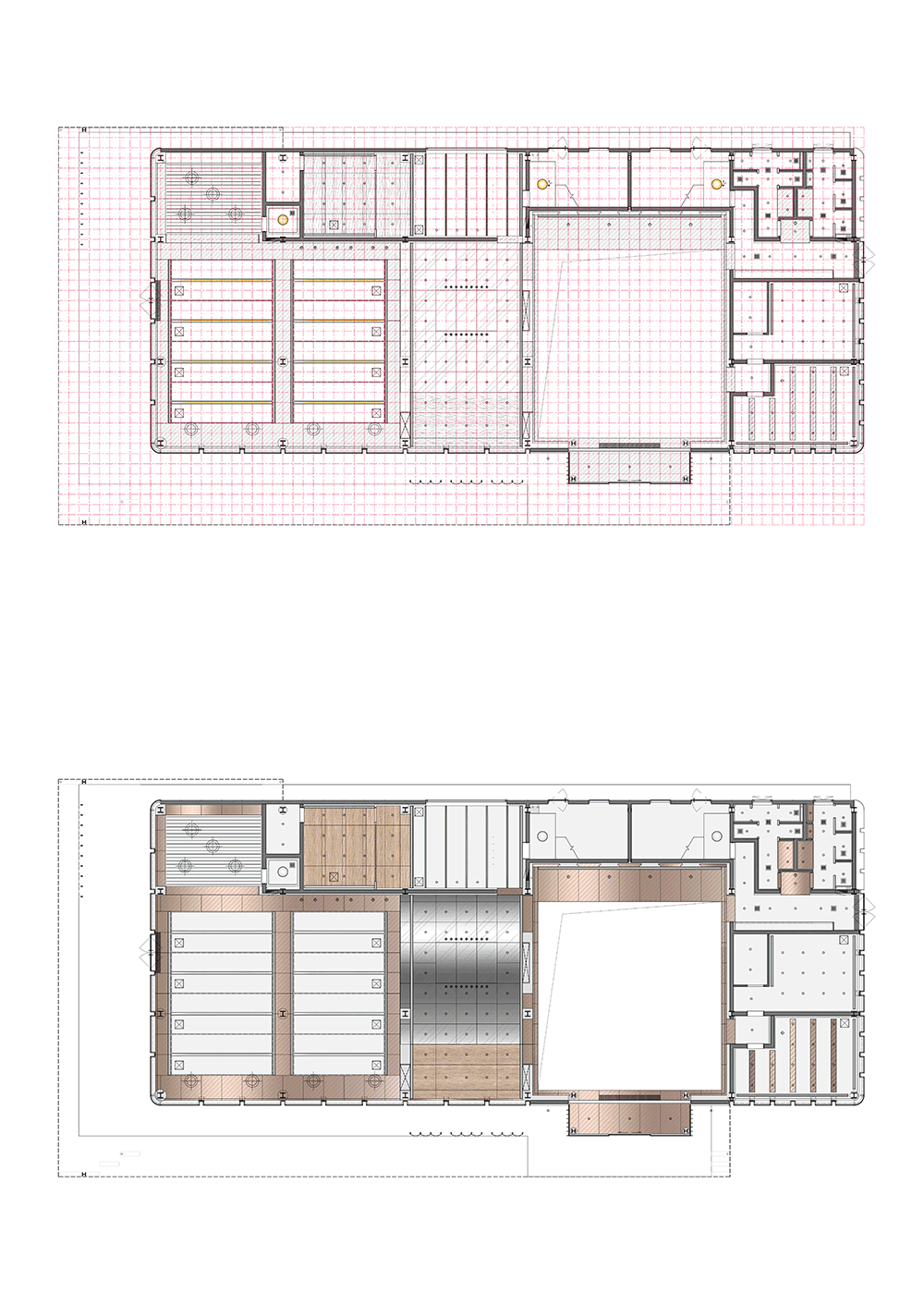
△ Modular control of first-floor ceiling
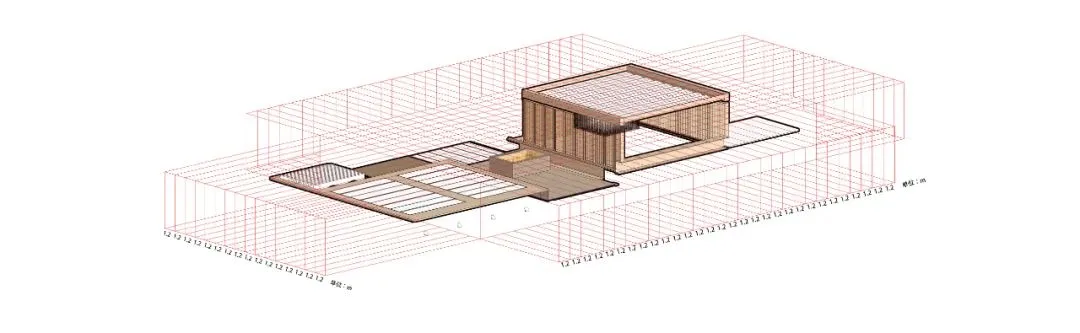
△ Three-dimensional modular control of first and second floor walls (1.2m module)
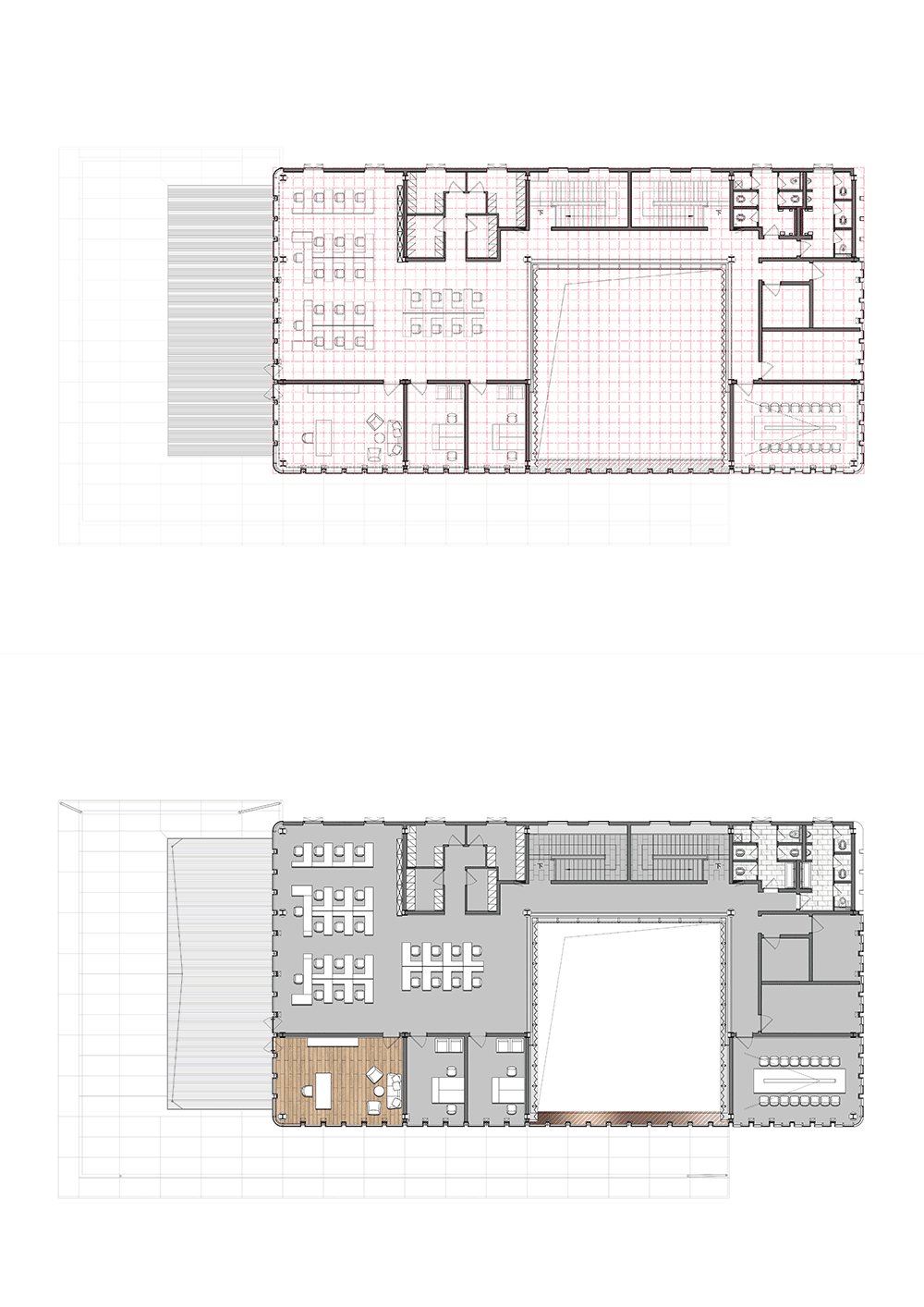
△ Two-layer plan module control
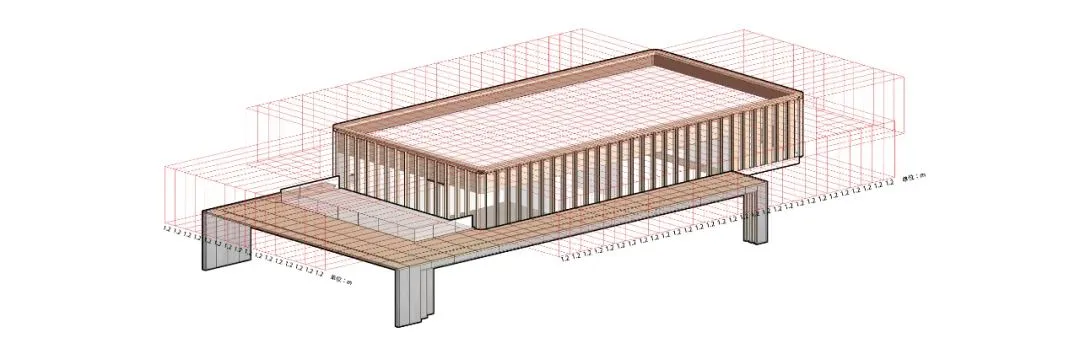
△ Three-dimensional modular control of two-story building (1.2m module)
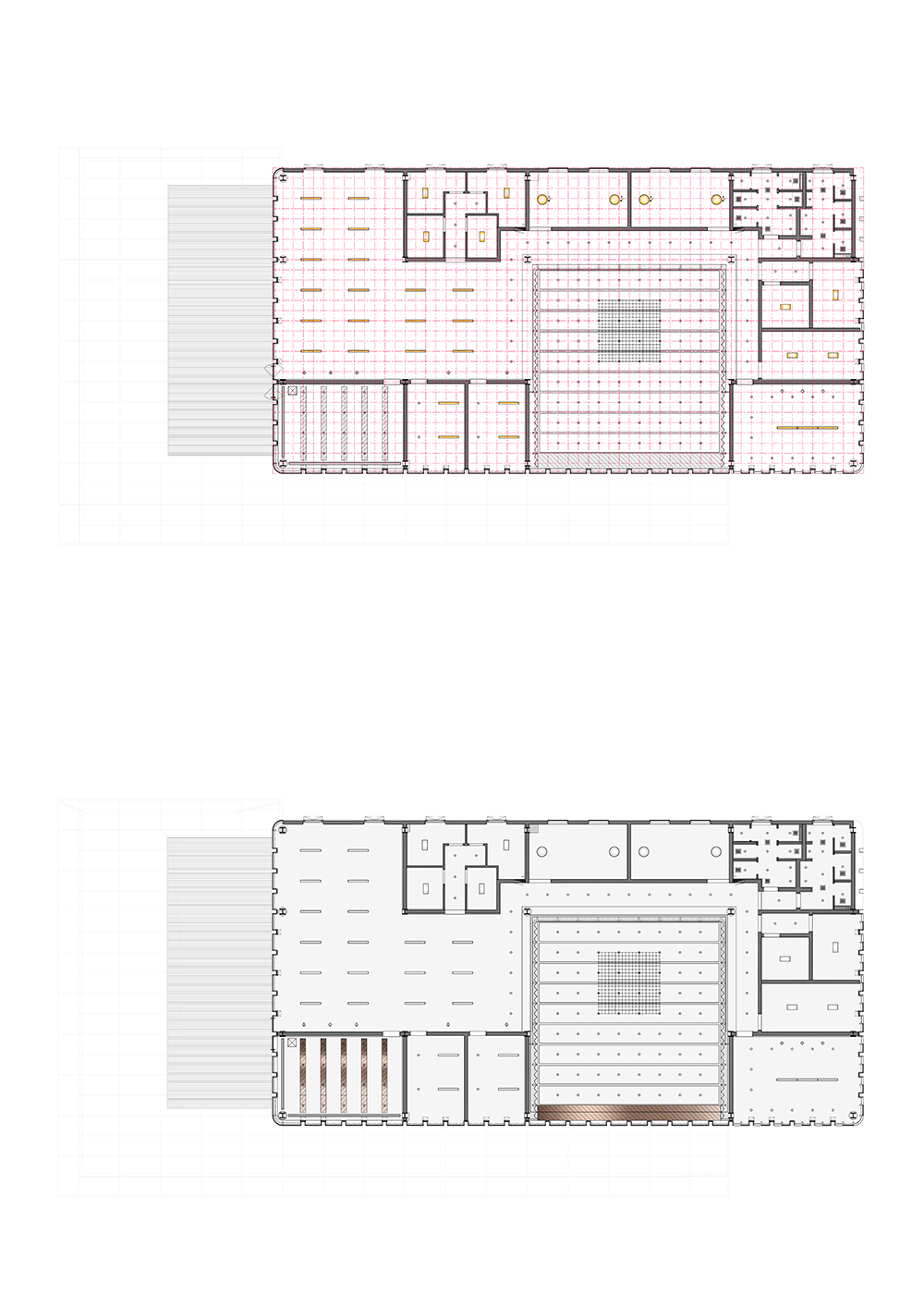
△ Modular control of second-floor ceiling
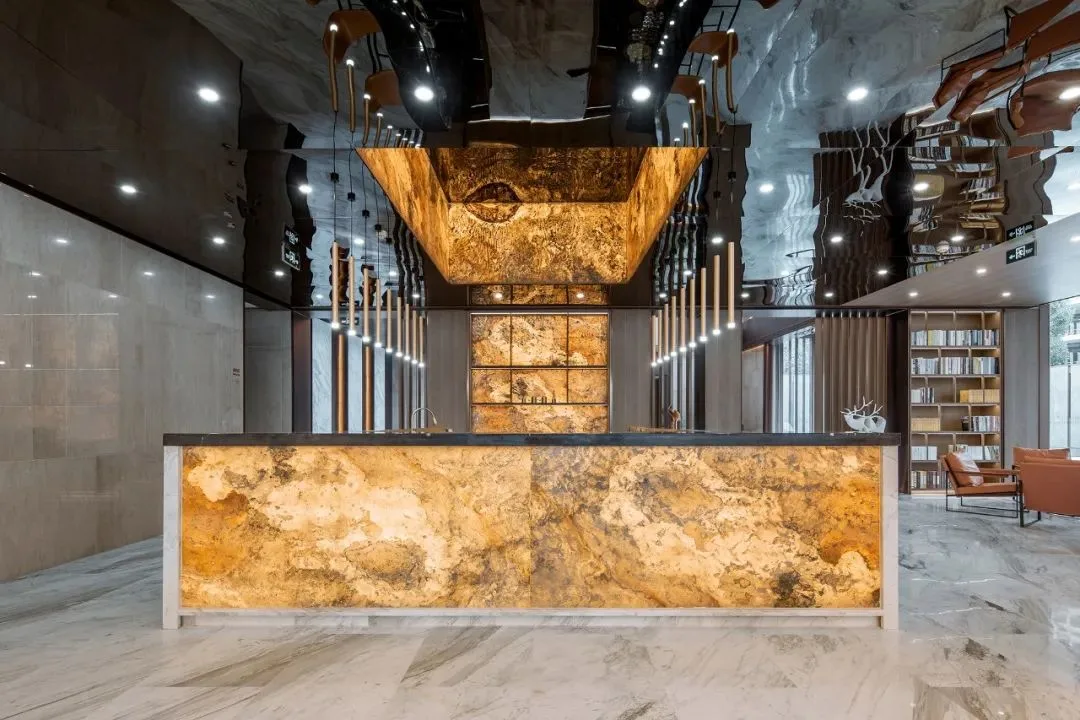
△ Bar area
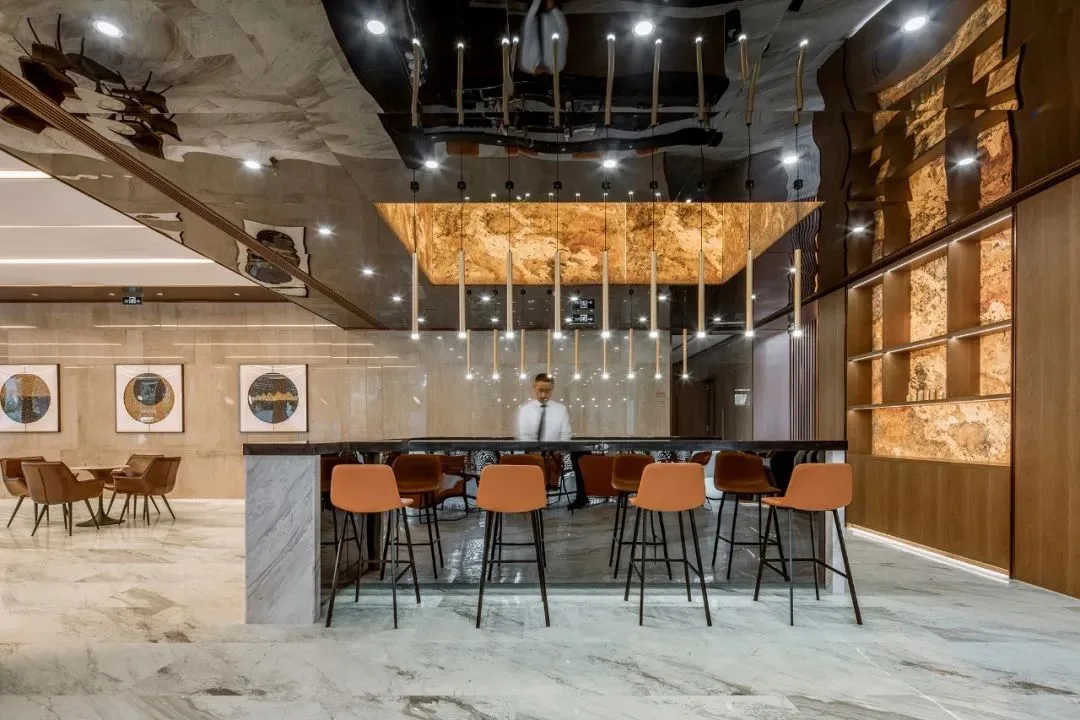
△ Bar area
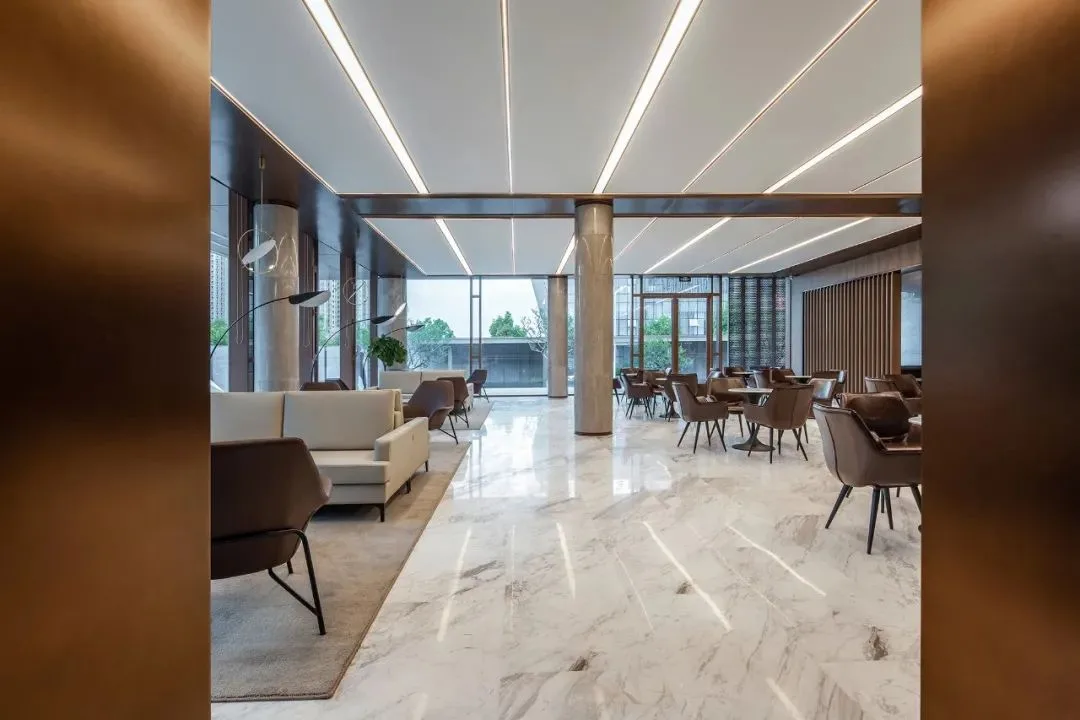
△ Meeting area
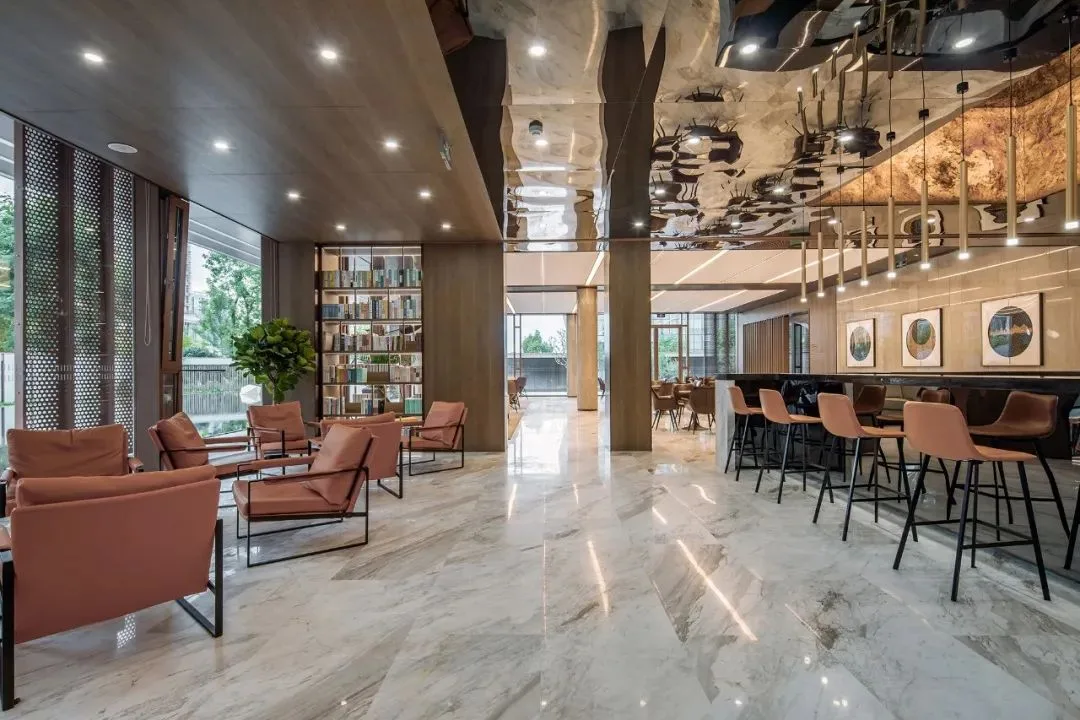
△ Meeting area
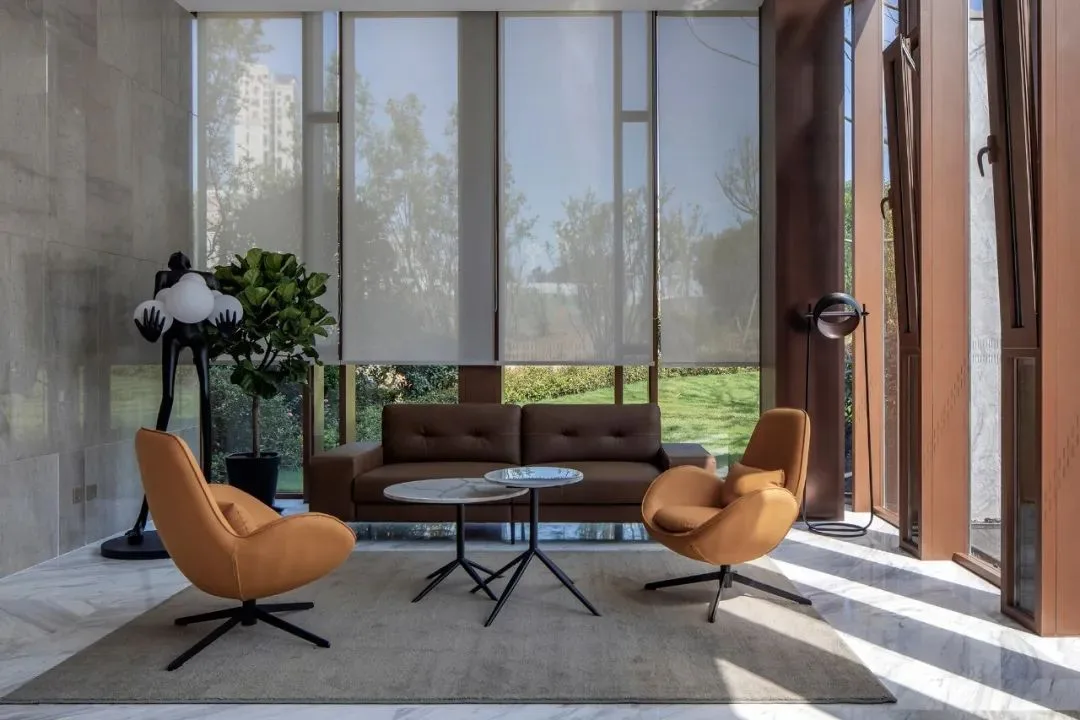
△ VIP room
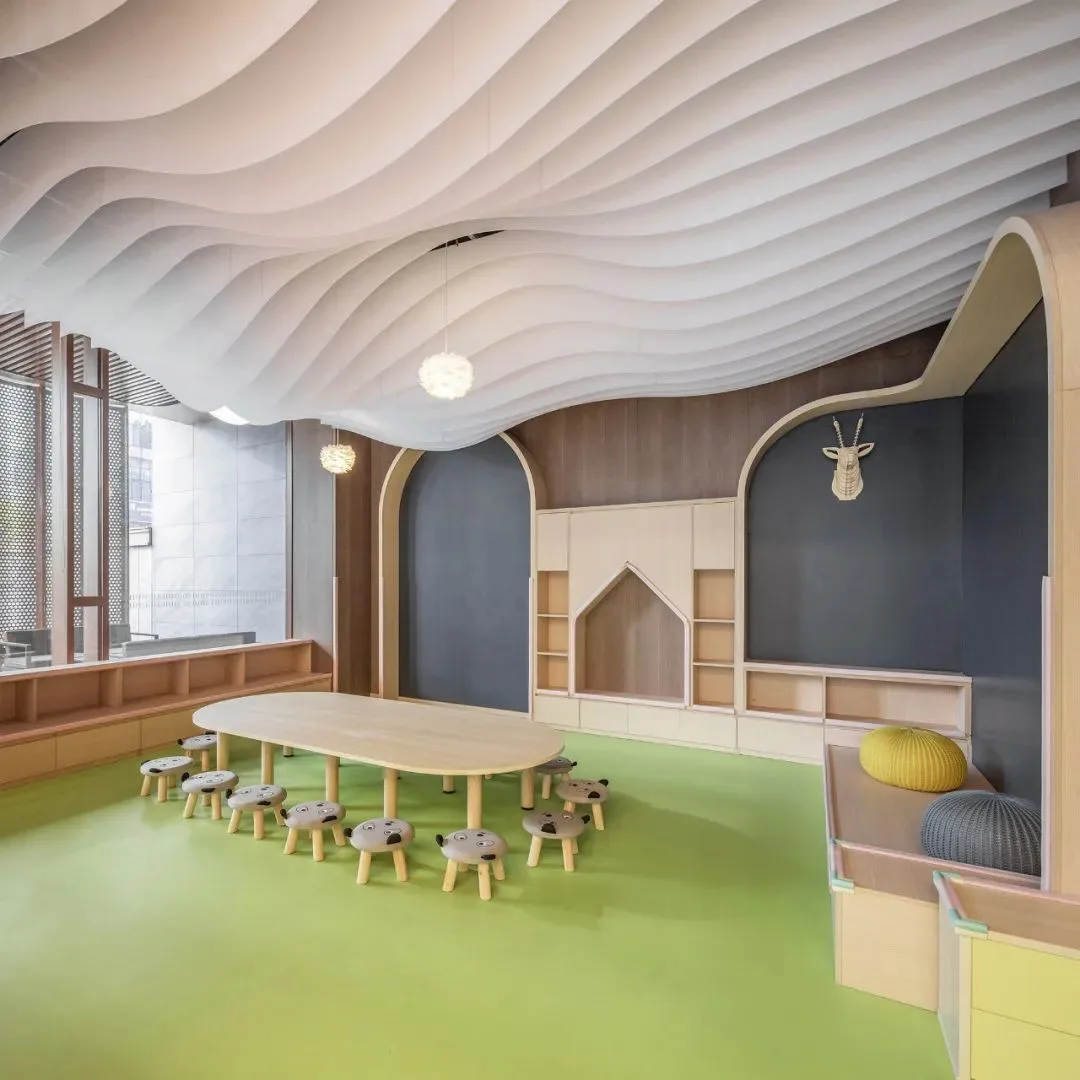
△ Children’s activity area
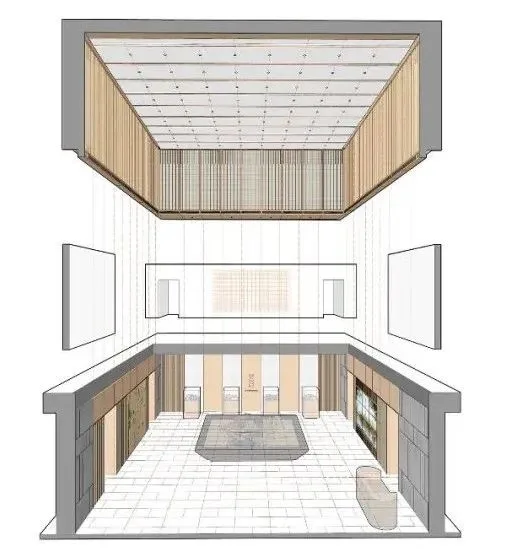
Integrated design control
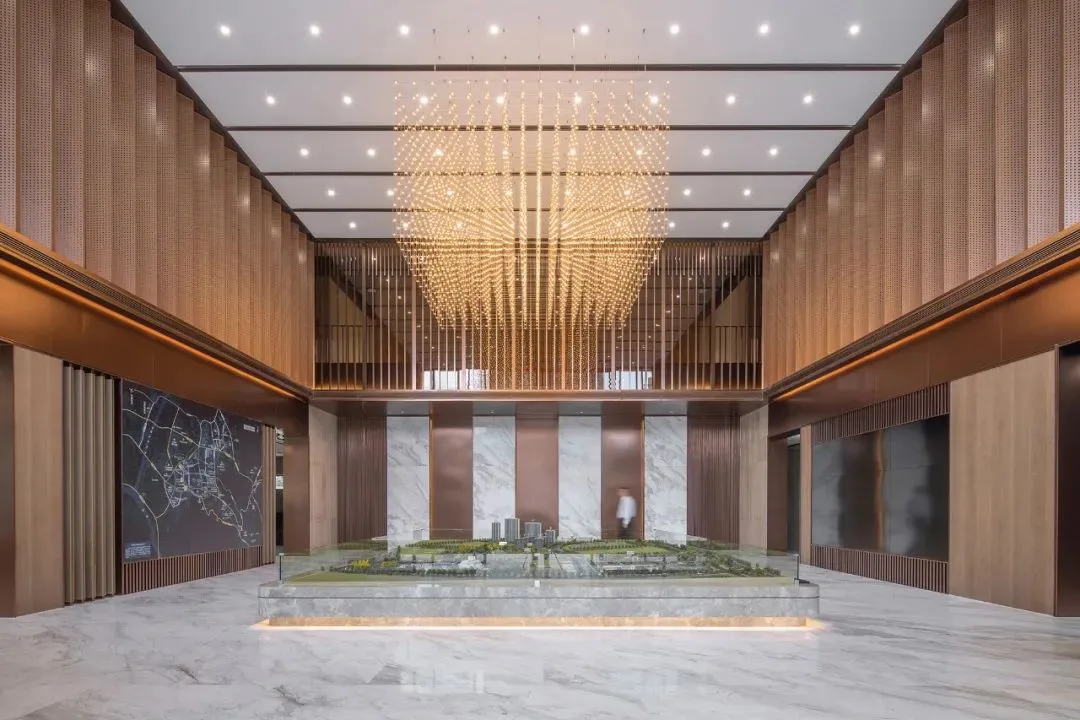
The atrium effect achieved through integrated design
The glass curtain wall is assembled in units measuring 2400mm on the first floor and 1200mm on the second floor. Each unit includes recessed vertical window strips and large glass curtain walls.
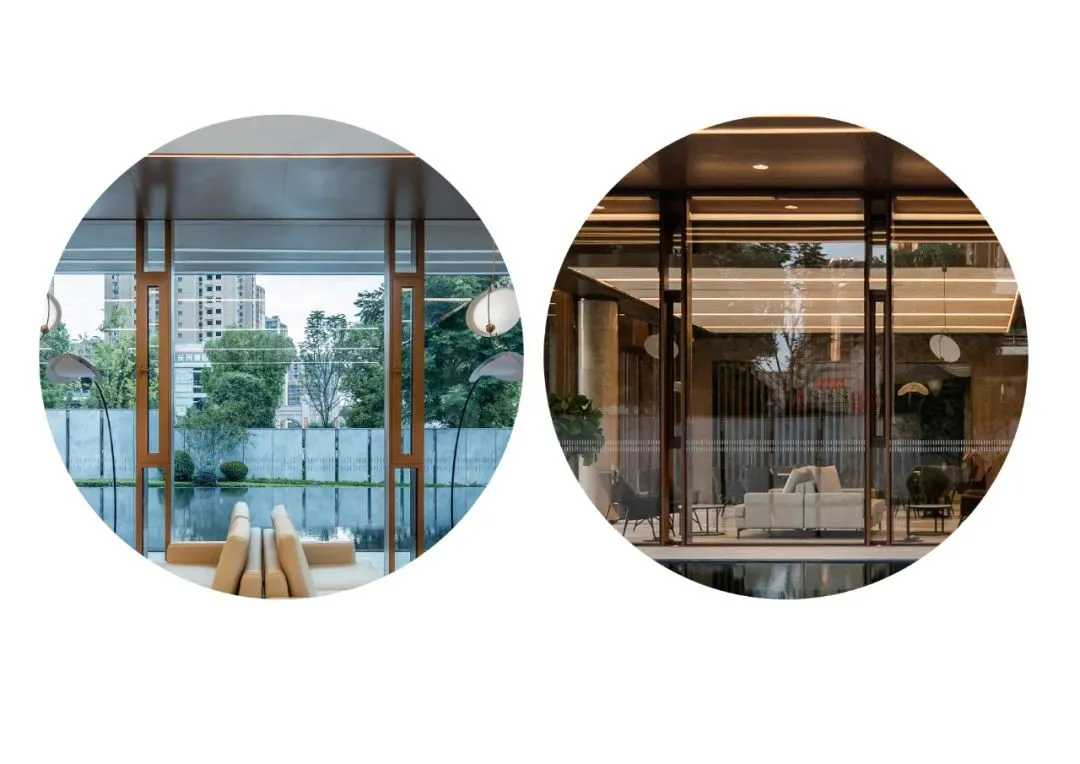
△ Glass window openings concealed within modular units
The recessed long window strips create a rhythmic facade, producing rich light and shadow effects that harmonize with the interior column grid and walls.
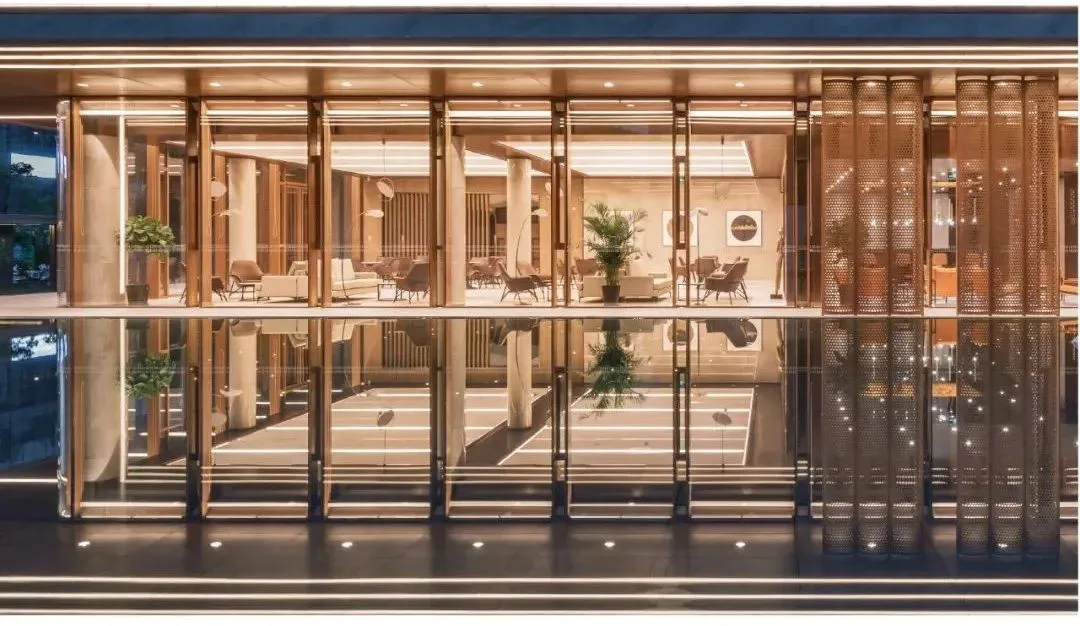
△ Open window fans establish a unified rhythm on the facade
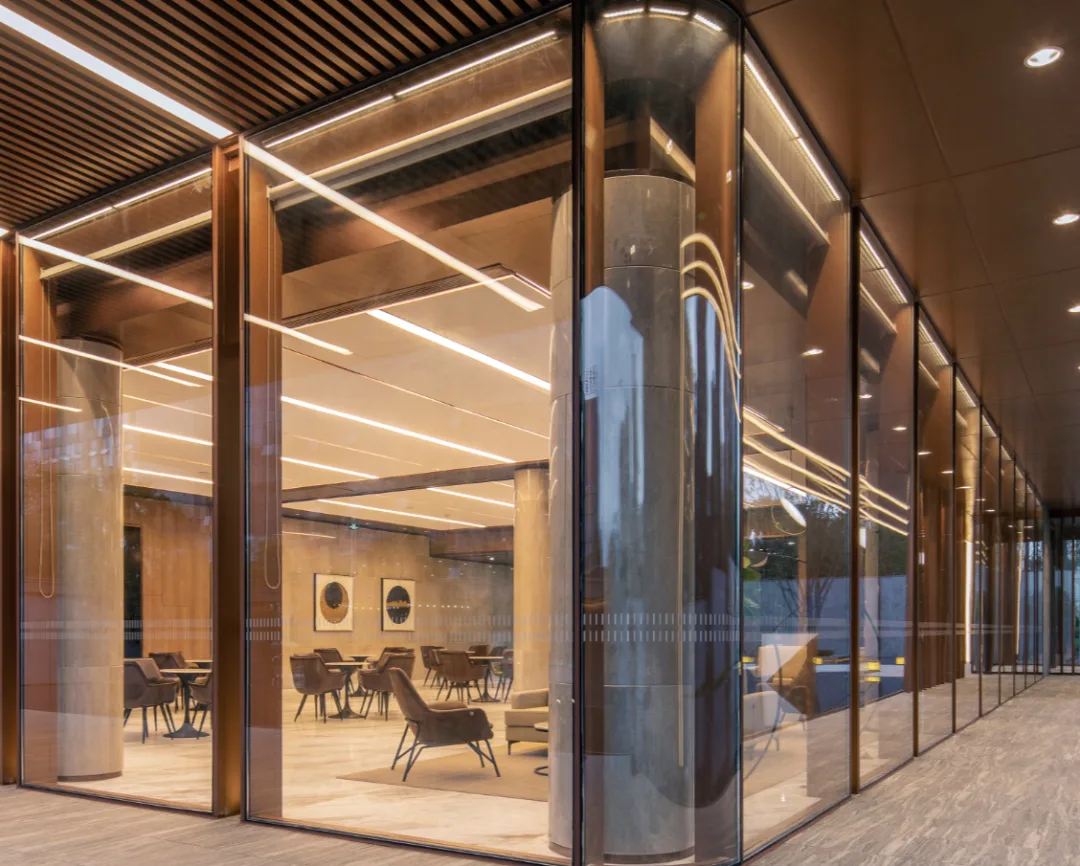
The concealed opening fan contributes to a clean facade appearance
06 High Completion
Detailing and craftsmanship at a high standard
The level of detail completion relies on rational structural deduction. Careful control of architectural drawings at the engineering stage, combined with an integrated interior design philosophy, ensures a high-quality project with exceptional finish and completeness.
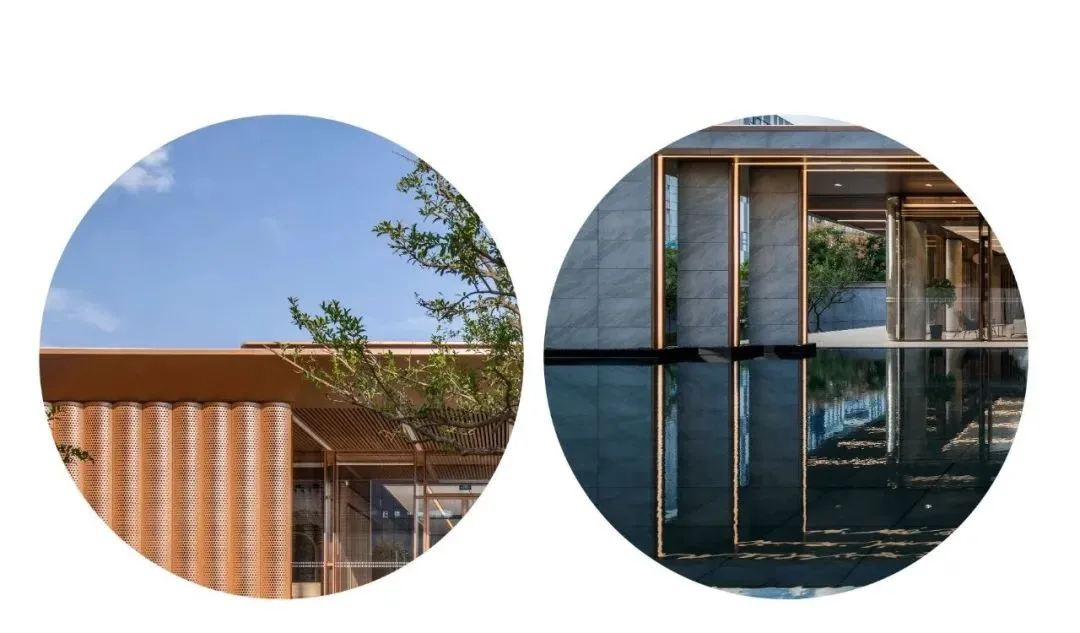
Details governed by modular control
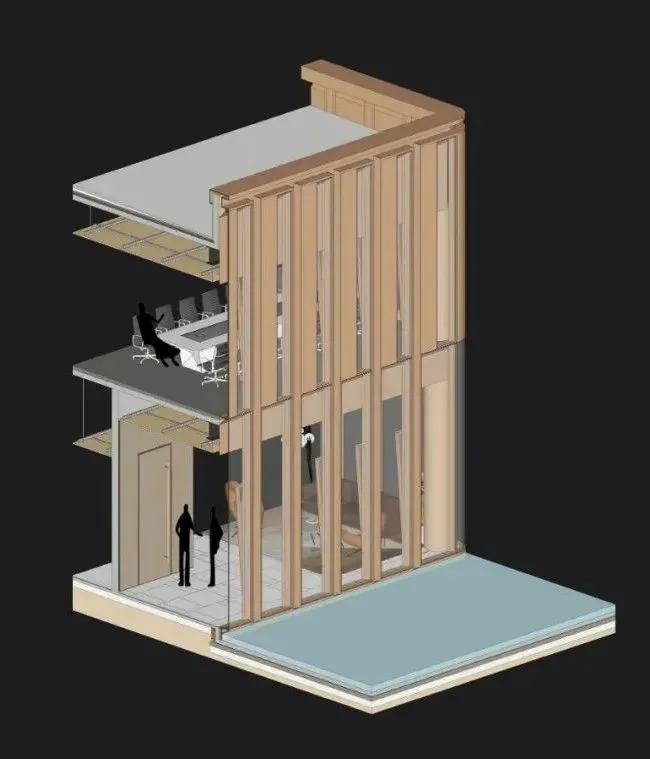
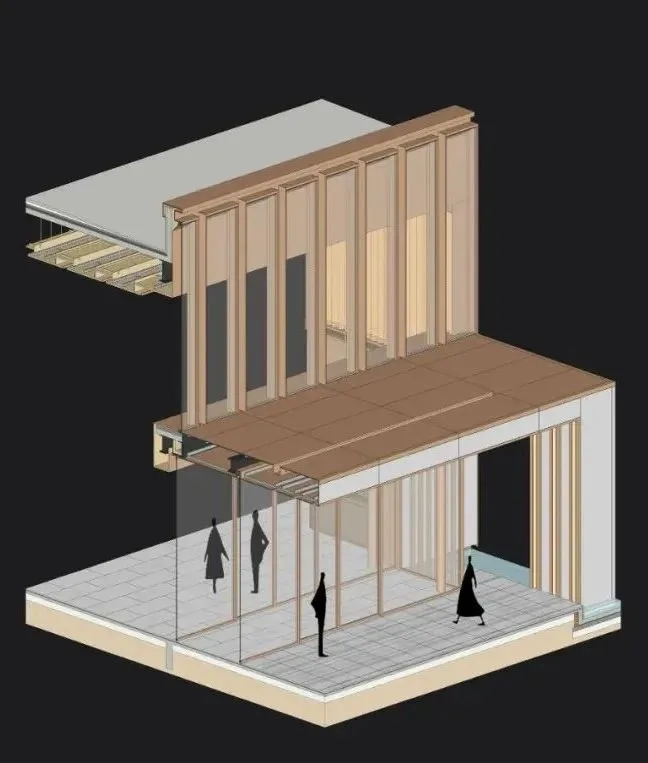
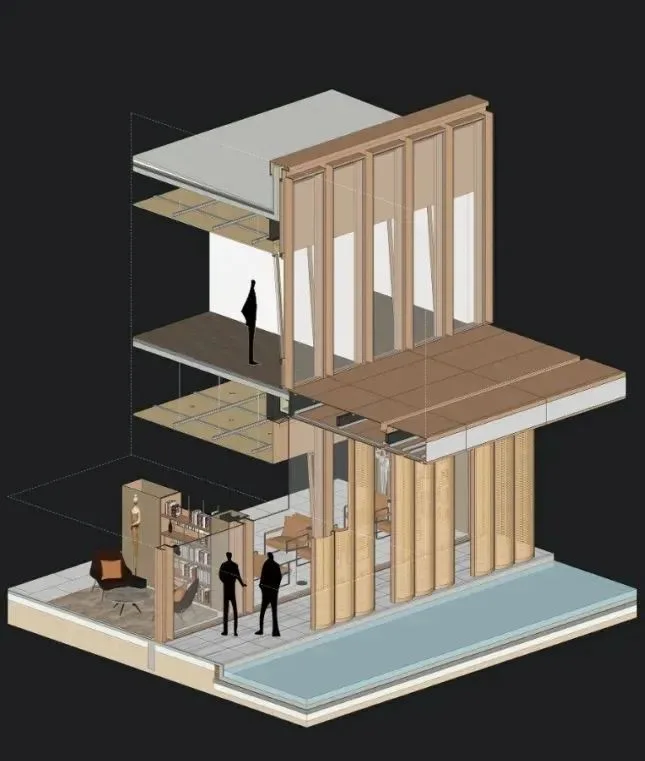
△ Interface between curtain wall and structural elements
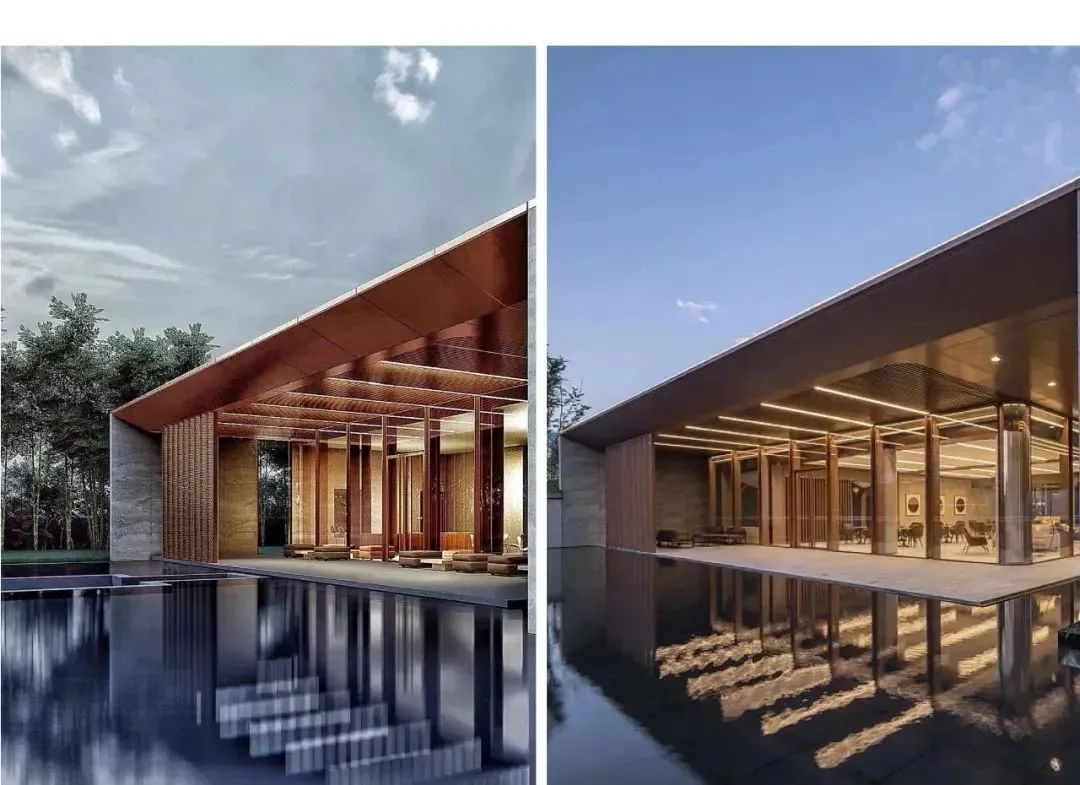
△ Design rendering (left) versus completed photo (right)
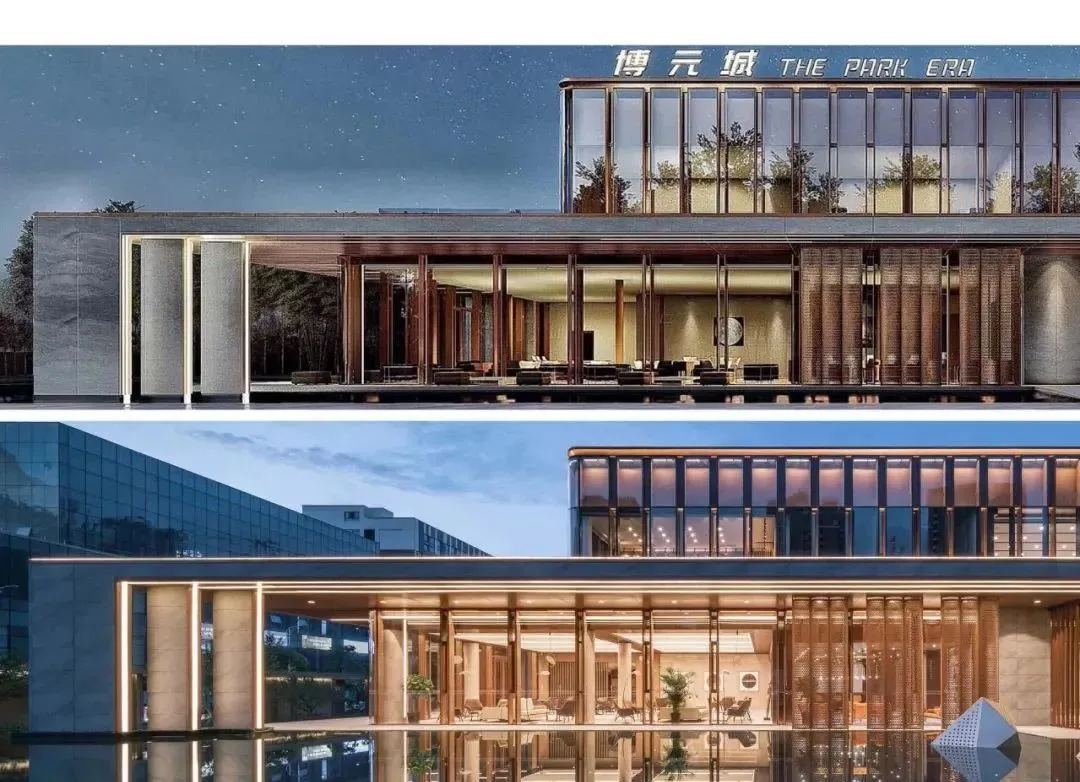
△ Design rendering (top) versus completed photos (bottom)
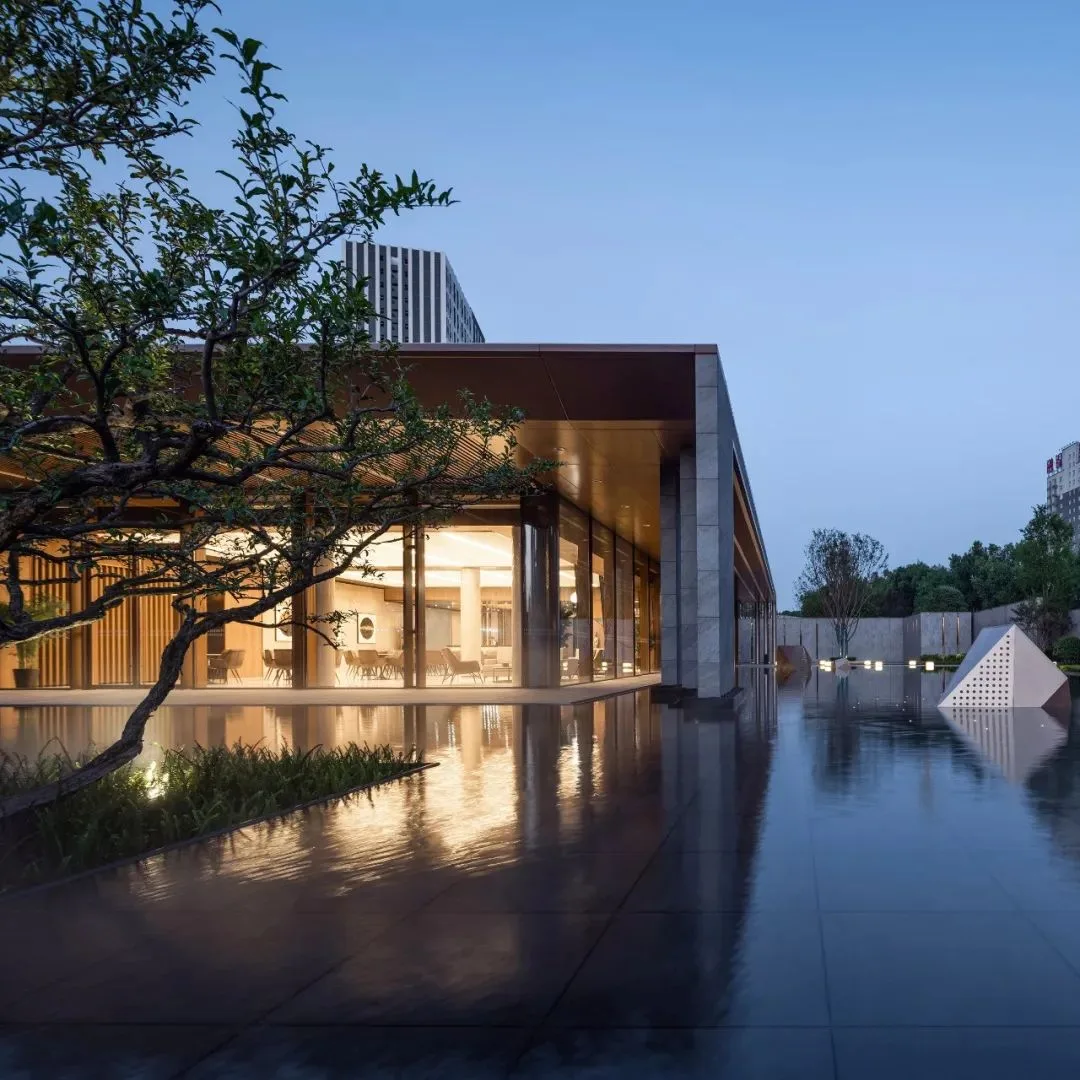
△ Lush greenery in summer, with reflections of the building and terraces in the pond (Photography © He Lian)
07 Conclusion
The integrated interior design, governed by modular control, successfully achieves refinement and unity while efficiently managing construction time and costs. This project exemplifies high-quality integrated design delivered within budget constraints.
Technical Drawings
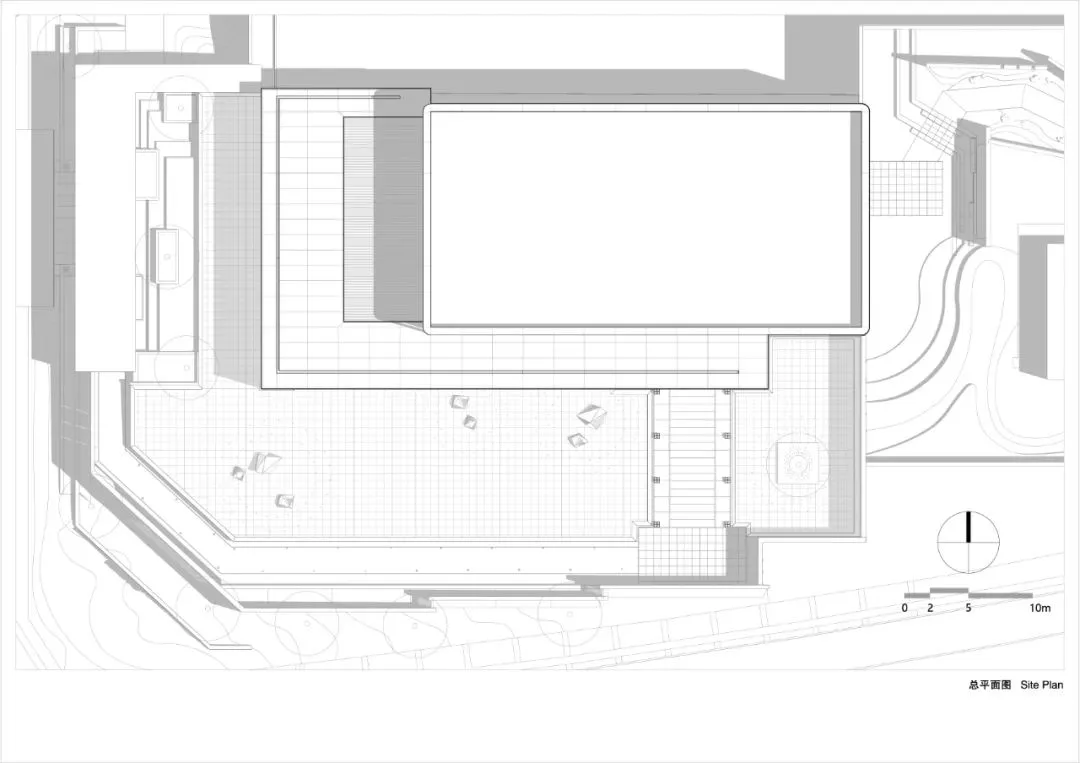
△ General layout plan
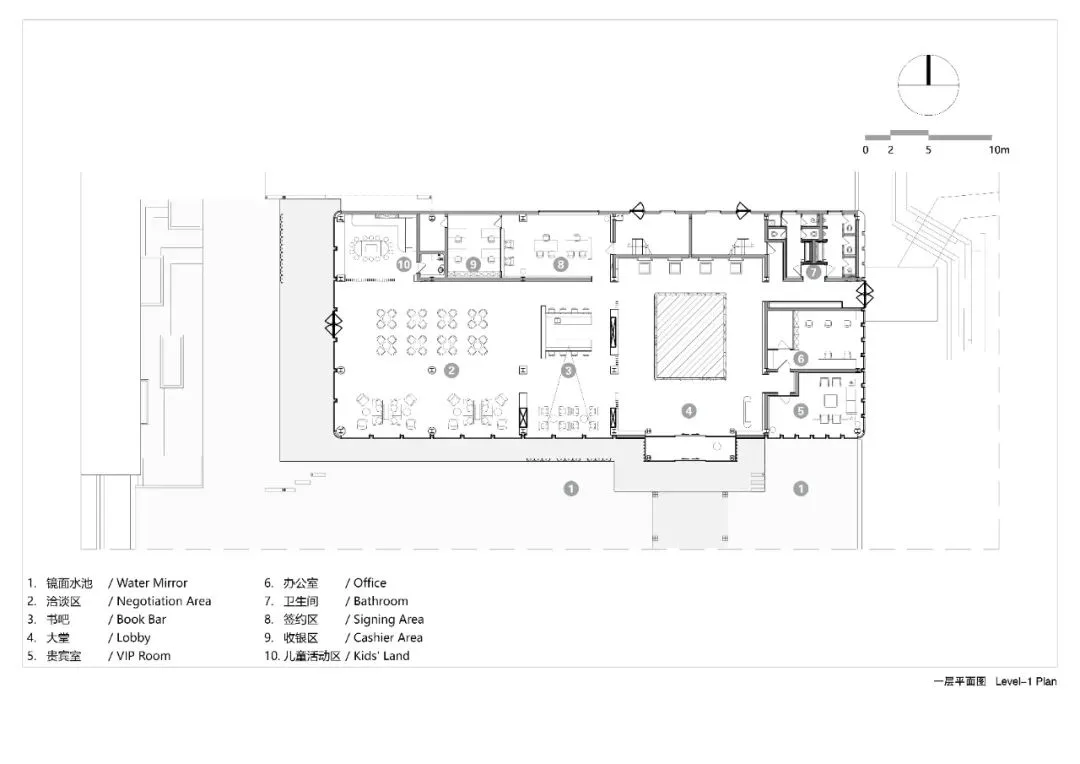
△ First floor plan
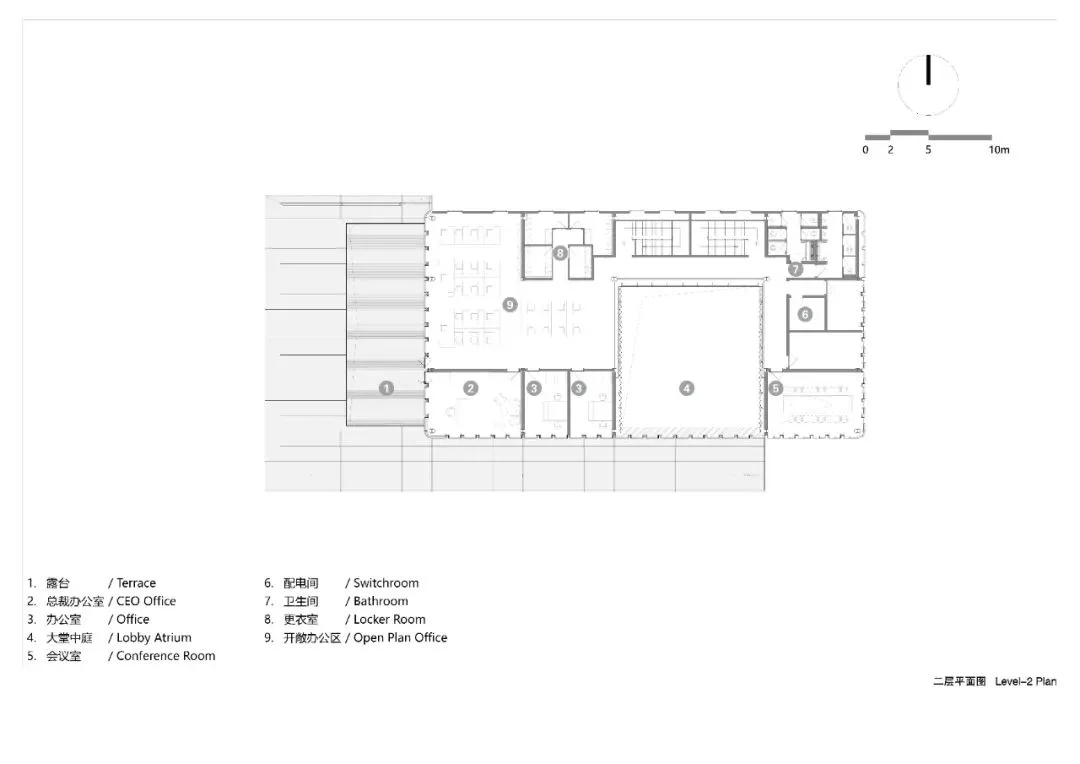
△ Second floor plan
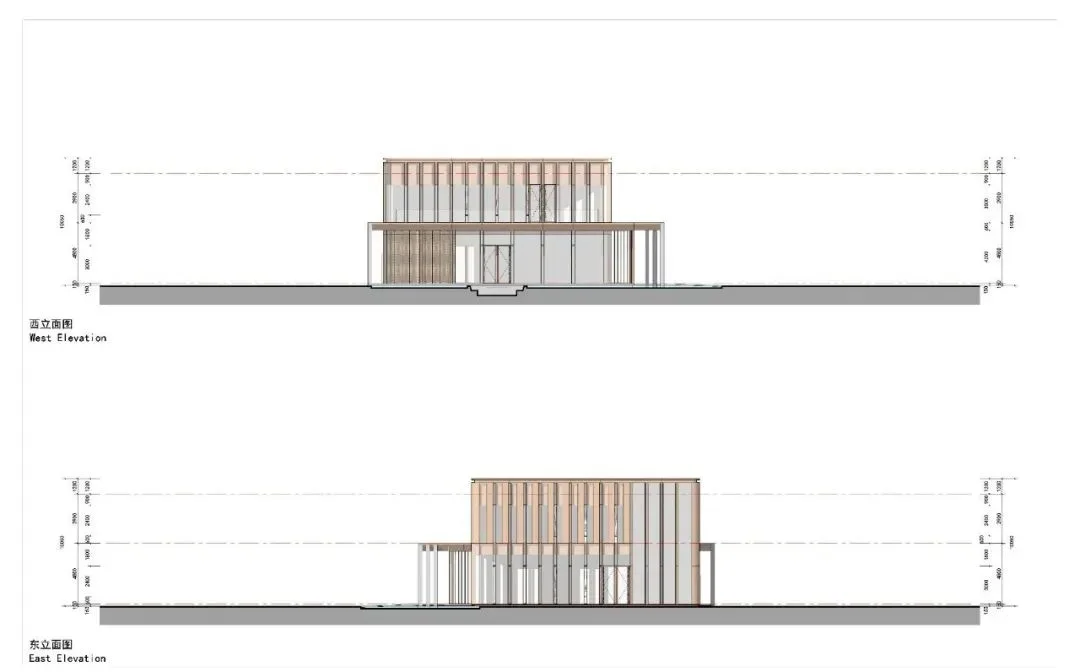
△ East elevation
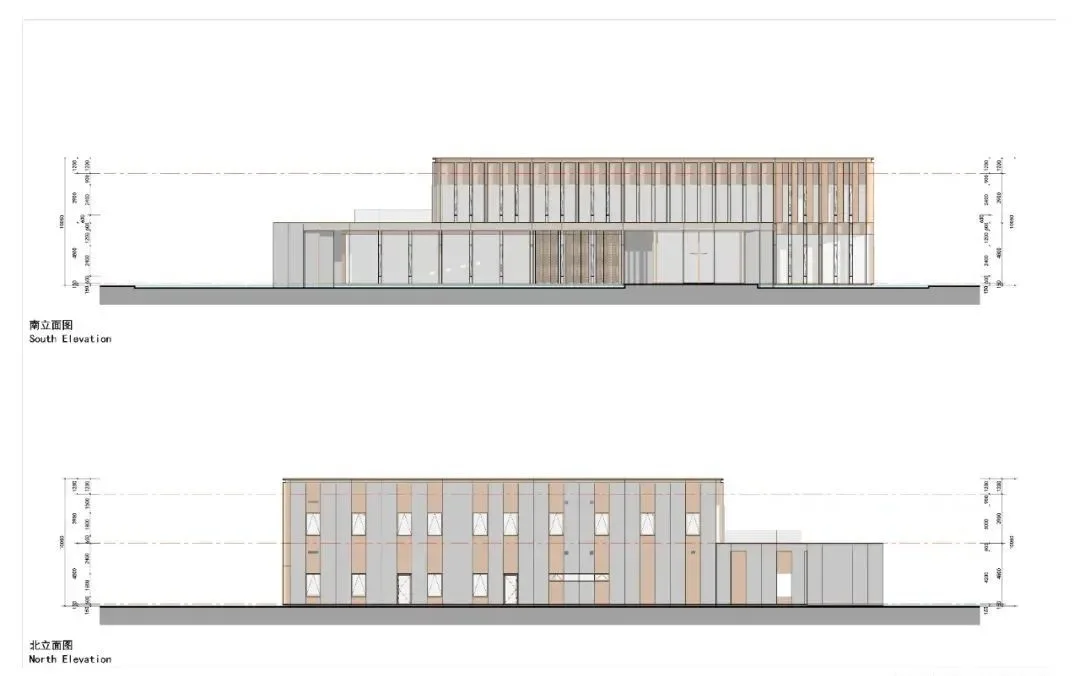
△ North elevation
Project Information
Location: Ankang, China
Size: 1,600 square meters
Owner: Ankang Boyuan Industrial
Architectural Design: UUA Architects
Interior Design: UUA Architects
Logo Design: UUA Architects
UUA Design Team: Li Yongzheng, Li Qizhi, Deng Liang, Jiang Teng, Zhao Shengli, Chen Liye, Lv Yanfeng, Yang Bo, Yu Nan, Ma Kai, Wang Shengnan
Landscape Design: Fourth Division of Shanghai Shuishi Landscape Environment Design Co., Ltd
Project Management Team: Li Jin, Hong Jian, Luo Laichao, Wang Xining, Zhang Xian, Liu Jia, Wu Yonggang
Architectural Photography: Jin Weiqi, He Lian (credited separately)
Year: 2020















Must log in before commenting!
Sign Up