
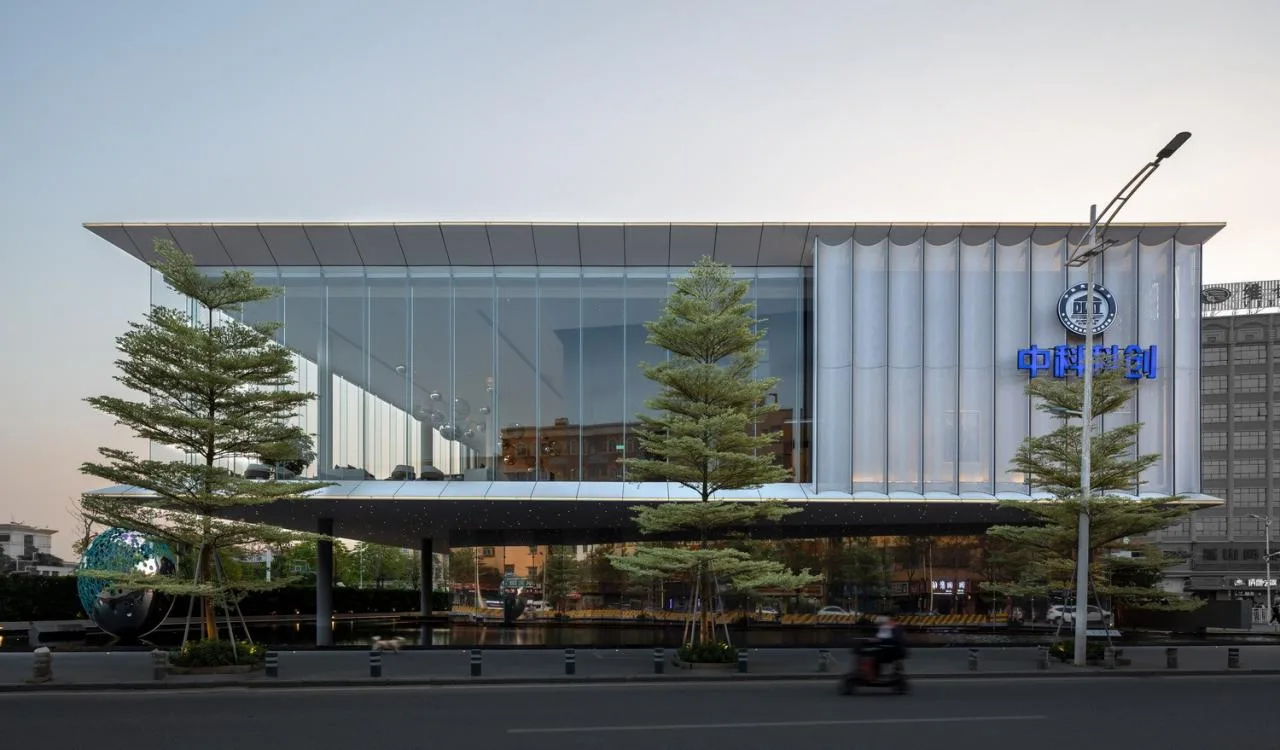
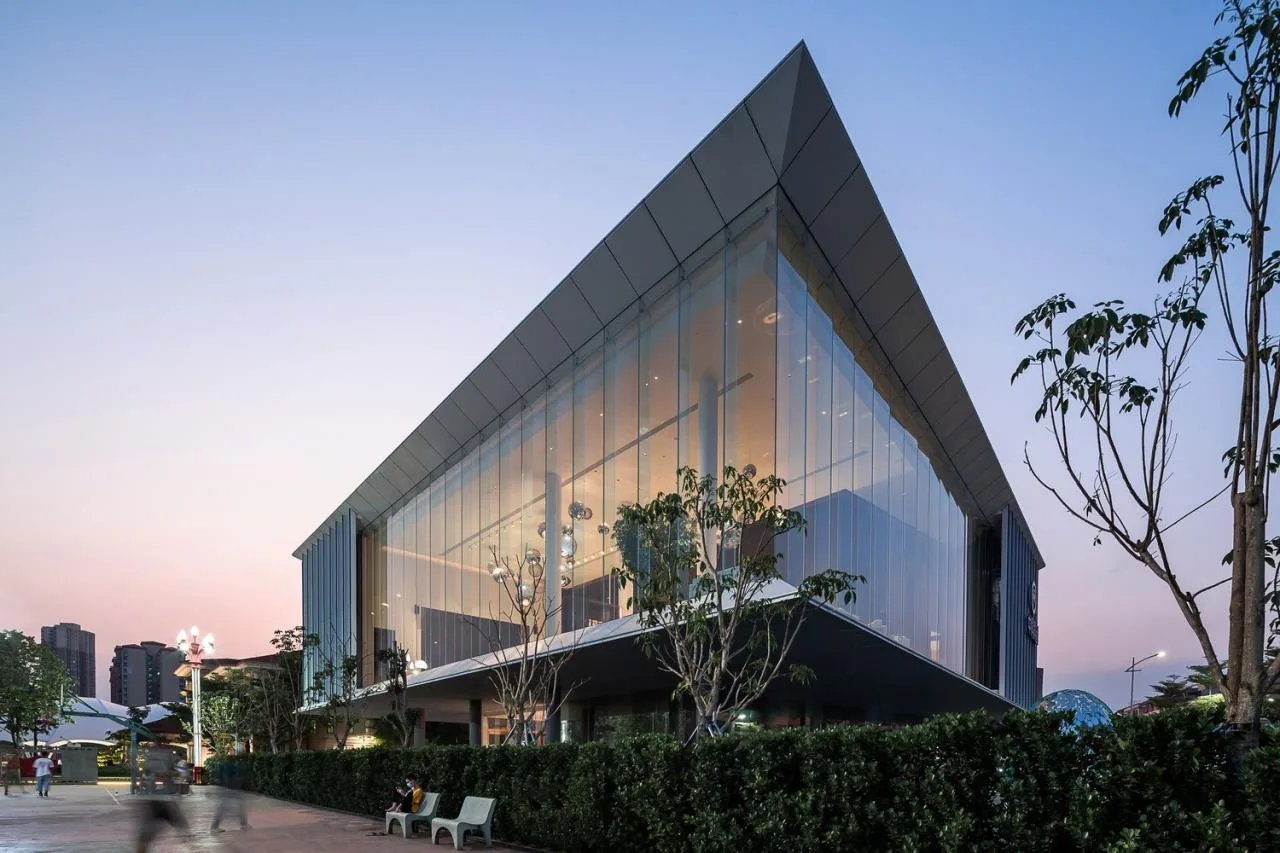
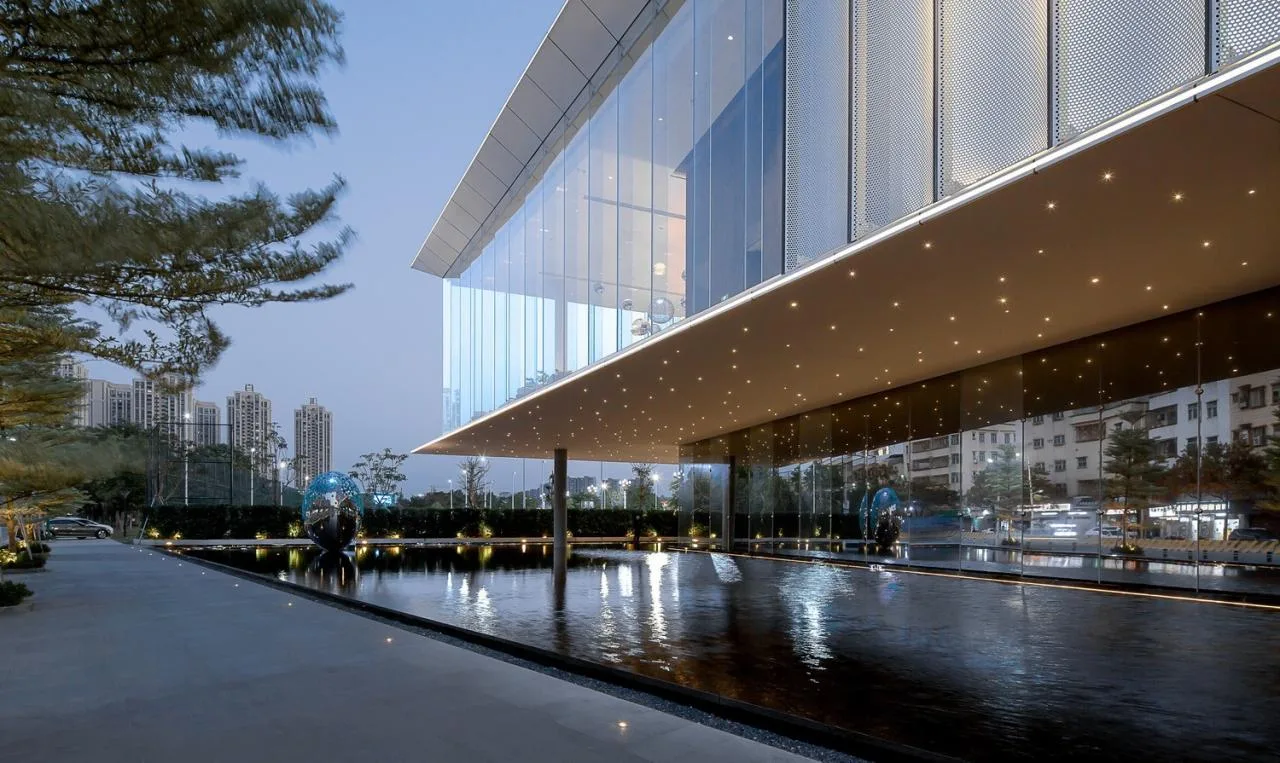
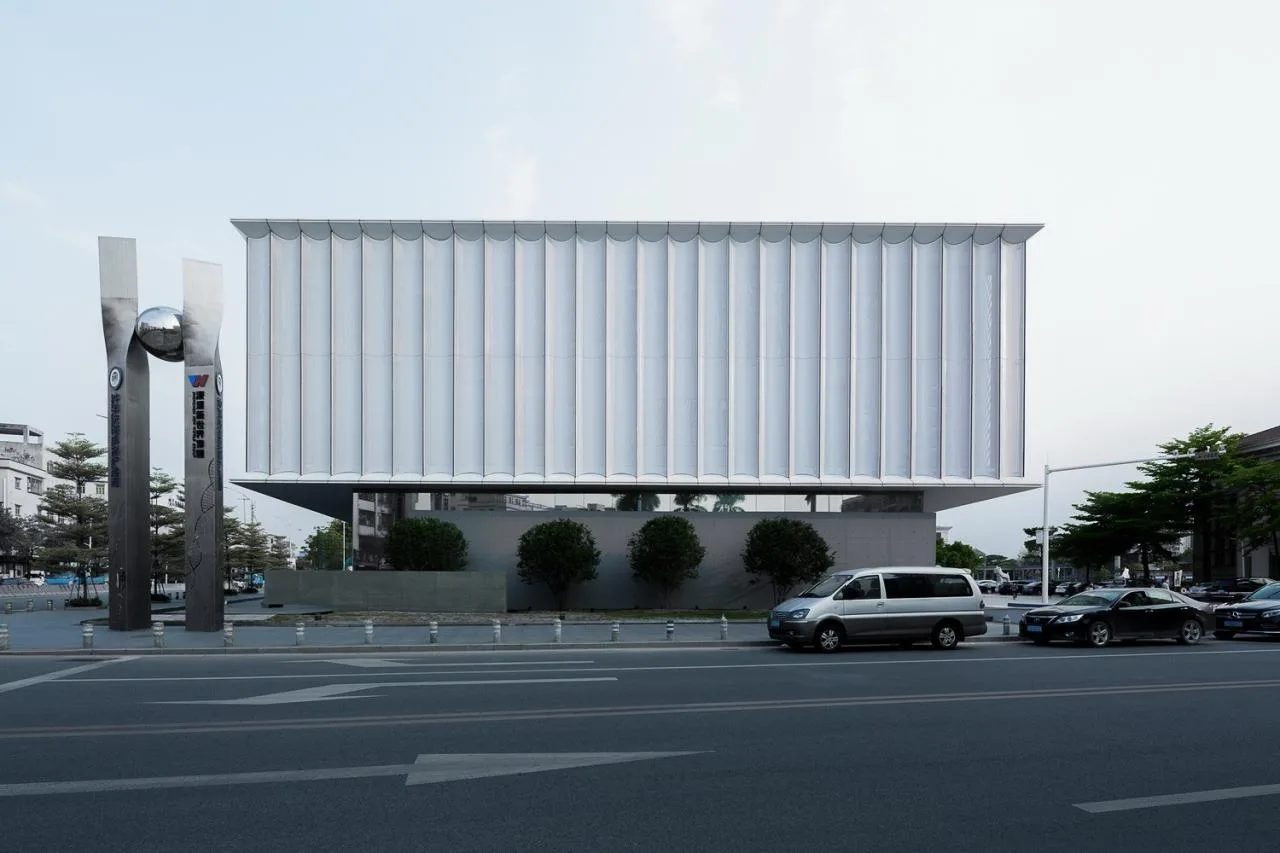
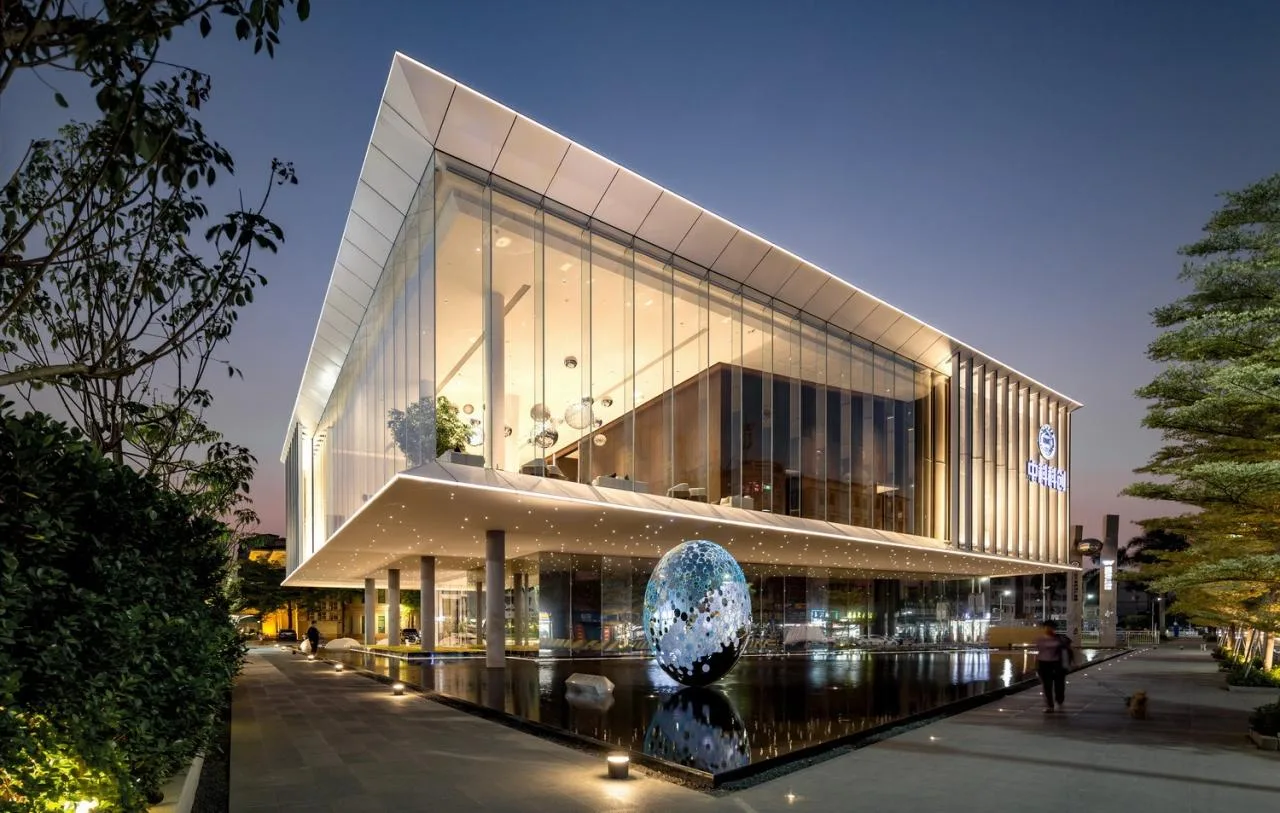
The suspended box reflects both interior and exterior scenes, symbolizing the present and future as they intertwine within Lin Village in Dongguan.
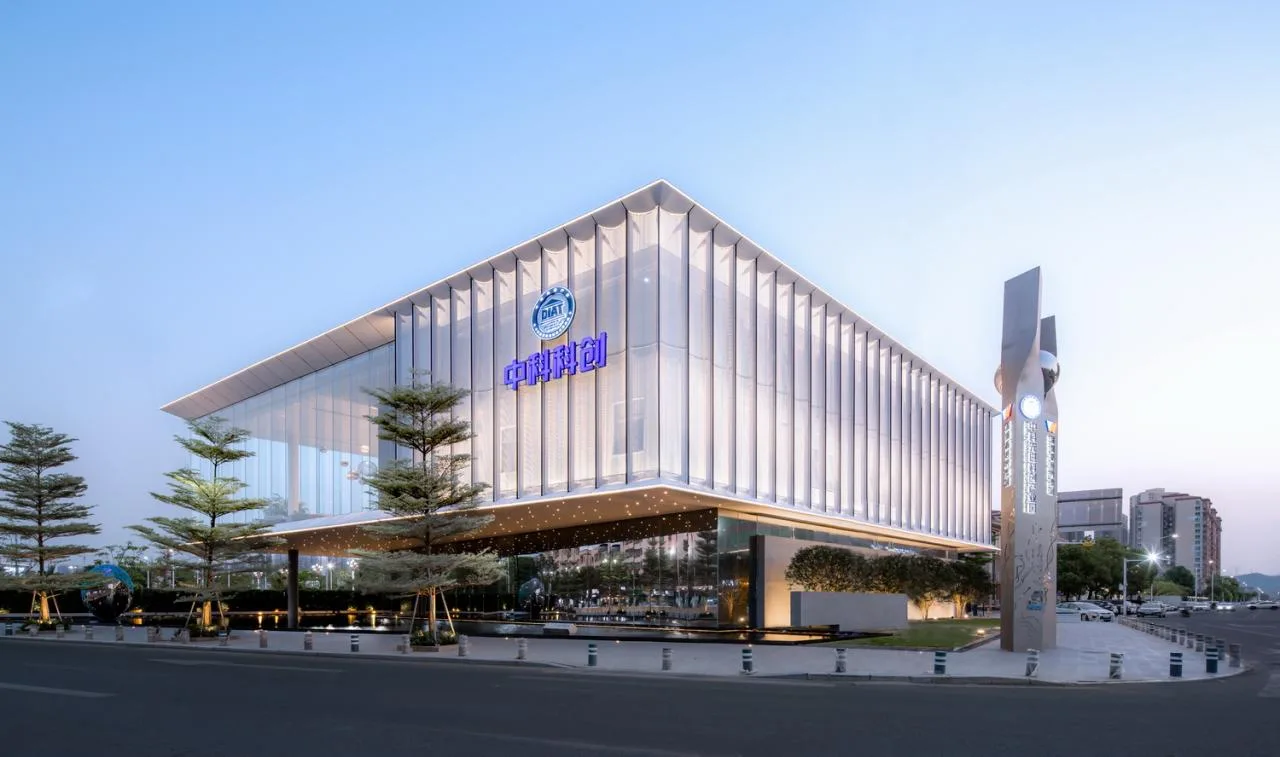
The project is situated in Lincun, Tangxia Town, Dongguan City, Guangdong Province, covering a land area of 1,835.15 square meters. It borders Tangxia Expressway and lies at the intersection of Zhangmutou Avenue and Hongye North Road, offering convenient transportation and excellent accessibility.
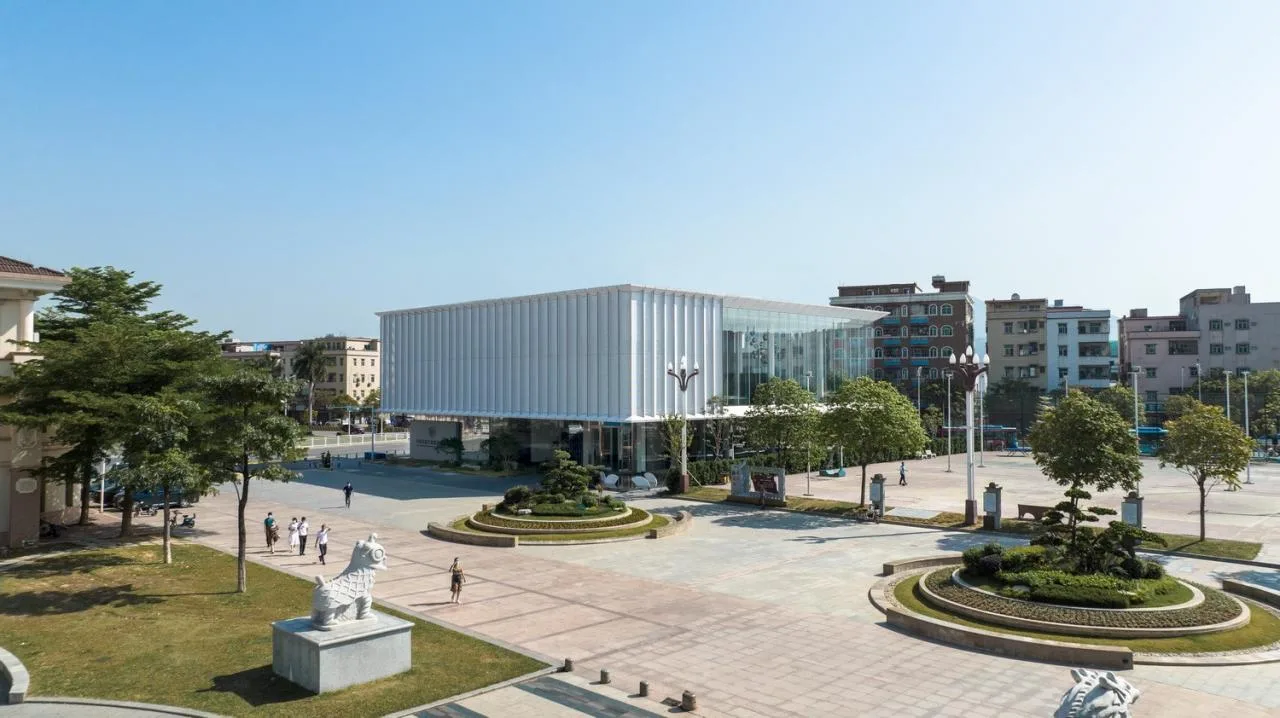
The site is adjacent to Lin Village Cultural Square—which includes the Party and Mass Cultural Activity Room, Neighborhood Committee Office, Lin Village Grand Stage, Lin Village History Museum, and monuments—and an industrial plant area. The narrow, older urban strip limits architectural and landscape design space. The challenge lies in activating the “spirit of place” within Lin Village and creating a resonant connection between present and future.
Suspension
Creating More Flexible Architectural Spaces
Given the constraints of narrow urban areas, conventional design methods that fill the land with buildings would leave no room for open spaces or pockets of greenery, especially at street corners, resulting in a sense of urban congestion and oppression.
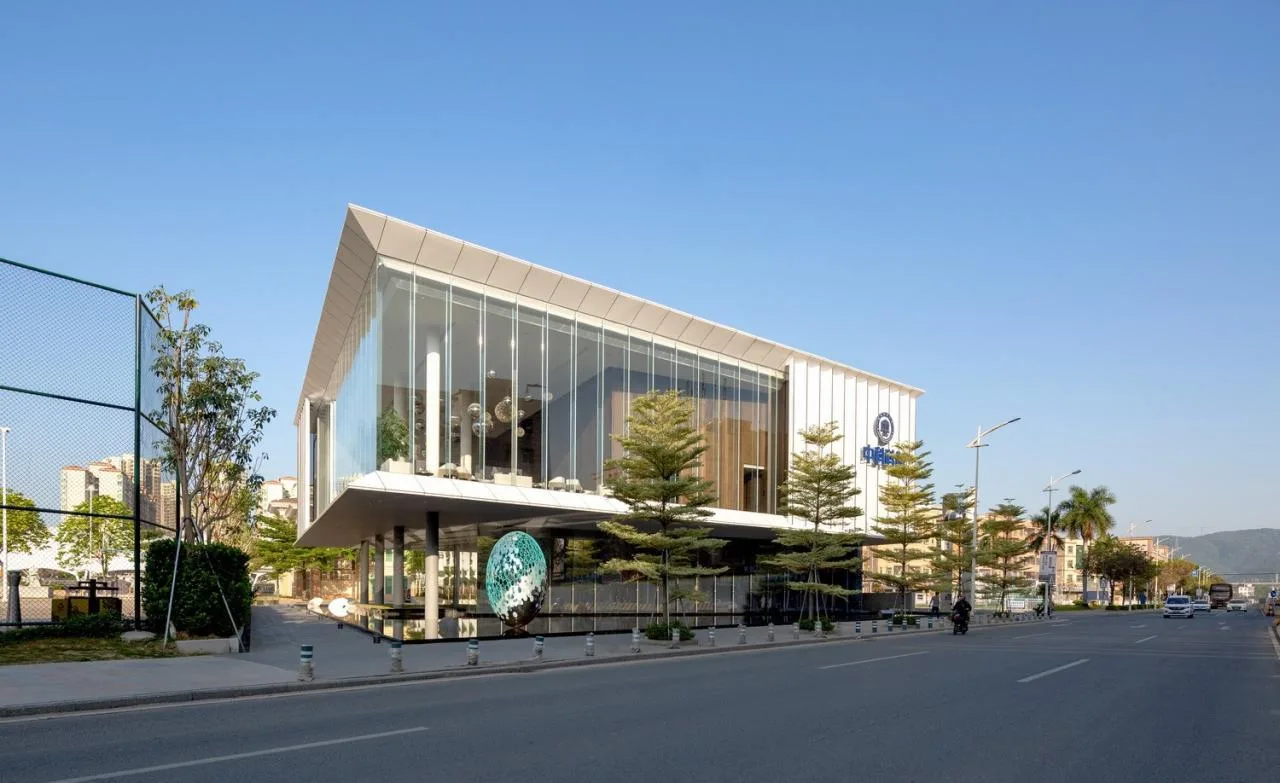
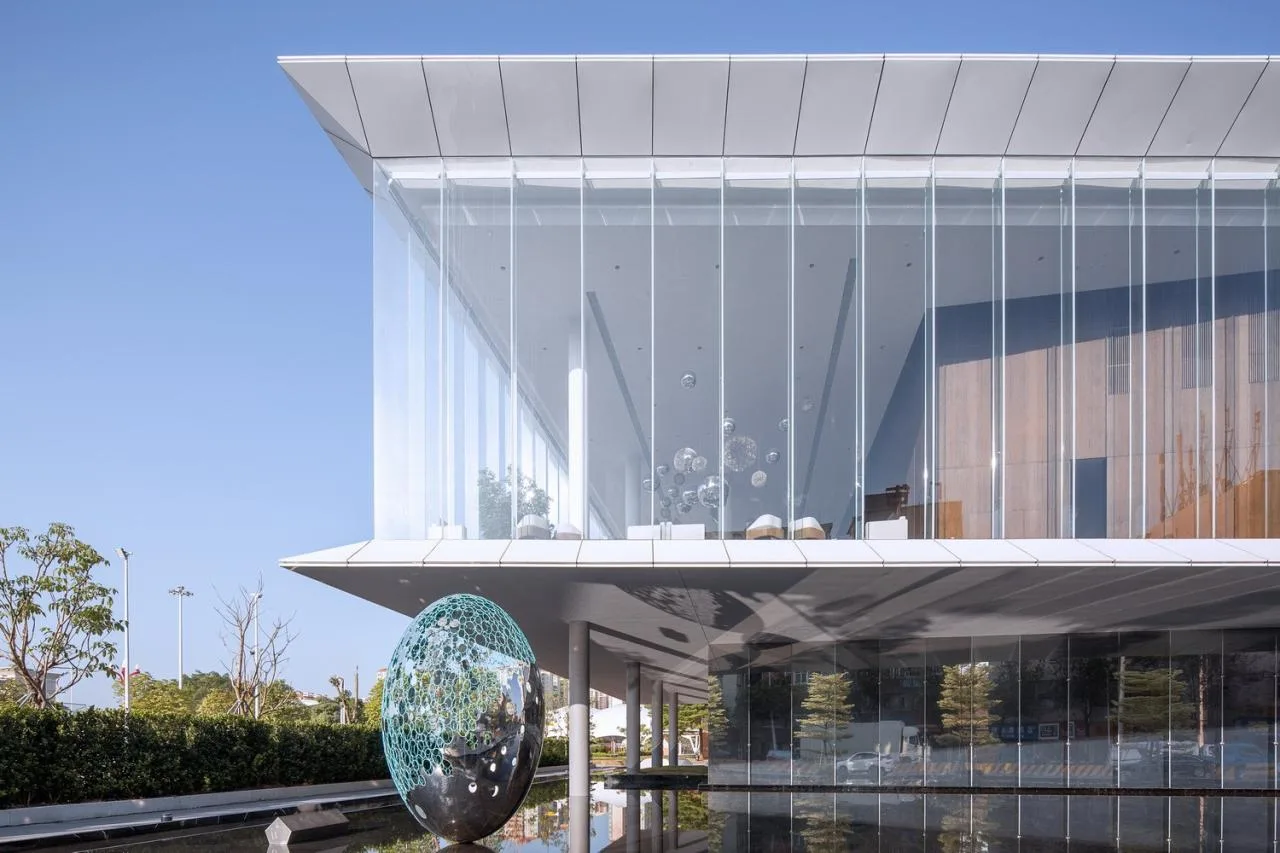
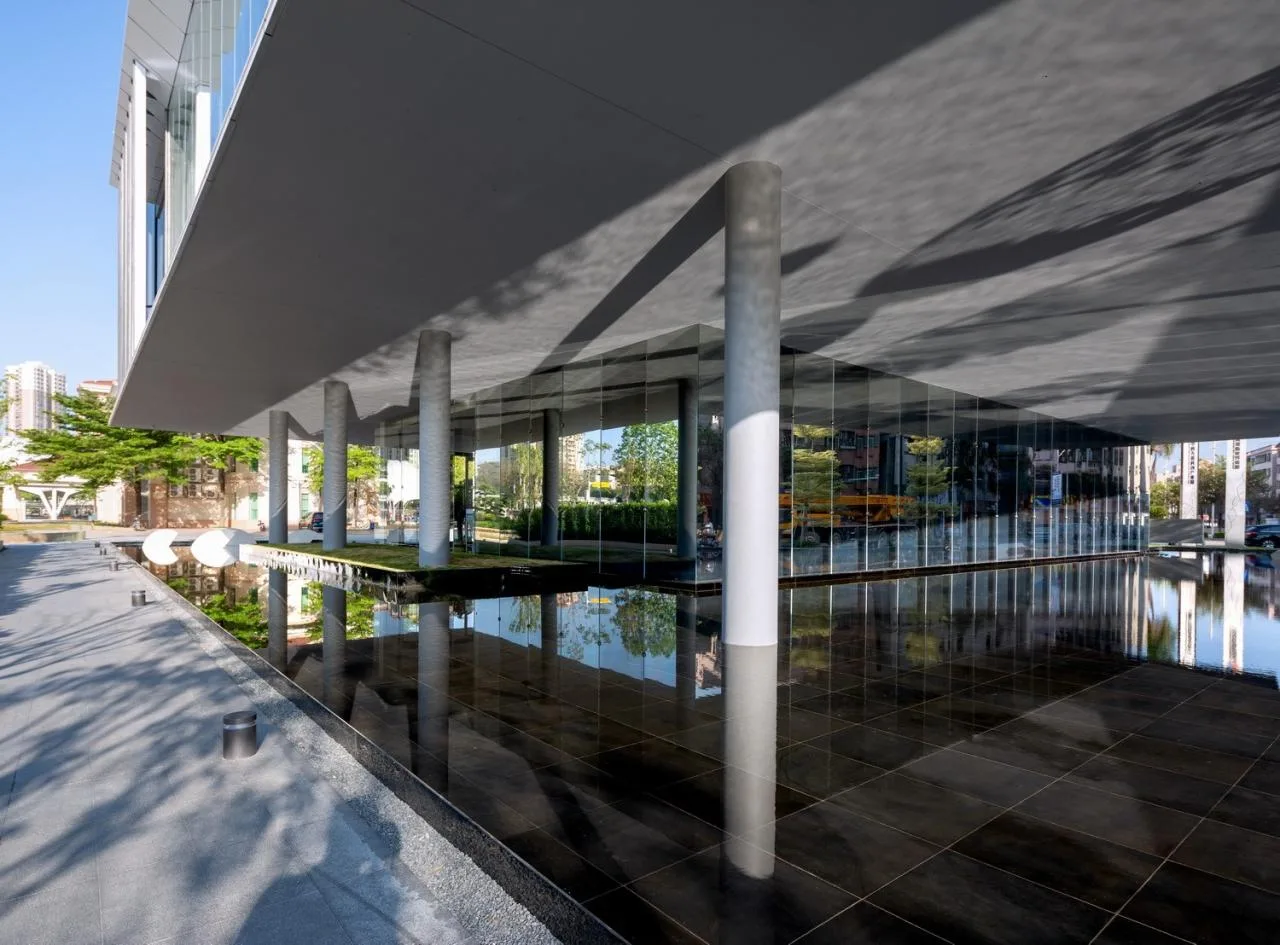
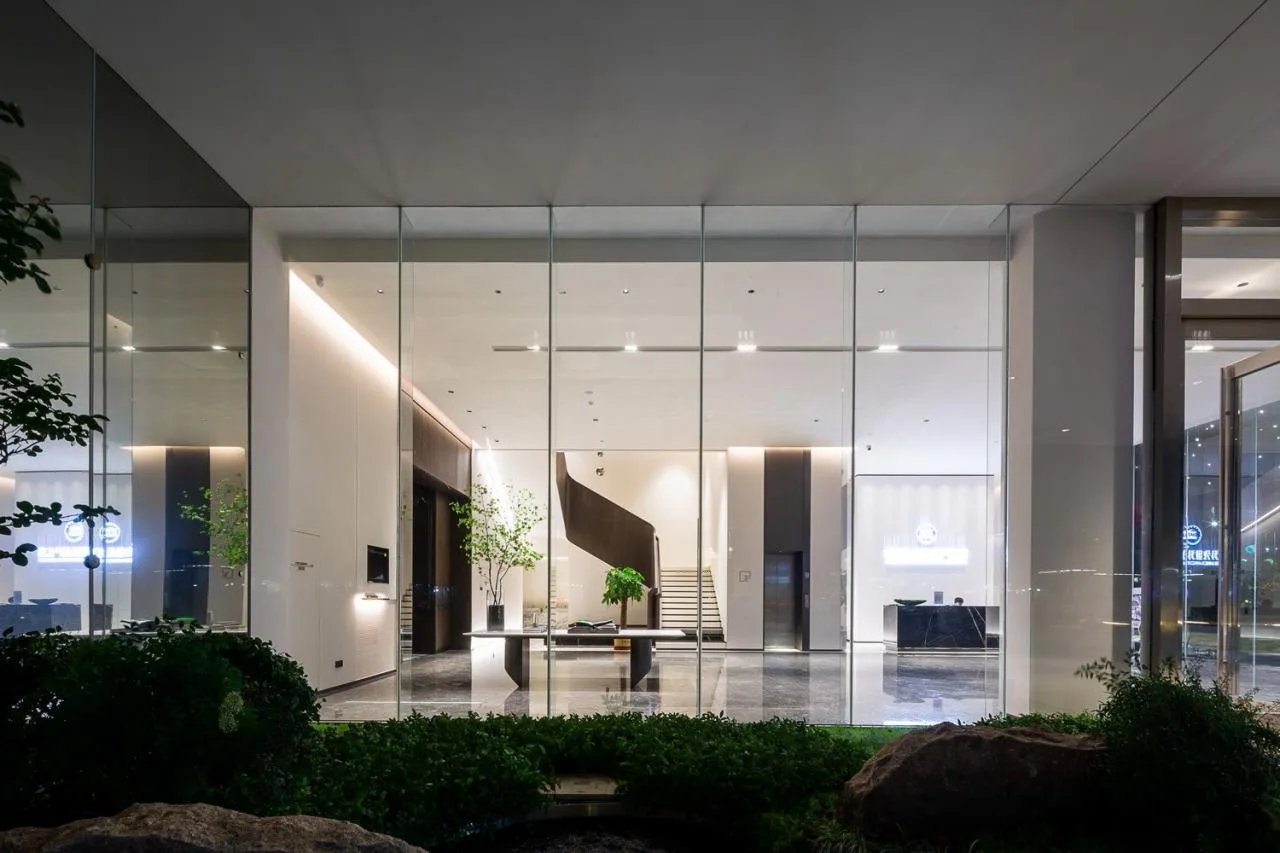
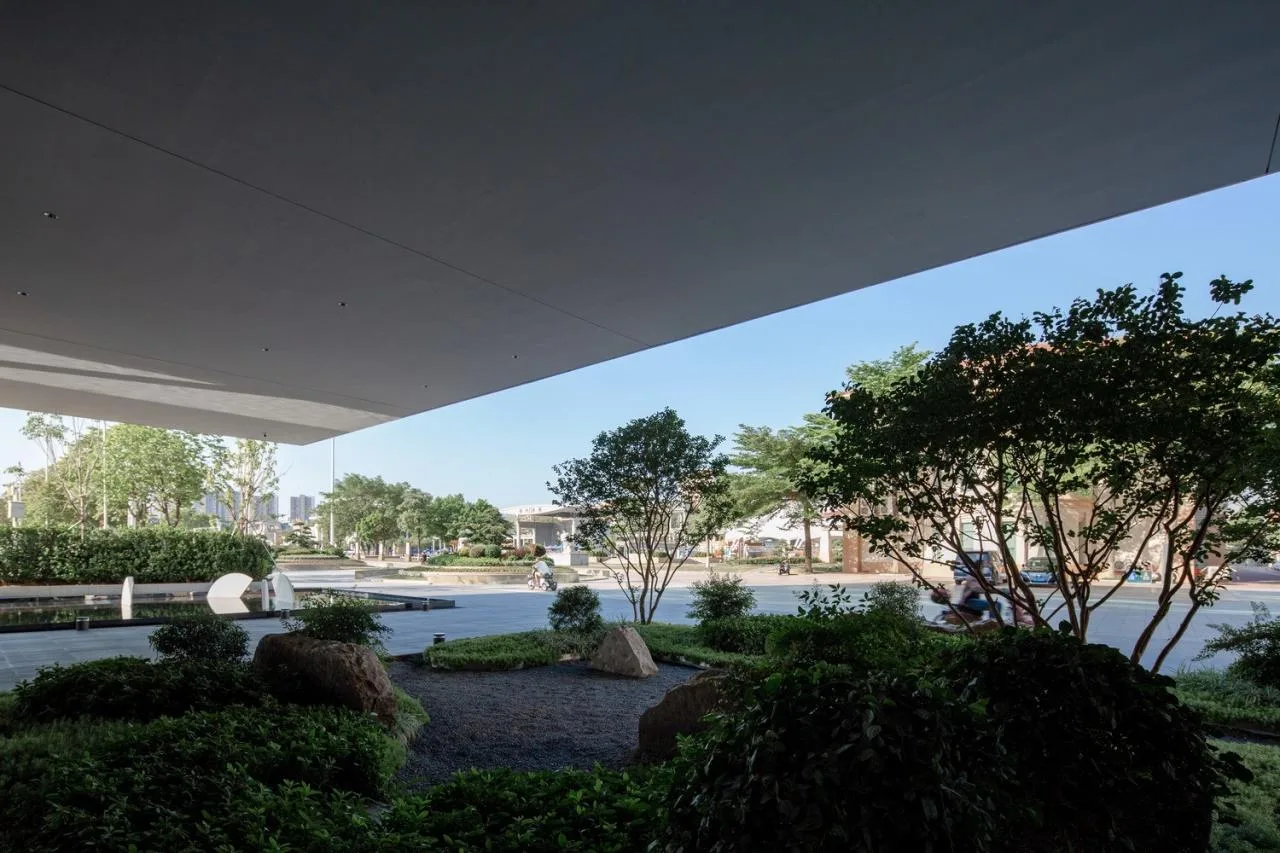
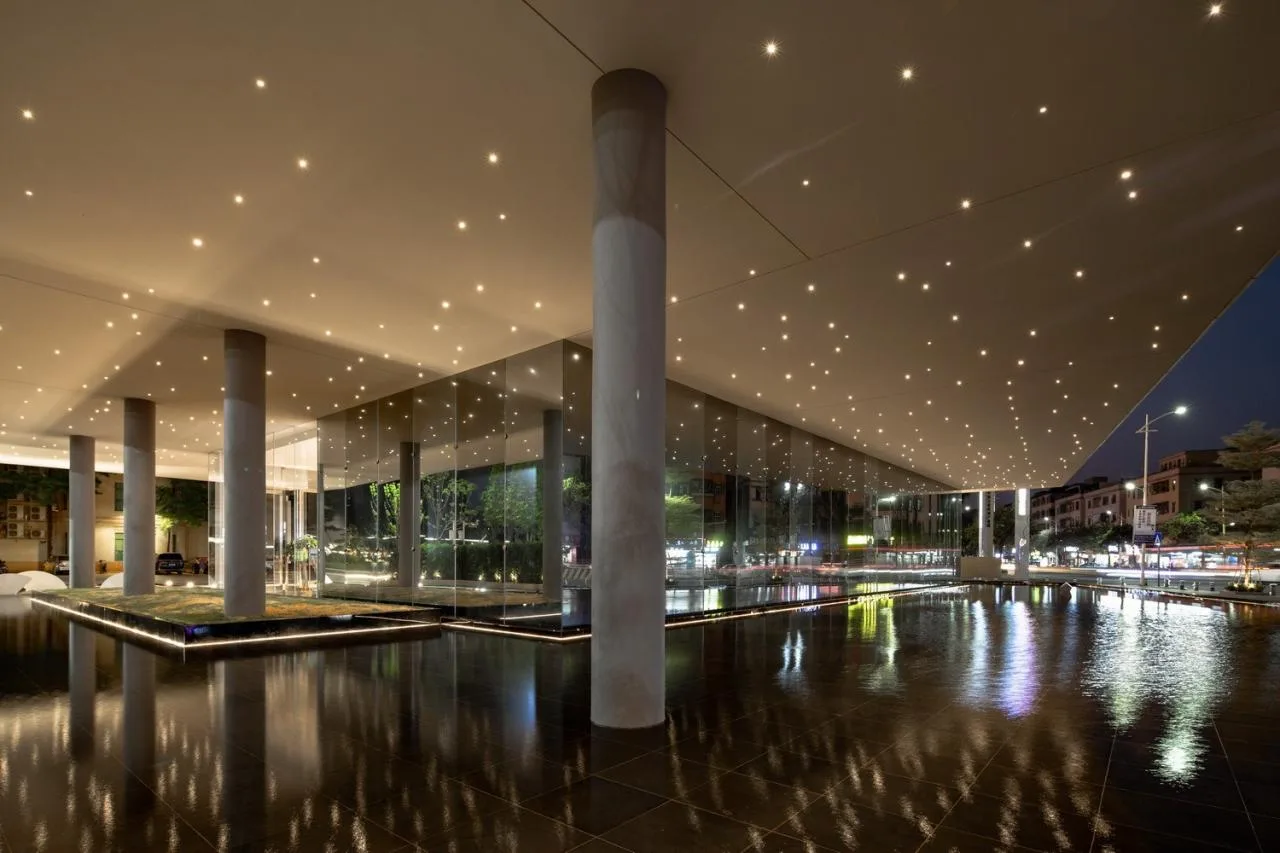
To address this, an elevated design approach was adopted. The ground floor area is returned to public use, while the building’s main functional spaces are located on the second and third floors. This arrangement fosters a more harmonious urban environment at the street corner.
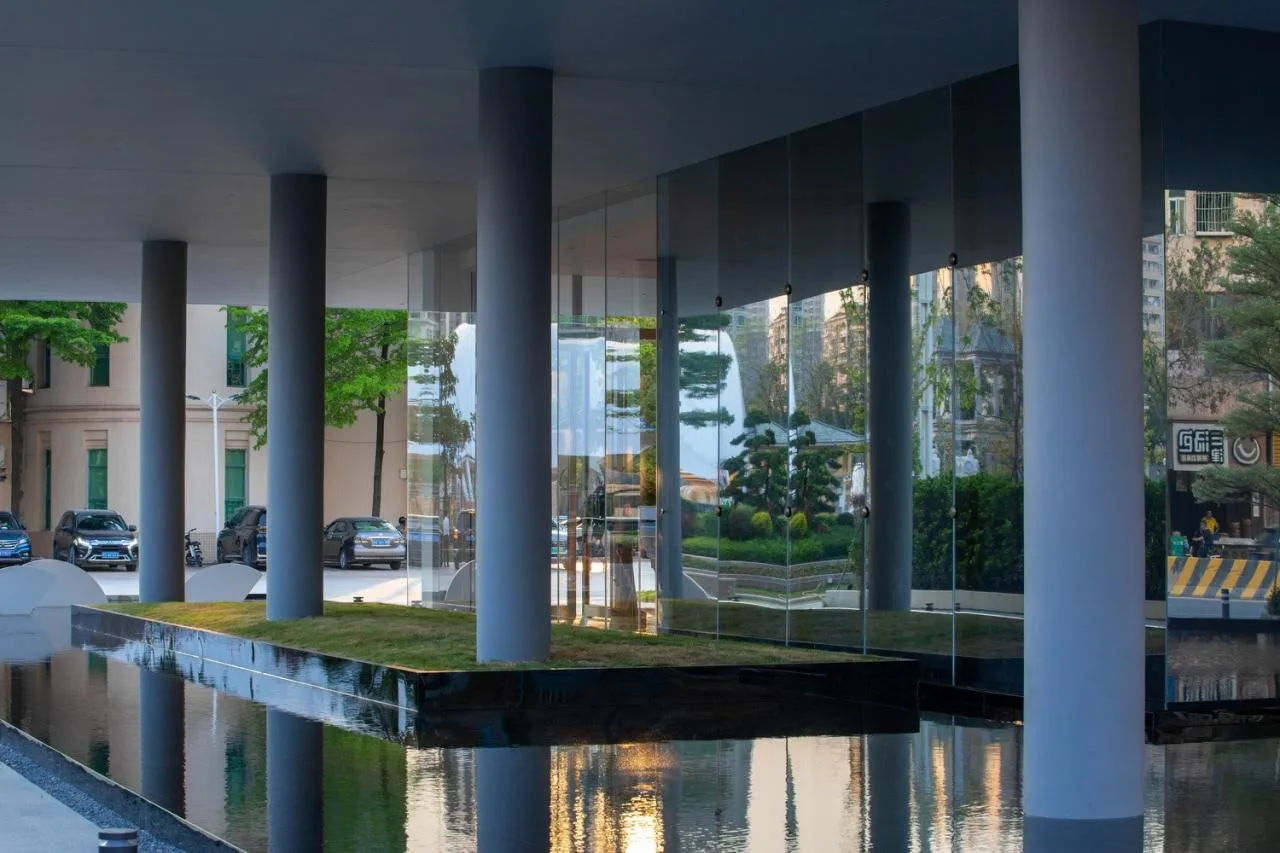
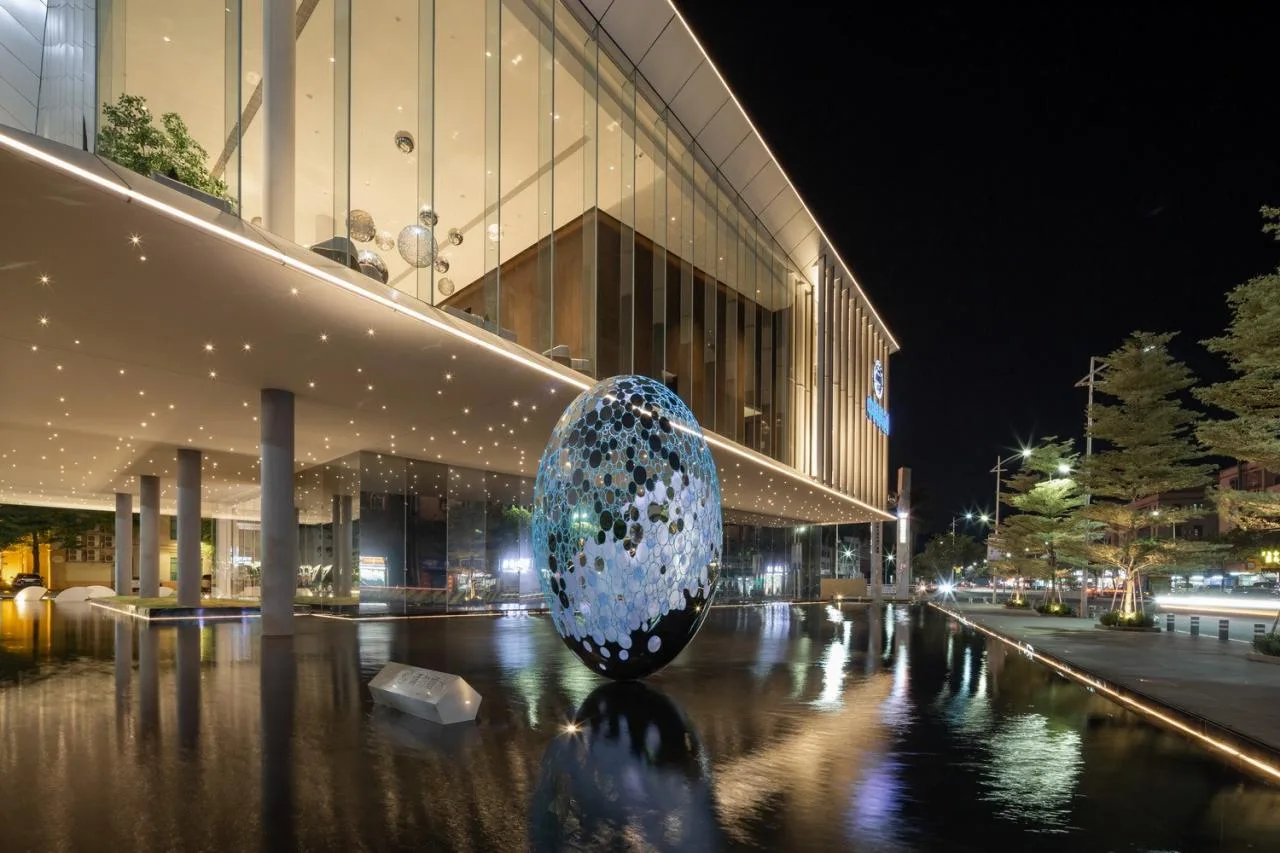
Water features were integrated at the base, and the southern and eastern plots were utilized to enliven public spaces within Lincun Square. This not only enhances vitality but also symbolizes prosperity brought by flowing water.
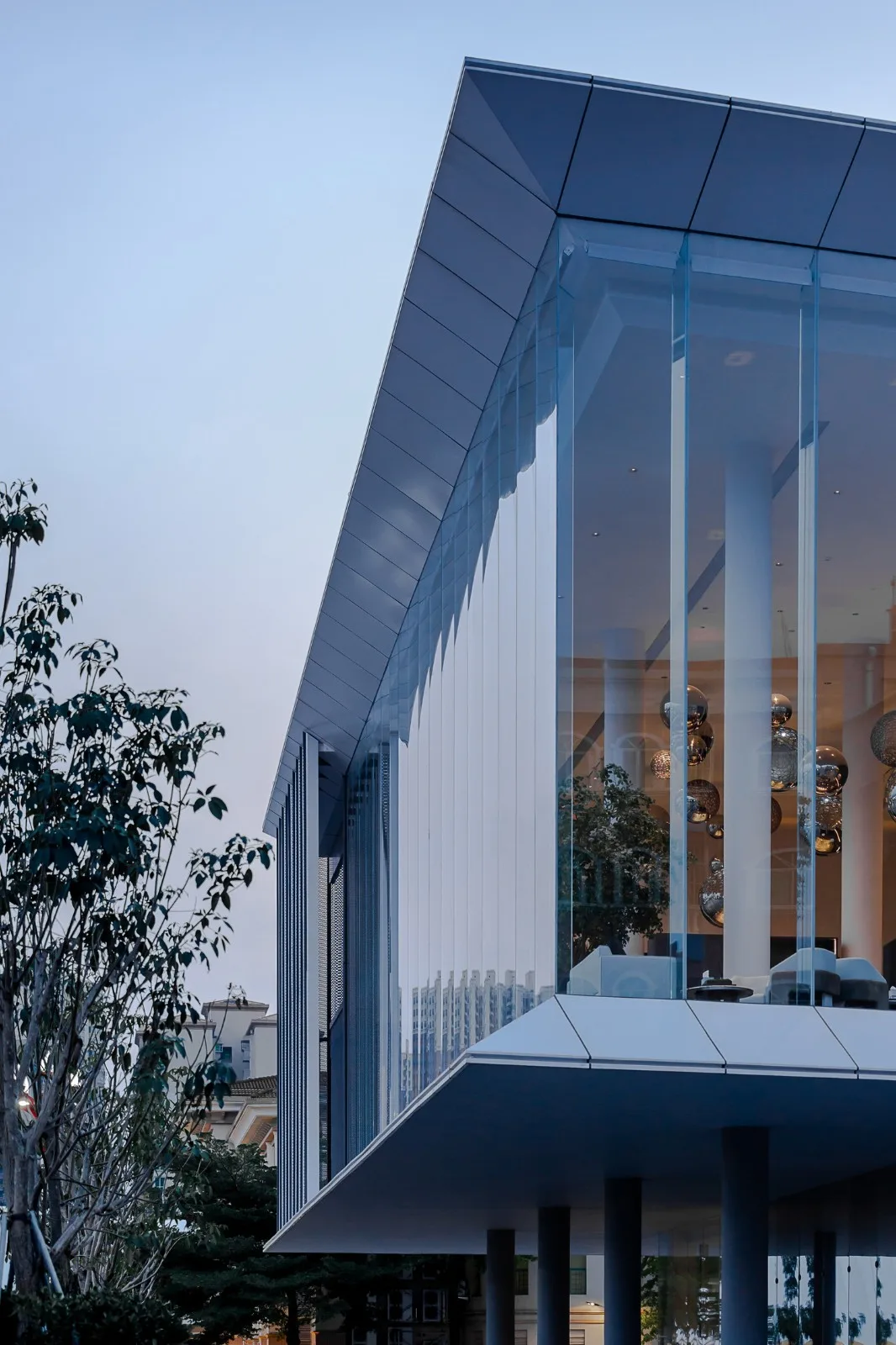
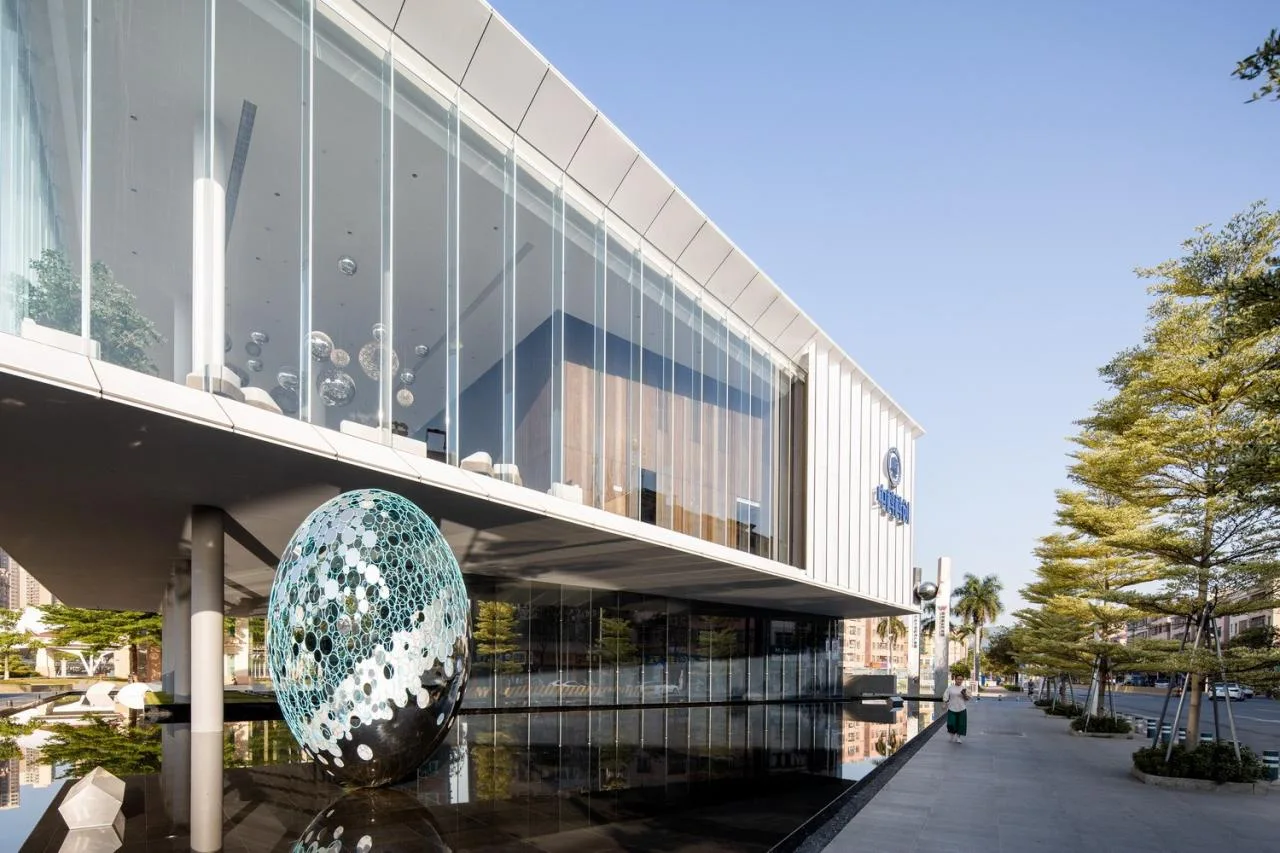
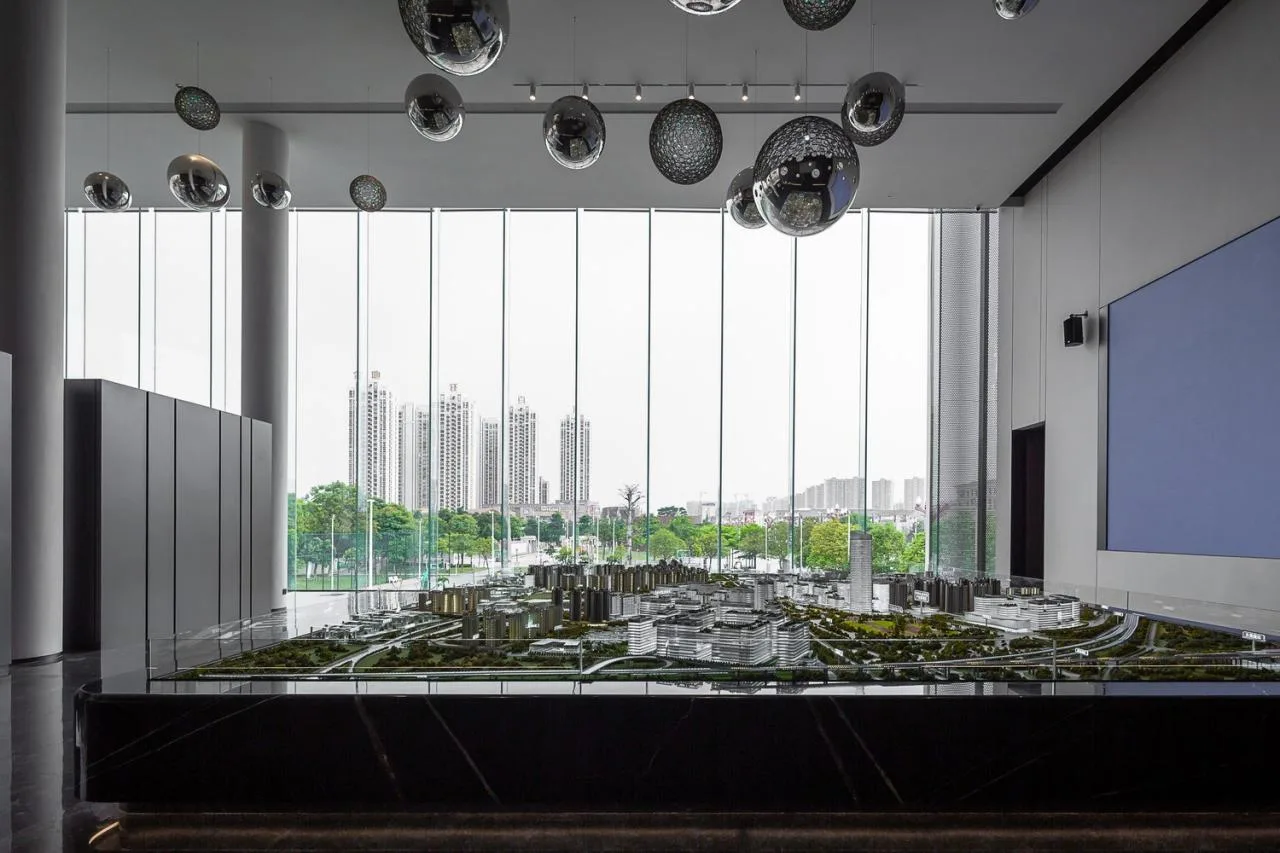
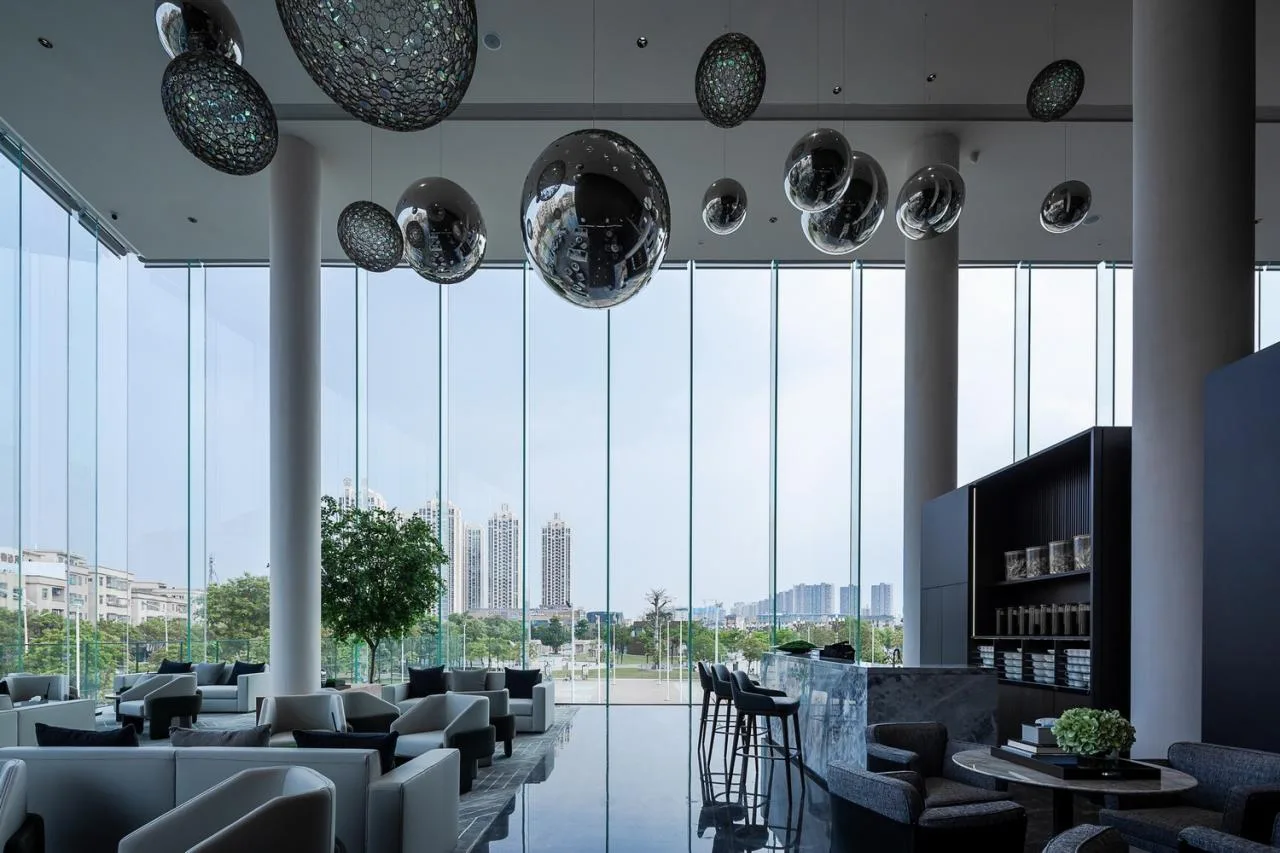
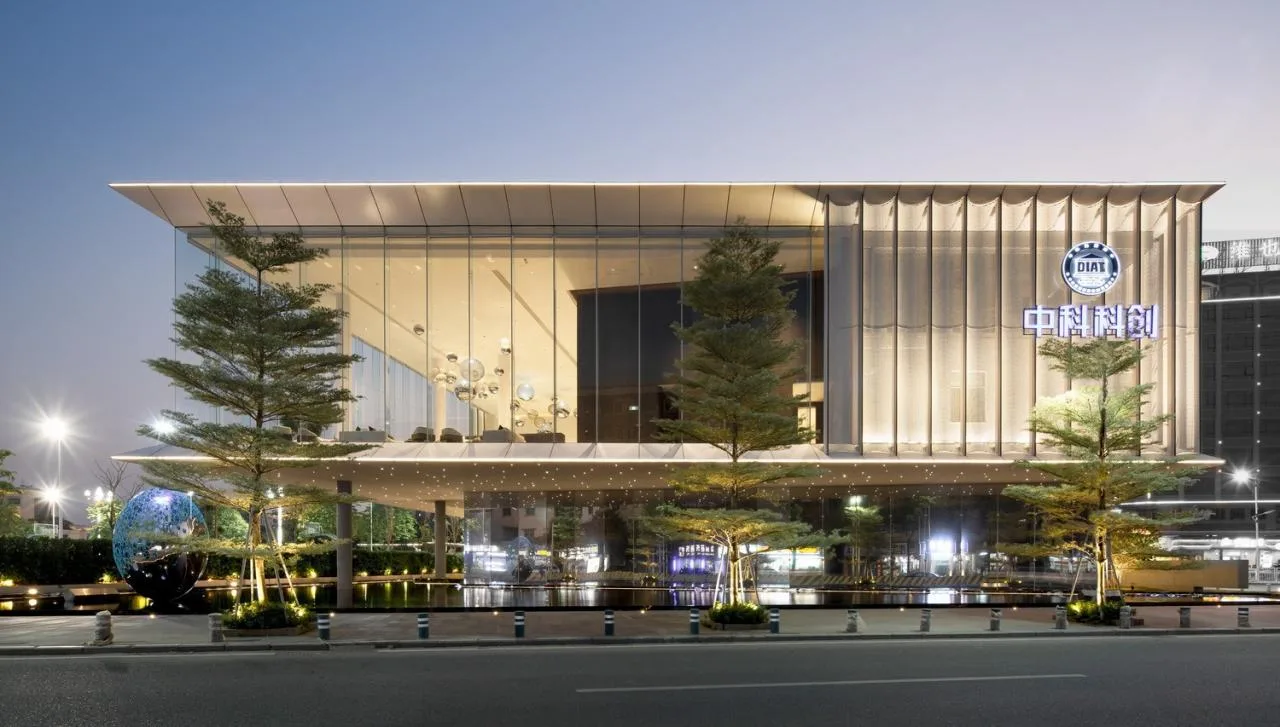
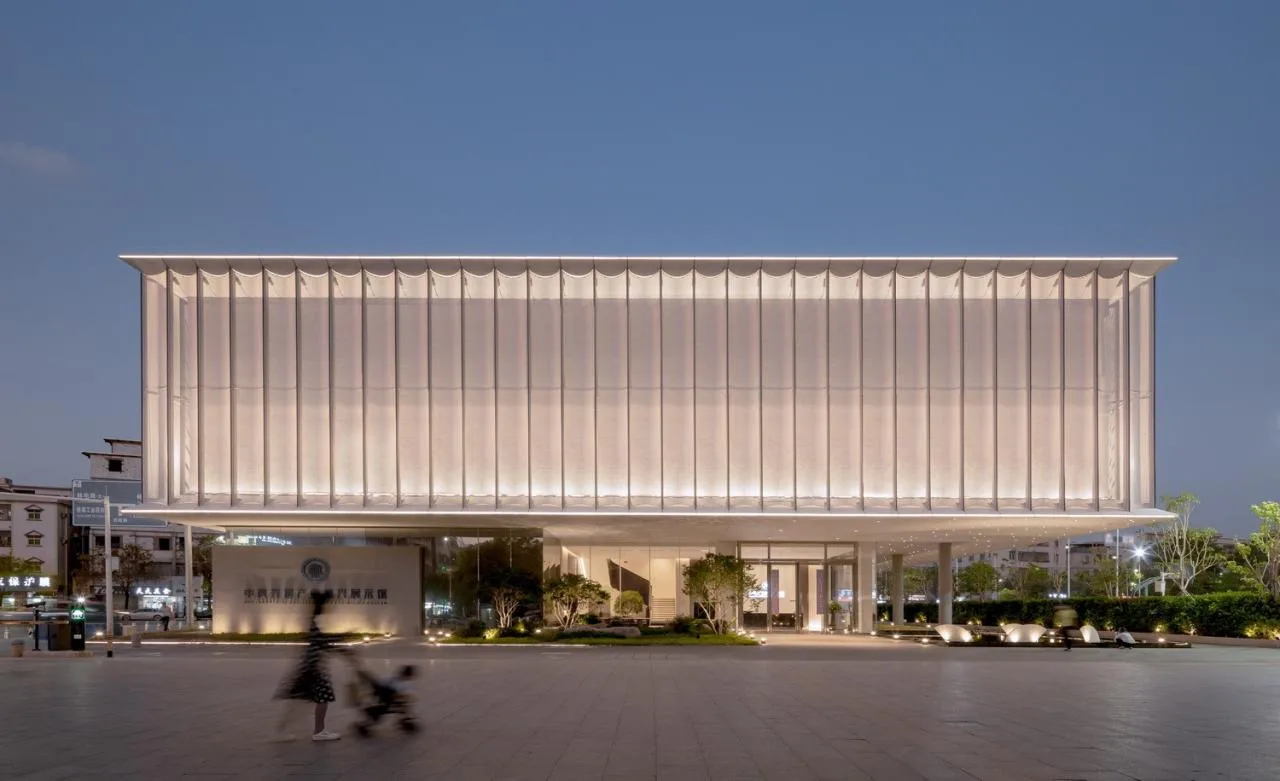
The exhibition area is situated on the second floor, designed with a double-height space to create a crystal-clear glass box that appears to float in the air. Facing the open southern square and main road, this iconic display space is aptly described as the “window showcasing Lin Village’s planning.”
Dialogue
The Development Perspective of Pulse City
The design employs box forms to connect the relatively chaotic urban network of Lincun, crafting a visual space that spans multiple floors and streets. This floating perspective invites viewers to engage in an intuitive dialogue about Lincun’s transformation through urban renewal.
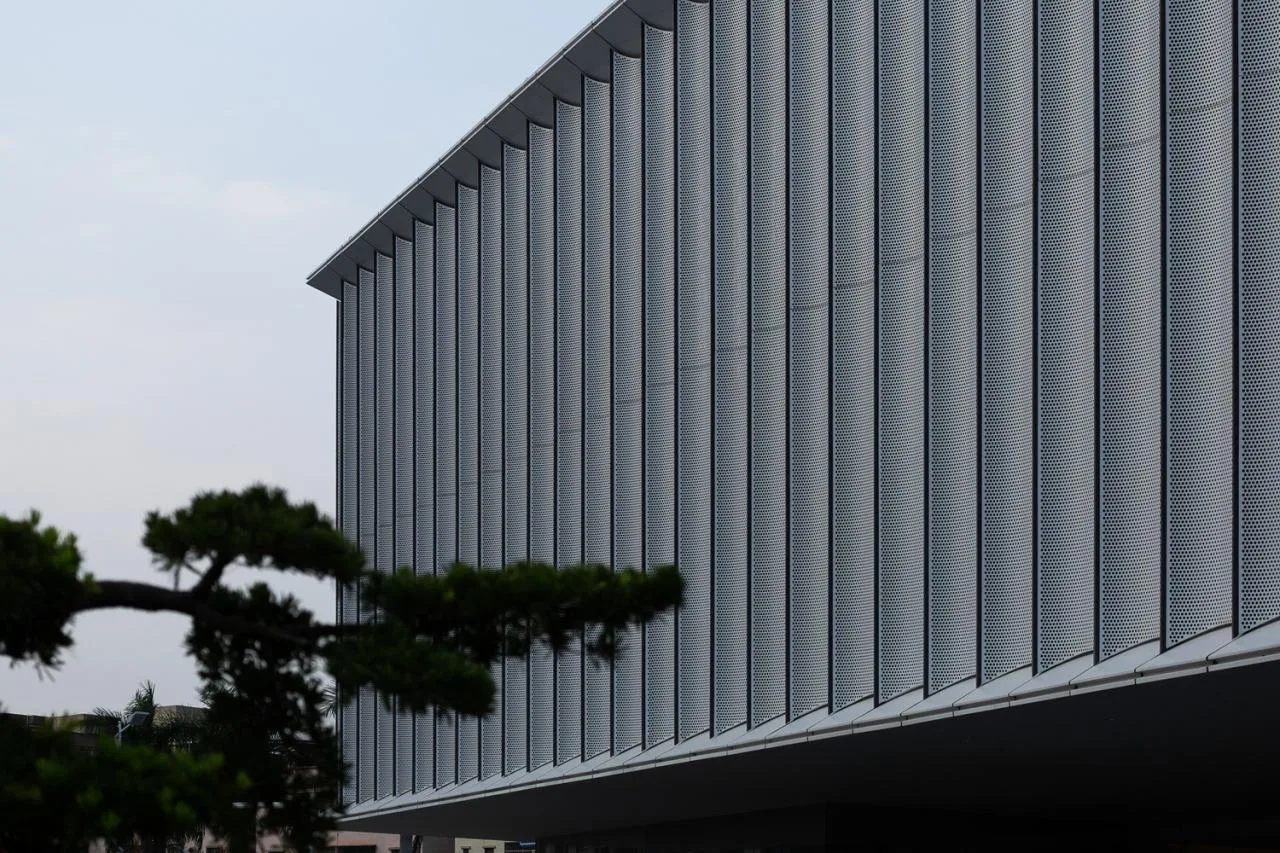
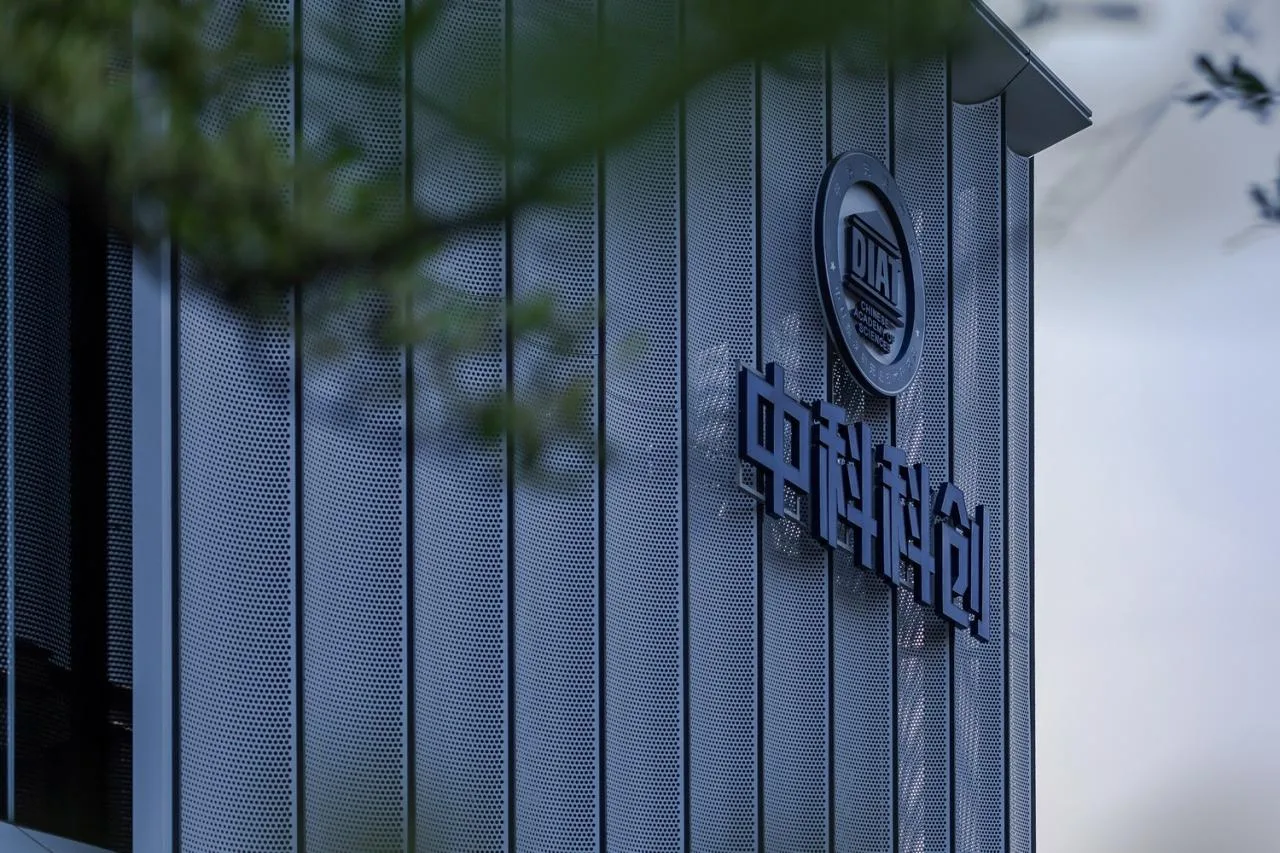
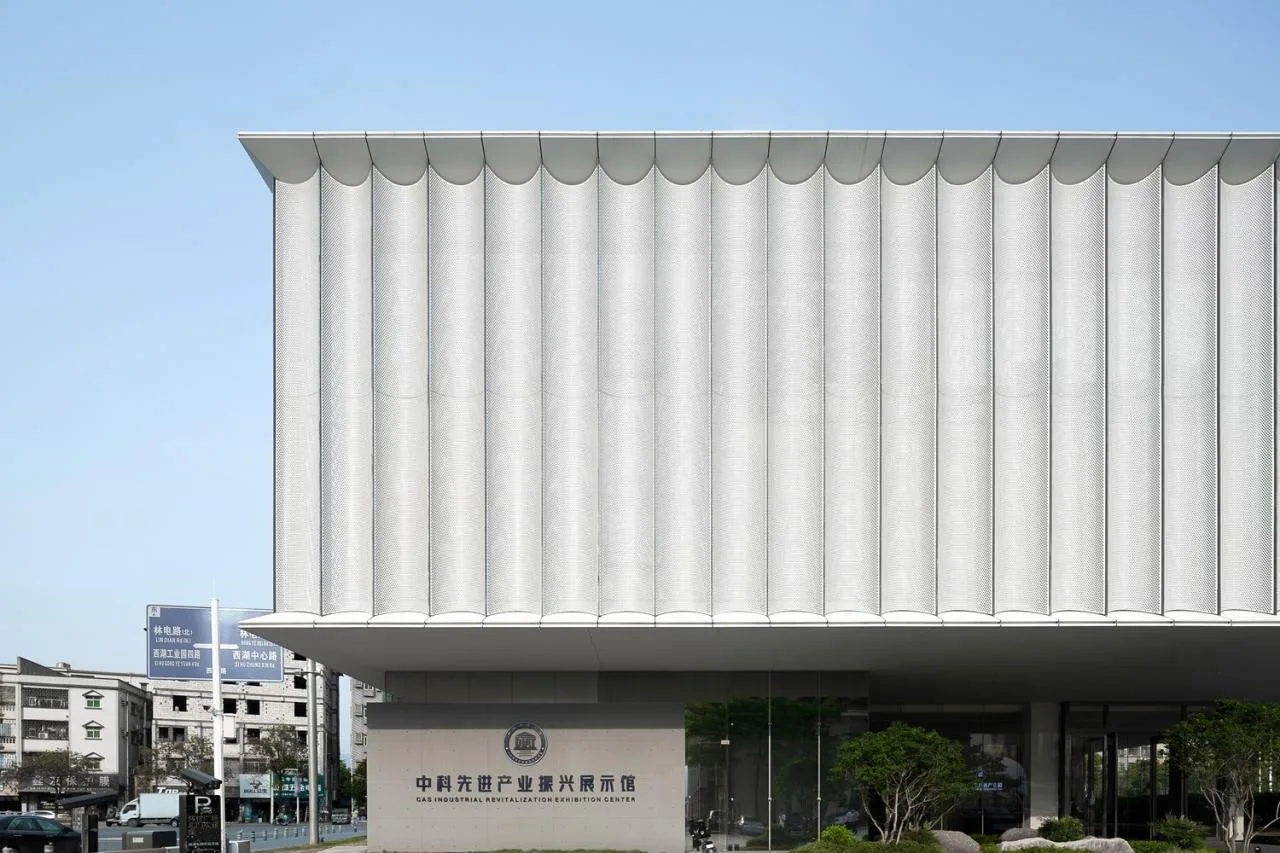
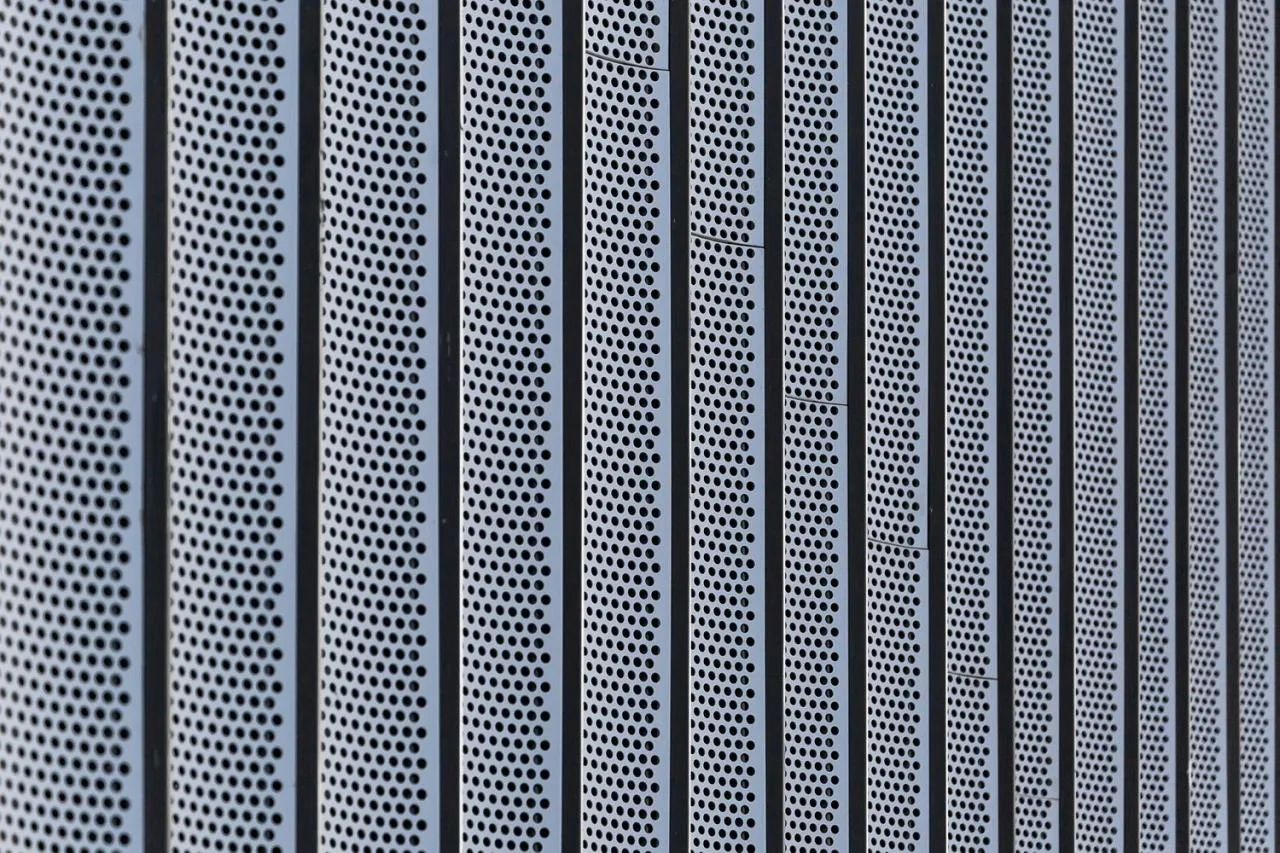
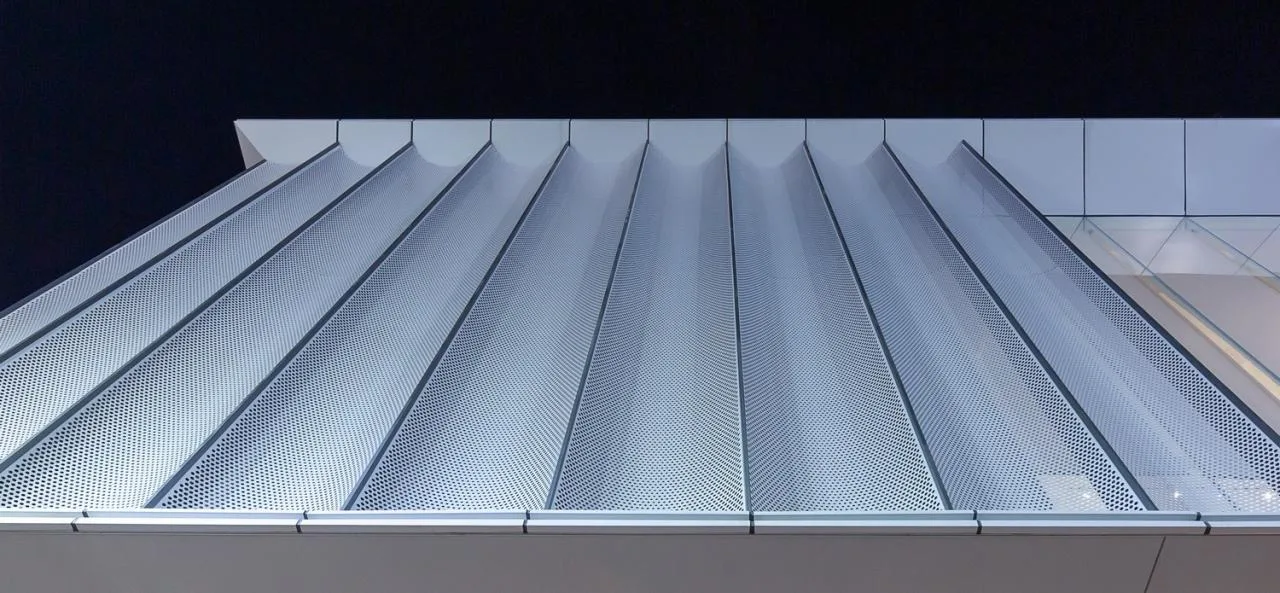
The exterior structure features a combination of large perforated panels and expansive glass curtain walls, emphasizing modernity and transparency while enhancing the project’s overall quality.
The architectural color palette contrasts white and gray tones with highly reflective materials, evoking a sense of advanced technology without appearing monotonous.
Travel Through
Immersing in a Futuristic Sci-Fi Space
With plans for Lincun to develop into a technology-themed industrial park, surrounded predominantly by simple European-style architecture, the exhibition center’s design language—both in materials and form—leans towards a sci-fi aesthetic to connect with the city’s future vision.
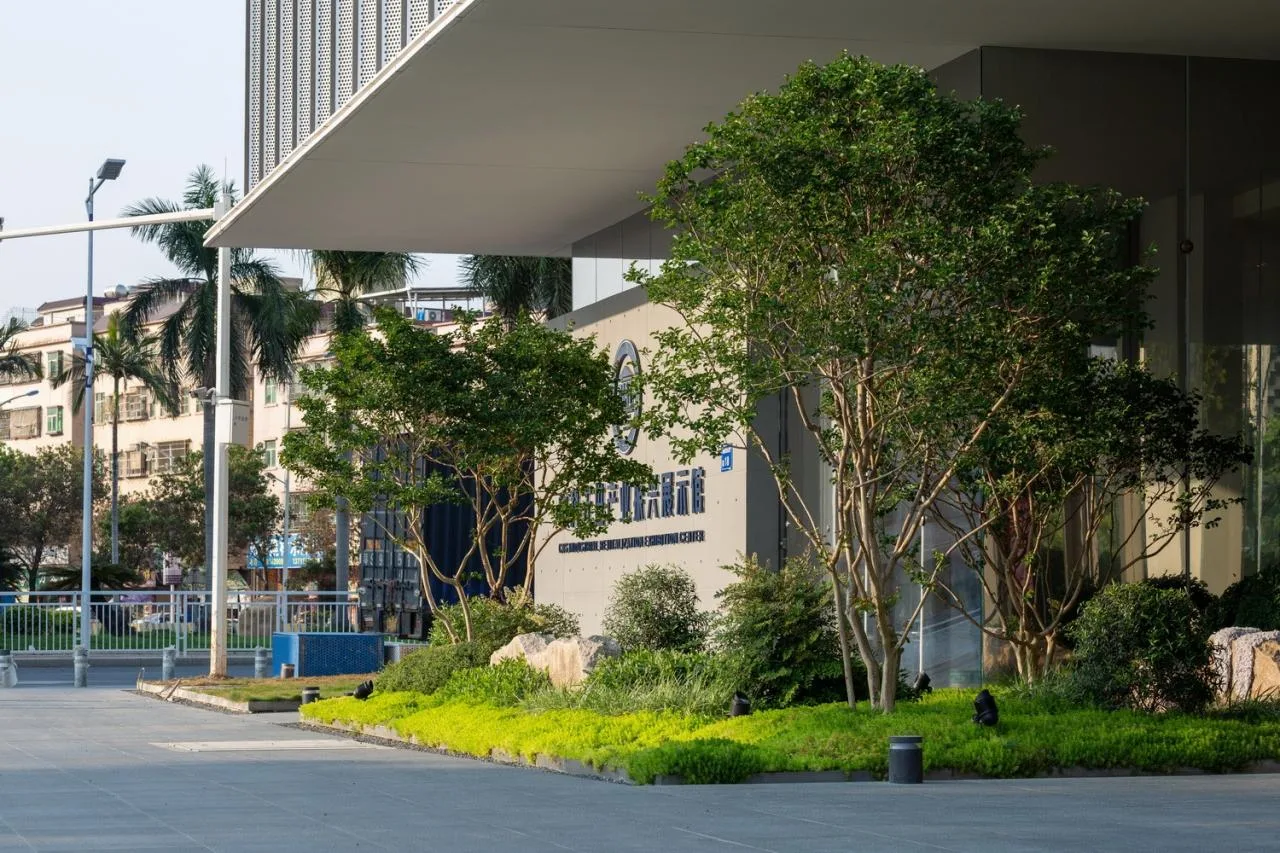
The landscape design harmonizes with the architecture, drawing on modern technological elements to create a cohesive style. Emphasizing modernity, simplicity, and ecology, it combines tranquil water surfaces with Zen and forest elements, crafting a water-light illusion within the urban environment.
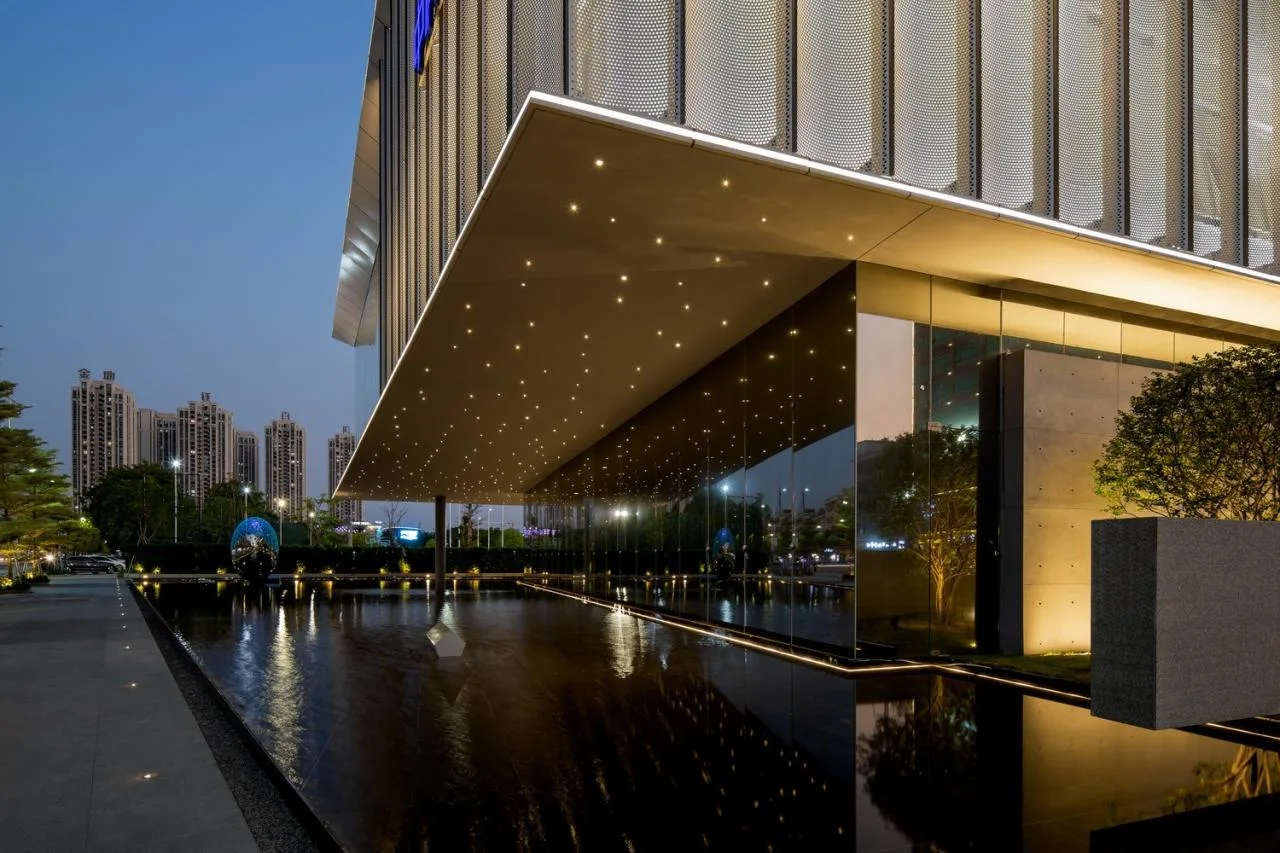
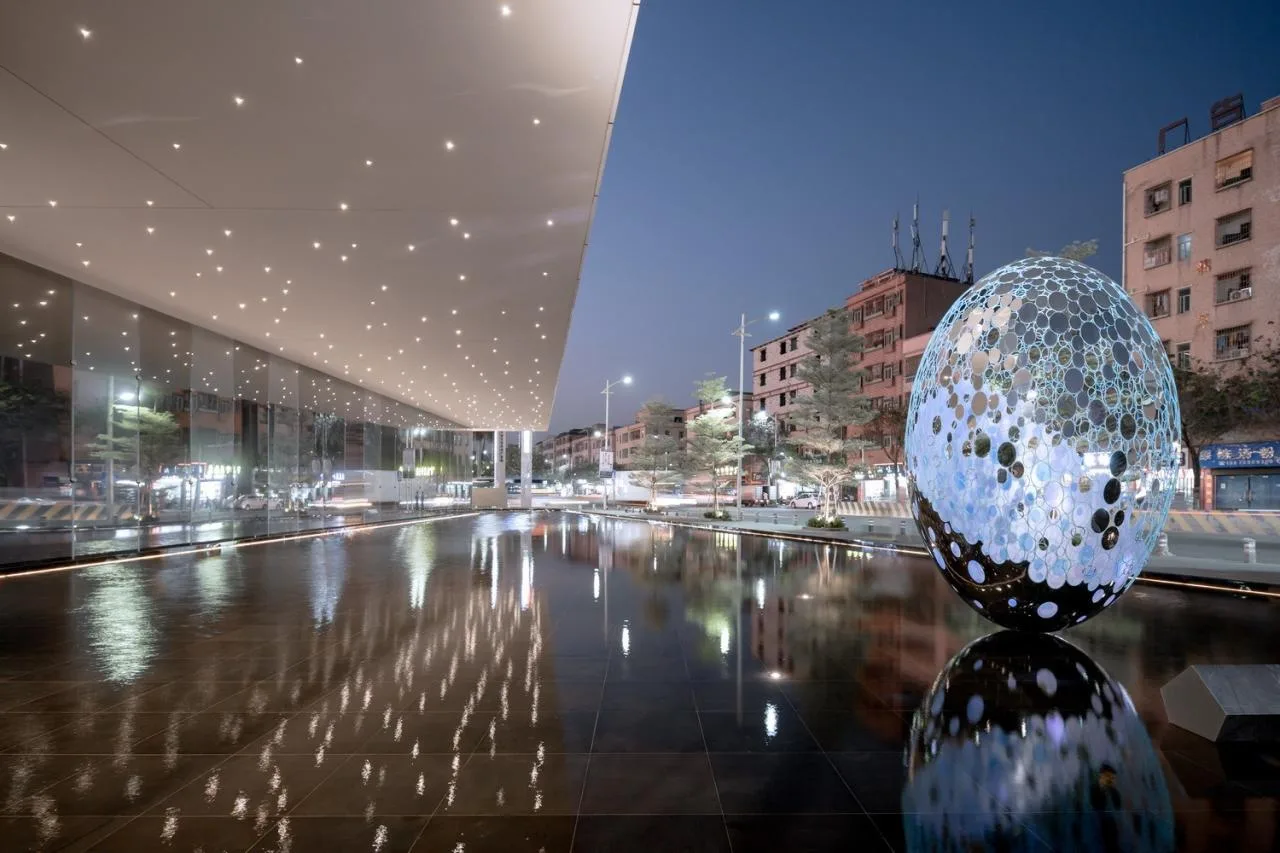
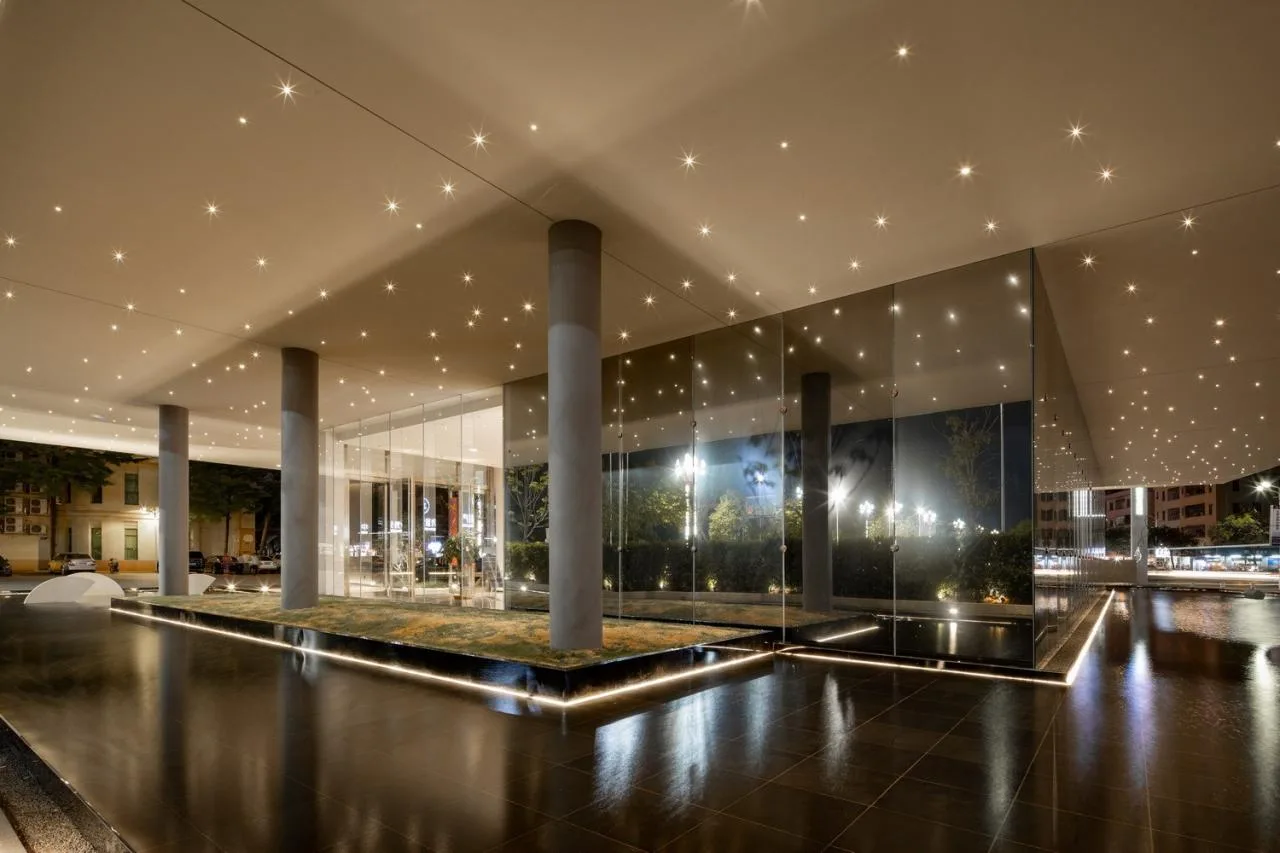
The interplay of water and mirrors reflects the surroundings, giving the building a lighter appearance and enhancing its sense of suspension and technological sophistication. Mirrored glass reflects the environment alongside the water surface, and with strategic lighting and decoration, the building seemingly “floats” in mid-air.
Flow
Constructing Detailed Spatial Echoes
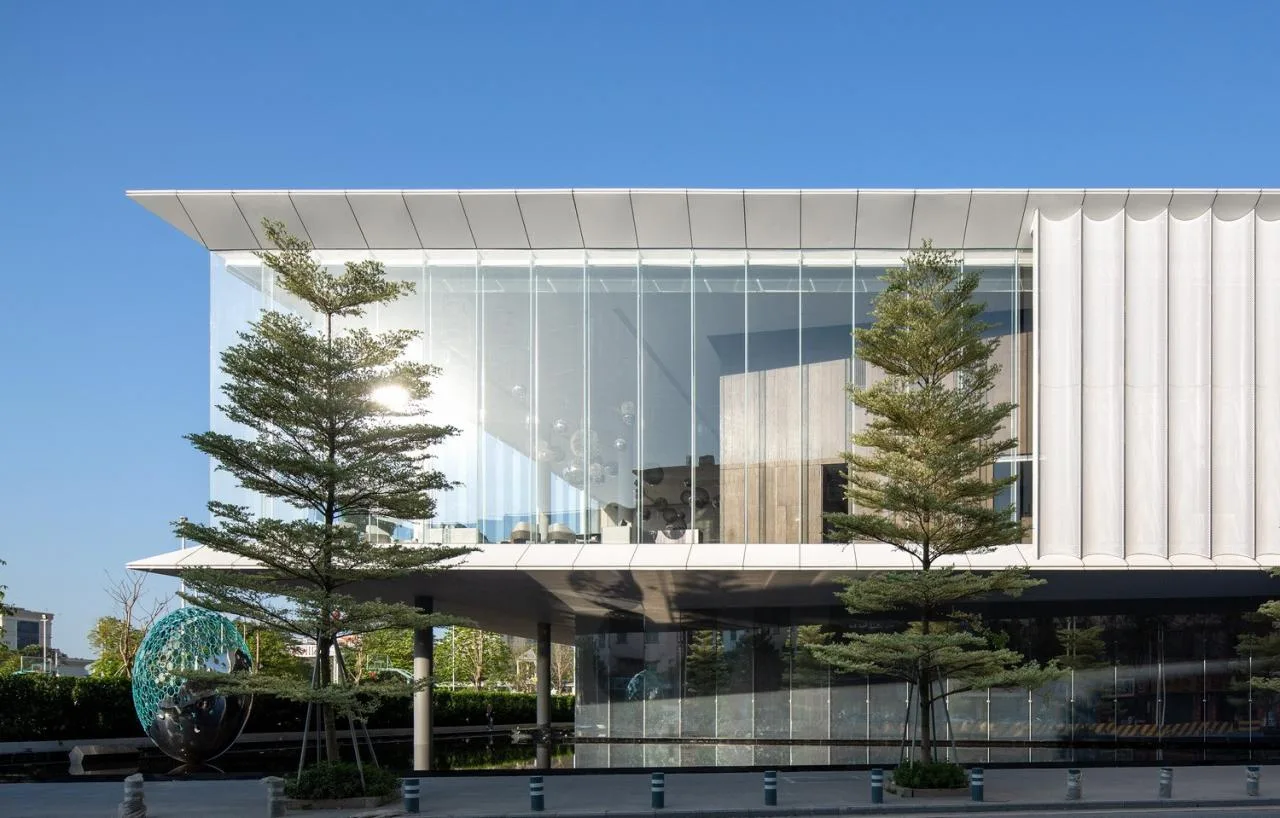
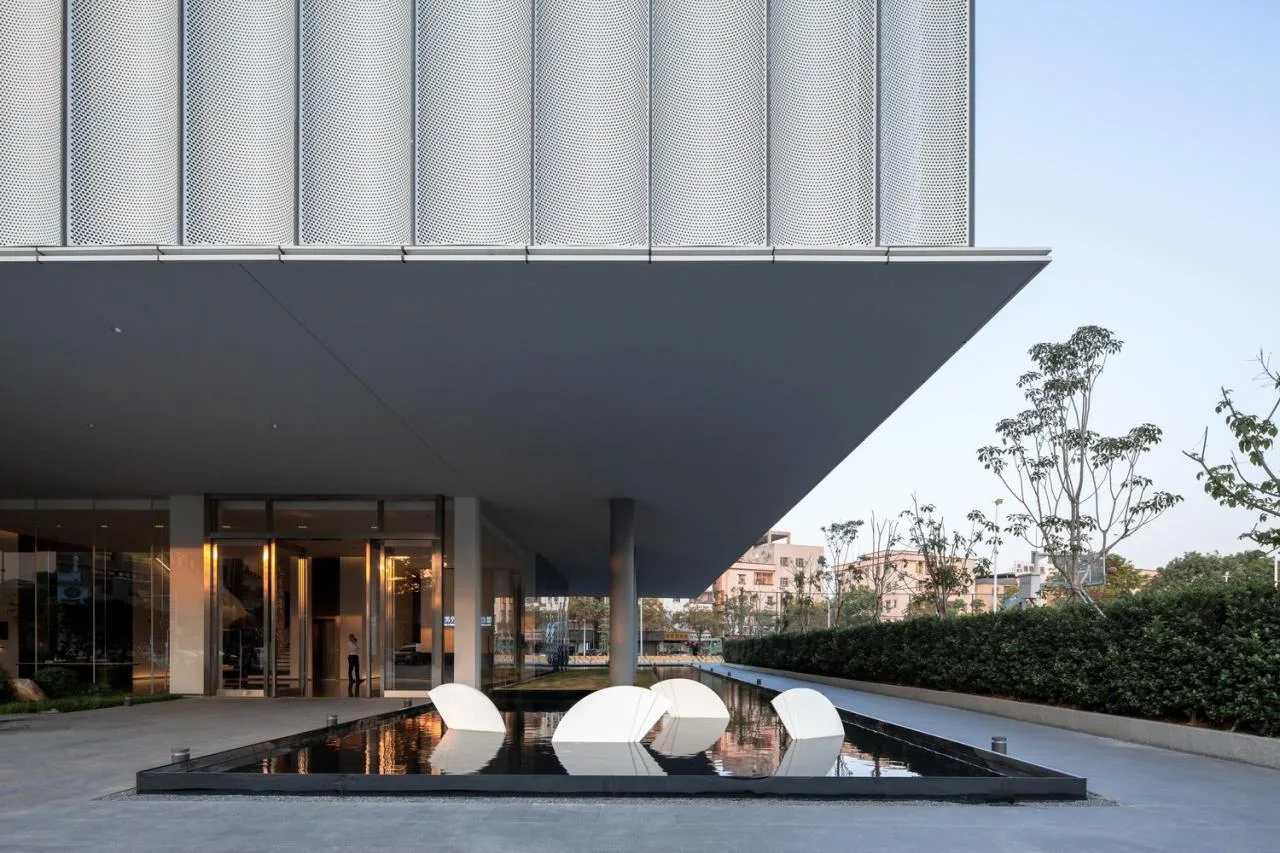
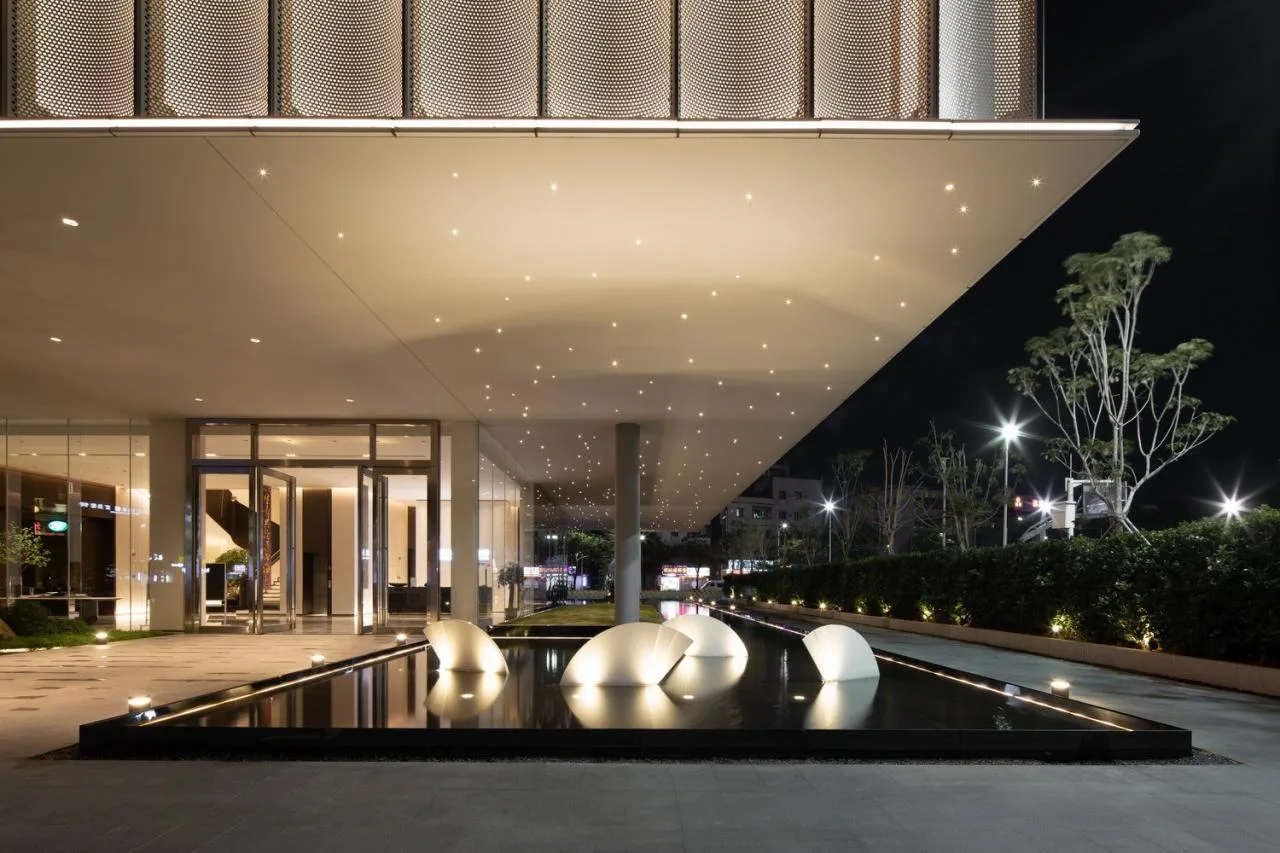
The entrance’s first layer features mirror glass and glass curtain walls, while the second layer forms a full cantilever that creates a distinctive entry atmosphere. The repeated arc-shaped perforated panels contrast with the materials below, emphasizing the “floating” sensation and lending the entrance a concise, rhythmic expression.
Materials such as white aluminum panels, glass curtain walls, and mirrored glass reinforce the architectural image of fluid science fiction and modernity throughout the curtain wall construction.
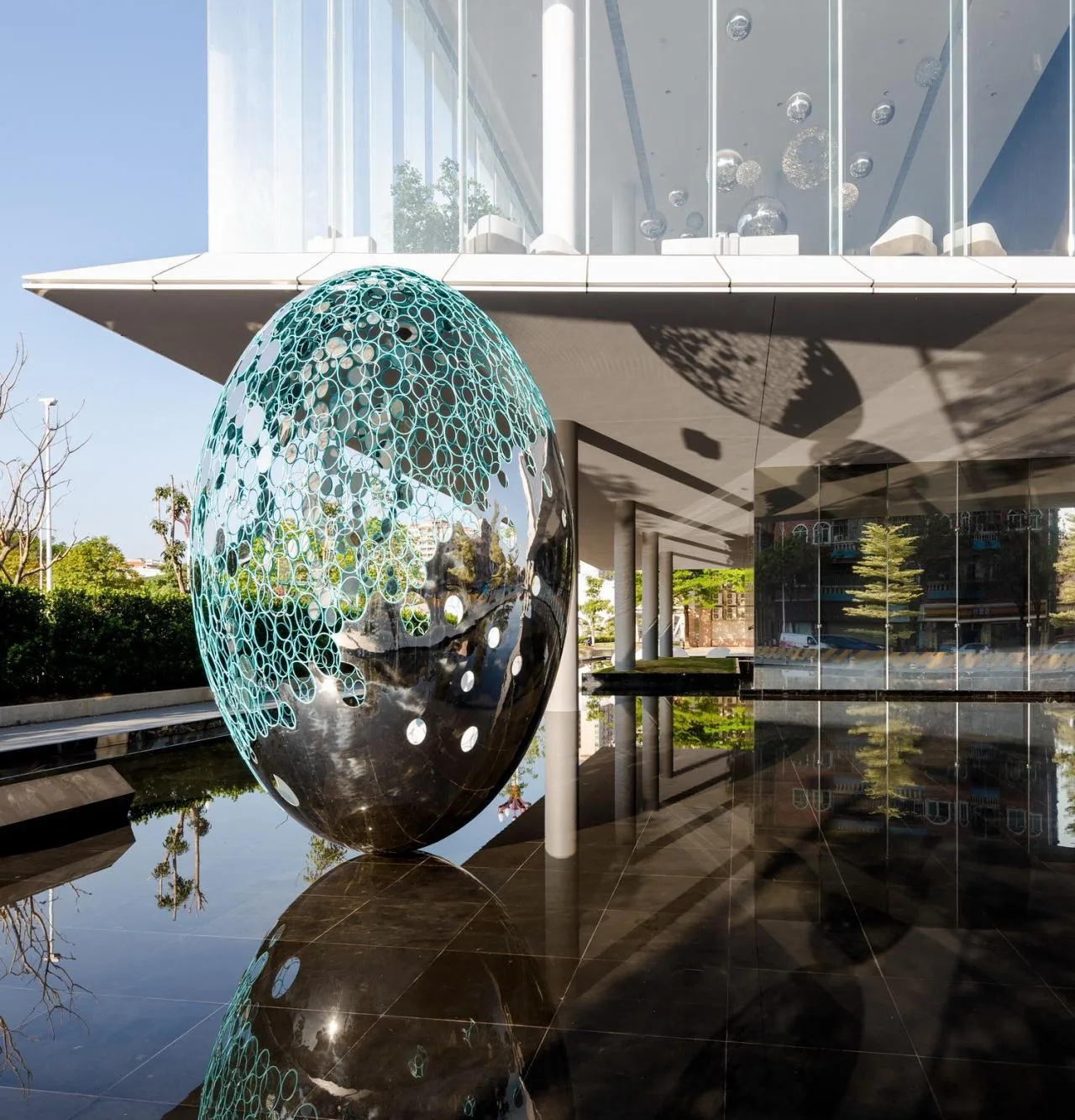
A dynamic curved sculpture at the building’s base breaks the monotony of straight lines, adding transparency and vibrancy. Its mirrored surface reflects the surrounding environment, enriching the visual relationship between the structure and its context.
Project Details
Project Name: Dongguan Zhongke Advanced Industry Revitalization Exhibition Hall
Location: Tangxia, Dongguan, Guangdong
Owner: Shenzhen New World Real Estate Development Co., Ltd
Architectural Design: Botao Architectural Design (Shenzhen) Co., Ltd
Design Team: Botao Design Second Division
Lead Designers: Wang Lifeng, Wei Jianguang
Team Members: Zhang Weifeng, Bai Yingwei, Zhang Peng, Zheng Jieqing, He Cheng, Hu Biaobao
Project Photography: Chen Guiming, Wang Yang
Landscape Design: Shenzhen Botao Environmental Art Design Co., Ltd
Construction Drawing Design: Shenzhen Zhongzi Architectural Design Co., Ltd
Interior Design: CCD Hong Kong Zheng Zhong Design Firm
Lighting Design: HDA Handu Lighting Design Consultant Co., Ltd
Project Type: Exhibition Area Architecture
Land Area: 1,835.15 square meters
Total Construction Area: 2,956.13 square meters















Must log in before commenting!
Sign Up