
BIM has become a popular term that has drawn significant attention across the industry. Various entities, including software vendors, research institutions, and consulting firms, have offered their own interpretations of BIM. Among these, the National BIM Standards Board (NBIMS) in the United States provides one of the most widely recognized industry definitions. According to NBIMS, BIM is “a standardized machine-readable information model designed to enhance the planning, design, construction, and maintenance processes. This model includes information generated or collected for both new and existing facilities, formatted to be usable throughout the entire project lifecycle.”
This definition highlights two key aspects: first, BIM serves as a database integrating both geometric and non-geometric data throughout the building’s lifecycle, digitally representing the building’s physical and functional characteristics. Second, BIM represents a collaborative process in which all project stakeholders dynamically store, exchange, update, and manage information through a shared platform.
BIM technology emphasizes construction management by capturing the dynamic progress of each project phase.
Unlike traditional CAD technology, which only depicts static geometric dimensions, BIM’s dynamic simulation capabilities transform static line models into dynamic component models. These models are broken down according to each project stage’s timeline and integrated with scheduling data to simulate the entire construction progress, as illustrated in Figures 1 and 2.

Figure 1: Construction Process Simulation
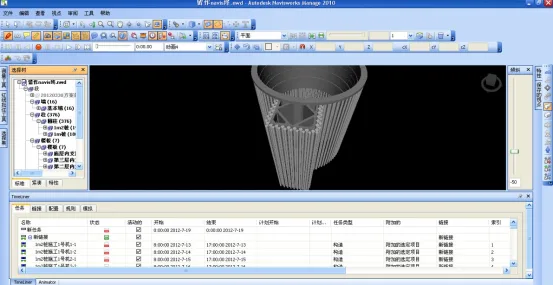
Figure 2: Simulation of Construction Schedule versus Actual Progress
BIM software also offers animation, walkthrough, and other interactive features that bring traditional flat drawings and 3D models to life. By setting observation points, directions, and paths, the software can simulate first-person perspectives under various conditions, enhanced by realistic lighting and shadow effects. This immersive experience helps stakeholders better understand the project’s future appearance during the planning stage, assisting investors in evaluating the project’s value and investment viability.
During design, BIM supports designers in optimizing human factors such as spatial comfort and viewpoint selection. For pre-sales, it allows potential buyers to gain a clearer understanding of the completed project, helping them make informed investment decisions and avoid blind financial commitments. Therefore, the dynamic simulation capabilities of BIM provide valuable, intuitive insights for developers, designers, and consumers alike.
















Must log in before commenting!
Sign Up