
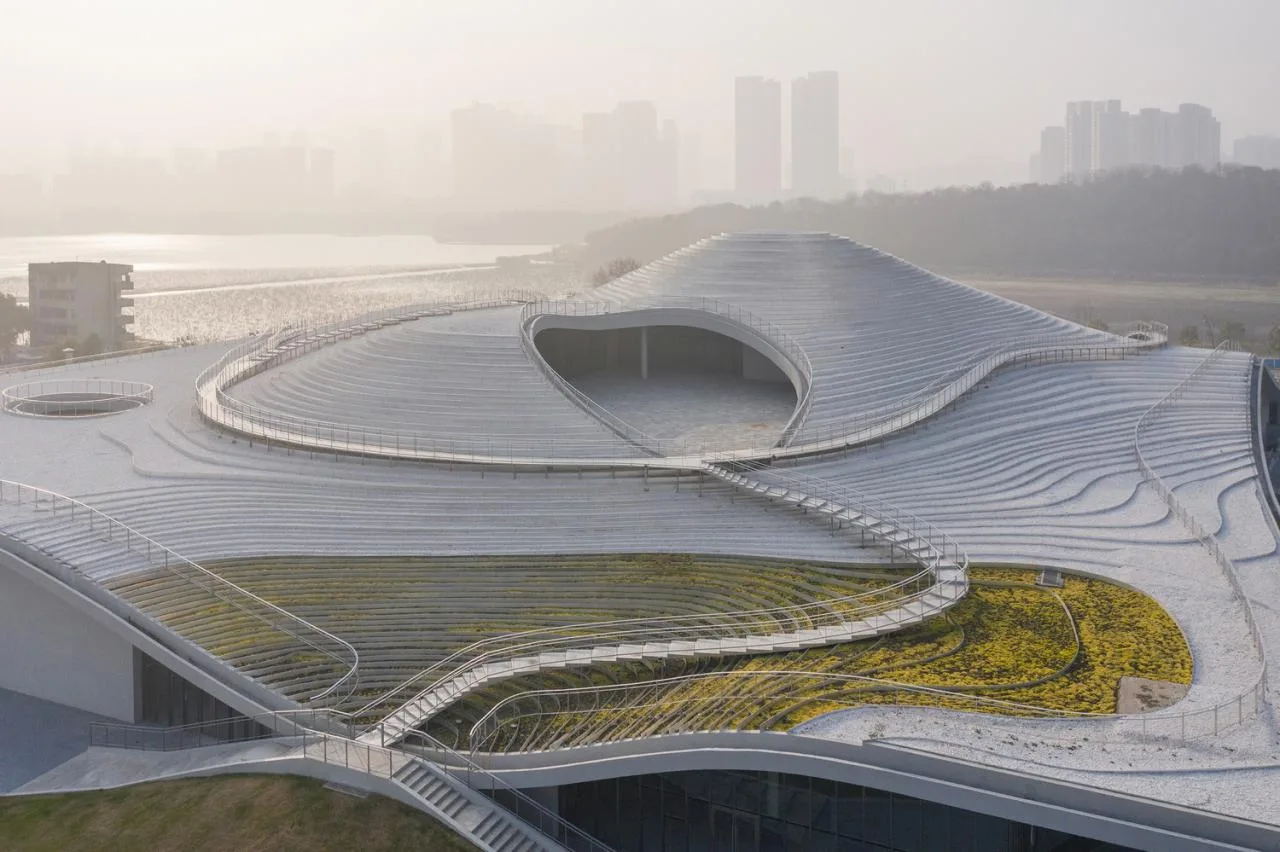
Situated on the banks of Yuehu Lake in Wuhan’s Hanyang District, the Qintai Art Museum faces Meizi Mountain across the water to the south. To minimize the building’s impact on the natural lake surface, the design incorporates an undulating terrain that slopes toward the lake. Some exhibition spaces are partially buried underground, maximizing the use of subterranean space and reducing the above-ground volume. On the urban side, the building maintains a vertical façade to assert its city presence.
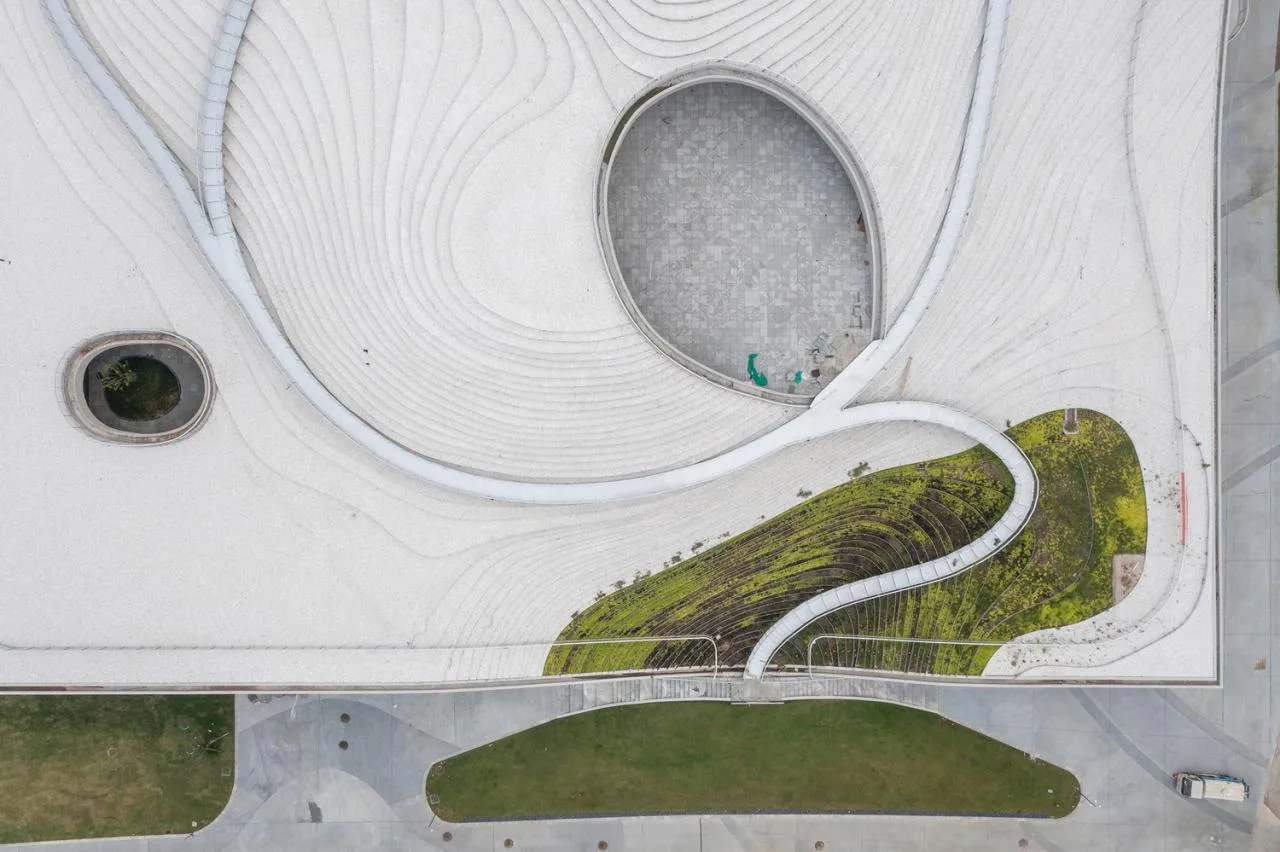
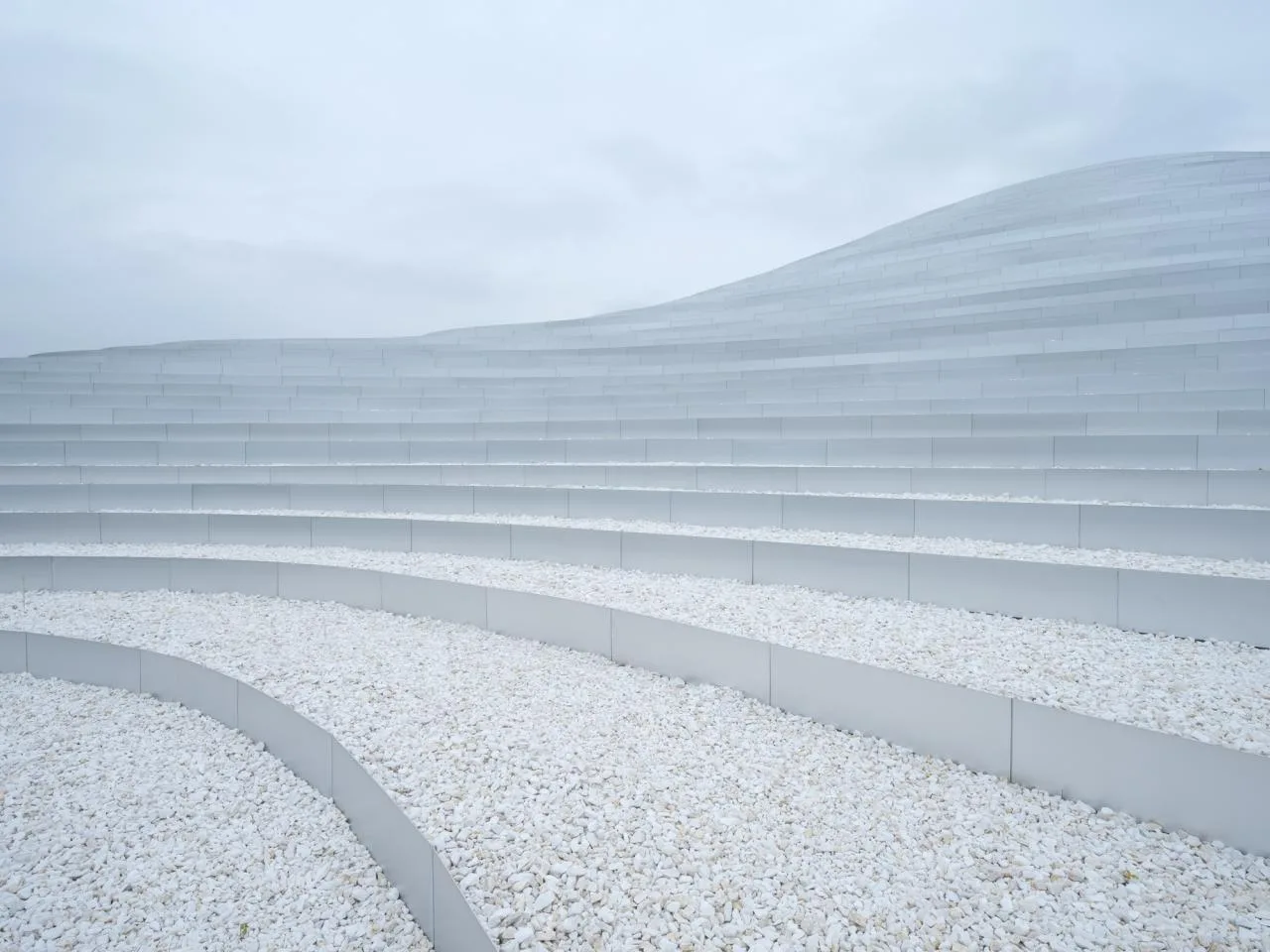
The roof features a gently abstract, stair-step contour with silver metal cladding on the risers and white stone alongside low-growing greenery on the treads. Winding walkways traverse the rooftop, inviting visitors to explore the undulating landscape.
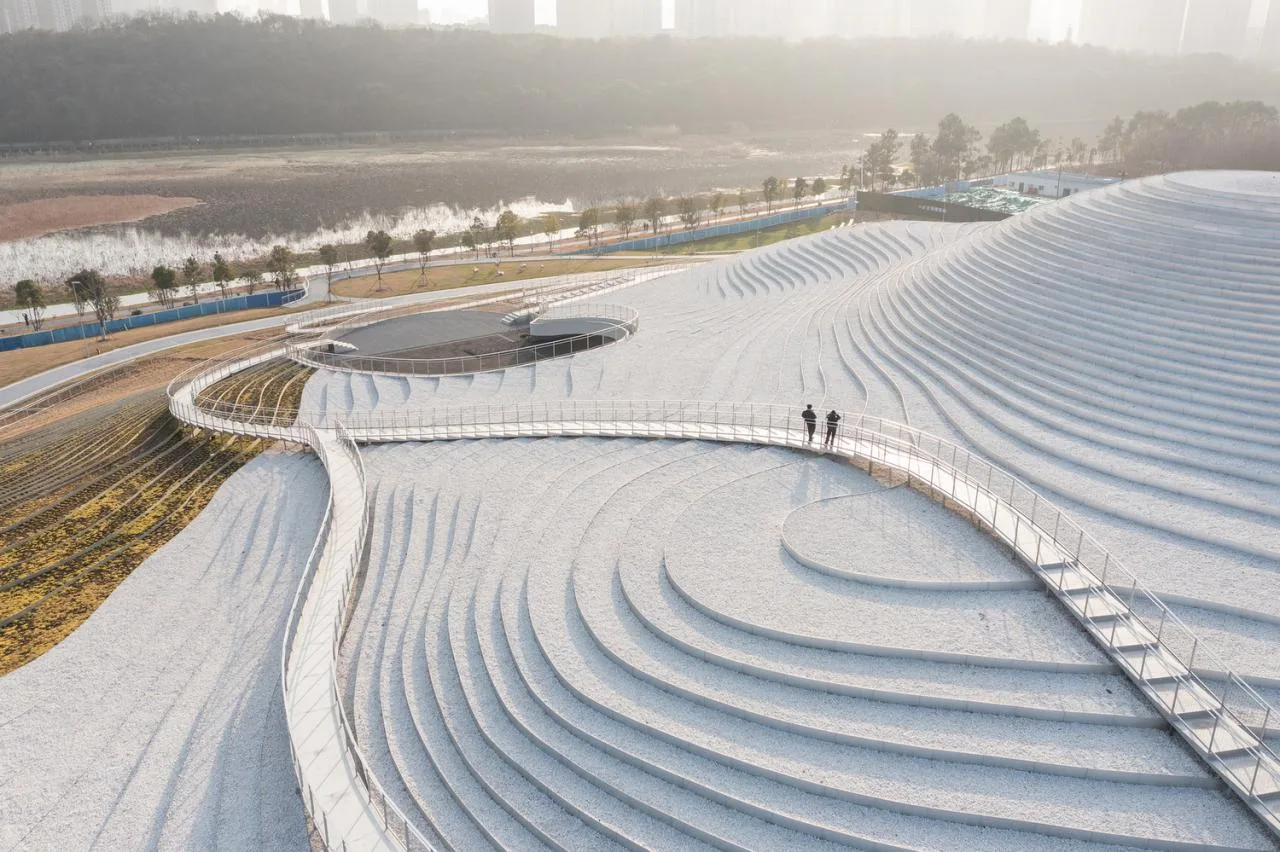
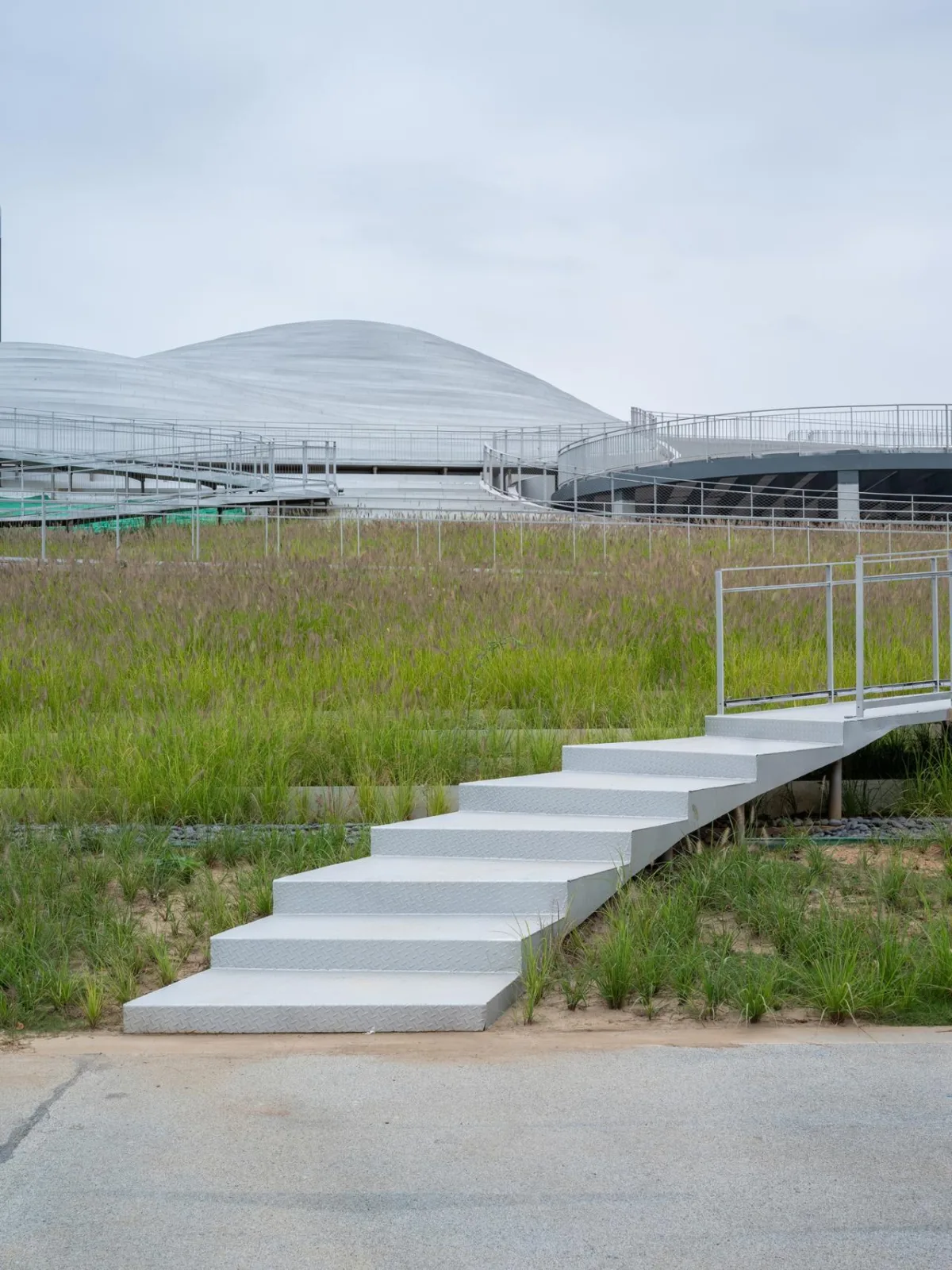
The rooftop boardwalk is fully accessible to the public, linking Moon Lake Park with various art museum facilities such as the exhibition hall exit, public education spaces, art store, and café. This creates an independent public realm beyond the exhibition areas, integrating visitors’ activities into the building’s exterior experience.
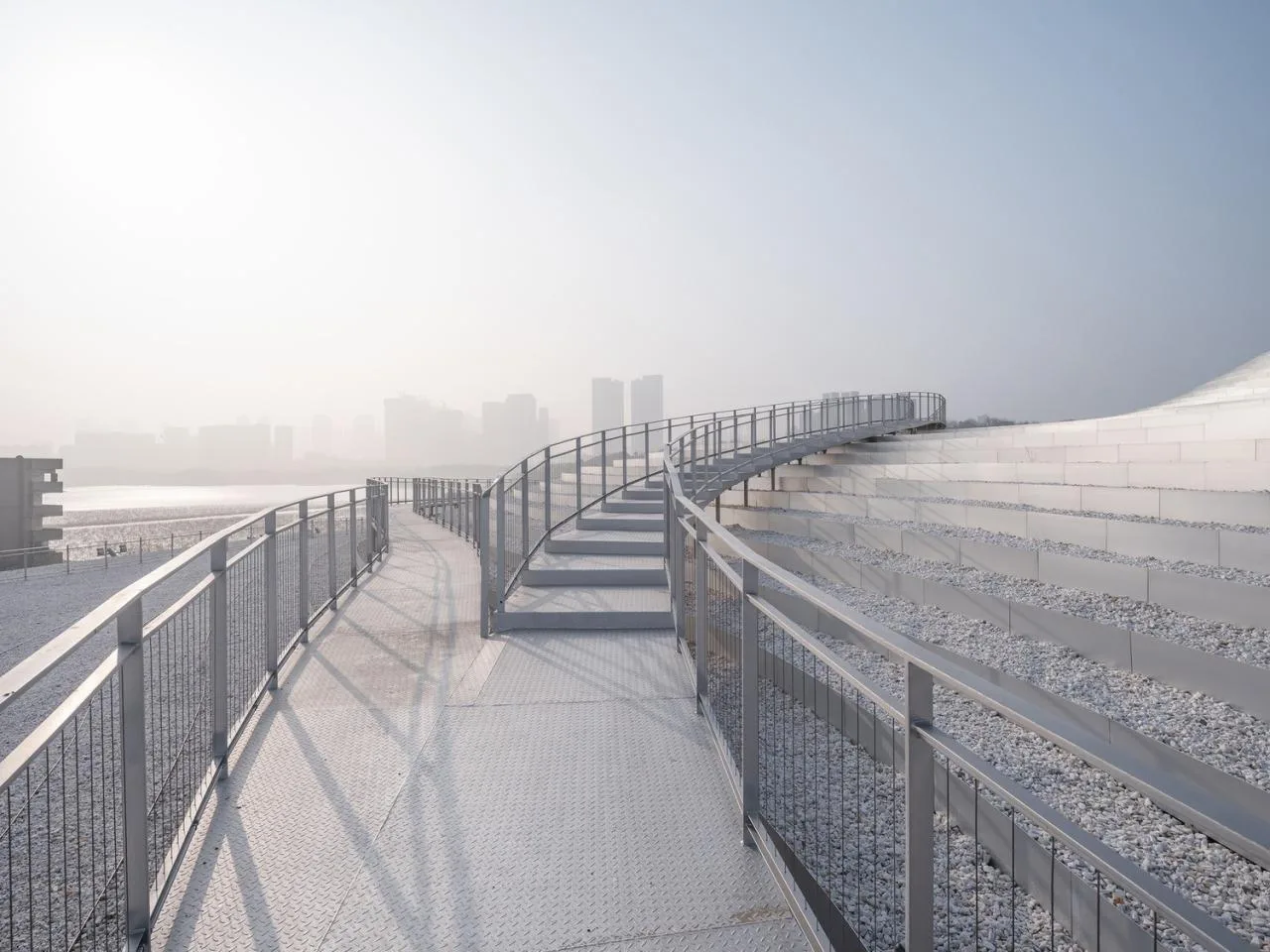
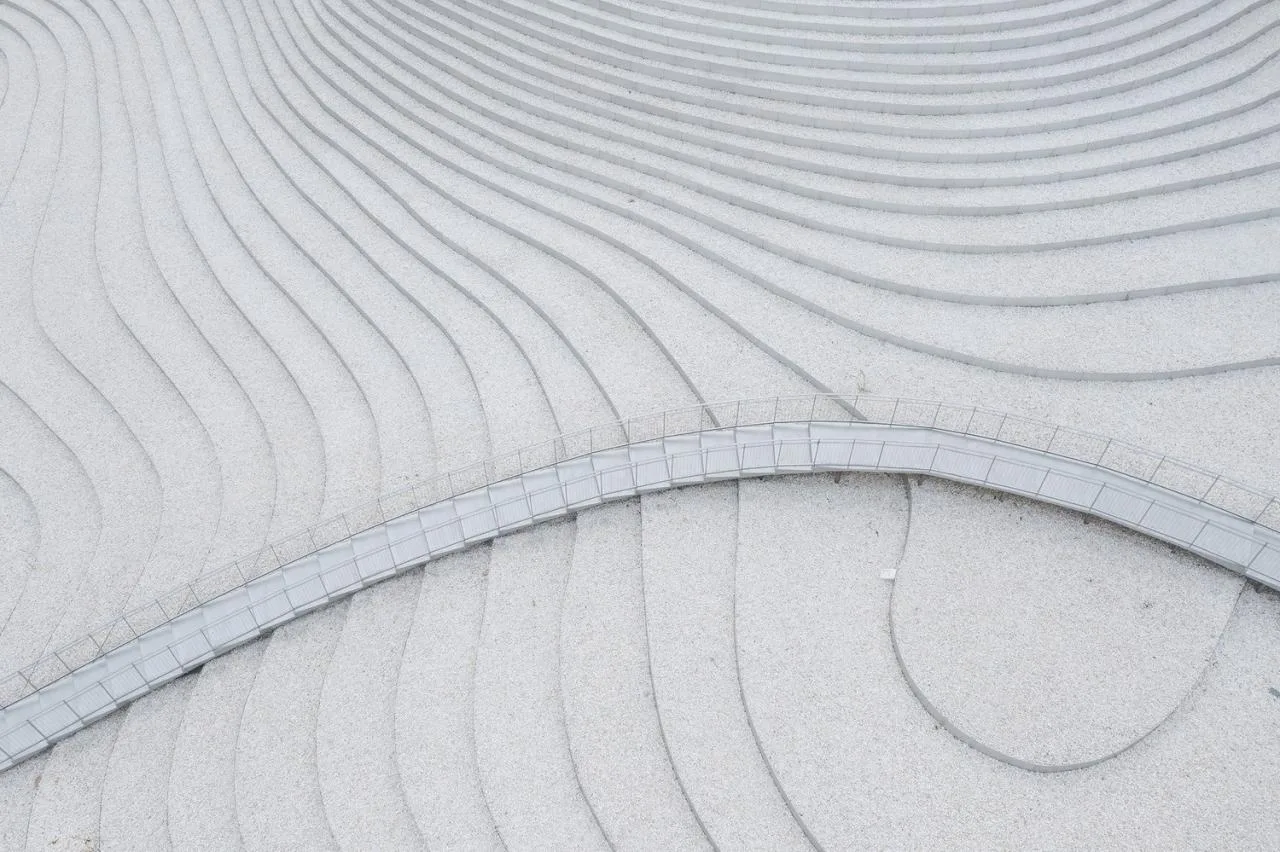
The museum’s architectural intervention has redefined the urban space along Moon Lake’s southern shore. A reserved city square sits to the west of the building, planned to complement the future Wuhan Library and Drama Center.
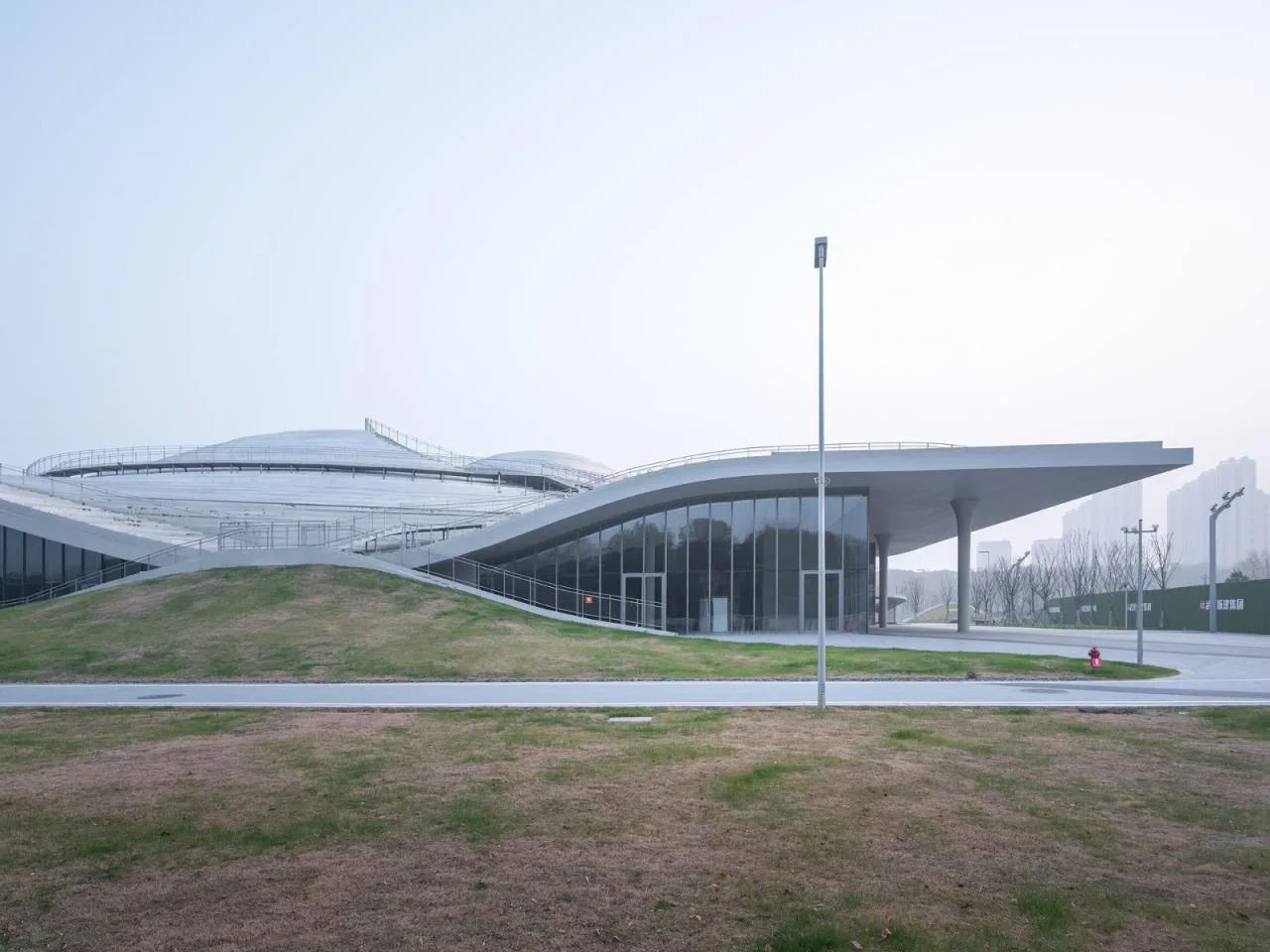
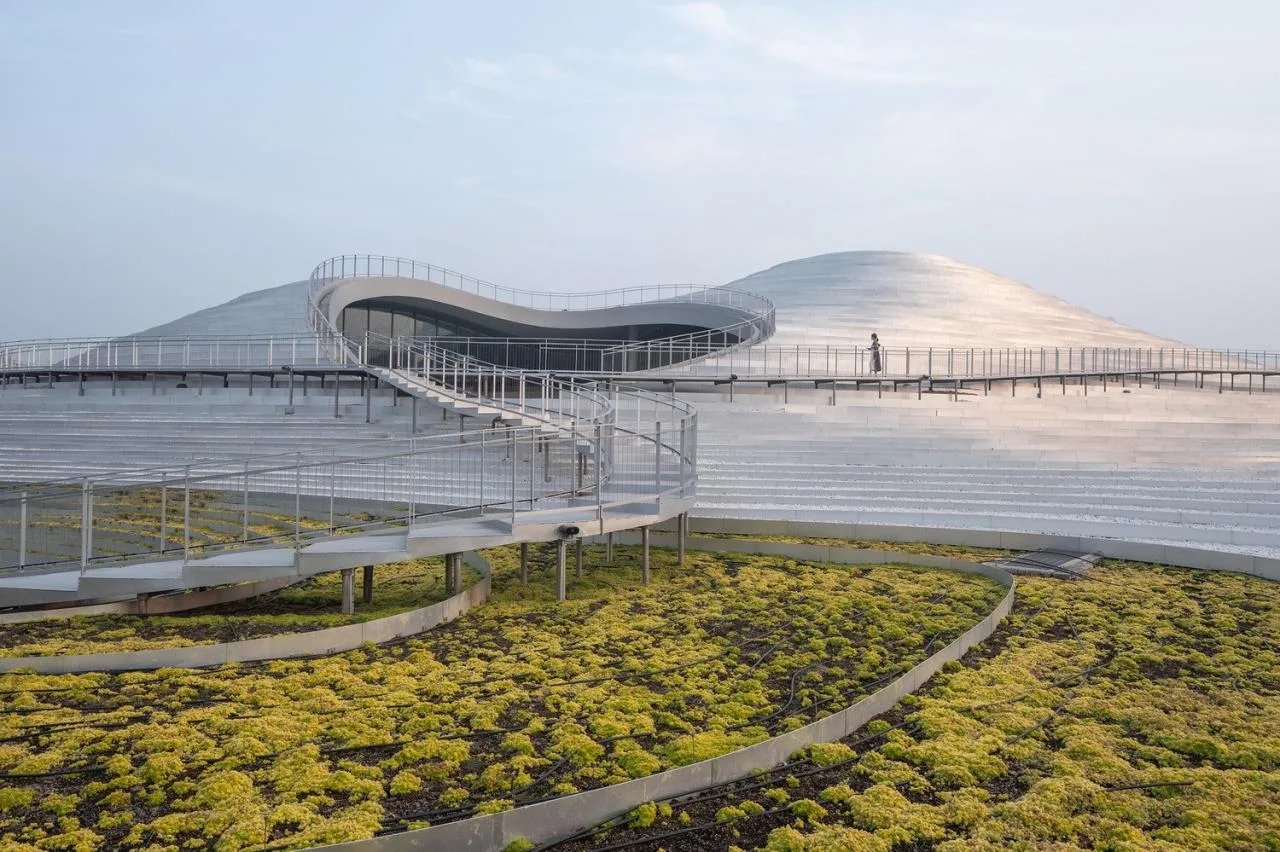
The main entrance and cultural-creative spaces, which serve strong public functions, are located on this urban-facing side. The façade here features a subtle concave curve that embraces the square. A ramp connects the square directly to the café and rooftop courtyard on the second floor, creating a public circulation path that remains active even after museum hours. This design enhances both the openness of the museum and its integration into the urban fabric.
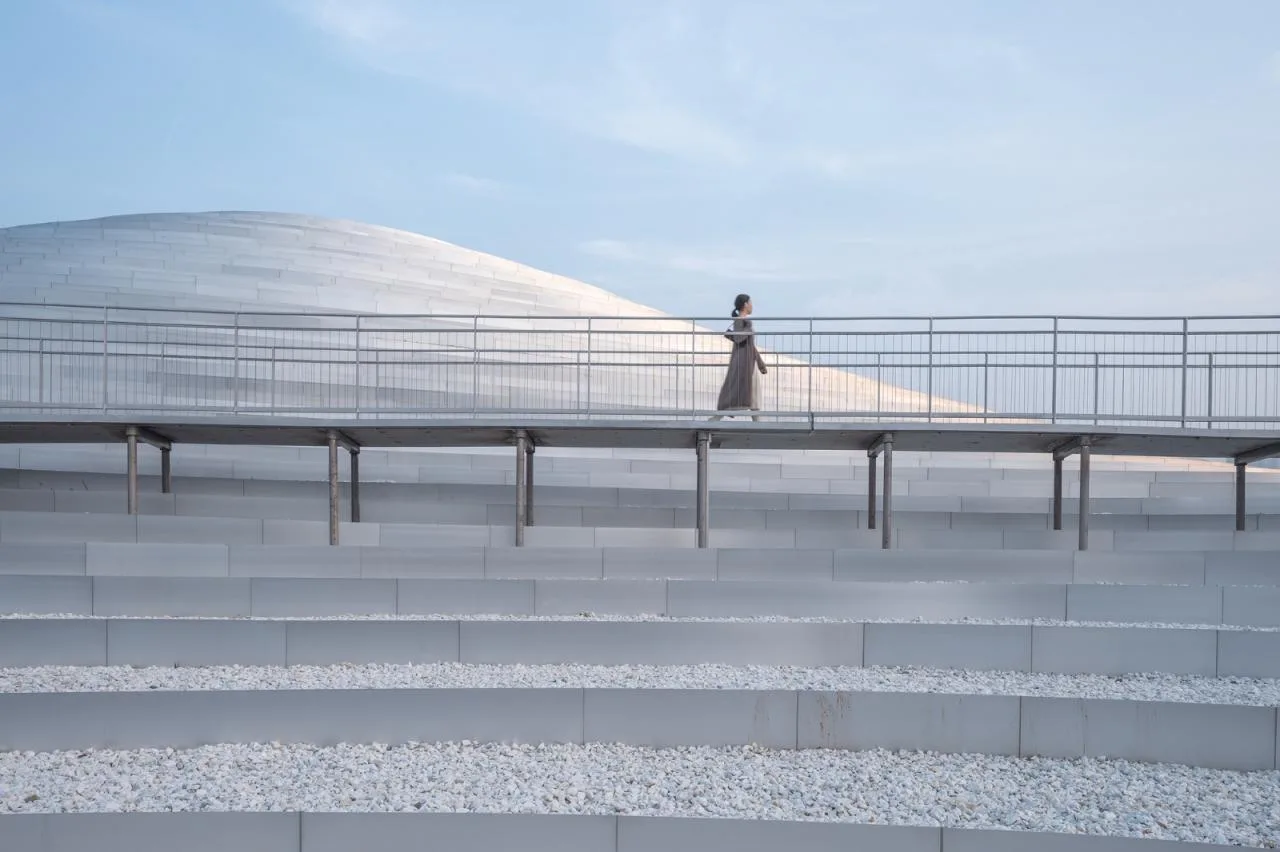
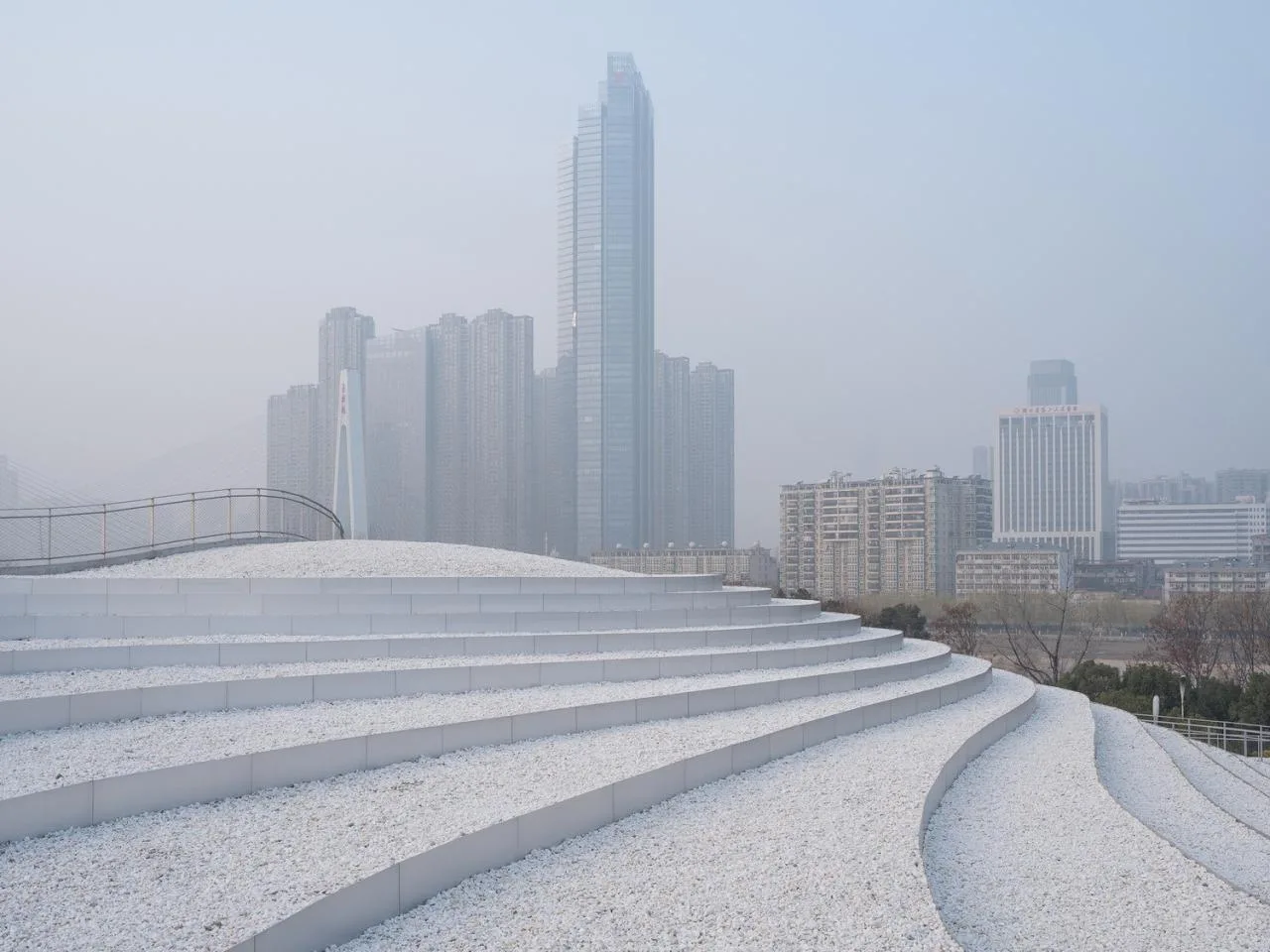
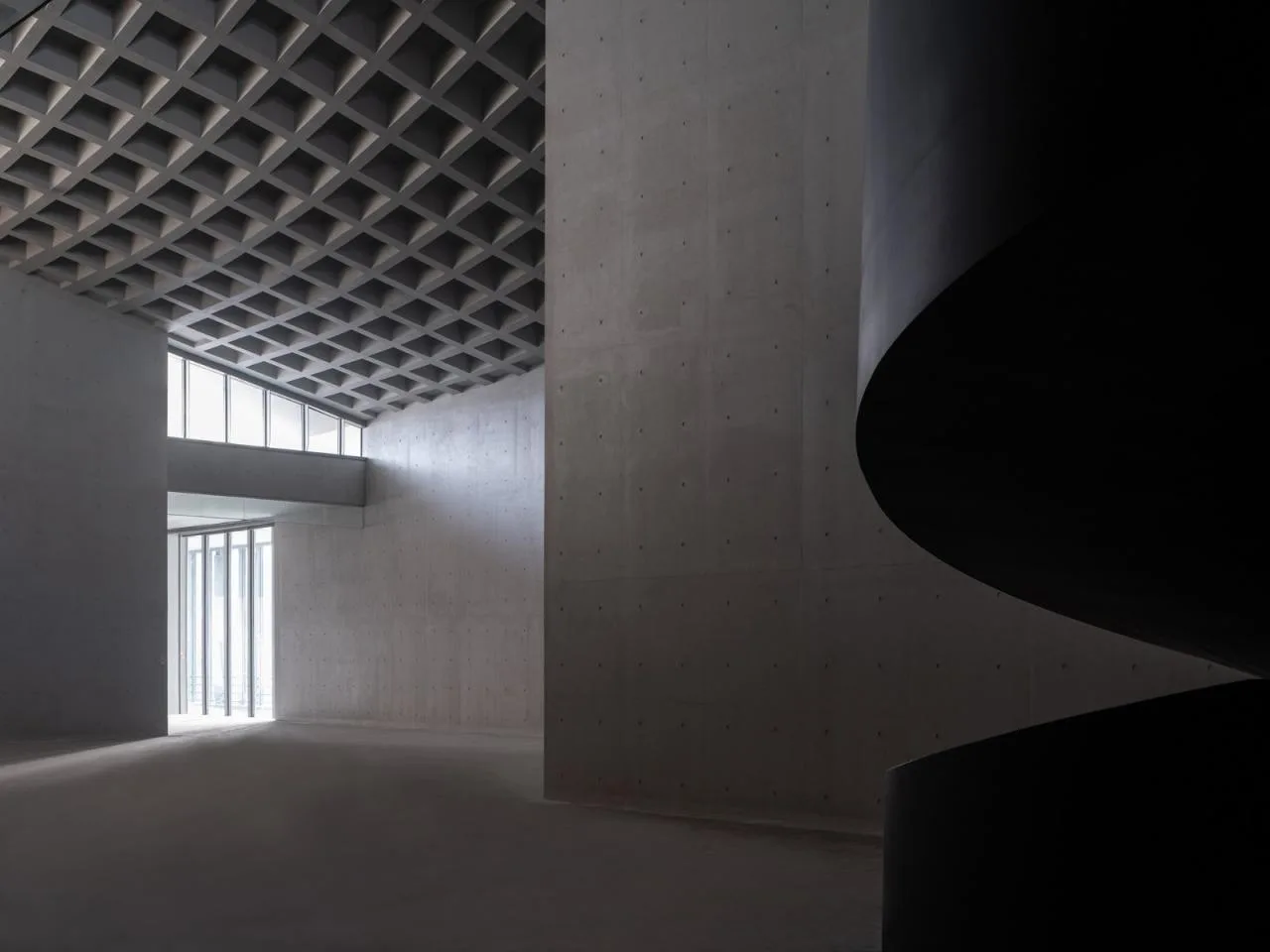
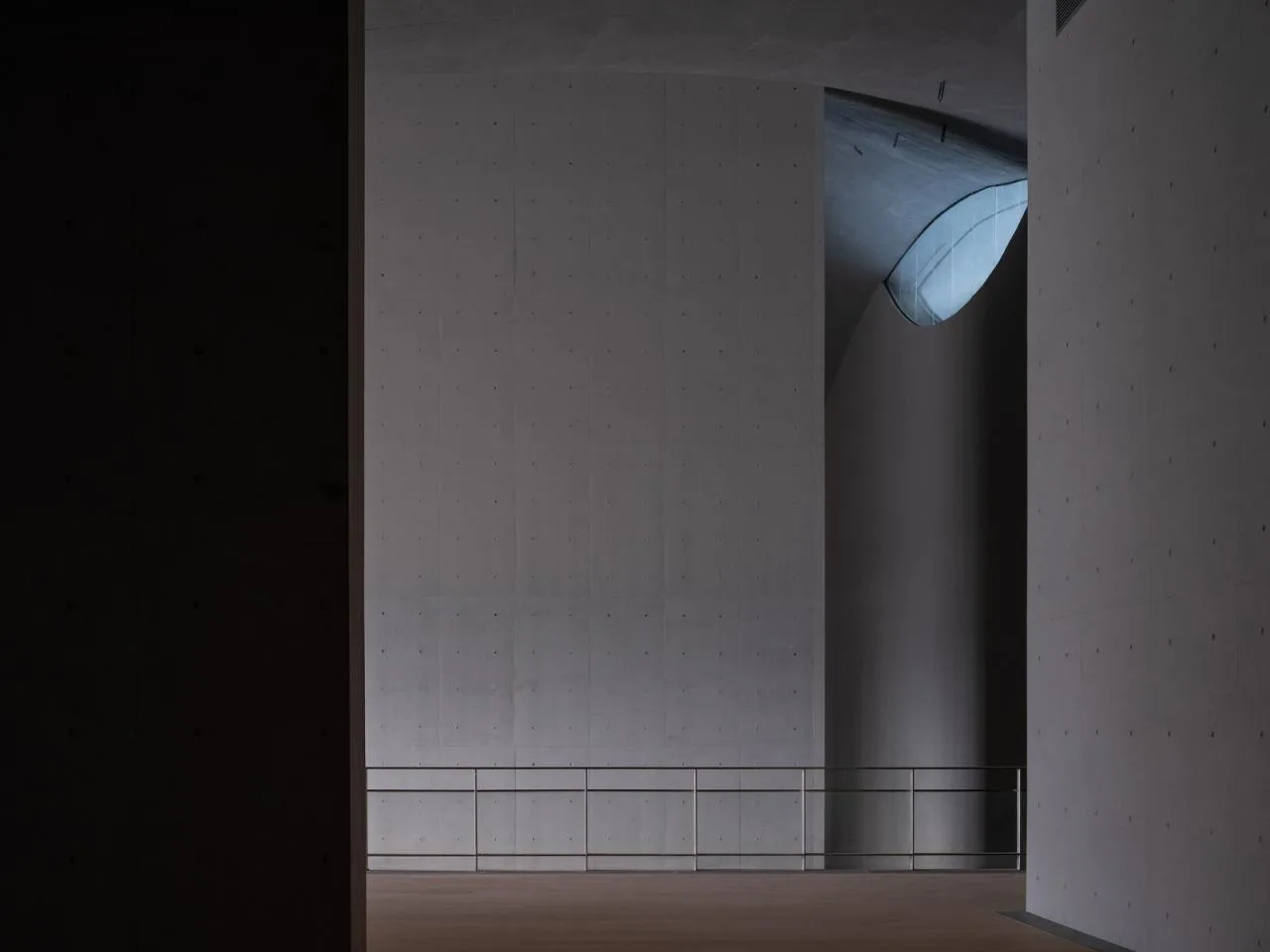
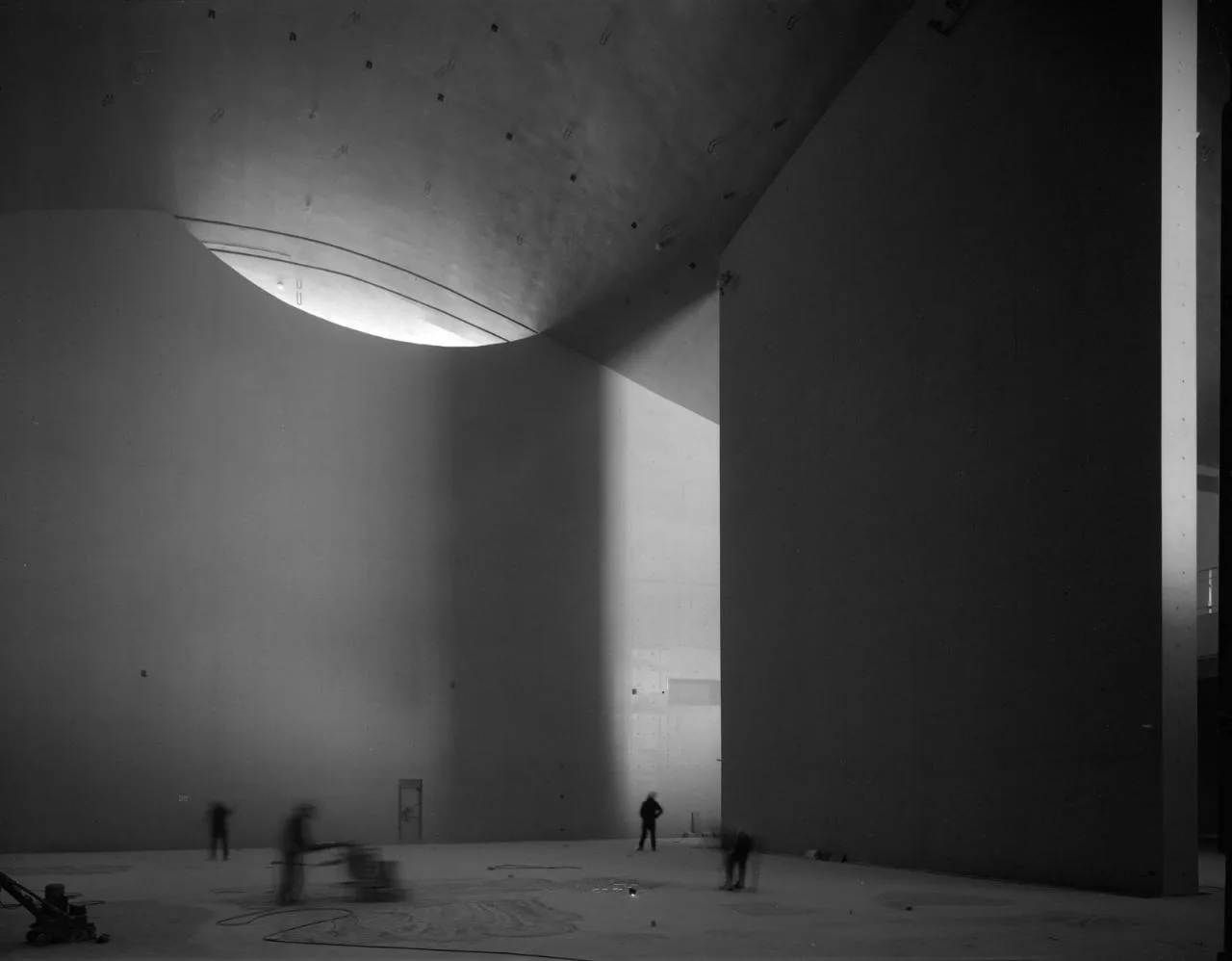
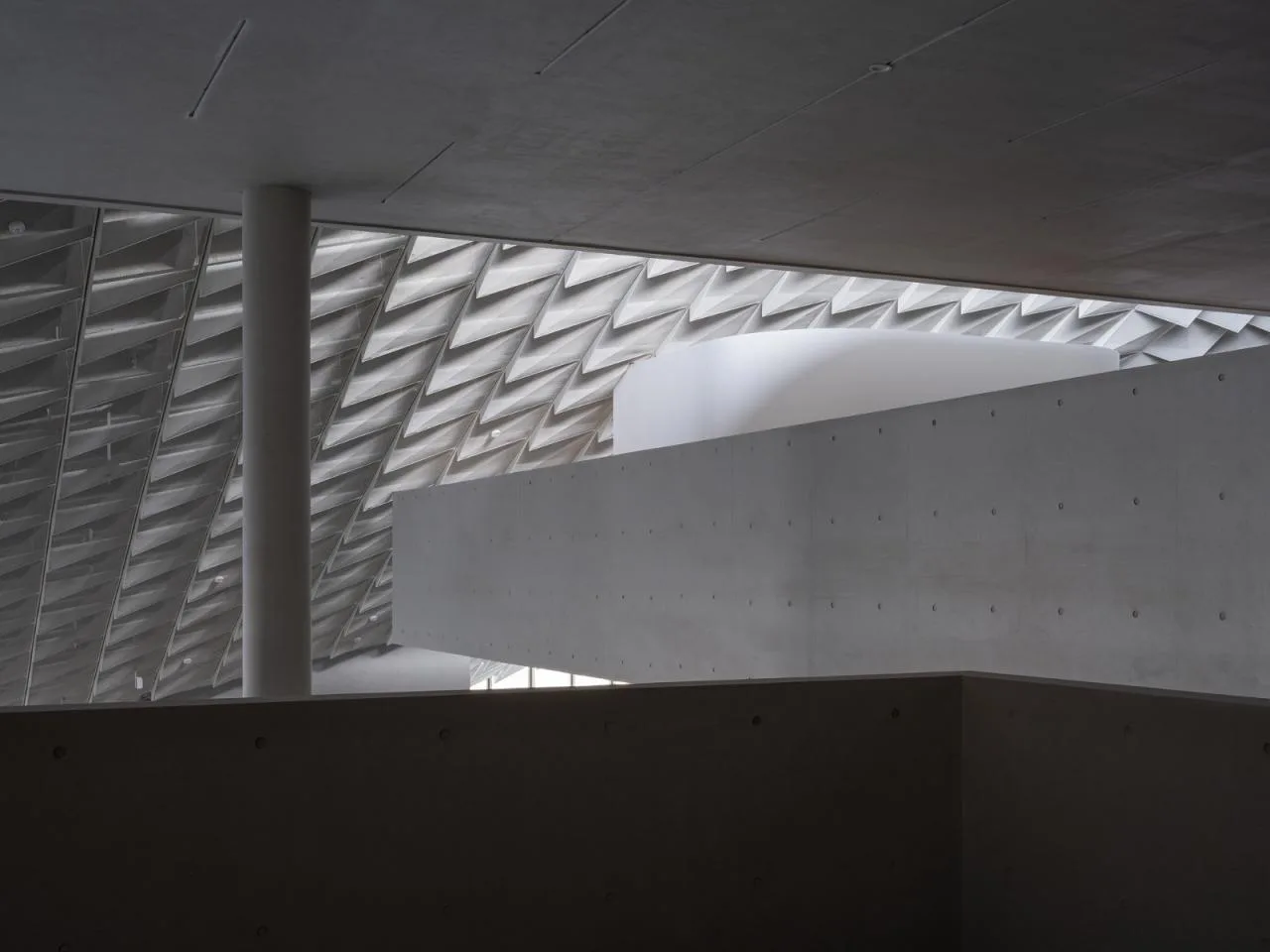
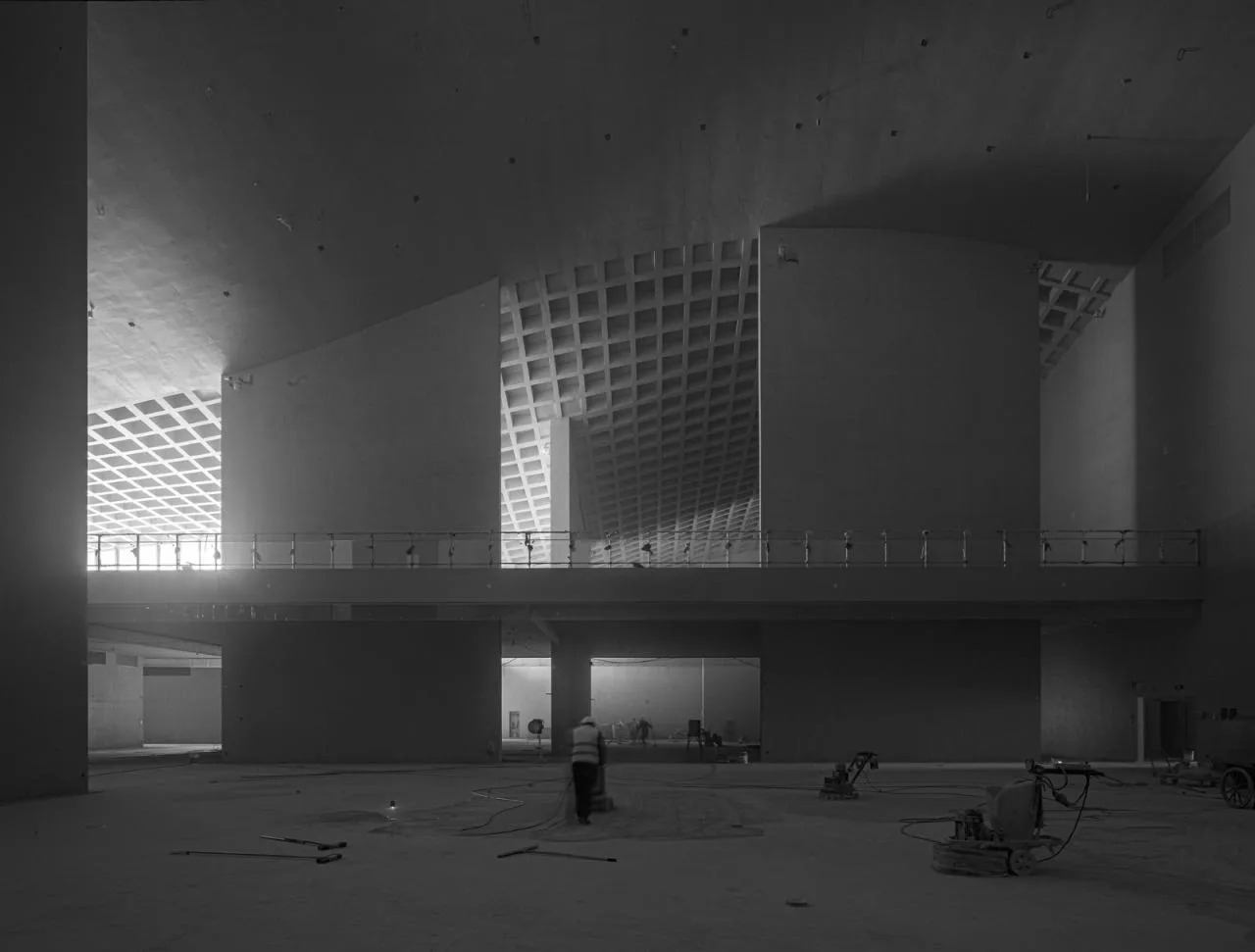
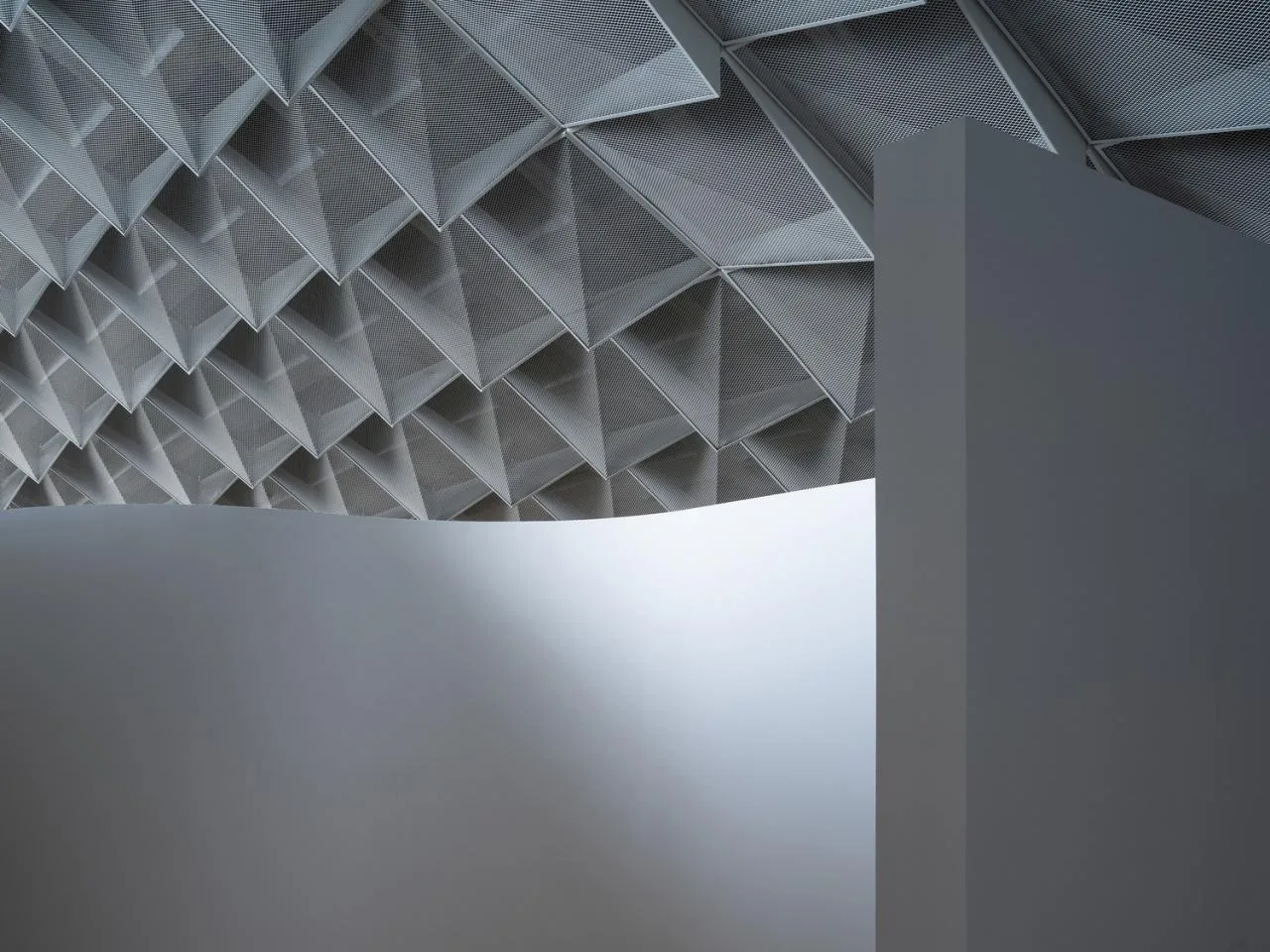
The combination of the gallery spaces with the undulating roof creates a distinctive exhibition environment. The contemporary exhibition hall employs a roaming layout rather than a fixed route, where exhibition walls serve both as display surfaces and as structural supports for the undulating roof.
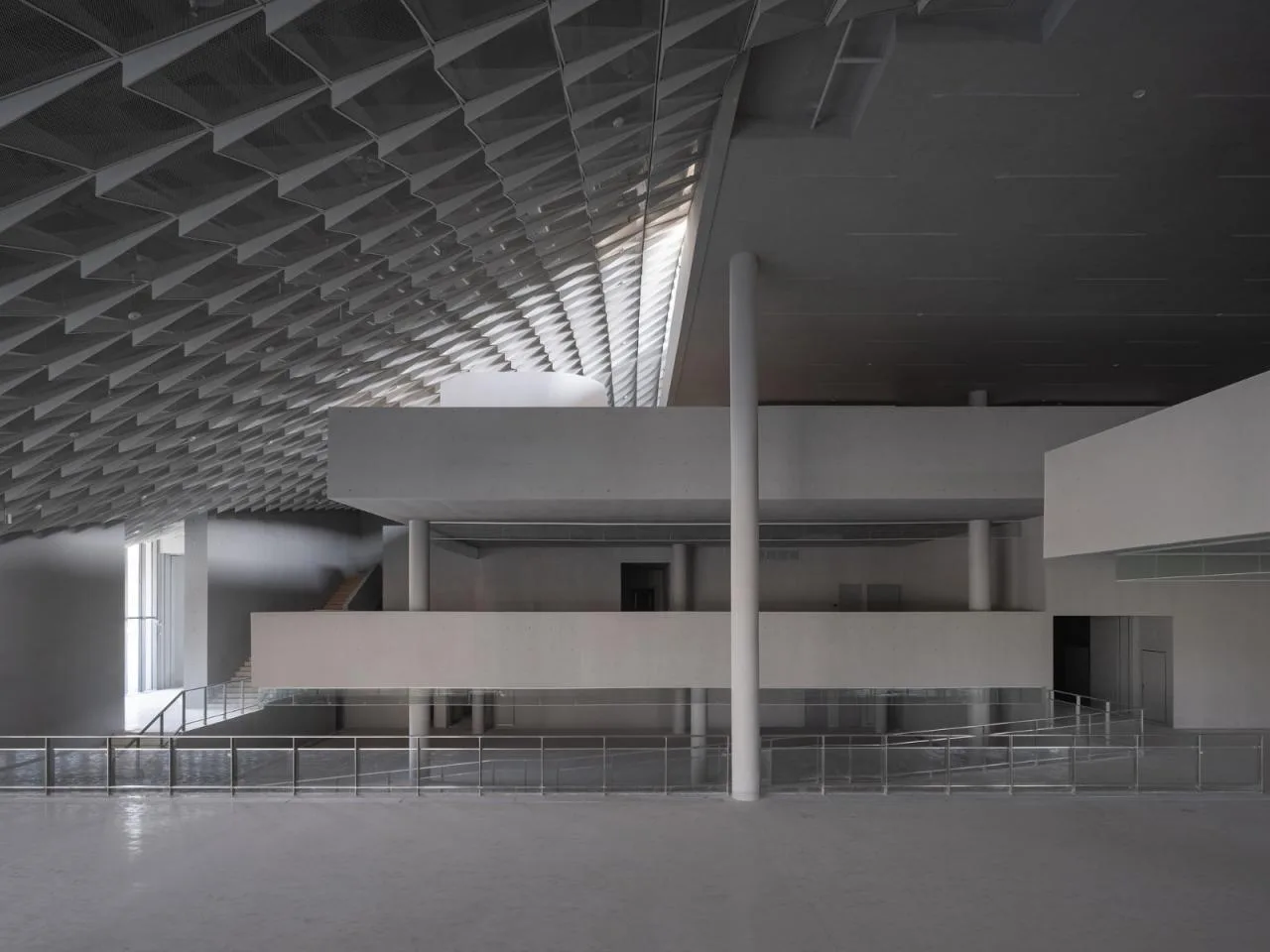
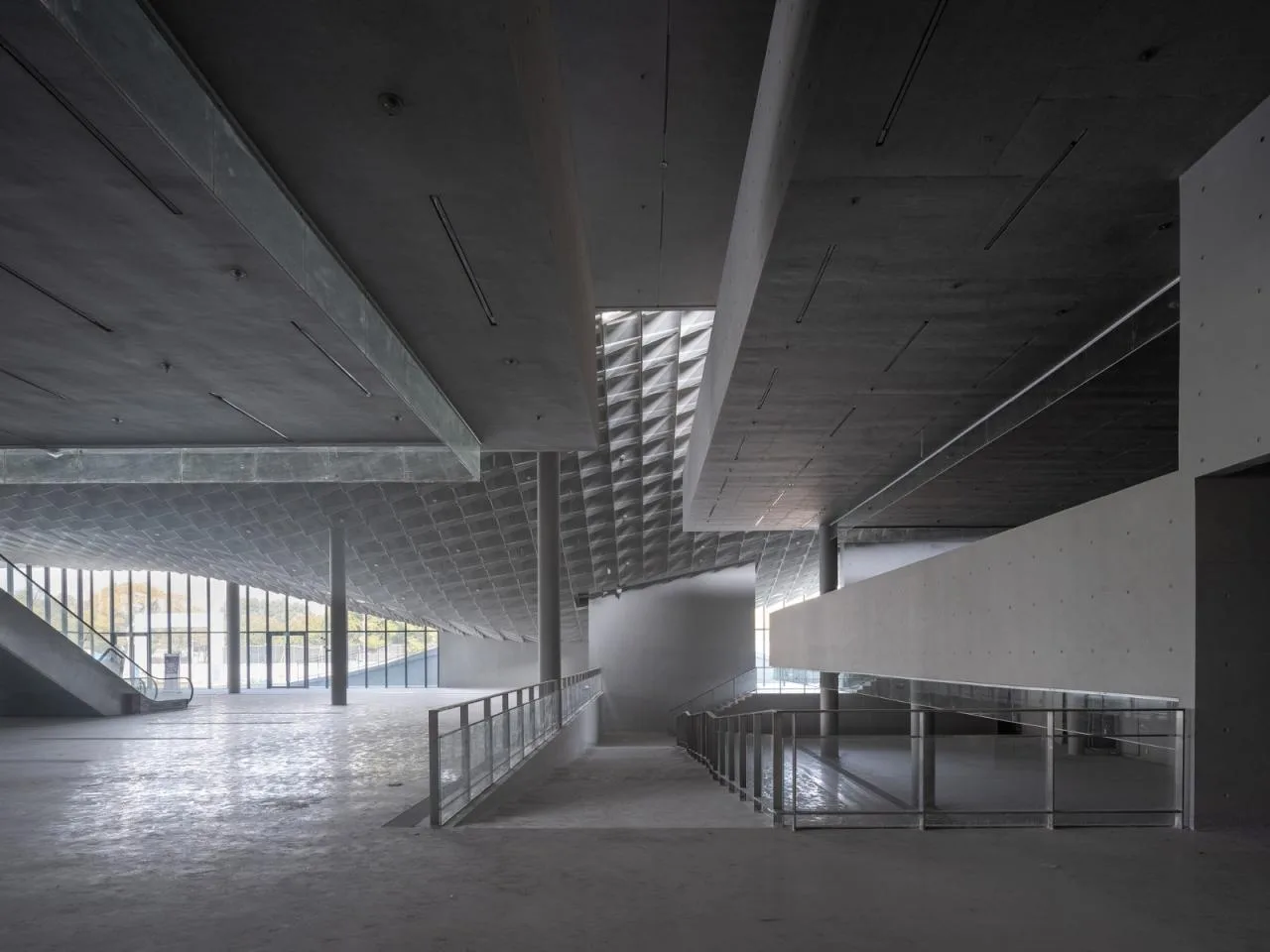
The museum’s contemporary, modern, ancient, and special exhibition halls each offer independent circulation routes while also allowing continuous connection. This provides excellent functional flexibility to accommodate various exhibition needs.
Project Drawings
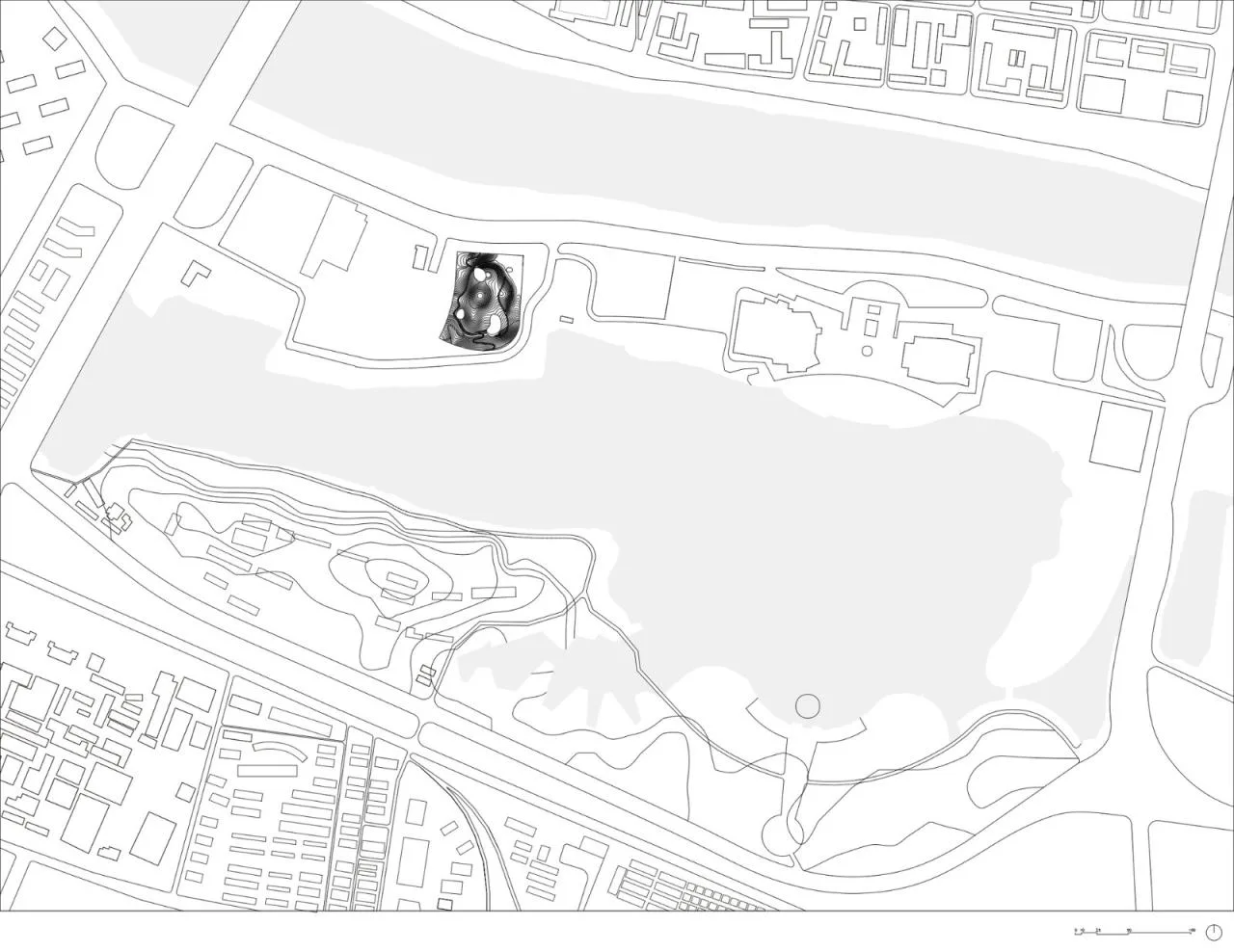
△ Site Plan
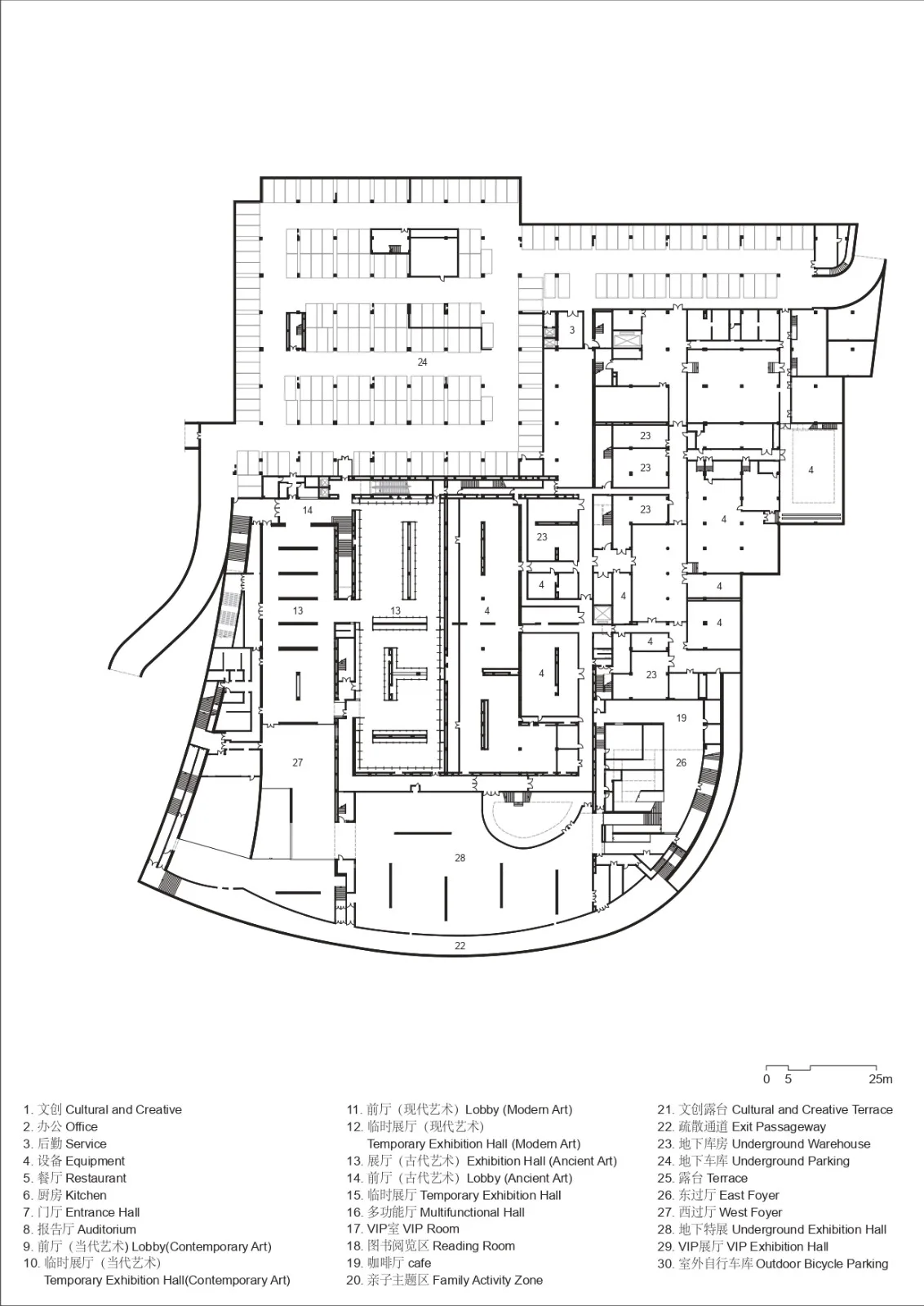
△ First Floor Plan
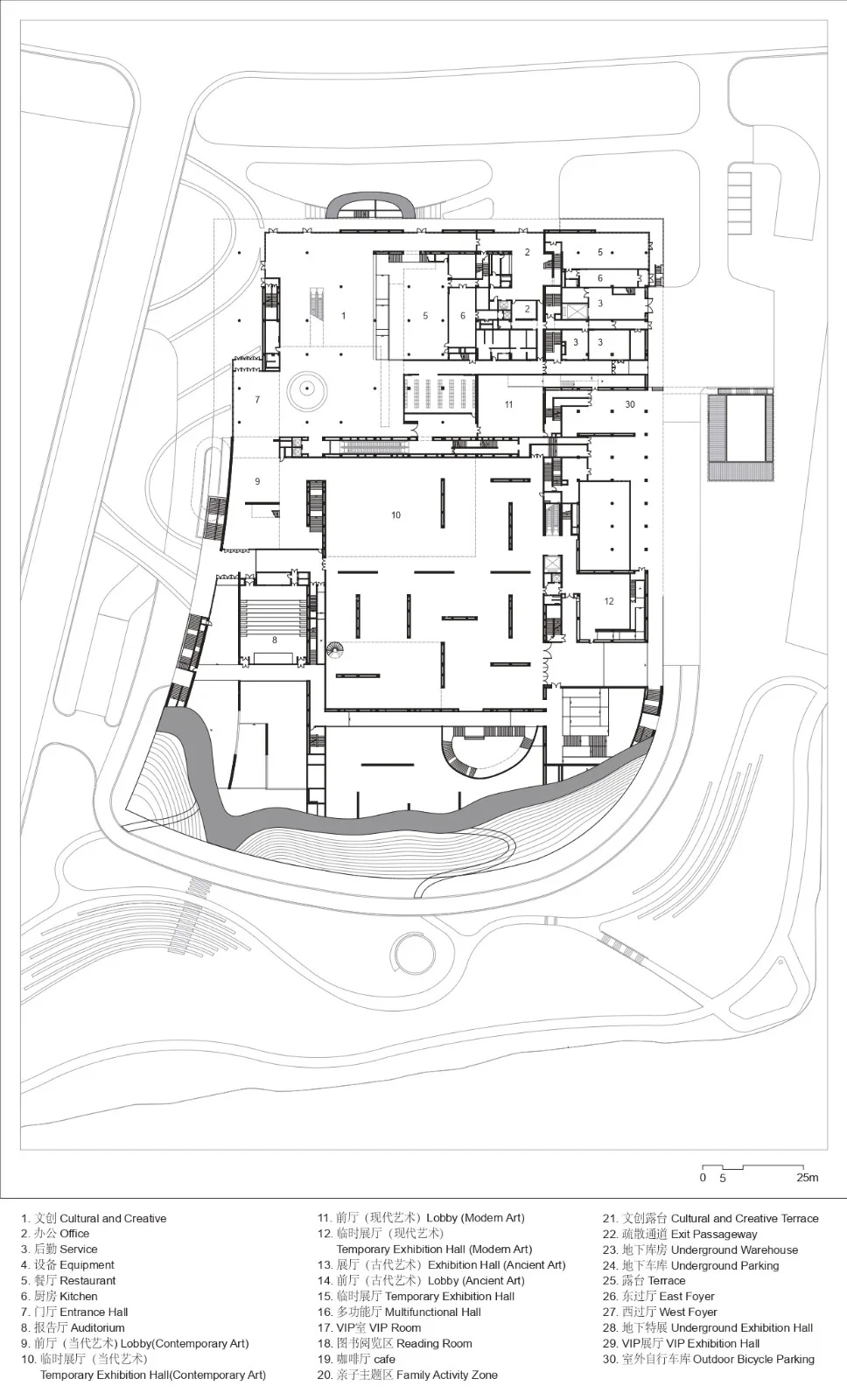
△ Second Floor Plan
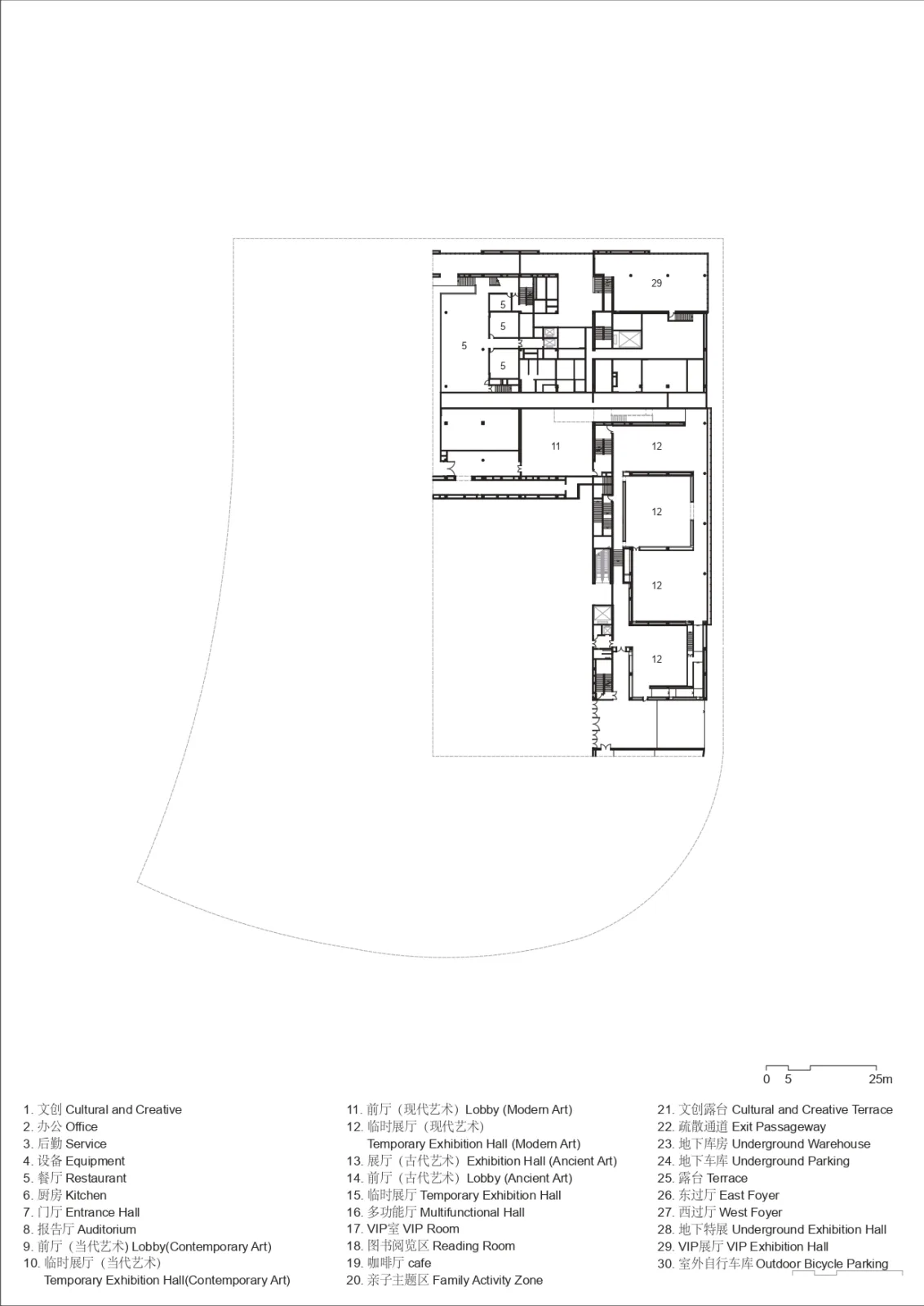
△ Mezzanine Plan
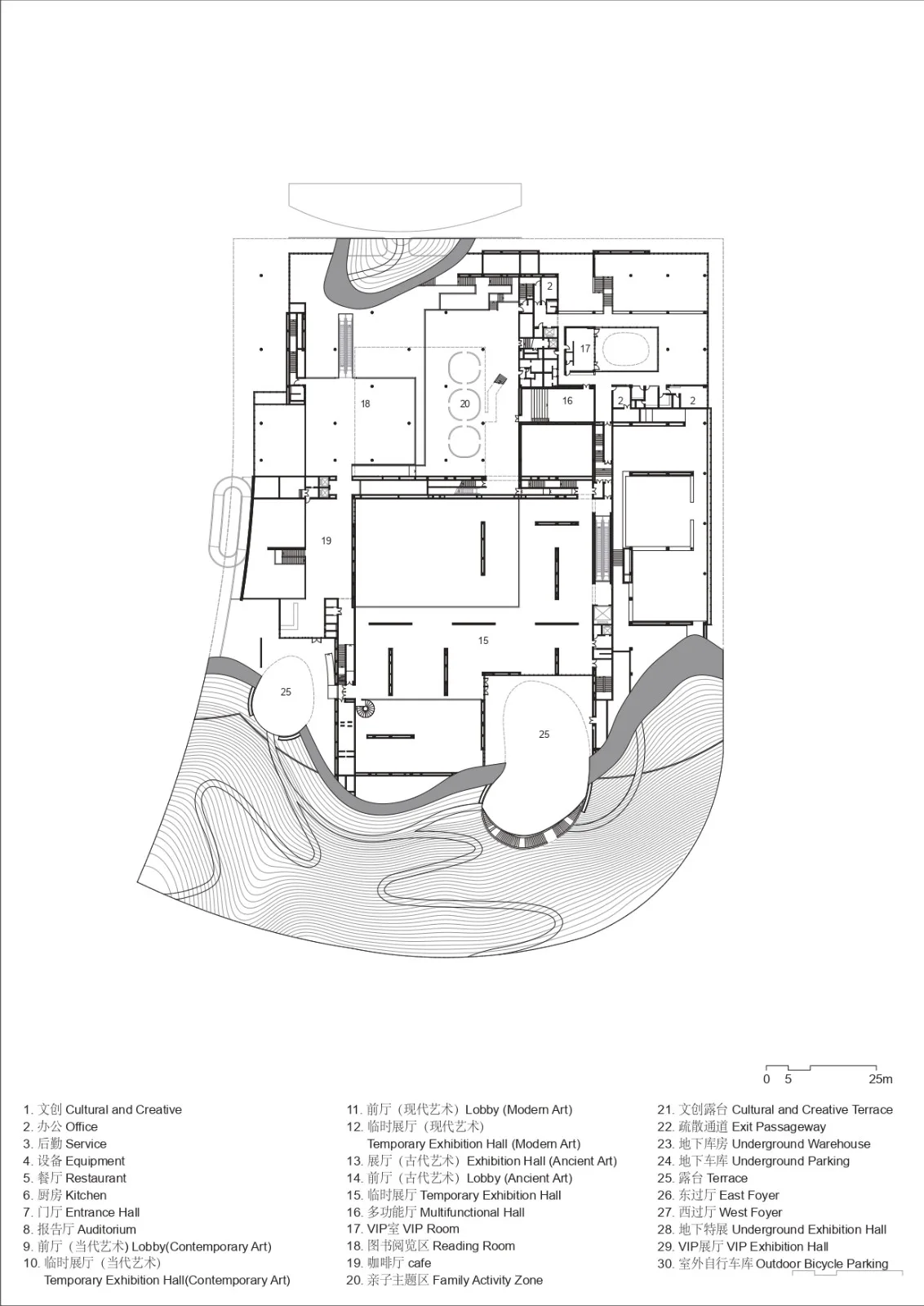
△ Third Floor Plan
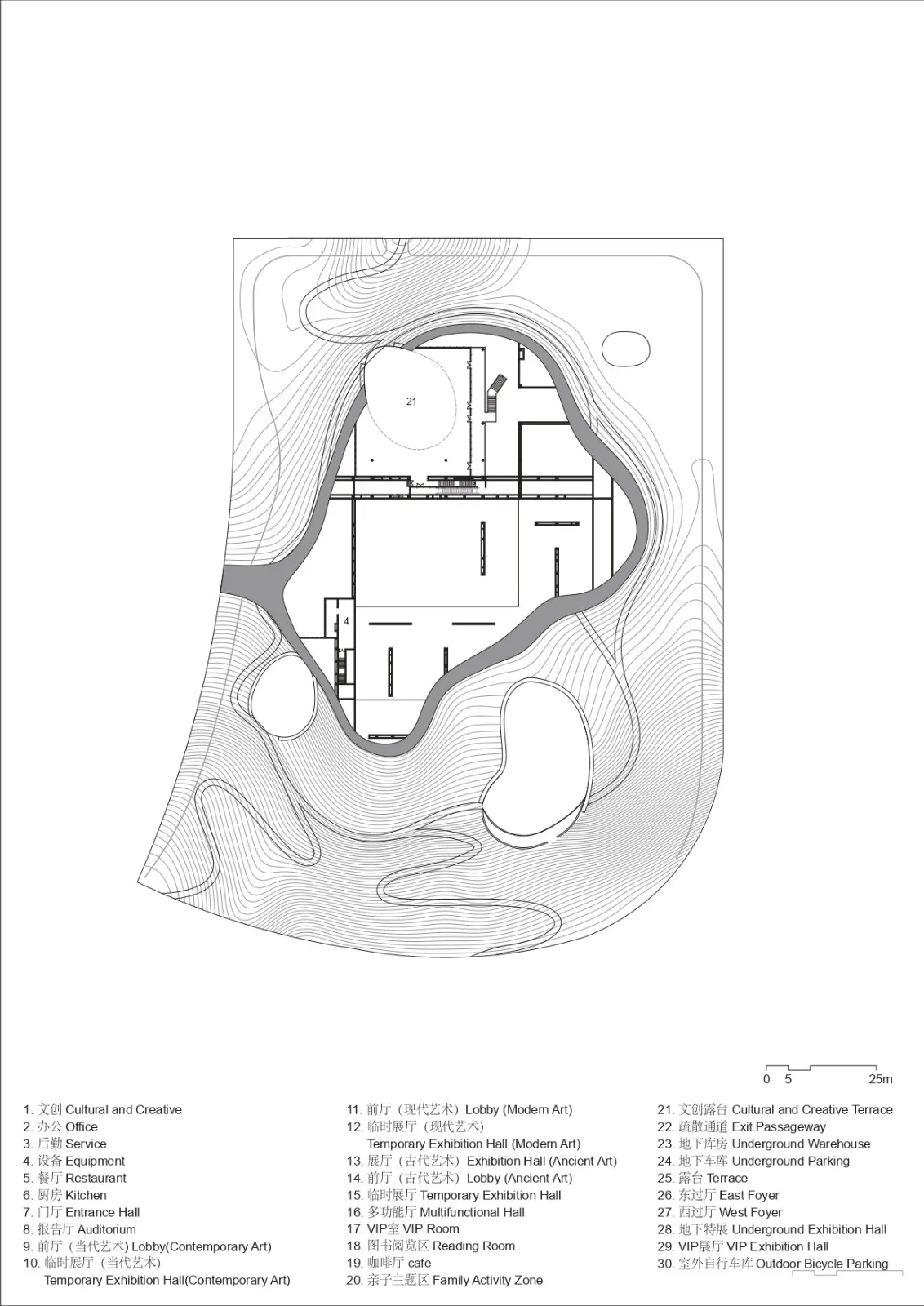
△ Fourth Floor Plan
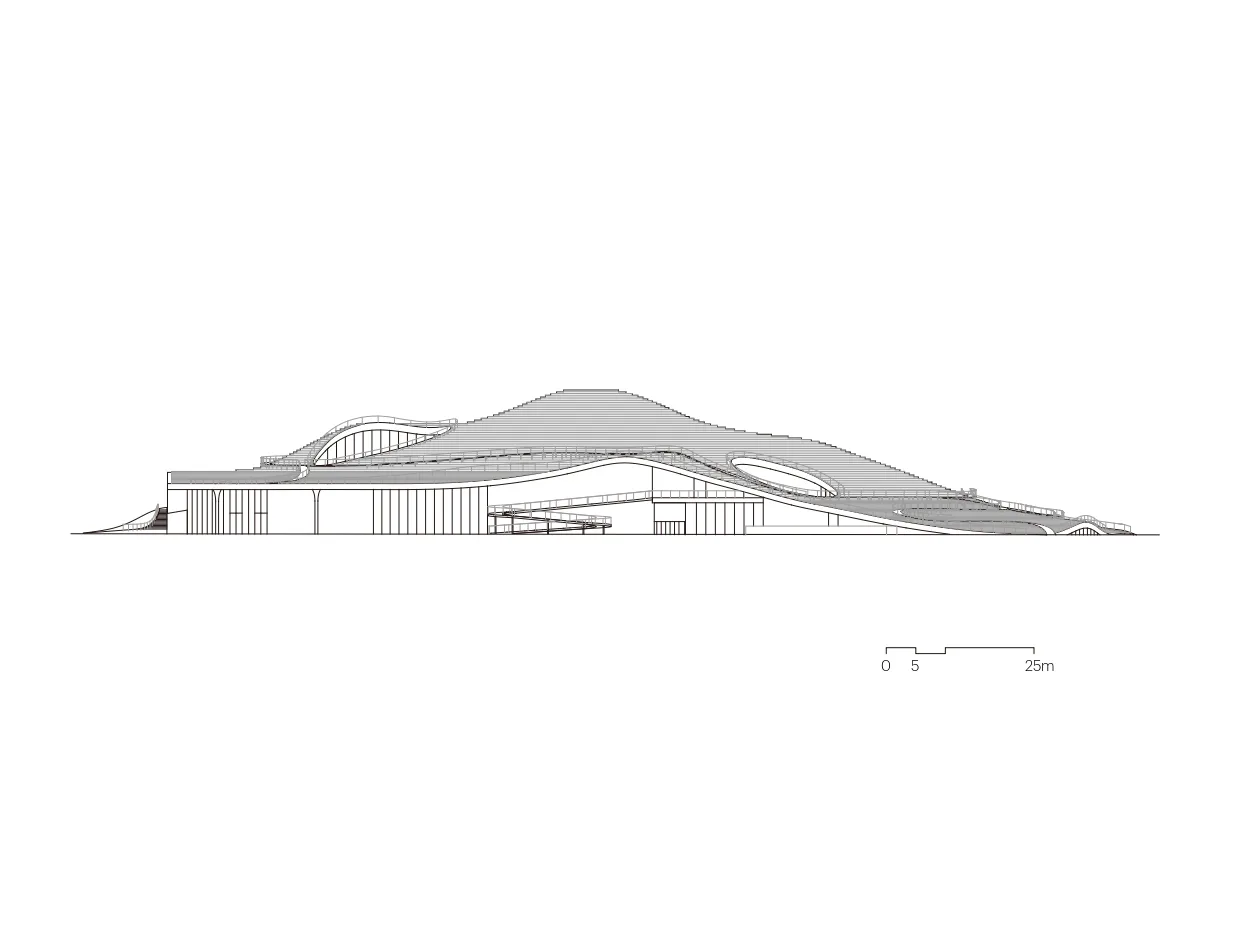
△ Elevation View
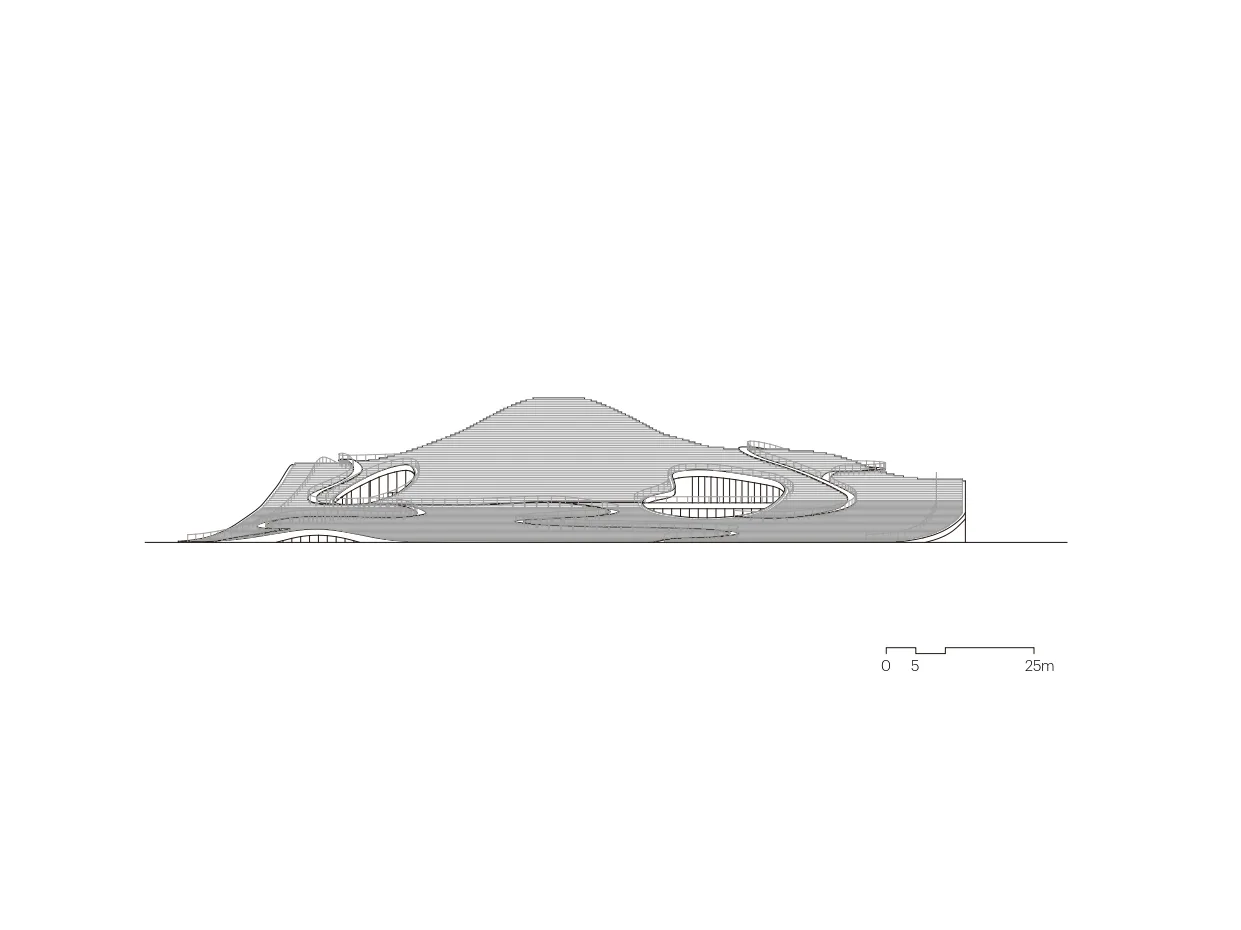
△ Elevation View
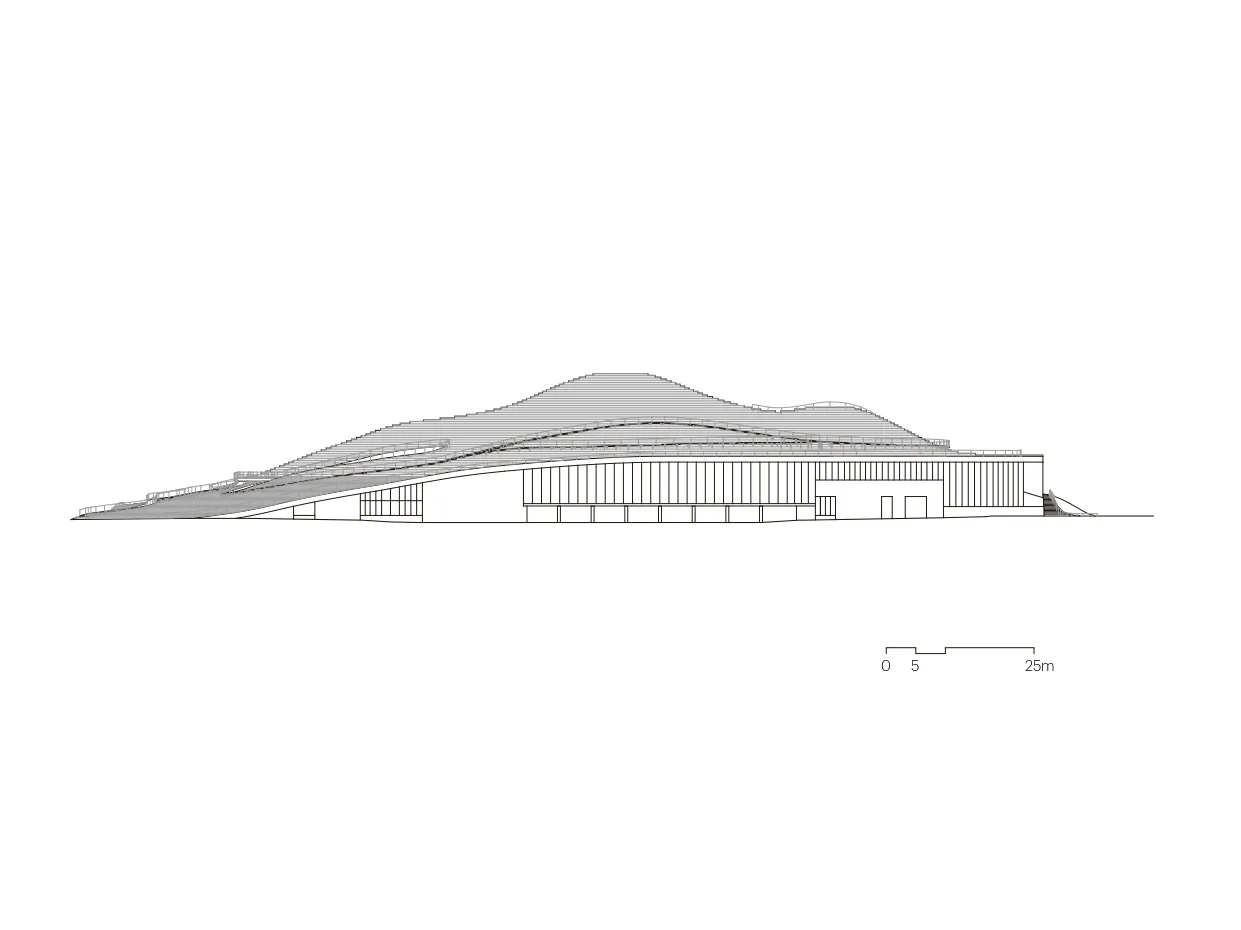
△ Elevation View
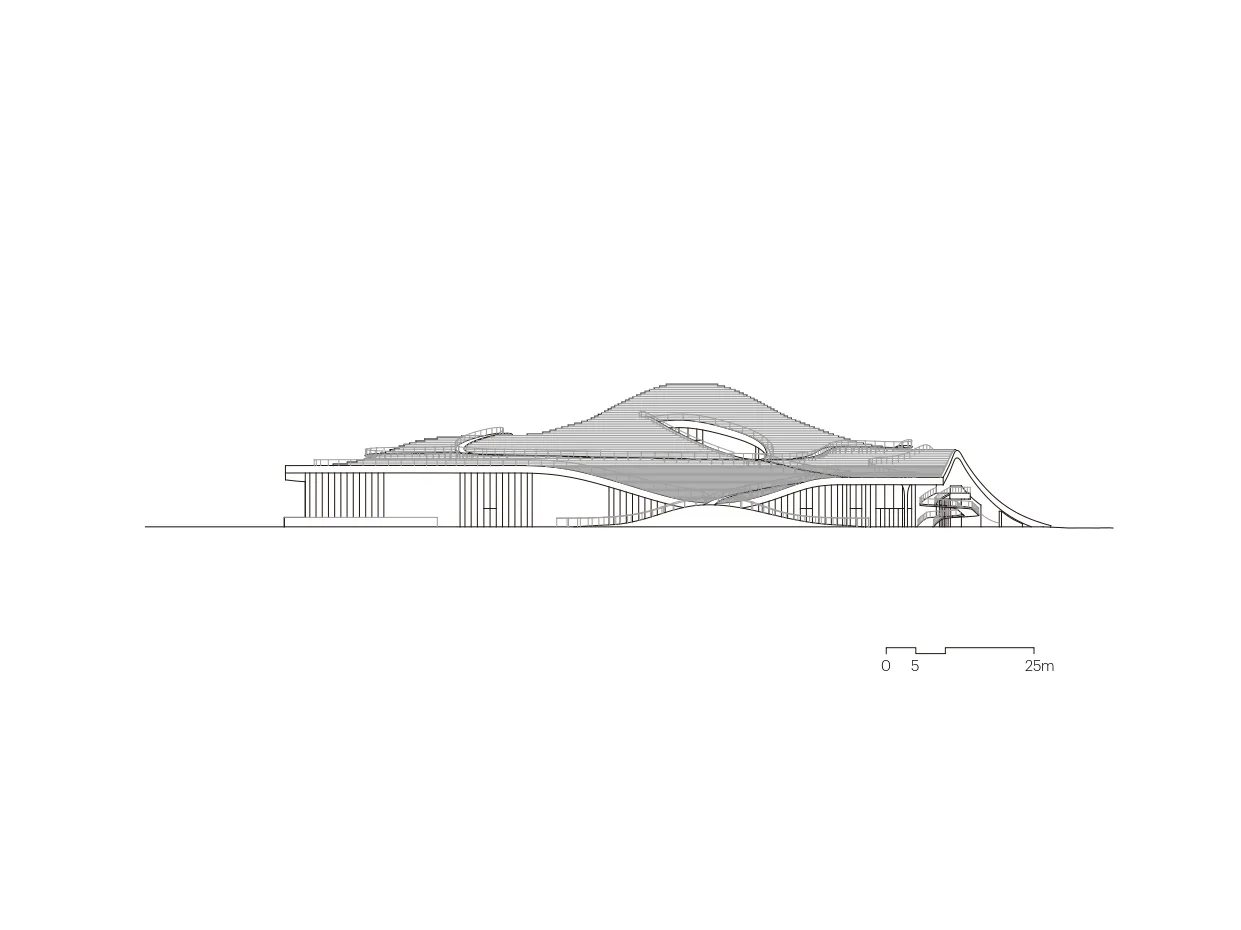
△ Elevation View
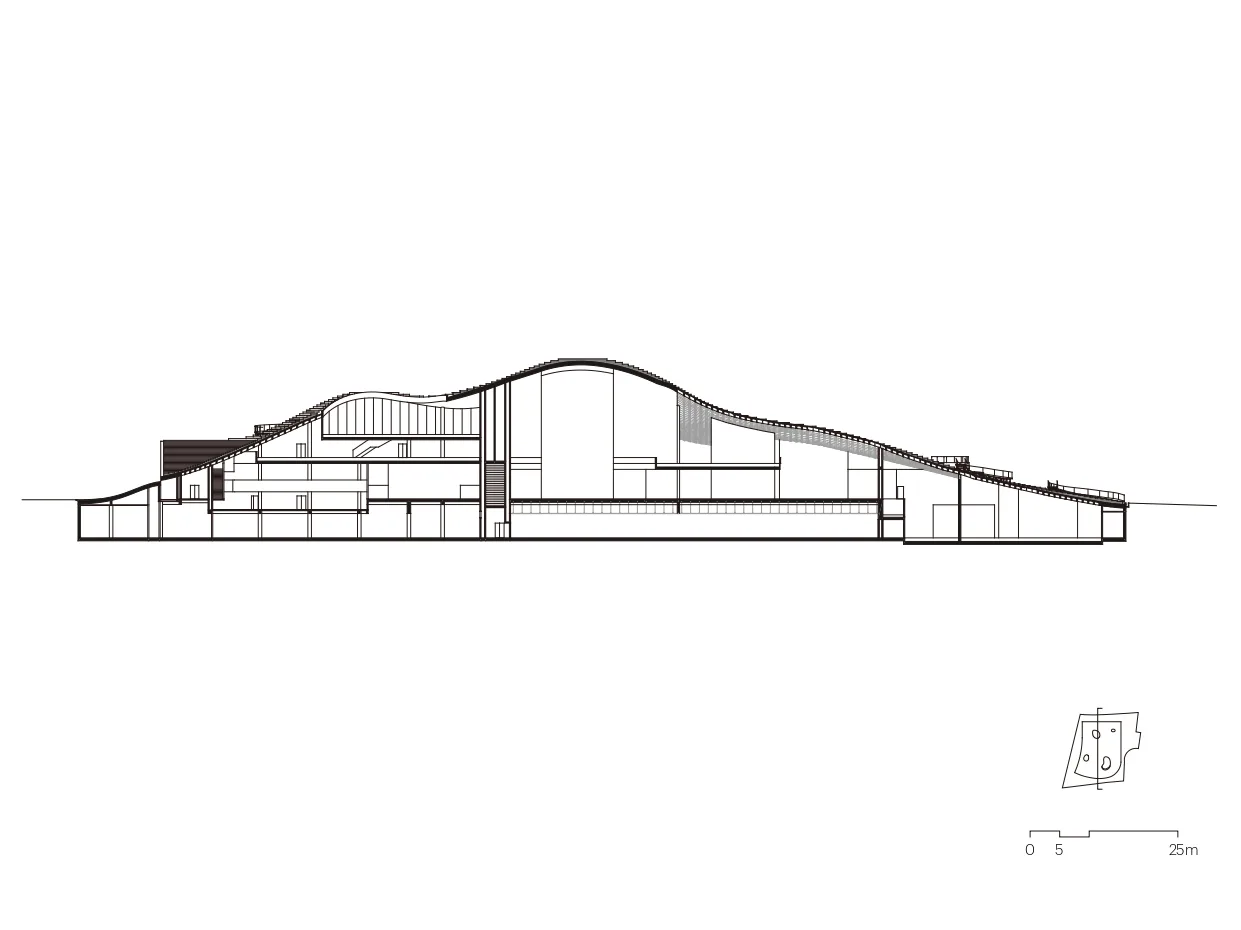
△ Section Diagram
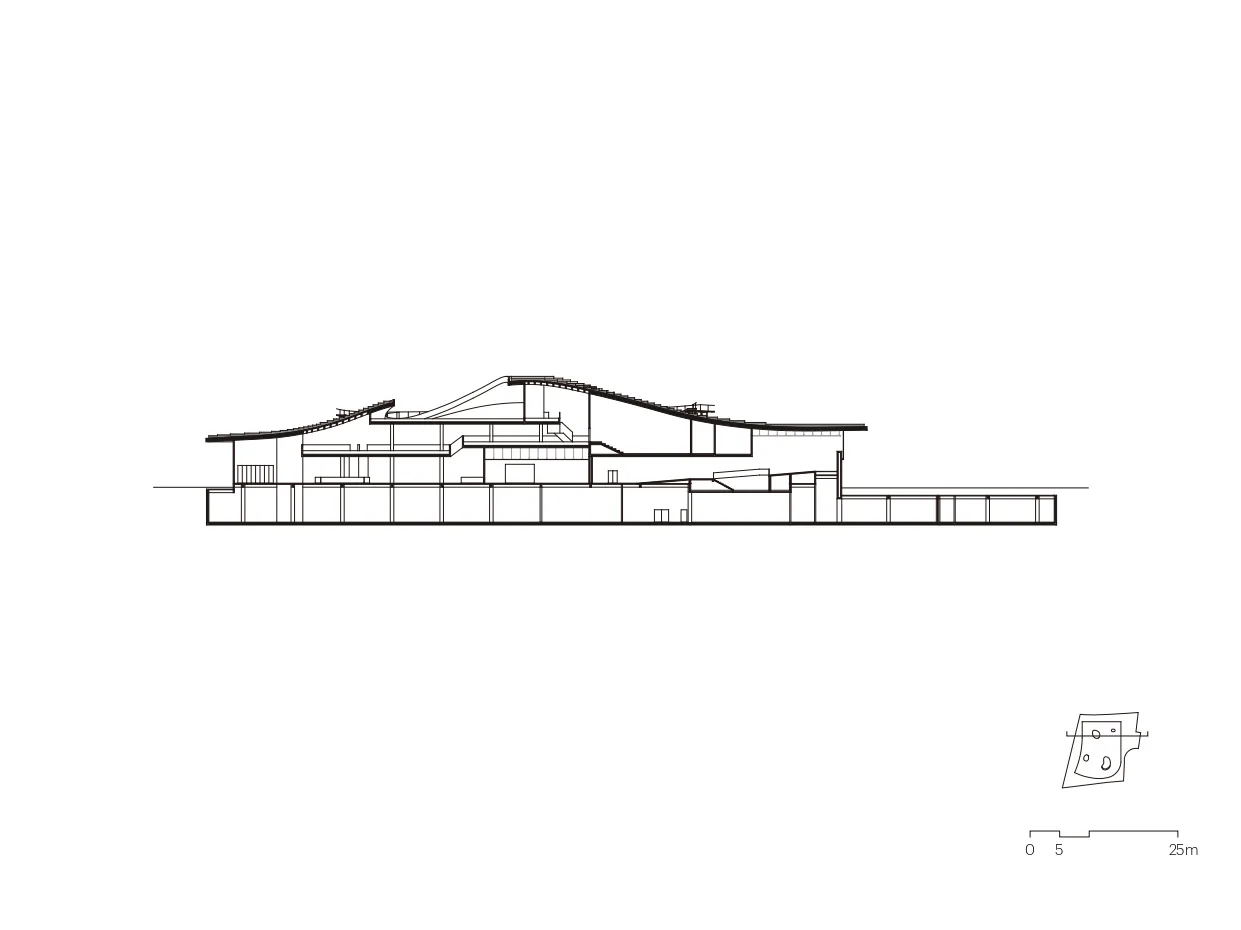
△ Section Diagram
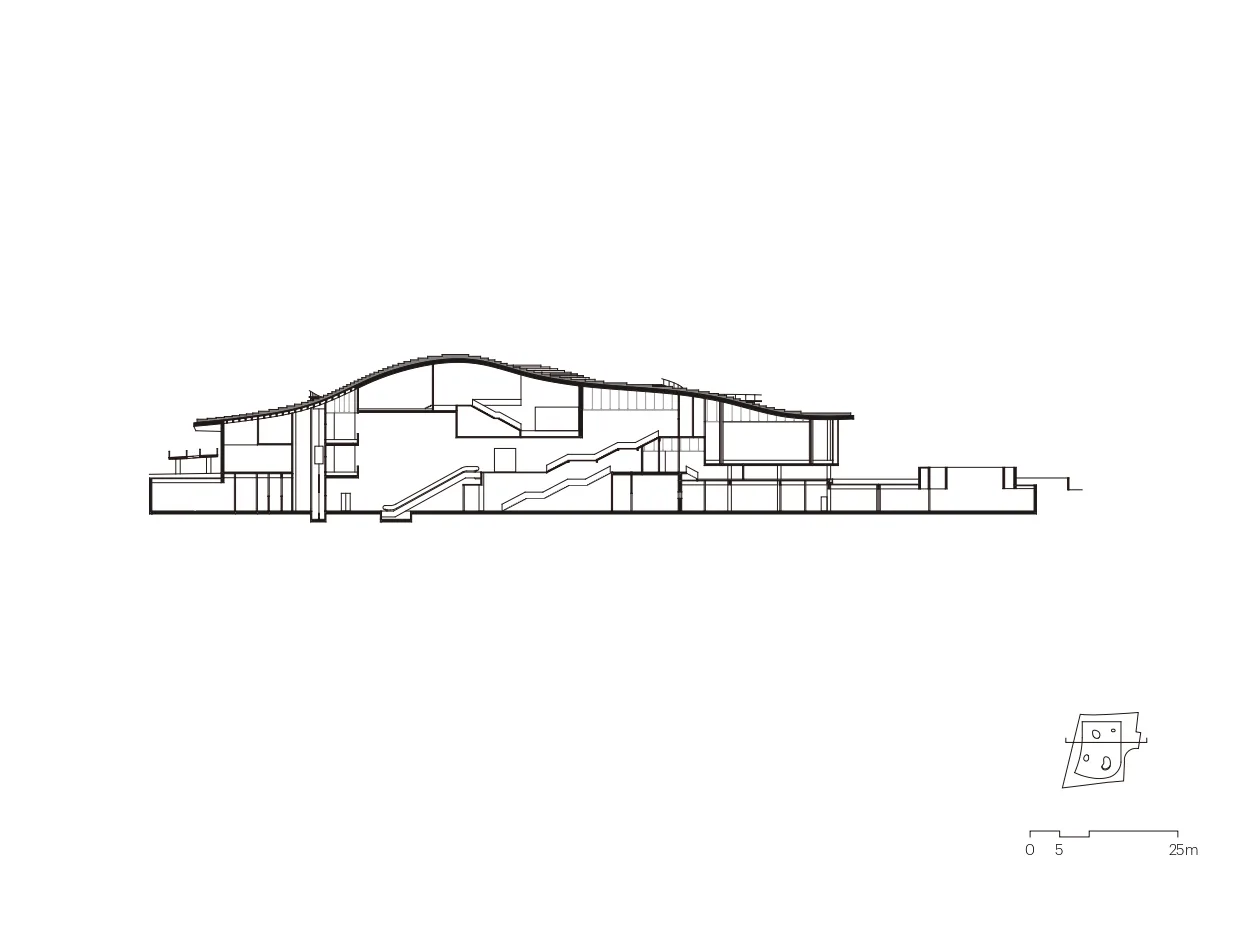
△ Section Diagram
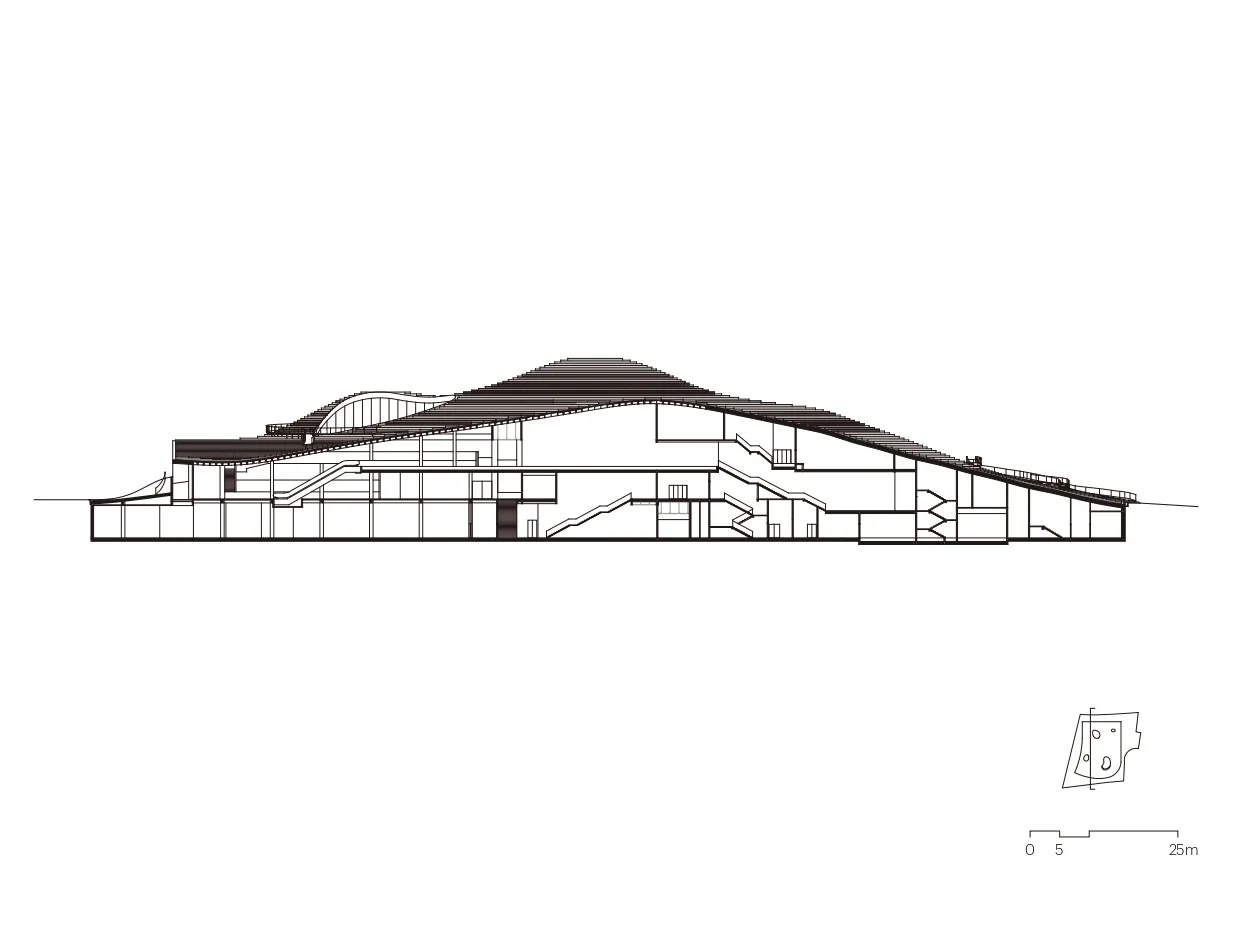
△ Section Diagram
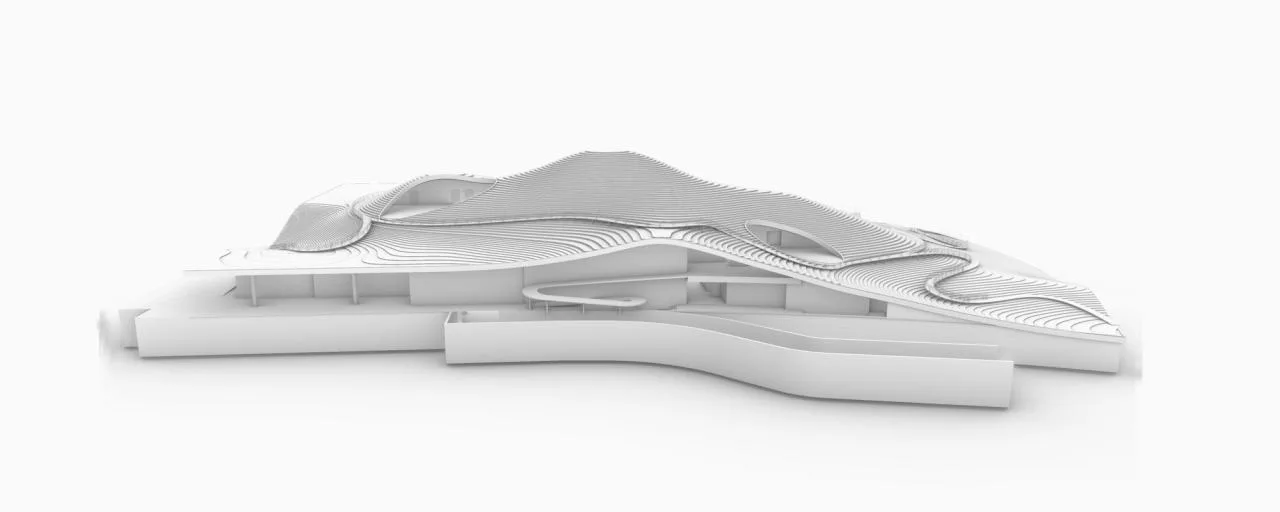
△ Model Diagram
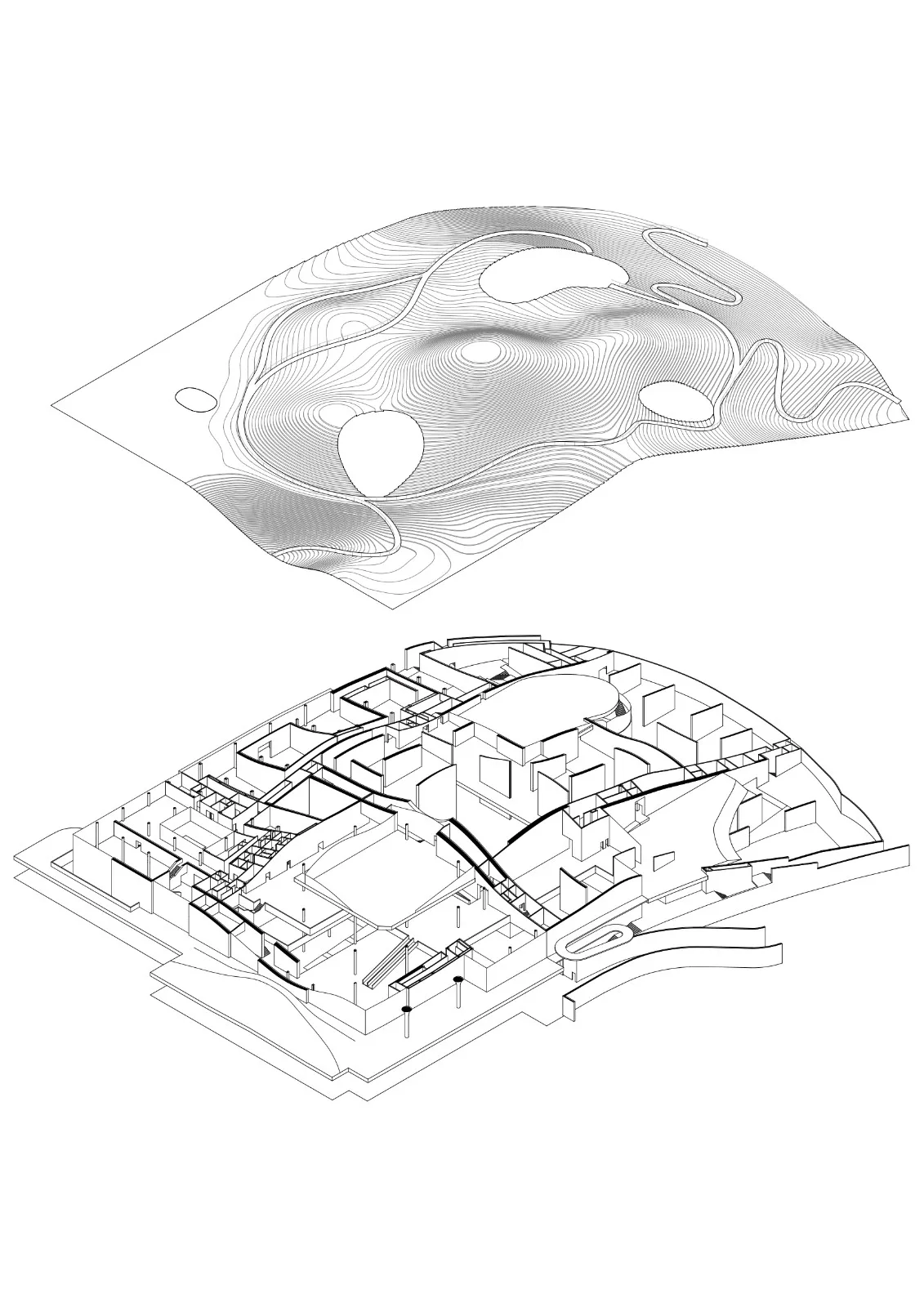
△ Axonometric Diagram
Project Information
Architectural Design: Dashe Architectural Design Firm
Area: 43,080 m²
Project Year: 2022
Photographers: Tian Fangfang, Su Shengliang
Design Team: Liu Yichun, Chen Yu, Wang Longhai, Hu Chenchen, Chen Hao, Shen Wen, Chen Zhihan, Tang Yun, Zhang Xiaoqi, Wu Wenchao, Deng Rui, Liu Xin, Pang Zirui, Wang Jiawen, Cao Ye
Construction Unit: Wuhan Real Estate Development Investment Group Co., Ltd.












Must log in before commenting!
Sign Up