
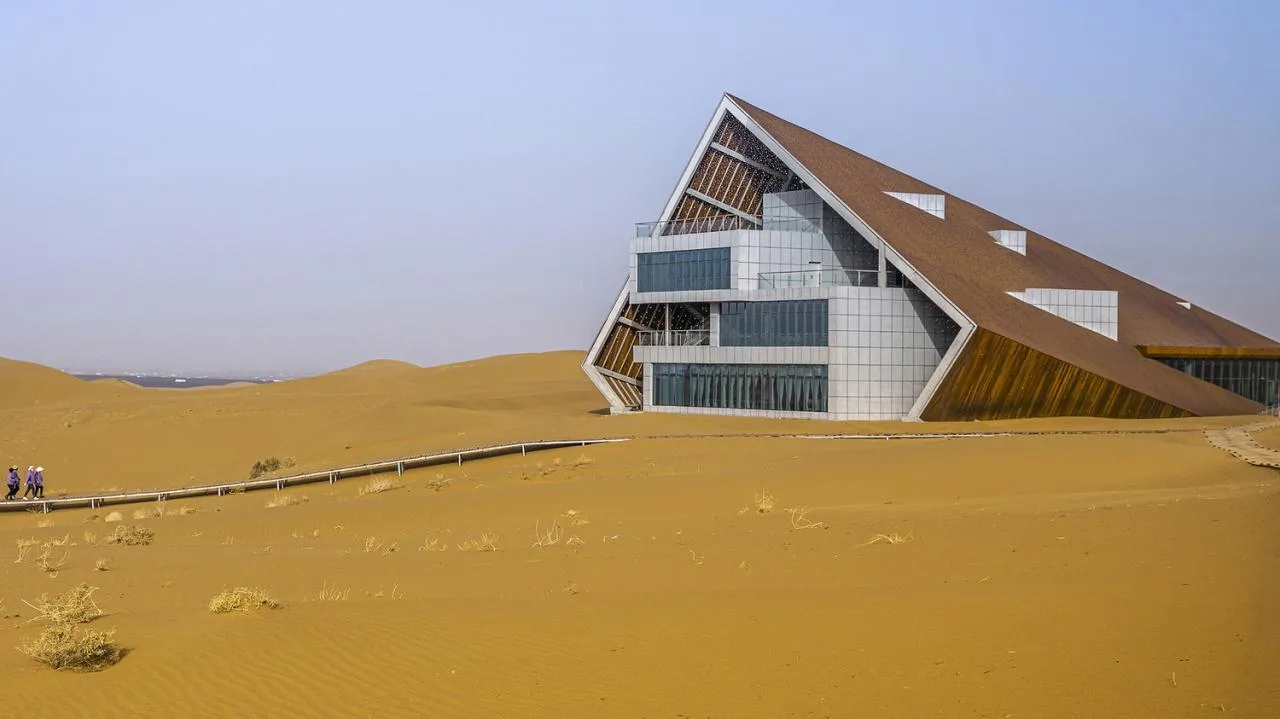
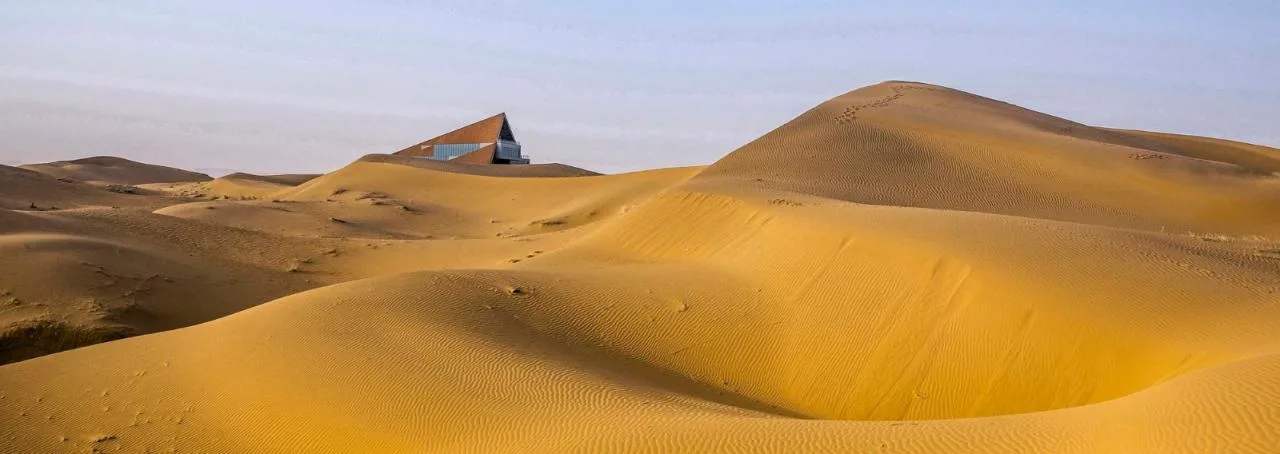
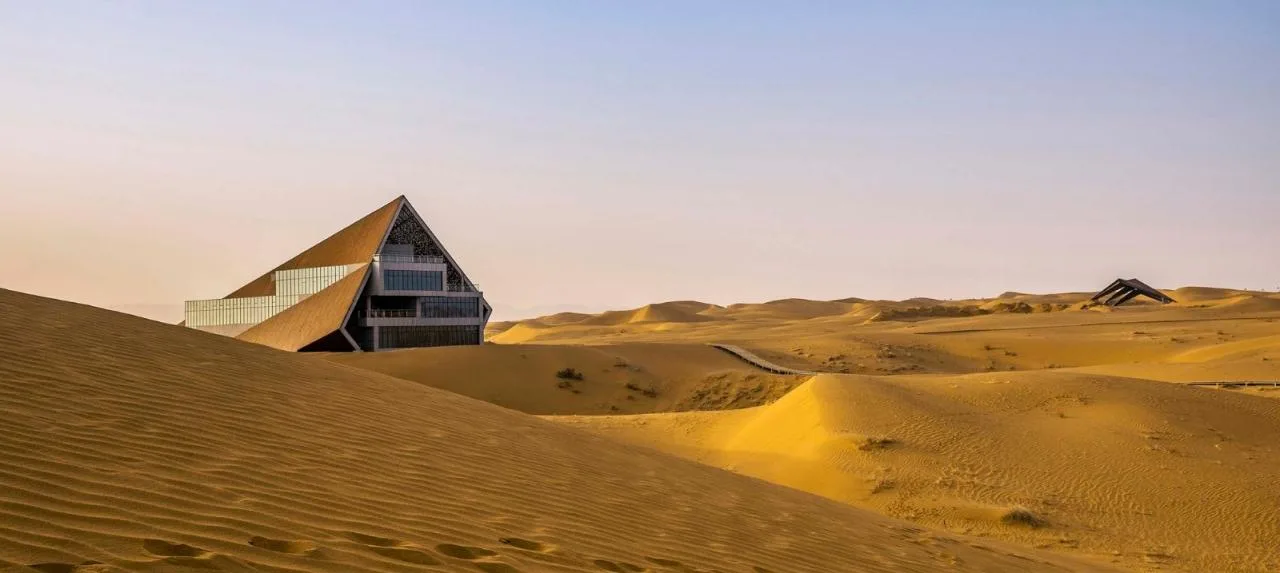
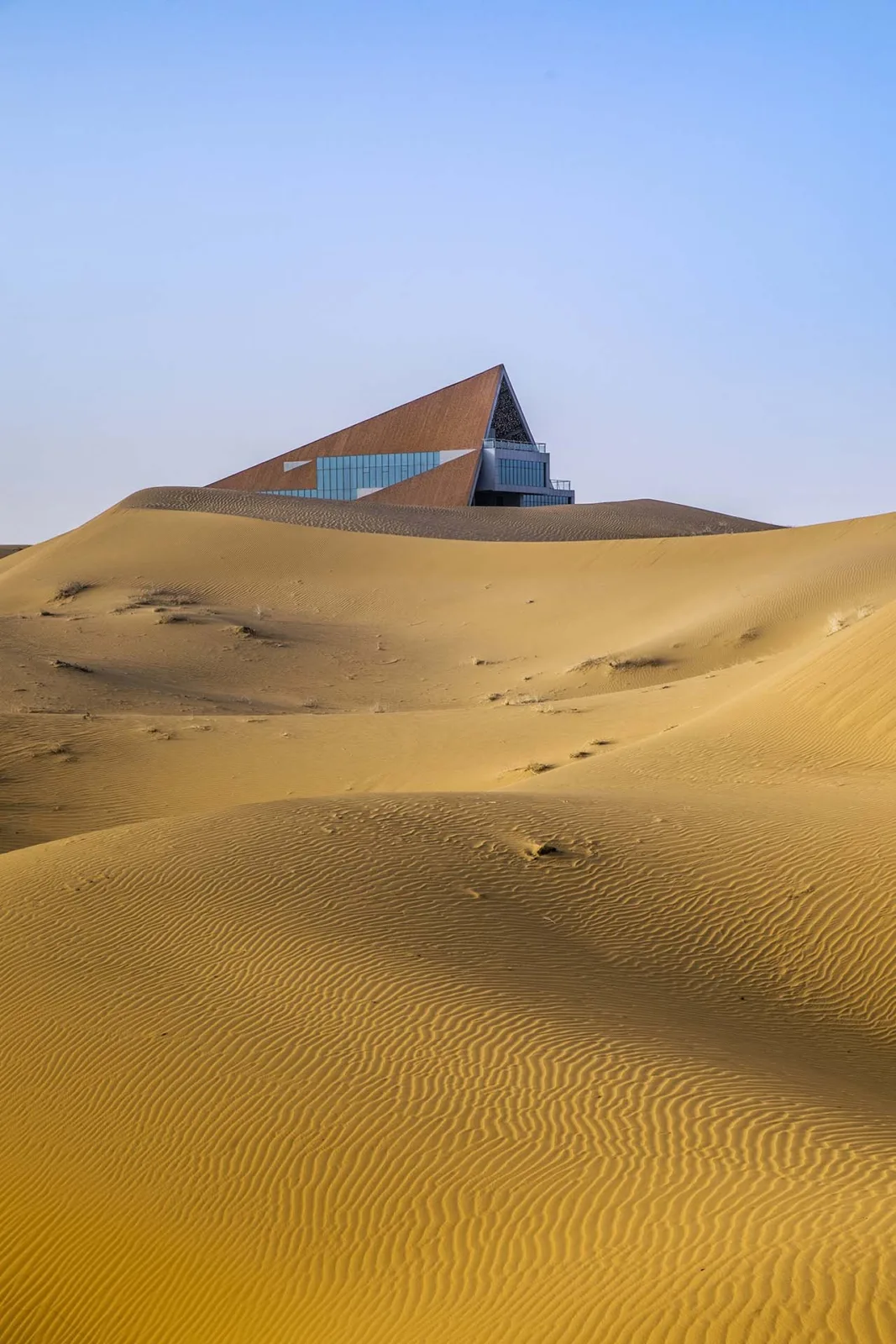
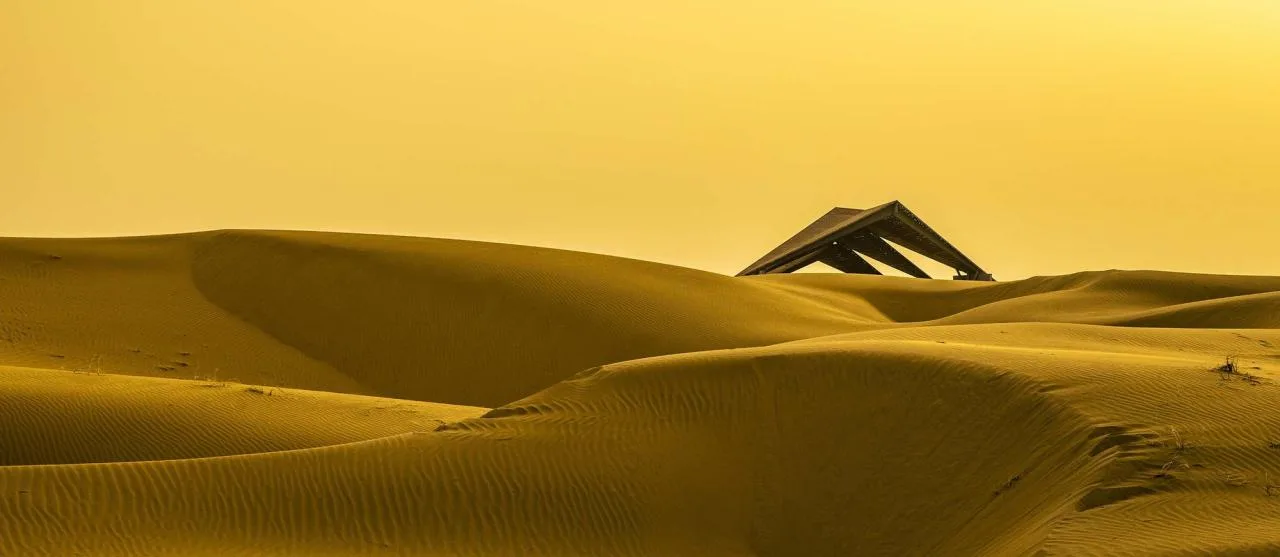
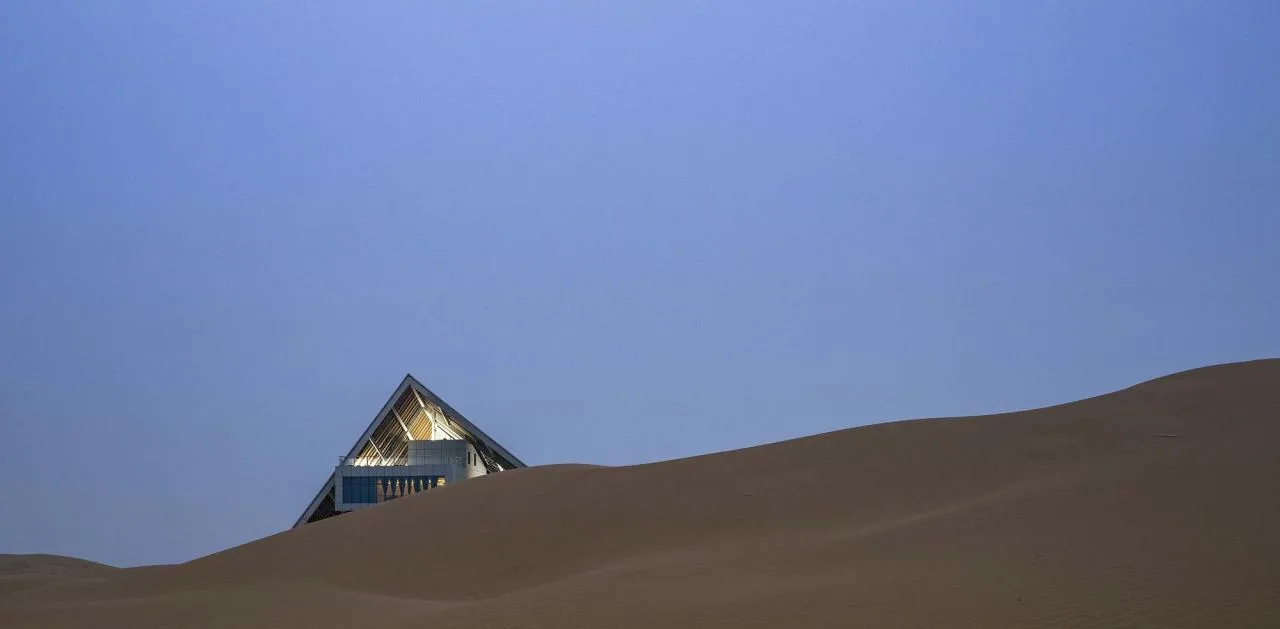
Site and Background: Located in the Tengger Desert within the Shapotou Scenic Area of Zhongwei City, Ningxia, this project sits approximately 2km from the desert reserve. Desert tourism in Zhongwei has flourished in recent years, with the Desert Star River Camp emerging as a new campsite destination. As the campsite’s main building, this project not only offers essential services such as dining and reception but also serves as a landmark for the entire site. The surrounding area lacks cultural landmarks or historical references, making the desert itself the most prominent feature. Rolling sand dunes stretch endlessly, and on clear days, distant mountains to the north are visible. Upon closer examination, the desert reveals its complexity: rhythmic sand ripples shaped by the wind, mysterious sand clusters, resilient desert plants with small pale yellow flowers blooming on withered branches, and traces of desert beetles traversing the dunes. These contrasts—between vast and minute, similarity and difference, life and death—inspire the architects’ vision.
Architectural Concept: A Treasure Box Half Buried in Yellow Sand
During initial research, architects discovered that Zhongwei has been a strategic outpost in the northwest since its incorporation into Chinese territory during the Qin Dynasty. Though not directly on the ancient Silk Road or as prominent as Yinchuan, Zhongwei’s unique geography—bordered by the Yellow River and desert—has left a rich historical legacy. For instance, Emperor Taizu of the Yuan Dynasty passed through Shatuo (now Shapotou), crossing the Yellow River nine times and capturing Yingli County (formerly Zhongwei County). The celebrated poet Wang Wei’s line, “The vast desert is shrouded in solitary smoke, and the Yellow River is filled with the falling sun,” is believed to describe this very region. This deep history evokes countless untold stories buried beneath the desert sands, waiting to be uncovered.
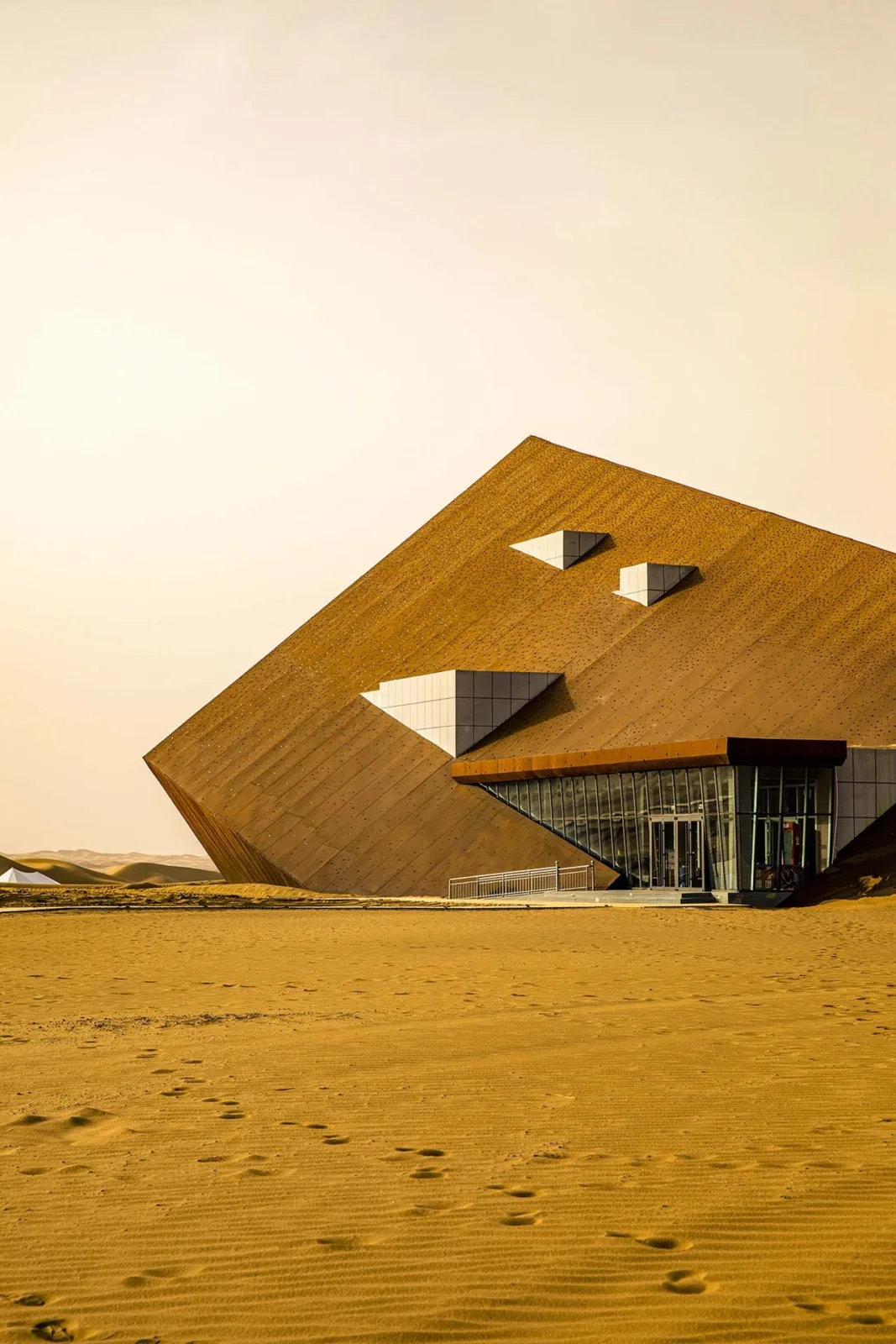
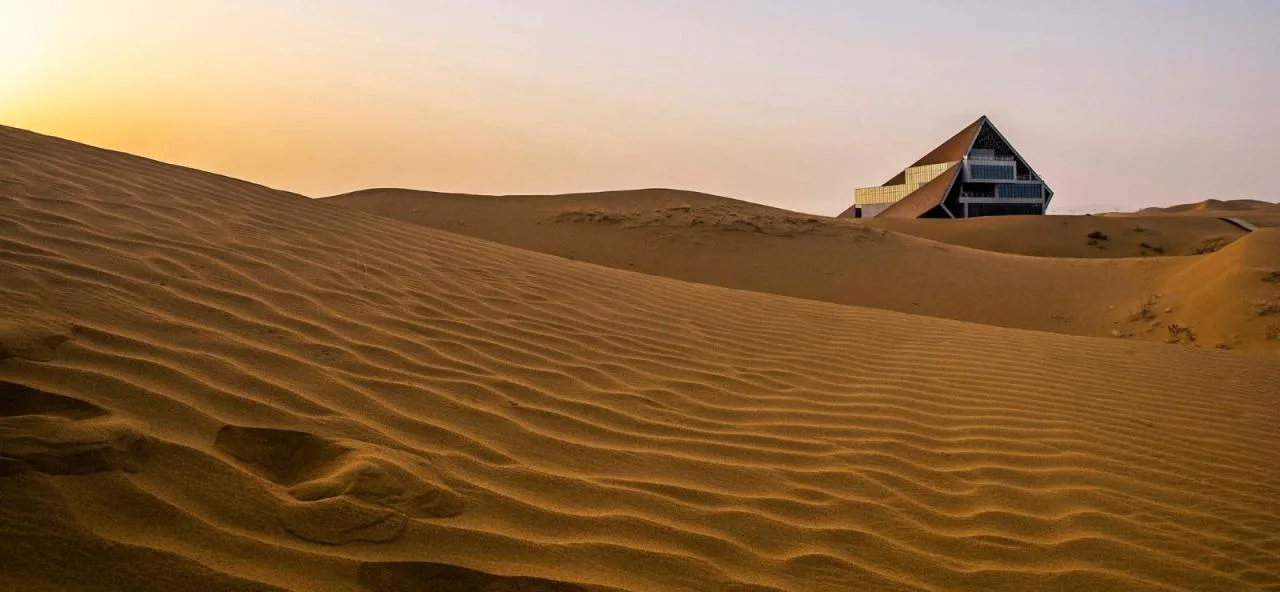
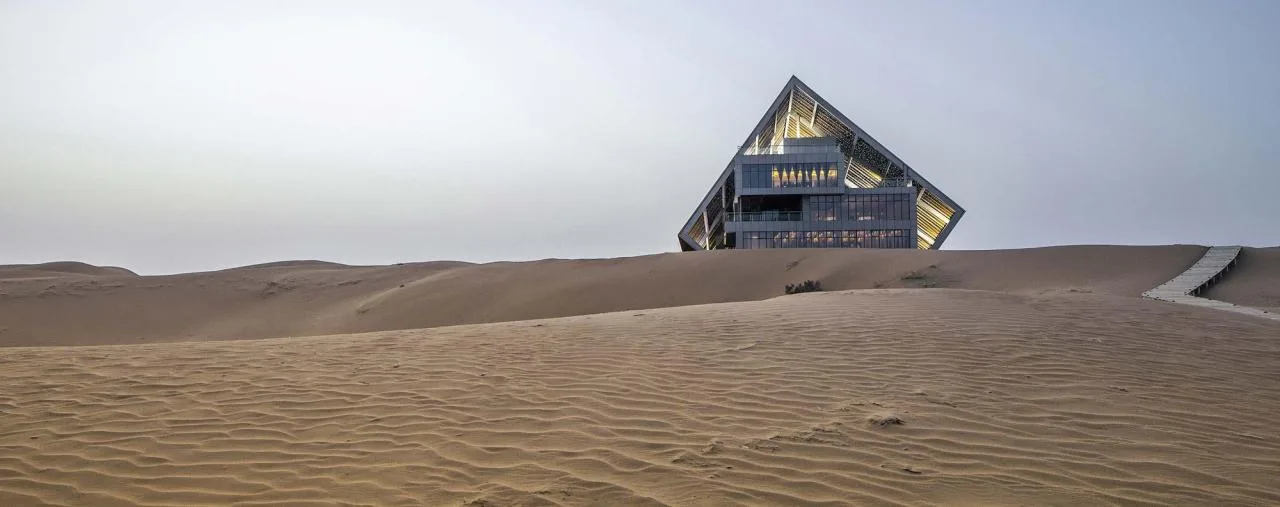
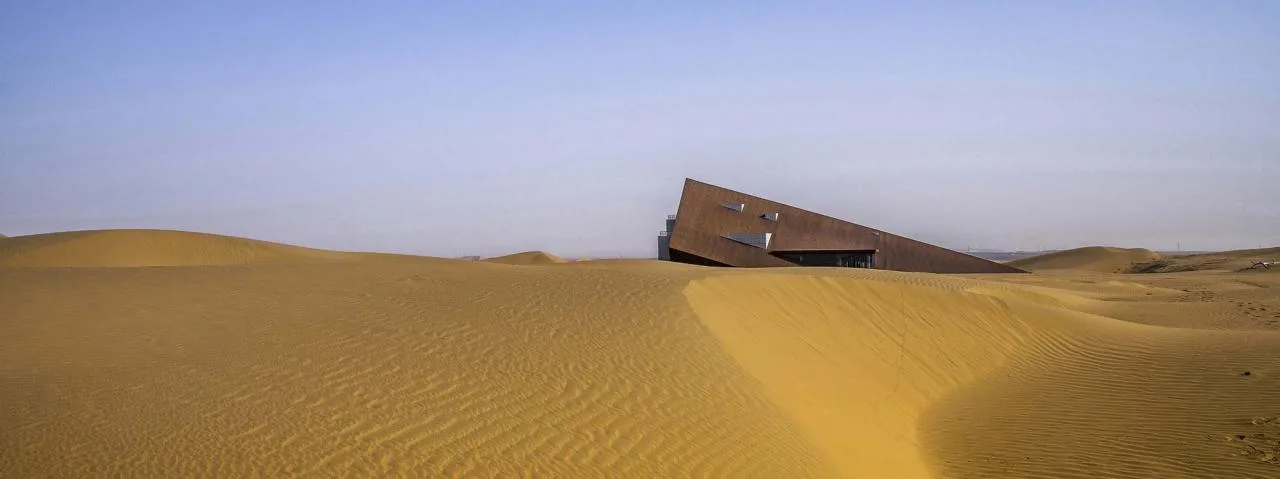
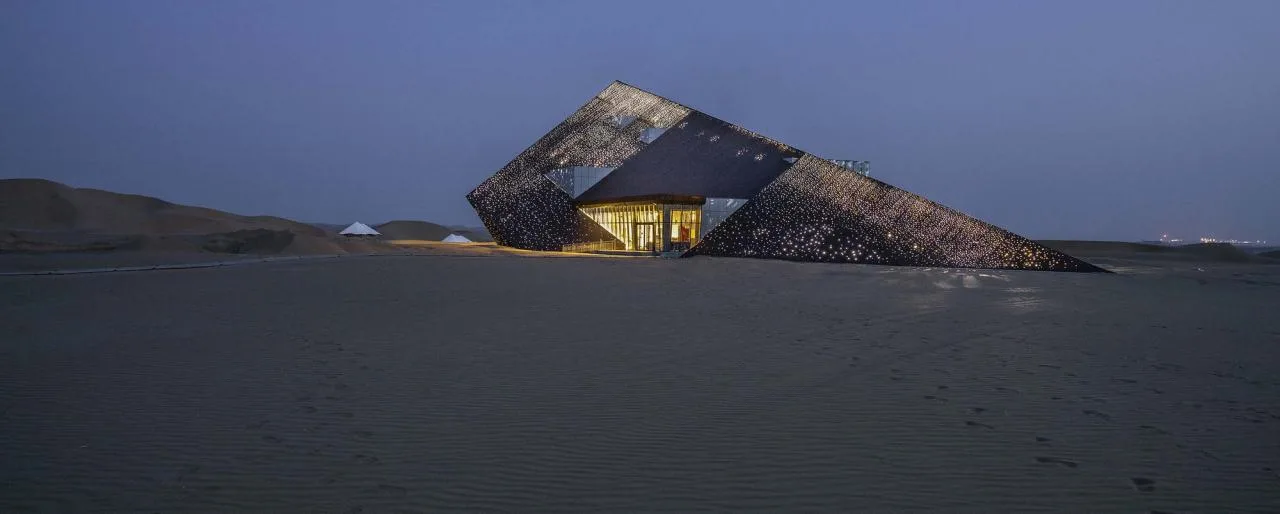
The architect envisioned a building that embodies the desert’s essence—mysterious, transient, calm, yet passionate—mirroring the desert’s many tales. The design uses straight lines and geometric shapes to create a massive cube partially submerged in yellow sand, symbolizing a lost treasure box. This metaphor presents the building as a carrier of stories, hidden beneath the desert’s surface, awaiting discovery.
Layout and Space: Harmonizing Exterior and Interior
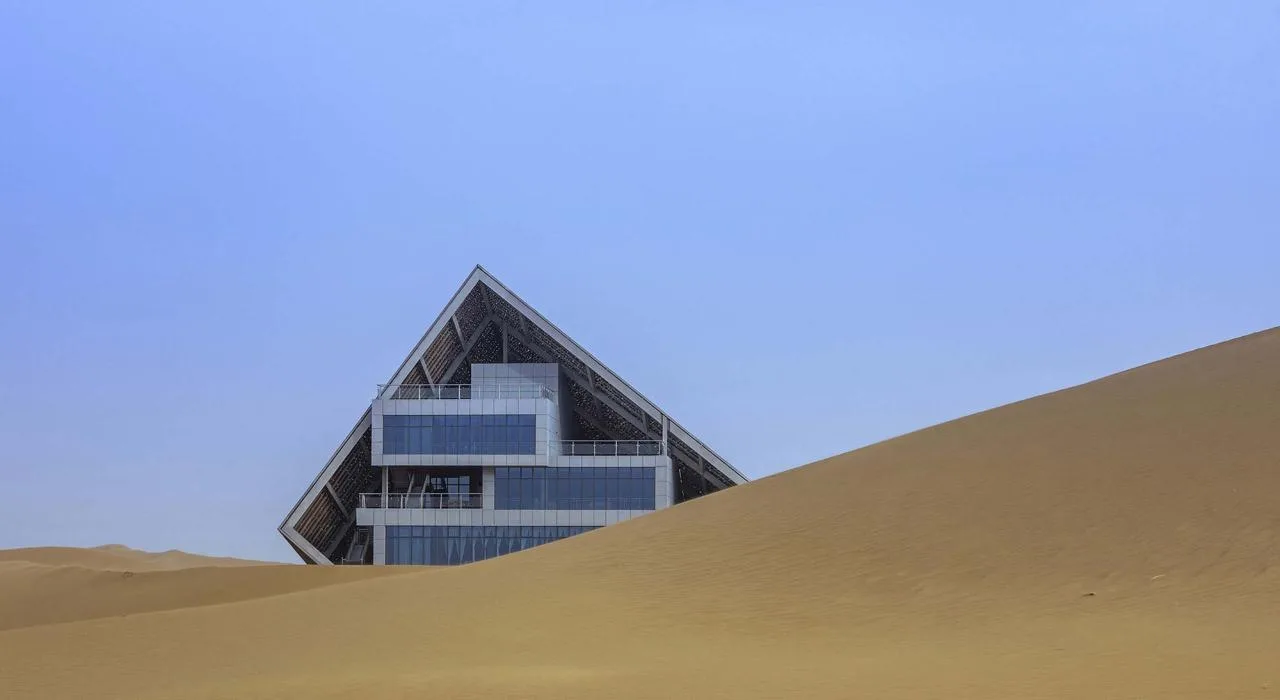
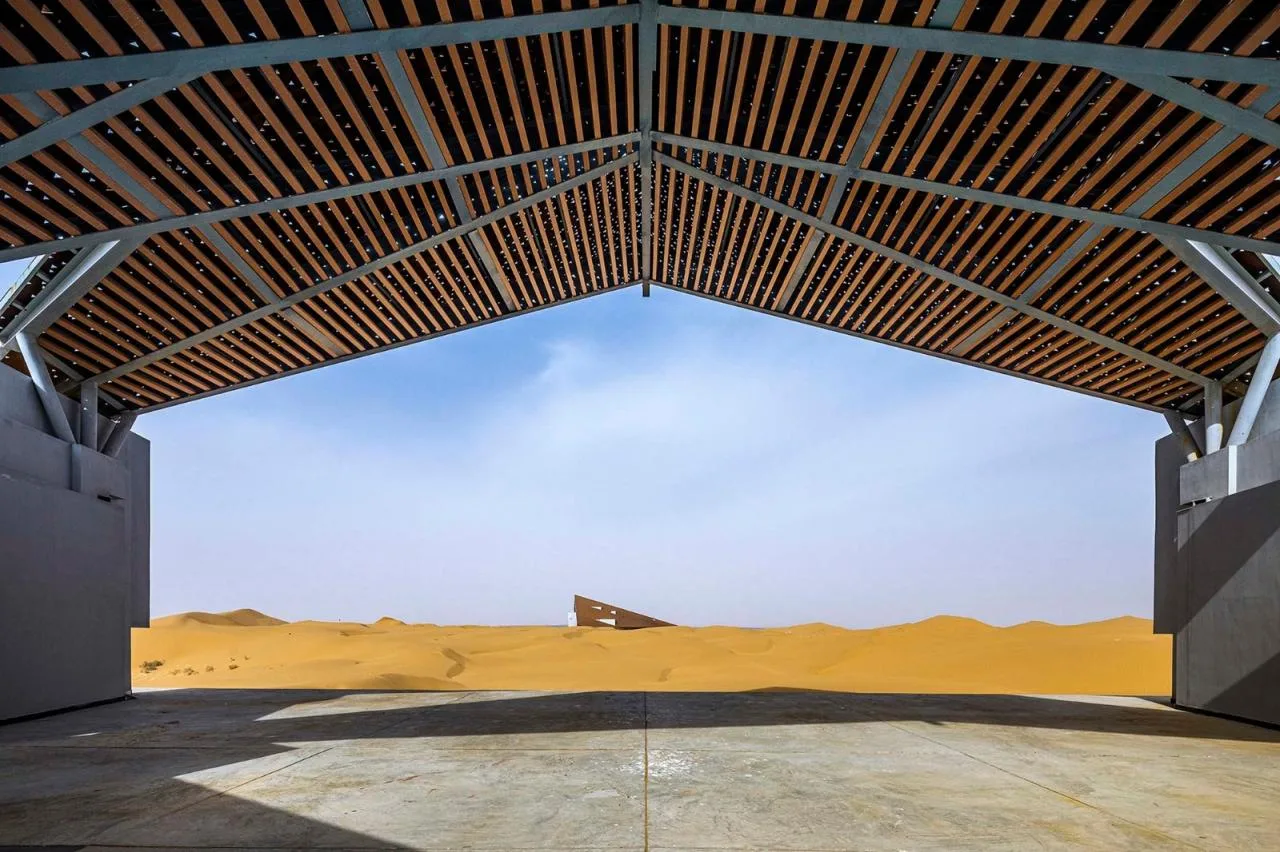
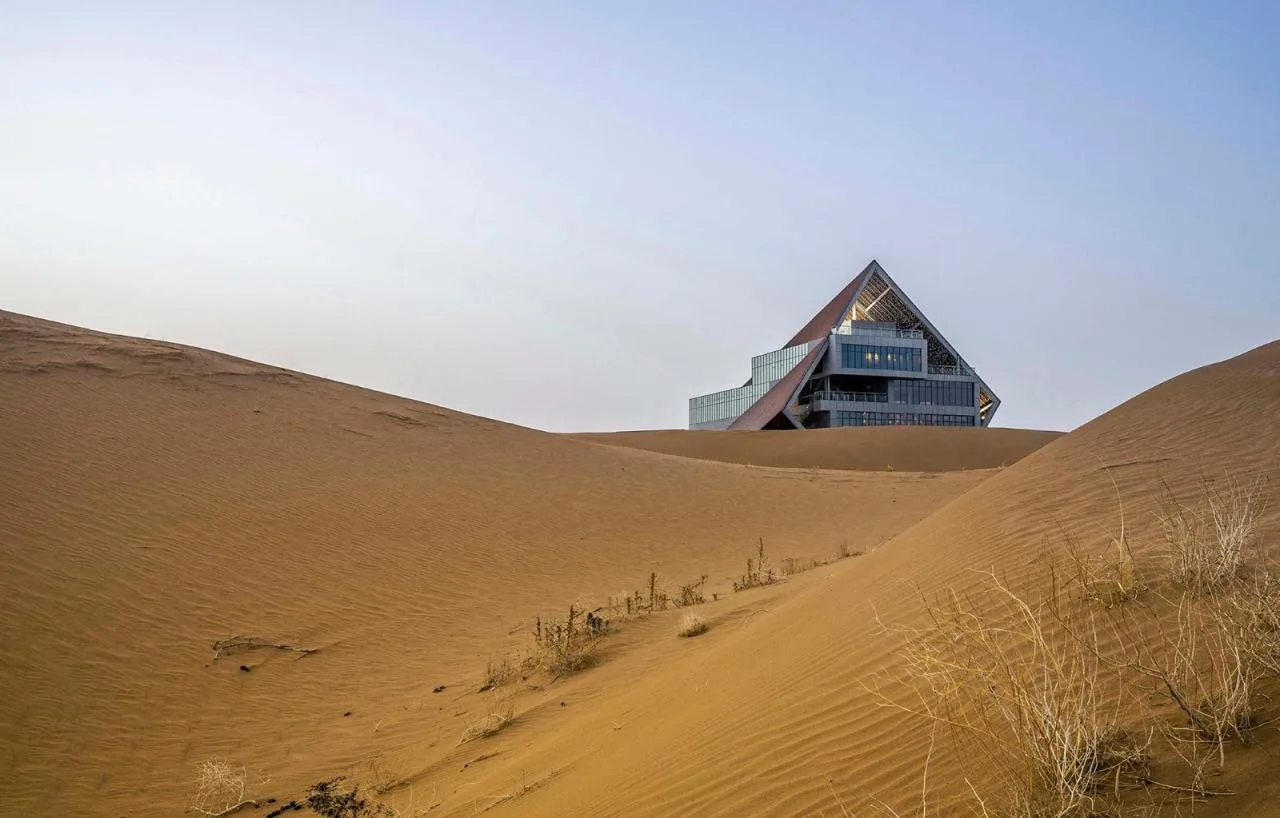
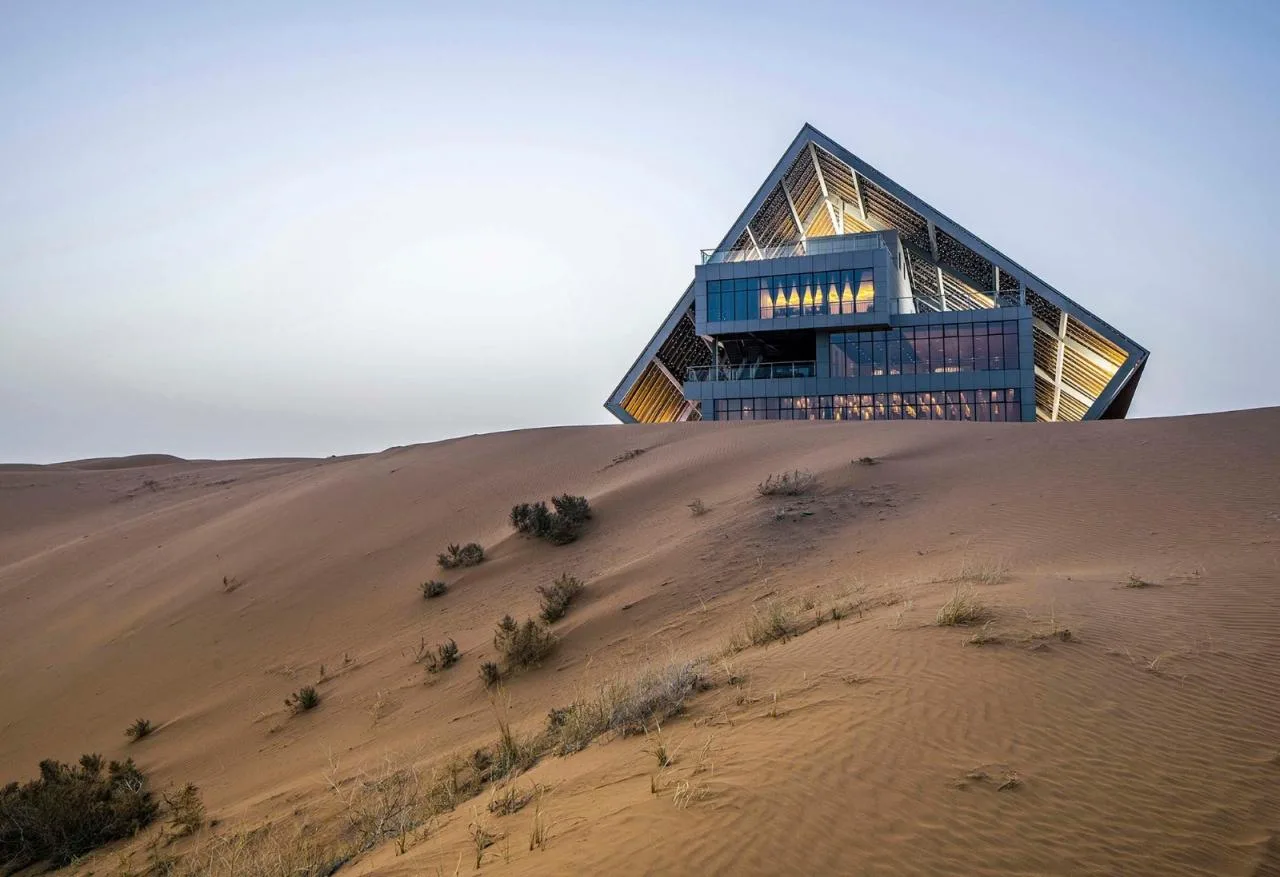
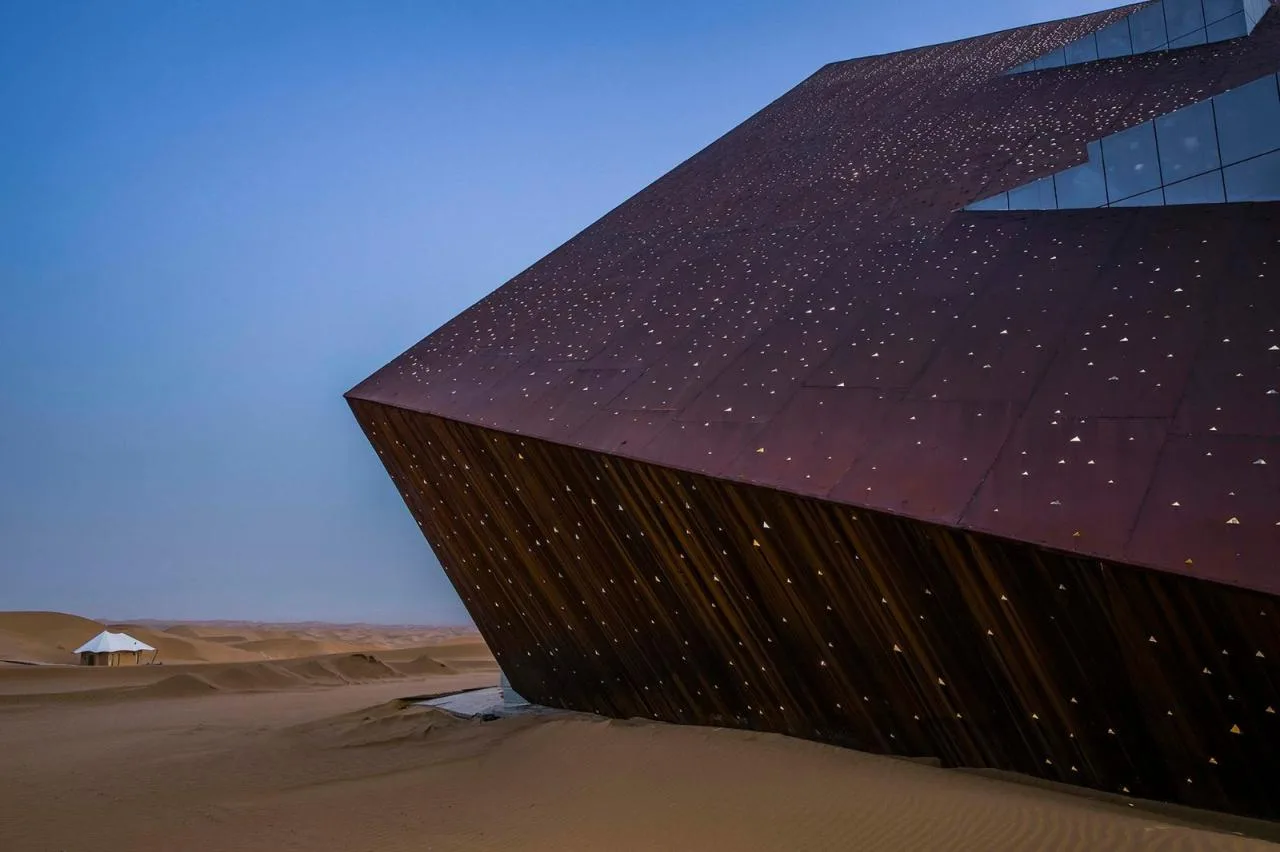
Due to site constraints, the building is oriented along a northwest-southeast axis. Its overall footprint forms an isosceles triangle, with the base facing the northwest toward the Tengger Desert. Architecturally, the structure resembles a tilted, semi-buried box enveloped by perforated, corroded steel plates. The northwest-facing facade is open, featuring transparent materials that visually connect interior and exterior spaces.
The building’s functional core—the “treasure box”—is composed of four horizontally stacked and slightly offset blocks. This rectangular volume is inserted diagonally into the ground, with its four faces exposed, effectively “wrapping” the interior spaces. Some blocks extend beyond the sloped surface, creating triangular protrusions, while gaps between the slope and the main structure form semi-covered outdoor areas that offer varied user experiences.
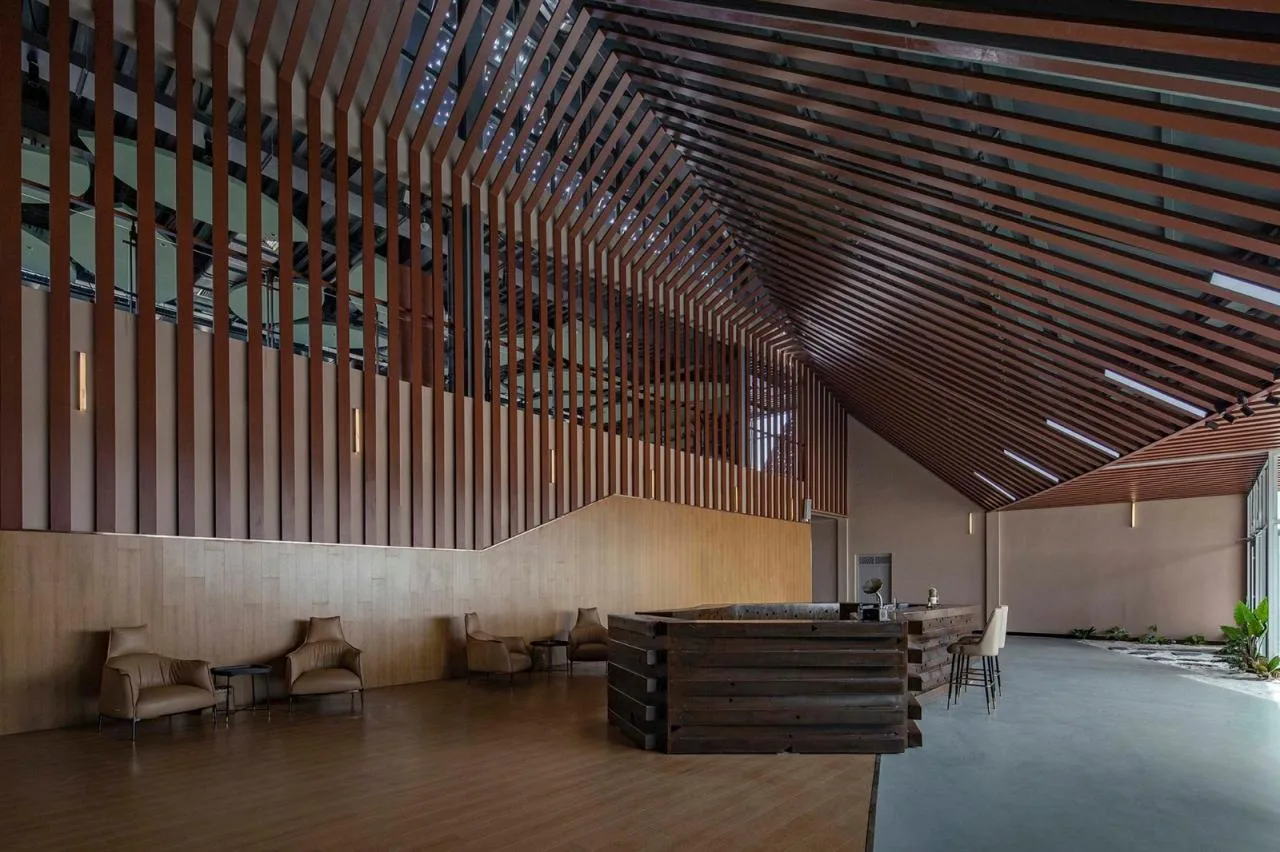
The entrance is located on the southeast side, adjacent to an outdoor stage designed to provide expansive views of the desert. The building comprises four floors: the first floor houses the entrance lobby, dining area, kitchen, and logistics; the second floor contains a multifunctional hall and coffee shop; the third floor features VIP rooms; and the fourth floor accommodates equipment rooms. Multiple semi-outdoor viewing platforms on the northwest facade cater to outdoor use and enrich the building’s overall form. The indoor layout is primarily square, efficiently meeting functional requirements.
Double Roof: Light, Shadow, and Wind Created by Gaps
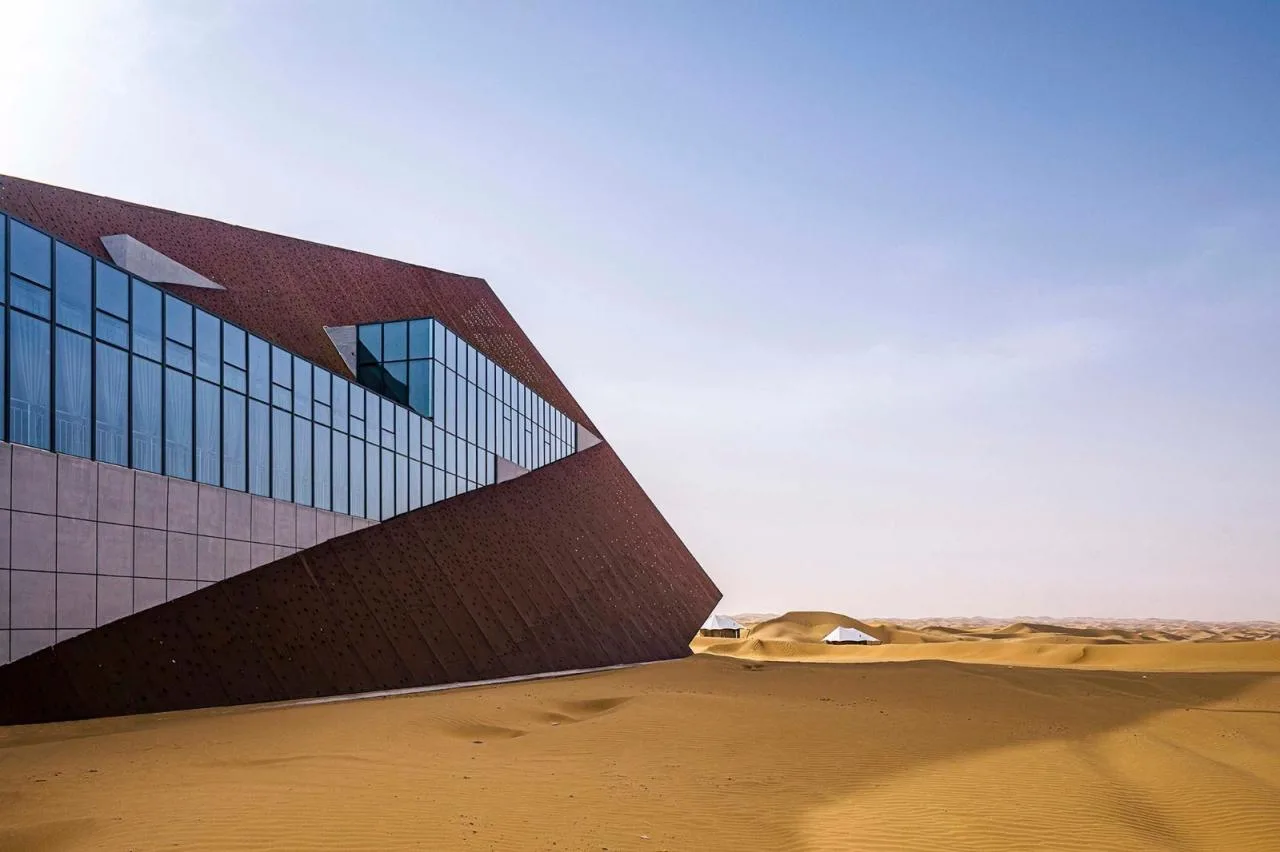
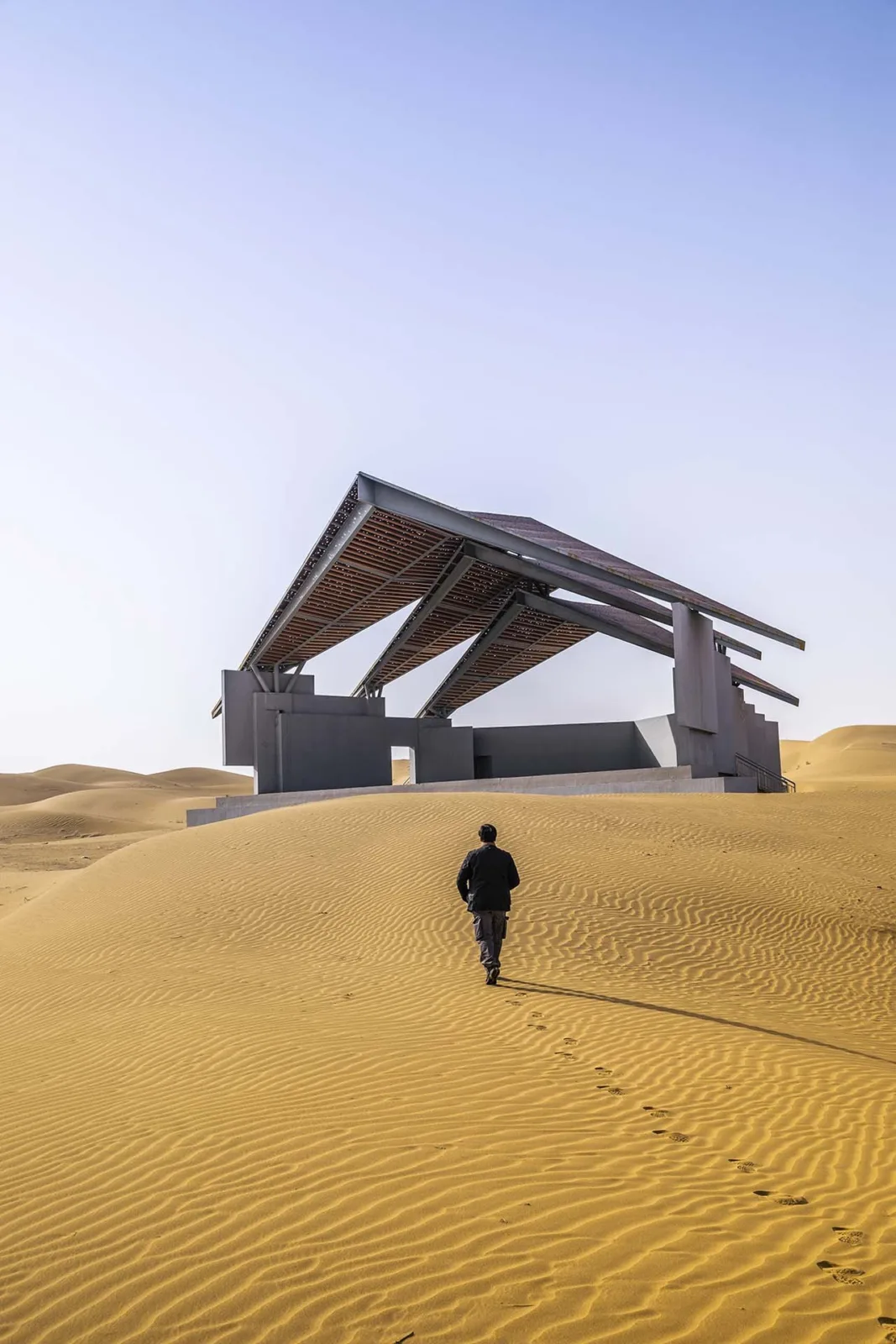
The deliberate separation between interior and exterior spaces results in a double-roof design, responding to the desert’s climatic conditions. In the desert, sunlight is abundant, but shade and wind are highly valued. Locals believe desert buildings benefit greatly from a “cover,” even if it’s just a fabric canopy above the main structure, which reduces direct sunlight and creates a cooler microclimate.
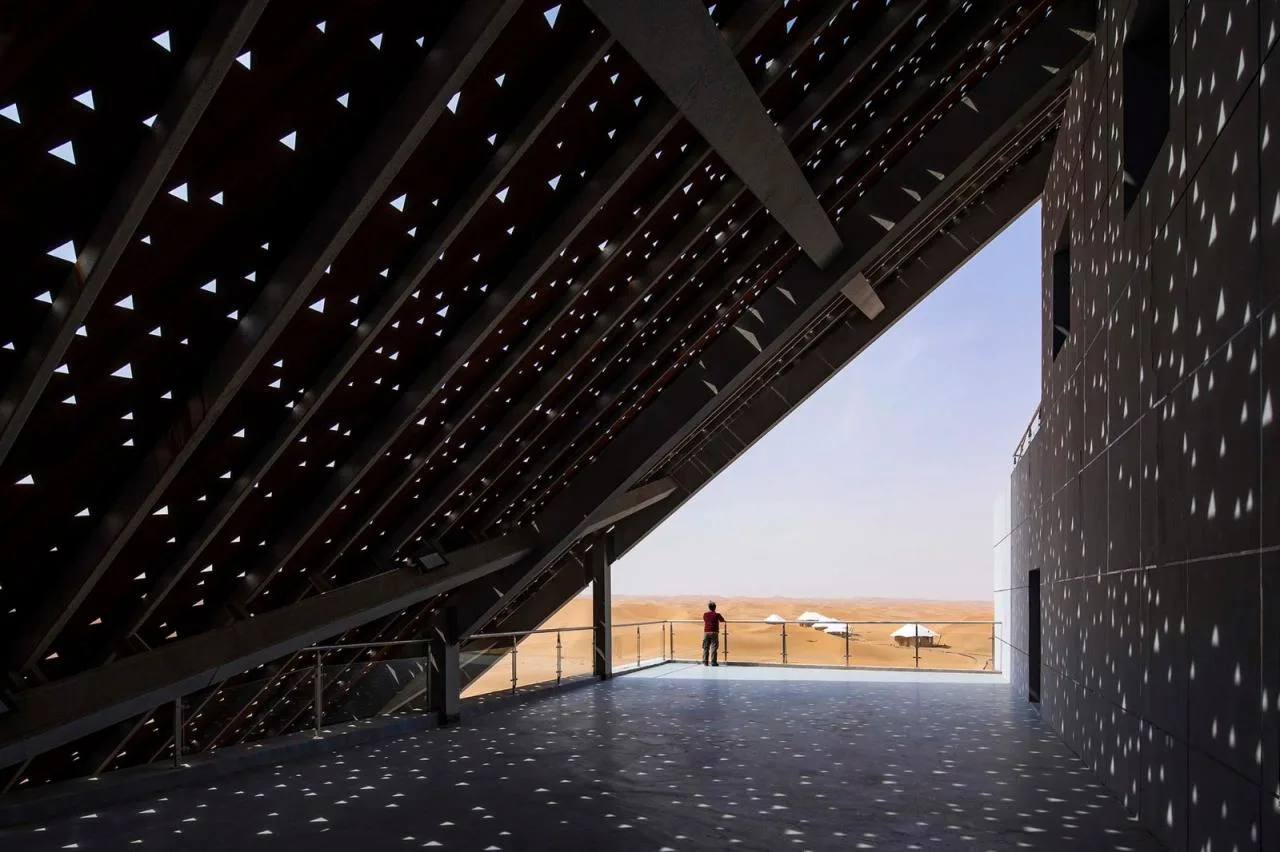
The outer roof layer, made of corroded steel plates, acts as this cover, blocking sunlight, casting shadows, and protecting the second-floor roof from direct heat, thereby lowering indoor temperatures. The temperature difference between shaded and sunlit areas generates wind, which helps dissipate heat trapped between the two roofs. This natural ventilation reduces summer energy consumption and enhances occupant comfort.
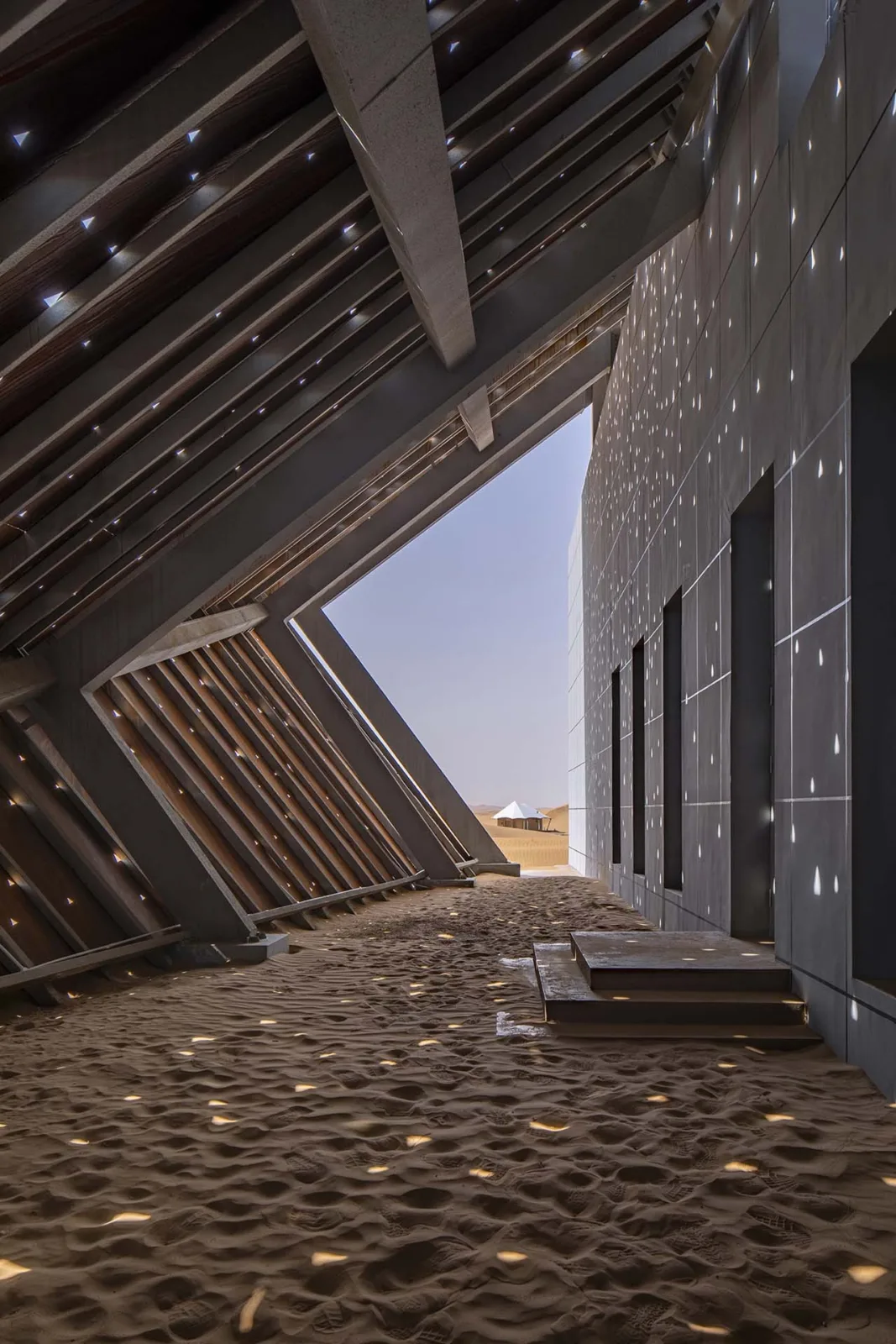
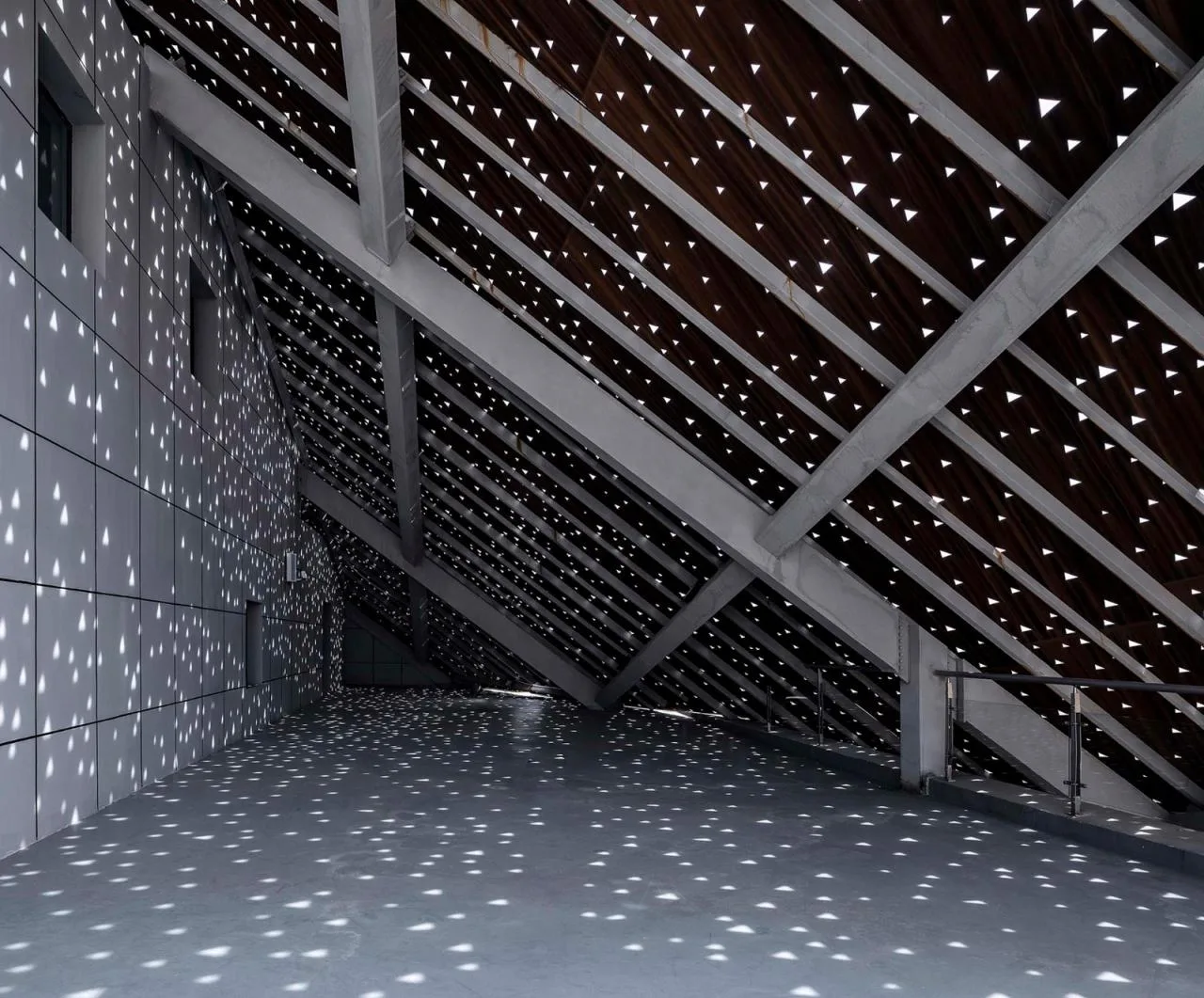
Complementing these effects are several semi-outdoor platforms where visitors can rest and enjoy desert views. The perforations in the steel plates allow wind to pass through and create dynamic light and shadow patterns, adding a romantic ambiance to these semi-outdoor spaces.
Conclusion and Reflection: Crafting a Beautiful and Sustainable Building
While the project holds many successes, there are some regrets. Changes in site dimensions forced a reduction in building volume and adjustments to the original form. Additionally, the design did not fully anticipate the increased operational costs caused by desert sandstorms. For instance, sand infiltration through platforms and perforated roof panels into semi-outdoor spaces has increased maintenance efforts.
Despite these challenges, this project represents an exciting exploration of the relationship between architecture and nature. The design emphasizes the interaction between man-made structures and their environment, not by mimicking natural forms or blending invisibly, but by embracing a bold presence that communicates with nature, fostering peaceful coexistence.
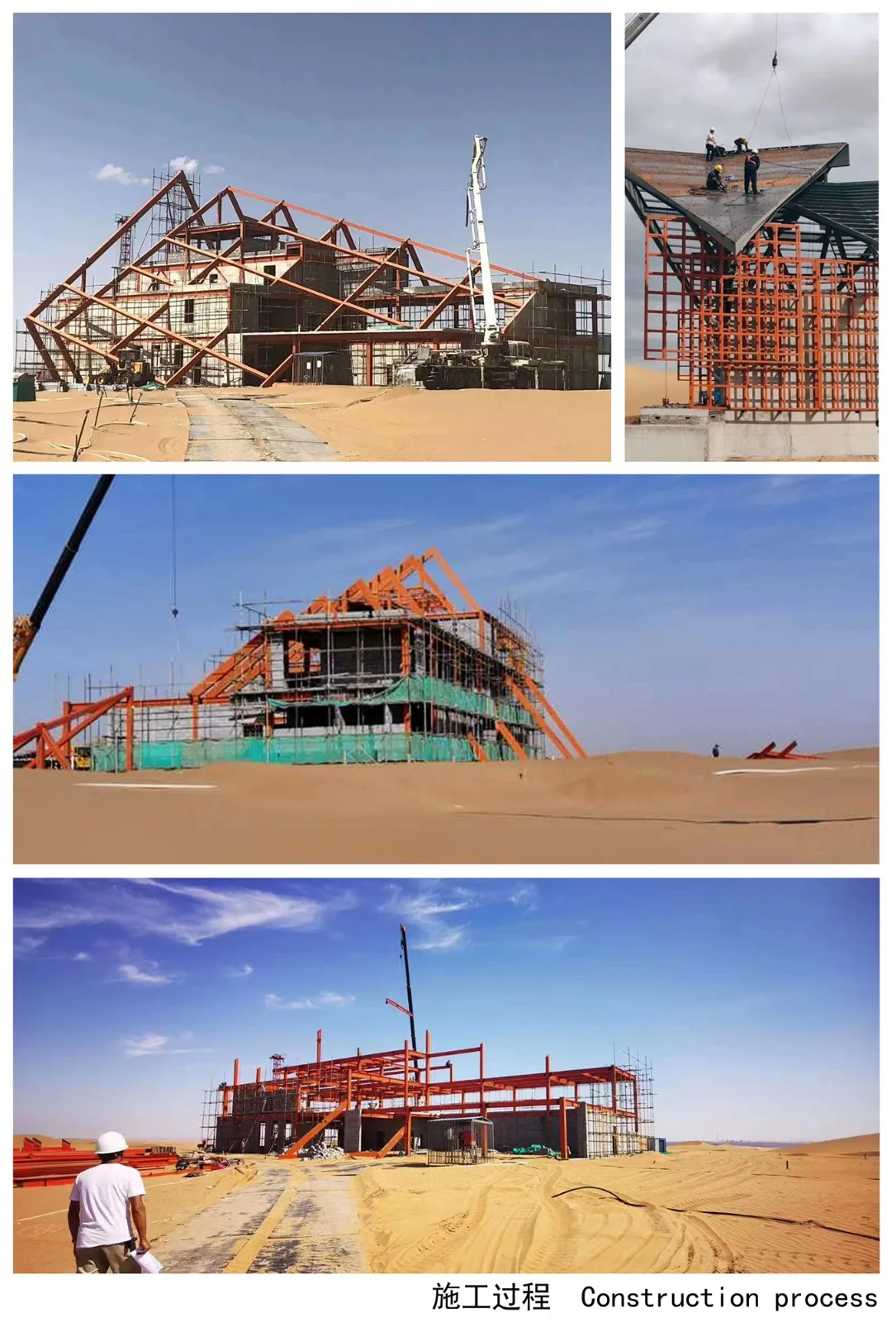
Moreover, the design responds thoughtfully to the site’s natural and climatic conditions, maximizing environmental sustainability. The double-roof system reduces thermal radiation impact and lowers energy use. The use of prefabricated materials like steel structures and corroded steel plates minimizes concrete usage, enhances recyclability, and lessens the building’s desert footprint. This project proves that architectural form and environmental responsibility can be harmoniously integrated to create a building that is both visually striking and healthy.
Project Drawings
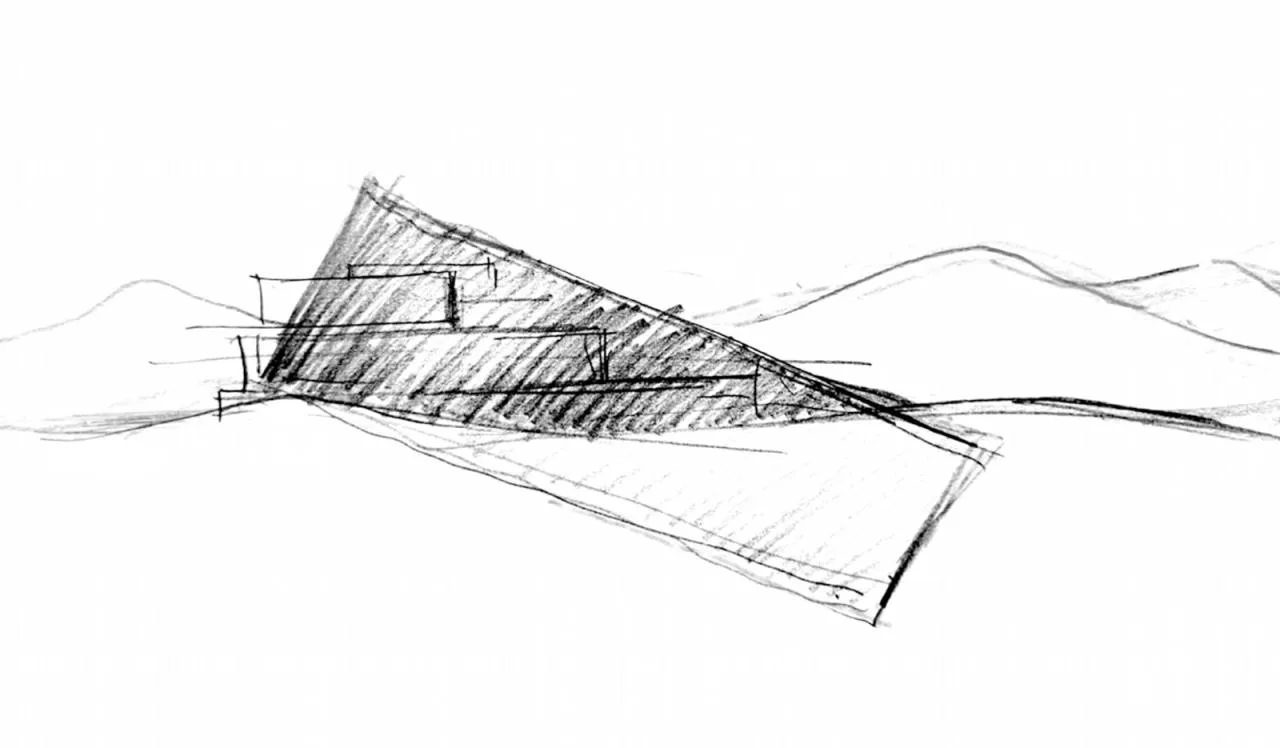
Concept Sketch
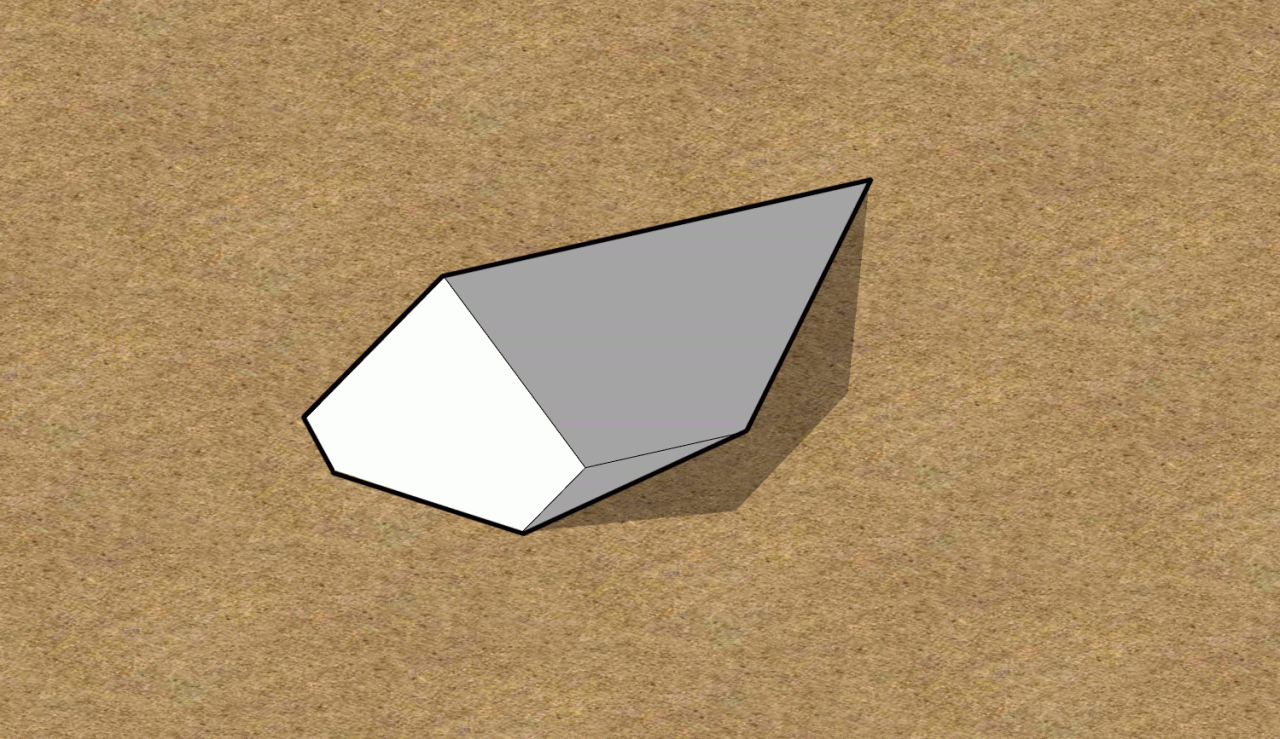
△ Project Generation Diagram
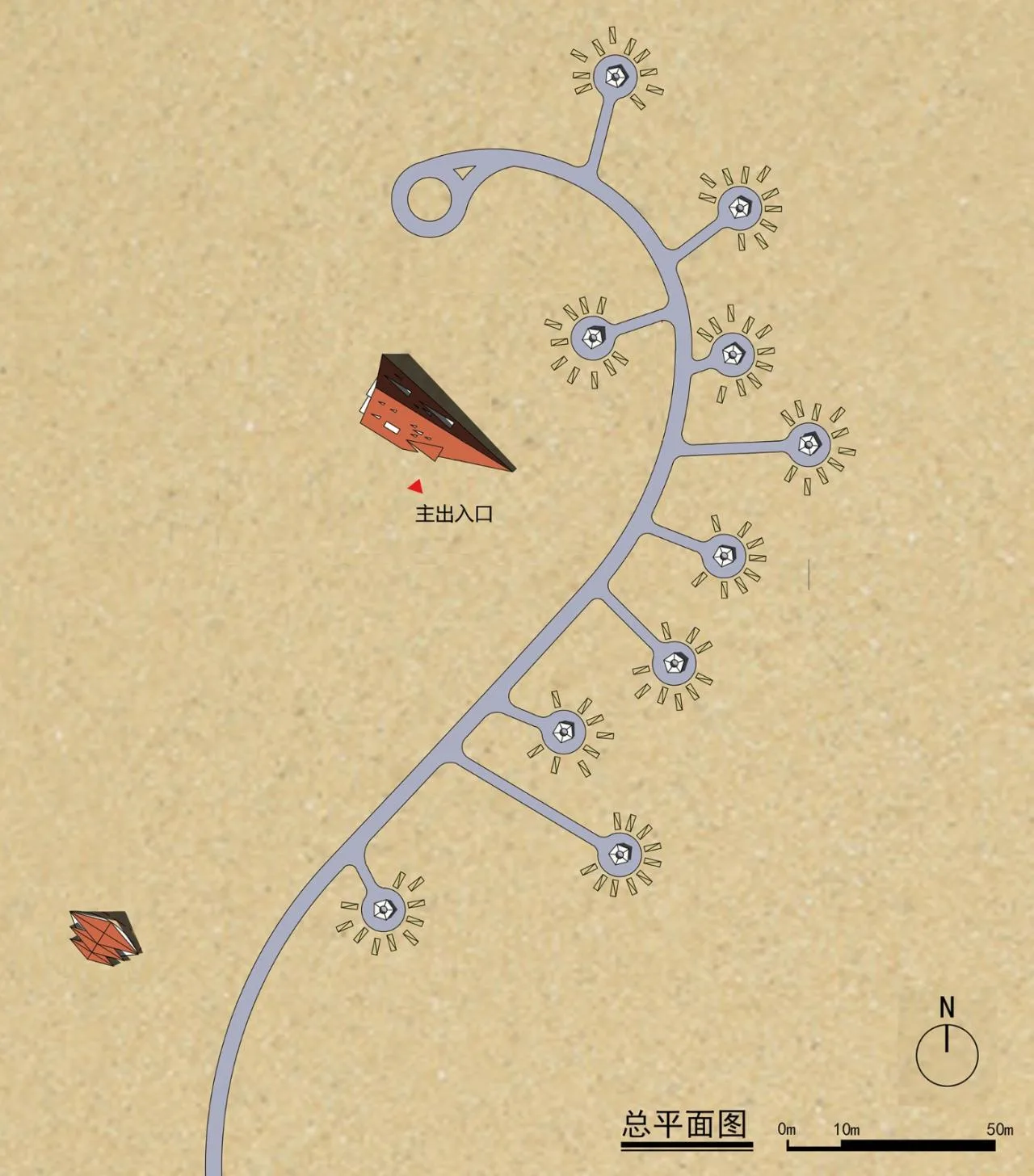
△ General Layout Plan
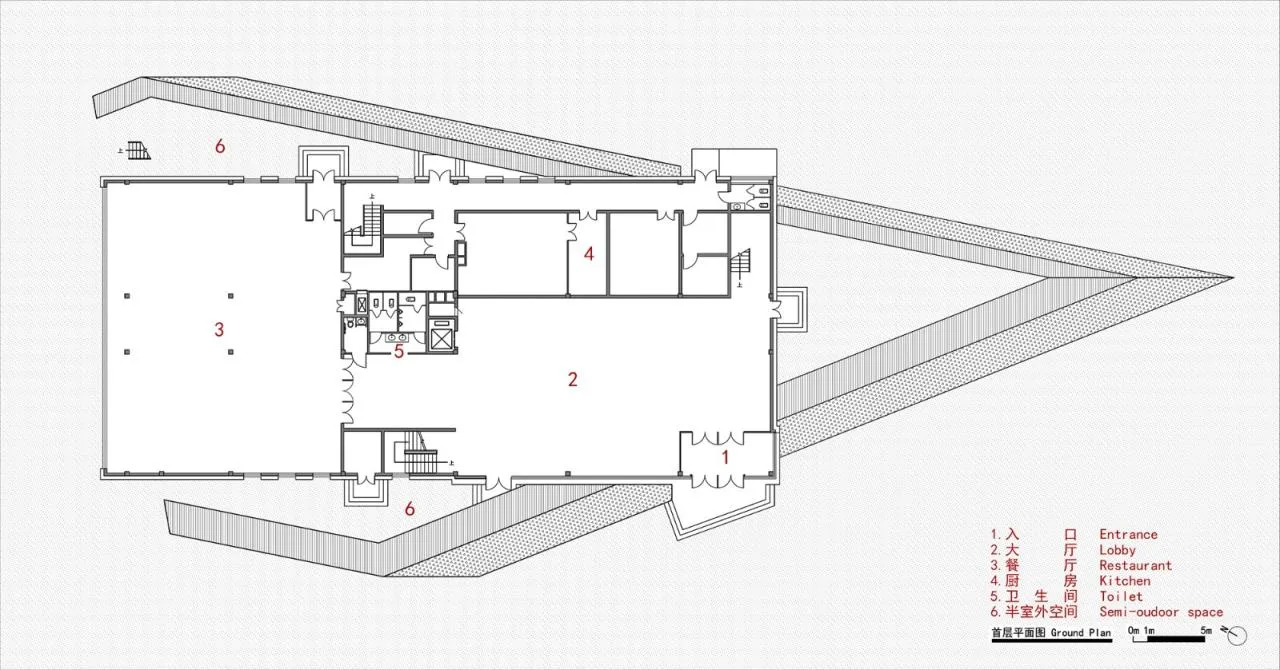
△ First Floor Plan
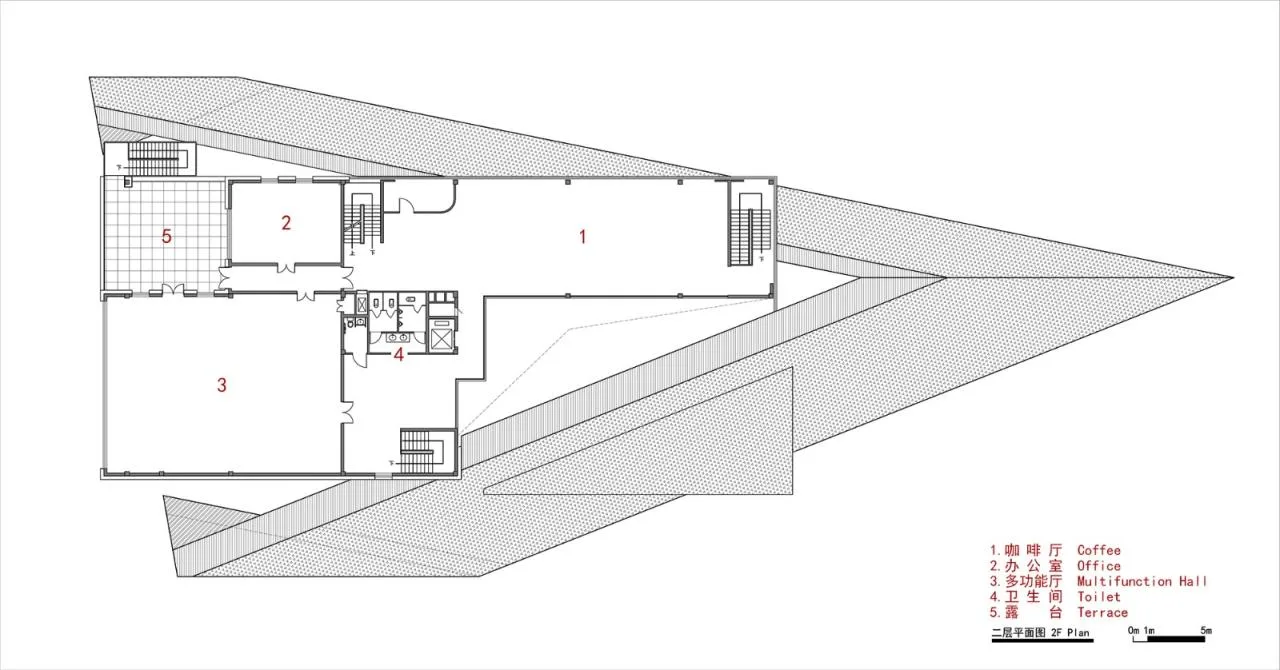
△ Second Floor Plan
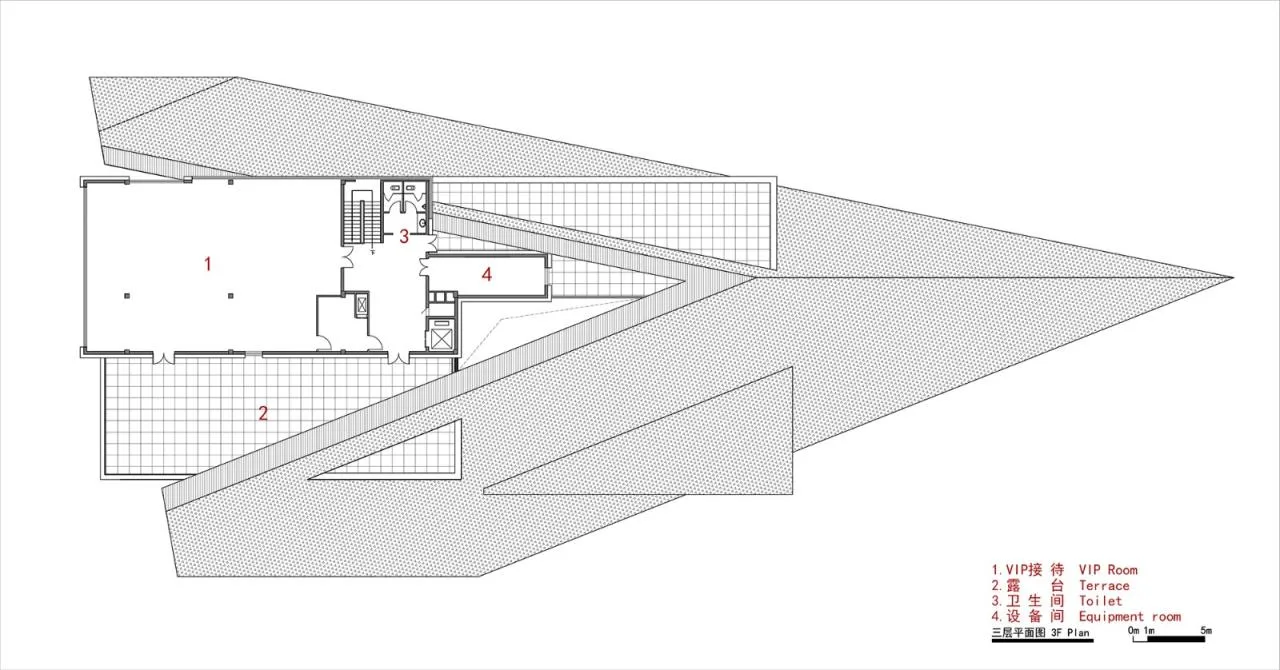
△ Third Floor Plan
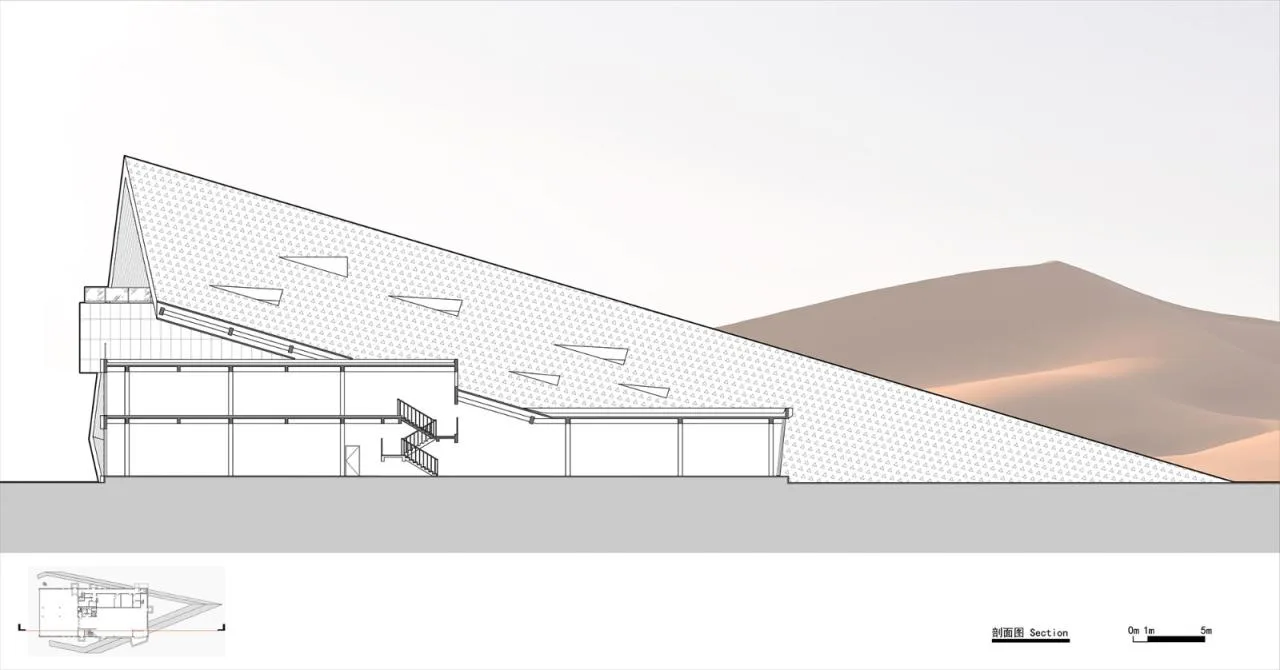
△ Section Diagram
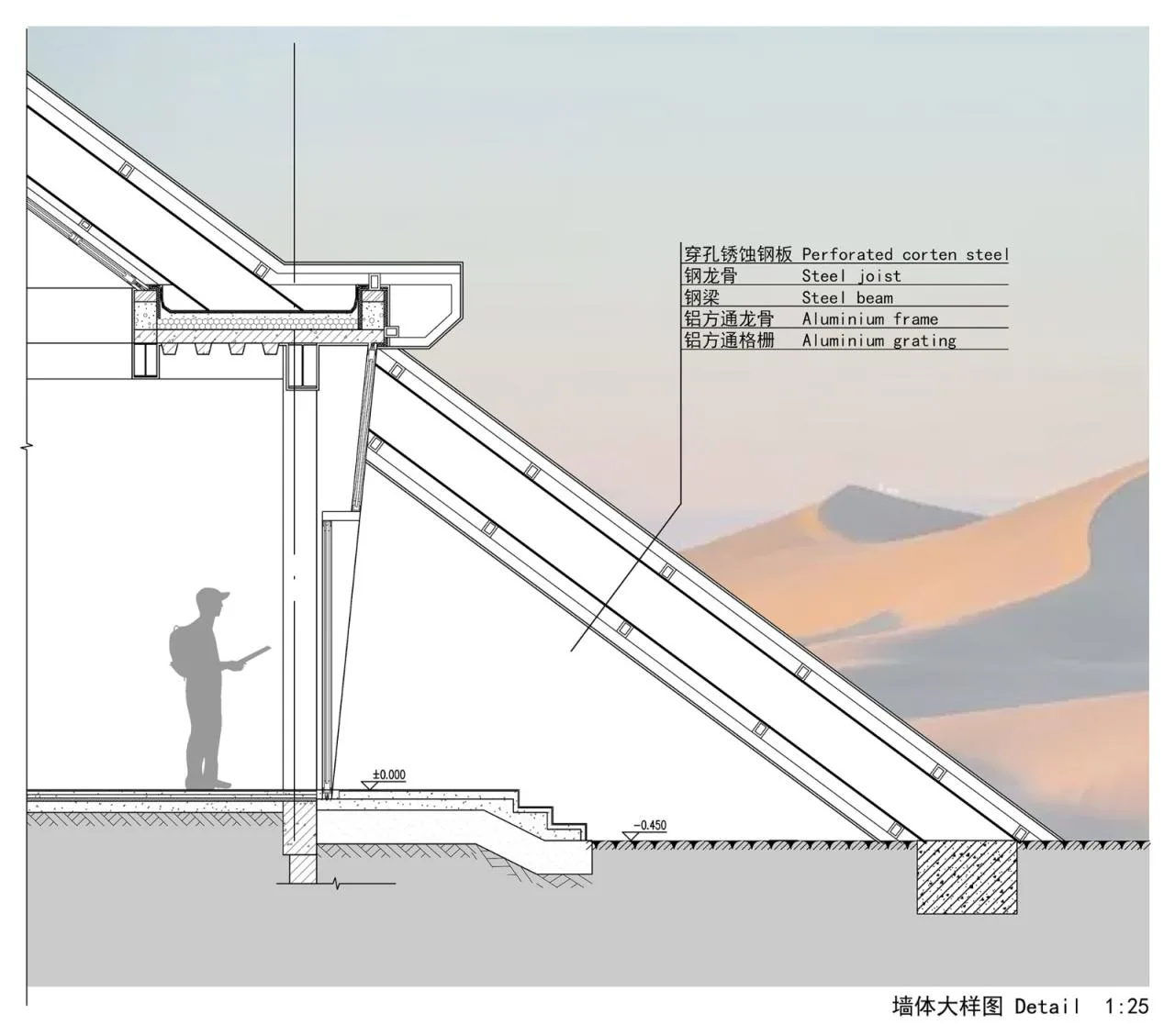
△ Wall Detail Drawing
Project Information
Architectural Design: Three Literature Architecture
Area: 2,600 square meters
Project Year: 2021
Photographer: Jin Weiqi
Lead Architects: He Wei, Chen Long
Design Team: Li Qiushi, Cao Shiqing, Zhao Xinze
Construction Drawing Team: Architecture – Zhao Yanmei; Structure – Li Wei, Jinhua; Water Supply and Drainage – Yan Yuxiao; HVAC – Zhang Min; Electrical – Lu Yao, Tian Kai
Client: Shapotou Tourism Company
Construction Drawing Design: Zhicheng Jianke Design Co., Ltd
Location: Zhongwei City, China
















Must log in before commenting!
Sign Up