
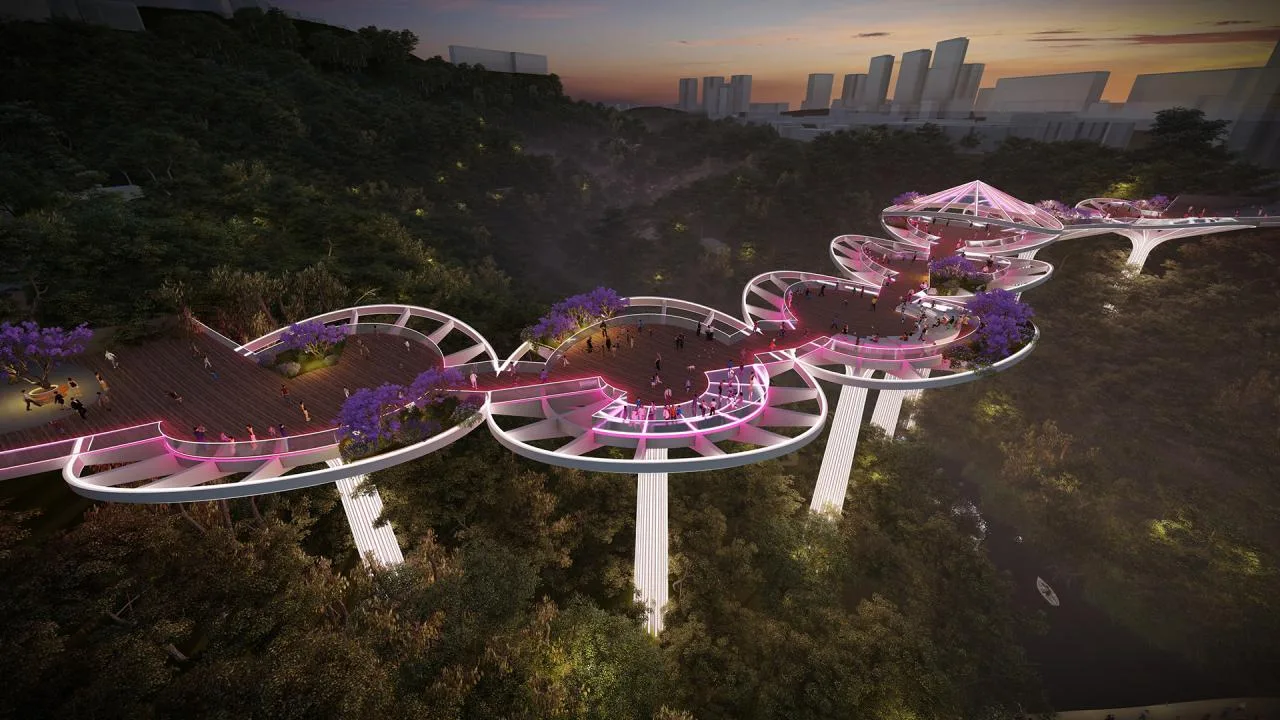
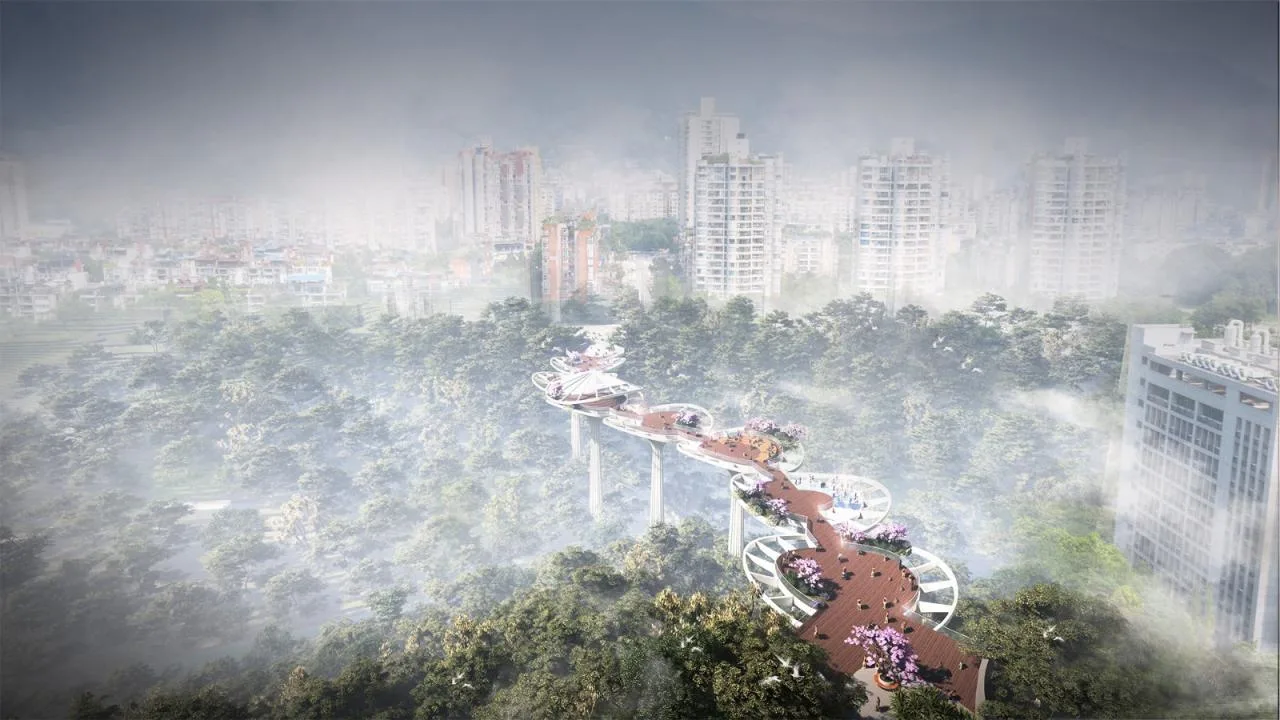
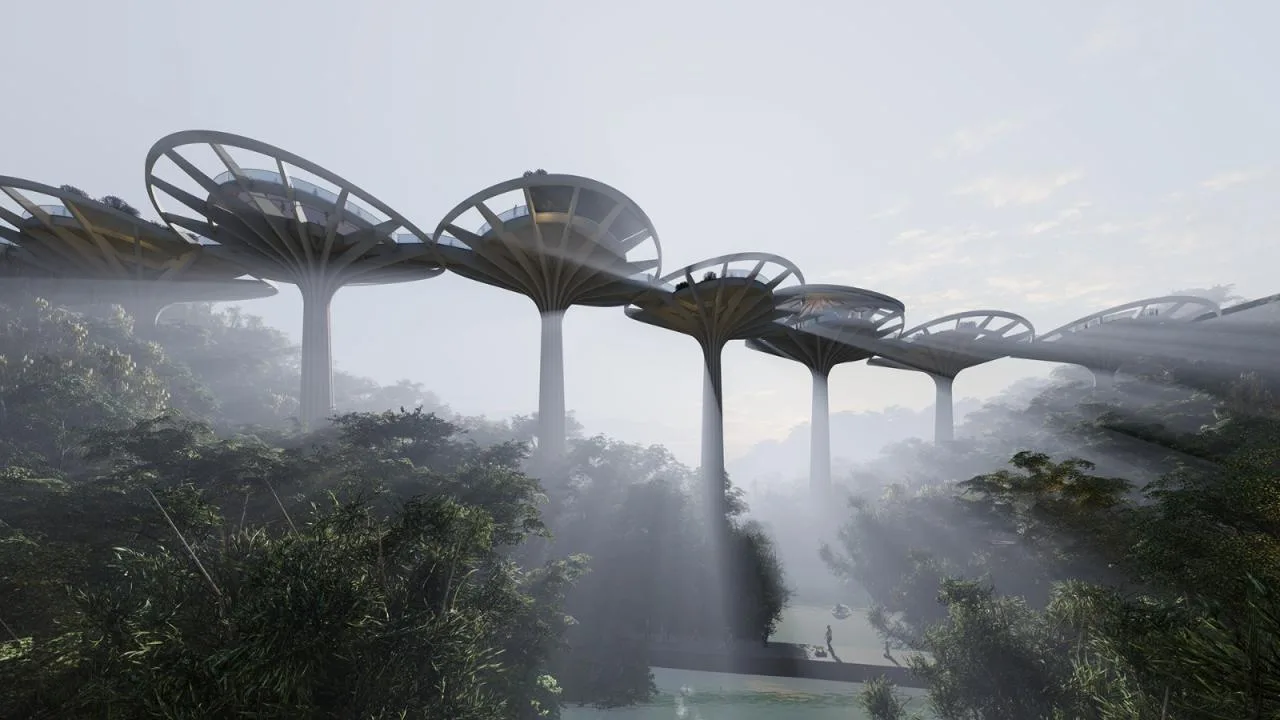
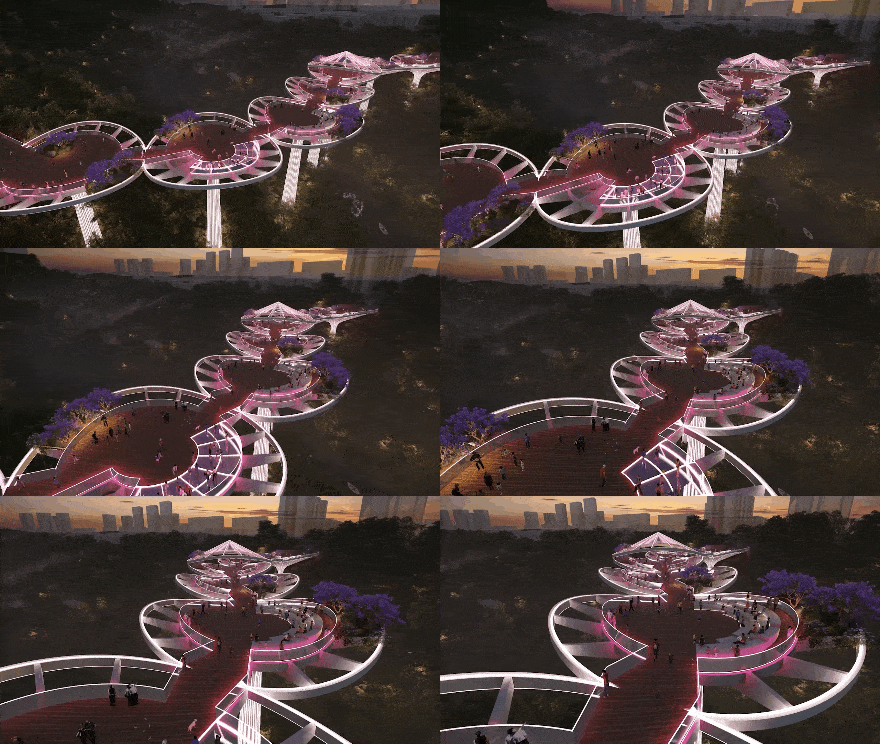
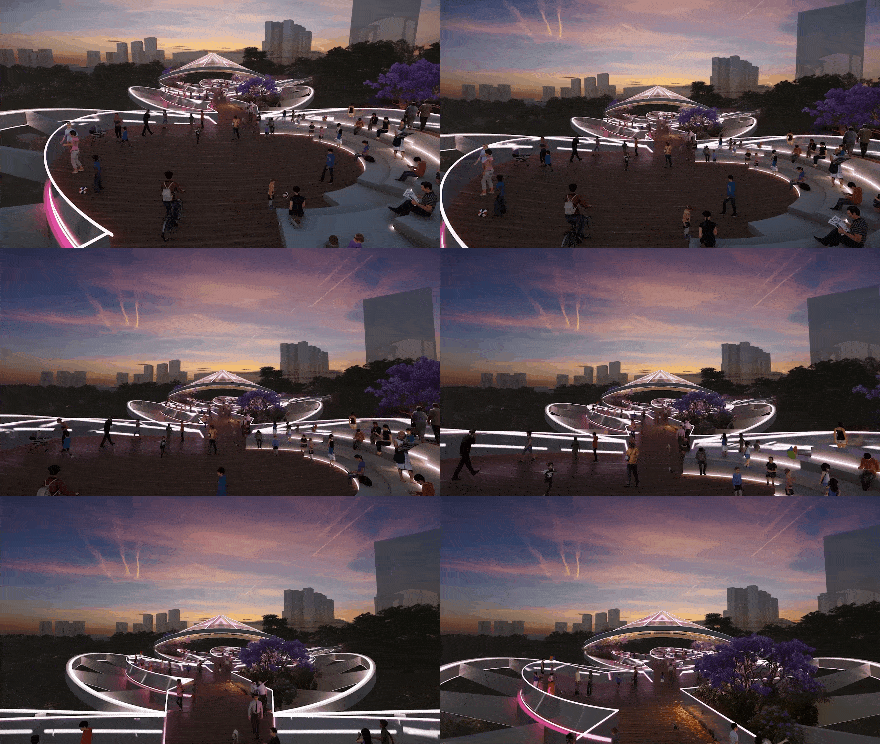
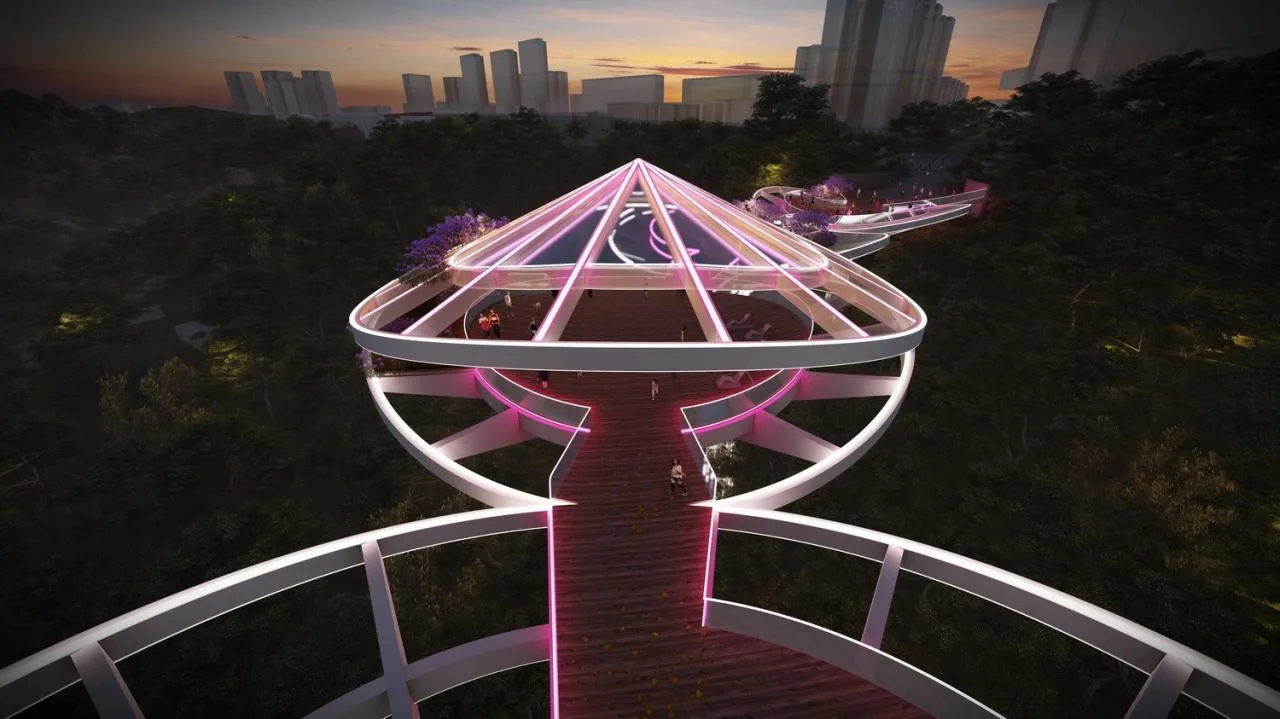
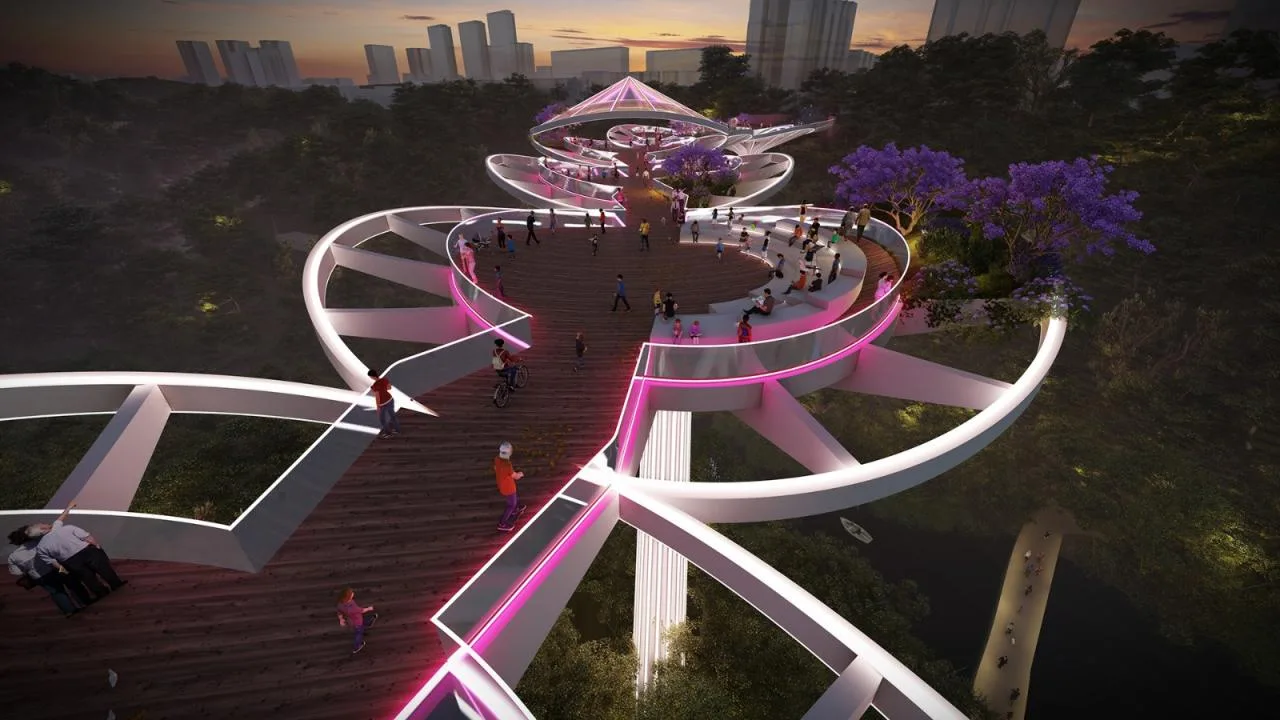
This project features a pedestrian landscape bridge spanning the heart of Ma’anxi Park. It embodies a layered meaning, transforming linear space to carry richer vector connotations, including the potential to redefine “surface” and “domain.” Ultimately, what does “bridge” mean to people? It’s not only a physical structure but also a symbolic entity that ensures energy conservation akin to an equivalent exchange.
When exploring new possibilities, the first step is to analyze the project’s context and uncover the underlying causes of the current situation. The design team approaches this by asking many “why” questions to build a solid design framework.
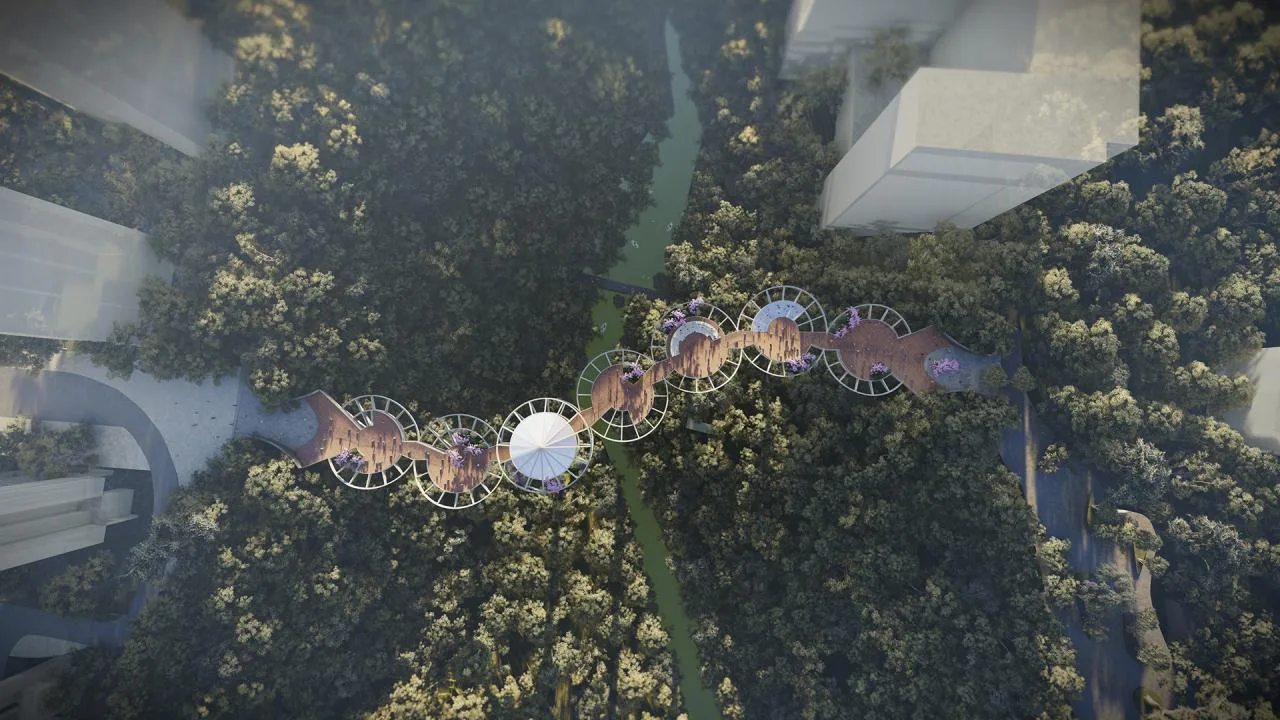
01. Why Strengthen Functional Connections Between Cities?
Southwest University is among the first “Double First Class” universities directly administered by the Ministry of Education. It spans over 8,000 acres, with a campus area of 1.65 million square meters. The university currently serves more than 50,000 students and employs over 3,000 full-time faculty.
Residential areas flank both sides of Ma’anxi Park, creating significant travel demand. As the population grows, commuting pressure has doubled. Ma’anxi Park, a narrow strip of green space, runs along the northwest edge of Southwest University. While this semi-enclosed, clean park offers a buffer for the campus, it physically separates it from the urban residential neighborhoods beyond.
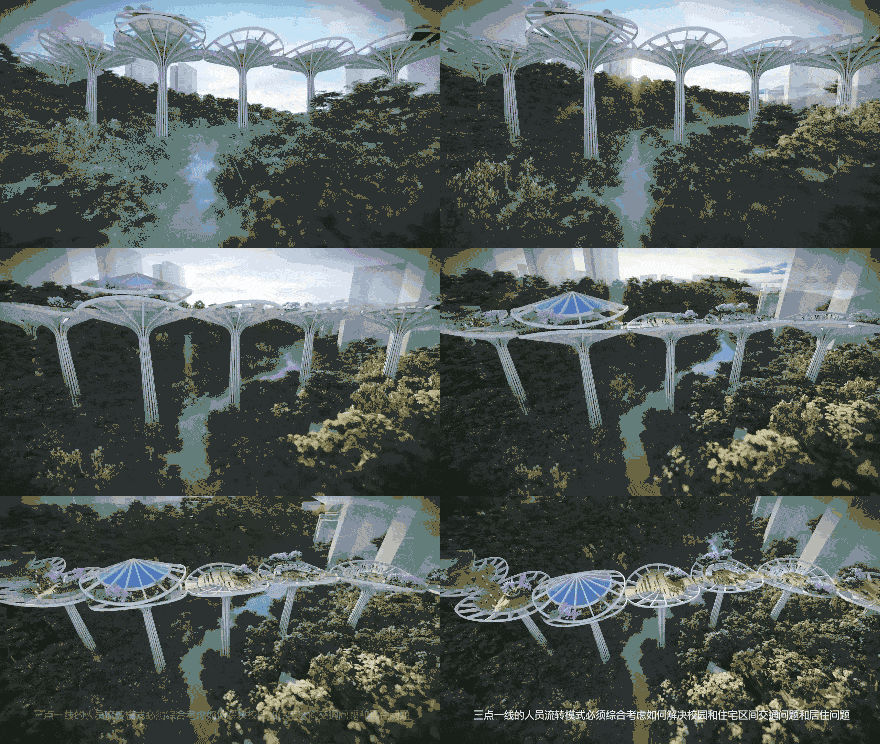
The dynamic flow of people is similar to the “three-point frontline” turnover pattern seen in schools, necessitating comprehensive solutions to complex transportation and pedestrian traffic challenges. This project also represents a renewed organization of vehicular and pedestrian systems.
02. Why Export Urban Social Welfare Value?
The Ma’anxi Wetland Park offers exceptional natural ecological conditions. However, as it lies within a valley, its ecosystem struggles to interact positively and timely with nearby residential areas and Southwest University. This misalignment requires exploration and intervention.
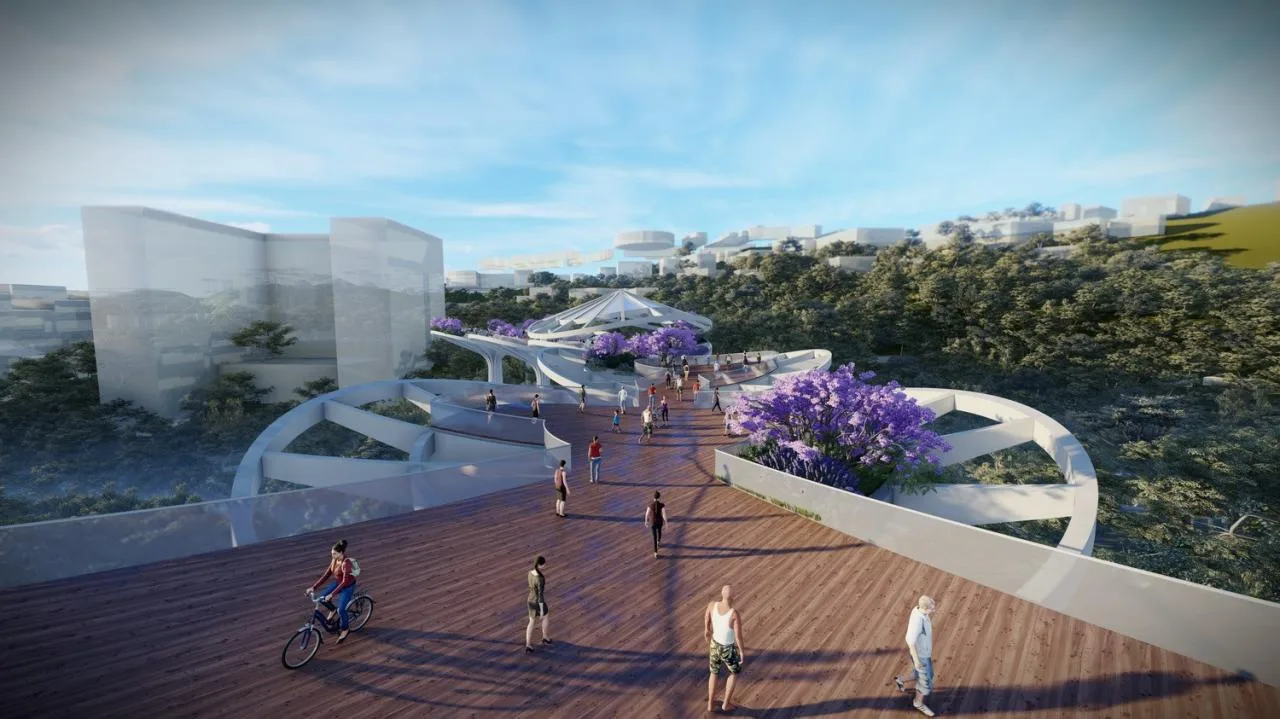
The steep vertical slopes cannot be easily navigated by stairs alone, so bridges are crucial for improving connectivity. Additionally, the design aims to balance landscape leisure functions, revitalize the wetland park, and collectively create an attractive living environment.
The site features significant height differences and lacks sufficient connection points, posing challenges:
- Using stairs to manage elevation changes and enhance ground-level spatial cohesion.
- Exploring hidden vertical spaces created by these height differences to develop integrated, multi-level transportation networks.
03. Why Stimulate Regional Economic Vitality and Create a Landmark for Historic Districts?
Located in Beibei District, the project is surrounded by rich natural and cultural tourism resources. Key nearby attractions include Jinyun Mountain, Beiwenquan, Chongqing Natural History Museum, Southwest University, Lu Zuofu Memorial Hall, Lao She’s former residence, Zhang Zizhong Martyrs Cemetery, and the former site of Fudan University.
The repositioning of the urban ecological system in this historic district represents a nonlinear integration. The landscape bridge acts as a bridge between “new” and “old” areas, creating a cluster model that explores the city’s vitality and appeal.
Summary
Unlike traditional linear bridges serving as one-way traffic hubs, this project responds directly to user needs by breaking down demand points and applying a point-to-point design strategy to address the project’s current challenges.
Where connections are lacking, they are strengthened. The creation of a three-dimensional transportation network effectively resolves existing issues. In response to limited public spaces, diverse spatial forms and facility conditions are introduced. When urban development lacks new momentum, the project injects fresh energy into older districts.
This approach integrates fragmented elements, prioritizing connections between different urban blocks during the integration process. Schools should no longer function as isolated fortresses; the campus becomes accessible, inviting both insiders and outsiders to cross this bridge—young, curious, and energetic.
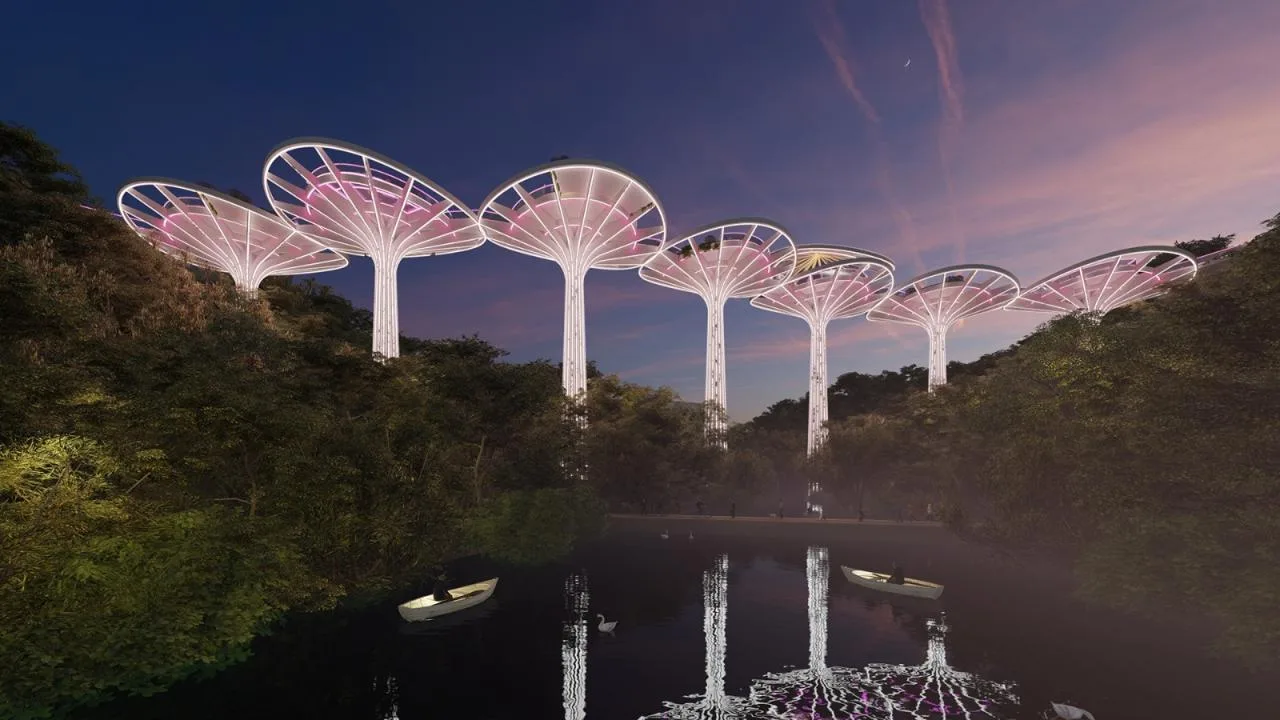
Project Drawings
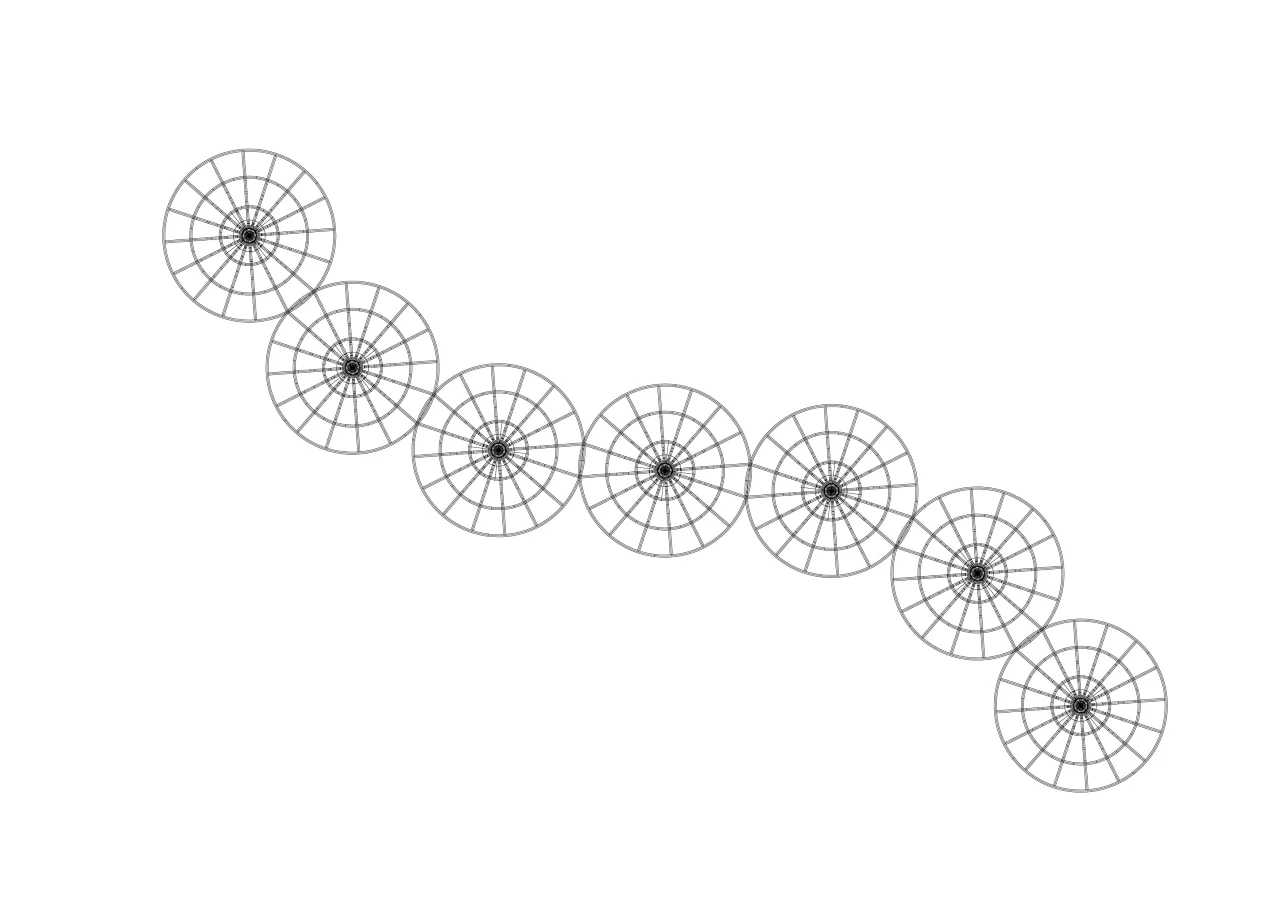
Top View
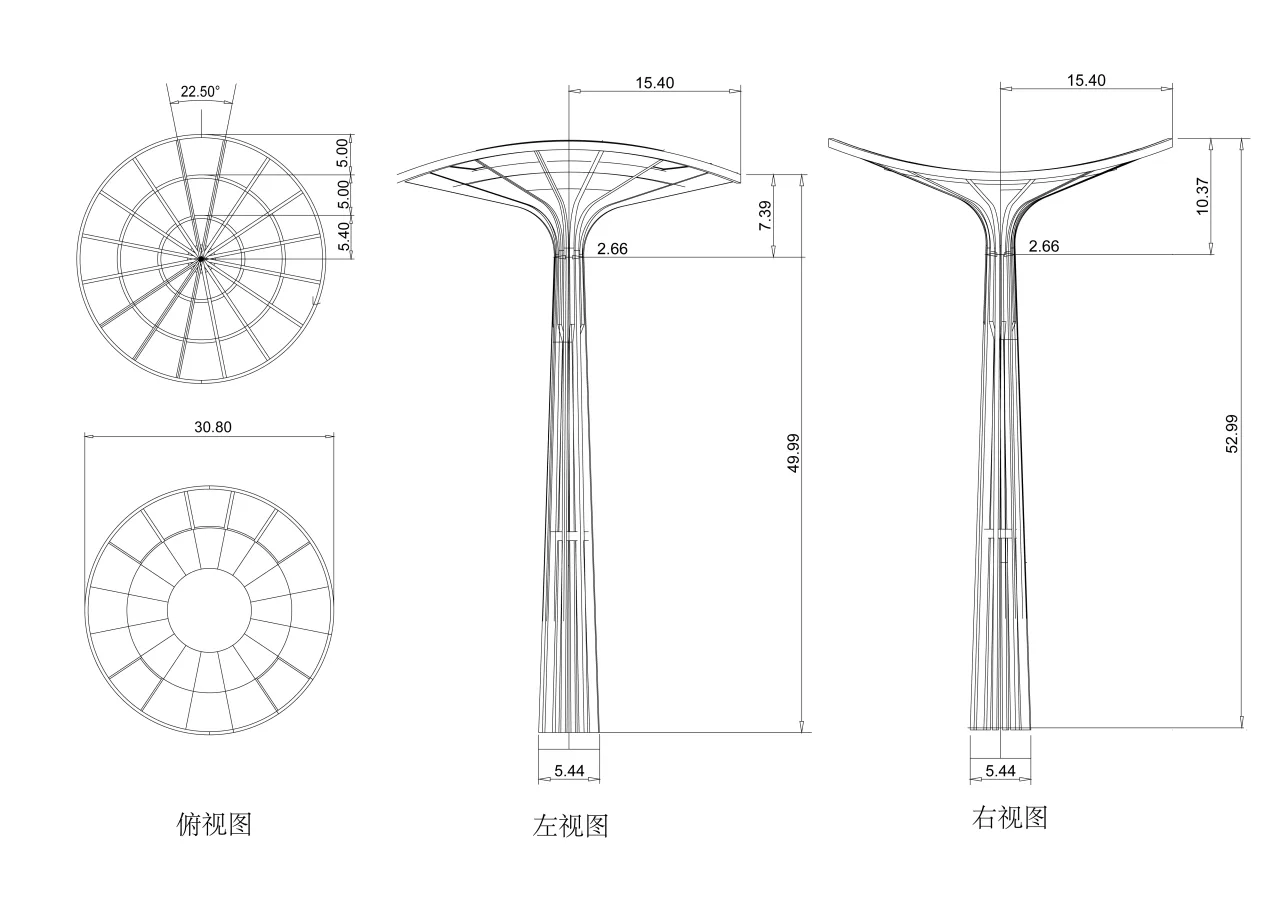
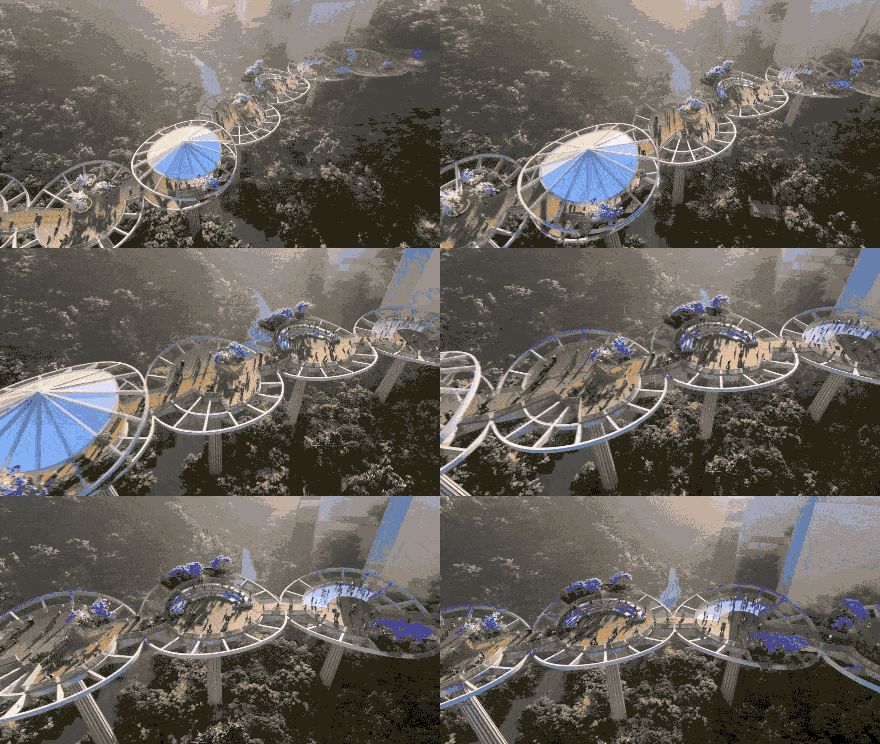
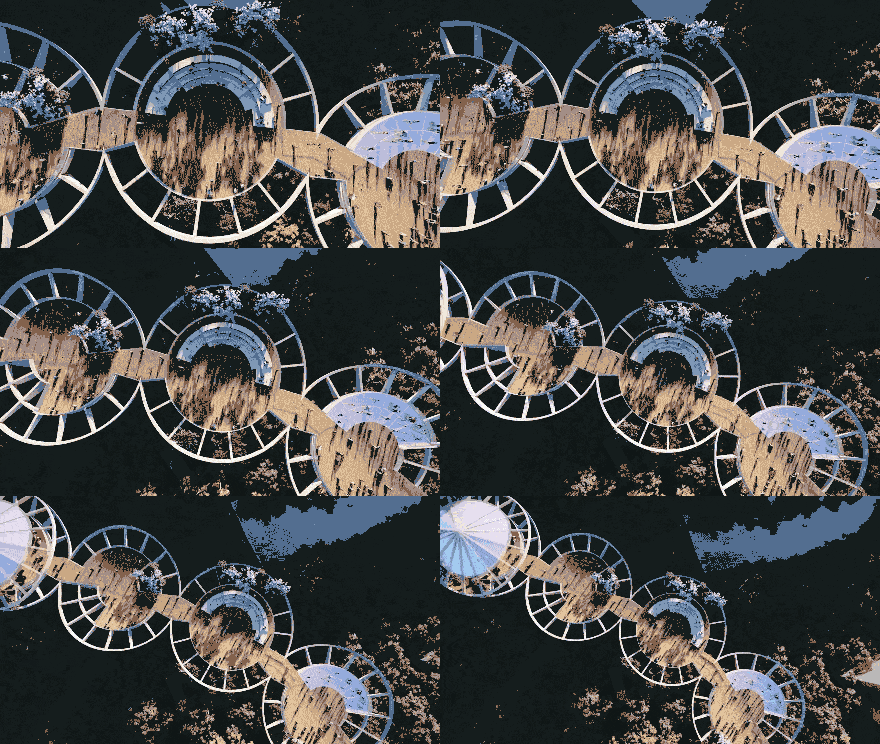
△ Views from Different Angles
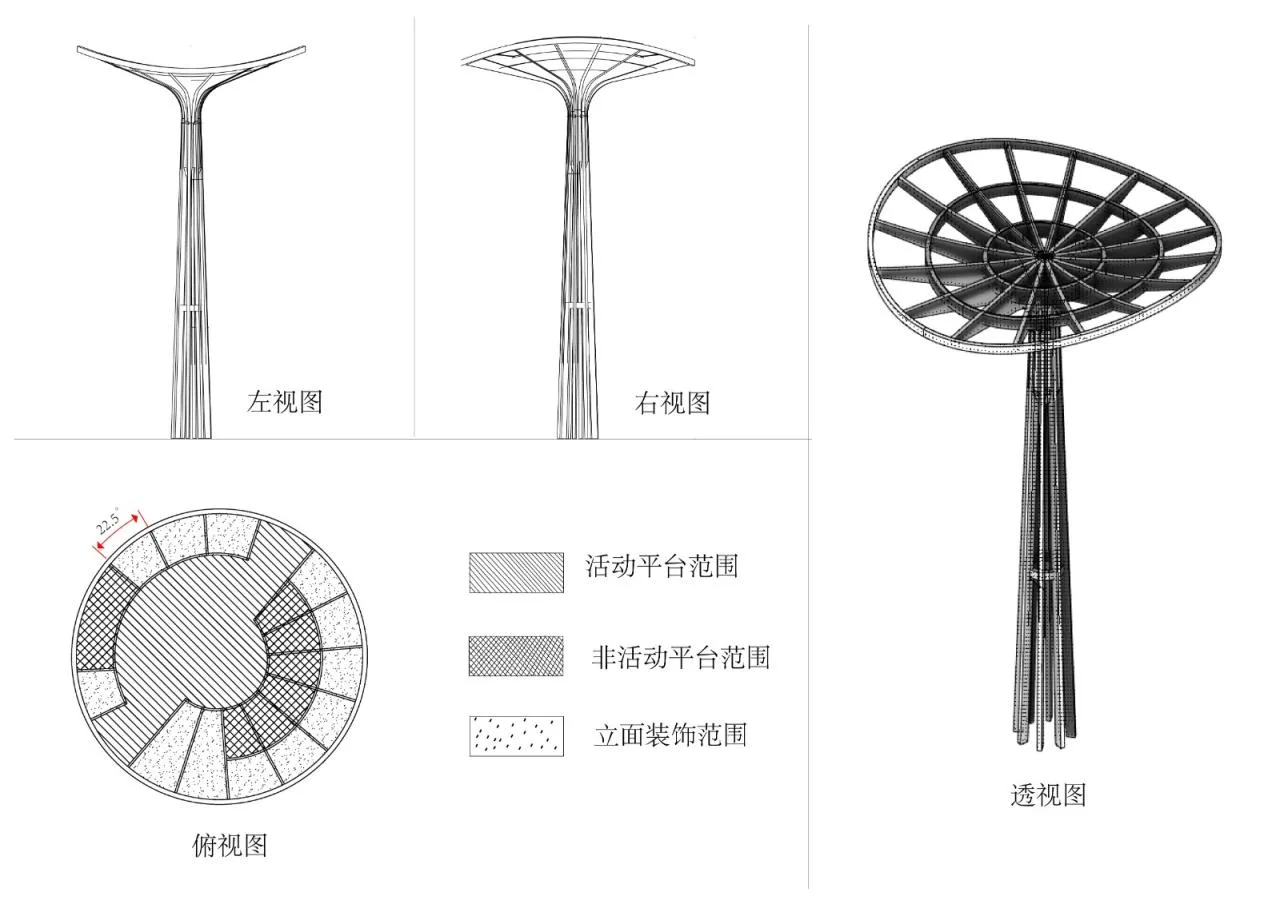
△ Analysis Chart
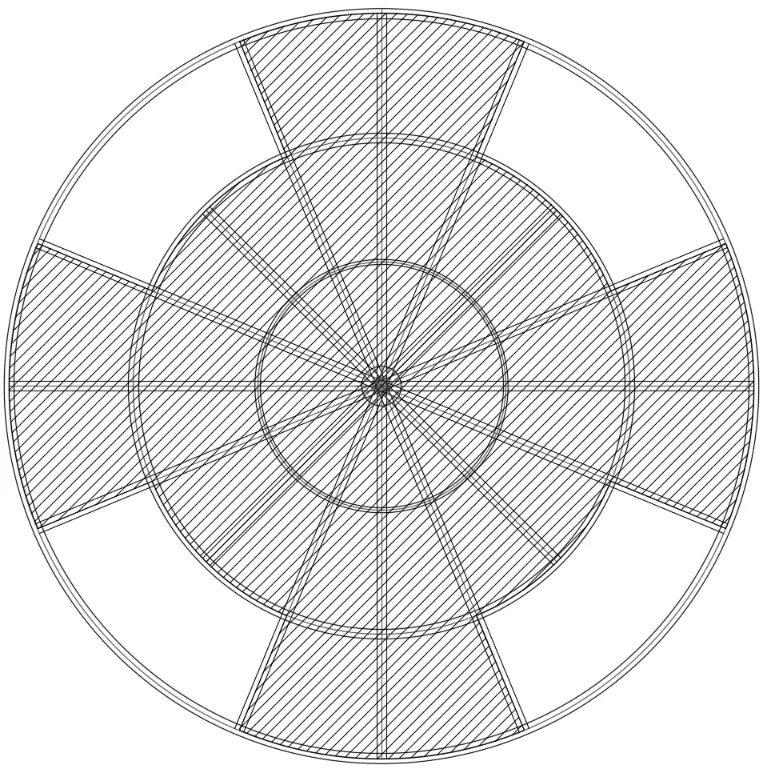
△ Analysis Chart

Project Information
Project Name: Southwest University Pedestrian Landscape Bridge Project in Beibei District, Chongqing
Total Length of Bridge: Approximately 270 meters
Total Height of Bridge: About 45 meters
Estimated Total Cost: Approximately 70 million yuan
Lead Partners: Lin Cong, Xie Zhiquan
Design Team: Lu Jihua, Yang Shanhui, Zou Feiran














Must log in before commenting!
Sign Up