
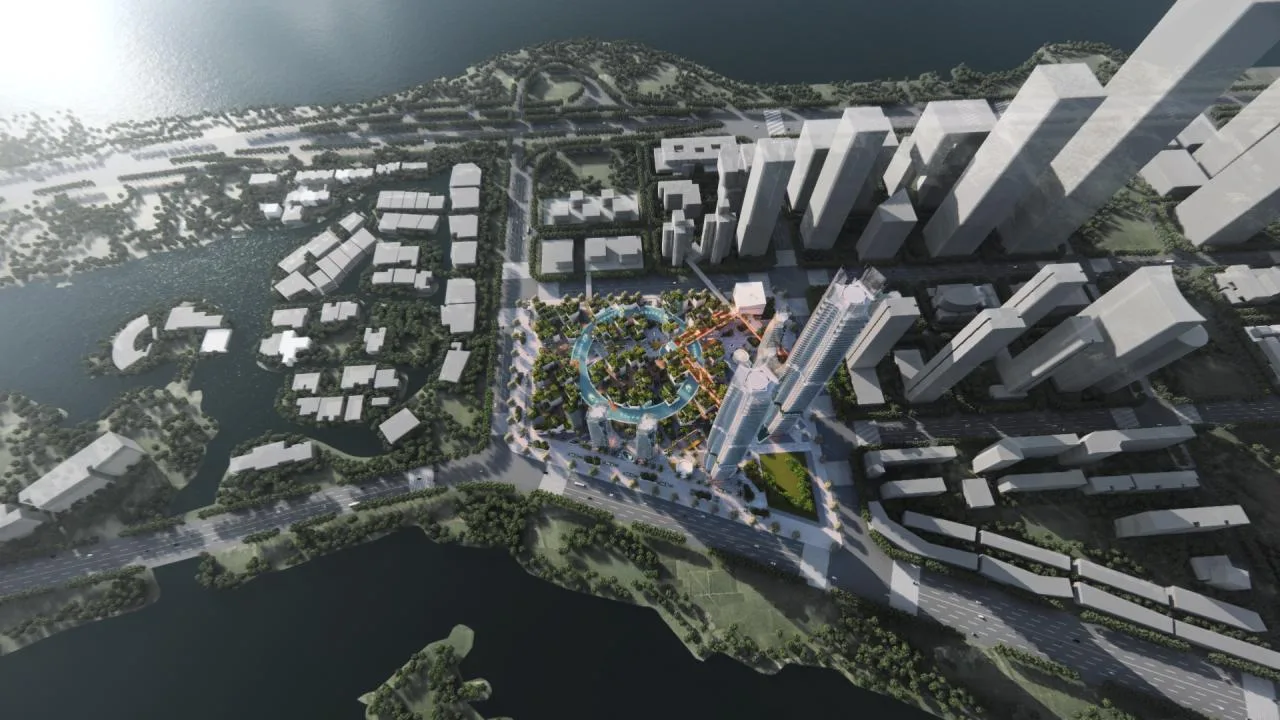
The urban design of the Shenchao area follows a spatial structure defined as “one heart, two cores, and cross habitat,” guiding the relationship between the city and land use at both macro and micro levels. The project aims to develop a new community that is globally oriented, forward-looking, and radiates influence to surrounding regions. It seeks to establish a landmark, a “pinnacle work,” within the world-class Guangdong-Hong Kong-Macao Greater Bay Area urban cluster.
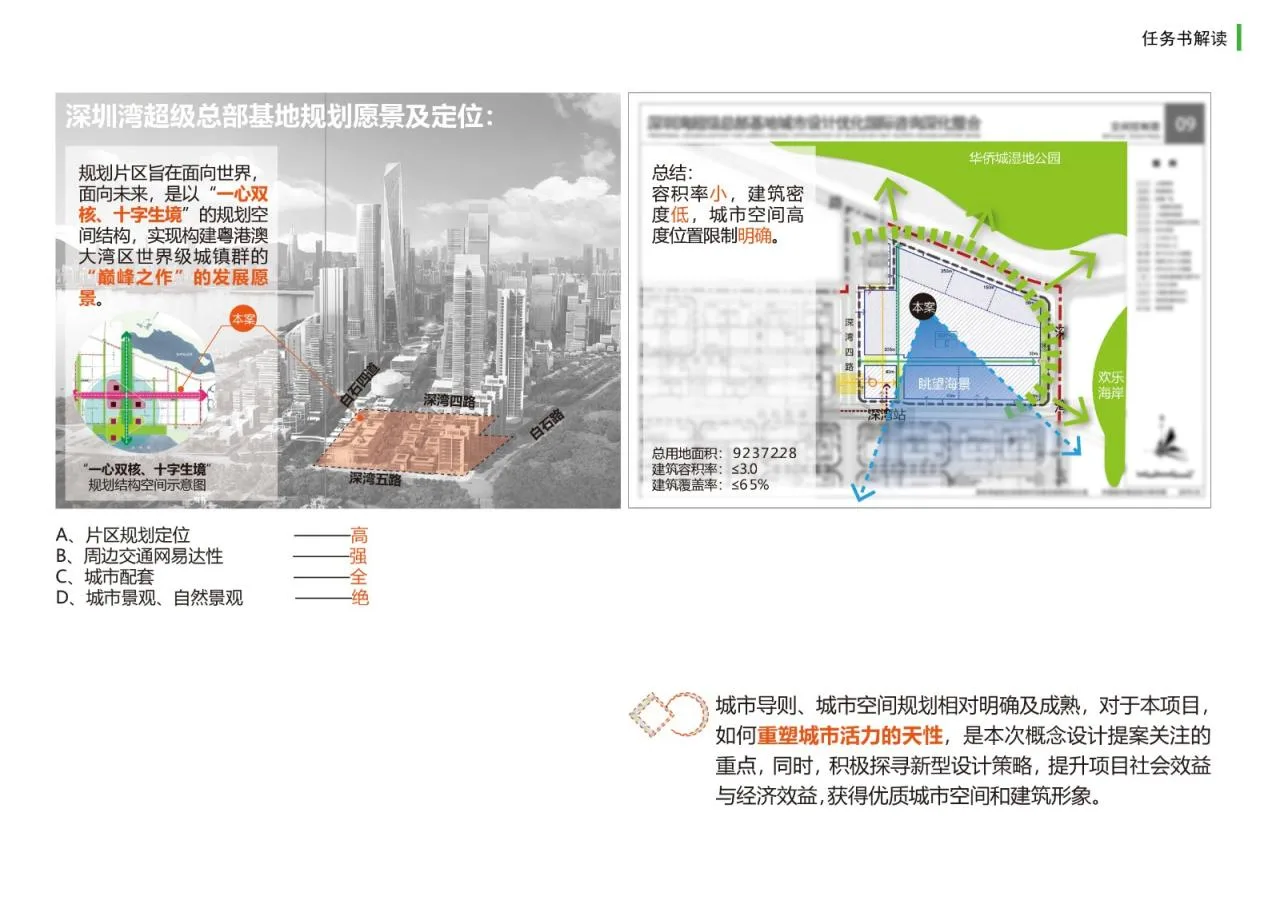
Located at the southwest corner of Baishi Road and Shenwan Fifth Road intersection, the project faces Hong Kong across the sea. The site boasts a unique natural landscape and serves as a prominent city gateway, offering immense development value. Its distinctive location directly influences the land use intensity and height requirements.
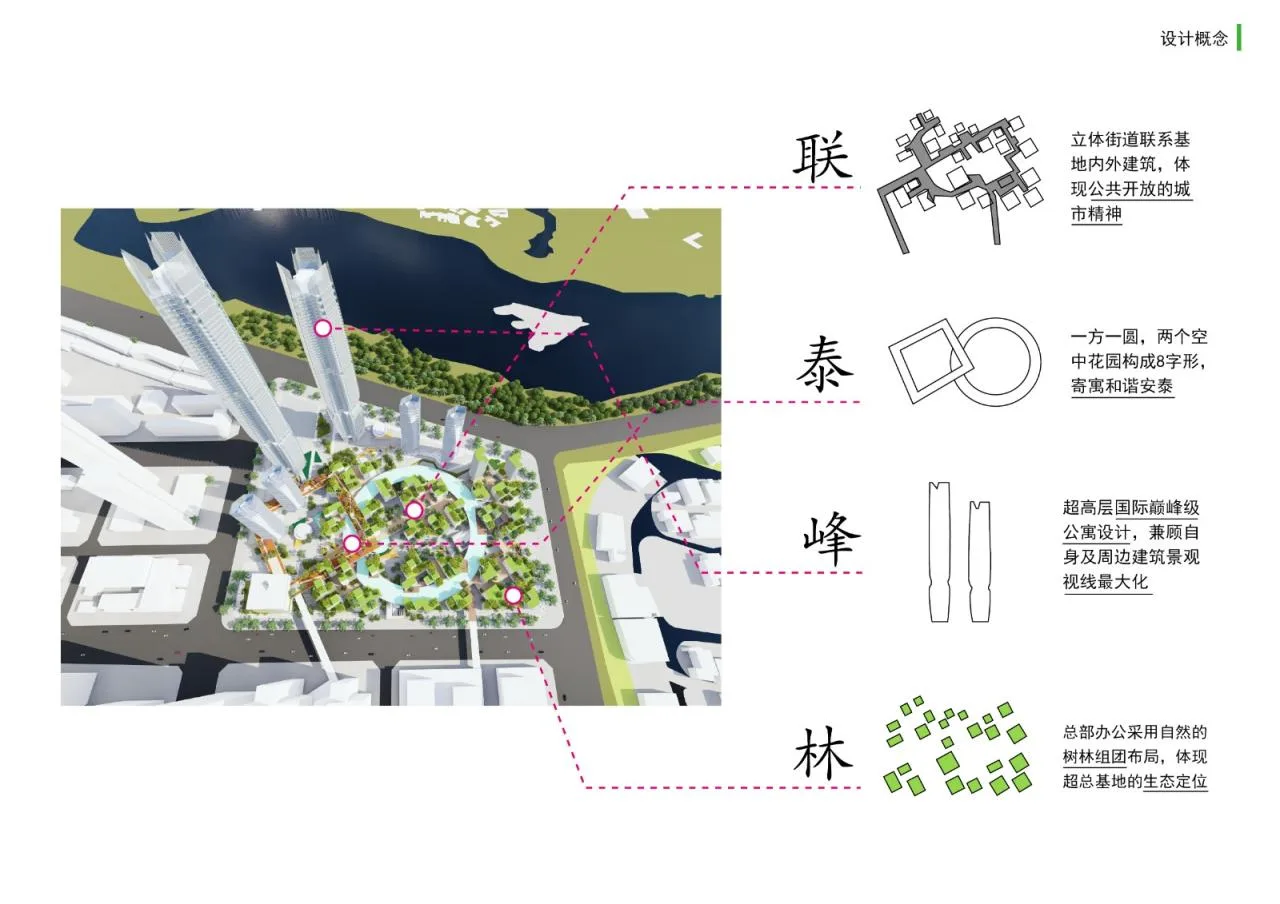
The core design concept, “Liantai Fenglin,” interprets the site’s unique character through its natural textures. The theme “Fenglin Water Shadow, Liantai Integration” merges public buildings with urban public spaces, creating a vibrant architectural community. The spatial atmosphere varies—sometimes introspective, sometimes lively and dynamic.
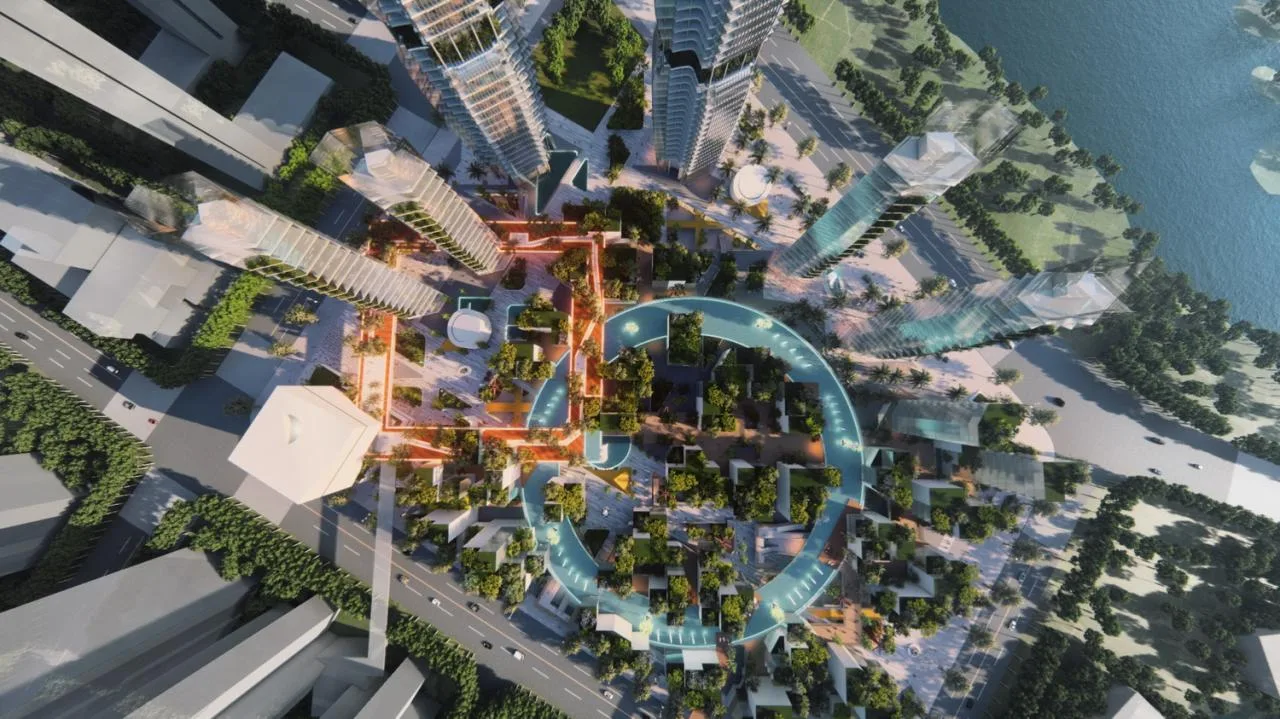
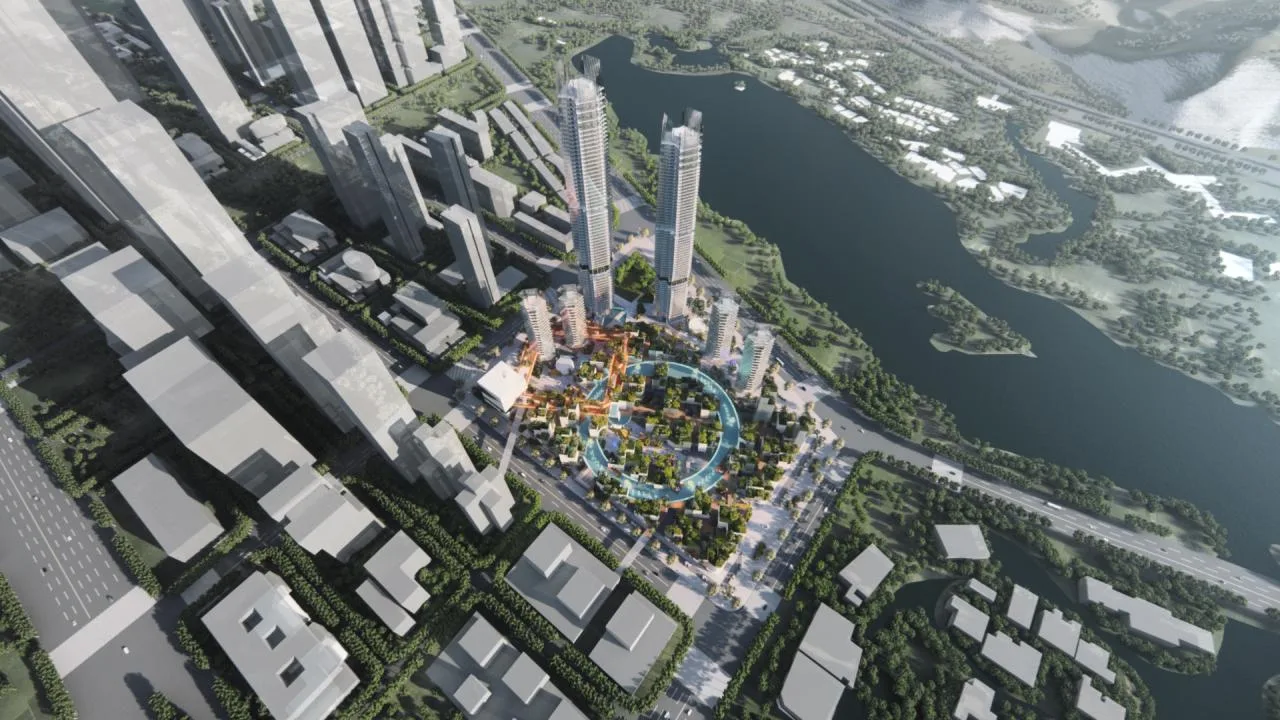
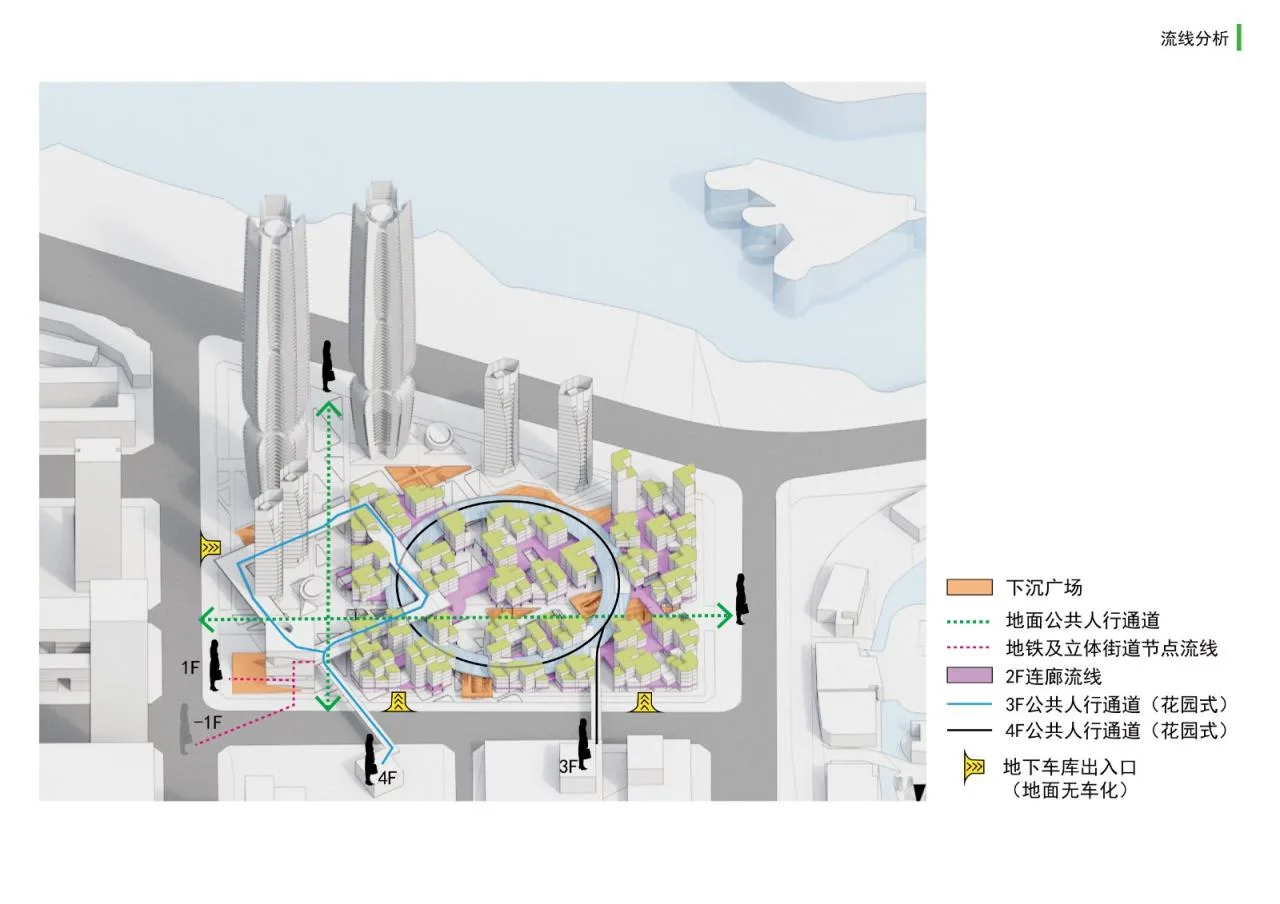
01 Three-Dimensional Walking Routes
The pedestrian paths form a clear cross-shaped pattern intersecting both horizontally and vertically. Secondary paths resemble a maze, weaving through various landscapes and inviting exploration of diverse spaces. The integration of main and secondary routes with the surrounding Green Valley ecology offers a dynamic, three-dimensional park roaming experience.
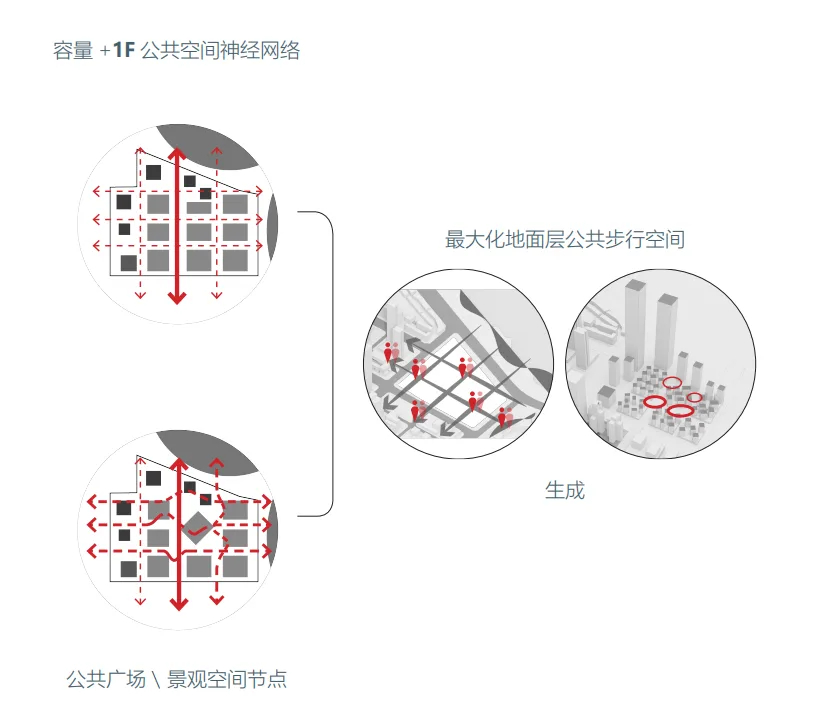
02 Engaging Interactive Experiences
Clusters of forests create numerous green pocket parks, establishing multi-directional circular air corridors that reshape the city’s psychological landscape. These semi-private, semi-open spaces foster playful interactions, adding diverse, multi-layered experiences that address contemporary urban challenges.
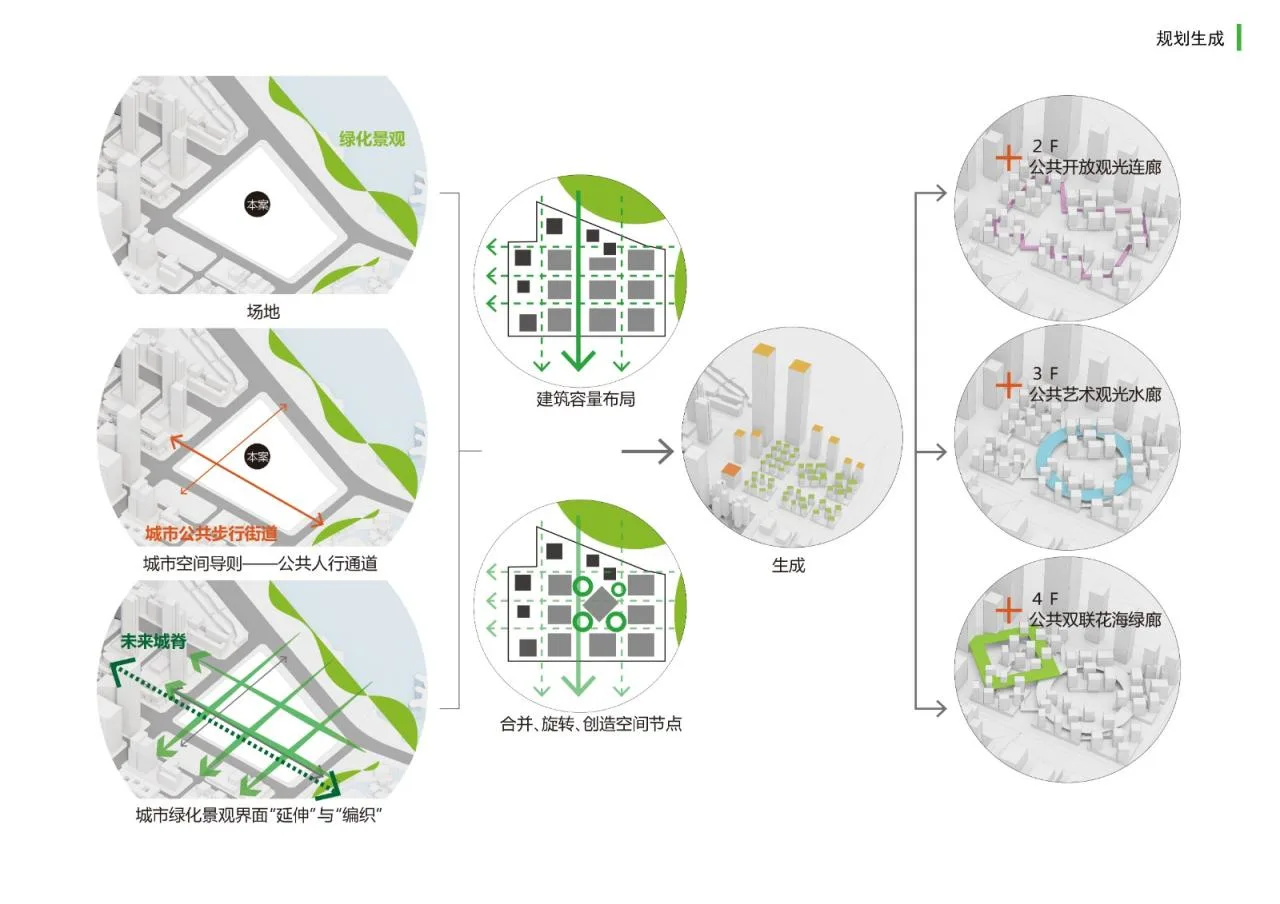
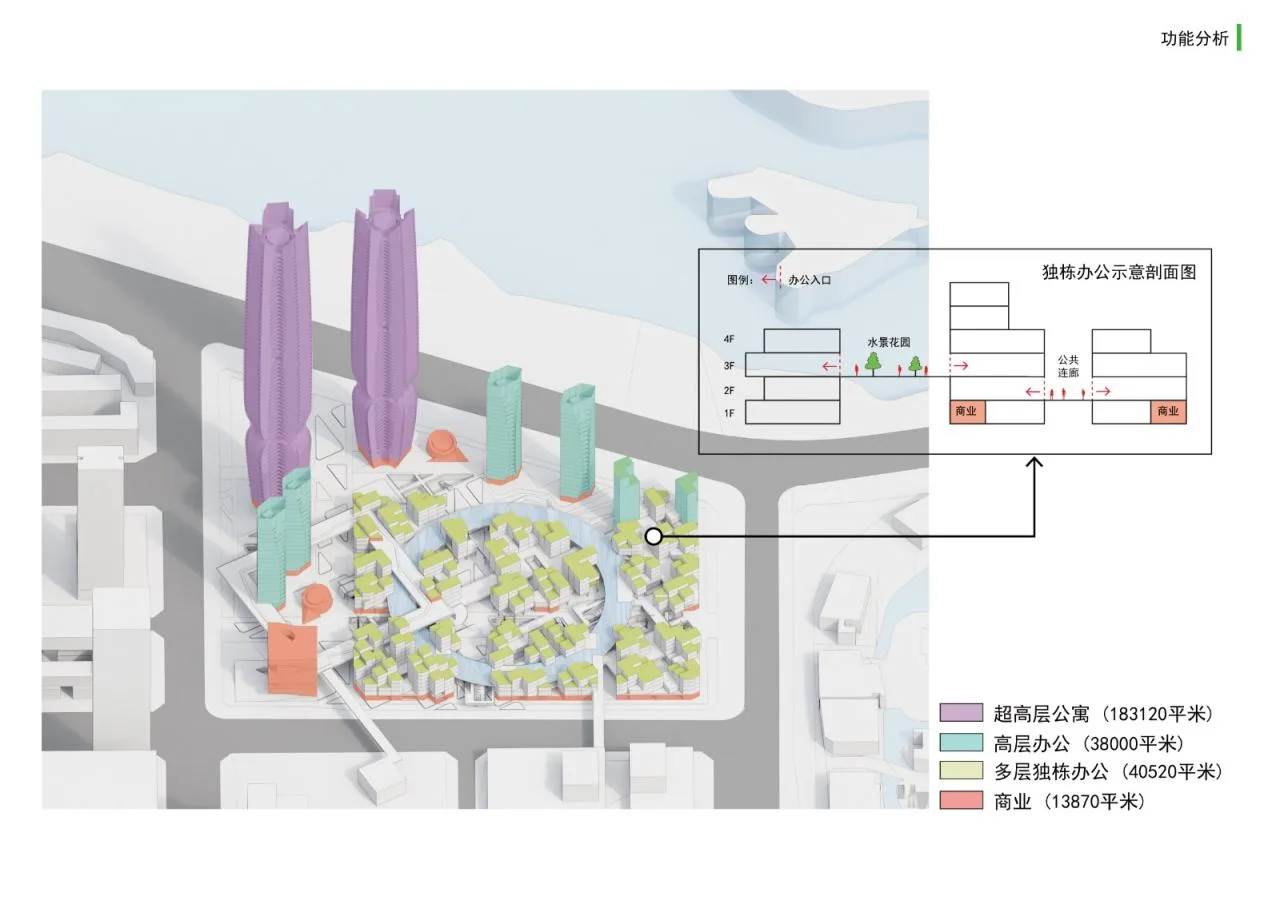
03 Integration of Diverse Mixed-Use Industries
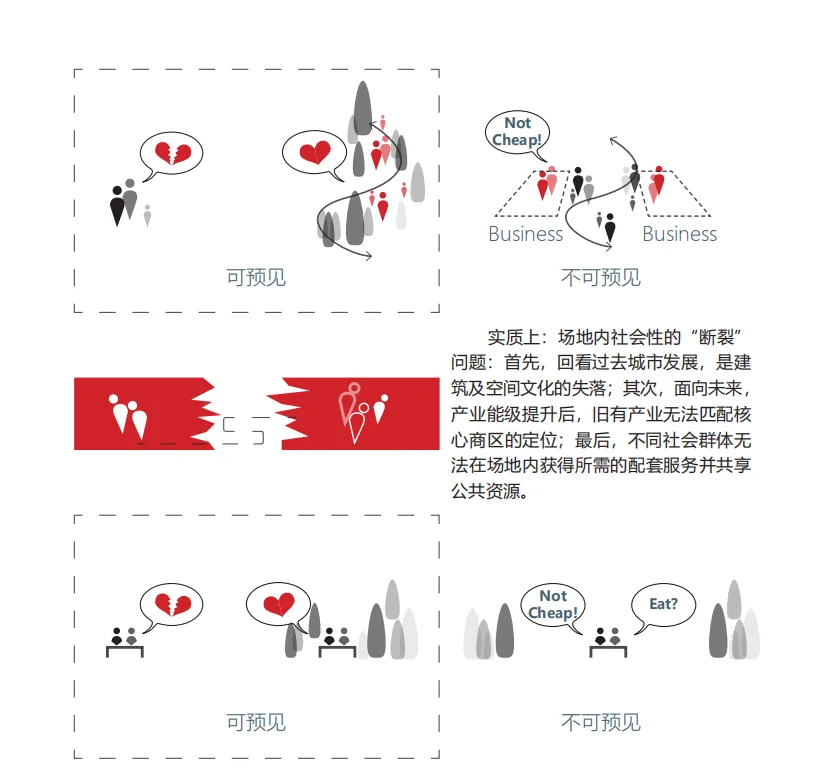
The project introduces a variety of mixed industries, ensuring that different user groups have access to necessary supporting facilities on-site. This promotes full sharing of public resources. These mixed-use environments emphasize new aesthetics and lifestyle experiences, injecting fresh vitality into the park.
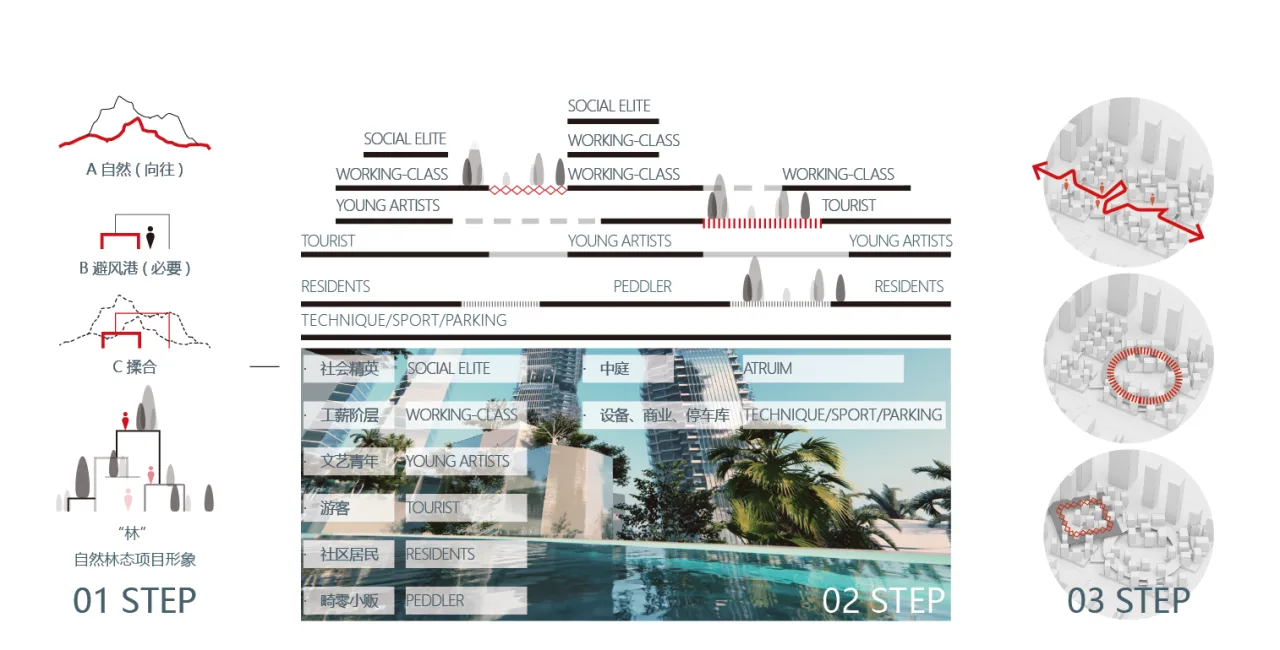
04 Product Design Strategy
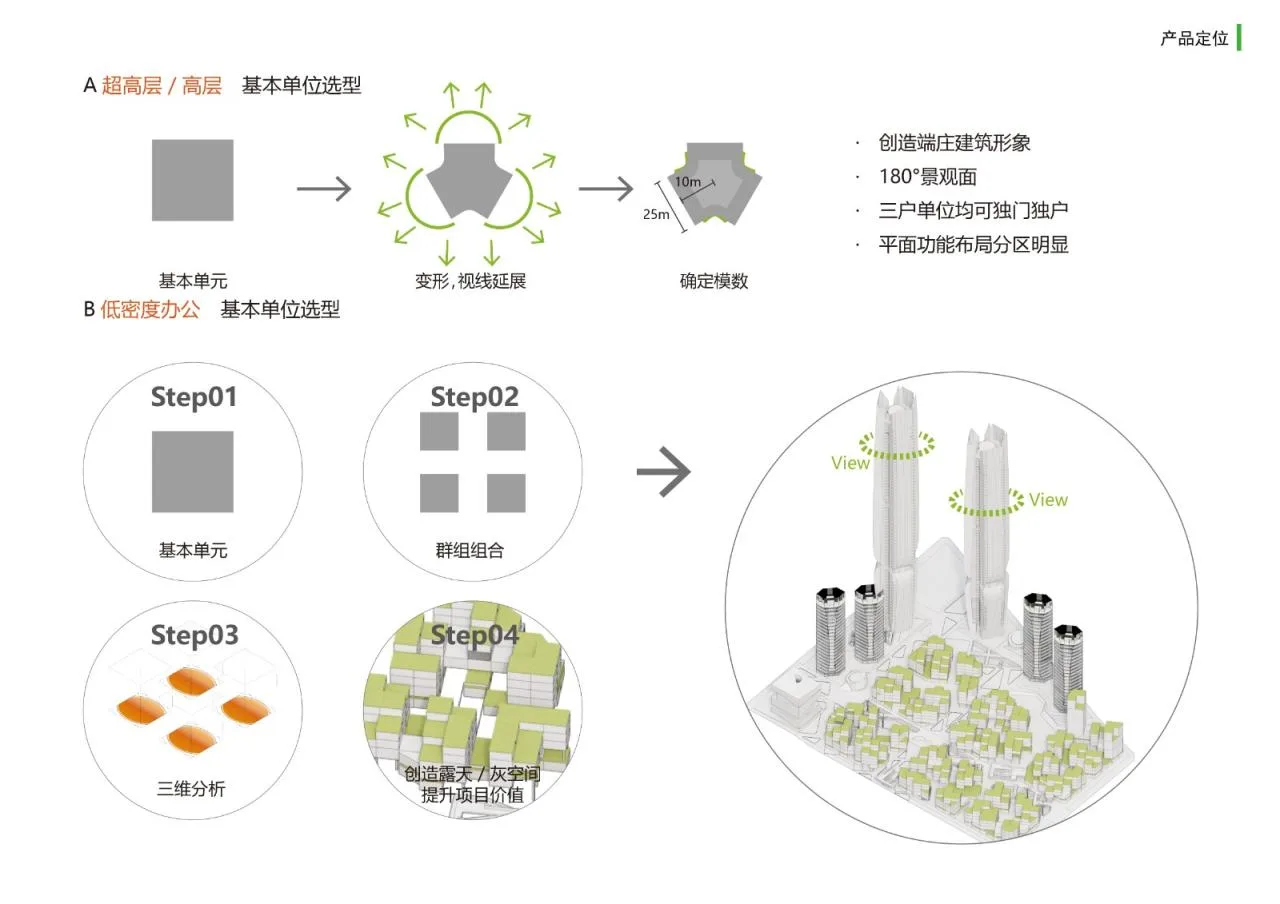
1) Super high-rise apartments: By modifying basic unit layouts, these apartments optimize sightlines and natural lighting, creating comprehensive landscape views.
2) High-density, low plot ratio blocks: Dividing the basic grid into four squares forms groups with varying heights, adding visual interest and spatial diversity.
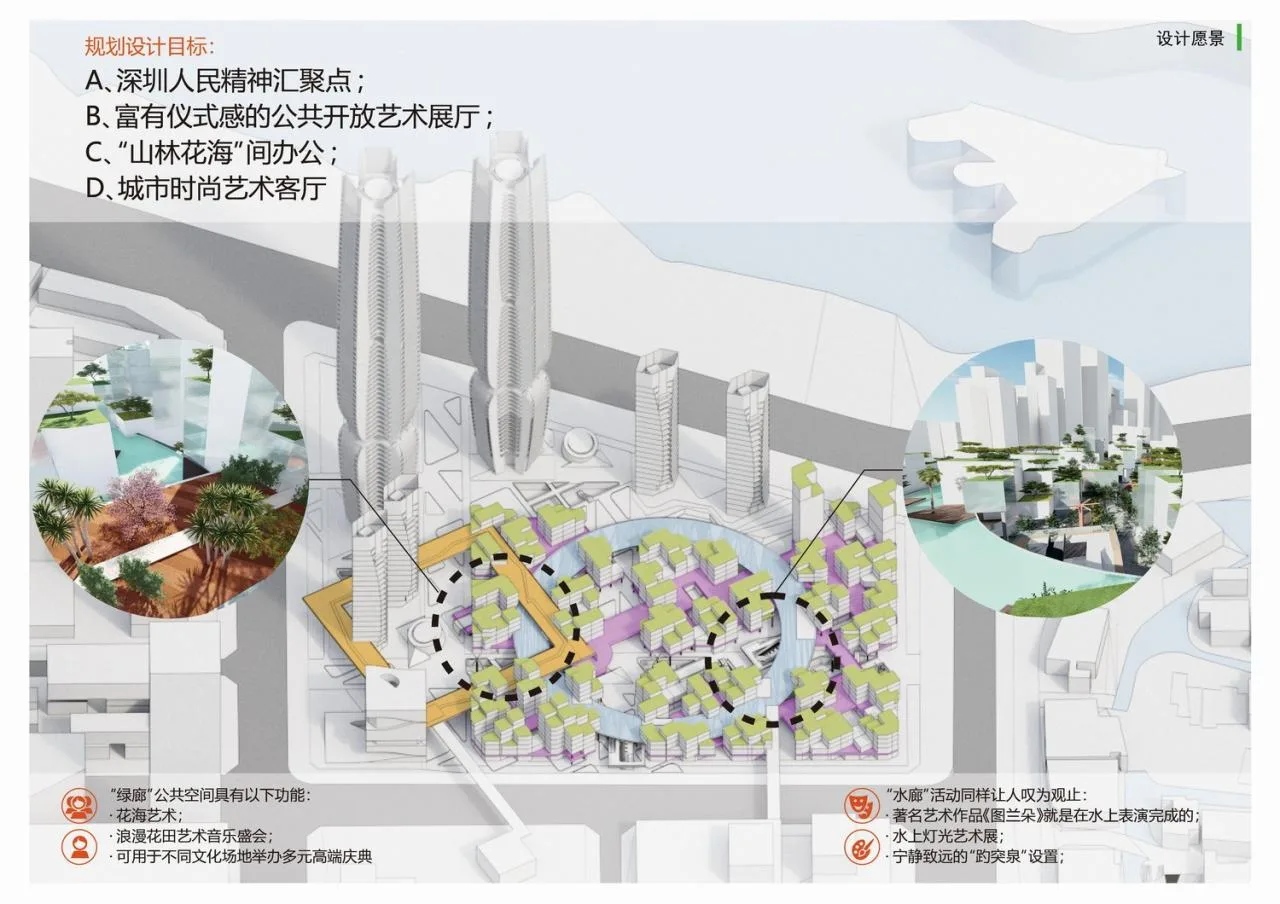
The overall planning and design aim to establish a spiritual hub for Shenzhen residents, featuring a ceremonial public art exhibition hall, a “forest and flower sea” office district, and a fashionable urban art living room.
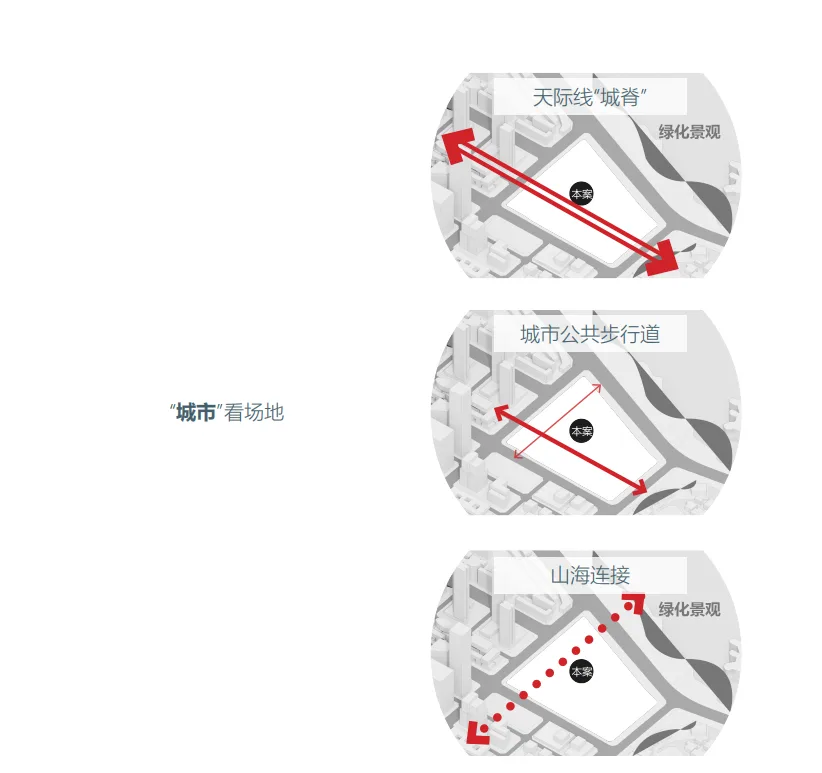
The urban space, themed around art, greenery, and fashion, addresses how to express top-level design within the site and reflects the city’s positioning as a center for creative innovation. Simultaneously, it explores new design strategies aimed at enhancing the project’s social and economic benefits, achieving high-quality urban spaces and iconic architectural imagery. This top-down approach uses architectural language and strategies to respond to social challenges both at specific points and across broader areas.
Project Information
Design Agency: Huasen Design + Lin Cong Architecture Studio
Lead Architects: Lin Cong, Xie Zhiquan
Design Team: Lu Jihua, Chen Jinggang, Dong Jialu
Land Area: 92,372.28 square meters
Design Date: May 2020















Must log in before commenting!
Sign Up