
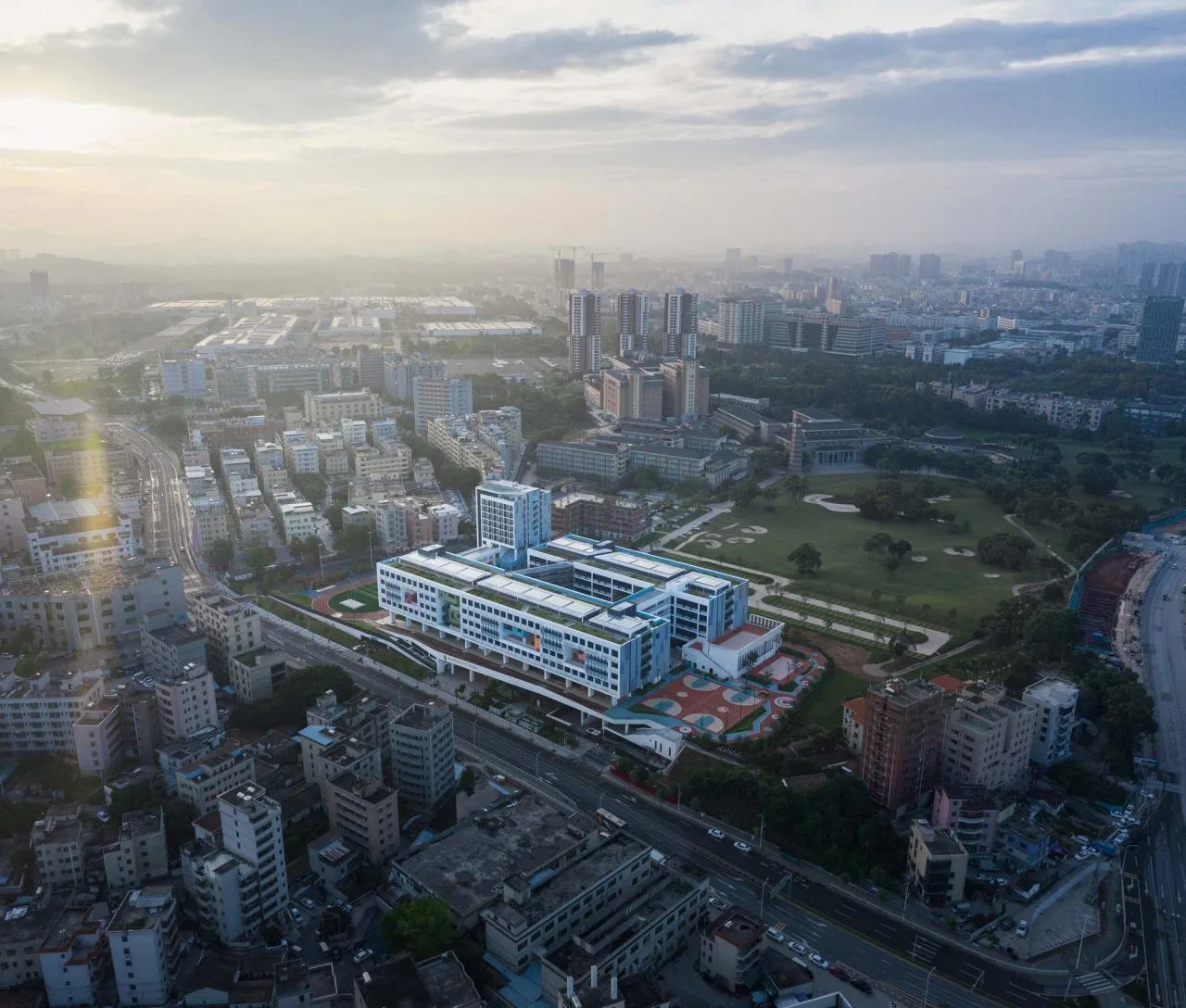
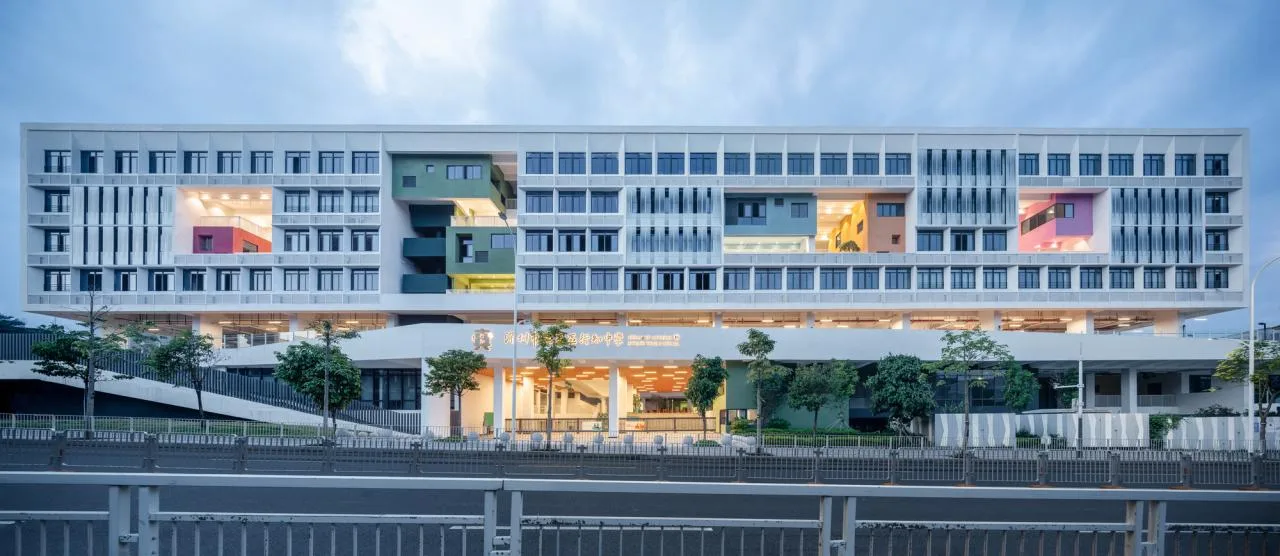
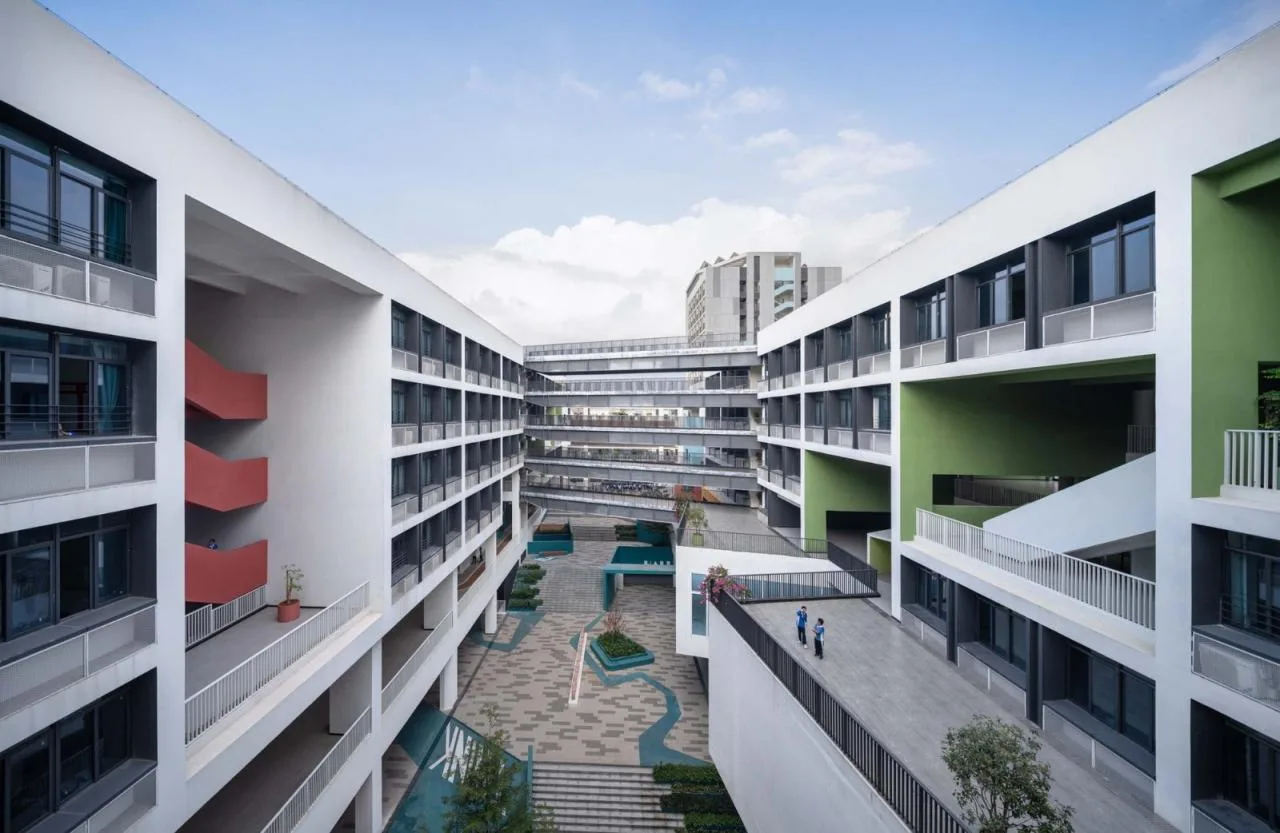
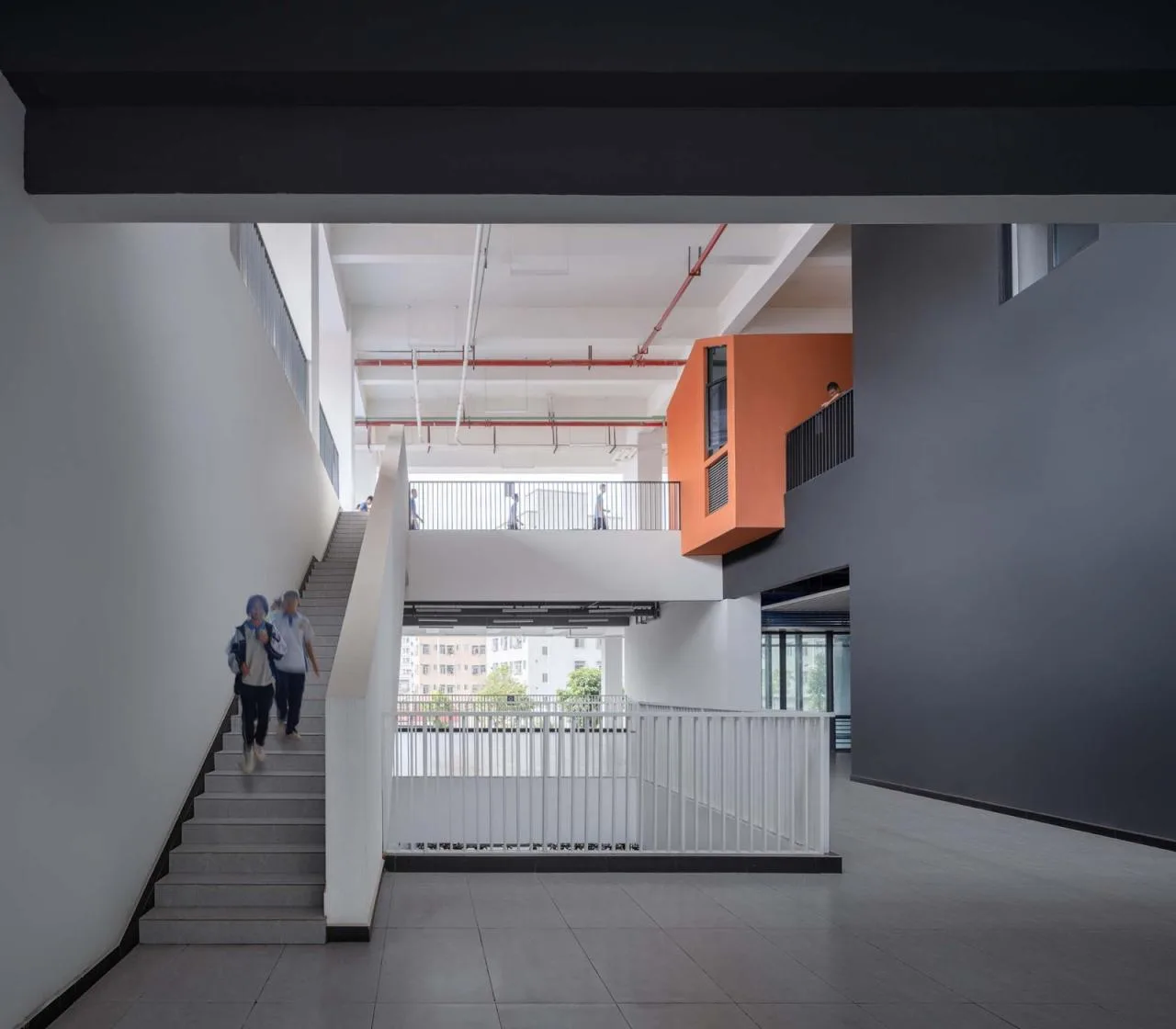
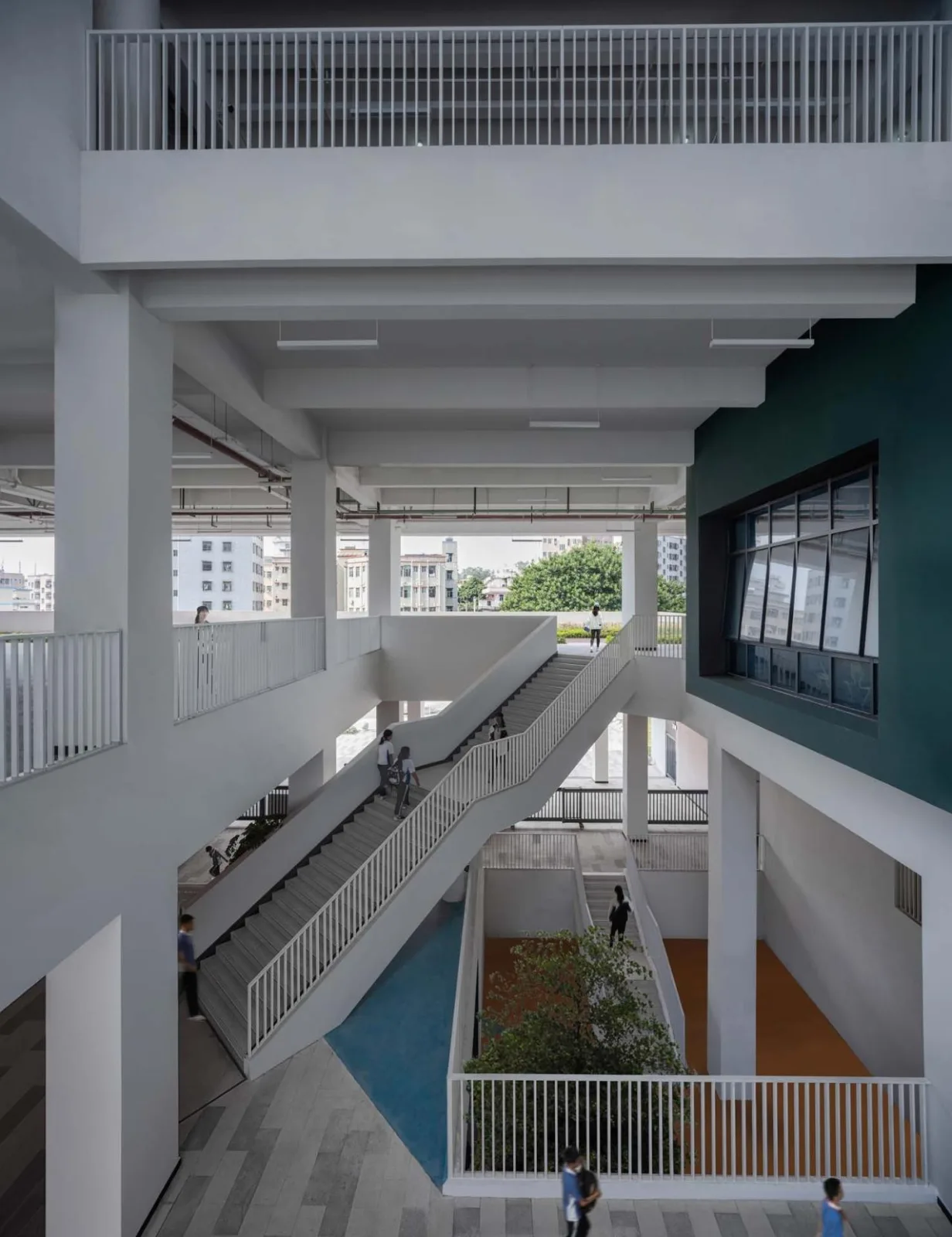
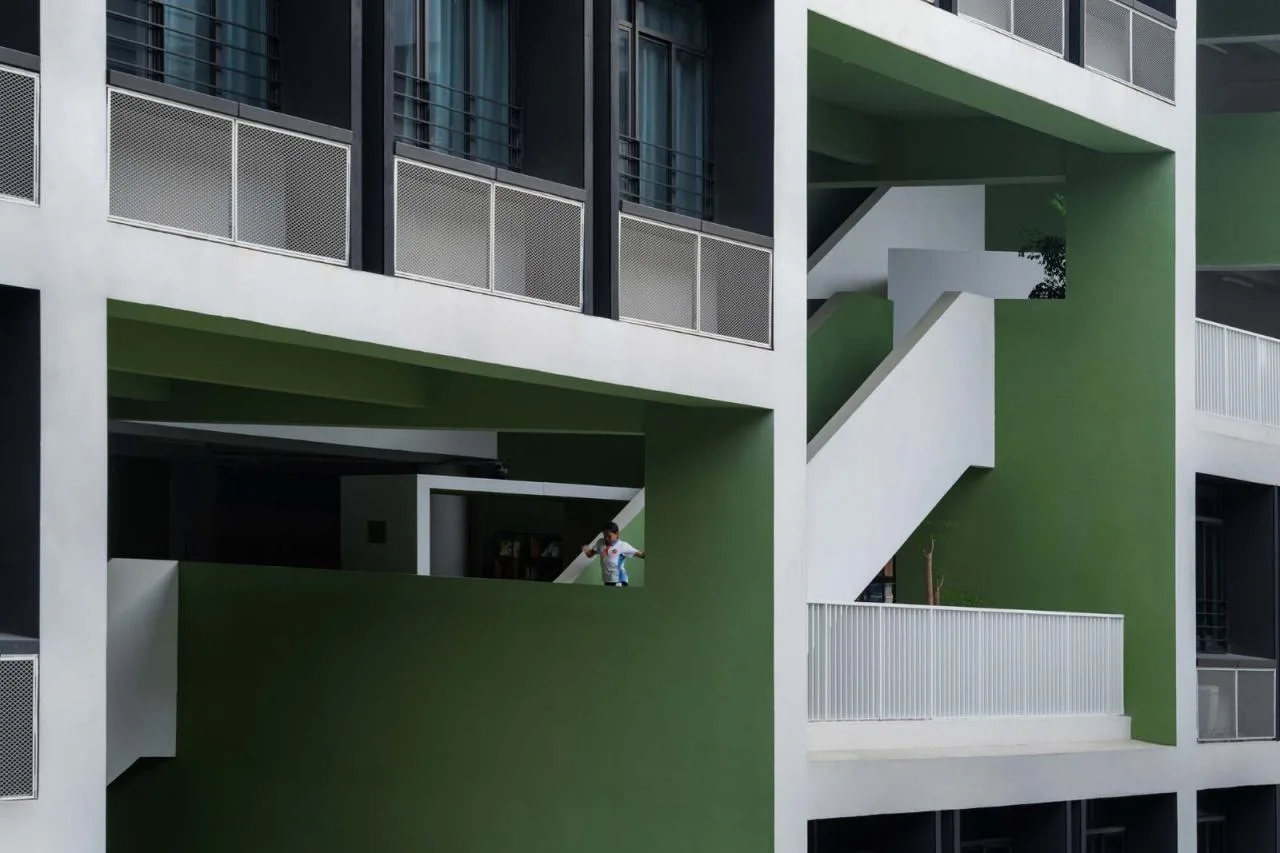
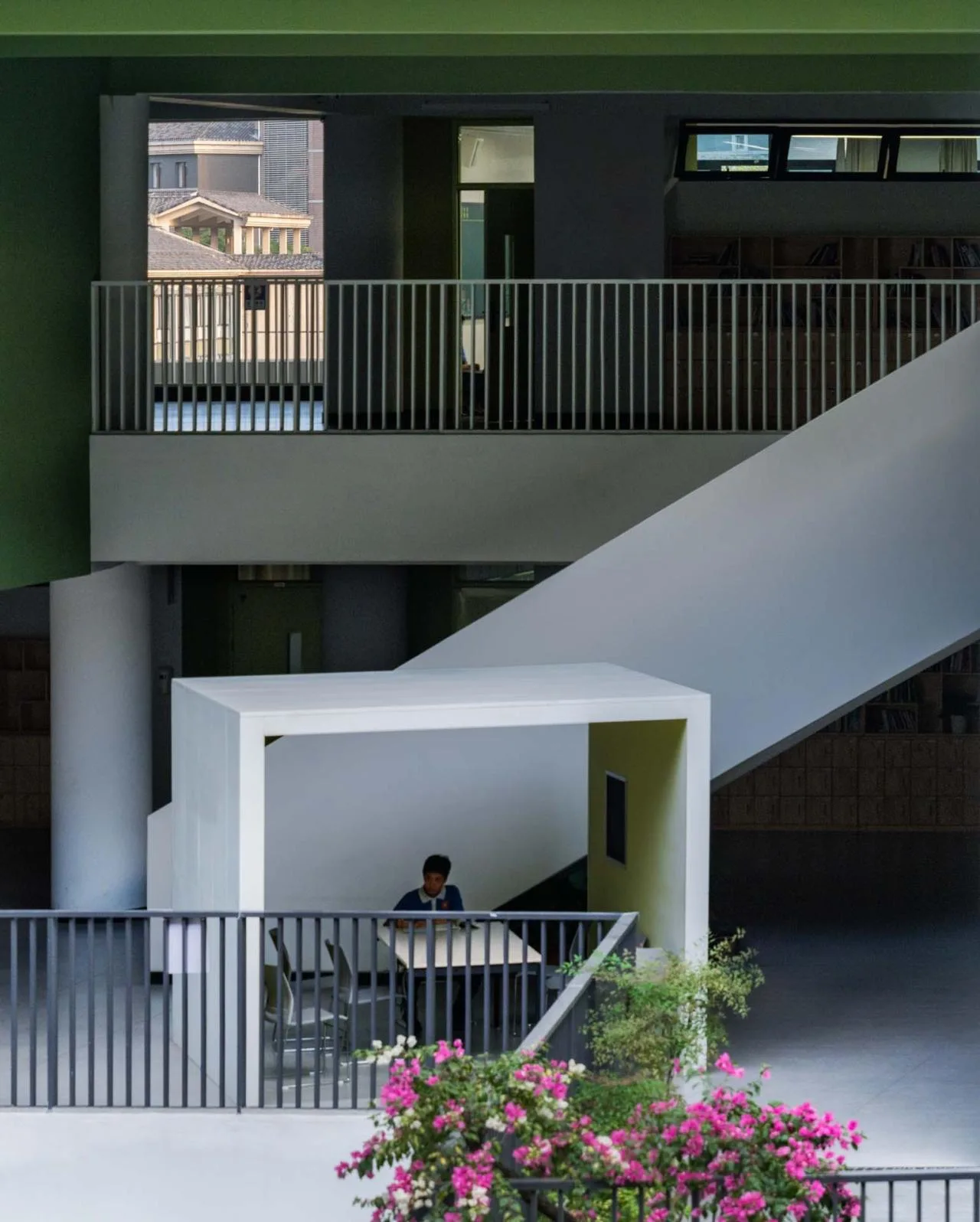
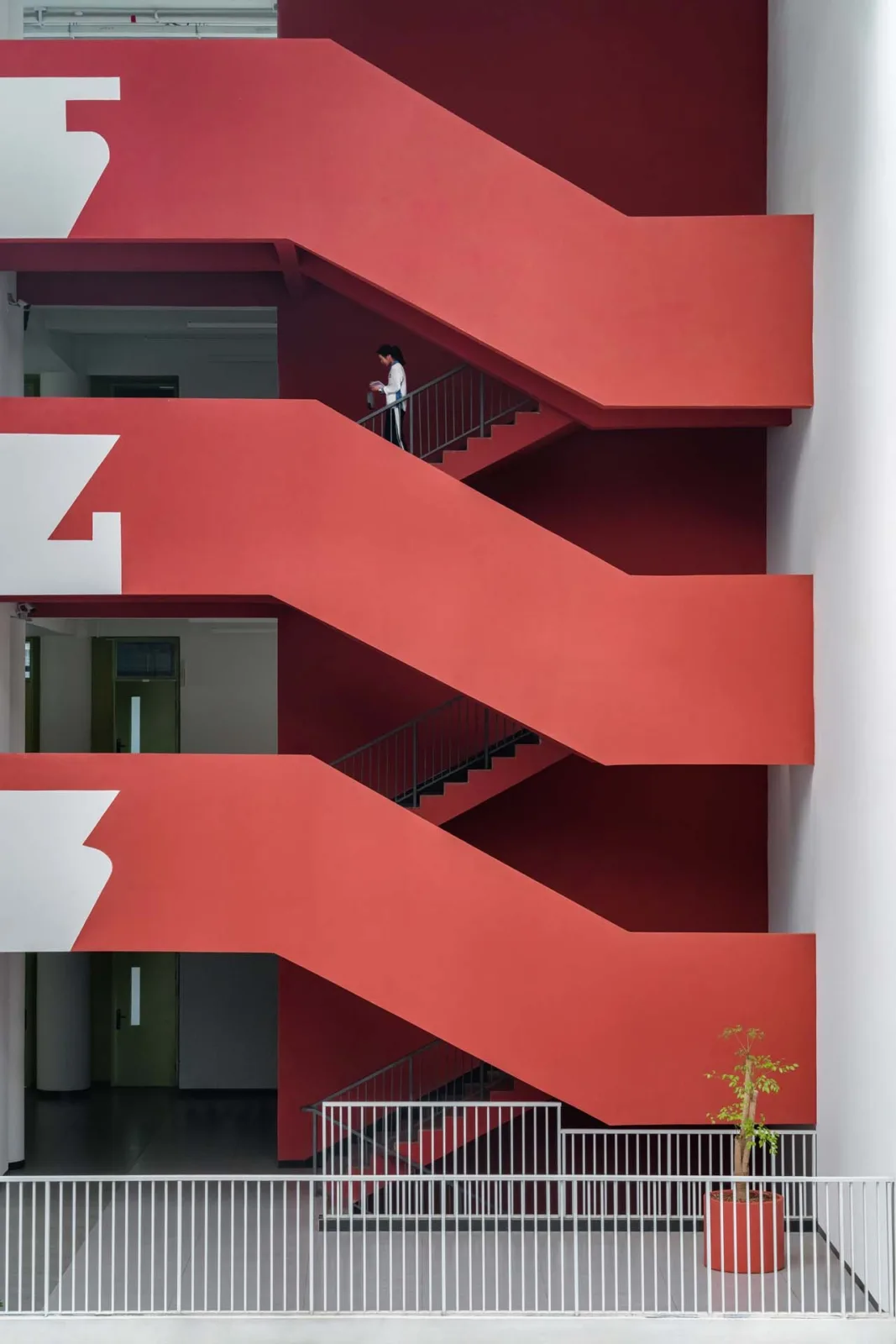
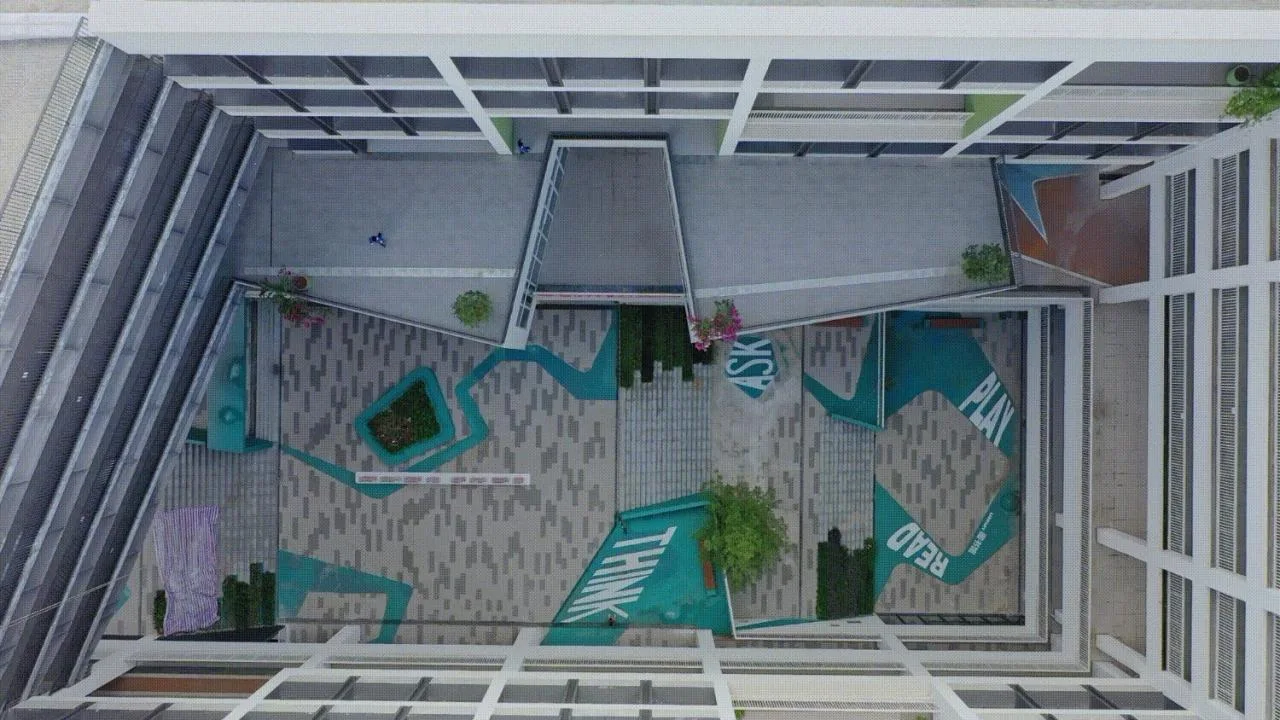
This high-density event container accommodates both campus and community life. The design employs a subtraction approach, creating “holes” and adding public bridges within a dense classroom layout. This results in an “∞”-shaped informal communication space system featuring three-dimensional spatial circulation. Within these pleasantly sized voids, vibrant staircases, platforms, and small structures foster diverse and personalized spatial experiences, transforming the campus into a stimulating environment that continuously sparks children’s curiosity and imagination. Additionally, these voids allow natural light and airflow to permeate the building’s core, intersecting seamlessly with student activities.
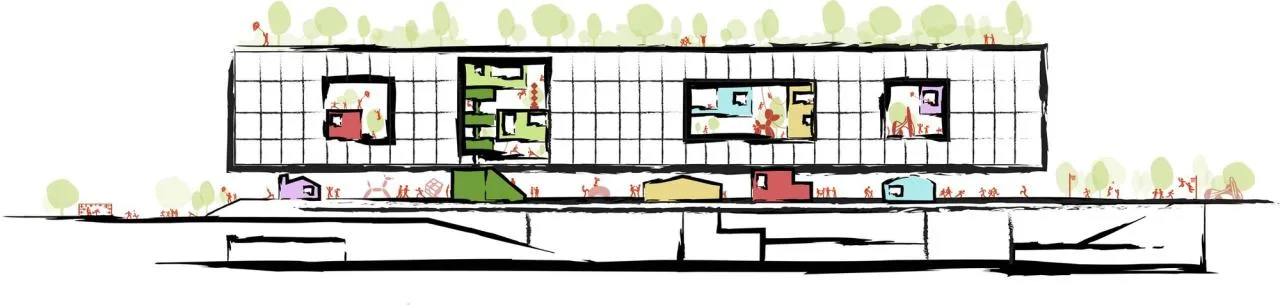
△ Design Concept Diagram
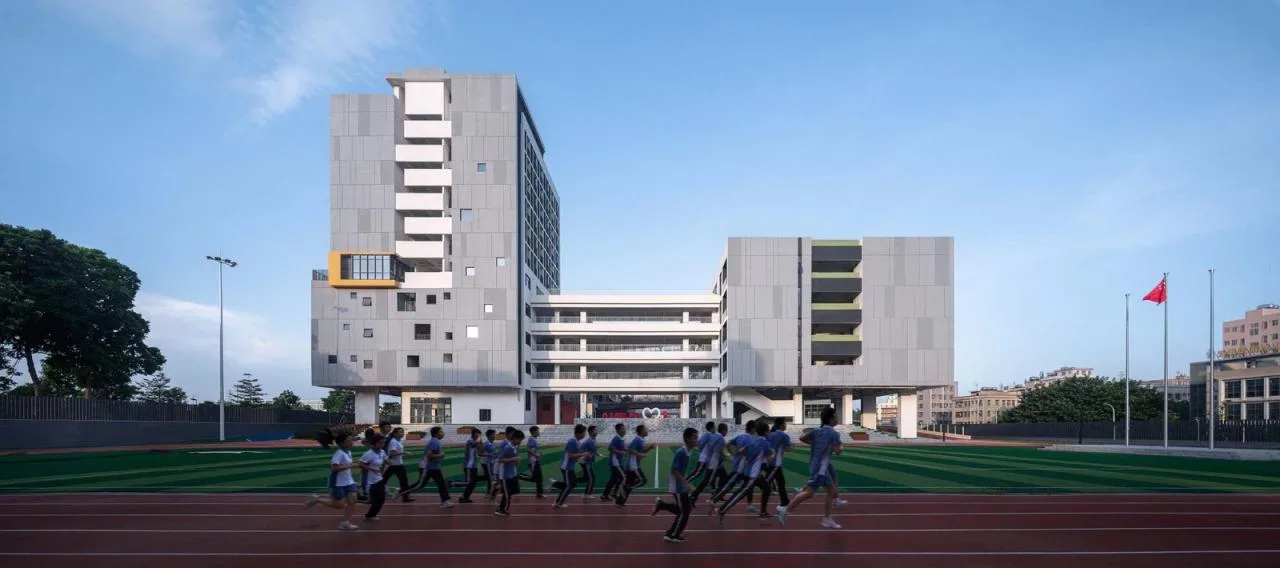
Xingzhi Middle School in Longhua District, Shenzhen, is a junior high school campus designed to serve 42 classes and 2,100 students. Covering 23,000 square meters with a total construction area of 58,000 square meters, the campus is surrounded by dense urban villages and industrial zones. To the south lies a high-quality private golf course. The community around the campus lacks sufficient public spaces and cultural facilities. This new campus development offers an opportunity to address these urban challenges by enhancing the area’s public amenities.
“Culture, fundamentally speaking, is a structure and form of communication.” – Jürgen Habermas
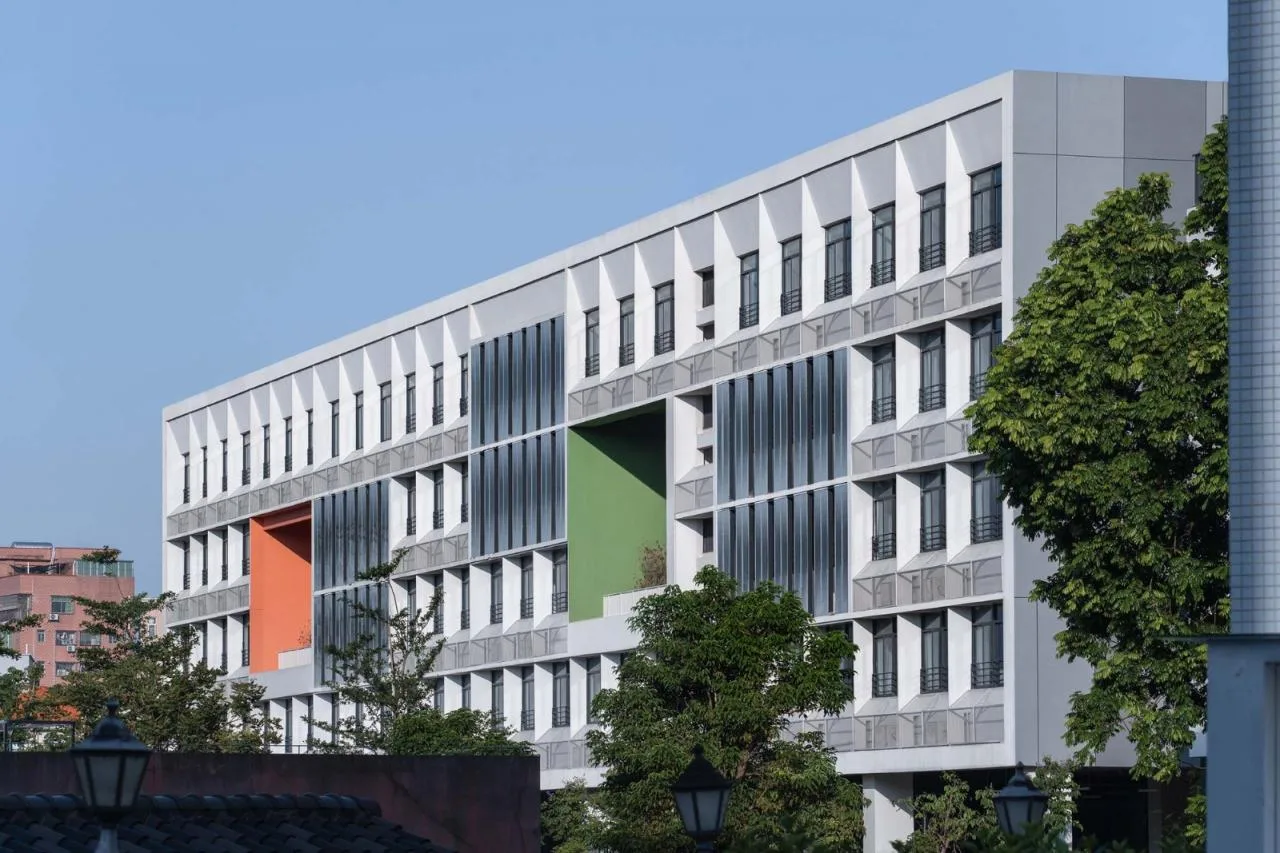
Historically, sages gathered in open, tree-lined spaces or public markets for lectures. However, modern education has evolved into a one-way transmission of knowledge, with educational spaces becoming increasingly enclosed. Today’s diverse social needs and the multiplicity of individual social roles make formal and informal communication critical for young learners. The conflict between traditional, single-function spaces and the growing demand for open, free communication is intensifying. There is an urgent need for a new educational space model that is open, comprehensive, and interactive at all times.
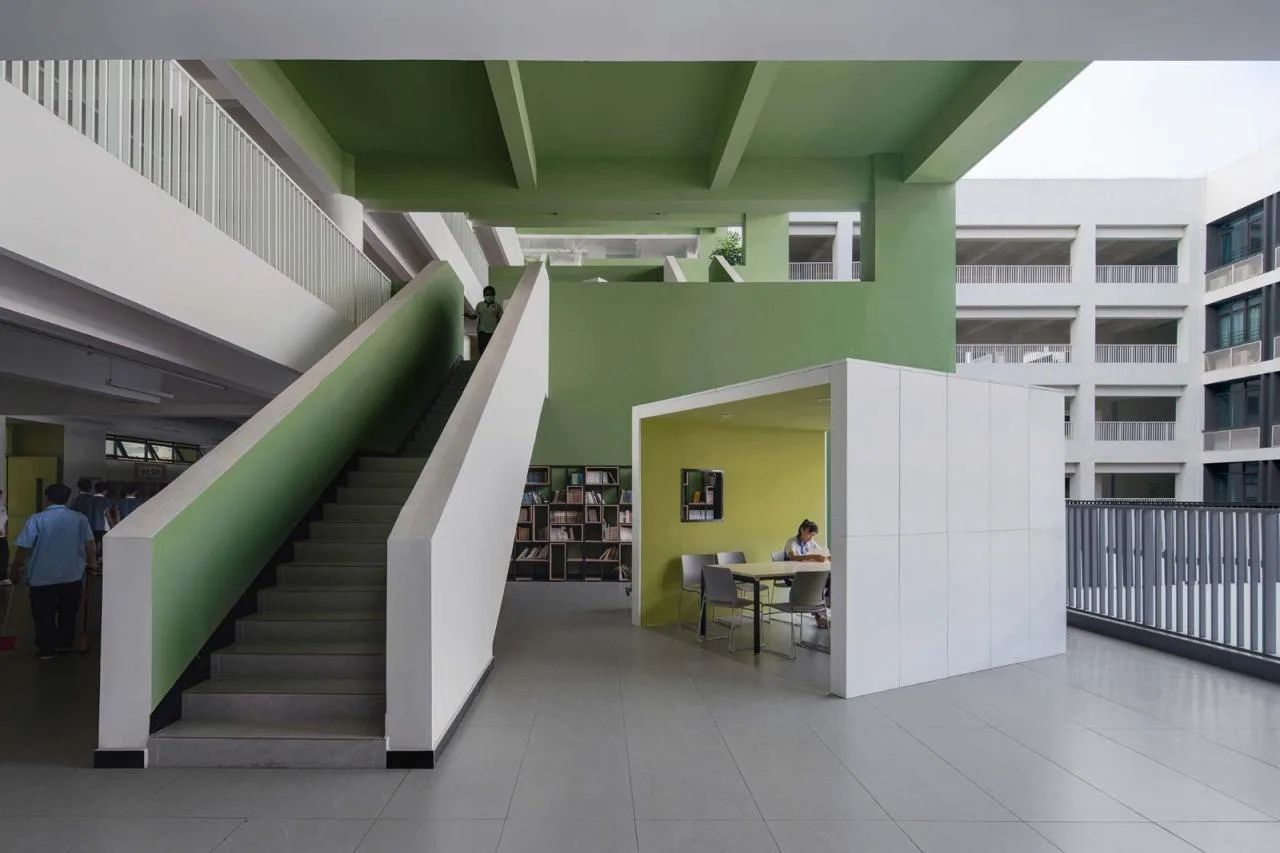
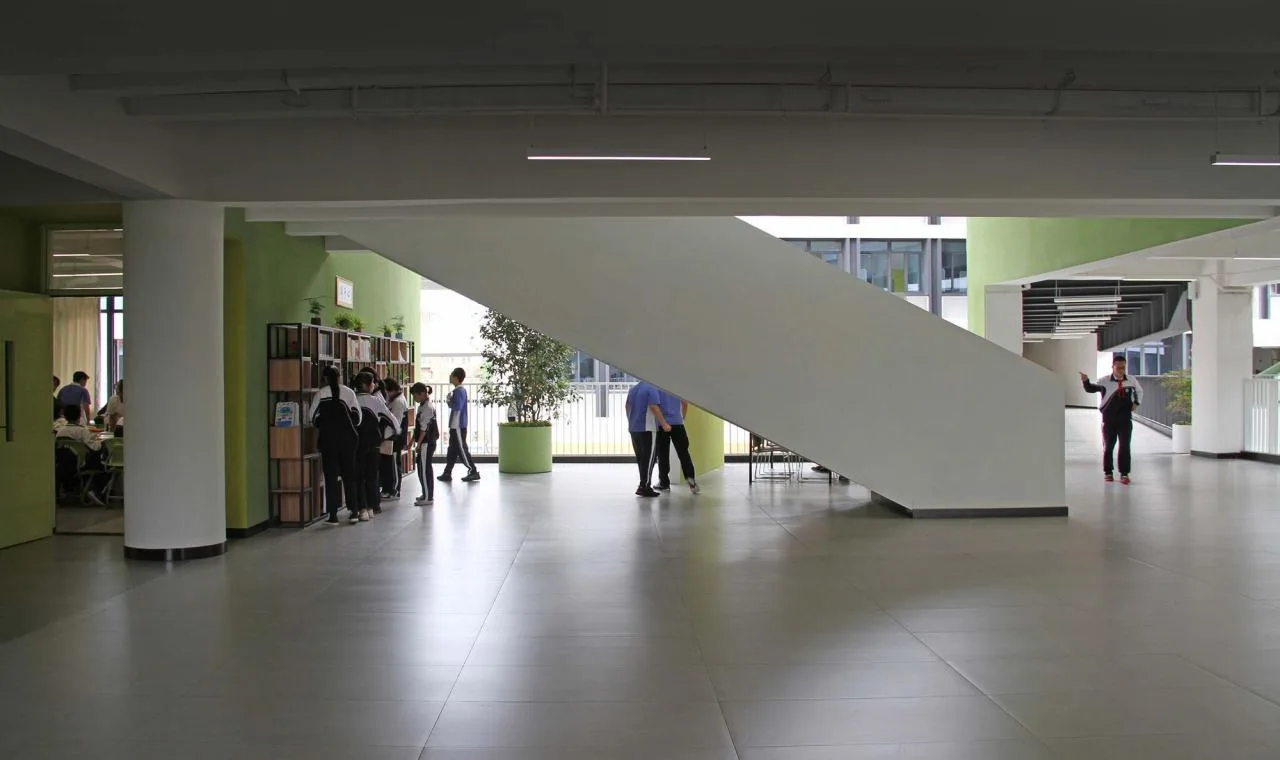
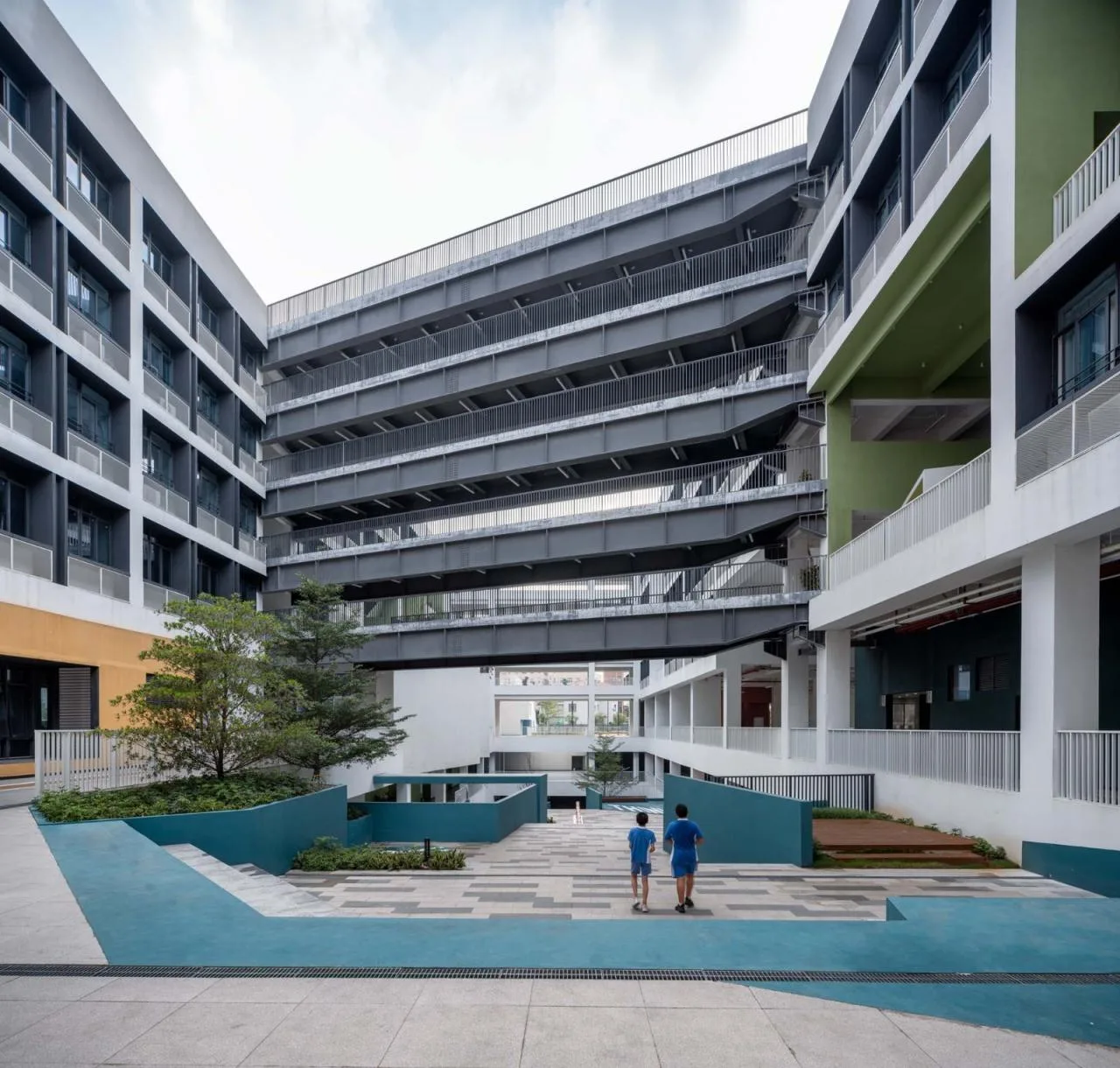
The dumbbell-shaped main public space model alleviates overcrowding and uneven crowd distribution during after-school activities. This design features dual sports areas positioned at both ends of the elongated campus, including sports fields and swimming pools arranged in a dispersed, three-dimensional manner. A 25-meter wide complex, three-dimensional public staircase square serves as the central transit link, forming the core public space system of the school’s “street” layout.
These spaces host numerous open public events such as art festivals, Yuanxiao Festival celebrations, robot parades during science festivals, community garden fairs, temple fairs, and creative markets. All major public campus spaces—including cafeterias, covered playgrounds, theaters, and libraries—as well as teaching areas open to the community like dance, music, instrumental rehearsal, and art classrooms, are located along this primary spatial flow.
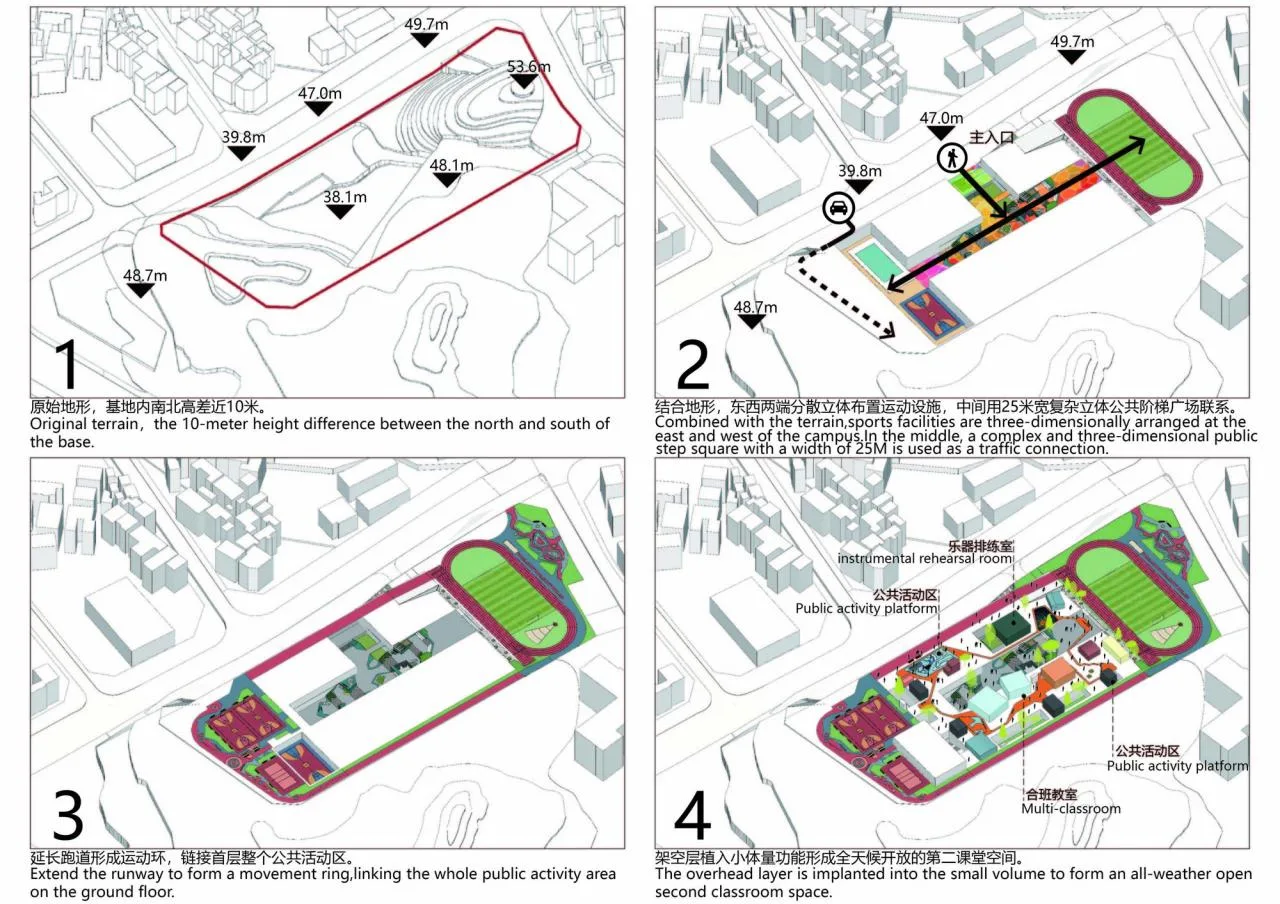
Analysis of the Dumbbell-Shaped Main Space Model
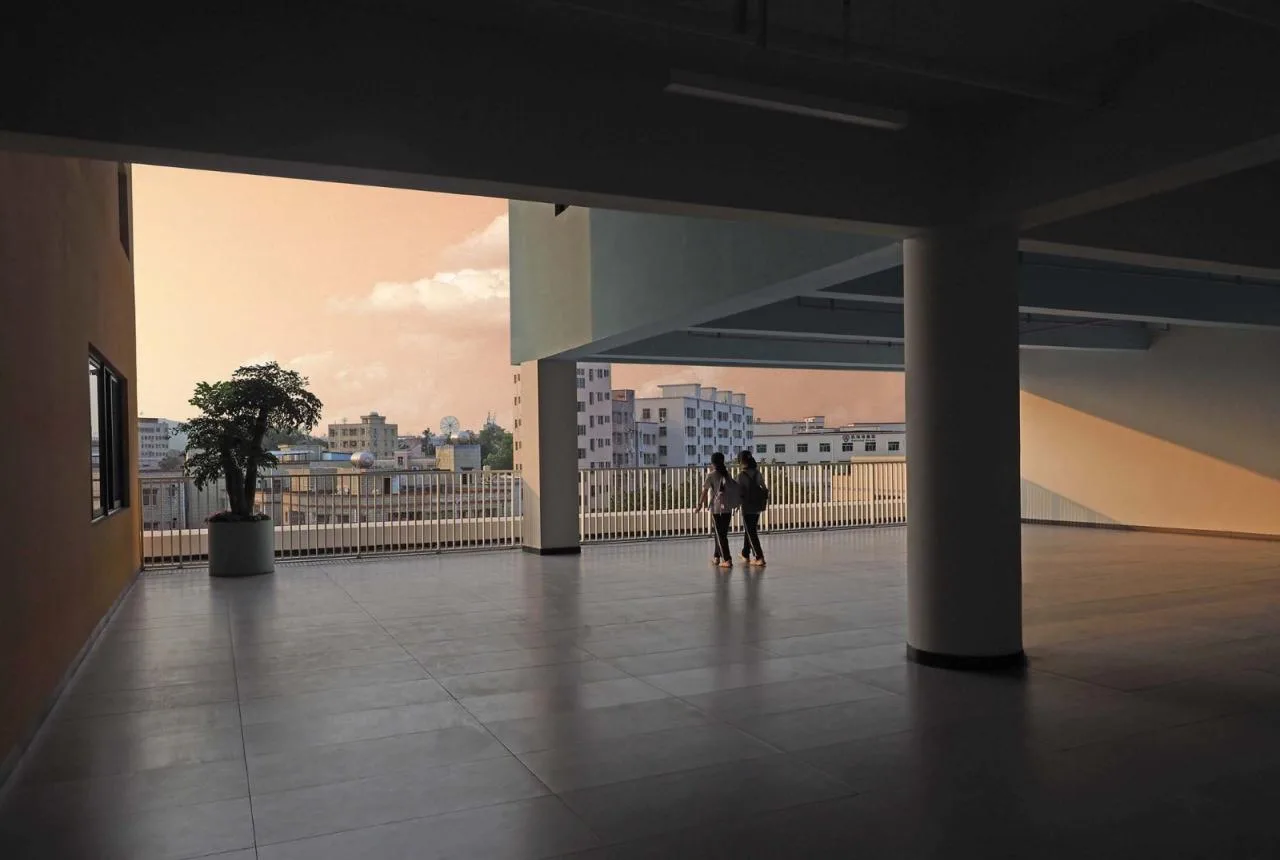
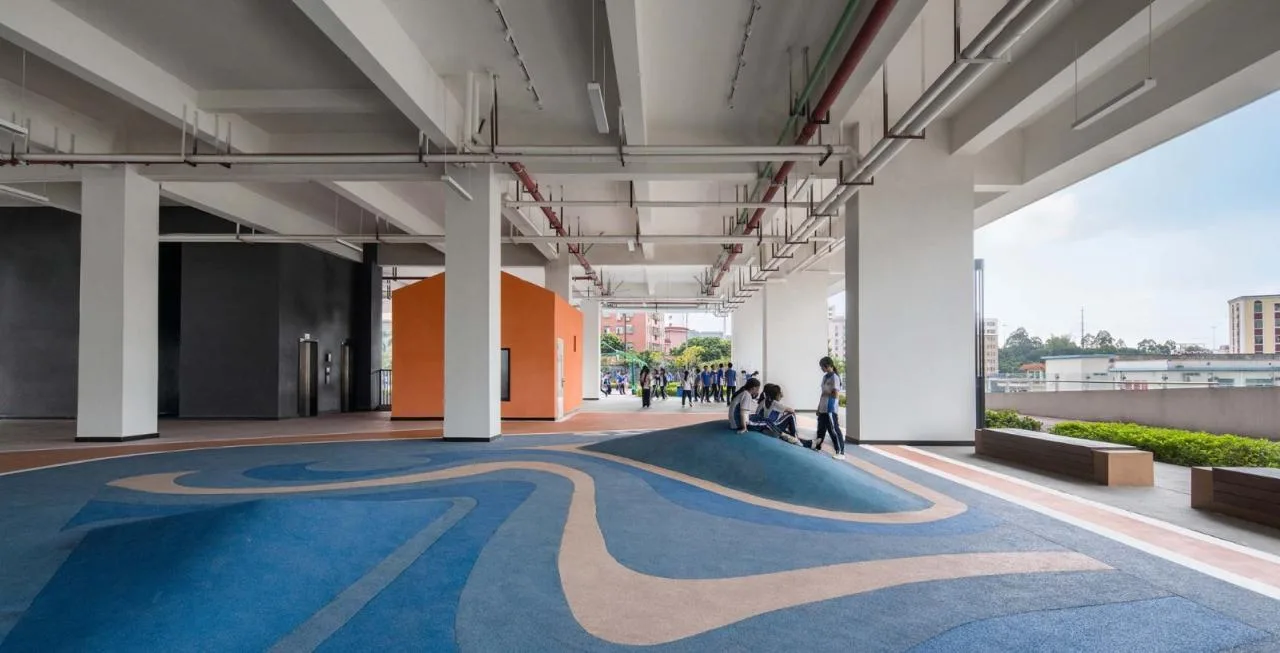
The elevated level design extends the dumbbell-shaped public space model by bringing the playground and various outdoor activities to upper floors. This expansive elevated space includes integrated classrooms, micro-classrooms, club activity rooms, and other multi-functional spaces of varying sizes that interconnect to create an engaging and open environment.
Serving as both an all-weather sports area and a secondary classroom space, it provides diverse social activities and rich opportunities for learning, exploration, and cognitive development. Additionally, it establishes a physical and managerial boundary separating private, quiet teaching areas from dynamic, public teaching spaces.
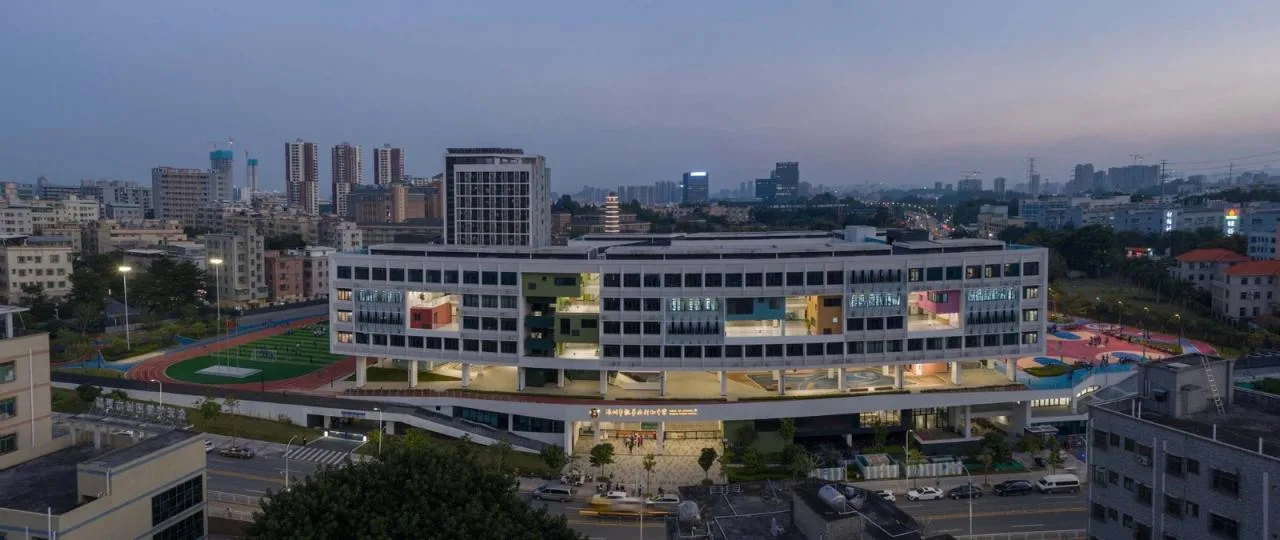
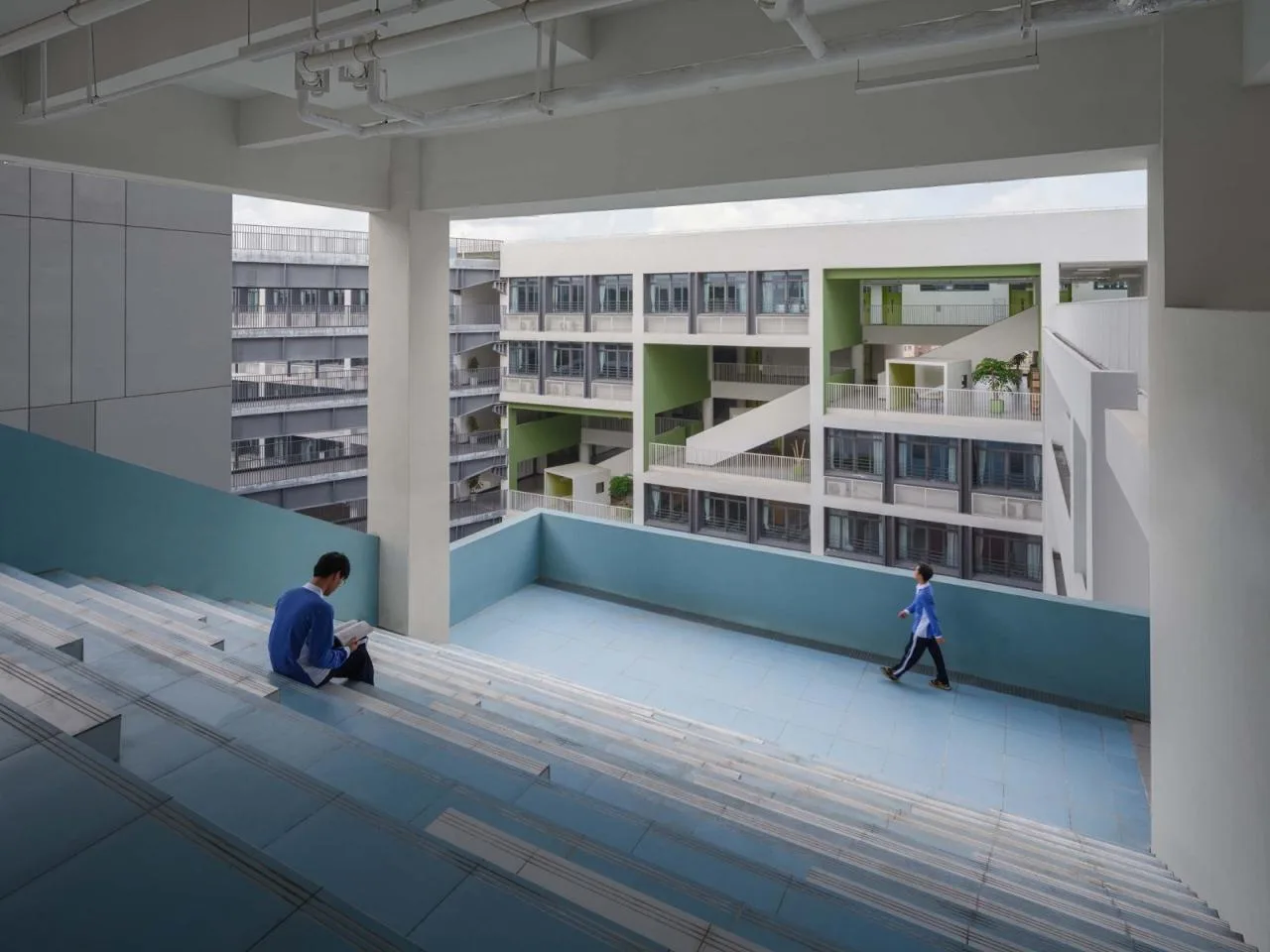
The “∞”-shaped mesoscale dynamic cyclic communication space is integrated within the main building’s static teaching zone. This public communication loop connects various informal interaction areas, including leisure platforms, aerial terraces, and semi-outdoor staircase classrooms on each floor.
It offers diverse, personalized opportunities for open communication among students and links central auxiliary teaching spaces, forming a comprehensive educational system.
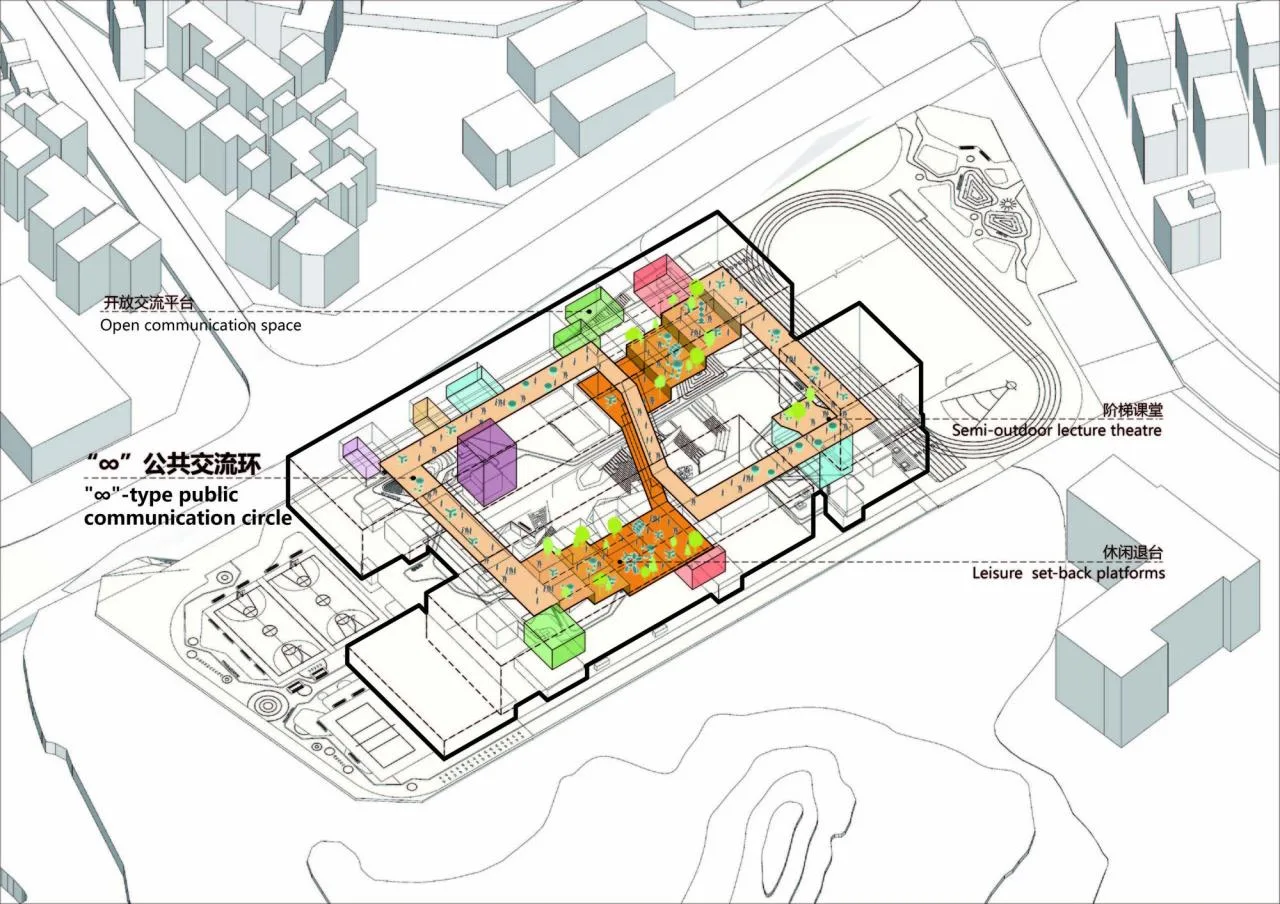
△ “∞” Type Interval Communication Space Model
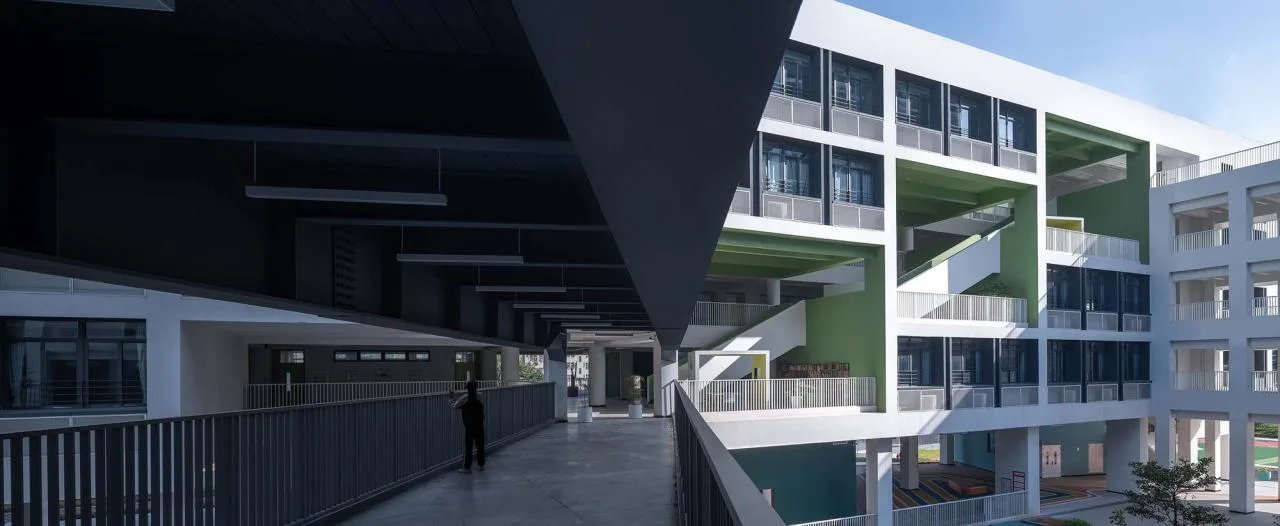
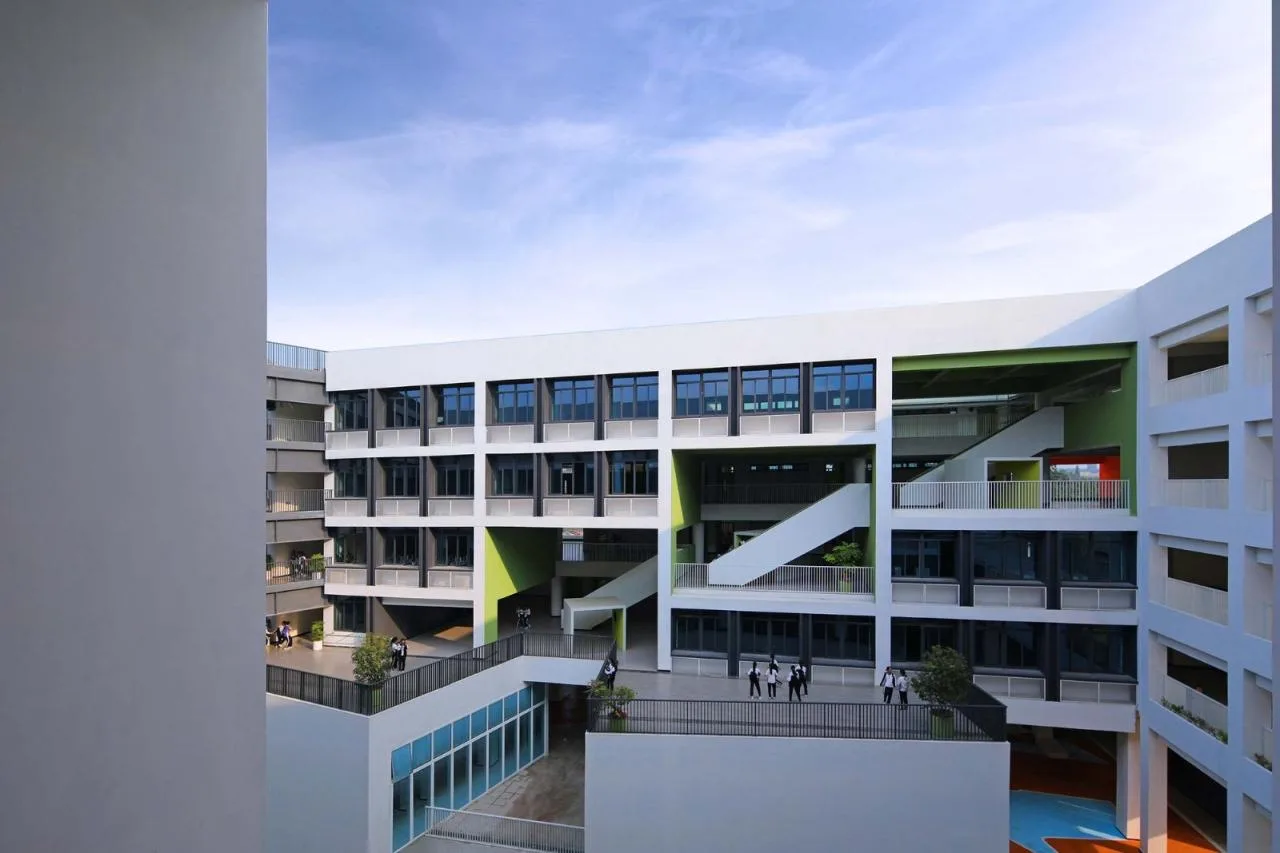
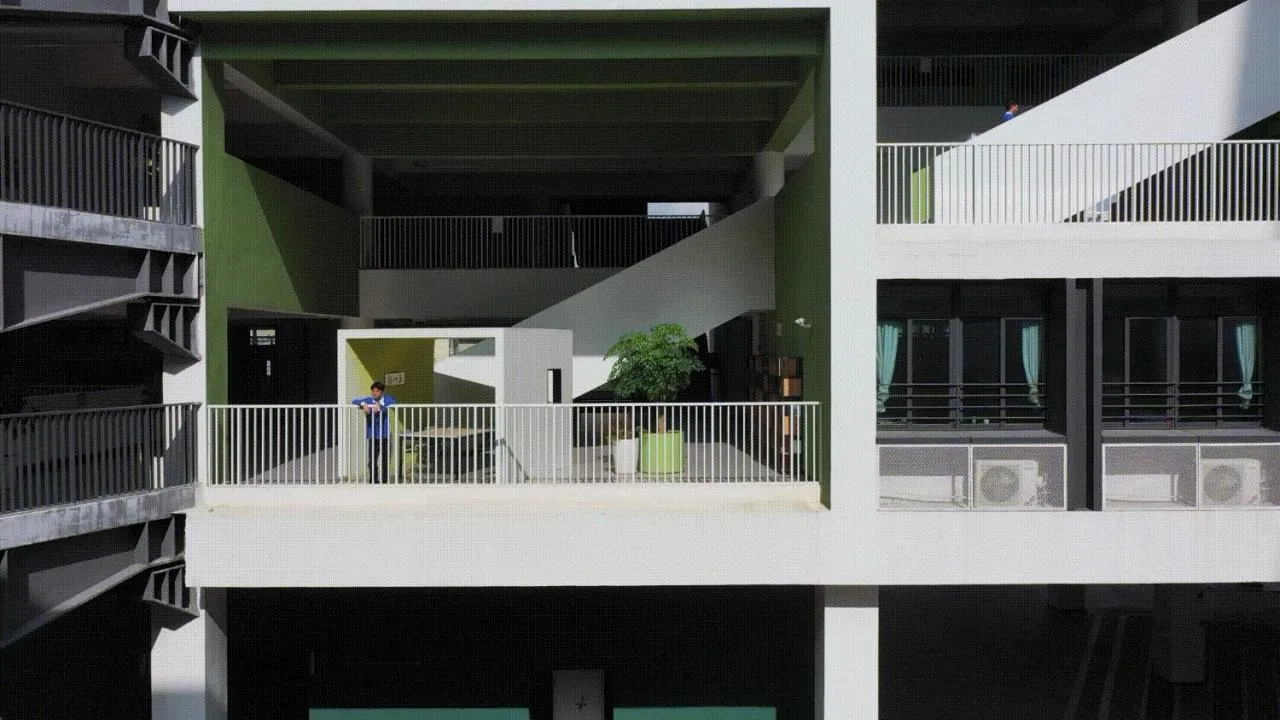
The new educational complex connects standard lecture classrooms directly with specialized experimental rooms. Traditionally, these two types of classrooms are far apart, hindering daily teaching and reducing the efficient use of specialized spaces. This design places ordinary and professional classrooms side by side, facilitating both theoretical instruction and hands-on practice without increasing corridor area.
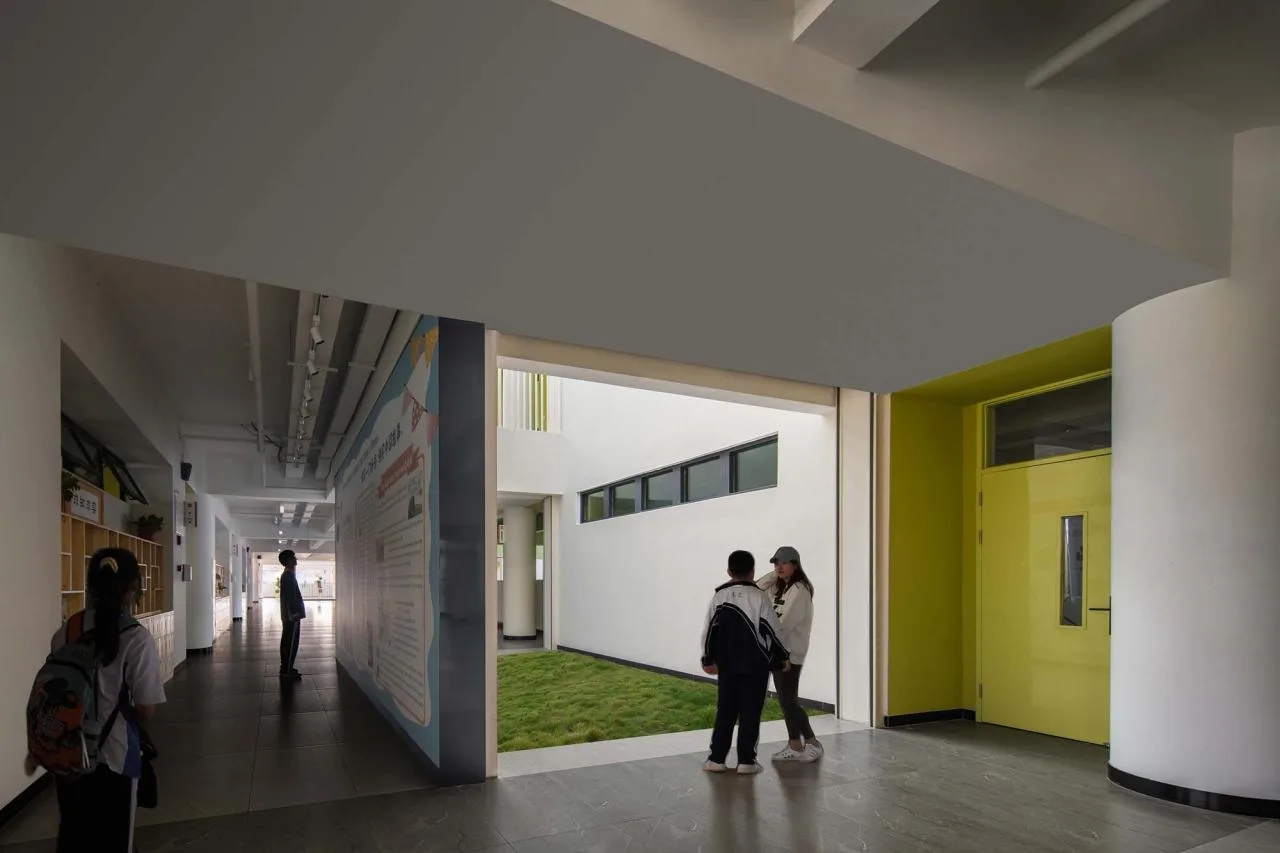
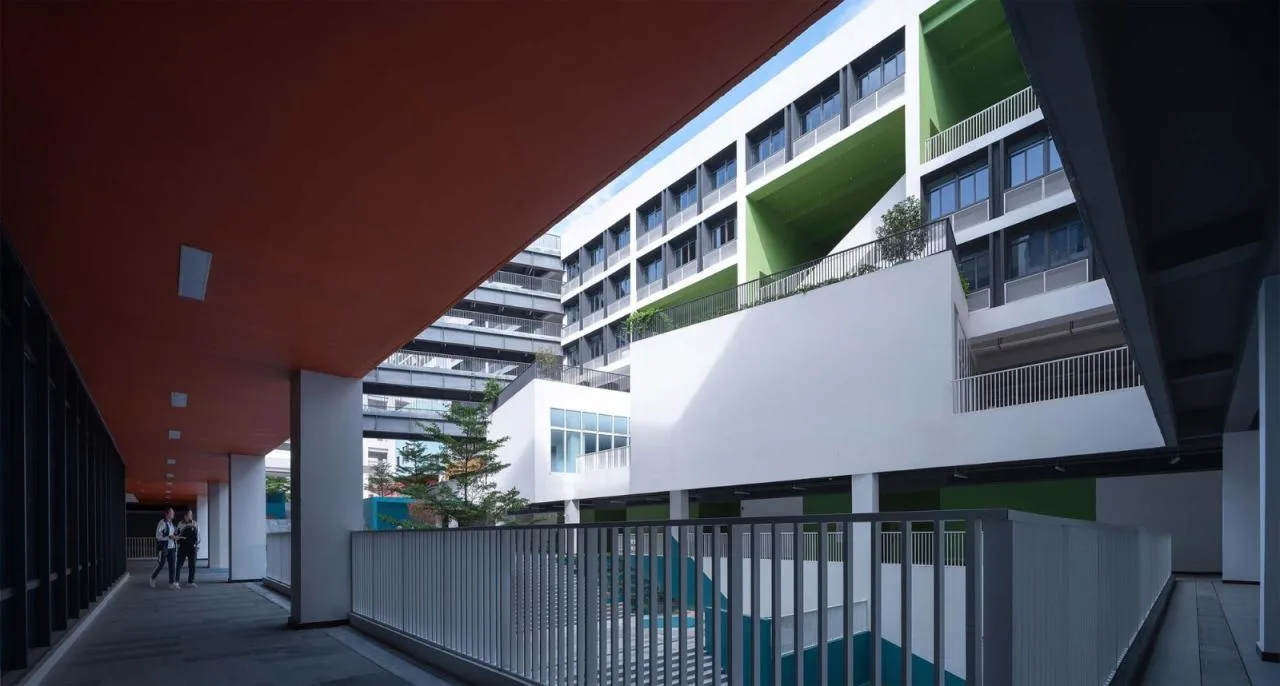
This arrangement expands internal corridors into public communication spaces and provides safe, weather-protected platforms for activities. Vertical light wells bring in natural light, breaking the monotonous corridor framework and creating bright, open transit areas. These spaces also support creativity-stimulating activities such as small group discussions, interdisciplinary teaching, inter-class interactions, science galleries, and art exhibitions, enhancing the educational environment with integrated natural lighting and ventilation.
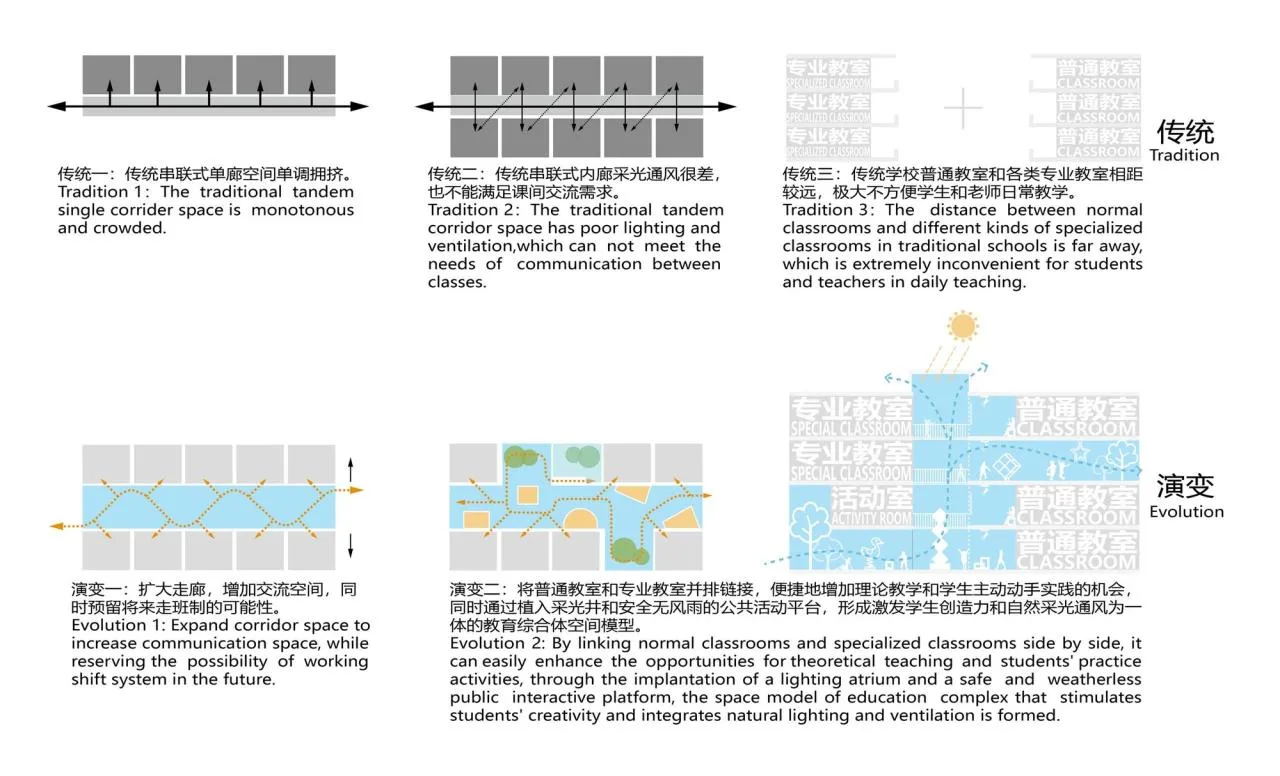
△ New Educational Space Model
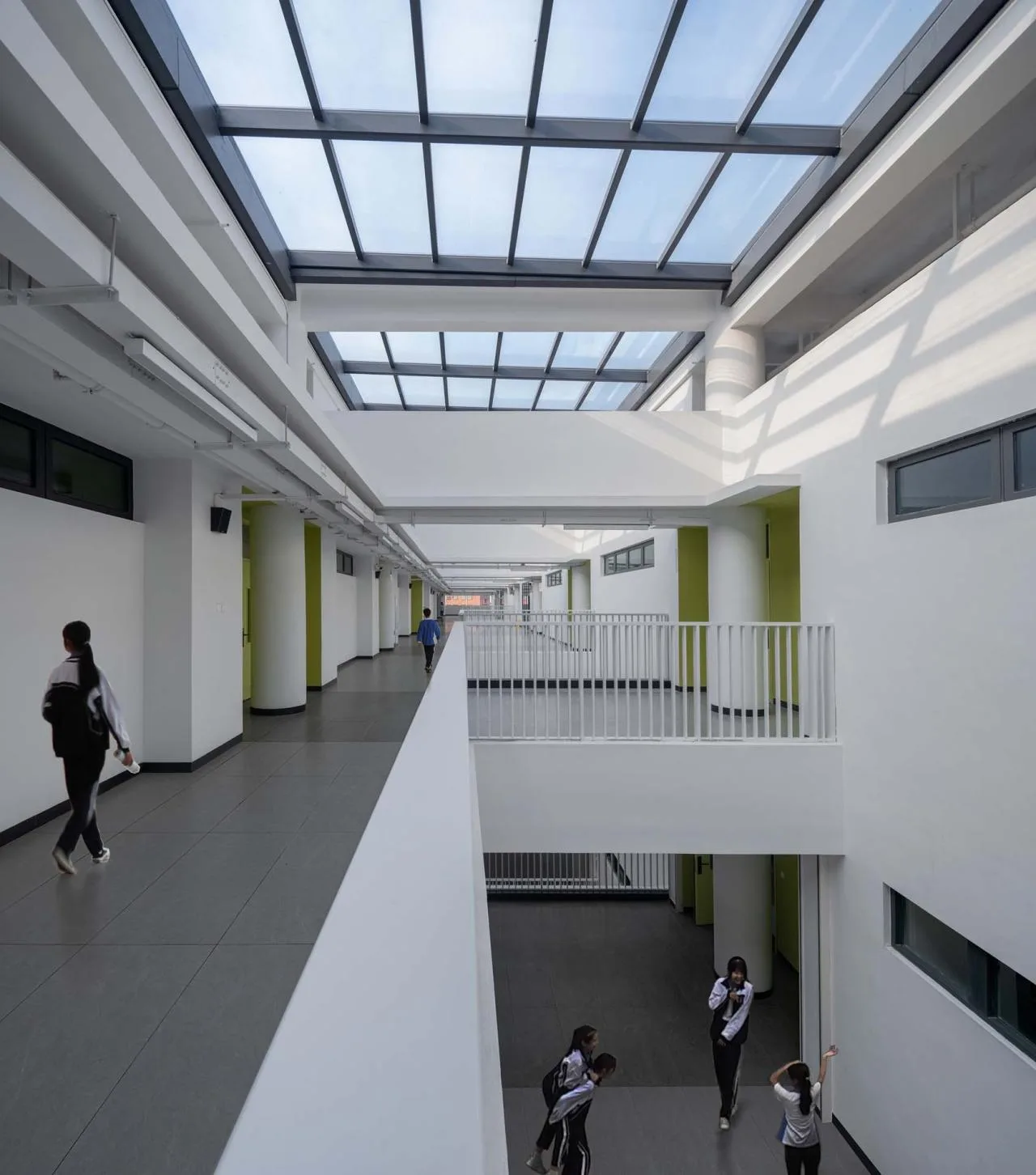
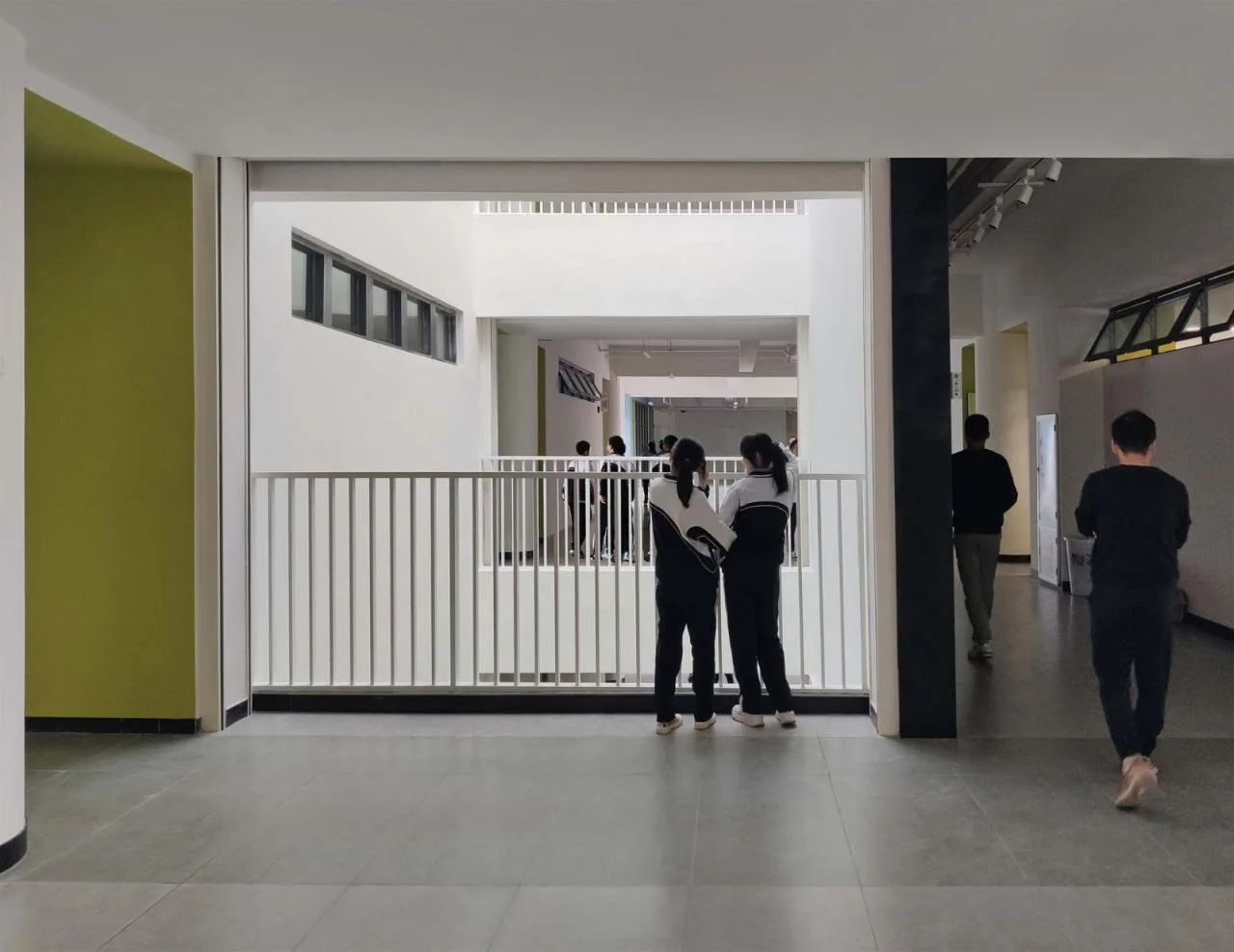
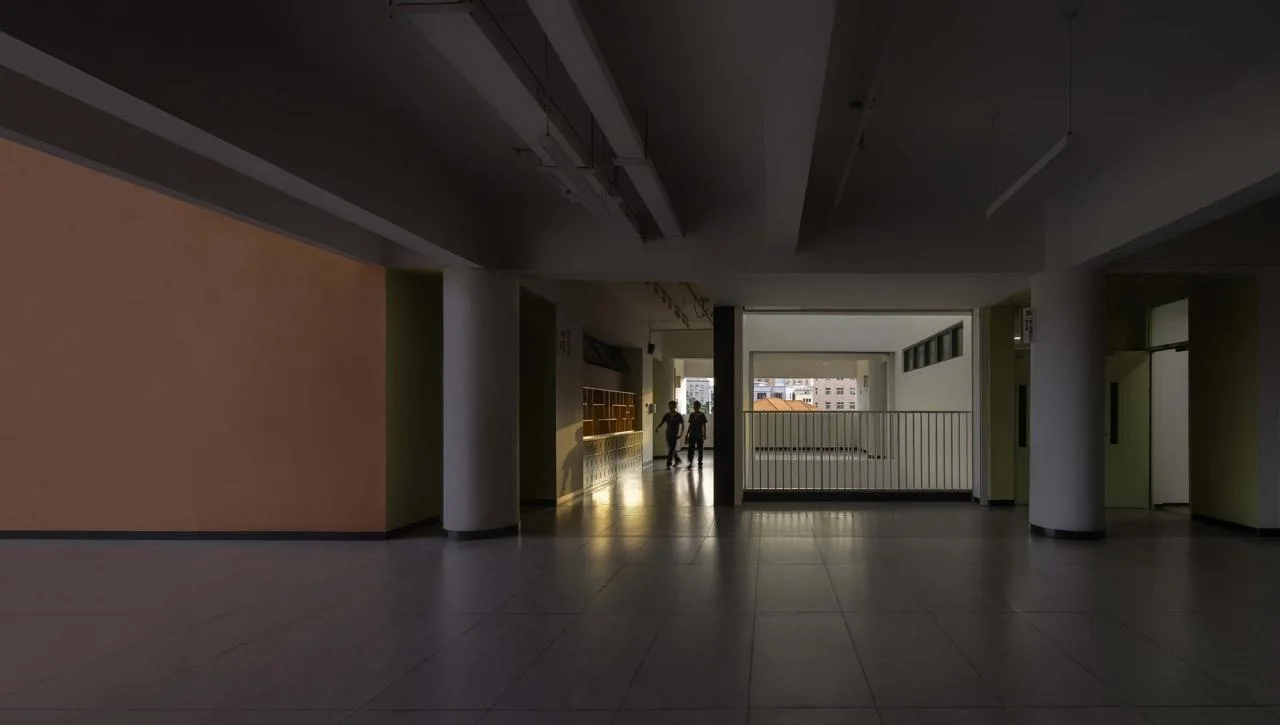
The severe shortage of public space in the surrounding community inspired us to break the school’s physical boundaries and transform the campus into a temporary community center. Various open teaching spaces are accessible to local residents during different times—after school, weekends, and vacations—maximizing the use of shared facilities.
This approach reduces idle space, optimizes the function of multipurpose areas for the entire community, improves public amenities, and keeps the campus vibrant around the clock.
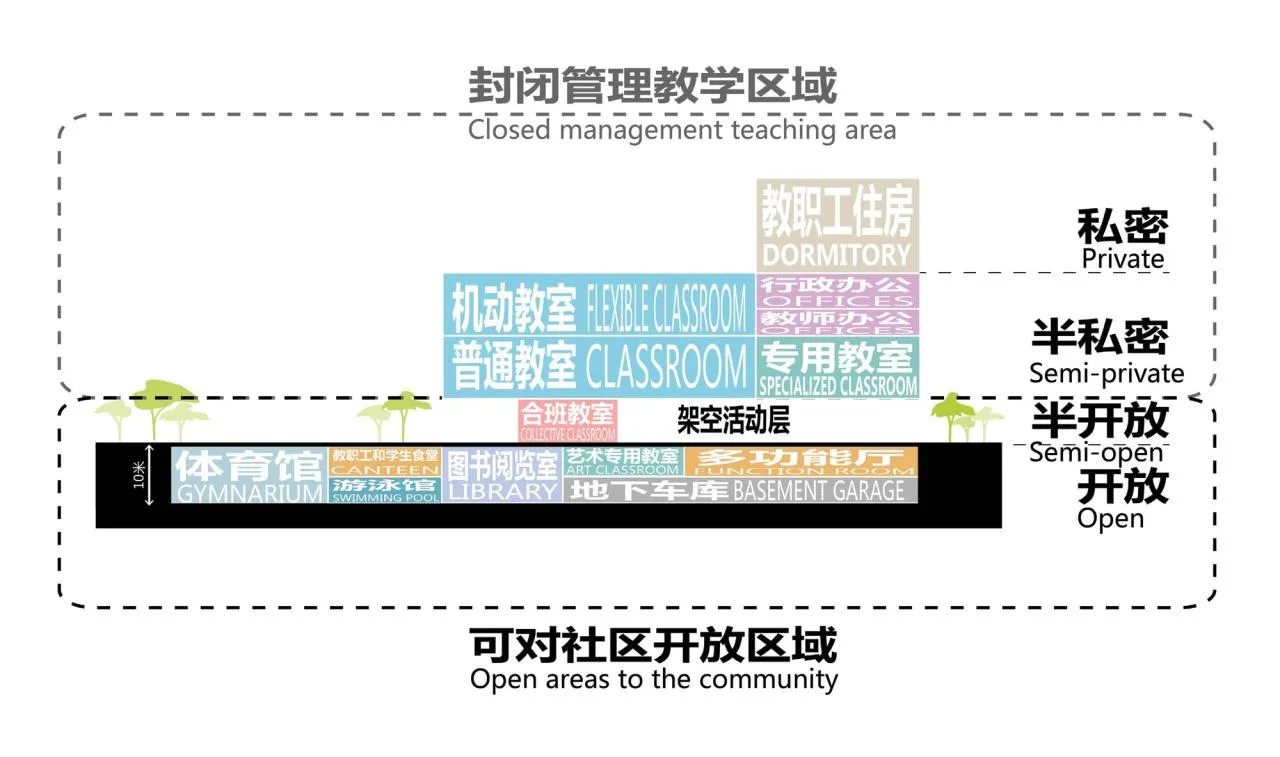
△ Community Sharing Layered Strategy
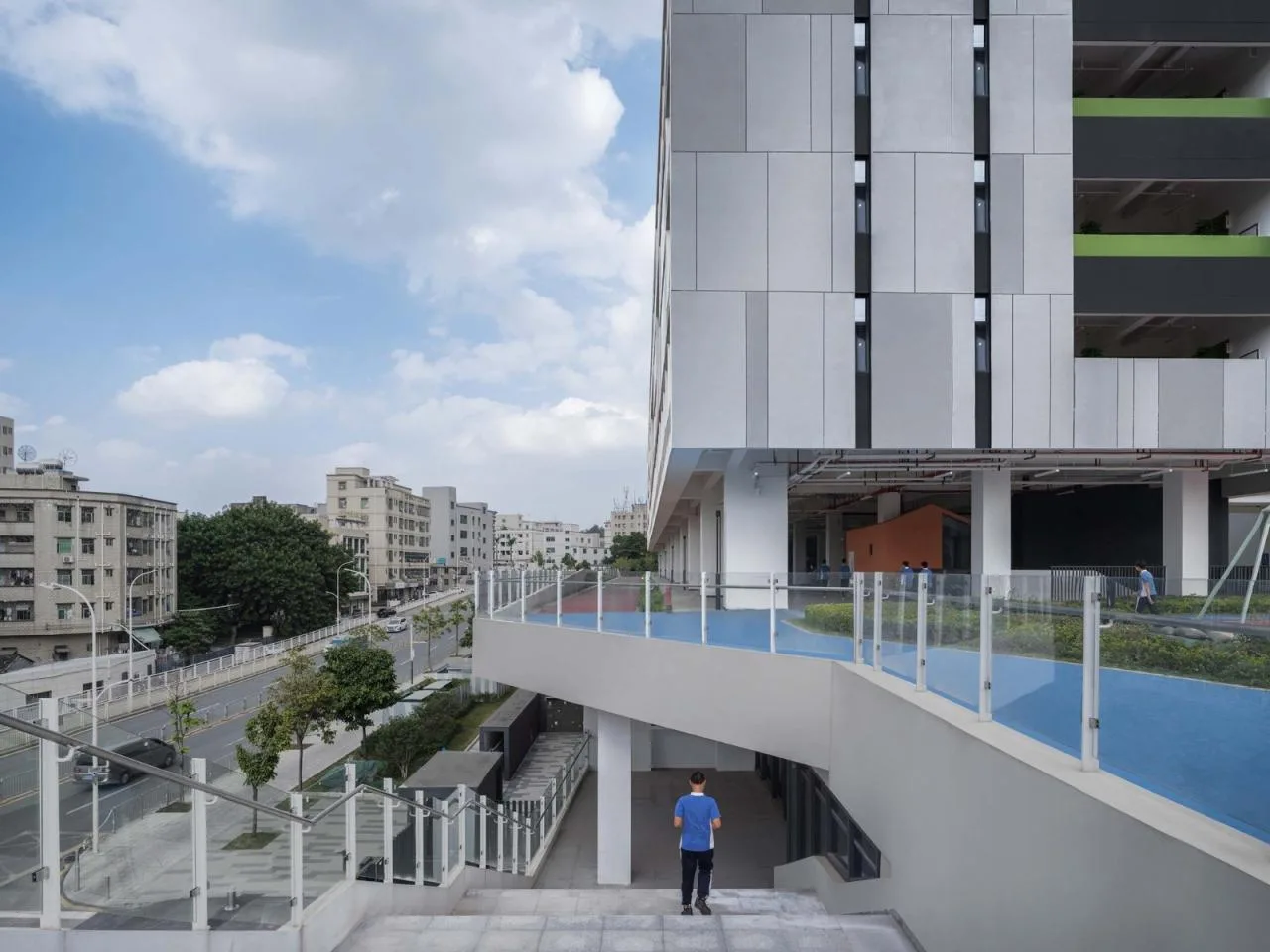
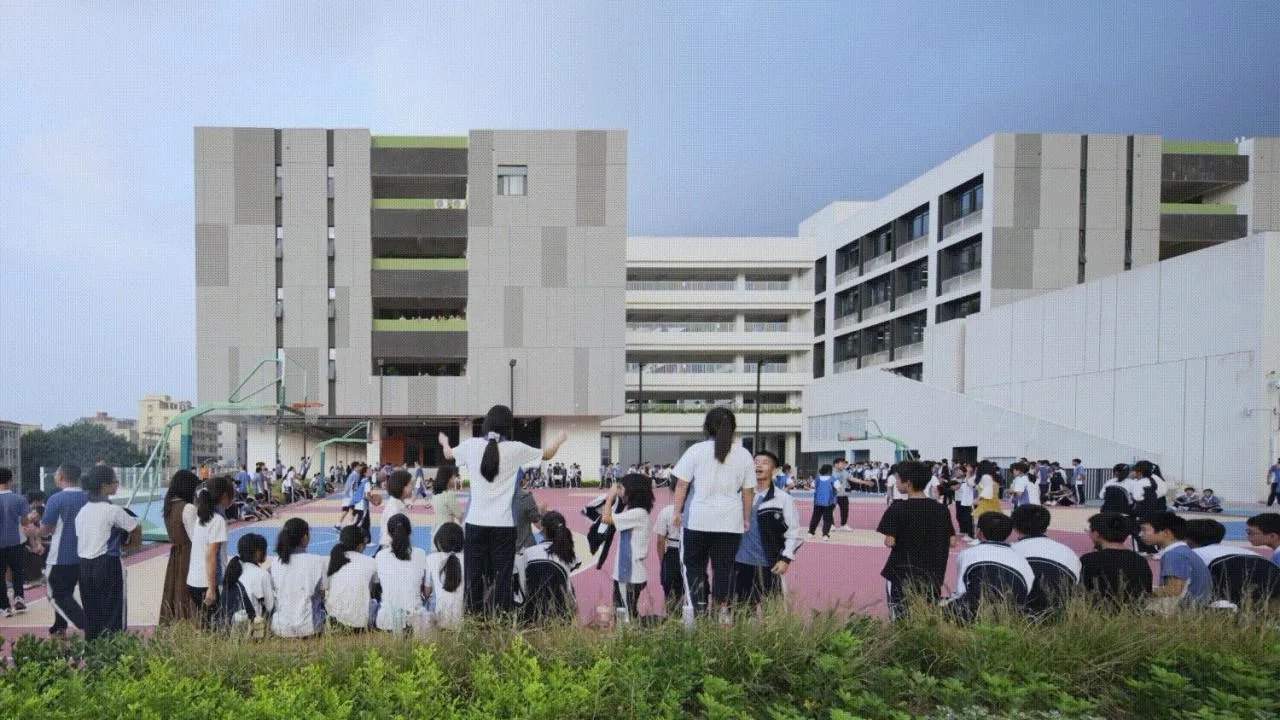
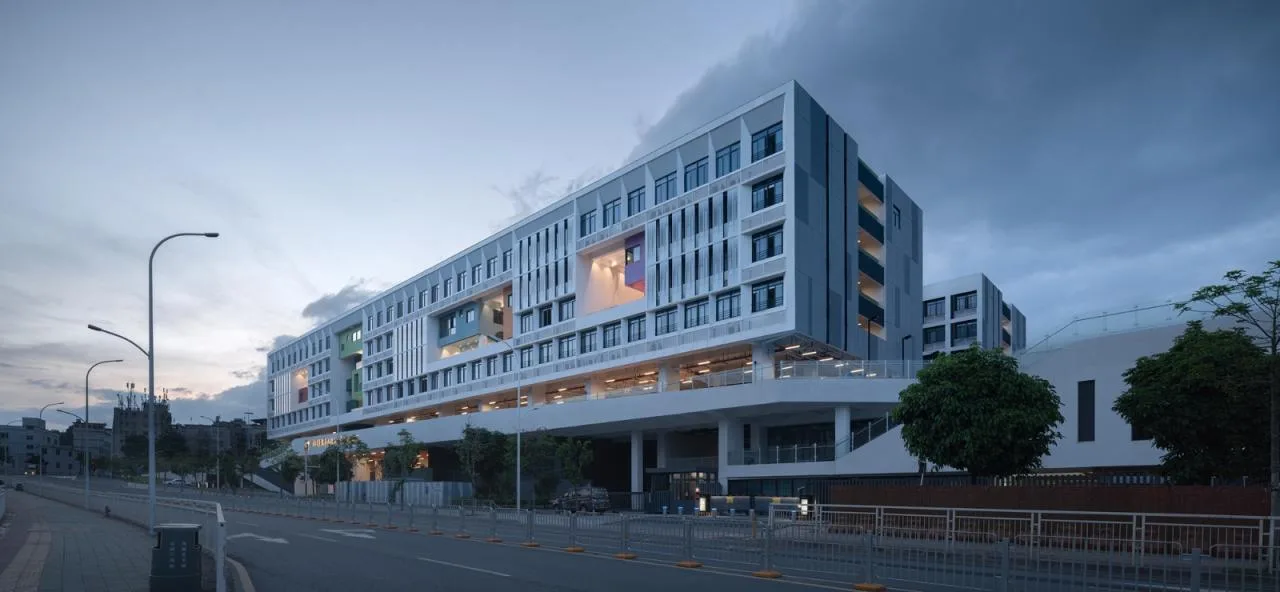
The high-density campus design leverages a 10-meter elevation difference across the site to excavate terrain and create a semi-underground large shared functional podium. The campus entrance is located on the negative second-floor level facing the street. The semi-basement roof effectively blocks road noise from affecting the upper teaching buildings.
The campus features an open, street-facing façade, rich spatial layering, and a comfortable, all-weather buffer zone for parents waiting. The vertical, three-dimensional zoning of school functions facilitates community access management while providing a safe and functional educational complex for staff and students.
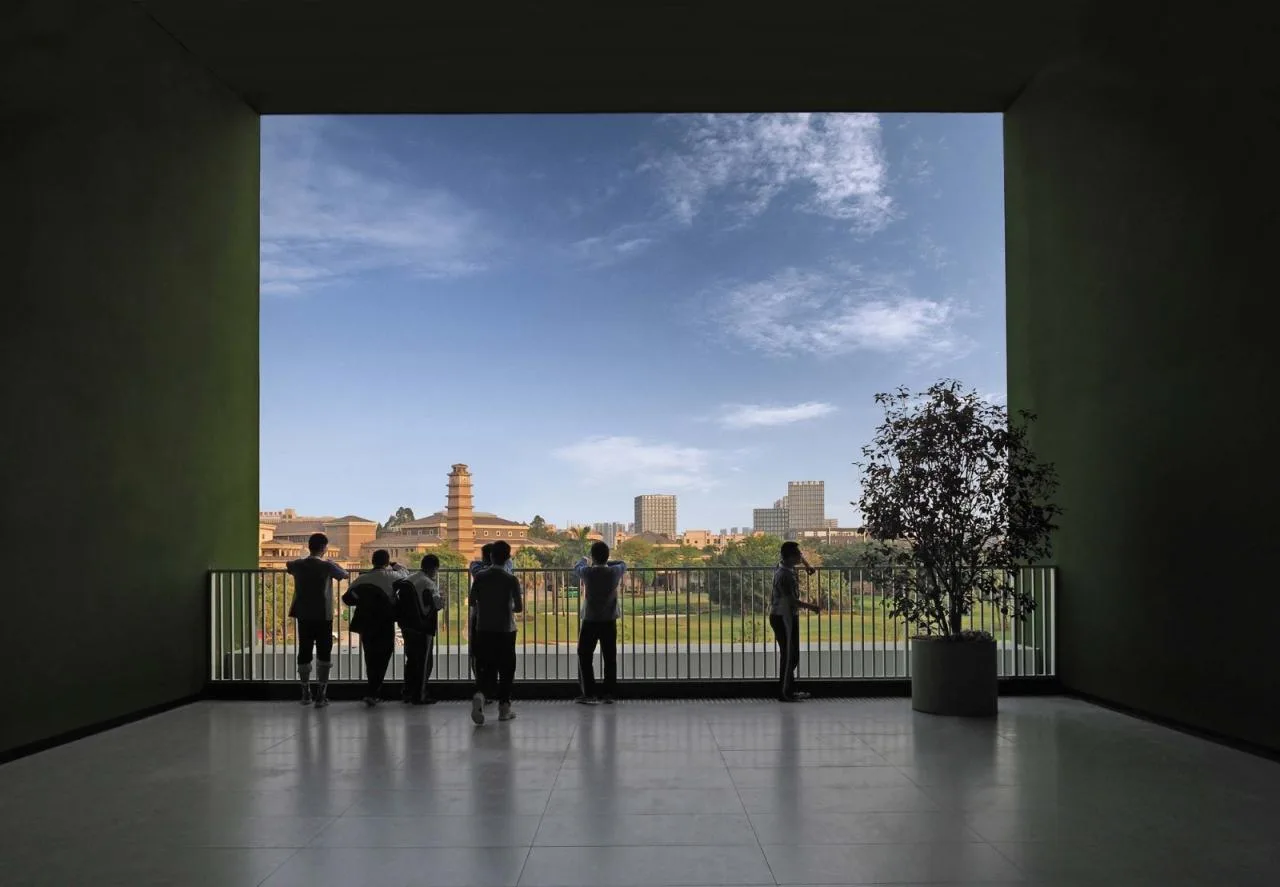
Elevated floor levels increase the number of teaching floors and provide excellent views: to the south, the golf course landscape; to the north, rooftops of urban villages and distant vistas. The height of the main teaching buildings, surpassing surrounding structures, ensures excellent natural ventilation.
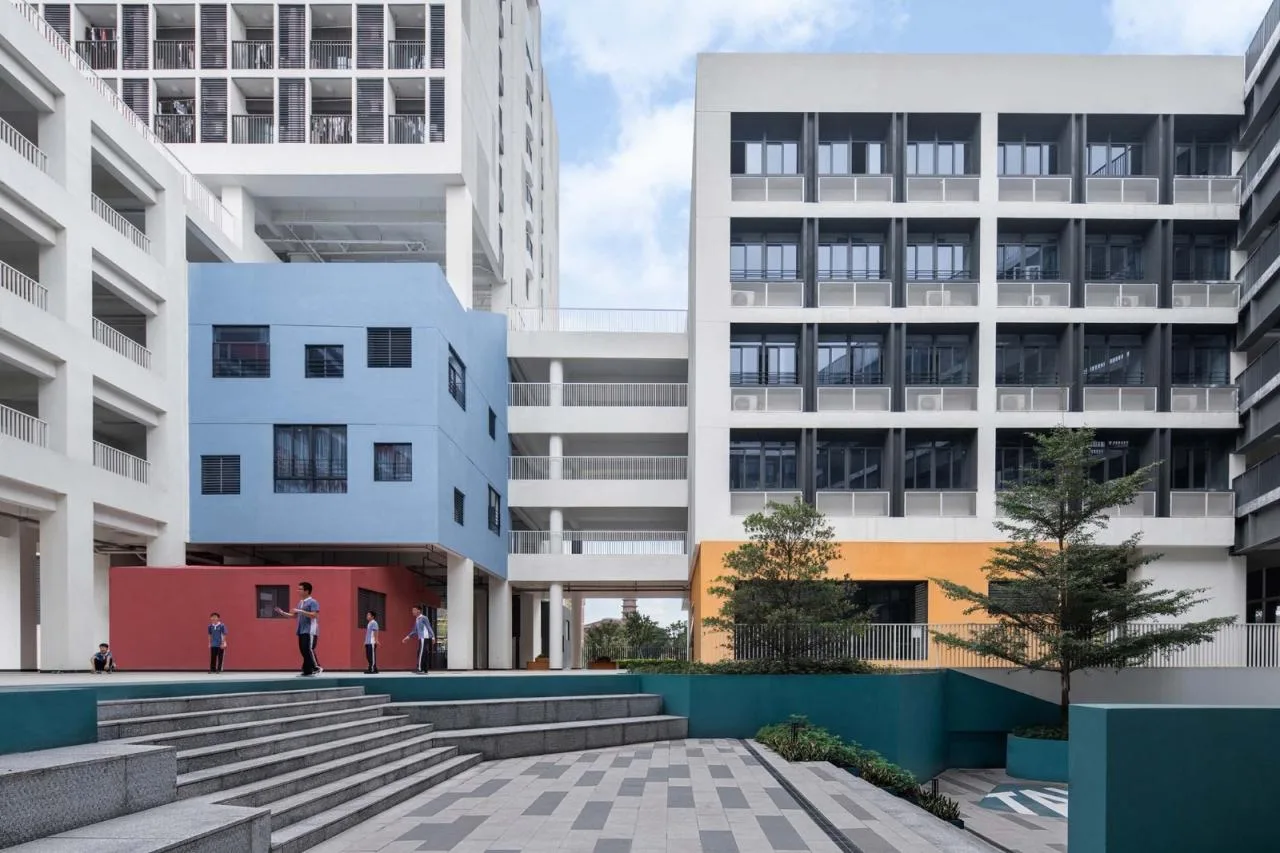
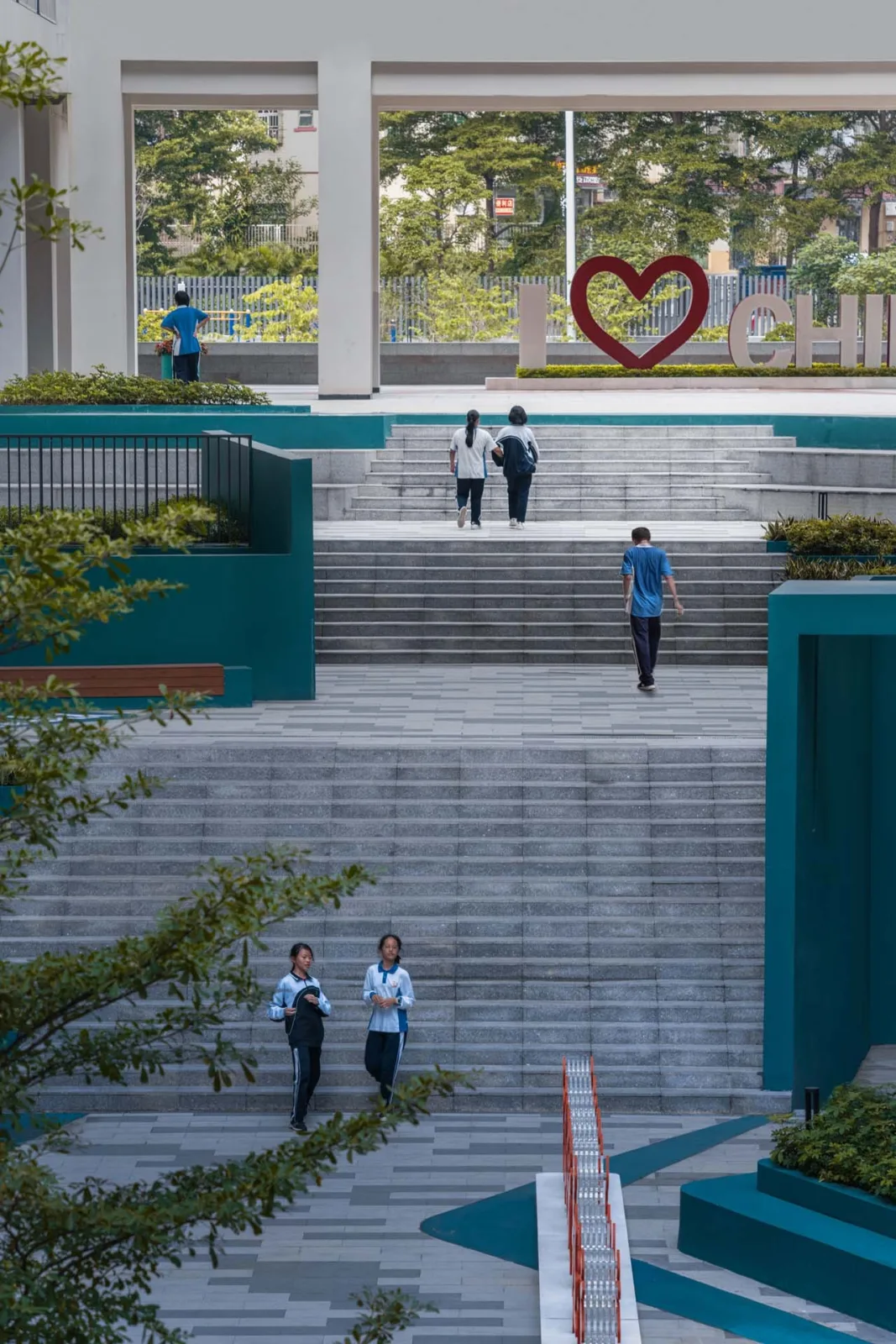
Our goal is to design schools not from the perspective of teachers or adults but centered on students. We strive to create campuses that serve education by offering open, personalized, diverse, and multi-layered communication spaces. Ultimately, we aim to build a three-dimensional, integrated, and shared campus environment.
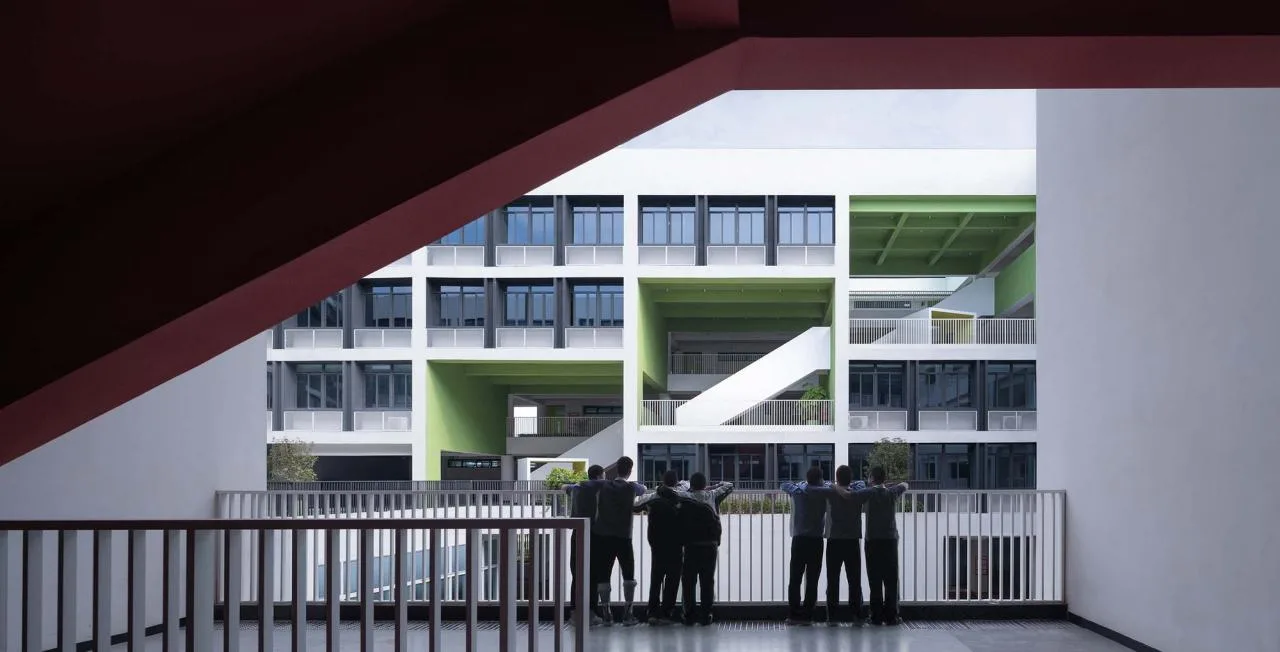
The structural design features frame construction for teaching buildings 1 and 2, while the dormitory uses a frame shear wall structure. The central teaching corridor employs a 27-meter large-span steel structure to eliminate supporting columns and provide unobstructed space below.
The project includes two and a half basement levels housing large functional areas such as basketball courts and lecture halls. Large-span, one-way secondary concrete beams ensure column-free spaces. The lecture hall’s stepped seating is designed to meet height requirements under suspended ceilings, and inclined slab structures provide adequate ceiling height.
Mechanical and electrical design includes a rainwater storage system (PP rainwater recovery module) to collect roof and ground rainwater. After treatment to meet quality standards, this water is reused for irrigation, underground warehouse flushing, and road watering, supporting the sponge city concept and sustainable water use.
The HVAC system prioritizes a people-oriented, green, and energy-efficient design. It uses advanced systems and energy-saving measures to ensure comfortable indoor environments and good air quality. The indoor swimming pool features a constant temperature and humidity system powered by an air-cooled heat pump and integrated units, with auxiliary pool water heating.
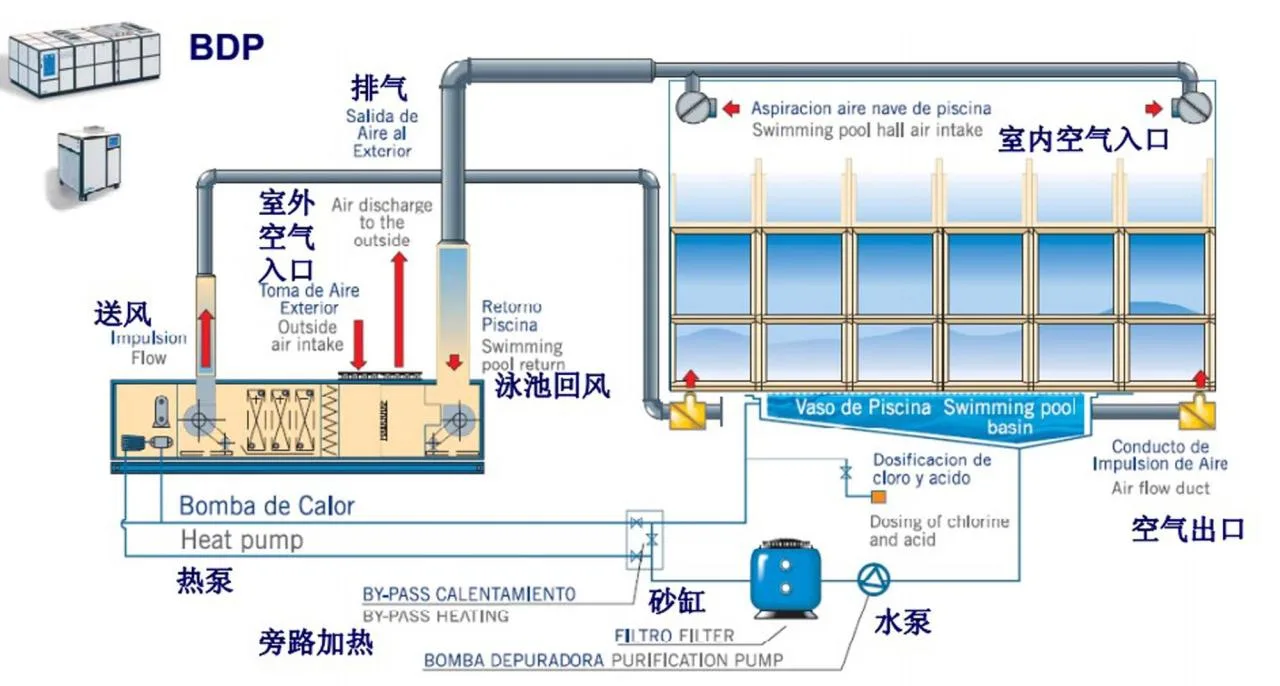
△ HVAC Technical Diagram
Electrical design responds to national goals for low-carbon environmental protection, energy conservation, and emission reduction. Two 10kV lines feed the project’s switch station, with radial wiring to the high-voltage distribution room, enhancing power supply reliability and efficiency. Classrooms leverage natural lighting with an intelligent lighting system to minimize energy waste.
BIM technology is applied to effectively coordinate mechanical and electrical pipelines. Early-stage modeling simulates pipeline clashes, enabling management teams to avoid conflicts during construction, ensuring required clearances, and reducing redundant work, thus saving time and costs.
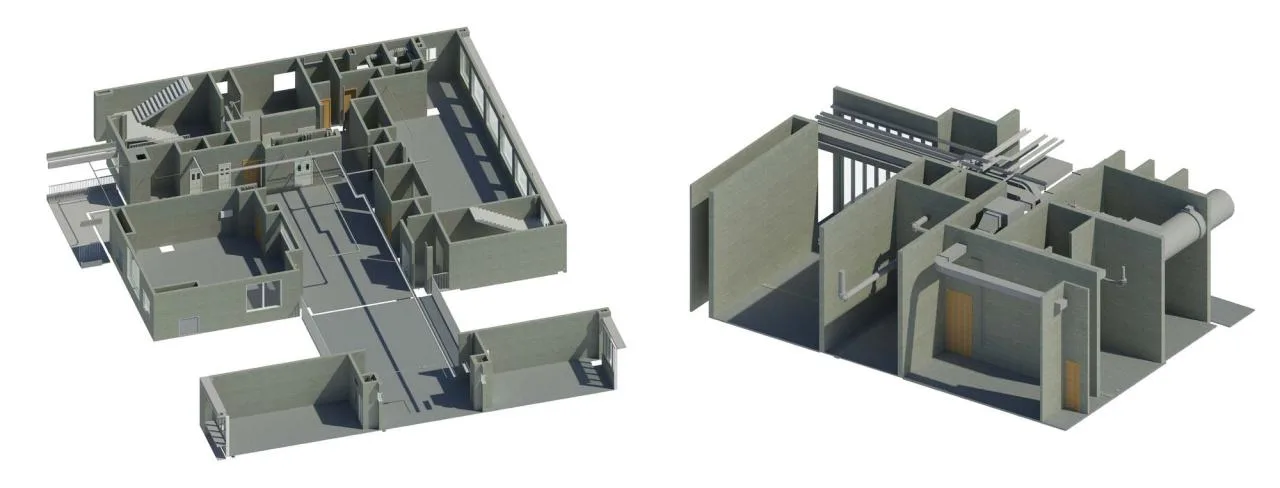
△ BIM Technology Partial Diagram
The design collaboration was led by Shenzhen Tianhua, responsible for comprehensive construction drawing design.
Project Drawings
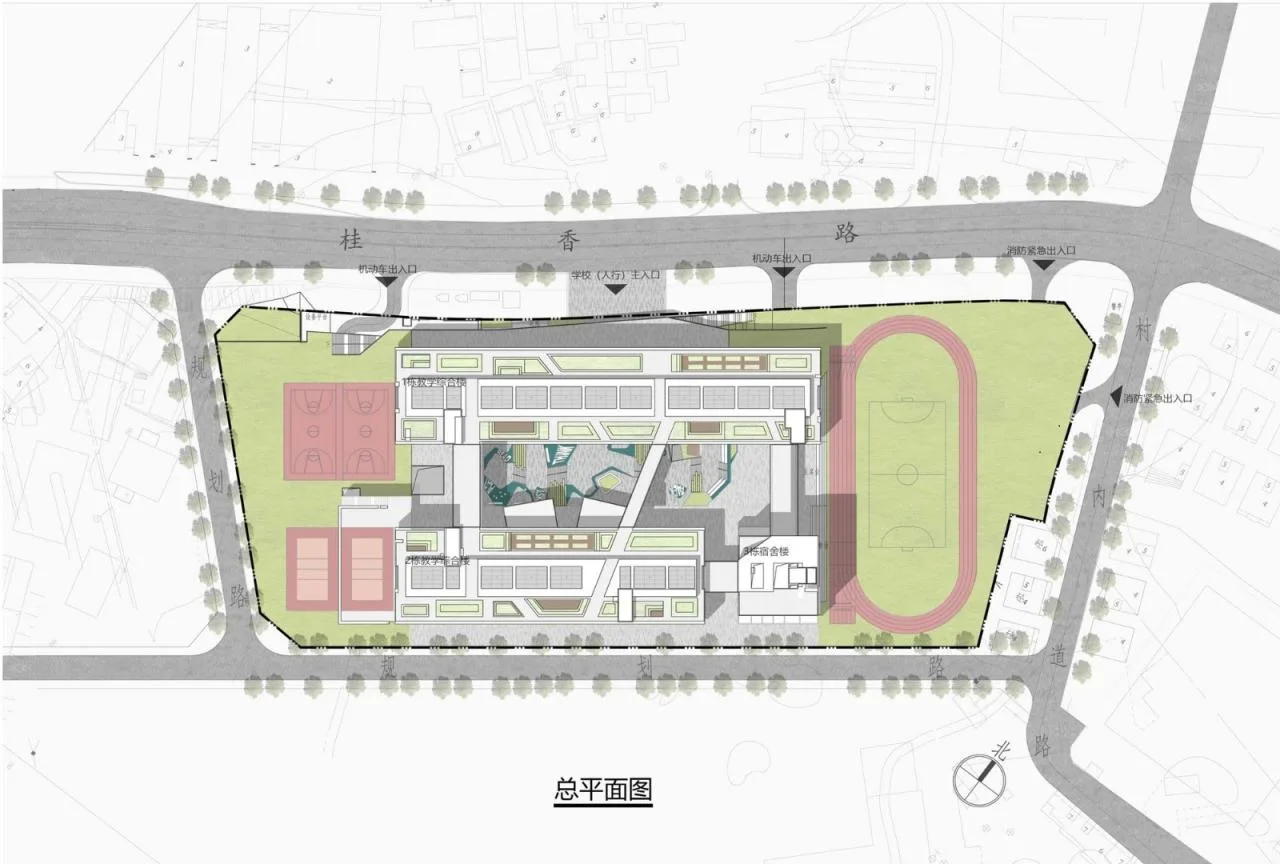
△ General Layout Plan
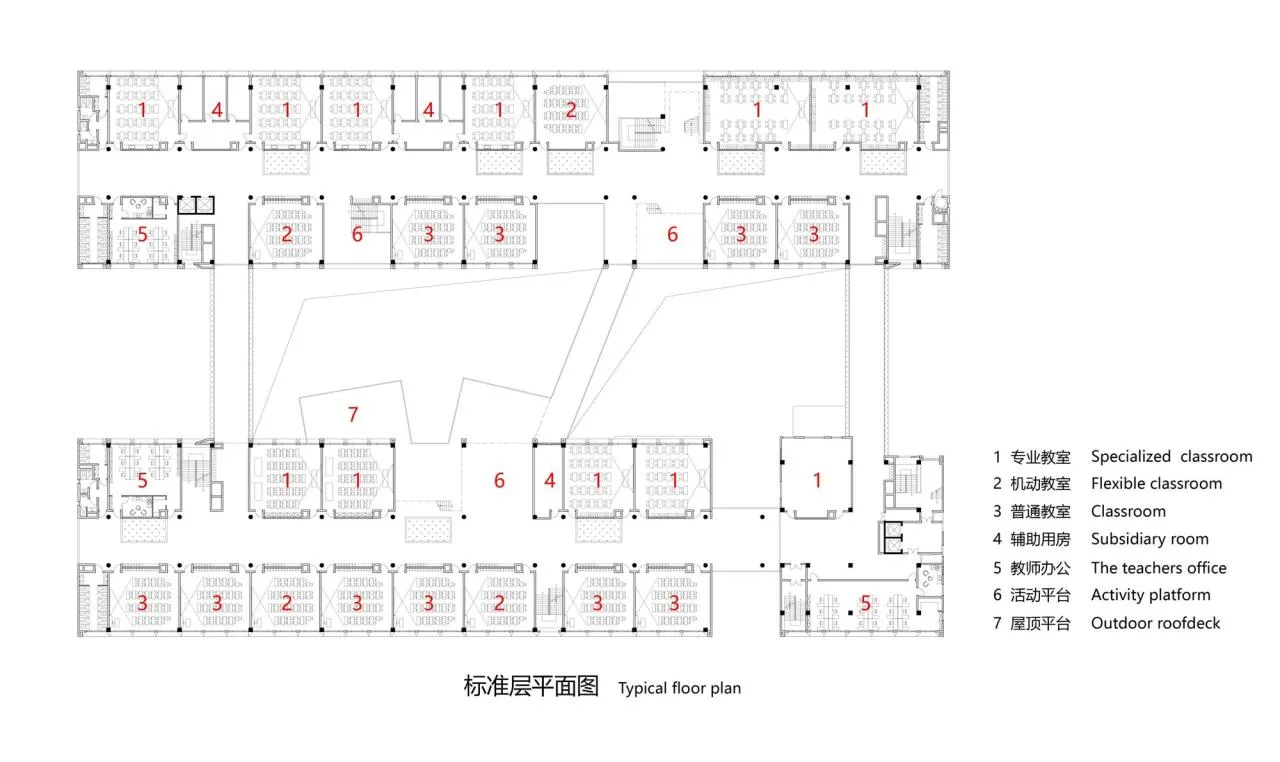
△ Standard Floor Plan
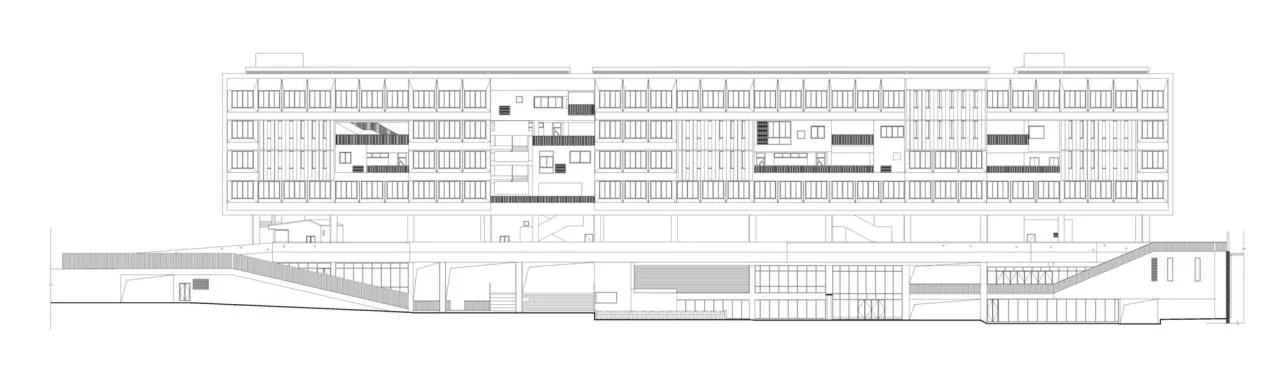
△ Elevation Drawing
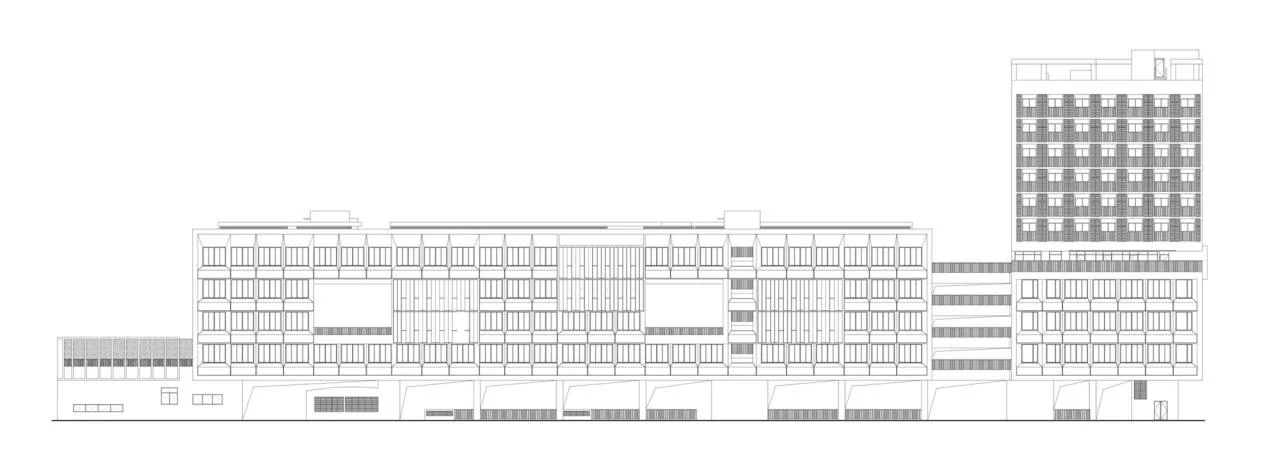
△ Elevation Drawing
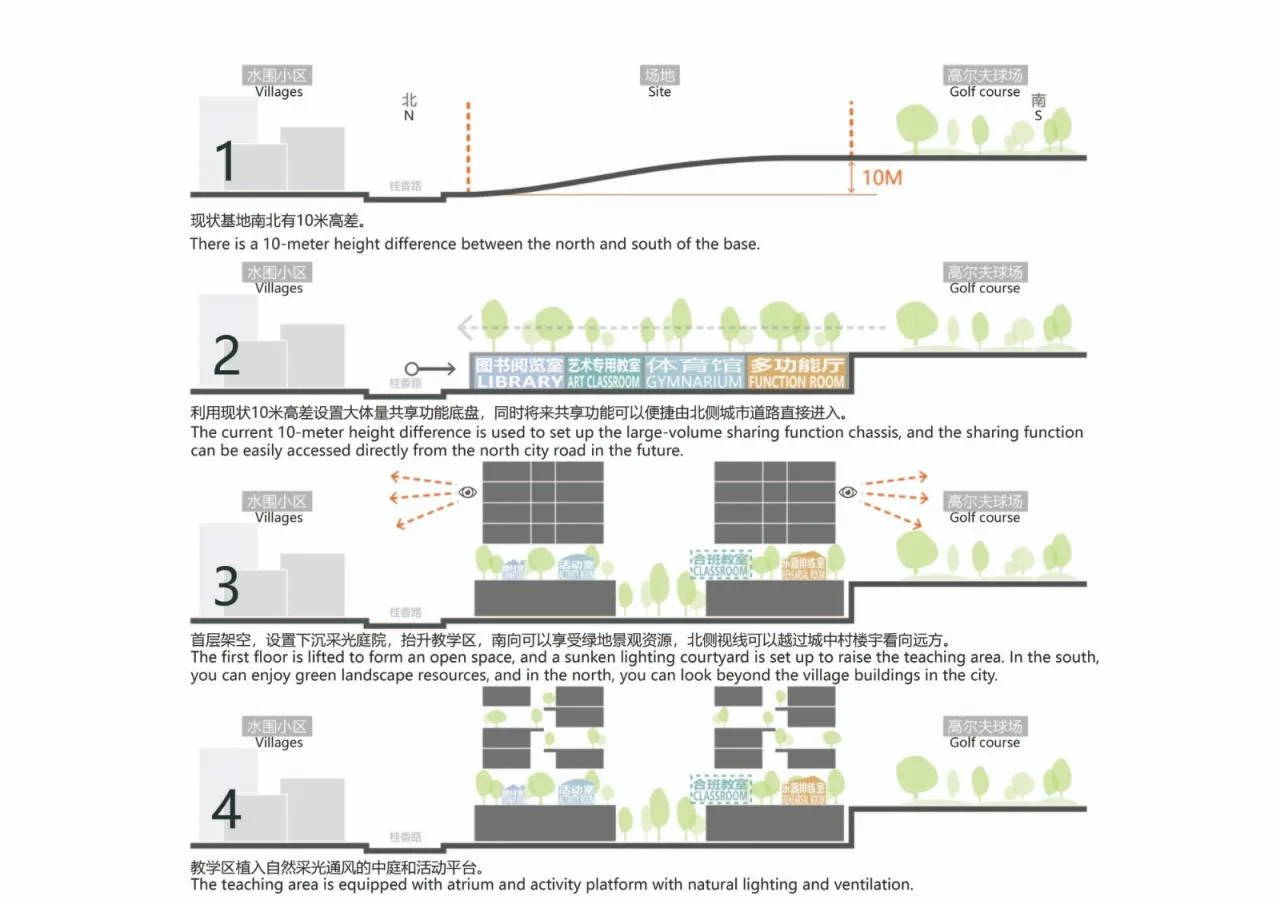
△ Profile Design Logic
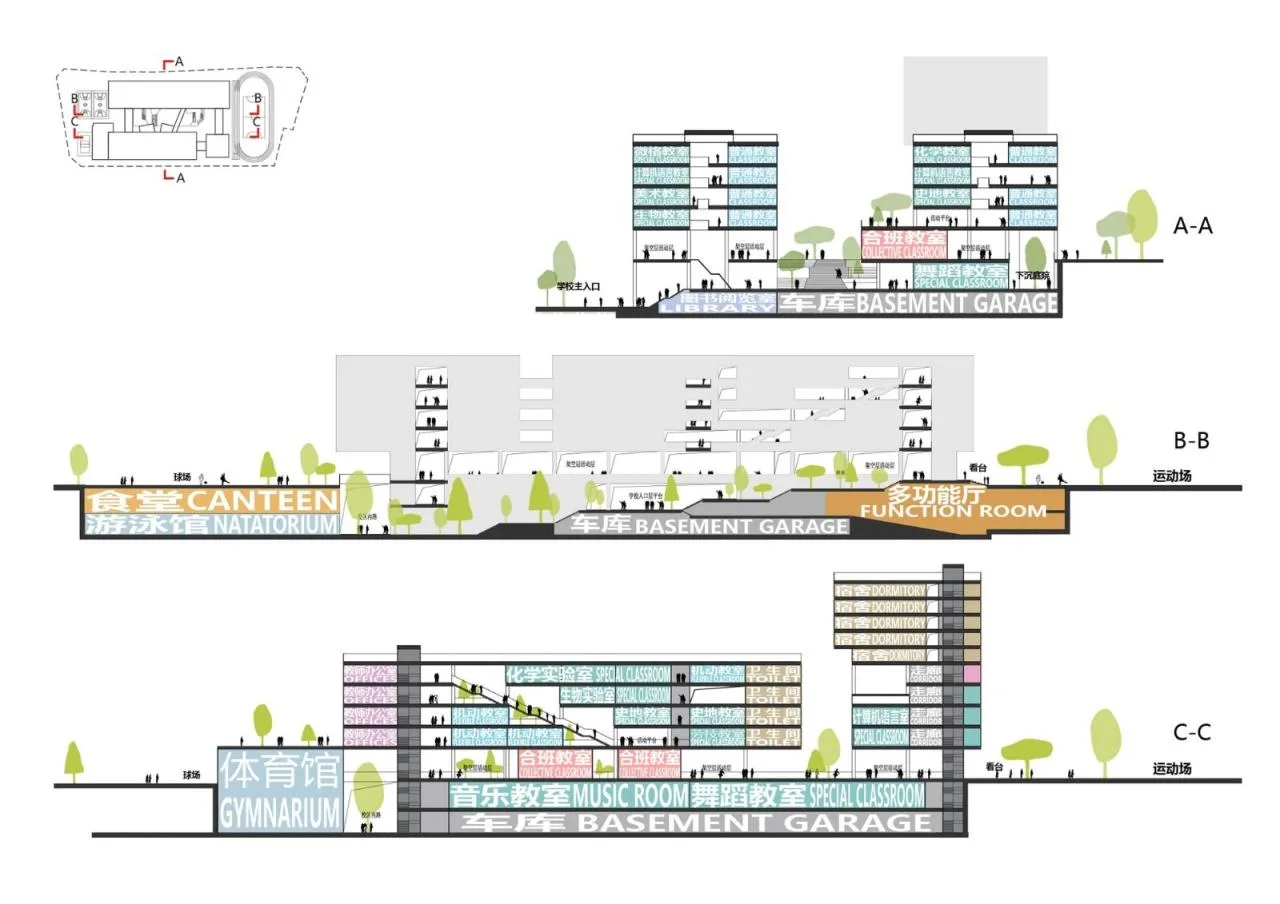
△ Section Diagram
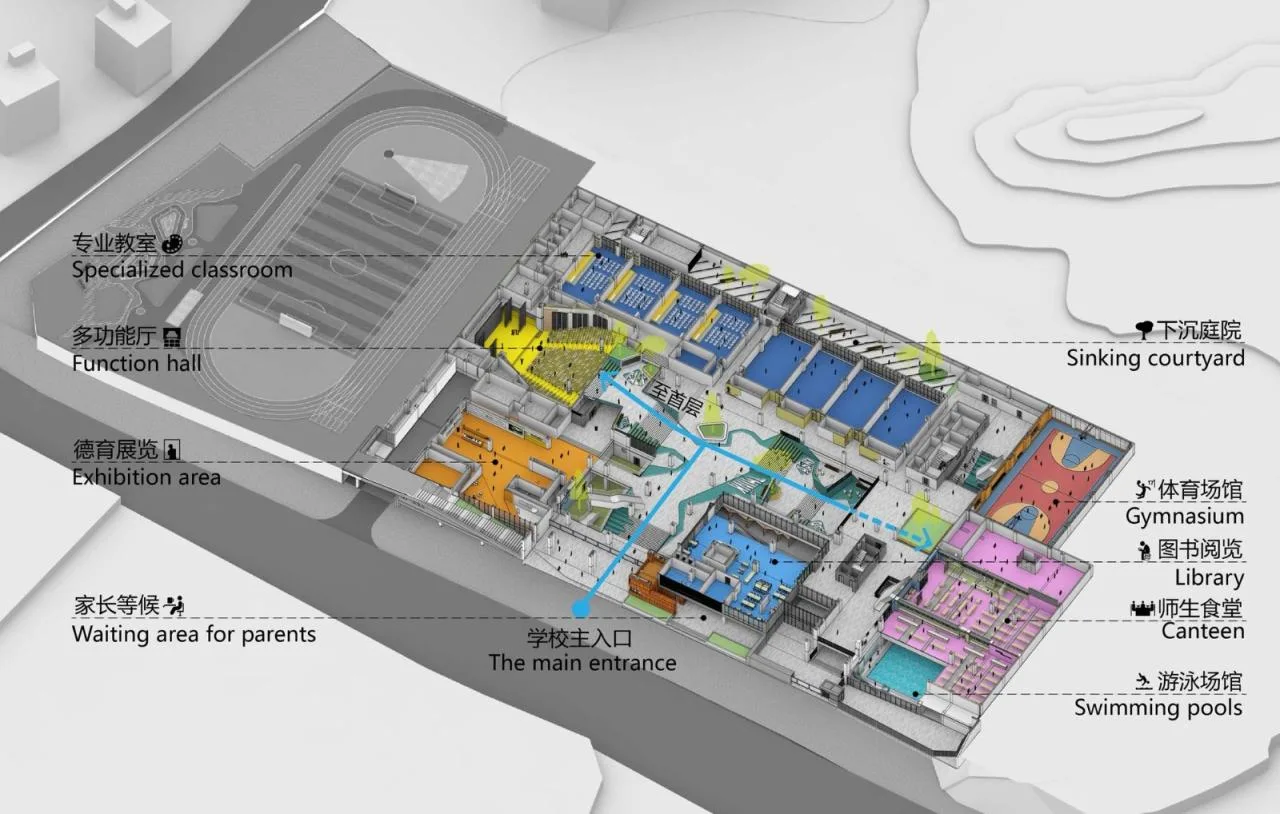
Analysis of Semi-Underground Shared Floors
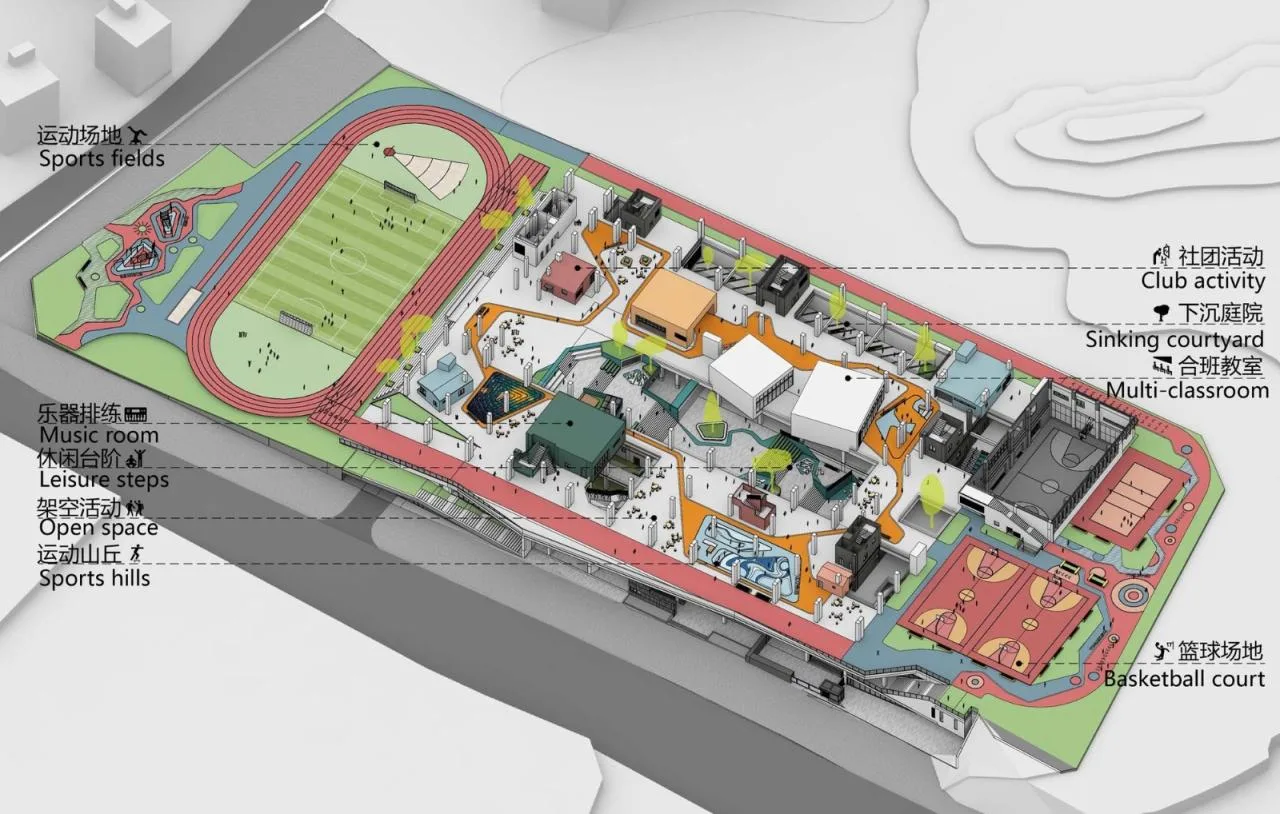
Analysis of the Overhead Layer Model
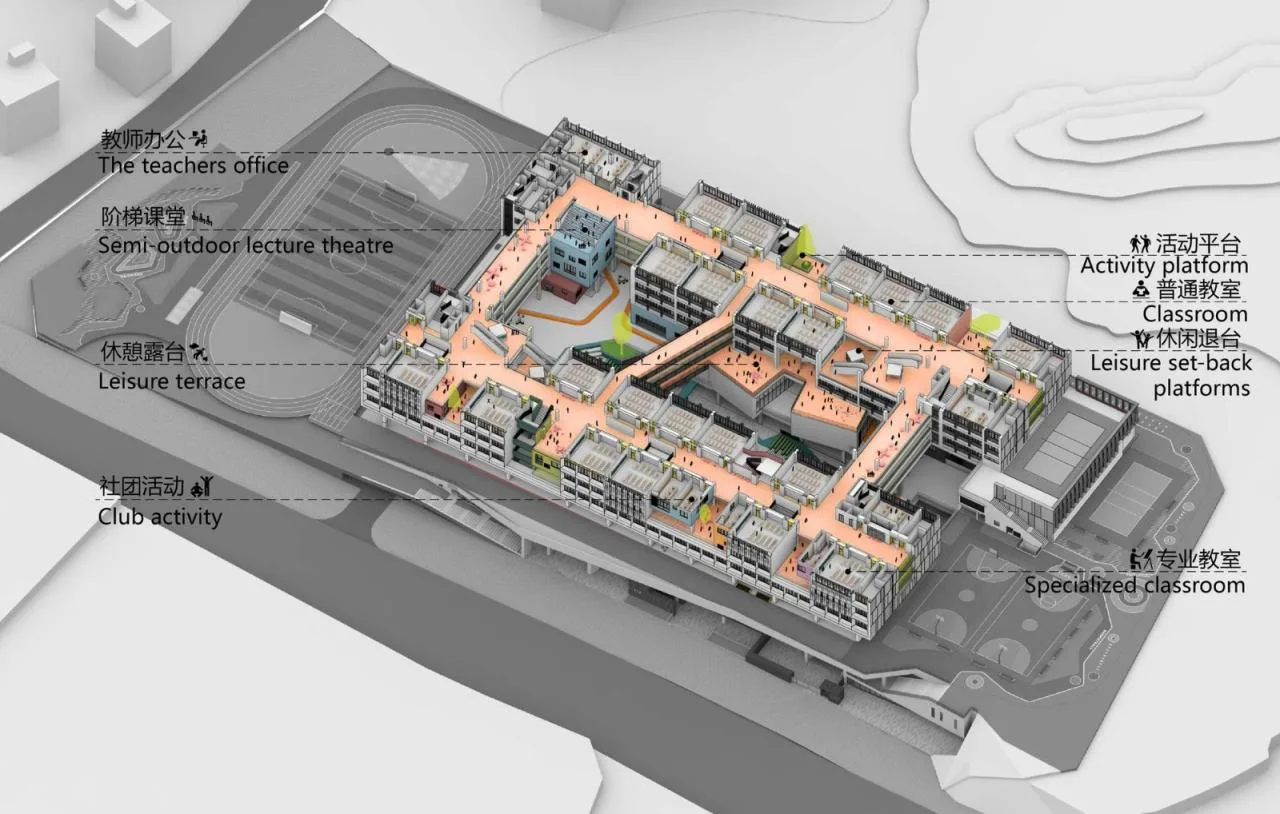
Analysis of the Teaching Area Spatial Model
Project Information
Architectural Design: Zhubo Design
Area: 58,124 m²
Project Year: 2021
Photographers: Wu Qingshan, Xiao Wenhang, Yuhua Wu, Inter-Mountain Images
Chief Architect: Zhong Qiao
Lead Architects: Wu Yuhua, Zhang Tiantian
Design Team: Zhong Qiao, Wu Yuhua, Zhang Tiantian, Peng Jingyang, Huang Xin, Zheng Xiaoting, Ma Hengshi, Li Dongmin, Cai Qiwen
Construction Drawing Team: Wu Yingmei, Guan Zhiwei, Chen Jie, Li Xiangzhou, Peng Kai, Wang Chongchong, Liu Chang, Yang Qijun, He Jun, Jin Qingyou, Zi Huiyun, Xiao Qiquan, Xiao Qingqing, Chen Weipeng, Li Jinzhi, Ma Hansheng, Guan Yongli, Jia Changyou, Xu Shikui, Li Guiming
Client: Longhua District Government Investment Project Preliminary Work Management Center / Longhua District Public Works Department
Structural Design: Shenzhen Tianhua Architectural Design Co., Ltd
Construction Contractor: Shenzhen Vanke Urban Construction Management Co., Ltd
Interior Design: Shenzhen Jienei Jiewai Design Co., Ltd
Landscape Design: Didong Planning and Design (Beijing) Co., Ltd
Curtain Wall Design: Shenzhen Pengge Curtain Wall Design Consulting Co., Ltd
Location: Shenzhen, China















Must log in before commenting!
Sign Up