
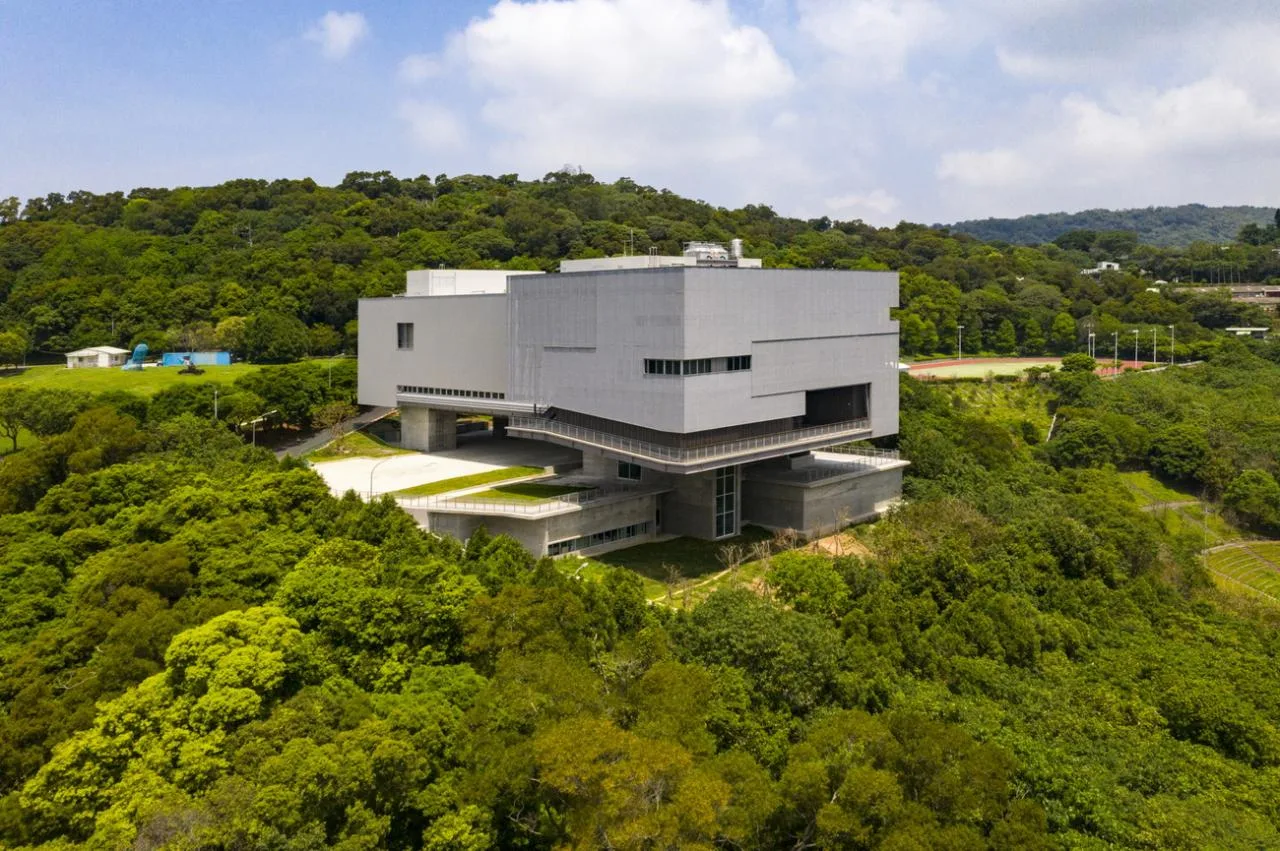
The initial design concept for the Taipei University of the Arts architecture is centered around a sensation of floating. Created by the architects as an experimental base dedicated to new media and technological art, the building is composed of several “boxes” of varying sizes that form its main structural system. Beyond serving as a venue for performances, exhibitions, and lectures, this craft exhibition hall also houses an operations center, offices, lecture halls, laboratories, and studios.
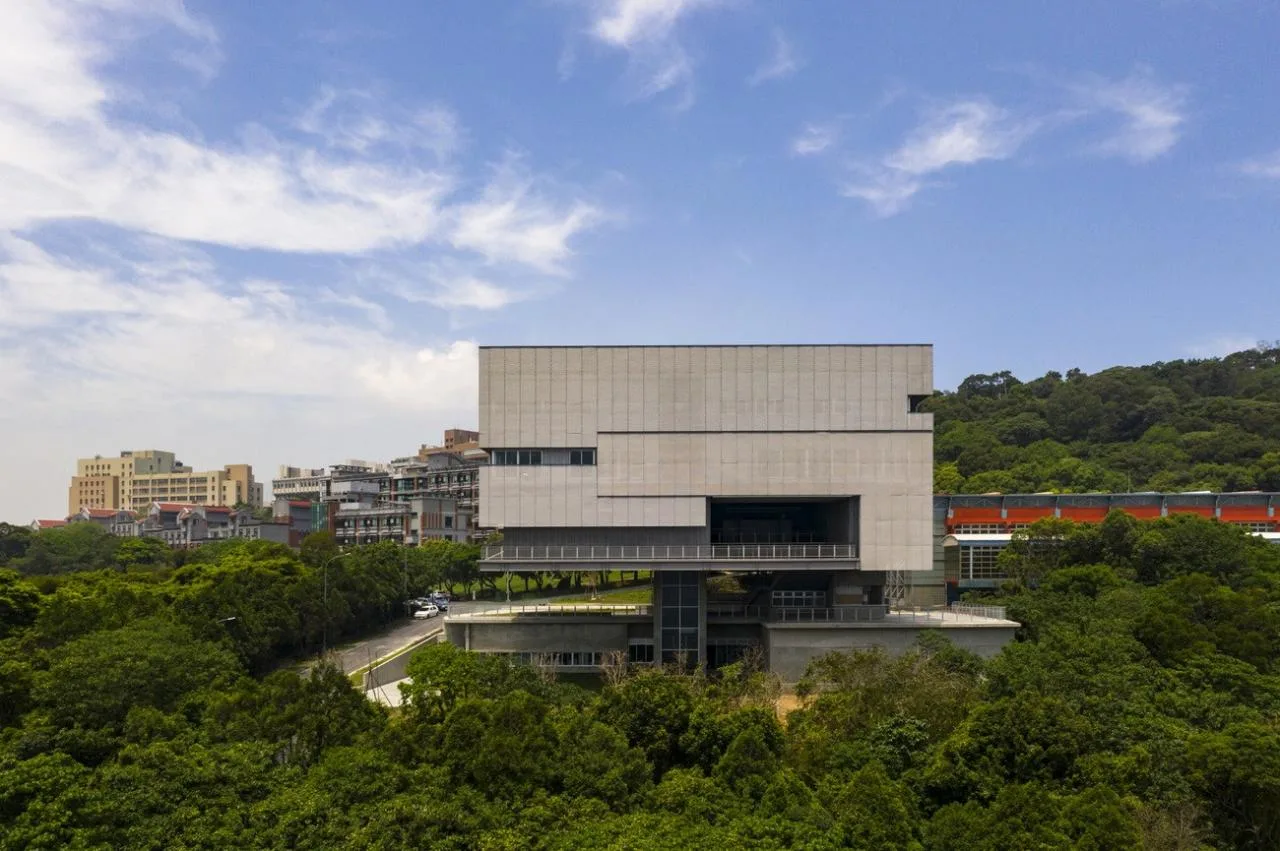
The design of the Technology and Art Exhibition Hall draws from two parallel inspirations: firstly, to resonate with the architectural traditions and forms of Taipei University of Education; and secondly, to establish connections with other campus spaces, thereby creating a new environment for artistic experimentation.
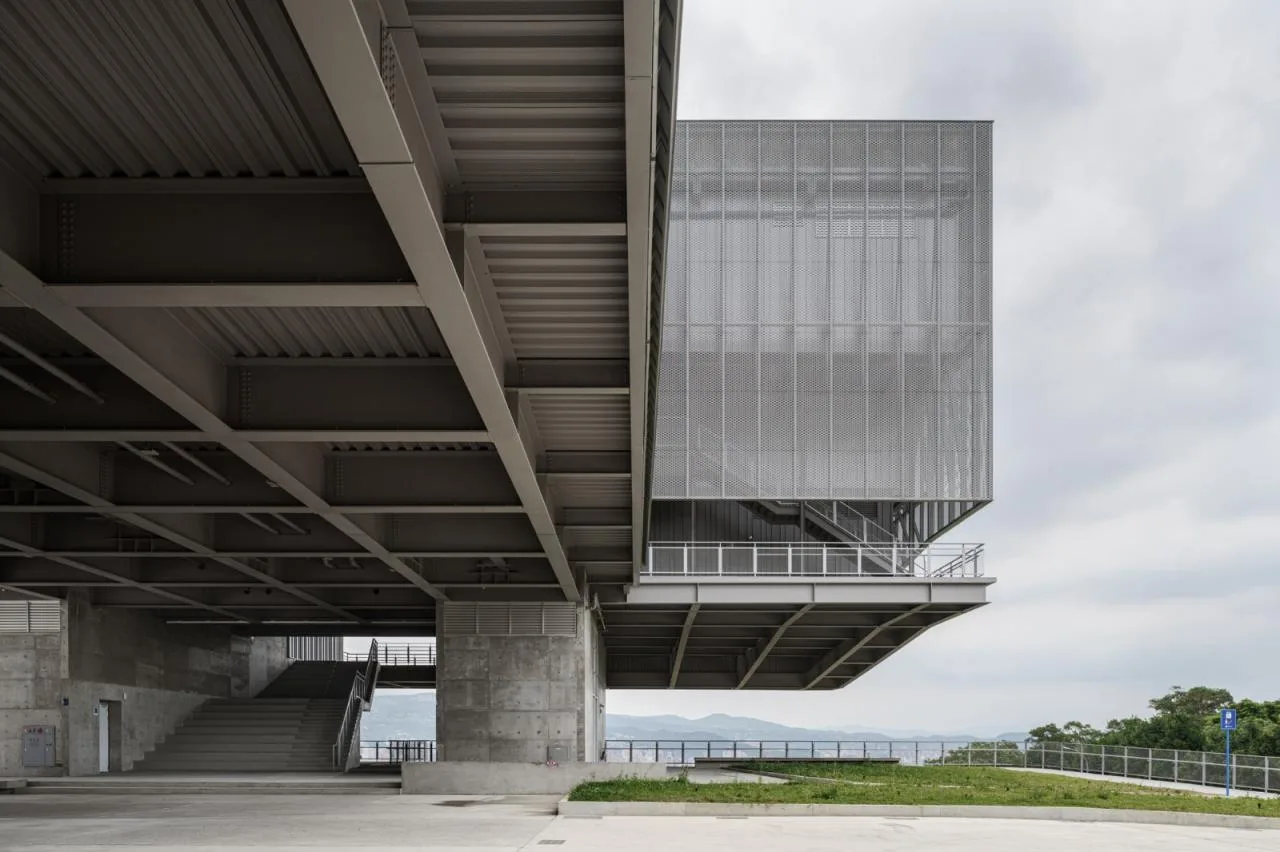
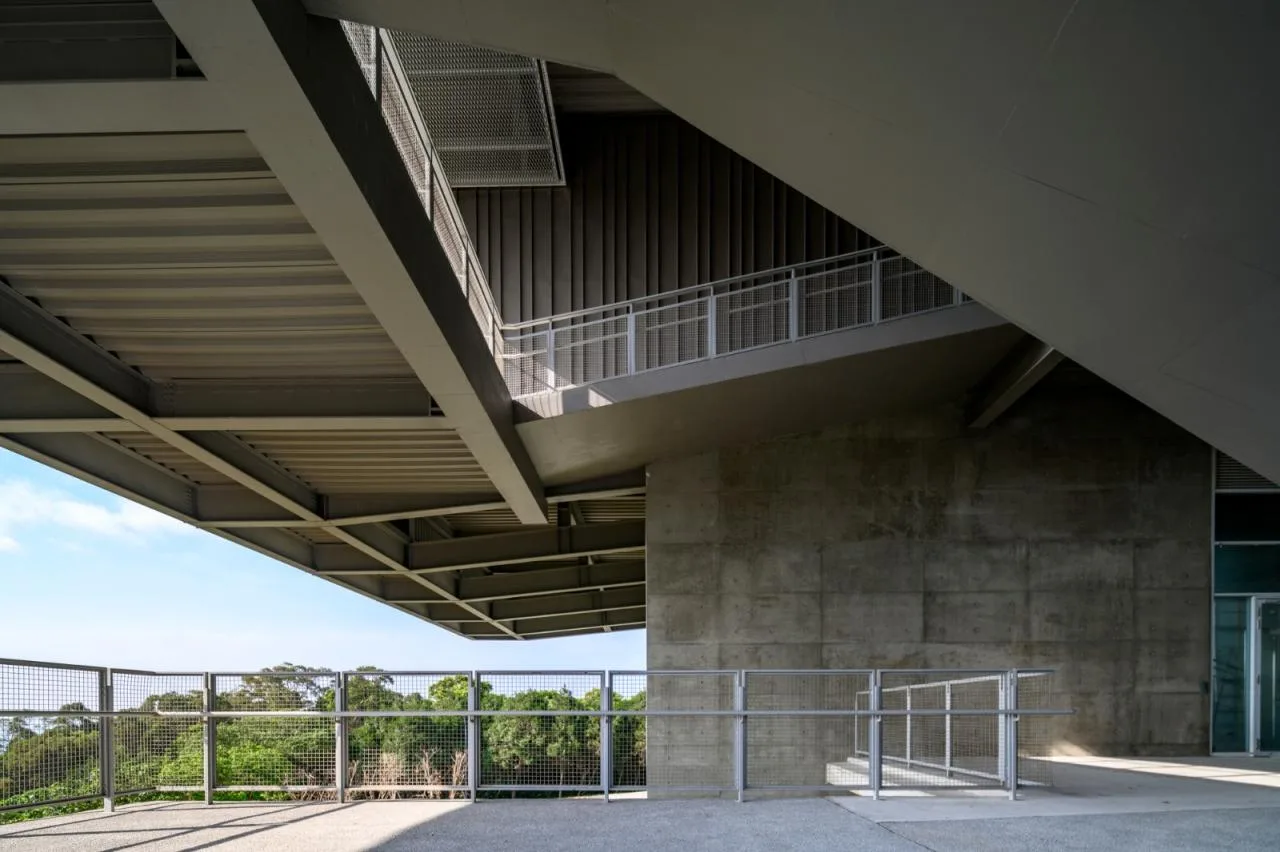
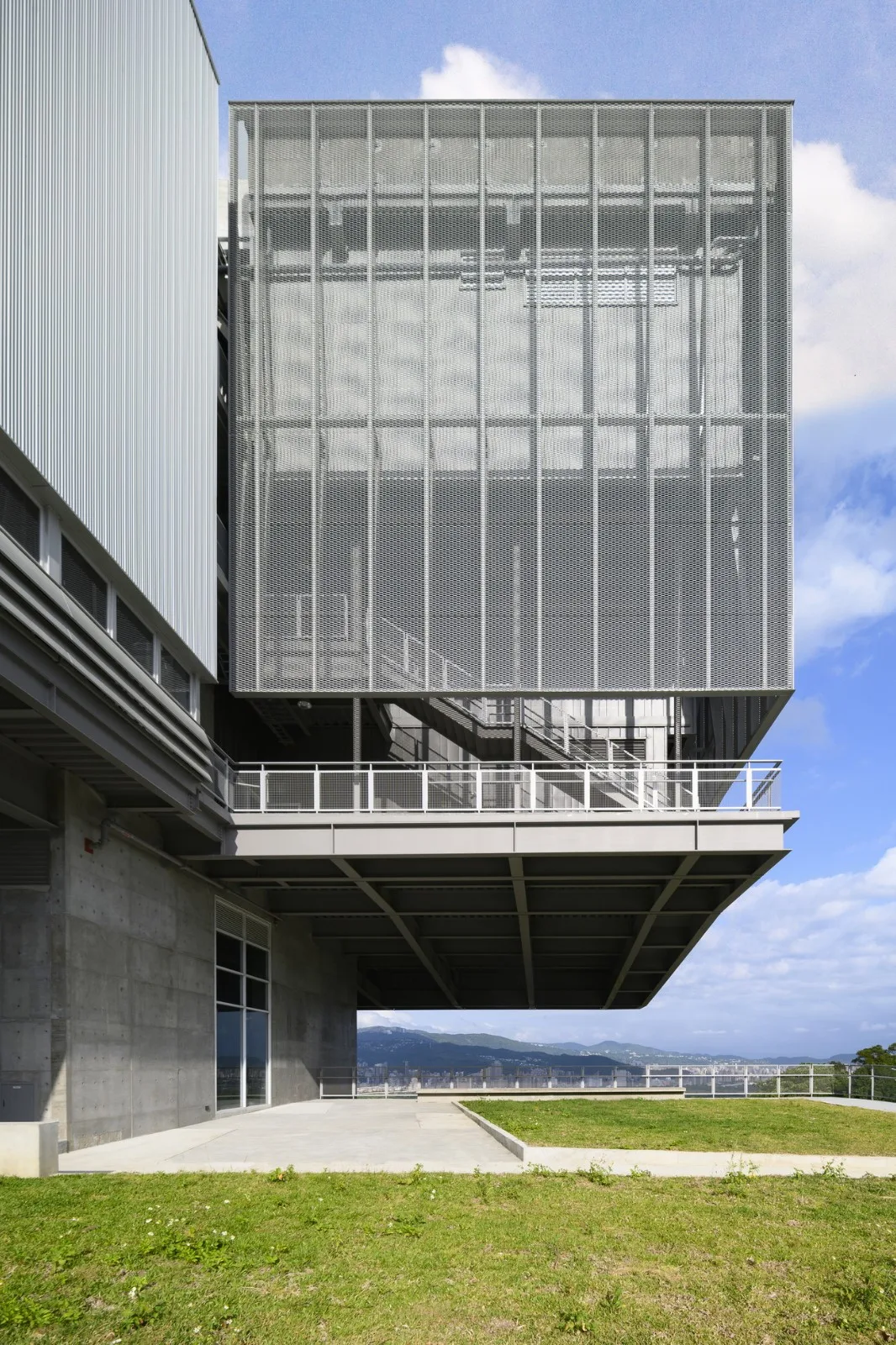
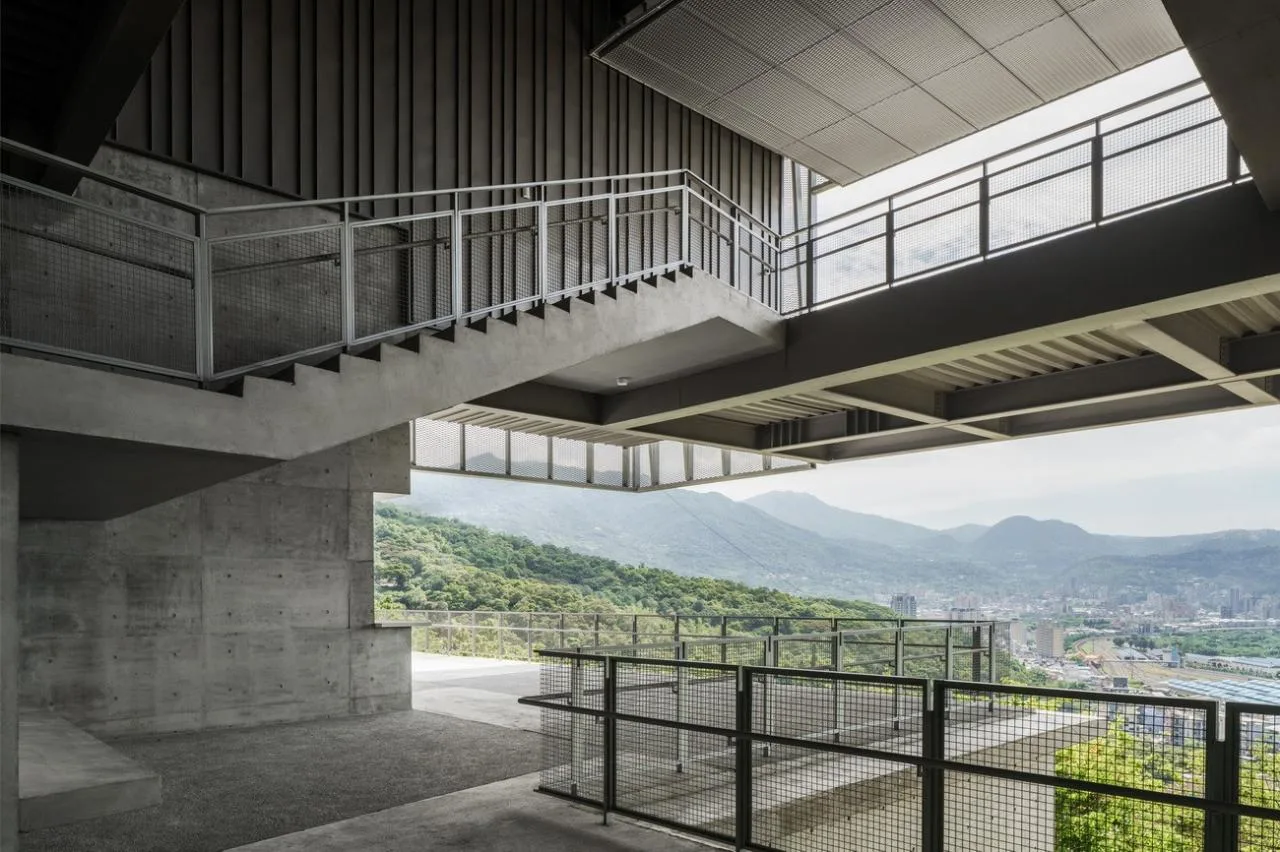
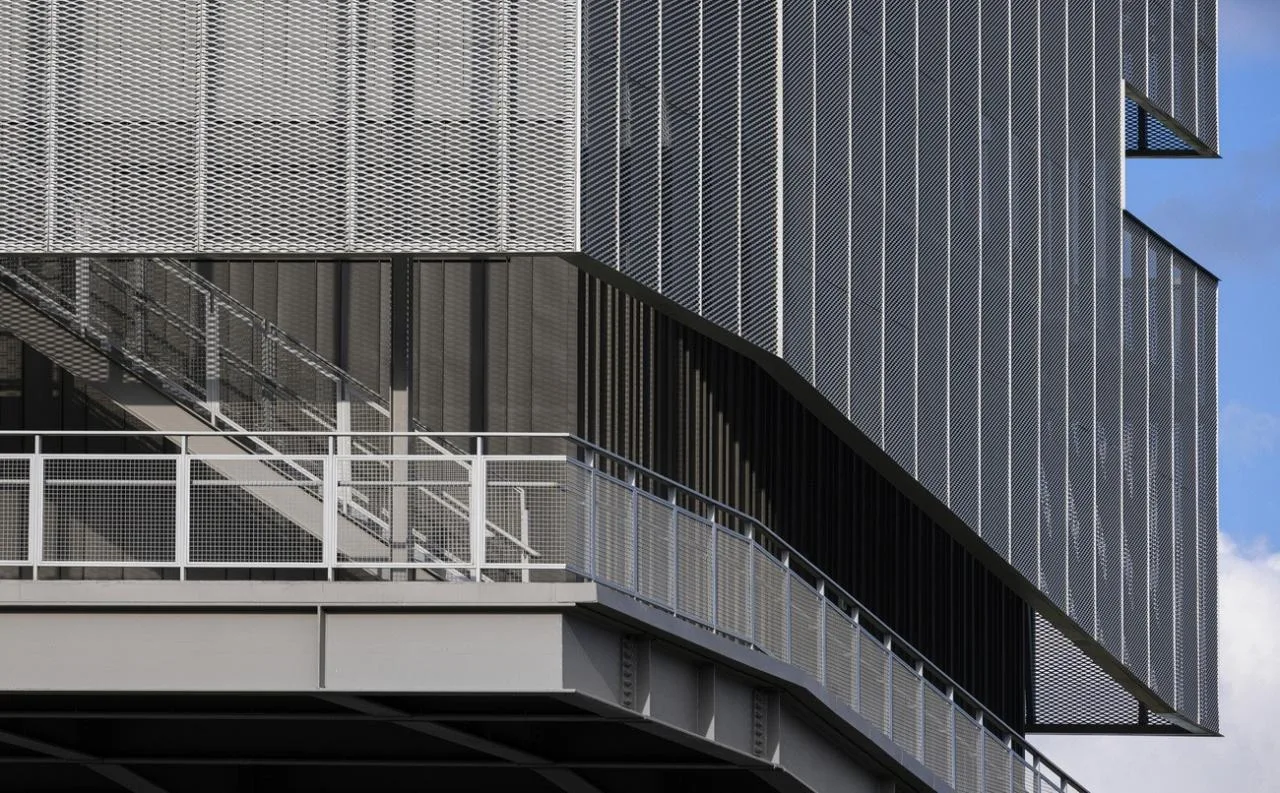
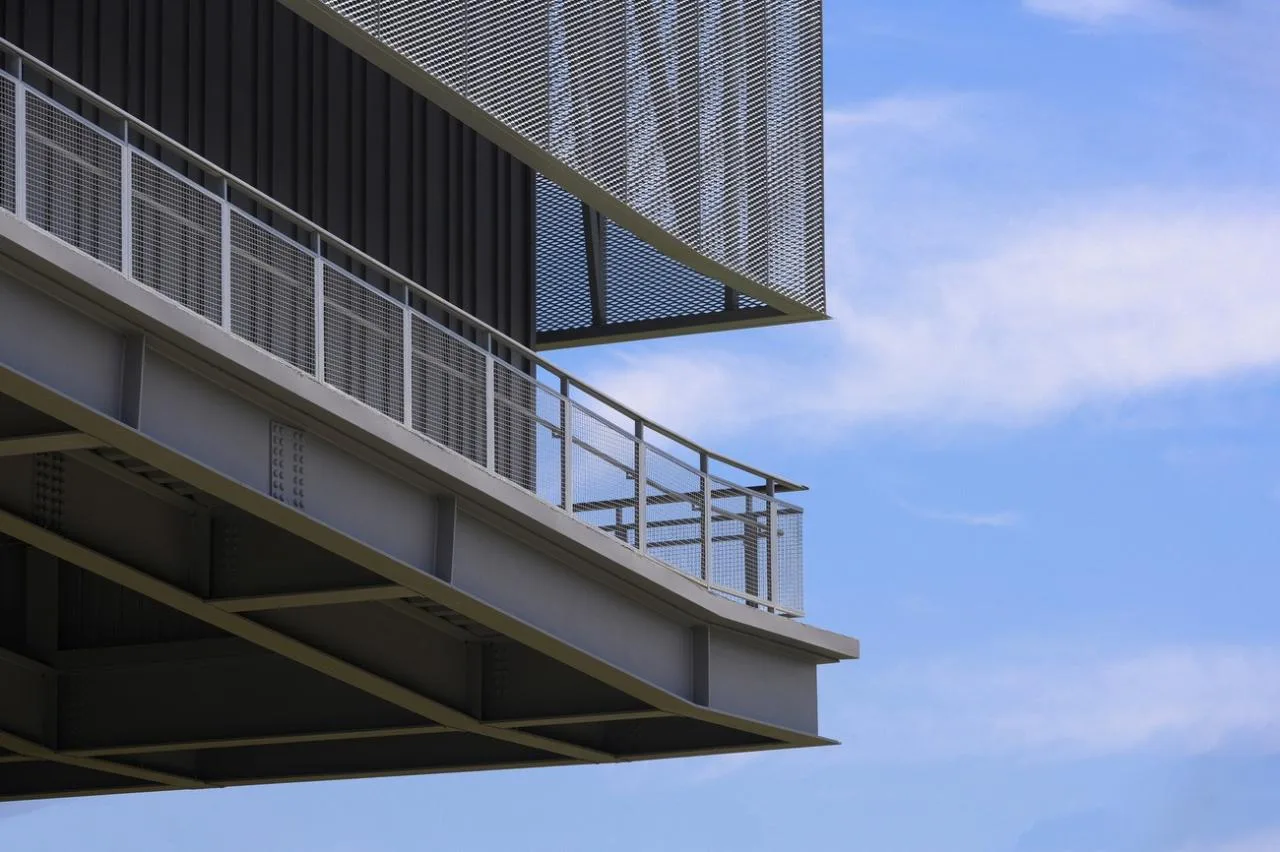
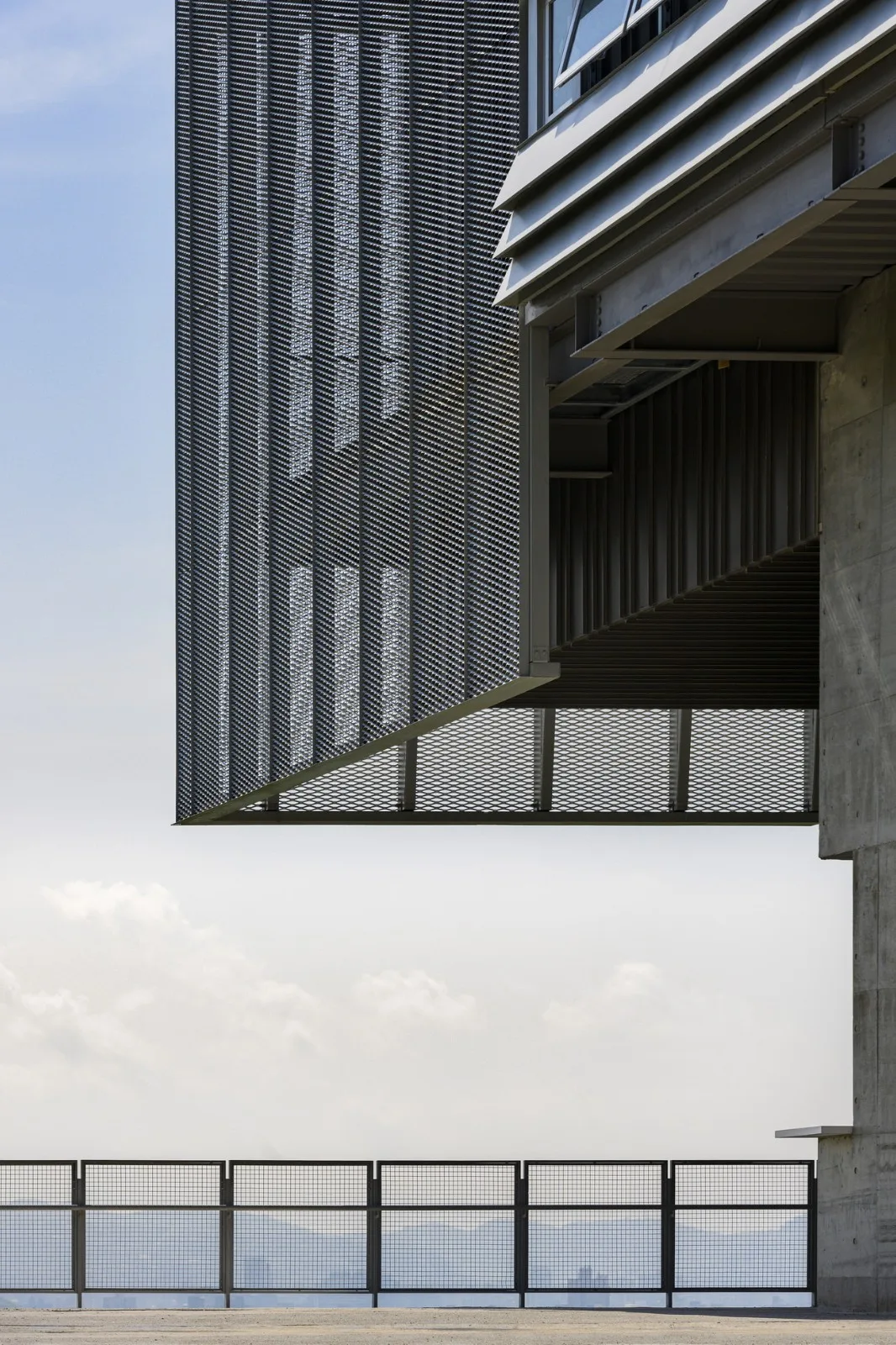
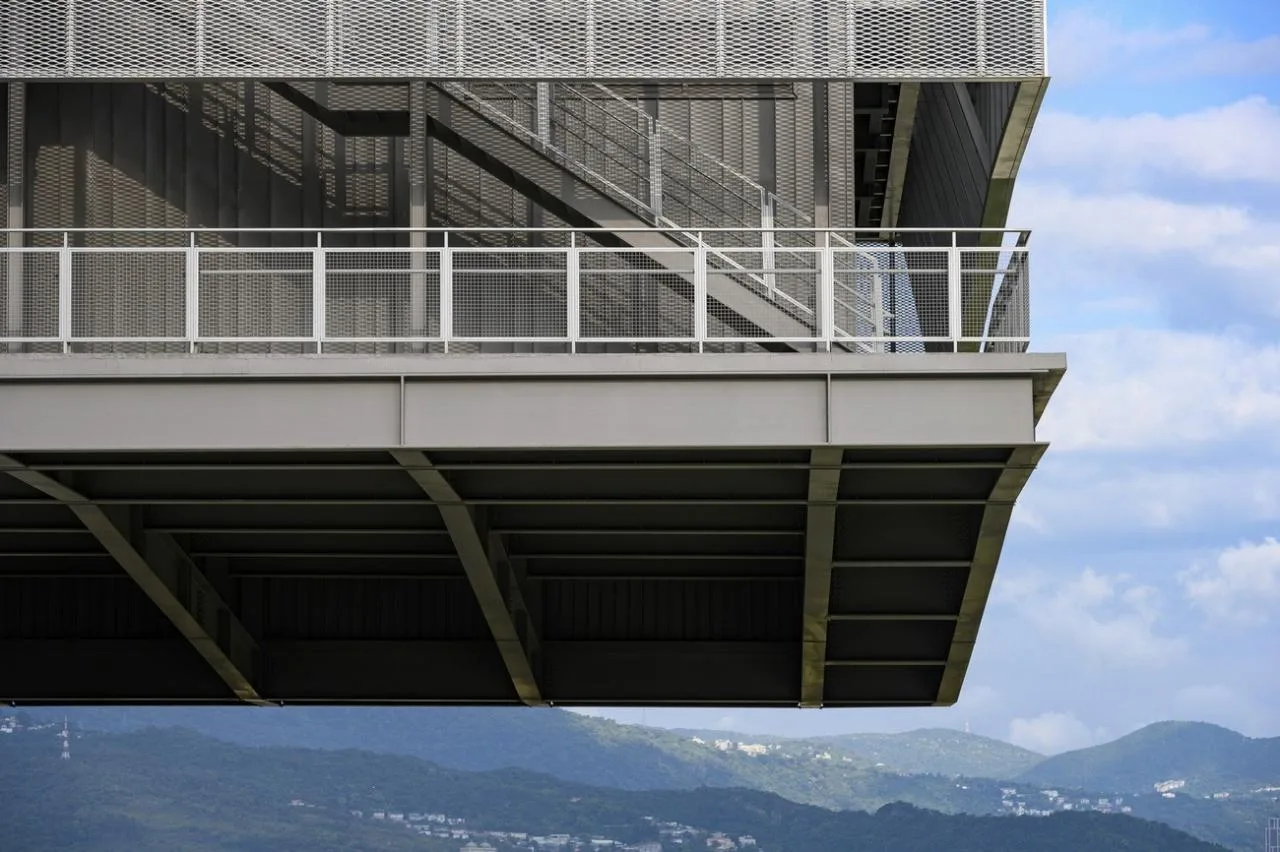
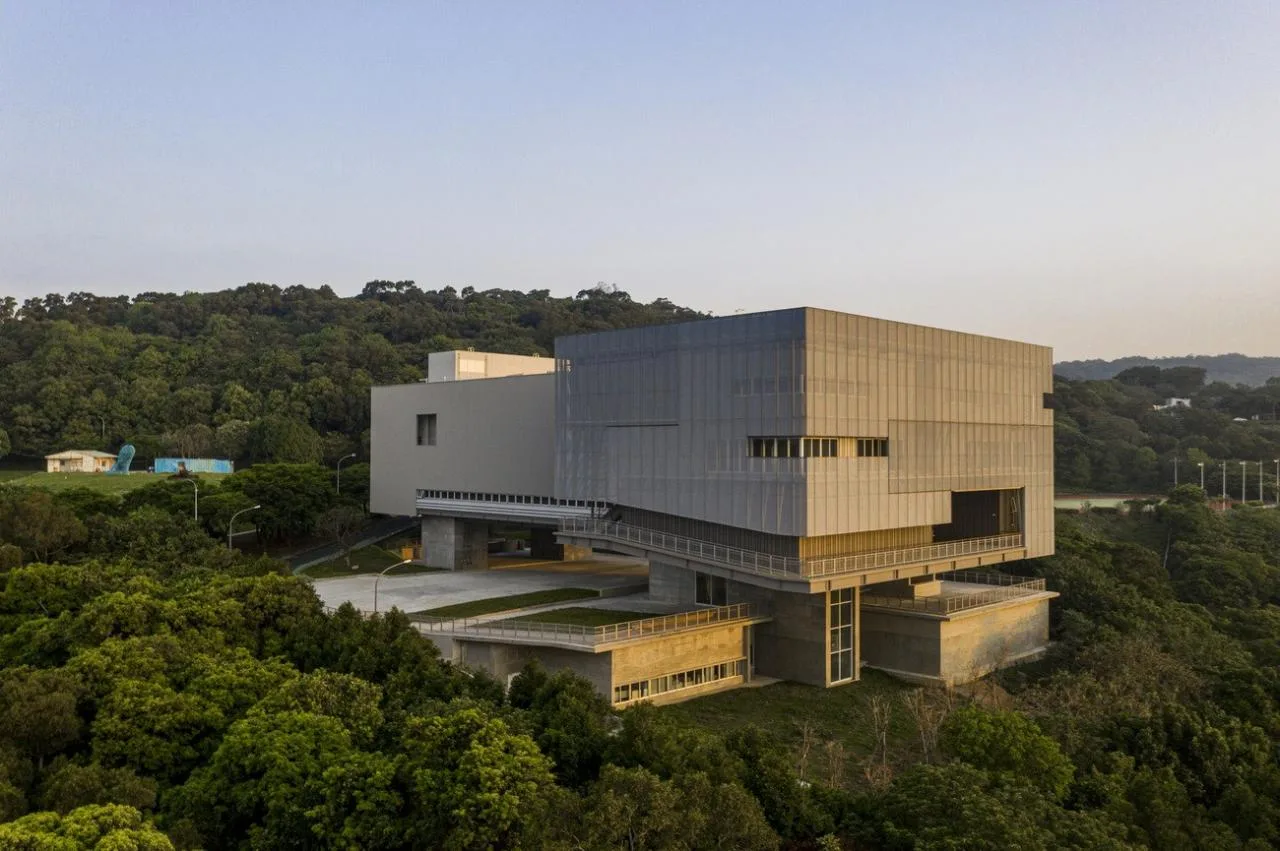
Traditionally, most campus buildings feature symmetrical structures with sloping roofs and flying buttresses adjoining slopes. These buildings often include courtyards in their spatial layout. However, as an experimental platform for new media art, the New Skills Exhibition Hall embraces a spirit of “contemporary” and “futurism.” Its design intentionally departs from conventional styles, presenting a structure composed of suspended “black boxes” and “gray boxes” hovering in the air.
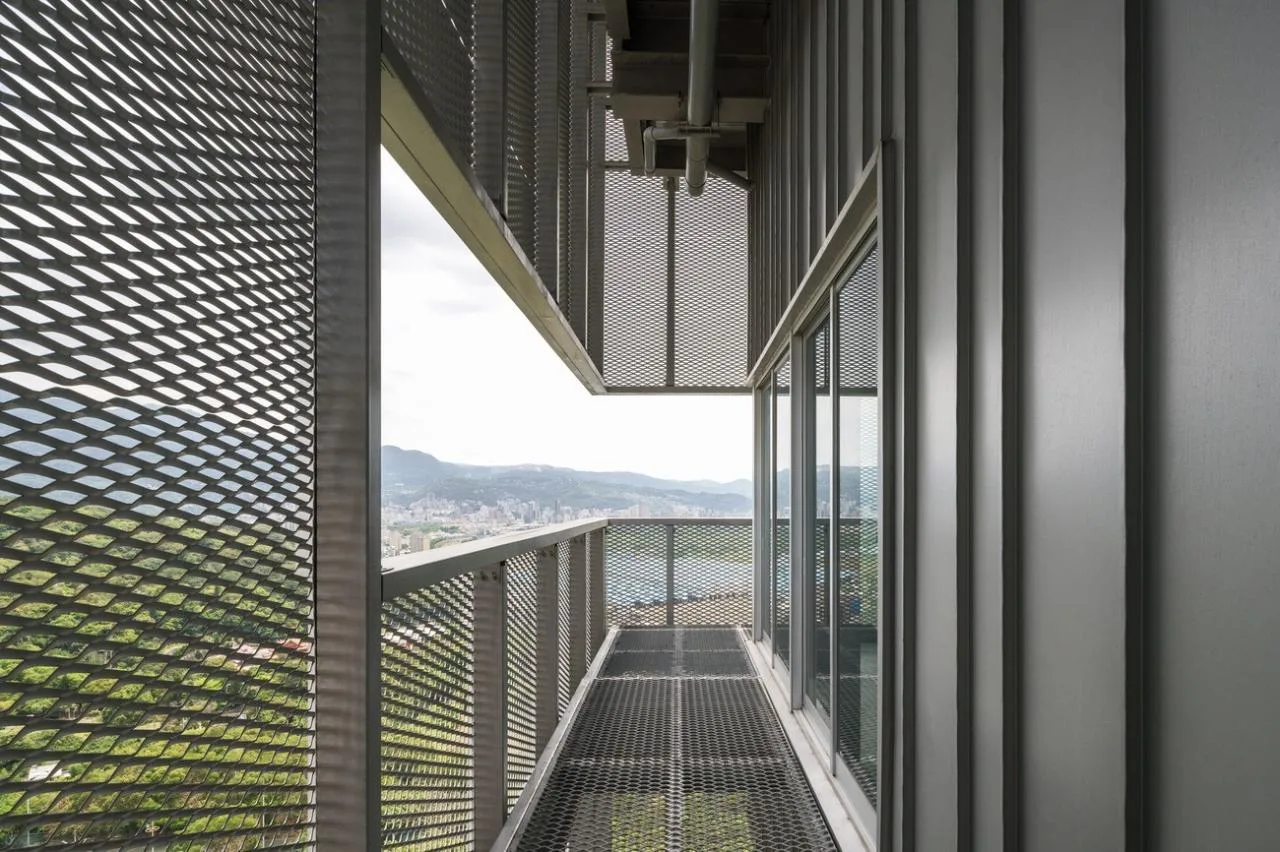
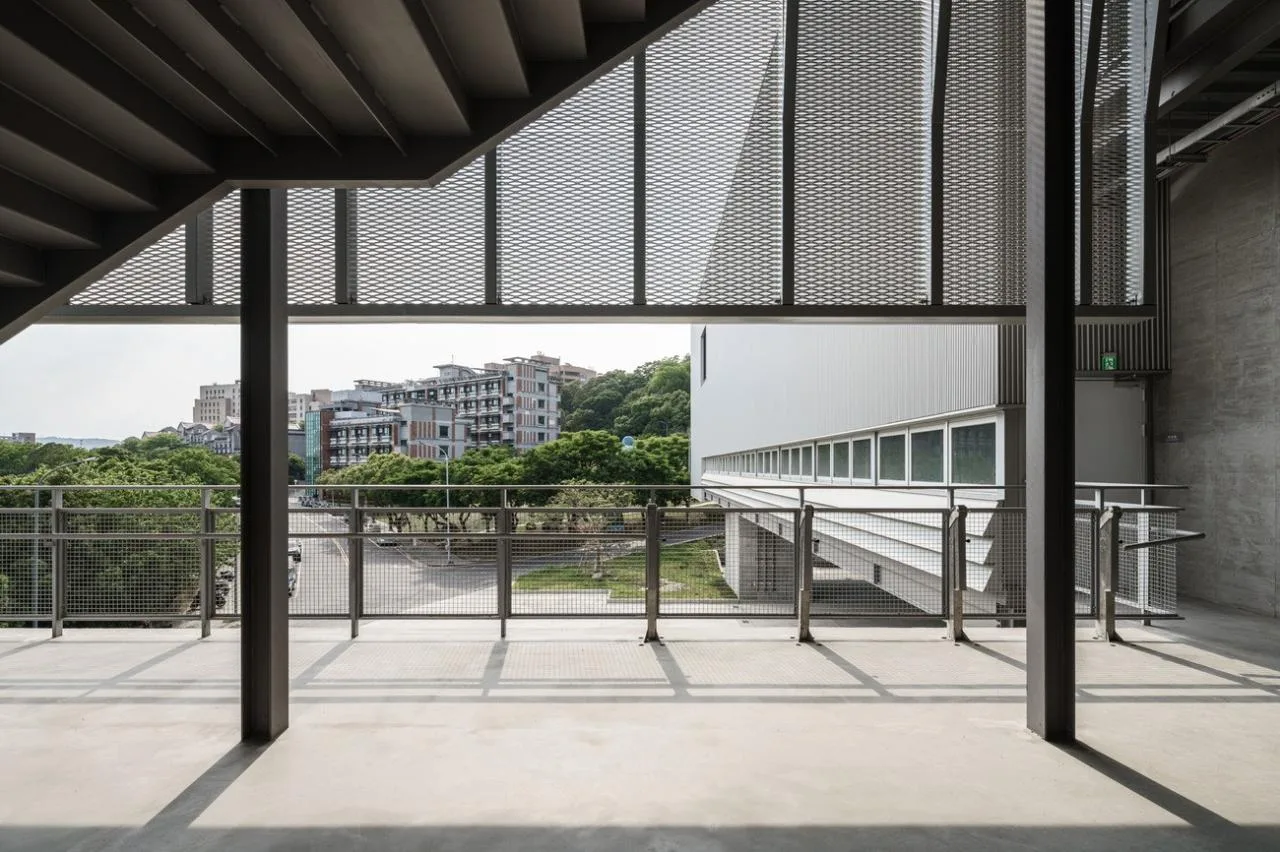
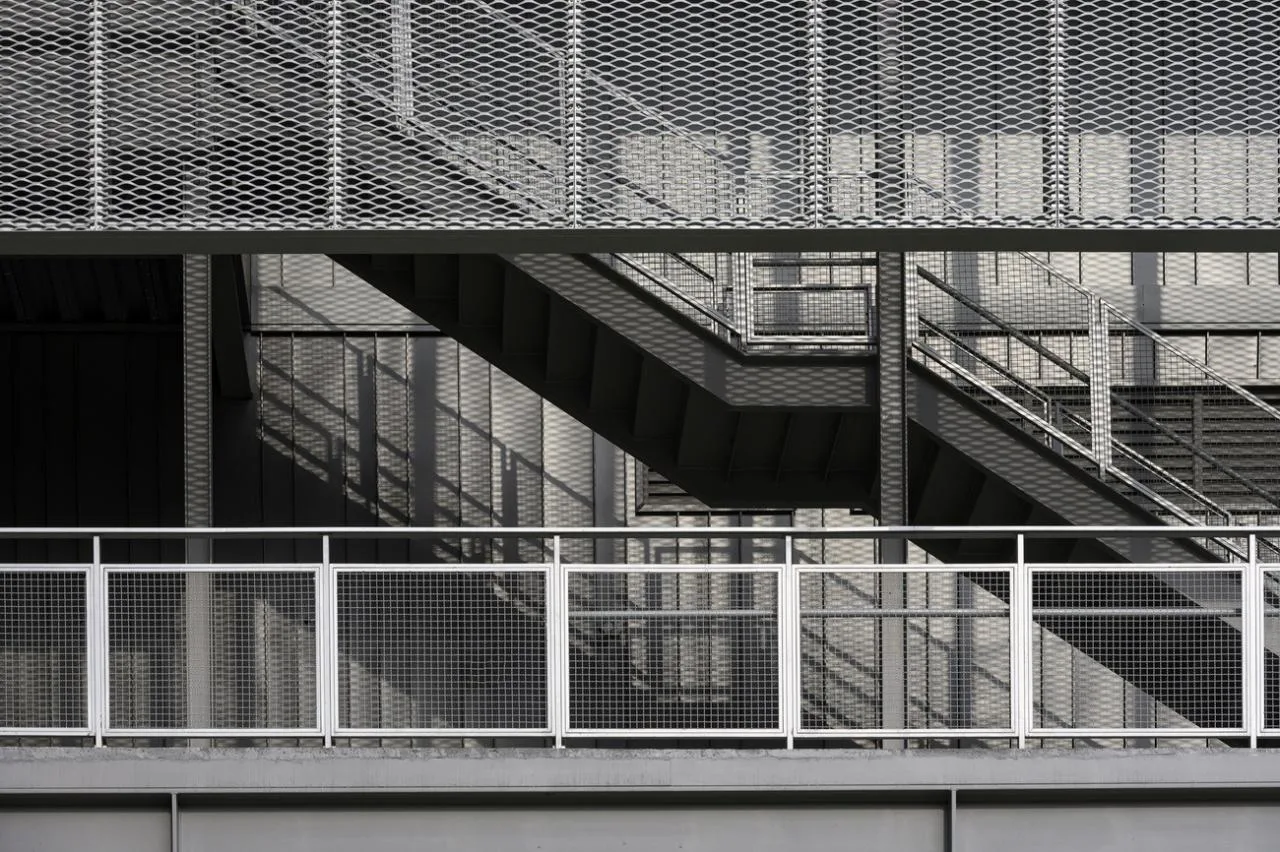
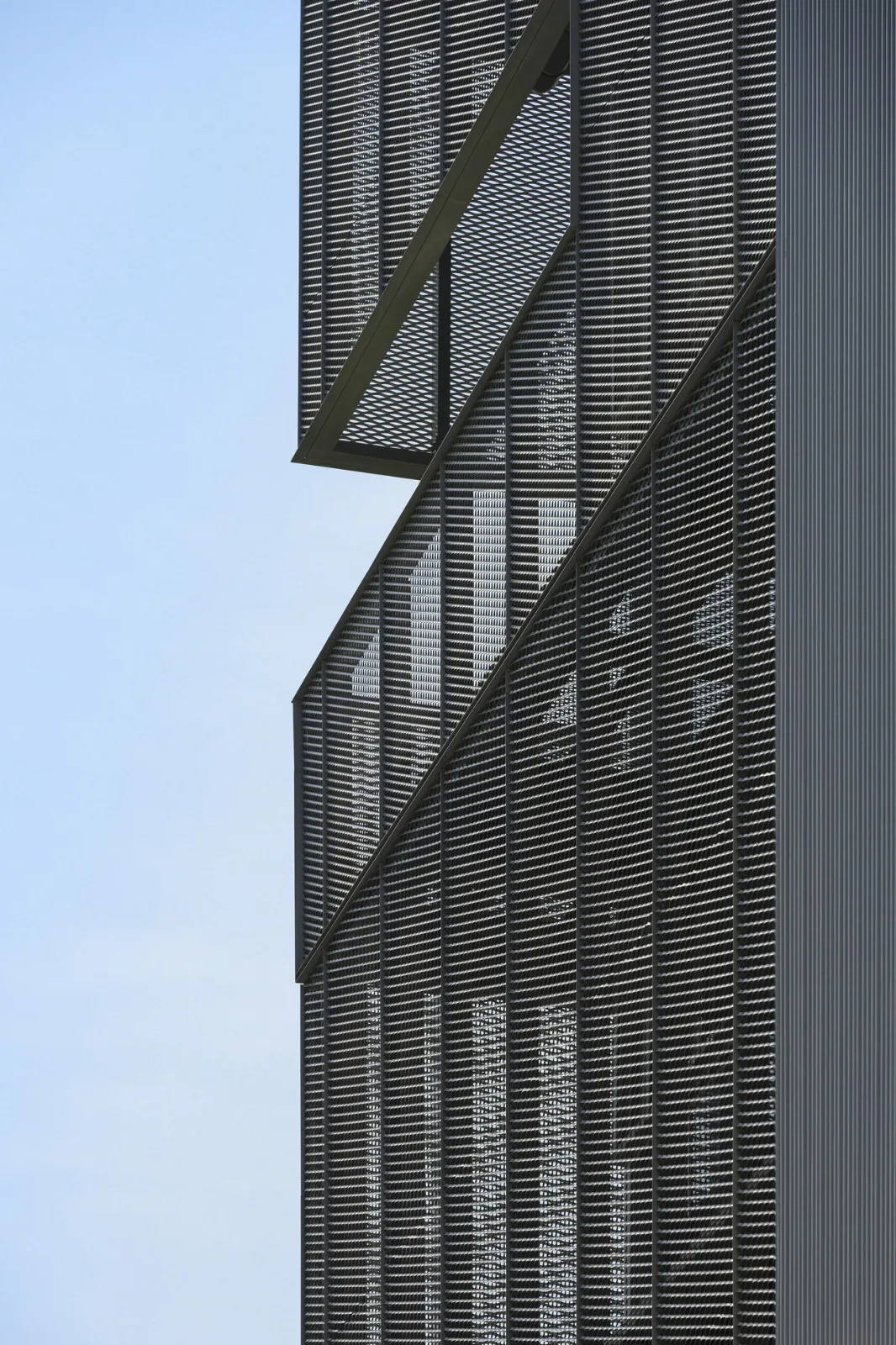
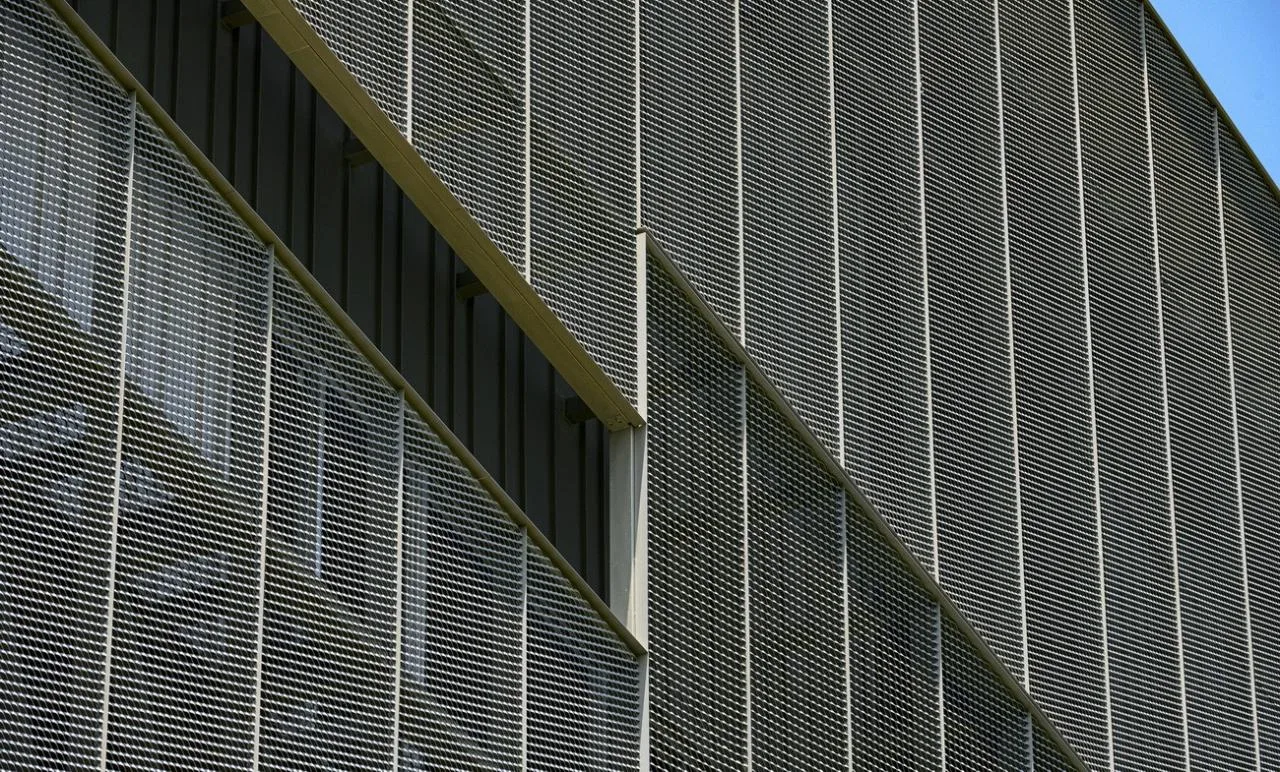
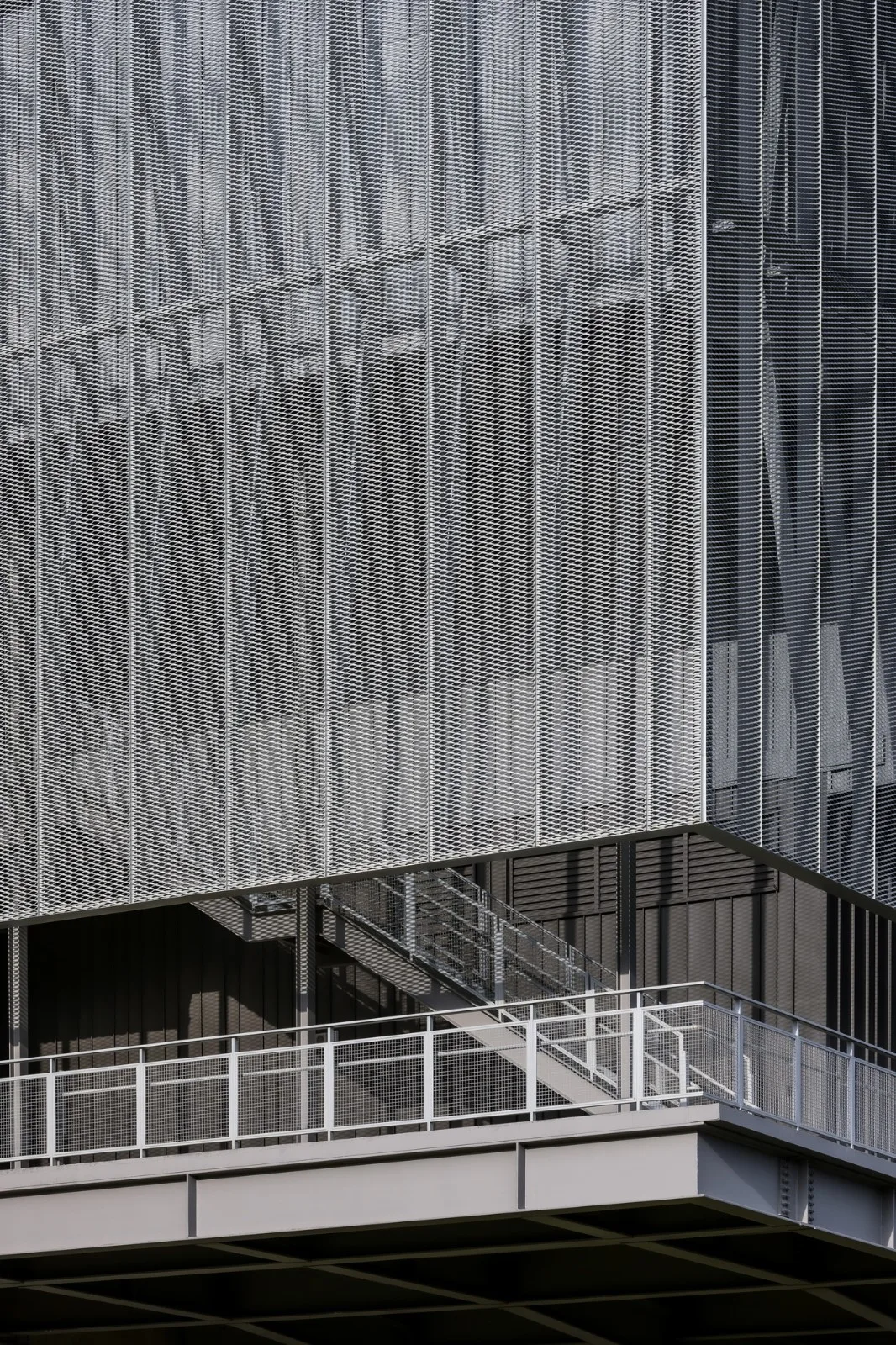
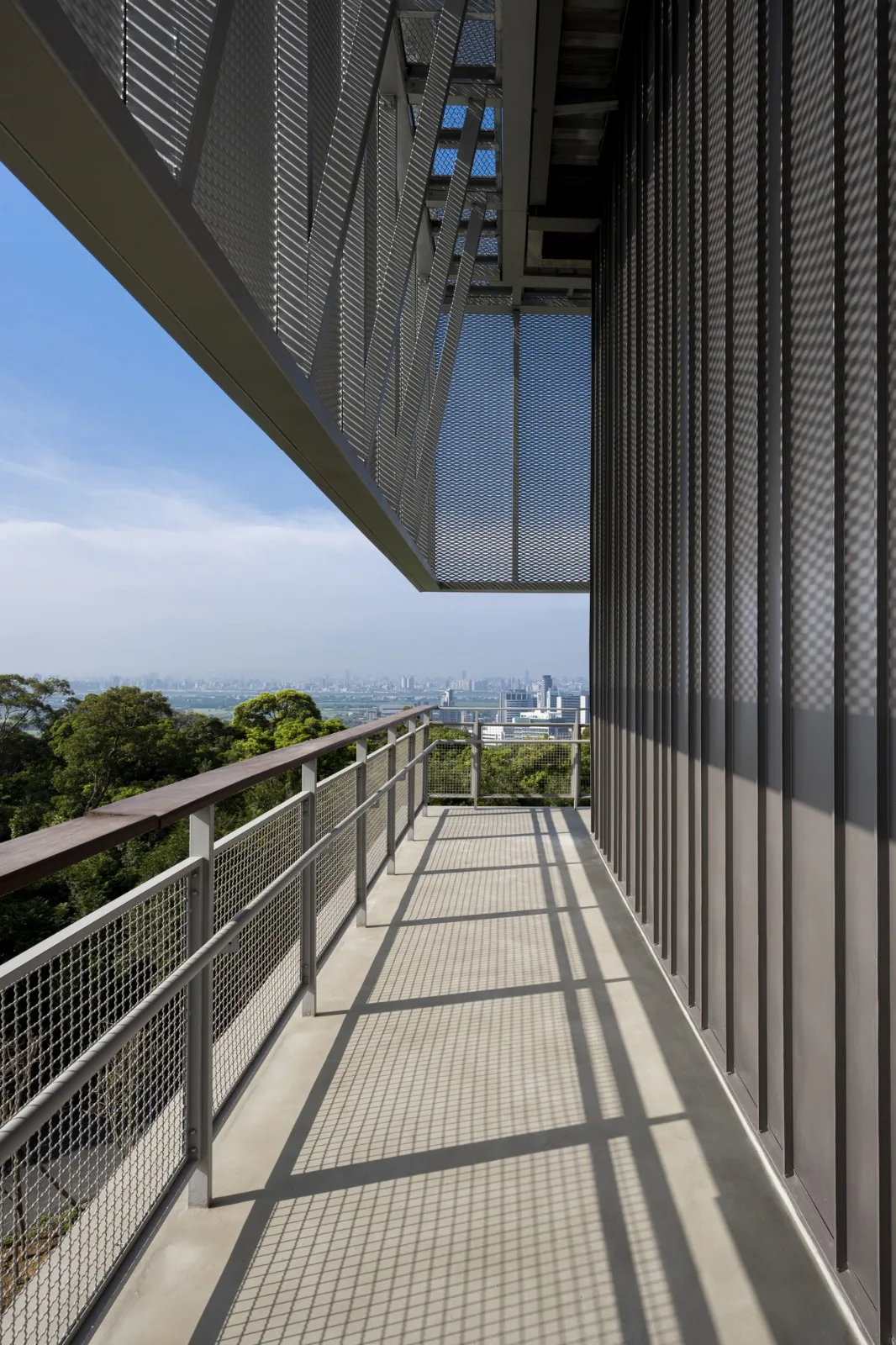
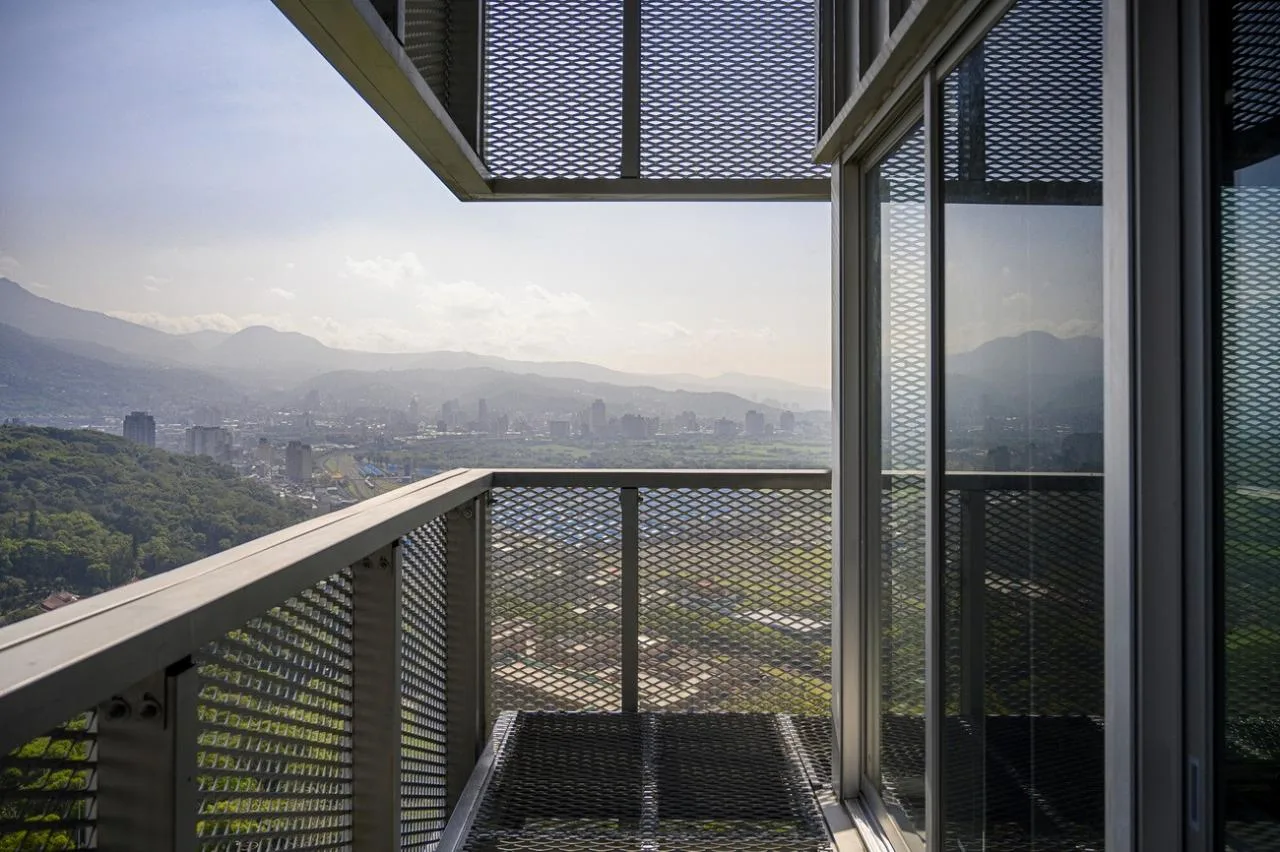
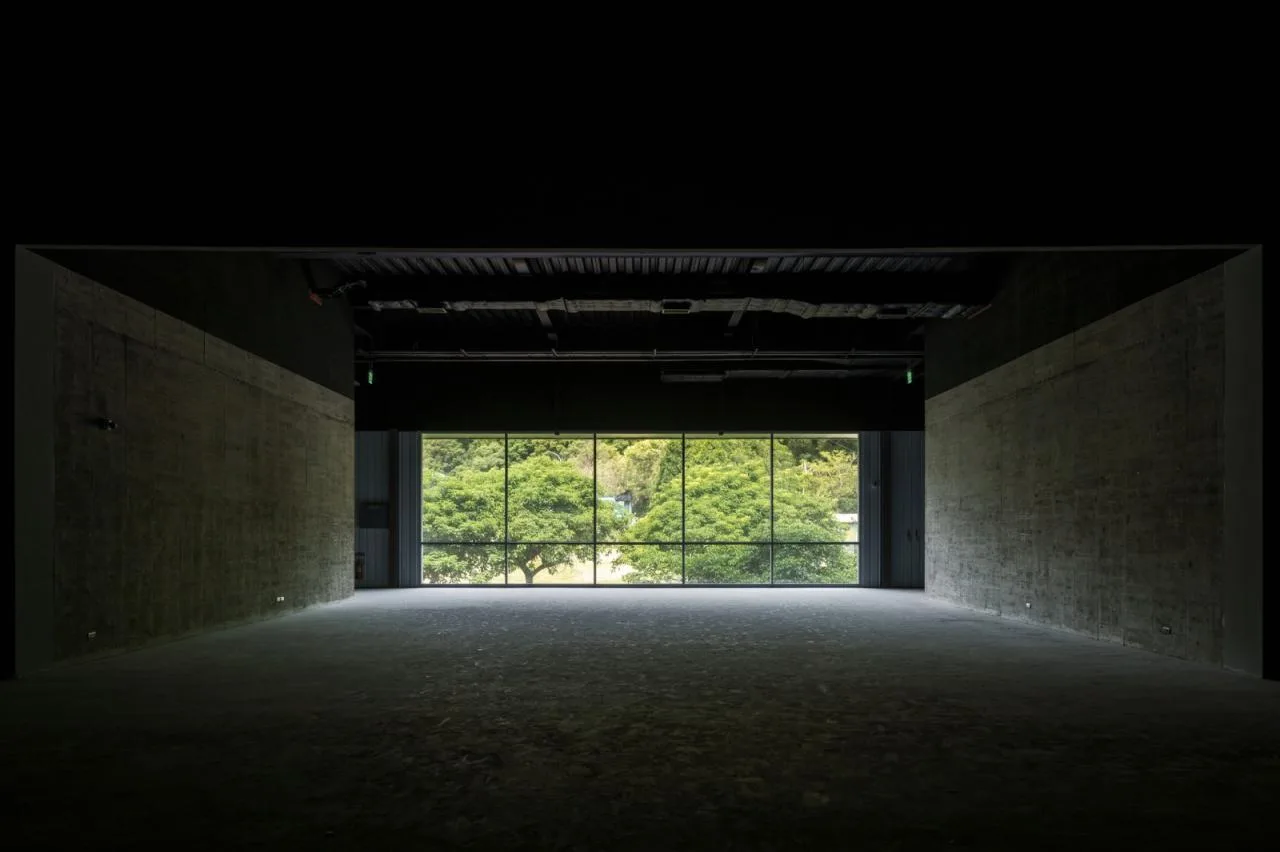
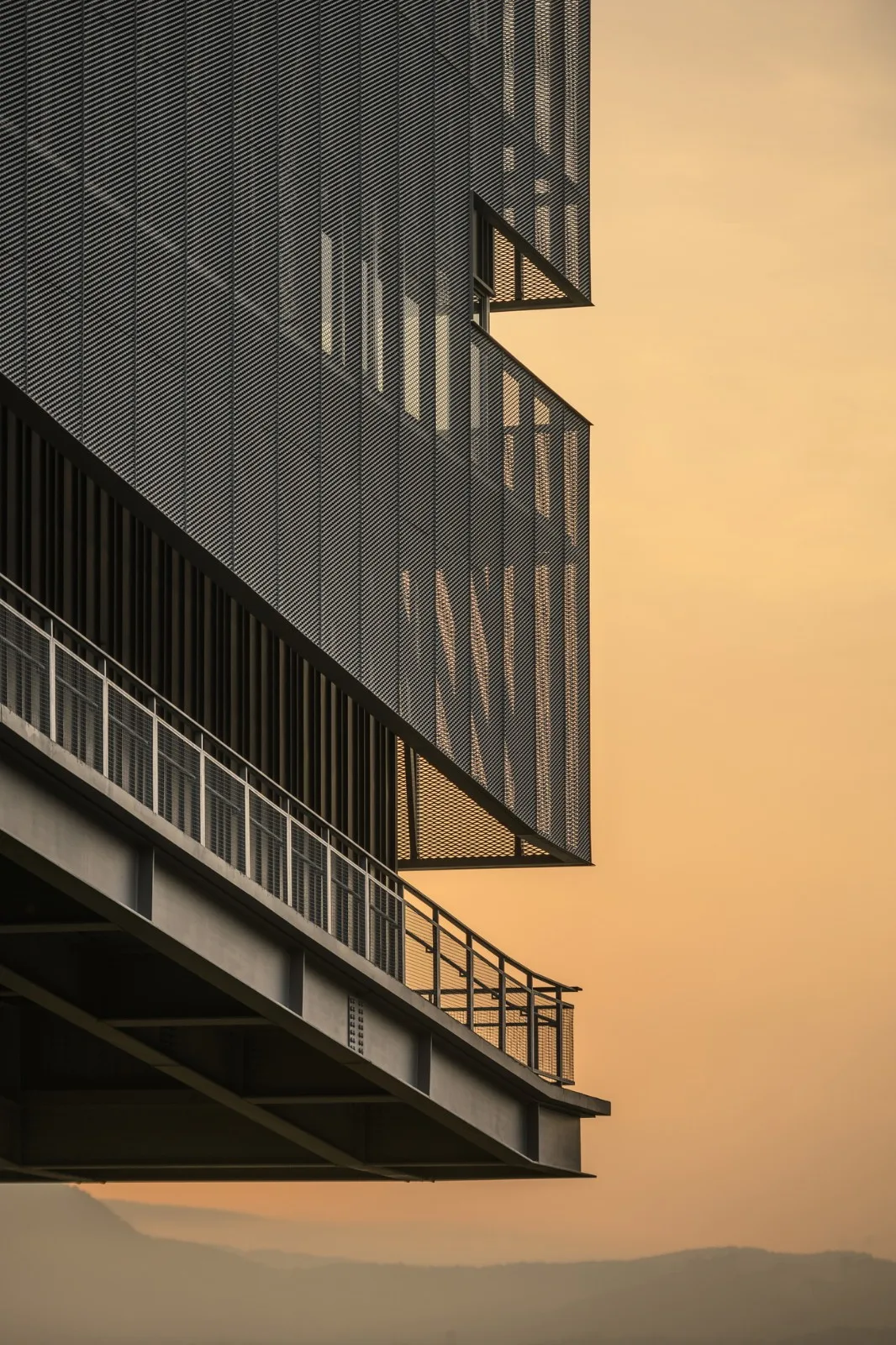
The “black box” and “gray box” elements serve functionalist and structuralist roles. The exterior of the “black box” is wrapped in ramps that fulfill service functions while also acting as natural ventilation channels. Meanwhile, the “gray boxes” are flexible spaces with undefined purposes, featuring a mesh-like exterior “skin” that allows natural light to filter through.
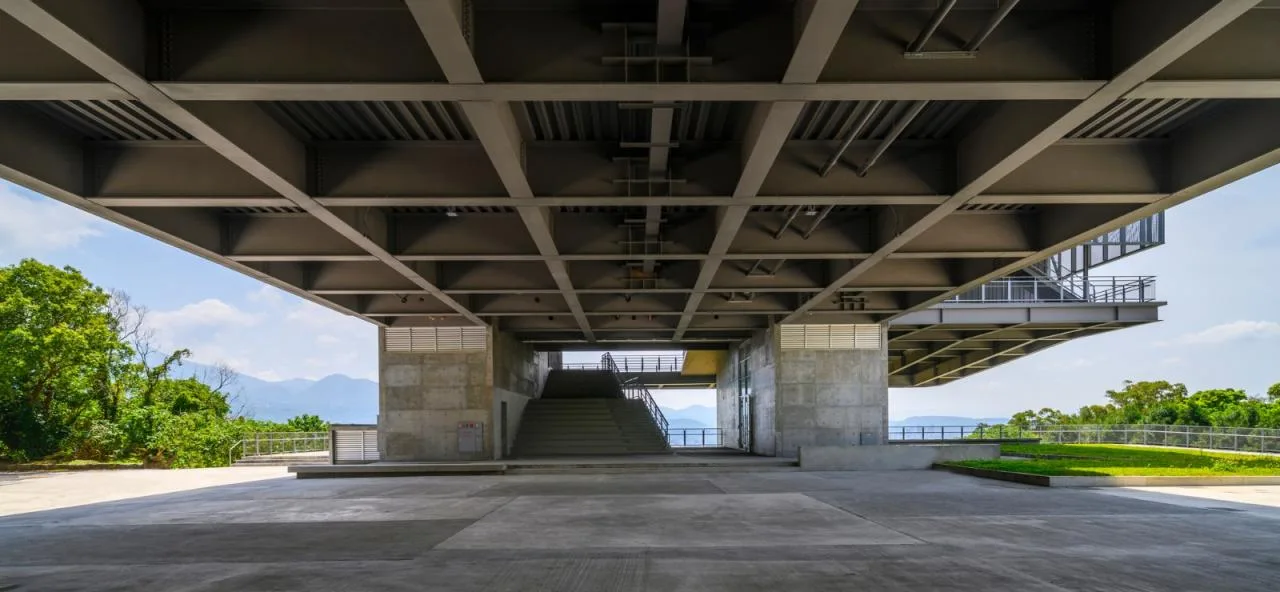
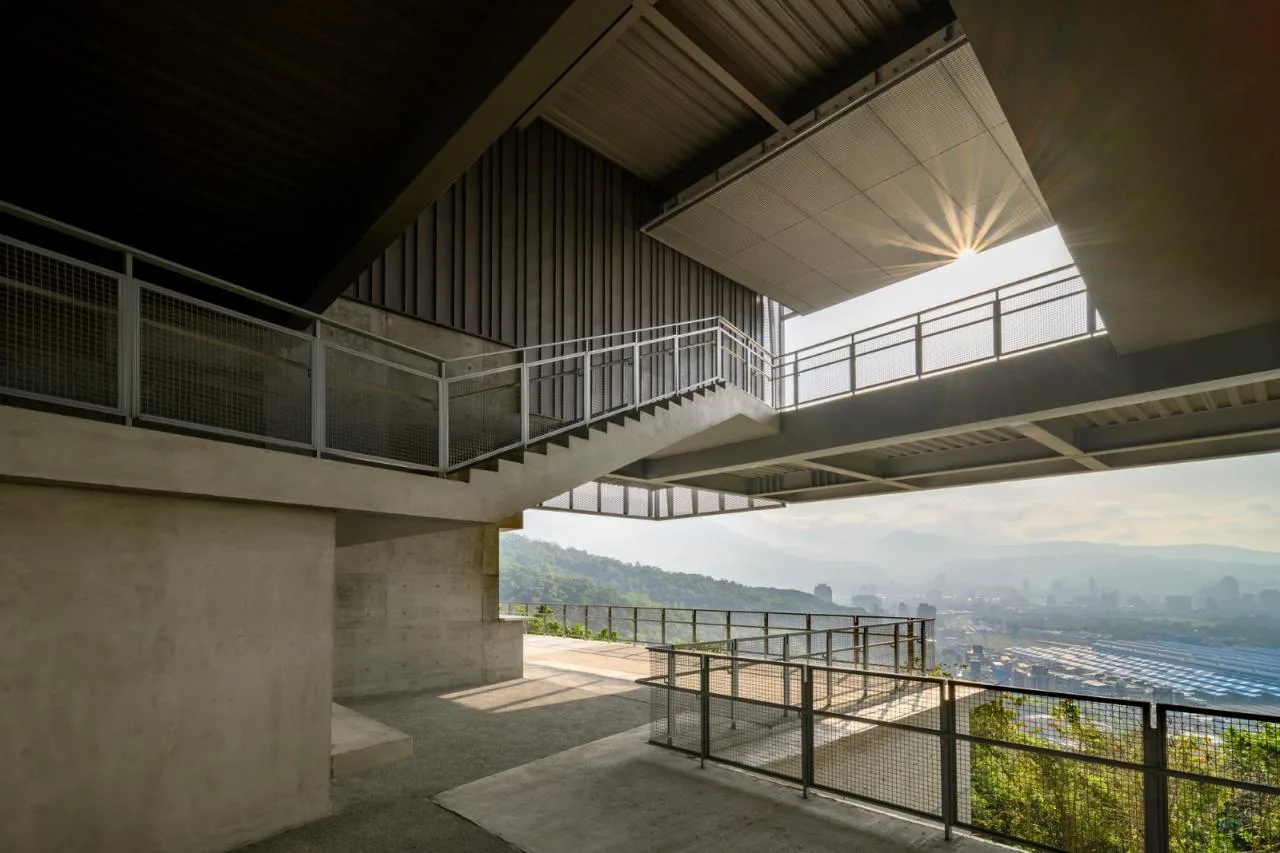
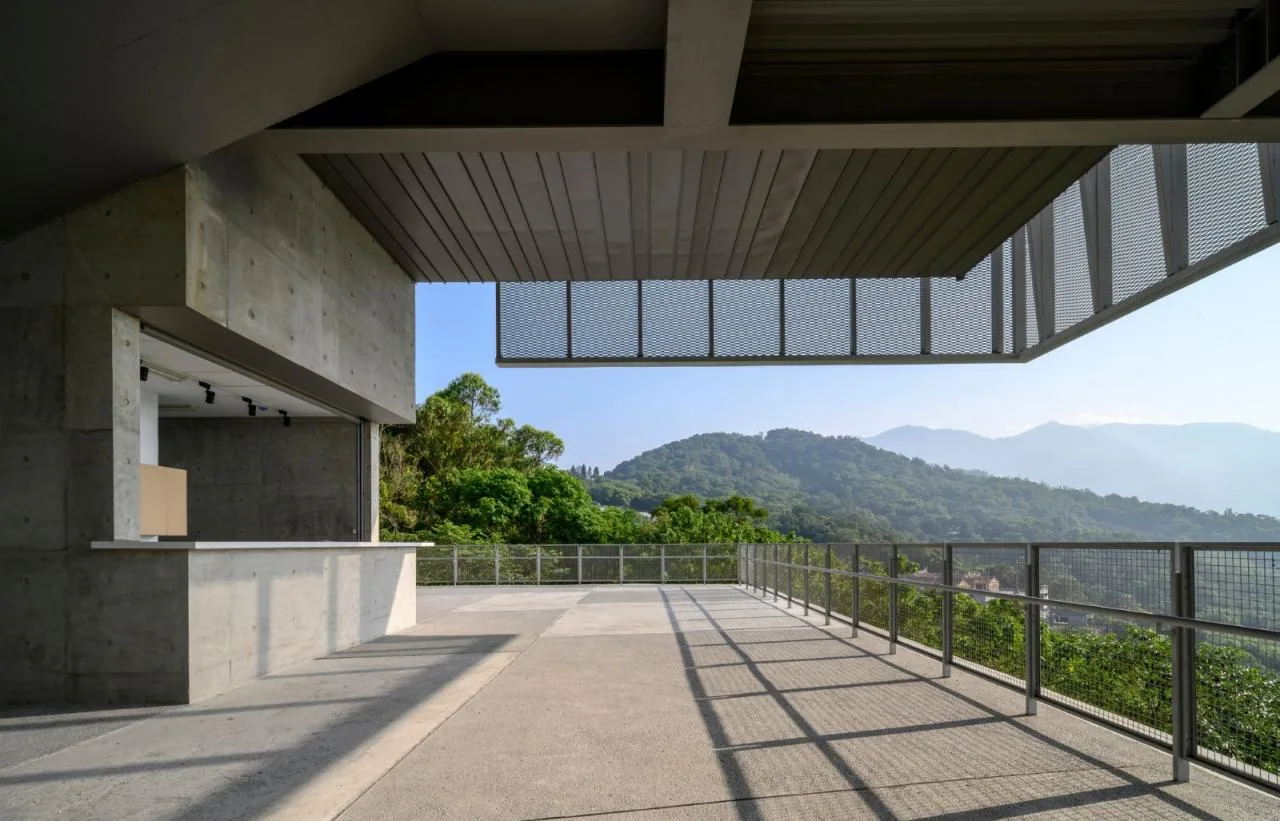
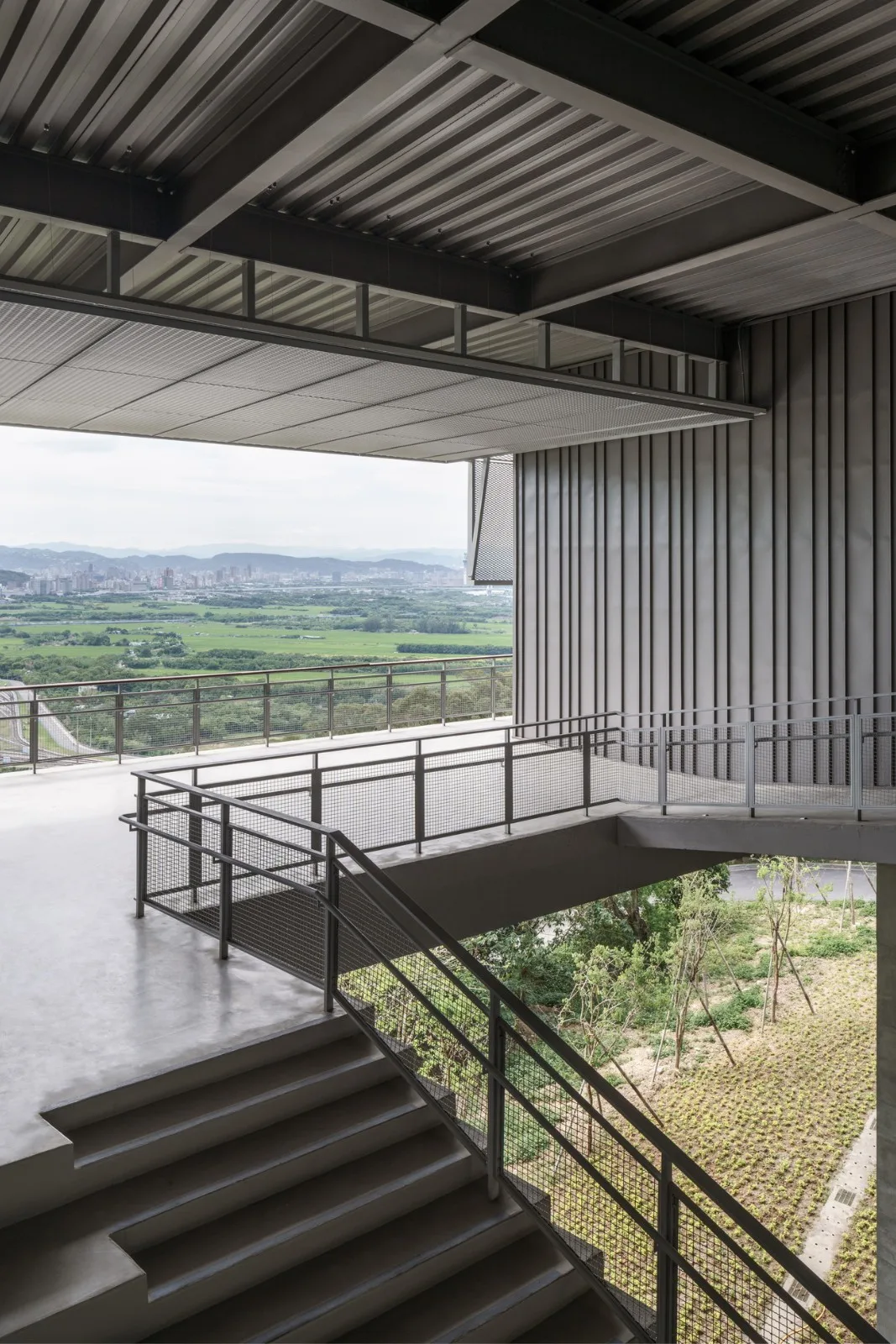
Situated at the end of the campus’s main road, the building occupies a space formerly used as a square leading to the sports and swimming center, primarily serving as a bus transfer and parking area. This versatile location is excellent for various activities and offers sweeping views of the Guandu Plain stretching for miles.
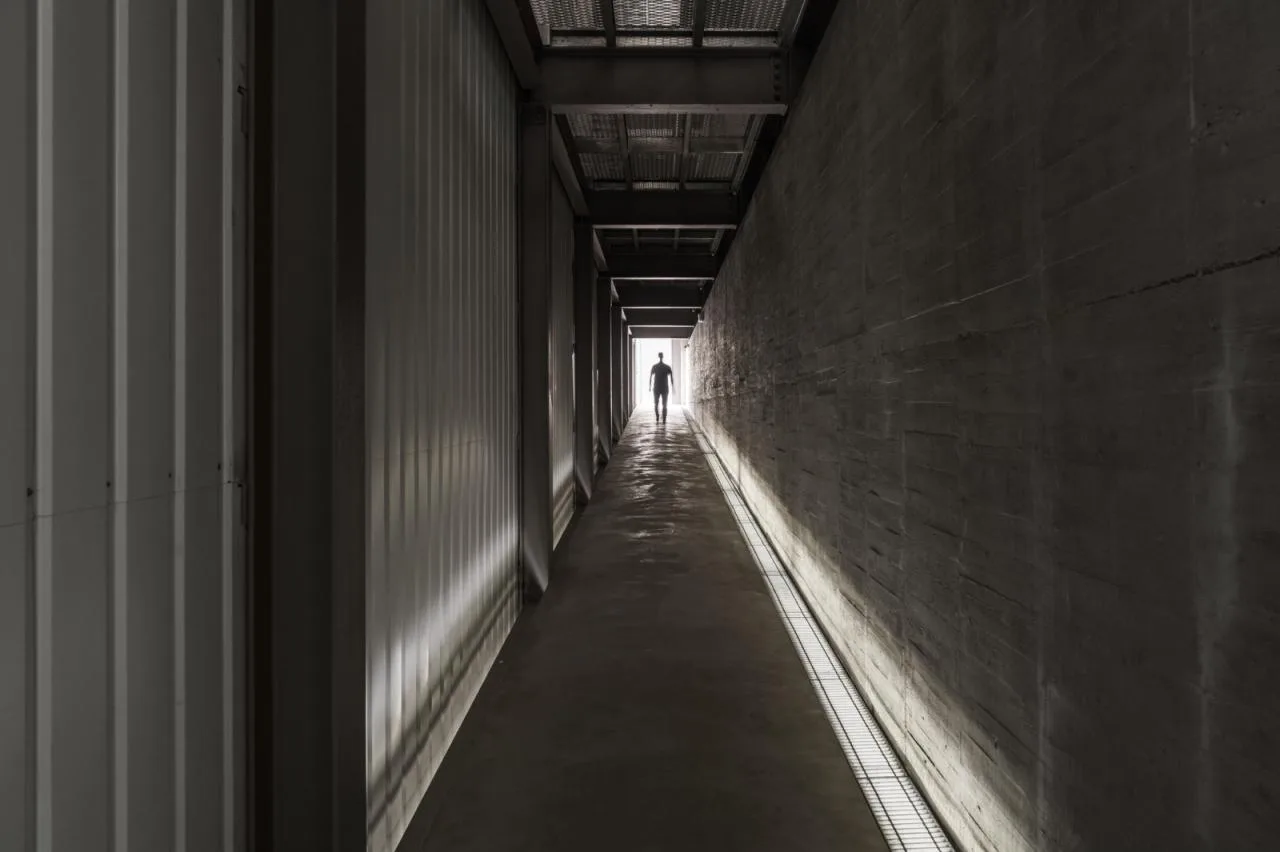
To maximize this setting, the architect elevated the large structure on four massive supports, creating a “canopy space” beneath. This space preserves its original functions—parking, vehicle turning lanes, and access to the sports and swimming centers—while also becoming an adaptable venue for art exhibitions, student events, and public gatherings. Visitors can explore the space via a winding path that meanders alongside and around the black boxes, eventually revealing the refreshing, expansive view of the Guandu Plain.
Project Drawings
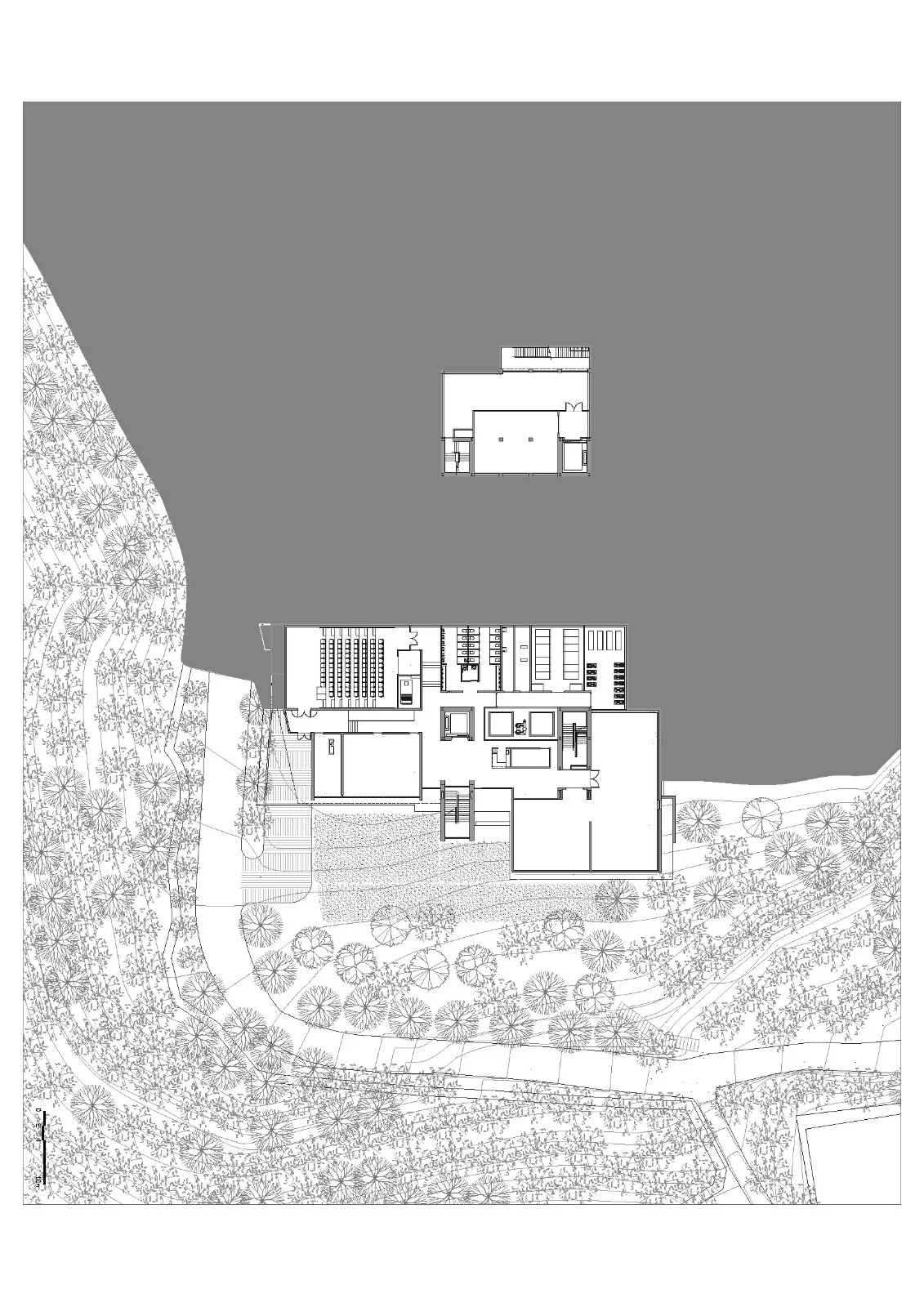
△ First Floor Plan
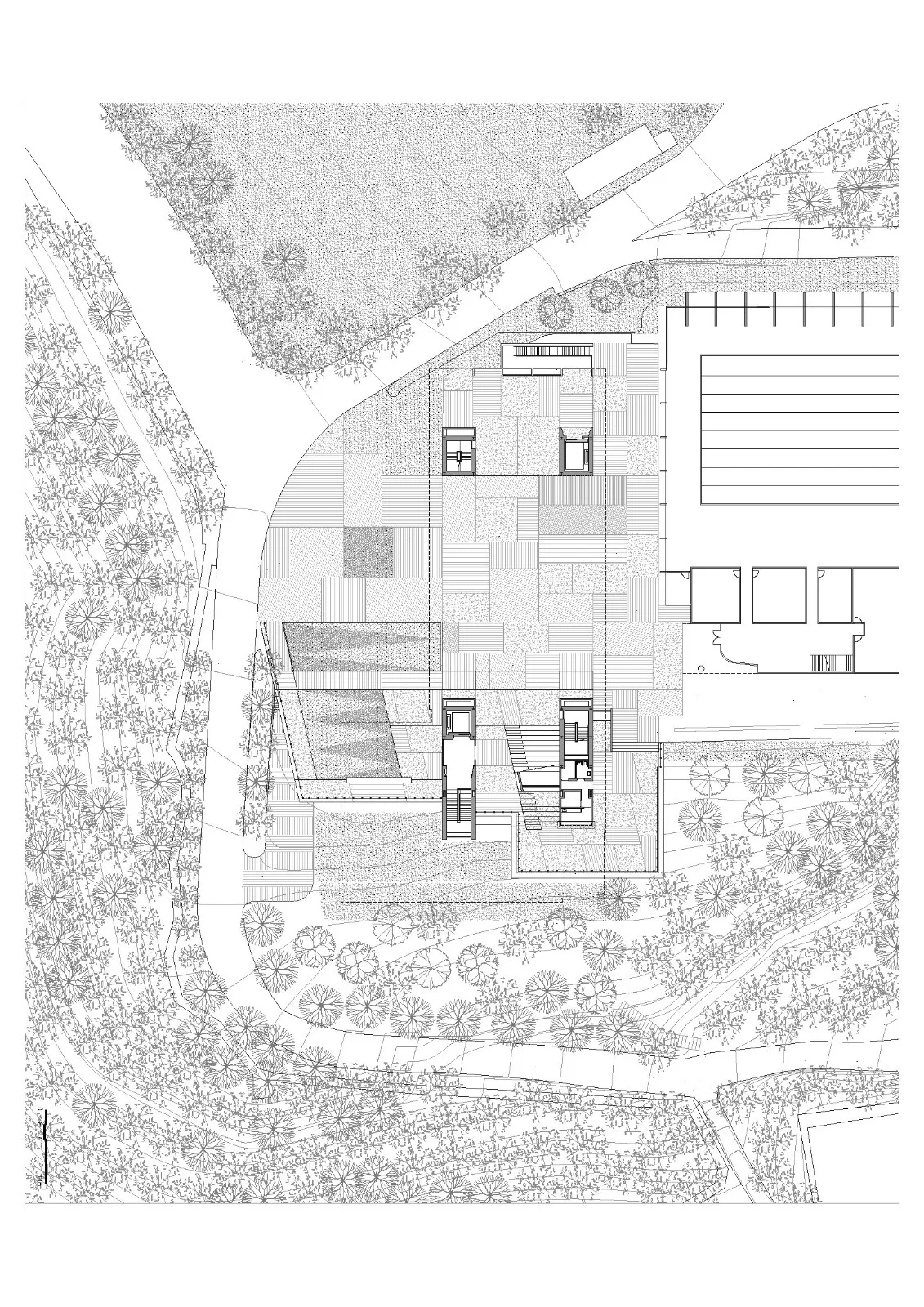
△ Second Floor Plan
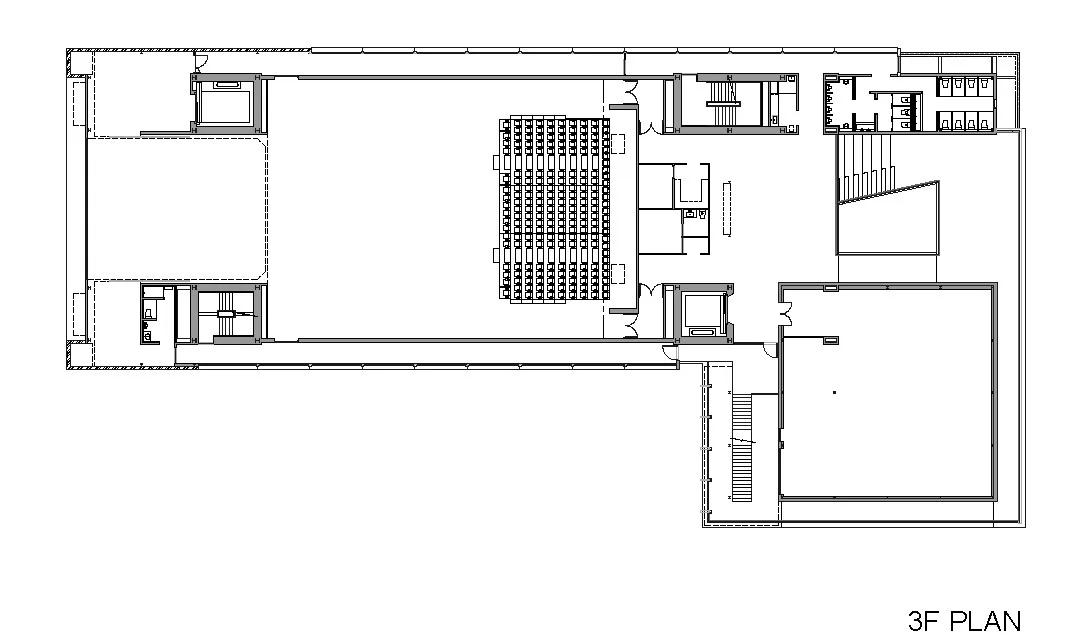
△ Third Floor Plan
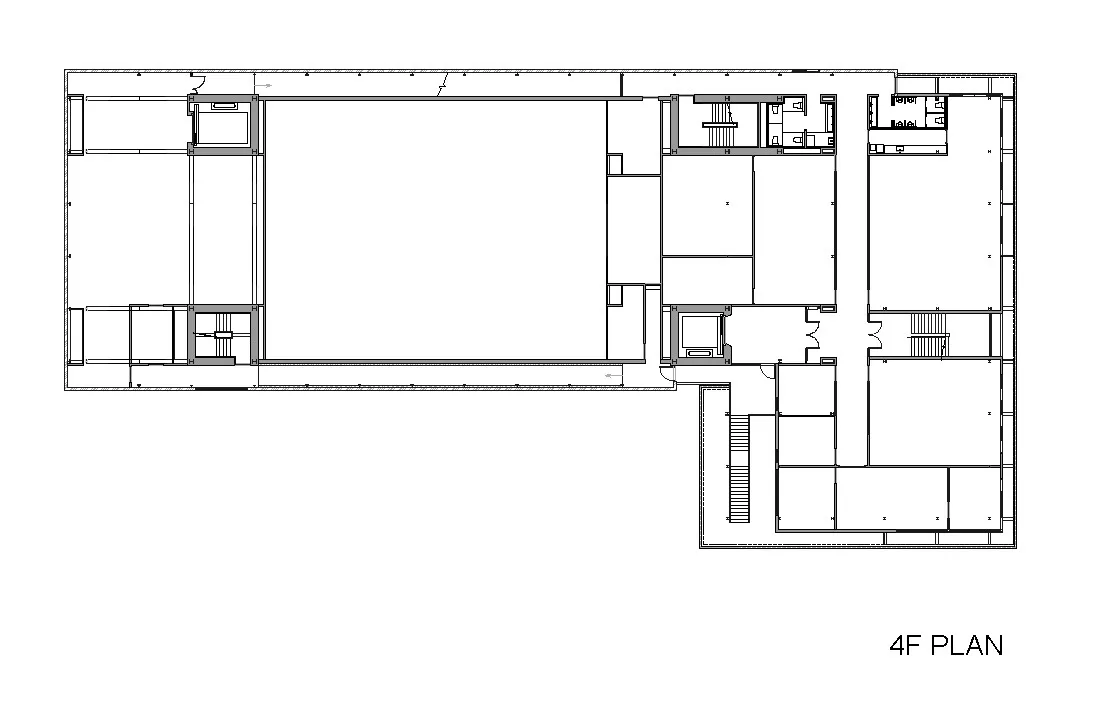
△ Fourth Floor Plan
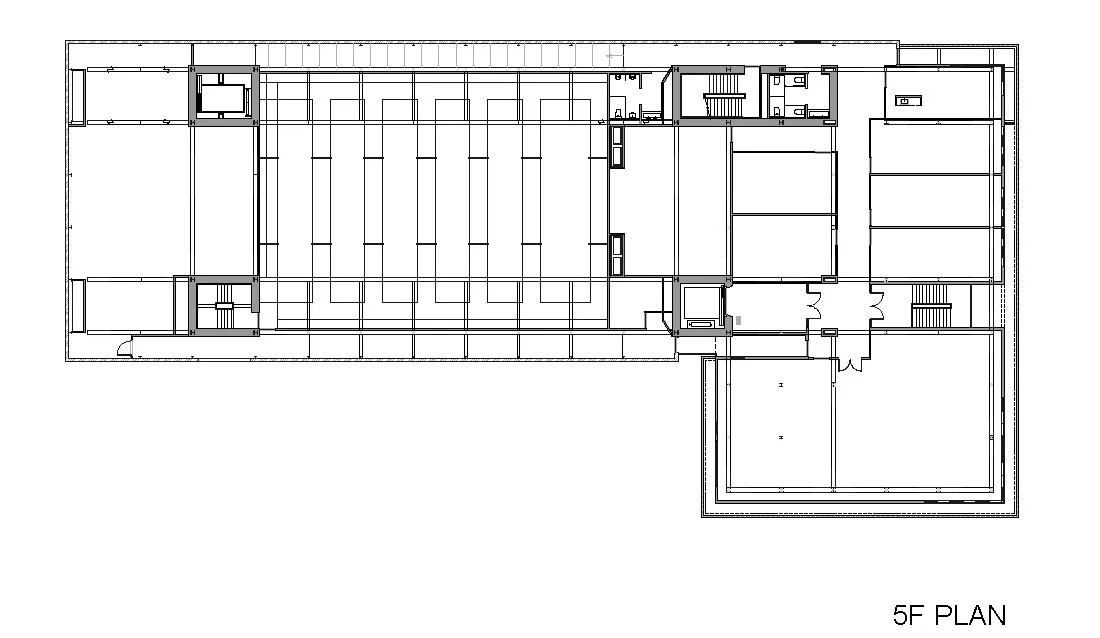
△ Fifth Floor Plan
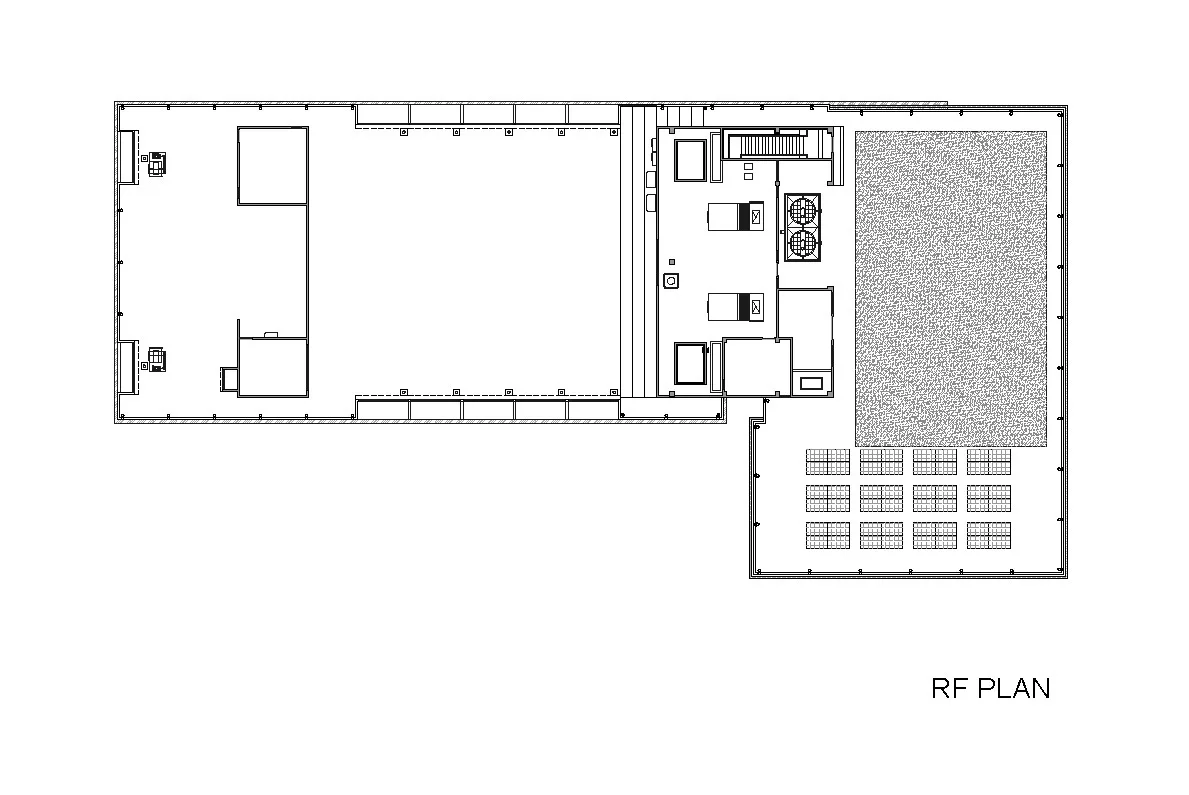
△ Roof Plan
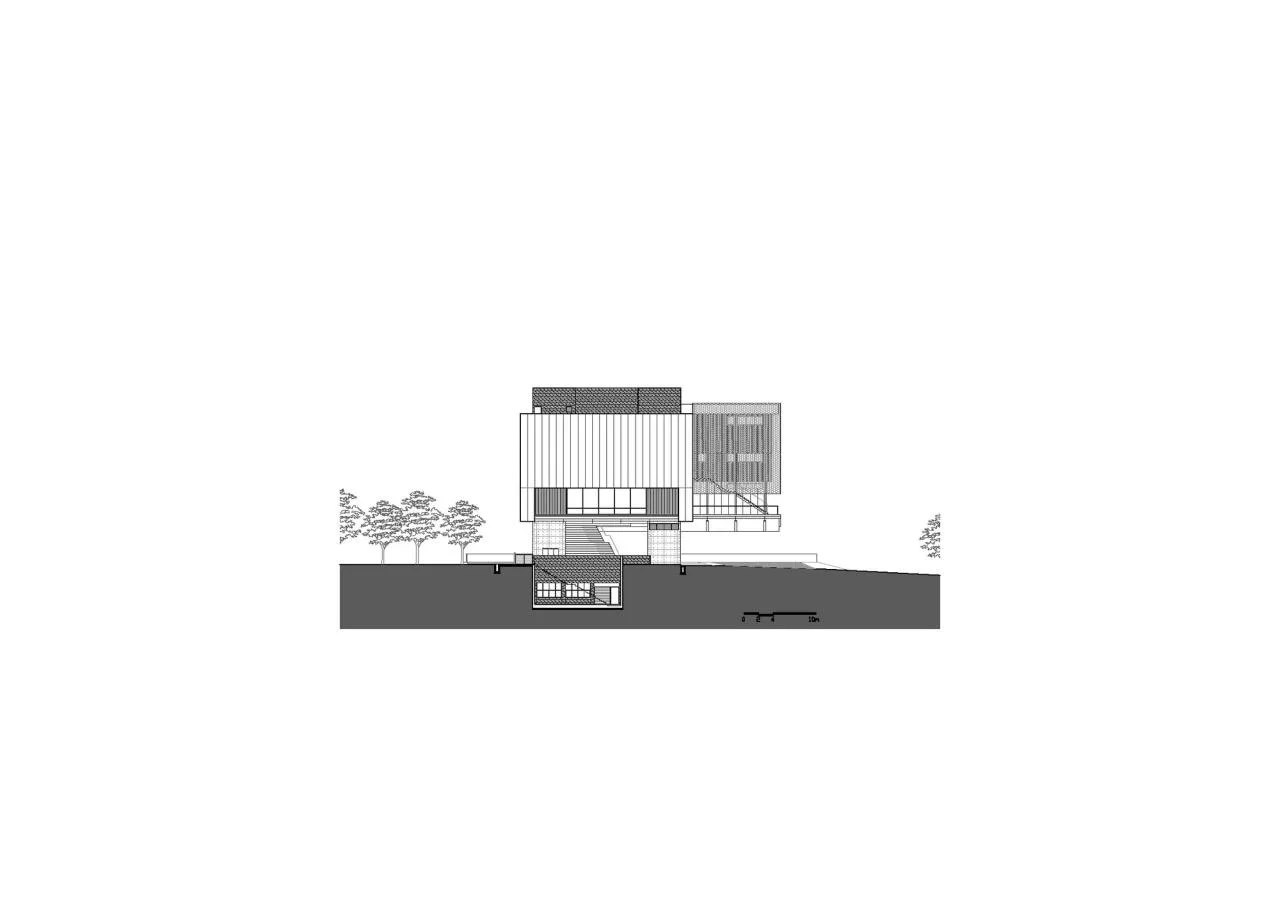
△ Elevation Drawing
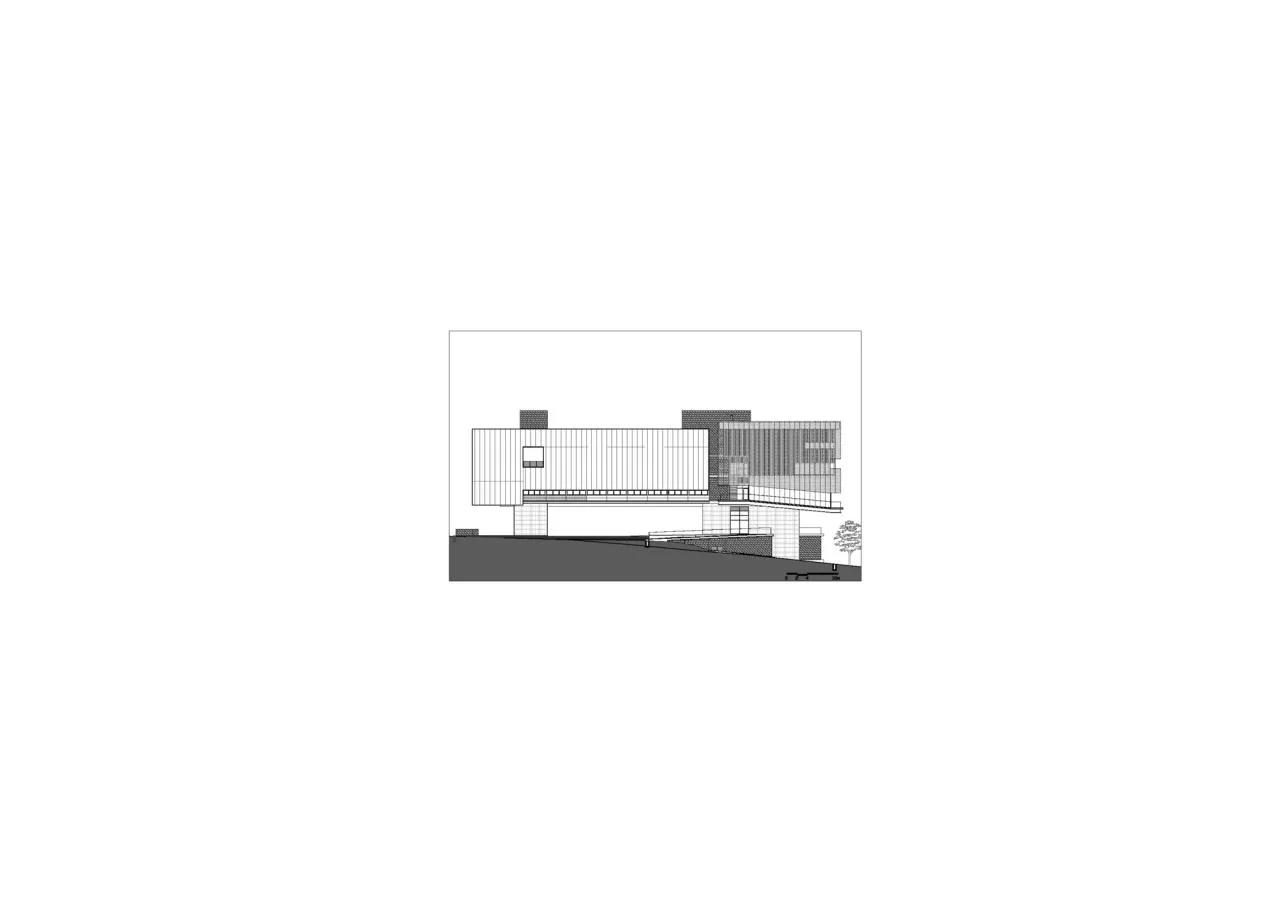
△ Elevation Drawing
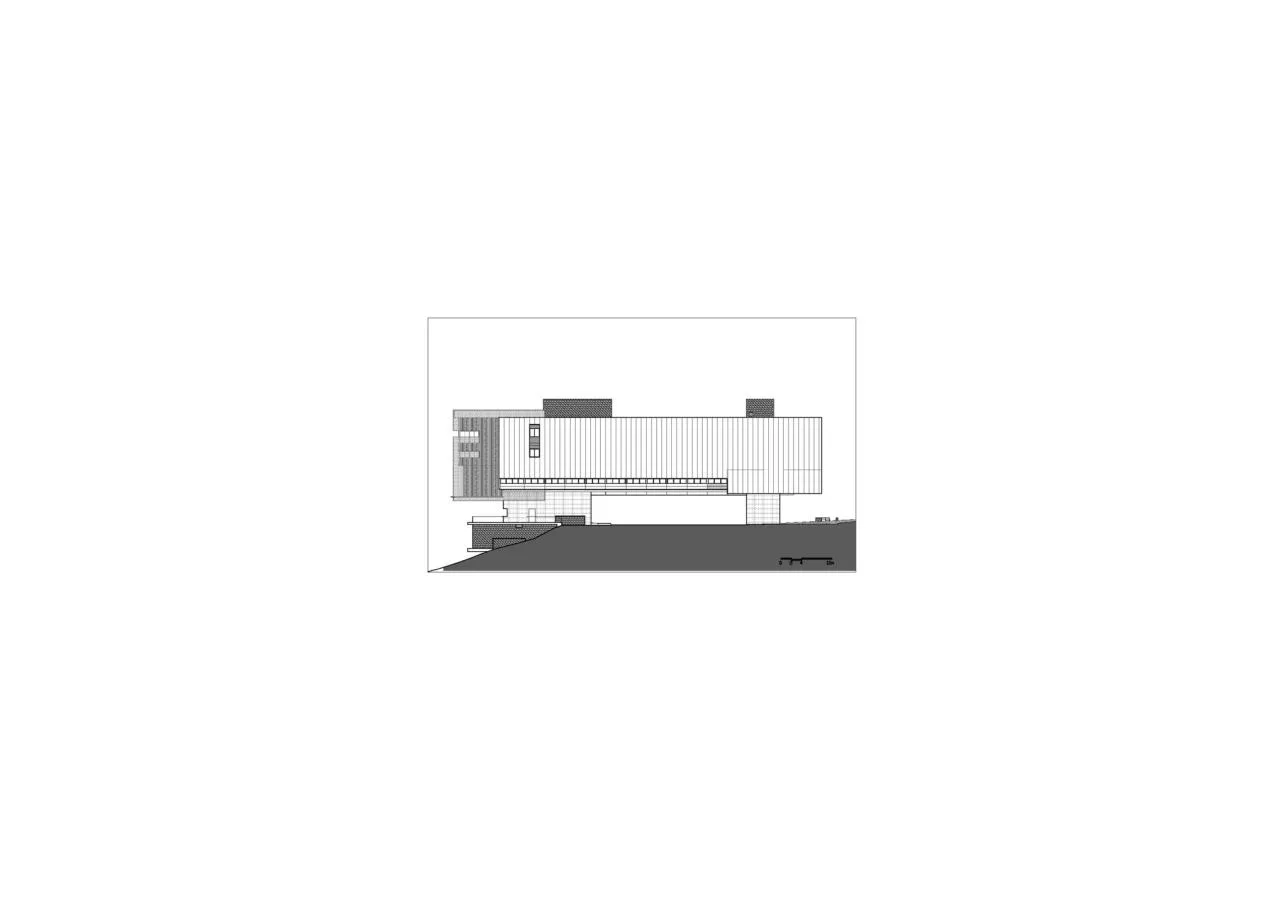
△ Elevation Drawing
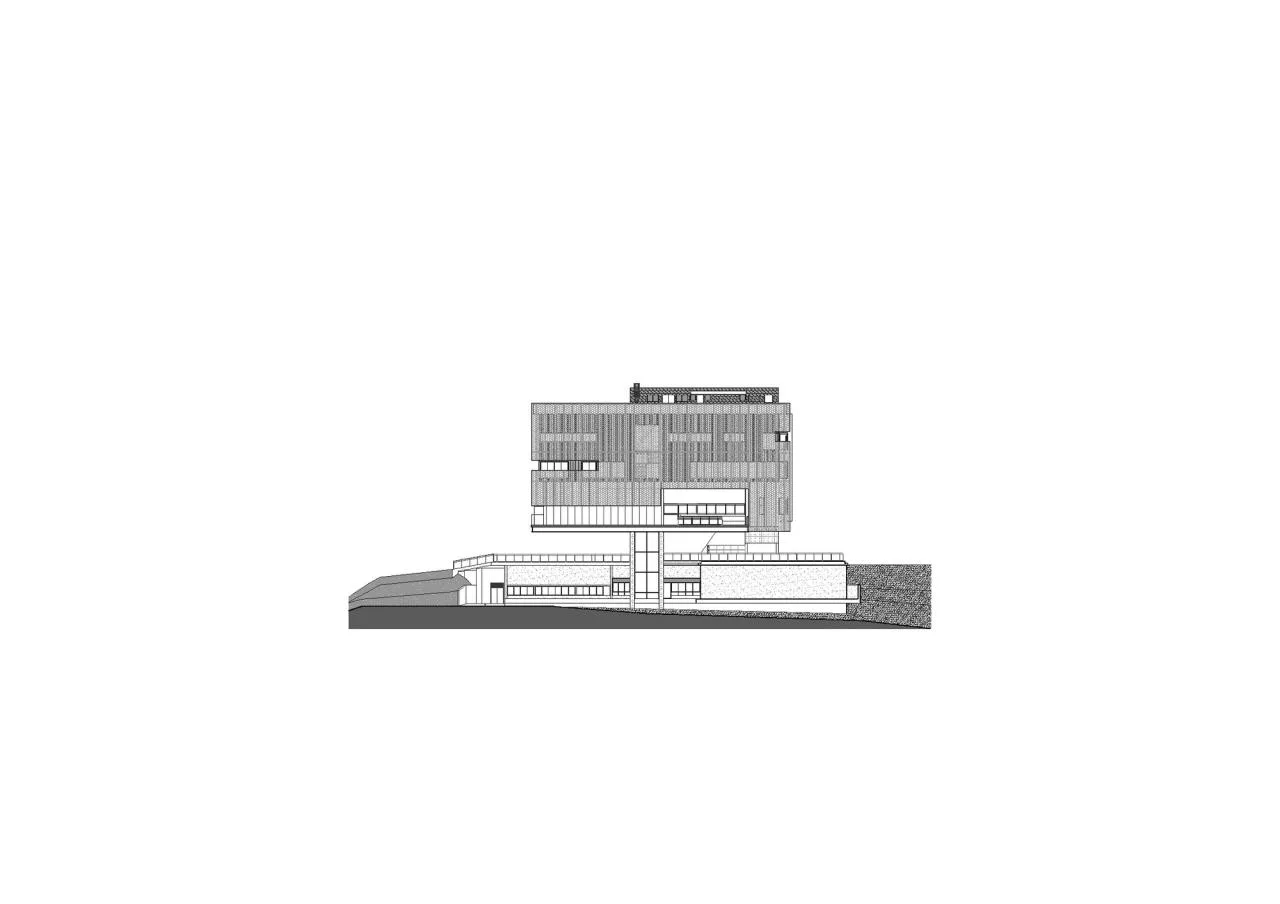
△ Elevation Drawing
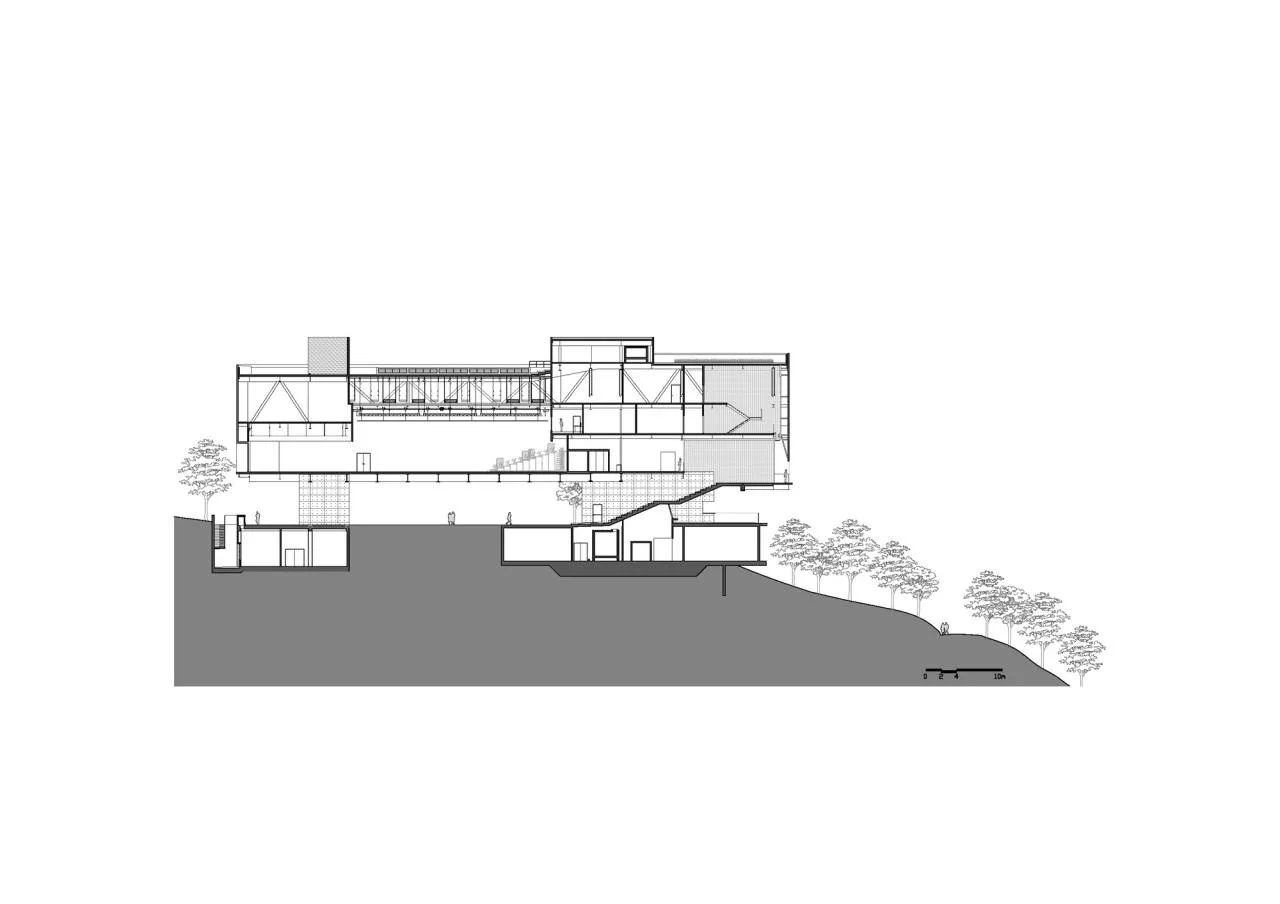
△ Section Diagram
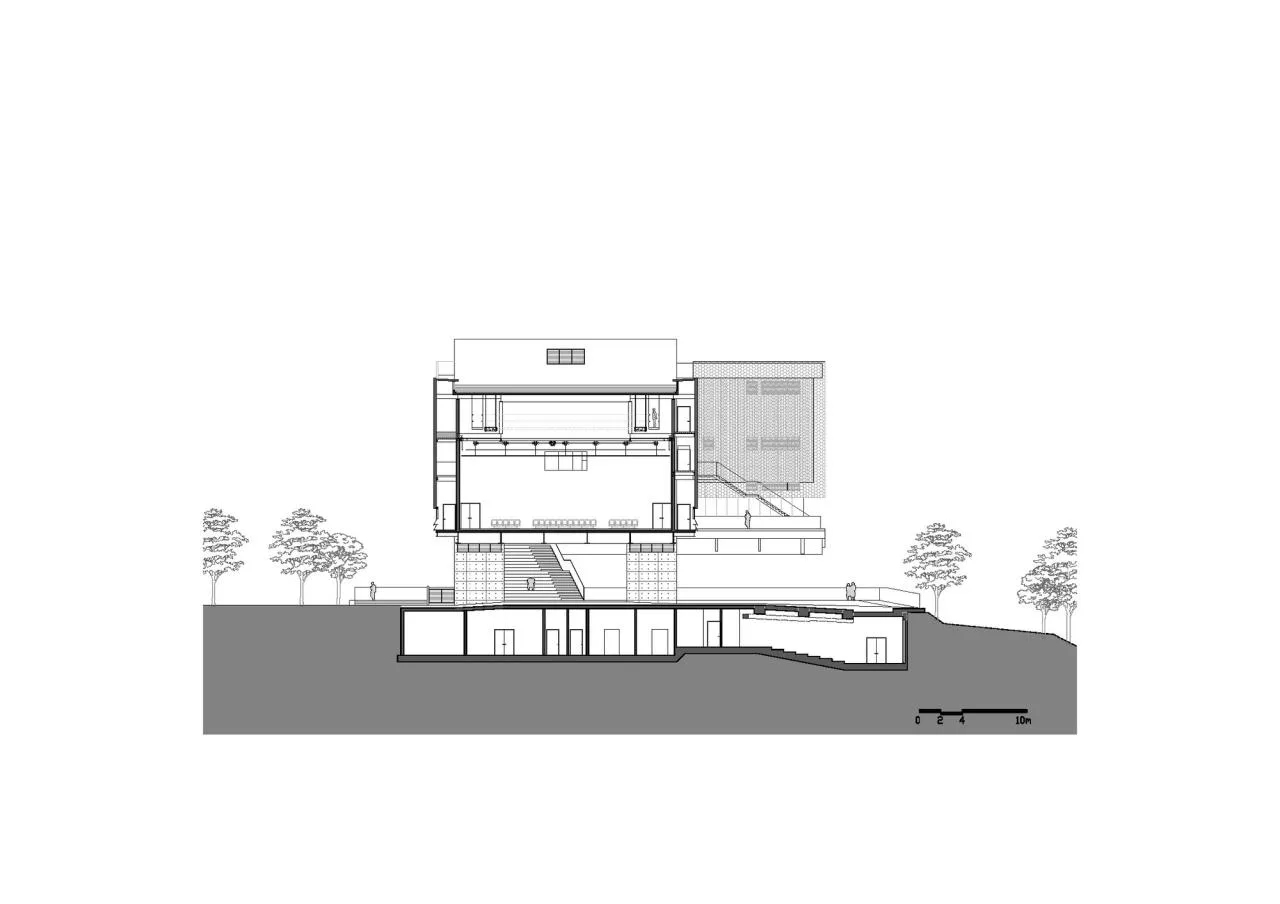
△ Section Diagram
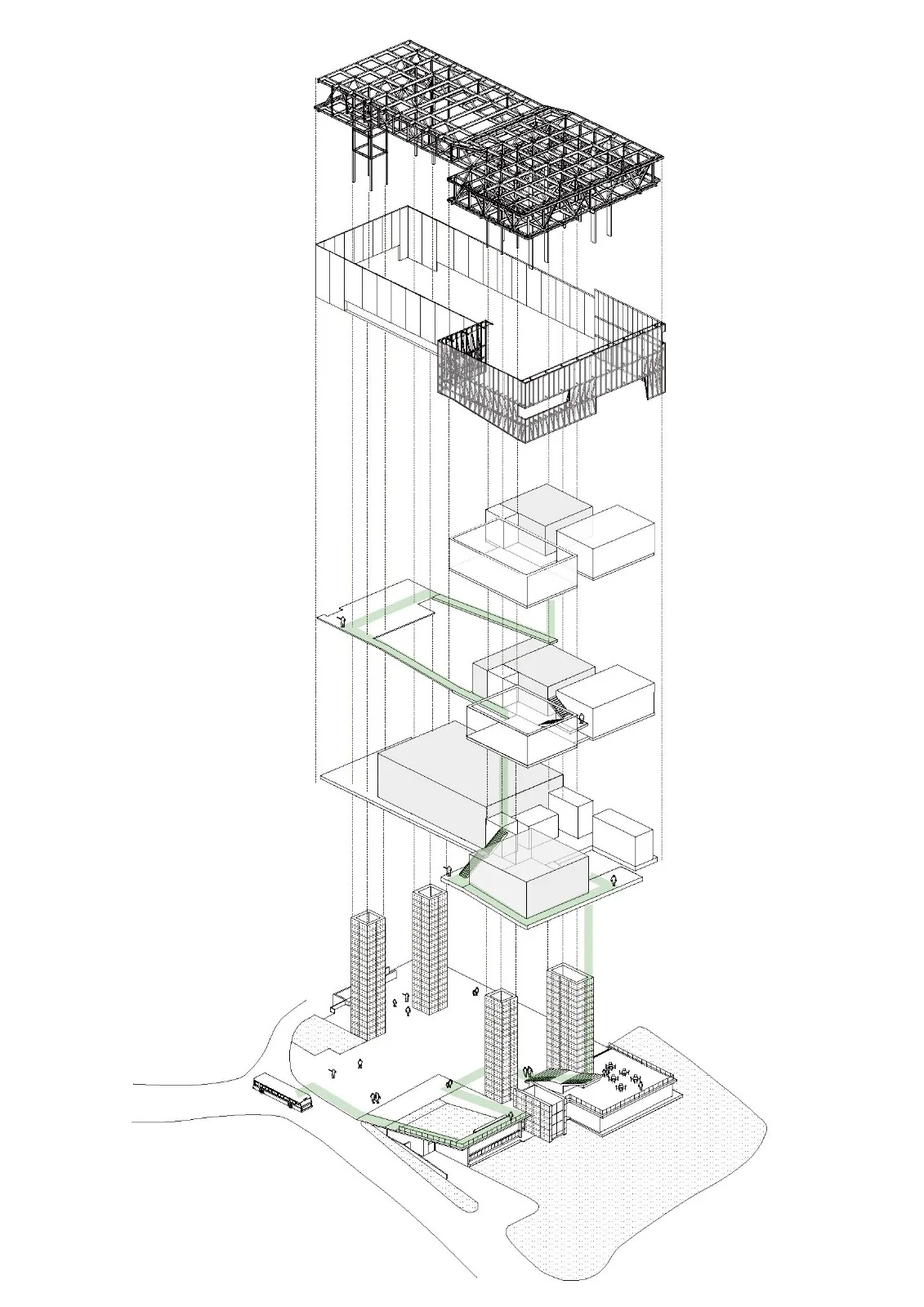
△ Exploded View
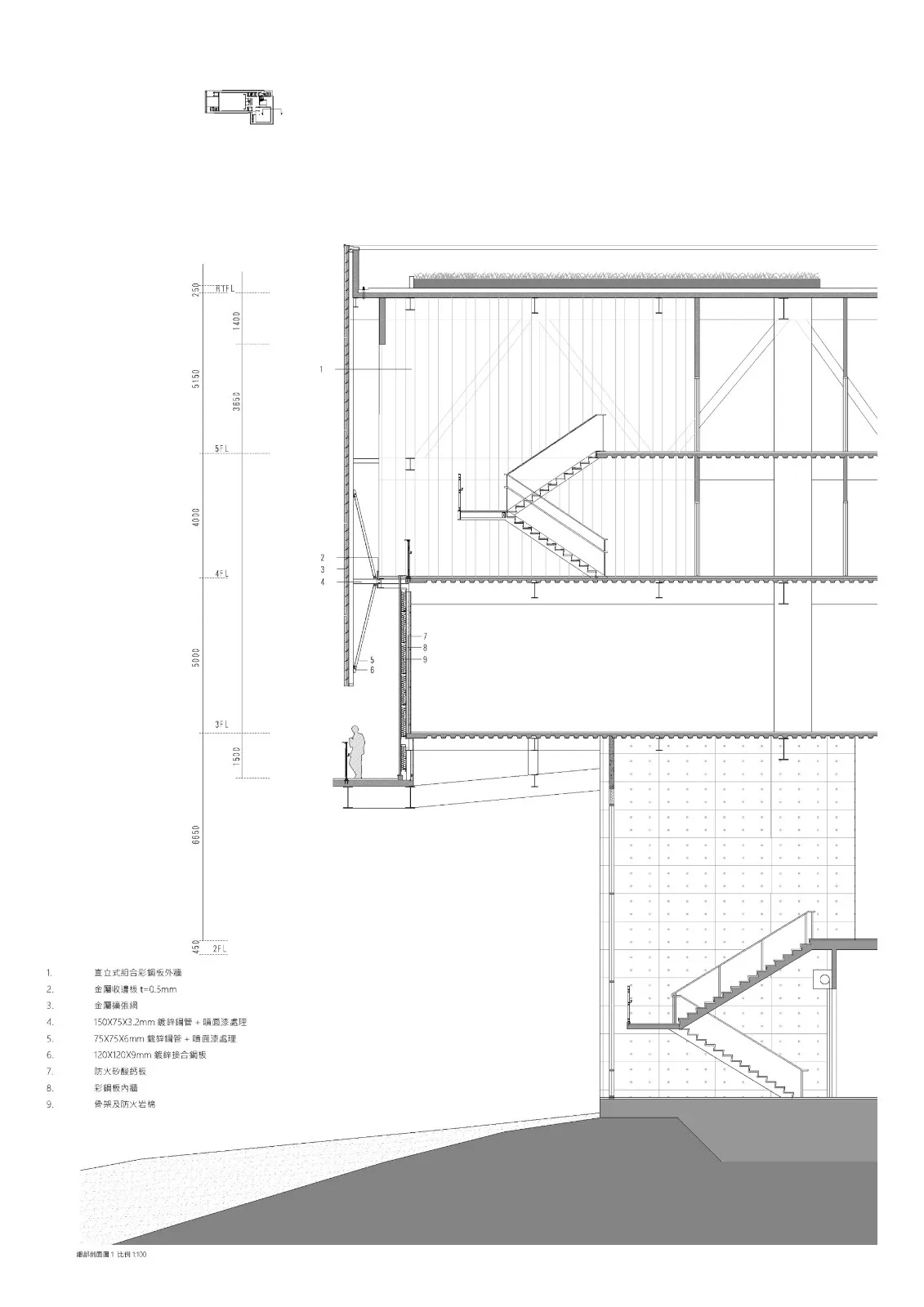
△ Detailed Section View
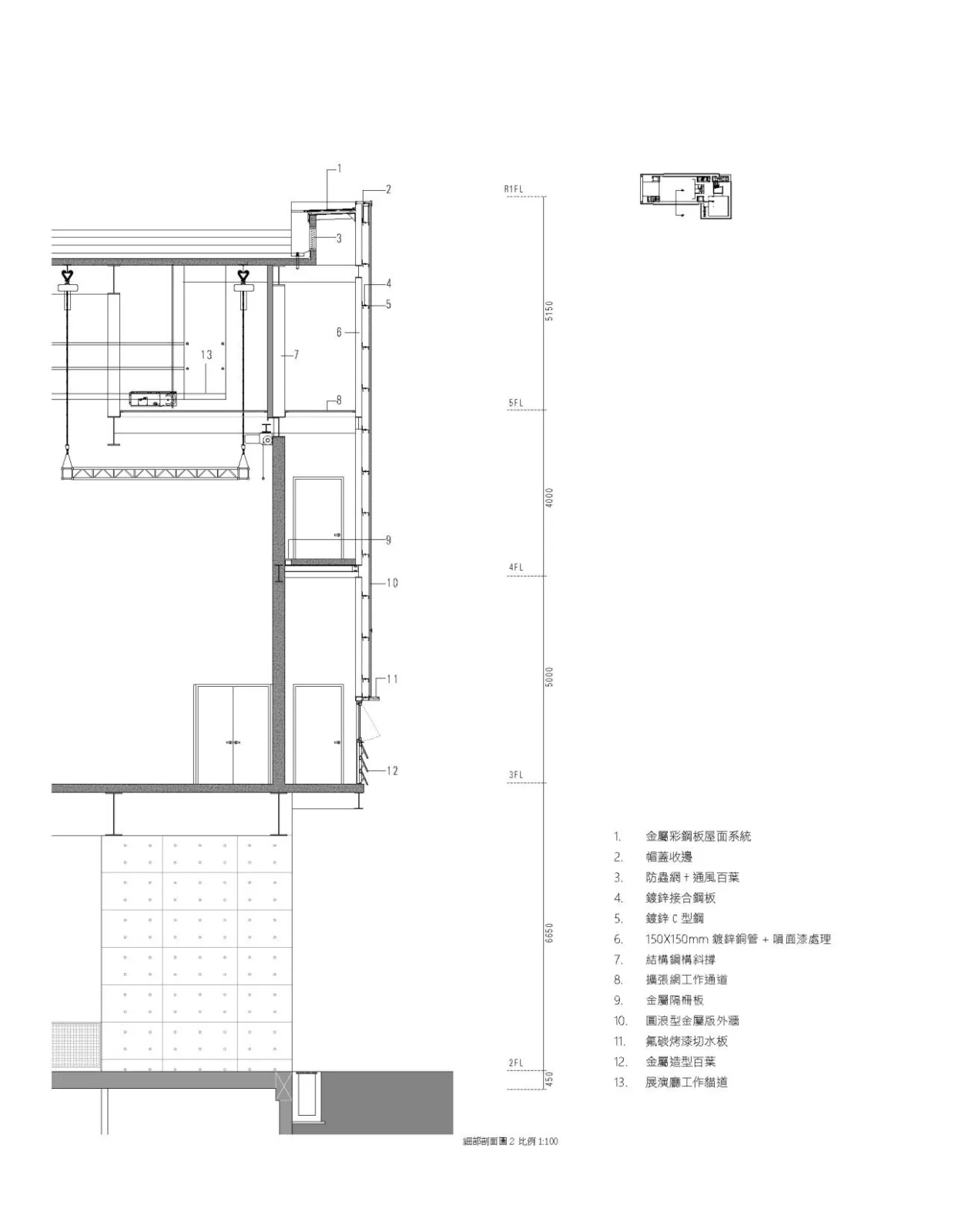
△ Detailed Section View
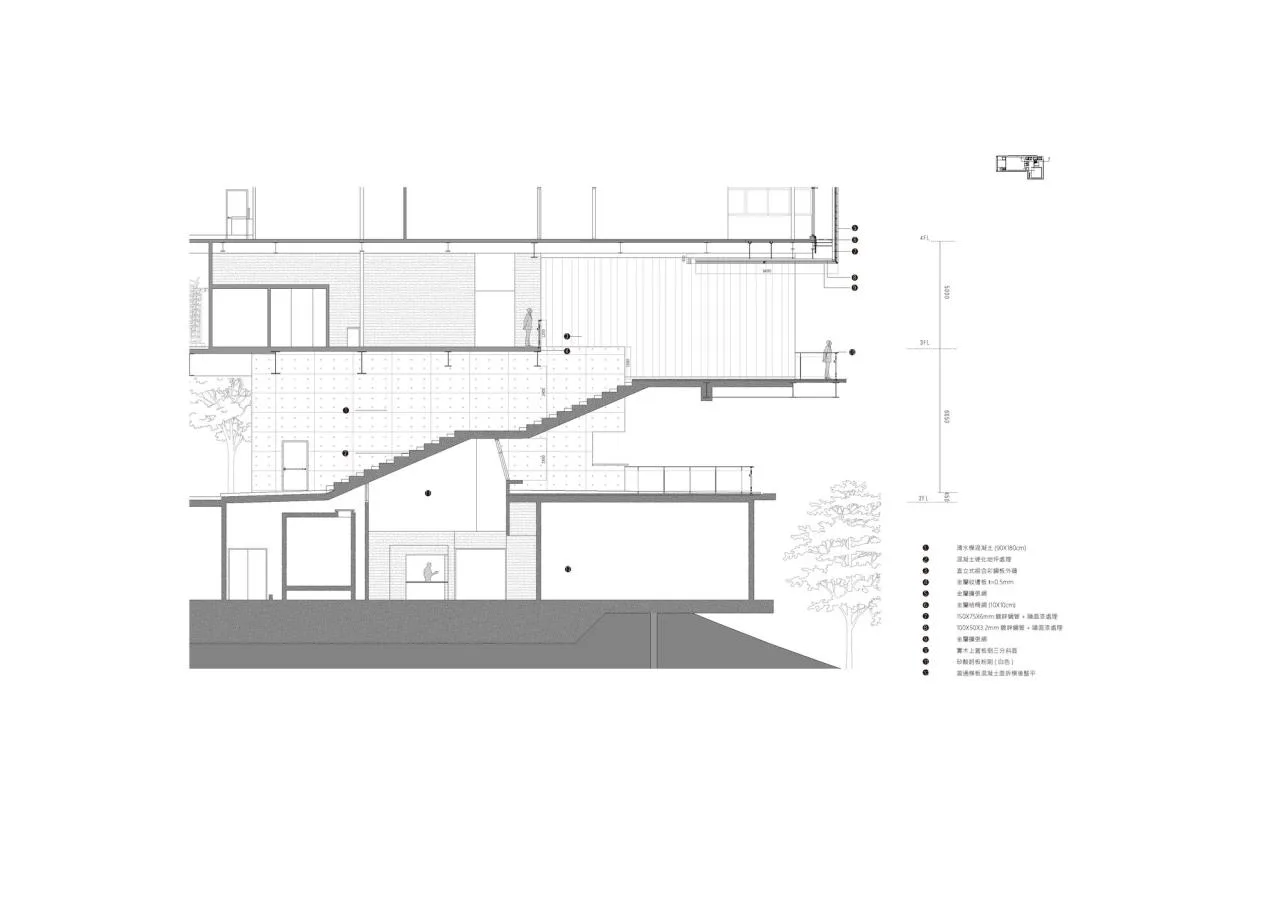
△ Detailed Section View
Project Information
Architectural Design: EHS ArchiLab, Hsuyuan Kuo Architects & Associates
Area: 78,257,825 square meters
Project Year: 2021
Photographer: Yi Hyeen Lee and Associates, Shephotoerd
Principal Architect: Guo Xuyuan
Location: Taiwan, China















Must log in before commenting!
Sign Up