
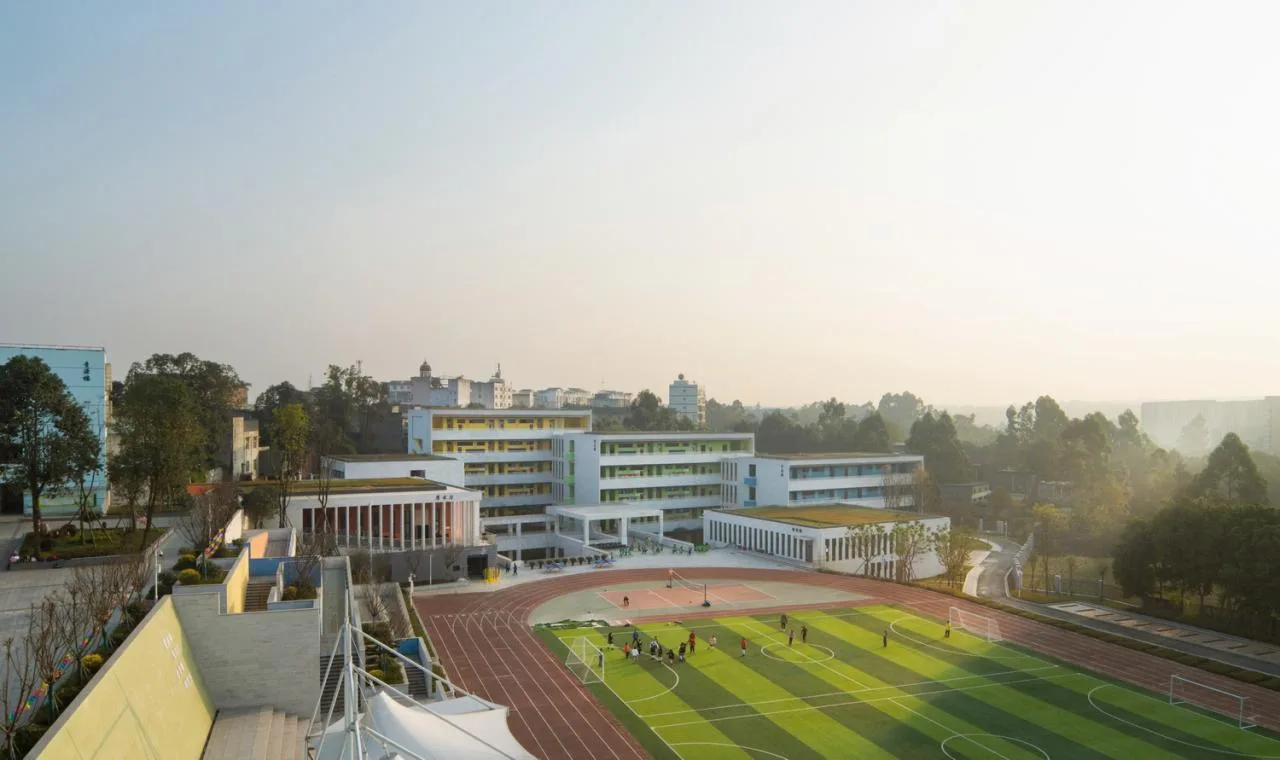
“Form is not influenced by personal emotions, while design is the designer’s own. Design is a behavior related to the environment… Form is not related to environmental conditions.” – Louis Koon, Form and Design
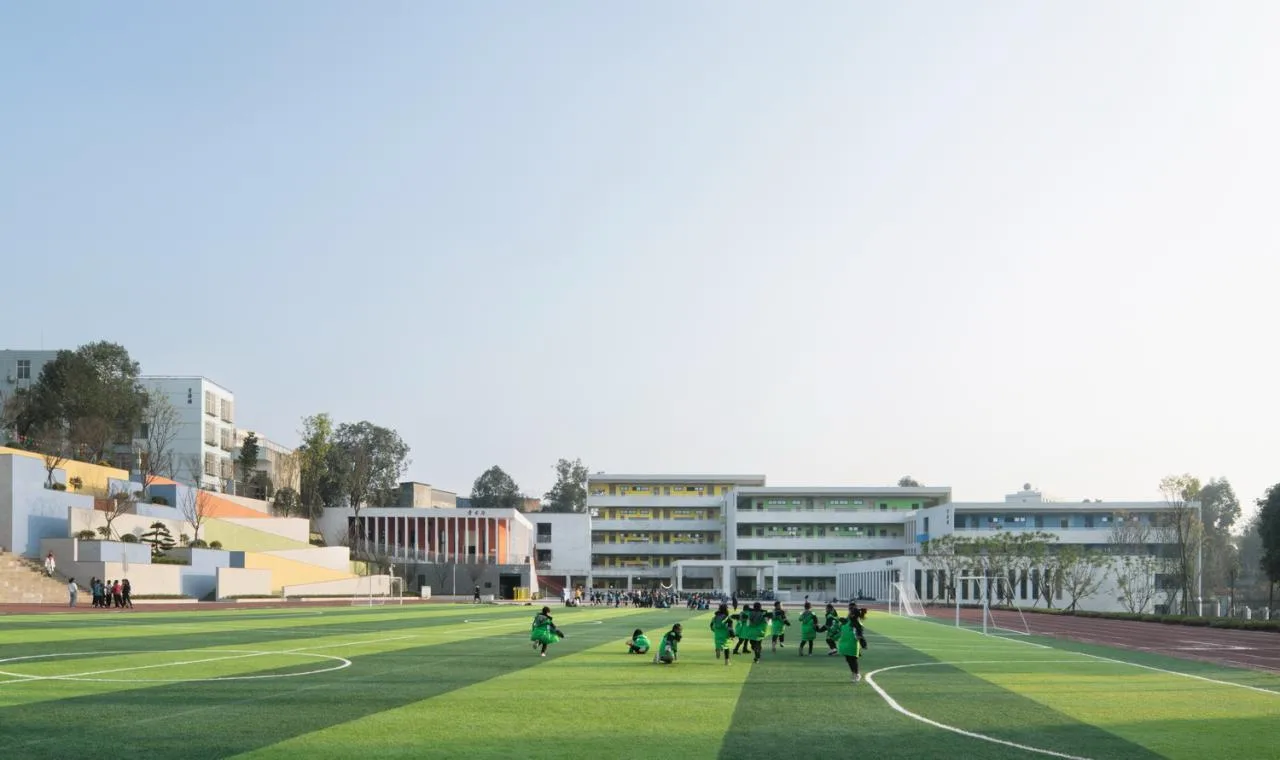
The project is situated at No. 84 Wangjiachang Shangjie, Huangjia Town, Shuangliu District, Chengdu City, Sichuan Province.
Huangjia Town lies on the outskirts of Chengdu city and has yet to undergo formal urban planning, maintaining a largely natural and organic state. The area surrounding the school features mostly one- and two-story residential buildings, arranged according to the existing street layout. On the side of the street where the school stands, the street surface is relatively orderly, but the buildings behind vary in height, creating an organic yet somewhat chaotic impression.
The school originally comprised two teaching buildings aligned along the street. However, their orientation differed from the surrounding regular structures, making them stand out prominently within the streetscape. Upon our initial site visit, confronted with the disordered surroundings and the dilapidated original teaching buildings, we aimed to introduce order and reinforce the school’s presence. This concept became the foundation of our design.
Currently, Huangjia Primary School has 3,870 square meters of teaching and auxiliary buildings, accommodating 13 classes. In recent years, Huangjia Street has developed rapidly, leading to an increase in student enrollment. However, the existing classrooms and facilities are severely insufficient to meet modern educational demands. Thus, campus expansion is necessary.
The project is divided into two main areas: the teaching area and the cafeteria. The new teaching area will house 36 classrooms, a library, an academic lecture hall, and various supporting functional rooms.
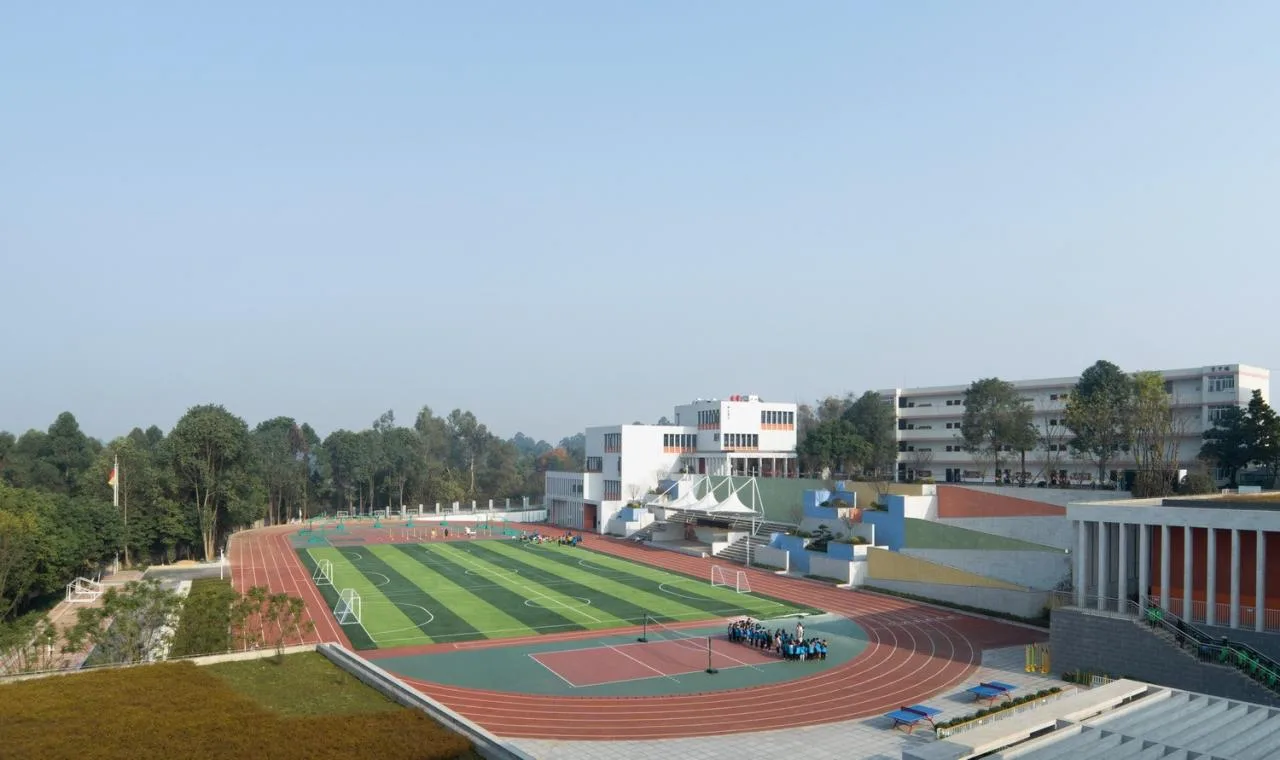
The expansion site features a sloped terrain with a significant elevation difference. There is a 9-meter height gap between the existing teaching buildings and the sports field. Previously, these areas were connected only by a straight staircase and stands, posing serious safety risks.
Order Integration
Teaching Area
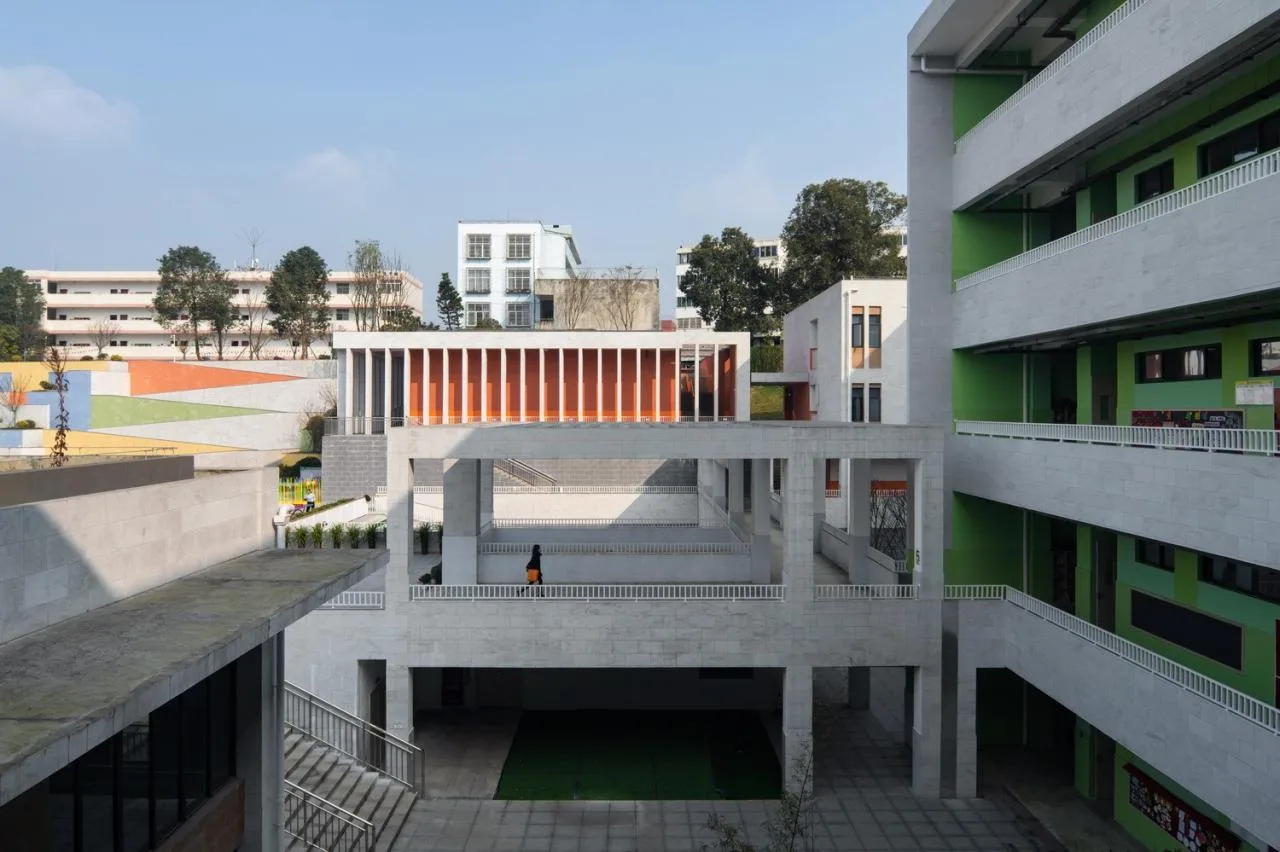
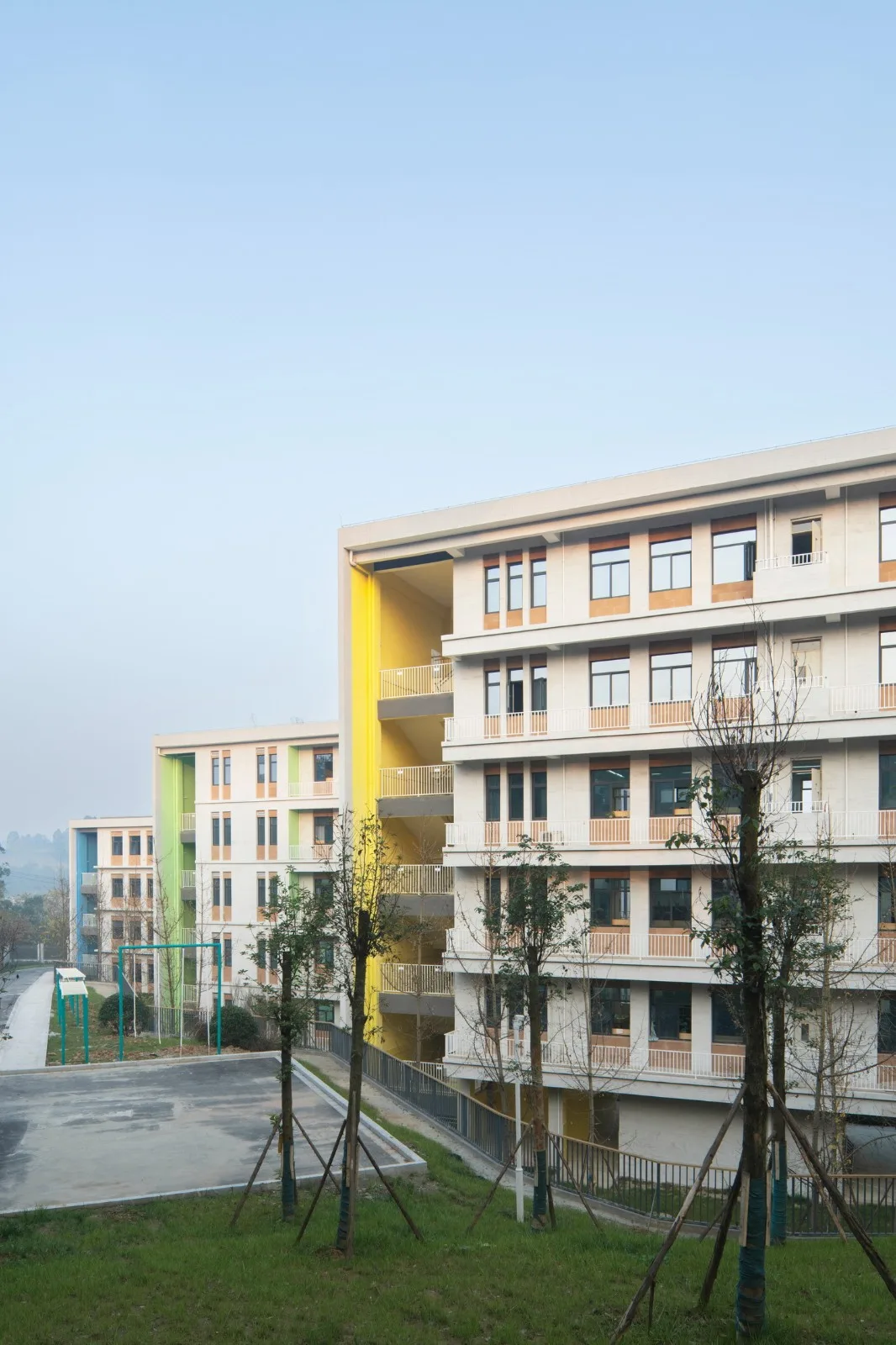
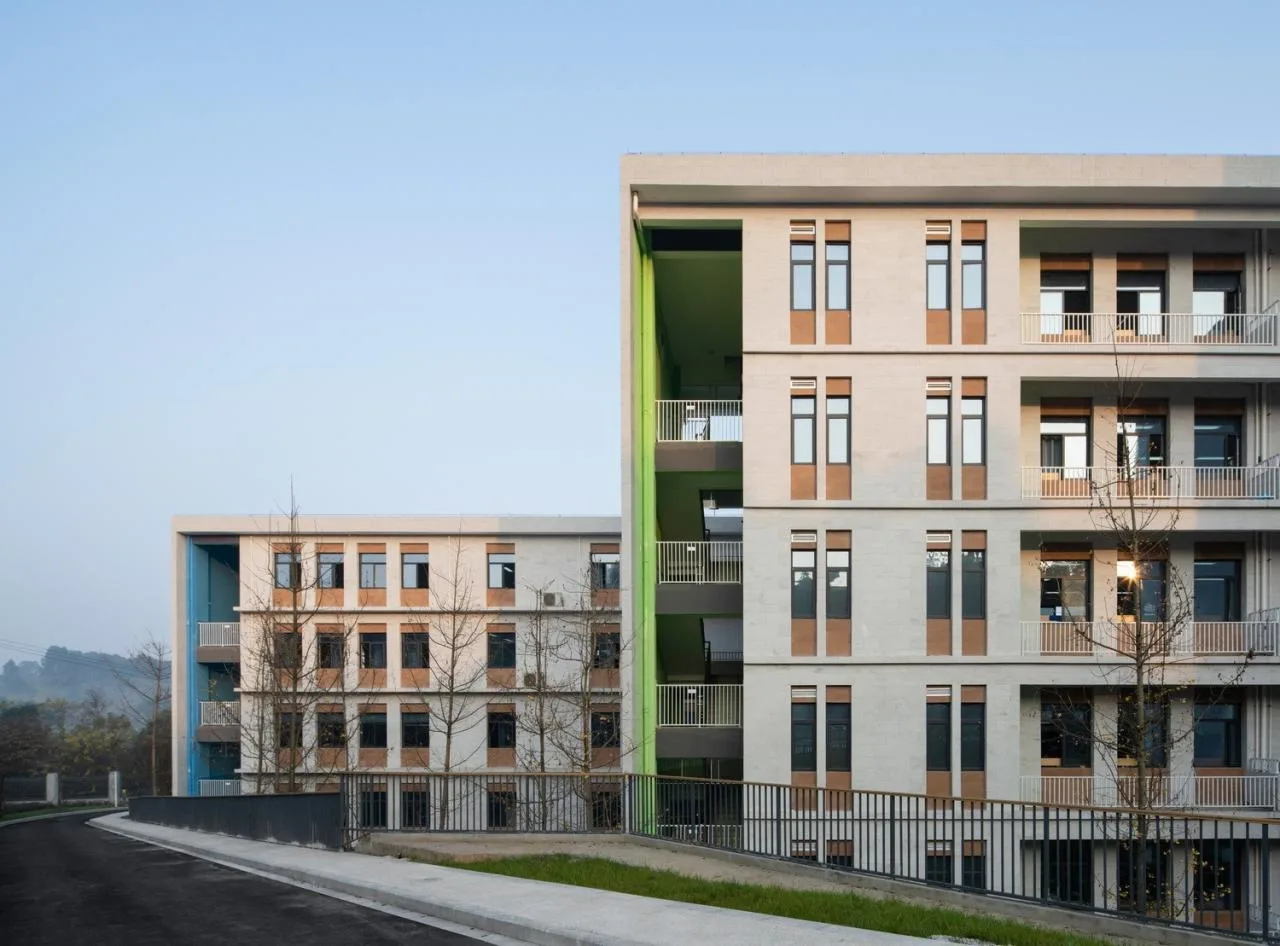
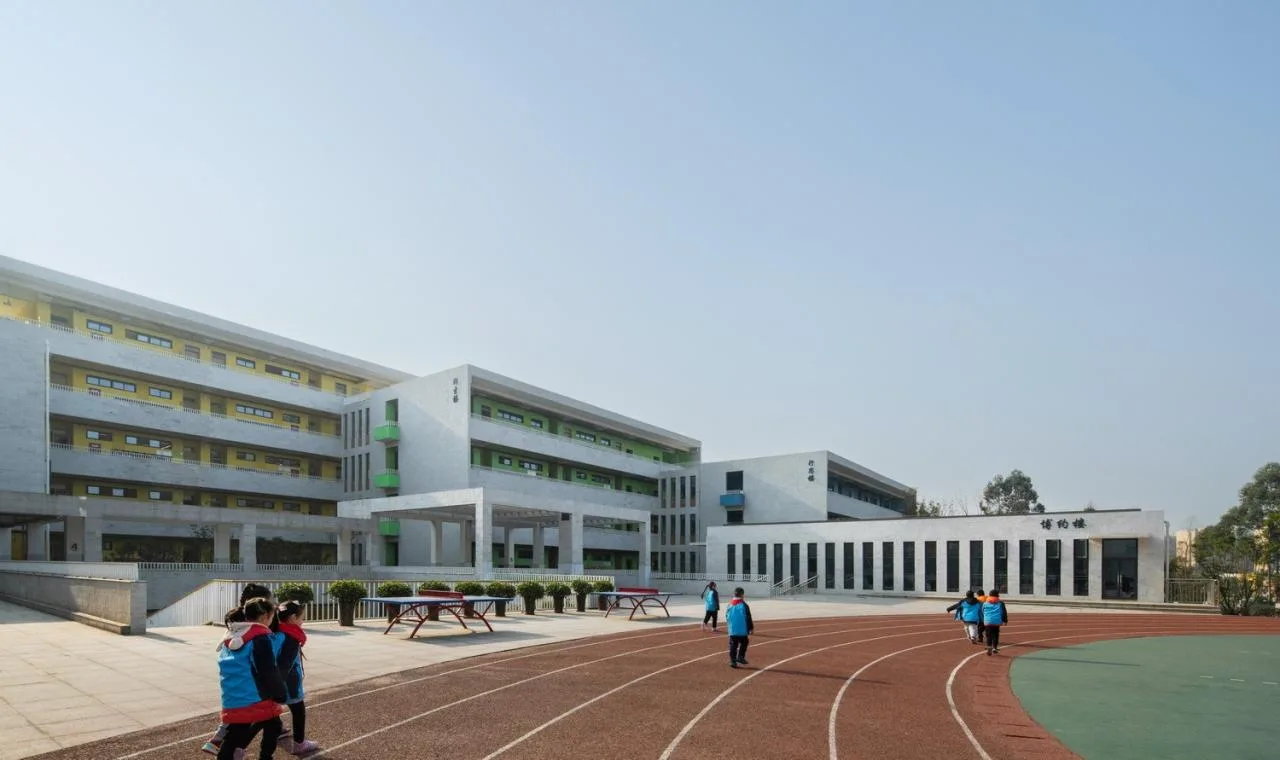
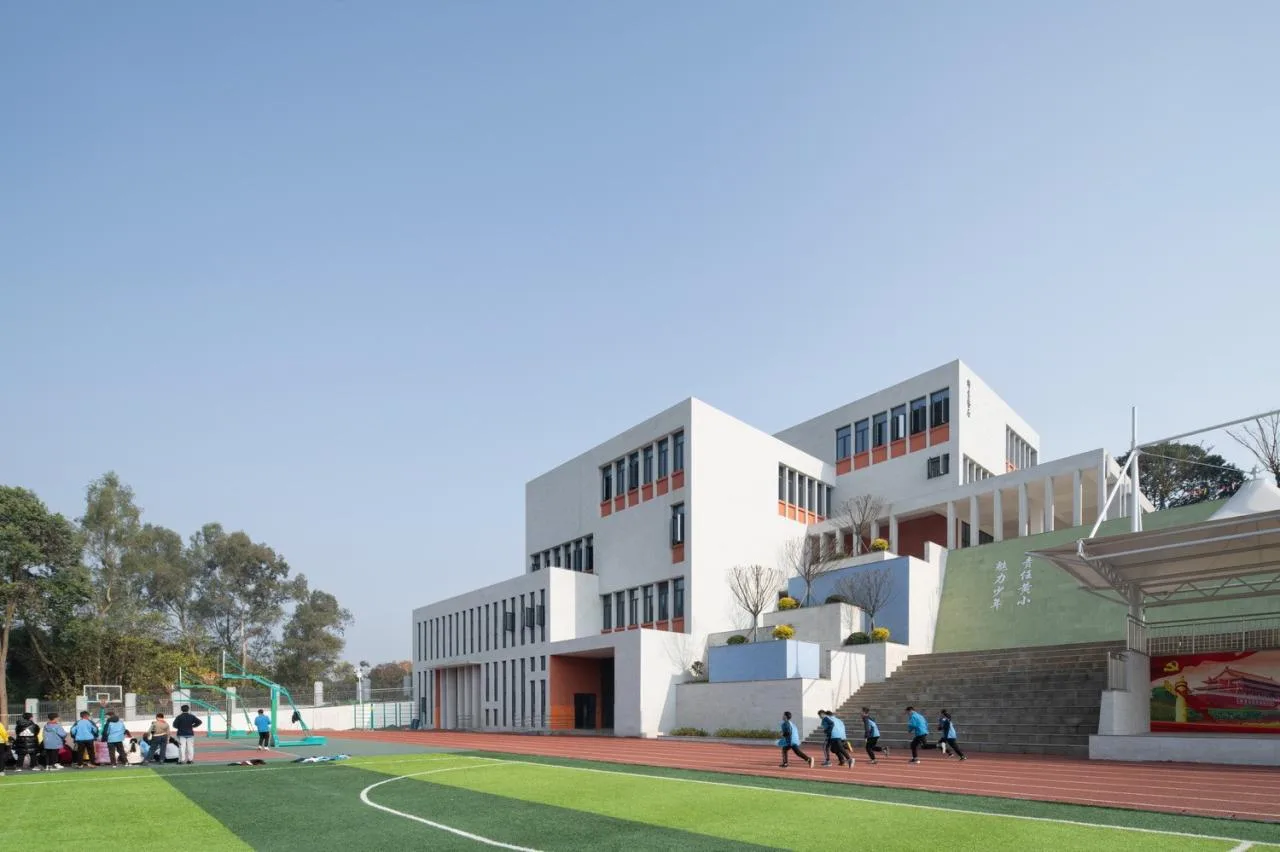
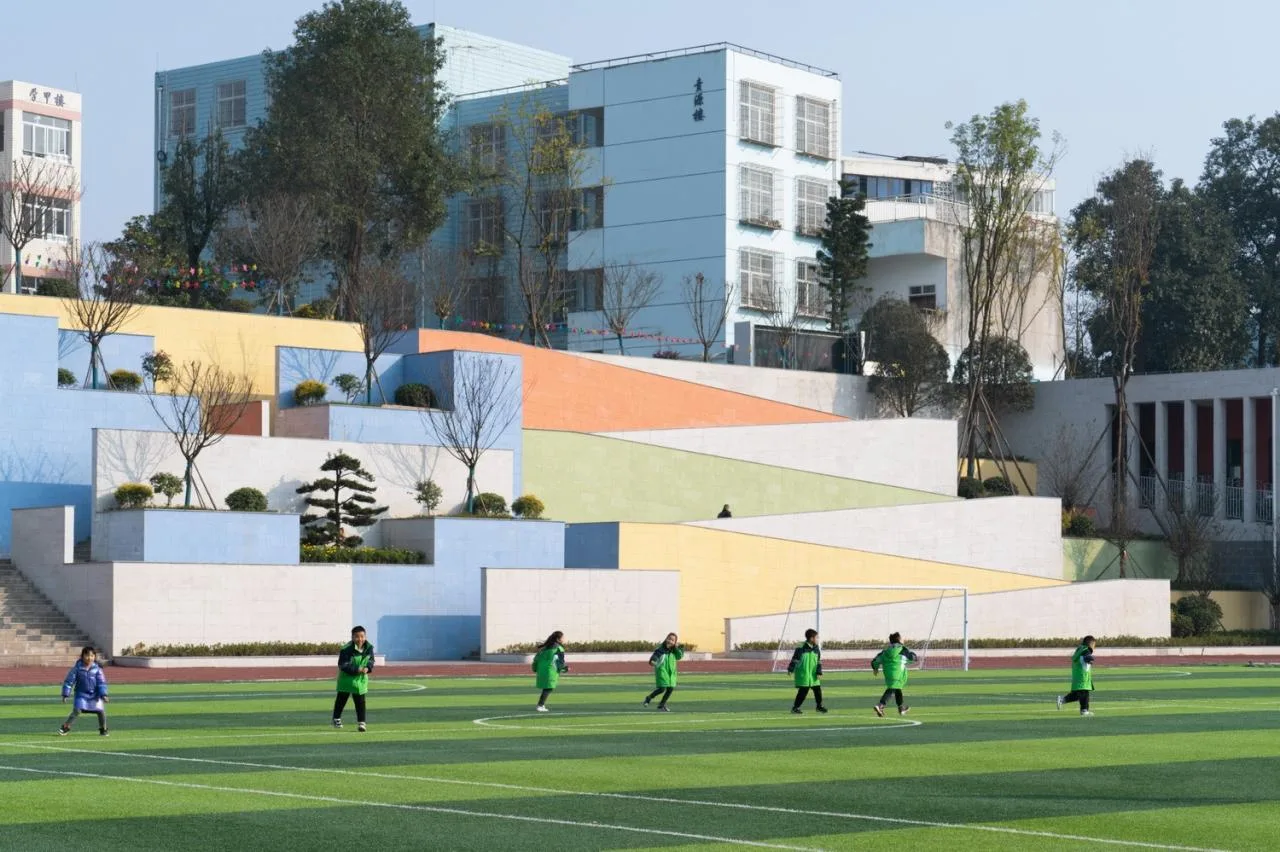
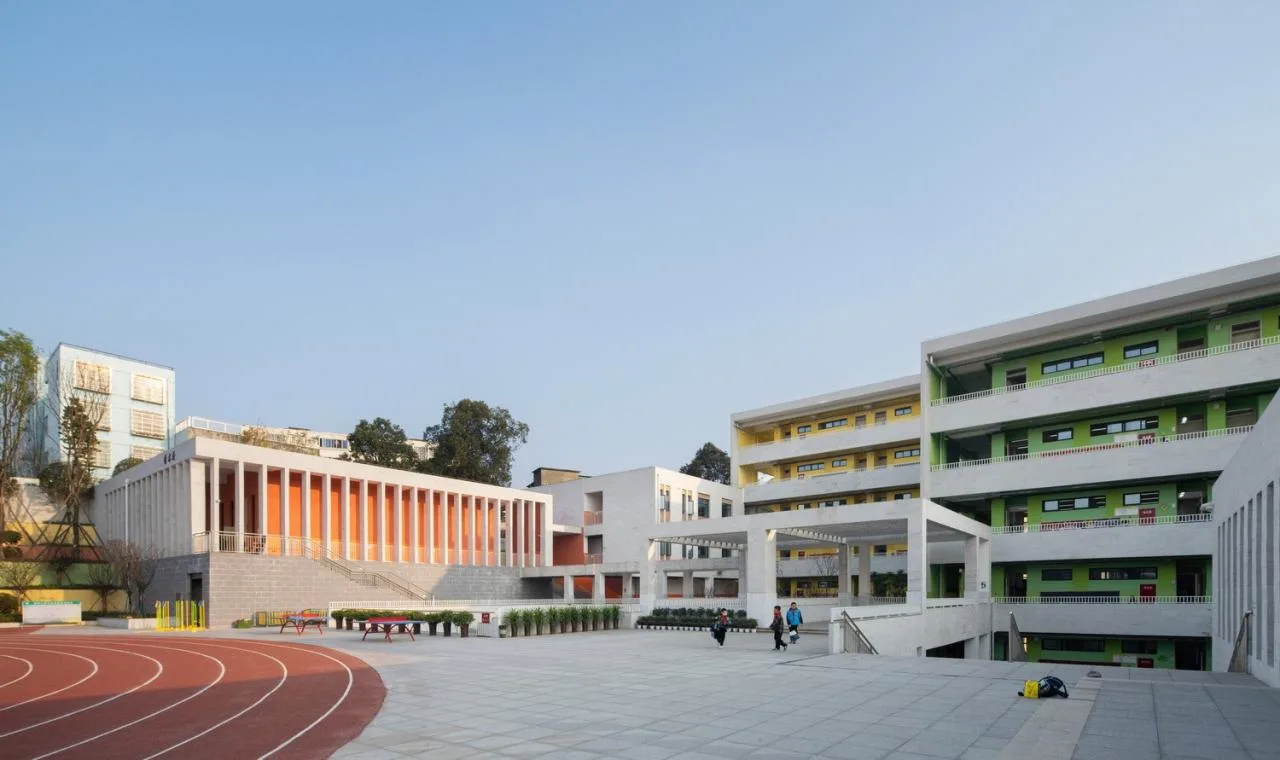
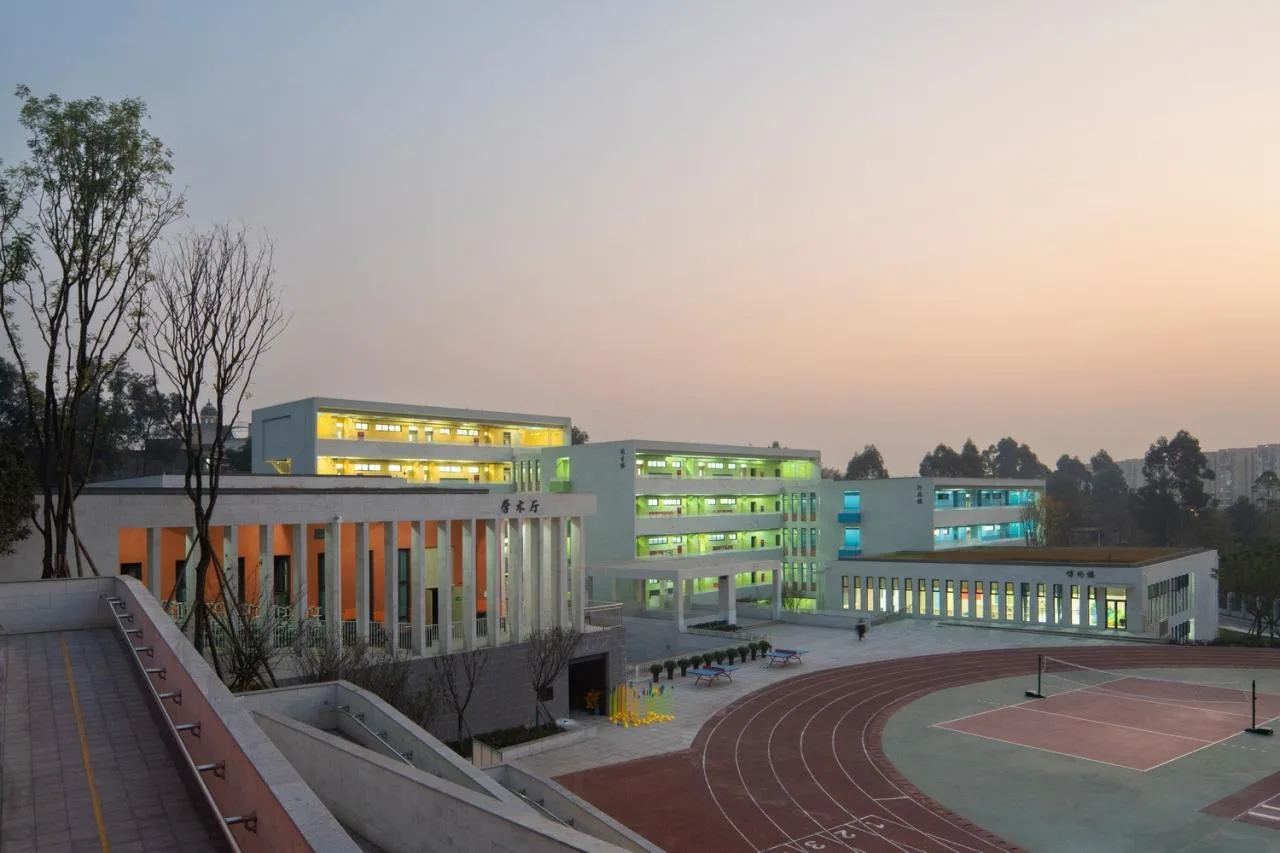
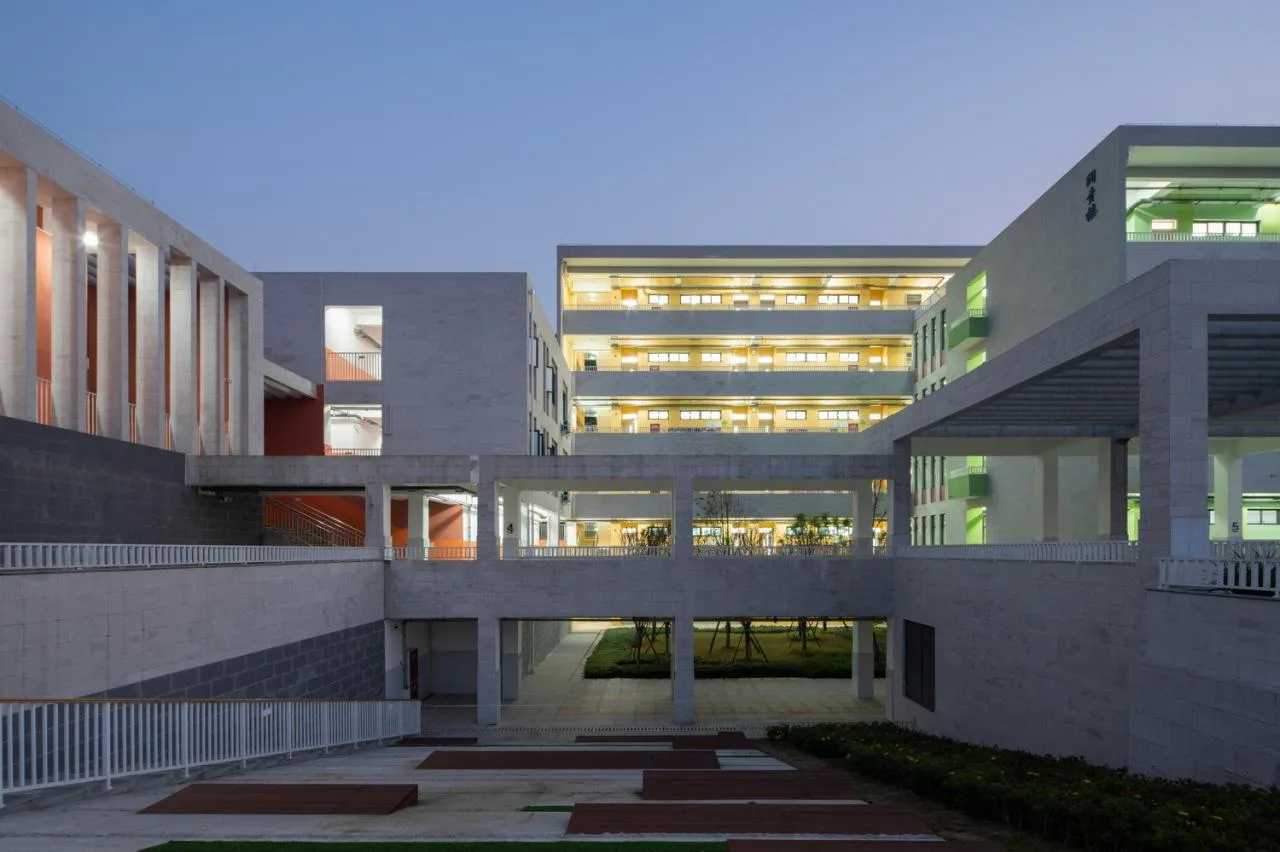
The expanded teaching area is divided into distinct volumes based on function, each inspired by a square geometric prototype. These volumes expand into flat geometric units arranged neatly at varying heights along the slope. The differing heights create a rhythmic, three-dimensional order through stepped drops. Various geometric shapes are connected organically by circulation pathways, forming scattered clusters that integrate harmoniously with the surrounding environment.
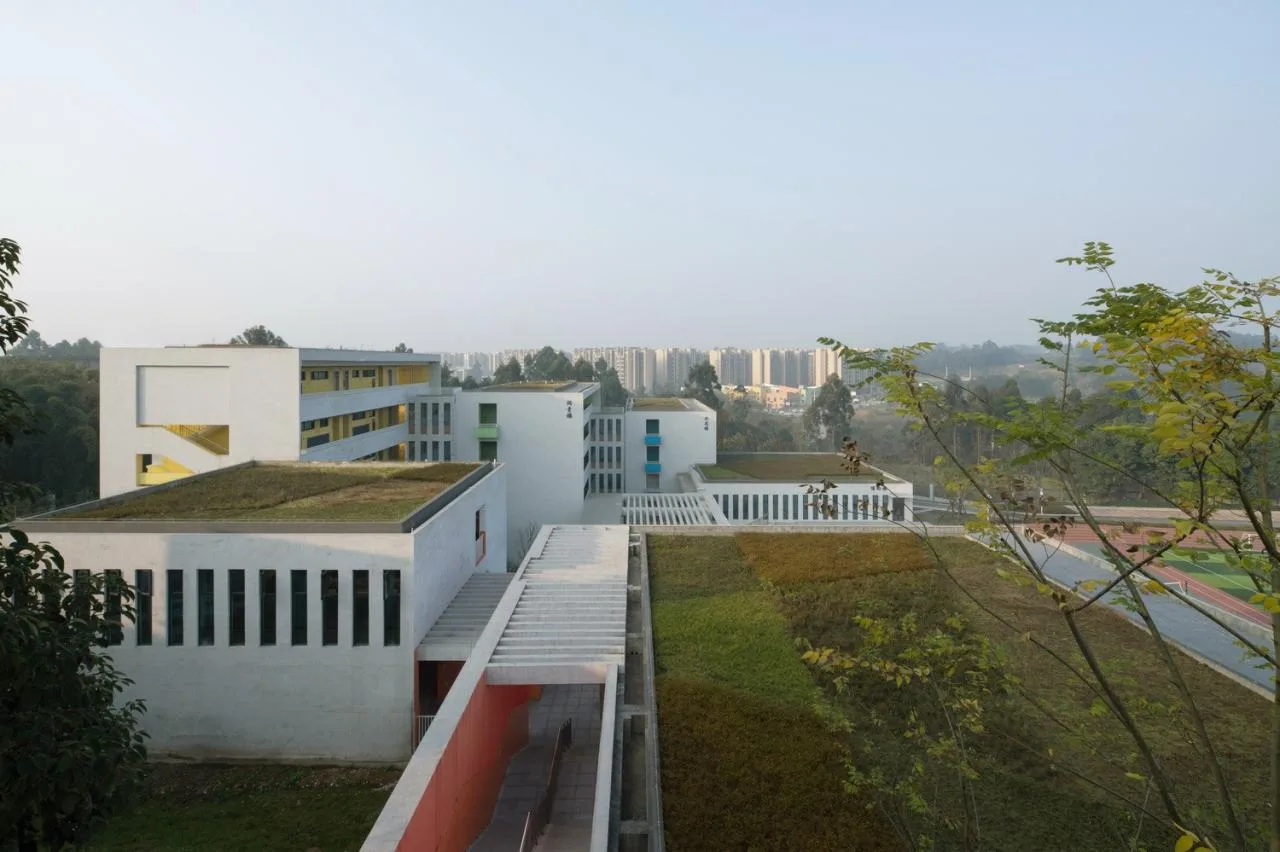
The main teaching blocks are positioned within setback limits, aligned with the existing campus architectural texture and site boundaries. The combination of public spaces such as lecture halls and libraries, along with the varying terrain elevations, creates a staggered and orderly campus environment.
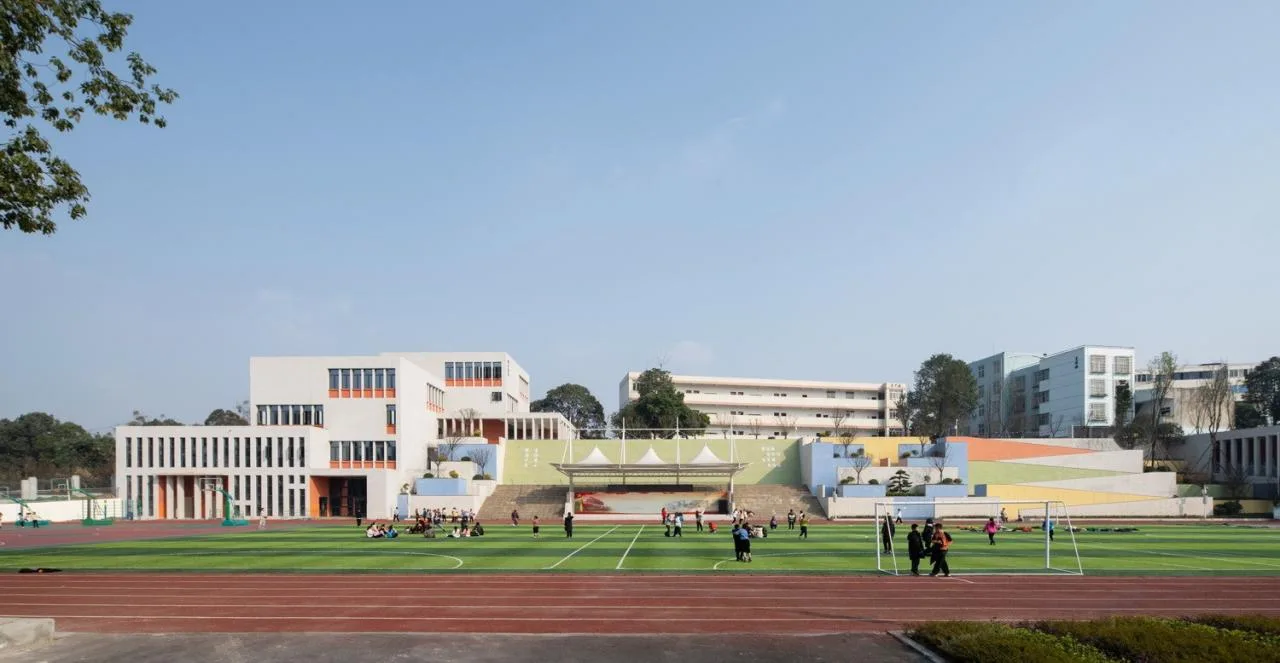
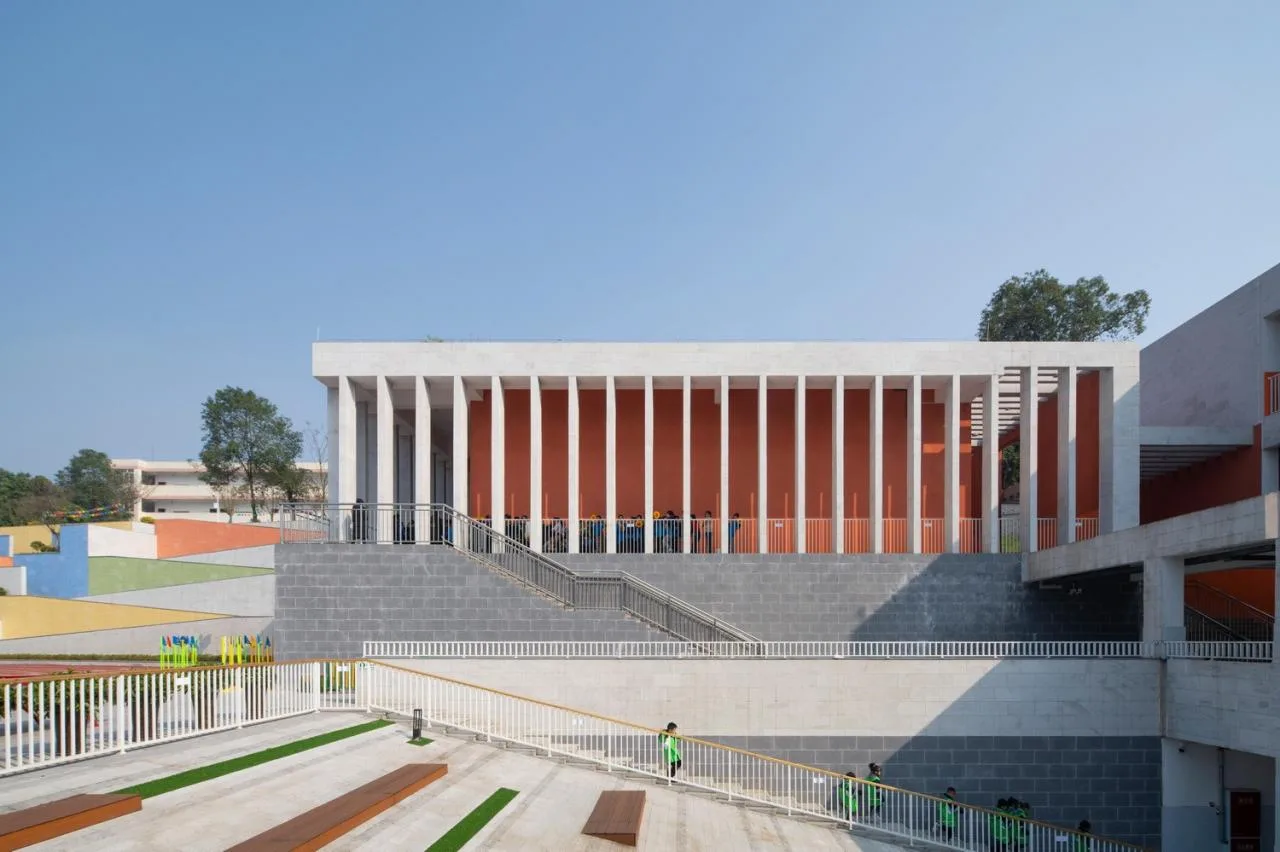
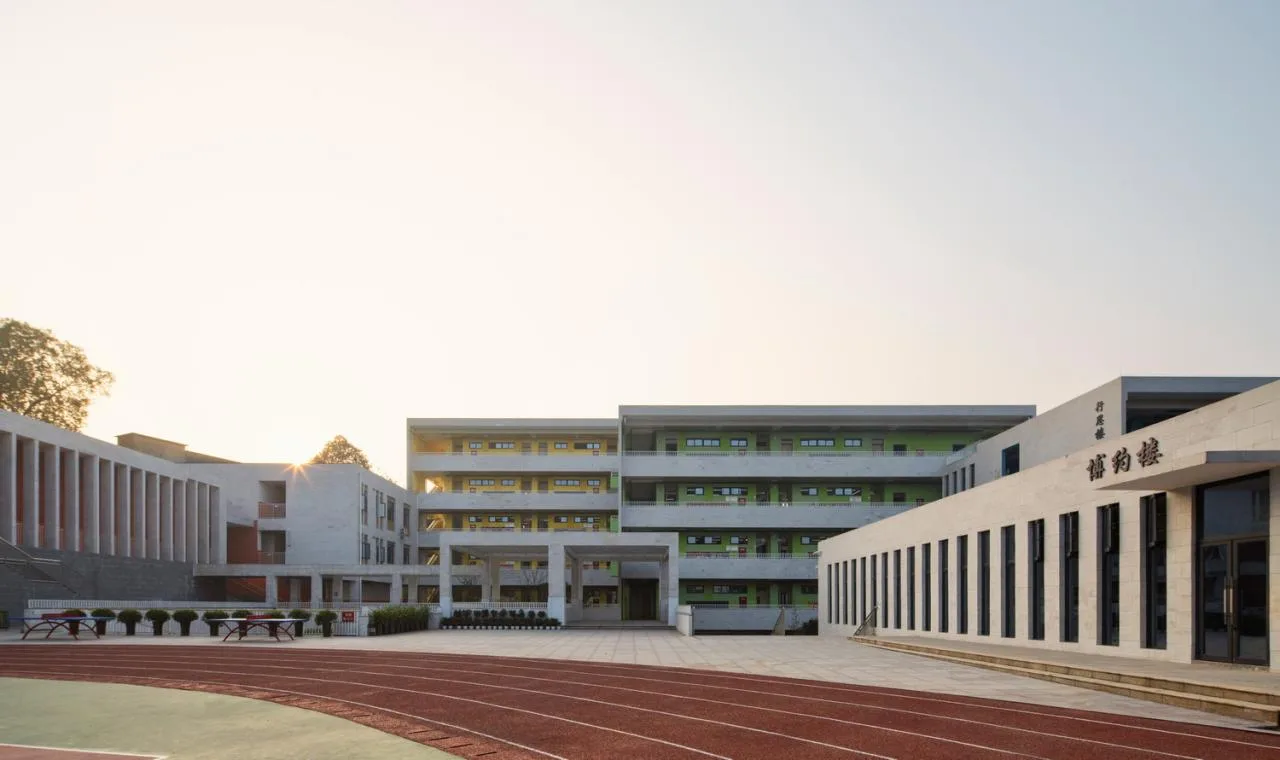
Viewed from the playground, these volumes form a cohesive, orderly ensemble. Each functional volume features distinct facade treatments, highlighting rhythm and contrast, which allows easy identification within the overall composition.
Cafeteria Area
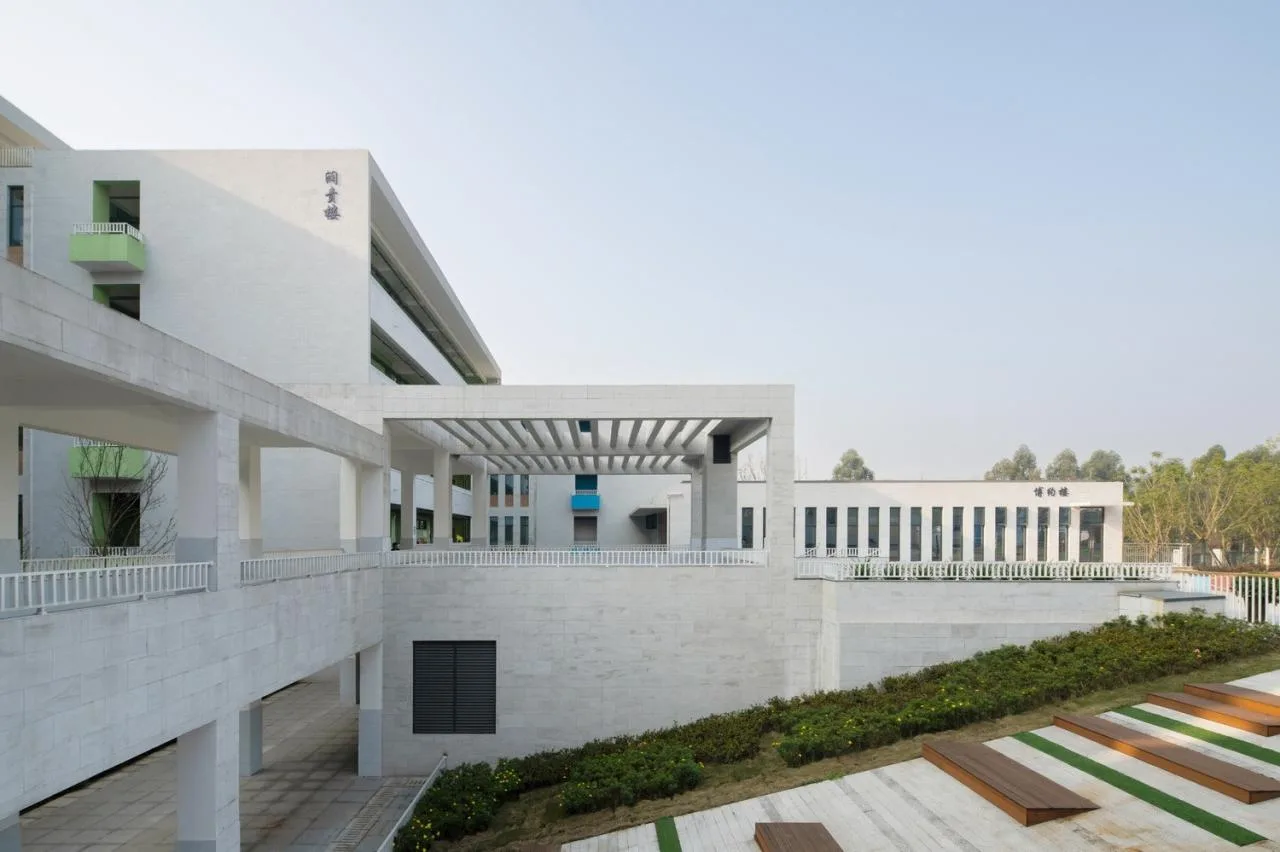
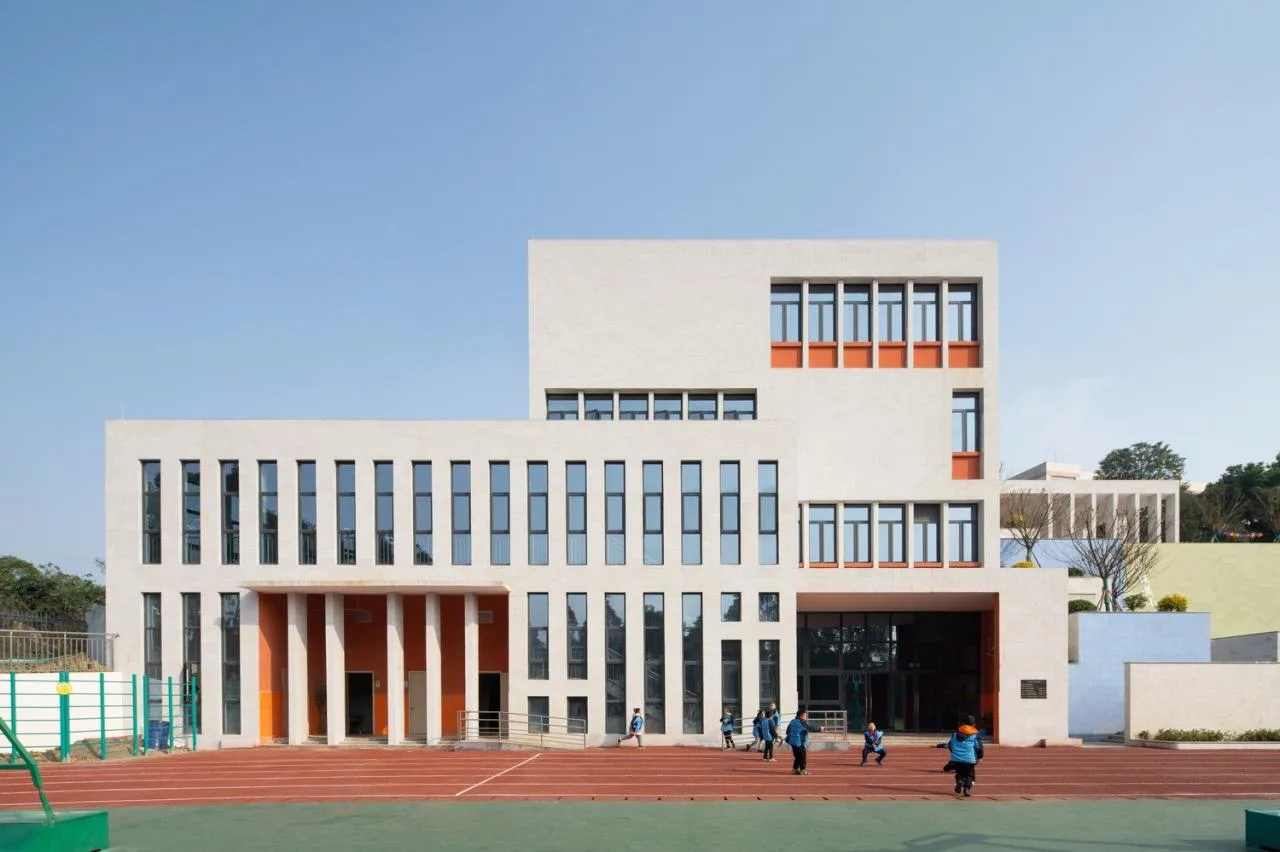
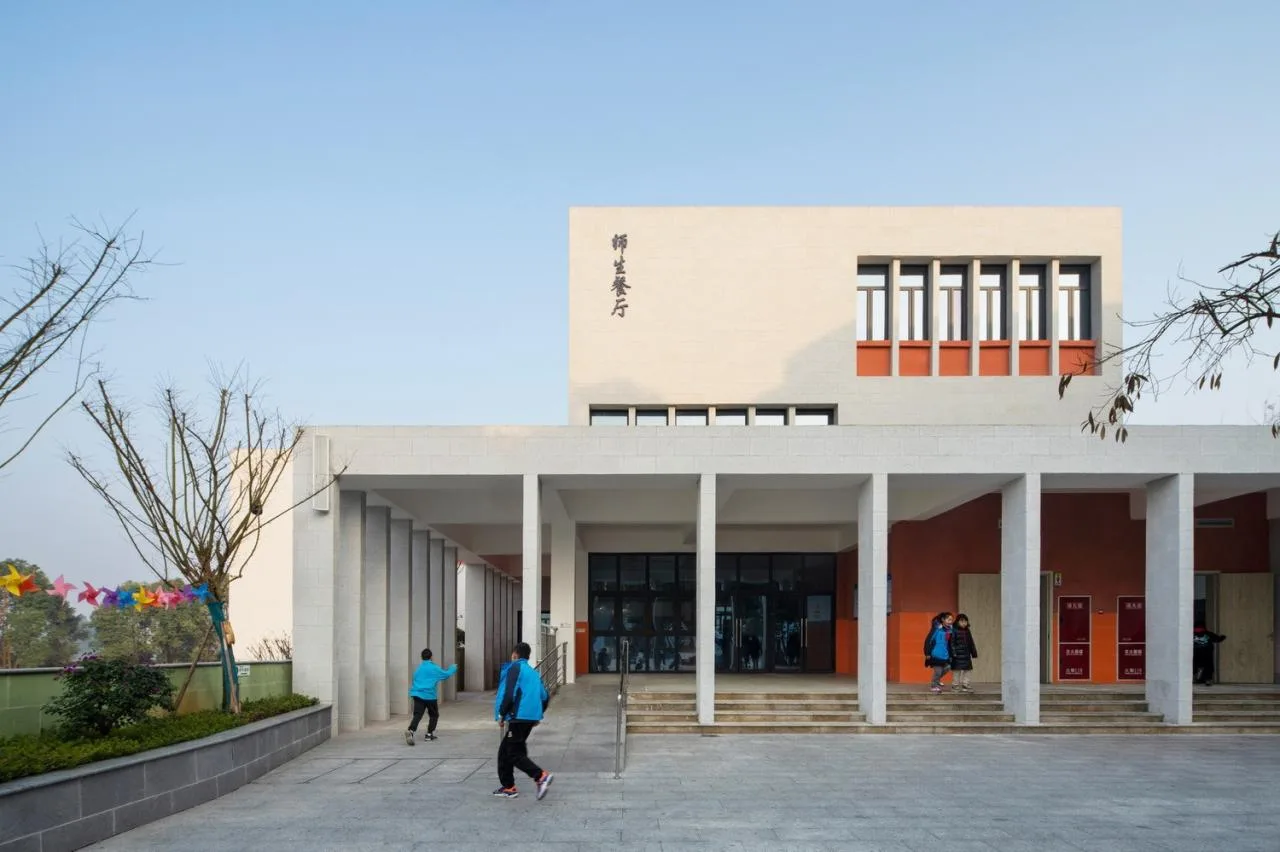
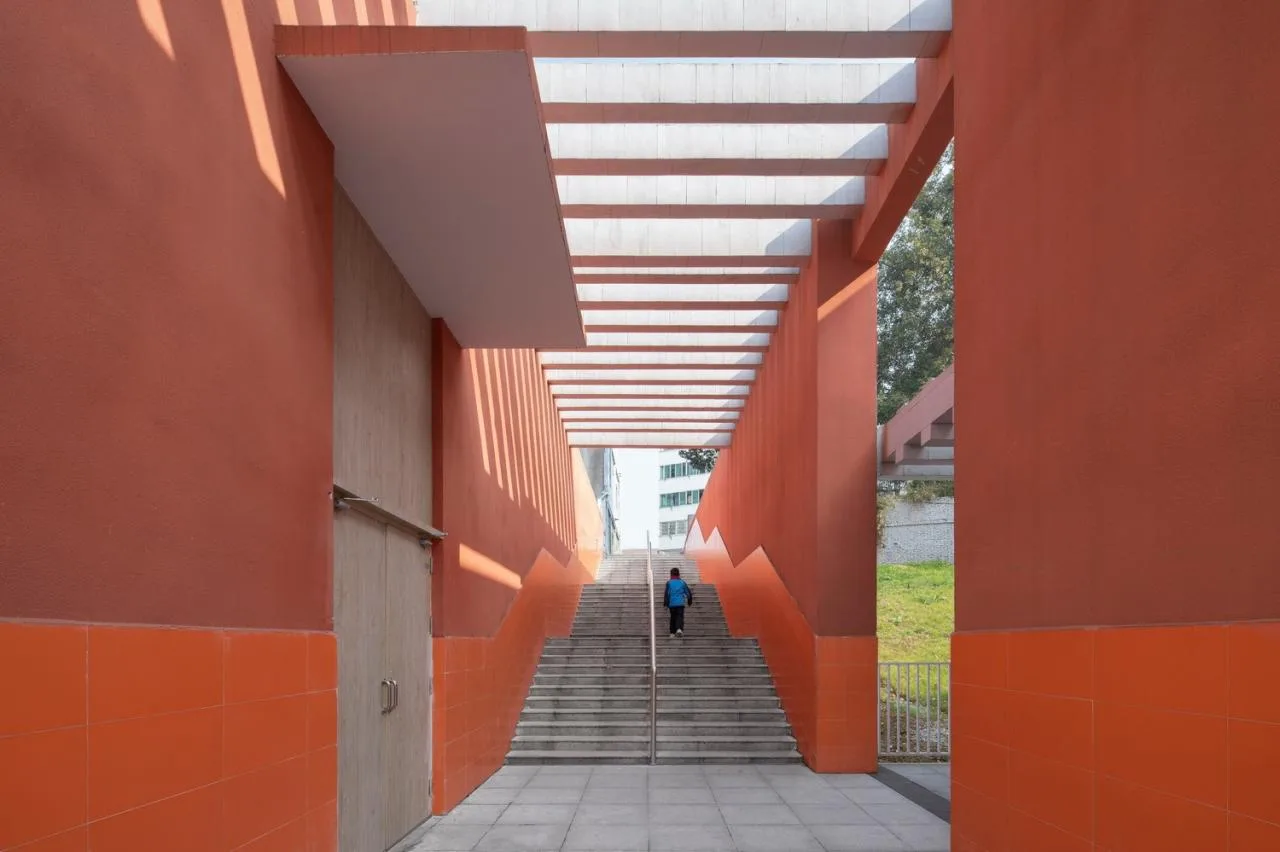
Due to specific functional requirements and site constraints, the cafeteria is designed as a single building composed of stacked square volumes arranged in staggered forms. Multiple entrances and exits at different elevations accommodate the complex height differences on site and resolve circulation challenges.
Audience Area
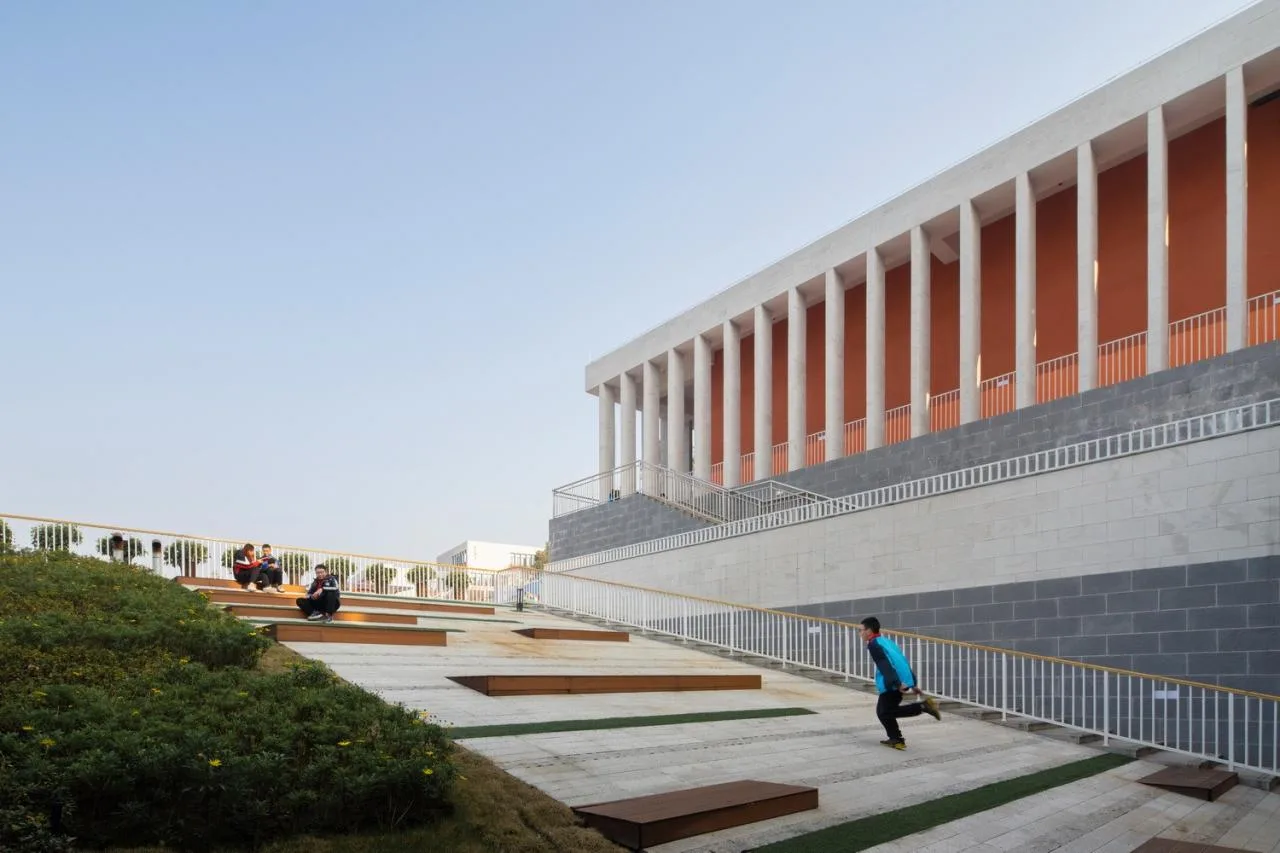
The existing 9-meter height difference between the teaching area square and the sports field was previously bridged by straight staircases in the stands, posing serious safety concerns. The new grandstand area features a multi-run staircase and ramp system with a zigzag configuration, enhancing circulation safety and ensuring barrier-free access on campus.
Detailing and Order
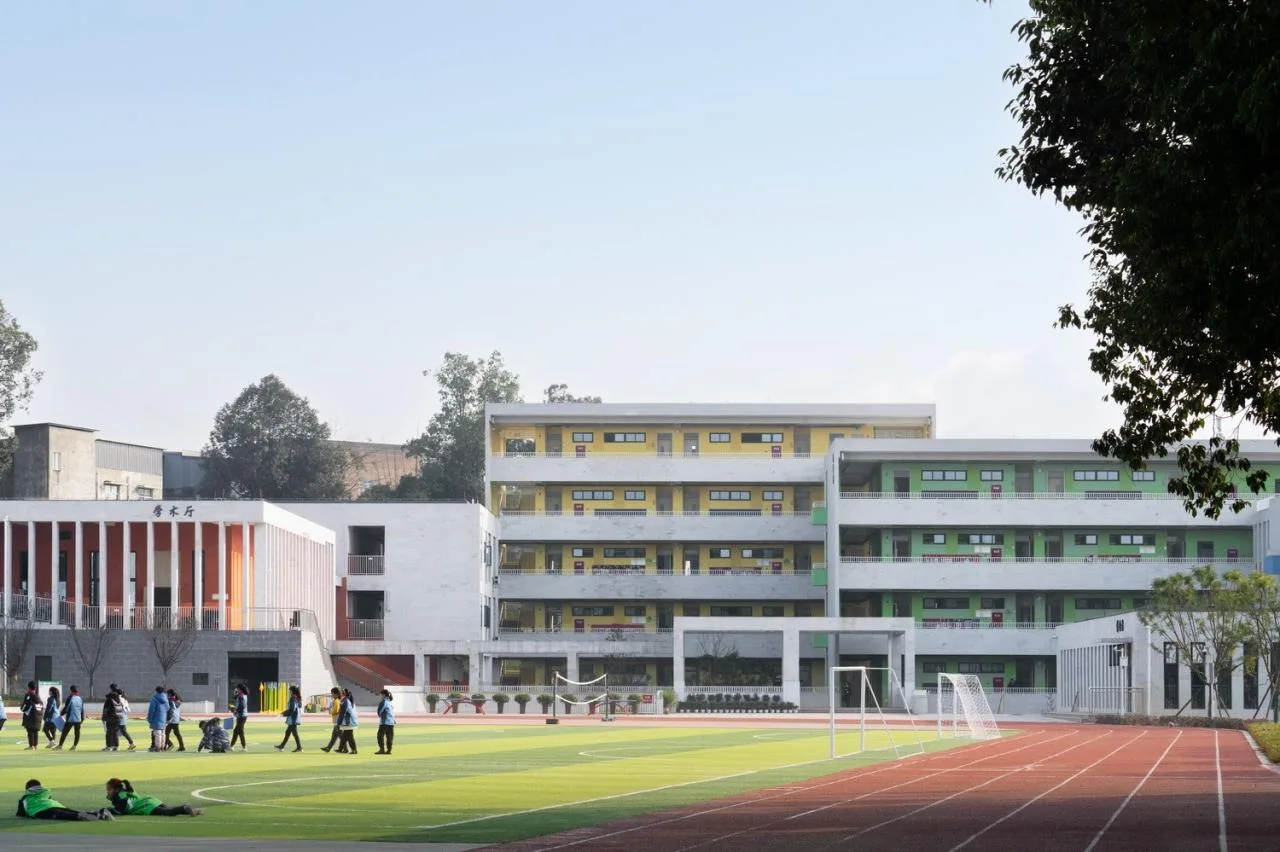
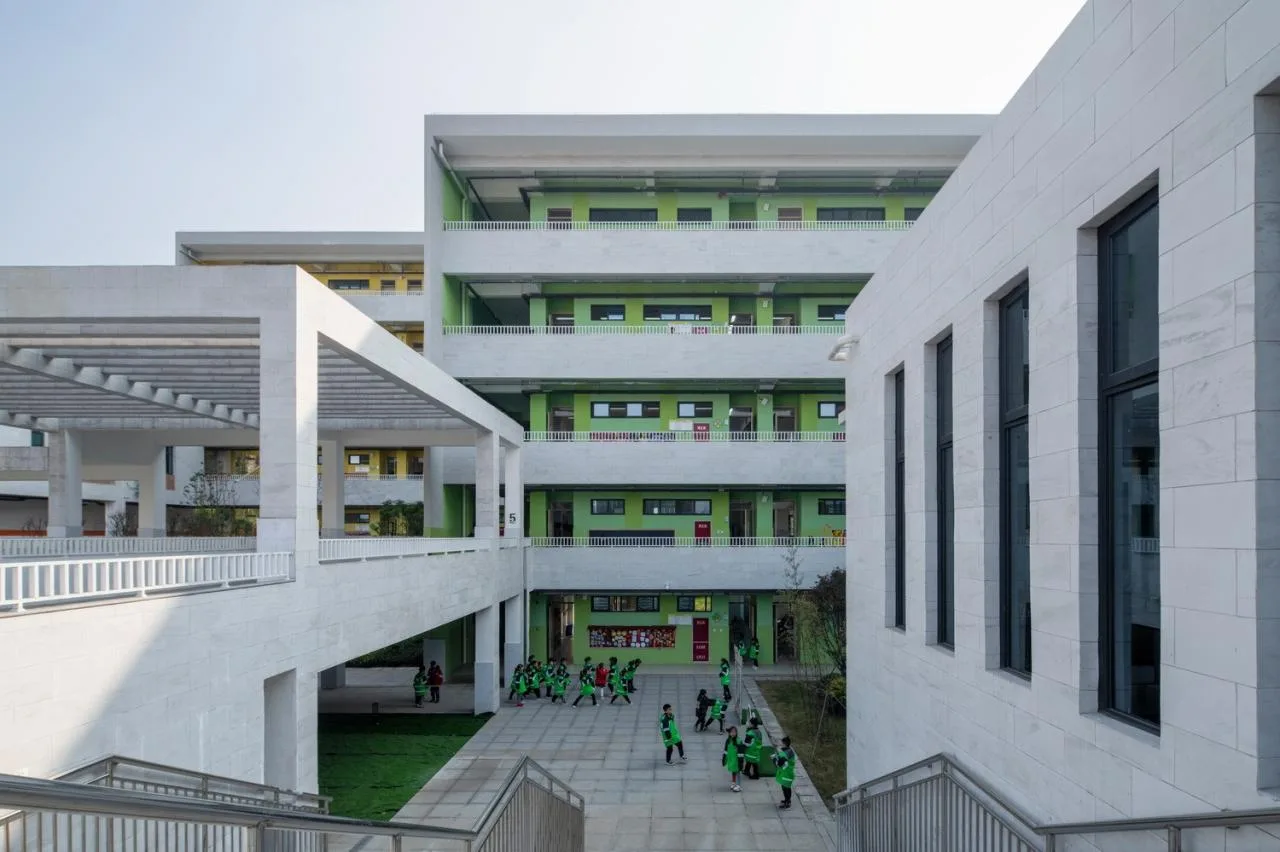
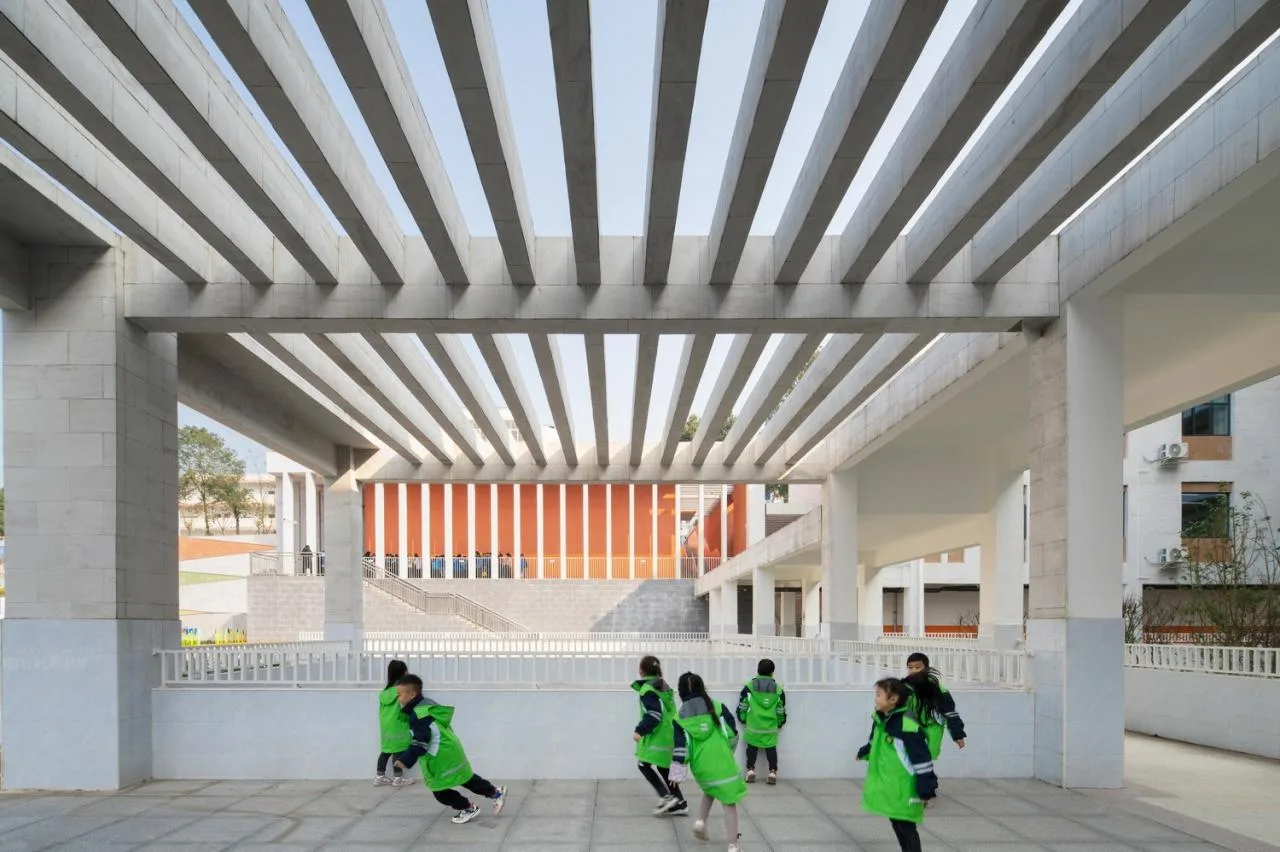
To emphasize the building’s volume, the facade treatment is intentionally restrained. Regular colonnades and simple window openings are used to maintain the purity and clarity of the architectural form without excessive embellishment.
Conclusion
Every project’s completion brings both joy and moments of reflection.
This project was developed within strict material constraints, balancing input from all stakeholders while advancing quickly under a limited budget. Our goal was to elevate the quality of the campus environment for students through thoughtful spatial design despite these limitations.
Project Drawings
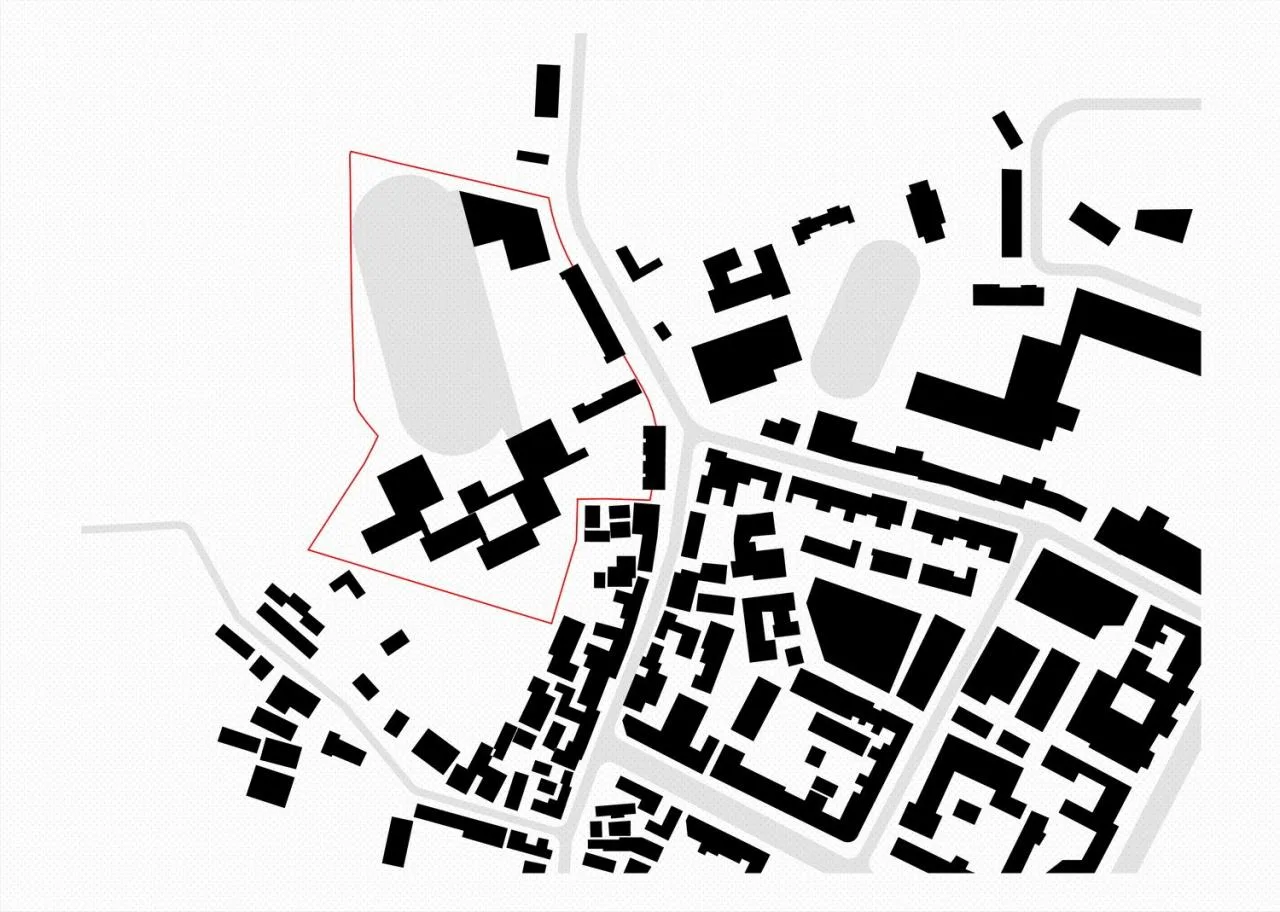
△ Surrounding Context Map
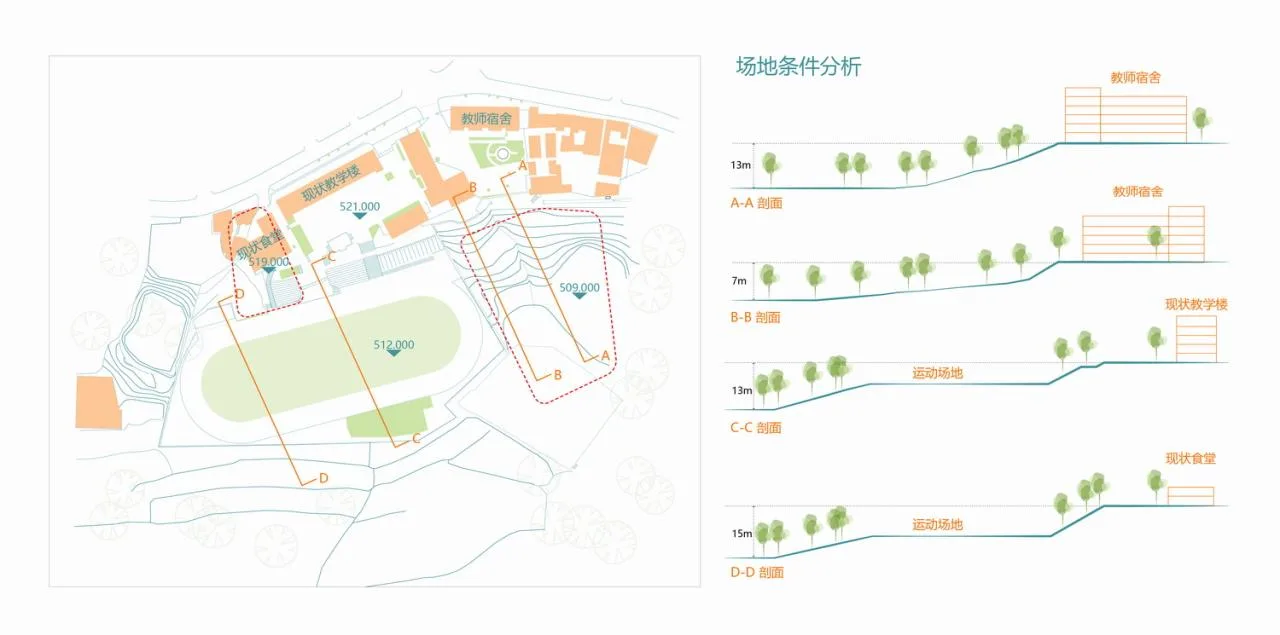
△ Site Elevation Difference Diagram
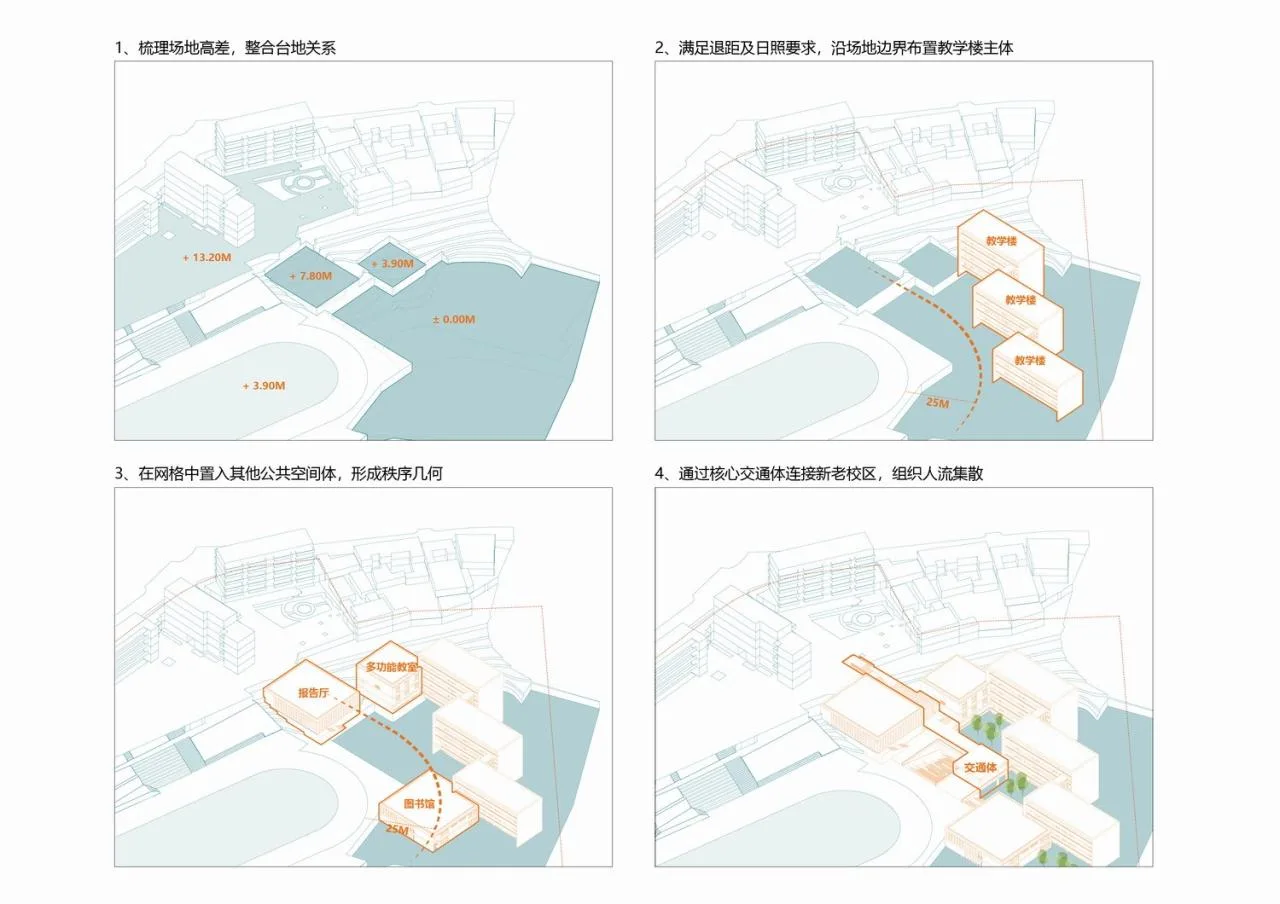
△ Block Formation Diagram
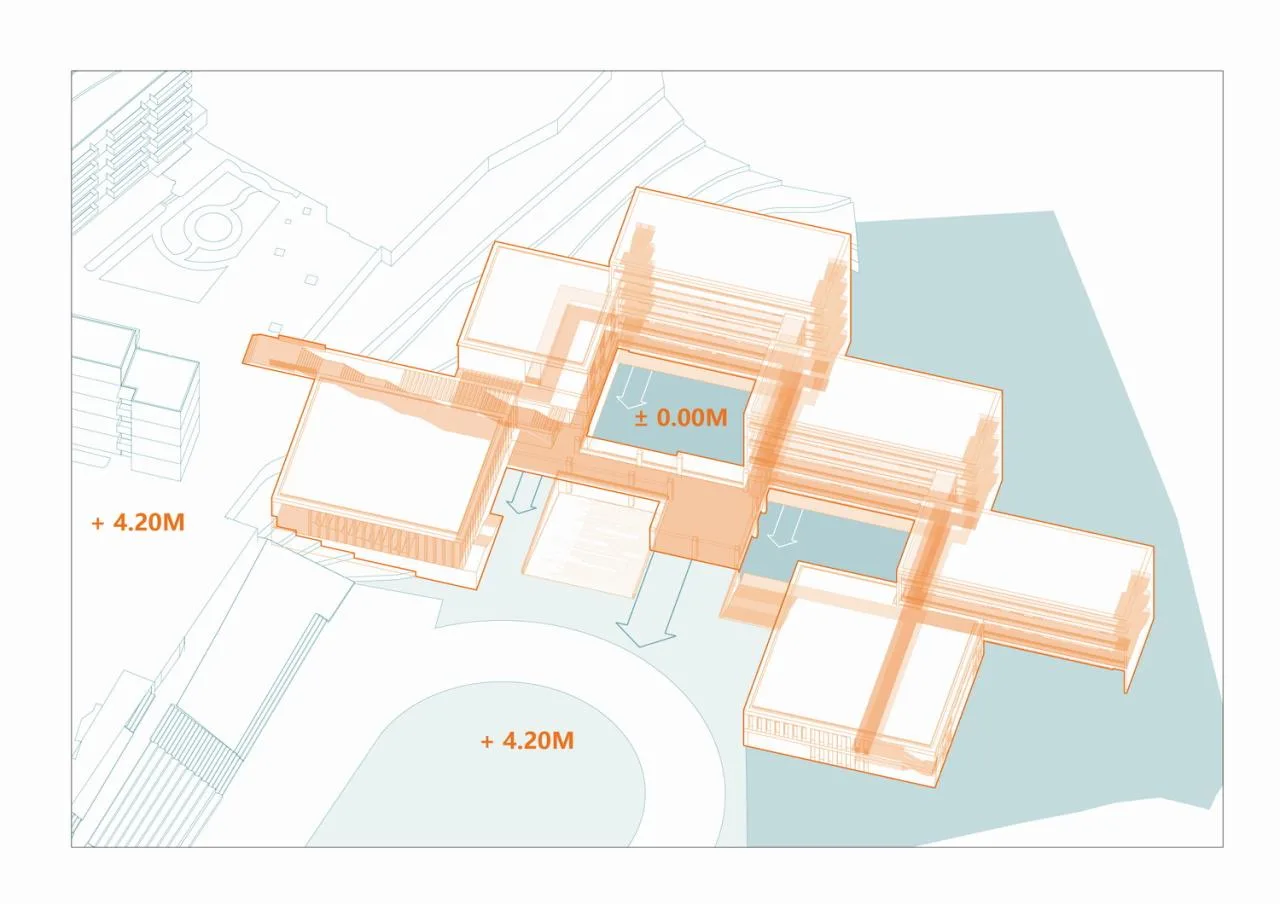
△ Vertical Circulation Expansion in Teaching Area
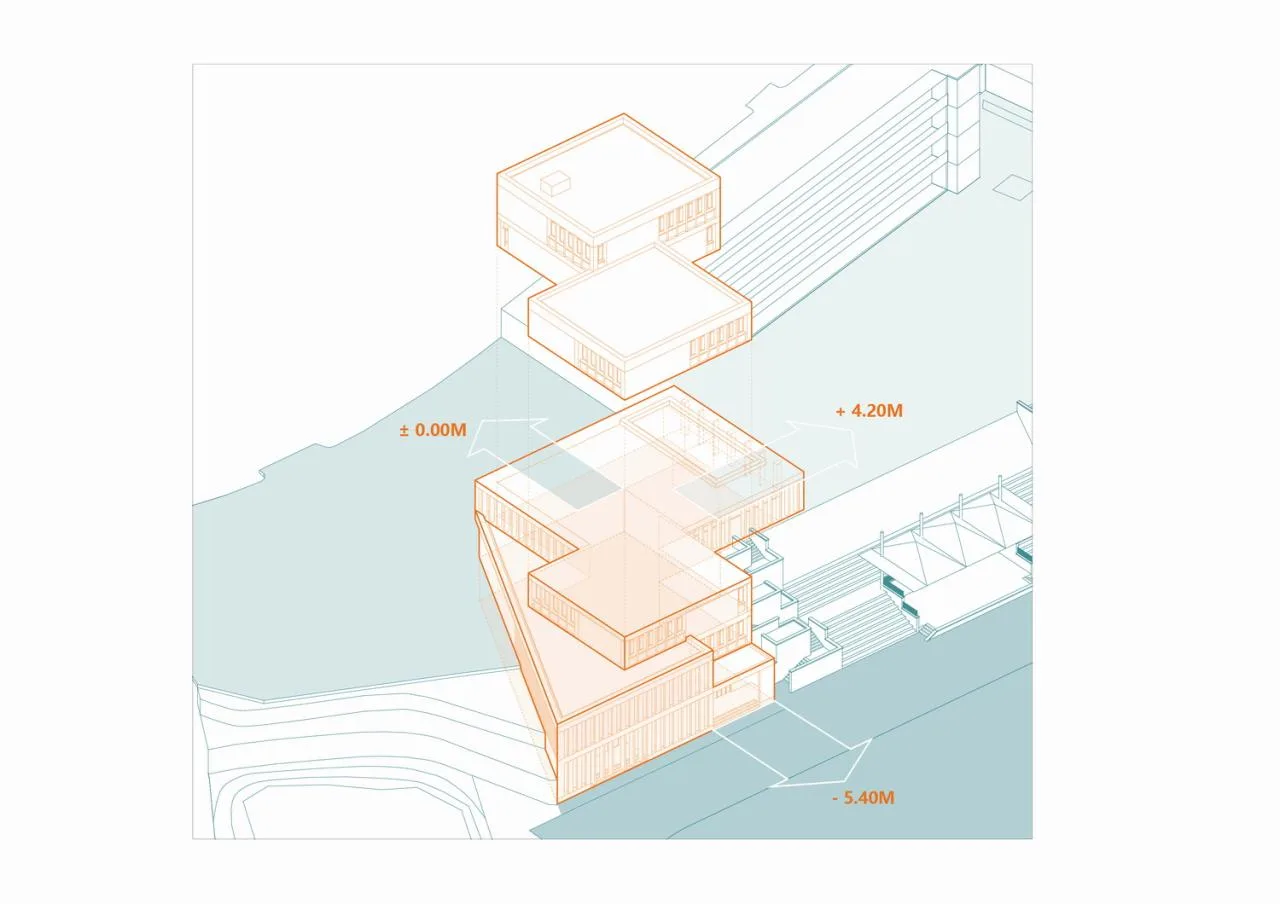
△ Cafeteria Block Formation Diagram
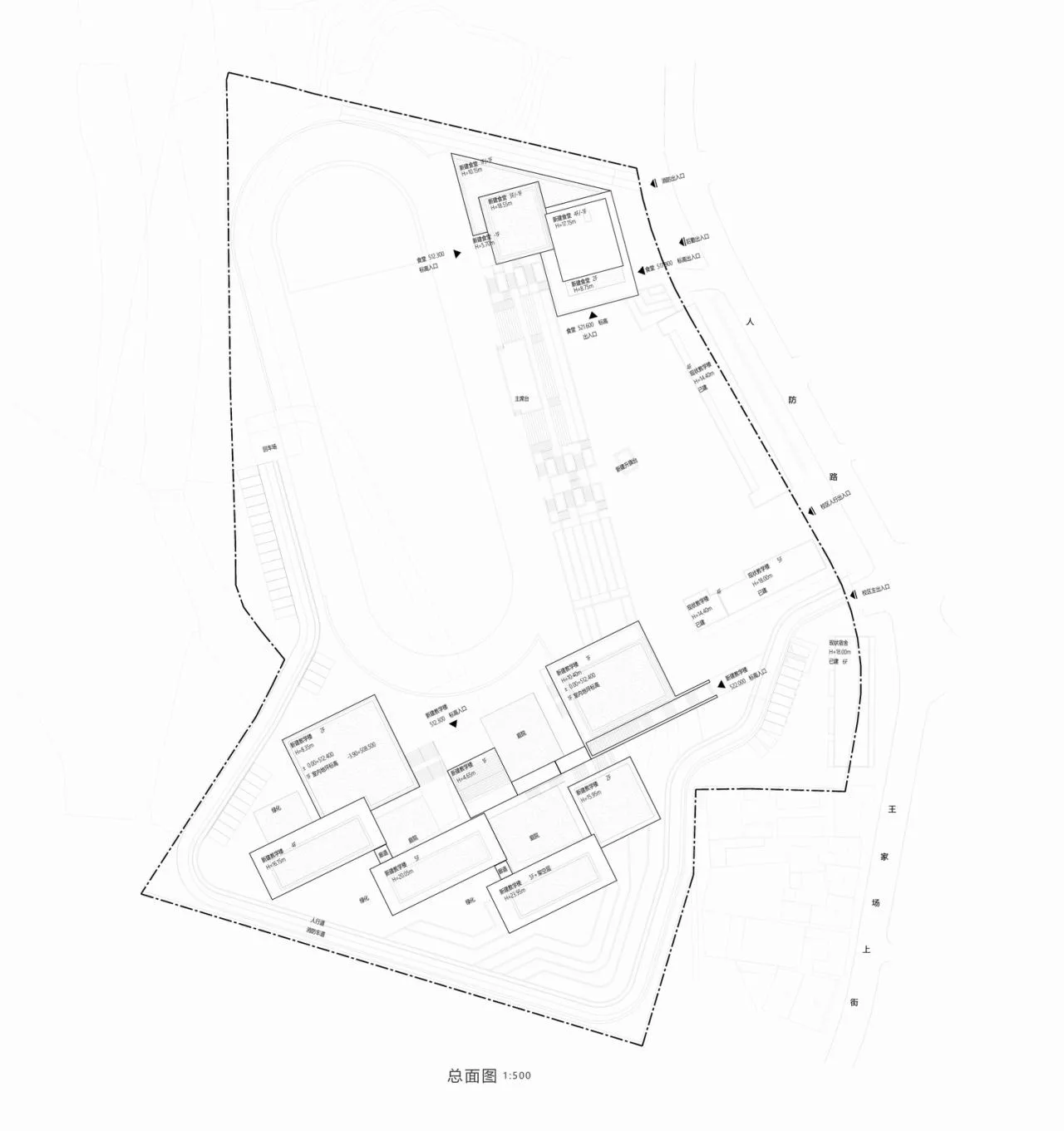
△ General Layout Plan
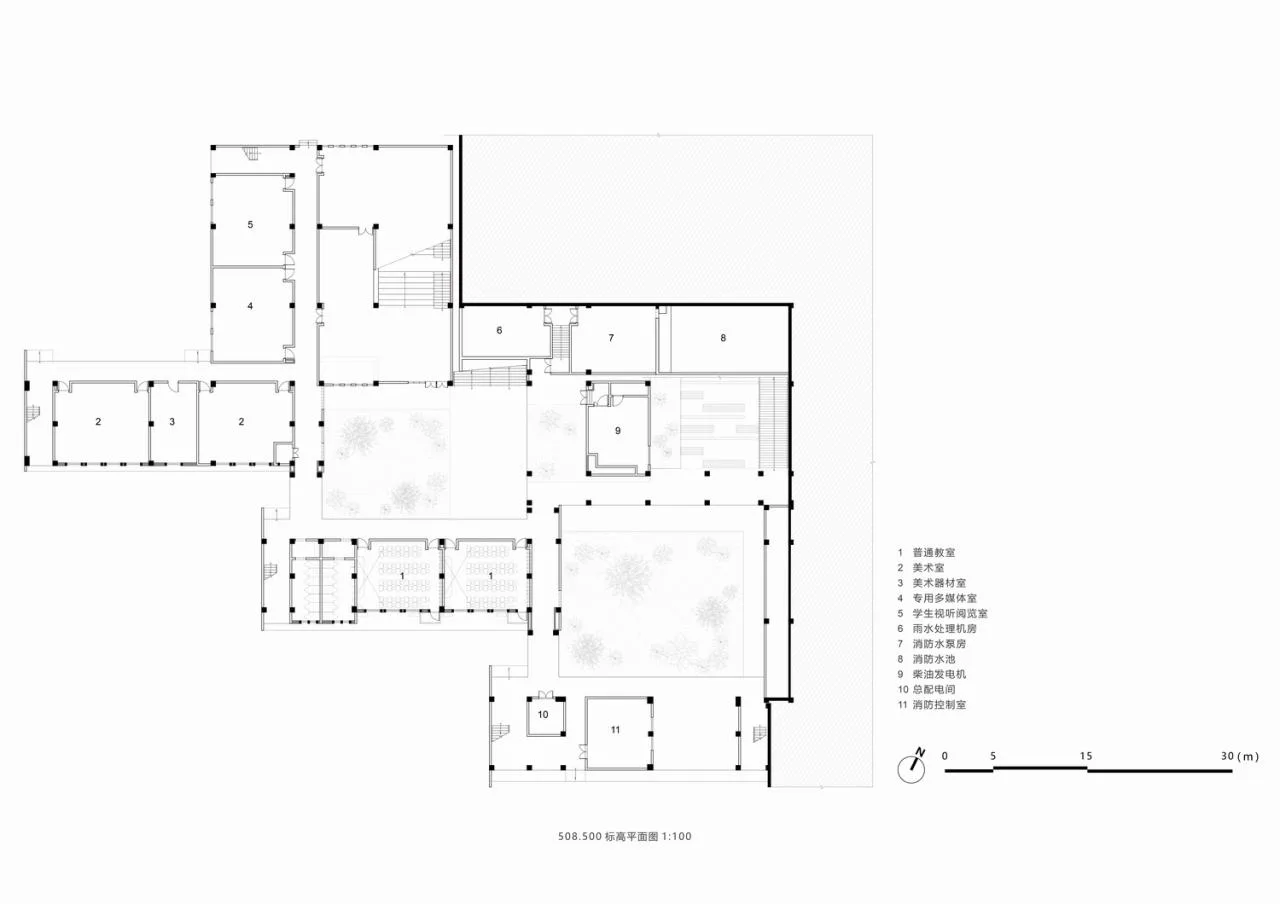
△ First Floor Plan
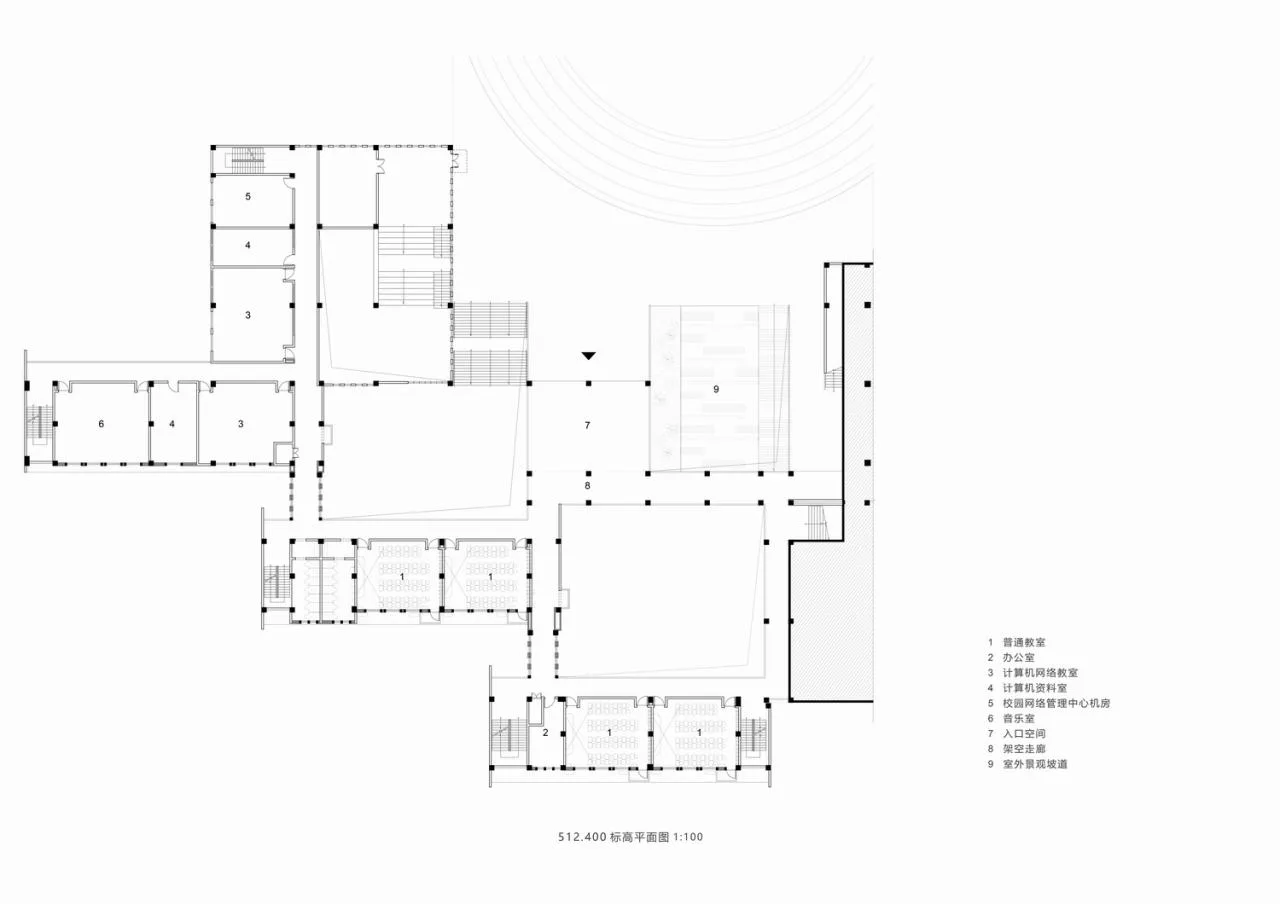
△ Second Floor Plan
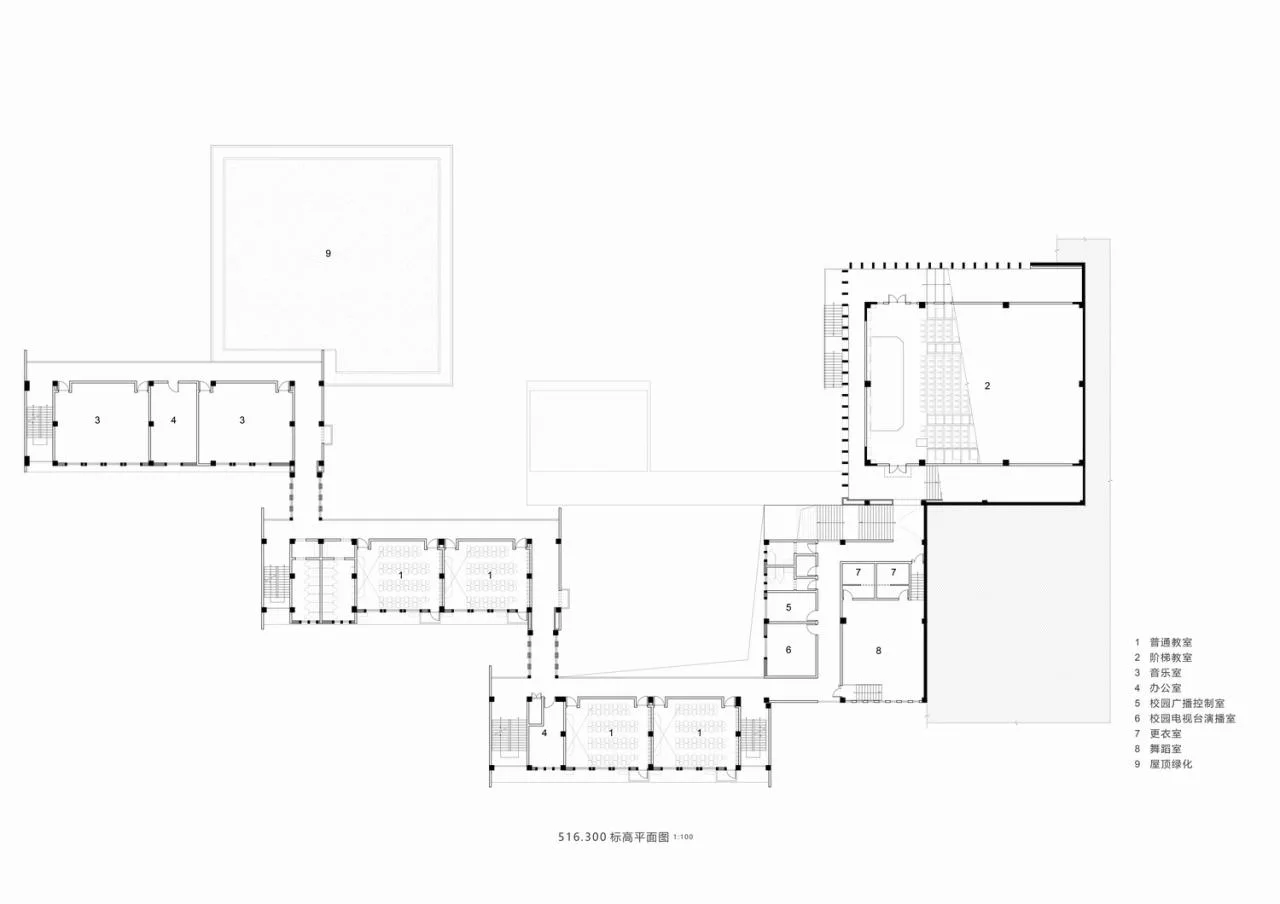
△ Third Floor Plan
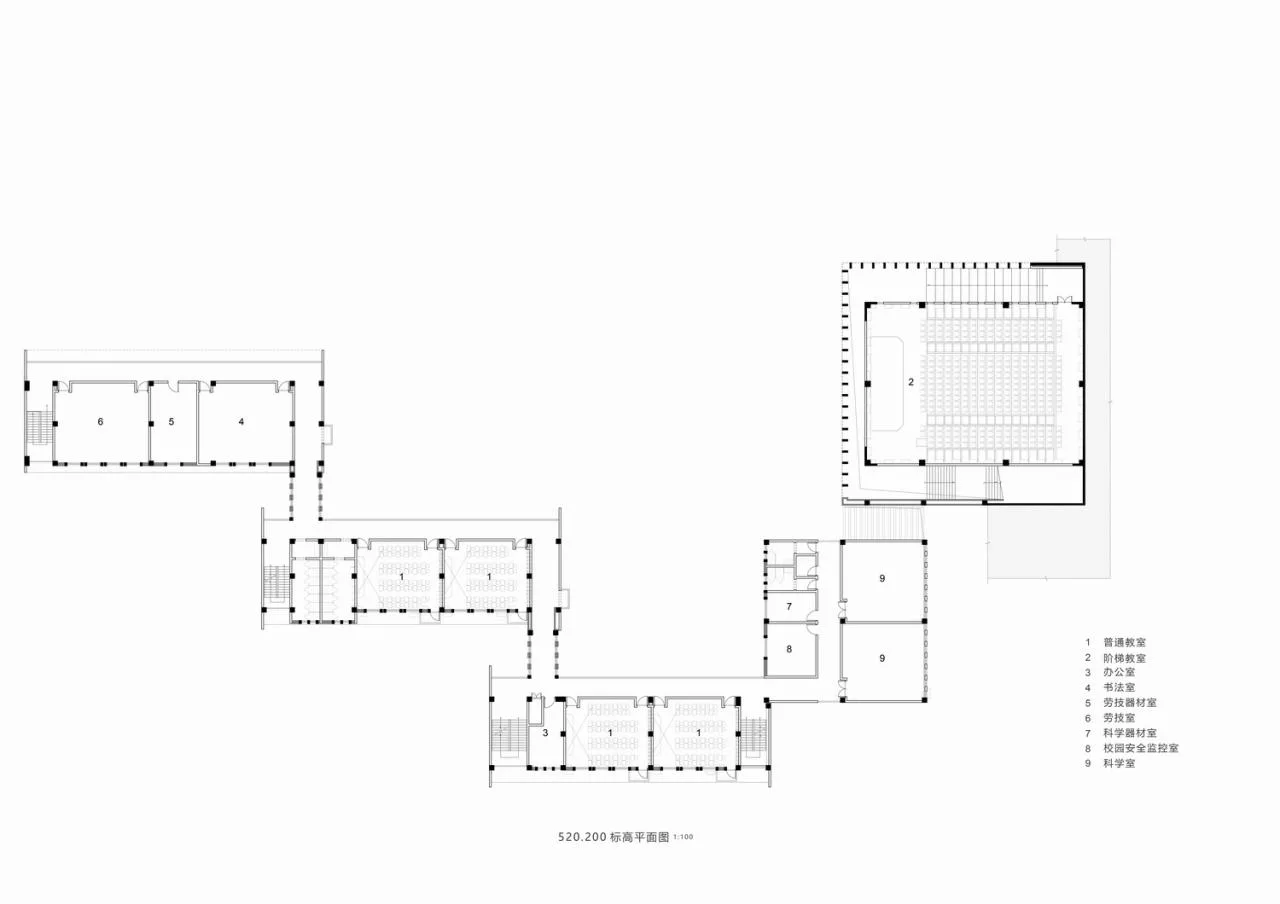
△ Fourth Floor Plan
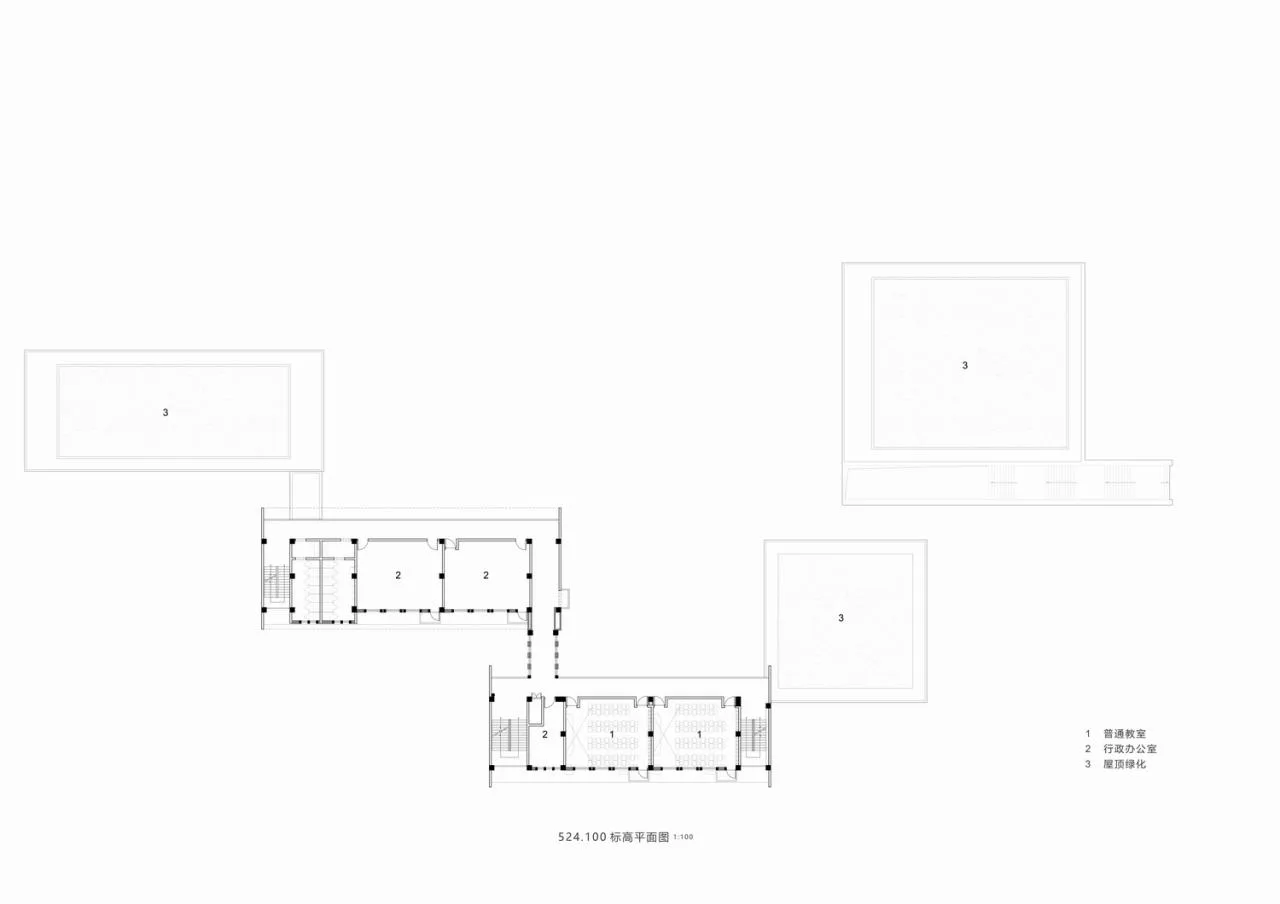
△ Fifth Floor Plan
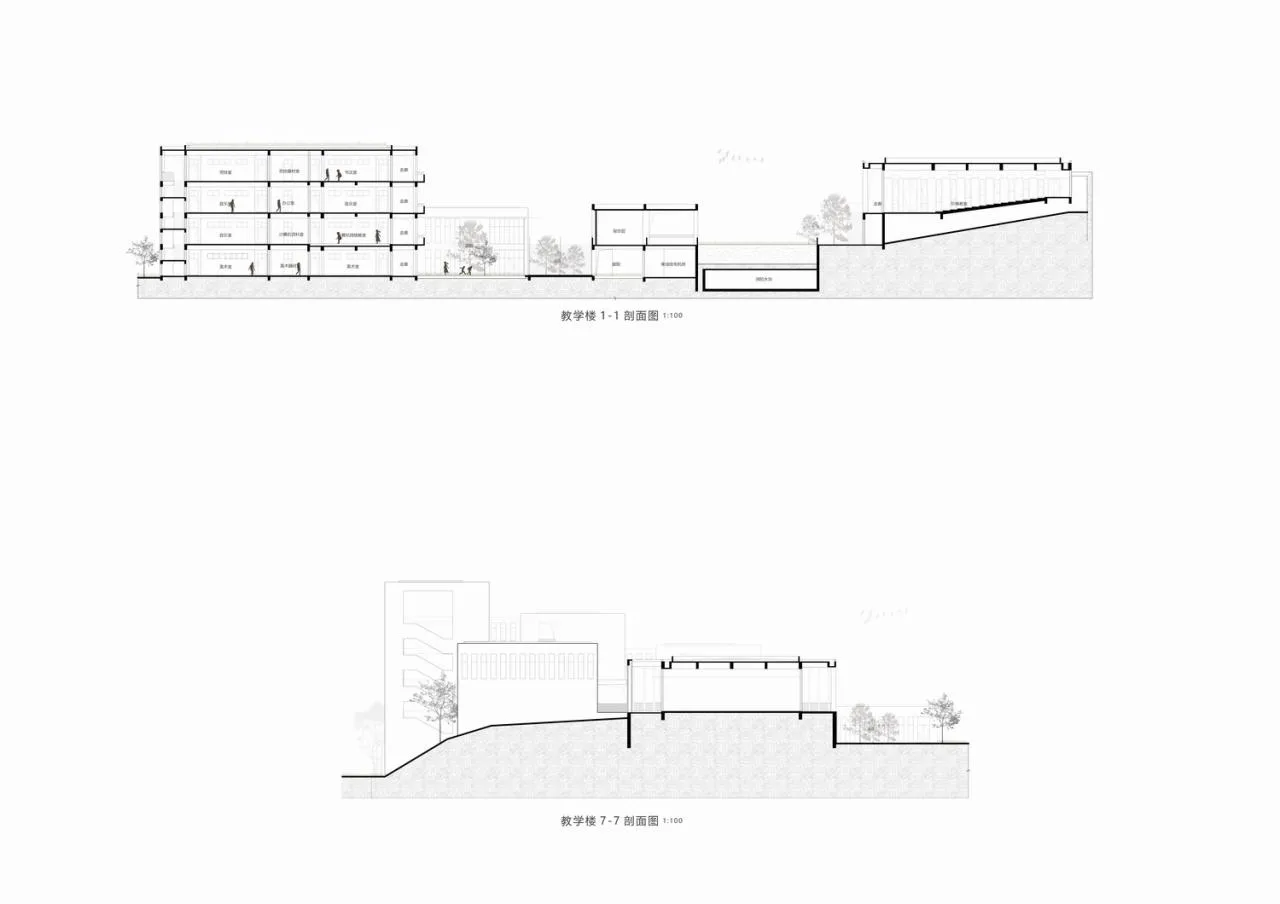
△ Teaching Area Section
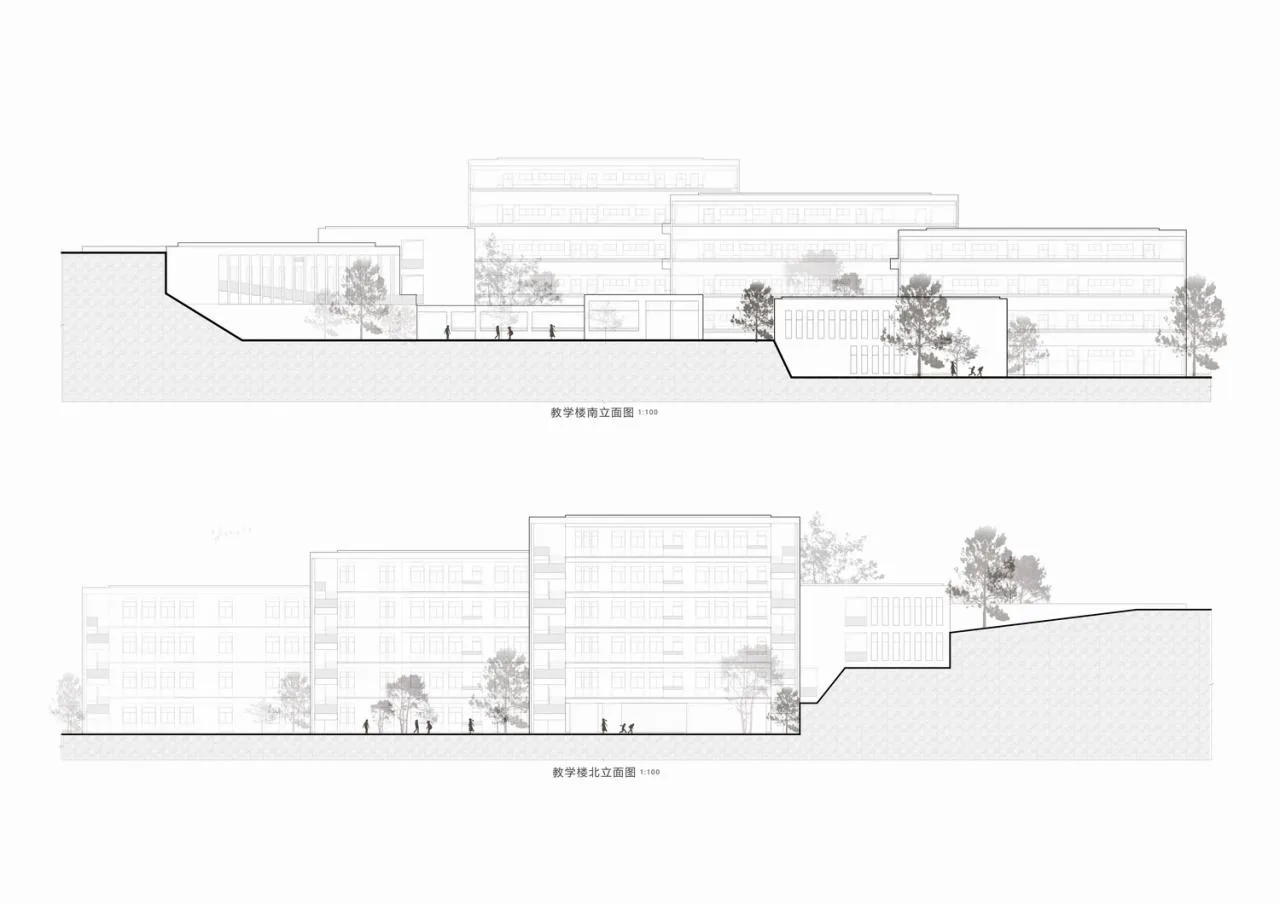
△ Front View of Teaching Area
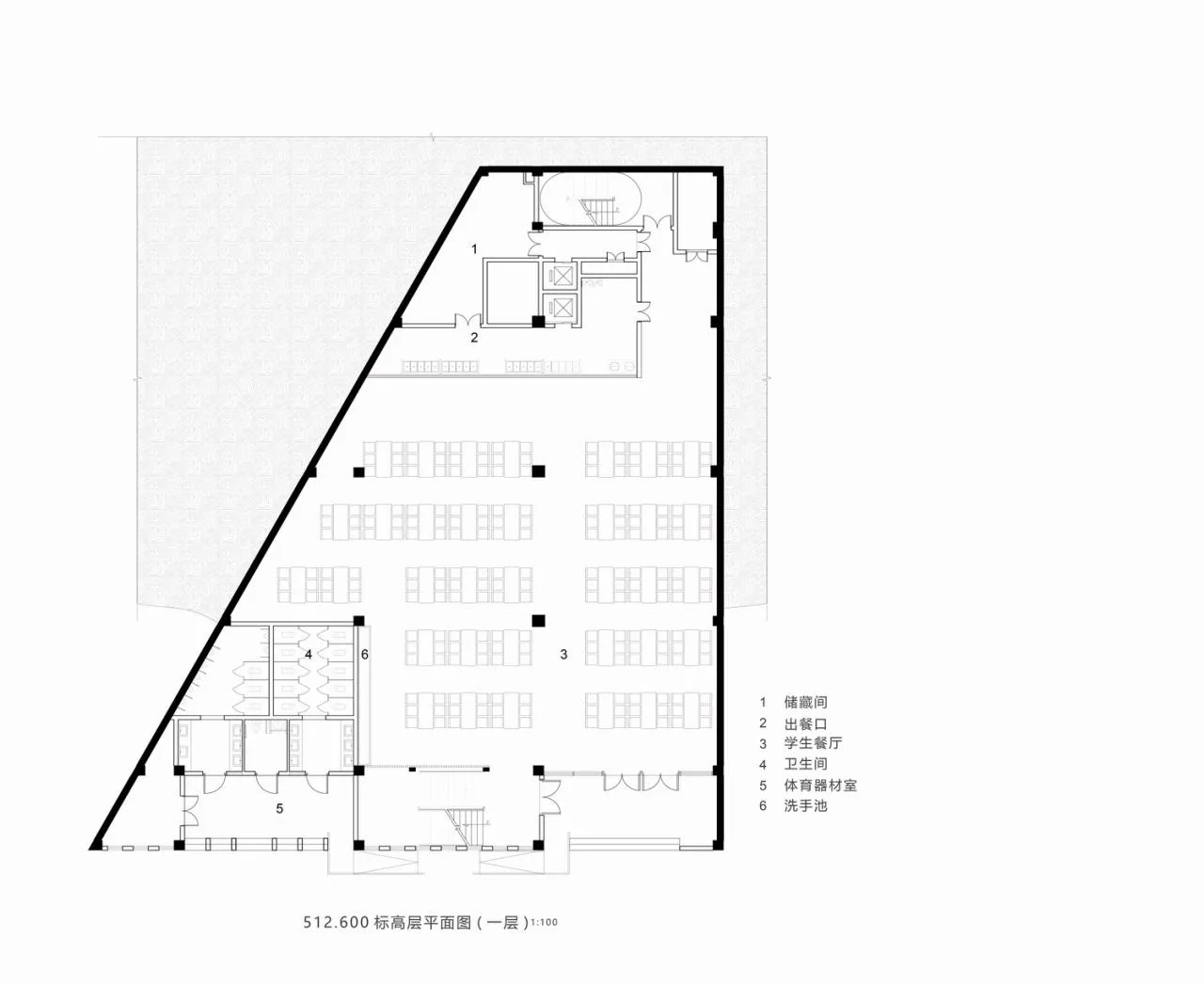
First Floor Plan of the Cafeteria
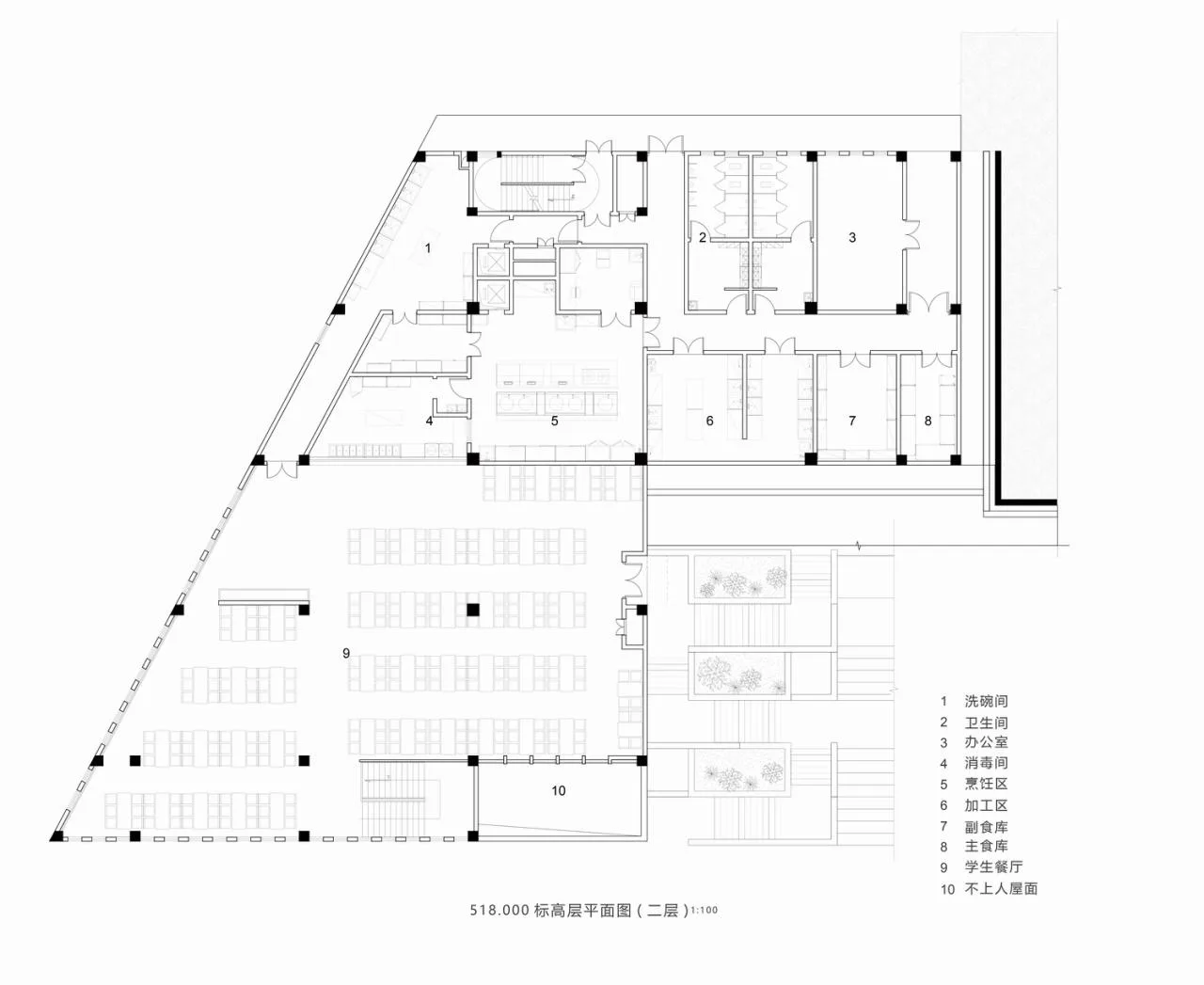
Second Floor Plan of the Cafeteria
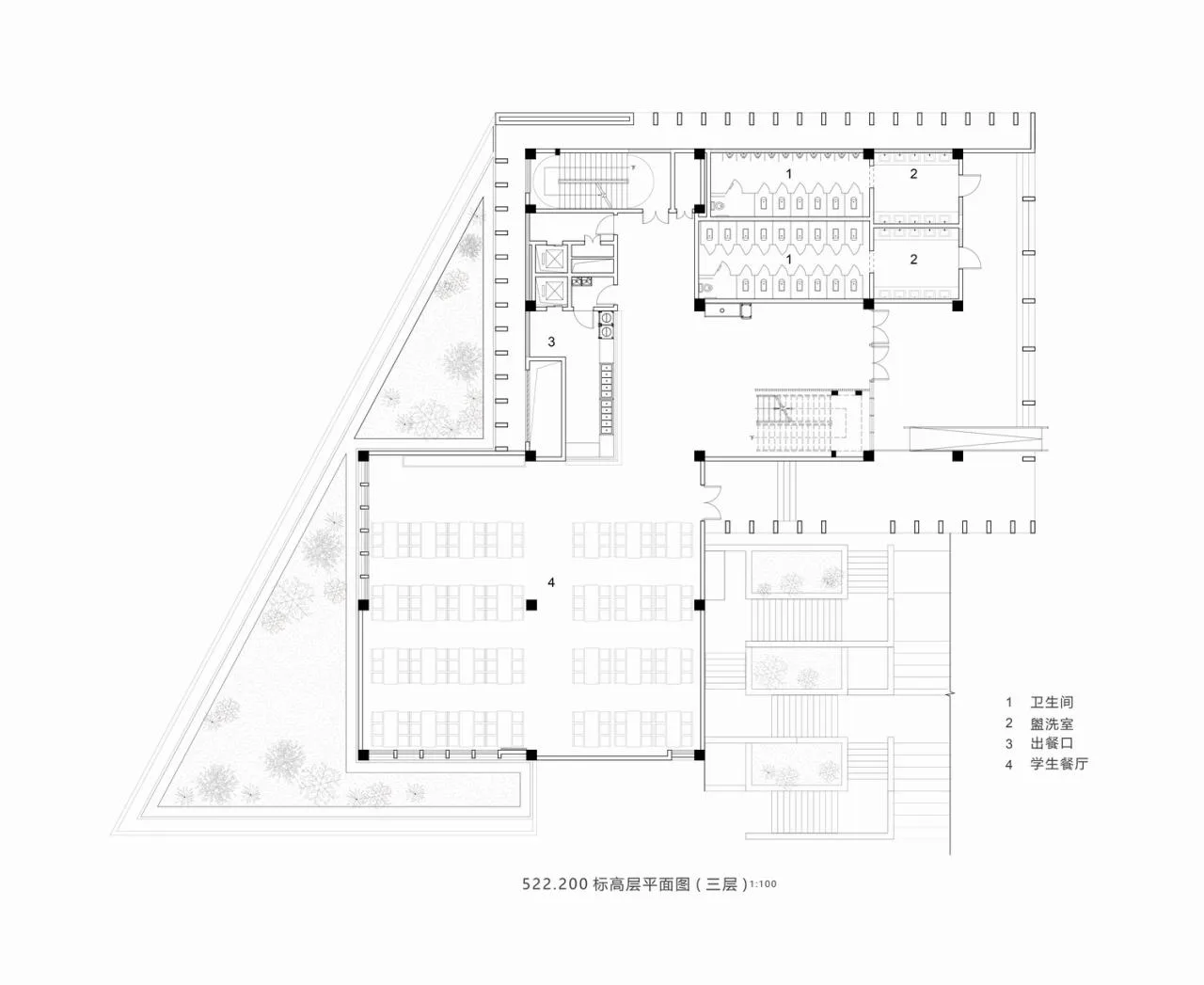
△ Cafeteria Third Floor Plan
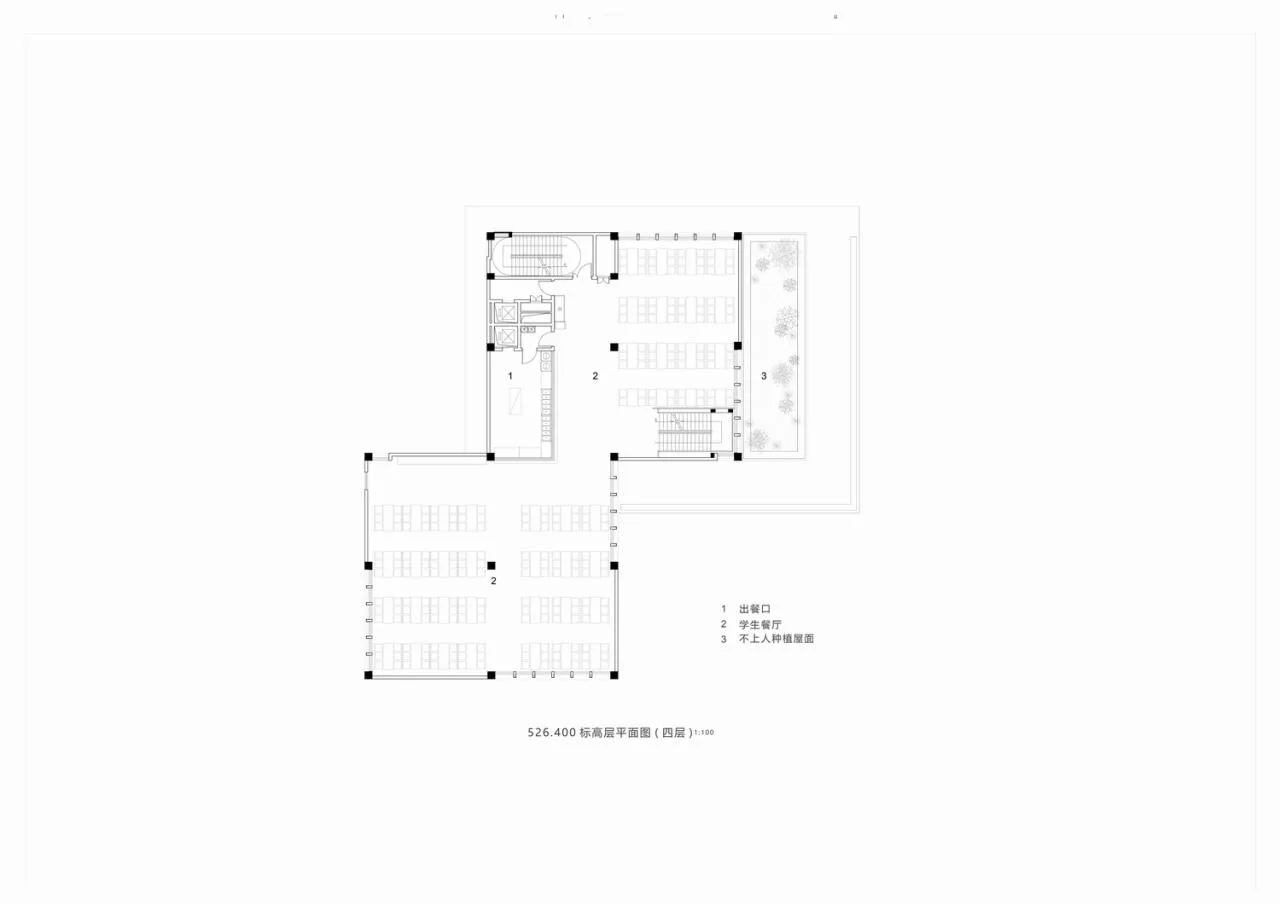
Fourth Floor Plan of the Cafeteria
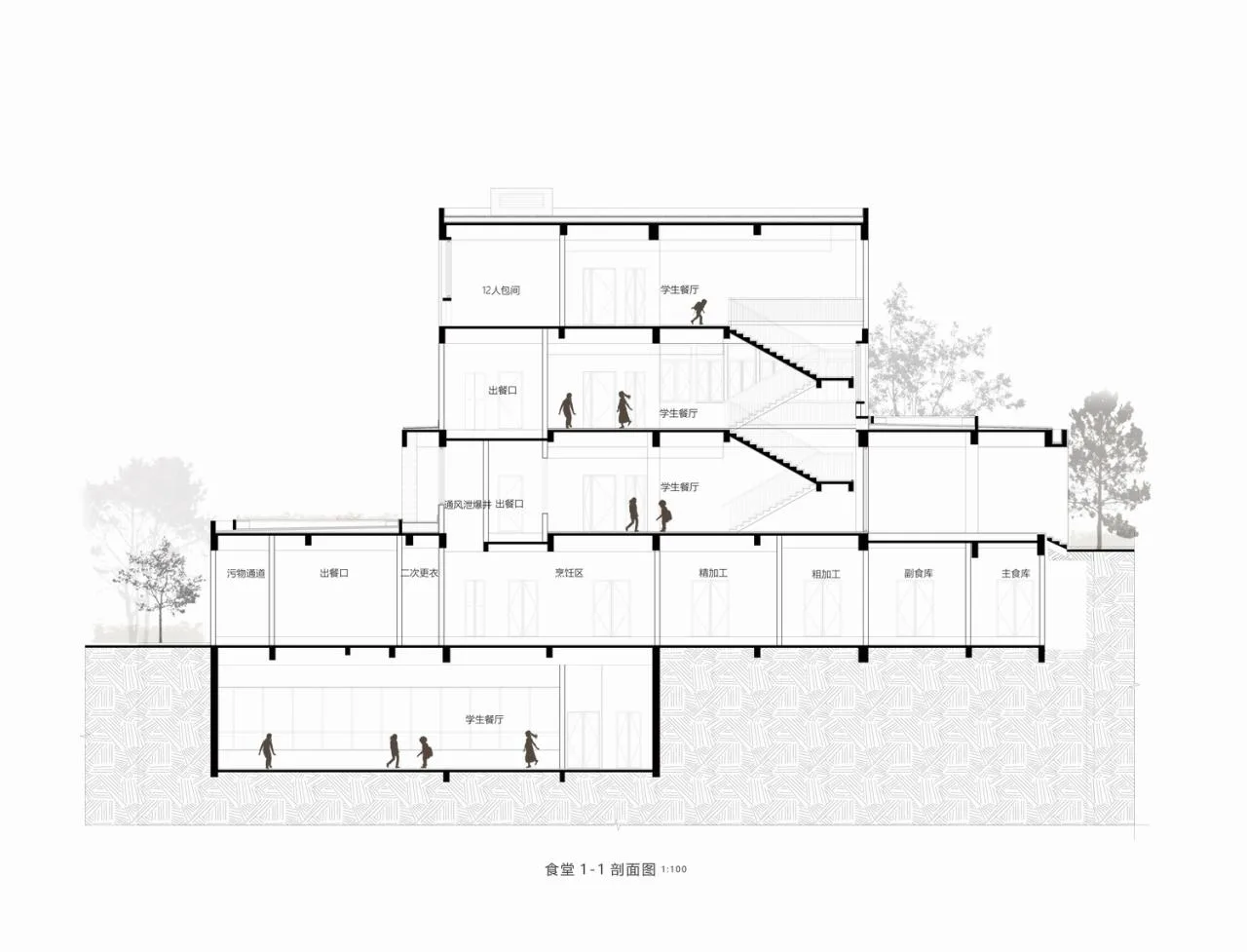
△ Canteen Section Diagram
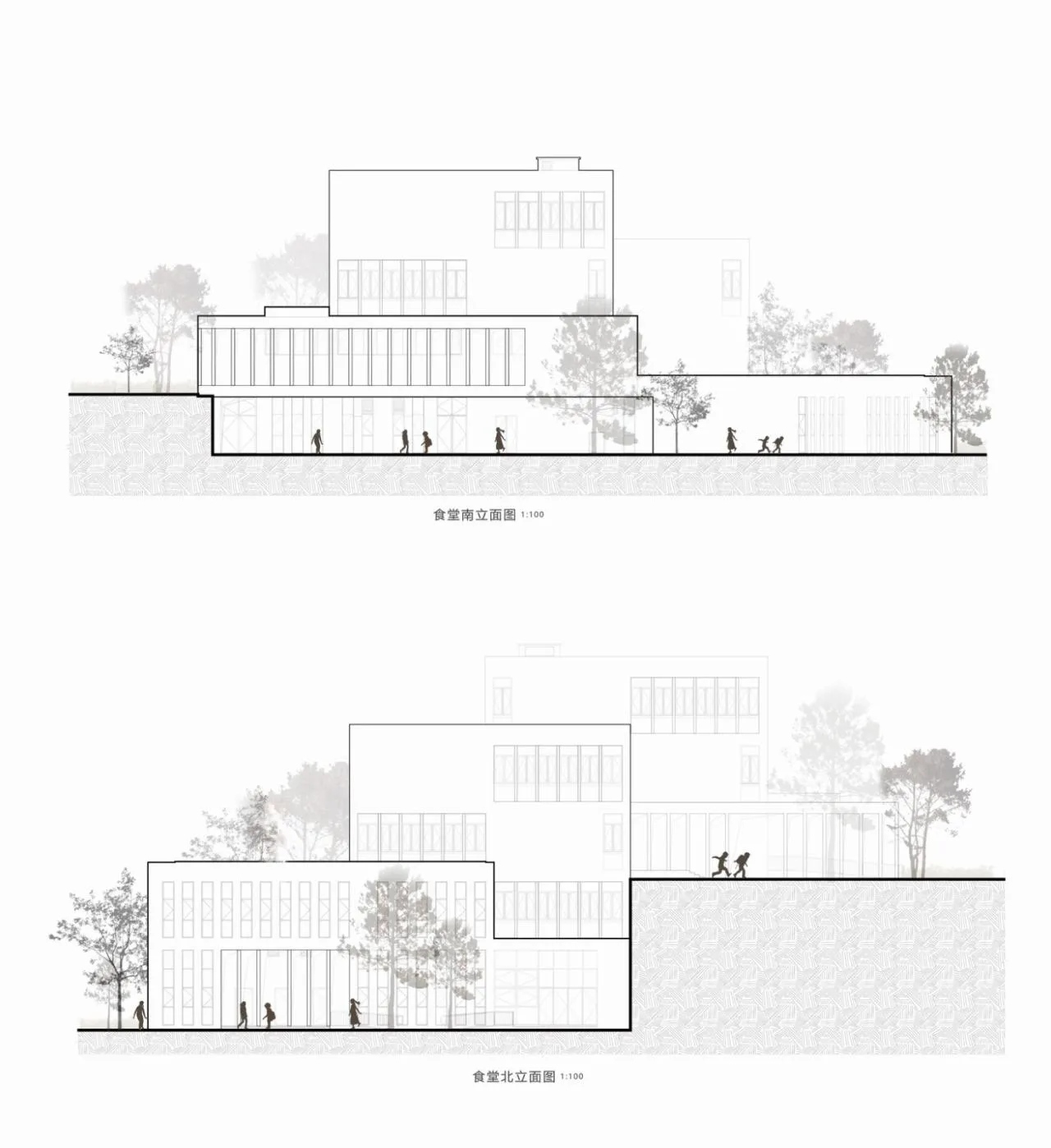
△ Canteen Elevation View
Project Information
Project Name: Huangjia Primary School Expansion Project
Designer: Chengdu Benmo Architecture
Company Official Account: Original and Final Building
Design & Completion Year: Designed in January 2019, Completed in July 2021
Main Creators and Design Team: Shi Lei, Liu Bo
Project Address: No. 84 Wangjiachang Shangjie, Huangjia Town, Shuangliu District, Chengdu City, Sichuan Province
Building Area: 9,956.13 square meters
Photography Copyright: Existence of Architecture
Partner: Sichuan Kuanjing Architectural Landscape Design Co., Ltd
Materials: Soft porcelain, glass, concrete















Must log in before commenting!
Sign Up