
The integration and balance of human, industrial, and urban relationships throughout different historical periods have significantly influenced the development of industrial parks and communities.
The driving forces behind this evolution have shifted from external influences such as policies to internal factors like technology and wealth. Spatial layouts have increasingly incorporated urban functions. The connection between industrial real estate and urban development spaces has deepened, transitioning from transportation-oriented models to enterprise and industrial cluster-focused designs, and now to a blend of urban and industrial functions.
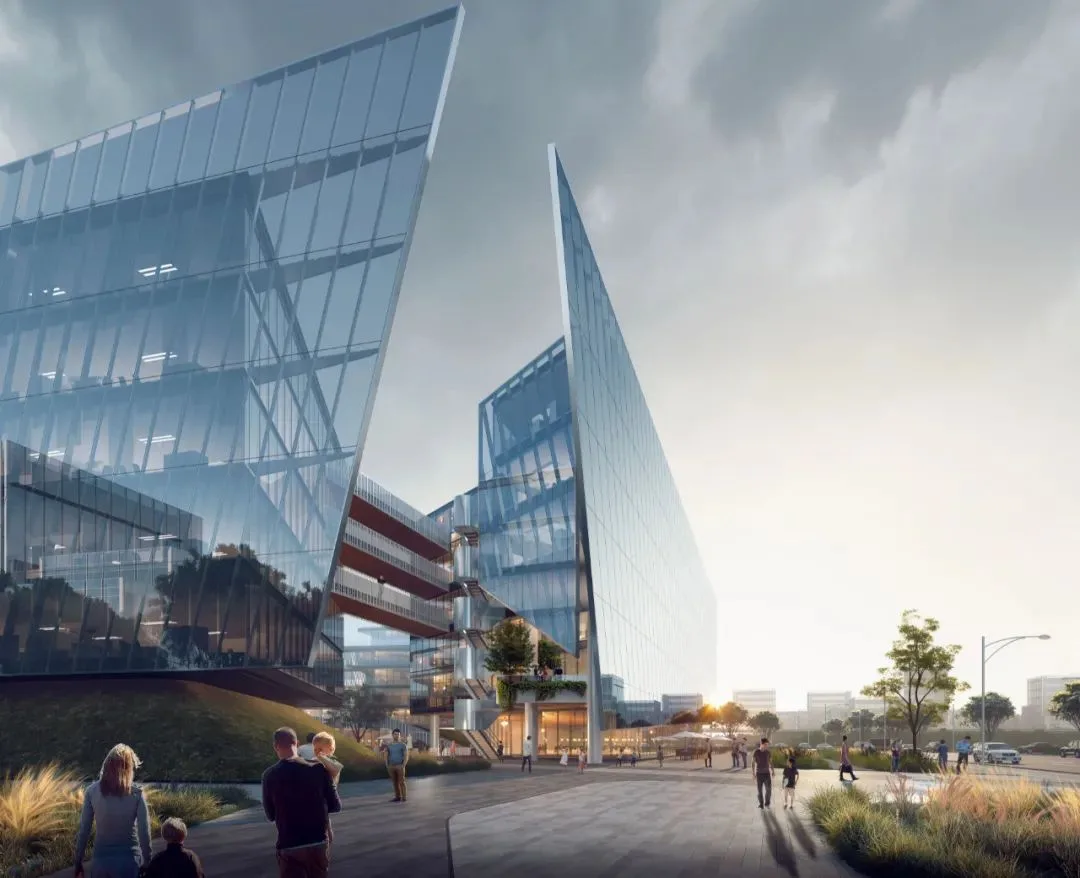
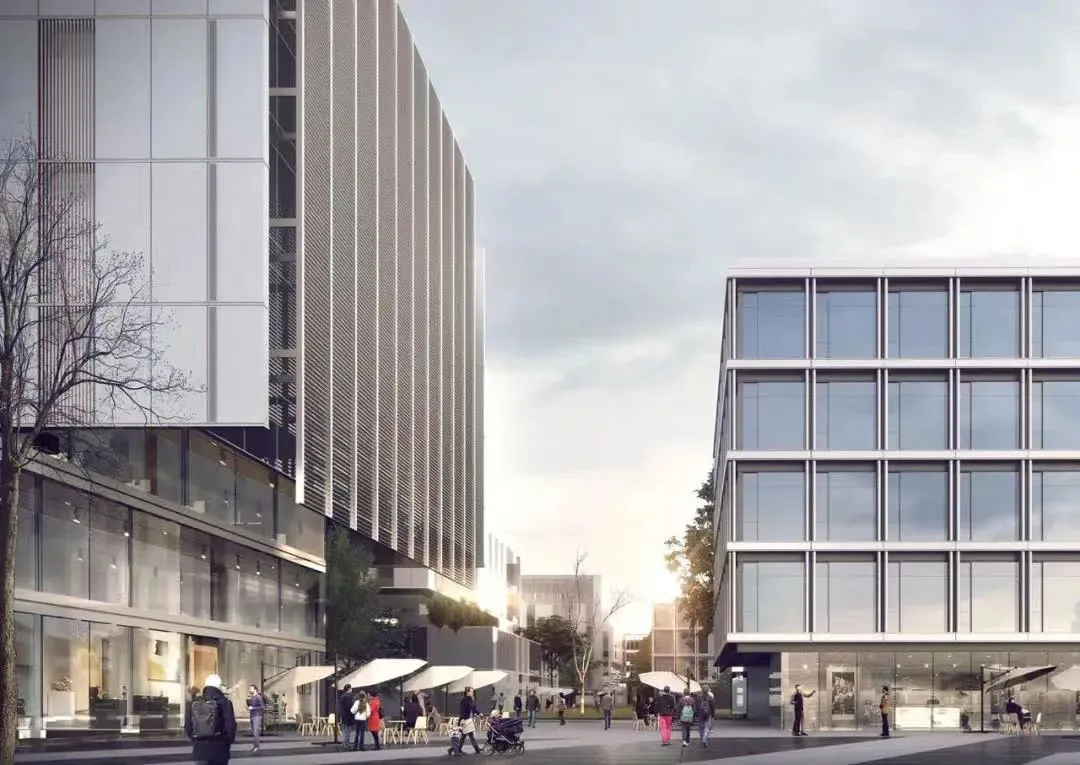
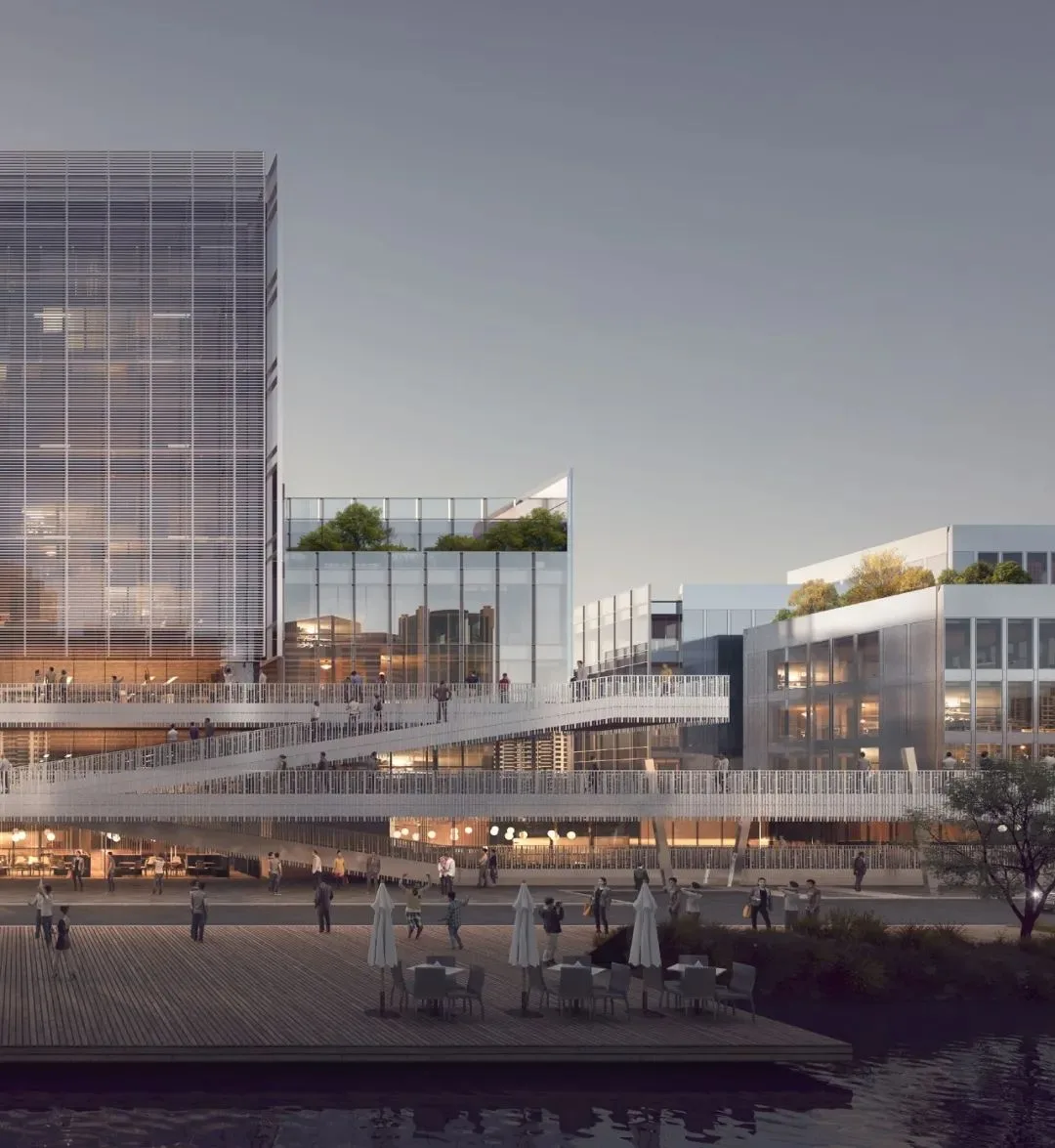
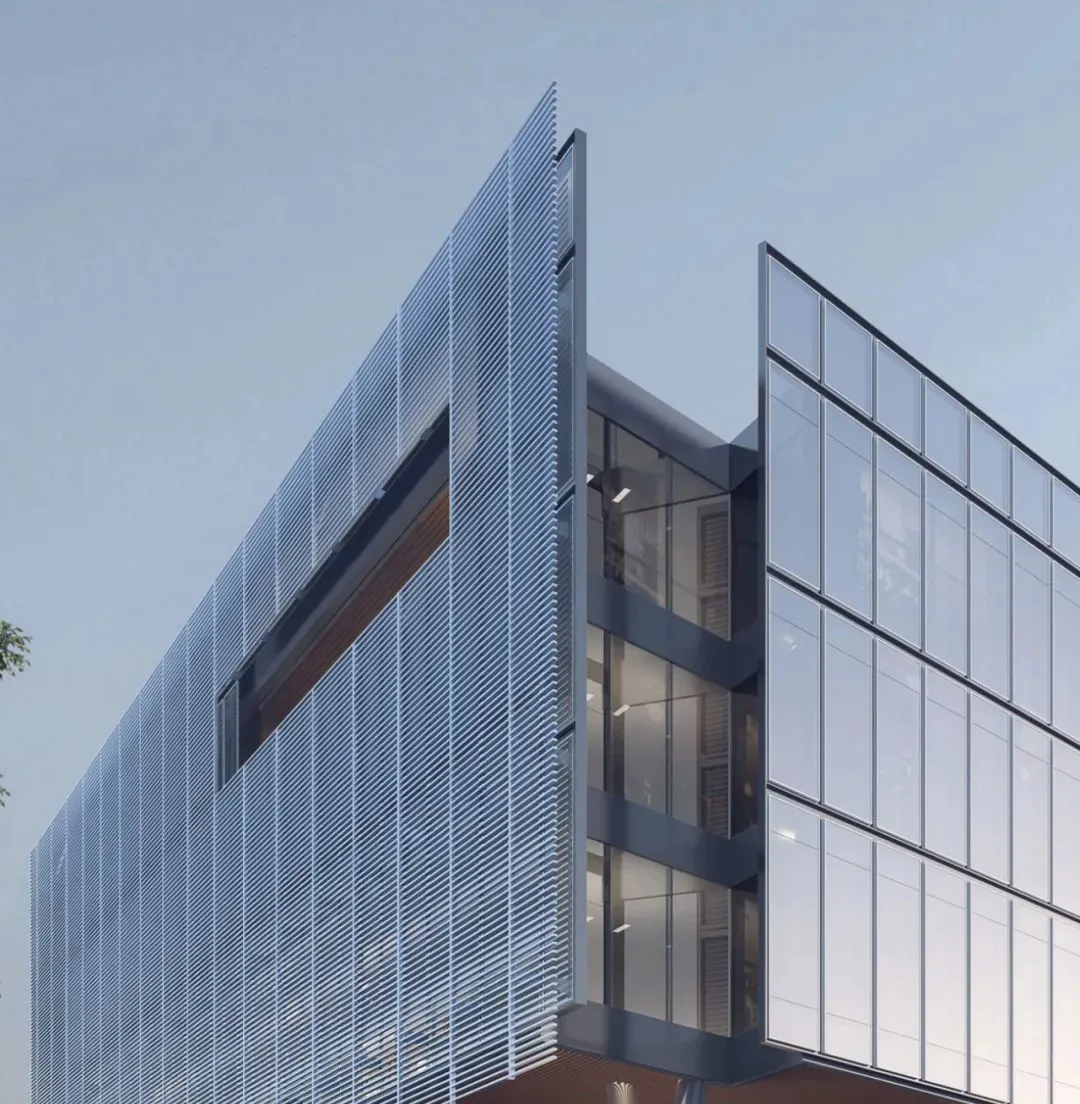
▲ Park Scene
01. Clean Energy Innovation Industry Cluster
Project Background
As a new form of urban economic integration and a unique spatial model in the post-oil era, low-carbon, environmentally friendly, and sustainable-themed industrial parks have come into existence.
China Huaneng Group, in partnership with the Nanjing Municipal Government, supports the national energy and carbon reduction strategies by tailoring the China Energy Valley Industry Development Plan to the regional development characteristics of Nanjing. This initiative aims to establish a top-tier, leading national headquarters with strong brand influence.
Construction began this February, and upon completion, the project will become a collaborative energy innovation cluster valued in the billions within the Yangtze River Delta.
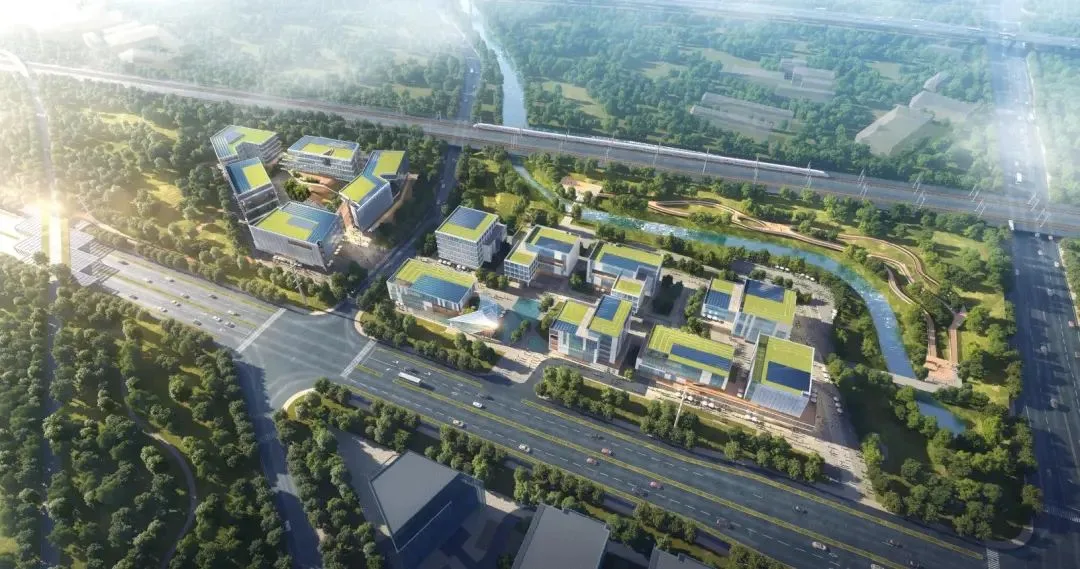
▲ Aerial View of the Ecological Park
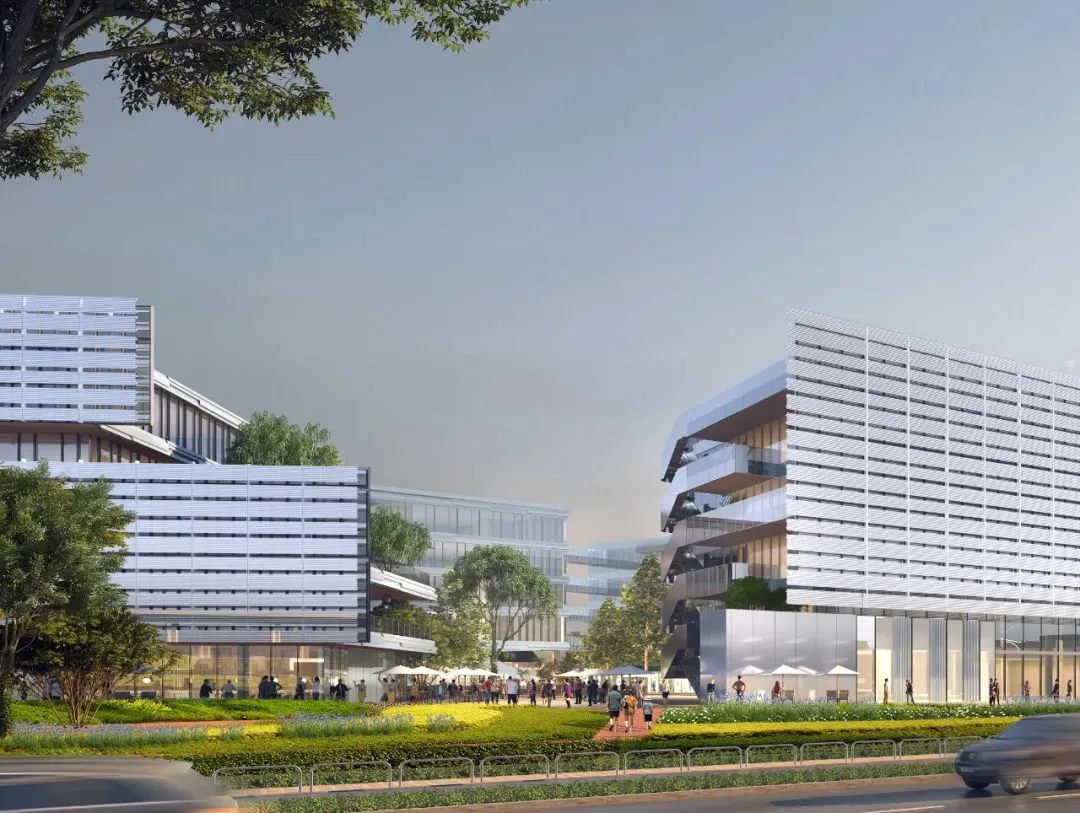
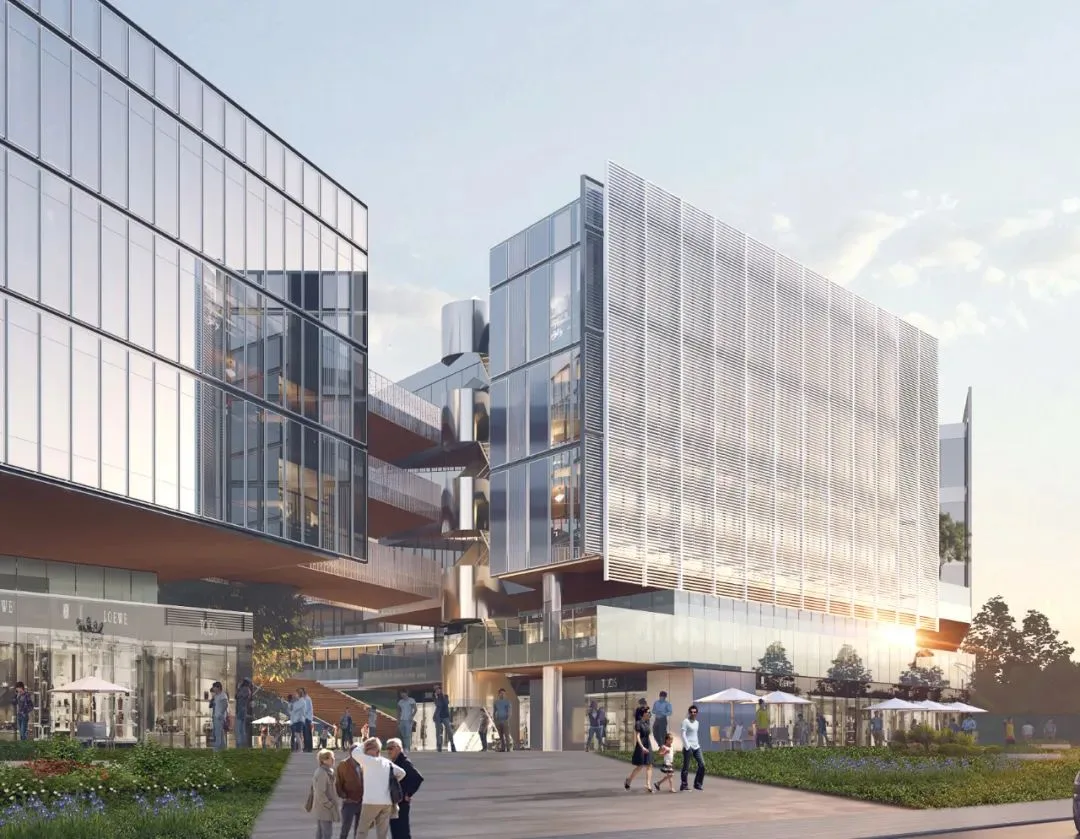
▲ Entrance to the Park
02. People, Cities, and Enterprises
Planning and Design
The China Energy Valley Industrial Ecological Zone is strategically located in the core area of the China Energy Valley industrial cluster. Situated south of Magao Road, the site borders the park’s ecological corridor—Qilin Central Park to the east, Yuliang River urban green space to the north, and Tuchengtou Site Park to the southwest, offering exceptional landscape conditions.
The design integrates surrounding urban green spaces into a cohesive plan, blurring boundaries to make the park a central element of the city’s public environment. This creates an open, ecological, urban-level industrial park.
By accommodating the needs of industries, enterprises, and talent, the plan incorporates leisure, commercial, and lifestyle services. It embodies the vision of a 4.0 industrial community with “walkable parks, readable buildings, warm spaces, and zero-distance services.”
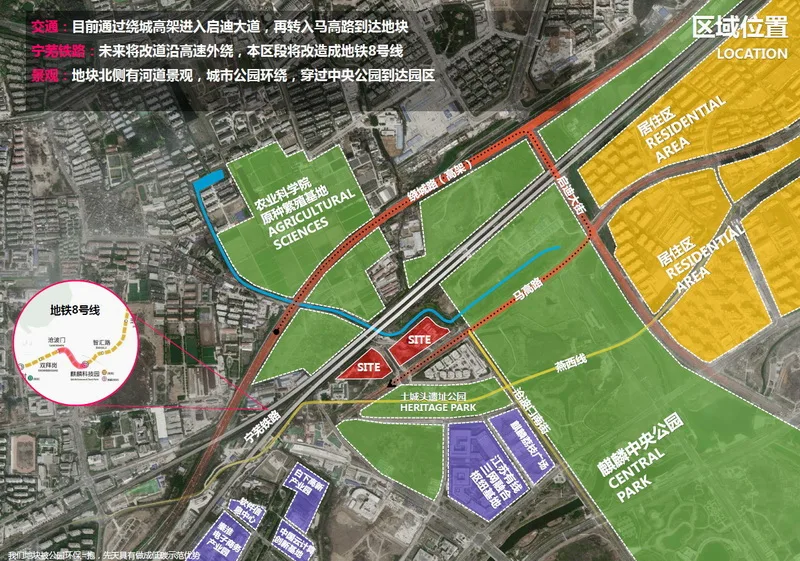
▲ Regional Location
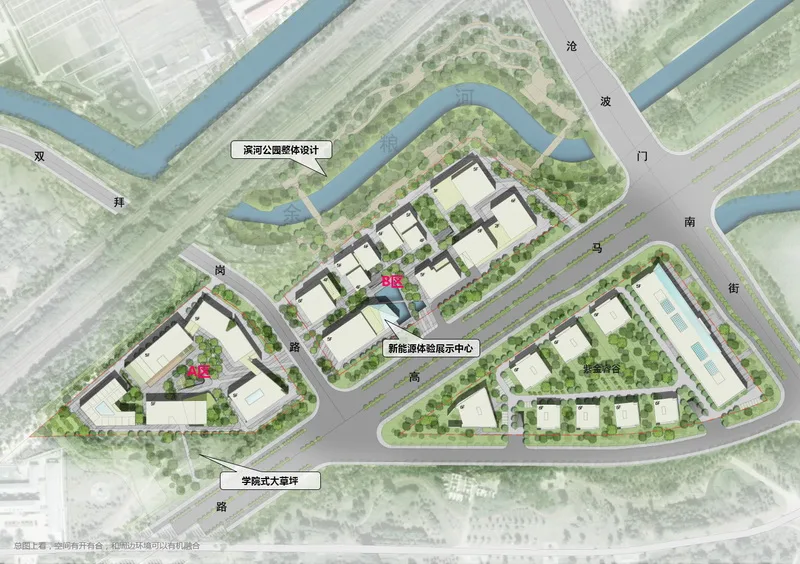
▲ Overall Project Plan
The project is divided into two plots, A and B, connected by a landscape axis and an industrial support belt. Leveraging the park’s ecological foundation, spatial clusters and external waterfront landscapes interconnect to form three themed courtyards: the industrial center, exhibition center, and vitality center. This expands the variety of dynamic scene experiences.
Unlike traditional industrial parks, which often lack character and warmth, the spatial arrangement here embraces diversity in block forms and spacing, creating a more inviting atmosphere. The park incorporates distributed renewable energy applications, positioning itself as a benchmark for urban sustainable development with zero-carbon, low-carbon, and smart space innovations.
The site is elevated to 8.5 meters, approximately 2.5 meters below the Yuliang River’s slope protection on the north side. The design employs terracing and landscape staging to manage this height difference organically, dividing the site into riverside park landscapes, collegiate-style lawns, and terrace gardens. These features enhance the city and park image, reduce site pressure, and ensure architectural transparency, providing ample green space for residents and employees to relax and stroll.
03. Carbon Neutrality: The Park’s Driving Force
Carbon Reduction Design
As a premier site for carbon-neutral buildings in Nanjing, the ecological zone integrates “new energy” and sustainability principles in its planning. The strategy includes five key approaches: distributed renewable energy use, large-scale high-quality park layout, energy-sharing services on the supply side, near-zero carbon building clusters, and demand-side electrification.
Sustainable technologies such as photovoltaic curtain walls, ground source heat pumps, and ice storage systems support the creation of a shared comprehensive energy station serving the entire park.
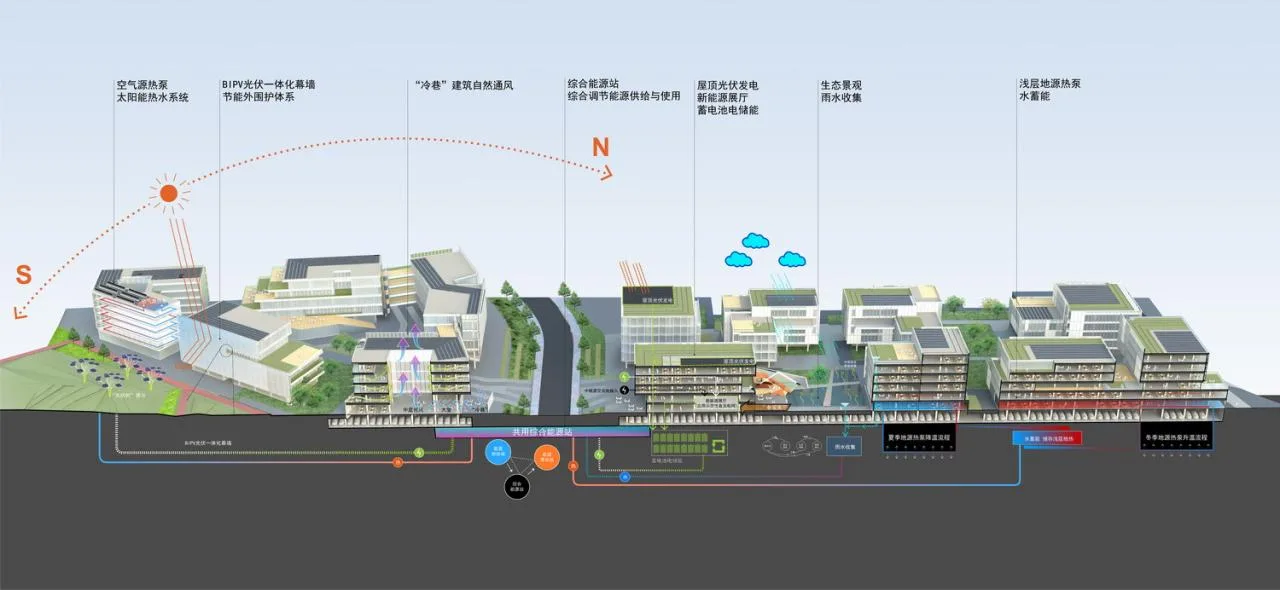
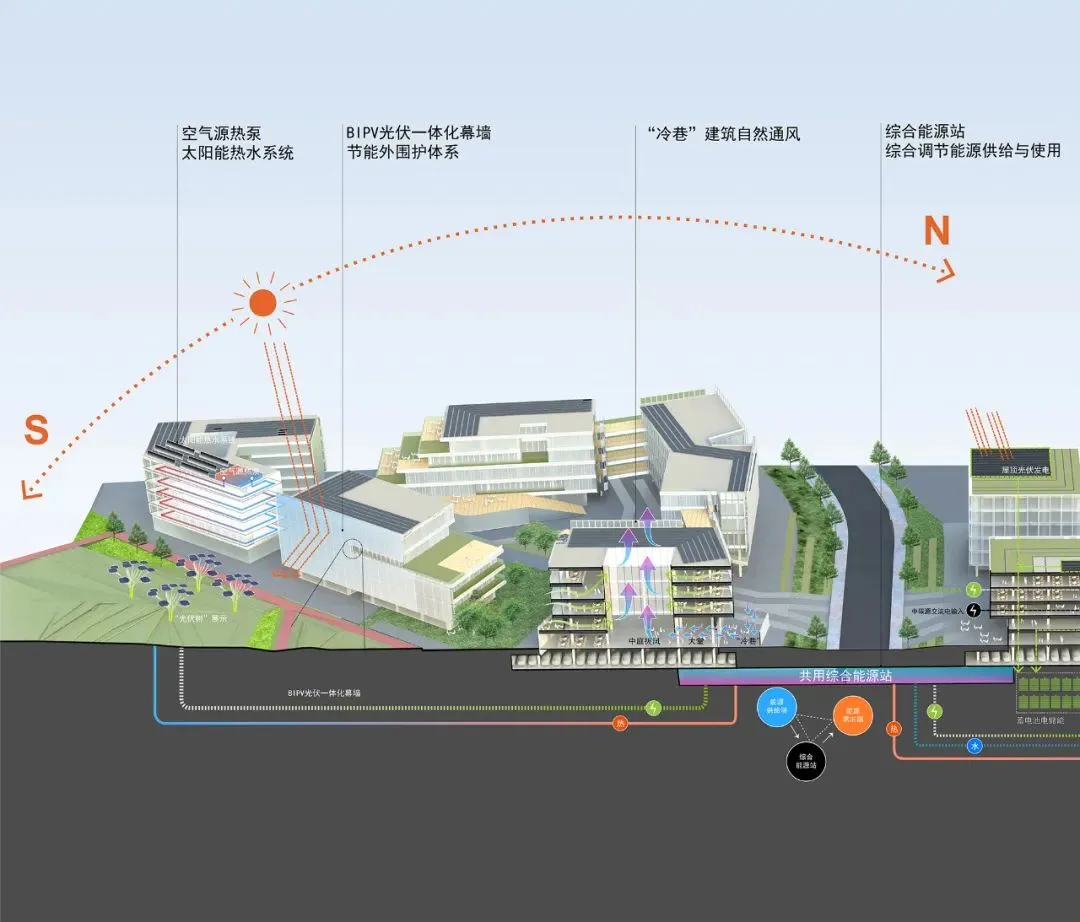
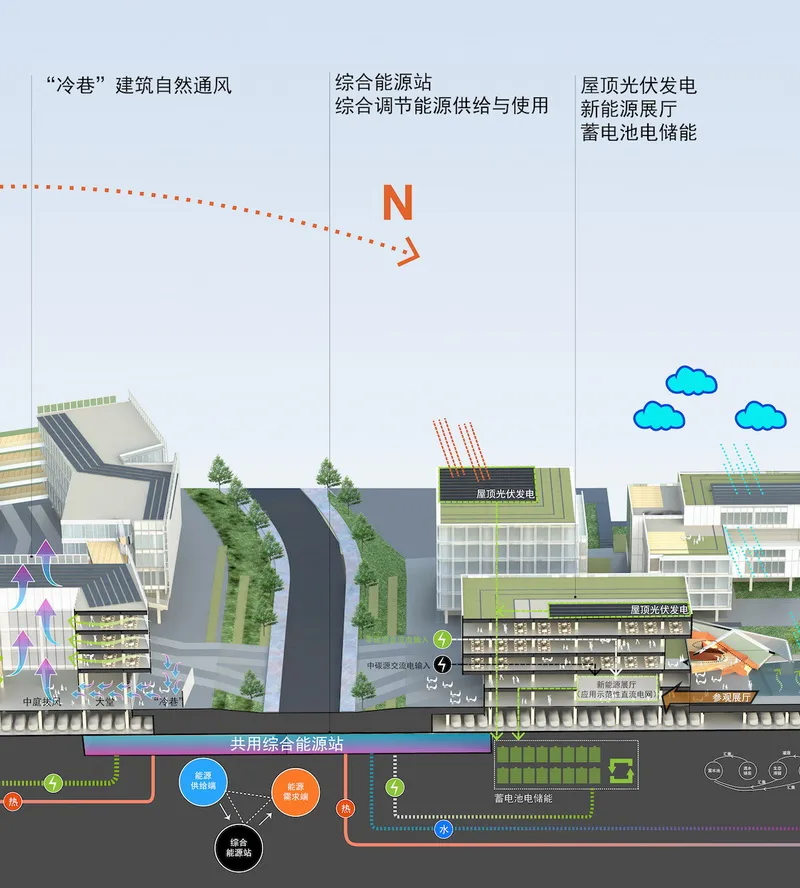
▲ Comprehensive Energy Station
Zero carbon emissions impose specific requirements on building scale. Corner buildings in plots A and B, situated at intersection crossroads, are designed as green building demonstration projects with zero carbon footprint, featuring moderate area and high outdoor roof and facade exposure.
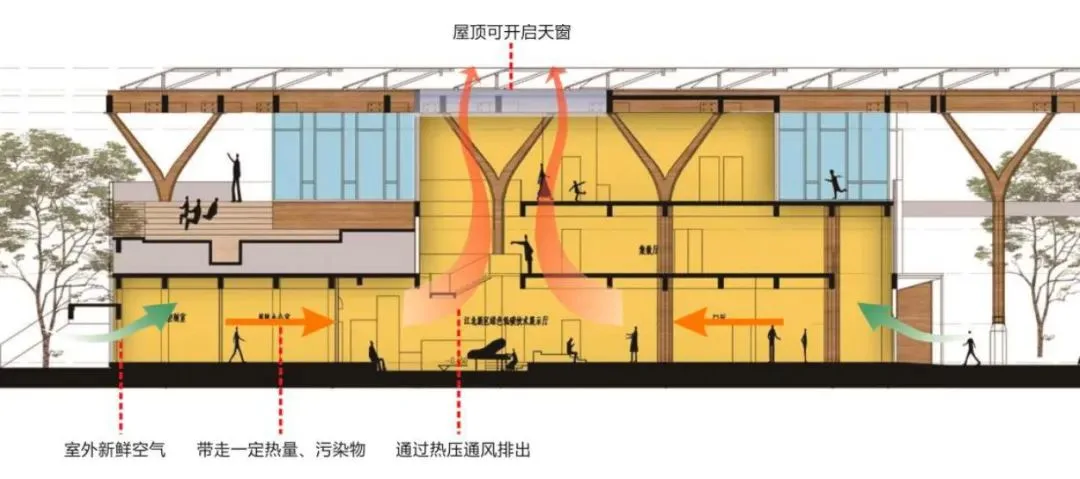
Building-integrated photovoltaics (BIPV) are employed to seamlessly integrate solar technology into the architecture. The landscape wall at the entrance serves as both a landmark and a wind guide, working with facade windows to introduce fresh outdoor air into the interior.
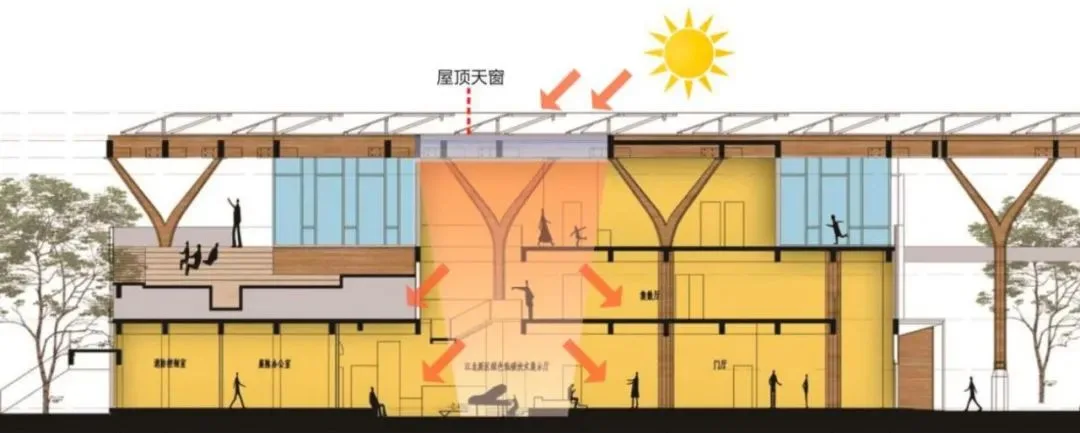
The new energy experience exhibition center inside the building combines educational and leisure services to create an interactive tour experience. The atrium functions as the building’s ecological climate core: during transitional seasons, skylights open to facilitate hot air ventilation, while in winter, increased solar radiation reduces the need for air conditioning.
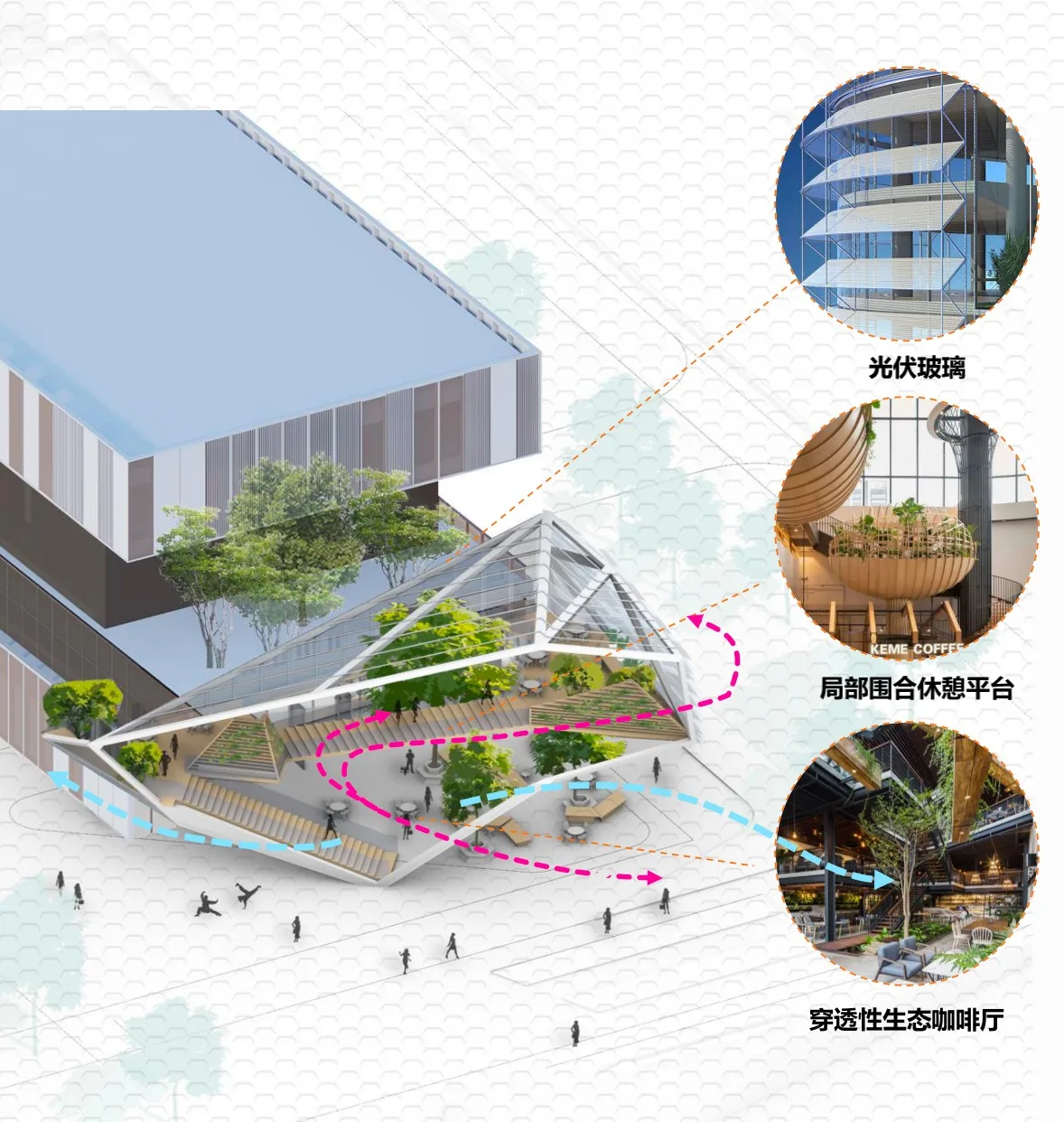
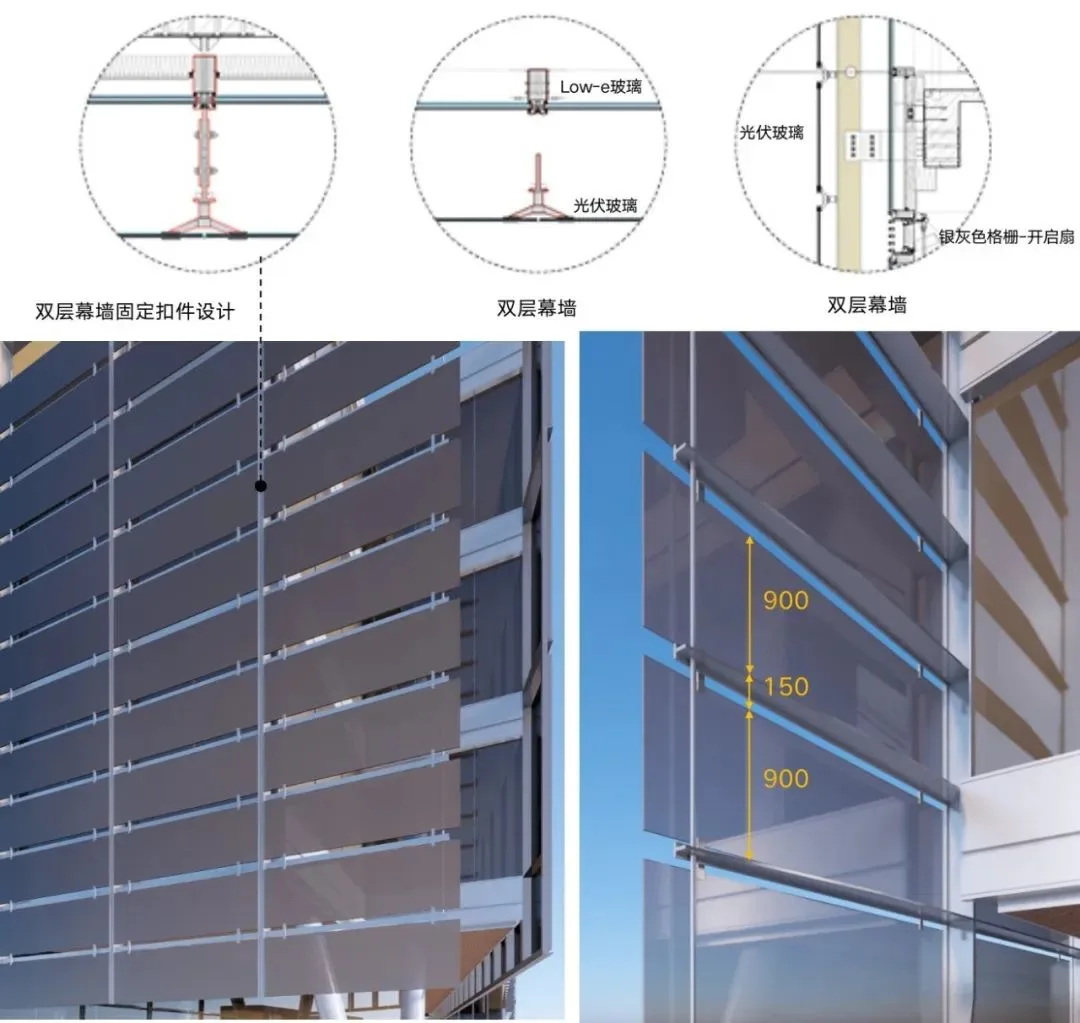
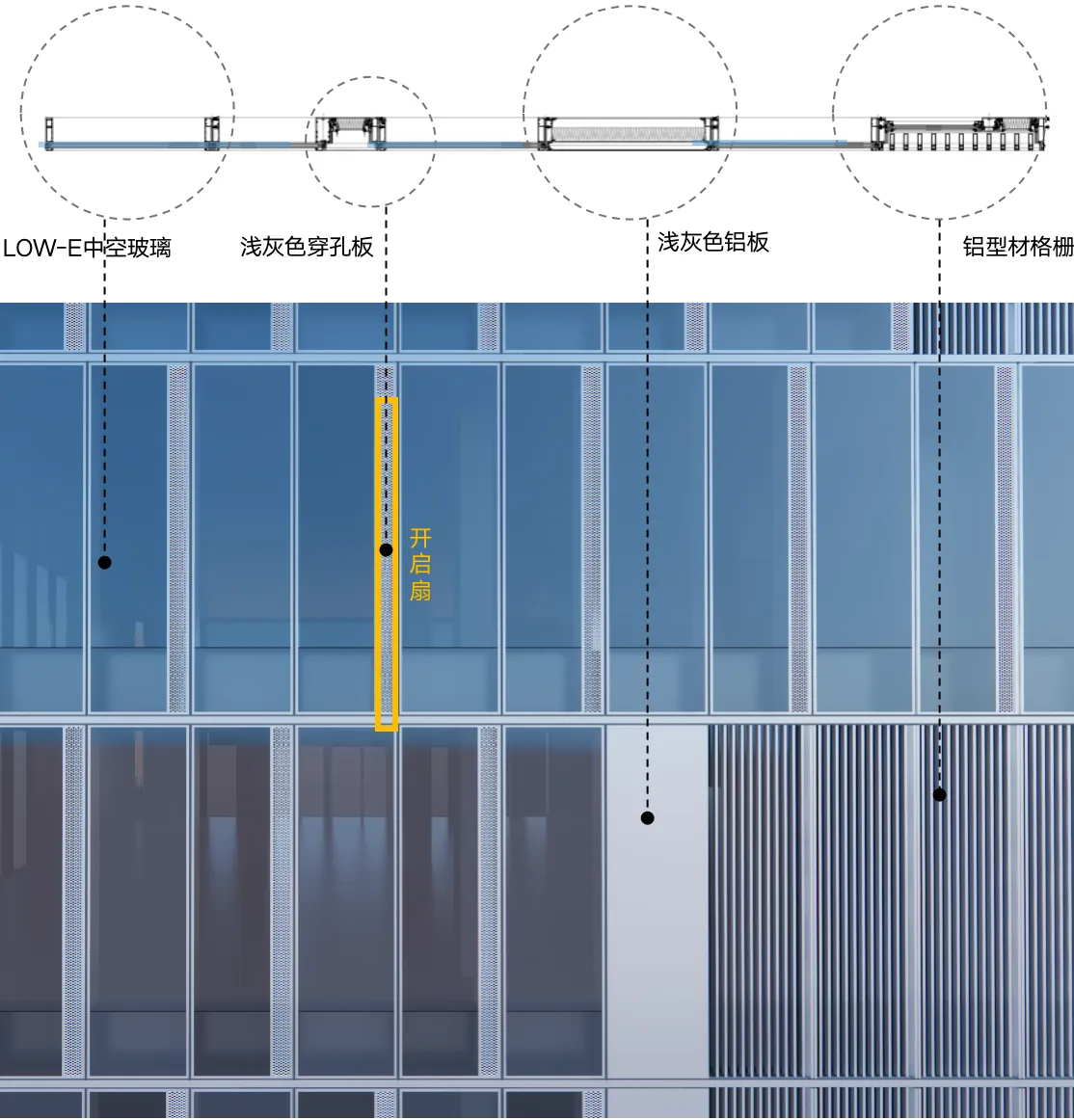
Five types of photovoltaic curtain wall systems were carefully selected to balance aesthetics and construction needs:
- The street corner demonstration building uses a double-layer curtain wall fastener to connect two distinct glass materials.
- Within the park, curtain walls emphasize horizontal lines through a combination of metal grilles and aluminum panels.
- Plot B’s main curtain walls follow a similar design, focusing on lightness and simplicity by blending three materials.
04. Hierarchical, Service-Oriented Support
Full Lifecycle Design
Beyond basic production functions, the planning emphasizes the full lifecycle development of enterprises by providing tiered service spaces. These include industrial facilities supporting research and development, office spaces, commercial amenities catering to the consumption and leisure needs of scientific personnel, and living facilities fulfilling residential and recreational requirements.
This approach accommodates enterprises of varying sizes and addresses the needs of employees residing within the park. Two main product types—the MALL-style and independent waterfront block style—promote a community environment conducive to business, innovation, livability, and tourism.
The MALL-style park includes four office buildings and one apartment complex, housing industrial offices, green building demonstration centers, industrial service centers, and panoramic talent apartments. Flexible spatial divisions combined with high-quality public facilities support rental or large-scale single-family development. The clusters are enhanced with three-dimensional greenery and collegiate lawns, reinforcing an ecological and headquarters atmosphere.
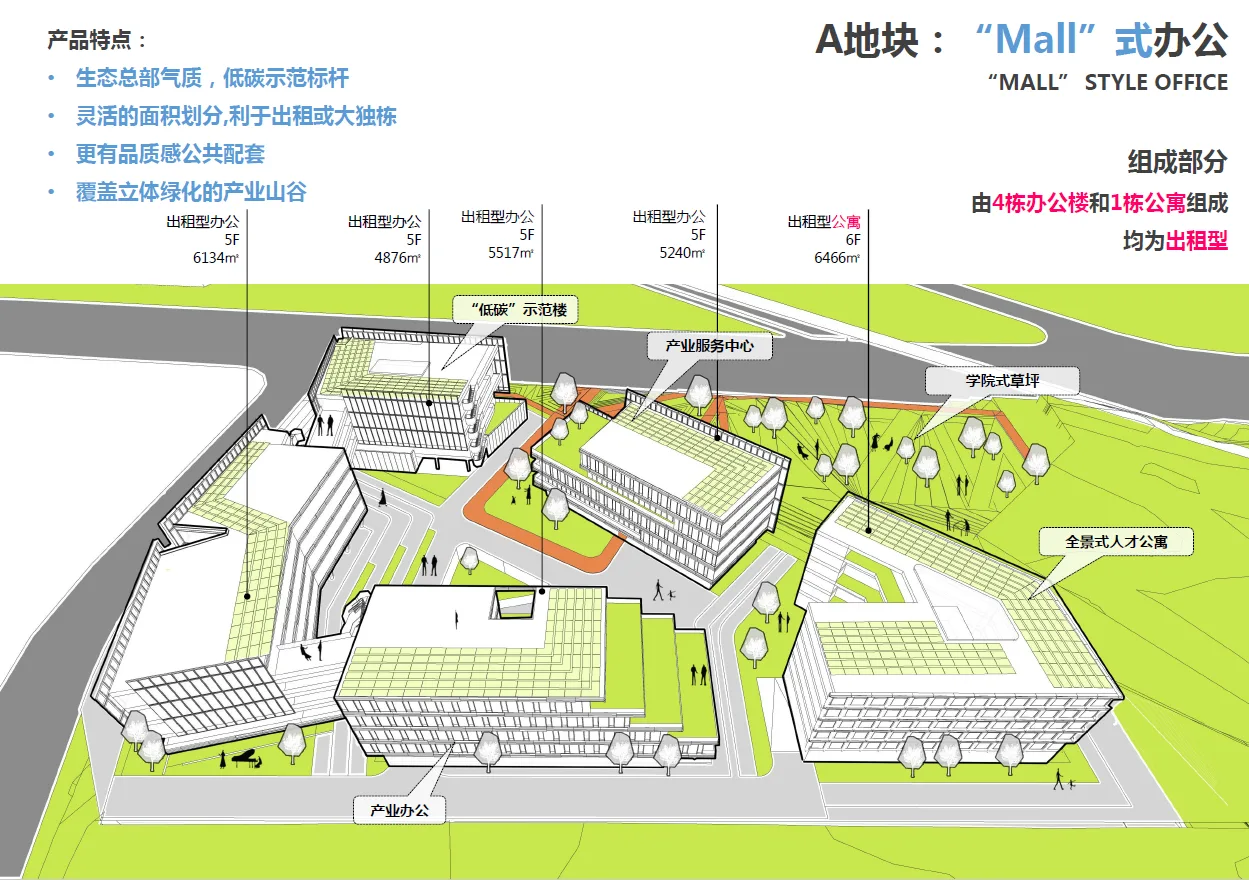
▲ MALL-style Office
The independent waterfront block features seven standalone office buildings, including six sales units and two rental units. The extended podium unifies the architectural language, strengthening building connectivity and enhancing the park’s visual presence within the city.
Vertical retreat gardens, elevated spaces, and waterfront landscapes merge to create a collaborative block-style office environment. Key nodes and internal city-facing spaces are designed to enhance the sense of arrival and park experience, encouraging social interaction and fostering a vibrant community culture.
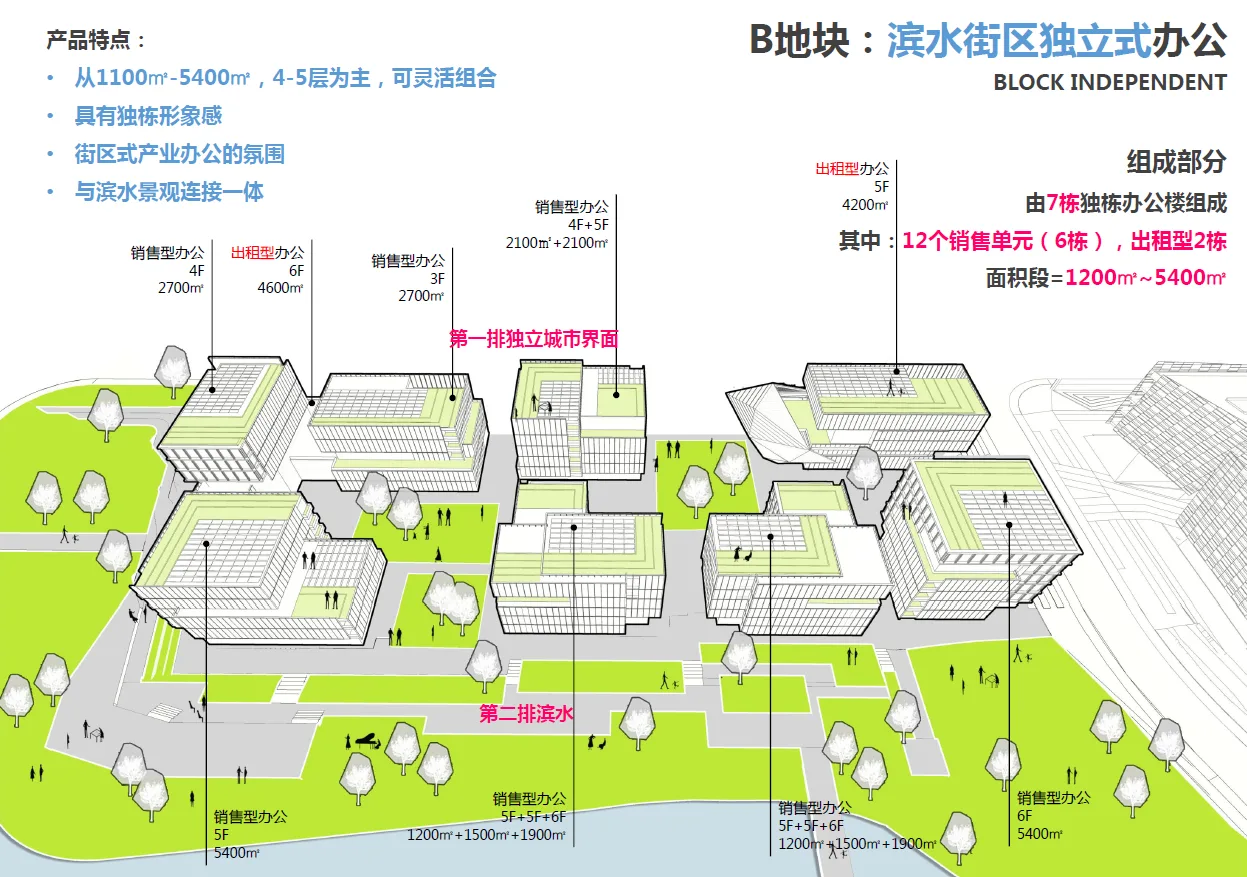
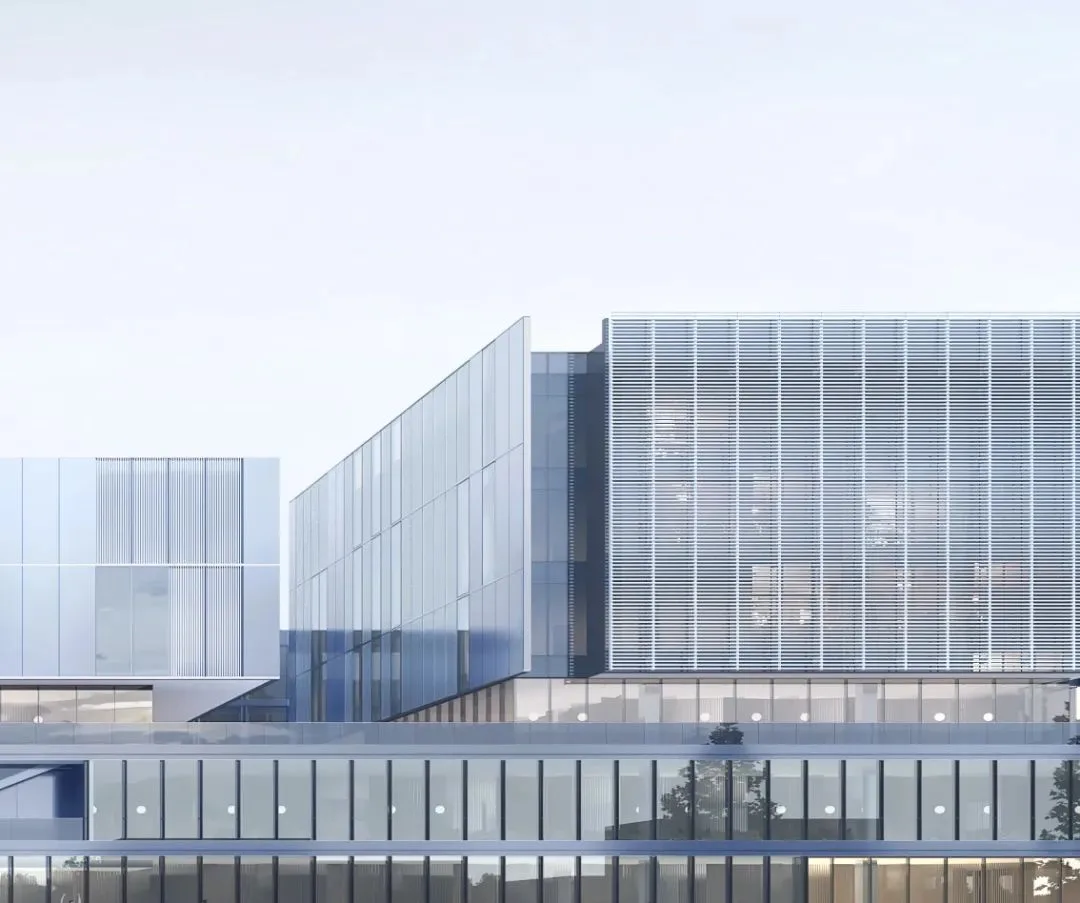
▲ Independent Offices in Waterfront Block
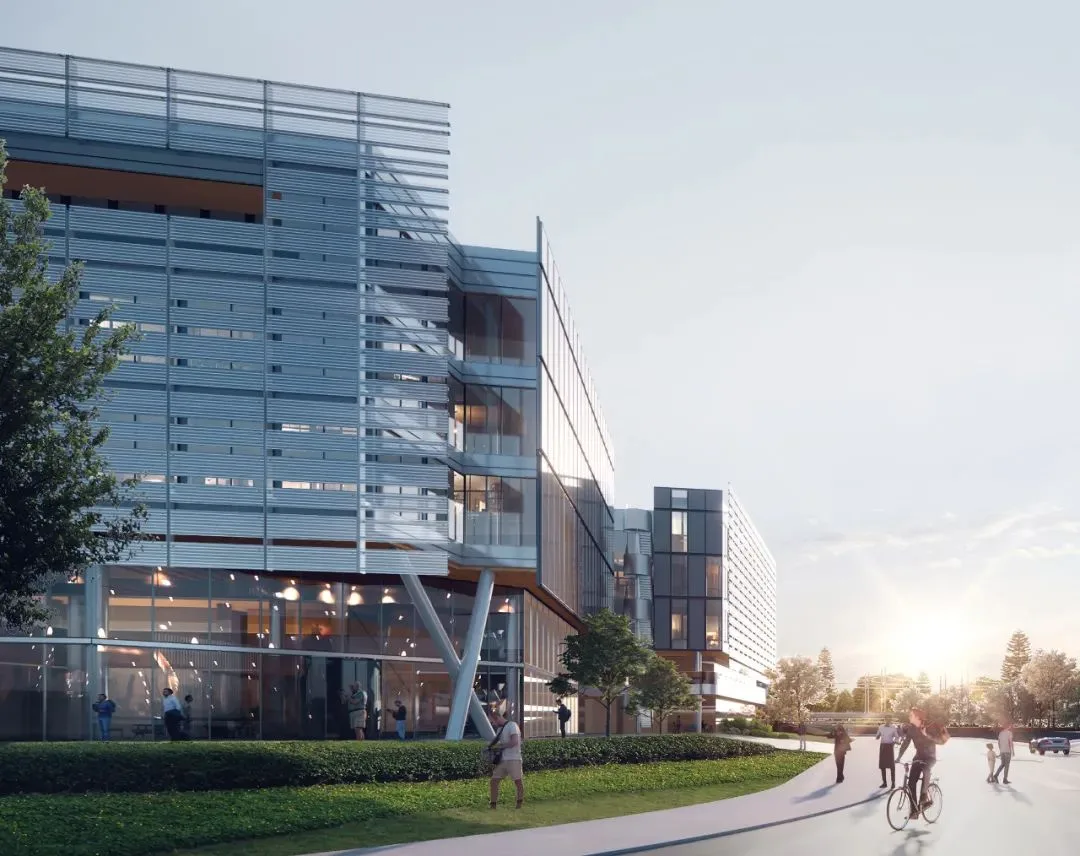
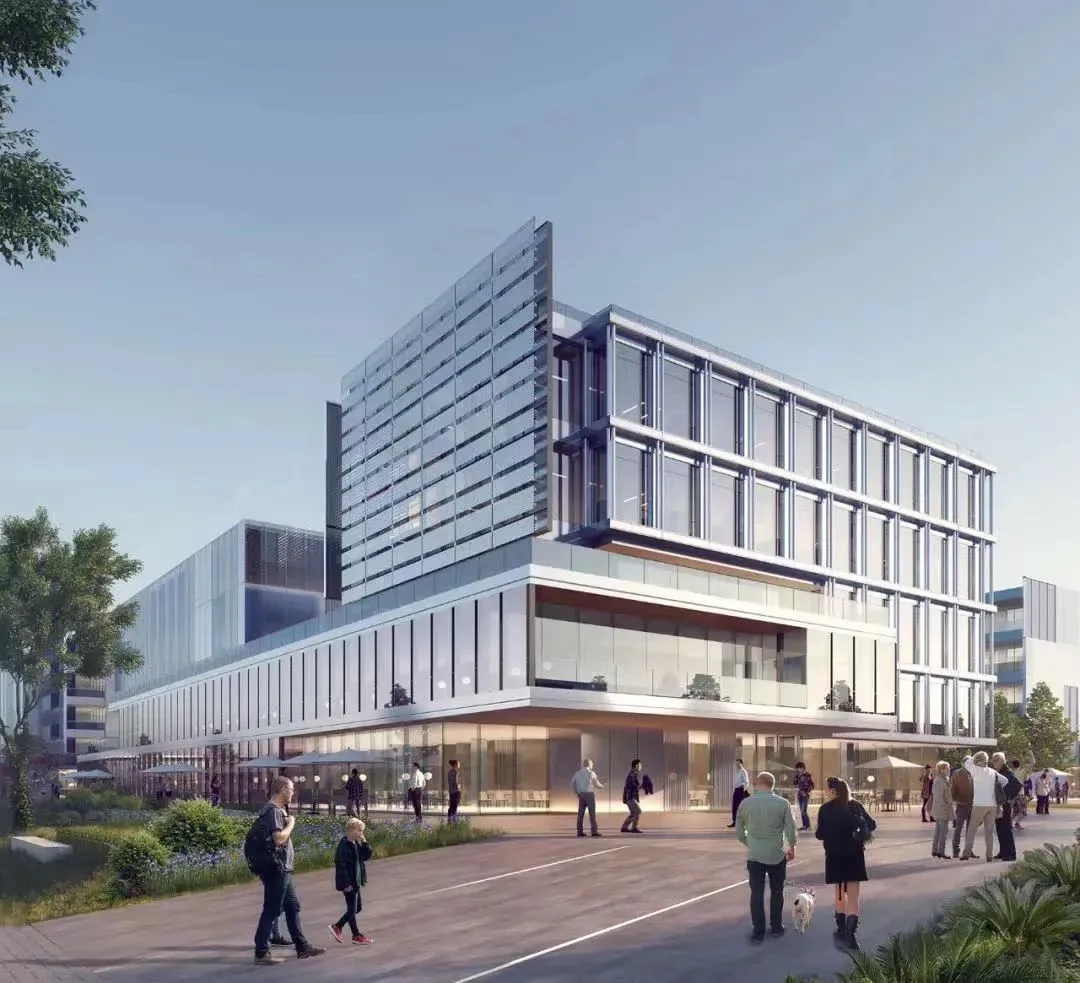
▲ Park Scene
*The drawings shown are subject to planning and approval outcomes.
Project Information
- Project Name: China Energy Valley Industrial Ecological Zone
- Location: Nanjing
- Building Area: 93,000 m²
- Land Area: 4.18 million m²
- Design Firm: Qicheng (Shanghai) Architectural Design Firm Co., Ltd
- Project Owner: Huaneng (Nanjing) Asset Management Co., Ltd
- Design Director: Shen Lijiang
- Project Manager: Ding Hao
- Design Team: Cui Yinshi, Zhou Fanjie, Zheng Feifei, Lou Liumeng, Yuan Chengxiang
- Construction Status: Under construction
- Construction Drawing Unit: Huashe Design Group Co., Ltd
- Construction Manager: Wu Lijun
- Structural Engineer: Wang Yongwen
- Water Supply & Drainage Engineer: Huang Yuanqin
- Electrical Engineer: Wang Guichao
- HVAC Engineer: Wang Chen















Must log in before commenting!
Sign Up