
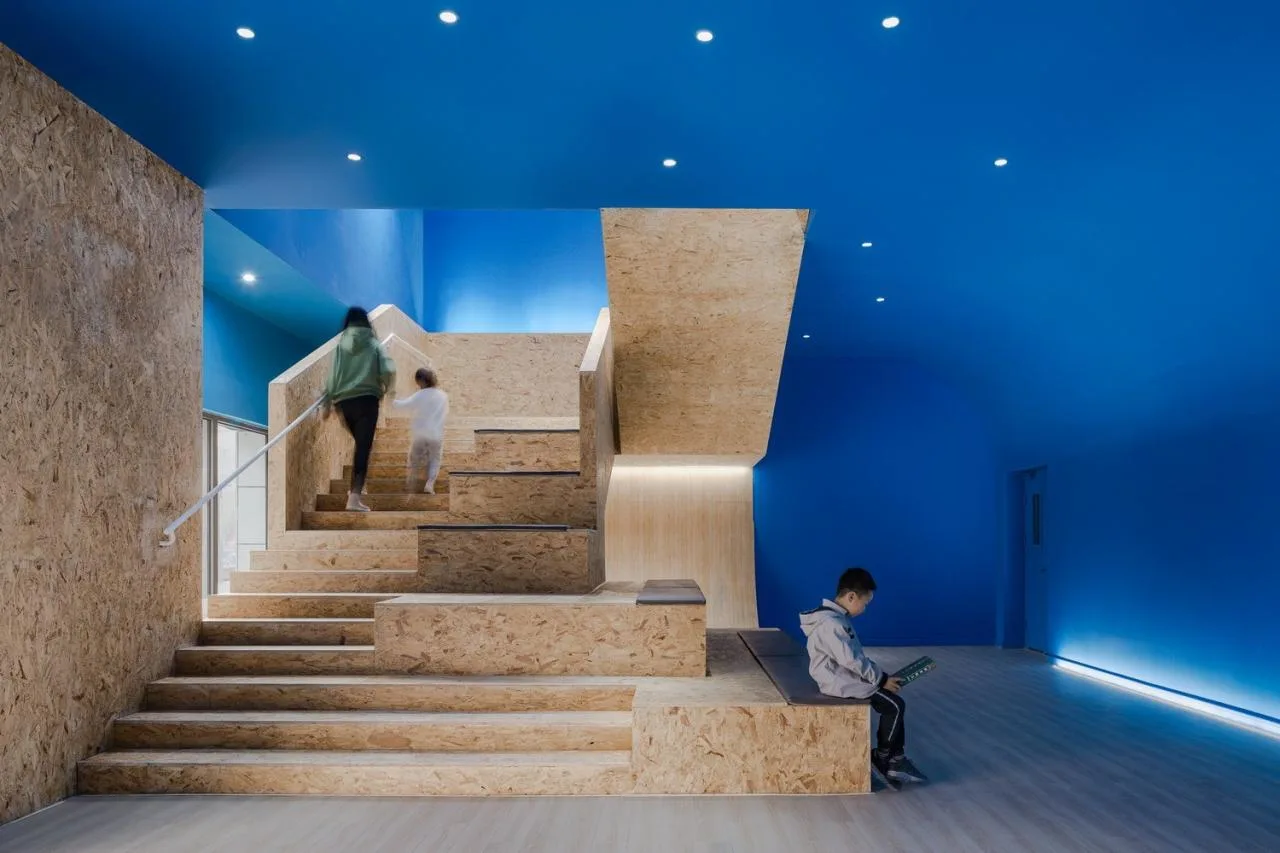
The “Huilongguan Community” in Beijing’s Changping District is home to nearly 300,000 residents, making it one of the largest “bedroom communities” in Asia. Despite its vast size, public cultural resources here lag behind Beijing’s traditional urban centers. The project’s owner aimed to create a comprehensive education-themed complex in this area, featuring diverse institutions offering rich educational services. The goal was to establish a community-oriented “public learning center” that enhances local educational services while providing an attractive gathering and activity space for residents.
Balancing cost and schedule constraints, the owner focused on maximizing the use of limited public space within the building. The site chosen was a vacant five-story office building adjacent to Huilongguan’s government district.
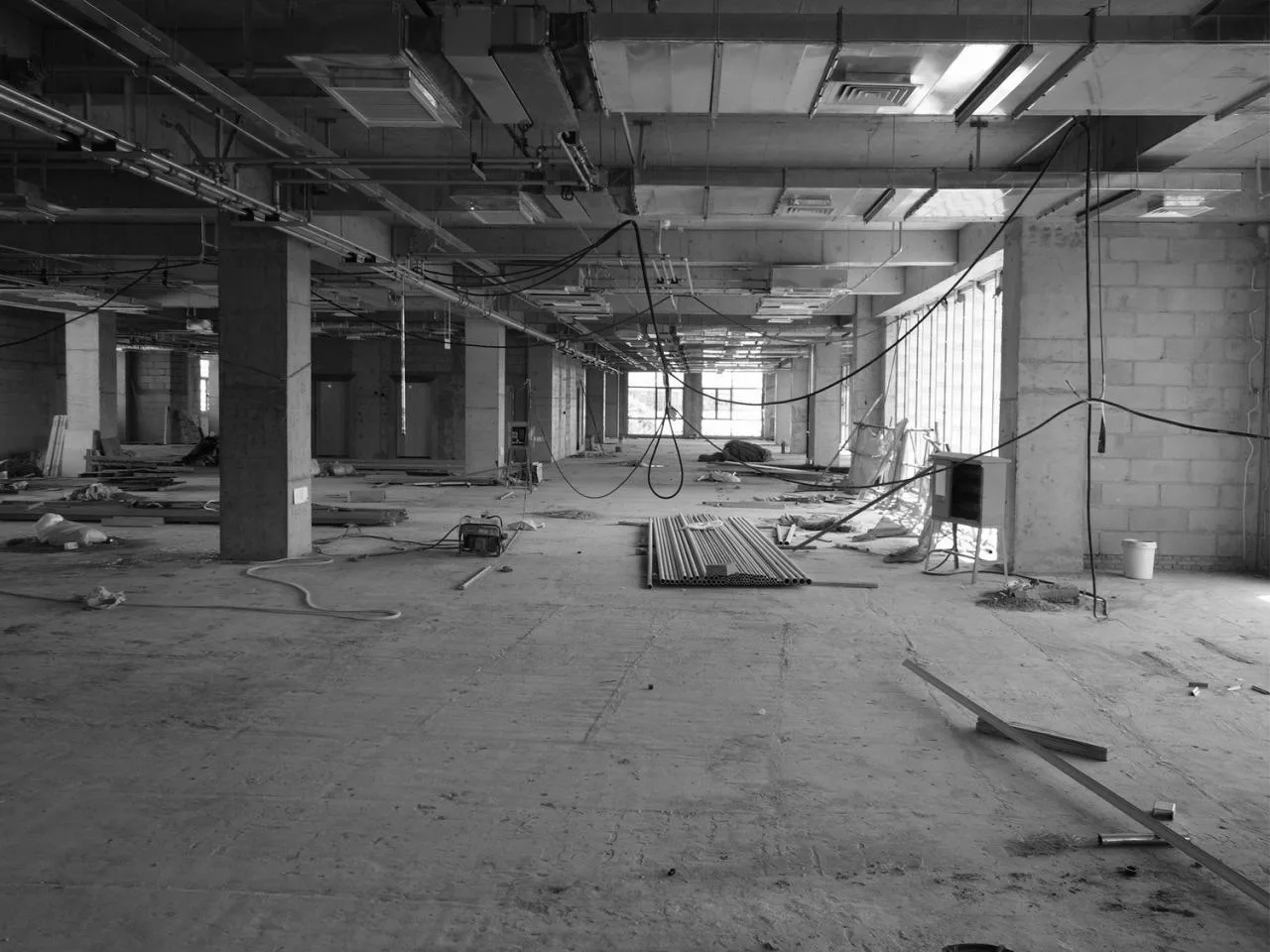
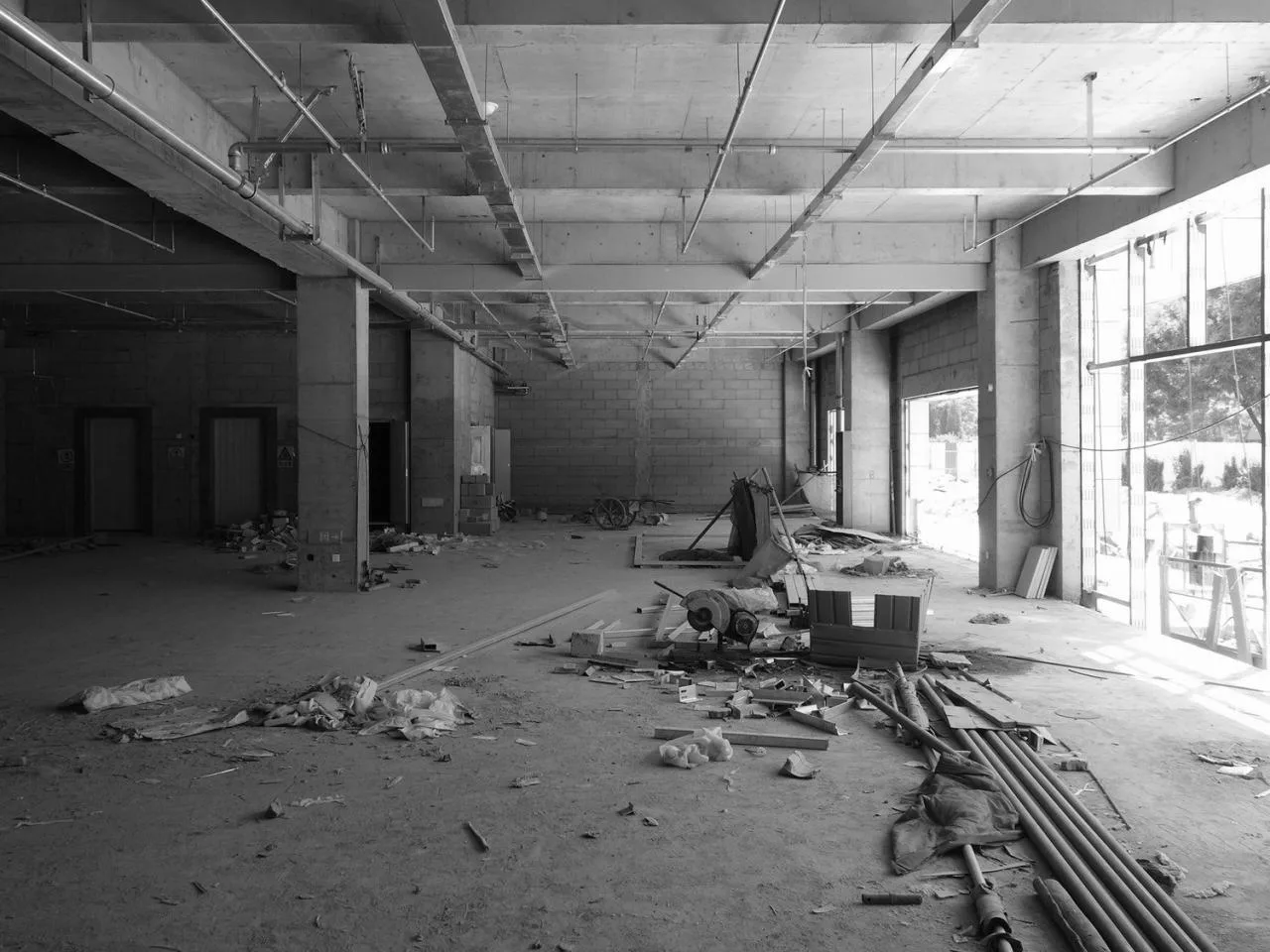
The project site is located on East Huilongguan Street, an area already home to several large indoor commercial facilities. Meanwhile, parts of the five-story office building—especially the valuable street-facing ground floor—were also being converted into new indoor retail spaces. Simply filling the interior of the educational complex with mediocre corridors and various unrelated formats would cause the building to fade into the noise of sales and neon signs.
The architect quickly realized this project was more about urban design than interior decoration. As a public space within a community, the complex needed to connect seamlessly with city streets and urban environments. This led to the concept of a “vertical block.”
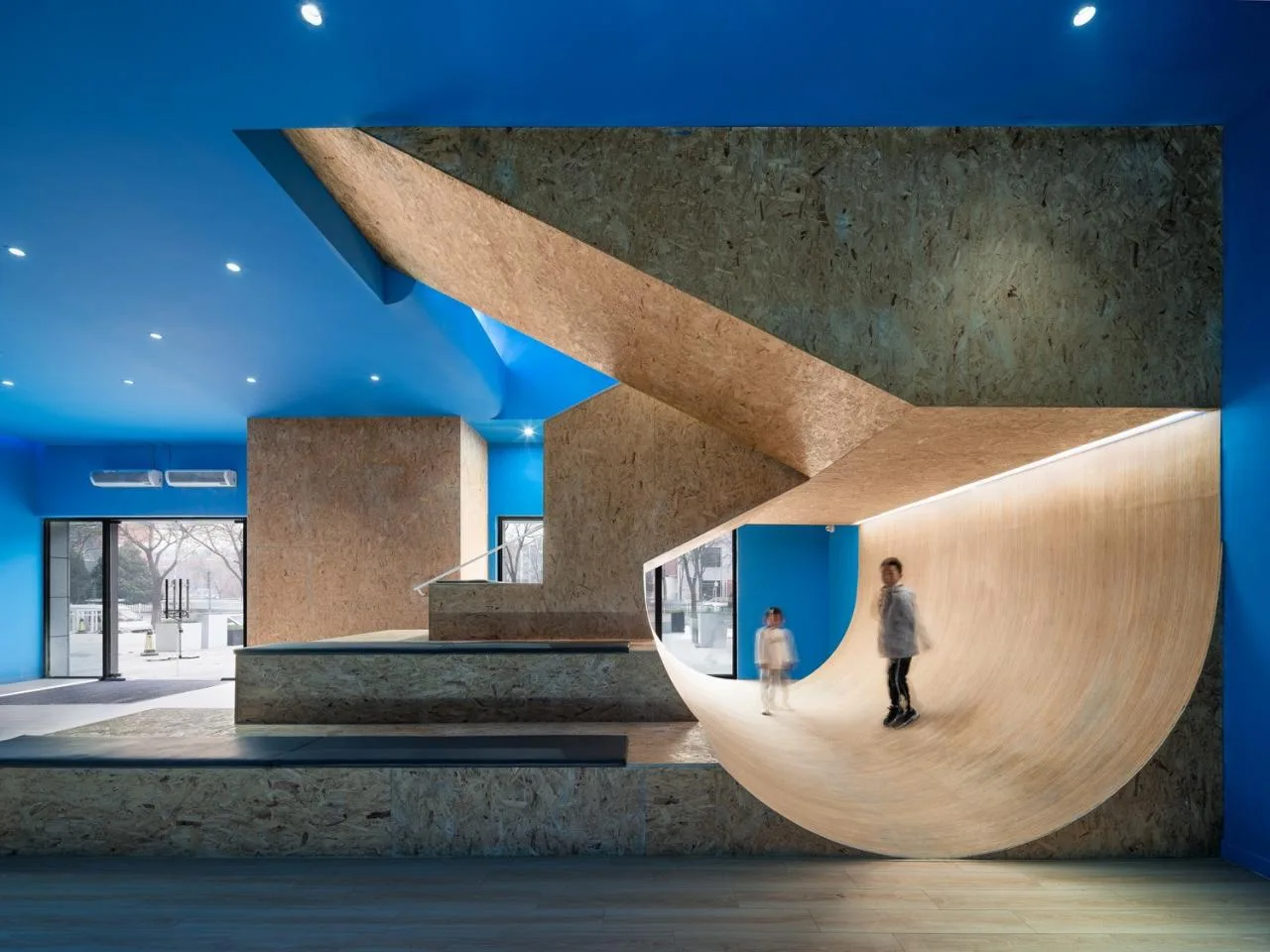
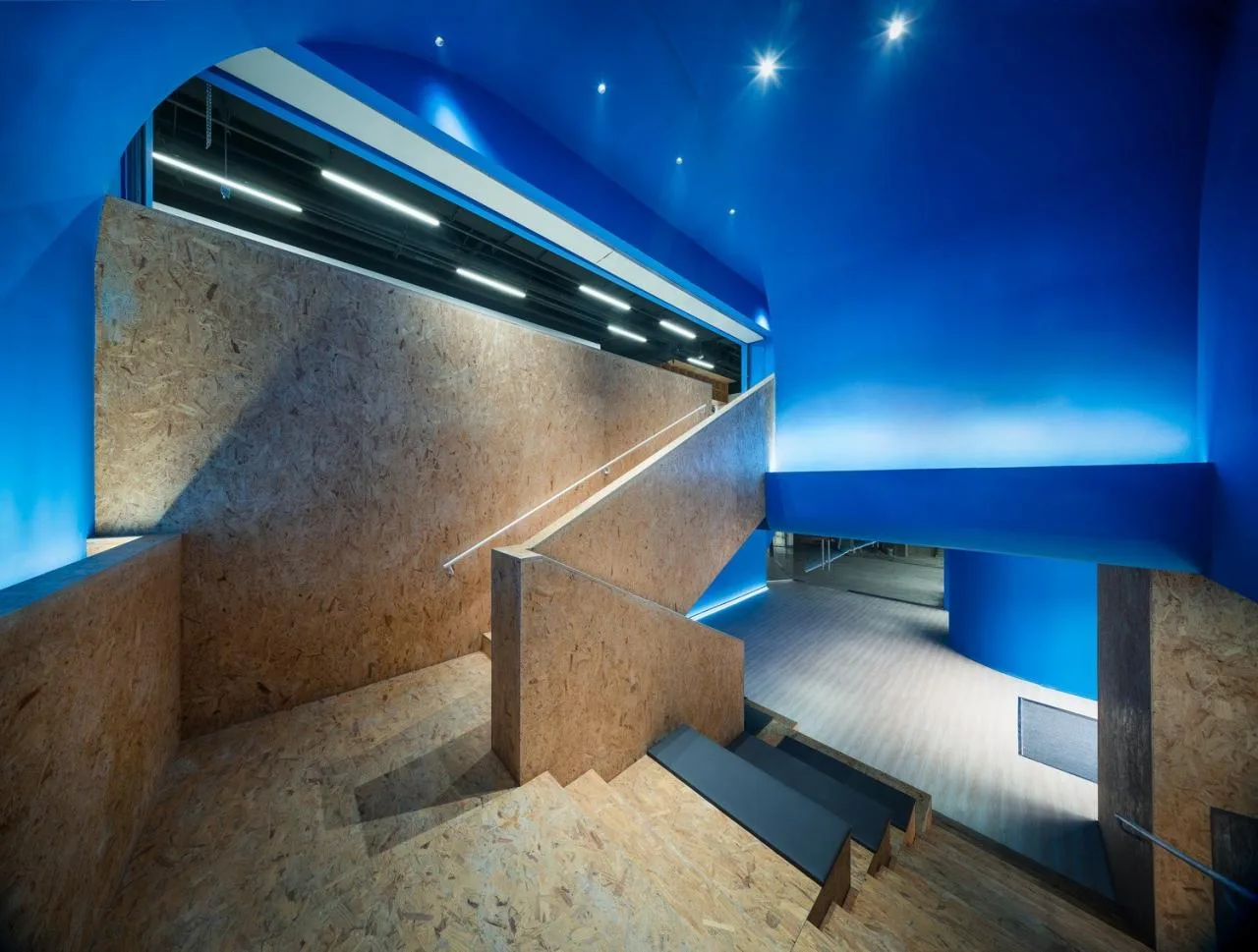
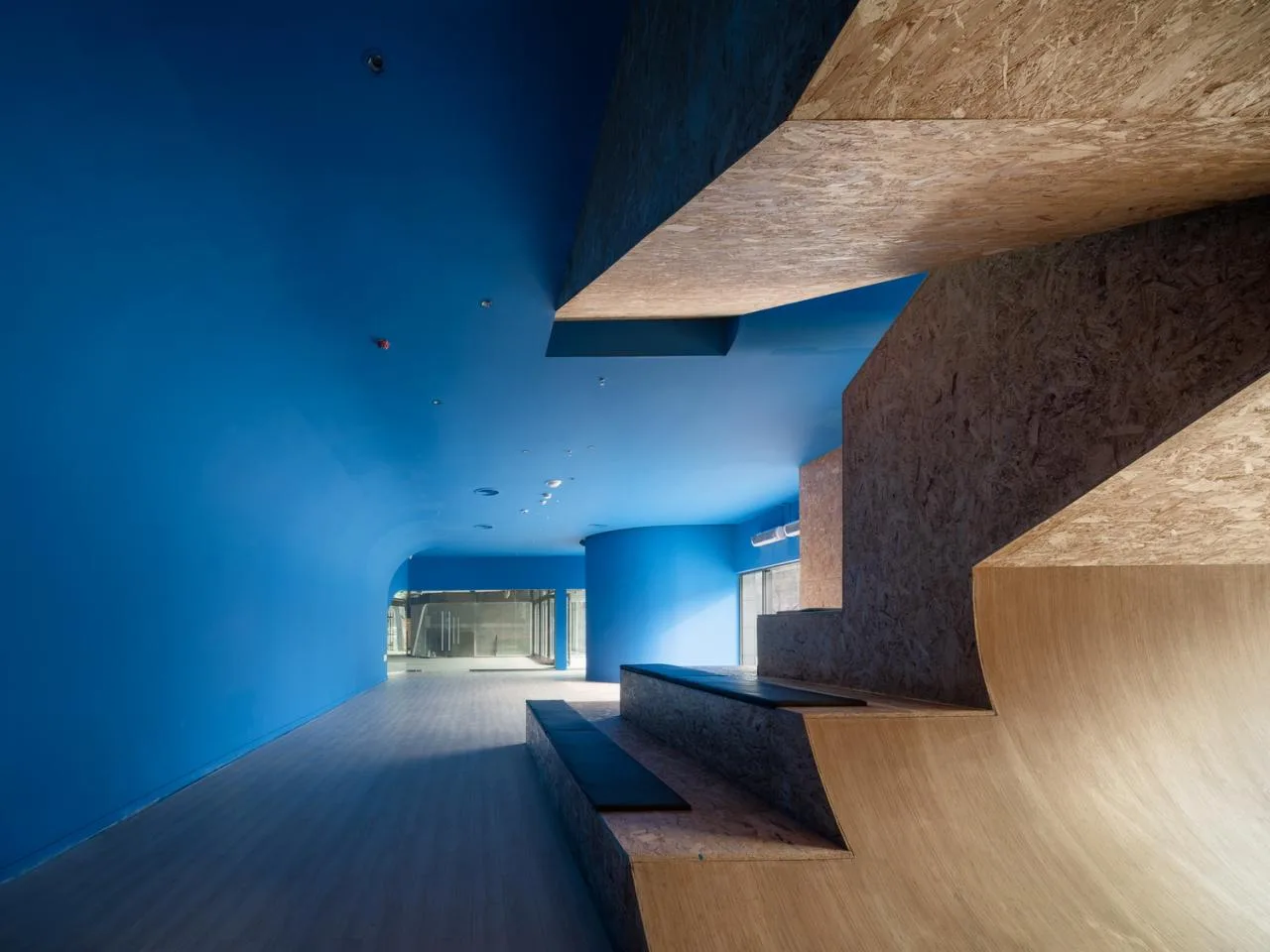
Given the tight timeline and budget, the architect proposed creating several key “nodes” within this vertically expanded urban space. These nodes—multifunctional halls, lecture rooms, playgrounds, reading spaces, galleries, children’s clubs, and community theaters—all revolve around the theme of education. They act like temporary structures set up during a carnival, scattered across urban open spaces.
This “point-to-surface” strategy allows commercial tenants the freedom to shape their own identities, while maintaining a unified visual language across all public areas.
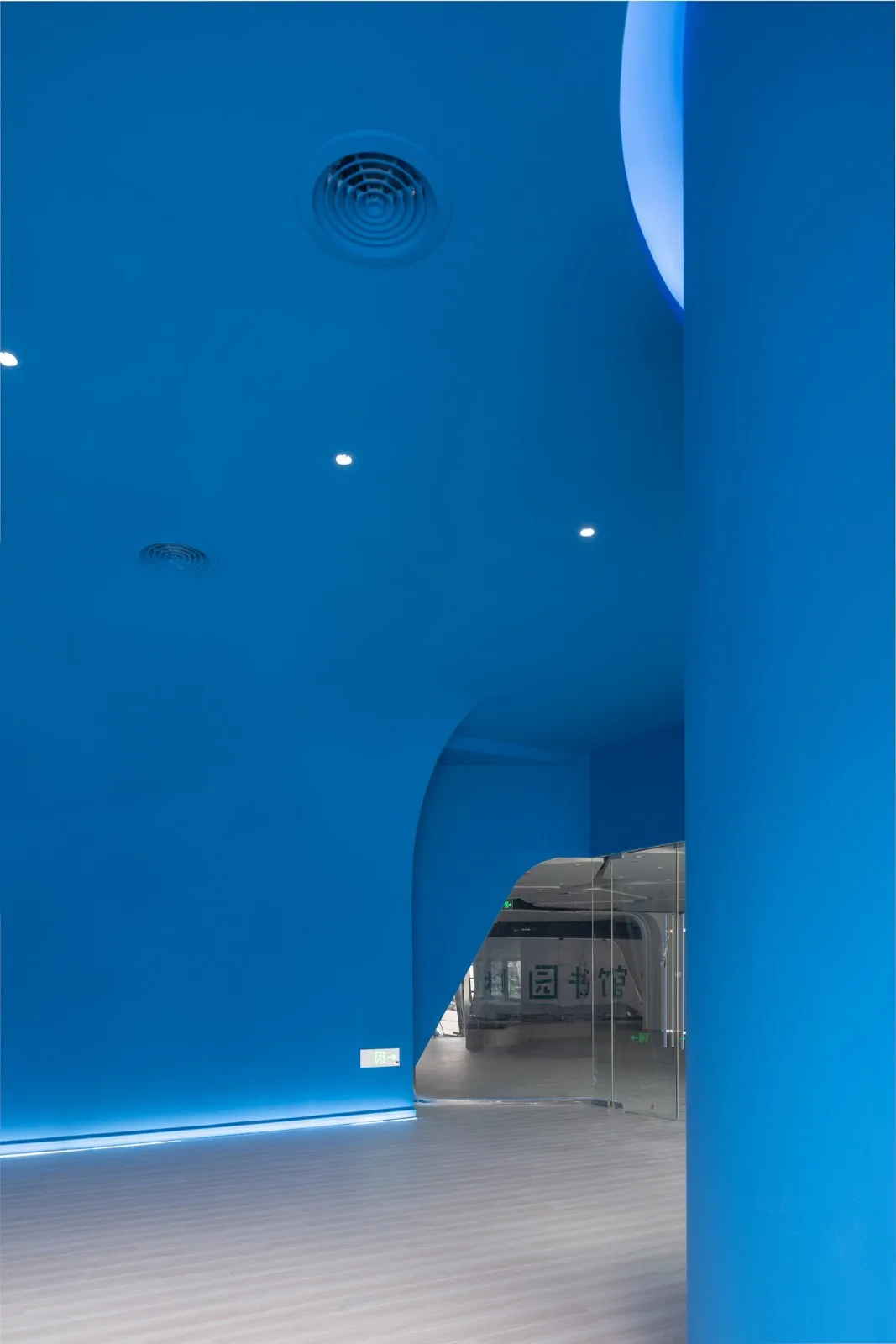
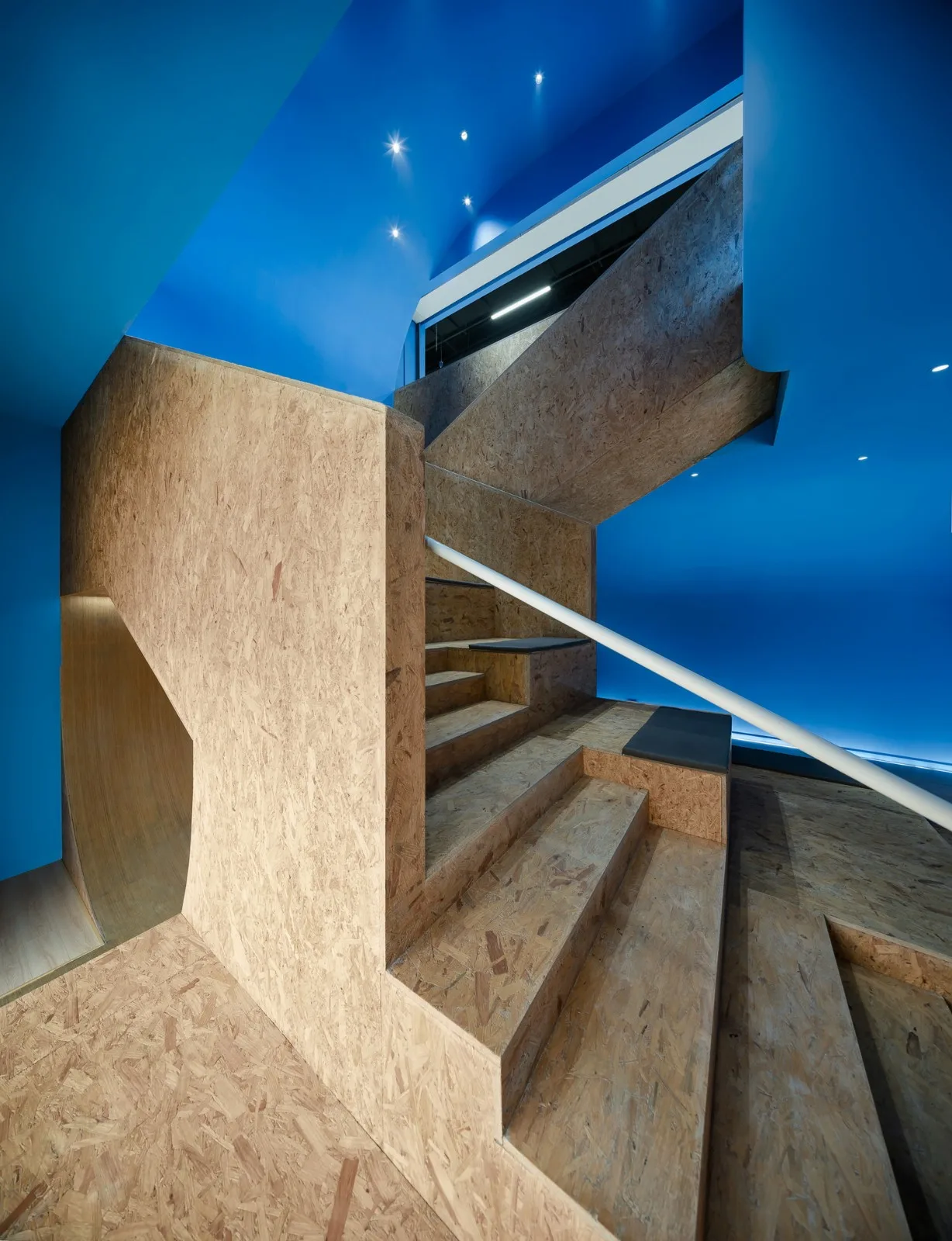
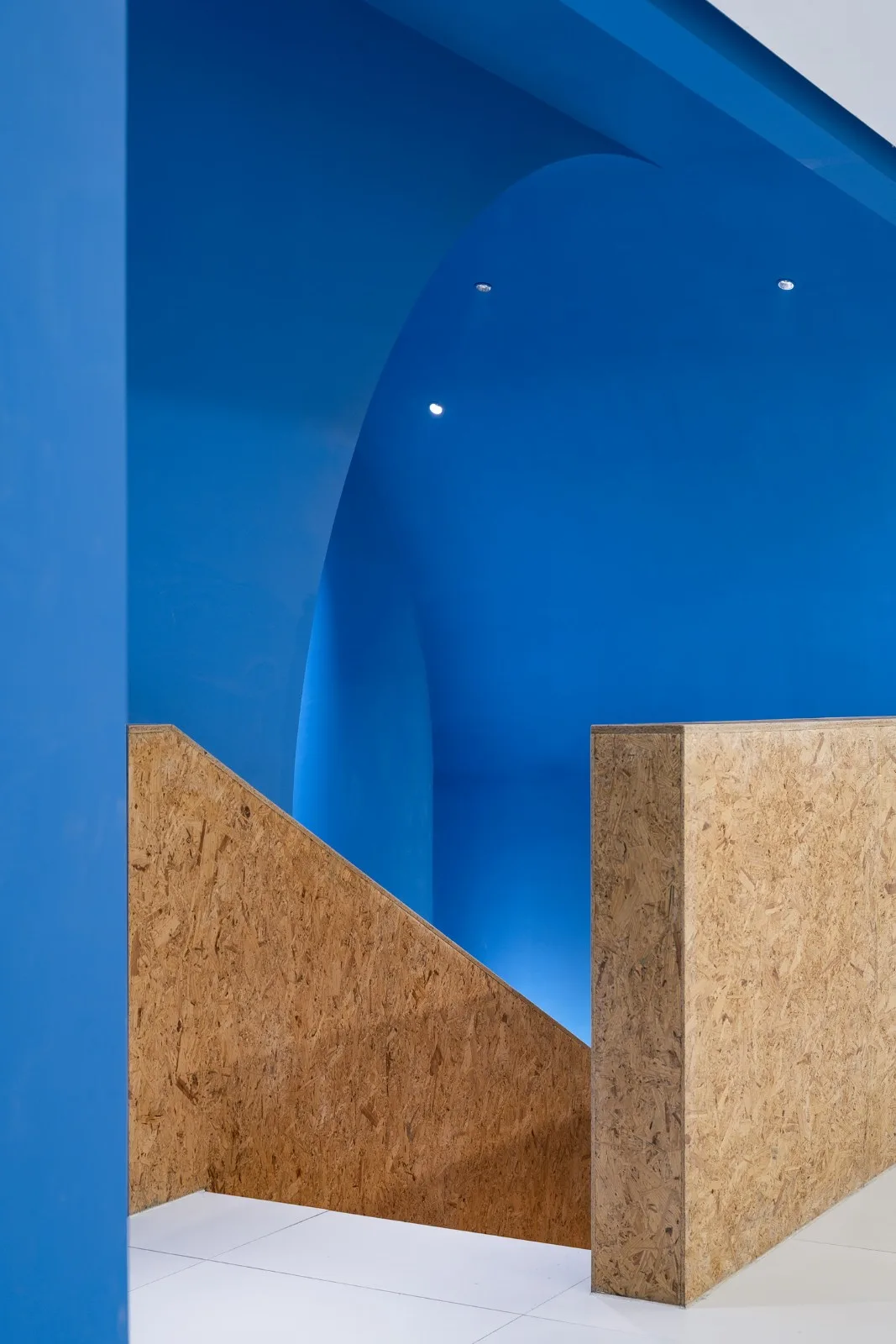
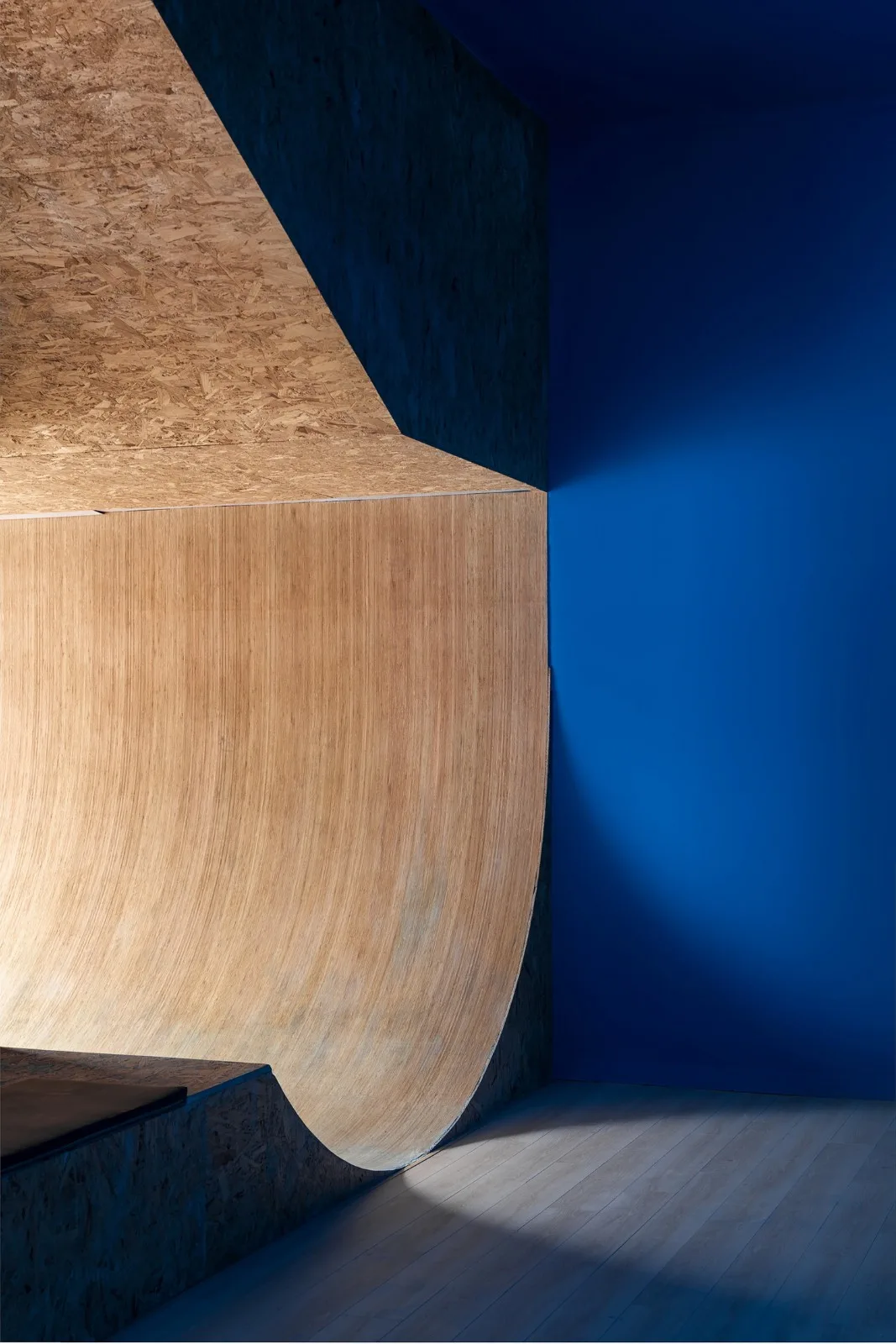
The first-floor lobby serves as an open “square” and “classroom” for various promotional events, speeches, and gatherings. One side of the lobby opens directly to the sidewalk along East Huilongguan Street, while the other leads to a dynamic staircase that encourages exploration.
This staircase functions as a three-dimensional playground and lecture space, bringing the vibrancy of the street to the upper floors. It allows visitors to glimpse the diverse activities happening throughout the complex.
In line with the owner’s theme “Under the Blue Sky,” a blue facade integrates the foyer and staircase area, forming a two-story arched space above the stairs. This area is designed as a flexible promotional venue or a backdrop for events through projection technology.
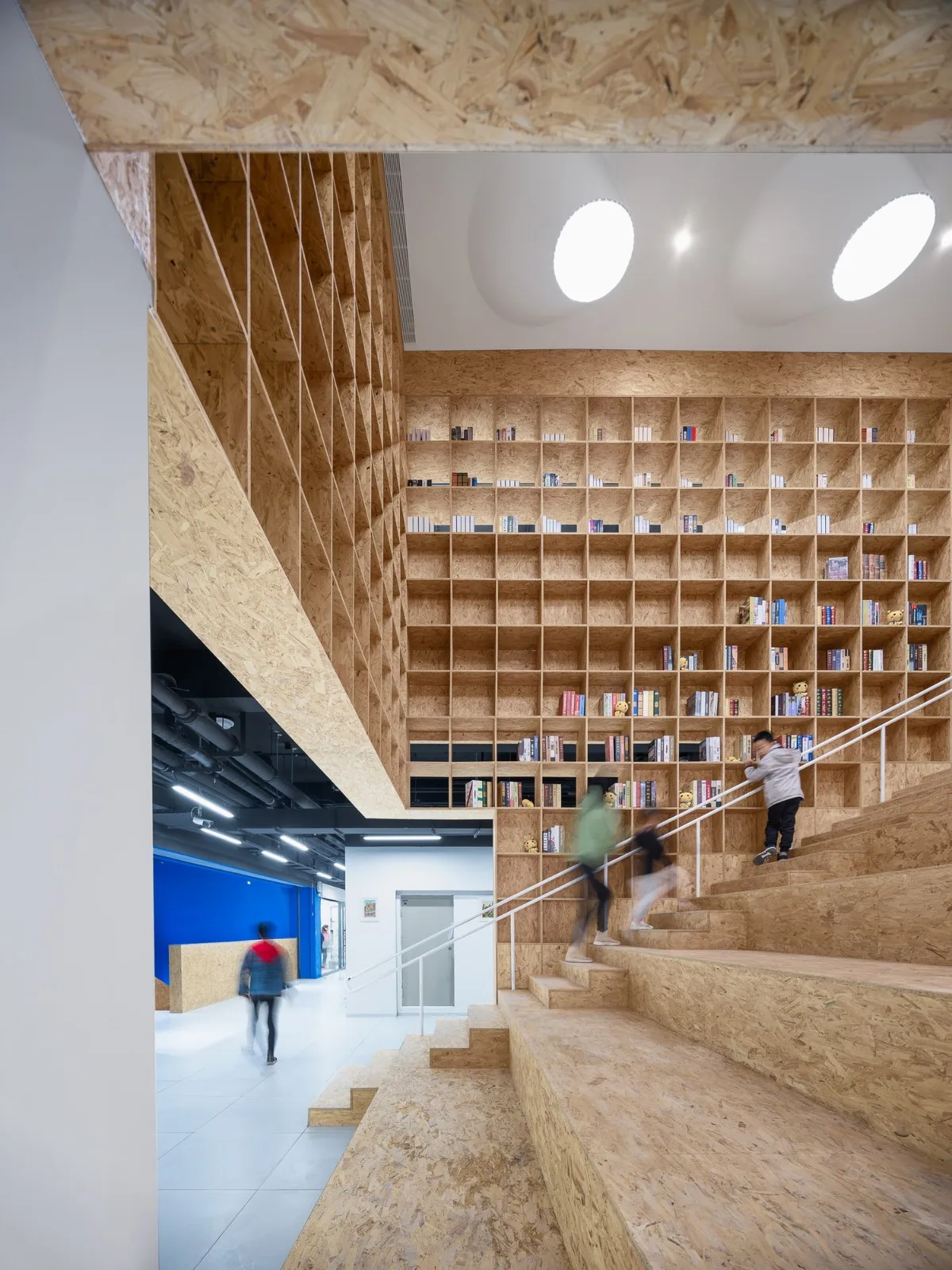
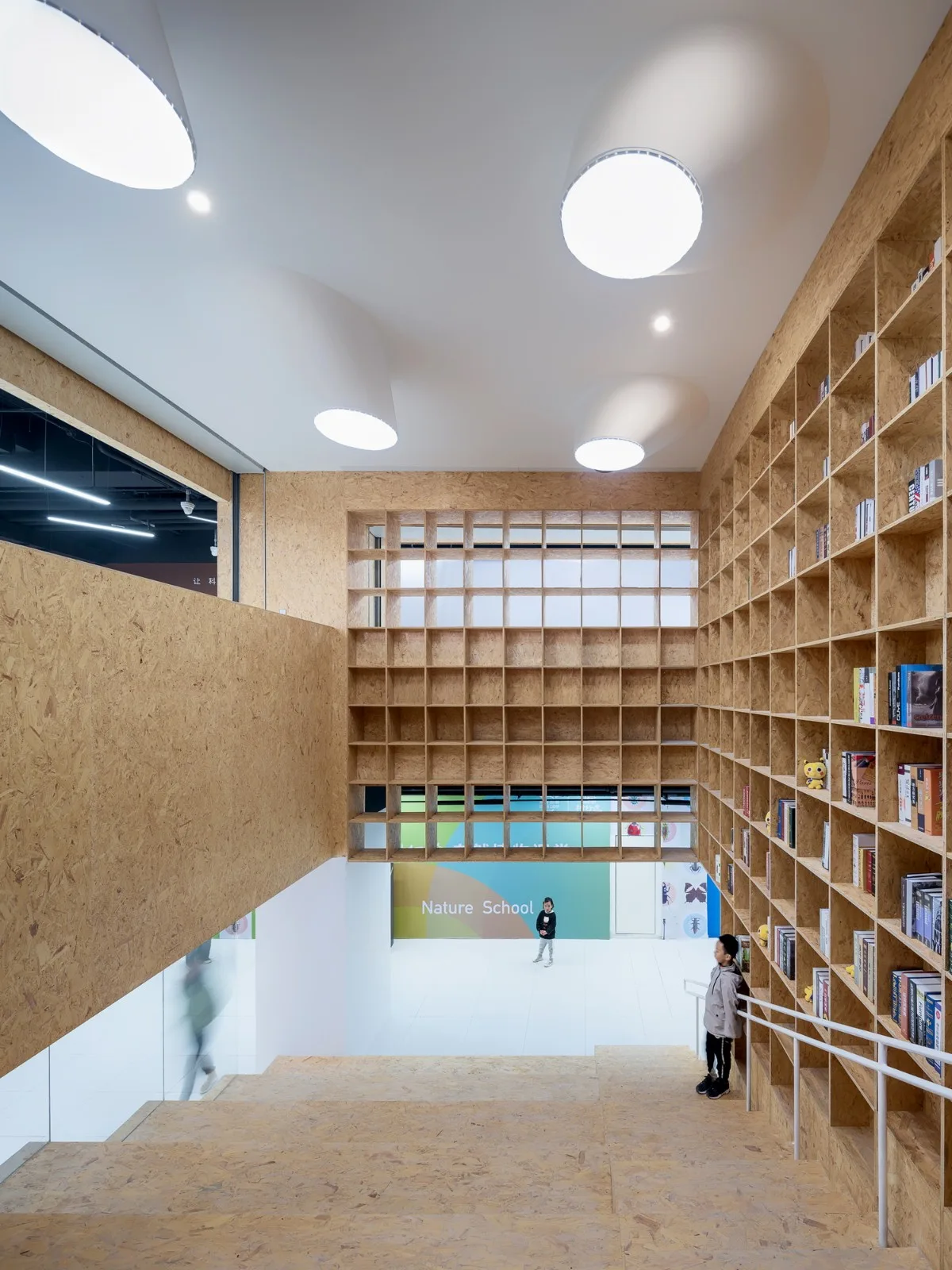
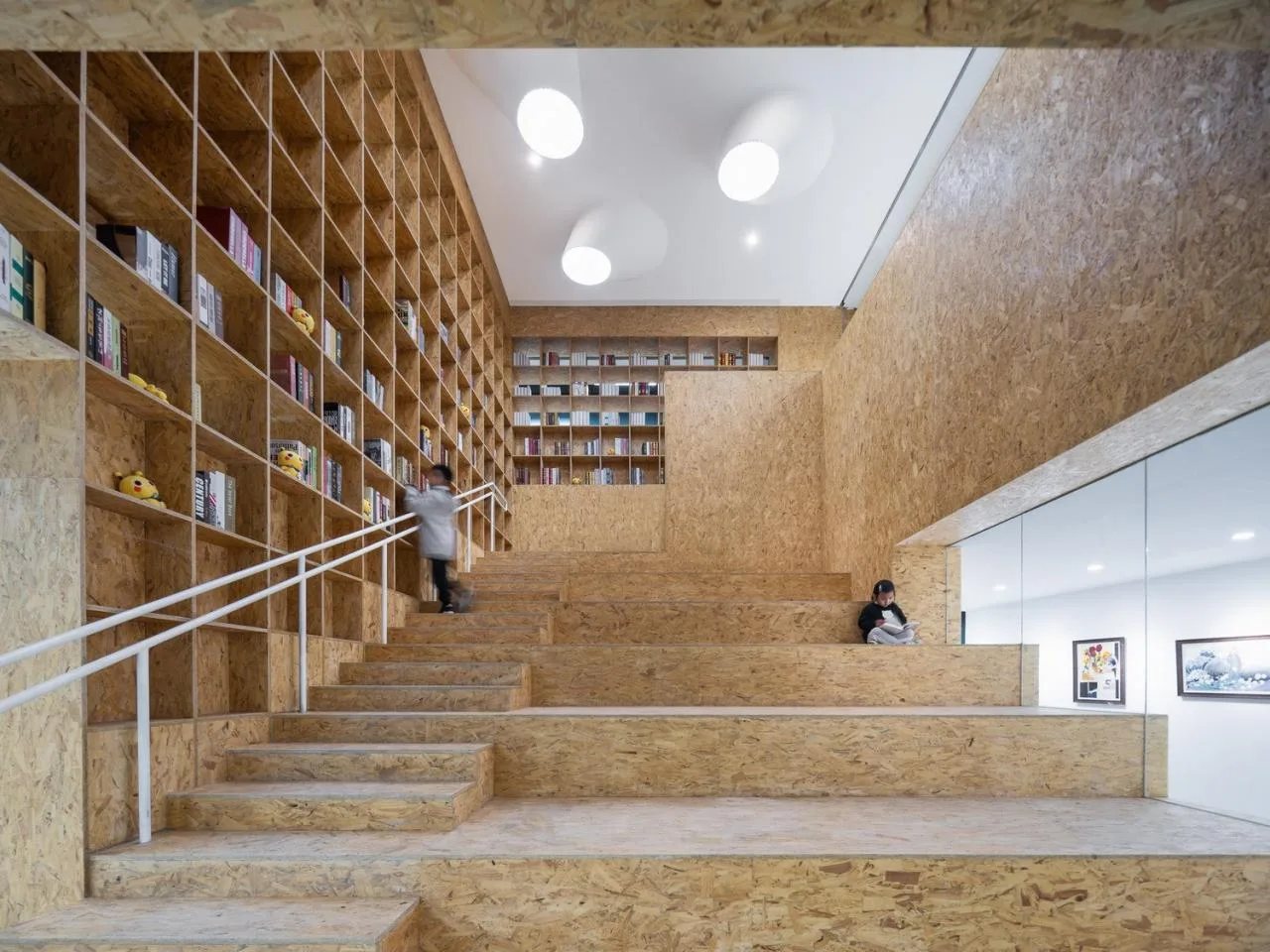
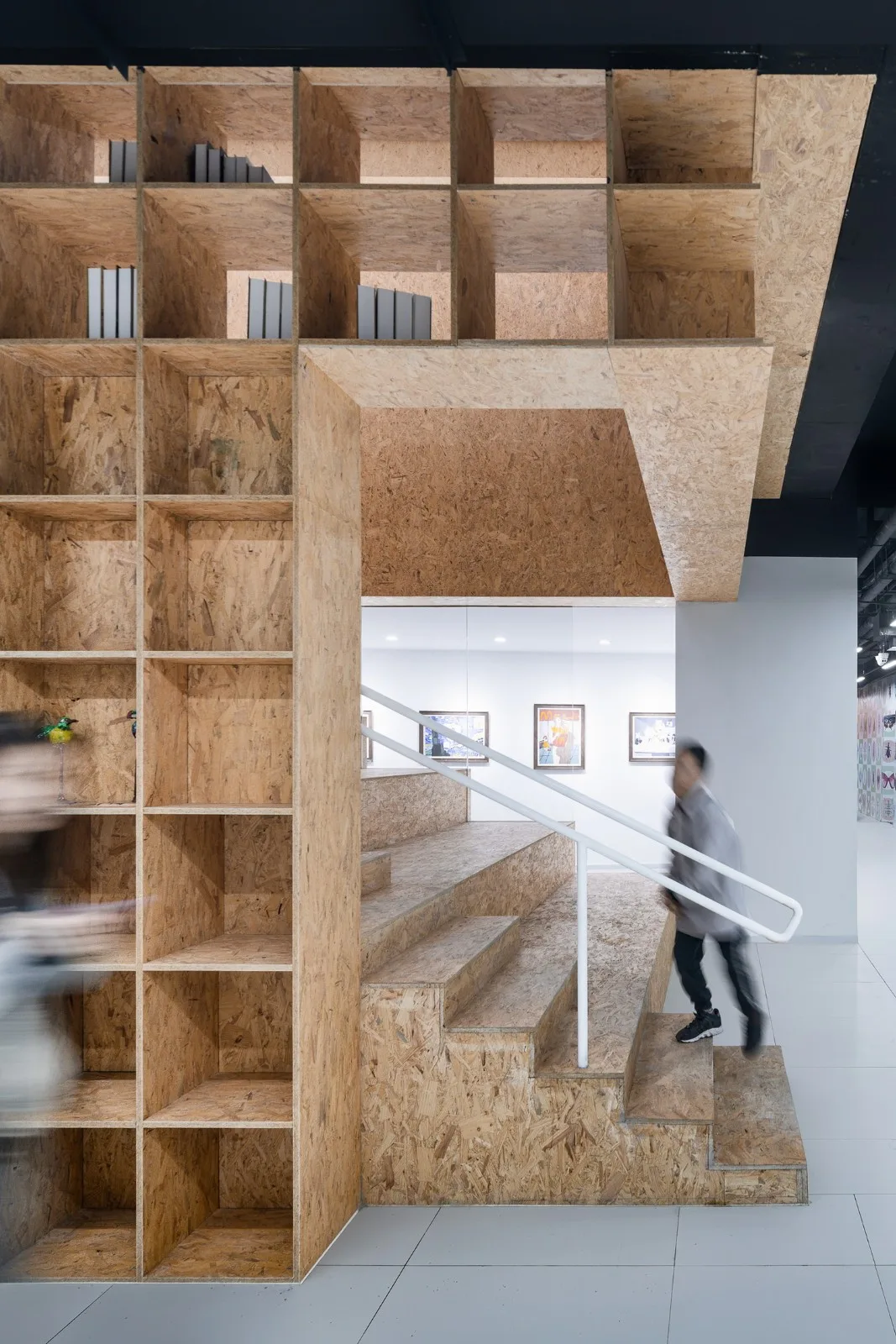
Ascending the stairs, visitors encounter a two-story bookshelf known as a “sea of books,” accompanied by a reading room designed for flexible seating postures and a linear gallery space. The architect envisioned this area as a hub for community residents to share knowledge and showcase their creative works.
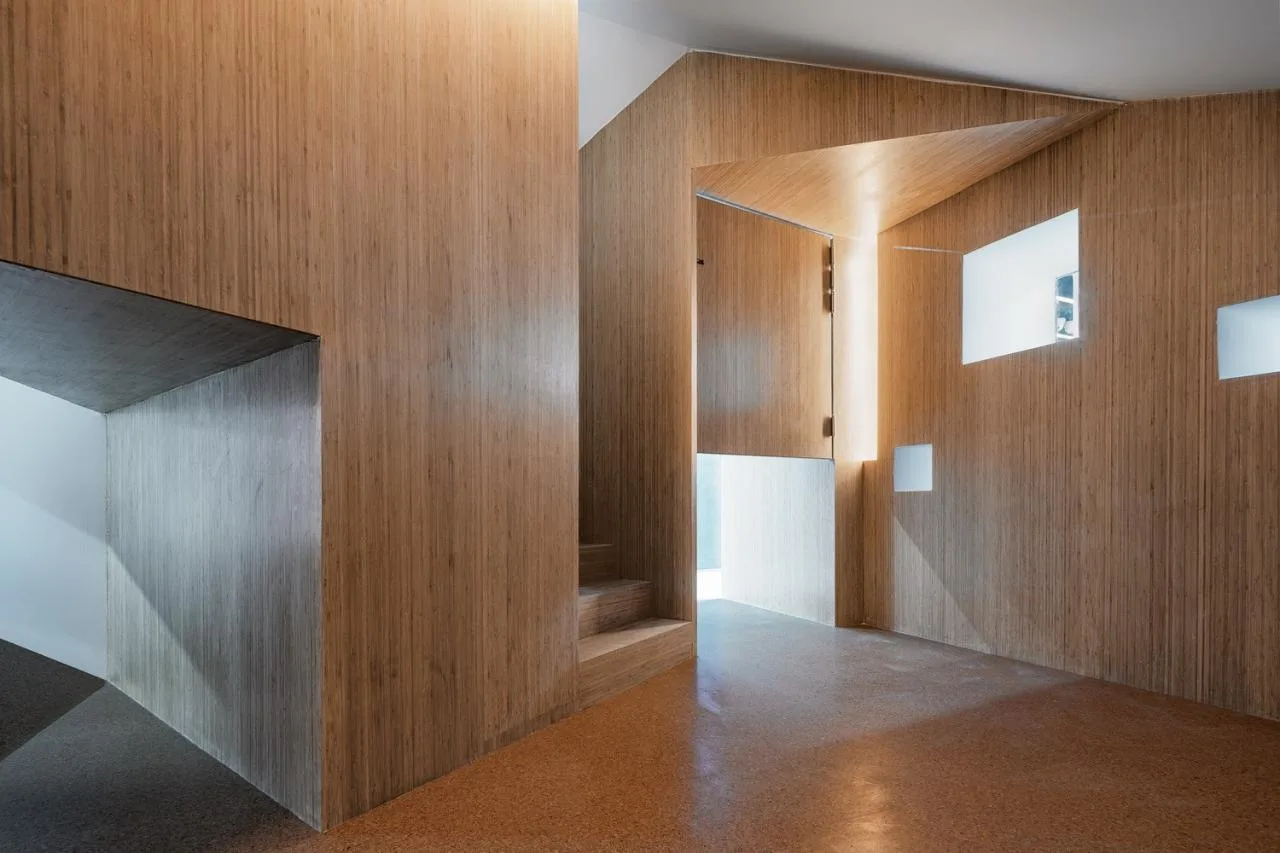
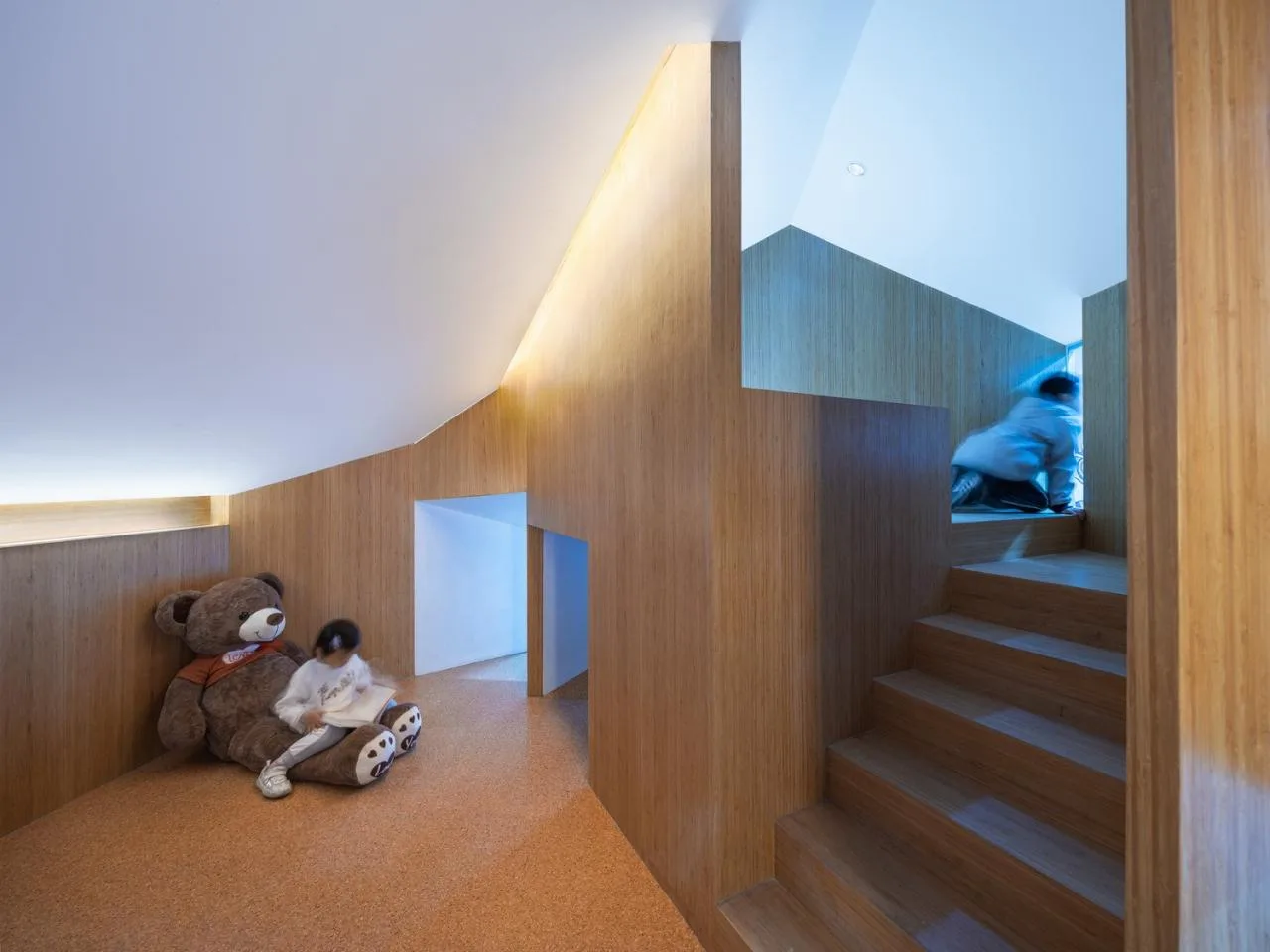
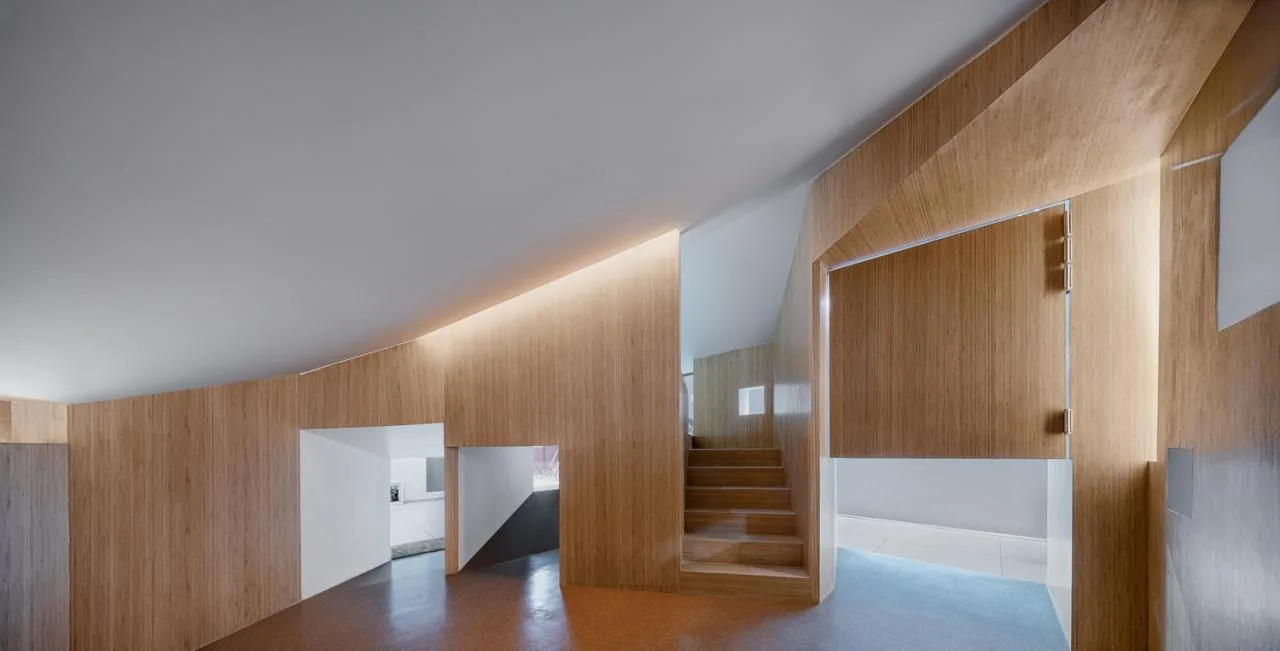
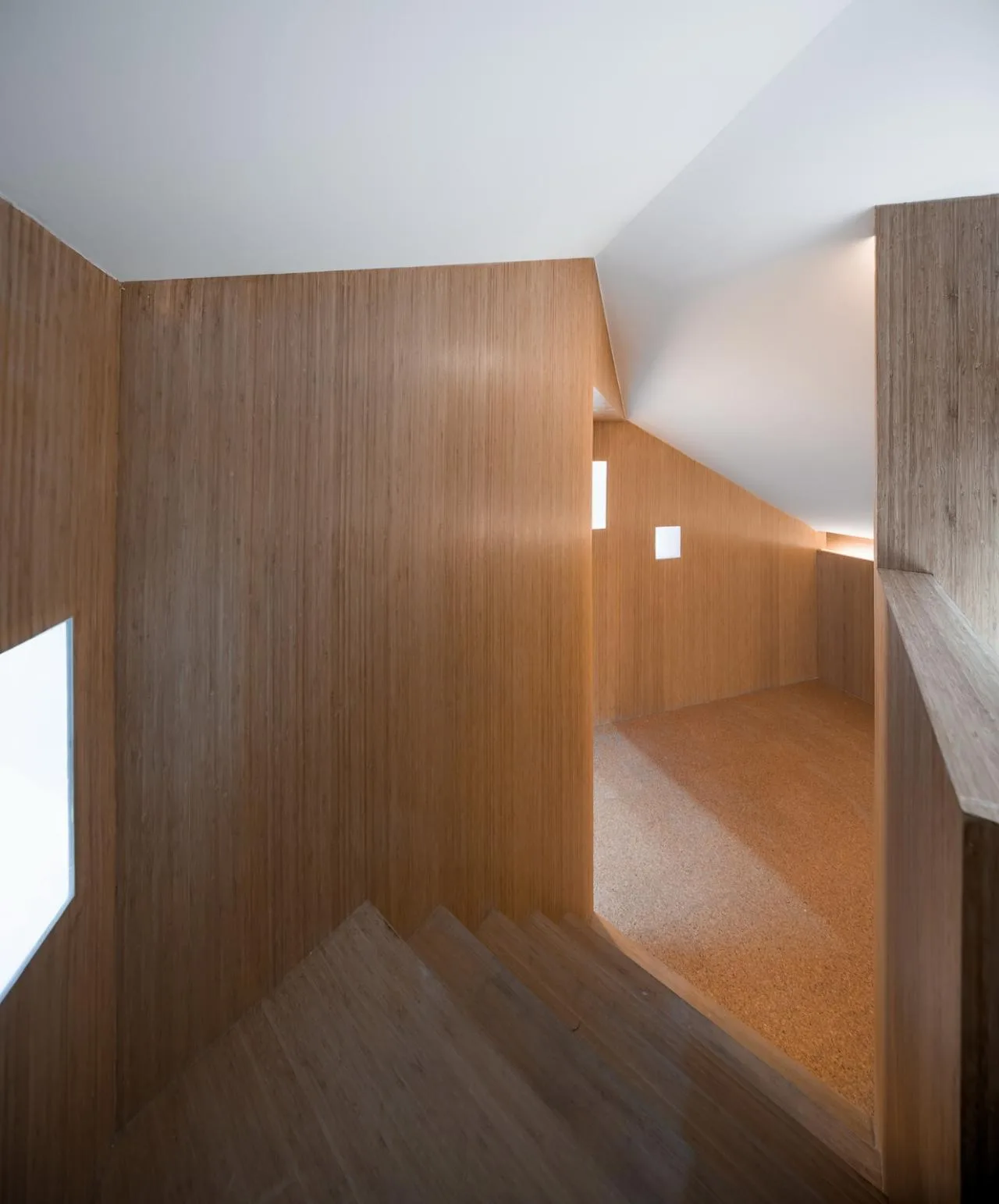
Beneath the stairs lies a hidden “secret base” exclusively for children, inspired by memories of hiding in wardrobes or behind curtains. Children can enter this playful sanctuary through child-sized openings or bookshelf grids, becoming masters of their own imaginative domain.
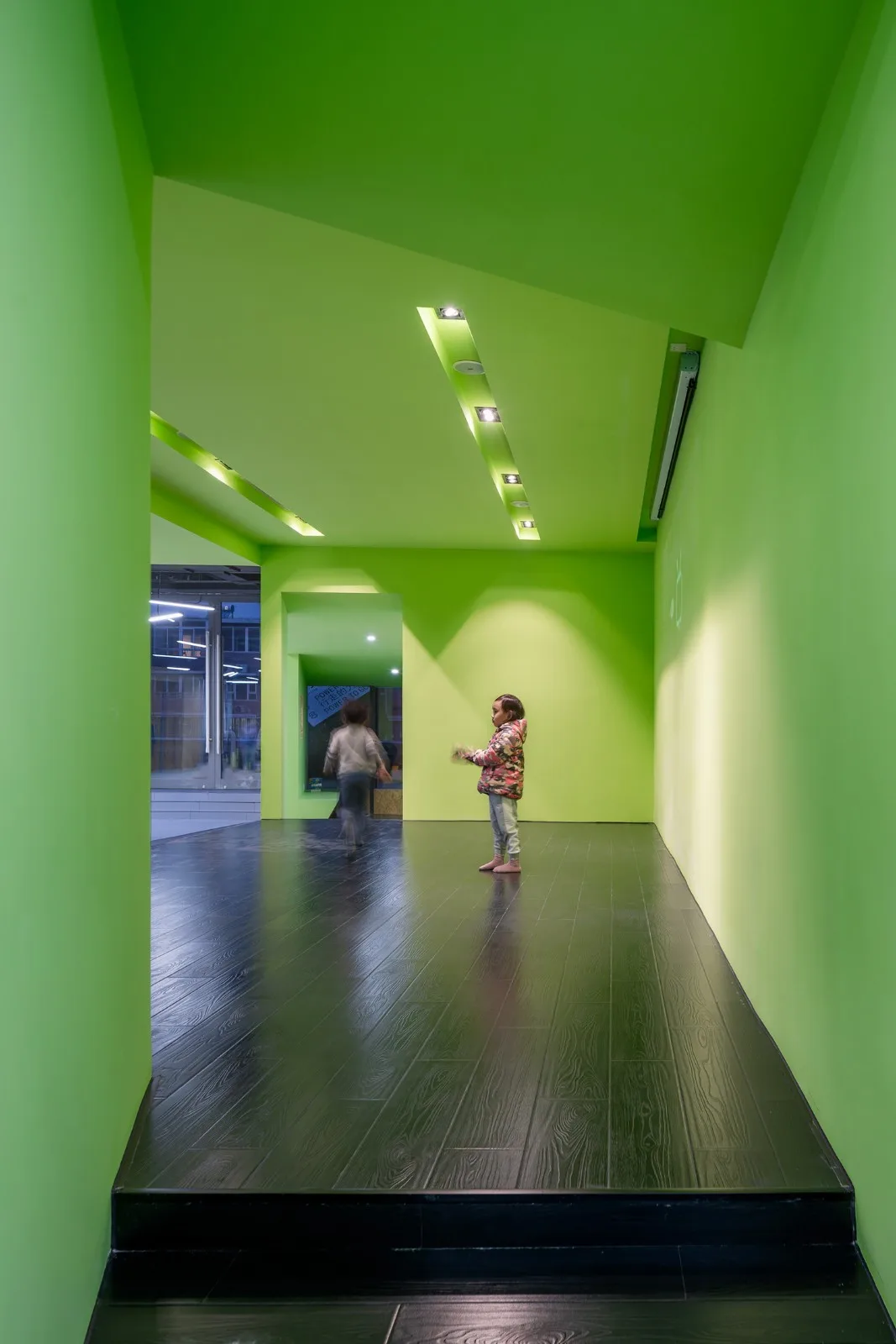
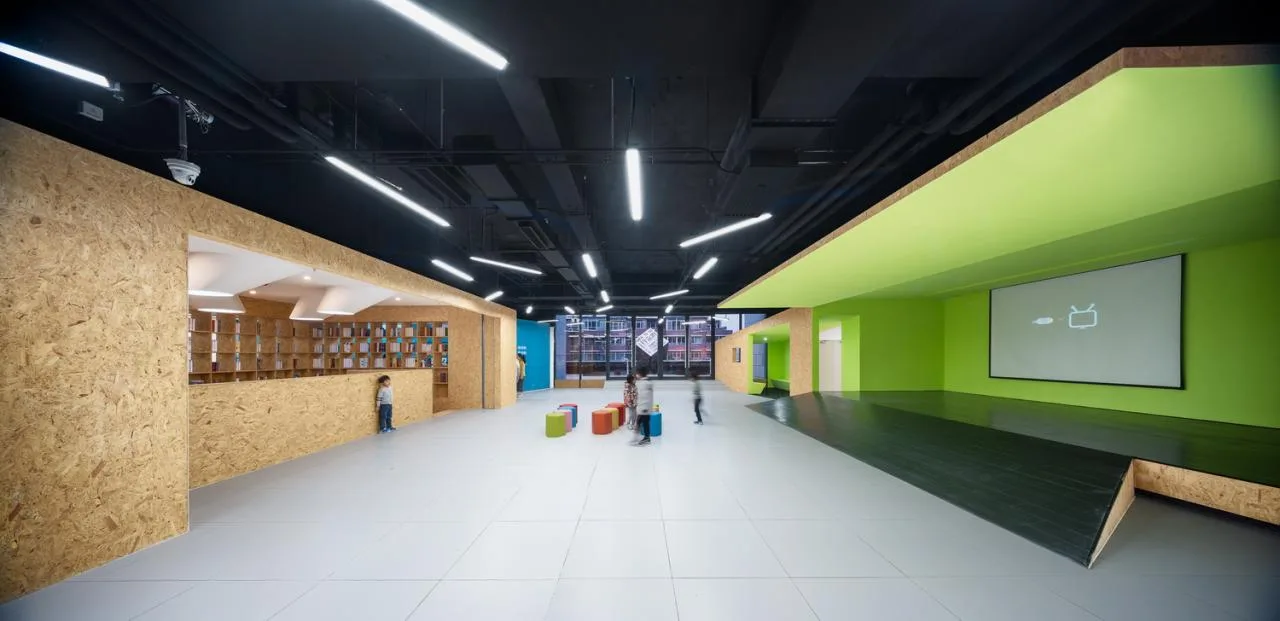
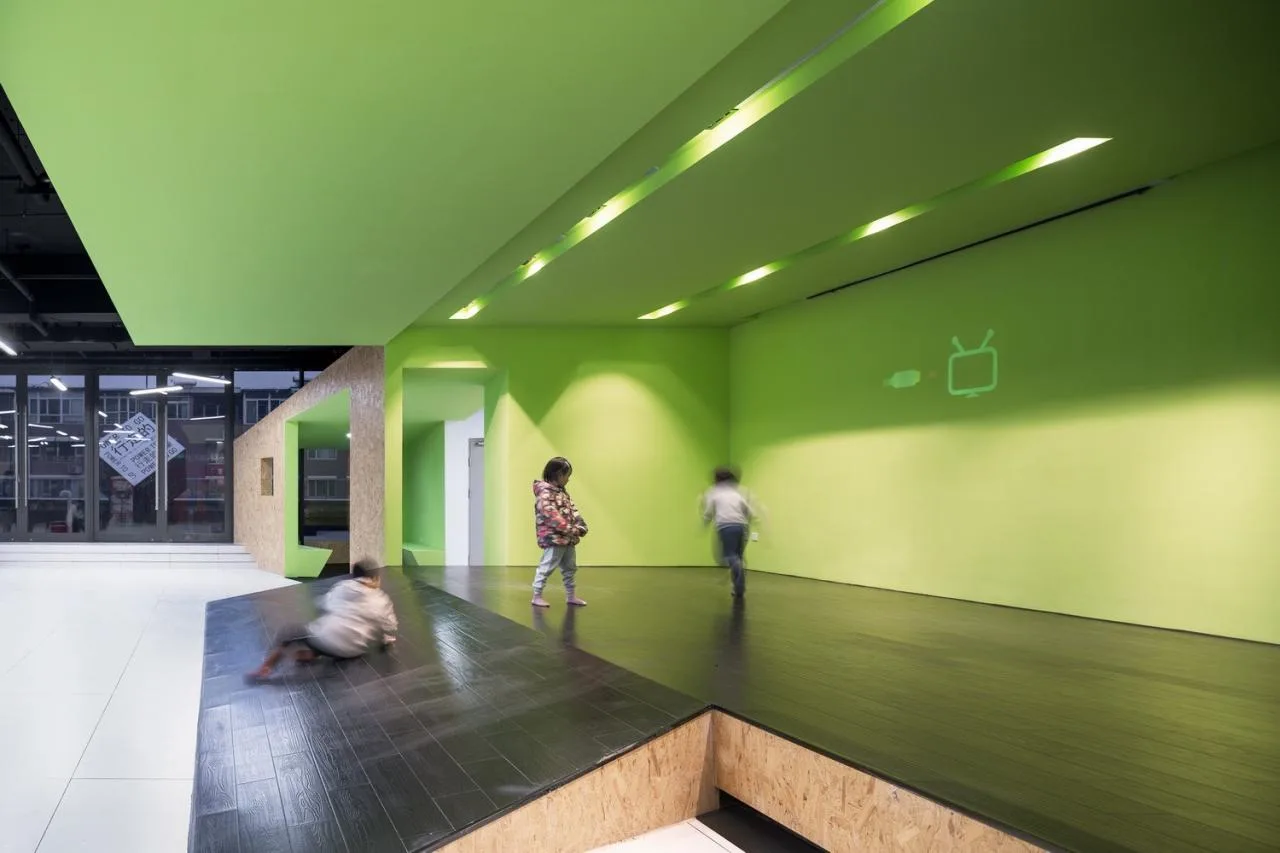
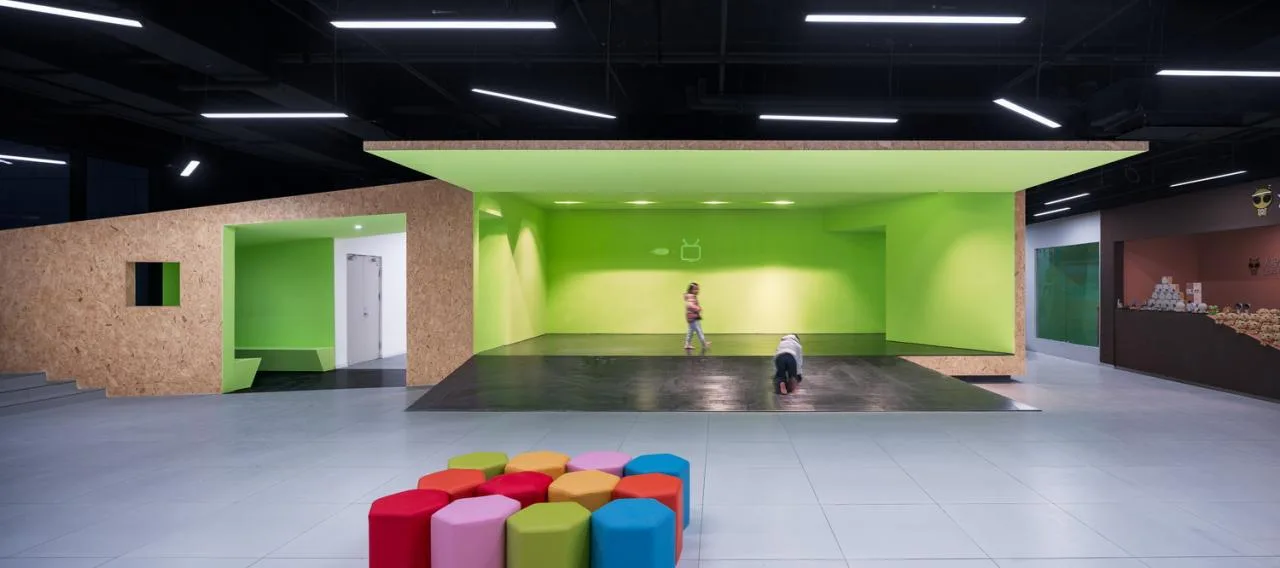
At the end of the “Education Zone,” visitors reach the open theater—a multifunctional space featuring an “open” theater box inspired by 18th-century showboxes. Two steps and a ramp connect the elevated stage to the audience area, which is designed as an extension of the “street.” This change in elevation encourages diverse performance styles and invites children to play, keeping the theater box as the focal point even when no performances are scheduled.
The theater’s audience area serves as both a vital performance space and a major circulation hub. It is flanked by the “Sea of Books” on the west and the “Drama Box” on the east. To the north, a spacious outdoor platform is planned, featuring sports facilities and experiential farms.
Project Drawings
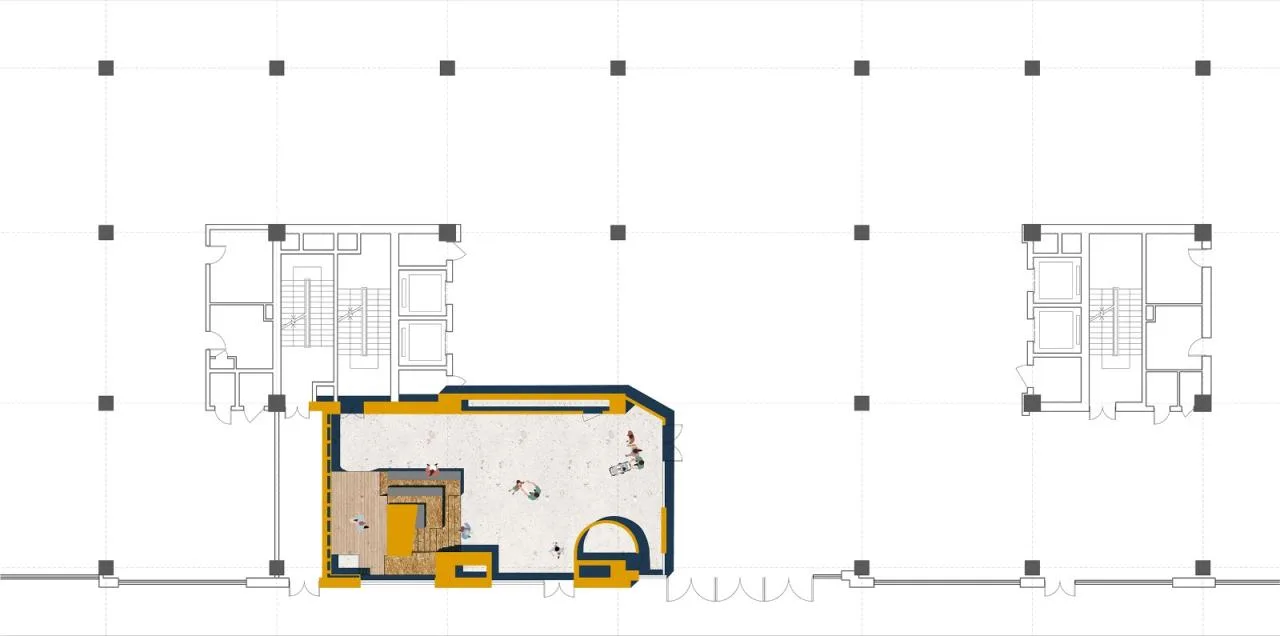
△ First Floor Plan
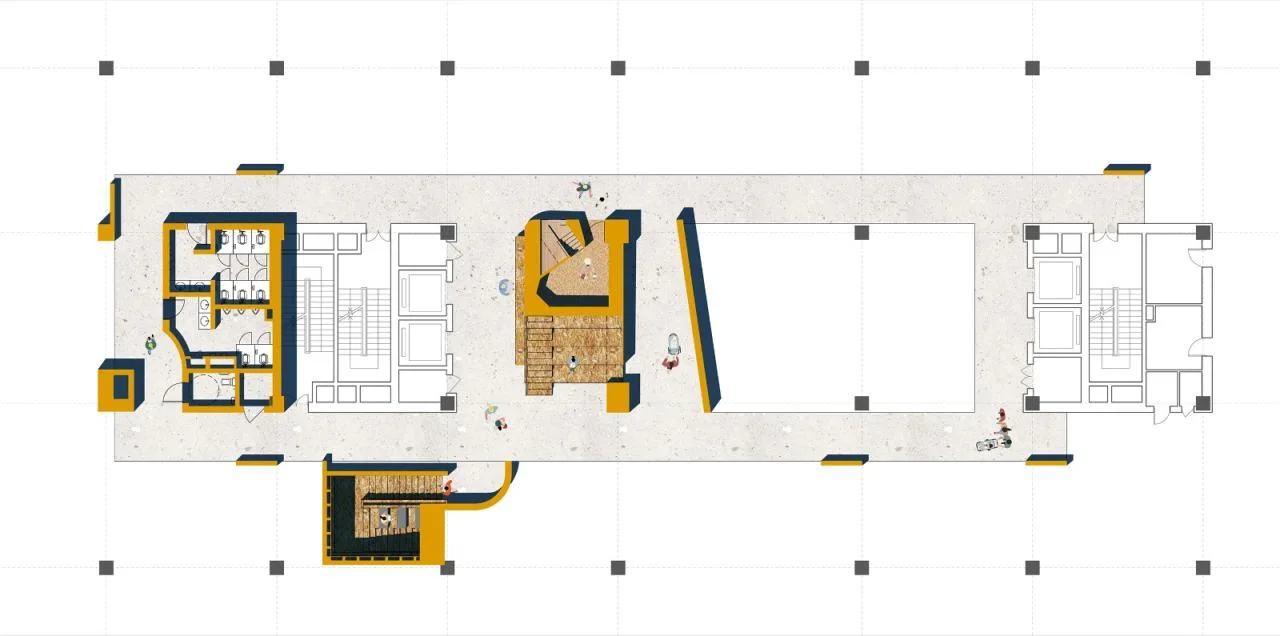
△ Second Floor Plan
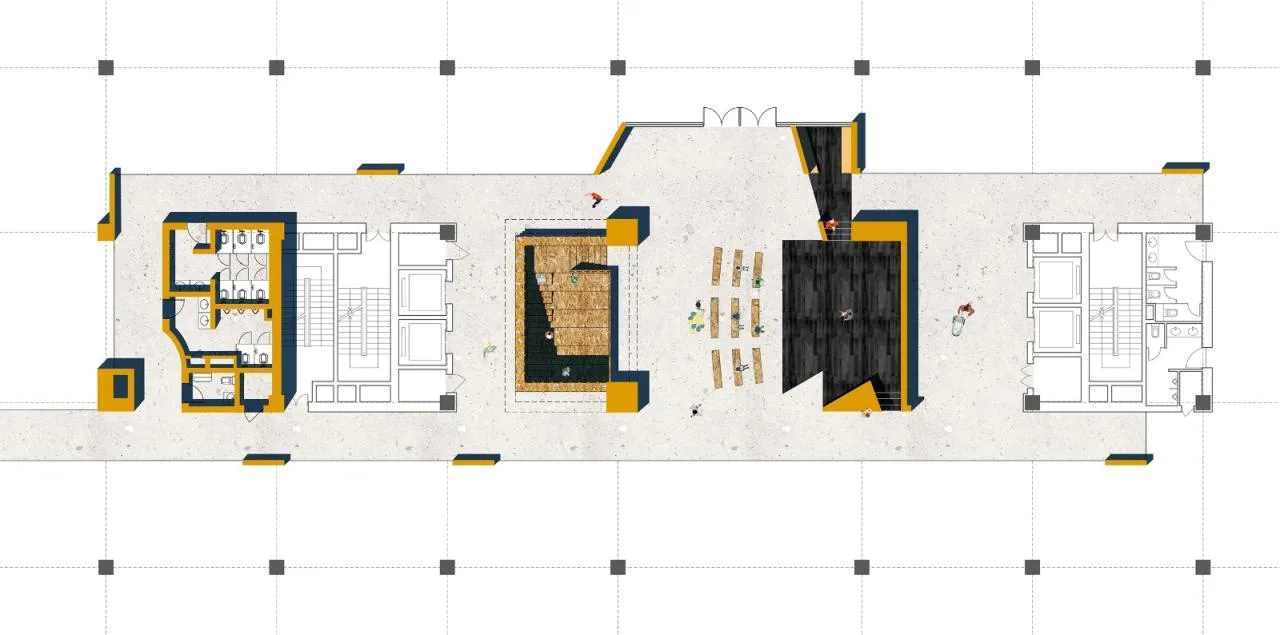
△ Third Floor Plan
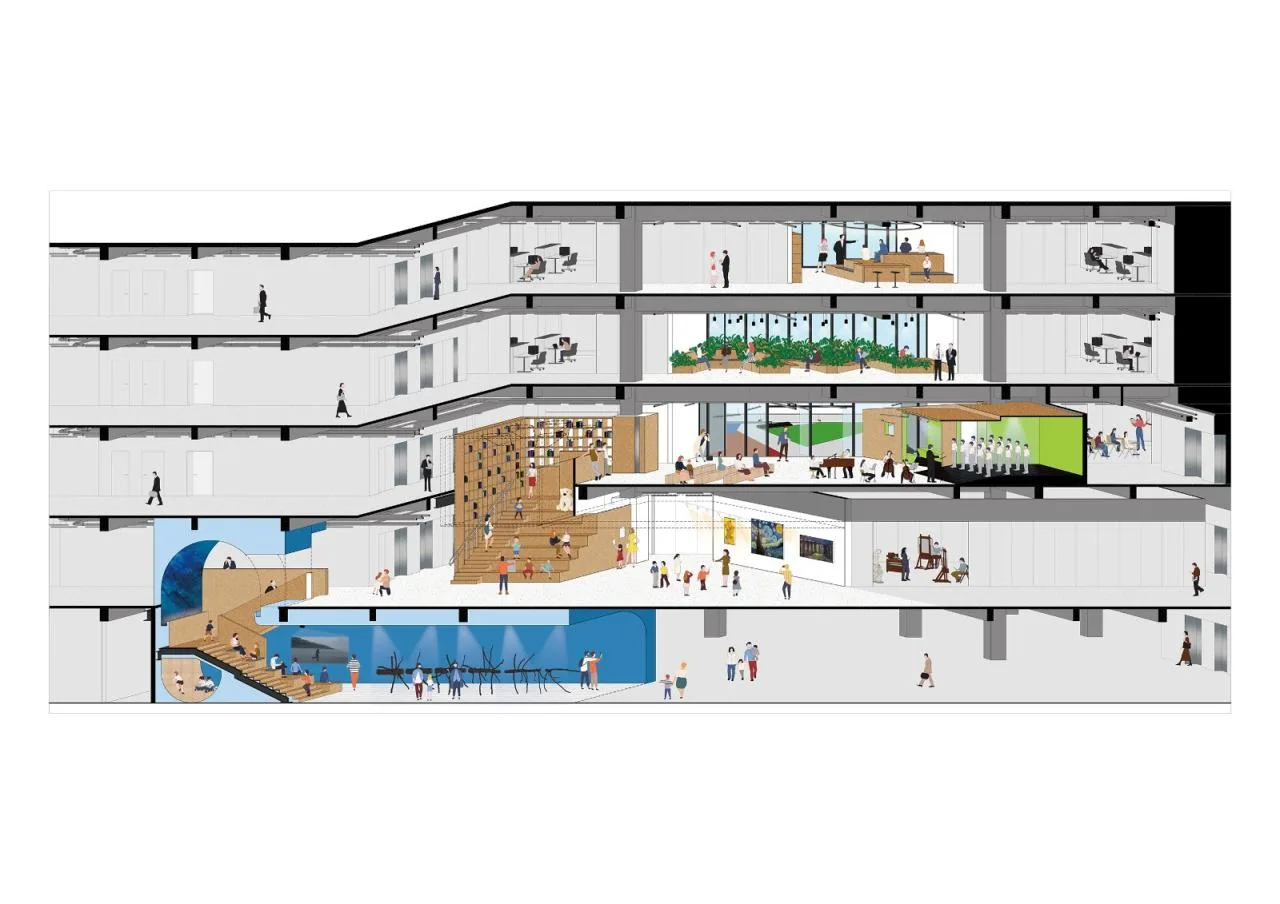
△ Project Sectional Side View
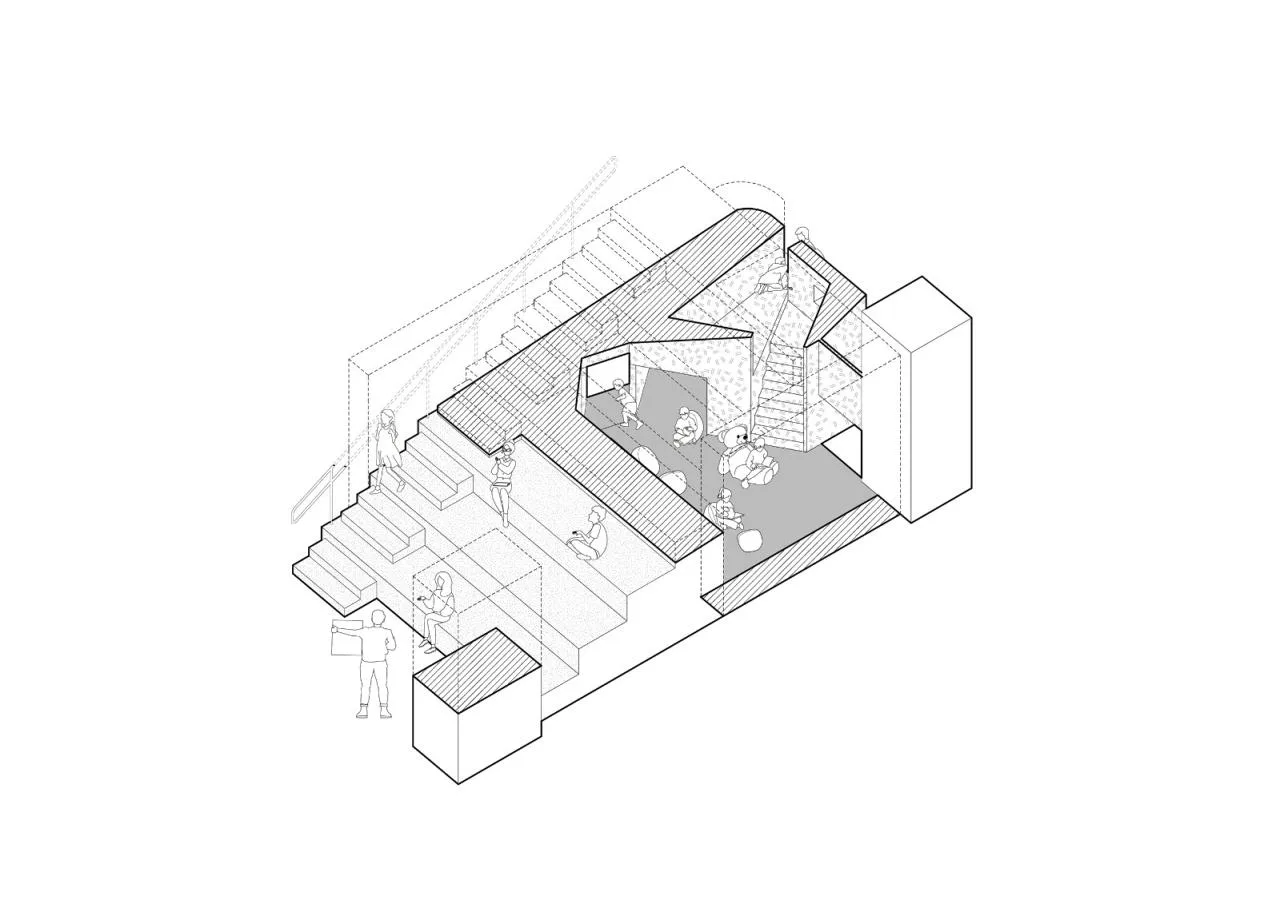
△ Secret Base
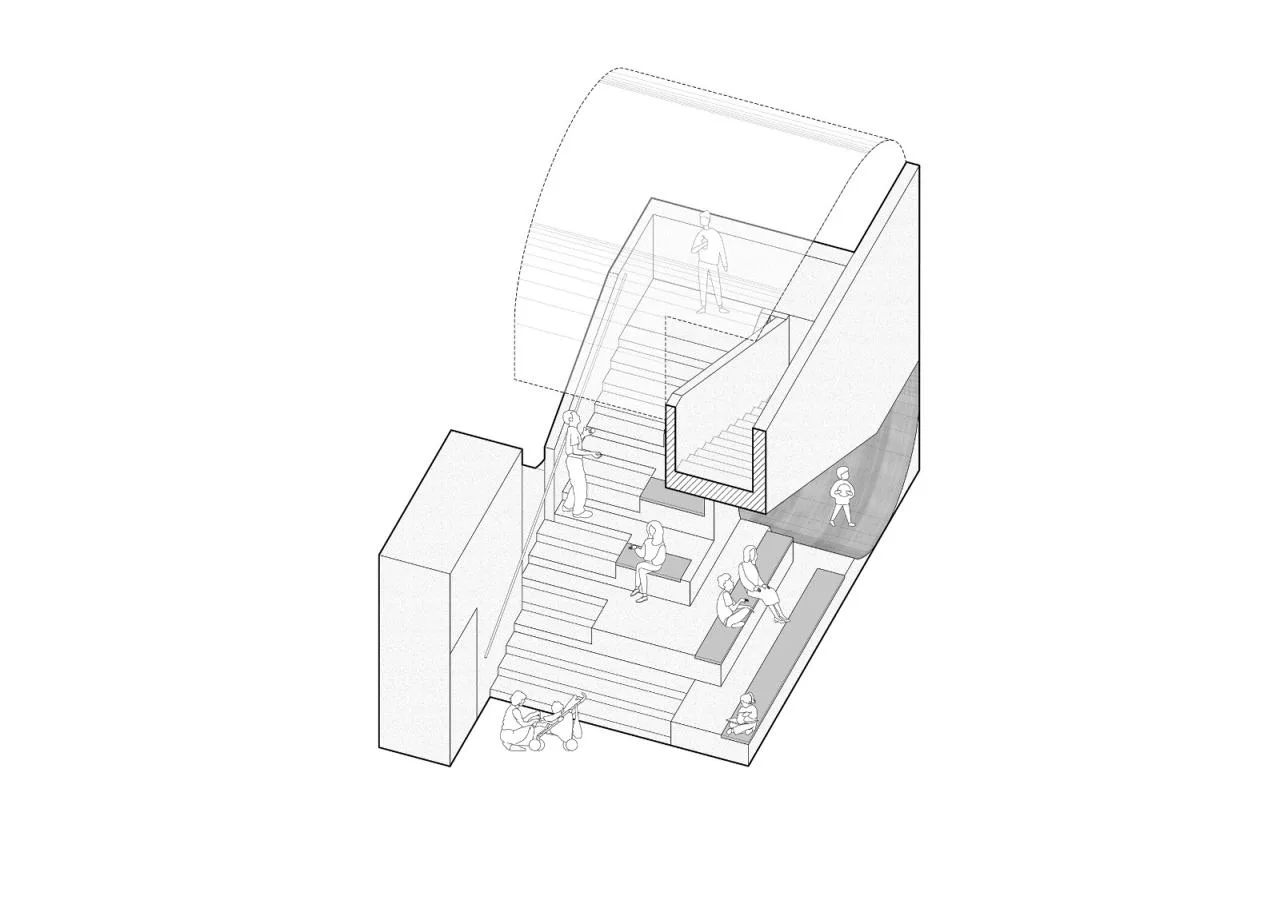
△ Dome Steps
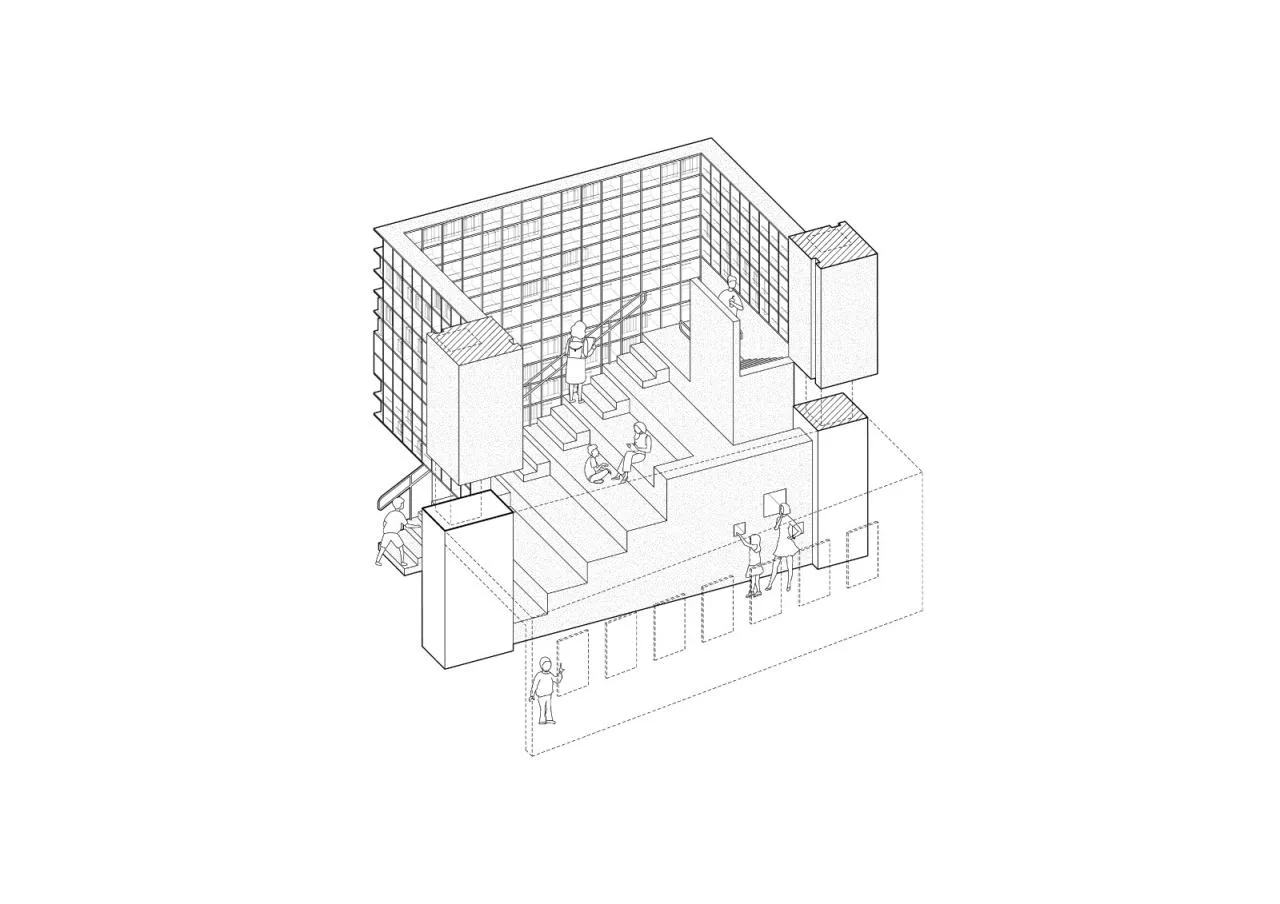
△ Sea of Books
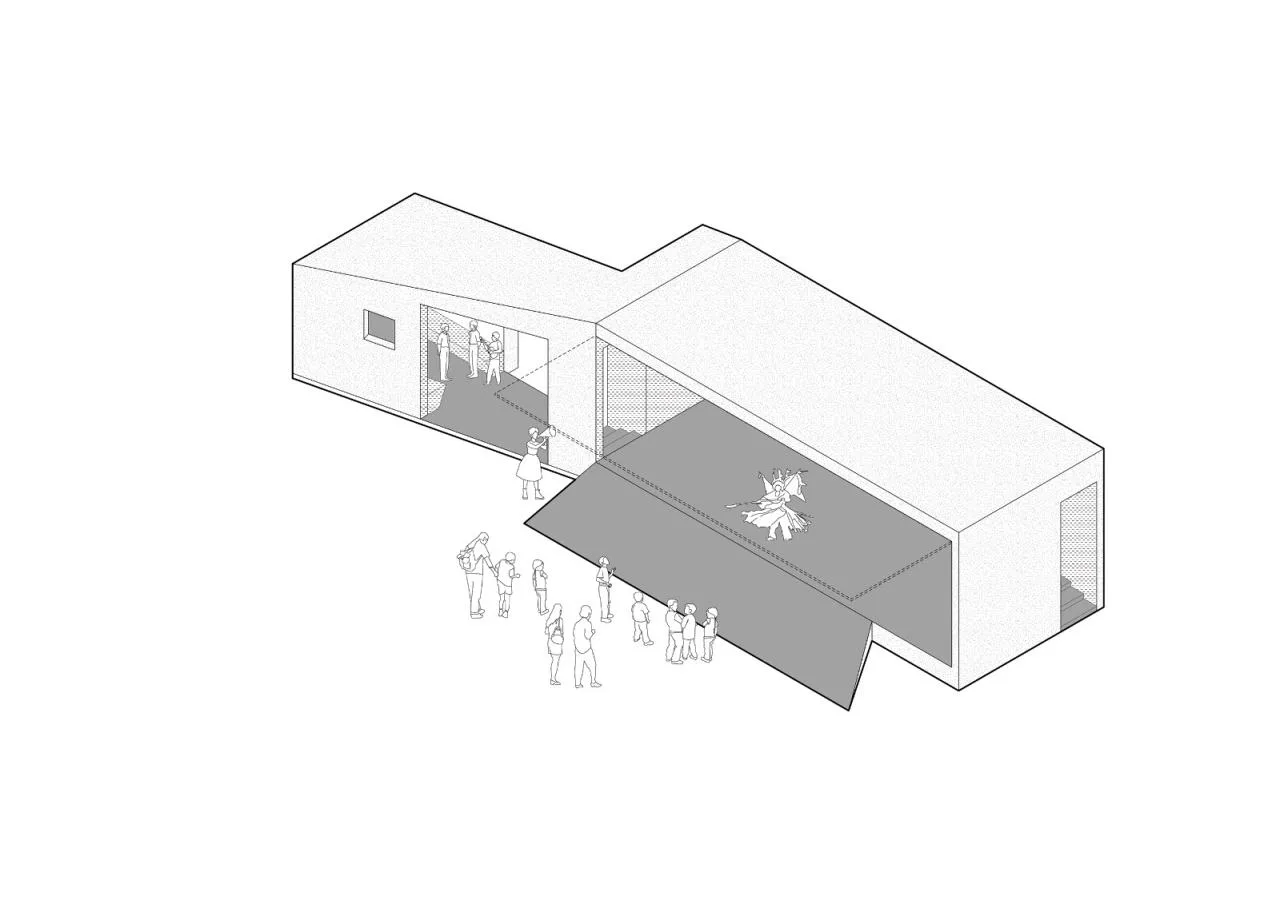
△ Drama Box
Project Information
Design Unit: Similar to Architecture
Project Name: Carnival Campus
Design Theme: Vertical Education Community
Lead Architects: Luo Ren, Zhao Yao
Design Team: Wang Nan, Zhang Chundong, Xie Guangxin, Zheng Jiawei
Building Area: 10,500 square meters
Renovation Area: 2,000 square meters
Design Date: July 2019
Project Status: Completed
Photography by © Wu Qingshan















Must log in before commenting!
Sign Up