
BIM (Building Information Modeling) technology is an object-oriented CAD system specifically developed for architectural design, enabling the digital representation of buildings. By using BIM, comprehensive building information is stored within an electronic model, marking a significant advancement in the industry.
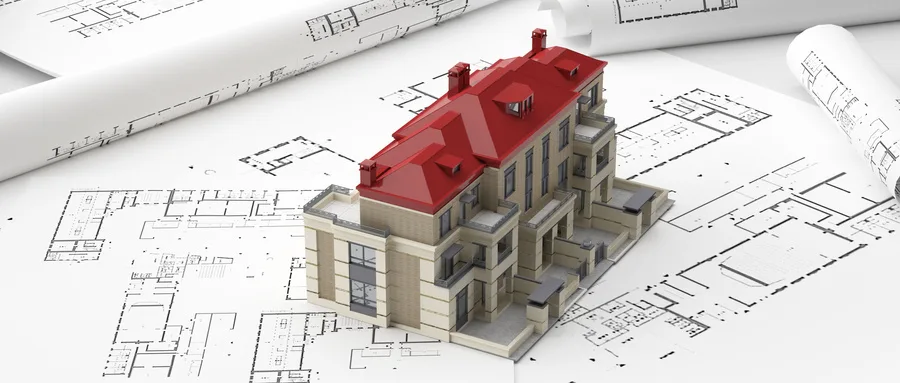
Although object-based CAD is not a new concept, and digitally describing buildings has long been an ideal approach, it was only with the rise of personal computers in recent years that widespread commercial implementation became viable. This has led to the emergence of numerous BIM application systems. Unlike traditional CAD tools that focus on basic geometric shapes like points, lines, and circles, BIM software operates on building components—walls, doors, windows, and more. The digital model is no longer just a collection of unrelated lines and points, but a fully integrated building made up of individual components.
The arrival of BIM technology has greatly benefited designers by reducing errors during the design process, improving efficiency, and providing many new design capabilities.
Tasks that previously required specialized software—such as rendering, animation, or creating virtual reality scenes of a building—can now be easily accomplished using BIM software.
Similarly, the generation of component lists and statistical tables, which once had to be done manually or with additional software, can now be automatically produced by BIM systems.
BIM software also enables various visual analyses of design elements, including sunlight exposure, spatial relationships, and volume calculations, greatly expanding the analytical tools available to designers.
By embedding detailed information such as thermal conductivity, surface heat transfer coefficients, bulk density, and mechanical properties of materials within the building information model, BIM facilitates real-time performance evaluations, energy consumption analysis, and structural assessments.
Moreover, building information modeling supports the analysis of property changes throughout the entire lifecycle of a building, laying the groundwork for comprehensive lifecycle information management.
In essence, BIM provides designers with a broader range of tools and capabilities, enhancing the quality and value of their designs beyond what was previously possible.
















Must log in before commenting!
Sign Up