
BIM offers powerful virtual manufacturing and modeling capabilities. The construction team utilizes BIM’s virtual construction features to simulate and analyze the design plans provided by the design team. This allows them to anticipate potential issues or design flaws within the project and optimize the construction strategy accordingly. Before beginning actual construction, BIM technology helps detect pipeline clashes and adjust any component conflicts in advance, enabling timely design modifications.
Additionally, BIM models support the development of detailed construction schedules and the efficient organization of resources, minimizing resource wastage. During on-site construction management, BIM can be integrated with other advanced technologies to further enhance project oversight.
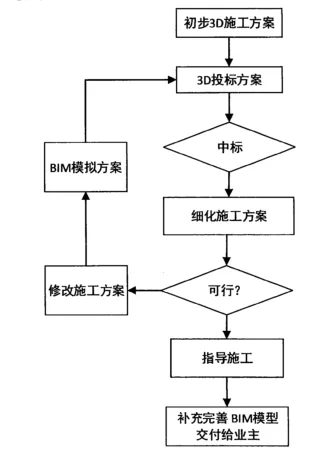
Figure 1 illustrates the BIM project management workflow used by the construction team. They start by aligning with the owner’s technical requirements to develop an initial 3D construction plan based on the BIM model provided by the design team and prepare the bidding documents. If the bid is successful, the construction plan is further refined using BIM virtual construction technology to simulate scenarios, eliminate potential issues, and enhance the visualization model.
Throughout the entire project, the construction team is responsible not only for the physical building process but also for maintaining the BIM model in real time. Upon project completion, the final BIM model, which accurately reflects the physical building, must be delivered to the owner.
Compared to traditional management methods, the construction party’s BIM approach allows for earlier control over the project, with actual construction milestones occurring later. This is because the team conducts virtual construction on the BIM model to resolve all component clashes and evaluate installation spaces virtually before implementation. The ongoing refinement of construction plans generates numerous alternatives, requiring additional investment of labor, materials, and finances to identify the optimal solution. Consequently, the upfront costs for the construction team are higher in the early stages compared to traditional management processes.
















Must log in before commenting!
Sign Up