
To ensure the design intent is consistently reflected throughout the entire process, architects traditionally needed to work on both model making and drawing simultaneously. These two distinct tools complemented each other’s weaknesses. However, with the rise of BIM technology, the distinction between models and drawings has gradually faded.
Traditionally, solid models and drawings were inseparable. BIM technology now links these two elements, bridging the gap between them. Although most building models and drawings today are digital, they are often not fully integrated. Some drawings are created using CAD methods but exist independently from 3D building models. Others are generated from 3D models but have weak or lost connections to them. When the model changes, manual proofreading and coordination are still needed to update the drawings accordingly.
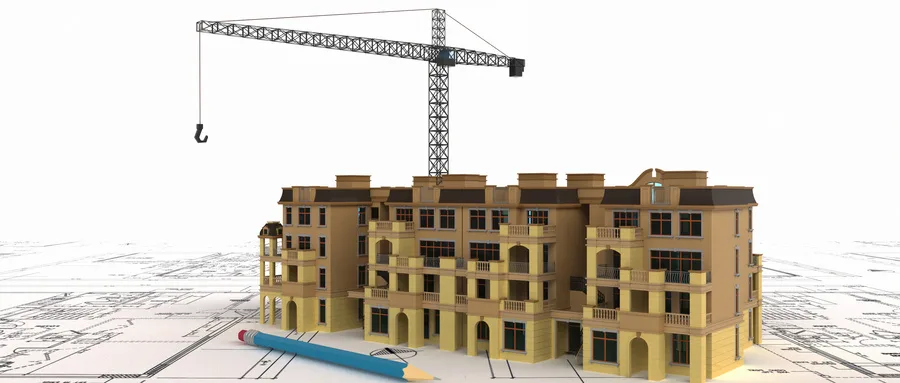
The Graphisoft BIM solution is built on the relationship between models and drawings, where project documentation is a byproduct of 3D modeling. Plans, views, schedules, and other documentation are direct representations of the 3D model. Essentially, these drawings serve as graphic and textual “reports” generated from model data. As such, the drawings act as live views of the building model, accurately reflecting the design while remaining synchronized with the 3D model.
Moreover, BIM technology allows architects to import virtual building models created during the design process directly into various analysis software via standardized data formats. This integration enables collaboration with performance analysis tools, eliminating the need for time-consuming and repetitive modeling efforts.
By combining BIM with other analysis software, architects can quickly and easily simulate both the interior and exterior environments of a building. This facilitates visual analysis and evaluation of the building’s performance, allowing for timely design adjustments. Such capabilities help architects and planners gain a comprehensive and intuitive understanding of environmental factors during the design phase.
Therefore, the BIM design process centers around using the BIM model as the core for architectural schematic design, construction documentation, and related cost estimation. There is no need to build separate models, as realistic renderings can be generated directly from the BIM model to represent the building. Additionally, BIM effectively coordinates with other performance analysis tools to complete building performance assessments, including sustainable design. This streamlined workflow exemplifies the digital age’s efficiency—fast, convenient, and labor-saving—marking a new era in architectural design.
In contrast, the traditional design process remains heavily reliant on 2D CAD. After the schematic design is finalized, construction drawings must be redrawn from scratch, increasing the risk of errors. The initial design concept often becomes nearly useless because it requires complete remodeling in 3D, dividing the design process into separate stages. Furthermore, if building performance analysis is needed, the building must be remodeled again in different software. This repetitive work significantly reduces efficiency.
















Must log in before commenting!
Sign Up