
While the BIM design process offers significant advantages, it also presents certain challenges. Currently, the new design workflow often coexists alongside traditional methods, making it unrealistic to completely abandon existing tools. However, as BIM adoption deepens, the new process is expected to gradually replace older systems.
(1) ArchiCAD features parameterized components organized within a library, but this library has limitations. Complex components required for specific building projects often need to be continuously downloaded and updated, which makes it difficult for designers to create missing elements independently. This increases the workload and can complicate the description of certain parts, such as floor vents and roof non-powered fans in demonstration projects.
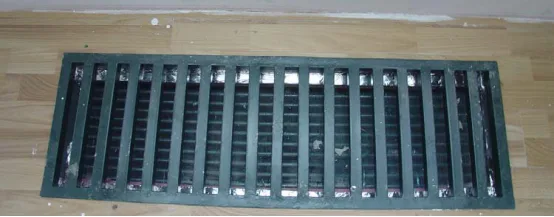
Figure 1: Designers are required to model floor air outlets manually.
(2) ArchiCAD’s 2D drafting capabilities are not as robust as those found in traditional CAD software. Architects who are accustomed to AutoCAD often find ArchiCAD unfamiliar and less intuitive in this regard.
(3) During the initial planning stages, many designers prefer to use AutoCAD for detailed plan refinement. ArchiCAD is primarily geared towards construction documentation and quantity takeoff. As a result, many design firms also rely on SketchUp to develop and refine building models.
(4) When it comes to rendering, ArchiCAD still falls short compared to specialized software like 3ds Max.
(5) Currently, ArchiCAD is mainly used by architects. This limited usage can cause significant coordination challenges during the construction drawing phase. Architects often need to export CAD drawings and organize them before sharing with other disciplines, which greatly increases the workload.
















Must log in before commenting!
Sign Up