
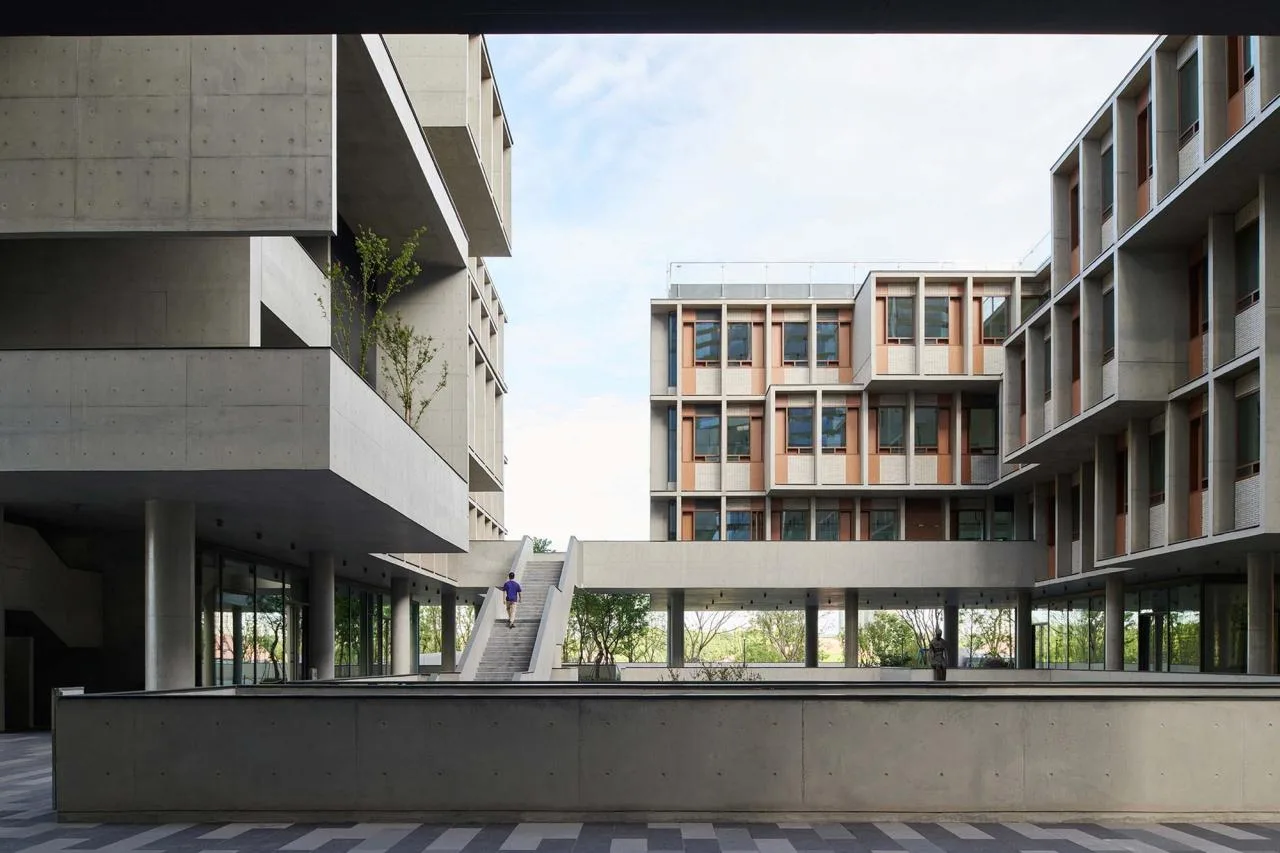
The Floating Headquarters is situated on the northern lakeshore peninsula of Chengdu Luhu Ecological City. This complex consists of eleven standalone office buildings arranged around three interconnected courtyards. The design invites people through spatial dynamics, creating more natural and public spaces that introduce new possibilities for high-density office environments and the lifestyles they support.
We believe that the vitality of urban neighborhoods emerges from spontaneous encounters and exchanges in public spaces. These genuine, unplanned interactions form the most important and captivating aspect of contemporary city life.
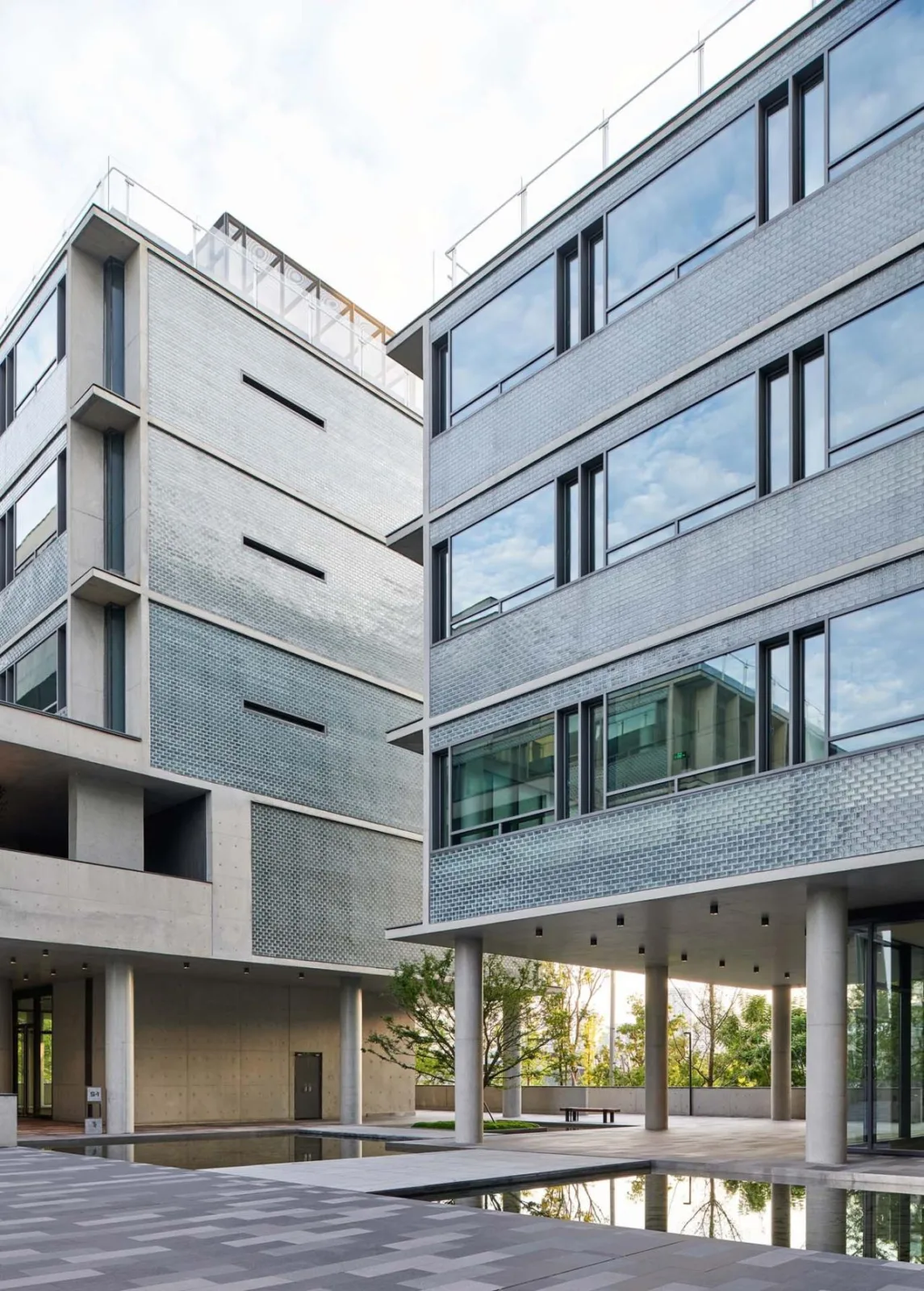
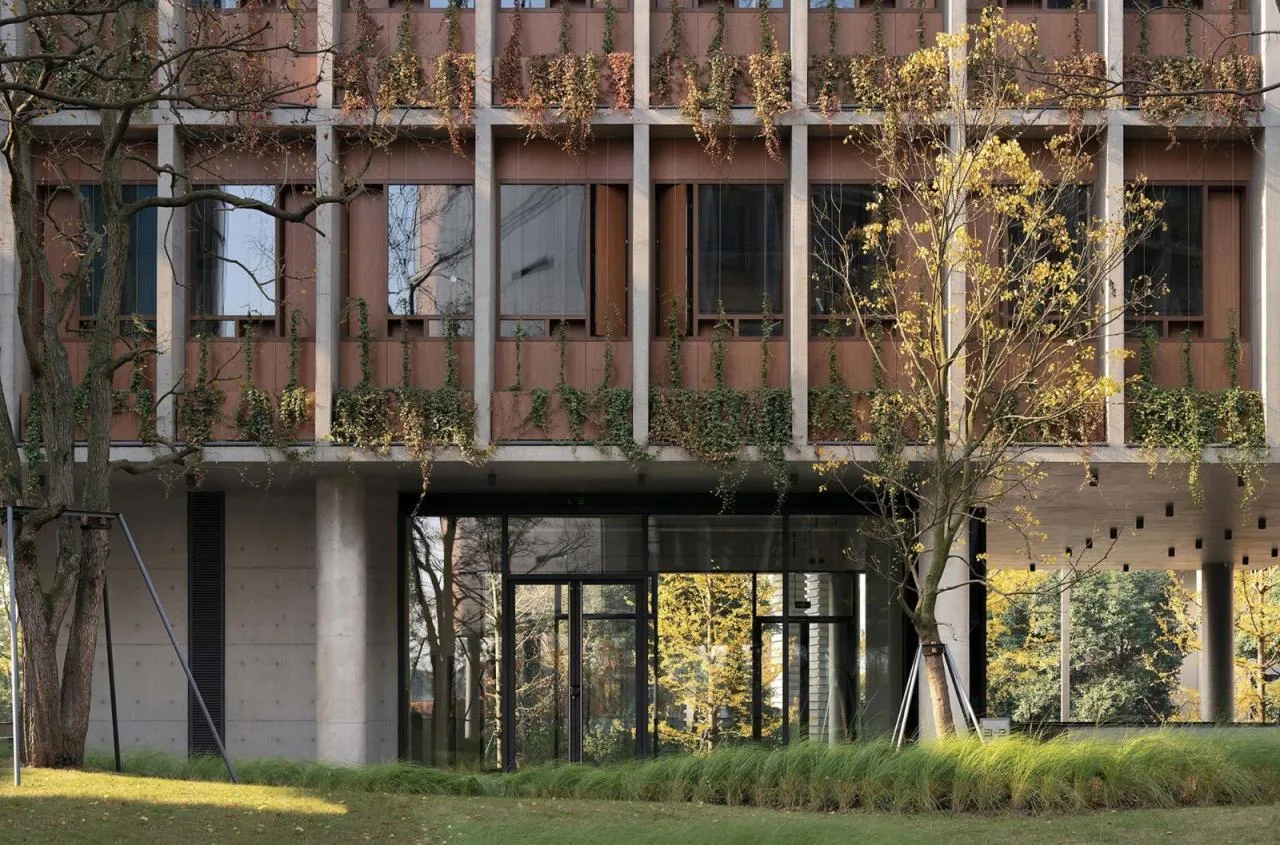
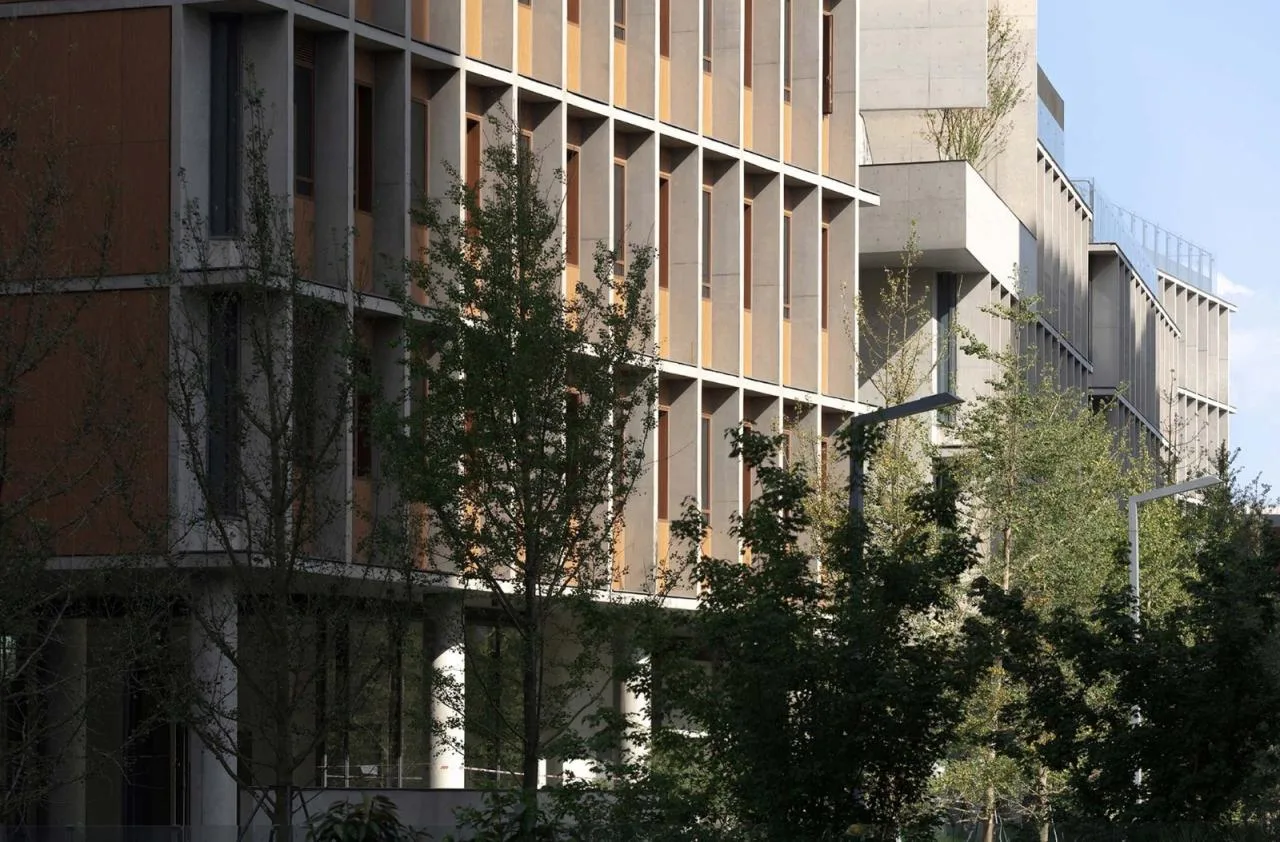
The spatial strategy combines systematic planning in both horizontal and vertical directions. Horizontally, an enclosed courtyard layout fosters a sense of belonging by creating inward-facing spaces for users. The three courtyards, aligned from north to south, are interconnected and unified by a consistent facade “grid system.” This grid establishes the structural rhythm and style of the complex within the urban context.
Within this grid, different facade units are defined according to the distinct urban spatial characteristics each building addresses.
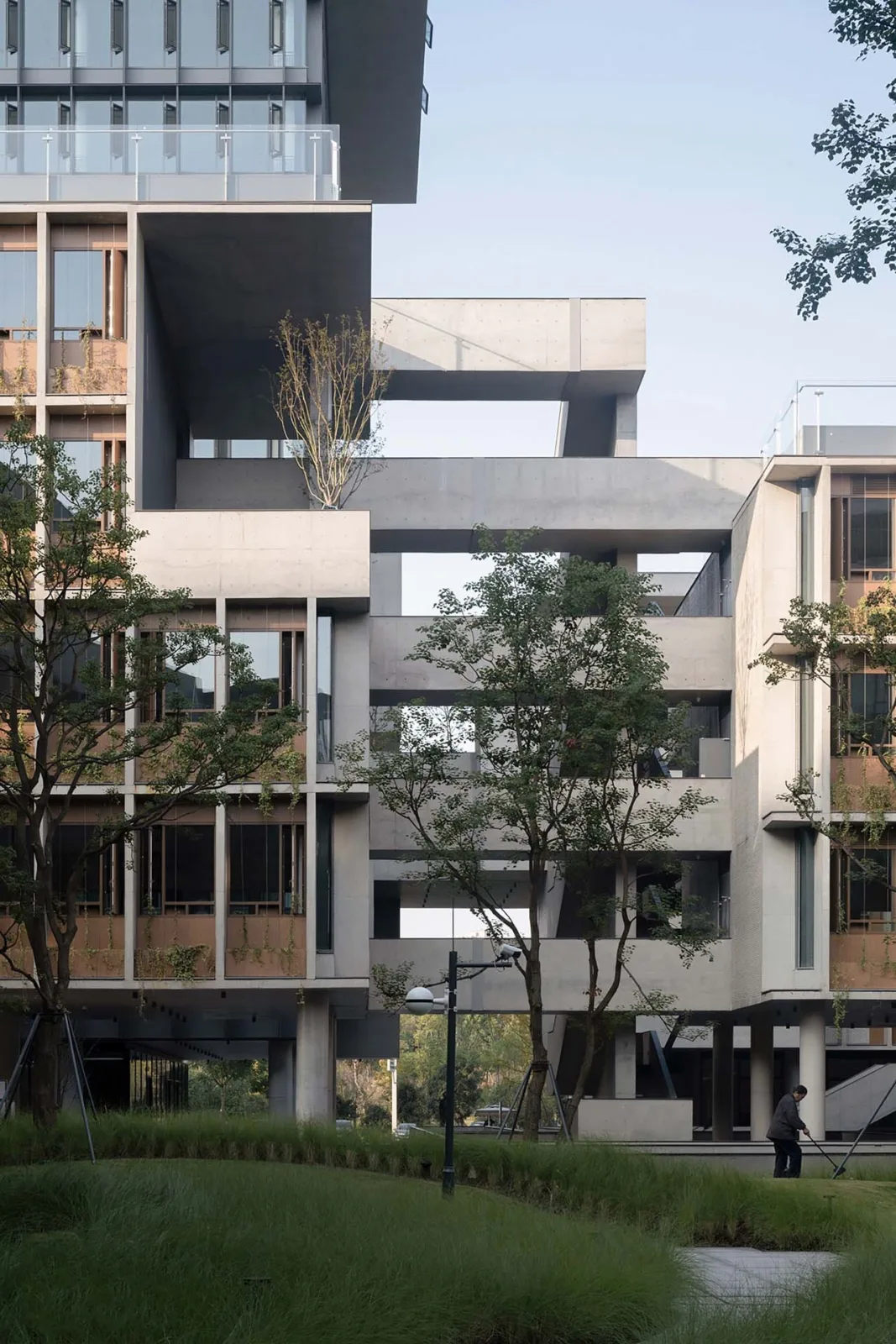
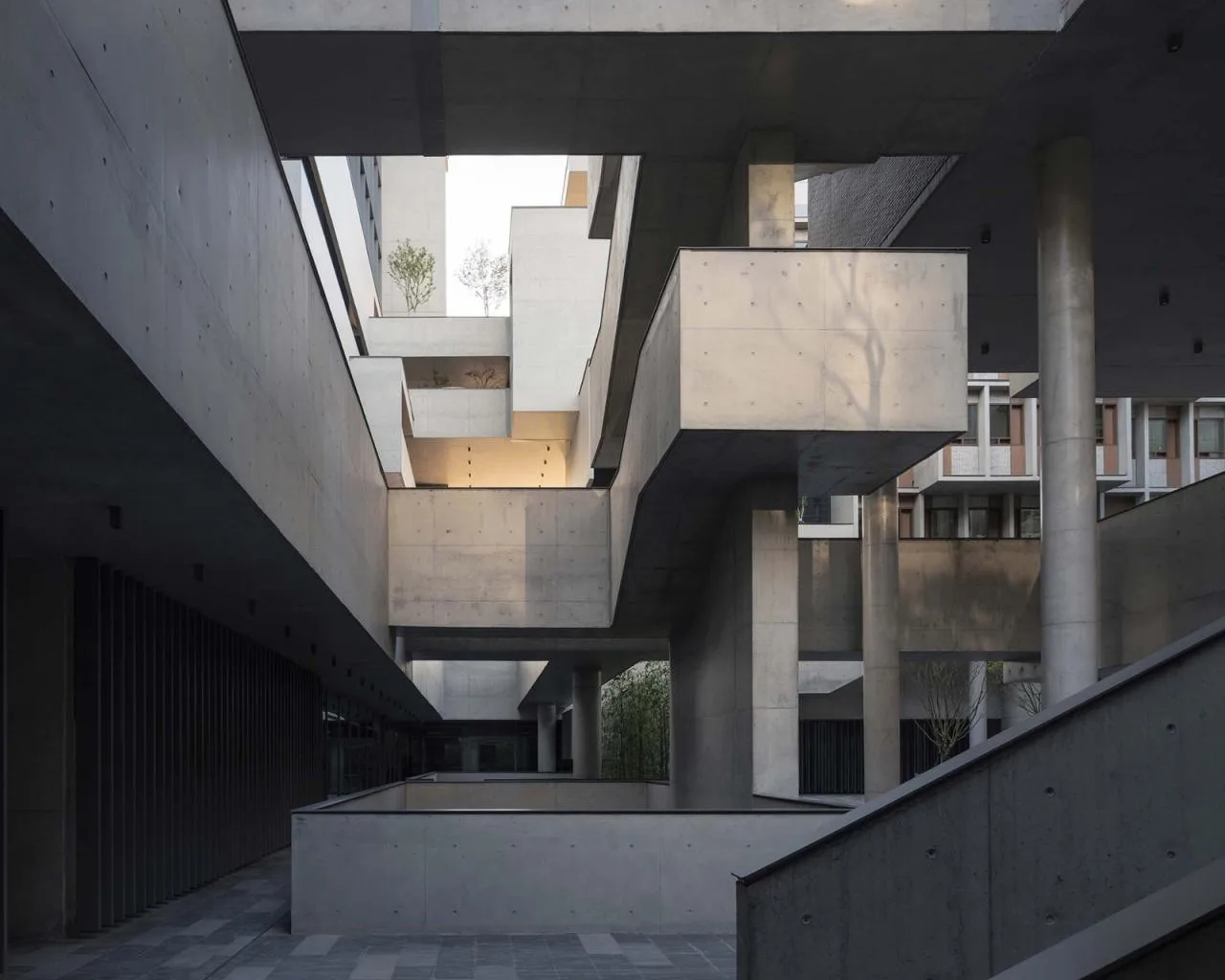
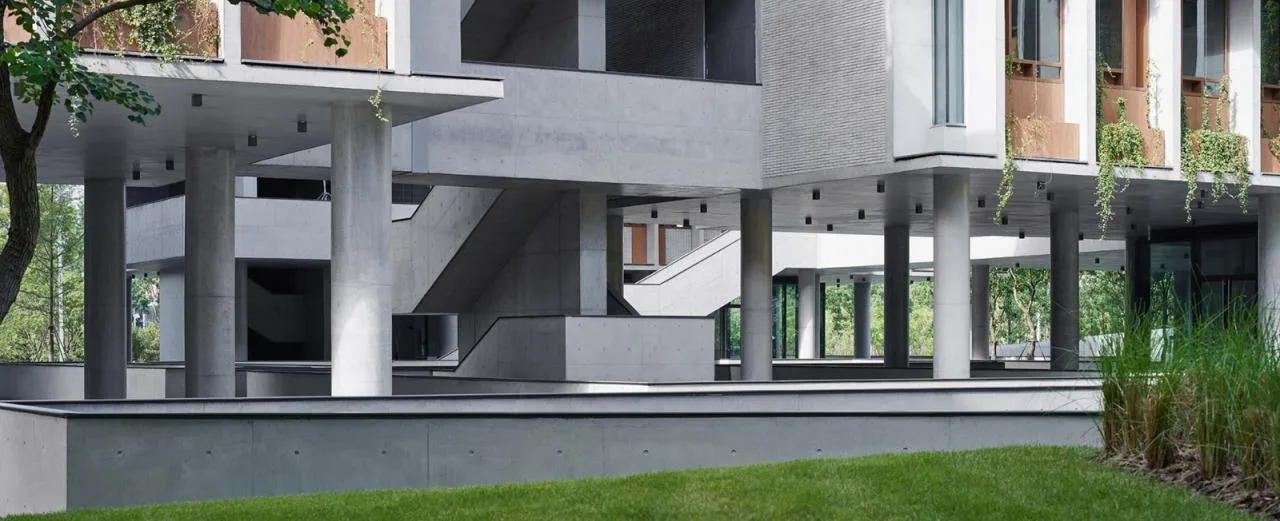
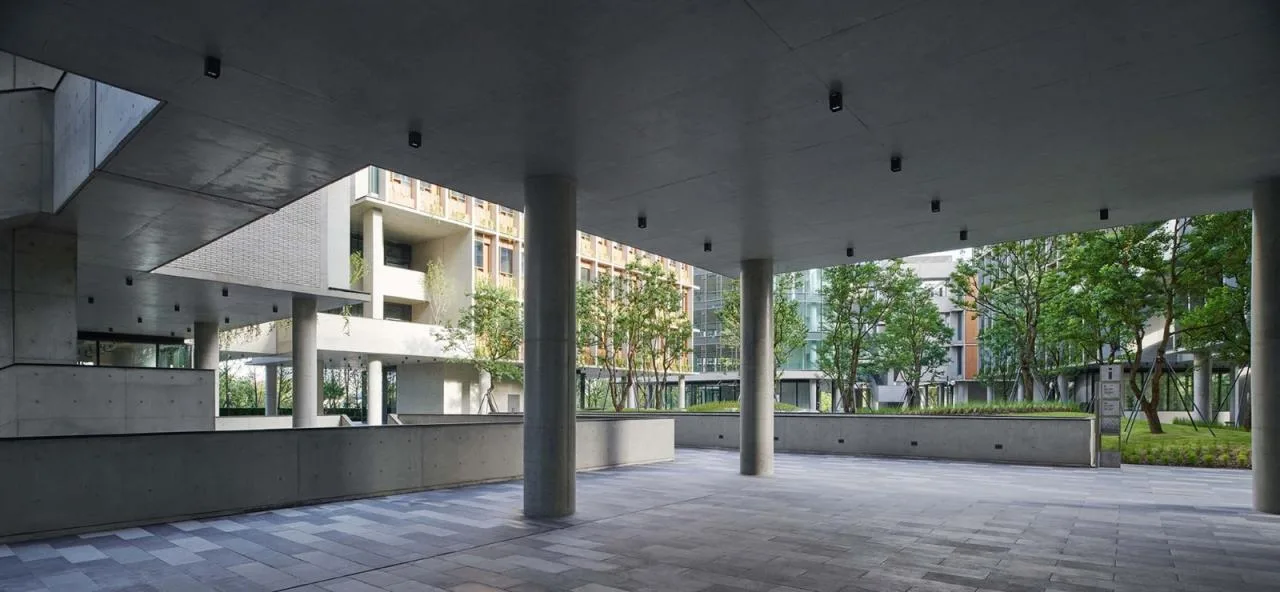
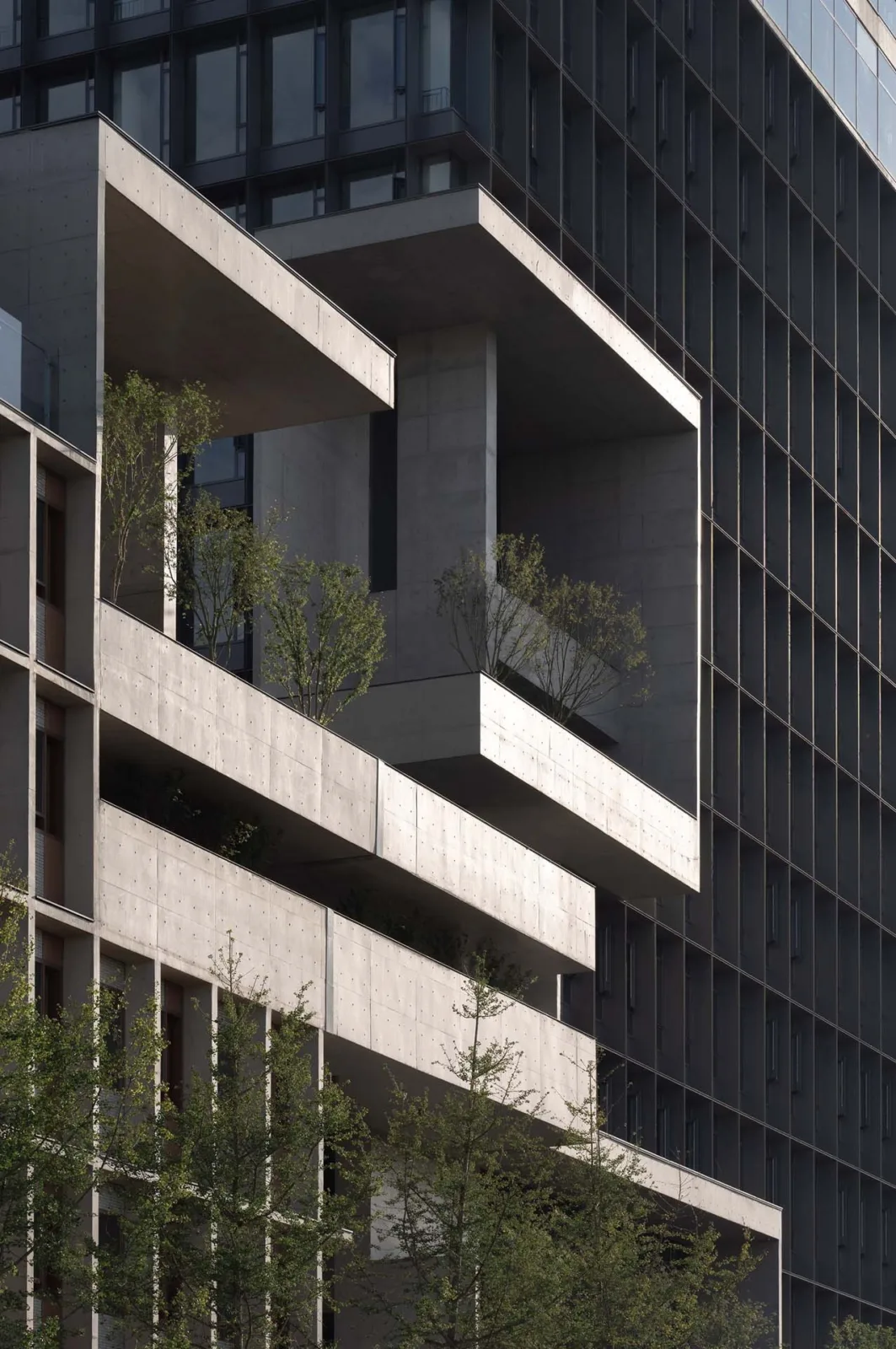
The northern “three-dimensional courtyard,” adjacent to the city, features industrial aluminum curtain walls and concrete blocks as primary materials for the urban street interface. It incorporates diverse vertical circulation and sunken courtyard spaces, introducing urban vitality and diversity, and facilitating a smooth transition from public streets to more private office environments.
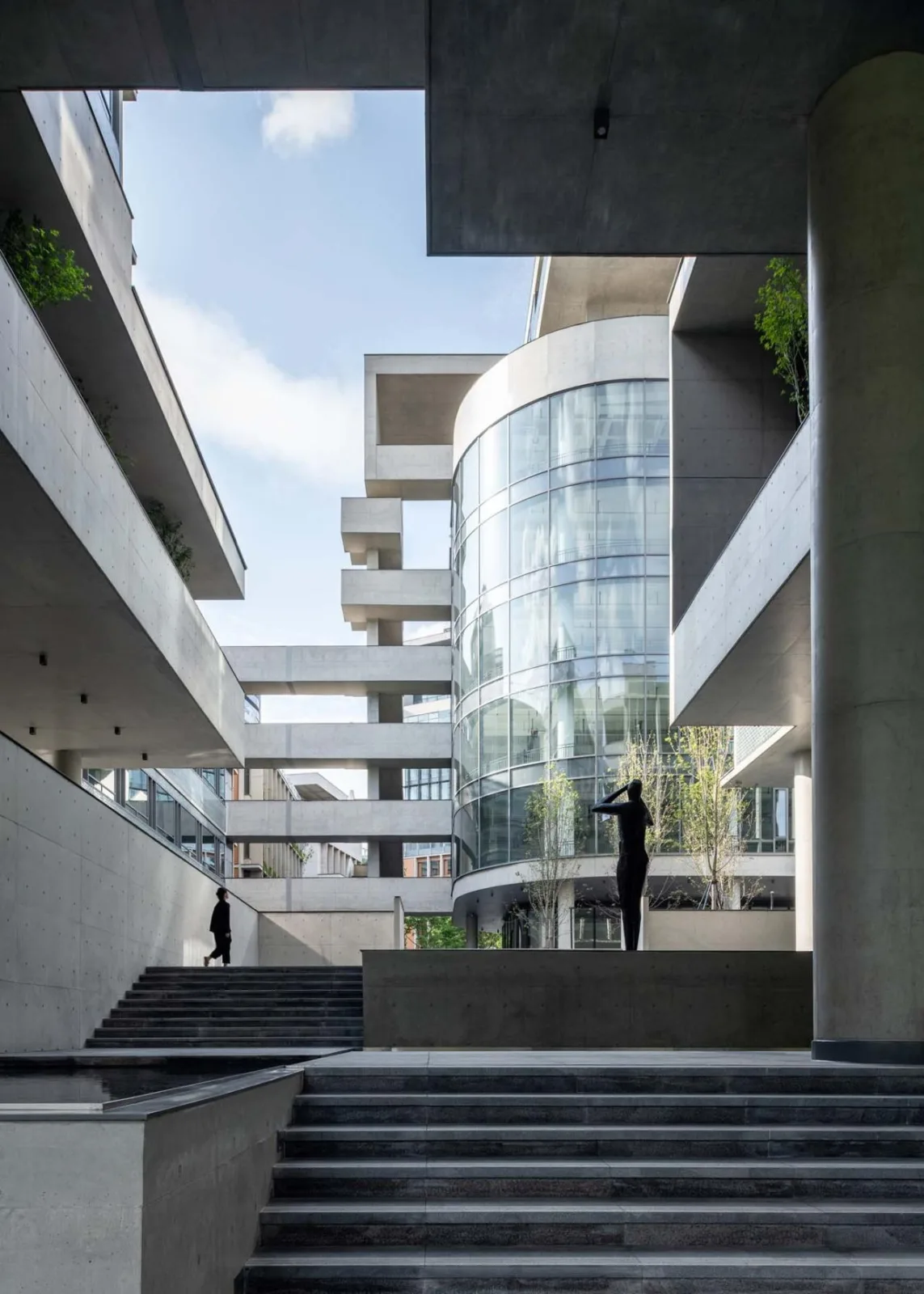
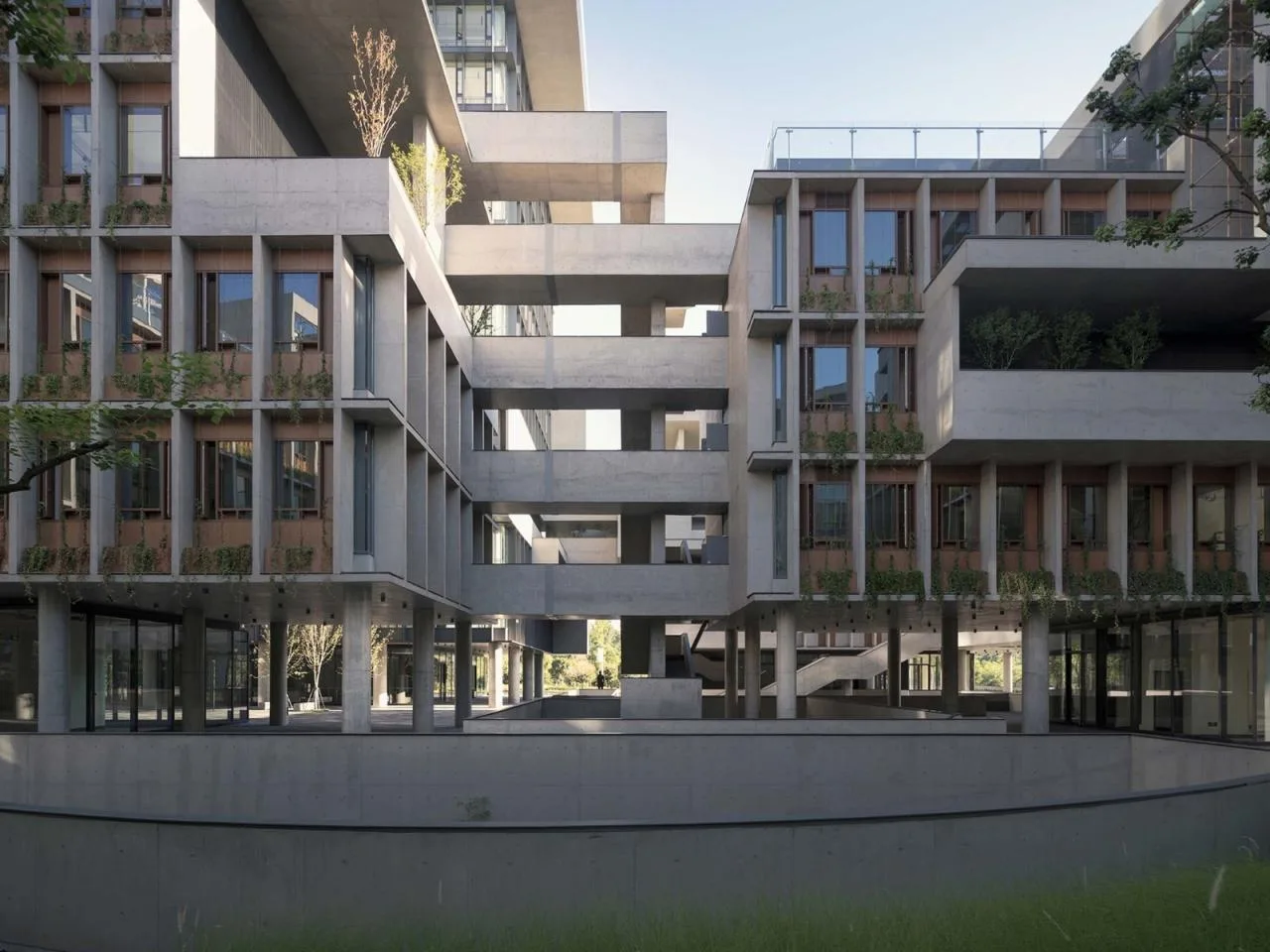
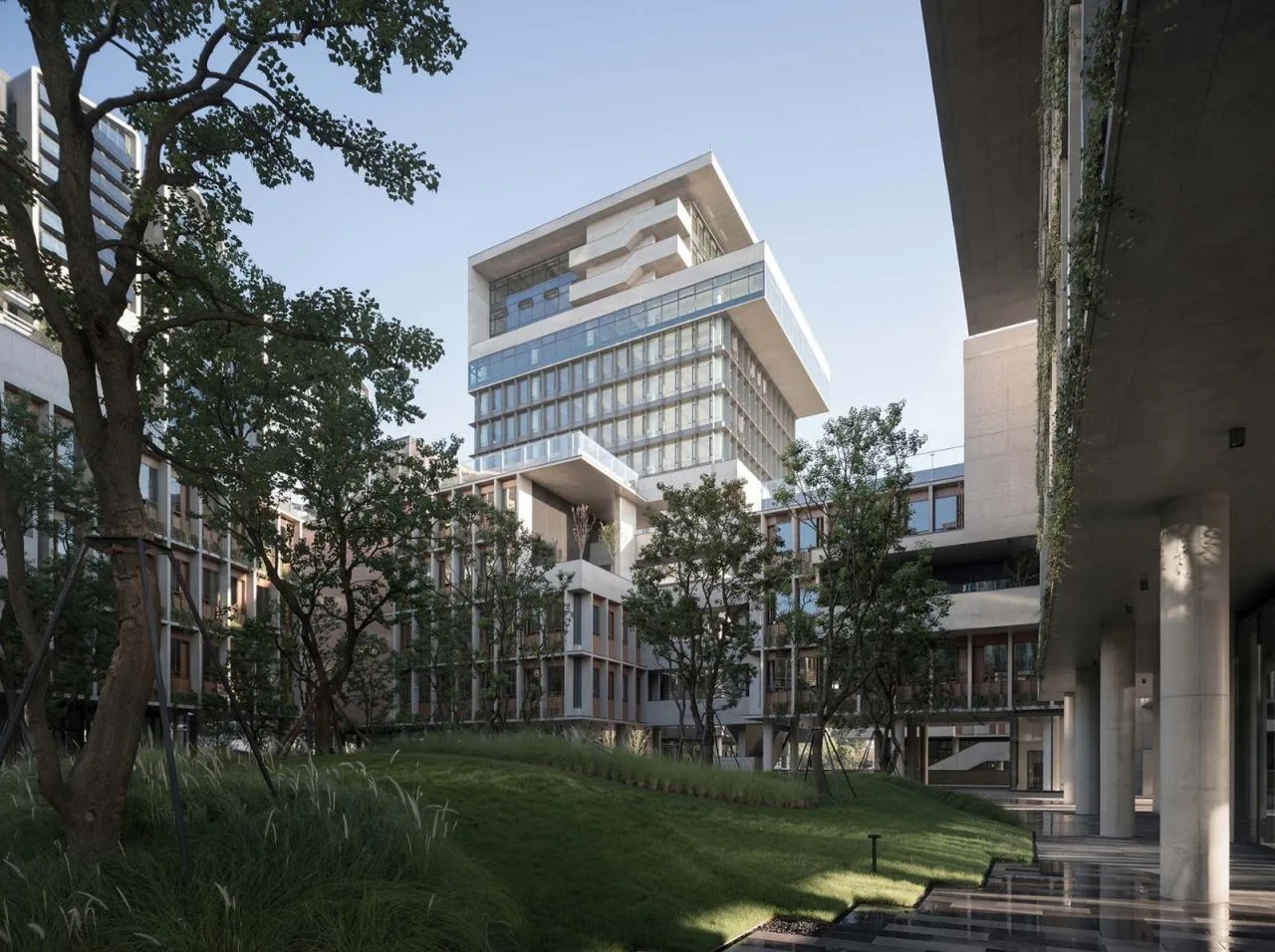
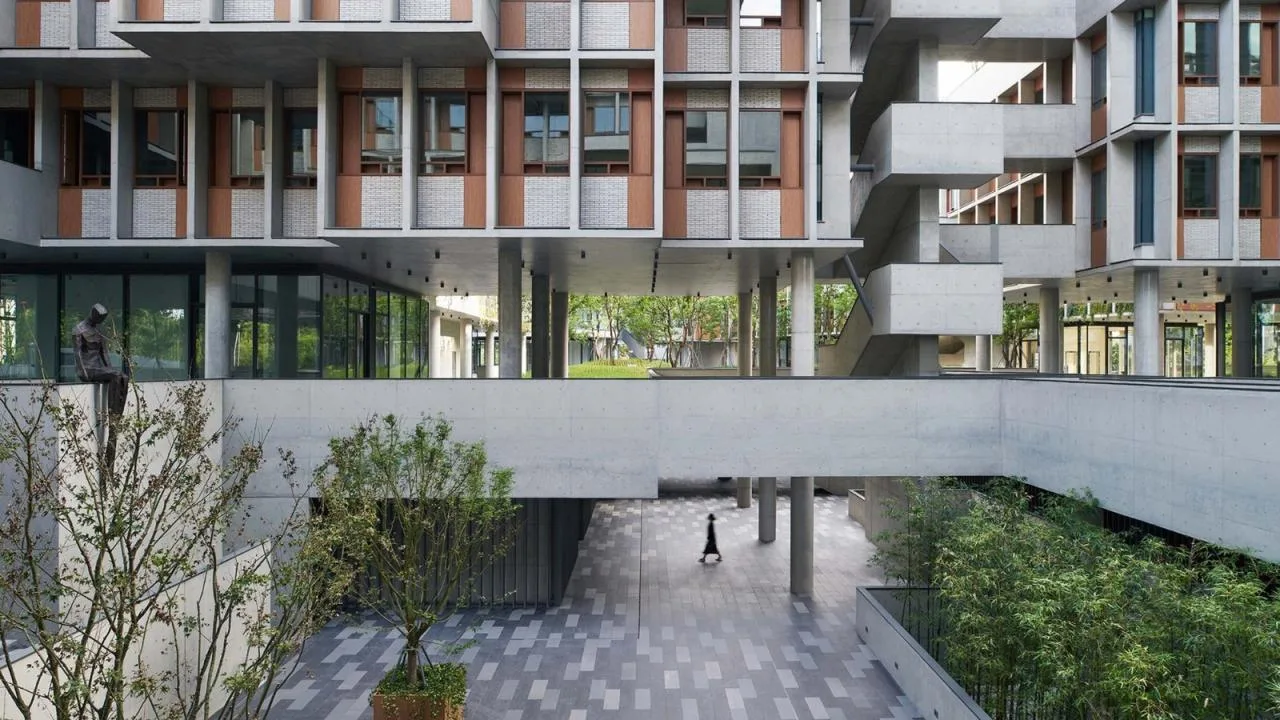
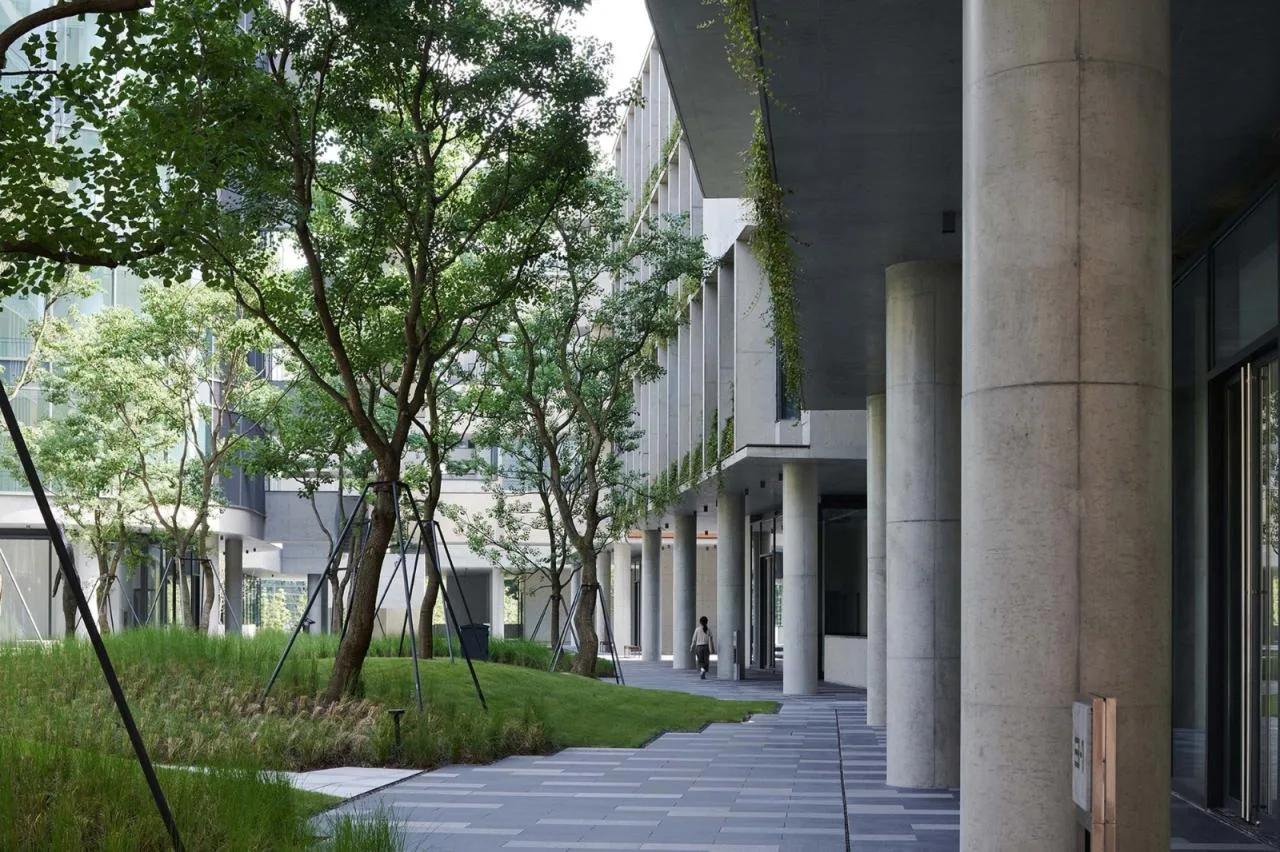
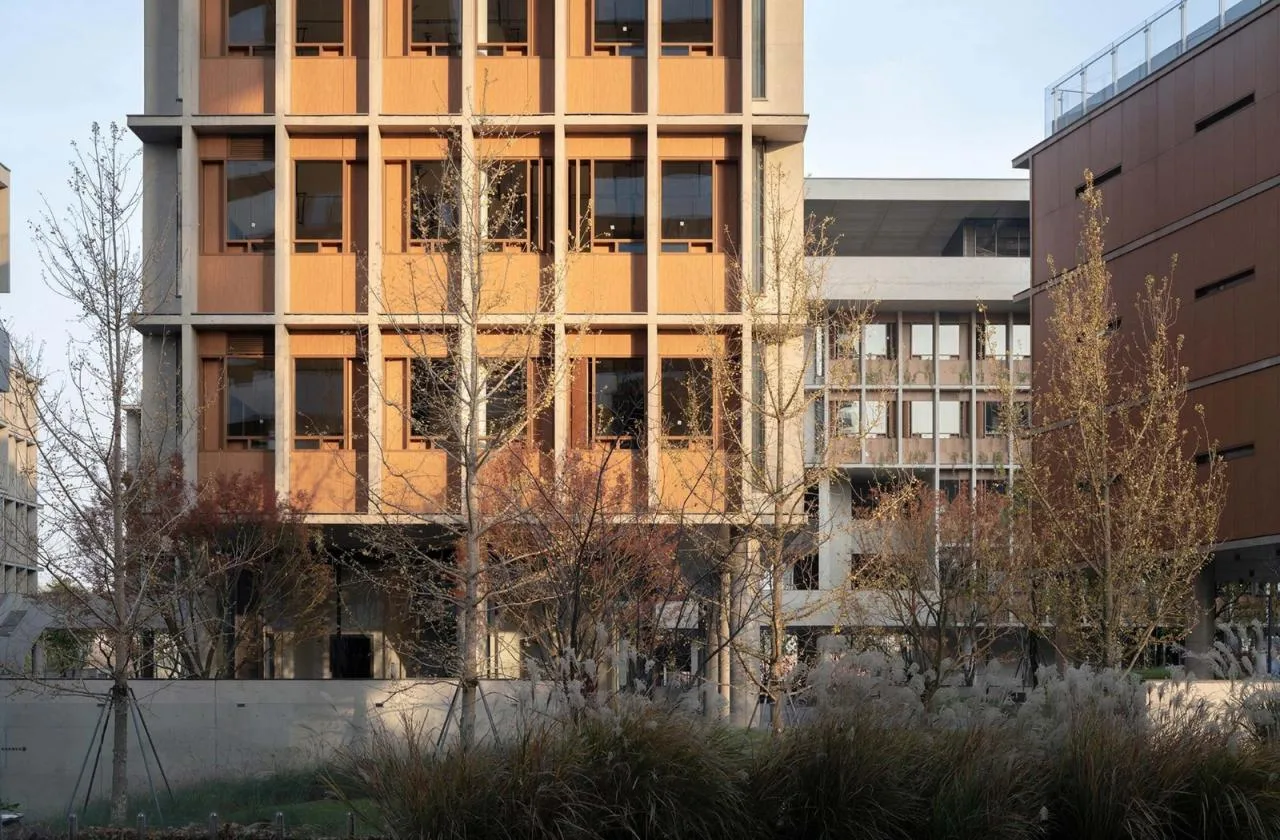
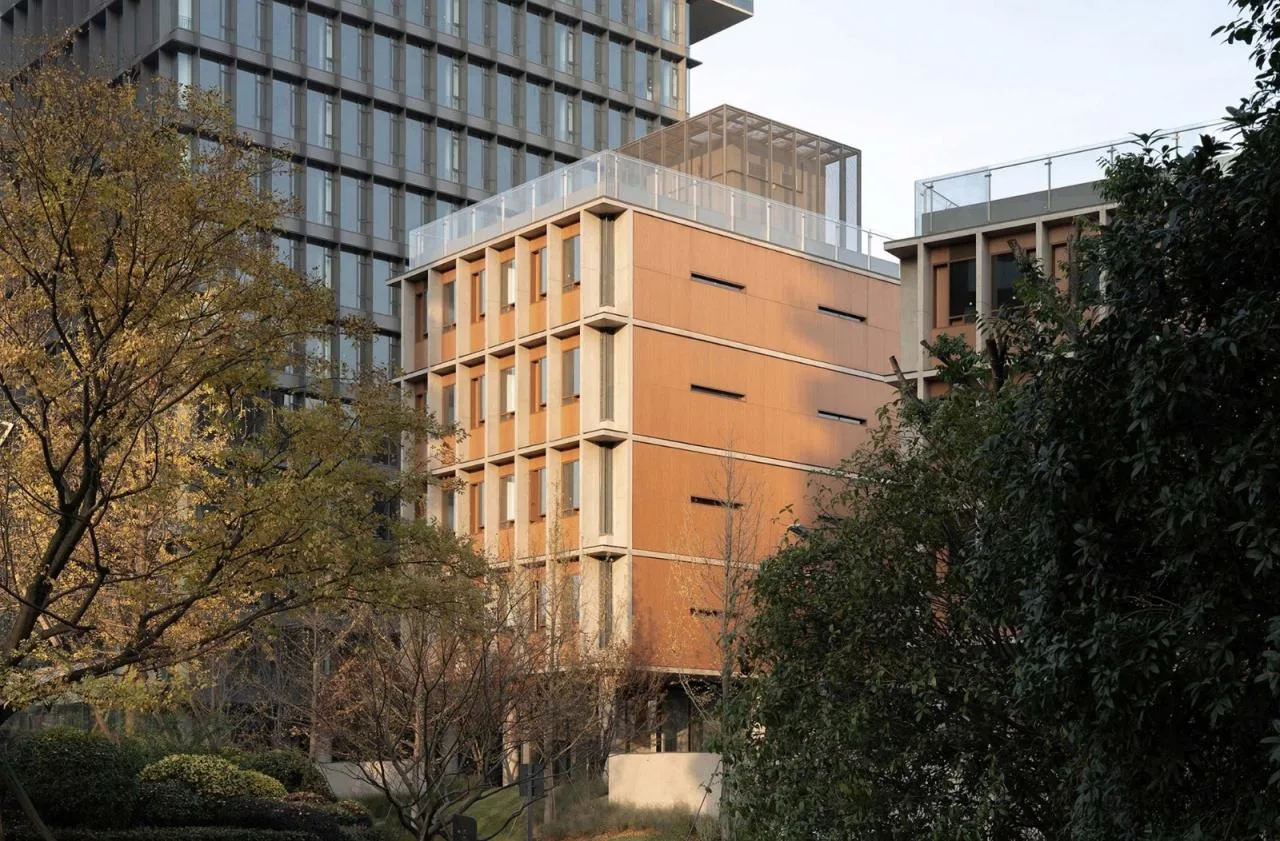
The central “Tree Courtyard” is the largest open green space within the complex. Its facade predominantly uses wooden panels combined with vertical greenery on the curtain walls, creating a natural and inviting atmosphere.
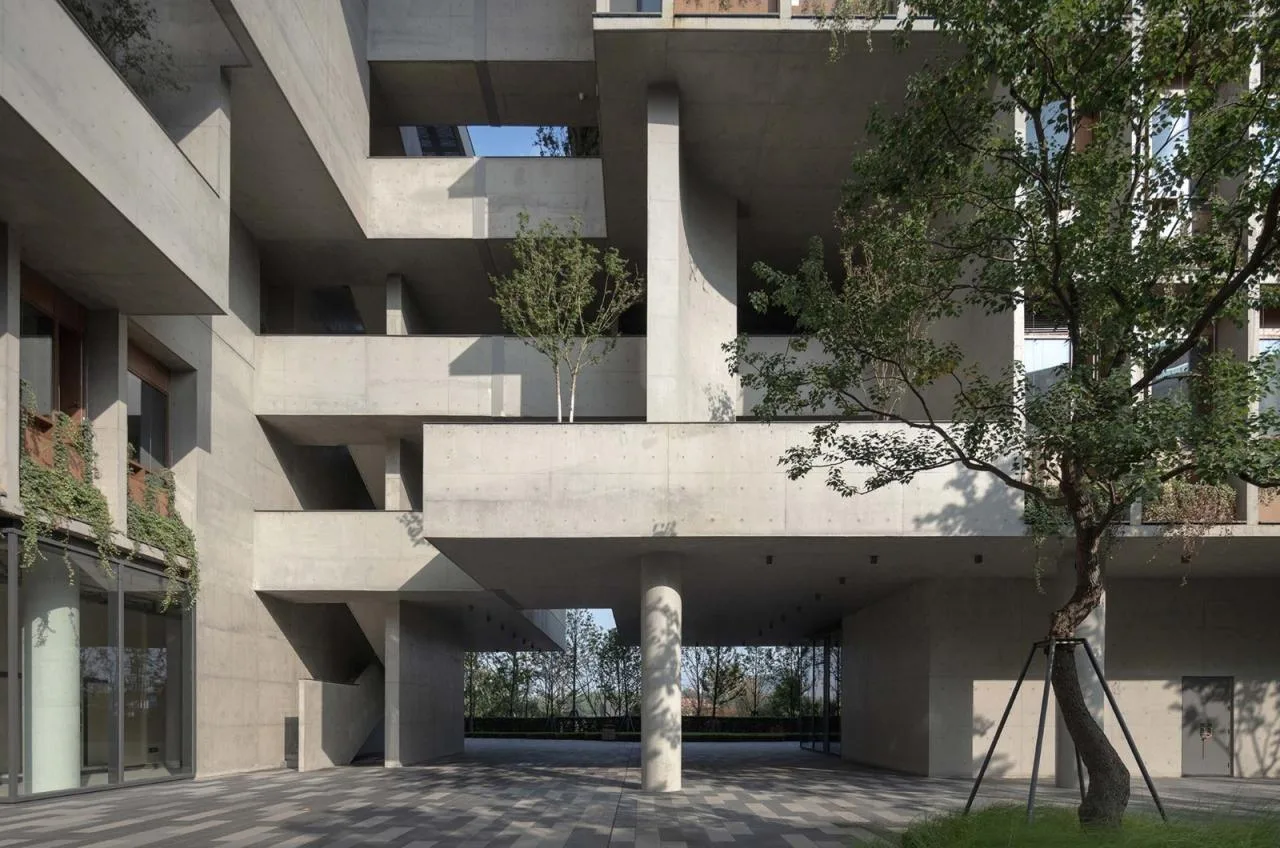
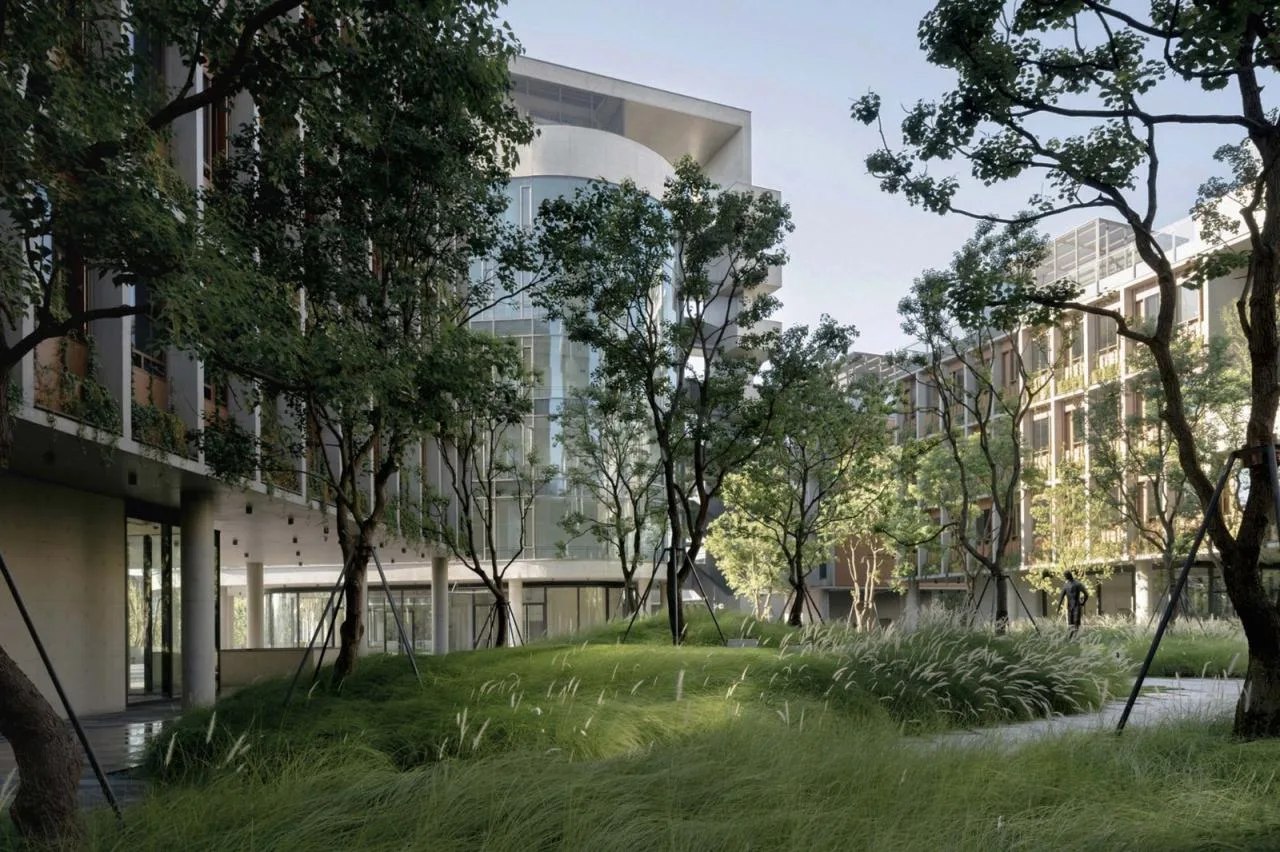
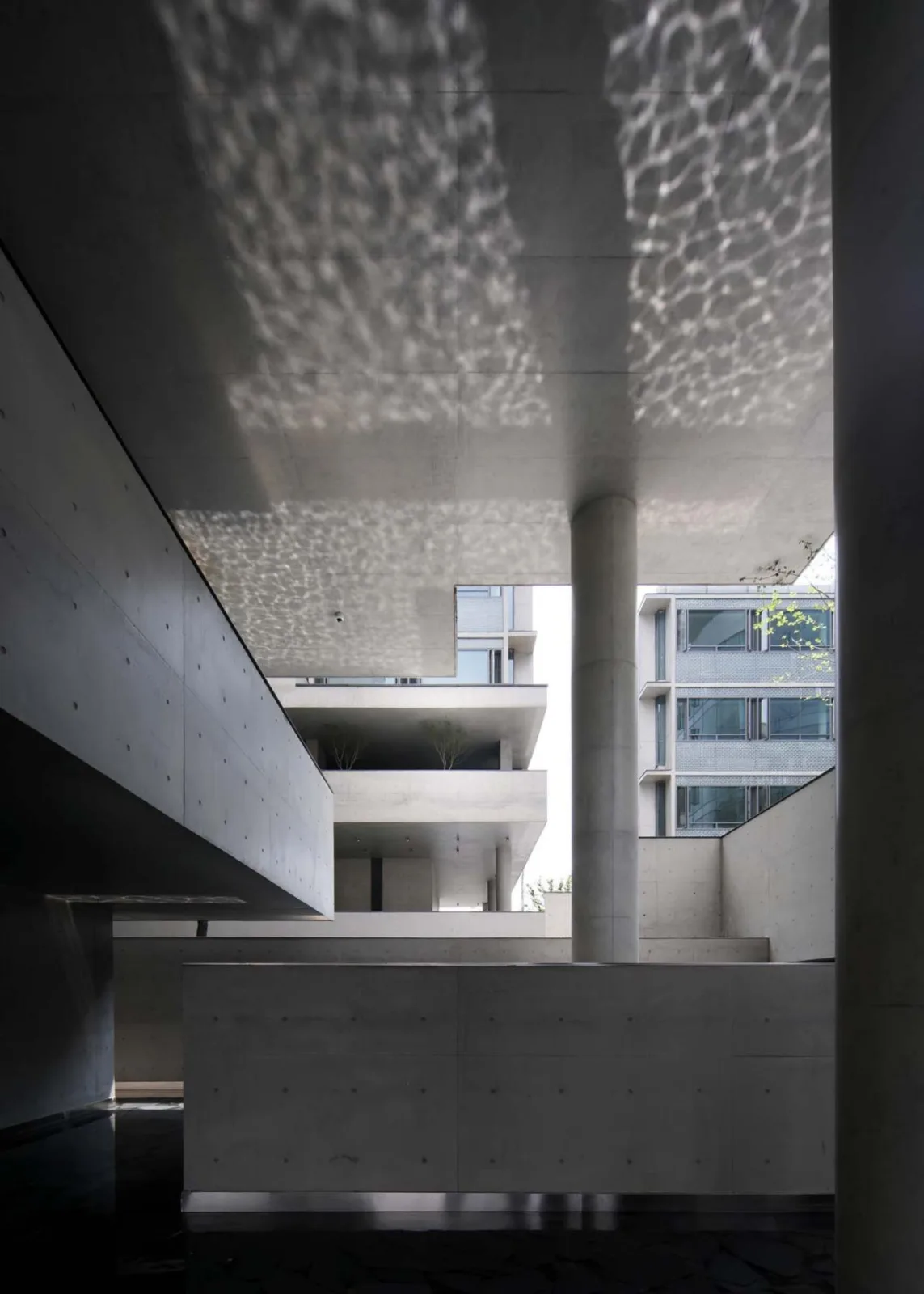
On the southern side, the “Water Courtyard” cascades down the terrain, offering a serene and tranquil environment. Glass bricks, chosen for their light sensitivity and transparency, evoke the image of water. Below the elevated structure lies a large open water surface where the buildings appear to float at varying elevations. The gentle breeze creates ripples, which help regulate the microclimate of the building spaces.
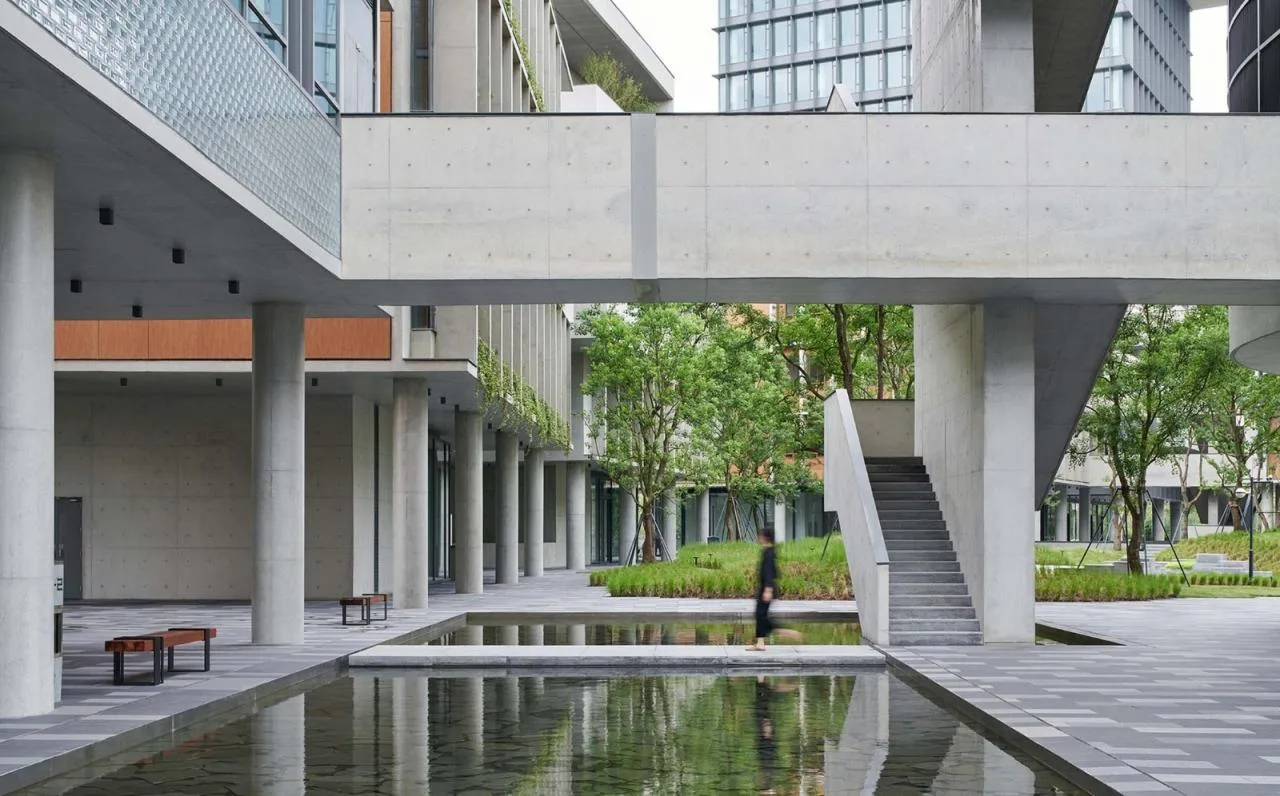
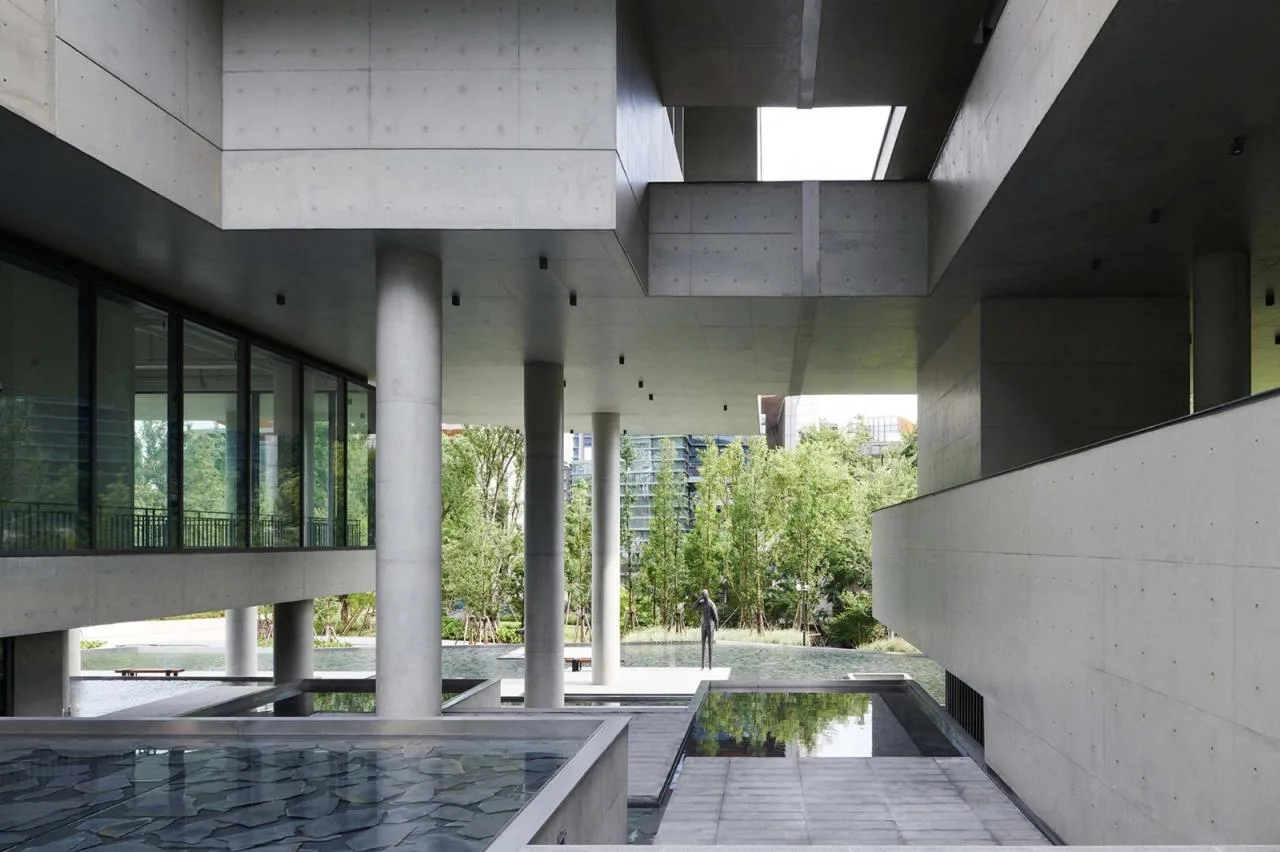
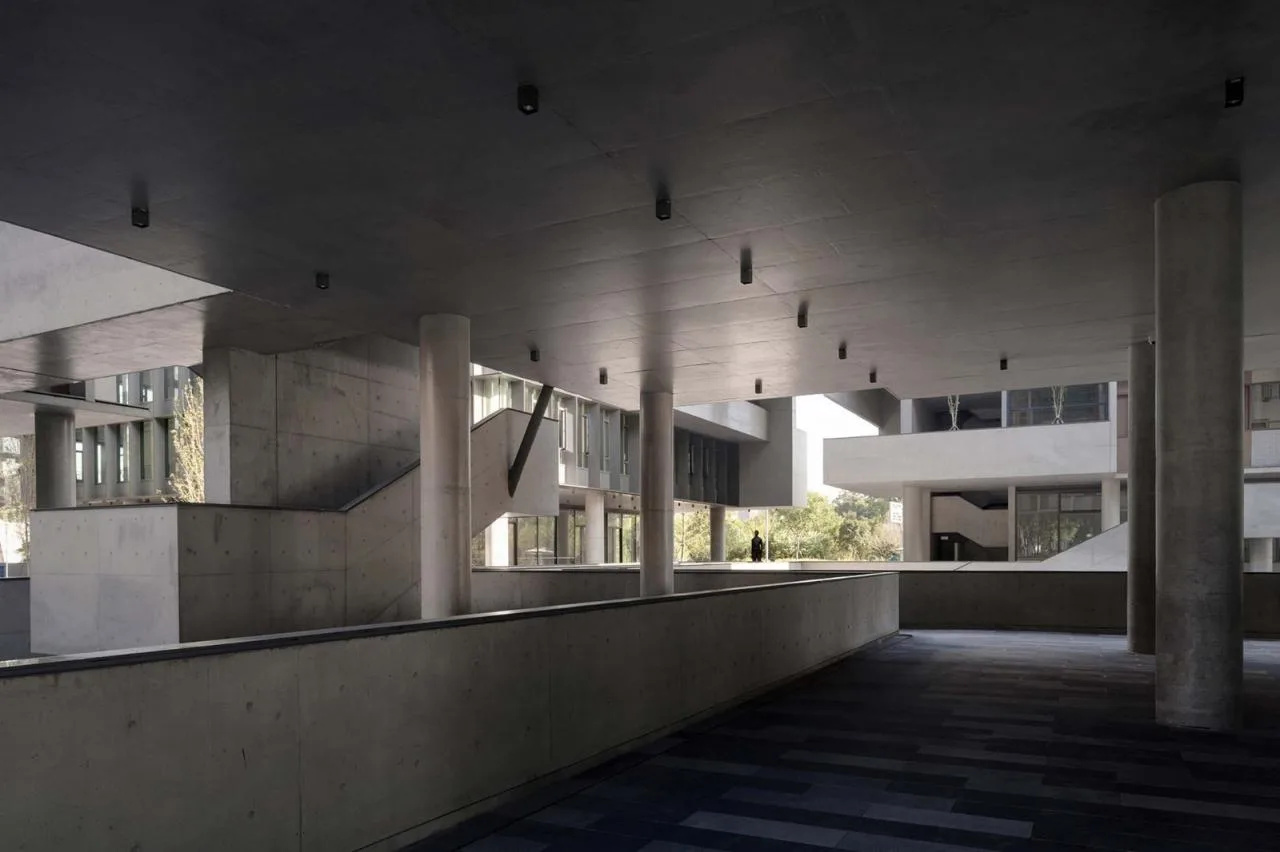
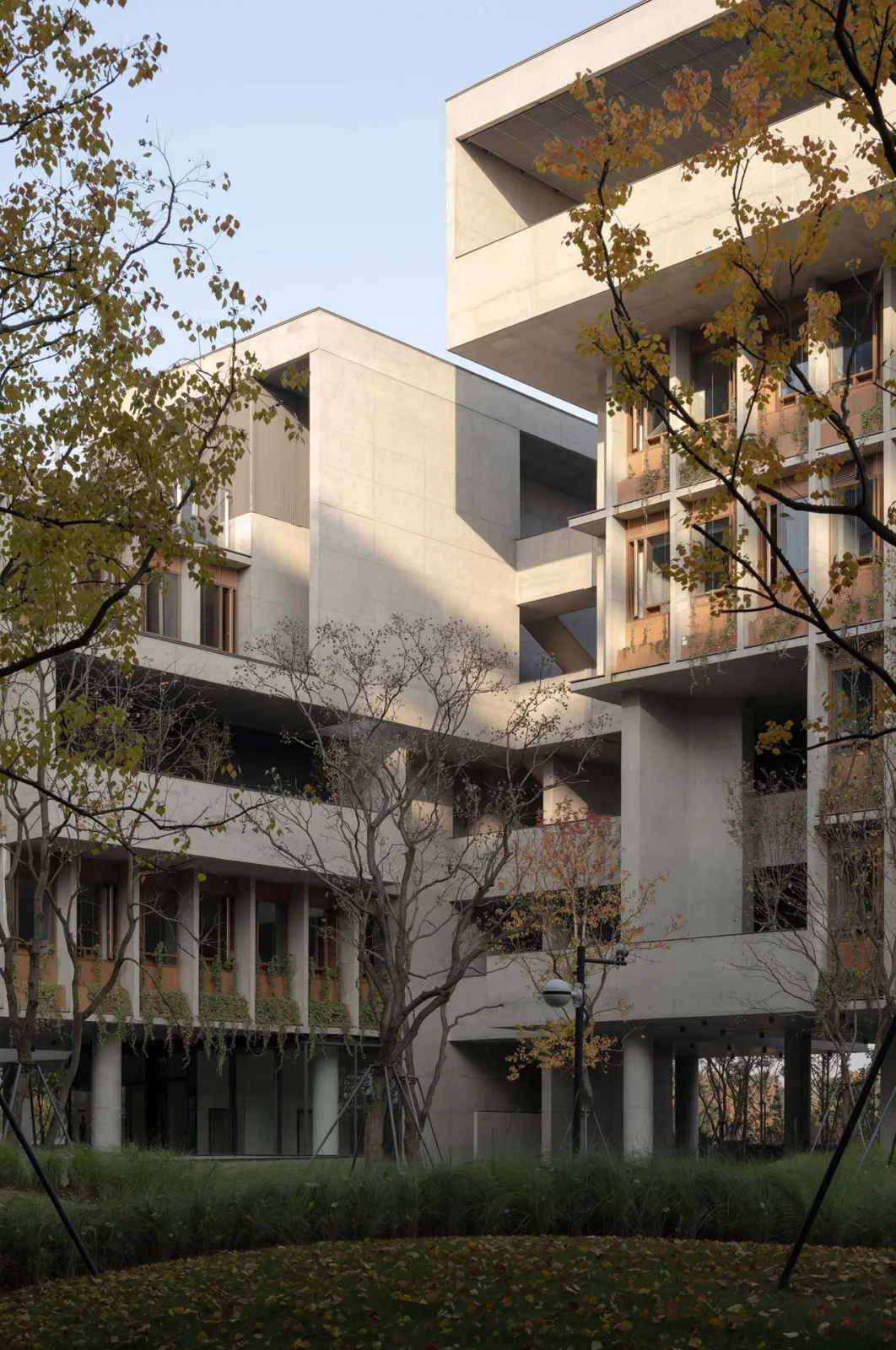
Vertically, the complex employs a strategy of elevating and sinking volumes at the ground level. The eleven headquarters office buildings appear to float above the ground. This elevation reduces the enclosed feeling of the mass and blurs the building boundaries. It also absorbs the urban context while creating a series of welcoming public spaces for the city and its users.
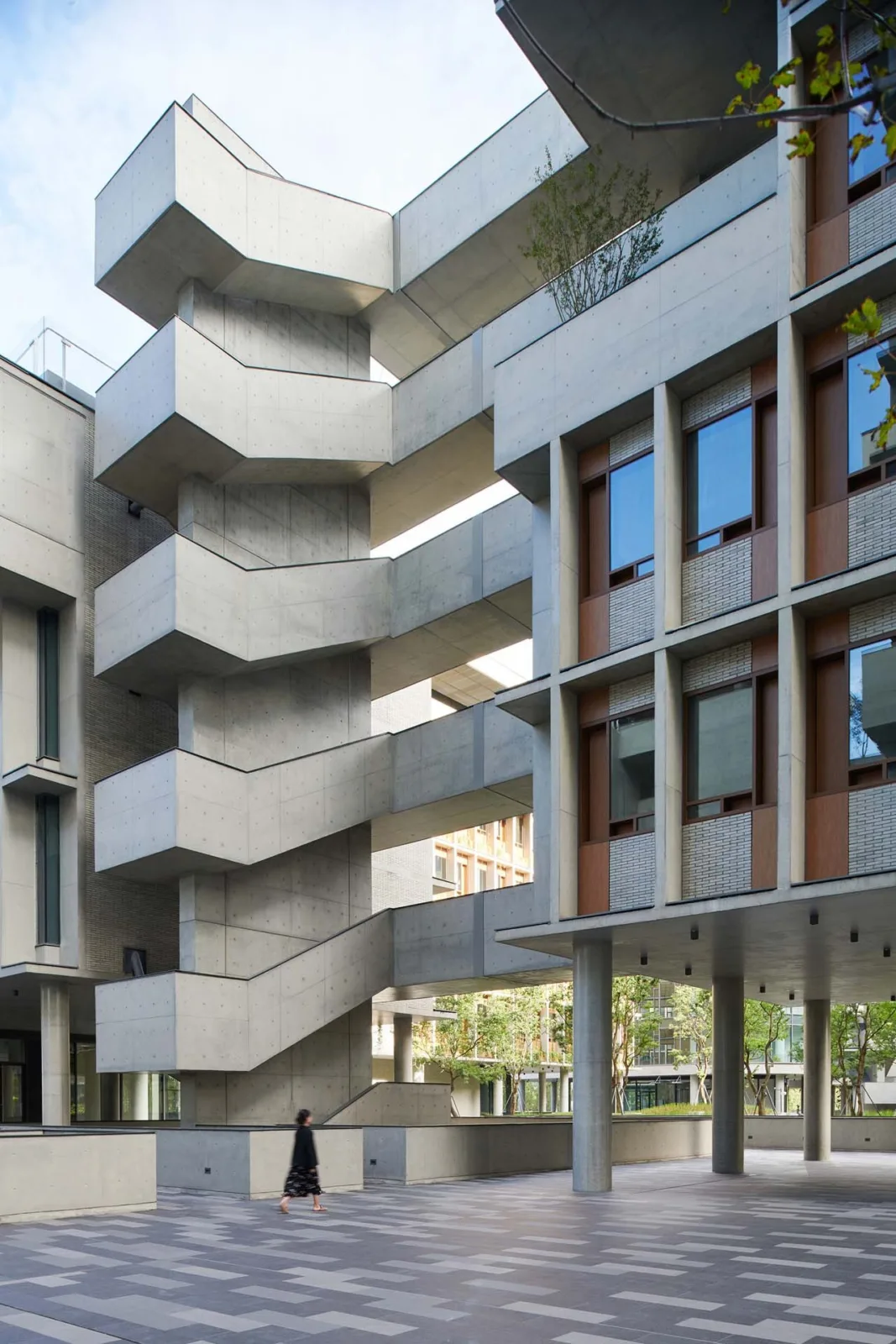
Additionally, a “green growth space system” is integrated between traditionally underutilized mountain walls, turning often-neglected evacuation stairwells into vibrant spaces.
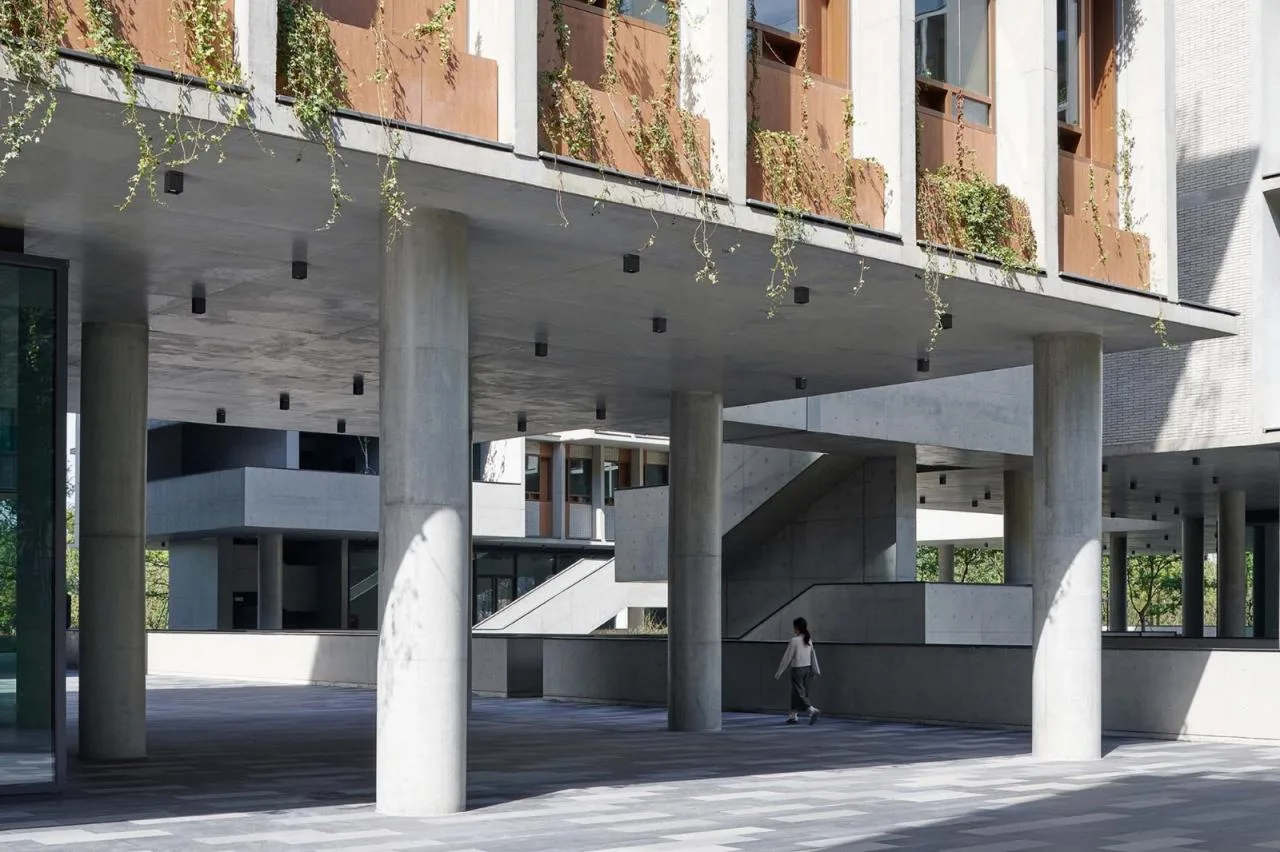
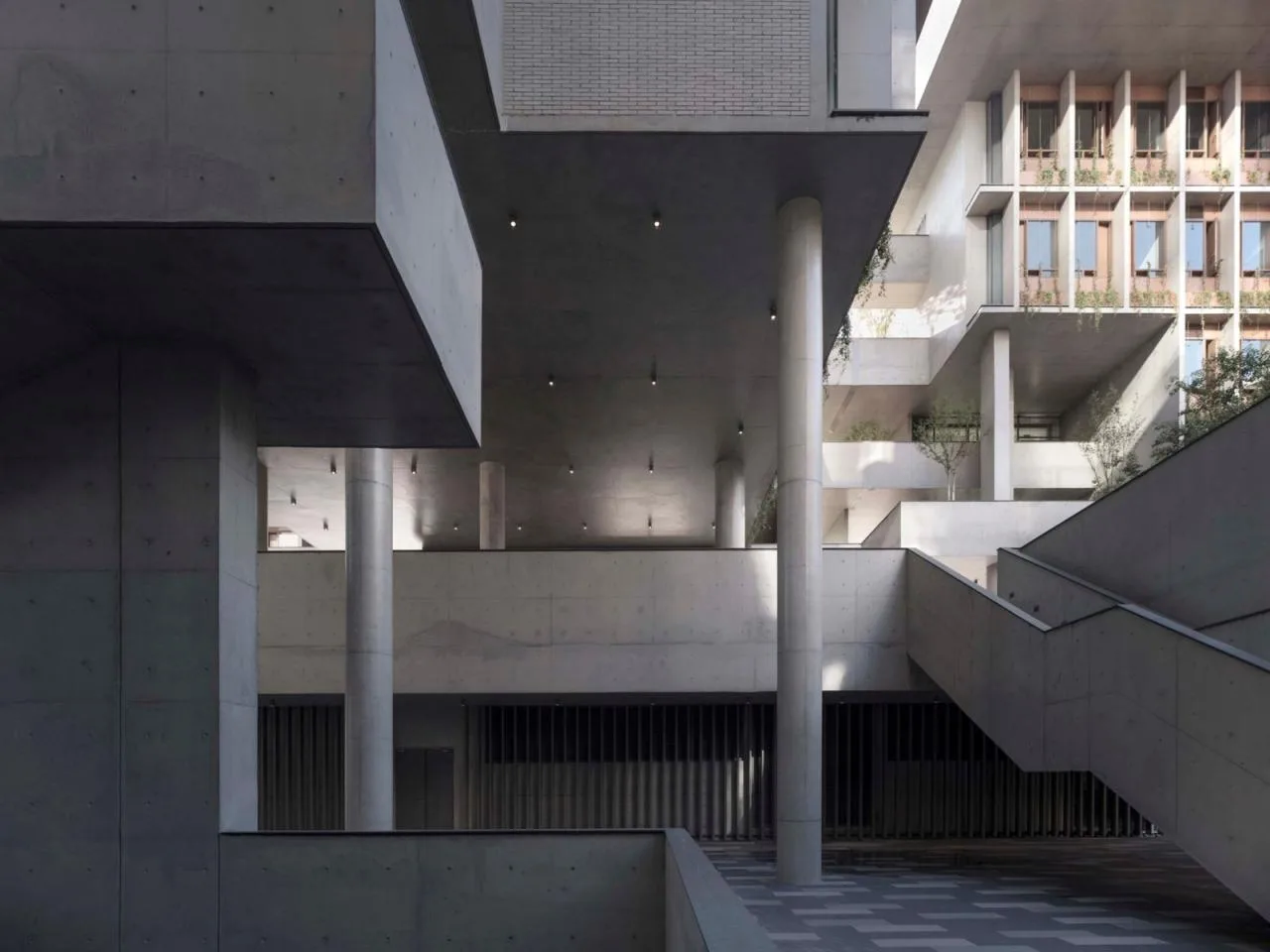
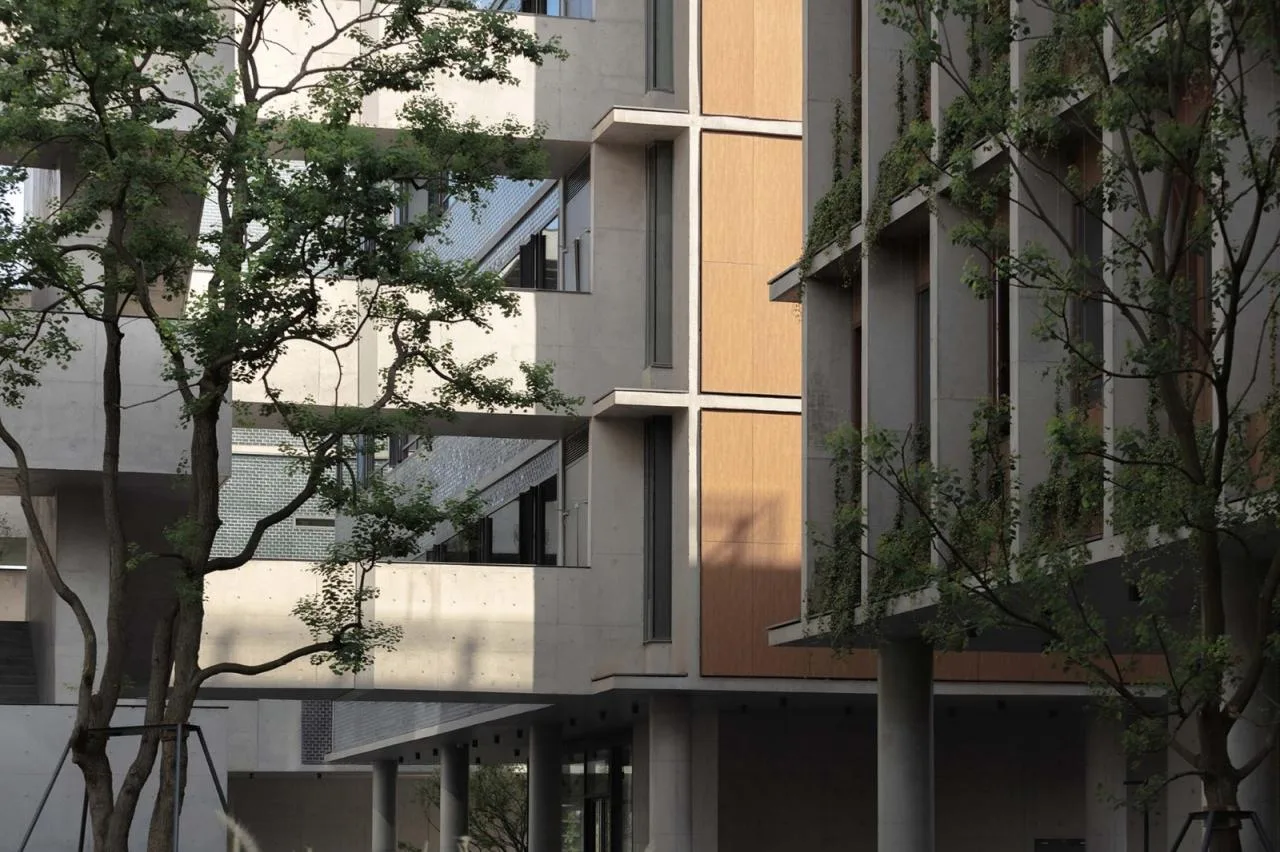
The design maximizes floor area by placing shared outdoor evacuation staircases between adjacent building walls. Beyond fulfilling fire safety requirements, these staircases contribute to a three-dimensional public space system when combined with outdoor terraces and vertical greenery.
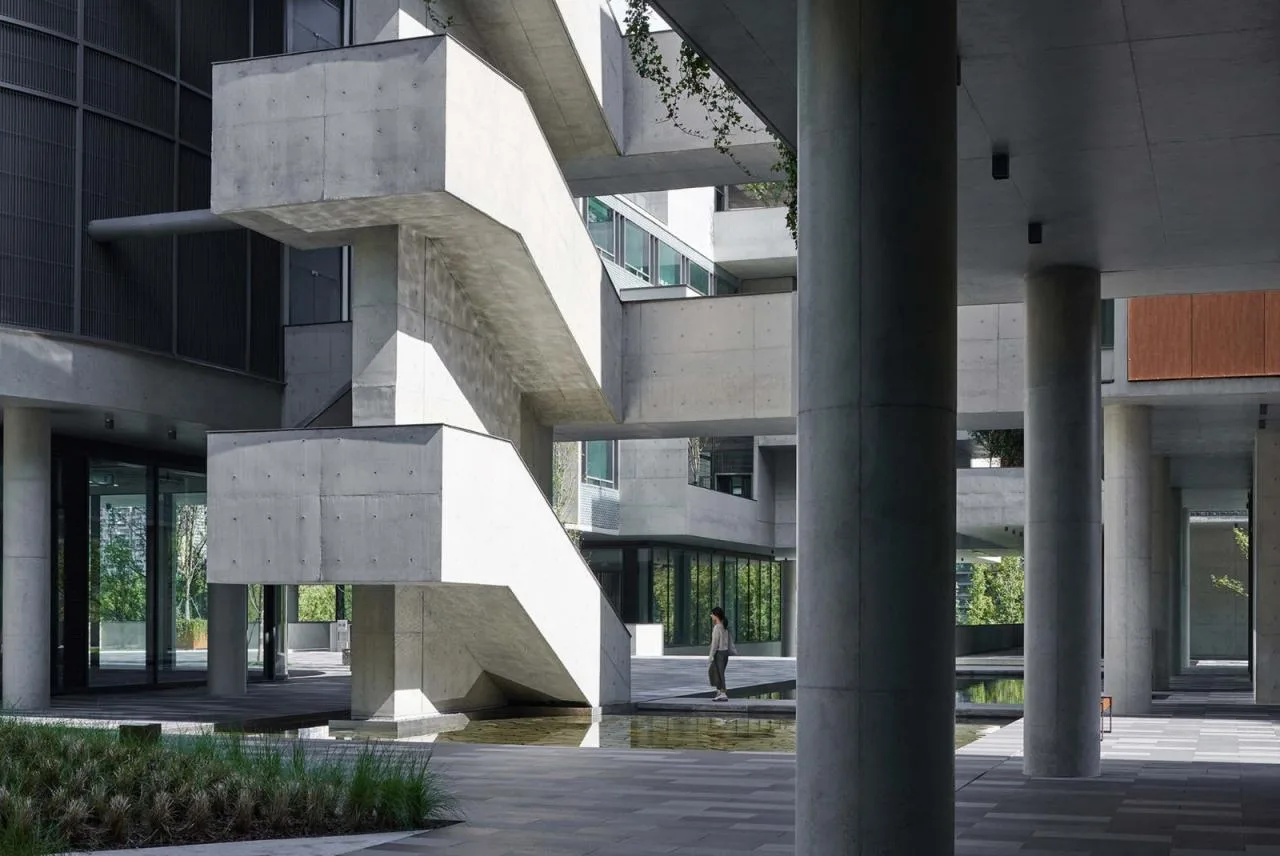
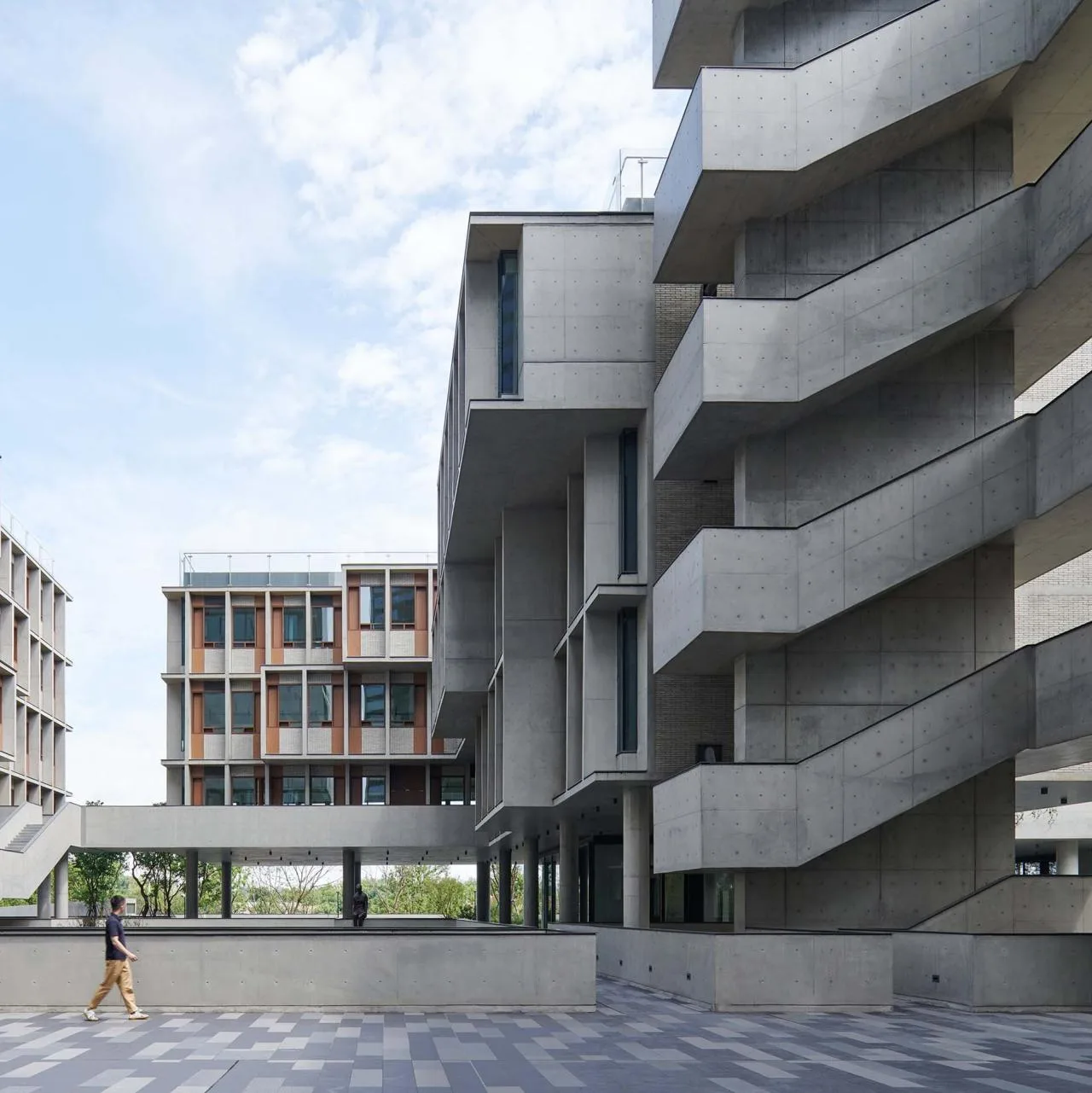
The “growth space” extends through the open green areas at the underground and ground levels, climbing along the building mountain walls up to the roofs of the eleven buildings. This space fosters connections—between people, between people and the city, and between people and nature.
Project Drawings
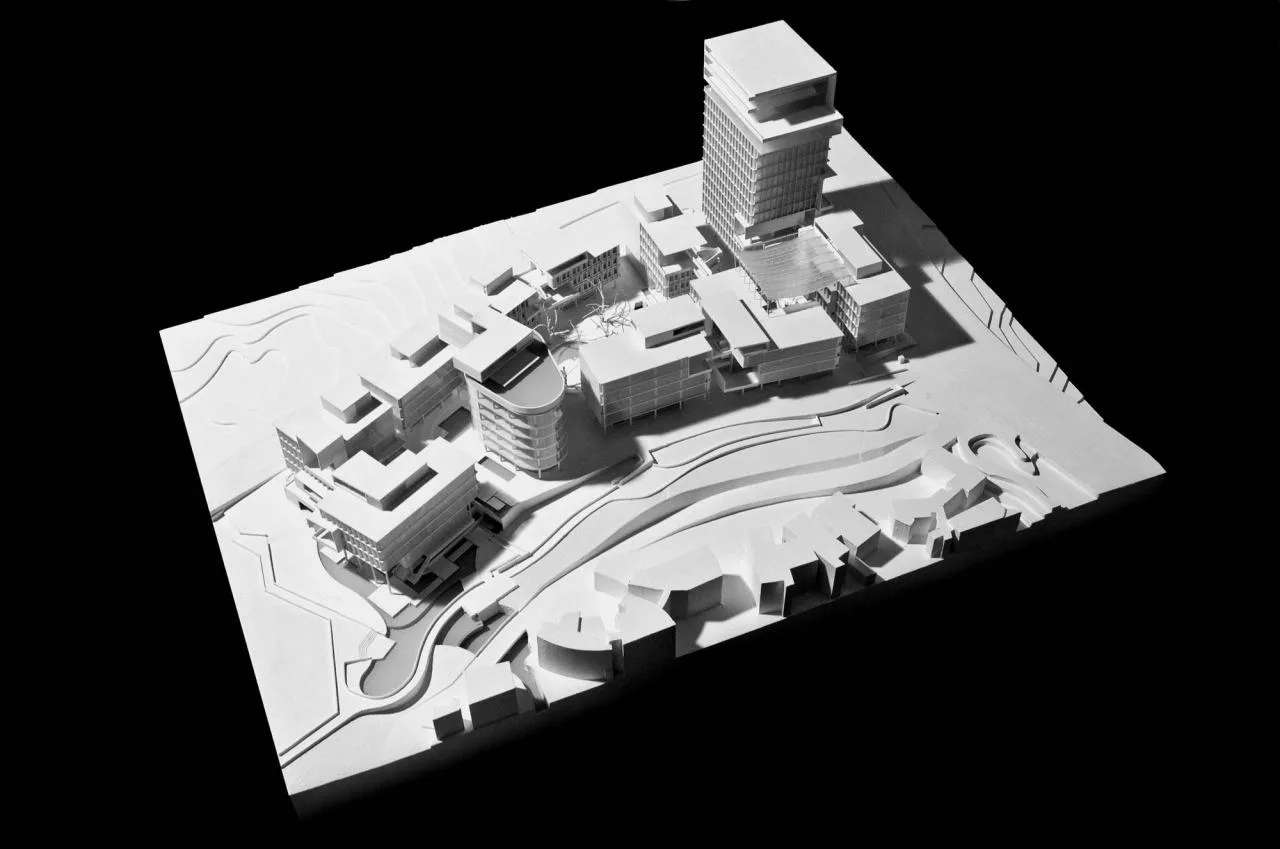
△ Model Diagram
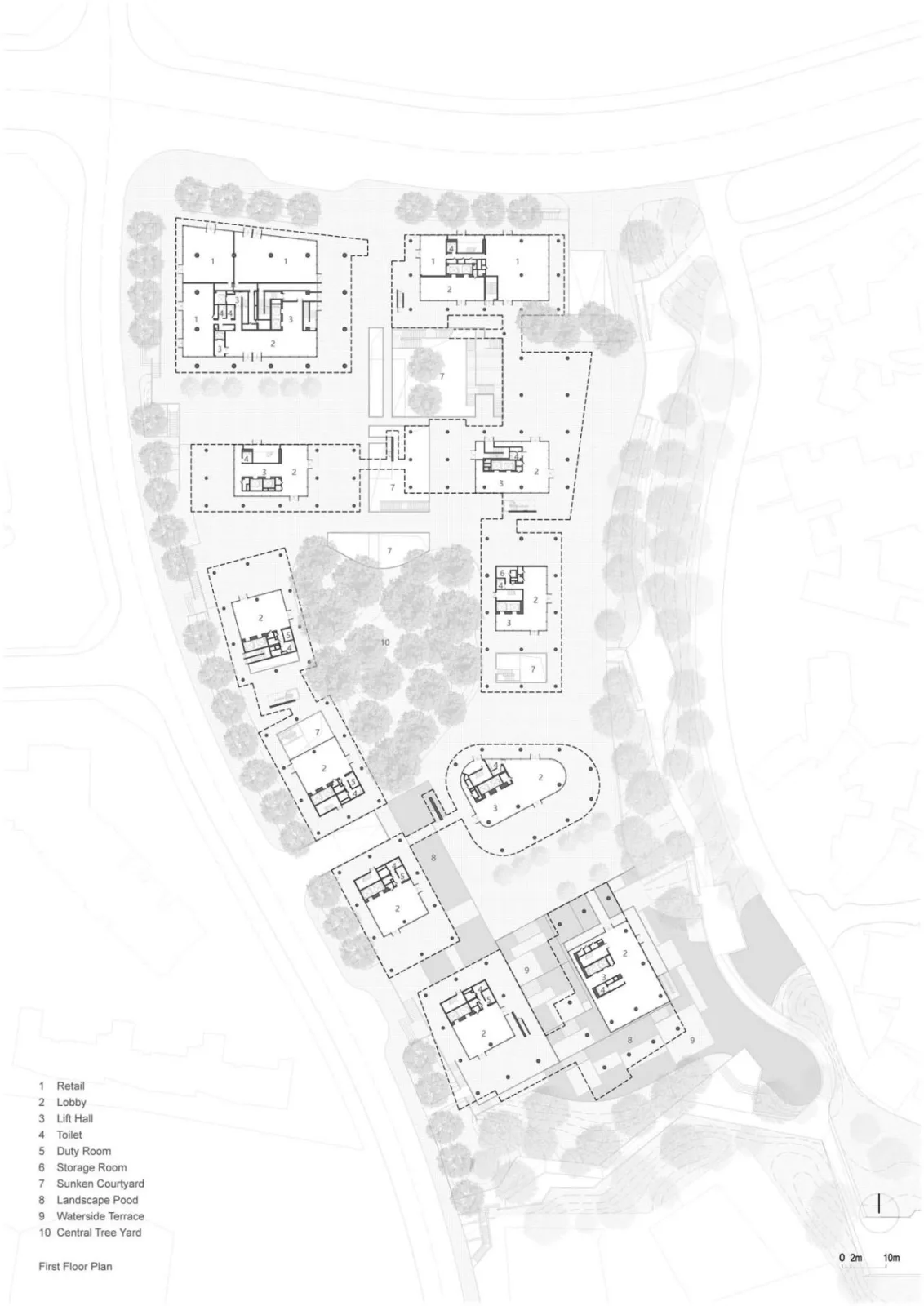
△ First Floor Plan
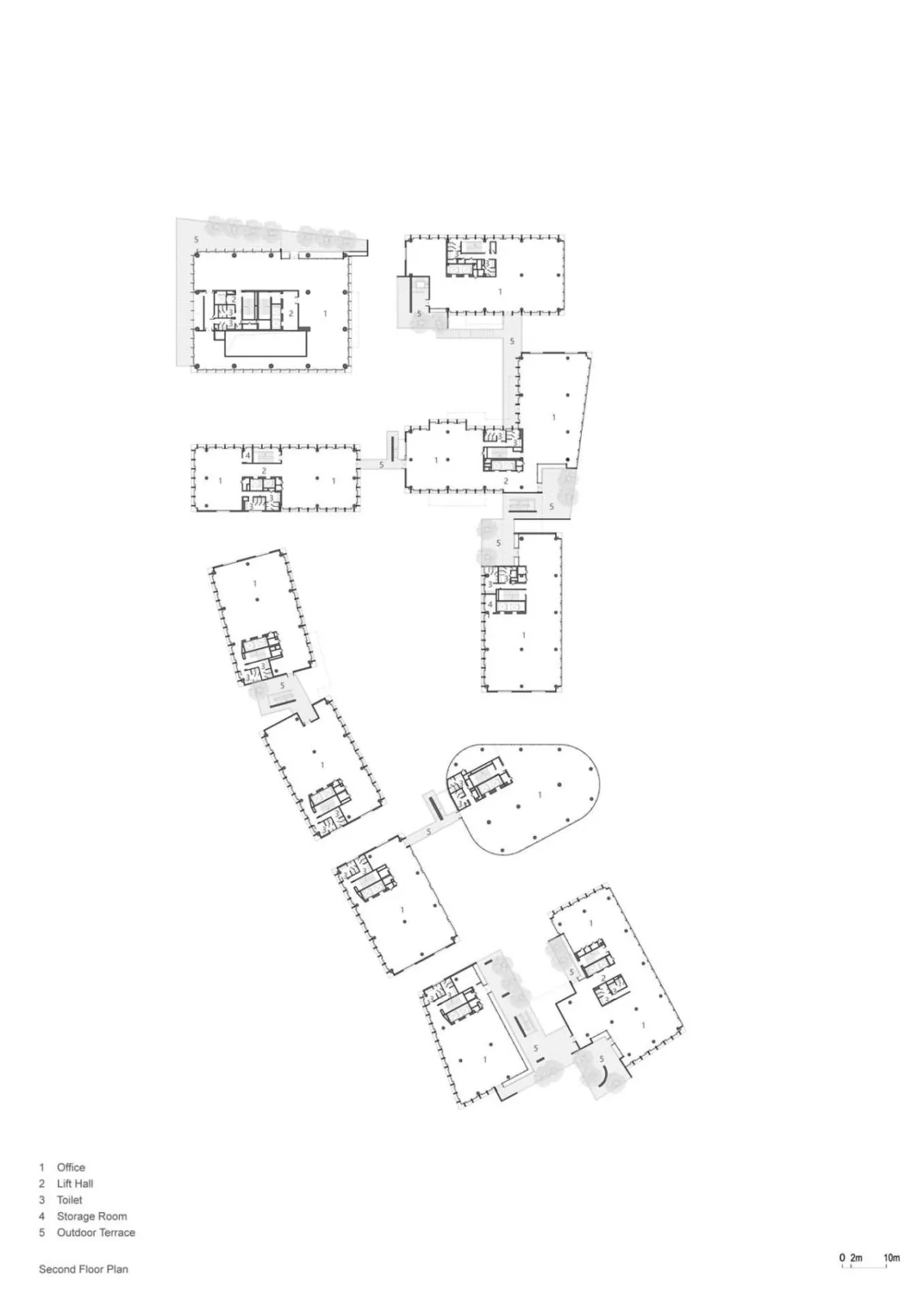
△ Second Floor Plan
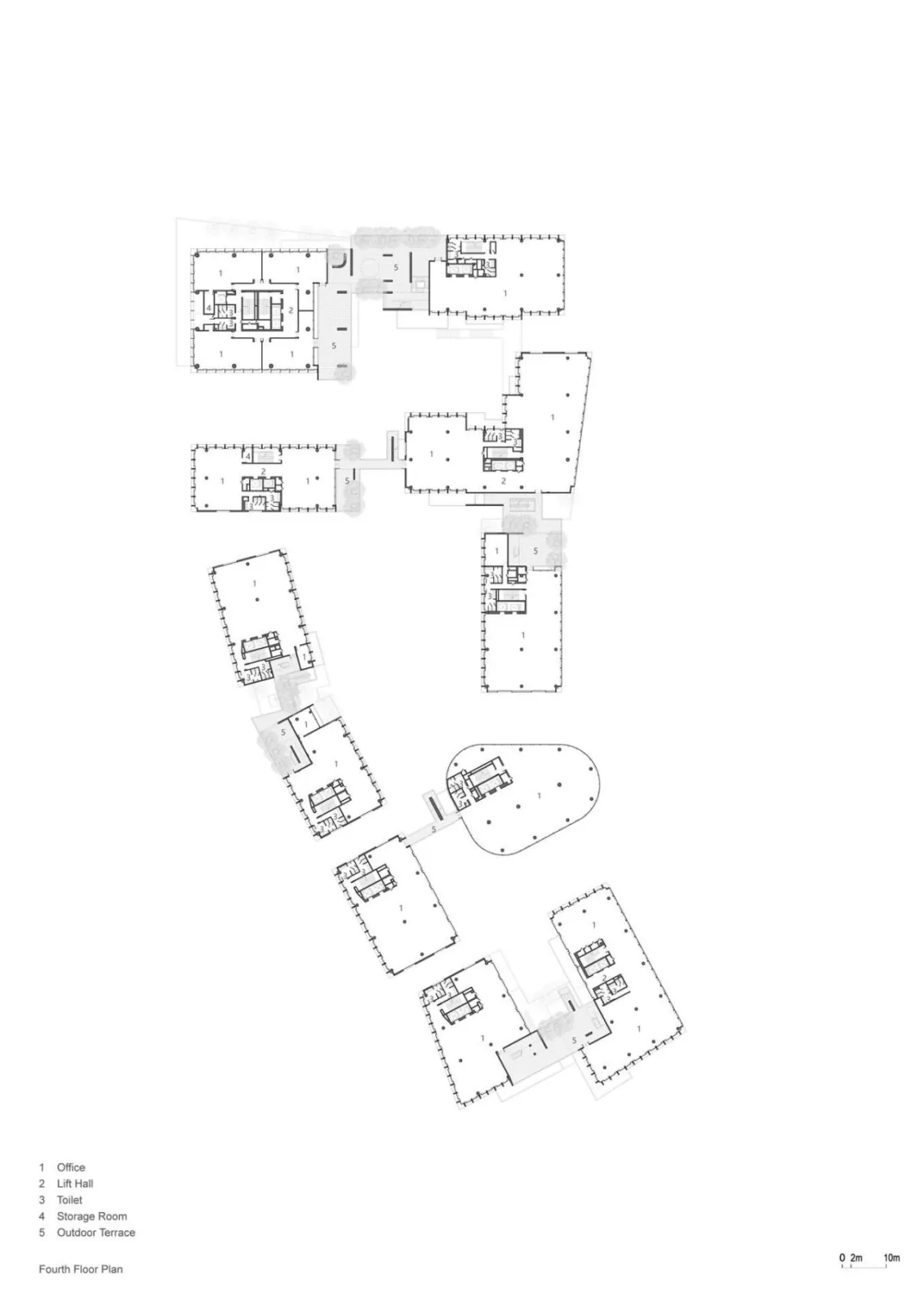
△ Third Floor Plan
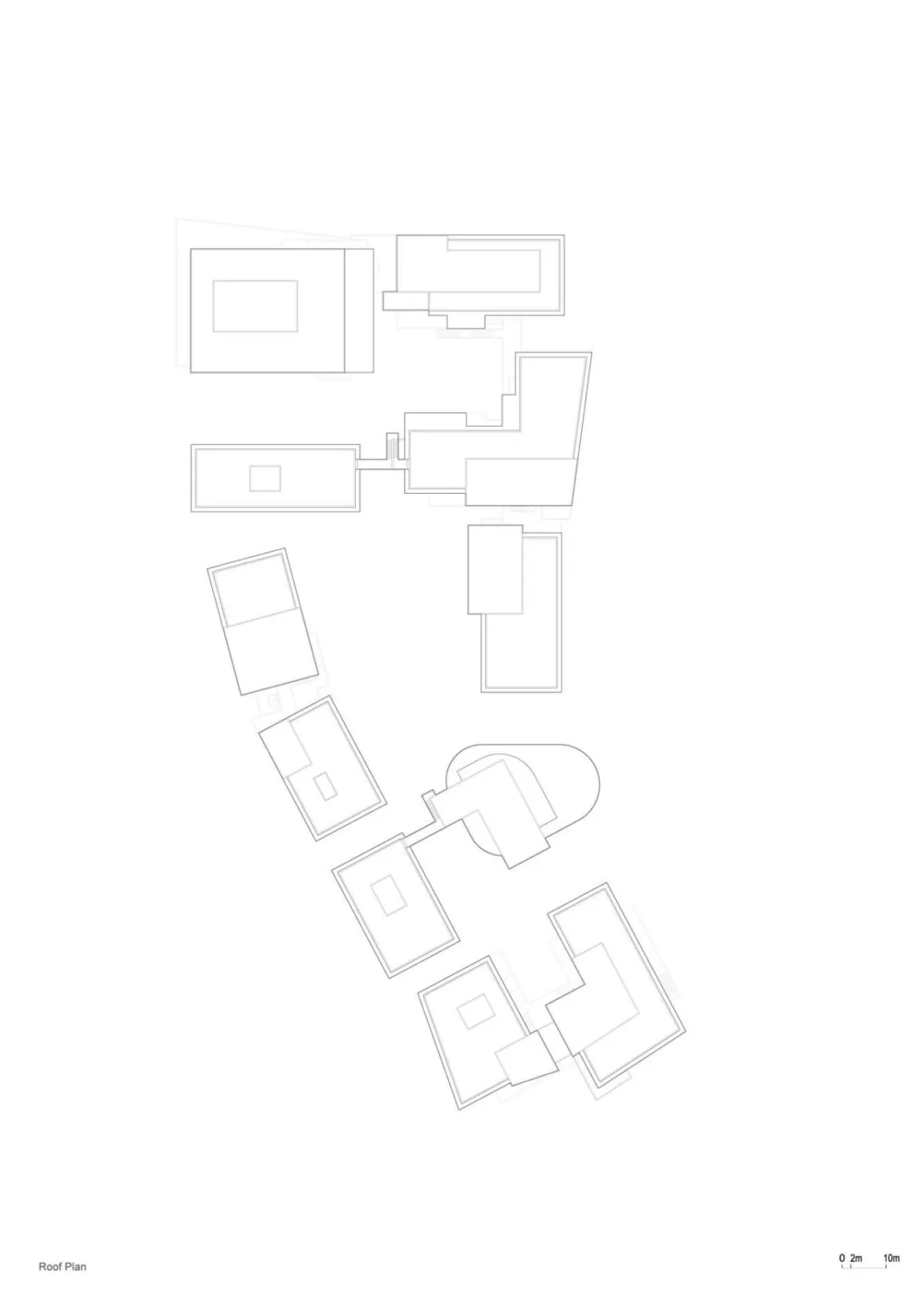
△ Roof Plan
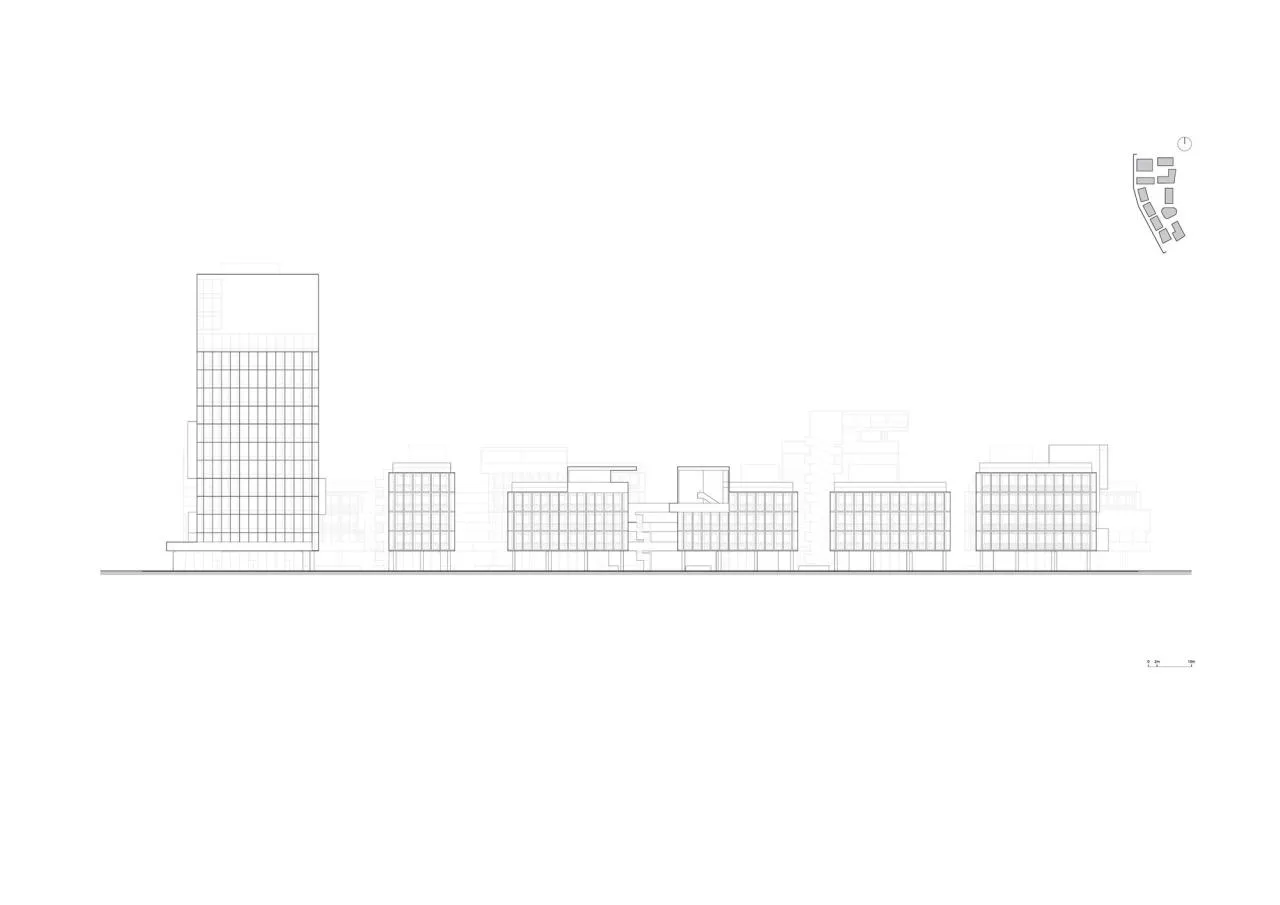
△ Elevation Drawing
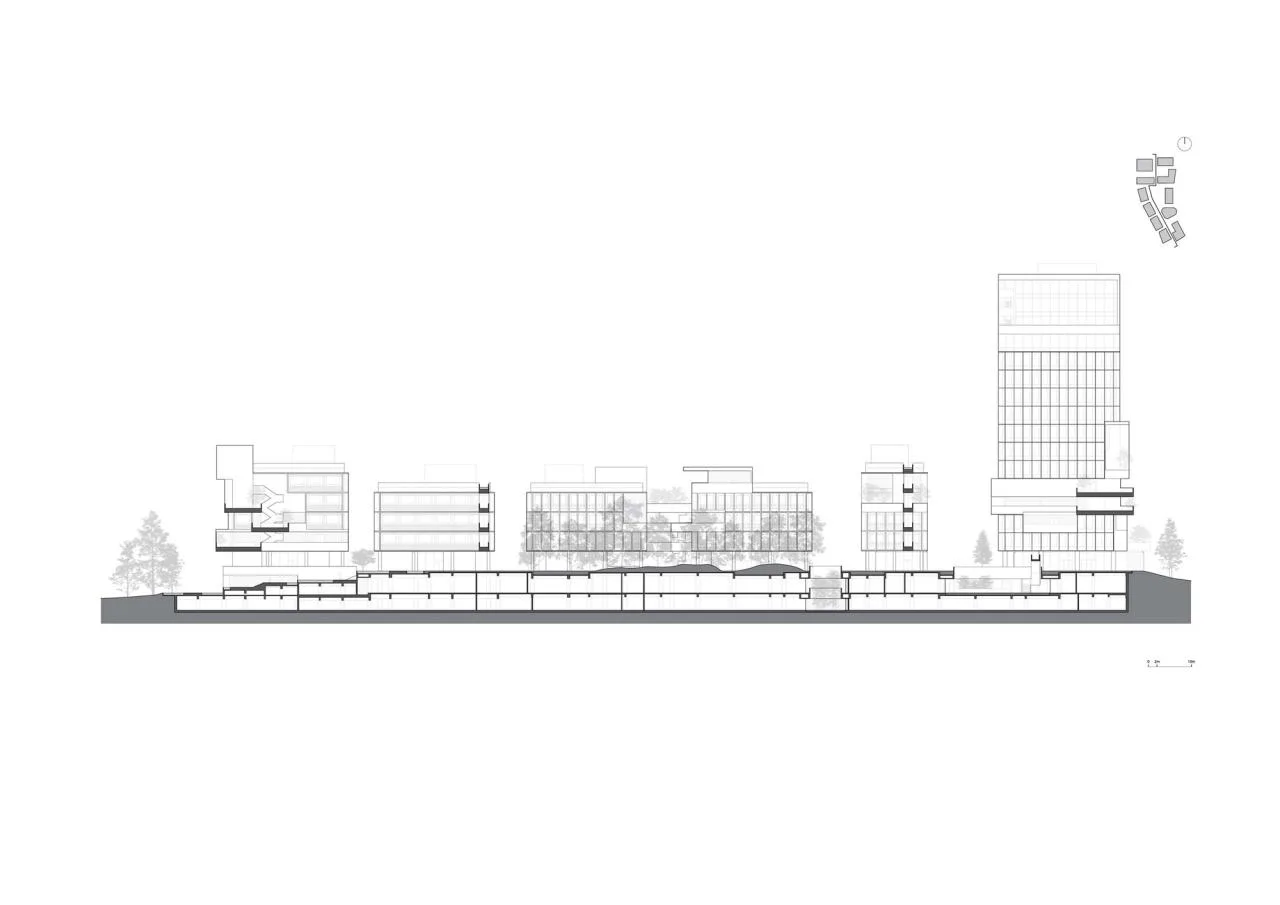
△ Section Diagram
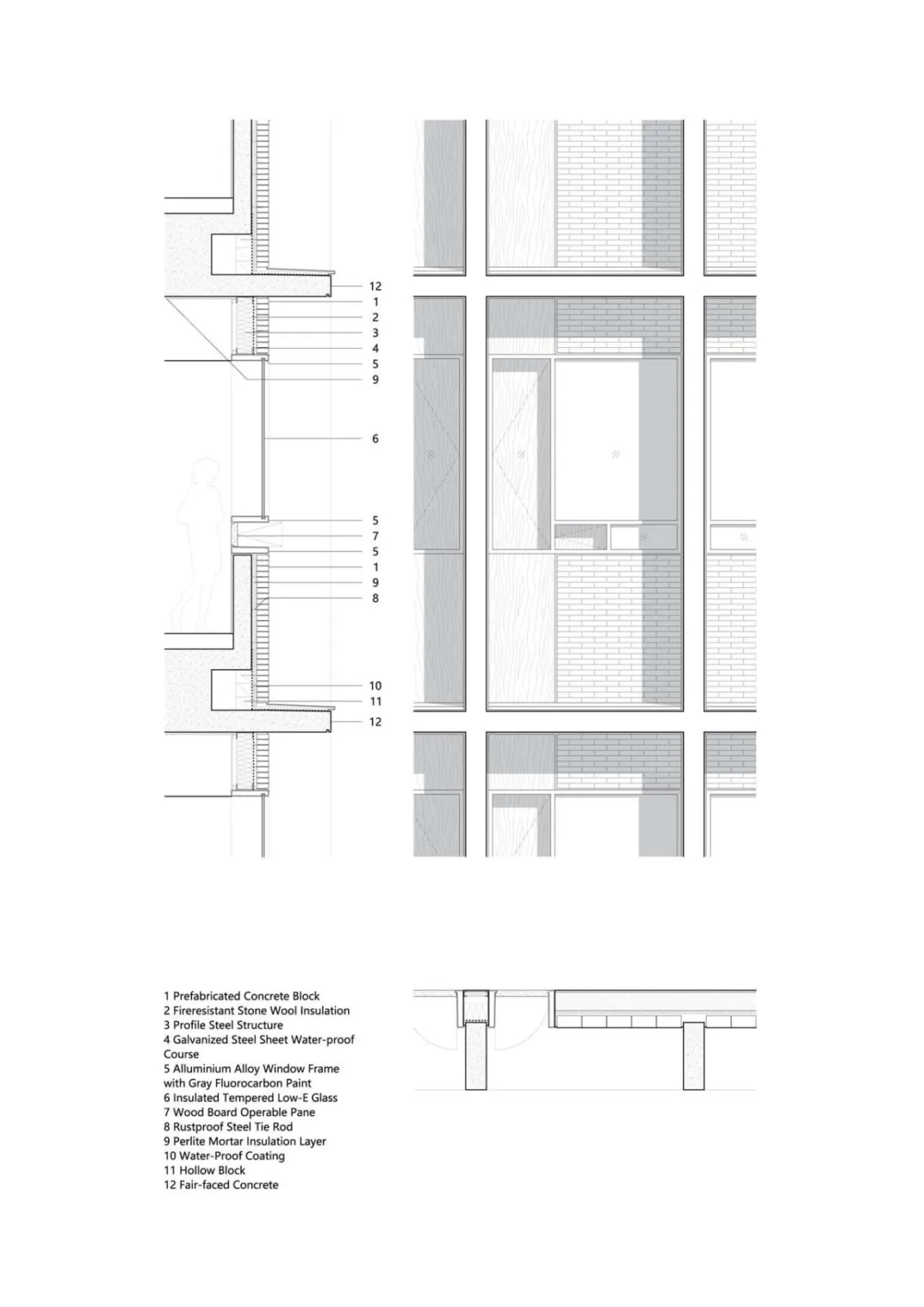
△ Detailed Drawing
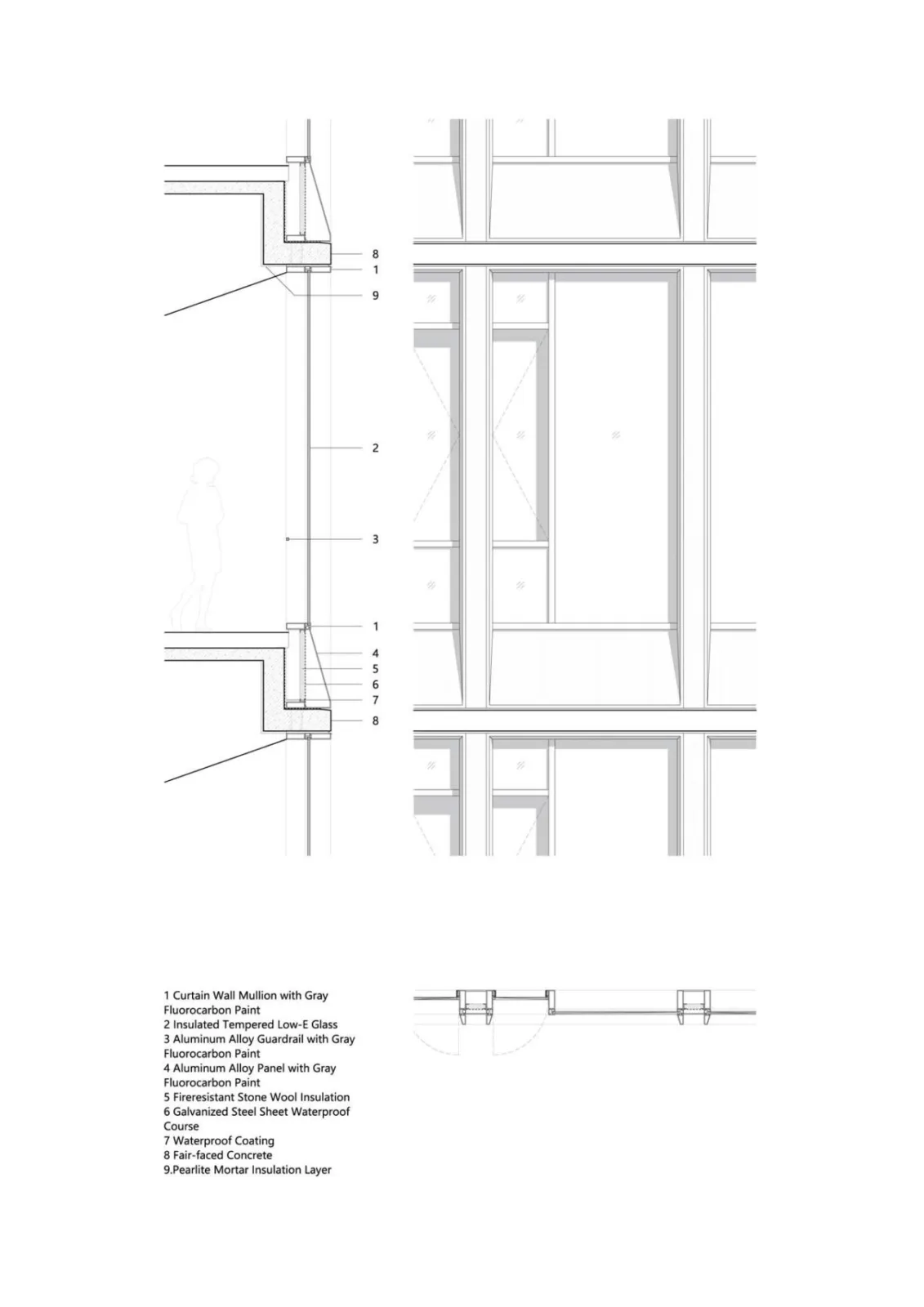
△ Detailed Drawing
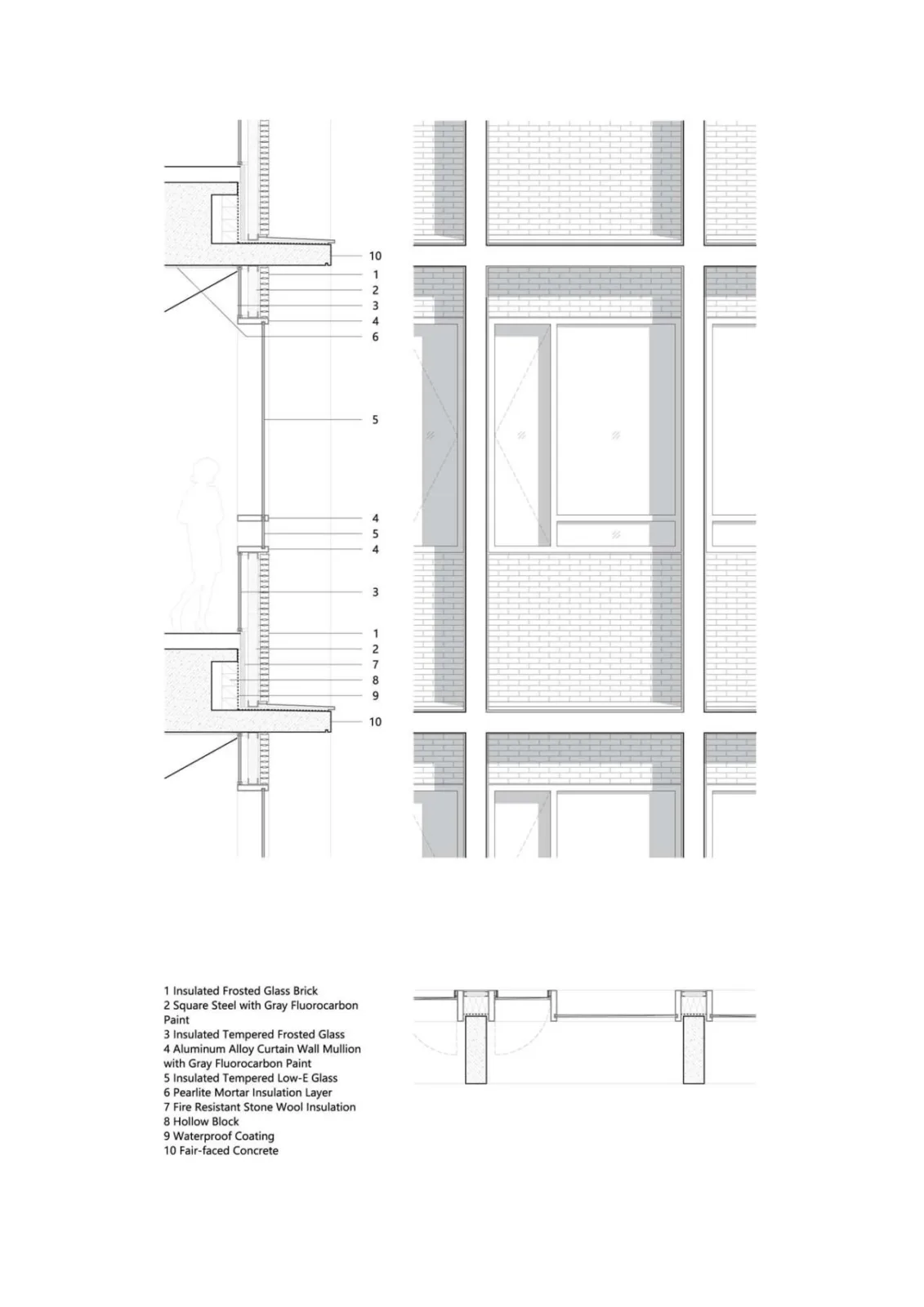
△ Detailed Drawing
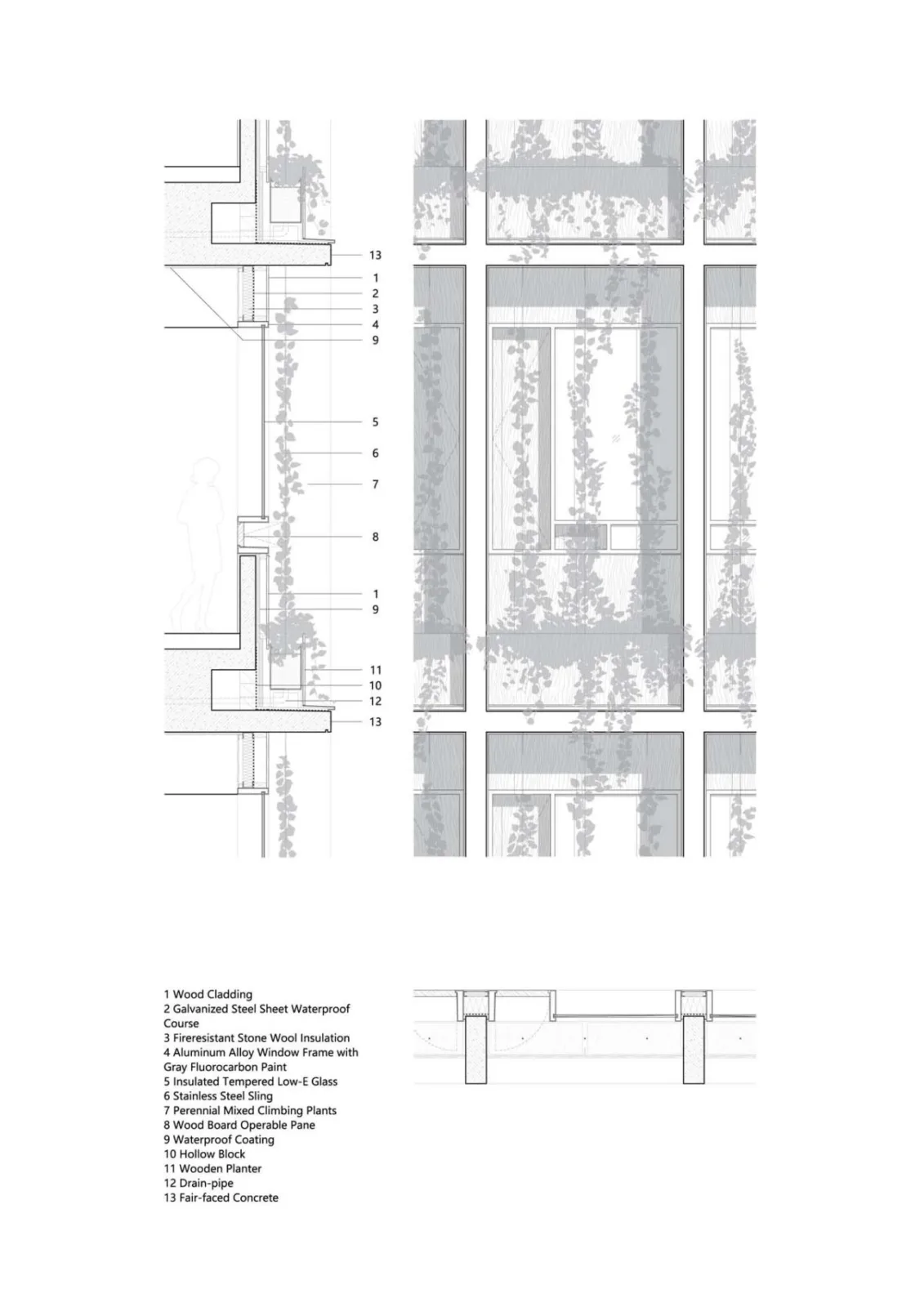
△ Detailed Drawing
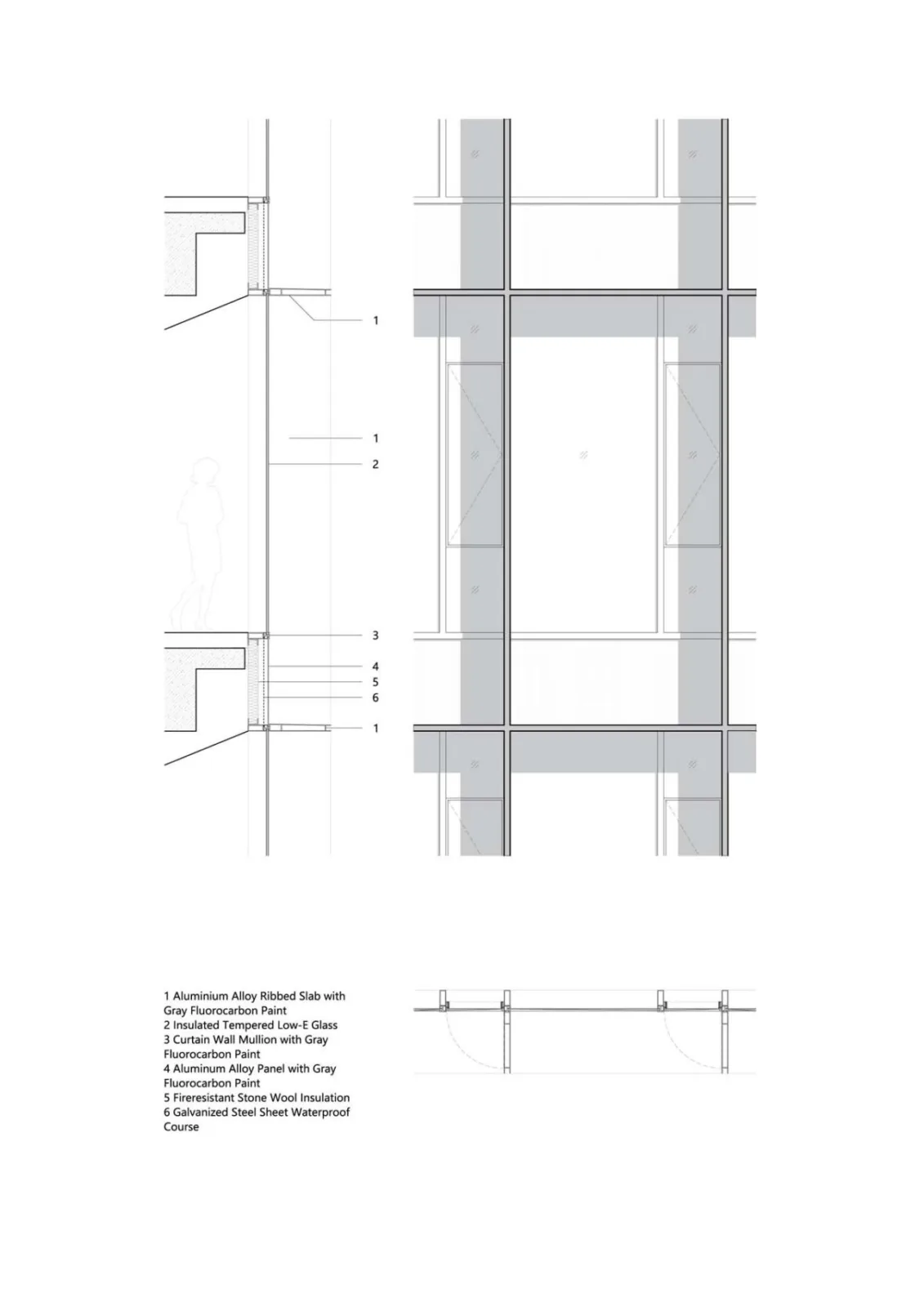
△ Detailed Drawing
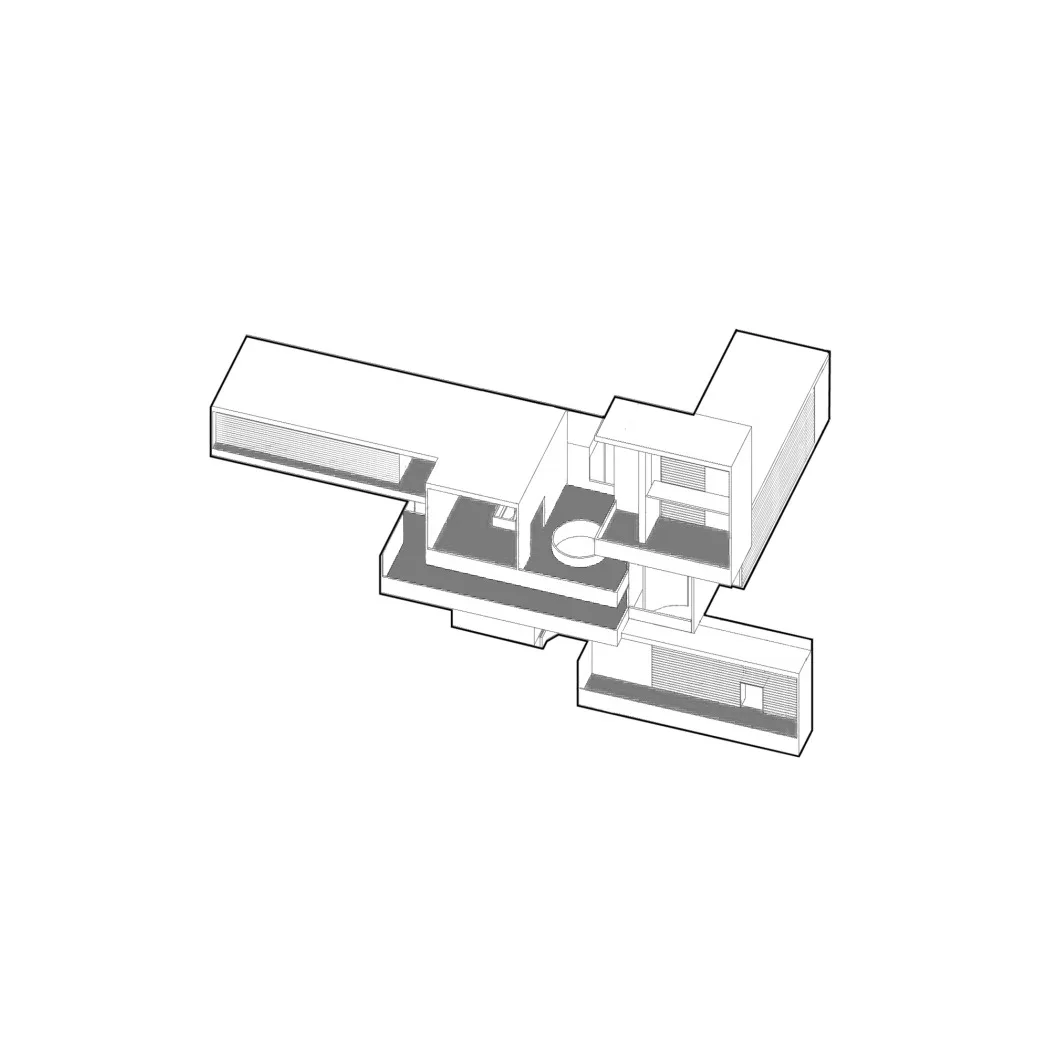
△ Sectional Perspective
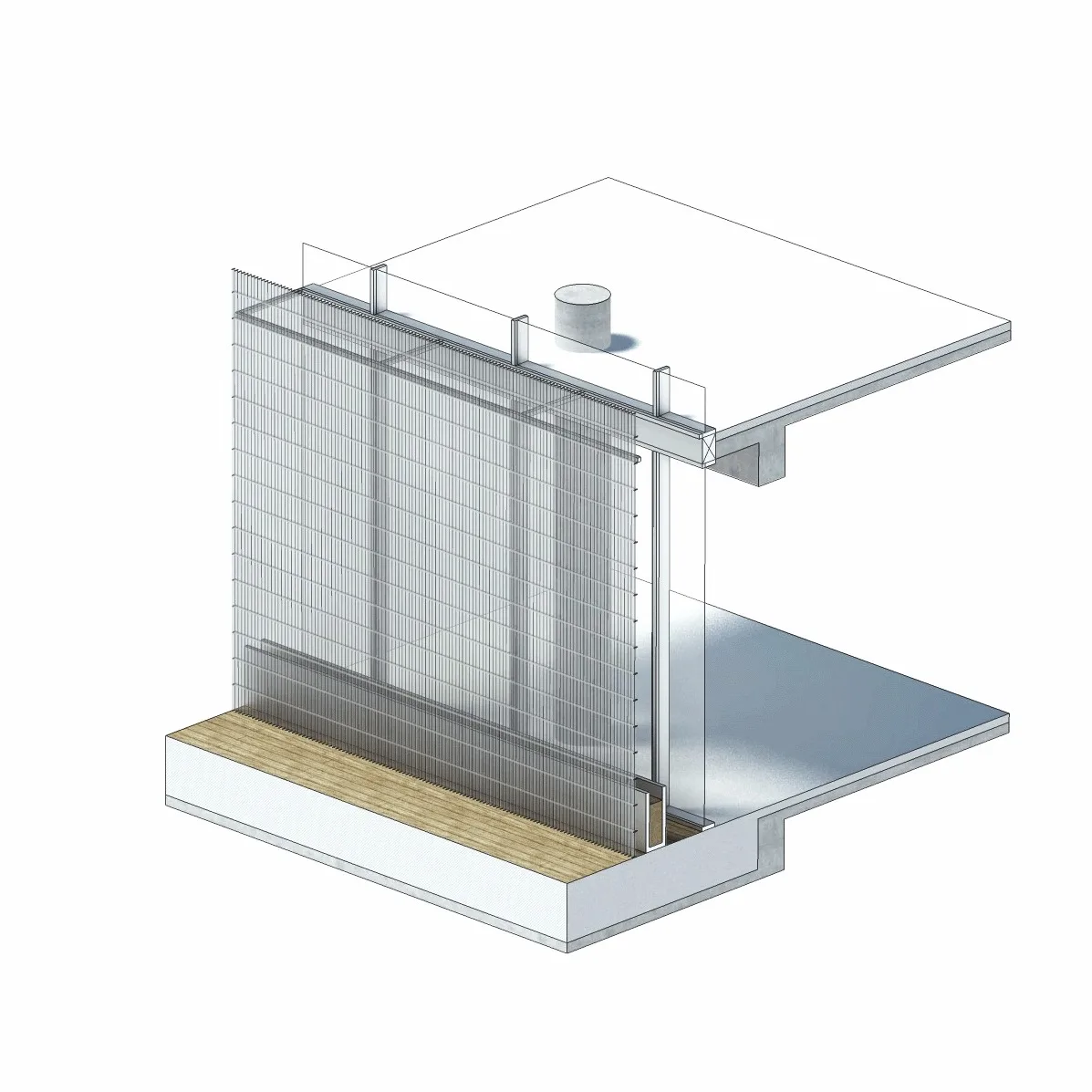
△ Detailed Structural Diagram
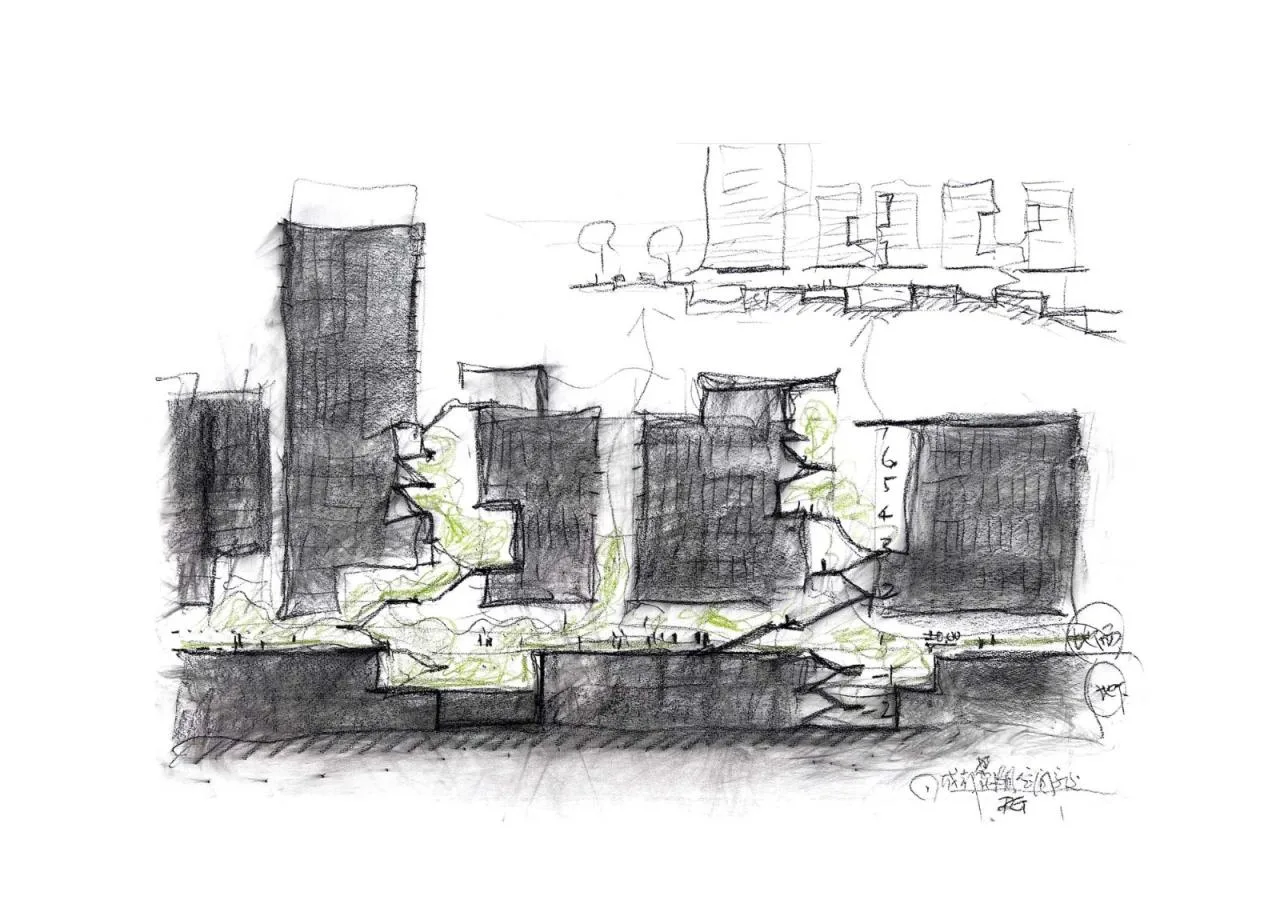
△ Hand-drawn Drawing
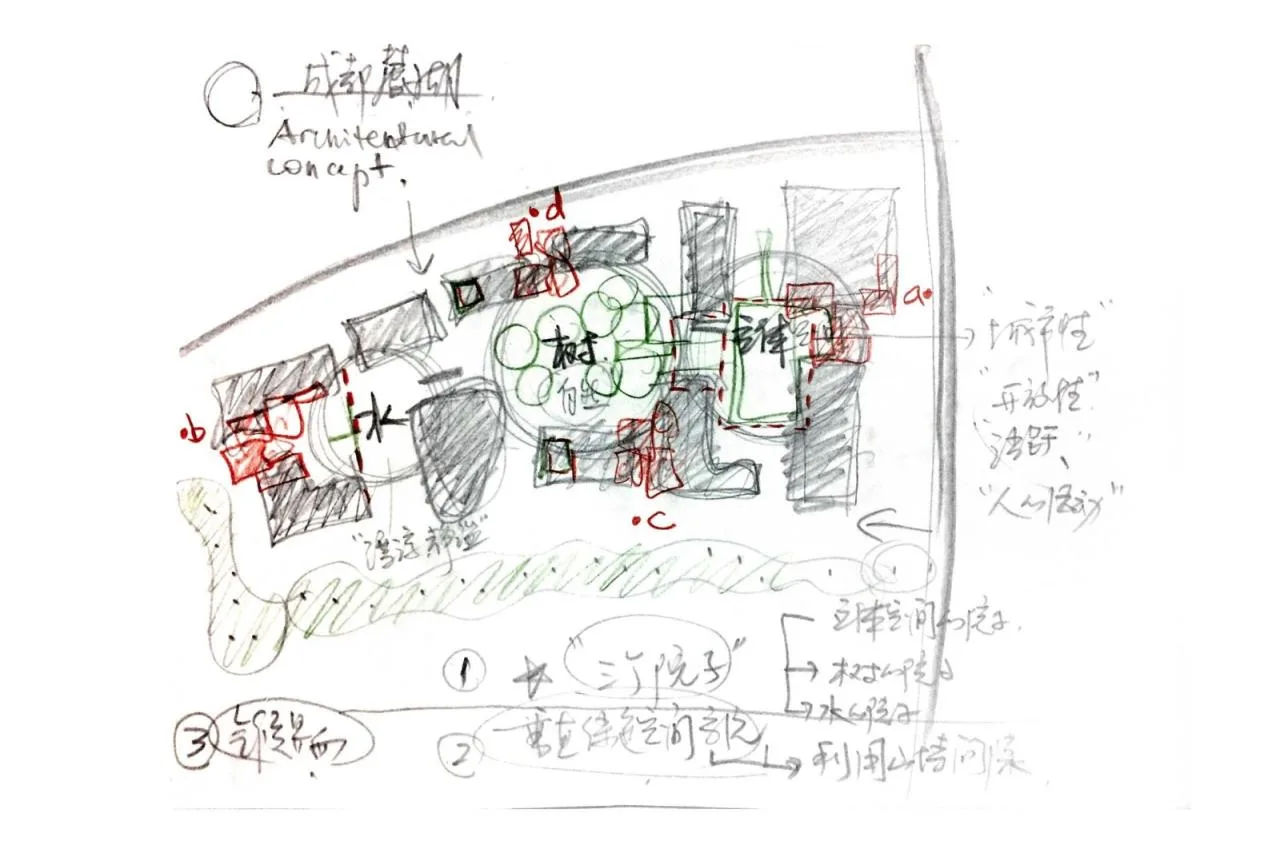
△ Hand-drawn Drawing
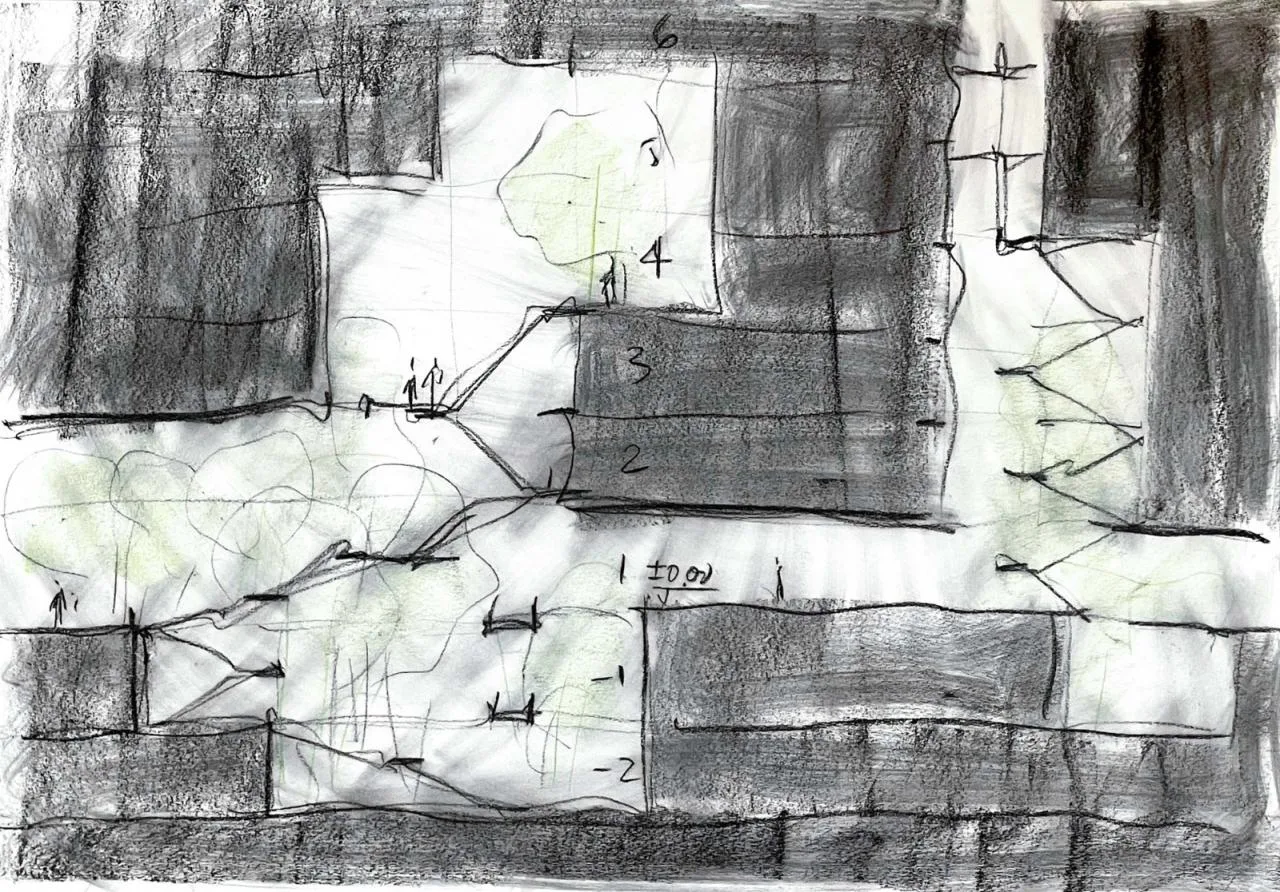
△ Hand-drawn Drawing
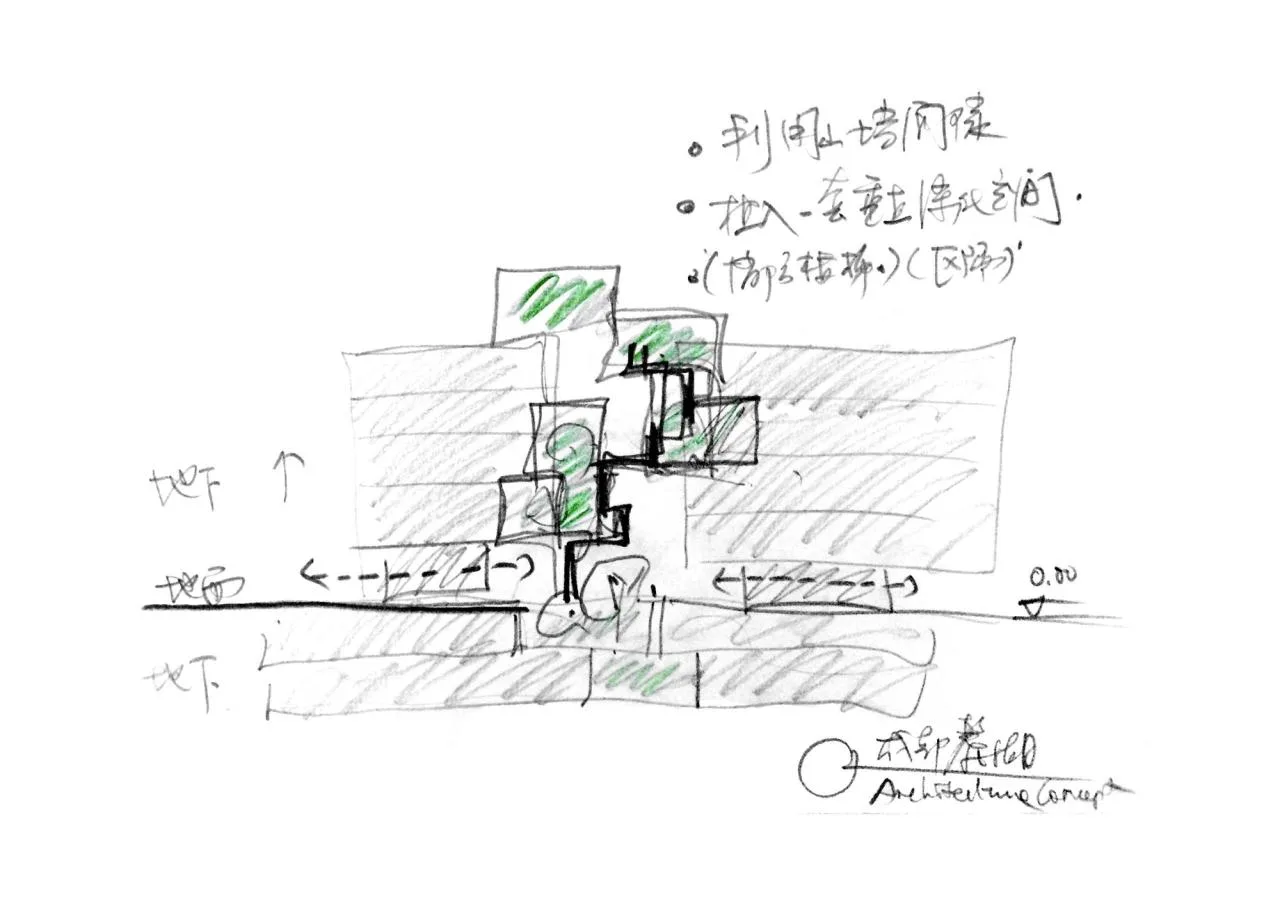
△ Hand-drawn Drawing
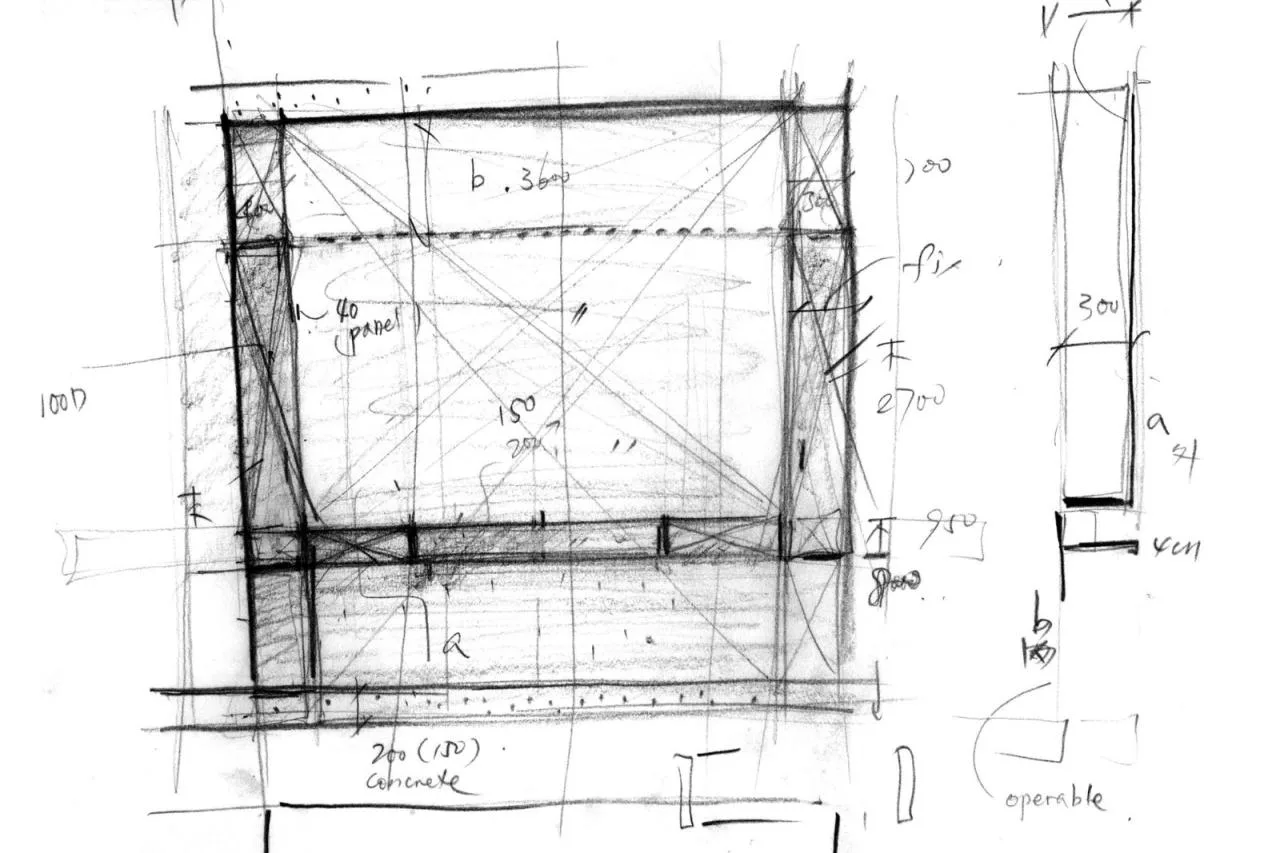
△ Hand-drawn Drawing
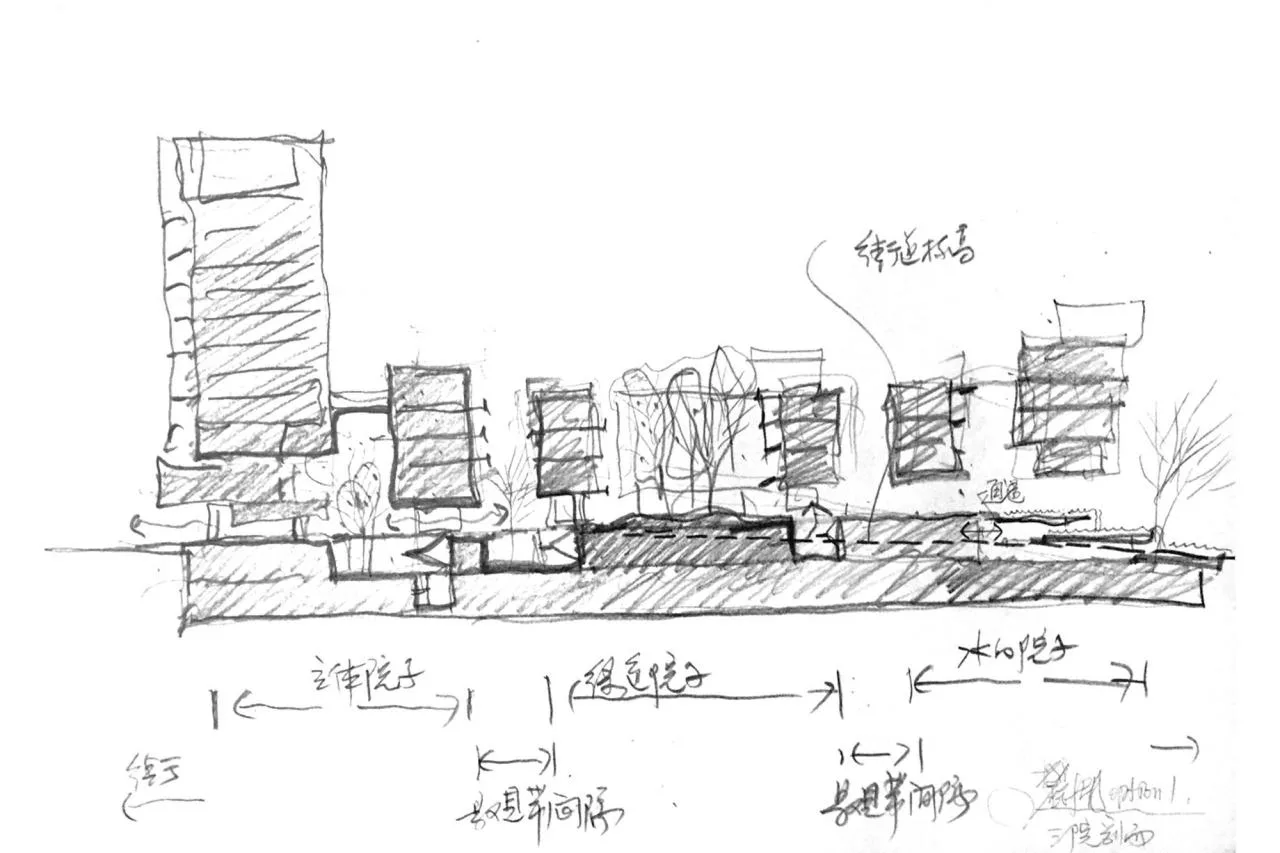
△ Hand-drawn Drawing
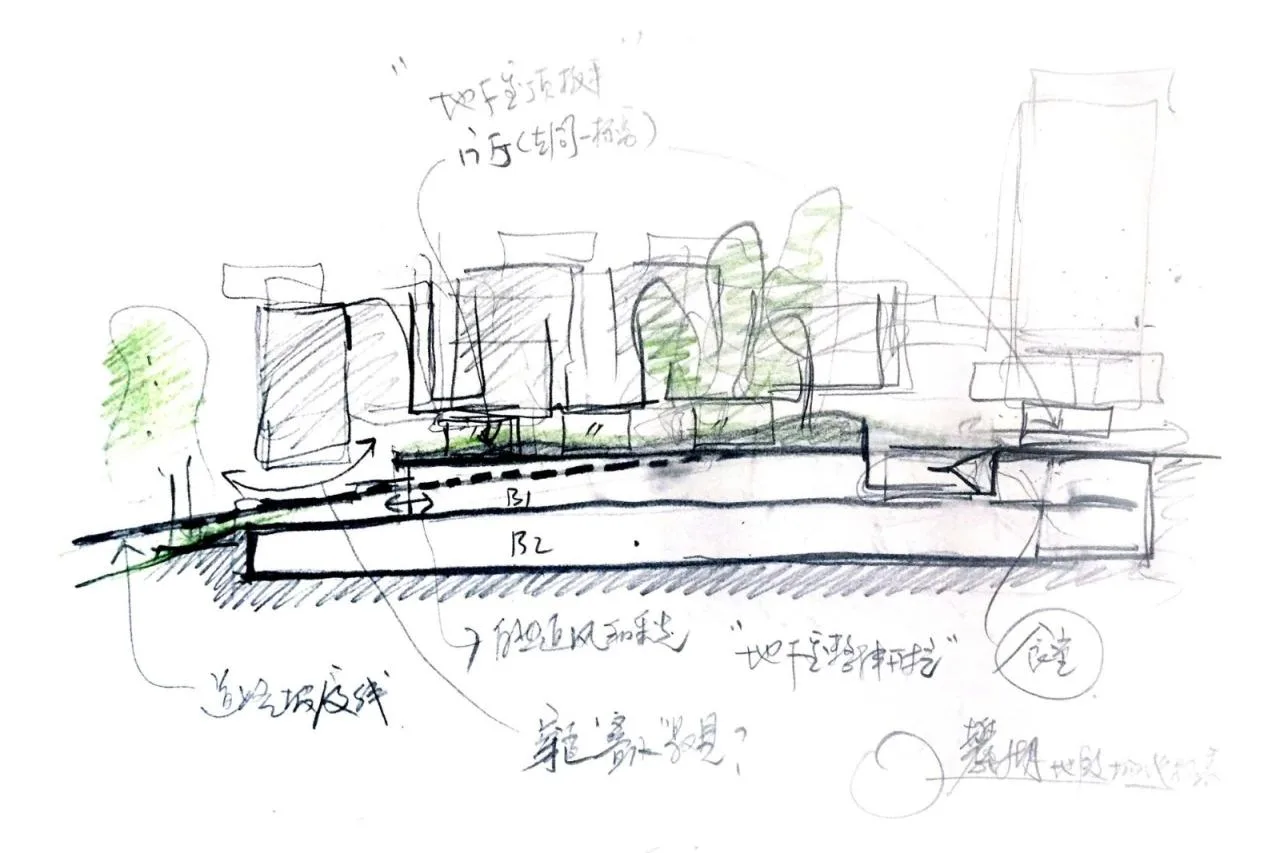
△ Hand-drawn Drawing
Project Information
Architectural Design: Vertical Architecture
Area: 70,463 m²
Project Year: 2021
Photographers: Chen Hao, Existent Architecture, Zhang Yang
Lead Architect: Dong Gong
Project Architect: Feng Chaoying
Resident Architect: Huang Tianzhi
Construction Management: Zhao Liangliang, Li Jinteng
Design Management: Liu Chen, Zhang Kai, Wang Nan, Sun Dongping
Project Members: Ma Xiaokai, Zhang Yixiu, Tu Dan, Ai Xin, Wang Yiqi, Zhang Han, Chen Zhoujie, Zhang Zhao, Zhao Dan, Teng Xiaotong
Structural Design (Preliminary): Xiao Congzhen, Chu Dewen, Ma Hongrui, Li Yilong
Mechanical and Electrical Design (Preliminary): Zhang Peng (Water), Chen Yanan (Heating), Li Hui (Electricity), Li Xiaofei (Electricity)
Collaborative Design Institute (Construction Drawings): Sichuan Shutai Architectural Design Co., Ltd
Project Architect (Construction Drawings): Zhang Chongling
Architects from Collaborative Design Institute: Gao Jie, Liu Fei
Structural Design (Construction Drawings): Zhong Ming, Guo Gaohua, He Lin
Mechanical and Electrical Design (Construction Drawings): Yin Fulin (Water), Lin Yan (Water), Gong Bo (Heating), Zhao Dan (Heating), Liu Wei (Electricity), Liang Xiaowei (Electricity)
Principal: Chengdu Wanhua Investment Group Co., Ltd., Chengdu Wanhua New City Development Co., Ltd
Curtain Wall Design: Shenzhen Keyuan Construction Group Co., Ltd
Landscape Design: Guangzhou Yijing Landscape Design Co., Ltd., Changsha Branch
Lighting Design: Zhang Xin Studio, School of Architecture, Tsinghua University
Interior Design: Sichuan Shengbang Construction Co., Ltd
Construction Party: China Construction Third Engineering Group Co., Ltd
Logo Design: Beijing Xiangsu Brand Technology Co., Ltd., Shanghai Baixi Logo Co., Ltd
Location: Chengdu, China















Must log in before commenting!
Sign Up