
Everyone has their own hidden Shanghai—fragments seemingly unrelated, quietly embedded within the vast, sparkling city. When one connects these pieces, the living essence of Shanghai emerges, defining the vibrant city we see today.
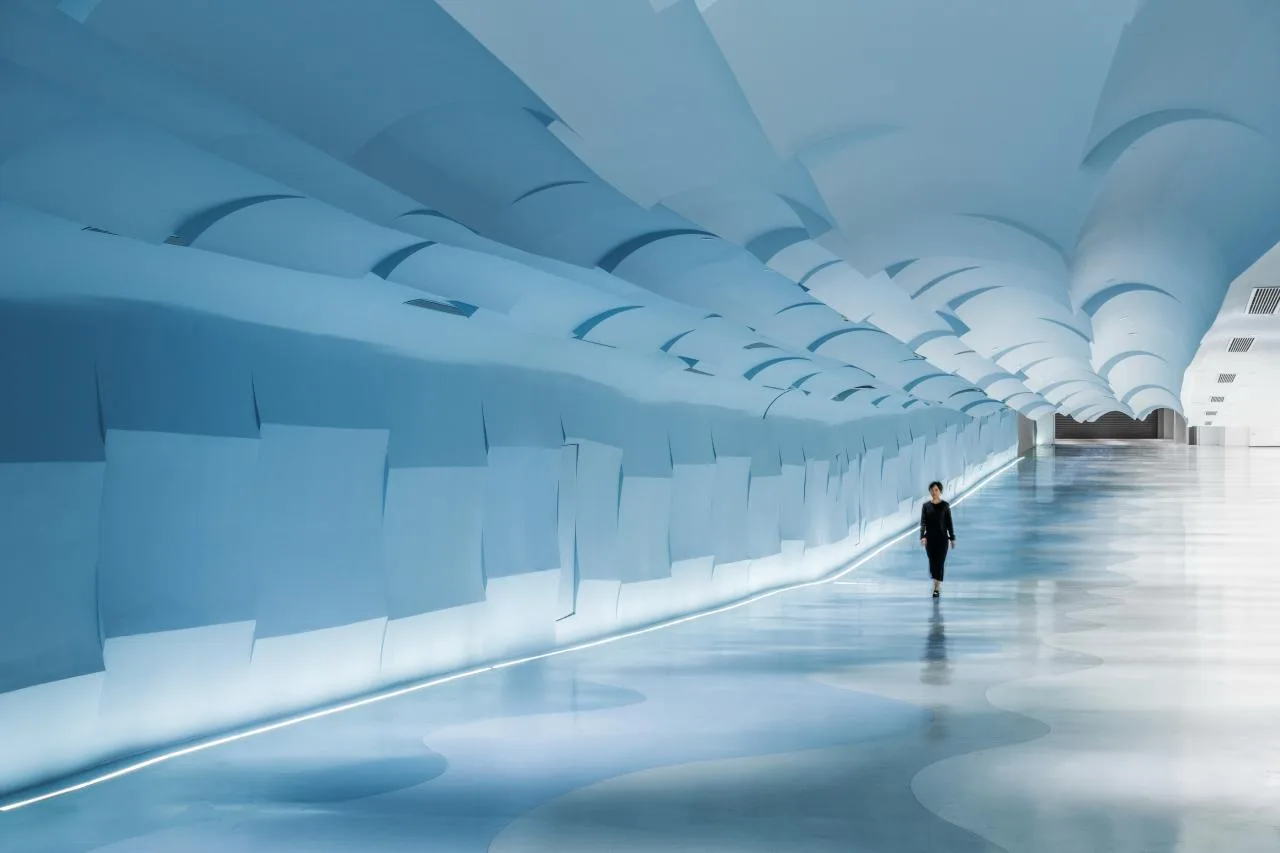
The underground public transportation space designed by W-Mills, a studio within Wutopia Lab, was commissioned by the Shanghai Urban Planning Exhibition Hall and Silk Road Vision. Inspired by the theme of surging river waters, this project was officially completed after the Spring Festival in 2022.
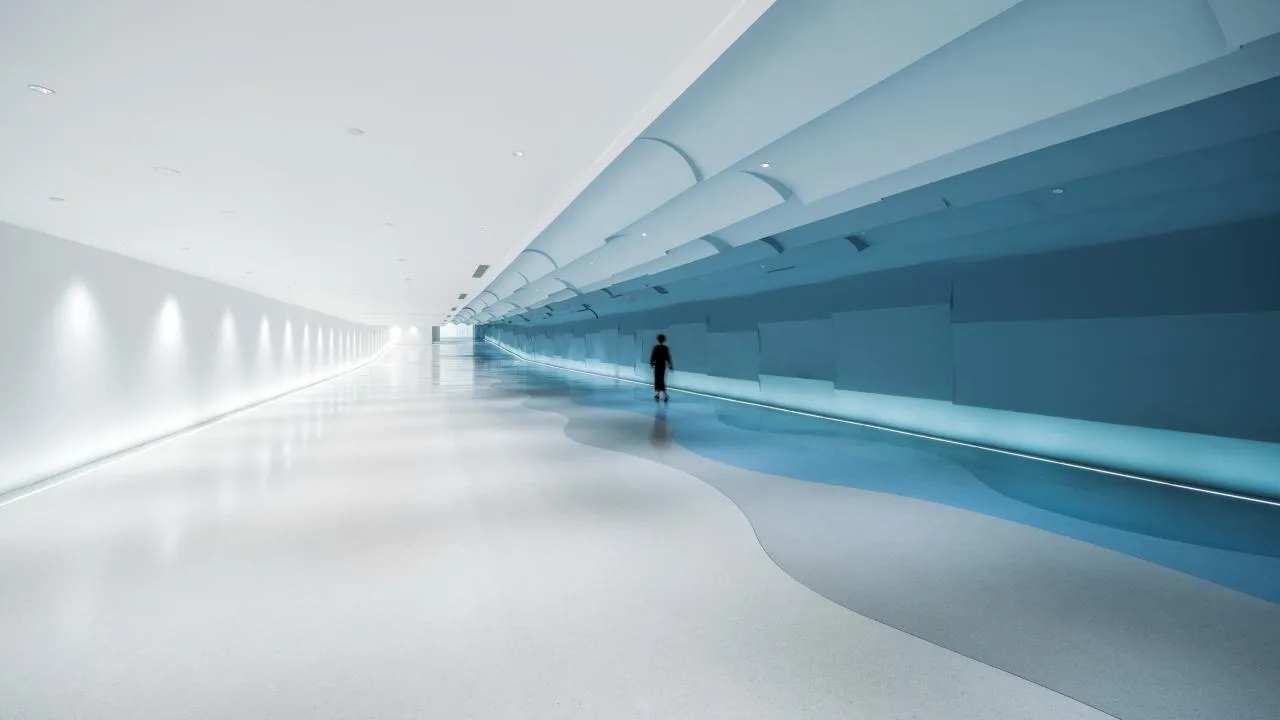
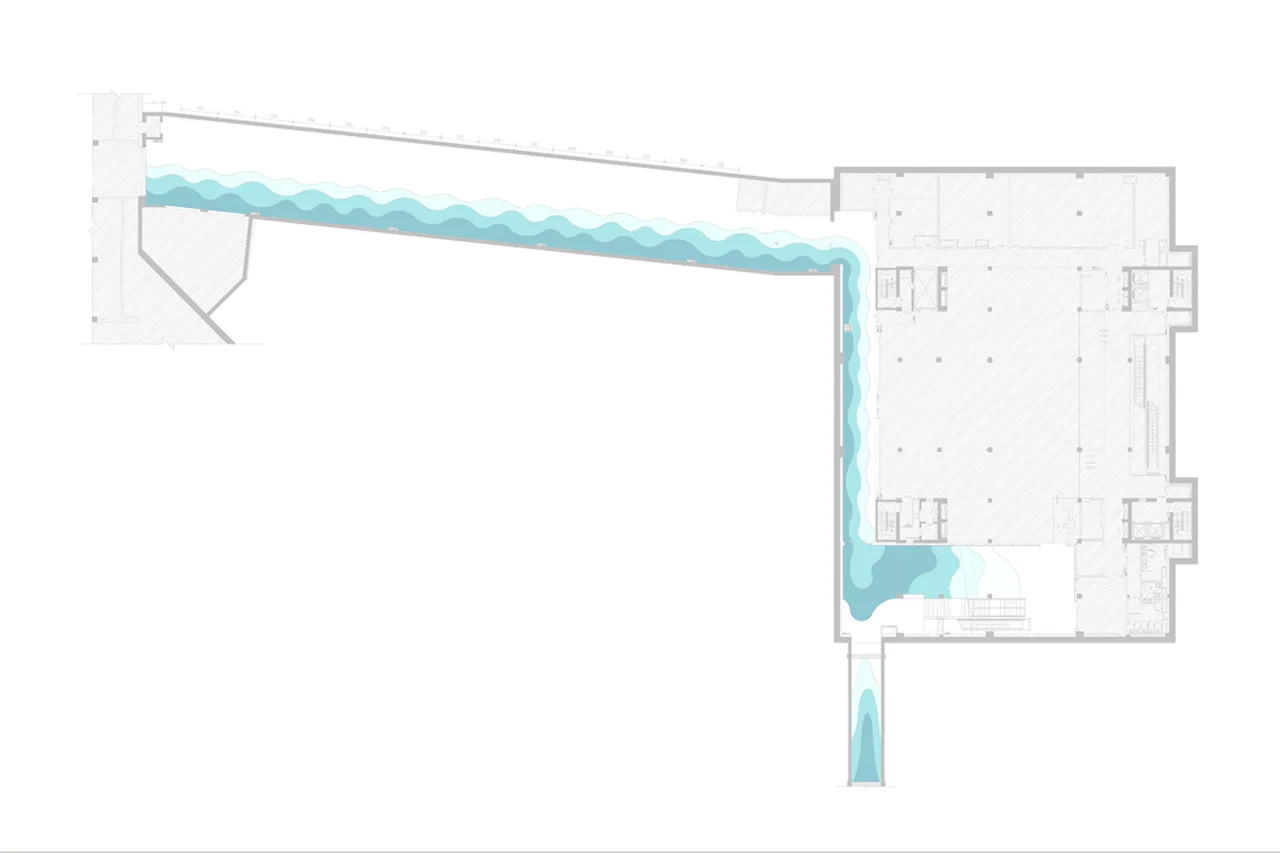
Covering just 3,000 square meters, this underground area is divided into four parts: Zone A is an 11-meter by 91-meter sloped main passage that connects to the Dimei underground commercial area; Zone B is a 4 by 43-meter exhibition corridor at the end of Zone A; Zone C is a 4 by 20-meter passageway linking to the People’s Square subway station; and Zone D serves as a 380-square-meter distribution hall, uniting Zones A, B, and C and providing access from the surface. Integrating these diverse spaces with different functions and scales posed a challenge that required a compelling narrative framework.
When I hesitated about tackling such a complex space, I asked the curator why she chose this challenge. She explained, “The beauty above ground is colorful, but underground it is exquisite. A city worth exploring must have both visible and invisible qualities. This is a refined global city—this is Shanghai. The comprehensive renovation of the People’s Square underground space has been planned for years, and this project takes the first step to create a connected, warm corridor that preserves memories for every passerby.” Her courage inspired me to take on the challenge.
Waves Flow, Waves Run
Beginning at Wuzhong Road Station on Shanghai Metro Line 15, my studio set out to transform a transportation corridor into a symbolic urban public cultural space. Standing in the dim passage, I closed my eyes and imagined the sound of flowing water—an homage to Shanghai’s thriving history shaped by its abundant waterways.
Water has defined Shanghai’s unique urban character. The city has grown from nothing into a thriving metropolis because of its rivers and seas. These waterways shaped Shanghai’s openness and its bold embrace of diversity, witnessing its journey from a local hub to a global city, from past to future. I envisioned creating a bright, surging river within the tunnel, culminating in the port-like distribution hall where waves gently pulse through Shanghai’s heart—the urban planning exhibition hall. What was once a purely functional underground space now becomes a poetic and joyful cultural venue for all citizens.
A Surging Current
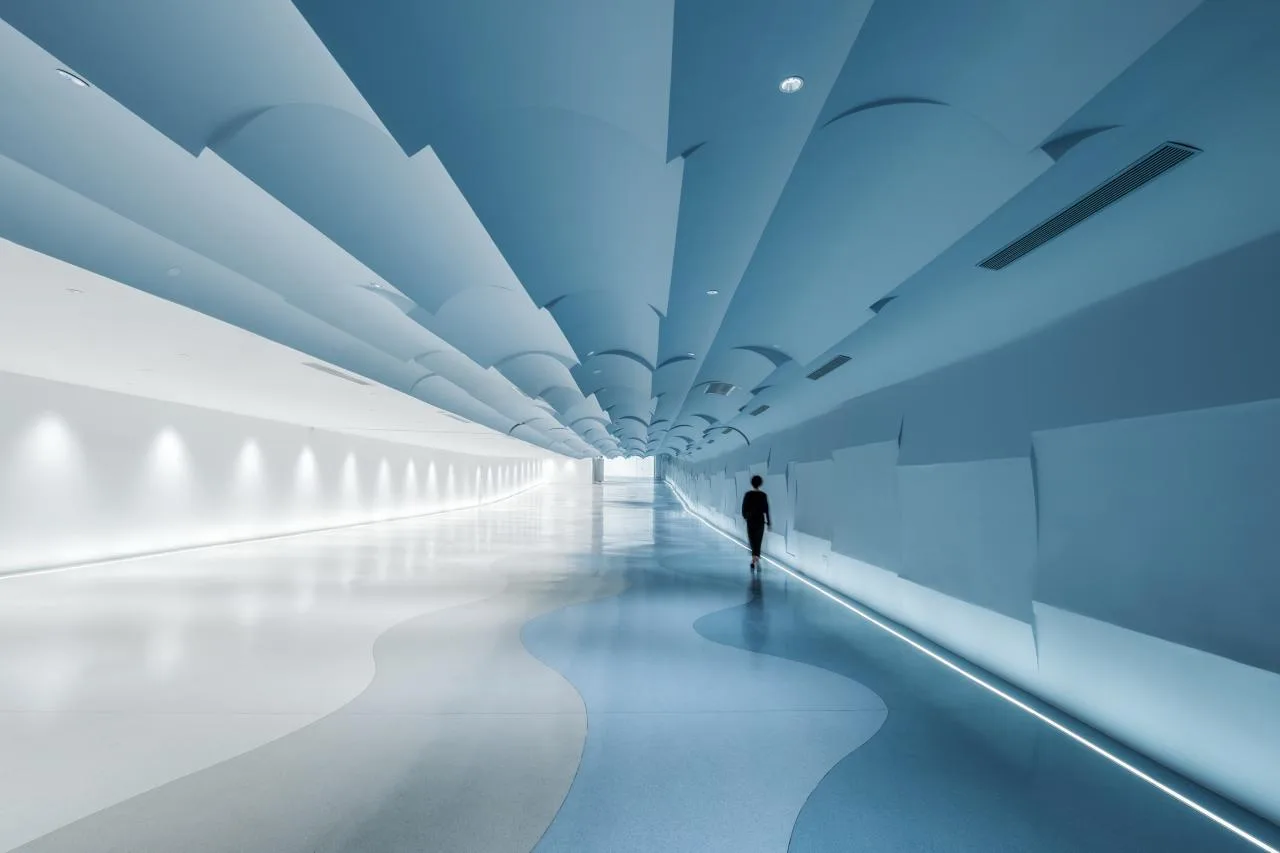
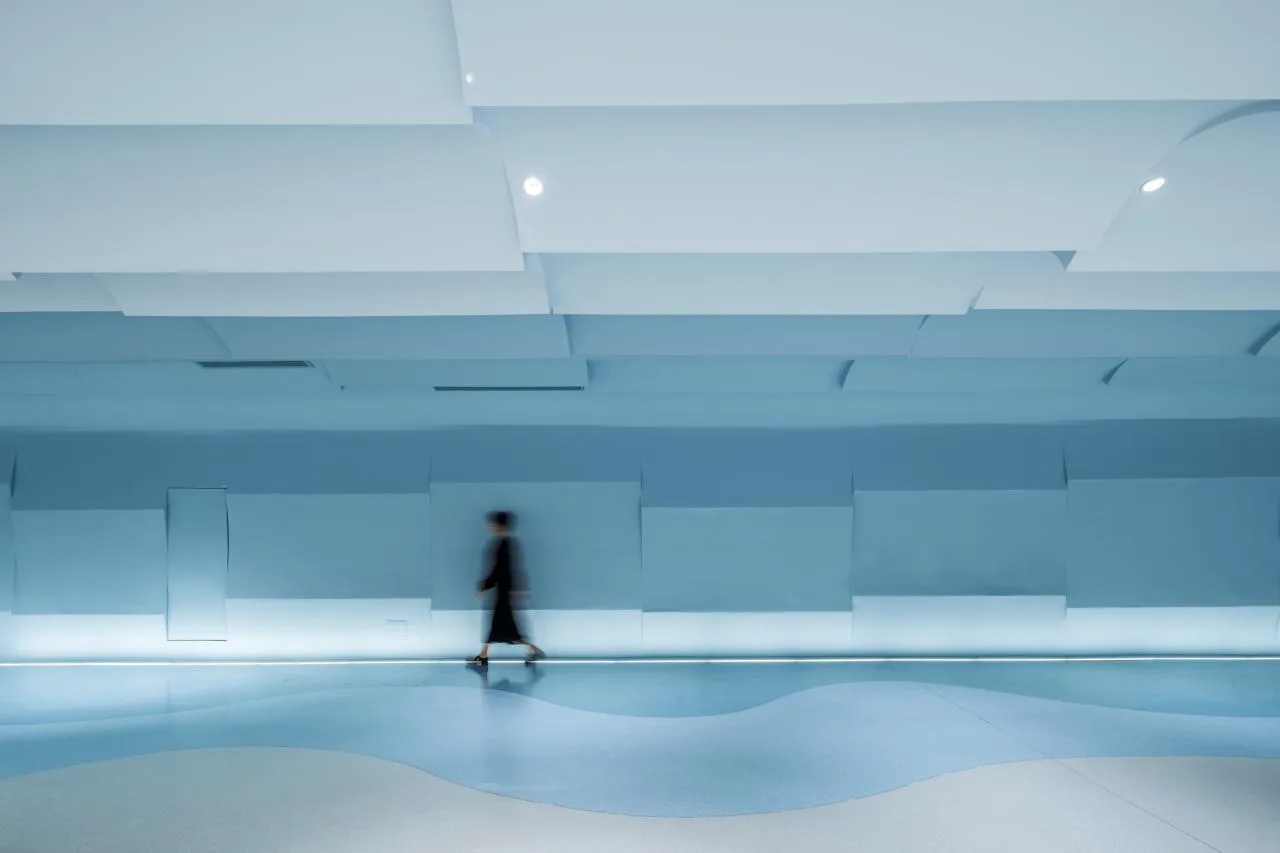
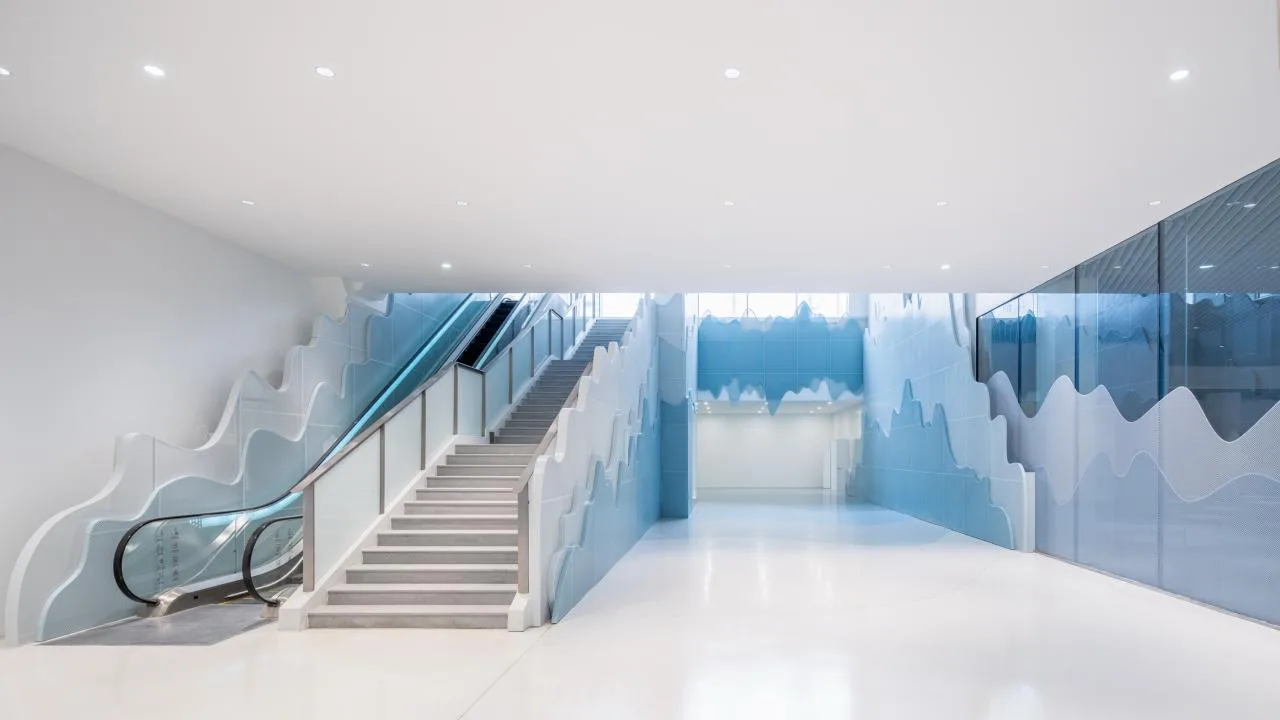
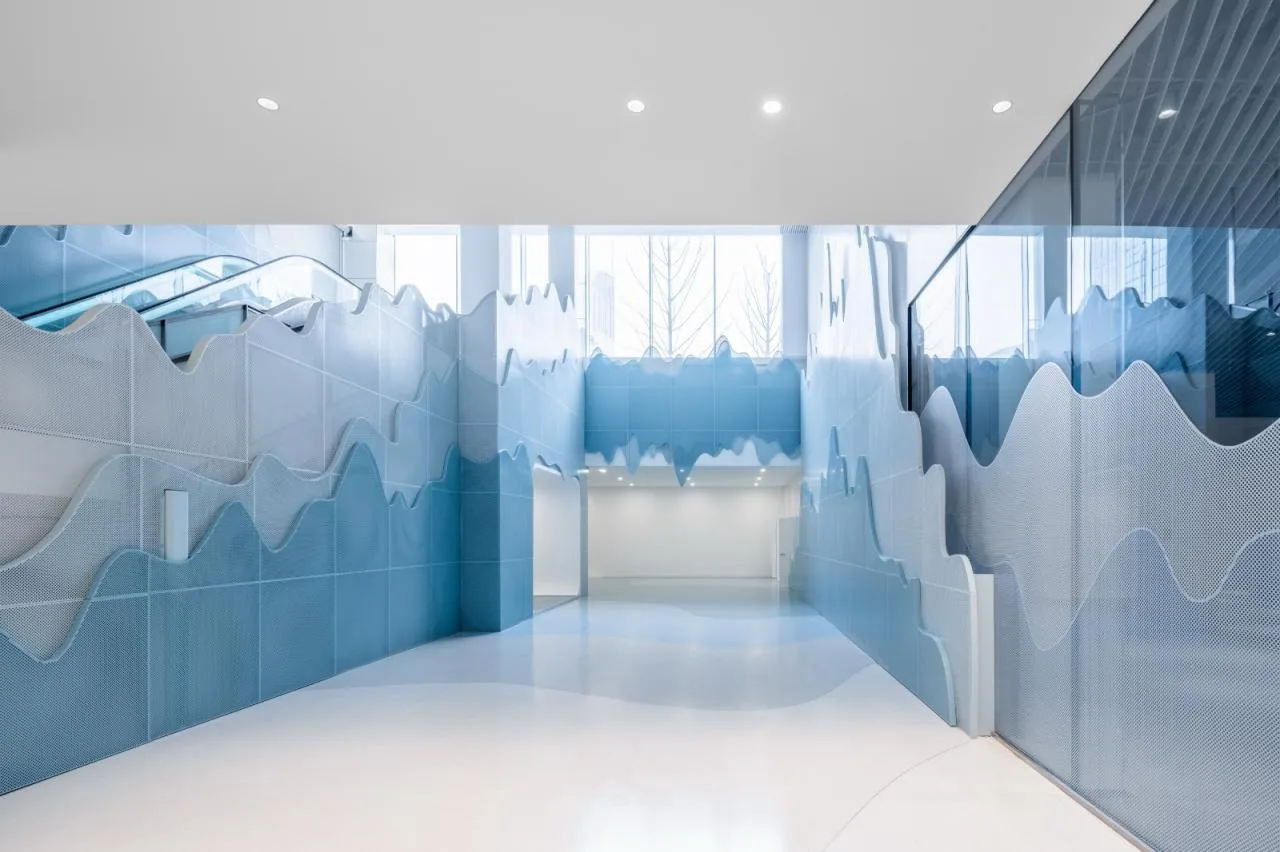
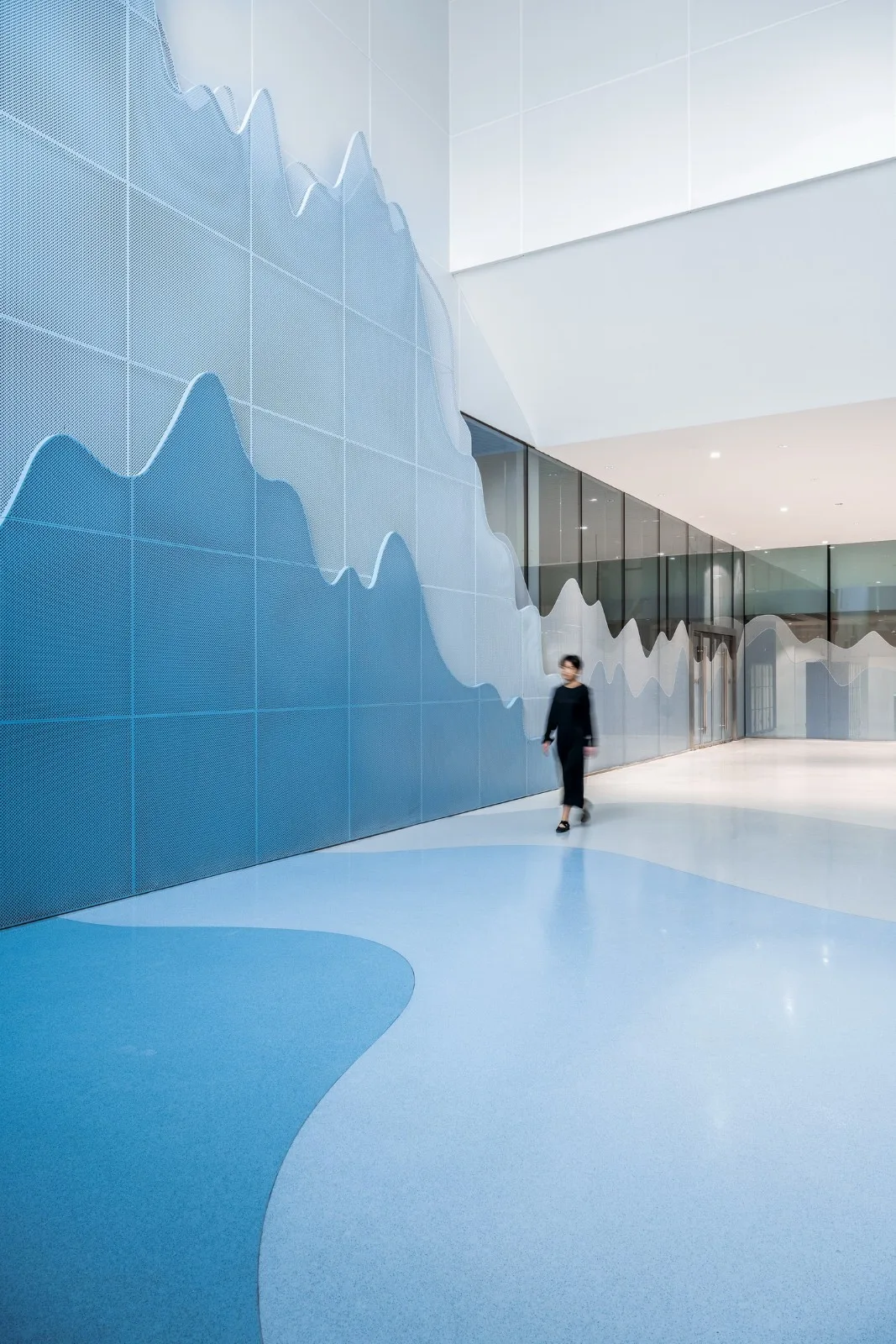
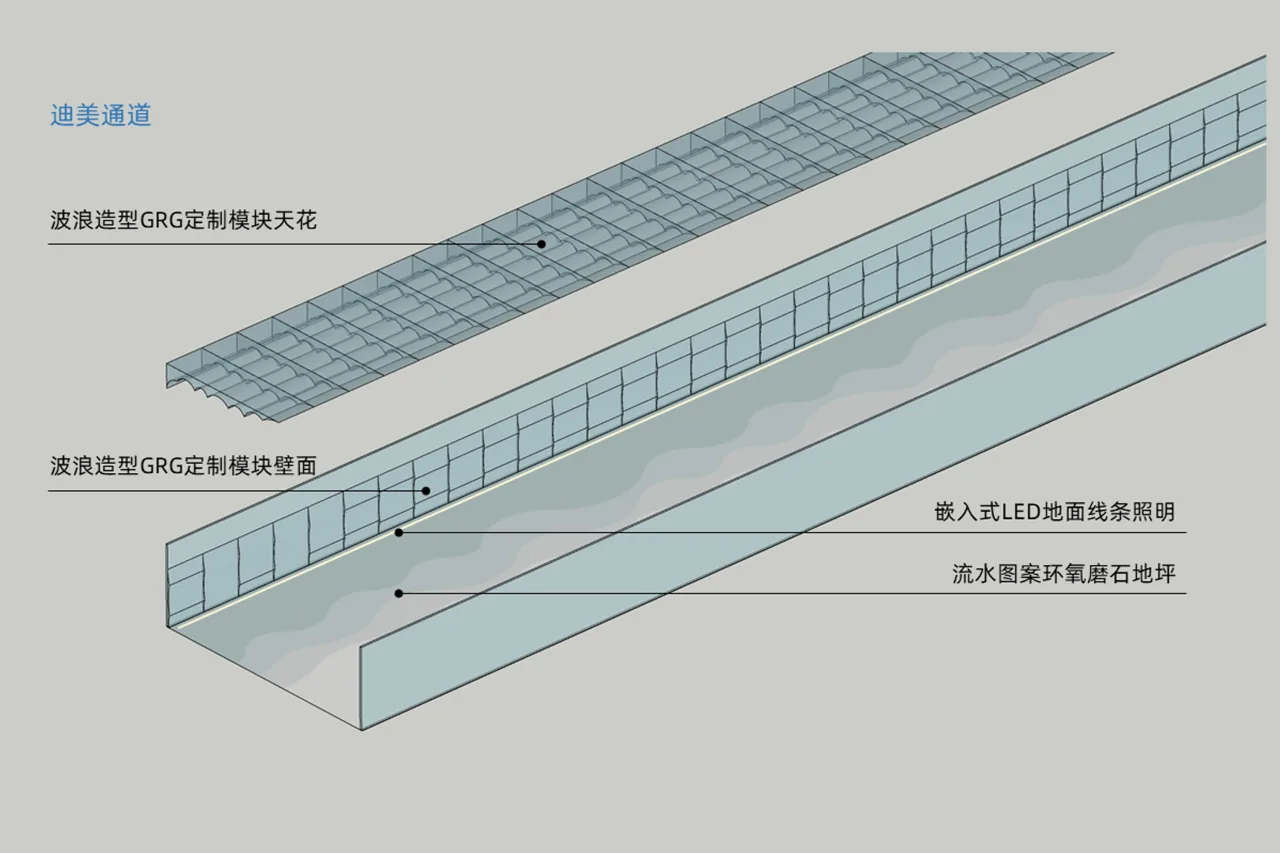
The basement of Zone A’s main building at Di Mei Commercial City features a sloped passage designed as an acceleration zone. The ceiling and walls are crafted with GRG materials, creating a dynamic, rolling wave effect. I deliberately left half of the corridor blank, symbolizing a riverbank, because the passage narrows at the end—from 6 meters to a 4-meter-wide Zone B exhibition corridor. The other half conveys the surging tide flowing toward Shanghai.
Turning a Thousand Bends, Crossing a Thousand Shores
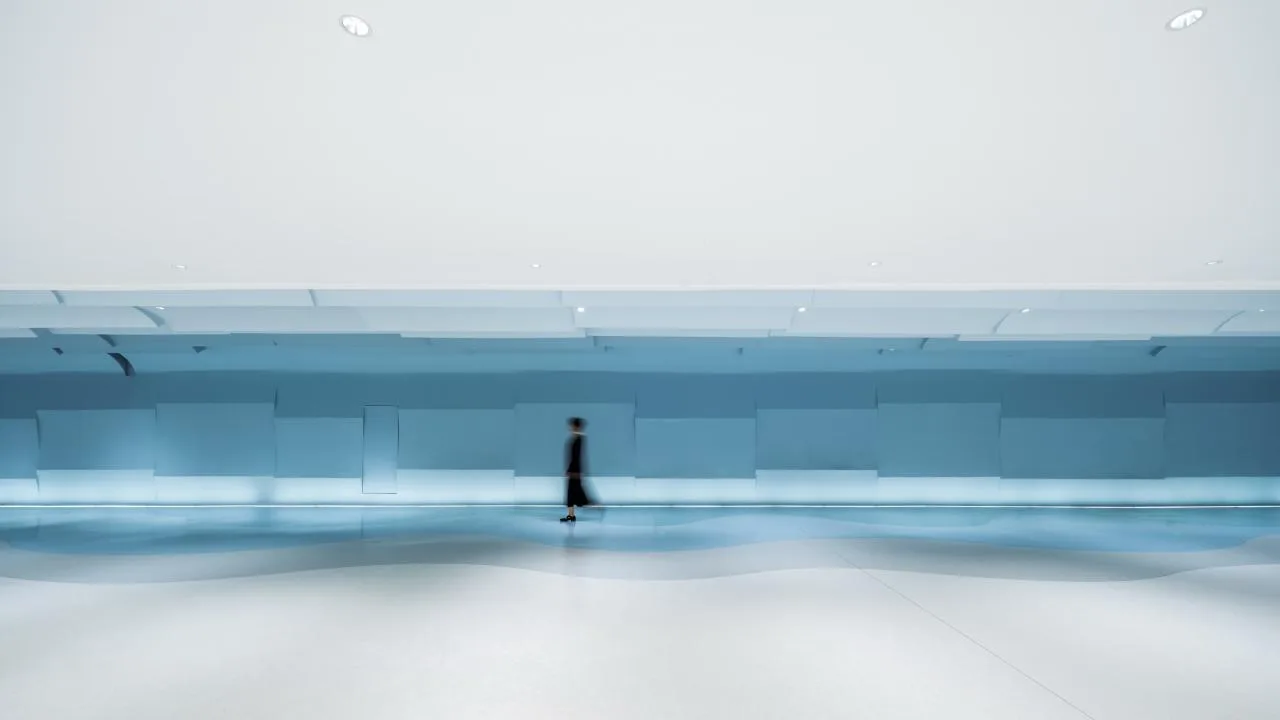
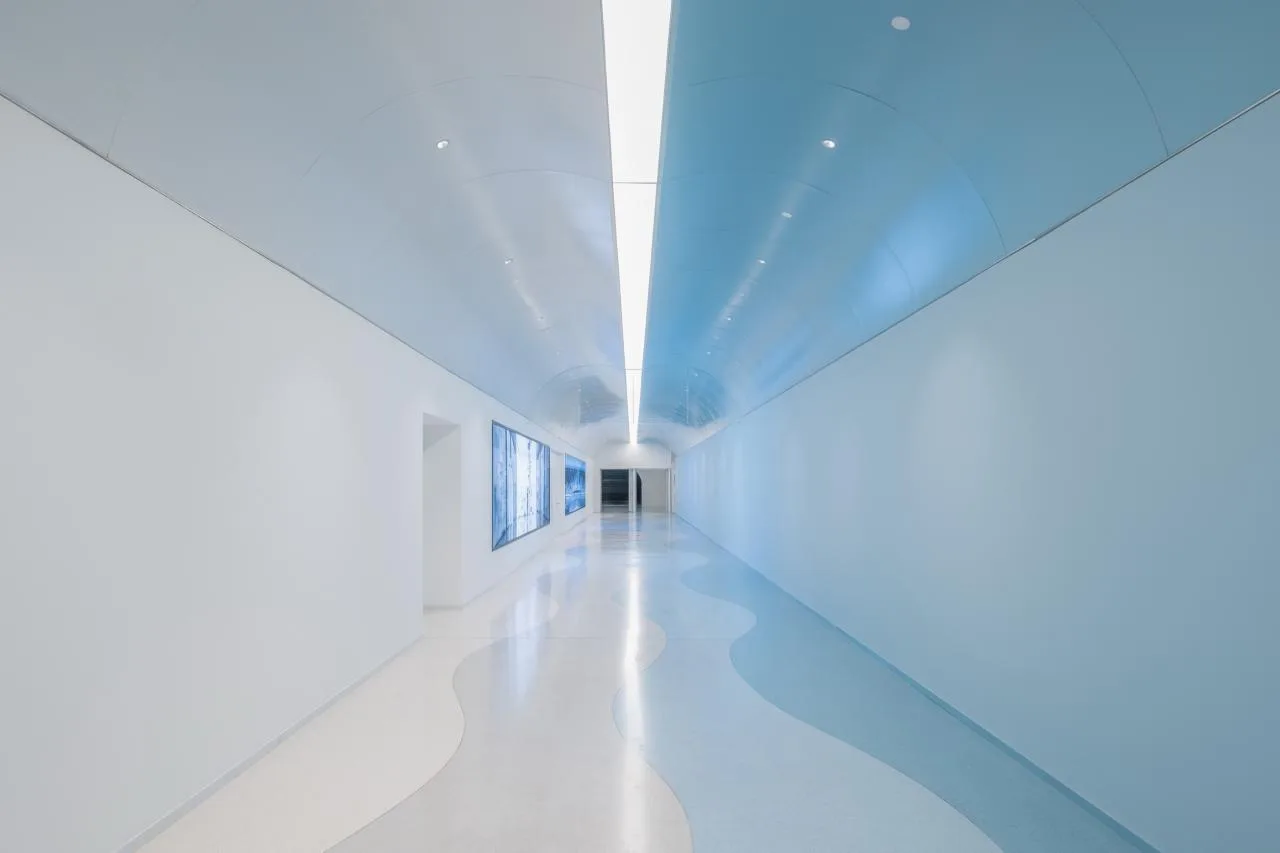
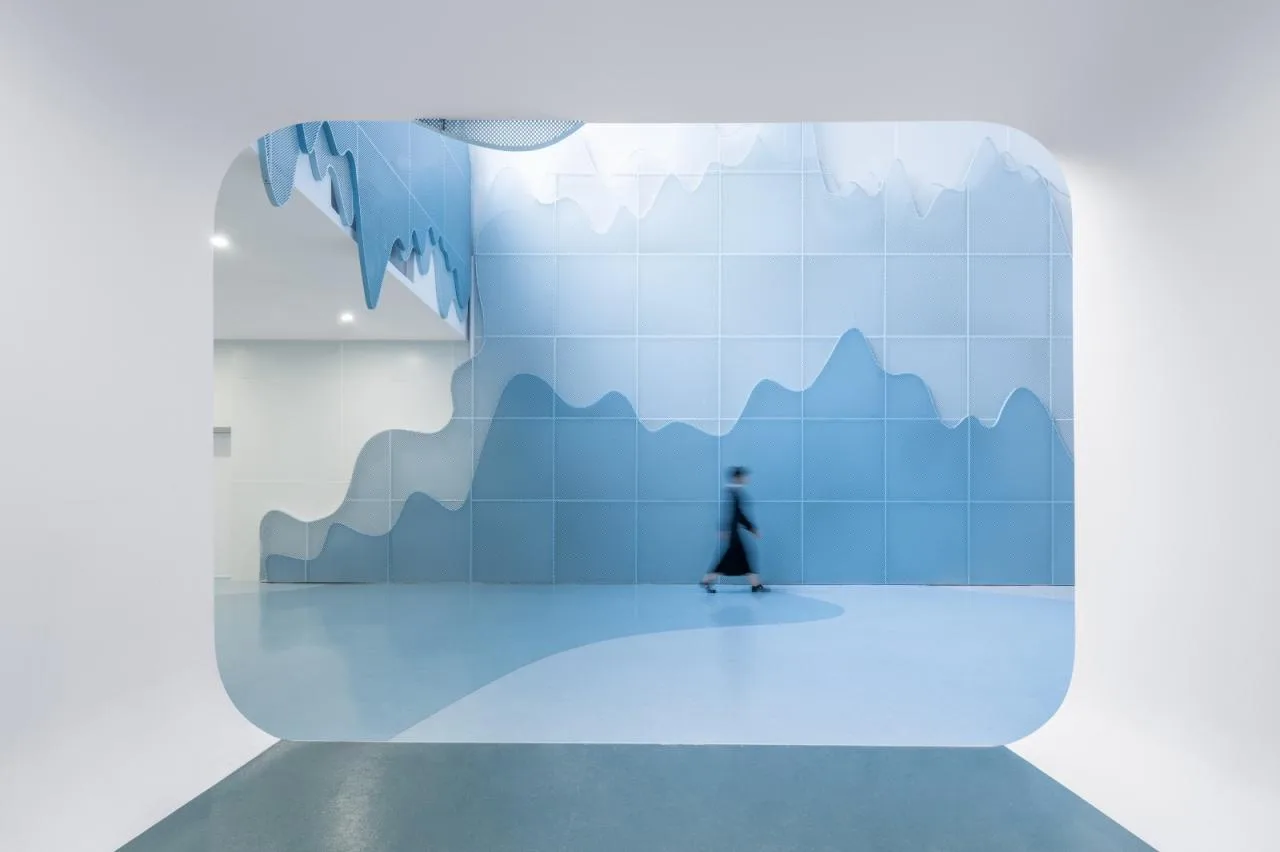
As the river enters the “gate,” the flow slows. Zone B, being an exhibition area, requires a calmer atmosphere. Here, the ceiling transforms into a simple dome that continues the half-blue, half-white motif from Zone A. Two large screens on the white walls showcase Shanghai’s newest cultural and living spaces. This serene environment posed challenges for architects to create a unified, immersive narrative across scattered spaces with varying heights, minimizing distractions while maintaining a cohesive spatial experience.
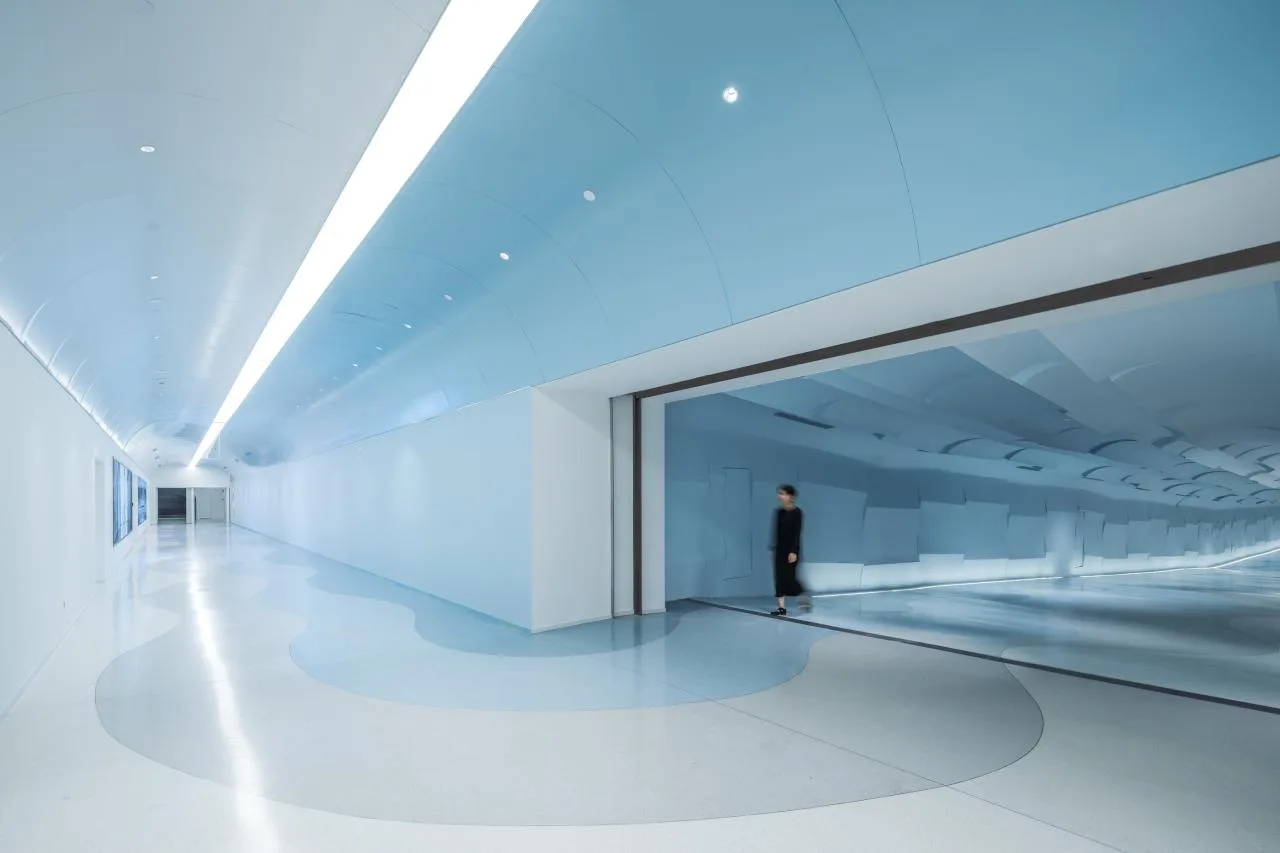
Underground spaces require strict safety, ventilation, heating, and equipment standards, which can conflict with architectural purity. The parametric design of the wave-shaped GRG ceiling module creates a magnificent water surface. To preserve this effect, the design team collaborated closely with equipment manufacturers to carefully position and angle “hidden” elements like air outlets—adjusting them to align with the wave forms and maintain airflow. This balance ensured all systems met standards without compromising the visual impact. The waves appear to roll gracefully over the ceiling and walls, inviting visitors to ride the winds and waves, turning countless bends and crossing endless shores on their journey through Shanghai.
The River Never Stops Flowing
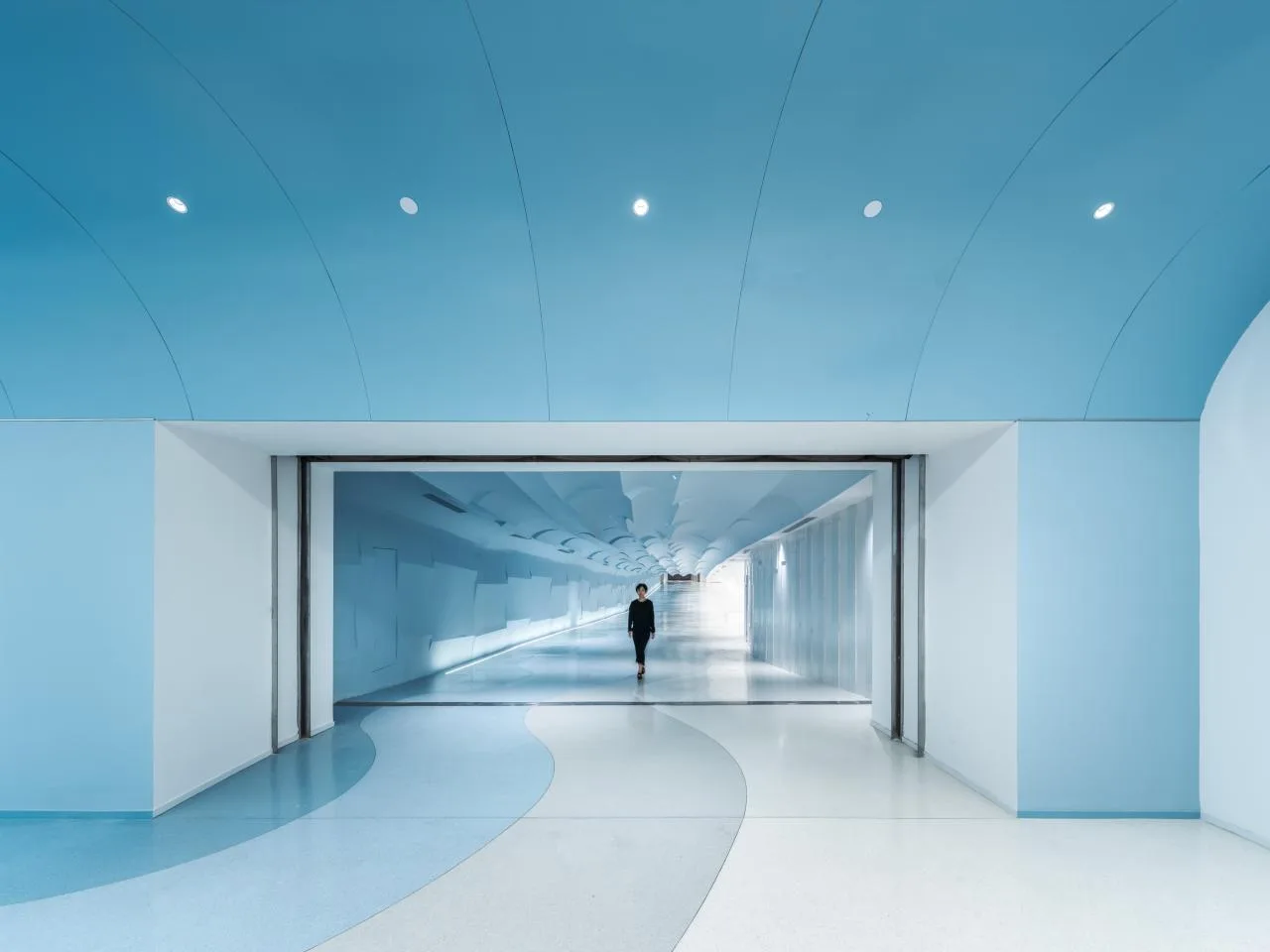
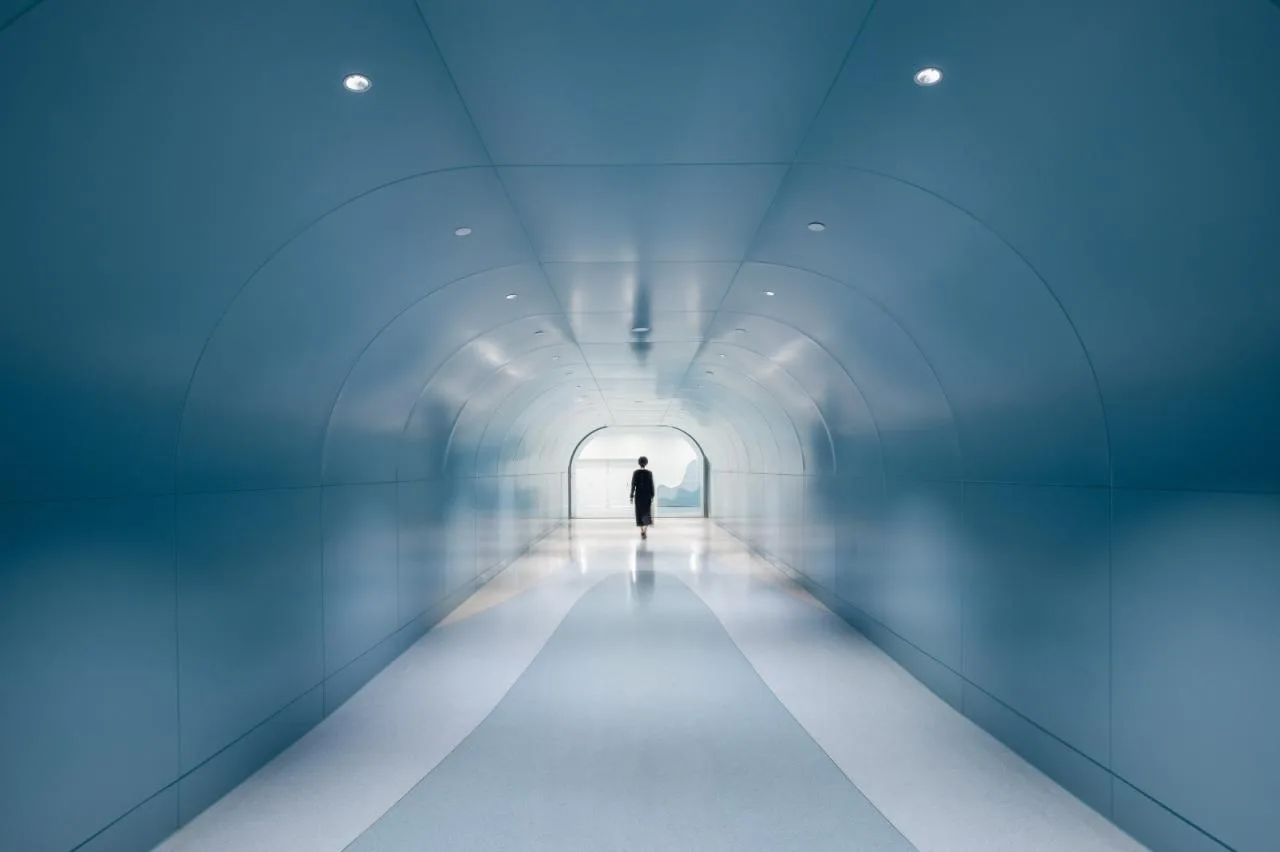
Zone C, a tunnel connecting to the subway, features a blue dome symbolizing reflections of water and light. Here, the river flows gently and calmly. I envision the subway as a special form of river in Shanghai—where waters converge and elevate into a network extending in all directions.
While I love the color blue, achieving the perfect shade under lighting is challenging, especially when using blue exclusively—a challenge rarely addressed in textbooks. After extensive testing, my team settled on a gradient of Pantone 4175C, 552C, and 7451C, combined with deliberate lighting design, to create China’s first indoor space fully immersed in blue. This “blue water world” evokes the artistic spirit of Gainsborough and fills me with pride.
Breaking Through the Waves
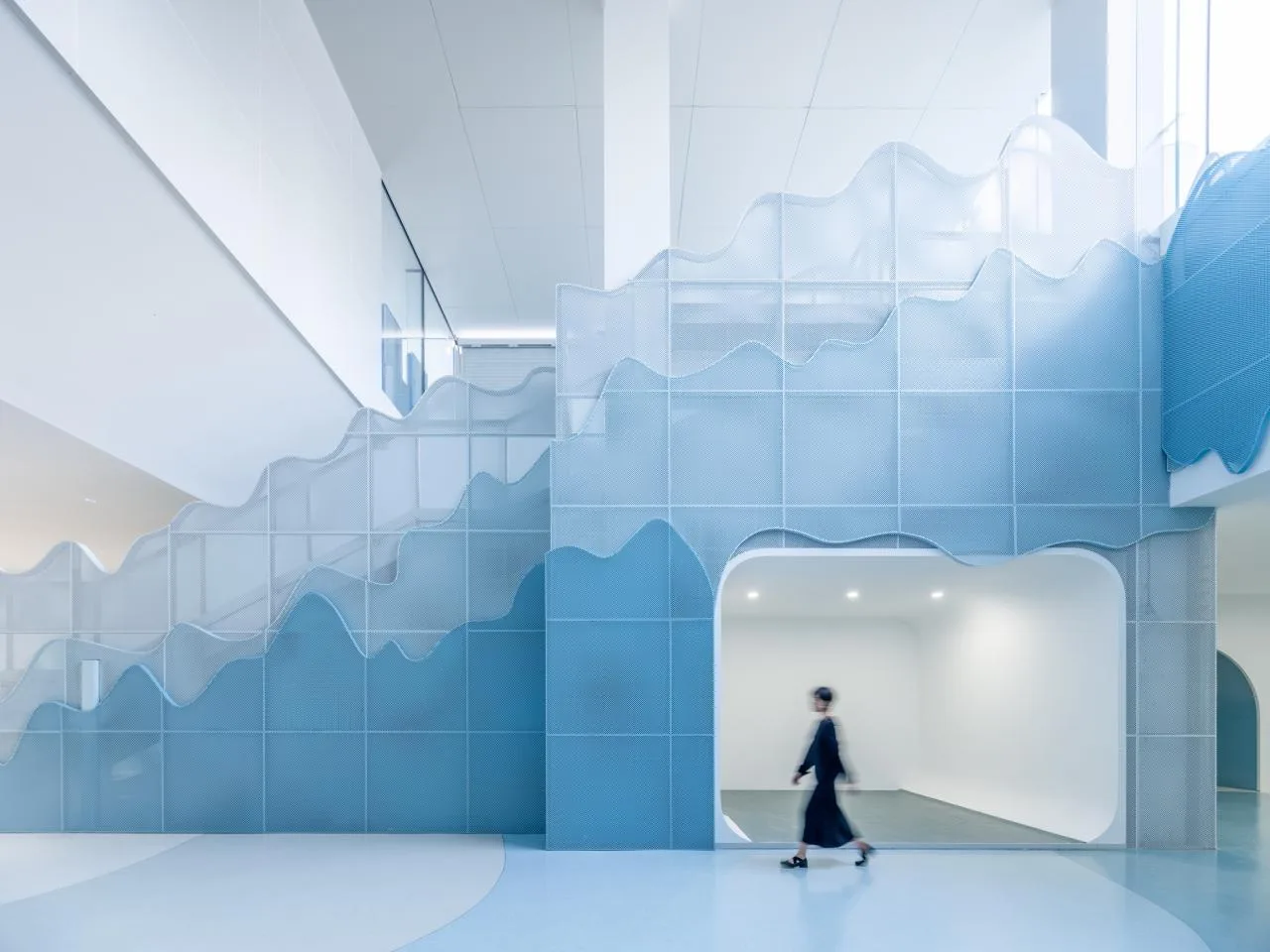
The climax of this journey is the distribution hall, a space alive with thousands of waves. Using perforated aluminum panels, I created an engaging art venue that layers wave patterns to unify scattered elements such as escalators, glass walls, interior partitions, gift shops, coffee bars, passage entrances, and exhibition hall entries.
But architecture is more than a visual spectacle. The underground Planning Museum is a miniature waterfront city, set to tell Shanghai’s new stories and embody its charm. This space is not only functional for large-scale public cultural events but also a city living room filled with artistic energy. Markets, exhibitions, cultural activities, and performances will all come alive here. Architects create spaces—citizens create memories. Together, we build Shanghai.
Riding the Shanghai Waves and Discovering the City
Through the layered waves of the distribution hall, visitors catch glimpses of the temporary exhibition hall within the Urban Planning Exhibition Hall. Built in the early 2000s, this cultural landmark serves as a vital window to Shanghai’s world. Following its comprehensive renovation completed in Spring 2022, the exhibition hall is set to reopen with a fresh new look. Citizens can now explore Shanghai’s stories along the underground passage connecting the subway and Dimei Commercial area—discovering a familiar yet surprising Shanghai to be proud of.
Anyone who identifies with Shanghai’s lifestyle, values, and culture—and considers the city home—can truly be called a Shanghainese.
Easter Egg
This project marks the second and third underground transit spaces designed by W-Mills at Wutopia Lab. The exhibition hall’s inaugural show is the “Visual Exhibition of Comparative Research on Beijing and Shanghai Urban Culture,” curated by Professor Wang Weiqiang from Tongji University—definitely worth a visit.
Project Drawings
△ Floor pattern representing surging river water
△ Dimei Channel
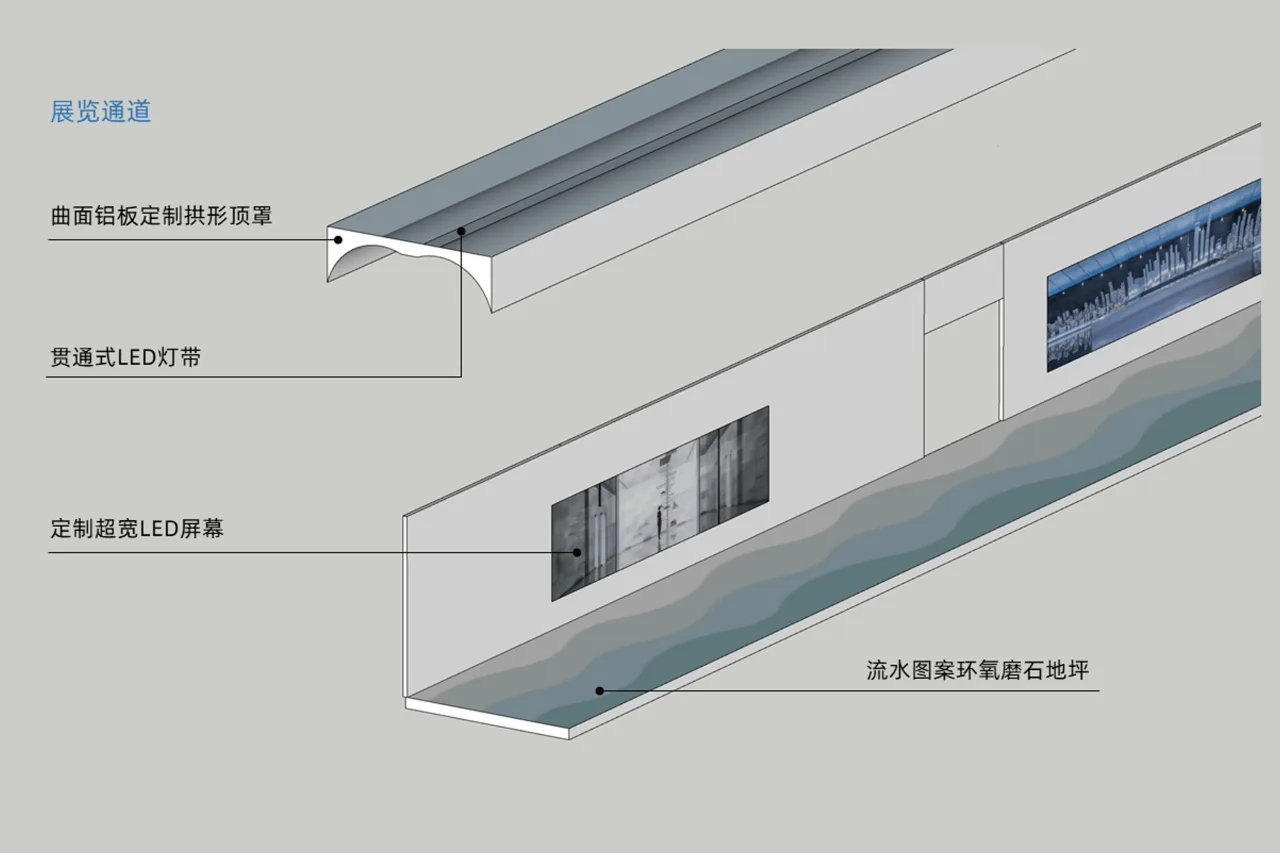
△ Exhibition Corridor
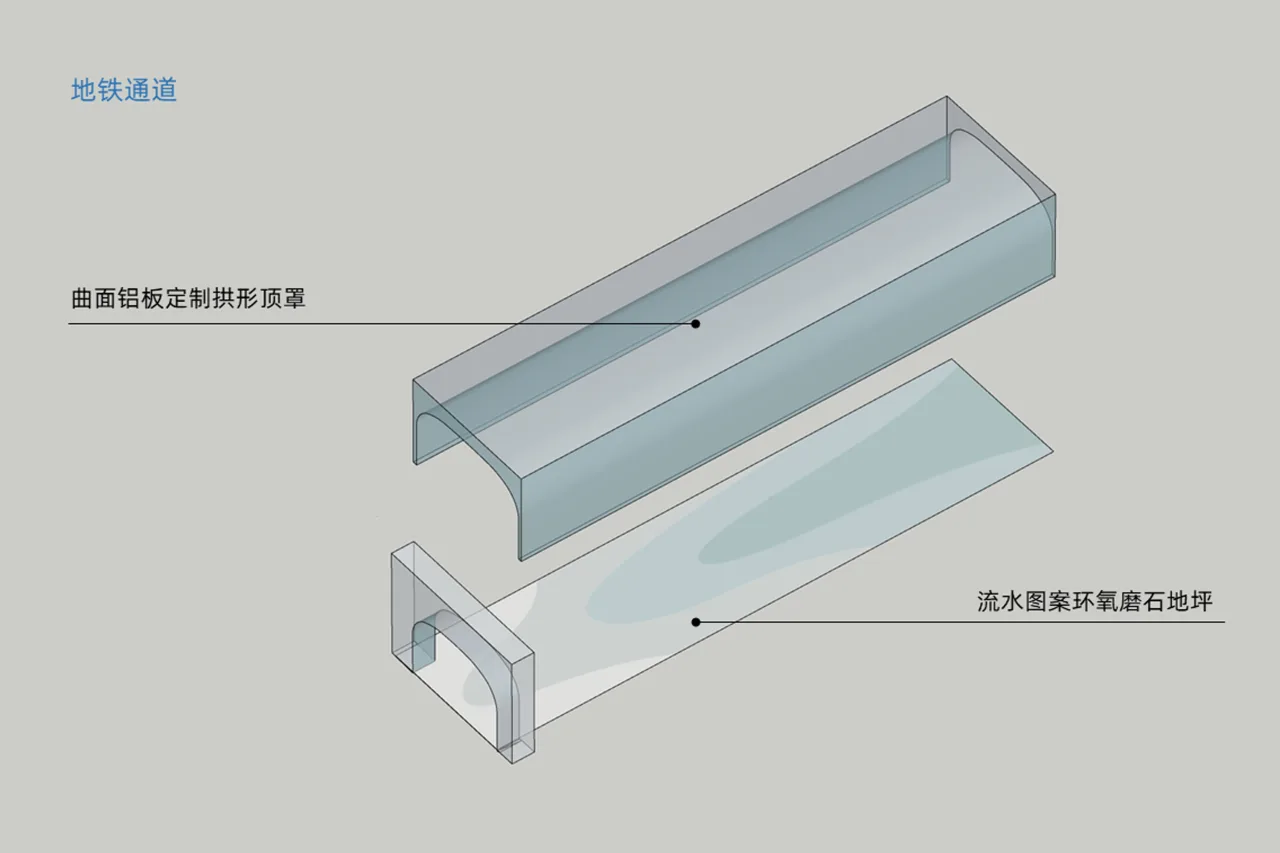
△ Subway Passage
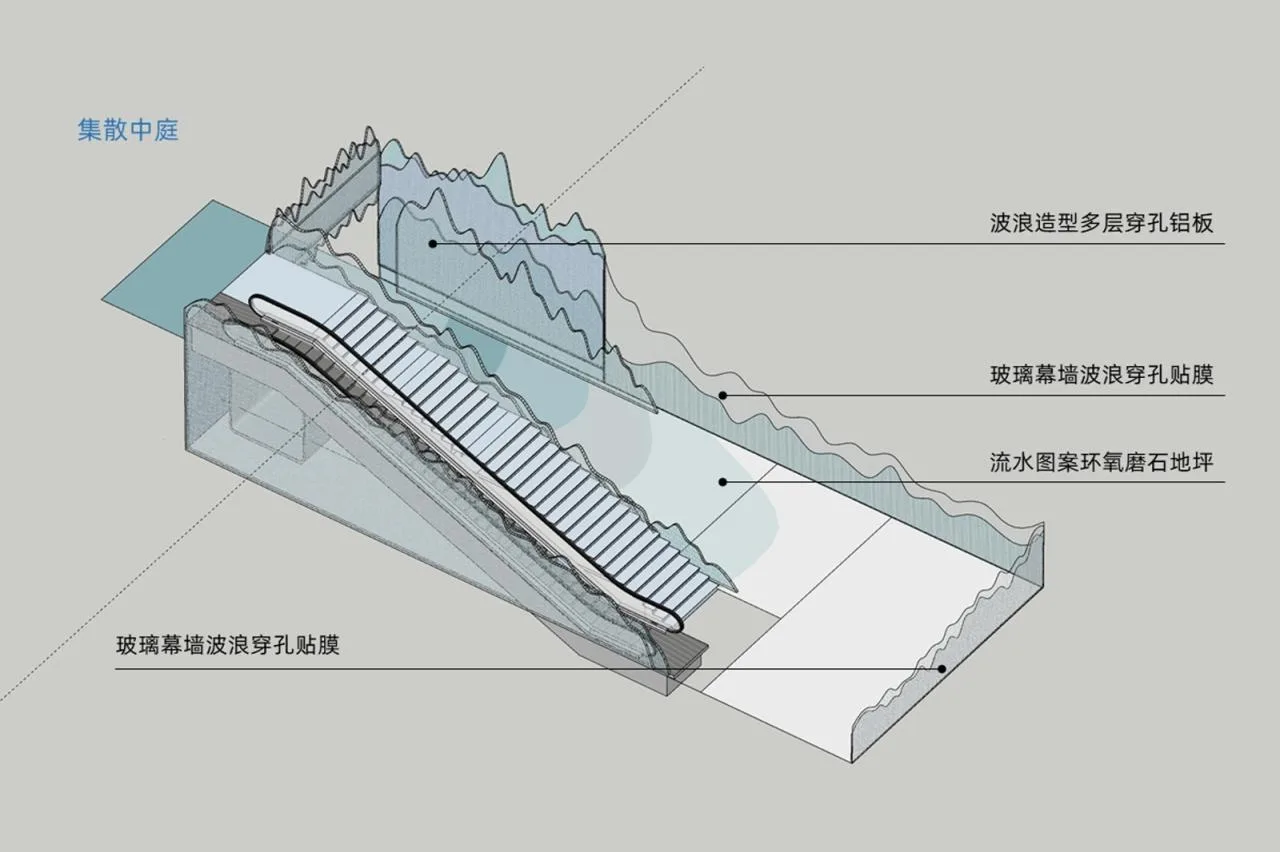
△ Distribution Atrium
Project Information
Project Name: Underground Space Design of Shanghai Urban Planning Exhibition Hall
Design Company: W-Mills by Wutopia Lab
Lead Architect: Yu Ting
Project Architect: Ding Ding
Project Manager: Ding Ding
Design Team: Wang Dan, Song Jianxun, Xiao Yunhai
Construction Drawing Design Company: Shanghai Modern Building Decoration Environment Design and Research Institute Co., Ltd.
Lighting Design: Wutopia Lab
Color Design: Wutopia Lab, Silk Road Vision
Architectural Photography: CreatAR Images
Project Location: Shanghai
Building Area: 3,000 square meters
Materials: Perforated aluminum panels, GRG, epoxy terrazzo, mirror stainless steel, glass
Design Period: 2021
Construction Period: 2021–2022















Must log in before commenting!
Sign Up