
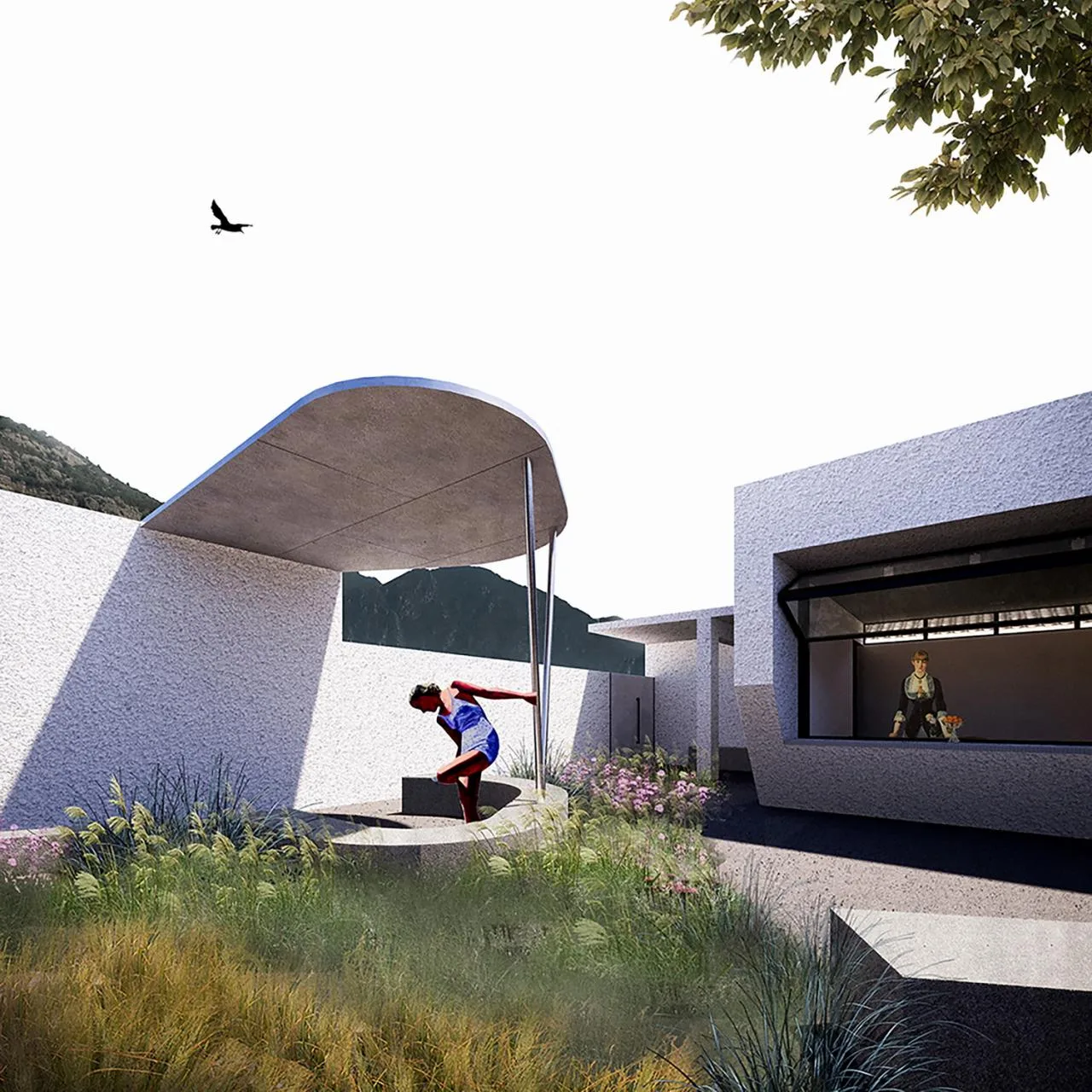
Located about 80 kilometers northwest of Tiananmen Square, Yudu Mountain overlooks the flat Yanhuai Basin to the south. At the foot of Yudu Mountain lies Yanjiabao Village, a bustling rural community typical of northern China. This village is near popular tourist destinations such as Longqing Gorge Scenic Area, the World Horticultural Expo site, and Shijinglong Ski Resort, making it rich in tourism resources.
The property owner rented two traditional courtyards, each owned by one of two brothers (referred to as the “South Courtyard” and “North Courtyard”), with the goal of converting them into homestays available for full rental. The architects were tasked with maximizing the use of existing structures to provide as many guest rooms as possible while keeping construction costs low and minimizing disruption to neighboring residents.
The two homeowners had specific requests: renovations must respect existing property boundaries, preventing the connection of the two courtyards, and the orientation of entrances and exits could not be altered due to feng shui considerations.
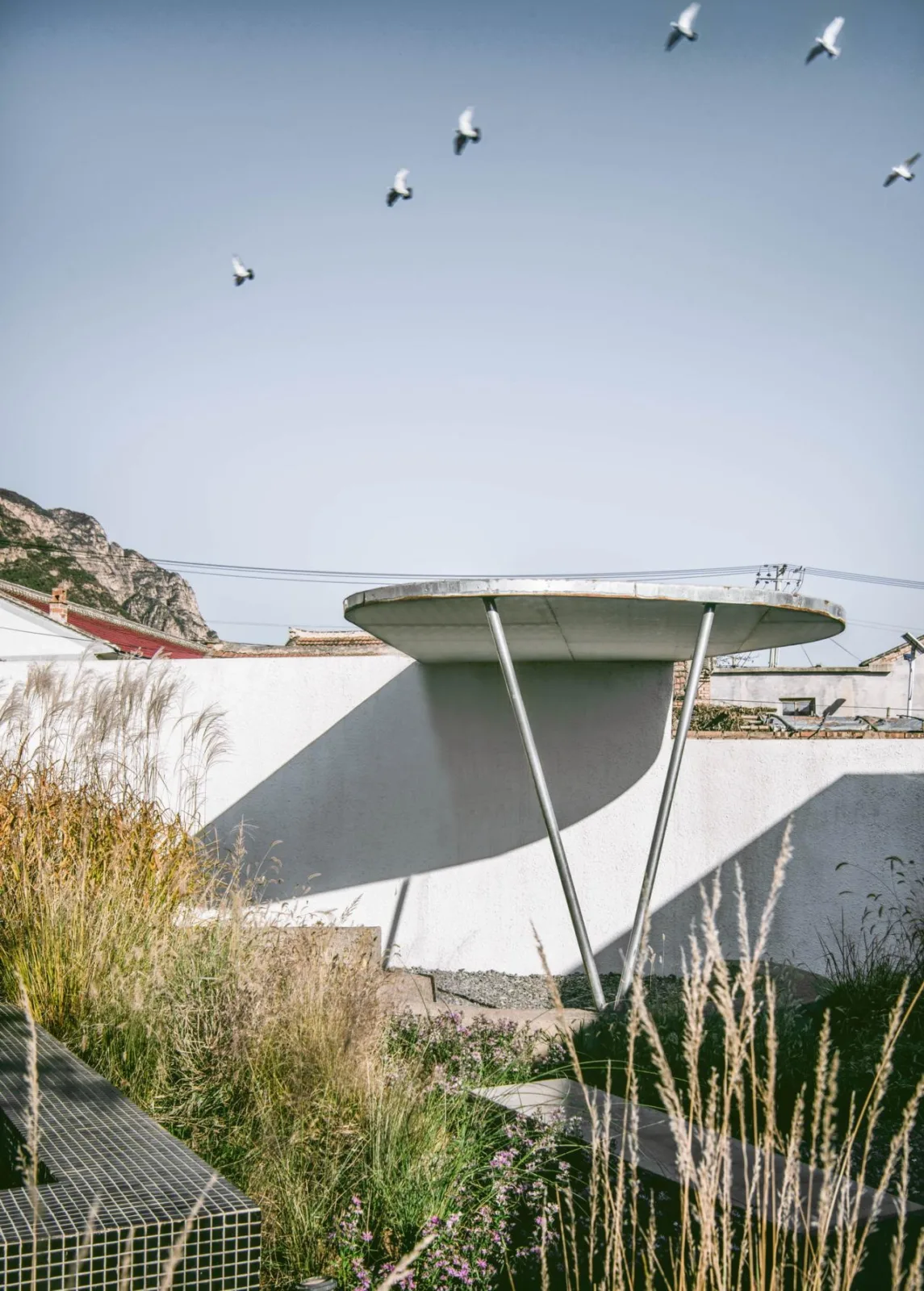
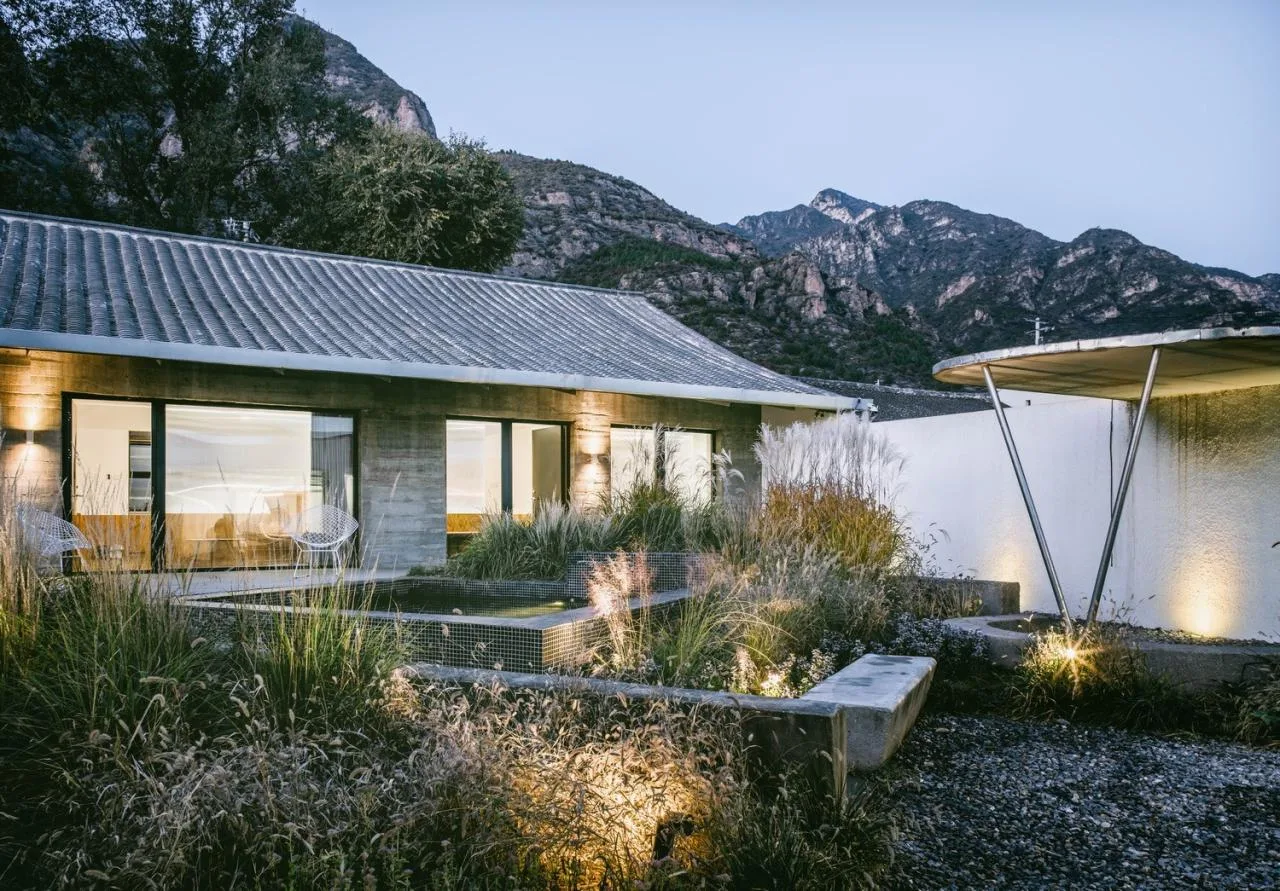
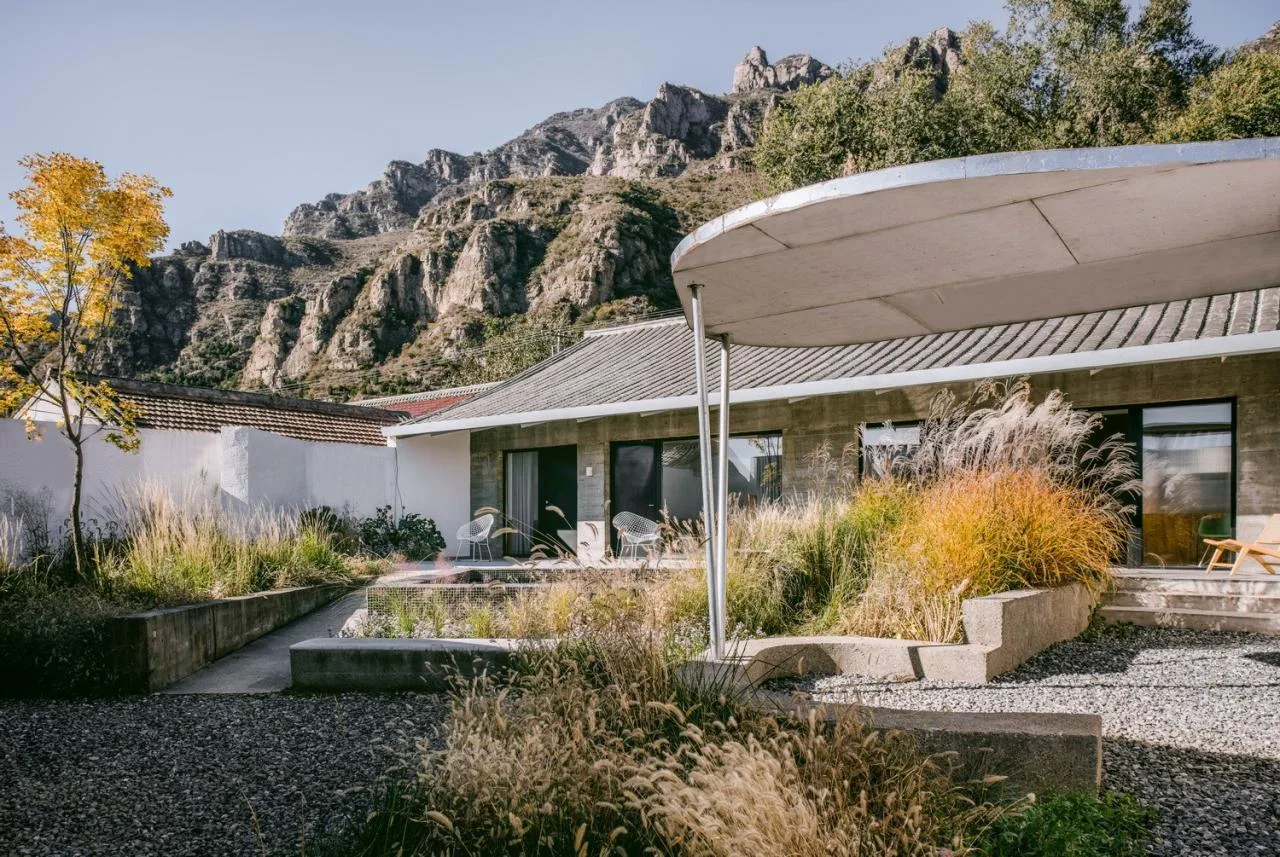
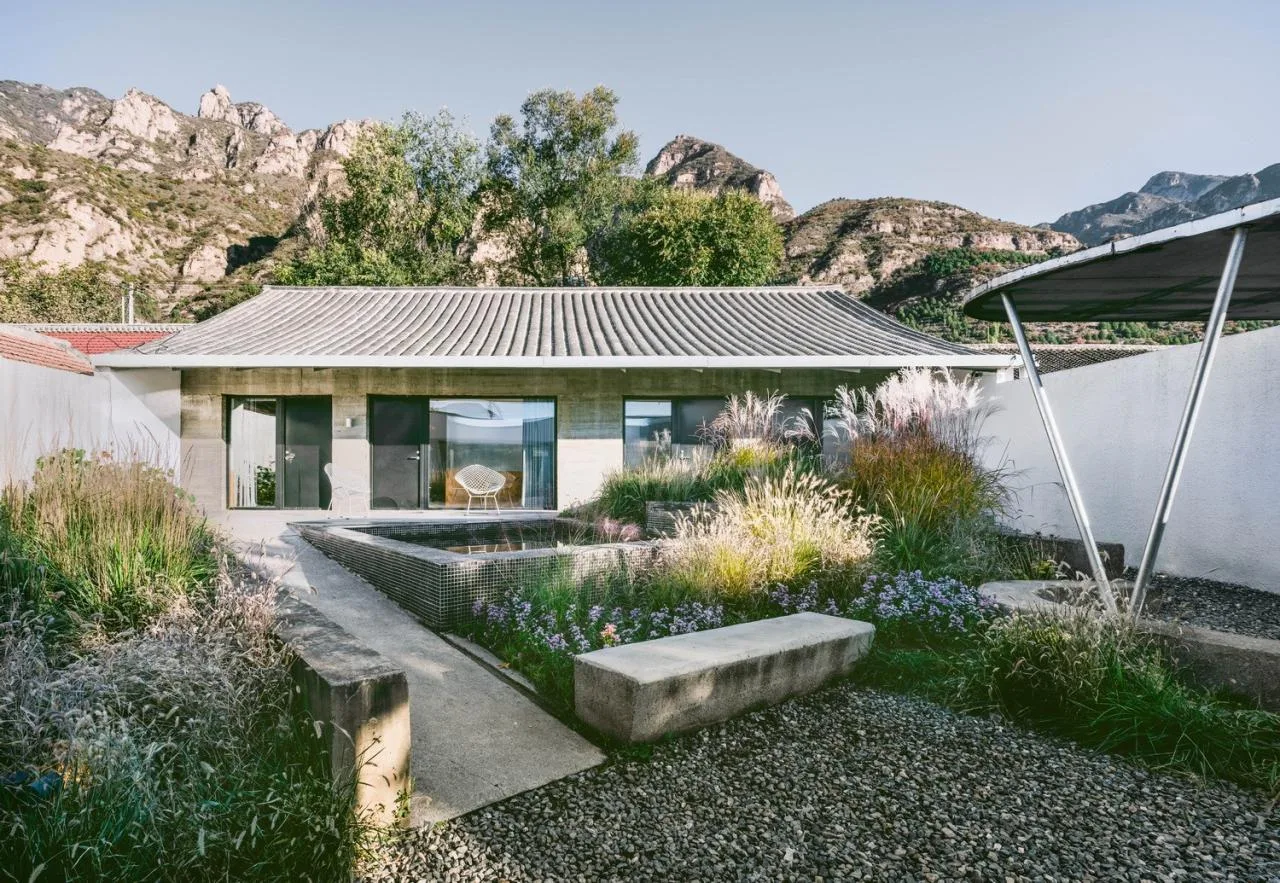
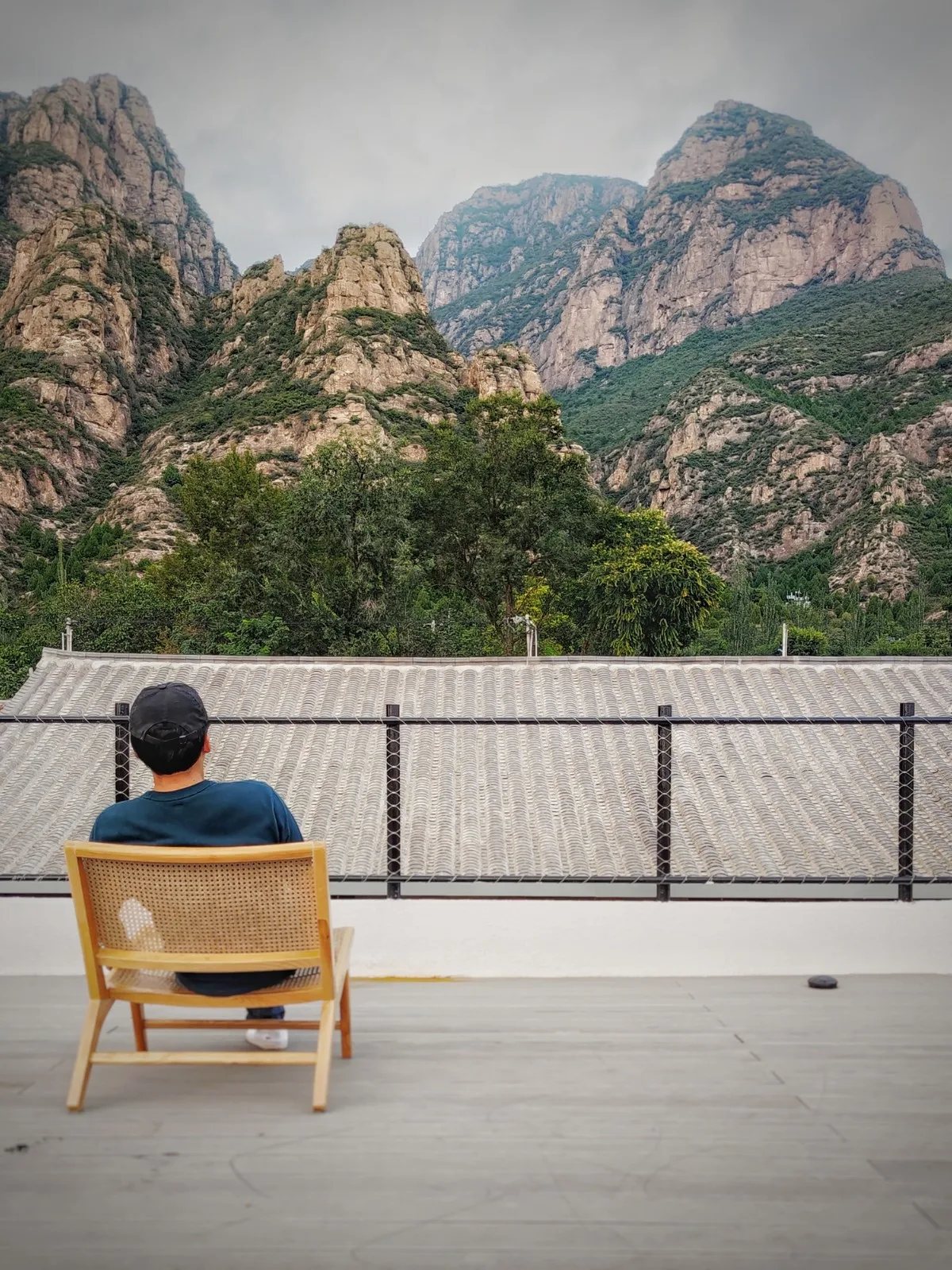
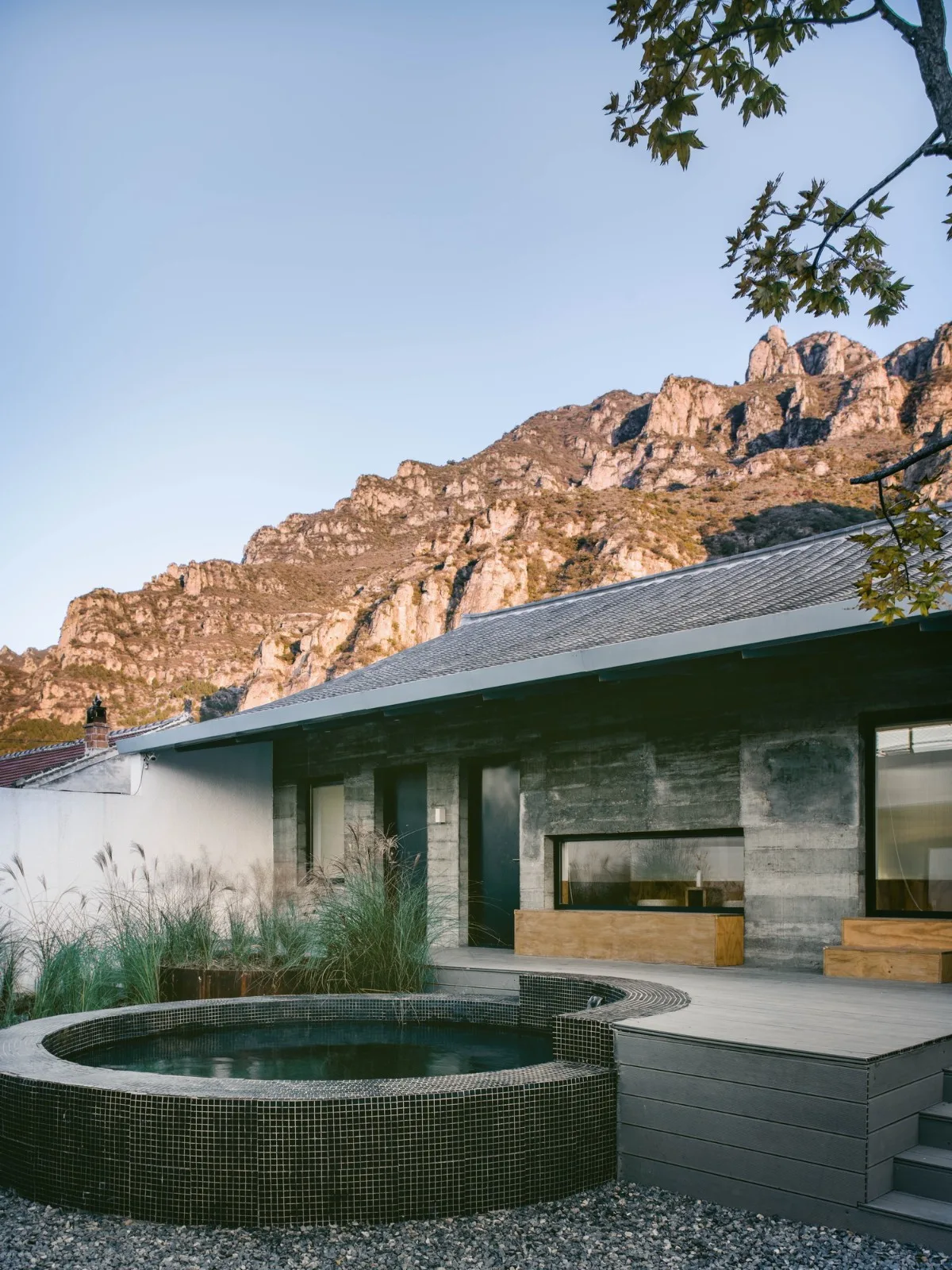
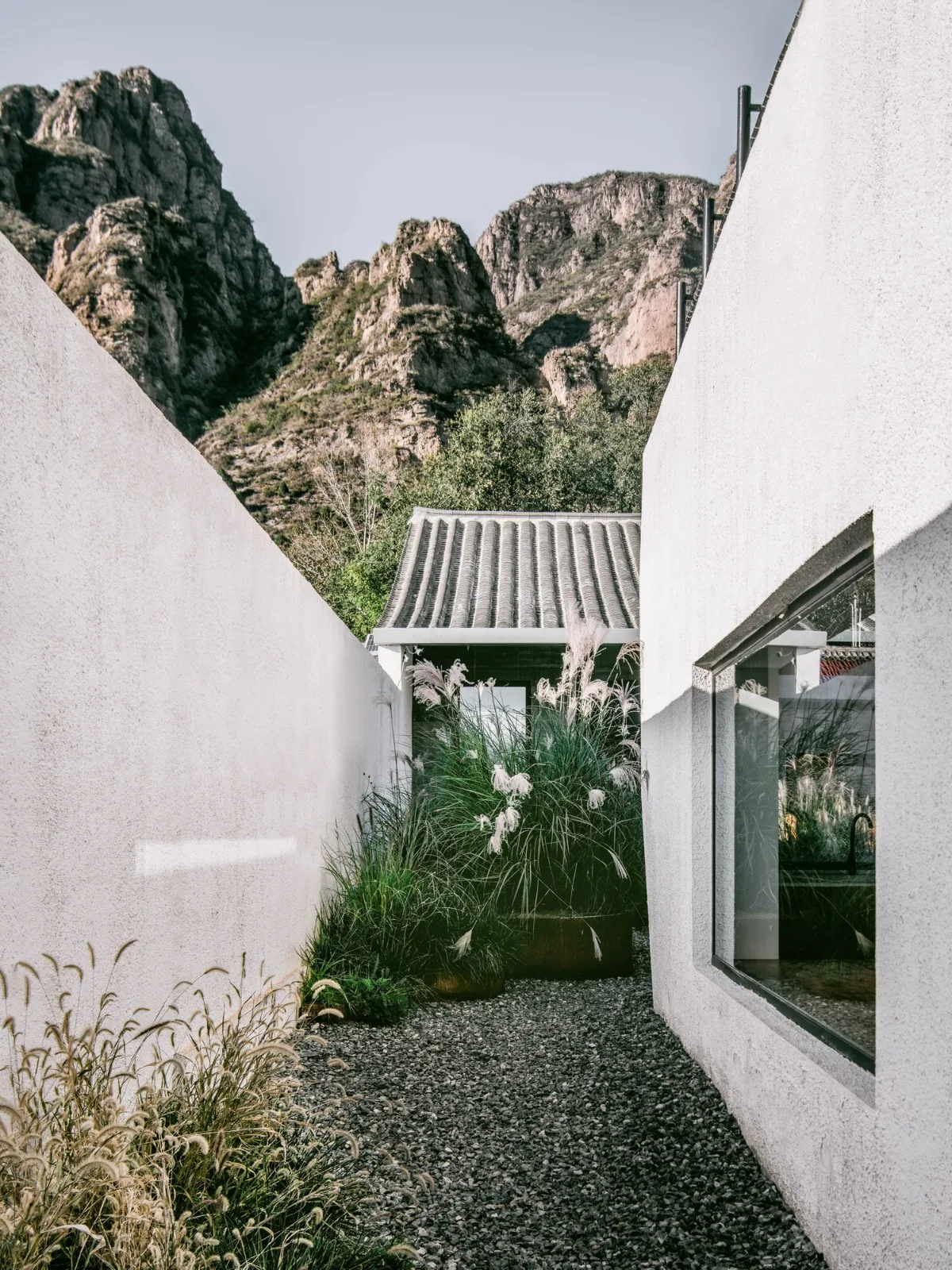
Our architectural approach focuses on enhancing comfort for guests to enjoy the mountain views without introducing visually intrusive structures that turn nature into mere backdrops. This philosophy guided the design to feature plain-colored buildings and subtle construction details, allowing the lush garden vegetation to stand out as the vibrant element. The courtyards give the impression that they have naturally existed here for generations, with the architect’s role being one of restoration and refinement.
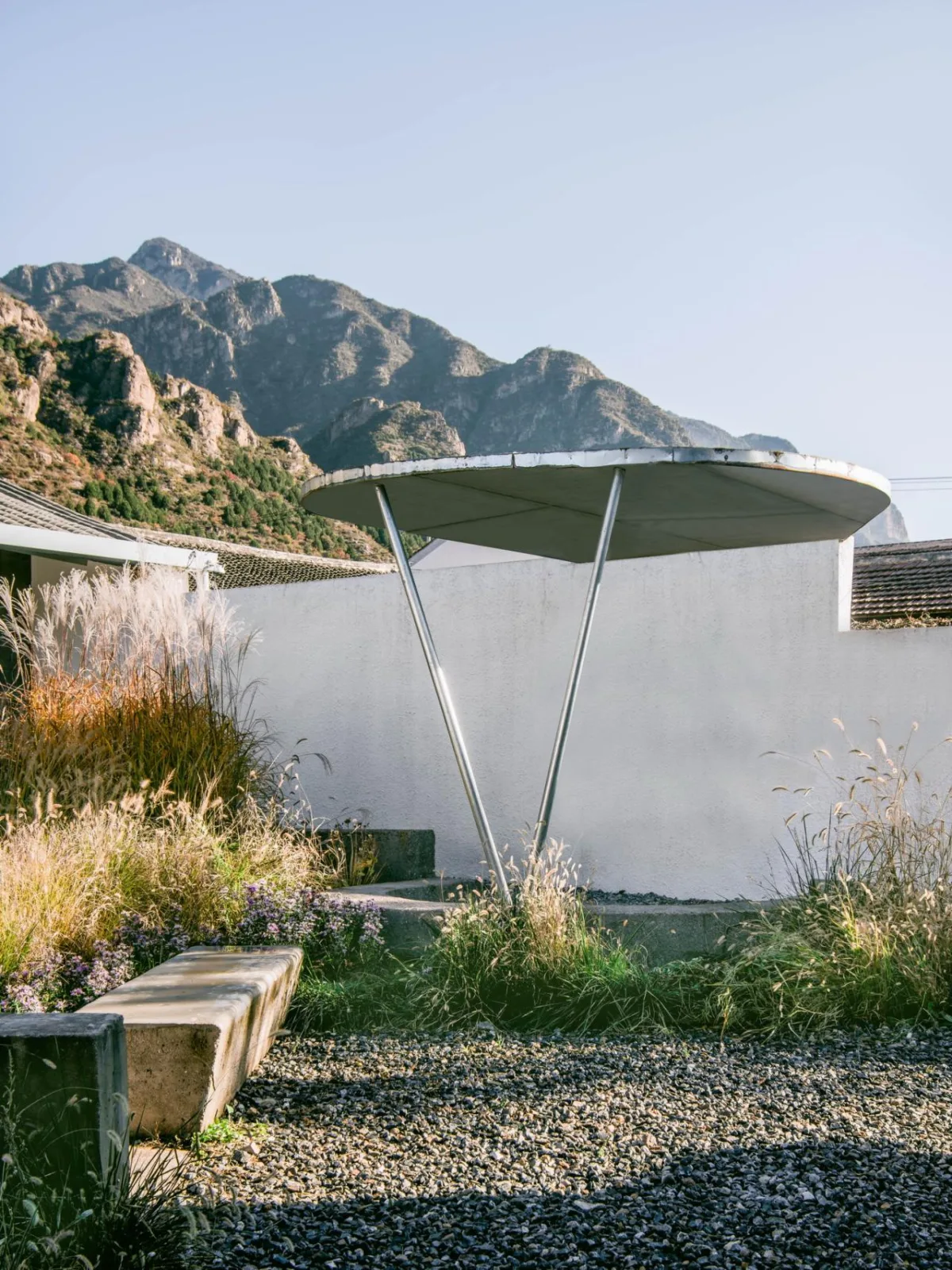
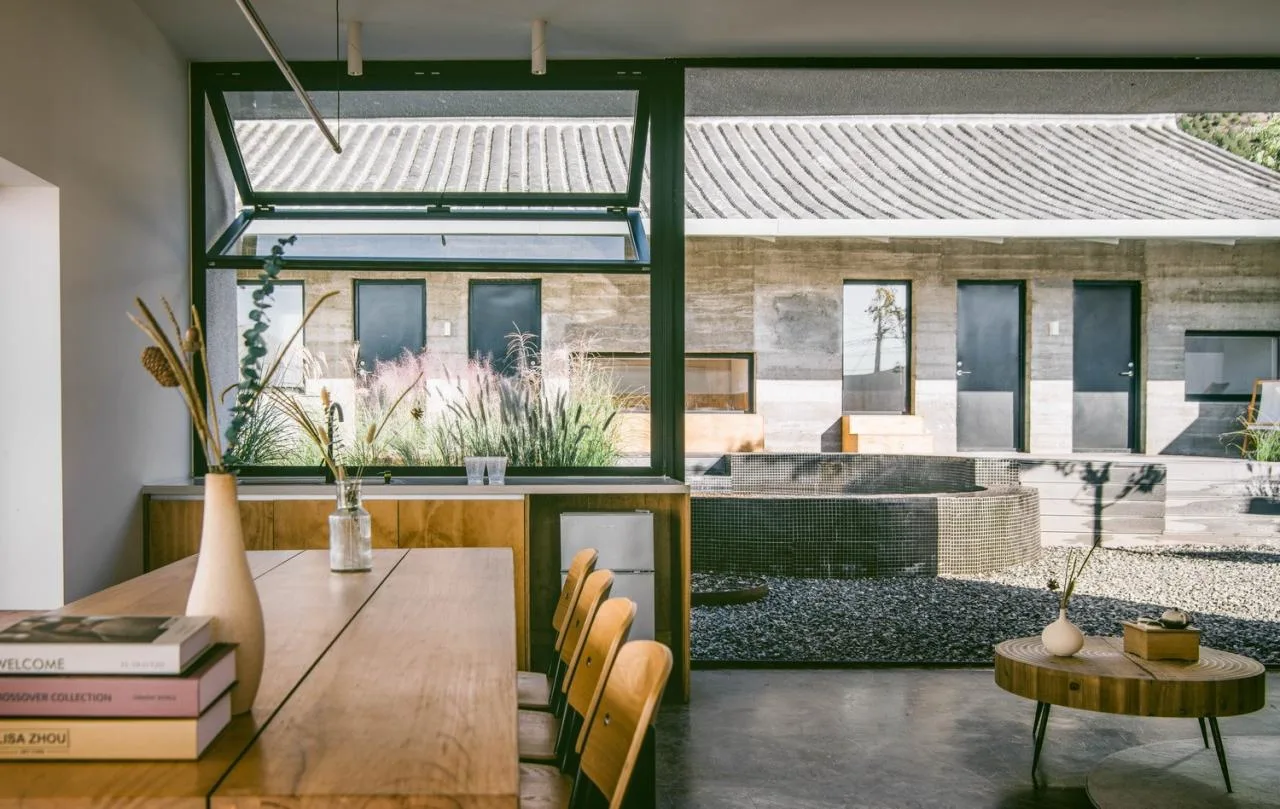
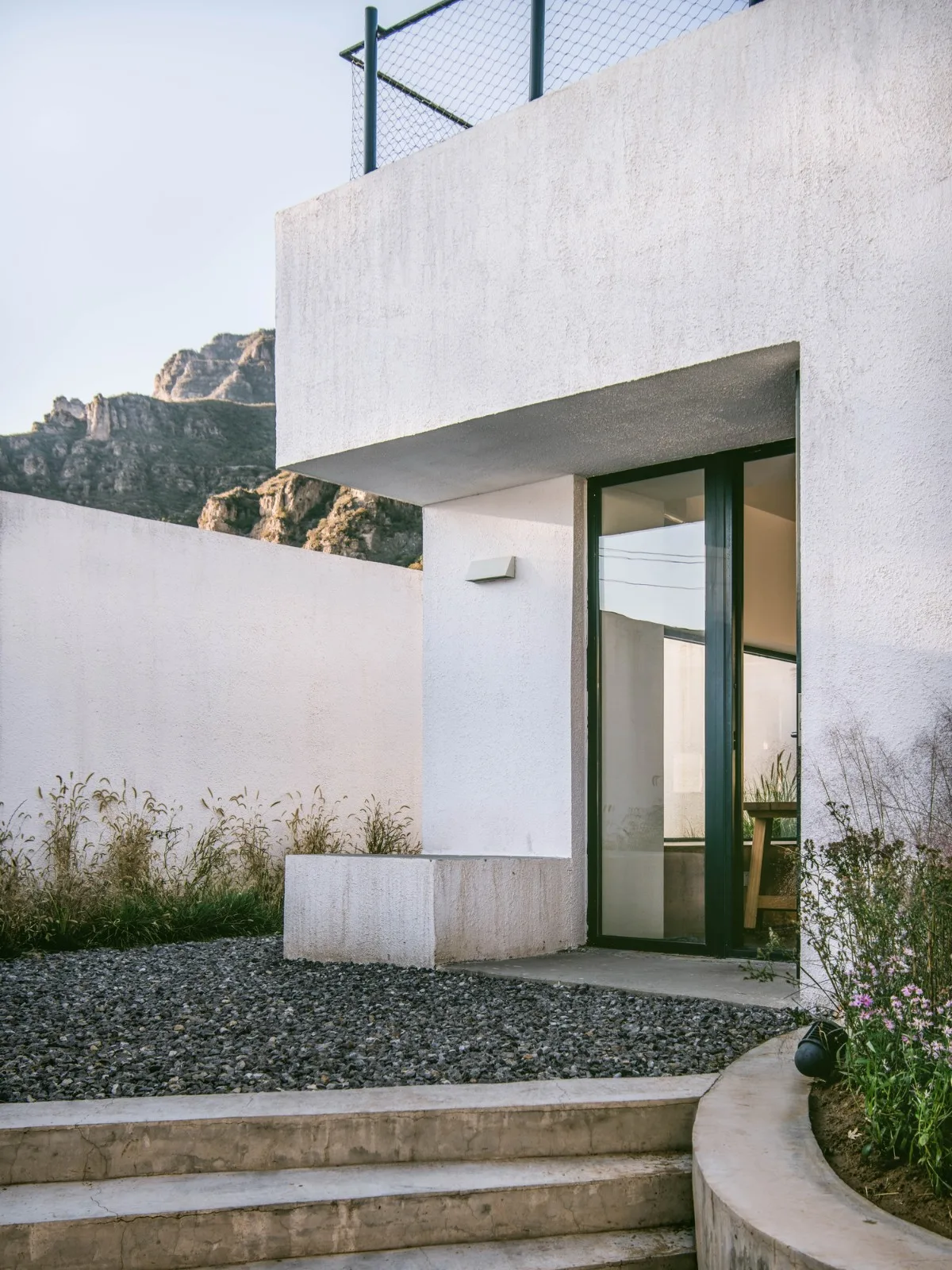
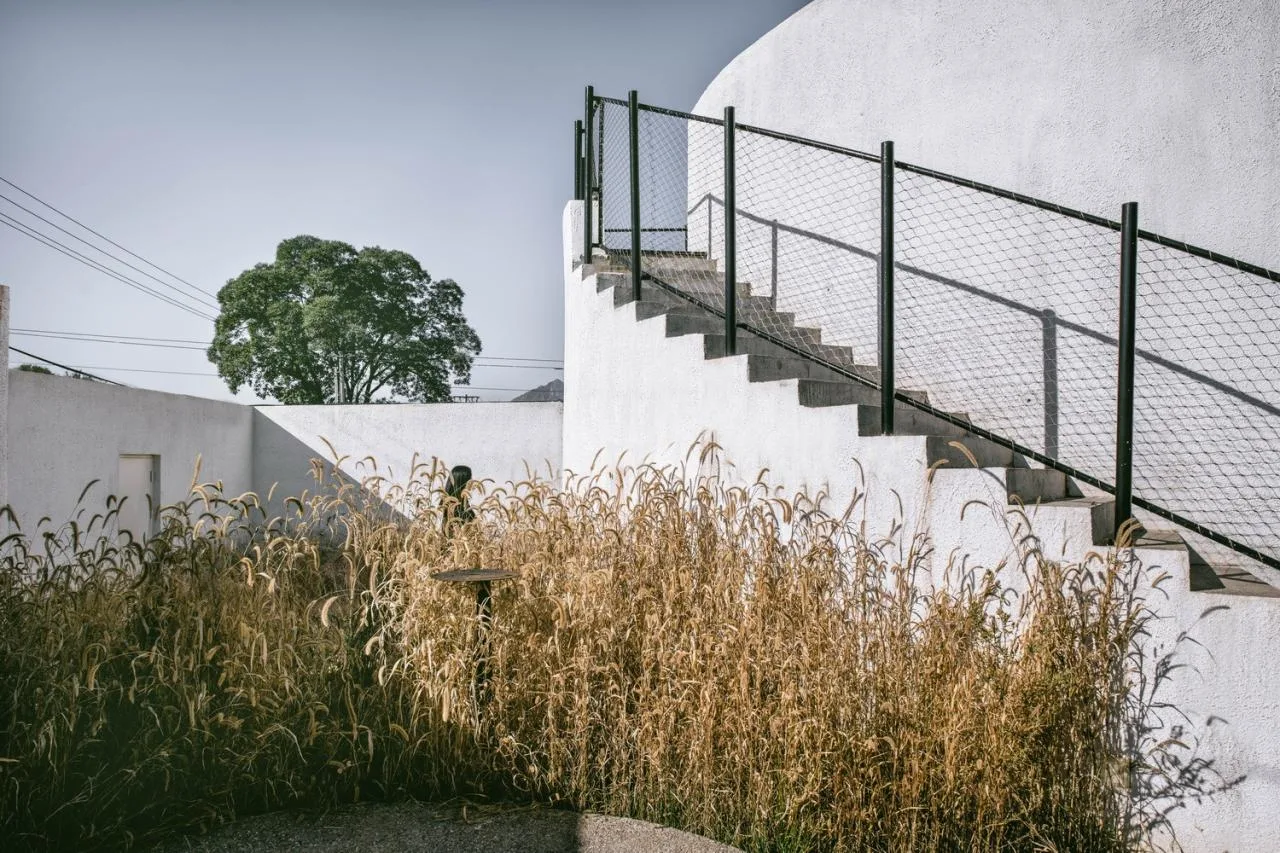
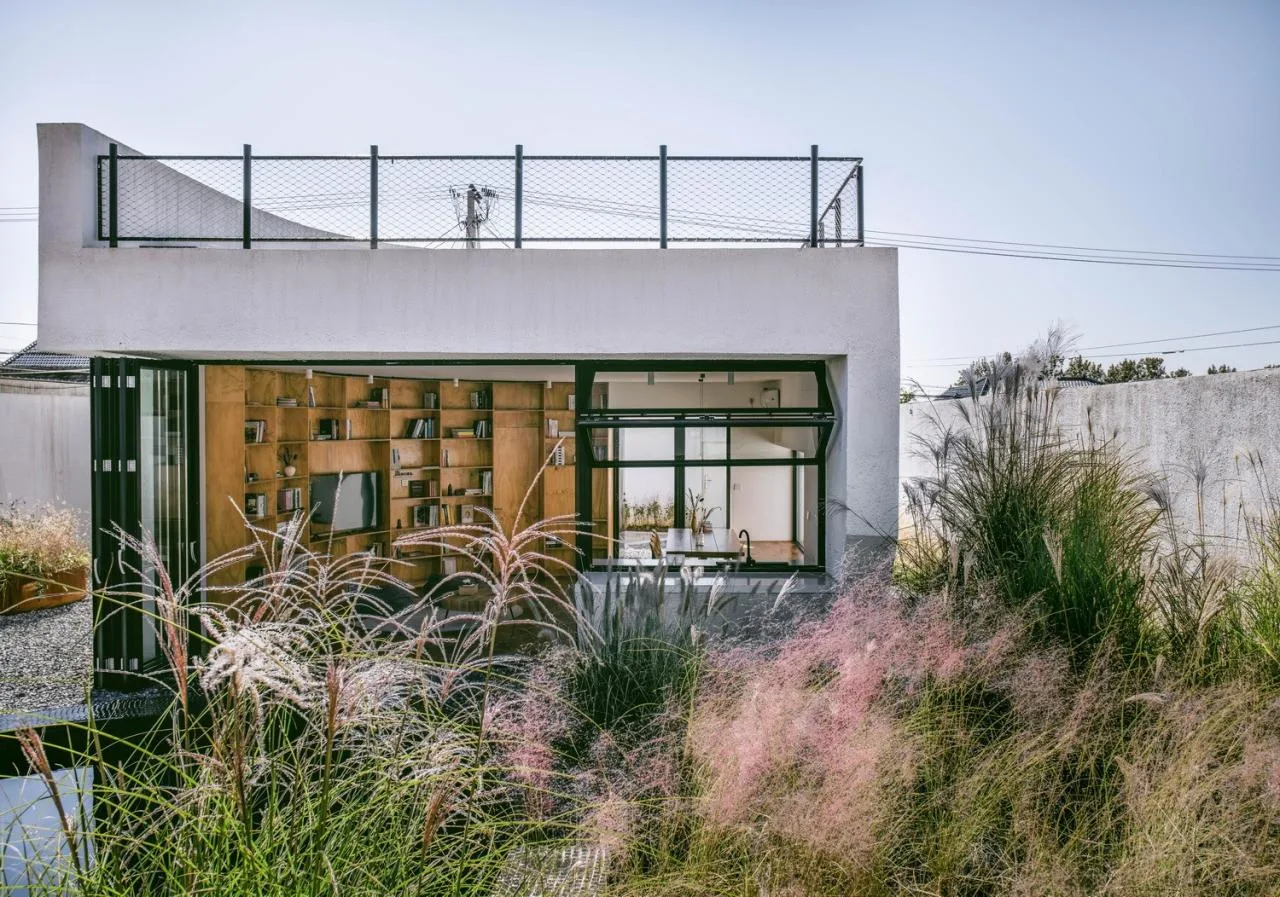
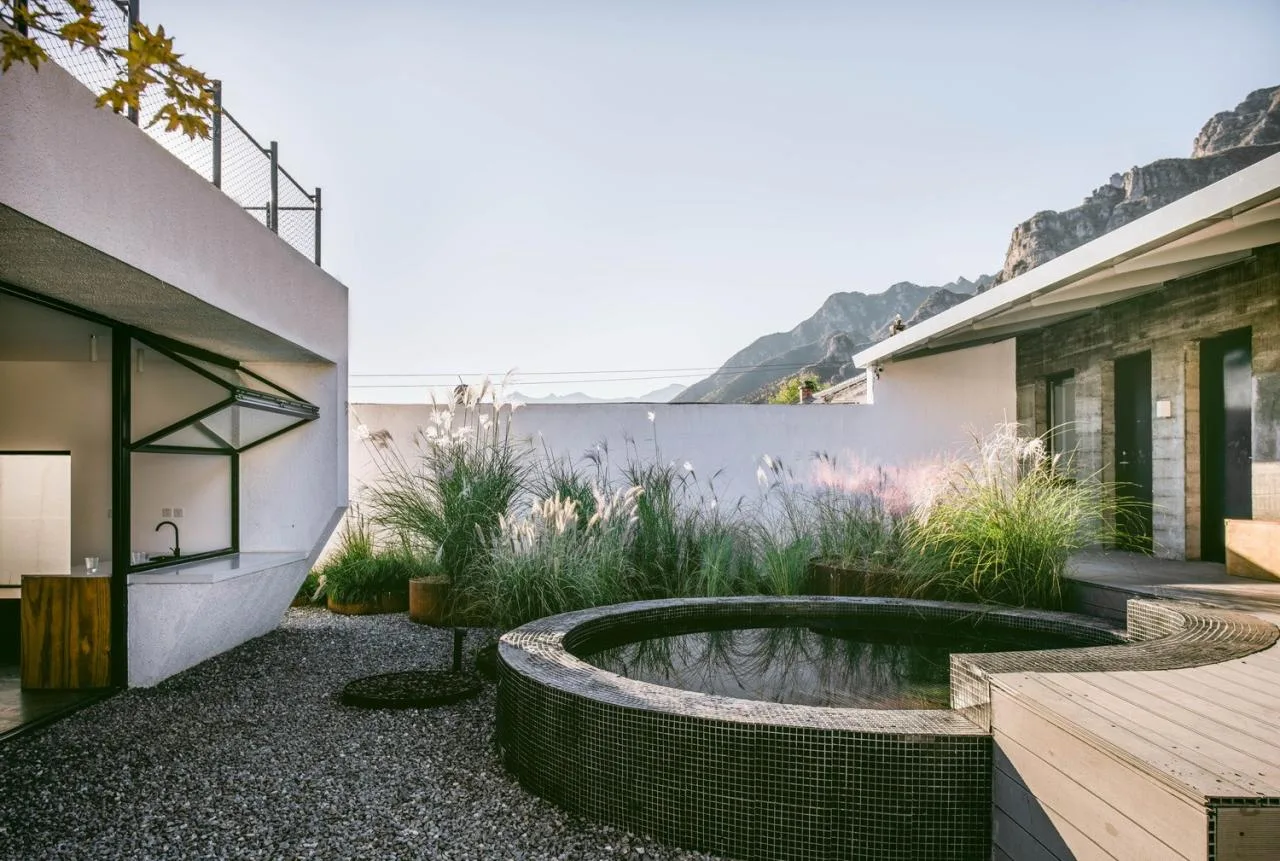
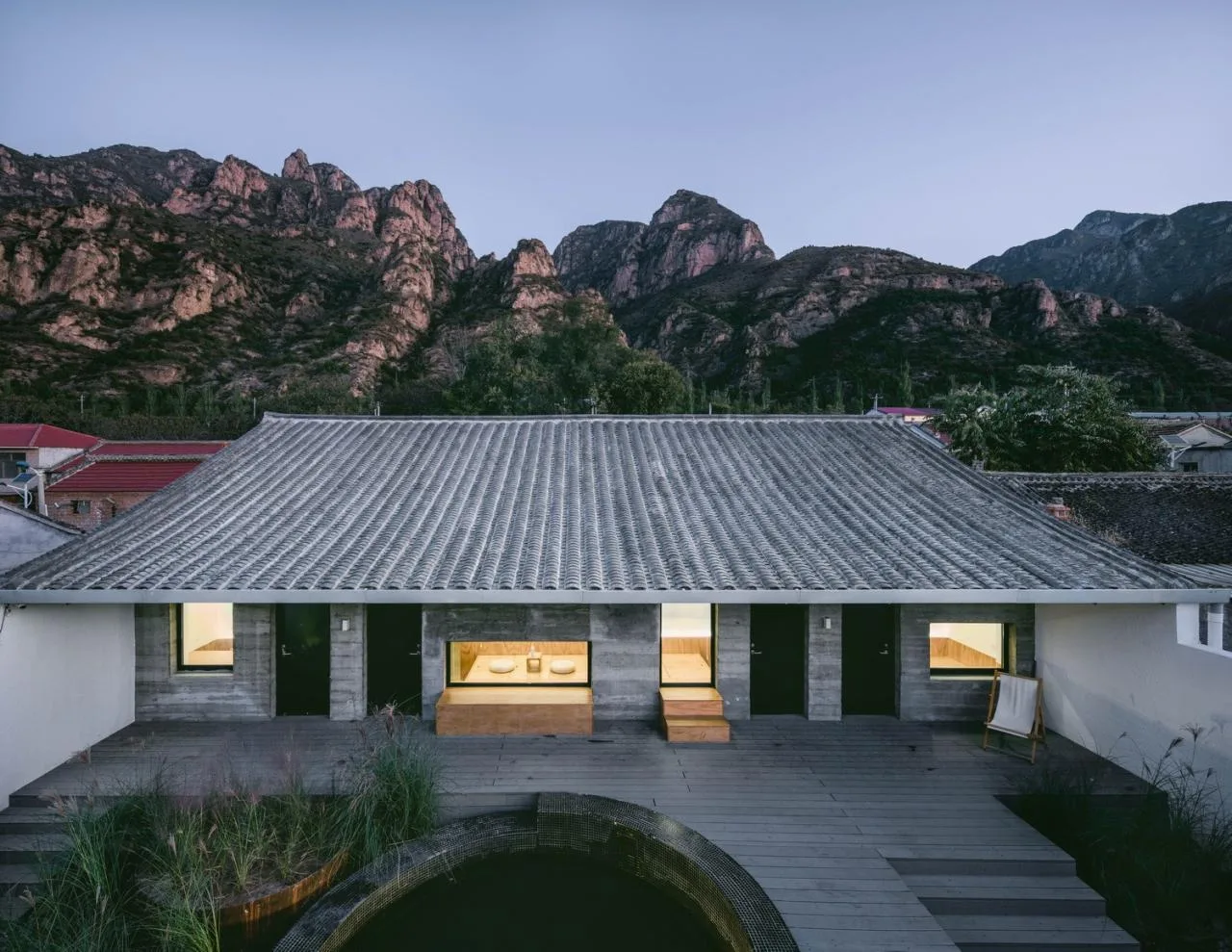
Each courtyard features a north-facing “pavilion” on its southern side, serving as a living room and central gathering space. This pavilion offers stunning views of Yudu Mountain to the north. When its folding glass doors are fully opened, indoor and outdoor spaces merge seamlessly, allowing sunlight and fresh air to flow freely. On clear days, visitors can climb to the roof of the pavilion in the South Courtyard to enjoy panoramic views of the Yanhuai Basin to the south.
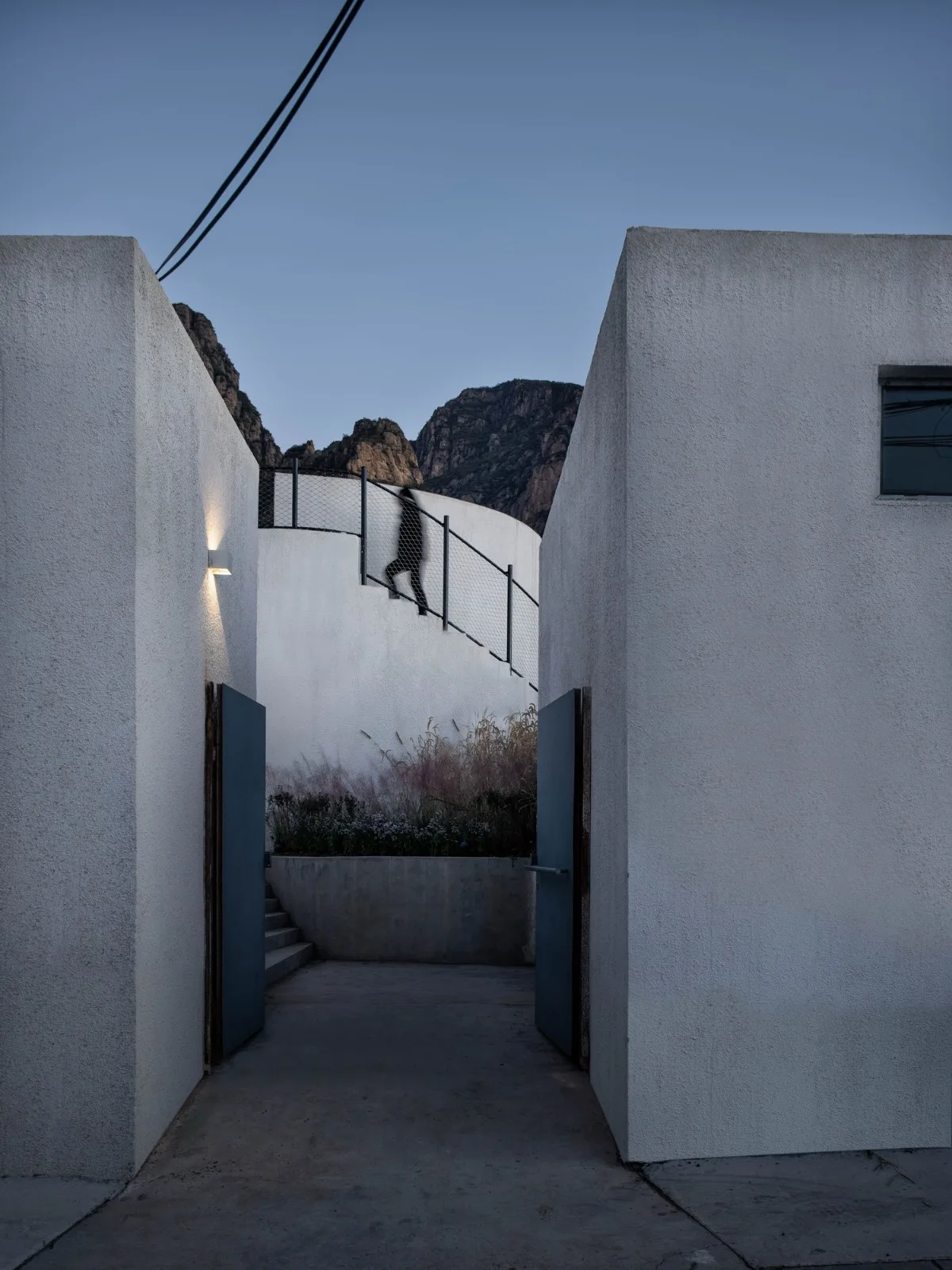
The courtyard walls are predominantly covered with white textured paint, a common exterior finish in the area, which helps new constructions blend harmoniously with the existing environment.
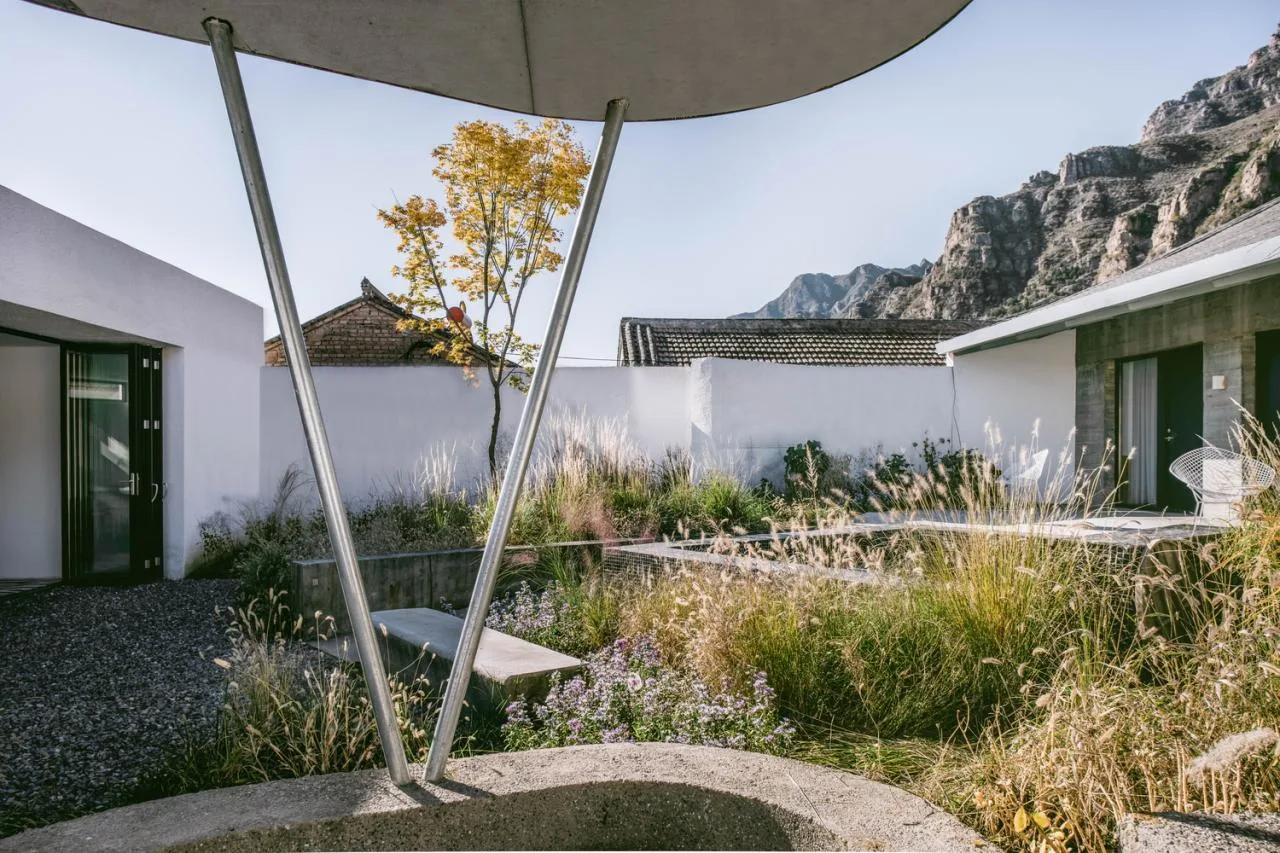
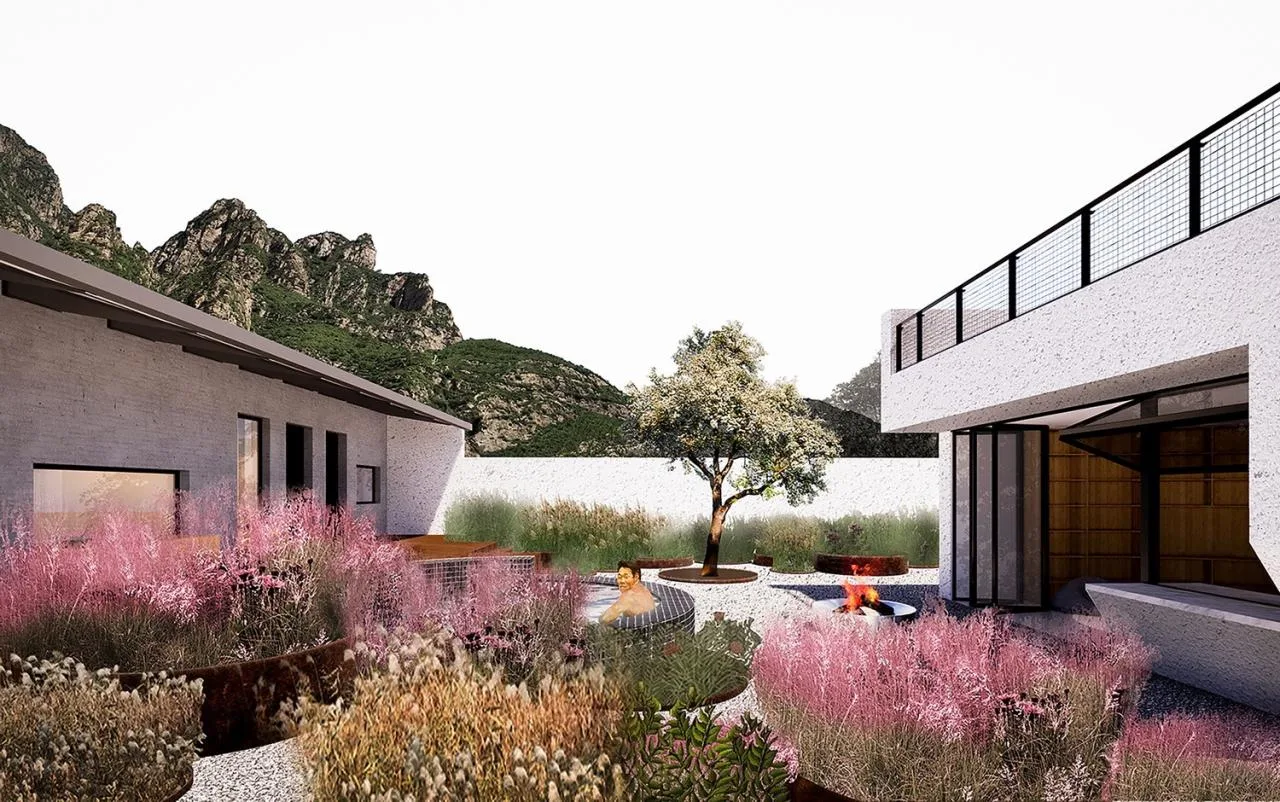
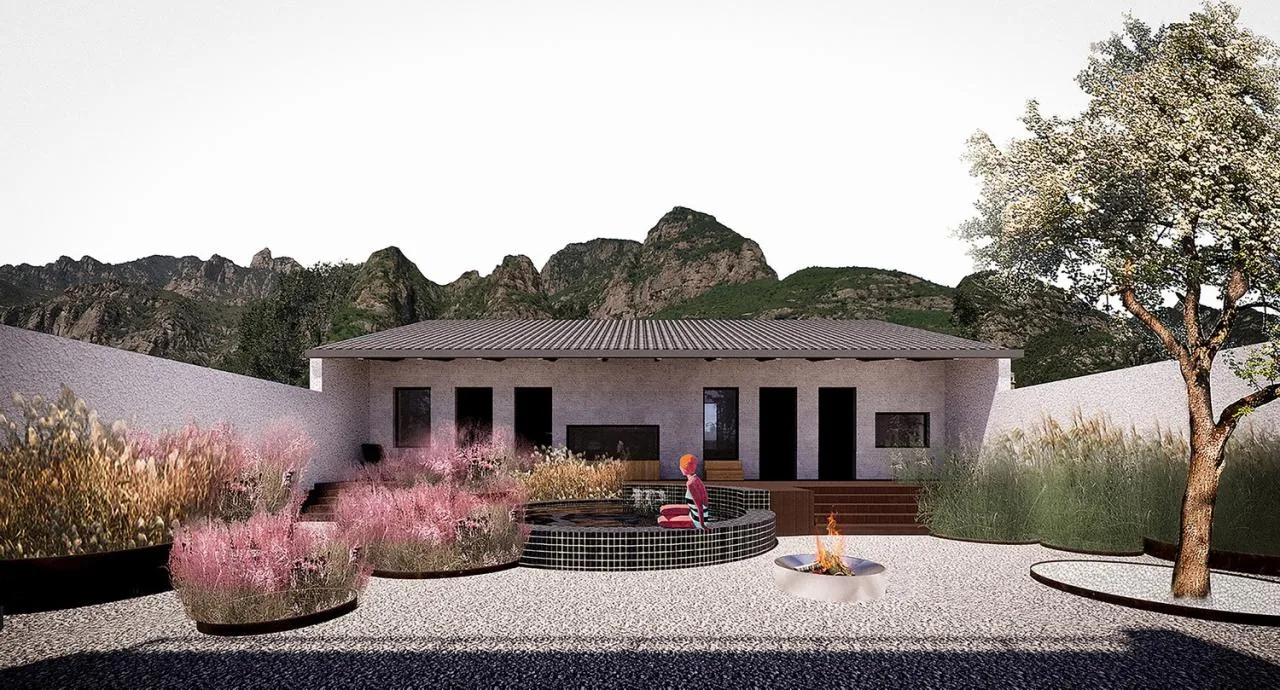
Though the two courtyards appear identical, their layouts differ significantly. The South Courtyard is designed with dispersed activity zones around a central pavilion, including a recreational pool, an open-air cinema, and a semi-outdoor bar counter. These areas are surrounded by circular planting beds filled with tall grasses.
In contrast, the North Courtyard arranges its pavilion and activity spaces around a concentrated flower garden, creating a reversed spatial experience. This mirrored approach not only differentiates the twin courtyards visually but also encourages varied ways of using the spaces. The seasonal cycle of lush, wild plants paired with vibrant outdoor activities offers a unique backdrop to the timeless mountain scenery visible from both courtyards.
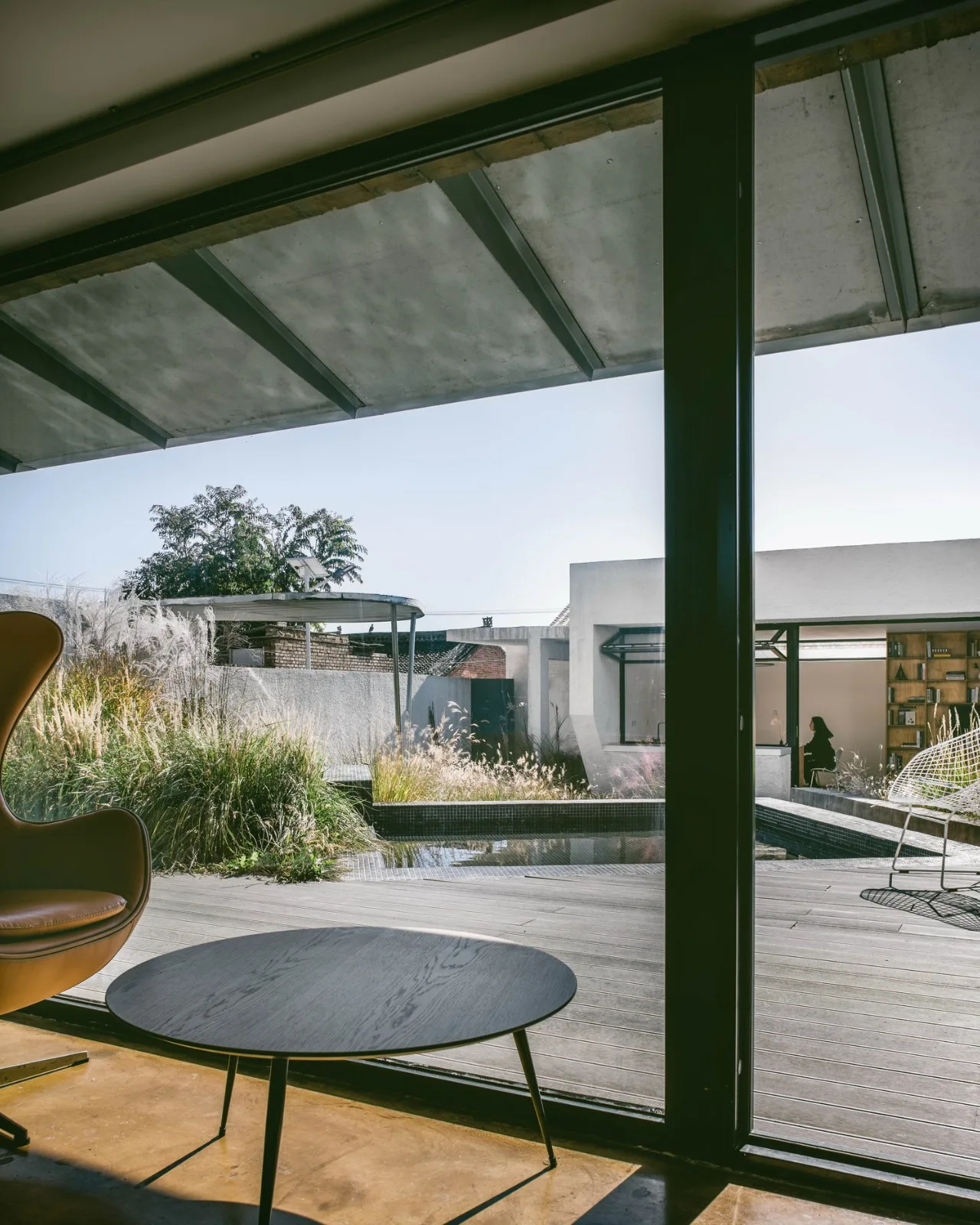
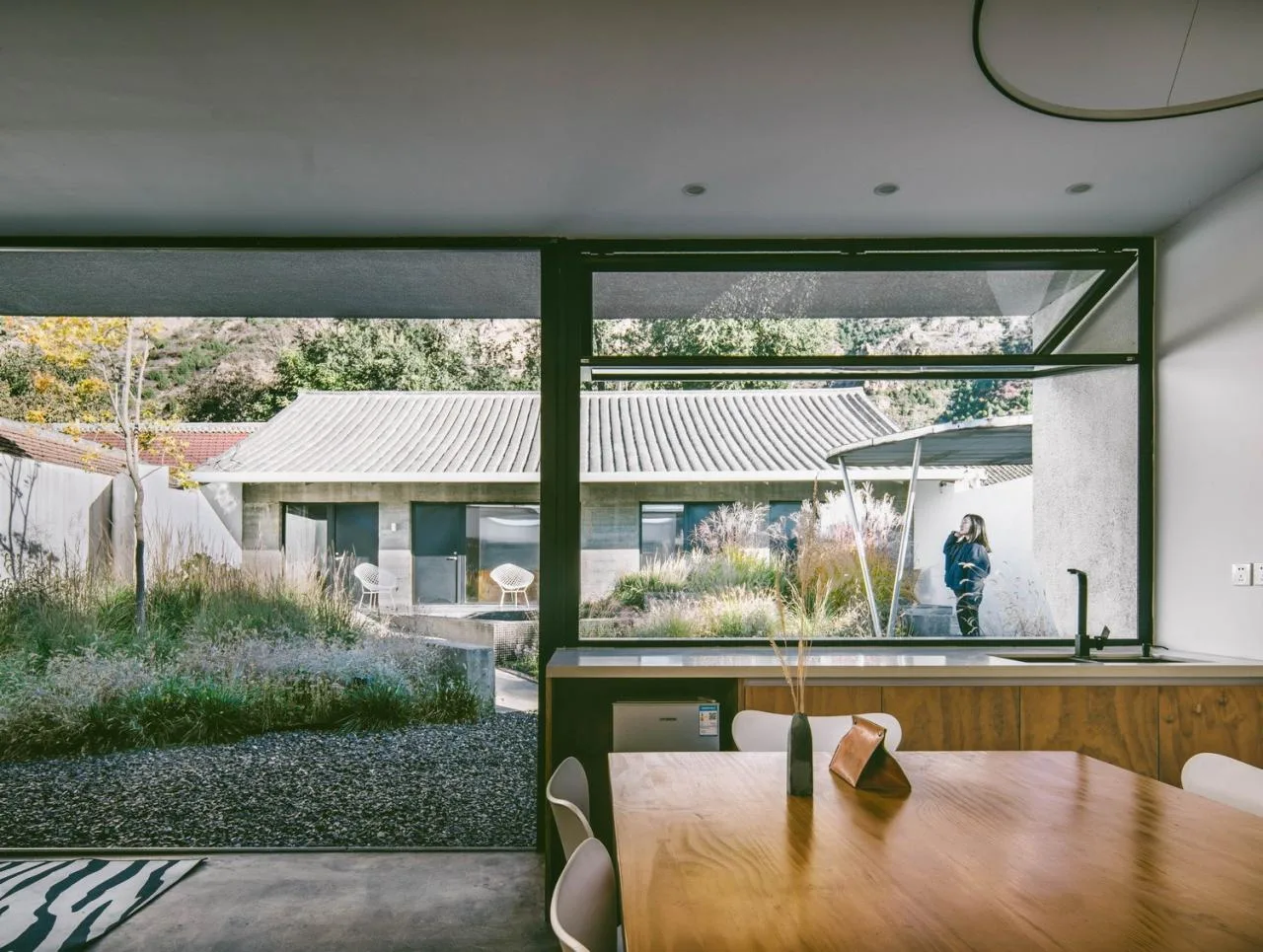
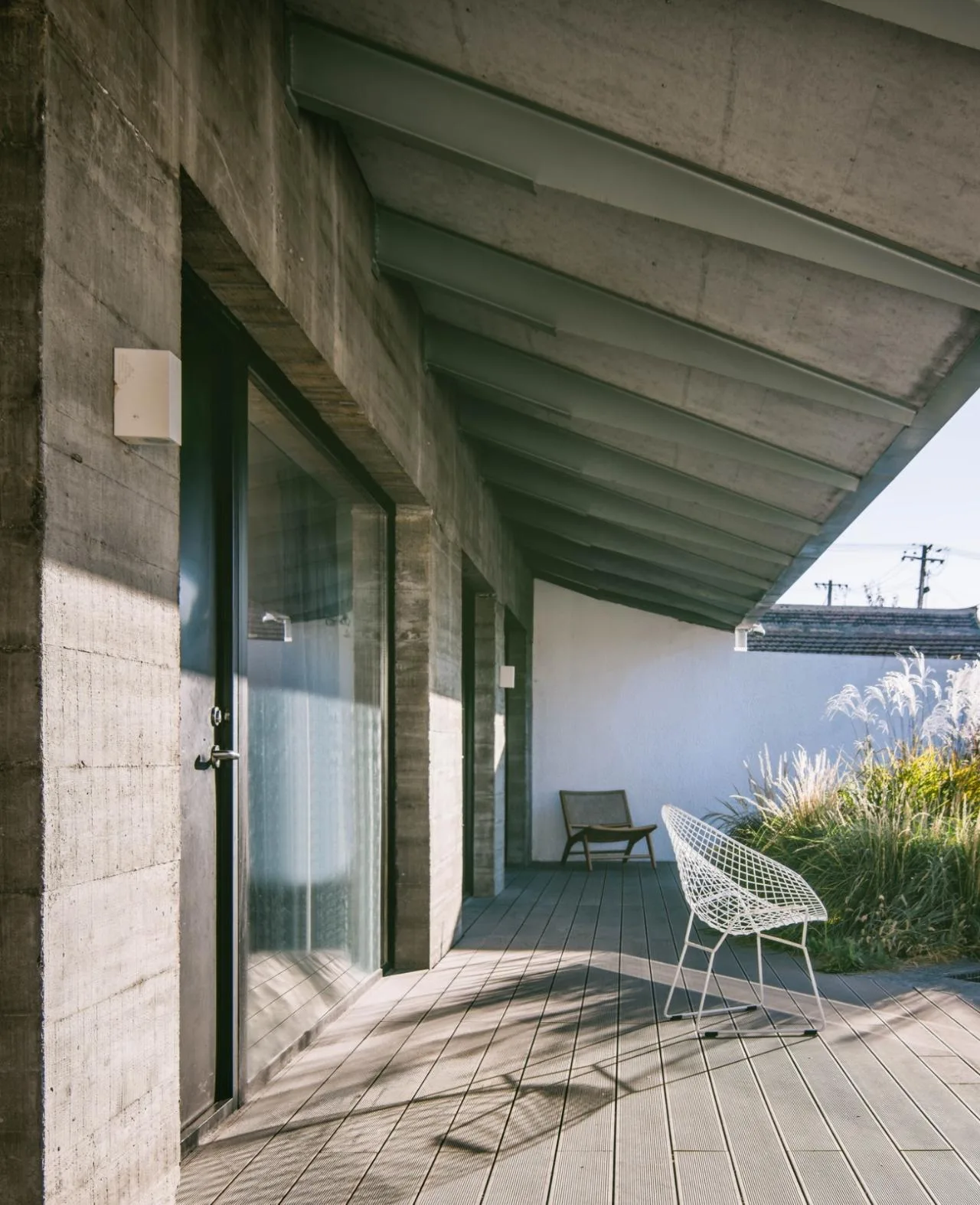
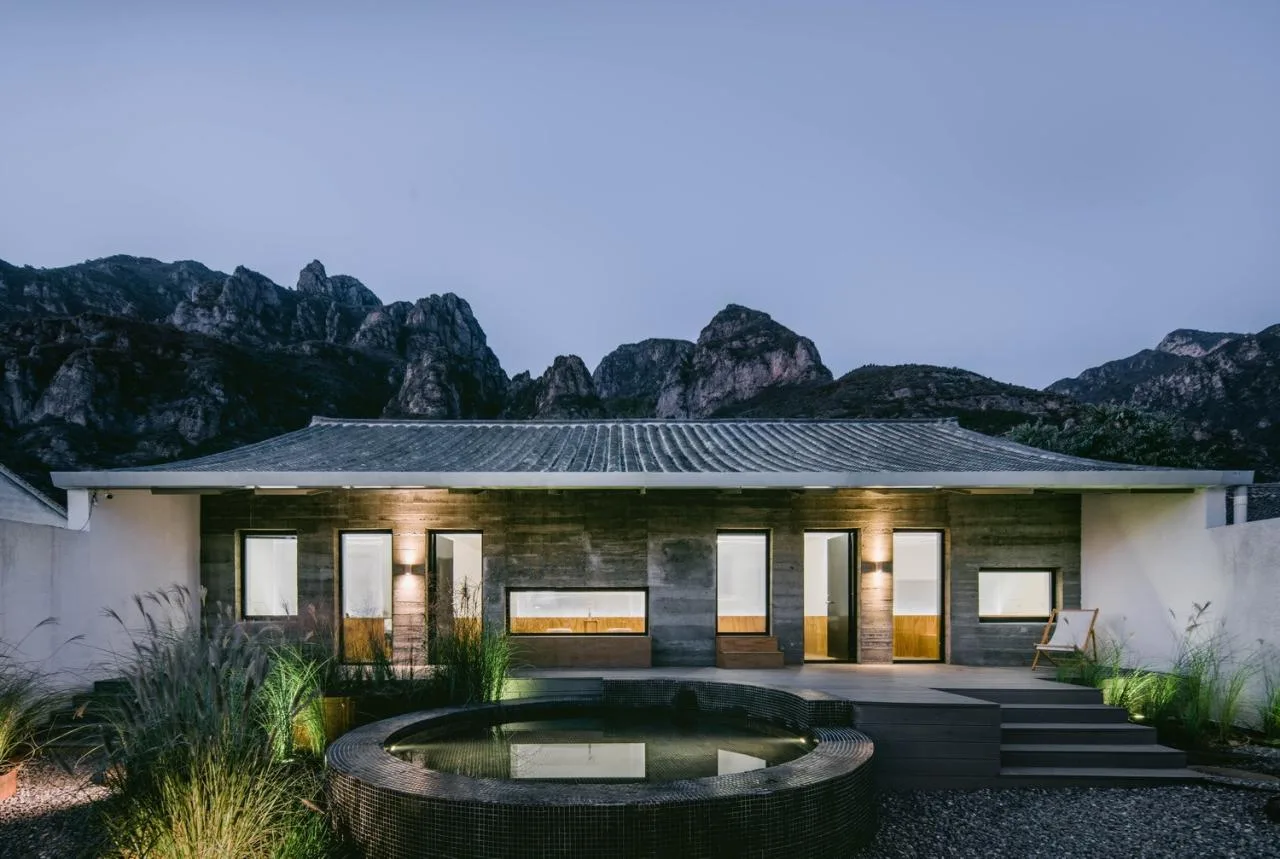
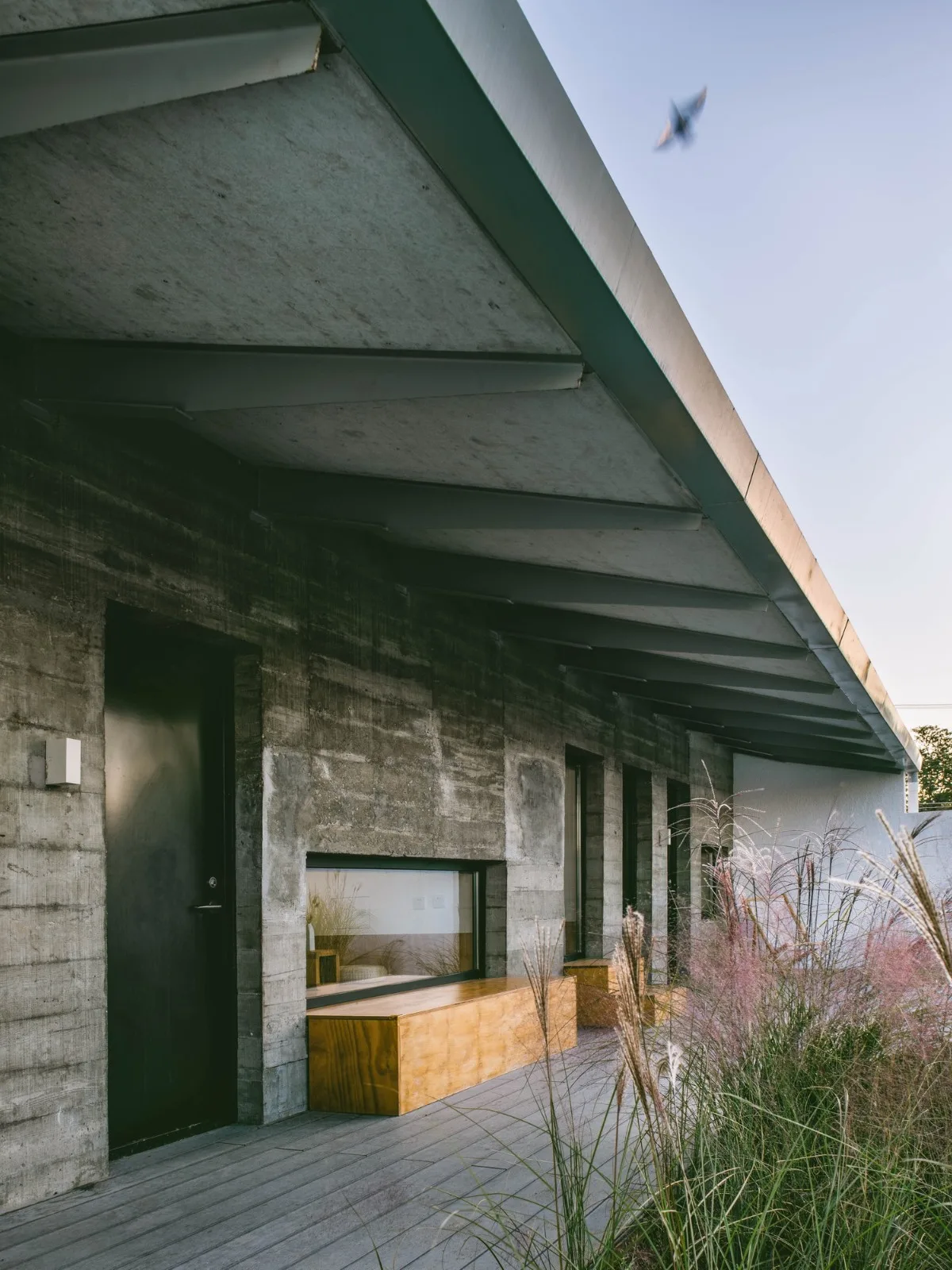
The main house facing north, constructed with brick and wood, was preserved due to budget constraints. However, its south facade required renovation to suit the updated interior layout. To minimize alterations to the original structure, we removed non-load-bearing elements on the south side and installed a detached concrete shear wall.
This simple intervention fulfills three purposes: it frees up the facade with the shear wall; supports a two-meter cantilevered eave extending the original roof, creating a shaded “grey space” between the garden and guest rooms; and introduces a rough concrete texture that complements the distant mountains and contrasts with the surrounding white walls, becoming a visual focal point within the courtyard.
The three-dimensional facade, combining eaves and porch, visually reduces the height of the originally tall south facade. It recedes into the shadows, humbly serving as a subtle frame for the majestic mountain views.
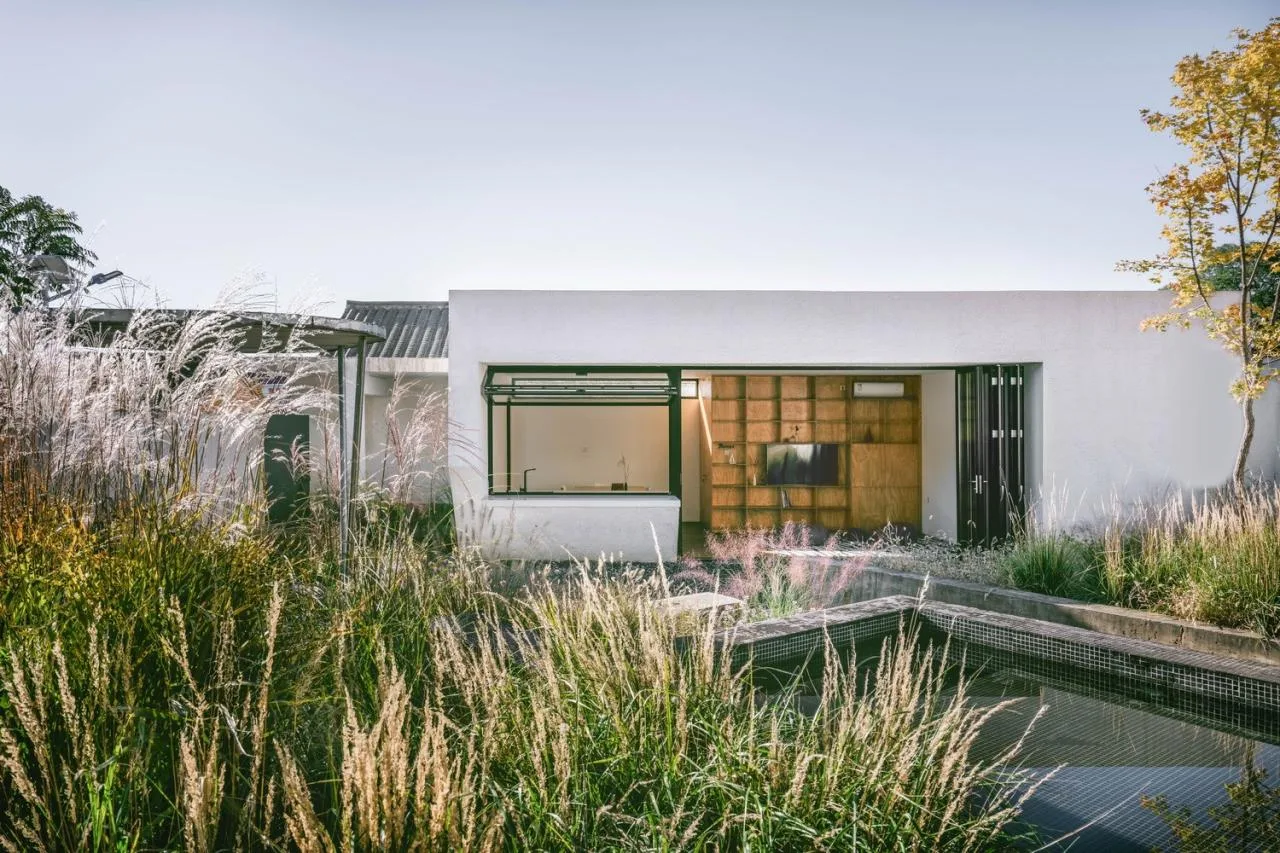
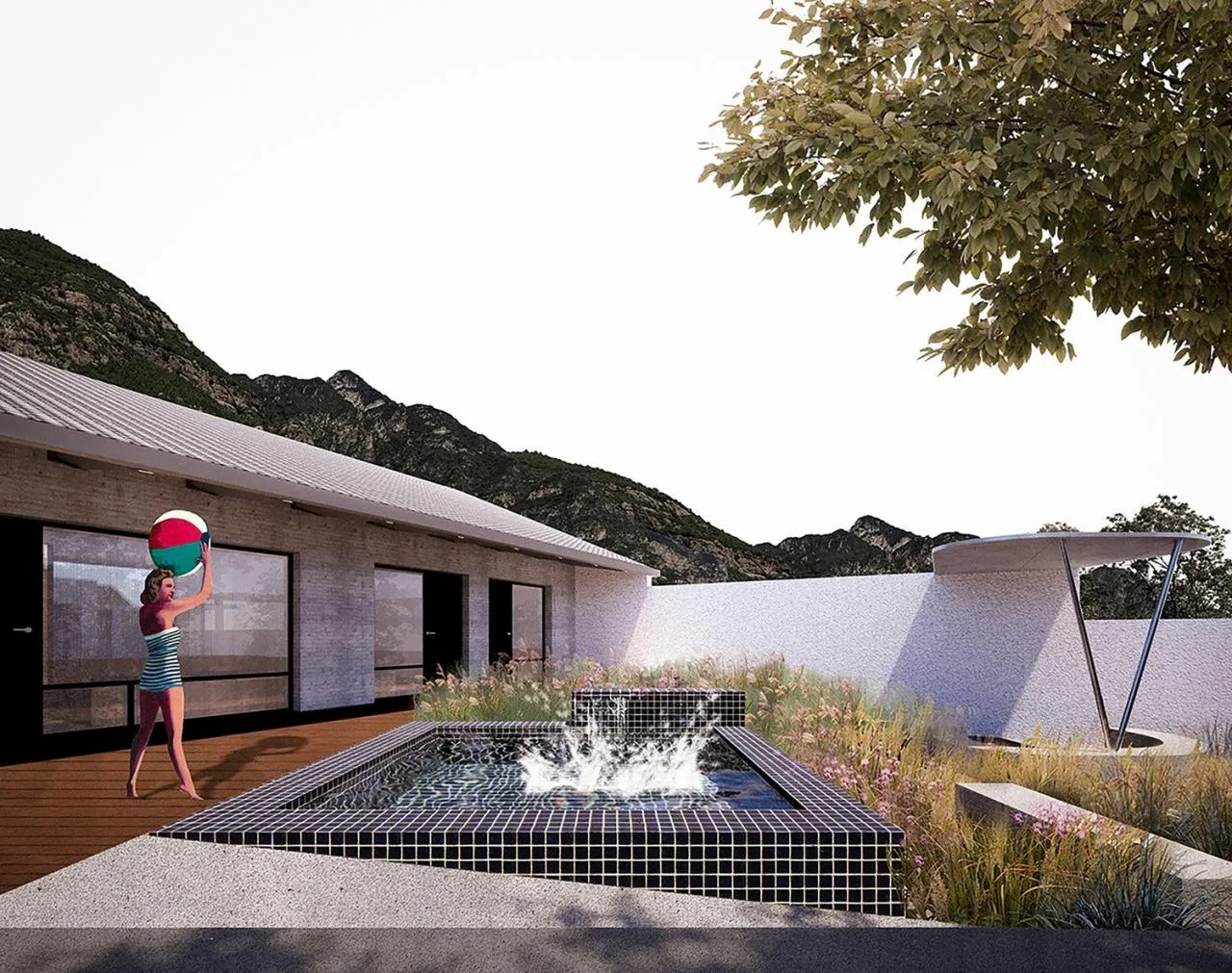
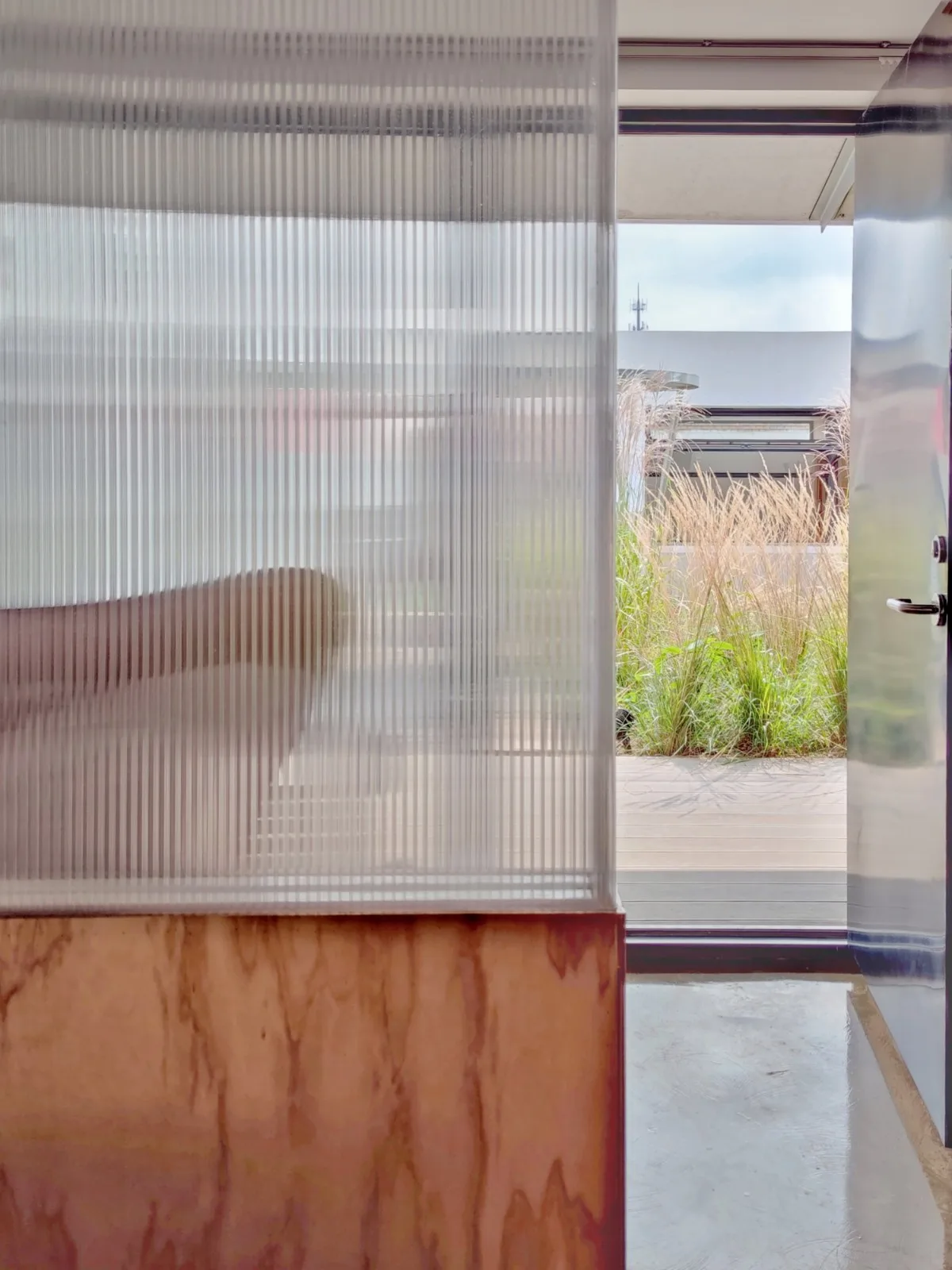
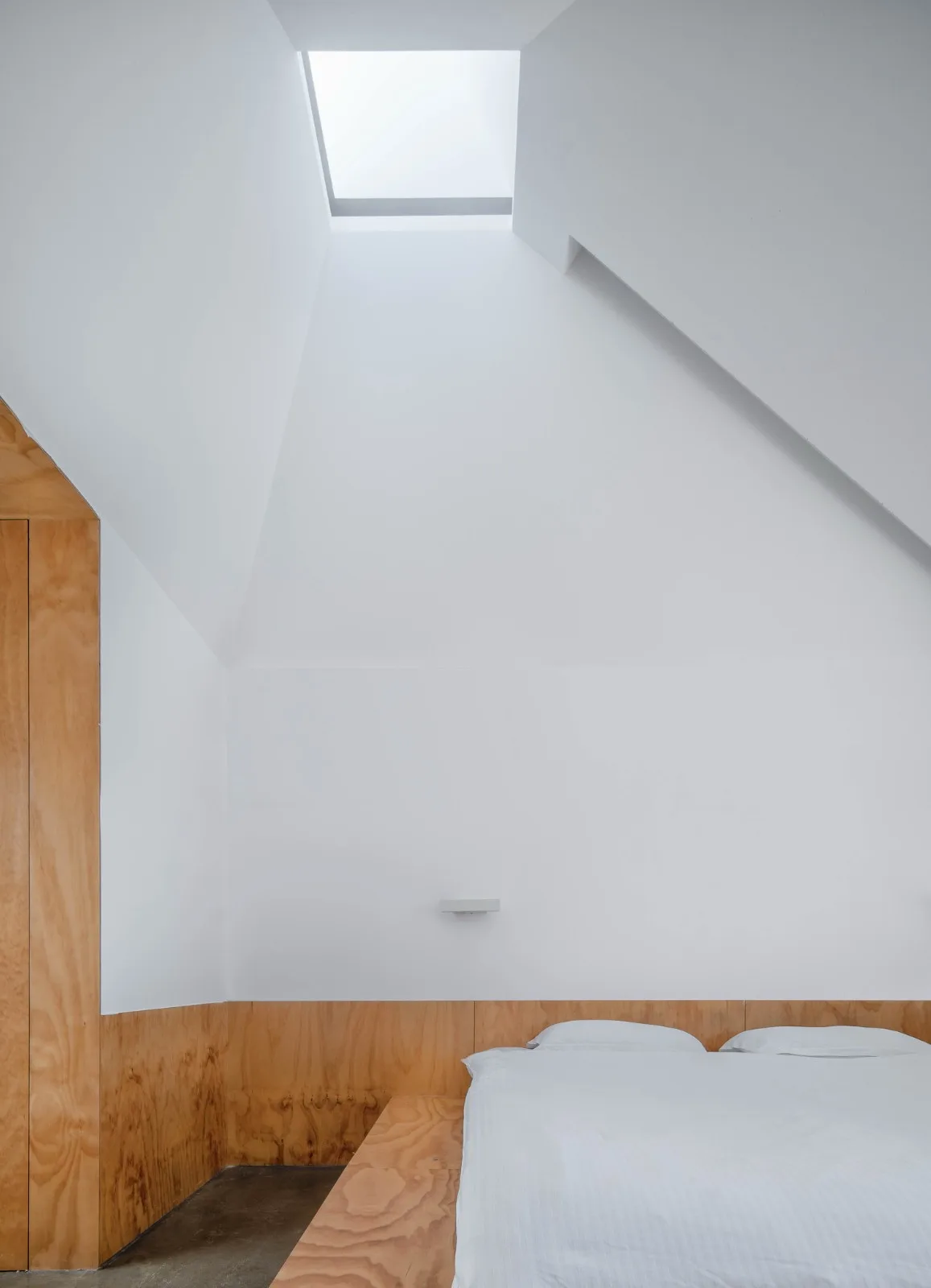
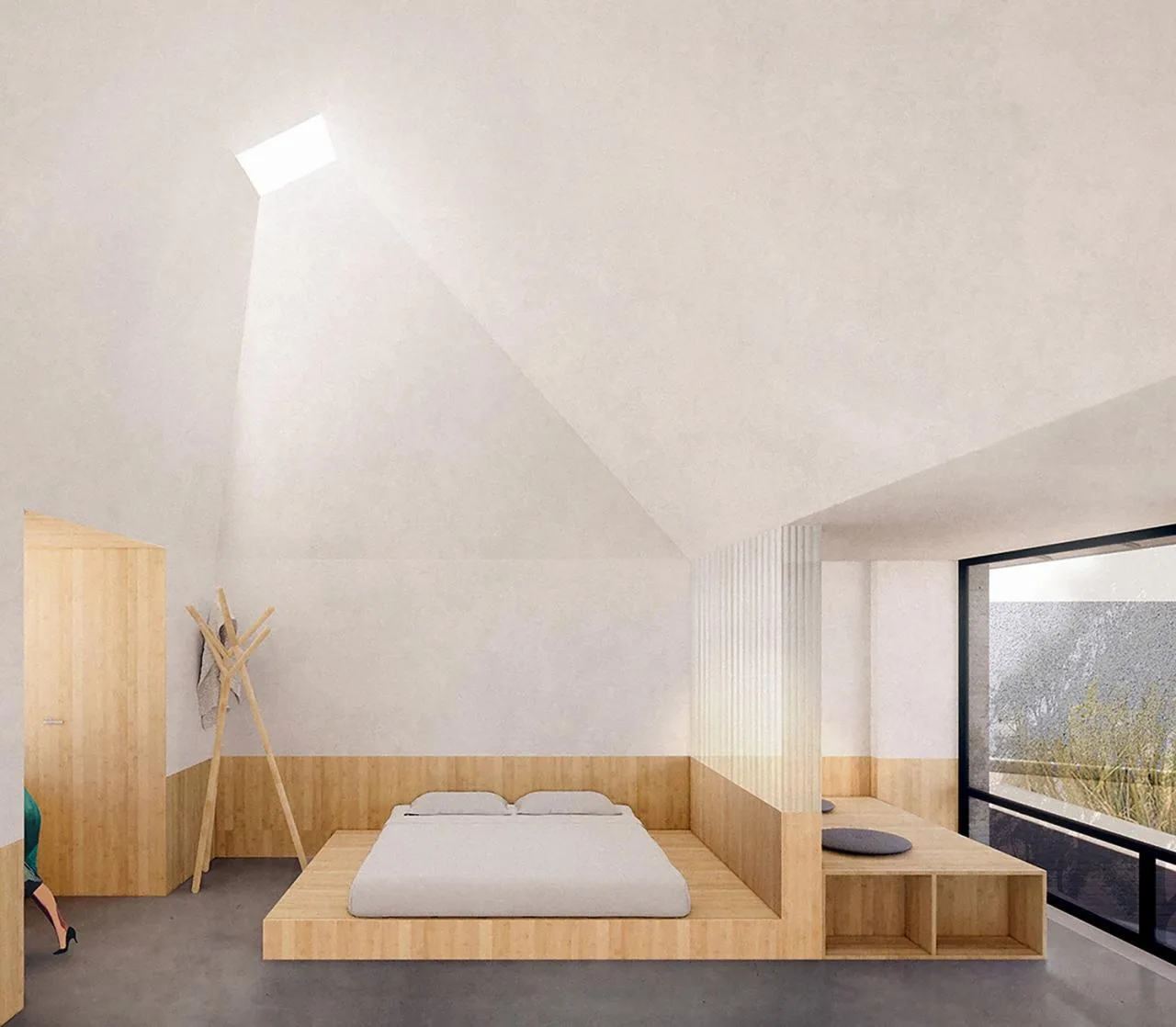
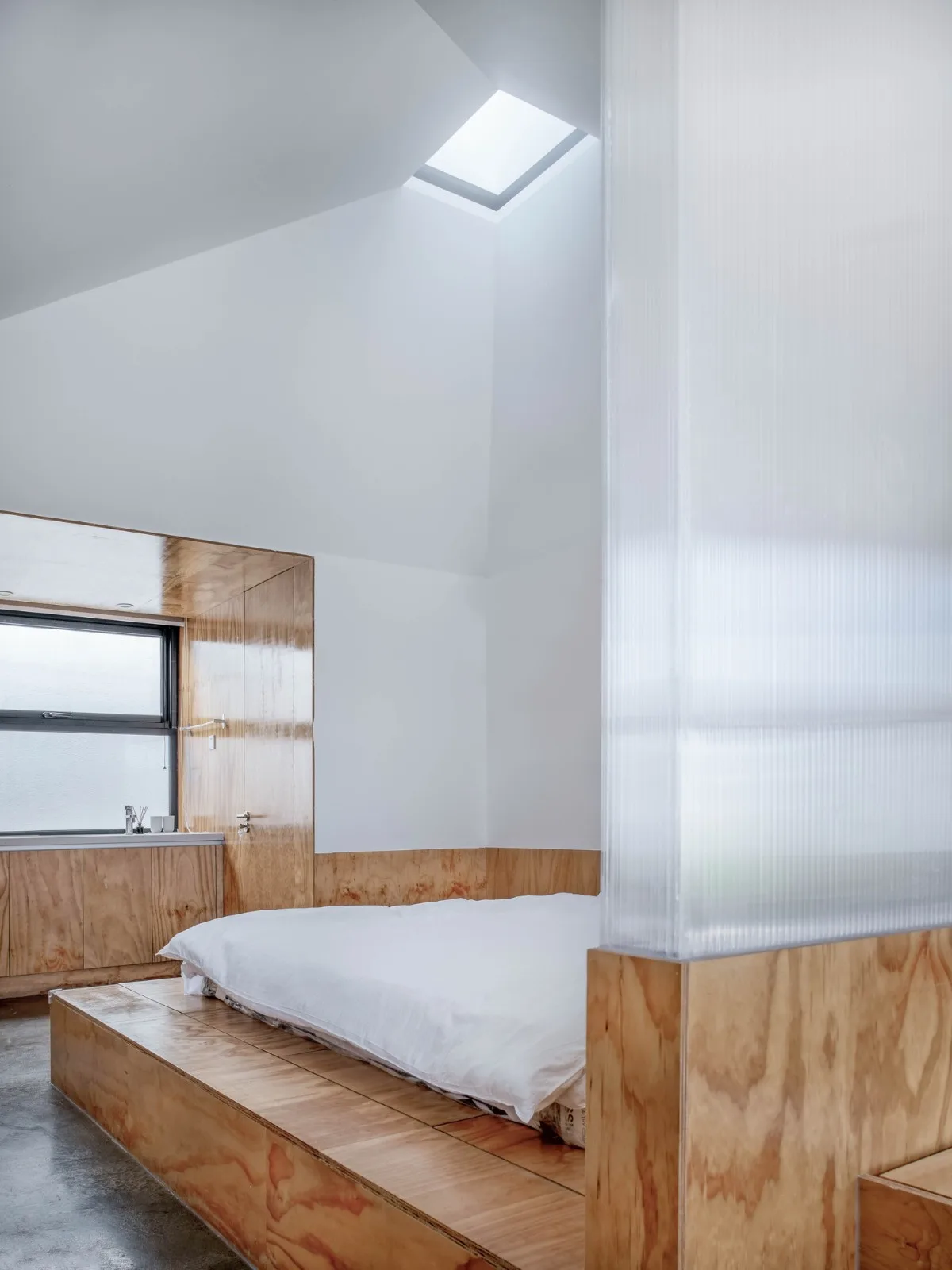
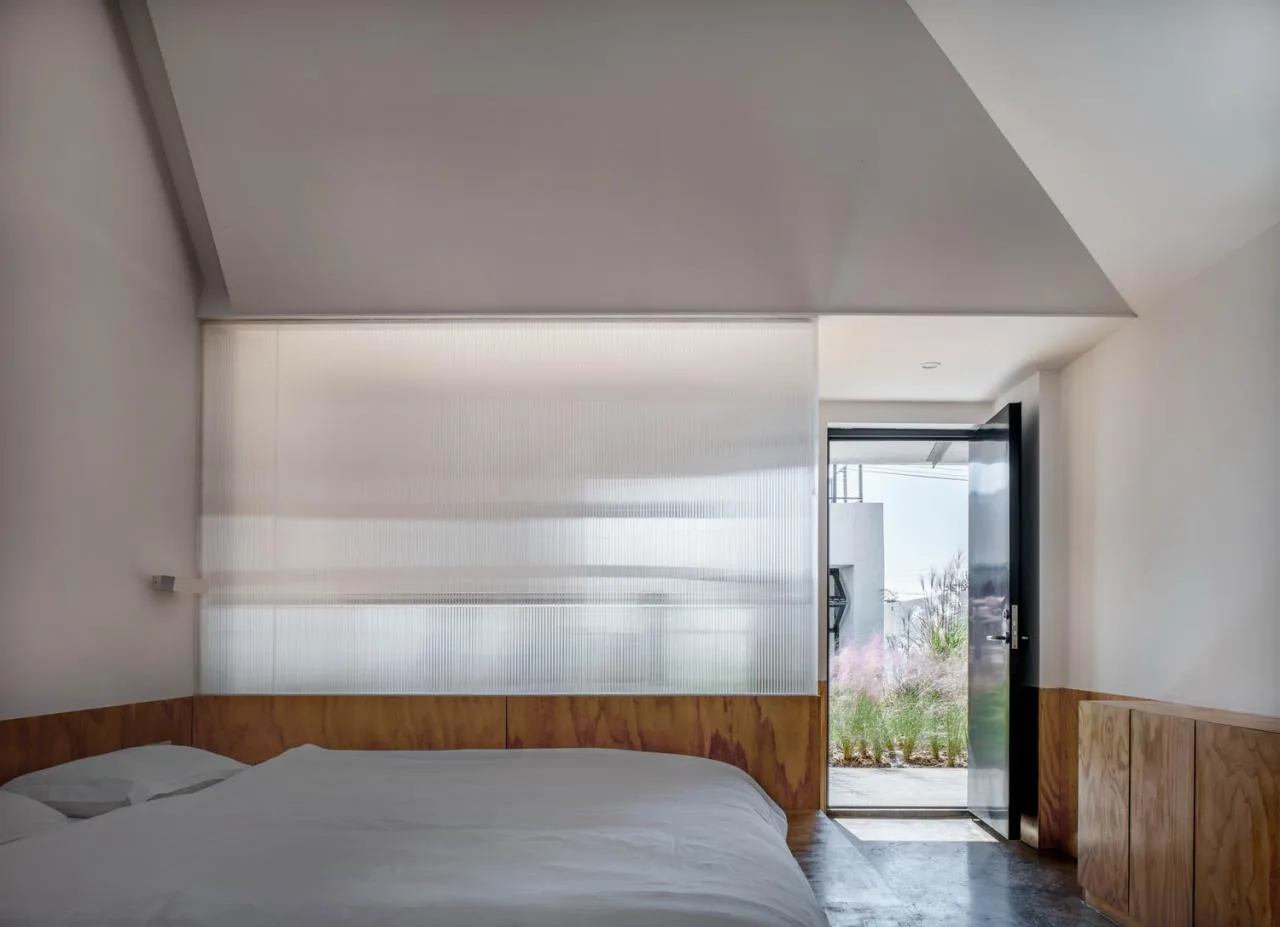
Given the depth of the original house, the guest rooms include not only basic sleeping and washing areas but also a “repair room.” Unlike creating tall interior sleeping spaces by fully utilizing the existing structure, the repair room is an intimate space designed for human scale. Through windows of varying sizes, it offers diverse perspectives of the courtyard outside while providing a privacy buffer between the guest rooms and the communal courtyard.
Project Drawings
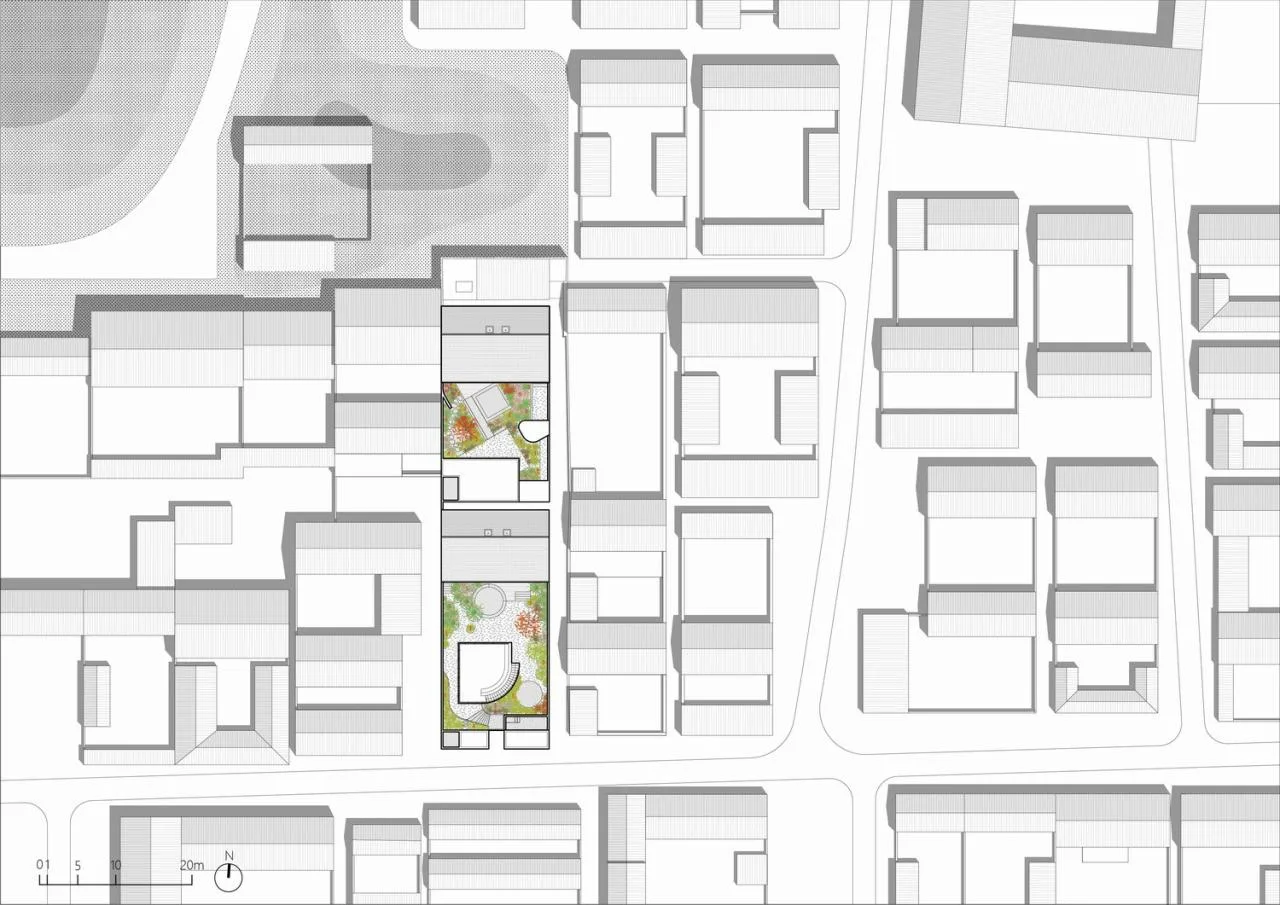
△ General Layout Plan
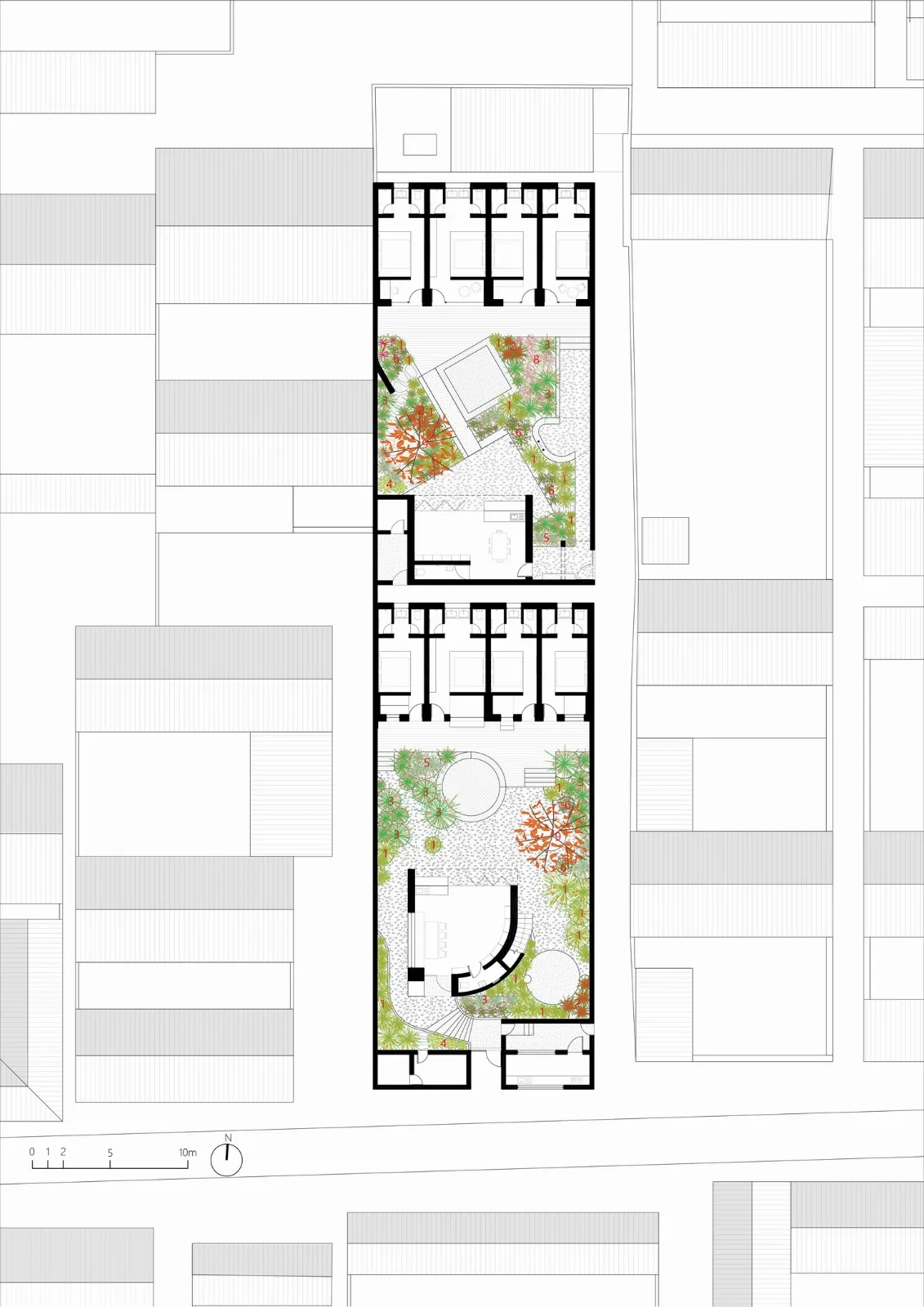
△ First Floor Plan
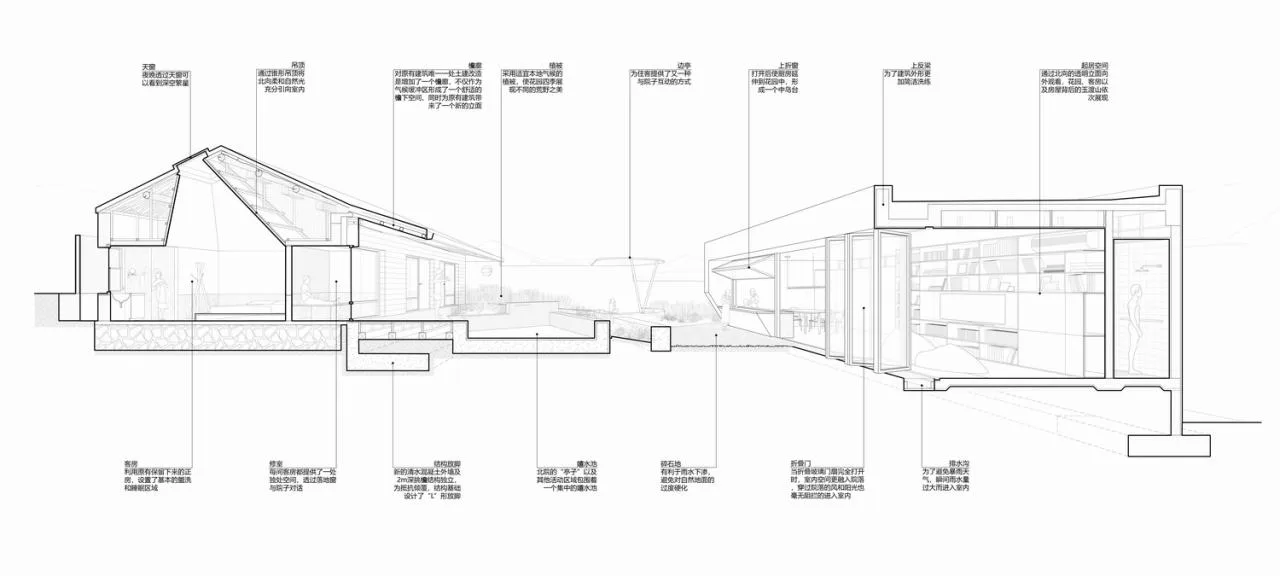
△ Section Diagram
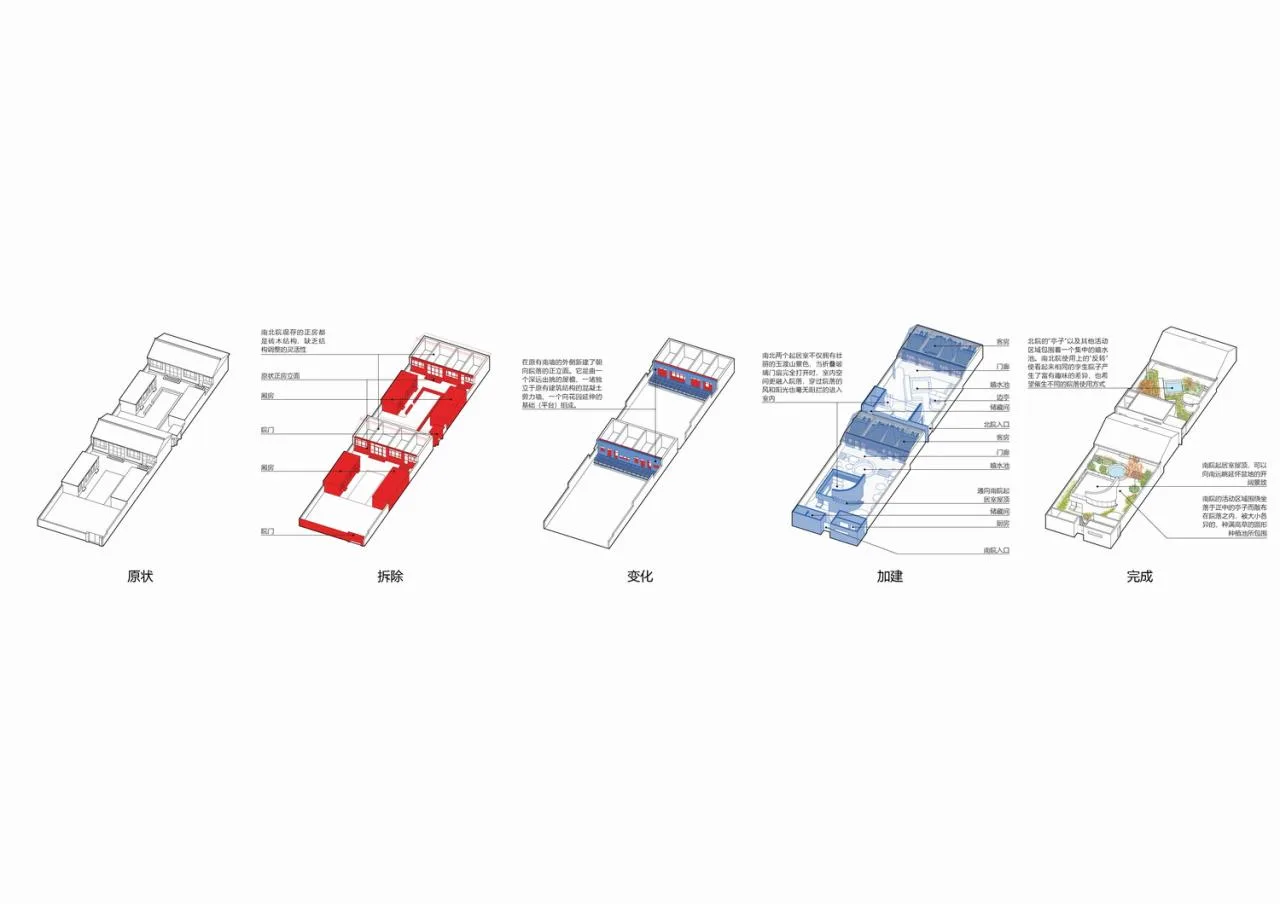
△ Analysis Chart
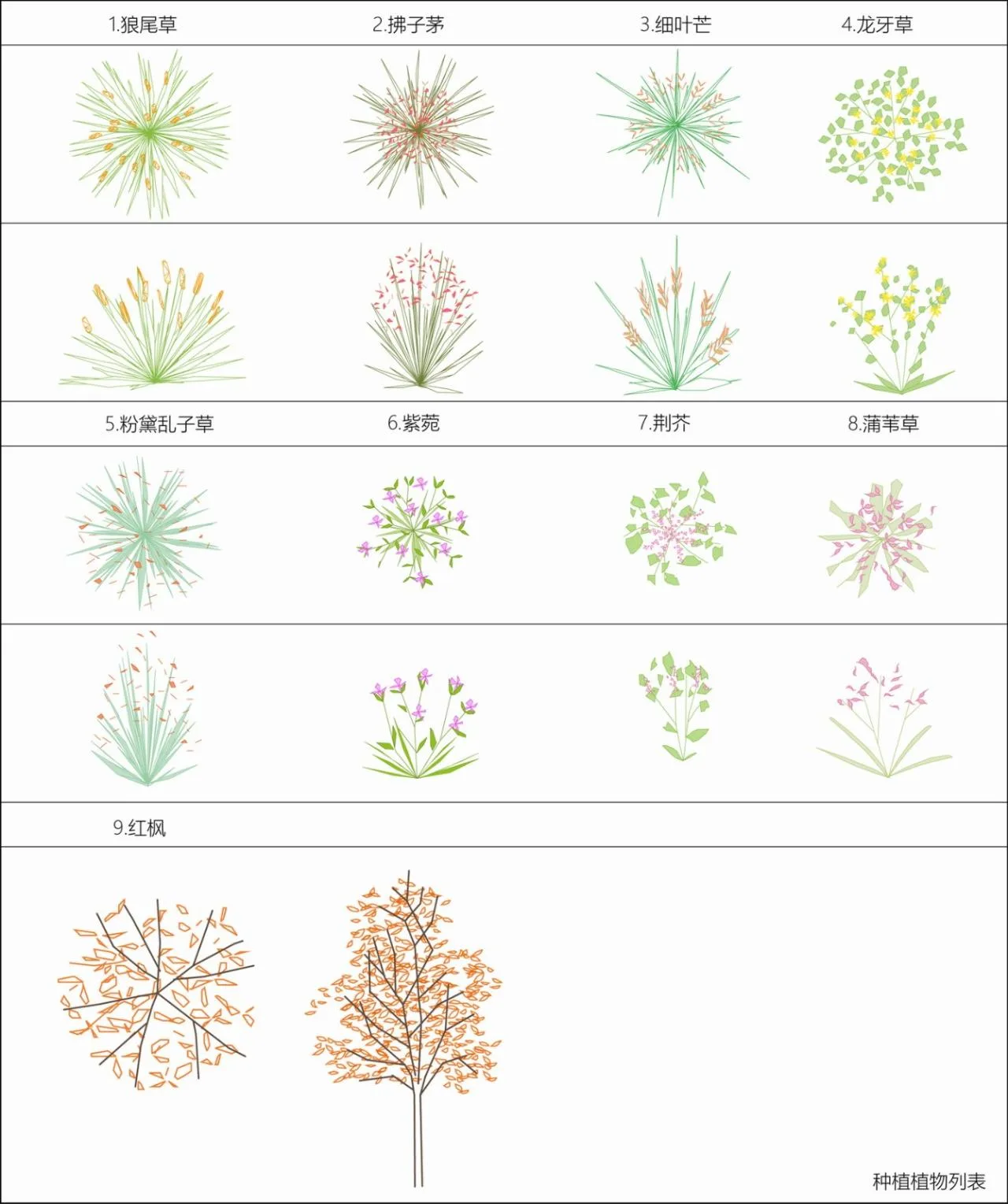
△ Analysis Chart
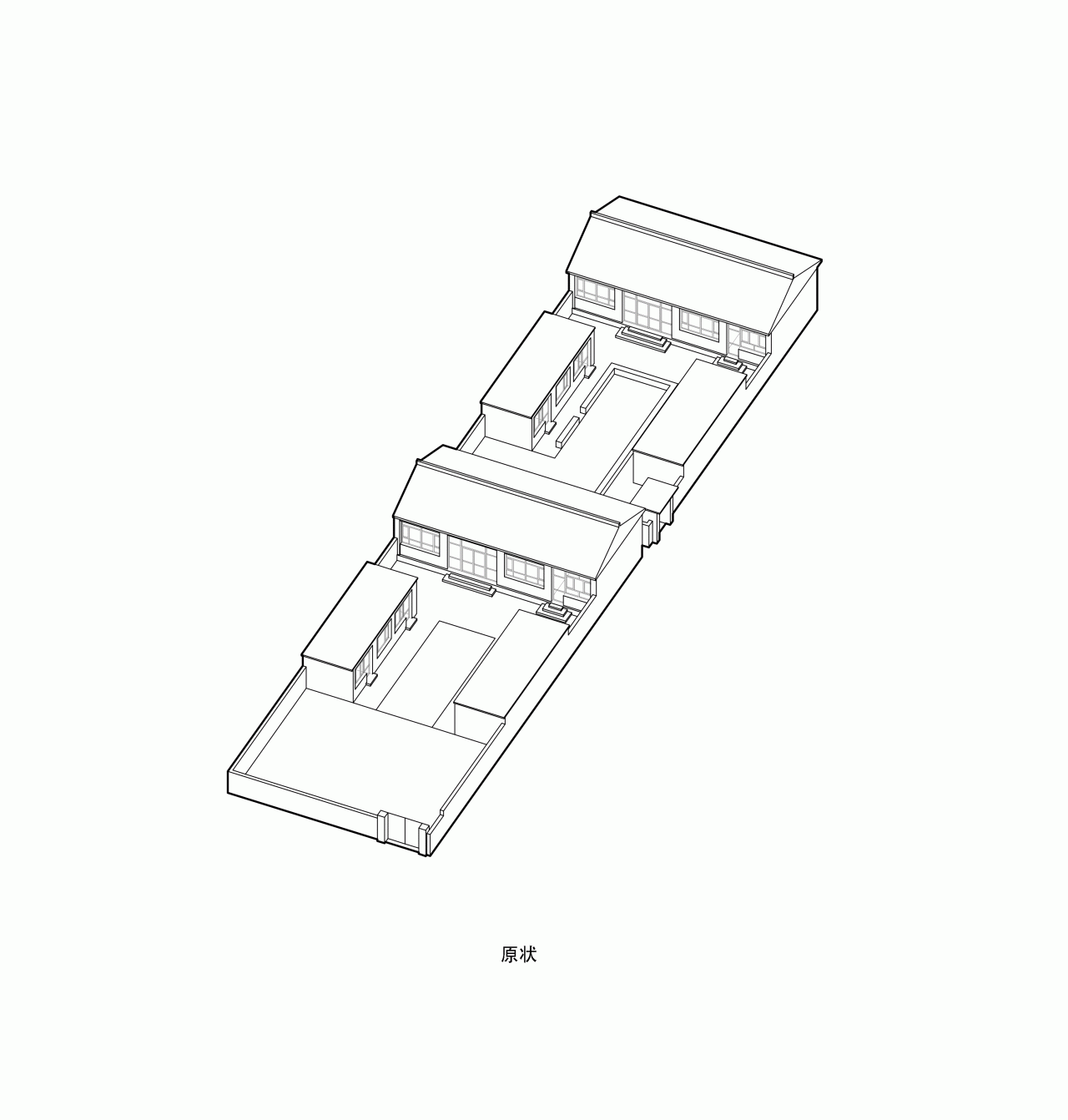
△ Analysis Chart
Project Information
Design Unit: Similar to Architecture
Project Name: Dashan Shiji Homestay Renovation
Design Theme: Twin Courtyard
Lead Architects: Luo Ren, Zhao Yao
Design Team: Wang Nan, Huang Yuzhu, Zhang Chundong, Zheng Jiawei
Land Area: 825 square meters
Building Area: 323.39 square meters
Design Date: September 2019
Location: Yanqing, Beijing
Project Status: Completed
Photography by © Zhu Yumeng












Must log in before commenting!
Sign Up