
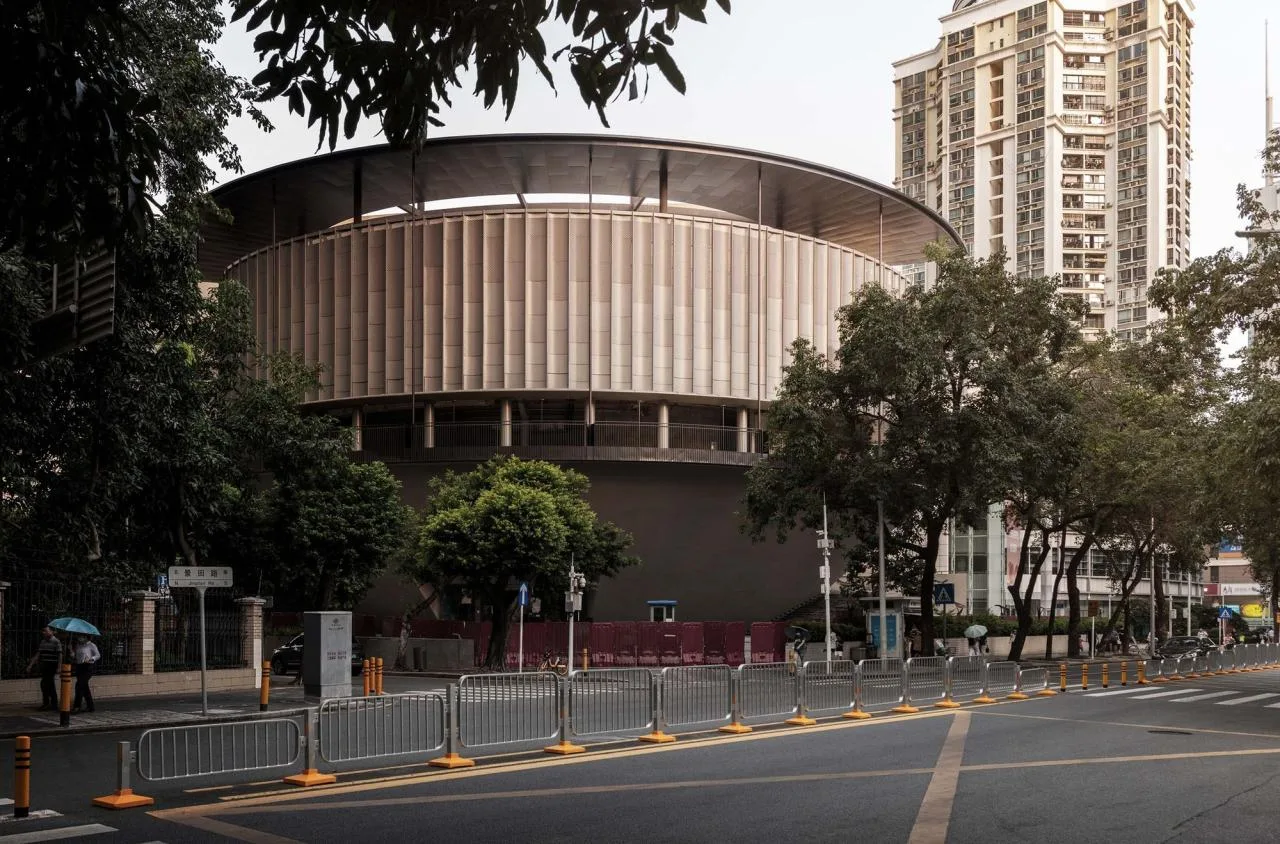
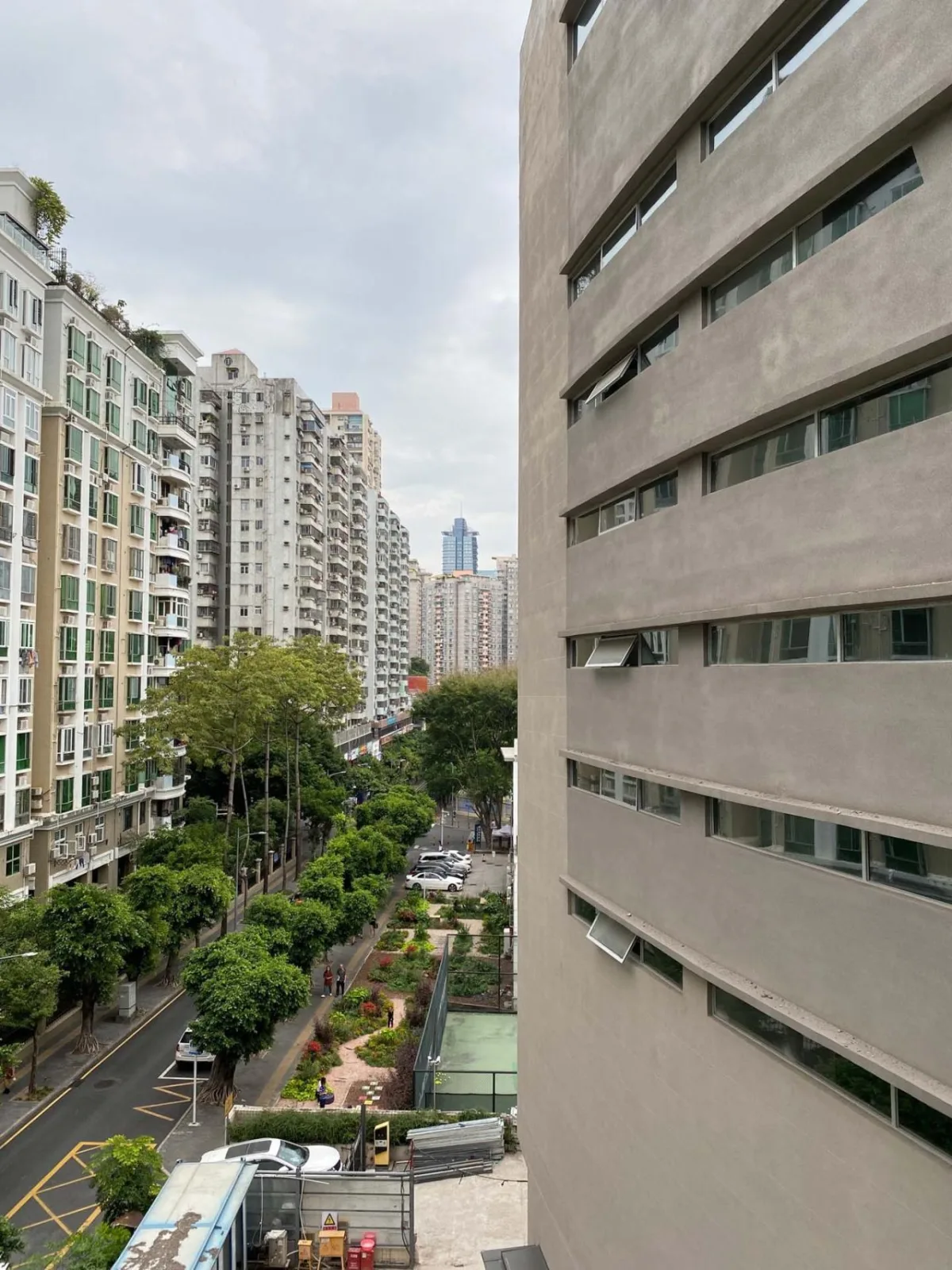
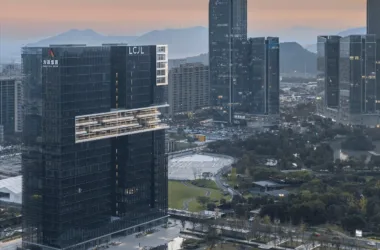
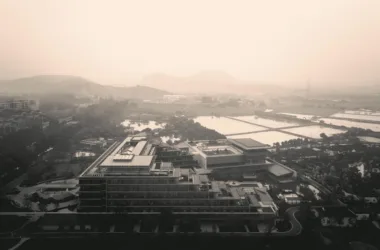
Over the 18 years following the completion of DreamWorks, the surrounding urban environment underwent significant changes. The renovation focus shifted from individual buildings to the entire interconnected urban space.
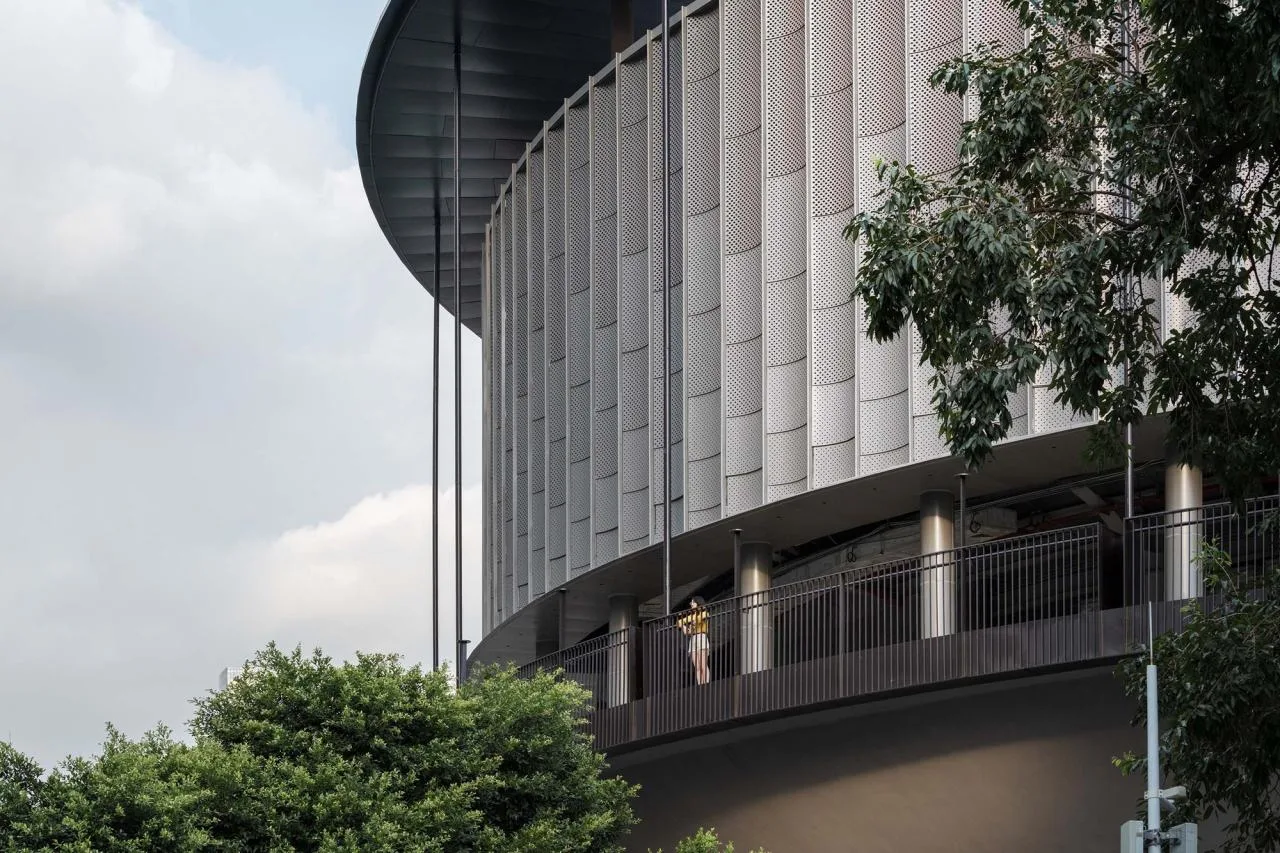
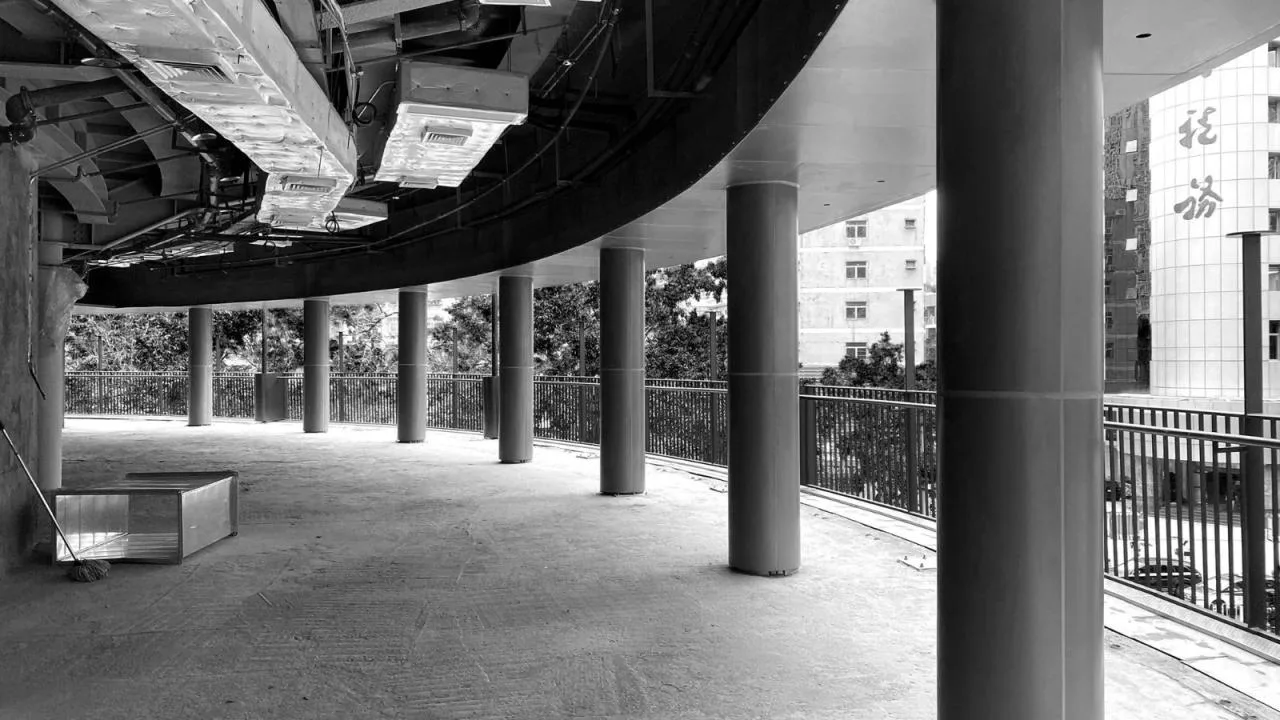
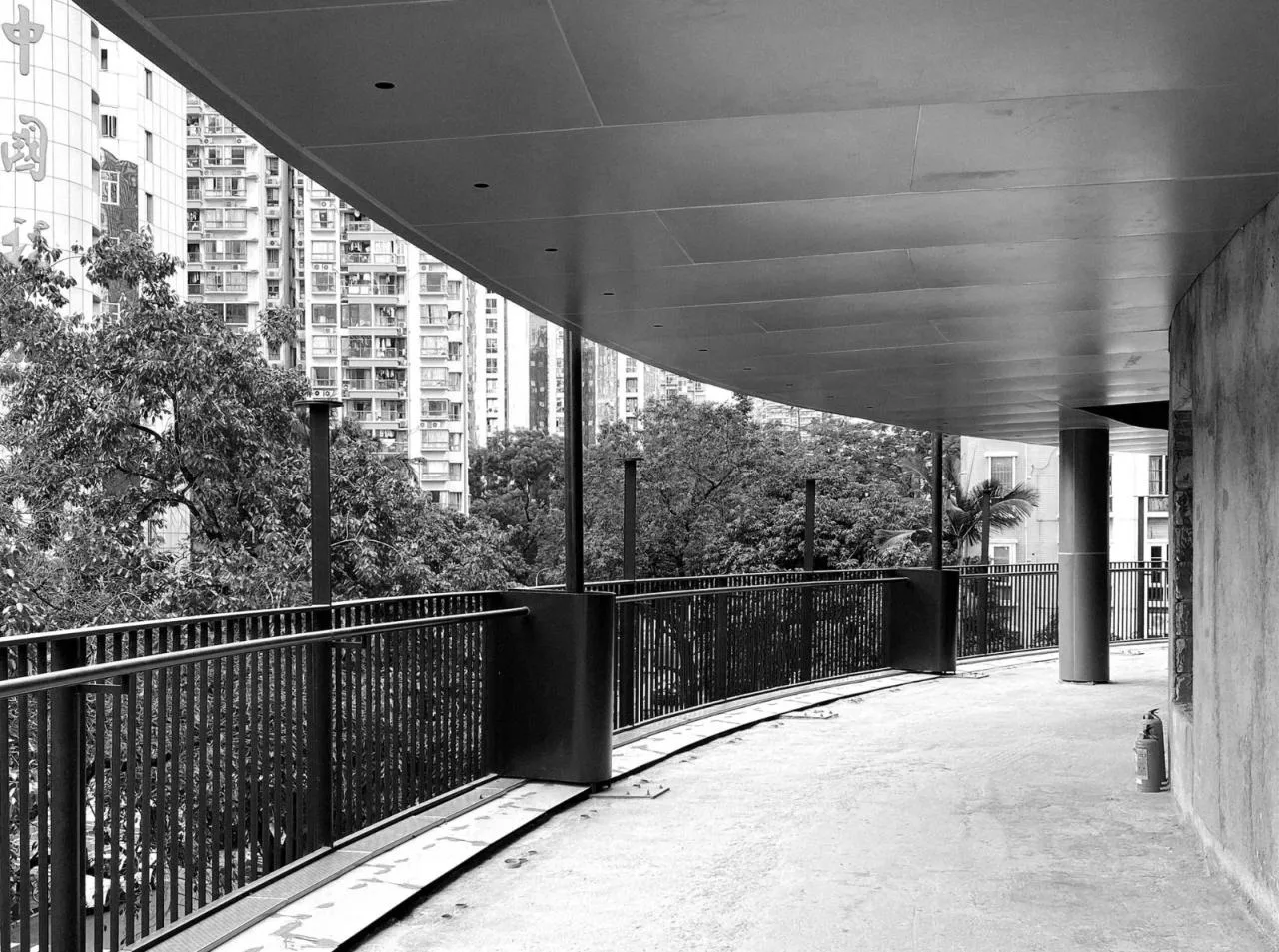
The transformation began with the cross-section. The grandstand’s original net height of only 4 meters was no longer sufficient to meet the technical requirements of a modern theater in terms of acoustics, lighting, and electrical systems. We reimagined the urban interface as a 13-meter-high corridor, establishing a stage-and-grandstand-like relationship between the square and the surrounding buildings. This design also highlights the connection between the buildings and the natural landscape concealed by trees.
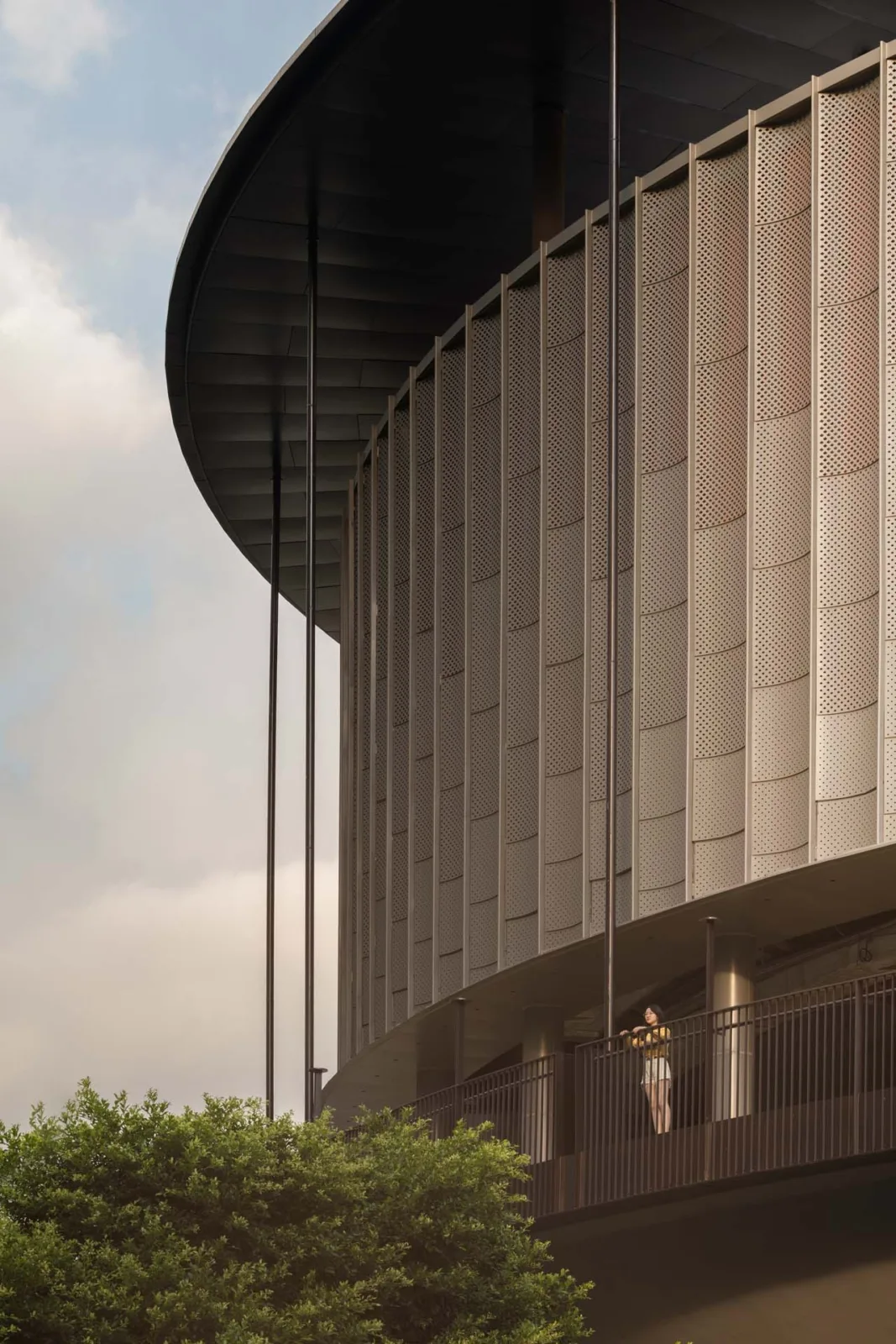
The 13-meter-high public corridor serves as a crucial circulation path for theater entry and extends the urban space. It connects with the large steps on either side leading to the square, creating a three-dimensional circular public flow within the city. This integration enhances the building’s value by linking it with urban public resources.
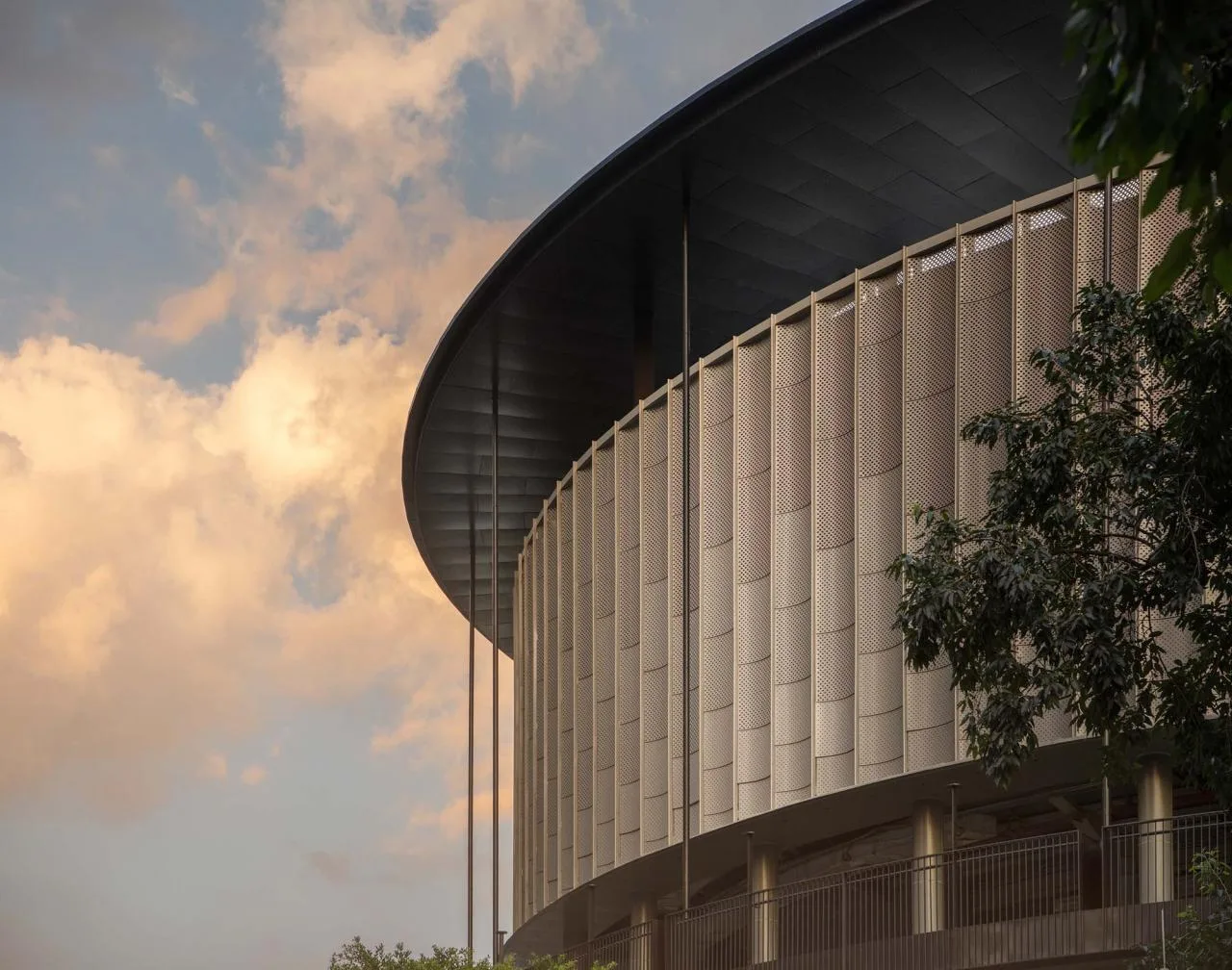
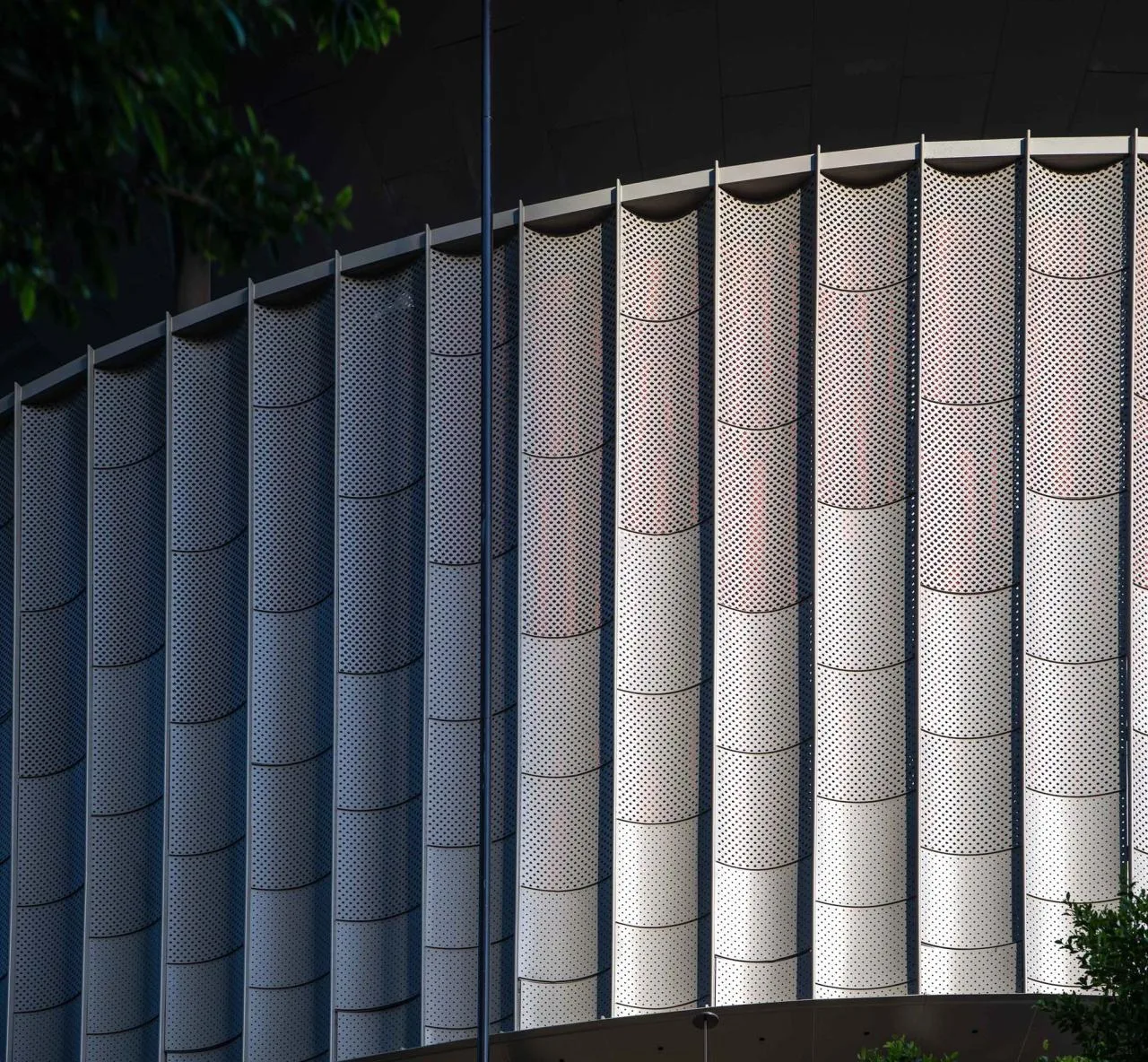
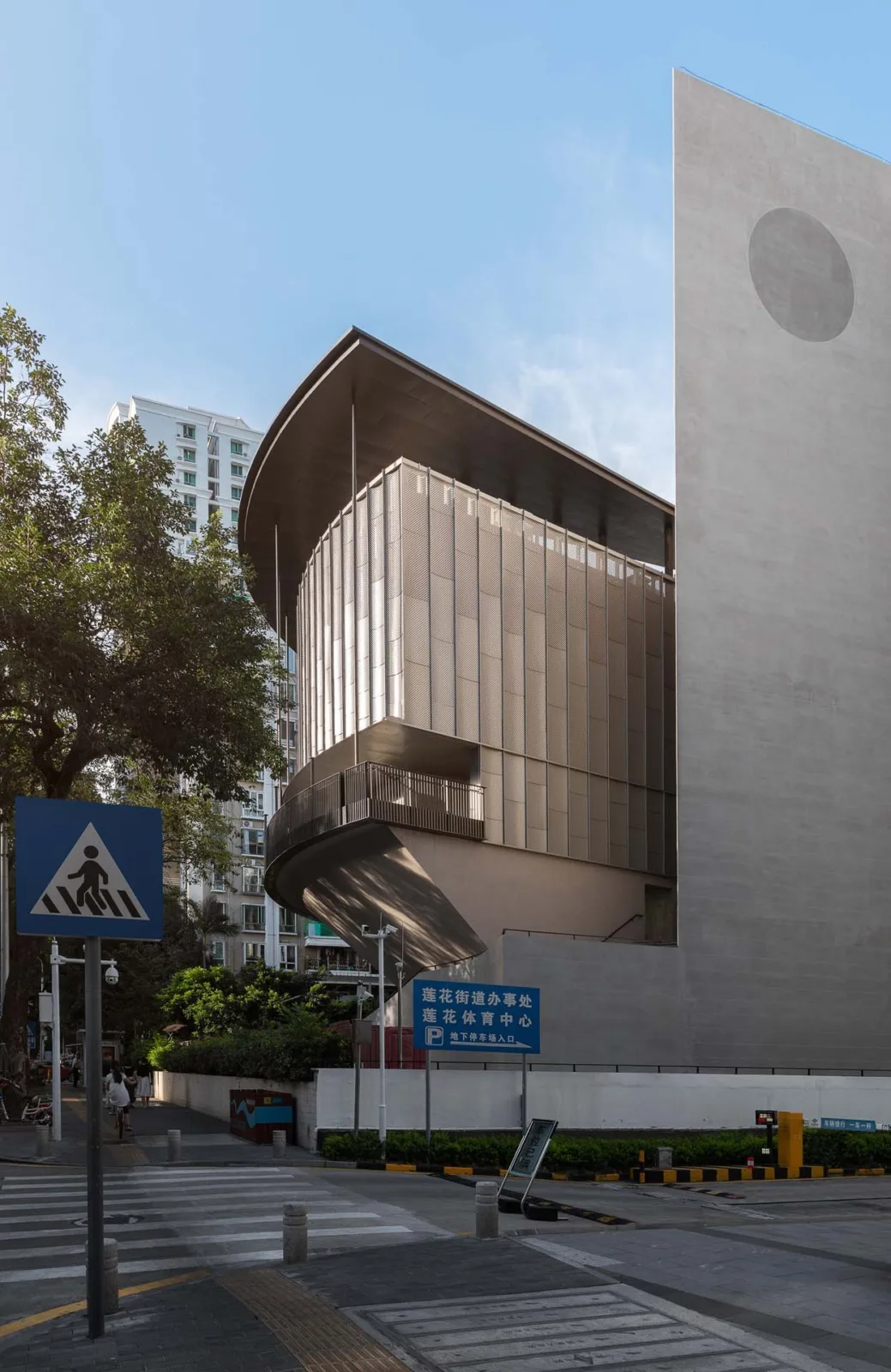
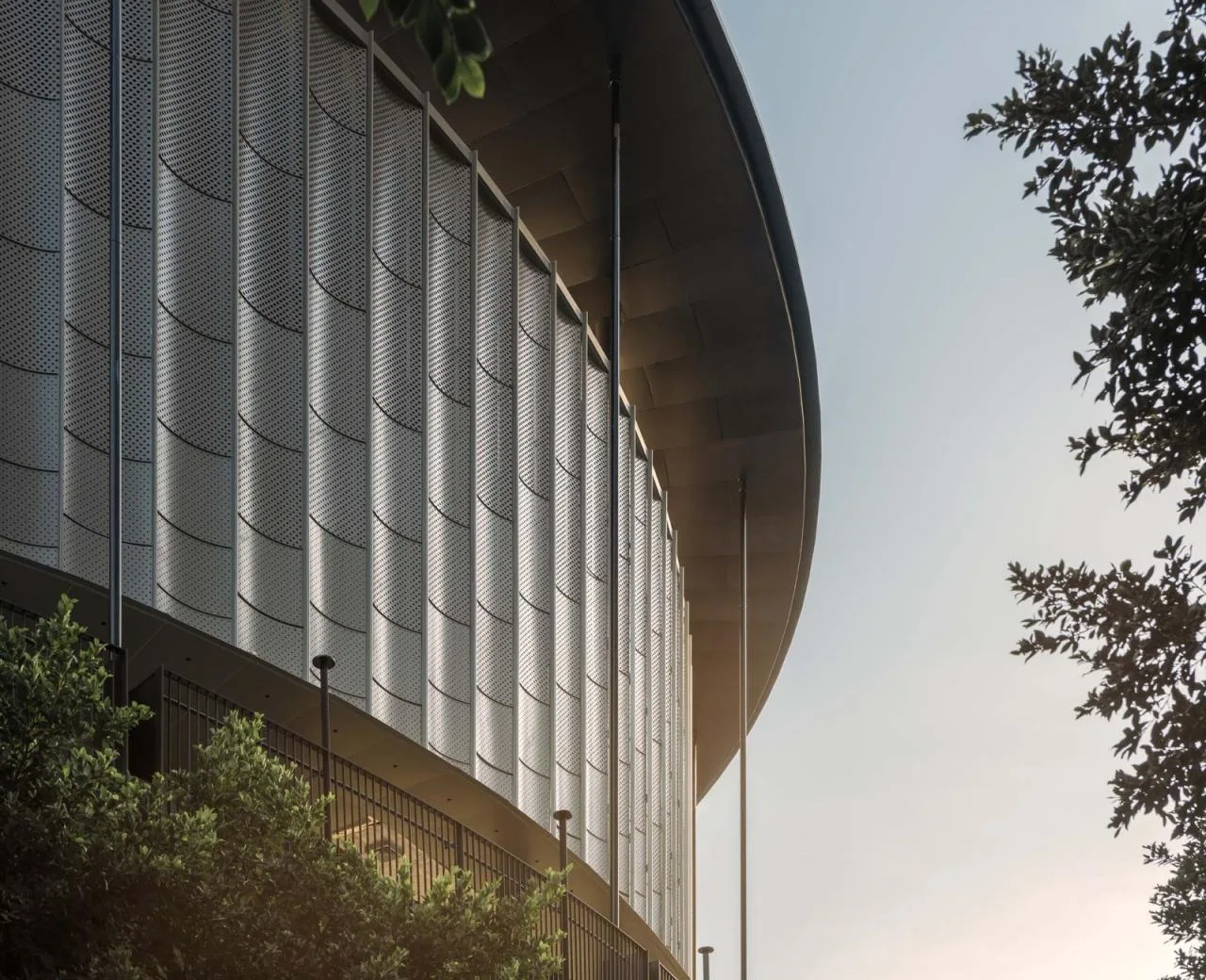
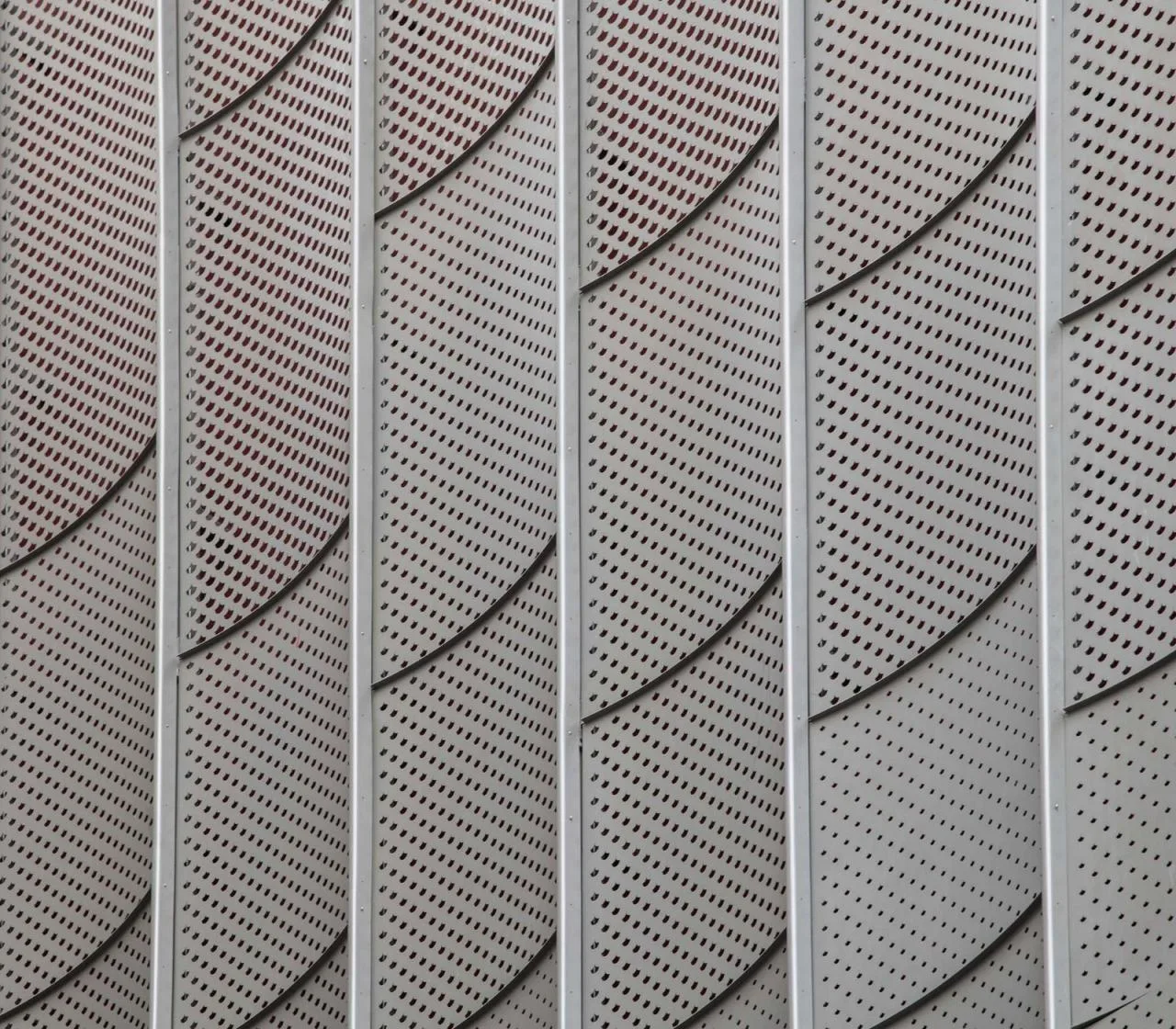
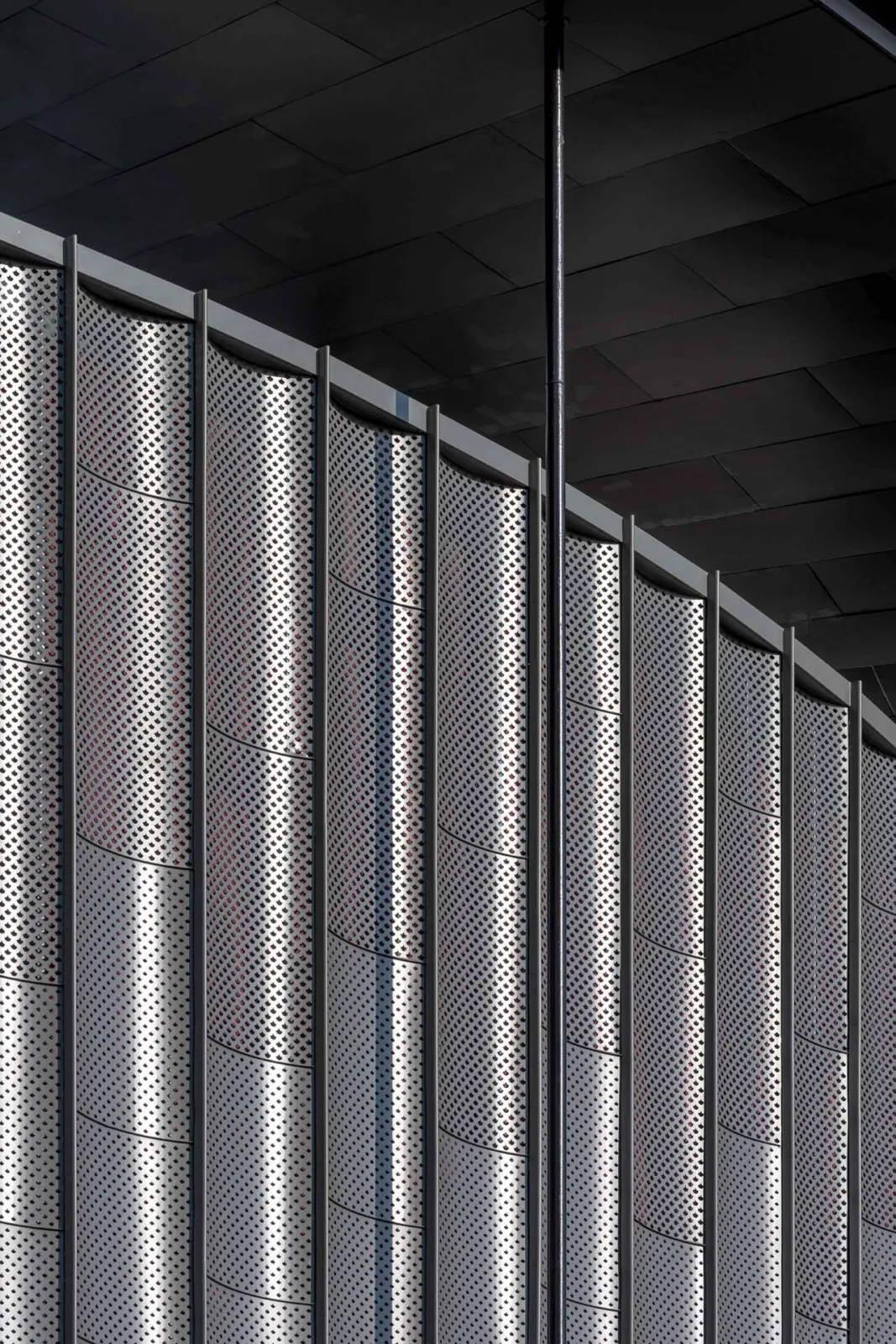
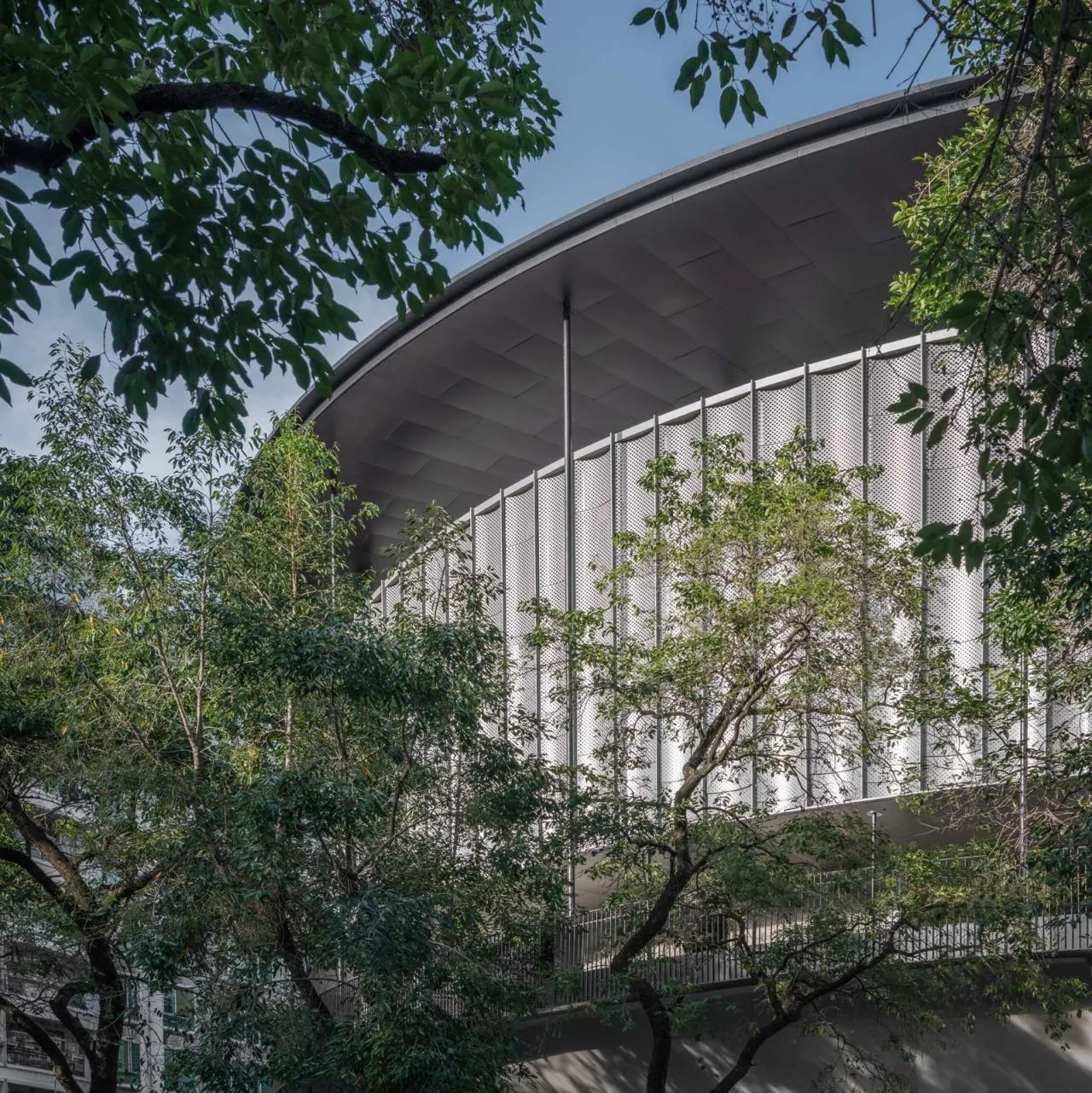
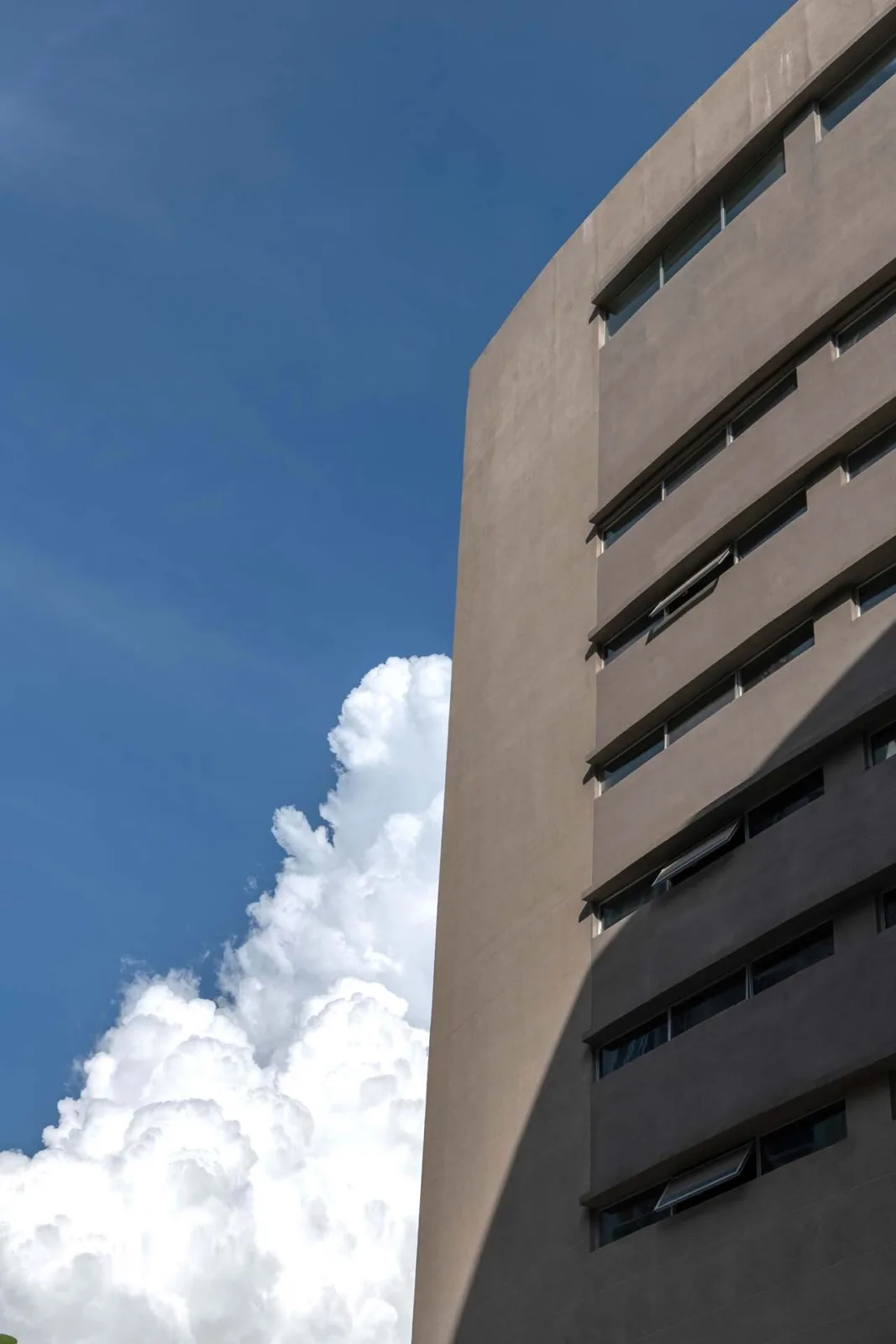
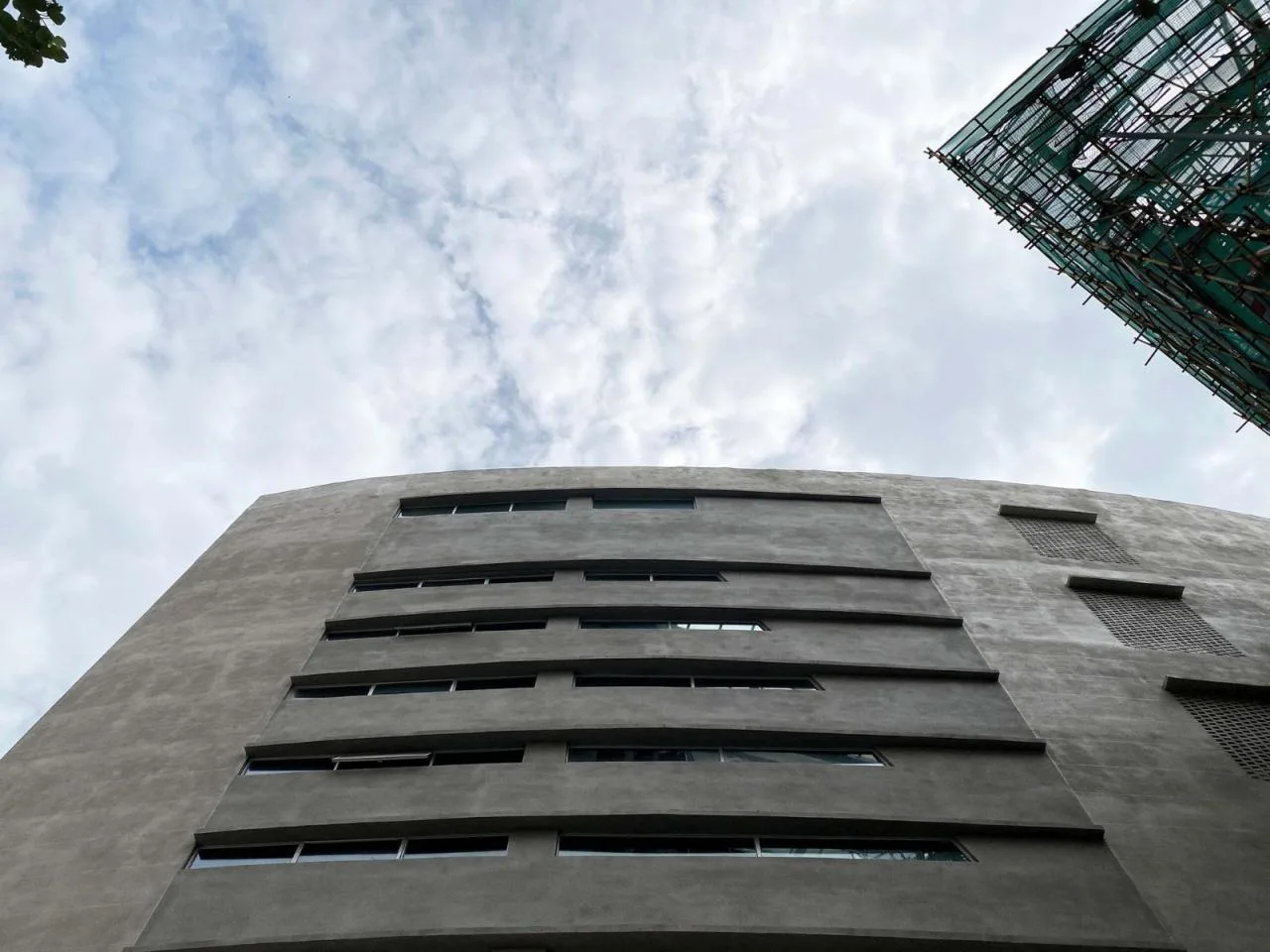
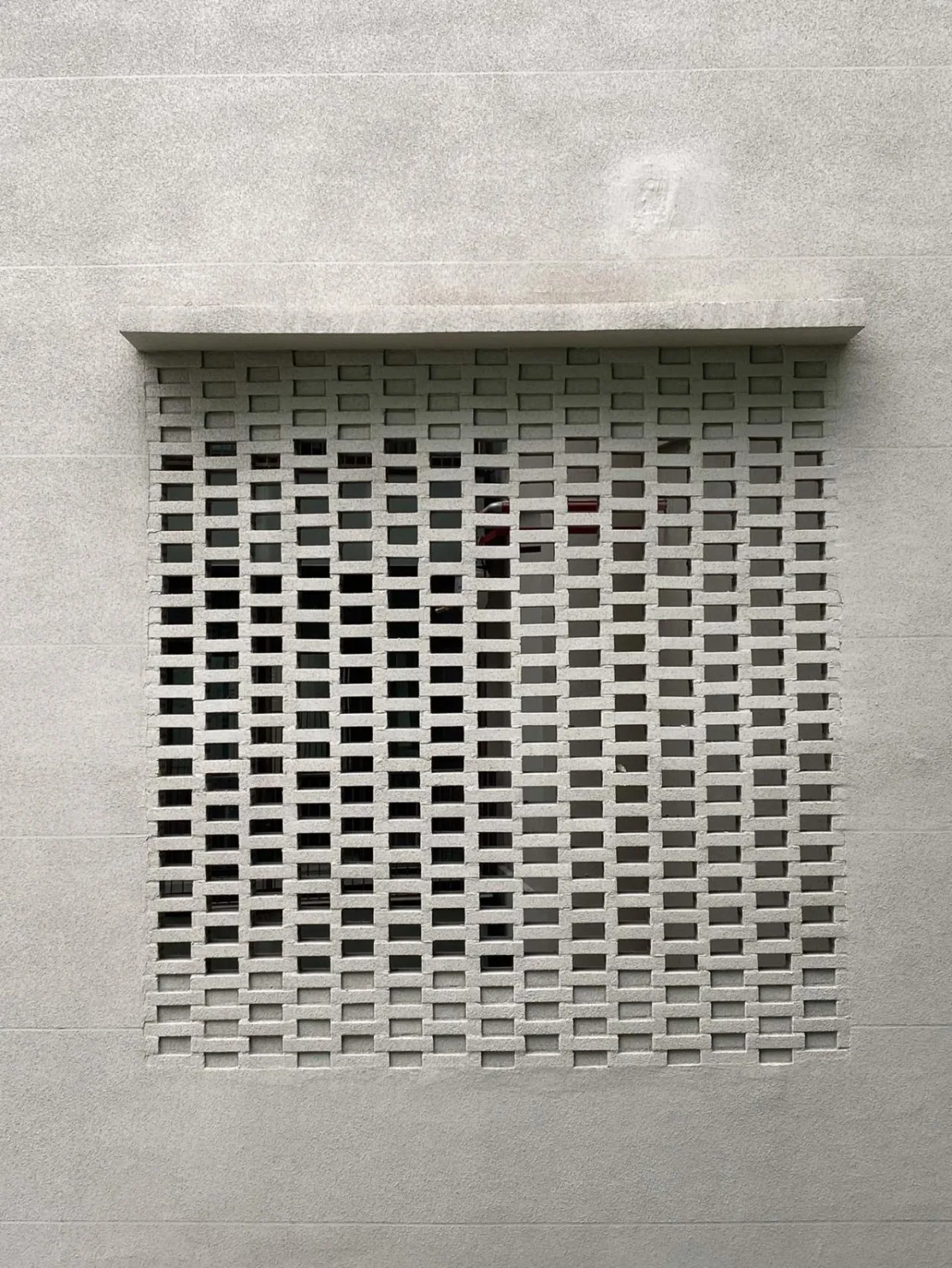
The architectural language balances volume with a play of lightness and heaviness. The lower base forms a bowl-like contour without scale detailing, amplifying the “mountain stone” character of the volume. In contrast, the upper open corridor is intricately divided, using precise “artificial” elements to contrast the rugged base. The overall effect is reminiscent of a pavilion perched on a mountain, becoming a distinctive landmark within this tropical city.
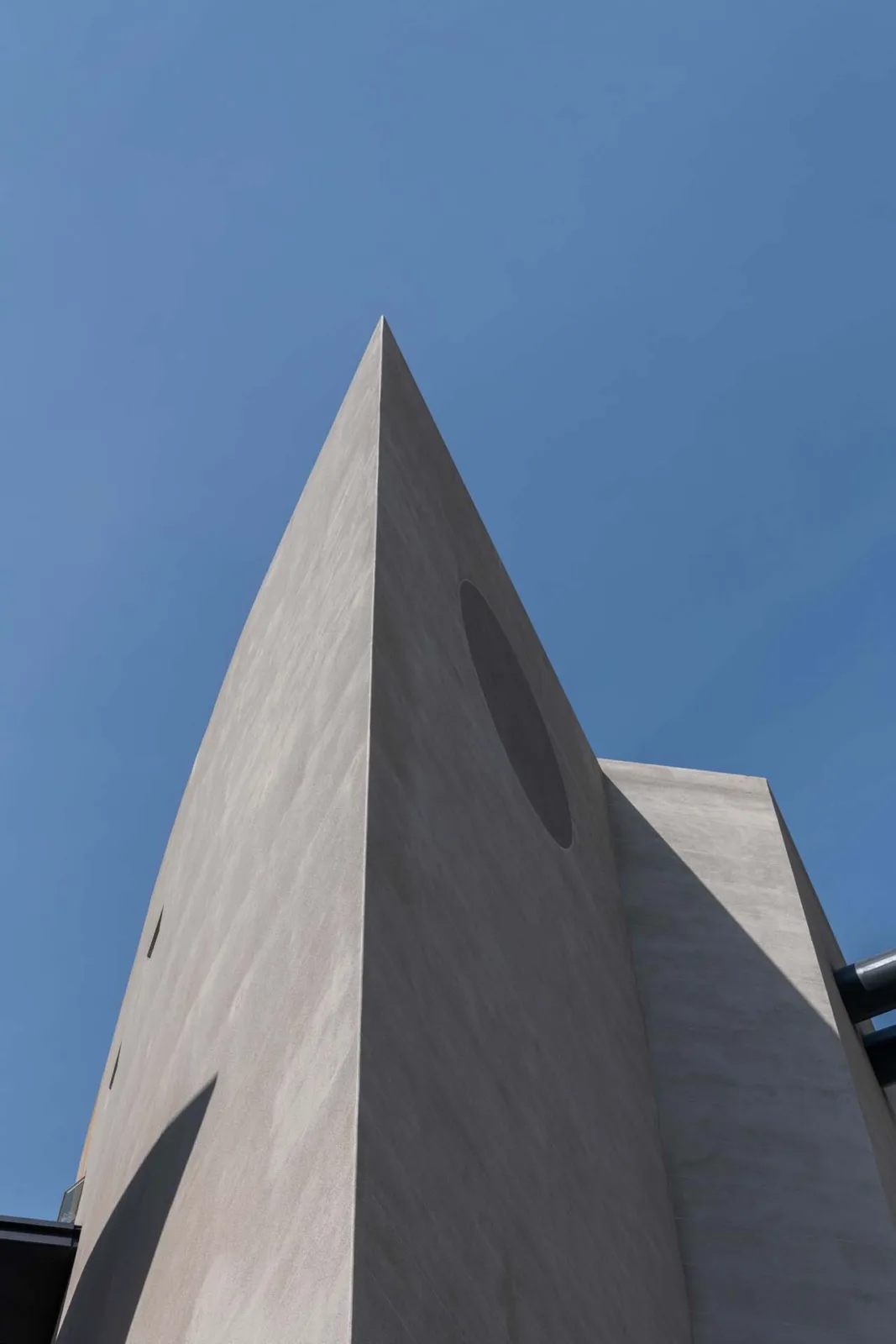
The spatial concept of DreamWorks can be described as a process of “hollowing out” and “covering” within the terrain. As visitors move from the external square to the interior grandstand, the design guides them through the landscape, blurring the boundaries between the building and site. This approach respects the strong character of the original structure, while creating a continuous spatial experience inspired by “mountains and stones.”
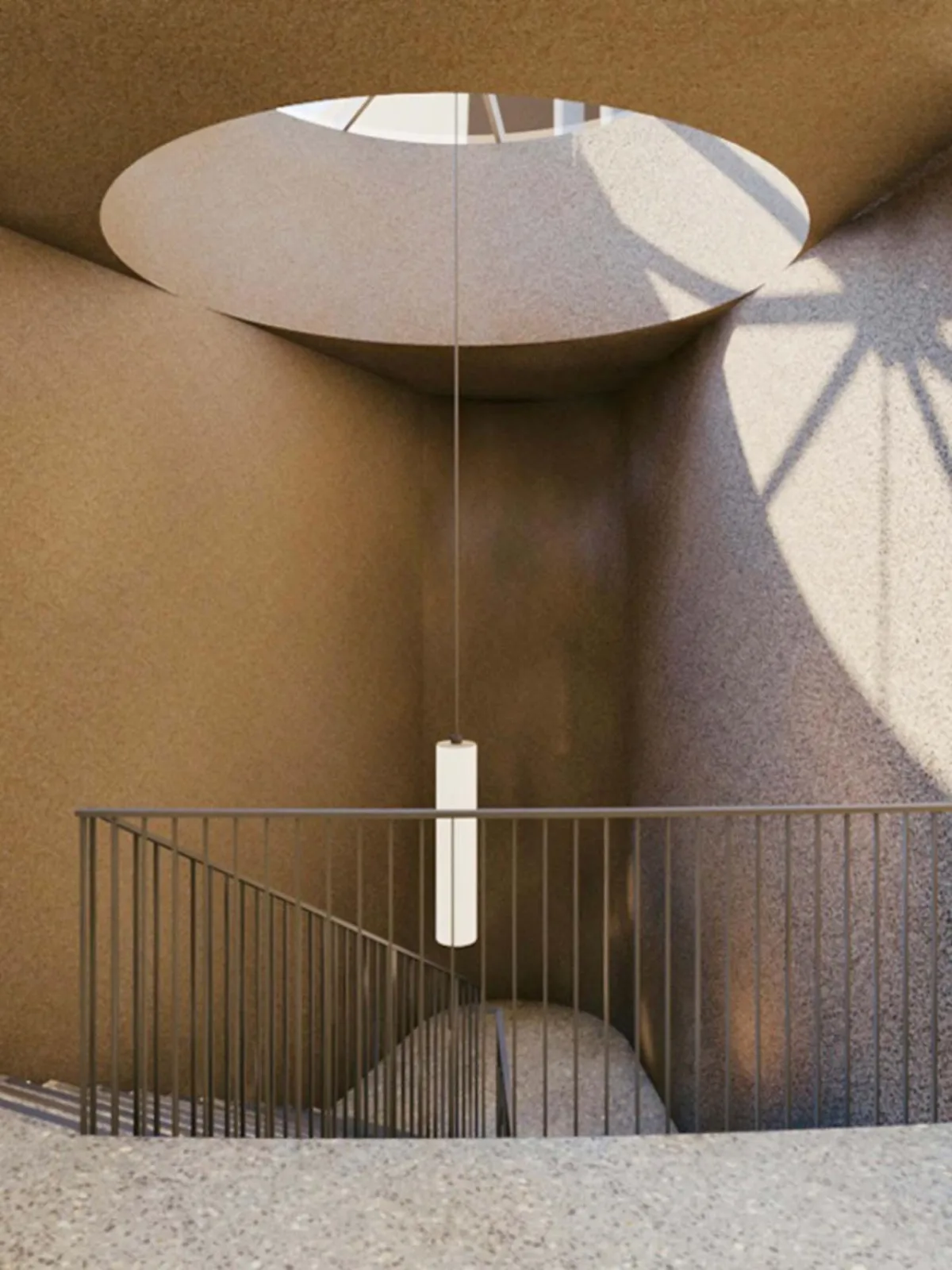
△ Rendering
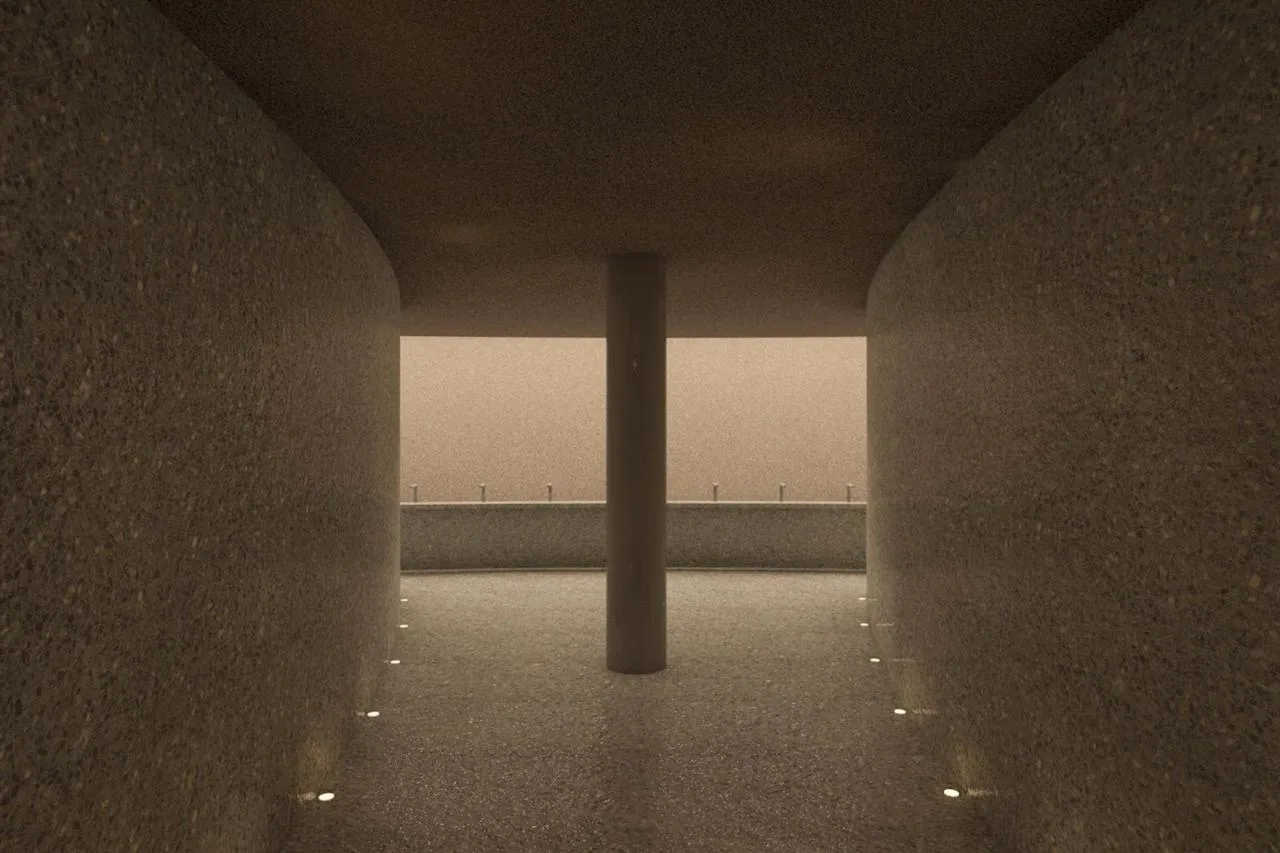
△ Rendering
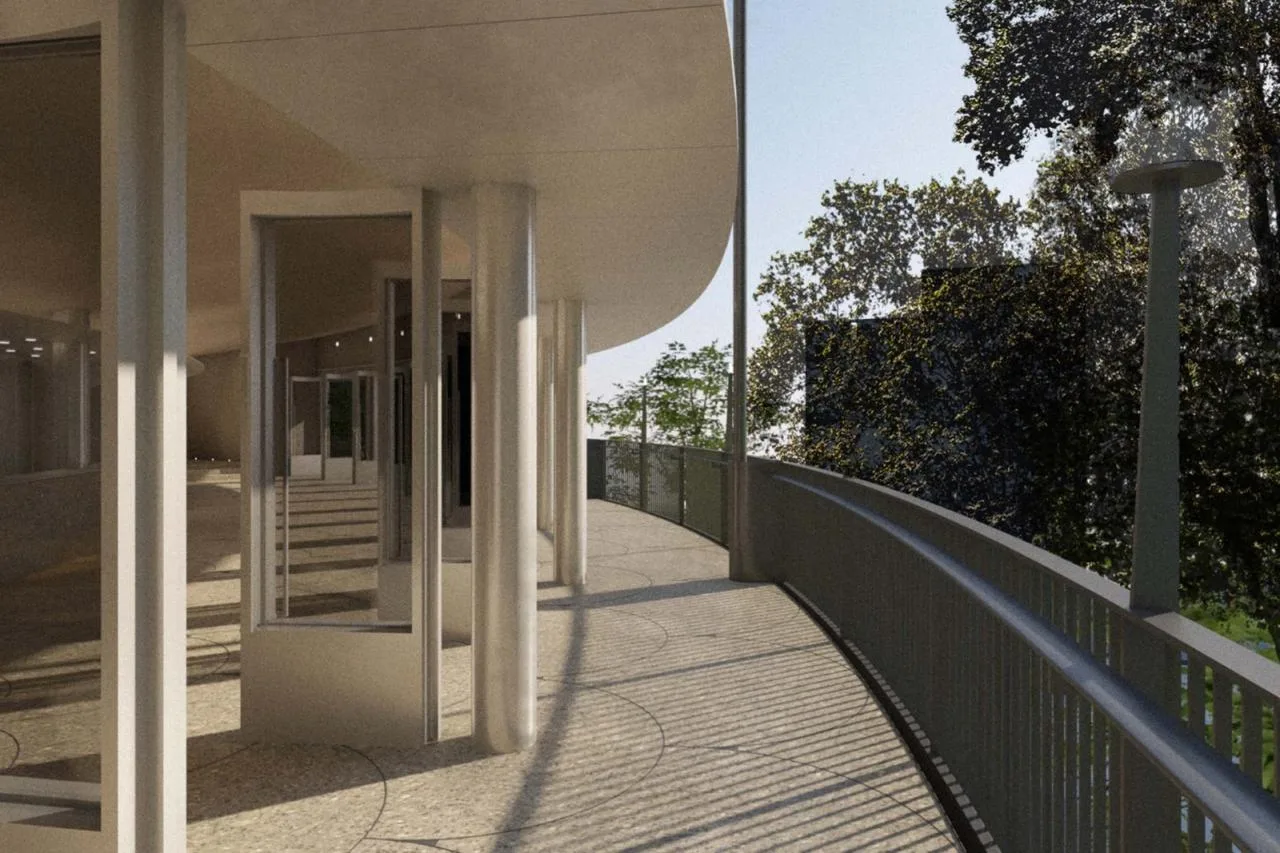
△ Rendering
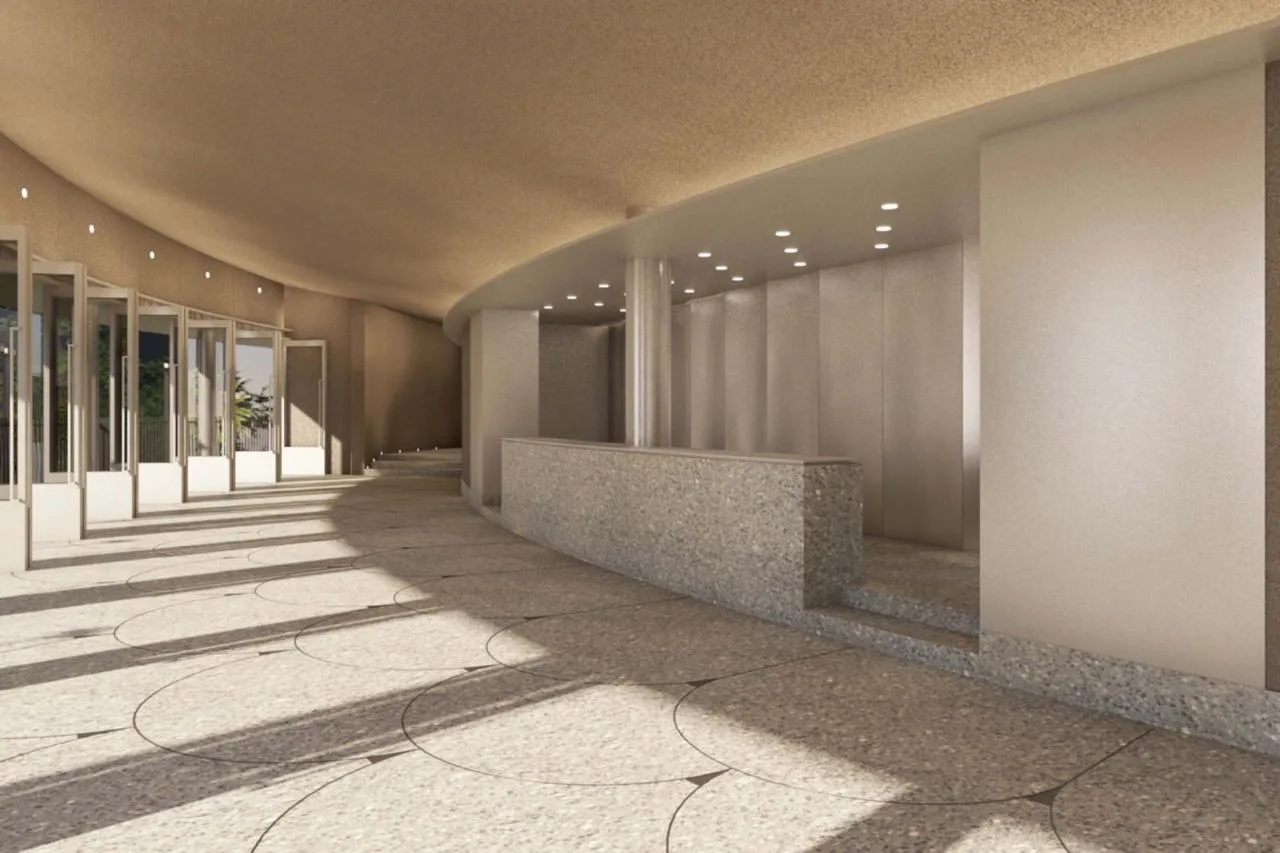
△ Rendering
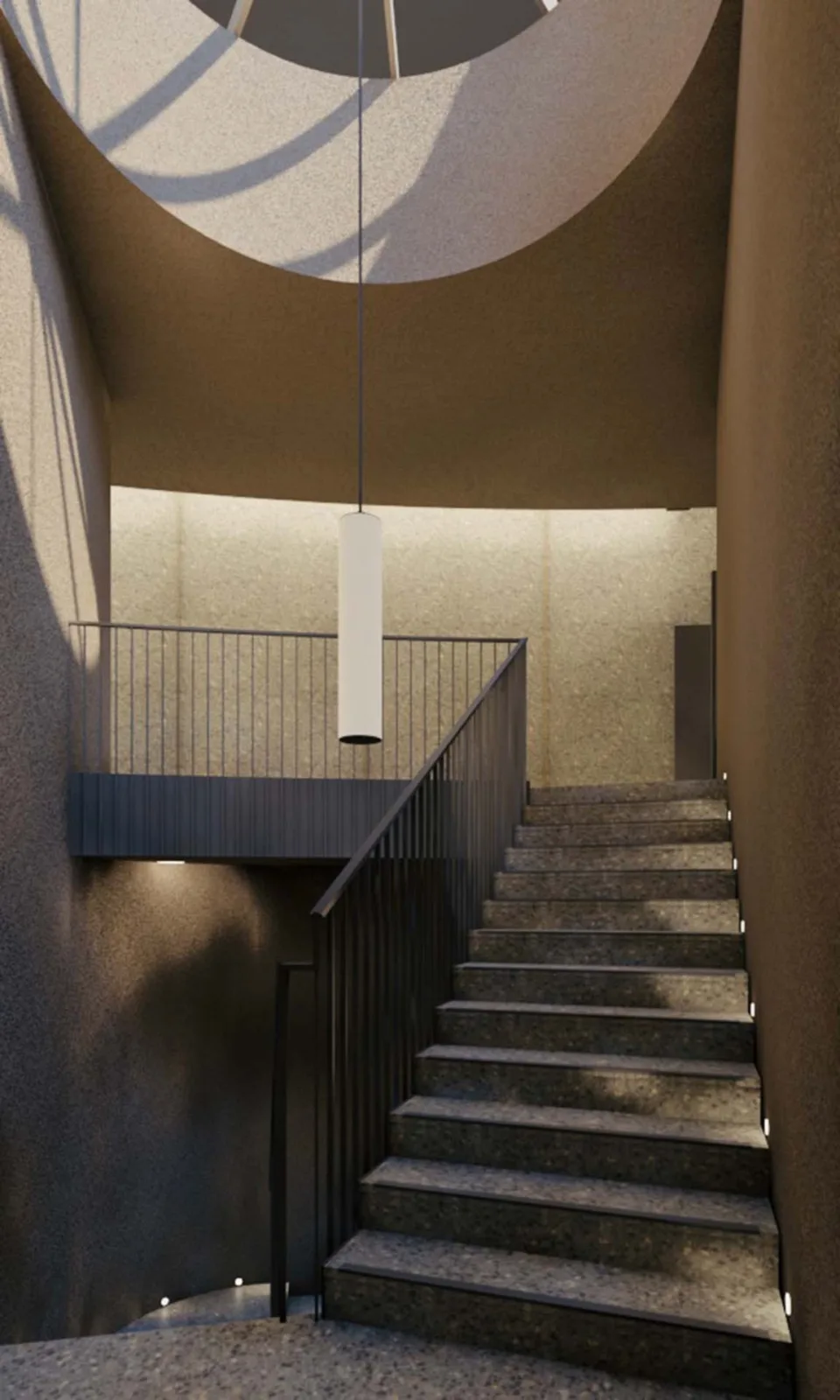
△ Rendering
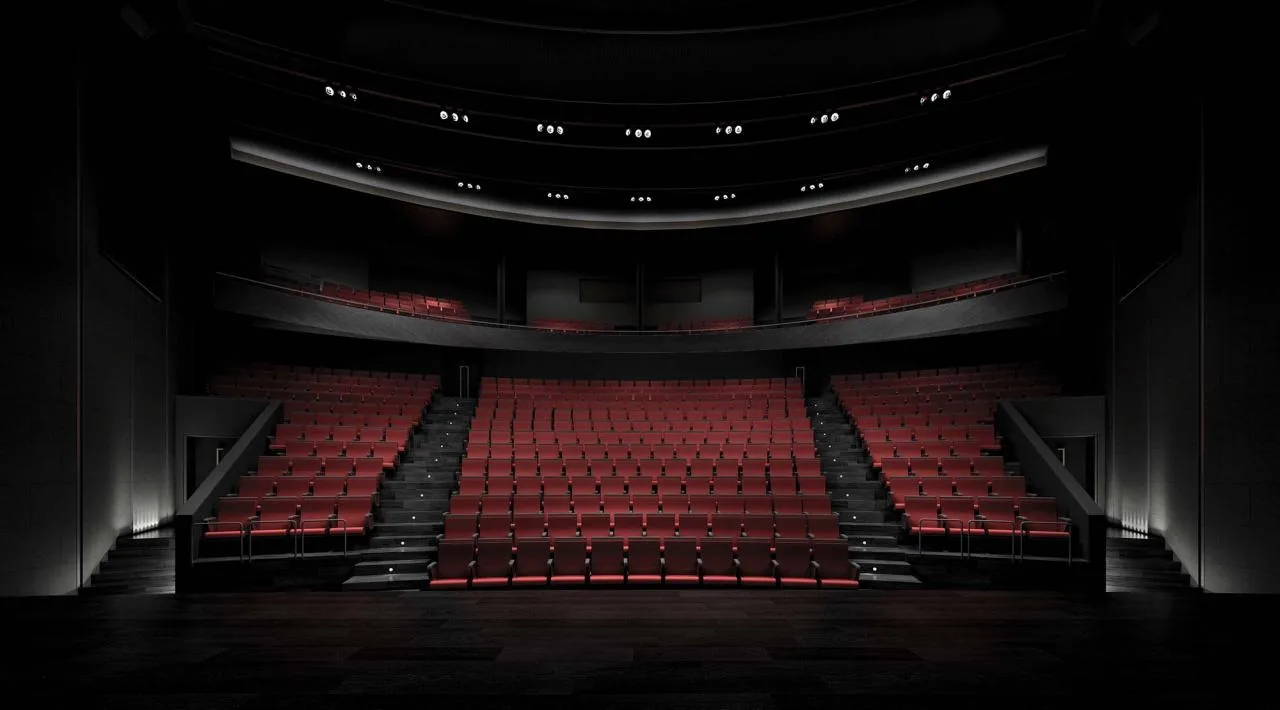
△ Rendering
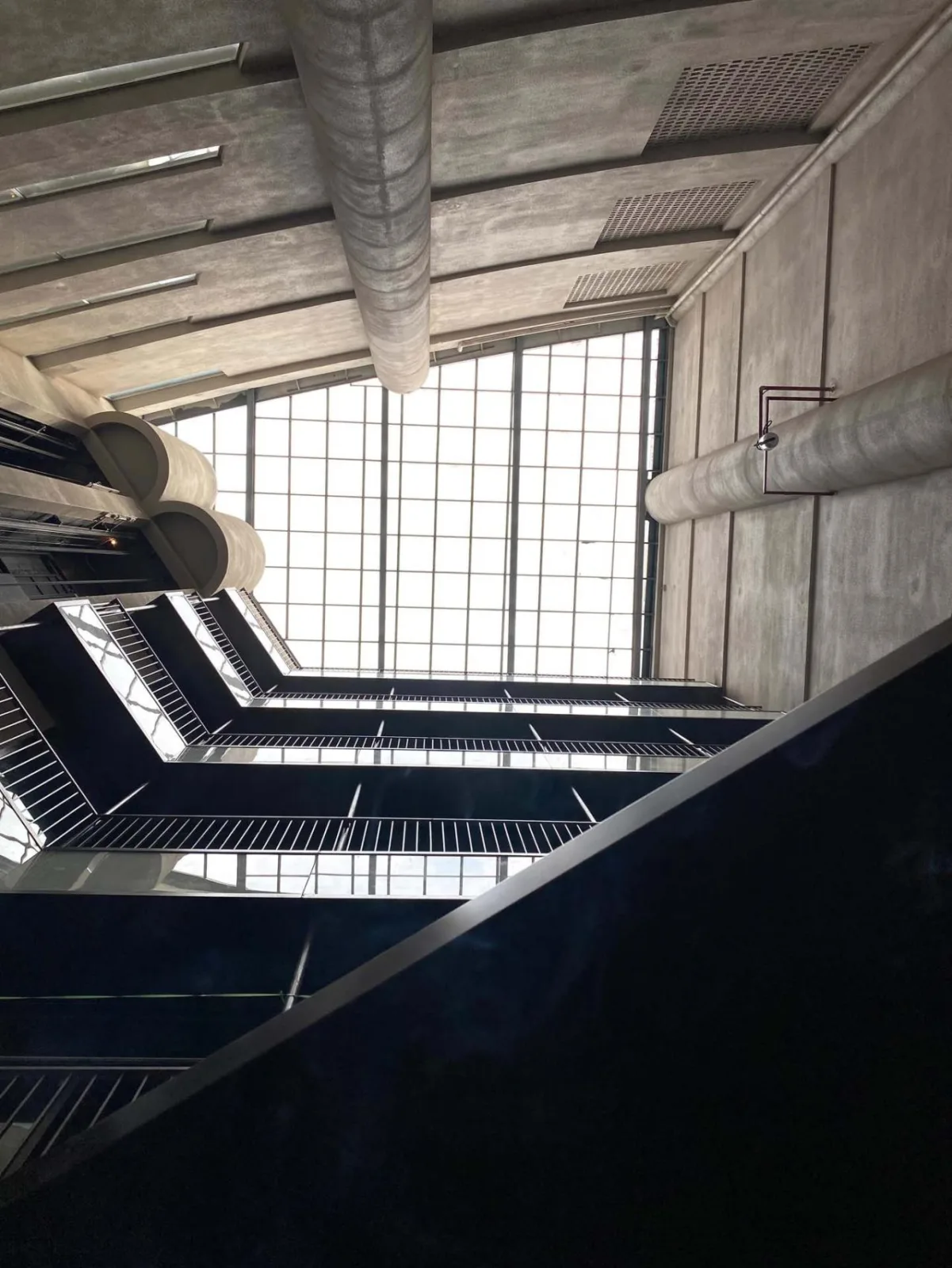
△ Construction Process Diagram
△ Construction Process Diagram
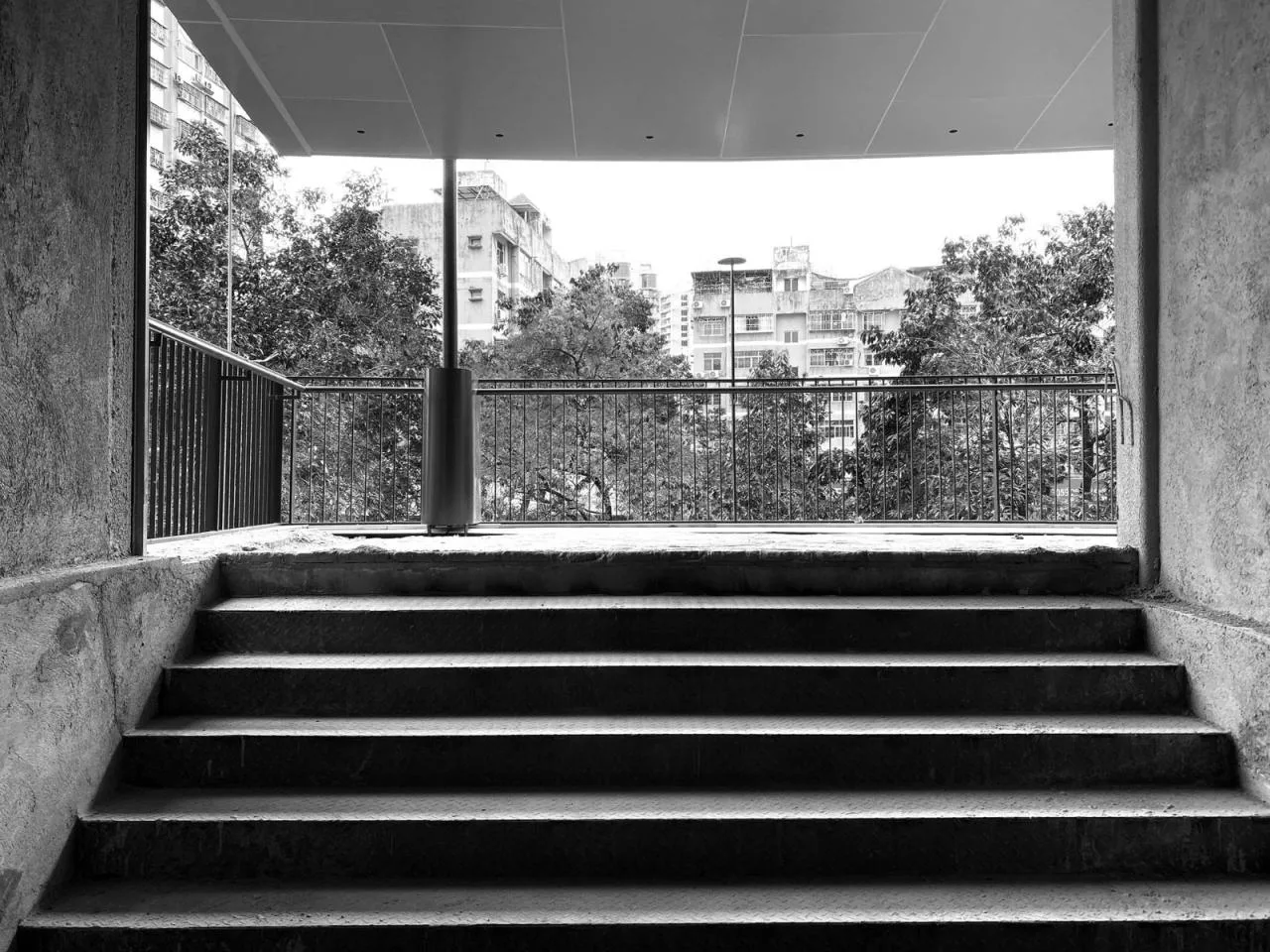
△ Construction Process Diagram
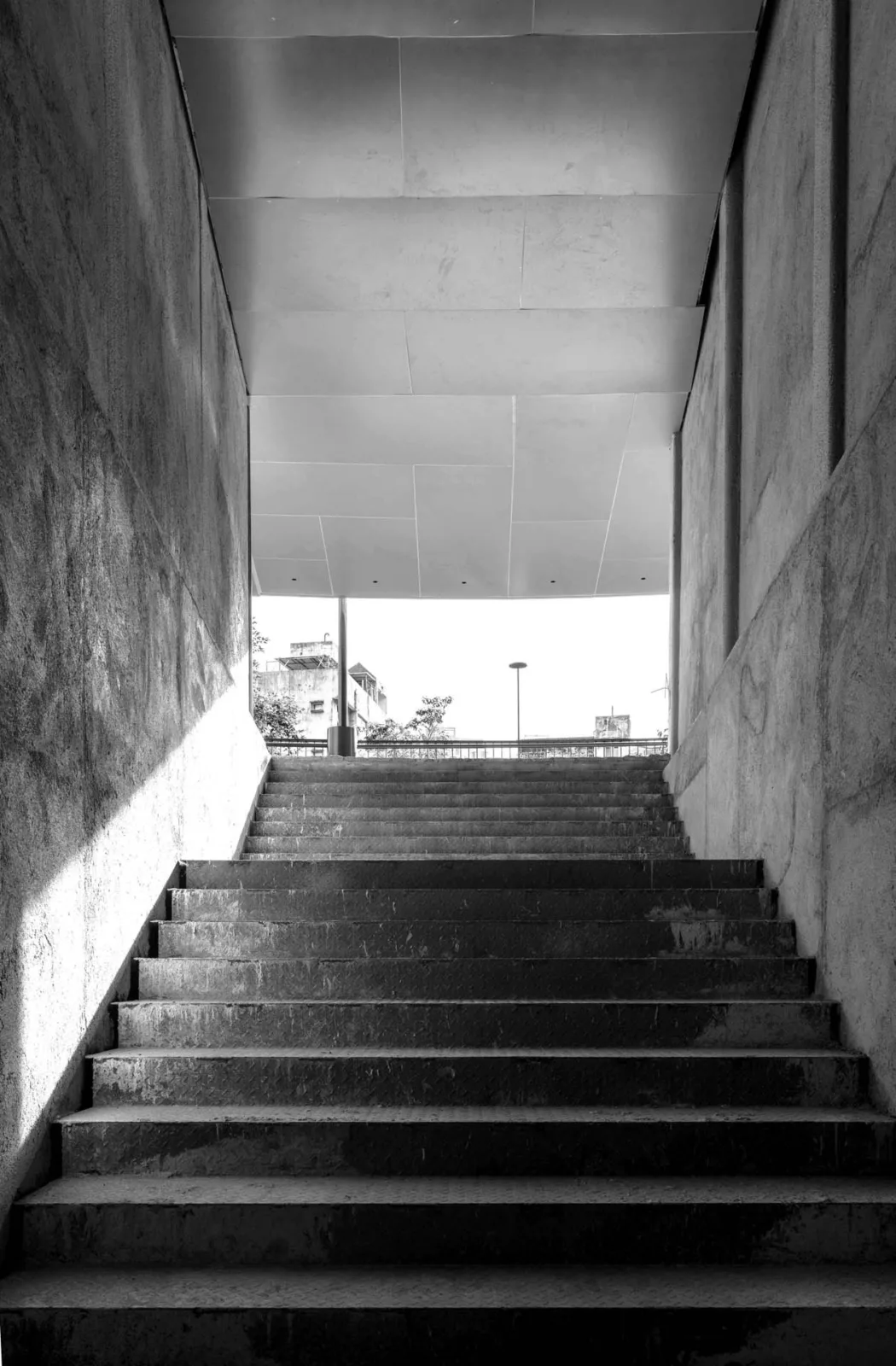
△ Construction Process Diagram
Project Drawings
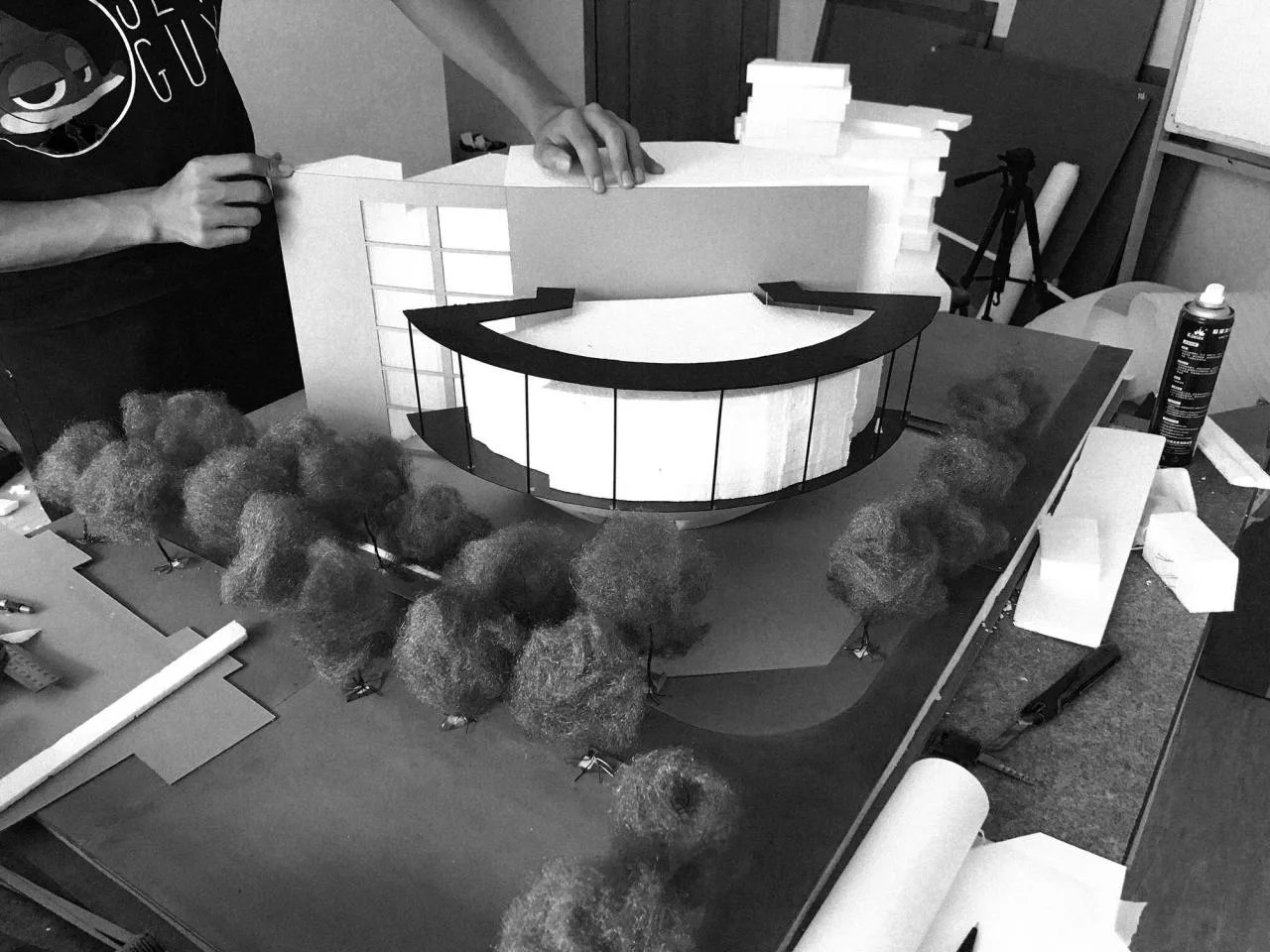
△ Working model illustrating the relationship between the main building and supporting structures
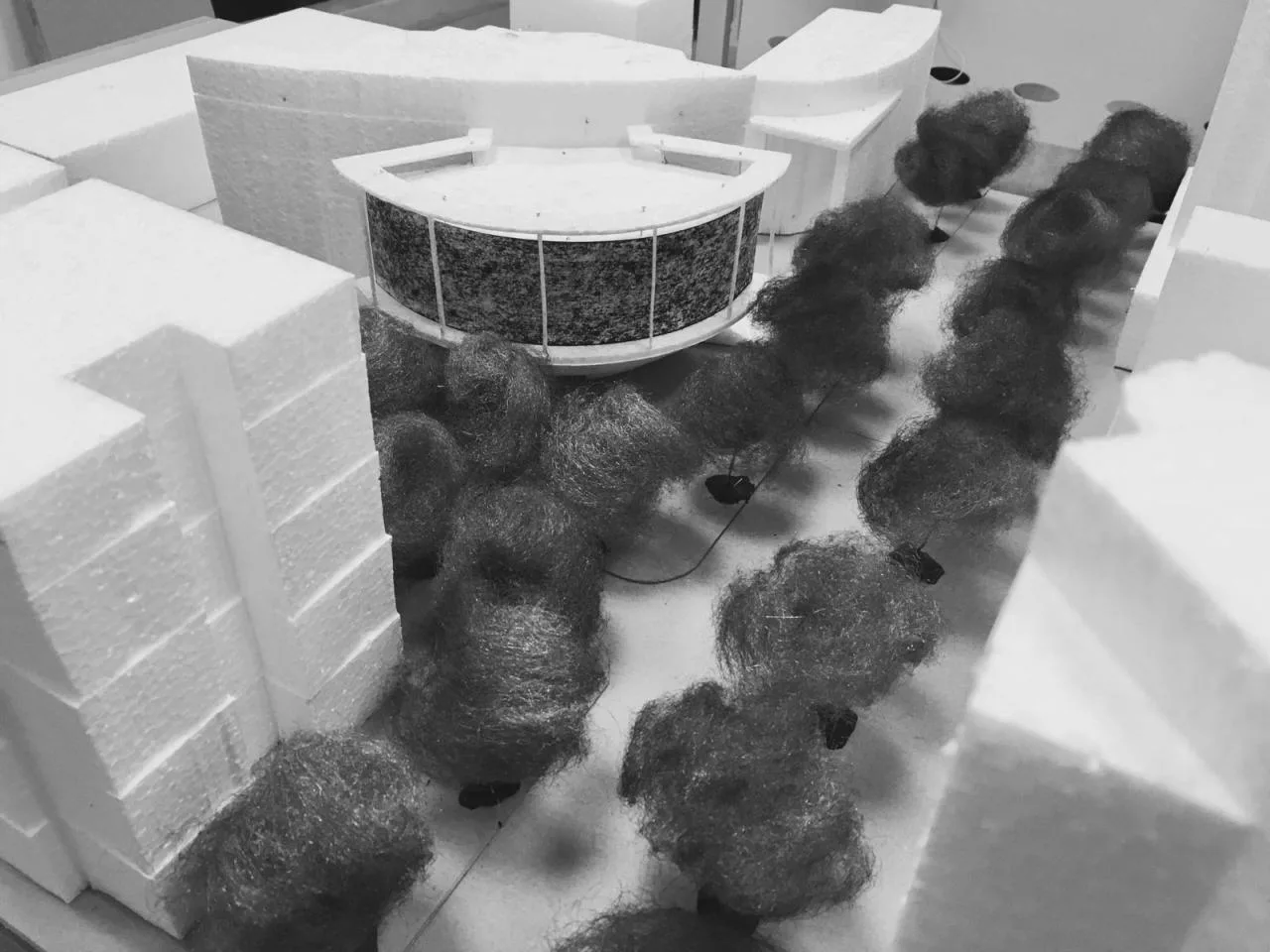
△ Working model of the urban corridor
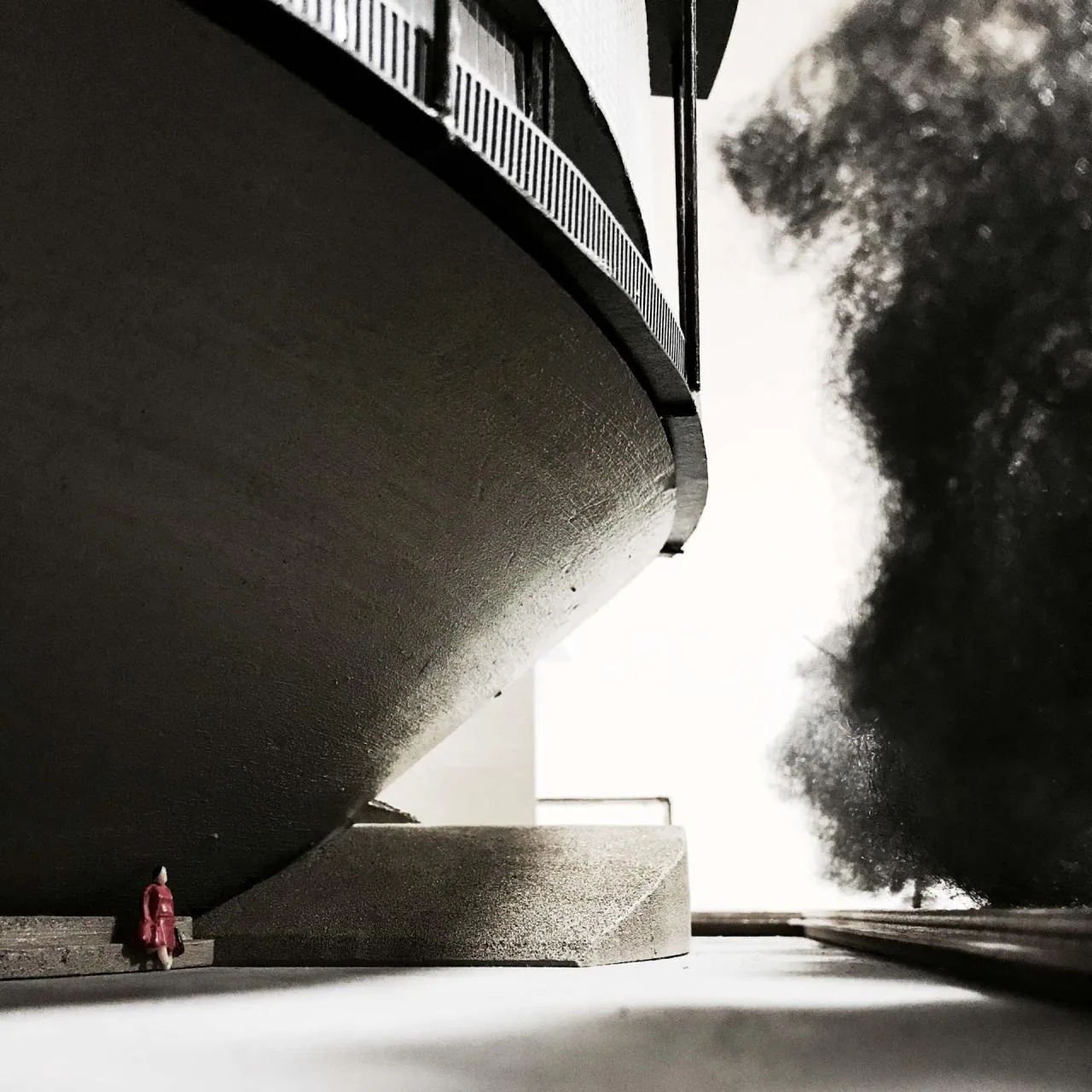
△ Interface working model following staircase turn
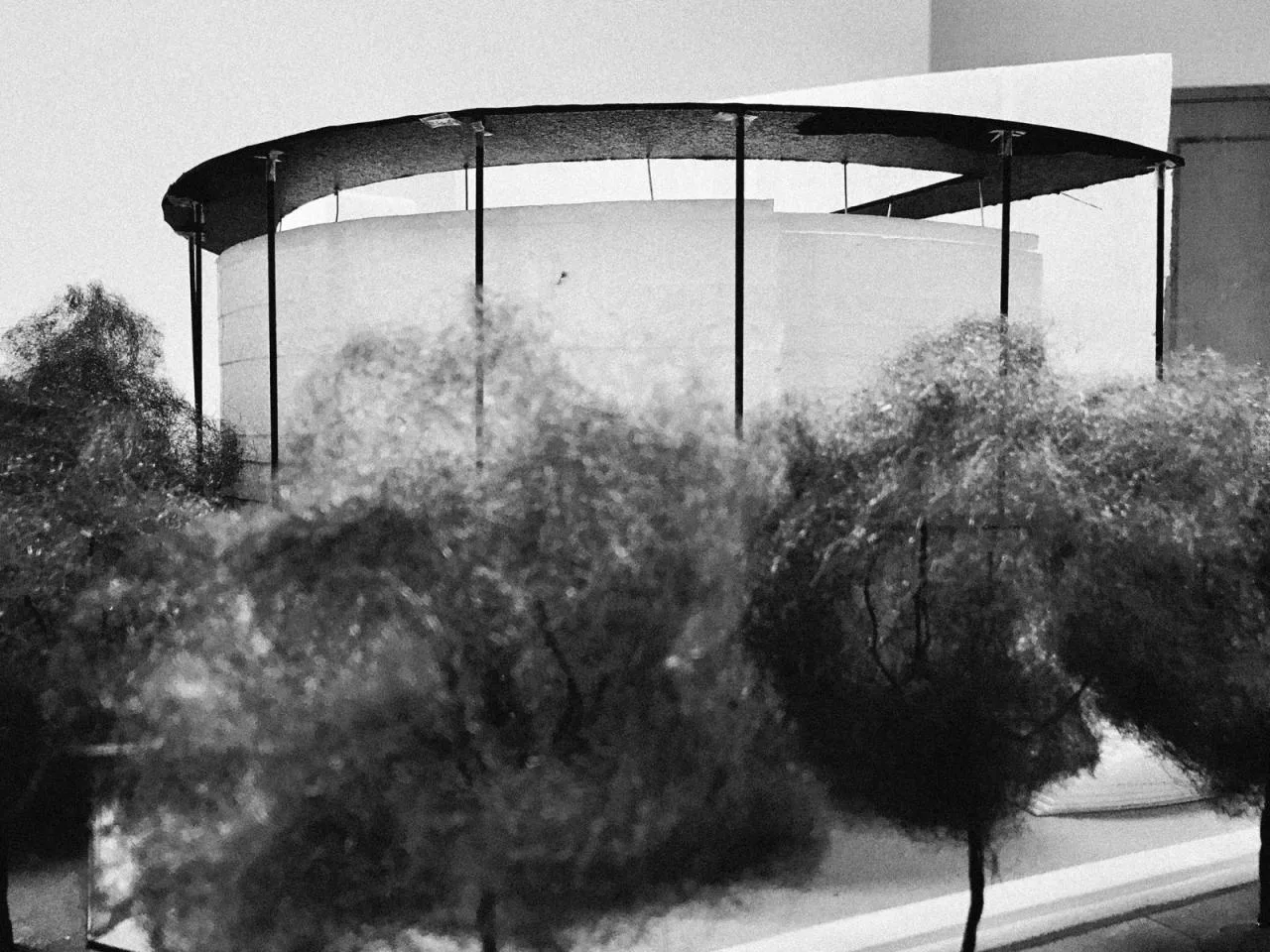
△ Working model of the open corridor urban landscape
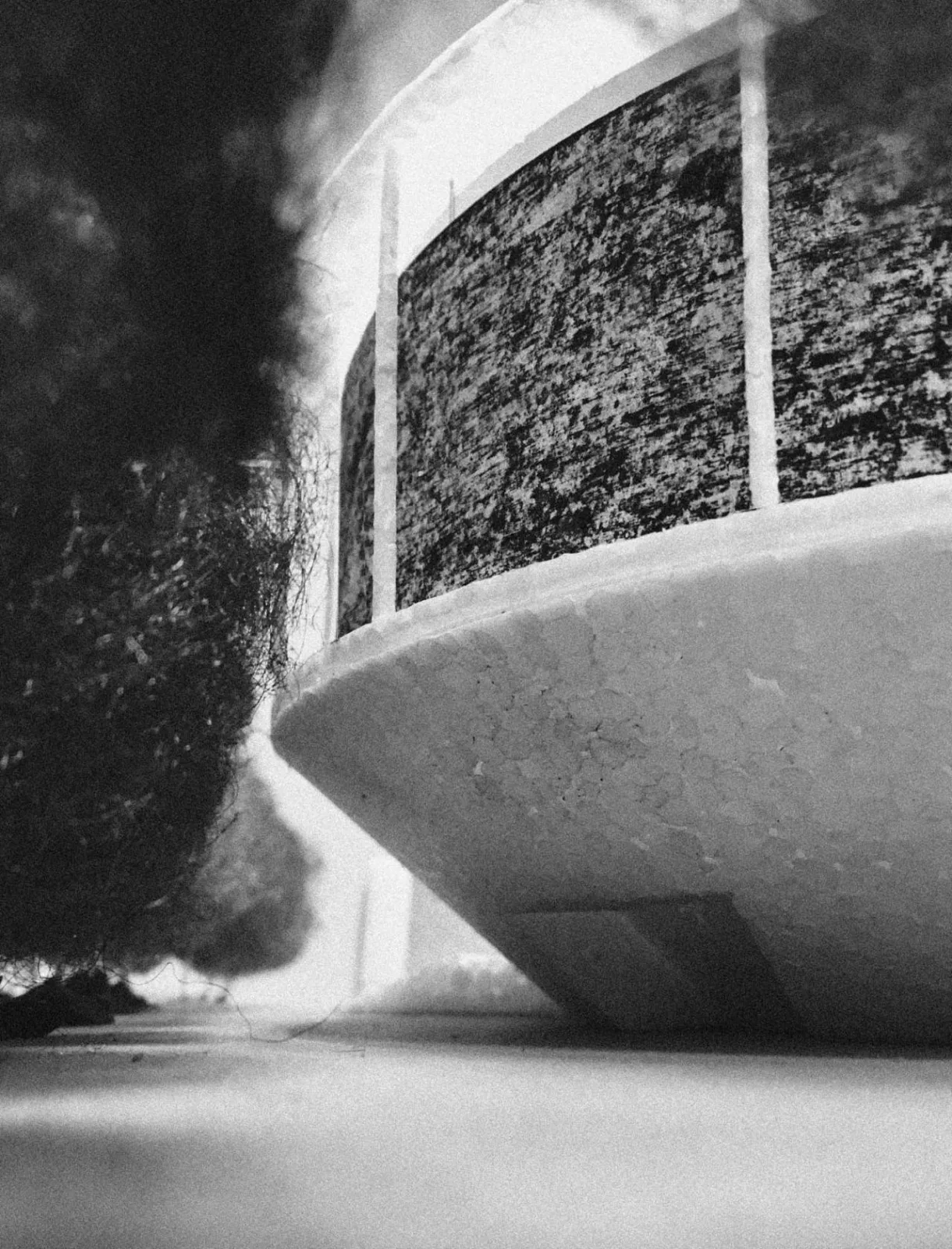
△ Working model of the pedestal and open gallery
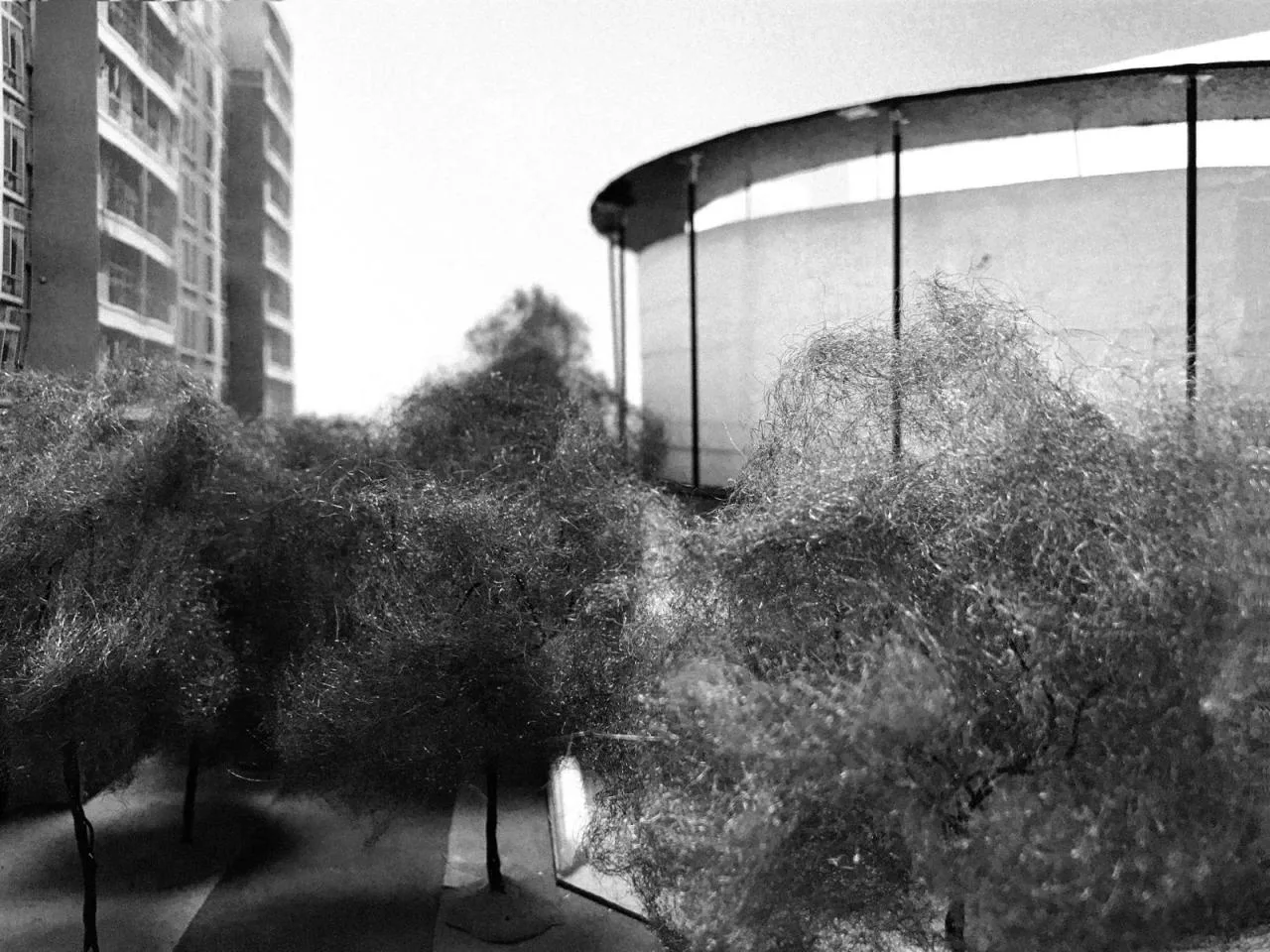
△ Working model of the open corridor urban landscape
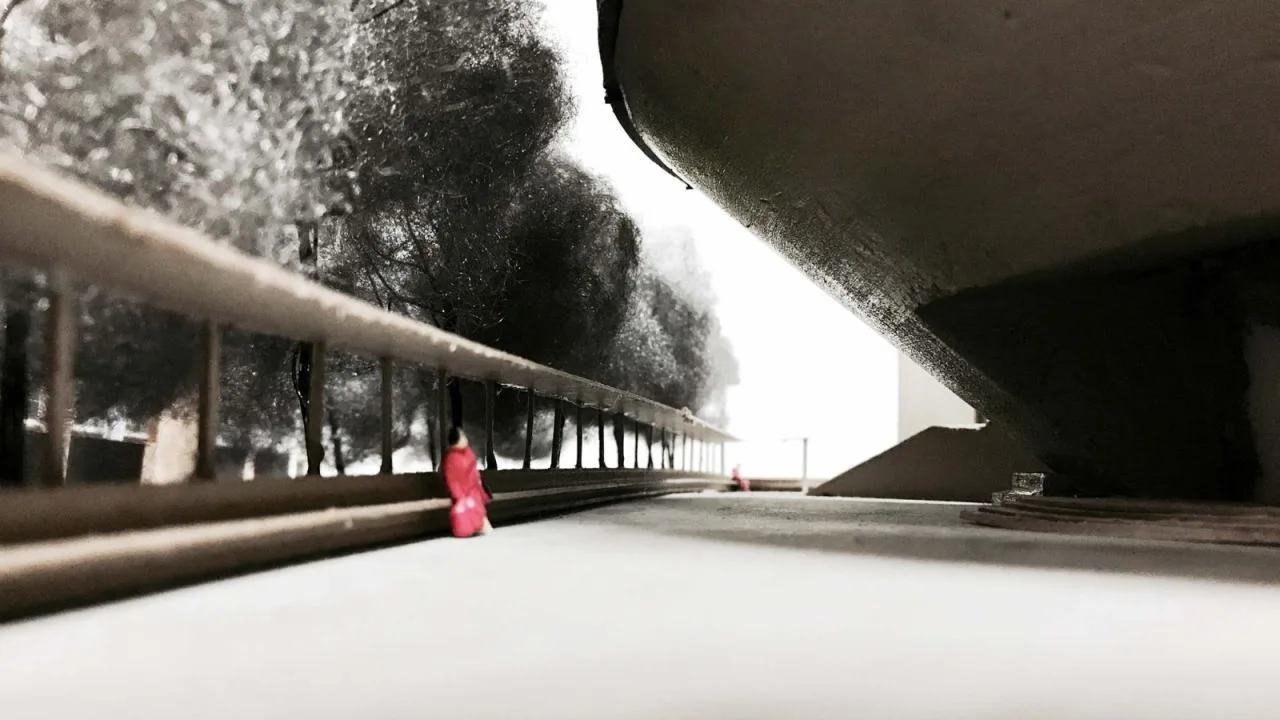
△ Corridor and Object Working Model
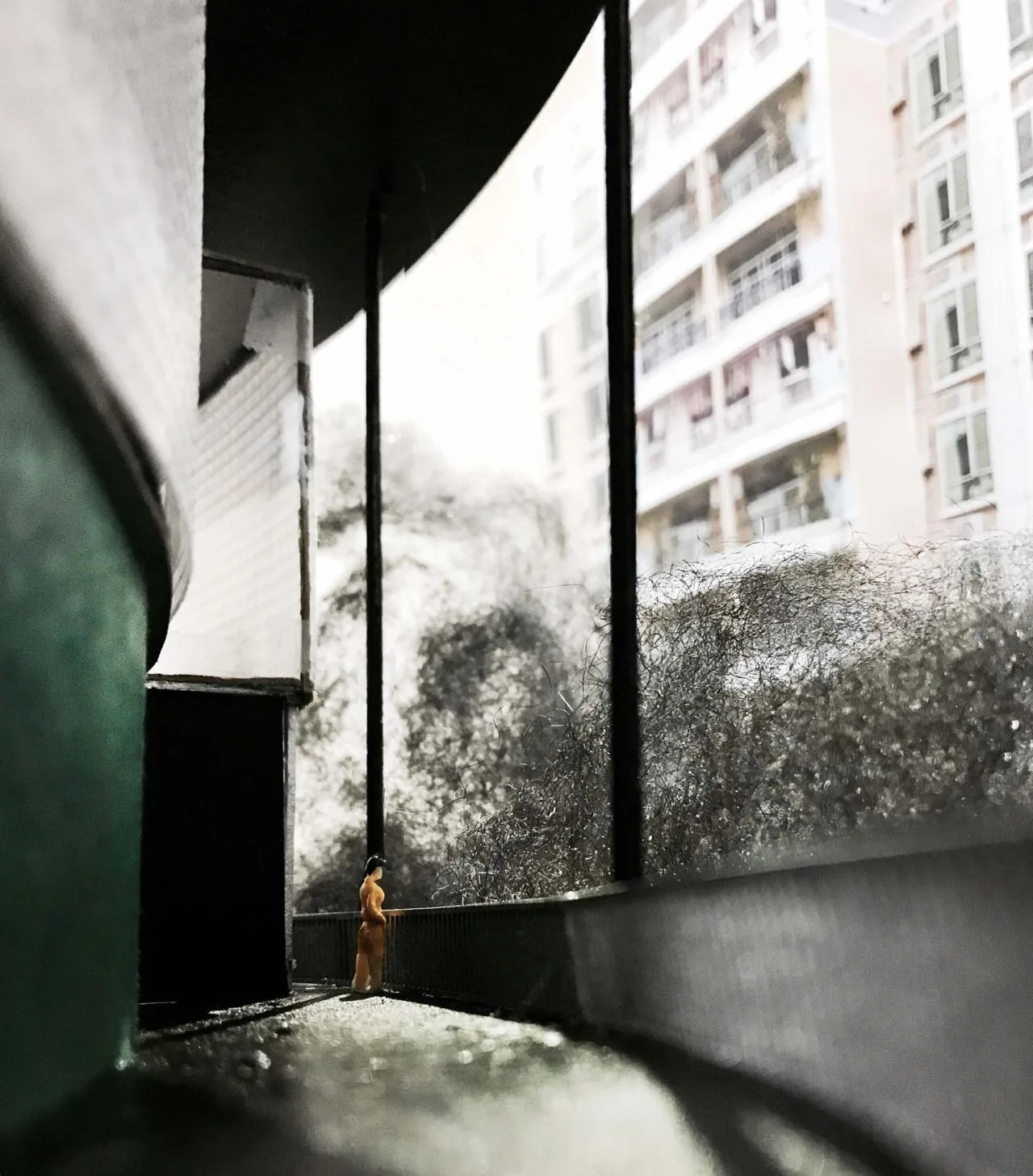
△ Working model of the open corridor and surrounding vegetation
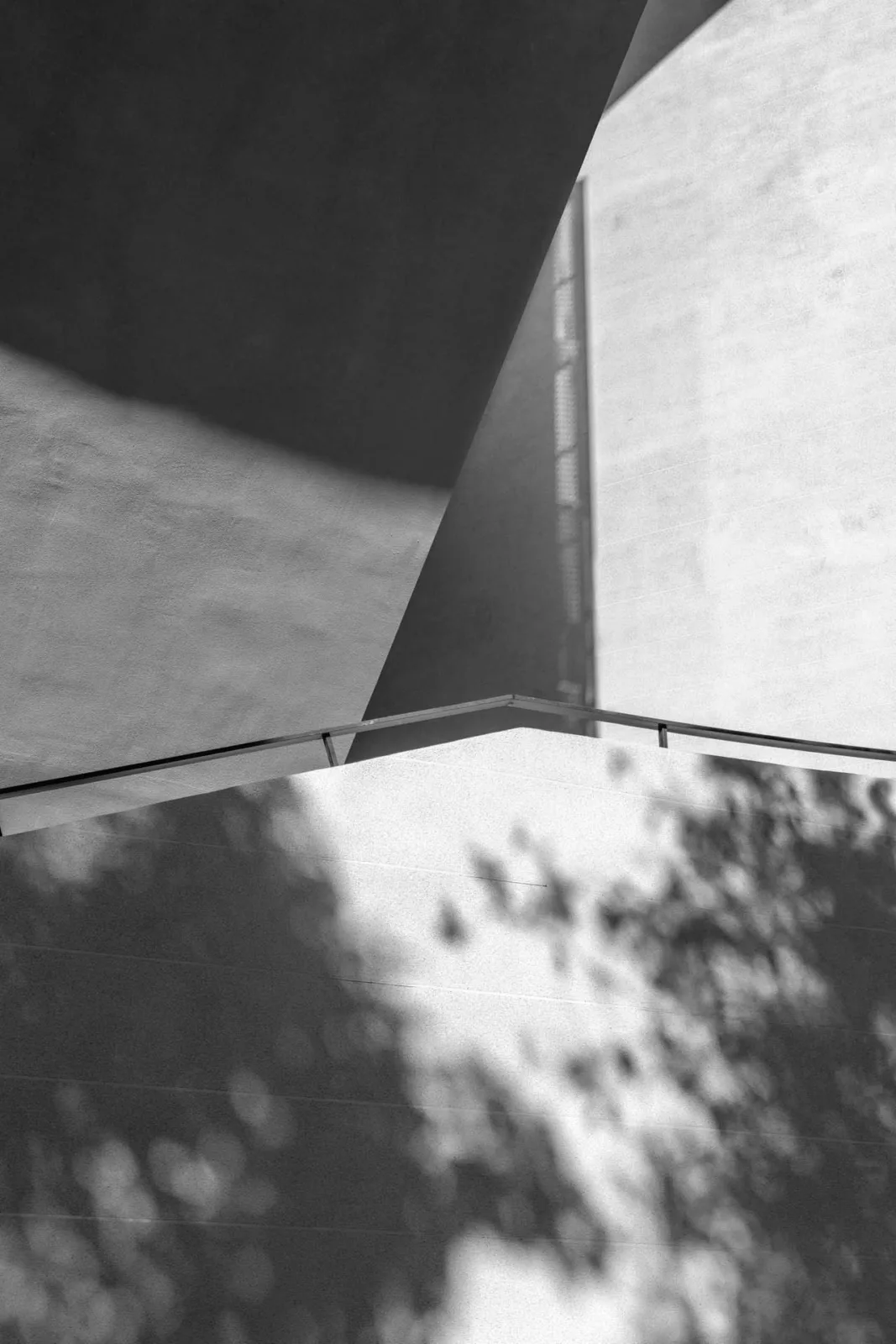
△ Curved mountain walls, bowl-shaped structures, and supporting buildings (credit: Guo Jing)
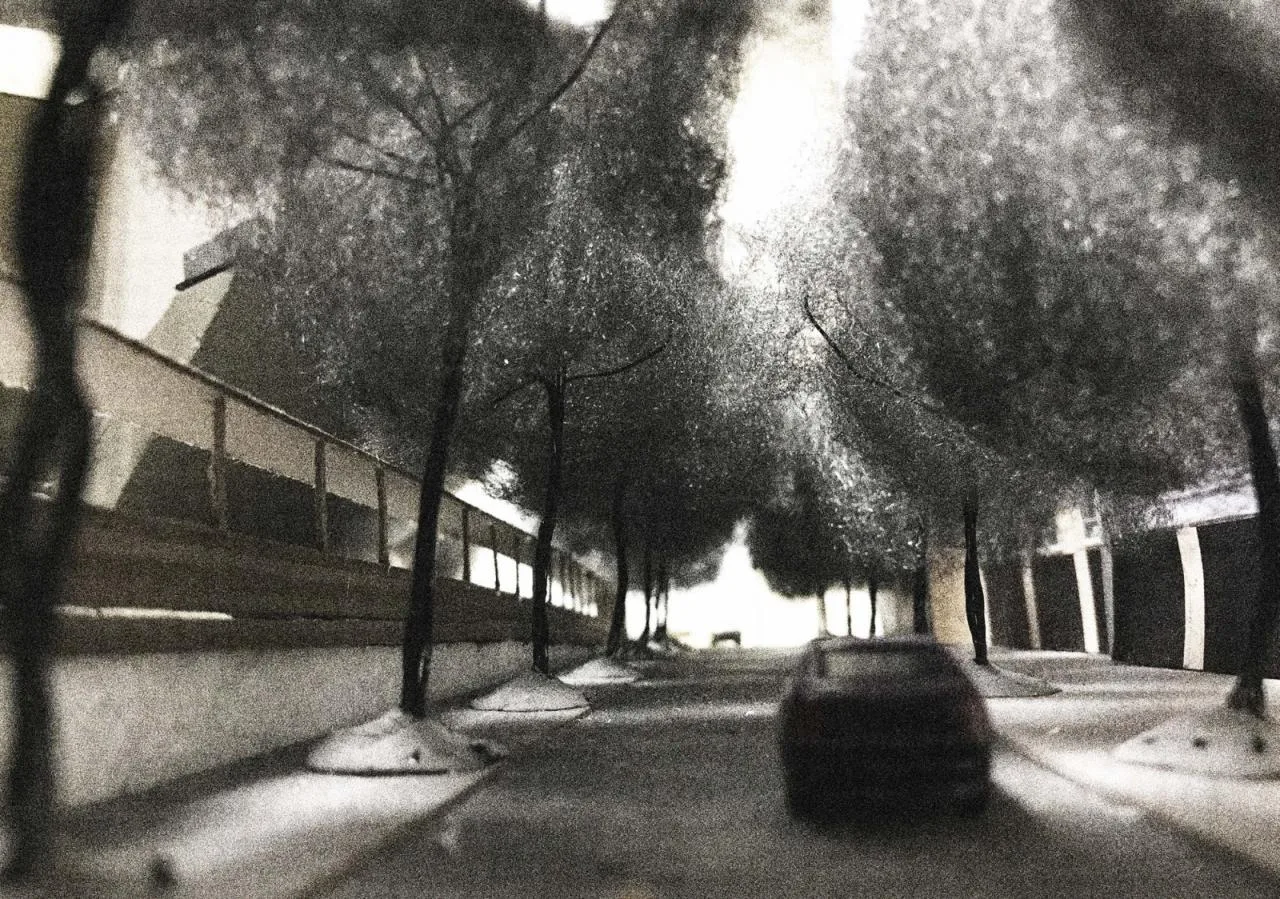
△ Corridor and Community Street Work Model
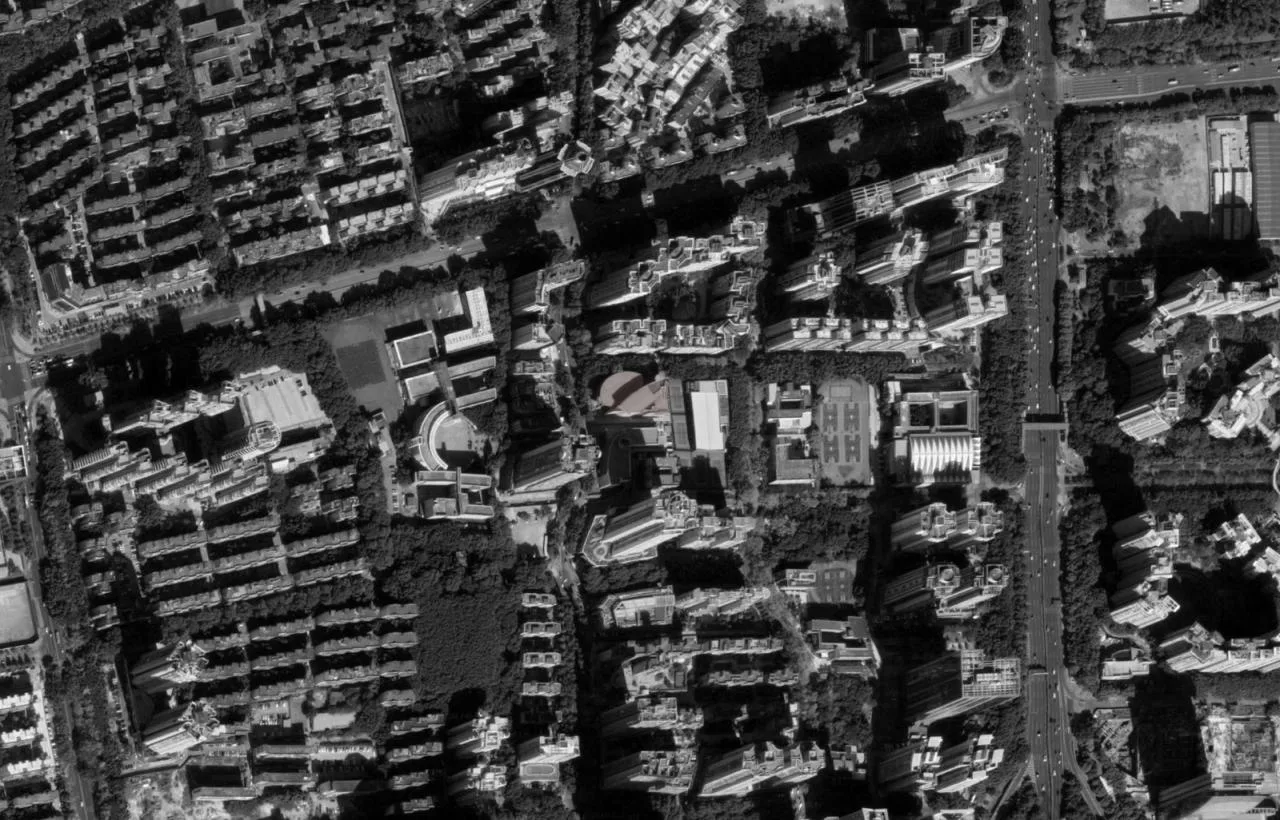
DreamWorks and the surrounding city density
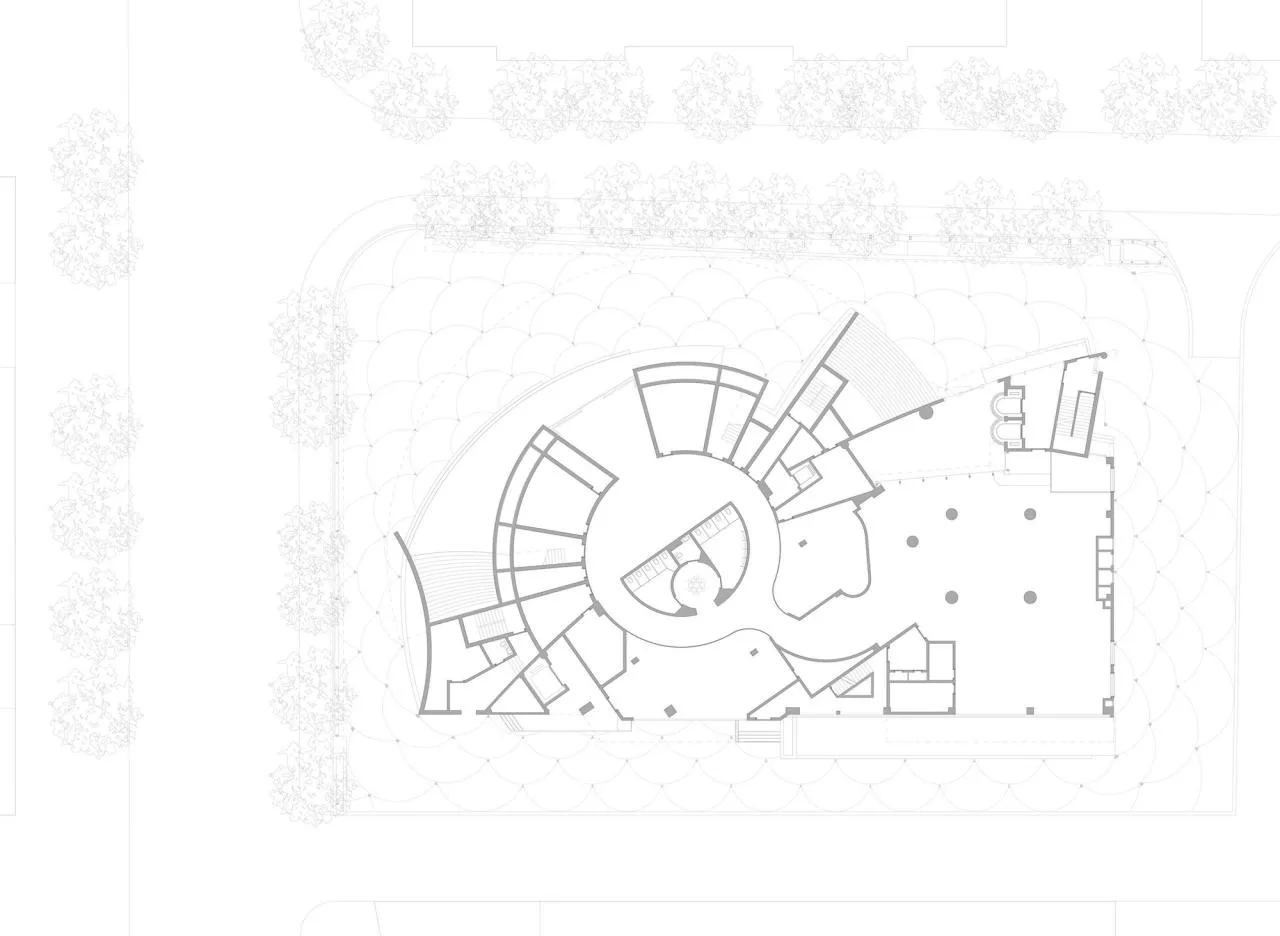
△ Ground floor plan (non-renovated area inside the supporting building)
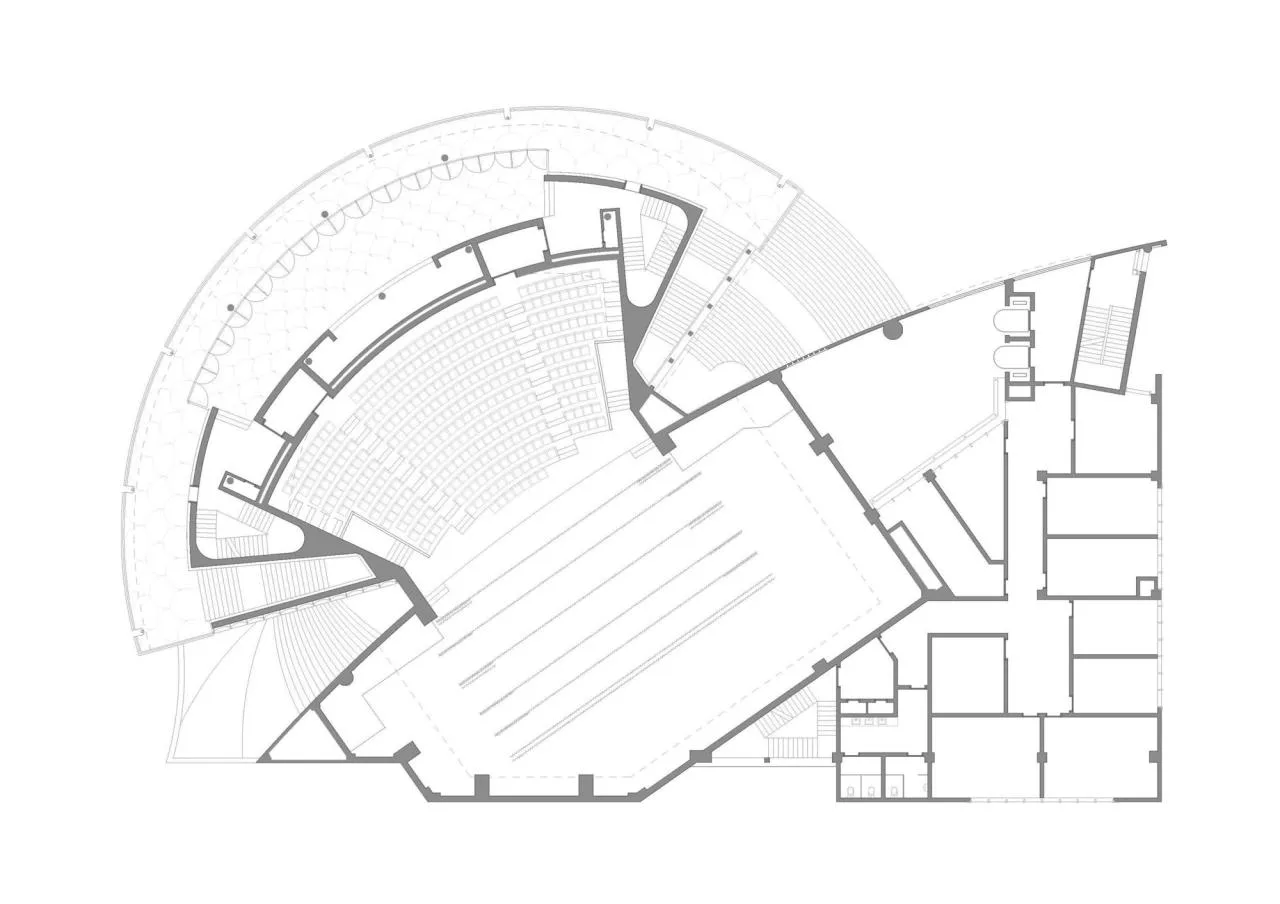
△ Second floor plan
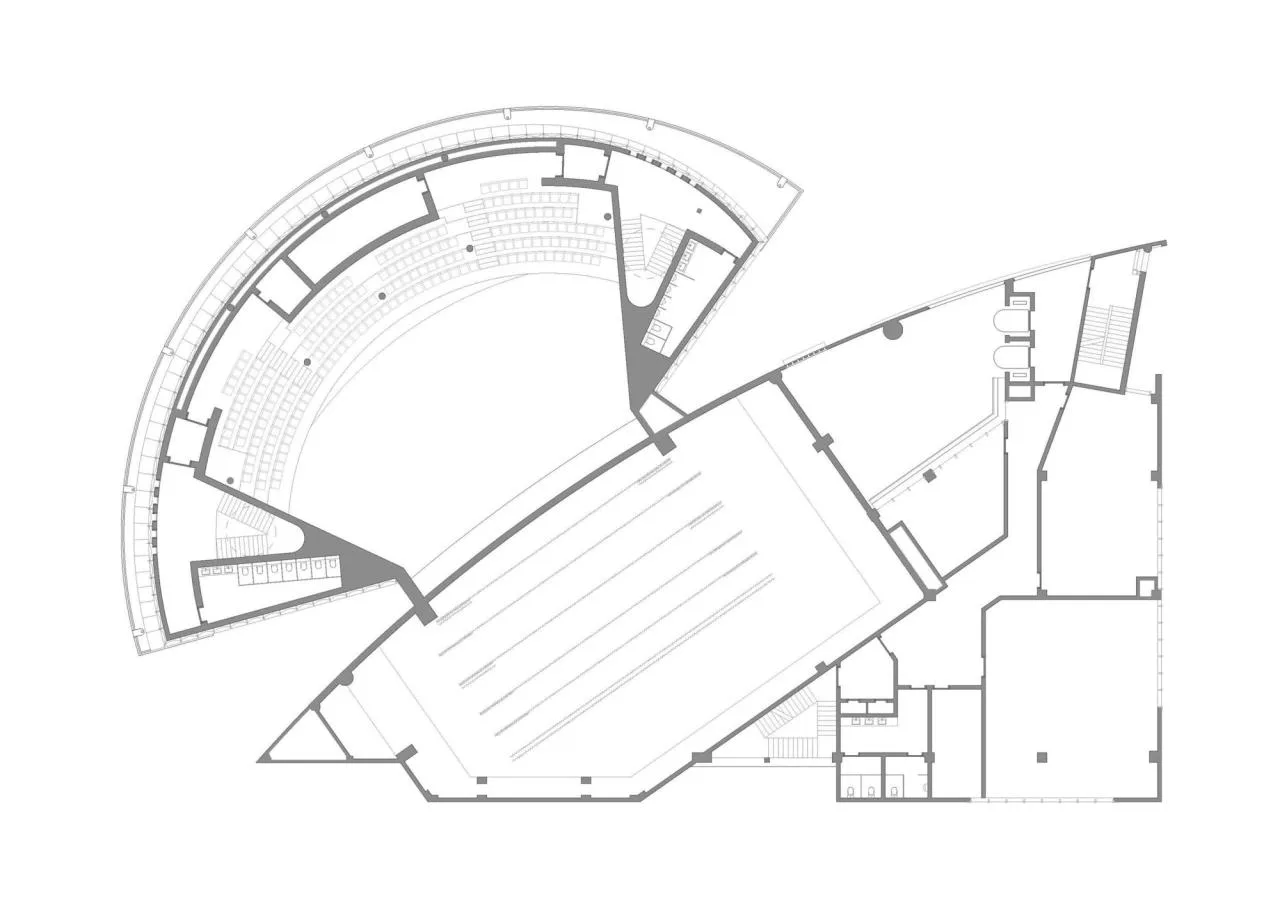
△ Third floor plan
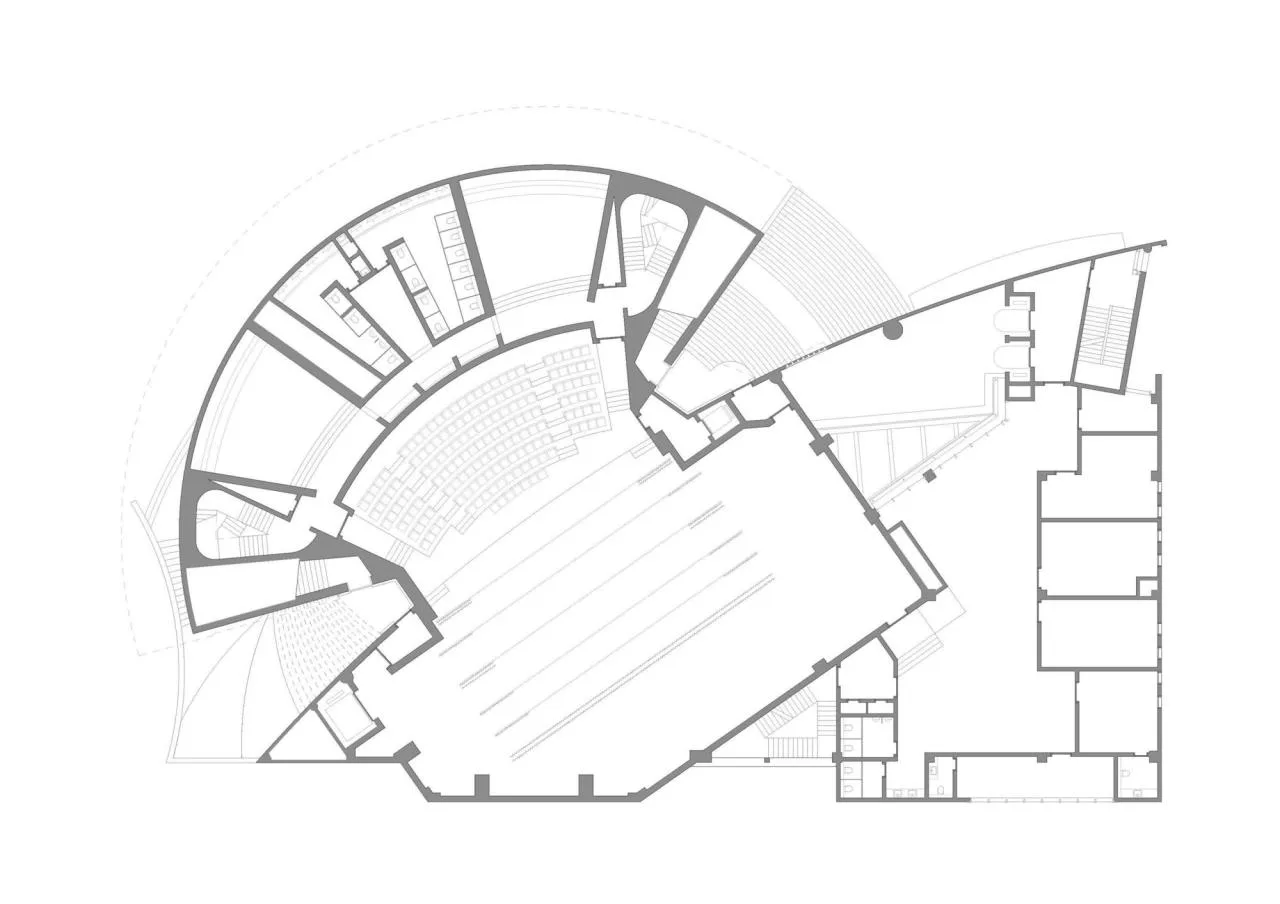
△ Mezzanine plan
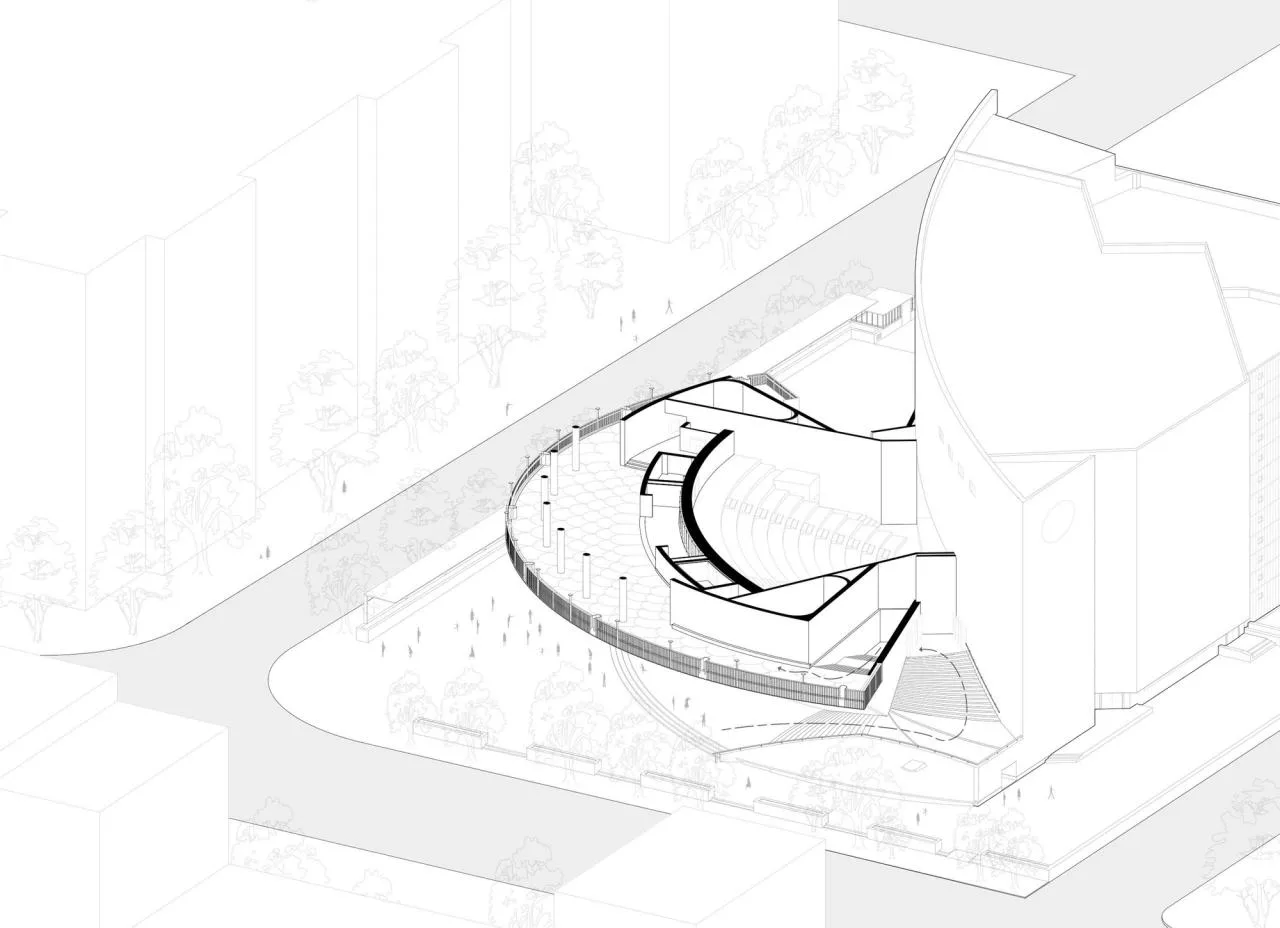
△ Series of Climbing Spaces
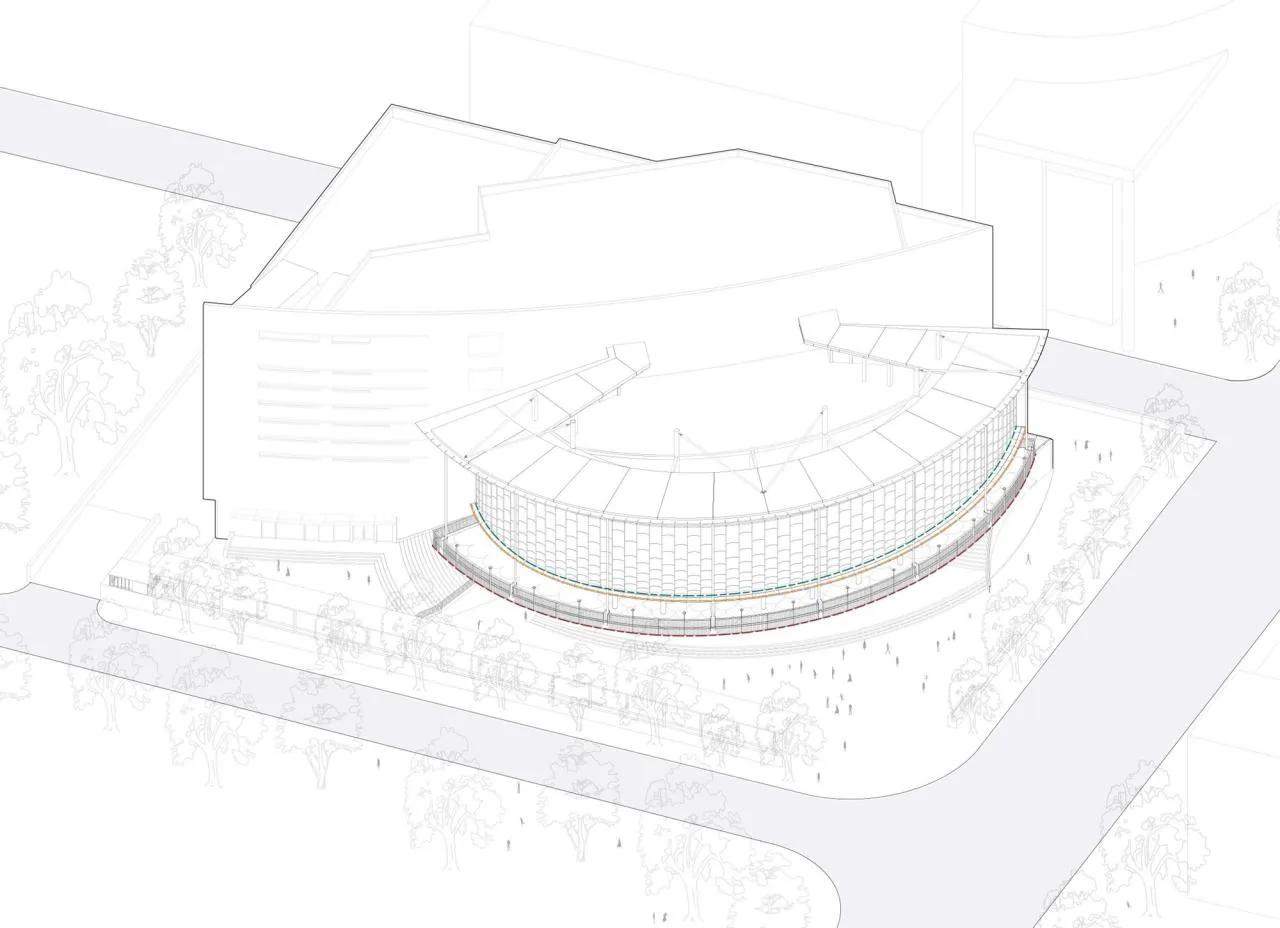
Metal curtain wall contour collection
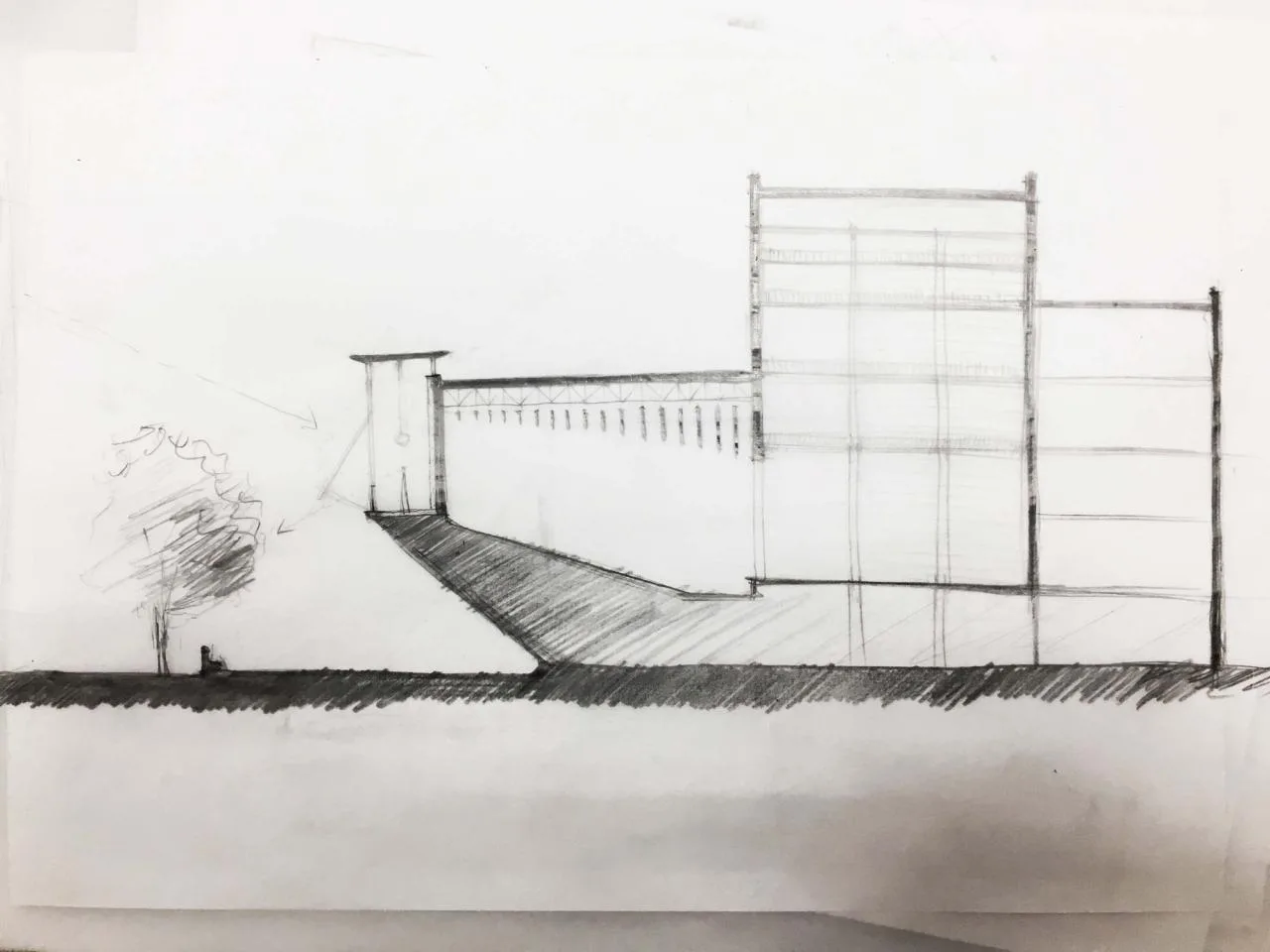
△ Section sketch
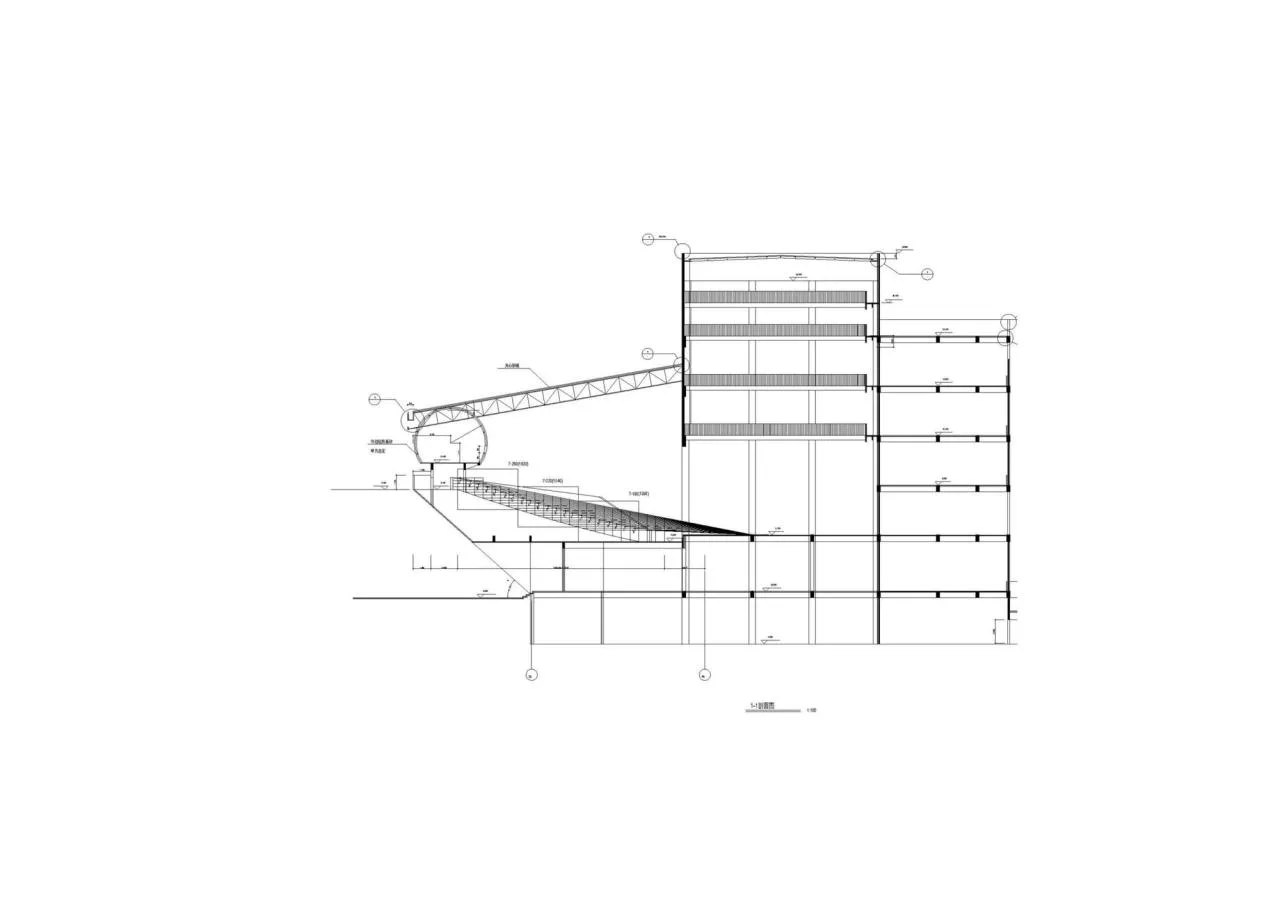
△ Building profile before renovation
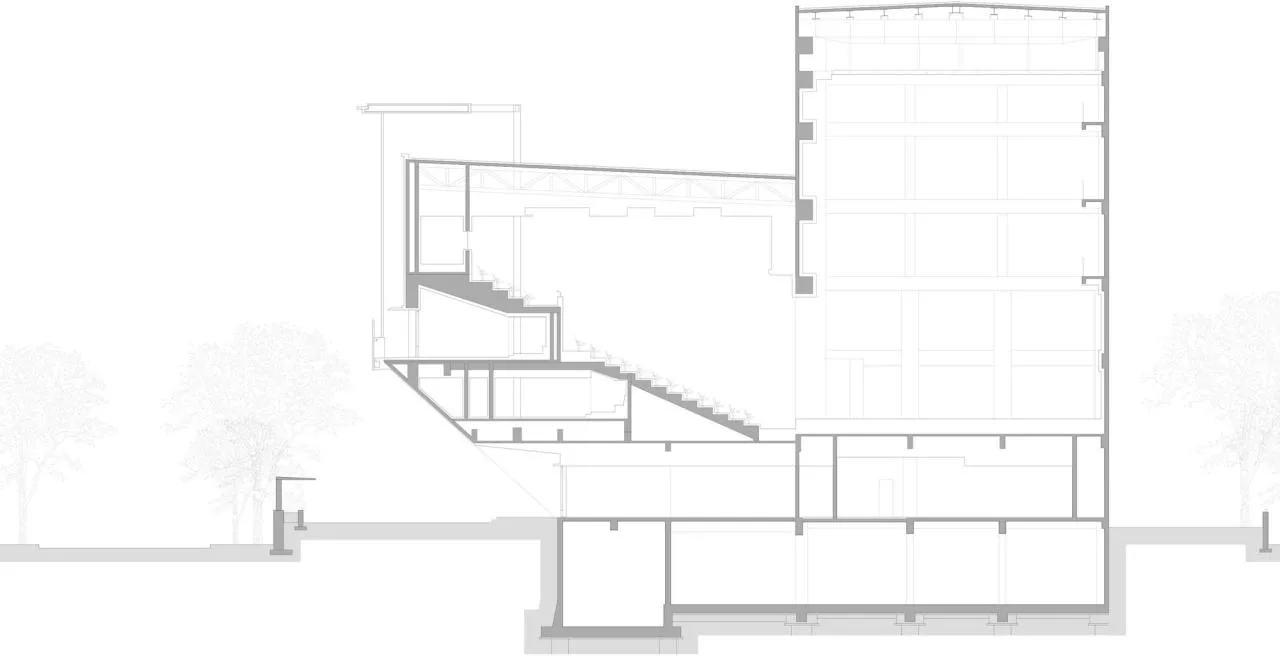
△ Section diagram
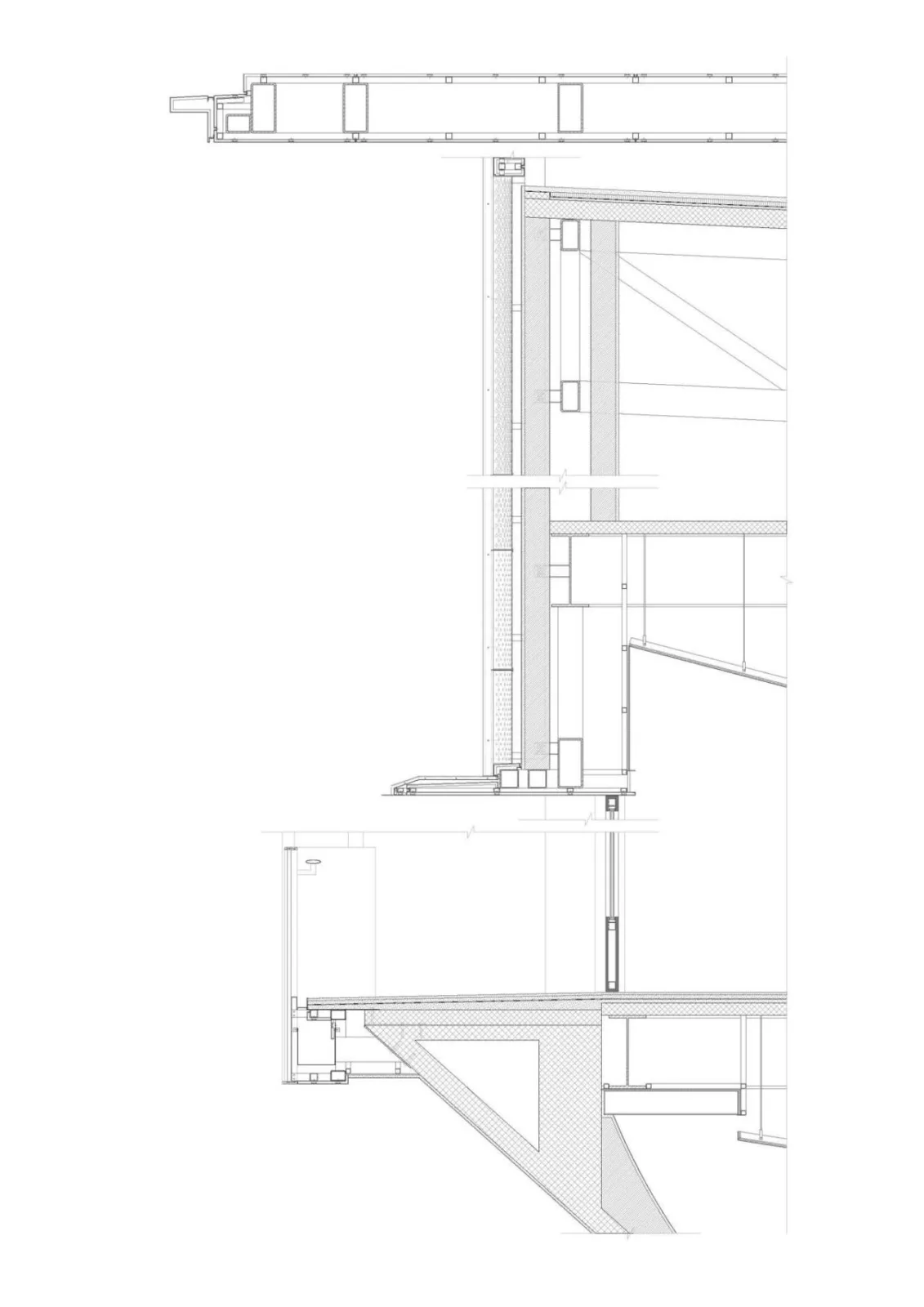
△ Open corridor wall structure
Project Information
Architectural Design: HIL Architects
Area: 7,300 m²
Project Year: 2022
Photographer: Guo Jing
Manufacturer: Guangzhaolong Stainless-Steel LLC
Lead Architects: Yu Dao (Lantau Island Architecture), Li Bo, Cheng Bo (Lan Architecture)
Design Team: Ye Lizhou, Luo Bizheng, Liu Peiye, Li Ran, Li Yanzhuo, Guo Jiaxin, Yu Miao, Du Jialin, He Chen, Liu Zhiwei, Li Zhangjun, Zhao Ying, Zou Lisha, Liu Xuan, Sun Zhongwei, Yang Jintao, Liu Huidong, Liu Huiting, Li Xiang
Lighting Consultant: Pang Lei
Client: Futian Cultural and Sports Center
Structural Design: Tangshan Planning and Architectural Design Institute
Construction: Meizhou Construction Engineering Co., Ltd
Acoustic Consultant: Shenzhen Yuanpeng Decoration Group Co., Ltd
Location: Shenzhen, China












Must log in before commenting!
Sign Up