
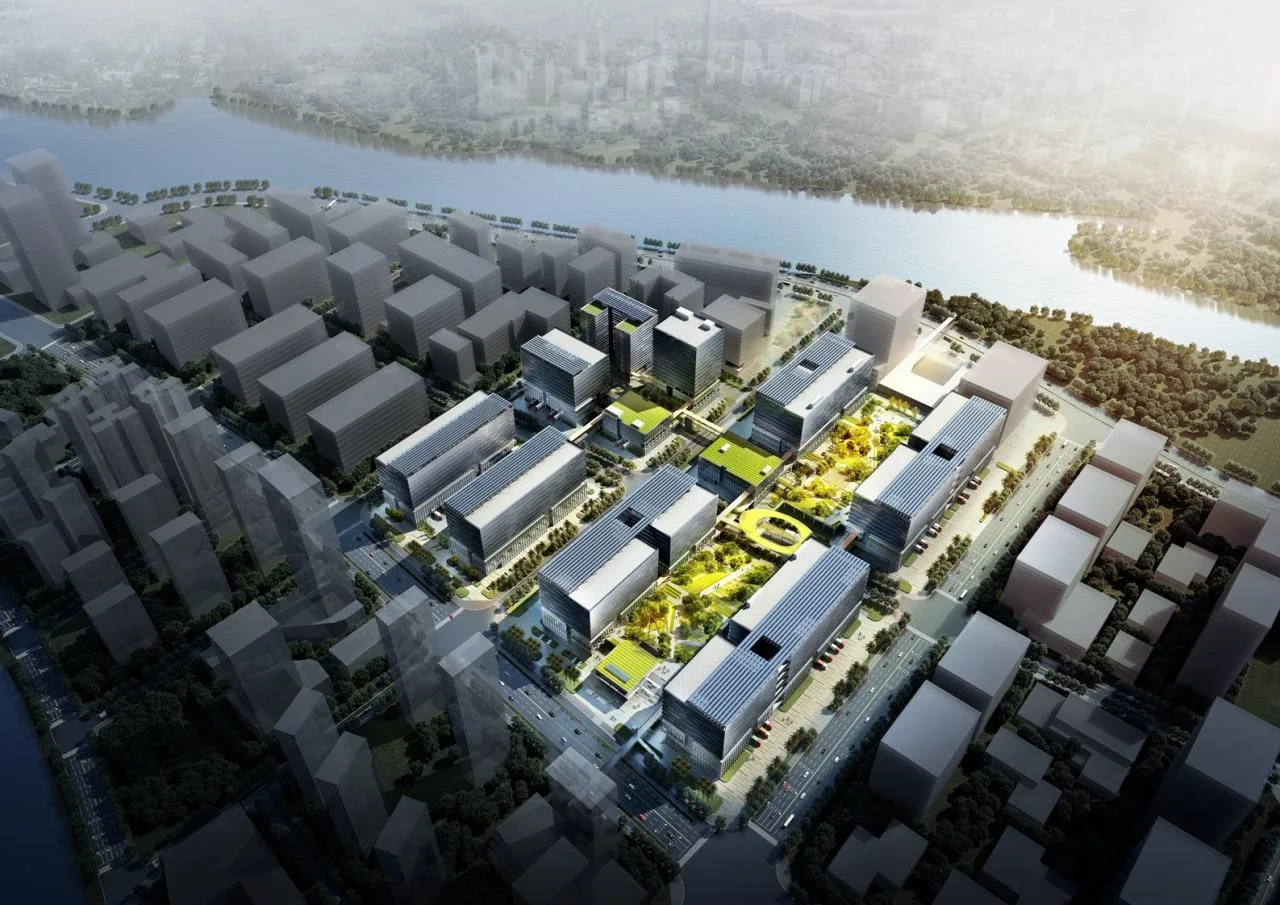
When we began bidding for this project, our team discussed various layout ideas and reached several key agreements. The most important consensus was that production remains the primary function for this site. The critical question was: what kind of production space—or more simply, what type of factory building—would best support manufacturing activities? As a general factory building, how could we attract more businesses to the site?
Based on years of project experience and industry research, we found that manufacturing companies typically require spaces ranging from 3,000 to 5,000 square meters. However, there are also manufacturers who need larger areas. Additionally, most prefer ground-floor factory spaces, especially larger enterprises.
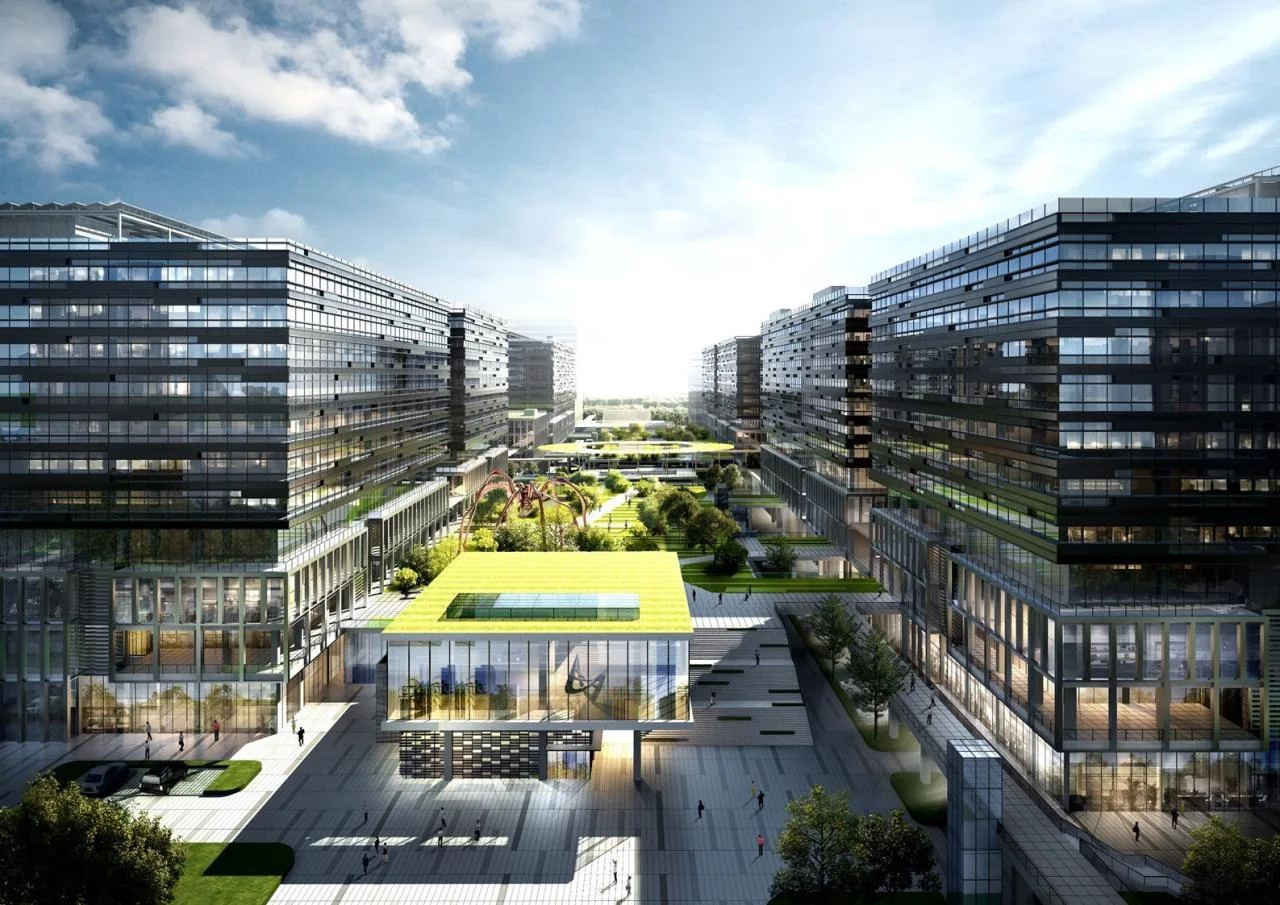
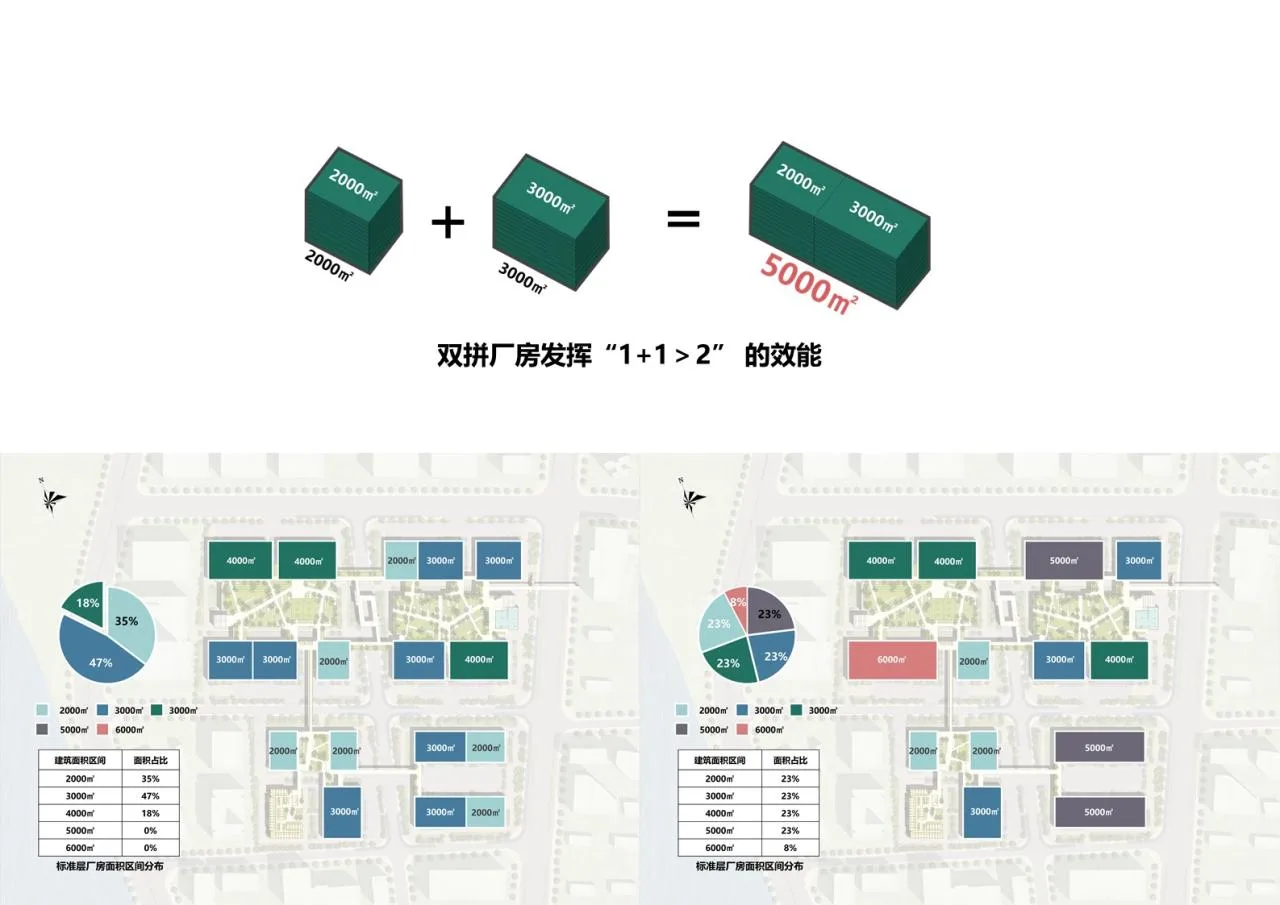
We selected 2,000 and 3,000 square meter factory units as our standard models, as these sizes are the most widely accepted in the current market. To offer more variety in factory sizes, we implemented a “double splicing” approach, allowing us to combine units and create larger factories of 4,000, 5,000, or even 6,000 square meters. This “double splicing” method results in a synergy where the whole is greater than the sum of its parts (“1+1>2”).
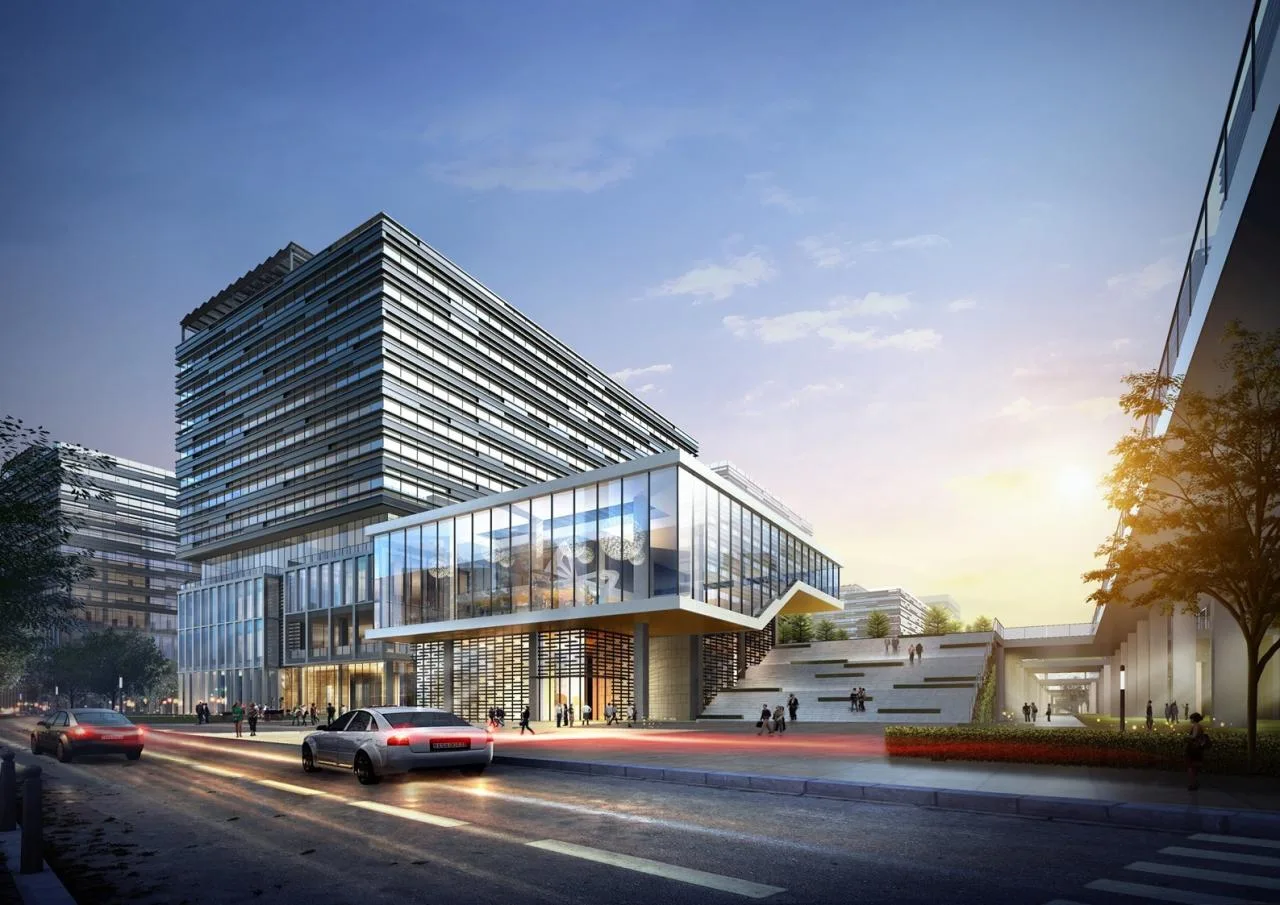
Another major feature of this project is how we maximized the value of the ground floor. While adhering to building coverage limits, we expanded the first-floor factory space as much as possible to accommodate large-scale manufacturing businesses. The maximum factory area on the first floor can reach up to 17,000 square meters.
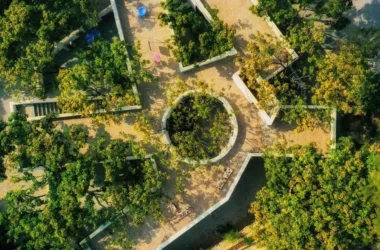
The first floor also incorporates a large rooftop garden spanning 25,000 square meters, which we believe adds an engaging and unique aspect to the project. This design cleverly resolves the traditional conflict between high production efficiency and a quality environment. The rooftop garden literally grows above the production space, concealing the bustling manufacturing activity underneath. Walking atop the garden, you wouldn’t even suspect the efficient production taking place below.
Moreover, this rooftop garden separates pedestrian and vehicle traffic: freight operations occur on the ground floor, while pedestrians use the rooftop level. The garden also provides diverse amenities, including sports, relaxation, dining, and conference facilities, making it a multifunctional urban oasis.
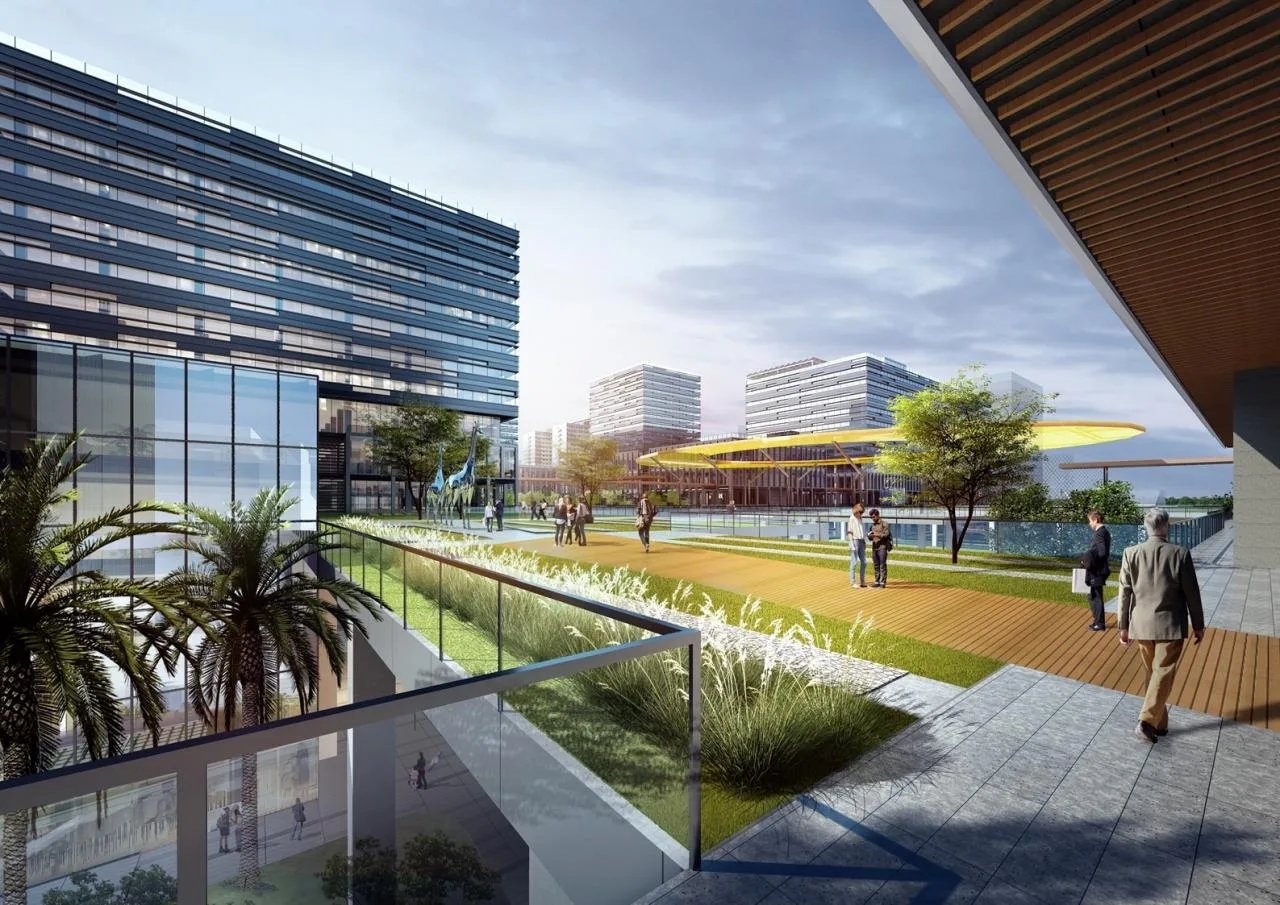
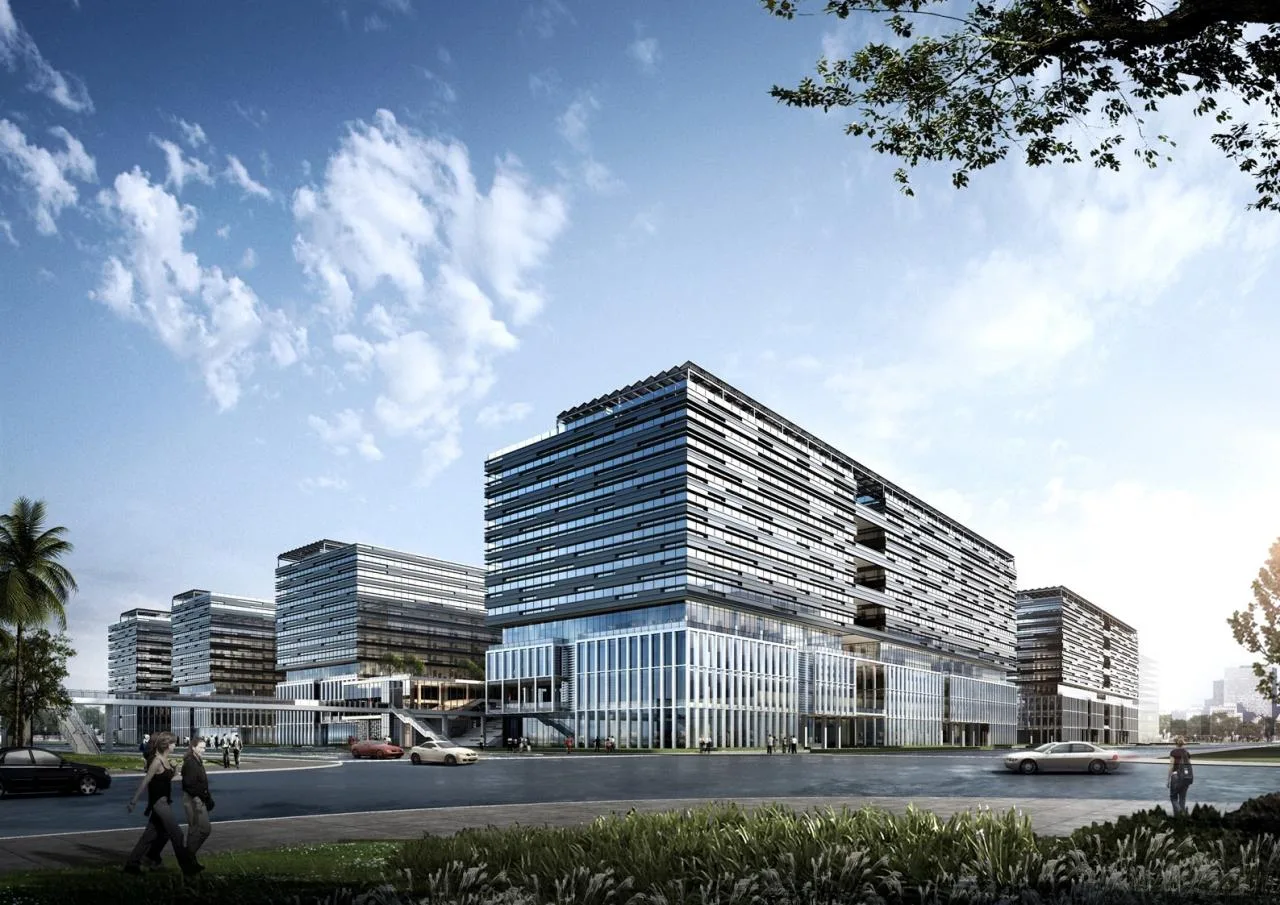
We believe this project offers a compelling solution for integrating “people, city, and industry,” balancing efficiency with quality. The “dual product” approach broadens the range of factory sizes available, adapting better to future market demands. The ground floor is especially suited for large manufacturing enterprises, while the rooftop garden provides a vibrant green space for urban residents, meeting their recreational and social needs.
Project Drawings
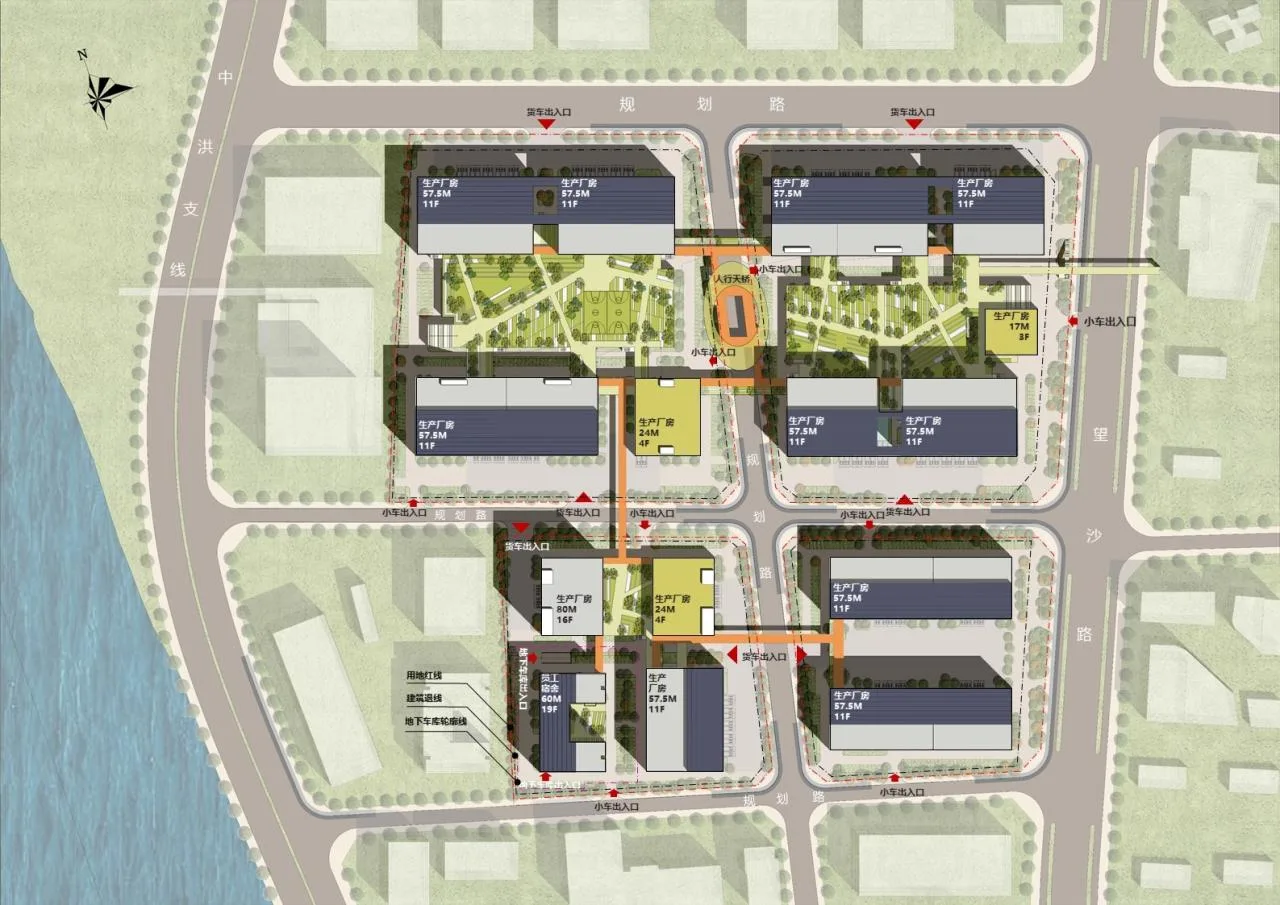
△ General layout plan
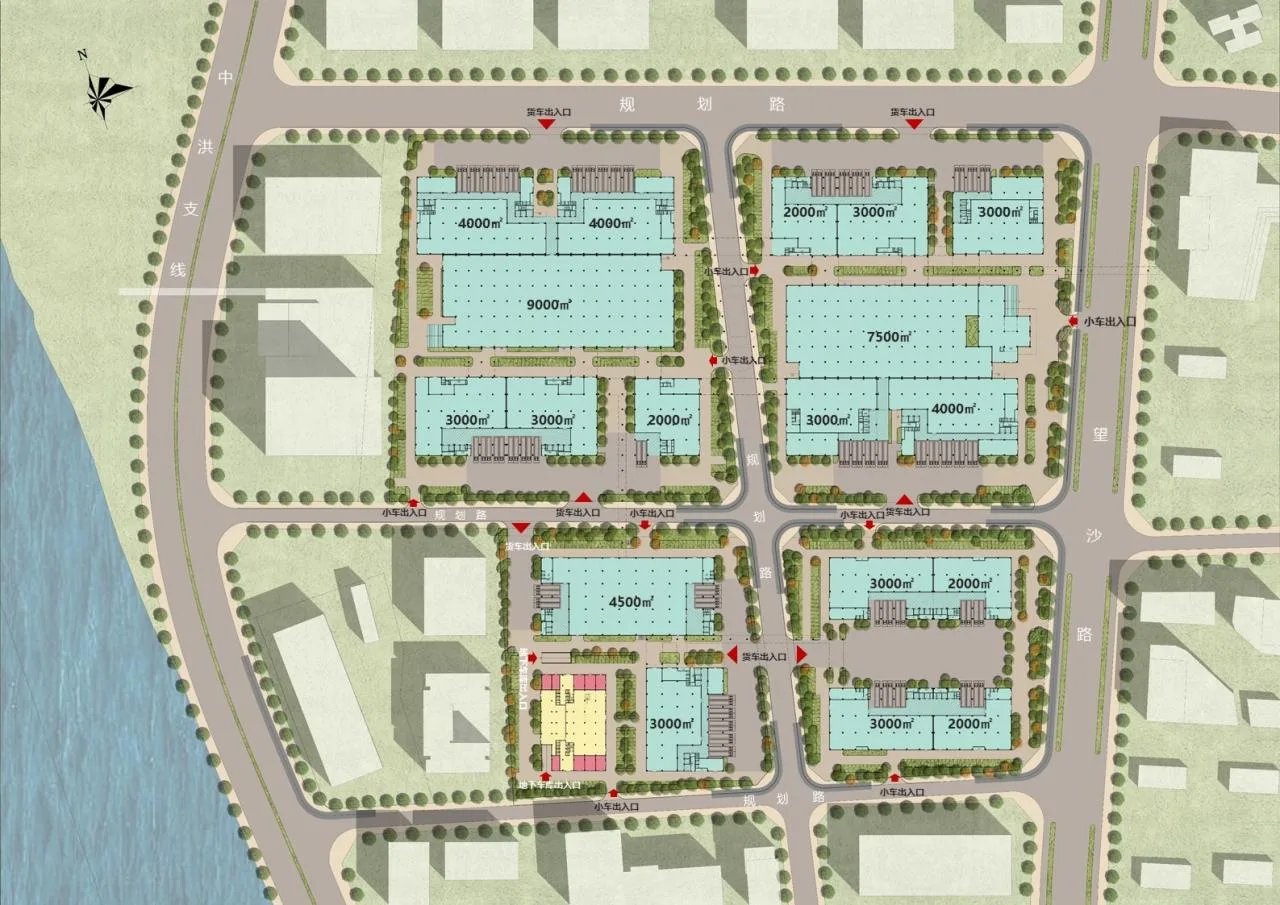
△ First floor plan
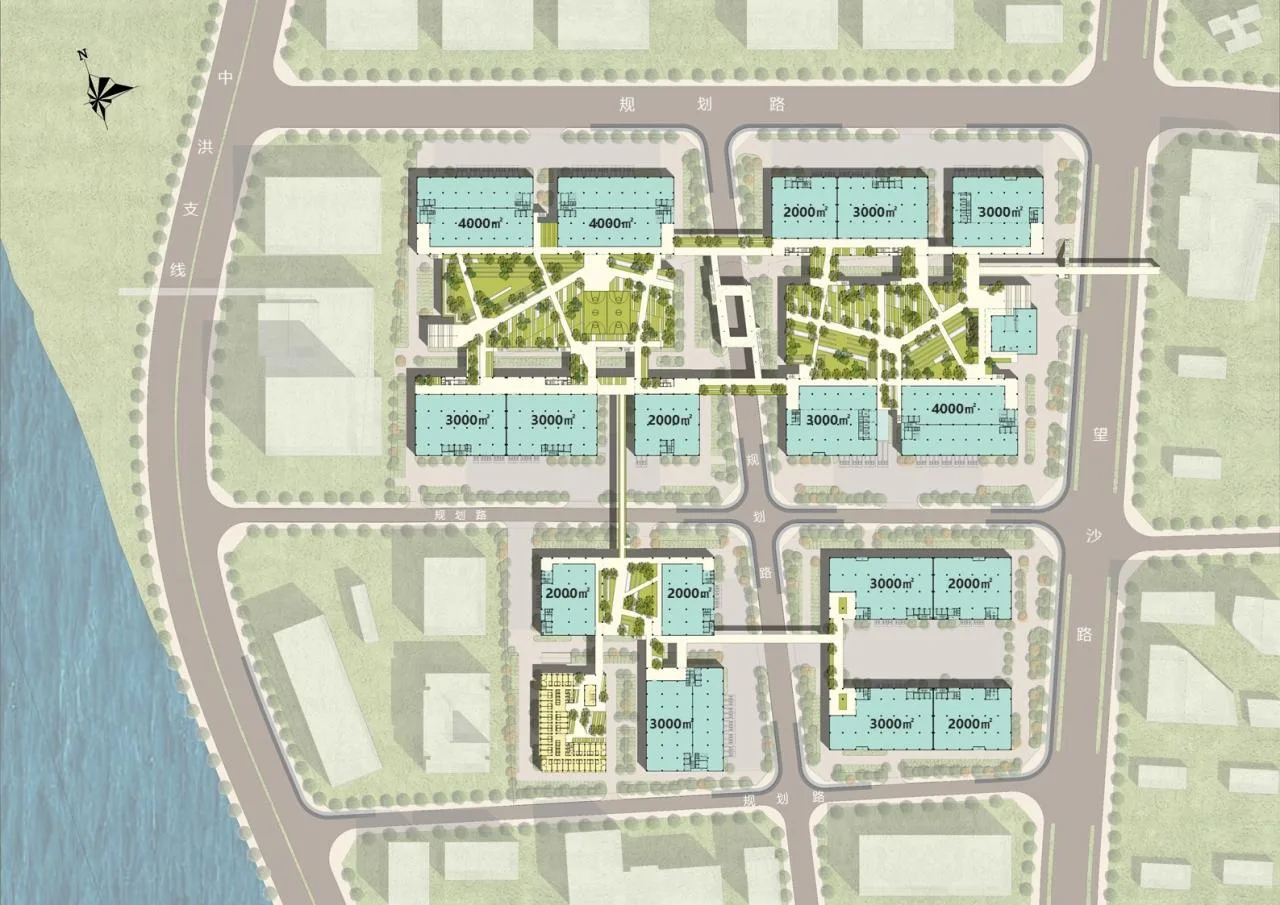
△ Second floor plan
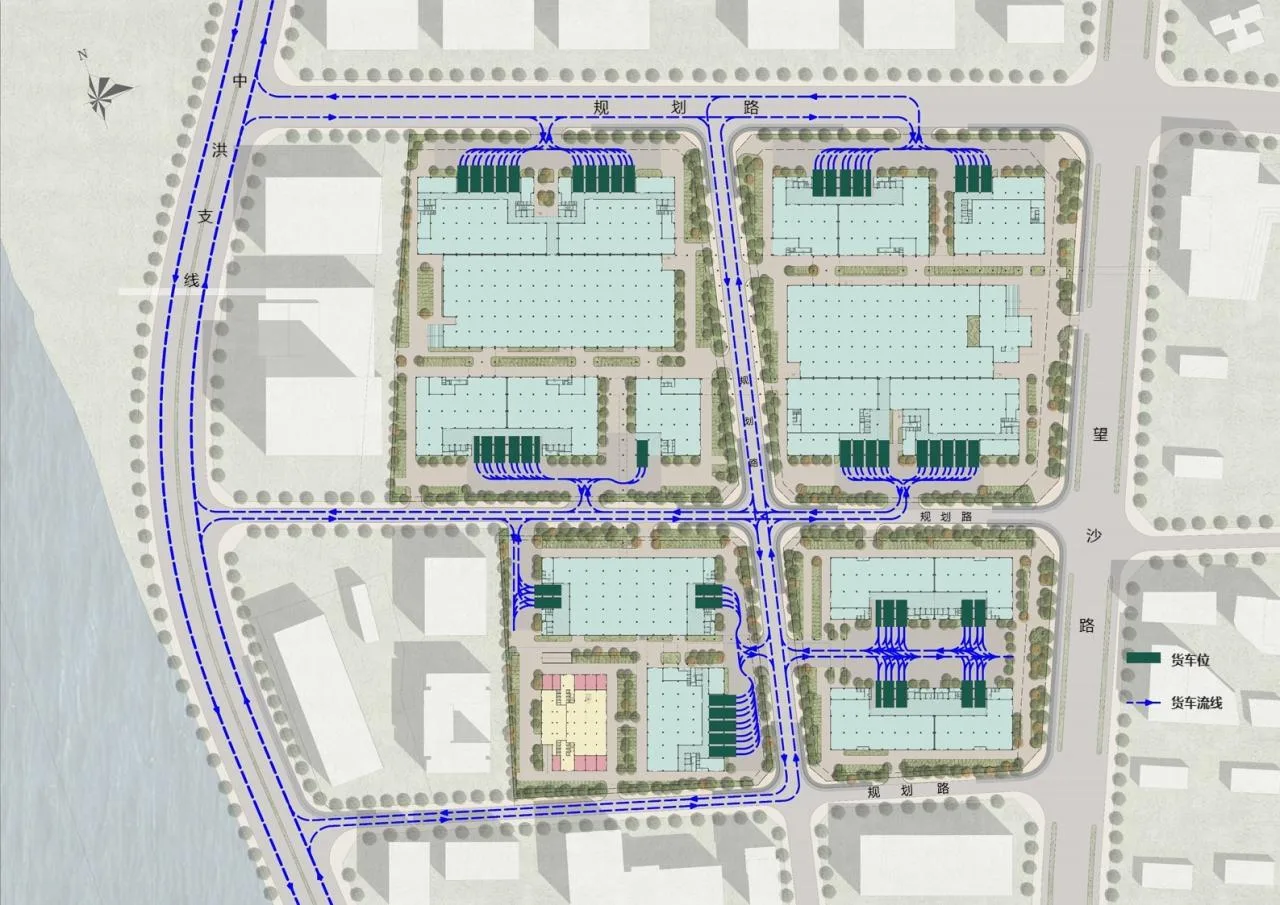
△ Freight flow chart
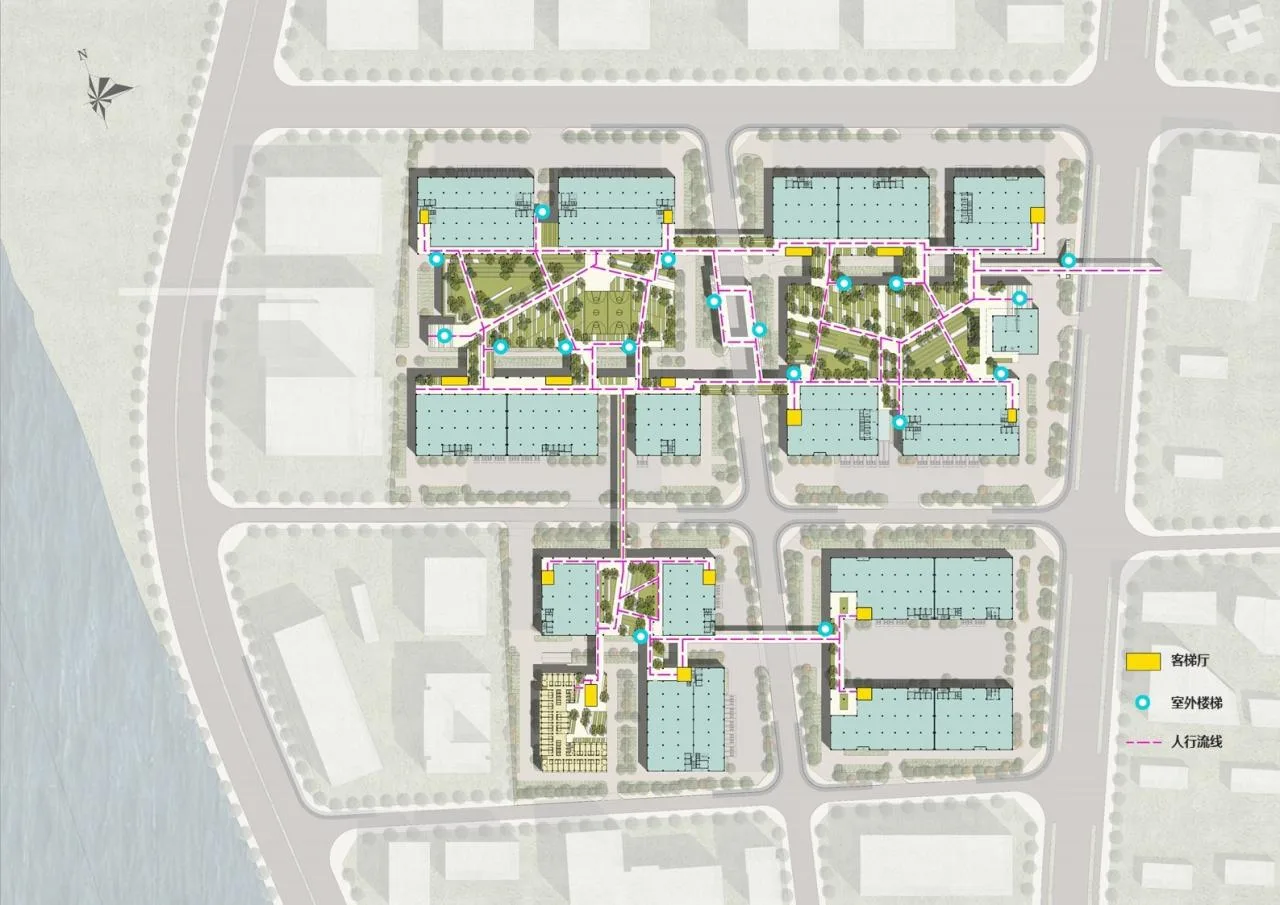
△ Pedestrian streamline diagram
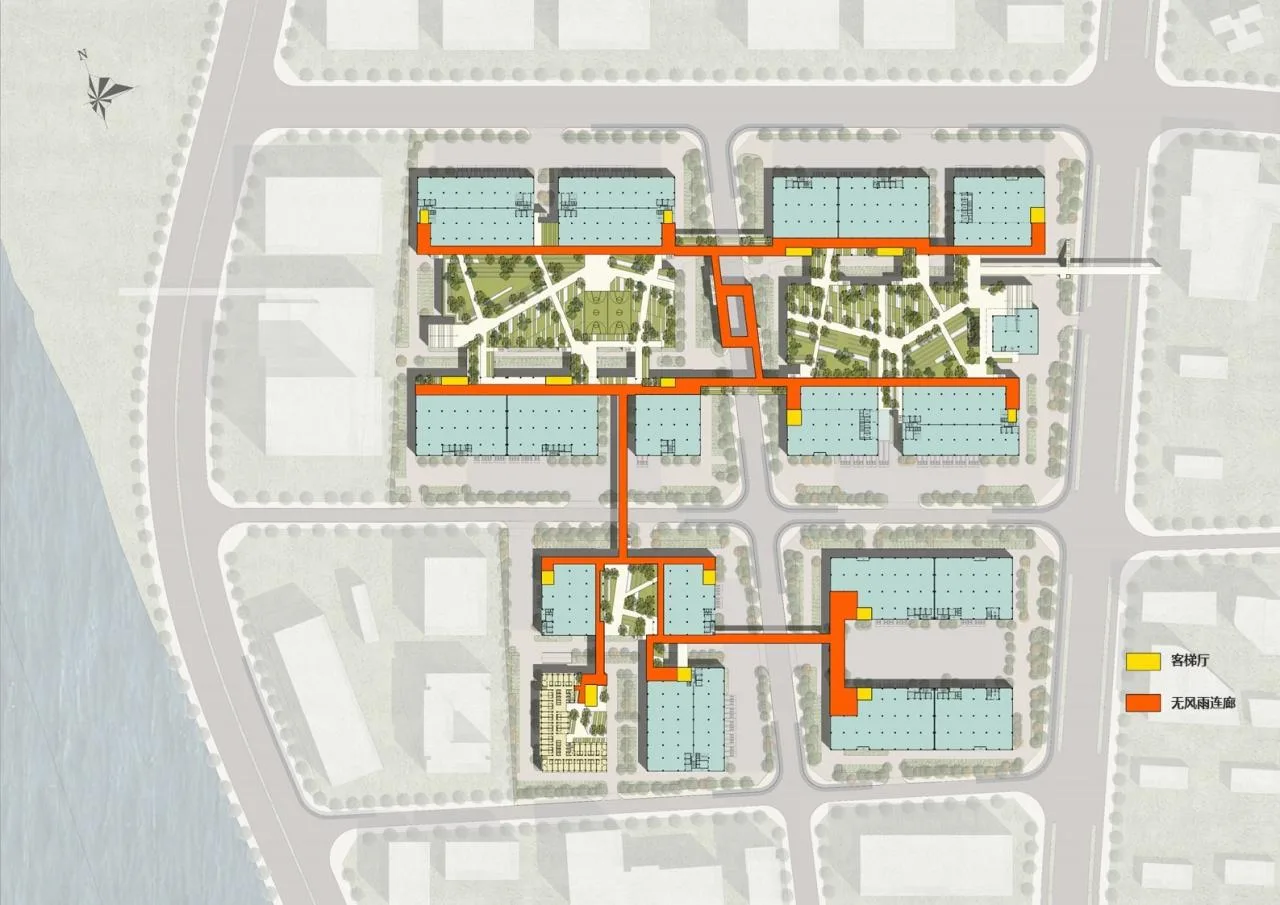
△ Wind and rain sheltered streamline diagram
Project Information
Project Name: Engineering Survey and Design for the “Engineering to Construction 4 Unit” Project in Hexi District
Project Type: Industrial Construction (Industrial to Construction)
Project Status: Proposal bidding (1st place)
Project Location: Dongguan
Project Area: 610,000 square meters
Design Unit: Shenzhen Architectural Design and Research Institute Co., Ltd
Official Website: __AI_ST_URL_0__
Lead Architect: Chen Hui
Design Team: Qin Keqi, Zheng Yaohua, Zheng Mianhui, He Guoshan, Guo Jiaxin, Bao Qihan, Qin Pengchong, Meng Liucheng
Employer: Hongmei Town Planning and Management Office, Dongguan City














Must log in before commenting!
Sign Up