
BIM technology offers significant advantages in collaborative design, primarily in three key areas: work collaboration, information consistency, and 3D visualization.
(1) Work Collaboration. Architectural projects require the cooperation of multiple designers, making collaborative design an essential method for future projects. While collaborative design is already familiar to many design firms and professionals, its true meaning and potential remain debated. Currently, most firms treat collaborative design as a management approach that enables designers to share information and design progress in real time via networks and other tools. This allows cross-departmental or even cross-regional discussions through file transfers, instant messaging, video conferencing, and more, facilitating project reviews and revisions. Although this approach is widespread, many design firms have further enhanced collaboration by developing software based on CAD platforms to improve efficiency.
Traditional two-dimensional (2D) collaboration has evolved over time but remains inherently less accurate and efficient compared to three-dimensional (3D) collaboration.
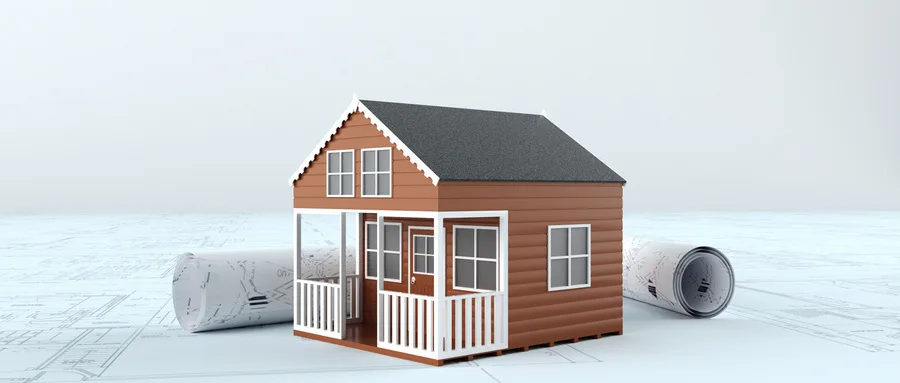
CAD replaces manual drafting with computer-generated line drawings of buildings, whereas BIM revolutionizes this by simulating buildings as comprehensive information models. These models offer more complete building data and enhance collaborative design efficiency. 3D collaborative design involves all participating designers working together on a shared platform using standardized procedures to complete project tasks. This process emphasizes parallel design efforts, enabling real-time, precise coordination through 3D models. BIM technology supports this 3D collaboration, transforming collaboration from mere discussion or management into an integrated design method. This approach promotes smoother cooperation among various professionals, maximizing the team’s overall effectiveness.
(2) Information Consistency. As projects progress, the volume of information grows significantly. From planning and schematic design to construction drawings, execution, and later operation and maintenance, different participants and departments use various methods to jointly develop a comprehensive building information model. Each stage often involves different software and data storage formats, increasing the diversity of file types.
At its core, building information modeling centers on information itself. The model is a 3D or multi-dimensional visual representation composed of extensive building data. This information can be exchanged directly or indirectly across different software platforms, maintaining consistency throughout all project phases.
① Direct Information Exchange means converting data directly between two software programs, often allowing updates to be sent back with minimal manual intervention, reducing errors and maintaining data integrity. For example, Revit Structure, a BIM structural modeling tool, integrates with popular structural software like Yingjianke and ETABS. However, some software only allows one-way data transfer; for instance, Revit Architecture can import models from 3DSMAX and Artlantis, but modifications made there cannot be returned to the BIM software.
② Indirect Information Exchange involves transferring data between two software systems via an intermediary format recognizable by both. For example, in China, BIM simulations often require converting files into DWG format before importing them into simulation software such as Luban and Swell. Additionally, when using BIM software like Navisworks for clash detection, while issues can be identified directly, manual corrections and repeated checks are necessary until all problems are resolved.
Overall, BIM provides a unified platform that consolidates documents from different departments, ensuring consistent information exchange and enabling effective collaborative design.
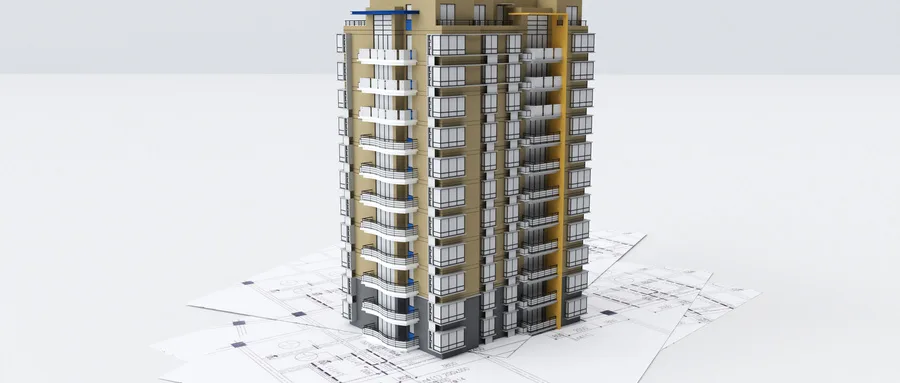
(3) Three-Dimensional Visualization. While traditional CAD-based 2D drawings remain the most common method, they are limited to two-dimensional representations. BIM platforms create building information models based on 3D geometric shapes, greatly expanding design possibilities. By simulating building construction with 3D models, designers can virtually build structures using intuitive, visual methods.
As architectural demands grow, projects now involve not just planning, architecture, structure, and MEP disciplines but also intelligent systems and green building considerations. Collaborative design is no longer limited to sharing reference files. Because of this complexity, deepening 2D design has become increasingly challenging and demanding for designers. Using more intuitive 3D design methods effectively addresses these challenges.
BIM models are constructed by simulating individual components rather than relying on points and lines to create multiple 2D drawings. This enables the production of highly accurate 3D models alongside corresponding 2D drawings at every stage. BIM offers a realistic and visual platform that helps designers easily understand the building and collaborate at any design phase. Parameter changes in the model can be adjusted dynamically, allowing immediate visualization of their impacts. This approach is not only more user-friendly but also more precise than traditional methods like stretching or shrinking drawings.
Previously, error detection depended on interpreting 2D drawings on paper, which often overlooked minor mistakes that only became apparent later. The intuitive and realistic 3D design method makes it easier to identify and correct issues promptly, saving time and costs compared to discovering errors at the end of the project.
















Must log in before commenting!
Sign Up