
The scheme creation stage is primarily where designers develop design concepts based on the owner’s (Party A’s) requirements. This initial phase of design culminates in results that must be approved by the owner. The main goal during this stage is to create the design scheme.
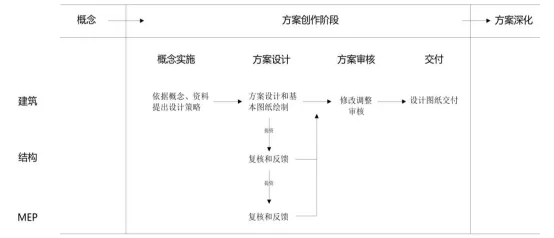
1. Traditional Design Process
In the traditional design approach, this phase is primarily led by the architectural discipline. Initially, a design strategy is proposed based on the concept. After presenting the design scheme, collaborative interactions occur with the structural and MEP (Mechanical, Electrical, and Plumbing) teams through iterative feedback. The scheme is revised according to input from these disciplines. Once modifications are complete, the design is reviewed with the owner, and proposal documents (including drawings) are prepared. These typically consist of the overall plan, floor plans, elevations, sections, and renderings. Upon completion, the package is handed off to the next department.
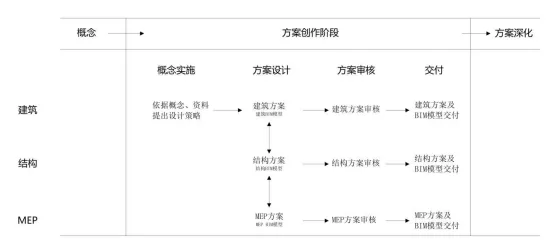
2. BIM Collaborative Design Process
In the BIM design approach, the architectural team also proposes design strategies based on concepts at this stage. However, architecture, structure, and MEP disciplines collaborate simultaneously, working within a shared 3D model. This setup enables real-time communication and feedback among all parties. After coordination and integration, the design is presented to the owner through an intuitive 3D visualization platform. Necessary 2D drawings and BIM models are then generated and delivered together to the next phase.
3. Comparative Analysis of the Two Methods
① Currently, in our country, except for a few specialized buildings, the involvement of structural and MEP disciplines during the scheme creation stage is limited. The MEP discipline, in particular, is rarely engaged at this point.
② Scheme creation involves frequent modifications. BIM models include attributes linked to geometric shapes, so changes to the model automatically update corresponding 2D views, saving significant time and effort on drawing revisions. In contrast, traditional methods require manually updating every affected 2D drawing whenever modifications occur.
③ Architects tend to prefer quick, flexible methods to express ideas promptly and facilitate discussions with colleagues. Presently, BIM platform modeling processes are relatively complex and less streamlined compared to traditional sketching methods.
















Must log in before commenting!
Sign Up