
The Baimajian Leisure Restaurant is situated within the Longchi Scenic Area of Baimajian, Suzhou. This scenic area spans 7 square kilometers and serves as the ecological “green lung” of Suzhou High-tech Zone. As one of the few mountainous regions in Suzhou, it boasts stunning and vibrant lake and mountain landscapes. The project lies adjacent to Longchi to the south and Fengtan to the north. Our goal is to create a scenic building that introduces natural beauty into the leisure experience.
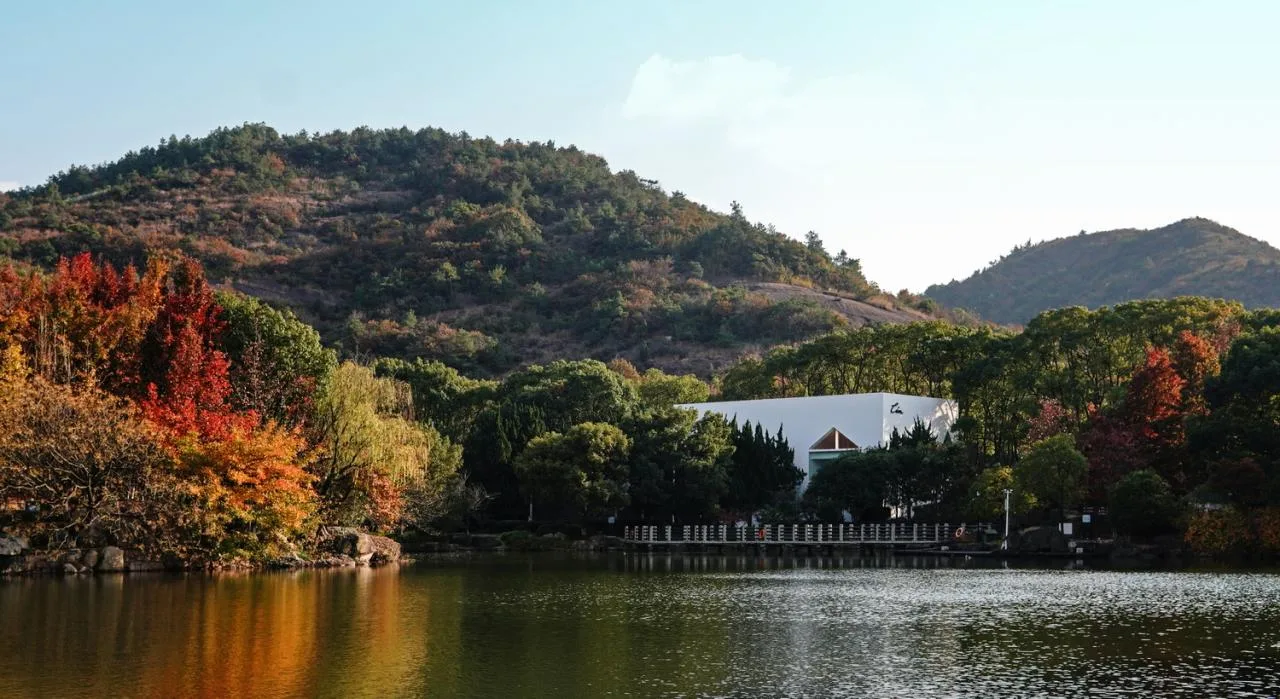
View from across the lake © Xu Yingda
This architectural renovation project posed a significant challenge due to the conflict between the original structure and the new functional requirements. The existing building was a temporary structure with a sloped roof and wooden framework grafted onto a concrete frame. Its proportions and exterior materials did not align with the brand’s minimalist and youthful aesthetic. Furthermore, the original complex structure could not be demolished or altered due to regulatory restrictions. After multiple rounds of design deliberations, the team successfully created a distinctive leisure dining bar while fully preserving the original structure and walls.
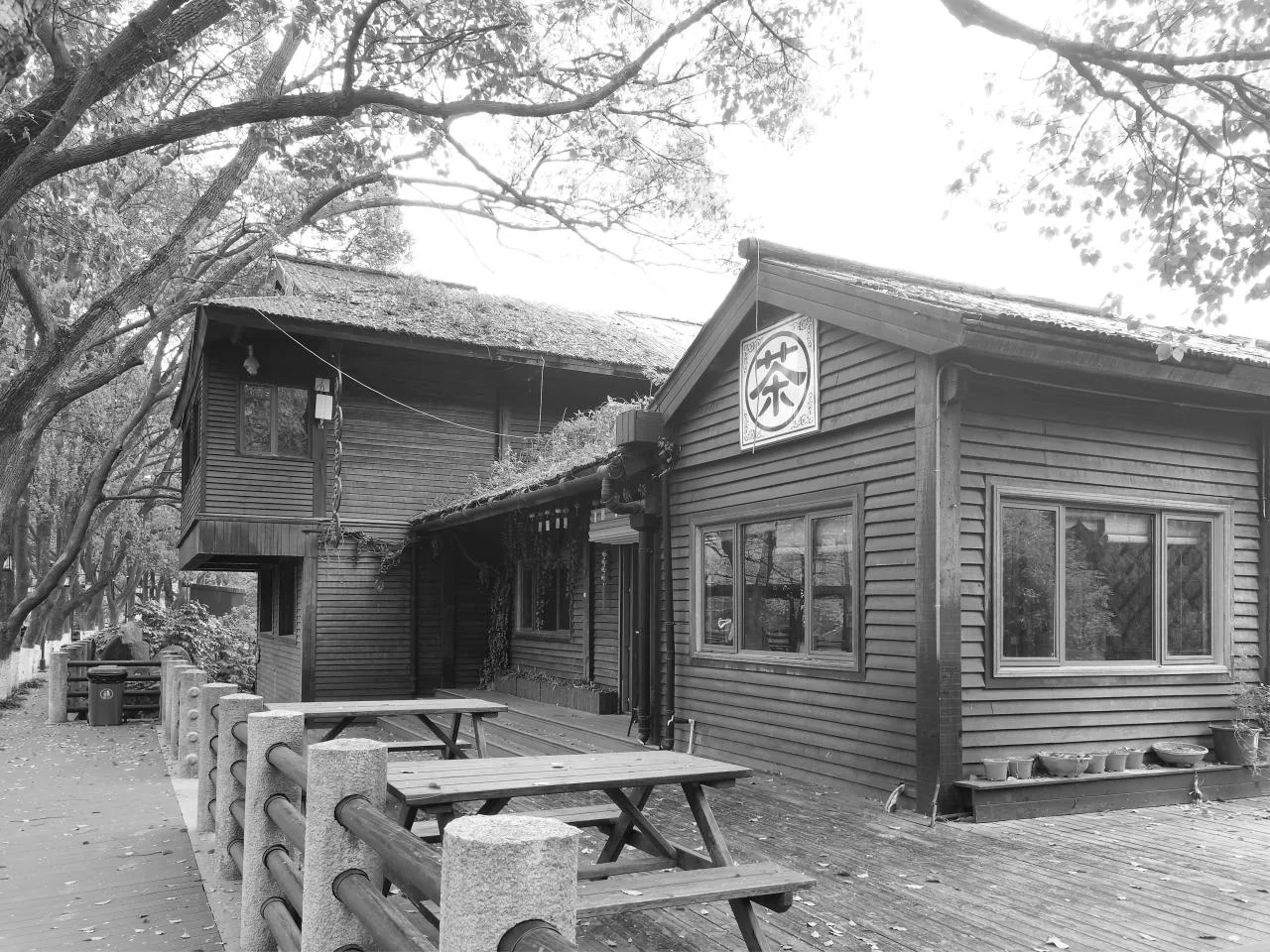
△ Original building condition © Xu Yingda
To complement the original building’s sloping roof, and maintain the brand’s signature element of angled white walls, the design wraps the existing structure within a pure white, square box shell. The facade extends inward with window openings shaped like sloping roofs, bridging the original building and the external cube.
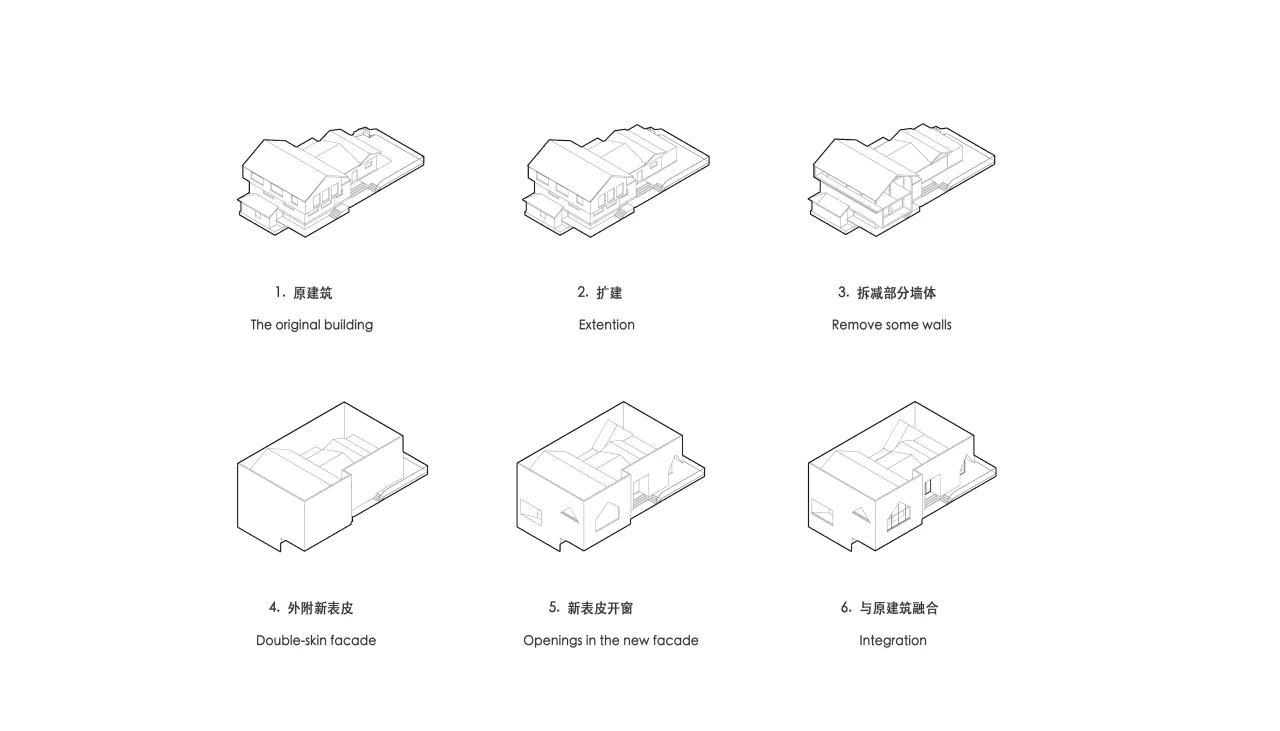
△ Renovation process of Baimajian © Pingjie Design
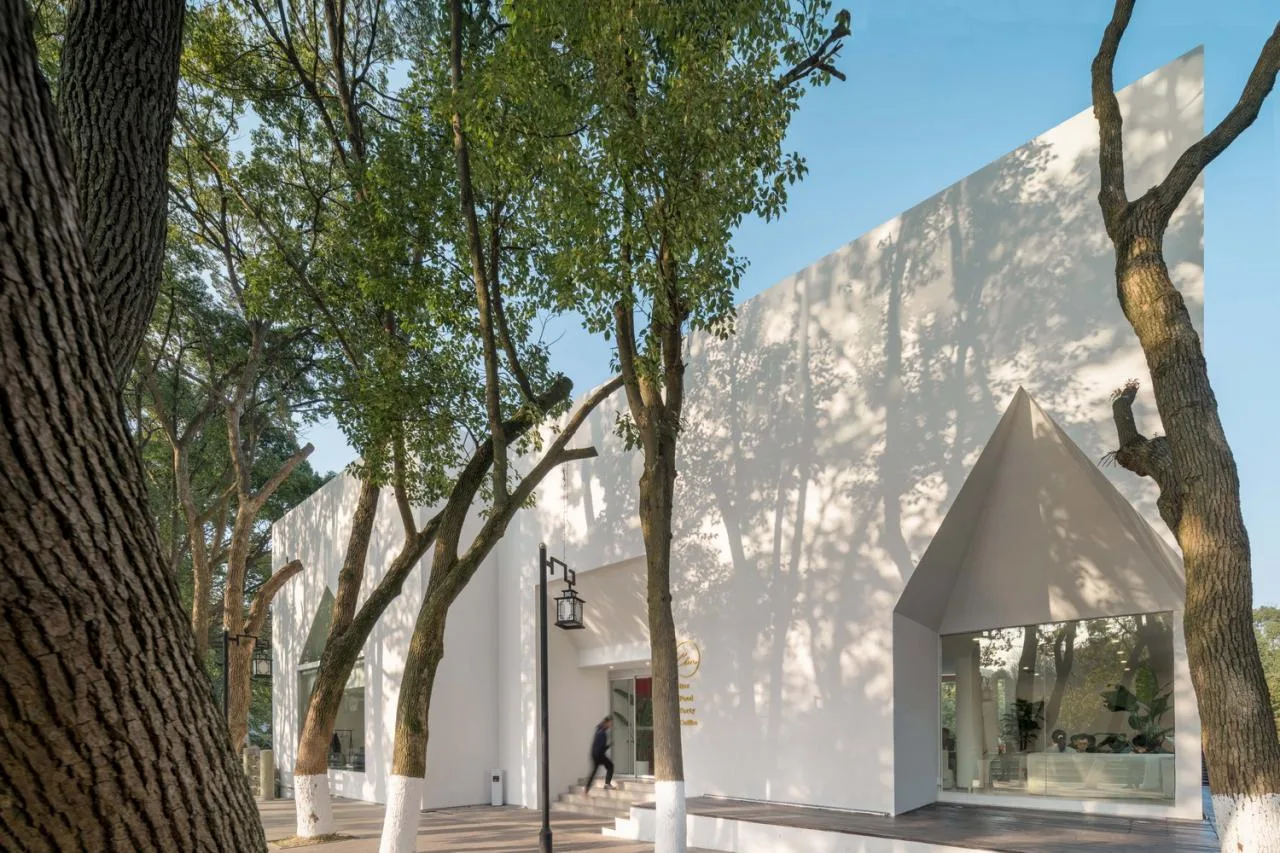
△ Entrance perspective © Xu Yingda
This approach creates a new facade skin that is detached from the original building, preserving the existing structure. Between the outer shell and the original building, a semi-private courtyard is formed. Additionally, by reducing the building volume and incorporating roof-shaped window forms, the design continues the sloping roof motif, adding architectural interest.
The pure white facade captures the mottled, swaying shadows of nearby trees along the boardwalk, seamlessly blending the building into its natural surroundings.
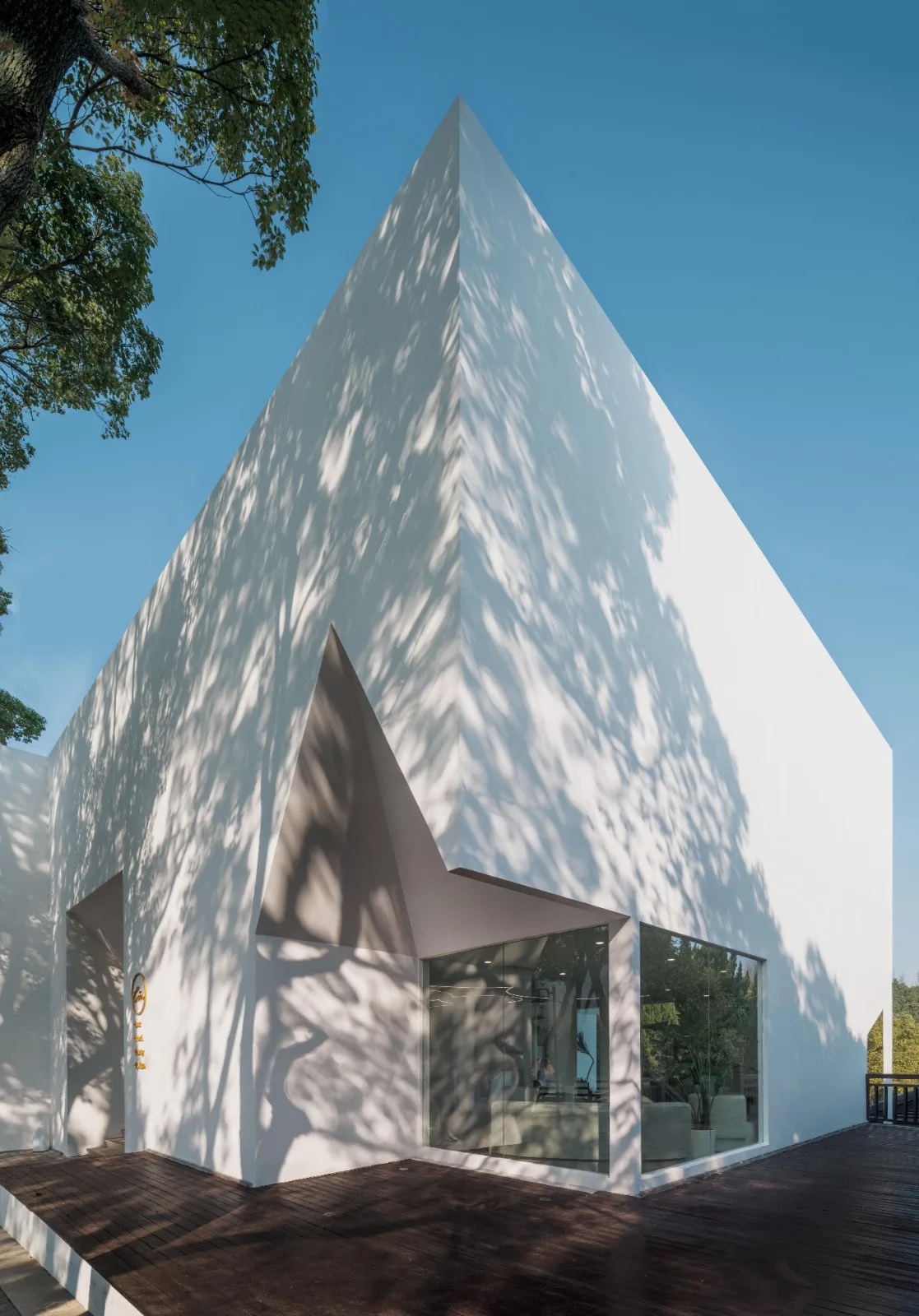
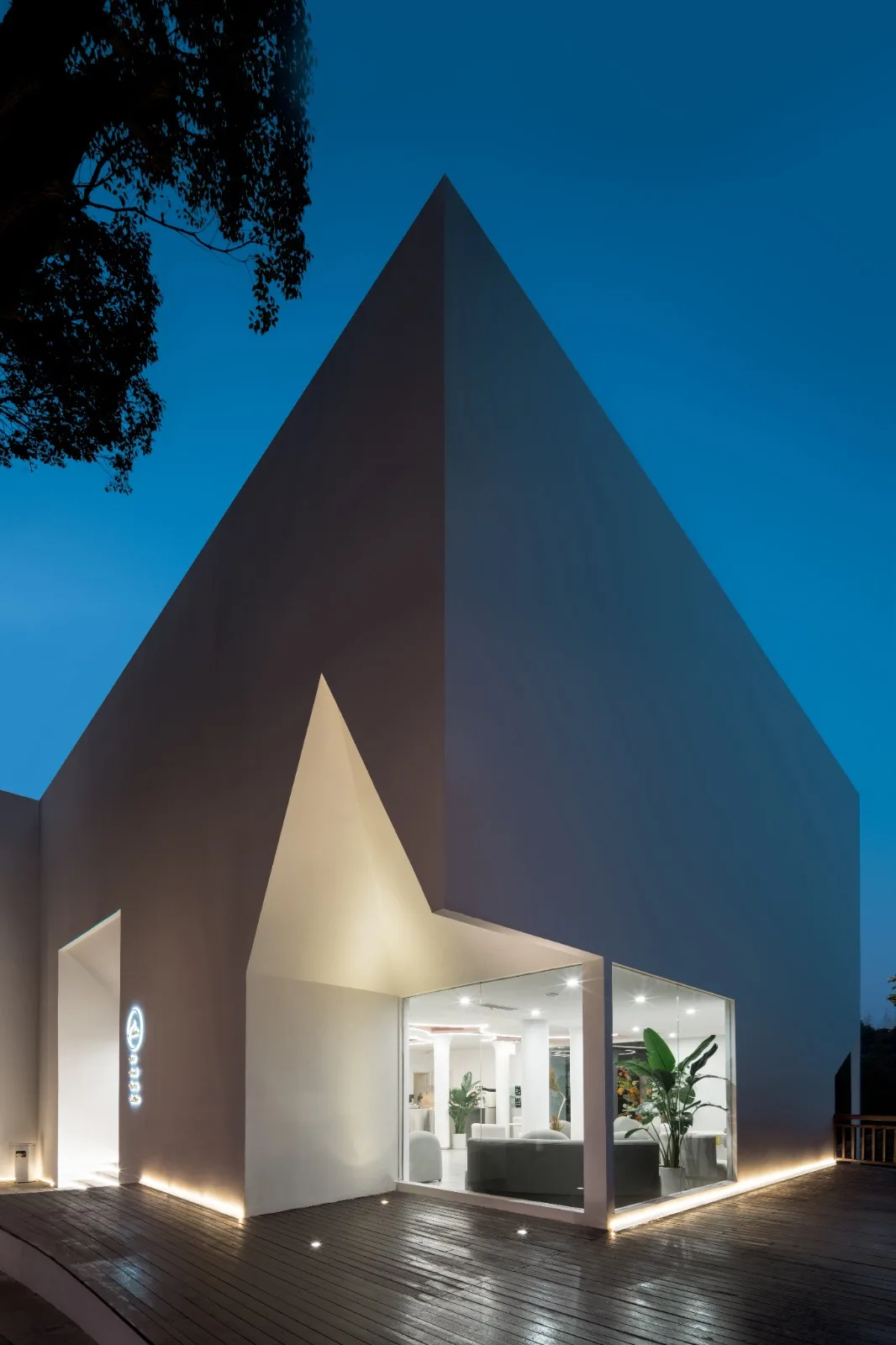
△ Exterior light and shadow; Night view © Xu Yingda
Approaching from the distant mountain stream wharf, the pure white building is partially concealed among the forest trees, with only one corner visible beyond the tree line. The old building now stands with a renewed posture and appearance, symbolizing a narrative of past and present.
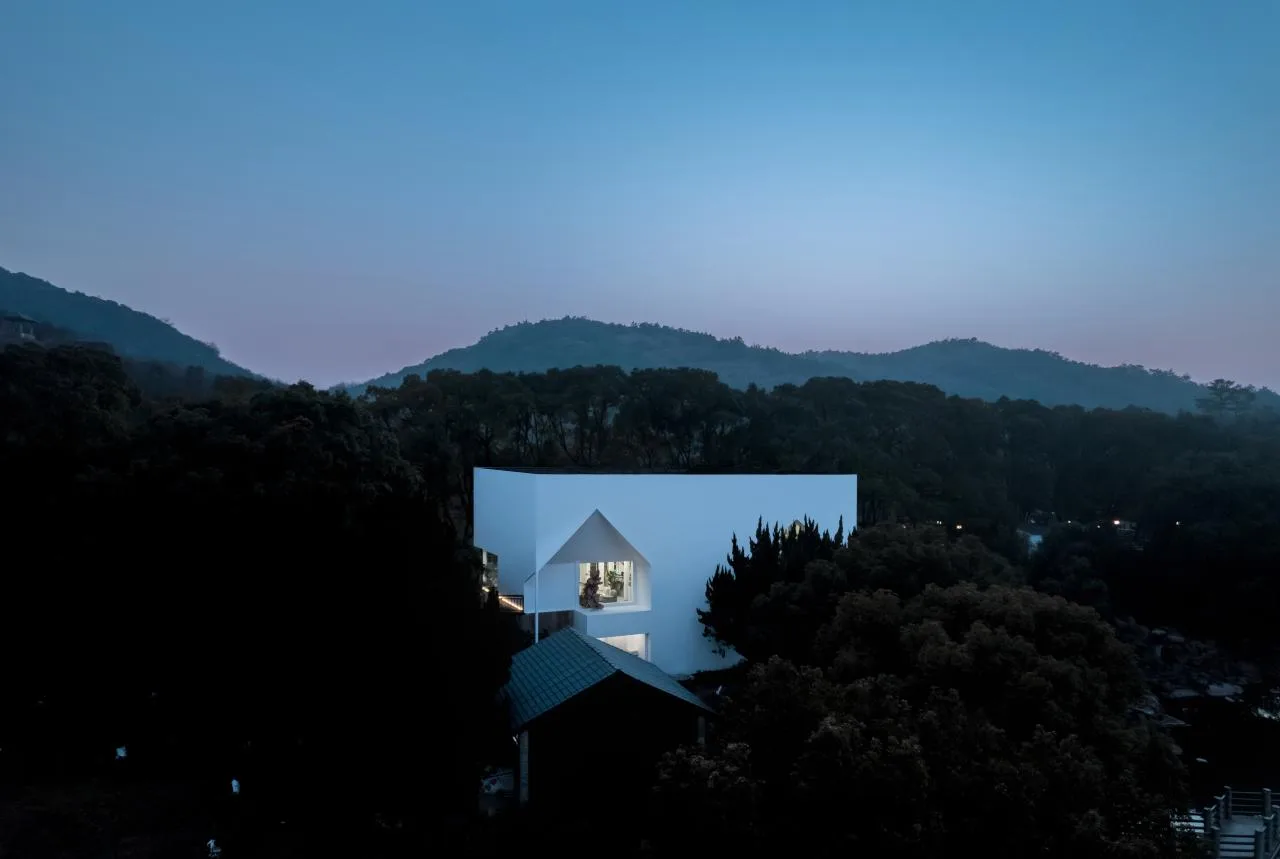
Aerial view of mountain roads © Xu Yingda
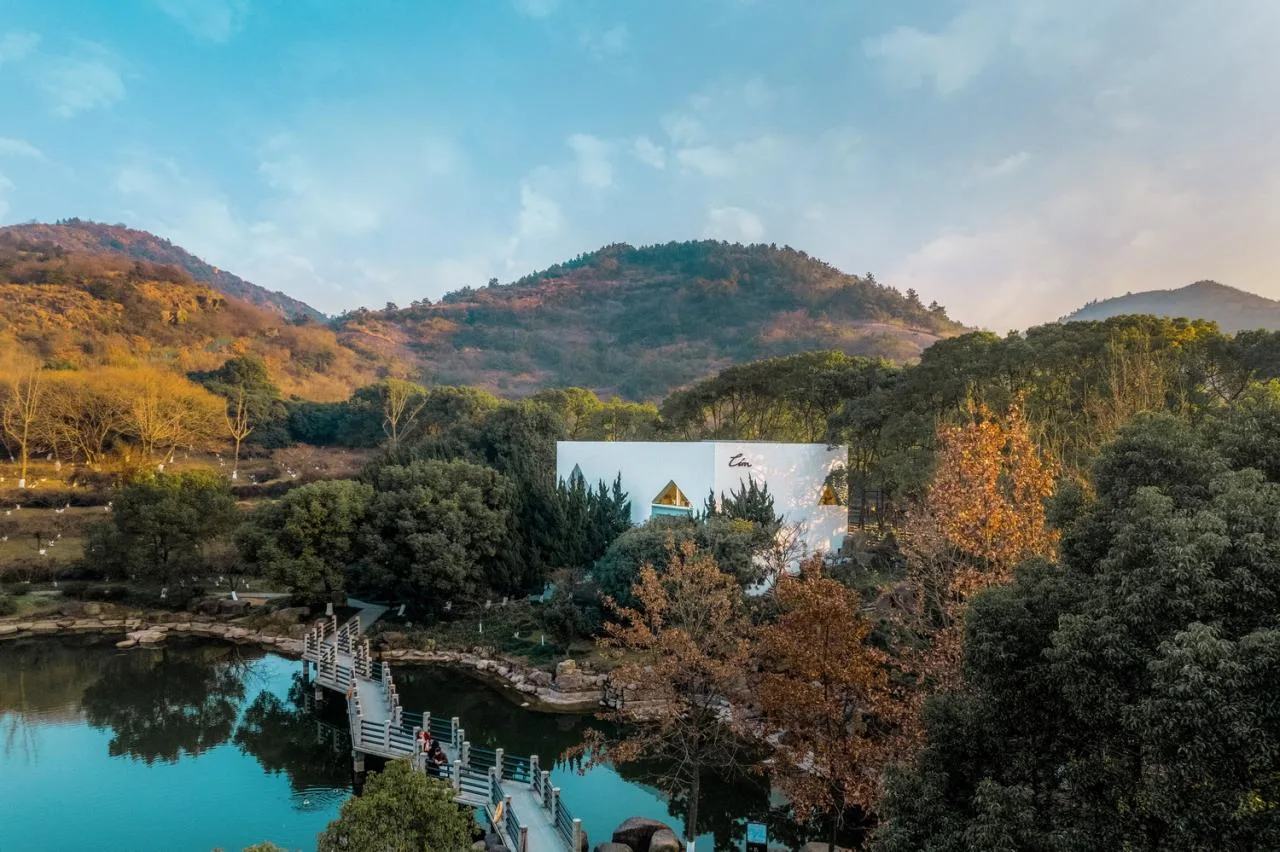
△ Aerial lake view © Xu Yingda
The new exterior facade is constructed using a steel frame combined with cement fiberboard. Part of the new exterior wall encloses the original interior wall, creating an inner courtyard that allows natural light to enter.
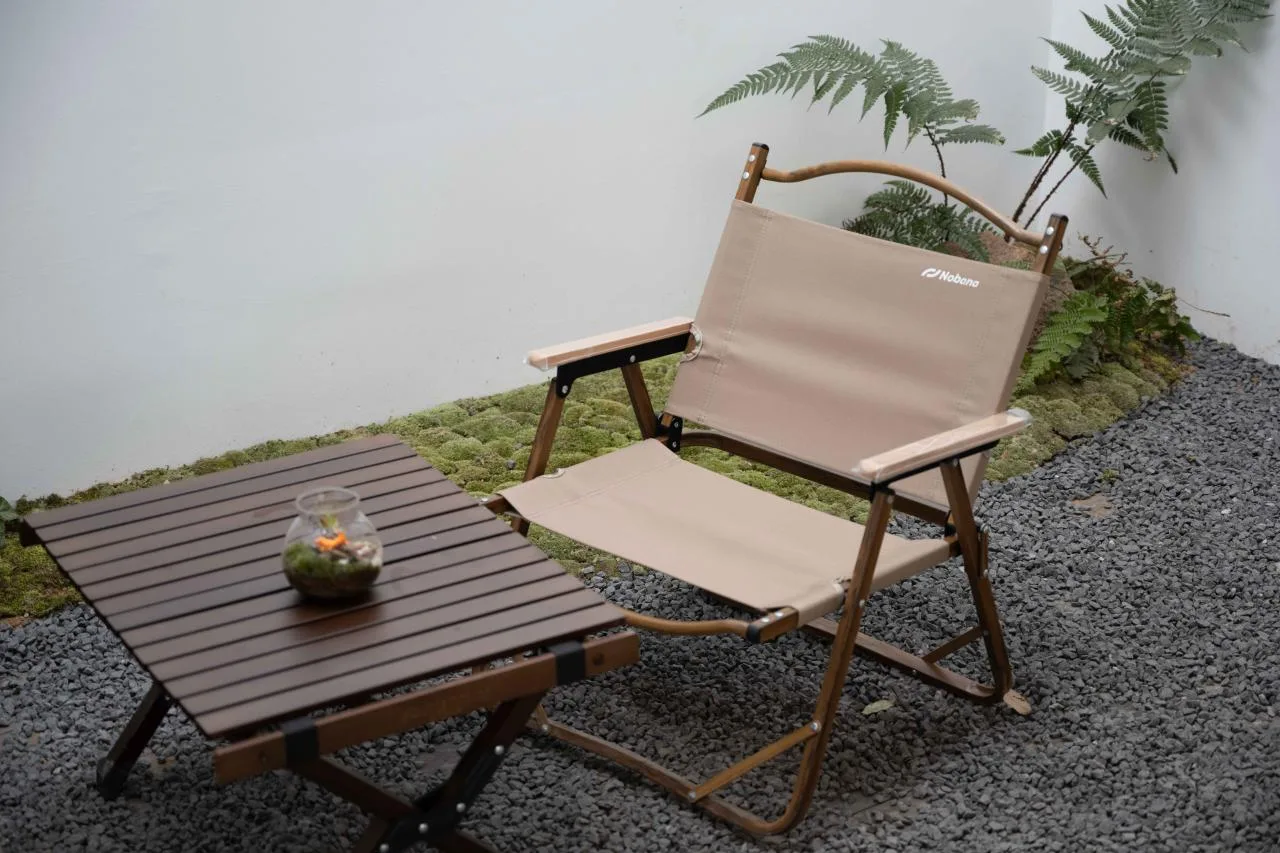
△ New and original walls form an inner courtyard © Xu Yingda
The original building has three floors. After renovation, the basement serves as the logistics area, the first floor contains the entrance and private rooms, and the second floor is the open dining space. A spiral staircase connects all three levels.
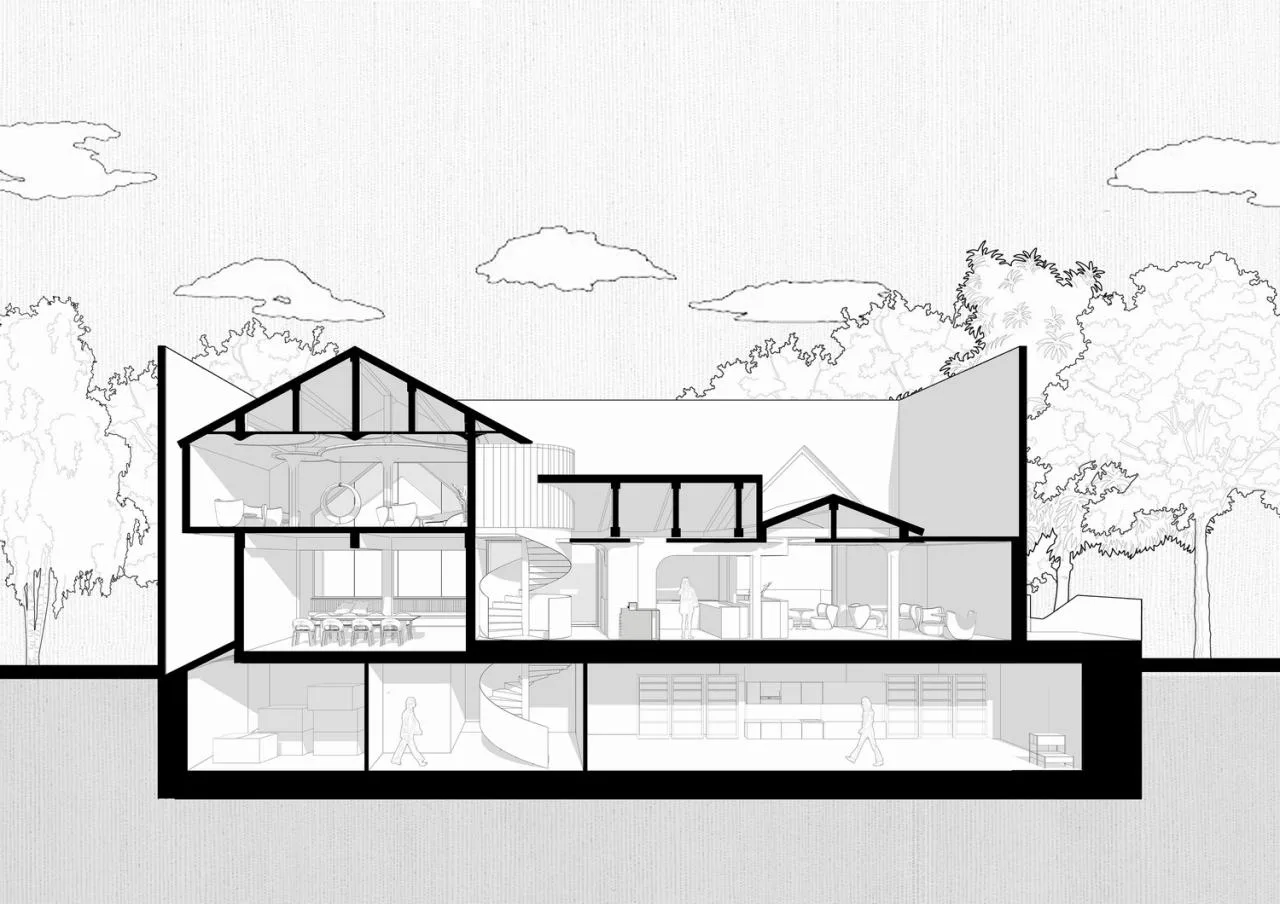
△ Sectional perspective © Pingjie Design
The original interior structure is complex, with densely spaced beams and columns that complicate the interior design. To address this, the designer wrapped the square columns with umbrella-shaped cylinders, while the ceiling was divided into irregular circular sections to break the monotony of the original roof.
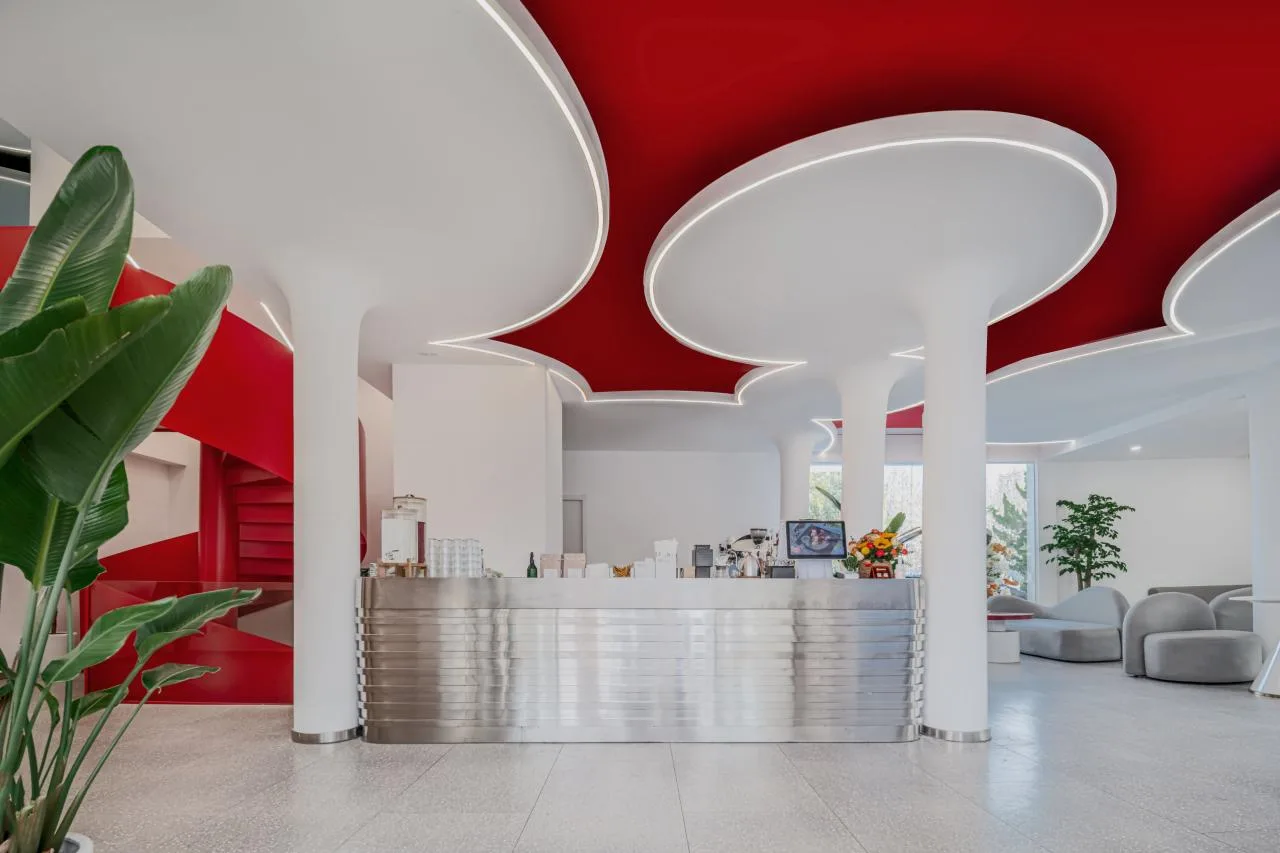
△ First floor bar counter © Xu Yingda
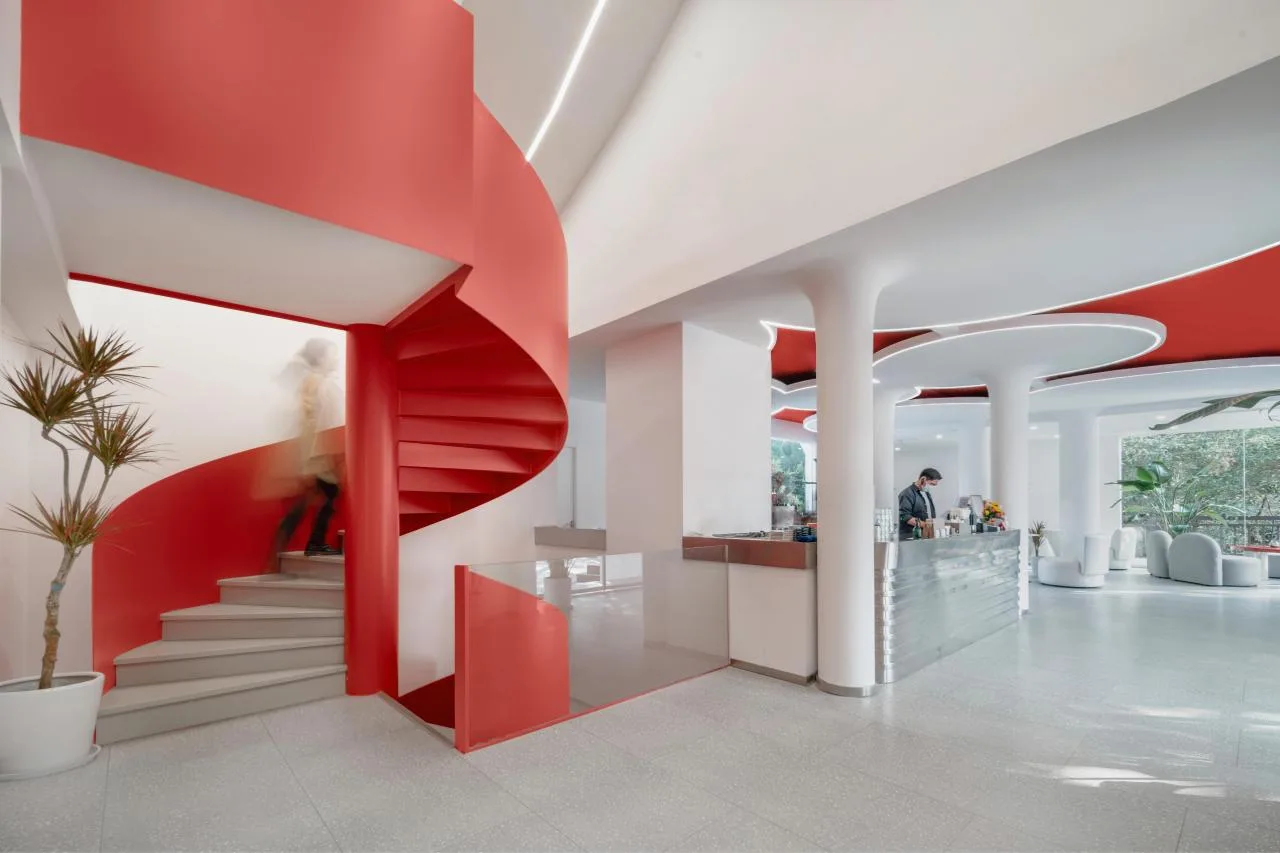
The floors are connected by a spiral staircase © Xu Yingda
Inside, the umbrella-shaped columns rise like tree trunks, and their “canopies” spread outwards, echoing the surrounding trees along the outdoor boardwalk. Walking through the interior feels like wandering in a pure white “forest.”
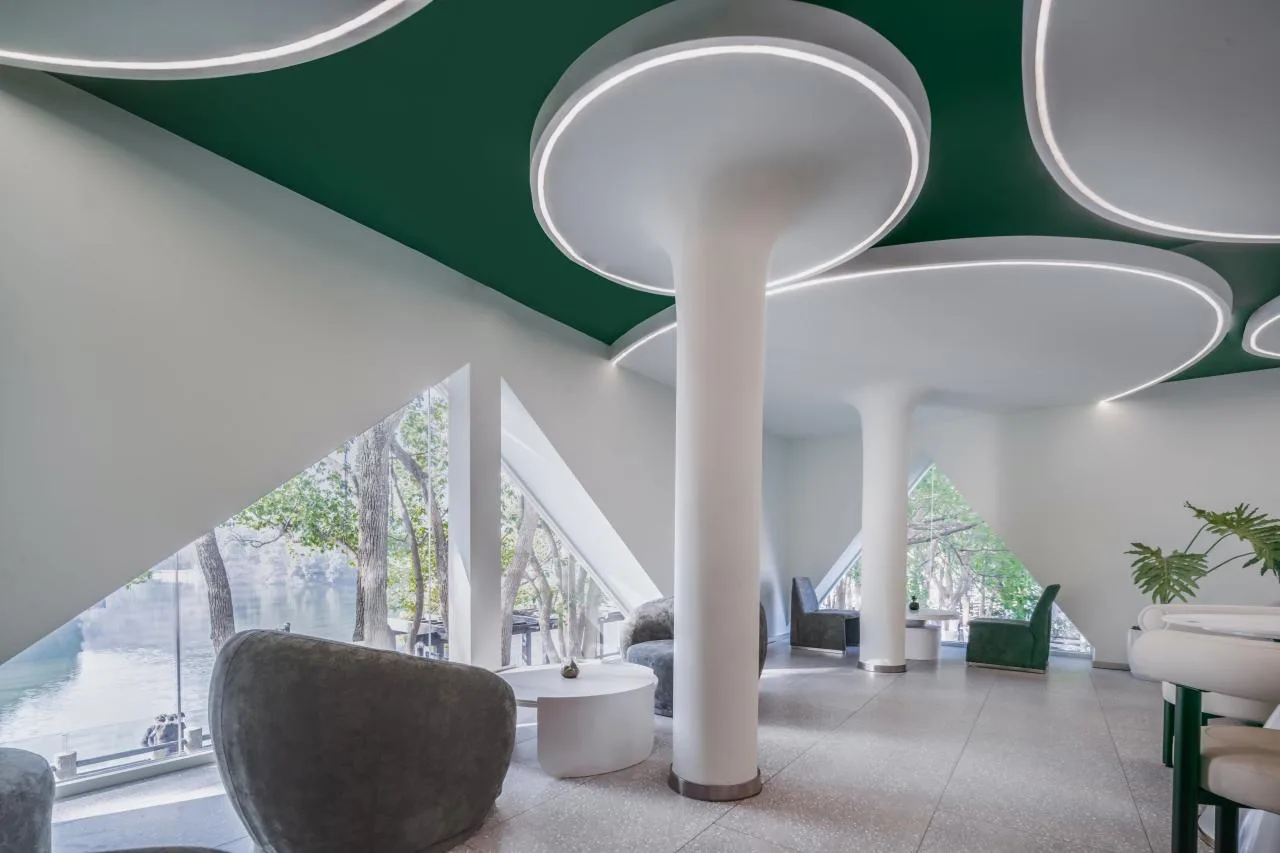
View towards the lake from the second floor © Xu Yingda
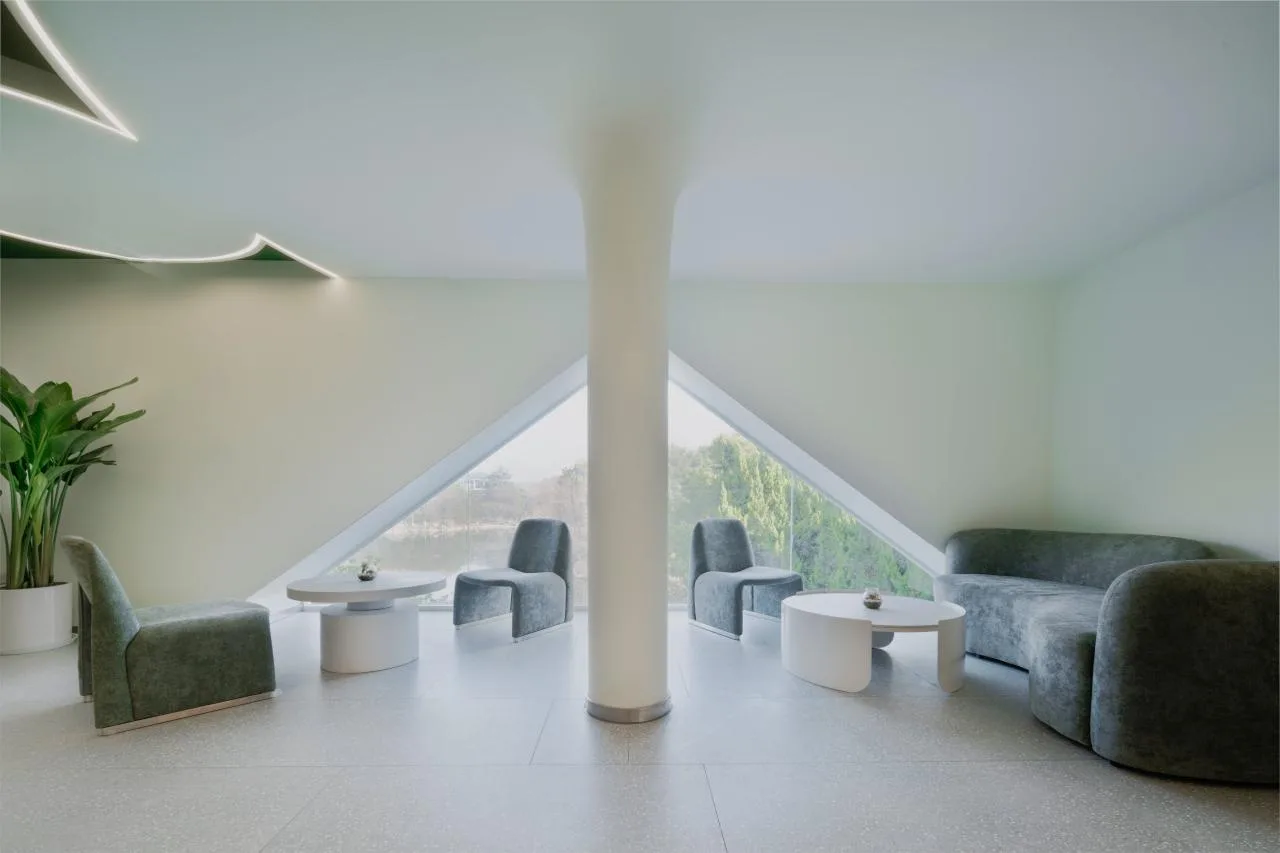
View from the window on the second floor © Xu Yingda
The basement is divided into three functional zones: warehouse, bathroom, and kitchen. The bathroom, serving both customers and staff, is centrally located along with the spiral staircase, while the warehouse and kitchen occupy opposite sides.
The ground floor serves as the main entrance area for customers. The layout includes a front desk, entrance hall, and private rooms. The front desk and entrance hall are positioned on the east side, while two private rooms occupy the quieter west side. Each private room offers distinct views of Longchi and Fengtan through exterior windows.
Two inner courtyards, enclosed by the new exterior walls and original walls, are located in the lobby and south-facing private rooms. This design integrates open natural landscapes visible from both inside and outside the scenic area with more intimate, private artificial landscapes.
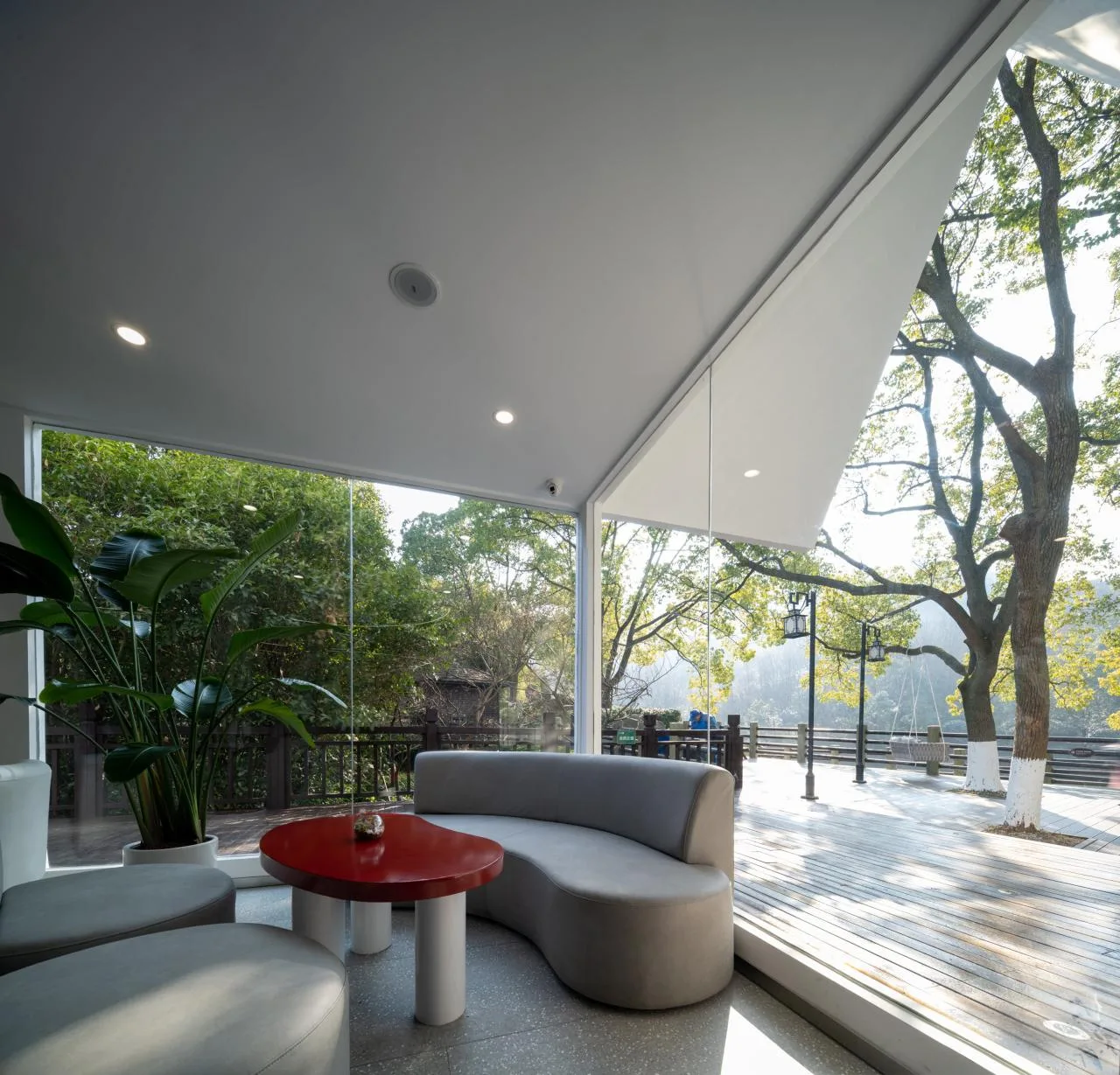
△ Natural landscape open to the scenic area on the first floor © Xu Yingda
The second floor is designated as an open dining area following the original building’s layout, retaining the structural column grid. This open plan allows for flexible use of the space in the future. The spiral staircase is located on the east side, preserving the integrity of the dining area’s layout.
How can we provide visitors with a comfortable space to relax and connect within this Feng Shui treasure trove of lakes and mountains? How do we balance the relationships between various elements? These questions guided the project’s design philosophy. The Baimajian Leisure Restaurant embraces simplicity and youthful energy. The renovated building features LIM Coffee’s signature white elements, cleverly preserving the original sloping roof through roof-shaped window openings. From afar, it remains hidden within the mountain forest; up close, it blends into the tree shadows. The striking pure white contrasts vividly with the surroundings. Inside, umbrella-shaped white columns rise like forest trees, bringing vitality and a unique leisure experience to the Baimajian Longchi Scenic Area.
Project Information
Project Name: Leisure Dining Bar in Baimajian Longchi Scenic Area
Architectural Firm: Heisuke Design
Completion Year: 2022
Building Area: 400 square meters
Location: Baimajian Scenic Area, Suzhou City, Jiangsu Province, China
Photography © Xu Yingda
Design Team: Yang Bo, Ye Wenqia, Wu Zijun, Xiao Mingfeng, Xiao Xiangdong, Yang Nan, Gou Yongcong, Sun Jiayi
Client: LIM Coffee, Longchi Scenic Area, Baimajian, Suzhou
Structural Engineer: Shanghai Hengtai Architectural Design Consulting Co., Ltd
Construction: Horizontal and Vertical (Suzhou) Architectural Decoration Engineering Design Co., Ltd















Must log in before commenting!
Sign Up