
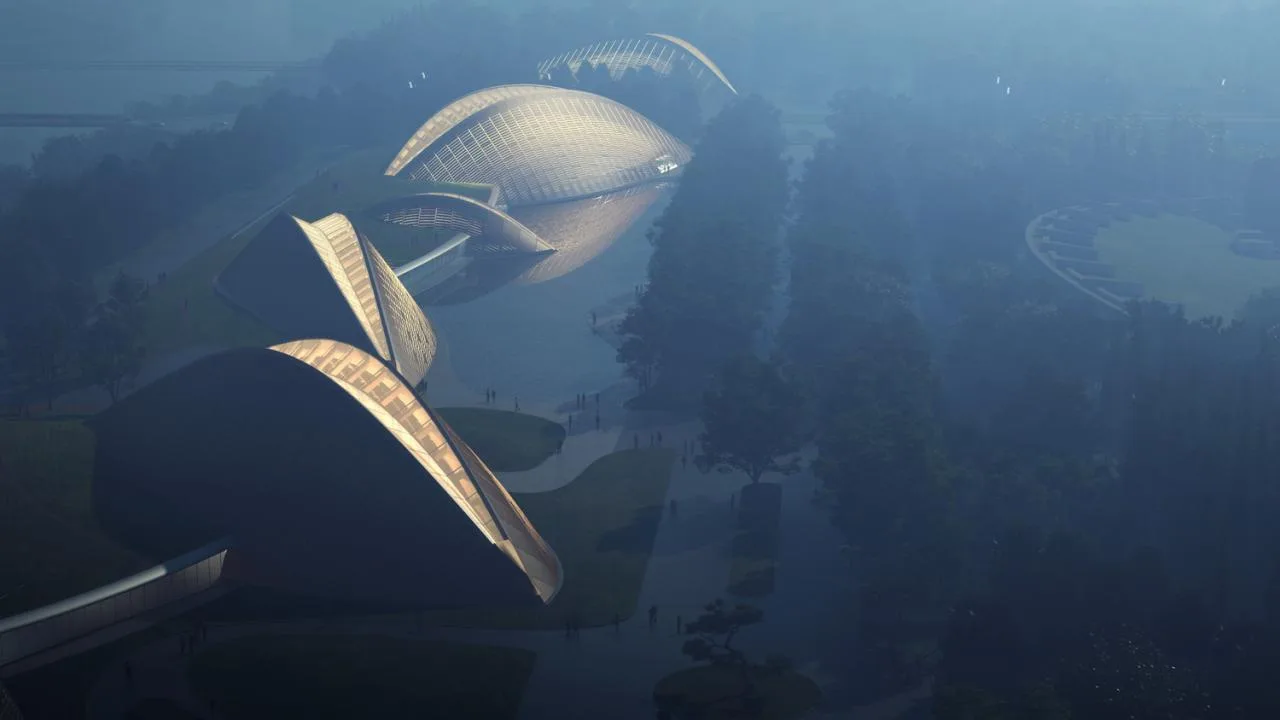
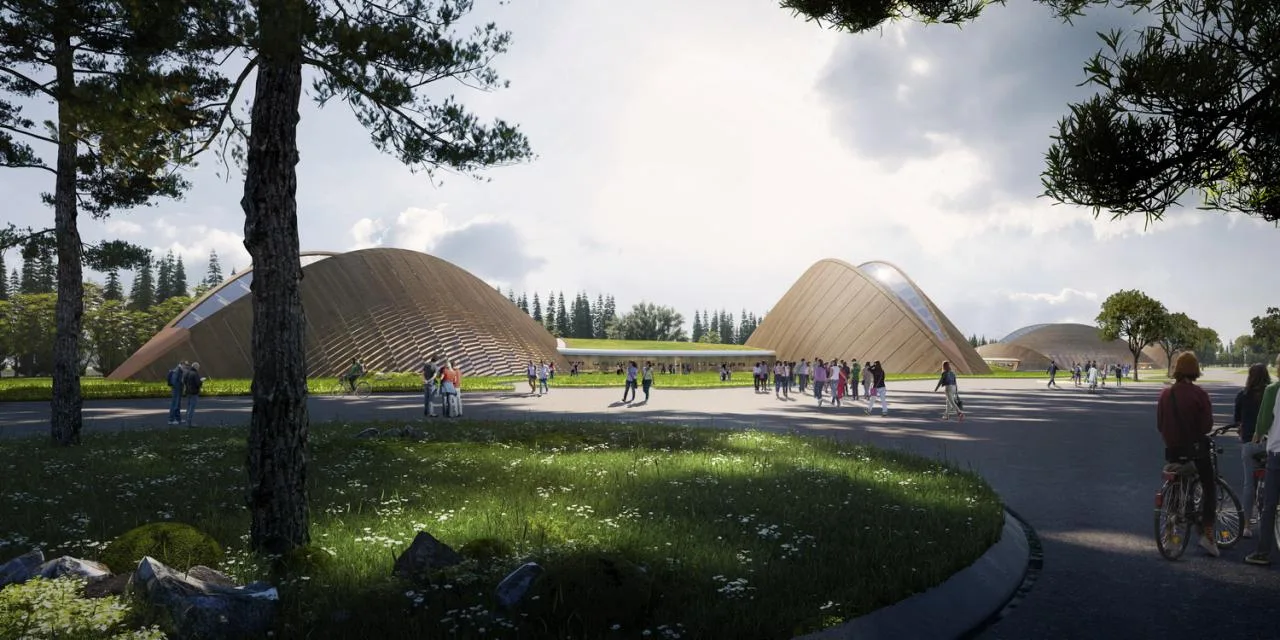
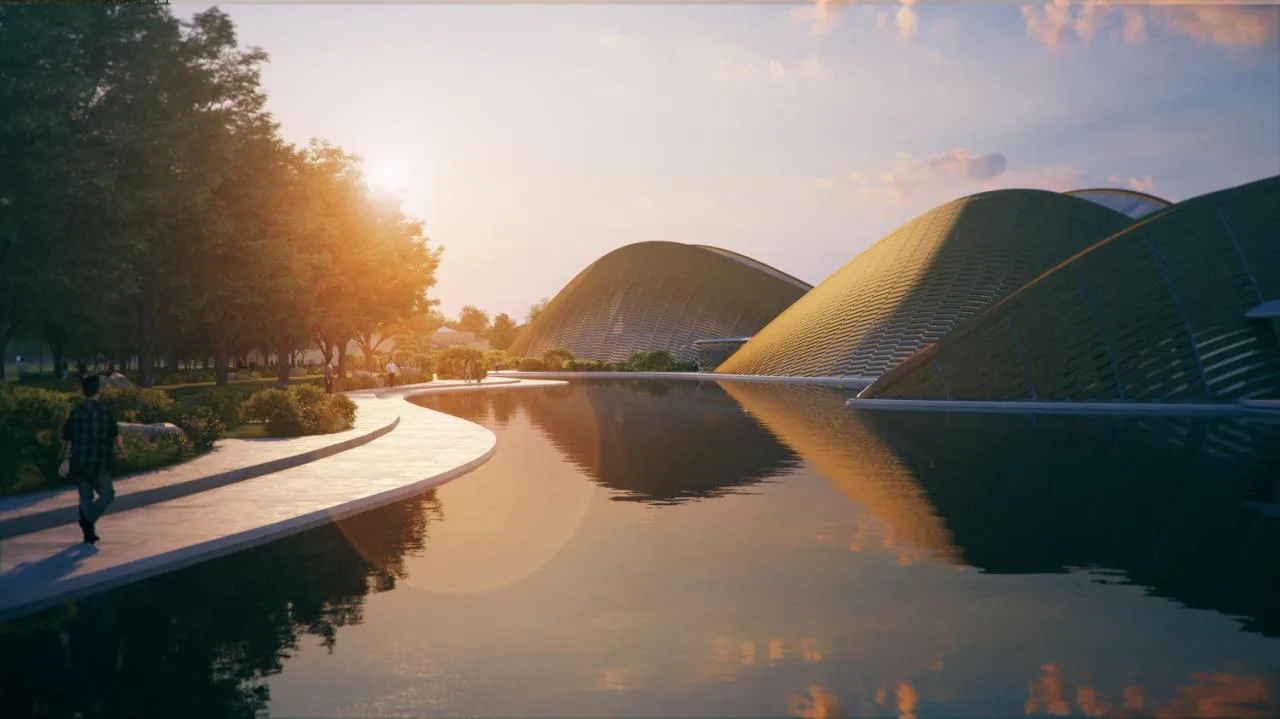
MAD Architecture, led by Ma Yansong, has unveiled the design proposal titled Sanxingdui Eye for the Sanxingdui Ancient Shu Culture Site Museum and its ancillary facilities. The design features a group of scattered, shuttle-shaped wooden structures perched above the park’s dense forest and serene waters. This new architectural complex harmonizes with the existing landscape, creating a fresh expression of the earth’s natural beauty.
On one hand, the design evokes a mysterious, ancient-futuristic aura reminiscent of the Sanxingdui civilization. On the other, its restrained form and scale connect seamlessly with nature, transforming the park into a vibrant civic and cultural space where history meets the future, and culture blends with nature.
The Sanxingdui Site is located in western Guanghan City, Sichuan Province, and represents a cultural heritage spanning approximately 4,500 to 2,800 years ago. It is the largest, most significant, and culturally rich ancient city and Shu cultural site in southwestern China. Together with the Jinsha site, Sanxingdui has been jointly declared a World Cultural Heritage site.
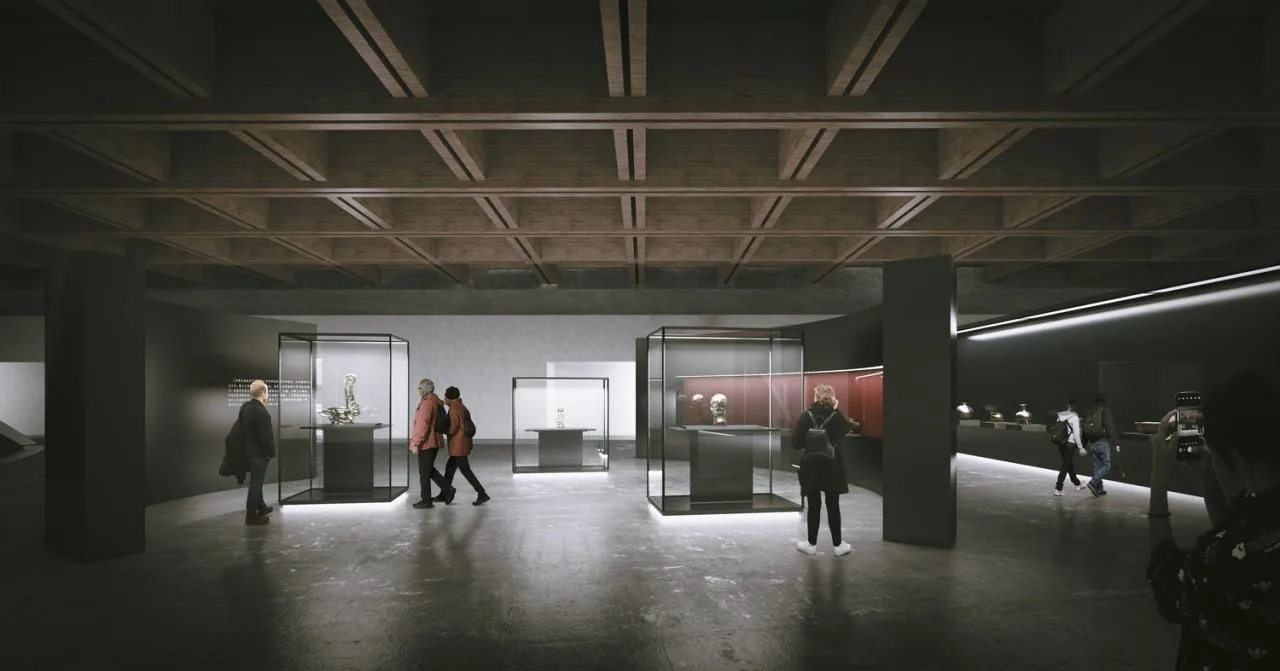
Sanxingdui’s enigmatic appeal largely stems from the limited understanding of the ancient city and state it represents, embodying the ancient Shu culture. Scholars widely agree that the interaction between the Yangtze and Yellow River basins shaped this culture. The artifacts unearthed at Sanxingdui not only reflect the mysterious local ancient Shu culture but also exhibit influences from the Central Plains culture, brought by migrations from the Central Plains to Shu. The museum’s collection showcases bronze, jade, gold, stone, pottery, ivory, seashells, and more.
The planned Sanxingdui Museum Park occupies the northeast corner of the site’s core protected area, covering 90,000 square meters. The project encompasses overall park planning, a new museum, a tourist reception center, and comprehensive landscape design. Upon completion, the museum will become a world-class venue dedicated to collecting, displaying, preserving, and studying the cultural relics unearthed from Sanxingdui.
The Eye of the Earth, the Eye of Ancient Civilization, the Eye of Nature
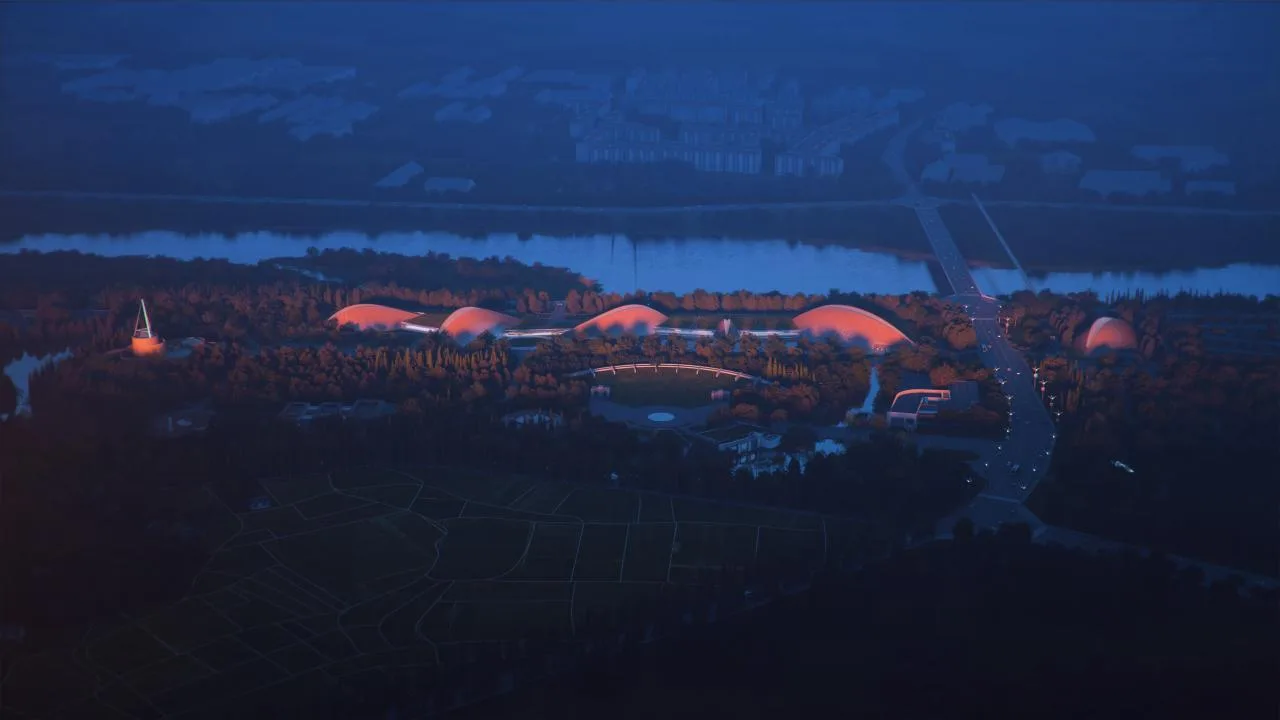
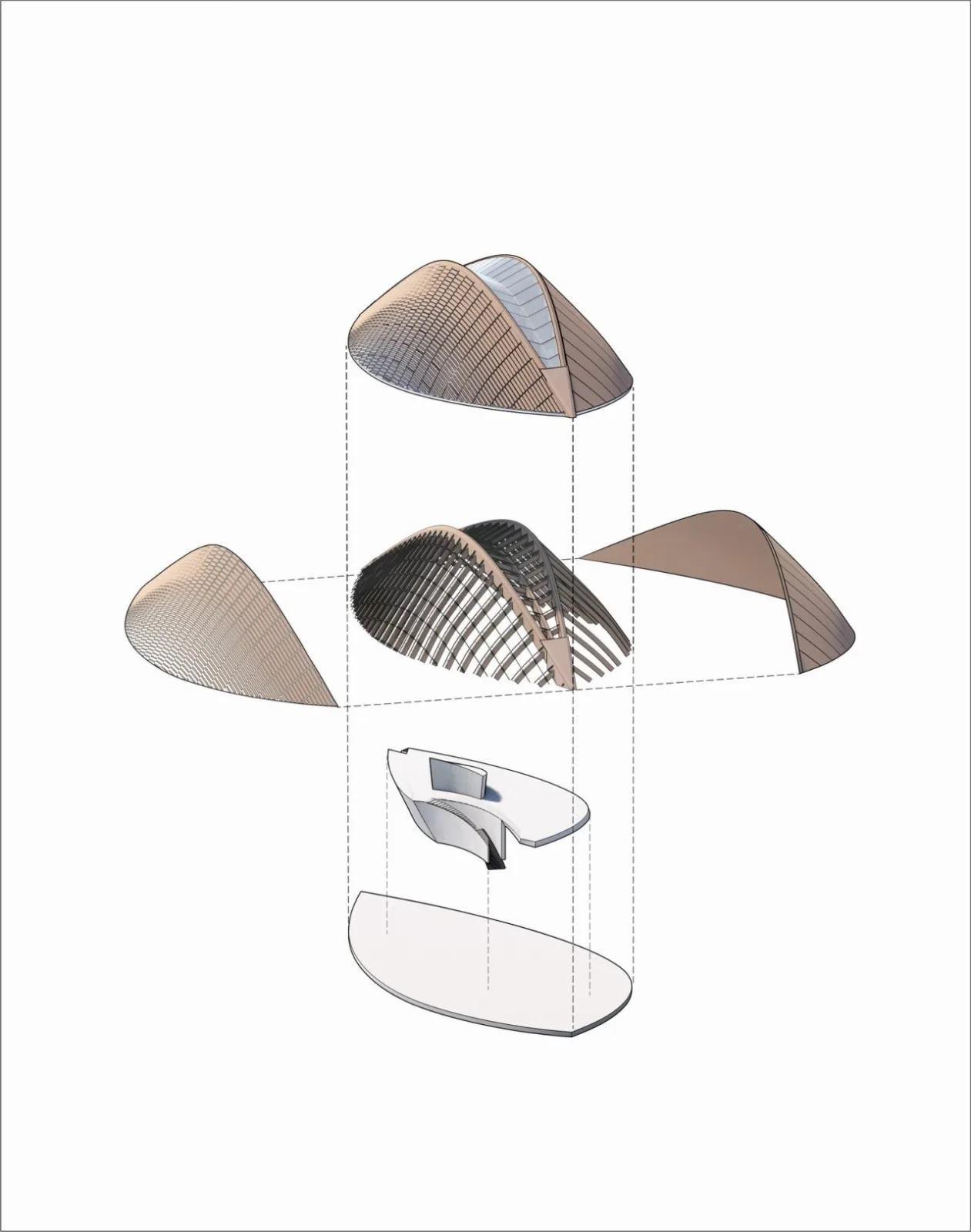
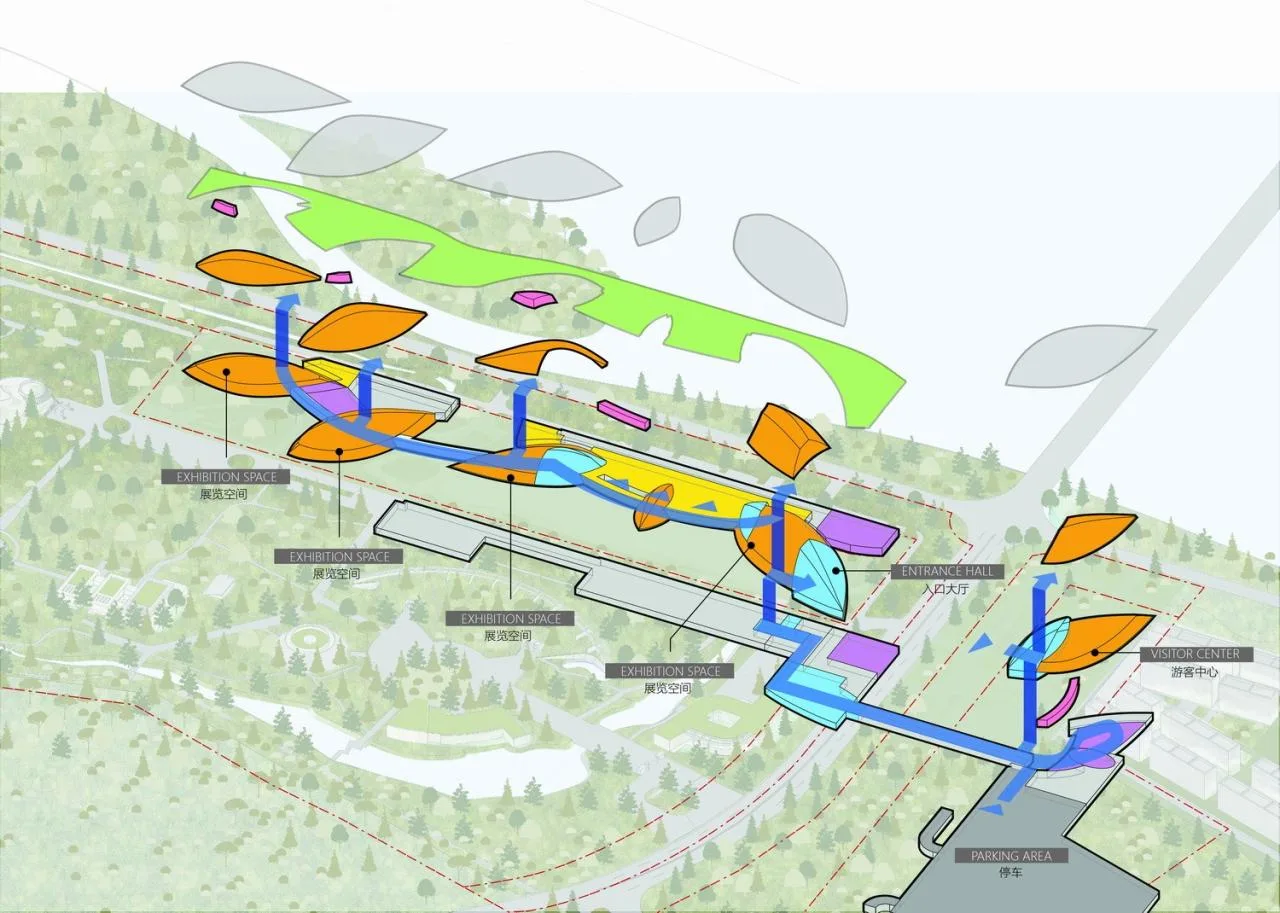
The new complex by MAD consists of six scattered wooden structures arranged east to west. Located east of Xiangxin Road, the first building is the Tourist Reception Service Center, with a total area of 5,830 square meters. Extending westward, five buildings of varying sizes form the new museum complex. The museum building covers approximately 30,000 square meters, with a total construction area of 28,650 square meters.
Many of the cultural relics discovered at Sanxingdui, such as the bronze vertical eye masks and standing bronze figures, feature exaggerated, surreal shapes.
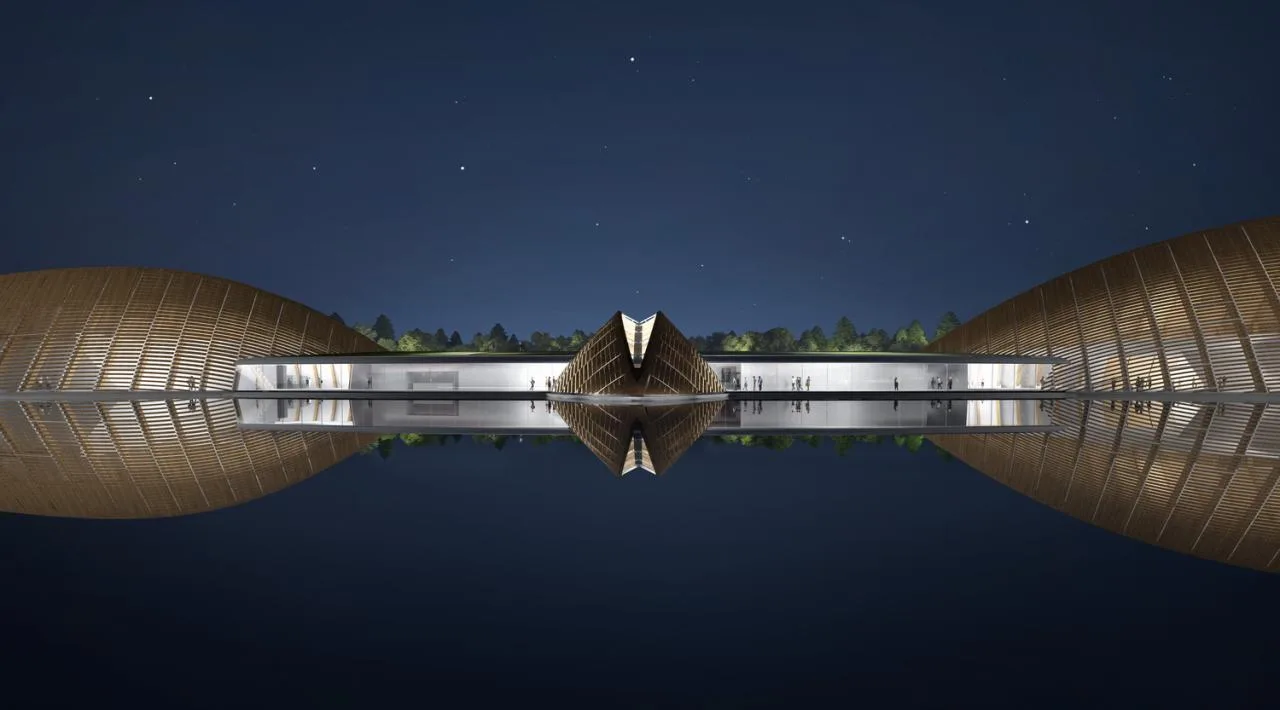
At sunset, the six buildings appear to transform into pairs of radiant eyes, reminiscent of the bronze and gold masks of Sanxingdui. They blur the line between the divine and the physical, inviting visitors to feel as if they are journeying between history and the future.
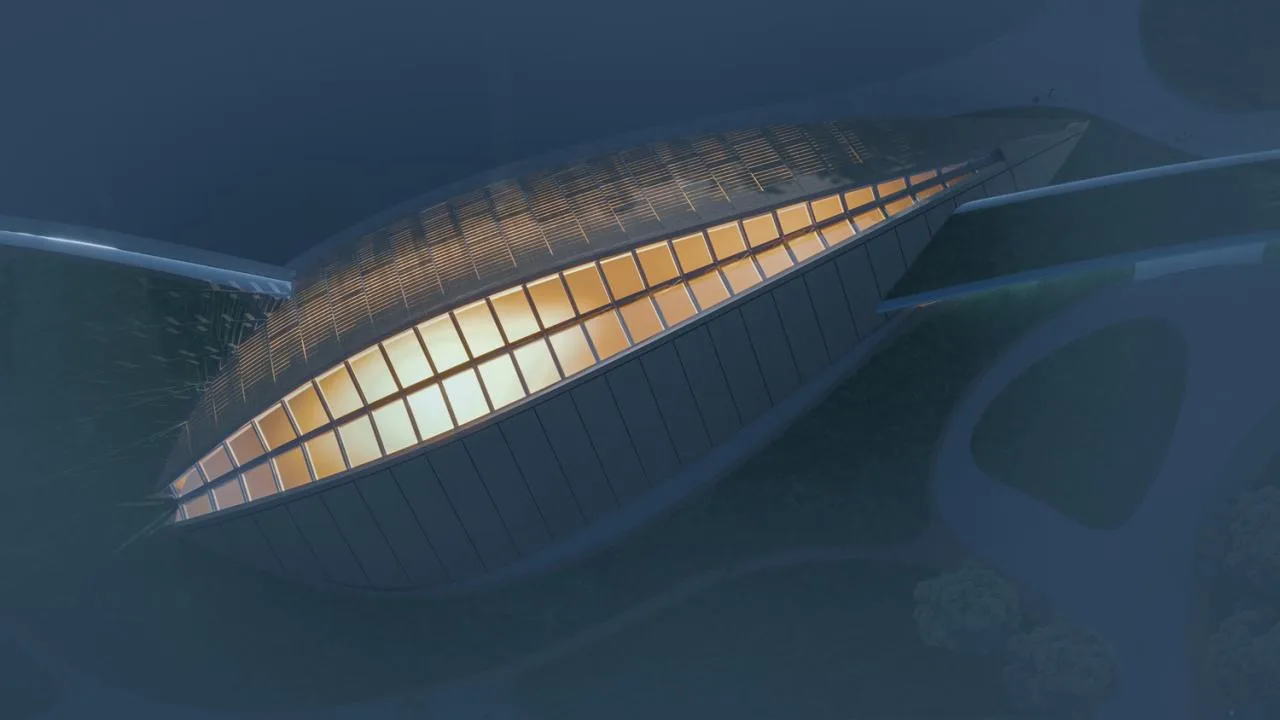
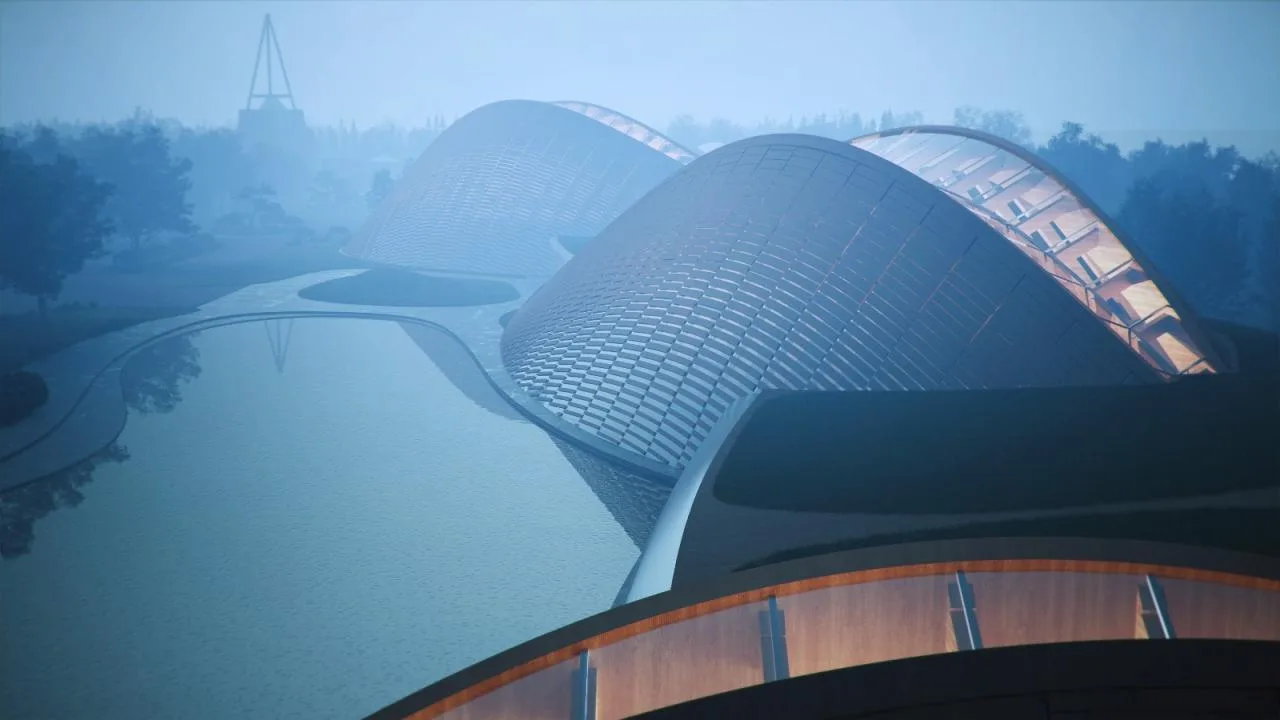
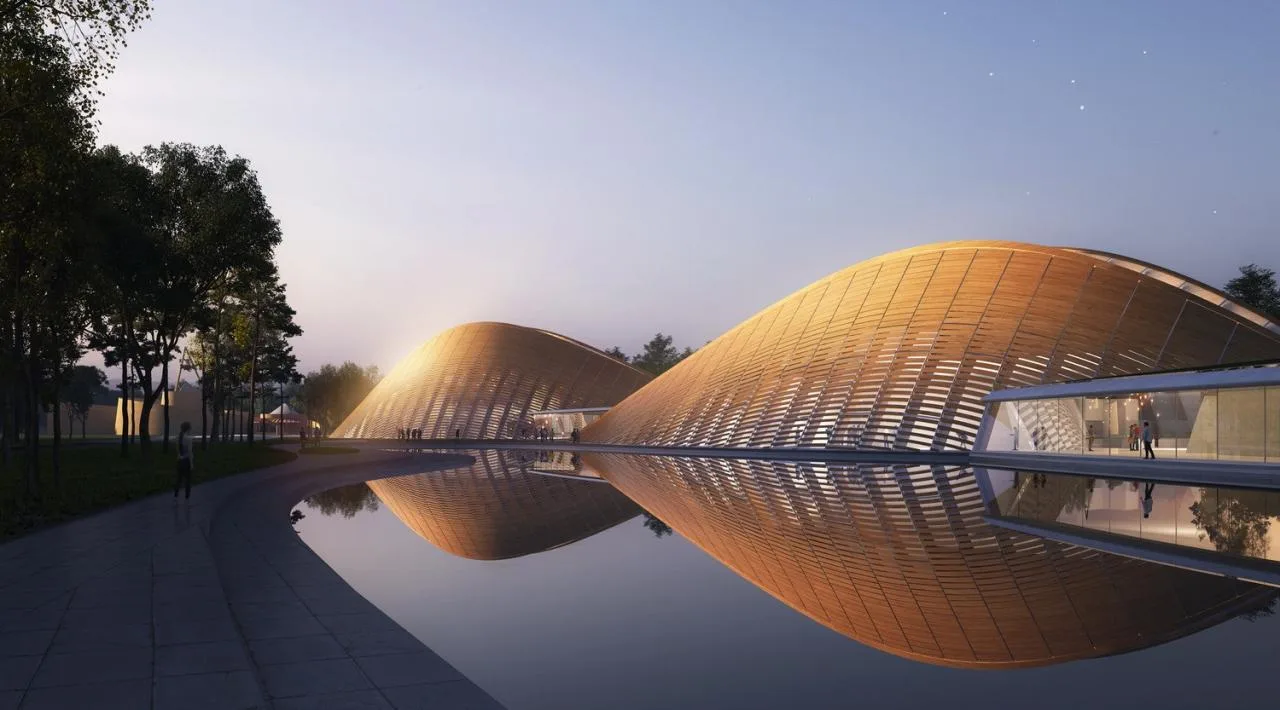
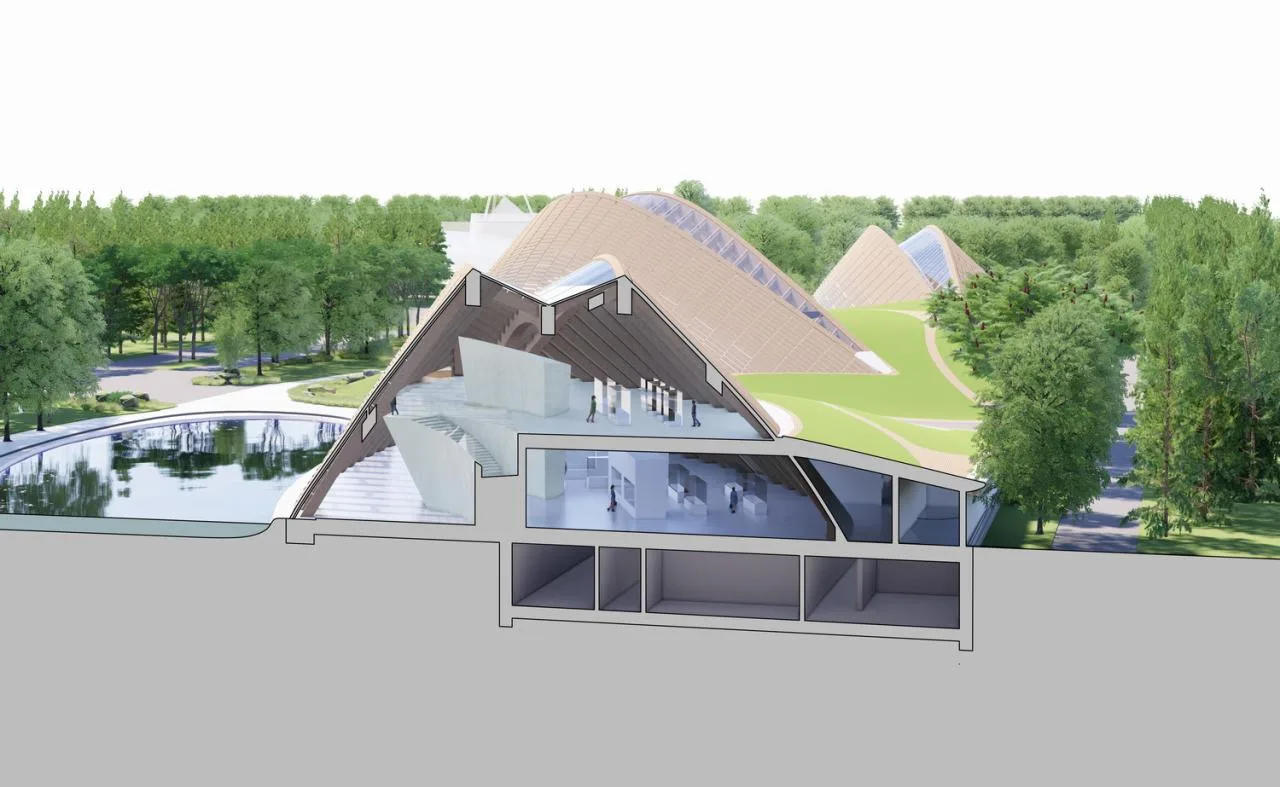
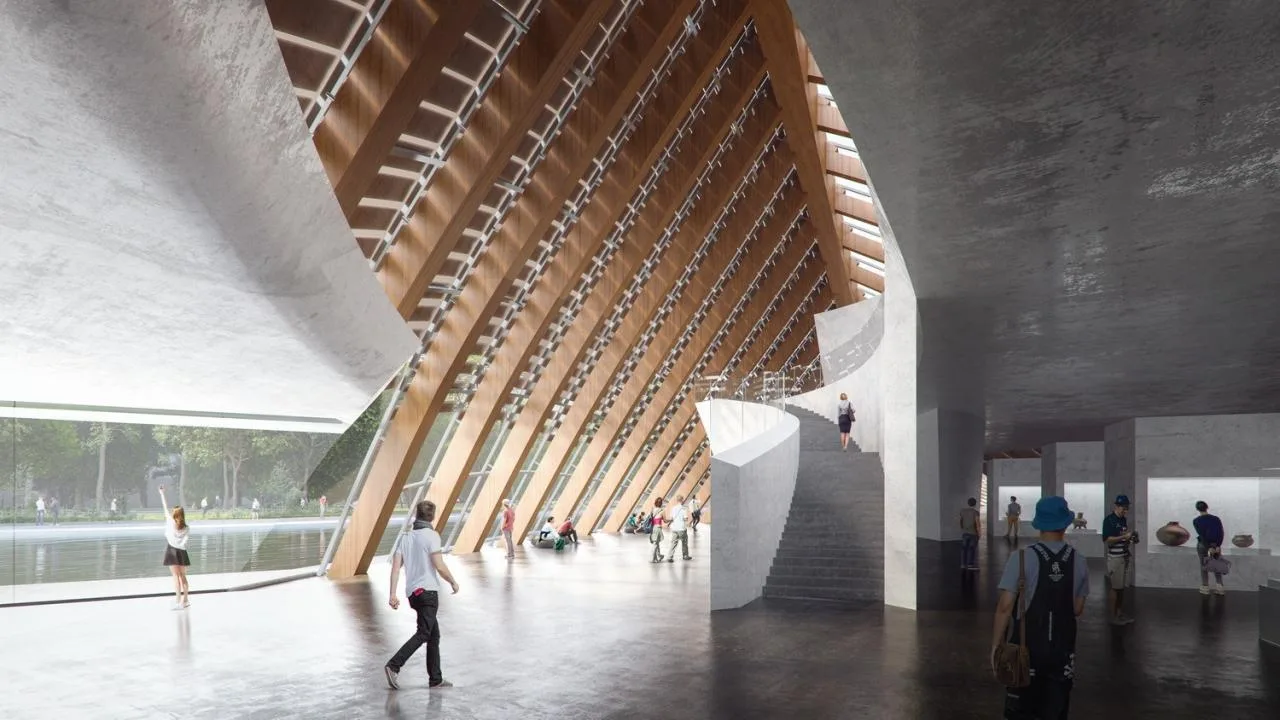
During the day, the wooden curtain walls resonate with the natural atmosphere of the park’s dense forest. The large-span wooden structure offers a spacious, column-free interior, providing maximum flexibility for exhibit layouts. Natural light floods the exhibition corridors through glass skylights installed on the roofs.
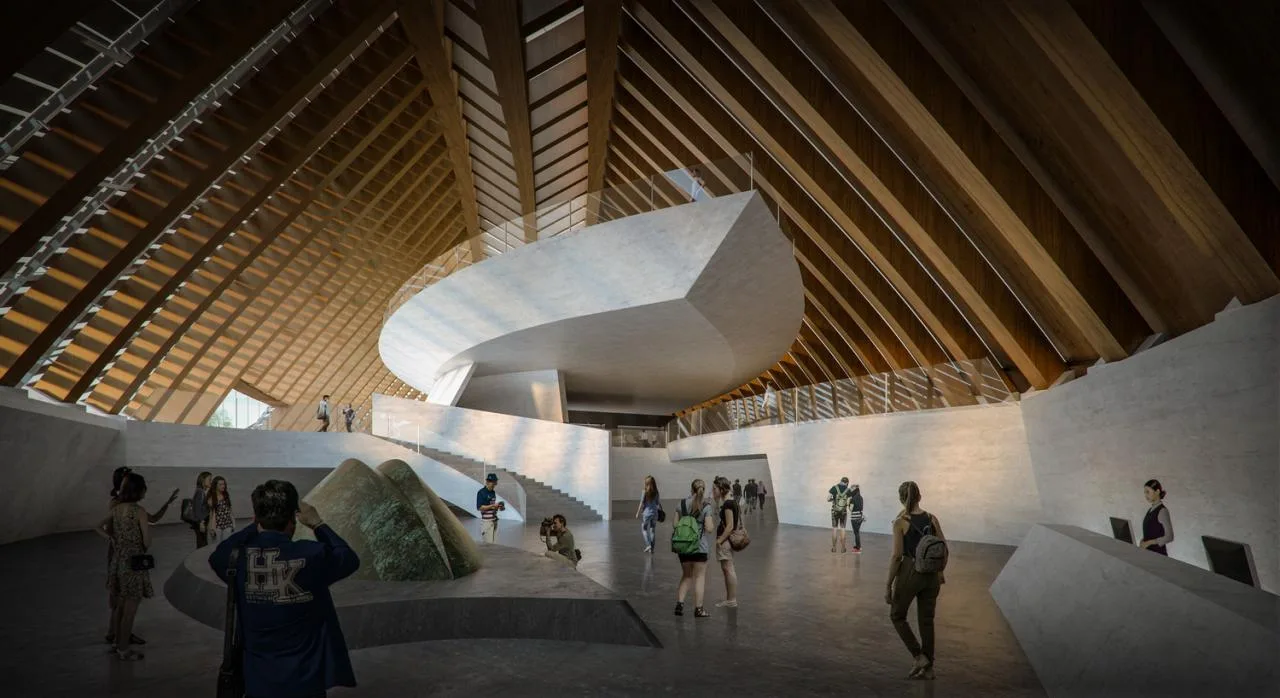
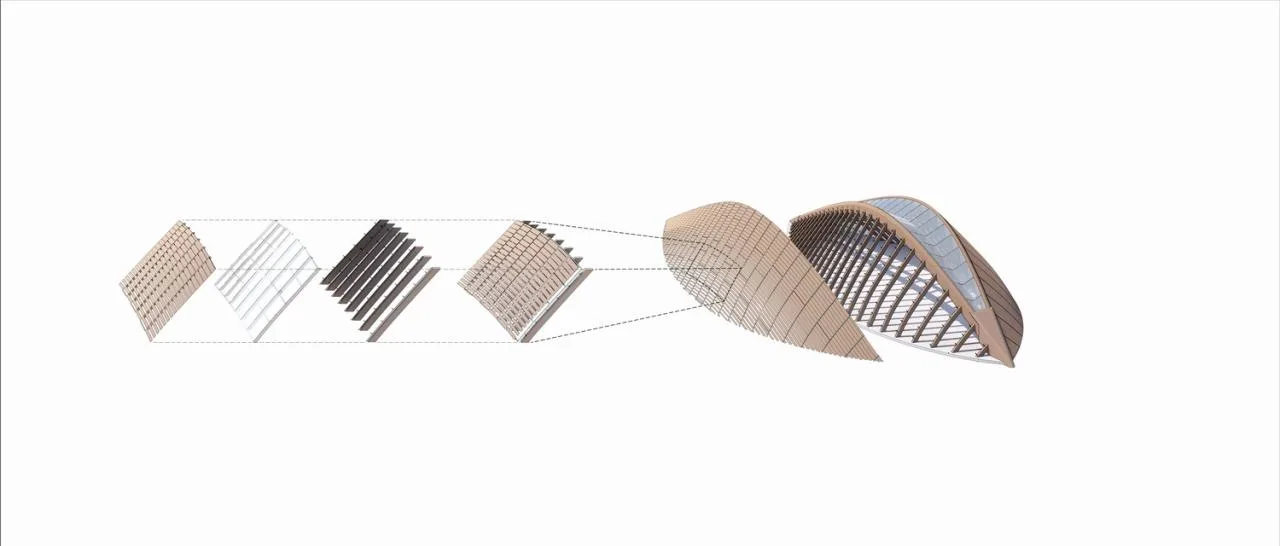
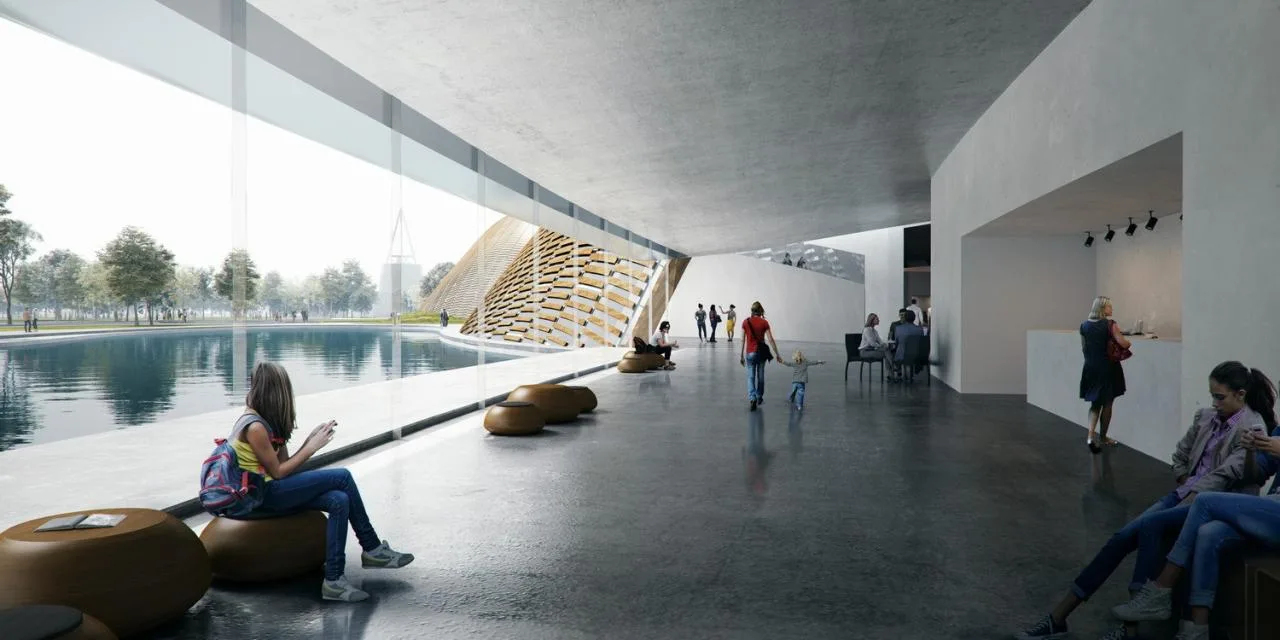
Visitors enter through the main entrance at the Tourist Reception Service Center, pass through a viewing hall that introduces Sanxingdui culture, then proceed via an underground corridor to the first-floor entrance hall of the new museum. The exhibition halls are linked by south-facing glass corridors, where the surrounding landscape gradually changes, enriching the visitor experience step by step.
Where Humanities Meet Nature
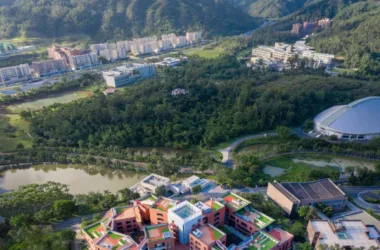
MAD envisions the park as a meeting point for culture and nature. Accordingly, the new buildings were designed to avoid large-scale construction, respecting and preserving the original trees and water features on site as much as possible. These elements were seamlessly integrated into a harmonious landscape with the new architecture, creating a unified atmosphere between museum and park.
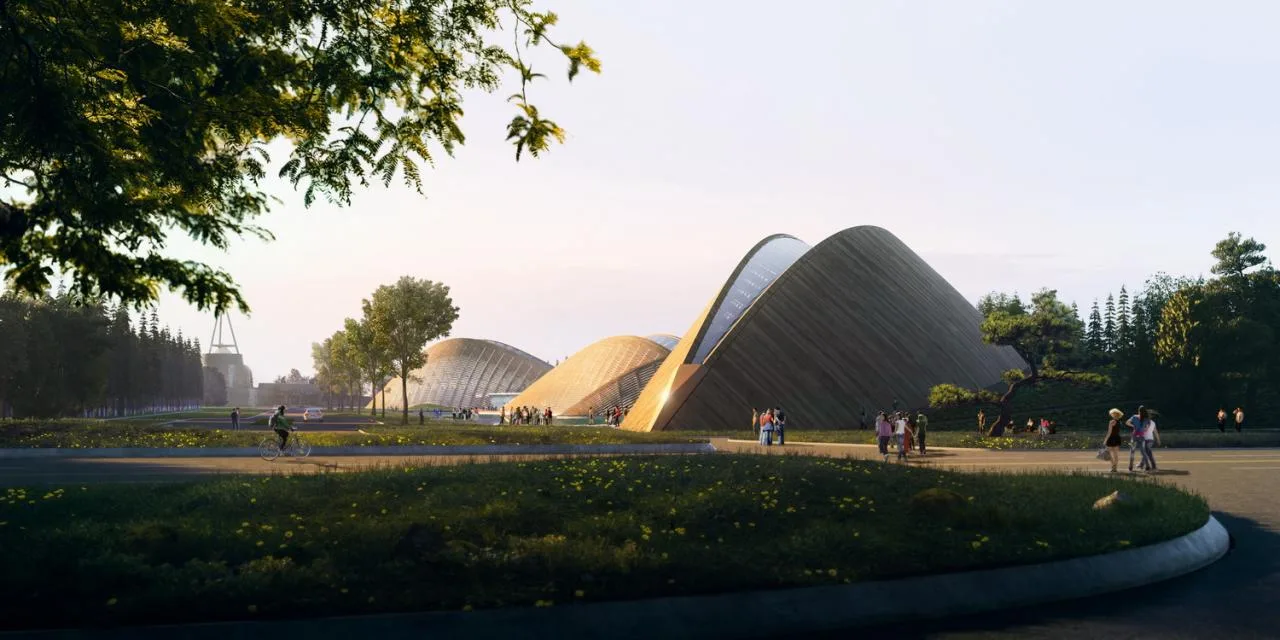
The north-facing exhibition hall and other functional spaces are connected to form an undulating landscape, covered by green roofs. Visitors can stroll from the north shore of the Duck River to the rooftop green space on the second floor, enjoying panoramic views of the park and the river below.
After exploring the new museum, visitors can continue their journey along a tree-lined walkway, visiting the Digital Experience Museum (now the Bronze Museum), the Cultural Relics Protection and Restoration Exhibition Center, and the Research and Study Museum (now the Comprehensive Museum), gaining a multifaceted understanding of Sanxingdui culture.
The new Sanxingdui Museum goes beyond merely expanding exhibition space. It aims to create an atmosphere that frees the mind and spirit. Here, cultural relics, the local environment, and nature converge and blend, inspiring visitors to feel the profound influence of Sanxingdui civilization on contemporary culture and the human spirit.
Project Information
Project Name: Sanxingdui Ancient Shu Culture Site Museum and Ancillary Facilities
Location: Guanghan, Sichuan, China
Project Duration: 2020–2021
Type: Museum
Site Area: 90,000 square meters
Building Area: Museum – 28,650 square meters; Visitor Reception Service Center – 5,830 square meters
Lead Architects: Ma Yansong, Party Masses, Yokosuke Hayano
Competition Design Team: Tiffany Dahlen, Liu Zifan, Pittayapa Suriyapee, Ma Yiran, Cievanard Nattabowonphal, Roman, Chen Hao, Chen Shijie, Wang Shuang, Xiao Yuhan












Must log in before commenting!
Sign Up