
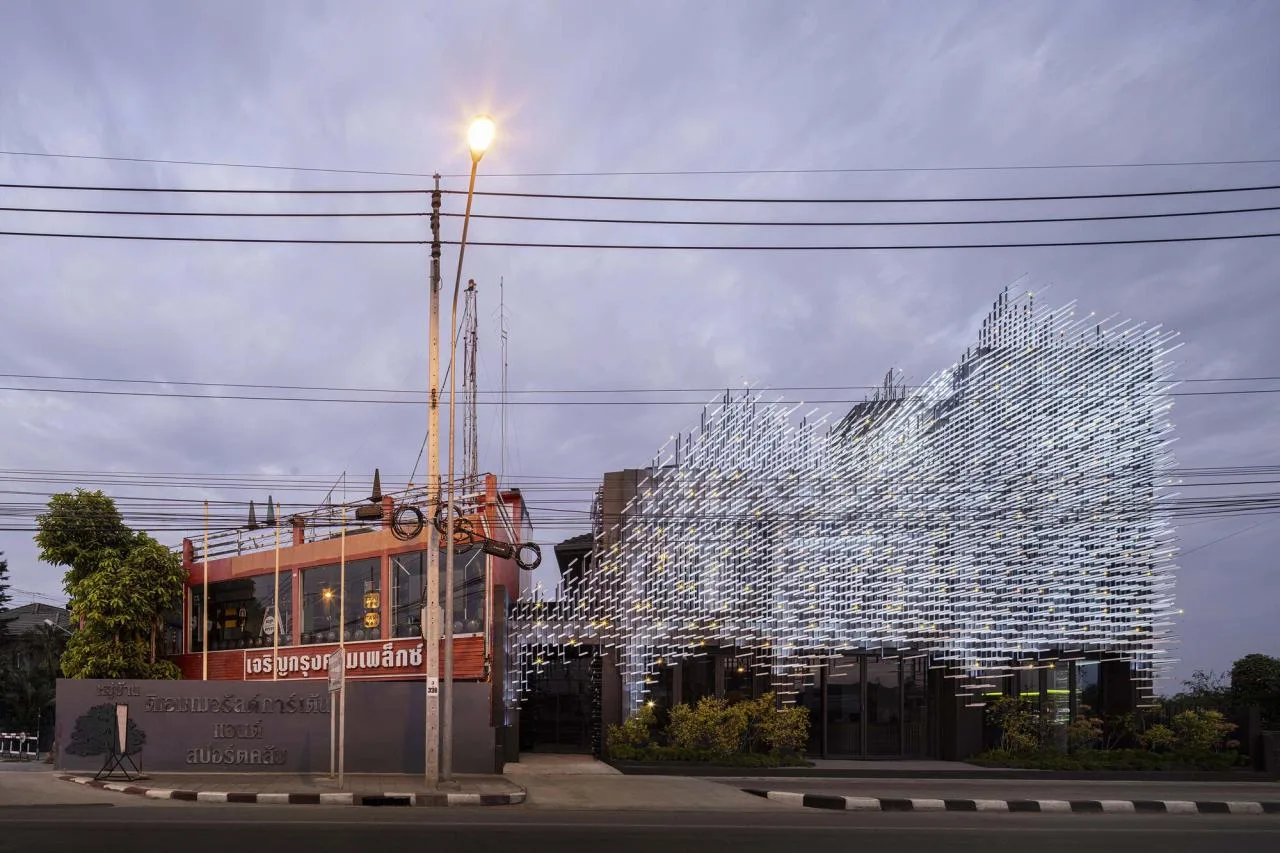
The Museum of Modern Aluminum (MoMA) in Thailand was initiated by a group of visionary homeowners determined to revive the significance of aluminum in the country. During the late 20th century, Thailand was the largest aluminum producer in Southeast Asia, supplying both local demand and export markets with a diverse range of aluminum products.
However, the 1997 Asian financial crisis forced Thai aluminum manufacturers to sell aluminum profiles at reduced prices to domestic hardware markets, leading to a decline that affected the urban landscape of Bangkok. This is evident in the chaotic signage, balcony fences, and ground-floor expansions scattered throughout the city streets.
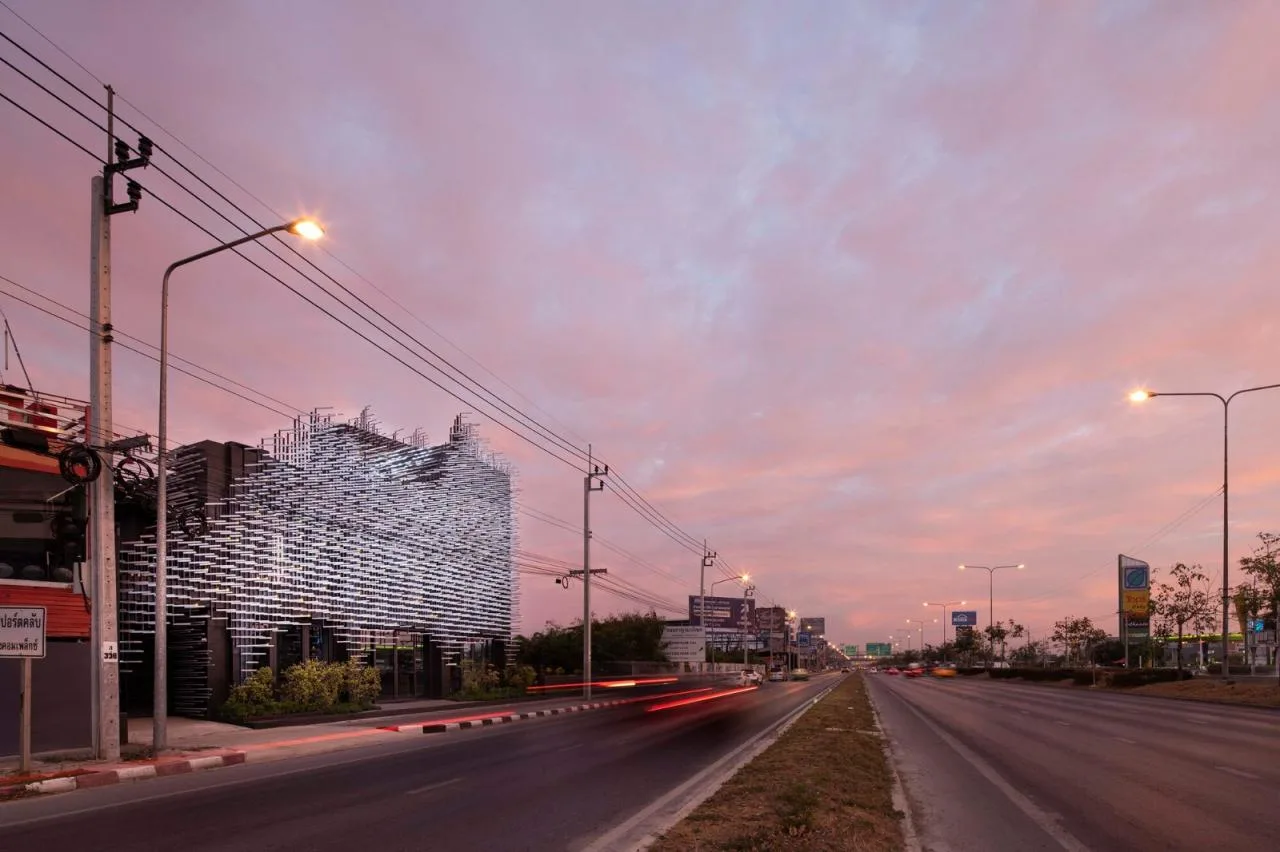
MoMA is situated in a bustling transportation hub on the outskirts of Bangkok, along Ratchaphruek Road, which is lined with numerous commercial signs. This road leads to significant landmarks such as the Grand Palace Wongwian Yai and serves as the main gateway between Bangkok University and Ko Kret Island, the only island in Bangkok.
Ko Kret has been home to fireflies for over a decade, making it a cherished leisure spot for Bangkok residents. The architects envisioned MoMA not only as a public space but also as a peaceful retreat for city dwellers. The design extends the natural landscape of Ko Kret Island to the museum site.
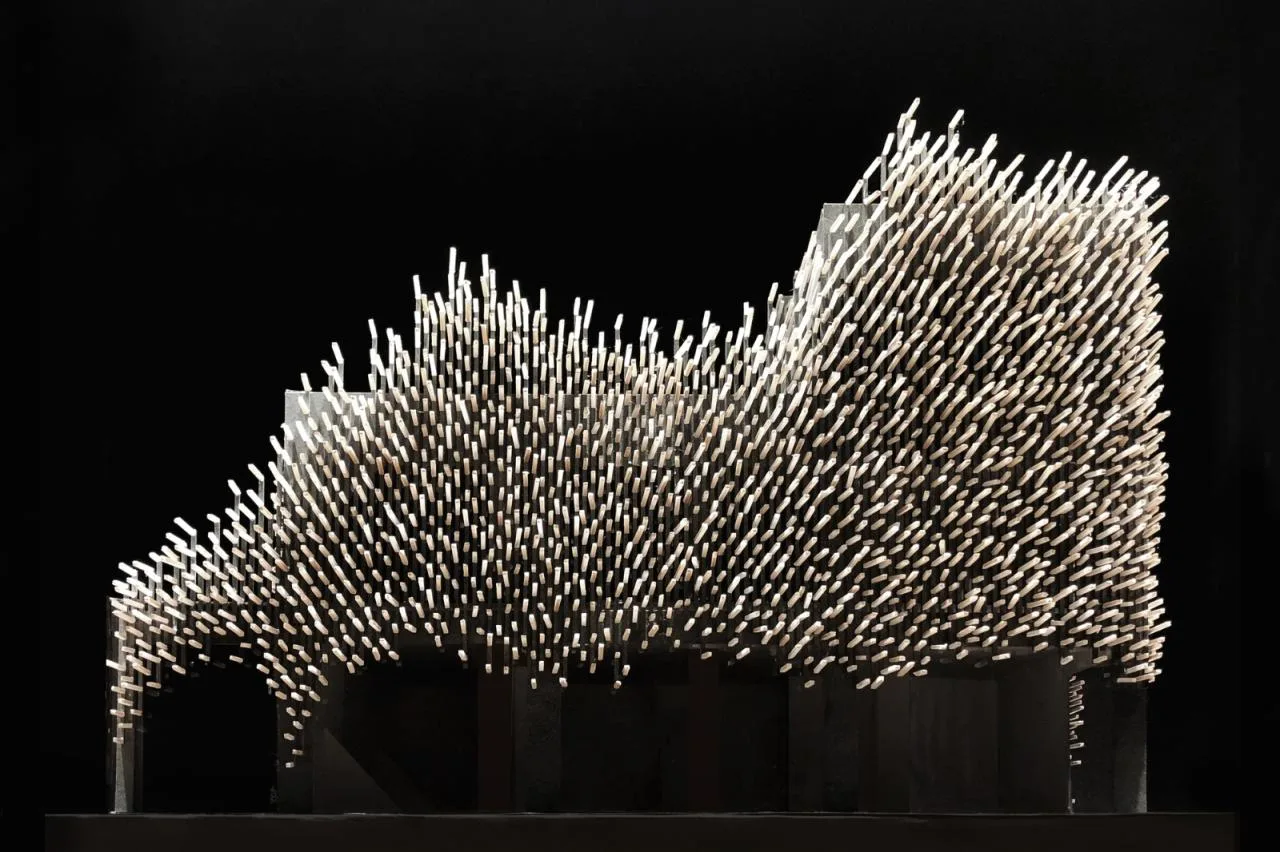
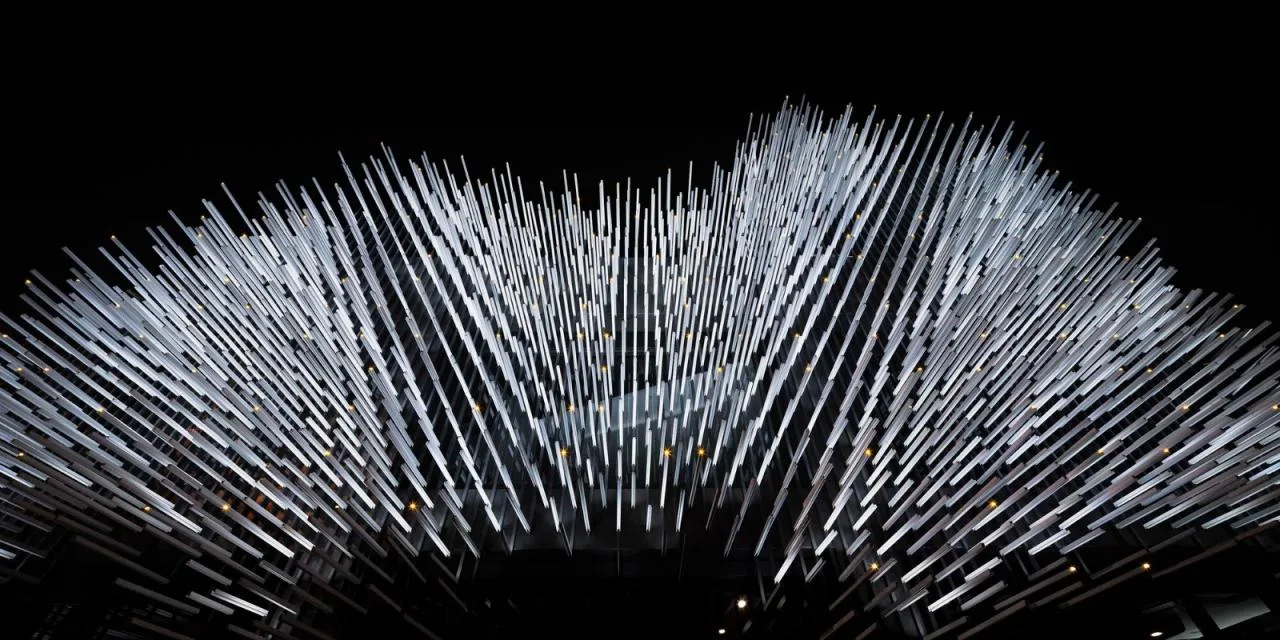
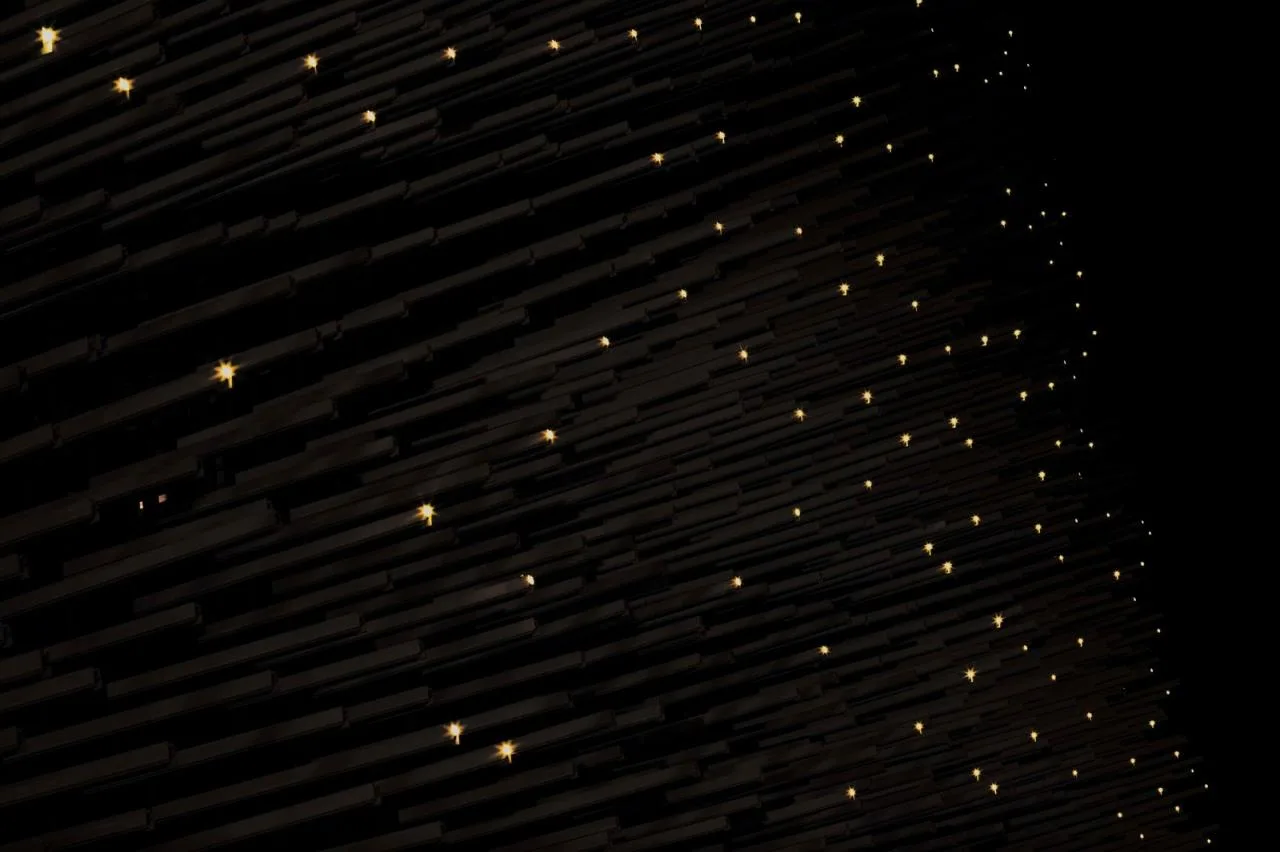
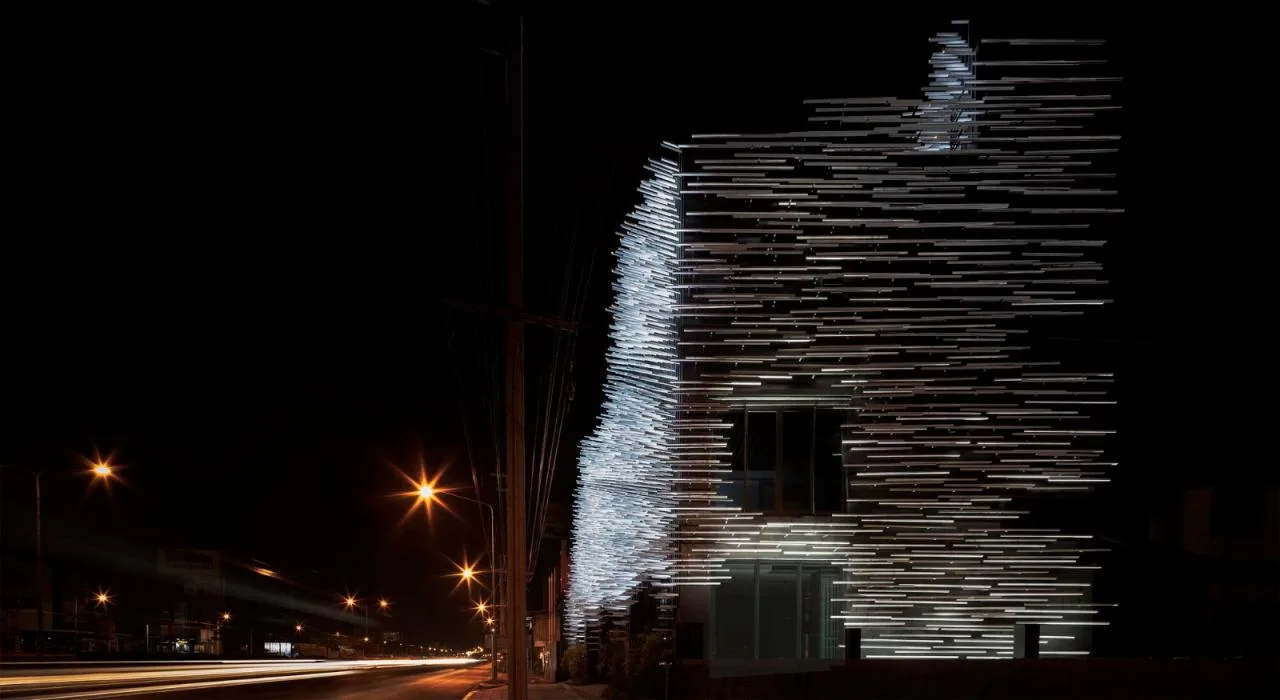
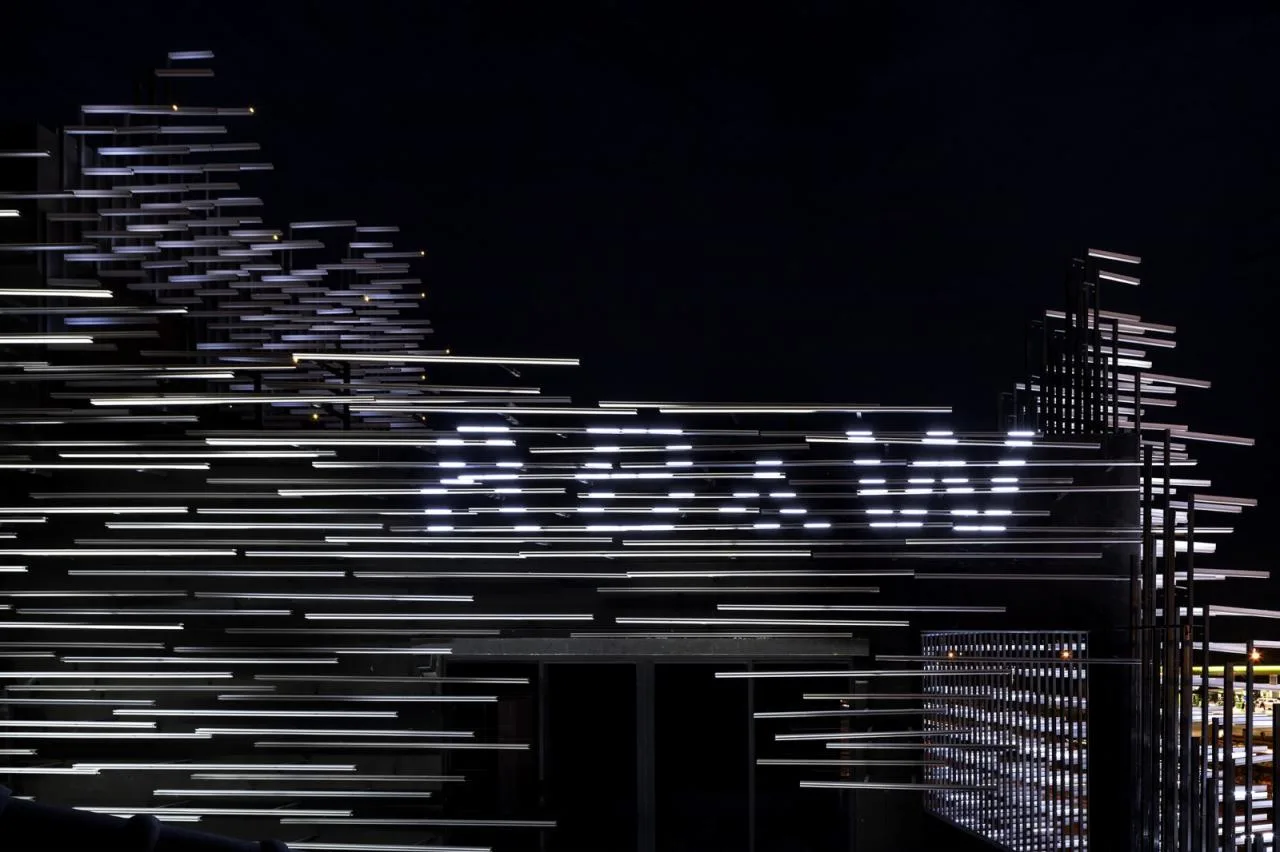
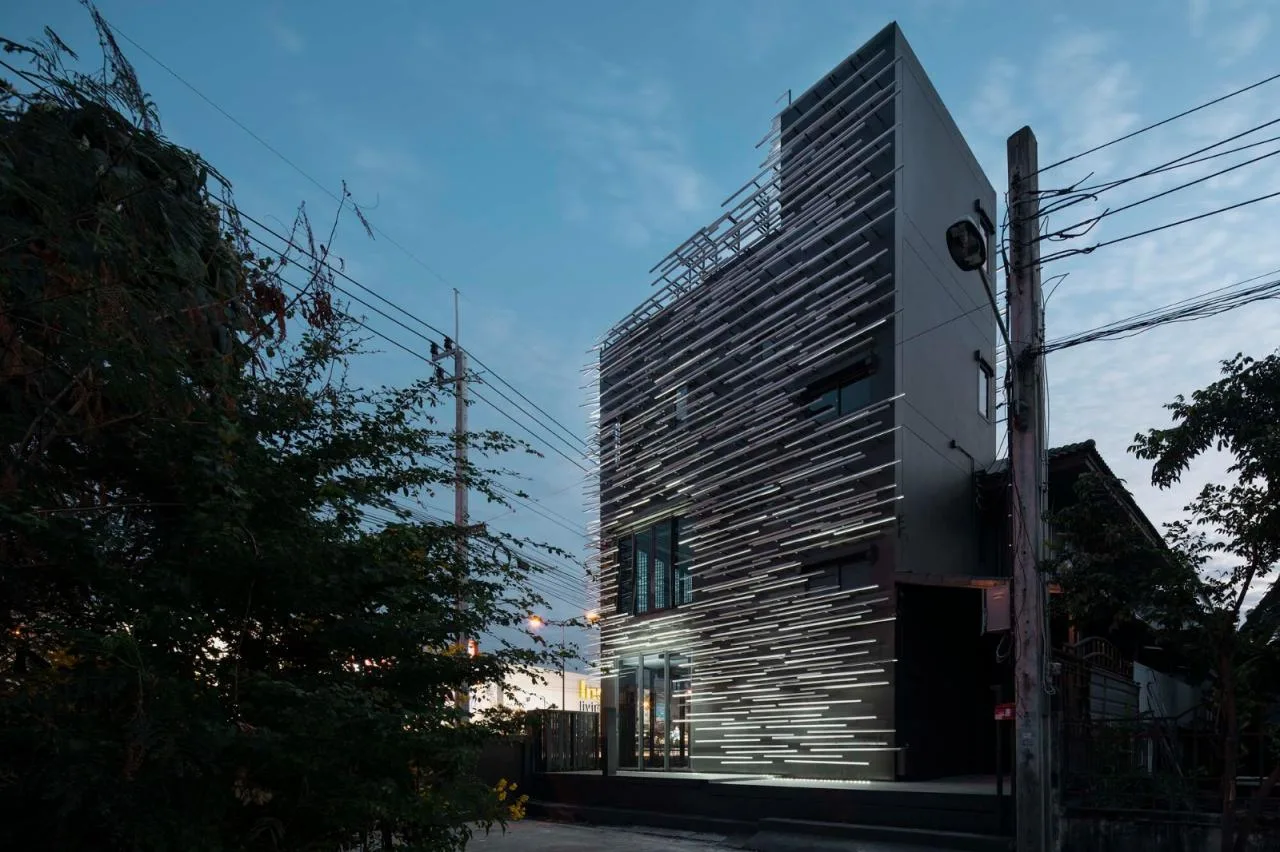
During the day, MoMA’s gently swaying overhangs resemble a dandelion, softening the busy atmosphere of Ratchaphruek Road. At night, the museum transforms into a glowing firefly, offering a tranquil and natural ambiance amidst the commercial surroundings.
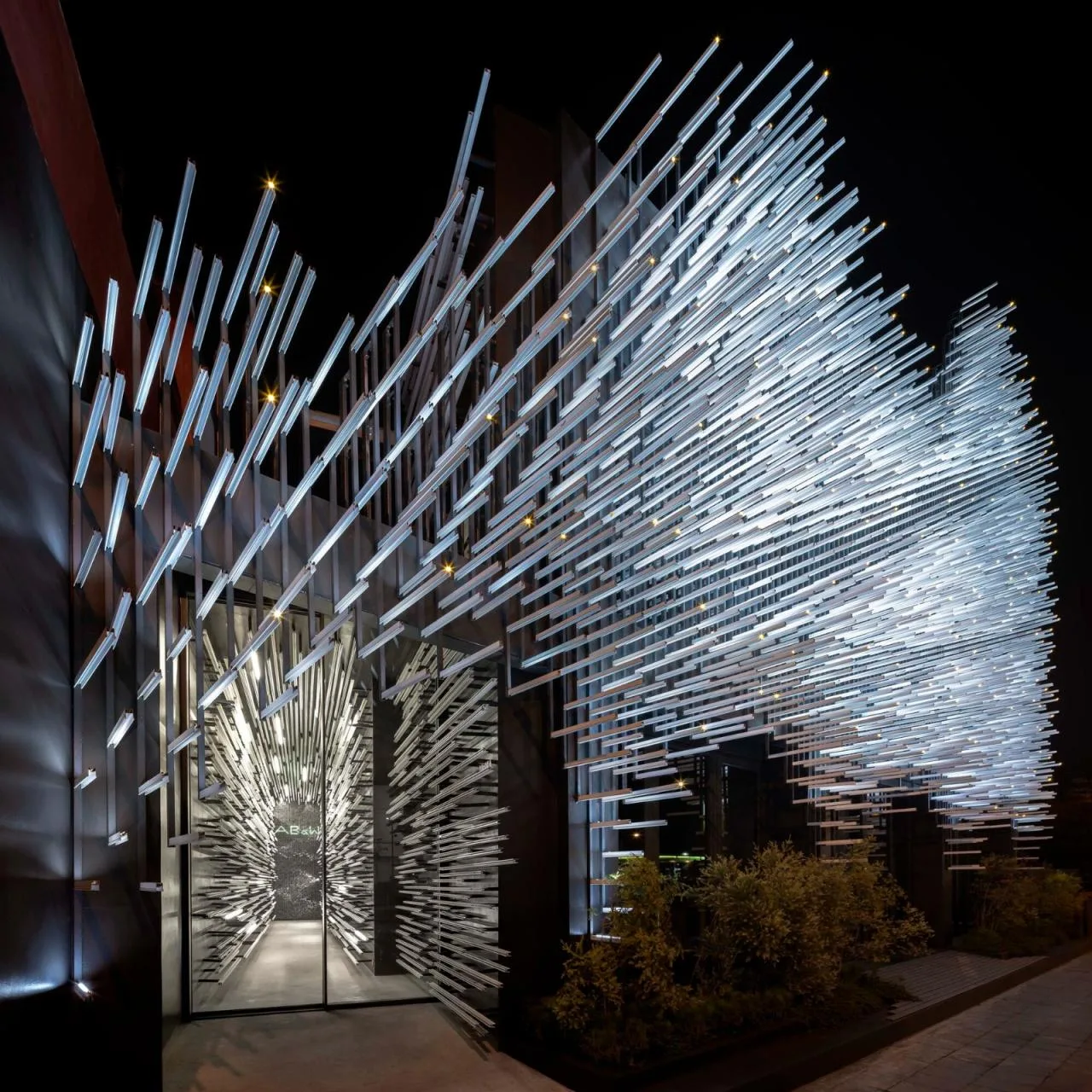
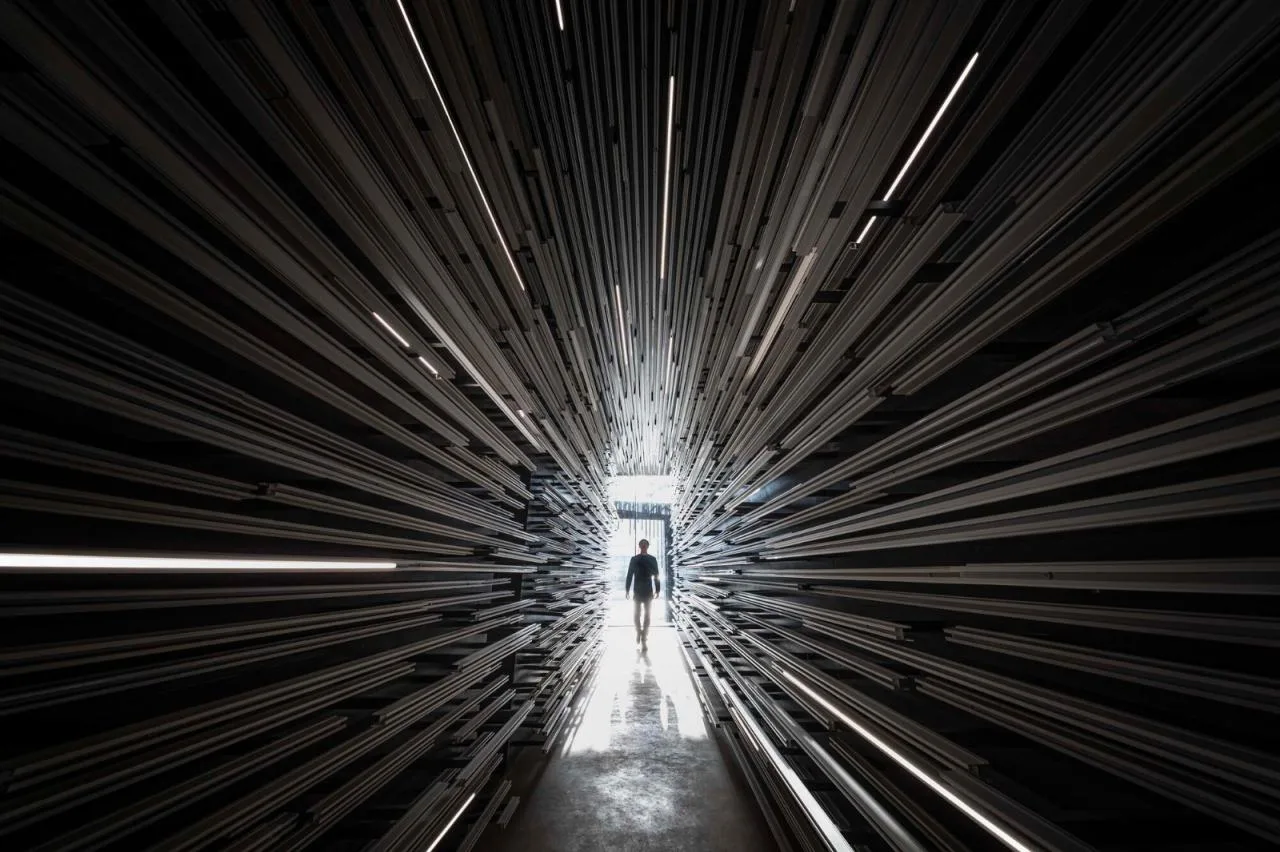
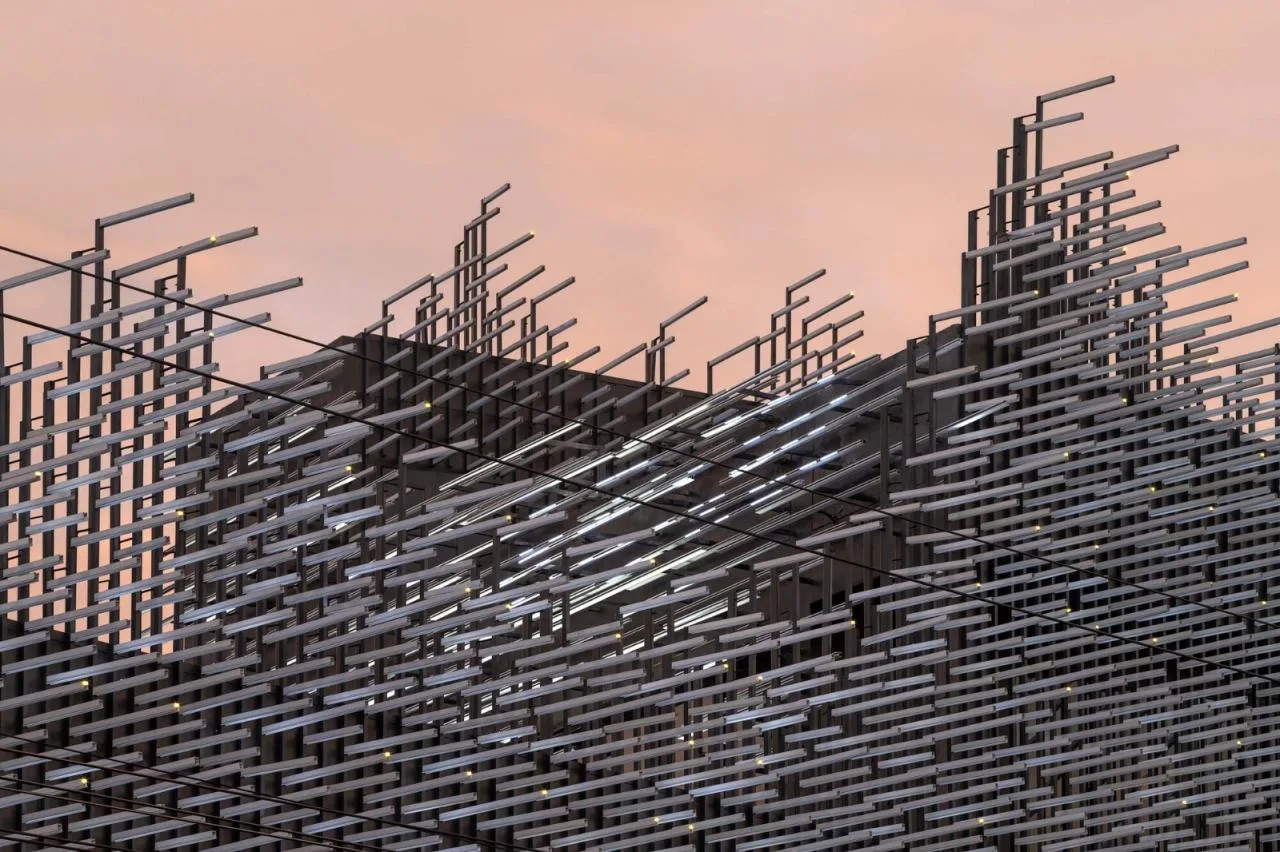
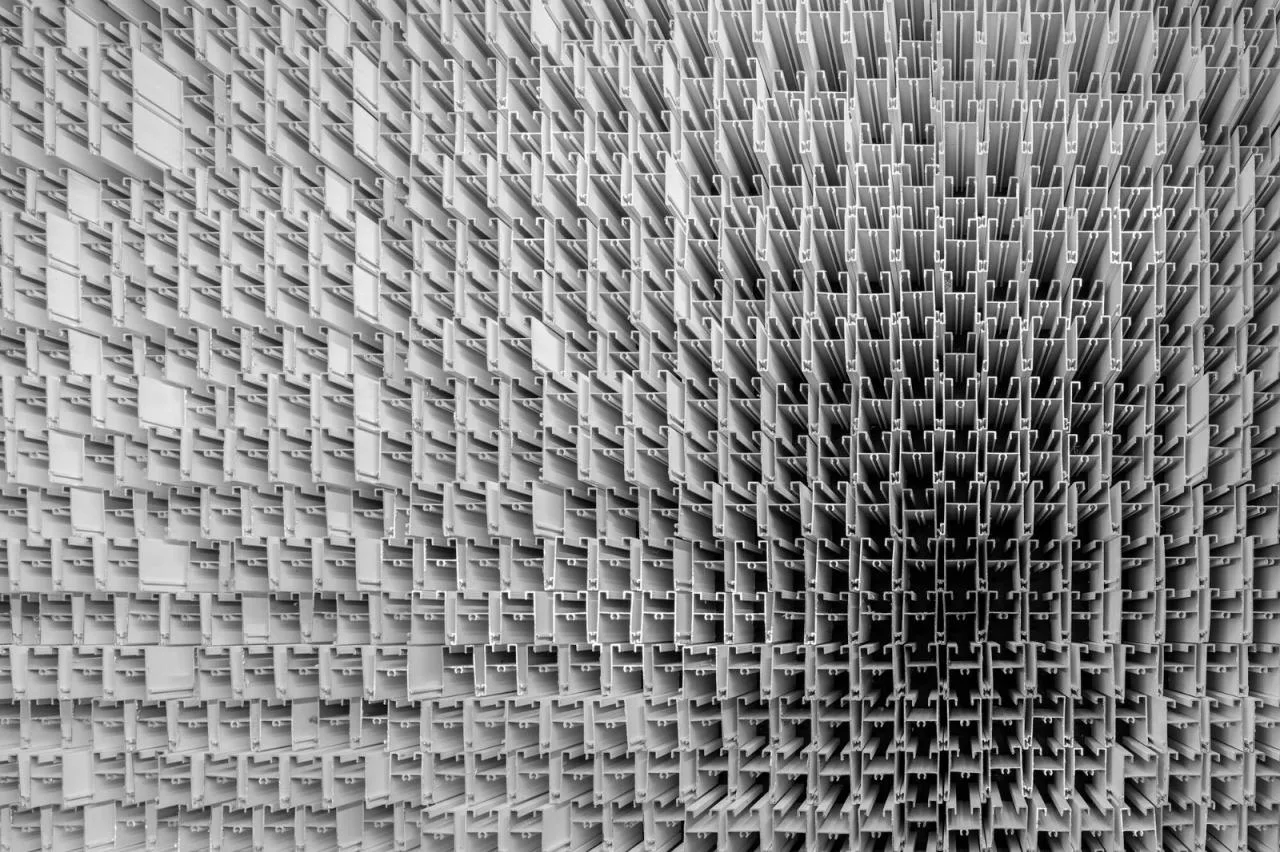
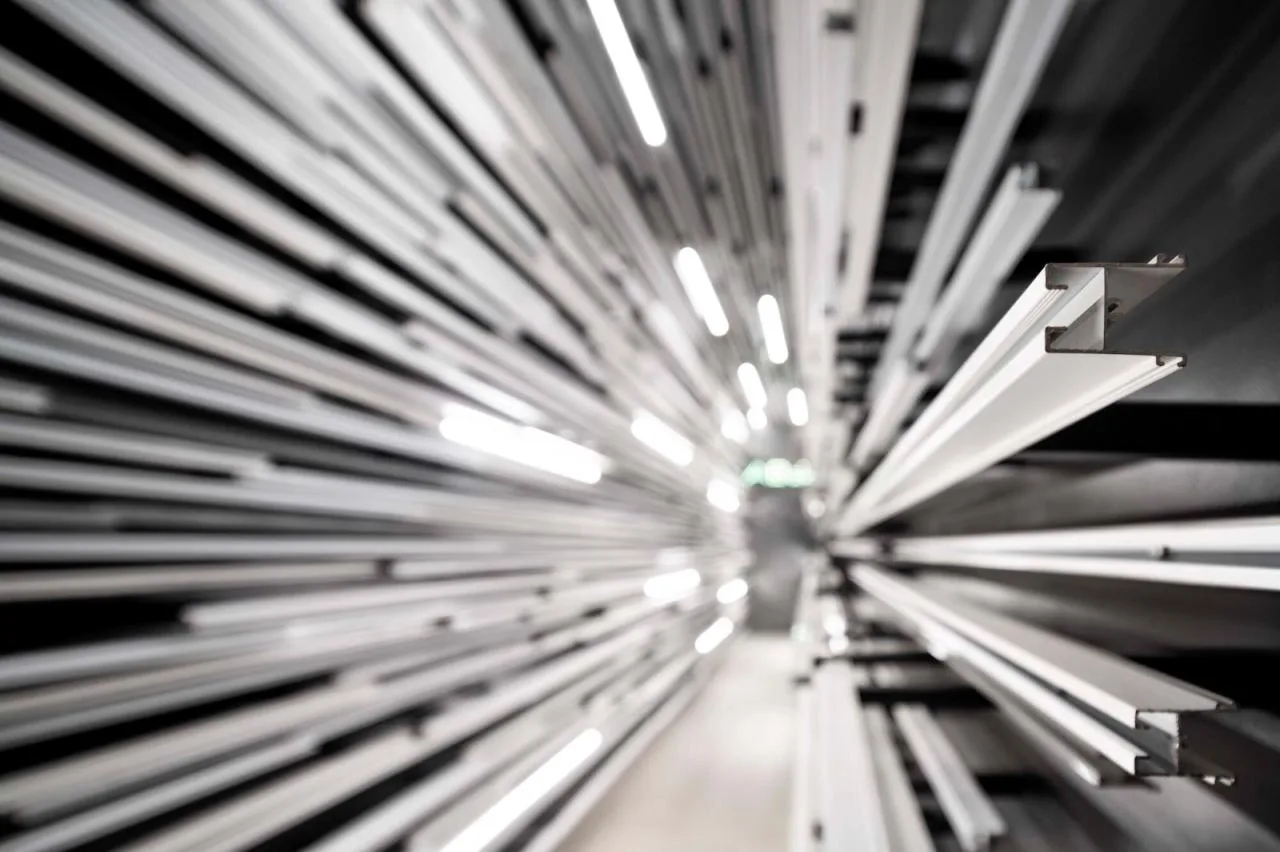
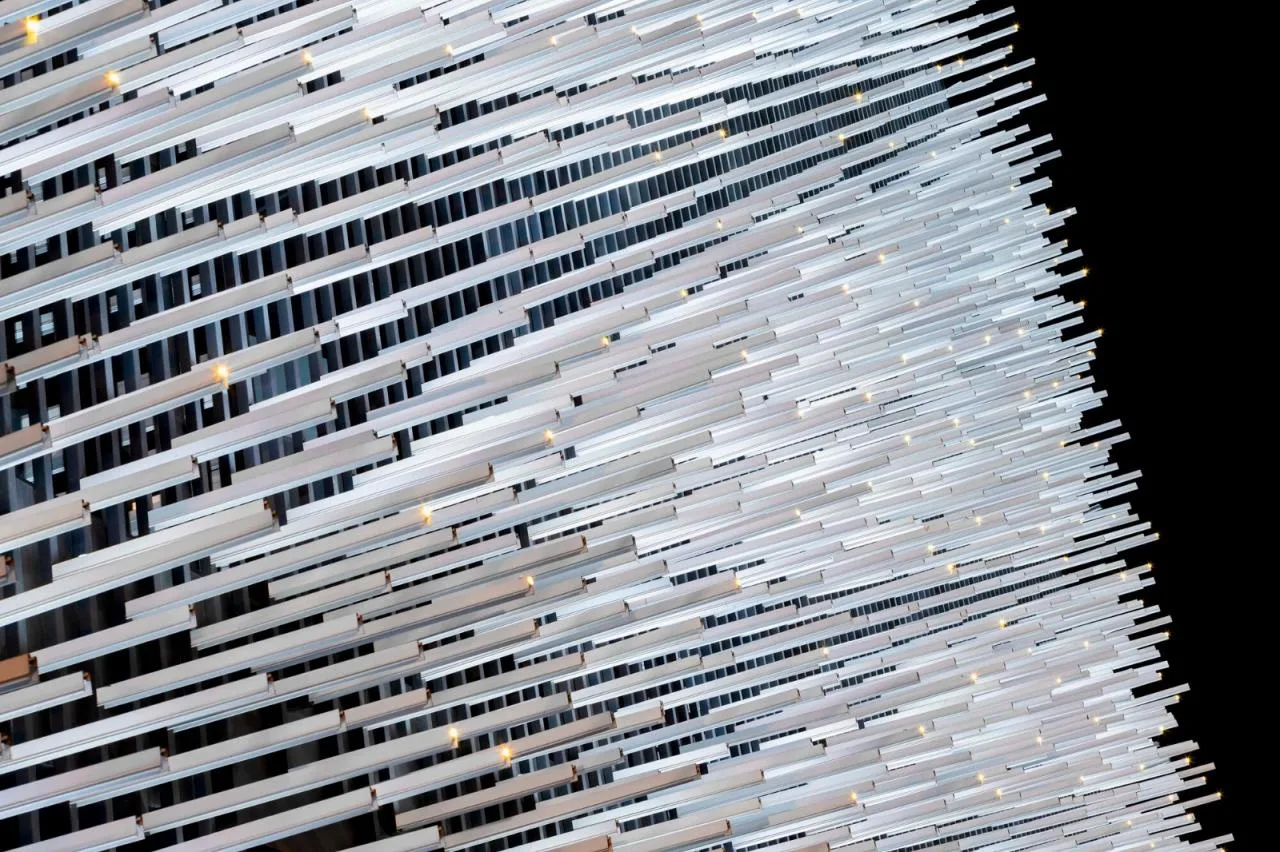
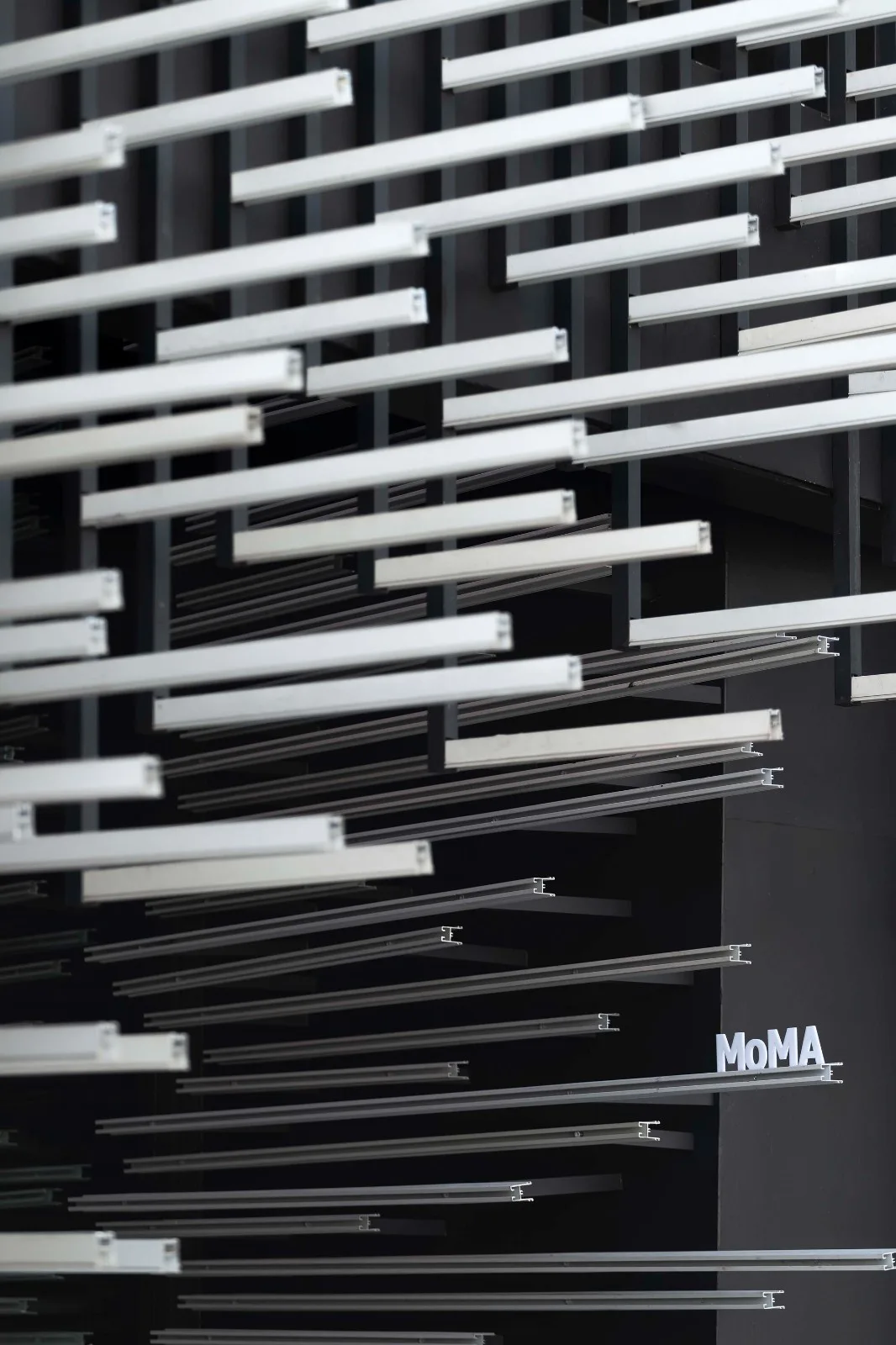
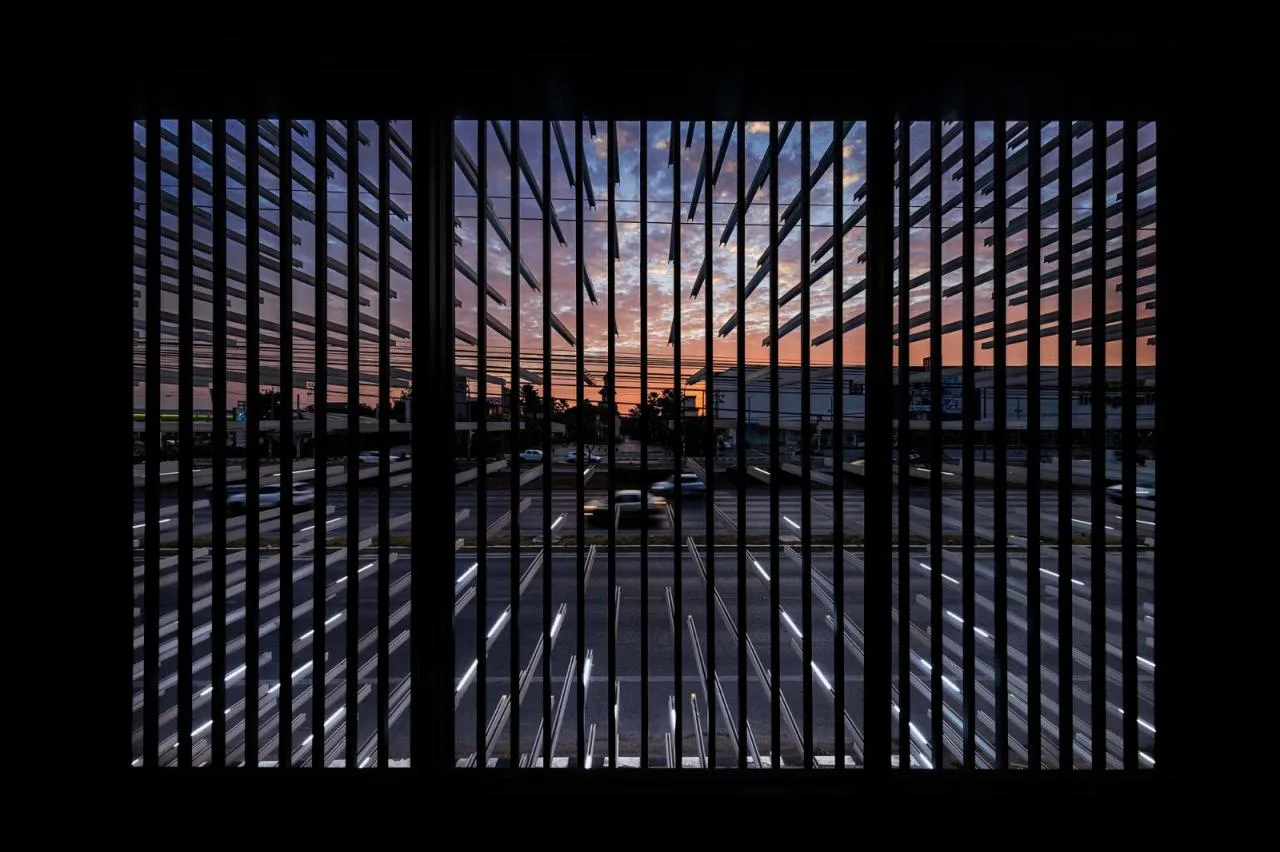
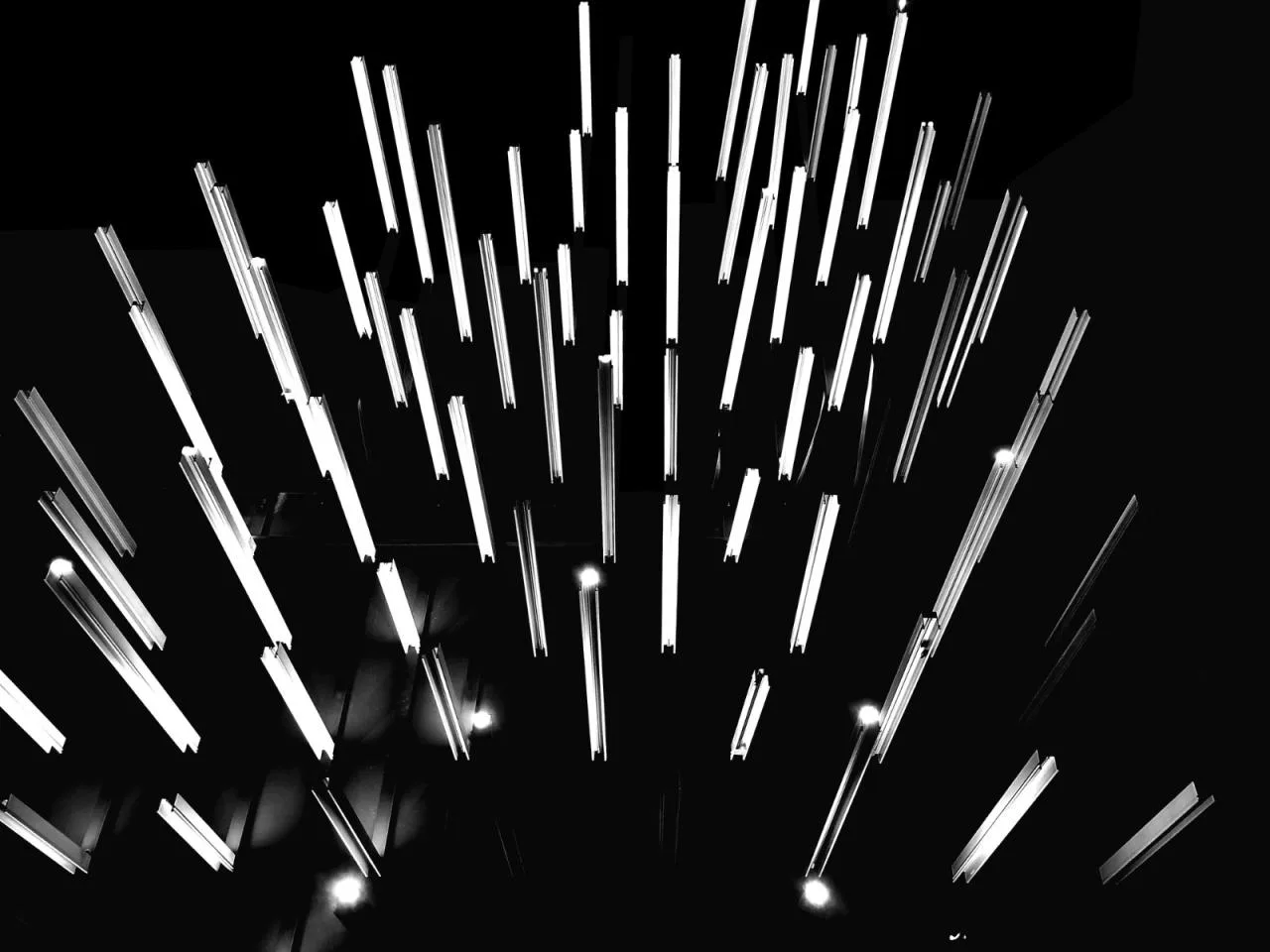
The museum incorporates aluminum strips not only as display elements but also throughout the building’s architecture, interiors, landscaping, lighting, and furniture, creating a cohesive aesthetic. The facade is clad with tens of thousands of aluminum strips in varying colors and textures, reminiscent of dandelion seeds.
LED light strips are integrated into the aluminum panels, extending from the front facade to the sides and through a “tunnel” space on the west side. This design helps to reduce external noise and gently guides visitors into the quiet exhibition spaces within.
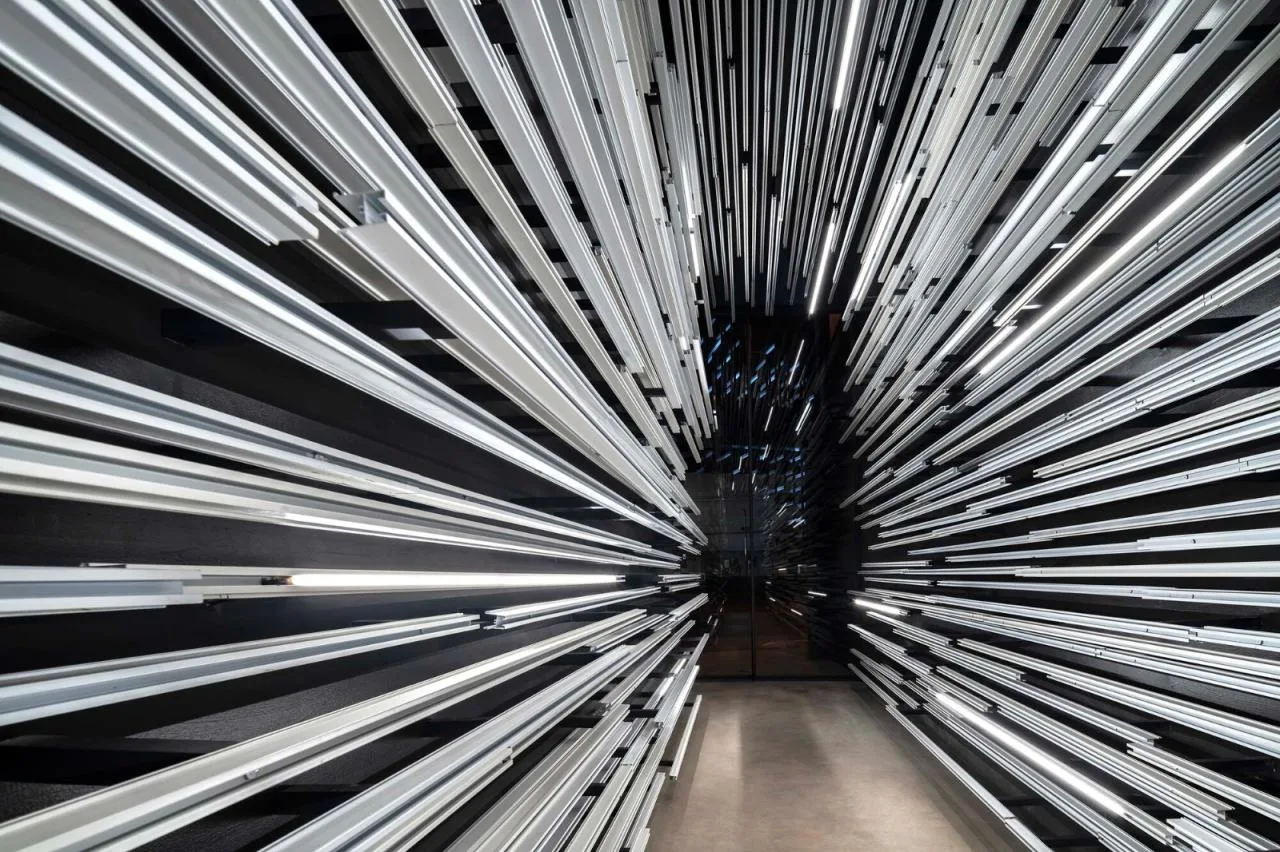
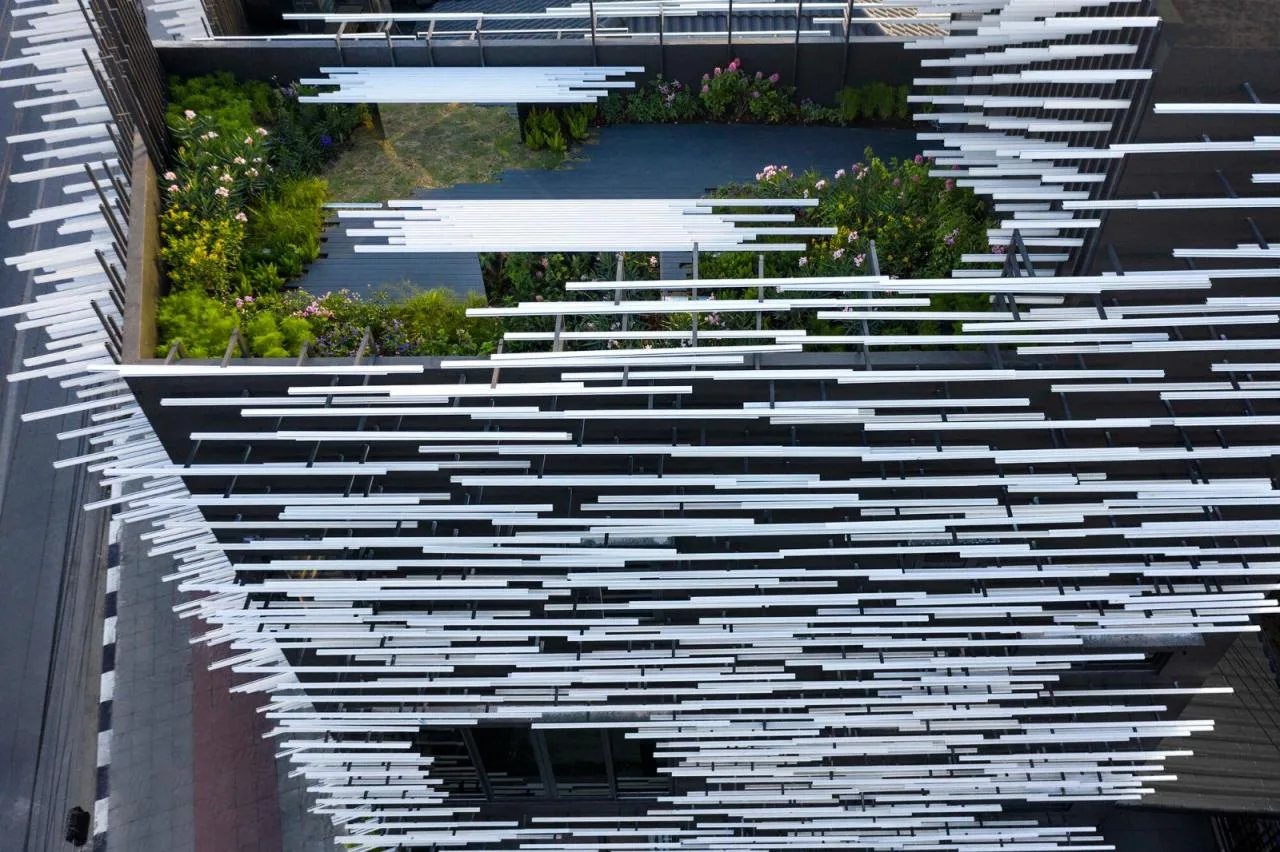
Besides offering various lighting effects, the aluminum facade also shields the interior from excessive sunlight, maintaining a comfortable environment. Flexible exhibition areas accommodate diverse displays, receptions, and events.
The rooftop garden acts as a floating island, planted with seasonal flora, creating an urban ecological habitat for fireflies. The design process began with a study of common aluminum signage found on streets, using aluminum as a unifying element throughout the project.
Through extensive research and material exploration, the architects crafted a unique architectural texture, delivering a fresh local experience in Thailand’s urban landscape.
Project Drawings
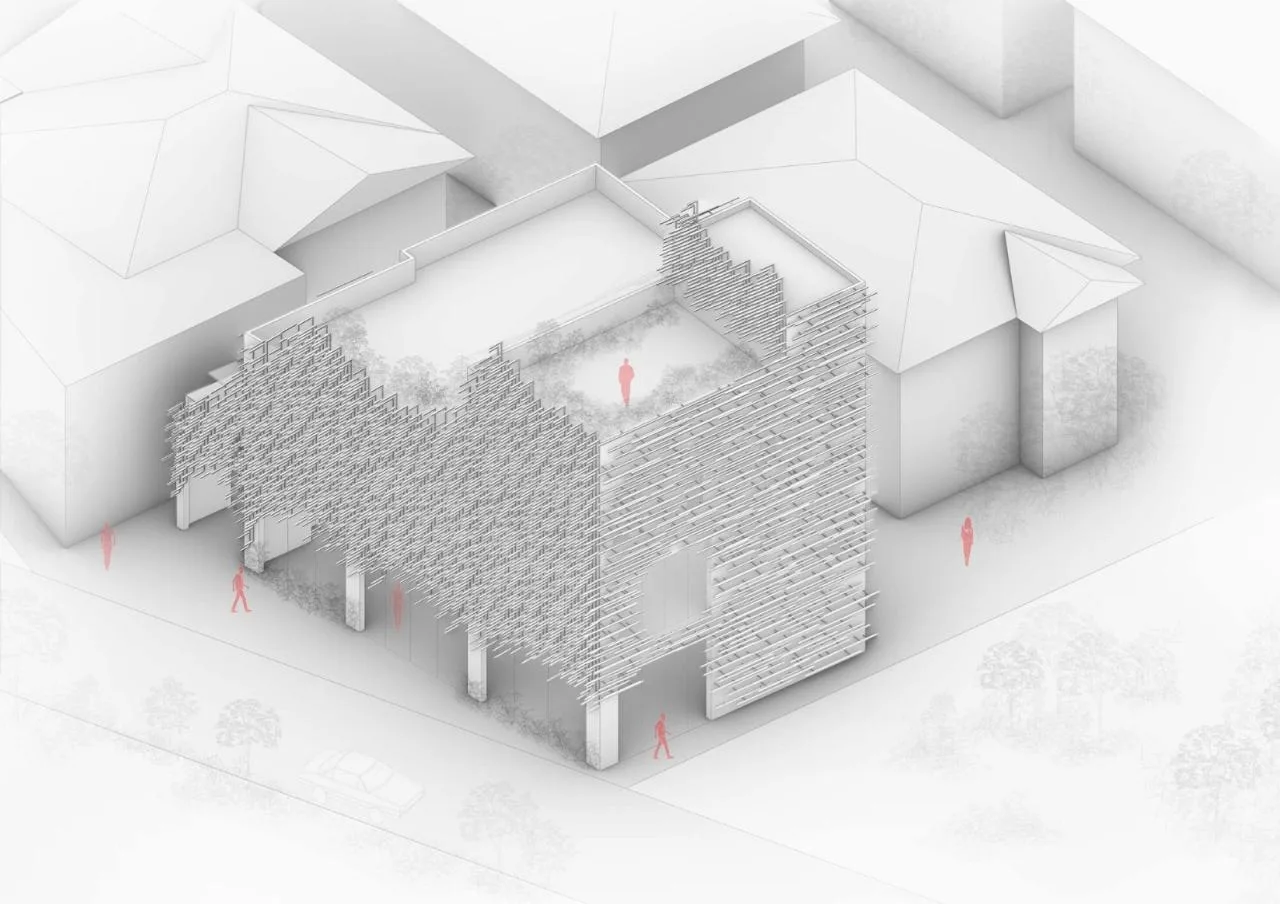
△ Axonometric Diagram
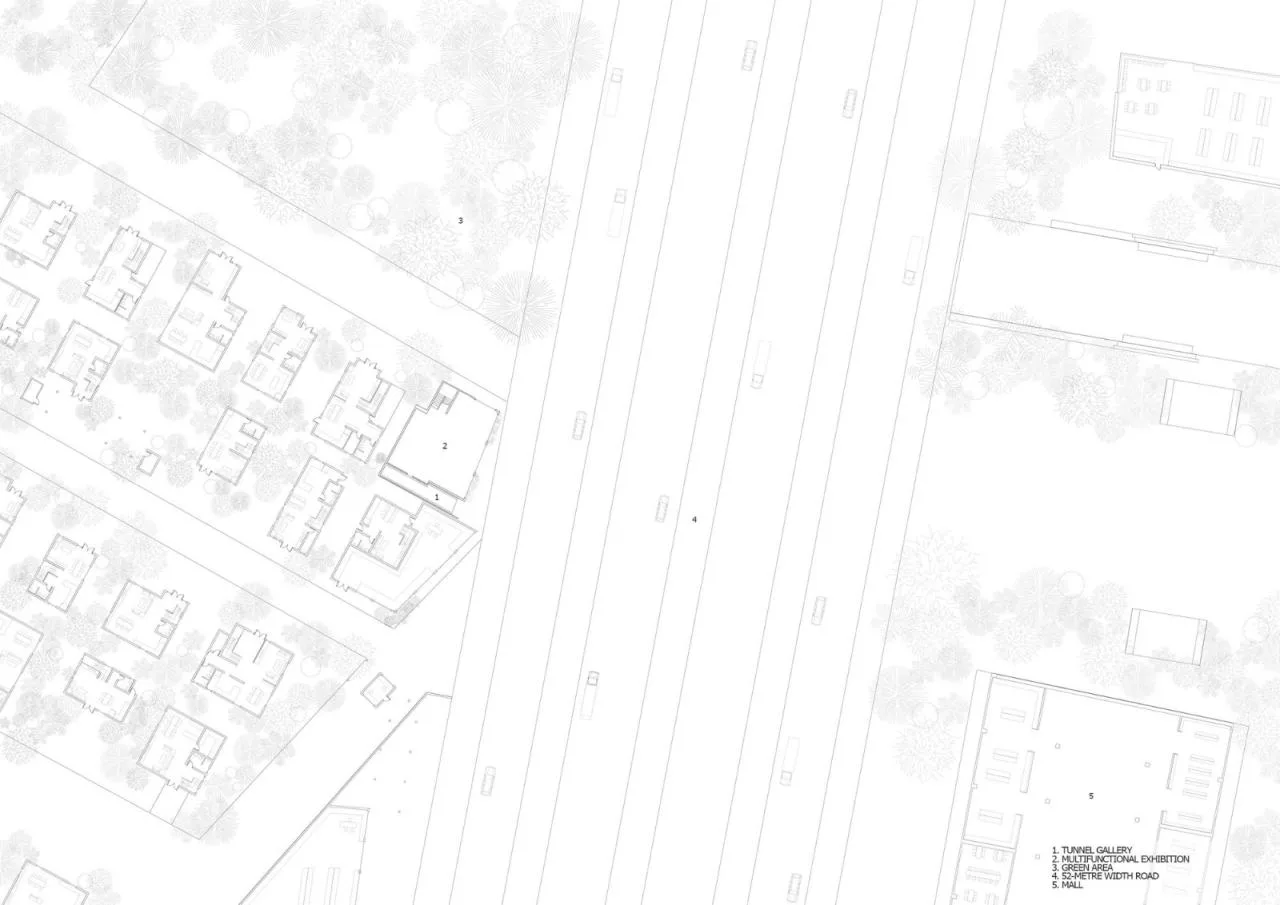
△ Location Diagram
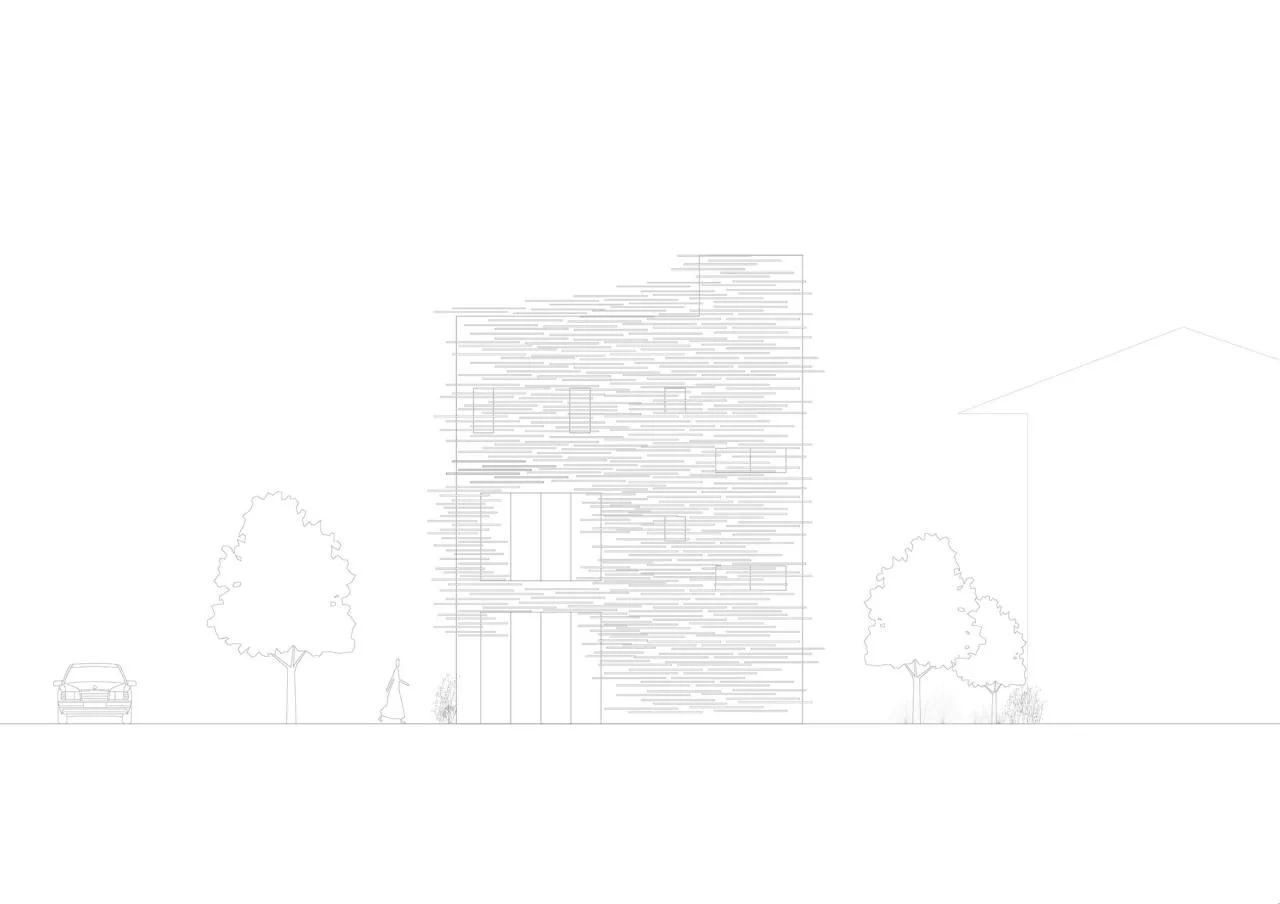
△ Elevation Drawing
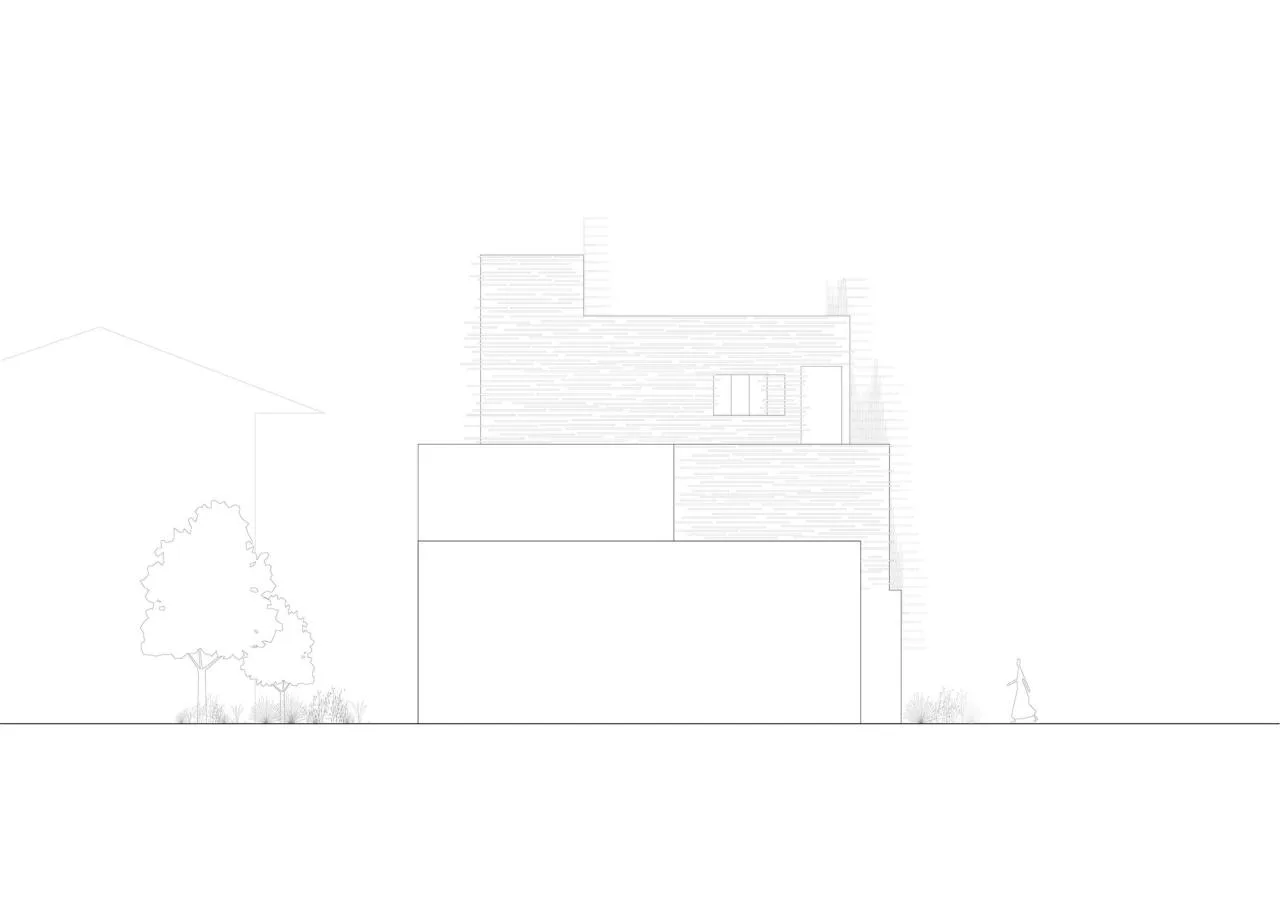
△ Elevation Drawing
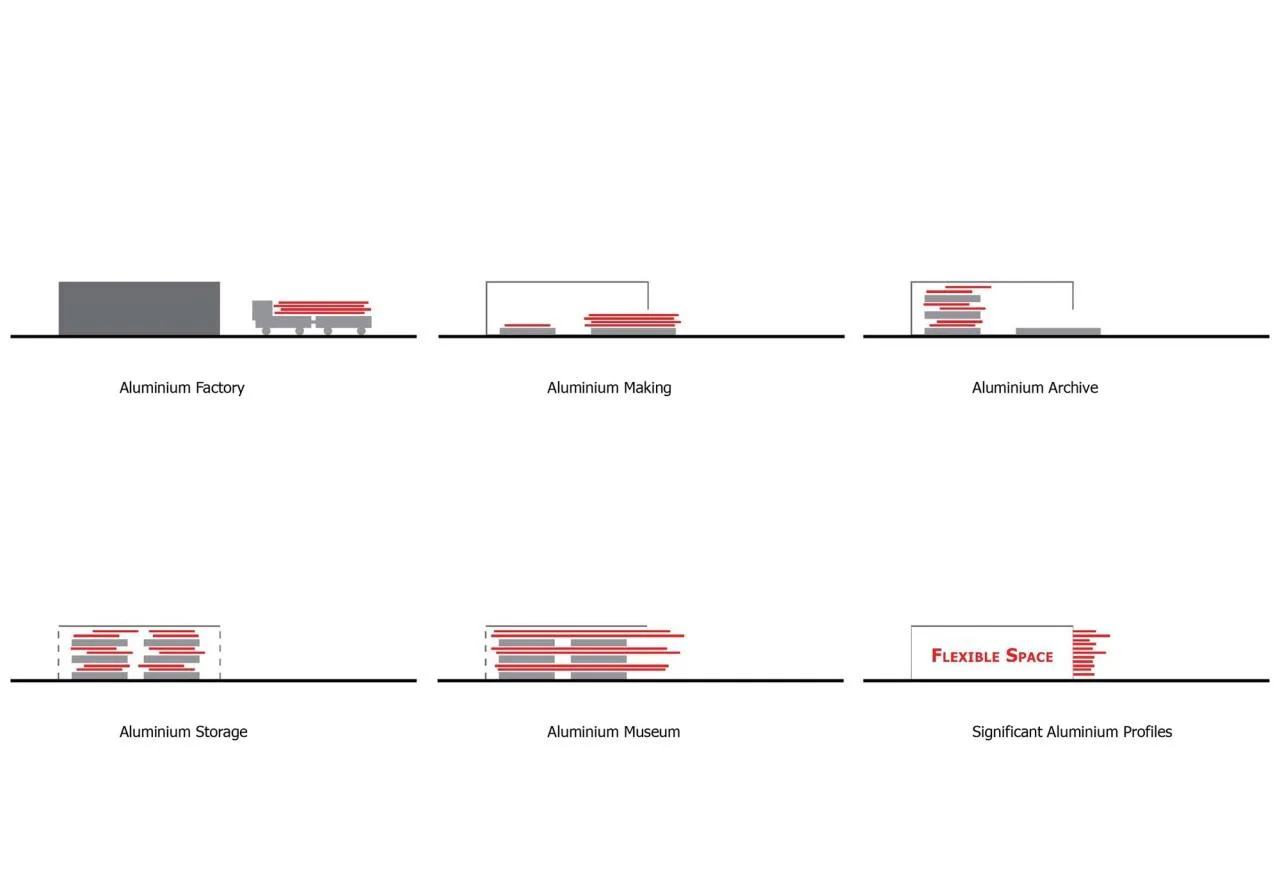
△ Analysis Chart
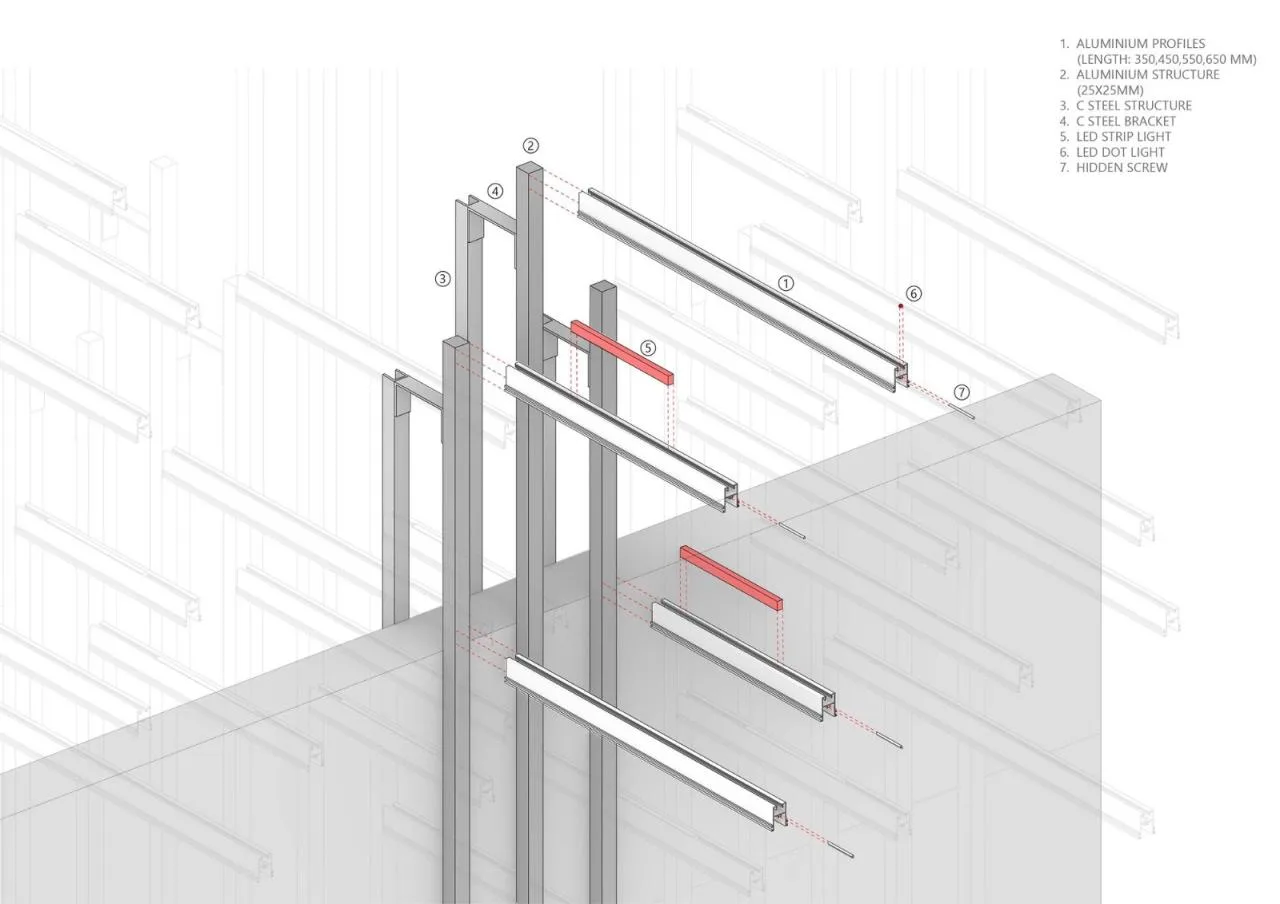
△ Structural Schematic Diagram
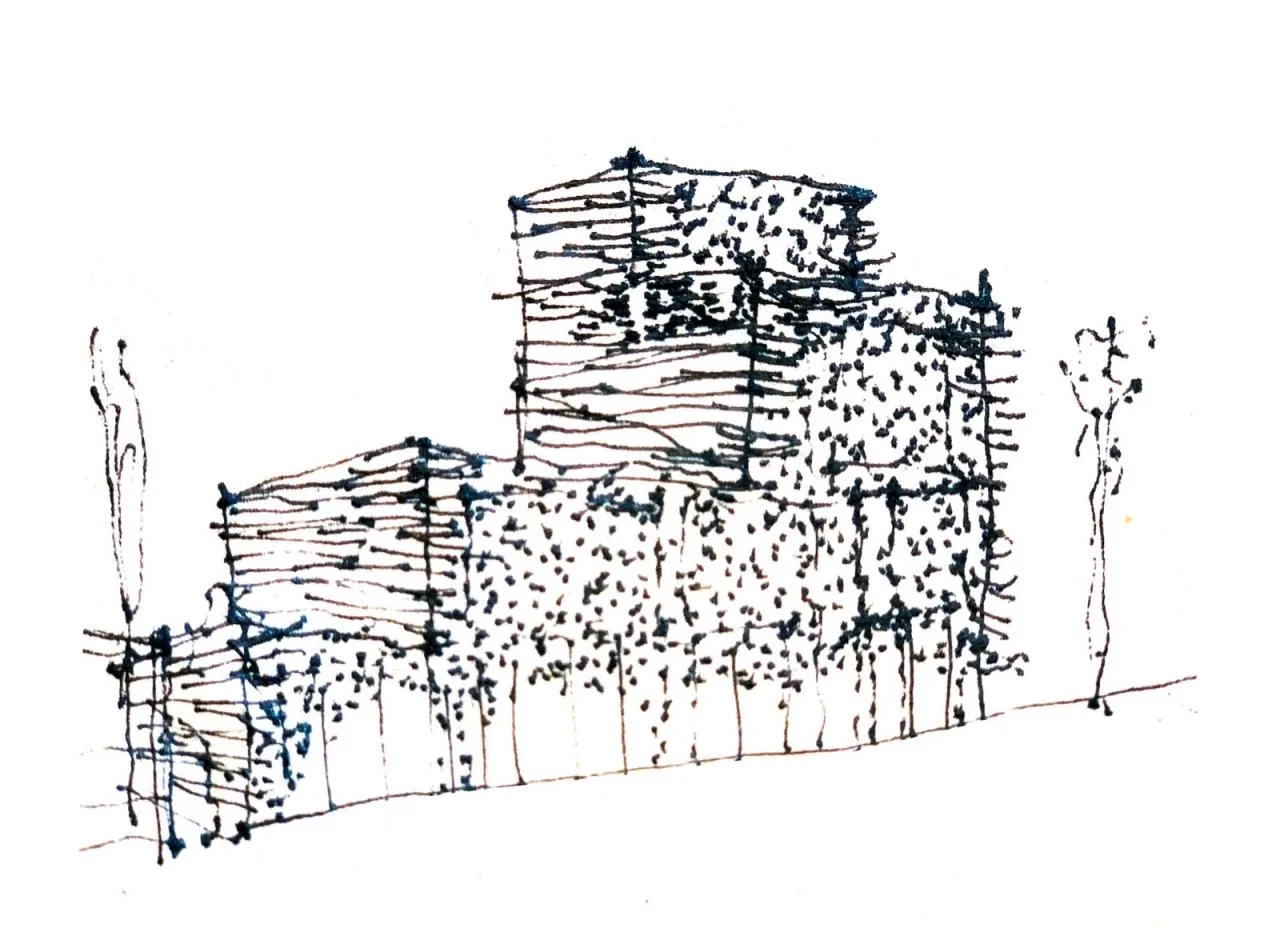
△ Hand-Drawn Sketch
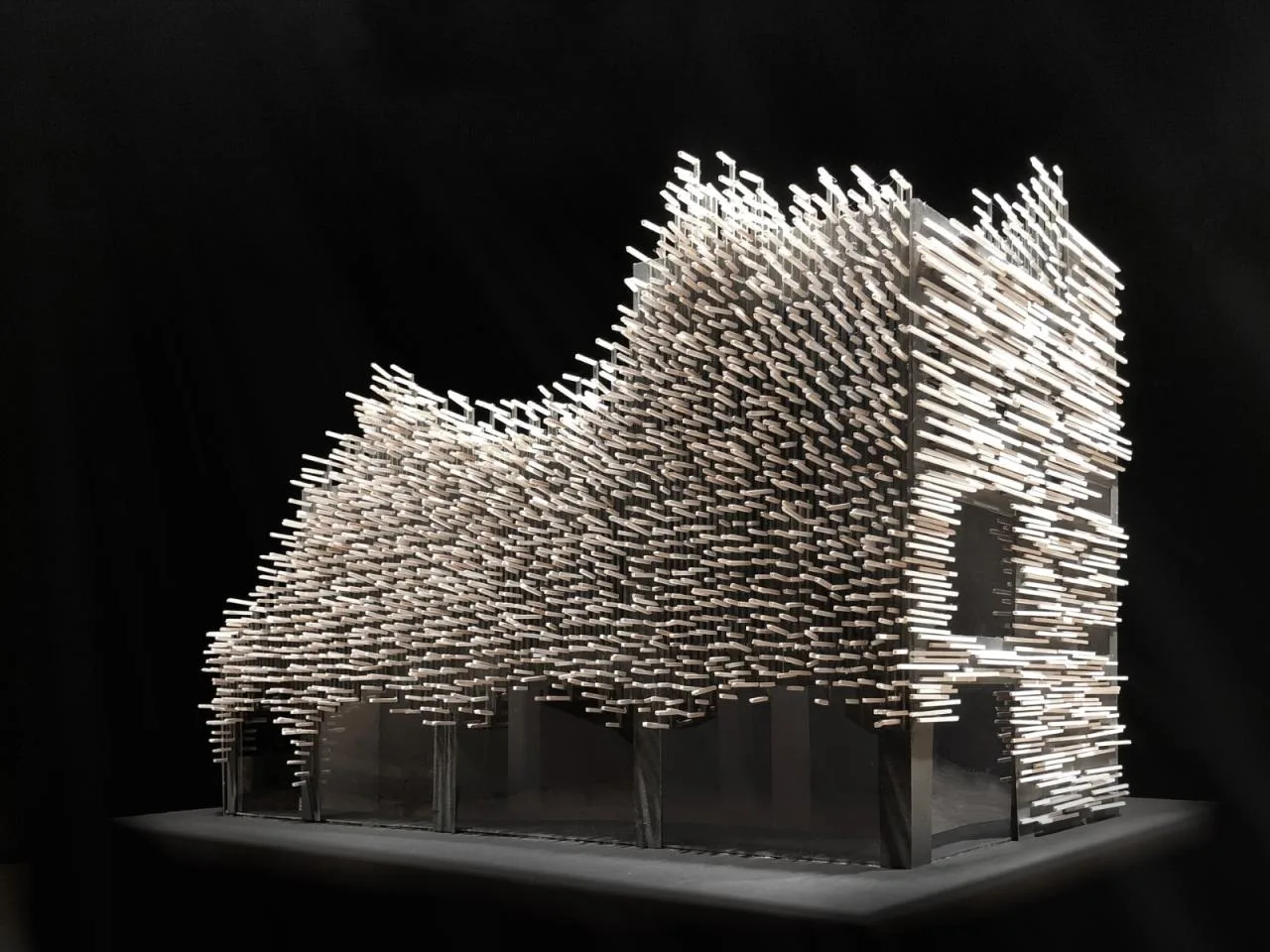
△ Model Diagram
Project Information
Architectural Design: HAS Design and Research
Area: 400 square meters
Year: 2022
Photographer: W Workspace
Lead Architects: Hong Renjie, Kulthida Songkittipakdee
Design Team: Hong Renjie, Kulthida Songkittipakdee, Jiaqi Han, Qin Ye Chen
Landscape Design: TROP terrains+open space
Lighting Design: Light Is
Construction: SL Window Co., Ltd.
Location: Nuanburi, Thailand













Must log in before commenting!
Sign Up