
Coordination plays a crucial role in construction project management and is one of the most important challenges faced by all parties involved. Since coordination consumes a significant portion of the project management timeline, owners, designers, and contractors must maintain continuous information exchange throughout the entire project lifecycle. When issues arise, effective communication and coordination are essential to develop solutions and implement necessary changes. A well-organized and efficient coordination process significantly enhances work quality and efficiency while minimizing potential risks.
Traditionally, when problems occur during project execution, stakeholders are brought together in meetings to discuss issues, identify root causes, develop solutions, and oversee their implementation. This conventional approach to coordination often involves lengthy cycles and considerable time consumption. Many issues, such as conflicts between pipeline designs and structural elements like columns and beams, could be avoided through early coordination. Such conflicts are common during project execution.
BIM technology has effectively resolved this longstanding problem by enabling early coordination. By creating and integrating BIM architectural, structural, and electrical models, teams can perform clash detection upfront. This process helps identify and resolve conflicts among the disciplines during the design phase, eliminating the need to address them later during construction.
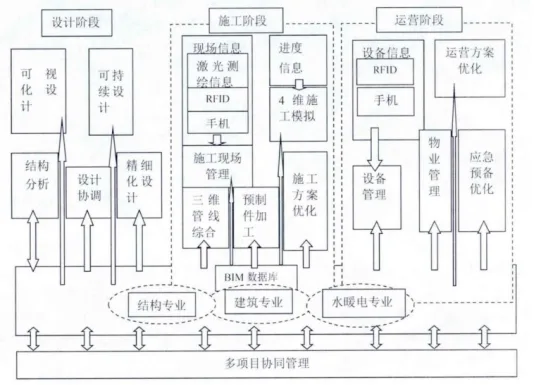
Beyond clash detection, BIM coordination supports optimizing pipeline layouts, clearance adjustments, and coordination of fire zones and other critical arrangements. The diagram above illustrates how BIM is applied throughout a project’s entire lifecycle—from design through construction to operation.
During the design phase, BIM facilitates continuous and visual design iterations, structural analysis, coordination reviews, and detailed design refinement. In the construction phase, it supports onsite management, 3D pipeline integration, prefabricated component processing, construction plan optimization, progress tracking, and construction simulation. Finally, in the operation phase, BIM aids in equipment maintenance, property management, operation plan optimization, and emergency preparedness.
















Must log in before commenting!
Sign Up