
Revit is a software developed by Autodesk based on the Building Information Modeling (BIM) concept. It includes modules such as Revit Architecture, Revit Structure, and Revit MEP, which correspond to architectural design, structural engineering, and mechanical, electrical, and plumbing disciplines, respectively. Leveraging Autodesk’s strong market presence, Revit has been widely adopted and quickly established itself as a leading BIM software solution.

In China, Revit holds a dominant position within the BIM software market. The software’s technical capabilities are robust, as it is designed entirely around the BIM concept and tailored to various professional fields, making it both efficient and intelligent. Revit offers extensive features combined with a user-friendly interface. Whether dealing with standard building models or complex irregular structures, users can quickly create components through family methods to meet project requirements.
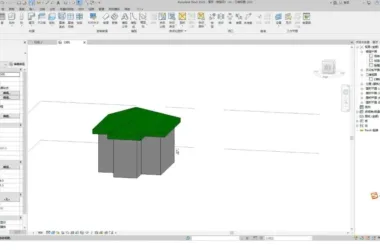
A key strength of Revit is the interrelation between model components, which enables collaborative and parametric workflows central to BIM technology. Any modification made in one view automatically updates all other related views within the entire building model. While most current construction projects rely heavily on two-dimensional drawings, Revit supports simultaneous generation of floor plans, elevations, and sections, improving the expression of building information throughout all project stages.
In practical applications, this interconnectedness significantly enhances construction project efficiency. However, Revit also has its limitations. Its powerful functionality demands considerable storage space and high-performance hardware. Systems with limited resources may struggle to install or run the software smoothly. Particularly when handling complex family components or large models, performance lag and even crashes can occur if the computer’s configuration is insufficient.
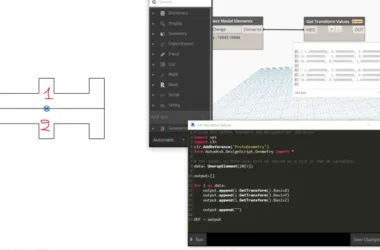
These issues stem partly from the substantial amount of data contained within BIM models, making them one of the main factors limiting Revit’s widespread adoption. Nevertheless, ongoing optimization and updates to BIM technology are expected to address these challenges. Additionally, because construction industry standards vary across countries, Autodesk provides an open API for Revit, allowing users to extend its capabilities through custom development. This openness, combined with a large community of developers, unlocks Revit’s unlimited potential and supports its continued growth and adoption.
Li Yak is intended for learning and exchange purposes only. Copyright belongs to the original author.













Must log in before commenting!
Sign Up