
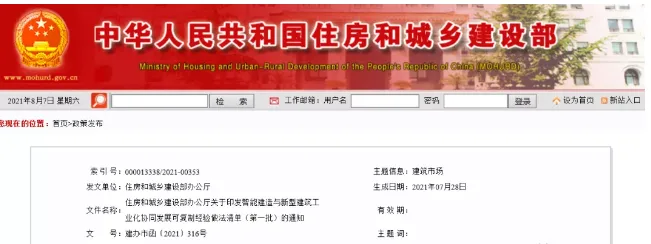
On July 28th, the General Office of the Ministry of Housing and Urban Rural Development published a list highlighting replicable experiences and best practices for the coordinated advancement of intelligent construction and new building industrialization.
Why are industry professionals eager to share and learn from BIM specialists, prefabrication companies, and smart construction experts? The answer lies in the numerous references to BIM, intelligent construction, digital technology, prefabrication, and robotics found throughout this list. Although such terms are familiar to many in the construction field, their prominence underscores the Ministry’s continued focus and promotion of these areas.
All industries are embracing technological innovation, and the traditional construction sector must keep pace with this digital transformation. This evolution is essential for the future of the industry and heavily relies on support from emerging technologies and sectors.
Full Text Interpretation
The General Office of the Ministry recently issued a notice unveiling the first batch of replicable experiences and practices to foster the coordinated development of intelligent construction alongside new building industrialization.
The notice emphasizes that, following the Guiding Opinions issued by the Ministry and other departments, various regions have actively explored advancements in digital design, intelligent production, and smart construction. These efforts have led to significant progress in integrating intelligent construction with new building industrialization. The Ministry compiled these efforts into the “List of Replicable Experiences and Practices for the Coordinated Development of Intelligent Construction and New Building Industrialization (First Batch).”
In digital design development, four key initiatives stand out:
- Defining the scope and requirements for implementation;
- Enhancing BIM application throughout all stages of engineering construction;
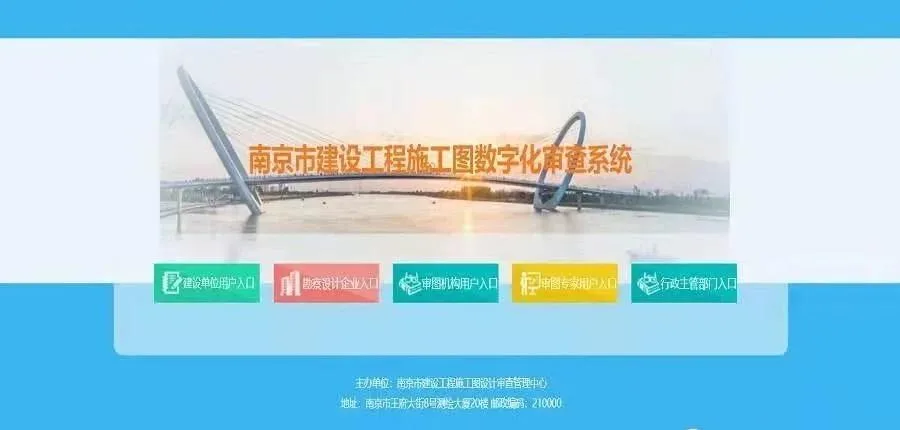
- Utilizing artificial intelligence to assist in reviewing construction drawings;
- Offering financial incentives to support these efforts.
Regarding intelligent production, three main measures include:
- Creating a standardized parts and components library based on BIM;
- Establishing intelligent production factories for parts and components;
- Developing a quality traceability system for prefabricated components.
In the realm of intelligent construction, the focus lies on three core actions:
- Developing unified standards for smart construction sites;
- Promoting BIM-based planning for smart construction sites;
- Ensuring all parties involved uphold their primary responsibilities.
For building an Internet platform for the construction industry, four major initiatives are outlined:
- Formulating a comprehensive construction guide;
- The government establishing a public service platform;
- Actively cultivating industry-level platforms within vertical sectors;
- Encouraging large enterprises to develop enterprise-level platforms.
In terms of intelligent construction technologies like construction robots, three key measures are emphasized:
- Popularizing measurement robots and intelligent surveying tools;
- Promoting the application of robots in component production;
- Accelerating R&D for construction robots and intelligent engineering machinery.
Finally, to strengthen overall coordination and policy support, two main approaches include:
- Establishing collaborative promotion mechanisms;
- Increasing policy support in areas such as land use, finance, taxation, and funding.














Must log in before commenting!
Sign Up