
Background
The project is situated in Dongwusutu Village, Huimin District, Hohhot City, at the northwest corner of the city’s second ring road. Positioned on relatively elevated terrain near the front slope of Daqing Mountain, the site benefits from a rich ecological environment. Surrounding resources include fruit and vegetable gardens, reservoirs, mountain springs, farmhouses, Wusutuzhao Temple, and parks, making it a prime location for weekend outdoor activities and leisure gatherings for city residents.
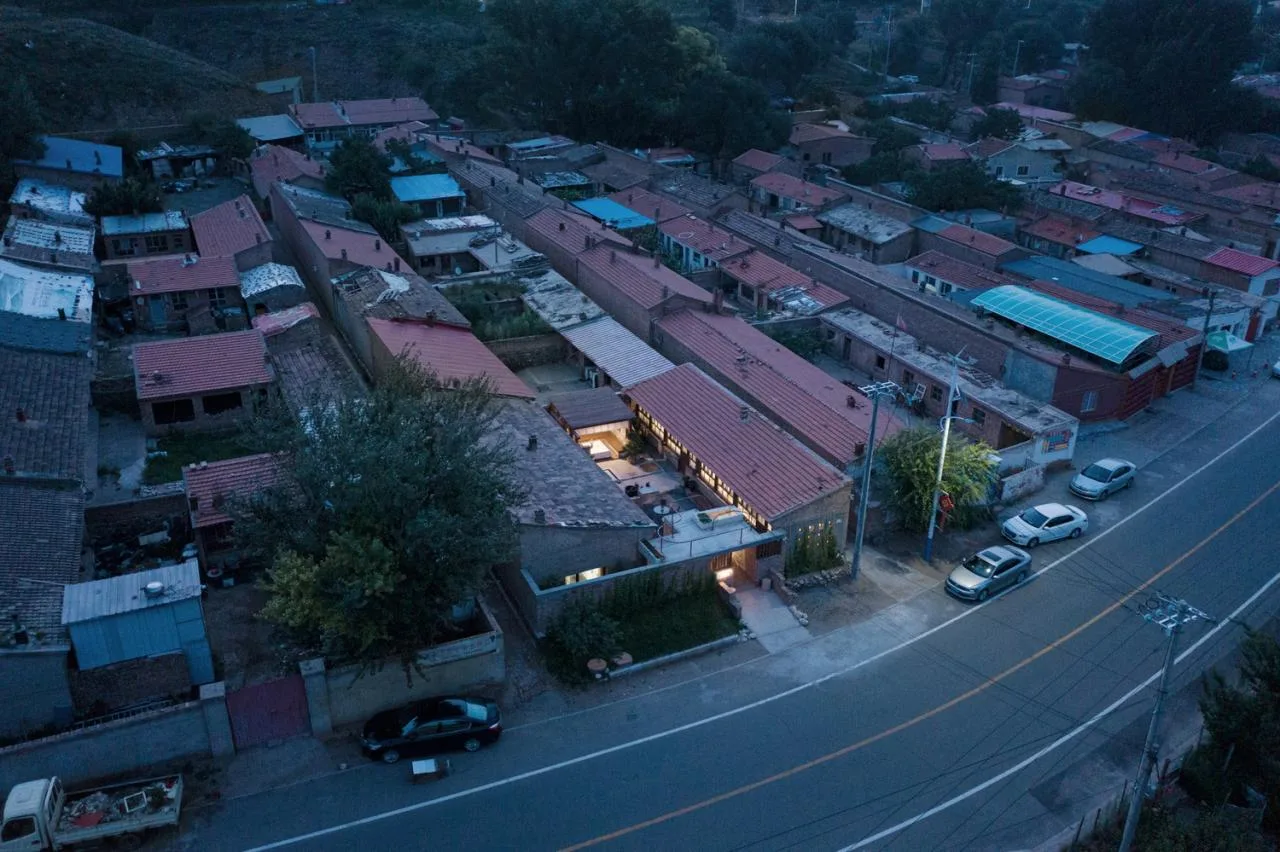
△ Aerial view of the courtyard
Introduction
This small courtyard project is located along the main road extending inward from Dongwusutu Village, which serves as a key access route to the nearby reservoir and orchard. The courtyard lies on the east side of the road’s middle section, flanked by residential buildings on both the north and south sides. The north side comprises four main rooms (based on beam and column openings), while the south side contains four cooling rooms used for storage and parking. Illegal steel cooling rooms are present on the north side, and the construction dates of the buildings vary. Together with the west wall, these structures form a traditional three-courtyard layout.
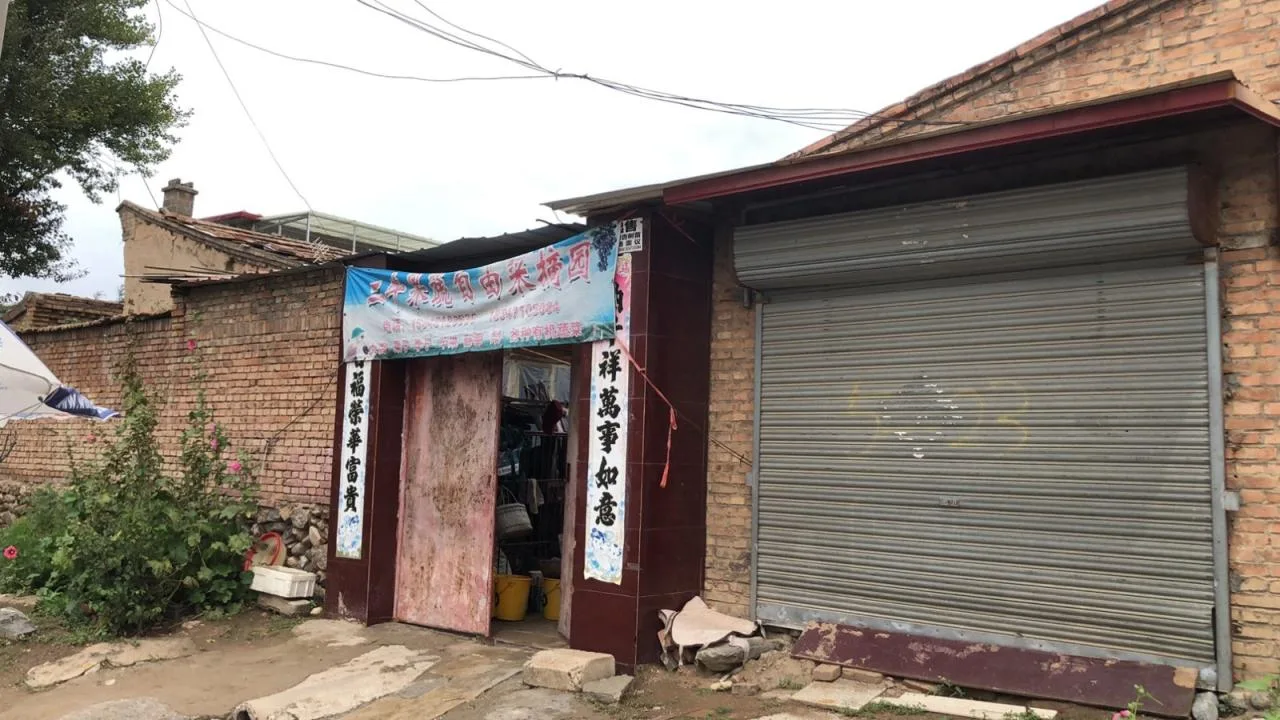
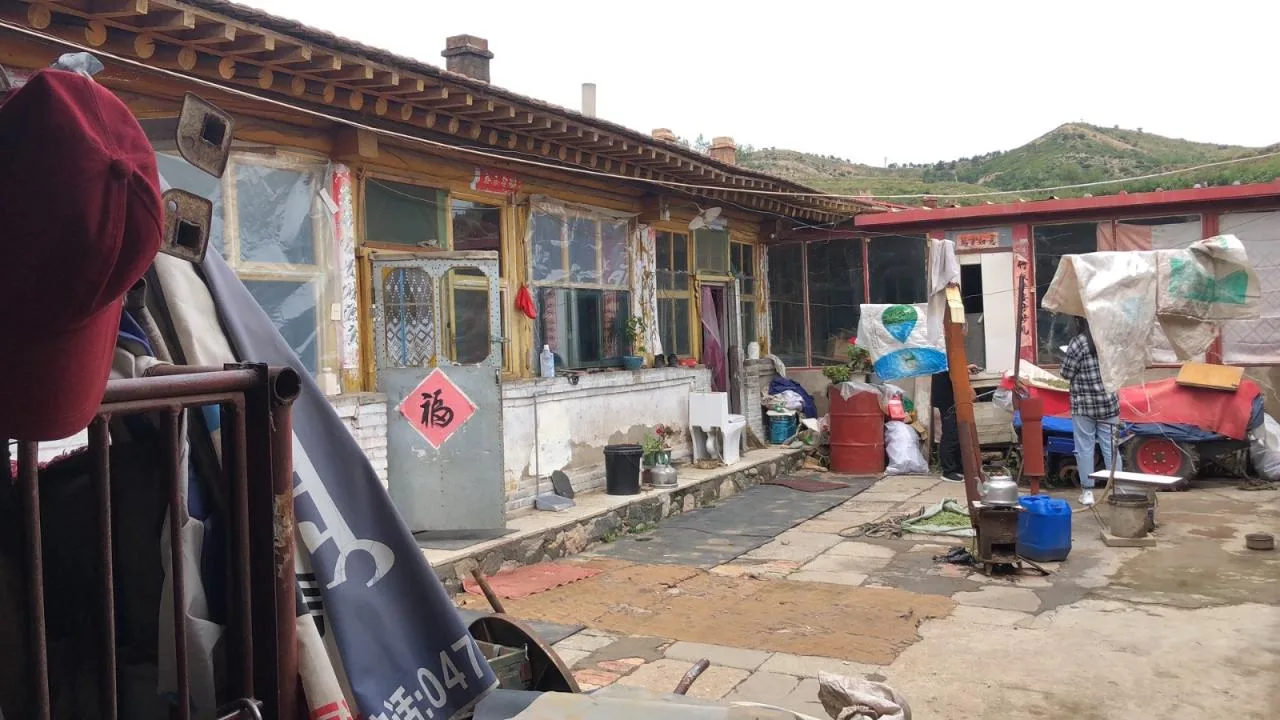
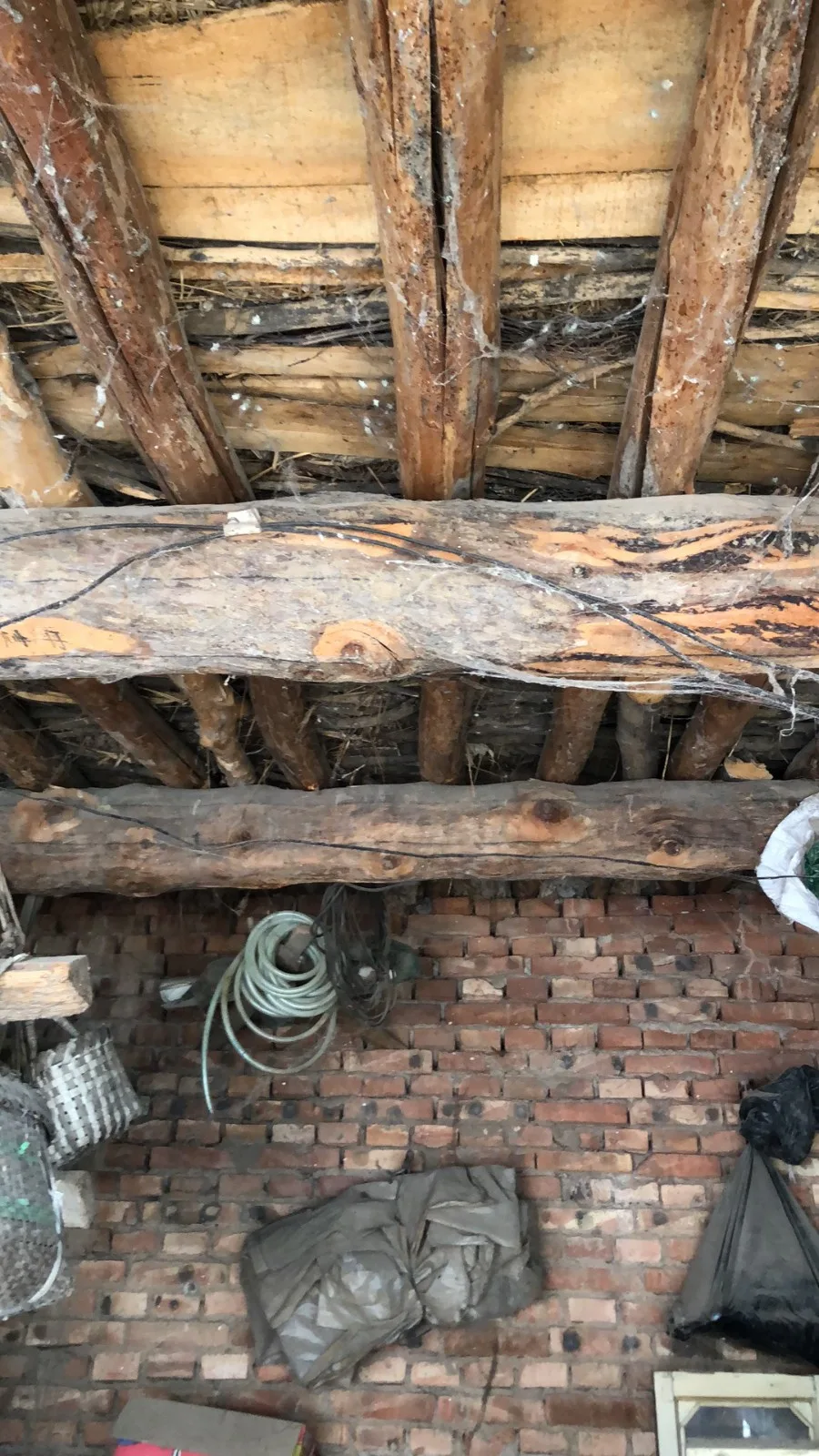
△ Original state diagram
The house is located within a compact village layout, with courtyards separated by north-south alleyways and adjacent to other courtyards on the east and west sides. Notably, the west side faces the road alone, making the west wall a critical element for entrance design. Maintaining the continuity, unity, and recognizability of the street facade was a key design challenge.
Local residents traditionally avoid entrances on the west side. However, due to site constraints, the courtyard faces west. Additionally, the original entrance provided a direct view of a hospital, which was deemed inappropriate according to local feng shui practices. To address this, the design introduces a foyer at the entrance to guide visitors and create a visual connection between the entrance and the original courtyard.
This connection is achieved through a “borrowing” technique, where an opening in the courtyard creates a framed landscape view. Above the entrance hall and surrounding walls, a viewing platform offers panoramic vistas of the northern green mountains and southern orchards.
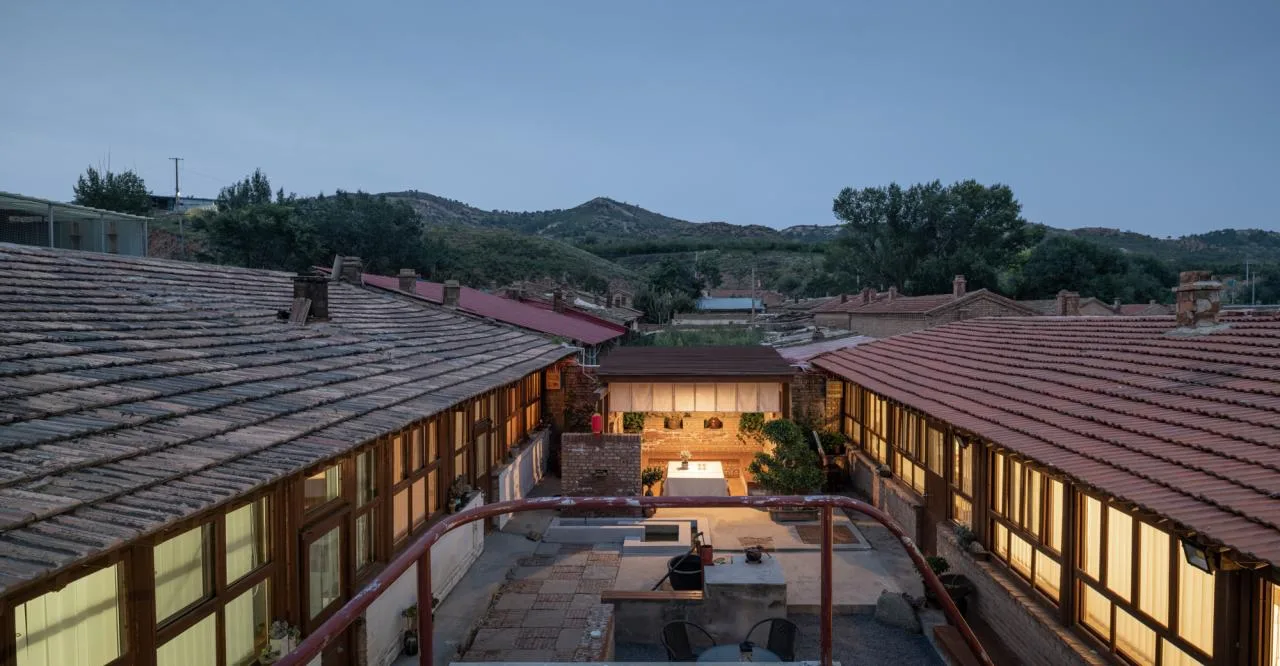
△ Inside the small courtyard
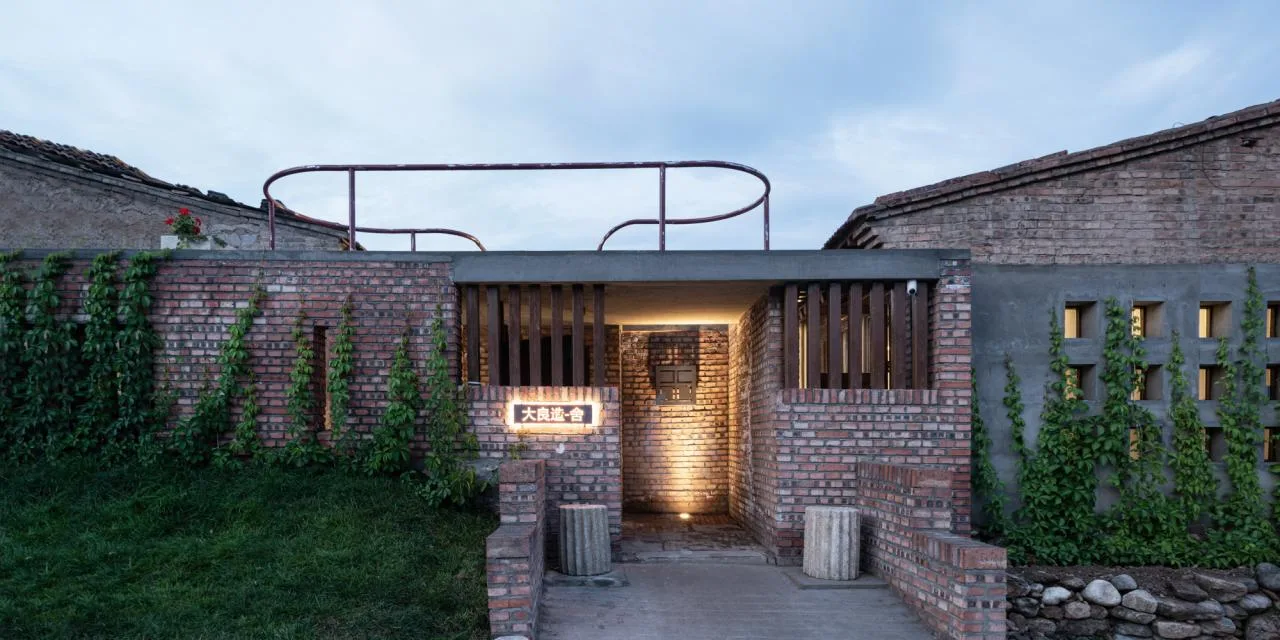
△ Entrance to the courtyard
Experience
Upon entering the courtyard, the existing water well divides the space into east and west sections. The west side features the entrance hall, a dedicated barbecue area formed by the hall, and an outdoor dining space. To the north, after demolishing an original temporary building, a new brick and wood tea pavilion was rebuilt in the original location.
The tea pavilion, along with the adjacent houses, leaves room for green landscaping. It integrates a waterfall wall and water pool, creating a cohesive landscape. The waterfall wall also relates to the entrance space, transforming the first courtyard with the presence of water features.
The water pool connects to the well through a water guide platform and underground pipes, facilitating water replenishment and offering an interactive element. This area serves as a playground for children and evokes nostalgic memories for adults who recall manually fetching water.
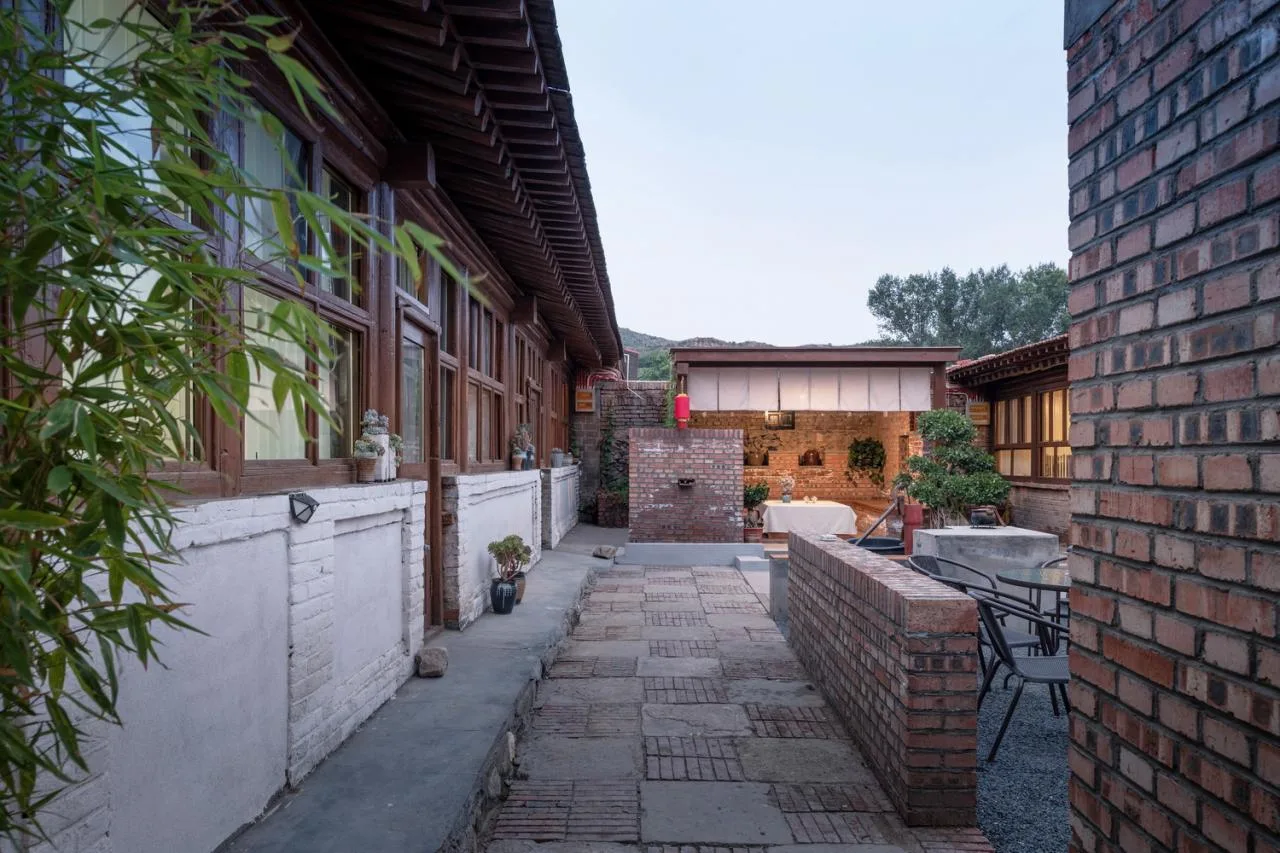
△ Internal passage
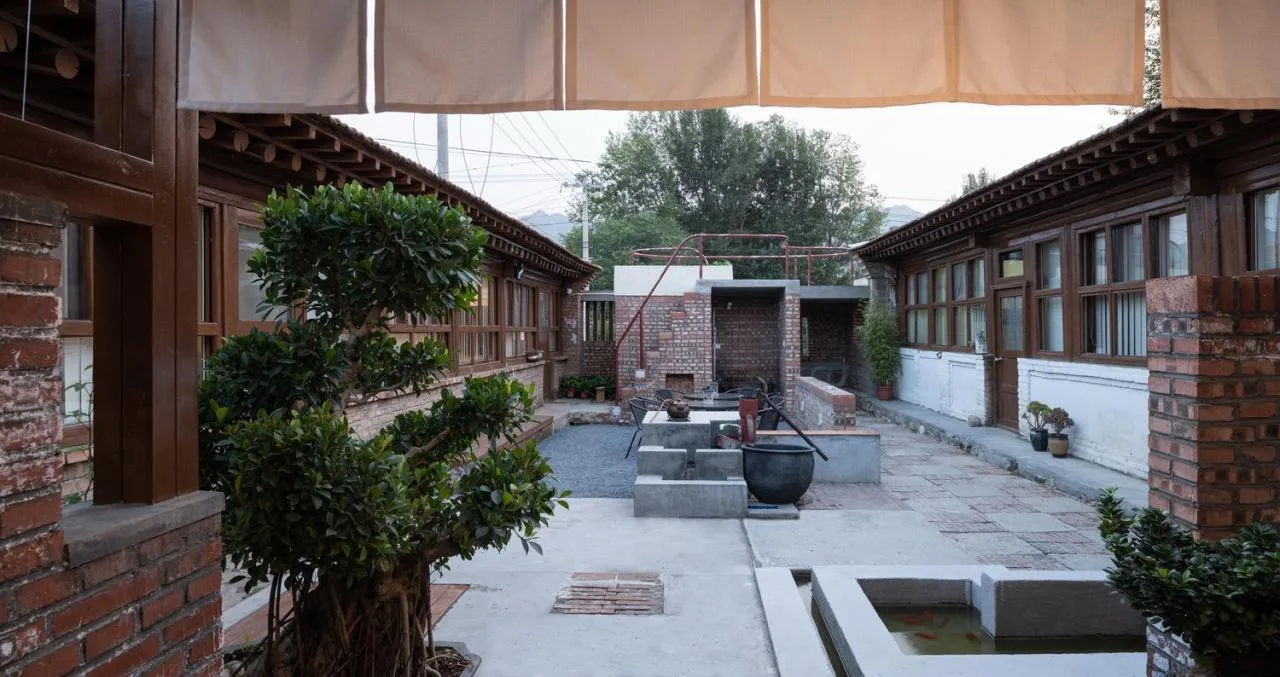
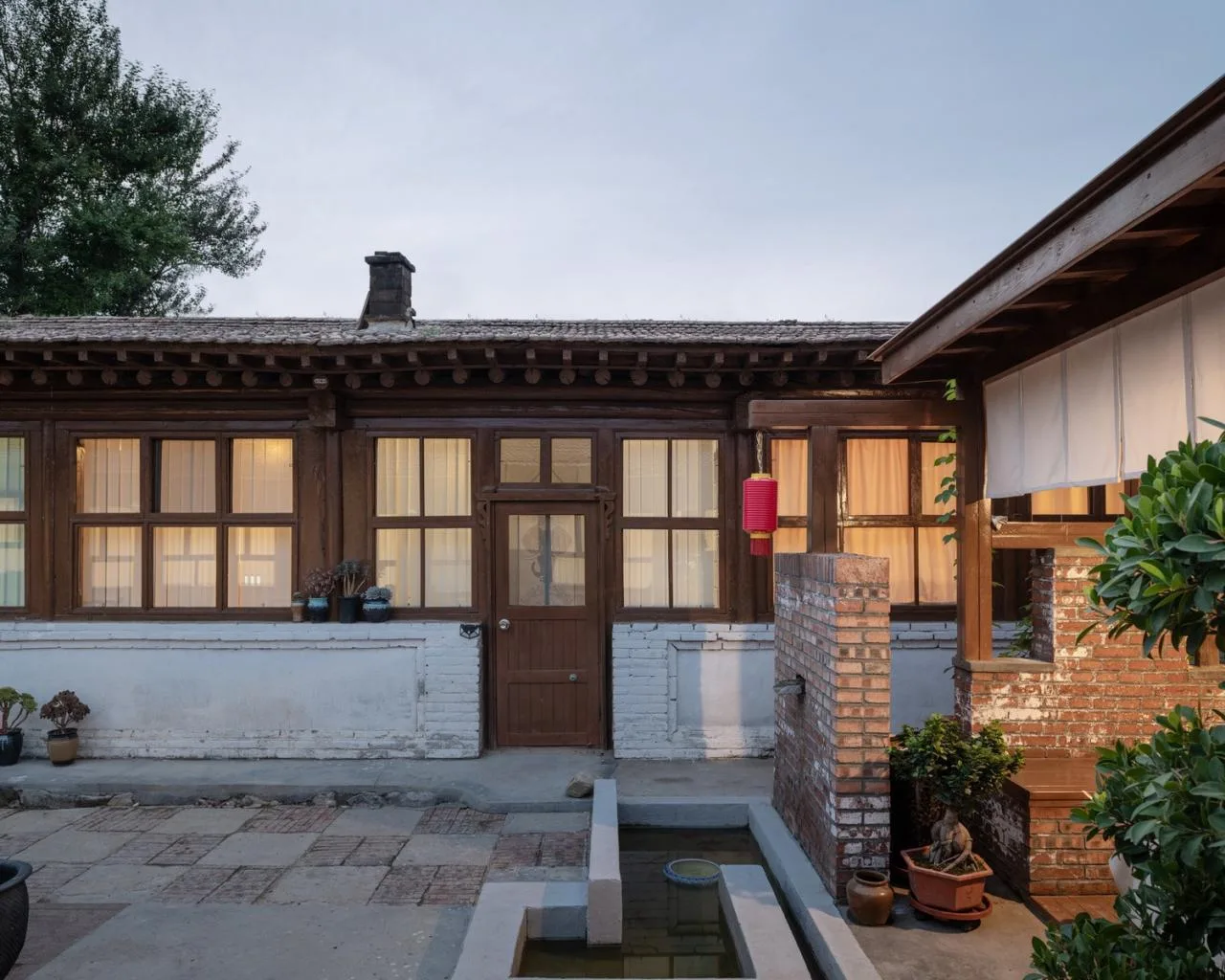
△ Tea Pavilion in the Courtyard
The treatment of the residential buildings emphasizes preserving the historical features of the original structures. The renovation involves moderate micro-interventions to meet contemporary functional and living standards without compromising the buildings’ heritage.
Indoor Spaces
The renovation repurposes the space beyond residential use. Reflecting its suburban context, the layout incorporates a tea room, conference room, study, dining room, kitchen, two bedrooms, and two indoor bathrooms. The primary goal is to accommodate small business activities, lodging, and dining services.
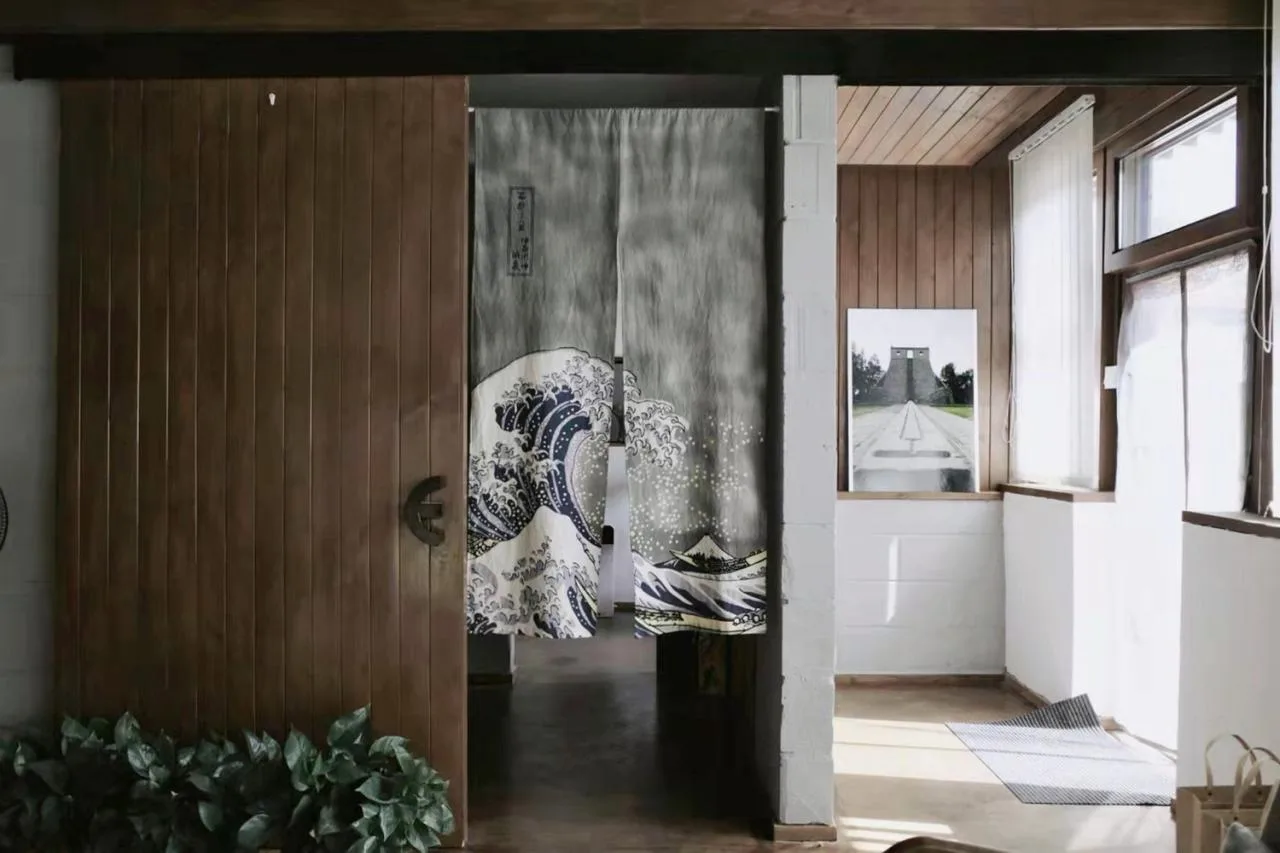
△ Tea Room Entrance
The tea room and study are located on the west side of the entrance main room, convenient for hosting external guests. Bedrooms are positioned on the north side, prioritizing safety and accessibility. The meeting room occupies the west side of the southern section, while the dining room and kitchen are located to the north.
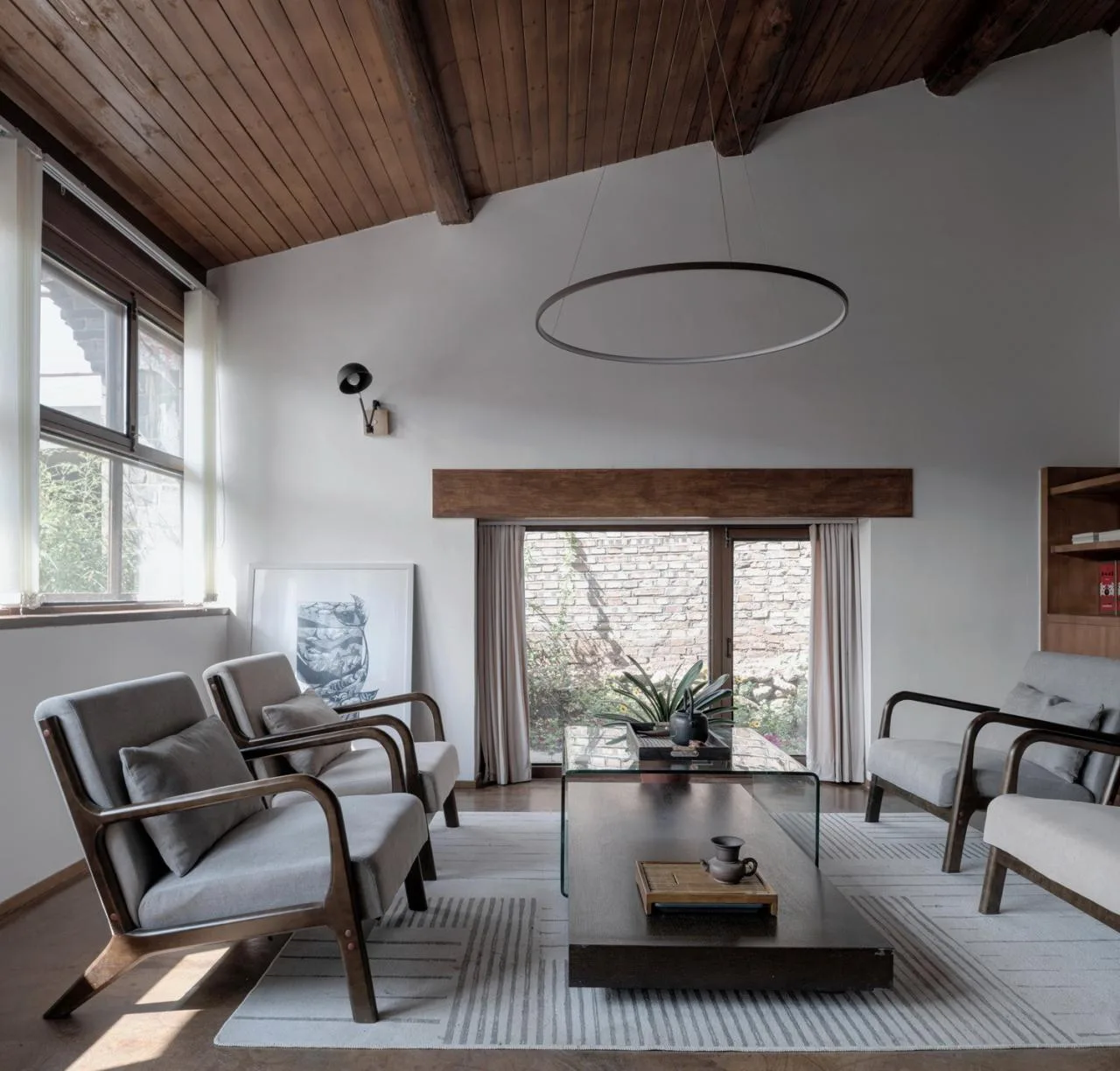
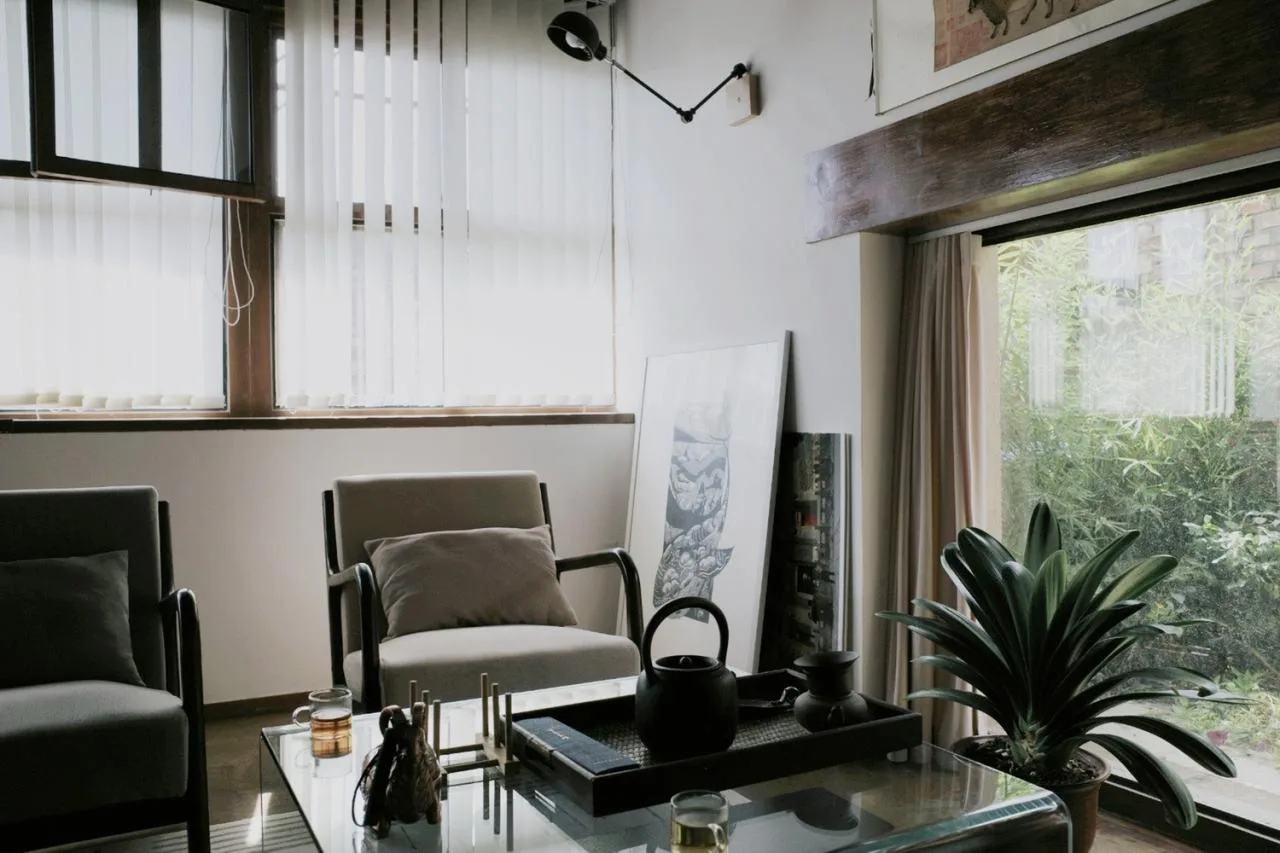
△ Tea Room
The tea room and study stand out as key interior features. These two open main rooms retain the original door position, which remains unaltered. Adaptive design is applied around this doorway. The tea room is divided into three sections: the tea area, a restroom, and the study. The tea room features French windows facing the street, enhanced with structural detailing.
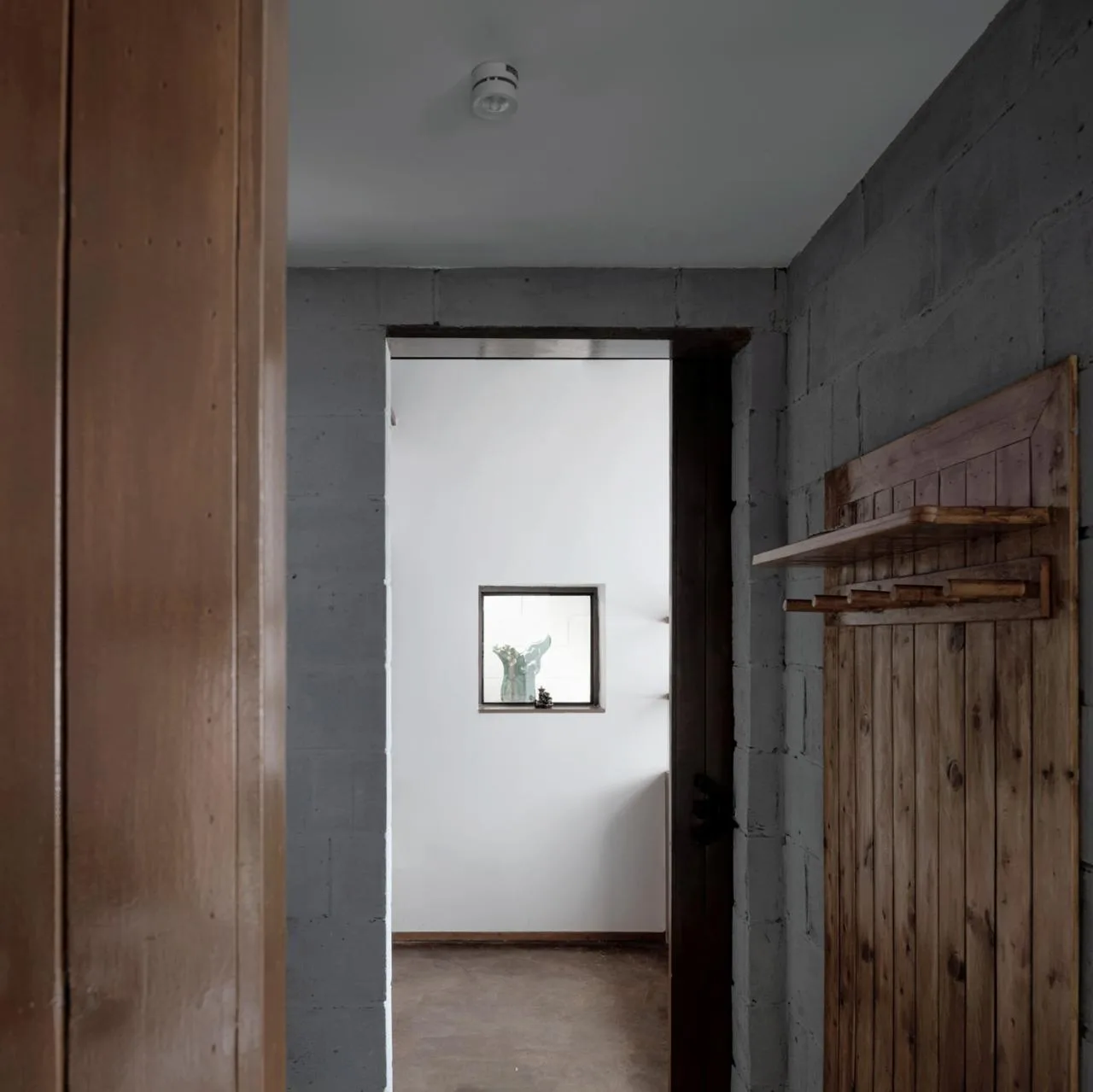
△ Study passage small hole
A small passage between the study and the northern bedroom features a sculptural landscape element along one side of the bedroom. This creates an axial relationship linking the tea room, passage, study, and sculpture, serving as an engaging visual guide.
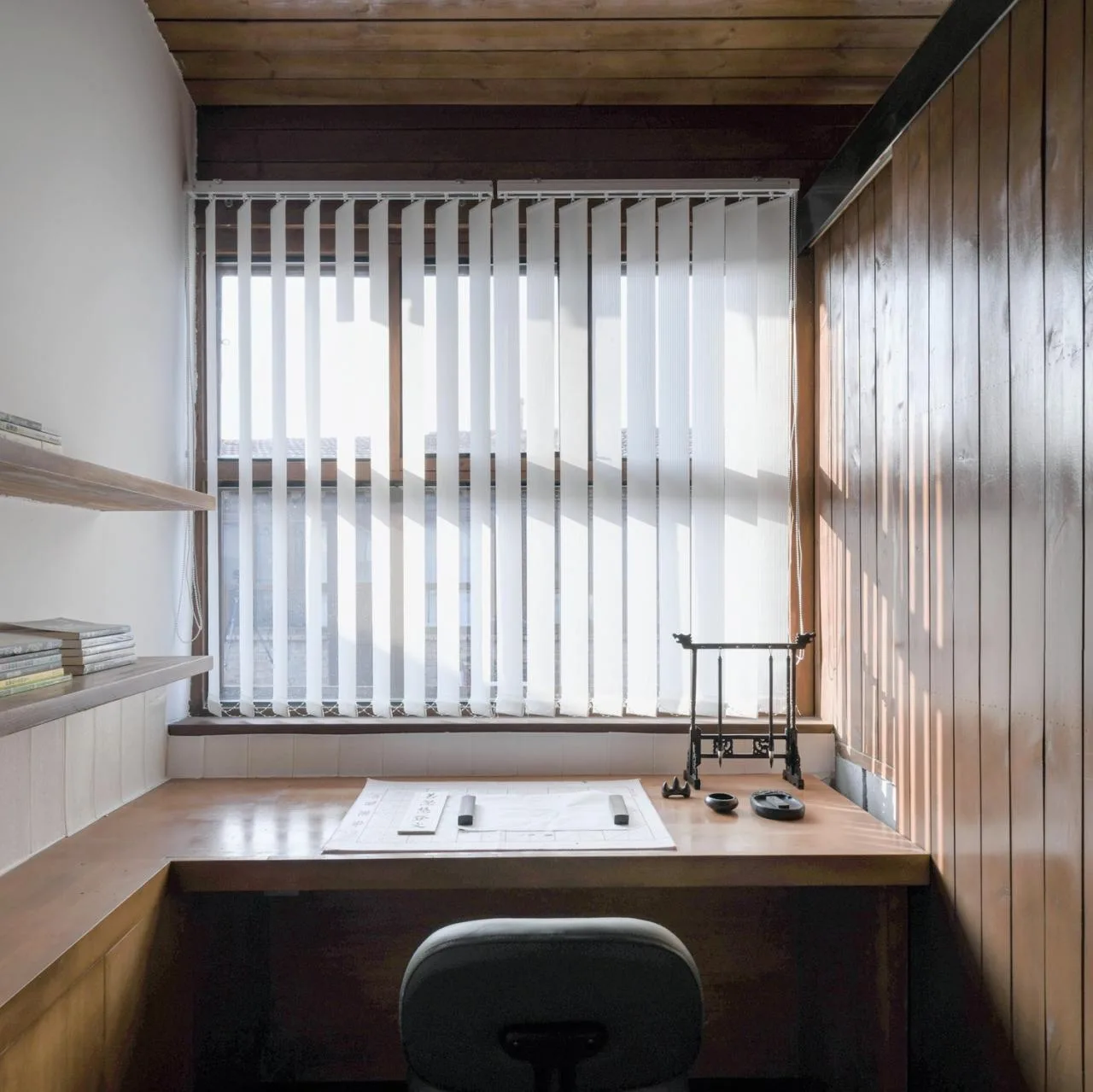
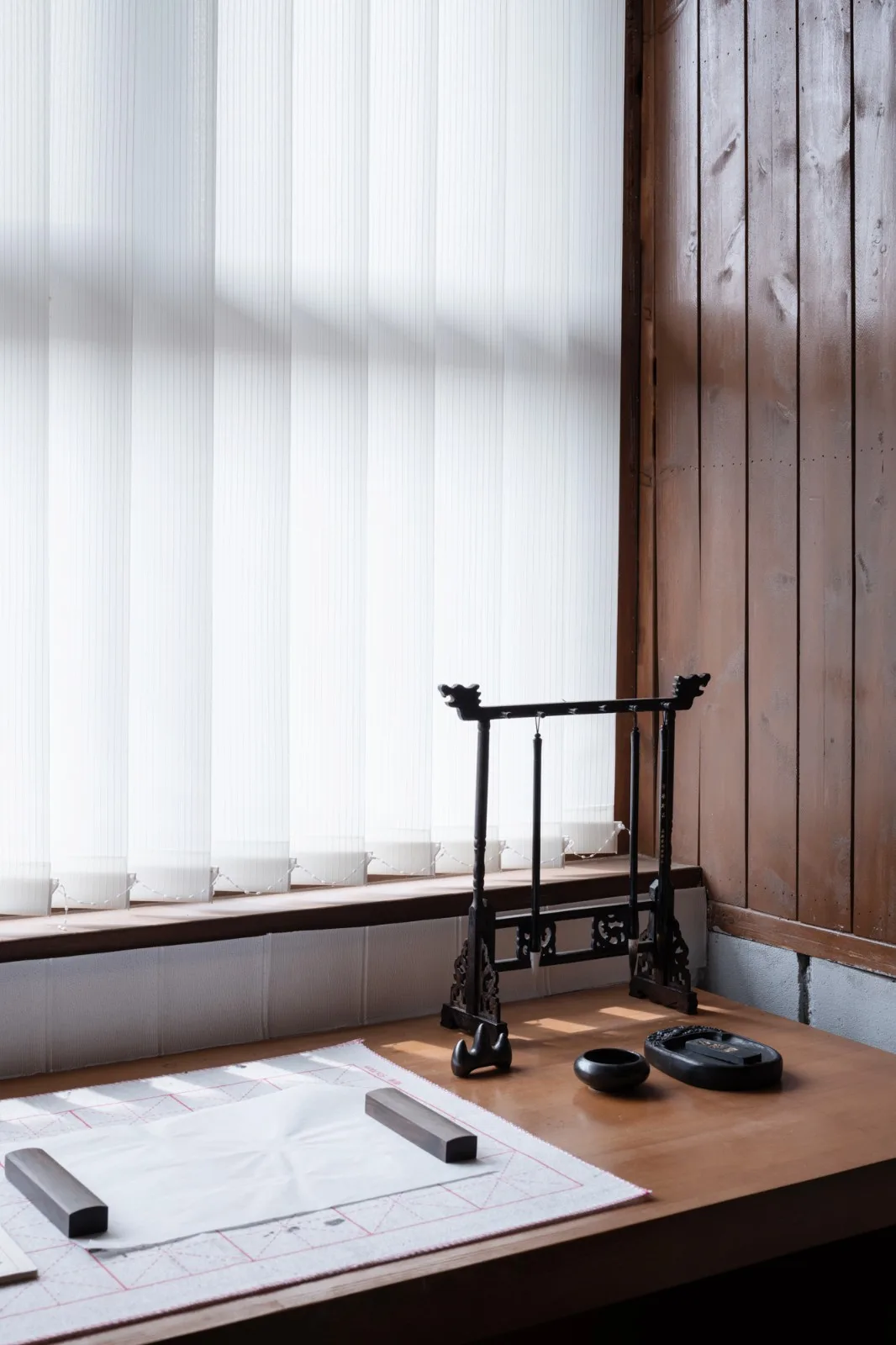
△ Study Room
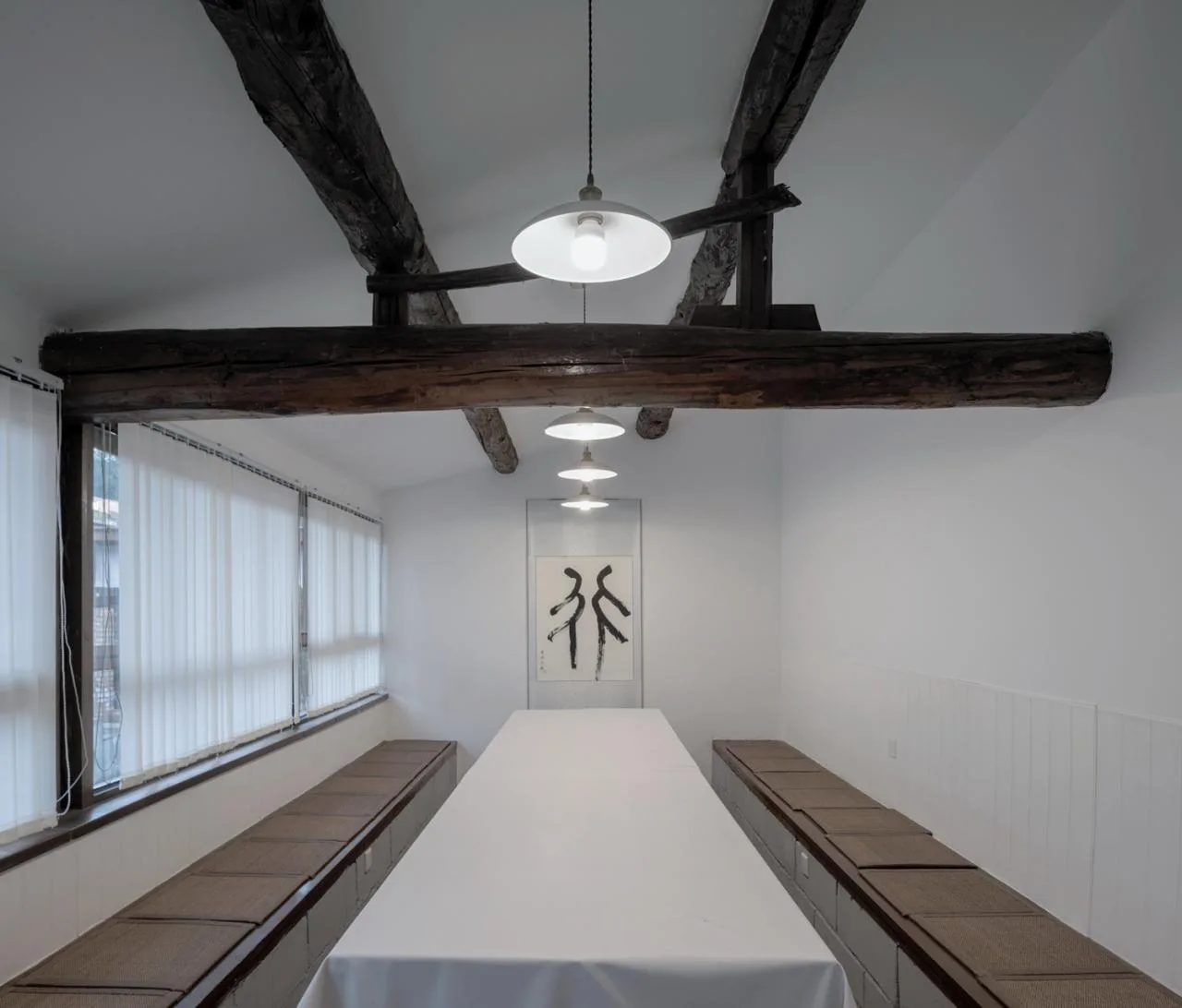
△ Meeting Room
Some interior treatments preserve the original structure’s intent, exposing beams and purlins while adding internal insulation to exterior walls. Original wooden window frames are maintained, with new frames and insulated glass installed inside. The external original frames remain removable for easy glass cleaning.
Analysis
By introducing thoughtful circulation paths, the courtyard space is opened up, allowing natural light to penetrate what was once a closed area. Essential natural elements—water, stone, wood, and greenery—are allowed to diffuse freely throughout the space, enhancing the overall atmosphere.
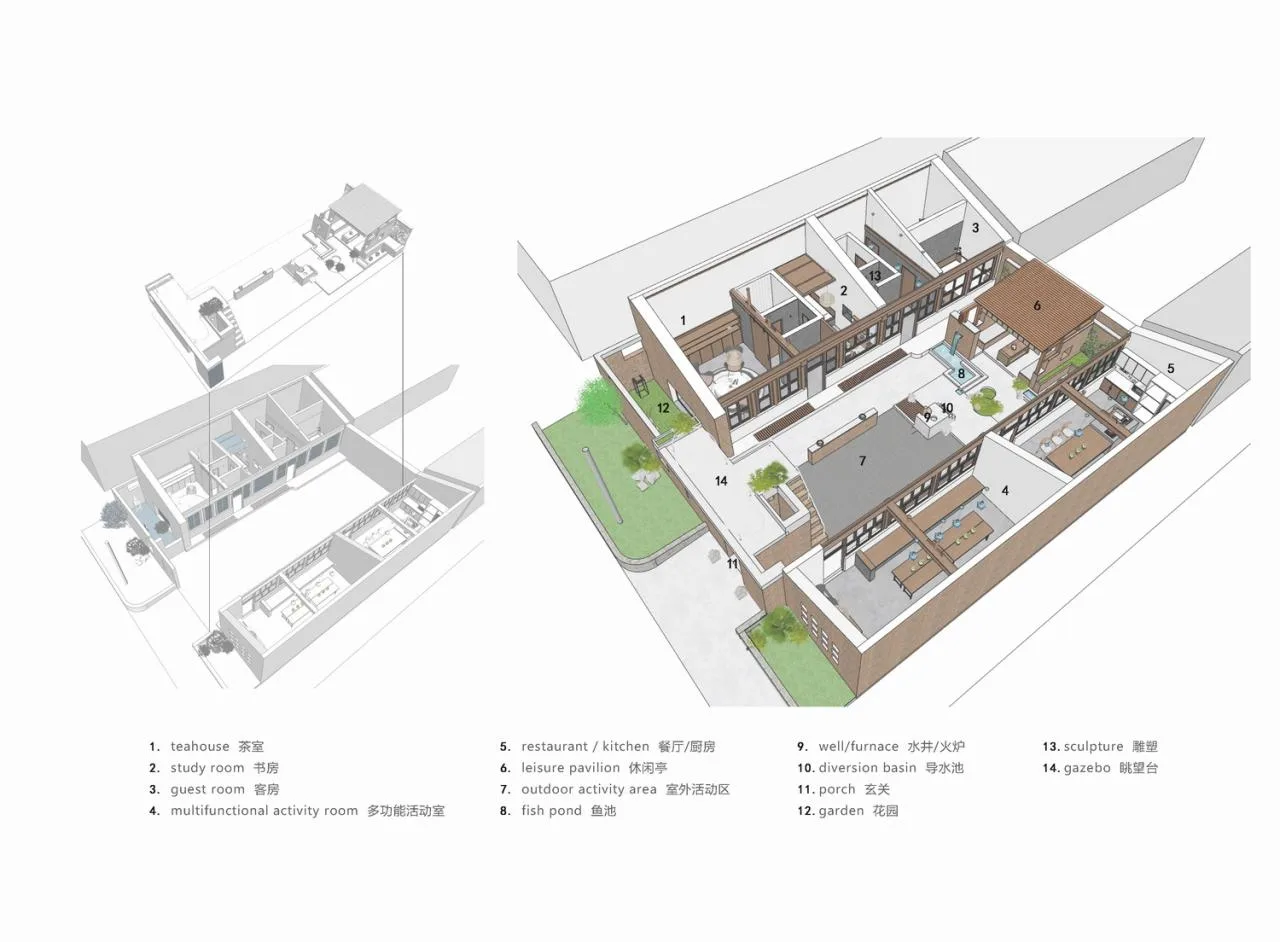
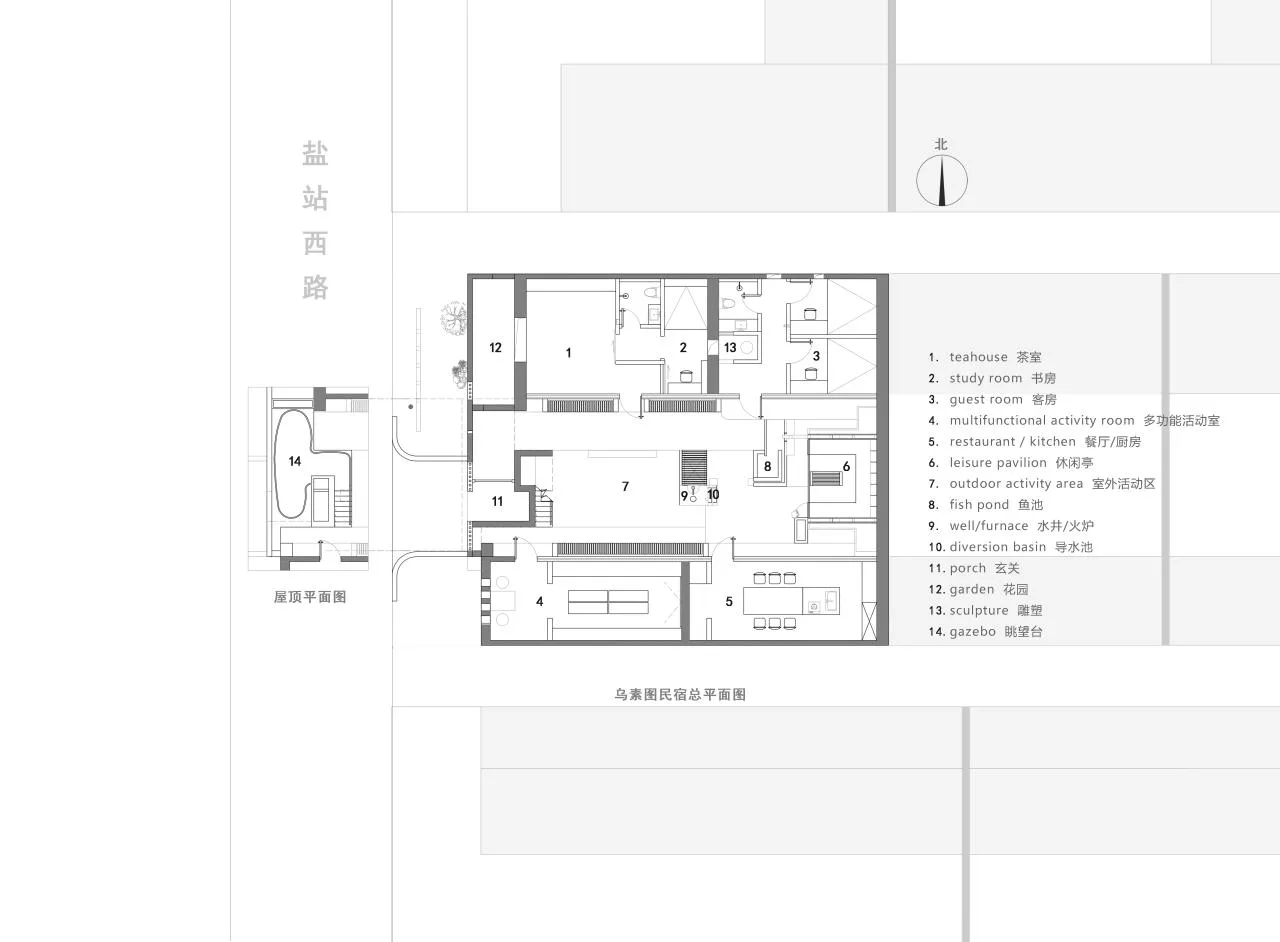
△ Small courtyard floor plan
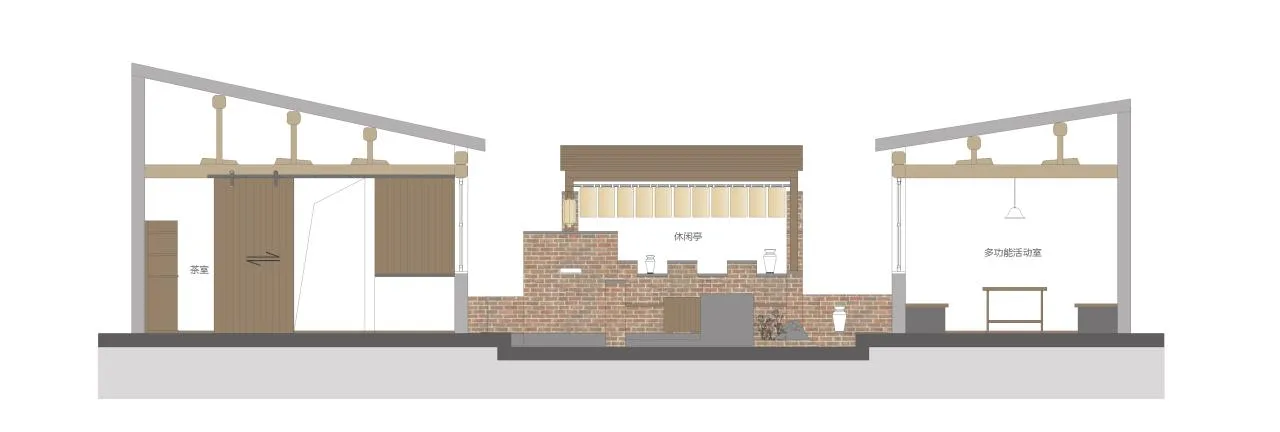
△ Small courtyard section diagram
Postscript
Overall, the courtyard renovation aims to uphold authentic values rather than pursuing sensational effects. It emphasizes the use of local materials, local craftsmen, and traditional usage patterns while respecting the surrounding environment. The project seeks to elevate the quality of living conditions and functionality.
Within the context of rural revitalization, this project represents a new approach to residential building renovation and utilization, aligning with the popular saying, “The countryside should not be a testing ground for architecture.”
Project Information
Project Name: Daliang Manufacturing – Building
Designer: DAIKOSHA Architecture and Environment
Location: Dongwusutu Village, Huimin District, Hohhot City, Inner Mongolia Autonomous Region
Contact Email: daliangdesign@yeah.net
Design Completion: May 2021
Creative and Design Team: Xu Qiang, Jiang Jinping, Xiao Dongpo, Du Longlong, Qi Xiaohai, Jiang Yixuan
Building Area: 255.4 square meters
Photography Copyright: Hohhot Daliangzao Architectural Design Consulting Co., Ltd
Partner: Zhicheng Jianke Design Co., Ltd
Client: Inner Mongolia Daliangzao Media Co., Ltd















Must log in before commenting!
Sign Up