
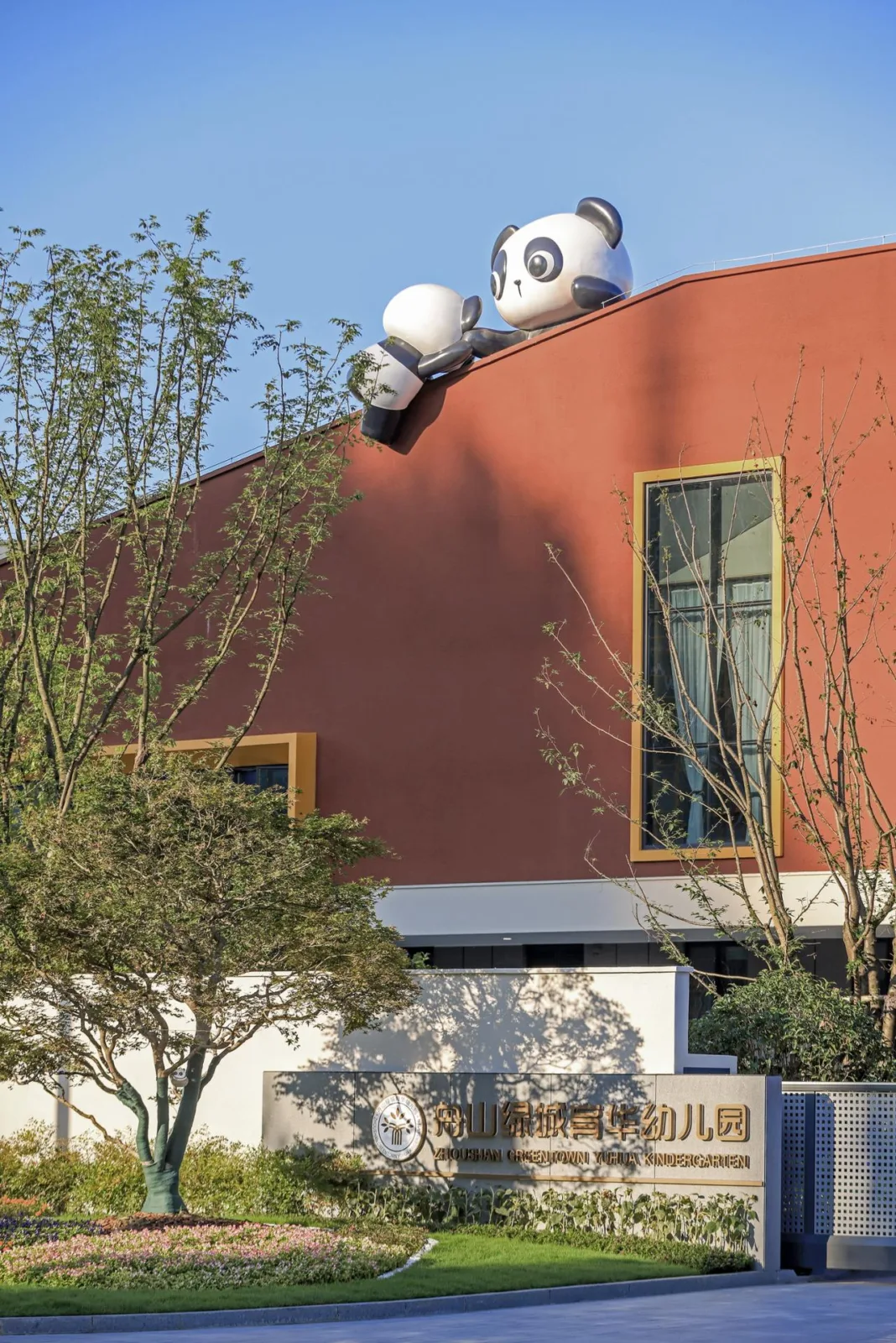
△ Entrance scene of Zhoushan Greentown Yuhua Kindergarten
Inspired by Reggio Emilia’s educational philosophy, the environment is considered the third teacher for children.
A kindergarten that encourages extensive exploration helps children become true active constructors of knowledge rather than passive recipients of instruction.
Since 2013, Goa Elephant Design has completed four educational buildings in Zhoushan City, with Zhoushan Greentown Yuhua Kindergarten being one of them. Situated on Changzhi Island in the Lincheng New District of Zhoushan City, this project was designed as an 18-class kindergarten serving children aged 1.5 to 6 years. The architectural and landscape designs were developed by GOA Elephant Design.
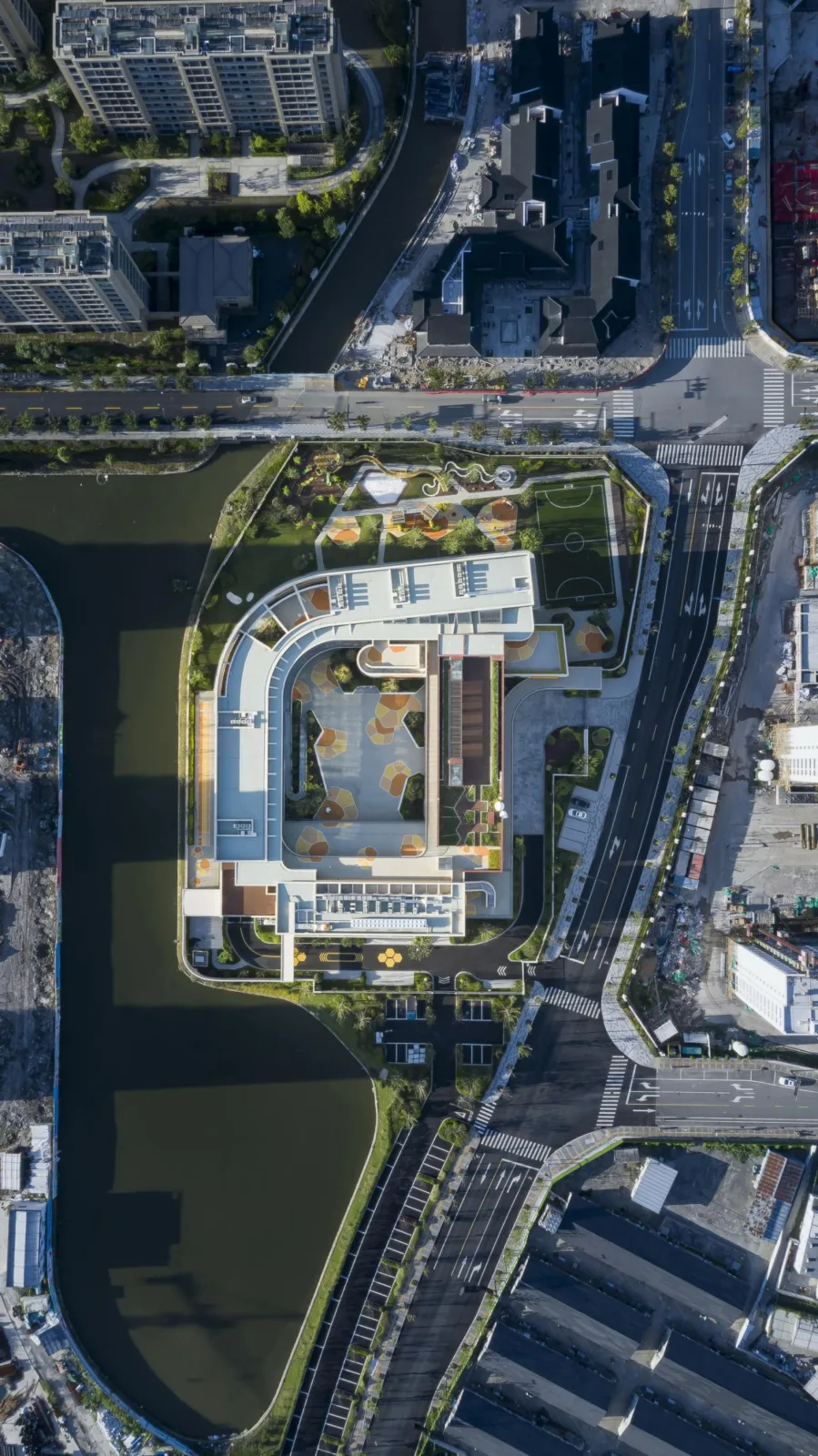
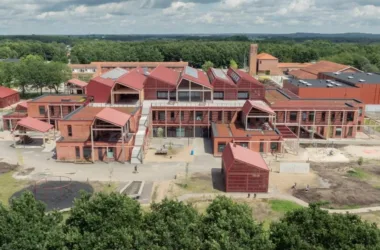
△ Realistic bird’s-eye view of the site
Stereoscopic Amusement Park: A continuous, flowing circulation system
Taking into account children’s behavioral patterns, architects and educators conducted thorough design research to create a multi-path, interwoven public space system that nurtures children’s natural activity and curiosity. This continuous loop connects classrooms and offices seamlessly, while offering an engaging and playful walking experience.
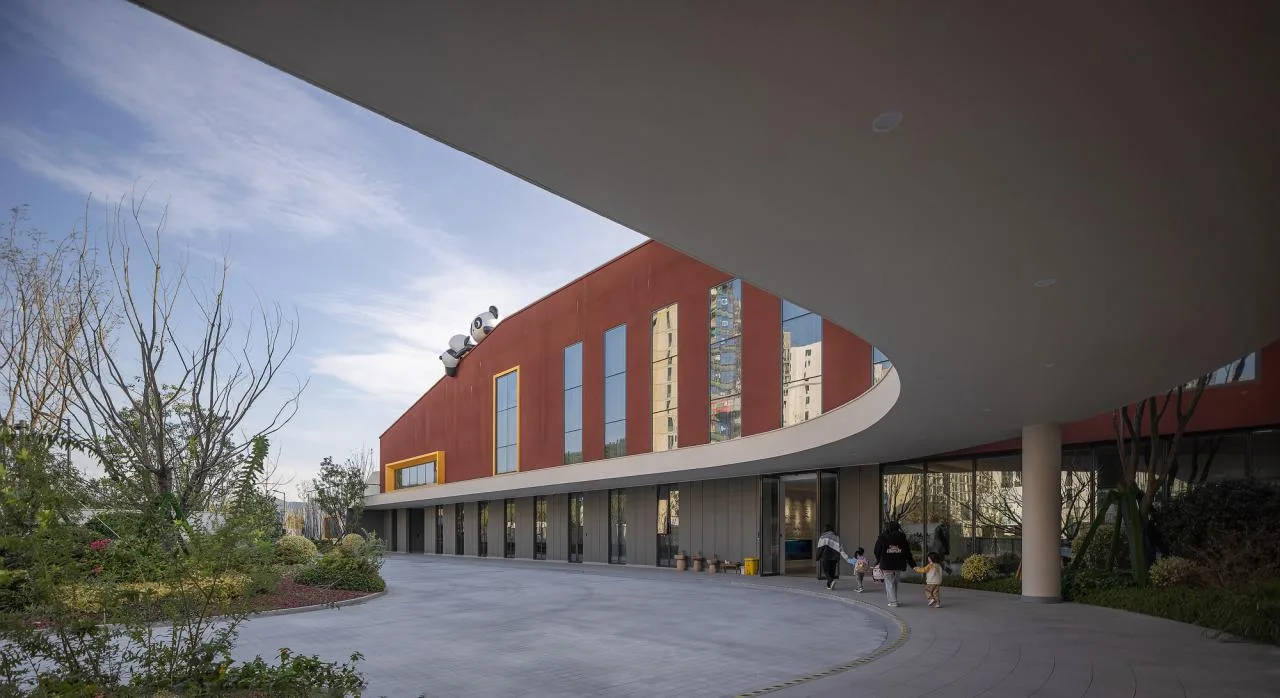
△ Kindergarten entrance
All classrooms are arranged on the south and east sides of the site across three levels. Roof terraces on each floor connect indoor and outdoor spaces, providing ample outdoor areas for teachers and children to engage in play and activities.
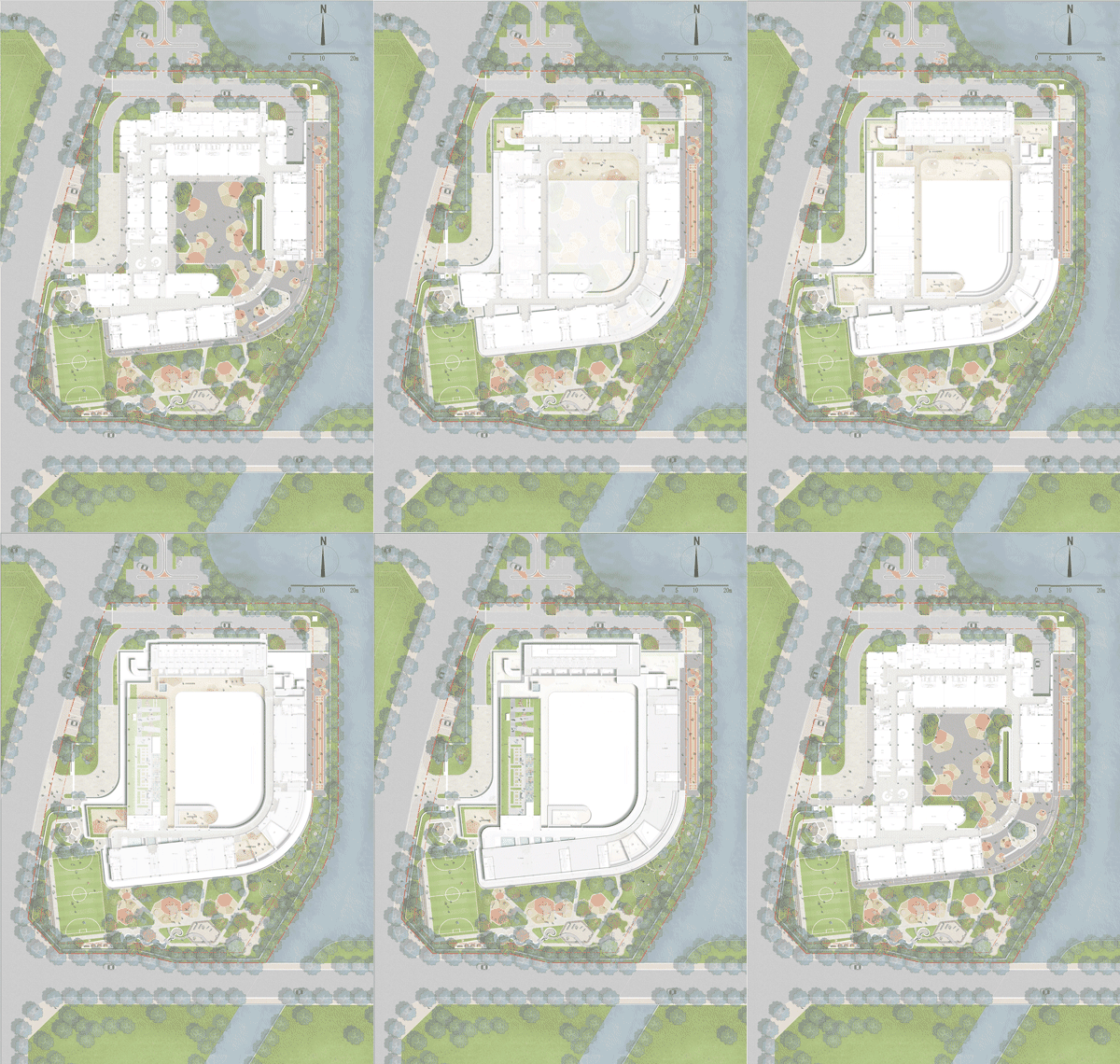
△ Floor plan schematic
The winding circular flow connects the entire building, allowing children to explore and play continuously without retracing their steps. The path leads up to rooftop areas where children can overlook the city. Various vertical circulation spaces provide fun and encourage independent discovery.
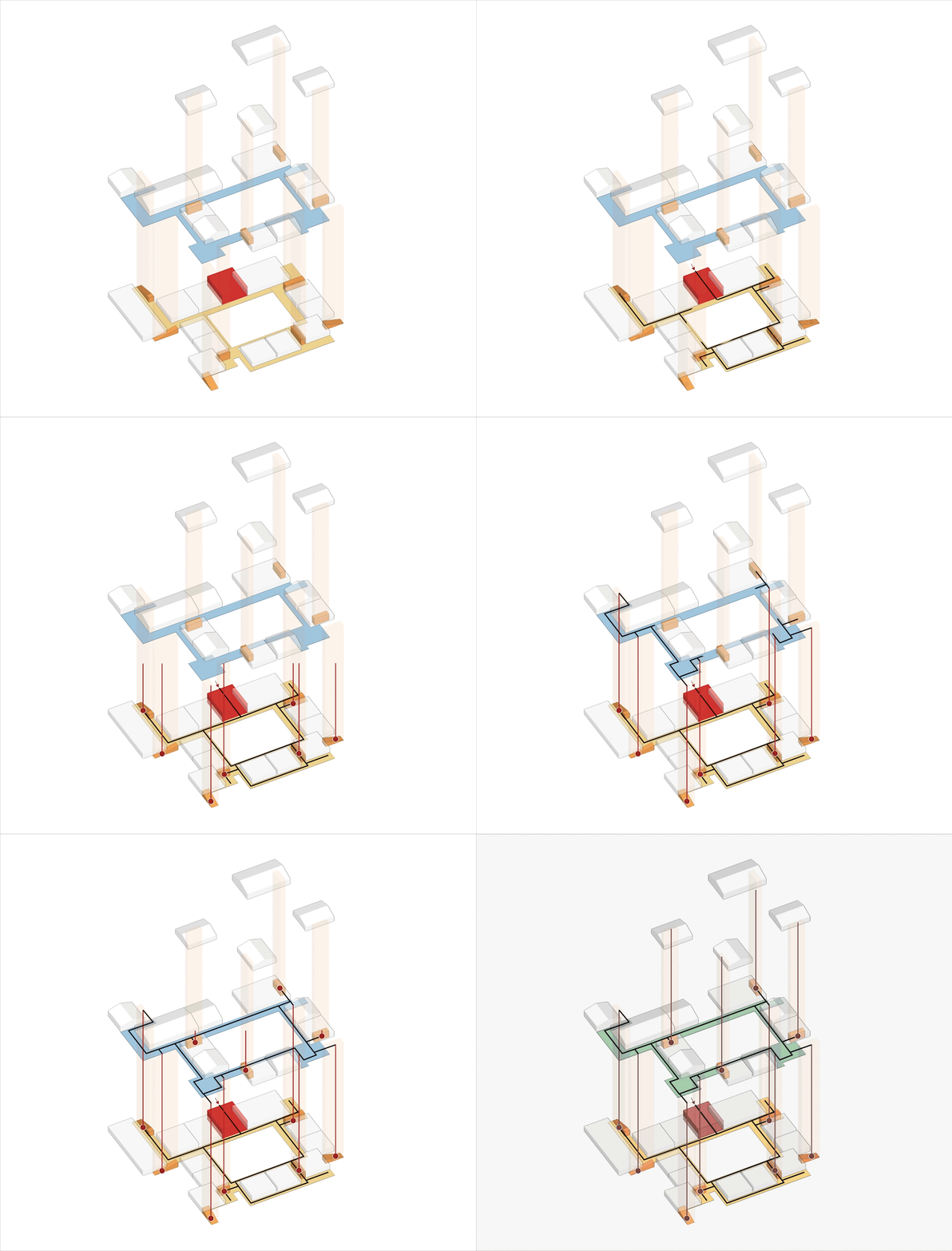
△ Circulation diagram

△ Realistic teaching activities
The teaching building includes specialized classrooms such as construction, ocean-themed, baking, and drama rooms. These are strategically located at intersections of pathways to improve circulation efficiency while providing diverse routes that cater to children’s curiosity and innovative spirit, positively impacting their learning experience.
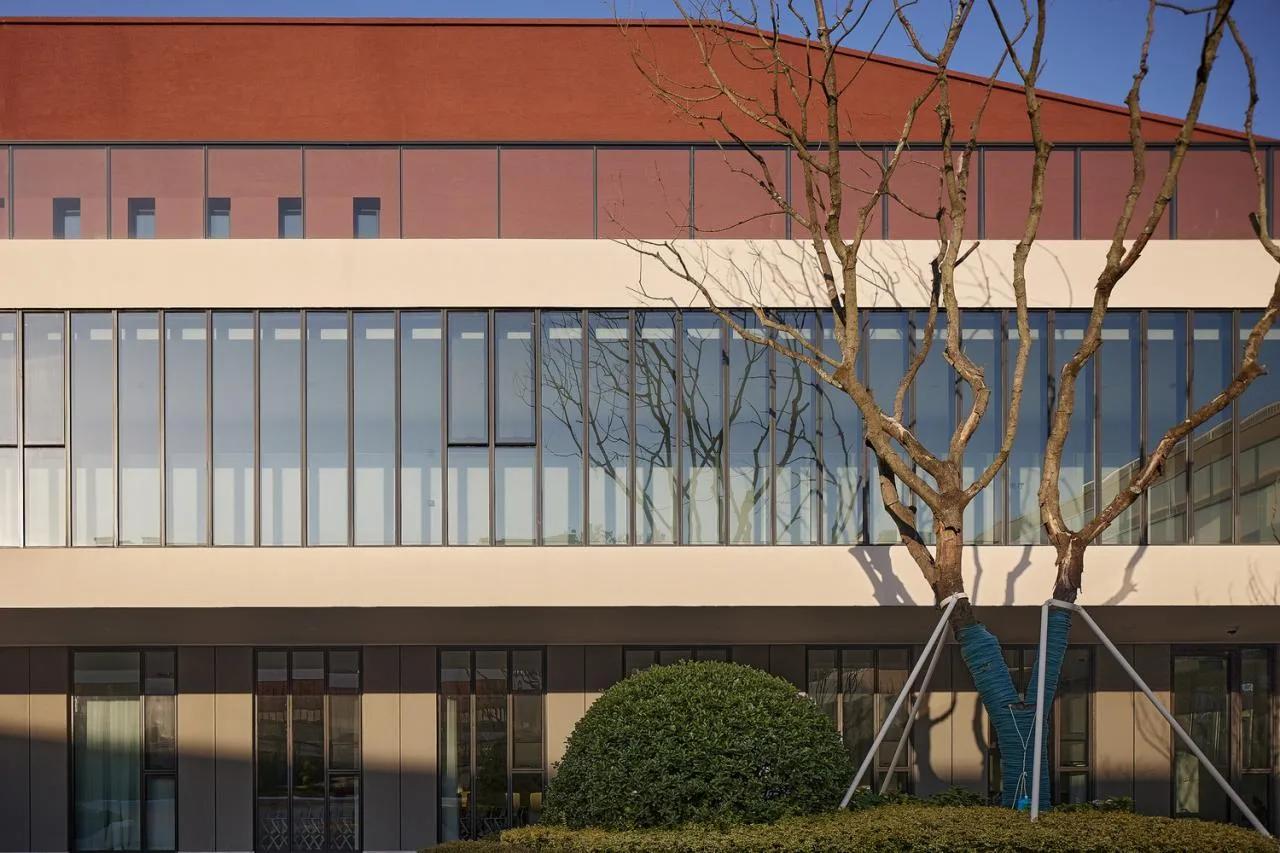
The building’s three-level layout utilizes roof terraces to seamlessly link indoor and outdoor environments.
Transparent interfaces between interior and exterior allow children to enjoy rich landscape views from a lower perspective. The courtyard scenery permeates the interior, fostering an open atmosphere that supports both psychological comfort and caregiving.
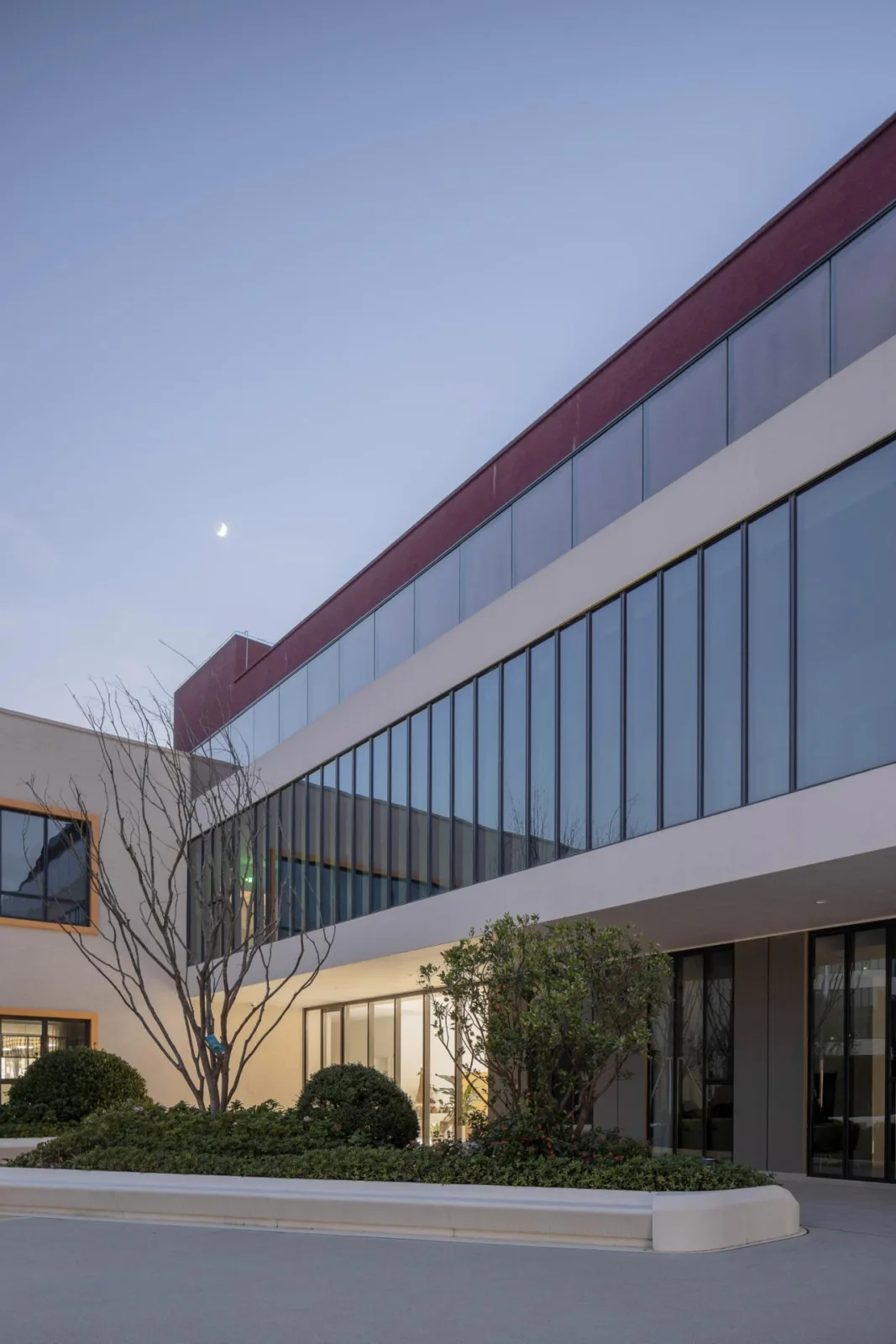
Transparency between indoor and outdoor spaces
The dynamic overall form and circulation system work in harmony to support various teacher-student interactions and personalized teaching needs, resembling an enlarged playful castle amusement park that is beloved by both teachers and students.
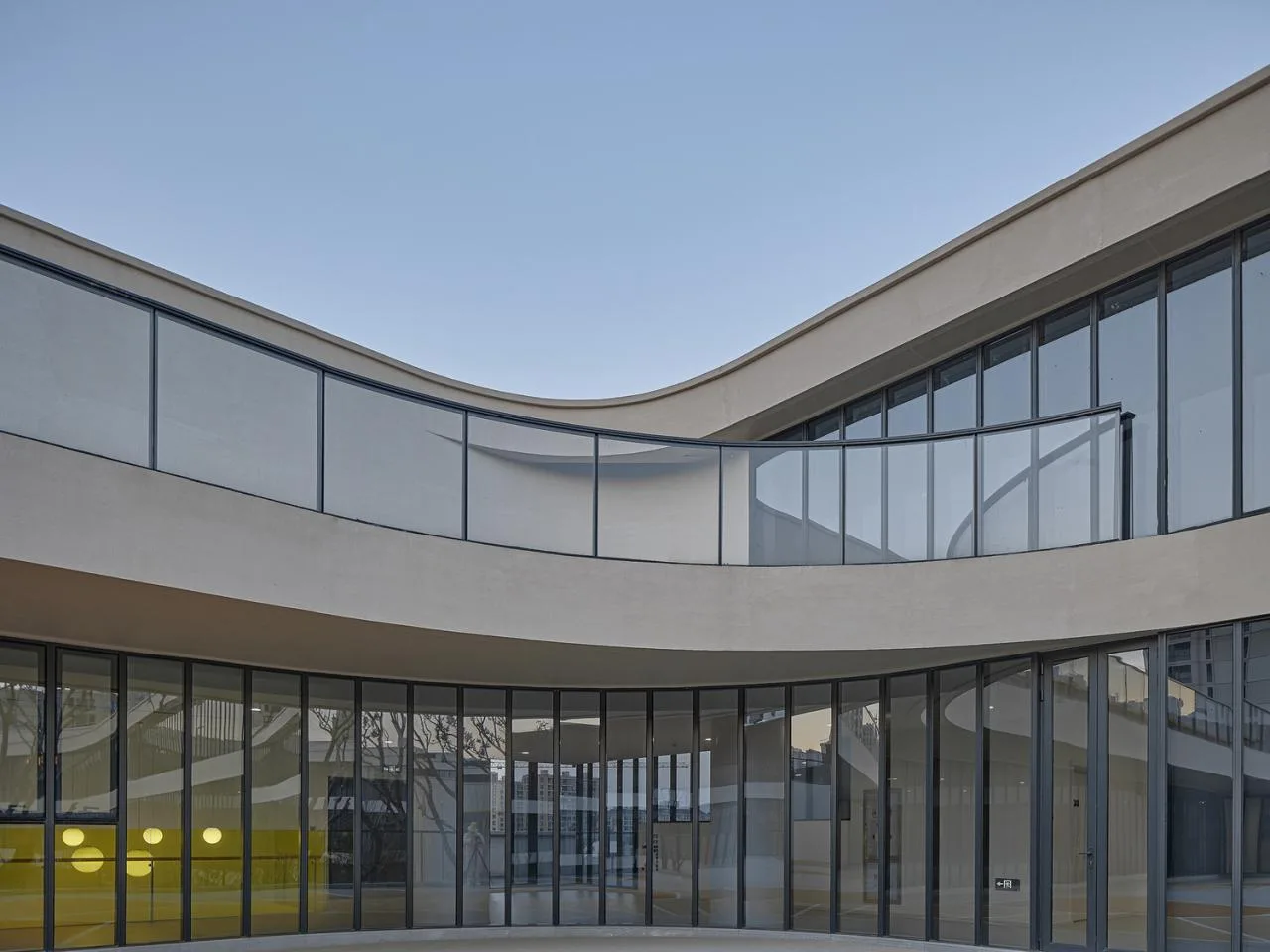
△ Realistic view of the inner courtyard facade
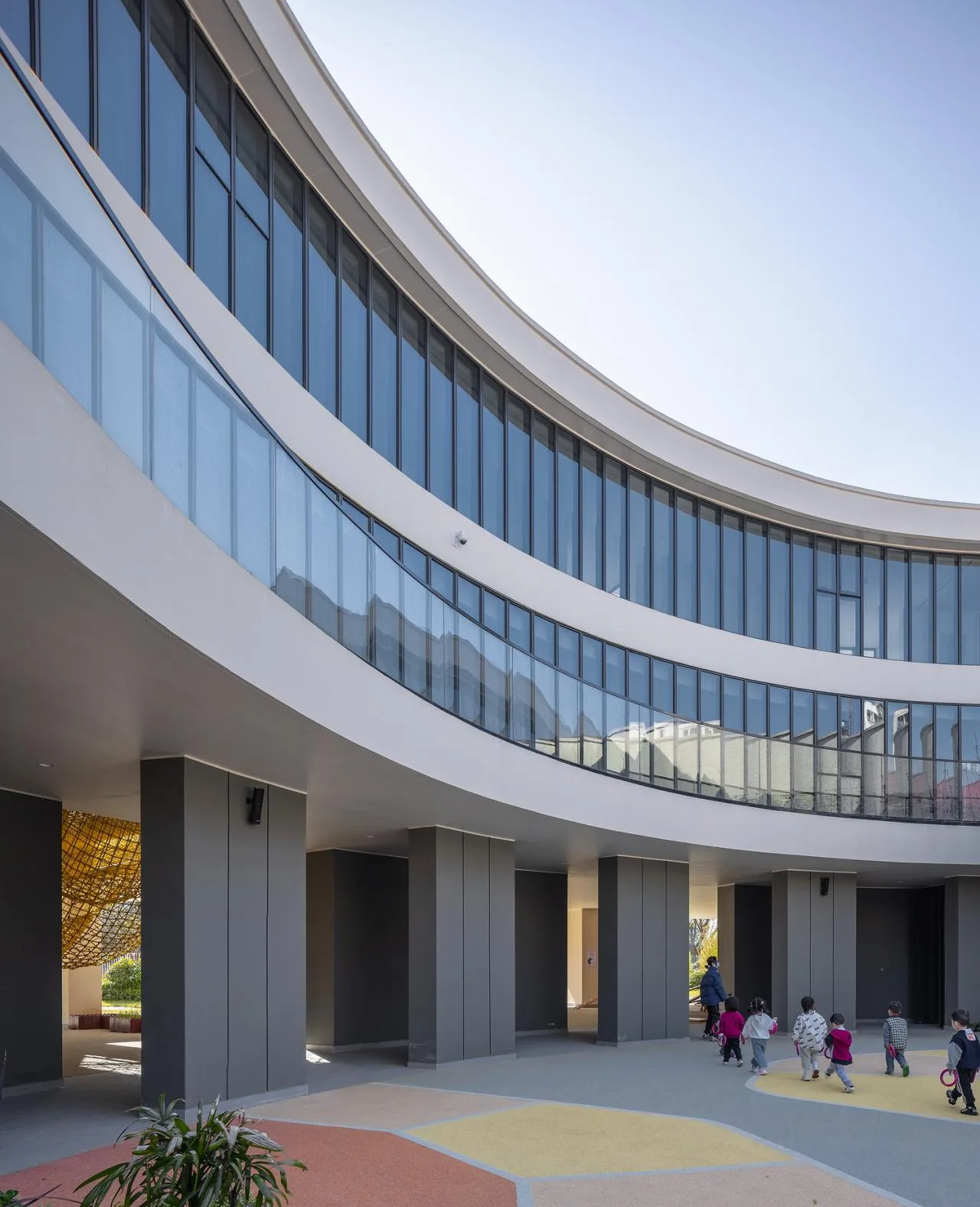
△ Another view of the inner courtyard facade
Generative Classroom: Fostering the natural emergence of children’s “100 Languages”
Generative teaching emphasizes the diversity of teacher-student interactions and the complexity of the teaching environment. It requires spaces to be as diverse and adaptable as possible.
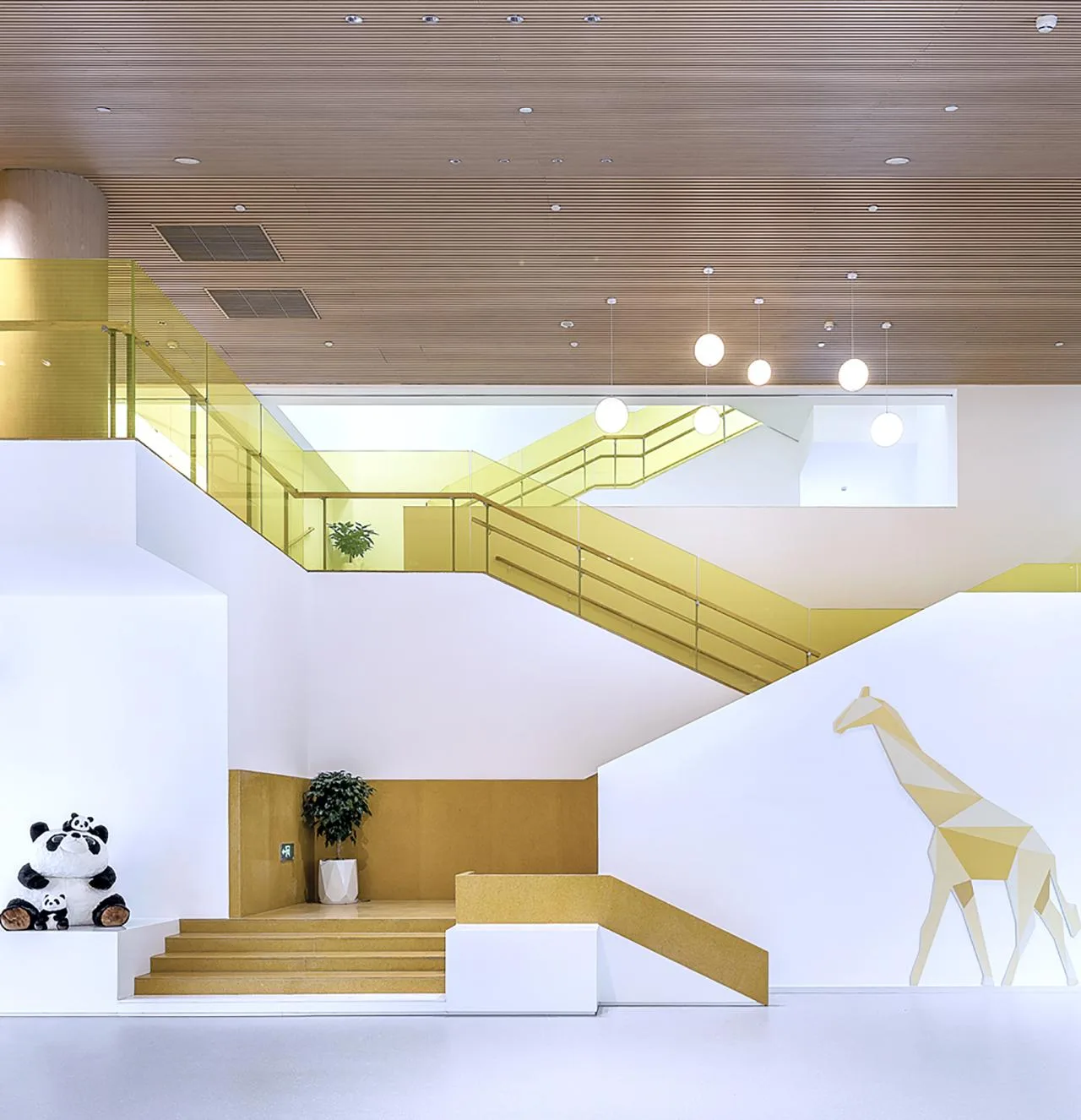
△ Realistic interior view of the first-floor lobby
The architects aimed to create spaces that support generative teaching, stimulate children’s independent exploration, and naturally offer joyful real-world experiences.
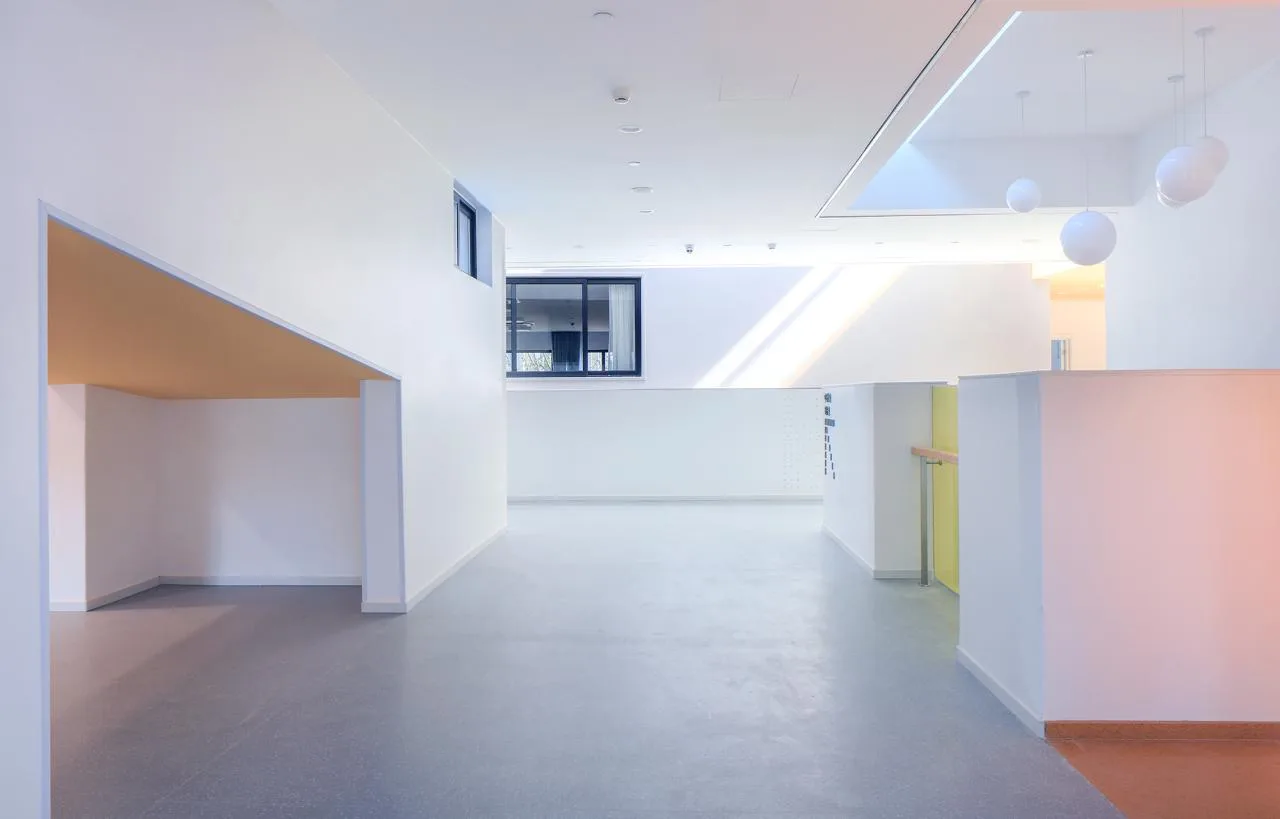
The use of calm, bright colors and simple spatial forms creates a comfortable atmosphere for both body and mind.
Such an environment supports flexible teaching content, where reality and fantasy, play and learning coexist naturally and evolve continuously.
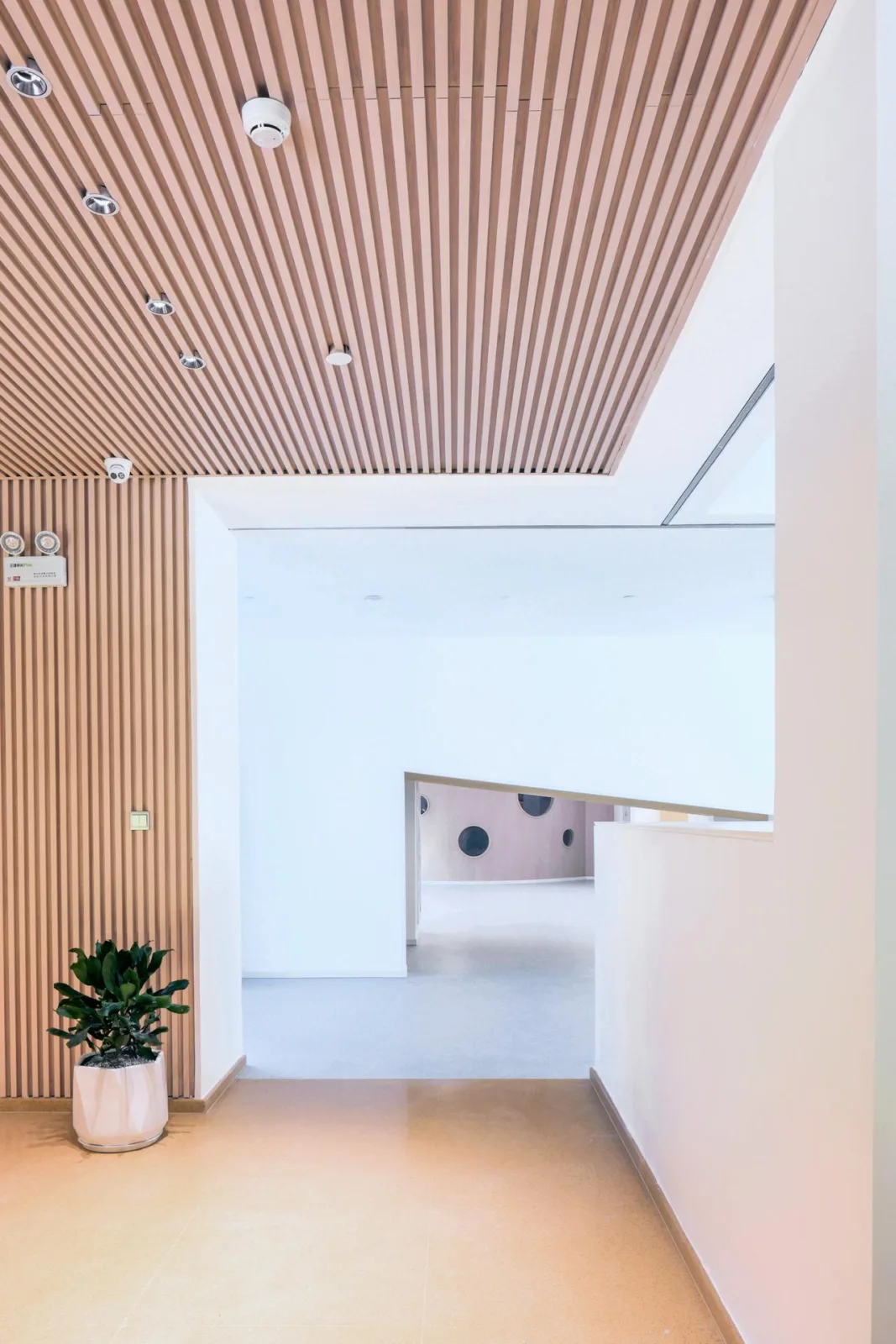
Non-standardized spatial design encourages children to explore space, light, and materials.
The shared goal of architects and garden owners is not merely to provide toys, but to guide children in using their bodies to experience the rich information in the environment, encouraging exploration of space, light, and materials.
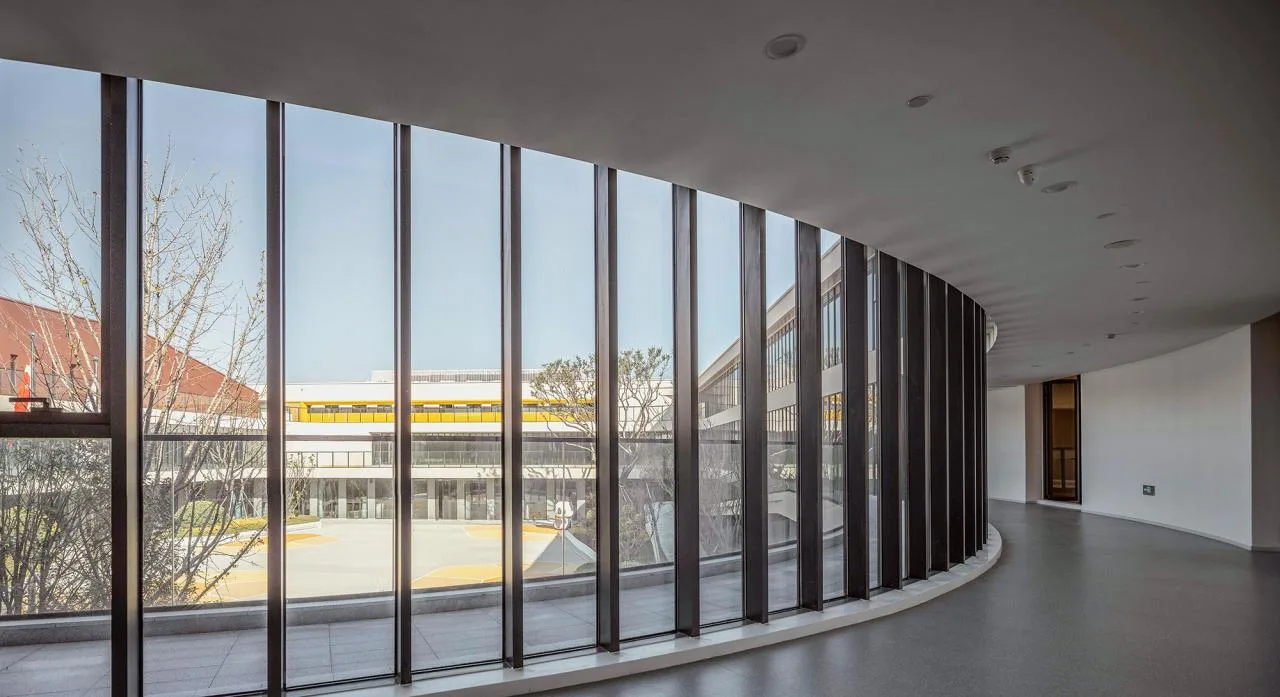
△ Public spaces designed to maximize natural light
Each distinctive classroom located at public space corners is designed to introduce natural light. This infusion of light transforms the space and conveys the passage of time, encouraging children to become explorers and constructors of knowledge rather than passive learners.
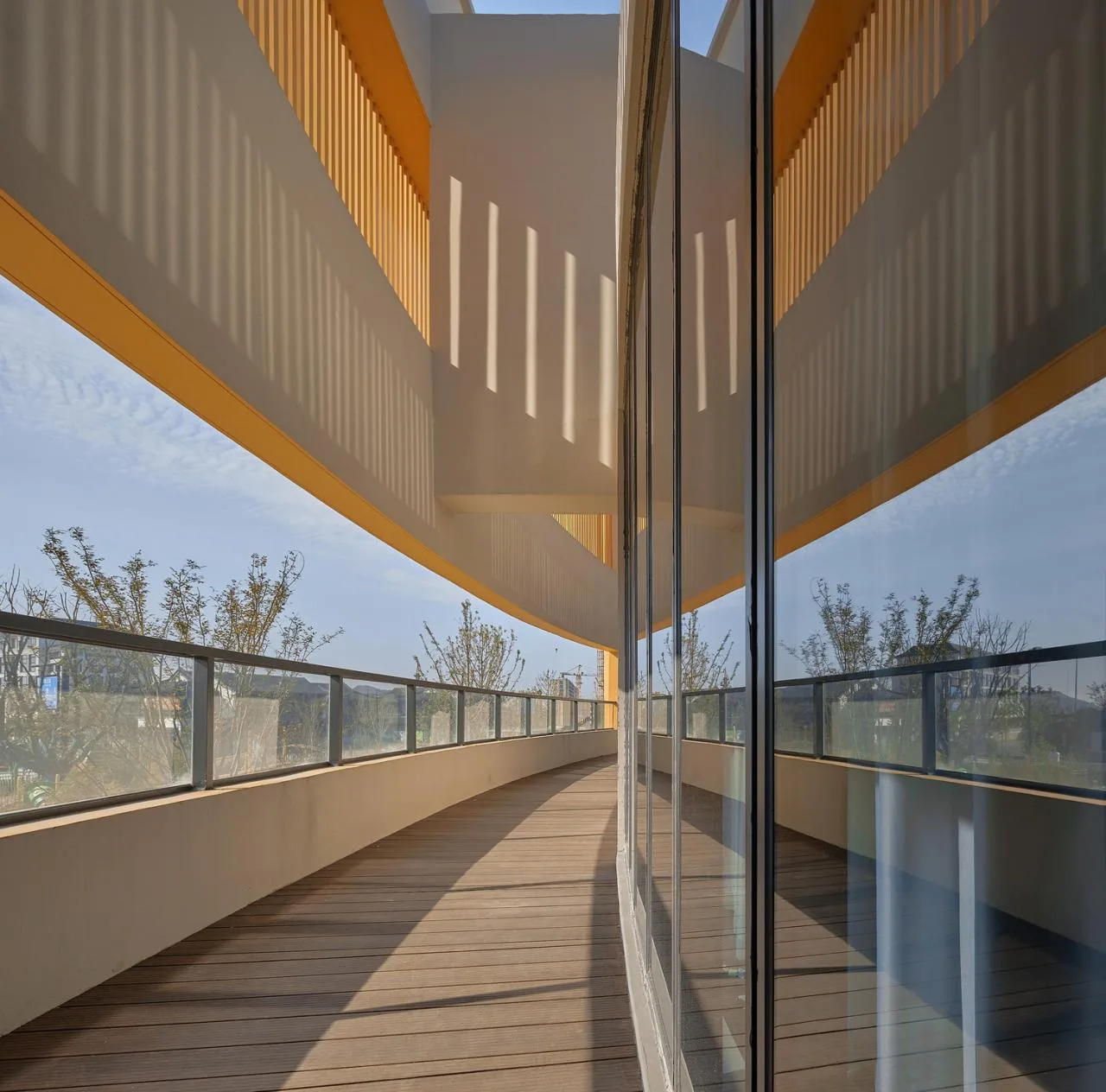
△ Outdoor platform adjacent to a specialty classroom
Fun, Safe, and Holistic: Integrated Landscape and Architecture Design
The landscape and architectural design were integrated by GOA Elephant Design, focusing on children’s needs for social interaction, creative cognition, and active play. The design fully utilizes the organization of buildings and landscaping to create ecological, natural, lively, and diverse three-dimensional activity spaces.
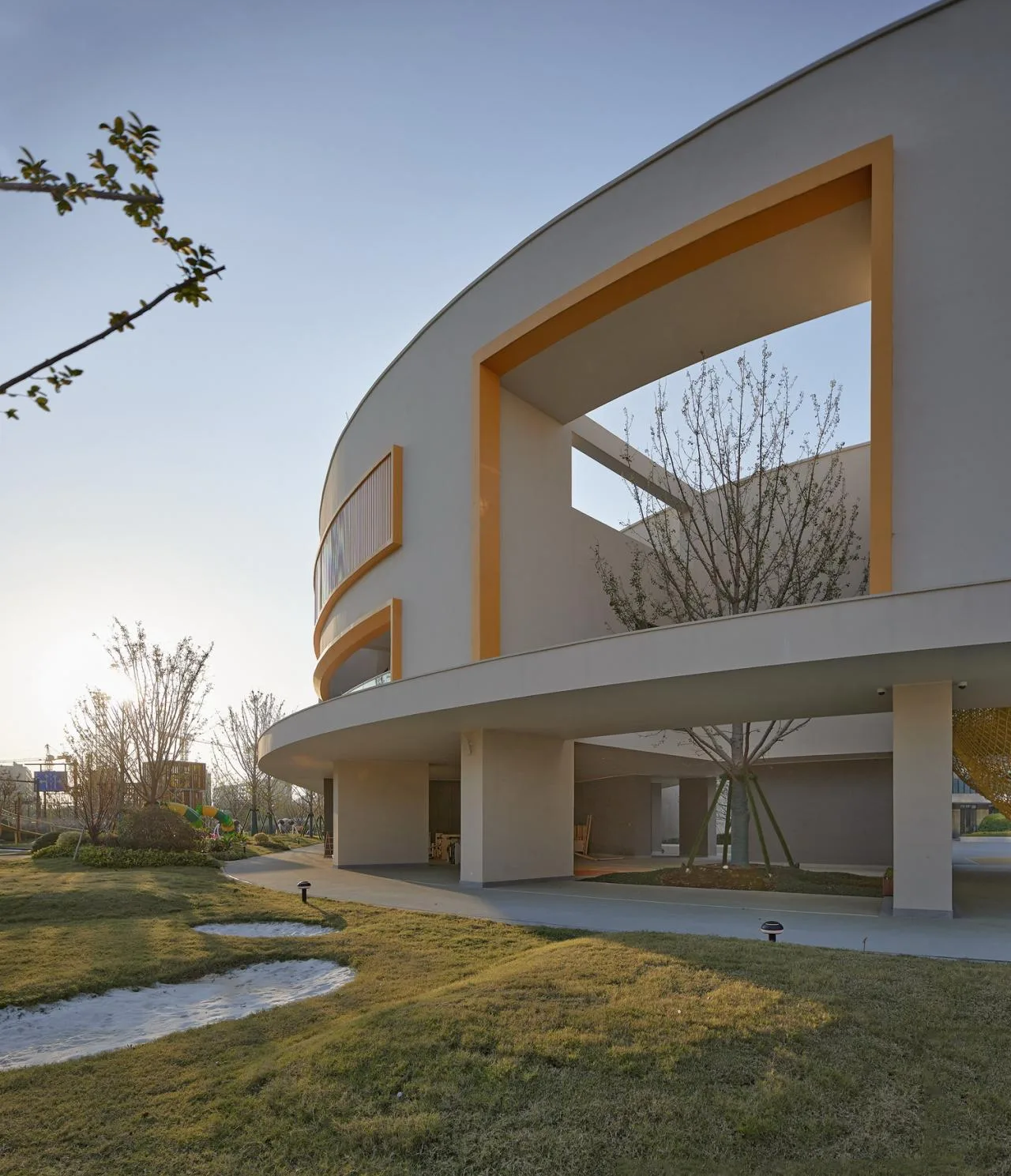
△ Southeast facade in real life
The central area uses an enclosed layout to form a small playground, serving as a social hub for teachers and students. The raised entrance elevates the space, making it open and bright while providing good visibility for supervision.
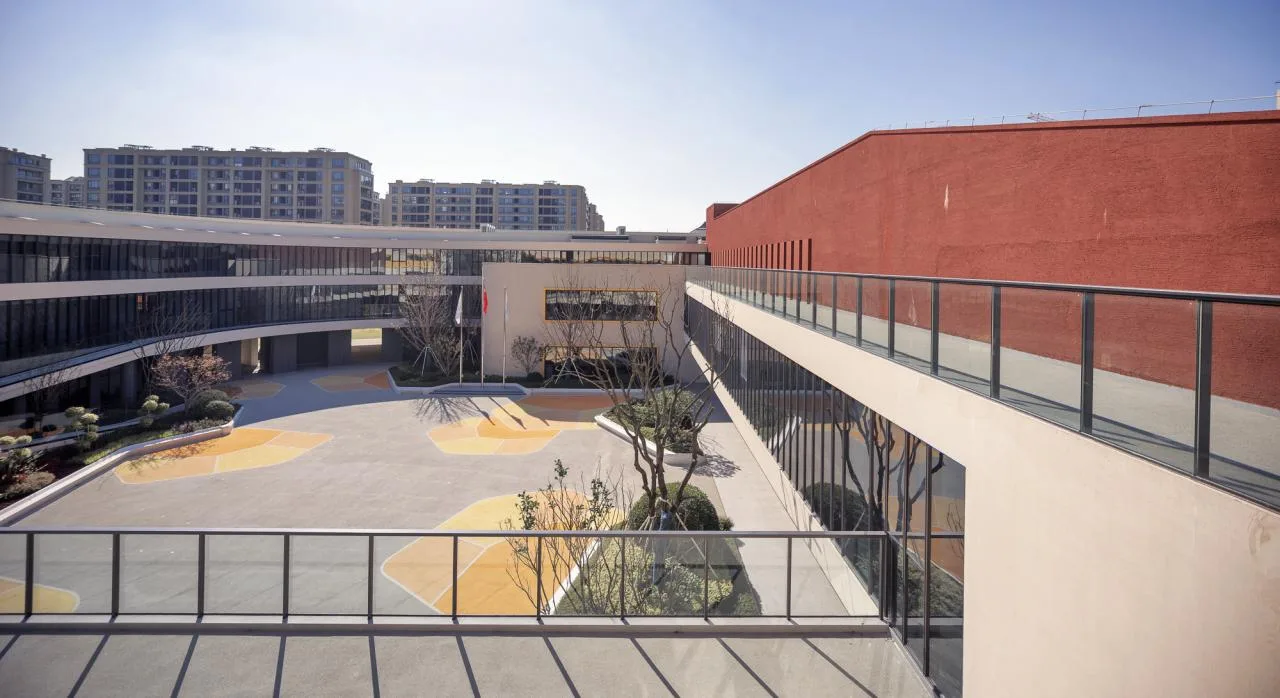
△ Multi-level inward courtyard fostering social interaction and supervision
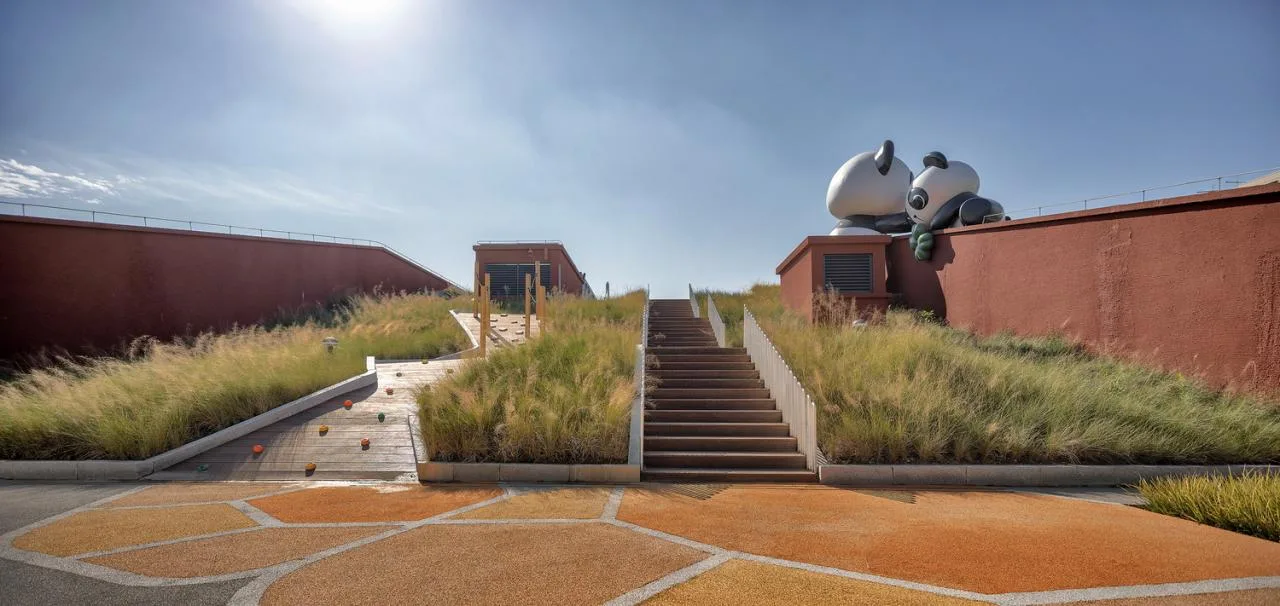
△ Realistic view of the rooftop activity area
The gray area beneath the first-floor corridor acts as a link, connecting various functional blocks and integrating the entrance, atrium, and surrounding activity spaces into a cohesive whole, dissolving the separations caused by the enclosed layout.
The ground features a unified animal paw pattern made from diverse materials, which extends into the surrounding landscape.
Custom-designed elements such as alien tree pools, treehouses, climbing facilities, and interactive water features provide children with playful opportunities to learn about plants and the environment.
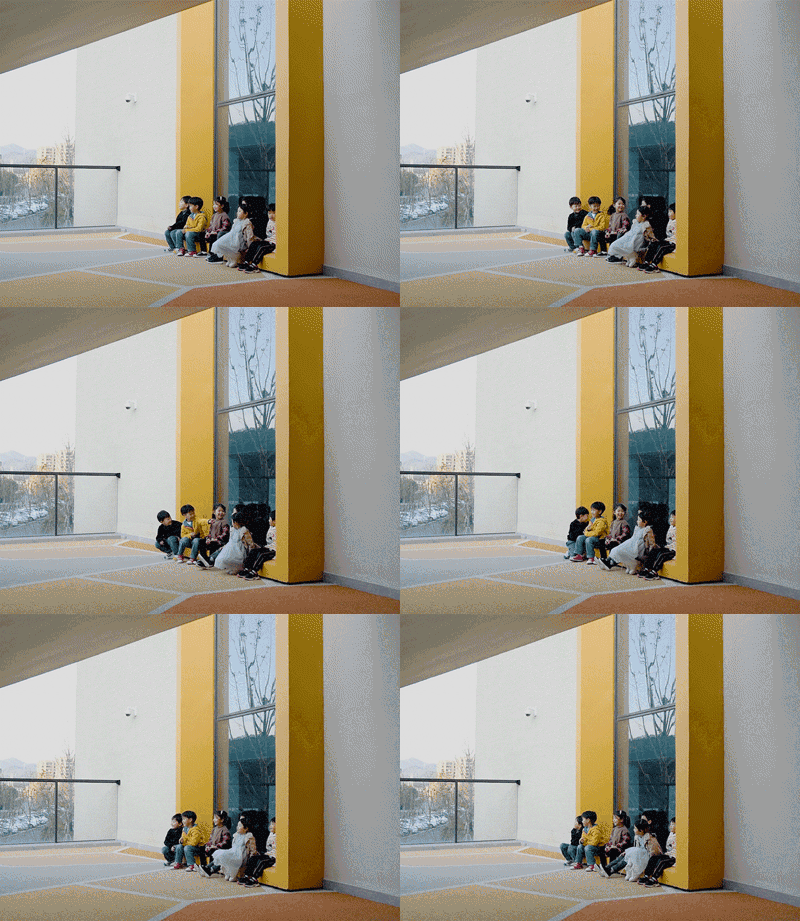
Architects strive to create spaces that encourage generative teaching, inspire independent exploration, and naturally provide fun, real-world experiences.
Designers carefully studied the physical and mental developmental stages of young children, including height scales and activity durations. The integrated design prioritizes site safety, functional diversity, and spatial integrity. During the construction phase, modular design strategies were employed to balance cost efficiency with economic considerations.
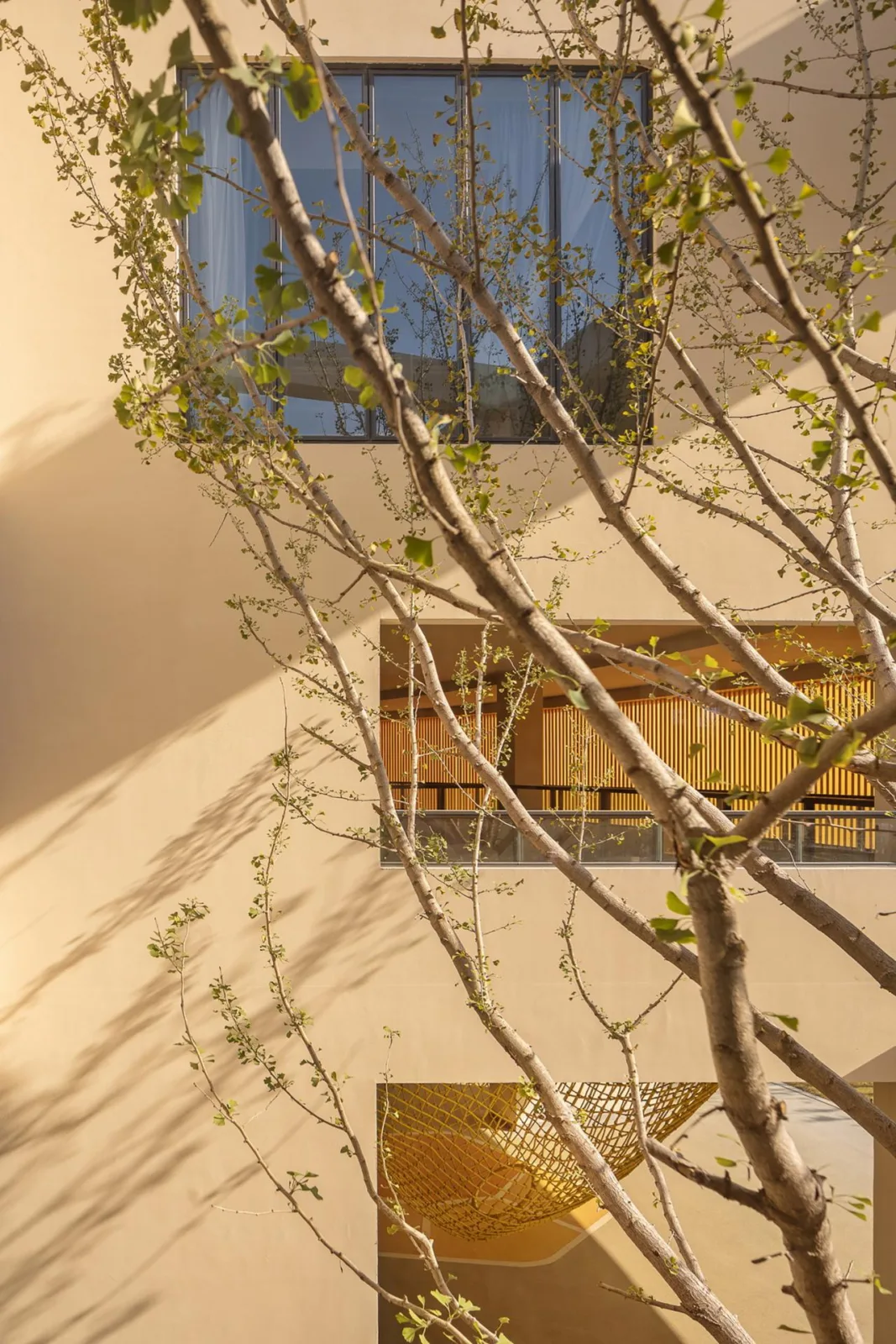
△ Project in reality
Educator Malaguchi believes every child holds enormous potential, and adults should provide them with opportunities. When children construct, communicate, and develop understanding, true learning occurs. Zhoushan Yuhua Kindergarten is designed with the purpose of fostering fully exploratory generative spaces that nurture the creativity, potential, and ambition in every child’s heart.
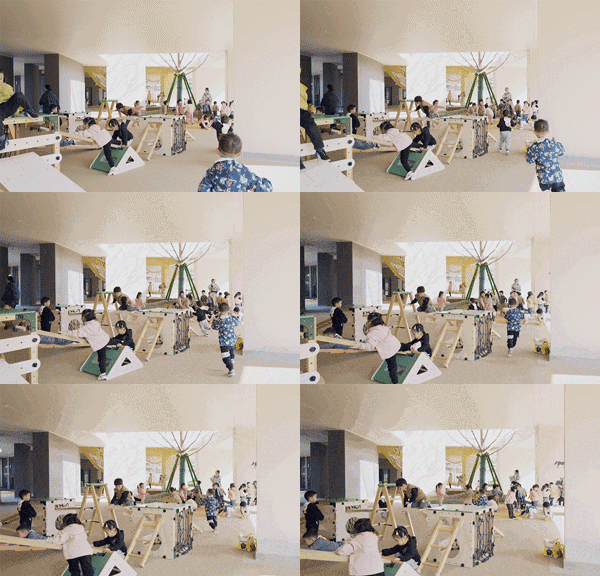
△ Realistic teaching activities
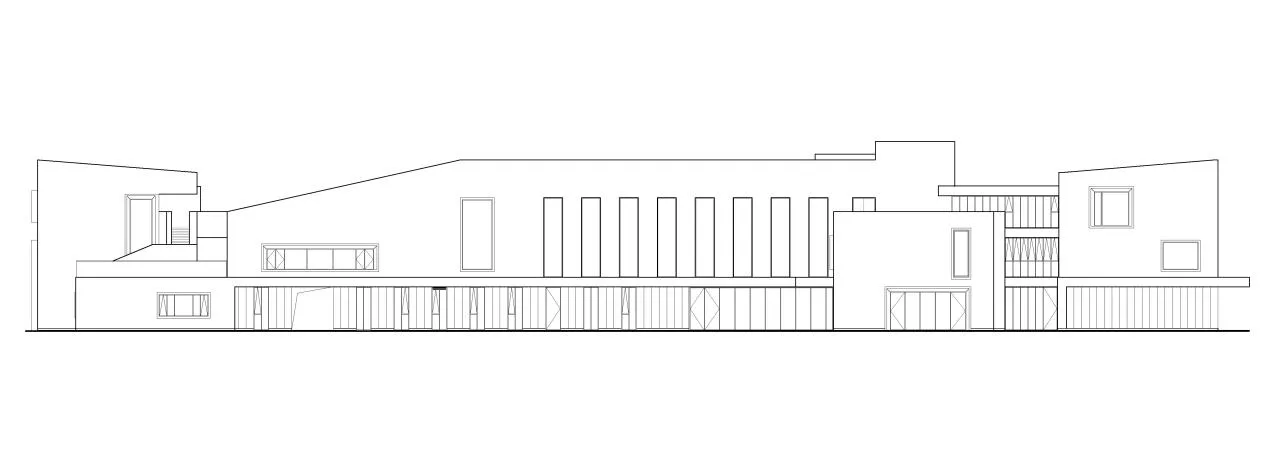
△ West elevation view
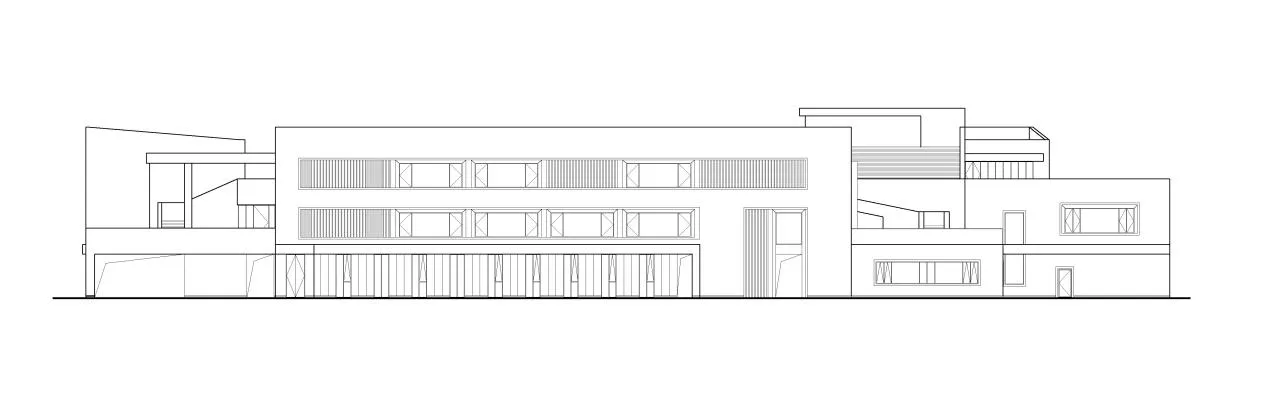
△ North elevation view
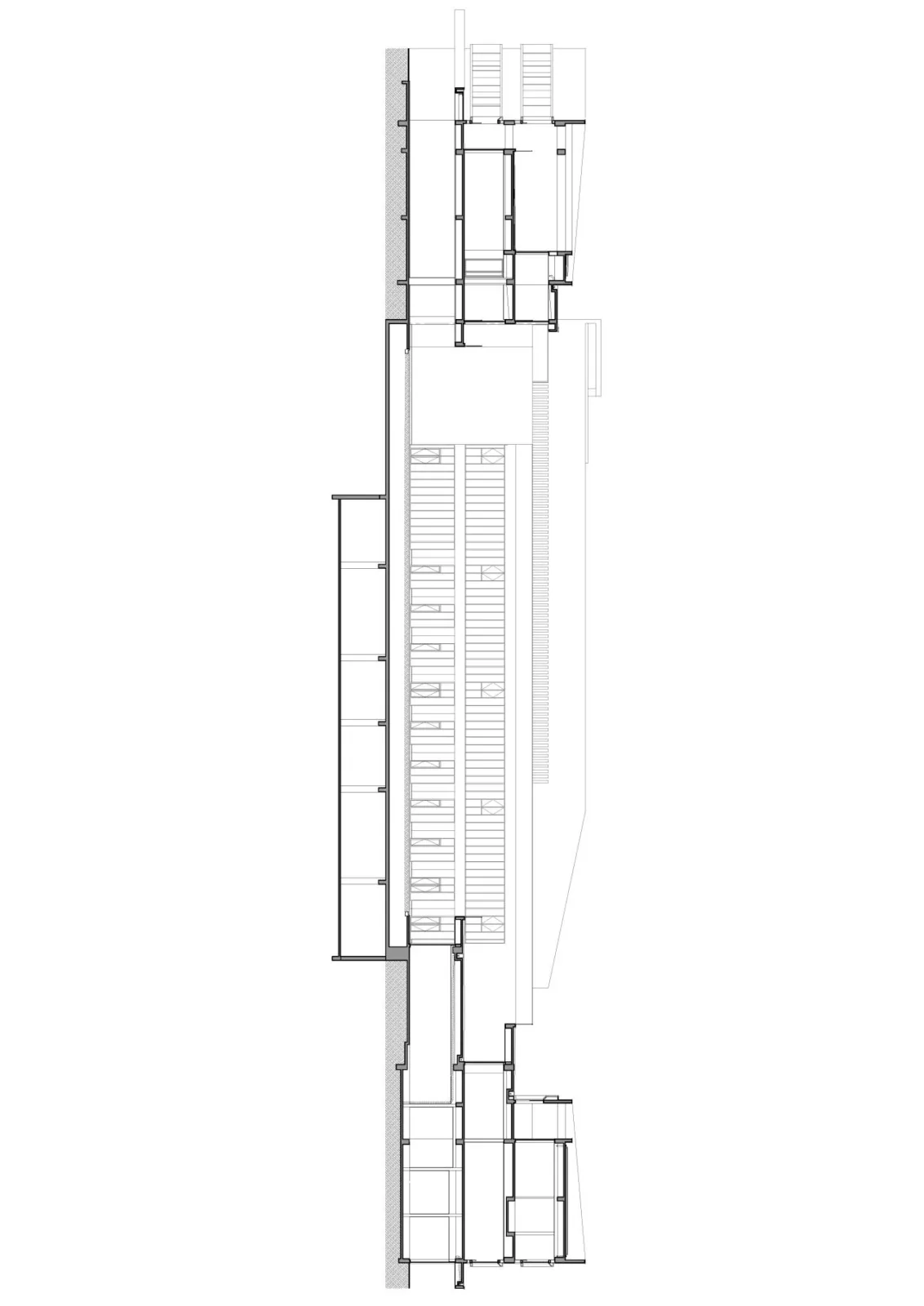
Typical cross-section diagram
Project Information
Architecture & Landscape Design: Goa Elephant Design
Location: Zhoushan City, Zhejiang Province
Design / Completion: 2018–2021
Building Area: 13,500 square meters
Image copyright: Goa Elephant Design














Must log in before commenting!
Sign Up