
I have said it before: everything is within my vision.
From the very first step of the journey. — Adonis
The White Suzhou Side House, also known as Lindu Taolu Section Homestay, designed by Wutopia Lab, opened in October 2021 in Xilindu Village on the shores of Taihu Lake. The project was funded by Jingcheng Culture and Tourism, a subsidiary of Tongcheng Travel, and is operated by the Taolu brand of homestays. This homestay is the first model building in Lindunuan Village, a rural revitalization initiative jointly developed by Tongcheng Travel and the Hengjing government.
I long for a moment of relaxation.
The weather at the site was exceptionally pleasant that day. Bathed in the golden light of winter, I felt slightly intoxicated with calm. I craved idleness and daydreams in such a peaceful, pristine village. For someone like me, a middle-aged person weary from constant busyness, this was deeply appealing. My hope was for the Companion House to embody this relaxed, slightly lazy mood—not rigid or overly precise.
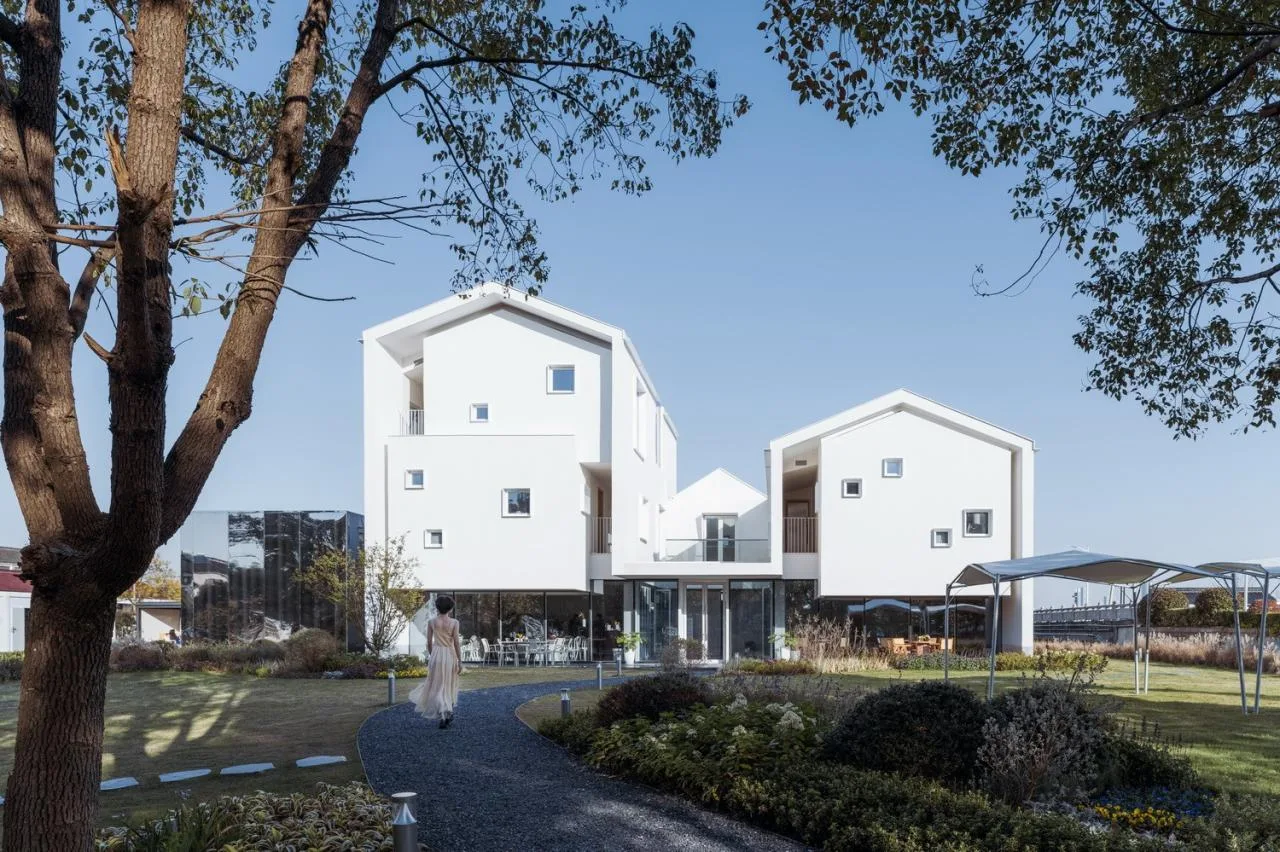
Half-Cut Design
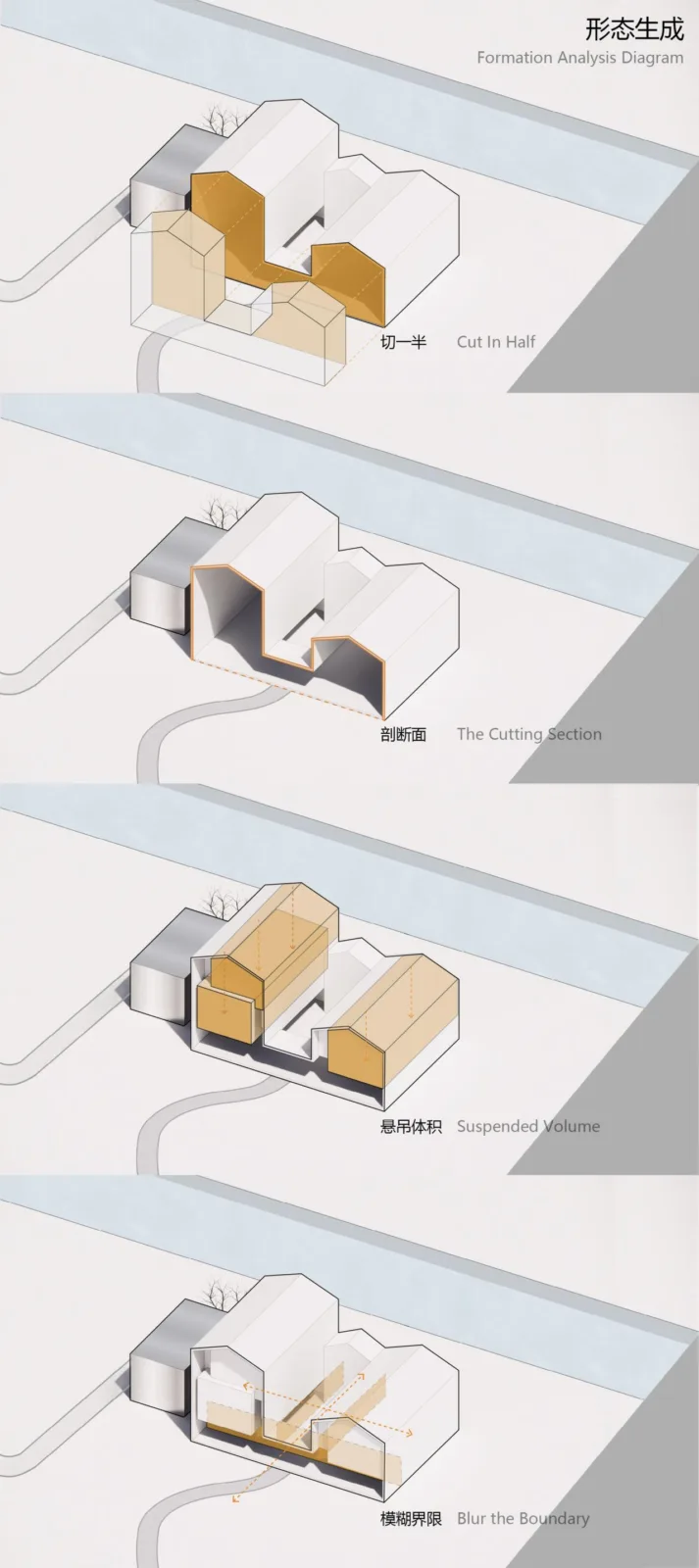
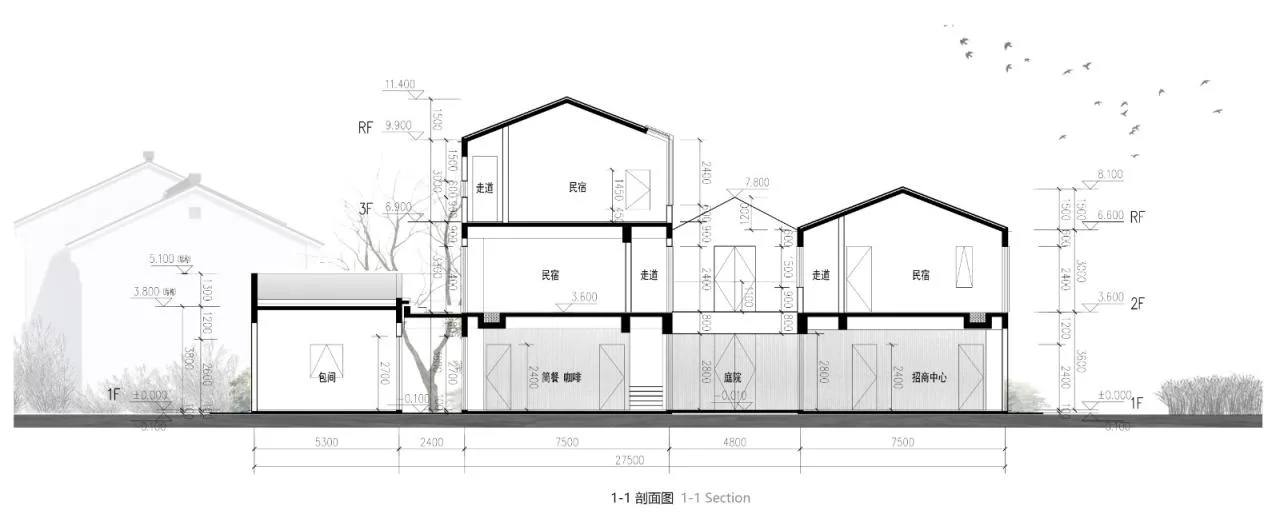
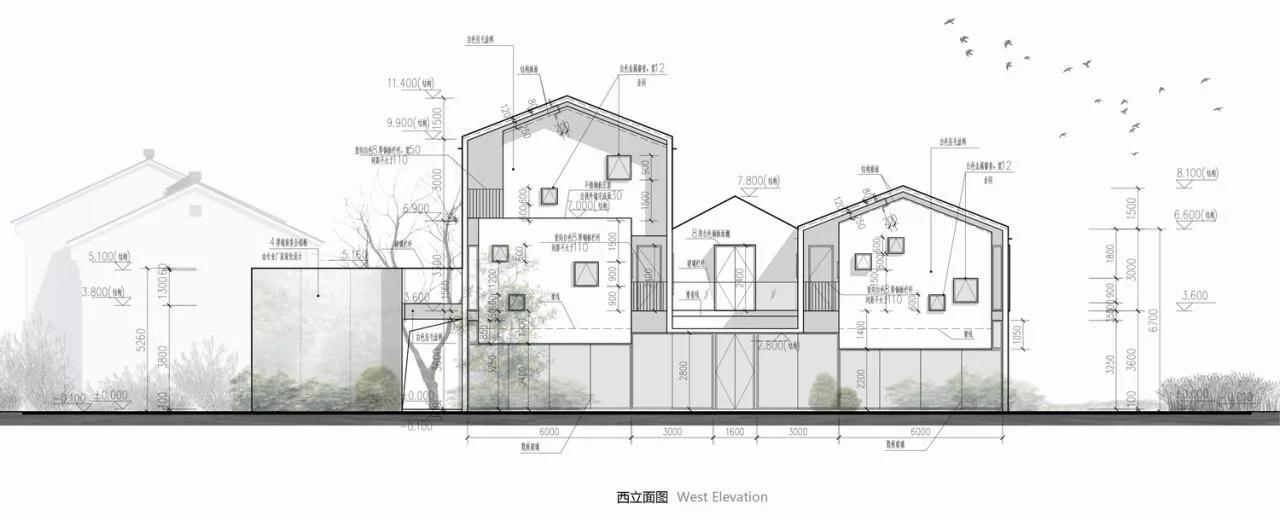
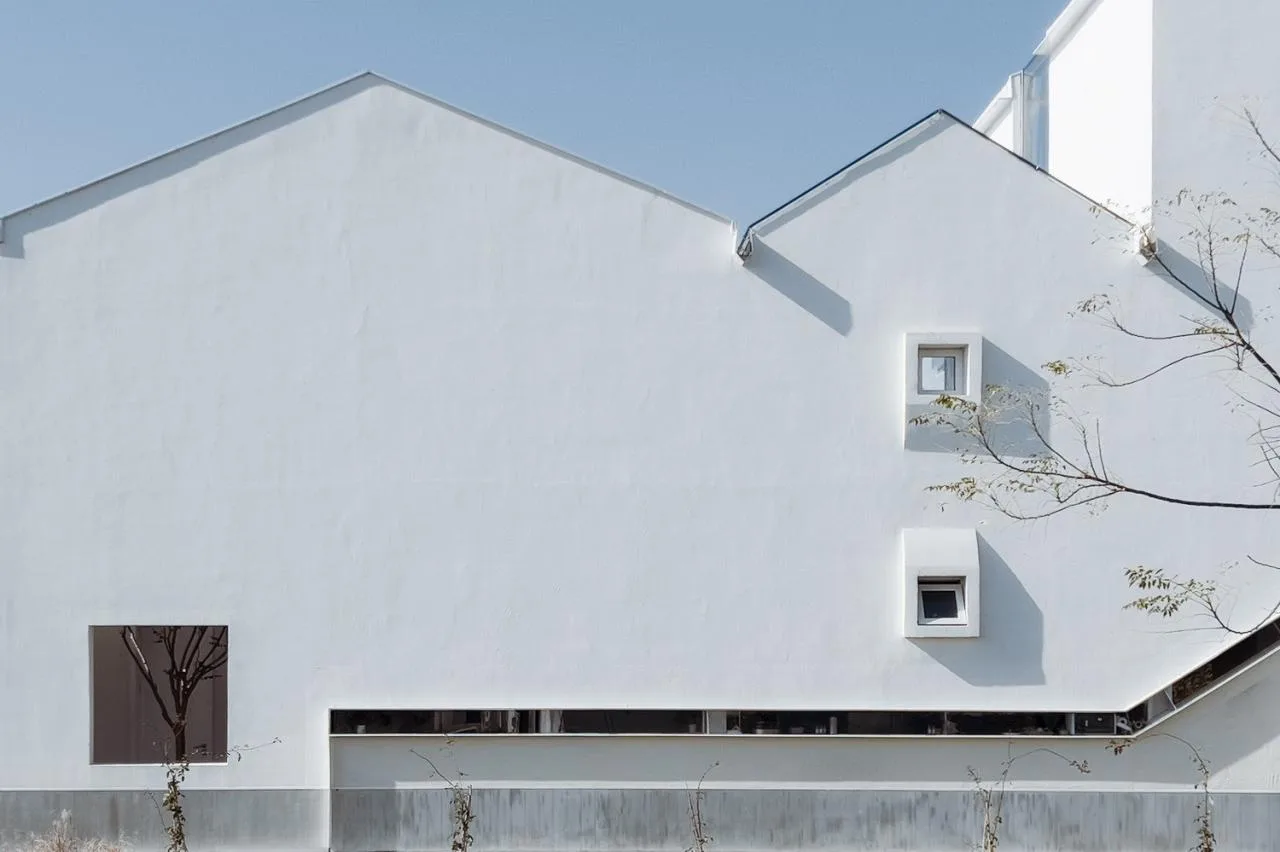
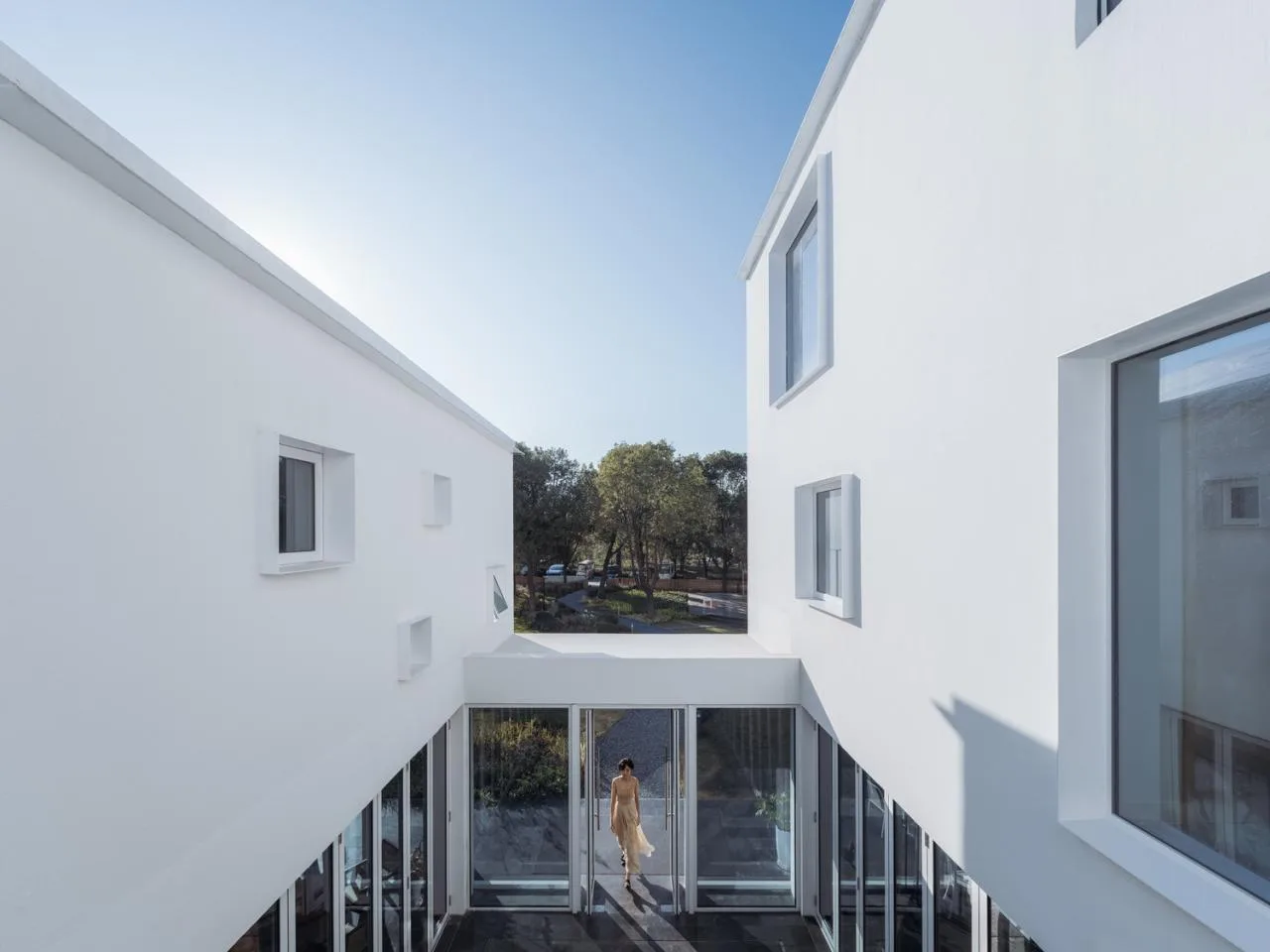
The term “Companionship” refers to the renovation of dilapidated houses on their original sites, with the architects respecting the existing floor plan outlines. Interestingly, rural buildings in Suzhou’s suburbs are not traditional courtyard houses but have an anti-C shape—resembling half a courtyard. This “half” concept inspired me to design the west facade as a section revealing the internal spatial organization.
The Companion House is conceived as the result of splitting a complete courtyard into two halves: the visible half and the invisible half, together forming the full meaning of companion houses—a typical Suzhou courtyard.
The Shell
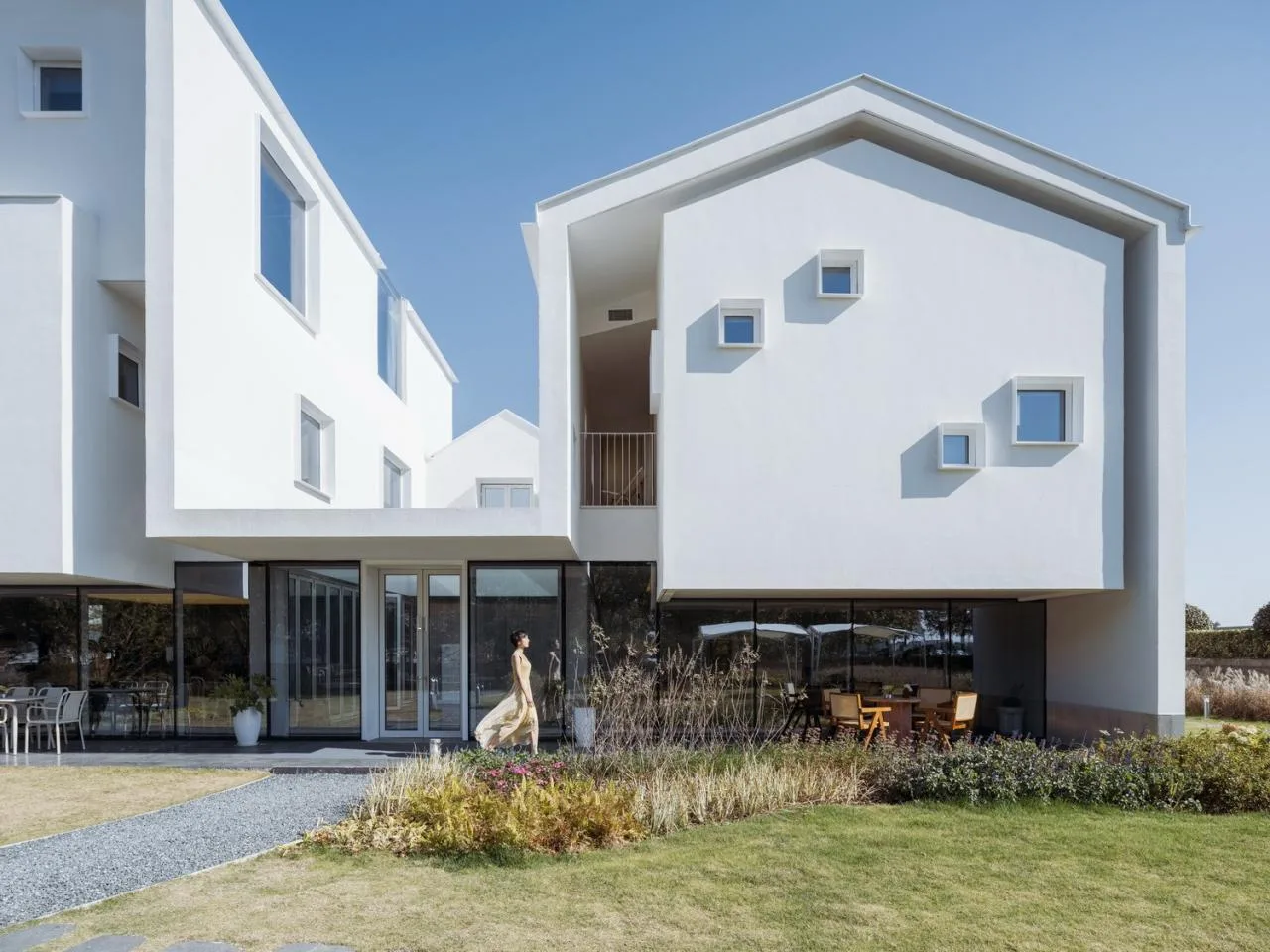
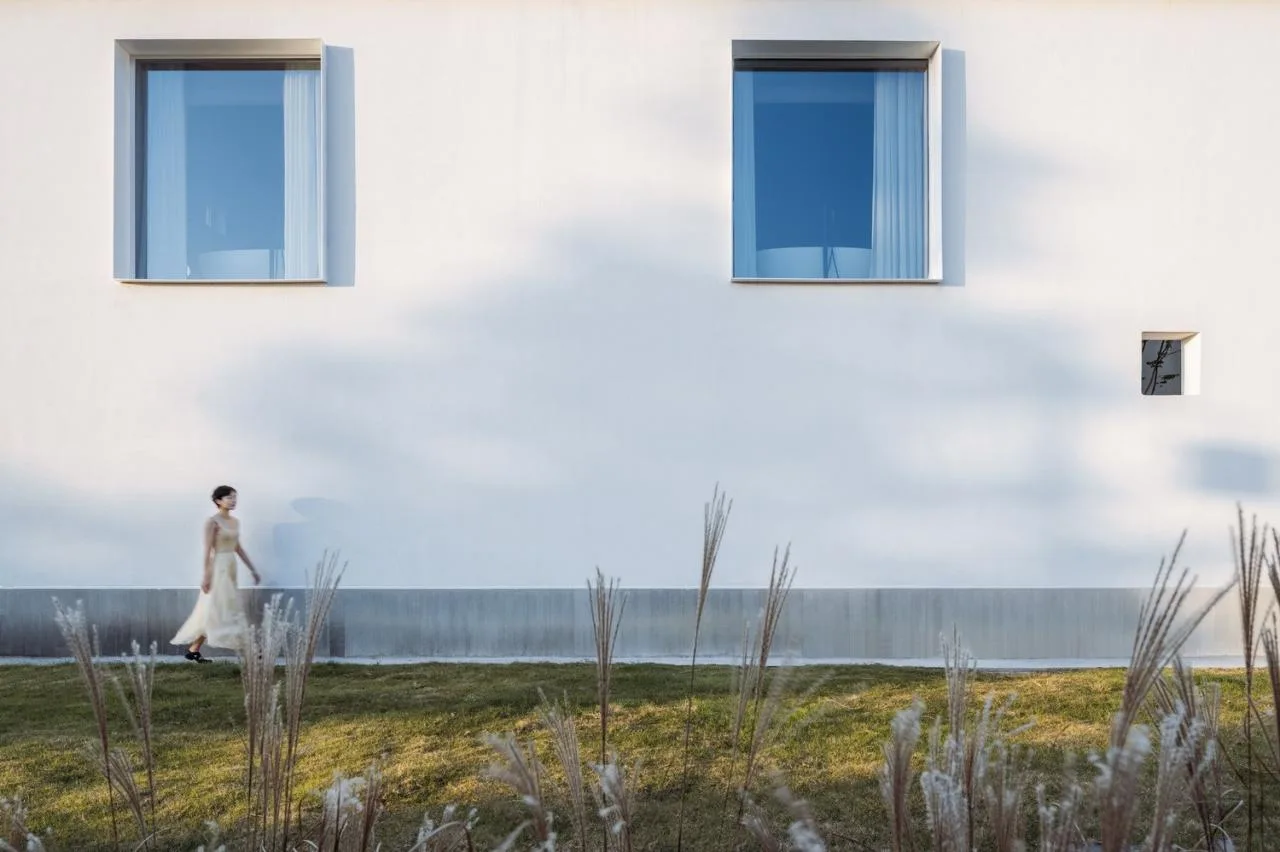
Since the design revolves around a section, I treated the building’s outer contour as a continuous, thick shell, maintaining a consistent 300mm thickness from wall to roof. This sectional clarity is especially emphasized on the west facade. To preserve this seamless shell, the roof avoids traditional Jiangnan blue tiles and instead uses white aluminum panels to visually blend with the white walls.
To ensure the sloped roof sheds water without interrupting the shell’s continuity, a white metal water dispenser was specially designed at the eaves, directing rainwater away from the walls.
The Cavity
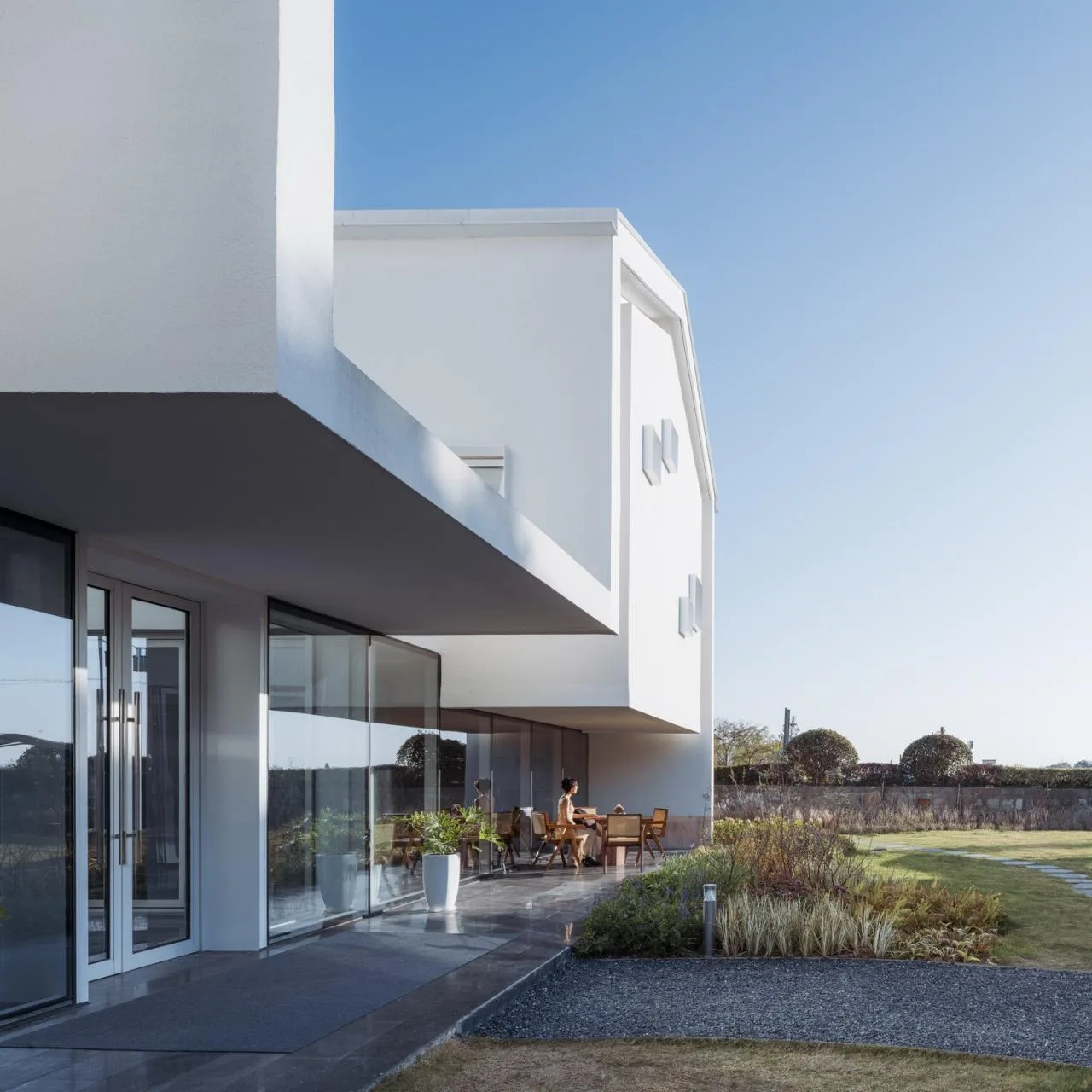
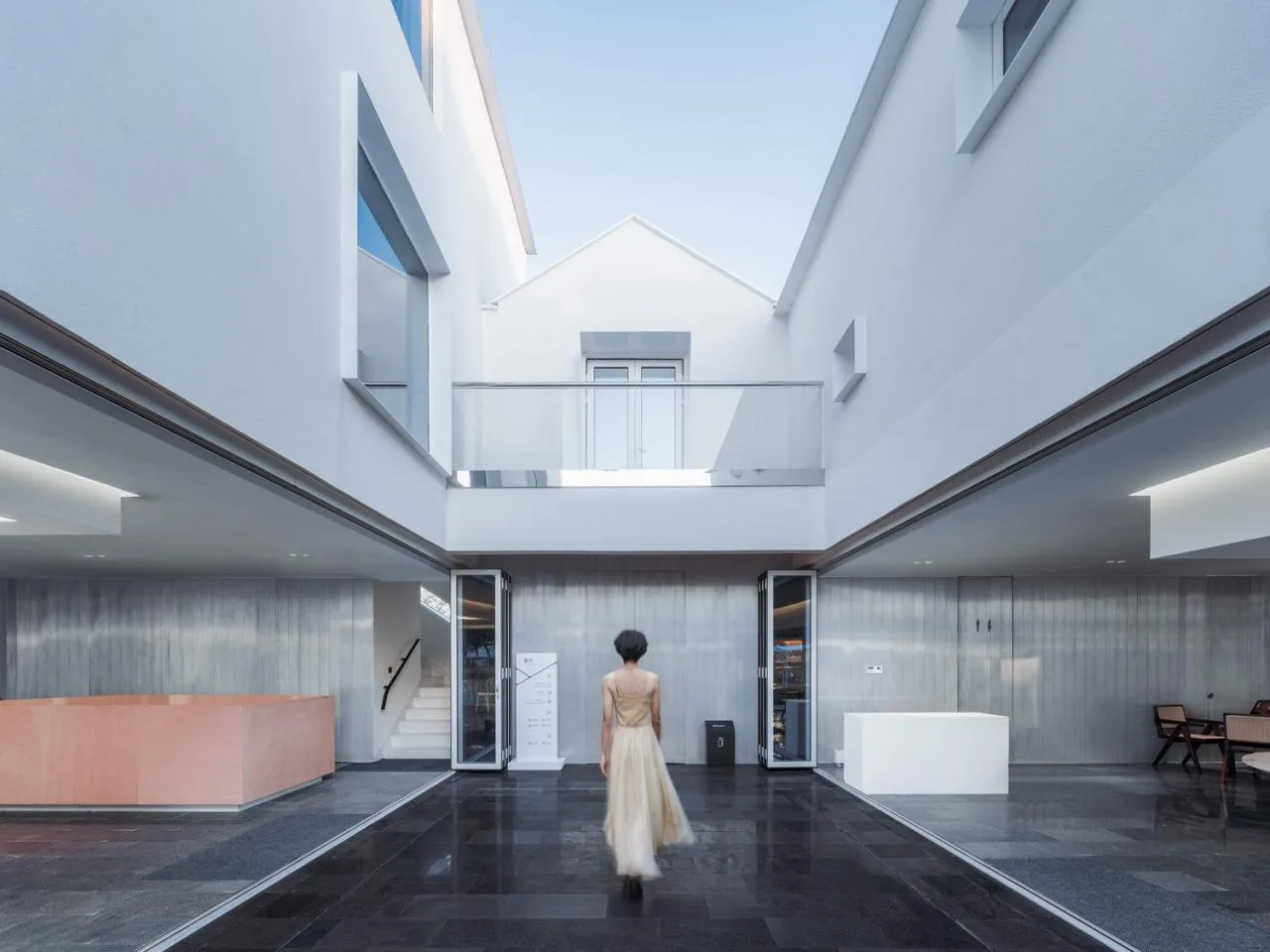
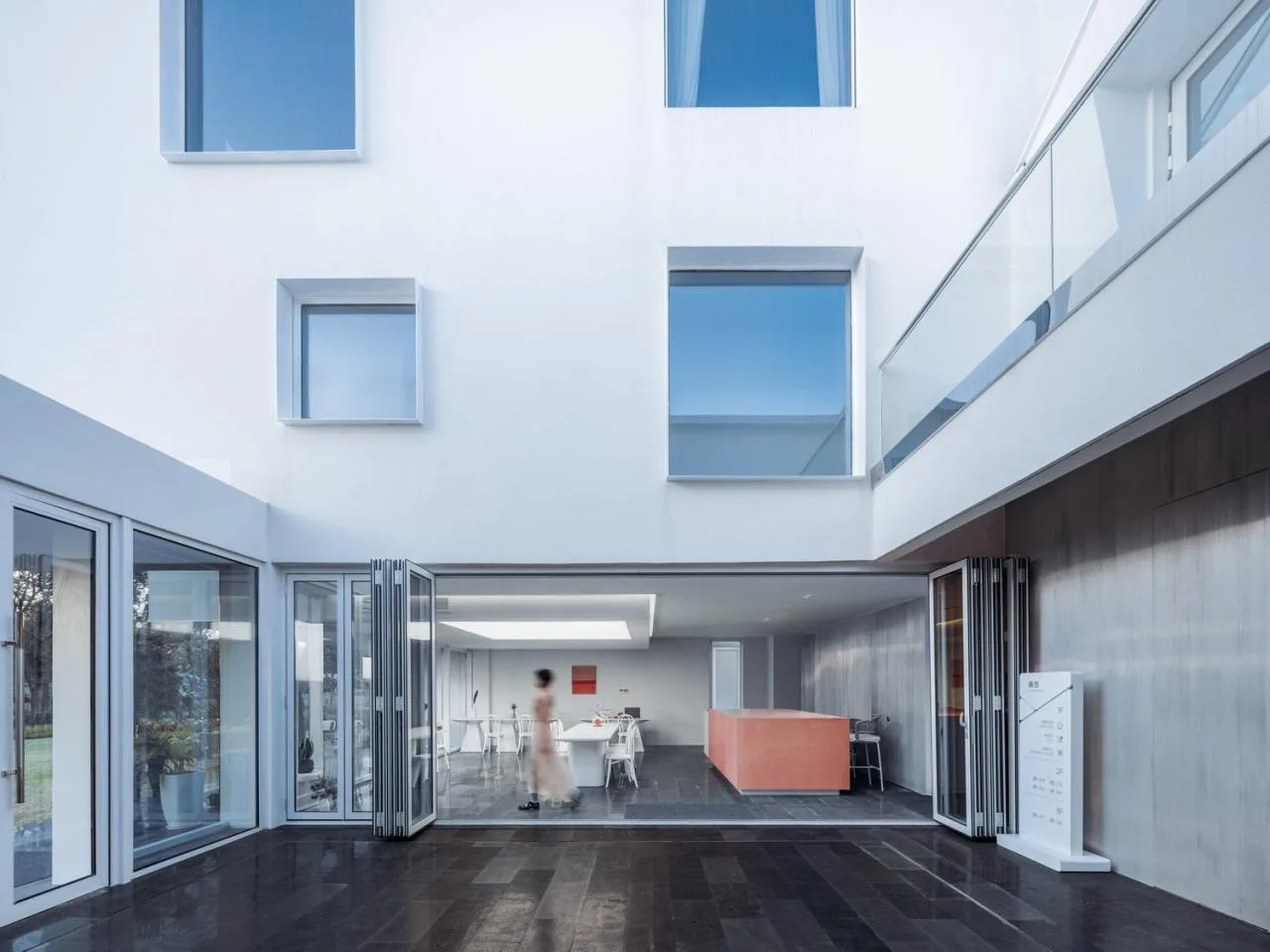
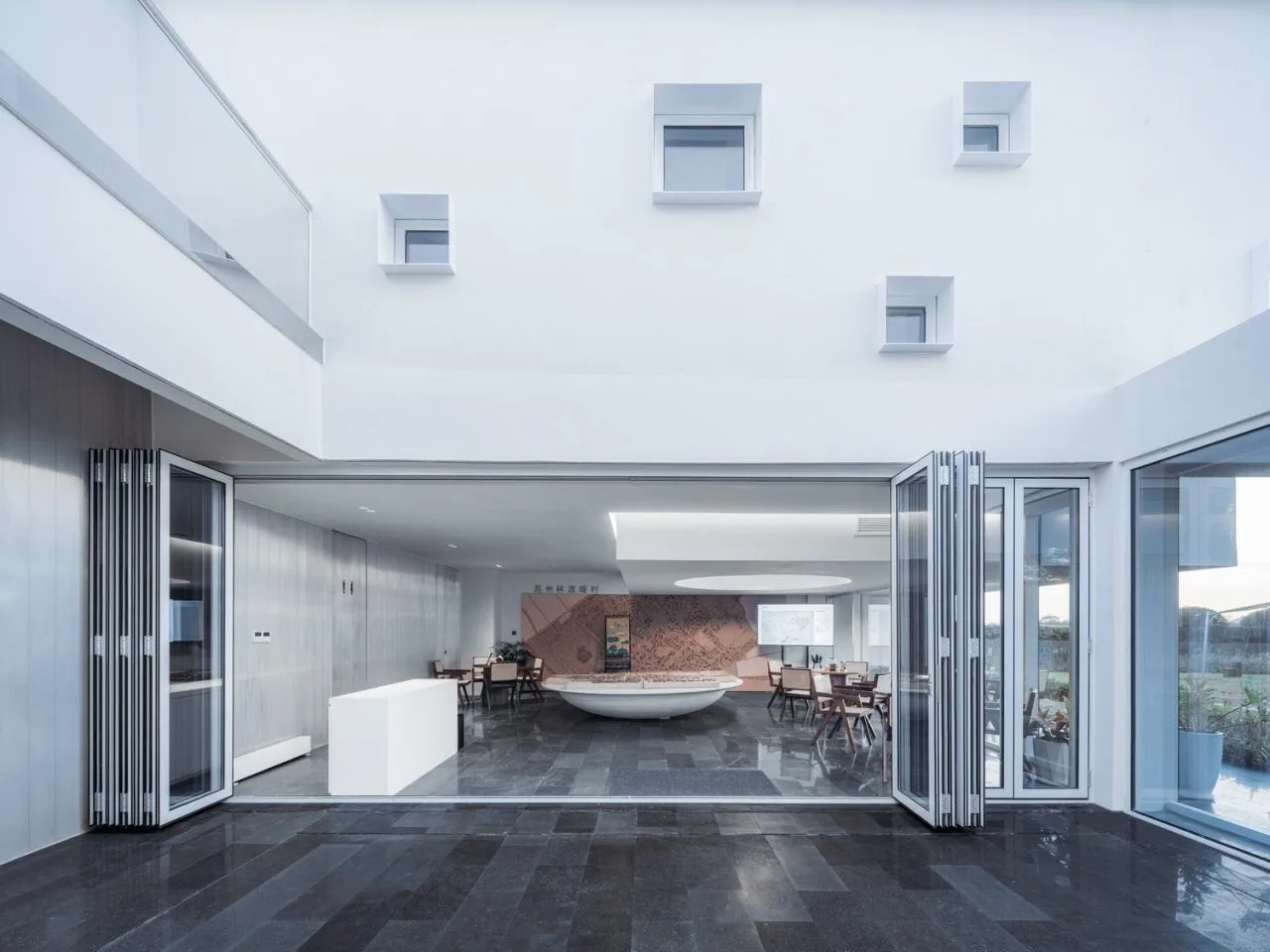
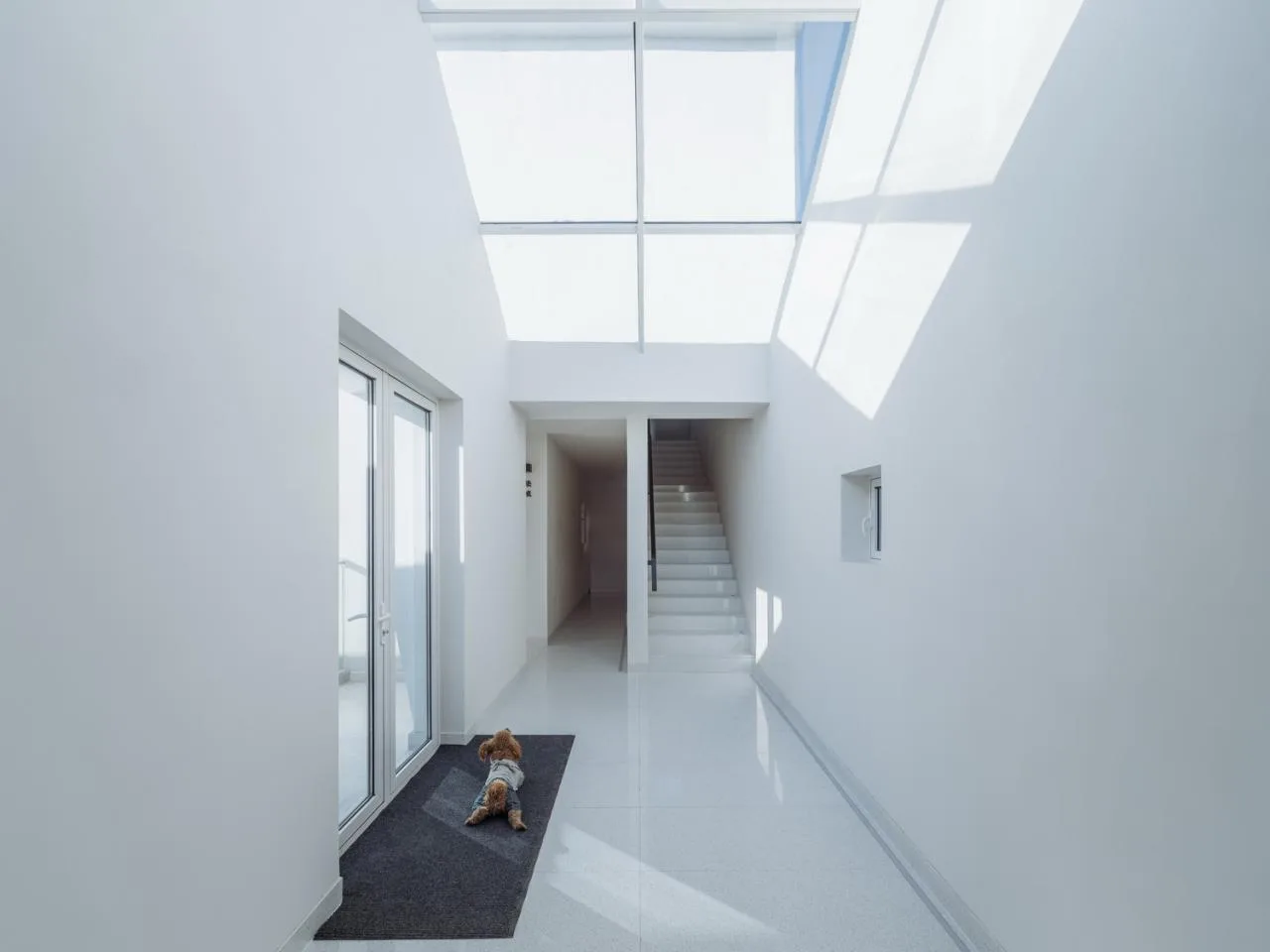
The building’s interior is viewed as a cavity. Unlike modern architecture, where cavities are crowded with diverse functional spaces, I chose to open up the first-floor space, blurring the lines between indoors and outdoors. The first floor is defined as the empty cavity space, suitable for rest, display, or casual drinks.
The upper floors, housing the homestay rooms, function like organs within this cavity. Each room stands as an independent volume rather than forming a uniform block with corridors.
Suspended Volumes
The homestay contains six rooms, meaning six distinct volumes. One of my cherished rural memories is the swing in the drying field while studying farming. Inspired by this, I envisioned rooms suspended like swings within the cavity, visibly hanging above the large first-floor space.
Although slight sway would be ideal, structural and mechanical challenges arose. Hu Wenxiao resolved these by adopting a bottom-frame seismic wall masonry structure, balancing the large open first-floor area with the offset suspended rooms above.
Reinforced concrete cantilever beams and hanging plates support the second floor, while the third floor’s external load-bearing brick walls fold inward. A wide, flat ring beam connects the roof slab and external walls, achieving the visual effect of suspension and a gap between the outer shell and the inner cavity on the west profile.
A Section as an Elevation
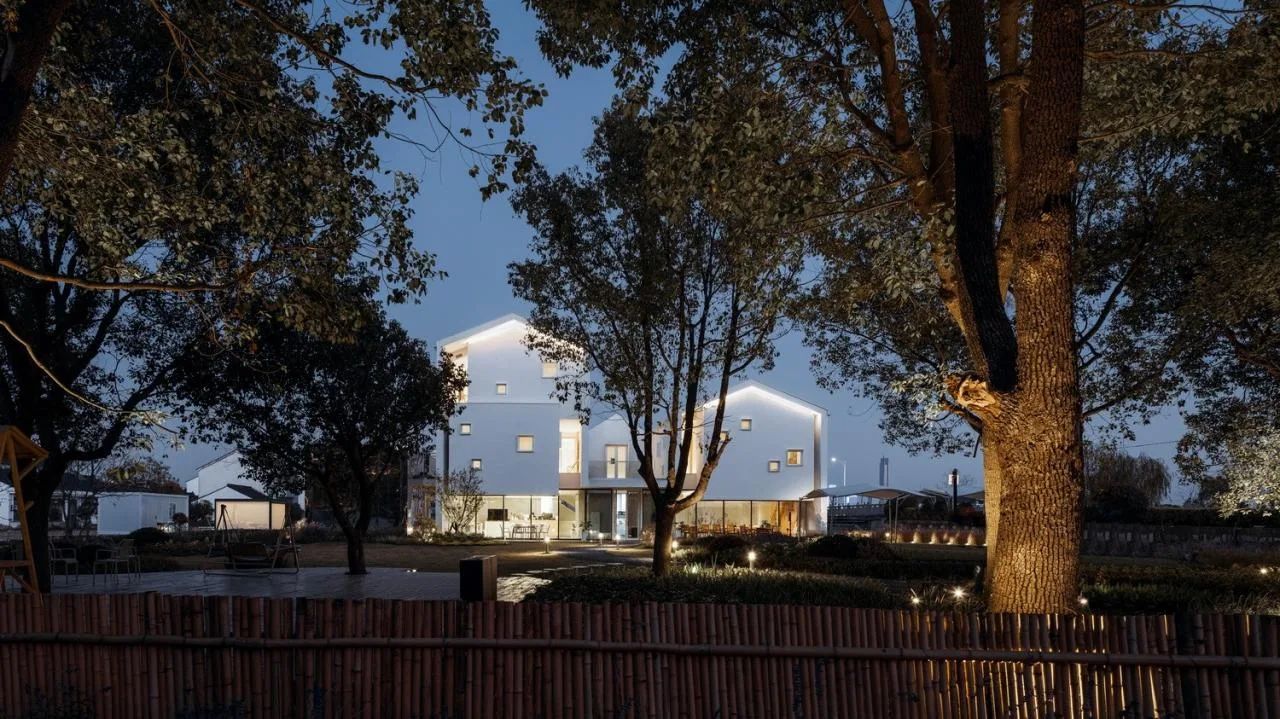
Upon entering from the west facade, visitors can subtly perceive the building’s organizational structure through this seemingly “cut” section.
The Disappearing Pigsty
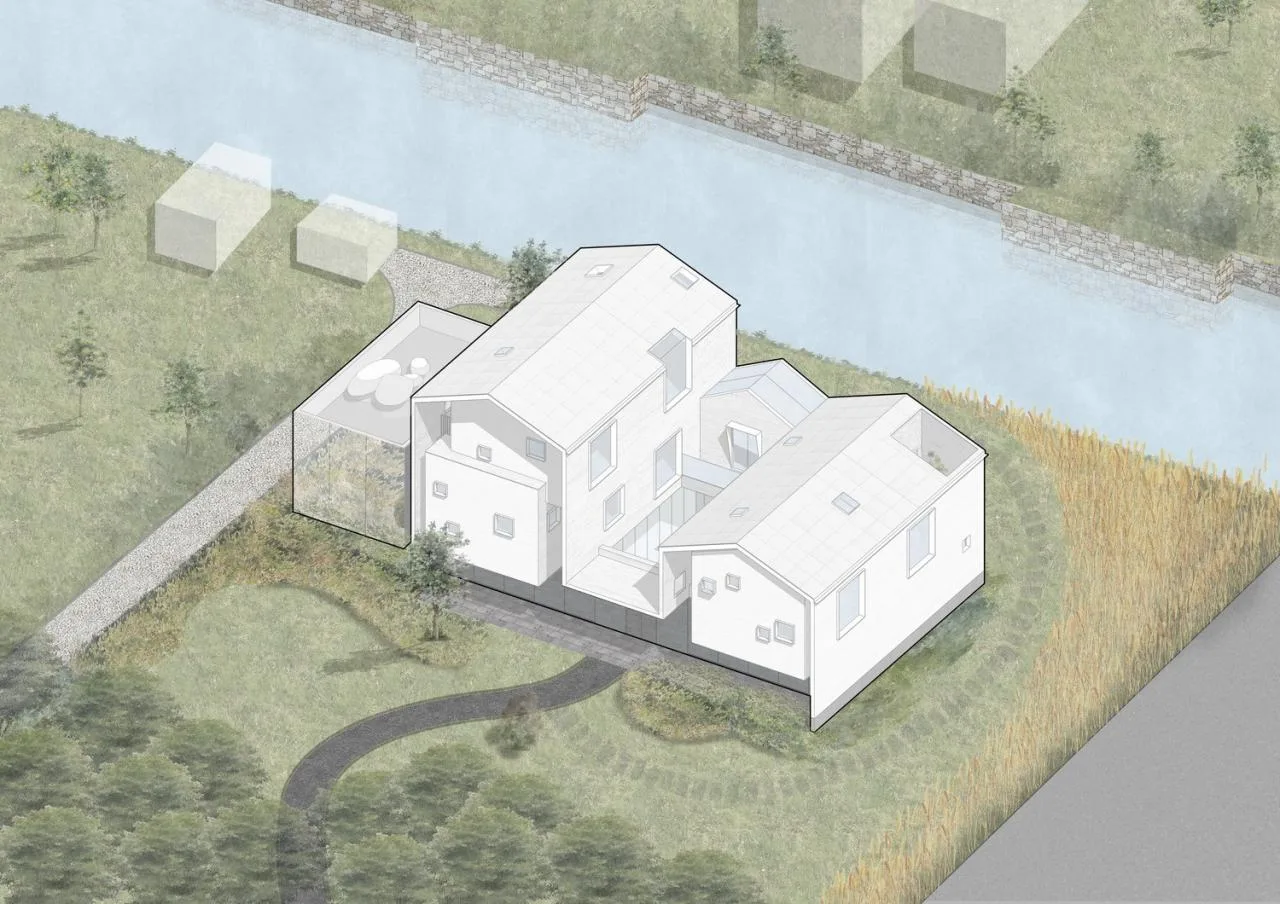
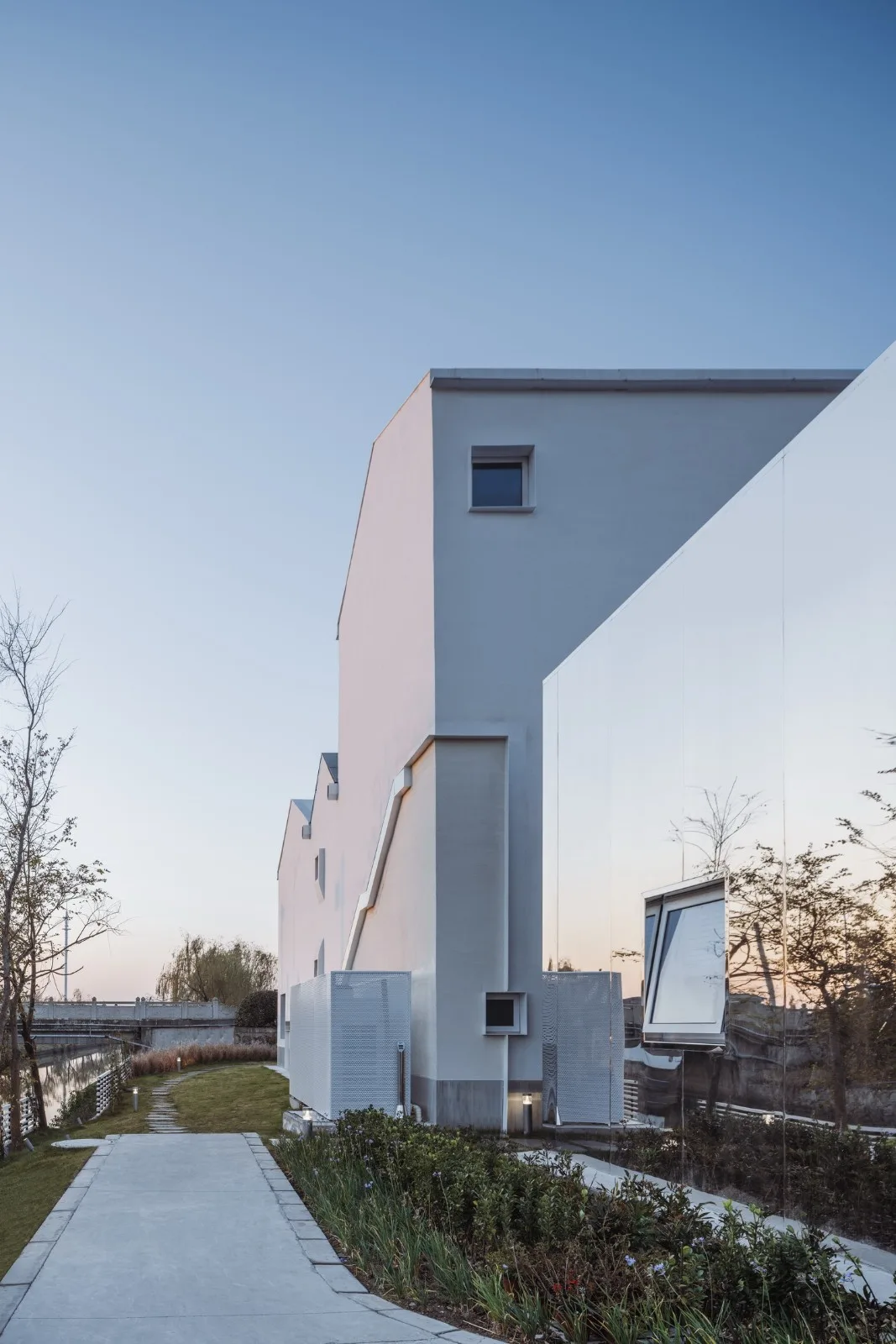
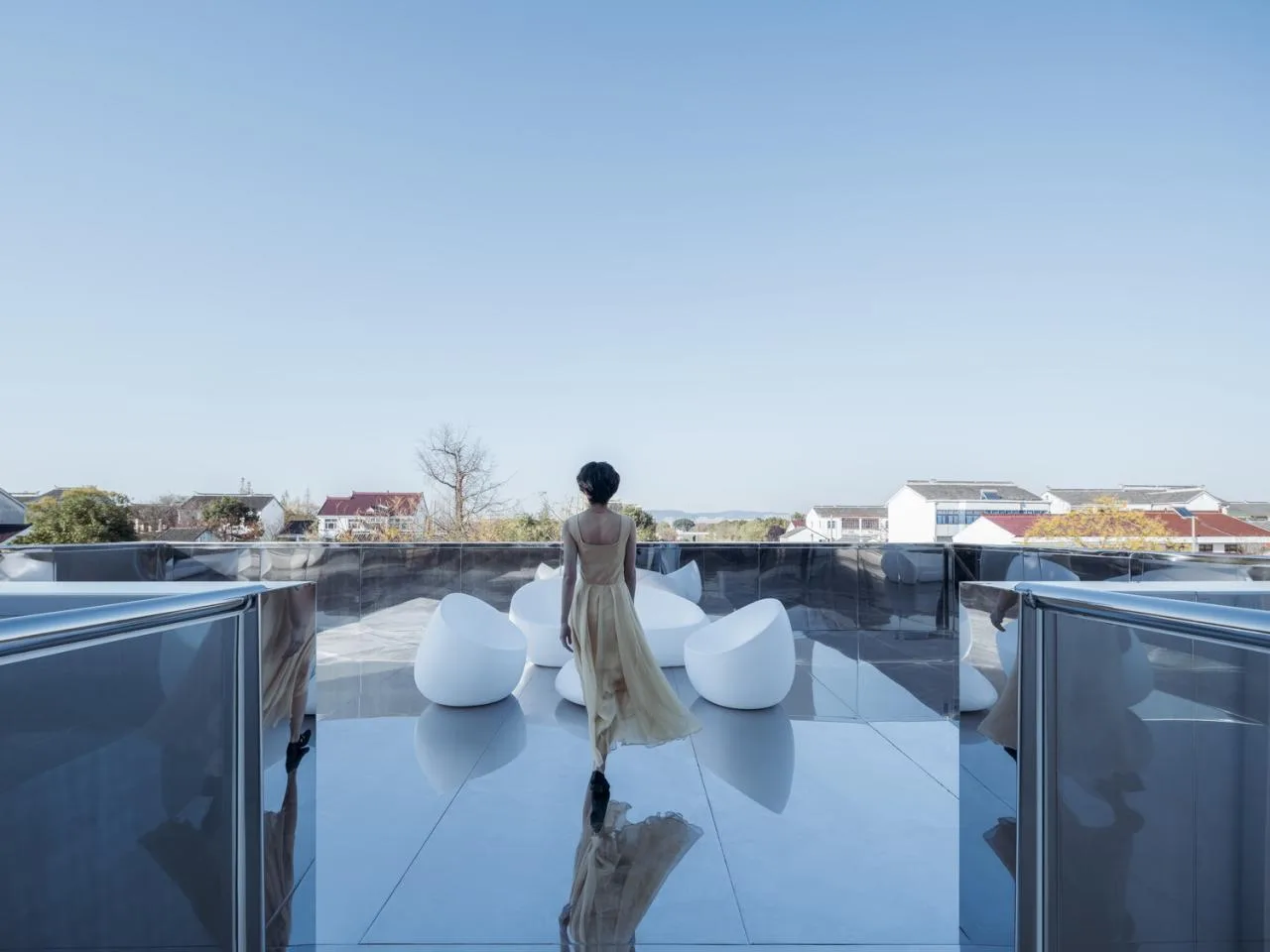
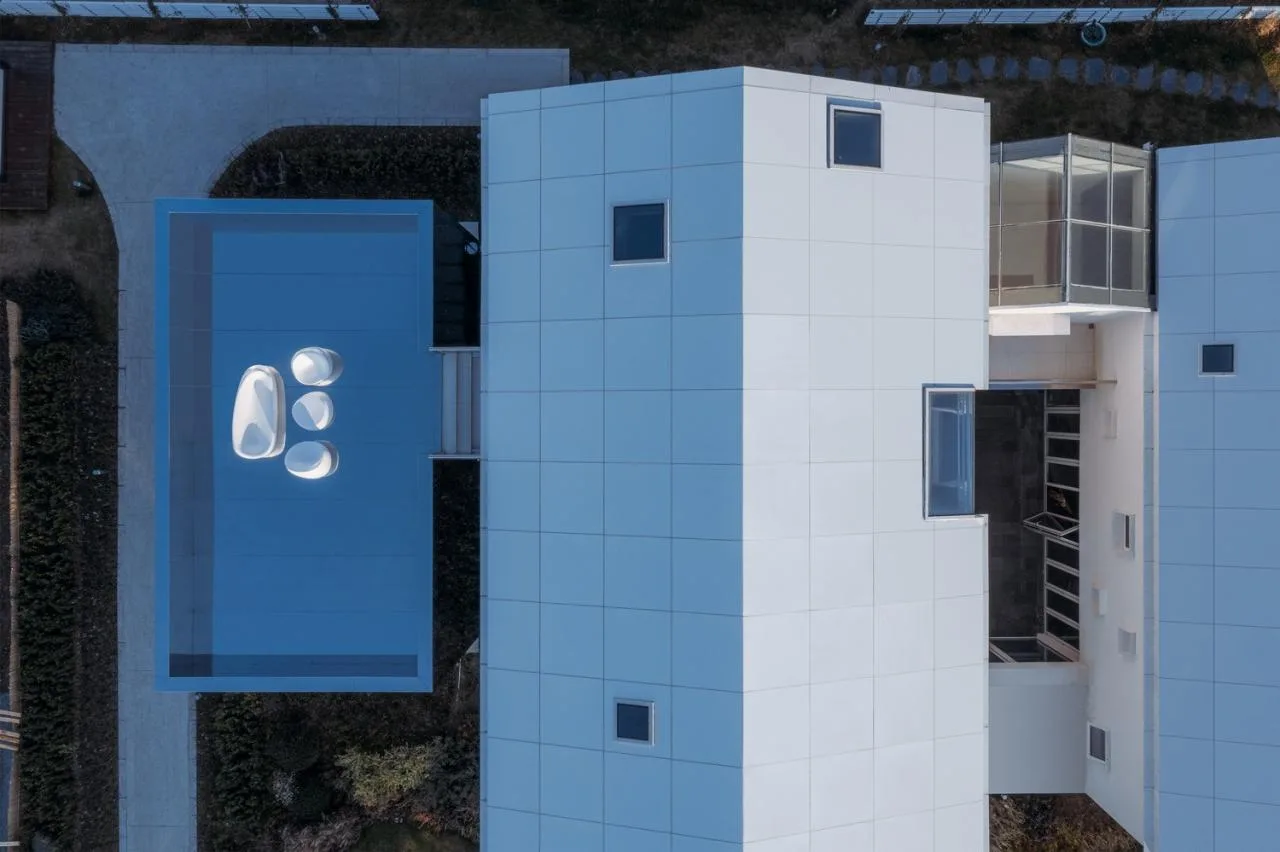
The original building had an independent square pigsty on its north side, now converted into a private dining room. To maintain its visual separation from the main structure, I clad it in reflective stainless steel panels, enabling it to blend into the surroundings and effectively “disappear,” preserving the main building’s integrity.
East Elevation
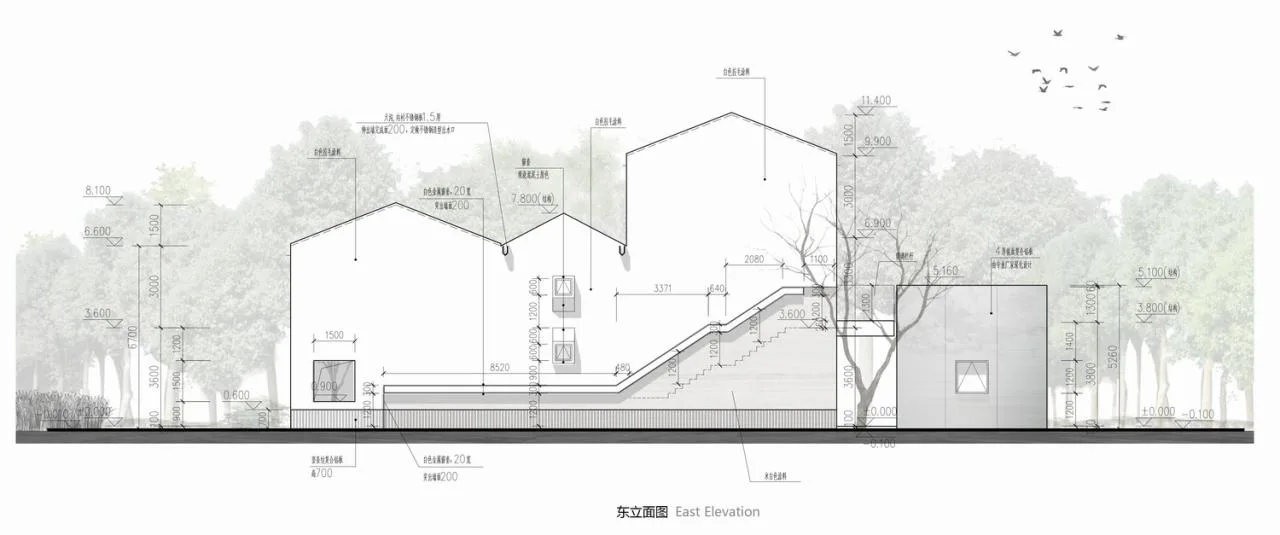
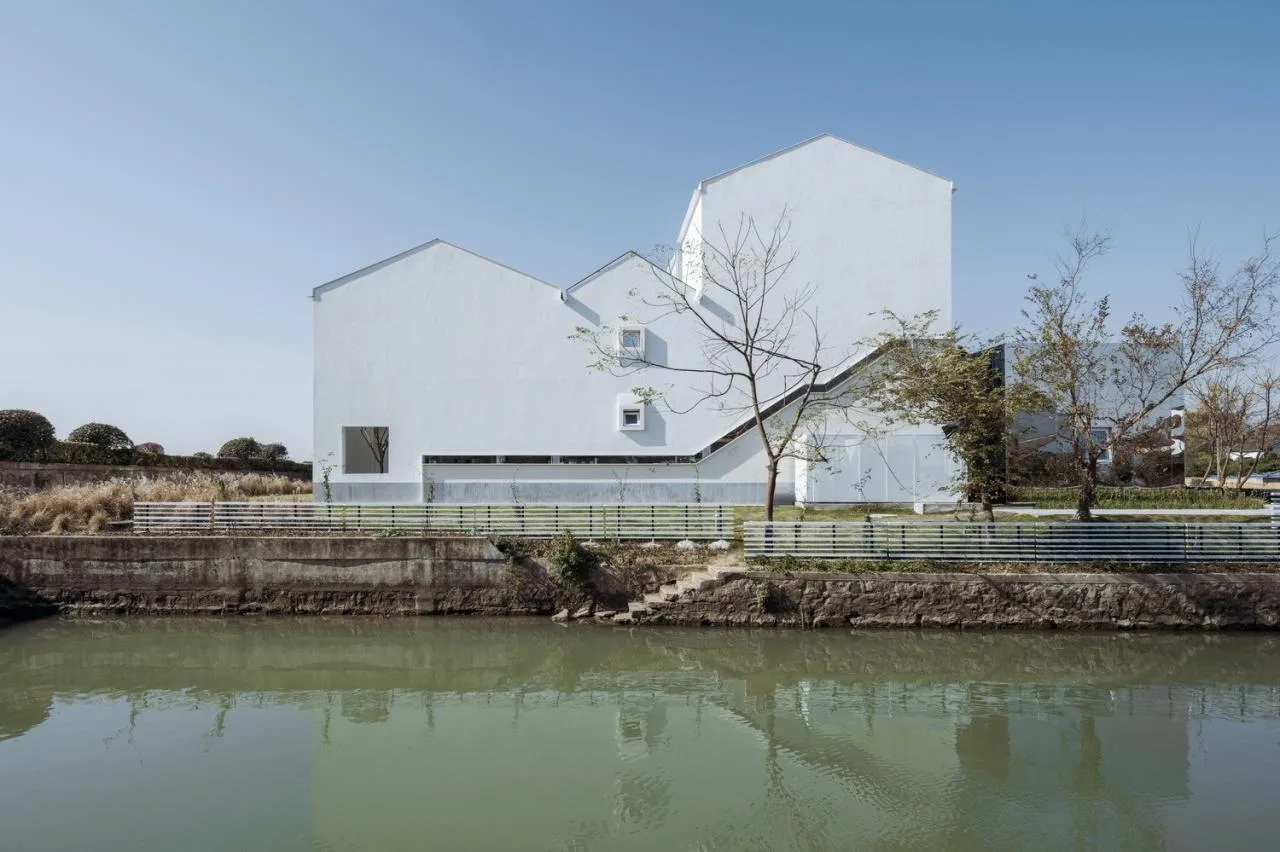
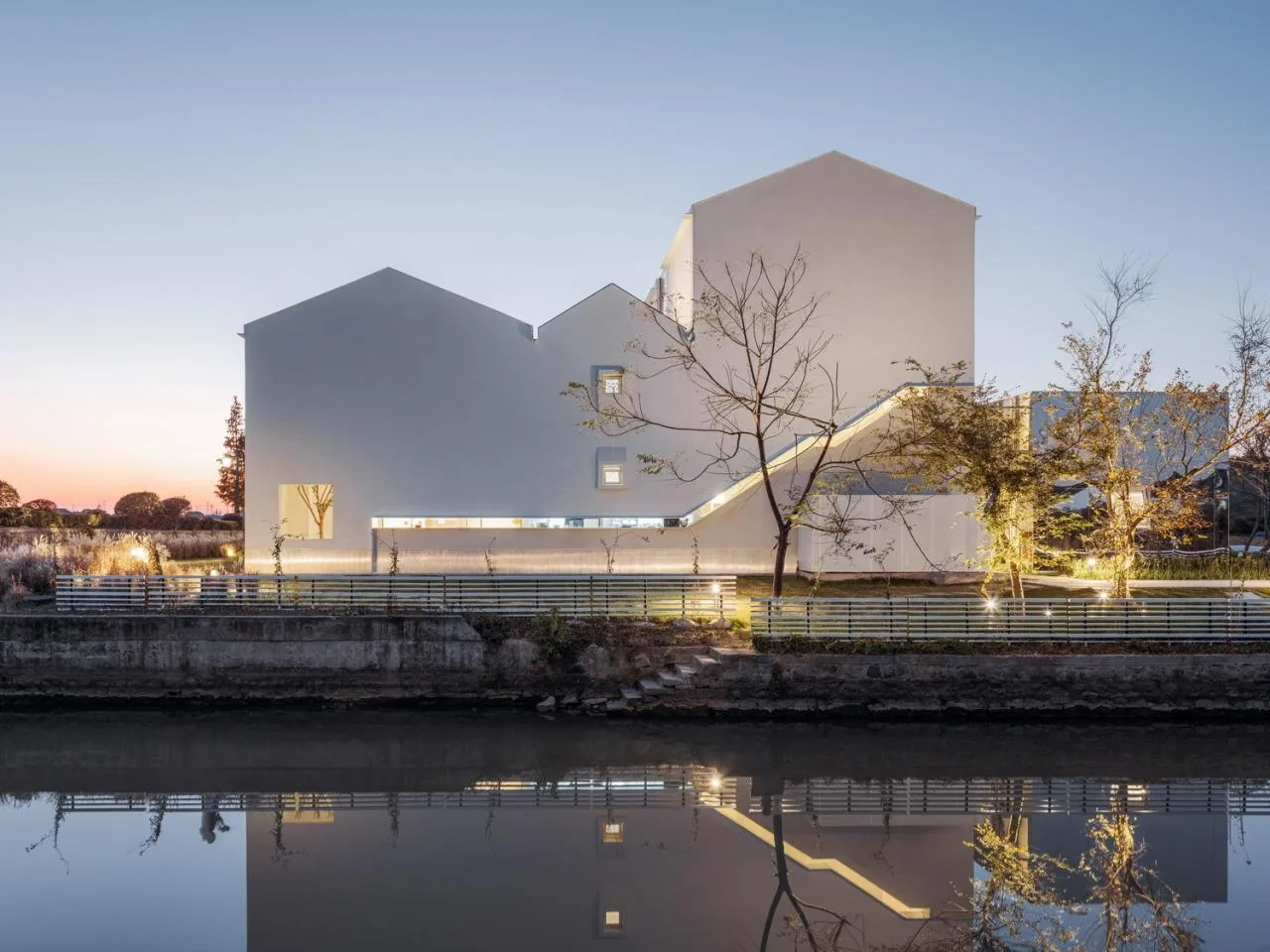
I preserved a sense of enclosure on the other three facades and the roof to accentuate the shell’s visual identity and the building’s overall mass. The east facade, in particular, stands out as a mountain-like wall.
The Long Scroll
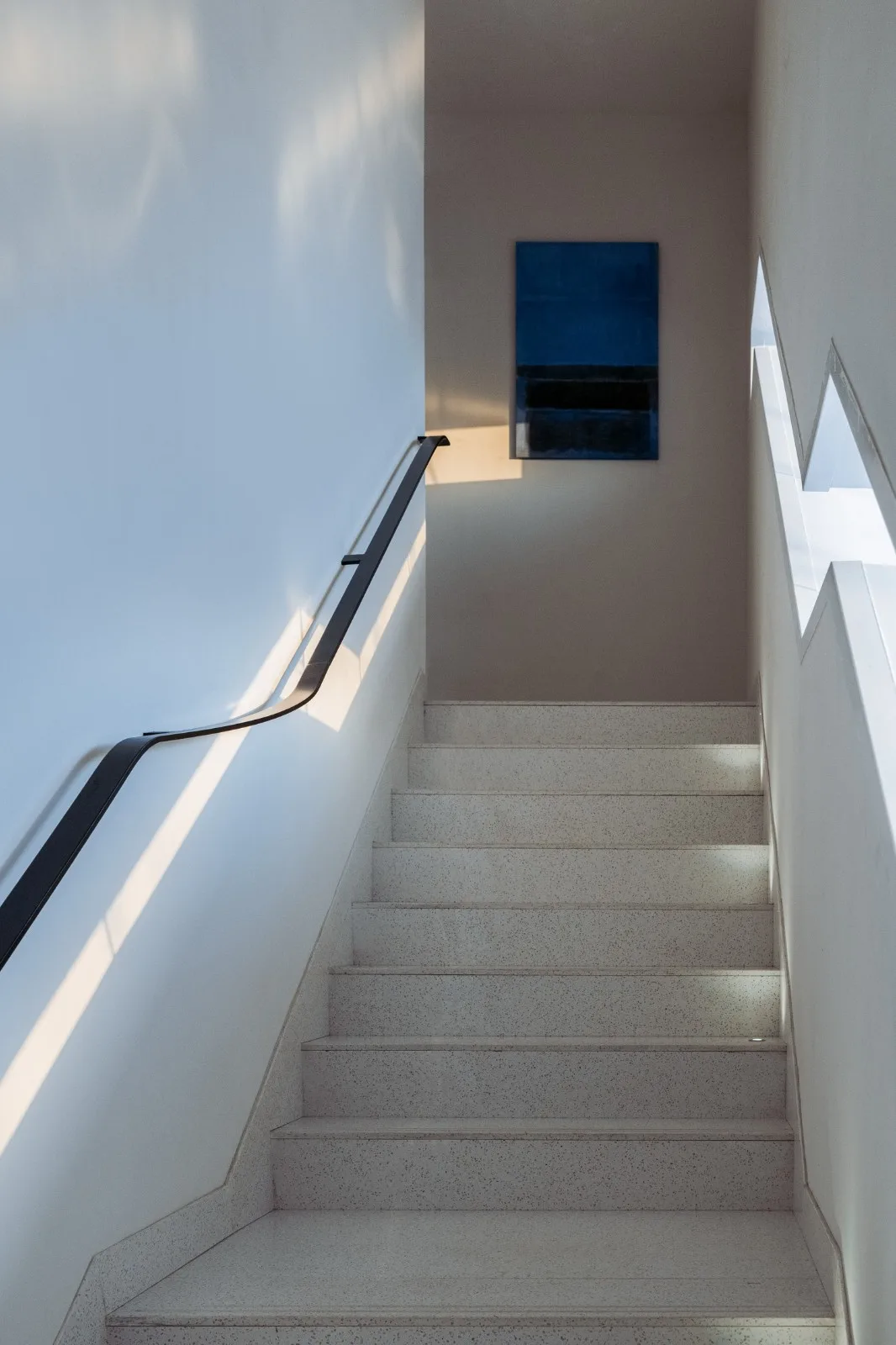
Facing the water, the east facade features a 16.4-meter-long window that rises alongside the staircase to the second floor. As visitors ascend, the outside scenery unfolds gradually, like a traditional scroll painting.
This long window spans both horizontally across the column grid and vertically across floors. Structural engineers achieved the seamless window effect by adjusting the vertical dimensions of load-bearing elements like shear walls and recessing walls below the window’s top line. The floor’s main beam is designed as a vertical folded beam along the window’s upper edge to ensure continuity.
Playful Revisions
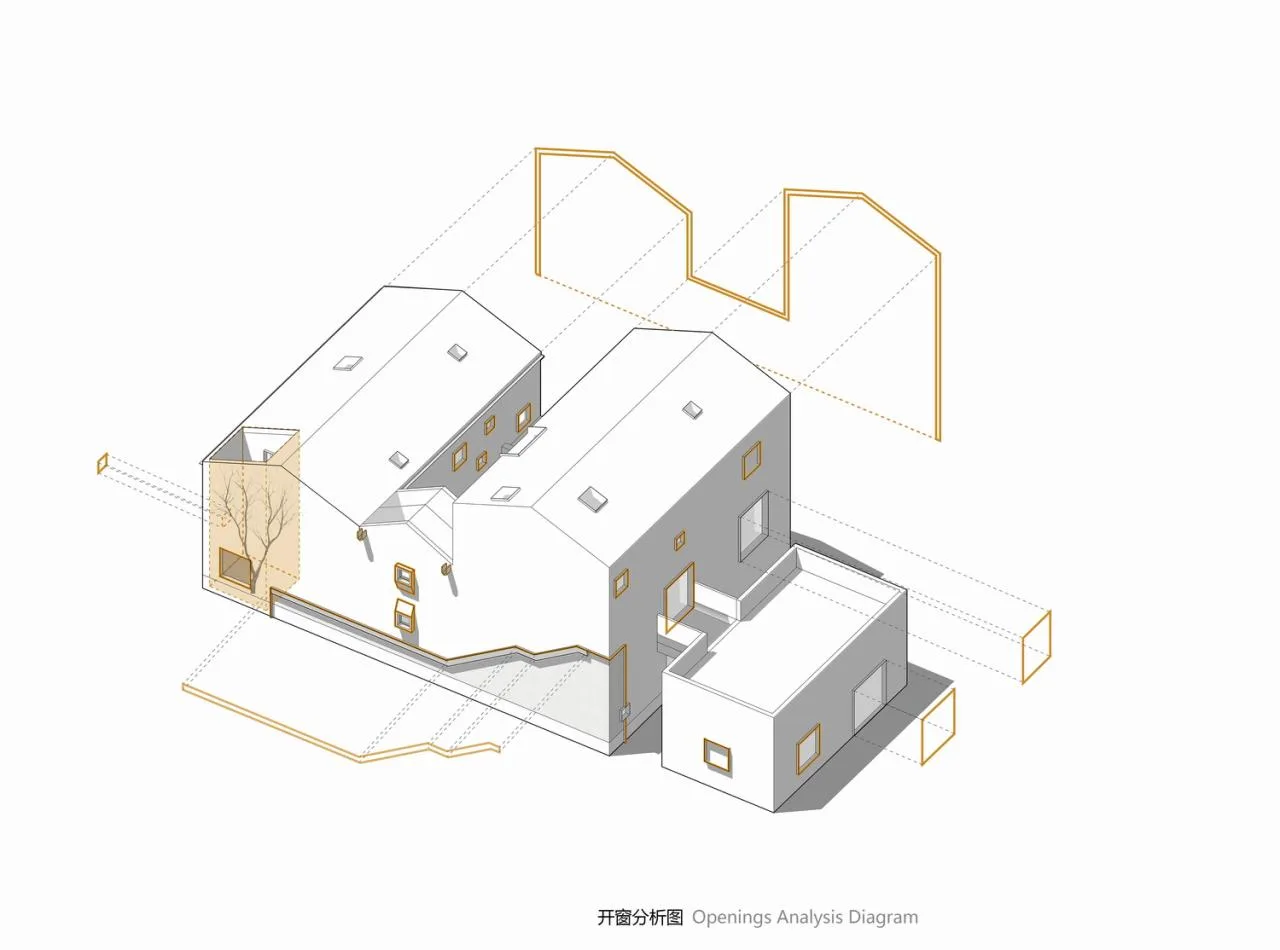
The long window on the east facade felt too rigid and controlling. At the last moment, I decided to modify it: the top panel extends onto the north facade and folds down to the ground, while the south panel drops straight to the ground. The coating between these panels subtly contrasts in texture and color with the main wall, introducing an understated imperfection.
This subtle “uncleanness” reflects my deep-seated skepticism towards pure geometry, a sentiment rooted in my Jiangnan heritage.
Further Adjustments
Continuing to refine the east facade, I redesigned drainage outlets, the kitchen area, and the window frames of the second-floor communal lounge. These changes not only serve functional purposes but also enhance the facade’s sense of enclosure.
Dark Ground
The first-floor ground, including the courtyard floor, is uniformly paved with black volcanic rock. The choice of black, echoing the roof’s color, is part of my ongoing experiment with ink tones. This dark flooring effectively separates the second-floor volumes, the shell, and the ground visually, enhancing the sensation of suspension.
Carving Walls to Capture Light
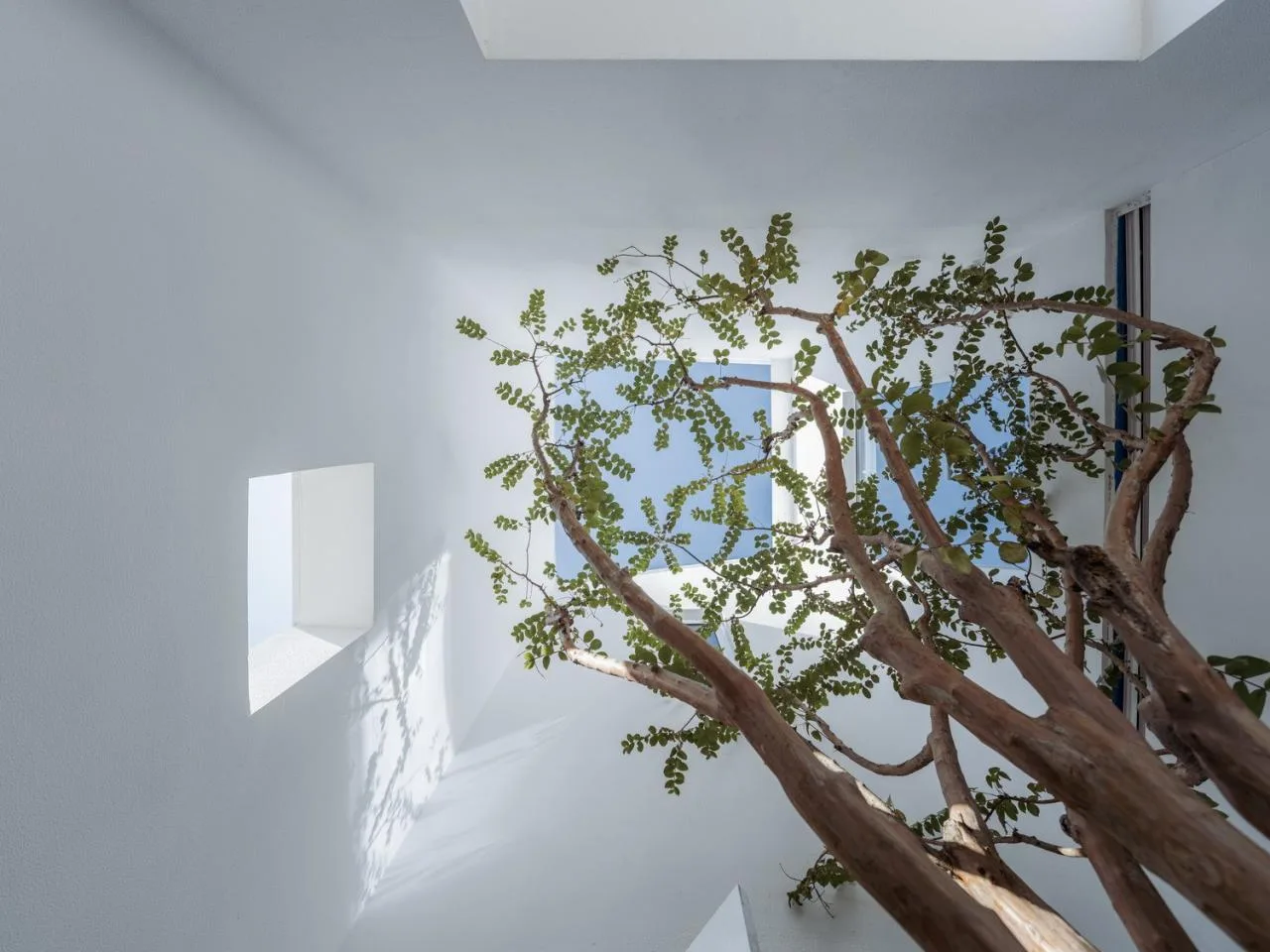
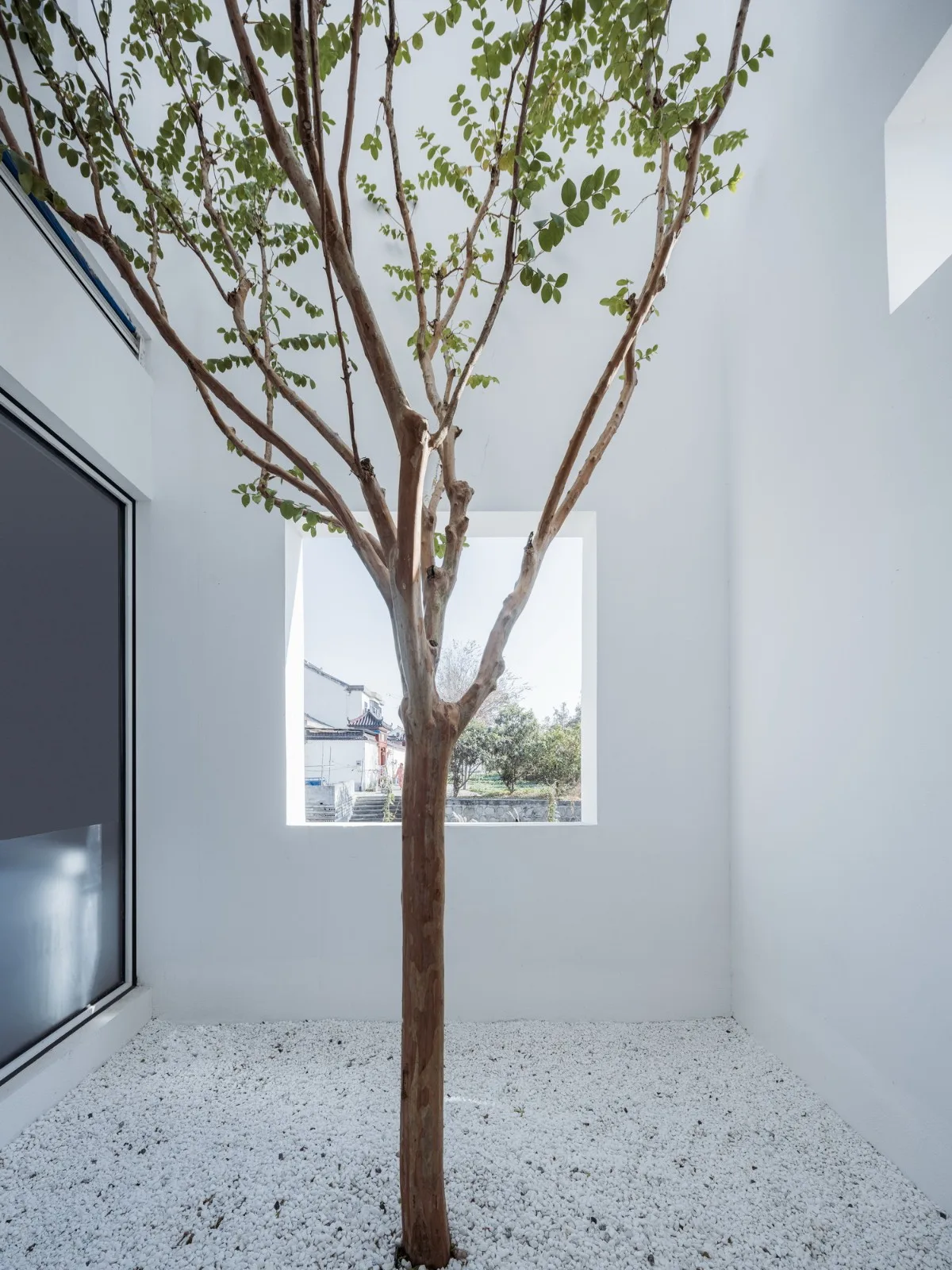
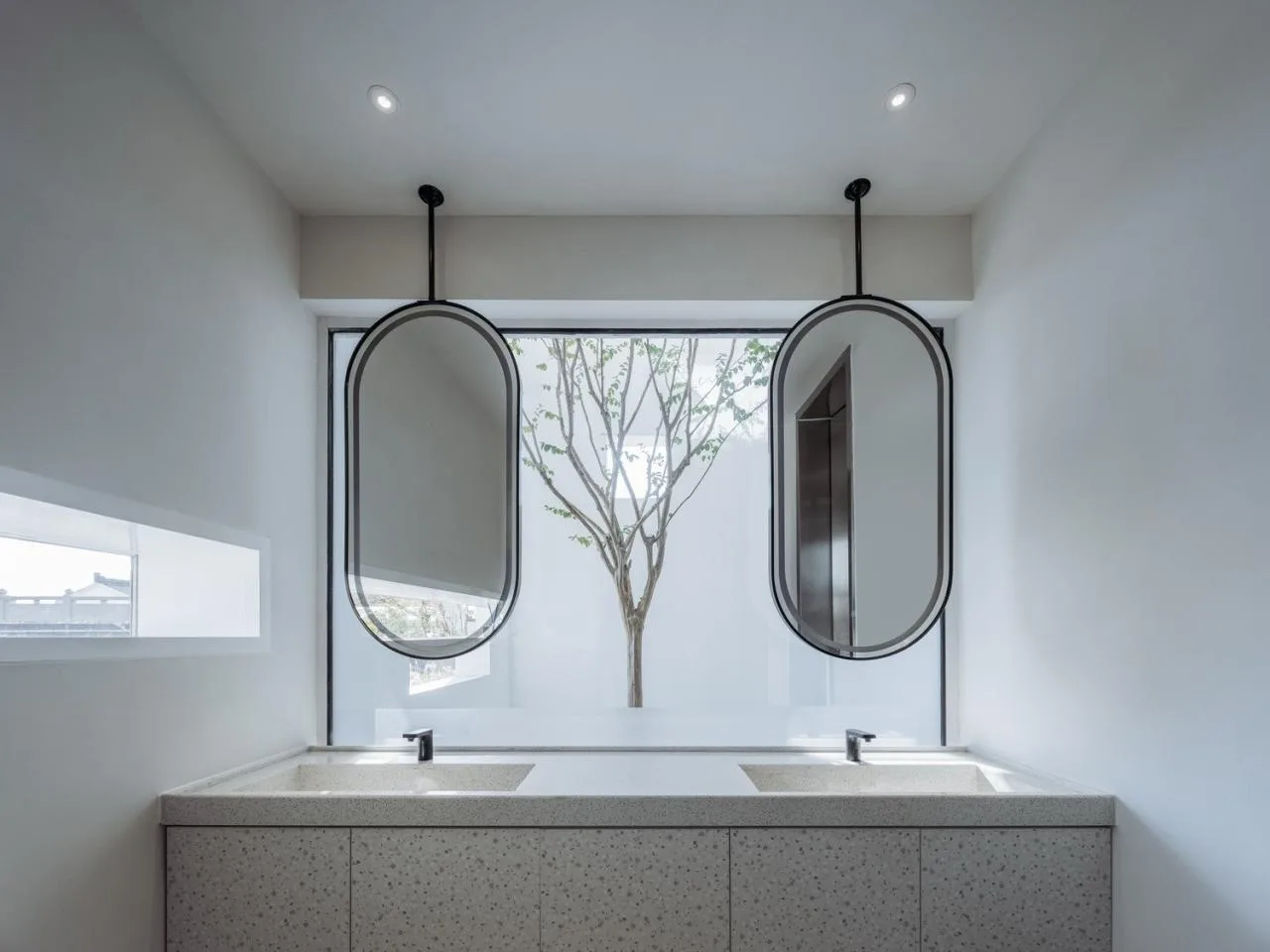
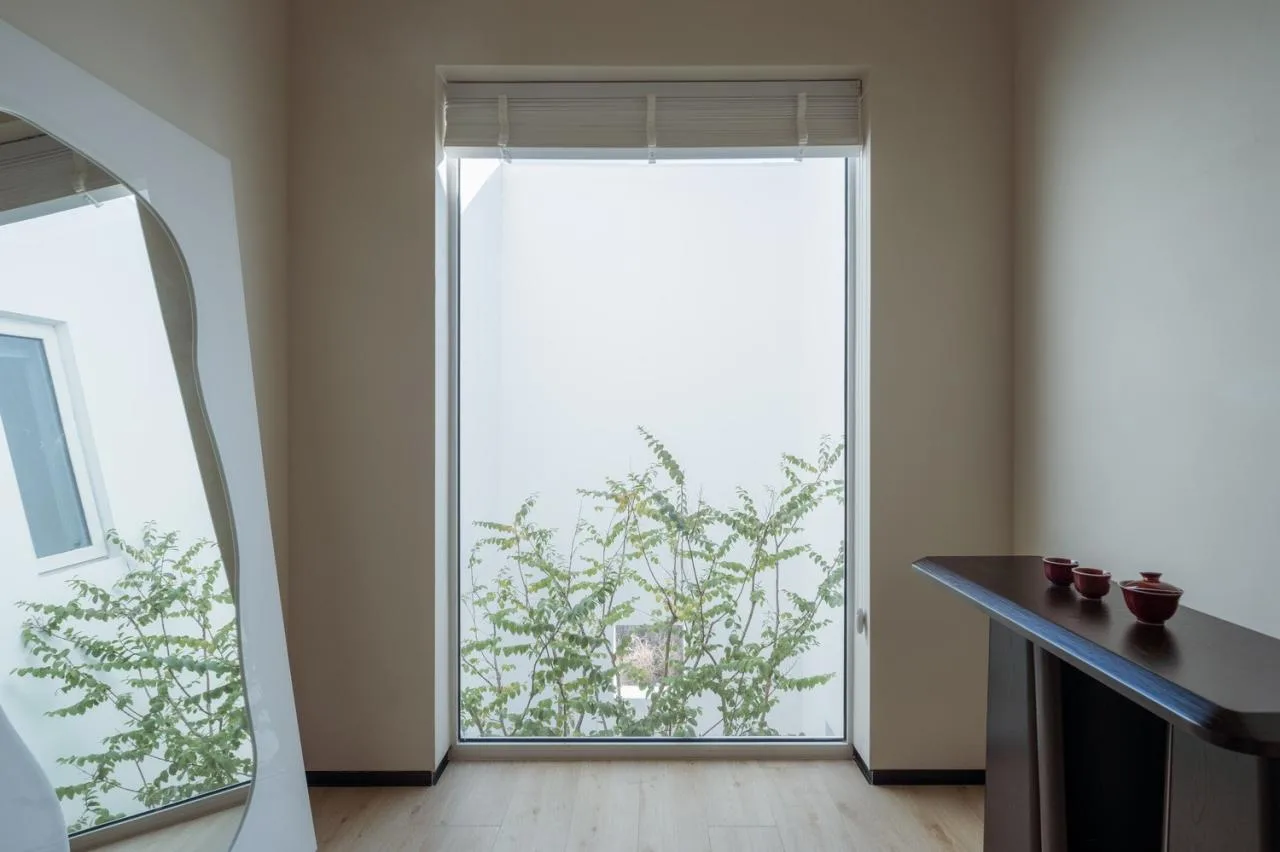
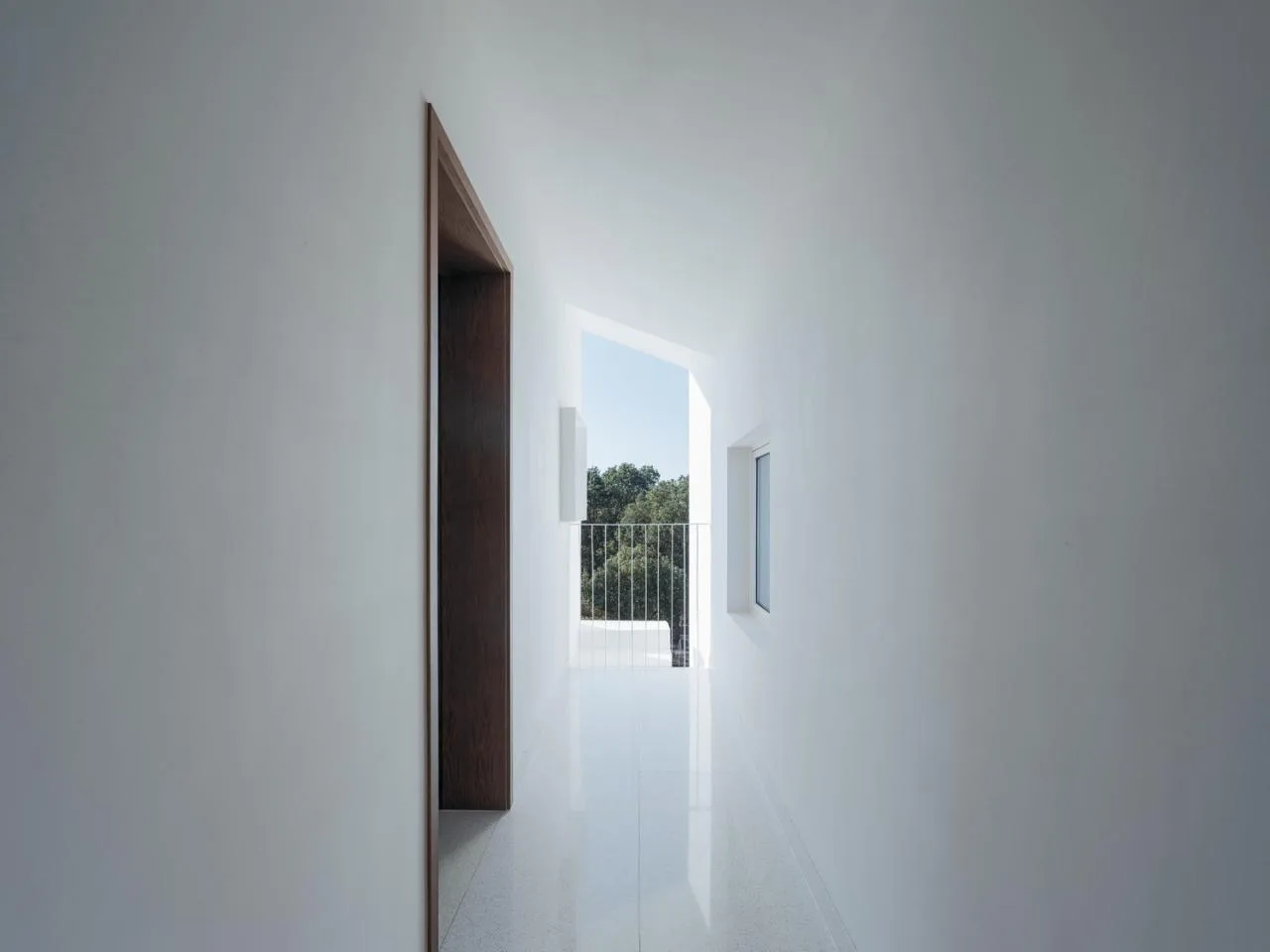
I envision the courtyard and windows as openings carved out of the continuous homestay shell. Sitting in the shade, one can watch sunlight pour through these apertures, creating a serene atmosphere. The purple wisteria blooming in the white courtyard to the south breathes life into this tranquility.
Where is Jiangnan?
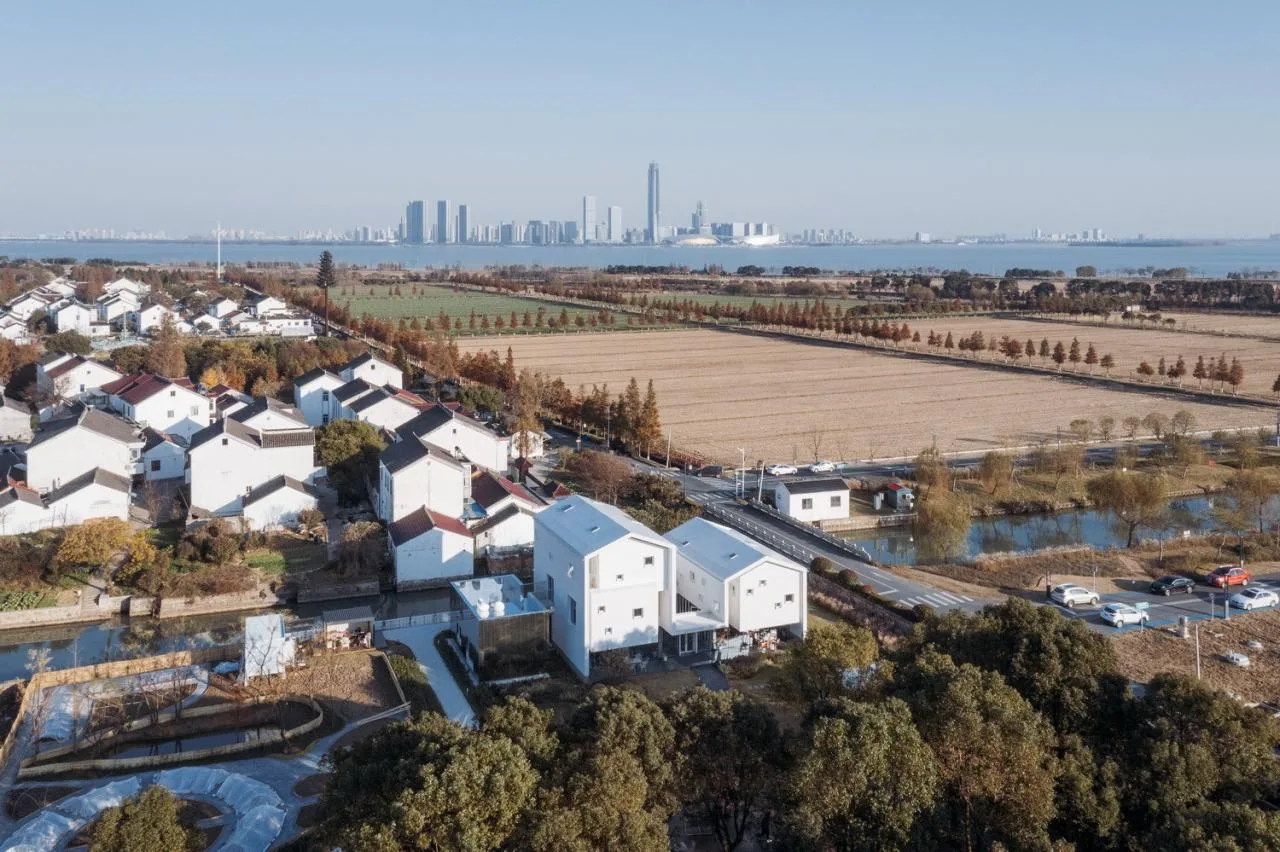
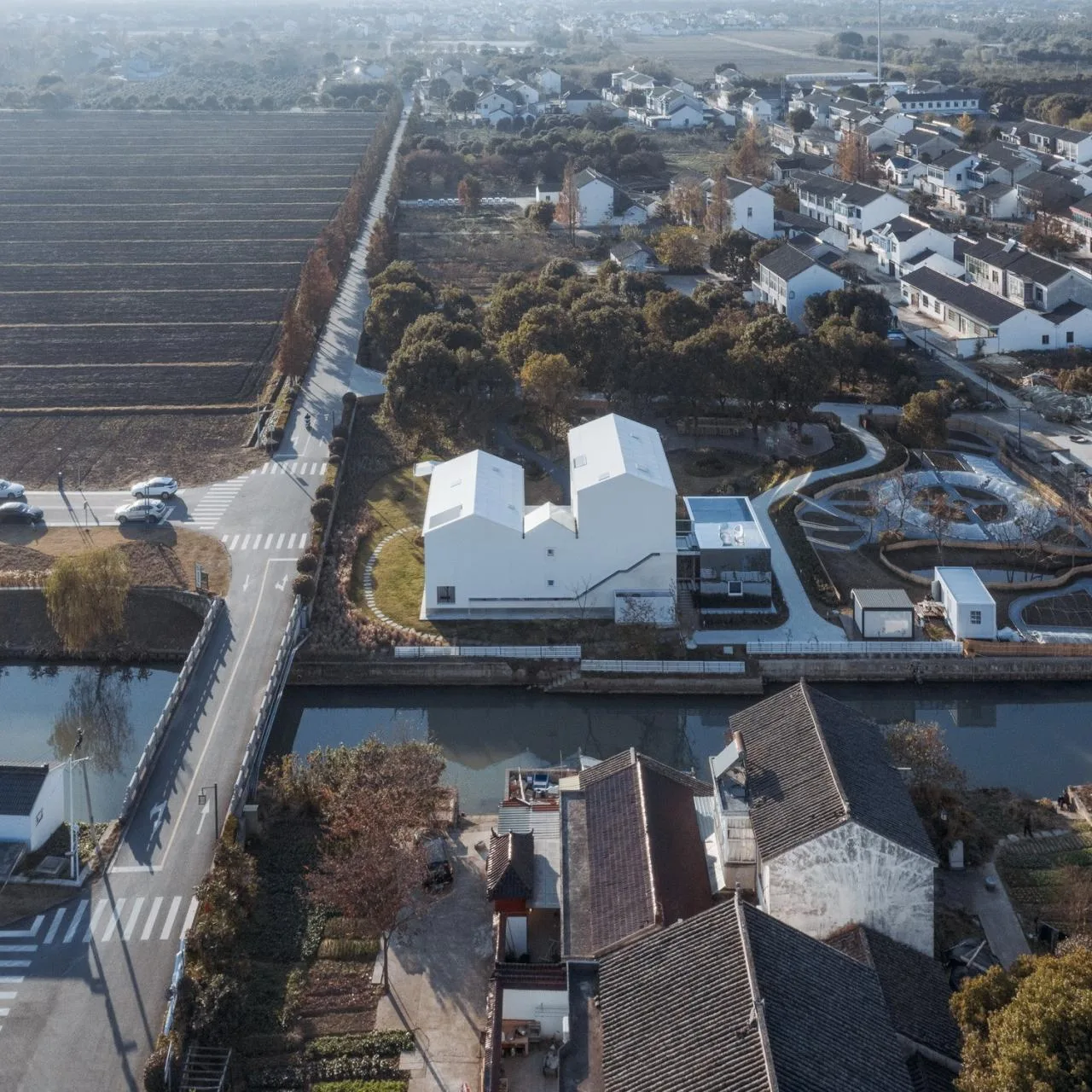
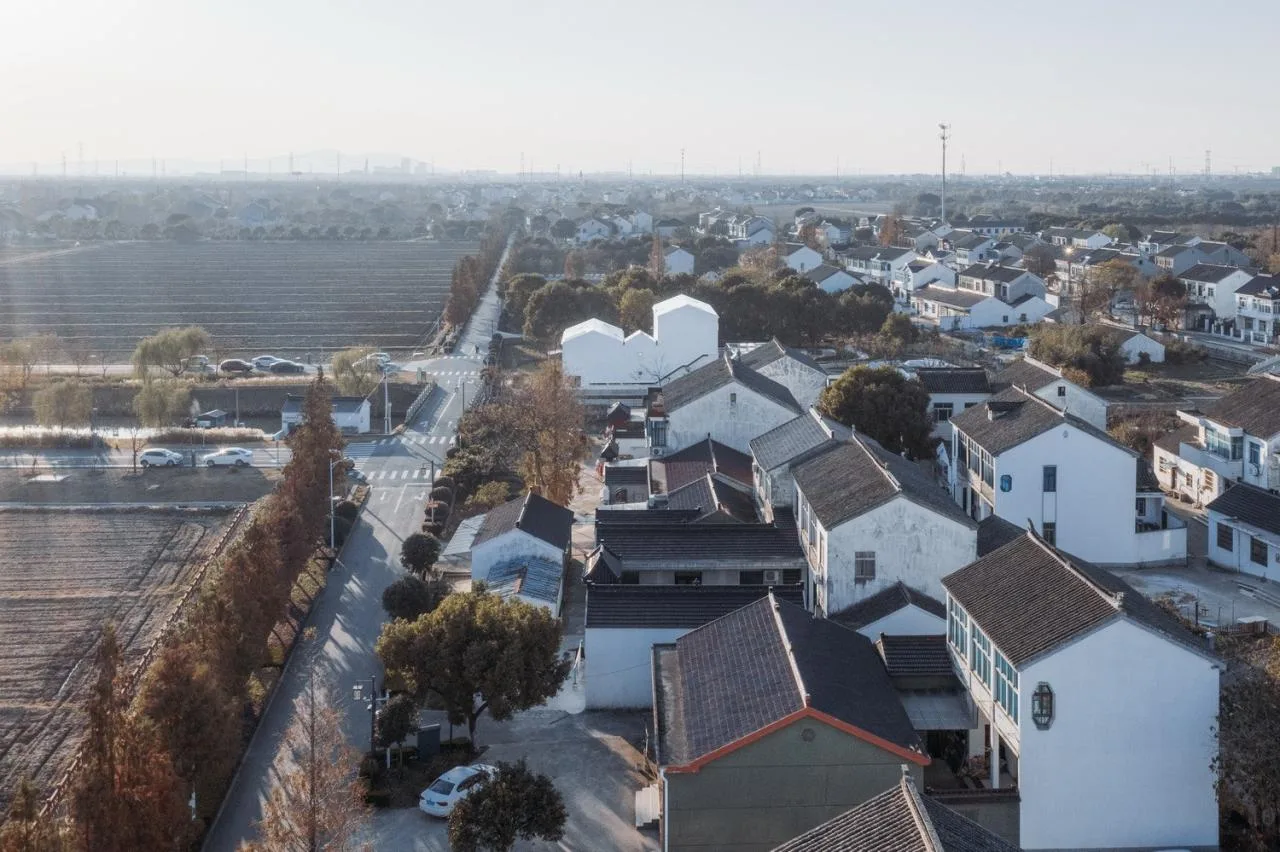
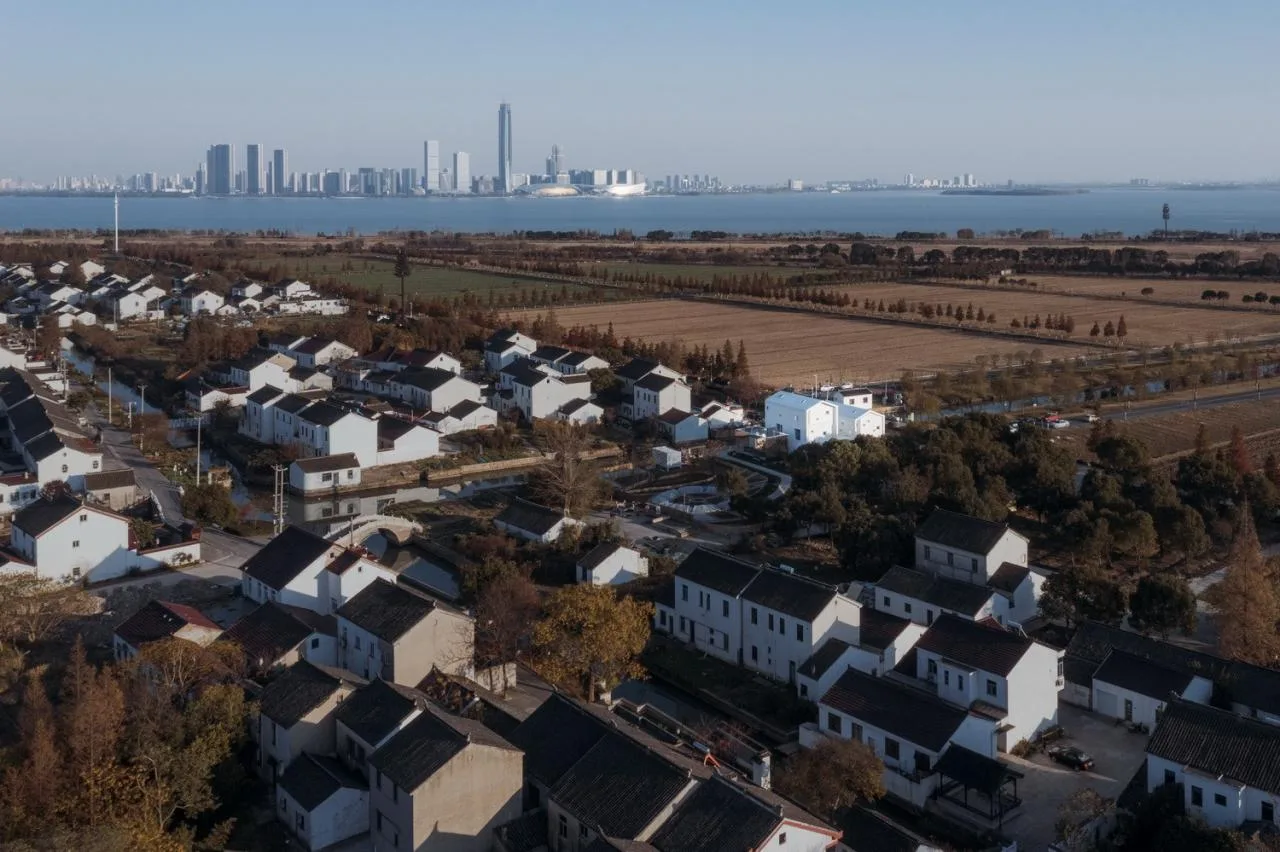
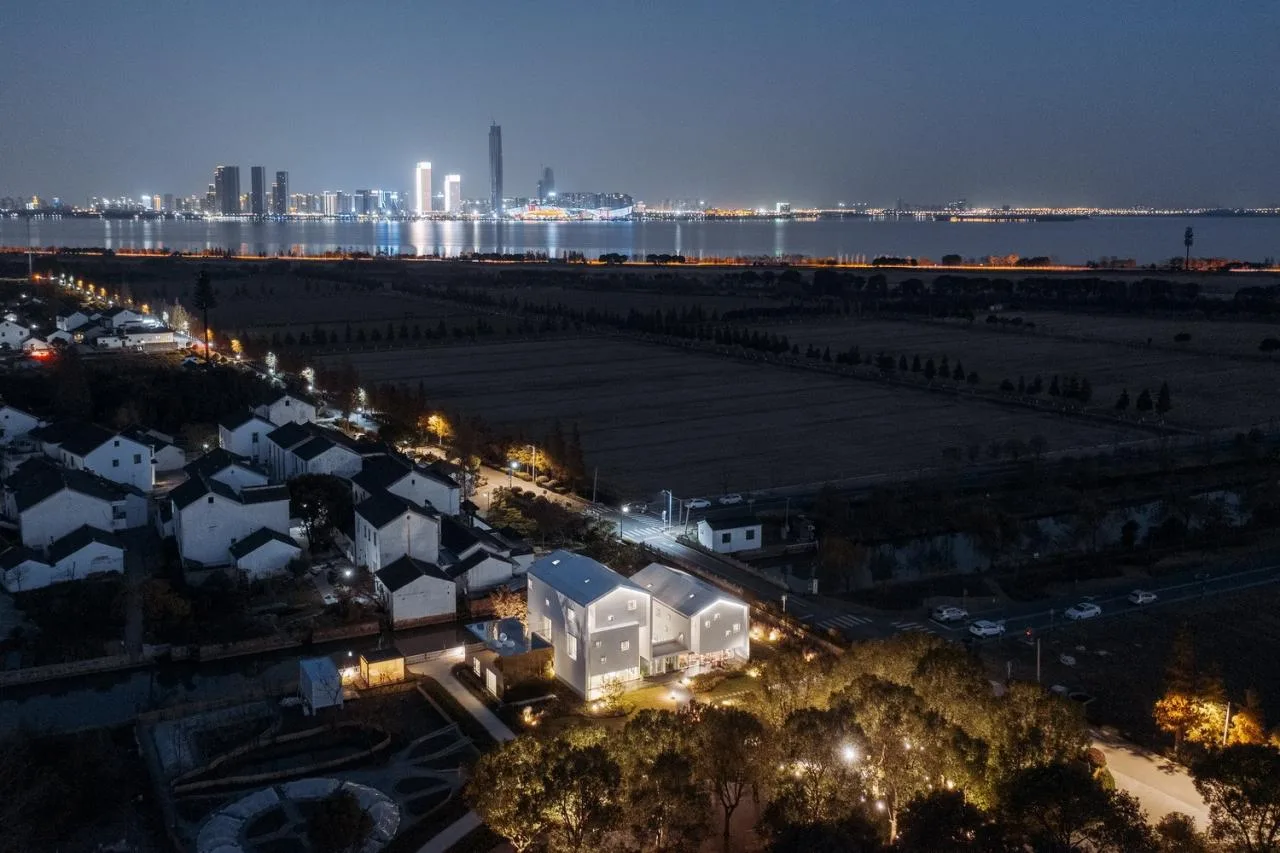
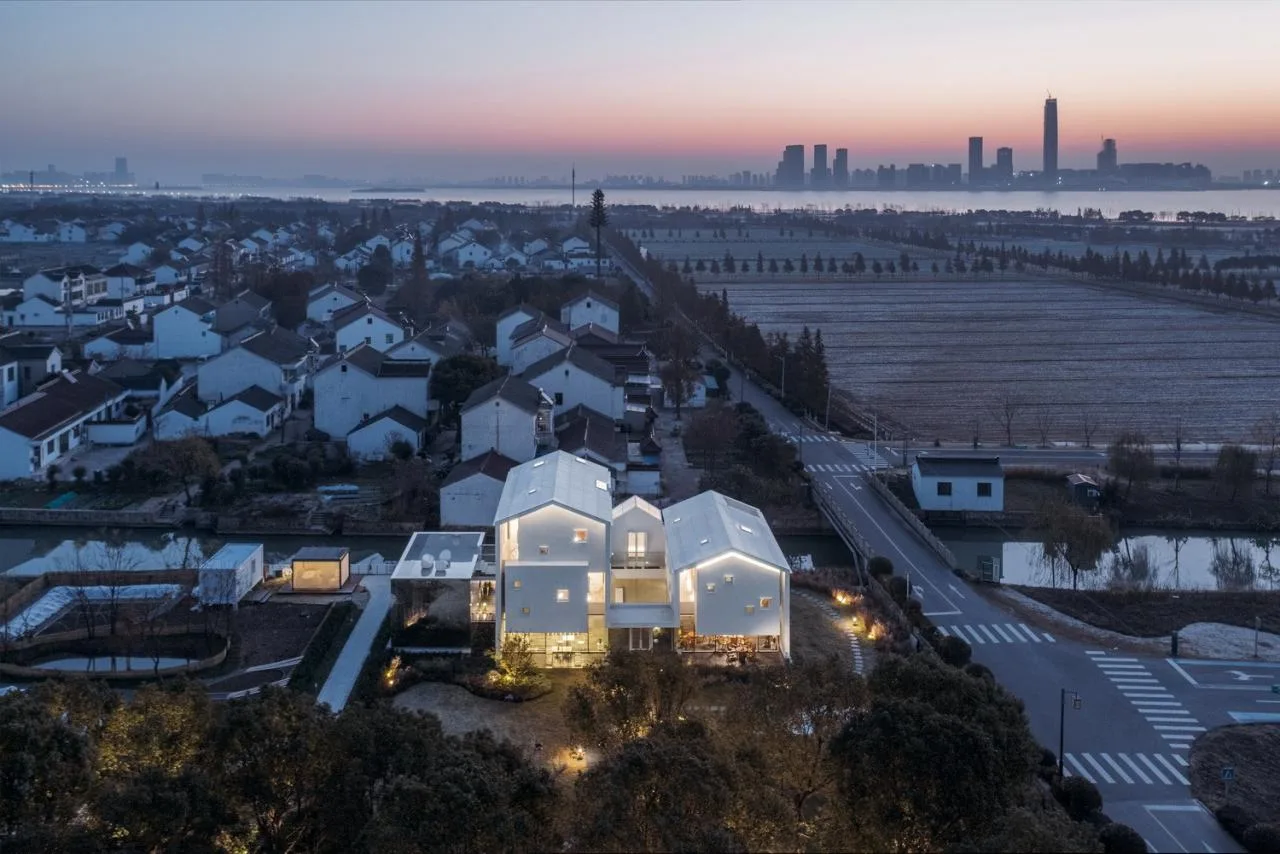
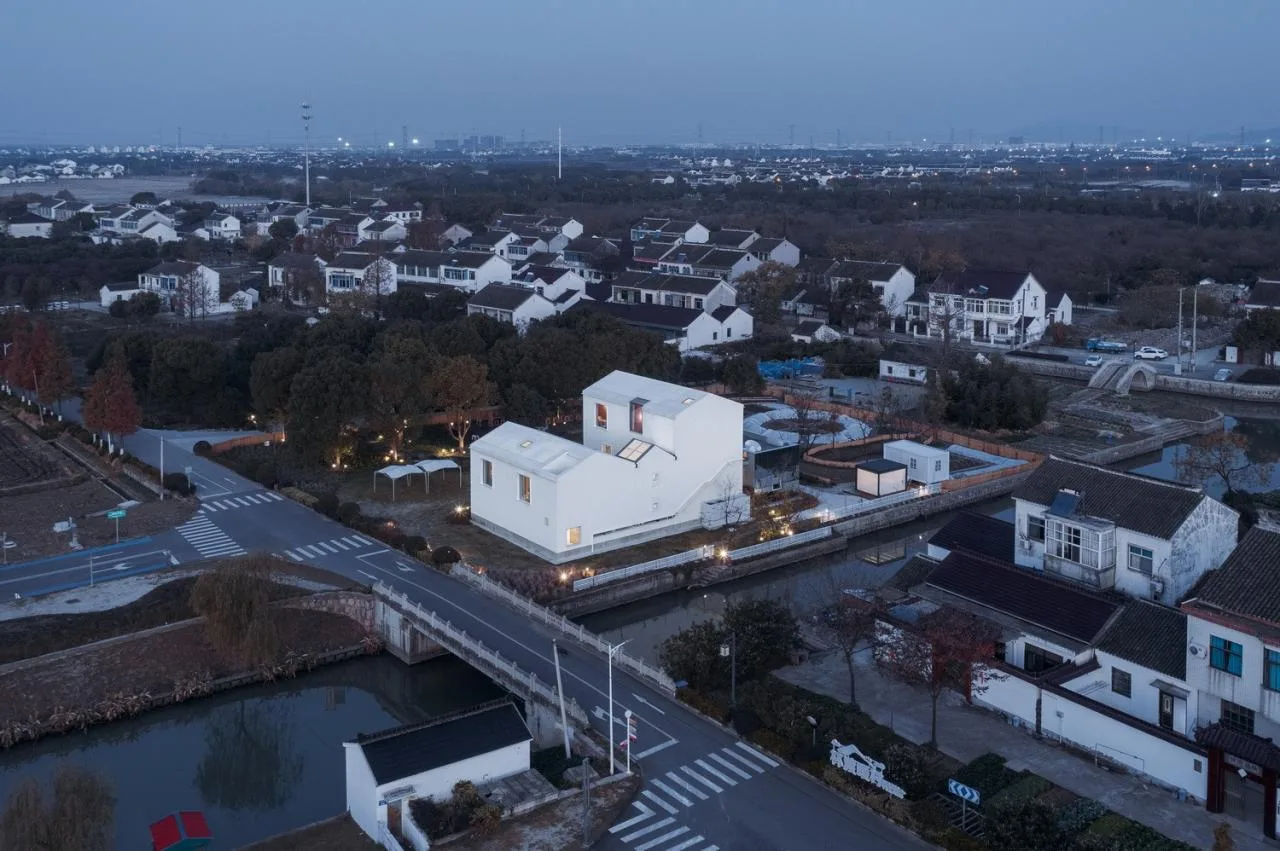
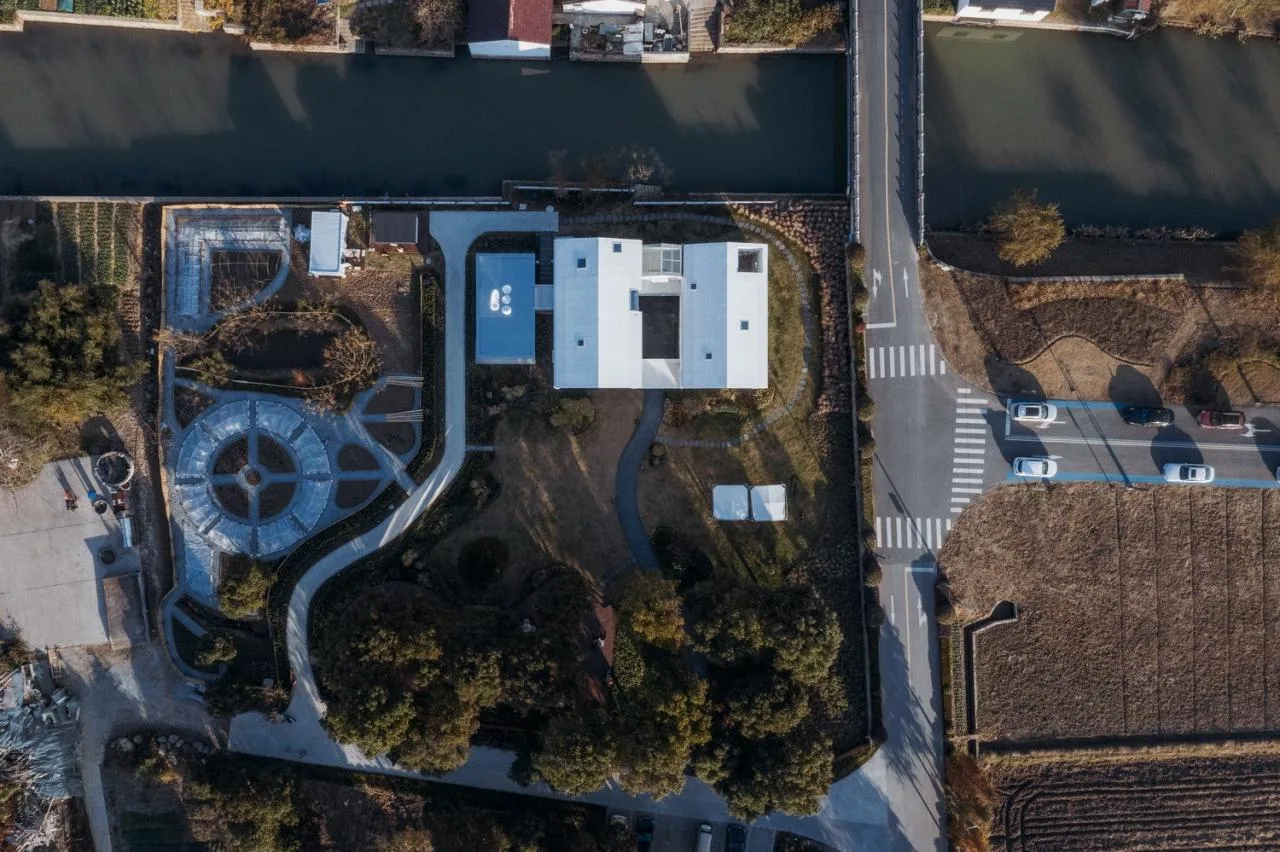
This white house may seem somewhat out of place in renderings, but from a bird’s-eye perspective after completion, it harmonizes with its surroundings. The Jiangnan aesthetic that Wu Guanzhong captured—three parts black, seven parts white—is already distant from our current reality.
Not only has the traditional house shape evolved, but local residents have also abandoned blue roof tiles. Contemporary Jiangnan appears mottled, while Wu Guanzhong’s Jiangnan remains a nostalgic memory.
Choosing pure white was my way of subtraction—to clear away the confusion of mottled Jiangnan.
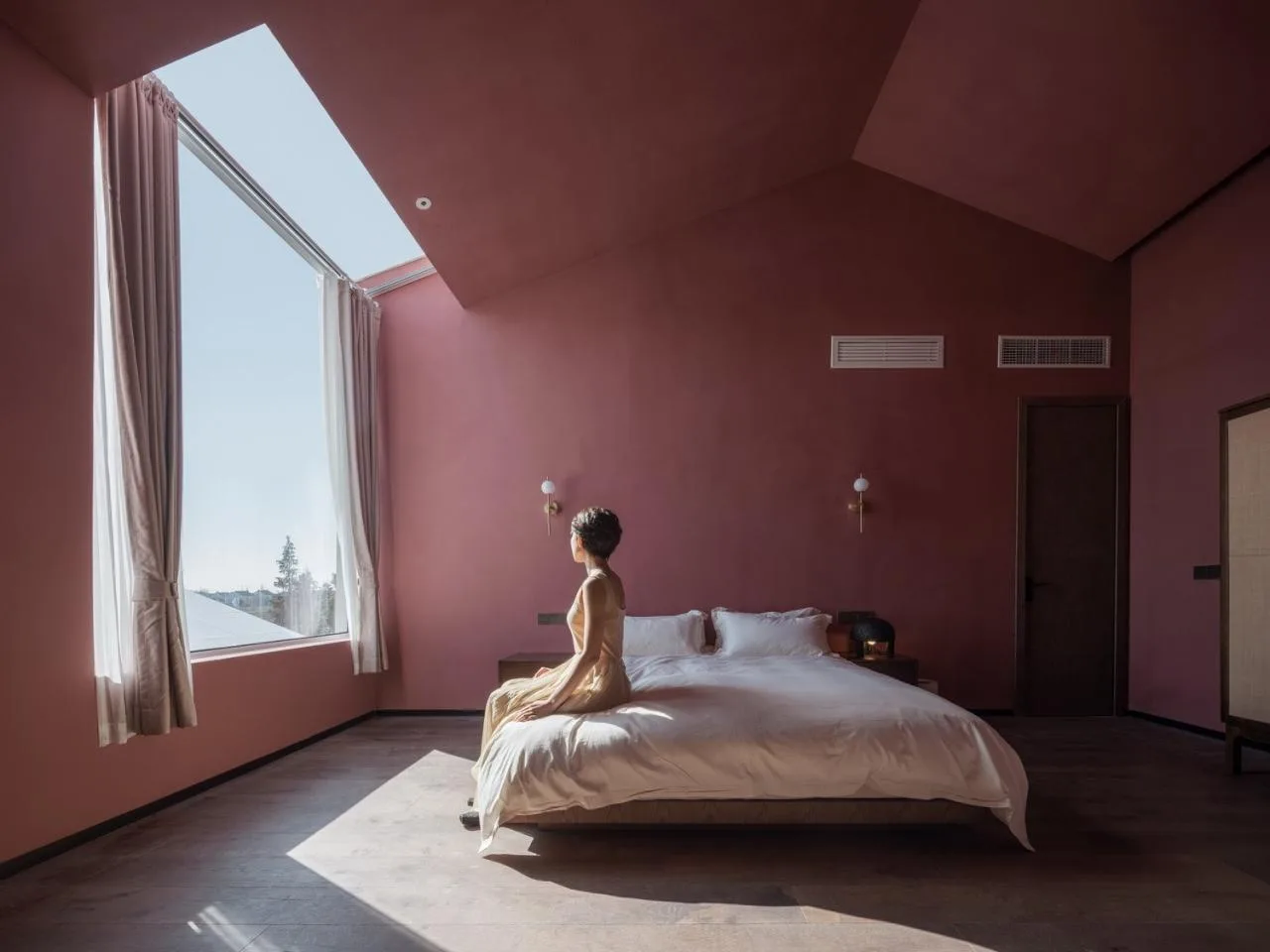
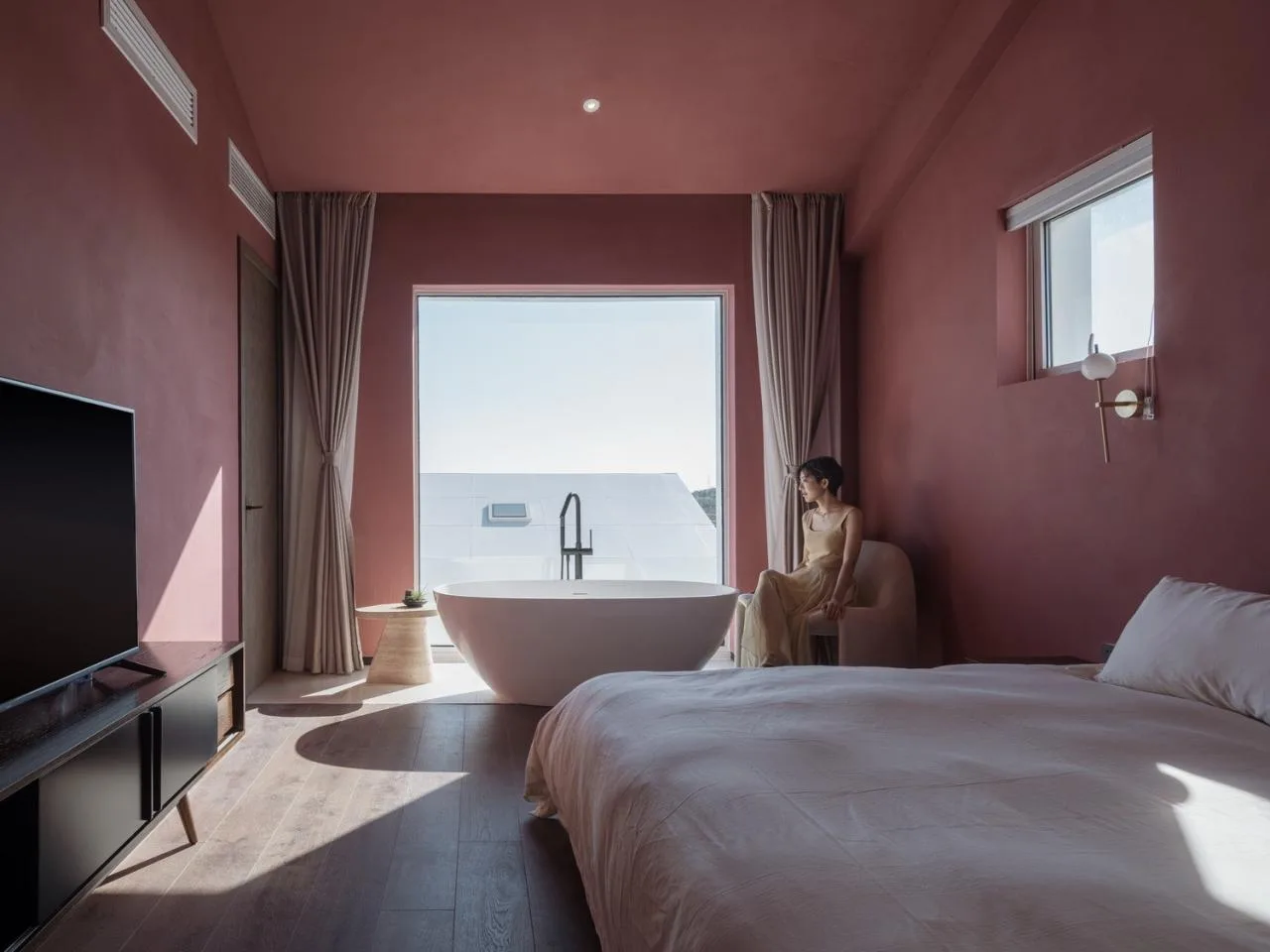
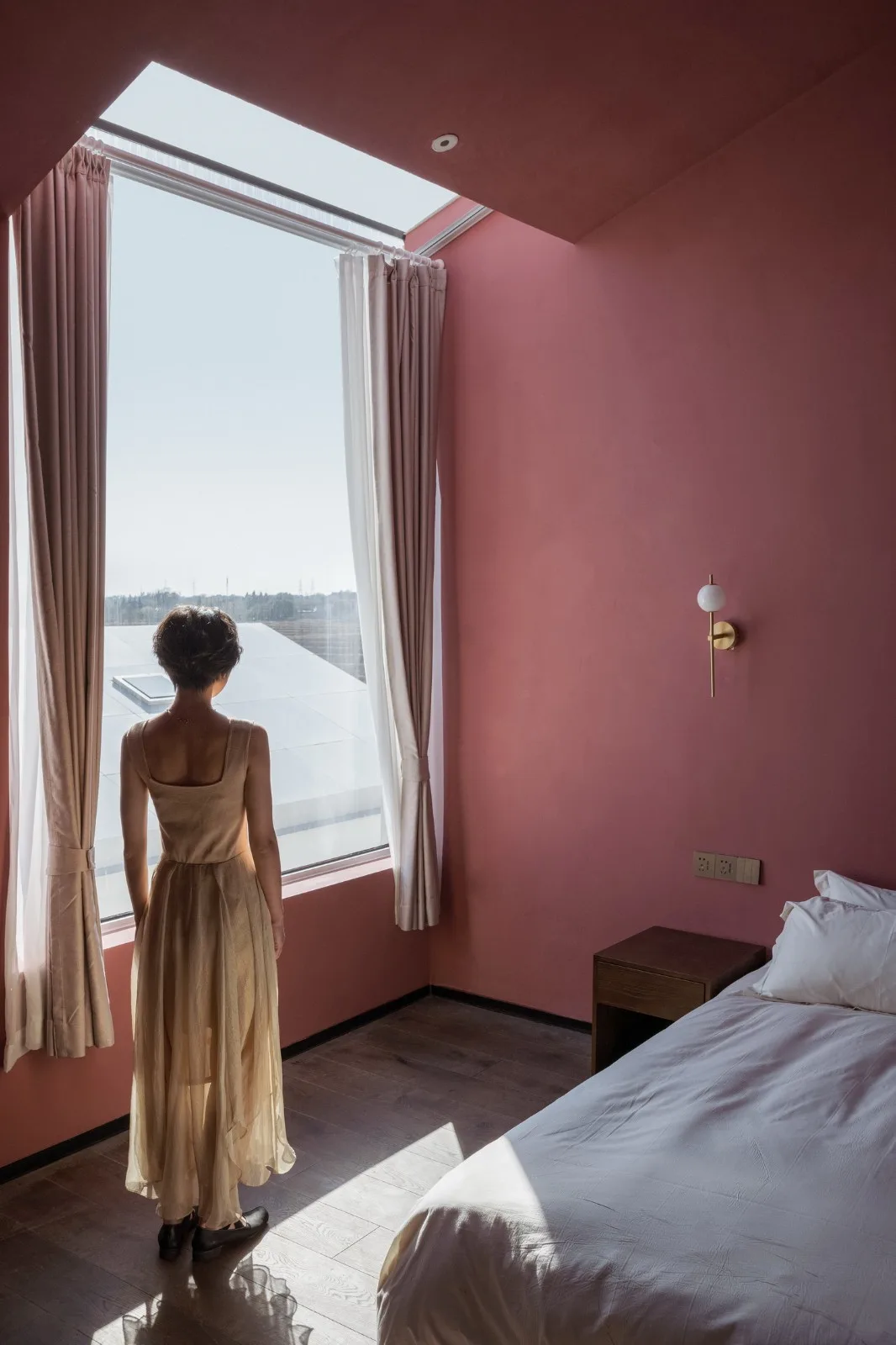
In the guest rooms on the third floor, I chose red, a personal regret. Nowadays, ordinary Jiangnan households primarily consume baijiu, while Yuan Mei’s favorite yellow wine has nearly vanished from mainstream dining tables. Although yellow wine is rice wine, it is brewed with wheat koji, giving it an amber color.
Xilindu Village boasts a storied brewing history, so I used the deep red color of distiller’s grains to decorate two third-floor rooms—a stubborn homage to vanishing traditions.
Silence as a Mystery
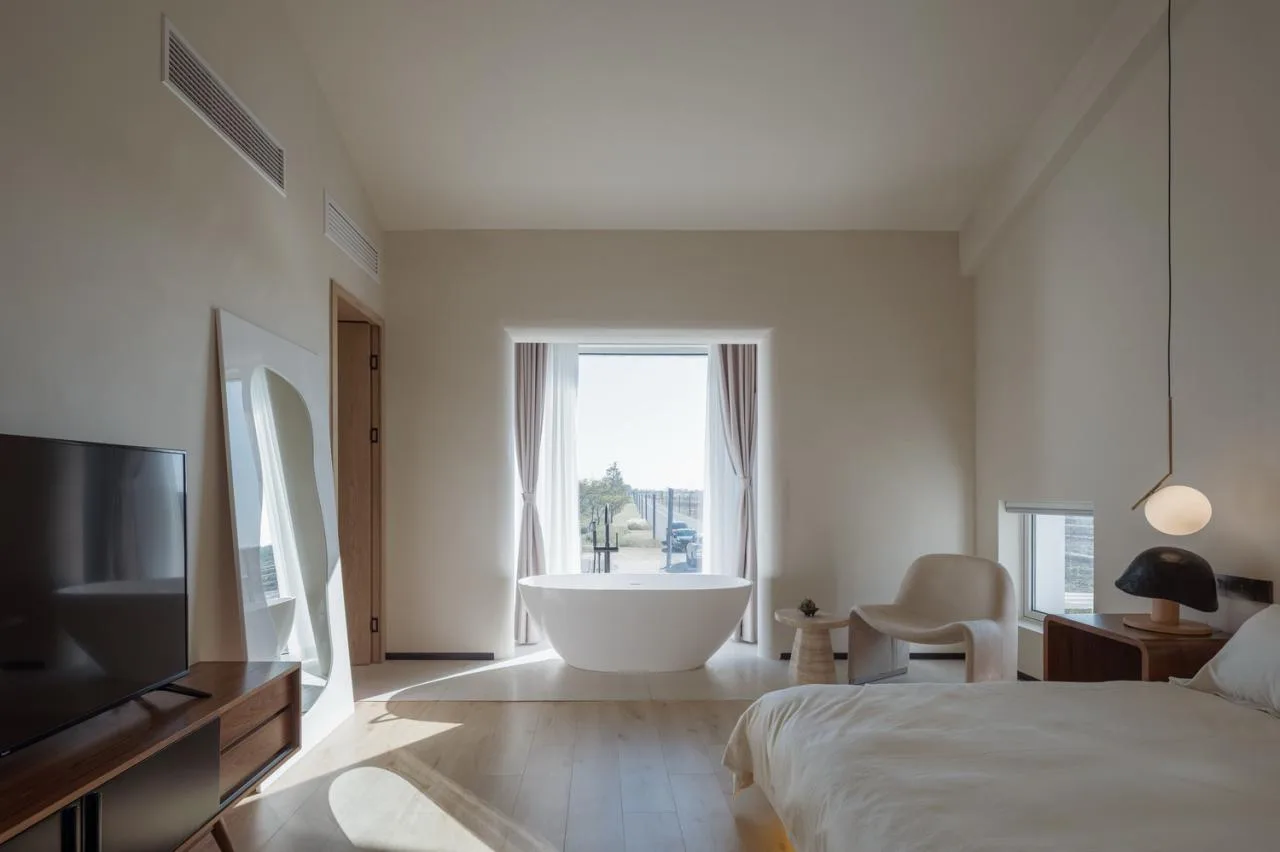
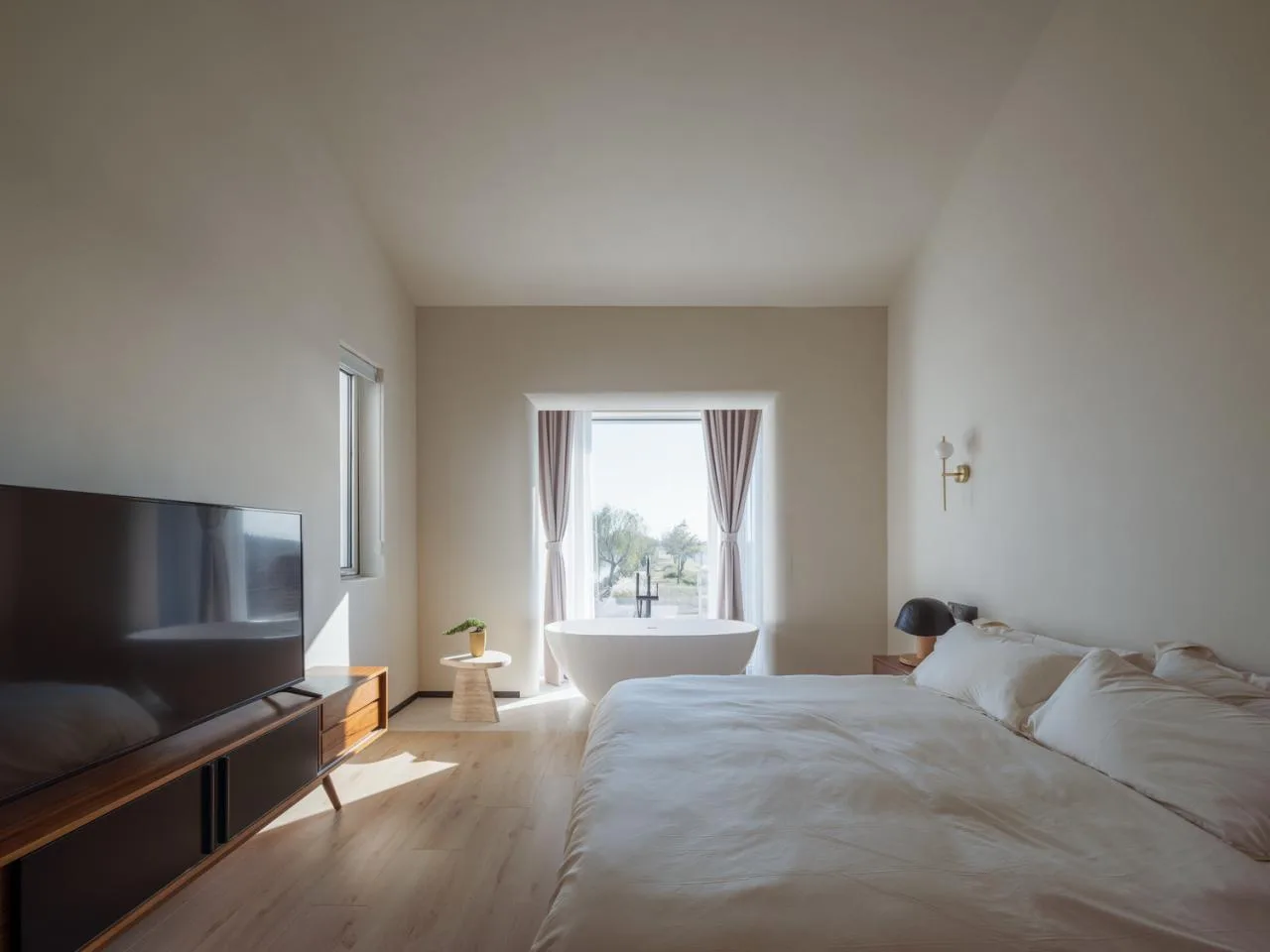
I deliberately chose not to install televisions in the rooms to cultivate a quiet atmosphere defined by colors, lighting, and a sense of enclosure. Based on my experience, limiting distractions enhances the connection to the surrounding scenery.
Our daily lives are saturated with various noises that often unsettle us. Here, I invite guests to set aside devices, bask in gentle sunlight, feel the slow-moving air, and occasionally hear insect chirps. We can lazily do nothing, reflecting on why everything is silent, almost like a mystery.
Every Moment
“The ashes prove that it is the palace of the future.” — Adonis
Project Drawings
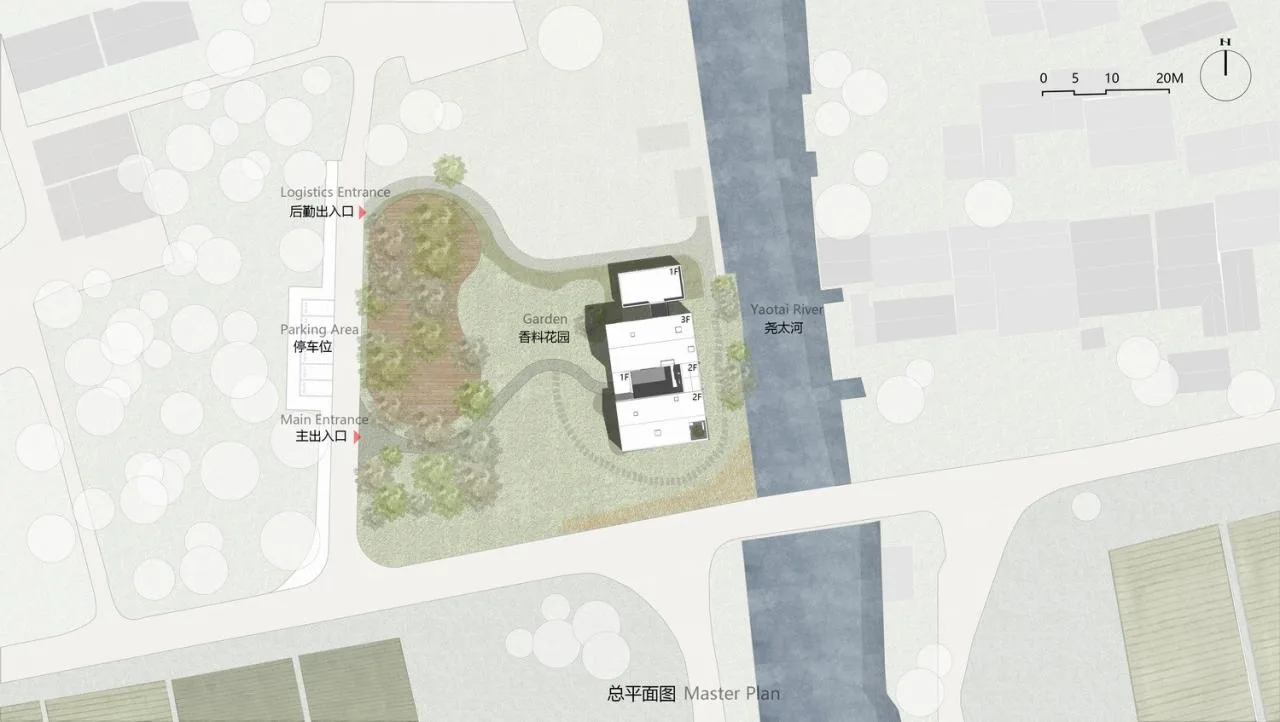
△ General Layout Plan
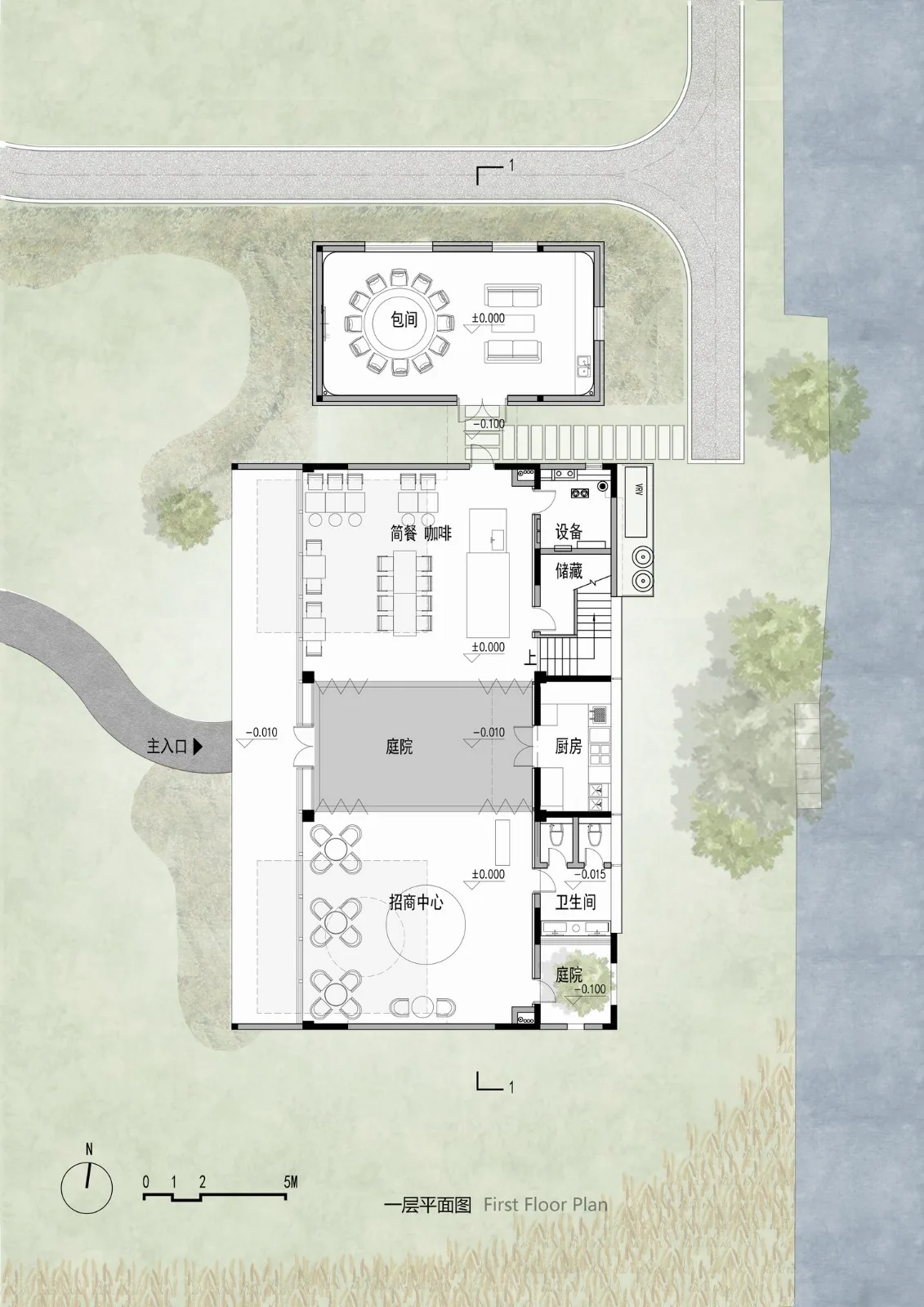
△ First Floor Plan
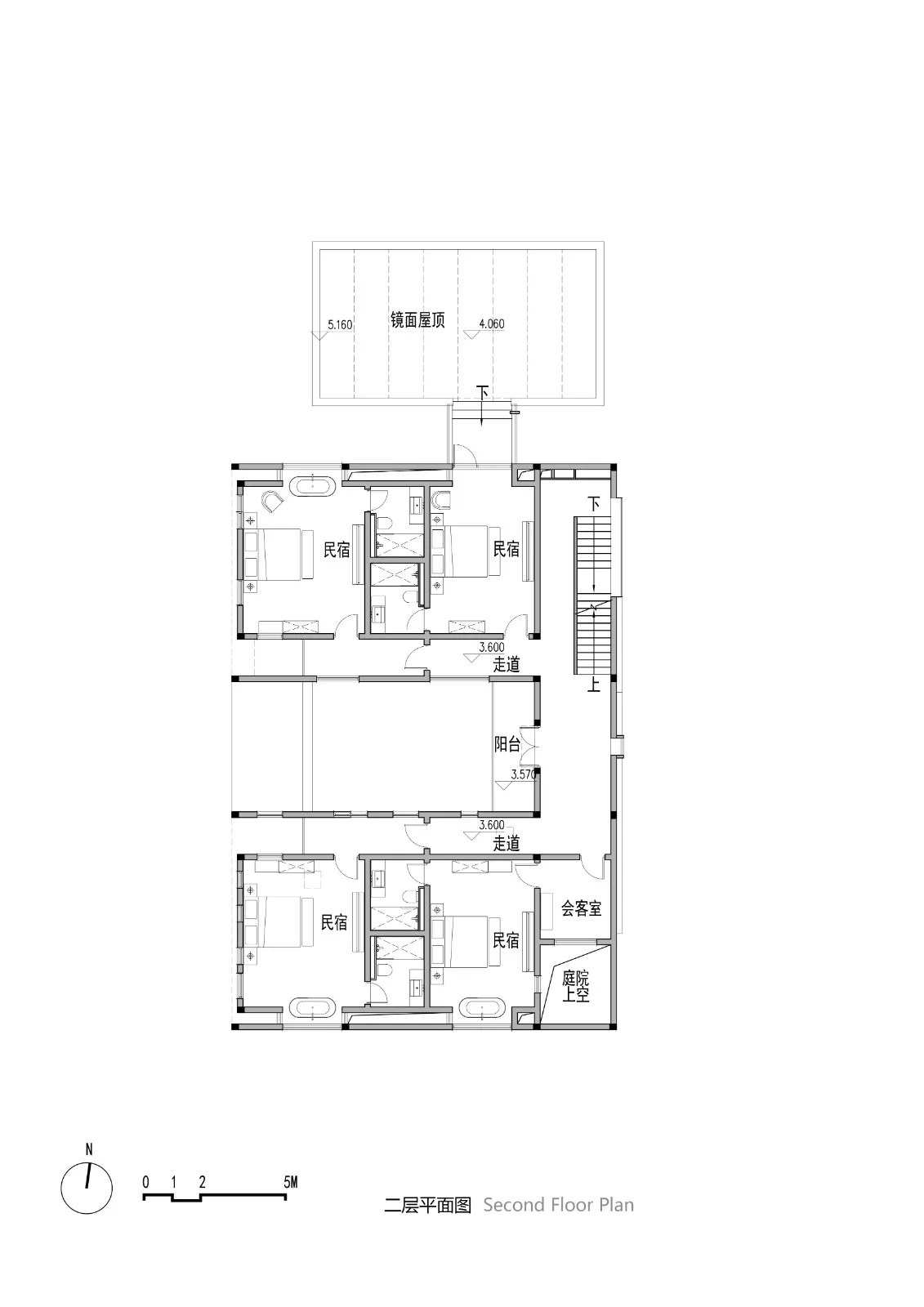
△ Second Floor Plan
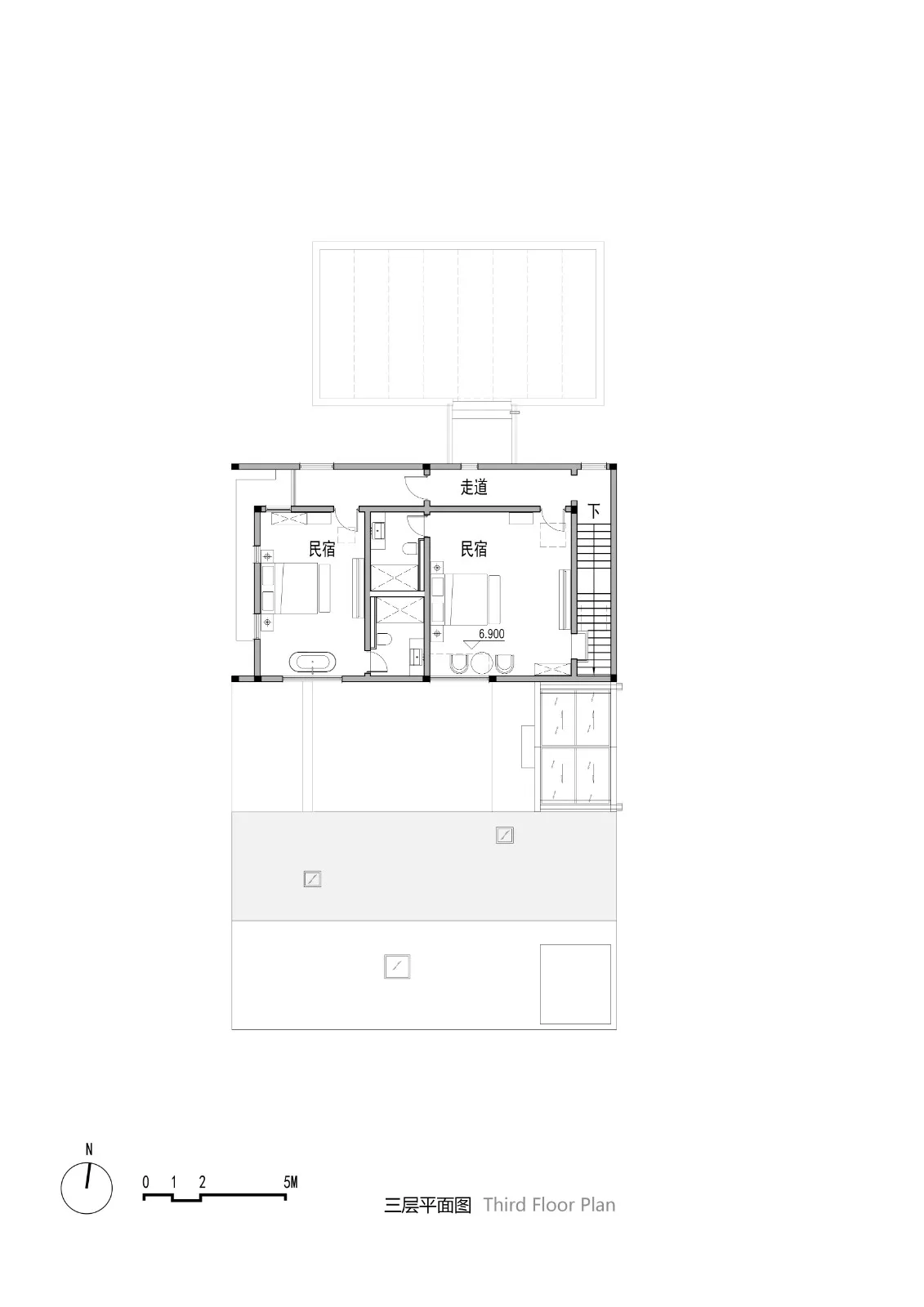
△ Third Floor Plan
Project Information
Design Company: Wutopia Lab
Lead Architect: Yu Ting
Project Architect: Yellow River
Design Team: Li Ziheng, Zhuang Yinfei (Internship)
Structural Engineering: Shanghai Sanyi Architectural Design Co., Ltd
Structural Team: Zhu Yumei, Hu Wenxiao (Structure), Shi Jiaying, Mao Yun, Mao Yaqian, Wang Can, Yu Bing, Shen Rui
Lighting Consultants: Zhang Chenlu, Wei Shiyu, Chen Xingru, Liu Xueyi
Plant Consultants: Liu Yuelai, Xie Wenwan
Owner: Jingcheng Cultural Tourism Development (Suzhou) Co., Ltd
Location: No.1 Xilindu, Shanglin Village, Hengjing Street, Wuzhong District, Suzhou City, Jiangsu Province
Area: 556 square meters
Construction Date: October 2021
Materials: Exterior wall coating, aluminum veneer, steel, aluminum-plastic panels, volcanic rock, micro cement, terrazzo, and more
Photography: CreatAR Images
Video: CreatAR Images















Must log in before commenting!
Sign Up