
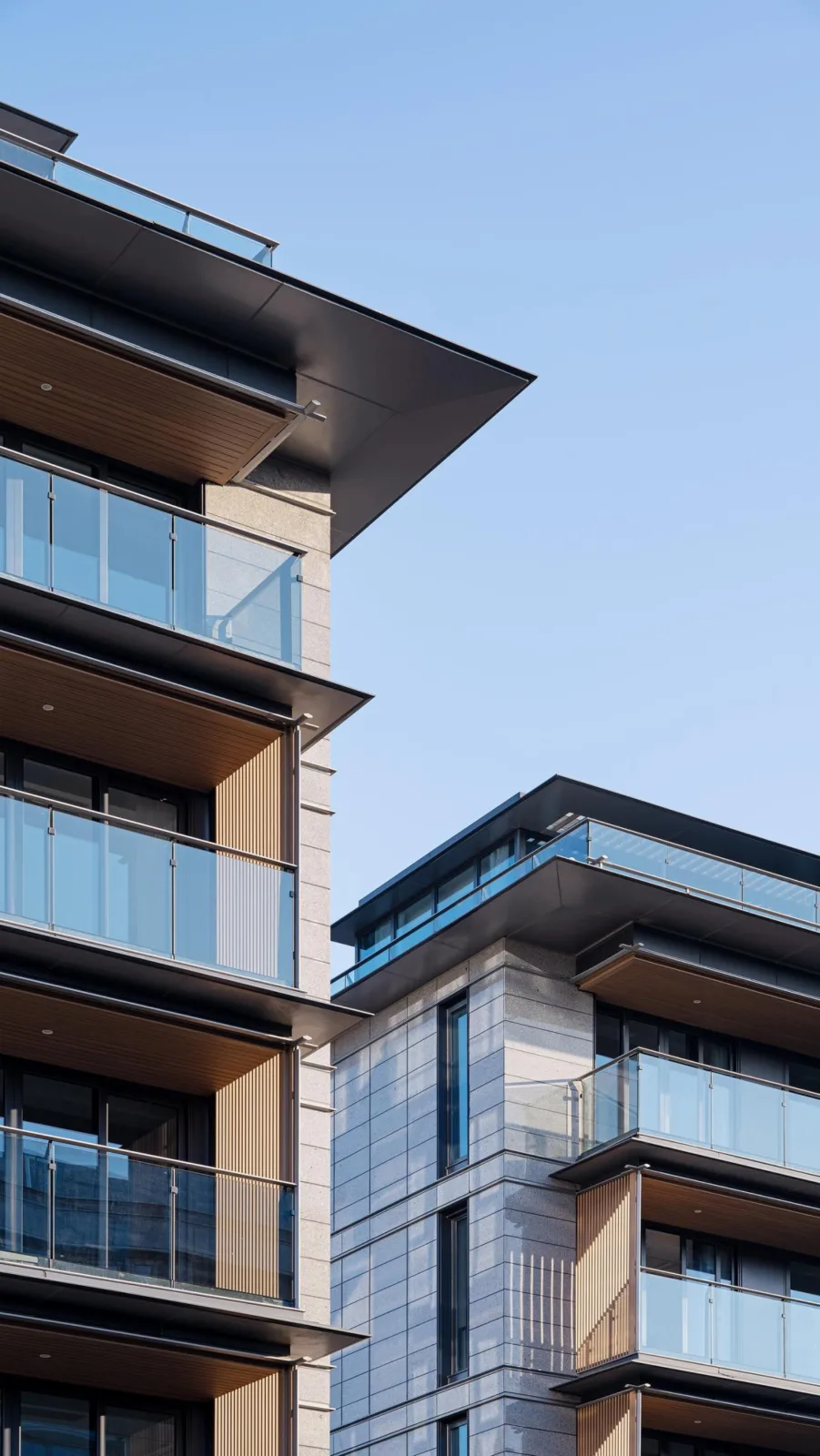
The facade is more than just a form carrier—it’s a spatial strategy that establishes an order integrating residential areas.
It embodies space, form, function, and decoration, and its evolution mirrors the changes in practical living scenarios.
△ Lake Scenery Cloud House Real Scene Video
The Hujing Yunlu project is situated in the heart of Hangzhou’s Future Science and Technology City, a key growth hub for the Greater Hangzhou region. This core area is poised to lead Hangzhou’s future industries and serve as a model for future urban development. Facing the central financial island across the shore, the site is one of the closest low-density residential lands to the core area, boasting significant support infrastructure and landscape advantages, making its development highly anticipated.
Commissioned by Greentown China and Zhejiang Communications Investment Holdings, Goa Elephant Design conducted customized research and development for this project. The aim was to fulfill the physical and psychological needs of future urban development and upscale residents, while systematically advancing design standards for low-density residential buildings under current planning frameworks, ultimately creating a high-end residential landmark with urban significance.
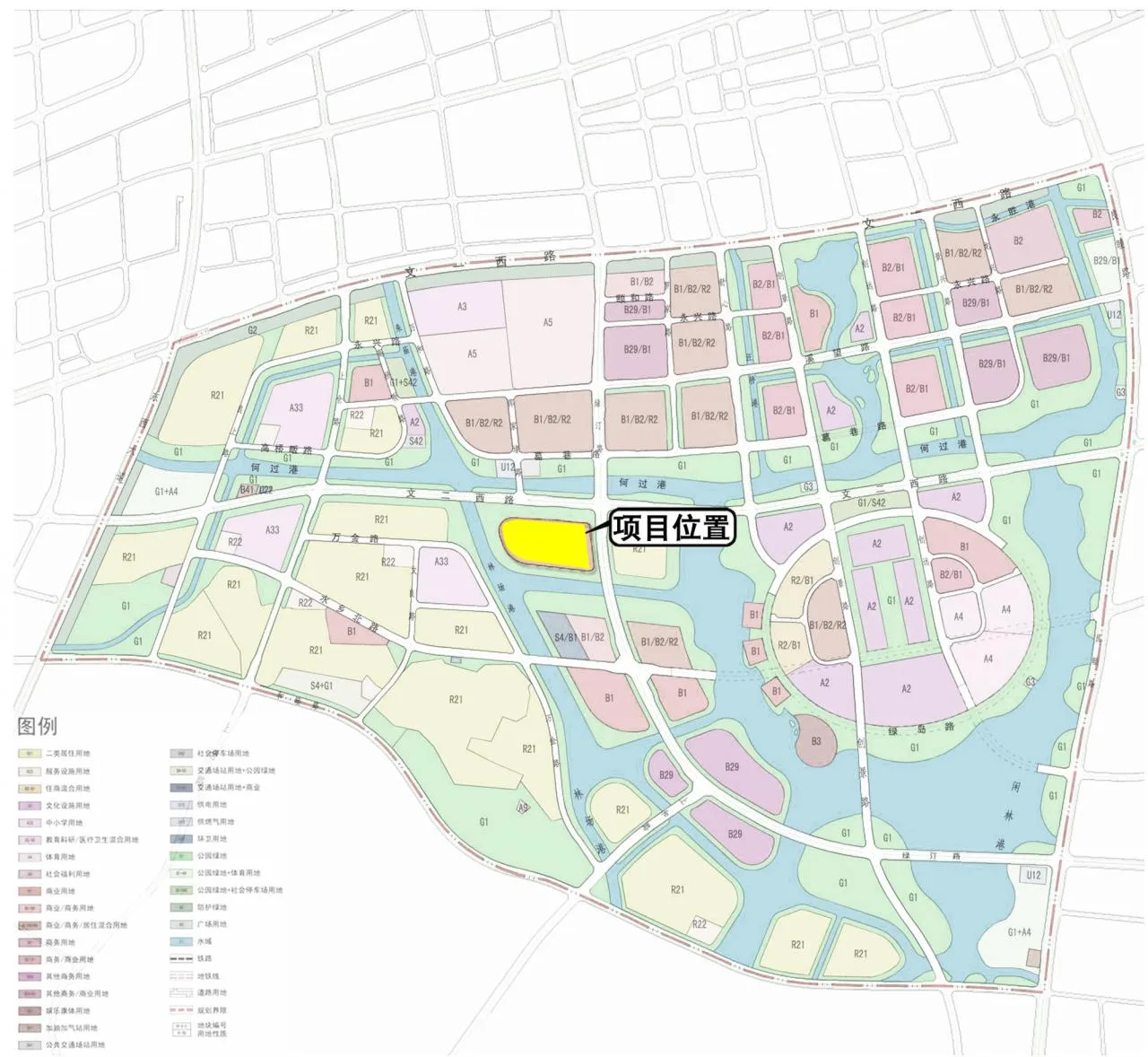
△ Aerial planning and schematic diagram of the Yunlu base in the lake area
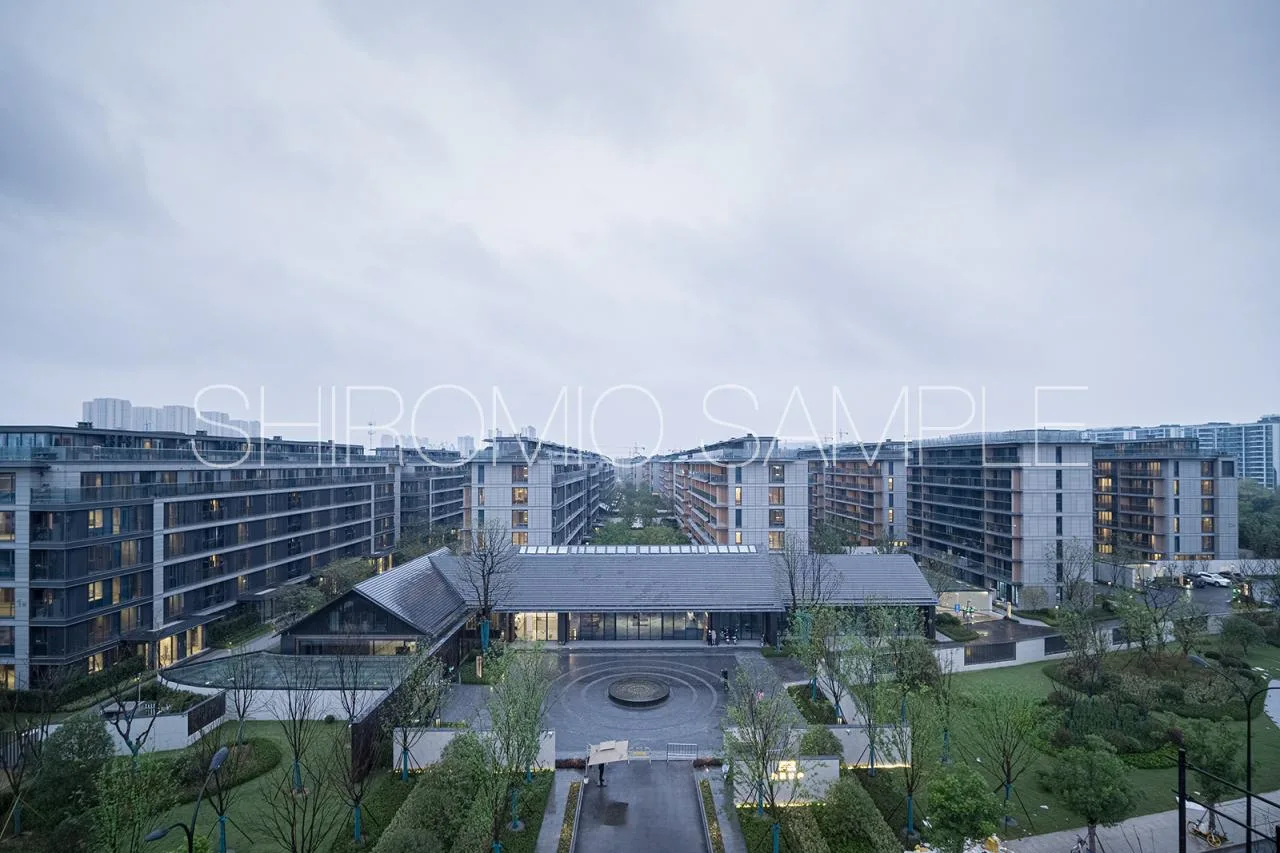
01 Structural Facade: Integrating Form, Aesthetics, and Function
Hujing Yunlu occupies approximately 58,000 square meters of land, with a plot ratio of 1.5 and a density cap of 30%. The challenge was to express architectural foresight and character within residential buildings limited to 6-7 stories and heights between 18-24 meters. The architects responded by creating a structural facade that merges space, color, components, and materials into a concise, ordered form, offering a rich and detailed visual experience.
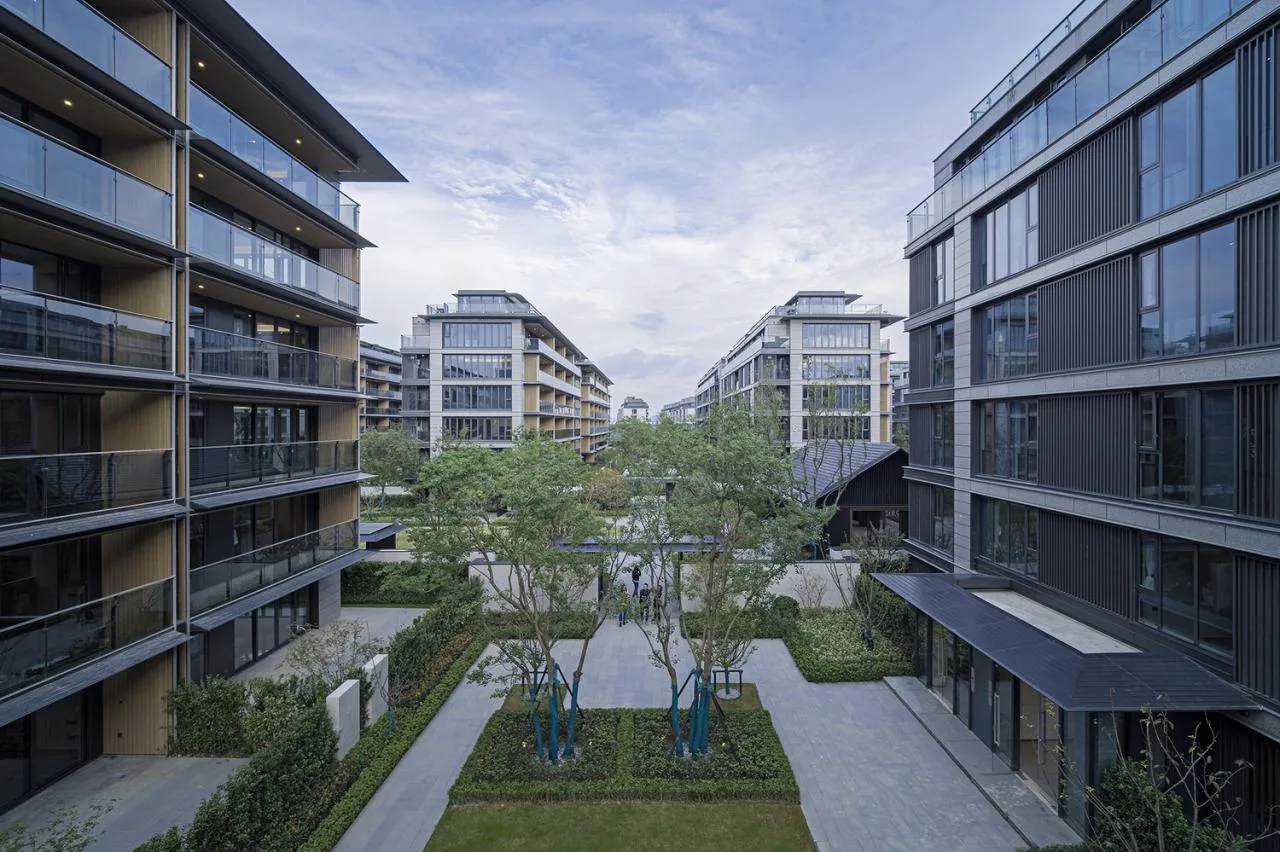
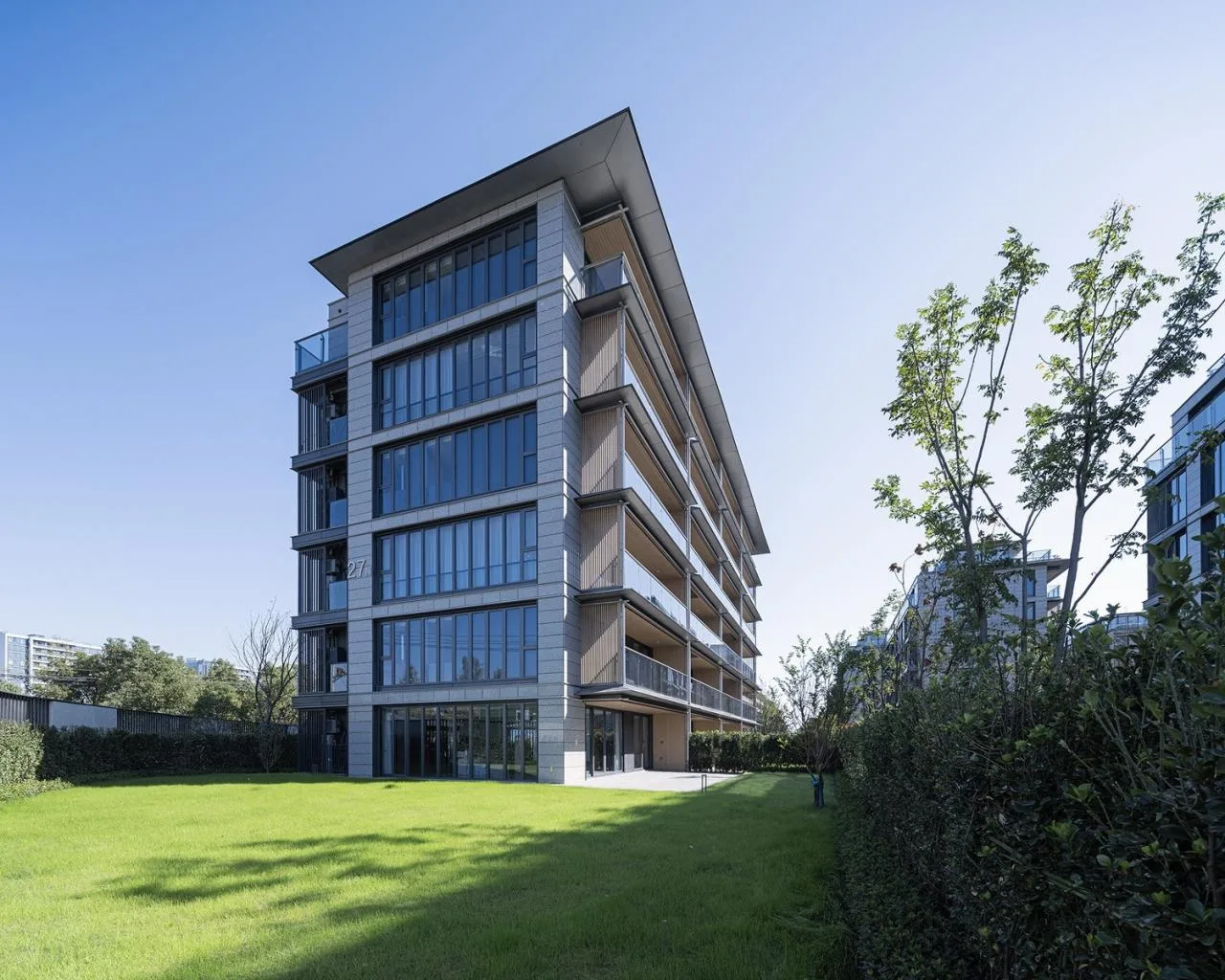
The development features 27 mid-rise residential buildings comprising 402 duplex villa units, with layouts ranging from 180 to 250 square meters. The facade emphasizes a clear horizontal structure with continuous glass balconies. Natural light softens spatial boundaries, dissolving the perception of volume across multiple layers.
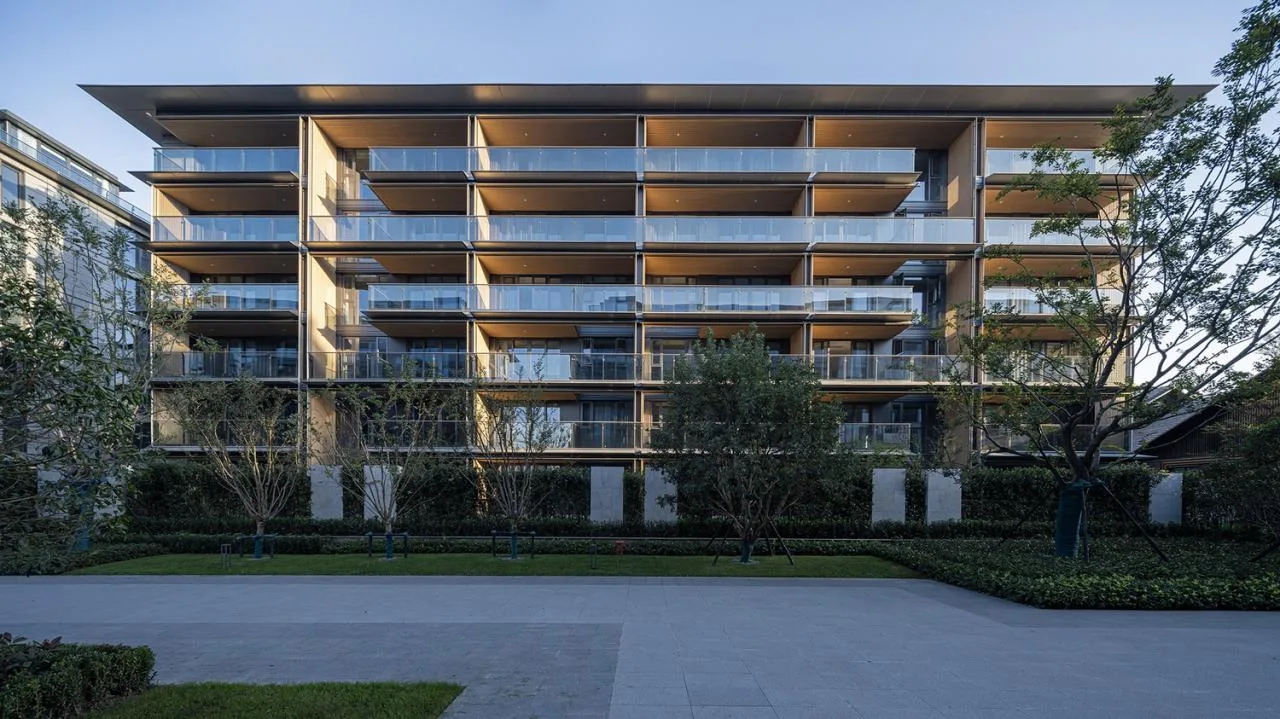
The extensive use of glass reflects not only a material shift but also changes in residential living patterns. Open balcony interfaces promote airflow, ideal for Hangzhou’s hot, humid subtropical summers. The south-facing living rooms feature two-bay full French windows, maximizing natural light and landscape views, thereby strengthening the connection between indoor spaces and the natural environment.
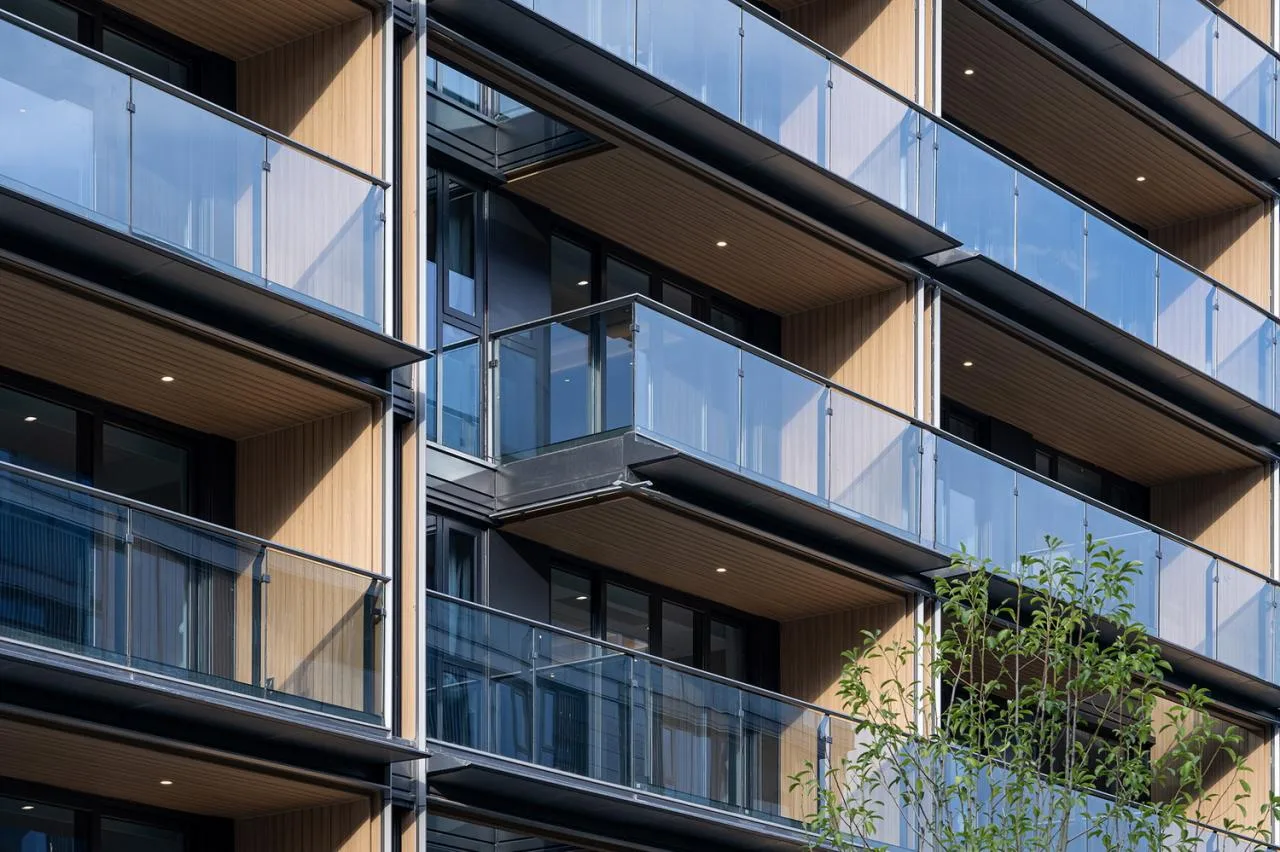
Each duplex includes two balconies positioned in a relatively private facade area. Slim, clear gray aluminum lines add visual layers to the horizontal structure. The exterior walls combine light-colored stone with gray aluminum profiles and warm wood-grain aluminum accents, creating rich, harmonious details.
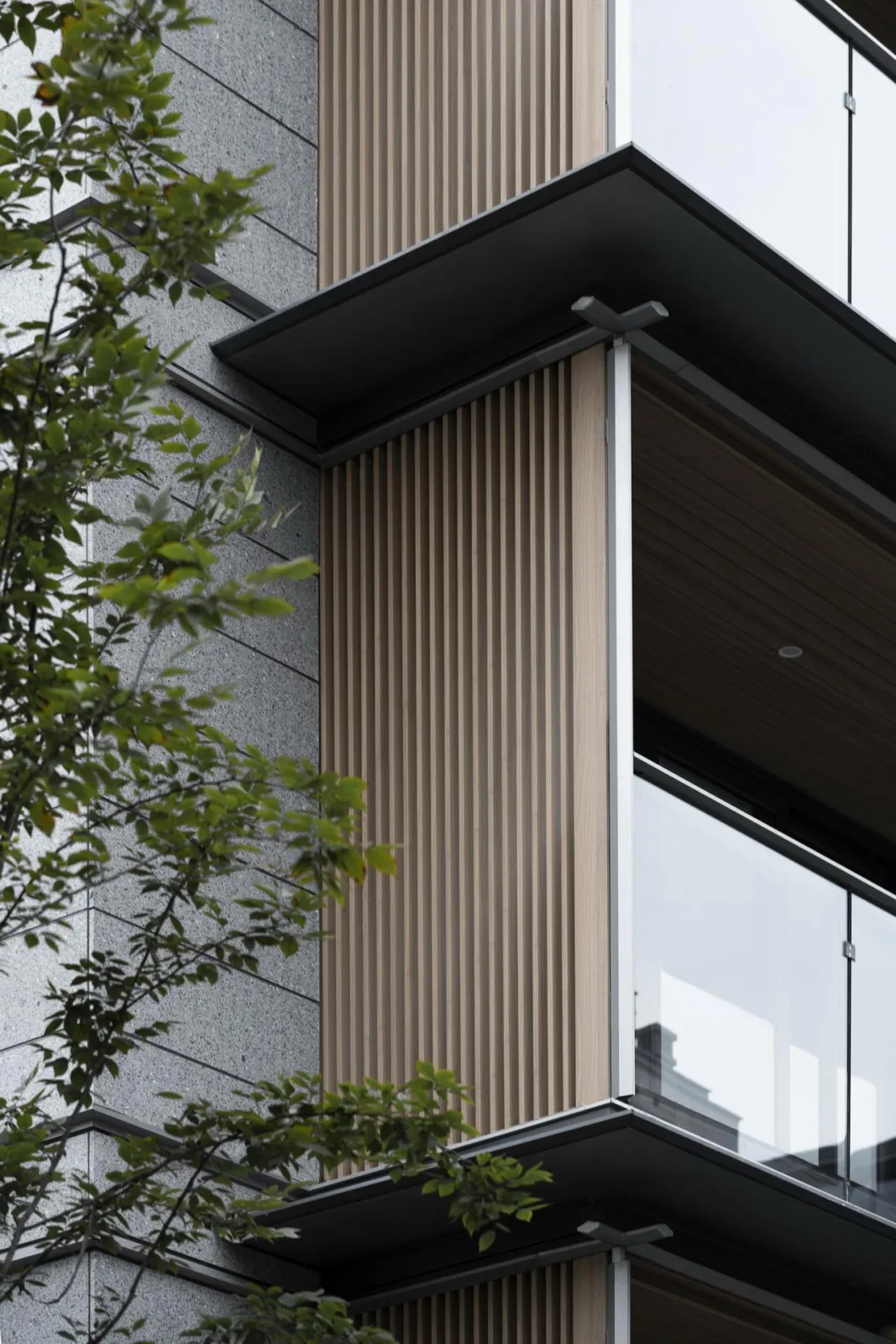
The facade structure also cleverly addresses technical needs: gaps between balcony frames discreetly conceal water pipes, maintaining the facade’s clean appearance.
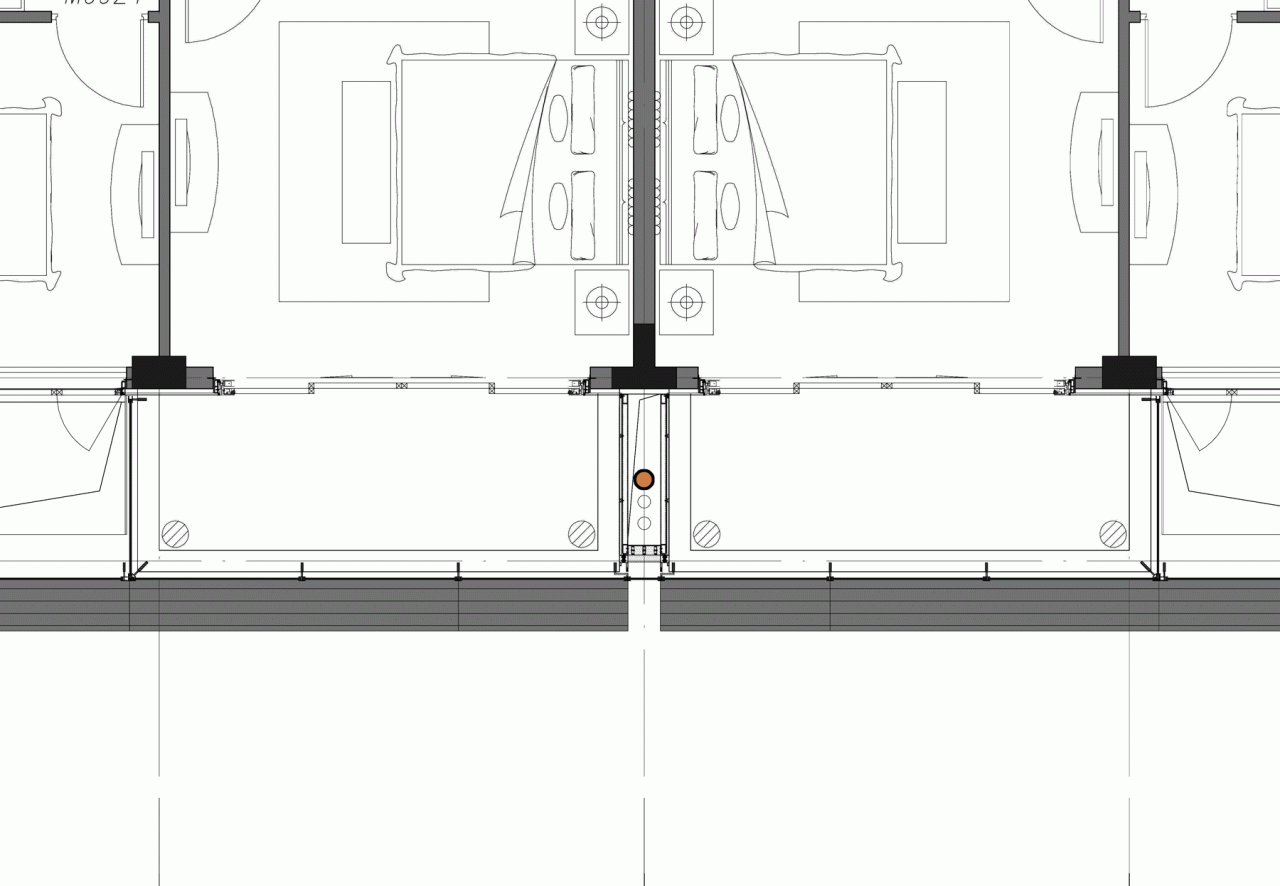
△ Water pipes are hidden within the facade structure
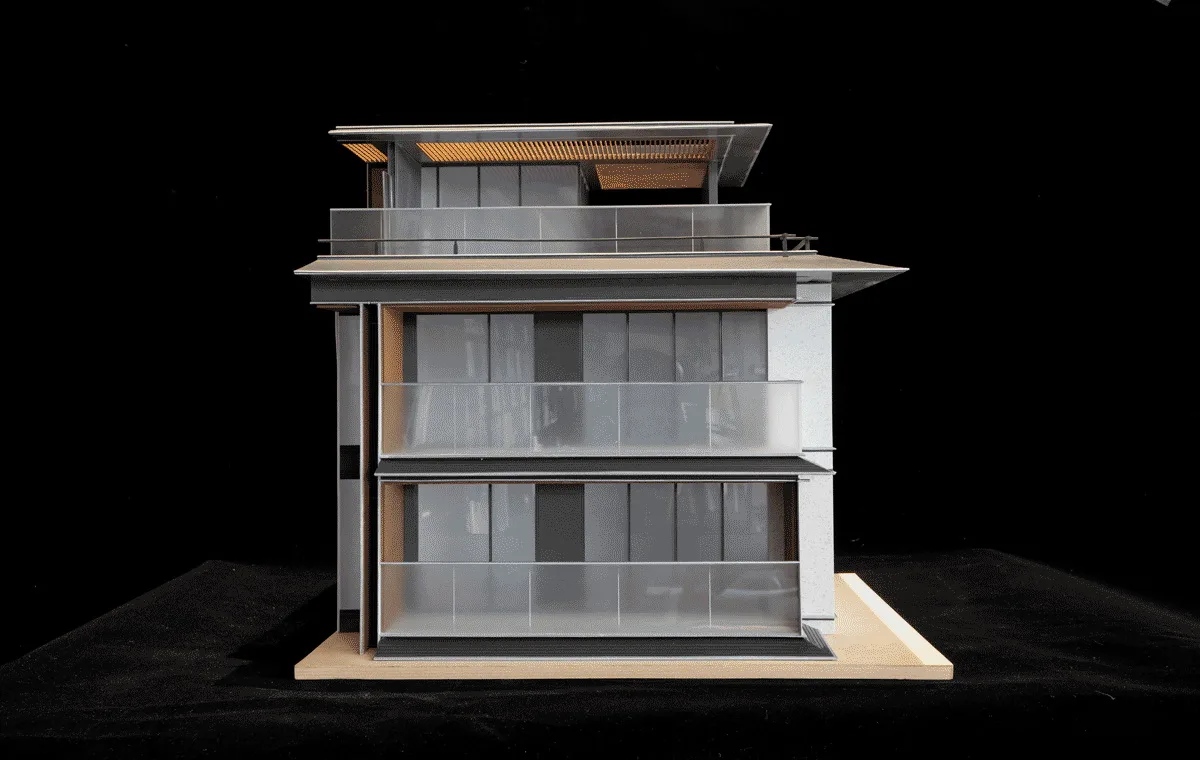
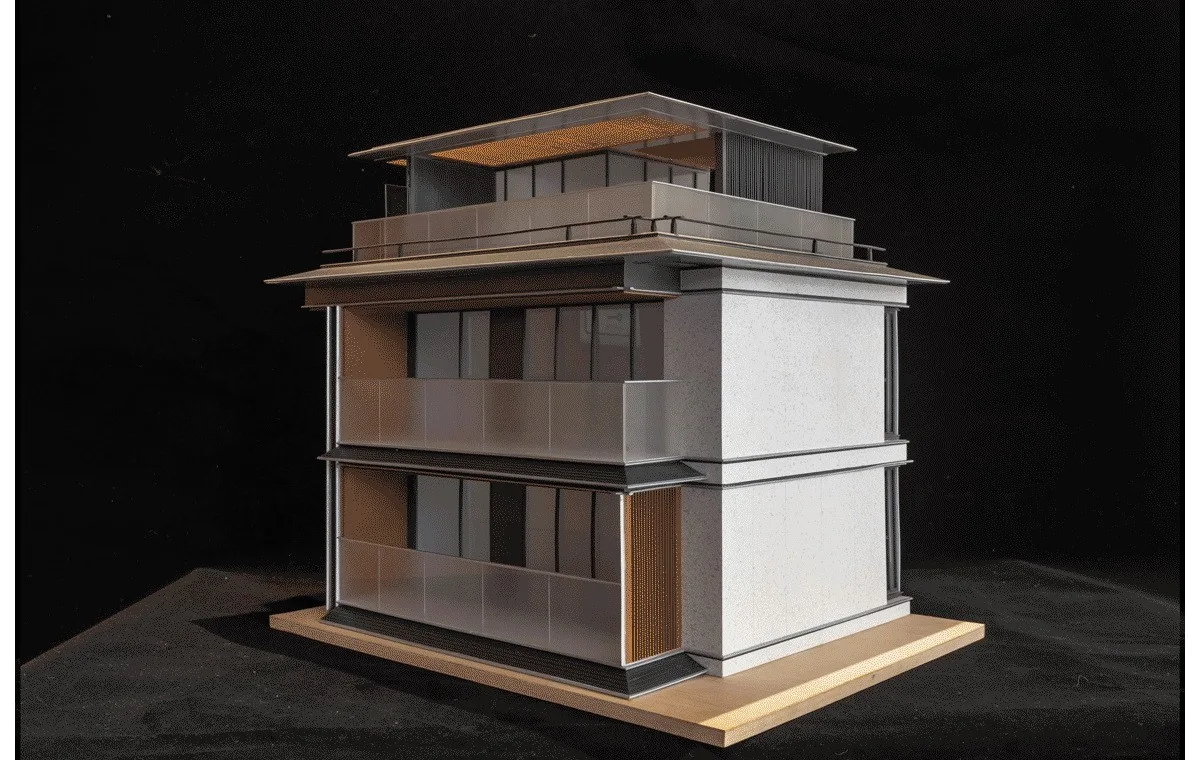
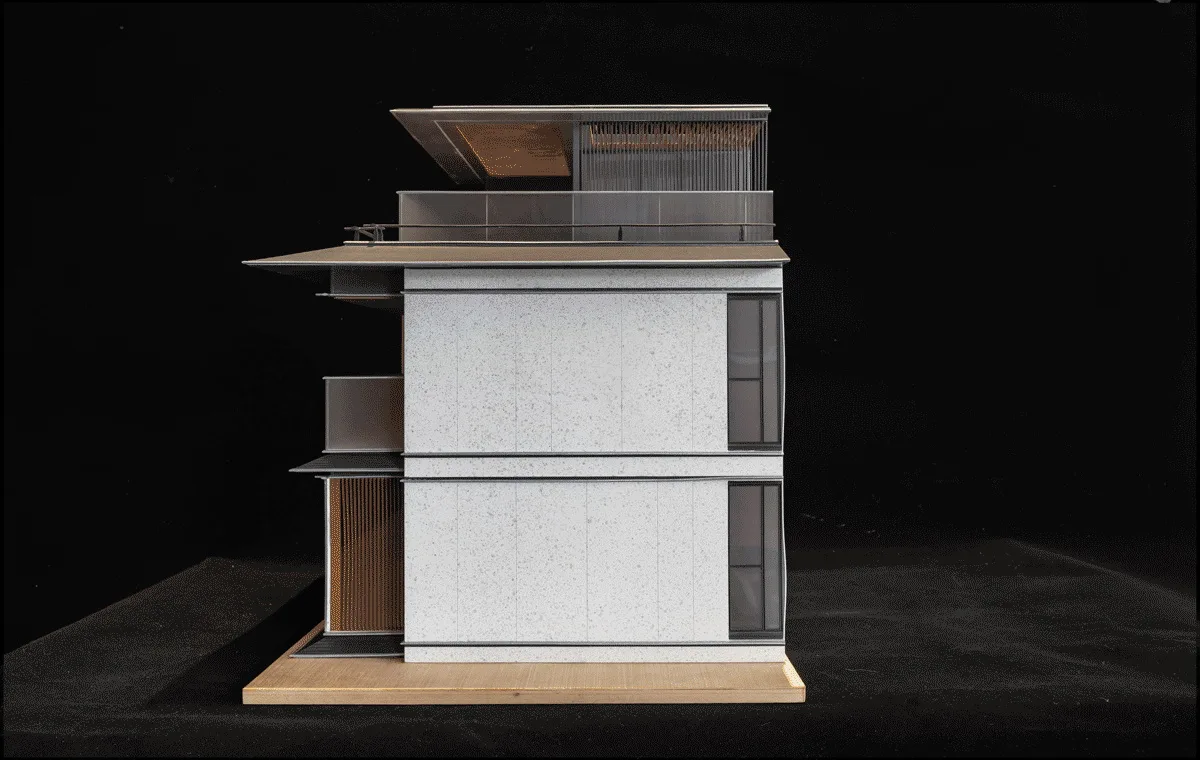
△ Facade refinement model
In Hujing Yunlu, the facade’s structural design acts as a cohesive strategy, uniting internal spaces, equipment areas, and exterior form into a harmonious order. This allows the building to contribute to the city’s future image with a calm and refined architectural language.
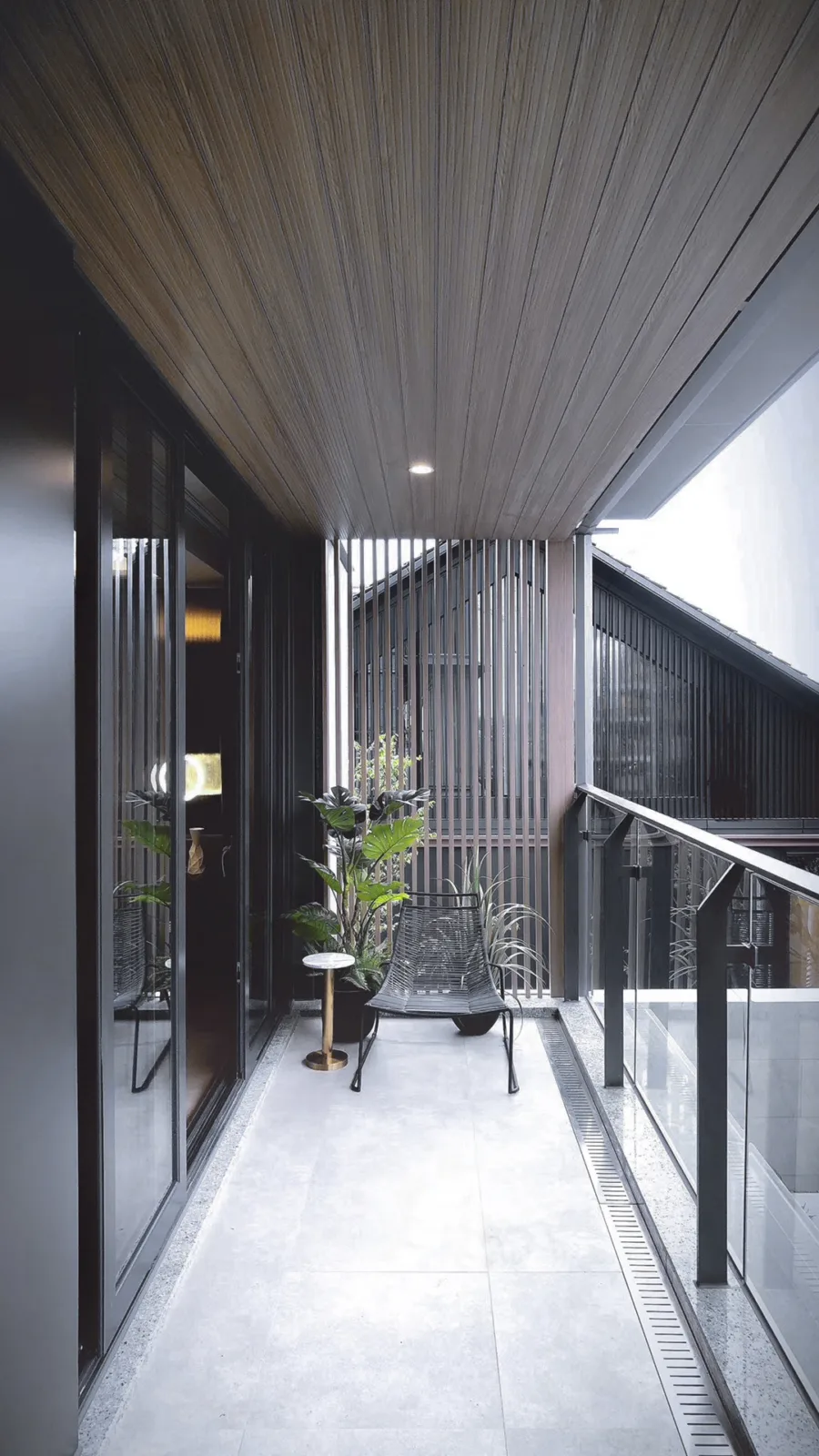
02 Enhancing the Under-Eave Experience: Coordinated Scale, Color, and Material for Comfort
Architects prioritize improving spatial comfort and flexibility. Hujing Yunlu aims to create a private living system that harmonizes with natural landscapes and caters to personalized needs through vertically stacked spatial arrangements.
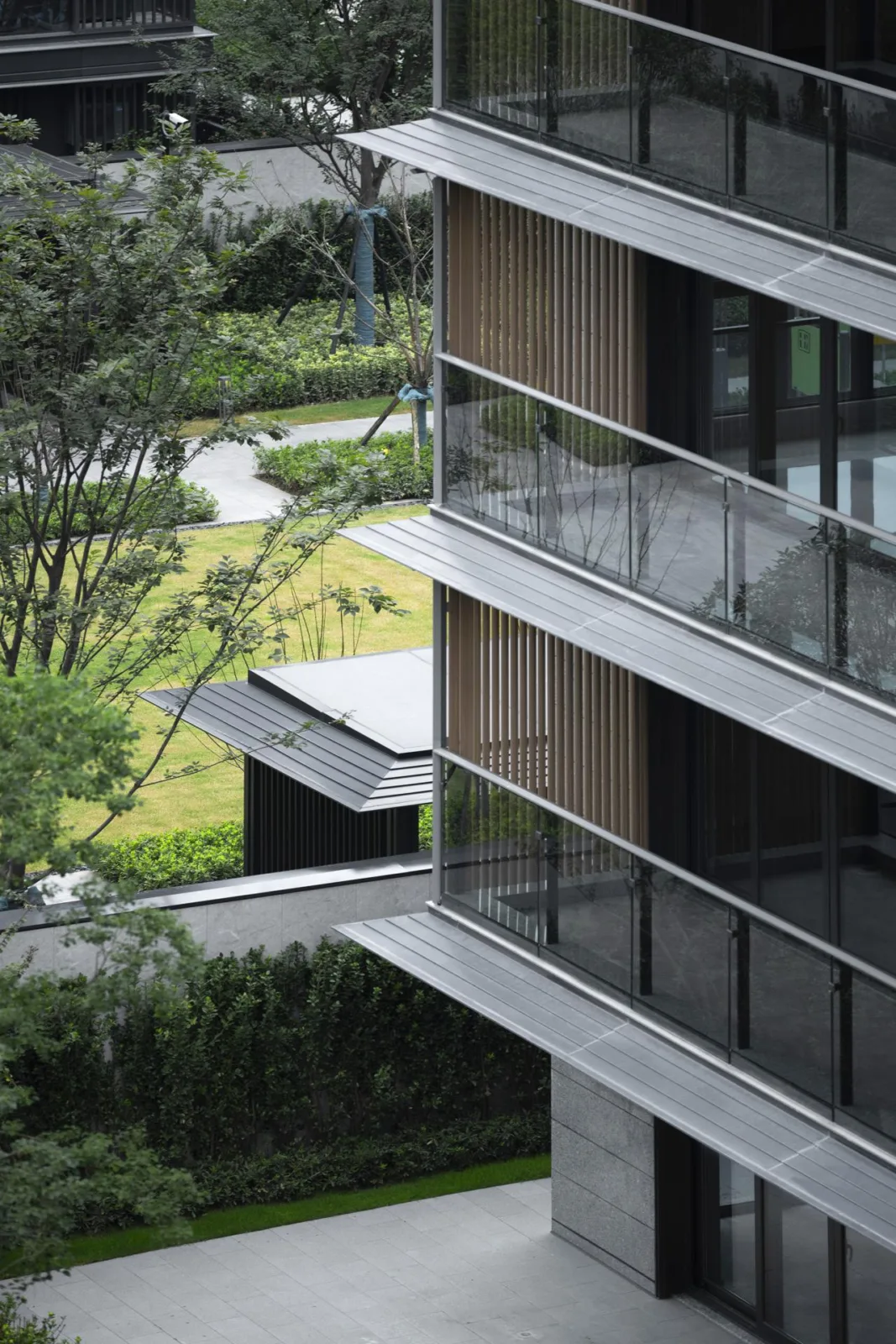
The balcony serves as a vital transitional space connecting indoor environments with outdoor climate and scenery. Designers enlarged the balcony scale and unified the colors, materials, and forms of surrounding surfaces. The east and west facades feature semi-open grille barriers that enhance privacy while providing self-shading to reduce heat gain on roofs and walls, embracing green design principles.
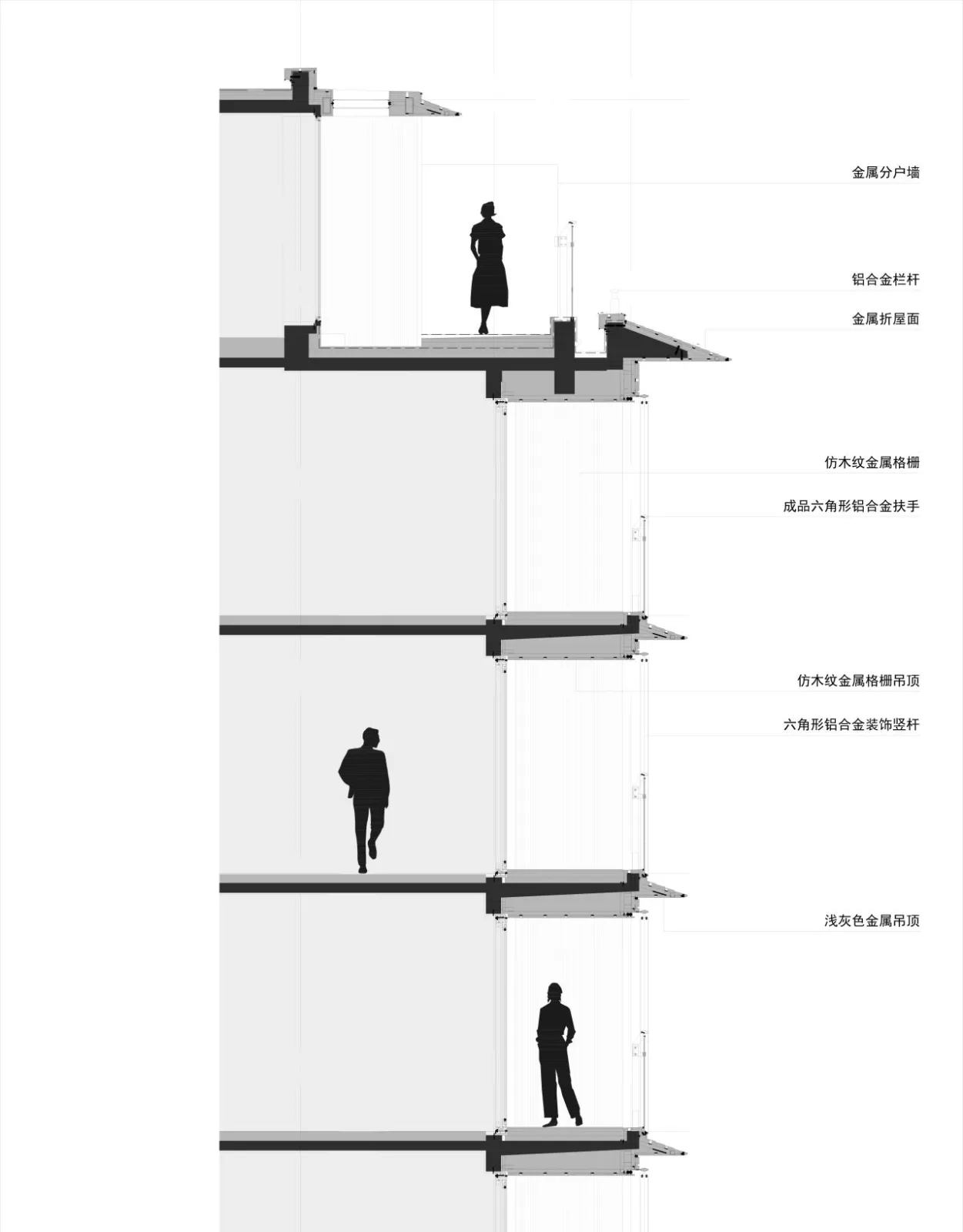
The upper balcony ceiling features wood tones, complemented by 600mm metal eaves and slender metal rods along the edges. This classical arrangement, inspired by traditional eaves pillars and lintels, effectively blocks rainwater and lends a distinctive form to multi-story balconies.
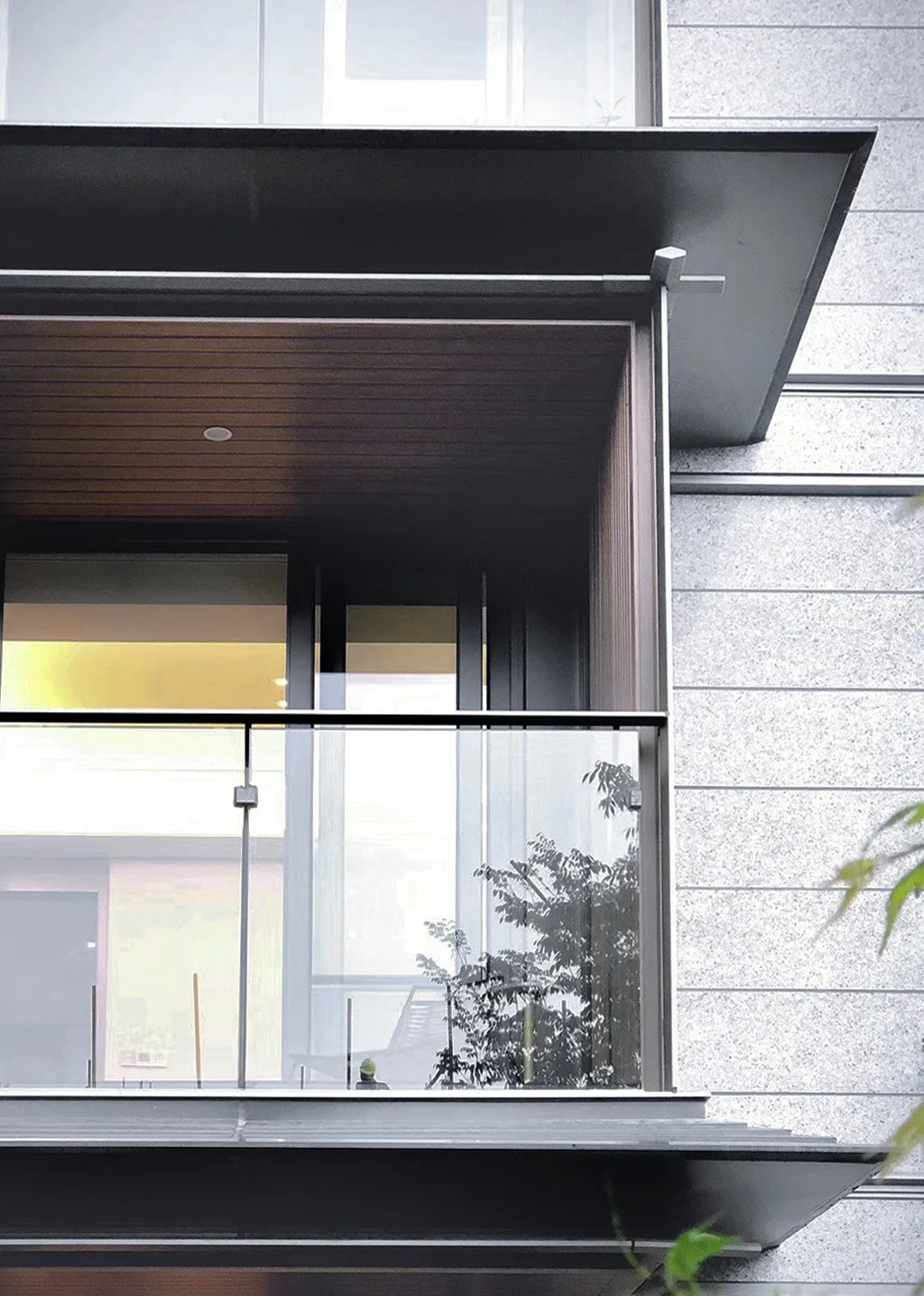
The color palette pairs silver-gray aluminum profiles with light oak-grain finishes, creating a warm, inviting atmosphere that complements the surrounding greenery and softens the building’s rigidity. This warm tone extends indoors, reflected in natural oak-grain storage and furniture designs.
03 Industrialization Strategy: Leveraging Industrial Logic to Ensure Quality in Custom Design
Hujing Yunlu’s near-human-scale components utilize customized design, supported by a systematic production approach to maintain process quality, reduce costs, and ensure consistency. The design team conducted extensive research to support this approach.
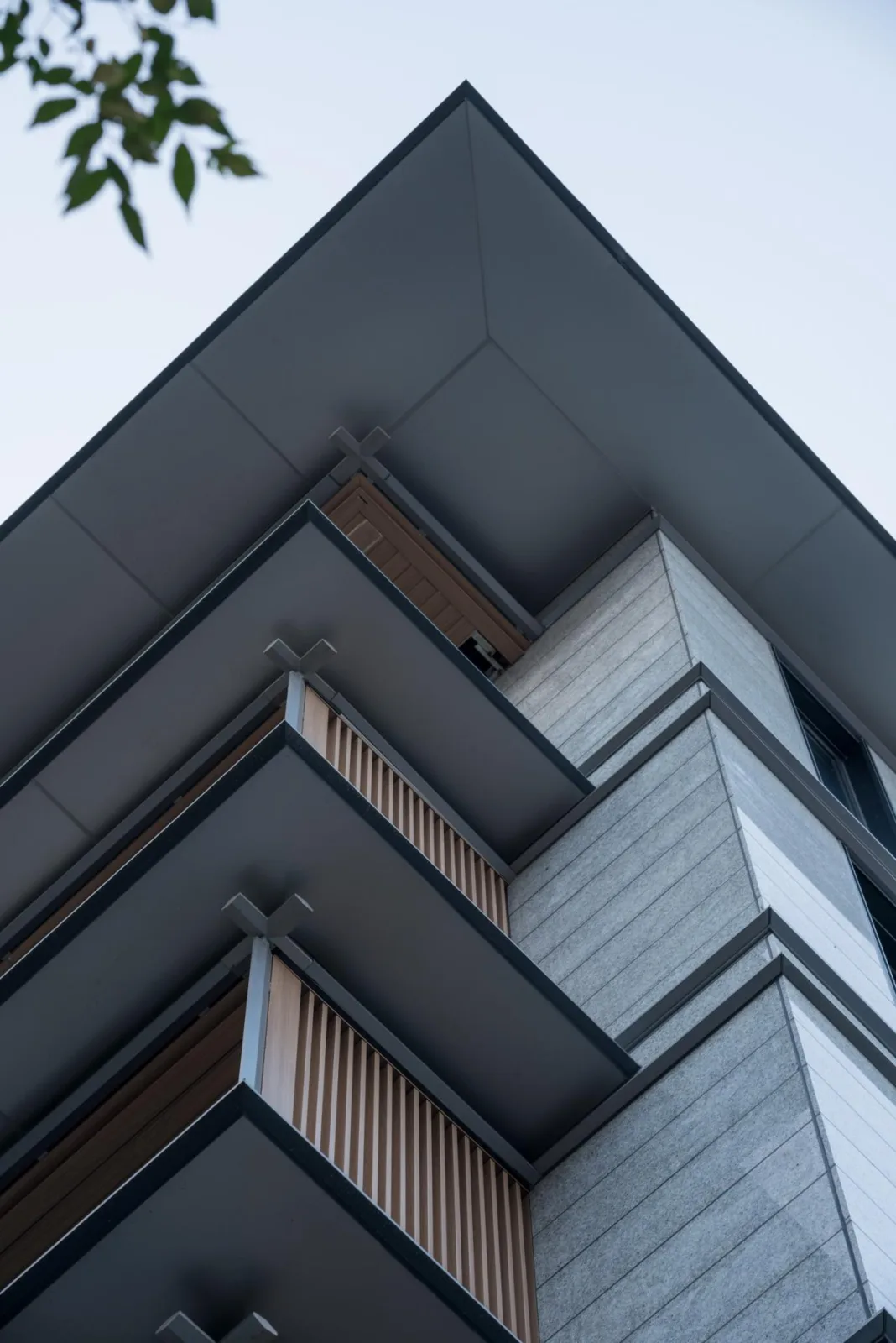
The core strategy is based on a 100mm × 45mm hexagonal module, from which 5-6 replicable, high-precision components are designed. These modules combine to create multiple forms while maintaining unified dimensions.

△ Design research: Hexagonal basic module
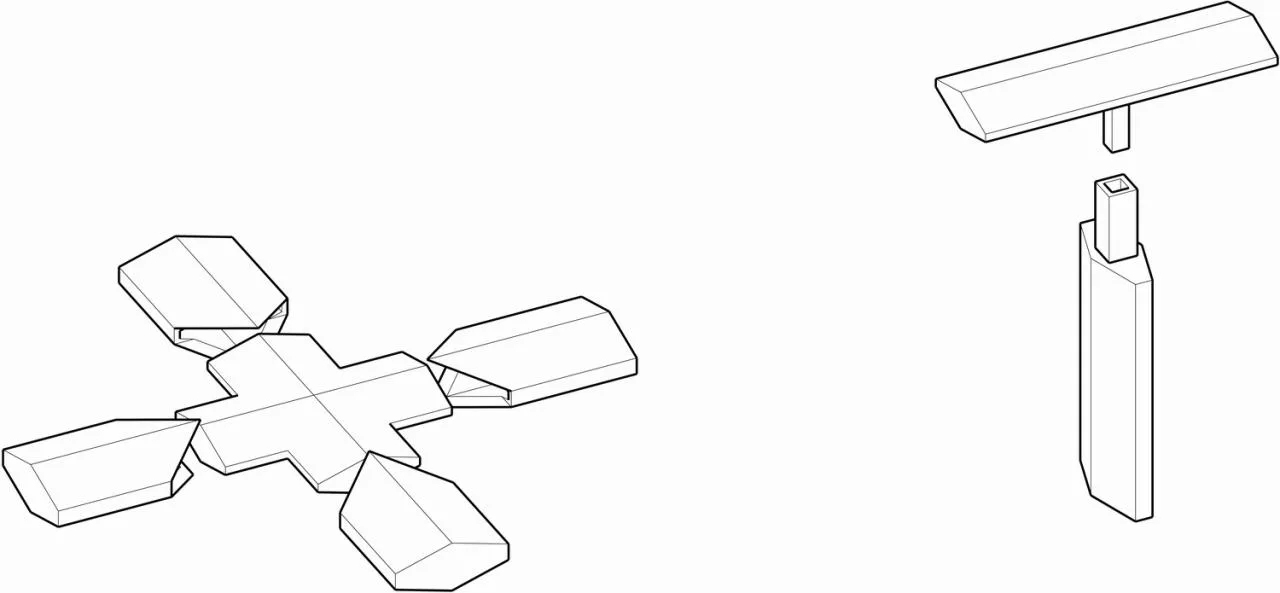
△ Design research: Assembly nodes for horizontal and three-dimensional connections
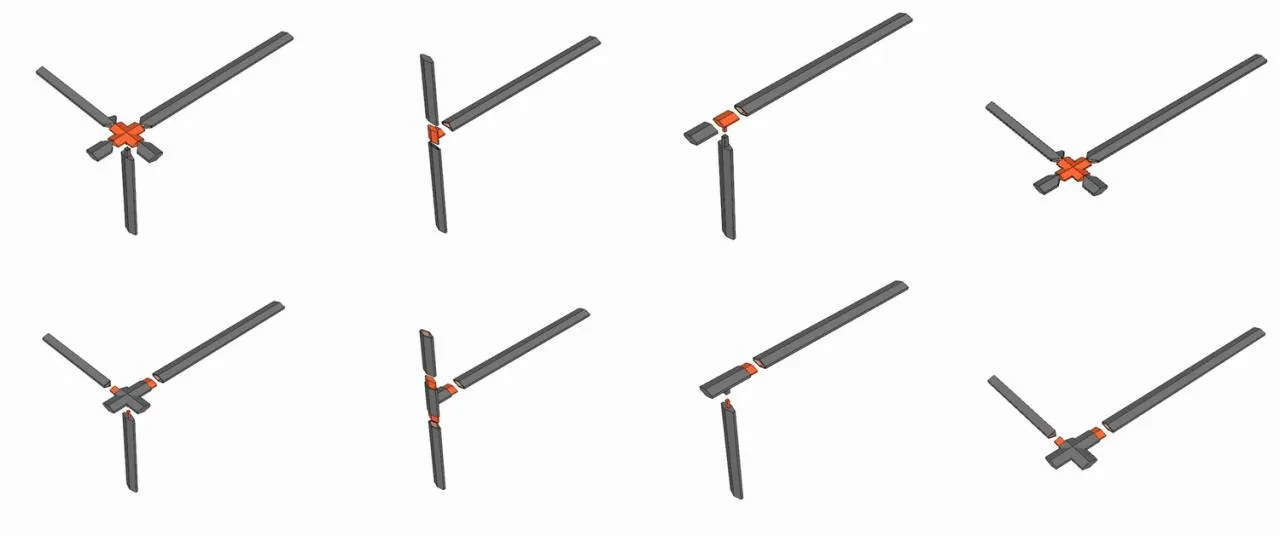
△ Design research: Assembly method derivation
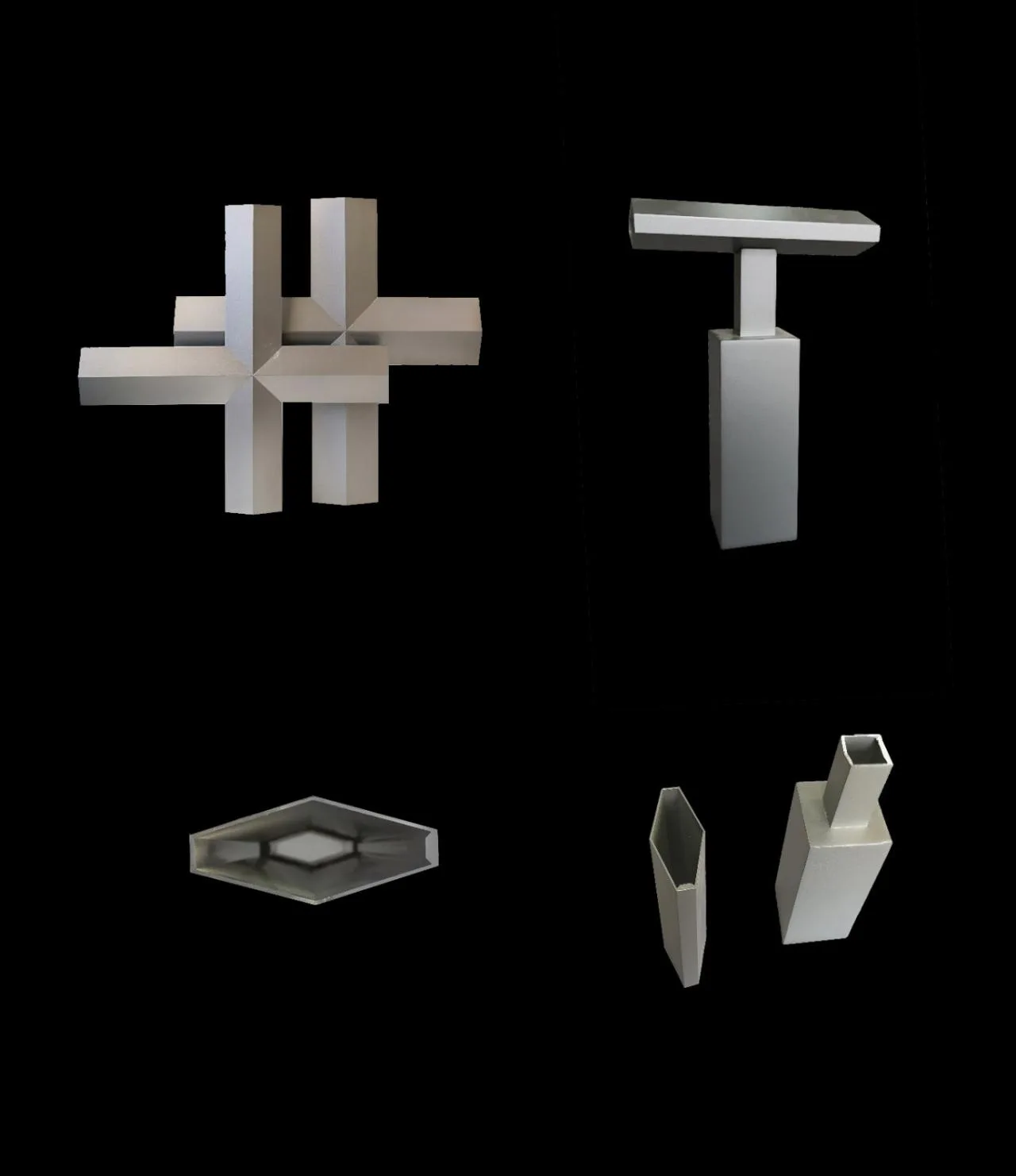
△ Design research: 1:1 scale sample of node components
This research has positively impacted production quality assessment, shortened manufacturing cycles, reduced resource consumption, and improved living environments. The customized component system is fully applied along the southern facade lines, balcony handrails, interlayer waistlines, and eaves of Yunlu Lake.
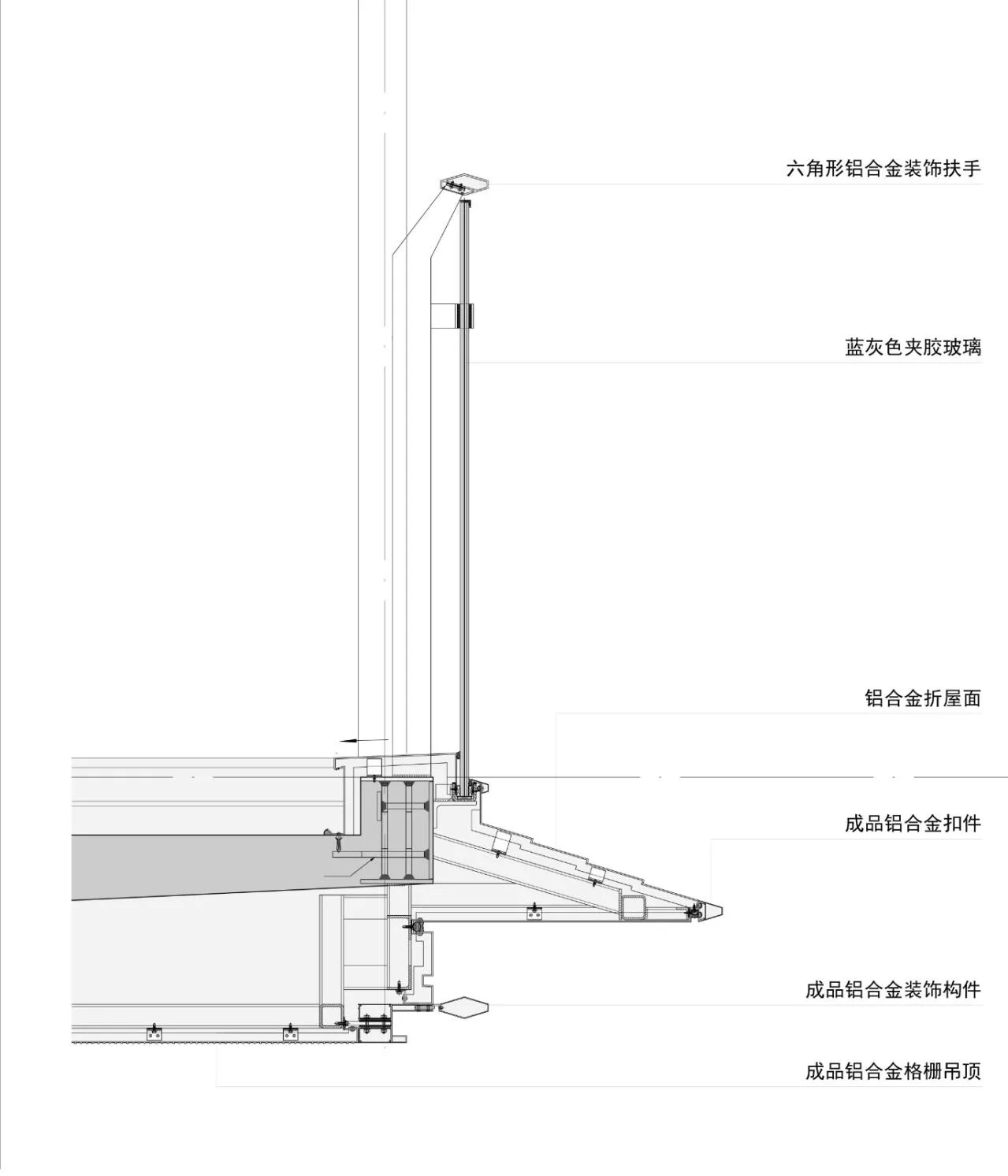 △ Detailed drawing of metal eaves
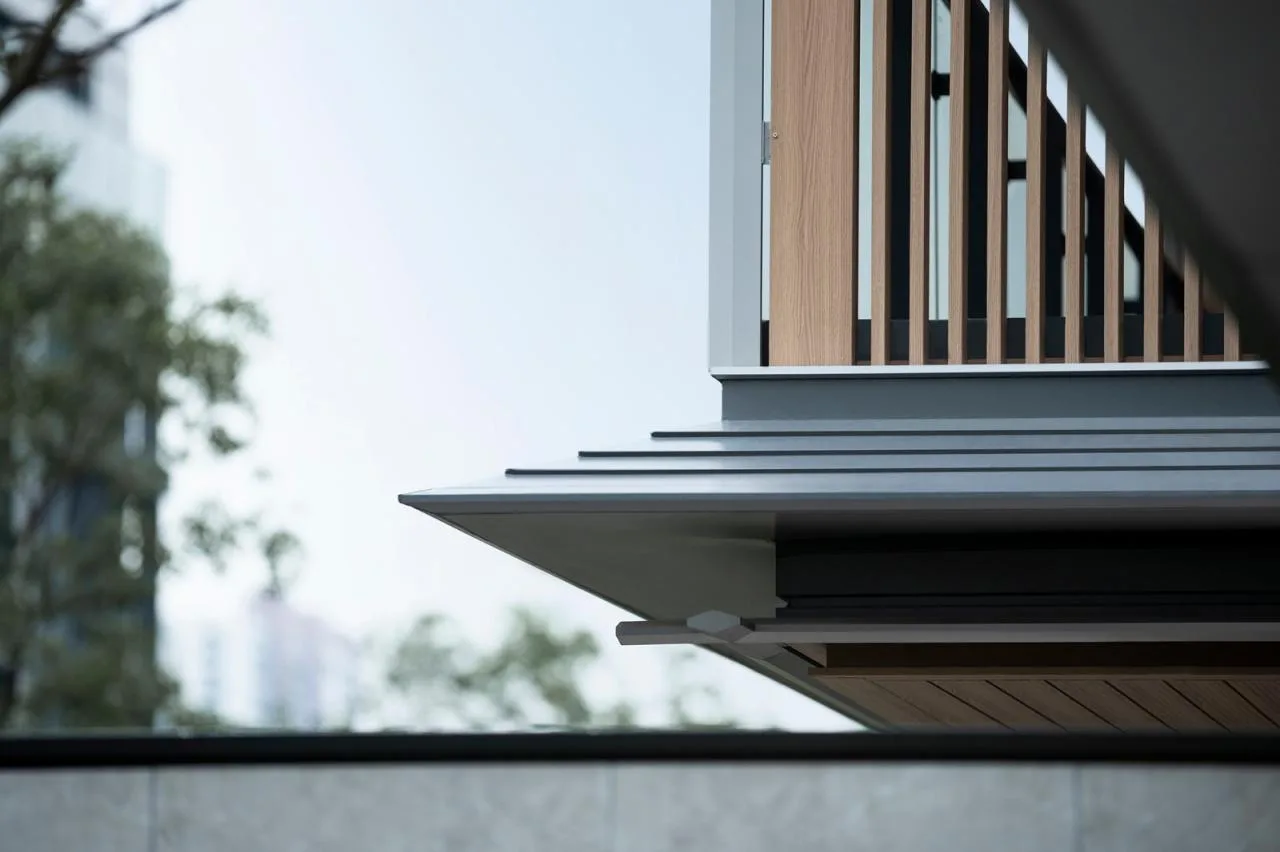
△ Realistic view of metal eaves
04 Blending Tradition with Modernity: Infusing Traditional Elements into Public Landscape Design
Hujing Yunlu’s public landscape adopts a modern style, linking multiple residential clusters through a series of courtyards. It creates diverse experiences by interacting with water features and riverside trails on the west and south edges, forming a well-balanced community space.
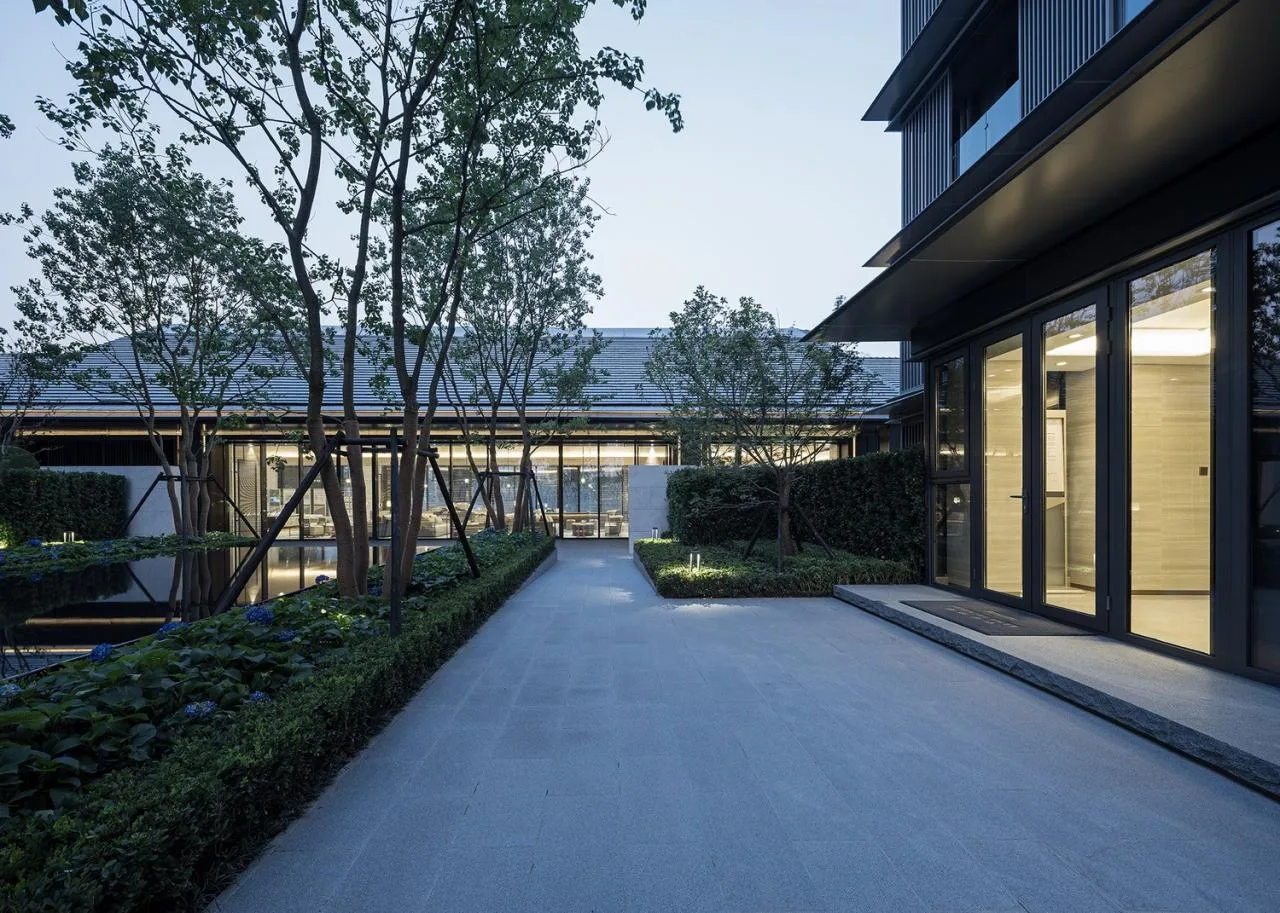
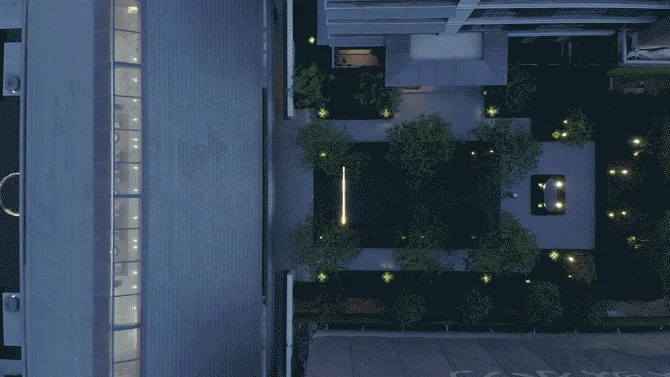
Distinctive node spaces throughout the site encourage diverse activities for all age groups. The design language is calm and cohesive, fostering a peaceful and harmonious living environment throughout the public landscape.
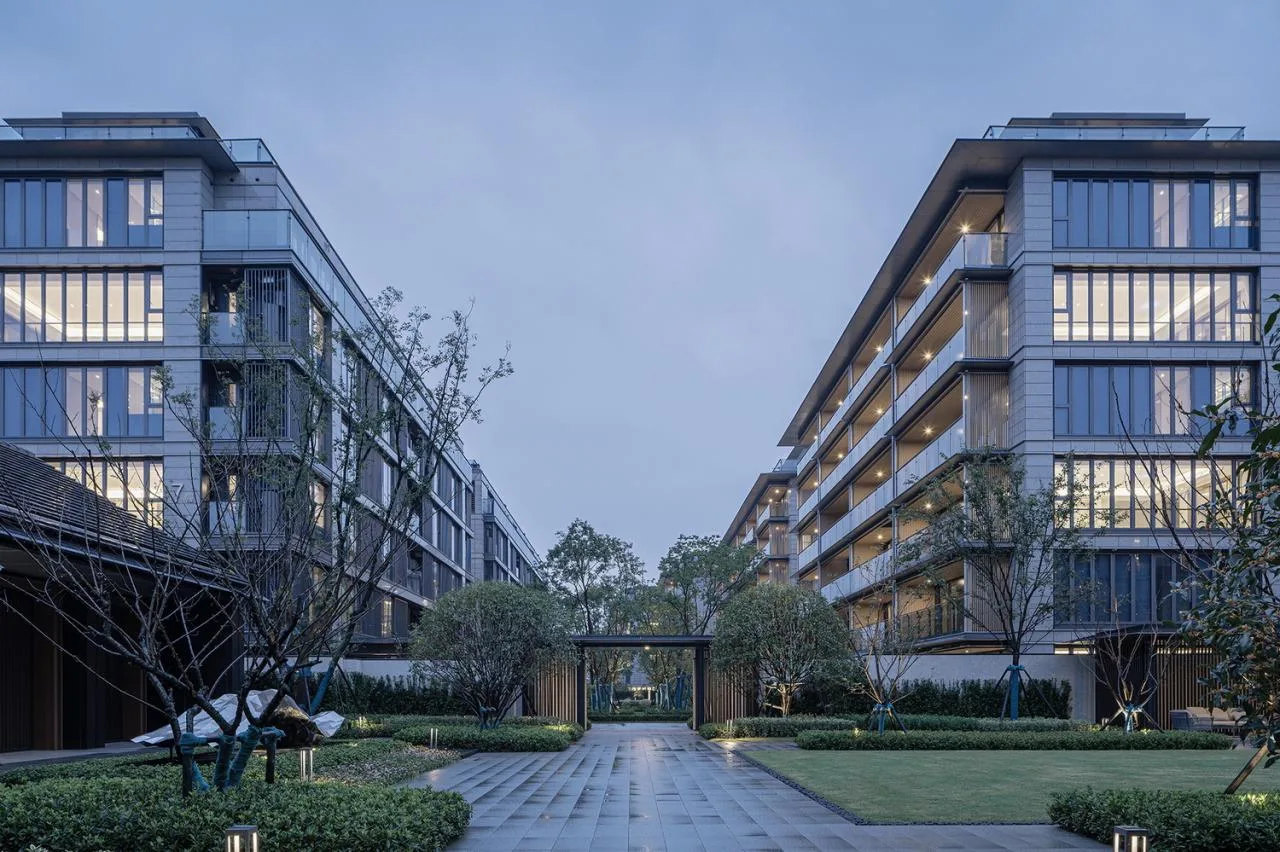
The central residential cluster features a symmetrical layout with large green spaces, water gardens, and swimming pools along the main axis. Riverside buildings are staggered with internal clusters, creating a scenic corridor and an appealing urban streetscape.
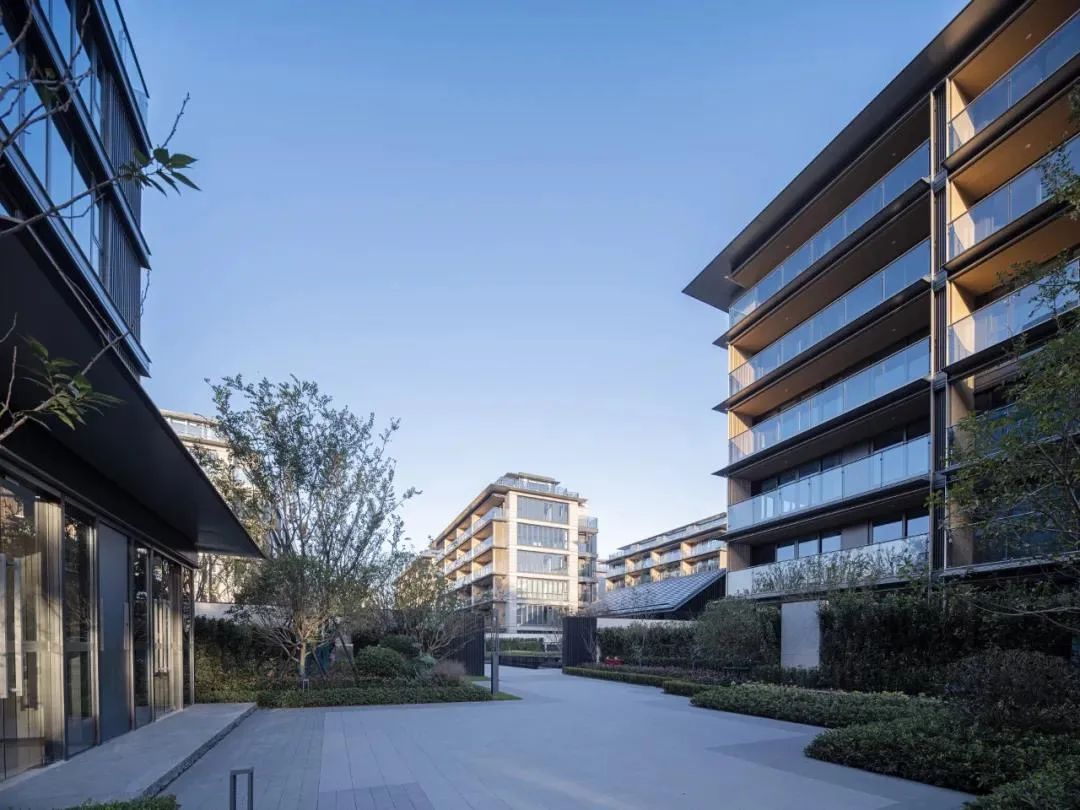
△ Realistic public landscape of Yunlu in the lake area
The community’s Homecoming Hall is a landmark public space and key node for residents’ daily life. Its roof, approximately 9 meters high, draws inspiration from traditional residential roofs. Using metal and glass, it reinterprets traditional symbols to create a dynamic contrast between light and shadow, solid and void, tradition and modernity, delivering a concise yet impactful form.
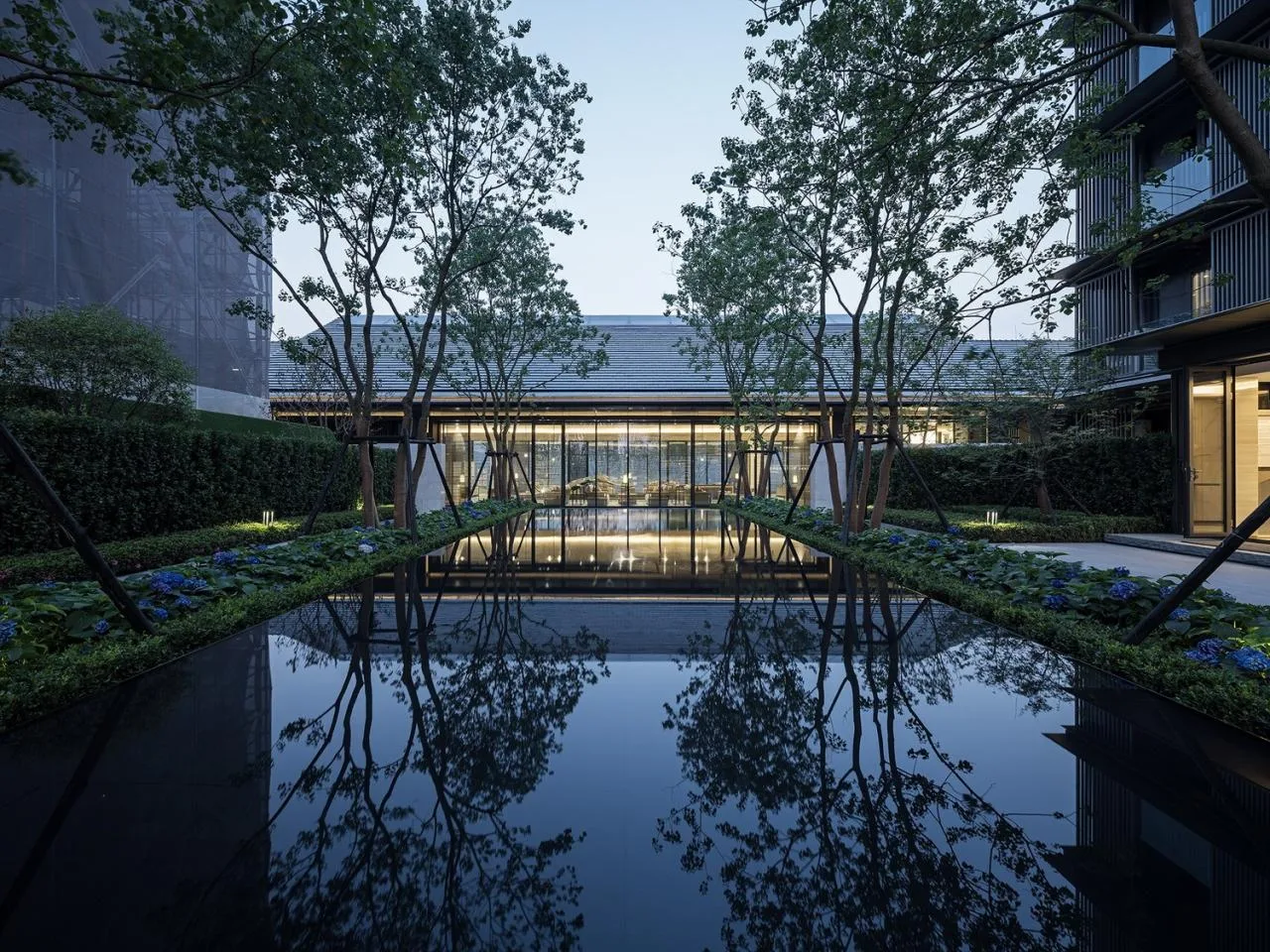
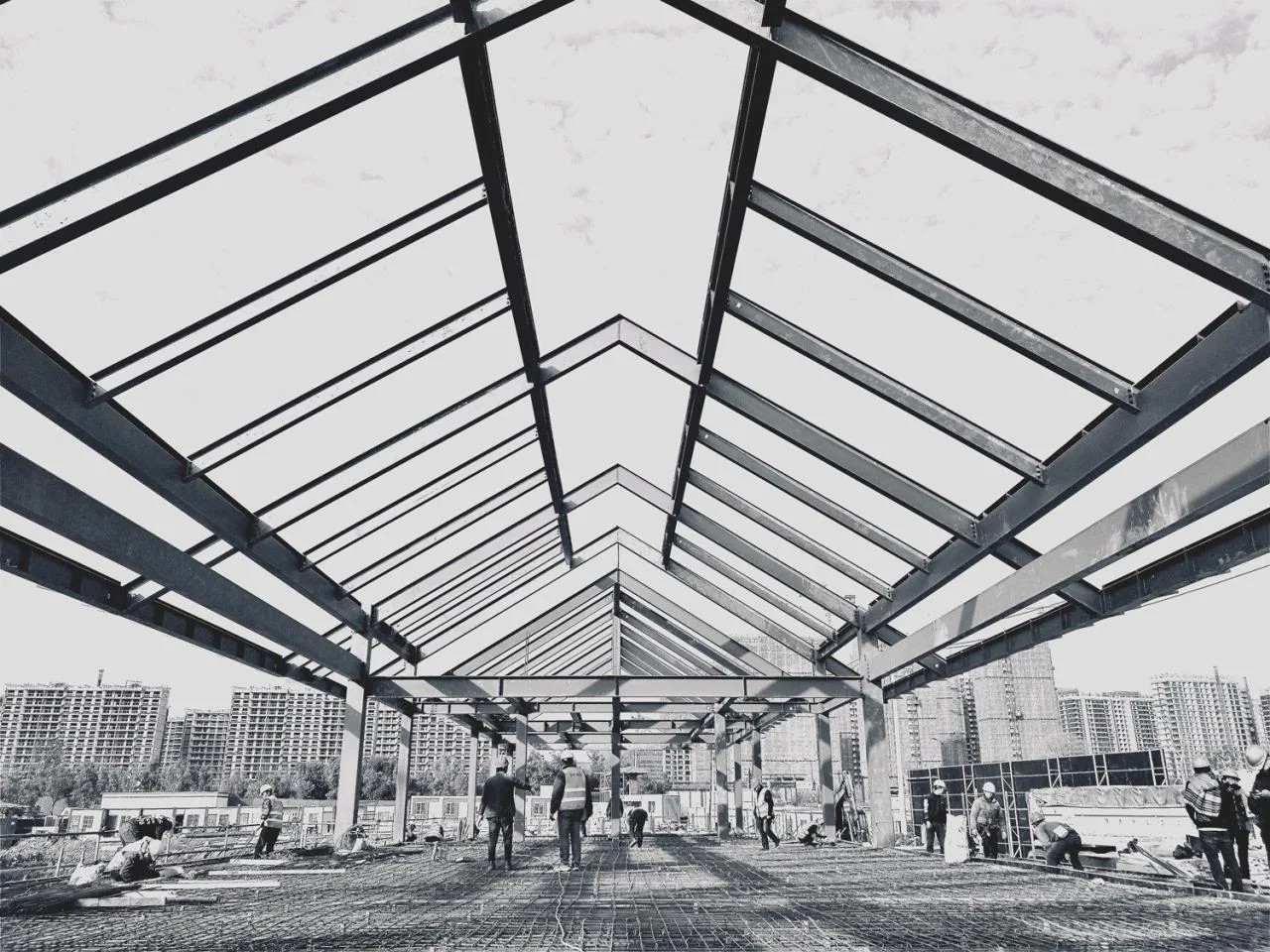
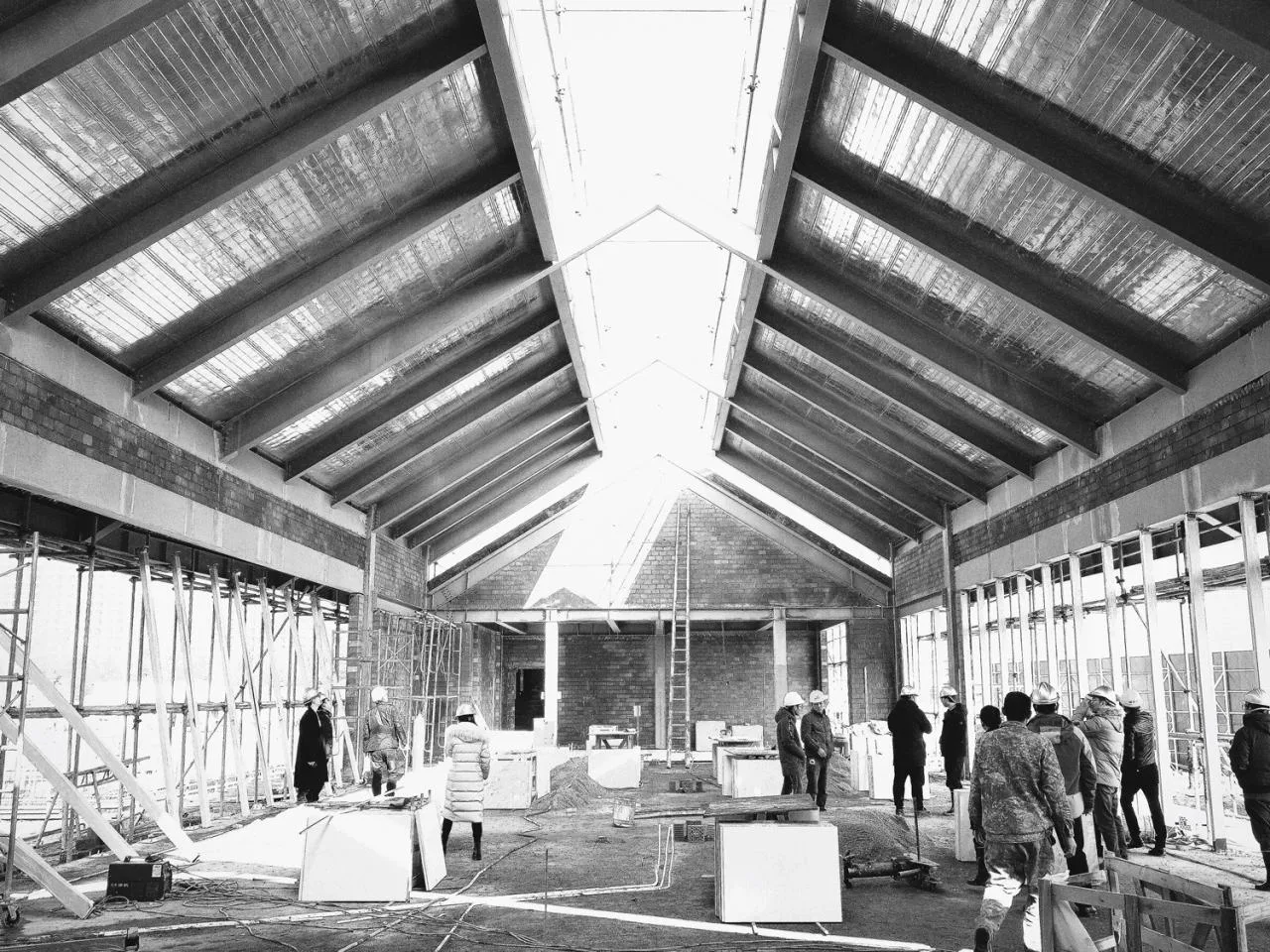
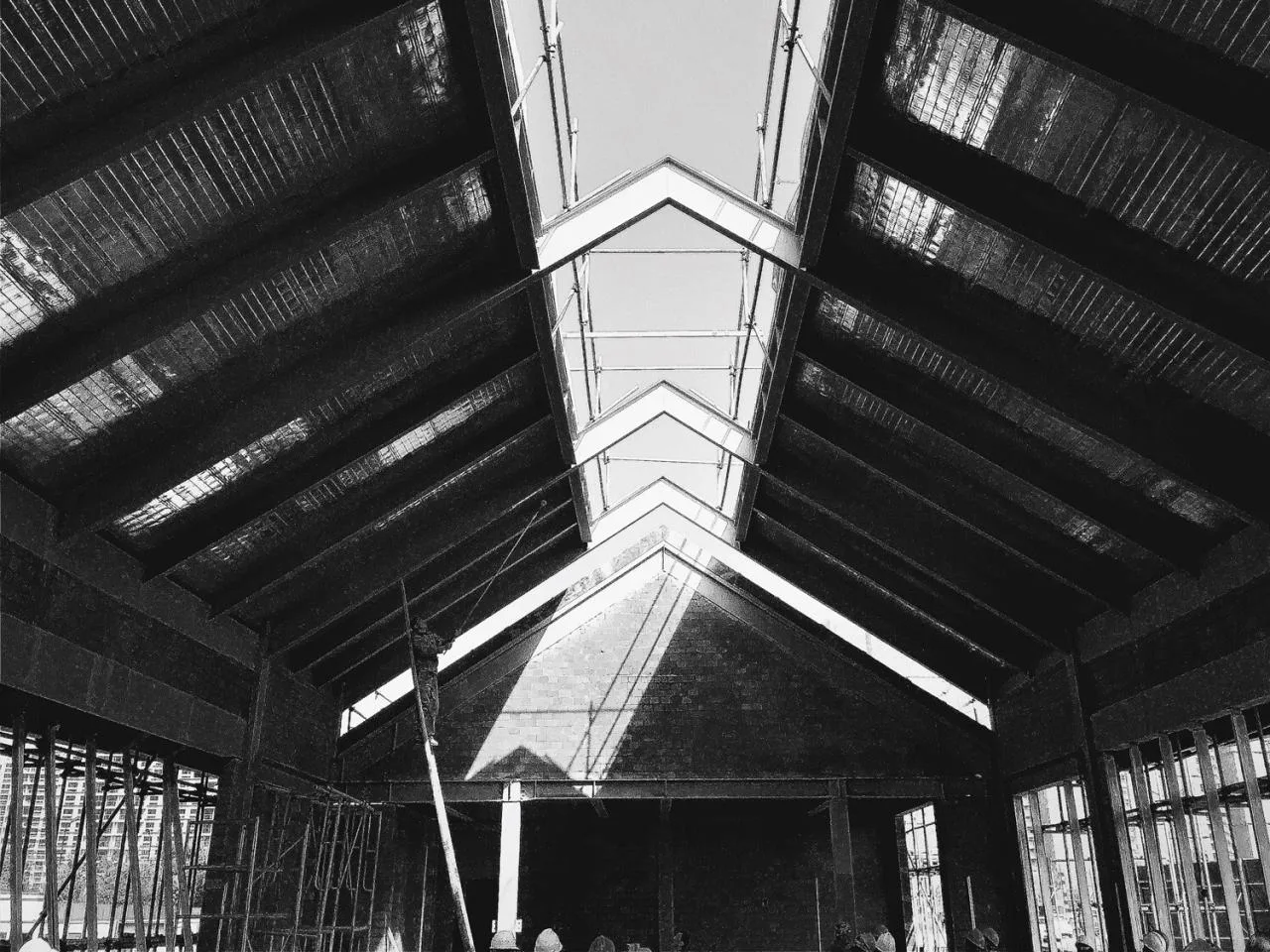
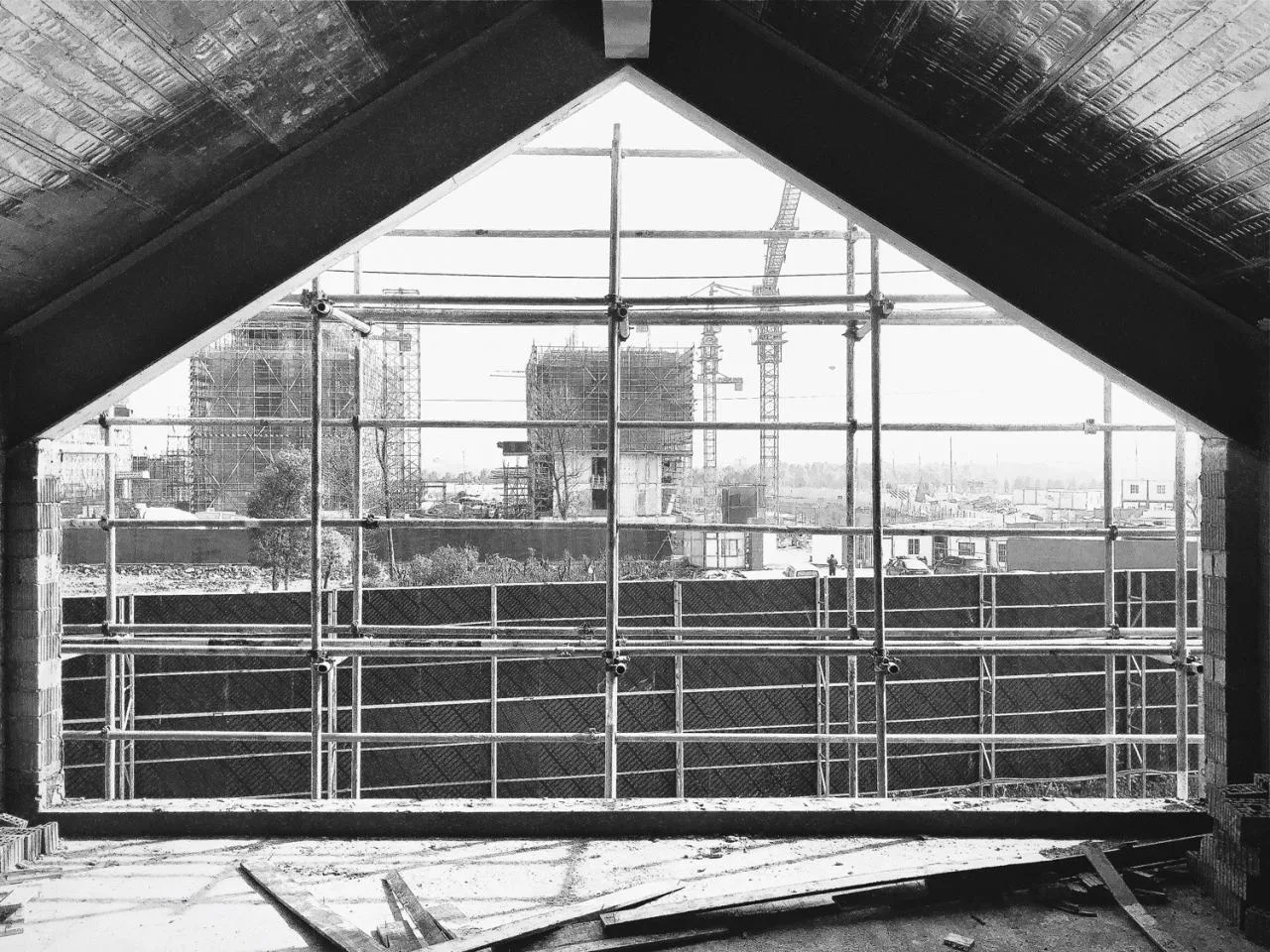
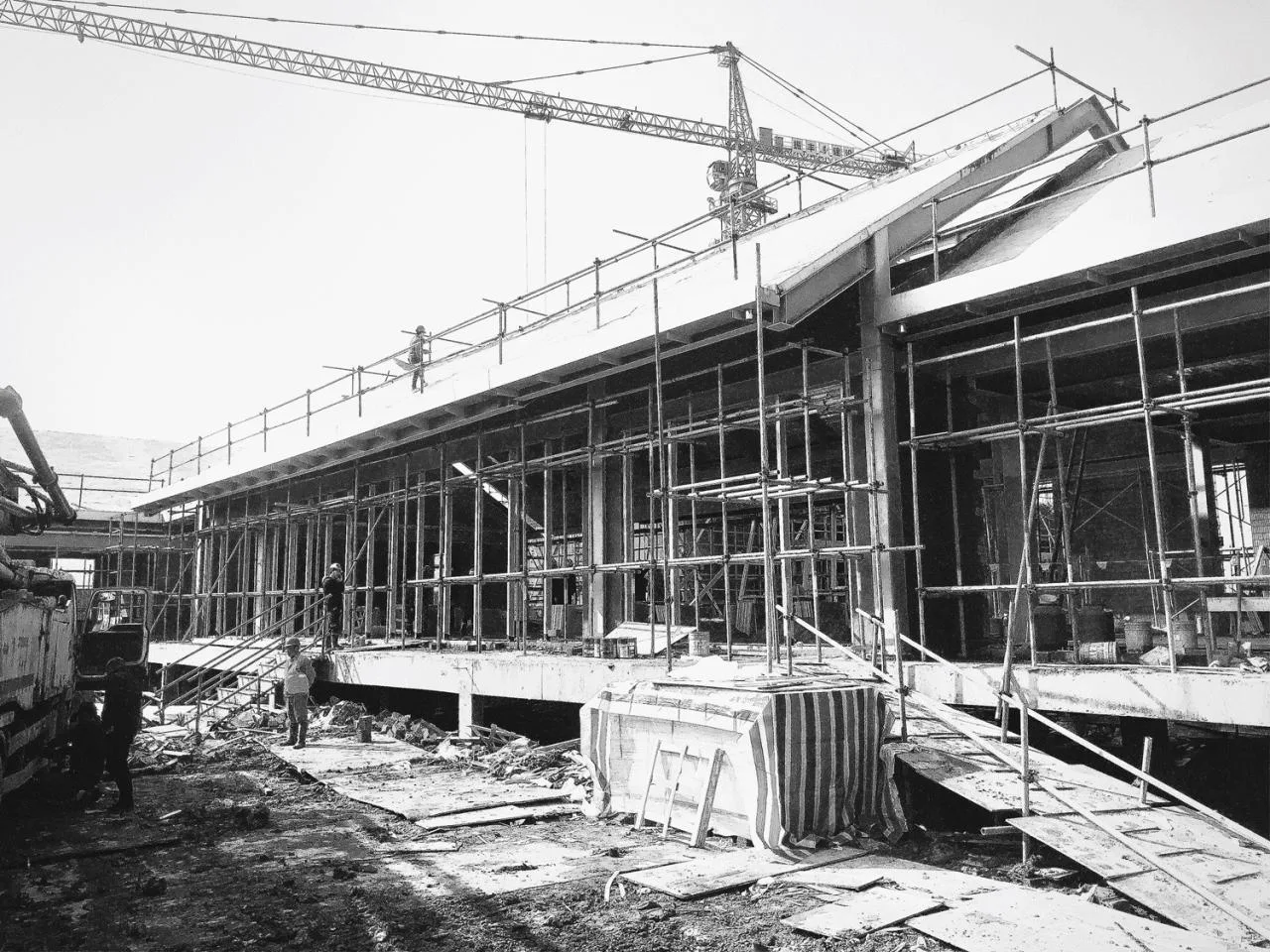
△ Realistic views and construction process of the Homecoming Hall
Since its completion, Hujing Yunlu has set a new benchmark for high-end stacked villas in China, representing a systematic innovation in low-density residential design by GOA Elephant. This ongoing evolution in design and aesthetics reflects the architects’ deep connection to Hangzhou’s human geography and their boundless vision for future possibilities.
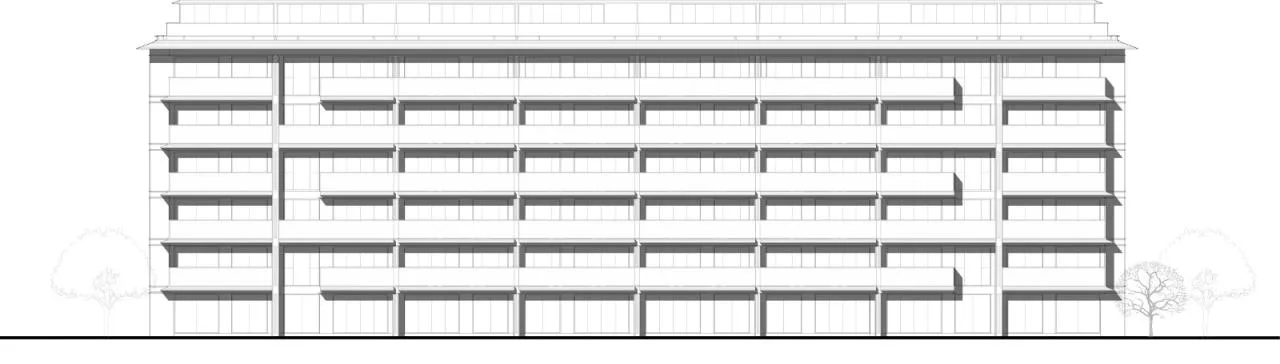
Typical south elevation of a single unit
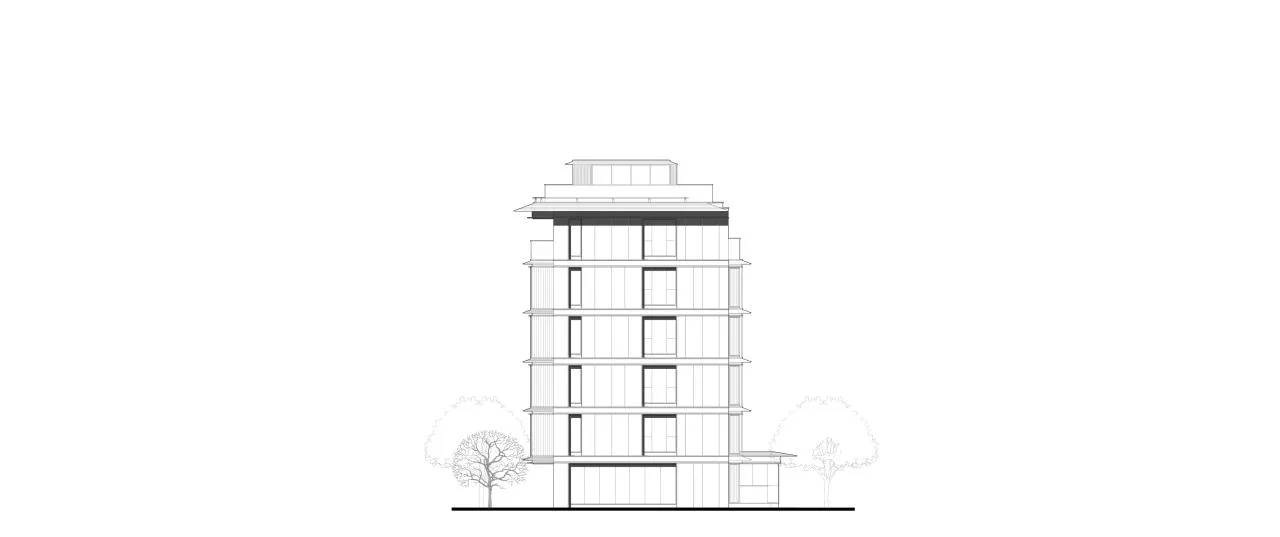
Typical west elevation of a single unit
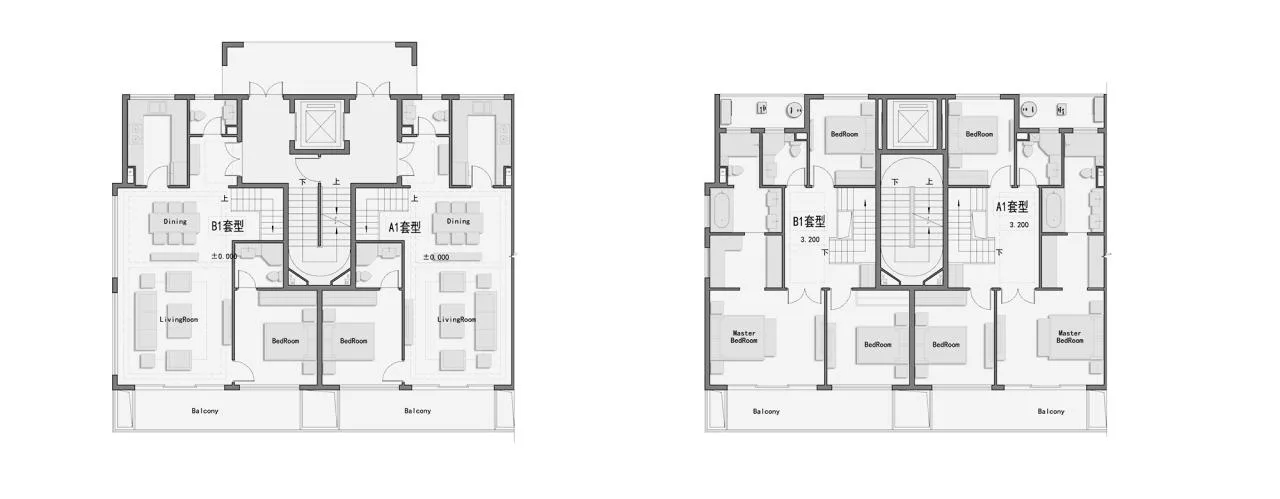
Typical floor plans for lower-level units (1F and 2F)
Project Information
Location: Hangzhou
Design/Completion: 2018–2021
Building area: 146,000 square meters
Image credits: Goa Elephant Design, Hangzhou Greentown Investment Jinxi Real Estate Co., Ltd, shiromio studio, David Z
















Must log in before commenting!
Sign Up