
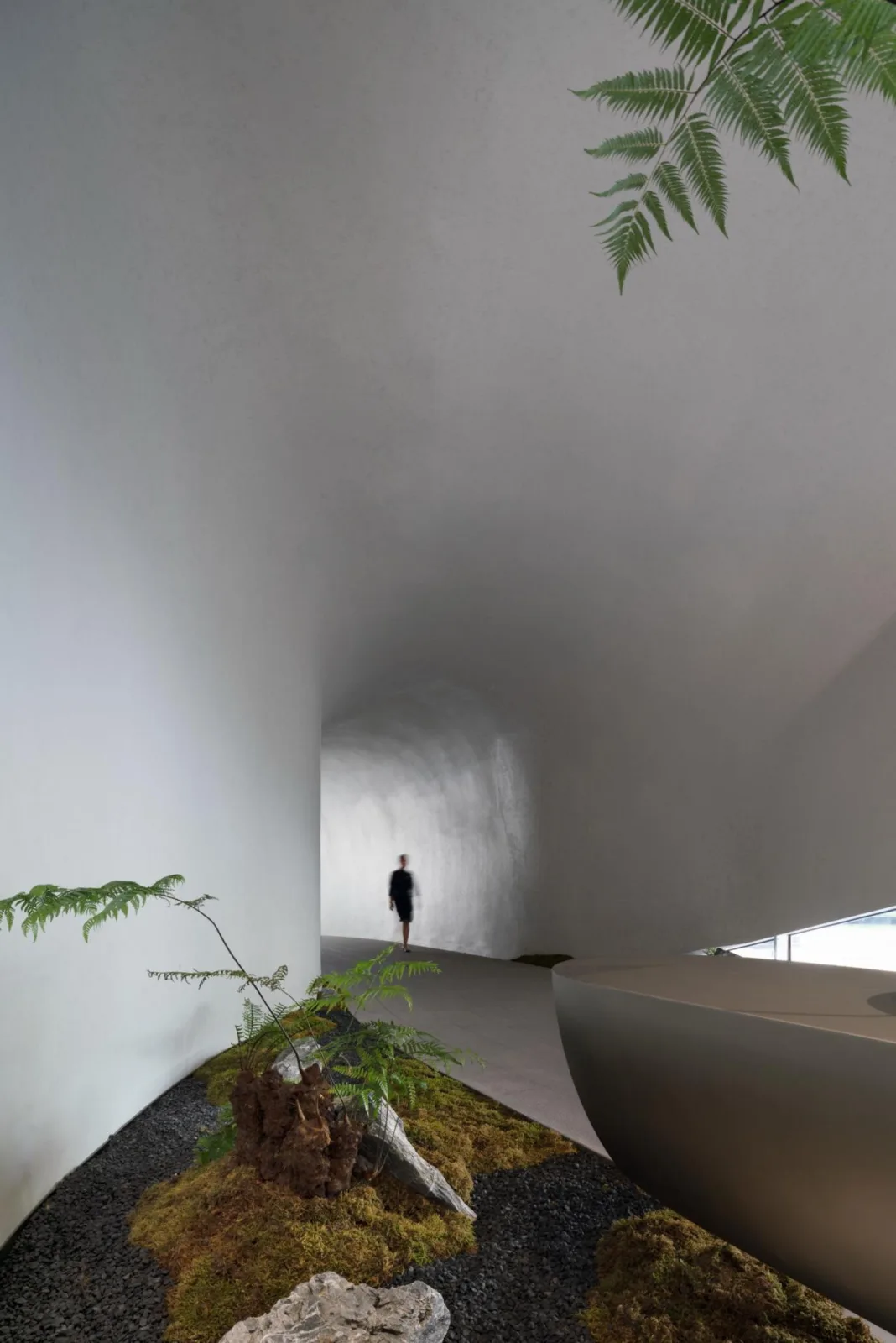
From “Peach Blossom Spring” to the “Future Community”
Quzhou Lixian Future Community marks Greentown China’s first venture into future community development. As a leading real estate company in China renowned for its product strength, Greentown faces the challenge of delivering an ideal solution to the emerging concept of future communities—an endeavor that carries great responsibility and high expectations.
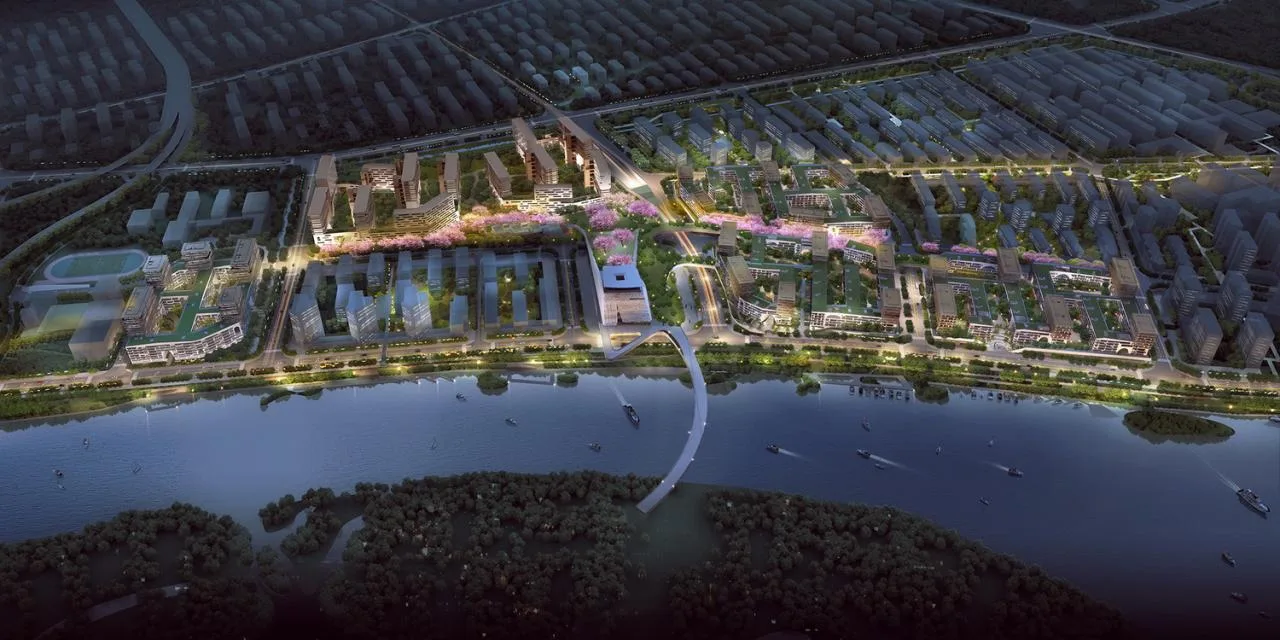
Quzhou Lixian Future Community Rendering © GAD
Like other projects led by Zhuoshi, this project began with deep reflection. China’s urbanization has entered its second phase, and after achieving significant technological and economic growth, questions arise: Where do cities go from here? What is the ideal urban form? What constitutes an ideal living environment?
Over 1,600 years ago during the Eastern Jin Dynasty, Tao Yuanming, a poet who loved mountains and nature, resigned from his official post to live a life of pastoral simplicity. In 420 AD, he depicted a utopian refuge in his essay “The Peach Blossom Spring.” In just 395 words, he vividly described an idyllic scene—“fragrant grass and colorful petals,” “roads alive with the sounds of chickens and dogs,” “yellow hair falling in contentment”—crafting an image that has resonated as a symbol of paradise for generations of Chinese people.
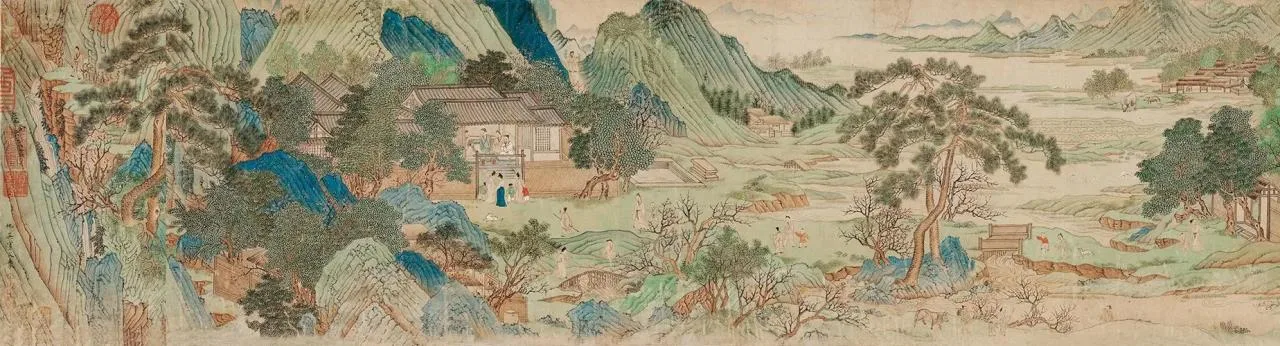
Selected artwork from Ming Dynasty artist Qiu Ying’s ‘Peach Blossom Spring’ © Image source: Network
Since the concept of “future community” was introduced in Zhejiang Province in 2019, it has sparked extensive discussion and development. Numerous official policies and evaluation frameworks—such as “One Heart, Three Modernizations, and Nine Scenarios”—have been proposed, positioning future communities as the basic units and microcosms of future cities.
Encompassing culture, technology, ecology, and intelligence, the core of the future community concept remains “Better Life.” In our perspective, it is the contemporary response to the “Ideal Living Landscape.”
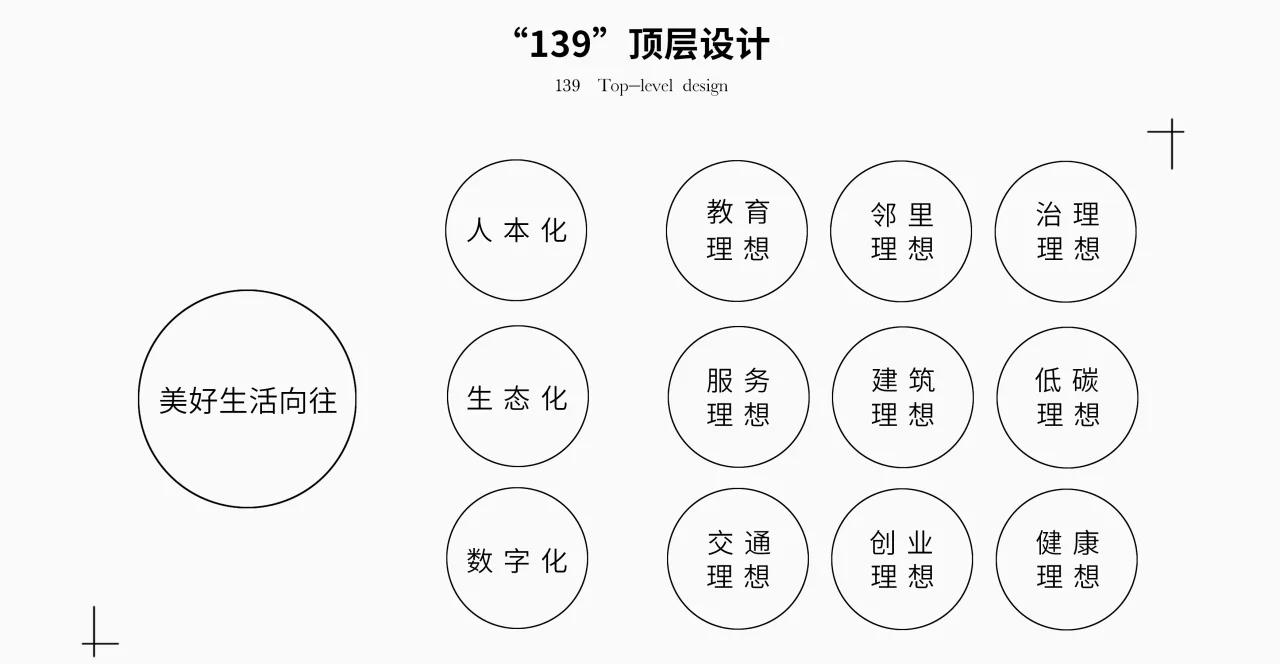
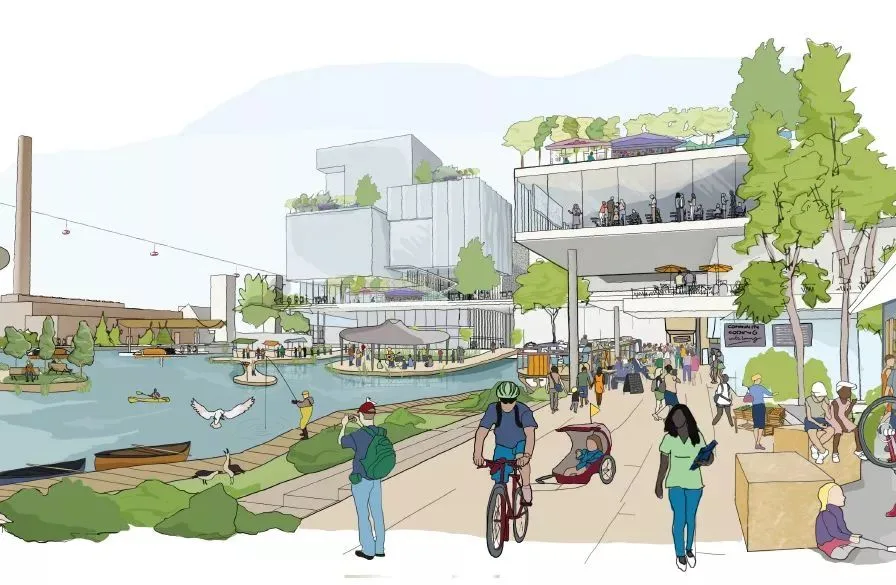
Google’s envisioned future community planning map © Image source: Network
The “Peach Blossom Spring” and the concept of the Future Community are linked across time and space.
Reading the City
Quzhou is a city defined by its mountains and enriched by water. The Qujiang River serves as its central axis, embraced by mountains on three sides.
Beyond its natural beauty, Quzhou boasts a rich cultural heritage. Seven centuries ago, descendants of Confucius migrated south with the Northern Song Dynasty and nurtured local traditions, earning Quzhou the nickname “Southeast Que Li.” Confucian rituals have deeply influenced the city, fostering a culture of cultivation, scholarship, and family values that spans millennia. Recently, the government has invested in promoting the city brand “Holy Land of Nankong · Quzhou with Etiquette.”
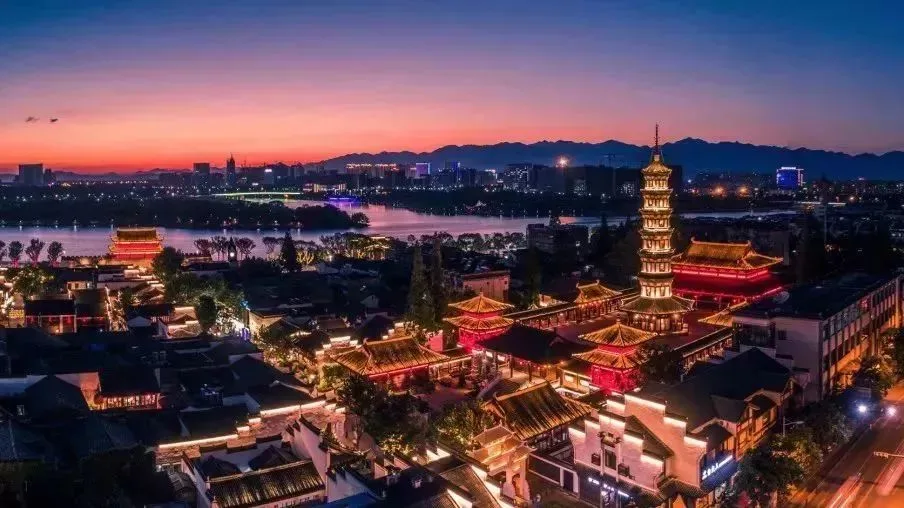
Quzhou real scene © Image source: Network
The Lixian Future Community site is located in the heart of Quzhou, mere steps from the South Confucius Temple and the Go Wonderland of Lanke Mountain—where culture and nature merge seamlessly. Positioned west of the Qujiang River, it complements the historic cityscape, representing a new model for urban renewal in Quzhou.
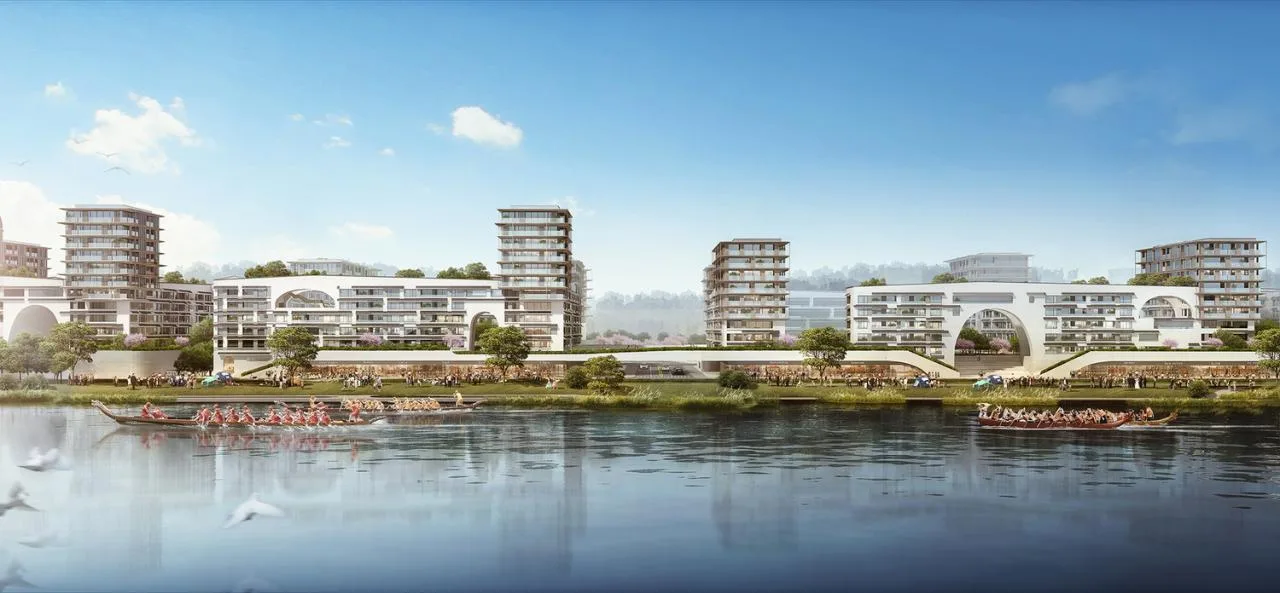
Quzhou Lixian Future Community Rendering © GAD
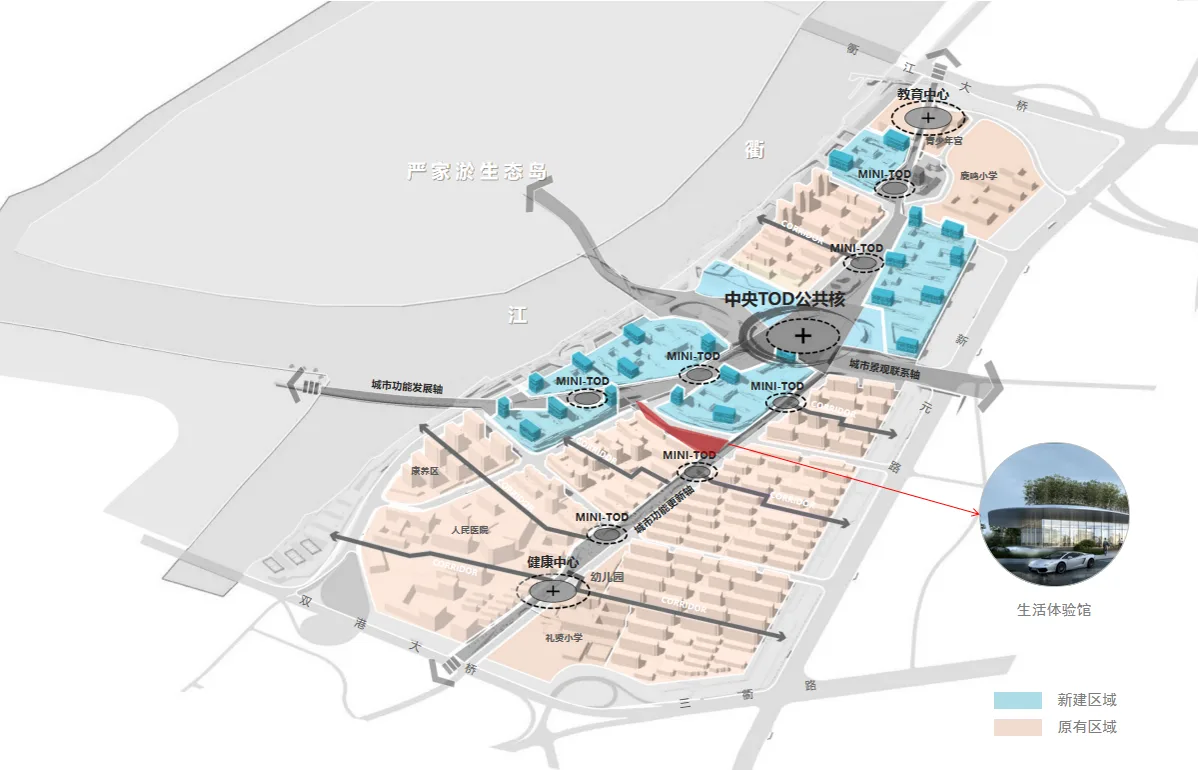
The new development area complements the existing neighborhood
Spatial Planning
Zhuoshi joined the project midway to design the interior scenes of the neighborhood center. Building on our long-standing principle of “integration,” we thoroughly reviewed previous designs and proposed a comprehensive concept: from exterior to interior, enriching the narrative inspired by the “Peach Blossom Spring.” Through carefully designed key nodes, visitors can experience Quzhou’s rich history and future aspirations, evoking the ideal lifestyle Lixian Future Community strives to create.
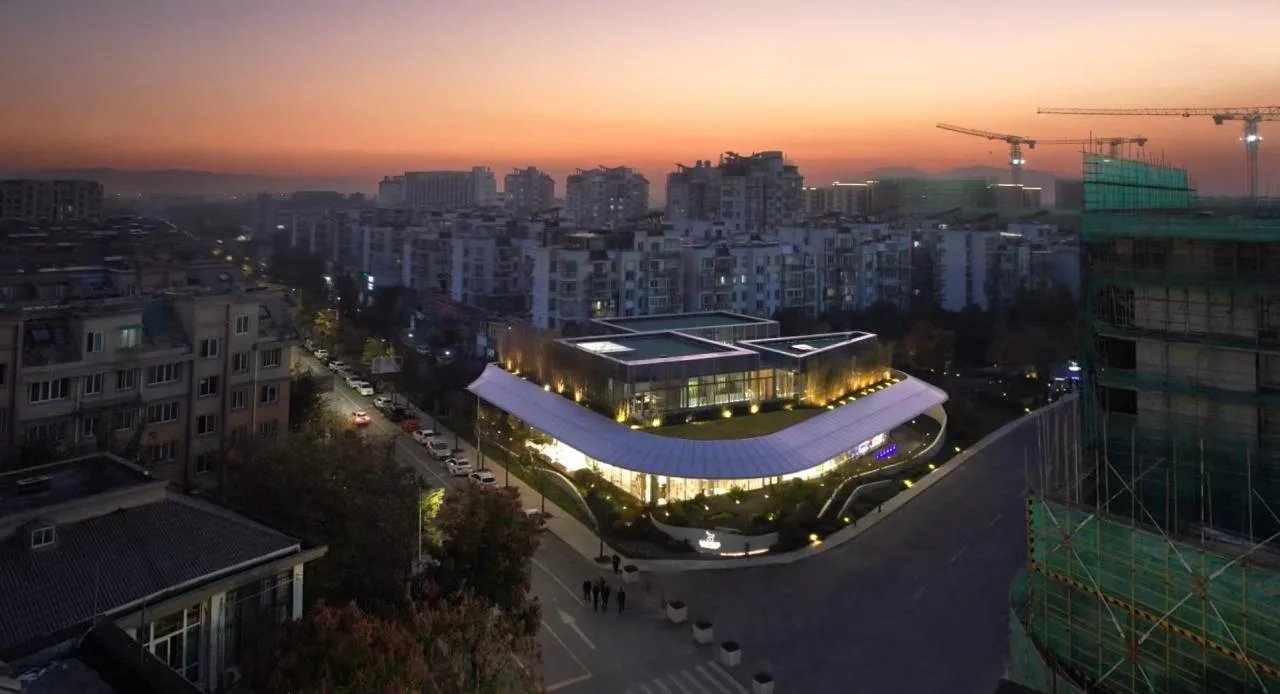
The site occupies a narrow corner plot centrally located within the future community. Except for a newly developed area to the north, all other sides border existing residential buildings of the old city. This area will serve as the neighborhood center, linking the new and old parts of Lixian Community.
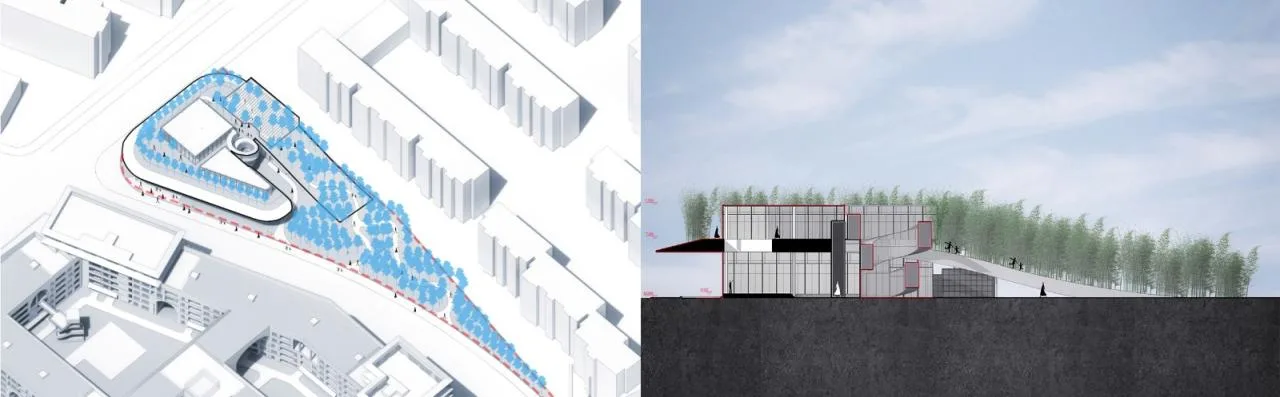
© GAD
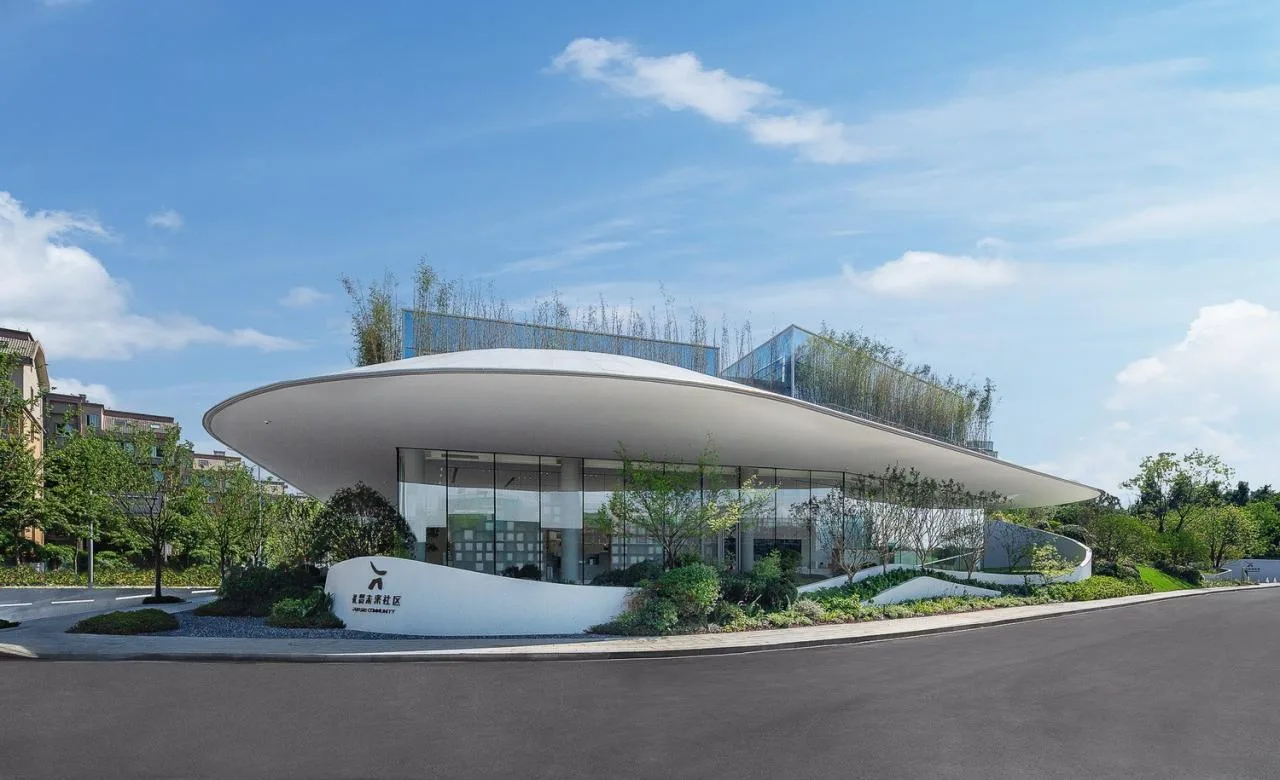
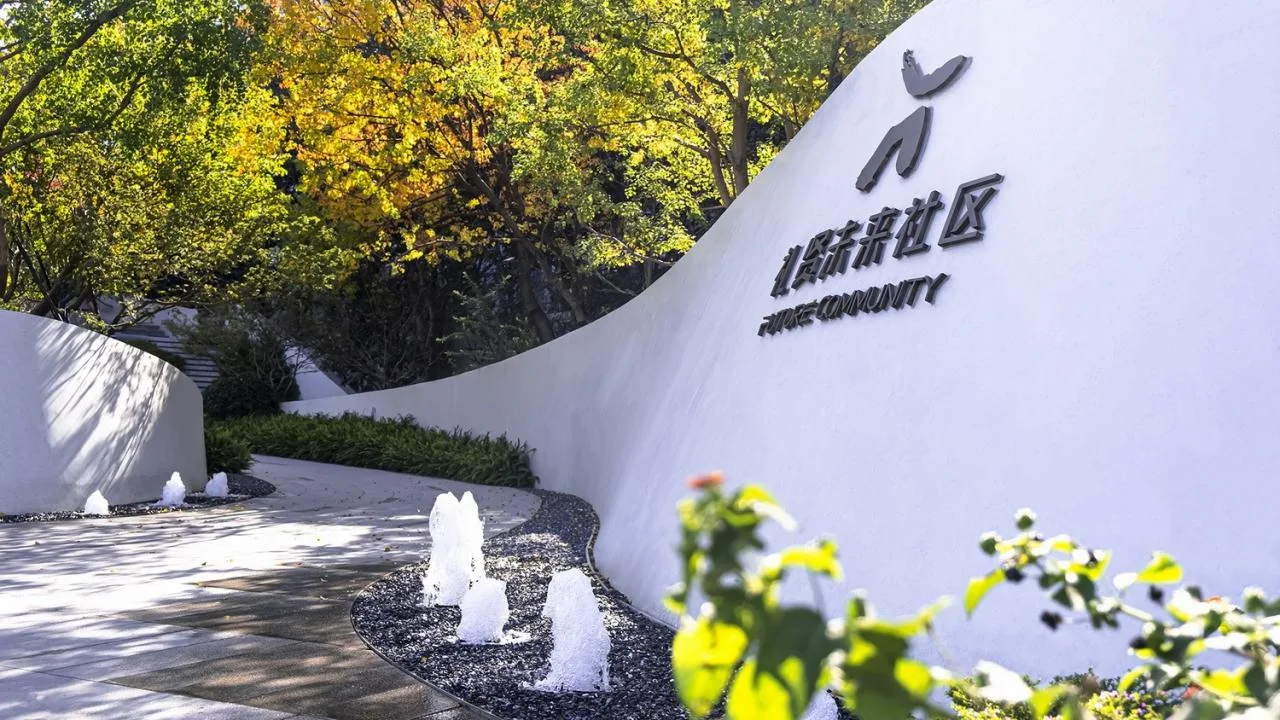
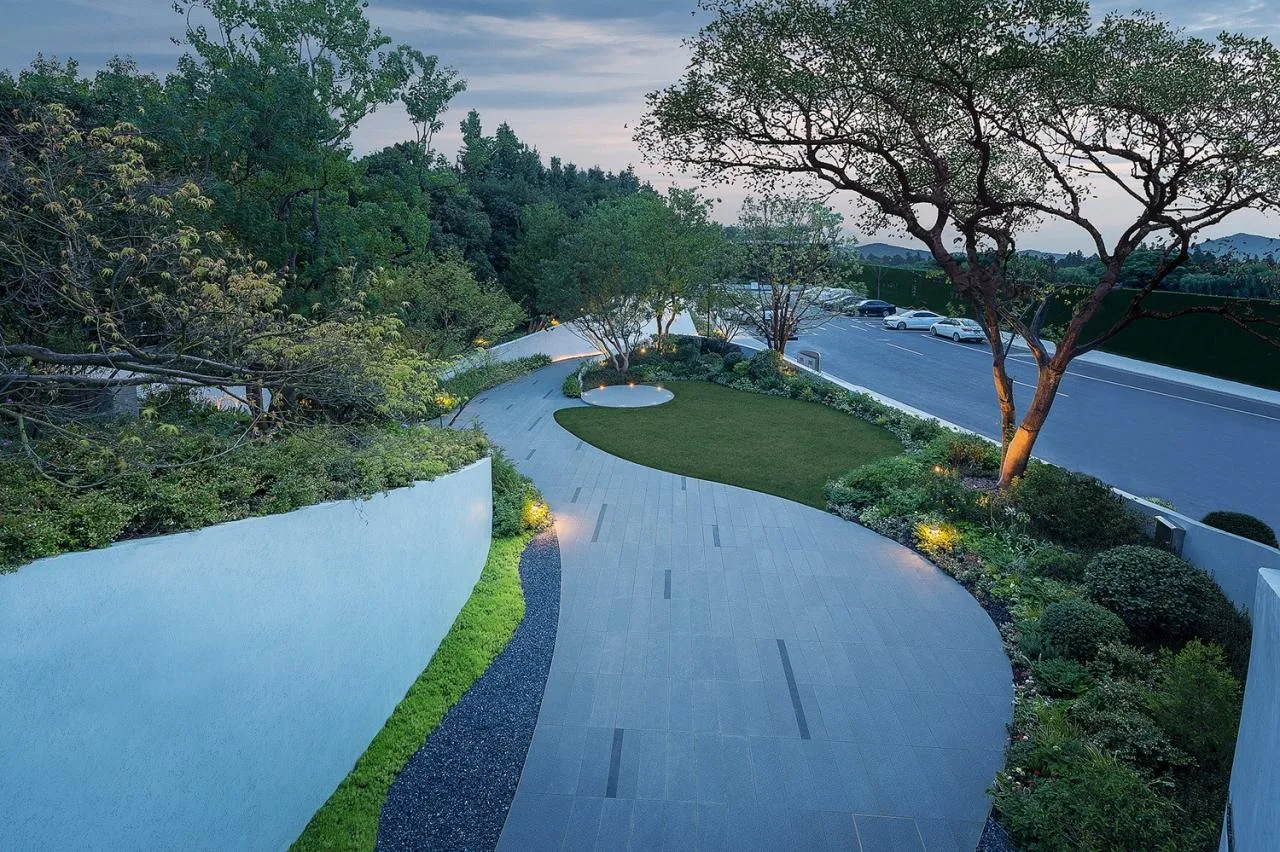
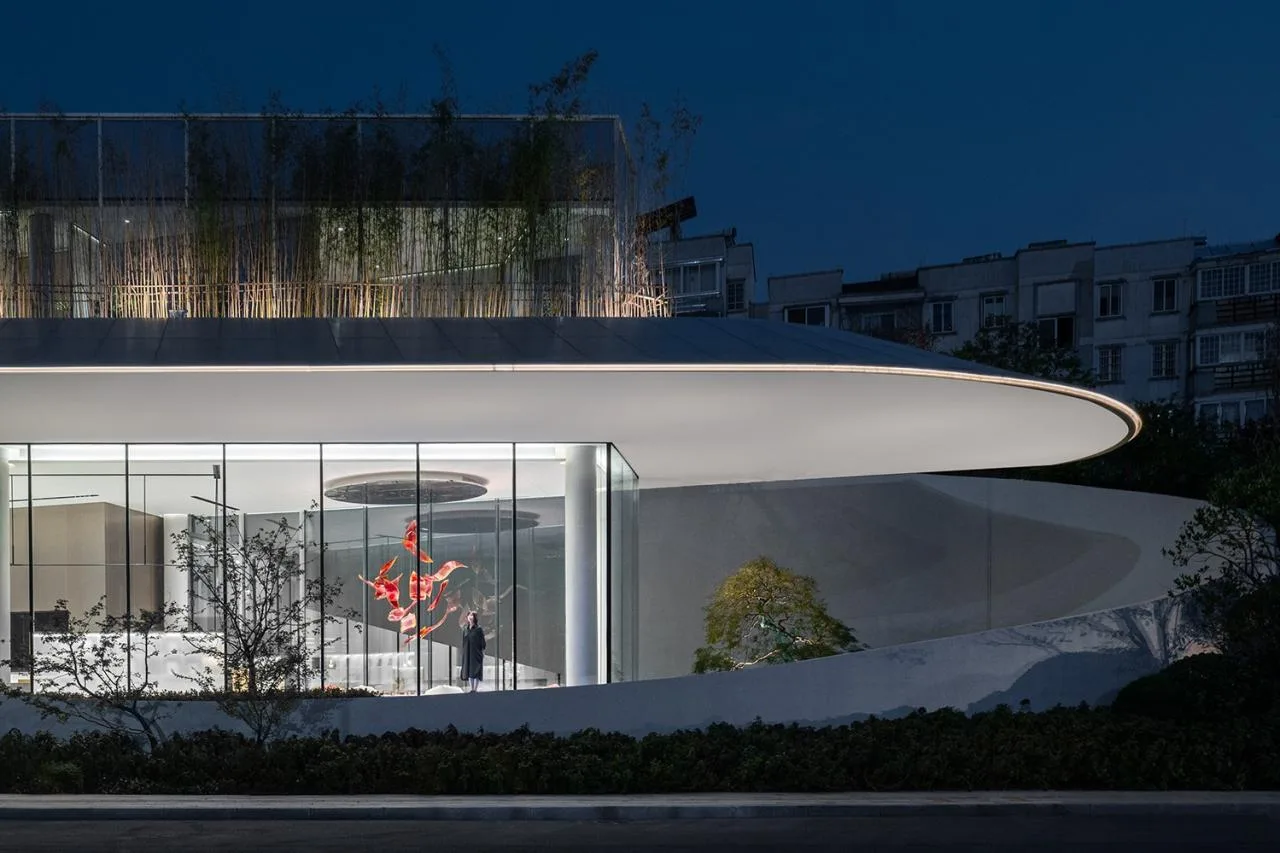
The architectural layout intentionally extends the entrance path. Rather than opening at the street corner, the entrance is set on the site’s west side. A white, streamlined landscape wall rises from the ground, forming a barrier-style gateway. The natural ecological landscaping gradually ascends eastward, merging seamlessly with the green roof of the building, creating a clever connection between nature and modern architecture.
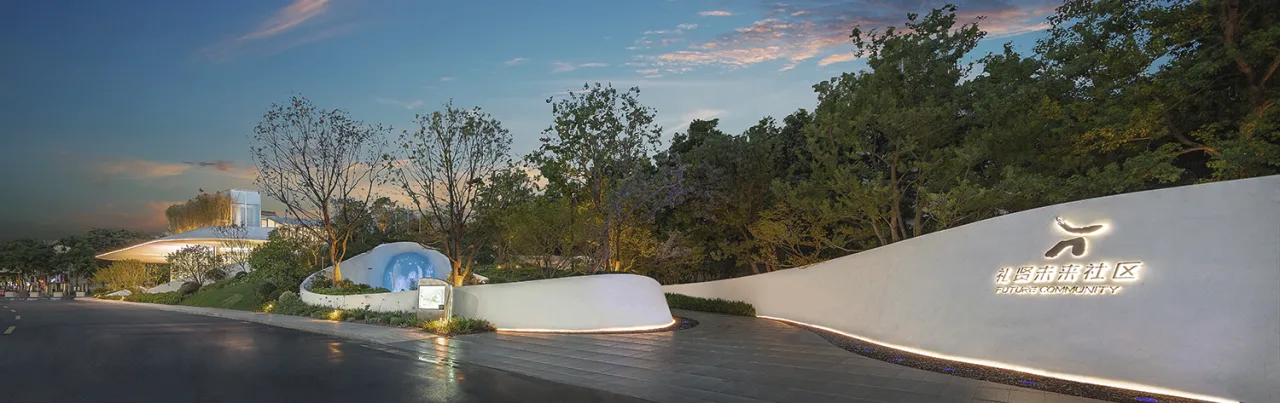
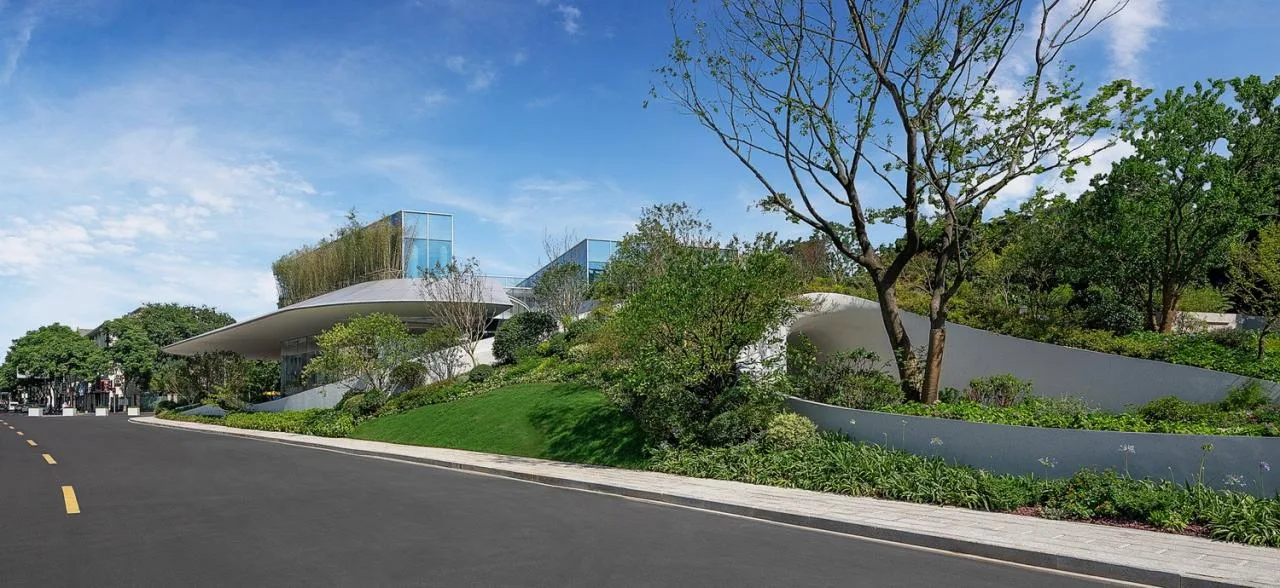
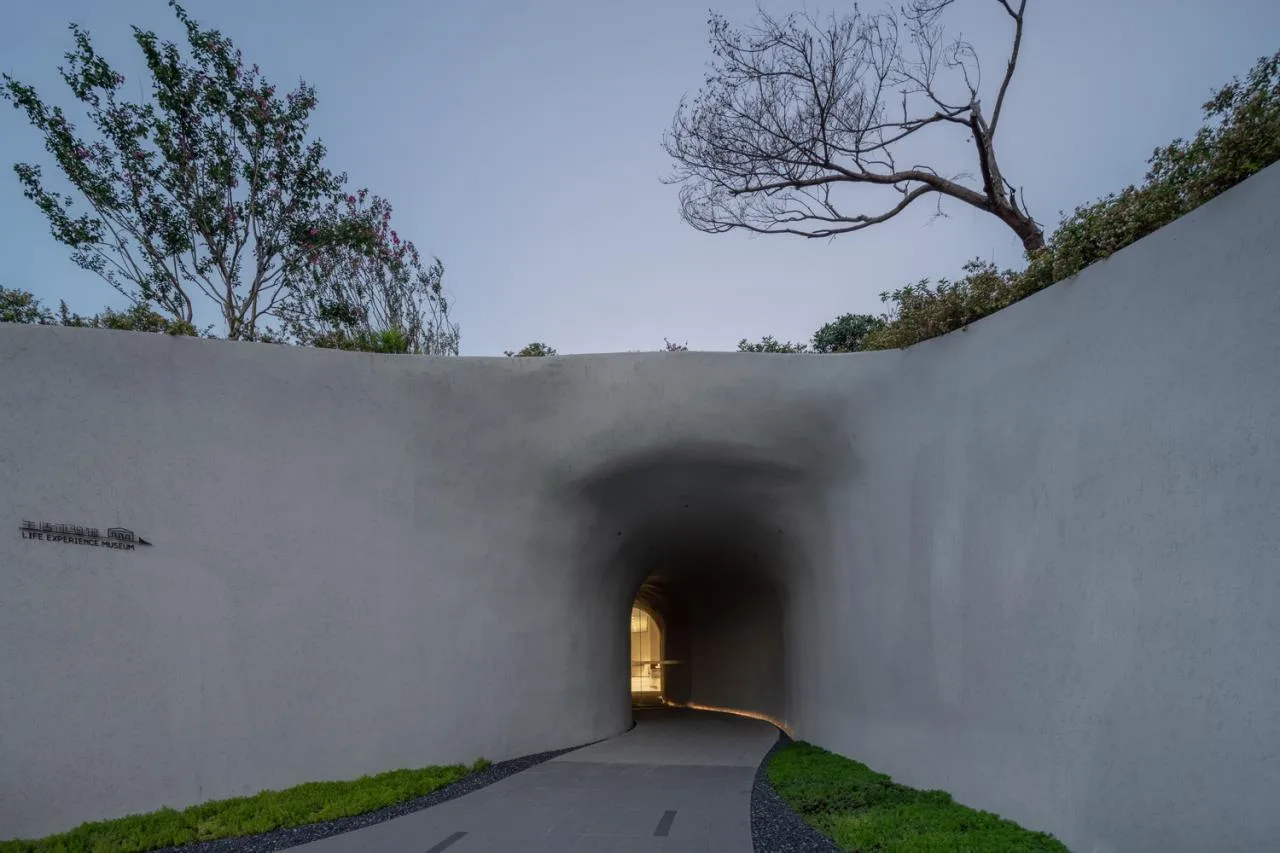
Guided by the curved landscape wall, visitors progress deeper into the site, surrounded by lush greenery along winding paths—“fragrant grass on the shore and colorful falling petals.” At the end of this journey, nestled by the forest and water, the building entrance resembles a cave “where light shines,” inviting further exploration.
Scenario Design
The outdoor landscape evokes the imagery of the Peach Blossom Spring, setting a harmonious tone that resonates as visitors enter the neighborhood center. But how can this connection be deepened and continued indoors, where specific functions take place?
“Li Xian Culture,” a vital part of Confucian tradition, serves as the spiritual foundation of the community culture planned for Lixian Future Community. It also represents Quzhou’s urban identity. Rooted deeply in local sentiment through the legacy of Nankong, this culture is widely recognized and valued.
Etiquette defines the internal standards and behavioral principles in Chinese society, while “Xian” reflects respect and learning from virtuous role models. In the urban context, “Quzhou with Etiquette” comprises four dimensions: respect for history, nature, society, and the future. Our goal is to create a space that embodies the future community concept while honoring Quzhou’s ancient heritage—integrating the culture of propriety and virtue with modern urban life through innovative techniques.
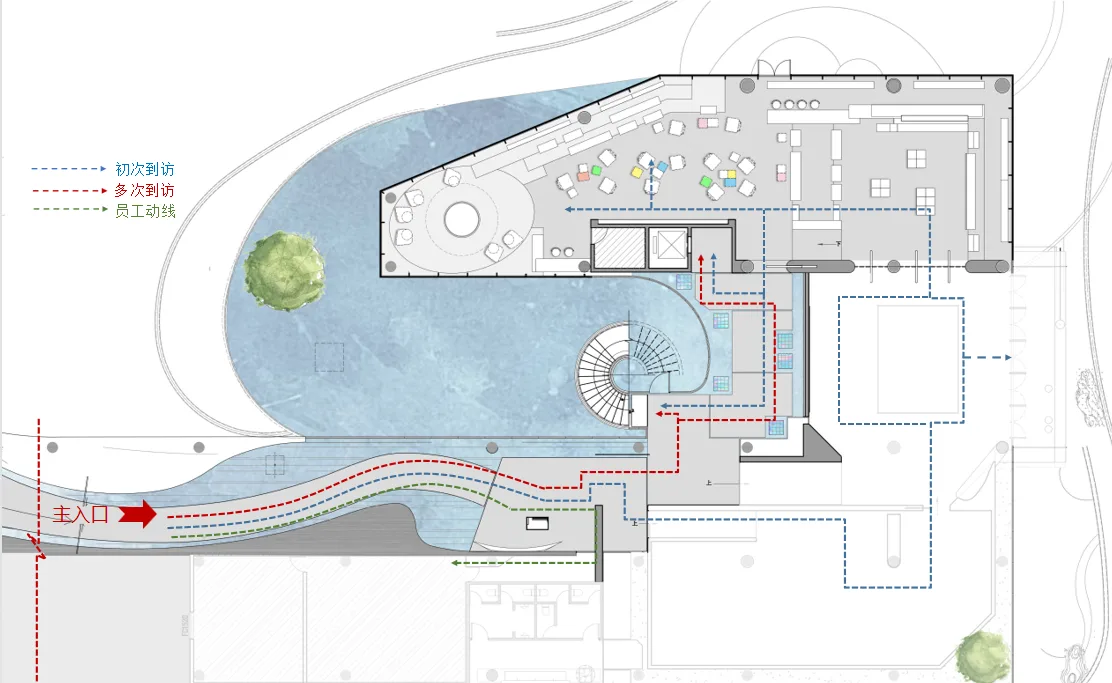
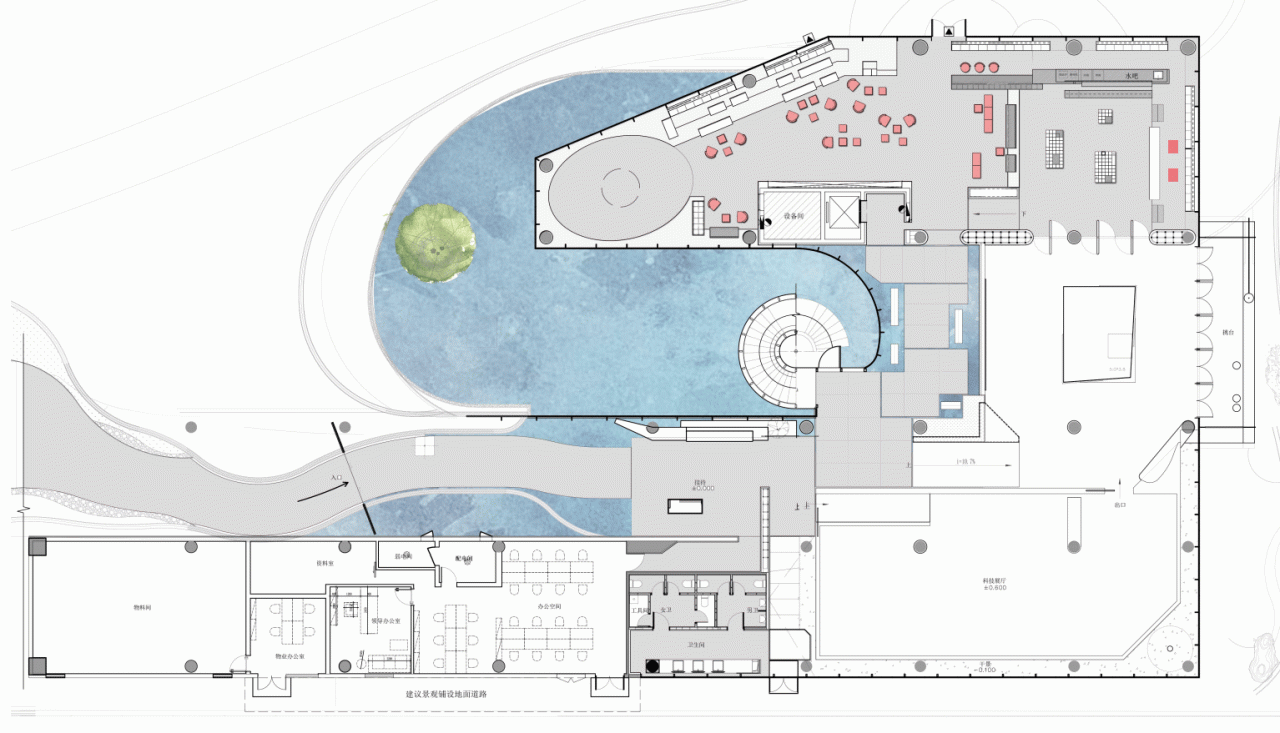
Indoor flow plan
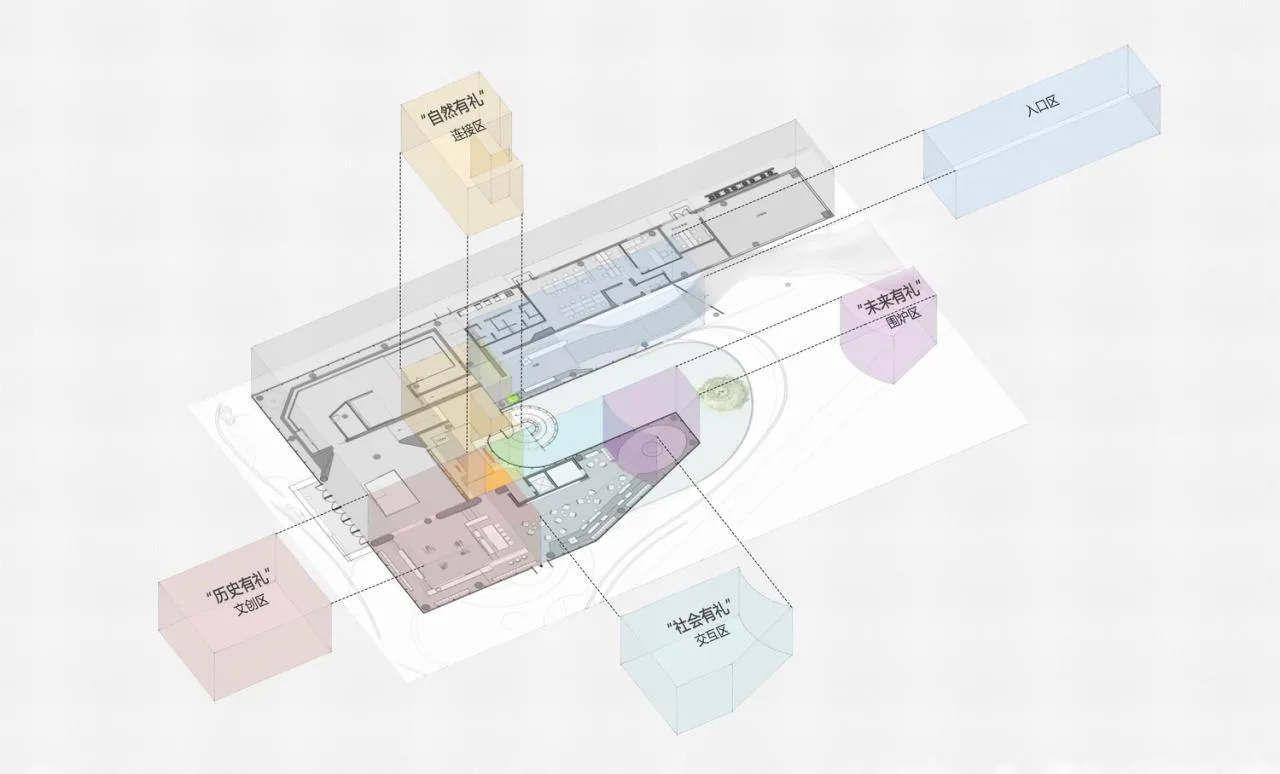
Scene spatial structure distribution diagram
The interior space spans approximately 1,000 square meters, designed not only to meet early sales needs but also to serve as a lasting neighborhood center after project completion.
Beyond the entrance, four main areas have been developed: a cultural and creative zone, an interactive area, a connecting space, and an enclosed hearth area. These correspond to four thematic series: “cultural etiquette,” “social etiquette,” “natural etiquette,” and “future etiquette.” Together, they create an immersive experience akin to a widescreen movie, inviting visitors to engage with the stories and scenes throughout their visit.
We apply a “decentralization” approach in spatial design, making people the protagonists and narrative drivers. The modular and flexible layout ensures the space remains fluid and transparent.

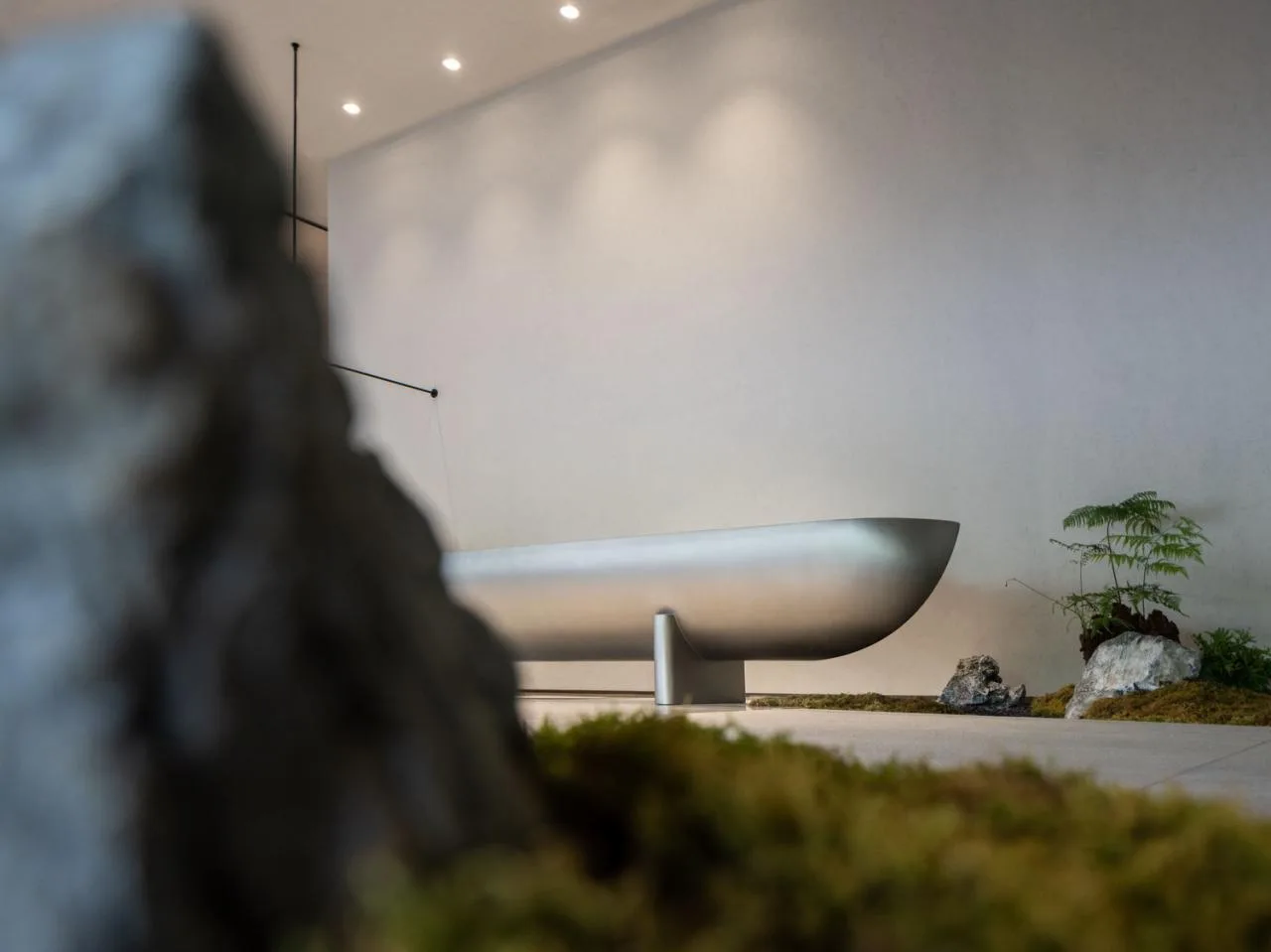
Passing through the external entrance, visitors experience a sudden sense of openness. The boat-shaped reception desk symbolizes docking before entering the Peach Blossom Land. The metallic paint and floating form evoke a futuristic vibe, while moss and greenery blend to conjure the image of an “ark” journeying toward the future.
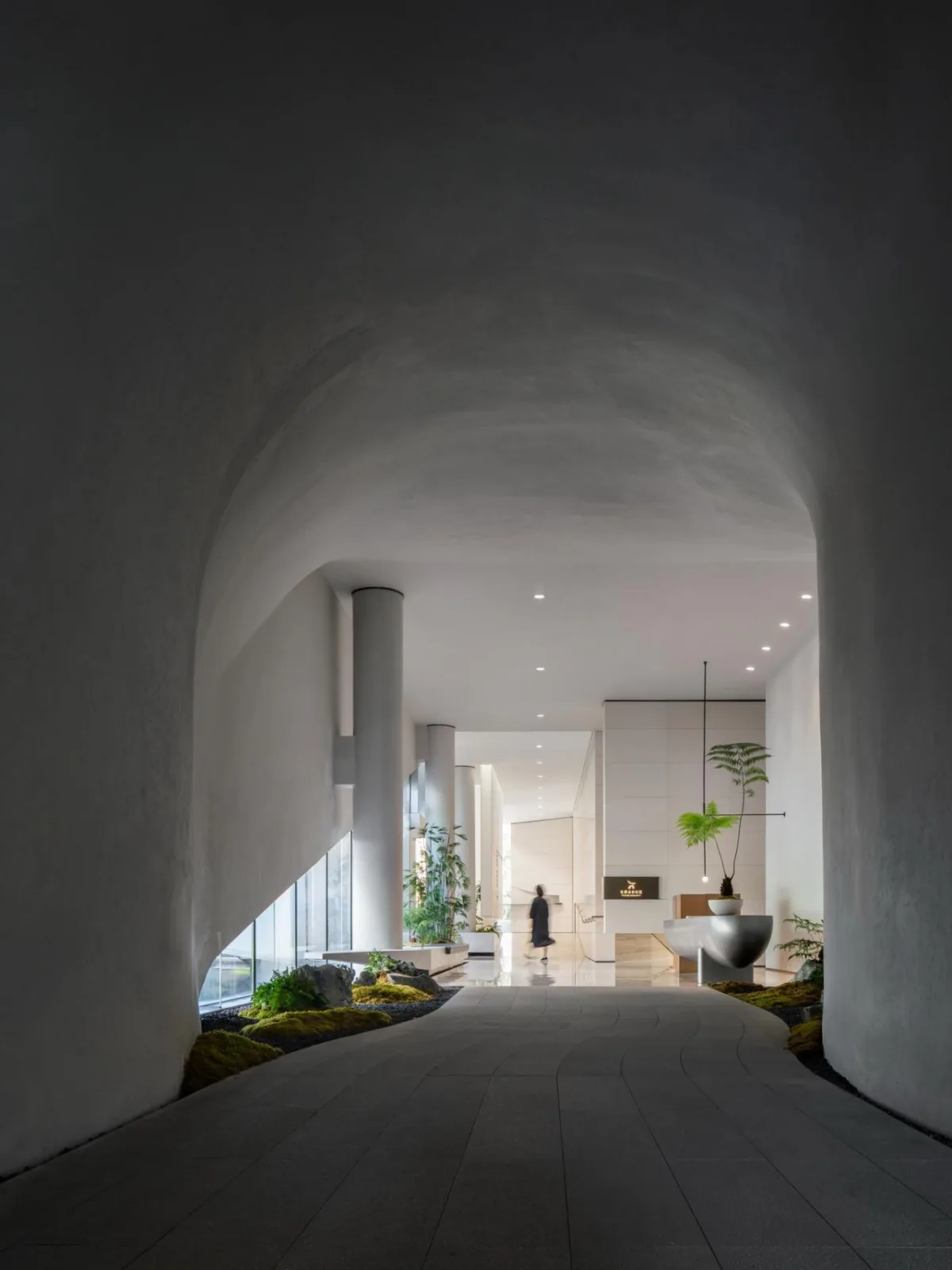
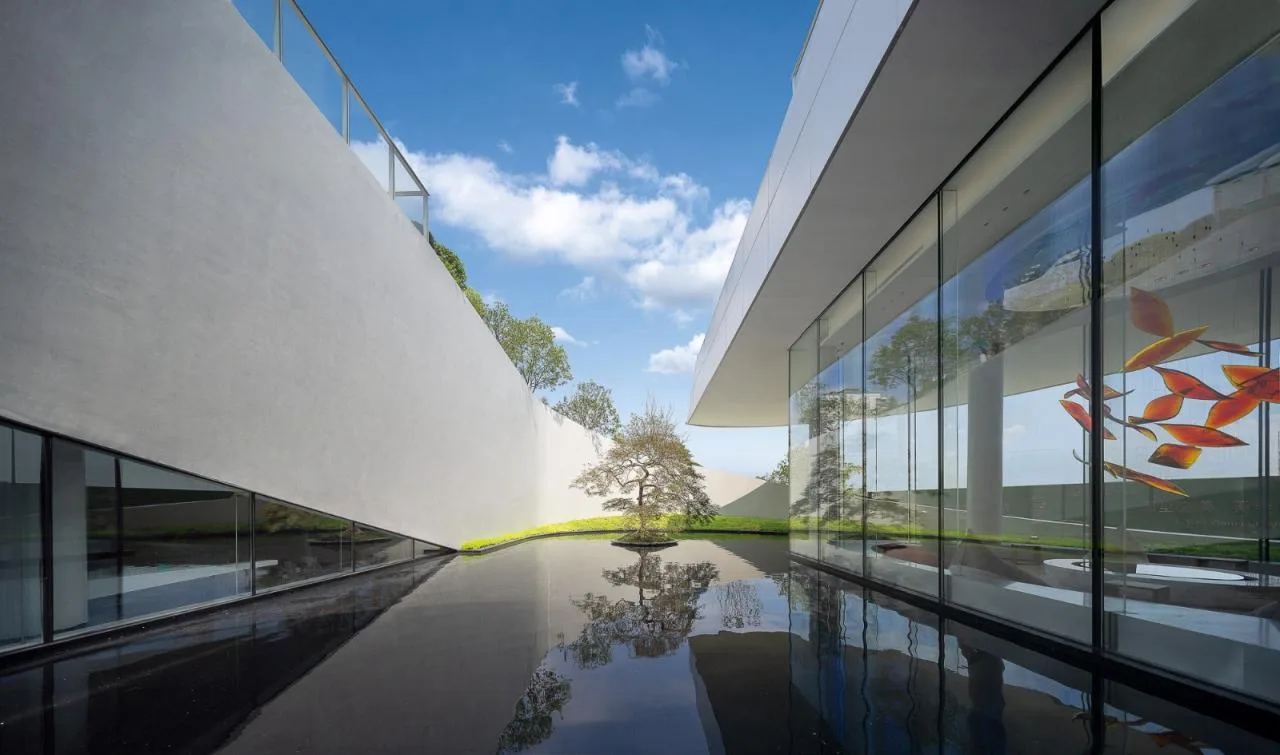
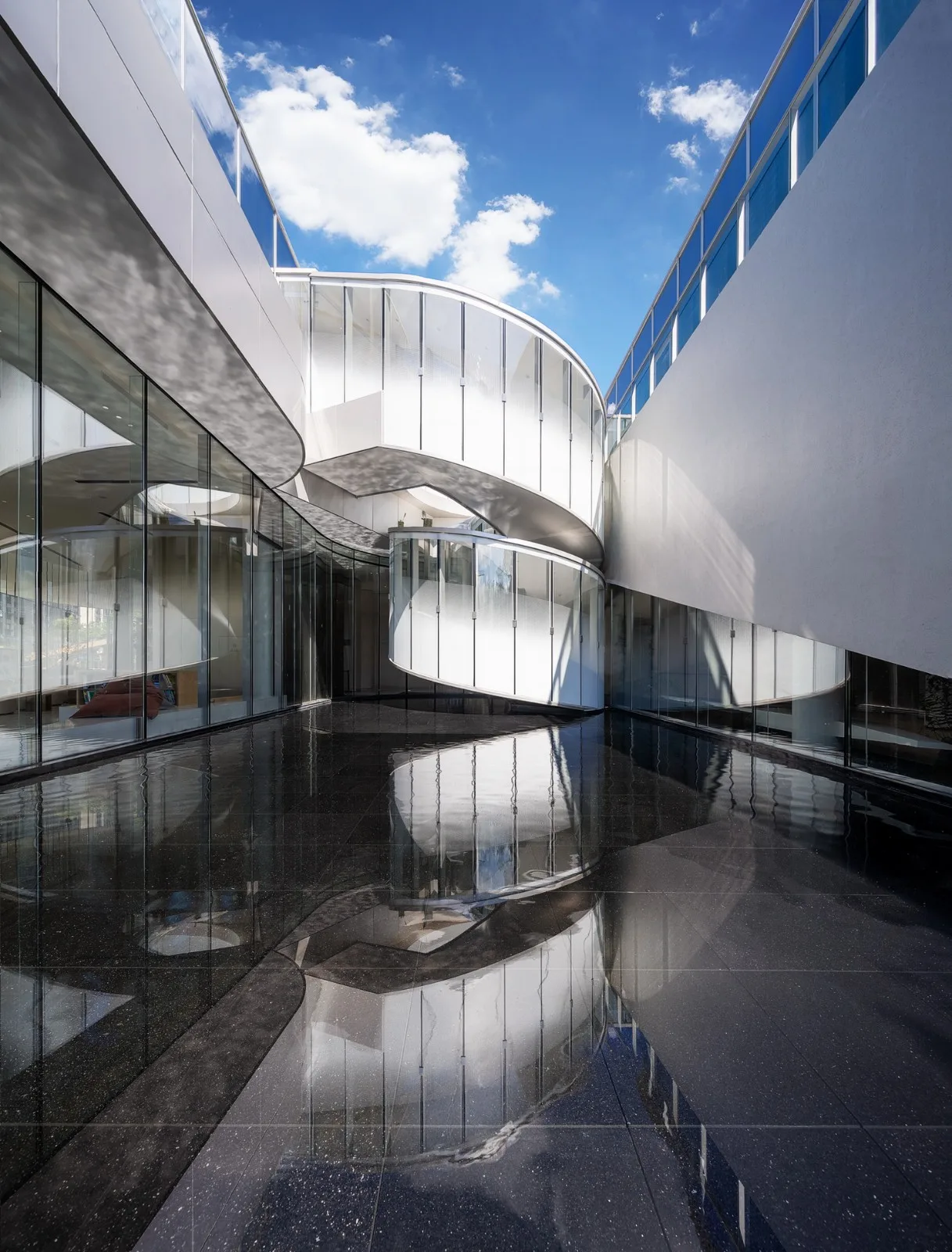
Beyond the tunnel lies an inner courtyard, where the main building’s boat shape is mirrored on the water’s surface. A glass spiral staircase connects the floors, enhancing the ecological and futuristic ambiance.
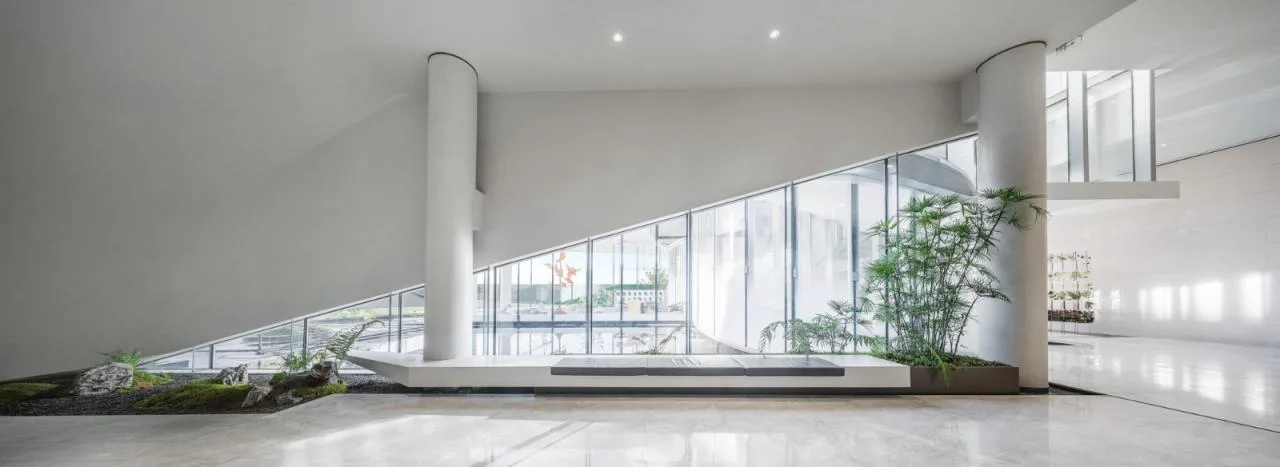
Ascending a gentle slope, visitors pass through an expansive model space. Sunlight pours from a skylight above, accentuating spatial depth. The “Cultural Etiquette” area awaits just beyond the line of sight.
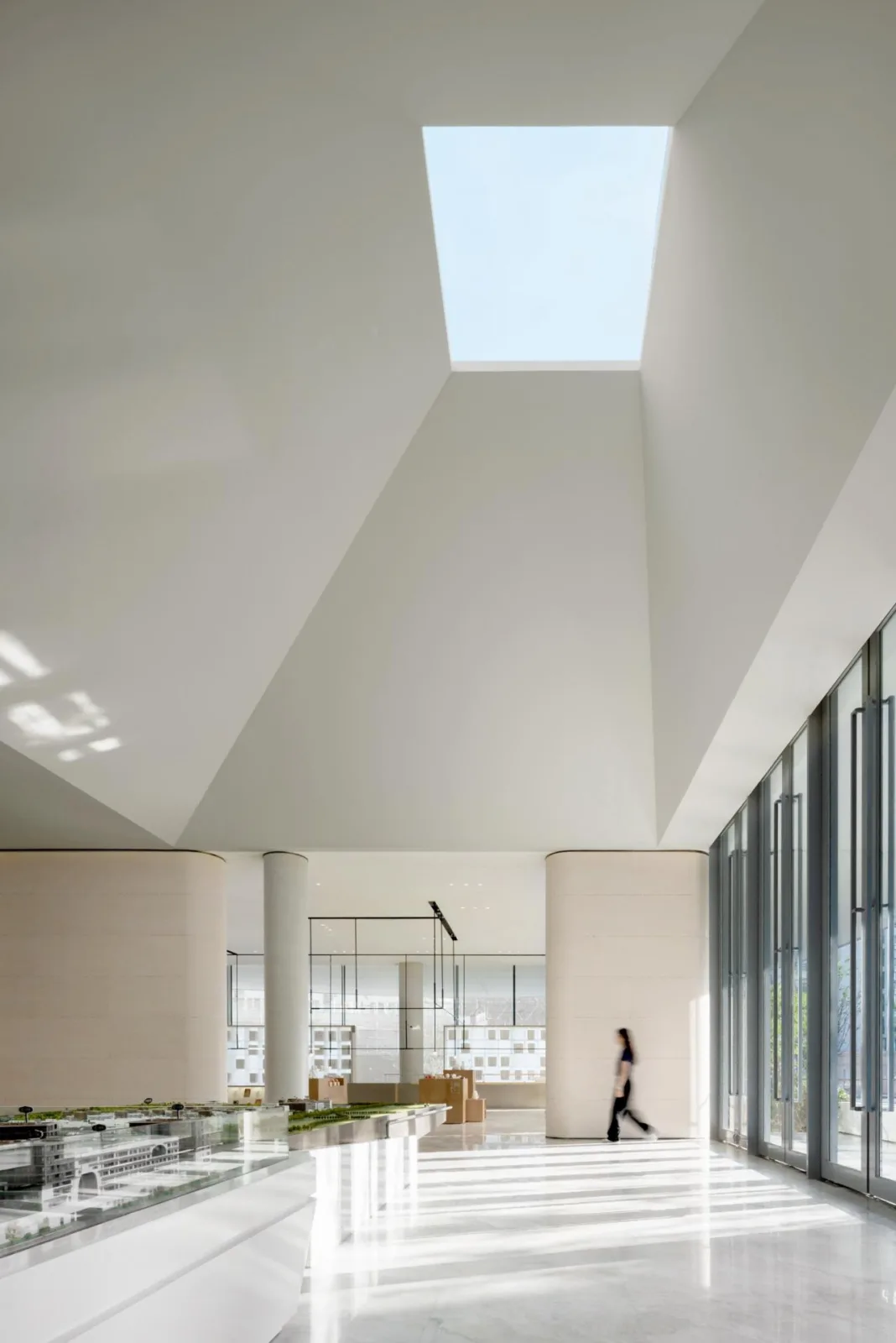

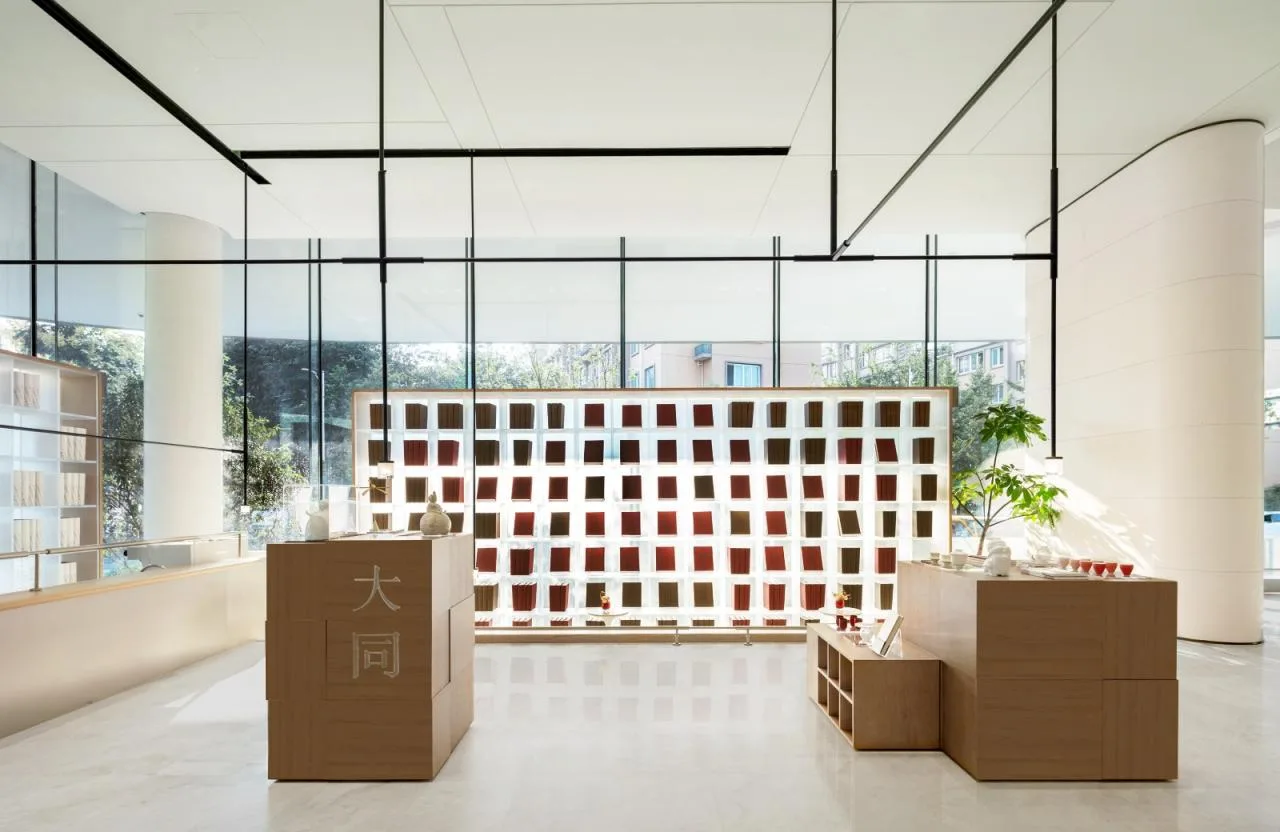
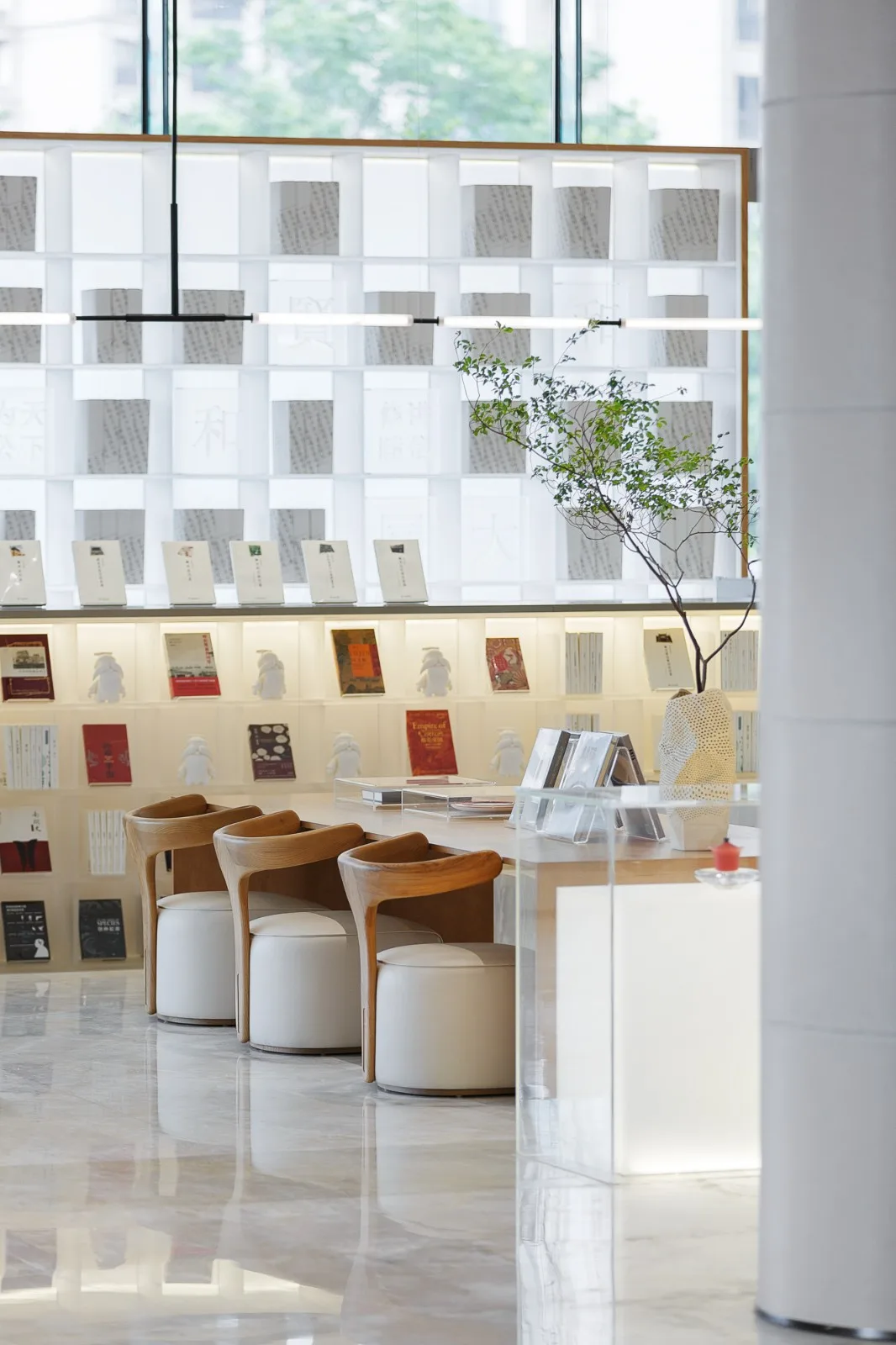
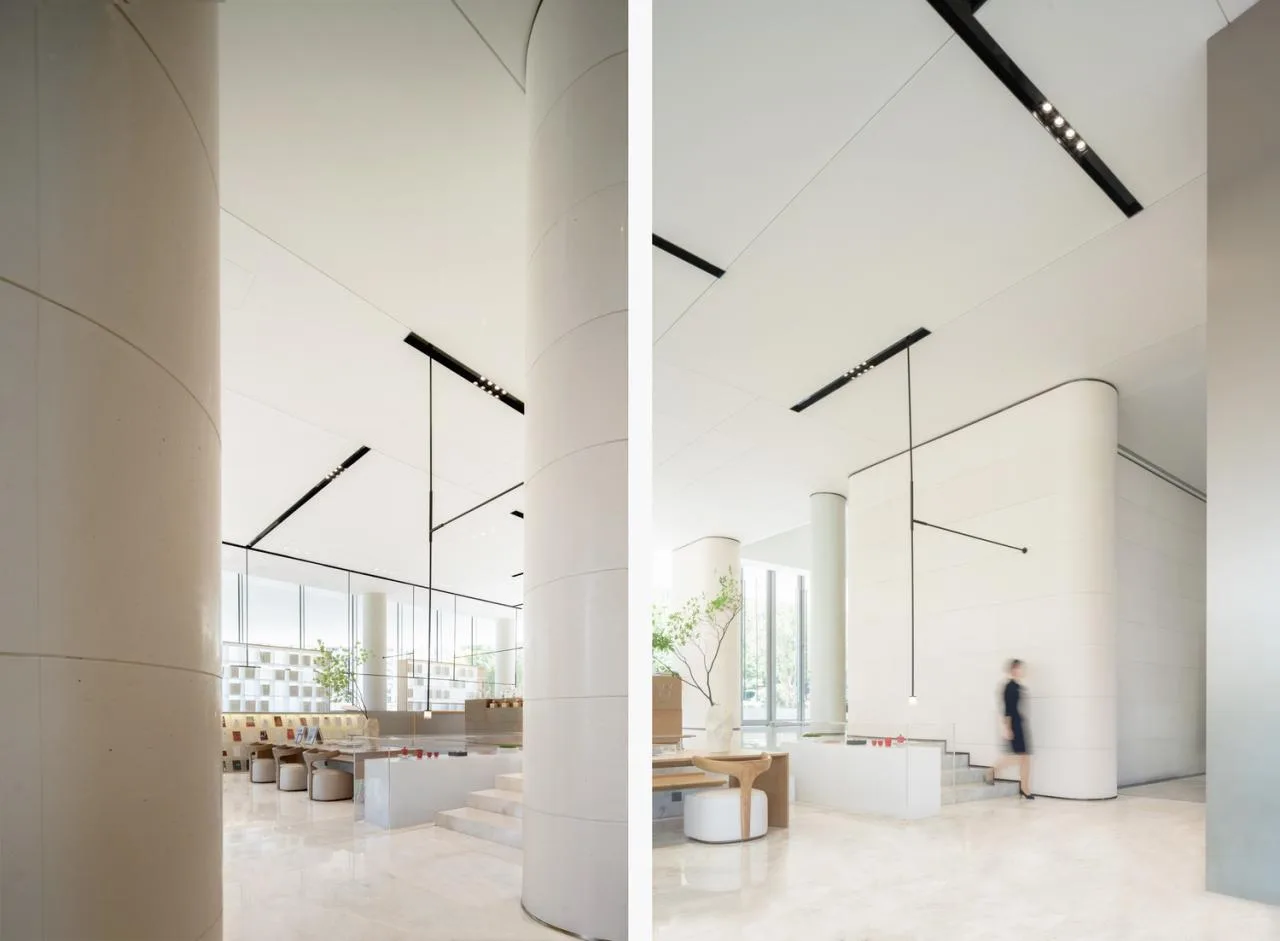
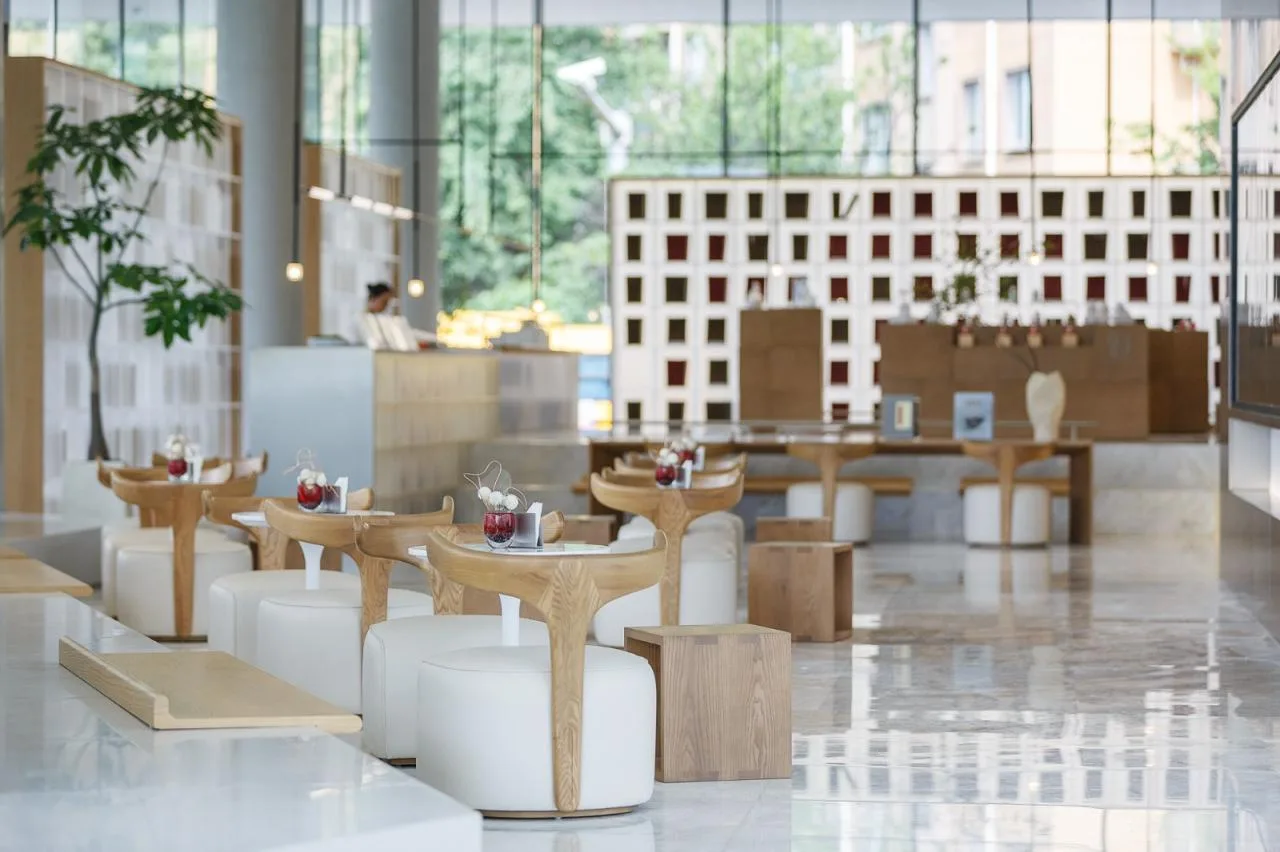
Emerging from the towering space, visitors find themselves in a warm cultural and creative zone. This practical, vibrant area combines bookstores and coffee spaces, surrounded by shelves filled with books. Sunlight filters through semi-transparent acrylic panels, creating a playful, hazy atmosphere. The lively energy of the surrounding older community contrasts yet harmonizes beautifully with the purity of the “Cultural Etiquette” space. Frequent passersby and lush roadside trees add genuine texture to this new area.
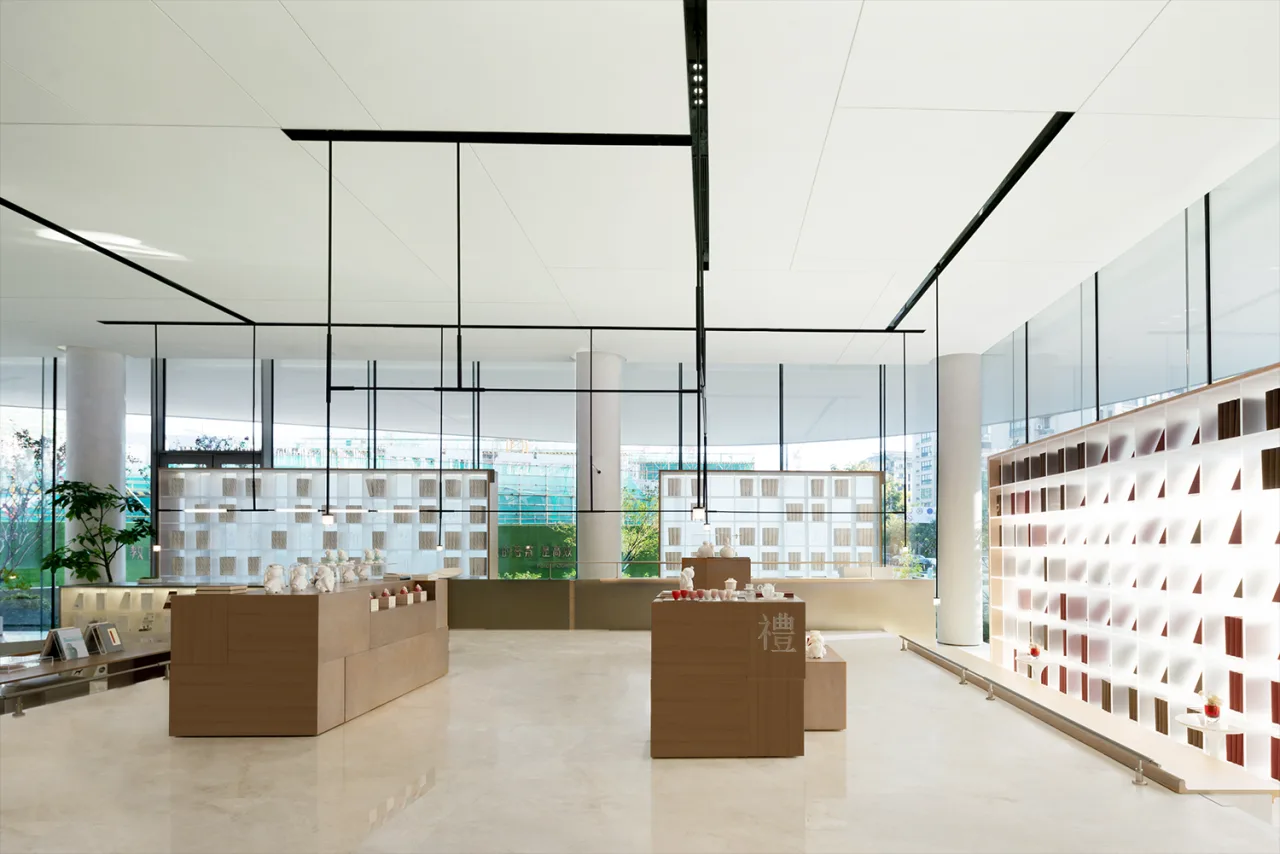
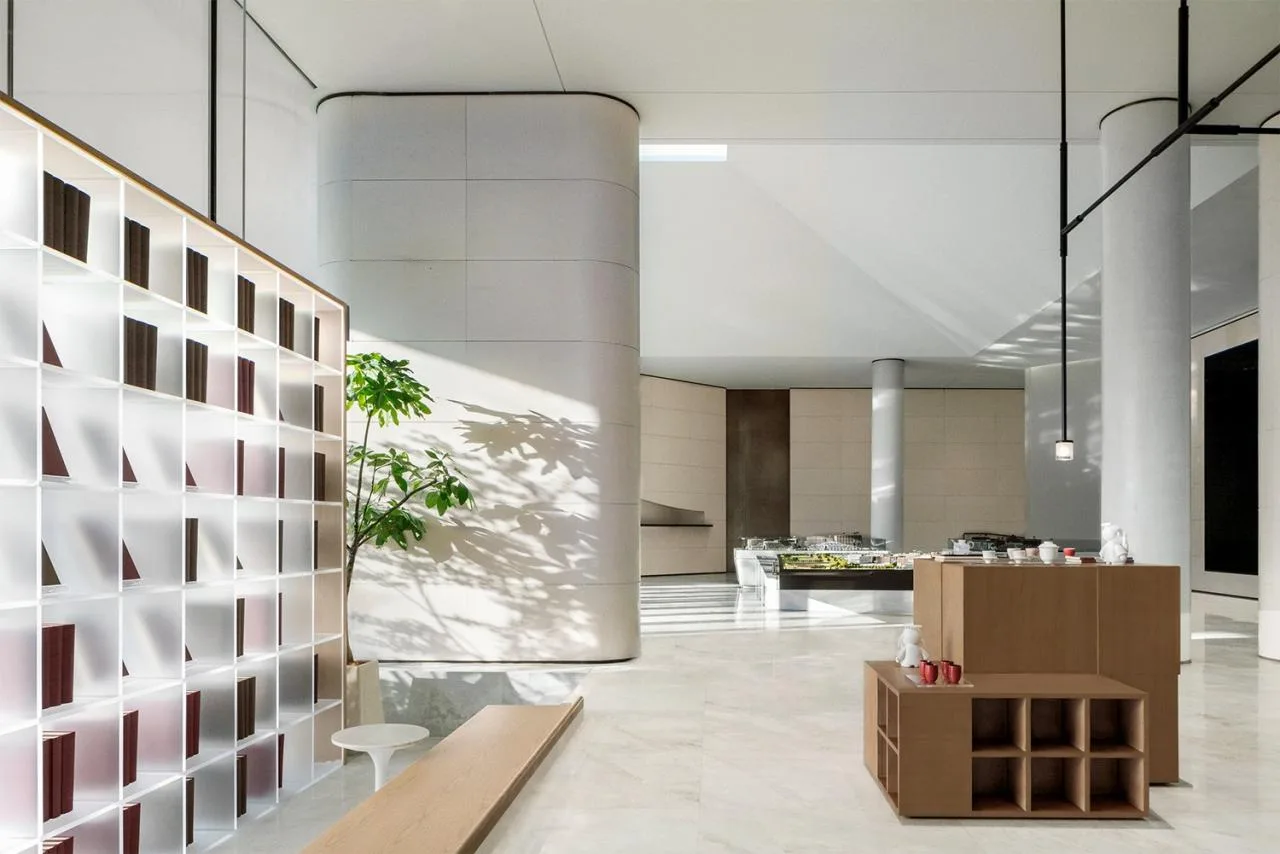
At the center, three island display platforms of different shapes, unified by a modular system, invite free movement and close browsing of books related to Quzhou. The cheerful cultural IP mascot “Grandpa Nankong” welcomes visitors warmly.
The bookshelves feature classics from the “Complete Library of Four Treasures,” sponsored by Greentown and permanently preserved here. Chinese characters such as “li,” “xian,” and “da tong” have been abstracted into spatial design elements, serving as subtle yet powerful reminders of their profound meanings.
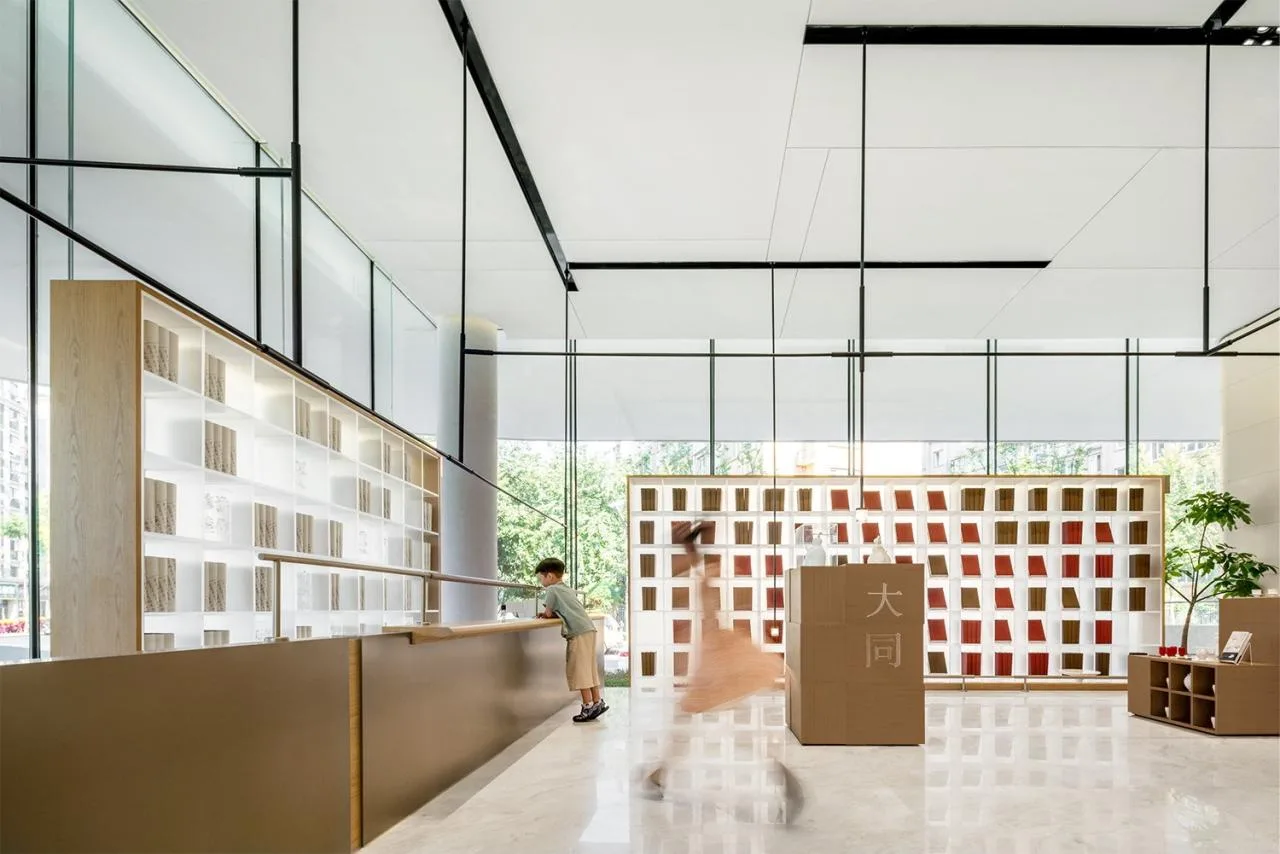
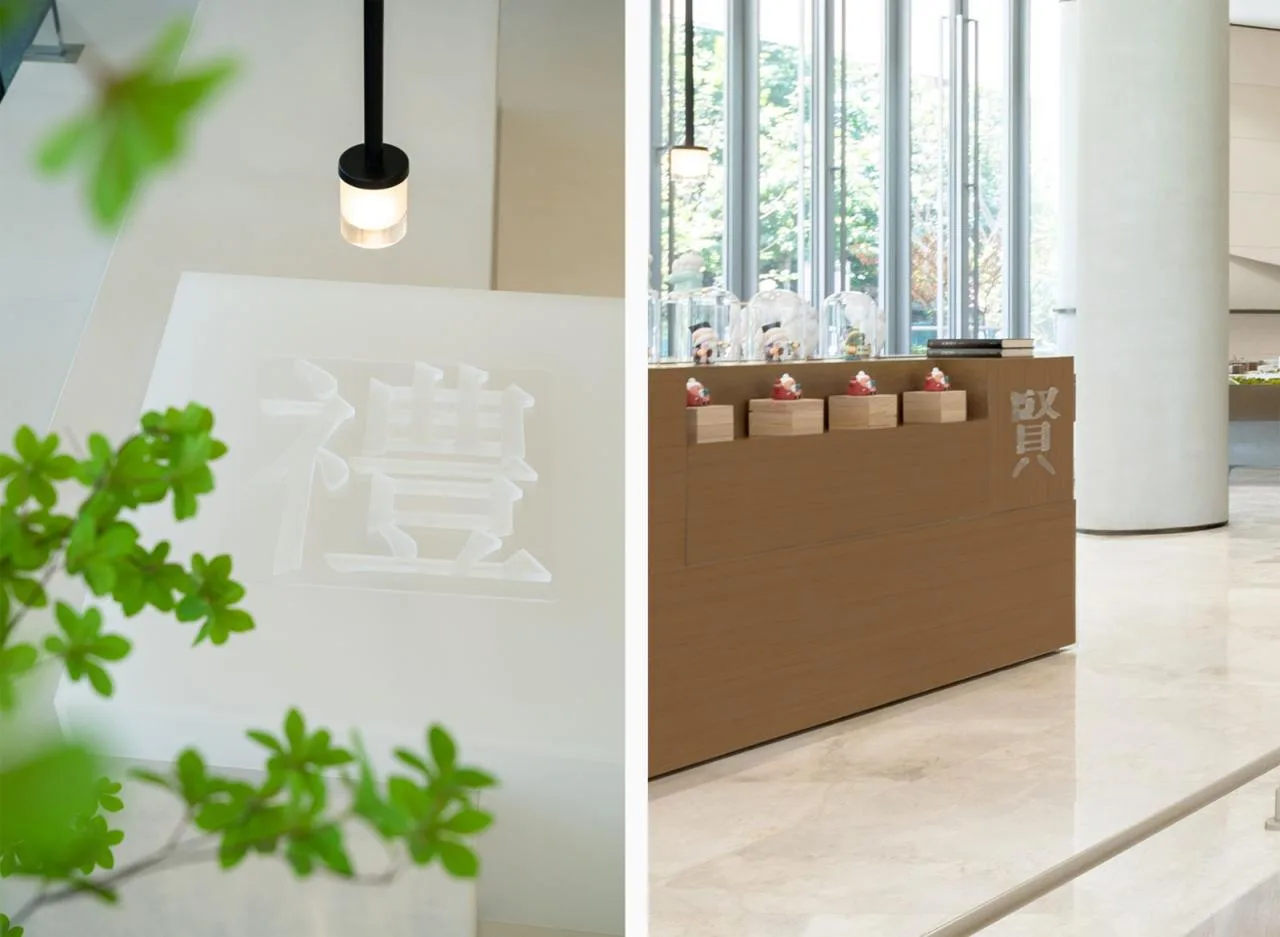
The service bar and seating are thoughtfully integrated into a sunken strip surrounding the cultural and creative area. Concealed from direct view, the bar offers visitors a comfortable and relaxed setting to enjoy books and coffee.
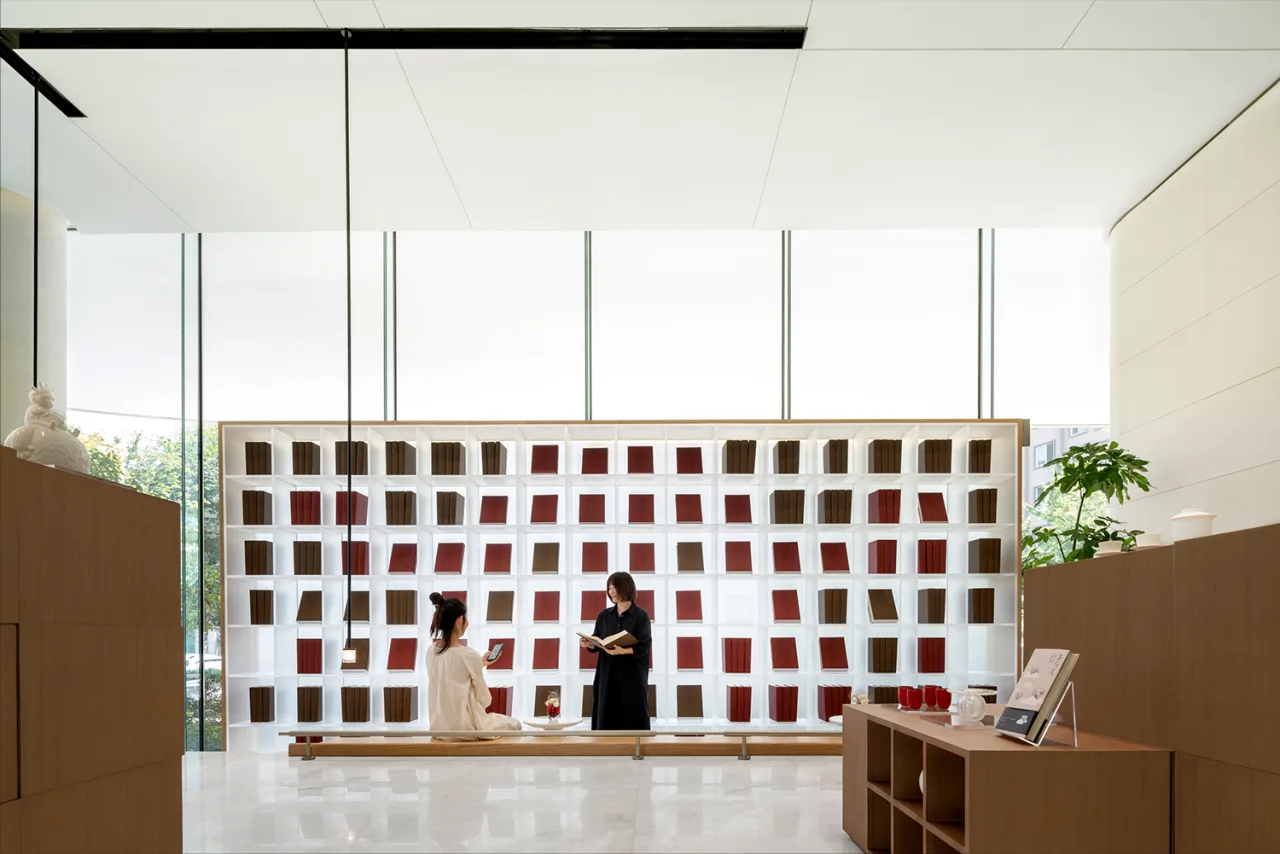
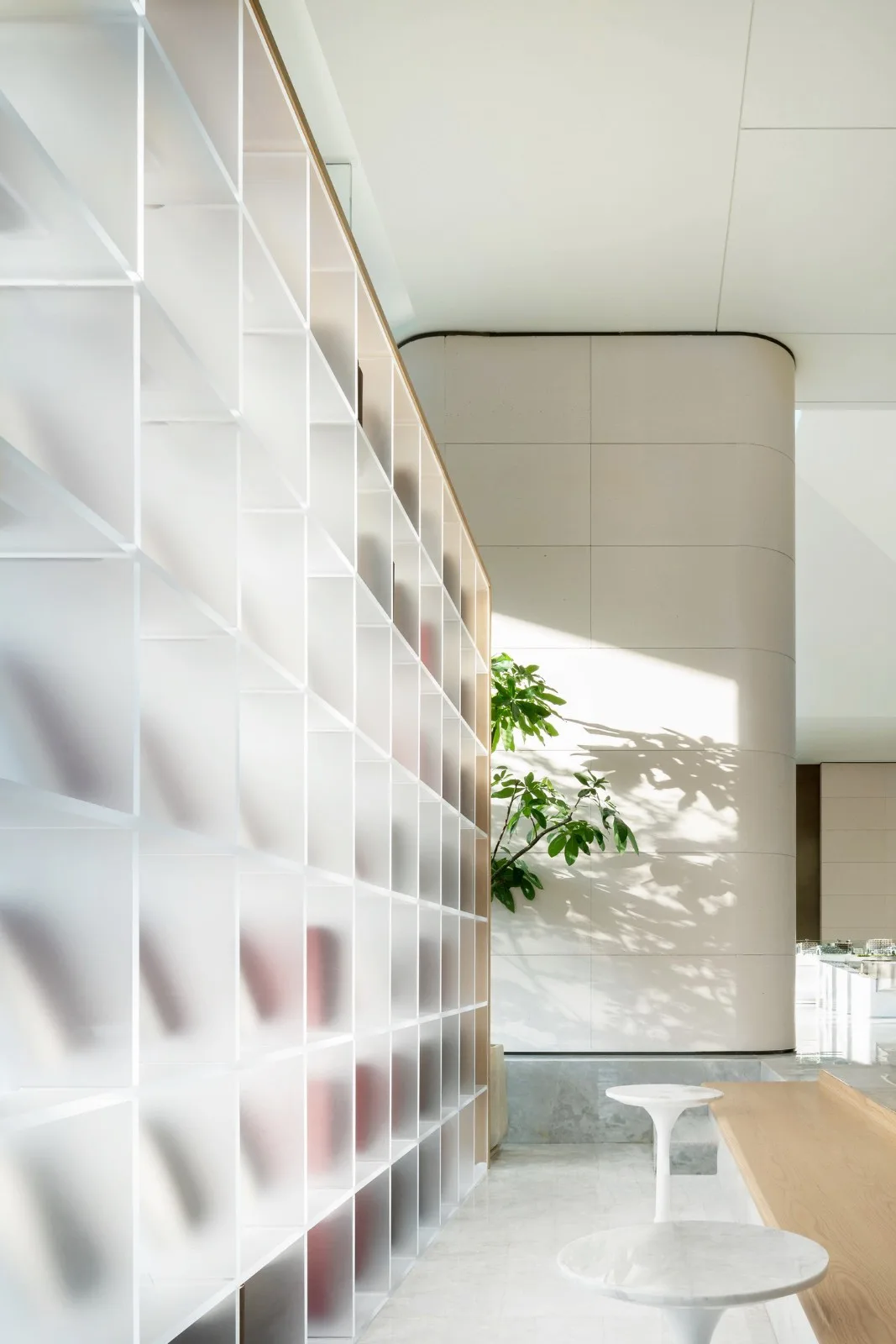
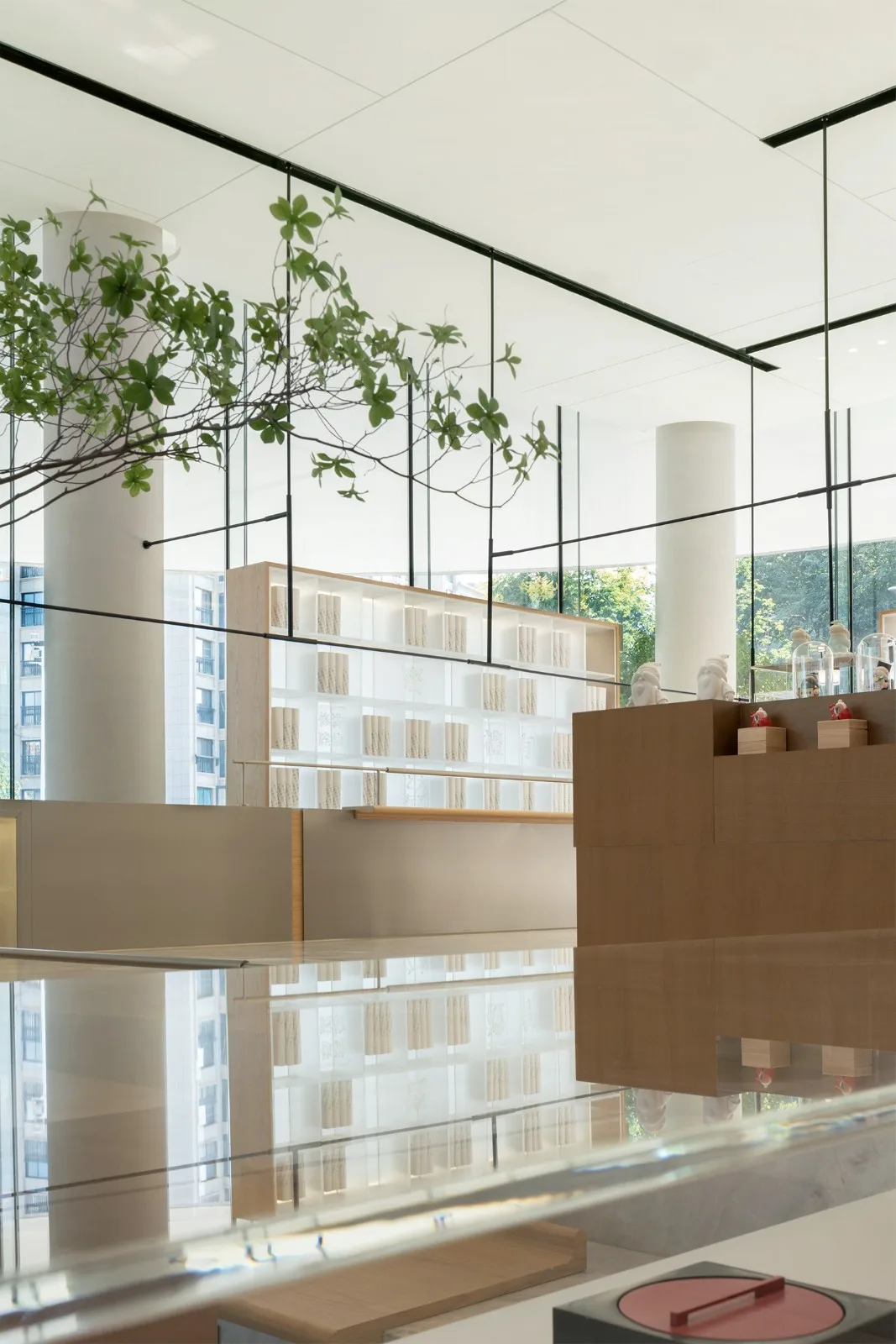
The “Culture with Etiquette” area also incorporates scenes for entrepreneurship in future communities. A multifunctional long table supports both work and social life, symbolizing the rejuvenation of this ancient city as it welcomes young people returning home to start businesses and shape new narratives for the future.
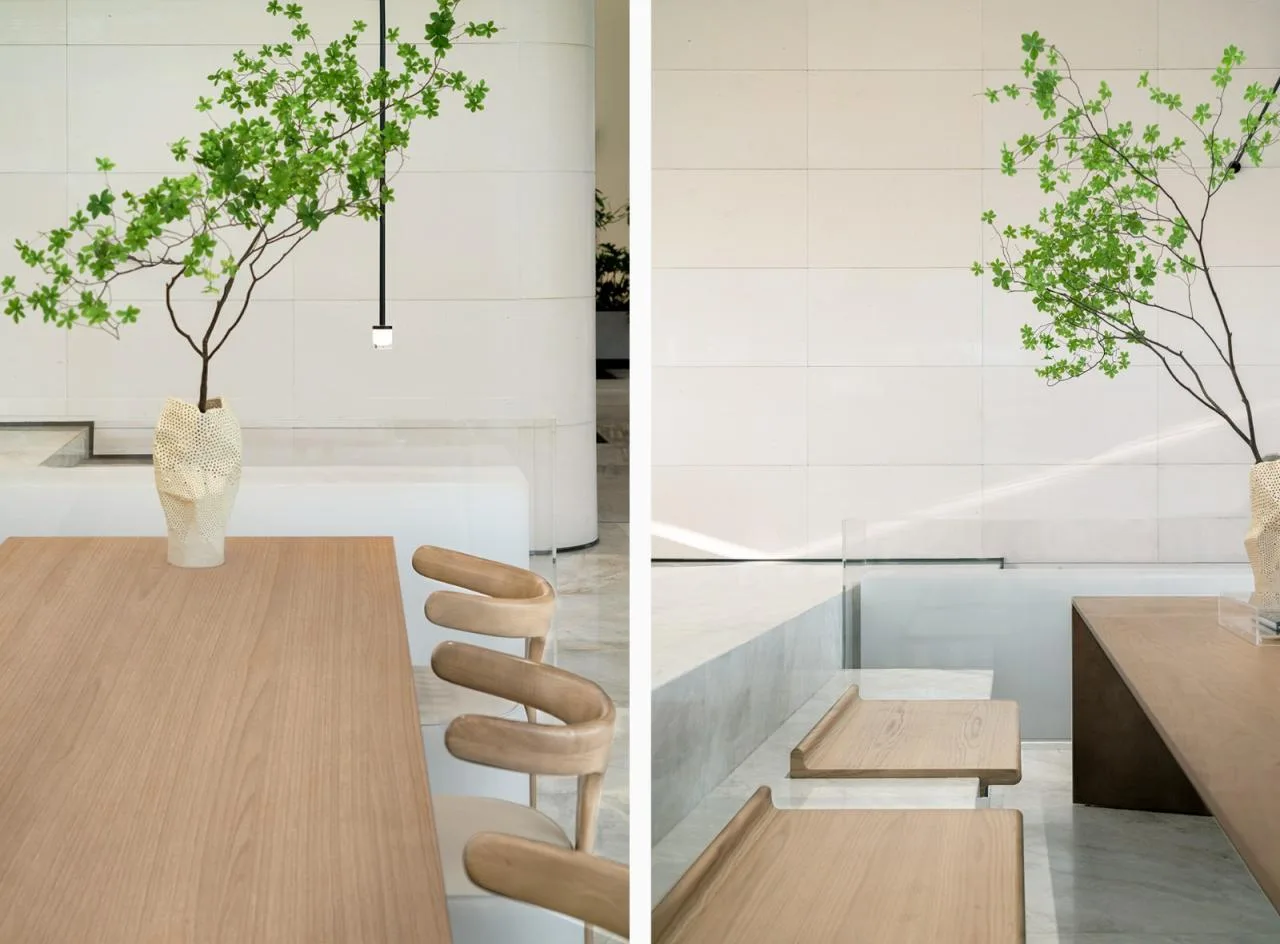
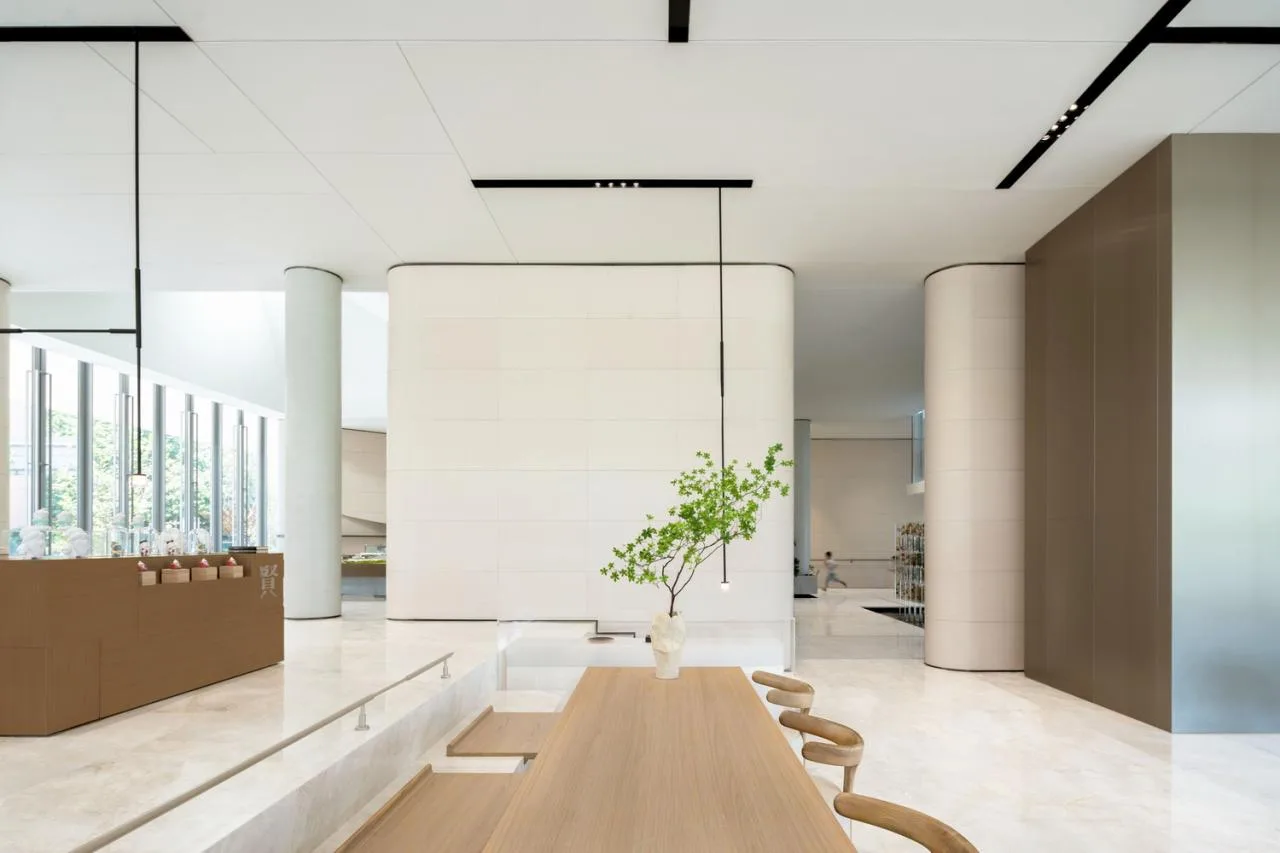

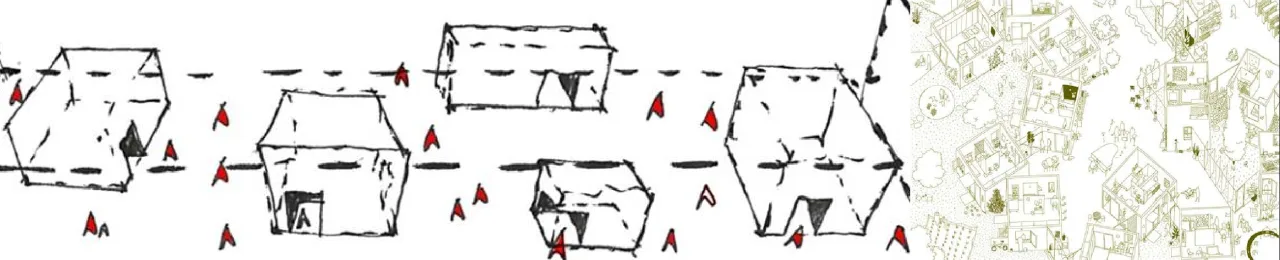
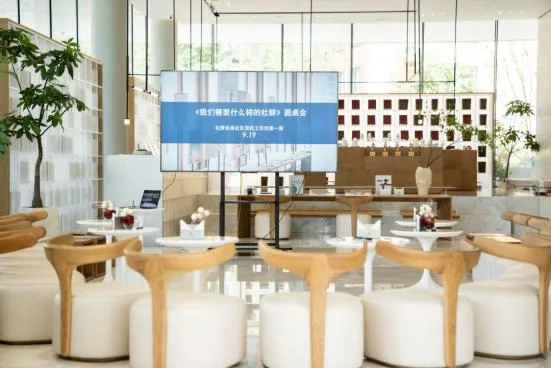
The interactive area, centrally positioned opposite the static cultural and creative zone, is a dynamic space designed for flexible uses. Residents envision this space adapting like “plug-and-play” cards to host community events, academic salons, and even children’s fashion shows.
This vision recalls traditional city squares or marketplaces—blank canvases brimming with vitality and possibility.
Designing an indoor “community square” guides the layout, perfectly matching the theme of “social etiquette.”
Plug-in card scene concept
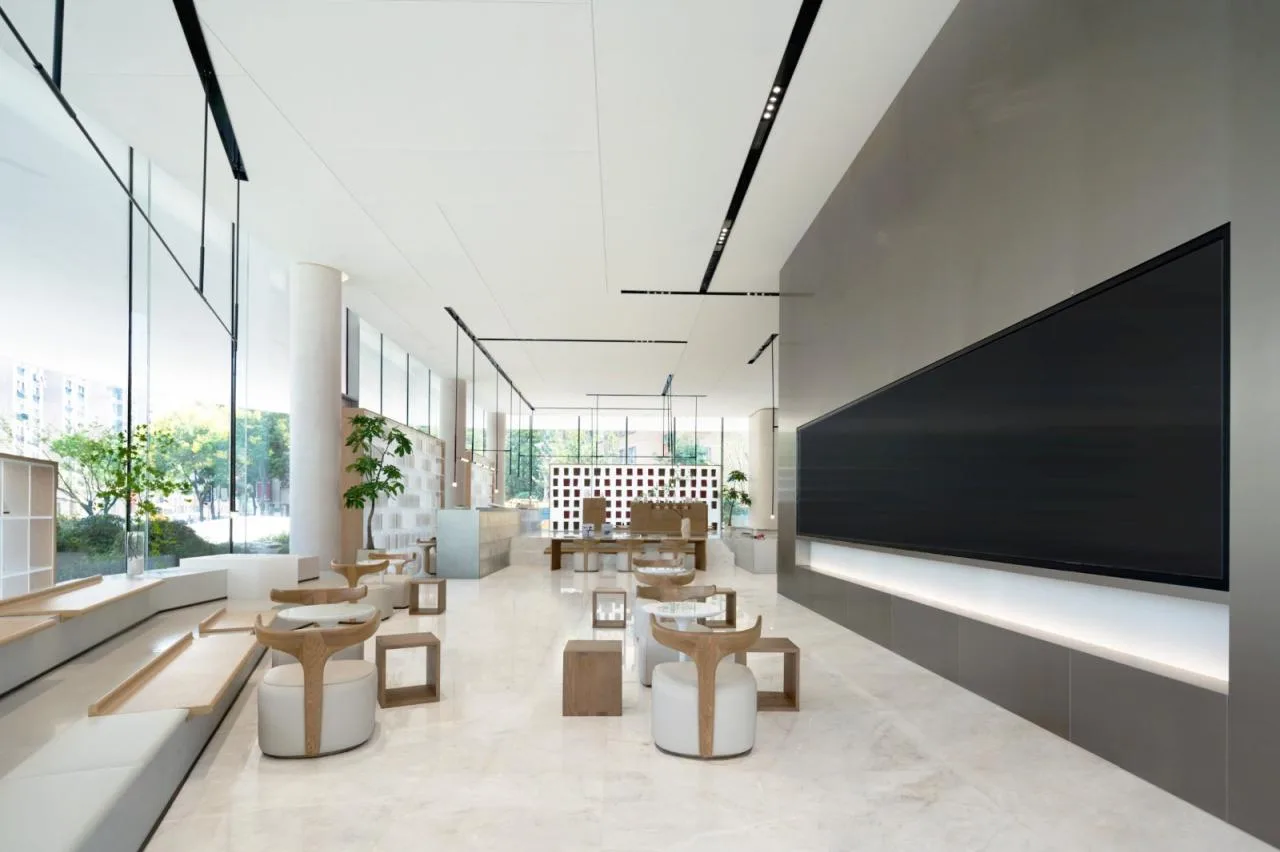
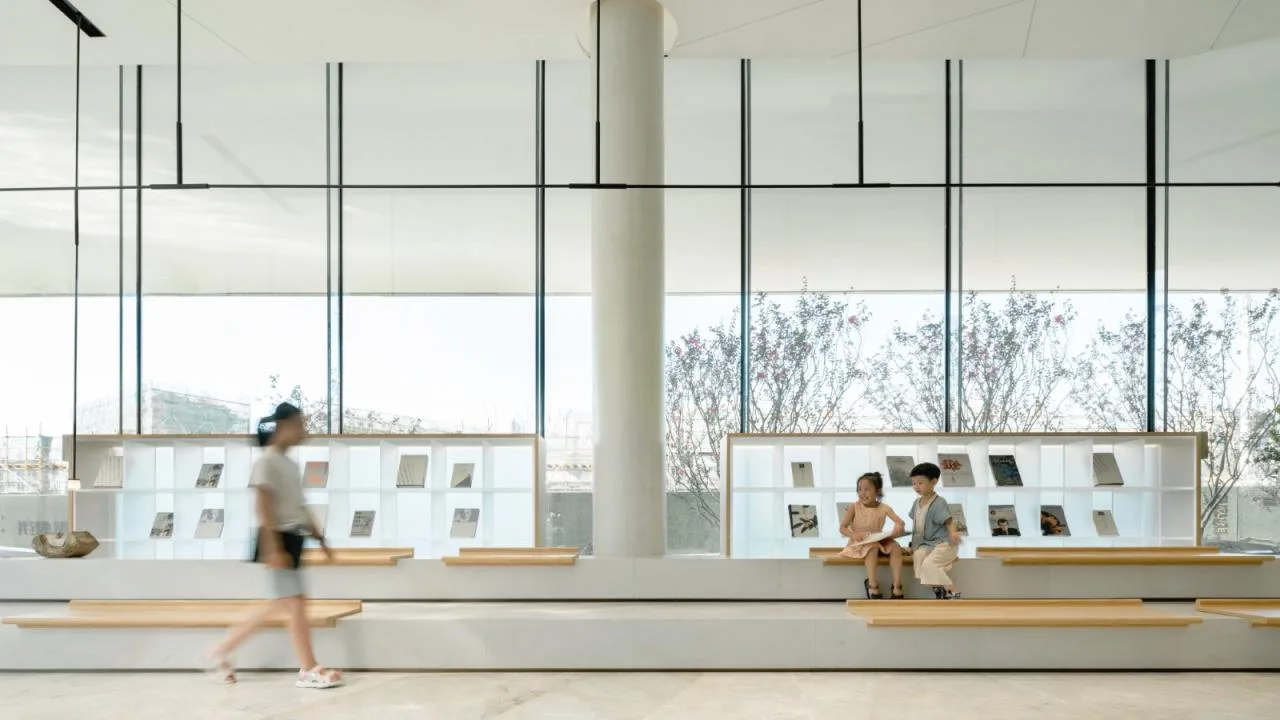
The majority of the space remains open, with artificial stone steps along the window resembling stadium seating for spectators. The scale encourages interaction and communication, while all furniture is modular and movable. Cubic wooden boxes serve as coffee tables or additional seating. Along one wall, a large stainless steel surface conceals a 6.1 by 1.45-meter interactive LED screen. Depending on the event and audience size, the space can swiftly transform between modes, empowering visitors to shape and enliven the environment through their presence.
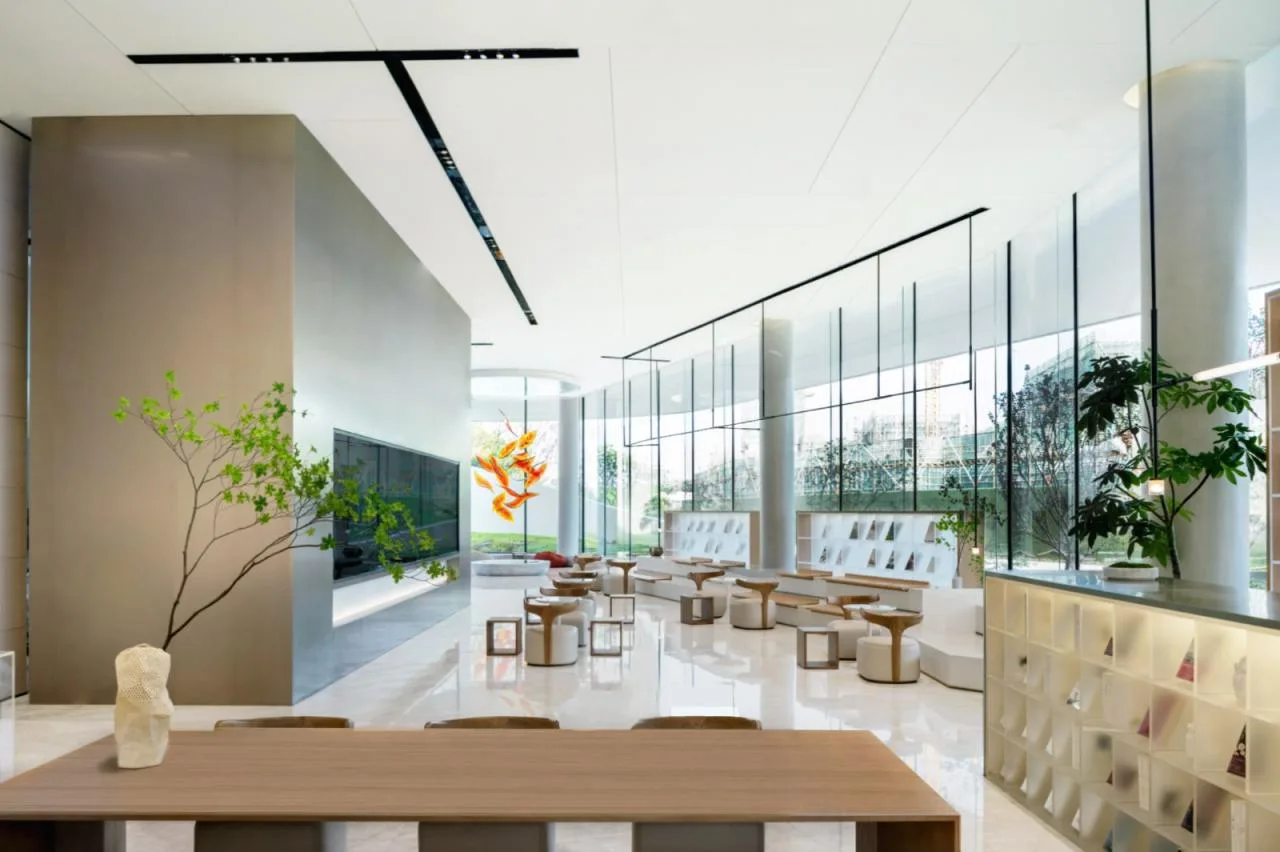
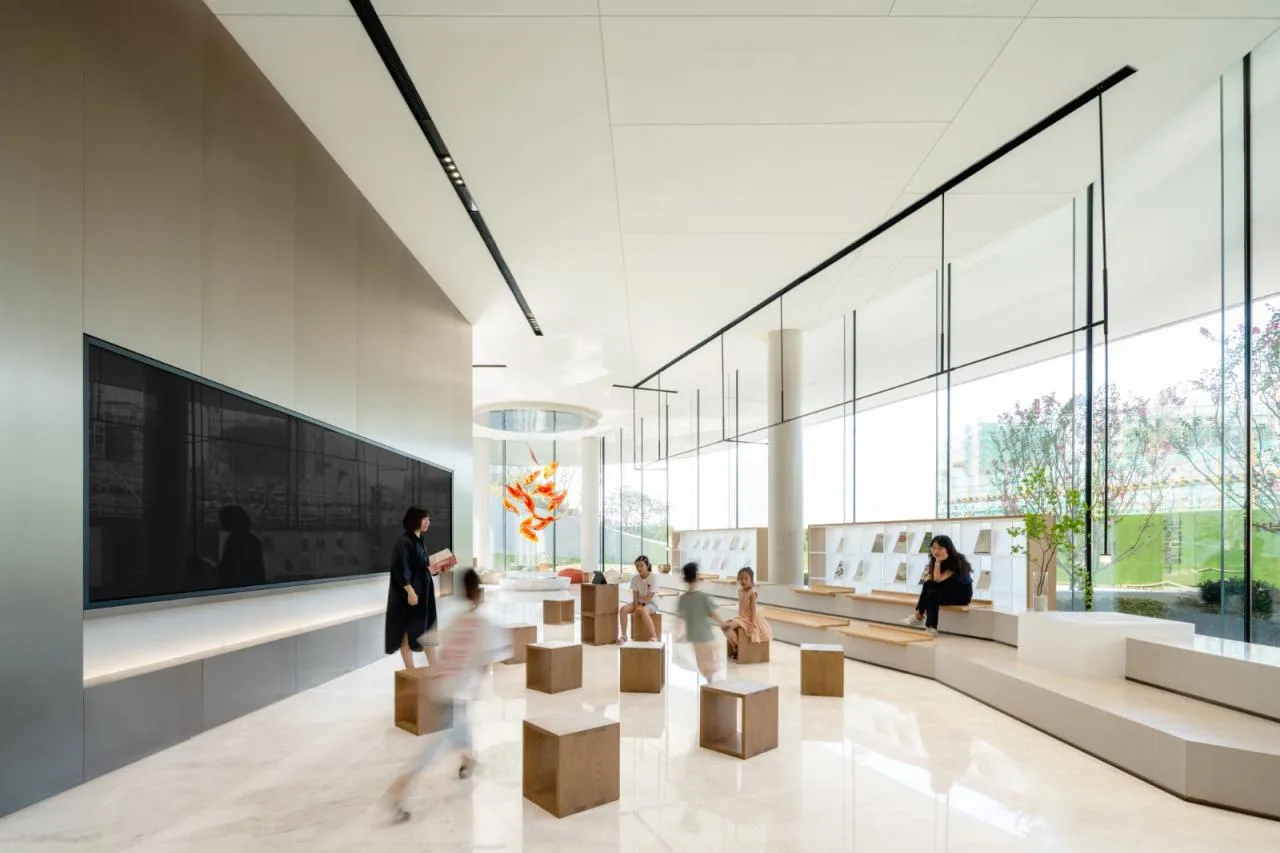
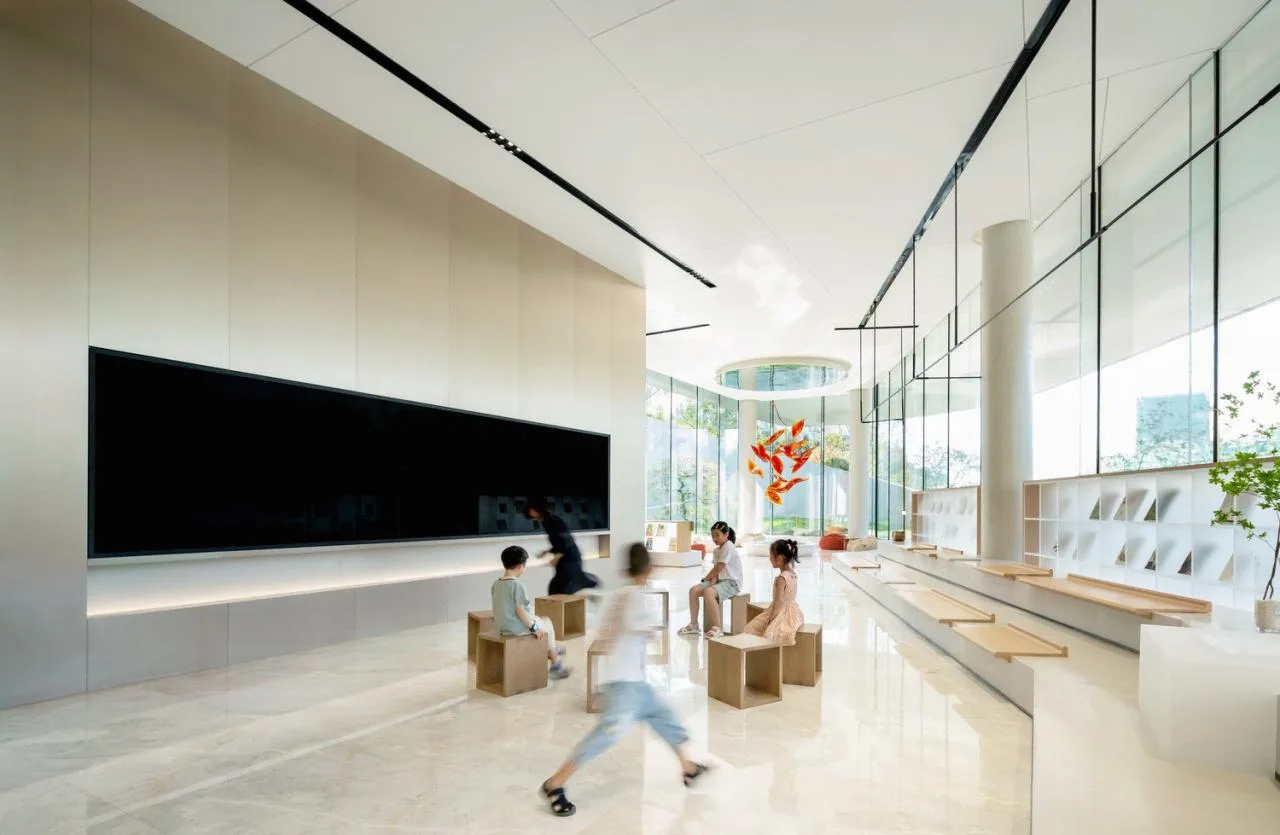
The ceiling’s linear matrix design and lighting evoke the “intersecting paths” imagery from the Peach Blossom Spring. During community events, the space fills with a familial warmth—perfectly capturing the phrase, “yellow hair falling and enjoying itself.”
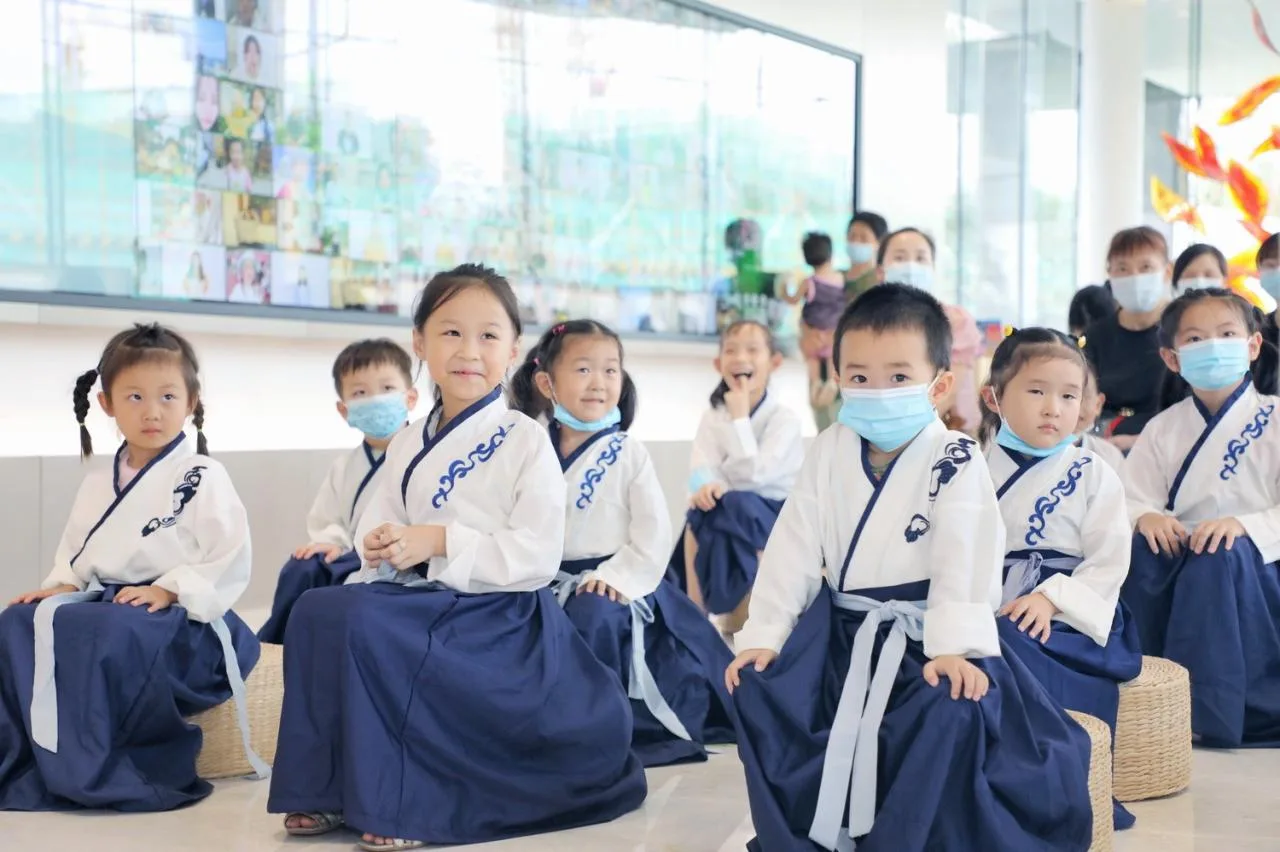
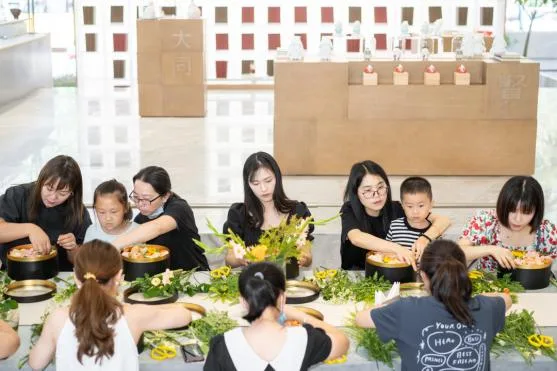
Real Community Activities

As midday light filters through the western public corridor, this bustling space breathes vibrant life into the community, like the air outlet of a massive building.
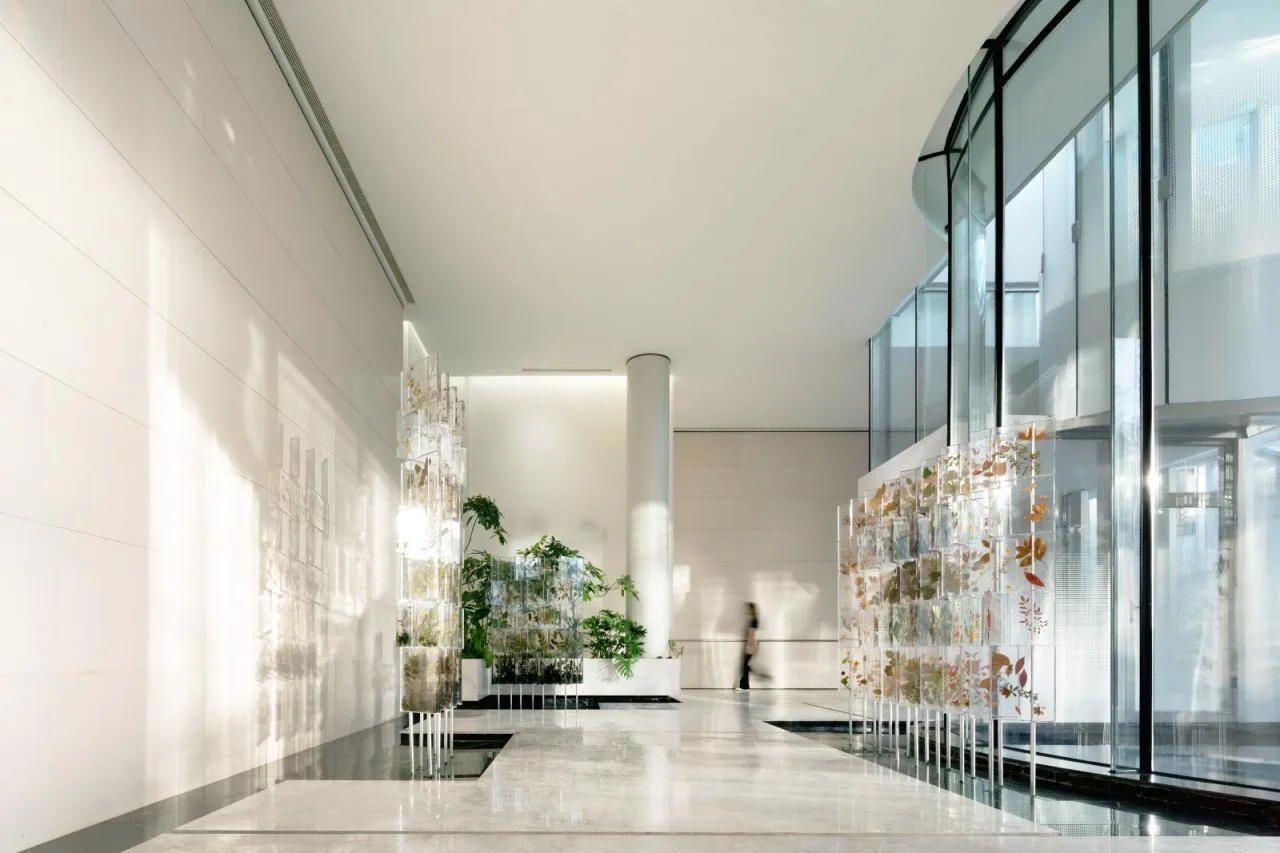
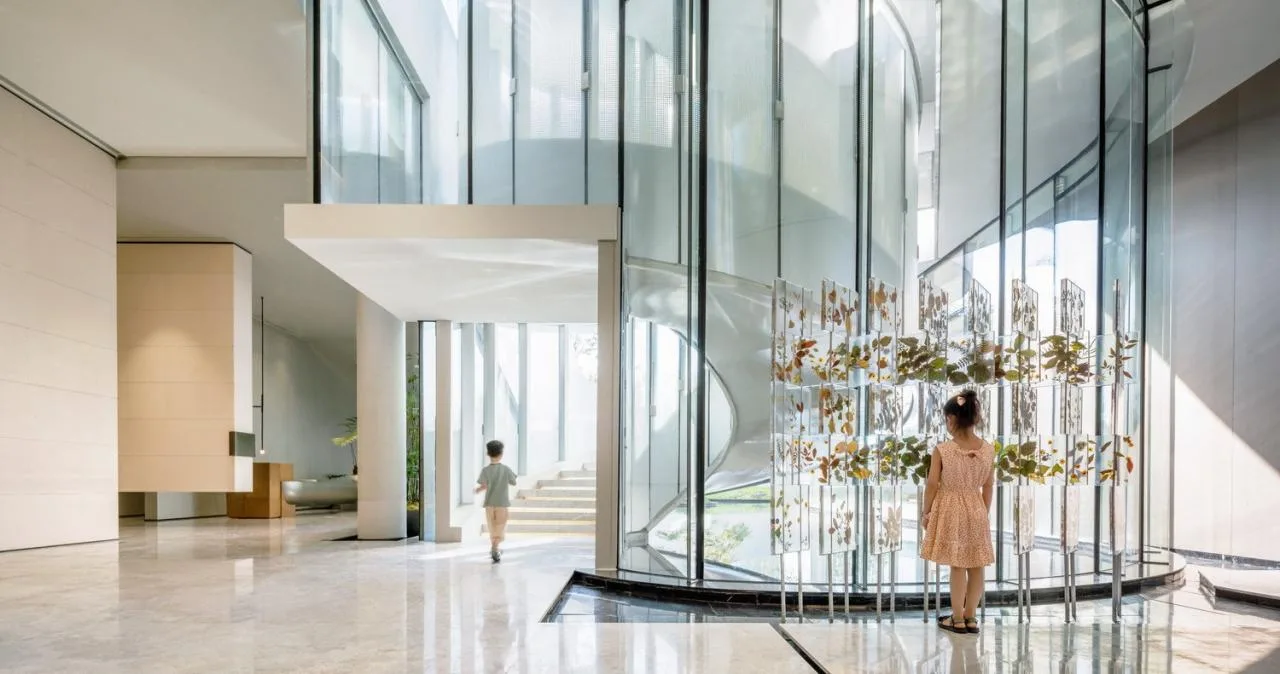
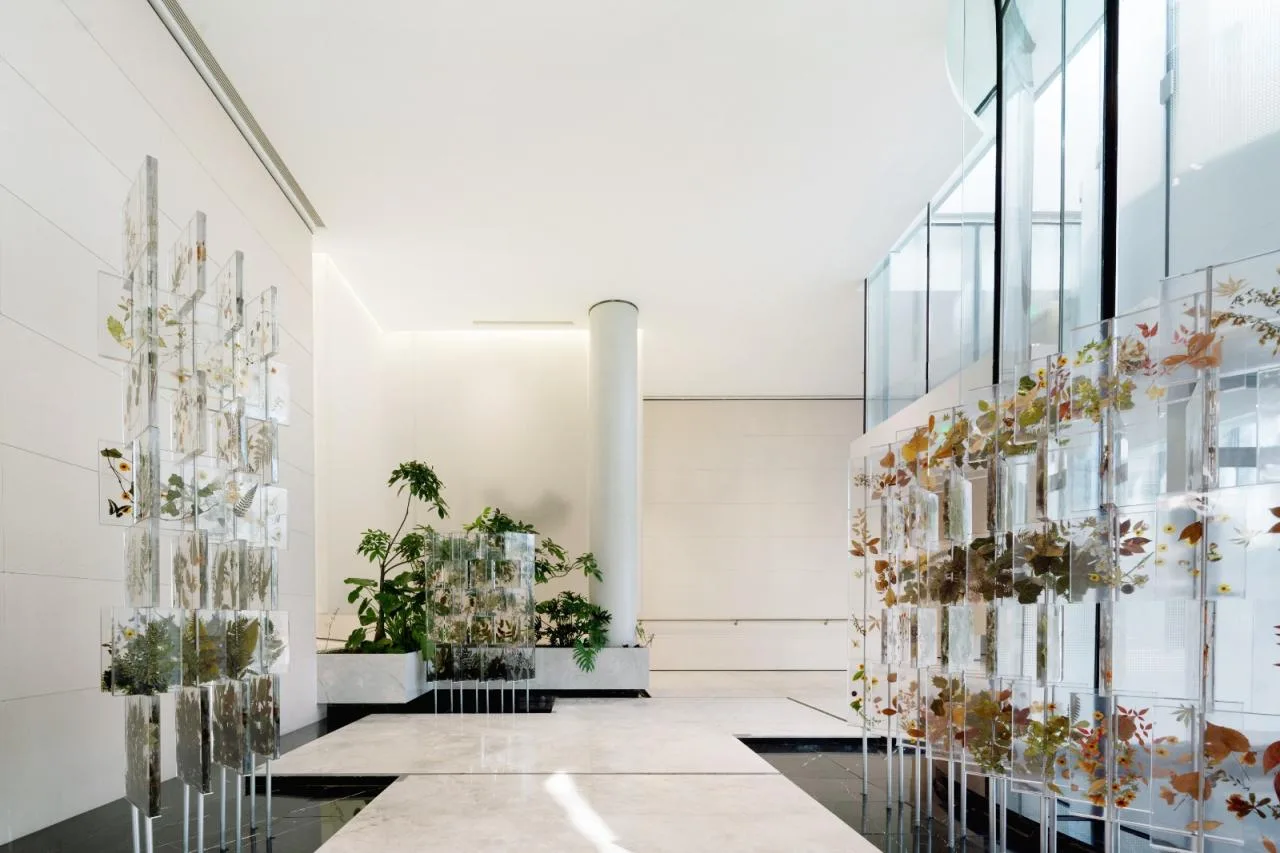
Our society and community consist of people, but we must also acknowledge the billions of silent inhabitants sharing this land—plants and animals that provide resources and environment for human rest and renewal. These “silent residents” are part of the future community. We dedicate space here to express the “natural etiquette” of Lixian Future Community through installations.
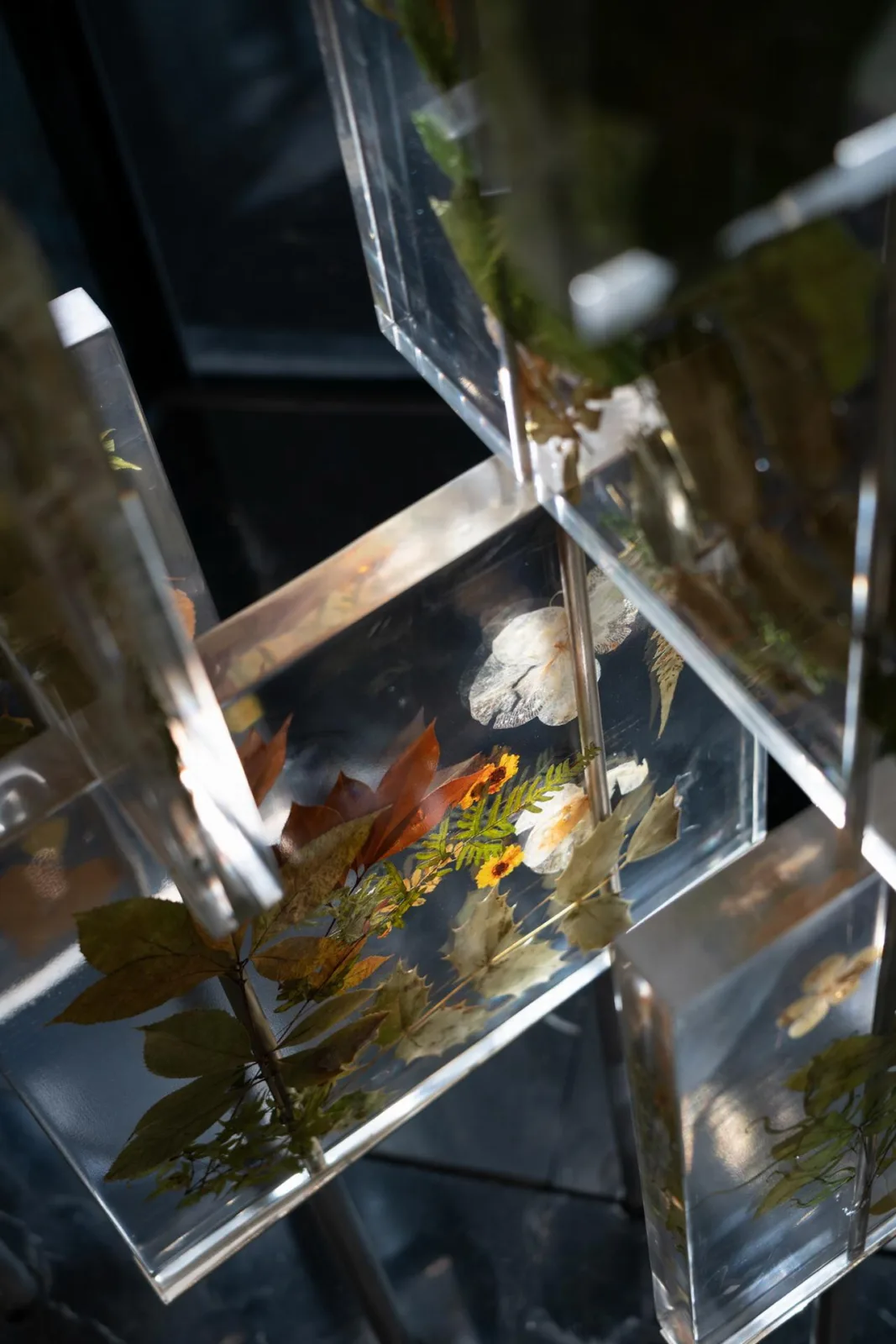
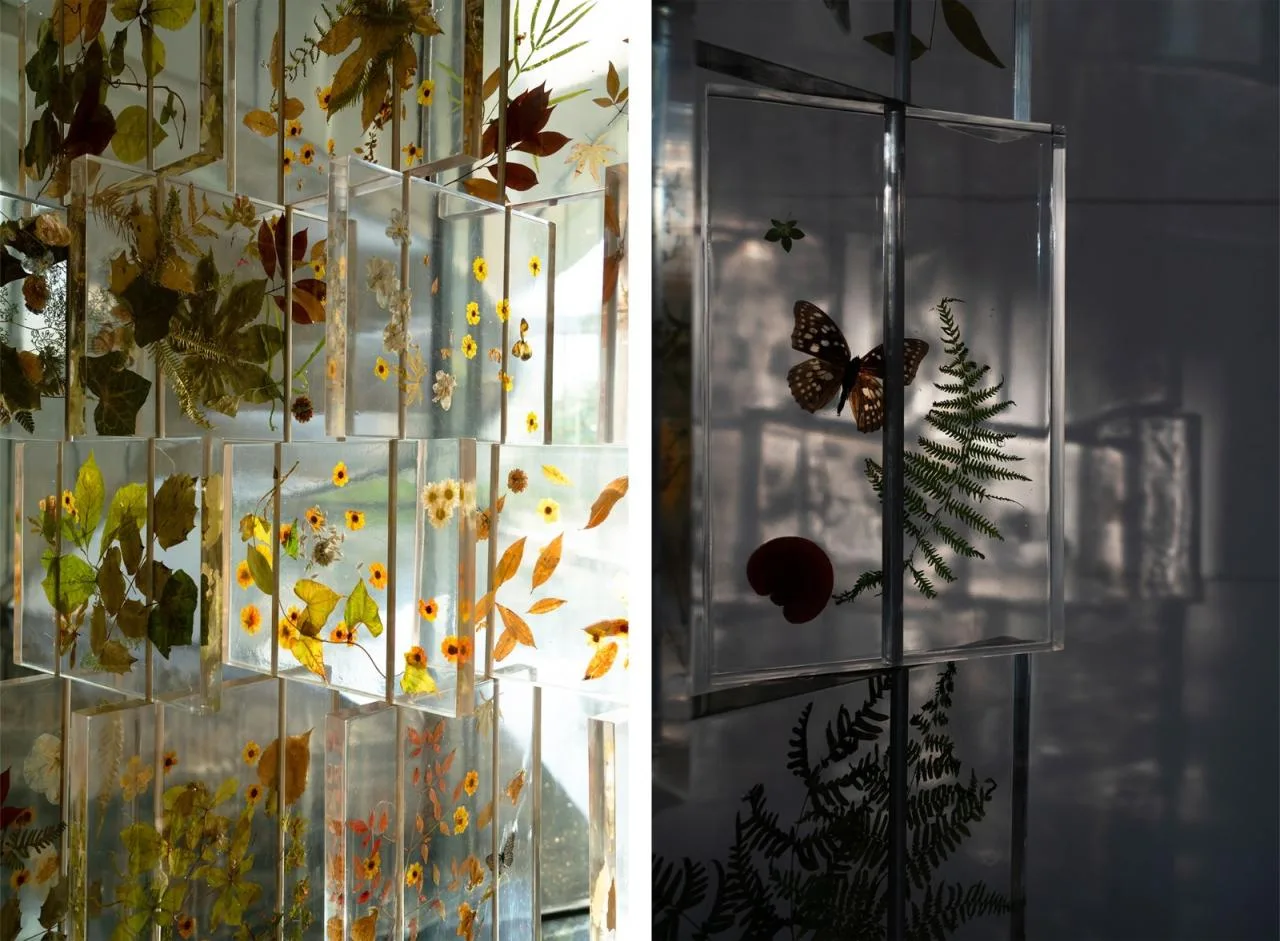
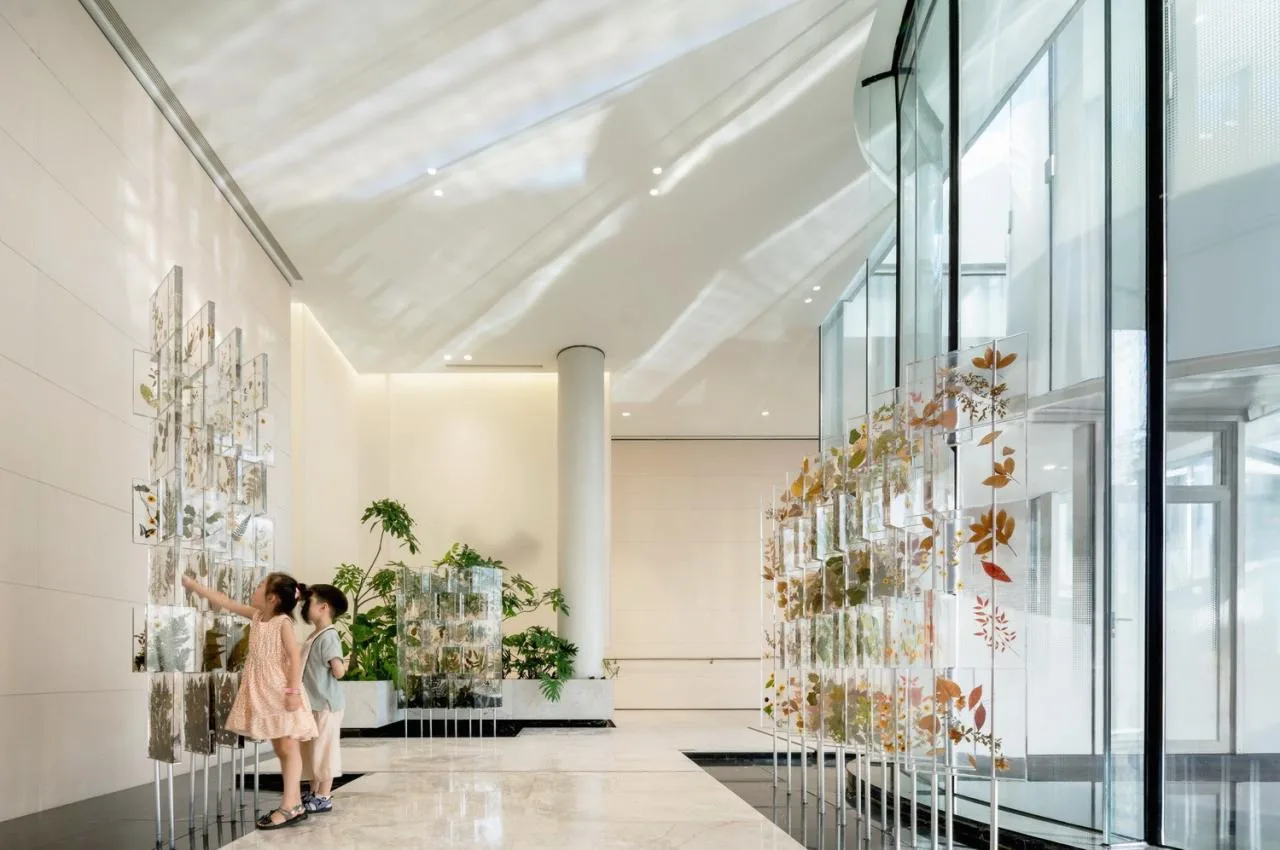
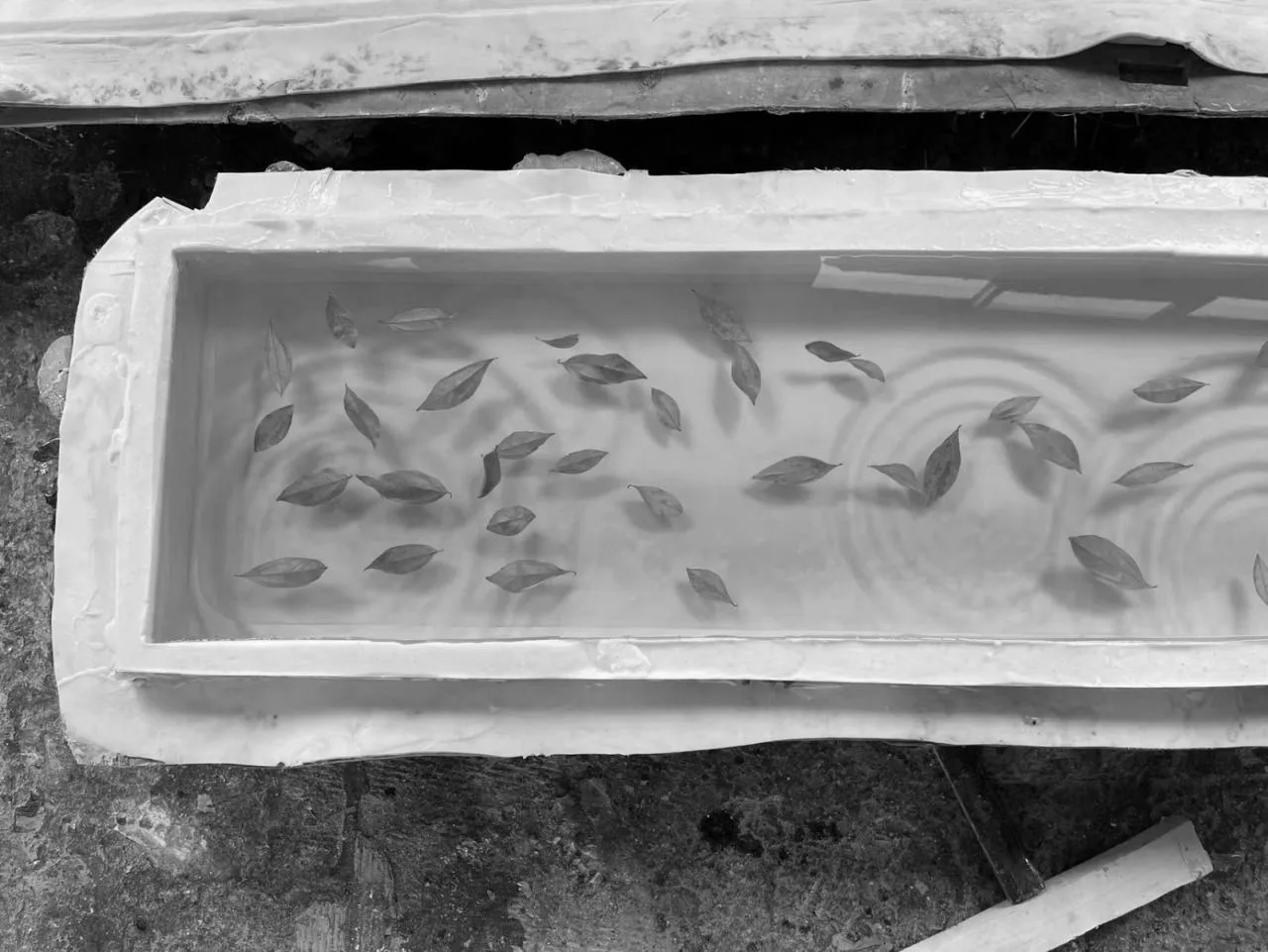
Our team collected local flora and fauna specimens from Lanke Mountain—including yew, bole tree, giant toothed sandfly, and broad-tailed butterfly. These were carefully arranged and sealed in 100 pieces of transparent resin. Visitors passing through the corridors are reminded to rediscover and cherish our living environment. Sunlight filtering through the resin and colored leaves creates an amber-like glow, reflected in children’s eyes. Protecting and respecting nature is a fundamental etiquette.

At the spatial flow’s end lies the final point of the neighborhood center’s interior—a building that extends into the water, embraced by a gently rising earthen landscape wall. Though a terminus, it remains visible from many vantage points across the site and city, serving as an energy focal point or a clock tower visible from all directions. How should the final chapter—the “gifts of the future”—be expressed?
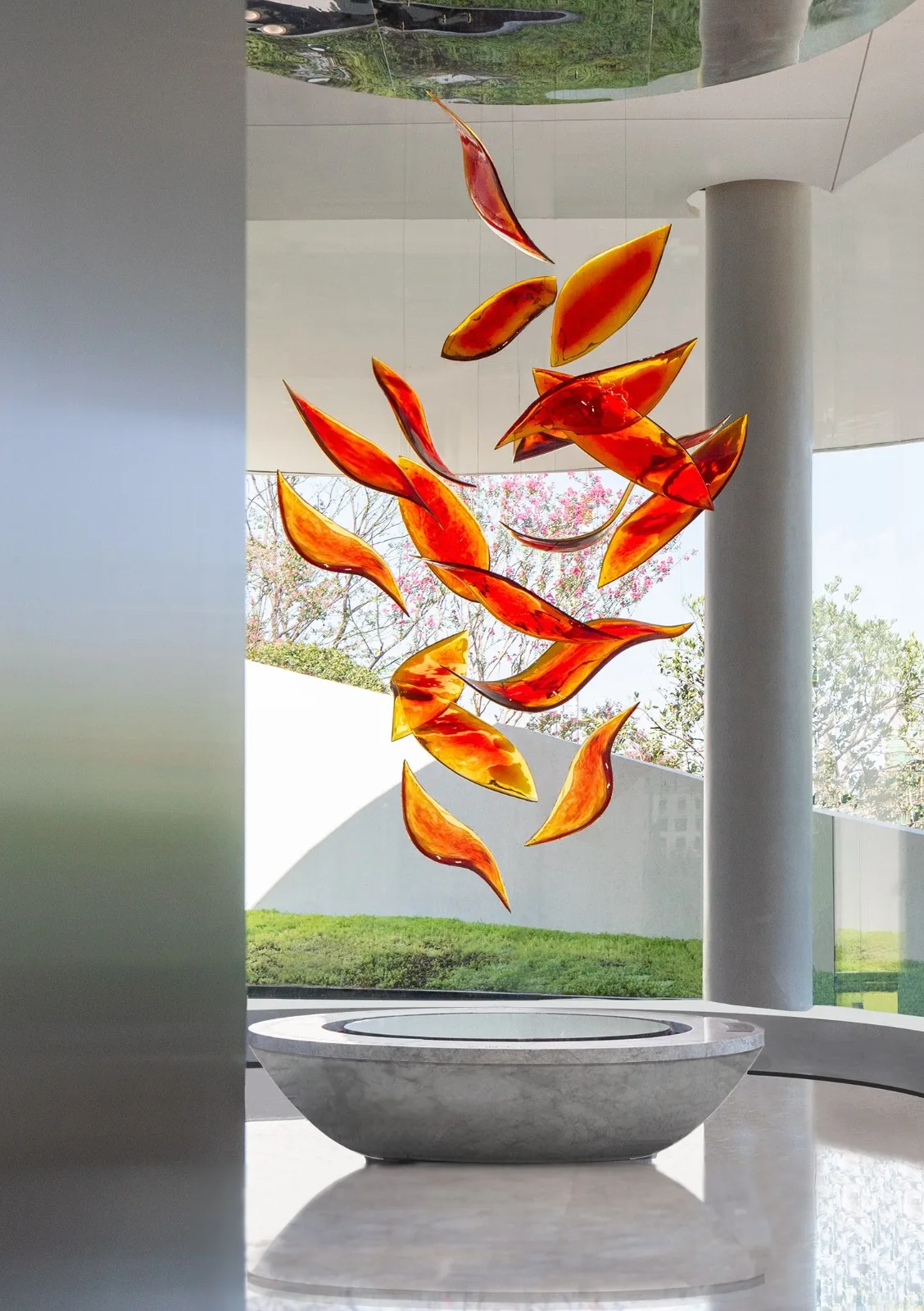
When we envision the future, we think of continuity—like the flickering flame of a candle, each future instantaneously becoming present and past. Tradition and the future must be linked, not severed. We chose the image of “fire” as a symbol bridging history and the future. Ancient ancestors gathered around fire to draw warmth, tell stories, and nurture civilization. Fire witnessed the birth of human civilization and represents unwavering life energy and confidence.
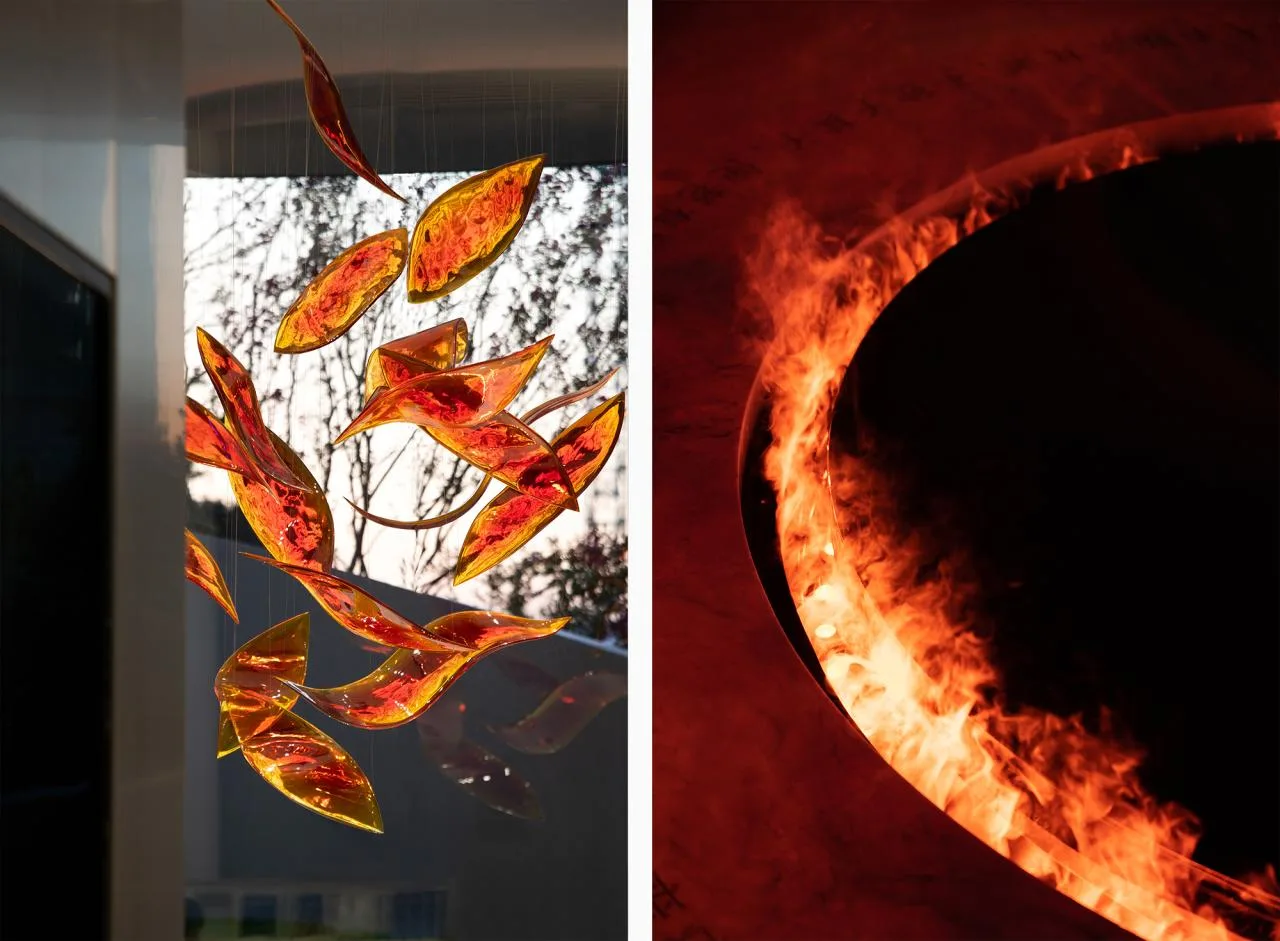
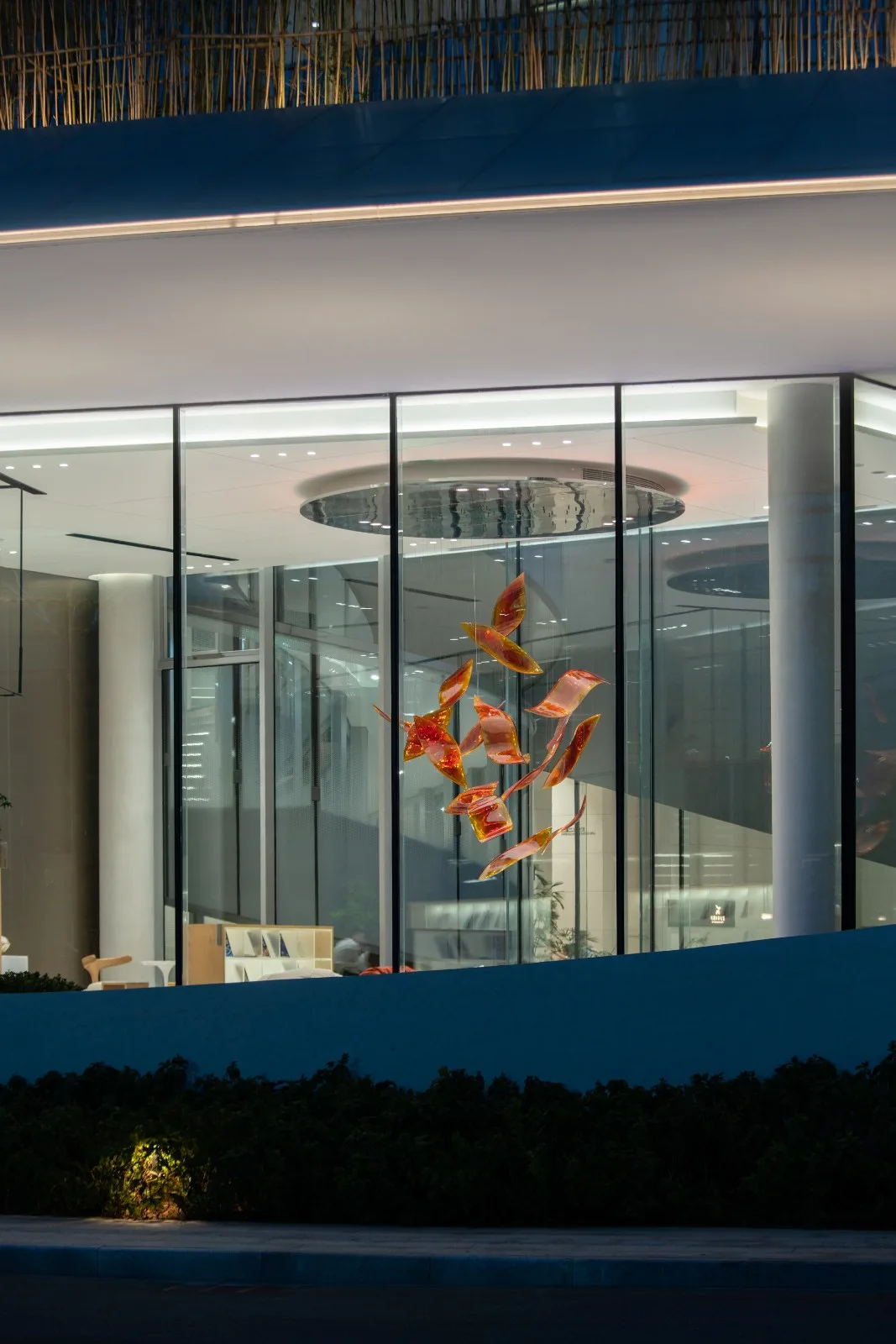
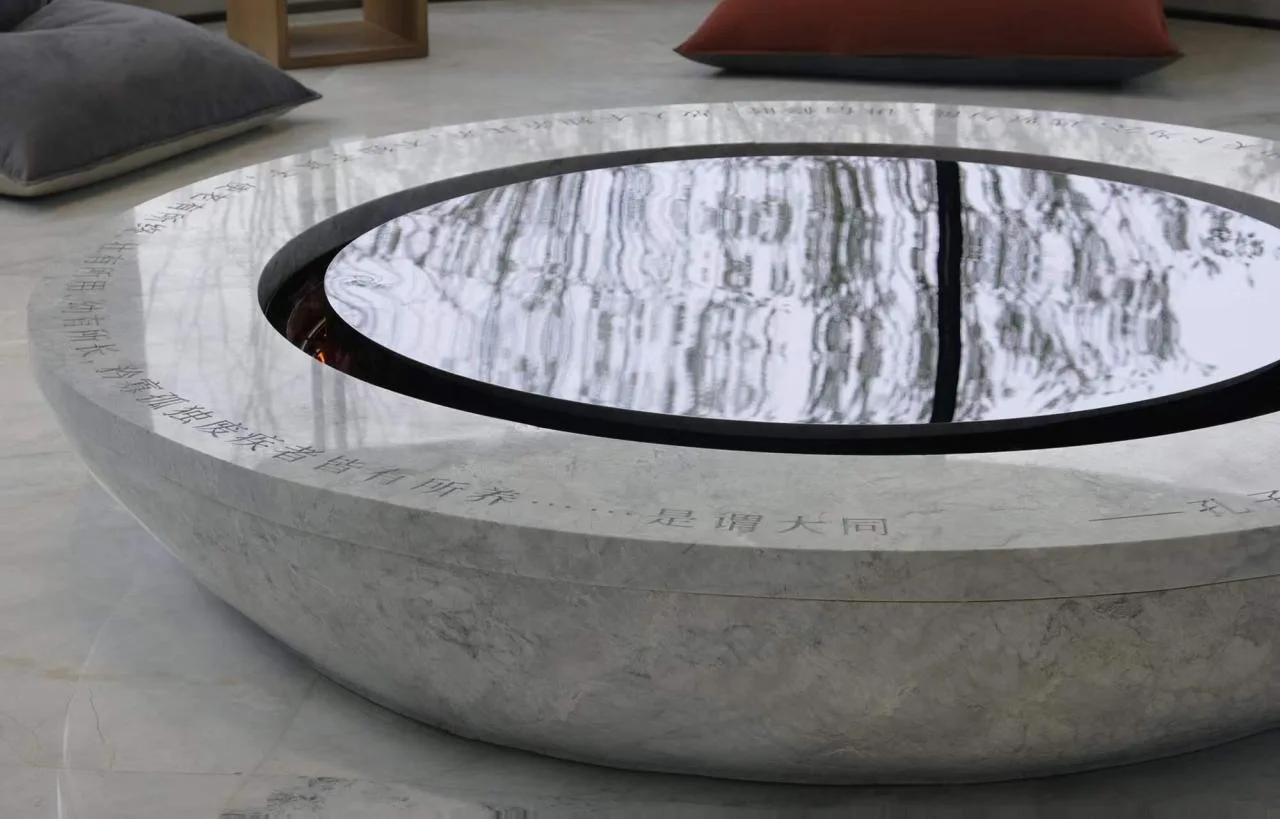
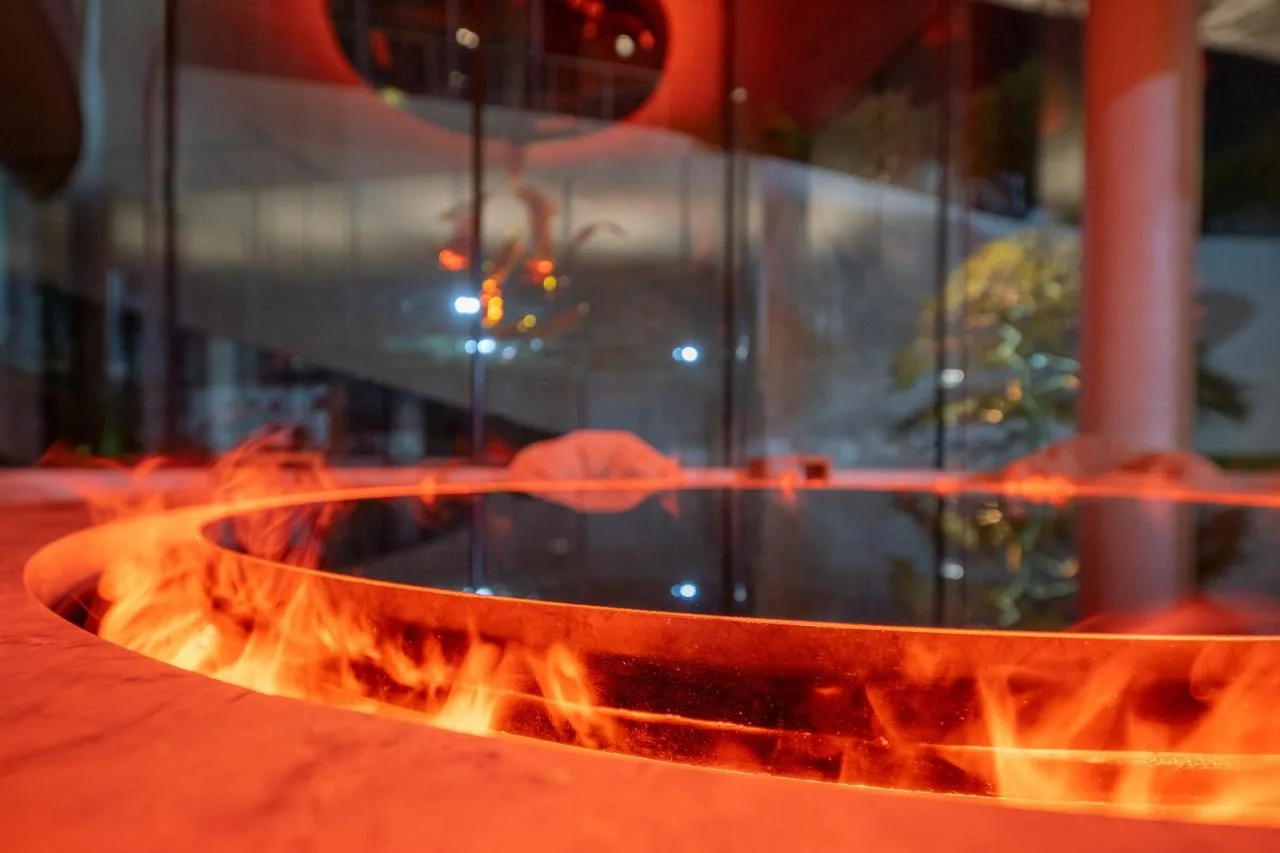
We designed a hearth enclosure featuring a raised pedestal forming an elliptical area that echoes the landscape wall outside. At its geometric center sits a marble brazier with lighting and atomization devices simulating flames. A ceiling art installation, dyed with imported resin and hand-pressed into shape, symbolizes rising flames suspended in midair.
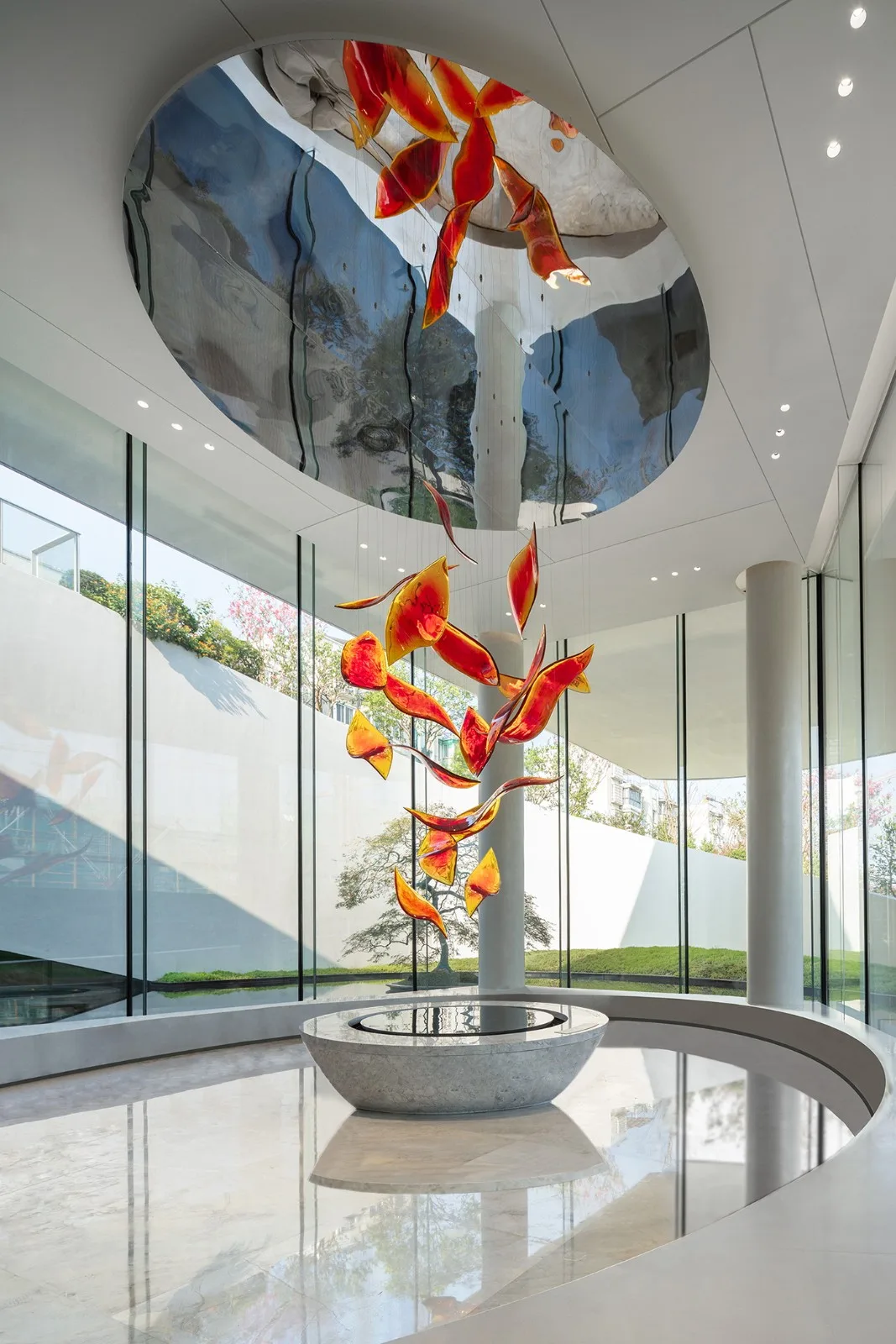
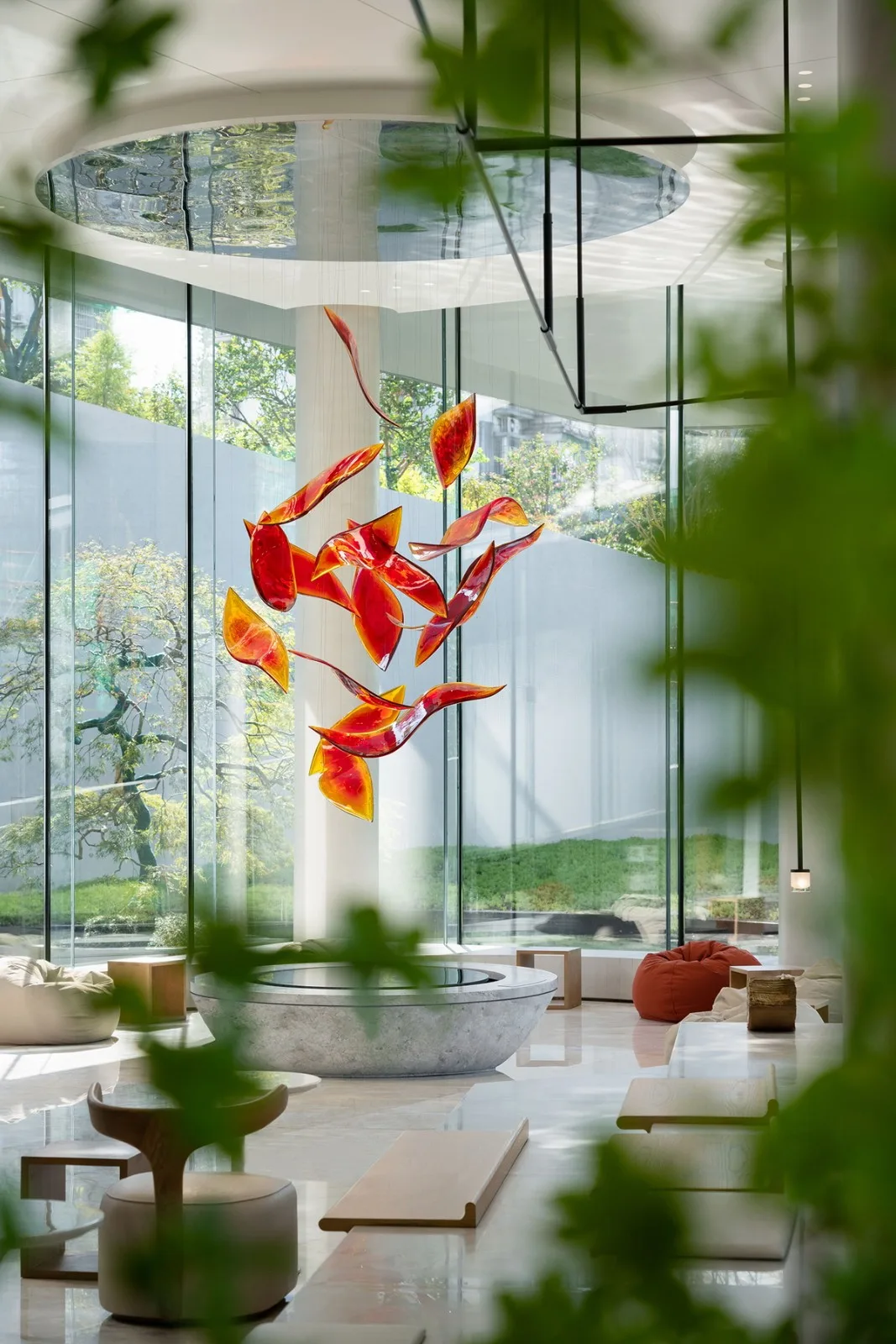
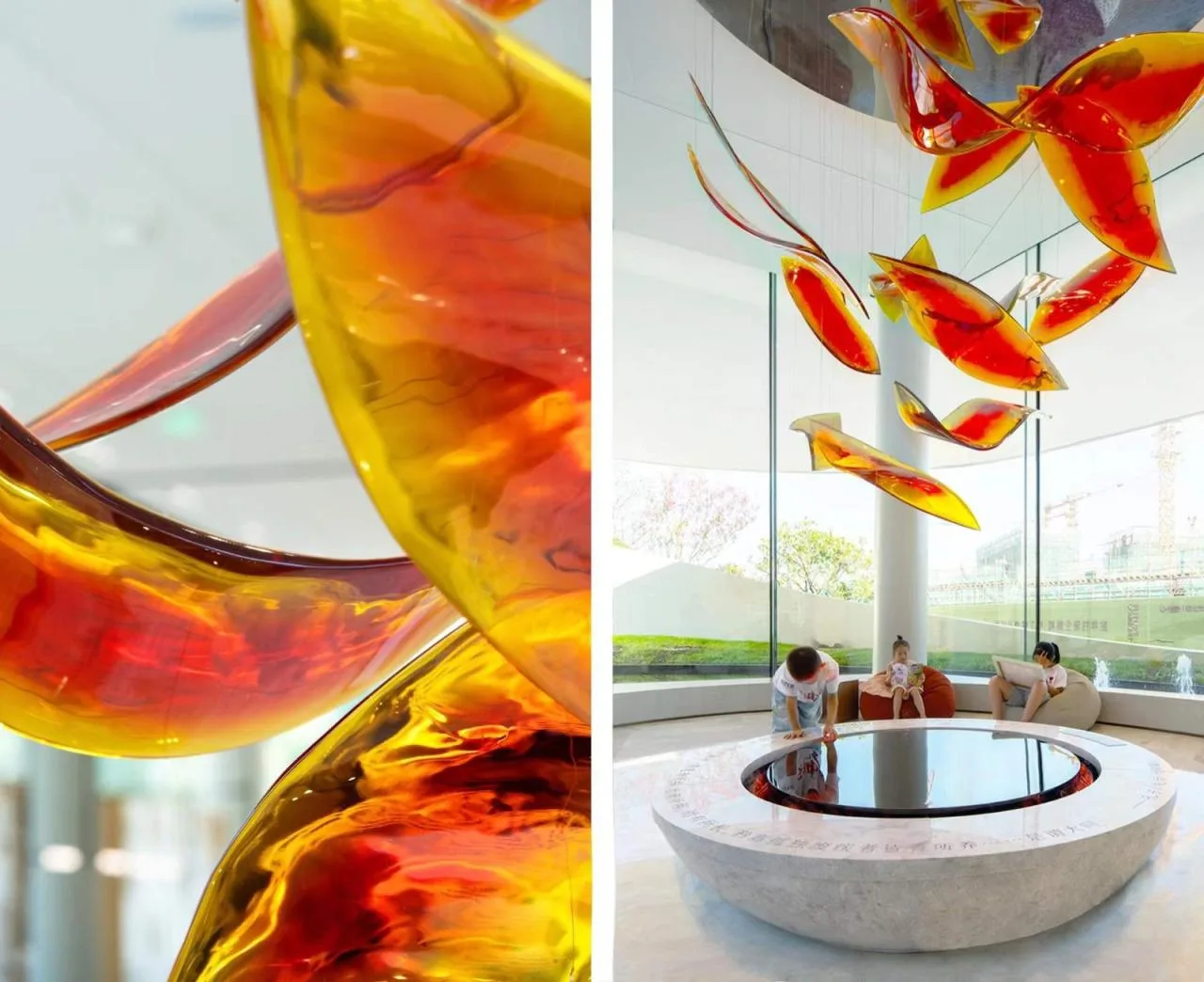
The great aspiration of Confucius from the “Great Harmony Chapter” of the Book of Rites is engraved on the brazier’s surface. This text reappears here, inviting visitors to touch and read, closing the narrative circle.
Postscript
Throughout the more than six months from project inception to completion, ongoing dialogue between the owner team and design team shaped every step. Understanding the concept of future communities, exploring Quzhou’s culture, respecting the surrounding old neighborhoods, presenting homeowners’ cultural values, and integrating spatial design with operational needs—these seemingly disparate topics were the foundation and challenges of our design. Though the narrative background may appear grand and abstract, we sought to capture subtle everyday moments and human perspectives to ground the concept.
By observing world details, reflecting thoughtfully on scenes, creatively solving problems, and ultimately returning space to its users, we strive to practice an approach that enriches every project.
We extend our heartfelt thanks to every member involved in this project.
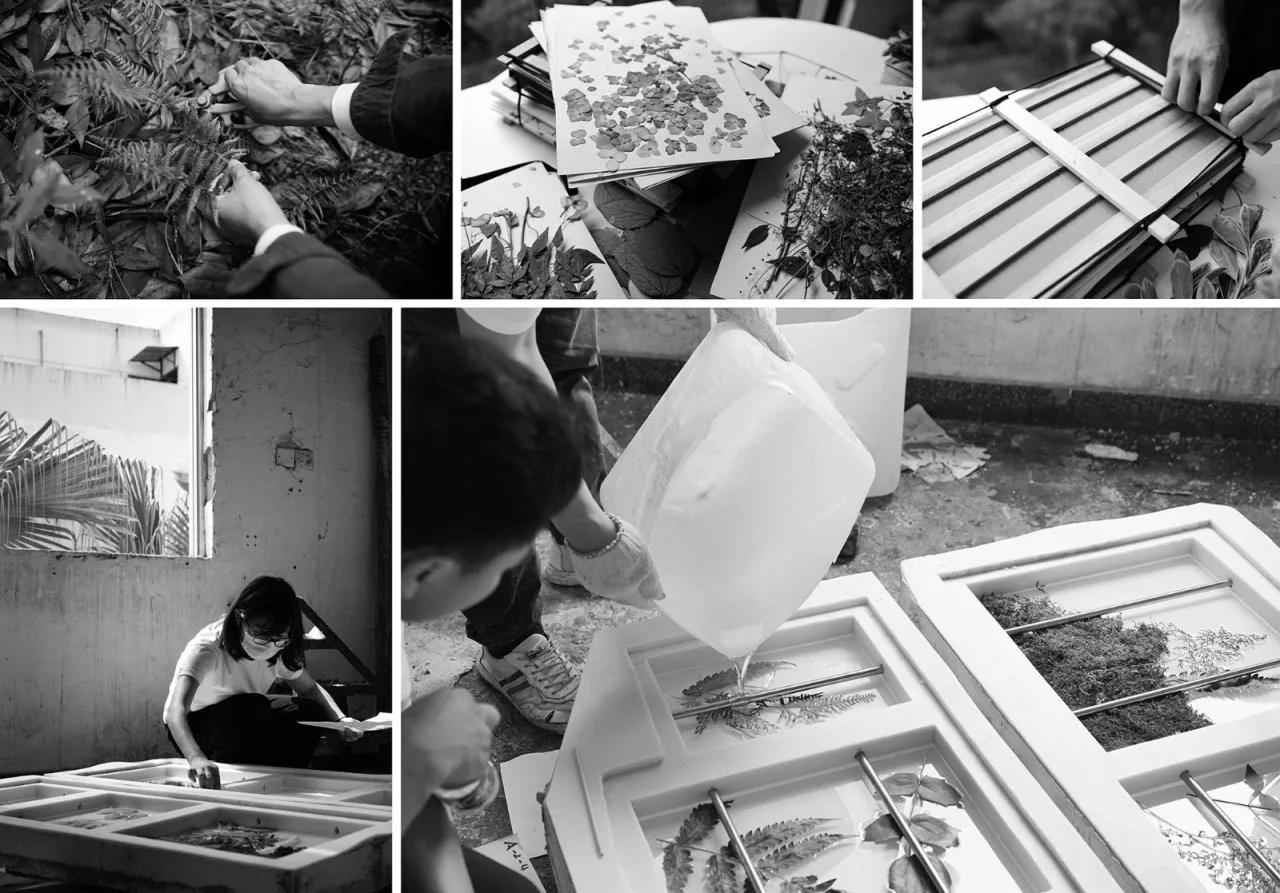
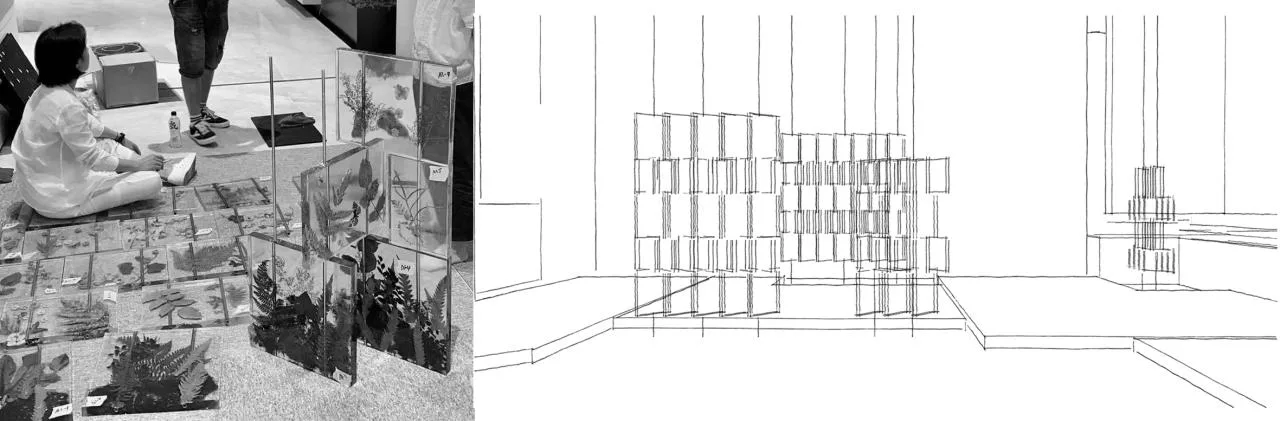
The making of the “Natural Gift” installation
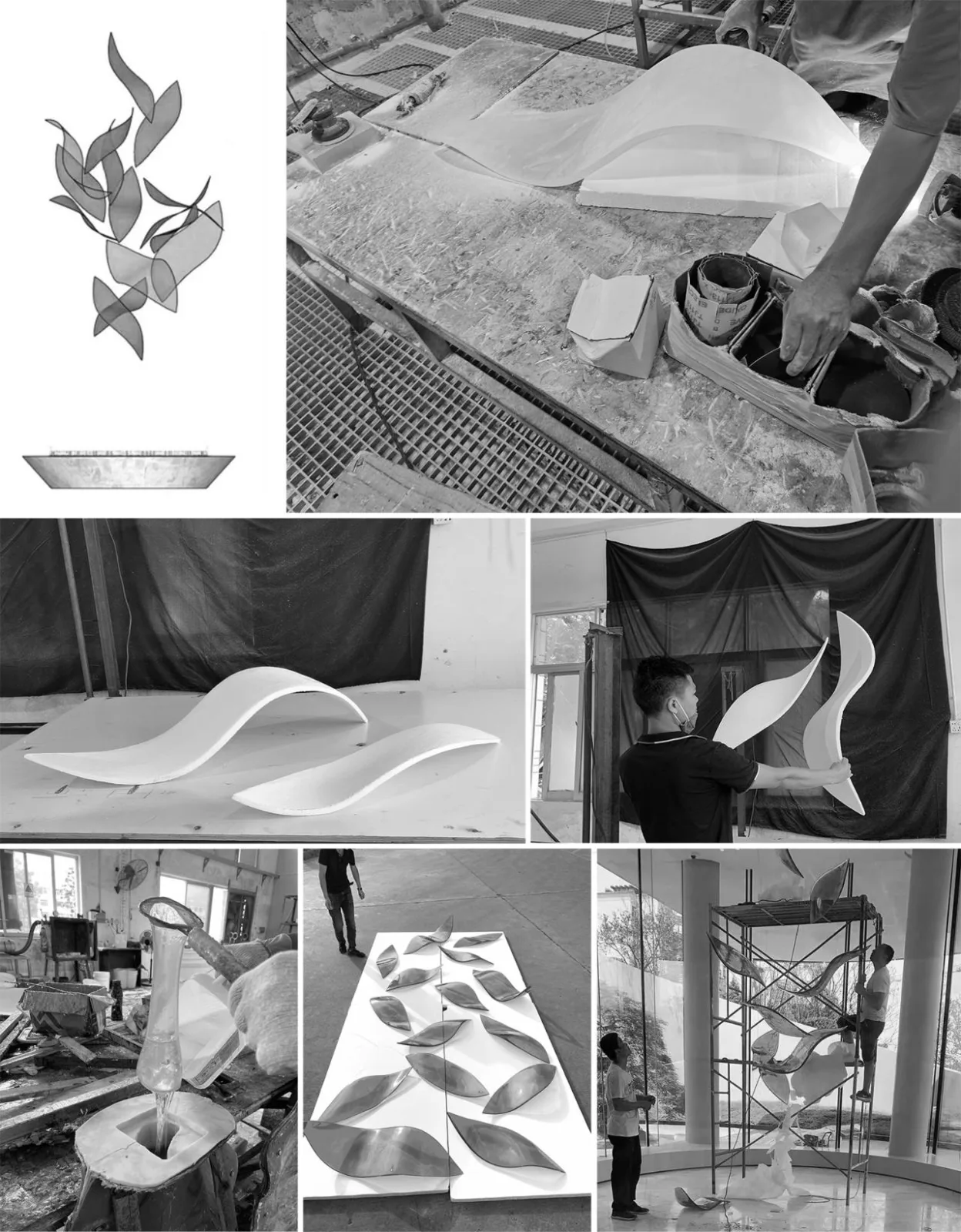
The making of the “Future Gift” installation
Project Information
Project Name: Greentown Quzhou Lixian Future Community Neighborhood Center
Project Owner: Greentown China
Location: Quzhou, Zhejiang
Design Completion: January 2021 – August 2021
Design Area: 800 square meters
Owner Team: Han Ying, Zhang Jing, Zhang Ying, Li Ming, Zheng Gonghui, Pan Siyuan, Yao Guobin, Zhu Jun, Huang Bangxiu, Ling Yuan, Zhao Beibei, Li Zhigang
Scene Space Design: ZSD Zhuoshi
Soft Furnishings: ZSD Zhuoshi
Design Guidance: Yuan Xiaoyu
Design Team: Wu Yan, Wang Weiwei, Zeng Bin, Wang Qinyu, Shi Liqiang, Zhu Peilin, Lin Rongrong, Zheng Minpeng
Architectural Design: GAD Jiedi
Landscape Design: GTS Blue Song
Project Photography: Wu Jianquan et al
















Must log in before commenting!
Sign Up