
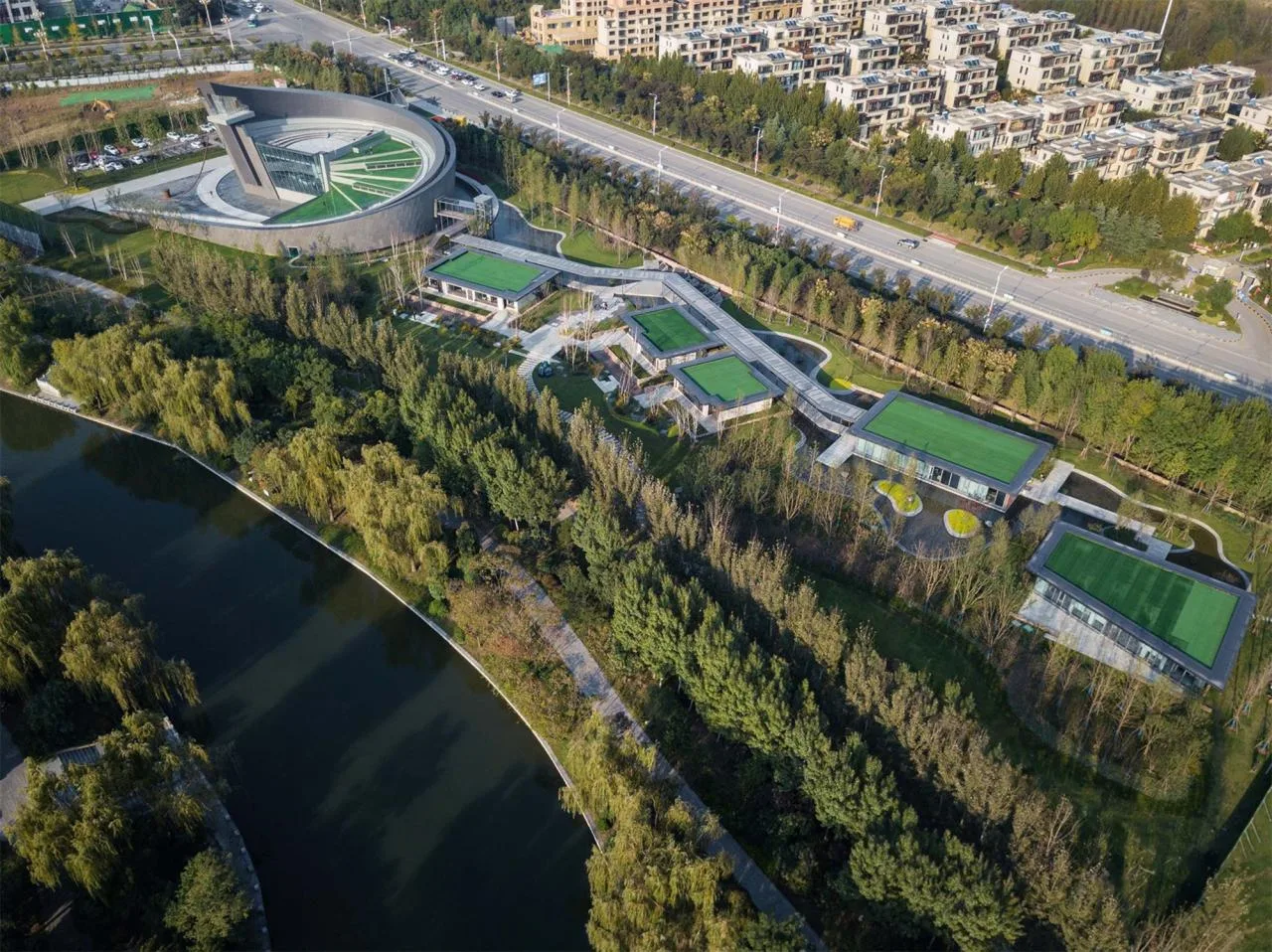
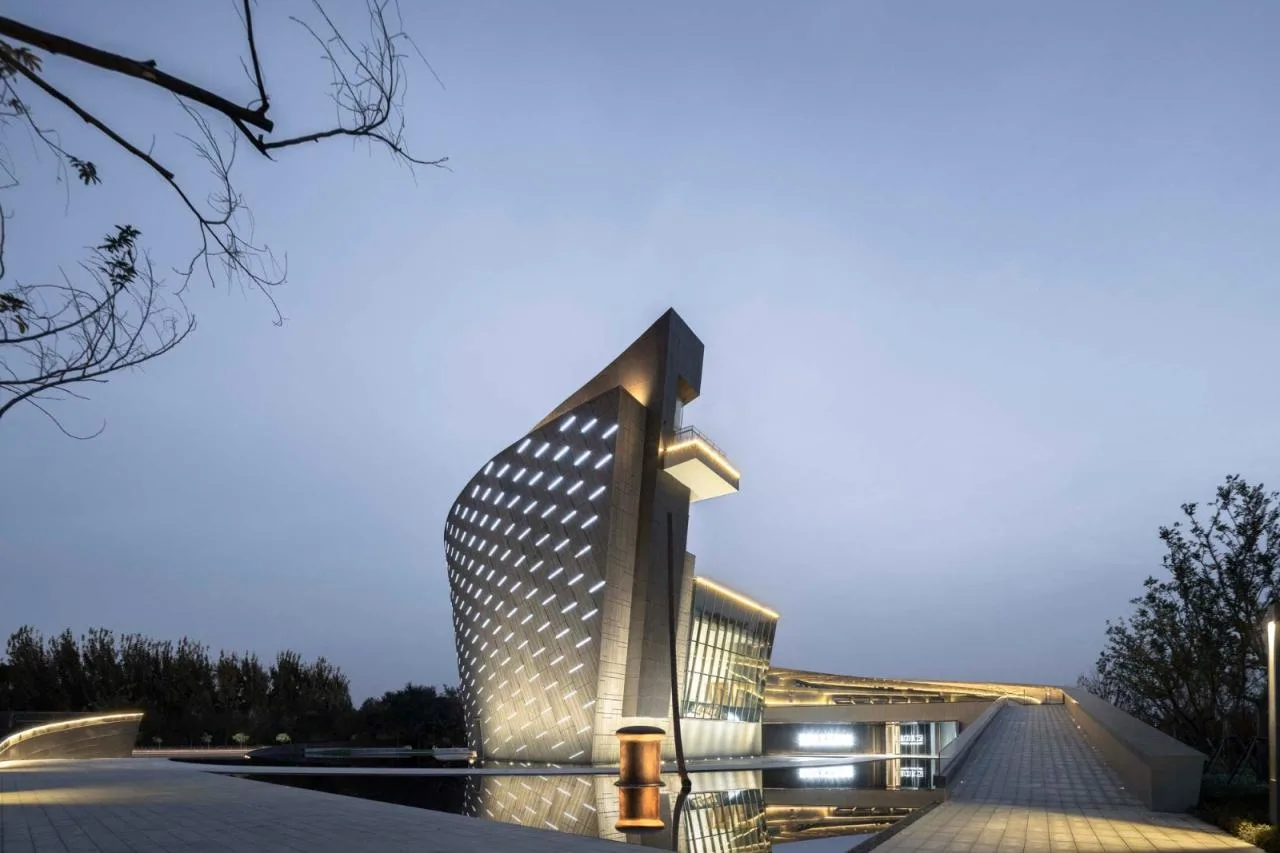
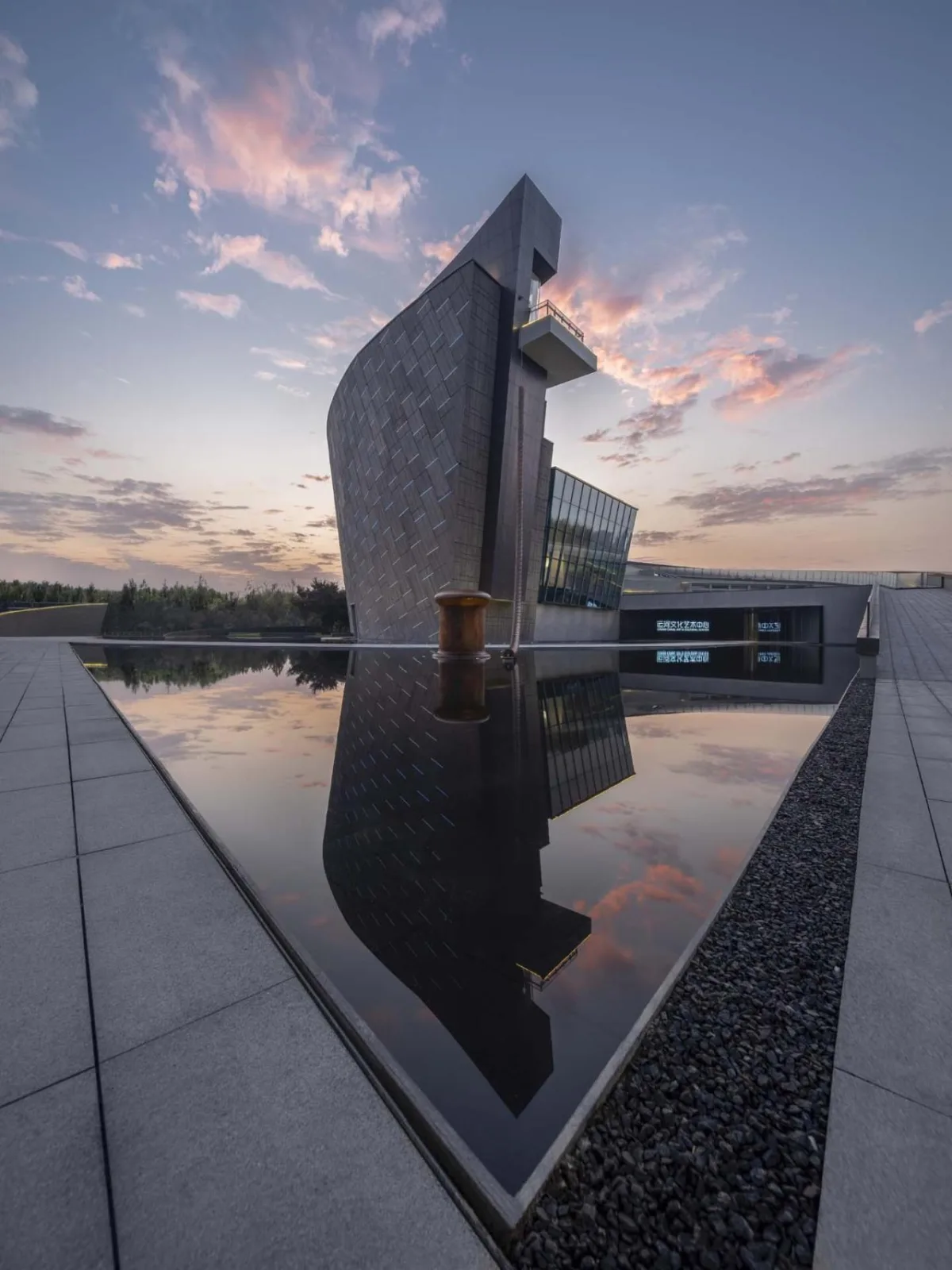
Without light, architecture is merely a shelter in darkness. But when illuminated, it transforms into a space that resonates with people. This building in Jining captures light to tell a story—not only of time but also of the nearly 800-year history of the canals it embraces.
Jining, known as the capital of the Grand Canal, is located in southwestern Shandong Province and boasts a rich history and culture. It is a significant birthplace of Dongyi culture, Chinese civilization, Confucian culture, Water Margin culture, and Grand Canal culture. The Beijing-Hangzhou Grand Canal, stretching approximately 1,800 kilometers, passes through its central section in Jining. The canal reaches its highest point—the Canal Ridge—in Nanwang Town, Wenshang County. Thanks to the remarkable Nanwang Water Diversion Project, Jining has become a pivotal hub regulating China’s north-south waterway arteries, establishing the three-part division of the Grand Canal and the seven parts of Chaotianzi flowing into Jiangnan, gaining widespread renown.
The old city of Jining was built and thrived alongside its waterways. Following the excavation of the Jeju, Huitong, and Tonghui Rivers during the Yuan Dynasty, the Grand Canal unified the north and south, boosting river transport. Leveraging its abundant natural waterways, the people of Jining developed a secondary old canal running through the city center. This canal became an essential tributary to the Beijing-Hangzhou Grand Canal, offering merchant ships convenient access to the city’s core. Merchants nationwide chose this transit point, creating a bustling commercial hub. During the Ming and Qing dynasties, Jining housed the River Governor’s Office—the highest administrative body overseeing national water transport—cementing its status as the canal capital.
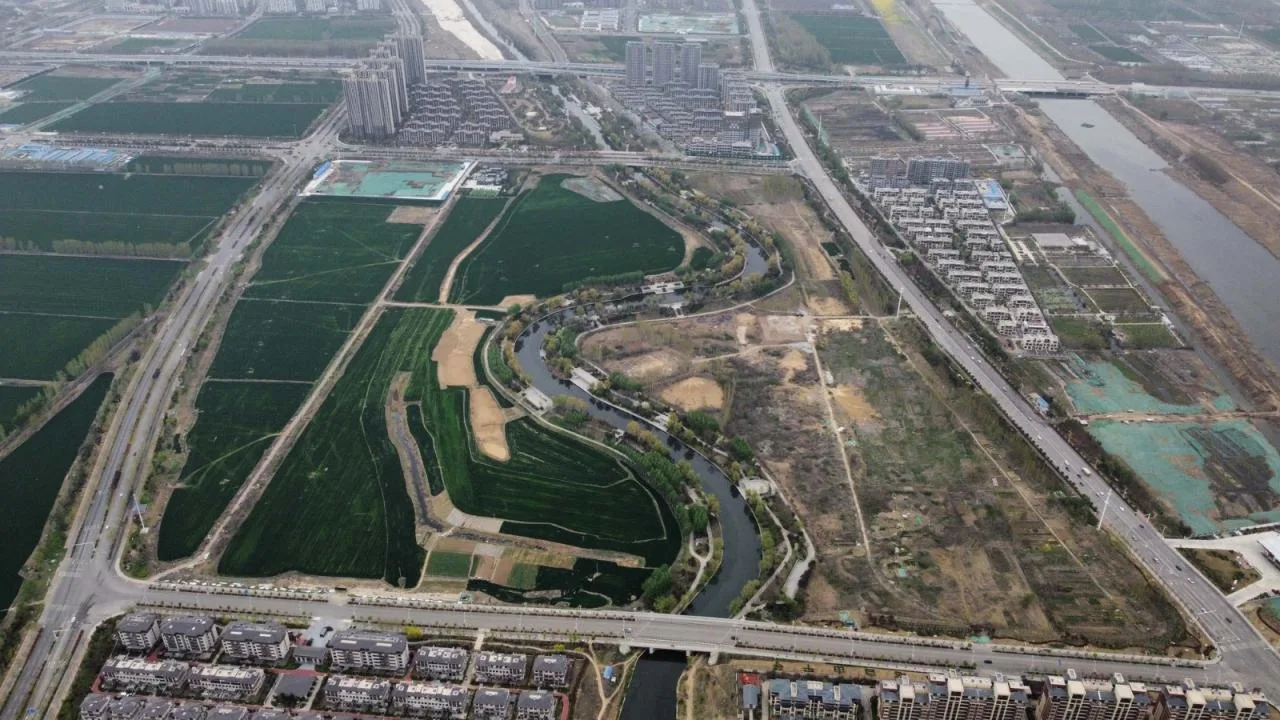
Located at the southern end of Rencheng District and adjacent to the north bank of Taibai Lake, the Jining Overseas Chinese Town Canal Culture and Art Center serves as a dialogue point between urban fabric and water veins. The site was carefully selected to highlight this interaction. Torch South Road on the east welcomes visitors into the city, while a narrow strip of water separates the site from the old canal to the west. The site’s soft S-shaped double river bay enriches the landscape, combining one water body and four banks with lush greenery, evoking a poetic water and ink charm that complements the distant view of Taibai Lake.
The site represents the shortest distance between the canal and city road, running primarily north to south. The highest elevation is found on the pedestrian walkway atop the flood-control embankment on the west side, followed by the municipal road to the east, influenced by the underground pipeline network. Originally, the construction site was situated in a low-lying area. The design raises the ground level to a height between the riverside walkway and the municipal road, replacing scattered trees in the depression with grassy slopes and water features. This creates an open urban belt park that gently transitions from city to water, forming a spatial bridge that connects the vibrant urban life with the tranquil flowing canal. The cultural heritage embedded in this canal capital acts as the enduring thread linking these two worlds.
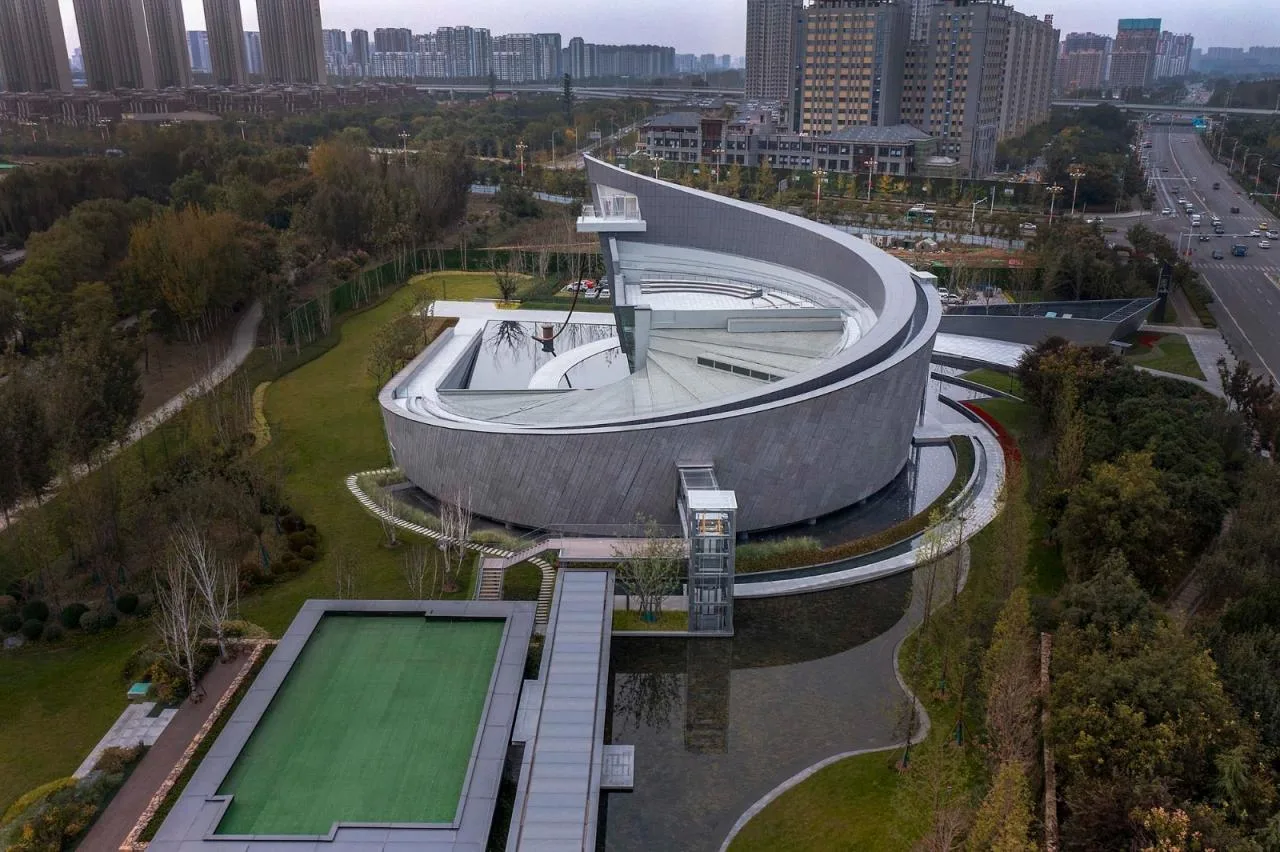
Time flows like water and light across the universe. Here, the canal’s flowing water serves as the emotional thread that has remained unchanged for centuries. The site’s movement and spatial design are inspired by the spiral line derived from the Fibonacci sequence — a foundational concept behind the “Le Corbusier Museum of Infinite Growth.” This spiral form embodies the theme “time flows like water,” evoking a sense of fluidity. The spatial narrative unfolds through the interplay of two juxtaposed spiral lines, creating a dynamic experience of inner and outer spaces.
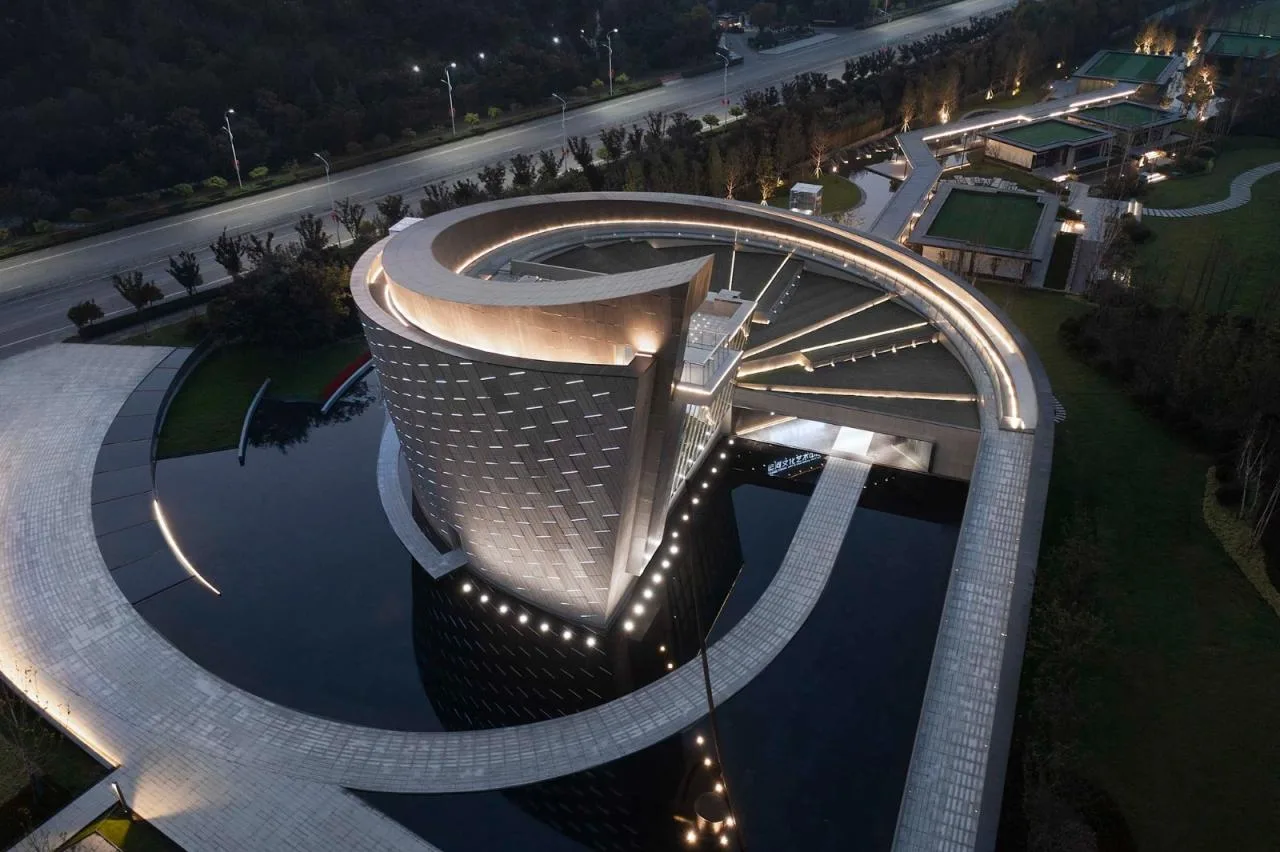
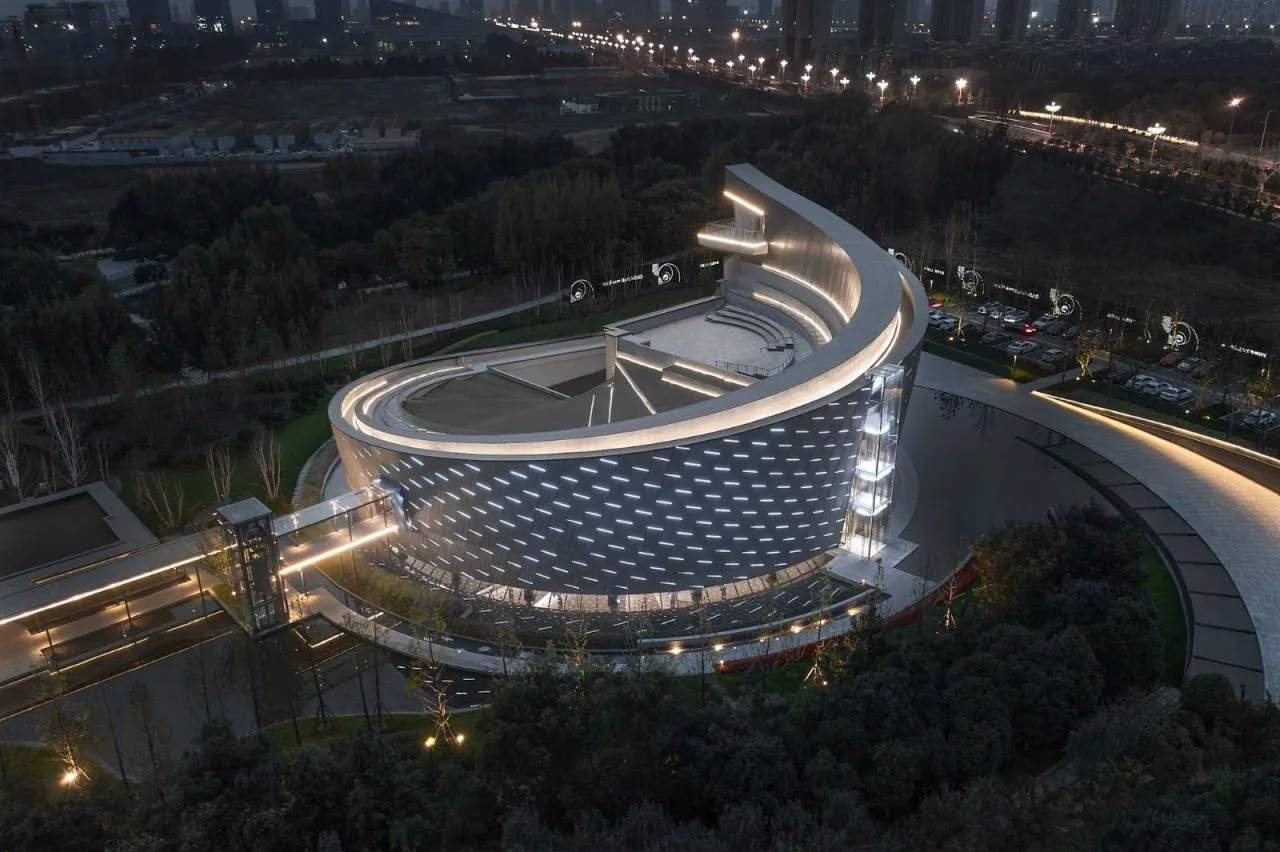
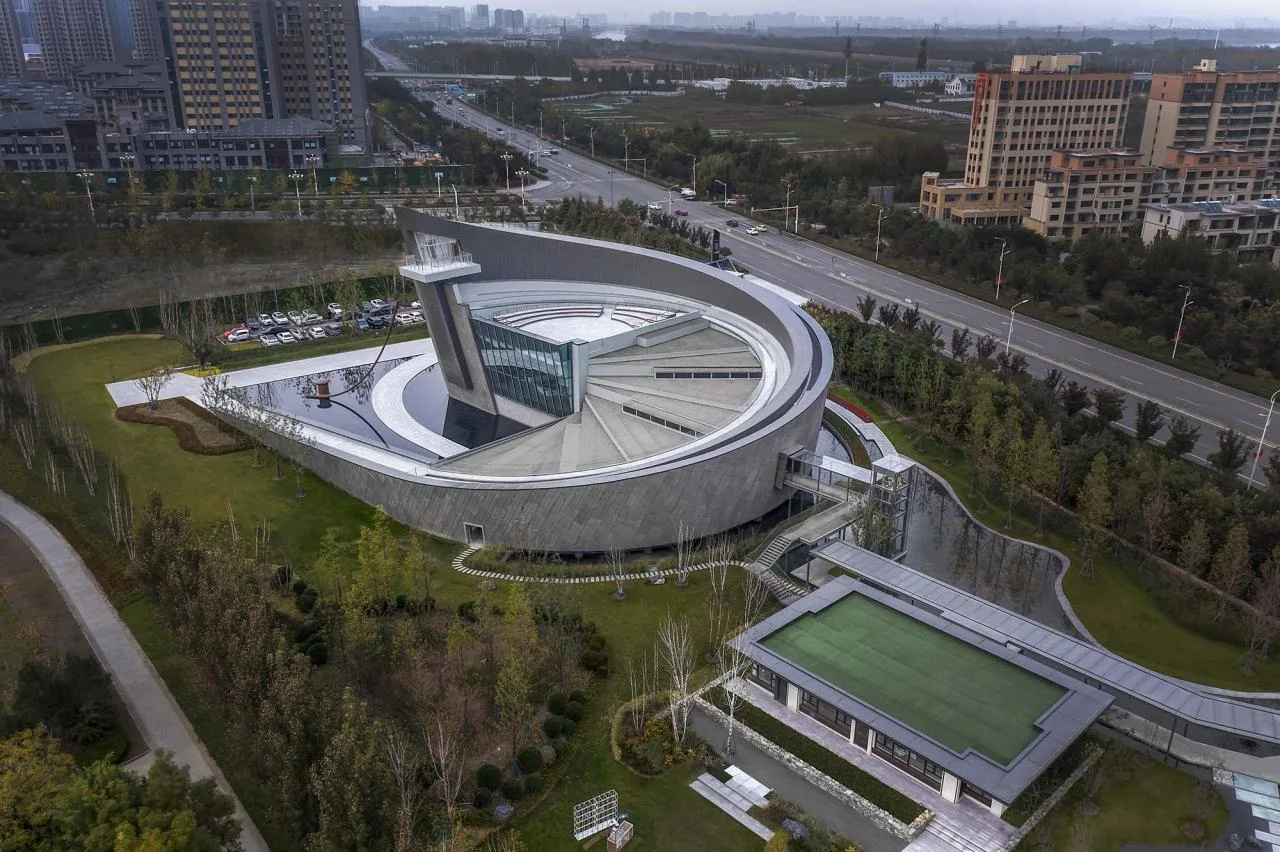
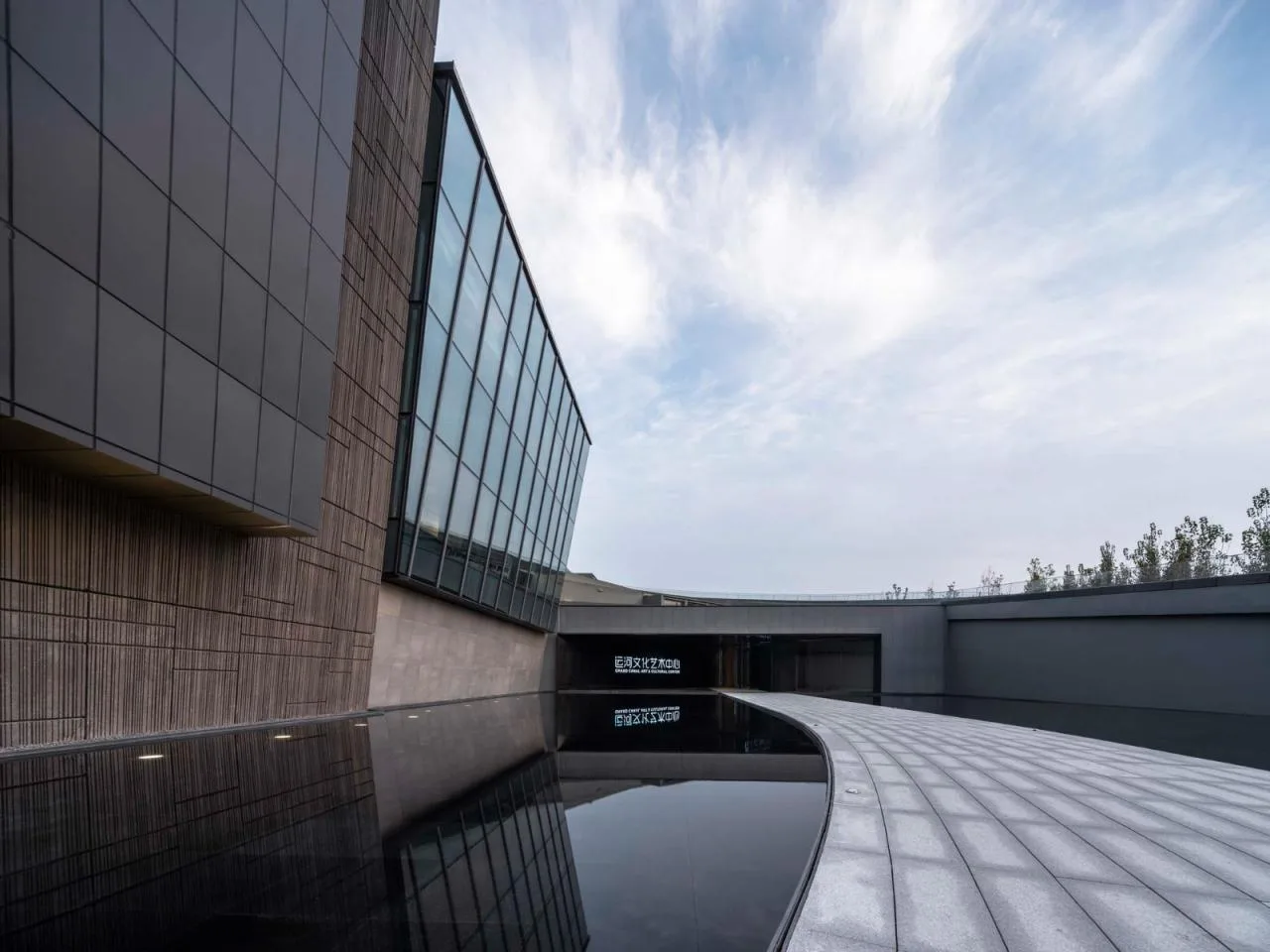
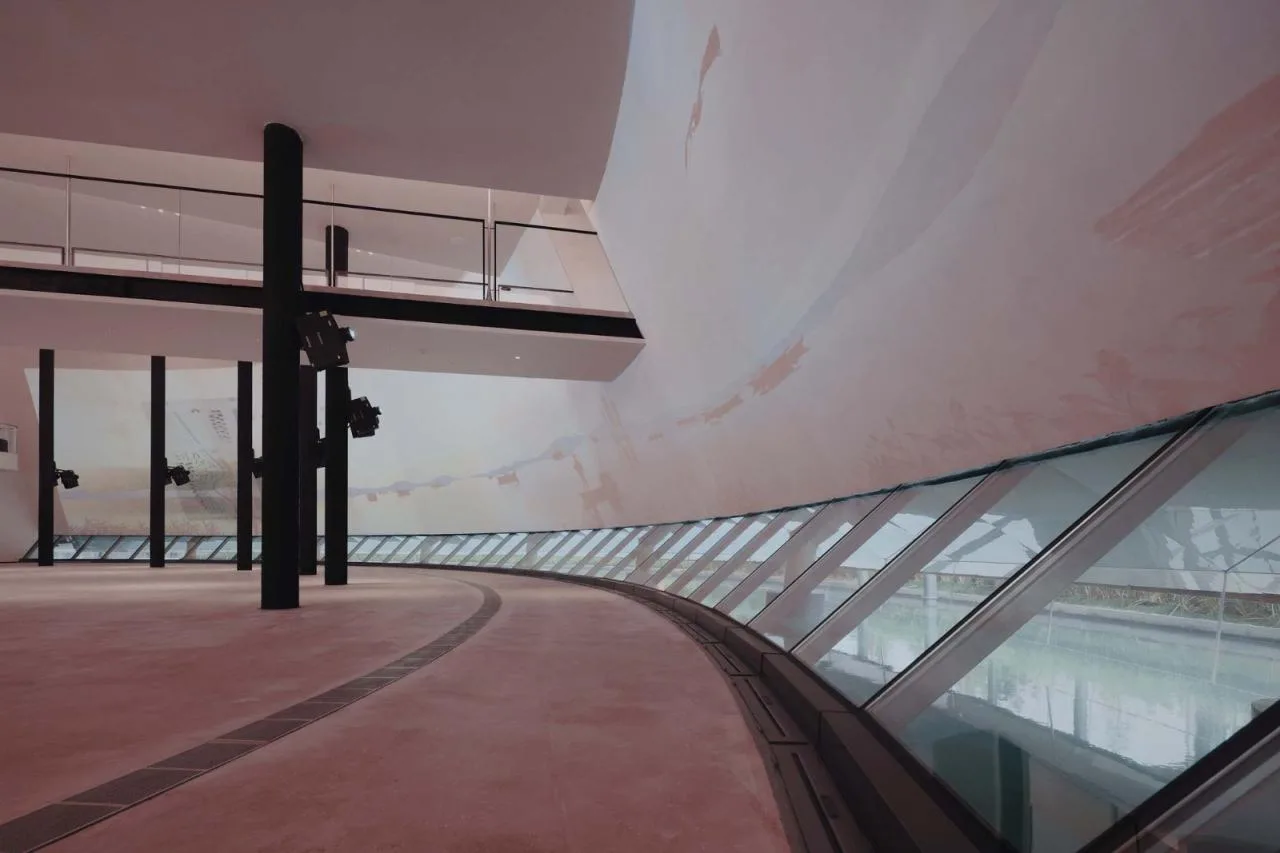
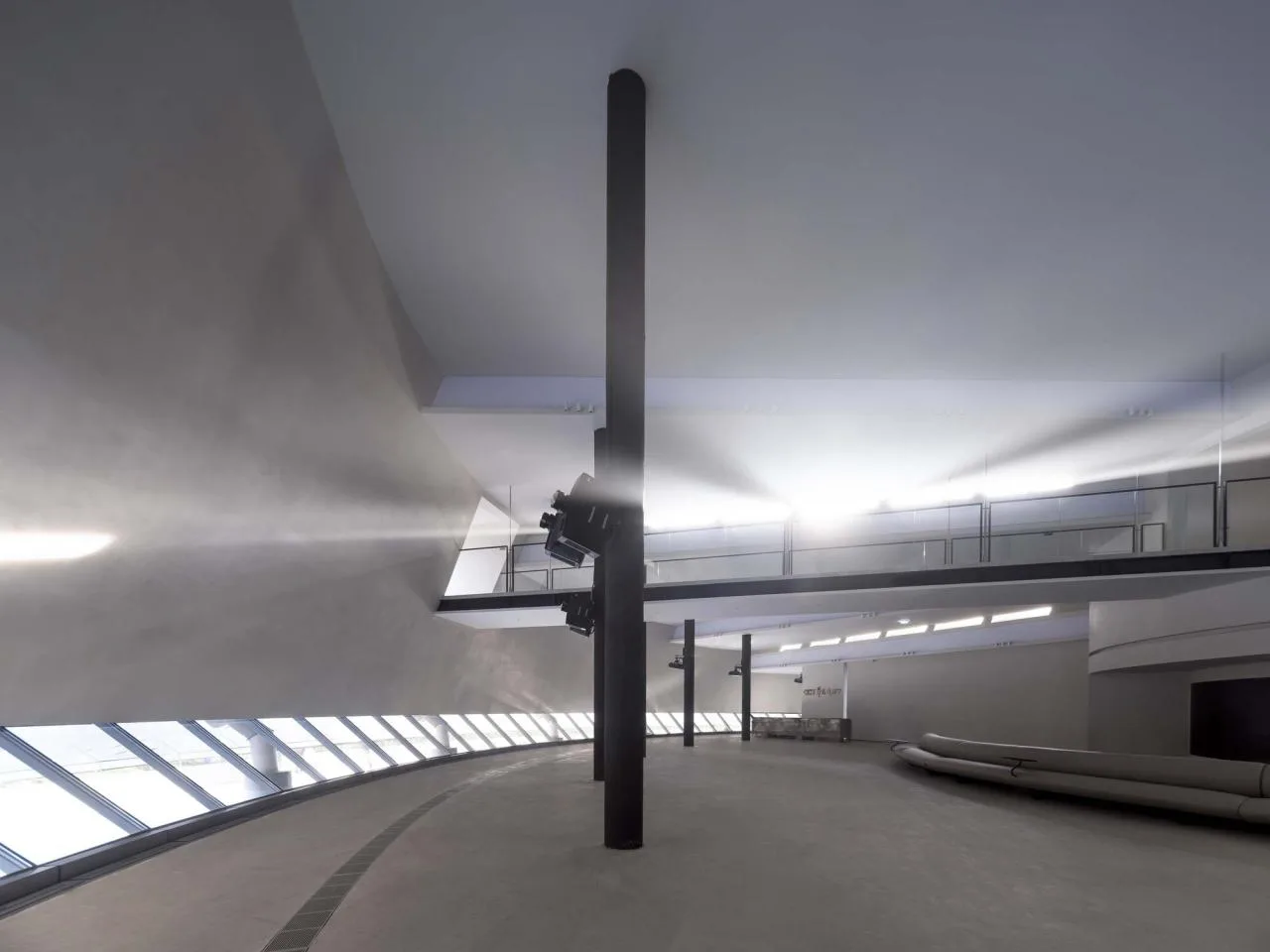
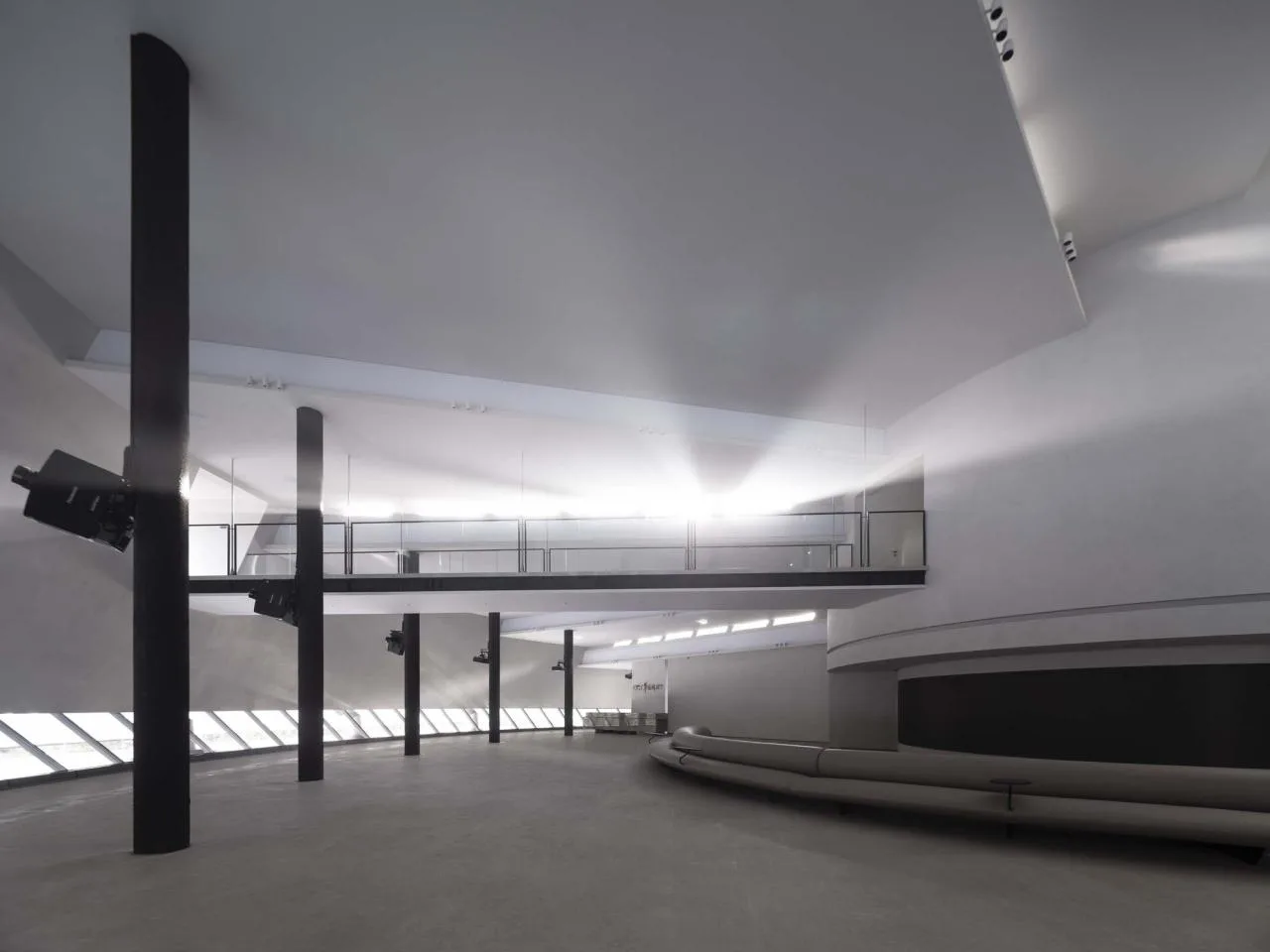
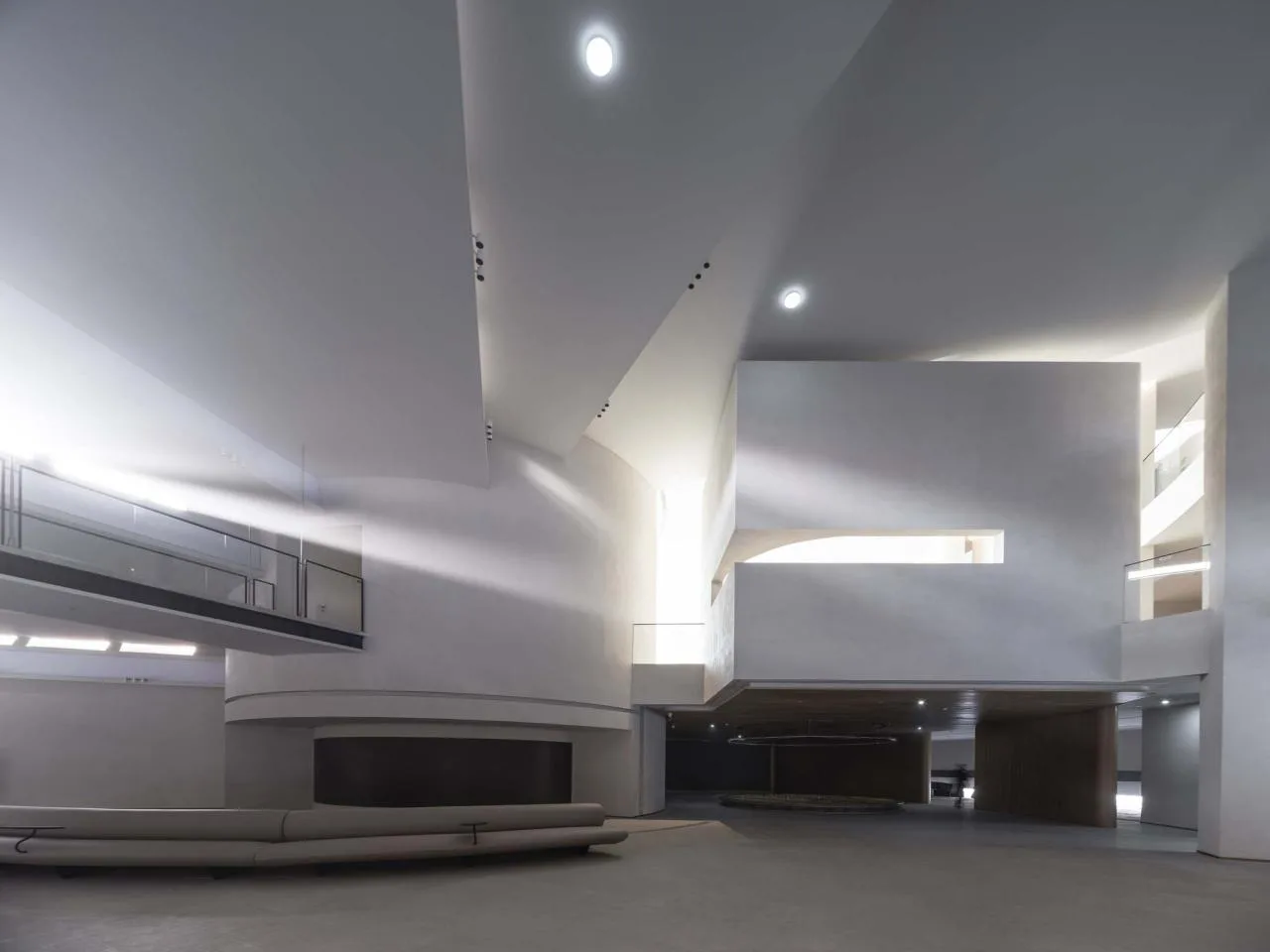
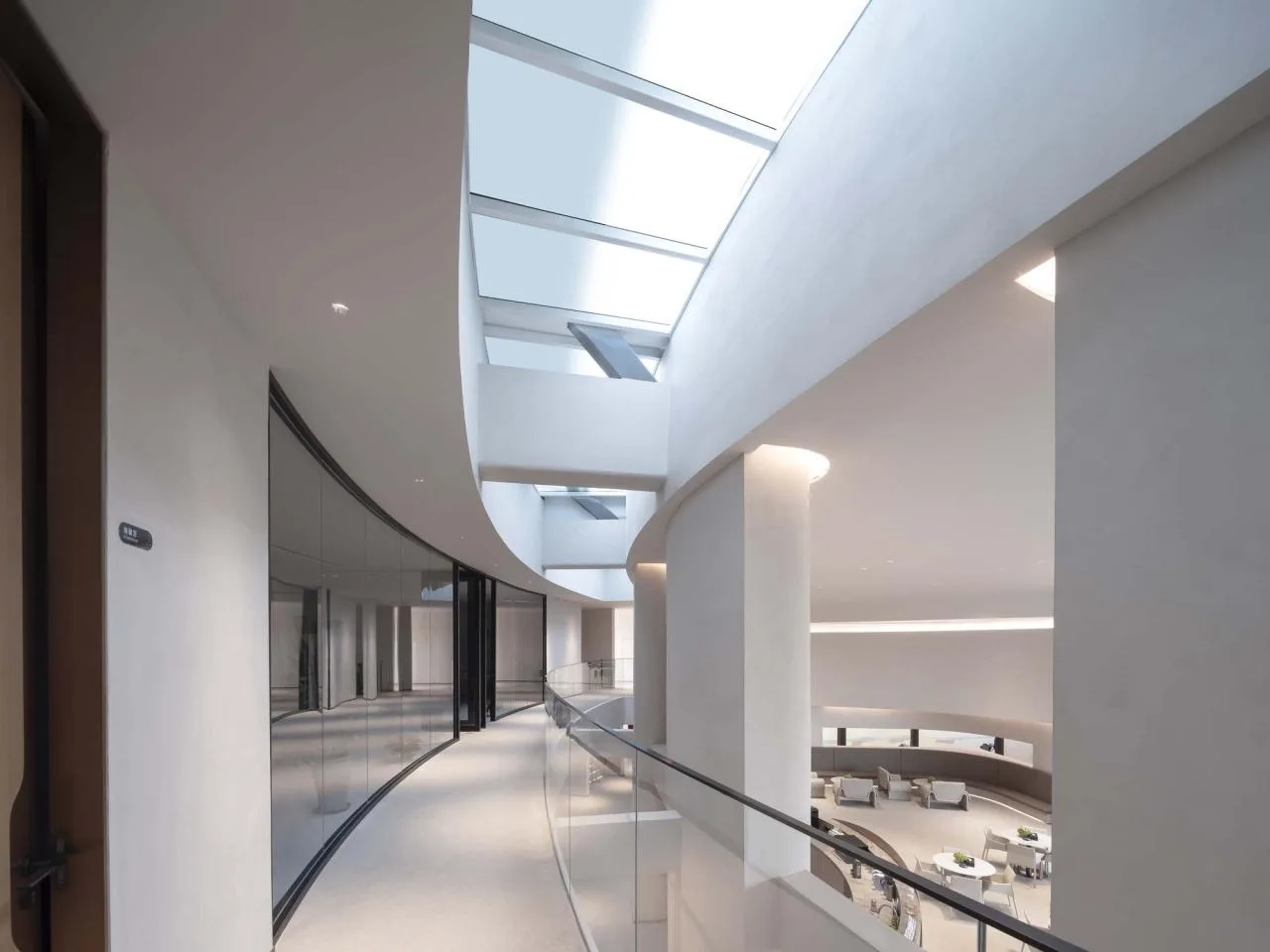
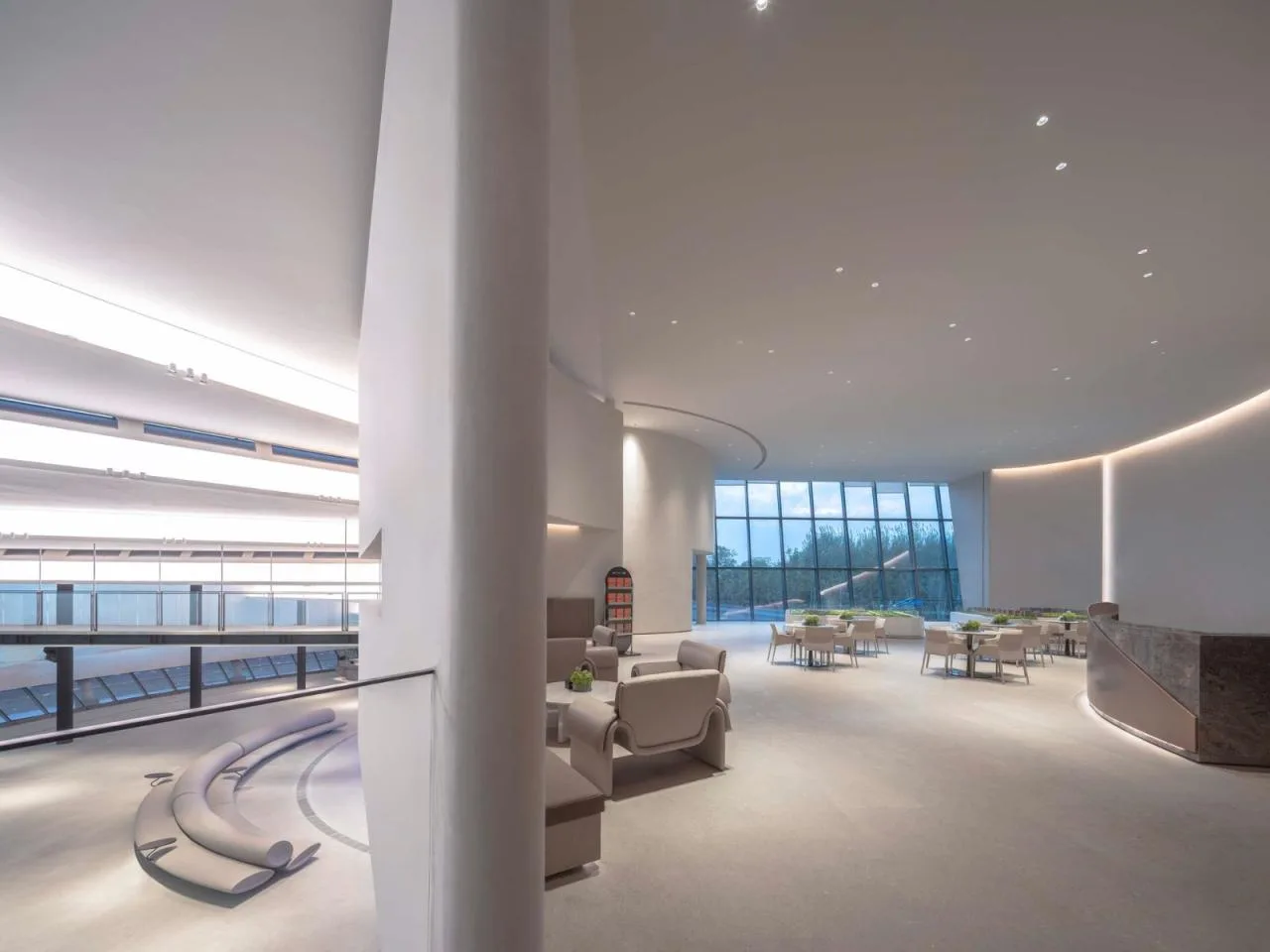
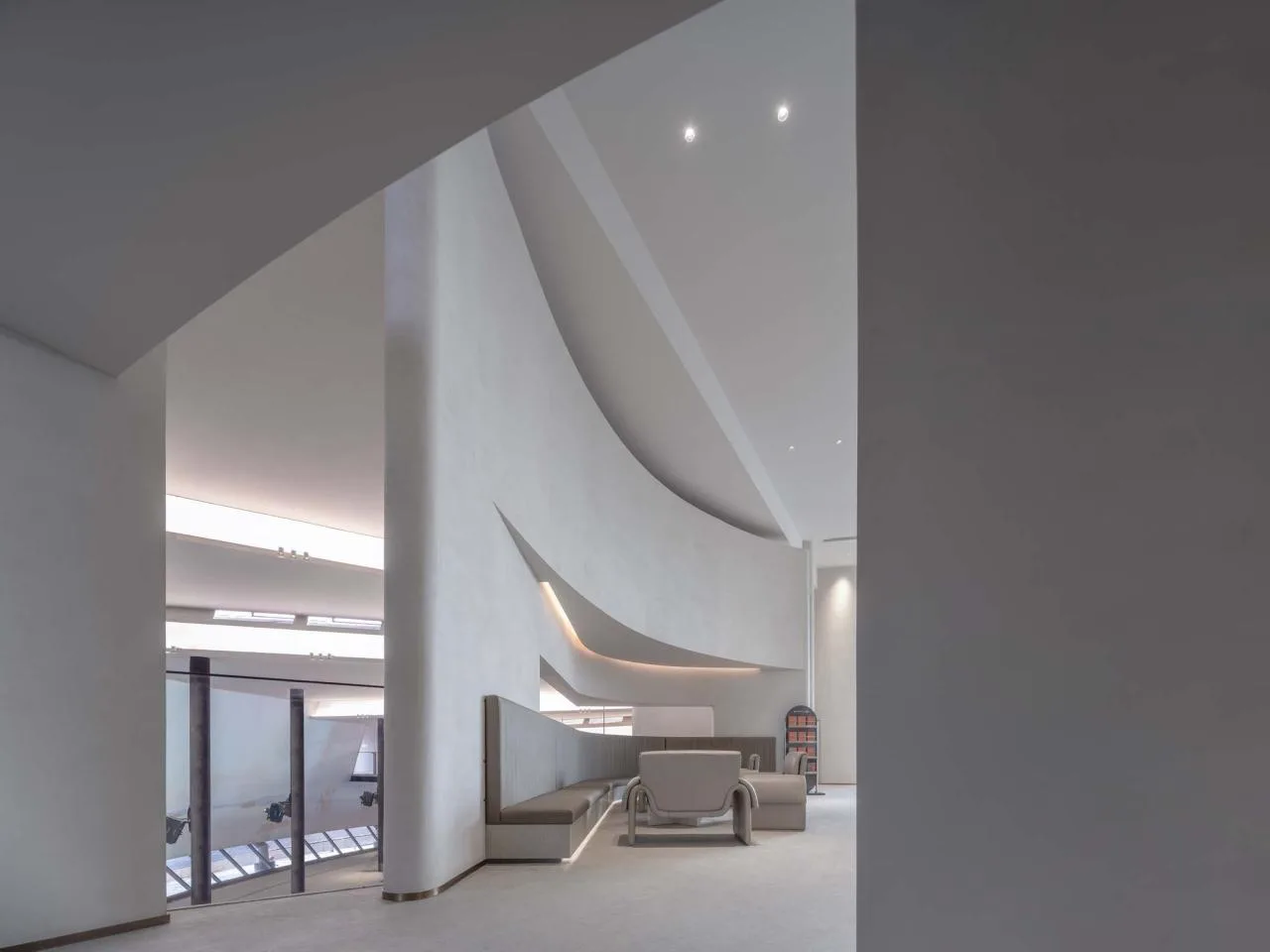
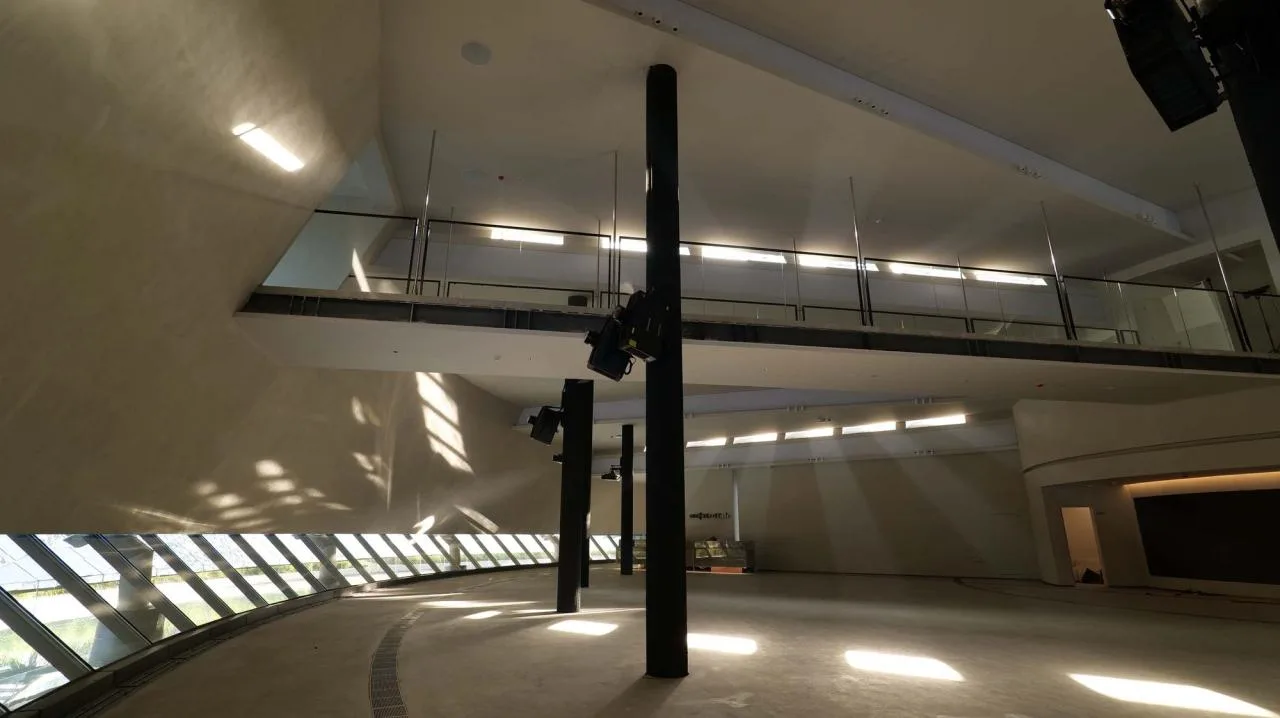
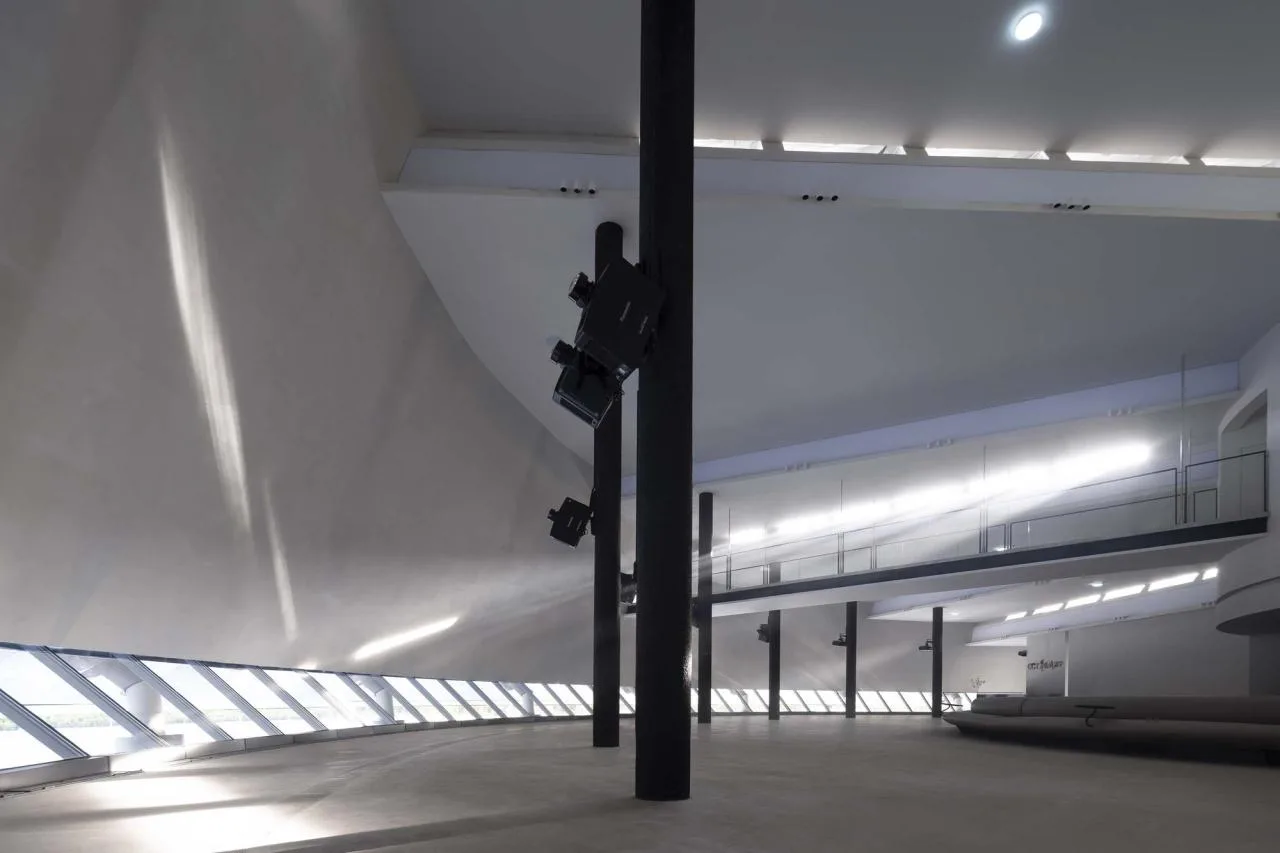
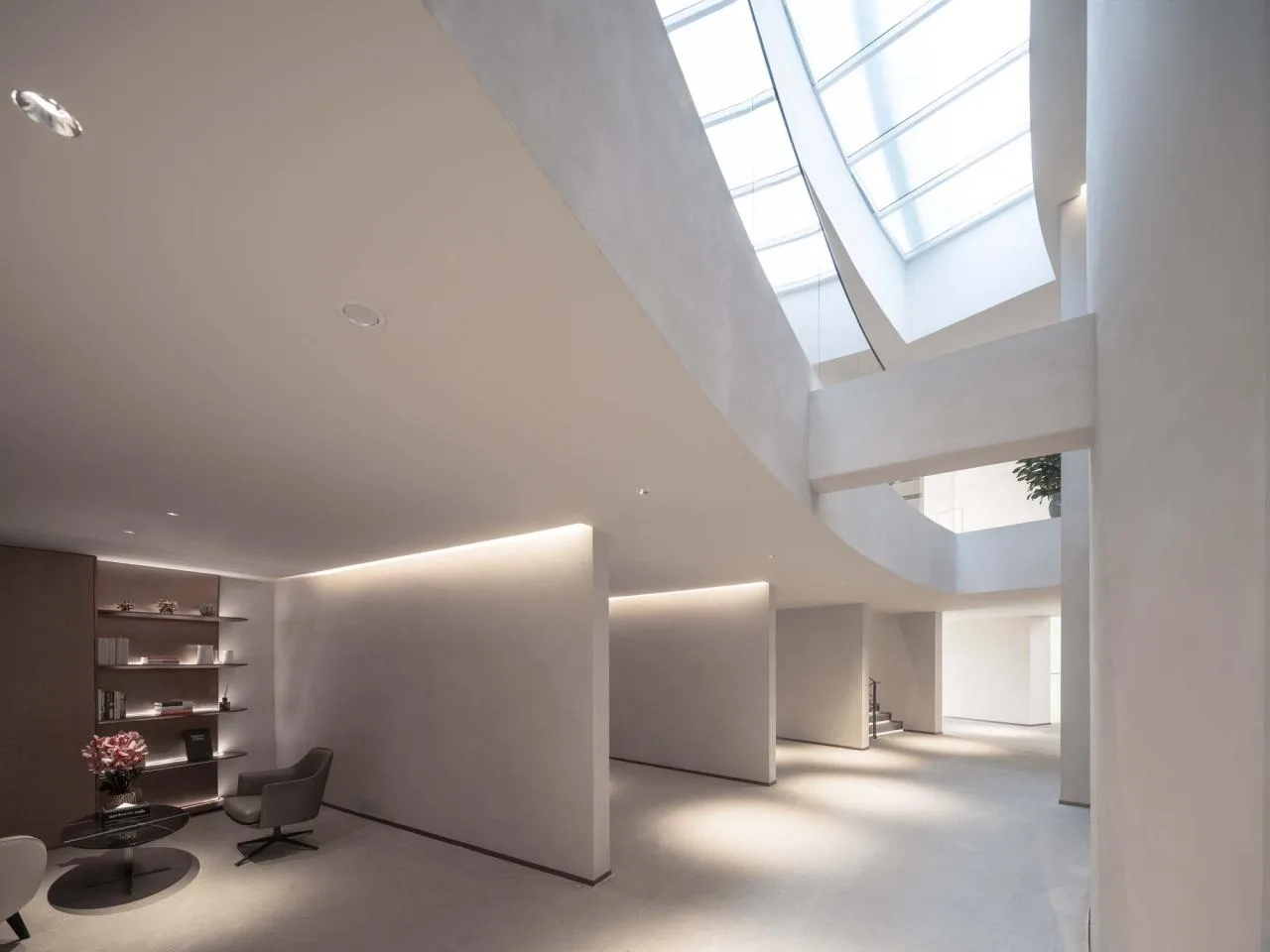
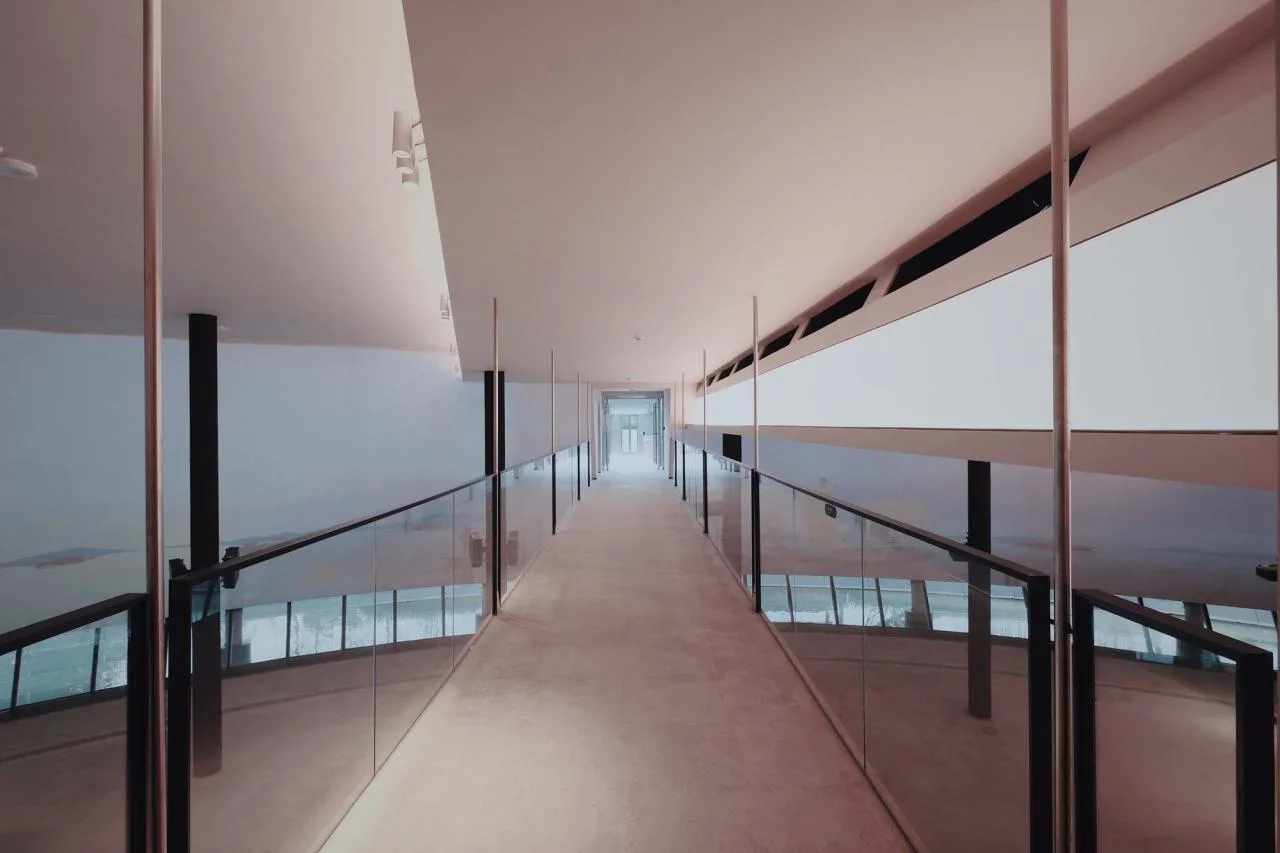
Visitors enter the site from the eastern city road, following a winding water path along the calm canal surface. Thick exterior walls guide visitors gently toward the building’s main entrance. Inside, the counterclockwise tour route continues alongside the water, passing through rippling waves and gradually ascending through the entrance and lobby to the central exhibition hall. This rhythmic play of light and shadow transitions from darkness to brightness, culminating in the second-floor exhibition area where expansive floor-to-ceiling glass windows frame the picturesque western canal and the story of time. This creates a harmonious blend of natural and man-made environments.
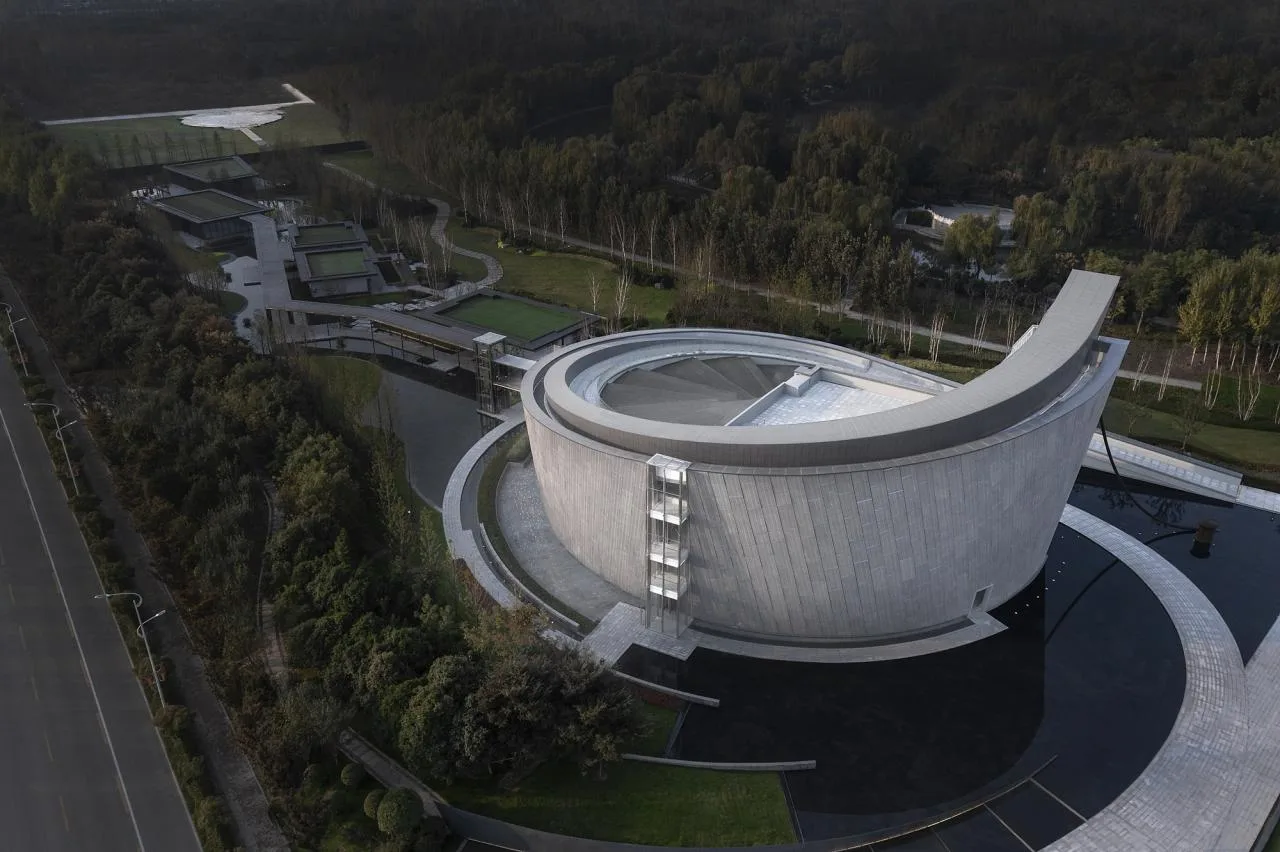
The building’s external ramp ascends past a raised roof platform to an outdoor performance area 12 meters above ground level. From here, visitors can sit, watch the clouds drift by, and admire the shimmering waters of the old canal—achieving an intimate interaction between humans and nature.
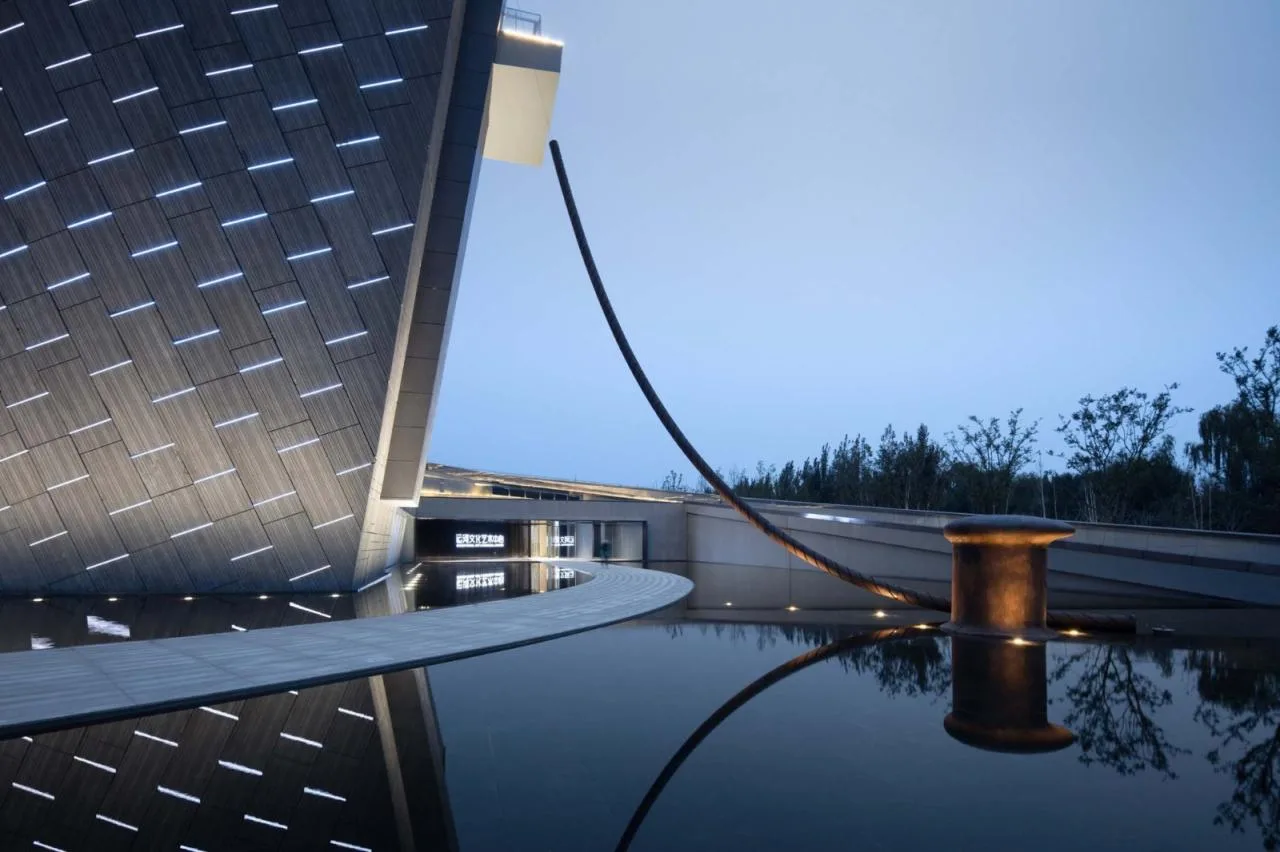
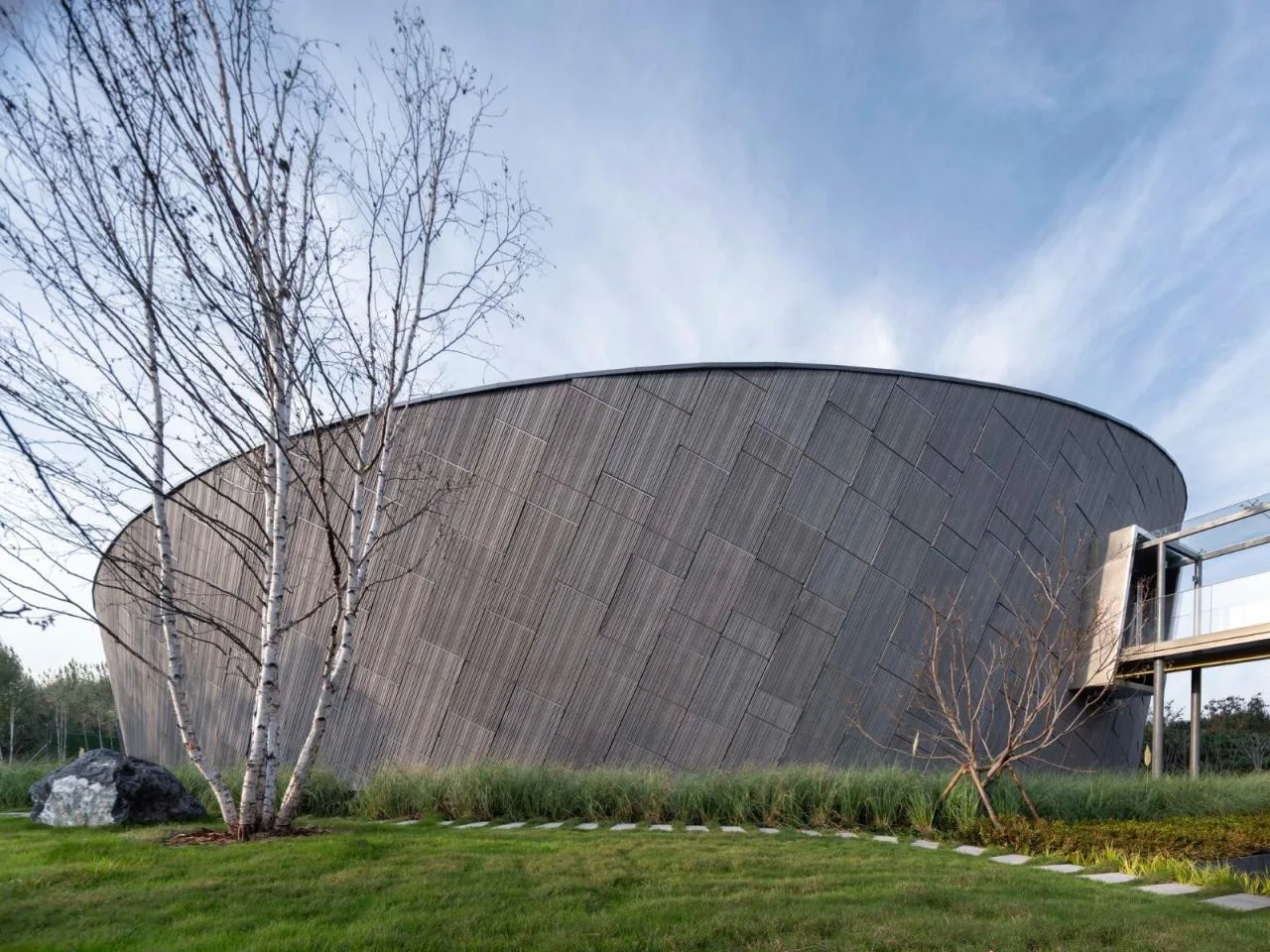
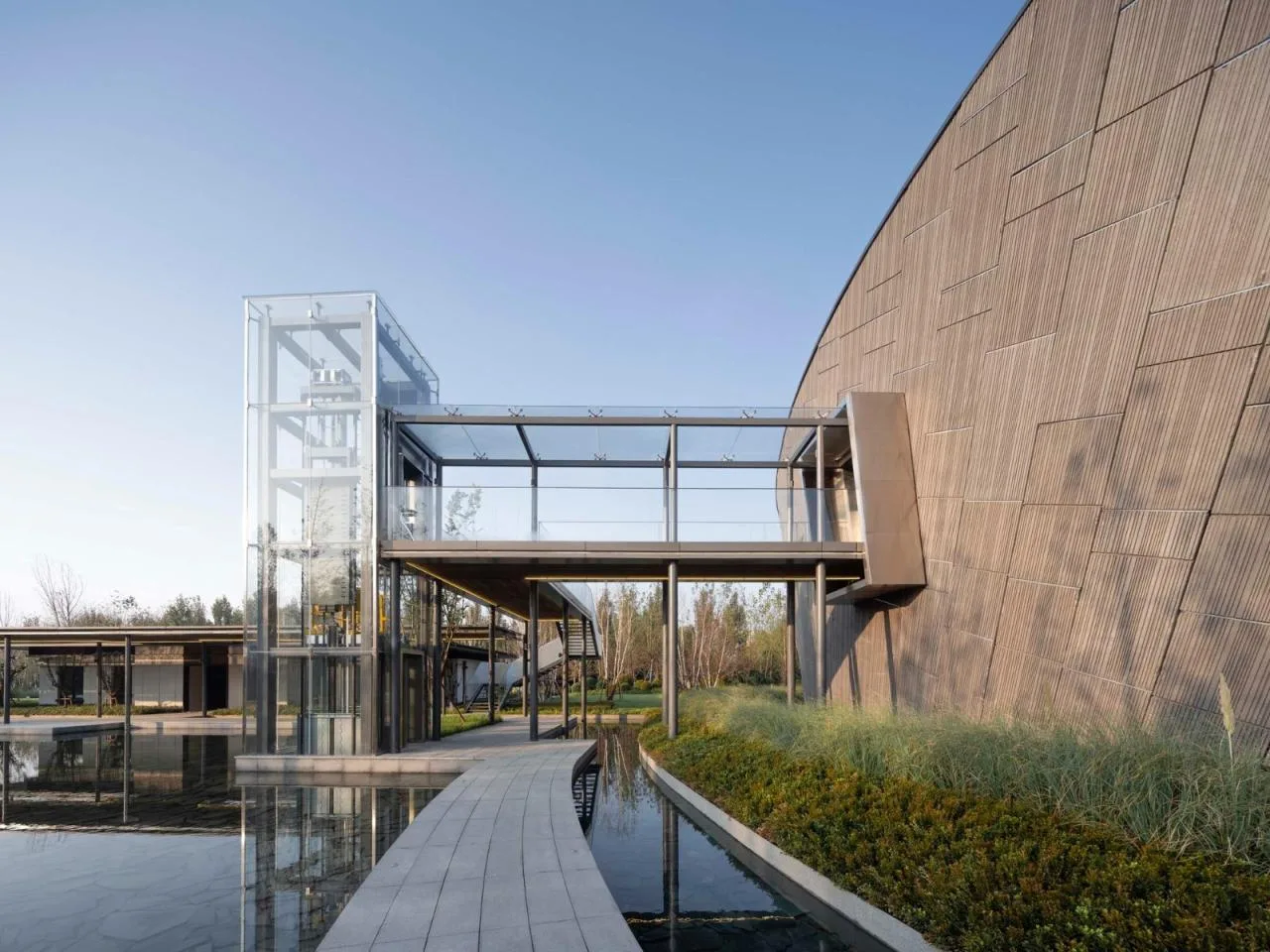
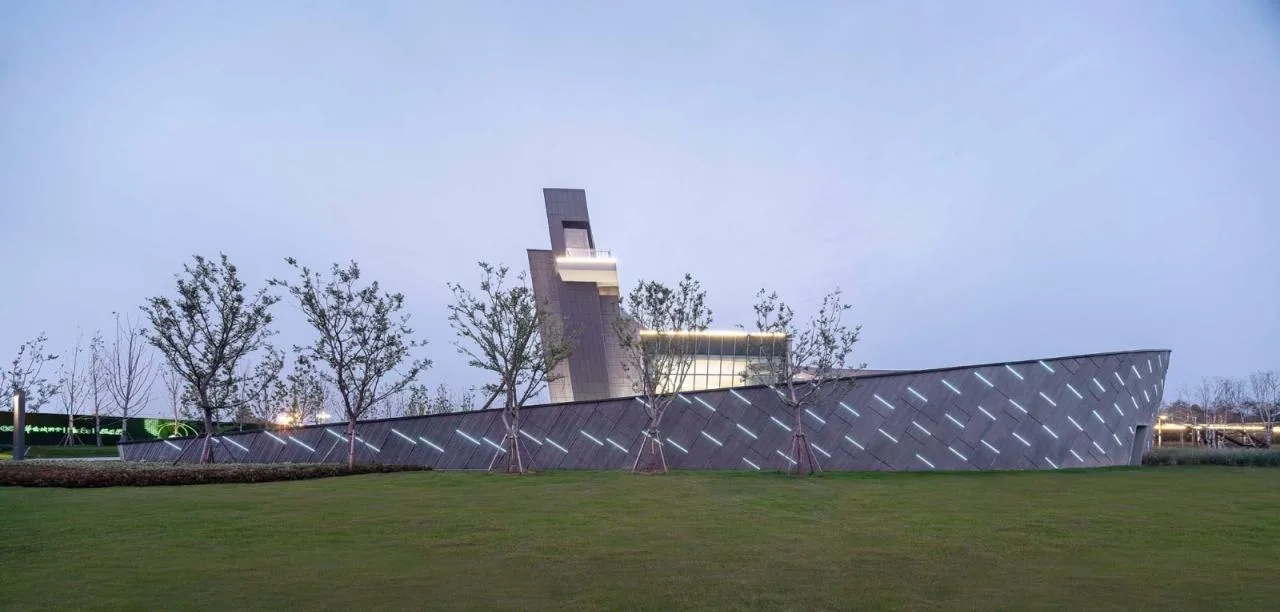
The architecture’s spatial form follows a spiral shape ascending from low to high. It rises from the northwest corner at ground level, runs alongside the old canal via a sloped pathway, then spirals counterclockwise 270 degrees to reach its highest point facing the river to the west. The building’s facade features durable medium gray artificial recycled stone with a grooved texture, evoking a strong sense of time and ruggedness. This spiral form gives the structure an ascending momentum, symbolizing a “boat” setting sail.
Project Drawings
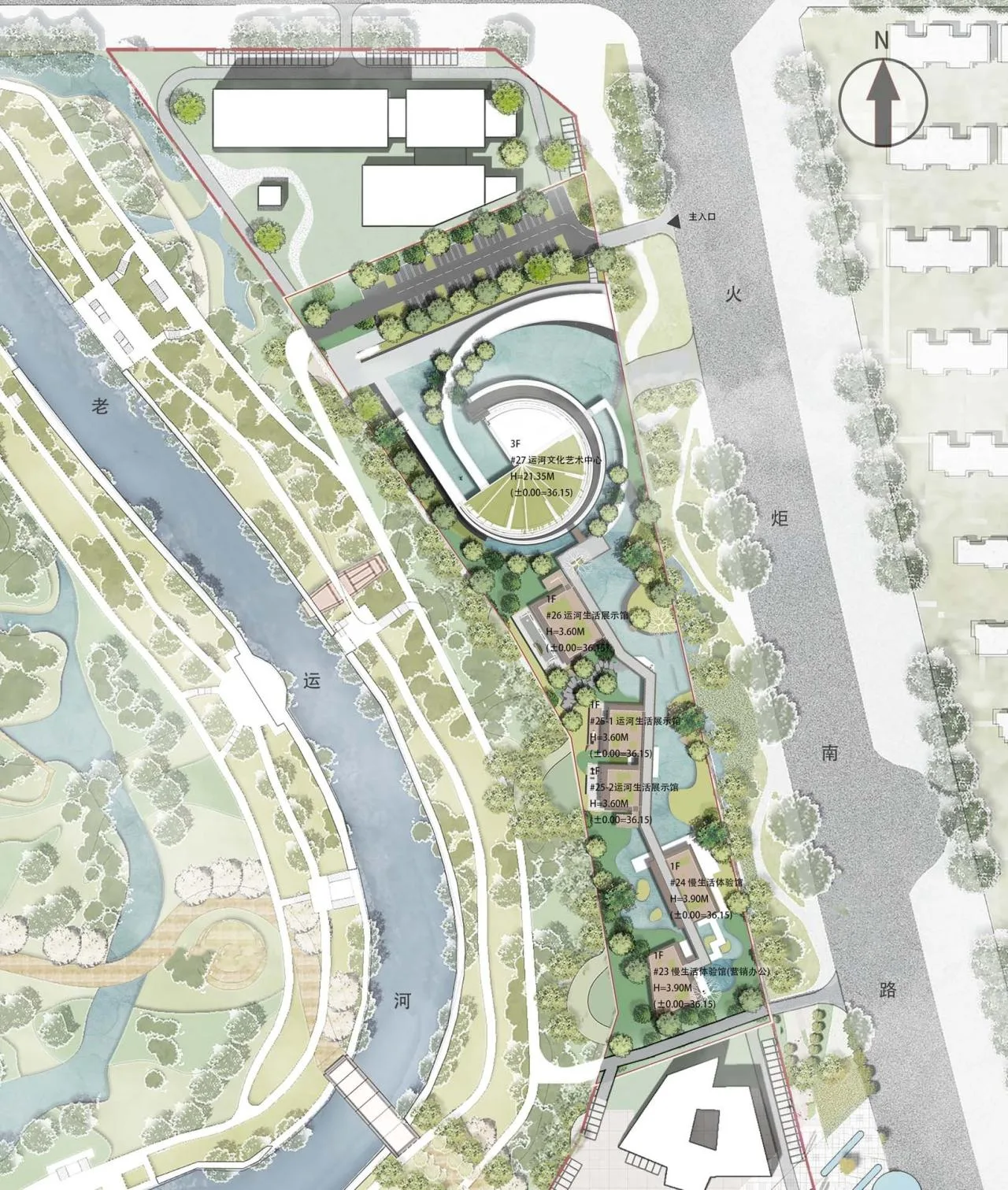
△ General Layout Plan
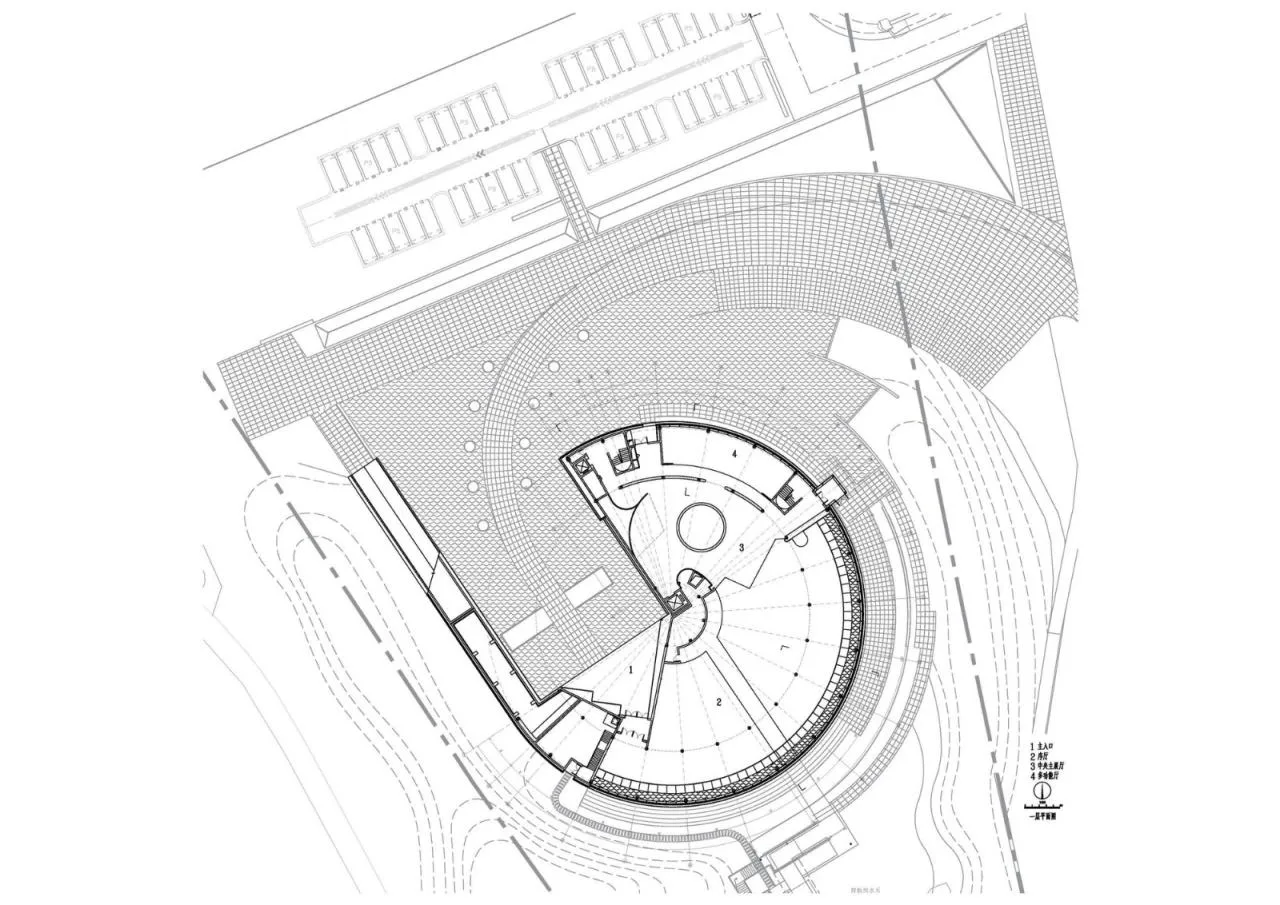
△ First Floor Plan
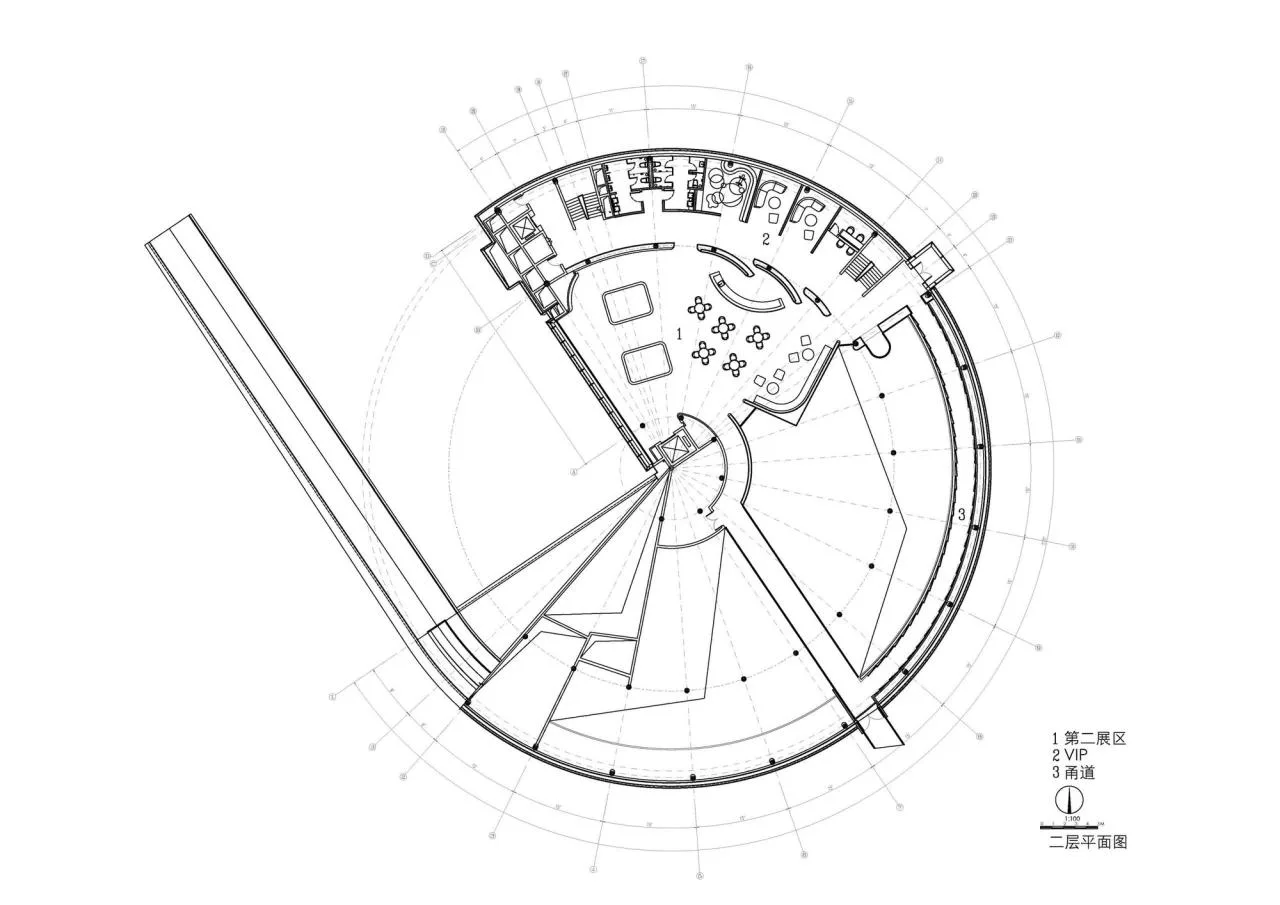
△ Second Floor Plan
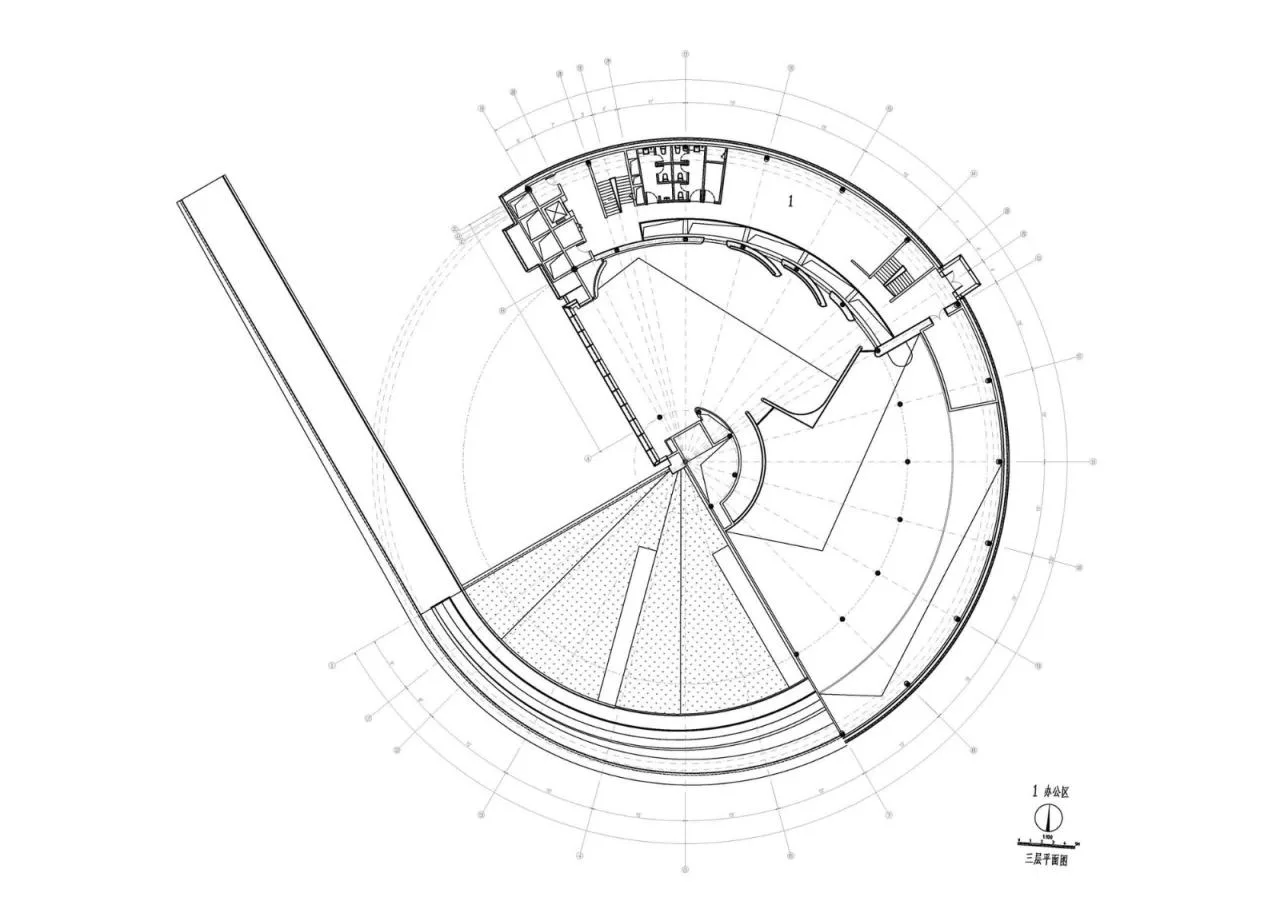
△ Third Floor Plan
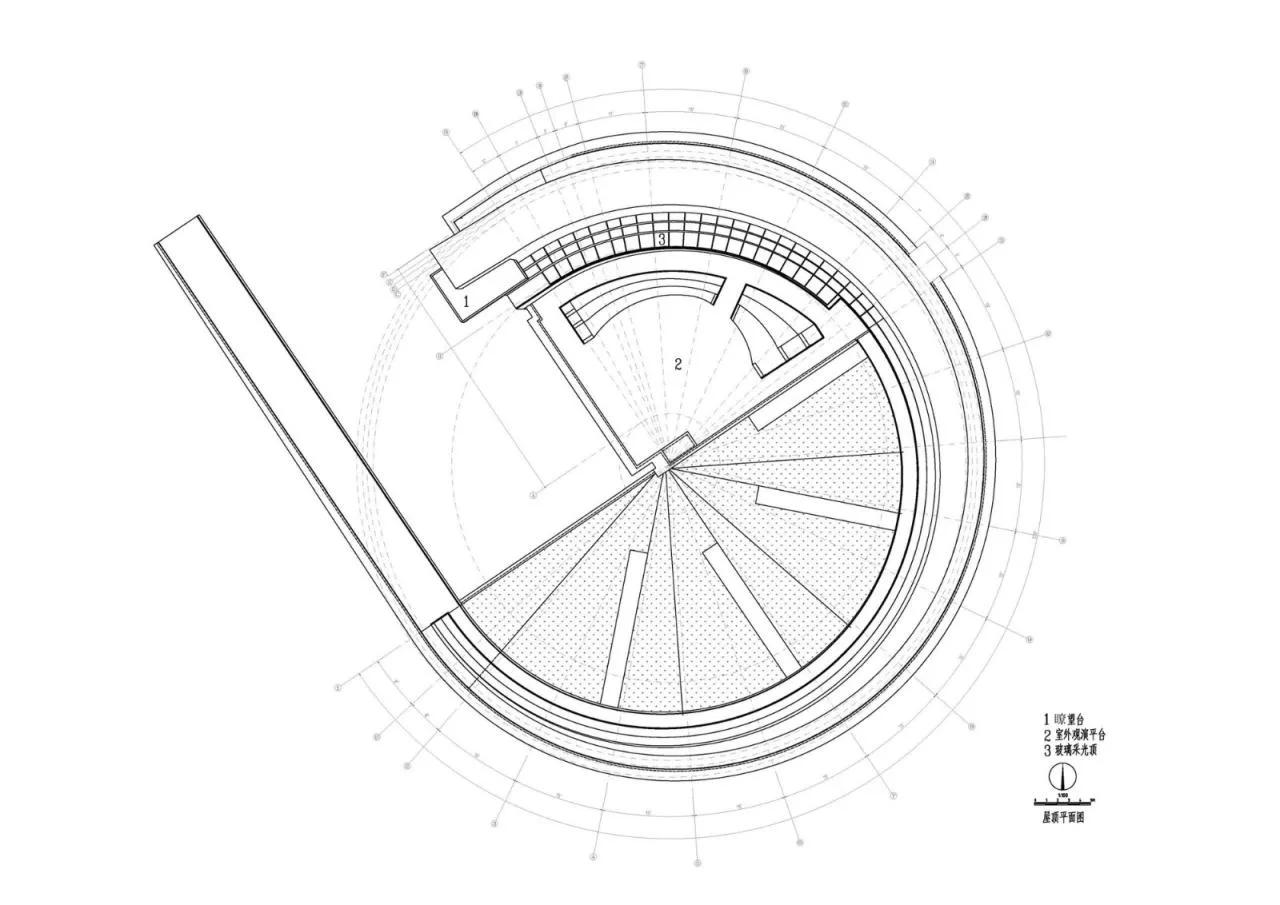
△ Roof Plan
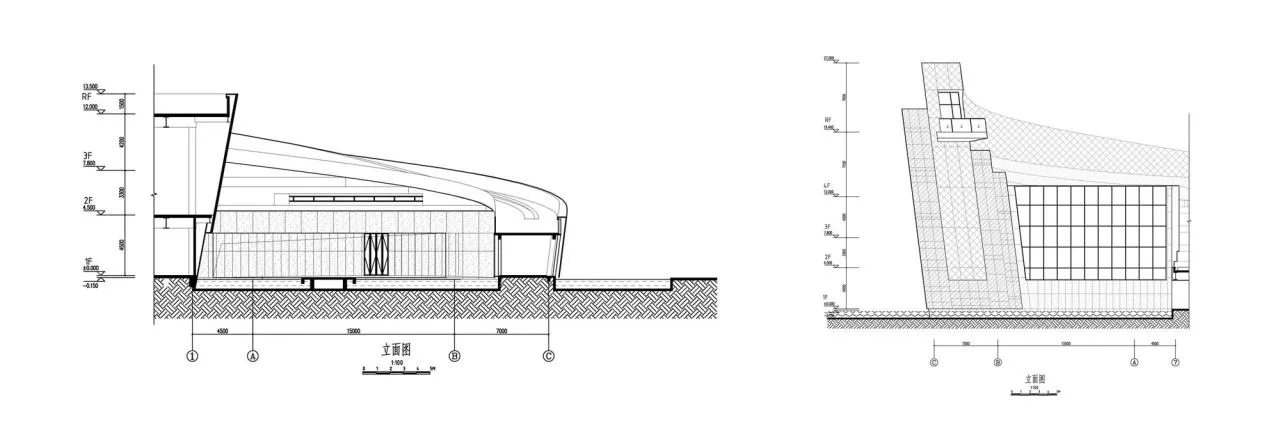
△ Elevation Drawing
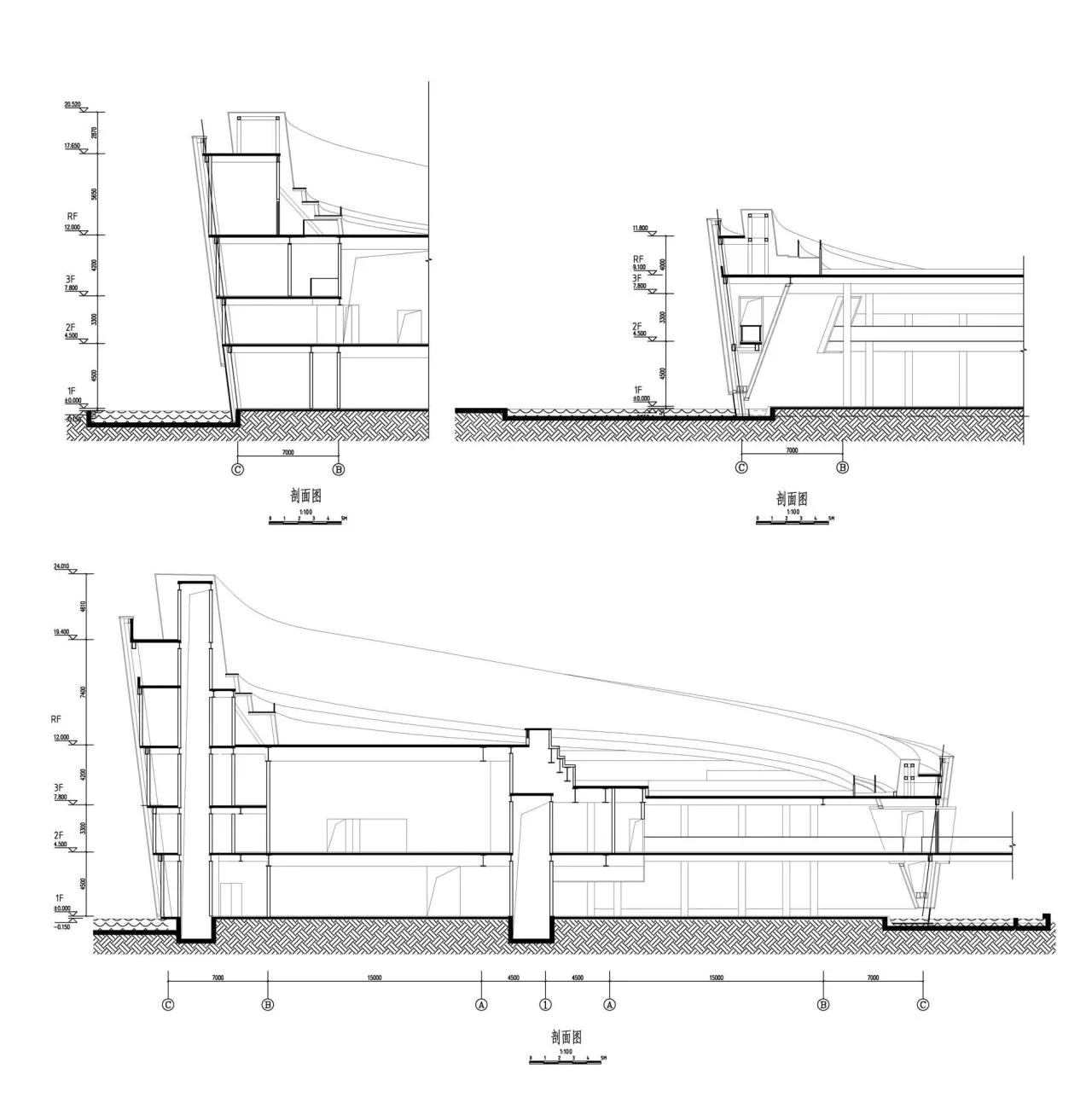
△ Section Diagram
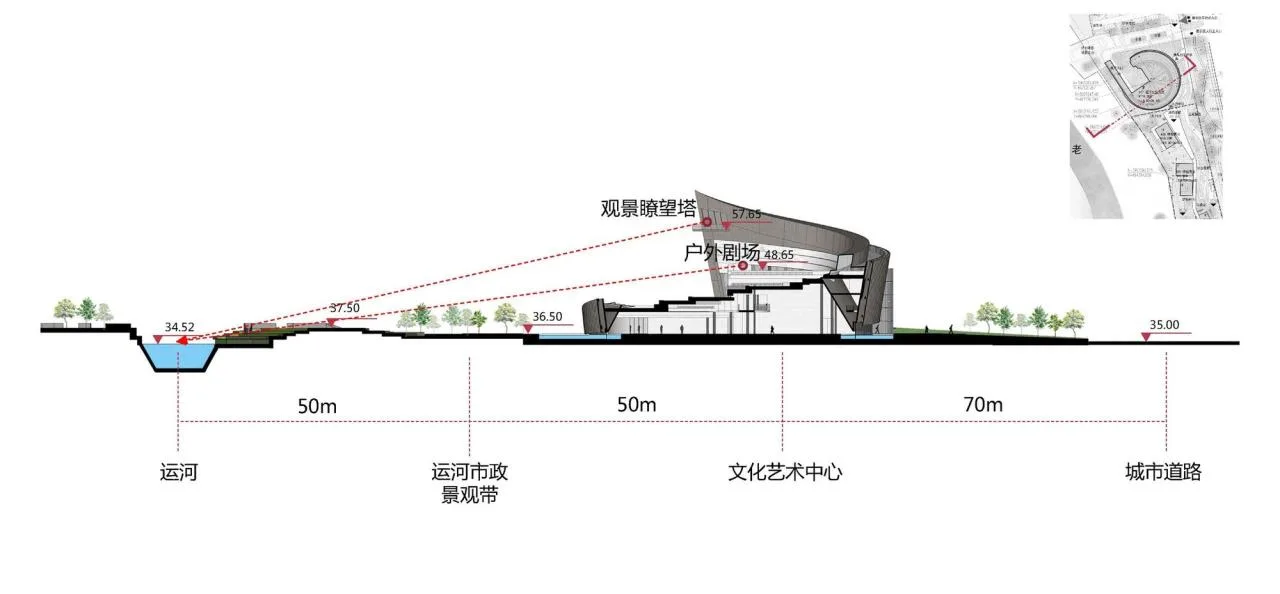
△ Site Profile Map
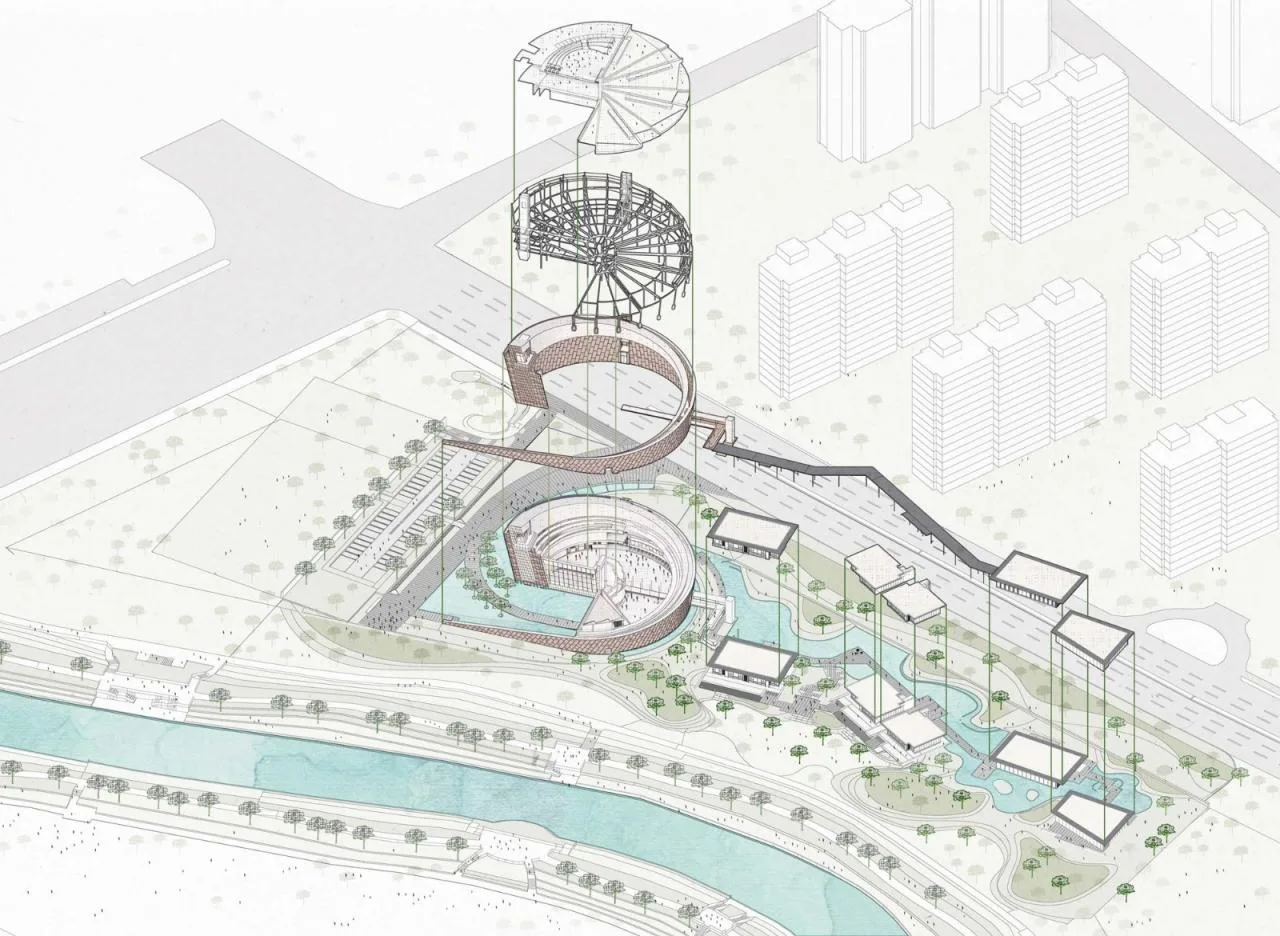
△ Exploded Axonometric Side Analysis
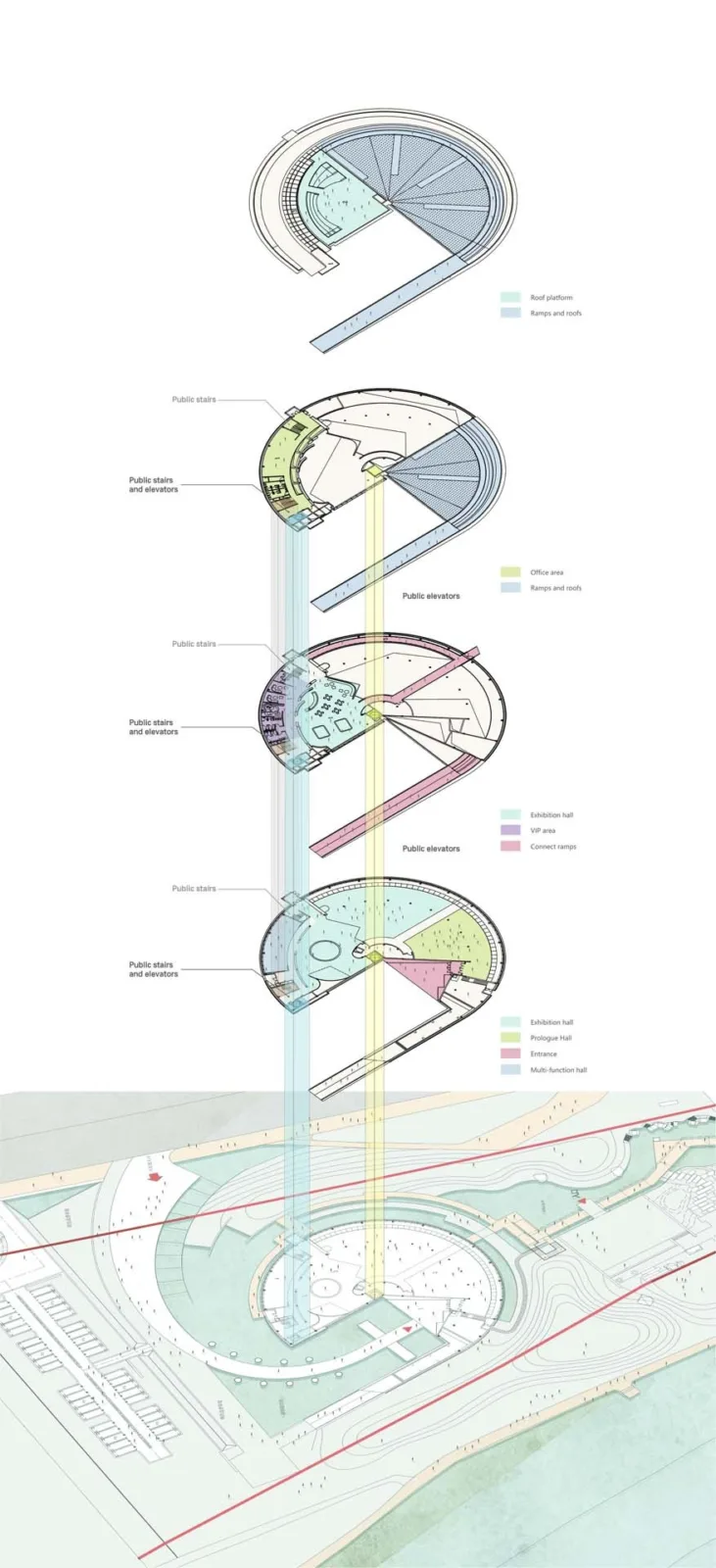
△ Functional Diagram of Each Floor
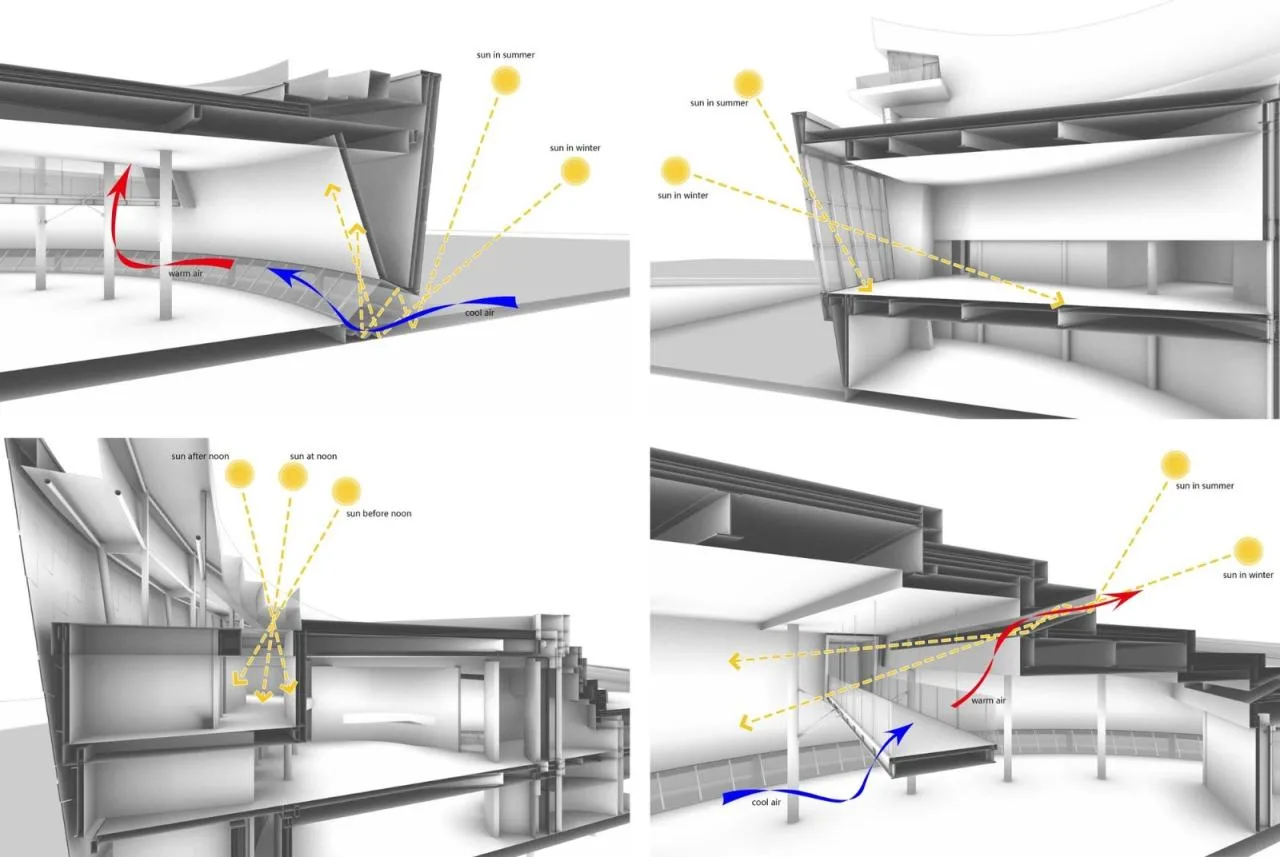
△ Airflow Organization Diagram
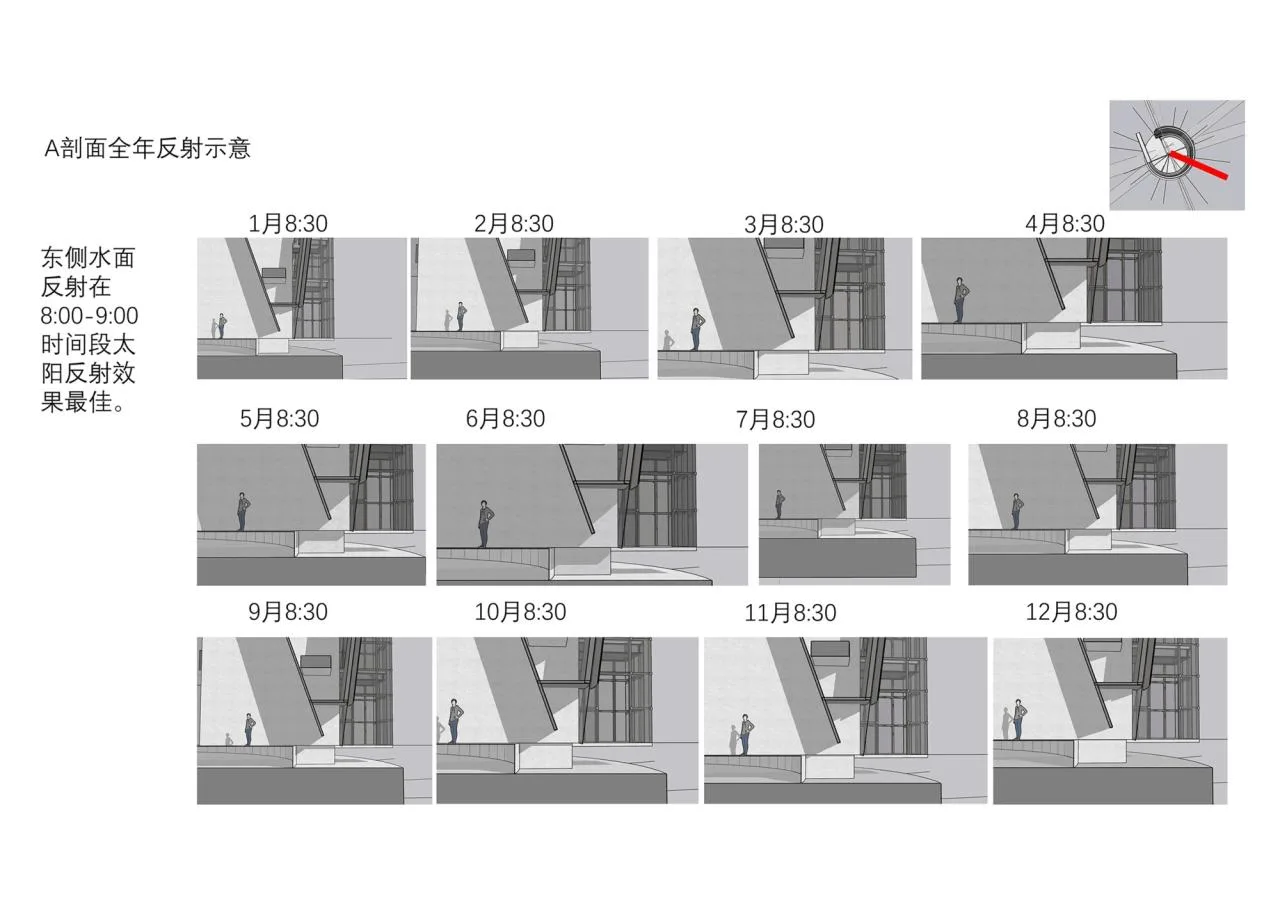
Calculation of Annual Light Reflection of △ Linear Low Window
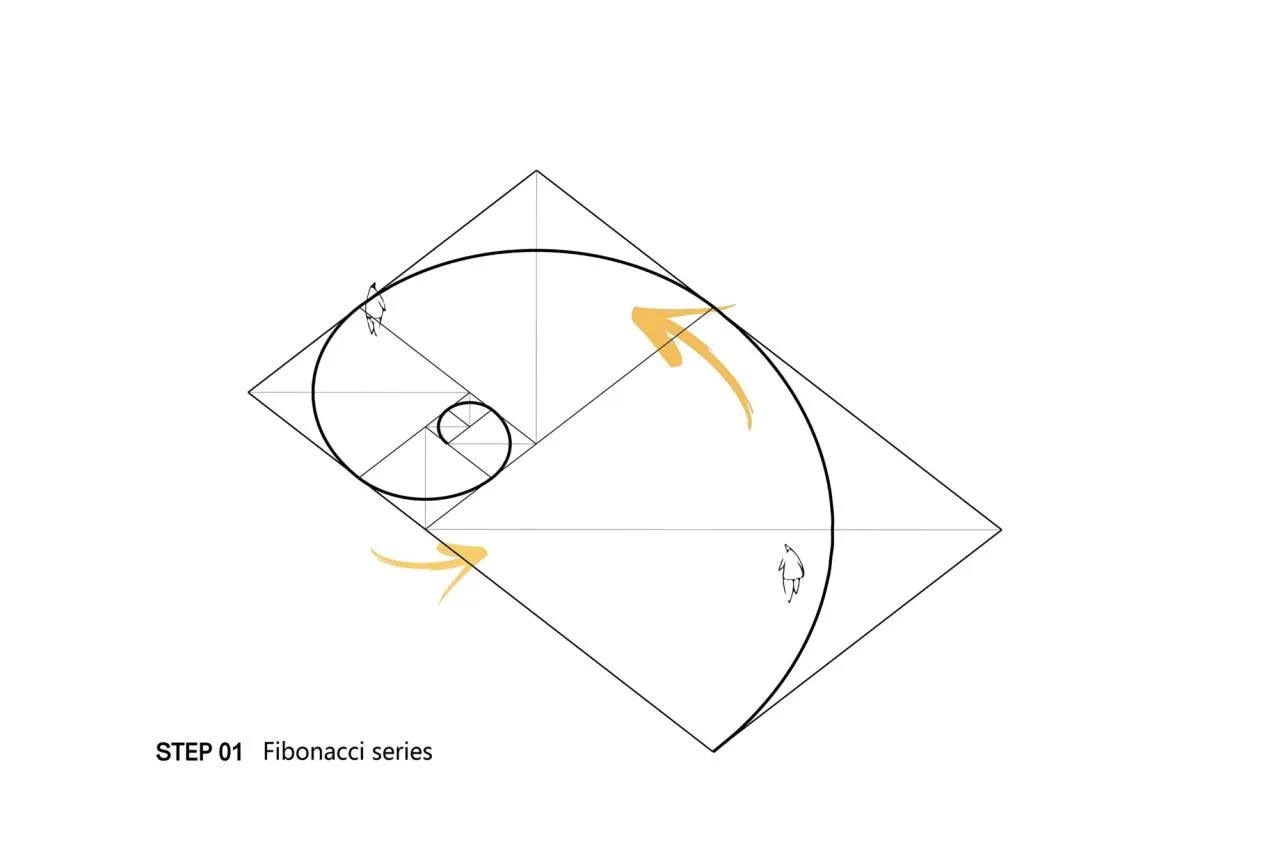
△ Shape Generation Diagram
Project Information
Architectural Design & Landscape Design
Area: 4,588 m²
Year: 2021
Photographers: Chen He, Yu Yuechao, Overseas Chinese Town in Jining, HWA, DID STUDIO
Manufacturers: Beijing Baogui Stone Art Technology Co., Ltd., Shandong Fenghua Glass Products Co., Ltd., Shandong Xinfengyuan Curtain Wall Decoration Materials Co., Ltd.
Design Team: Bo Hongtao, Xu Qian, Fu Chenbin, Jiang Jingying, He Shengyang, Kang Qi, Zhang Chong, Jiang Ke, Zheng Zhixue, Chen Huishu
Project Leads: Overseas Chinese Town East China Group Planning and Design Center, Nanjing Overseas Chinese Town Industrial Planning and Design Department, Jining Overseas Chinese Town Cultural Tourism Development Co., Ltd., Jining Overseas Chinese Town Planning and Design Department
Structural Design: Nanjing Changjiang Urban Architecture Design Co., Ltd.
Curtain Wall Design: China United Engineering Co., Ltd., Curtain Wall Engineering Design and Research Institute
Landscape Design: HWA Anqidao (Shanghai) Environmental Planning and Architectural Design Consulting Co., Ltd.
Interior Design: Weiji Interior Design (Shanghai) Co., Ltd.
Lighting Design: Lumi Lighting
Construction: Shanghai Construction Engineering Group Co., Ltd., Shanghai Zhongyuan Lion Enterprise Development Group Co., Ltd.
Location: Jining, China















Must log in before commenting!
Sign Up