
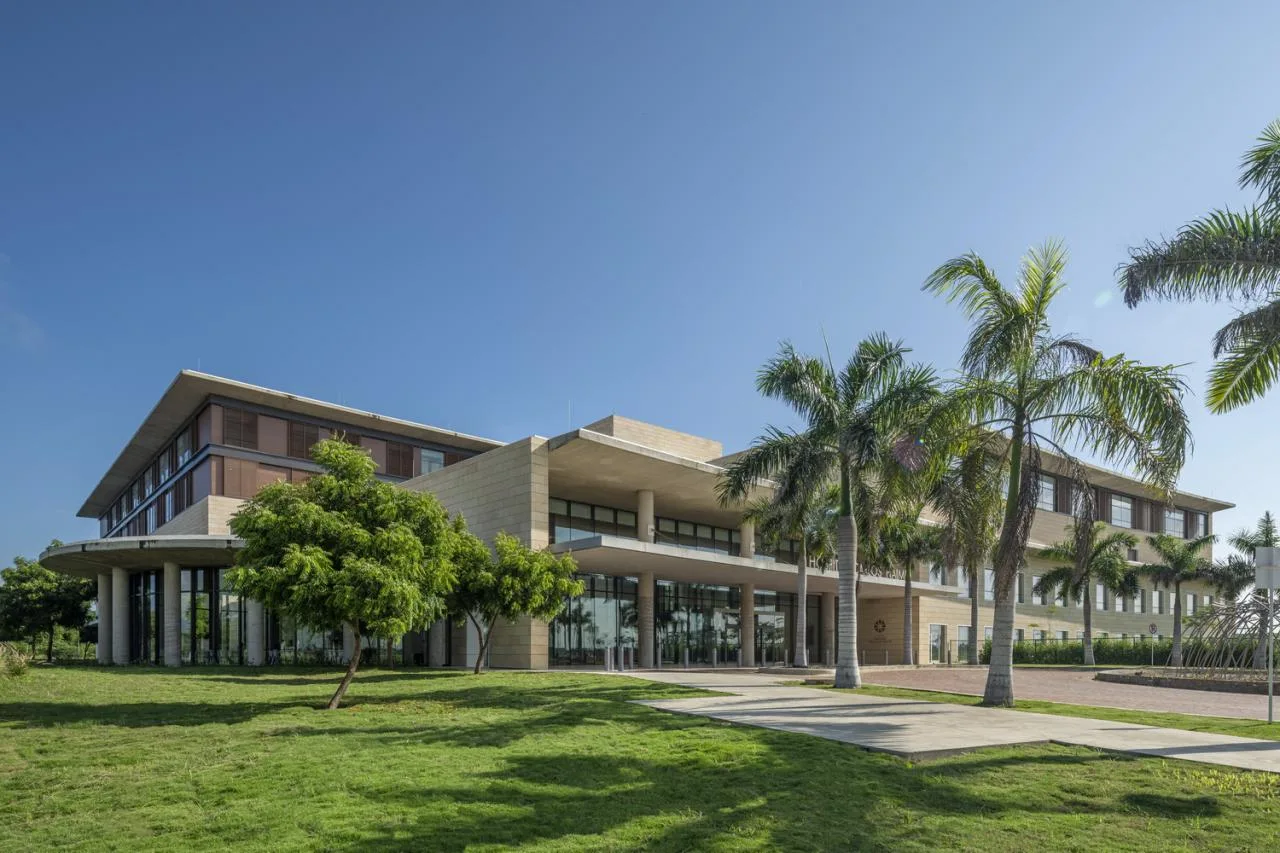
Sunlight and spatial transparency are crucial in fostering a sense of well-being. In many hospitals, the lack of natural light creates an oppressive and dull atmosphere, often disorienting patients and visitors. For the Centro Hospitalario Serena del Mar (CHSM), we aimed to prioritize two main strategies, with sunlight being a key focus. Combined with gardens, courtyards, and water features, these elements contribute to a healing environment with a distinctive character.” – Moses Safdi
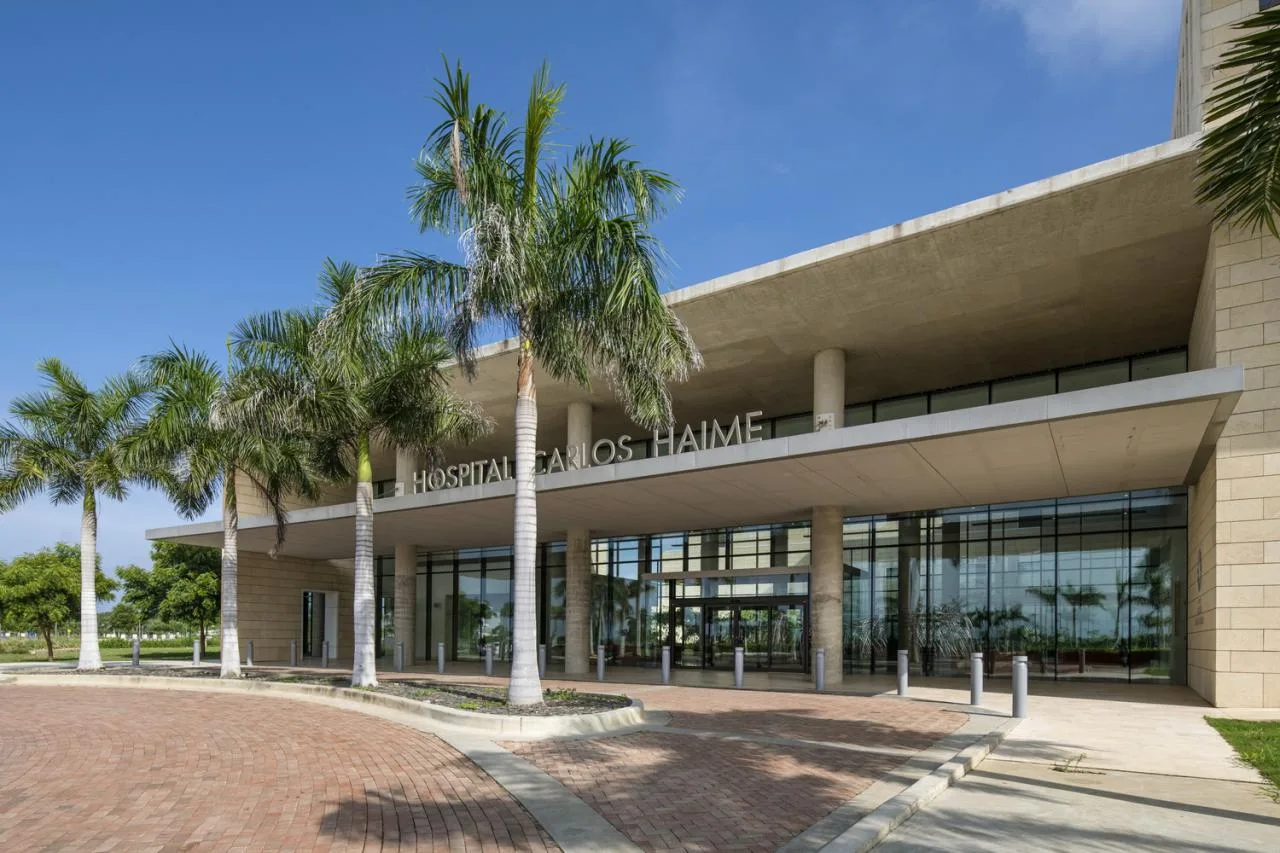
The Centro Hospitalario Serena del Mar (CHSM) marks Safdi Architects’ first hospital project and their inaugural venture in Latin America. This state-of-the-art hospital holds immense significance for Cartagena, Colombia, and the wider Caribbean region. It offers high-quality, patient-centered comprehensive medical services to residents of Cartagena and neighboring communities.
Guided by the principle that “exposure to nature and sunlight is essential to the healing process for patients, families, and staff,” the architectural design emphasizes creating an uplifting atmosphere that supports better clinical outcomes. Early this year, the hospital opened 158 beds to the public, with plans to expand to over 400 beds upon full completion.
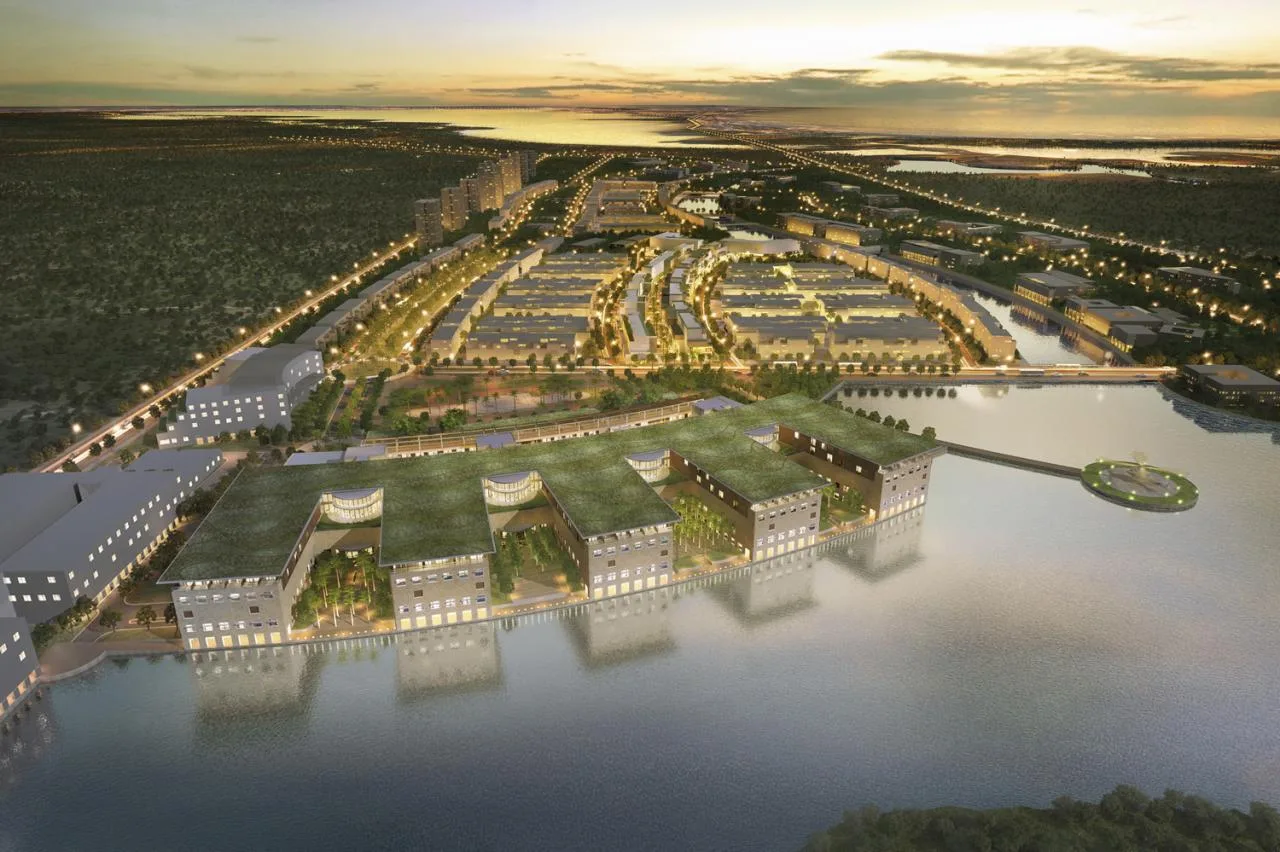
The Serena del Mar Hospital Center is a vital part of the El Gran Canal municipality, an area also designed by Safdi Architects. Spanning roughly 10 square kilometers along the Caribbean coast north of Cartagena, the hospital is the district’s first public institution and the city’s first fully integrated hospital with all departments.
The initial phase covers approximately 53,500 square meters, and once complete, the medical facilities and surrounding gardens will extend over about 70,000 square meters.
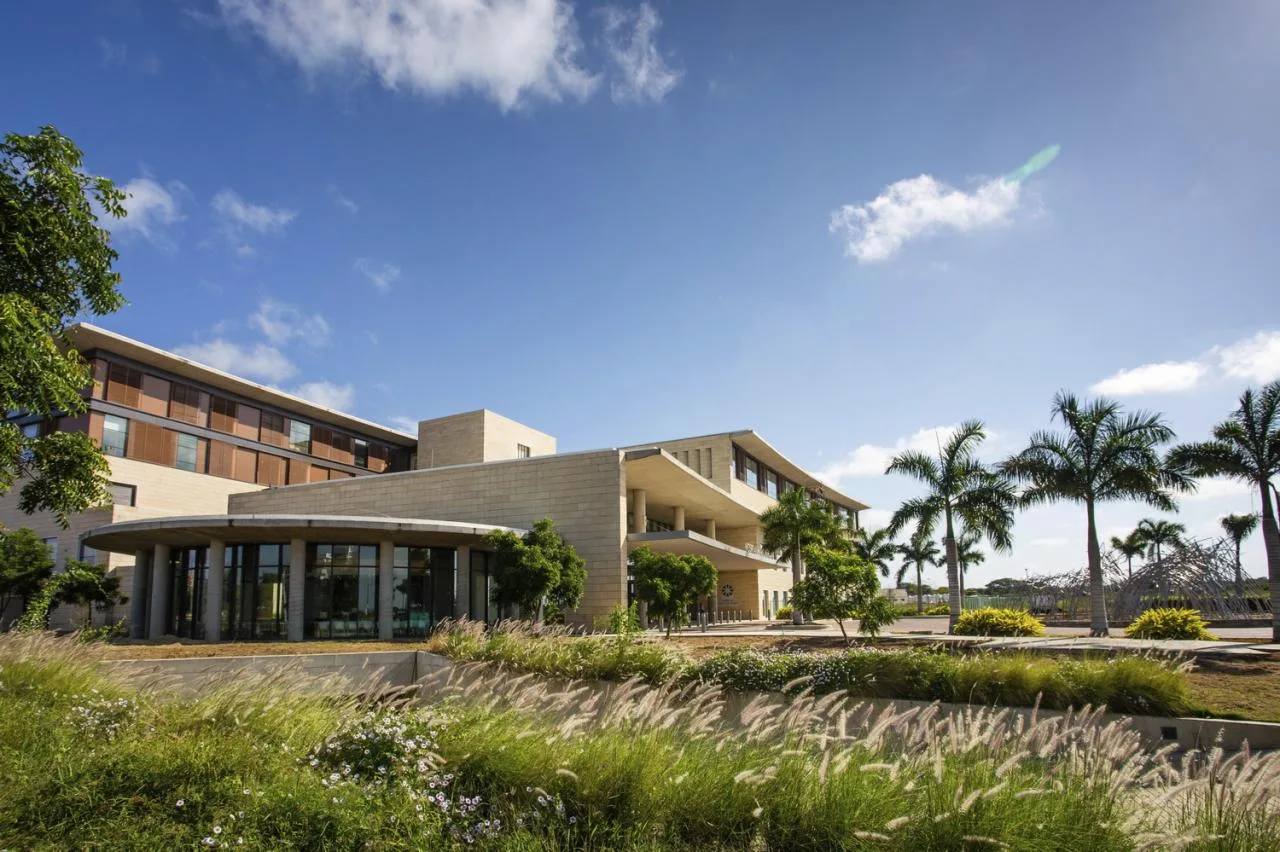
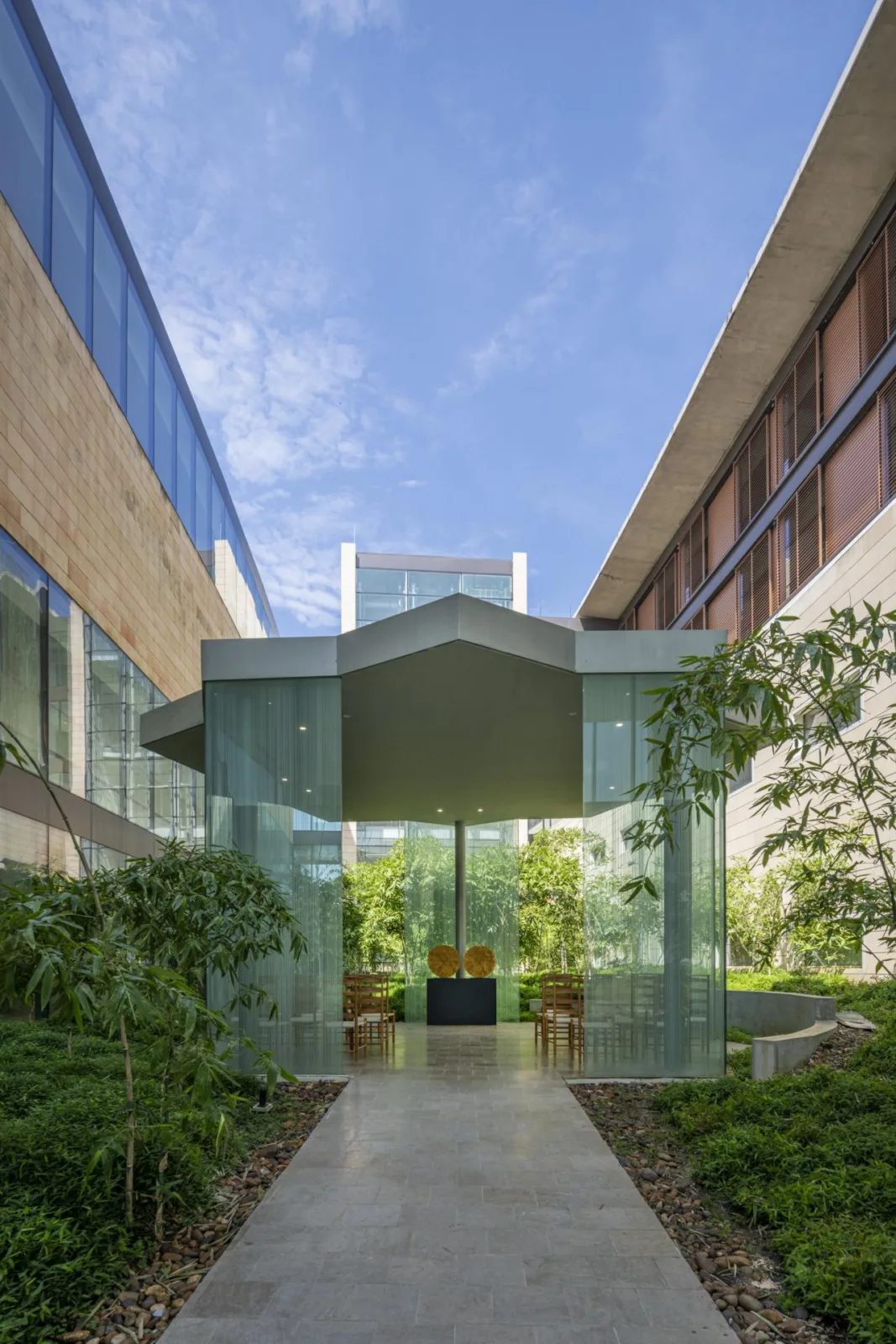
Designed as a garden-style rehabilitation hospital, the center overlooks a serene lake and is surrounded by a variety of gardens, including a linear bamboo courtyard, a garden supporting cancer treatment, and lakeside green spaces. Patients, families, and staff can freely access these gardens via pathways and a lakeside promenade.
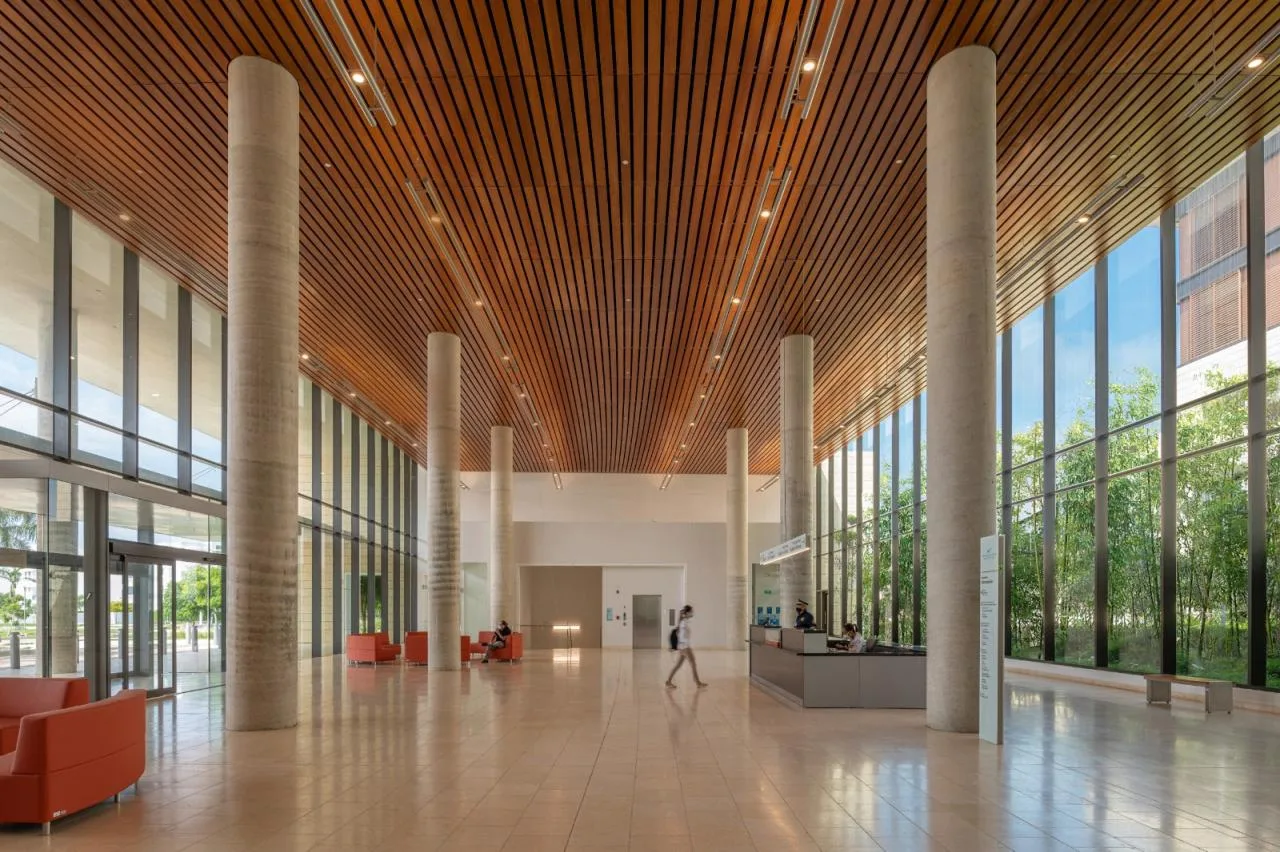
The hospital’s exterior walls are clad in cream-colored stone, reflecting the coral stones found in Cartagena’s historic old town. To suit the Caribbean’s tropical climate, the design incorporates deep eaves, inward-facing window sashes, and electric blinds that reduce heat gain while maximizing natural light and views.
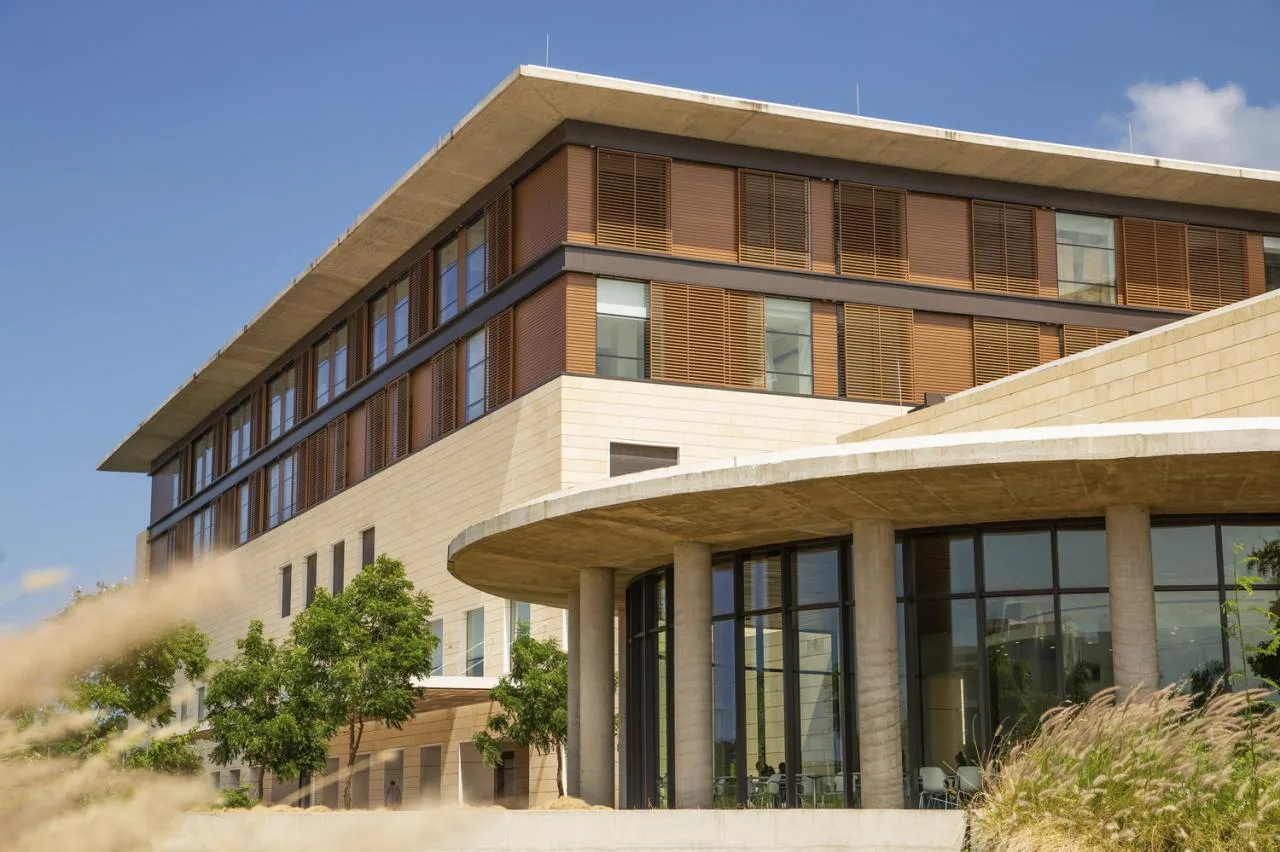
The inpatient facilities are housed within five wing buildings, each designed with shallow interior depths to maximize window access for natural light and views of lakes, hills, gardens, and courtyards. Even highly functional areas such as emergency rooms, labs, and outpatient clinics prioritize daylight and greenery to create a positive physical and mental healing environment.
To ensure efficient maintenance, replacement, reconfiguration, or expansion of medical services, an entire floor is dedicated to mechanical systems, equipment, and distribution. This innovative approach offers maximum flexibility without compromising hospital operations.
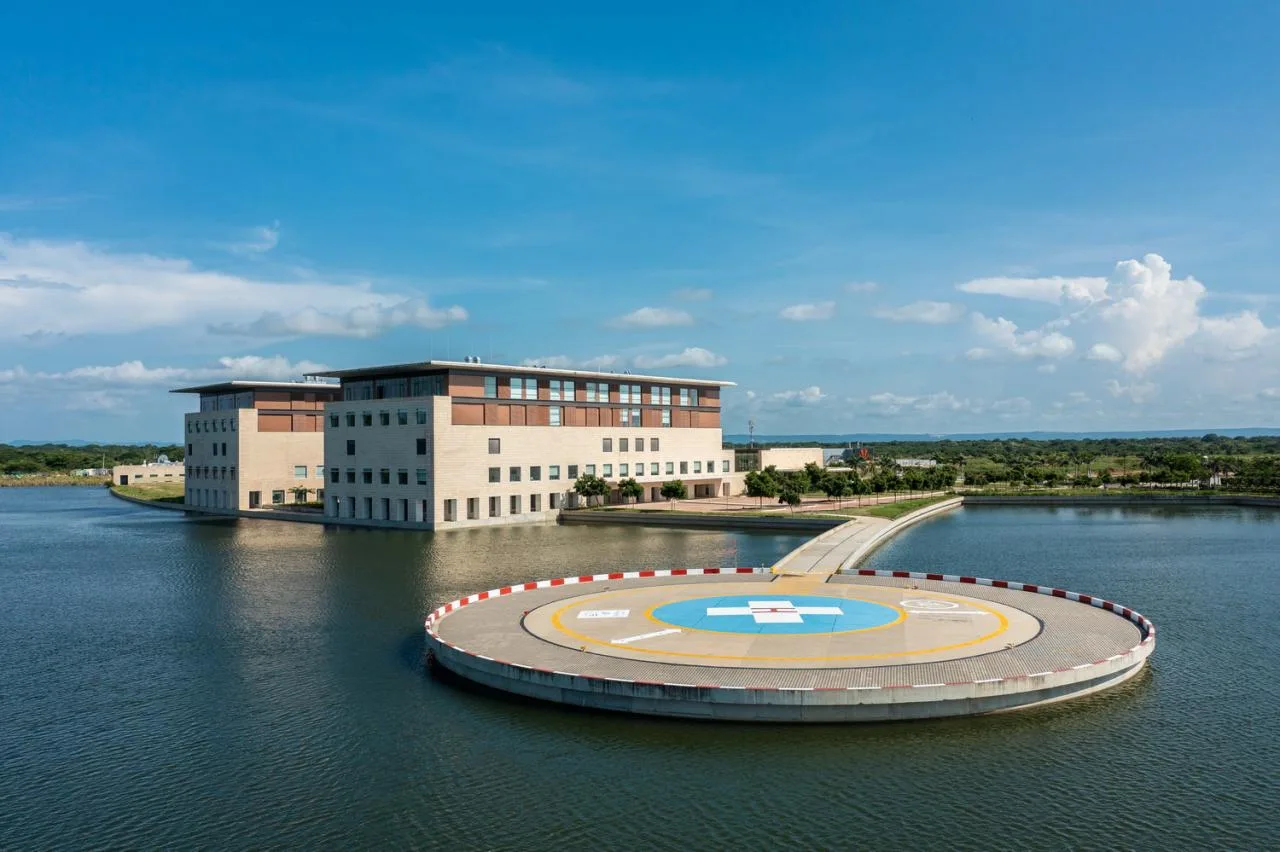
“Our goal was to create a hospital that is both efficient and humane. We envision a healing, uplifting space that challenges the stereotype of hospitals as oppressive places.” – Sean Scenesor, Partner at Safdi Architecture Firm
Project Highlights
Green Corridor and Inviting Gardens
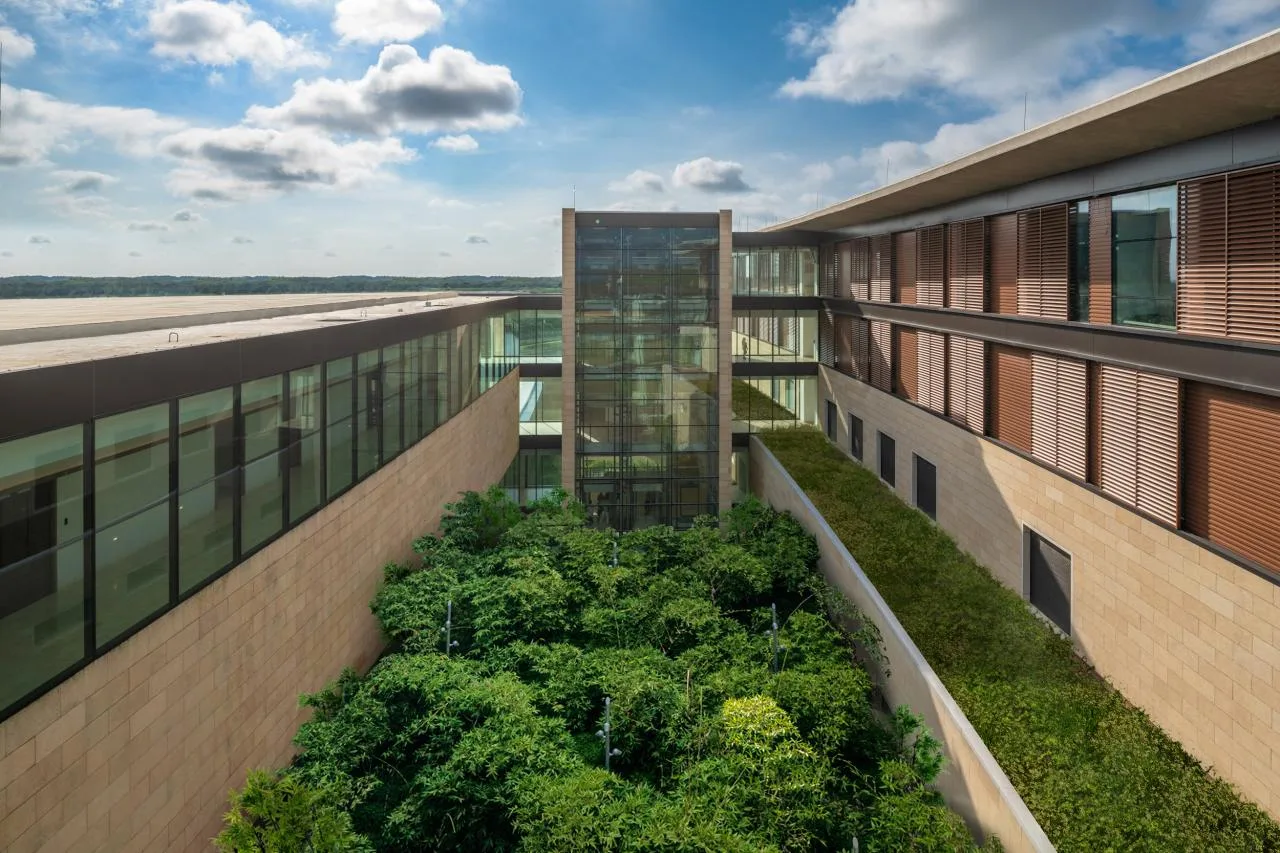
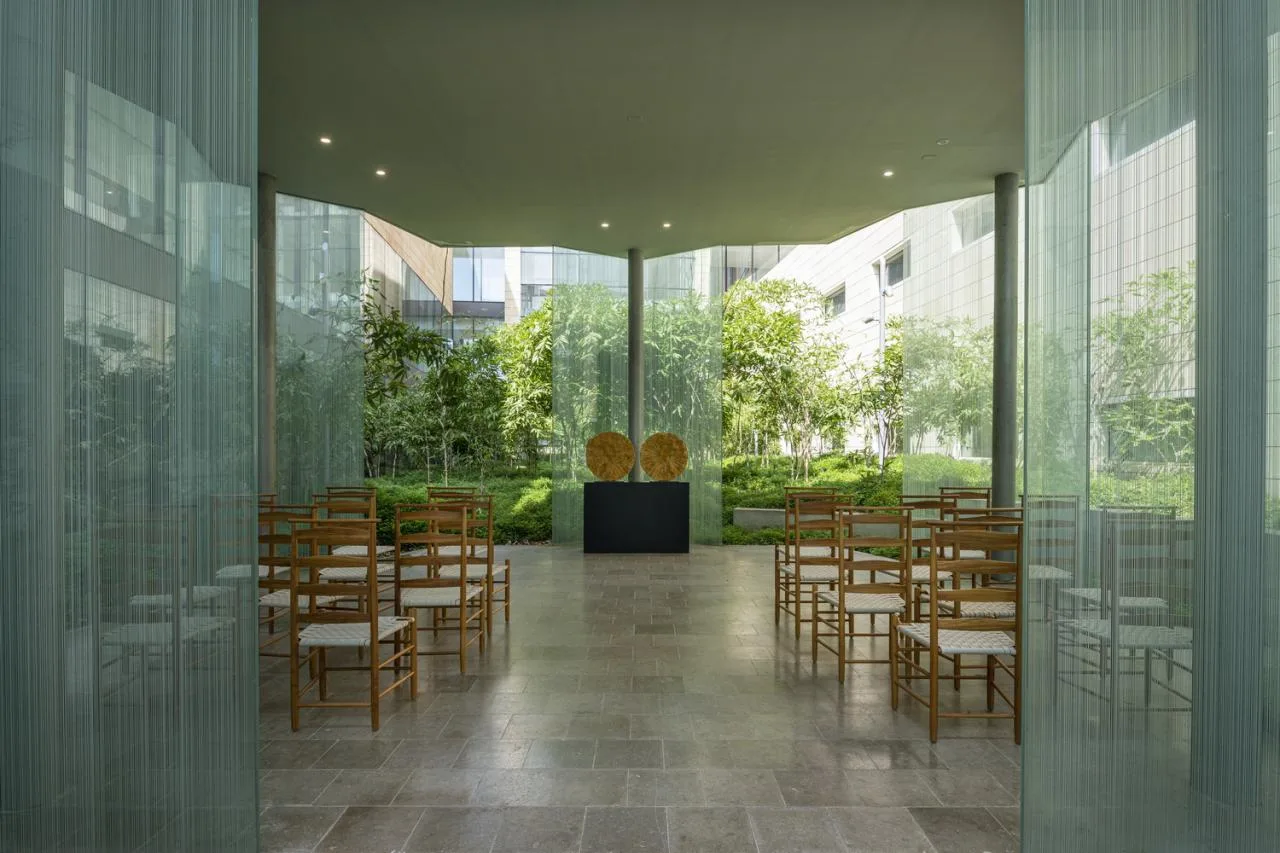
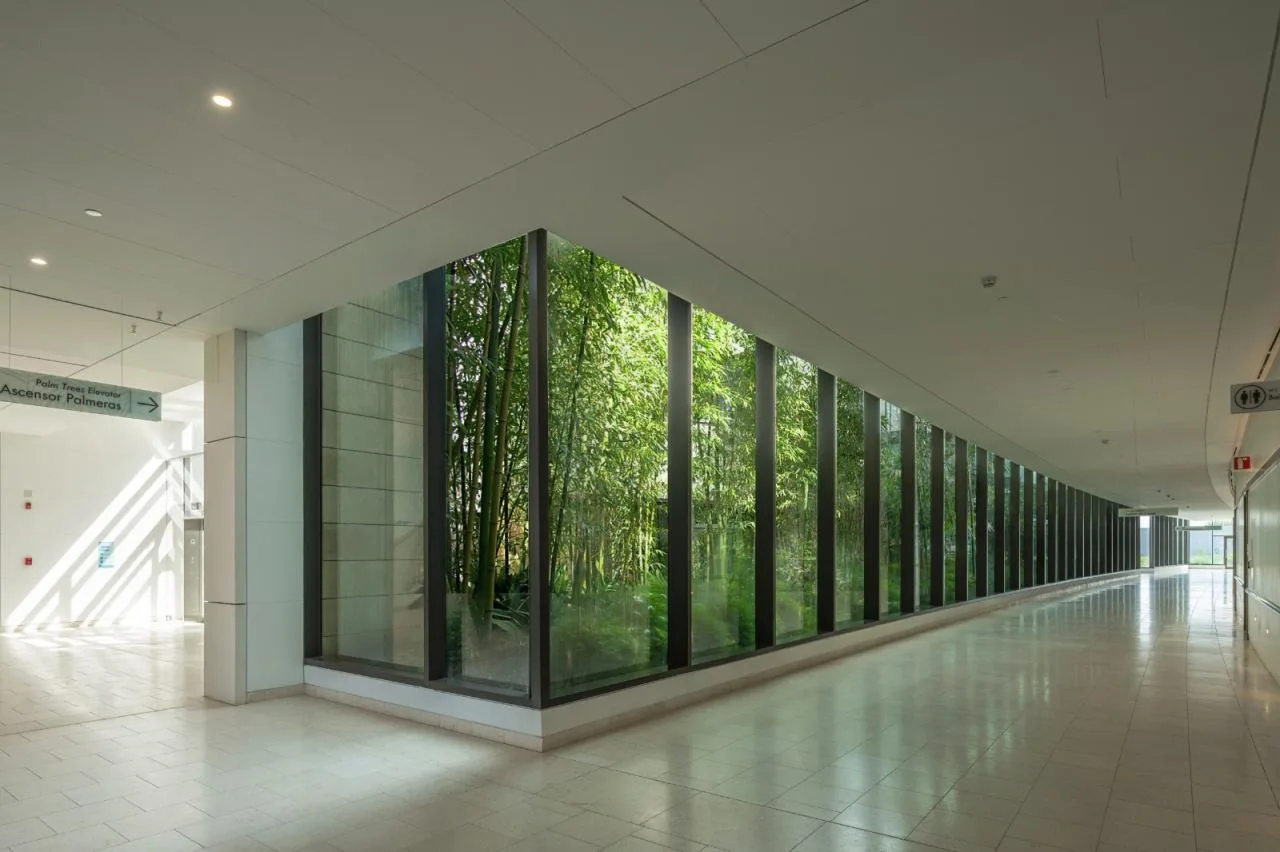
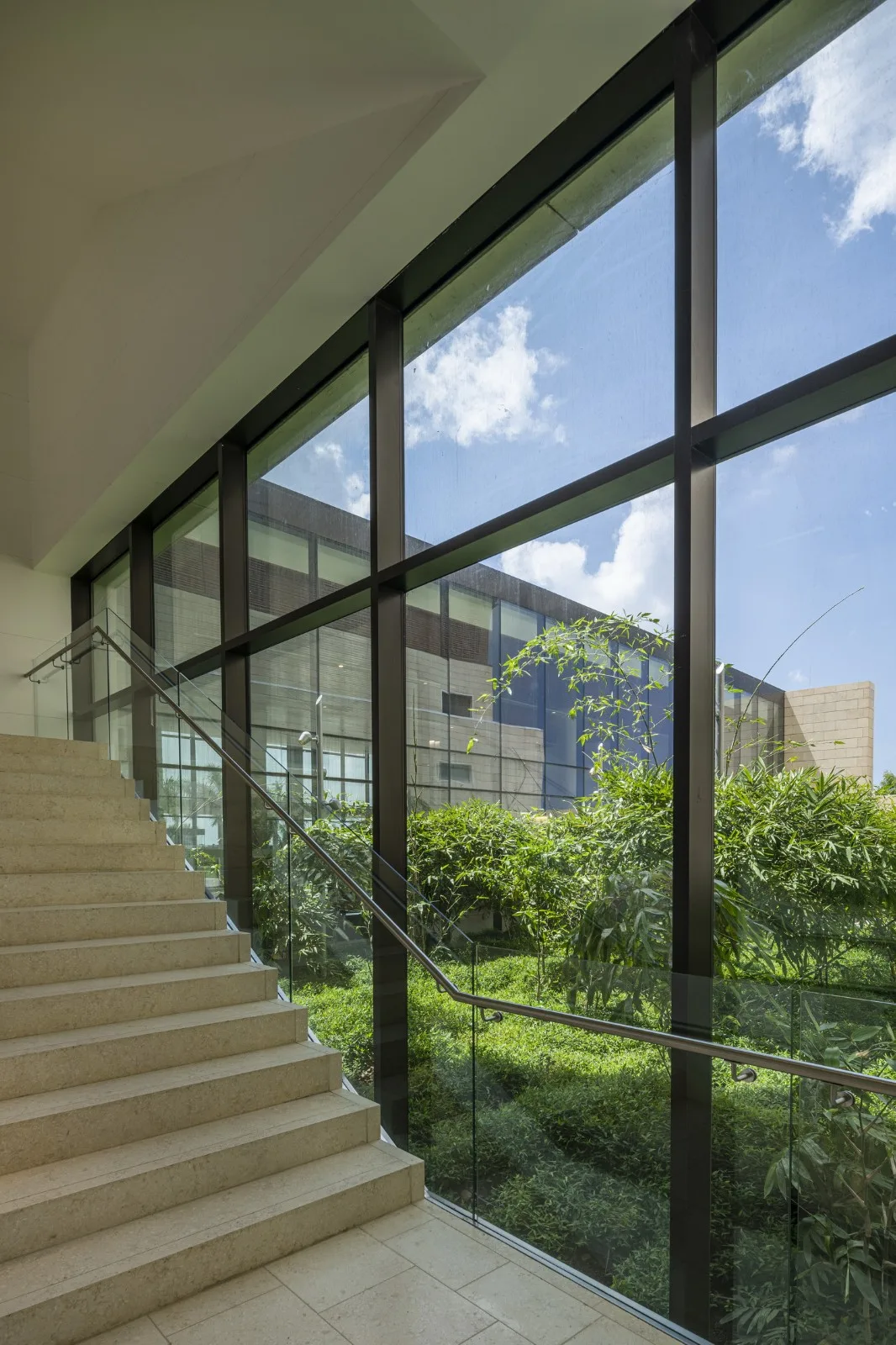
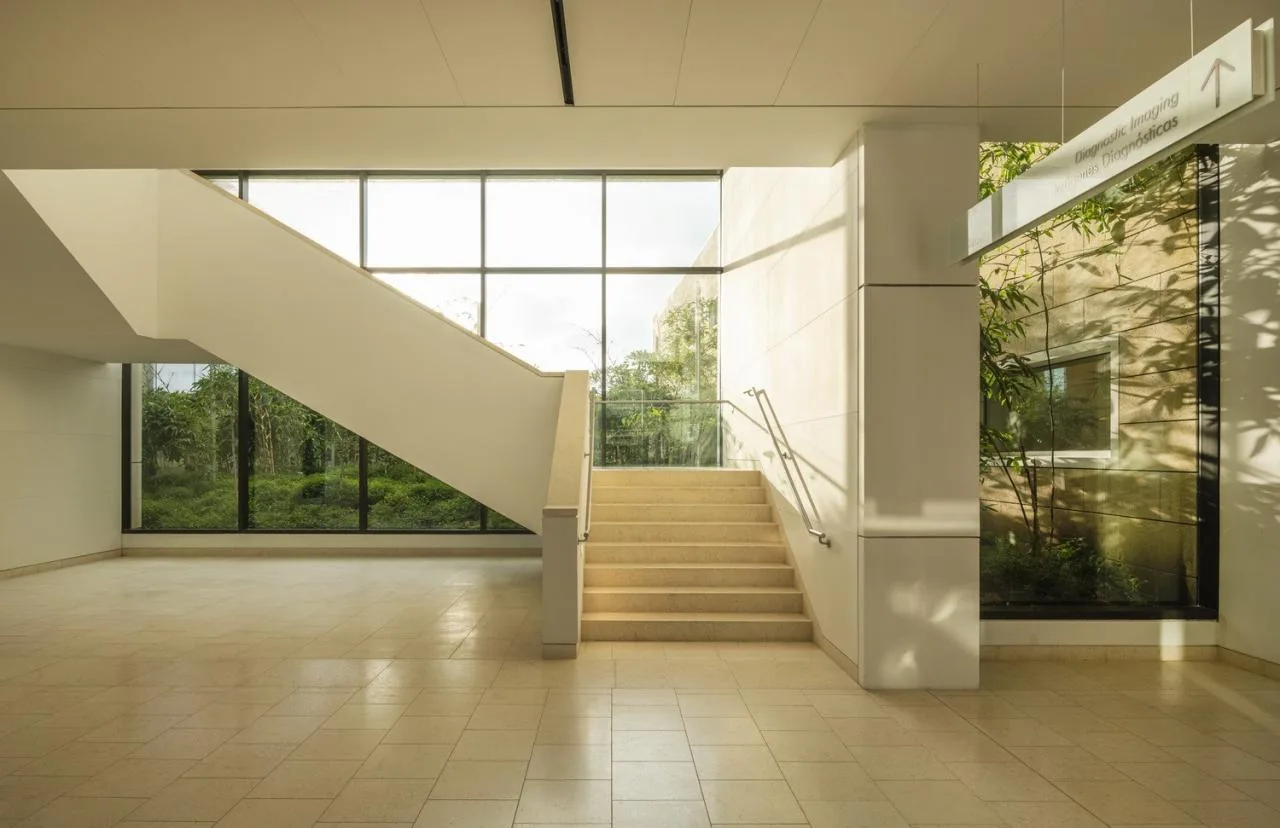
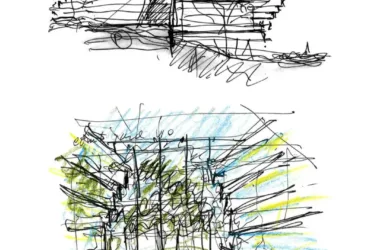
A linear courtyard shaded by bamboo separates the inpatient wing from the public outpatient center. Glass elevators, staircases, and public corridors surround the courtyard, creating inviting sightlines and simplifying navigation for visitors. The choice of bamboo is intentional — sunlight filtering through the leaves casts dappled shadows that enrich the sensory experience. A small non-denominational chapel within the courtyard offers spiritual solace for patients and families.
The hospital’s five inpatient wings extend toward the lake, interspersed with gardens showcasing diverse landscapes. The rehabilitation garden adjacent to the oncology department brings cancer patients closer to nature, featuring local plants such as medicinal Indian cloves, egg flowers, and royal phoenix wood.
Healing Environment
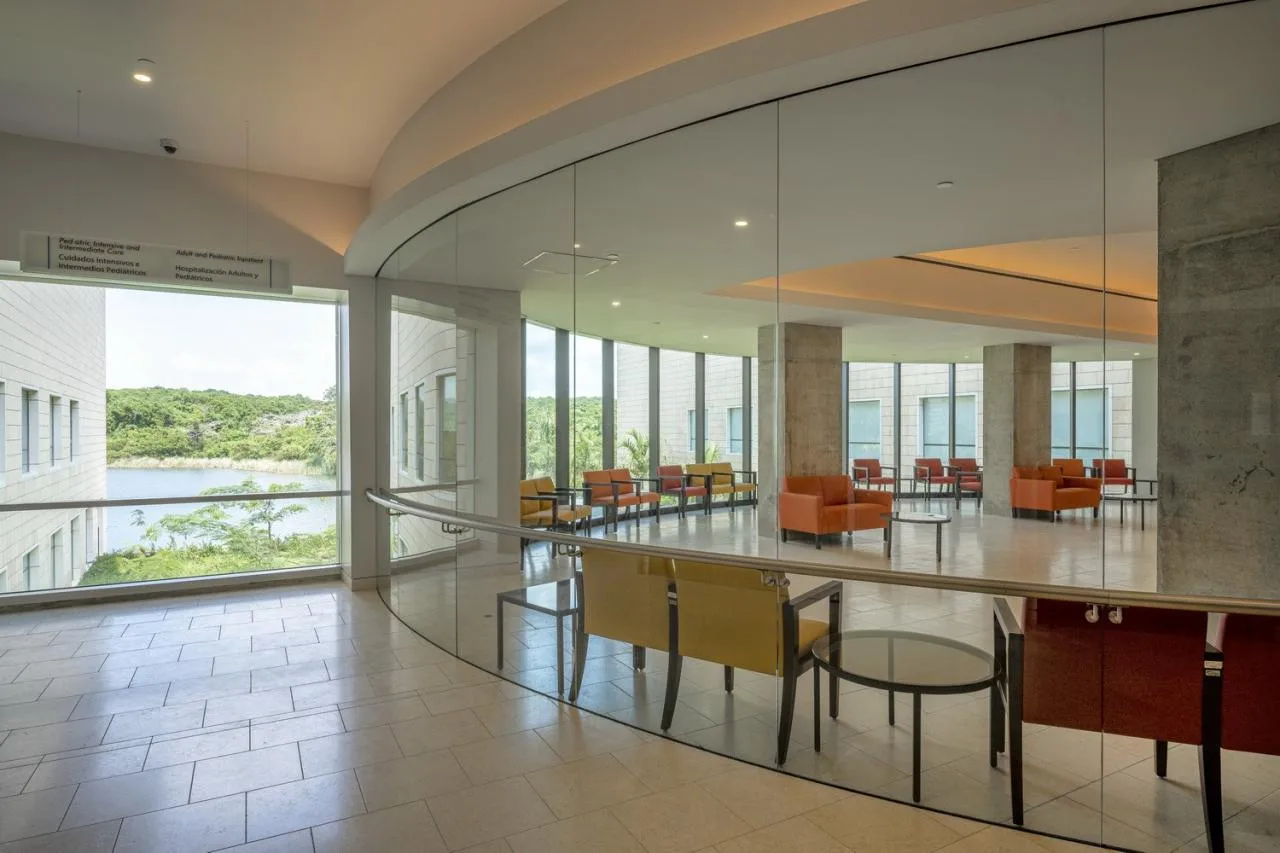
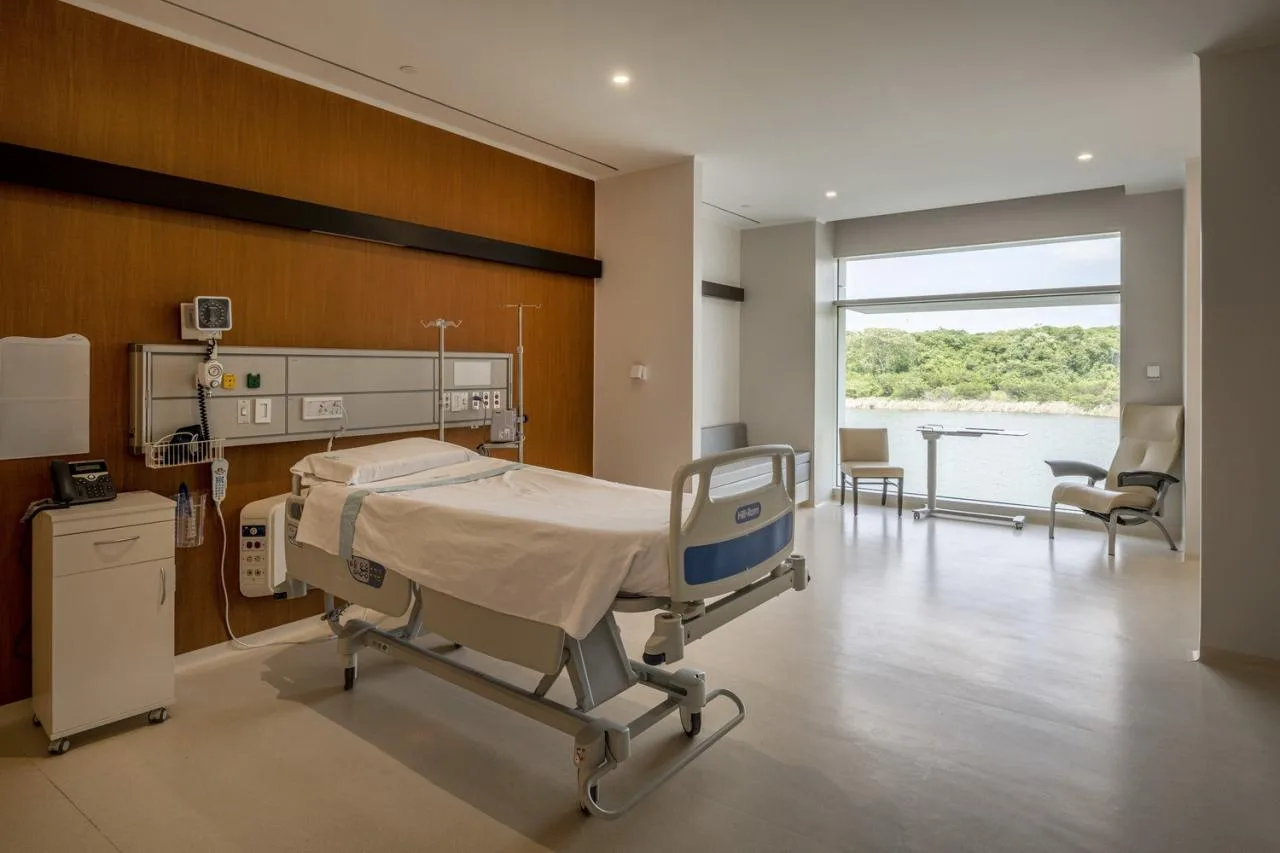
Patient comfort is central to the hospital’s design, with each ward offering views of the lake and gardens. Ample natural sunlight fills the rooms, complemented by independent electric roller blinds that allow patients to control their environment.
Integrated lighting in wards and corridors is recessed into walls and ceilings to provide soft, indirect illumination, reducing glare for bedridden patients and fostering a calm, restful atmosphere. The lighting balances brightness throughout the day and night, supporting patient rest and sleep.
Rubber flooring in inpatient areas matches the stone flooring in public spaces, promoting a serene and cohesive atmosphere. This flooring also helps reduce noise, enhancing rest and well-being for patients, nurses, and staff alike.
Adapted to Local Conditions
The hospital’s architectural features draw from Cartagena’s local traditions. Wide eaves, inward-facing window frames, and electric blinds shield interiors from harsh sunlight. The creamy limestone cladding throughout the exterior, public spaces, and circulation areas echoes the coral stones found in Cartagena’s historic old town and colonial churches, creating a tranquil and inviting environment for rehabilitation.
Designed for Cartagena’s hot, humid, and seasonally rainy tropical climate, spacious eaves promote indoor ventilation while providing sun and rain protection. This design allows patients and visitors to move comfortably between indoor and outdoor spaces while enjoying the surrounding natural scenery.
Interior Design
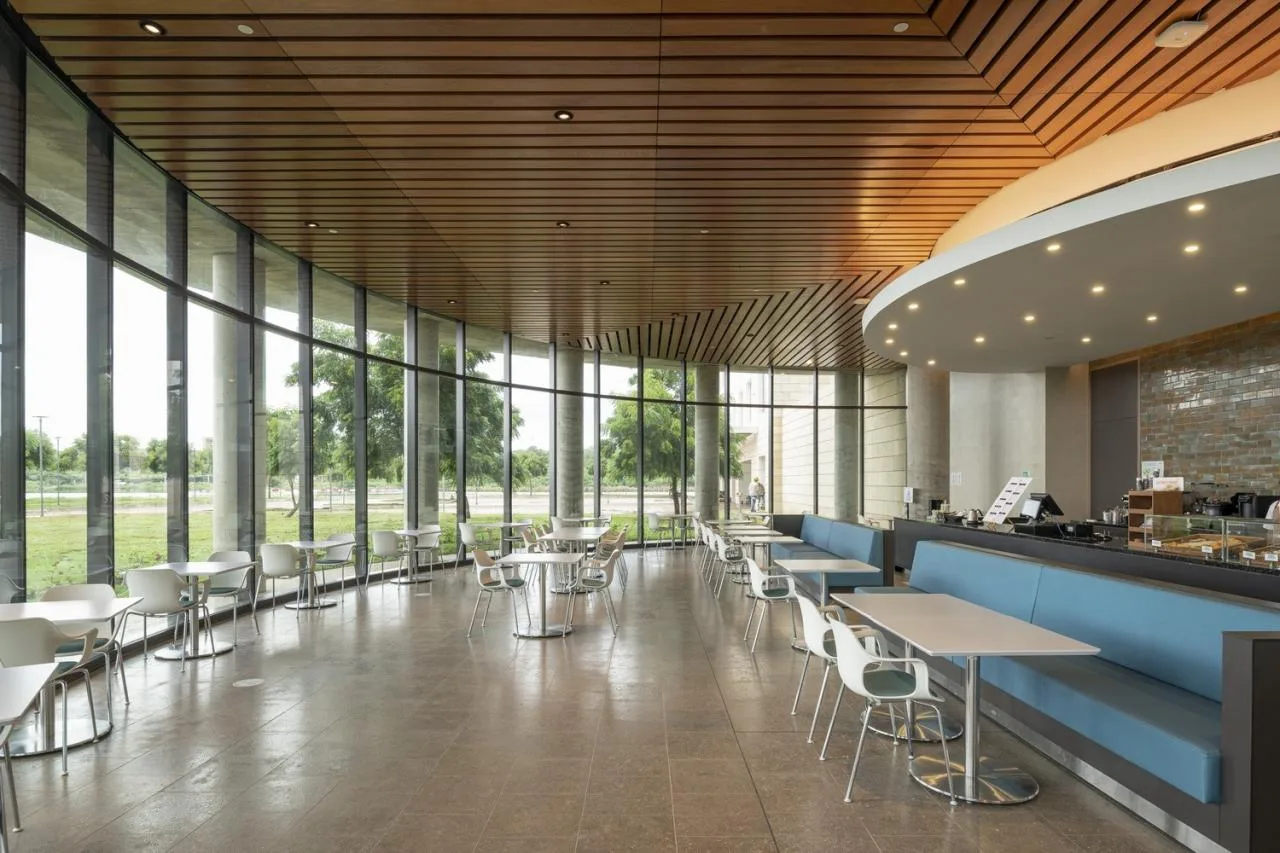
The interior palette harmonizes with Cartagena’s coral stones and native wood. Bright, vibrant handmade glazed tiles and furnishings provide contrast, reflecting Colombian culture. The building’s lower levels use warm earth tones such as browns and golds, symbolizing the Guajira Desert and Orinoco River basin, while cooler tones like greens, blues, and turquoises represent the Caribbean and Andean regions.
Furniture colors are inspired by local flora: reds and purples derive from nine-leaf clover, scorpion tail banana, and hibiscus; blues and yellows from garlic flower and cinnabar flower; greens from bamboo and agave. The hospital also embraces art, featuring a large sculpture at the main entrance and a collection of regional posters displayed by the renowned local gallery NH Galería.
Technical Highlights
A key innovation is dedicating the entire third floor to medical equipment storage and usage. This setup offers tremendous flexibility, allowing maintenance teams to service equipment without disrupting outpatient operations. It also facilitates reconfiguration of equipment and departmental layouts as medical technology evolves. Centralizing equipment storage avoids the tangled wiring typical in traditional hospitals. Solar panels on the roof generate power while enhancing the building’s peaceful appearance.
An underground tunnel system runs throughout the hospital, linking loading docks, kitchens, and all core areas. This efficient network supports the smooth movement of staff, supplies, food, clothing, waste, and various services, forming a vital backbone for hospital logistics.
The hospital’s straightforward linear infrastructure simplifies future renovations and phased expansions, maintaining the building’s logical flow and legibility.
“In life, we must learn to give before we receive. The country and community have given us many valuable opportunities, and building hospitals is our way of giving back. Working with Moses Safdi and his team, we strive to design and construct a hospital that delivers quality medical care to meet humanity’s fundamental needs. By integrating poetic aesthetics, ecological landscaping, and local characteristics, the Serena del Mar Hospital Center is full of warmth and vitality, offering an unparalleled experience to all visitors.” – Daniel Haime, Chairman of Serena del Mar Hospital Center
Project Drawings
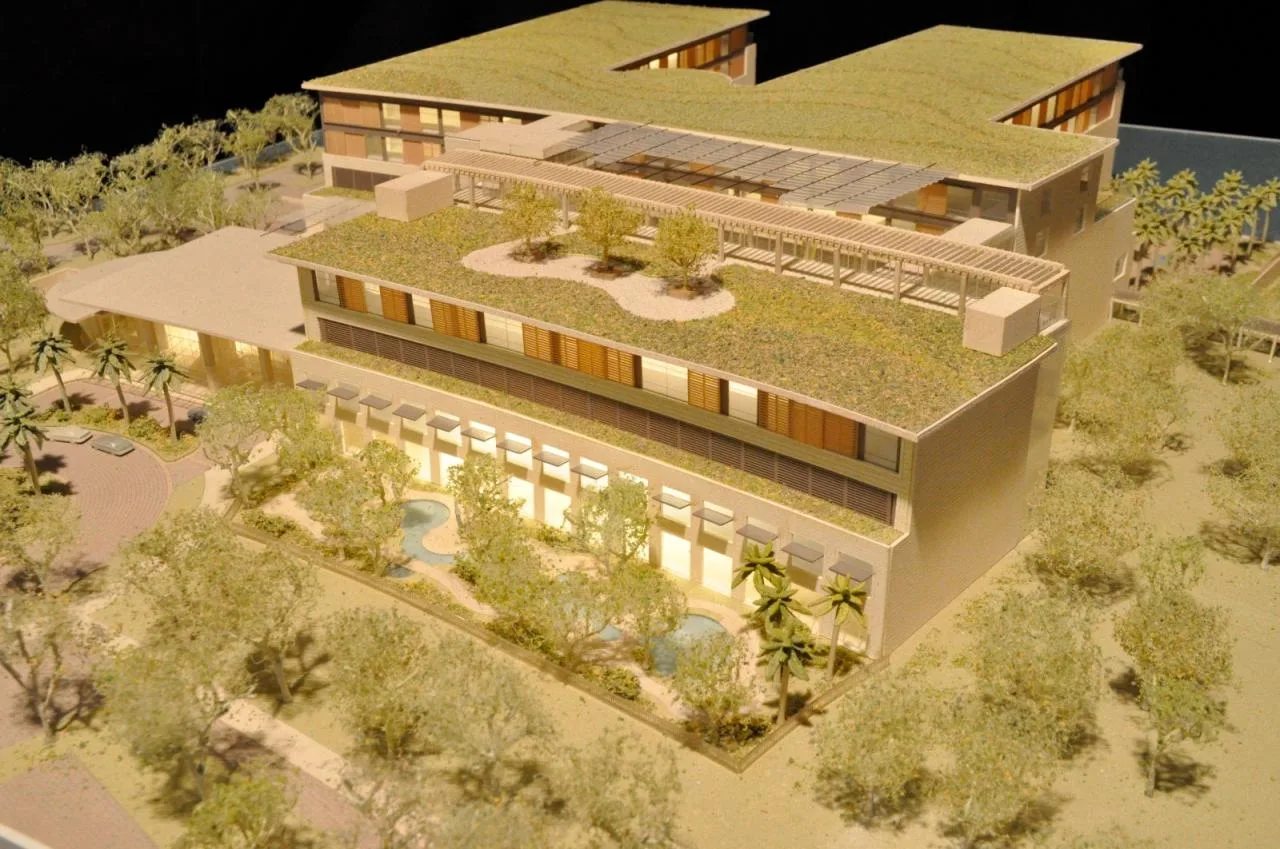
△ Model Diagram
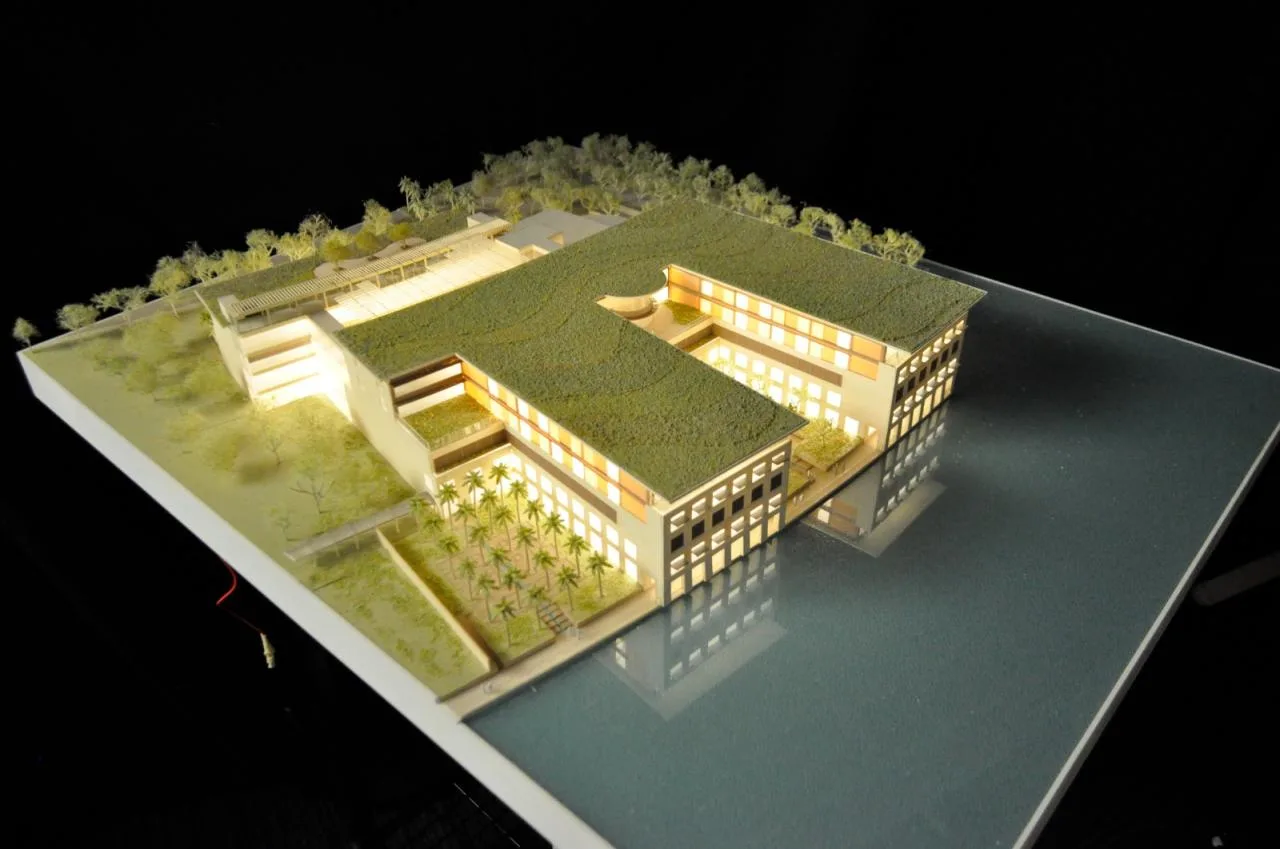
△ Model Diagram
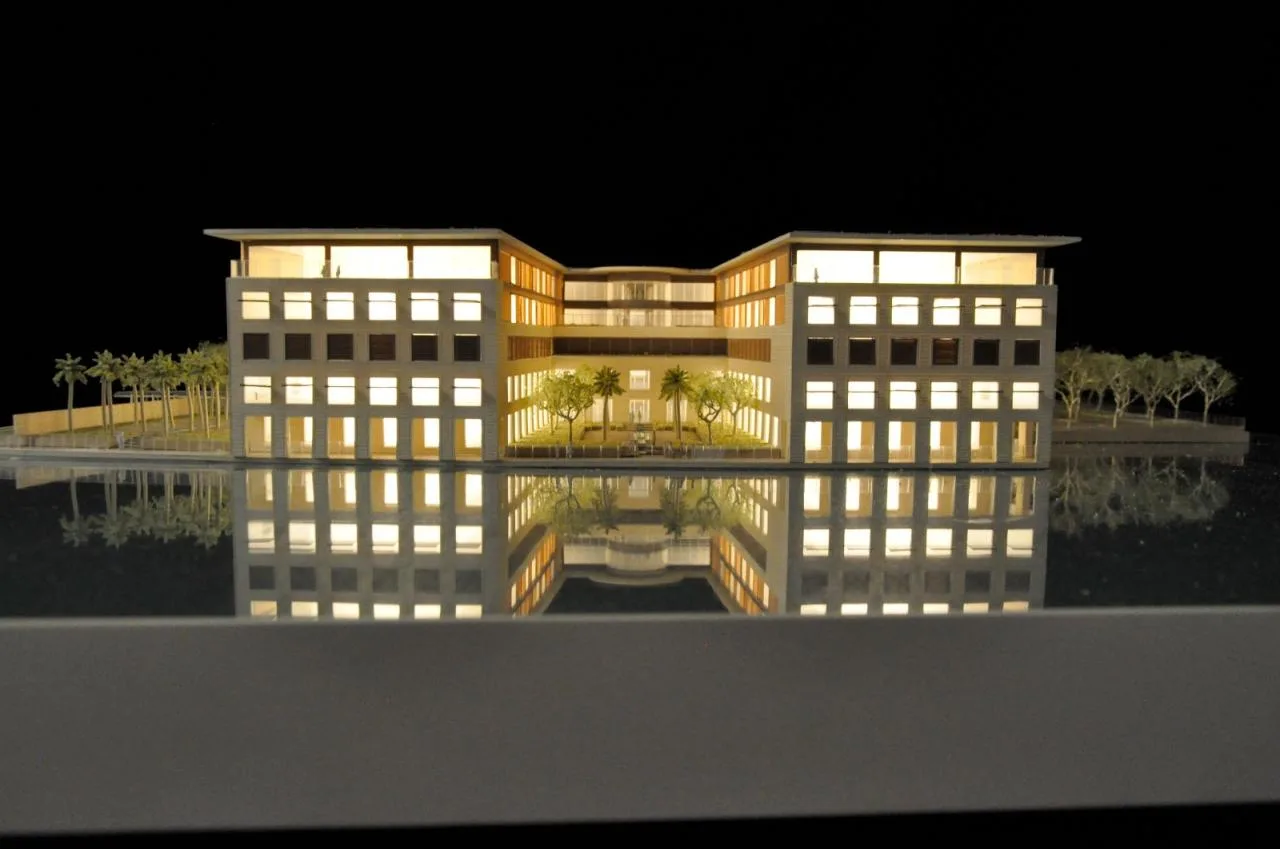
△ Model Diagram
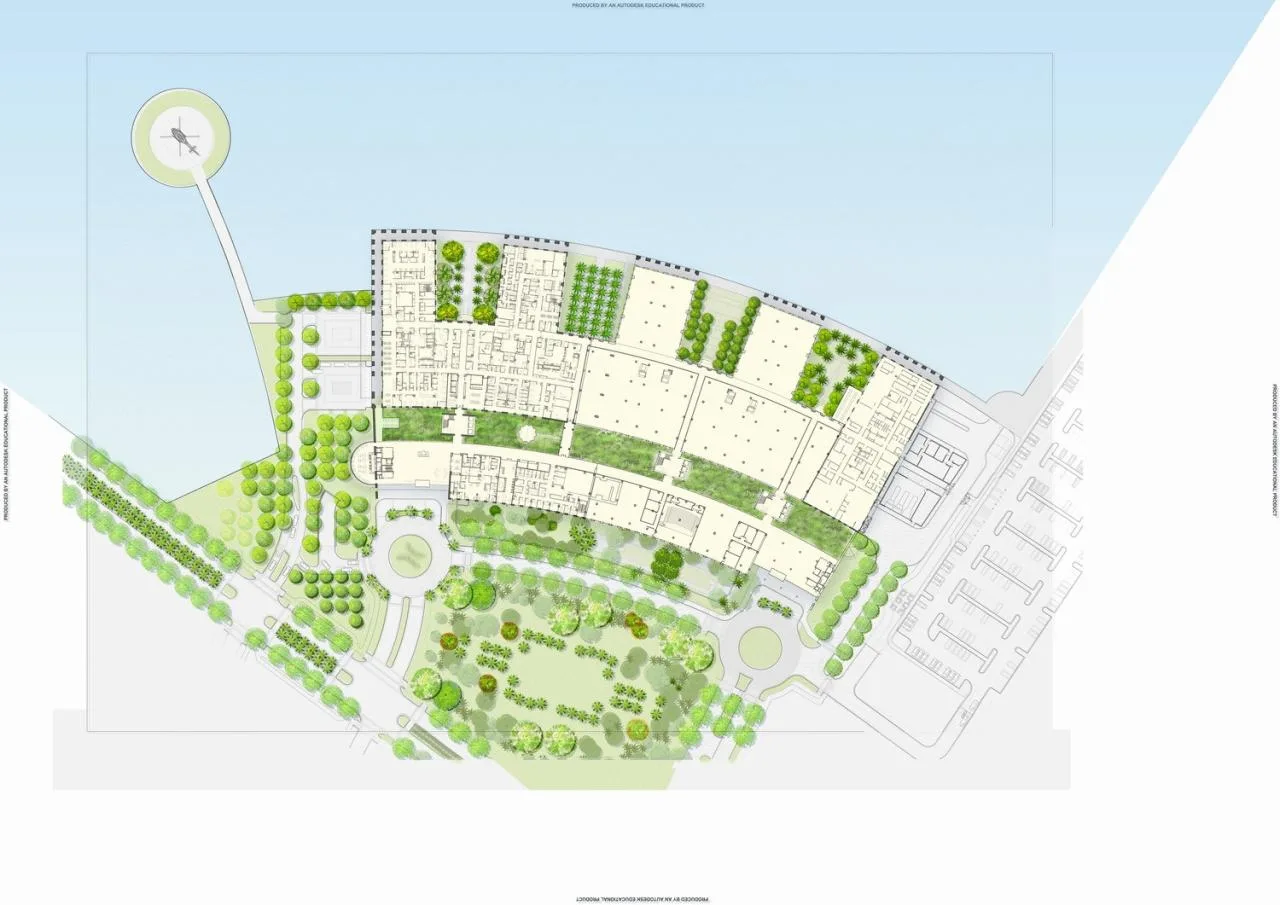
△ General Layout Plan
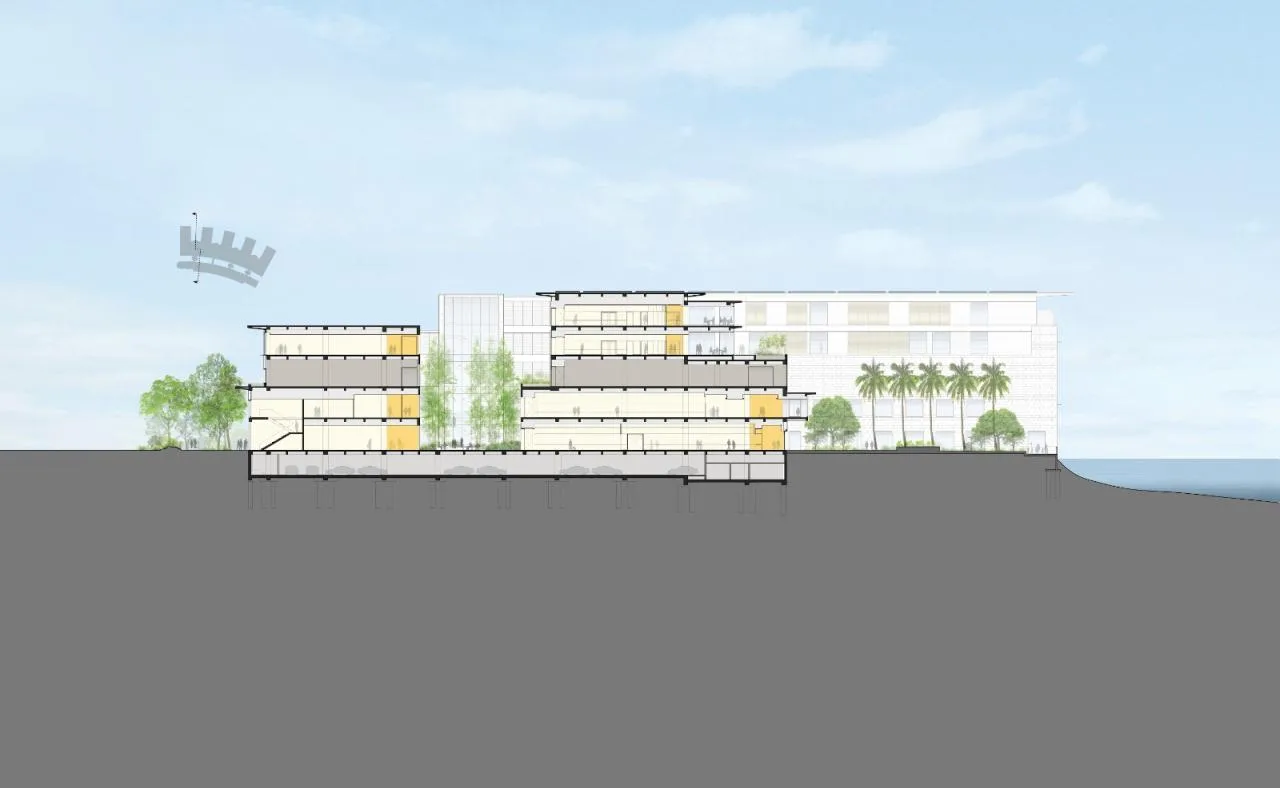
△ Section Diagram
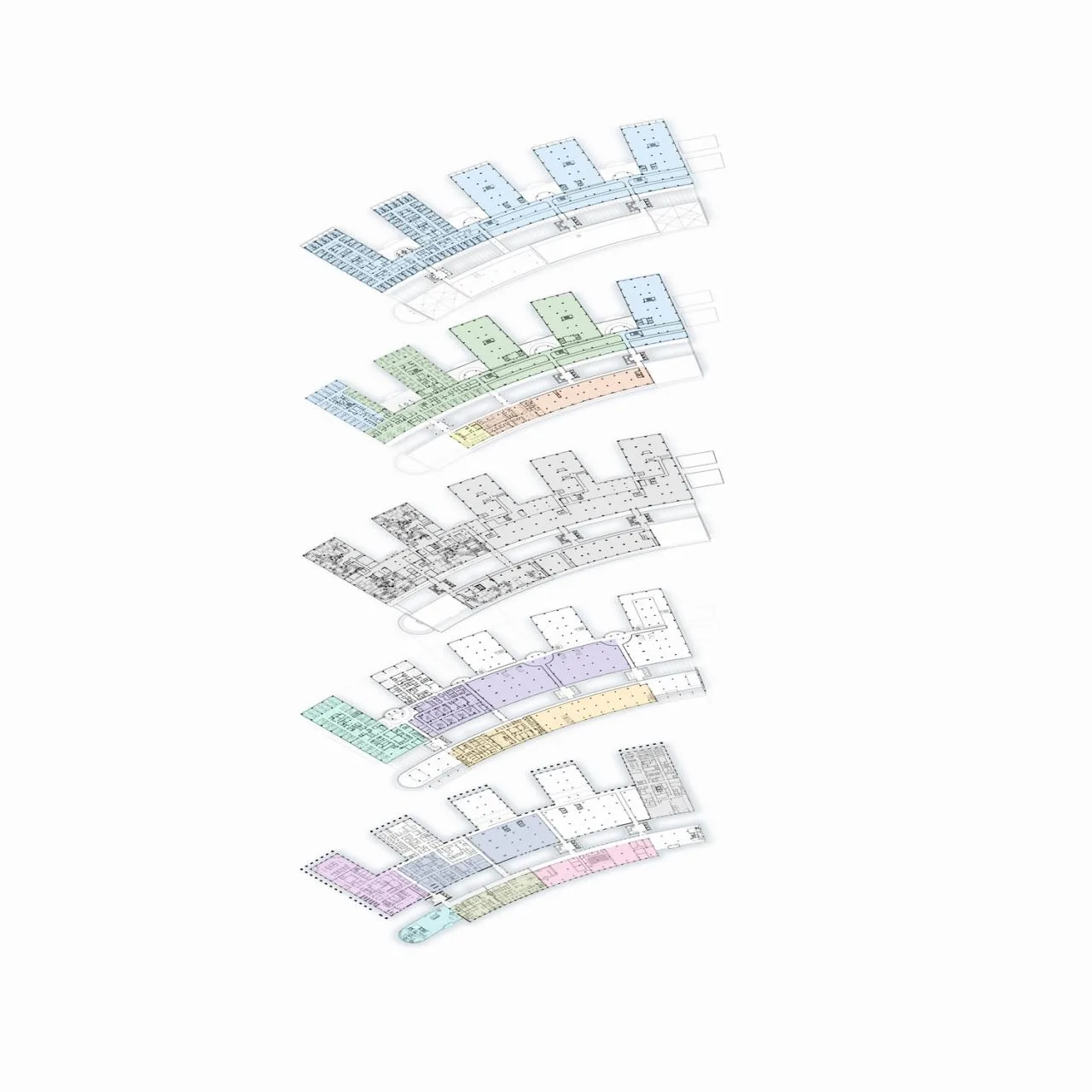
△ Plane Axonometric Diagram
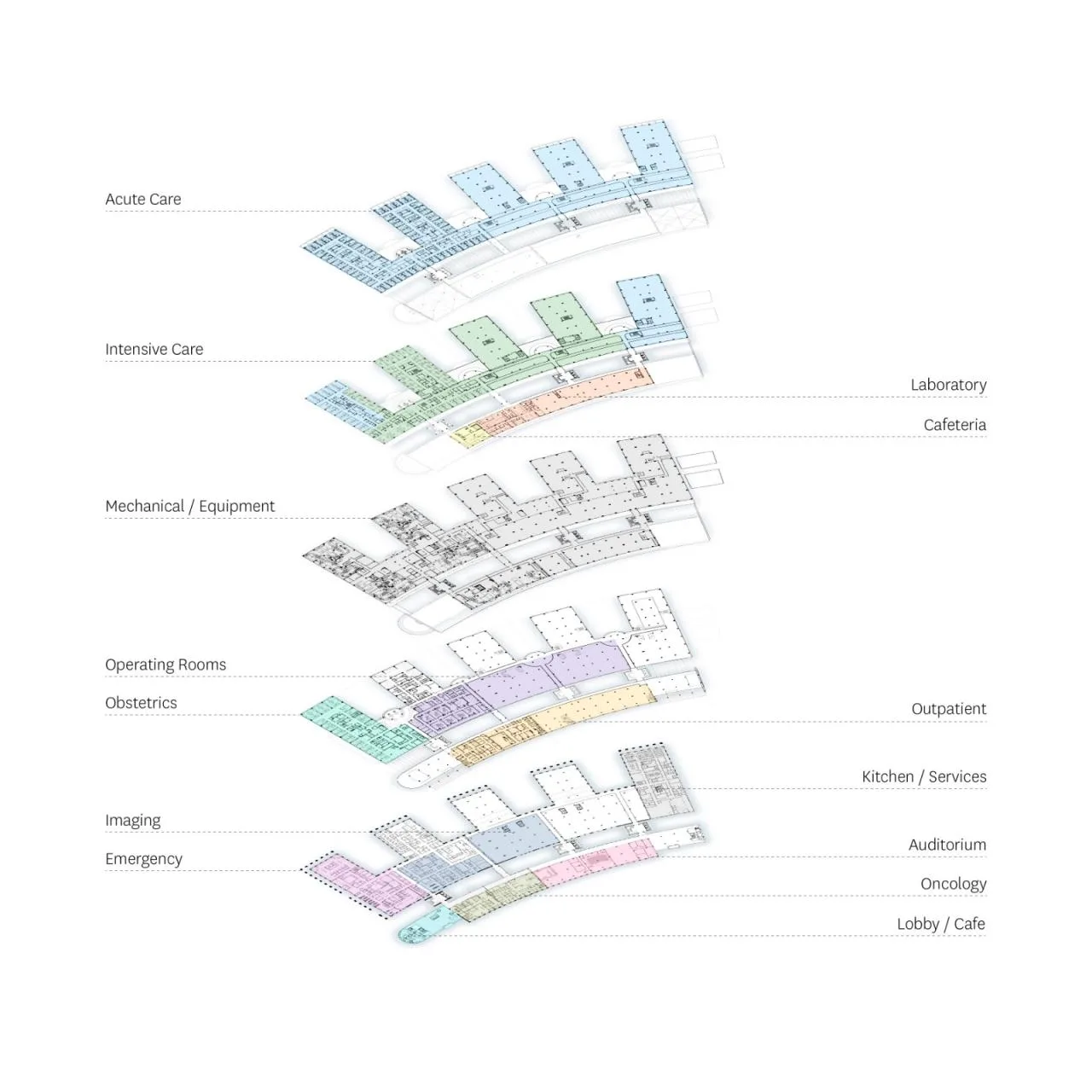
△ Functional Zoning Diagram














Must log in before commenting!
Sign Up