
Project Background
Yancheng Foreign Language School is a specialized institution expanded from an existing middle school building. In 2016, at the school’s inception, Guanghua Education Group commissioned PERFORM Universal Architecture to design and construct a brand-new comprehensive teaching facility. This project not only addressed the school’s growing scale but also embodied the innovative educational philosophy of the new institution.
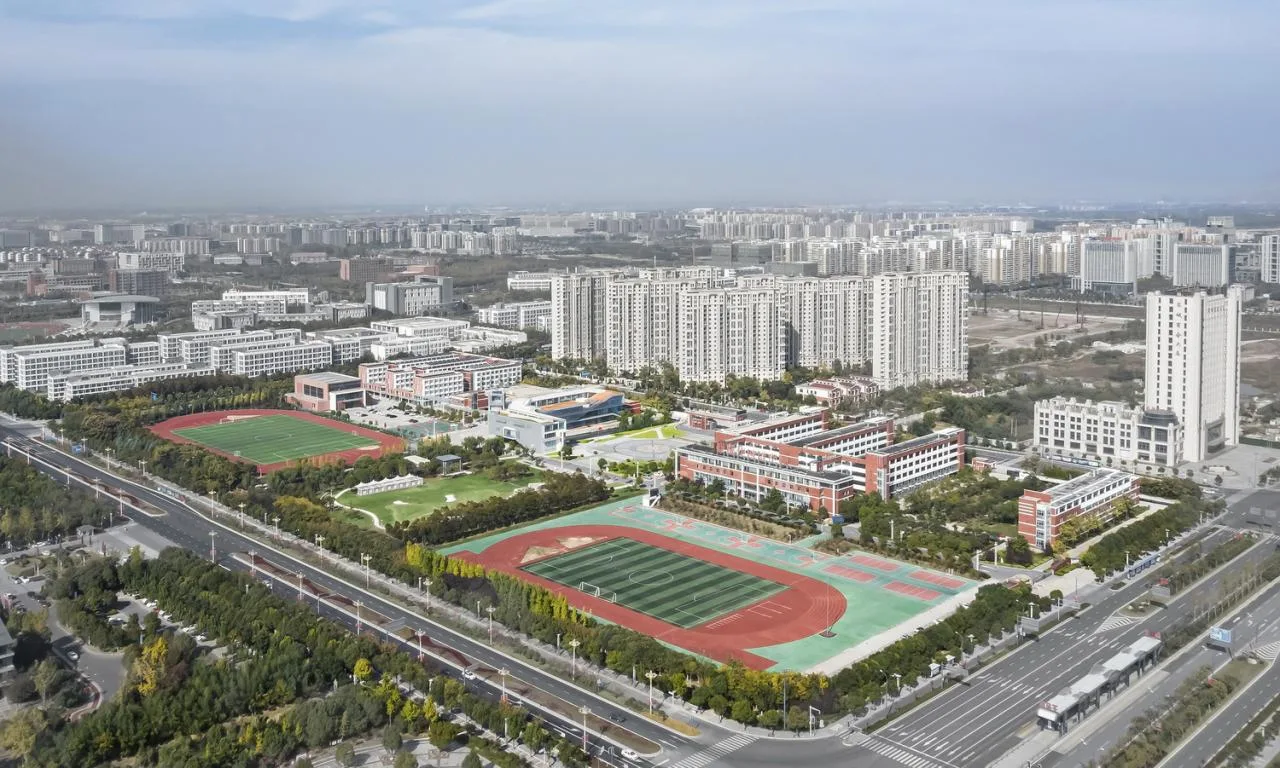
Historically, Yancheng was rich in sea salt. Due to salt transportation and subsequent water conservancy dredging, the city’s waterways form a complex network, earning it the nickname “City of Hundred Rivers.” One of these rivers flows through the center of the campus, separating the teaching area to the south from the dormitory area to the north.
Site Selection
Where should the new teaching building be located on campus? Initially, the school suggested situating it in the small forest area on the west side. At the time, the campus appeared relatively spacious, with the teaching and dormitory areas divided by a river and a square, connected only by a functional cement road and bridge. This setup felt distant and impersonal. Placing the building within the small grove would not enhance the connection between these two key areas.
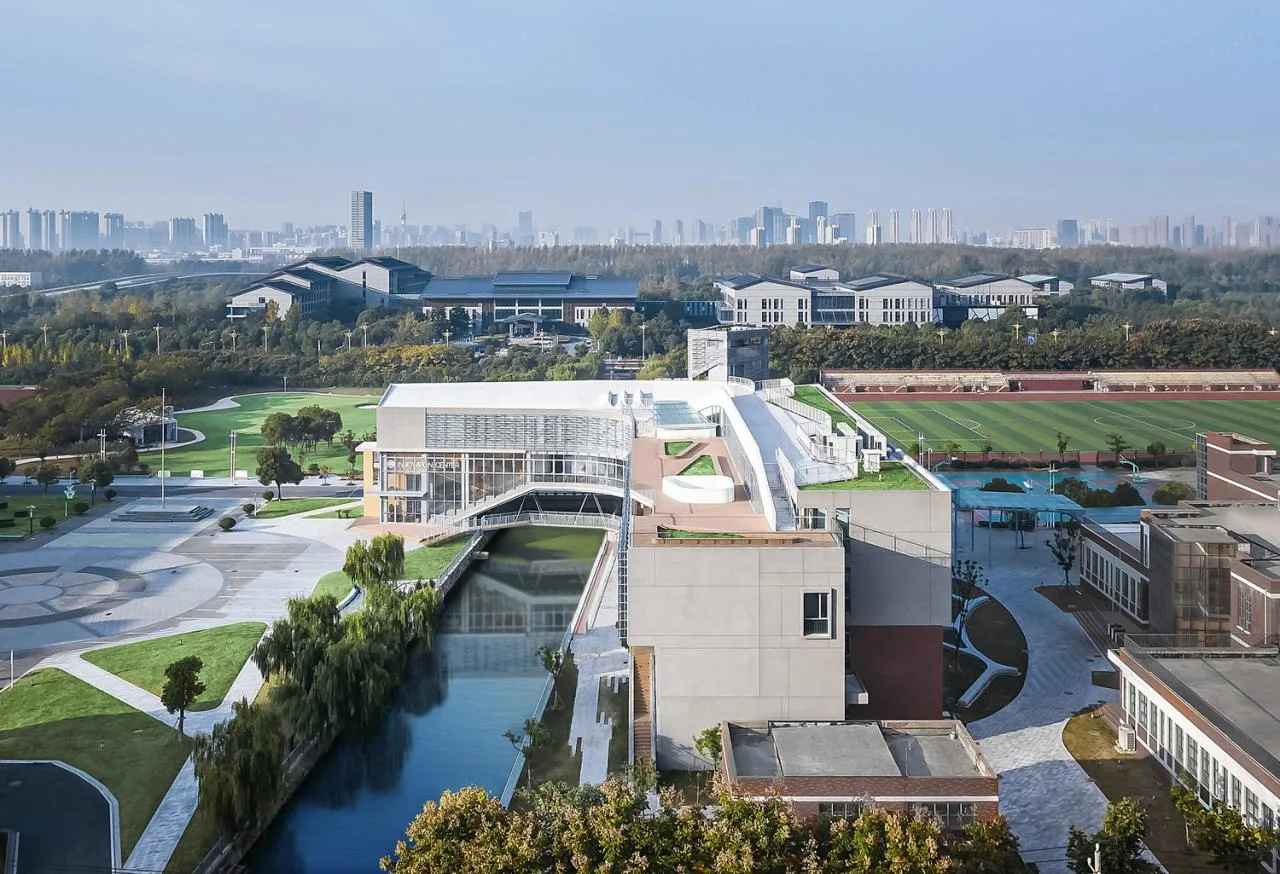
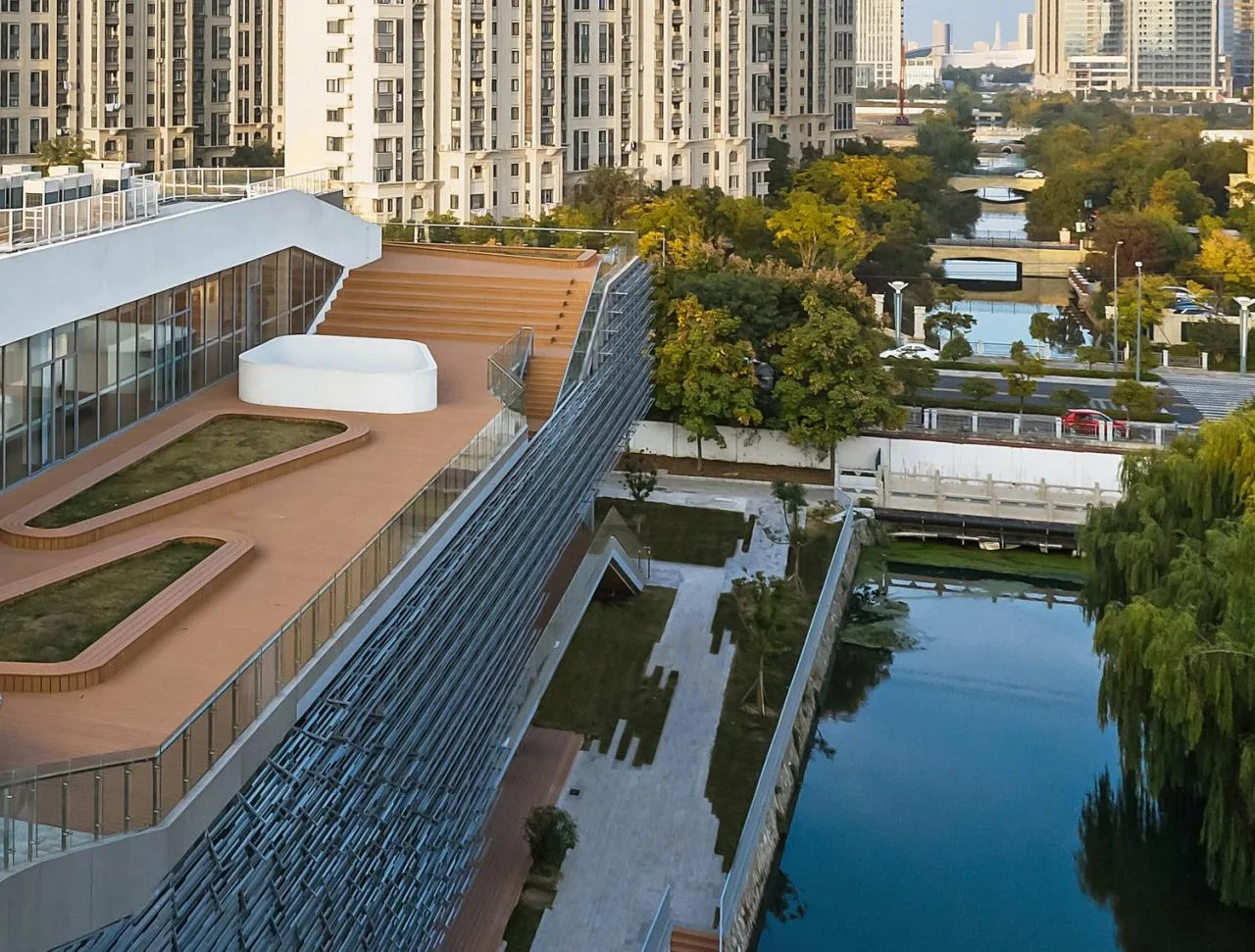
Furthermore, the small river flowing through the campus, a valuable landscape resource, is underutilized. External spaces on both banks mostly turn away from the river. We viewed this new construction as not only an expansion of teaching facilities but also an opportunity to reorganize the campus layout and enhance the overall environment.
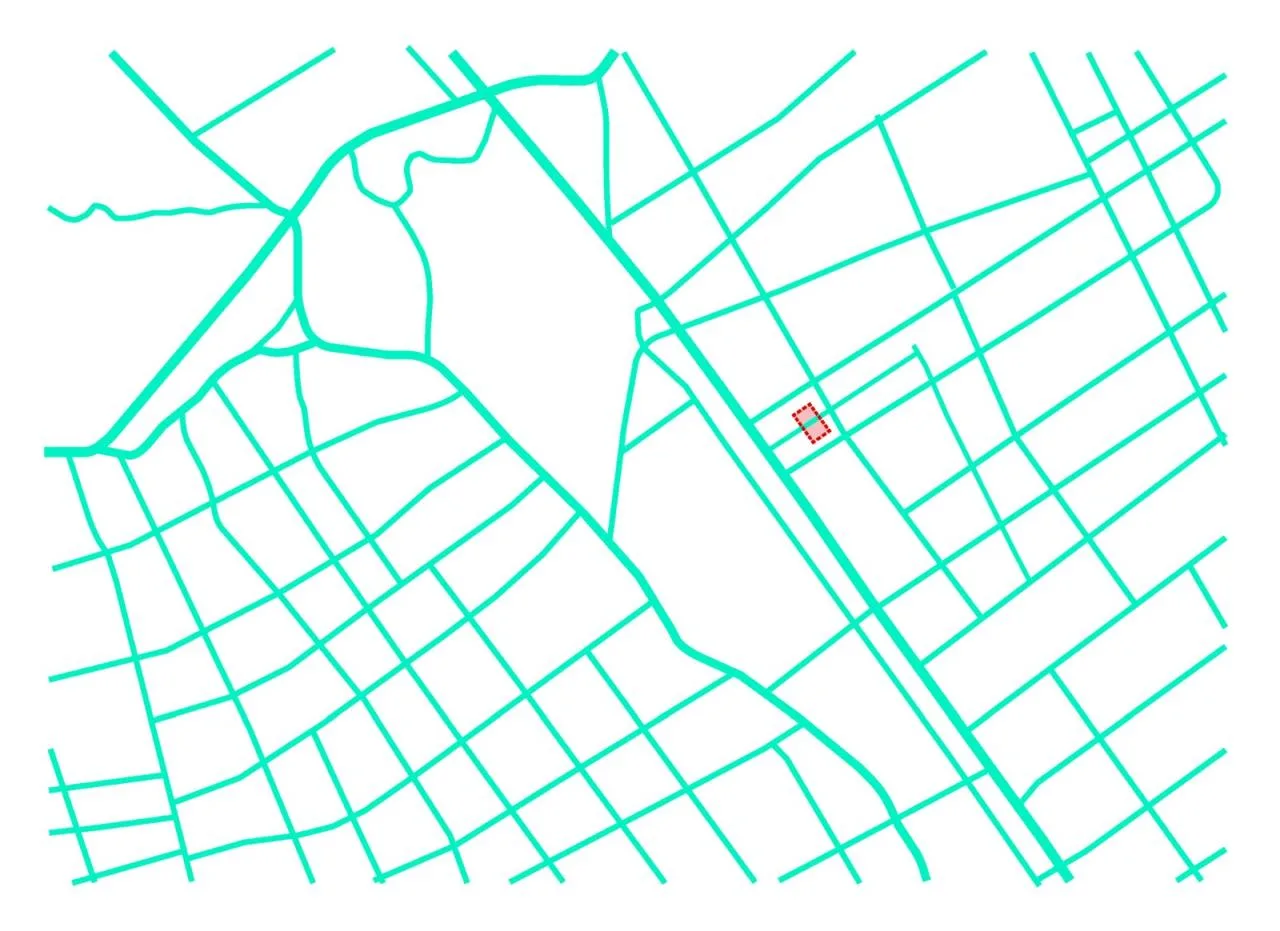
△ Water system map
After discussions with the school, several key planning strategies emerged: first, preserve the small forest and position the new teaching building near the intersection of the campus’s east-west and north-south axes. This clarifies the distinct characteristics of the two halves of the campus—the west half emphasizing nature and movement, and the east half evolving into a more intimate and complex space for learning and living.
Second, the design incorporates elevated spaces, corridors, and waterfront platforms around the new building to improve pedestrian connectivity and comfort, creating a central campus hub with excellent accessibility.
Third, multiple public service spaces are integrated along the north-south axis to foster community engagement. The building’s ground floor includes a multifunctional lecture hall, exhibition hall, and a museum themed around the red-crowned crane—a species that winters in Yancheng’s coastal wetlands—serving as important community nodes.
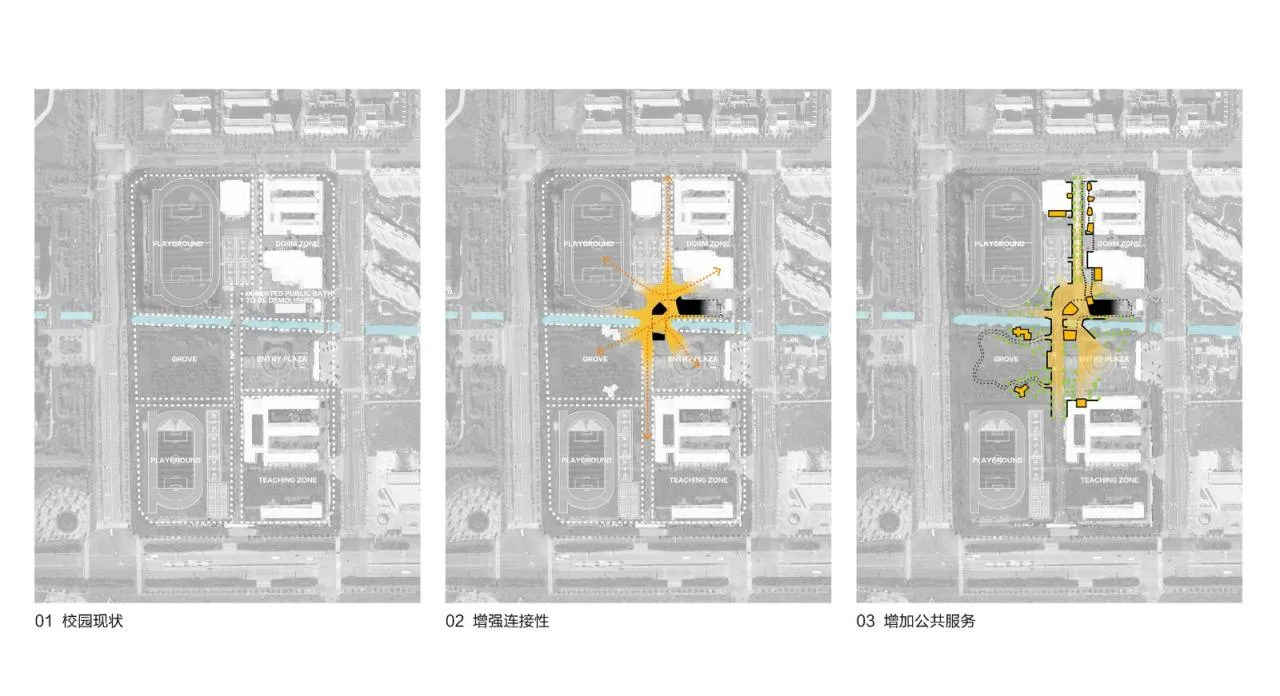
△ Planning Strategy
Deduction of Types
The Wind and Rain Corridor Bridge is an ancient architectural form with many classic examples worldwide, such as the old bridge in Florence, the Sighing Bridge over the Cambridge River, the ancient corridor bridge in Taishun, and the corridor bridge in Yancheng’s Water Street Scenic Area. These structures function not only as transportation links crossing rivers but also as public spaces for pedestrians to linger and rest.
This dual purpose aligns perfectly with our vision for the new teaching building. The corridor bridge evokes a strong sense of place and inspires imaginative educational interactions, while the teaching building adds vitality and functionality to this traditional form.
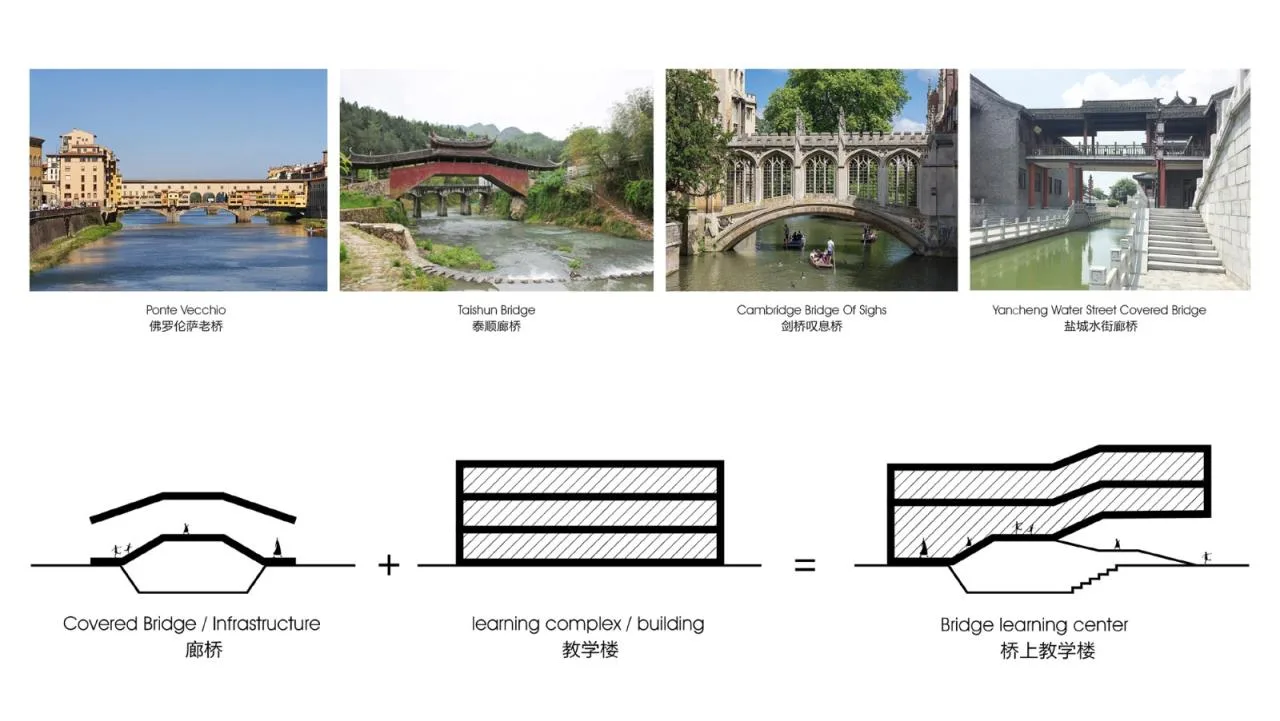
△ Type evolution
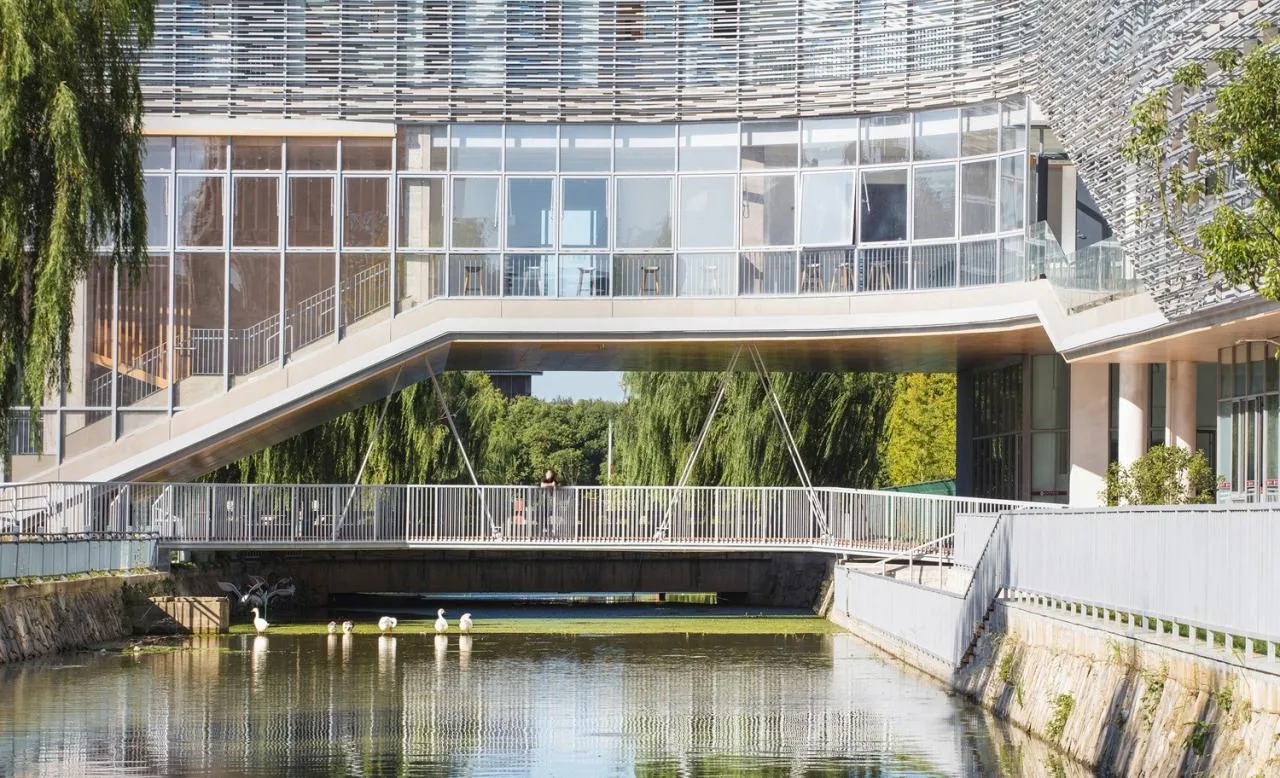
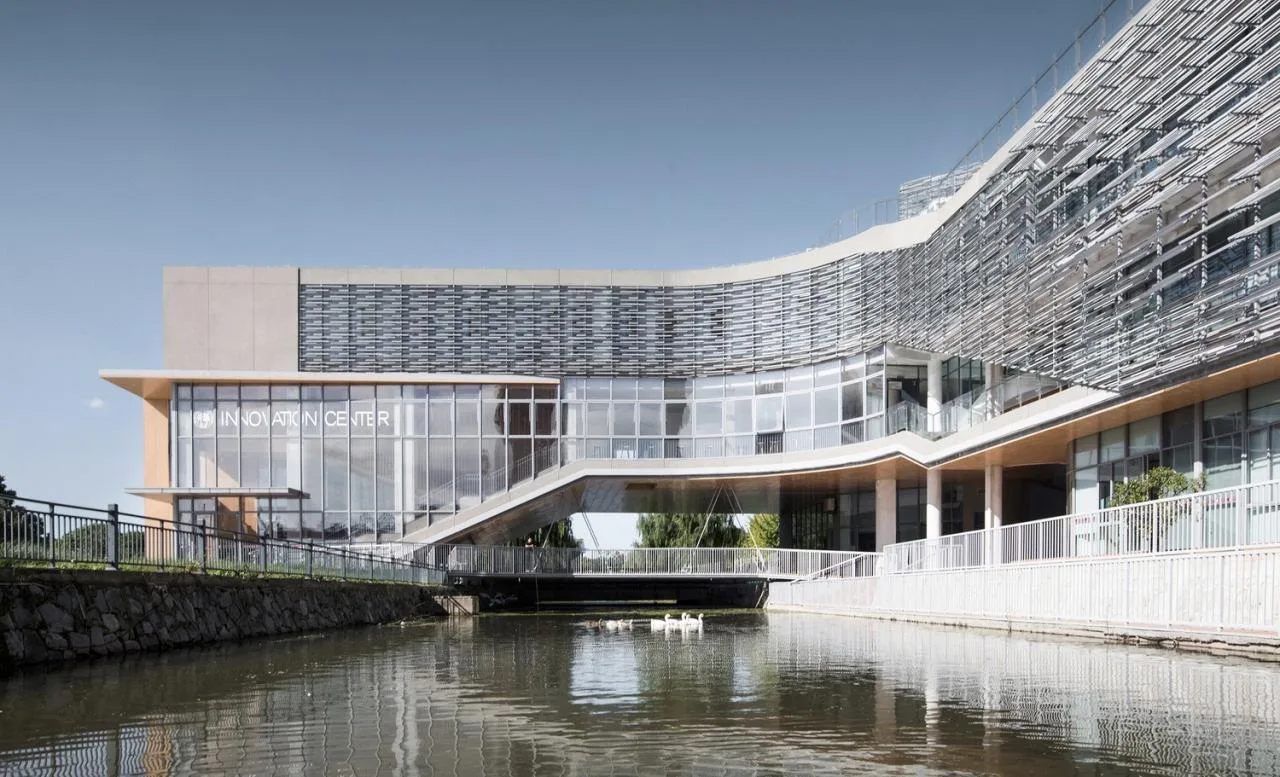
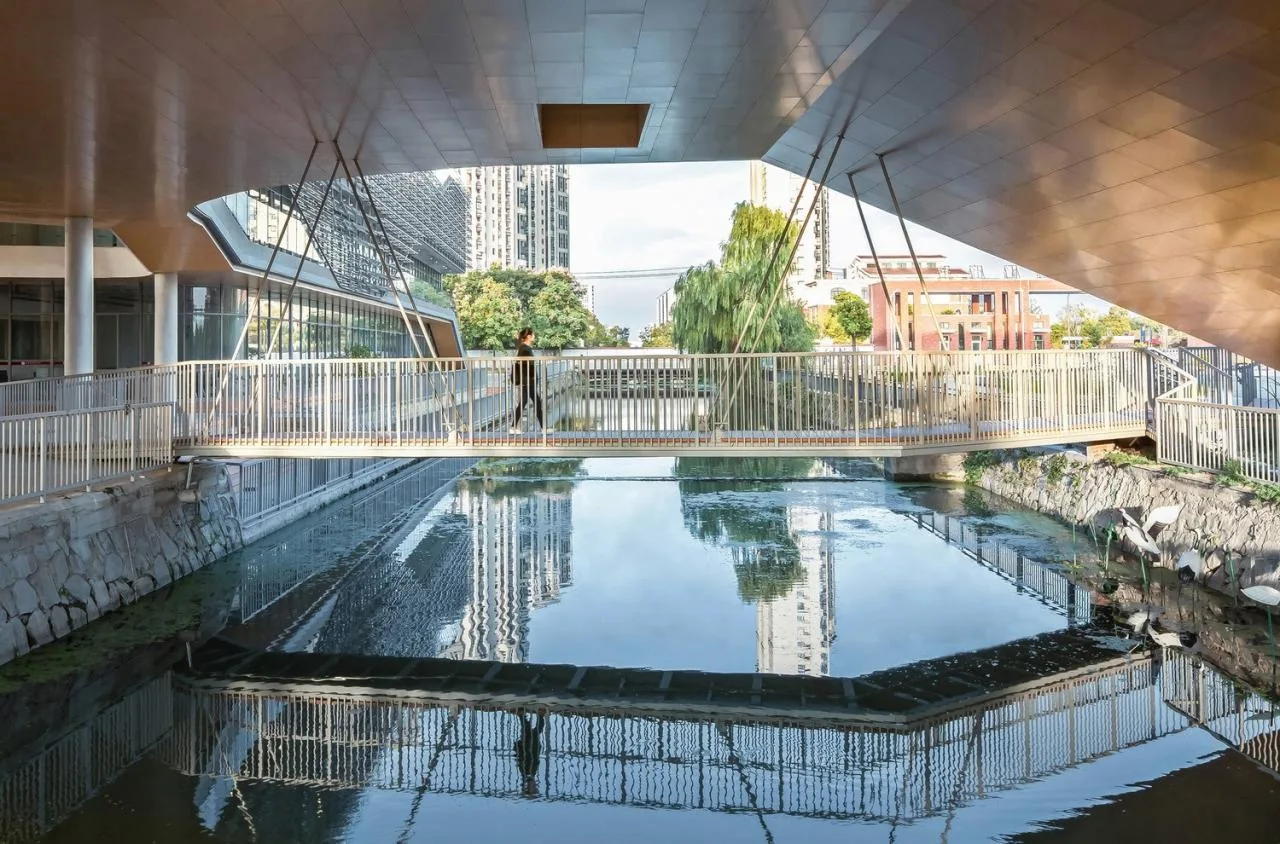
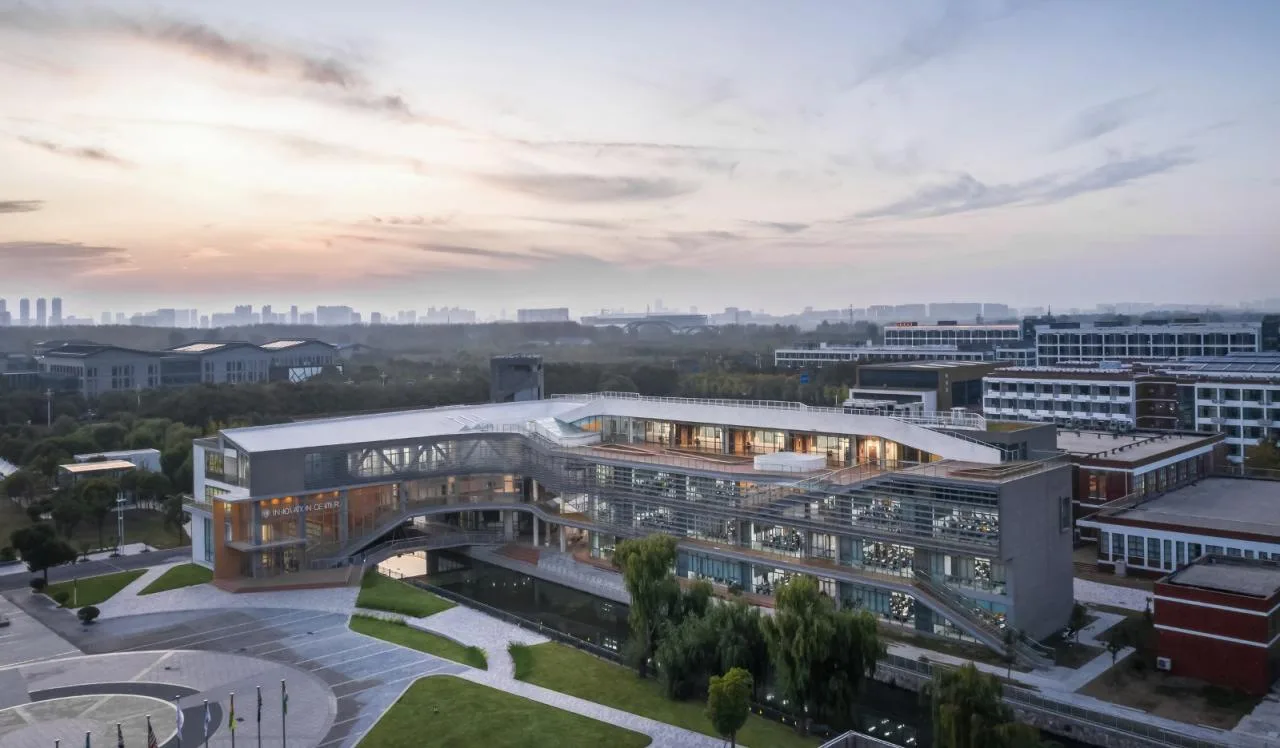
Thus, the concept of a “bridge teaching building” gradually took shape. Constructed across the river, the teaching building maximizes the available space, directly strengthens the connection between the teaching and dormitory areas, reorganizes the public spaces on both riverbanks, and transforms the river into a vibrant element of campus life.
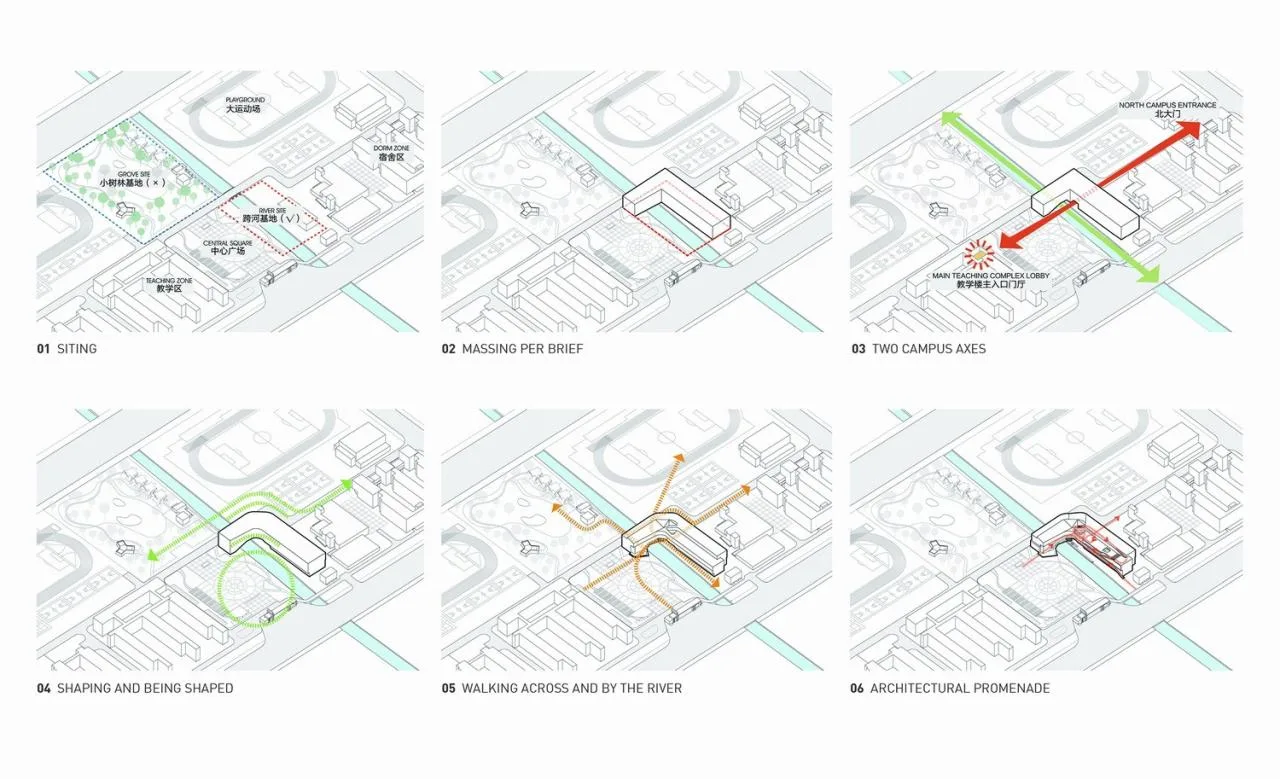
△ Volume generation diagram
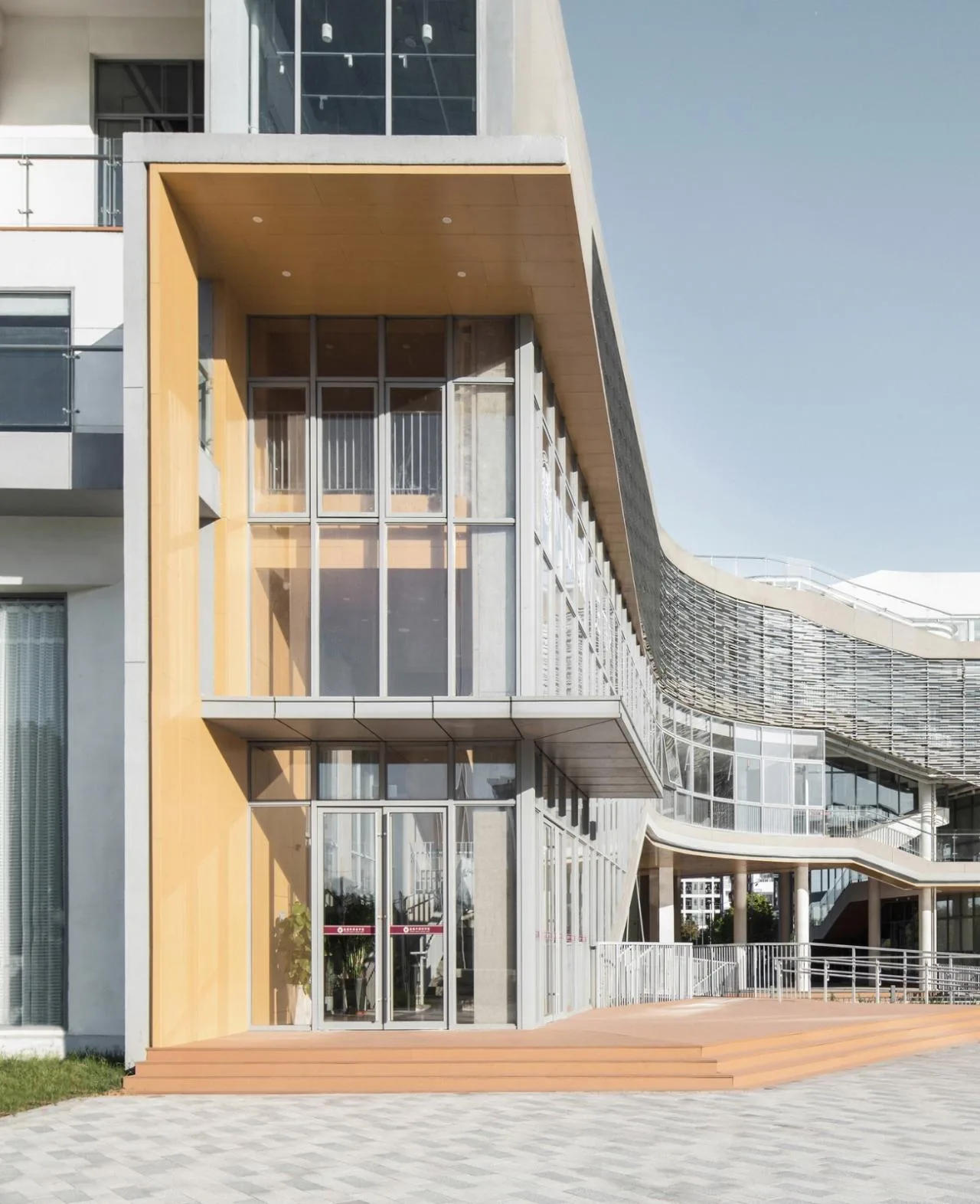
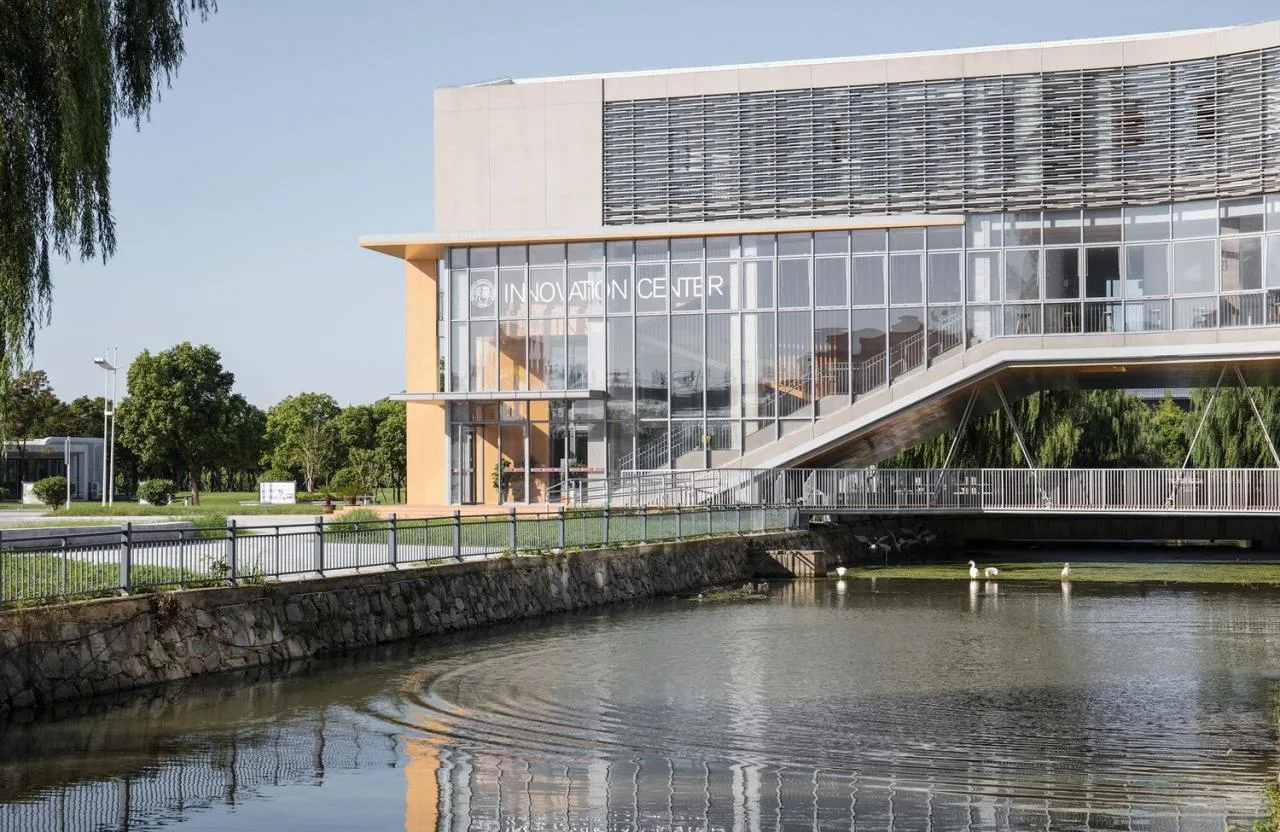
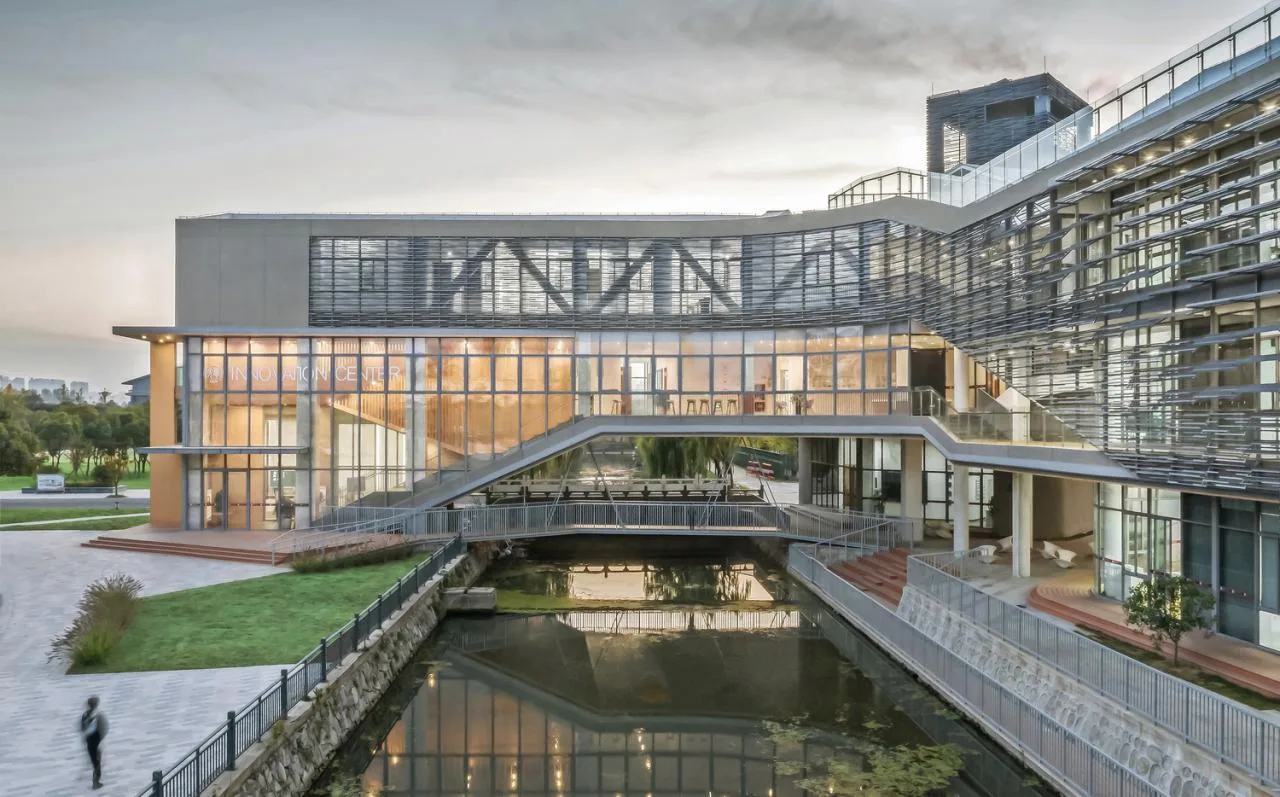
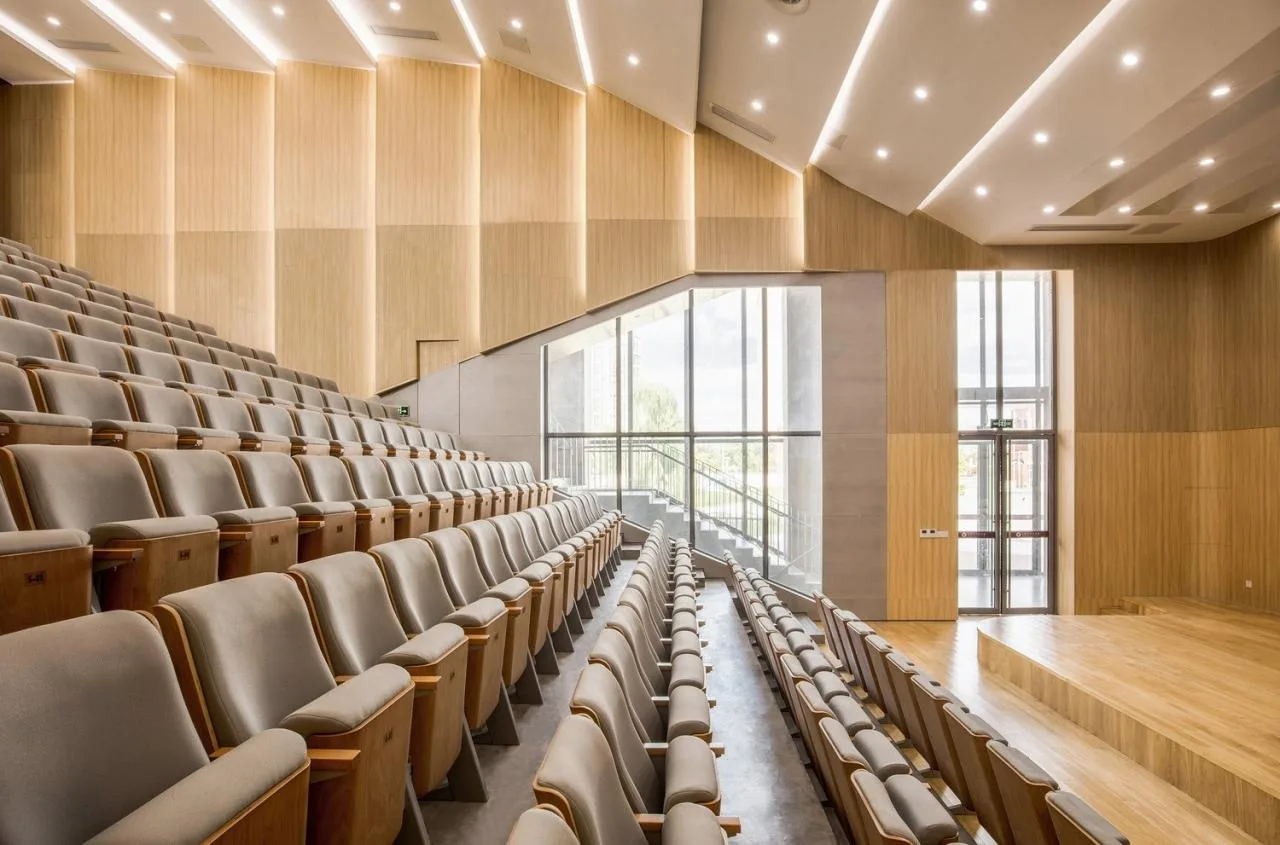
The “bridgehead” of the teaching building—the main entrance hall—is located on the south bank, facing the central square. This entrance also serves as the foyer for a 300-seat multifunctional lecture hall, which slopes from the first to the second floor. The sloping base of the hall visually expresses the external form of a bridge.
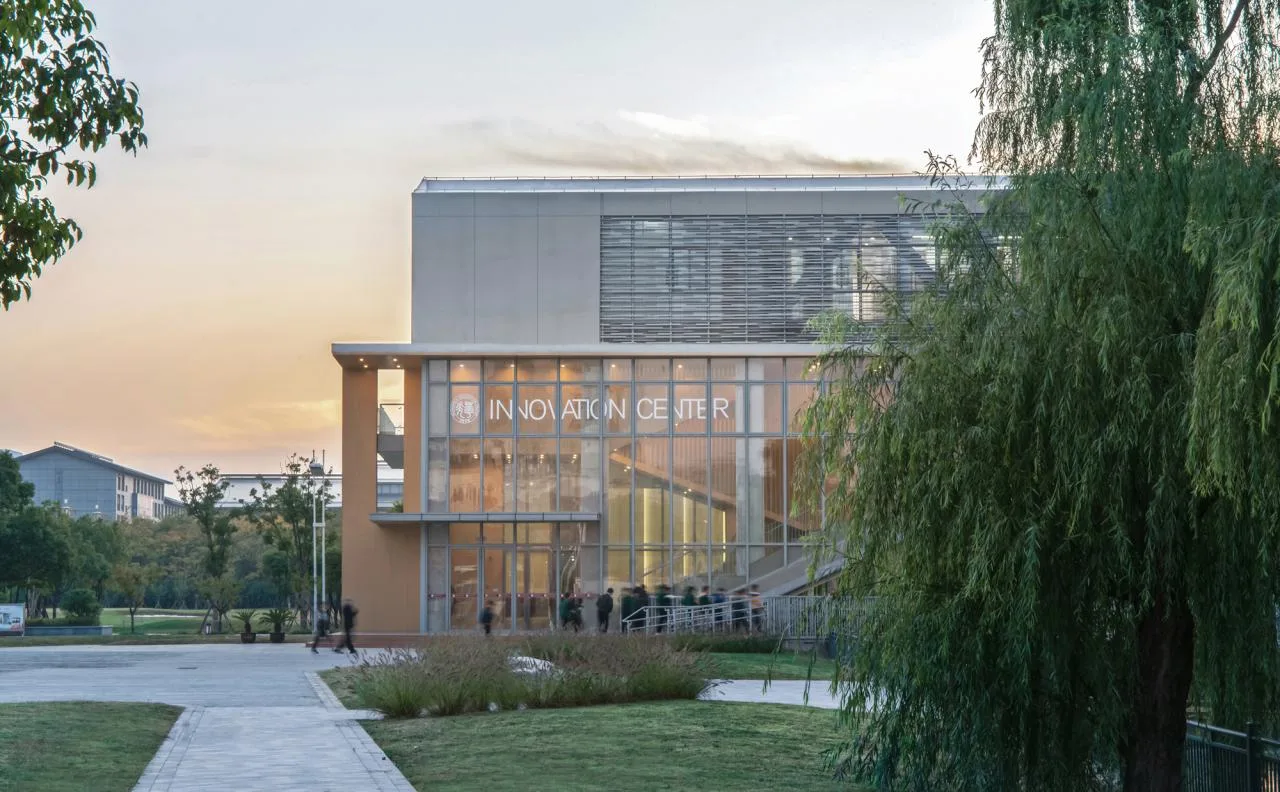
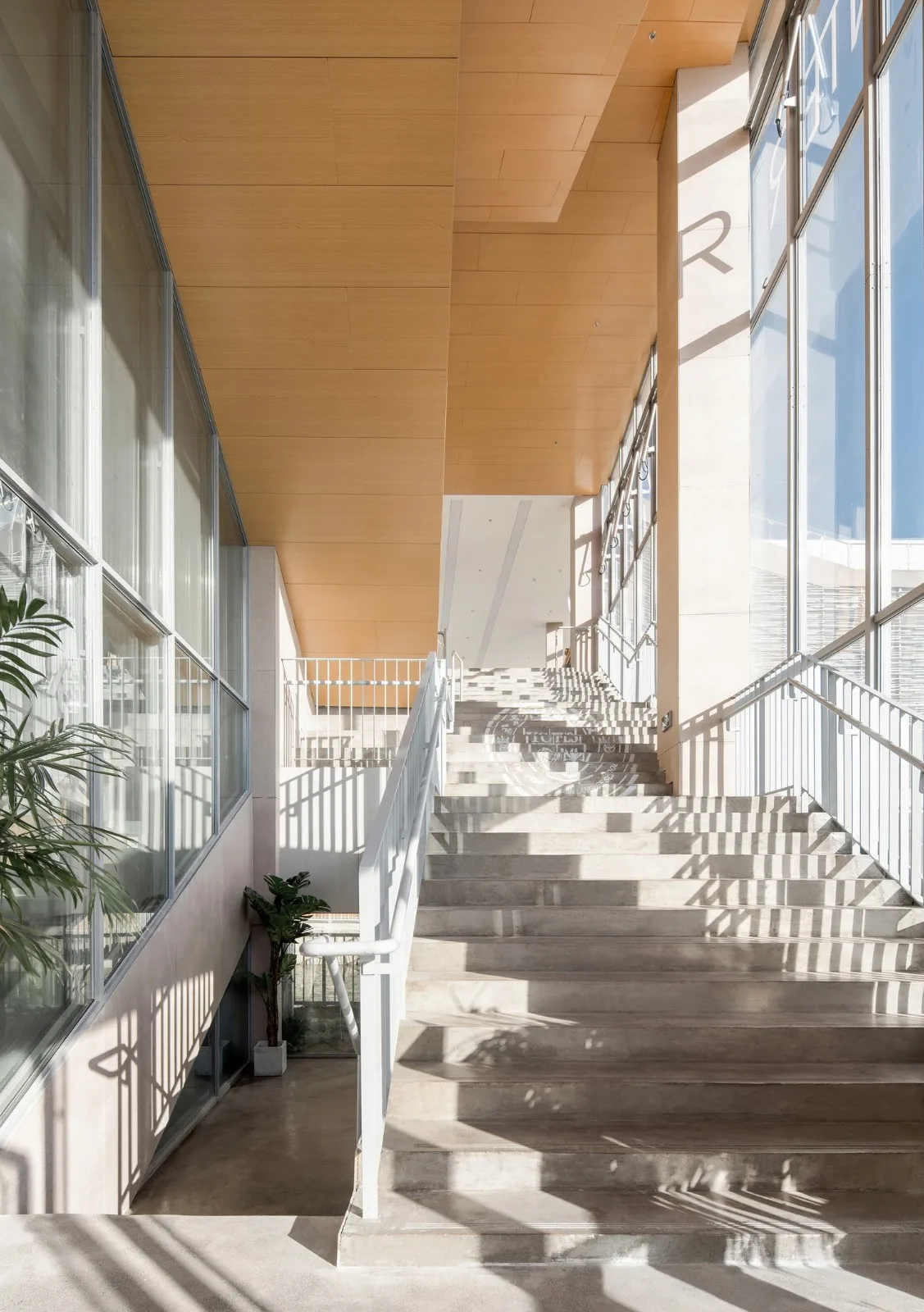
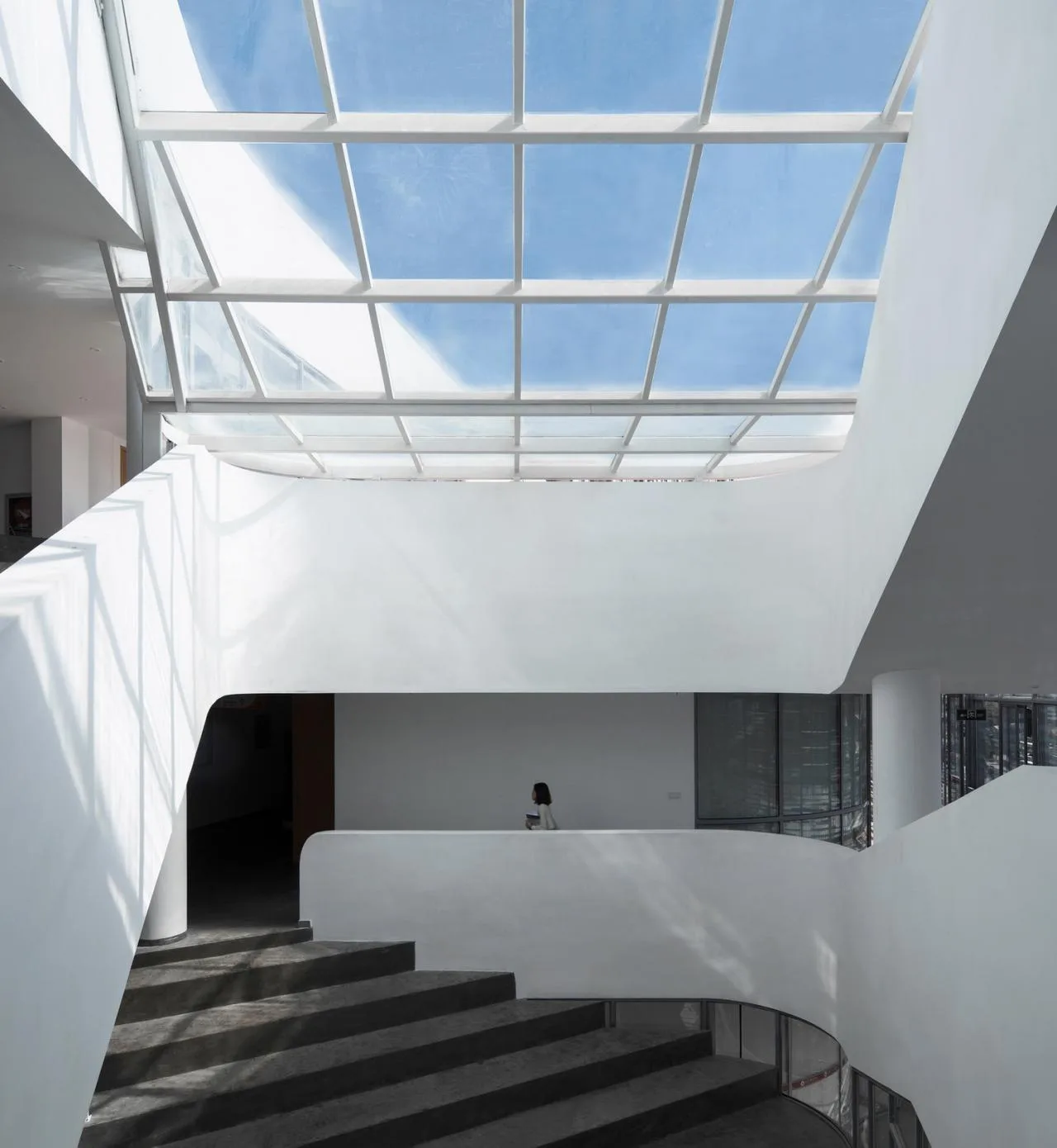
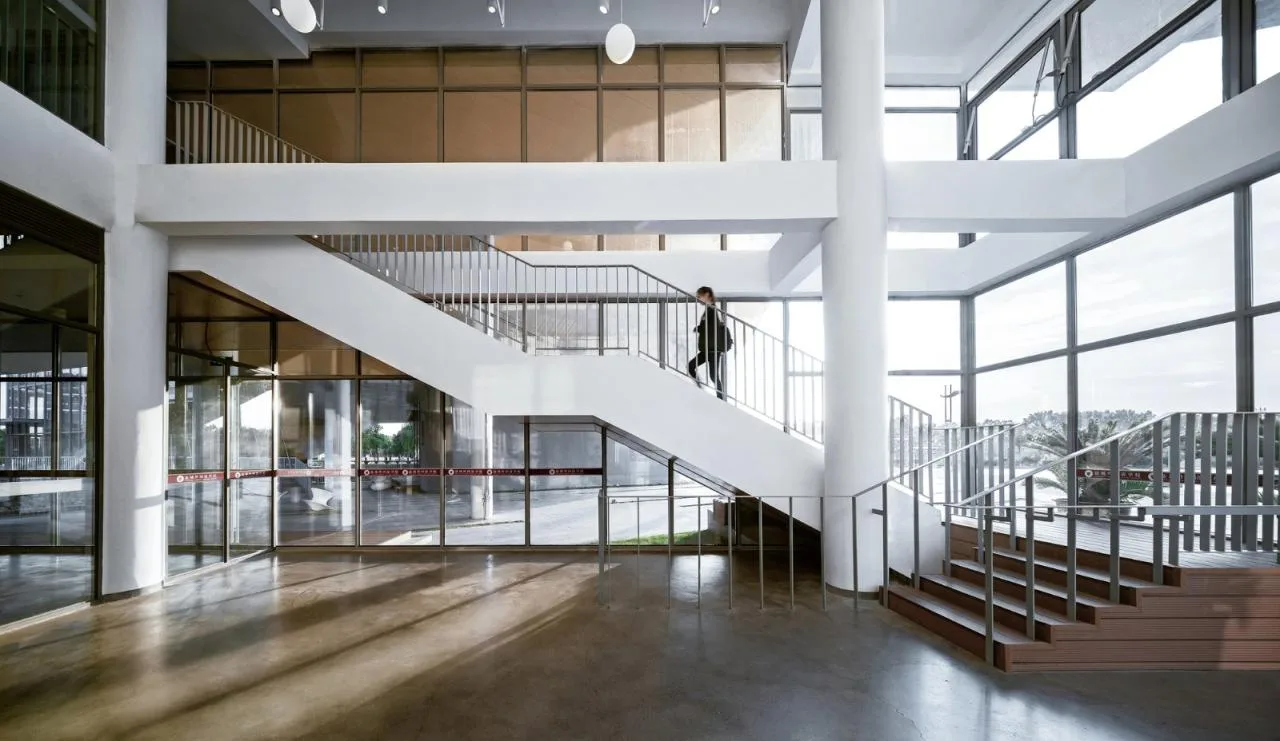
Ascending the stairs from the main entrance is like walking across a corridor bridge, leading to a shared hall on the second floor. At this level, the bridge deck crosses the river, connecting to the teaching spaces on the north bank and merging into a continuous, sky-lit, multi-level atrium resembling a staircase. This atrium functions both as a vertical circulation space and as a vibrant area for student activities during breaks. From here, students can descend the “bridge” through the north gate hall to the dormitory area or continue upwards to the rooftop activity terrace.
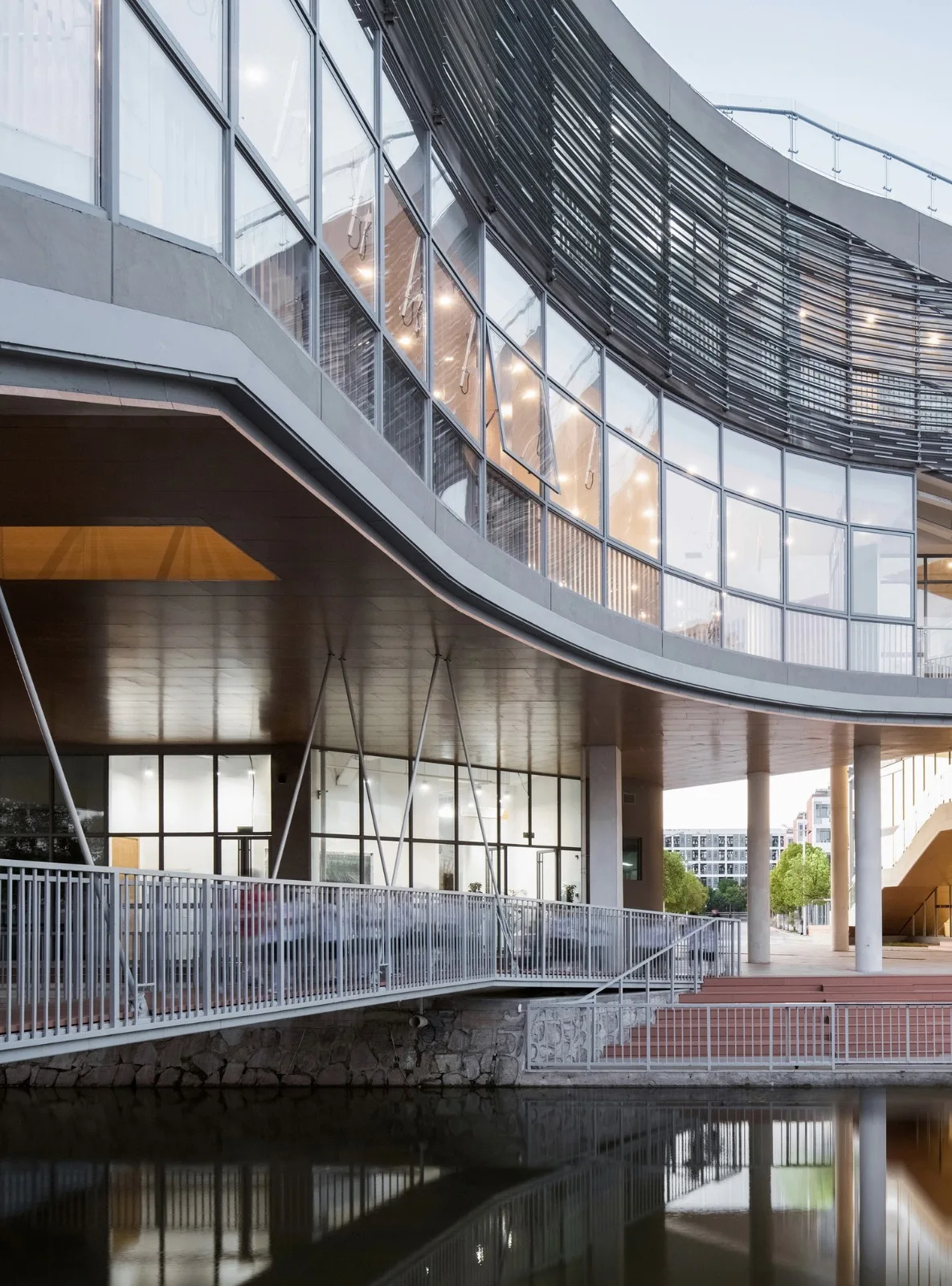
Amid educational reform, the Bridge Teaching Building represents a spatial response, transforming the campus from traditional public modes to a more innovative, diverse, healthy, and balanced international educational ecosystem.
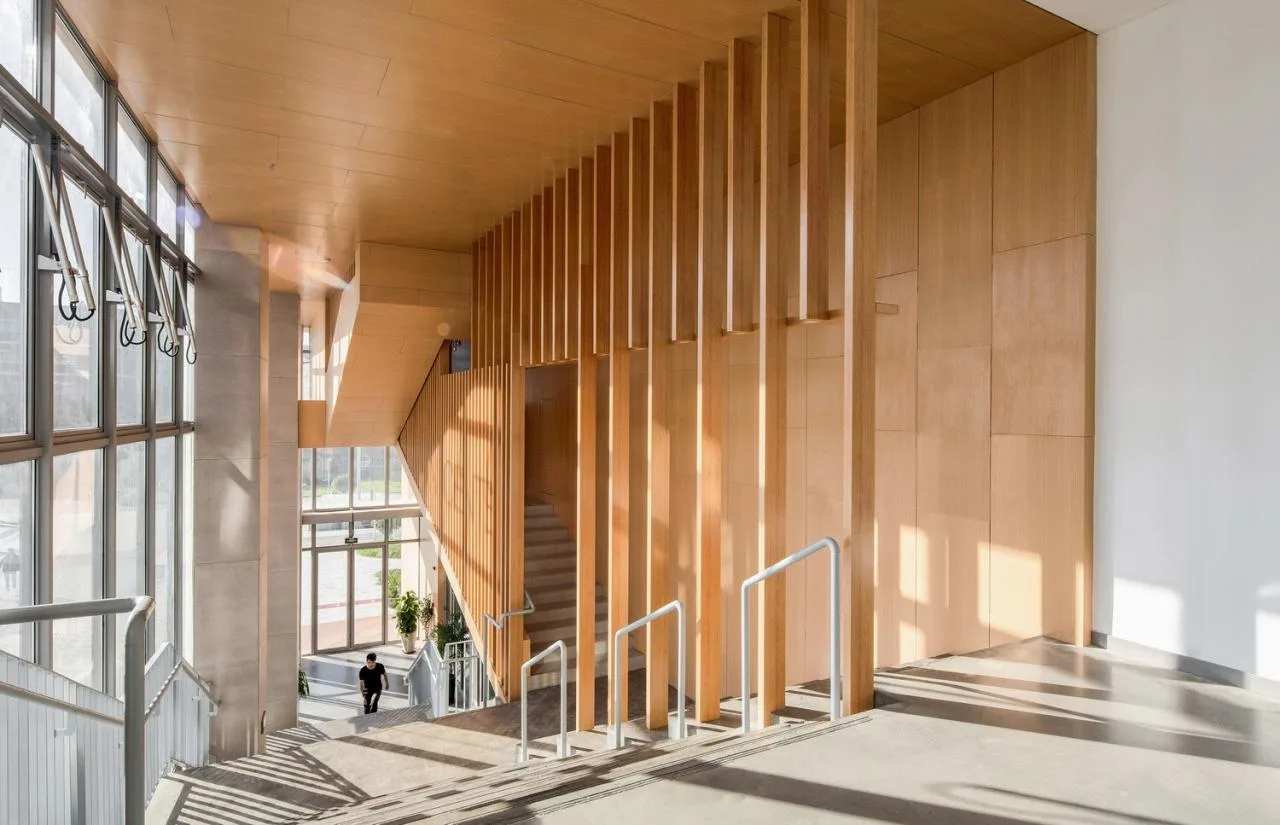
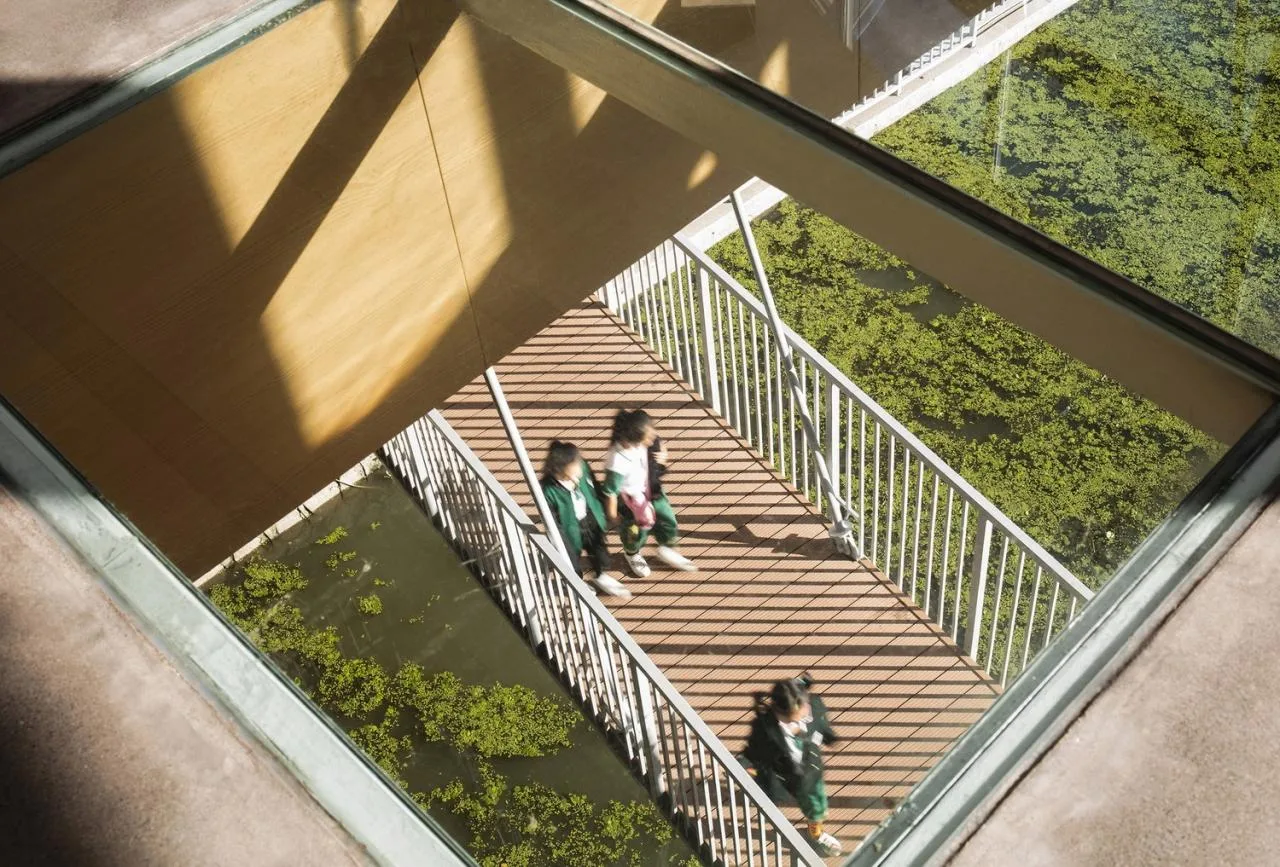
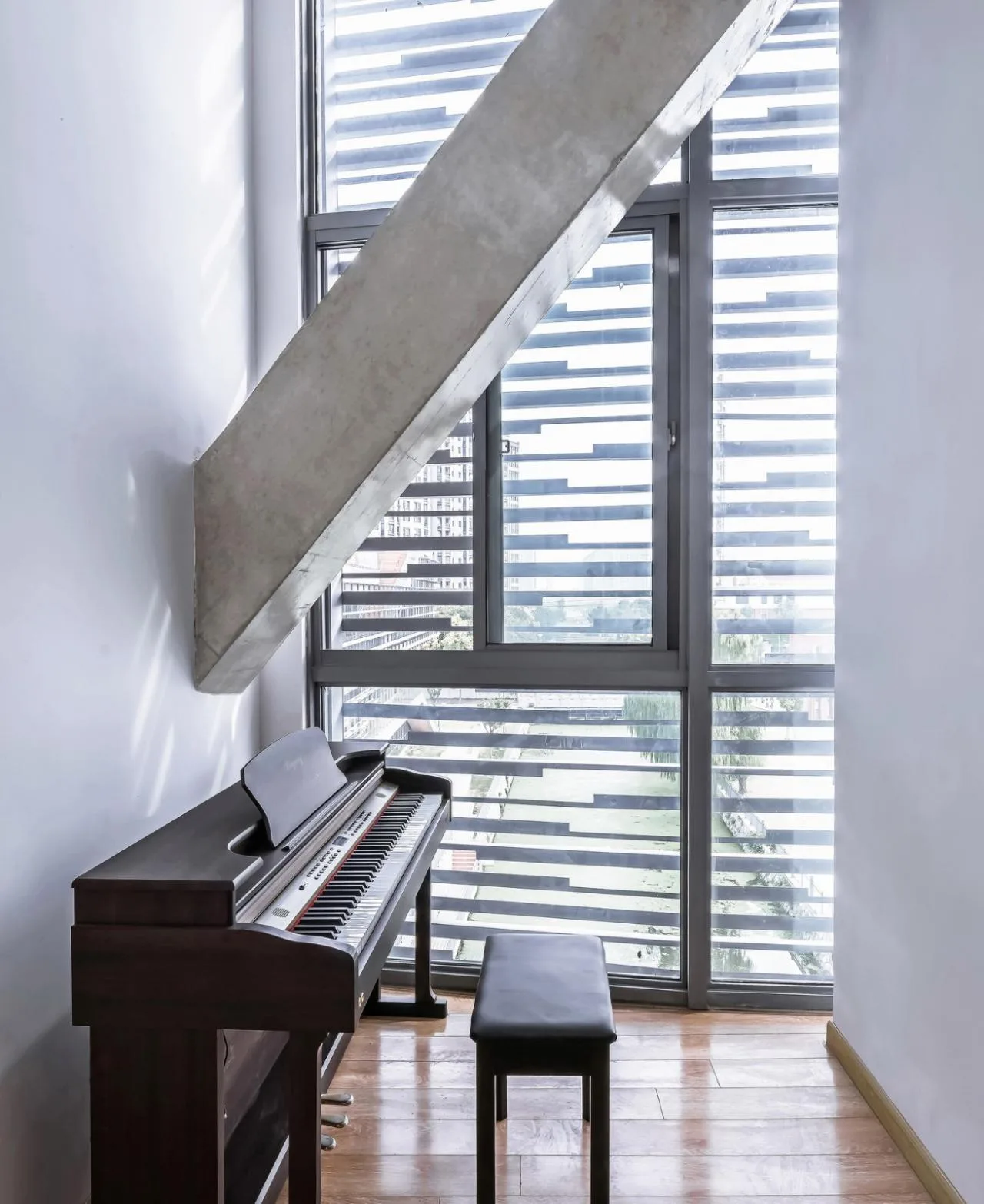
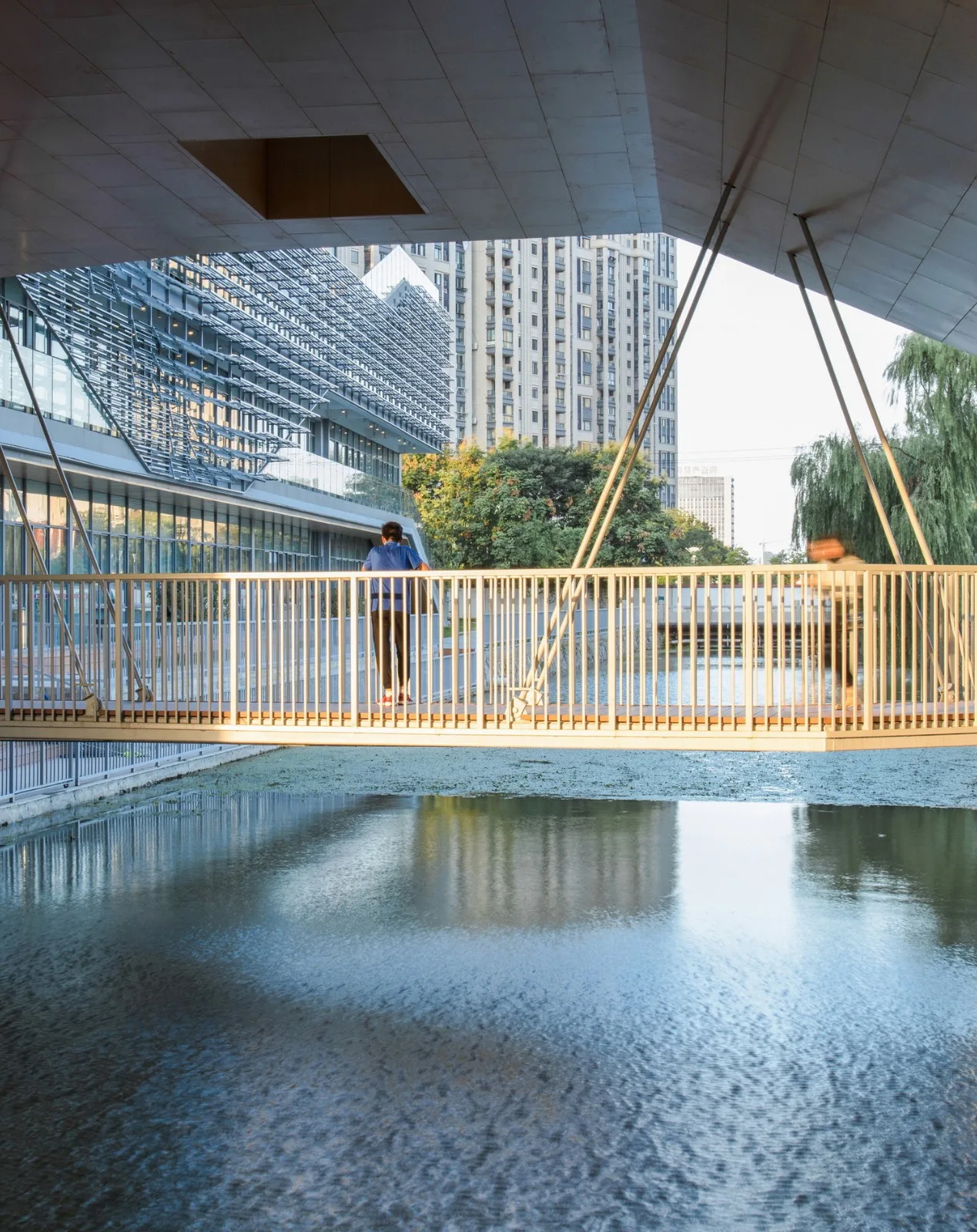
Students can enjoy river views from the piano room windows. In the art classroom, exposed concrete bridge structures paired with skylights create a strong sense of place and connection to the surroundings. During breaks, many students step outside to relax on the river corridor railings. The waterfront platform invites playful activities, welcoming students throughout the day. As the saying goes, “You stand on the bridge and watch the scenery, while the people watching the scenery look at you upstairs.”
Structure and Construction
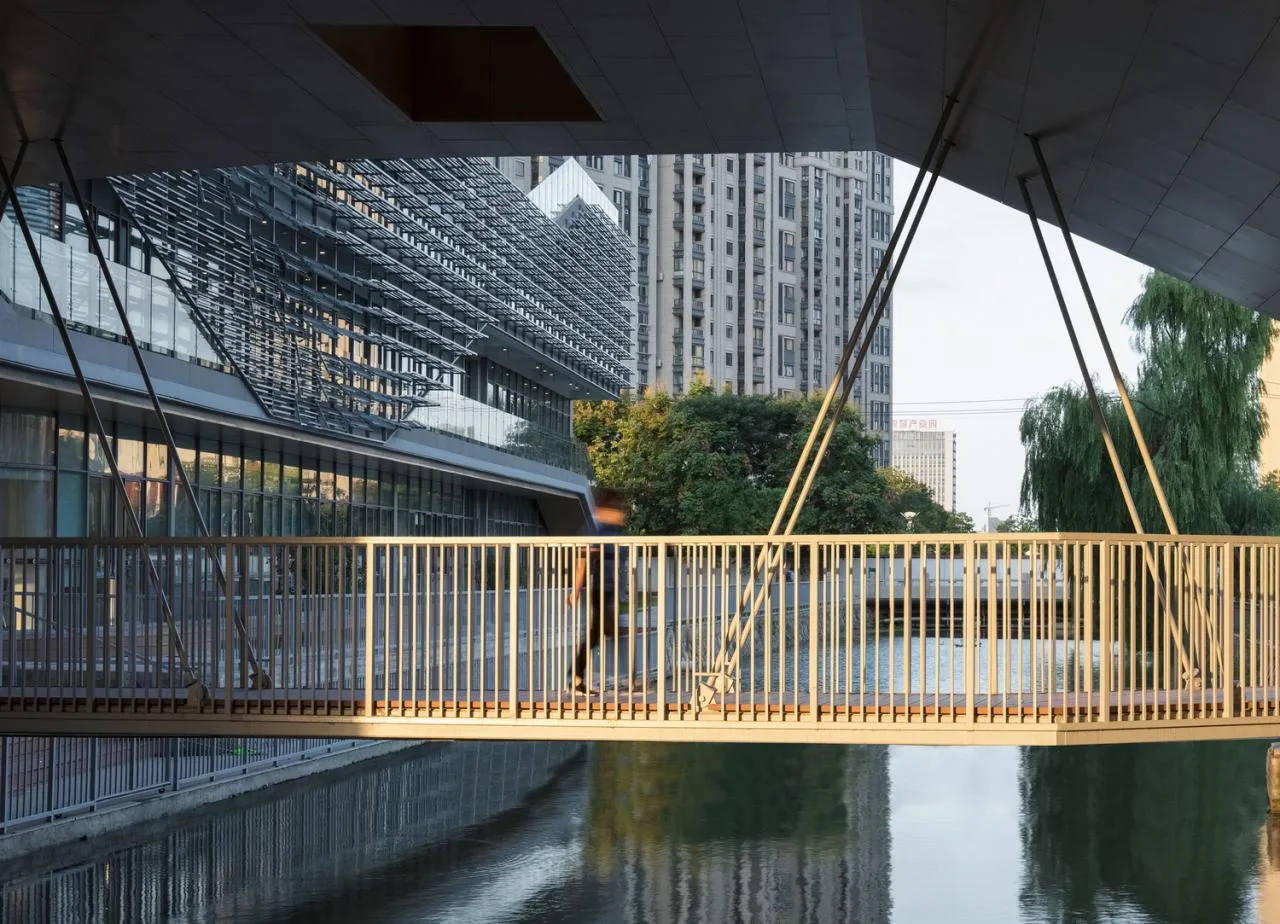
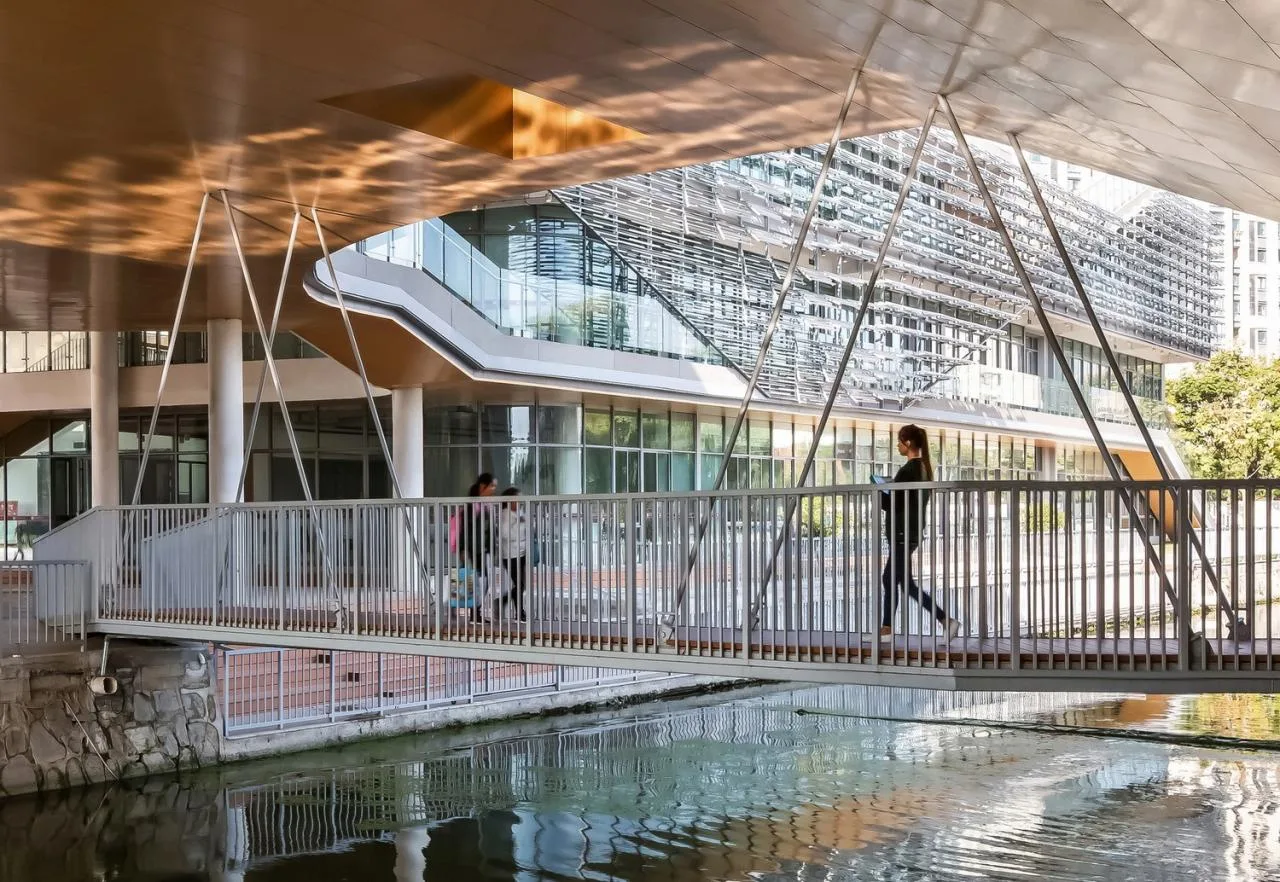
The bridge spans nearly 25 meters across the river. The structural design employs three sets of prestressed concrete trusses as the core framework for the river-crossing section. These trusses extend from the third floor down to second-floor suspension columns, which then connect to steel suspension rods supporting the pedestrian bridge above. The structure transitions from heavy to light top-down, aligning with varying transparency requirements for each floor.
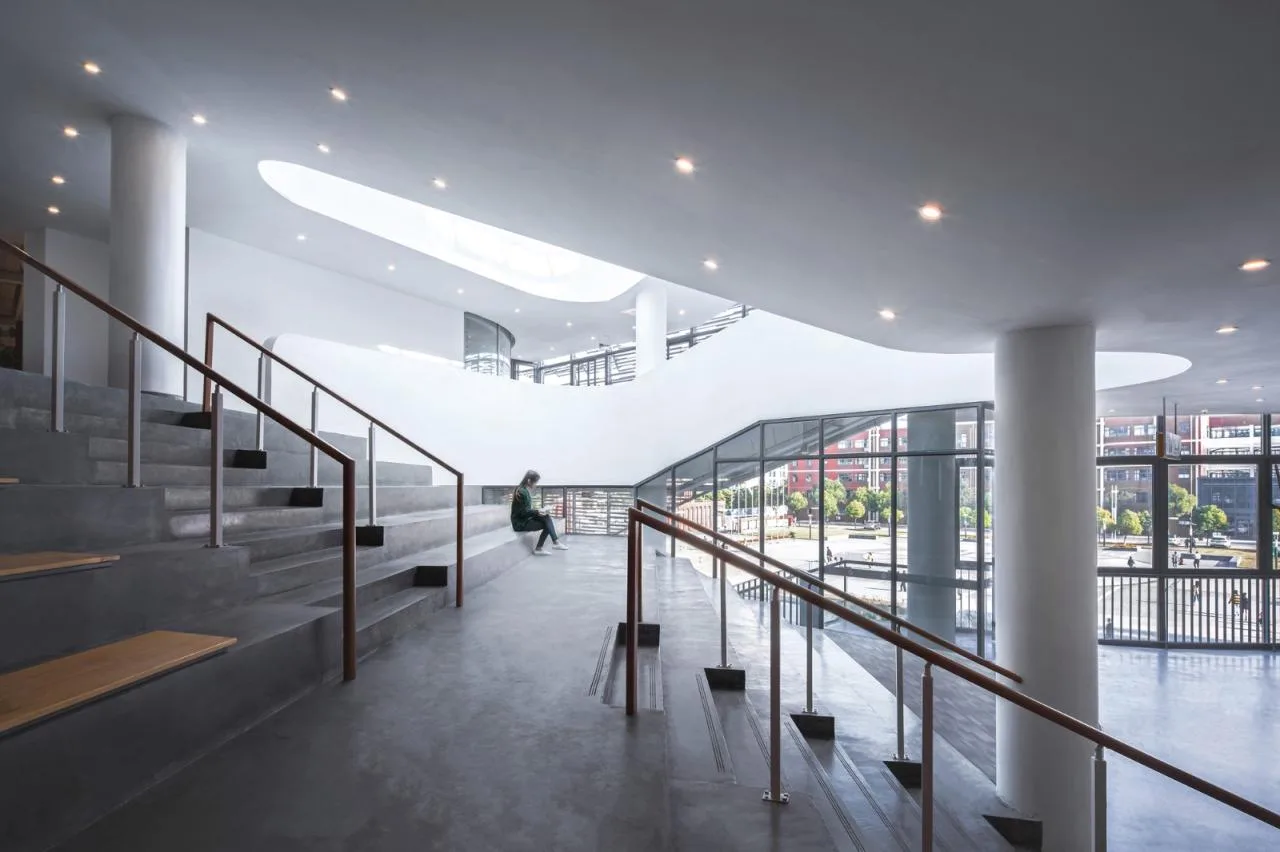
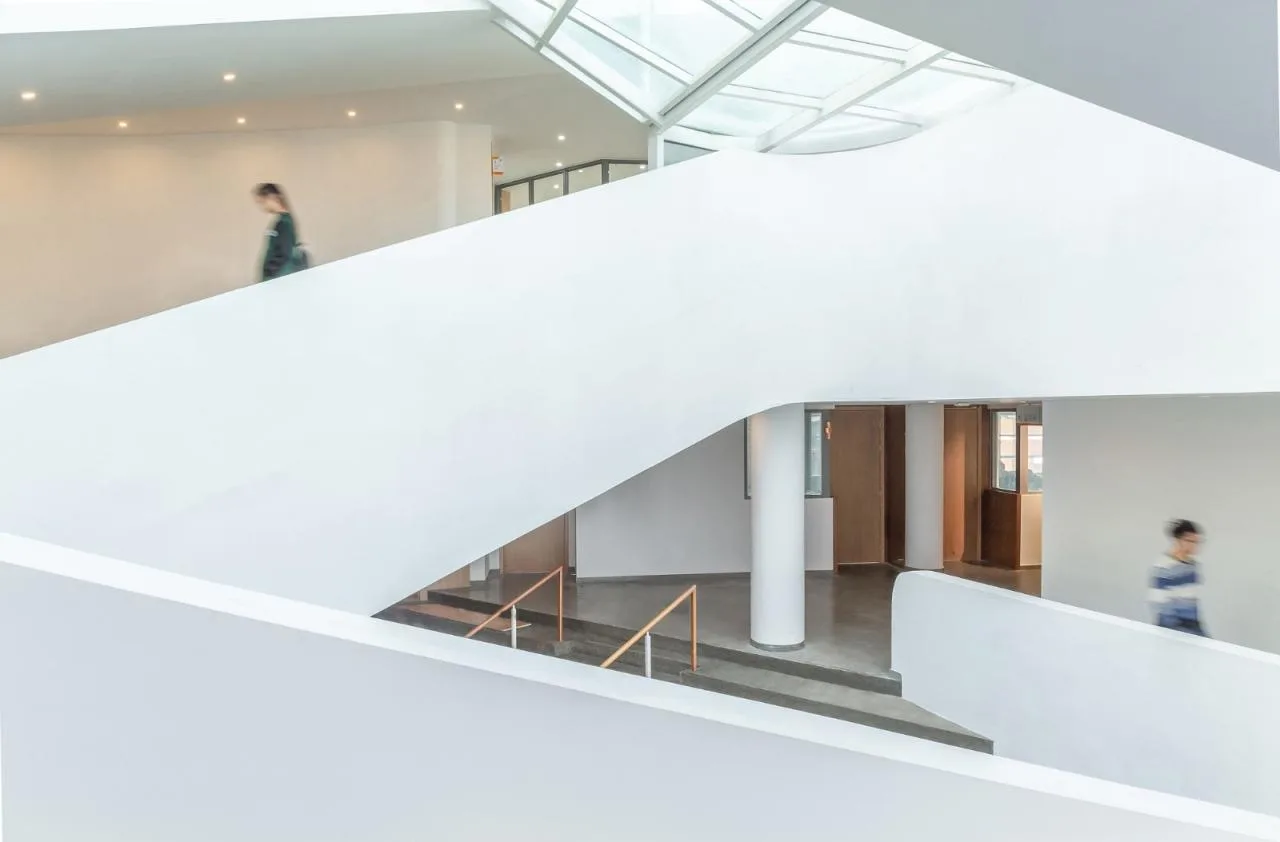
The third floor hosts art classrooms, including spaces for painting, music, and piano. Partition walls intermittently reveal the truss structure, challenging traditional notions of fixed teaching spaces and adding an element of uncertainty. The second floor’s shared hall, supported by hanging columns, achieves maximum spatial transparency. A transparent east-west corridor built over the river offers unprecedented campus views.
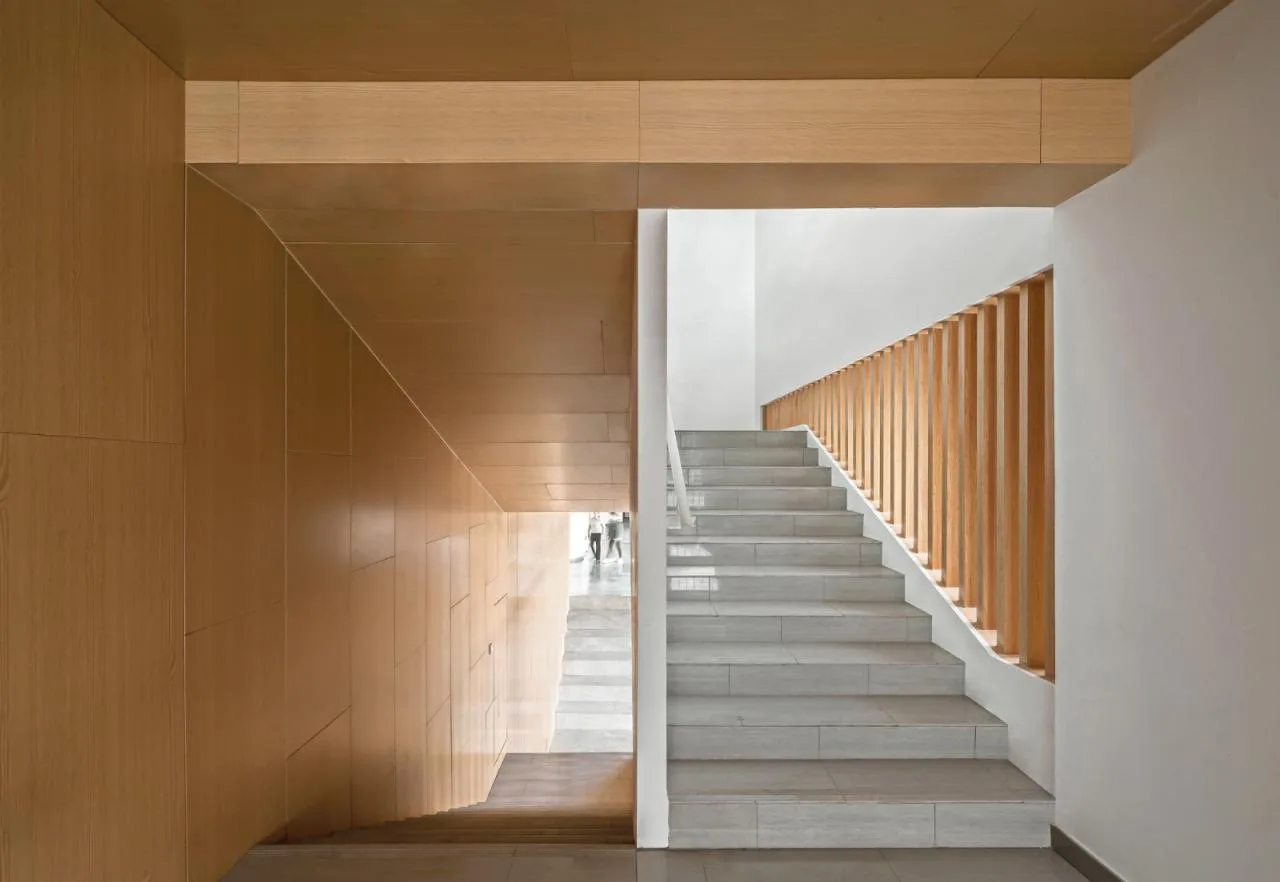
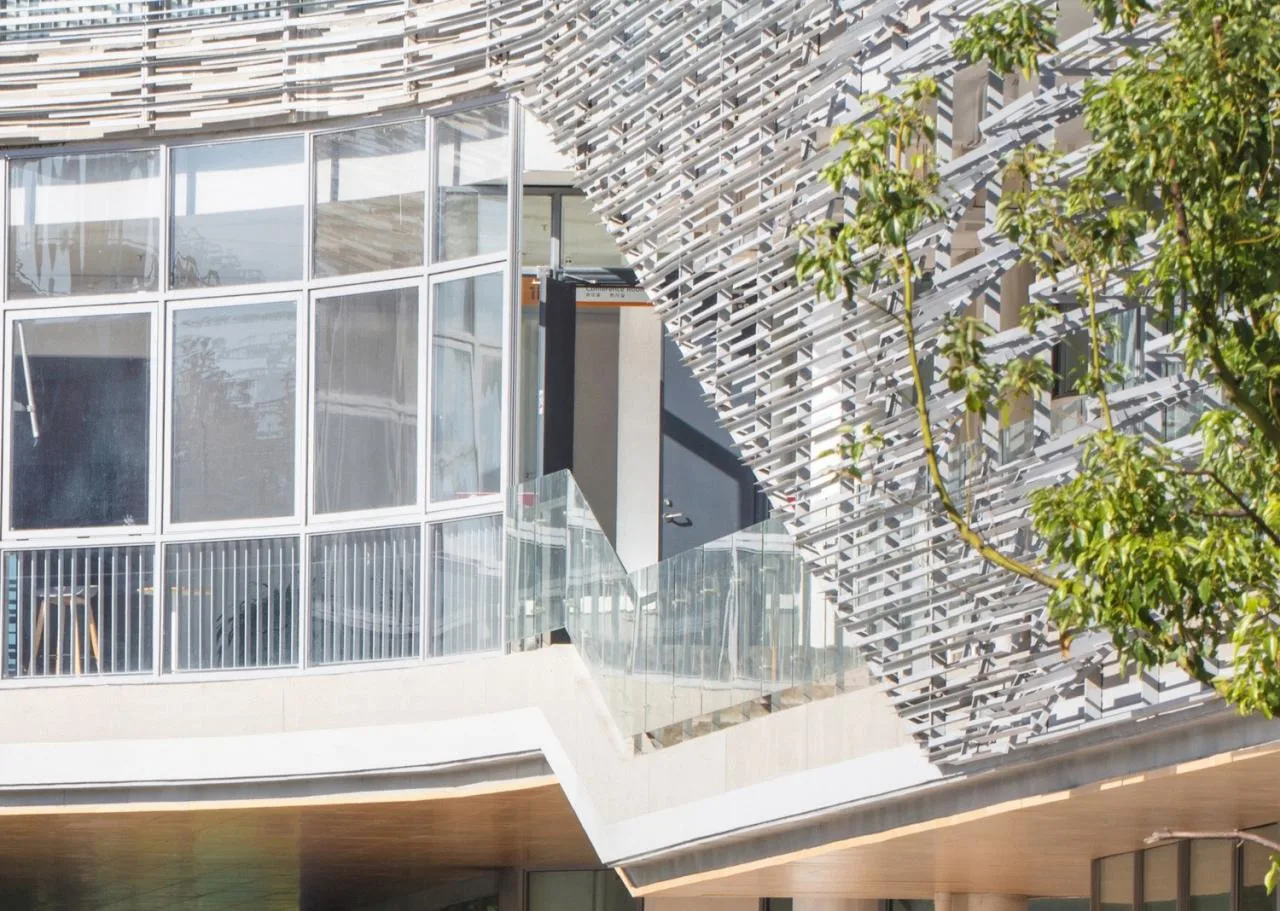
Throughout construction, PERFORM’s resident architect was deeply involved in on-site processes. As a project with tight budget control, overcoming challenges required timely communication and coordination. These included detailed sampling of exterior sunshade aluminum louvers, installation of wood grain aluminum panels under the bridge, and the design of indoor atrium ceilings.
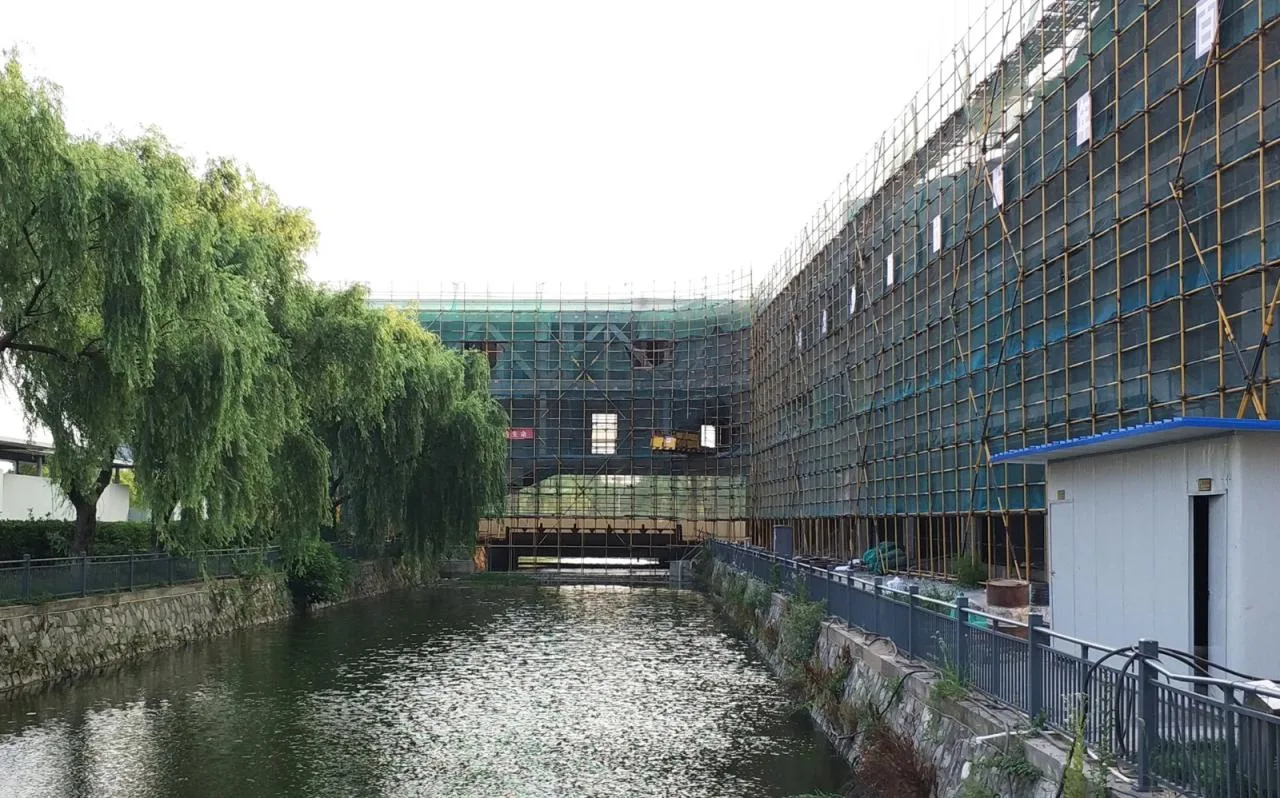
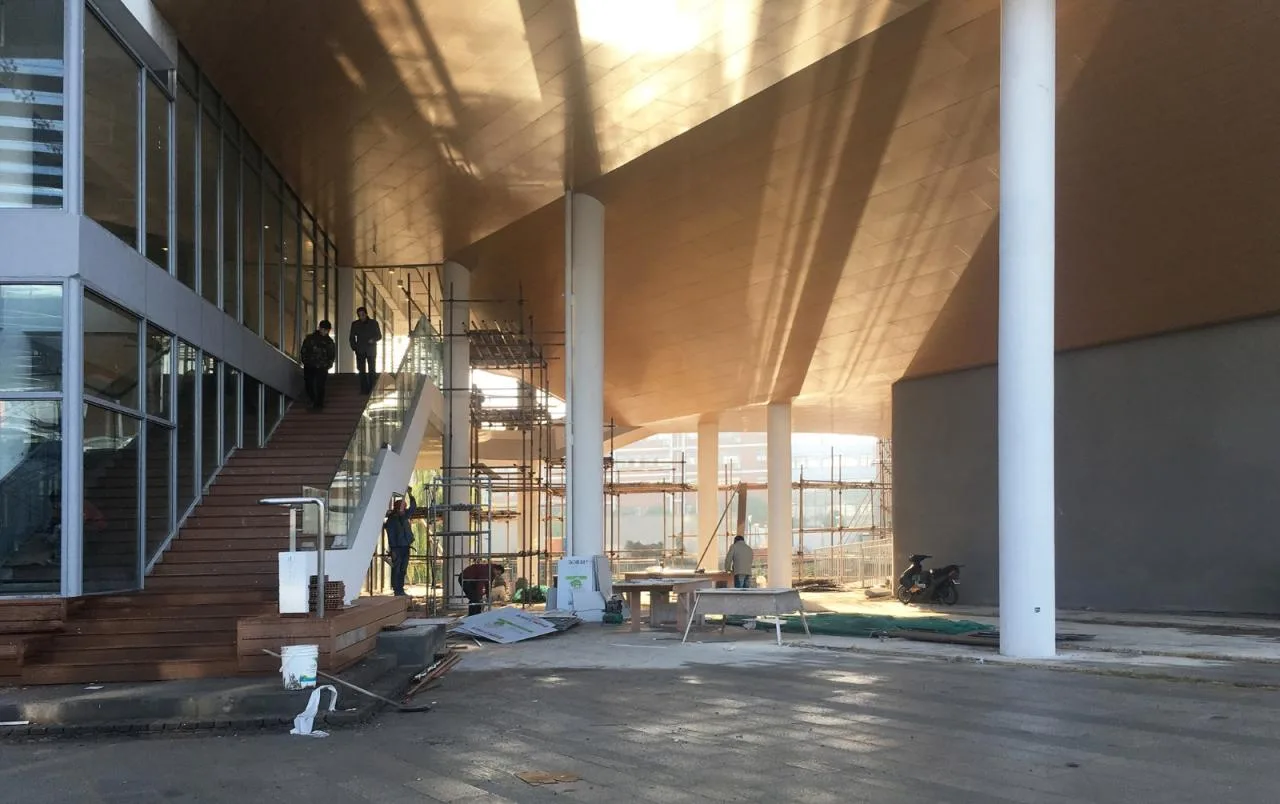
What makes this project unique is that it evolved within an existing campus, continuously growing under the attention of future users. This environment allowed for ongoing improvements. During construction, material choices and spatial uses received timely feedback from teachers and students, helping to shape the building’s significance within the campus.
Conclusion
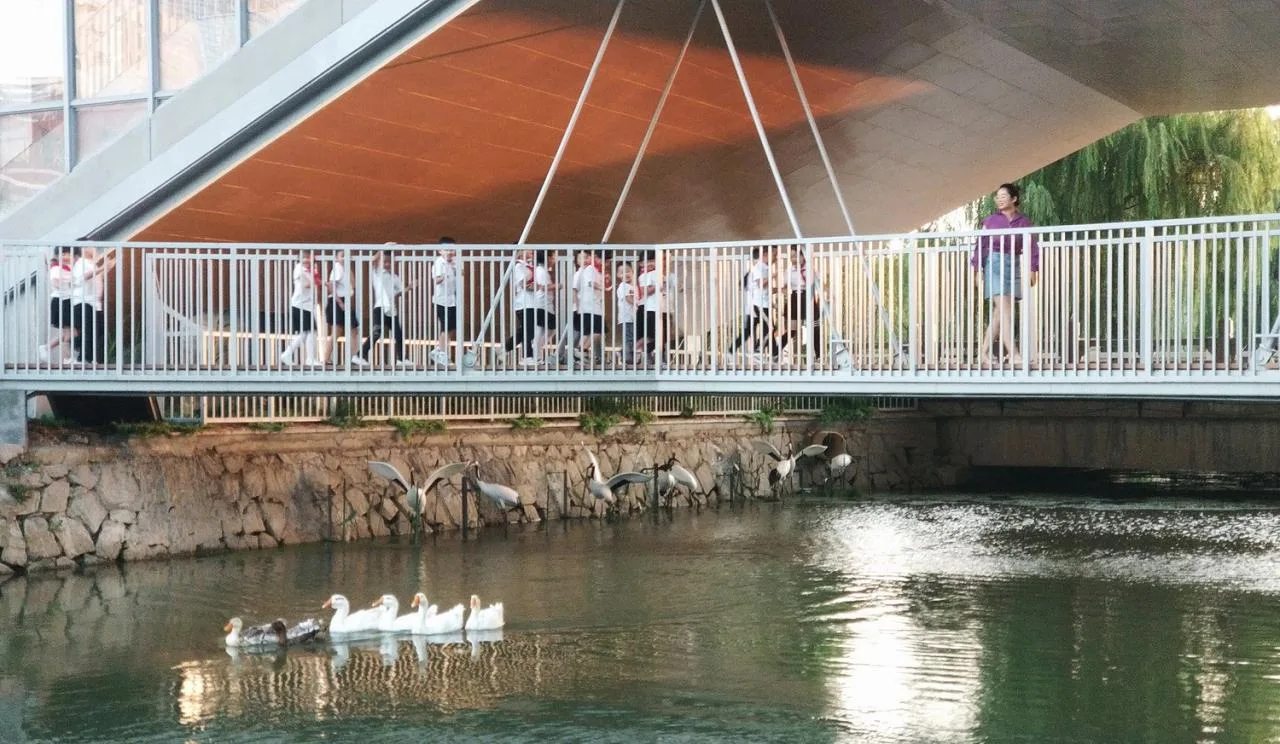
After the project’s completion, we revisited the school. A group of students crossed the suspension bridge, spotting ducks and geese swimming in the river below. Some children spontaneously recited the poem “Goose, Goose, Goose, Song to the Sky.” At that moment, everyone’s expressions were relaxed and content. This scene—students, animals, the building, and the river—embodied the vibrant life of the campus itself.
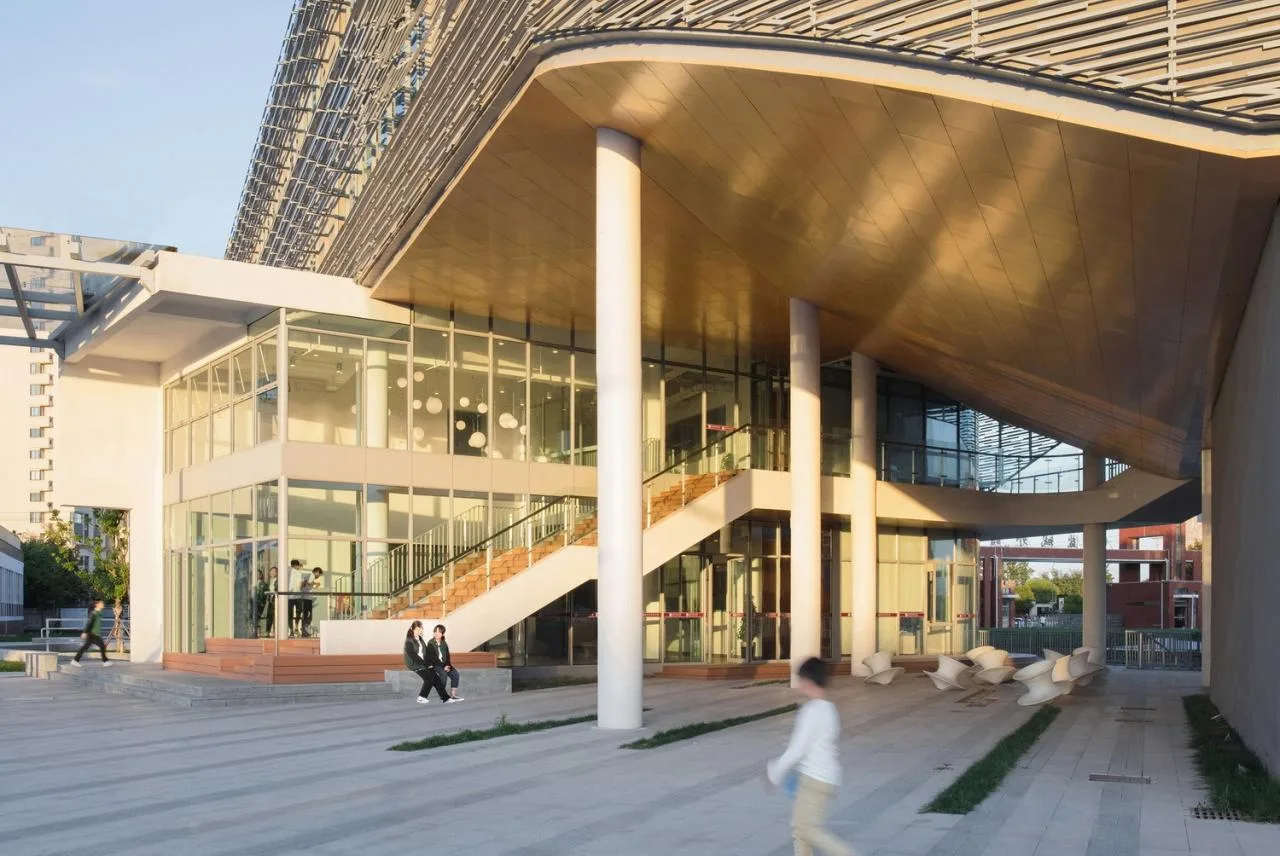
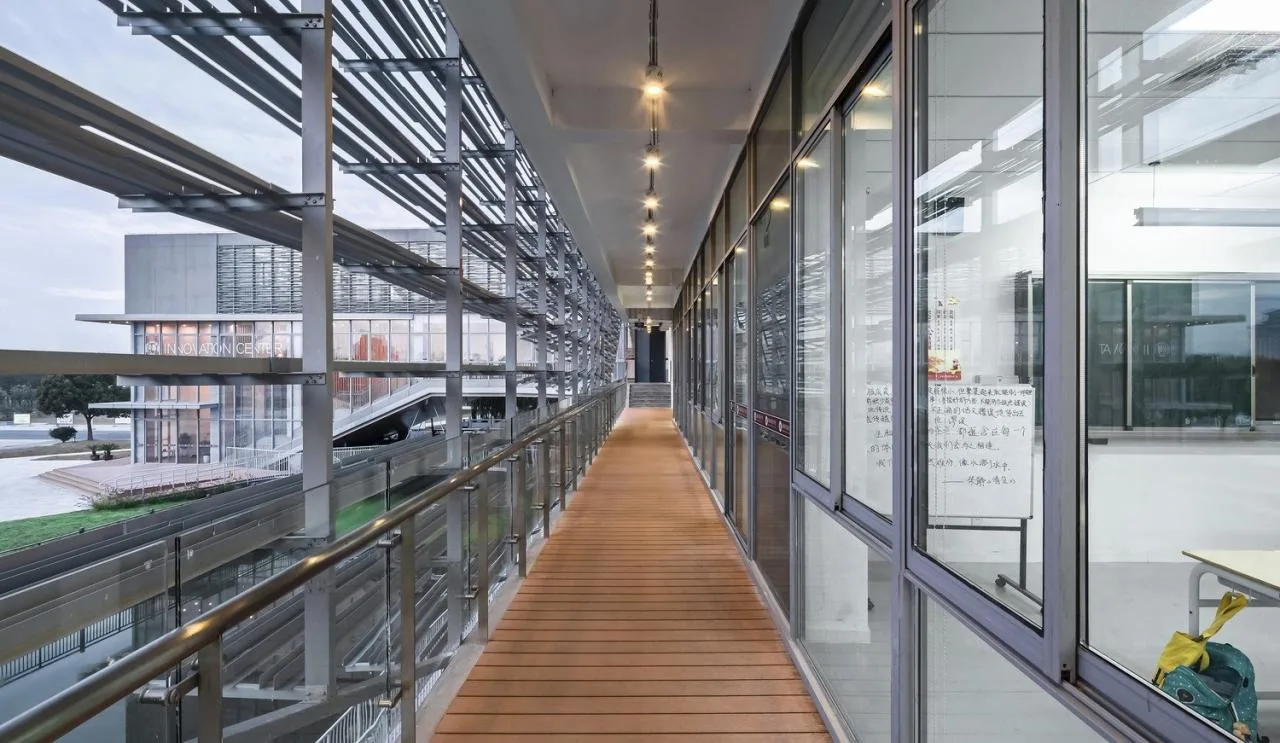
Philosopher Martin Heidegger once said, “Bridges bring the earth together as scenery around rivers.” Since completion, the Bridge Teaching Building has become the campus’s heart. People happily pause, rest, and interact under the suspension bridge or on elevated levels. It has reopened a world, offering teachers and students a renewed understanding of the relationship between people, architecture, and nature.
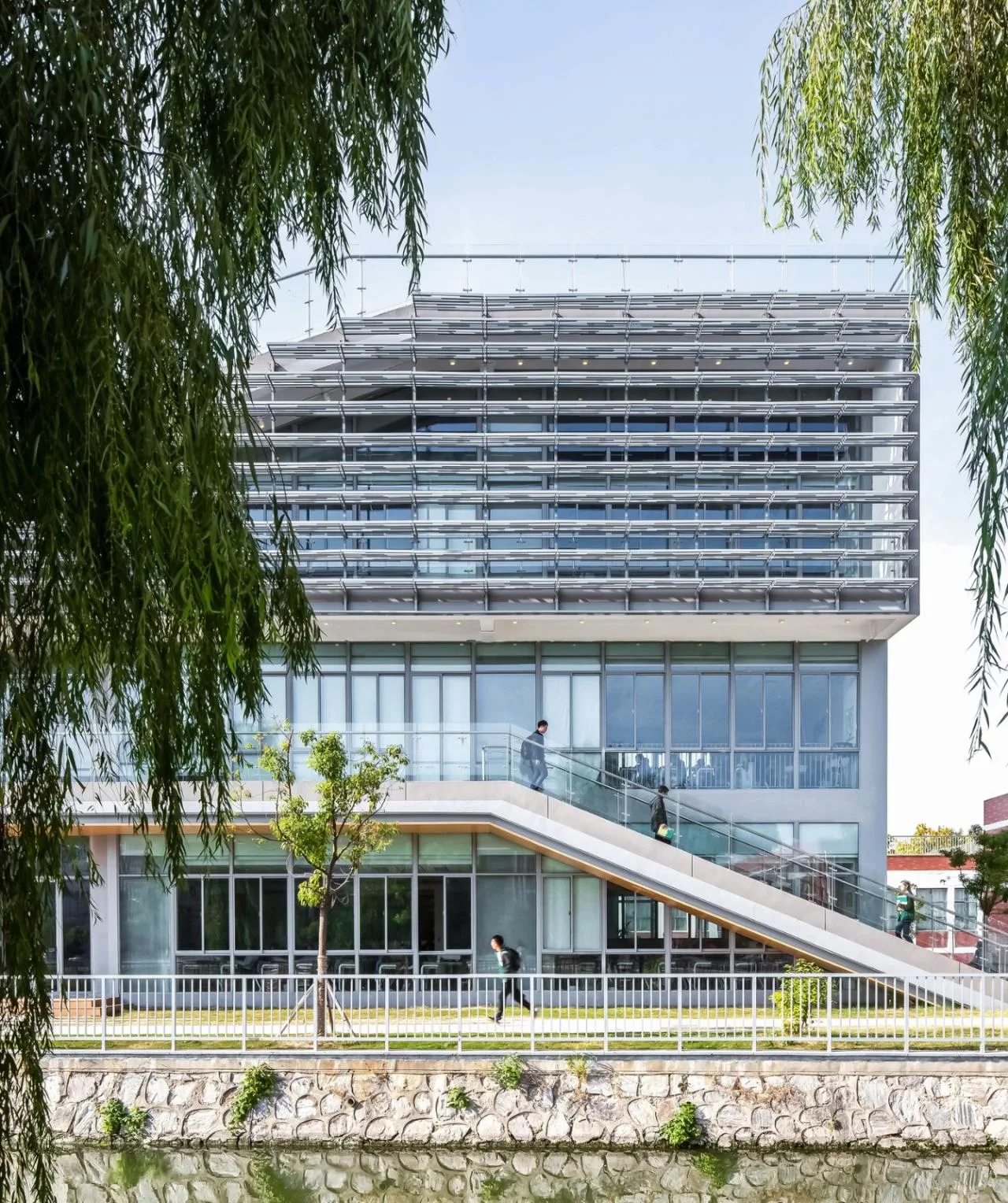
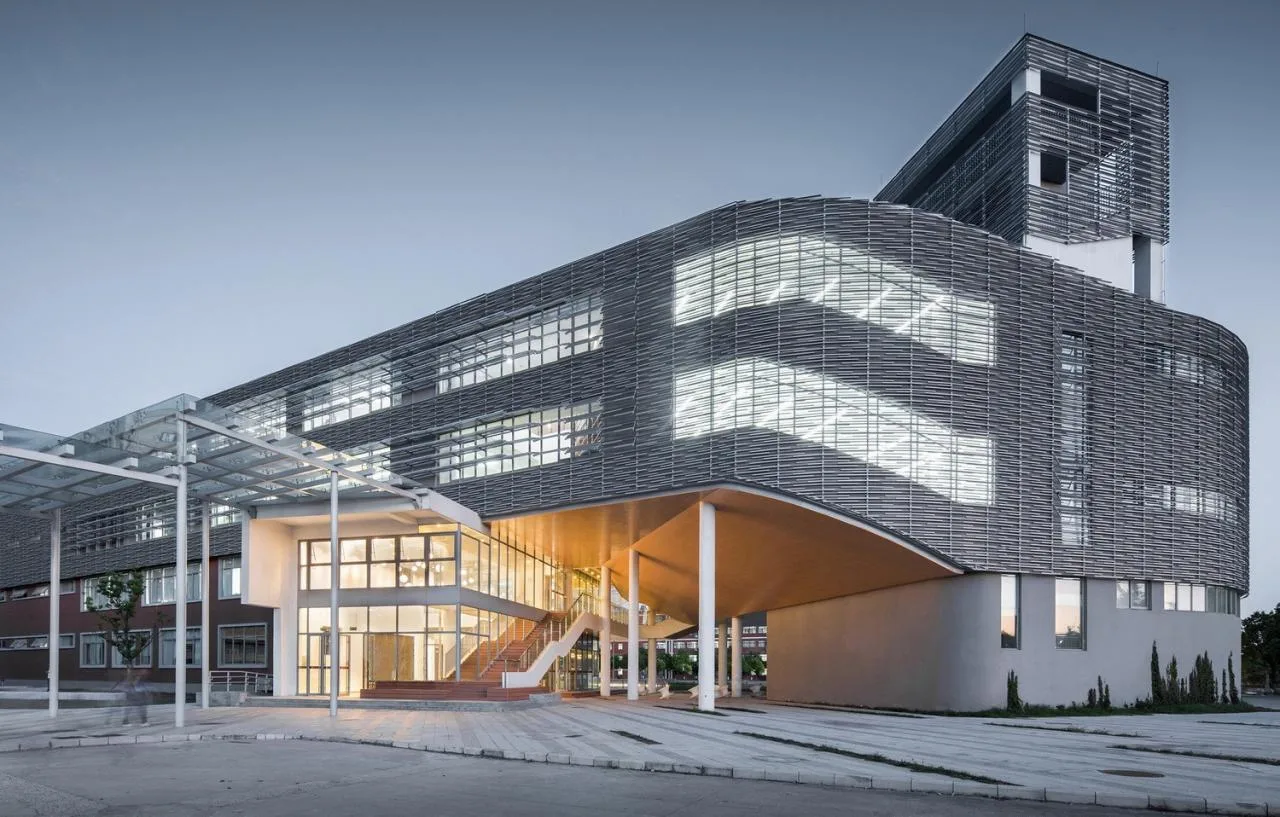
The school named the new facility the Innovation Center. Many may not know that the river beneath was originally called the Innovation River, though its name’s origin is unverified. It is believed to stem from the mass reform movements of the 1950s and 1960s, symbolizing the enduring spirit of that era. Time flows relentlessly, and perhaps as today’s Innovation Center crosses the Innovation River, this campus embarks on a new journey through the long currents of history.
Project Drawings
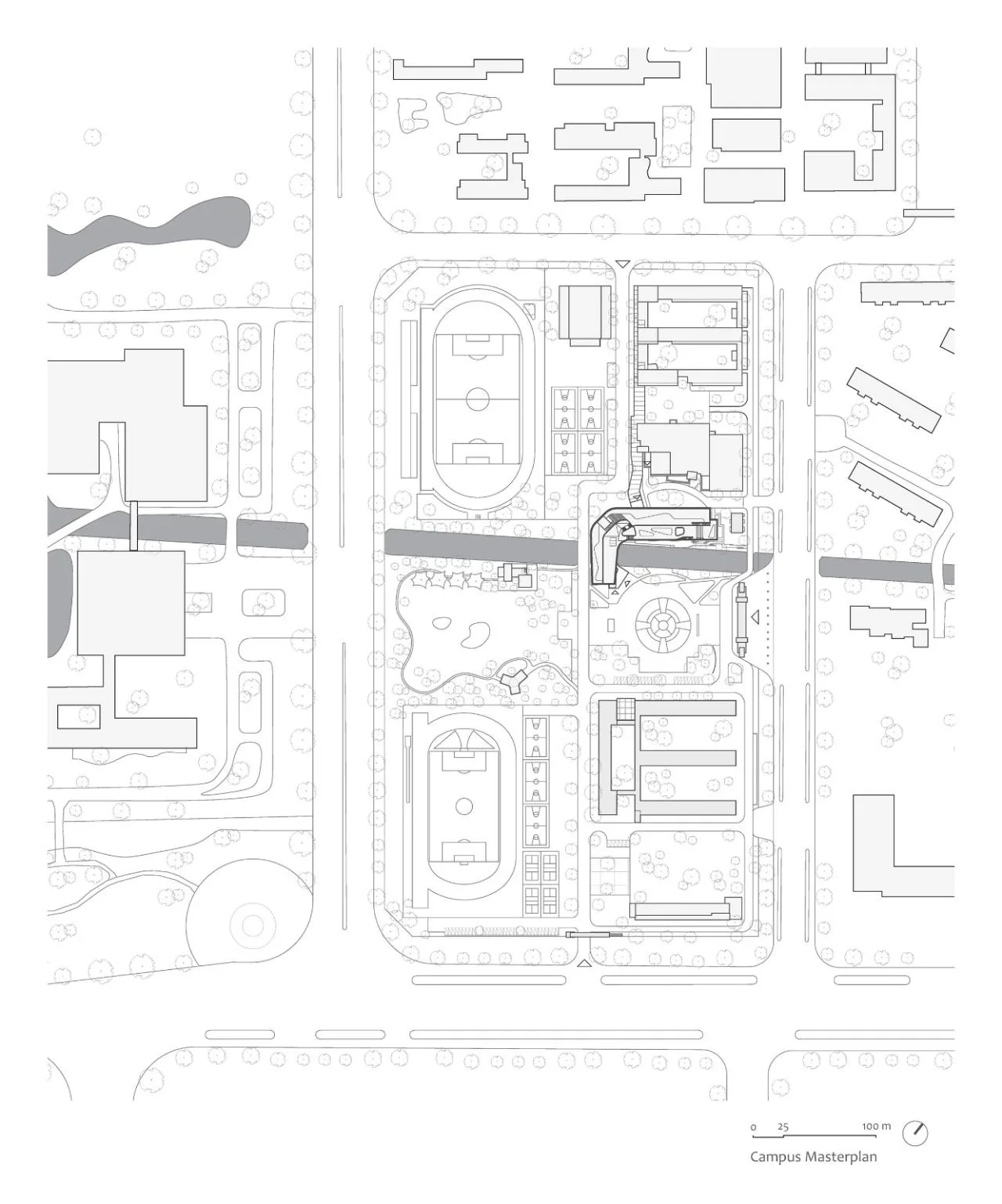
△ General layout plan
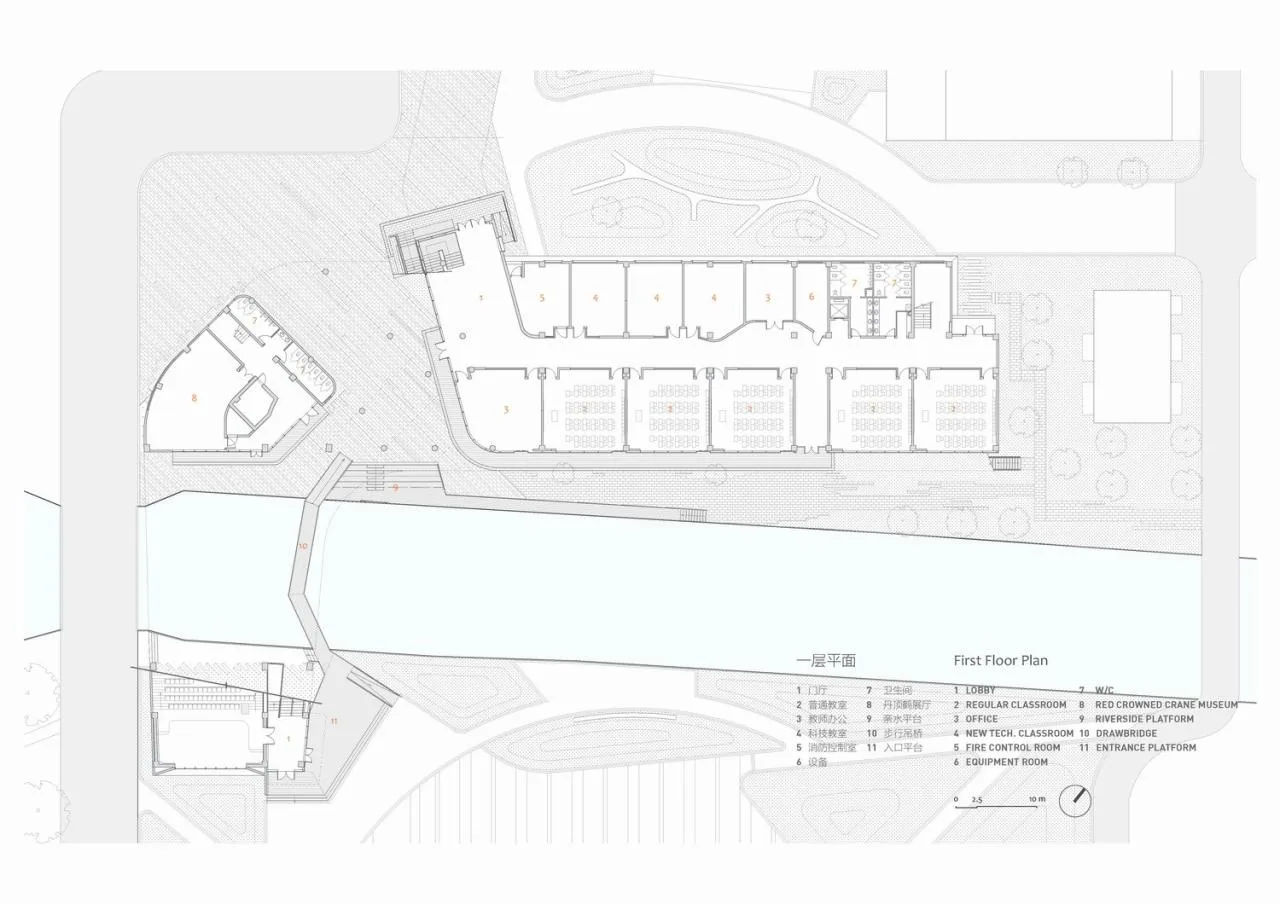
△ First floor plan
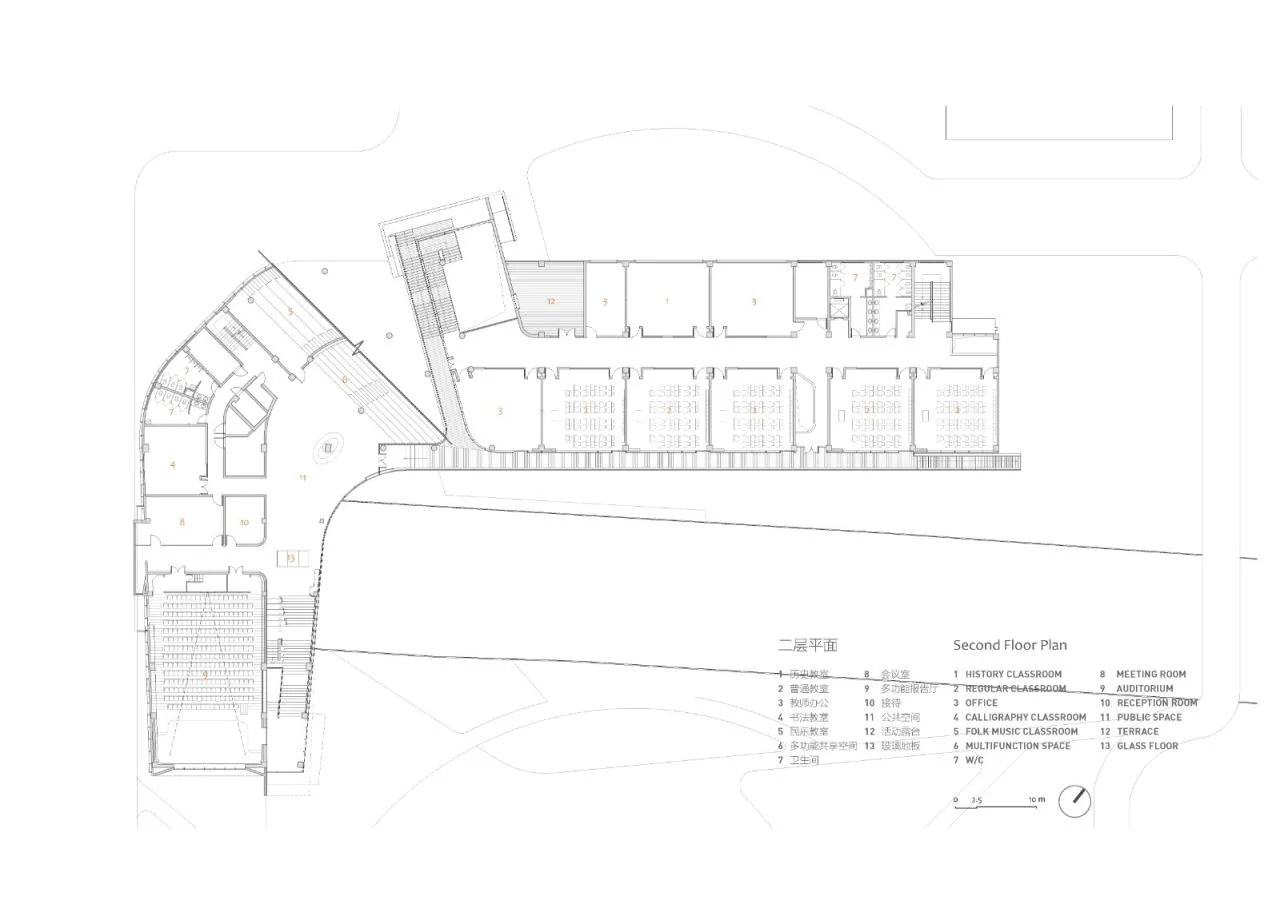
△ Second floor plan
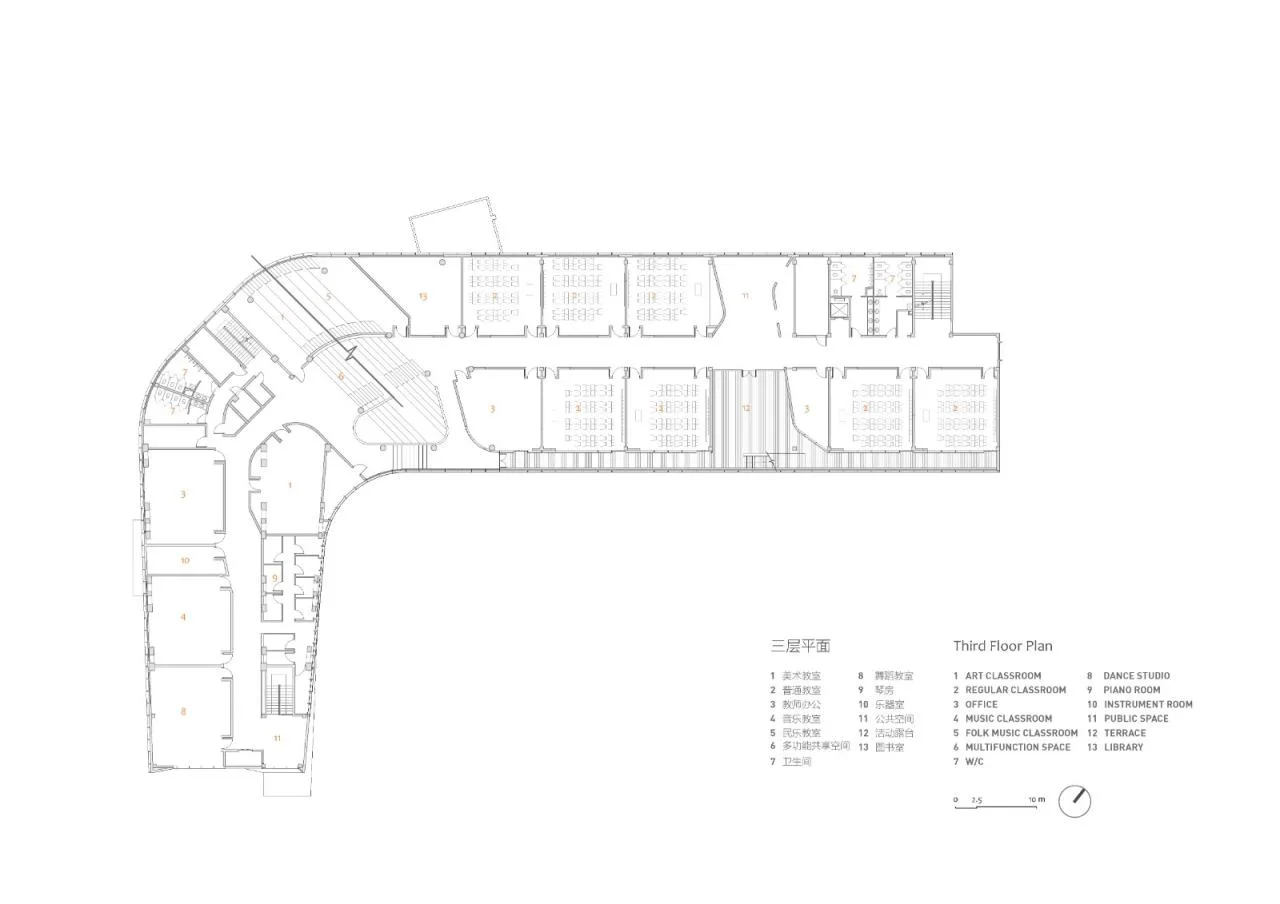
△ Third floor plan
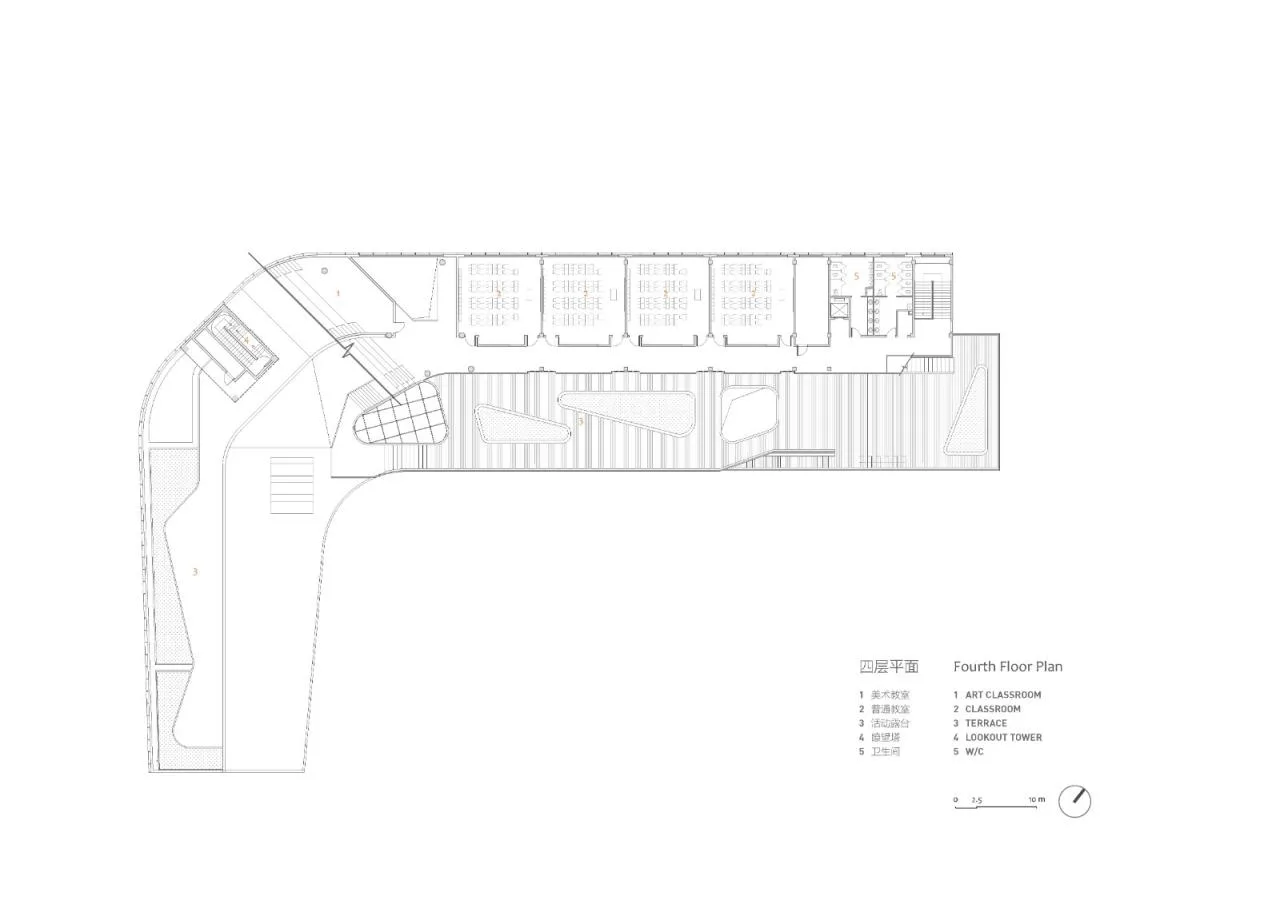
△ Fourth floor plan
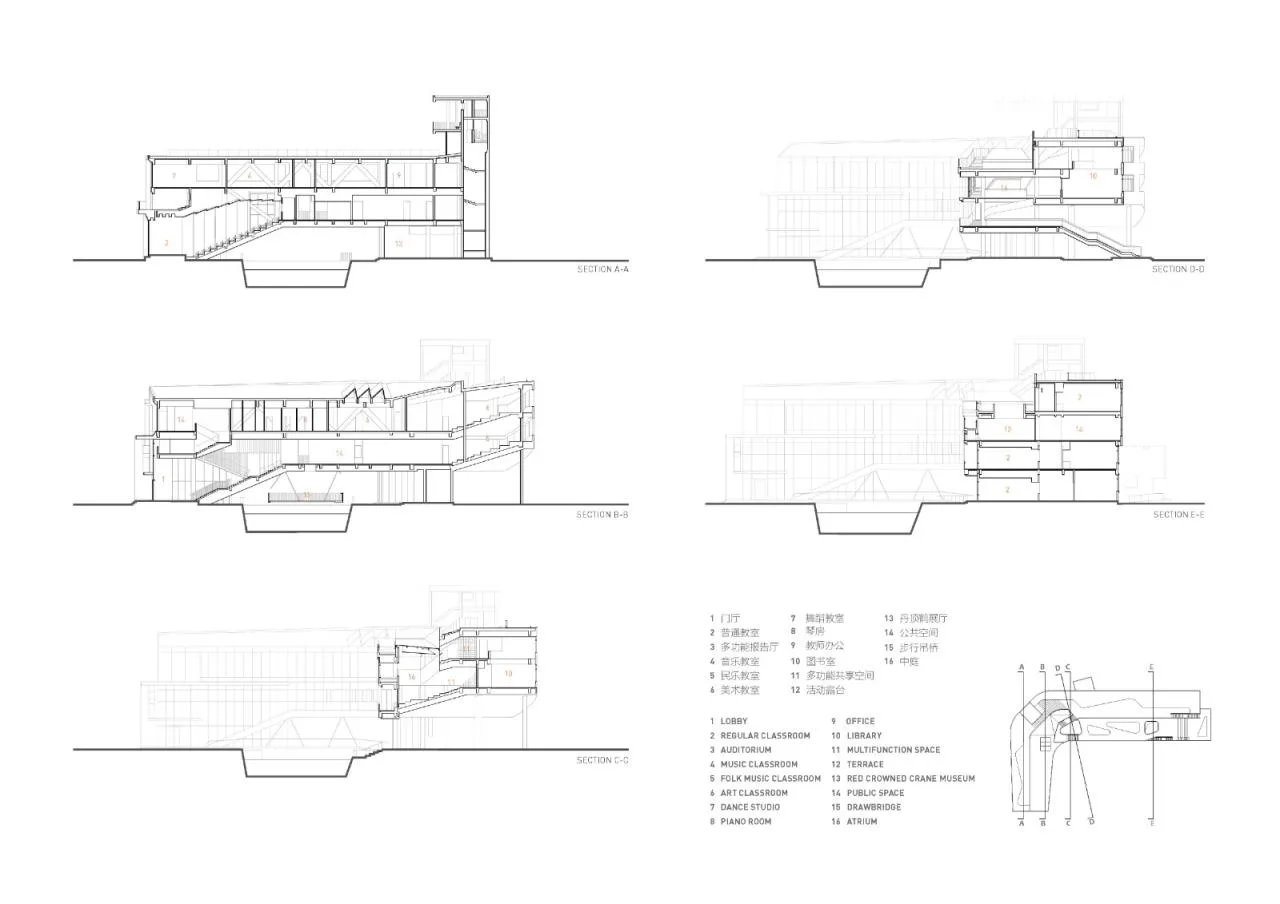
△ Section diagram
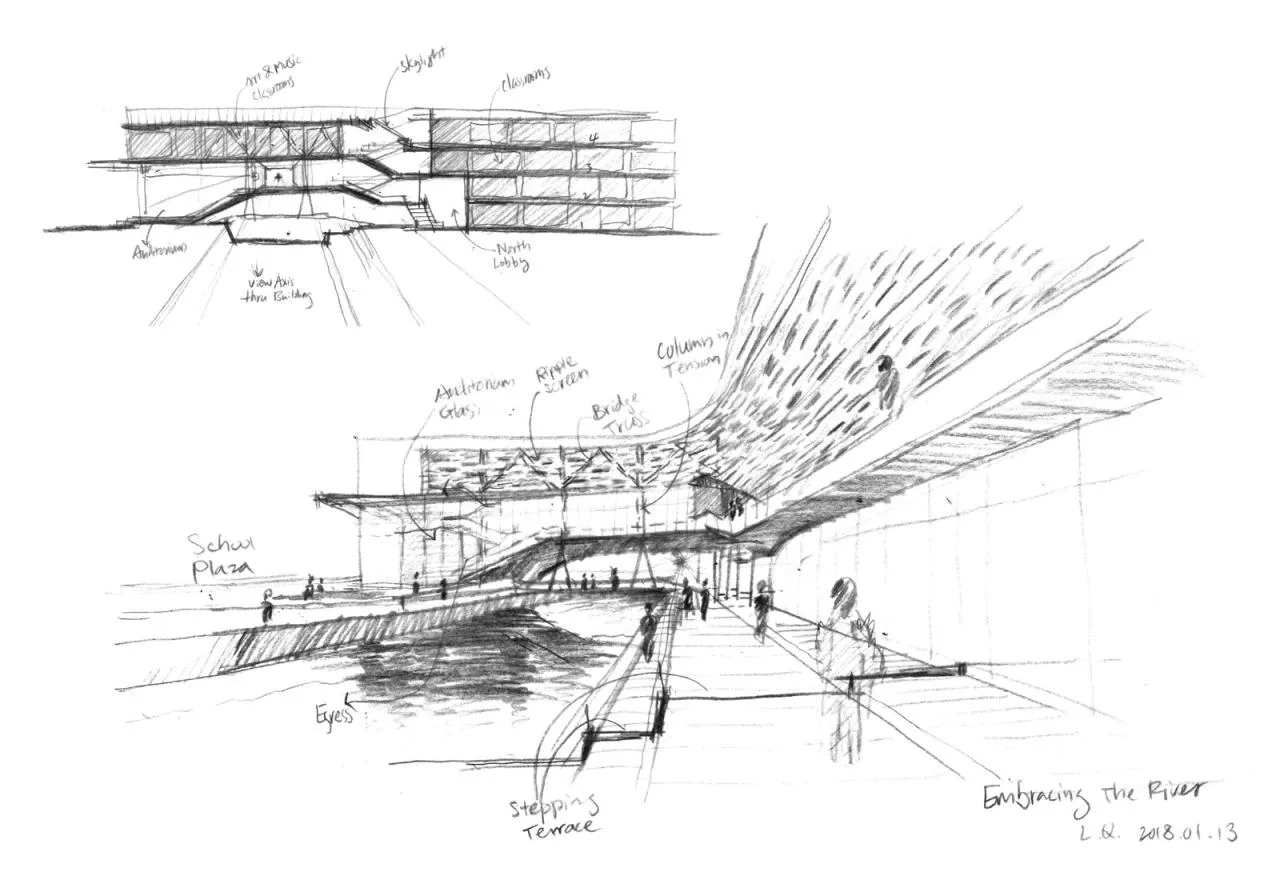
△ Hand drawn sketch
Project Information
Project Name: Bridge Teaching Building – Yancheng Foreign Language School Innovation Center
Project Type: Architecture / Landscape / Interior
Location: No.2 Lushan Road, Yancheng City, Jiangsu Province
Design Firm: Perform General Architecture
Office Website: www.performang-arc.com
Lead Architect: Li Qian
Design Team: Sun Tao (Project Architect), Luo Jia, Qiu Jiahao, Wang Qian, Chen Shukai, Tan Zhiyong, Xu Shujie, Sun Chaoliang, Su Yuhao, Hu Deyun
Owner: Yancheng Foreign Language School, Guanghua Education Group
Cost: N/A
Status: Built
Design Period: September 2016 – January 2018
Construction Period: December 2017 – July 2019
Land Area: 8,200 m²
Building Area: 7,600 m²
Construction Drawing Design: Yancheng Architectural Design and Research Institute Co., Ltd. (Zhang Hongdong, Fei Zili – Architecture; Cao Kun, Yang Juan – Structure; Zhou Rong – Electrical; Sun Jiancheng – Water Supply and Drainage; Marginal – HVAC)
Construction Company: Yancheng Suxia Construction Group Co., Ltd
Project Management: Guanghua Education Group (Xu Jinghua, Zhao Wenyi, Zhou Haosheng, Wu Yanqing)
Materials: Concrete, steel, insulated glass, tempered flooring, plastic wood flooring, wood grain aluminum-plastic panels, real stone paint, textured coatings, wood decorative panels, gypsum board, and more.
Photographers: He Lian (literal translation of architectural photography), Zhao Yilong (architectural photography)
Video Copyright: Literal translation of architectural photography












Must log in before commenting!
Sign Up