
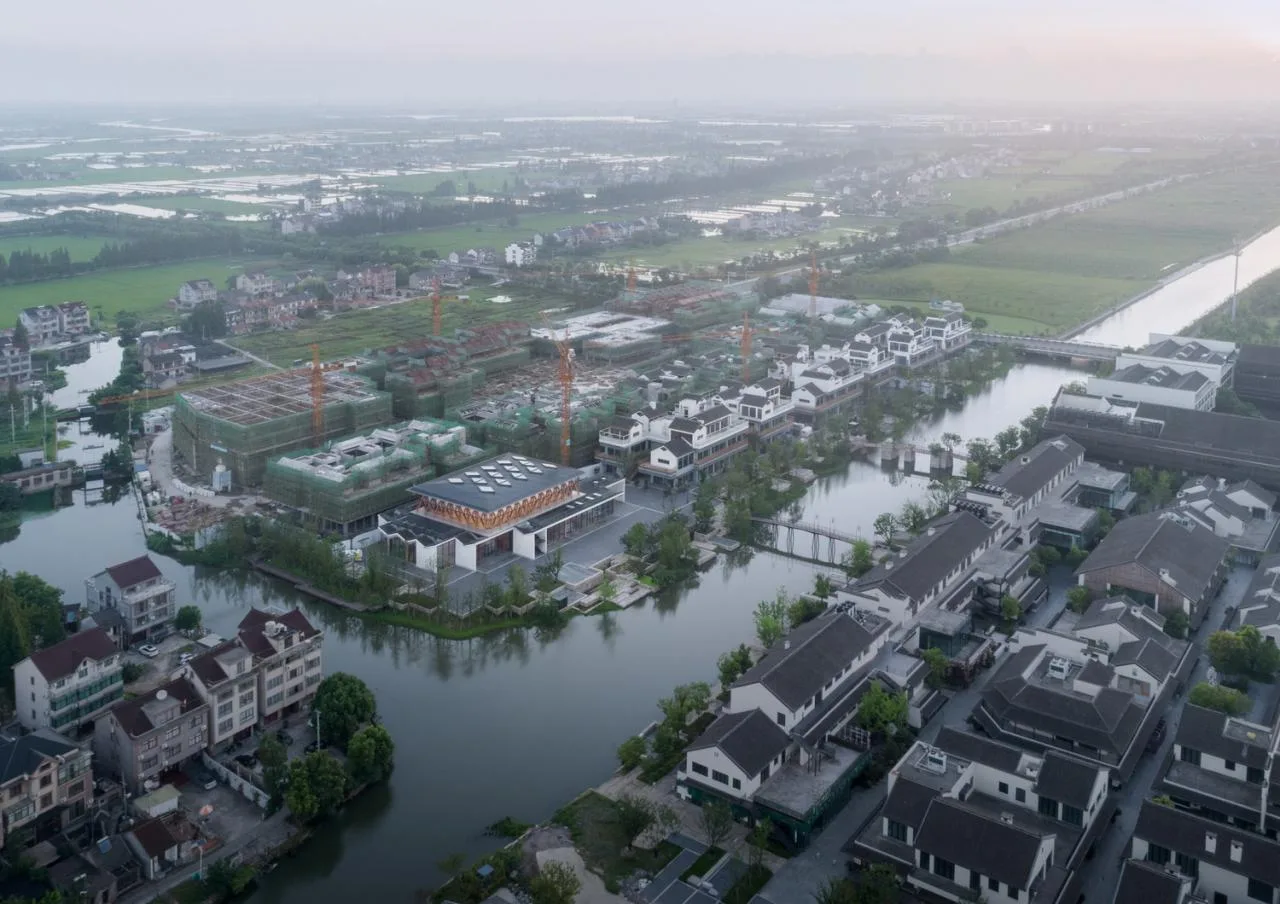
The Xitang East District, currently under construction, represents an eastern expansion of the historic Xitang Ancient Town. The development covers roughly 100,000 square meters, encompassing tourism, commercial spaces, hotels, a tourist center, and cultural facilities. Upon completion, it will serve as a prominent new northeastern gateway to the ancient town.
Building 1 is positioned in the southwest corner of the site, overlooking the river on two sides with views of the ancient town. It also faces the commercial pedestrian block to the east and north, and the East District Phase I across the river to the south, giving it a strategically significant location.
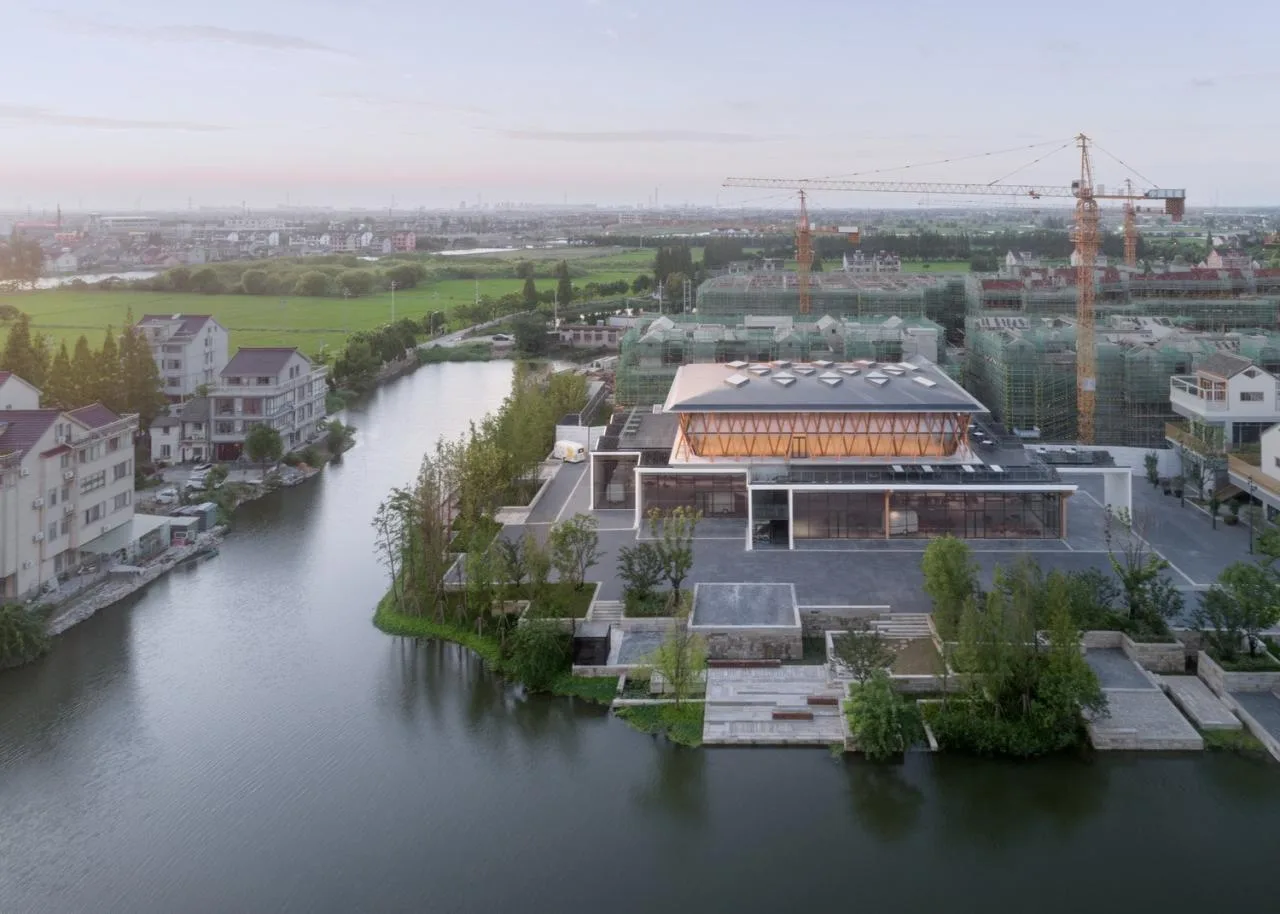
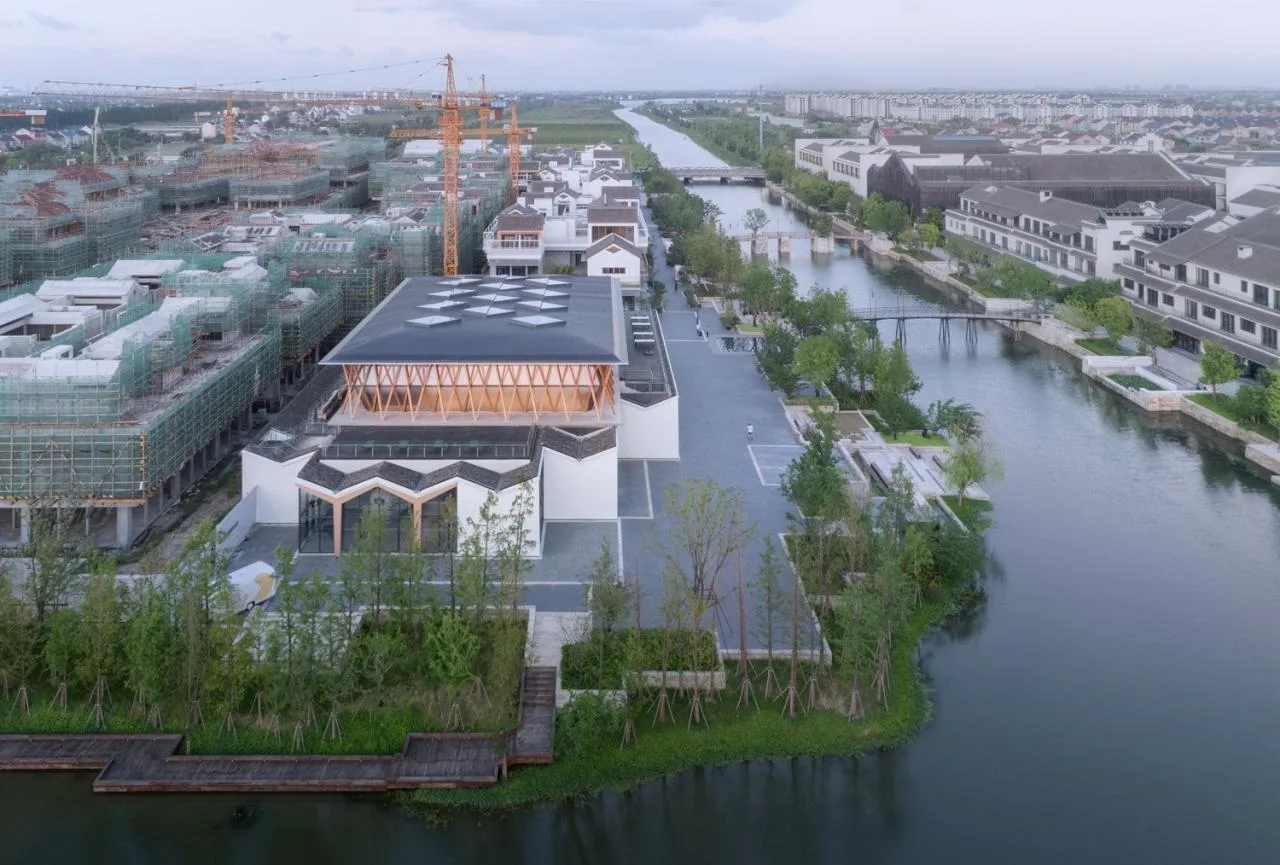
Xitang Ancient Town enforces strict architectural guidelines within the scenic area, including height restrictions and design elements such as sloping roofs and the use of small blue tiles, as well as a color palette of black, white, gray, and wood tones. The challenge was to determine the function of the central building in the East Riverside area and design a form that meets functional needs, establishes a landmark, and respects these aesthetic standards. Addressing these three challenges shaped the entire design process.
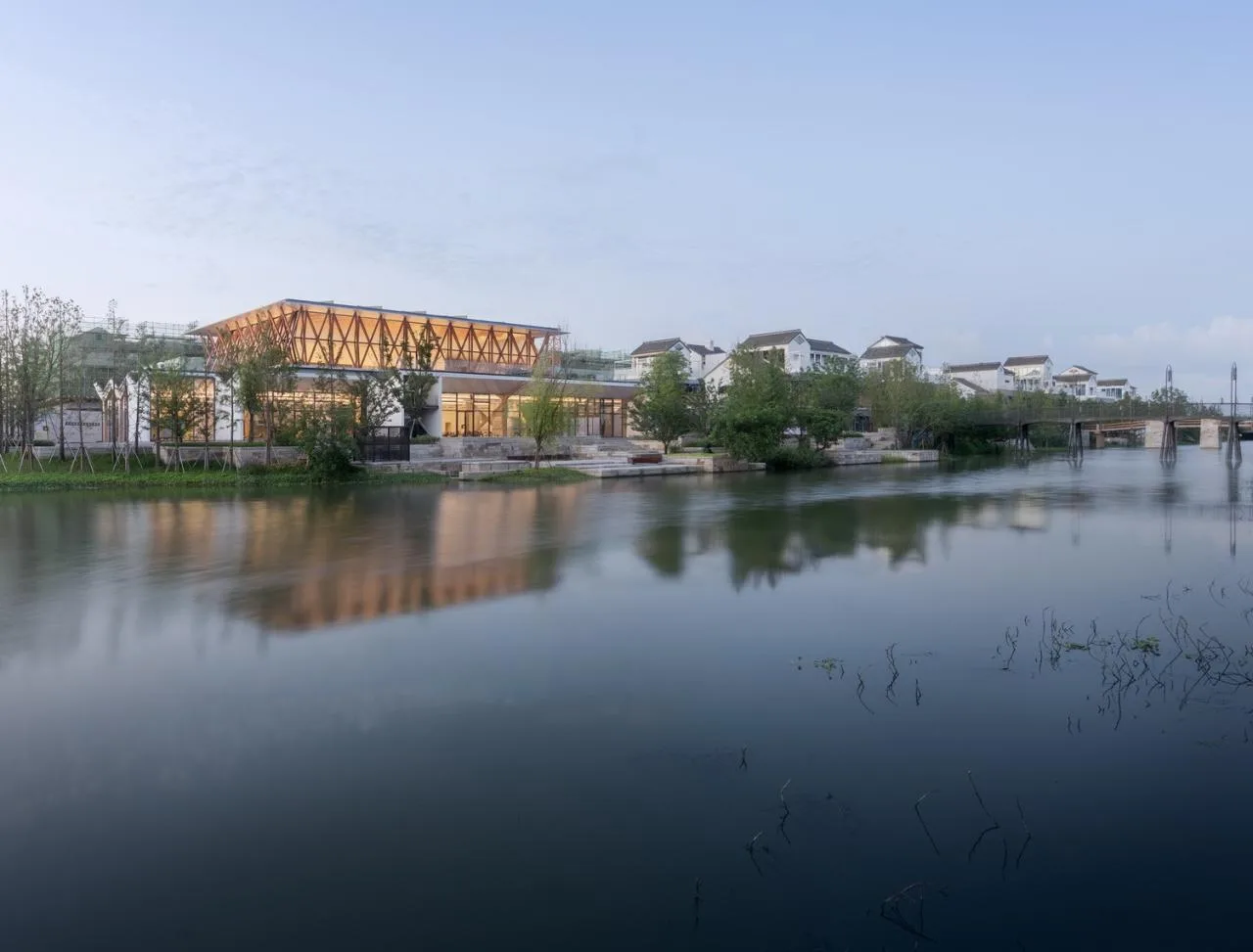
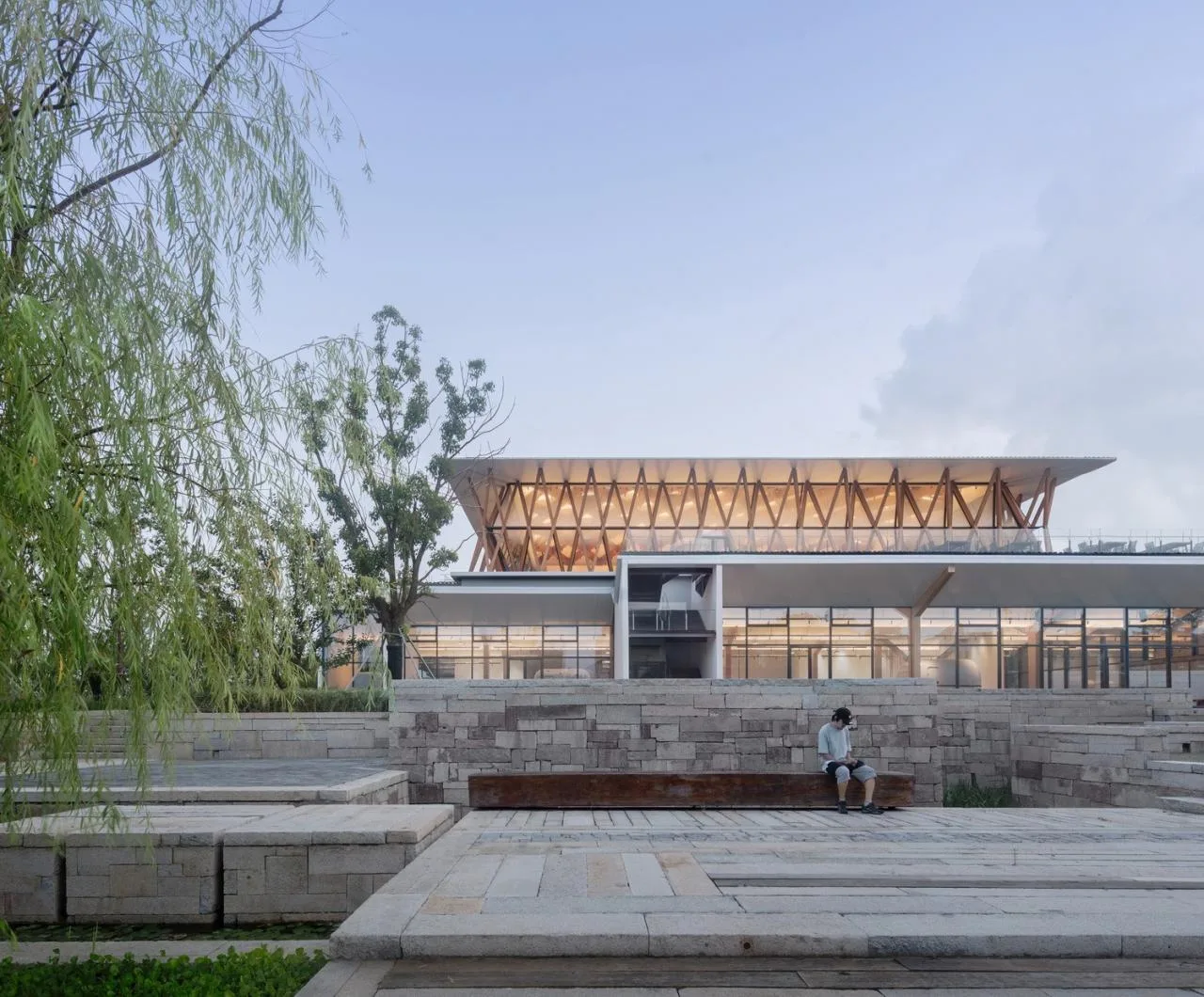
The pedestrian street in the East District combines two-story courtyard-style commercial buildings with three-story pitched-roof homestay courtyards. Within this context, the central tourist activity center, the anime activity hall in the northeast corner, and the Liangyan boutique hotel in the northwest corner serve as distinctive landmarks. In contrast, the southwest corner, where Building 1 is located, requires a design that attracts visitors to linger and engage in meaningful activities, creating a vibrant cultural and tourism hub.
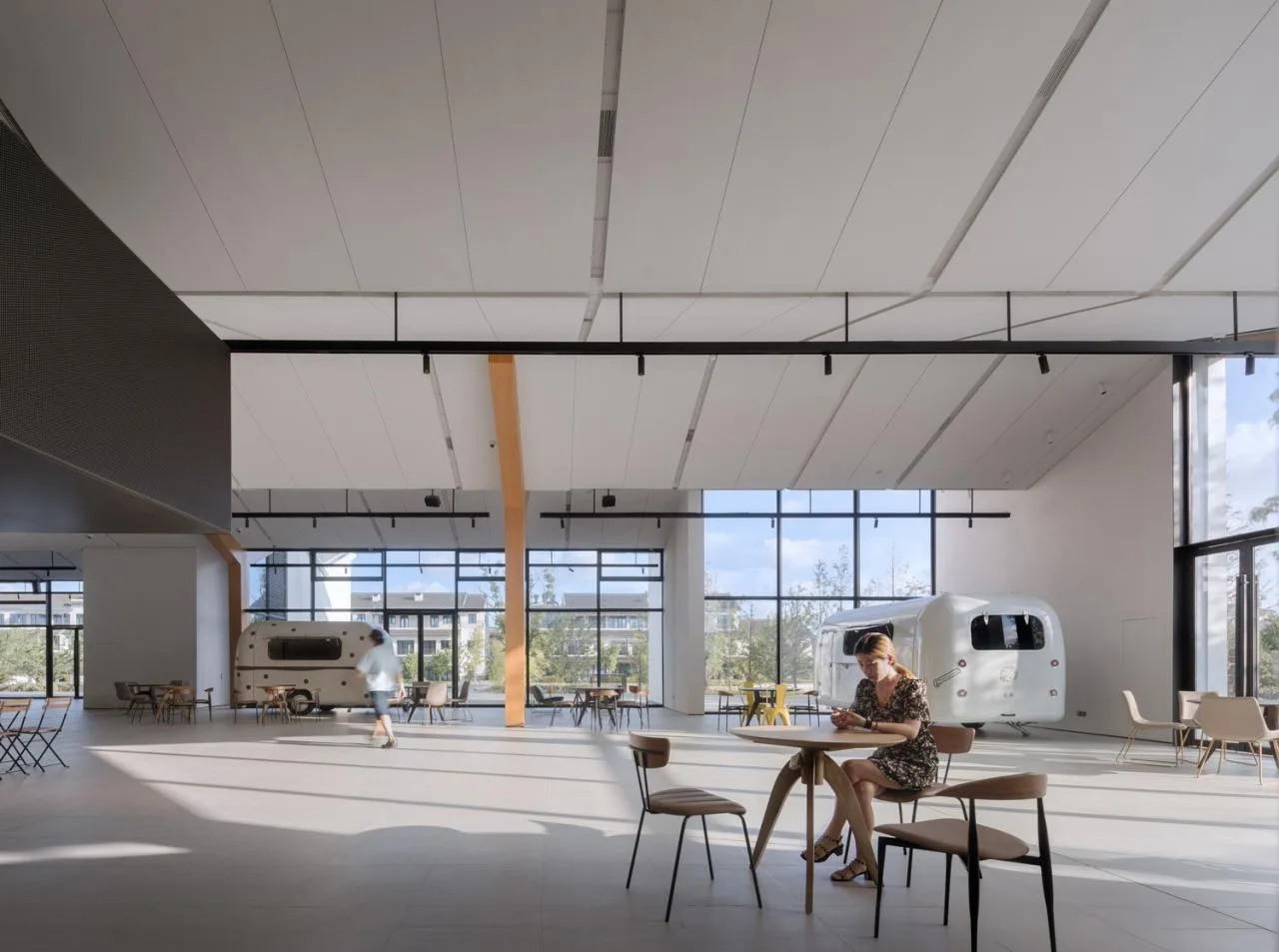
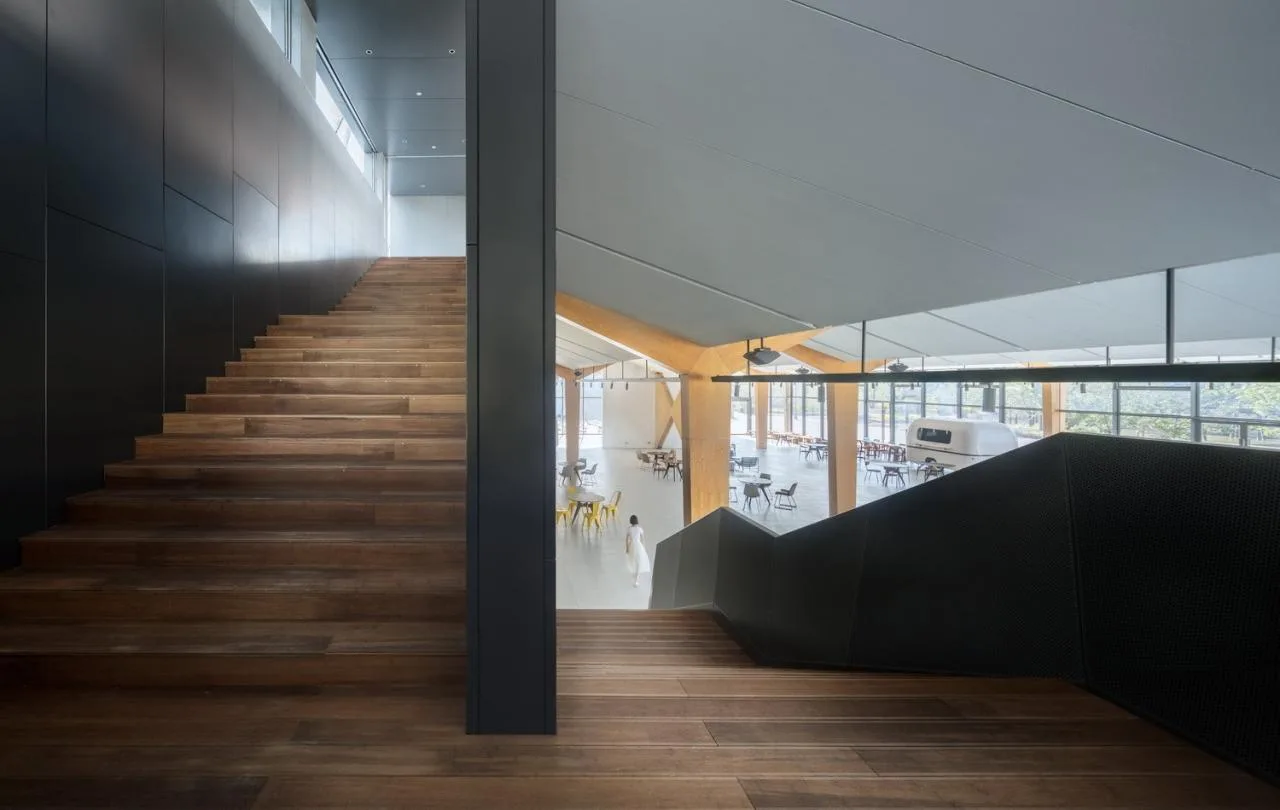
After extensive discussions, the consensus was to develop a mixed-use market and art museum. The first floor will host an open, dynamic market space, featuring an organic farm market, a cultural and creative bookstore, coffee shops, restaurants, and the hotel reception. The second floor will house a multifunctional art museum designed for exhibitions, forums, and cocktail events.
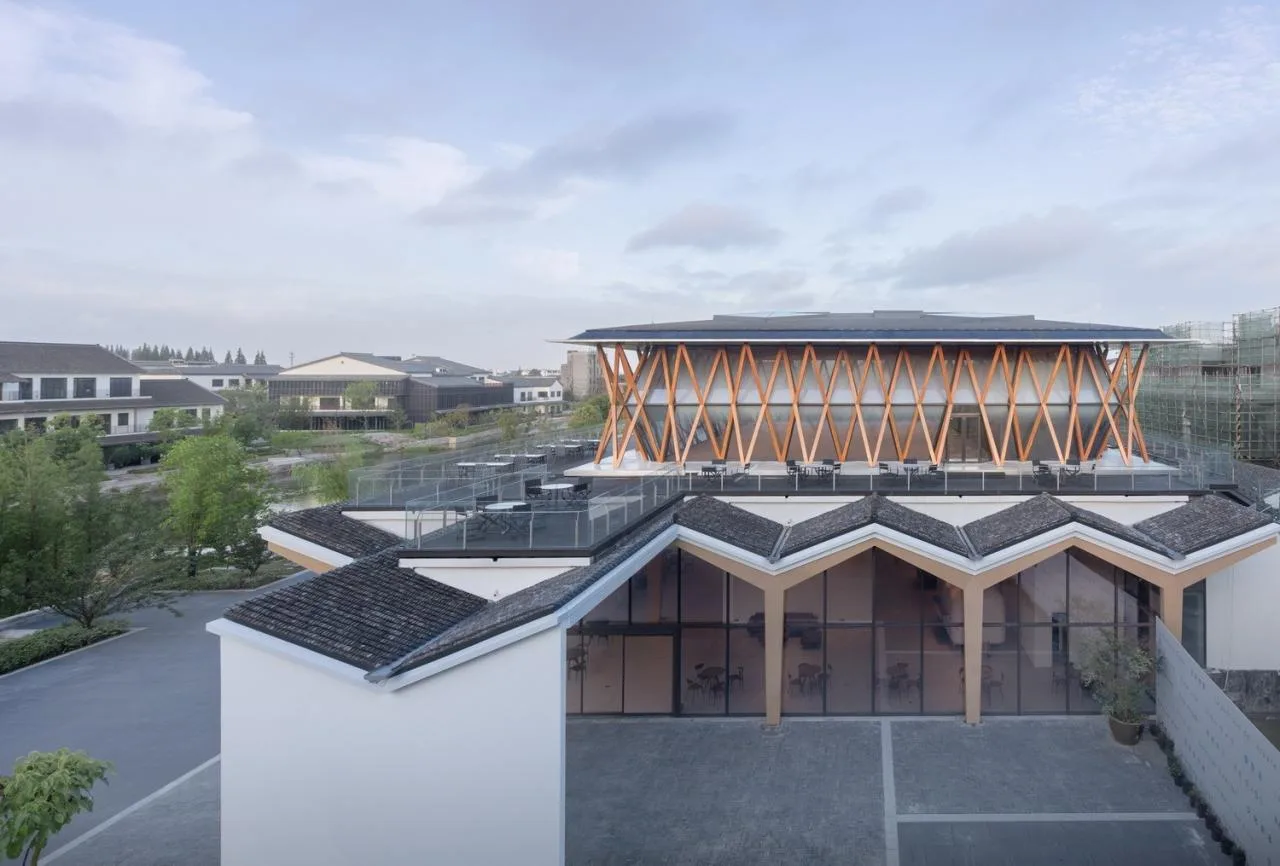
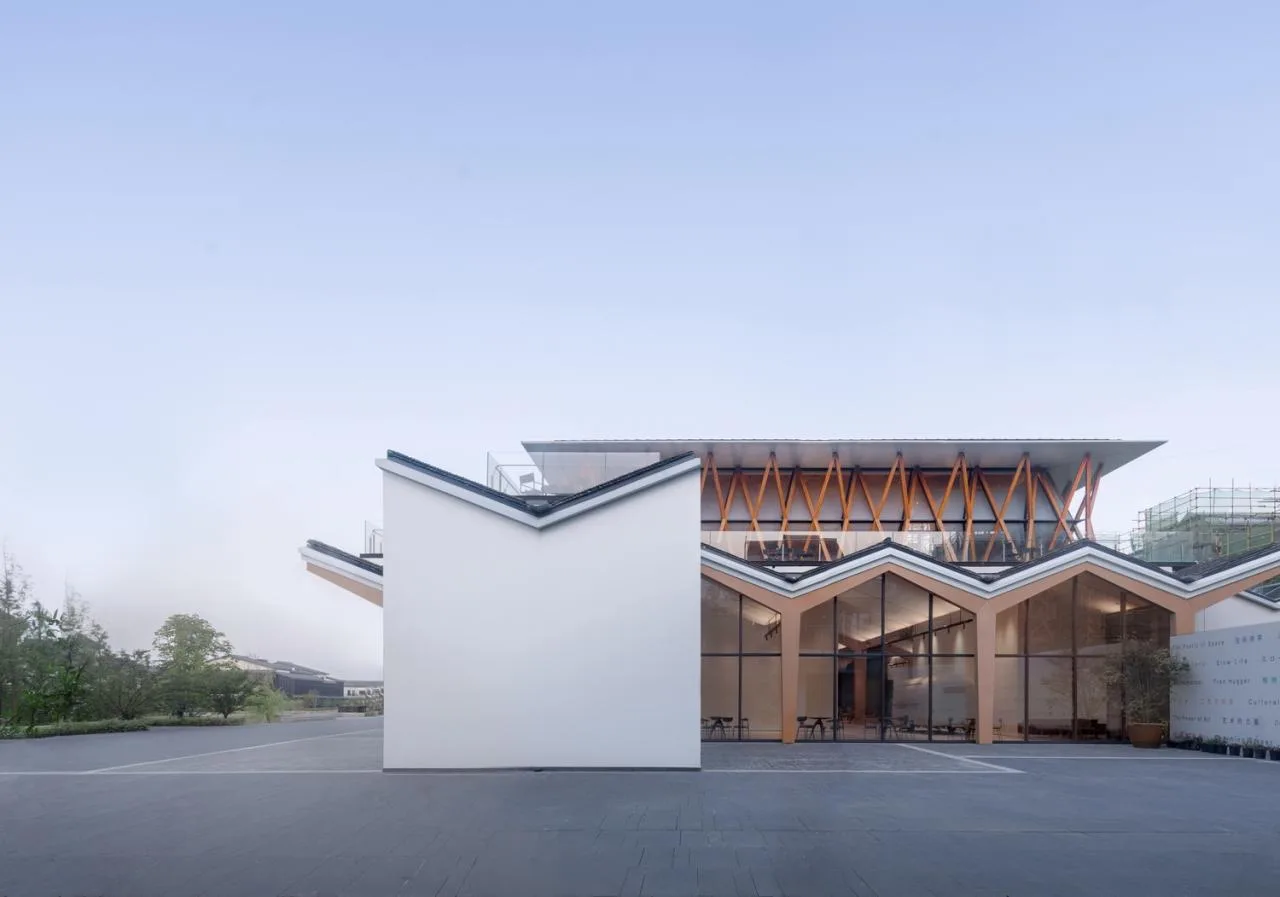
The design translates the functional program and stylistic requirements into spatial and visual elements, guiding the choice of structural system. Notably, the upper and lower levels serve distinct purposes. We maintained the overlapping form of the pedestrian block but reversed the positions of the architecture and roof slopes to achieve a unique harmony.
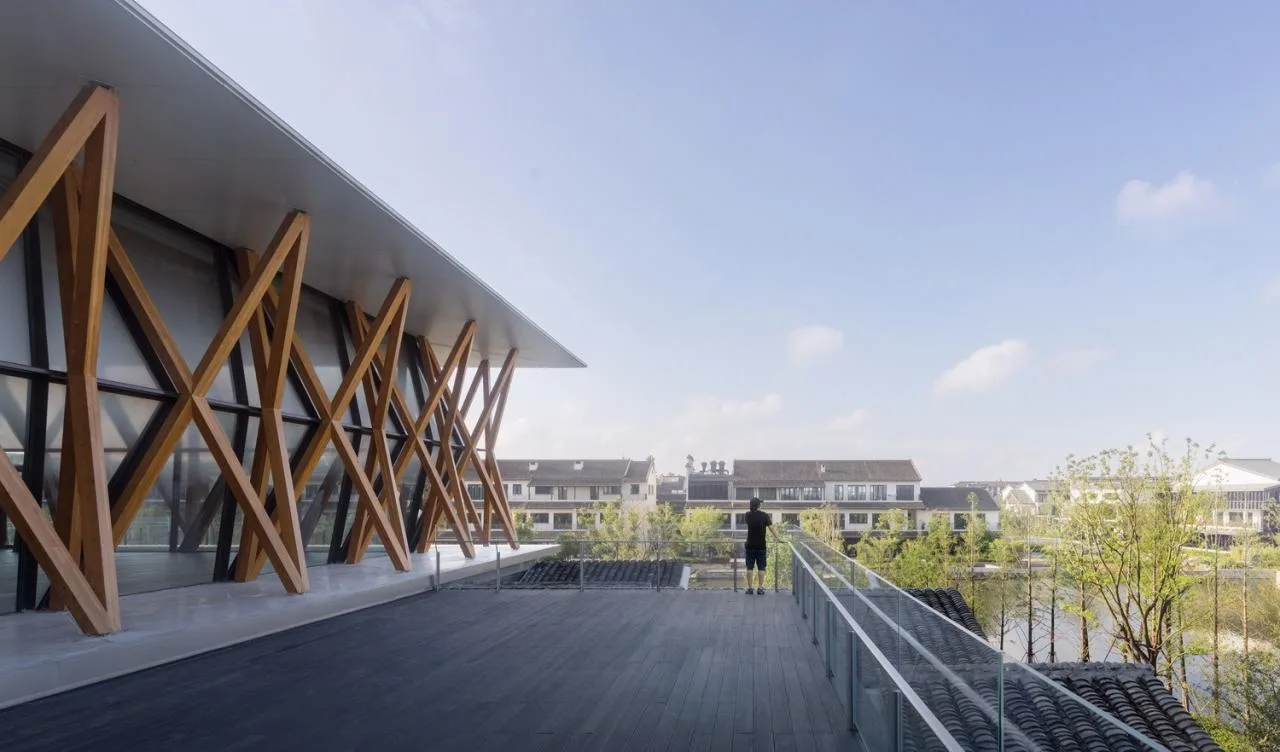
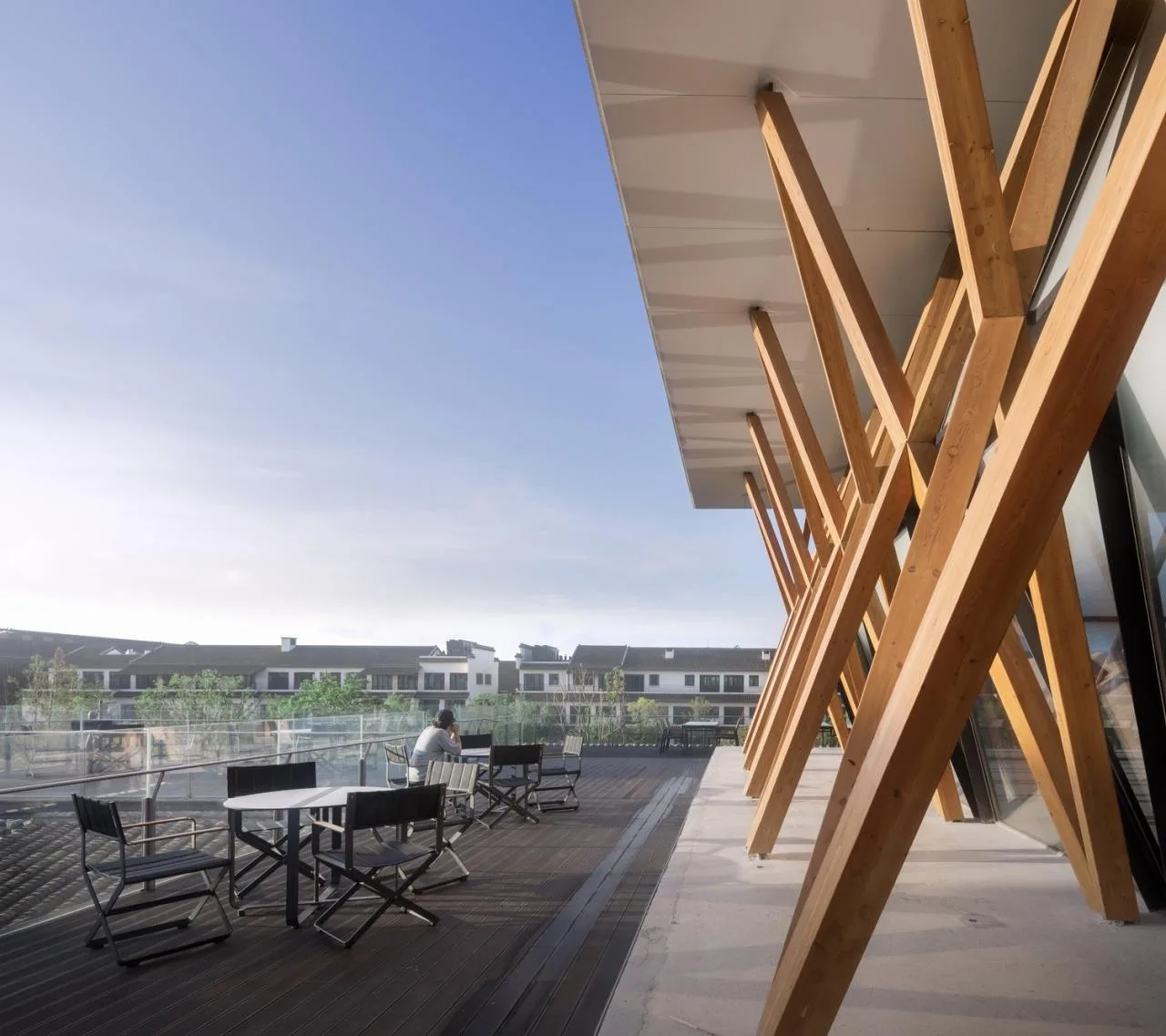
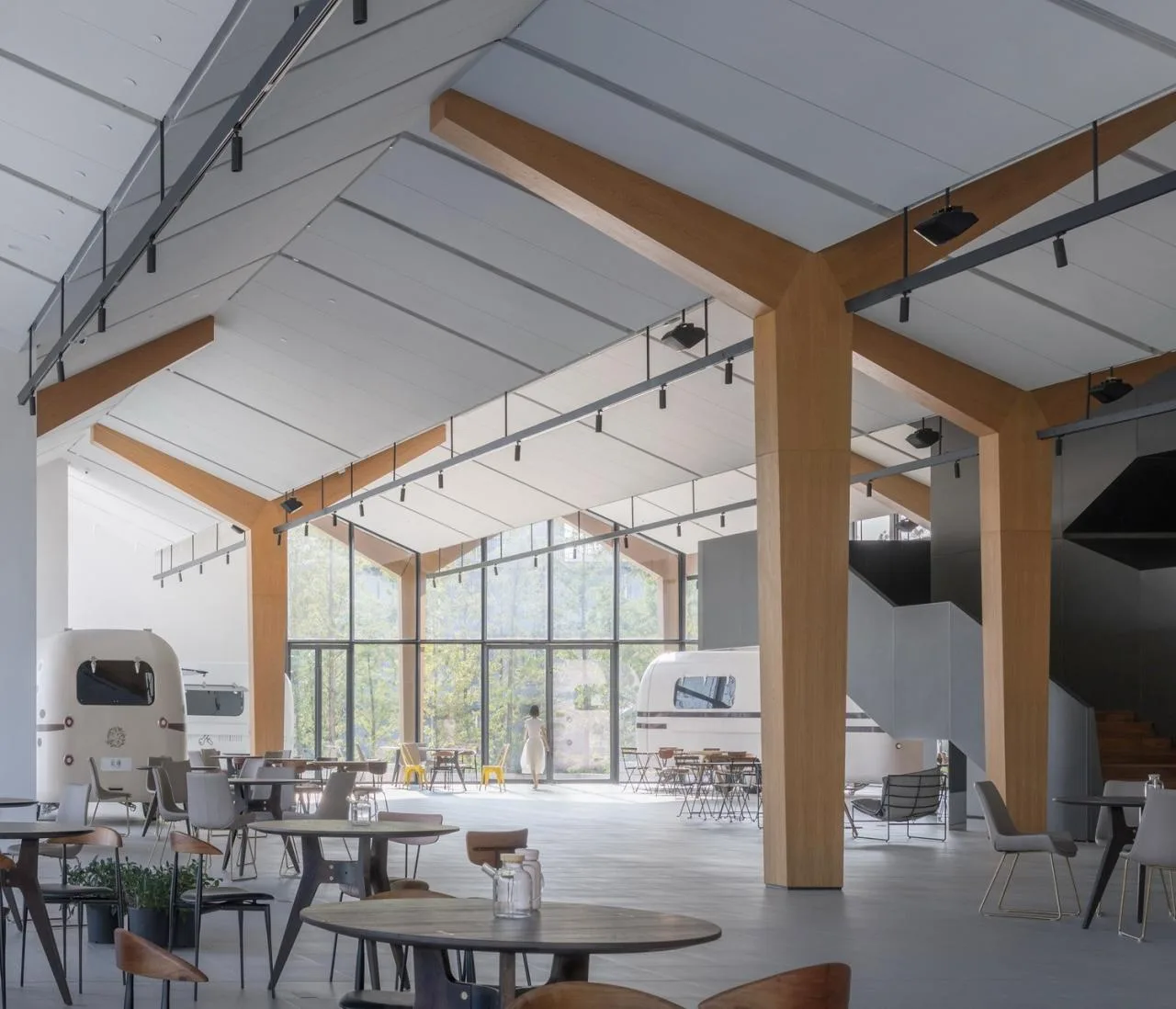
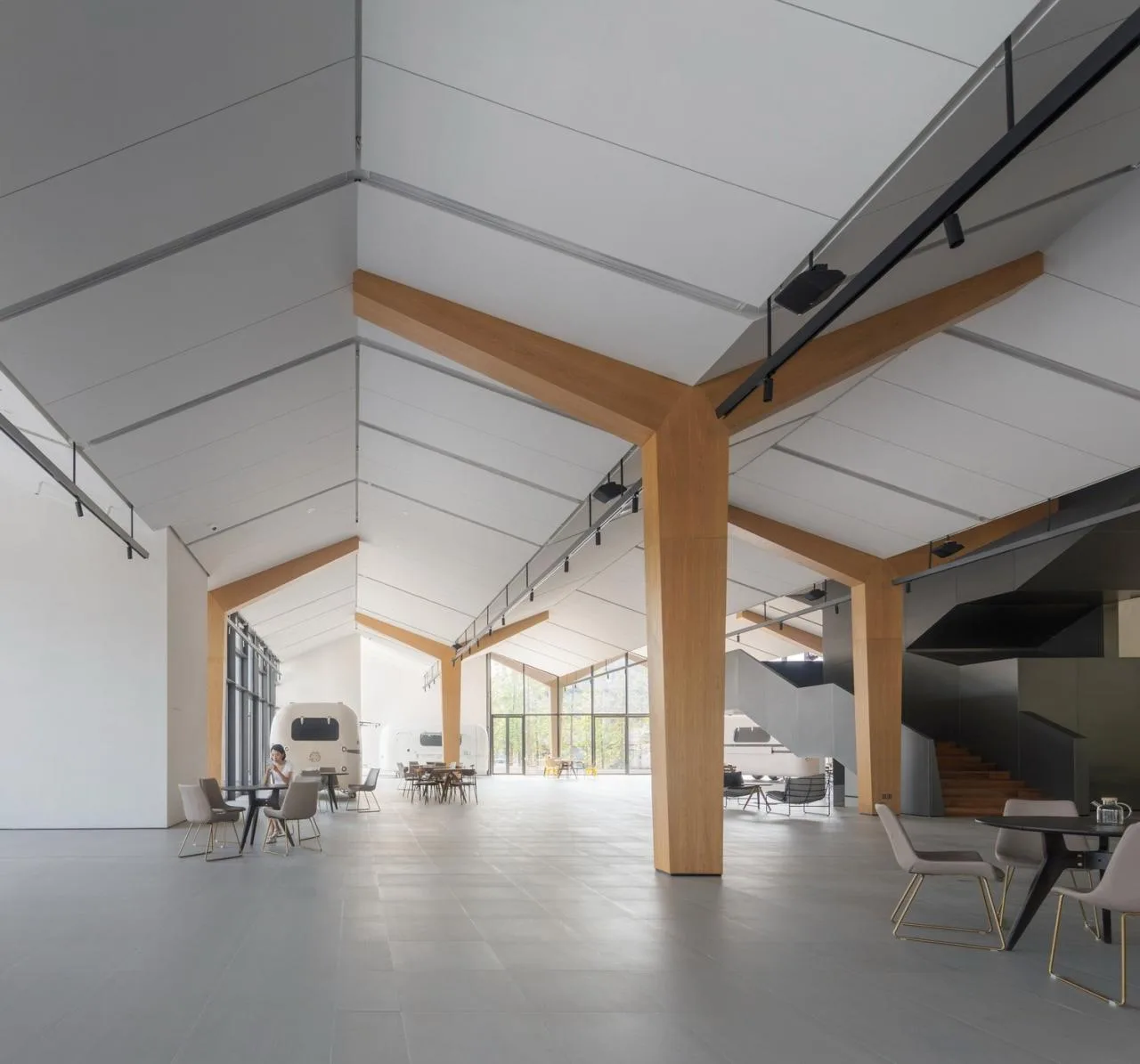
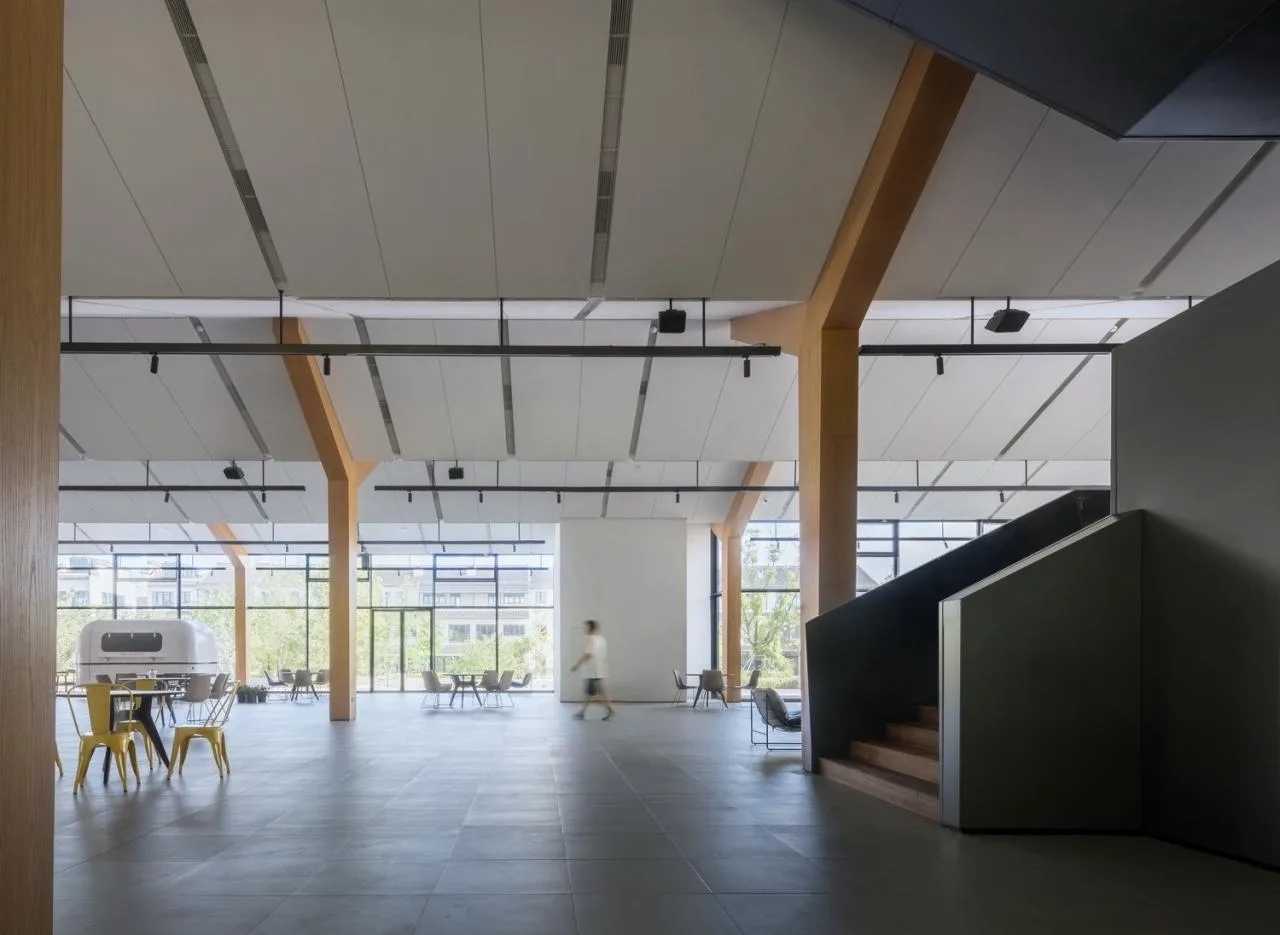
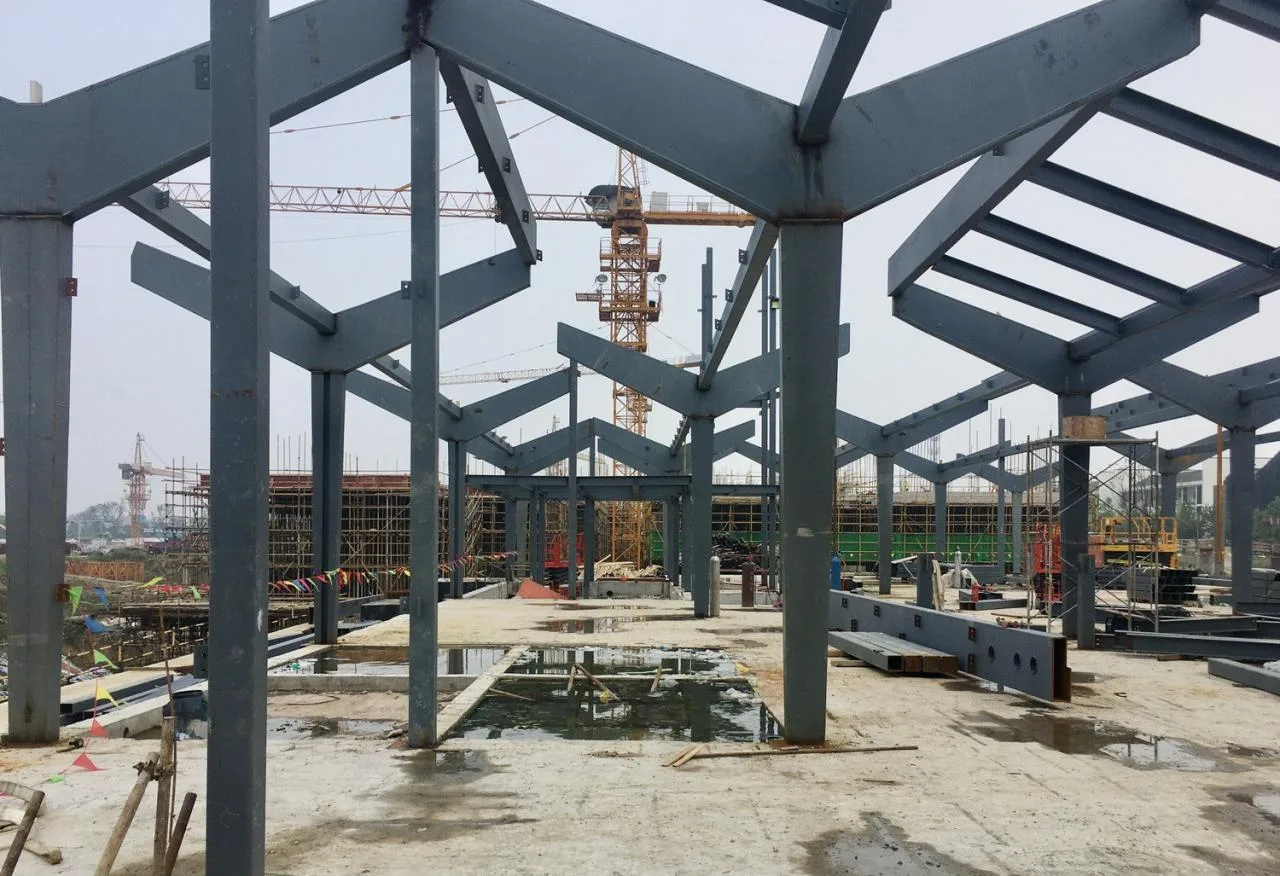
The traditional Jiangnan double-slope suspended roof, supported by white mountain walls, inspired the structural concept. By repeating a single roof unit, a larger covered area is achieved. We adapted the branching column structure from the geometry of continuous mountain walls to support inverted triangular truss beams, creating a linear element 6.3 meters wide and approximately 52 meters long. The truss space accommodates air conditioning and cable systems, while the undulating interior under the trusses forms a continuous indoor space.
Six parallel linear units combine to cover the first-floor market, harmonizing with the sprawling ancient town. Freely distributed branching columns provide an open, flowing market space that allows for flexible usage and diverse functions. At the east and west ends, some branching columns are replaced with V-shaped gables supported by slant braces, which address seismic forces and establish a dialogue with traditional gable forms through the use of reverse slopes.
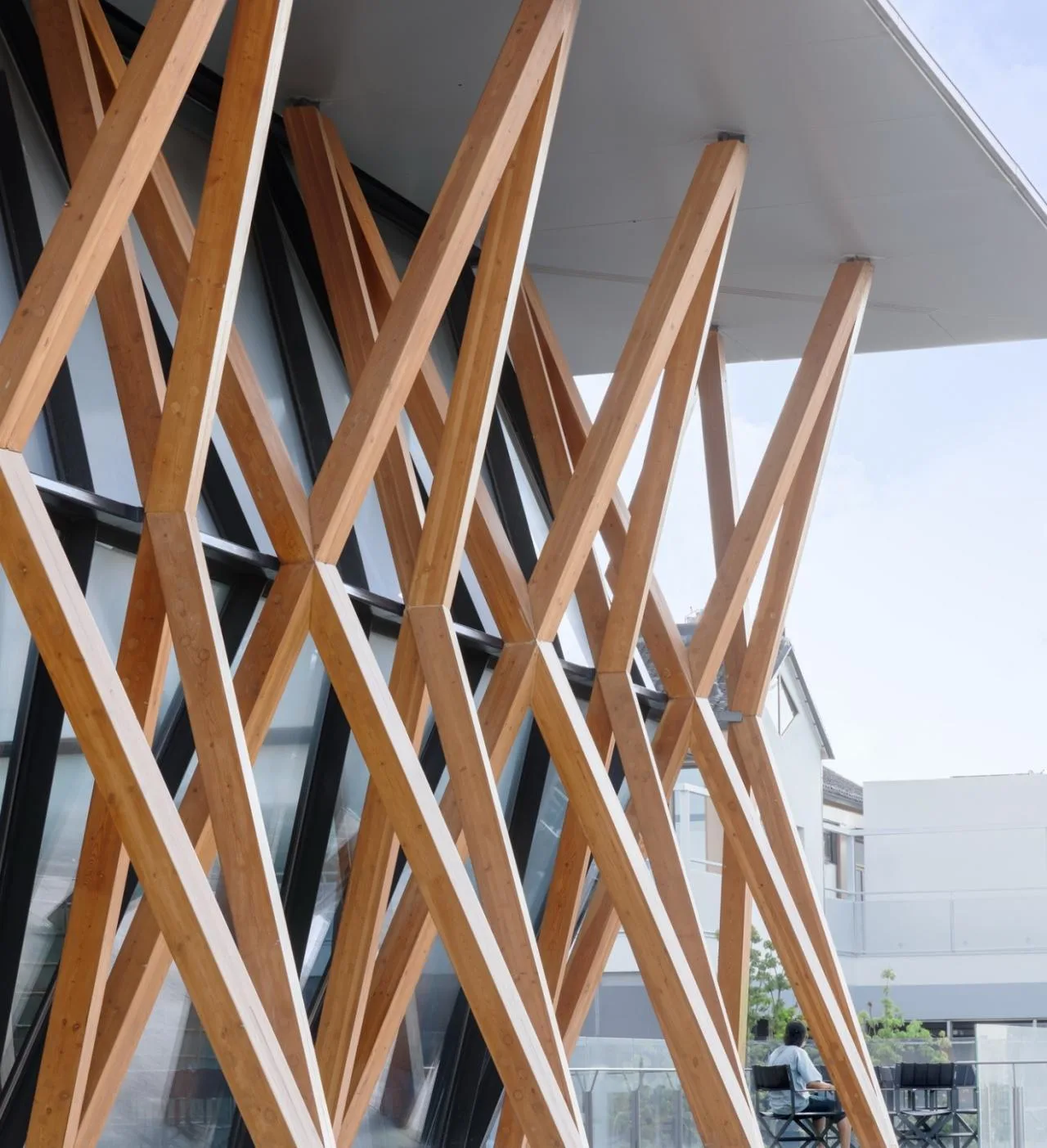
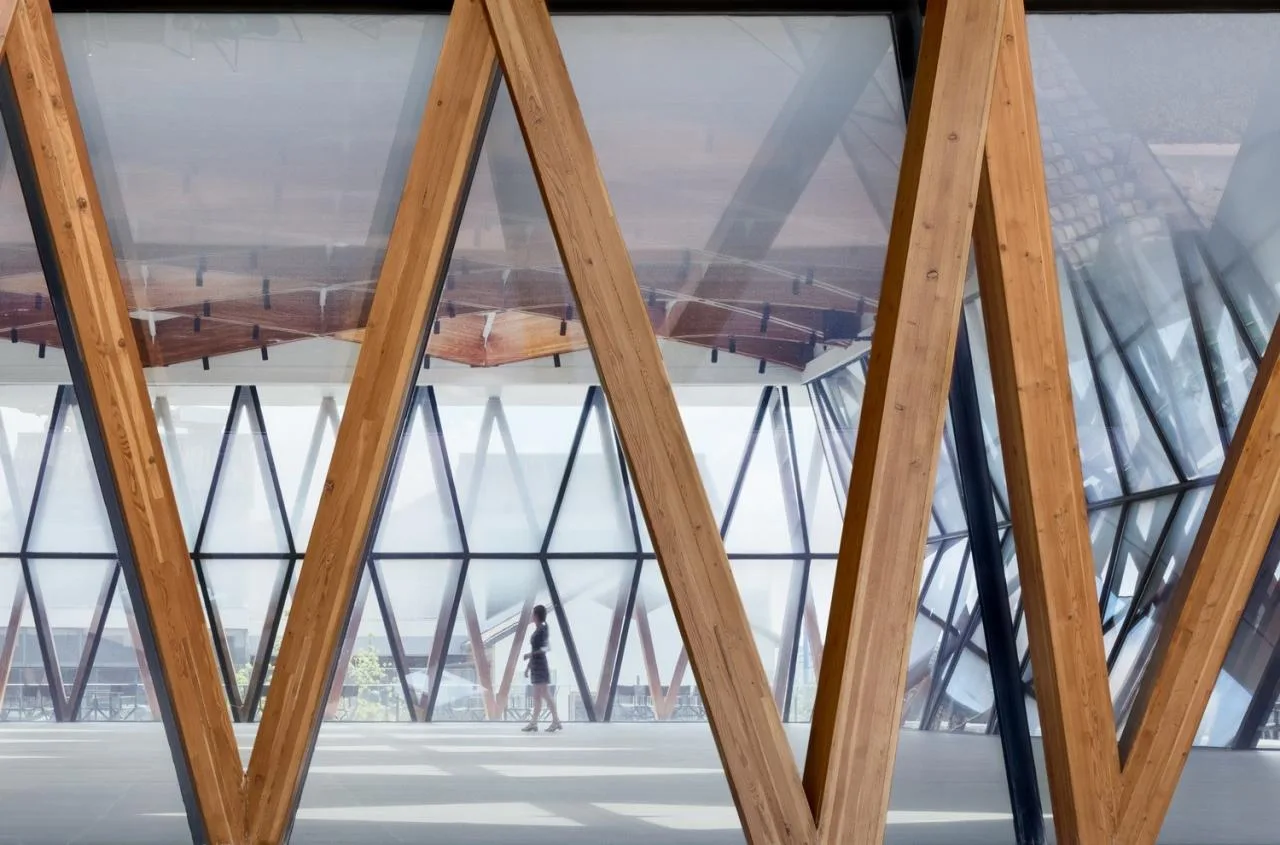
The art museum above the market required a different approach. While continuing the sloping roof and unit settlement language would ensure stylistic harmony, it would not accommodate the iconic, large internal space needed. Instead, we developed a single, abstract form to create a column-free interior.
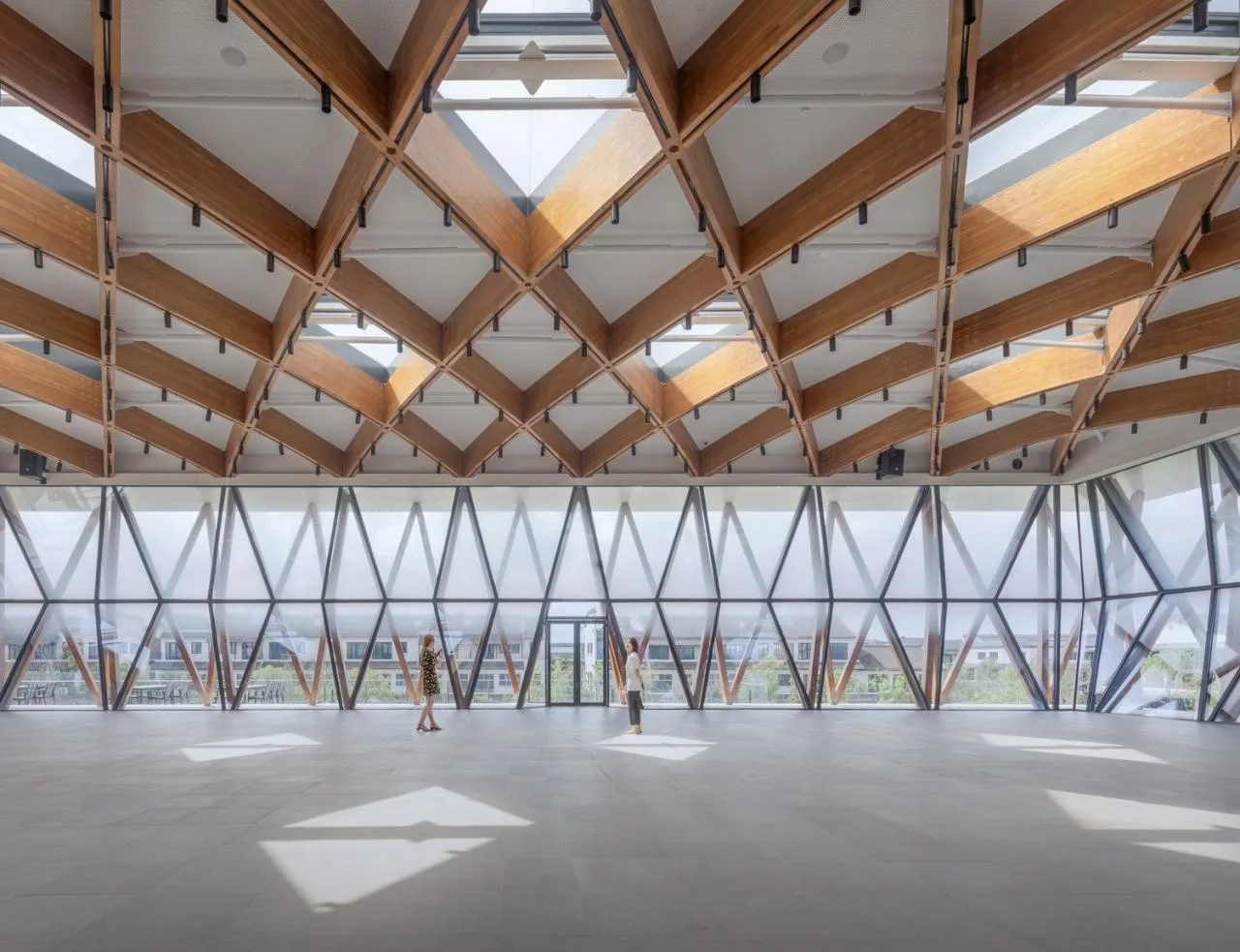
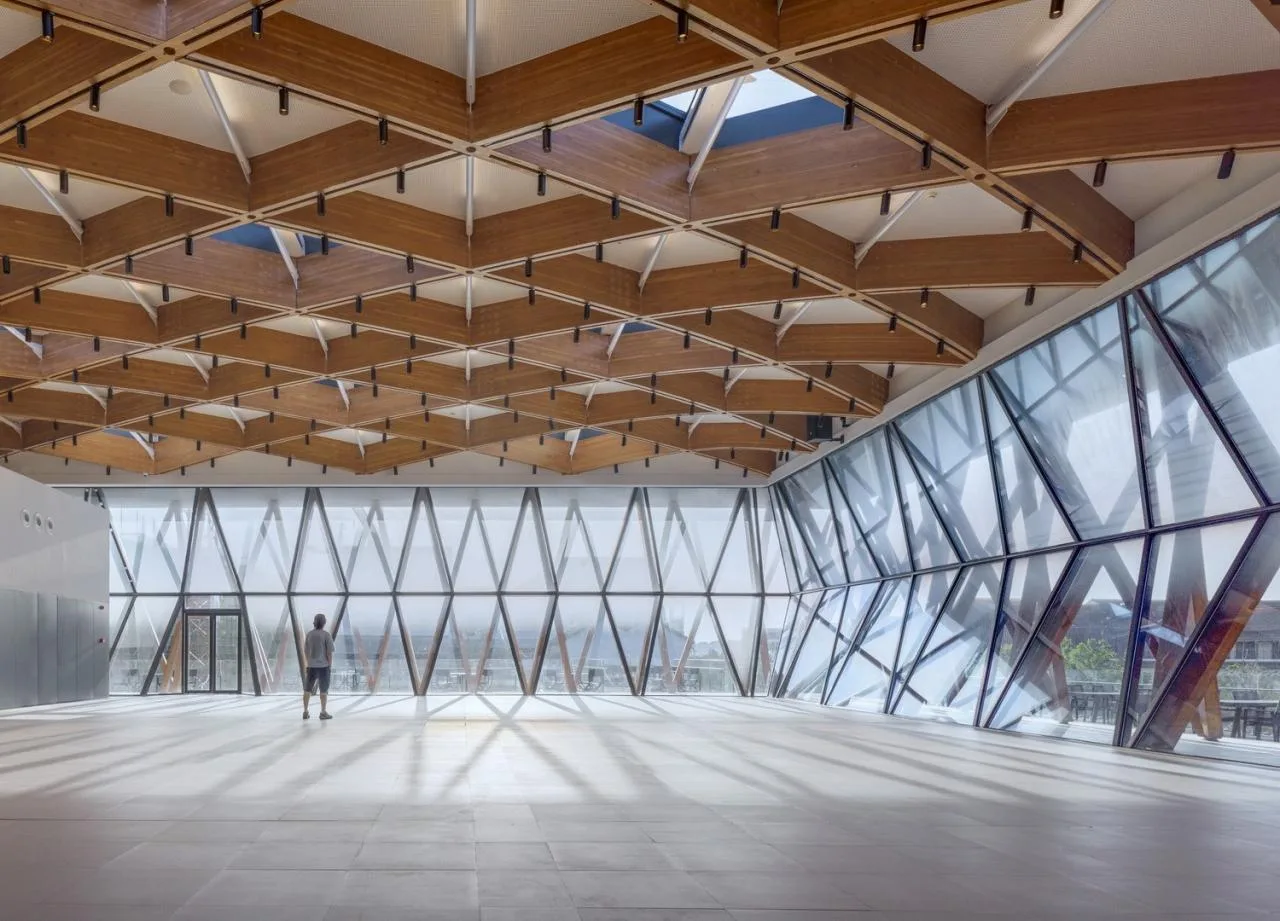
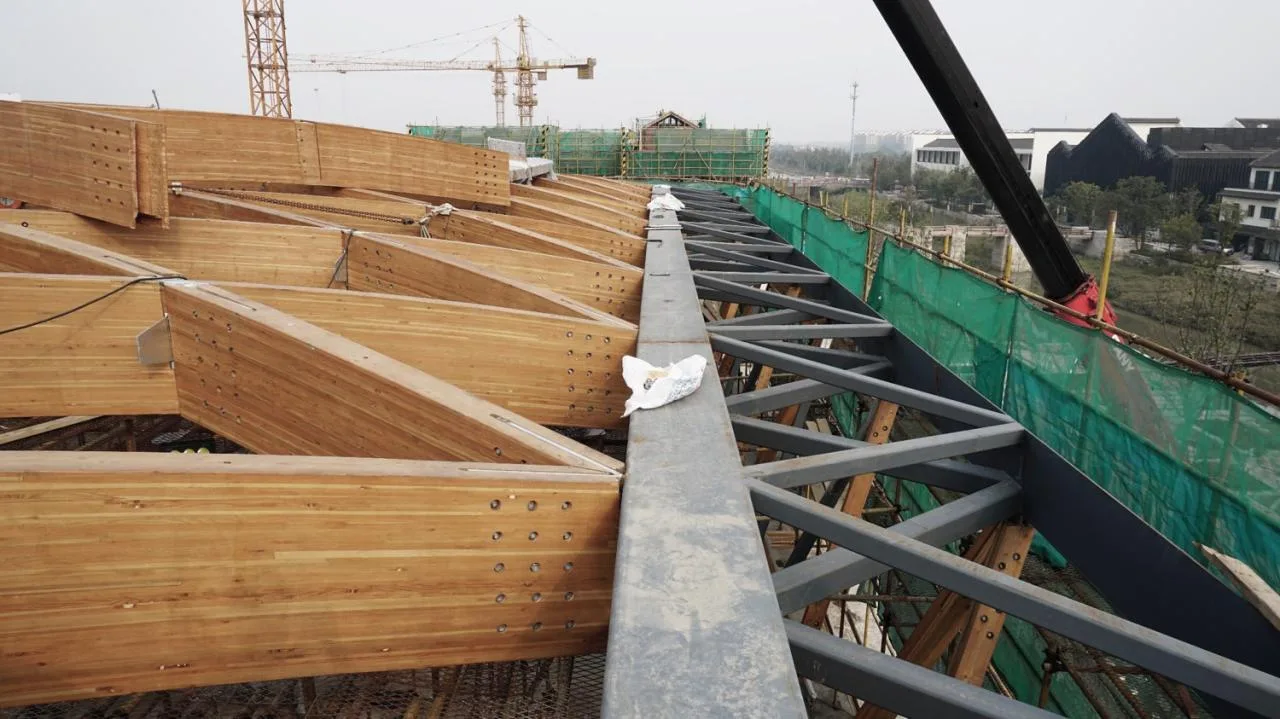
Rather than limiting traditional references to architectural forms, we drew inspiration from local wooden construction techniques to create a complete landmark. The roof, approximately 30 meters long and 20 meters wide, uses 92 glued laminated short beams crossing and supporting each other to form a micro-arched shell surface. This approach optimizes structural stress distribution and manages roof drainage and slope.
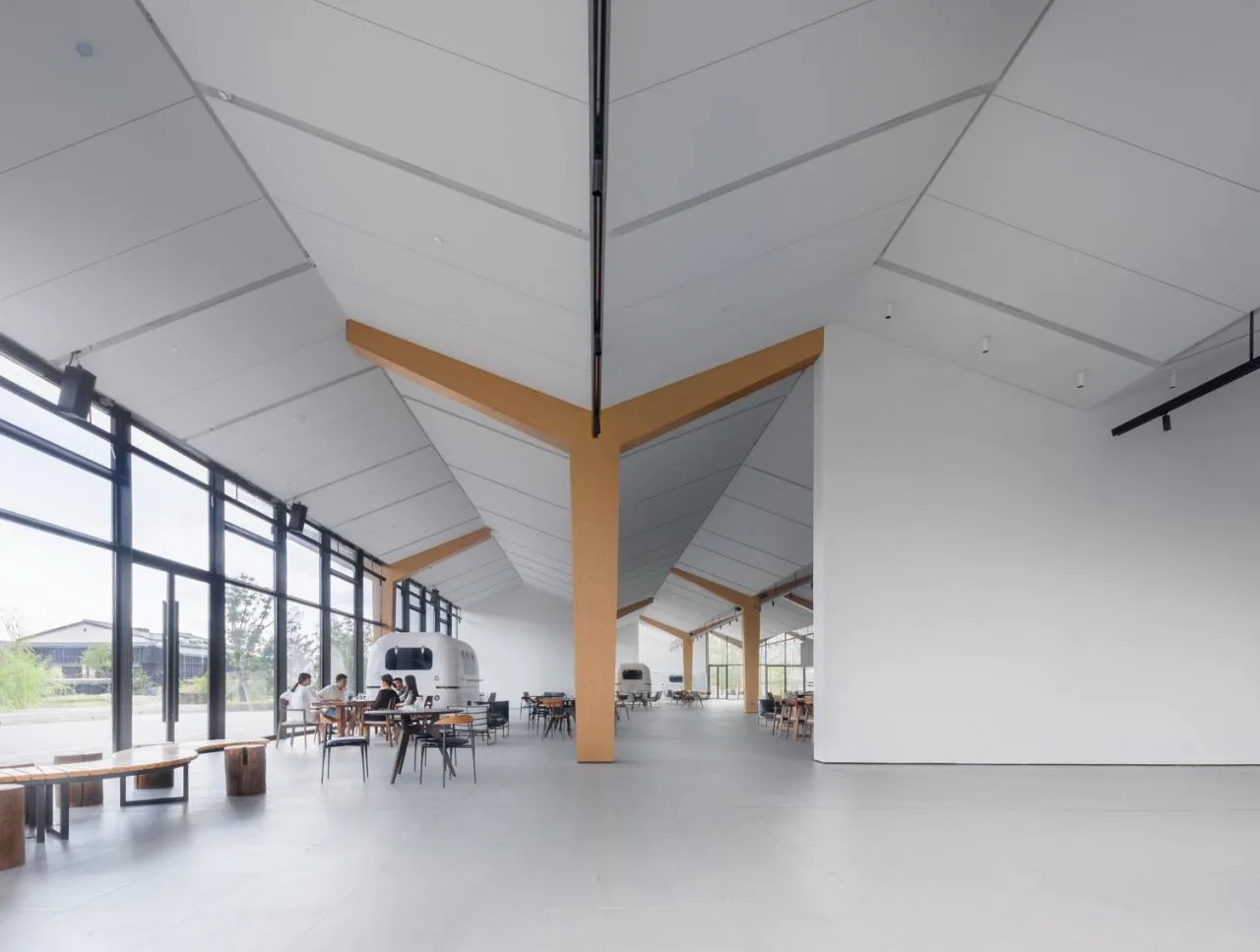
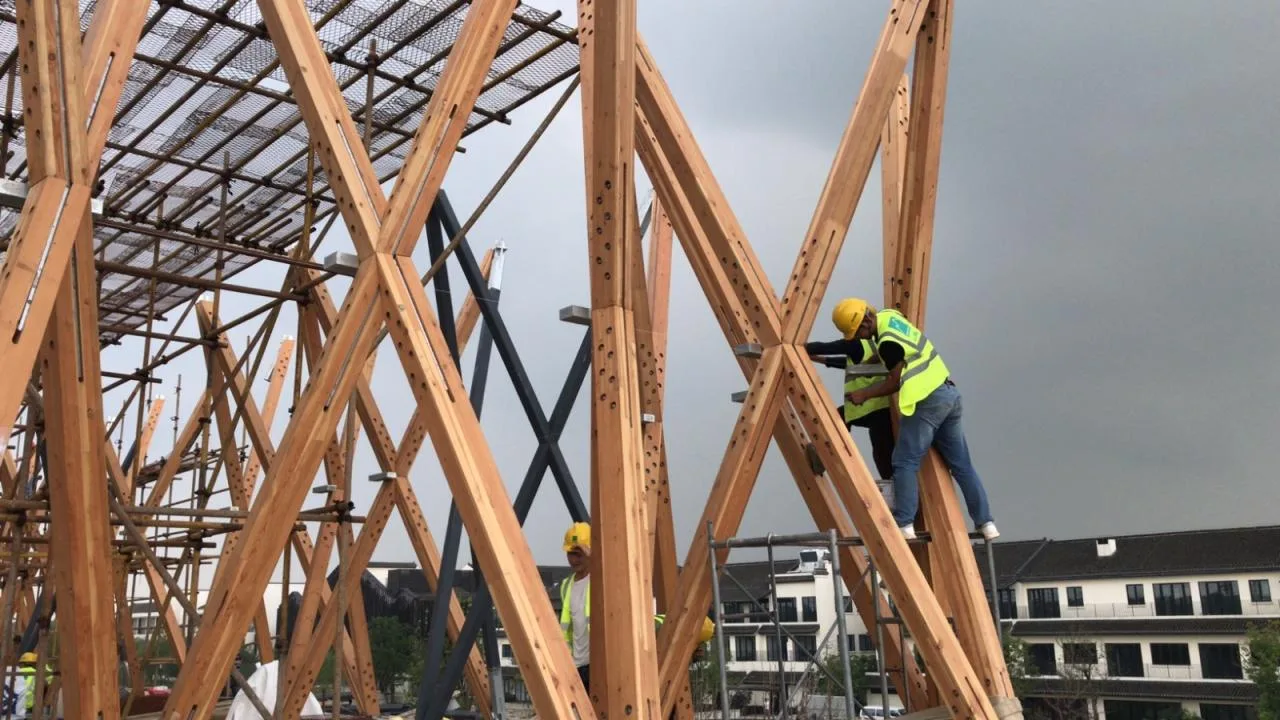
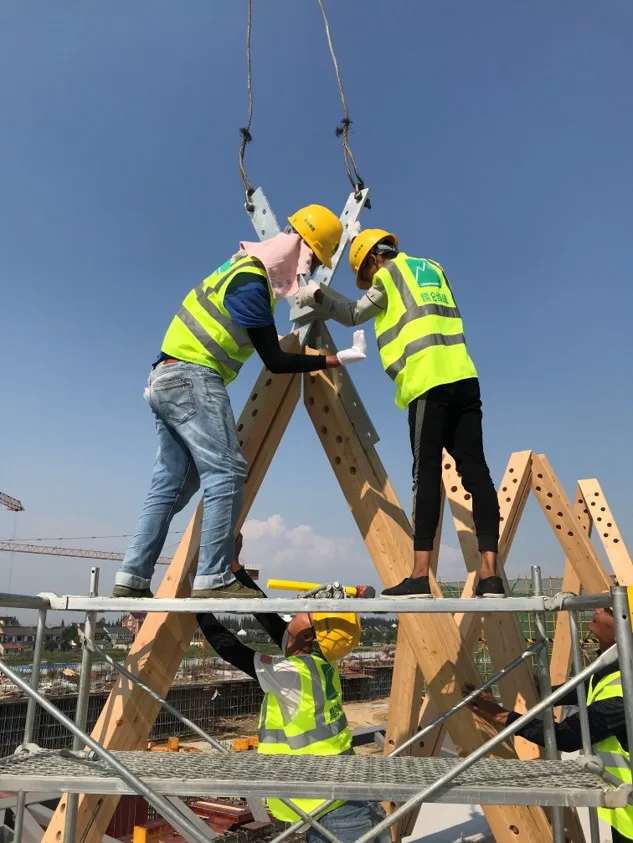
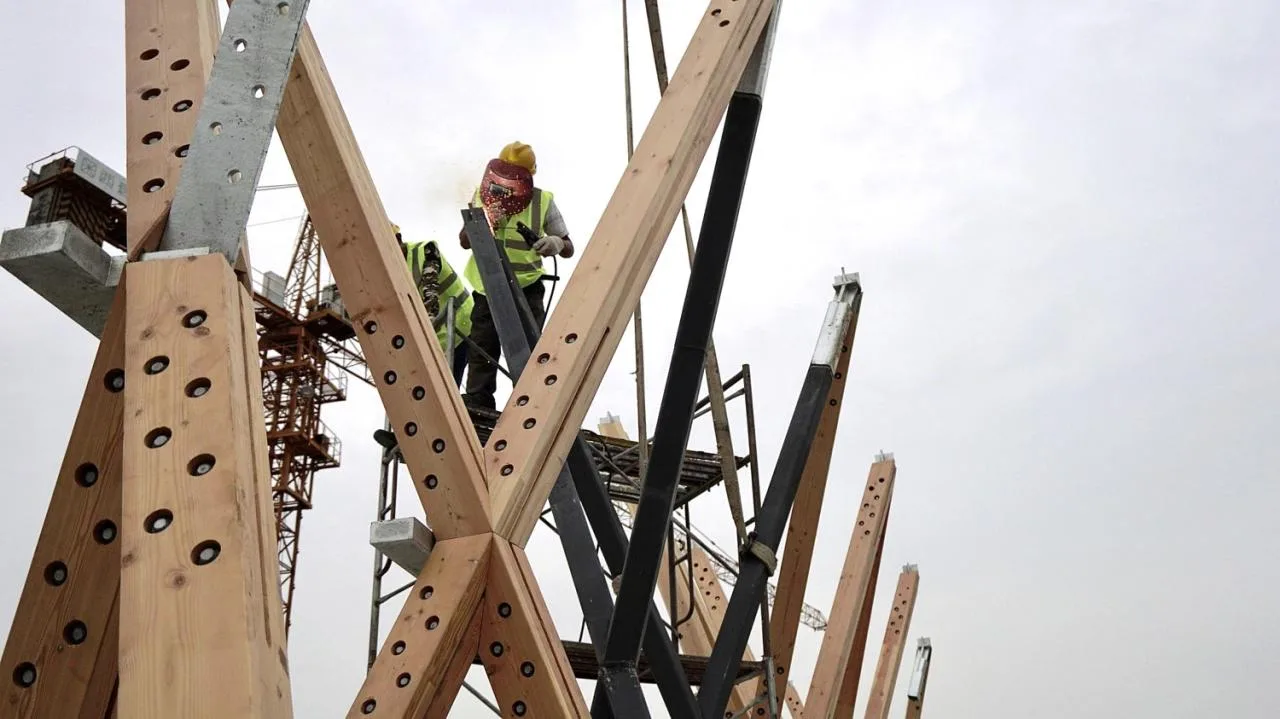
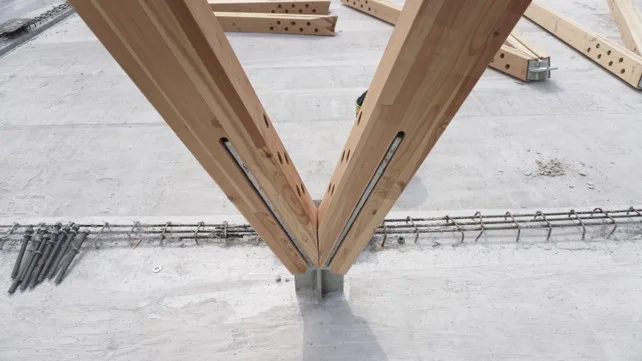
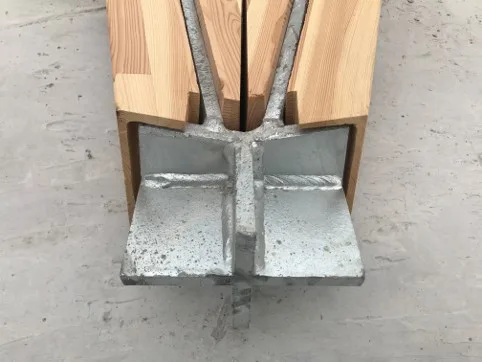
The wooden roof’s weight is transferred to surrounding wooden columns through a circular horizontal steel frame. This column group consists of X-shaped diagonal columns interlocked in three dimensions with glued laminated wooden poles. This continuous vertical and horizontal support system provides strong lateral resistance, bearing the horizontal thrust from the roof’s arch beams, allowing for slender 160mm square column sections, and even supporting the glass curtain wall inside the column group.
On the second floor, all stairs, elevators, large lifting platforms, and equipment are aligned along a long strip on the building’s north side to preserve the purity of the main space. The floor-to-ceiling curtain wall, made of atomized gradient semi-colored glazed glass, is complemented by an adjustable light film beneath the diamond-shaped skylight on the roof. This design bathes the art museum in soft natural light during the day and glows warmly at night, establishing it as a “super lantern” and a highlight of the Xitang East District.
Construction Process Diagrams
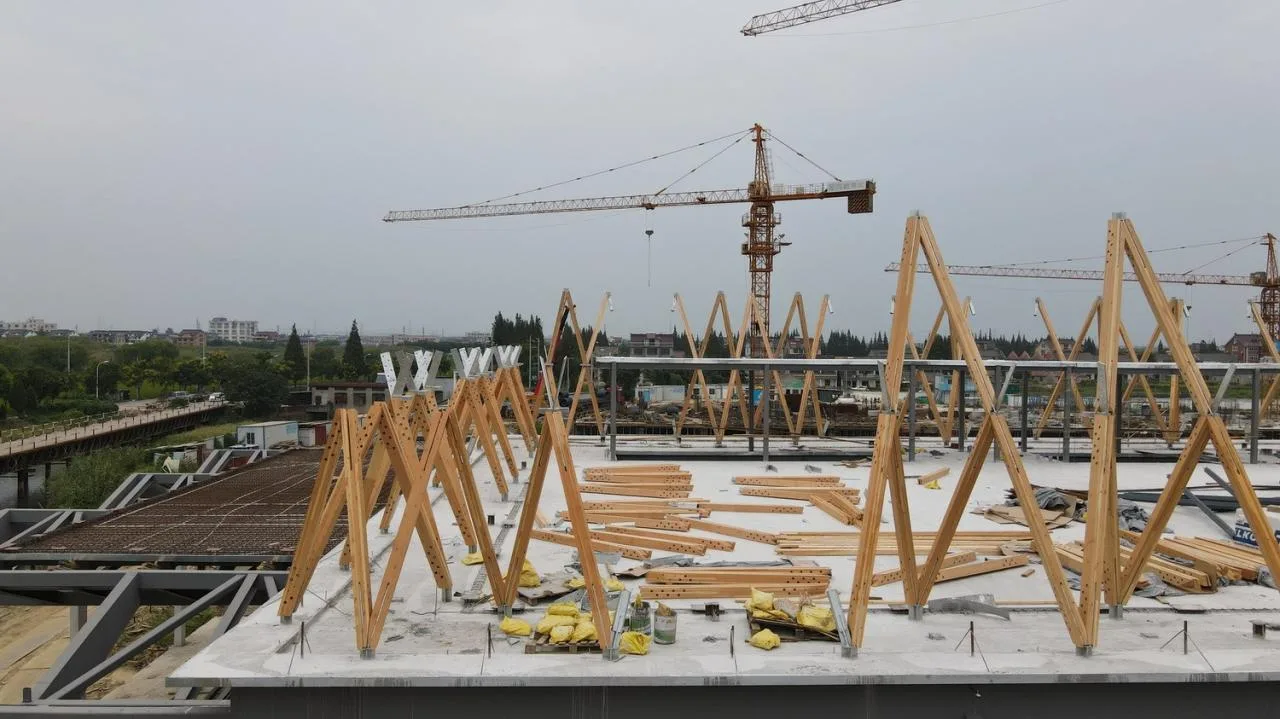
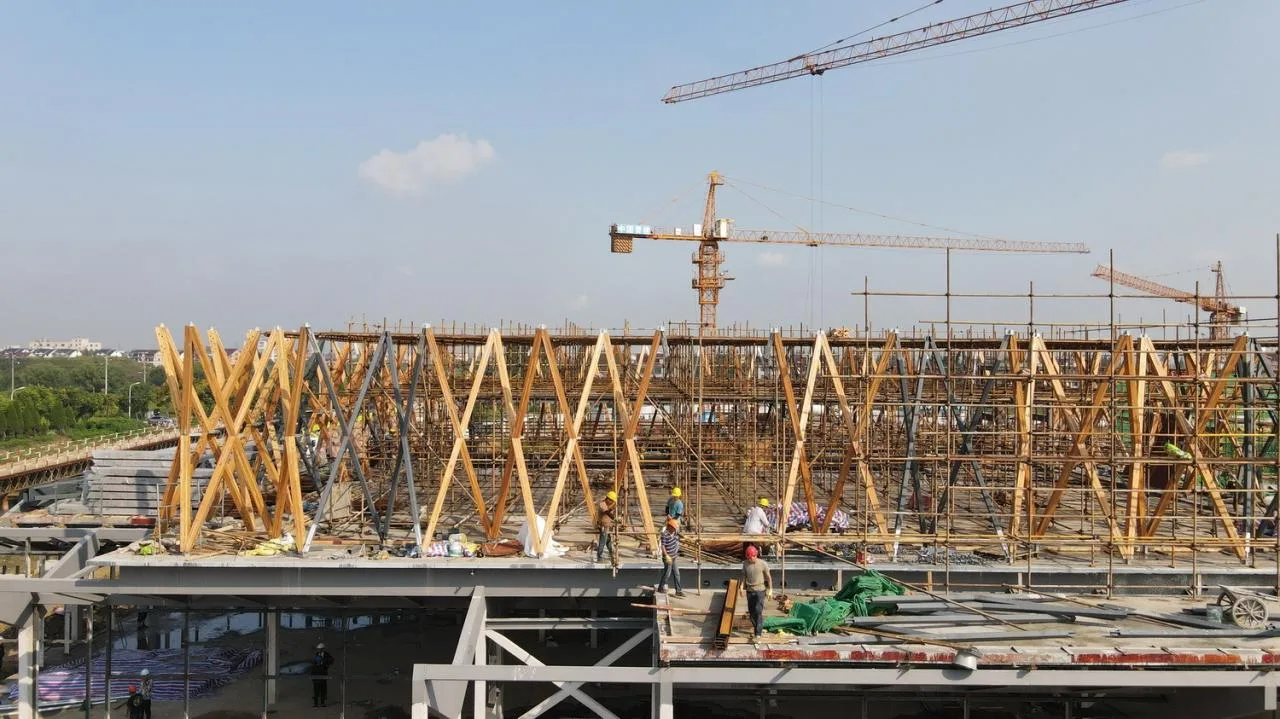
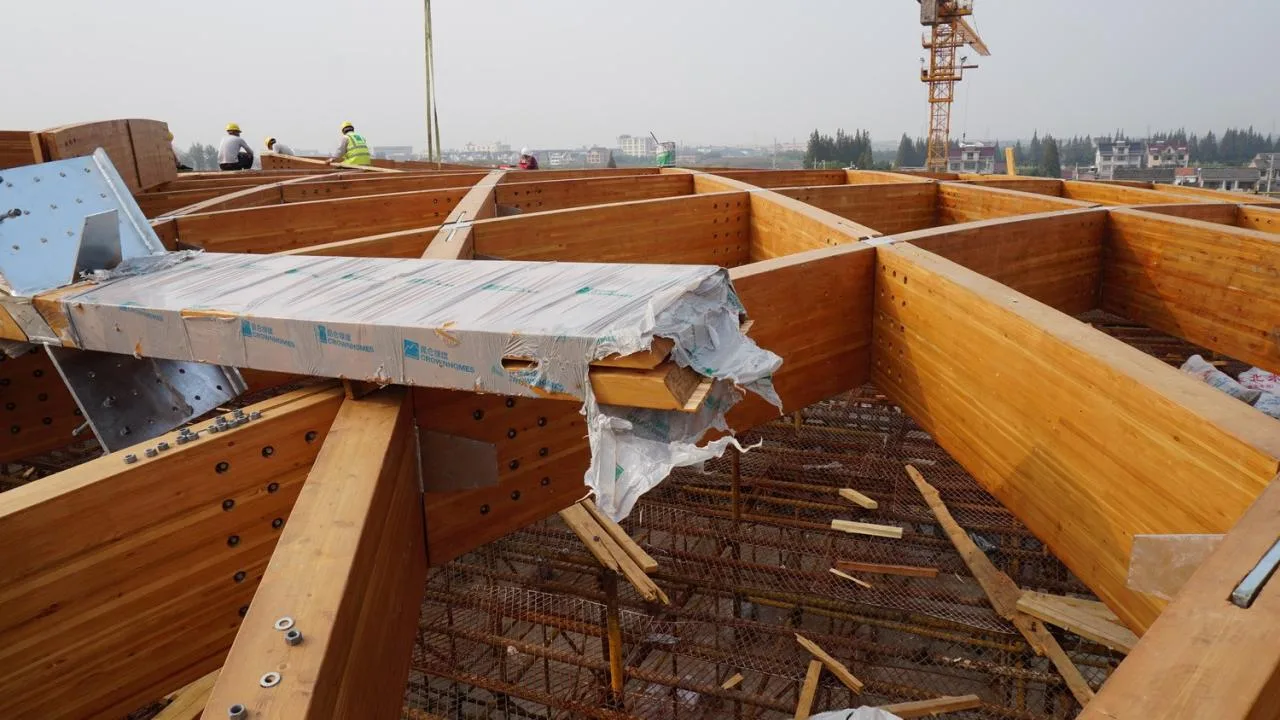
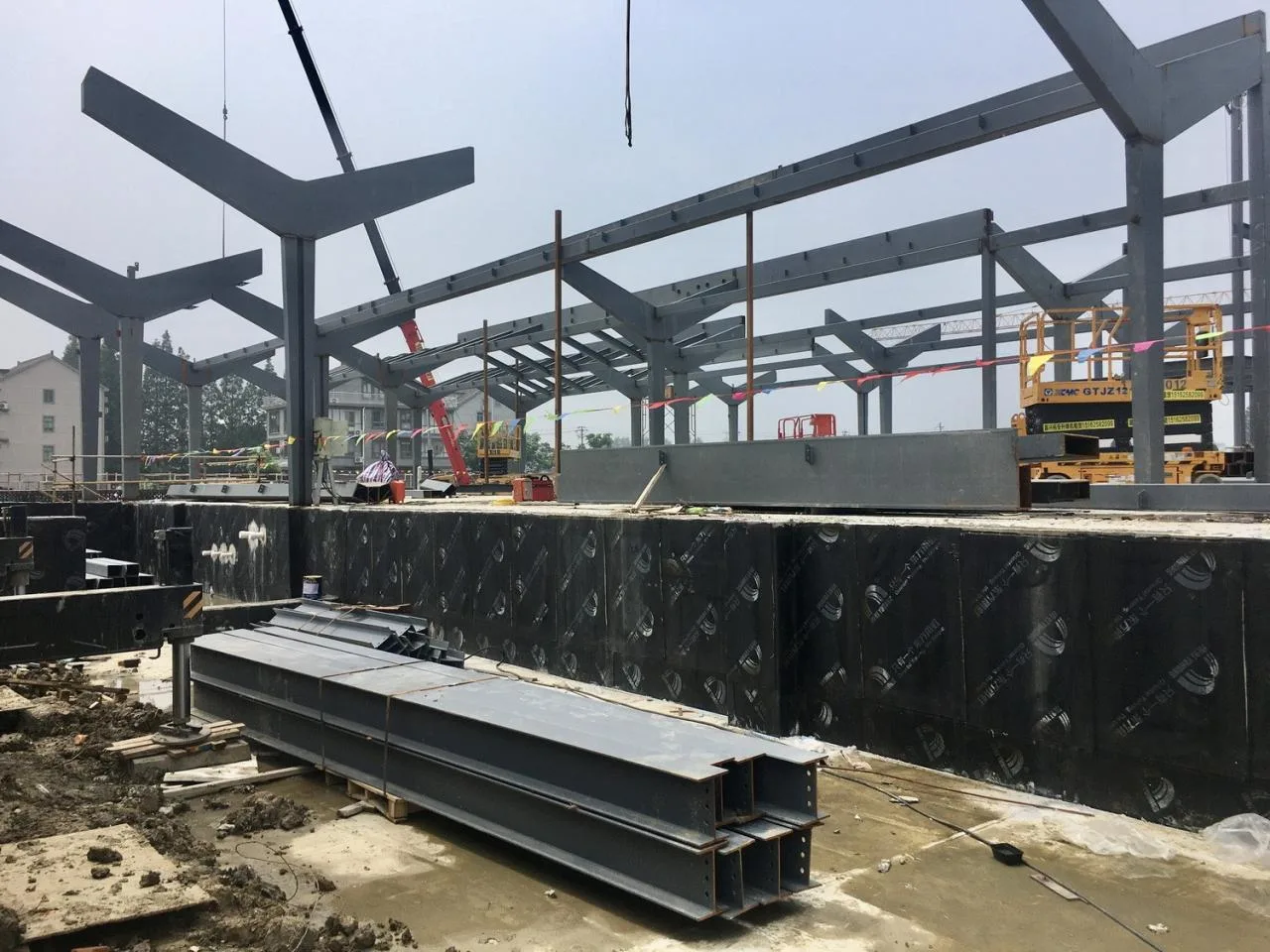
Project Drawings
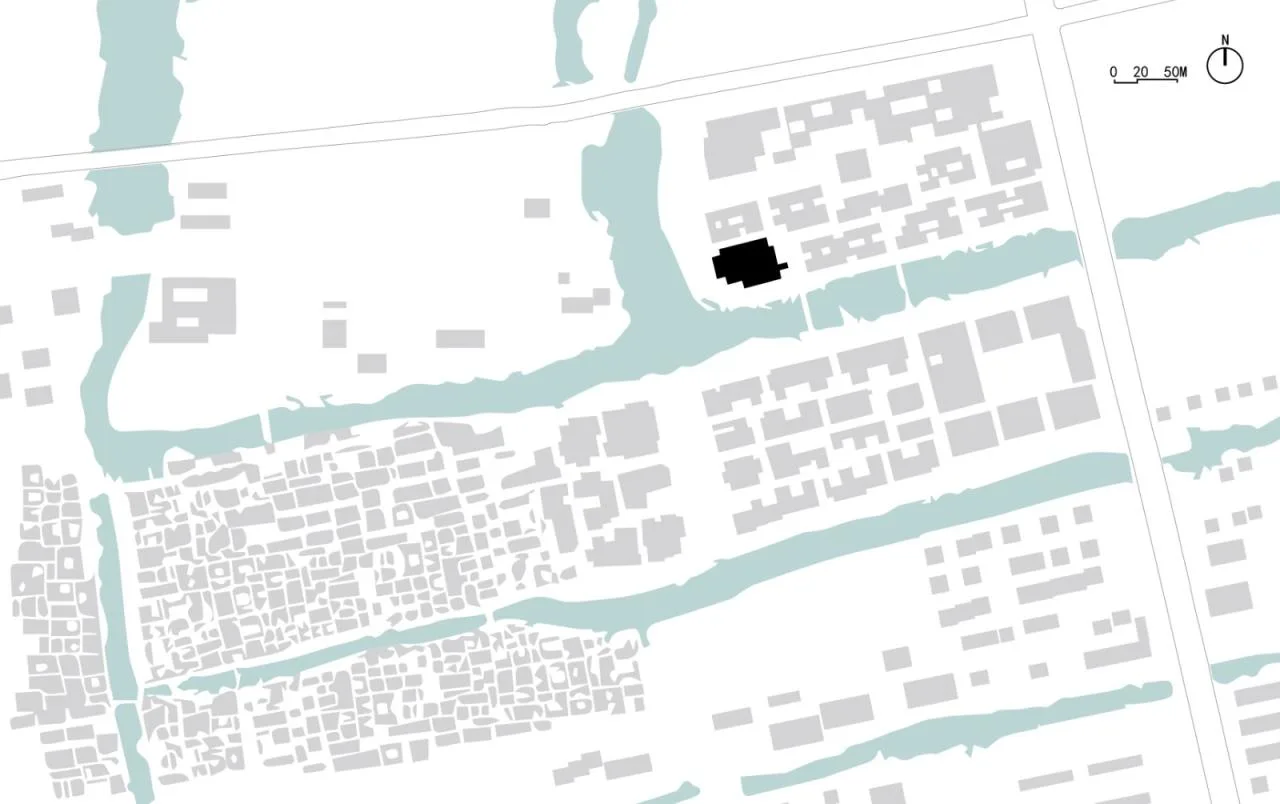
△ Base schematic diagram
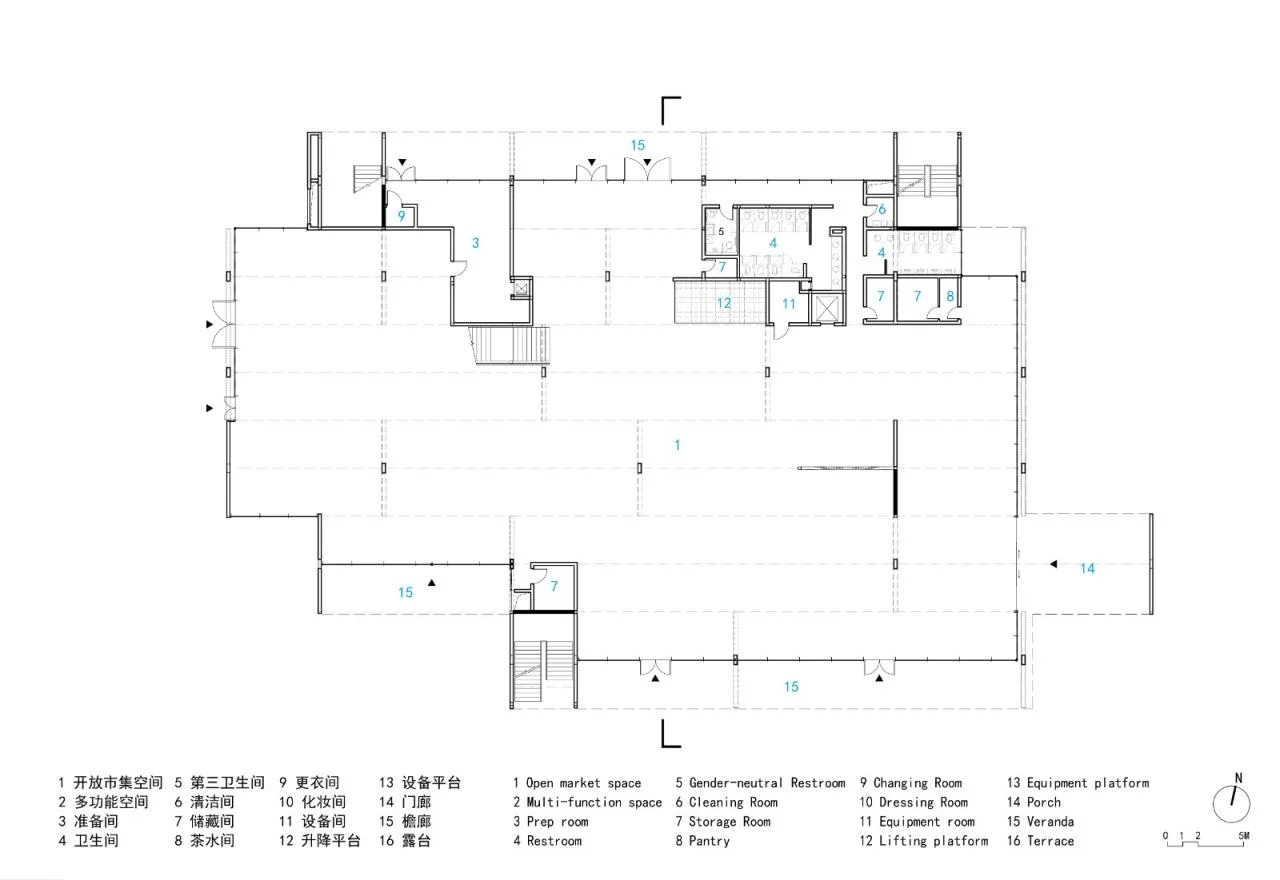
△ First floor plan
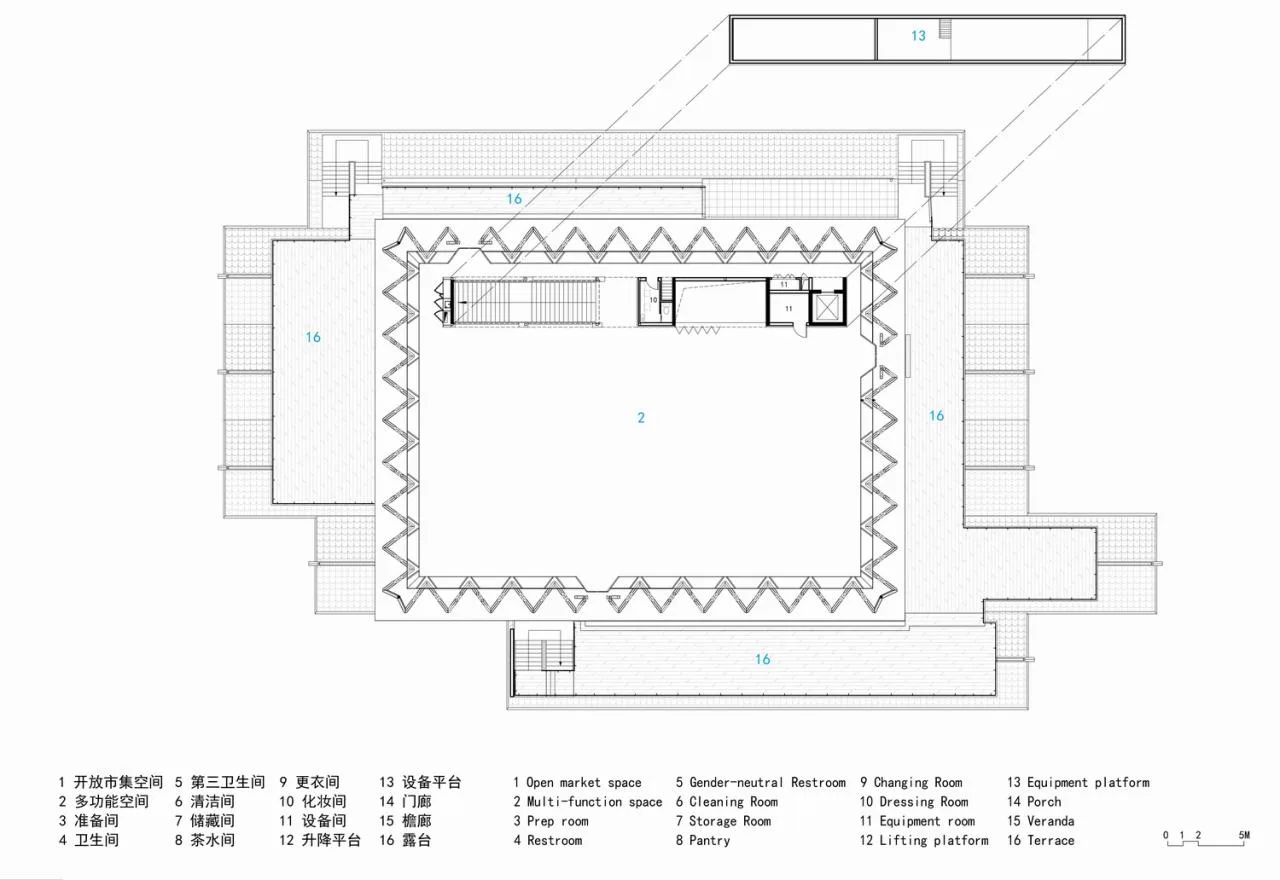
△ Second floor plan
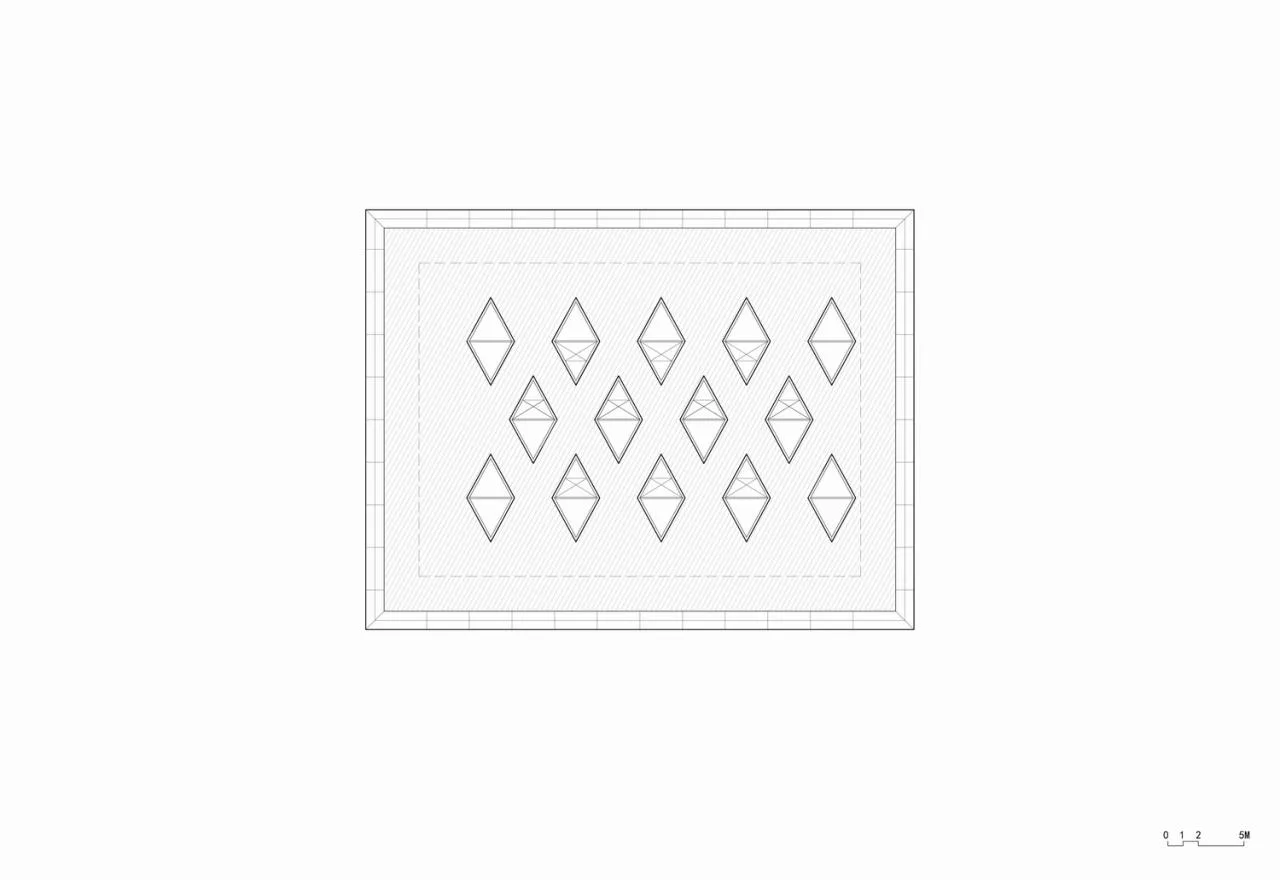
△ Roof plan
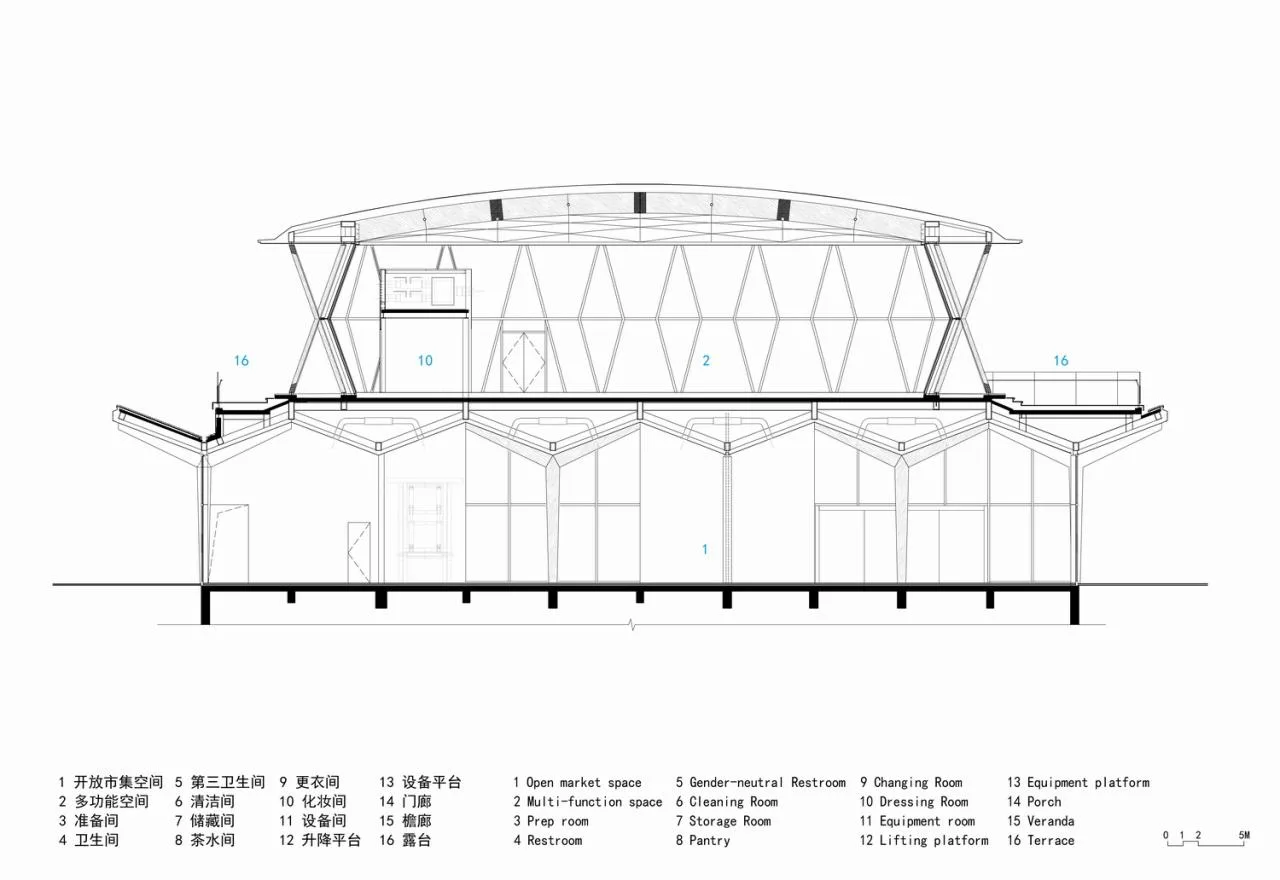
△ Section diagram
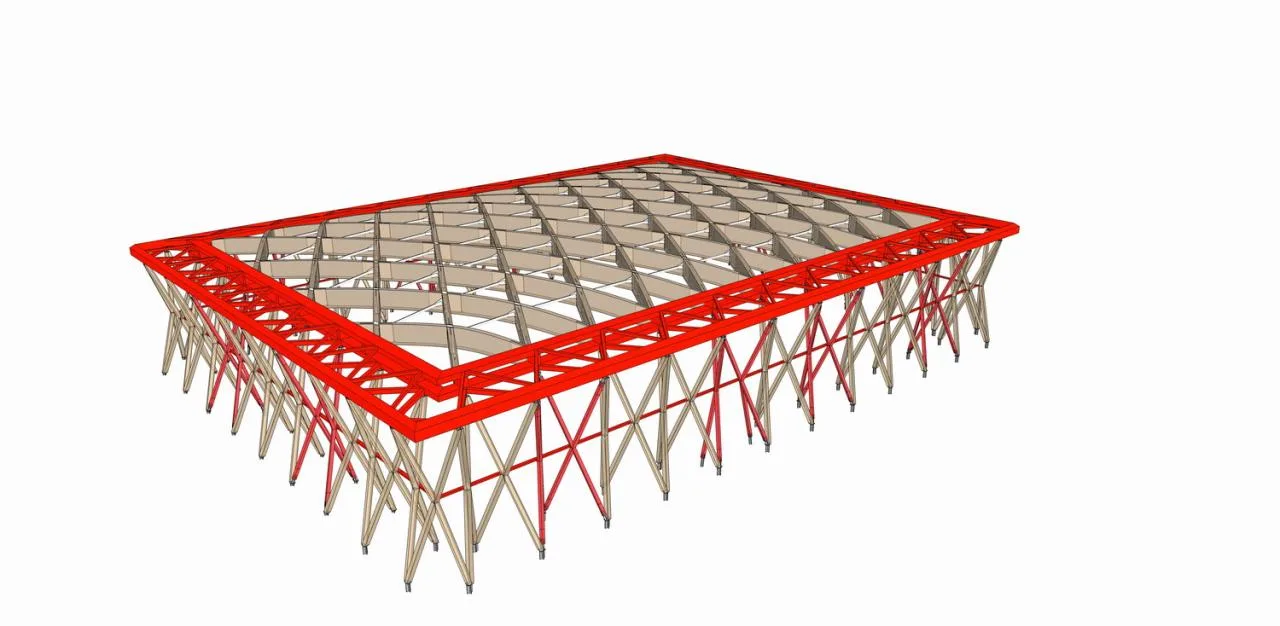
△ Structural schematic diagram
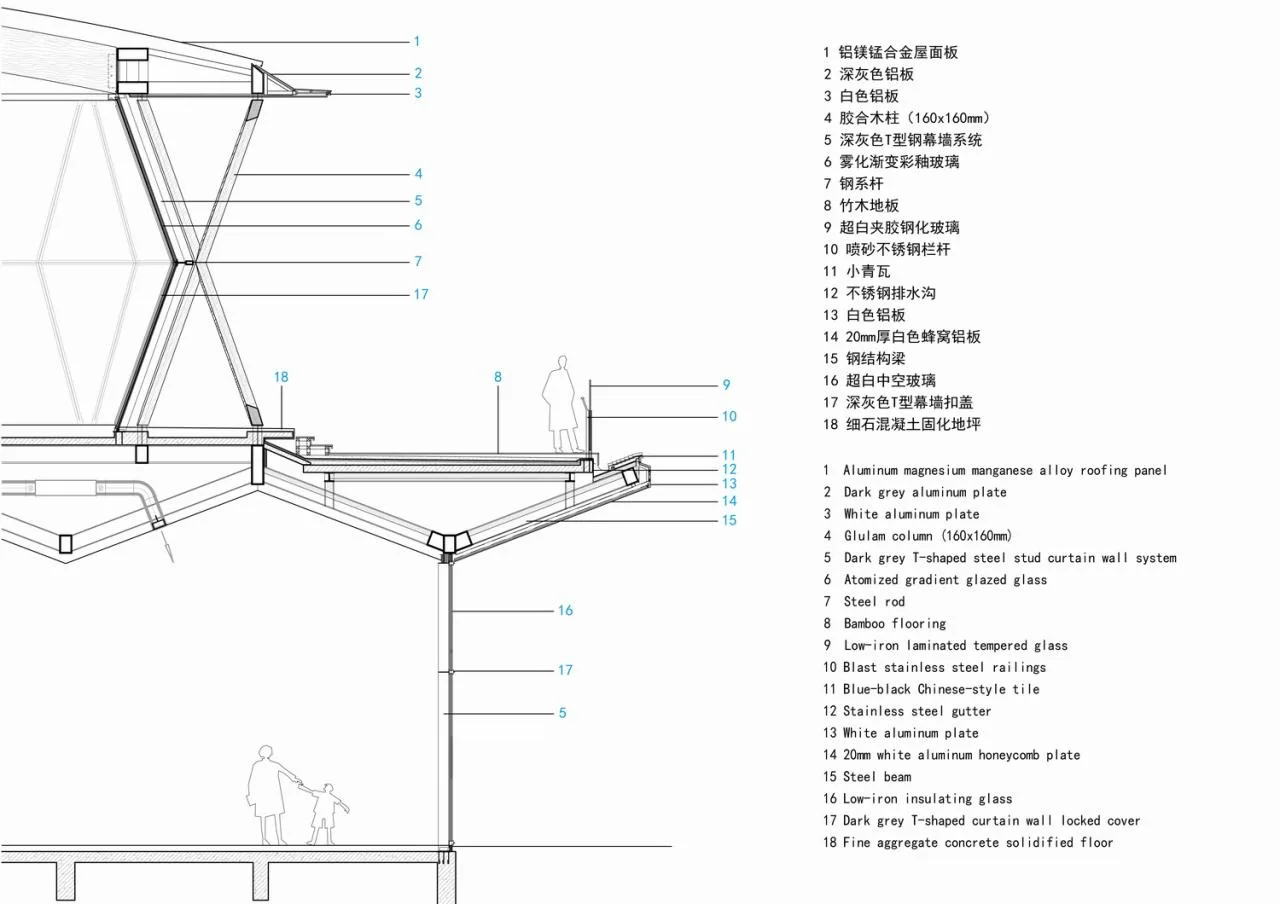
△ Detailed drawing
Project Information
Architecture/Interior Design: Shanshui Xiu Architectural Firm
Project Name: Art Museum on the Market (Building 1, Xitang East District)
Location: 588 Zhenguan Road, Xitang Town, Jiashan County, Zhejiang Province
Function: Commercial
Building Area: 2,500 square meters
Building Height: 12.5 meters
Design/Built: 2018/2021
Design Team: Zhu Xiaofeng (Design Director), Zhuang Xinjia (Project Manager), Pi Liming (Project Architect), Lin Xiaosheng, Wang Junyuan
Owner: Xitang Zhilin Cultural Development Co., Ltd.
Structural Scheme Consultant: Hezuo Structural Architecture Research Institute – Zhang Zhun, Zhang Chongchong
Collaborative Design Institute: Hongzheng Engineering Design Group Co., Ltd.
Landscape Design: Taipu Architectural Environment Consulting (Shanghai) Co., Ltd.
Wooden Structure Construction: Suzhou Kunlun Green Building Wooden Structure Technology Co., Ltd.
Steel Structure Construction: Shanghai Yatai Construction Group Co., Ltd.
Structural System: First floor features Y-shaped steel columns supporting steel truss beams; second floor includes X-shaped glued laminated timber columns supporting diamond-shaped glued laminated timber mutual support beams.
Main Materials: Dark gray aluminum-magnesium-manganese interlocking roofing system, Douglas fir laminated wood, atomized gradient glazed glass, T-shaped steel curtain wall system, bamboo and wood flooring, small green tiles, white honeycomb aluminum panels, wood grain aluminum panels, white elastic coatings, wood decorative panels, fabric-patterned floor tiles, and more.
Photographer: Liang Shan















Must log in before commenting!
Sign Up