
Over the past few decades, the world has grappled with an array of challenges, including rapid technological advancements, growing social and economic inequality, natural disasters, cultural conflicts, and life-threatening pandemics.
Amid these national and global crises, His Majesty King Bhumibol Adulyadej’s “Sustainable Economic Concept,” introduced in 1974, has served as a beacon of hope. This philosophy guides nations toward inclusive and sustainable growth, grounded in the belief that sustainable thinking enhances human intelligence, morality, and resilience to unpredictable changes and threats.
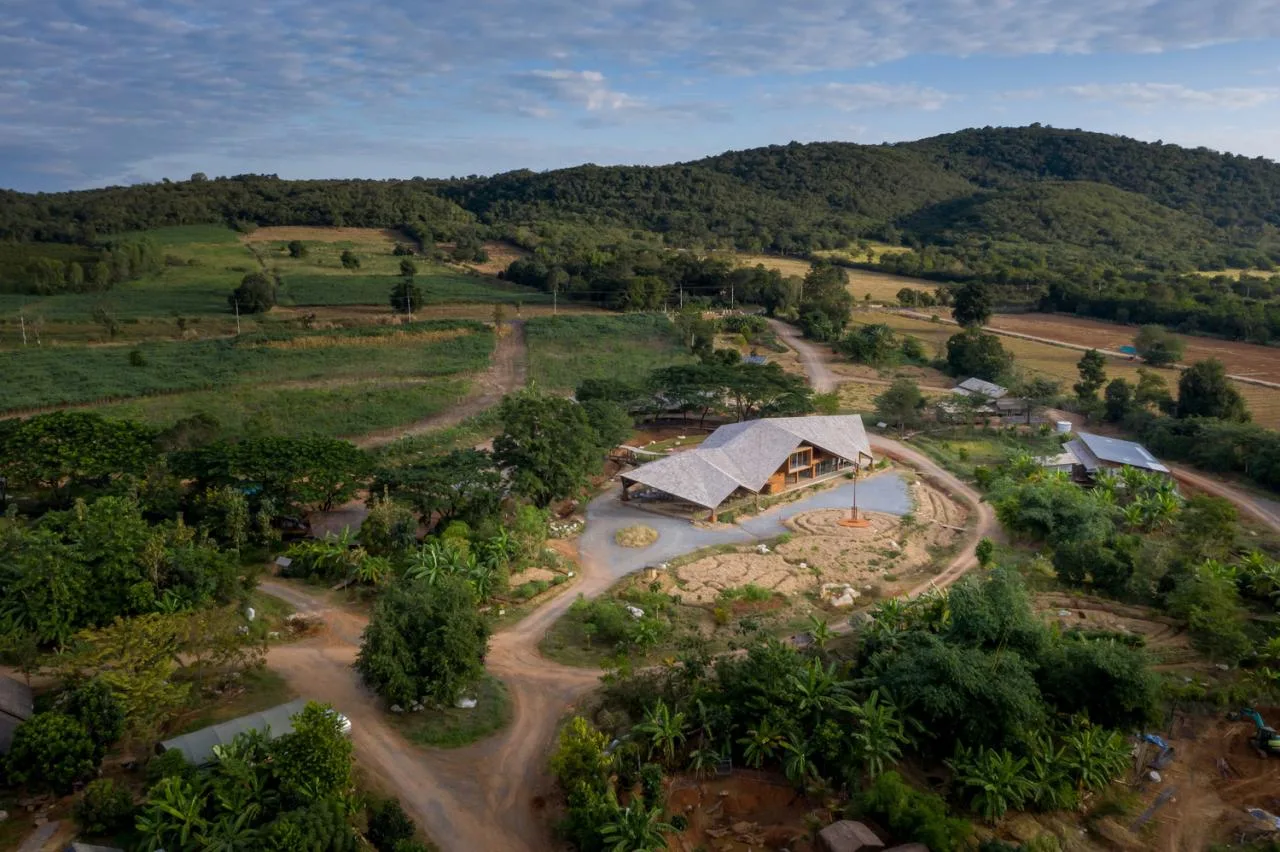
The “PANNAR Sustainable Economy and Agriculture Learning Center” project was established to inspire and disseminate the king’s sustainable economic philosophy throughout Thailand. Located in Nakhon Ratchasima Province, the 5.67-hectare site transforms previously barren, rocky land into vibrant rice fields, reservoirs, vegetable gardens, fruit forests, general-use forests, and animal husbandry areas, all based on a new agricultural model.
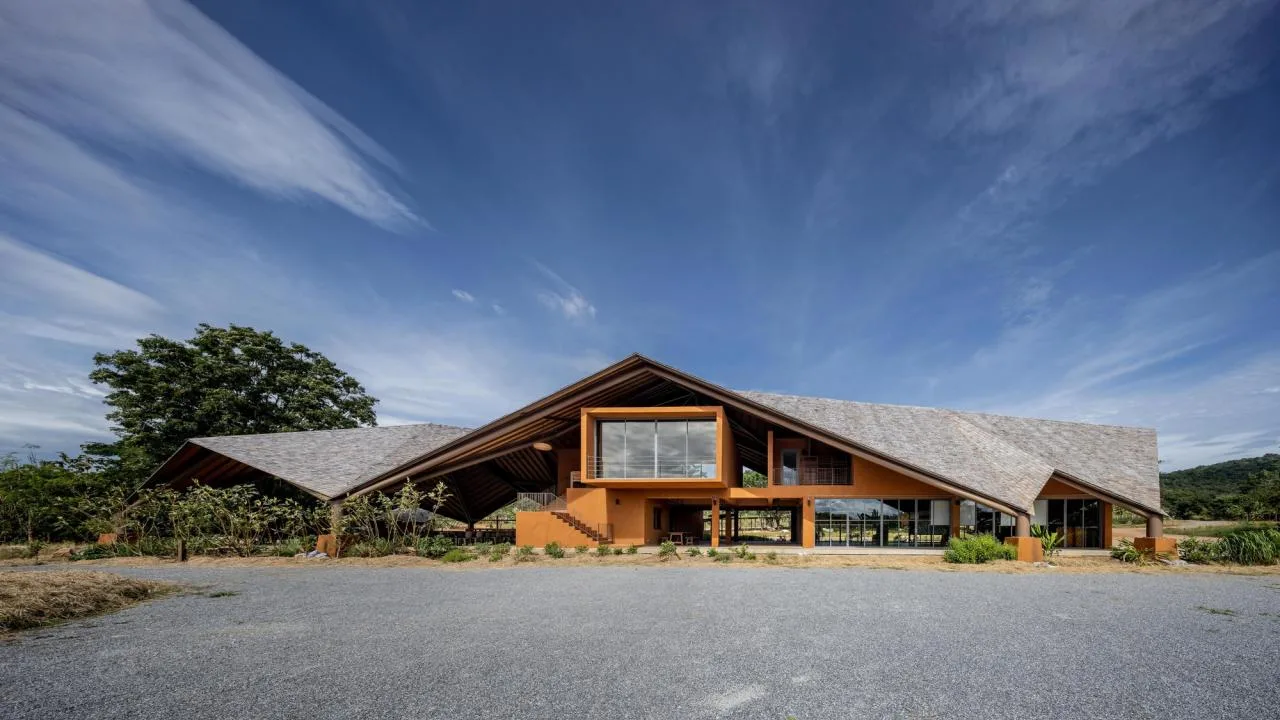
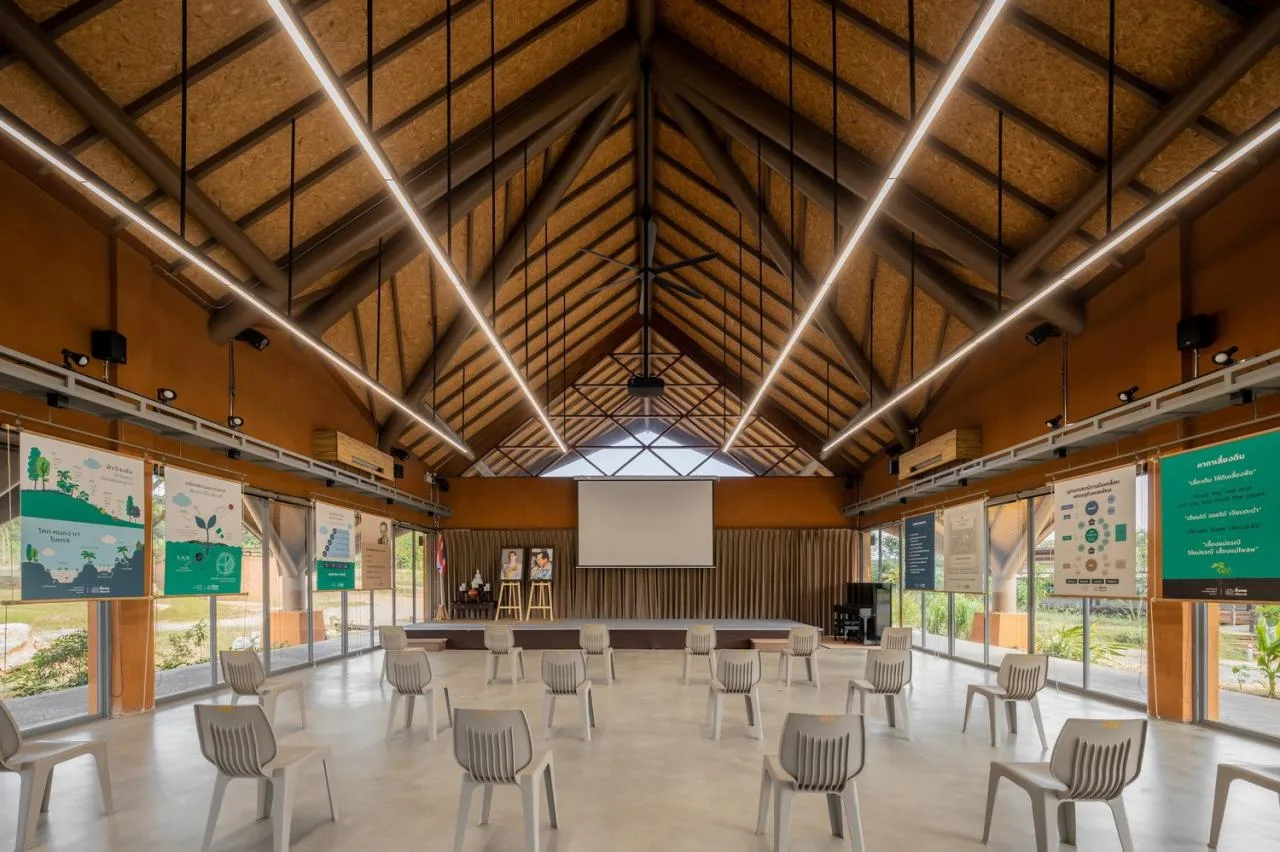
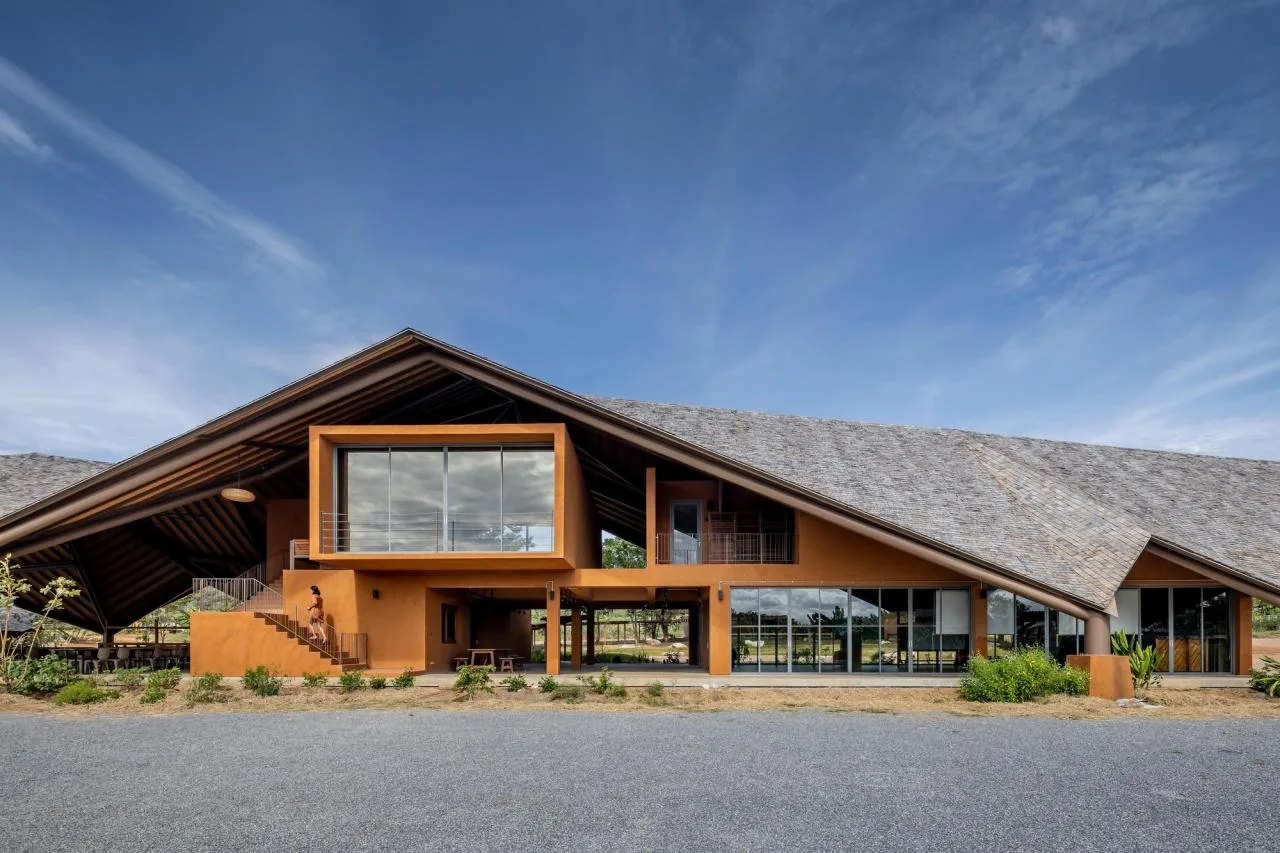 The centerpiece of the project is the activity center, a two-story building designed as a multifunctional space with a capacity for up to 100 people. The ground floor houses a lobby (reception area), seminar rooms, workshop spaces, a spacious cafeteria, and a kitchen. The upper floor contains offices, meeting rooms for staff, a control room, and accommodations for visiting trainers and consultants.
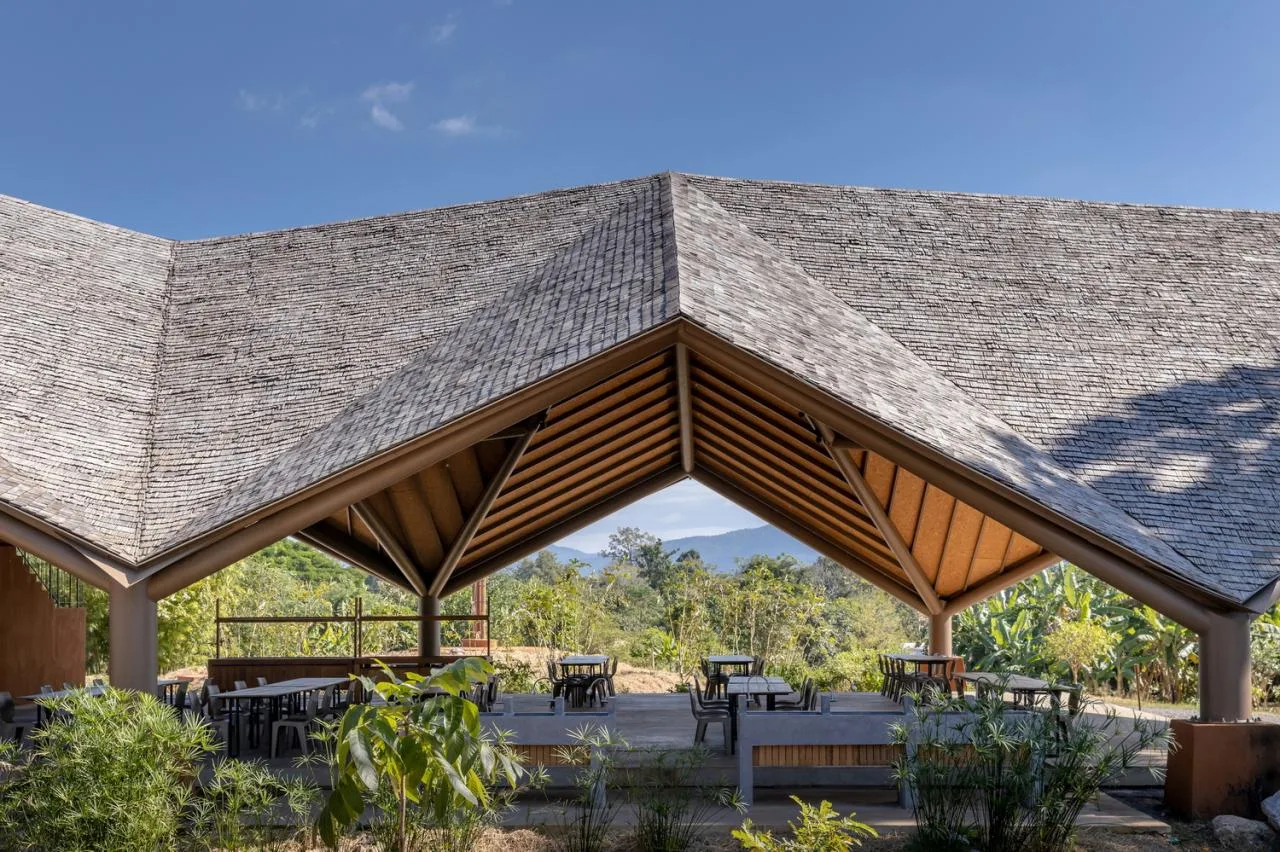
One of the key challenges faced by the architects was to embody the sustainable economic philosophy through the building’s design. Specifically, they explored whether the structure could reflect the rural residential style of traditional bamboo houses or temporary local shacks. After extensive consultations, the architects demonstrated that local crafts and materials could be reimagined into attractive, modern designs that suit contemporary lifestyles, offer durability, and harmonize with the environment.
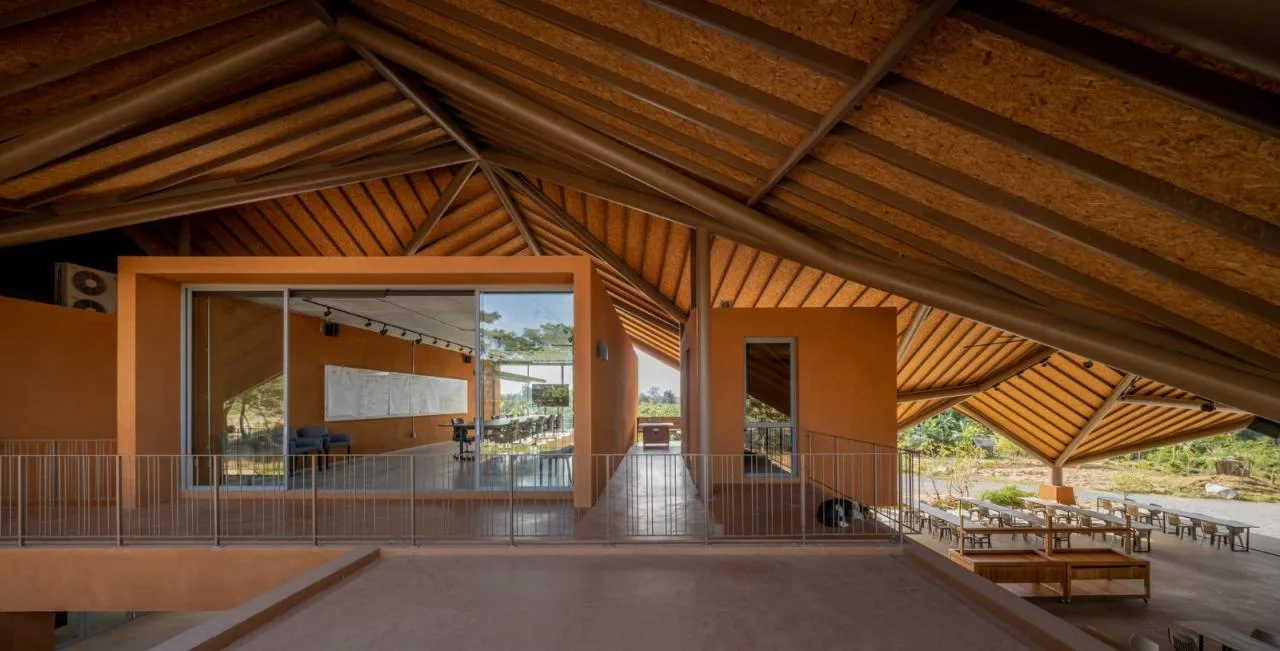
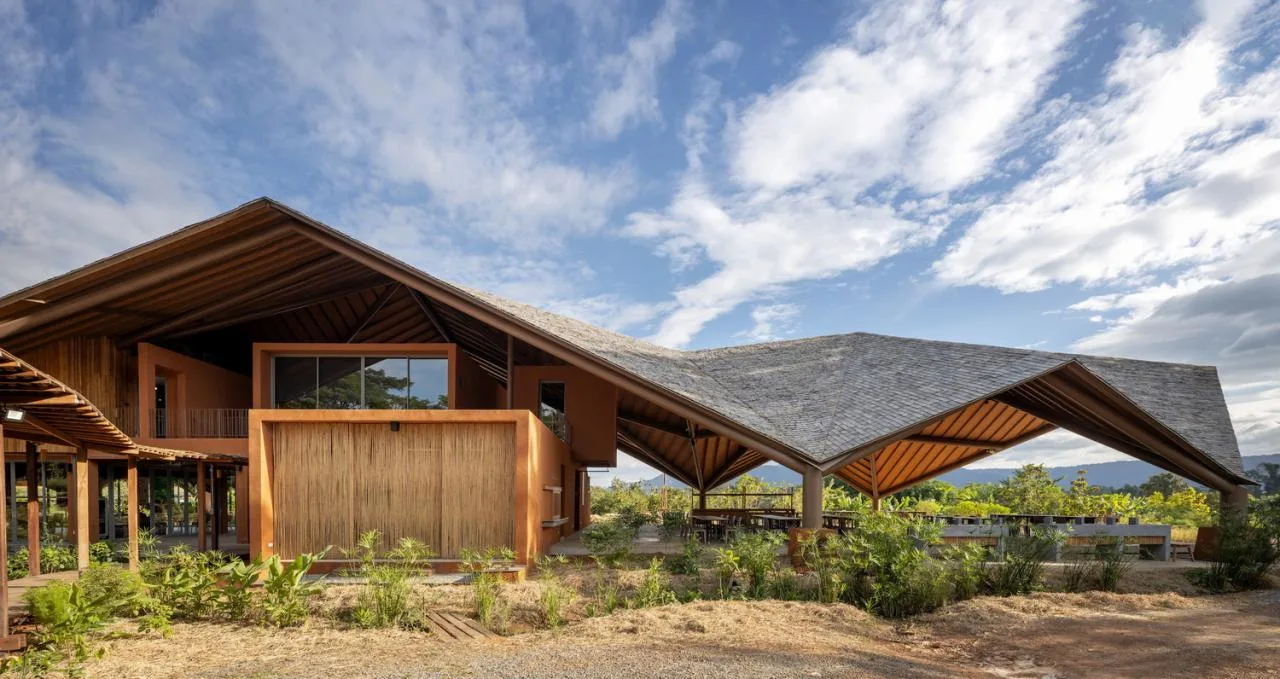
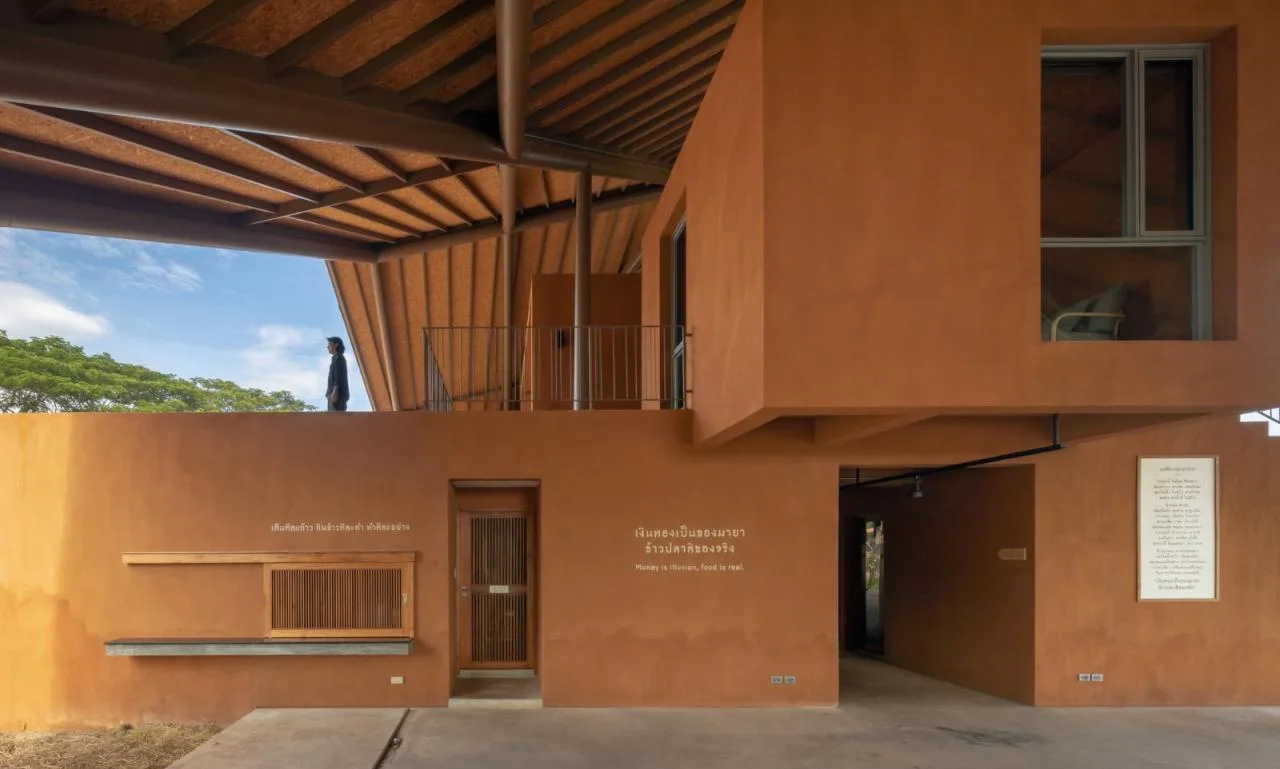
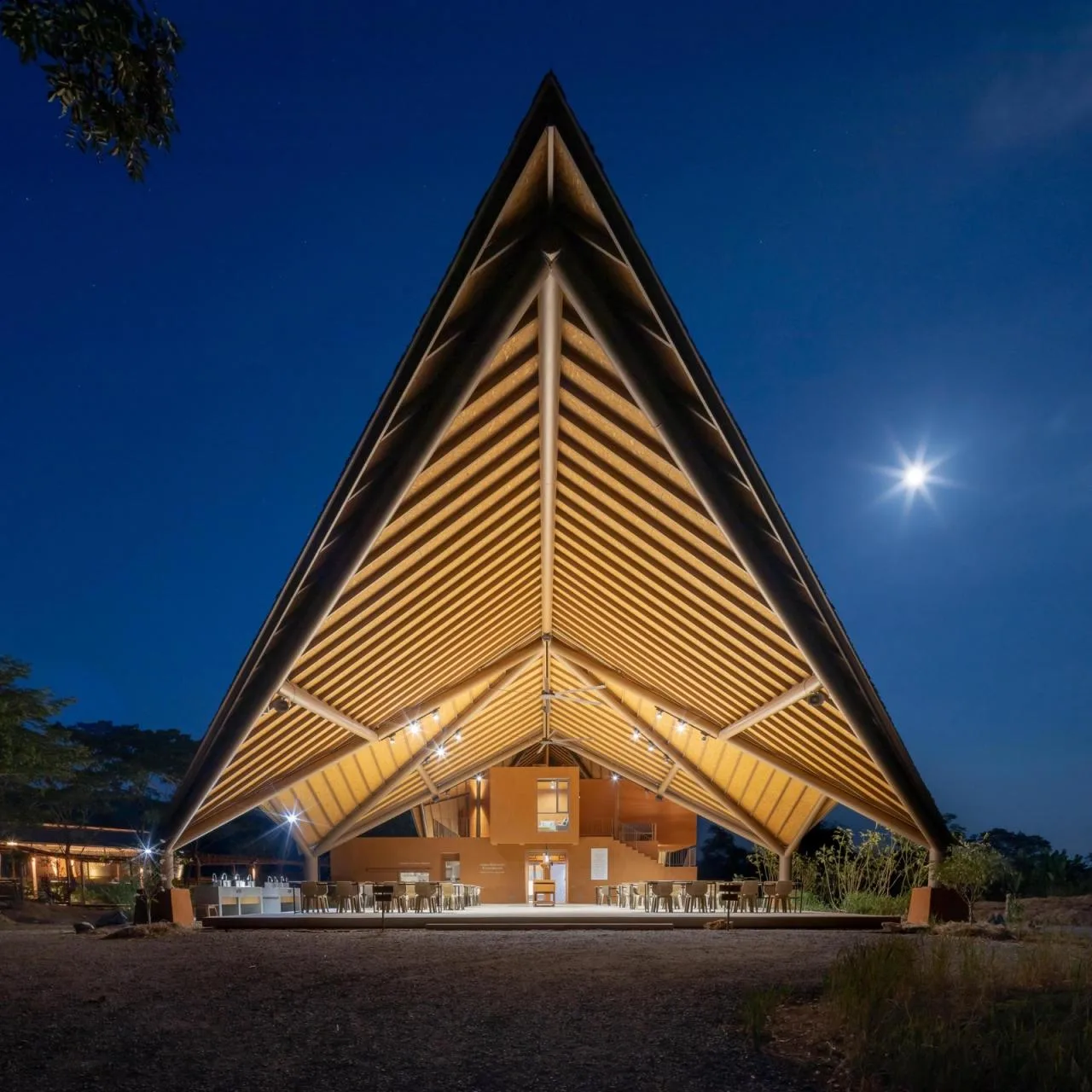
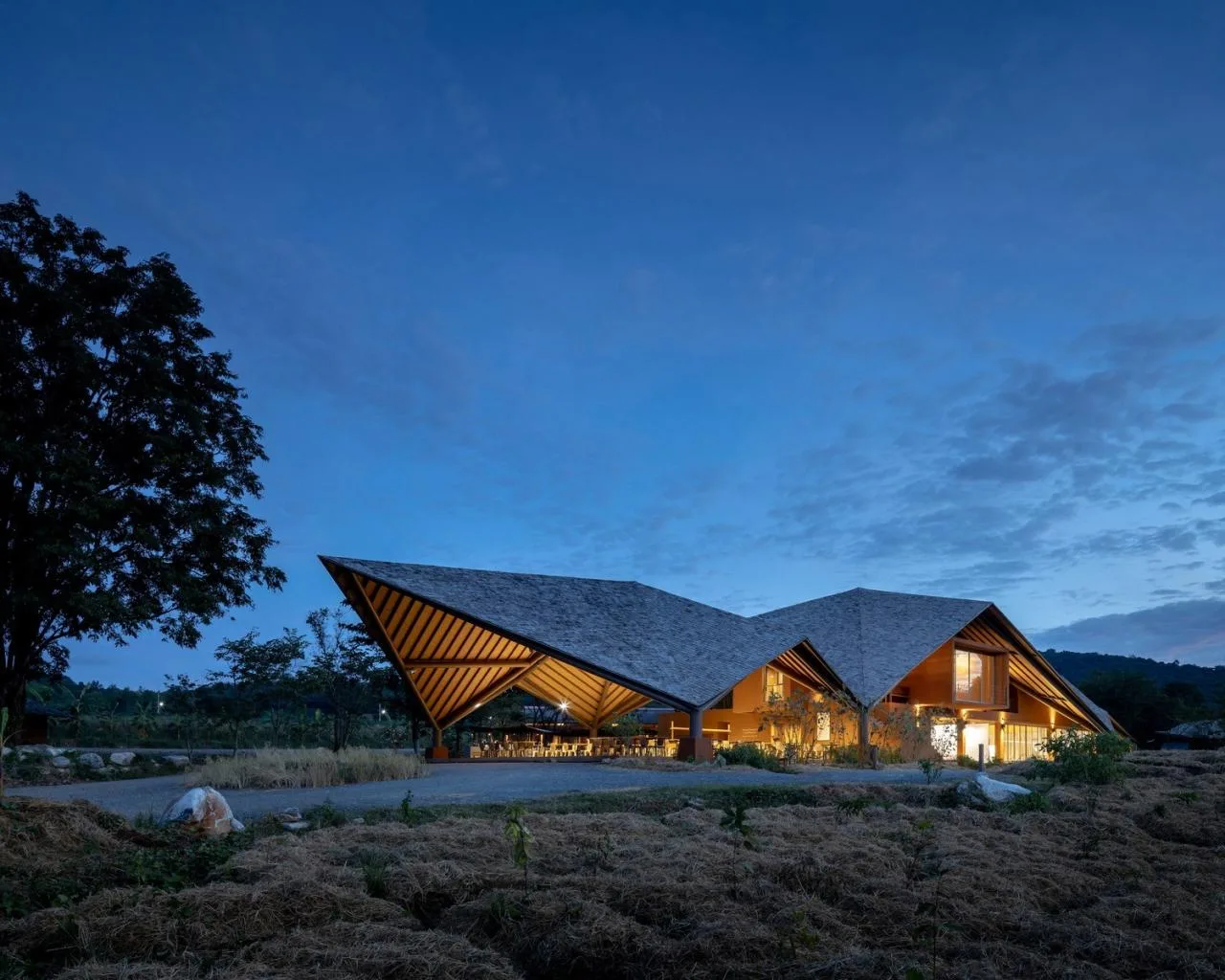
The activity center is situated as a landmark within expansive farmland and is designed as a large, open pavilion that maximizes natural light and ventilation. Its wide, protruding roof made of locally sourced bamboo collects rainwater and channels it around the building, directing water to other areas of the land before it reaches the natural reservoir, ensuring water availability in the dry season. The earthen walls feature natural colors derived from local soil, crafted by skilled local artisans. This approach reinforces the philosophy of sustainable thinking by adapting local materials and traditional techniques to modern architectural needs.
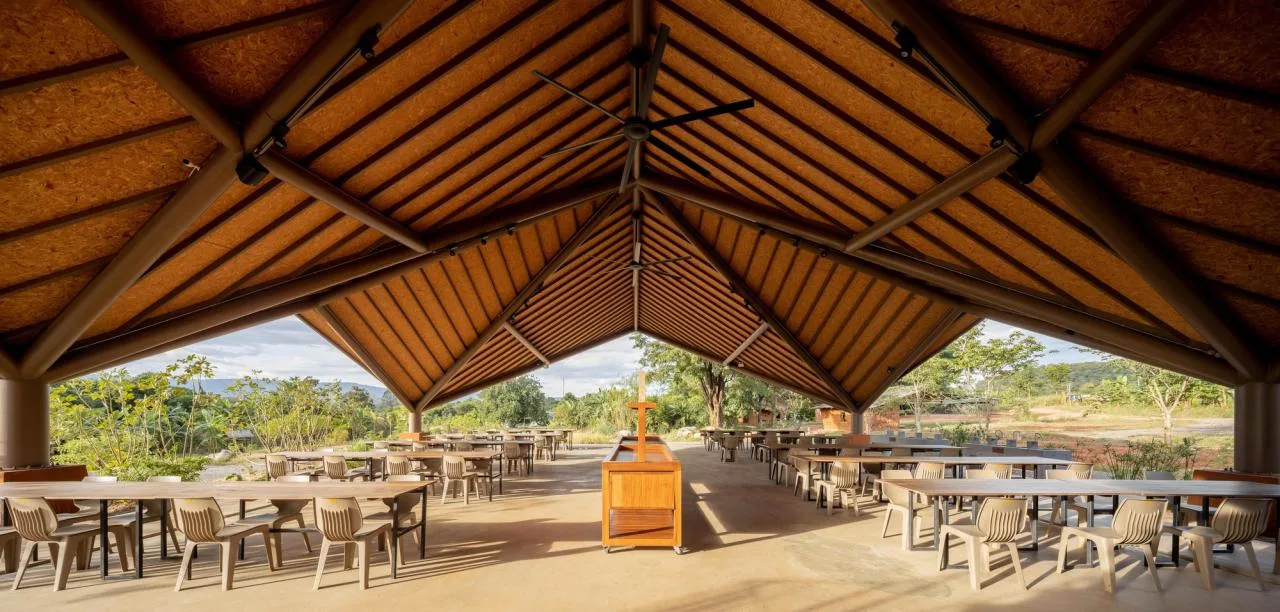
The activity center embodies the belief that architecture is a flexible discipline that must evolve alongside technological advances to meet ever-changing human needs and behaviors.
Project Drawings
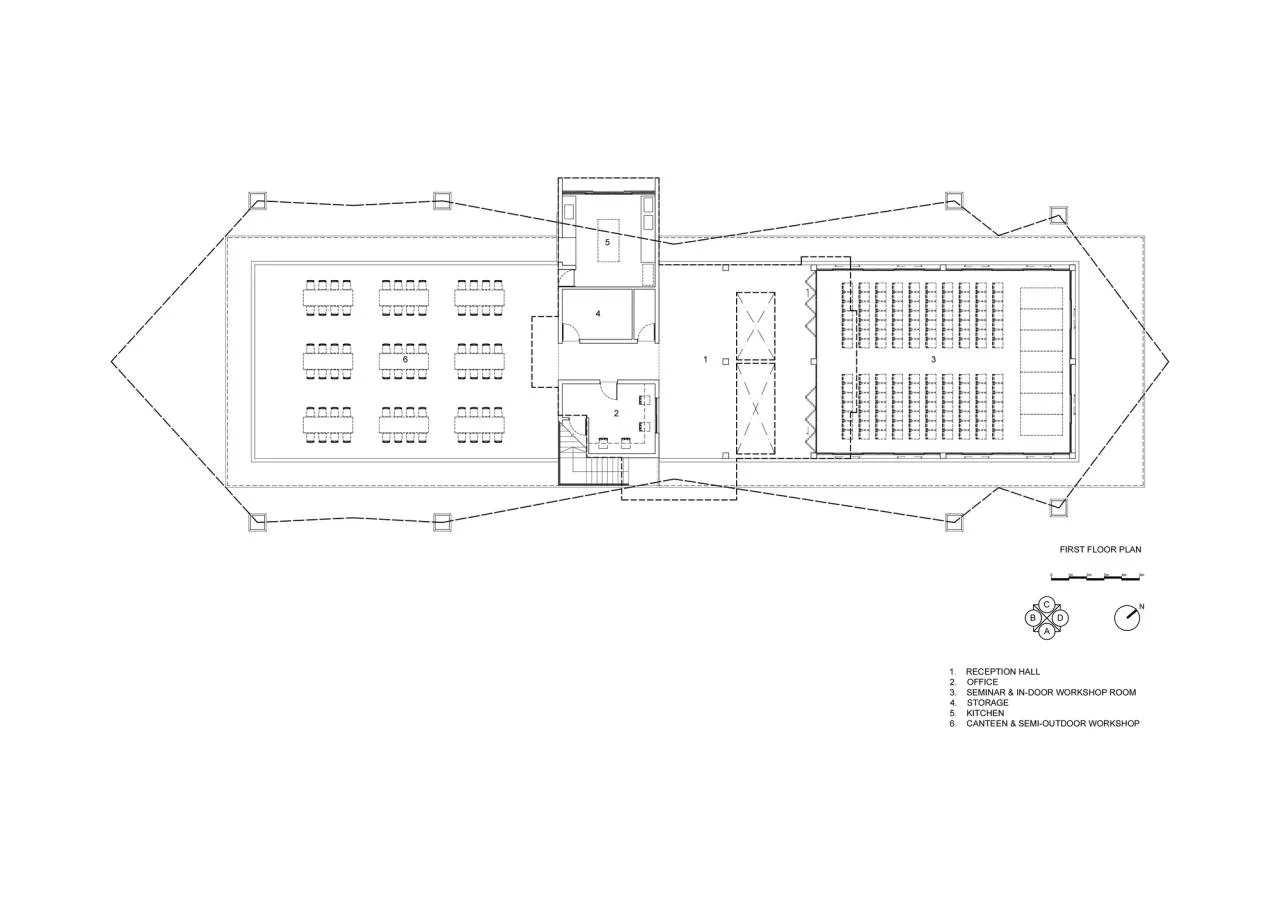
△ First Floor Plan
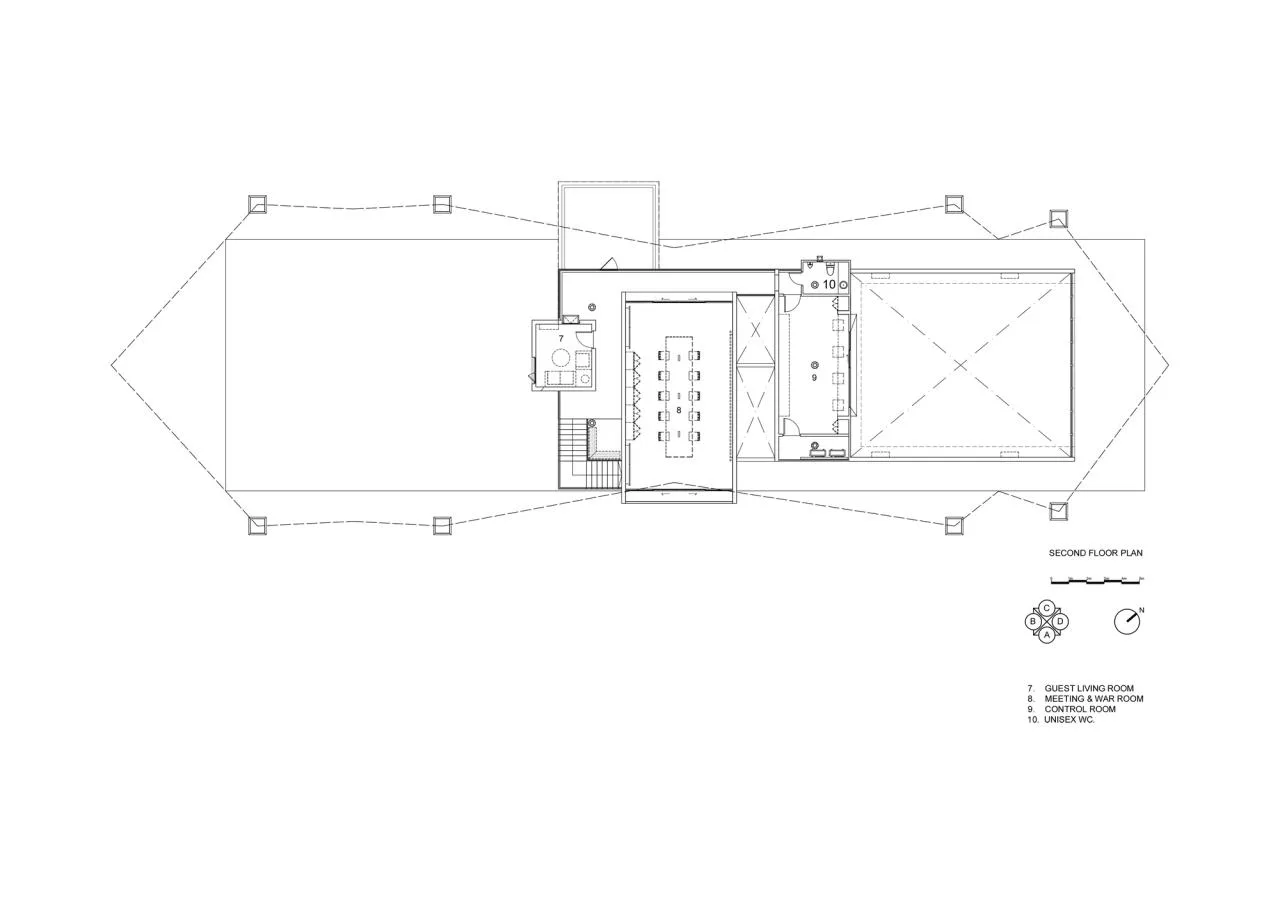
△ Second Floor Plan
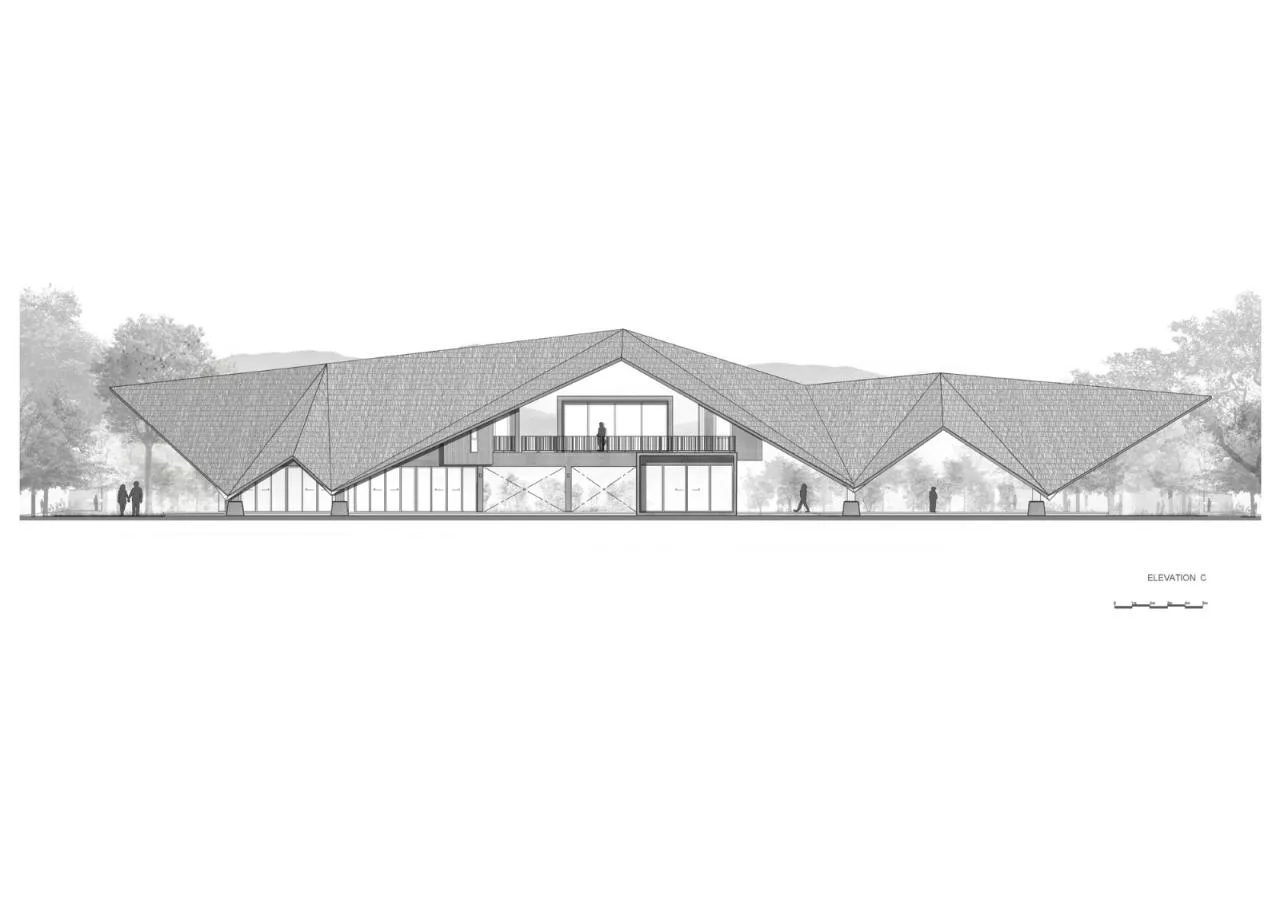
△ Elevation Drawing
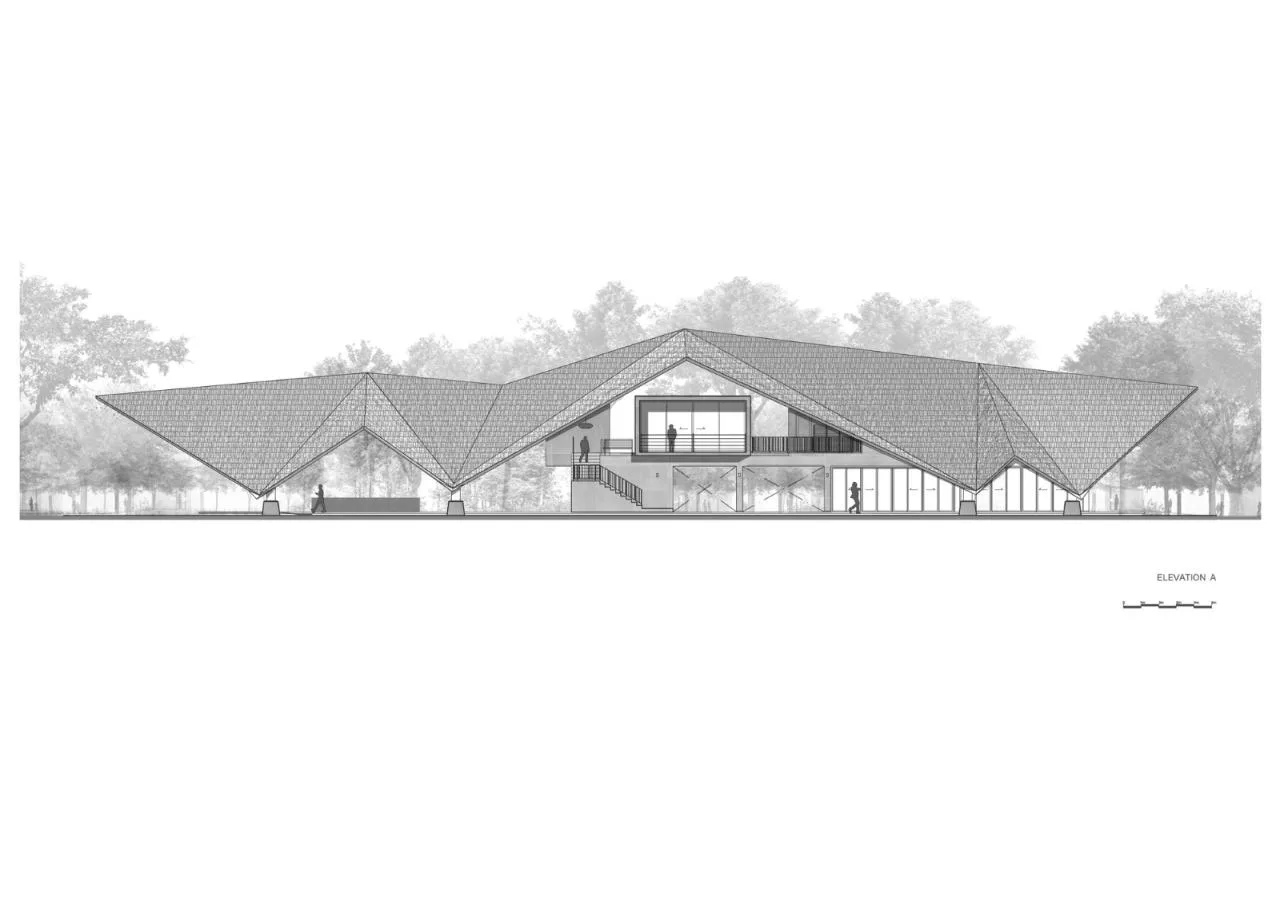
△ Elevation Drawing
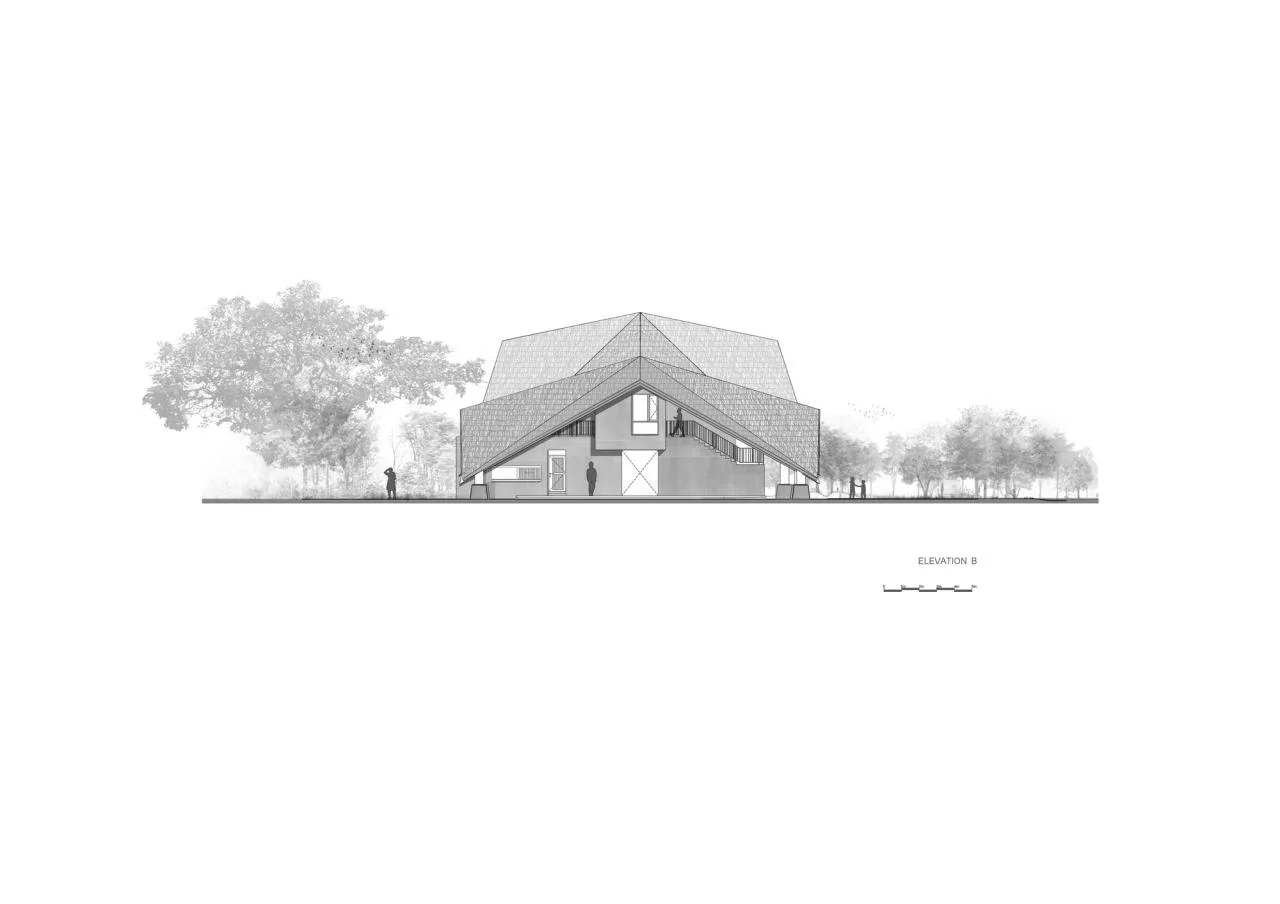
△ Elevation Drawing
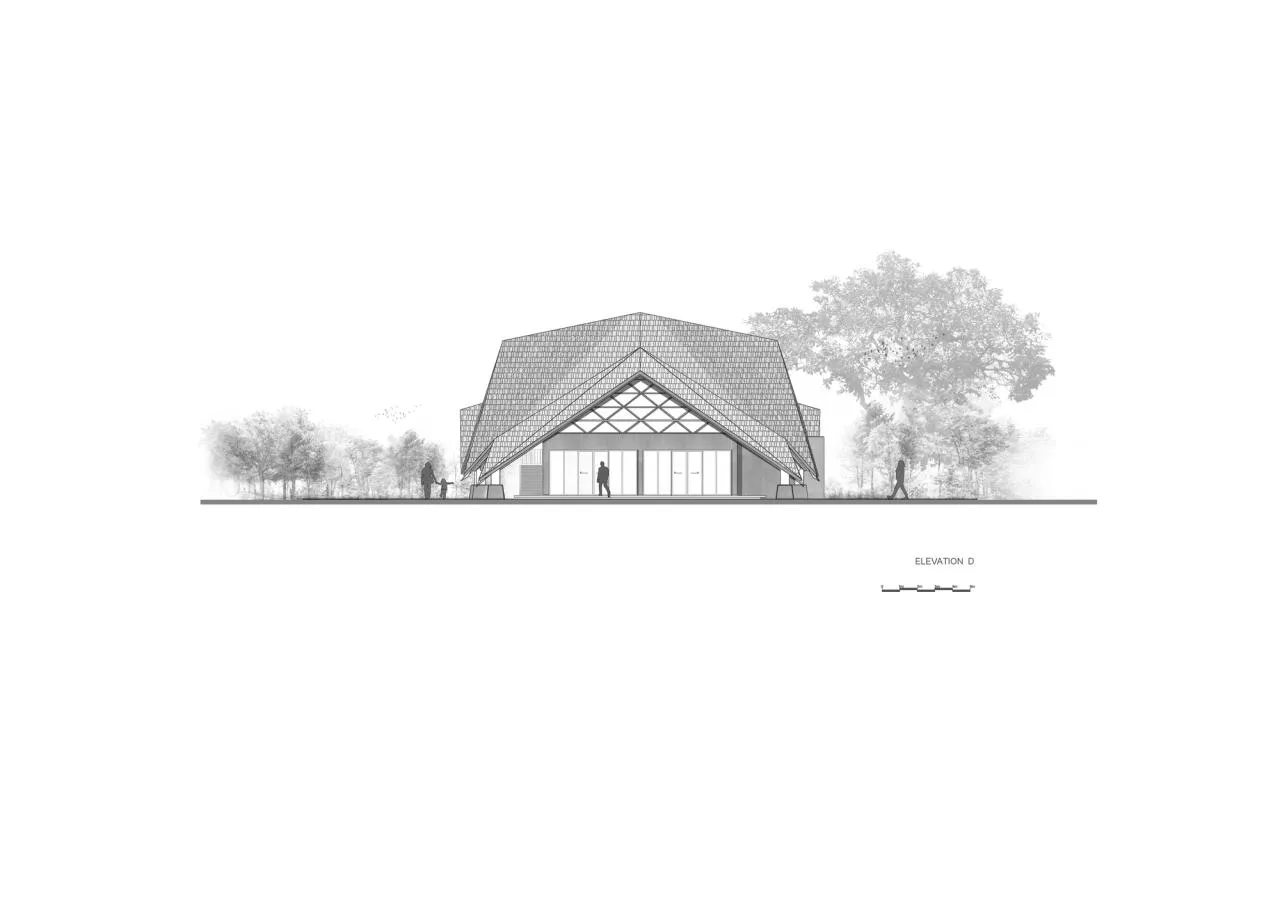
△ Elevation Drawing
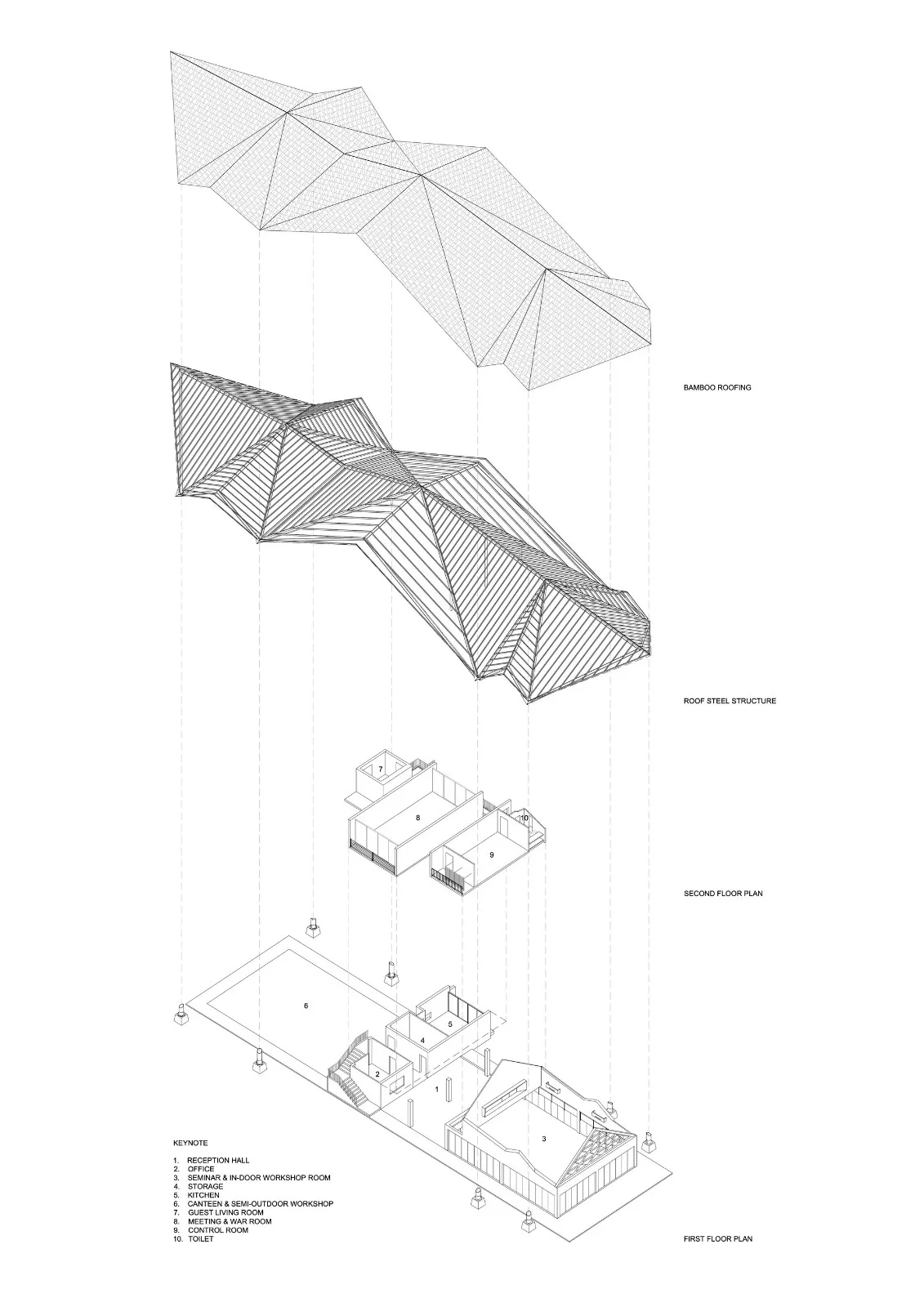
△ Structural Analysis Diagram
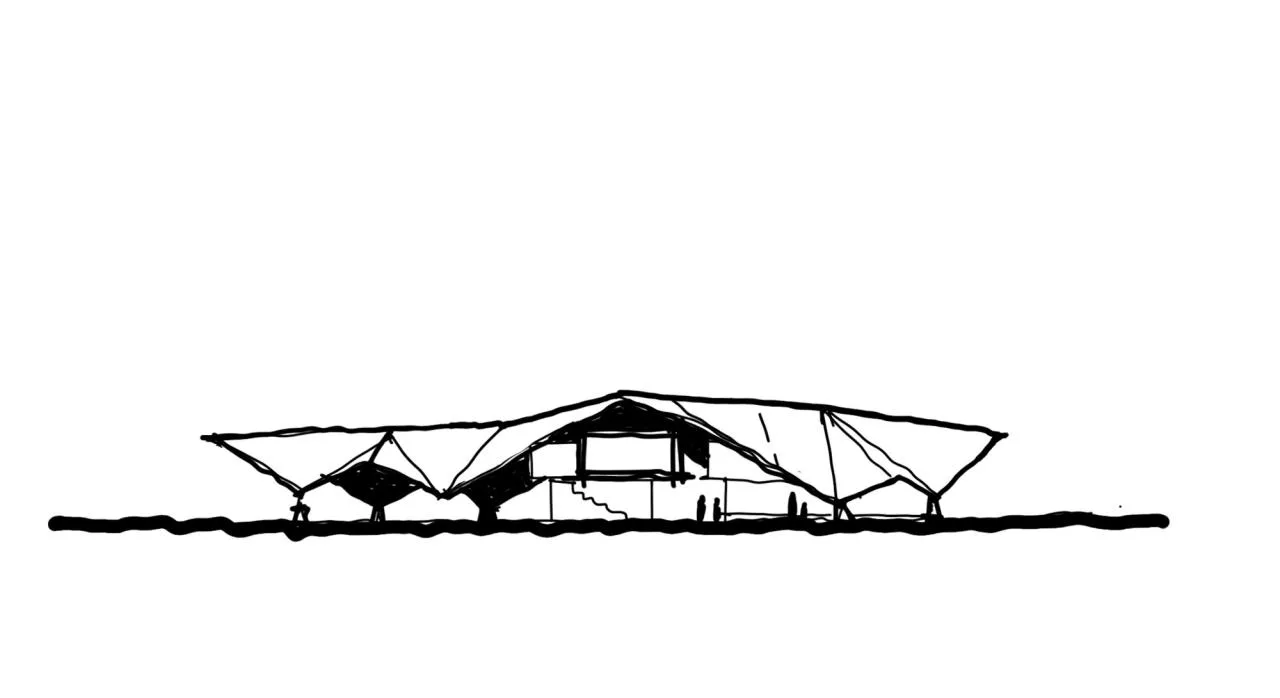
△ Hand-drawn Sketch
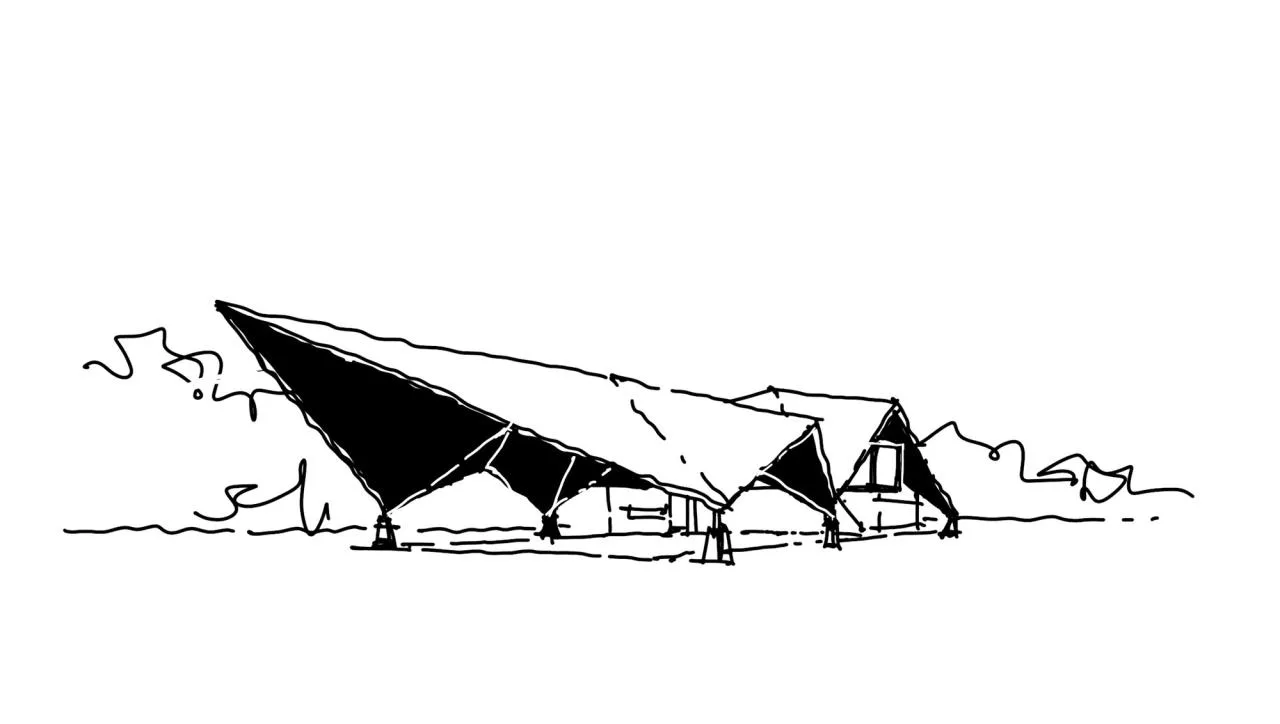
△ Hand-drawn Sketch
Project Information
Architectural Design: Vin Varavarn Architects
Project Year: 2021
Photography: Ketsiree Wongwan
Interior Design: Vin Varavarn Architects
Contractor: Sutham Rattanadet and Construction Team
Location: Thailand












Must log in before commenting!
Sign Up