
Introduction
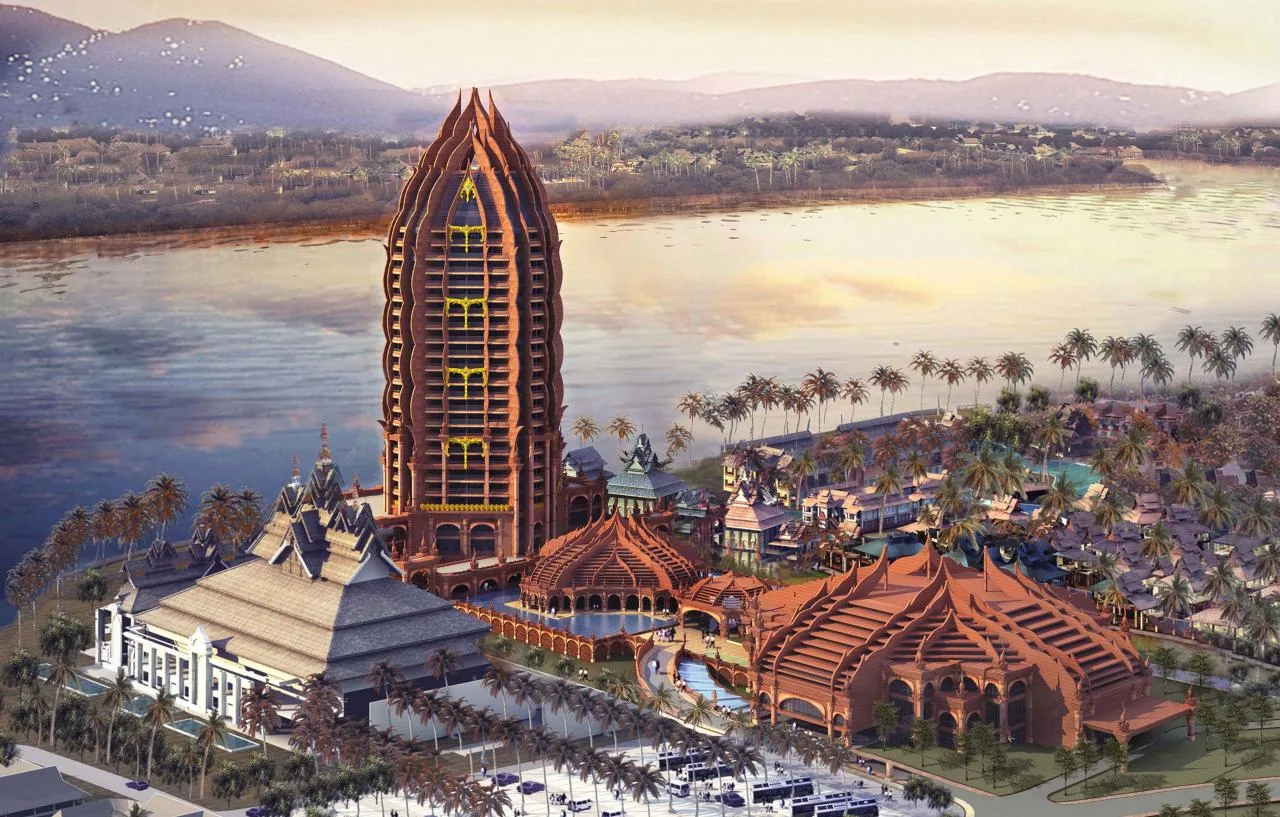
Xishuangbanna, located in the southwestern corner of Yunnan Province, is home to China’s only tropical rainforest nature reserve. Renowned for its enchanting tropical rainforest landscapes and vibrant ethnic minority cultures, the region exudes a warm rainforest ambiance throughout. Its rich biodiversity showcases a thriving variety of flora and fauna.
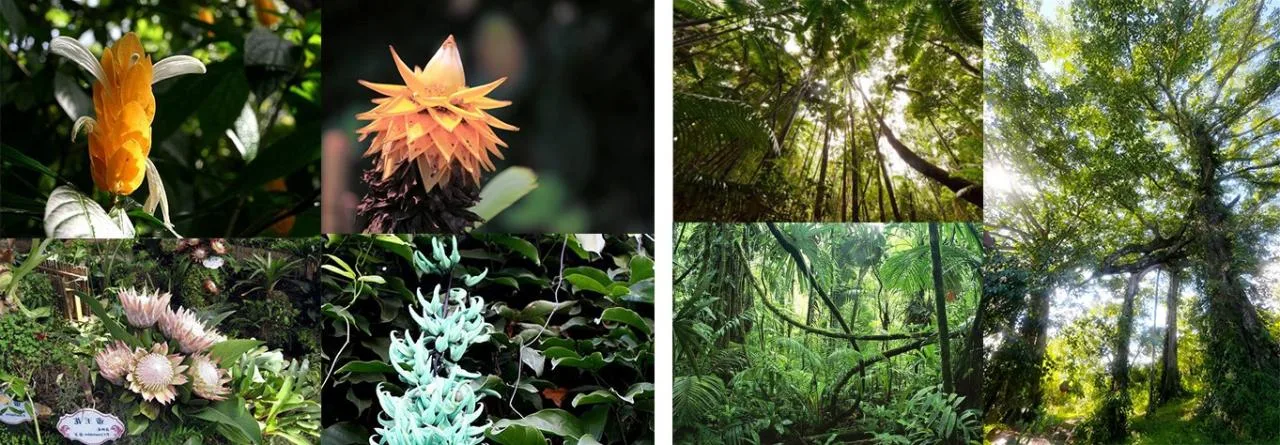
△ Left: Blooming flowers, Right: Rainforest
Banna is predominantly inhabited by the Dai ethnic group, who share cultural roots with the Thai people of Southeast Asia, including Thailand, Laos, and Myanmar. Dai Tai architecture is distinct and unique, with traditional stilt houses and ornate temples standing out as key features.
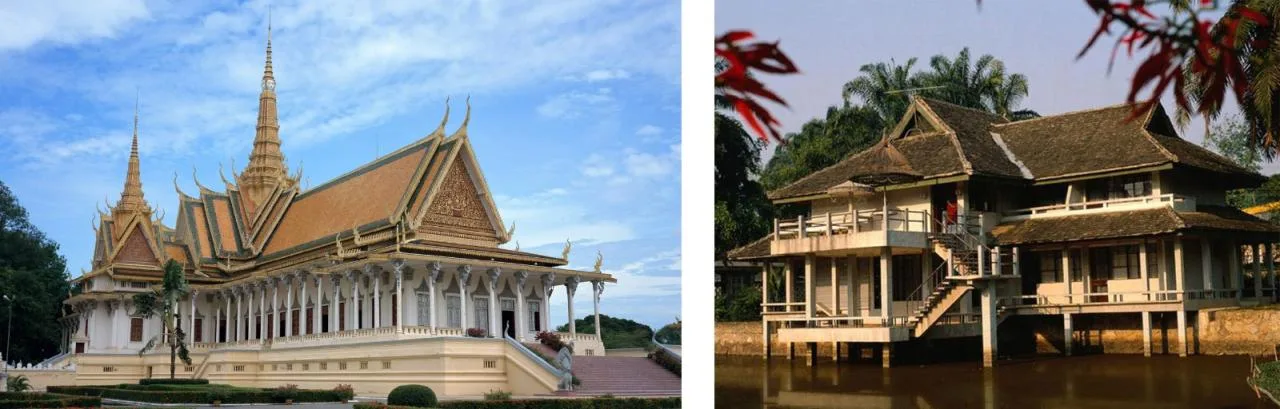
Left: Buddhist temple, Right: Dai stilted house
As a key tourism destination in Yunnan, Xishuangbanna enforces strict guidelines on preserving ethnic architectural styles. However, even in economically advanced Thailand, large contemporary public and residential buildings rarely reflect traditional national styles, often defaulting to standardized international modern designs or superficial ethnic motifs.
Having worked in Banna for years, we strive to explore the historical roots of Dai Thai architecture and integrate them with modern construction techniques. Within certain economic constraints, we seek innovative design solutions for large-scale buildings that honor tradition while embracing modernity.
Project Overview
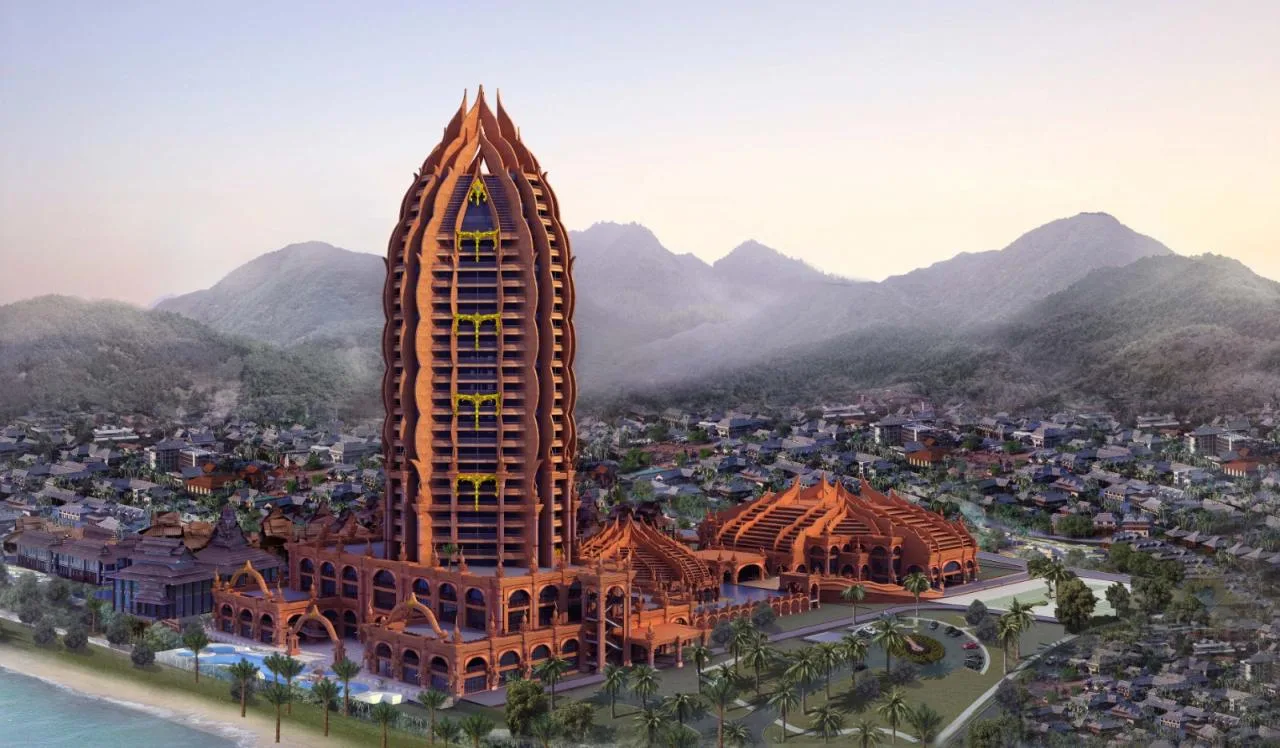
The hotel is situated along the banks of the Lancang Mekong River in Xishuangbanna, often called the “Eastern Danube” and “International Golden Waterway.” The site covers approximately 20,000 square meters with a narrow terrain. It is flanked by newly constructed Dai villages and large ethnic song and dance performance venues.
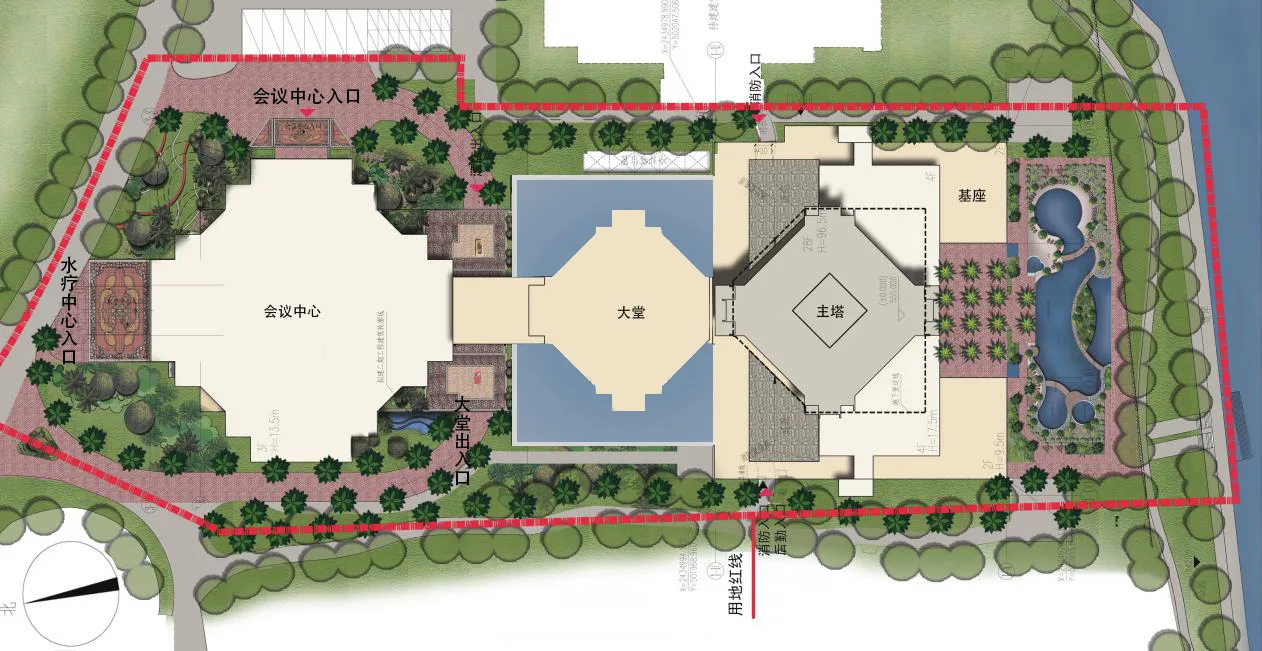
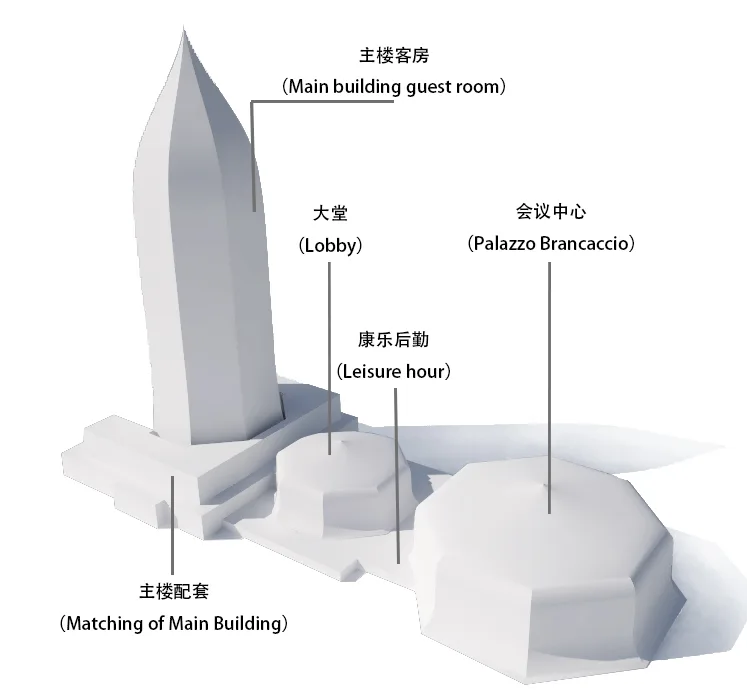
The hotel is organized into four main sections: the conference center, lobby, main guest room tower with supporting facilities, and recreational logistics. Due to the site’s narrow layout and limited street frontage, managing the flow of guests and services on a single level proved challenging. To address this, the leisure and logistics areas form a substantial podium, with the conference center, lobby, and main tower aligned north to south atop it. This arrangement effectively separates public and service circulation, creating a tranquil environment around the lobby and other key spaces.
In terms of façade design, Dai Thai architecture’s strong ethnic character closely ties to the rainforest environment. Bamboo structures are inspired by rainforest plants, while temples and pagodas draw their forms from various flowers and fruit-bearing branches found in the jungle.
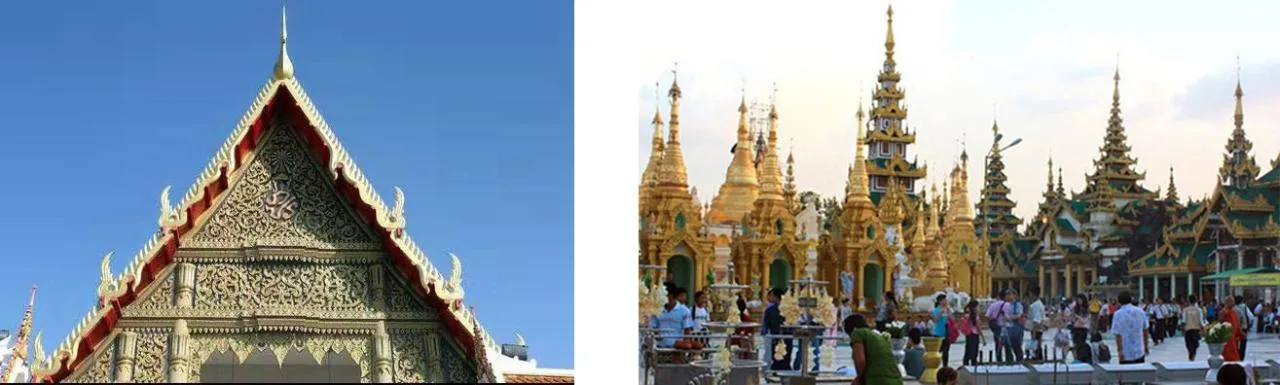
△ Left: Decorative animal and plant totems, Right: Temples in Tallinn with rainforest leaves and buds intertwined
Inspired by this, the building’s overall form reflects rainforest plants — blooming flowers and overlapping leaves. We also adhered to the principle of economy, aiming to achieve the richest visual effect with minimal construction. The primary materials used are concrete and Glass Fiber Reinforced Concrete (GRC) components.
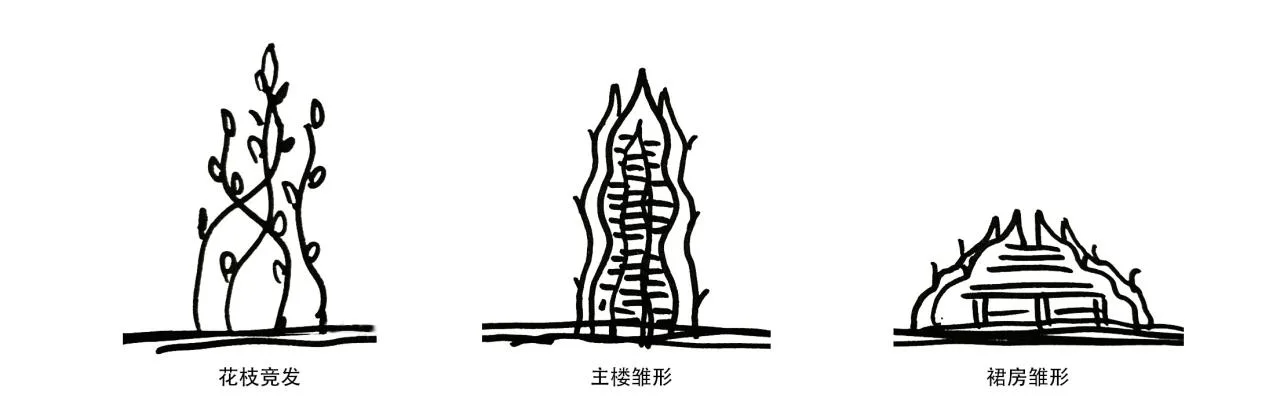
At the edges of the three main building volumes, we gently incorporated several concrete or steel “leaves” that rise gracefully and converge at the top. These layered shapes evoke branches, leaves, and flowers, creating the impression of a “rainforest wonder” in full bloom.
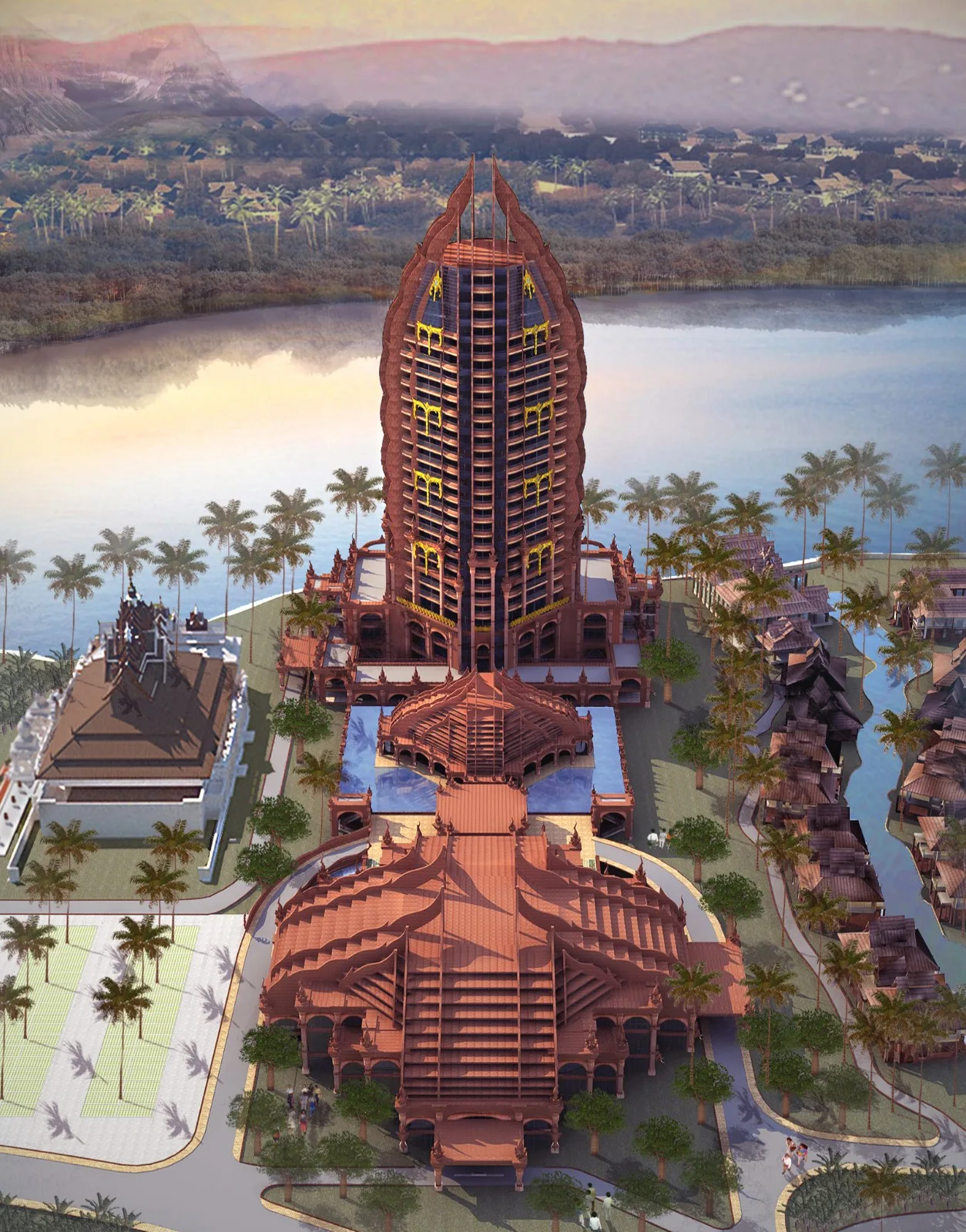
Our goal is to breathe life into the architecture, capturing the vibrant growth of rainforest plants with upward-reaching leaves and blossoming flowers. This approach imbues the building with the unique spirit of this land — as if it has truly grown from the earth itself.
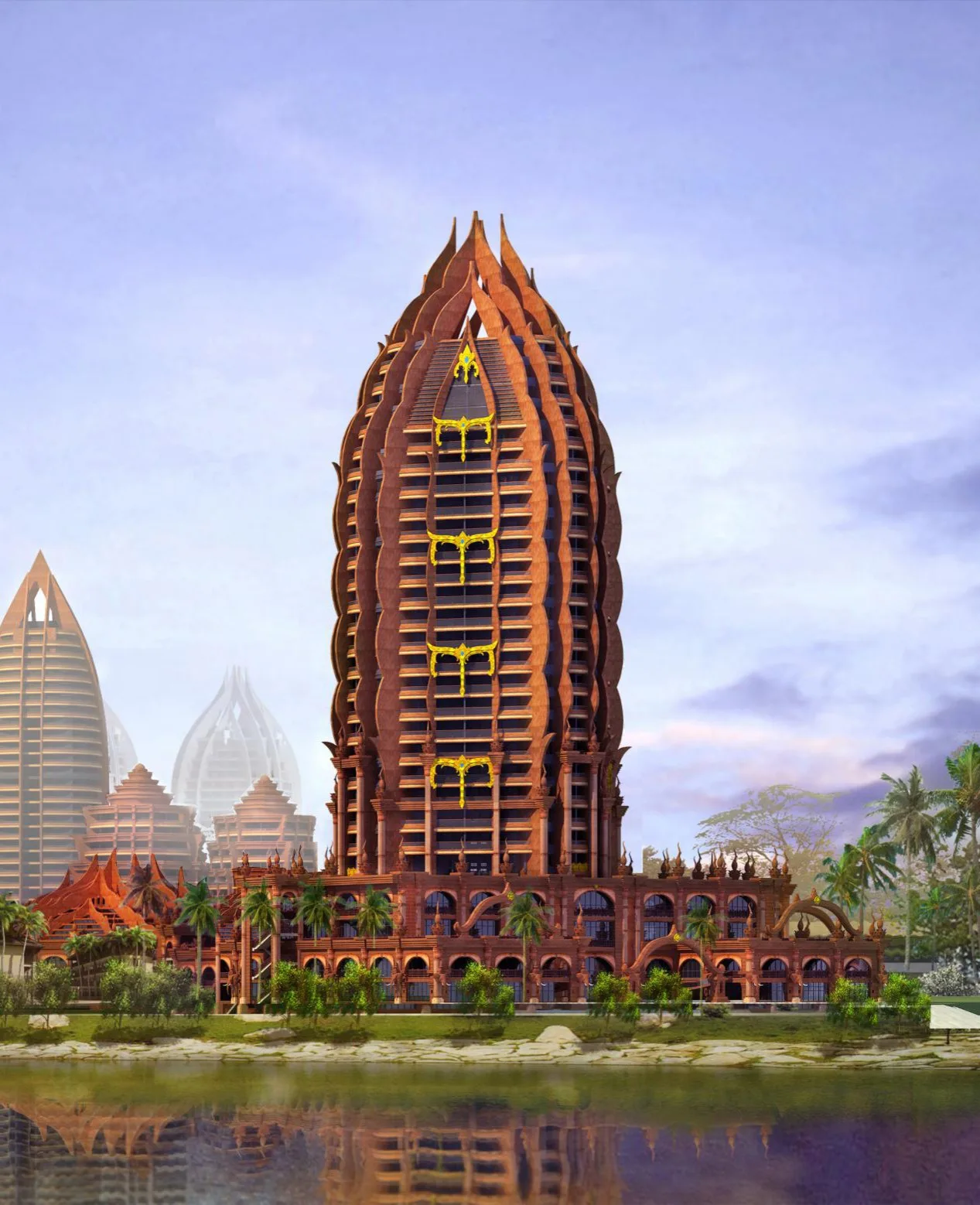
Toward the podium, columns, eaves, windowsills, and other areas that engage closely with guests, we apply abundant local animal and plant totem decorations crafted in GRC. These elements fill the environment with the vitality and charm of the tropical rainforest, immersing visitors in its atmosphere wherever they go.
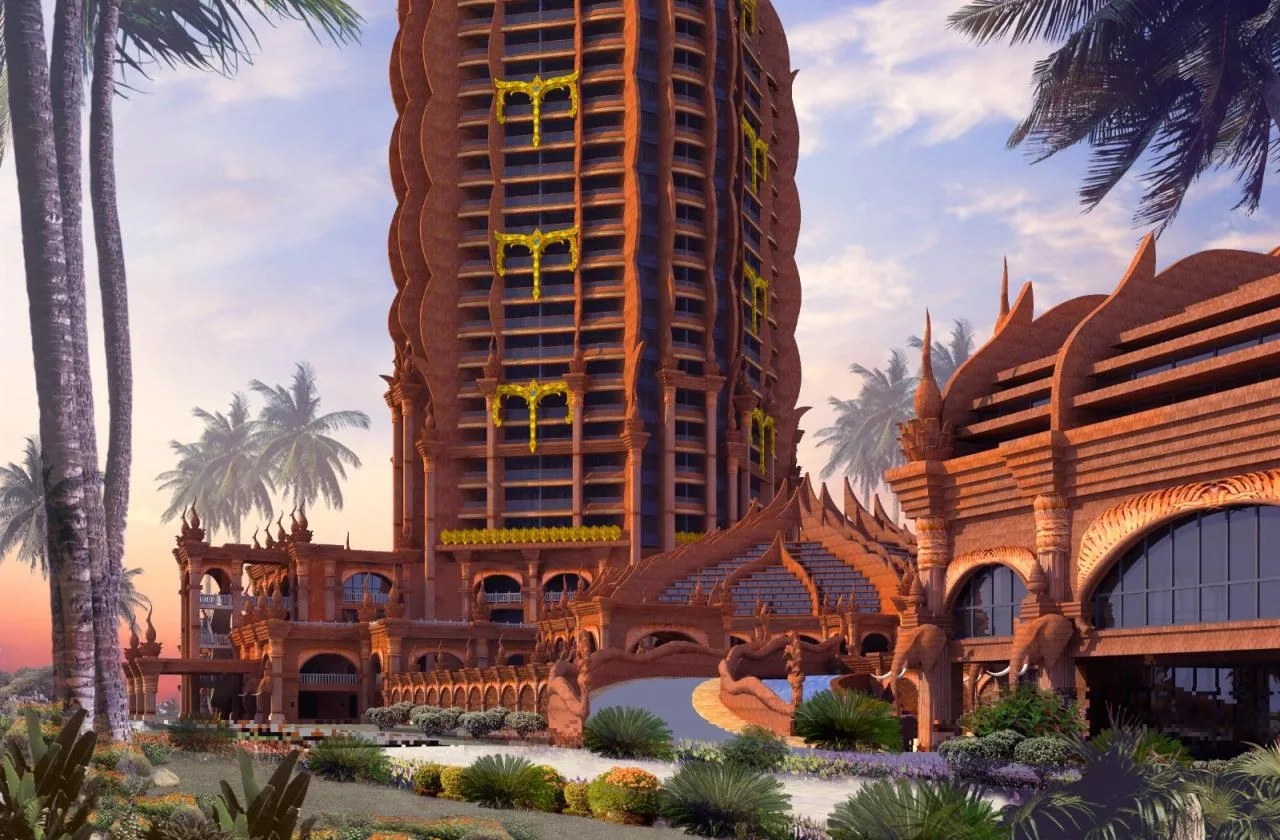
△ Upper lobby car ramp
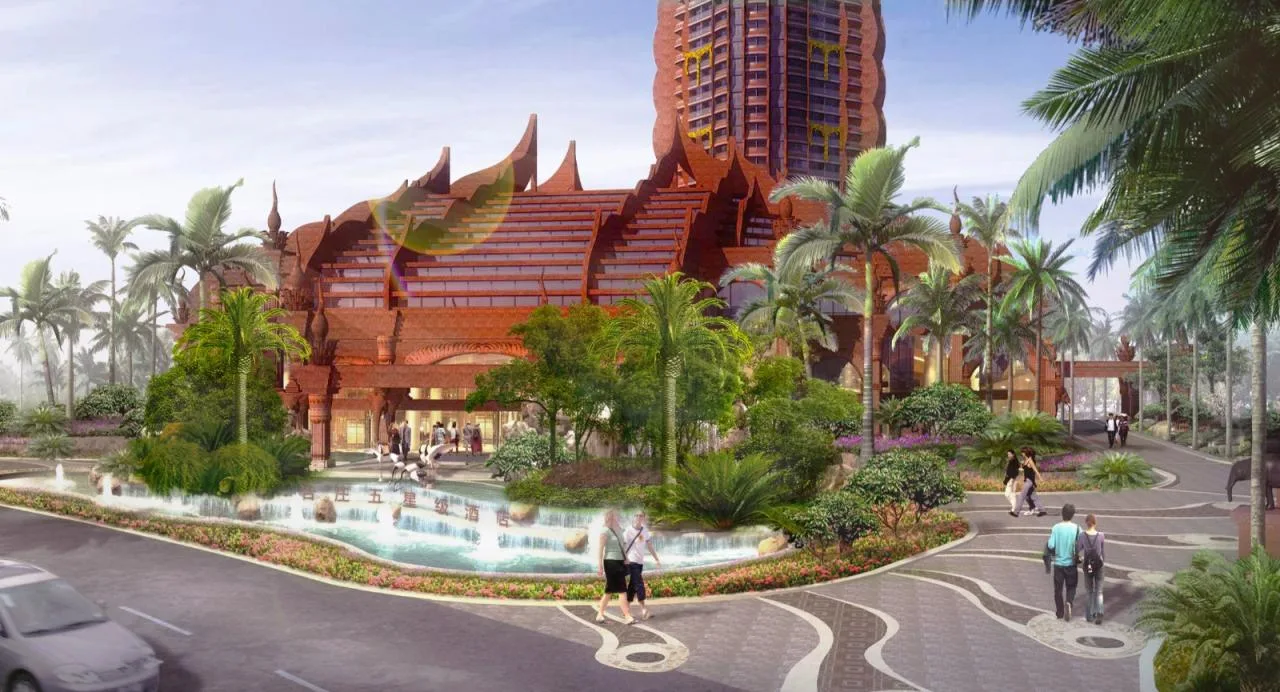
△ Conference Center Entrance
The lobby, shaped like a flower, is positioned above a water pool on the podium, creating the illusion of a unique blossom flourishing on the water’s surface. The interior reflects the tropical rainforest theme, adorned with motifs of elephants, peacocks, lotus flowers, palms, and more.
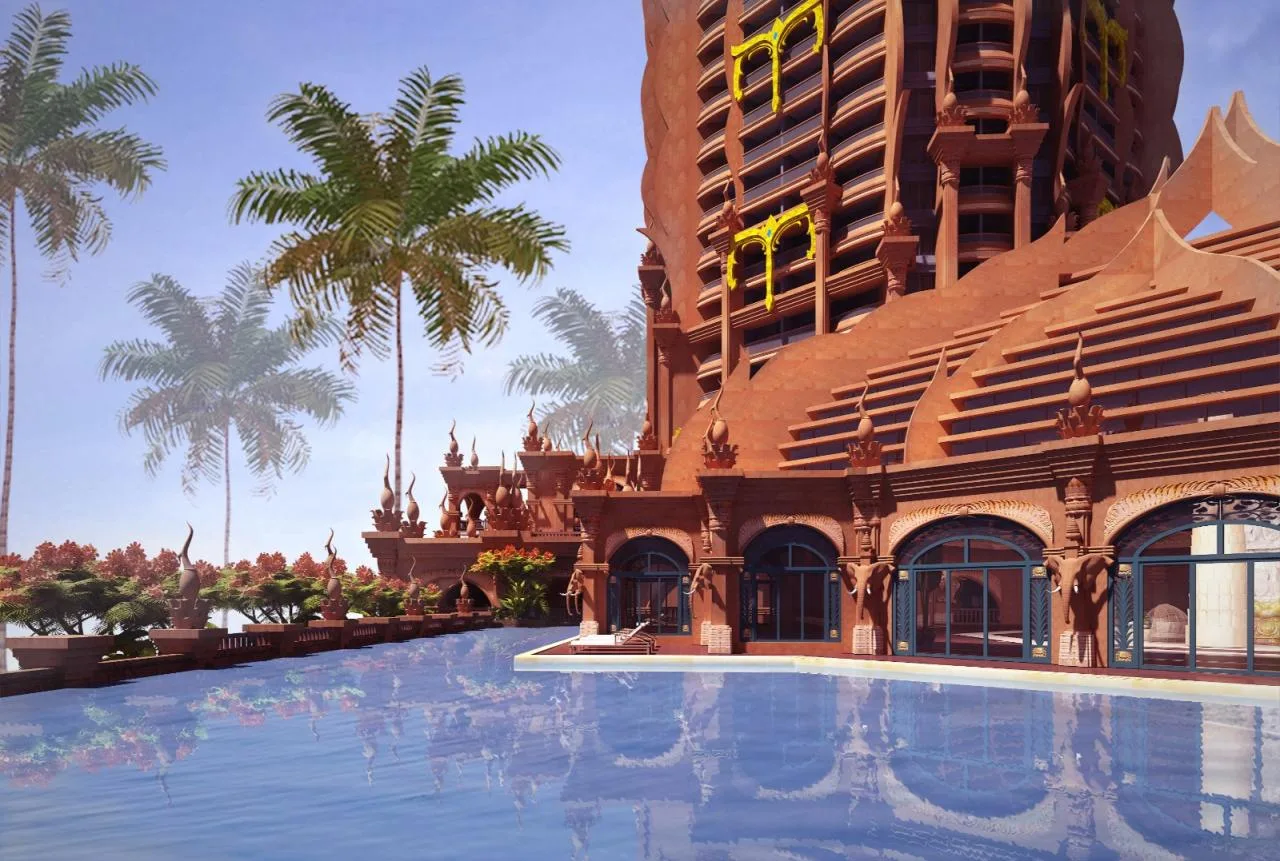
△ The ‘Flower’ Lobby Over Water
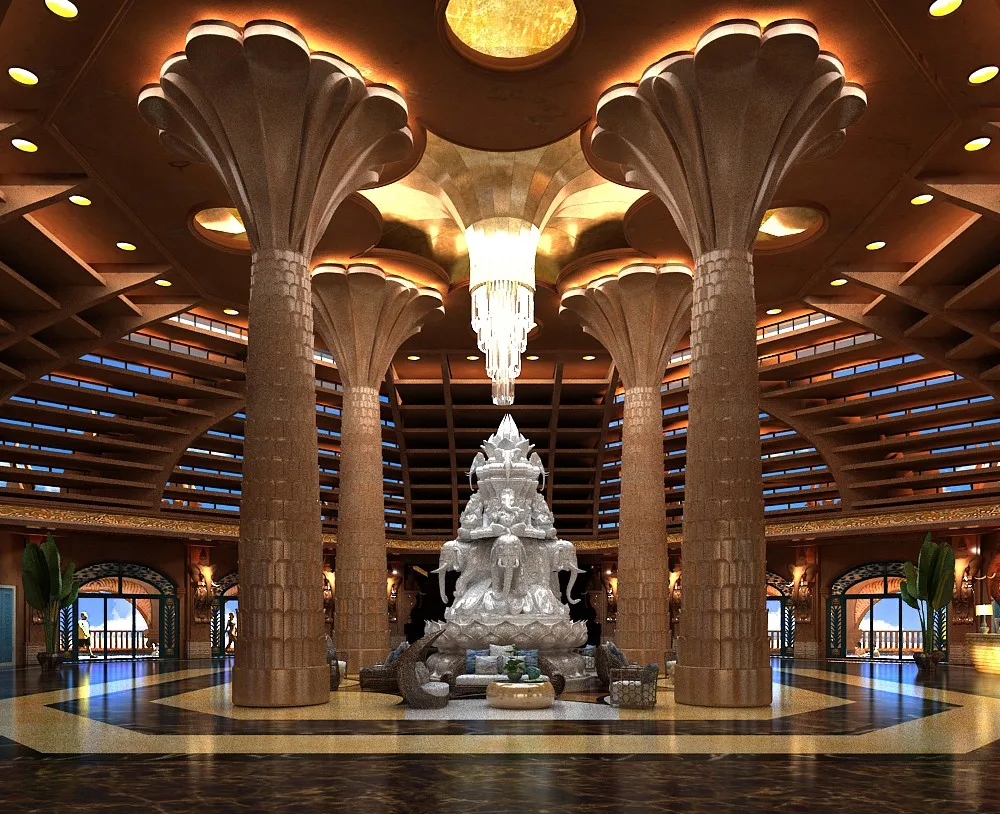
△ Interior view of the lobby
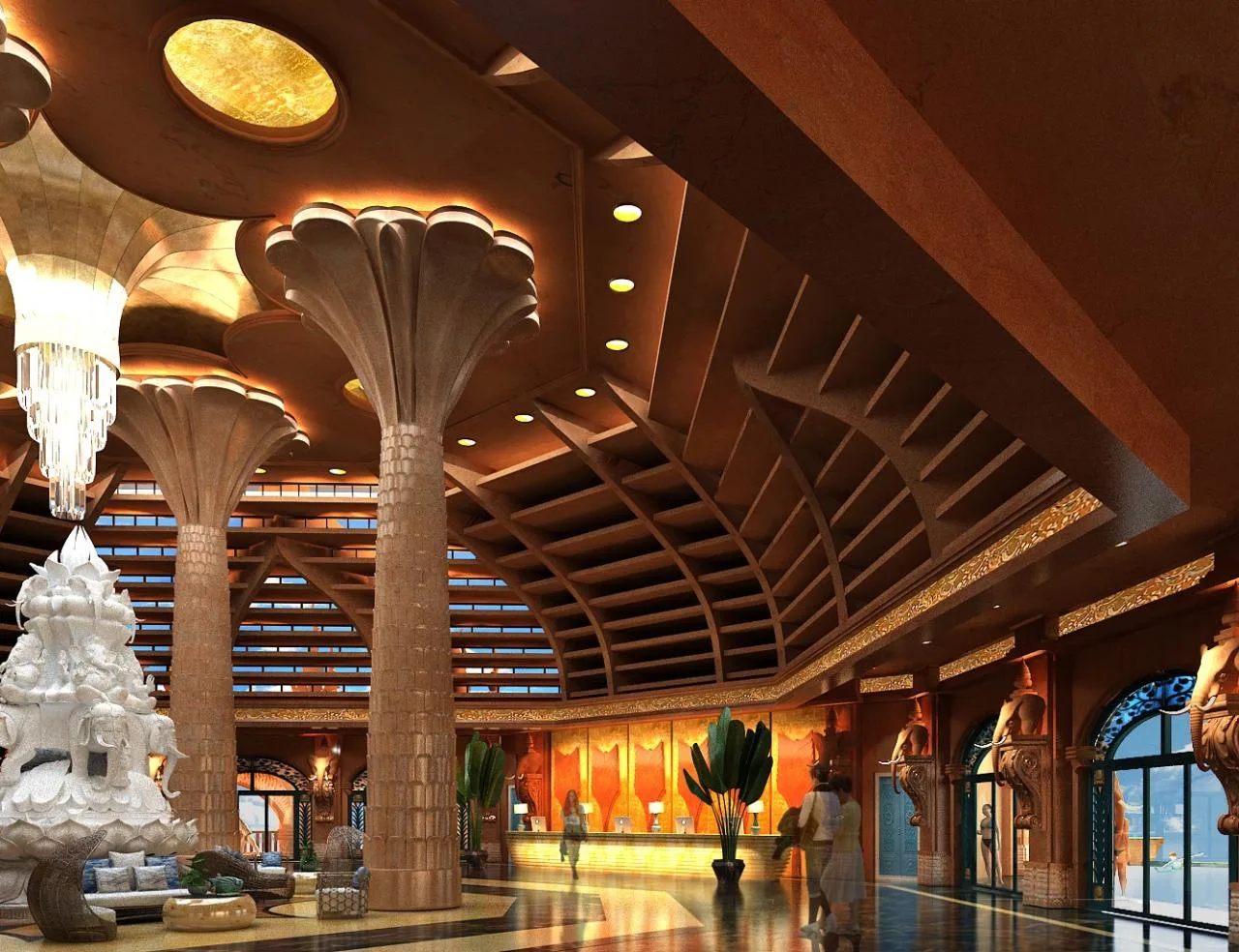
△ Interior view of the lobby
The hotel also includes a large conference center and a variety of recreational and dining options, such as a spa, gym, infinity pool, banquet halls, Chinese and Western restaurants, specialty dining venues, rooftop lounges, and more — all designed to provide guests with a rich and fulfilling experience.
Project Drawings
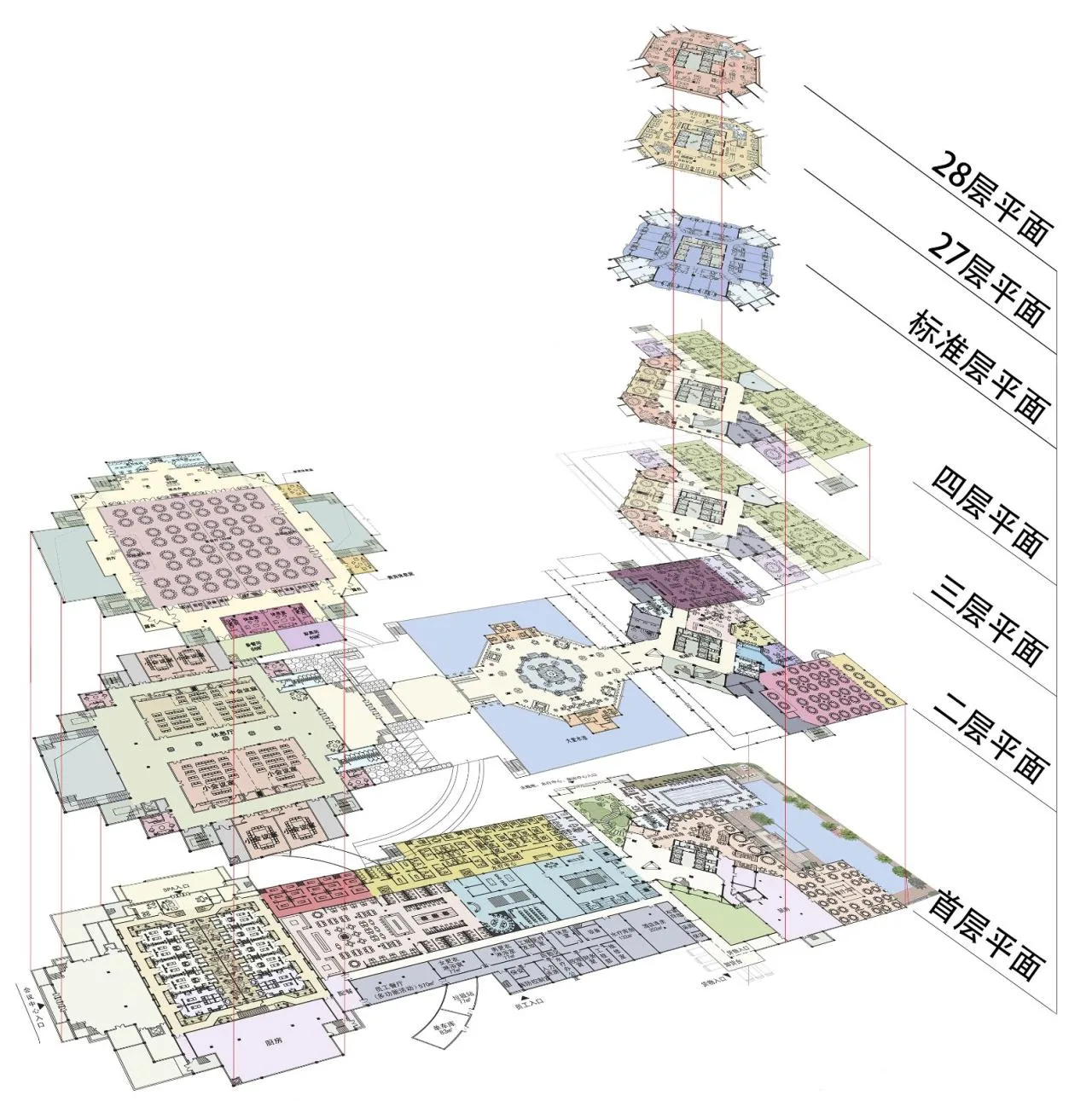
△ Axonometric Diagram
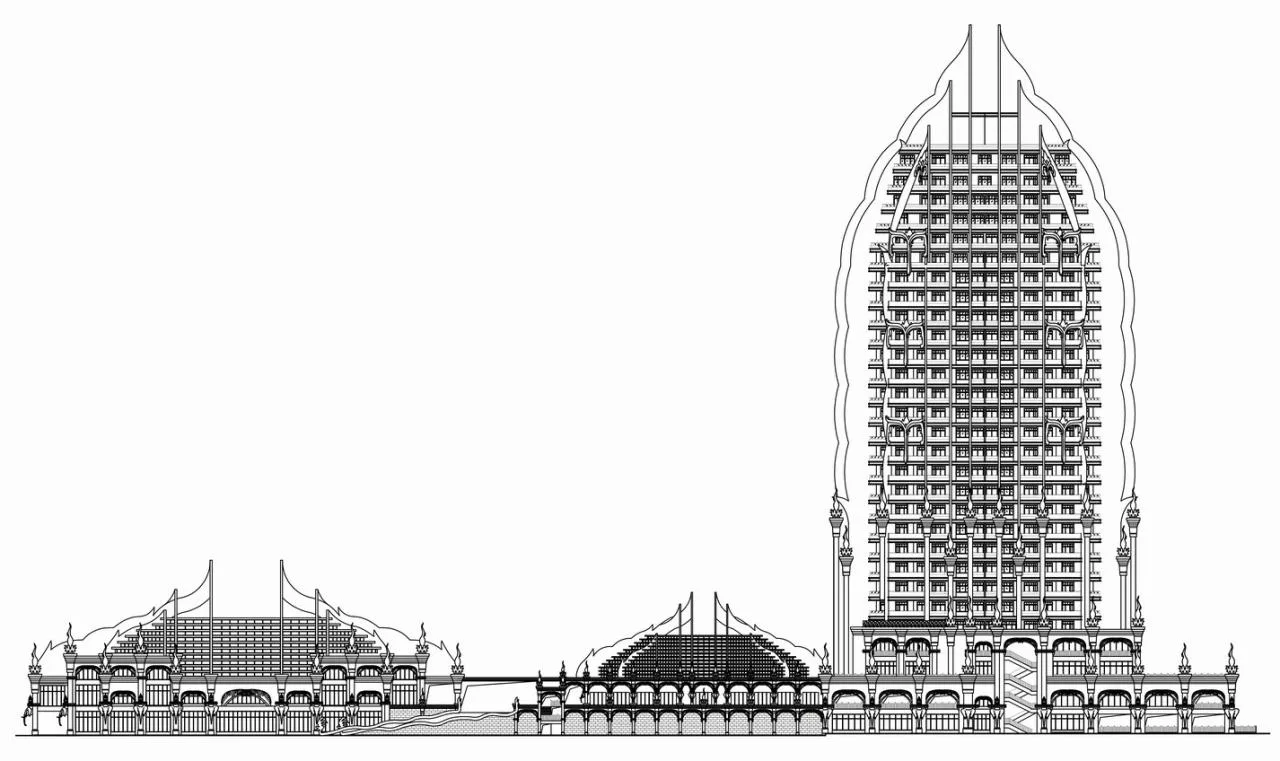
△ Elevation Drawing
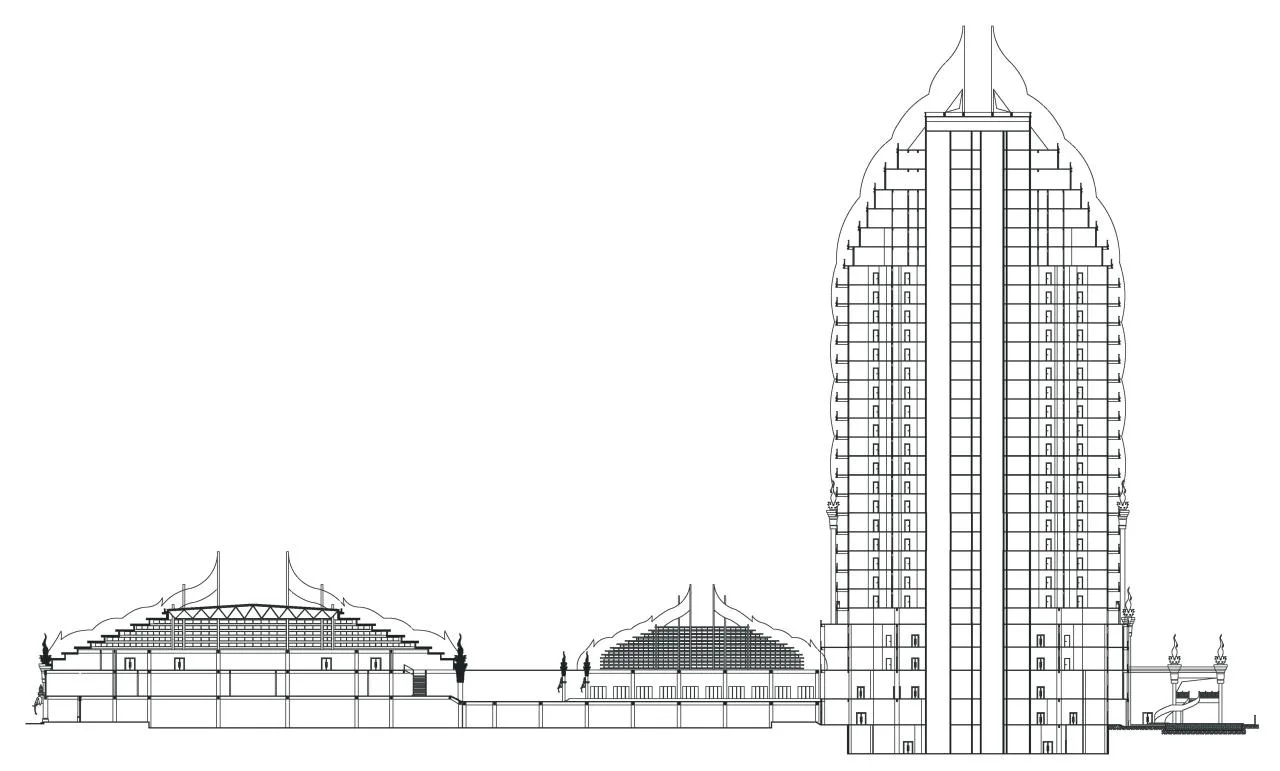
△ Section Diagram
Project Information
Keywords: Ethnicity, Economy, Uniqueness, Xishuangbanna, Dai Thai Architecture, Rainforest, Blooming Flowers
Architect: Gangya Architecture + Local Practice (Guangzhou)
Location: Xishuangbanna, Yunnan
Lead Architect: Lin Zhigang
Design Team: Ge Yongfei, Chen Baihui, Wu Ruijuan, Cai Guanlong, Lu Haoxian
Area: 60,000 square meters
Year: 2019
Developer: Yunnan Haicheng Group
Company Website: __AI_ST_URL_0__












Must log in before commenting!
Sign Up