
A vibrant neighborhood where history meets modernity
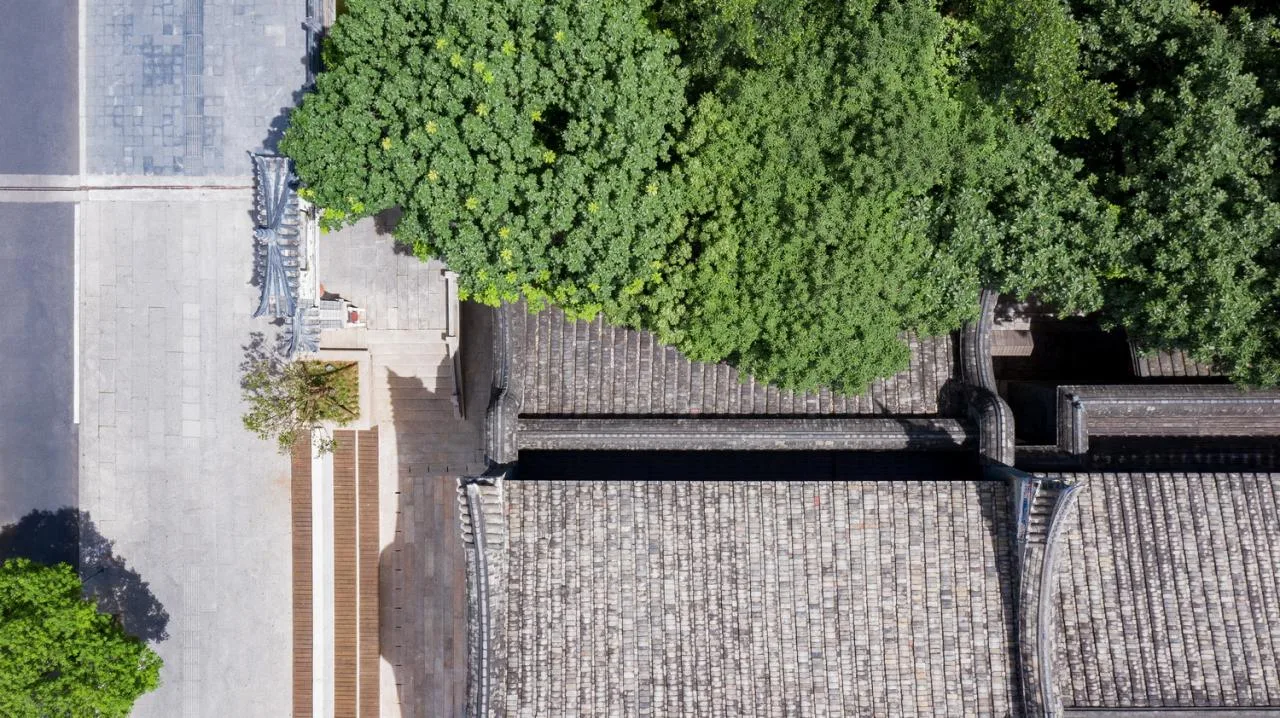
Zhuzifang is situated along the Antai River on Jintai Road in Fuzhou. Historically known as Sanqiao, it was once one of the moats surrounding Tang Dynasty’s Luocheng. During the Song Dynasty, Zhu Mingong, a prominent official, lived here. The four Zhu brothers all succeeded in the imperial examinations, with Zhu Ziying named in his honor. Today, Zhuzifang is recognized as a modern naval family hub and a gathering place for naval figures such as Sa Zhenbing, Sa Shijun, Fang Boqian, and Fang Ying.
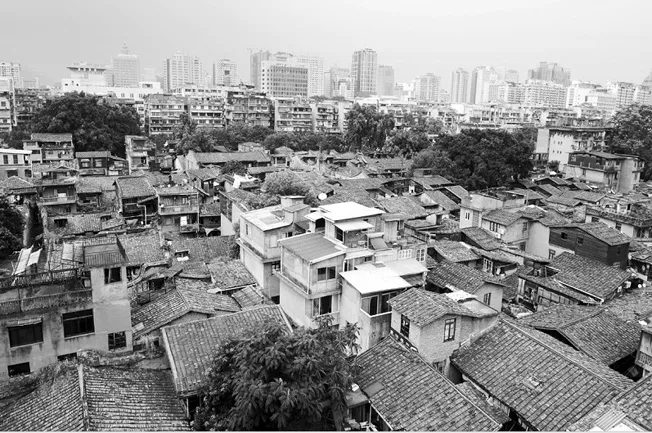
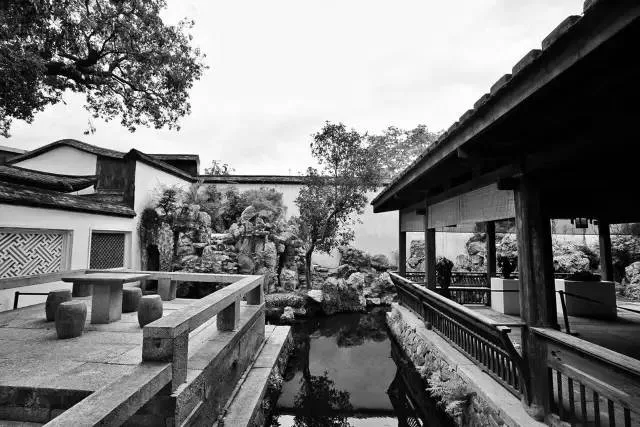
△ Historical original appearance of Zhuzifang (Image source: Internet)
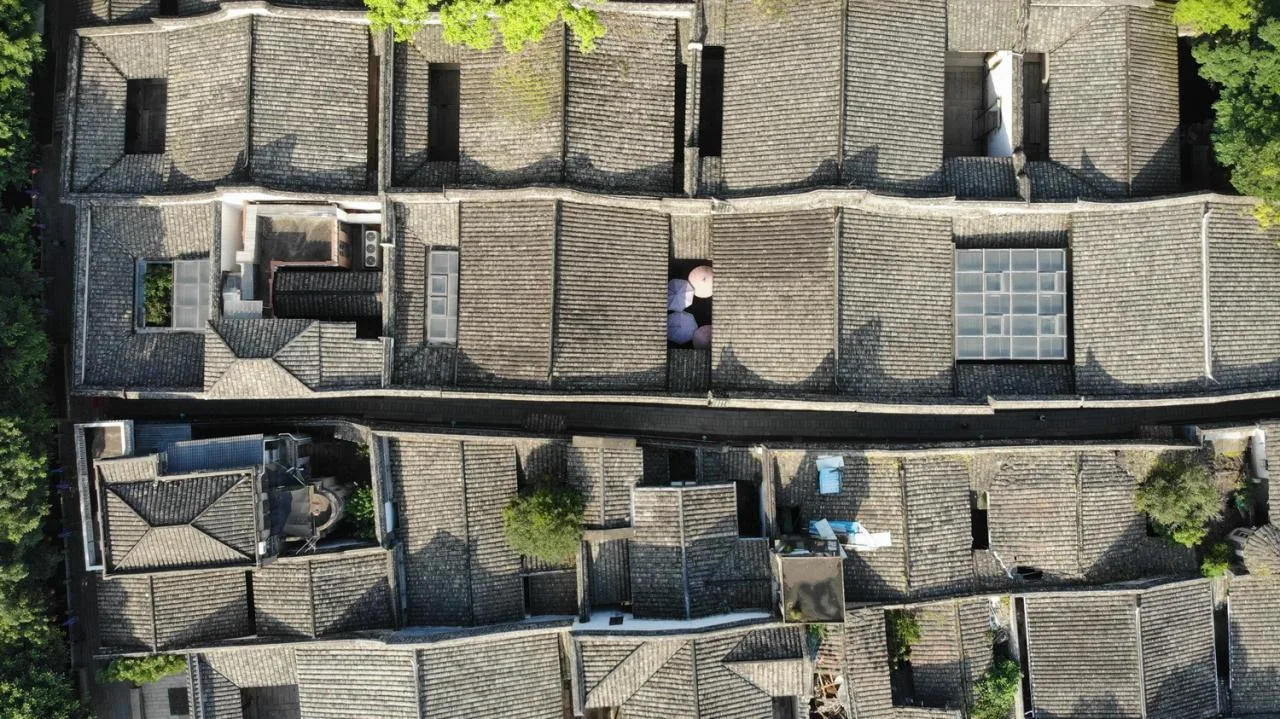
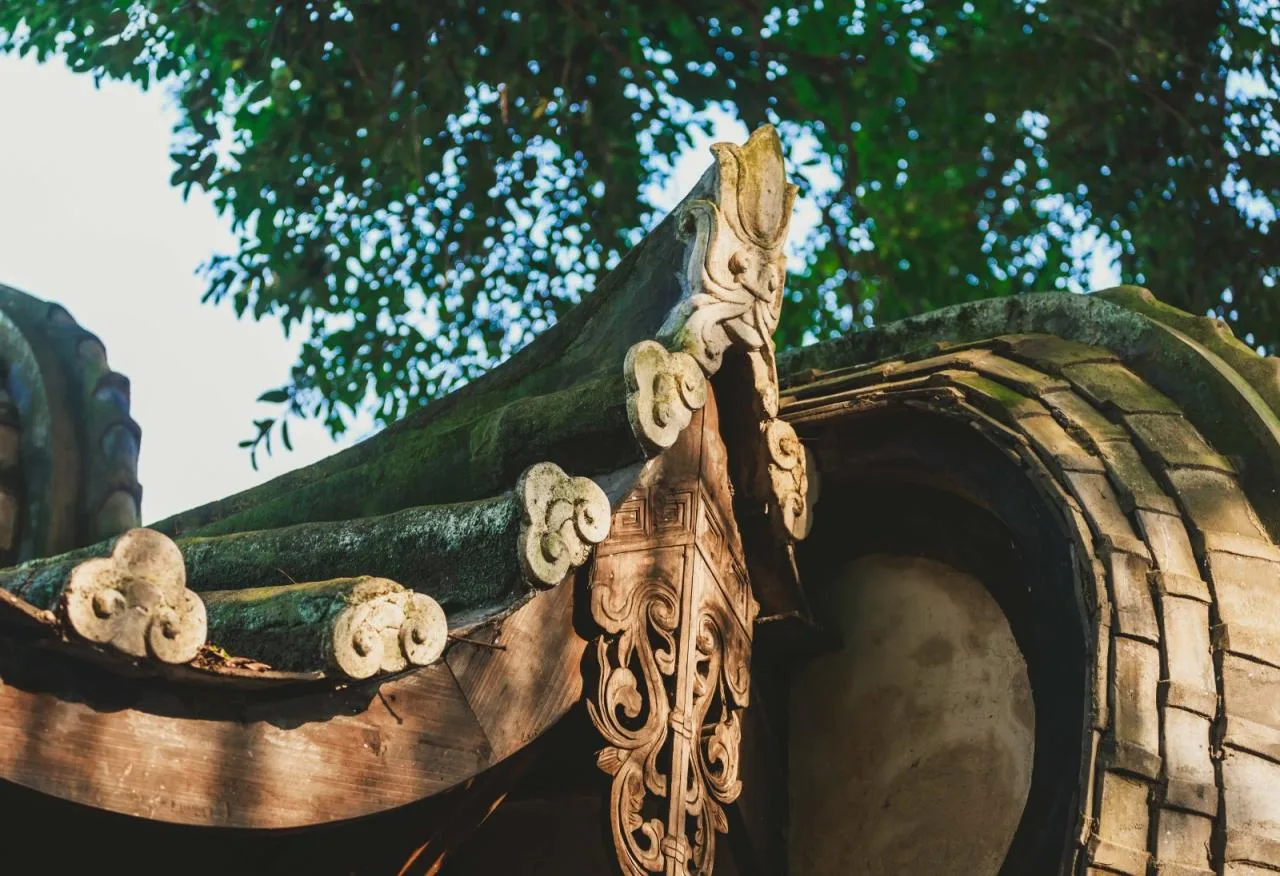
Architectural drawings of the restored Zhuzifang, courtesy of the project owner.
At the foot of the Three Mountains, nestled between two towers —
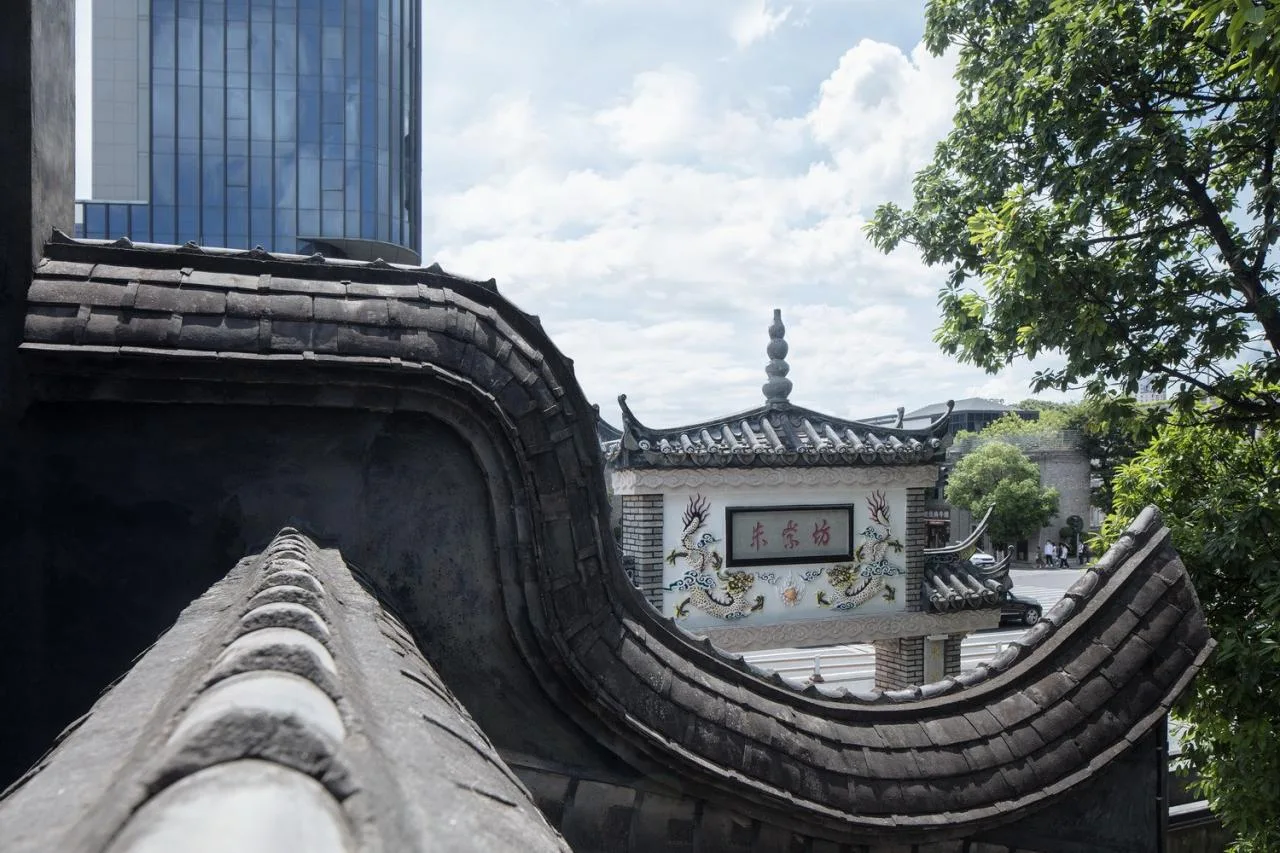
Zhuzifang faces the historic Sanfang and Qixiang ancient streets directly across, embodying Fuzhou’s thousand-year history and evoking nostalgia for the old city. The rich heritage has earned Zhuzifang the status of a nationally protected cultural relic site. Thanks to ongoing conservation and restoration efforts, this historic cultural district is reemerging as a lively neighborhood. This project proudly introduces the Zhuzifang Visitor Center to the public.
01 The Hub for Contemporary Lacquer Art
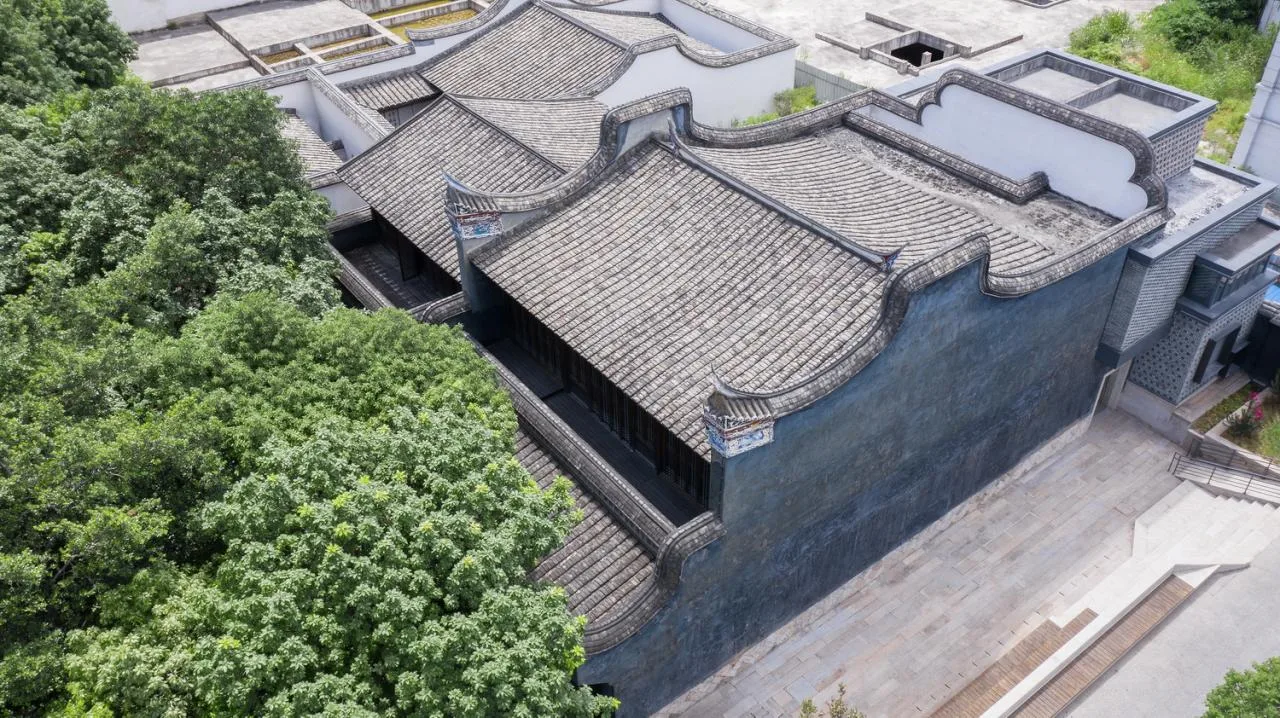
China is renowned for its lacquer culture, with Fuzhou as a central hub of lacquer art. The city’s legacy is deeply intertwined with the evolution of Chinese lacquer art—from the peak achievements of the Shen Shao’an family to Shen Fuwen’s establishment of lacquer studies in China, through the flourishing lacquer painting during the reform era, to contemporary expressions that blend modern art trends with traditional lacquer techniques. This synergy has ushered in a new era of lacquer language in China.
The master lacquer artist Shen Shao’an’s lacquer art museum is located within Zhuzifang’s Furong Garden, one of the largest and best-preserved classical gardens in the area. Zhuzifang’s lacquer culture has hosted the first and second International Lacquer Art Biennials, drawing over 180 artists from nine countries—including China, the U.S., Germany, France, Australia, and Japan—with nearly 300 artworks under the theme “New Era, New Lacquer Realm.” Reflecting on its history and present, Zhuzifang’s cultural mission continues to evolve.
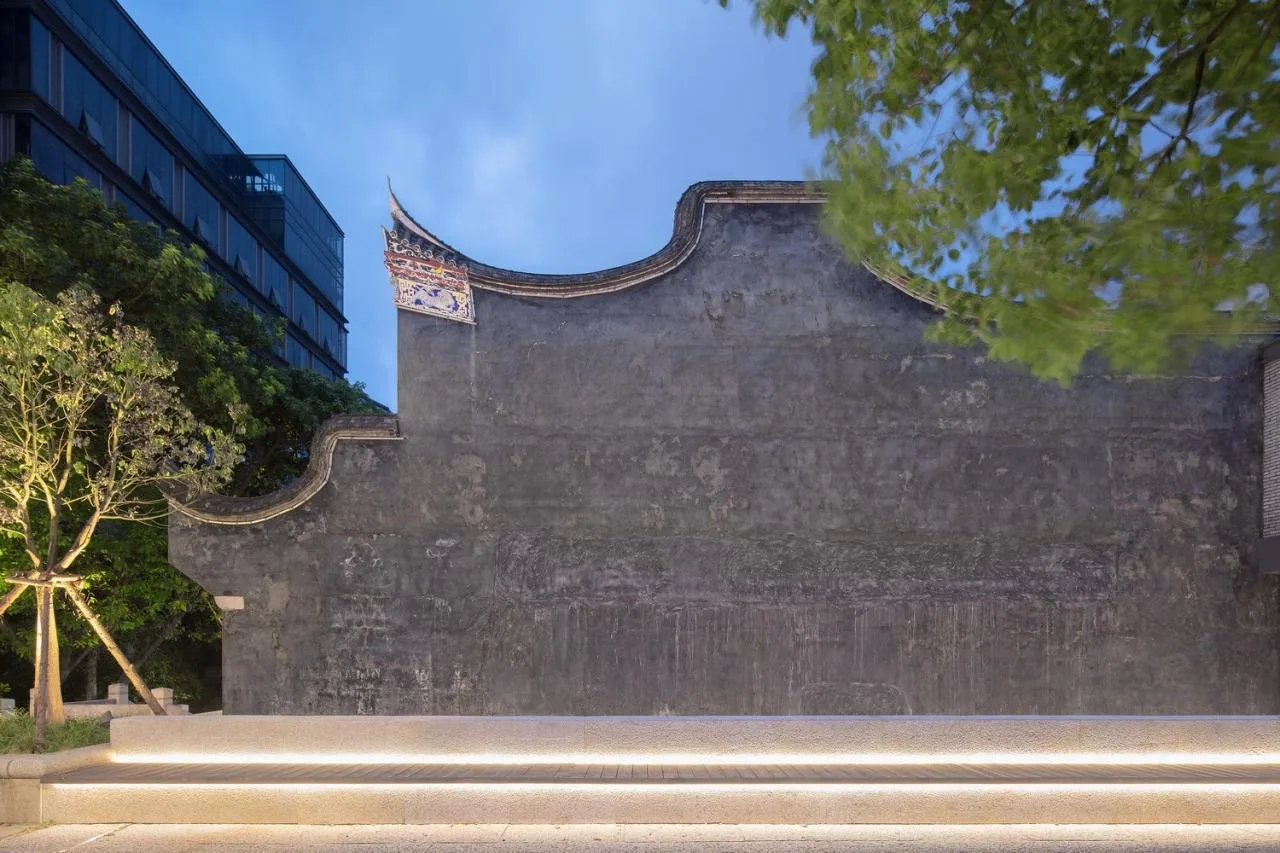
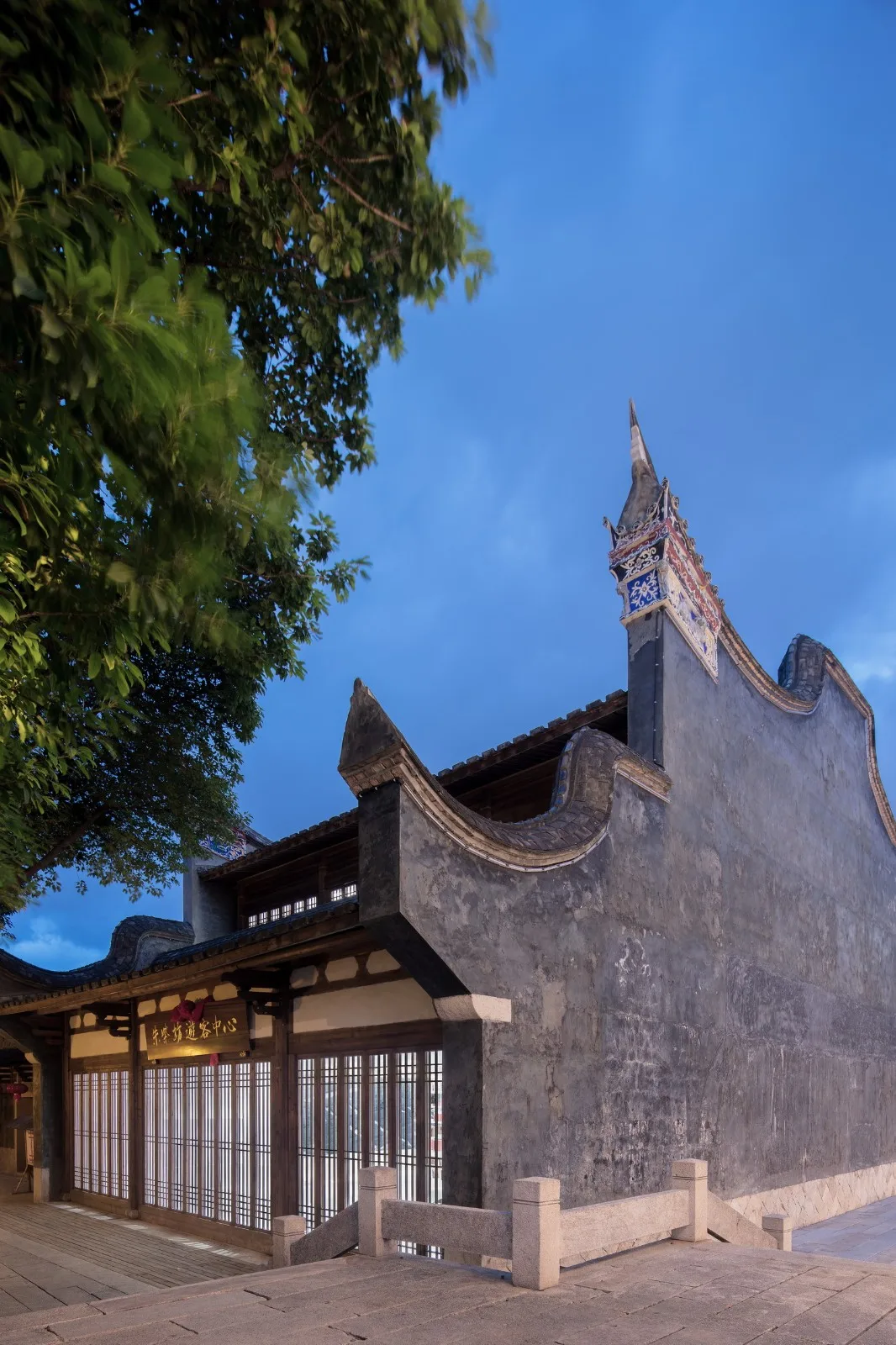
When initially approached with this project, the designer pondered whether the visitor center in the historic district had to adopt a traditional look. The goal was to create a fresh appearance. The site faces busy traffic, fluctuating sunlight, parked cars between the main road and surrounding commercial streets, and a colorful array of commercial signs alongside the building’s glass curtain wall.
This context inspired a design that contrasts with its surroundings: the building’s white exterior walls, interplay of light and shadow, and vertical “walking beams” are visible from every angle. The white curtain wall replaces the previous smoky gray facade, while layered brick and tile walls, vertical metal pipes, and shifting light beams create dynamic visual interest for passersby.
The building’s front square, the only recessed plaza along this main street, acts as a welcoming “coat” for the structure. However, due to the area’s historic protection status, only the curtain wall and the inward-sloping plaza and wall along the road have been realized, following extensive discussions with local authorities.
02 Redefining the Visitor Center
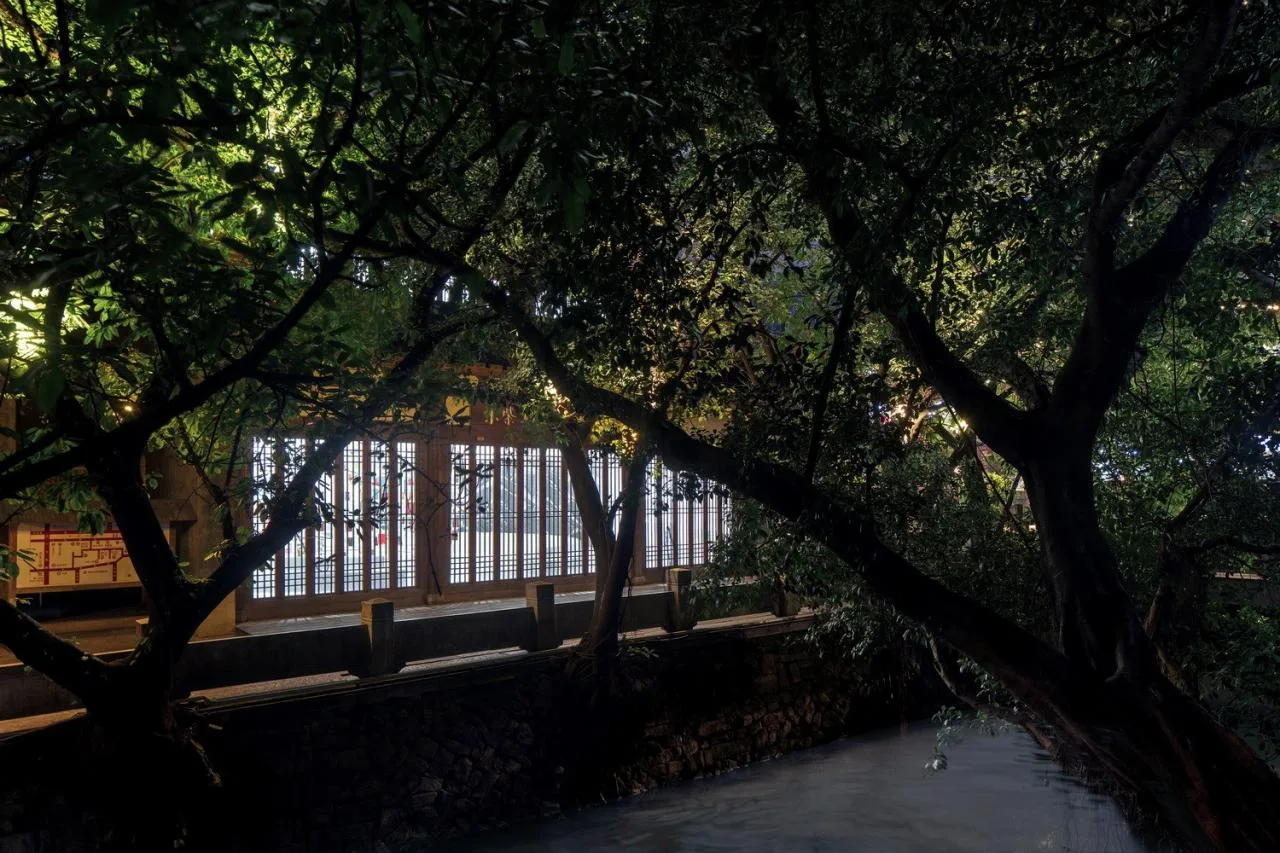
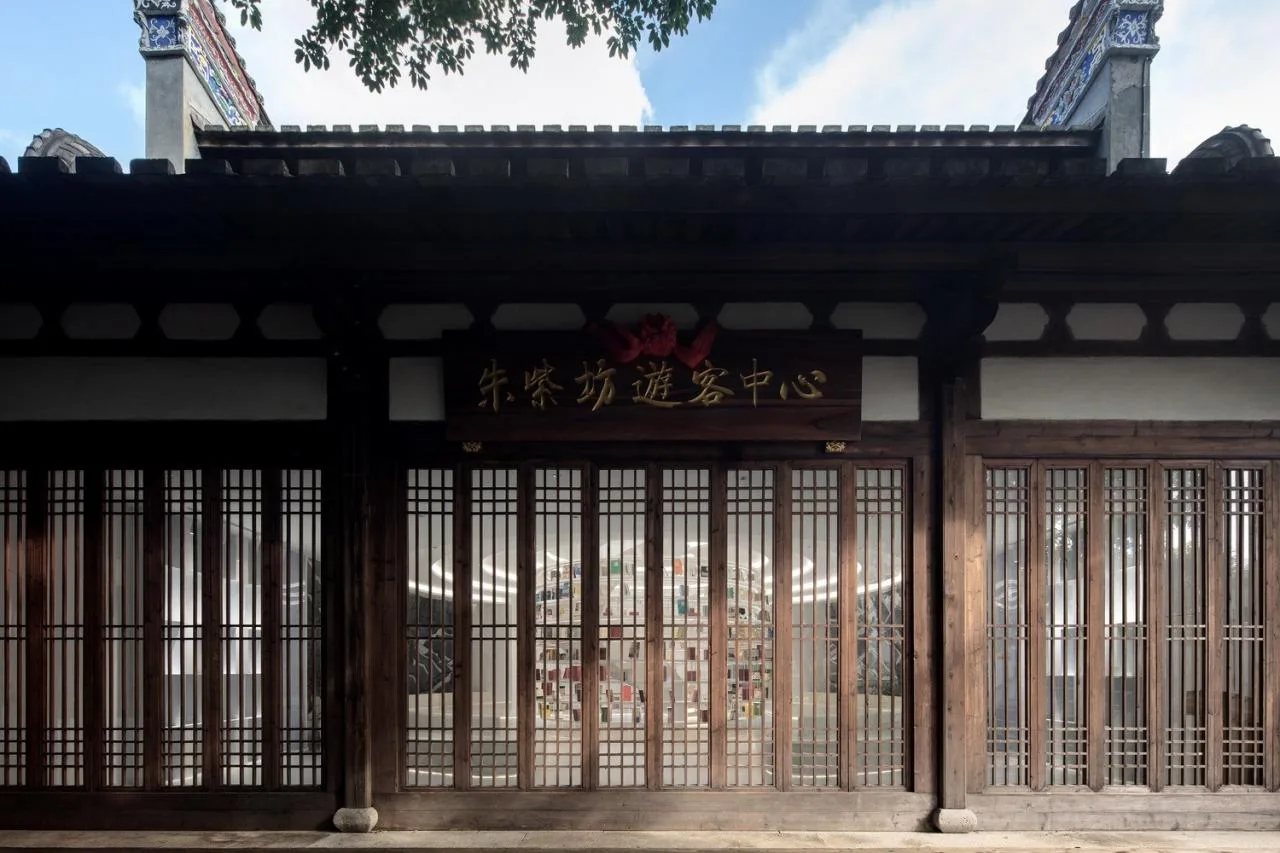
We have reimagined and expanded the role of the visitor center beyond typical tourist functions found in A-level scenic spots.
The design centers on people, using simple yet refined techniques that remove unnecessary decoration, revealing layers and subtleties within a minimalist aesthetic.
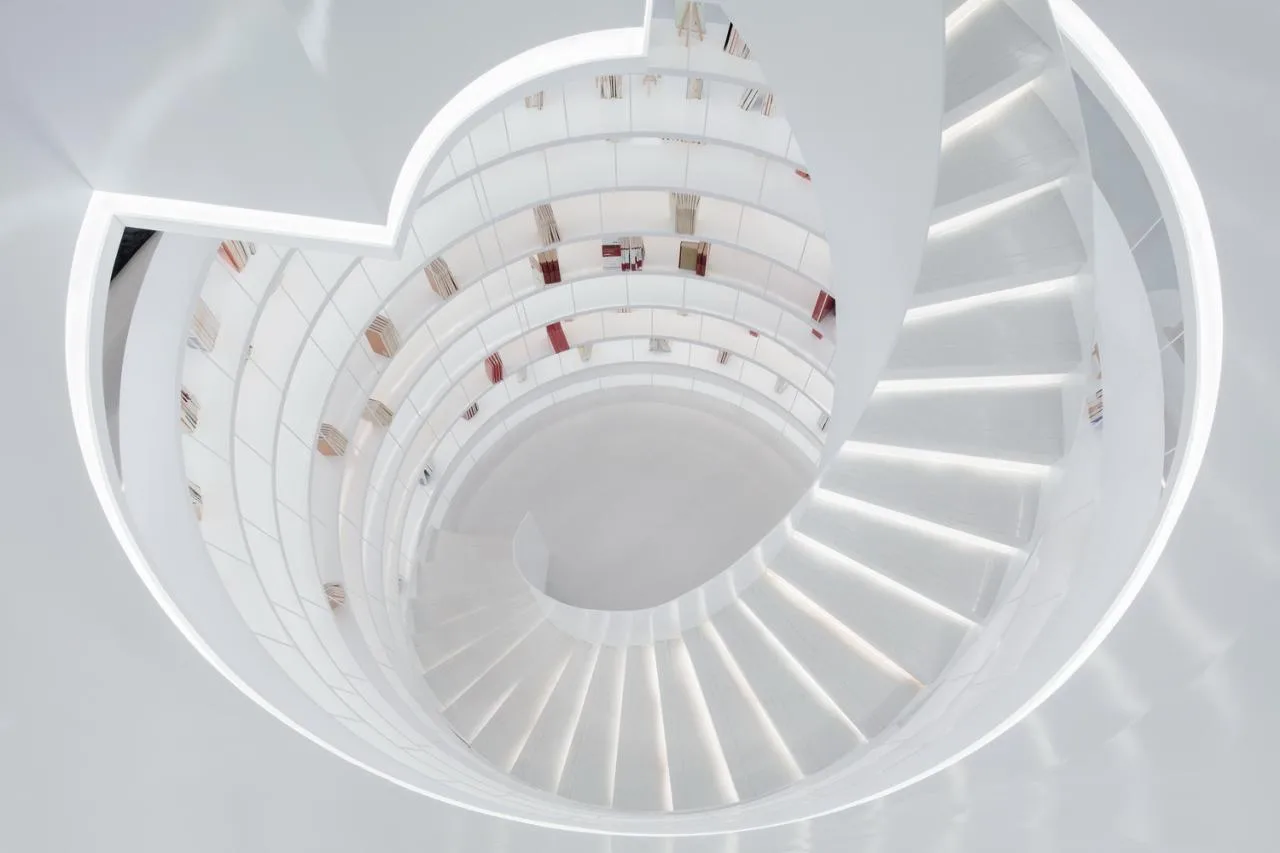
Many urban public spaces today lack genuine openness, often designed in ways that create distance and hesitation among visitors. The two circular benches around the central staircase evoke childhood memories of cooling off benches at entrances, encouraging visitors to sit side by side and overcome unfamiliarity. Similarly, large benches in the outdoor plaza foster closeness, cultural exchange, and maximize public space usage.
03 Embracing Local Urban Culture
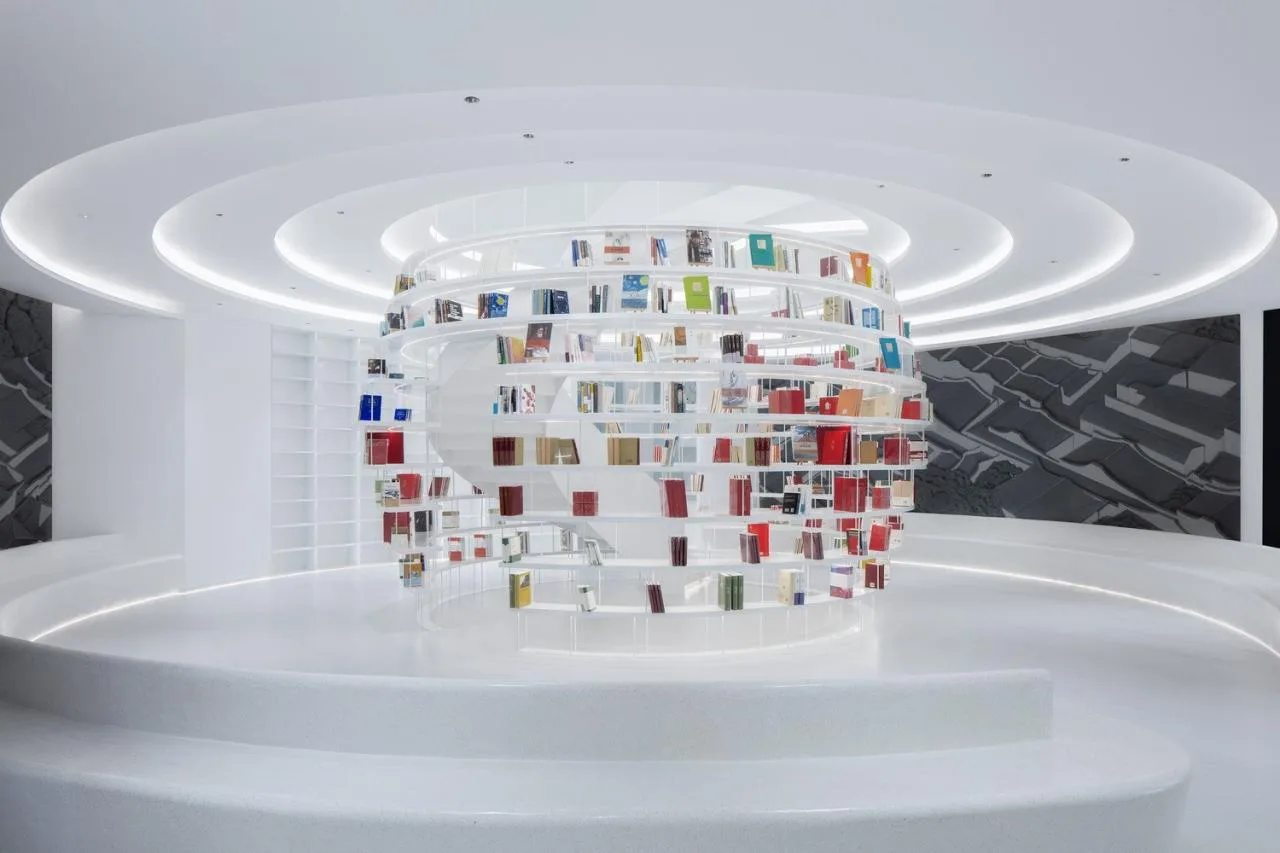
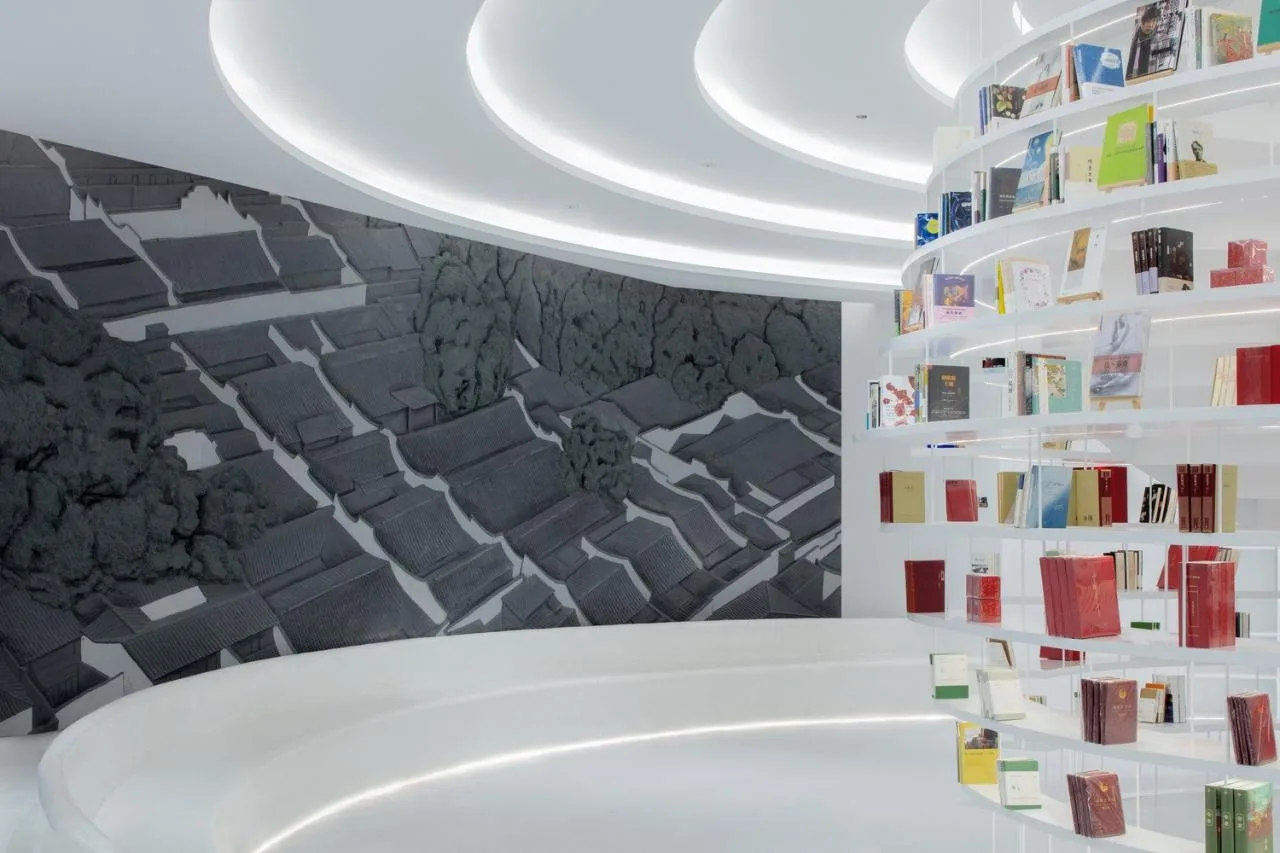
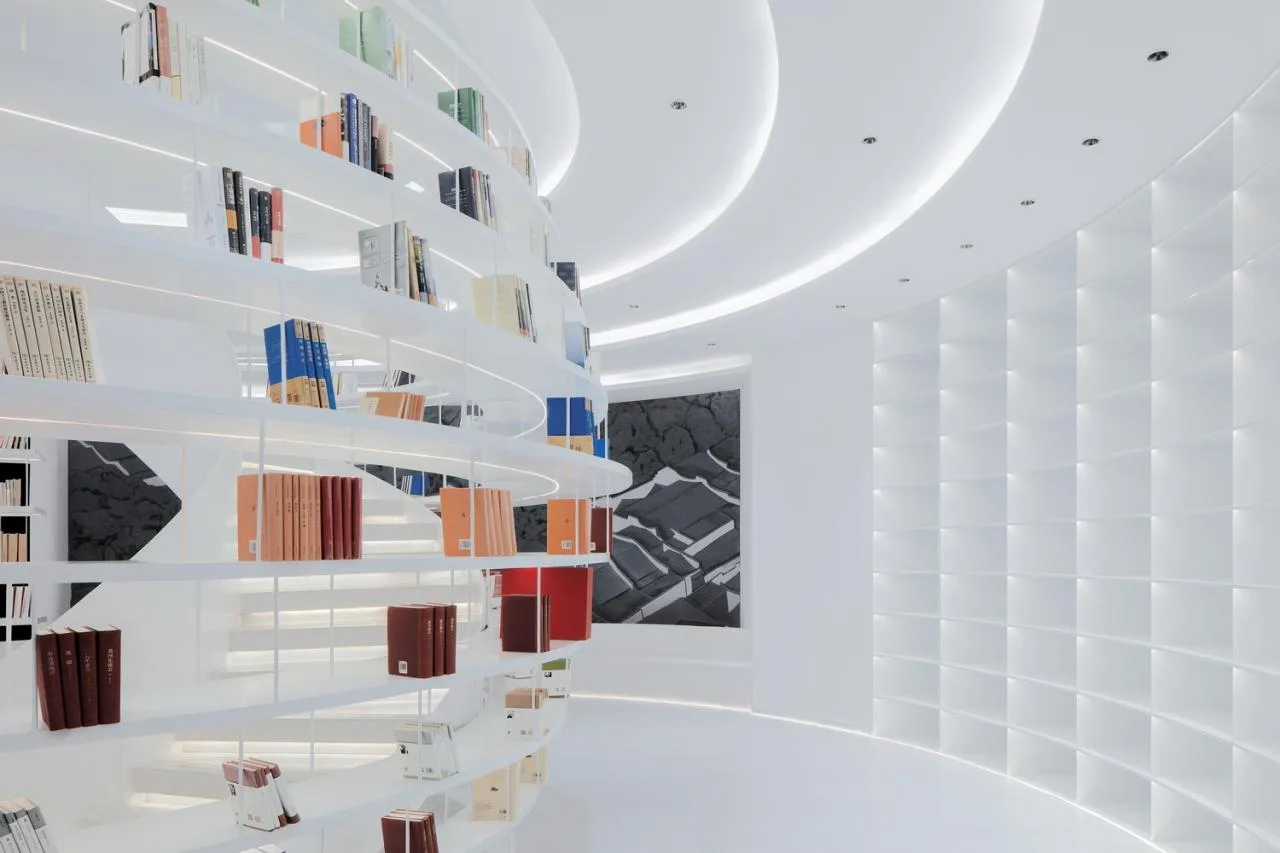
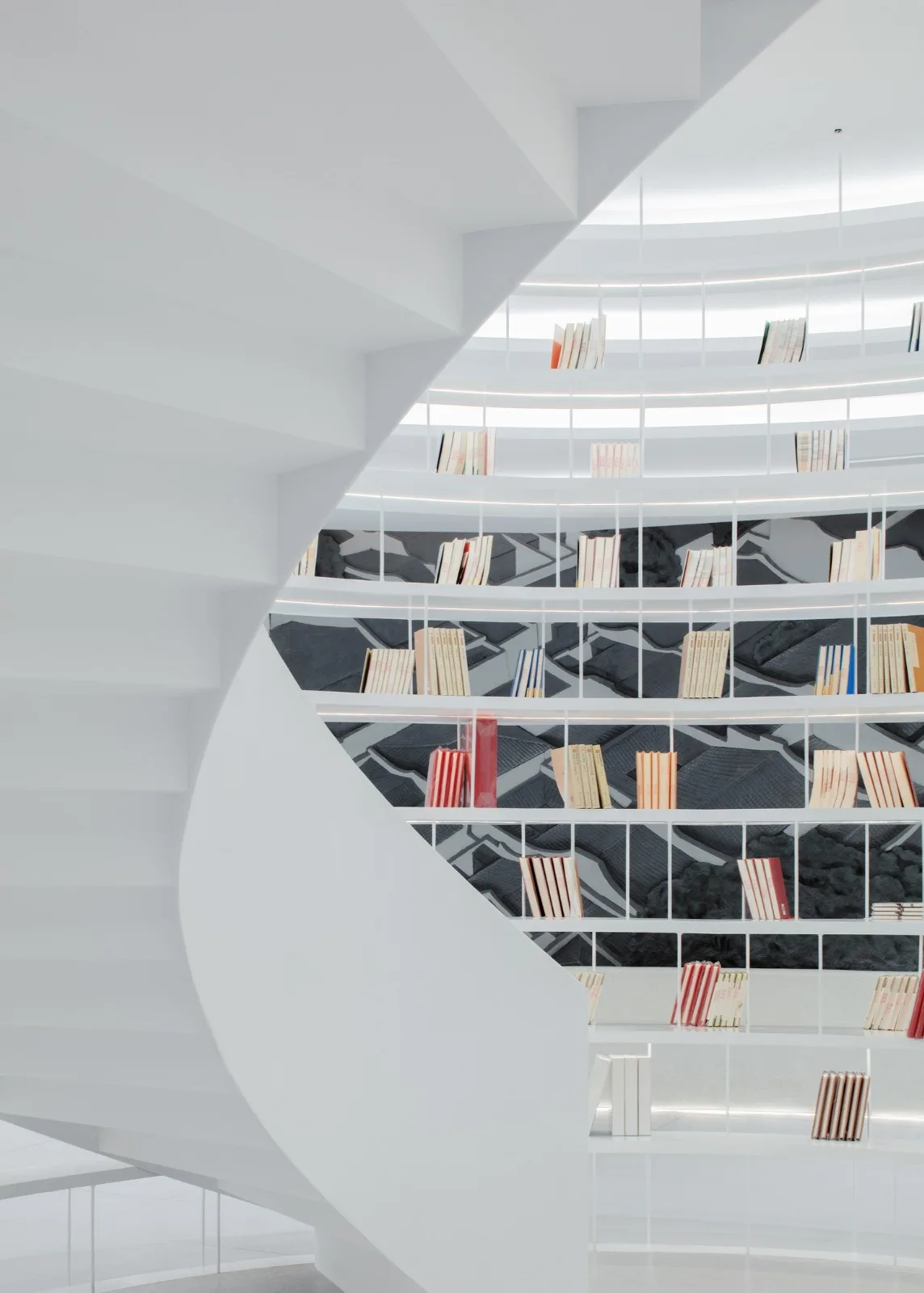
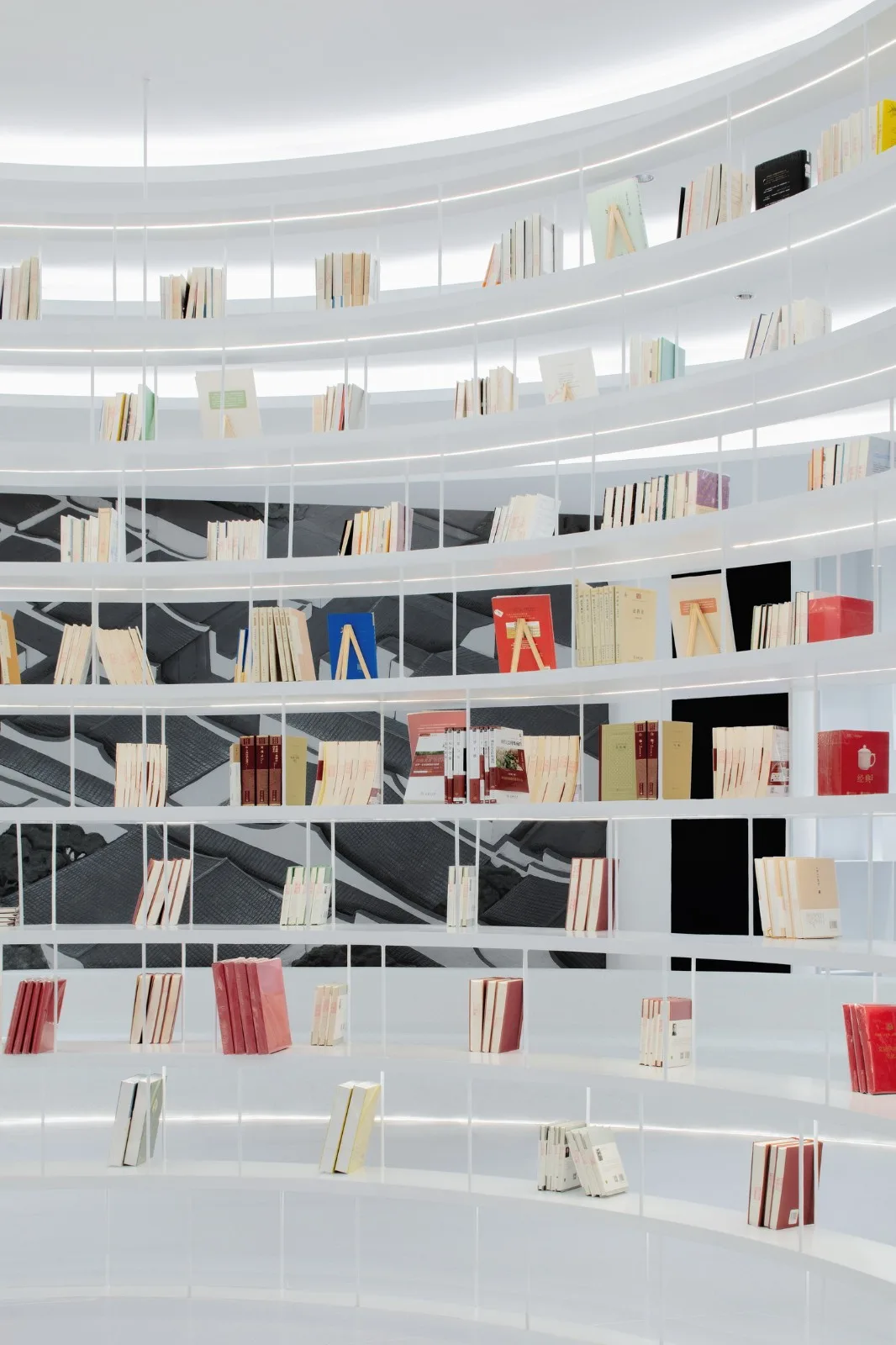
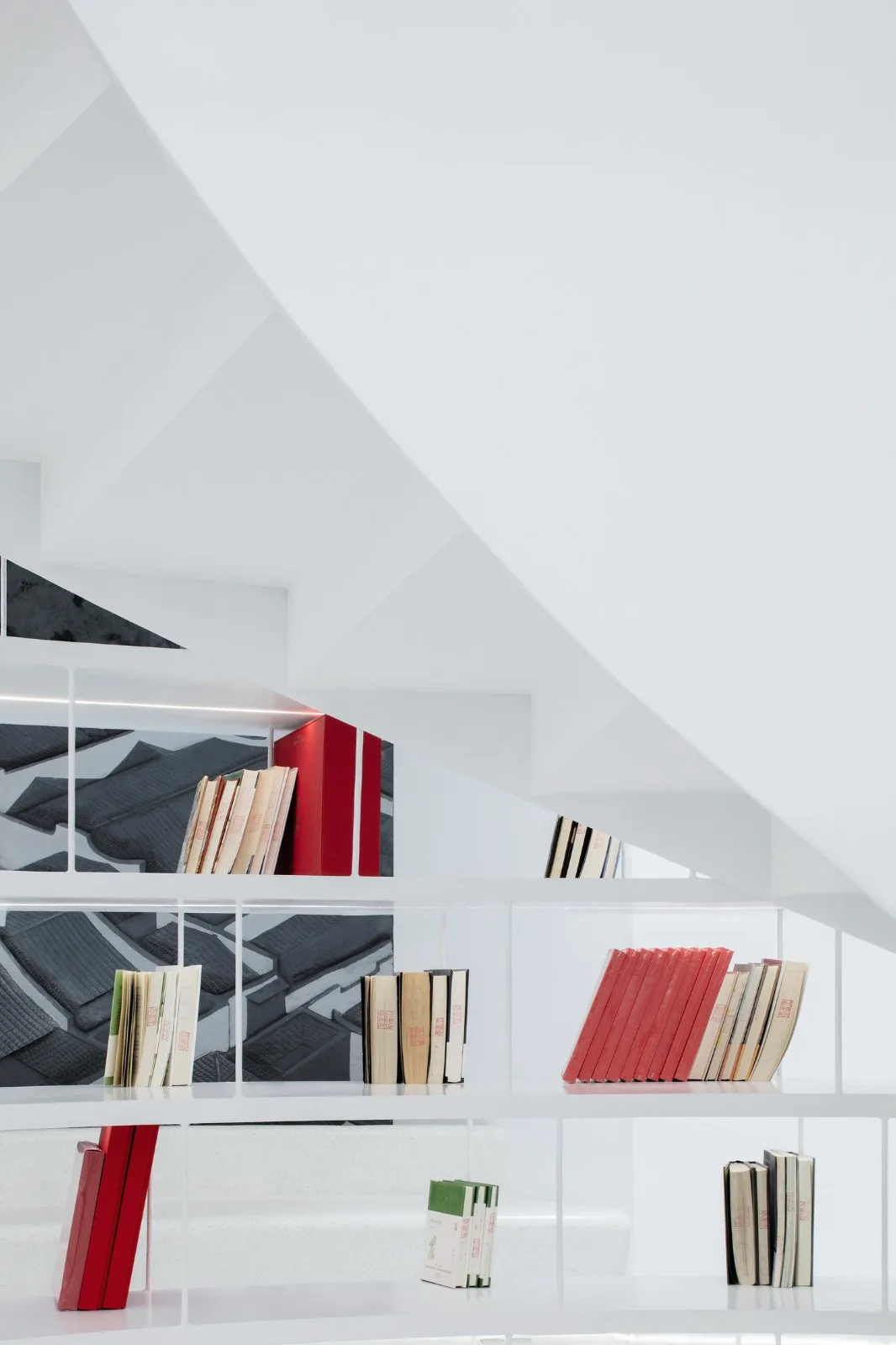
The building stands at the intersection of Antai River and a large banyan tree-lined road. The main entrance leads through the Antai River, and through the traditional grid gate, the interior layout is subtly visible. The building exudes a quiet and humble character.
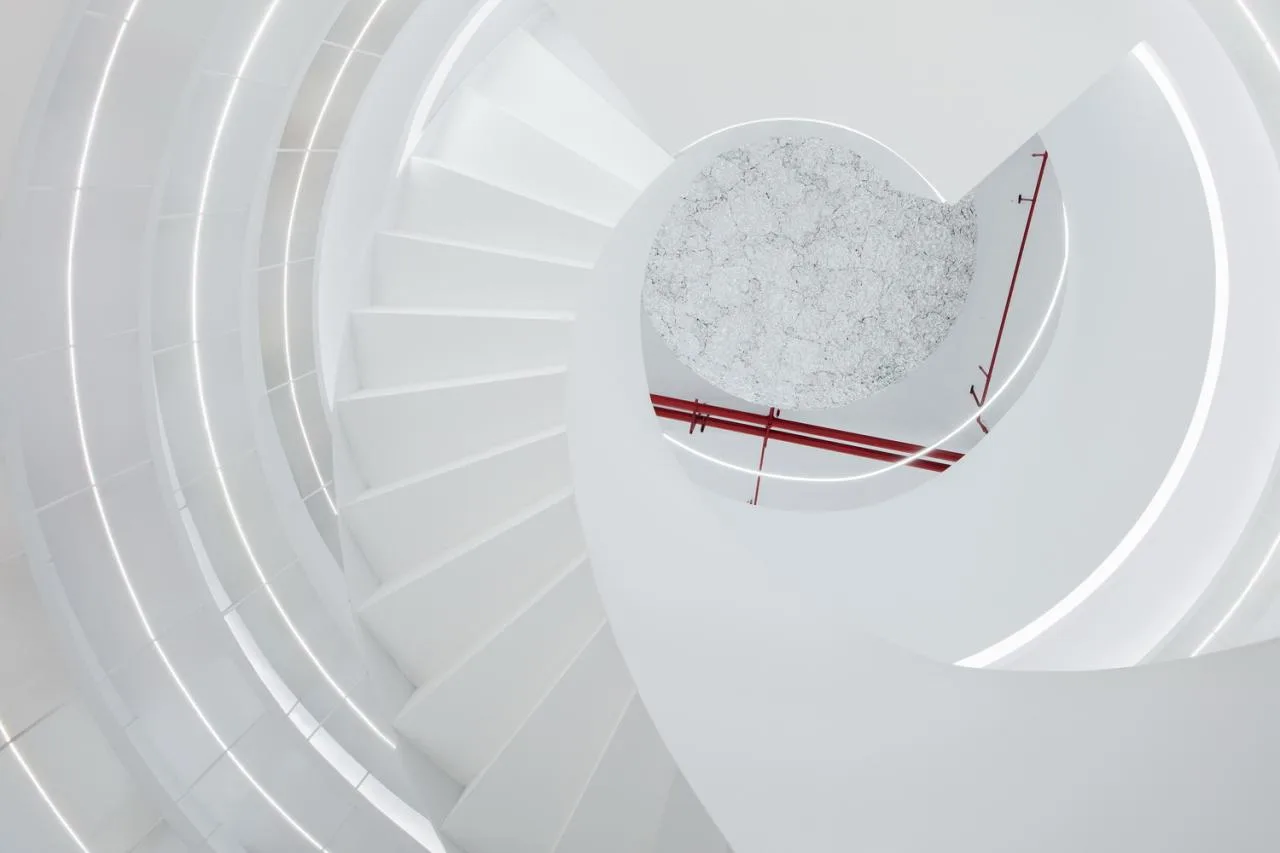
Inside, a large white spherical sculpture dominates the space, with “white” as the primary color theme. This contrasts sharply with the gray exterior walls of the ancient buildings. The interior features white metal, white walls, beige epoxy terrazzo flooring, and glass, creating a striking visual harmony. The “touch of white” throughout highlights the gray wall reliefs that overlook the San Fang Qi Xiang architectural complex.
This design creates opportunities to blend historic architecture with contemporary spaces, enhancing visitors’ spatial experience through visual guidance.
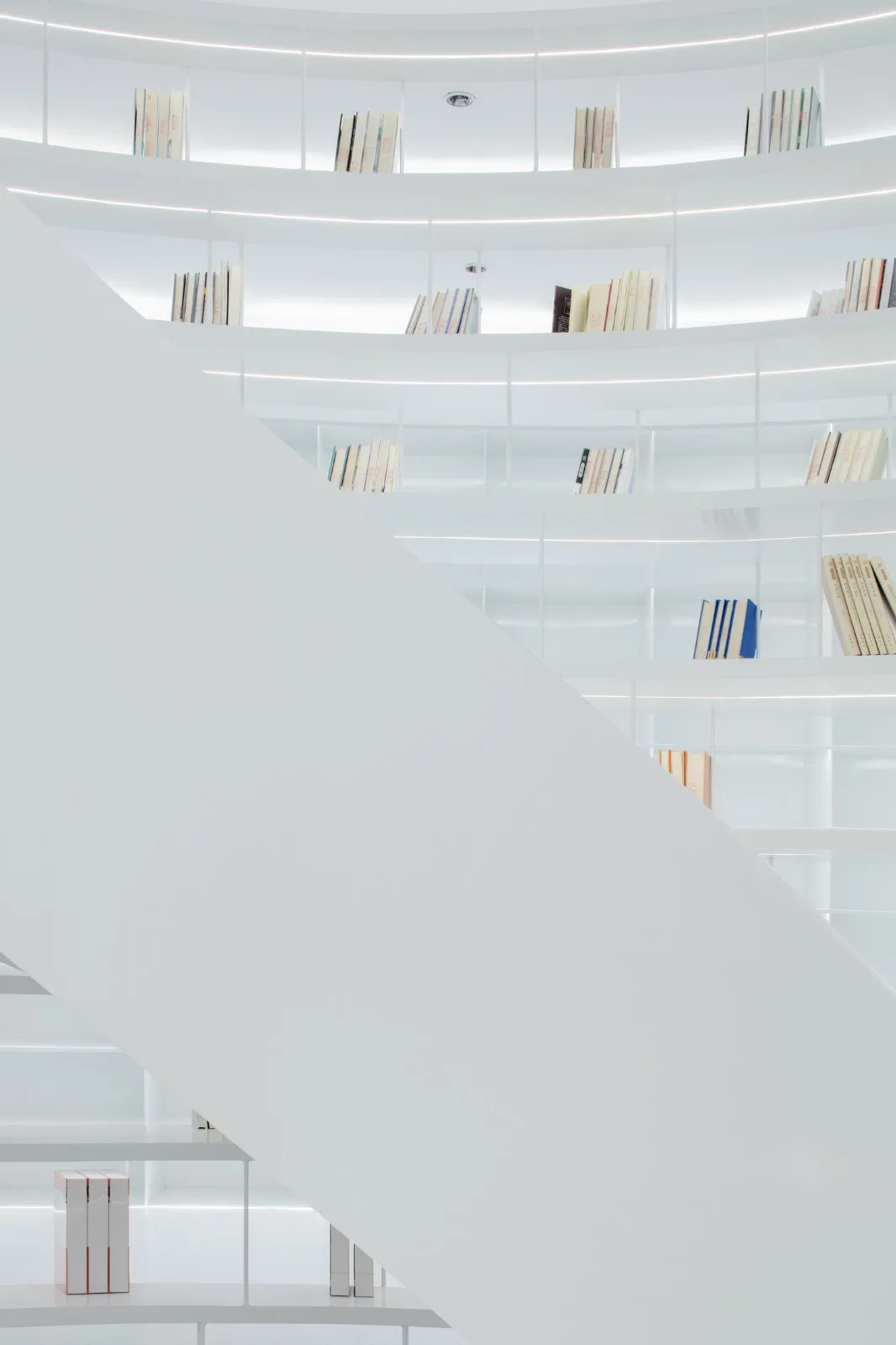
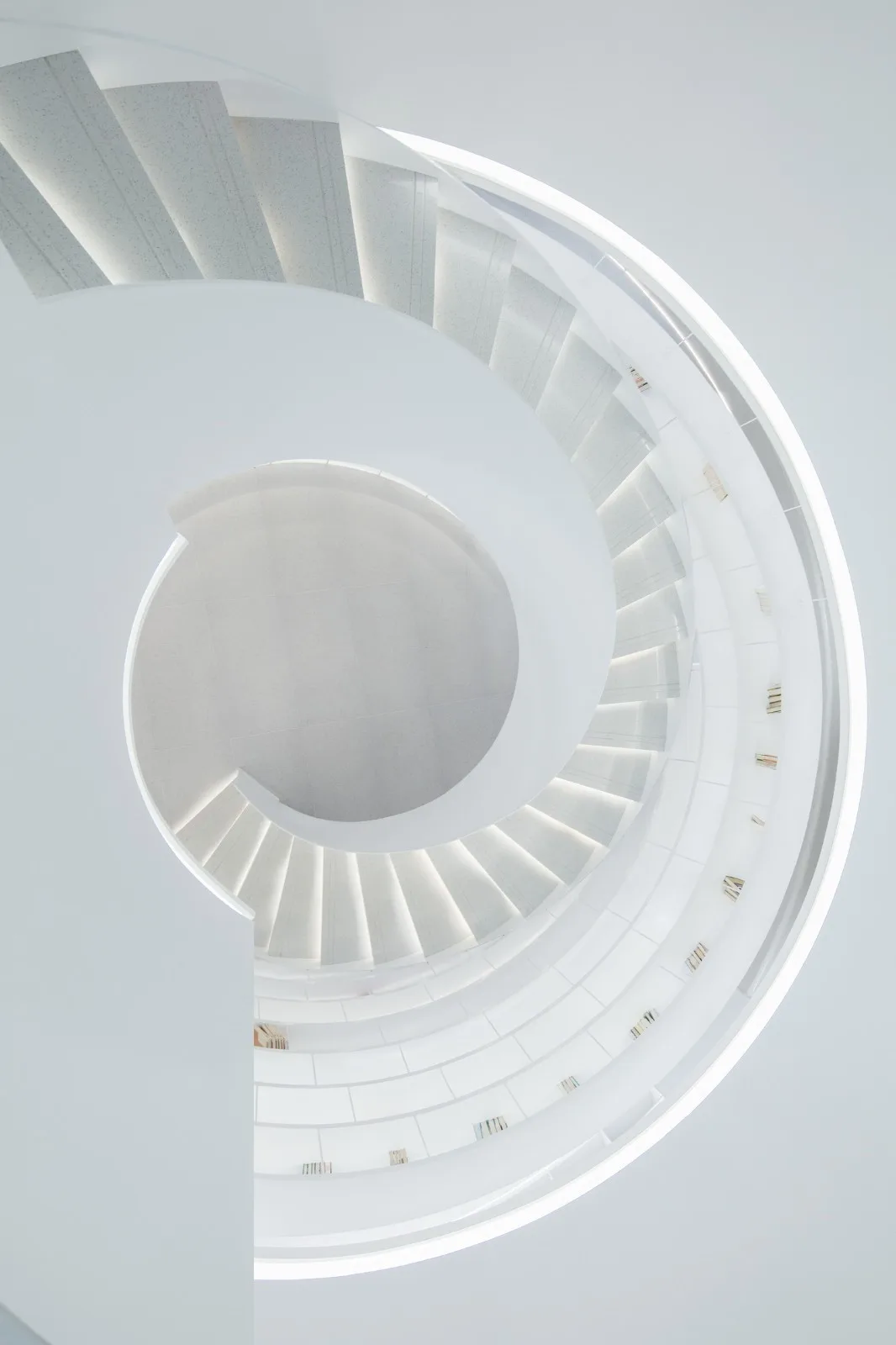
The relationship between space and form is the essence of architectural art and science. — I.M. Pei
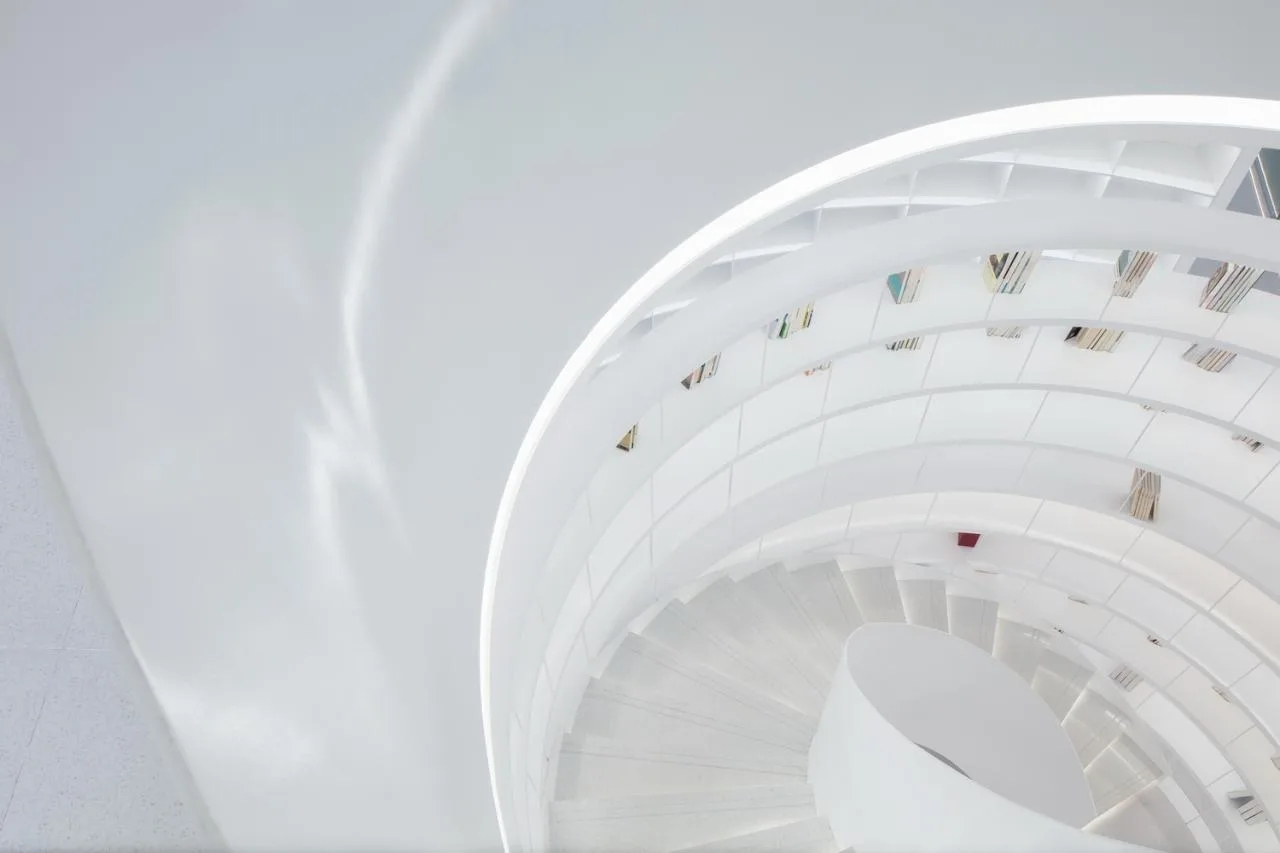
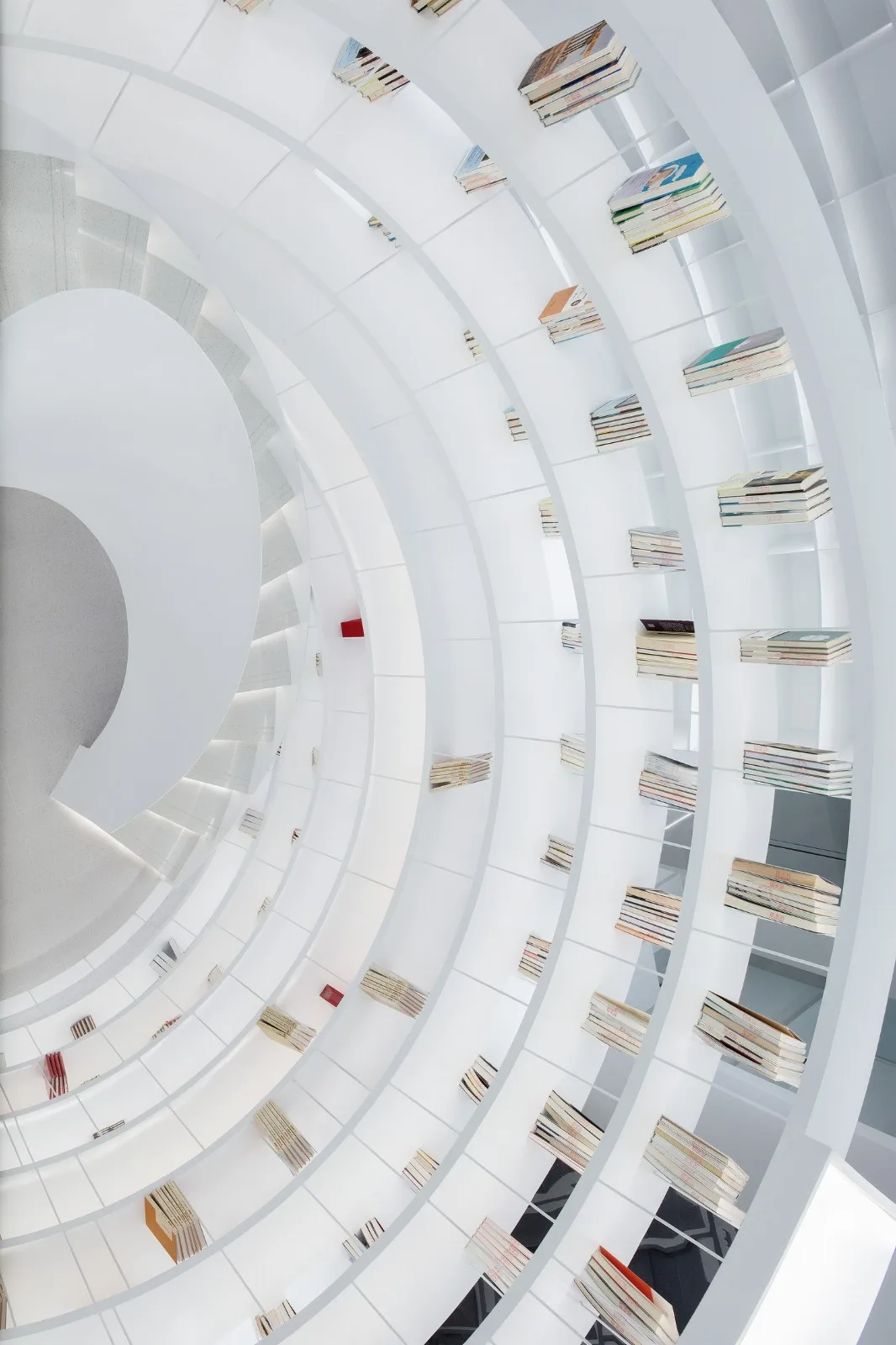
Due to the limited single-story floor area, functional rooms and offices are positioned at the rear of the floor plan to reserve the largest possible public space for visitors. This layout meets all requirements for an A-level scenic spot visitor center while achieving the desired design effect. The spherical staircase also serves exhibition purposes, showcasing historical cultural and creative products across the second floor. This transforms the space from a flat plane into a three-dimensional facade. Combined with spherical shelves displaying cultural books, lacquerware, and artworks, it resembles a magical orb inviting visitors to explore art and knowledge freely.
A circular core is carved out of the limited flat space to gather people centrally, breaking down architectural boundaries and returning to the social essence of open spatial design. This also maximizes natural light and shadows indoors. The afternoon sun streaming through the traditional grid gate onto the white ridge wall blurs the lines between past and present, merging history and space seamlessly.
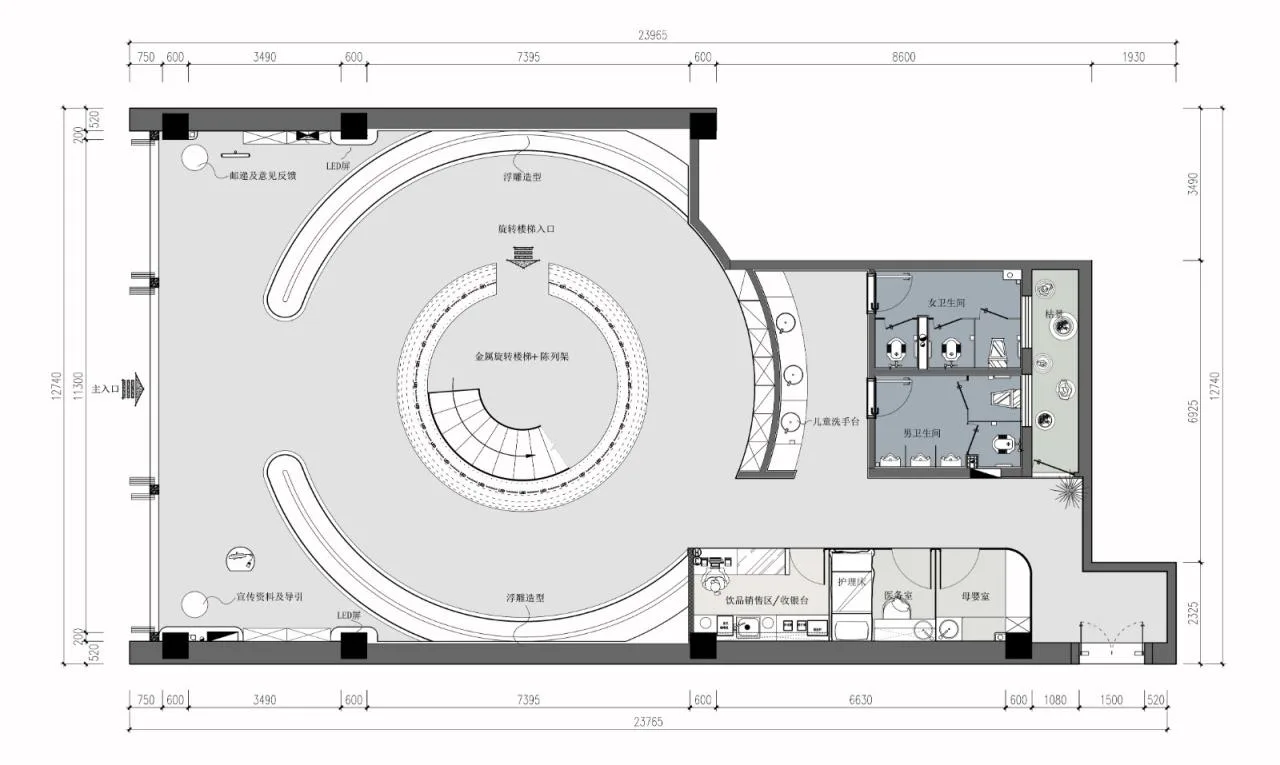
△ First floor plan
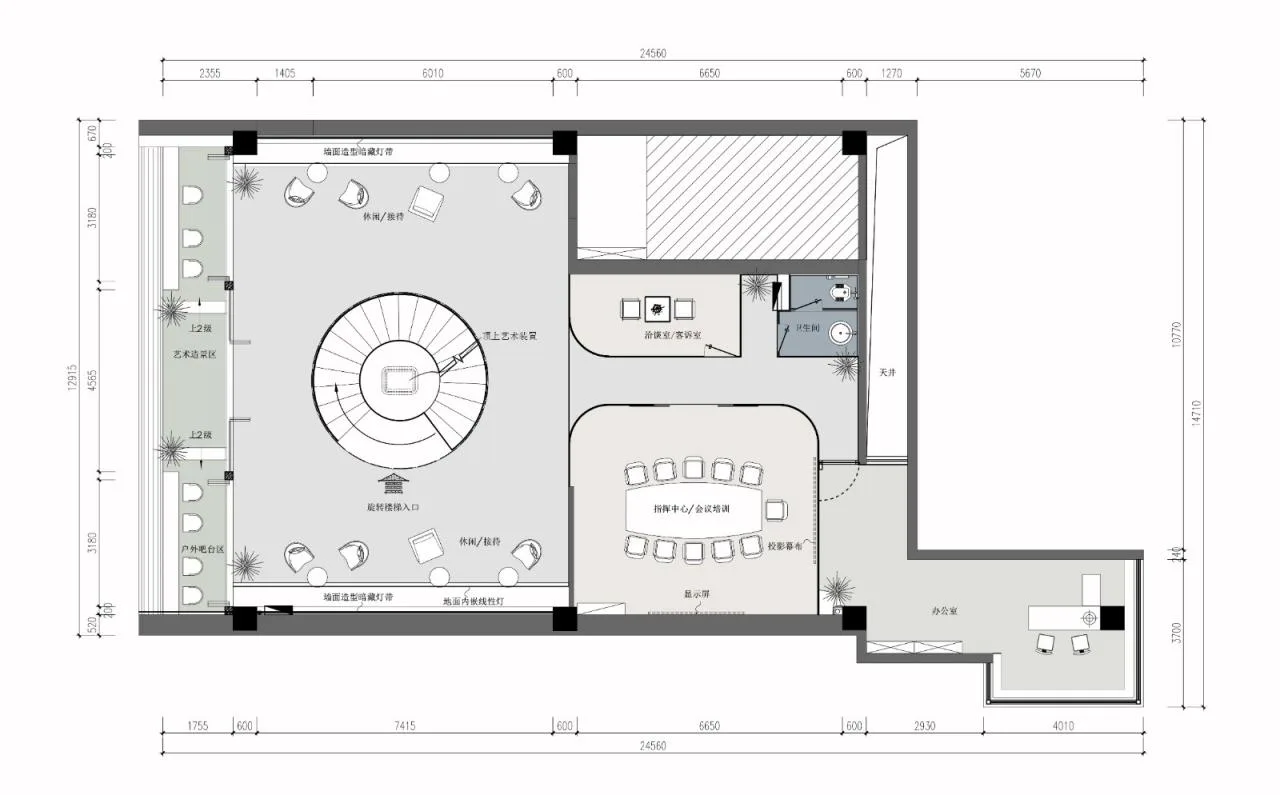
△ Second floor plan

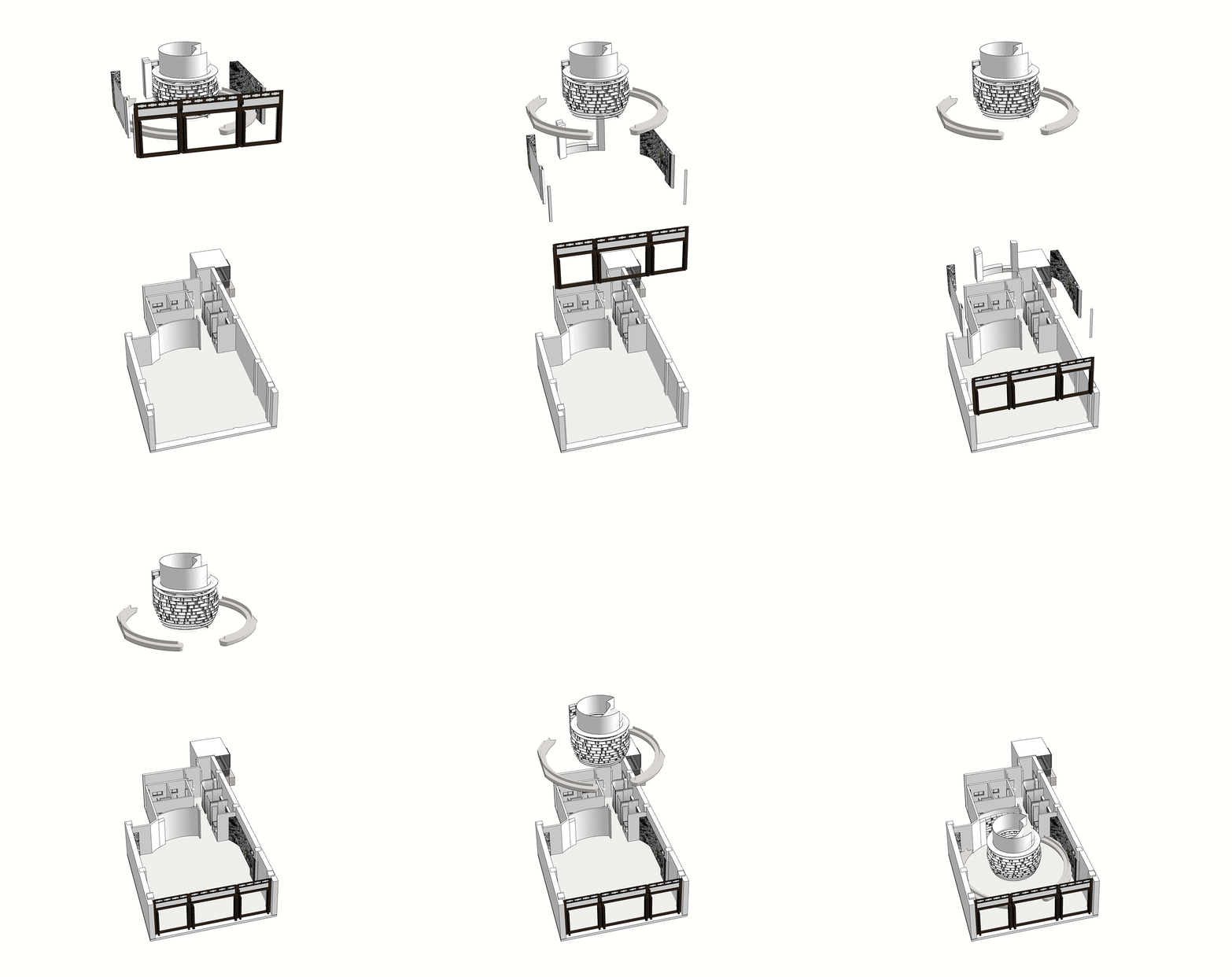
△ Spatial axonometric view
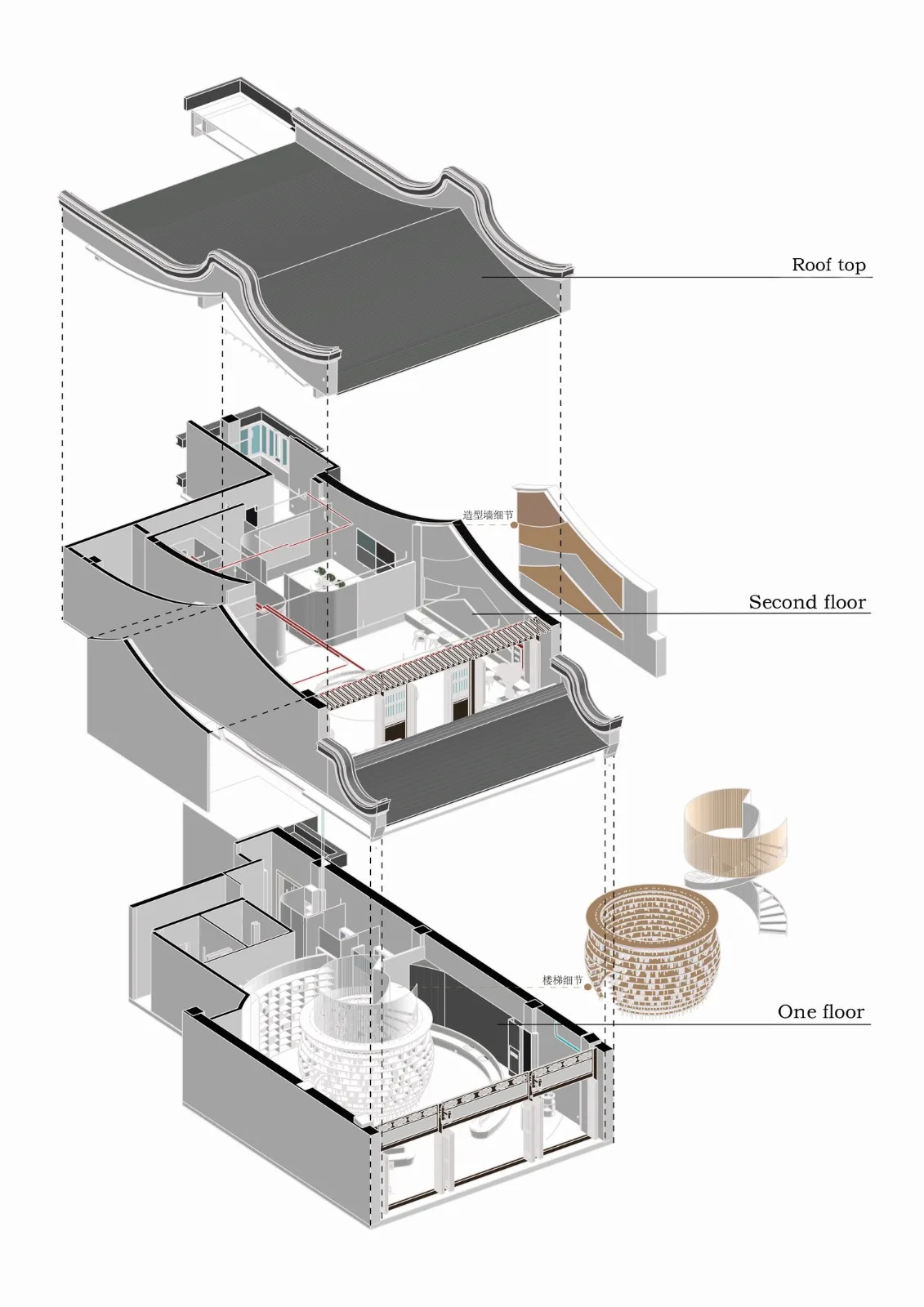
△ Exploded diagram
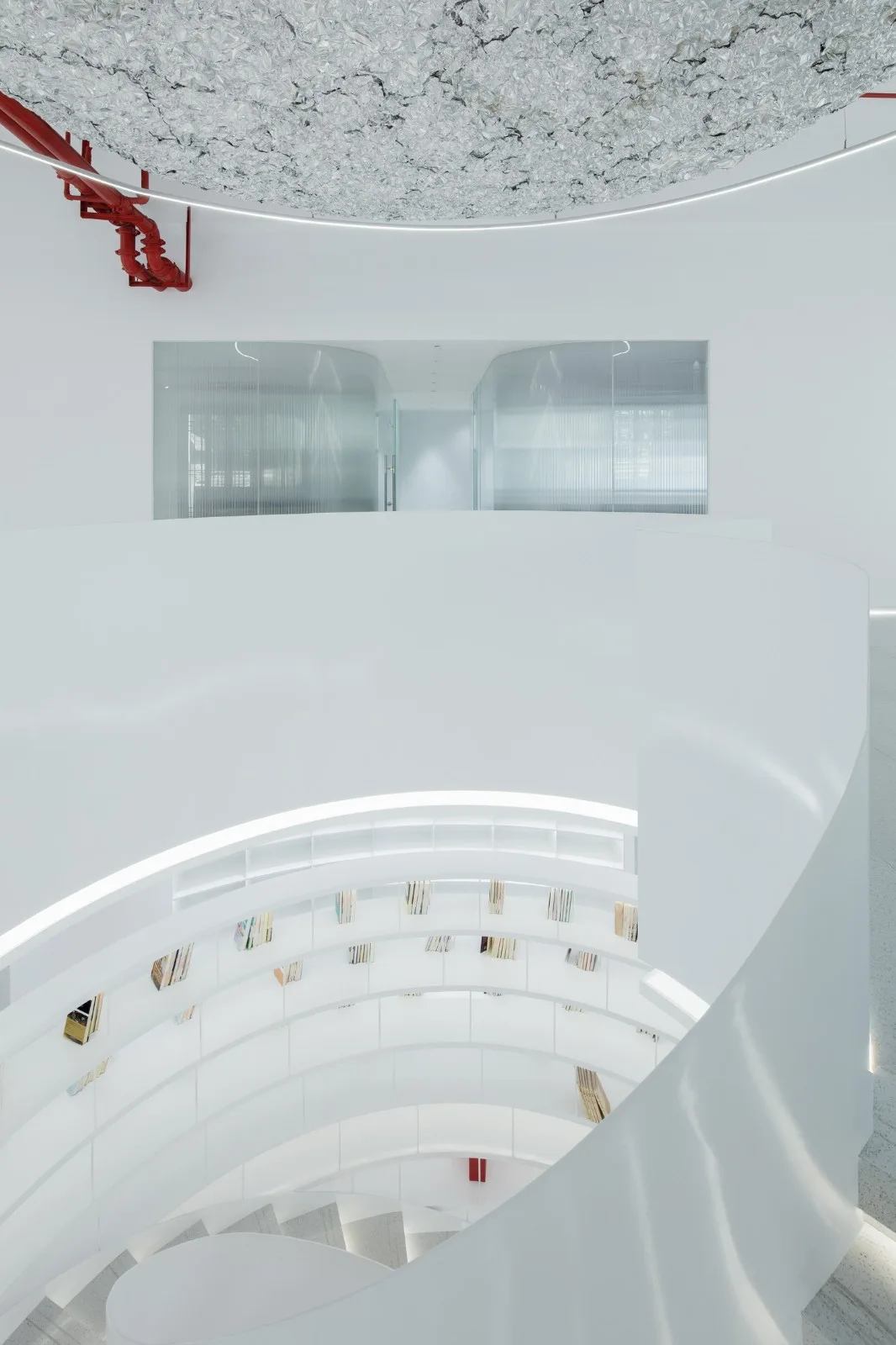
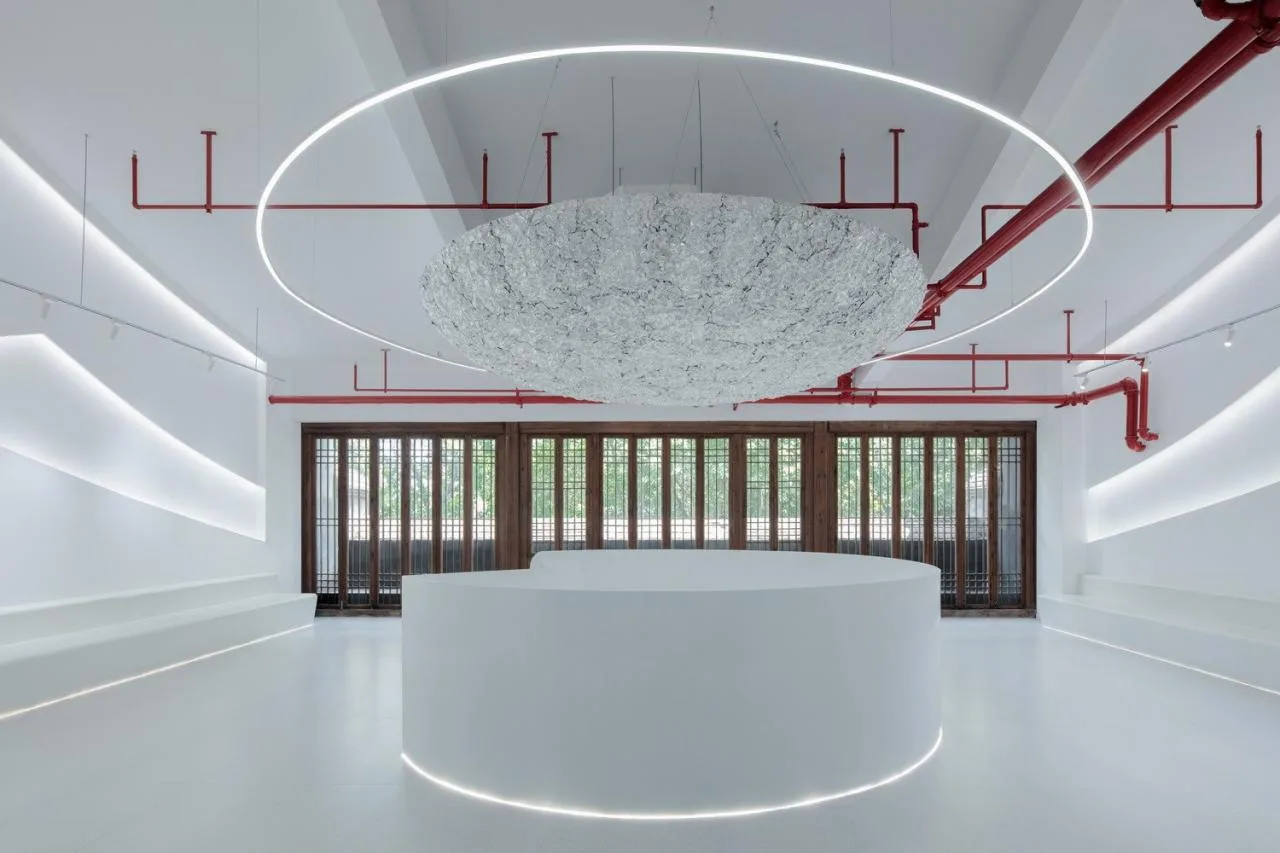
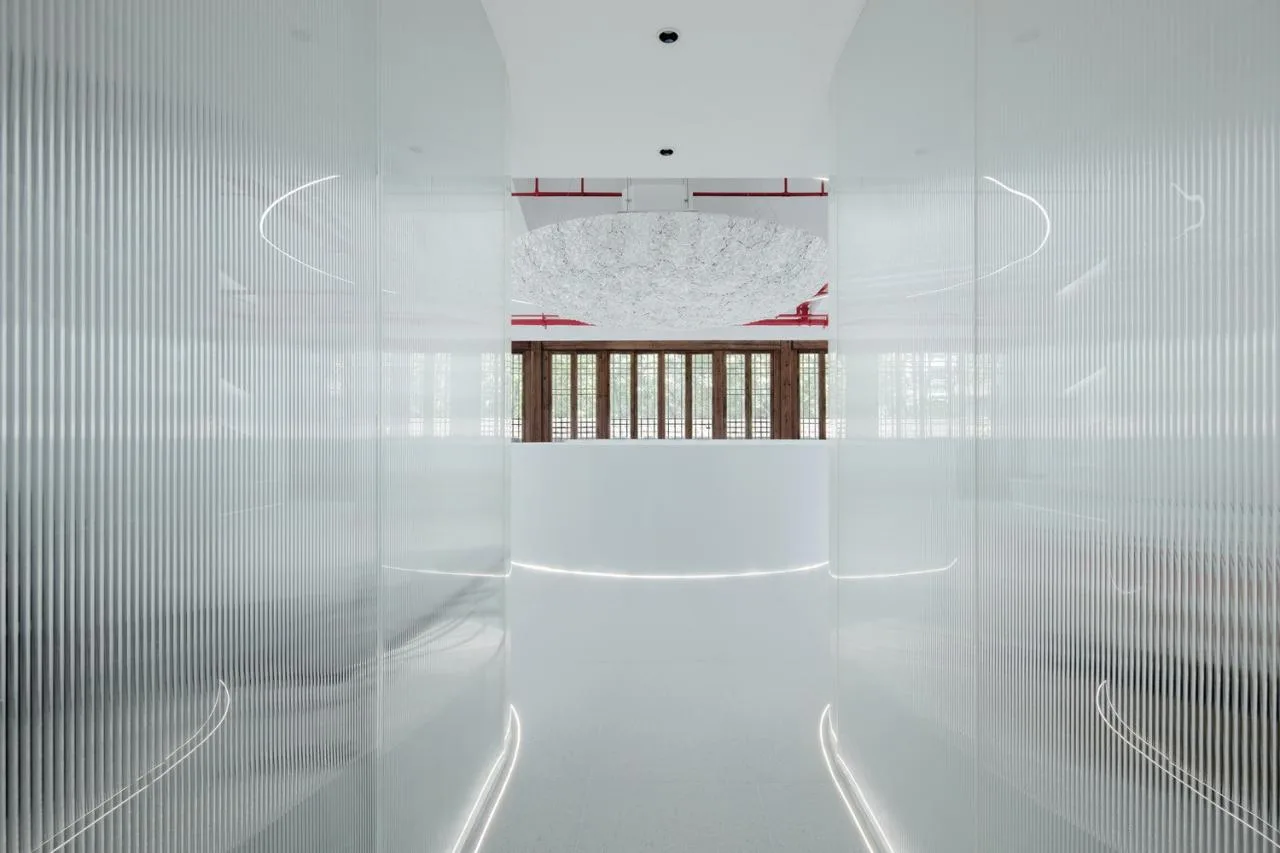
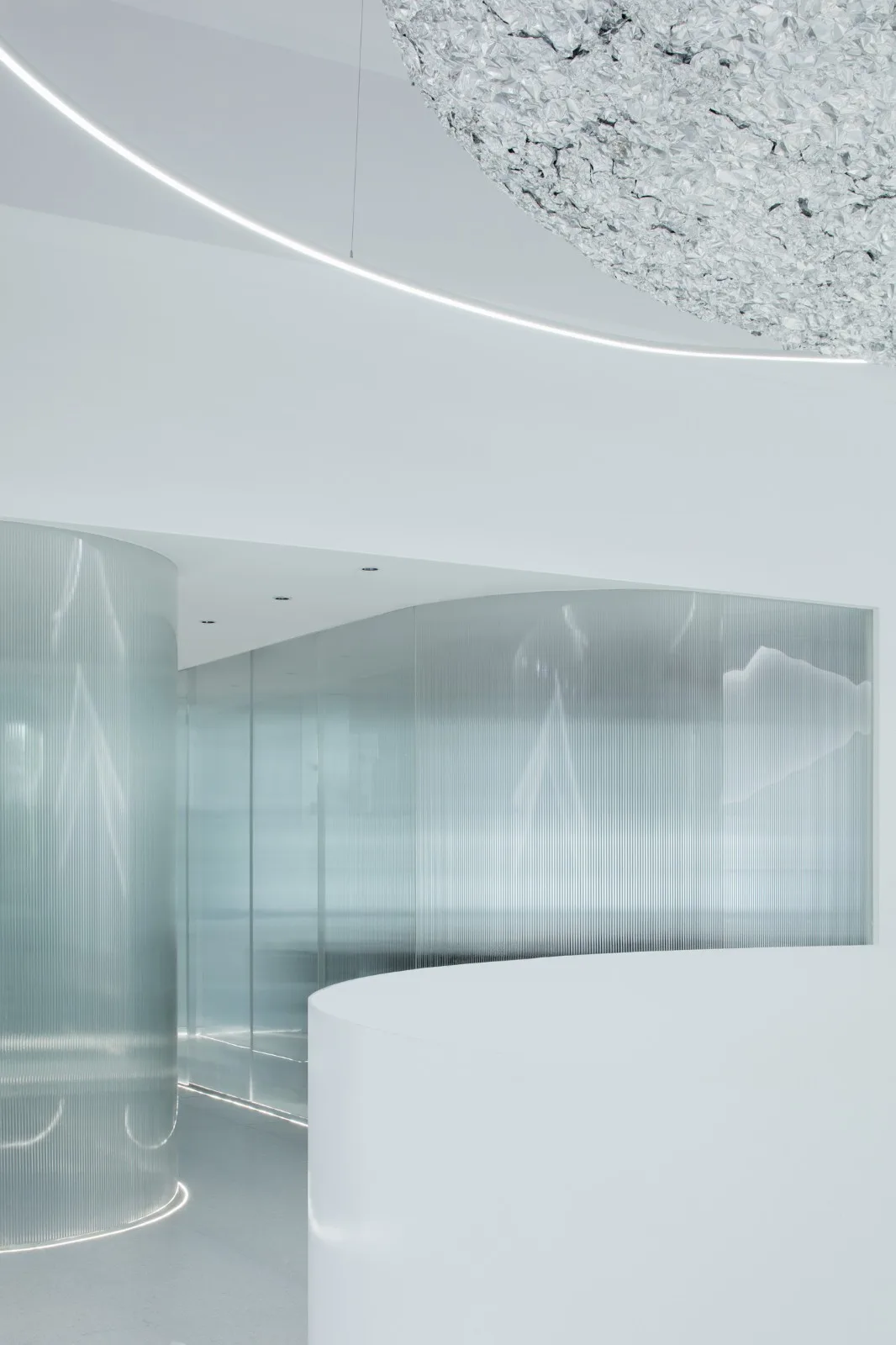
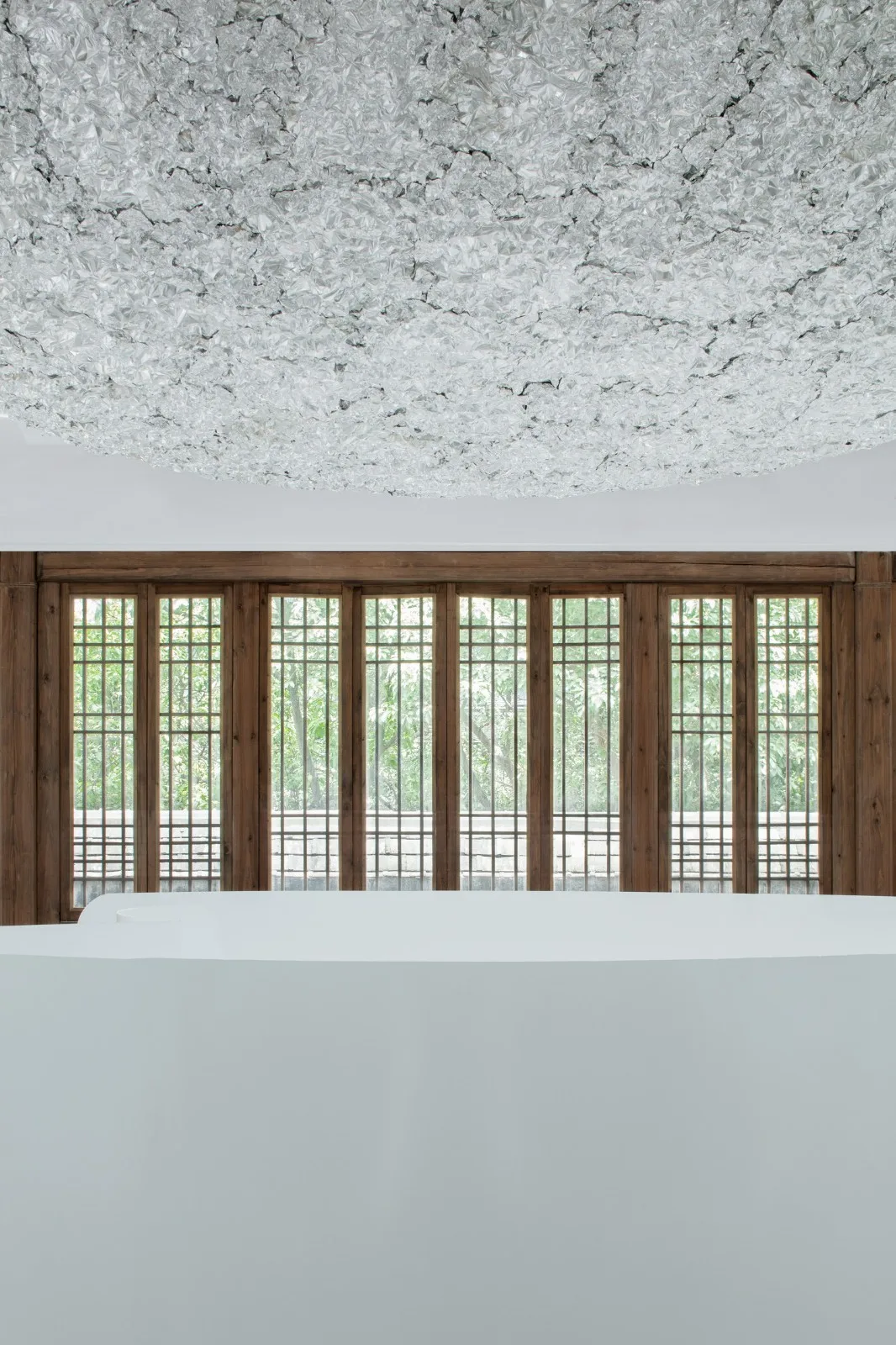
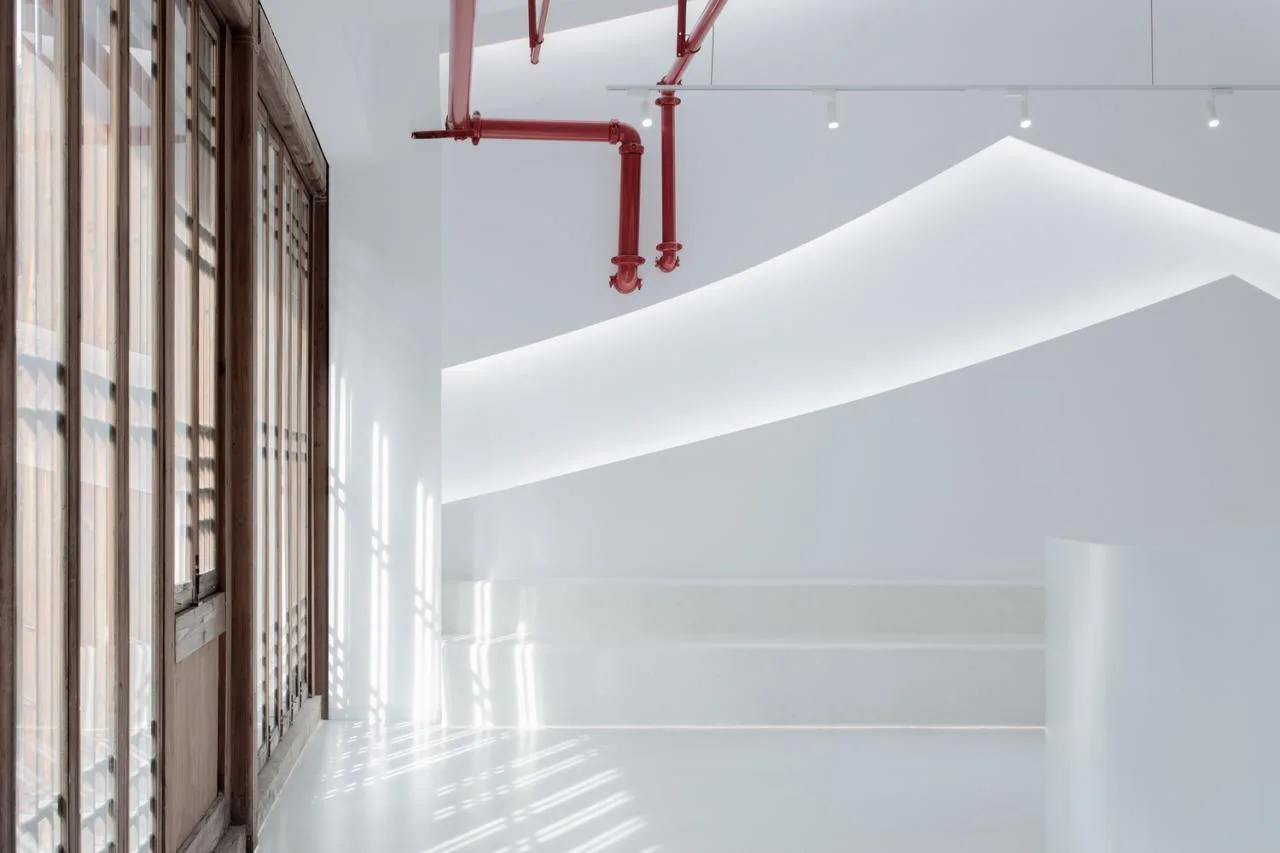
Although the project has not officially opened, it has already attracted attention from local residents and social media influencers. Early discussions with the client revealed flexibility regarding policy changes, the project budget, and the importance of the site’s “internet fame” and foot traffic.
Designer Dong Xinmeng explains that “internet fame” is a delicate term. Great spaces inspire people to linger, offering opportunities to engage with history. The design prioritizes cultural sharing and bridging the social distance often felt in public spaces. These values are central to the concept.
We believe good design must be deeply rooted in a city’s unique character, driving its evolution and renewal. It should create meaningful moments and narratives for urban culture and collective memory. Only then does “internet fame” become a vibrant outcome, not merely a goal. This approach aligns with the balanced design philosophy of Balanced Space Design Firm.
Project Information
Project Name: Fuzhou Zhuzifang Tourist Center
Location: Zhuzifang, Fuzhou, China
Area: 426 square meters indoors, 180 square meters outdoors
Client: Fuzhou Gucuo Protection and Development Group Co., Ltd
Special Thanks: Fuzhou Zhuzifang Protection and Development Co., Ltd
Design Agency: BALANCE DESIGN Balanced Space Design
Lead Designer: Dong Xinmeng
Design Team: Dong Xinmeng, Chen Yingyan
Completion Date: May 2021
Copywriting: Lin Yunping
Photography: Summer Solstice














Must log in before commenting!
Sign Up