
Between the boundaries of public and private, open and closed, internal and external, mobile and fixed, light and shadow, nature and artificiality, industry and craftsmanship, lies an exceptional living space. Architecture is the art of balancing life’s needs with the transformation of physical materials. Architects act as mediators of this creative force.
It is fascinating that while ideas exist in an intangible, ethereal realm, they can take form through physical materials. The construction process exists between these opposing worlds—between experimentation and error, between expectation and reality.
Standing on the shoulders of giants means positioning ourselves within the continuum of history and future development. This inevitably leads us to view architecture as an ongoing story.
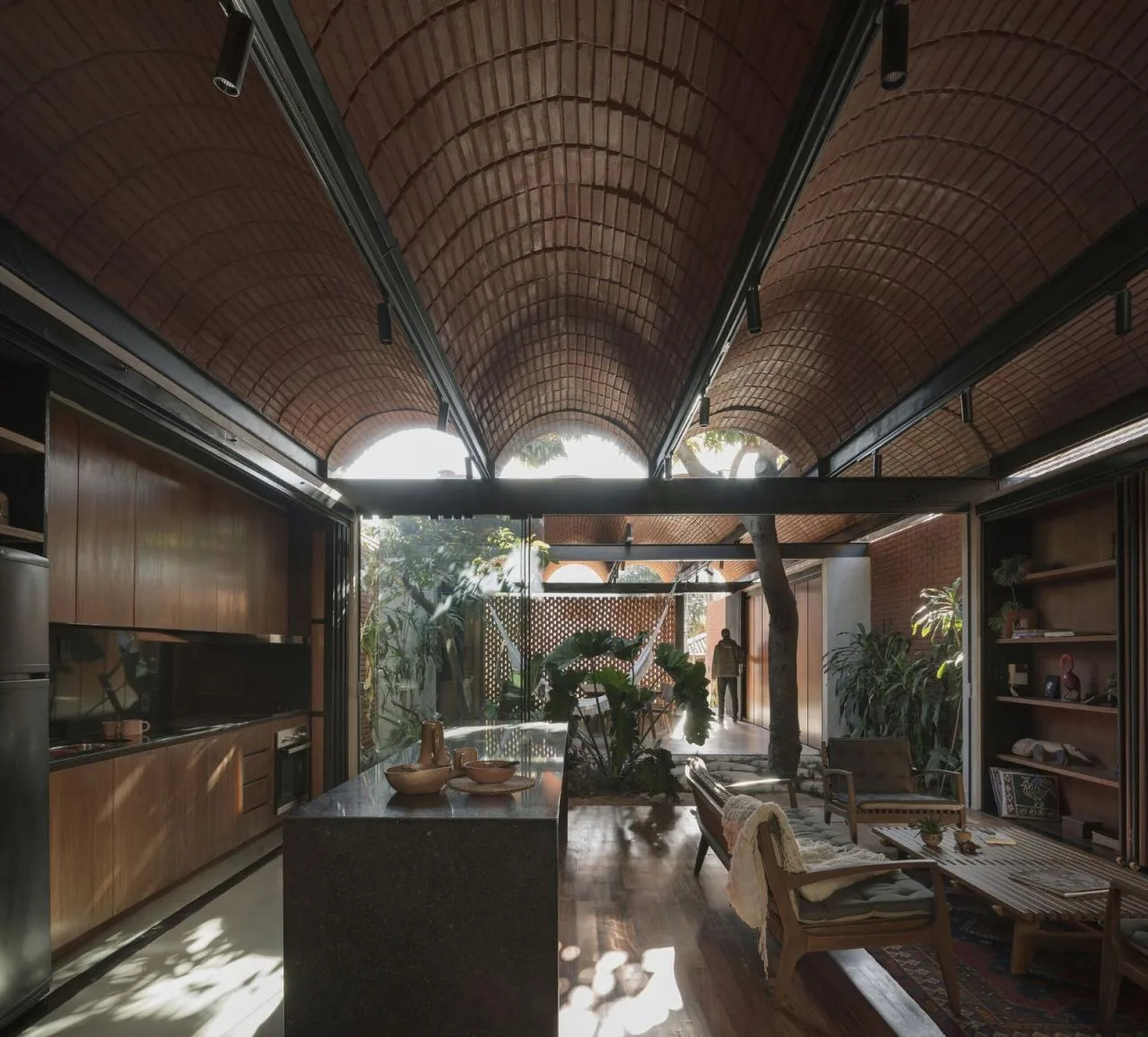
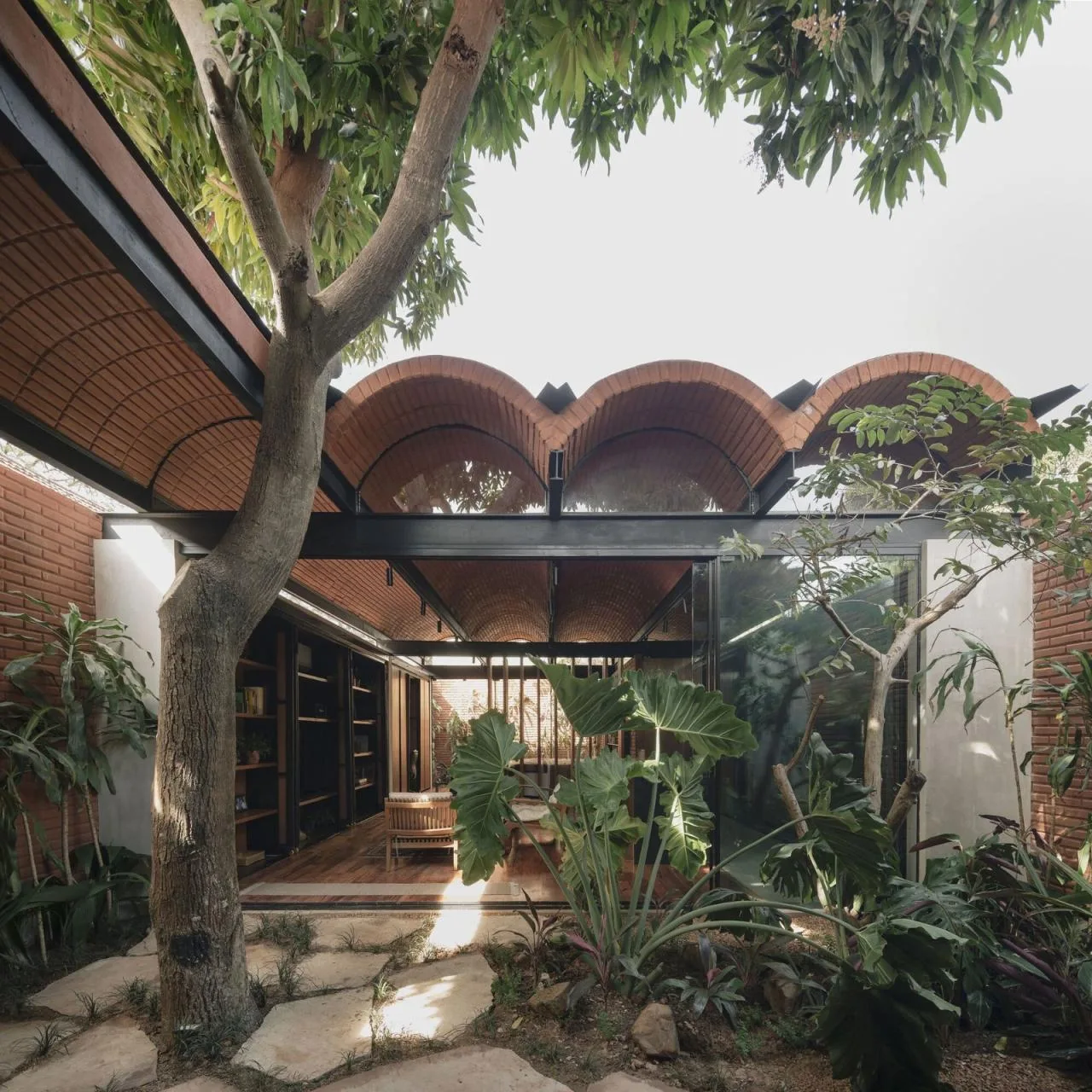
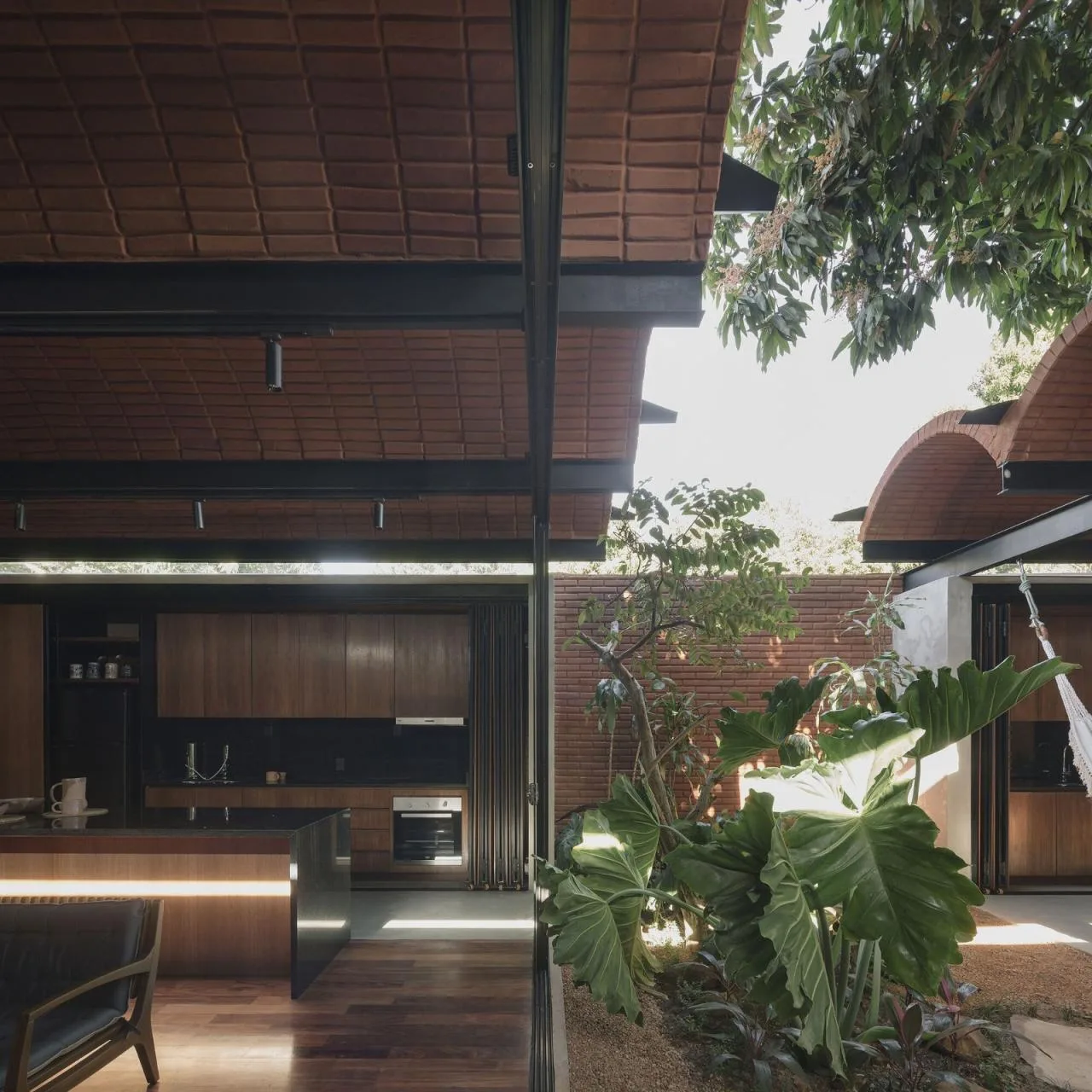
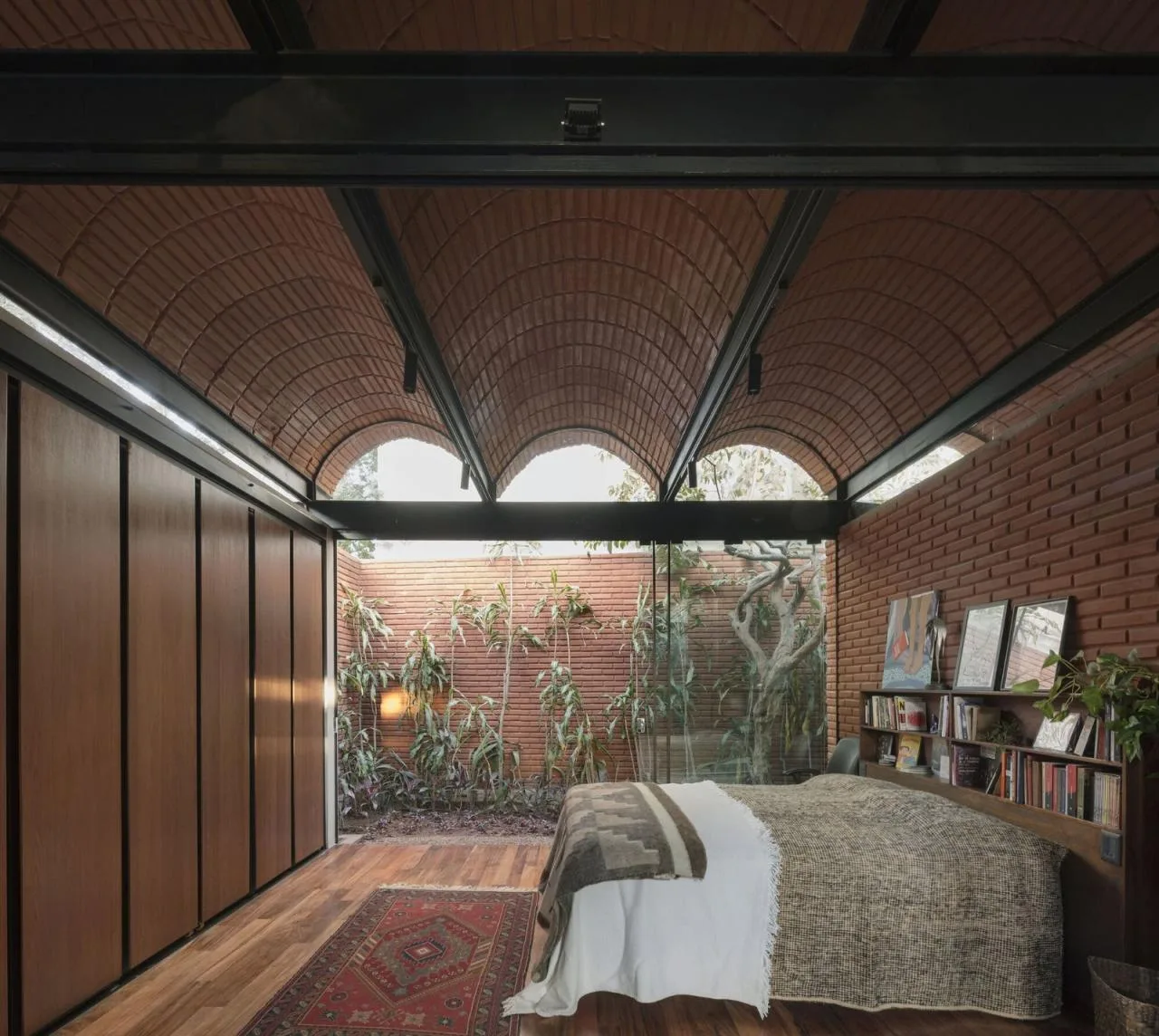
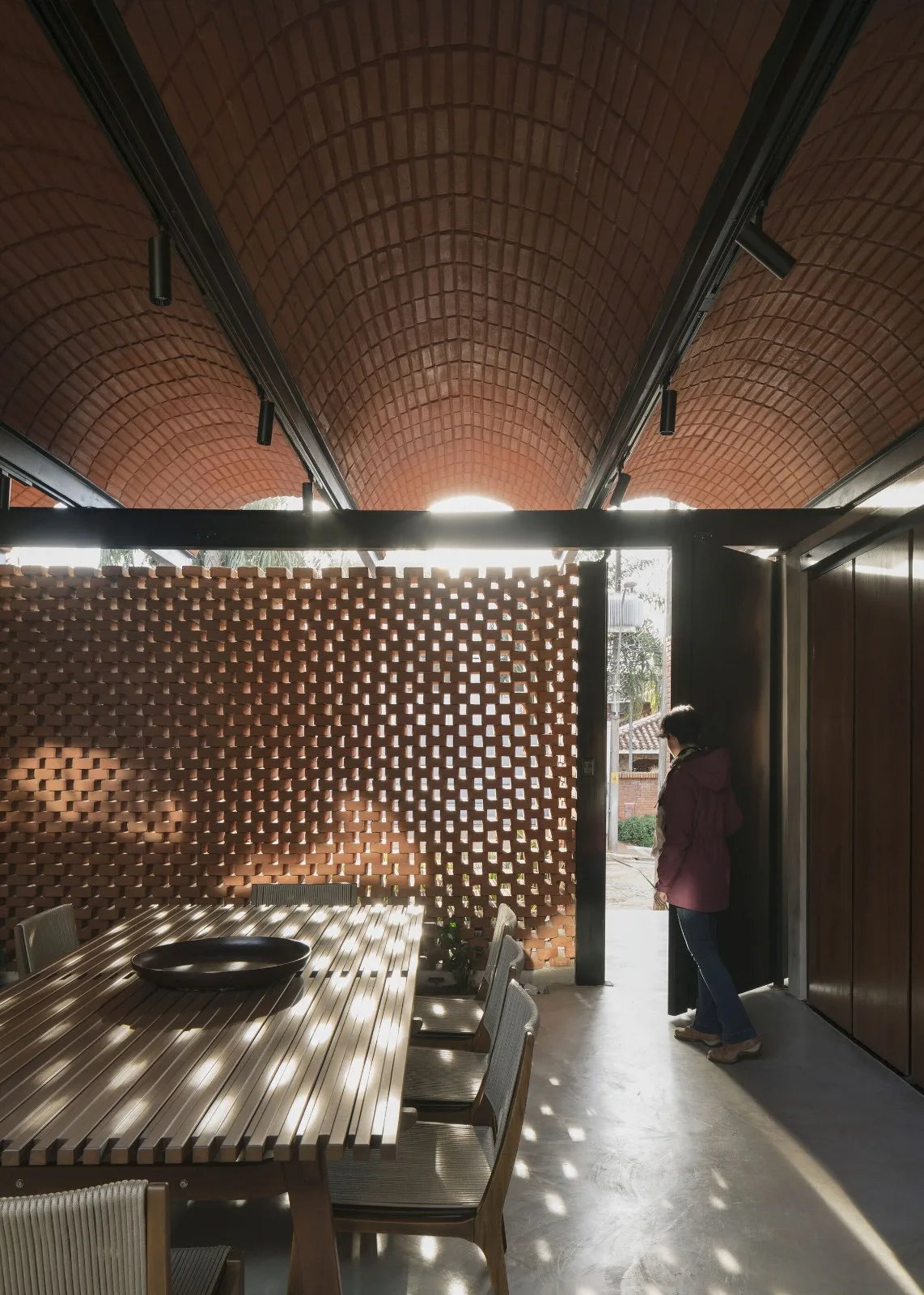
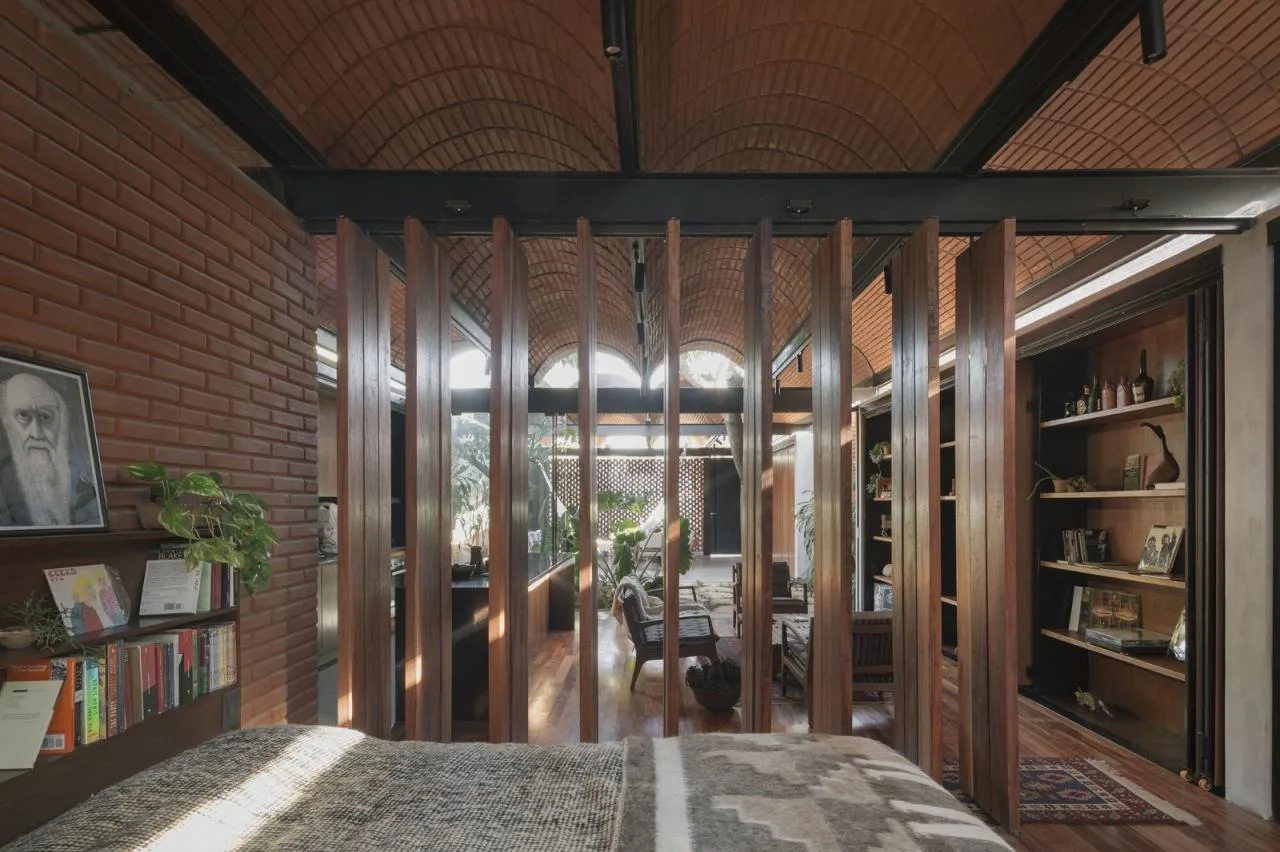
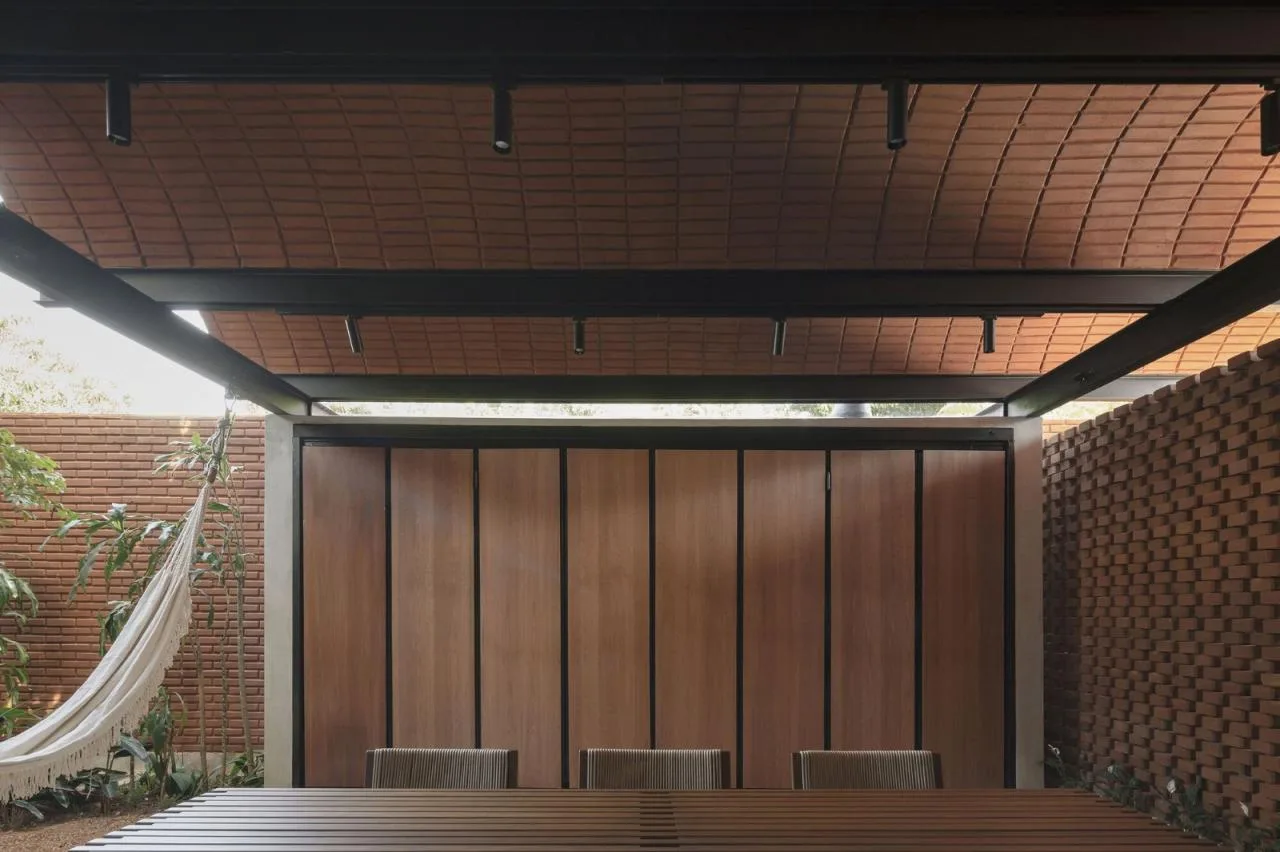
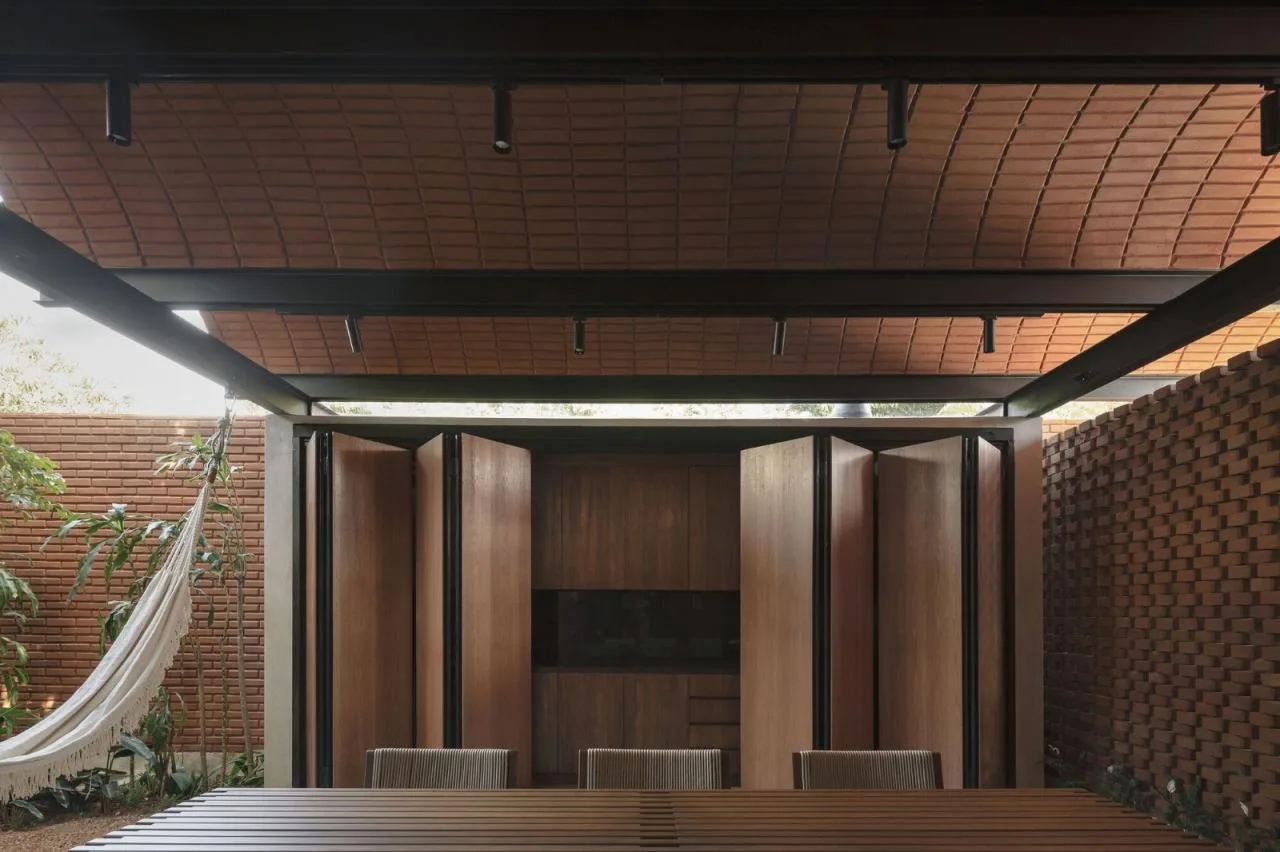
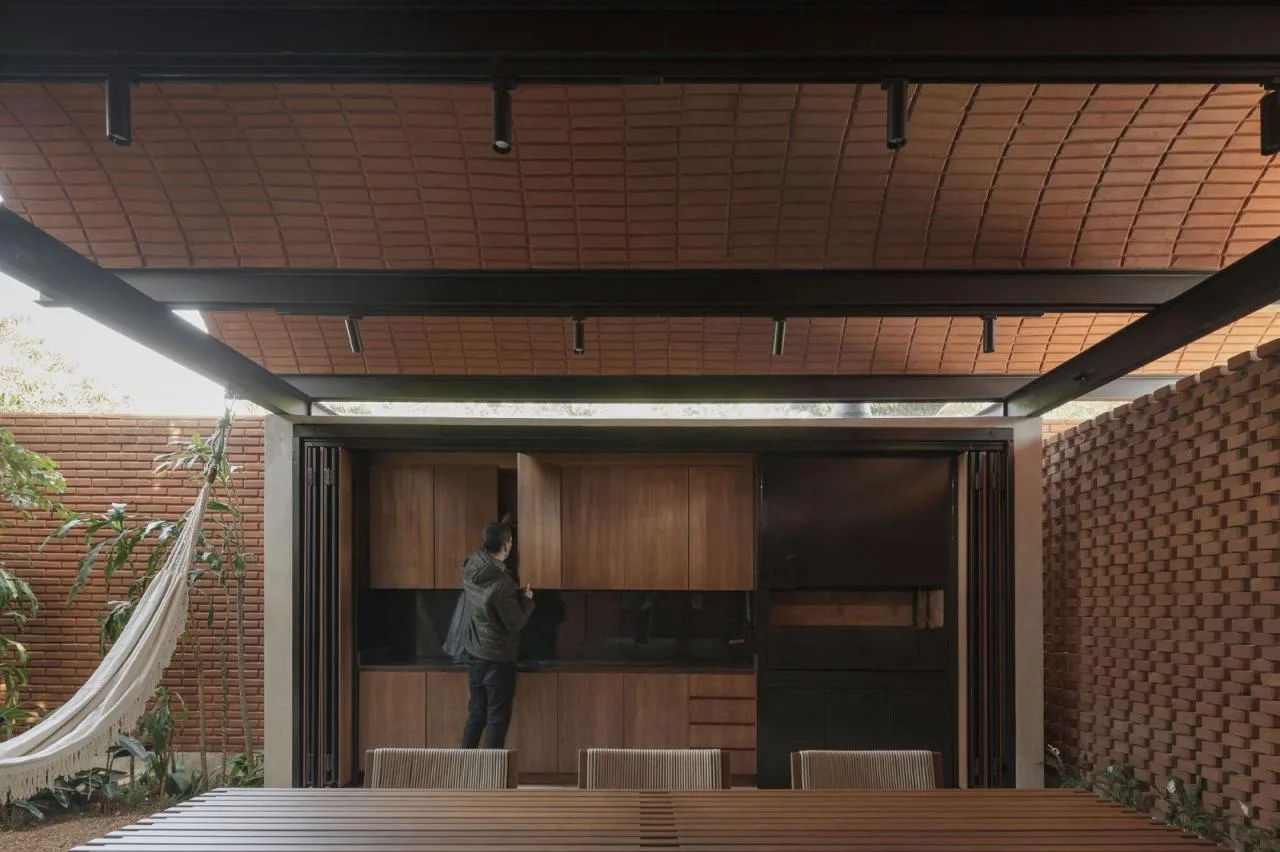
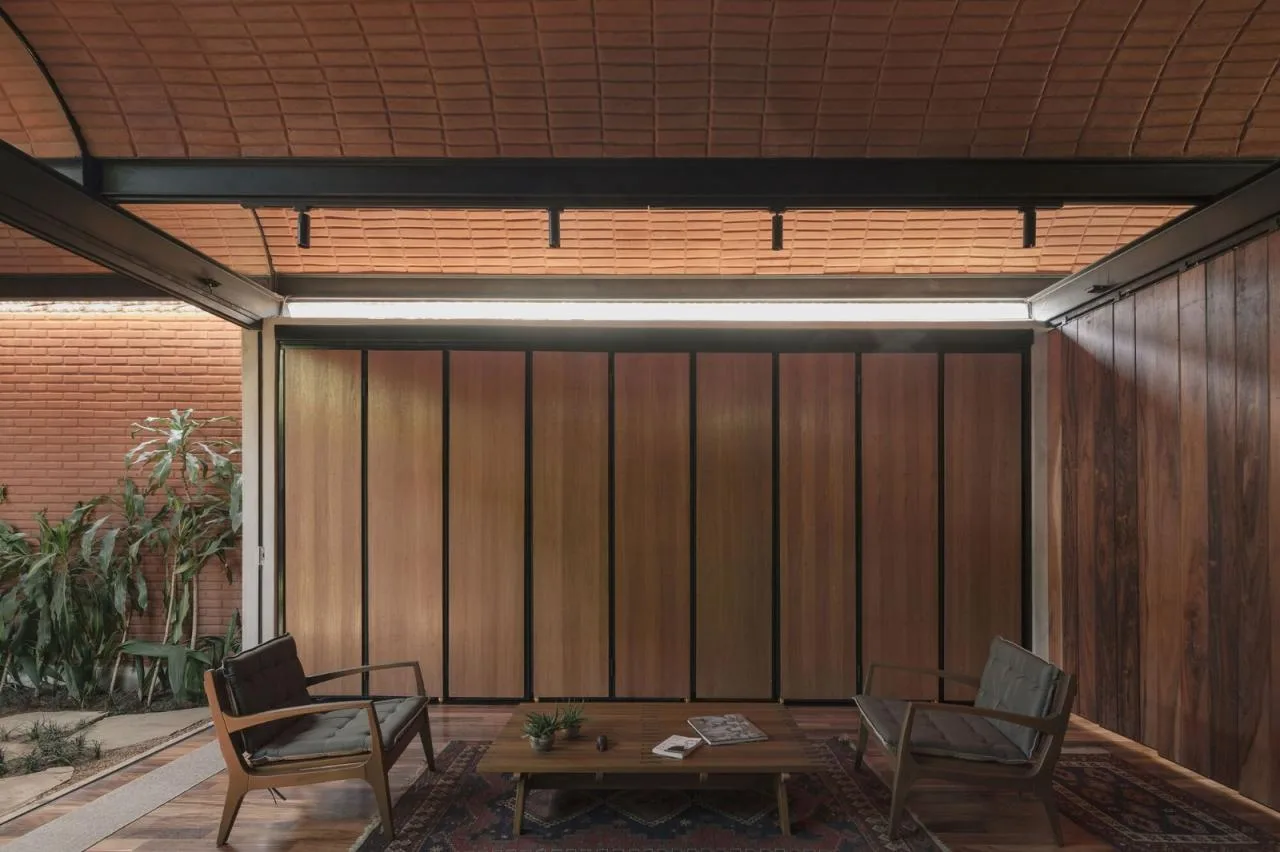
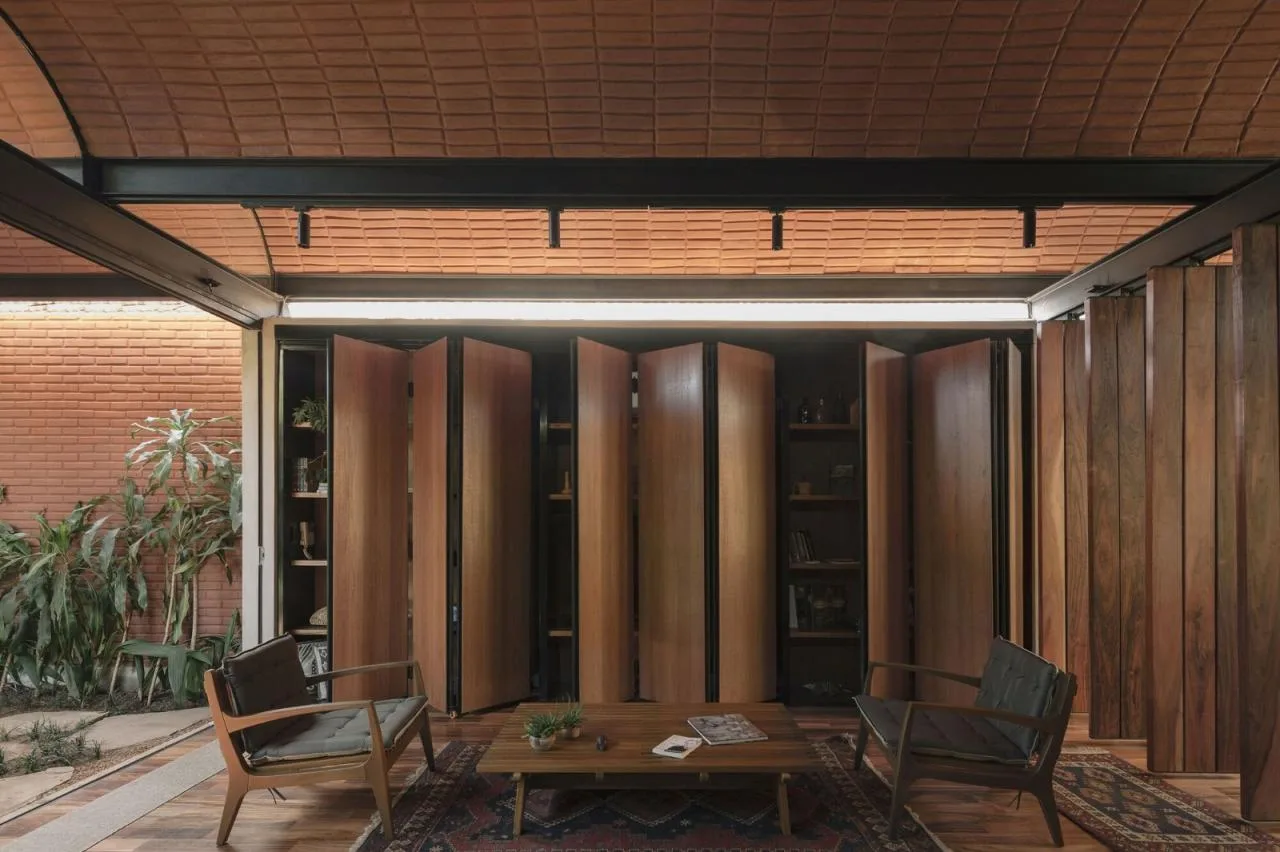
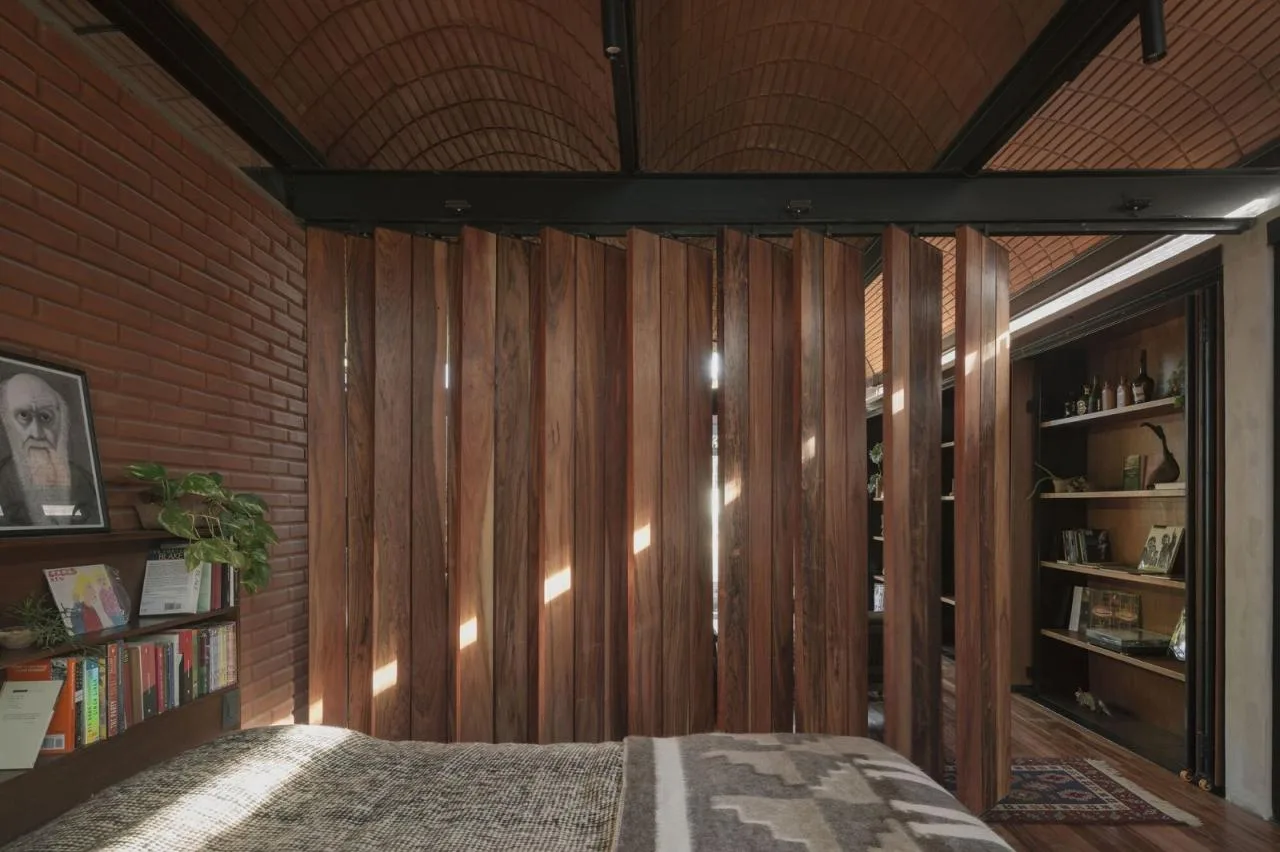
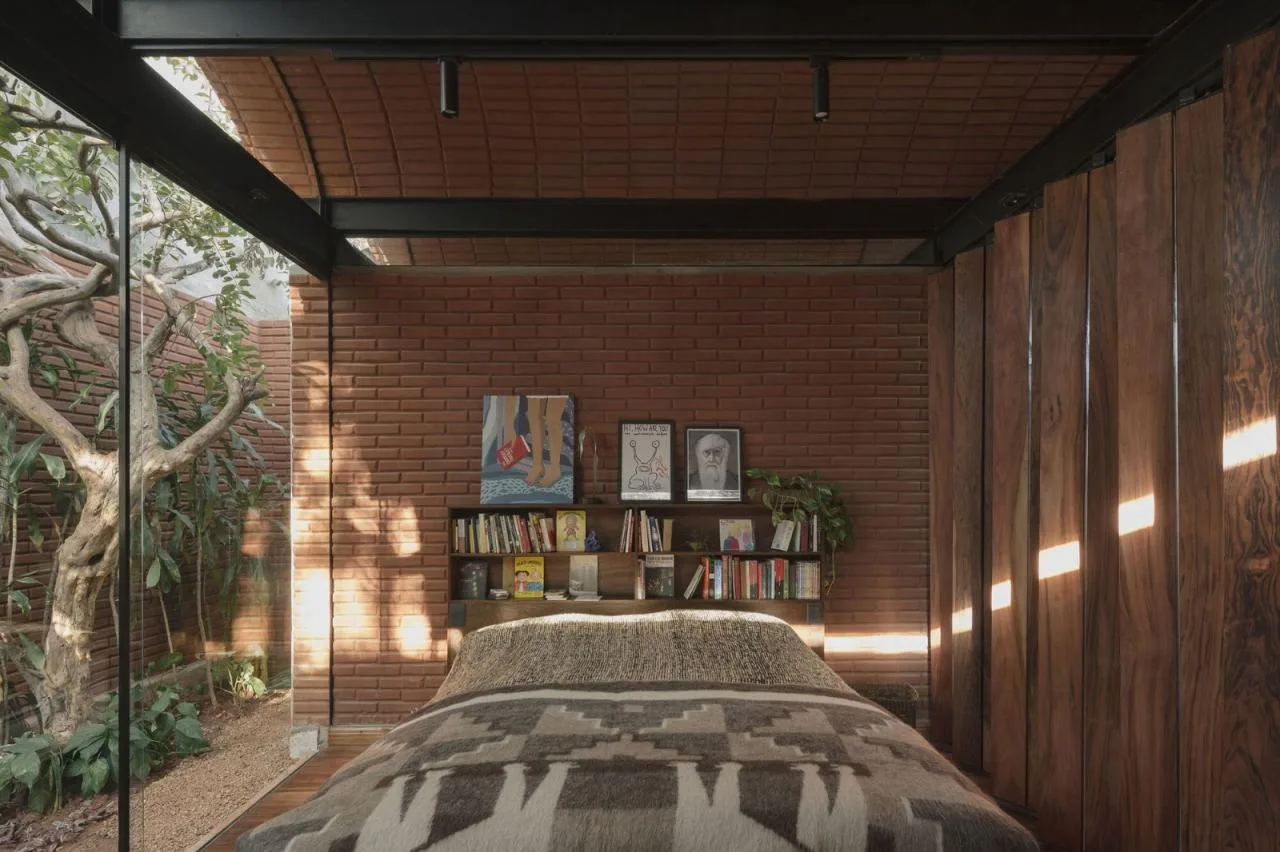
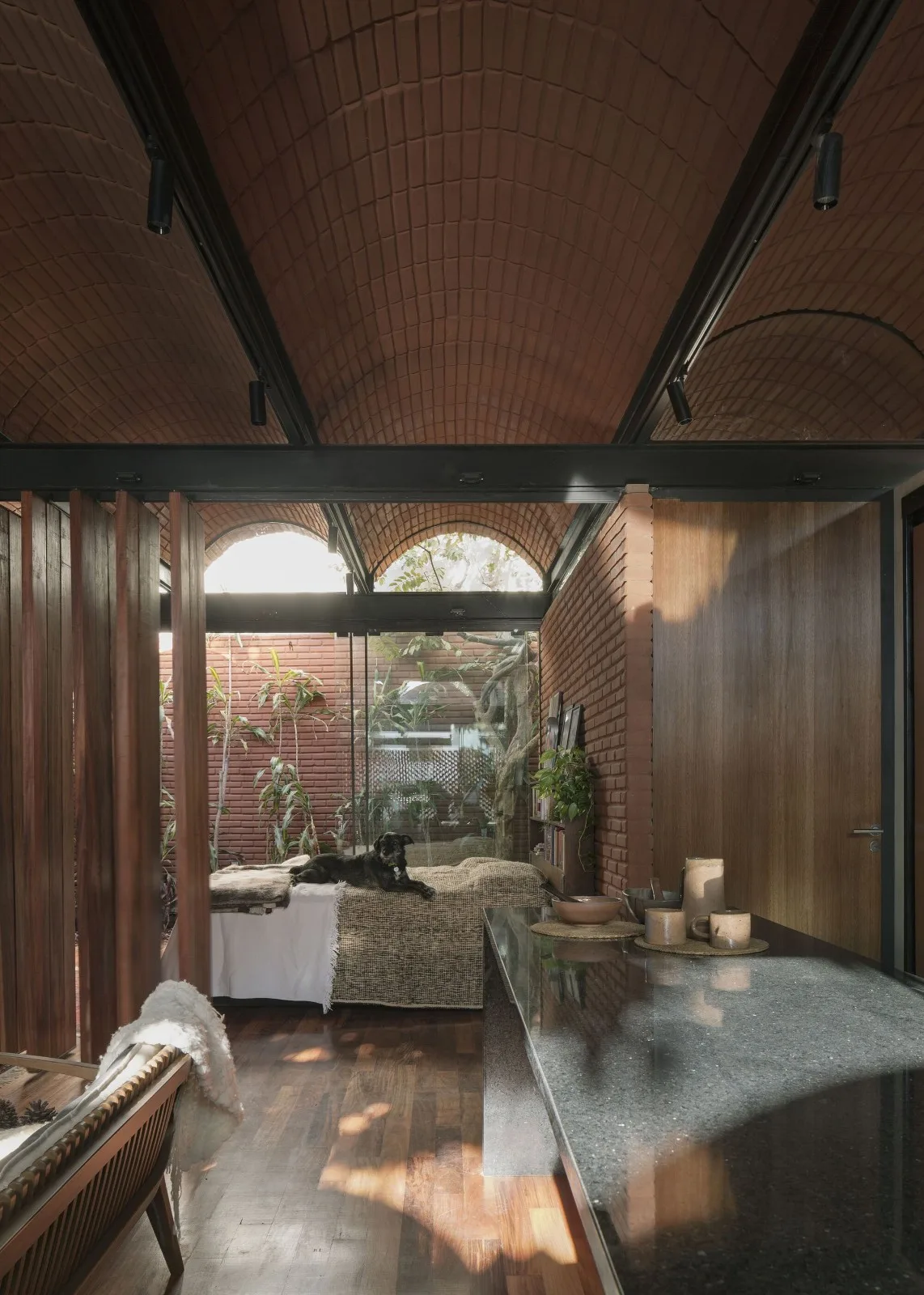
Inspired by Louis Kahn, we learned that structural elements can also serve functional purposes. For example, the entire roof of a house is covered with furniture that defines the boundaries of the home. This dual functionality extends to social and private spaces, which can be blended through use. The functional flexibility of a house can be adjusted to suit different lifestyles, with the homeowner acting as the architect of these transformations.
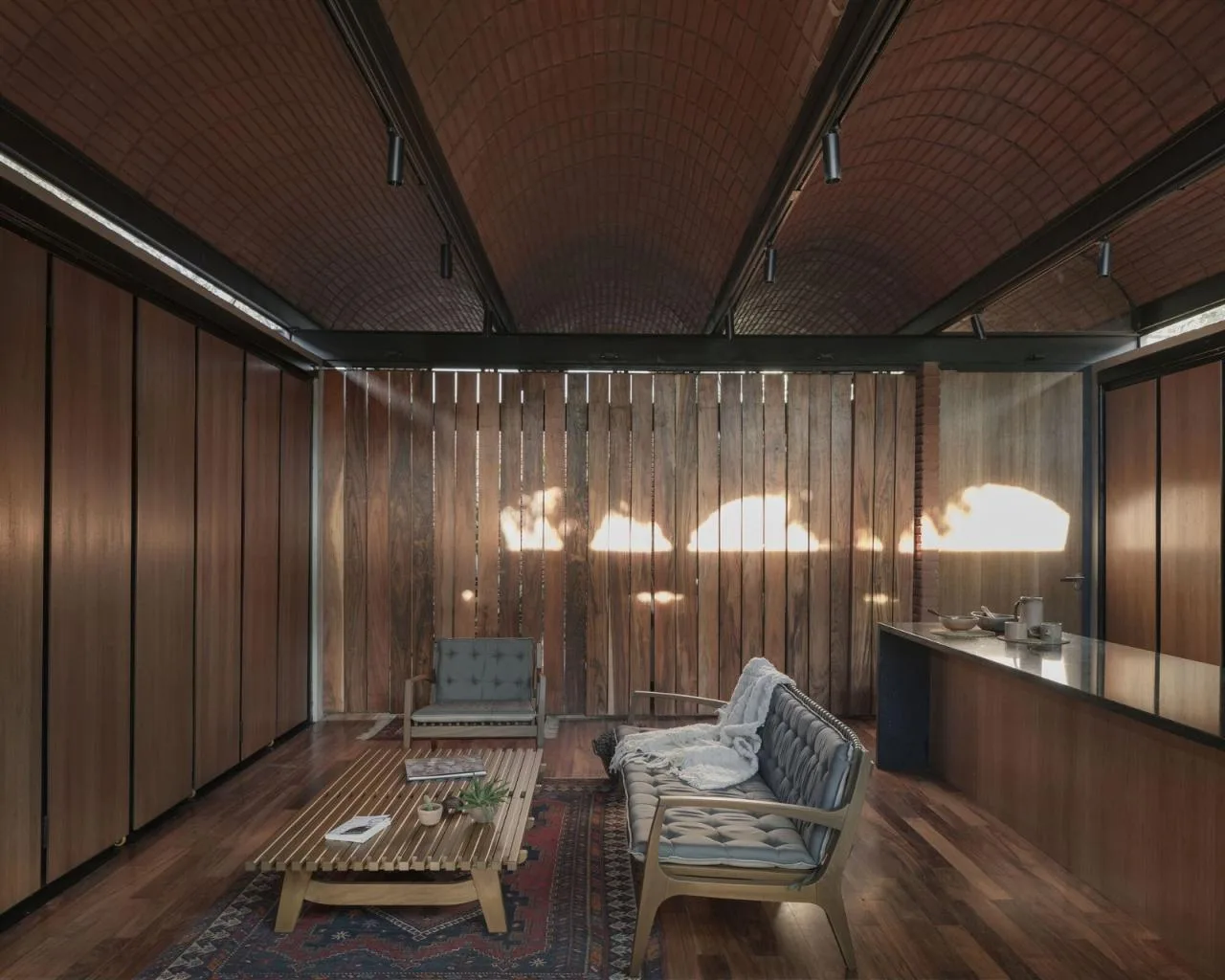
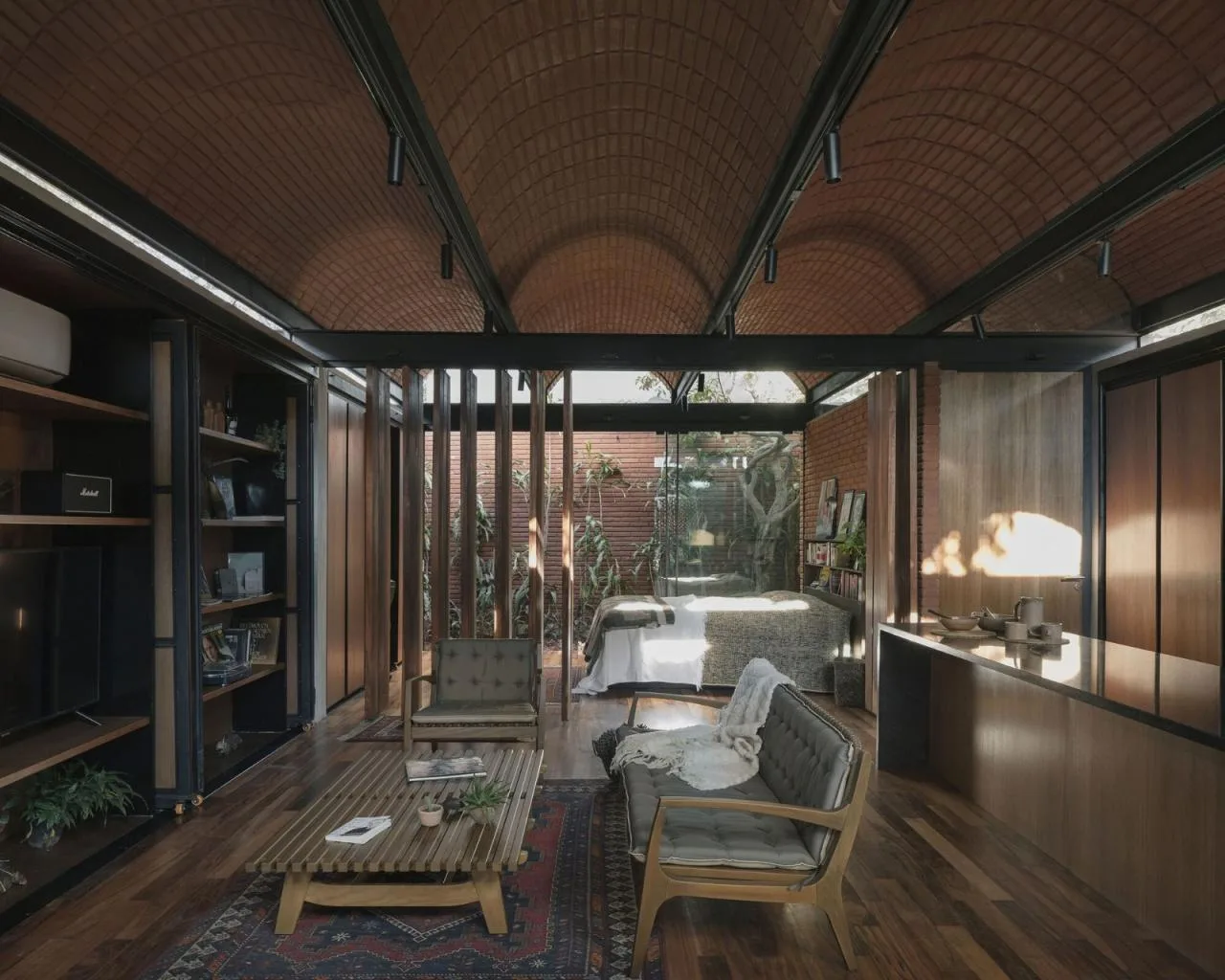
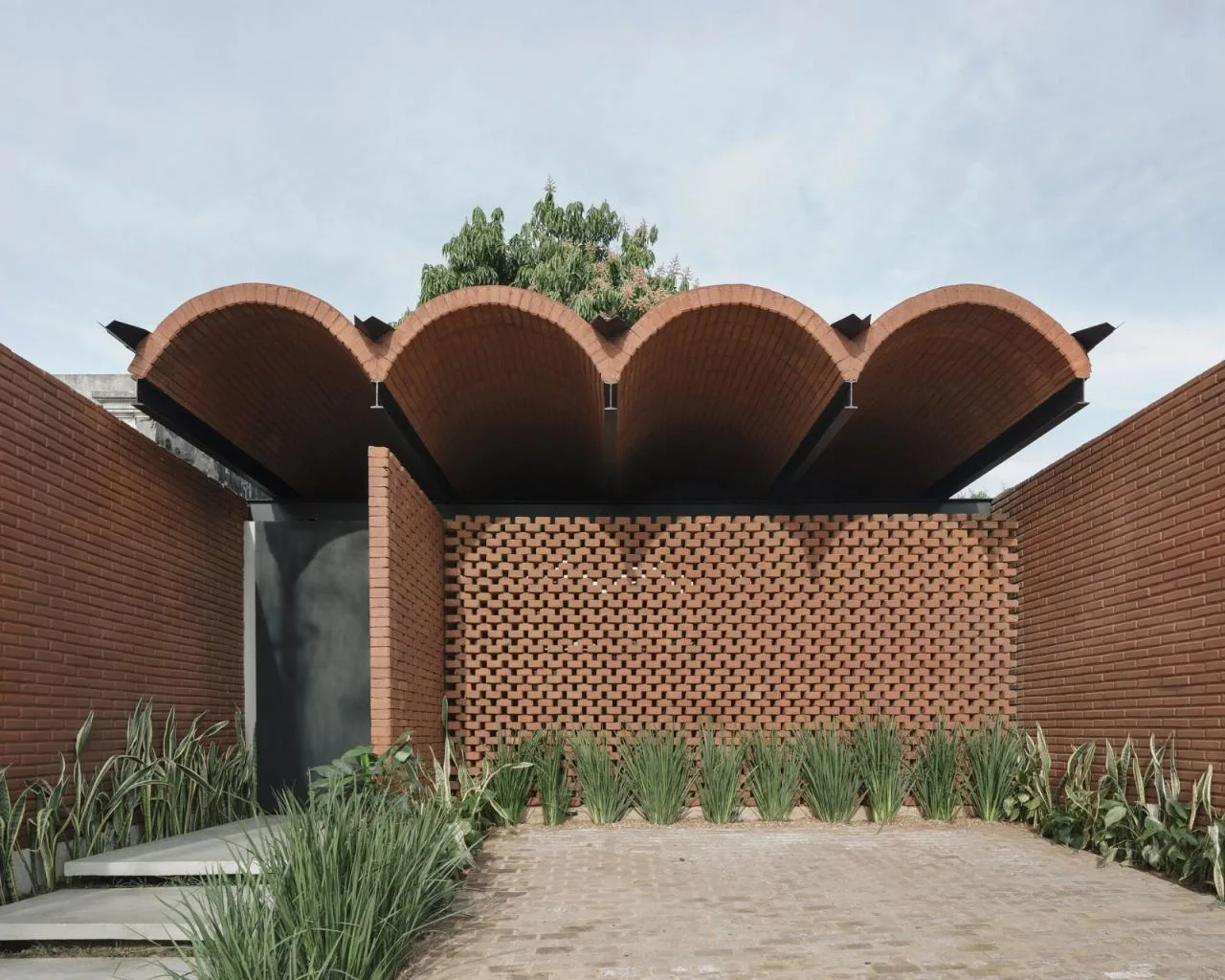
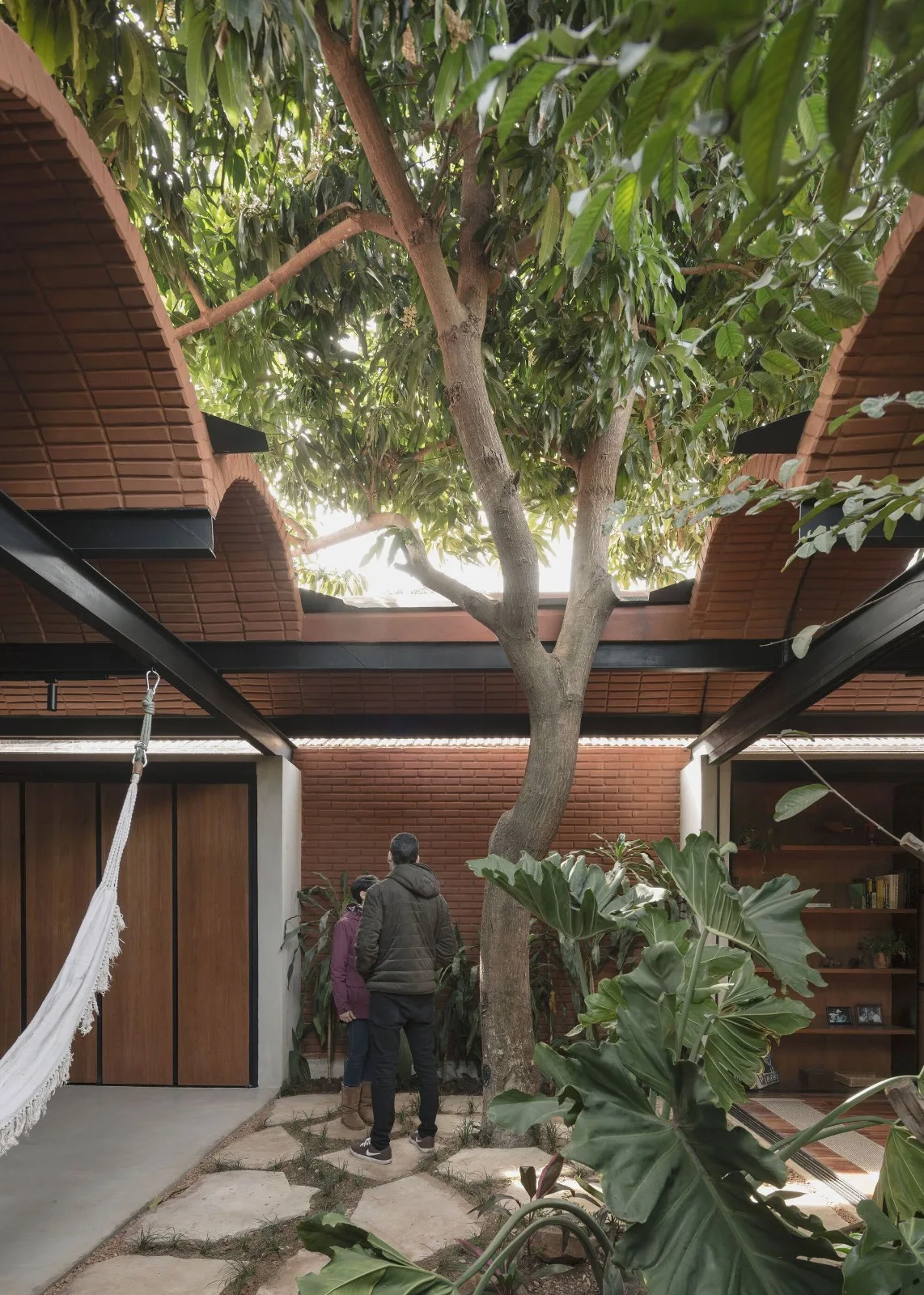
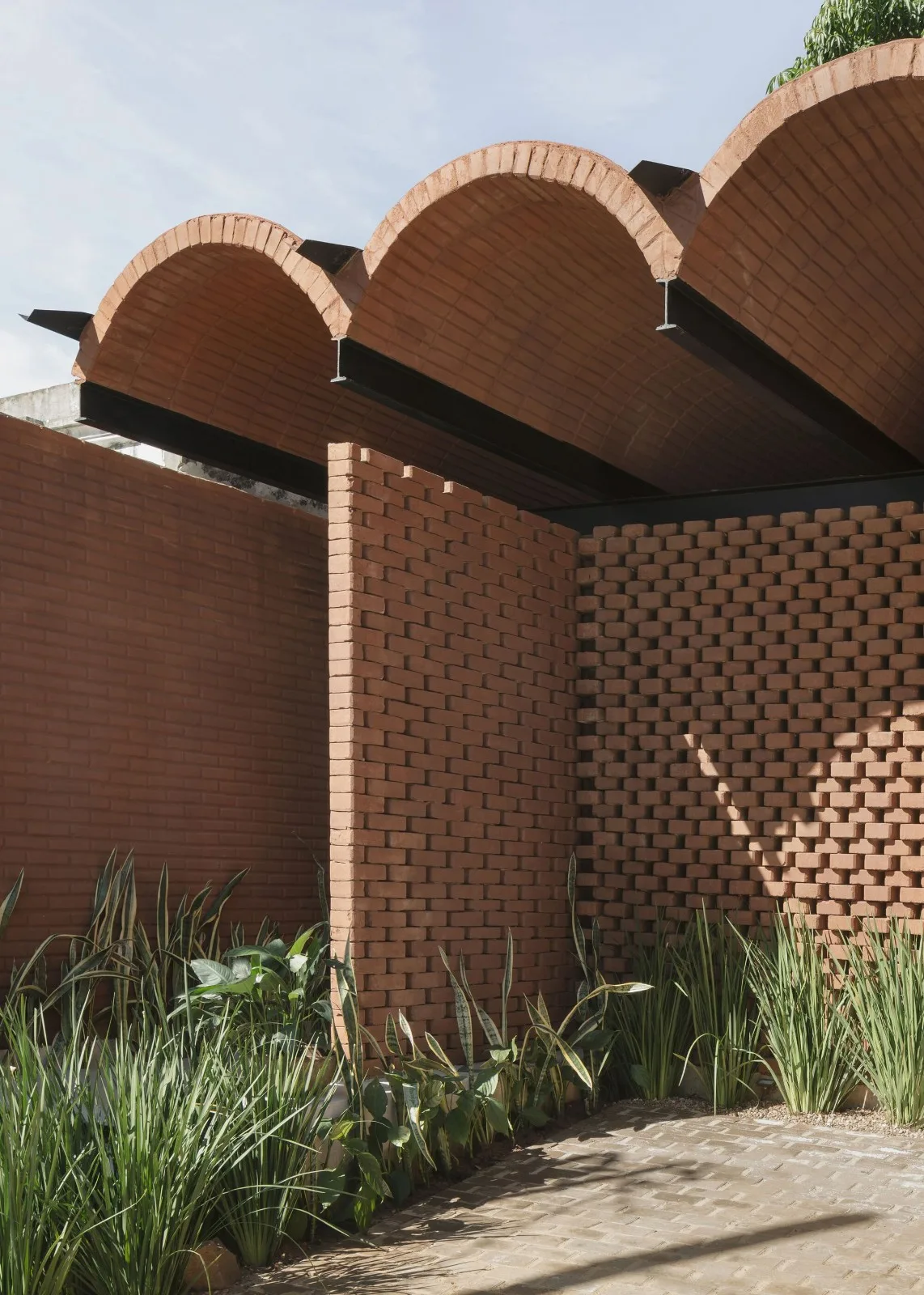
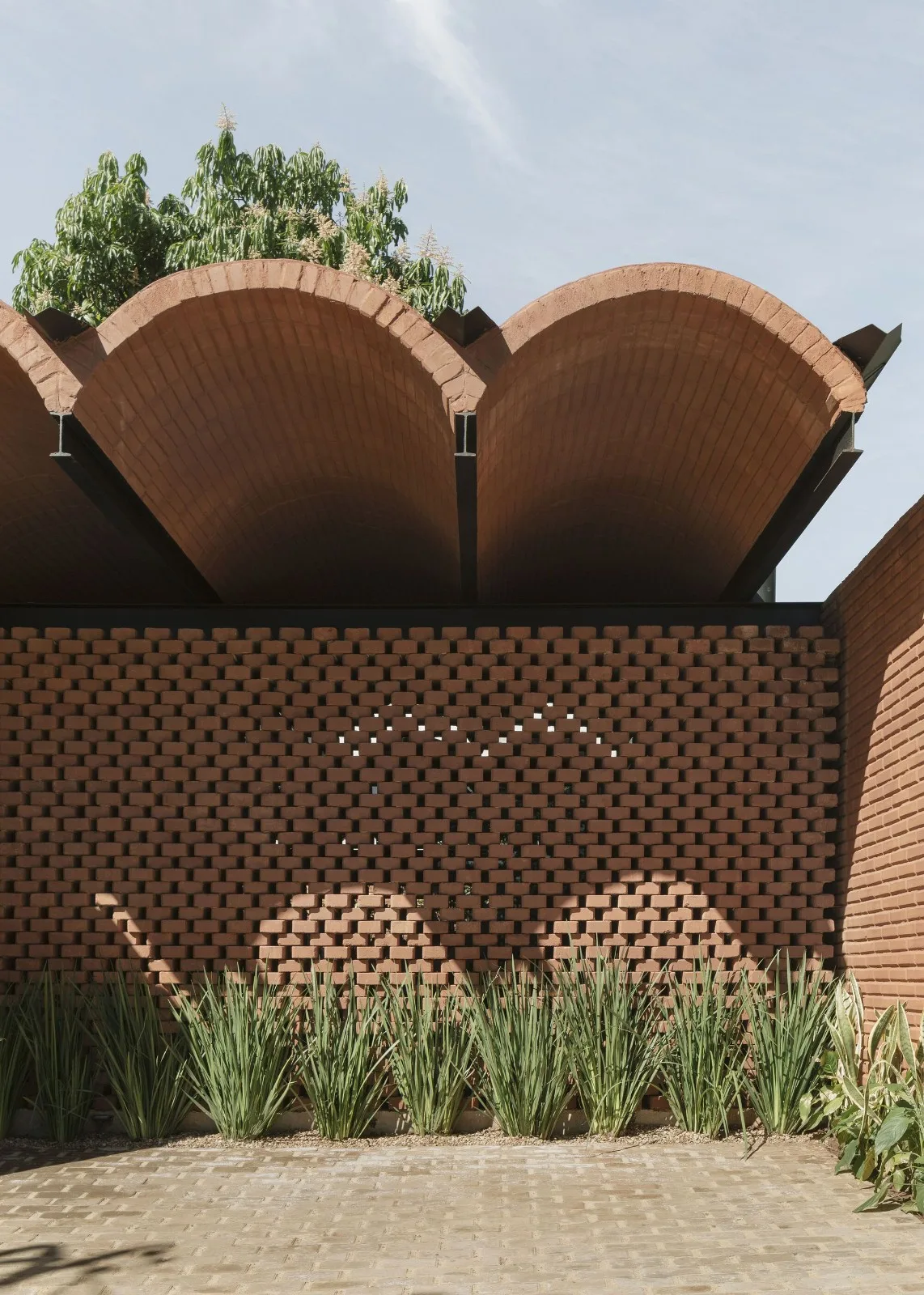
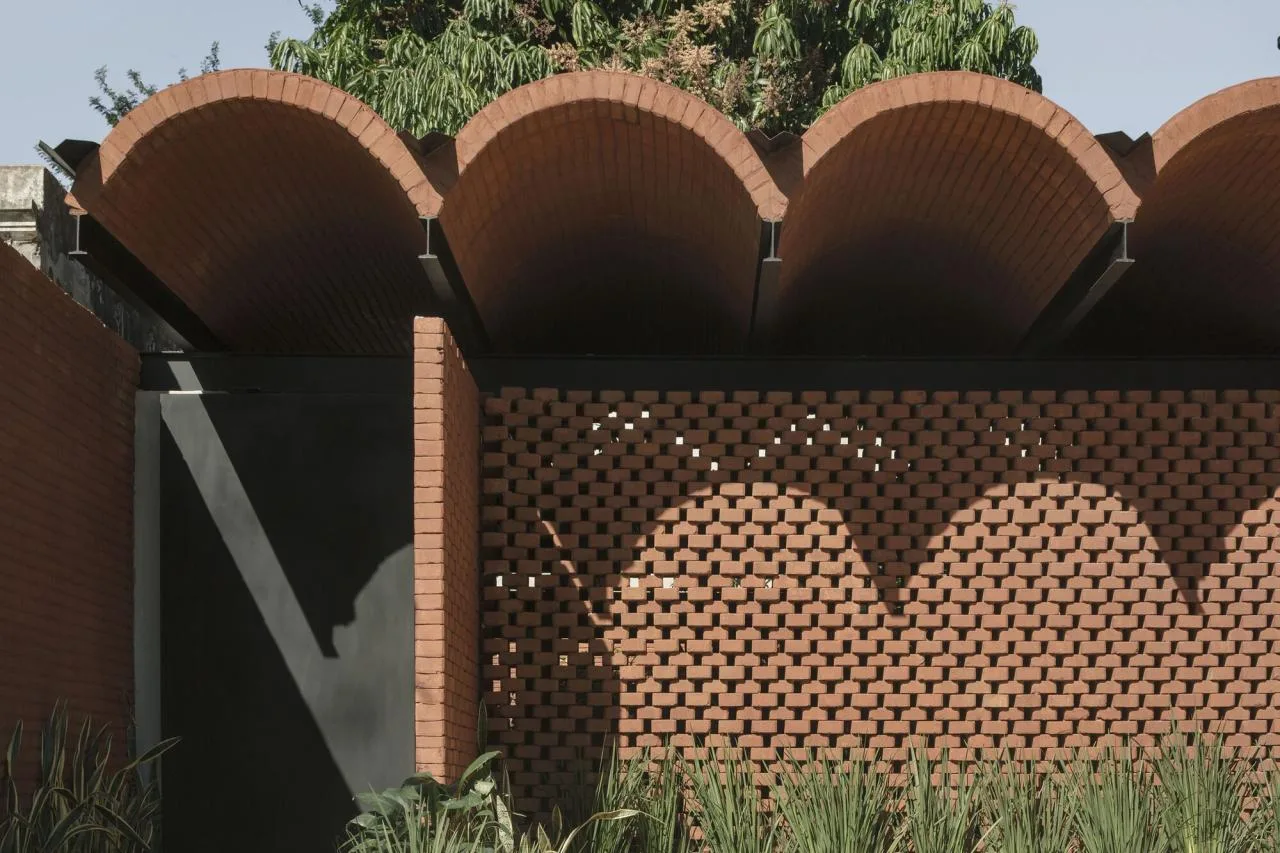
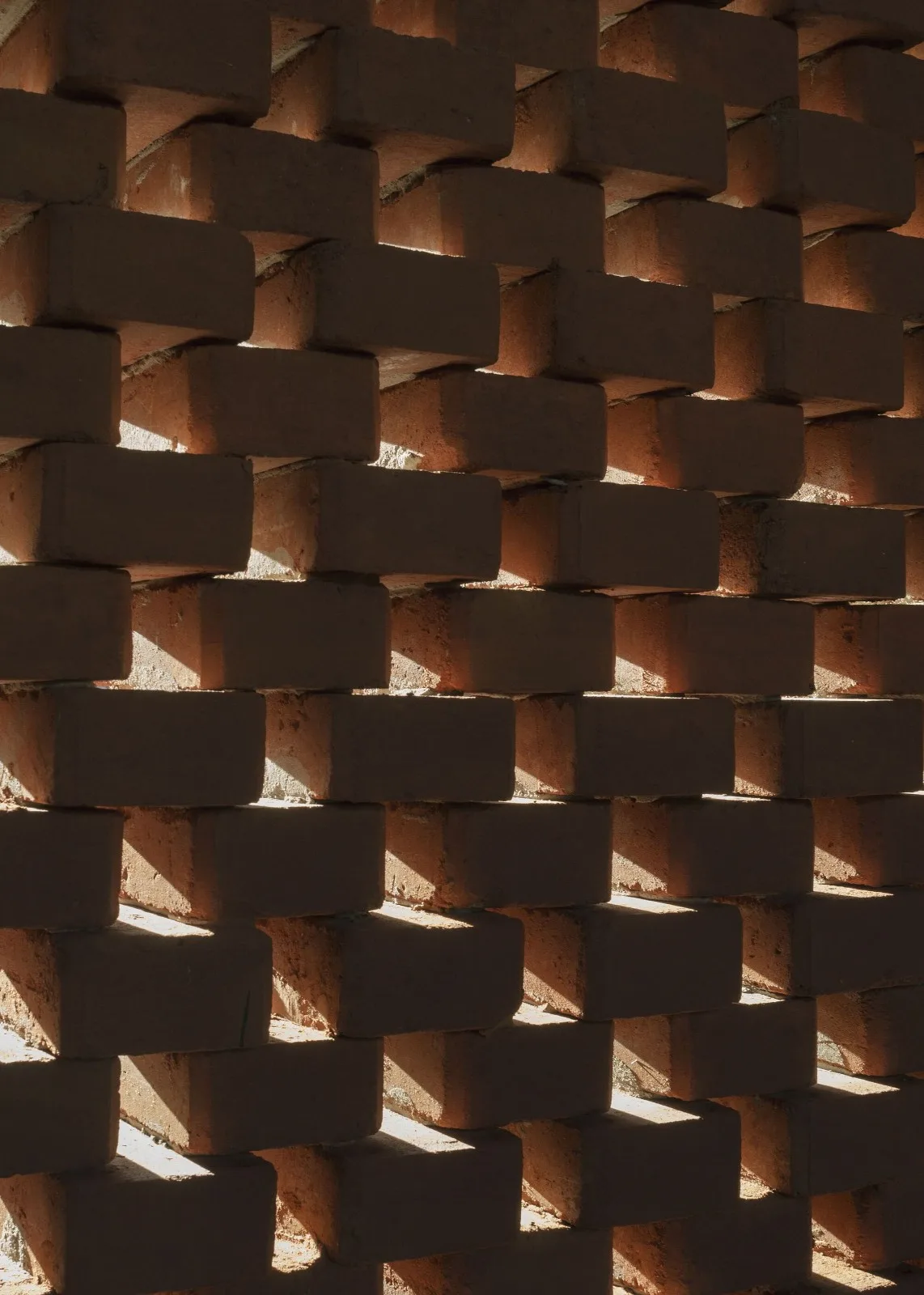
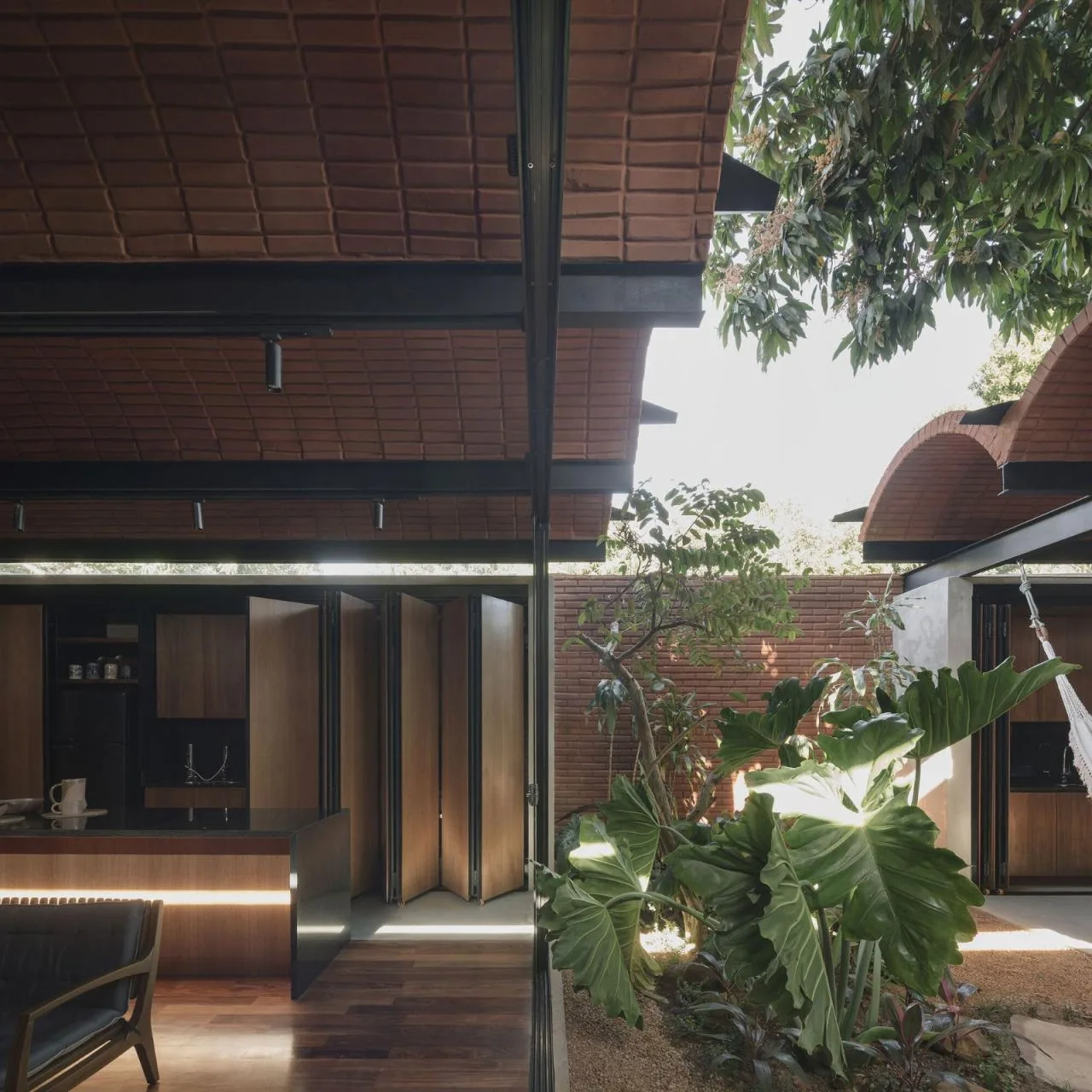
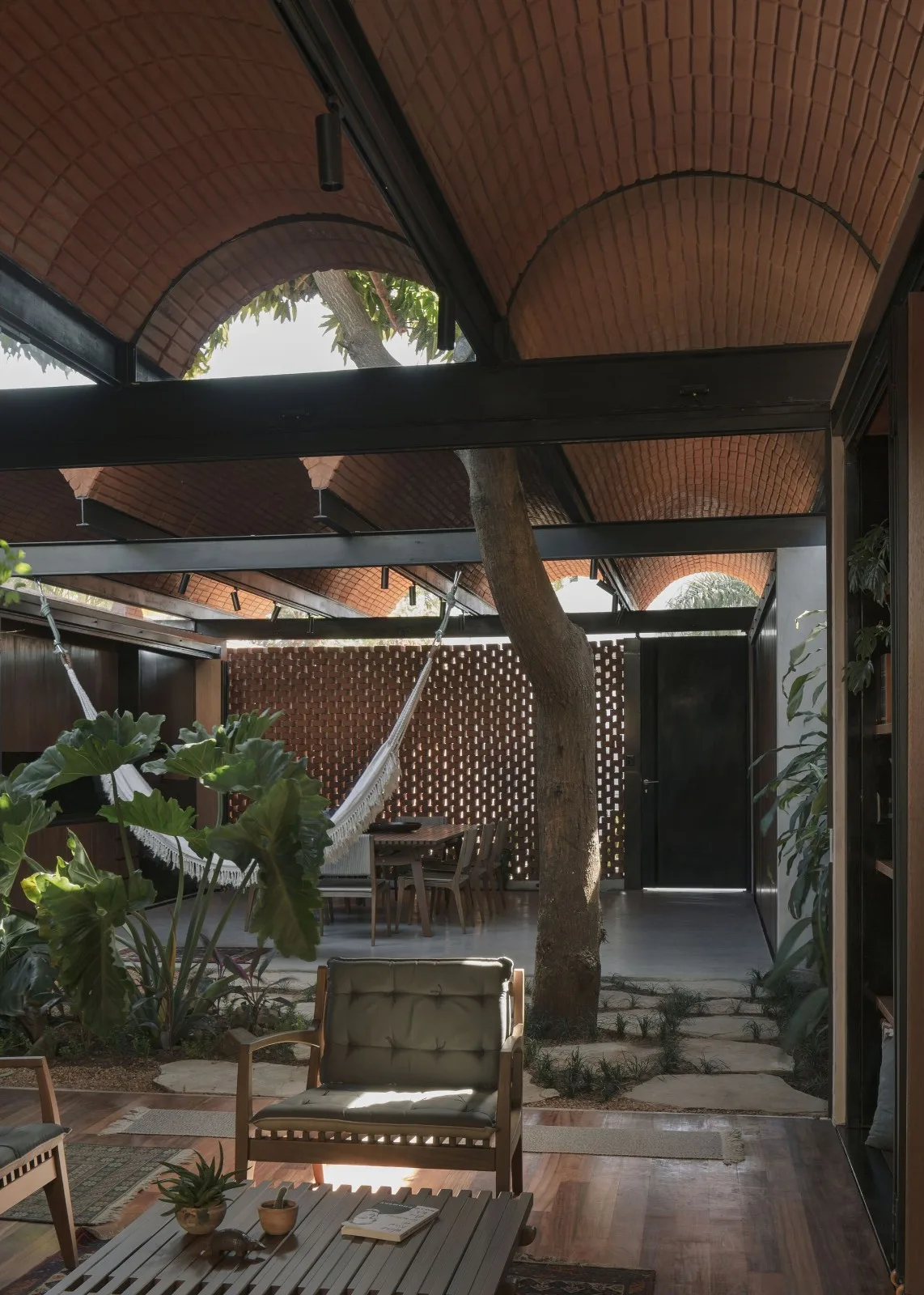
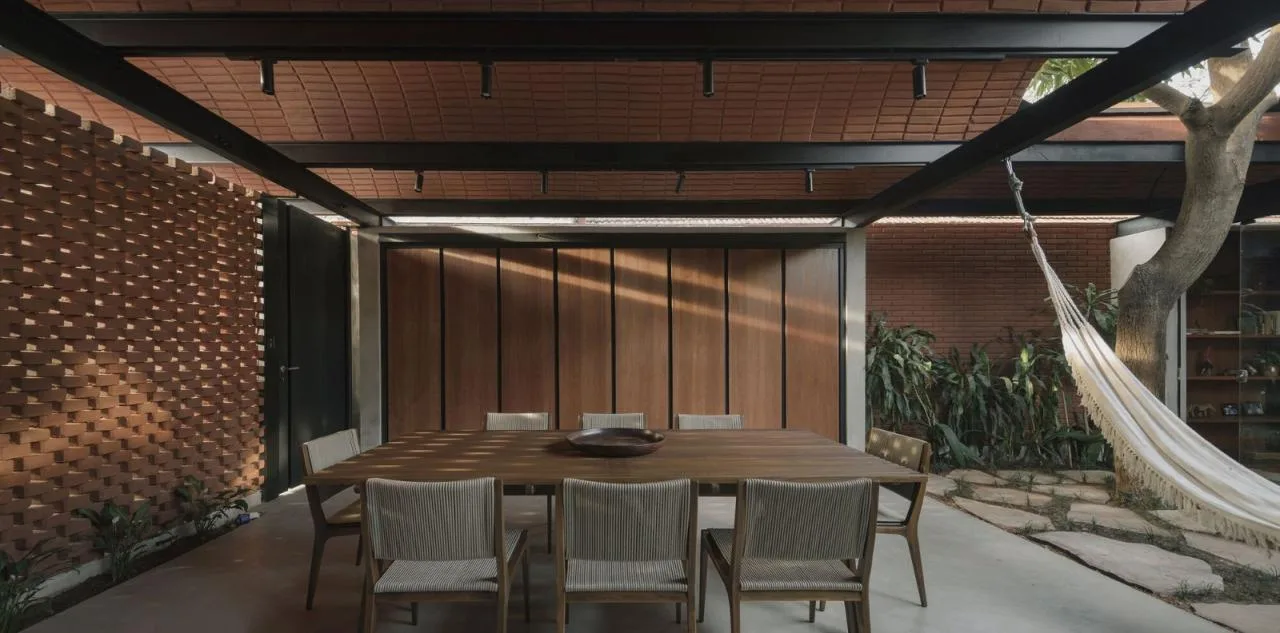
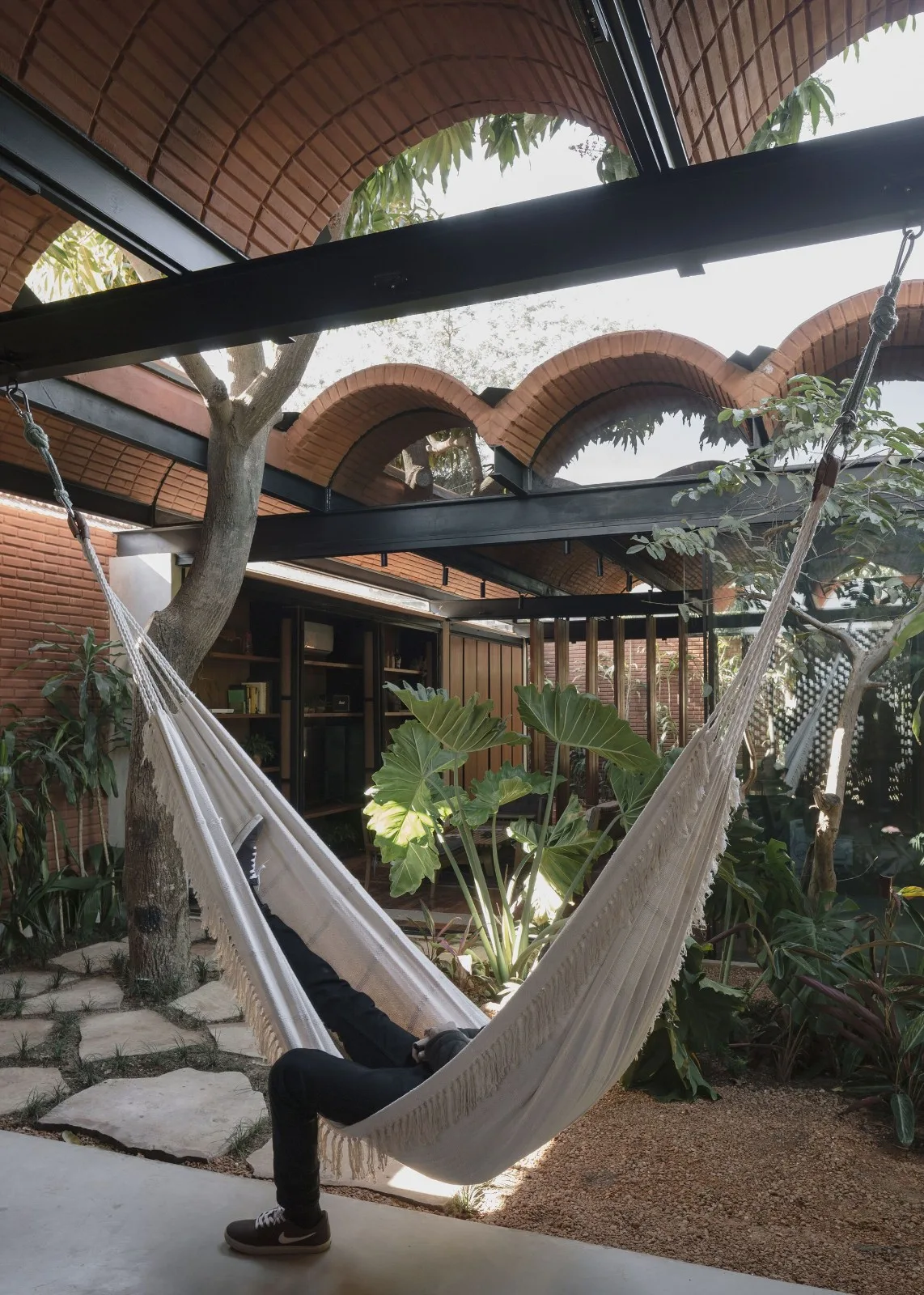
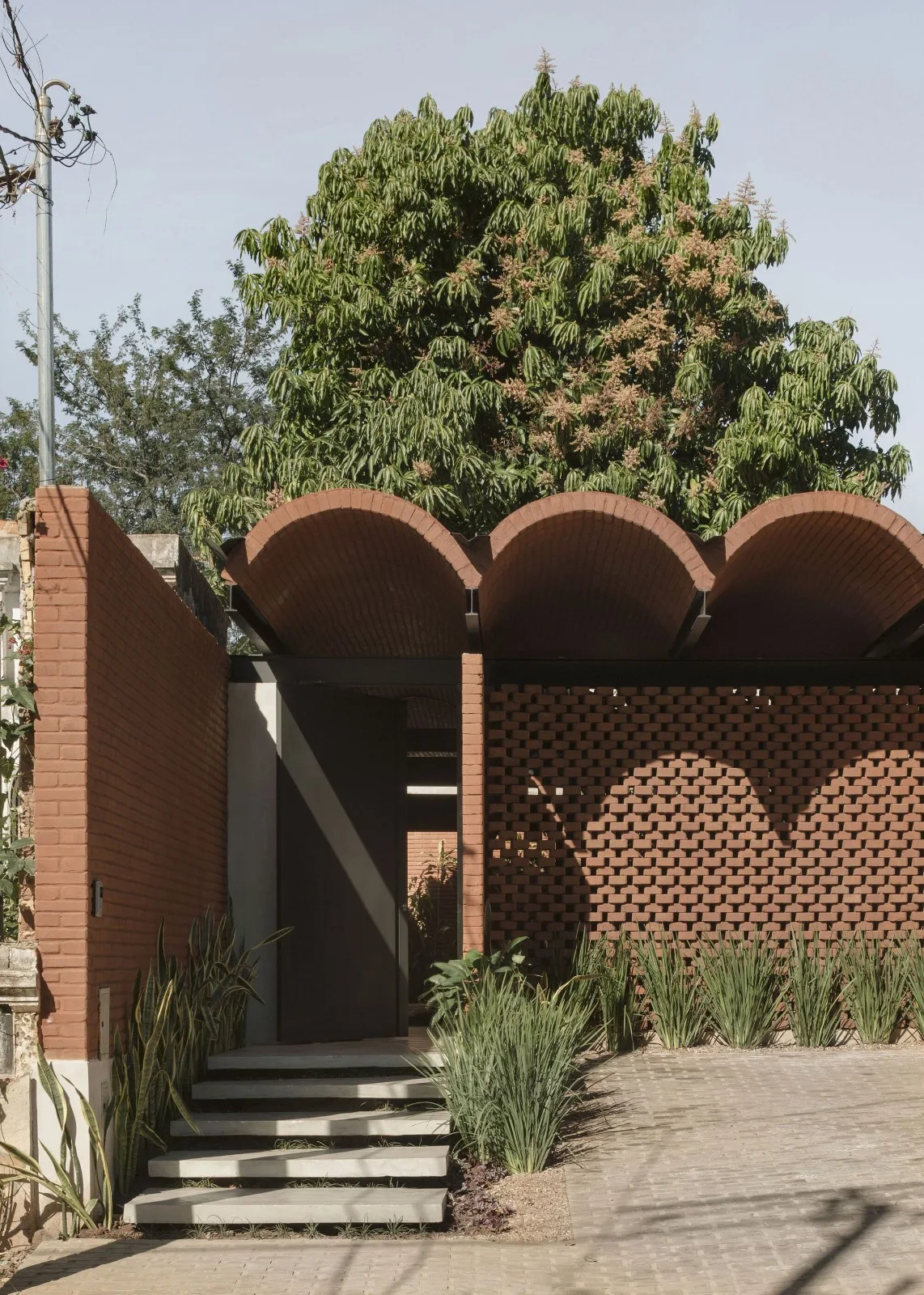
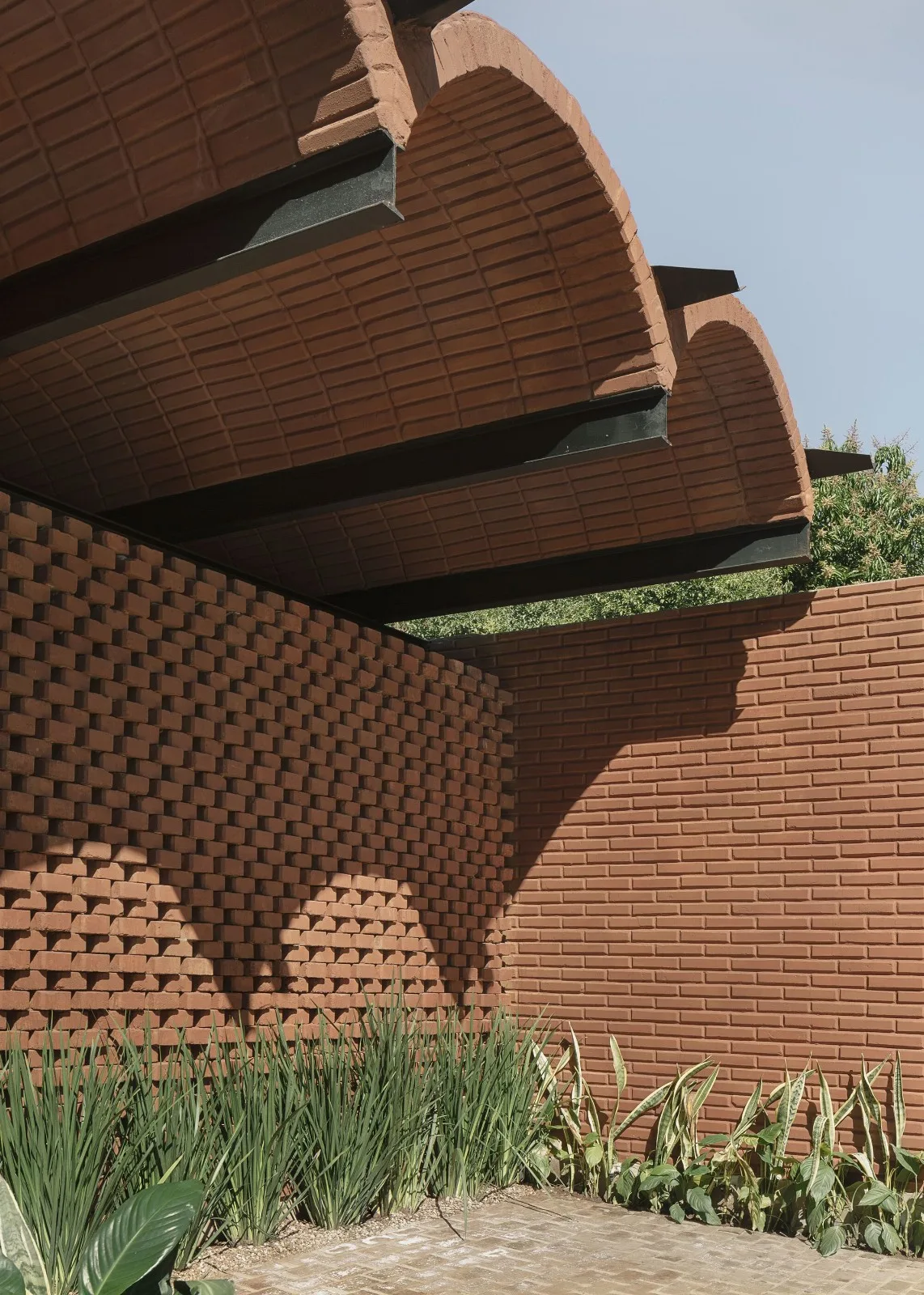
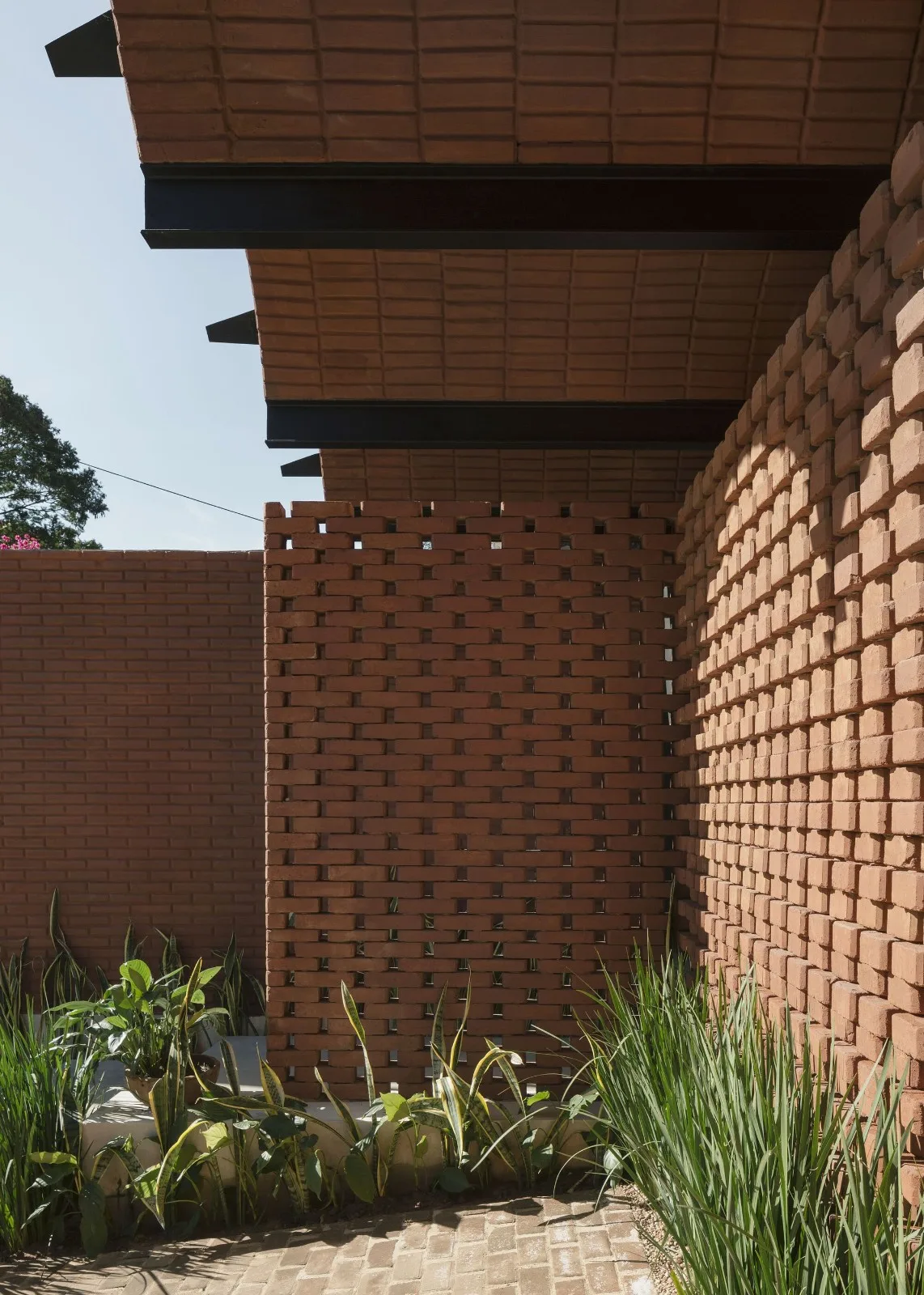
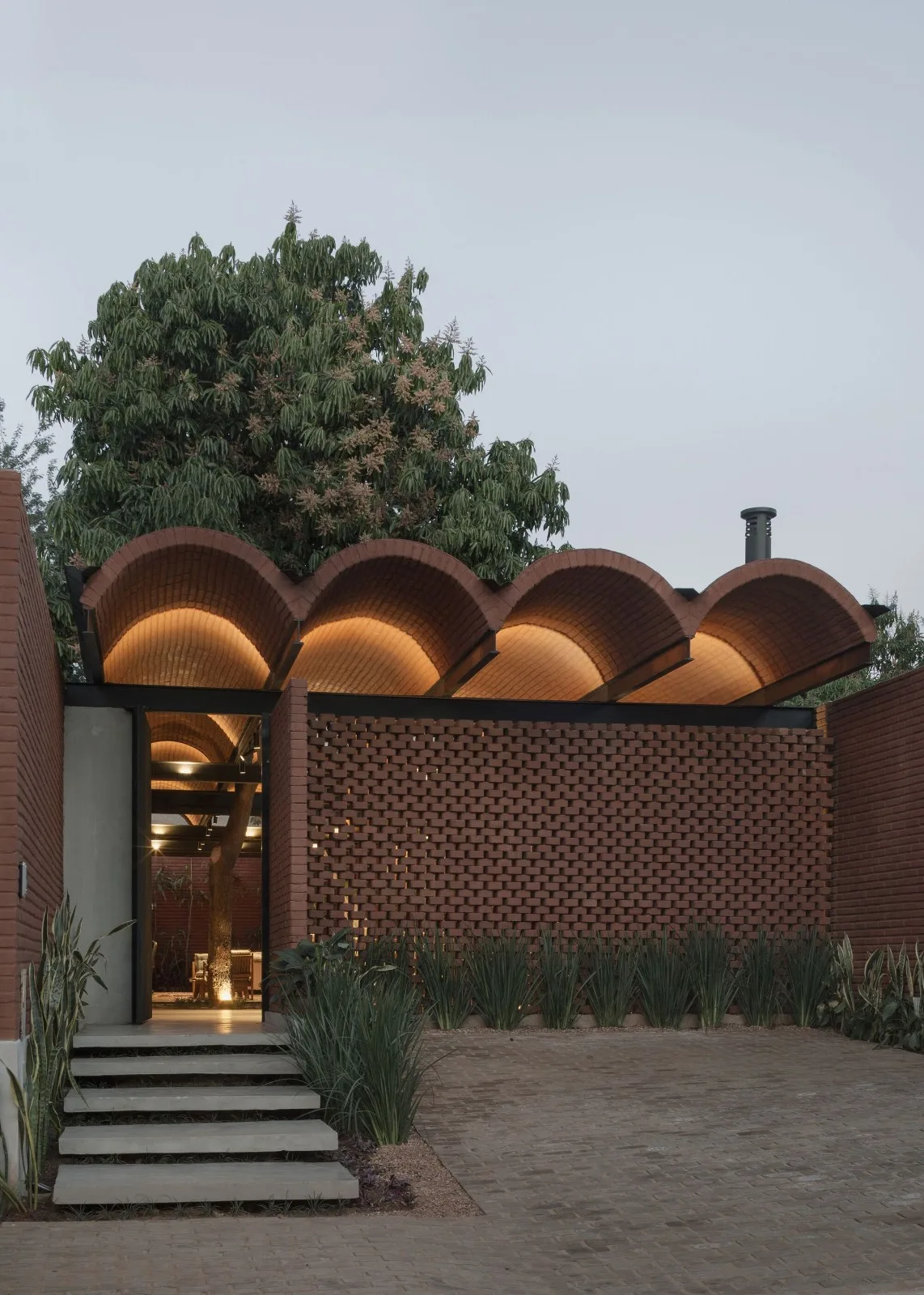
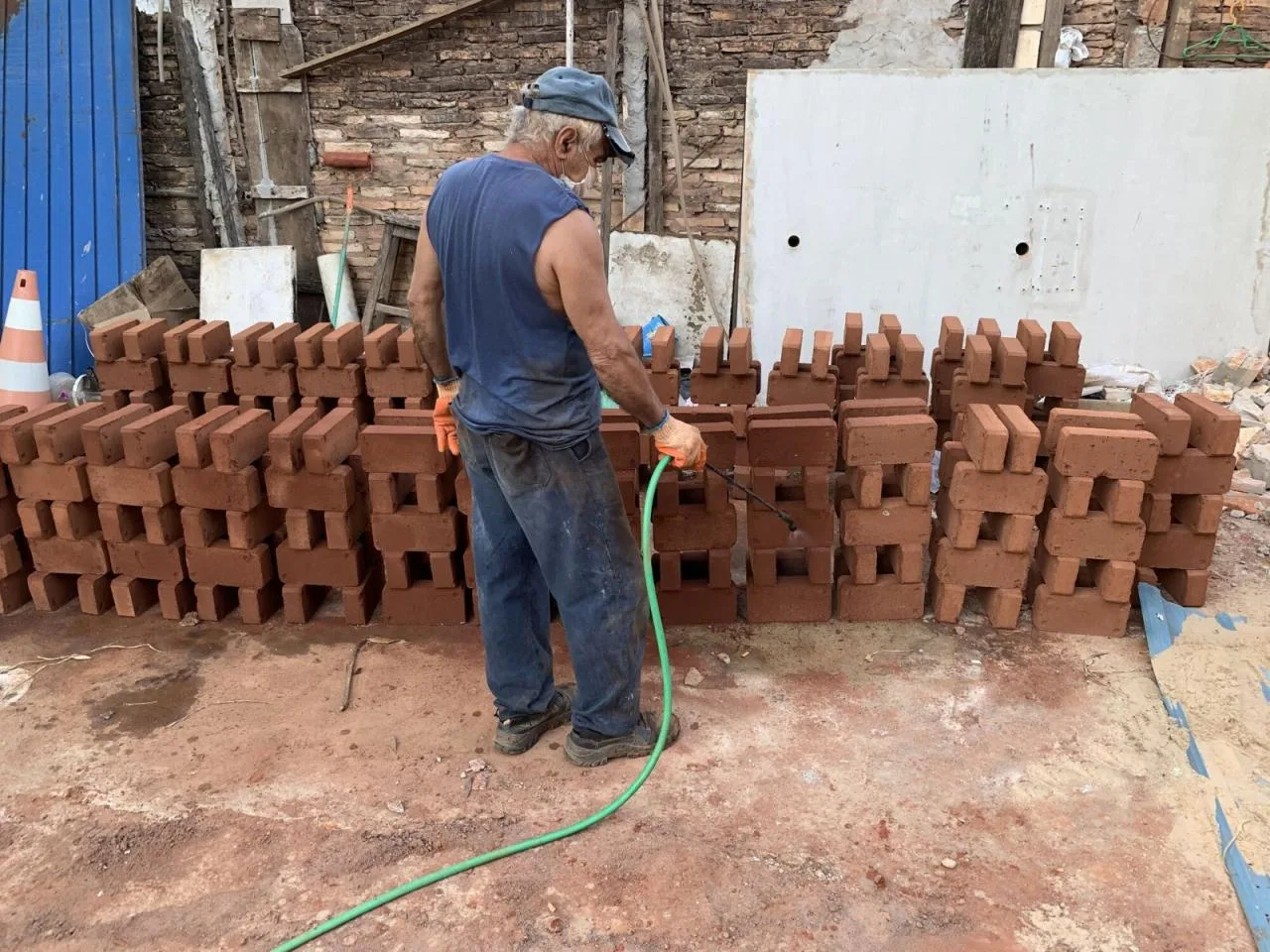
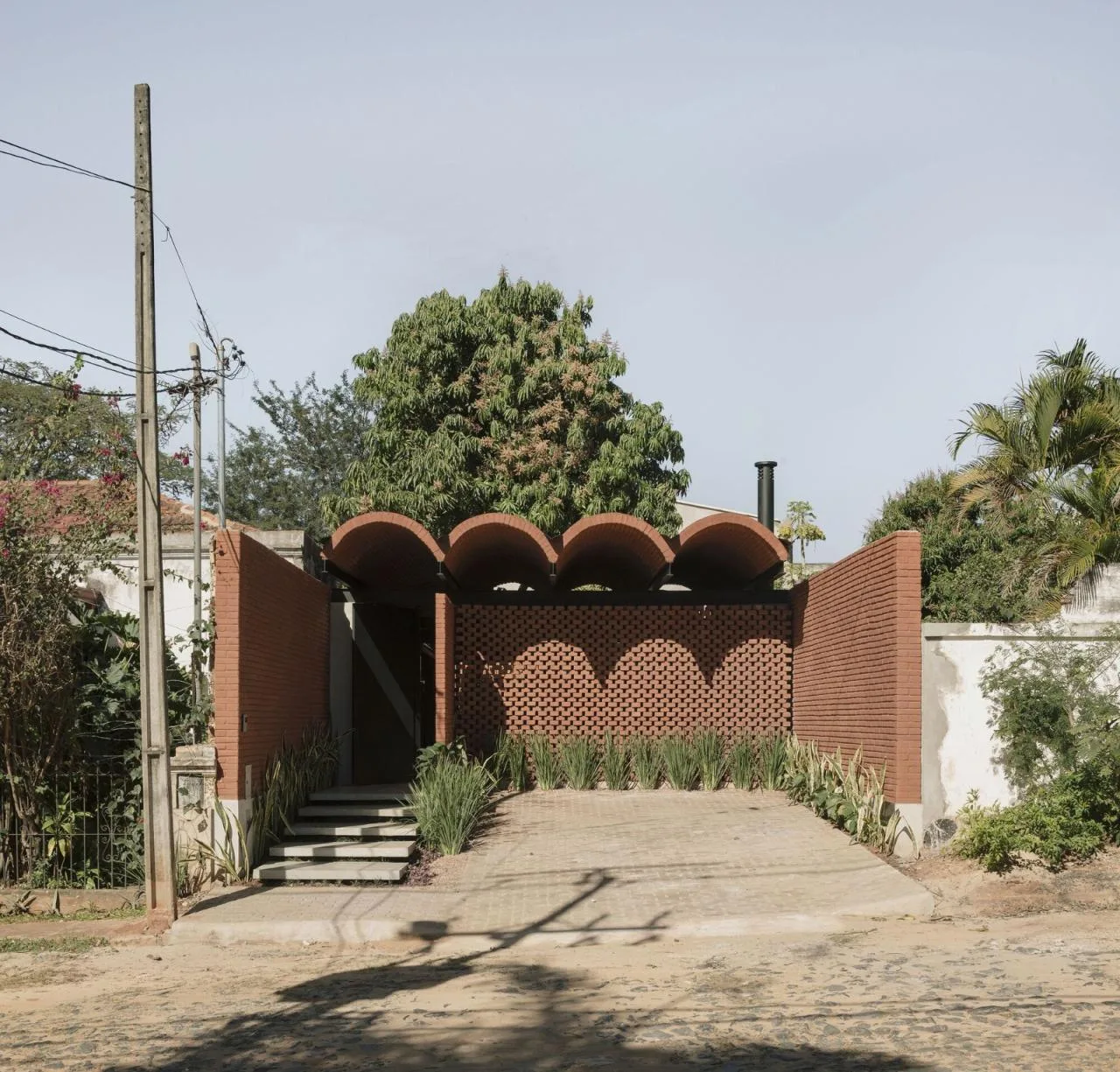
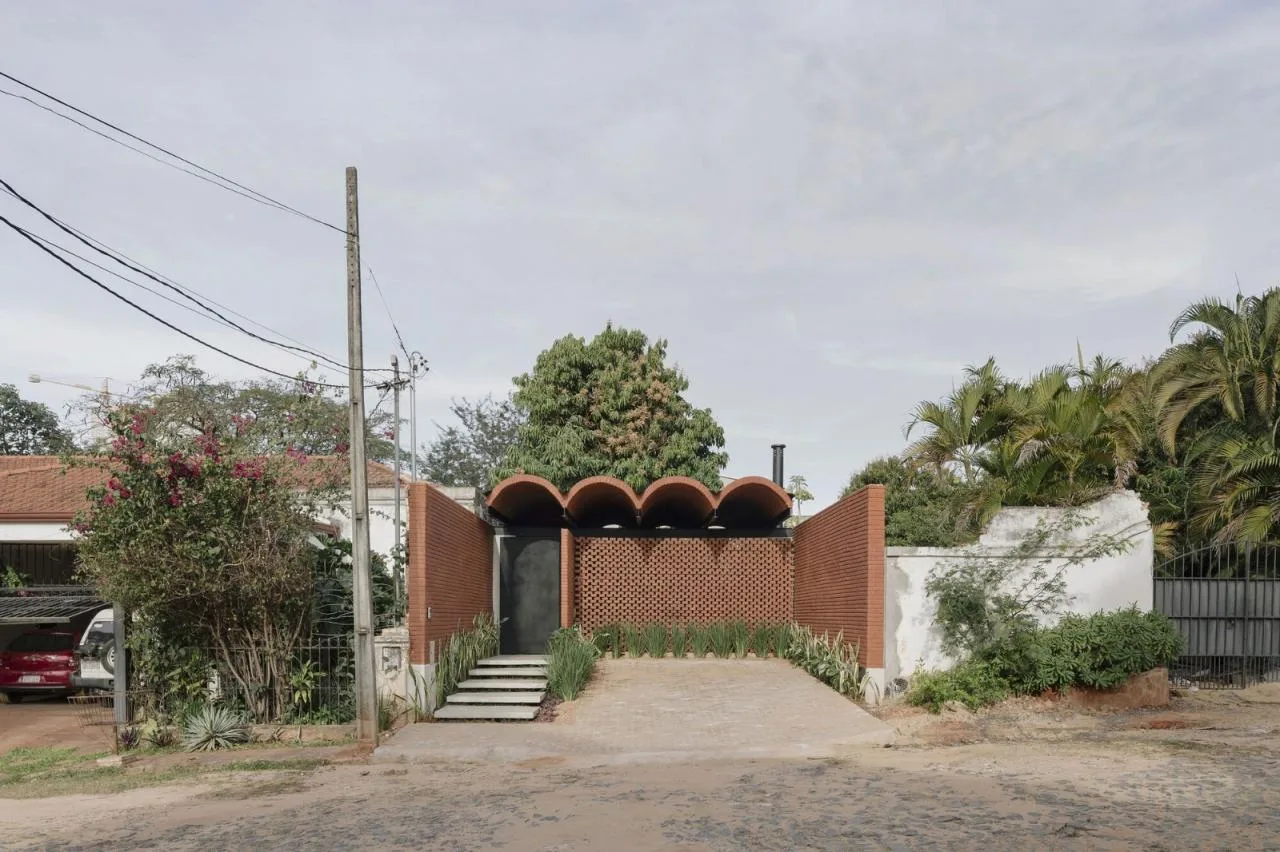
Local vernacular architecture taught us that the most cherished space is the intermediate area—a shared environment. Walls, filters, and domes made from handmade pressed bricks create this middle space, allowing natural winds to flow through and blur the lines between indoors and outdoors.
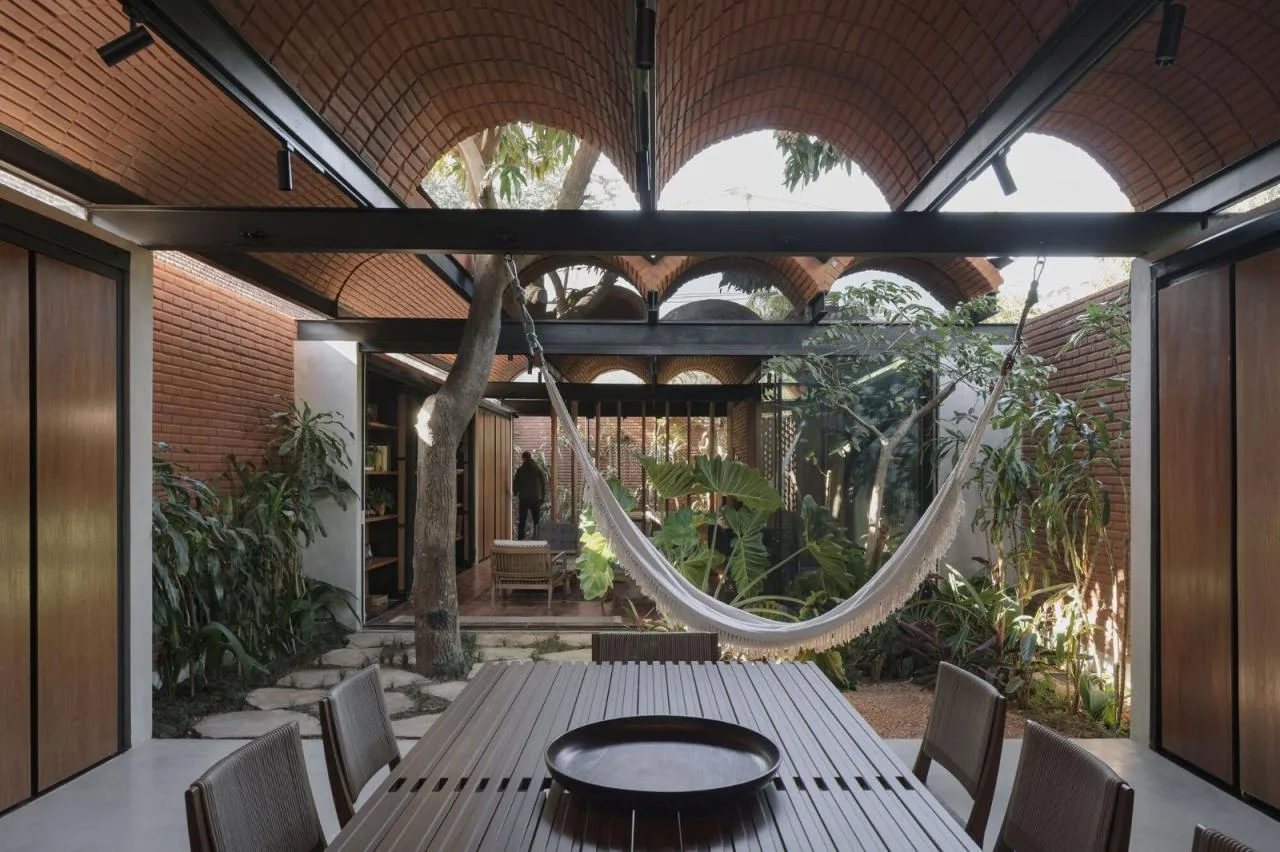
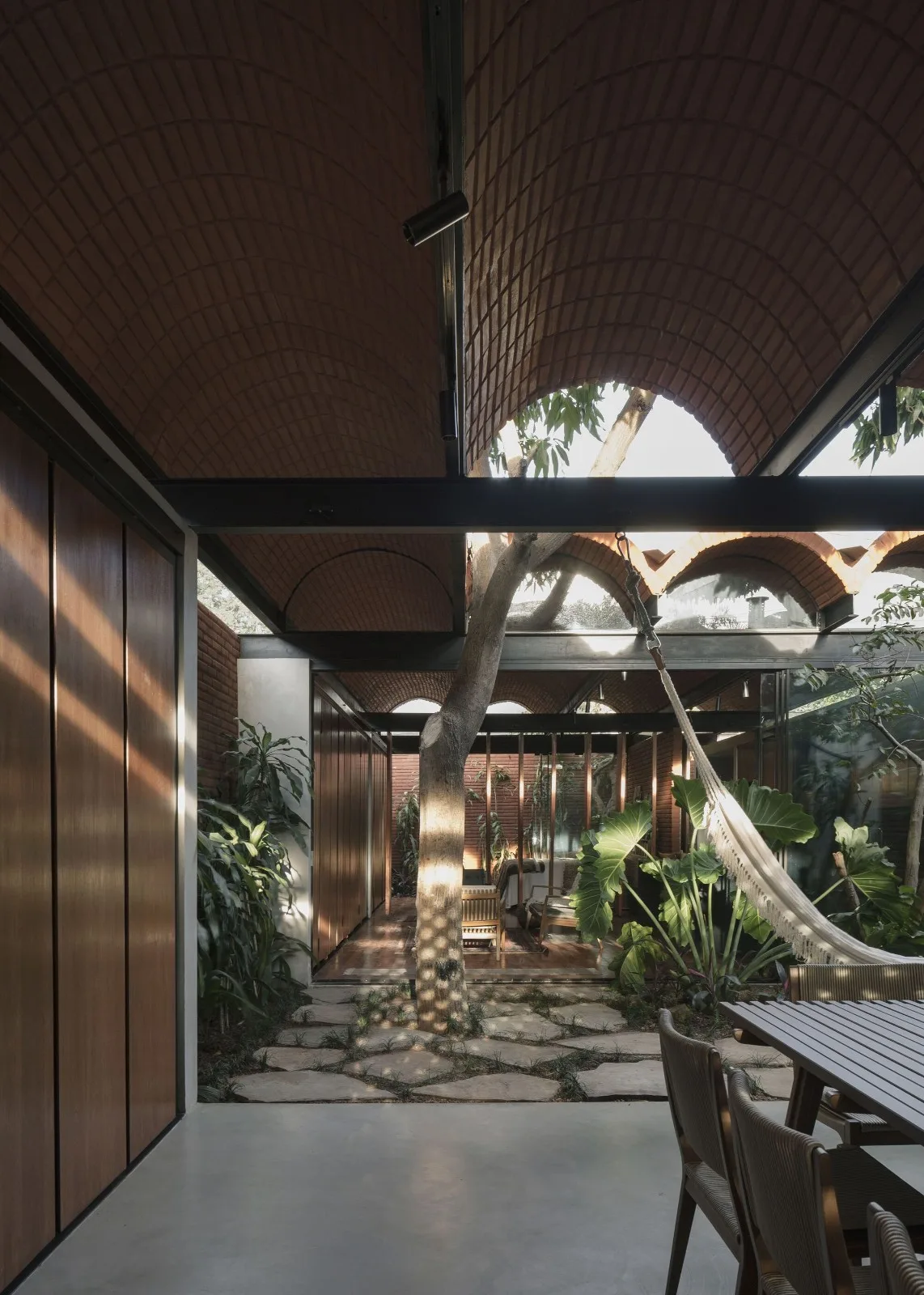
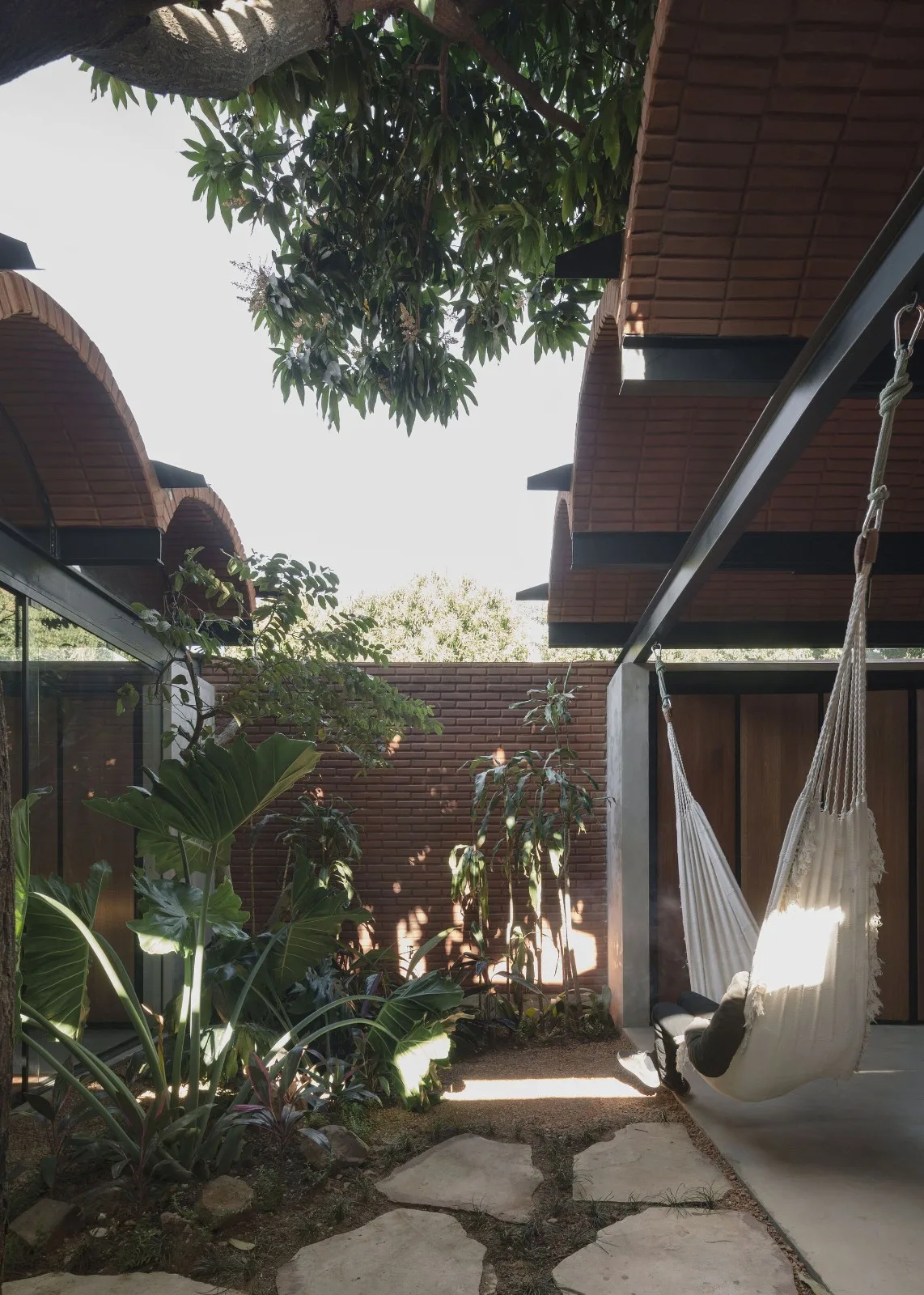
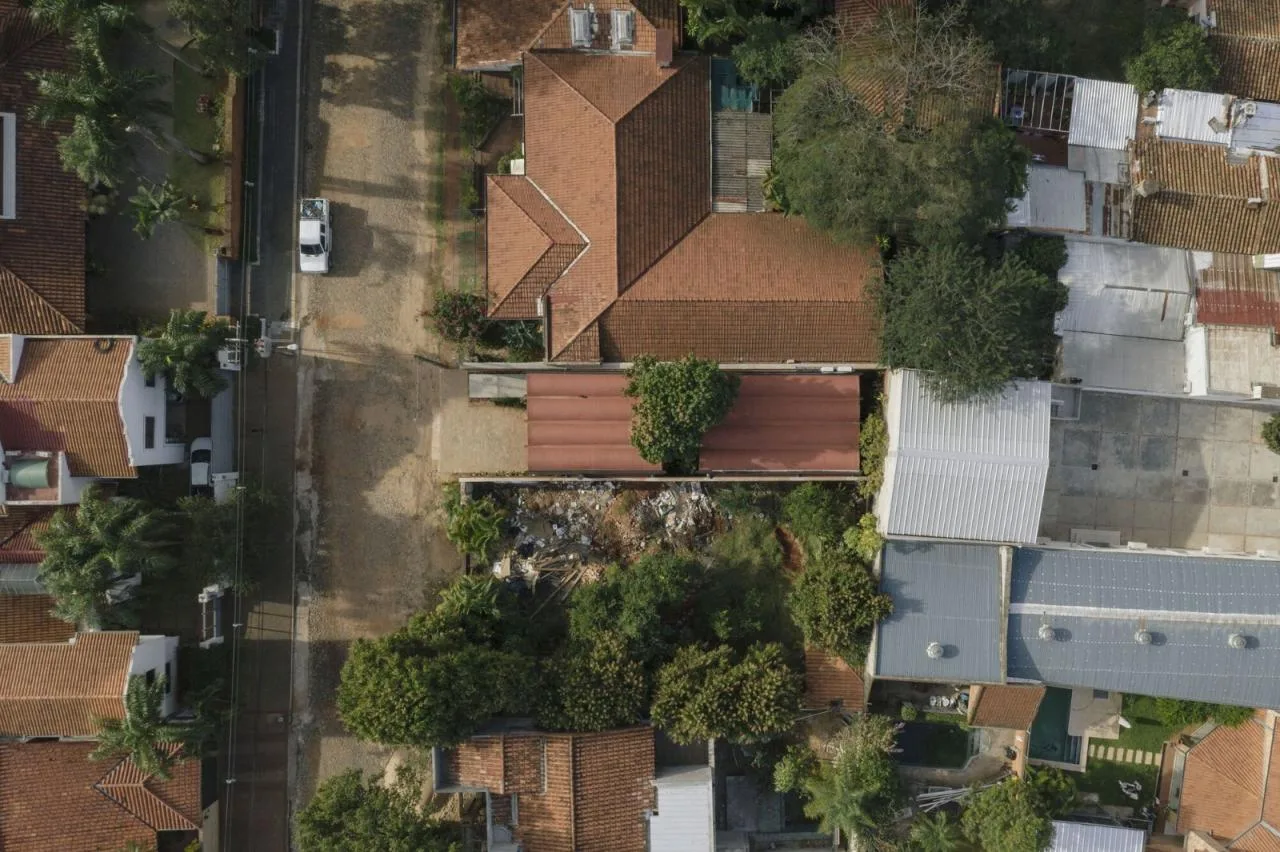
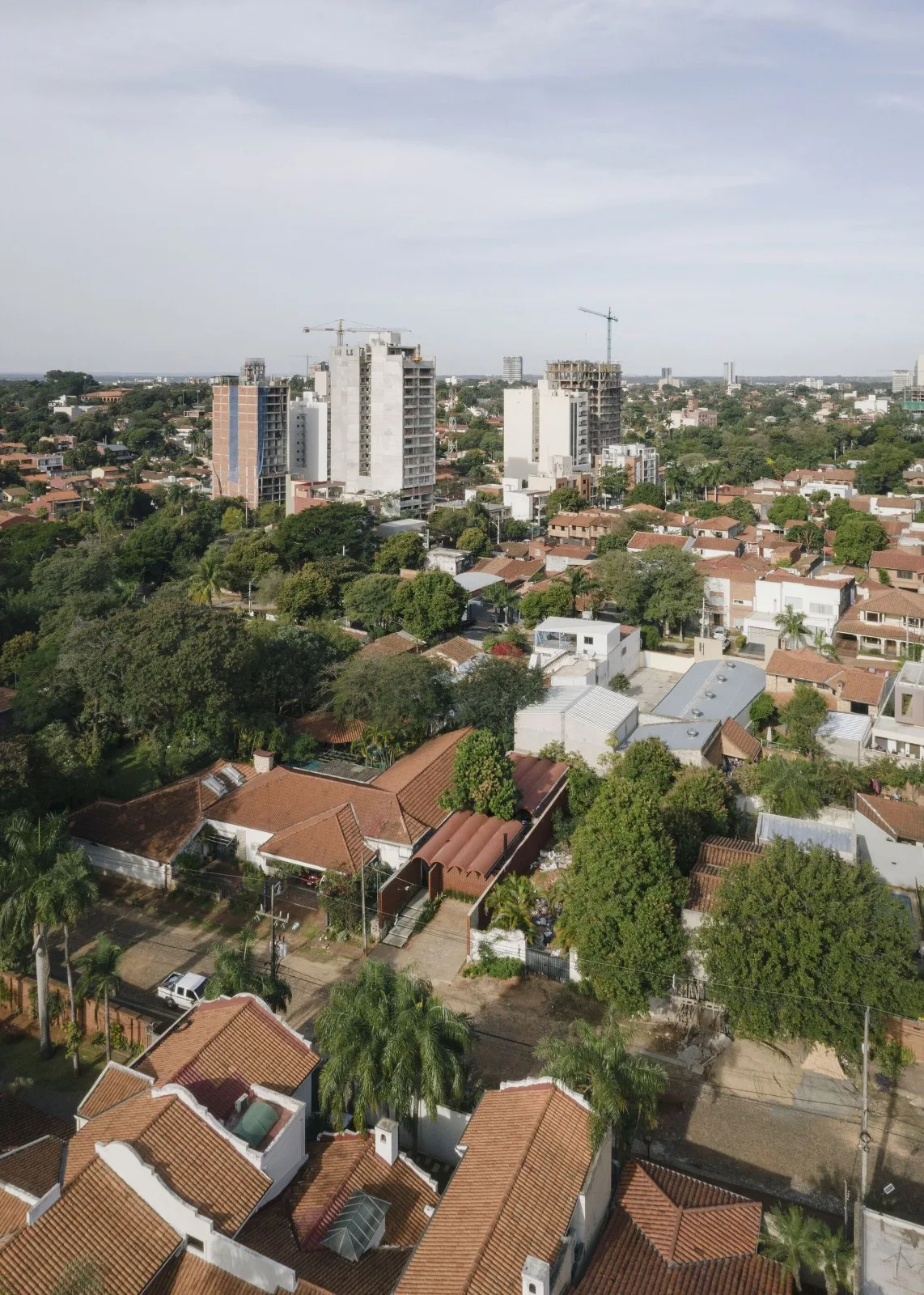
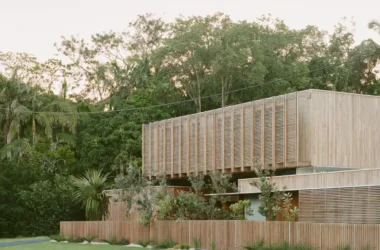
At the center of the 190-square-meter plot stands a mango tree, nestled between two buildings. Though physically separate, these buildings are visually connected, creating integration from the front filtering wall to the rear boundary. This 115-square-meter building, shaped by filtering walls, doors, and blinds, embraces the concept of self-sufficient housing from a local subtropical perspective.
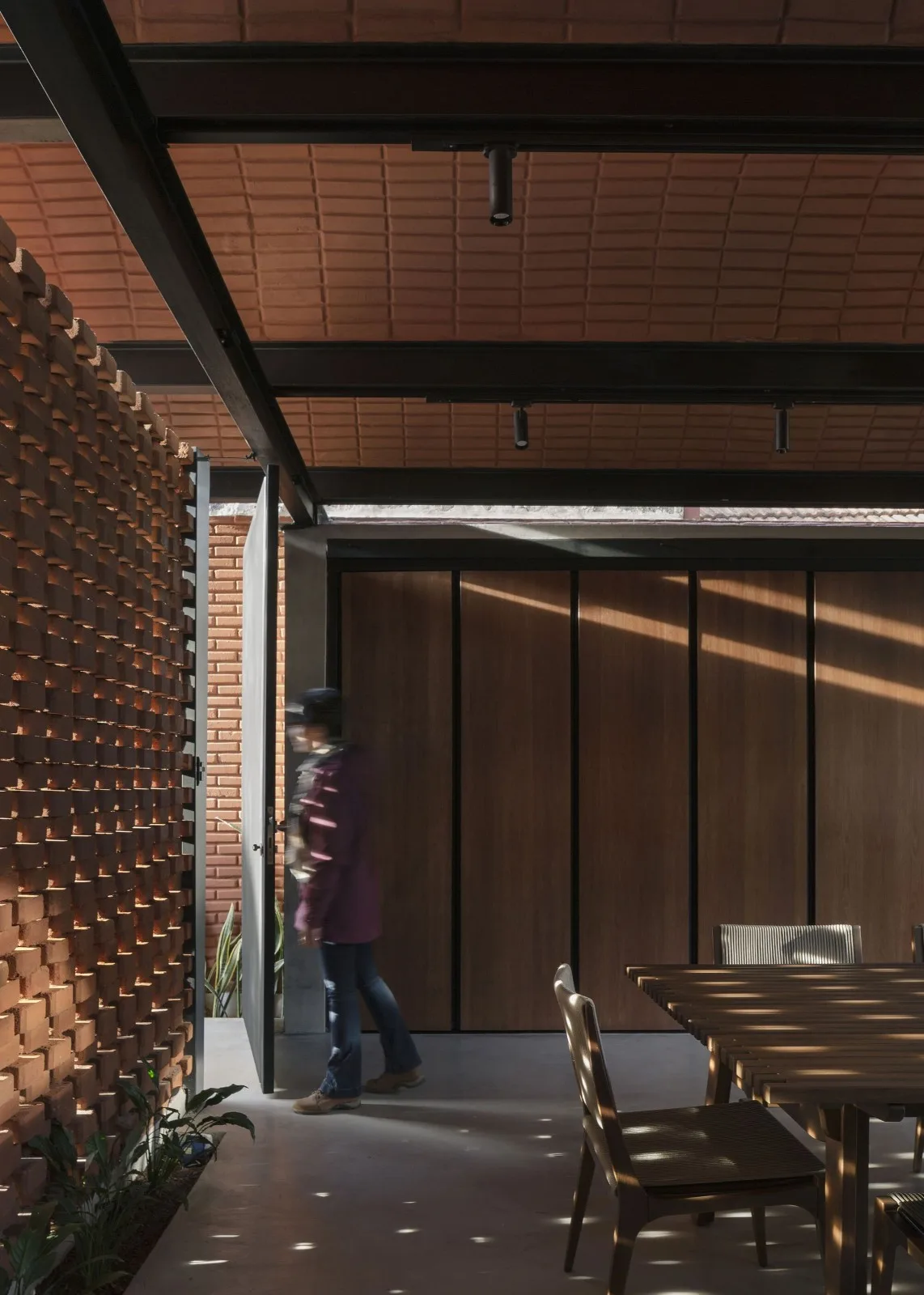
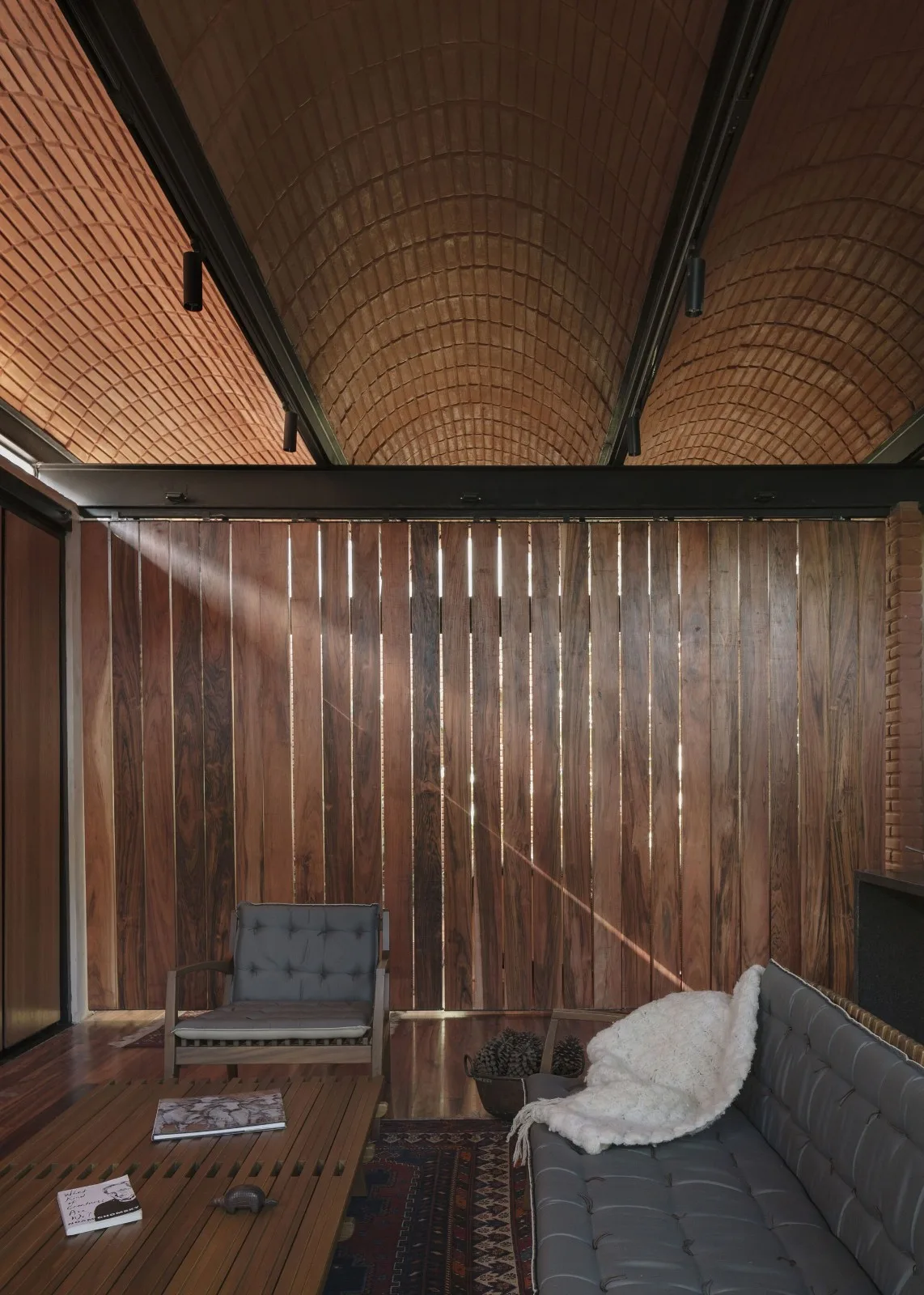
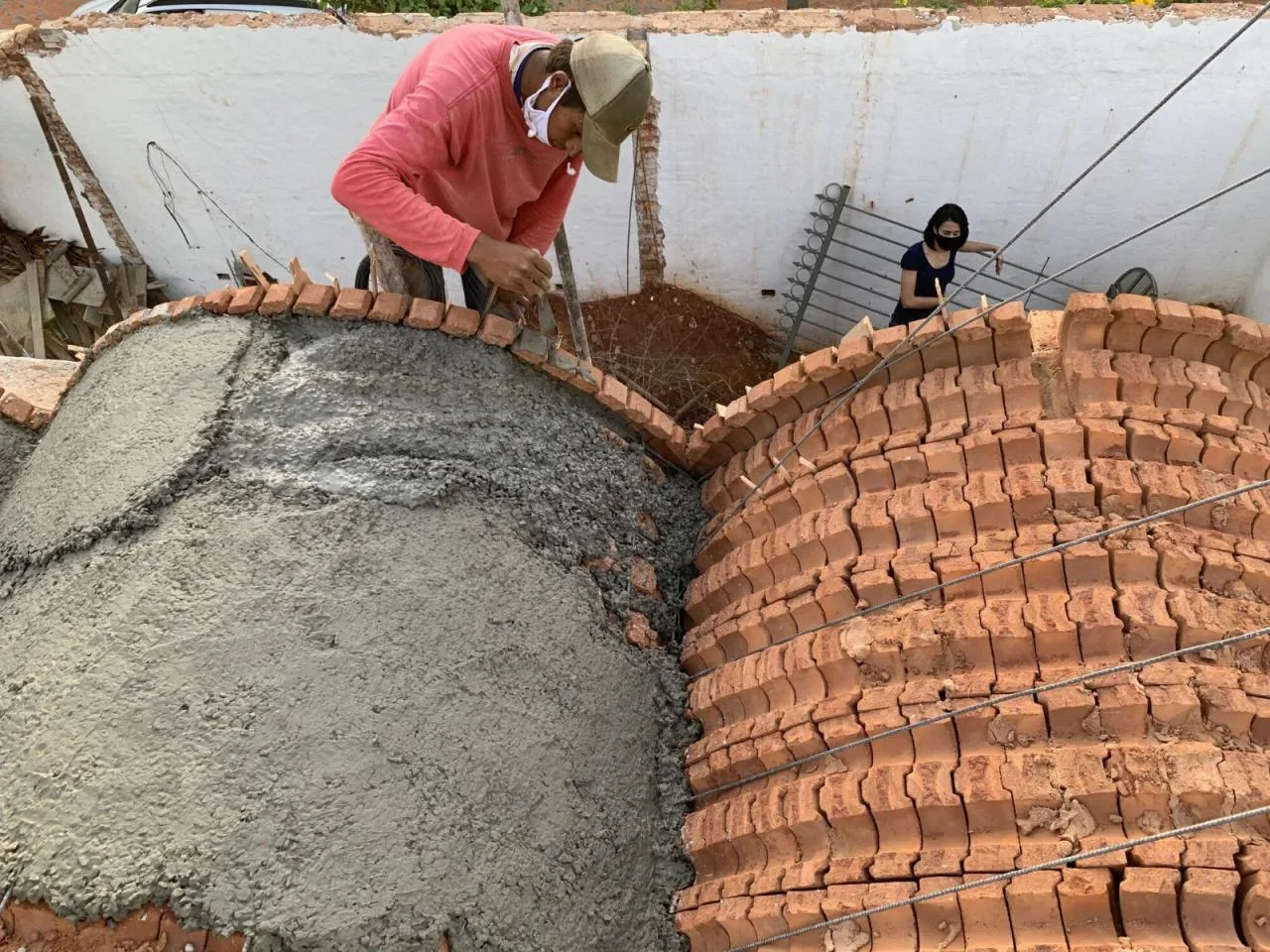
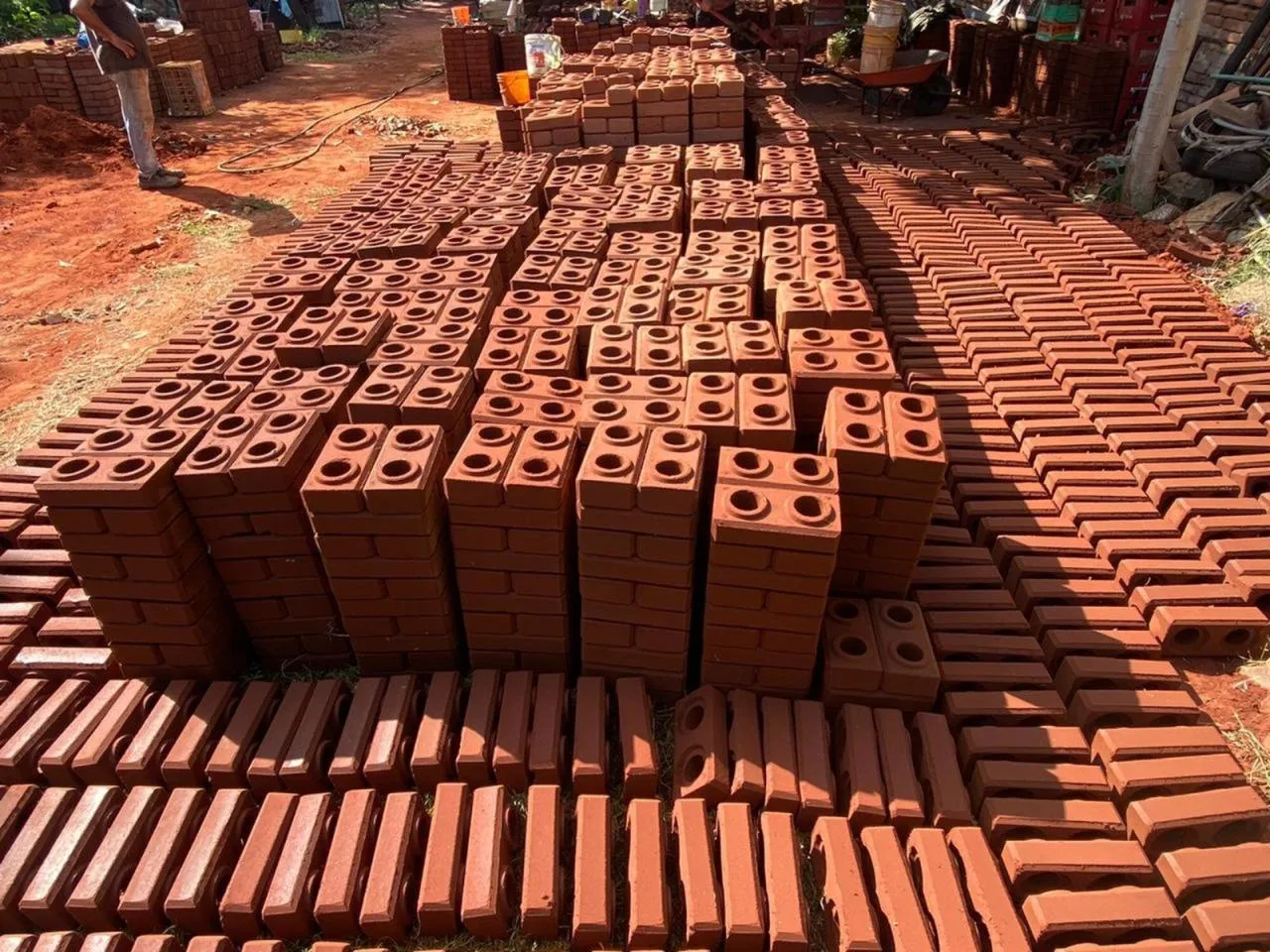
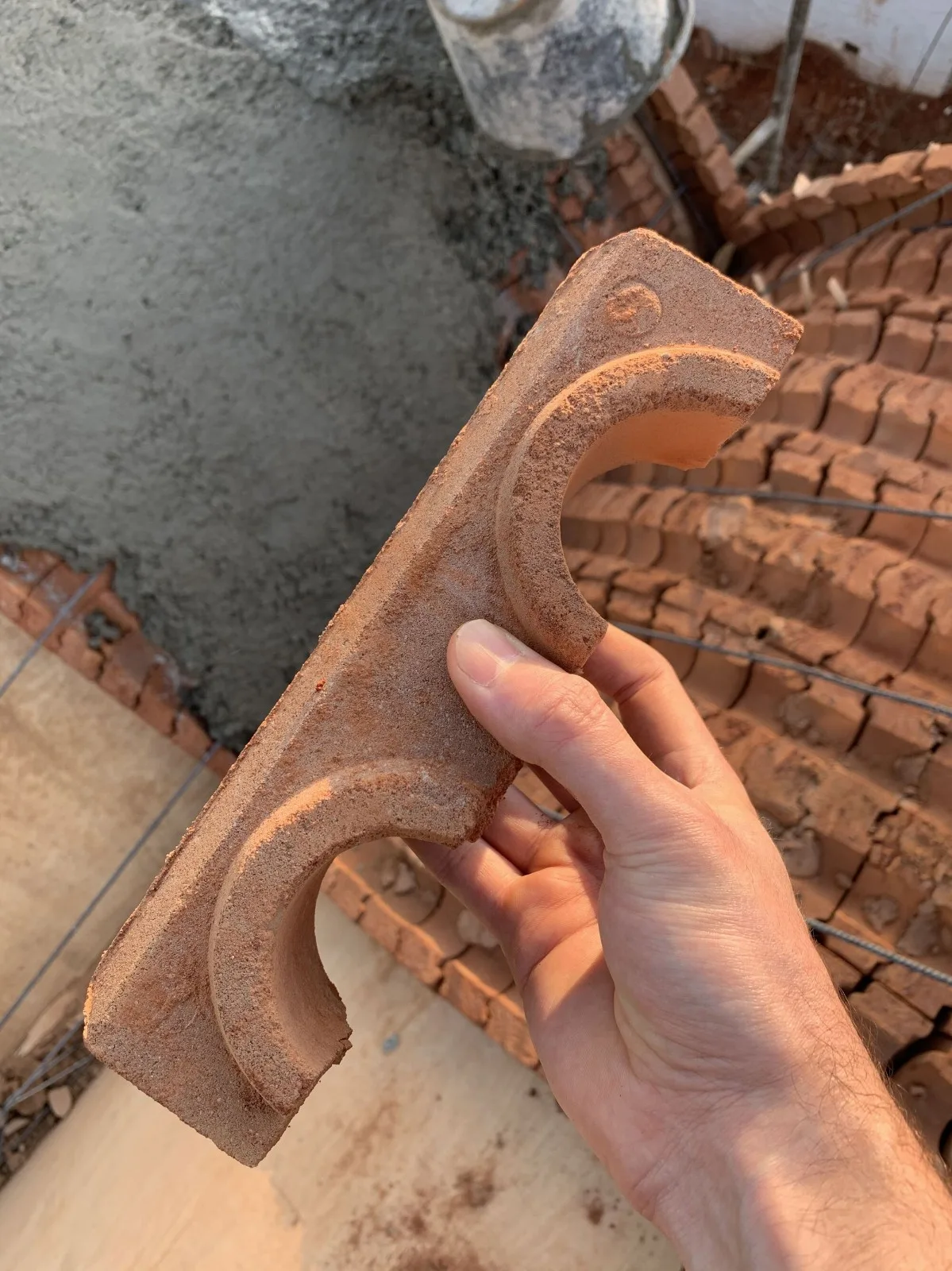
Balancing industry and craftsmanship involves recognizing available resources. The fusion of these two creates a technological hybrid that serves as a modern alternative to traditional building methods. For instance, cutting grooves into raw bricks forms a structural strategy to reinforce the roof’s arch. These grooves accommodate steel bars, working together as a foundation reinforcement module capable of supporting some concrete loads.
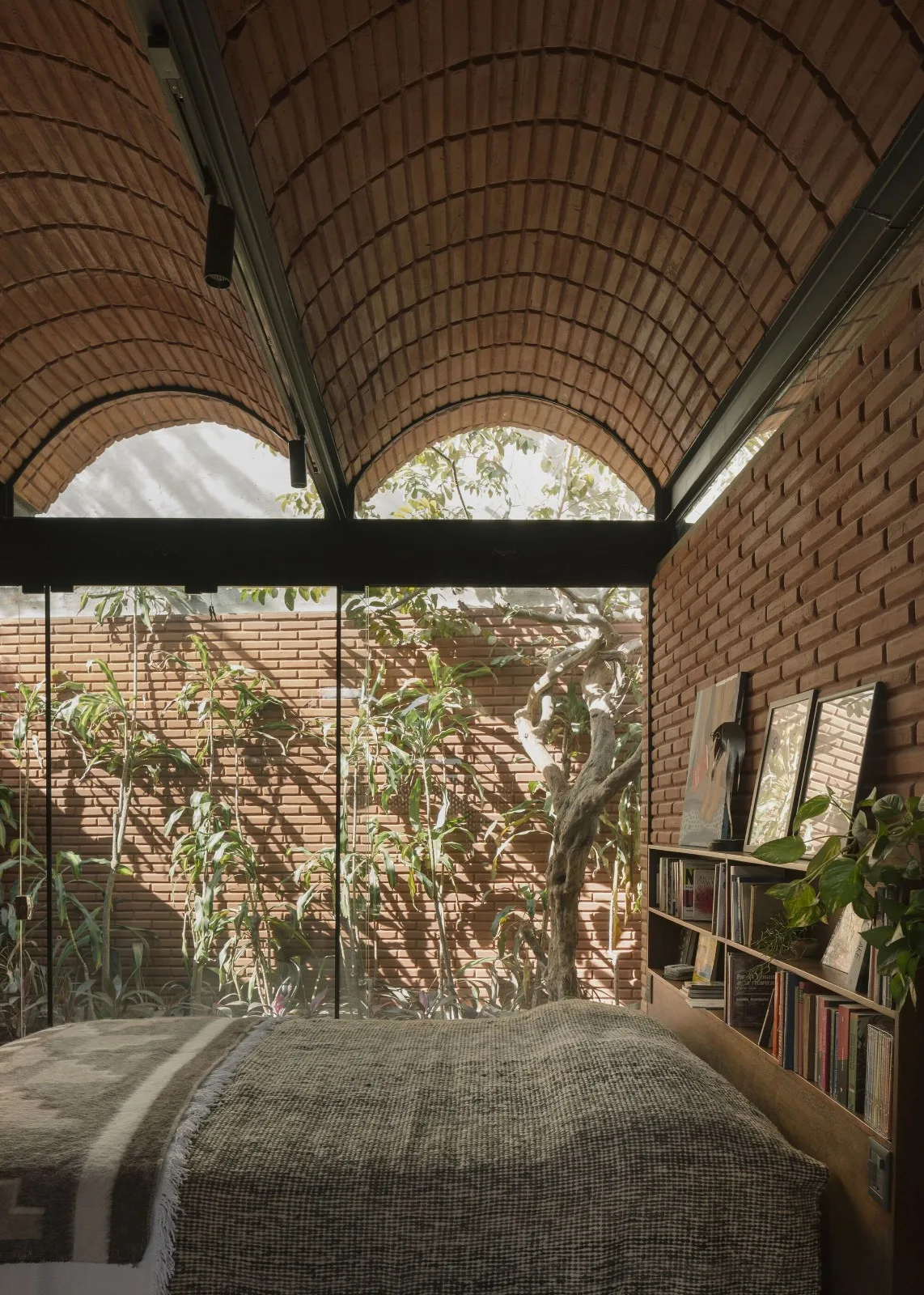
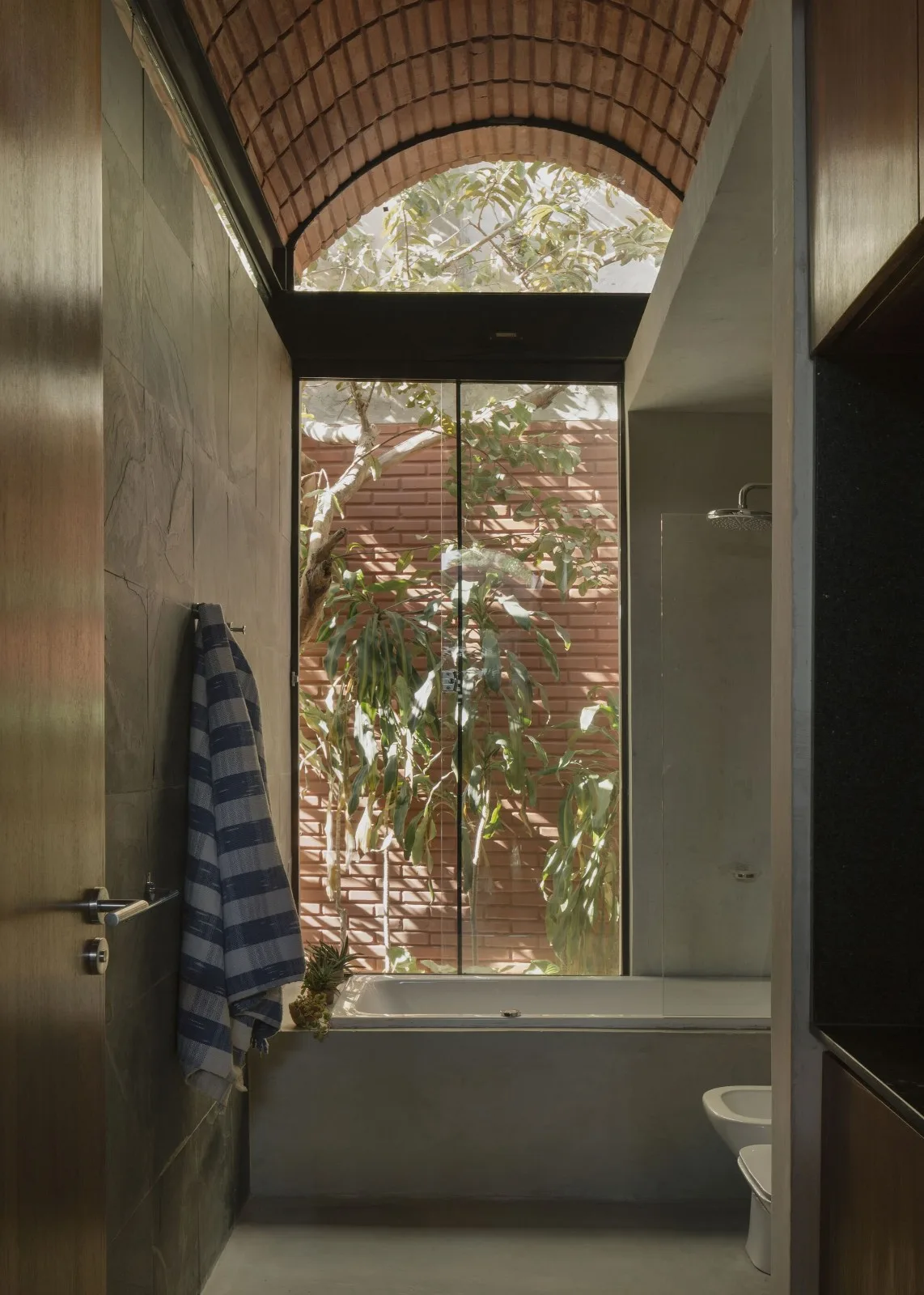
These design principles and their materialization—from raw material processing to furniture mechanism design—reflect an effort to harmonize project conception and construction, seeking balance.
Project drawings
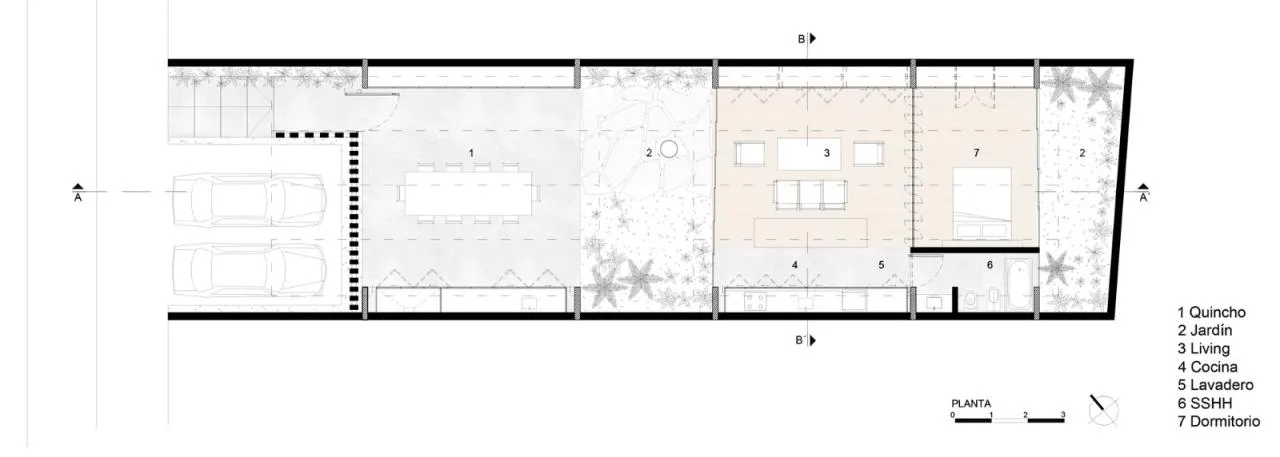
△ Plan view
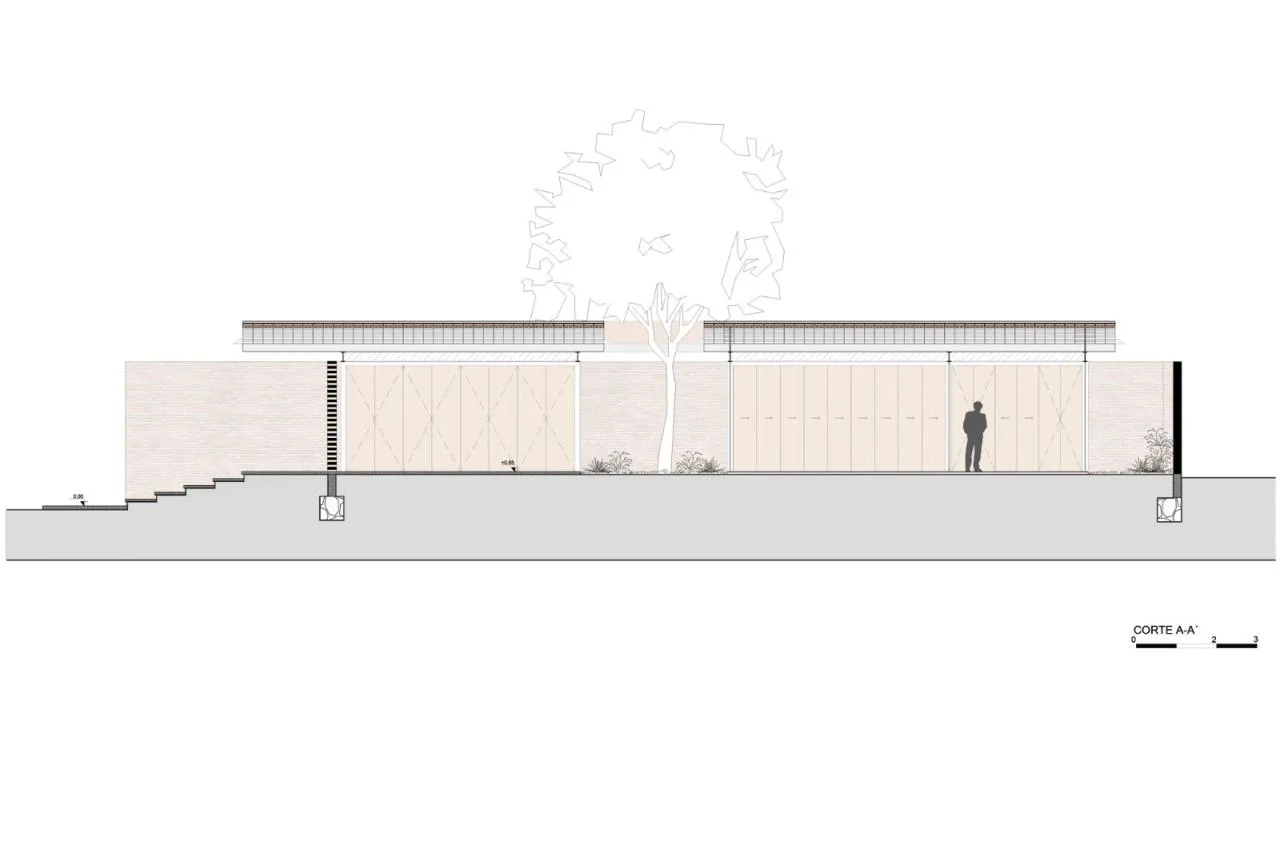
△ Section diagram
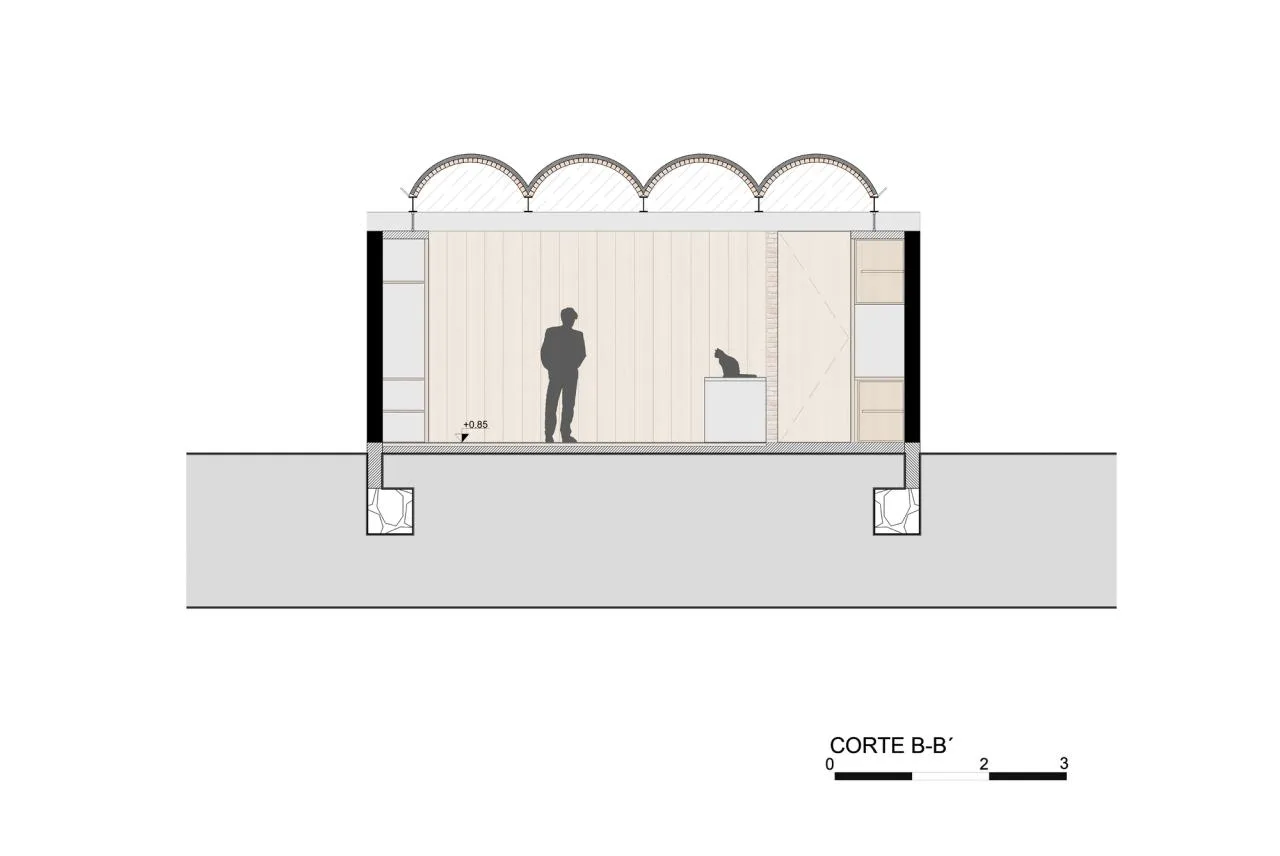
△ Section diagram
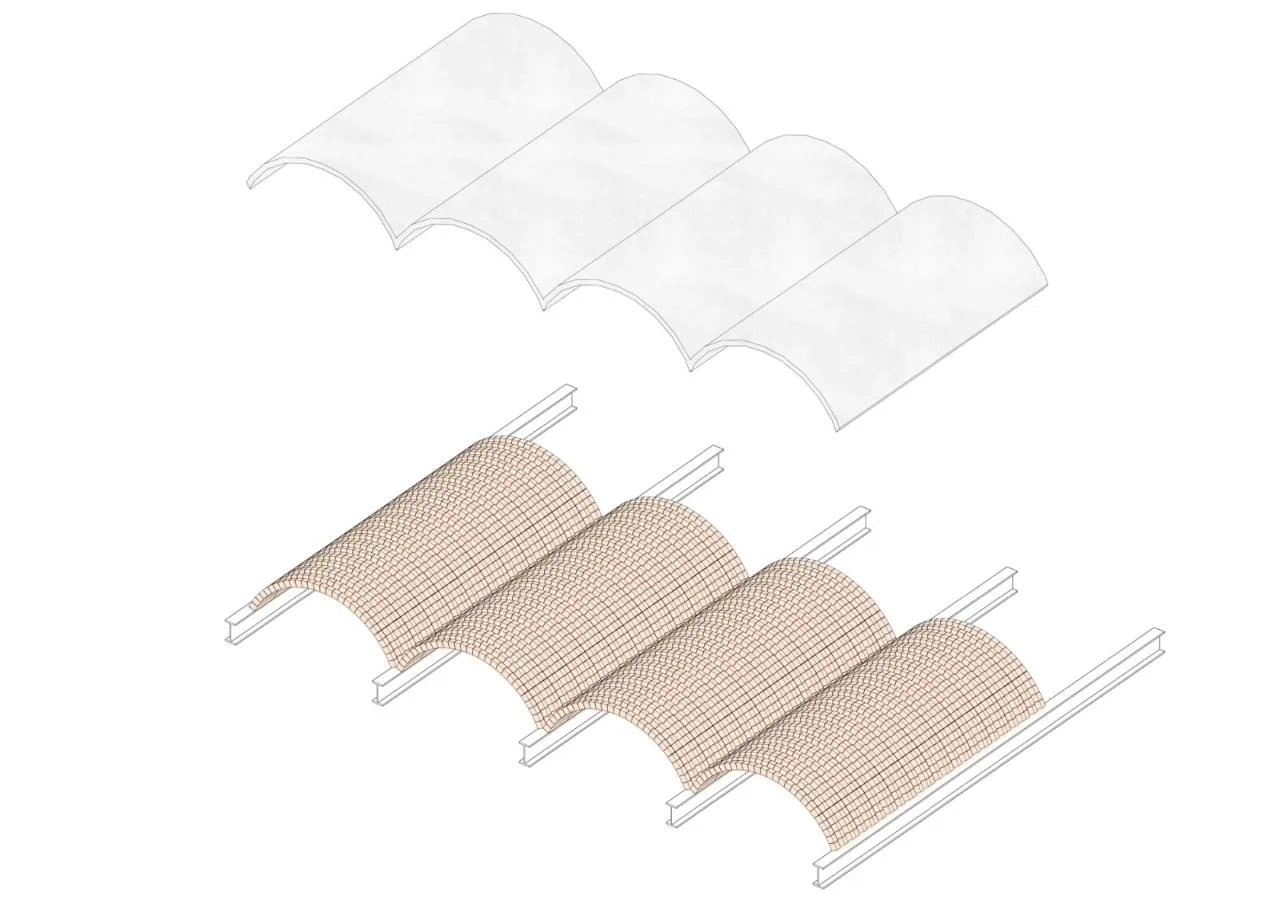
△ Roof structure schematic
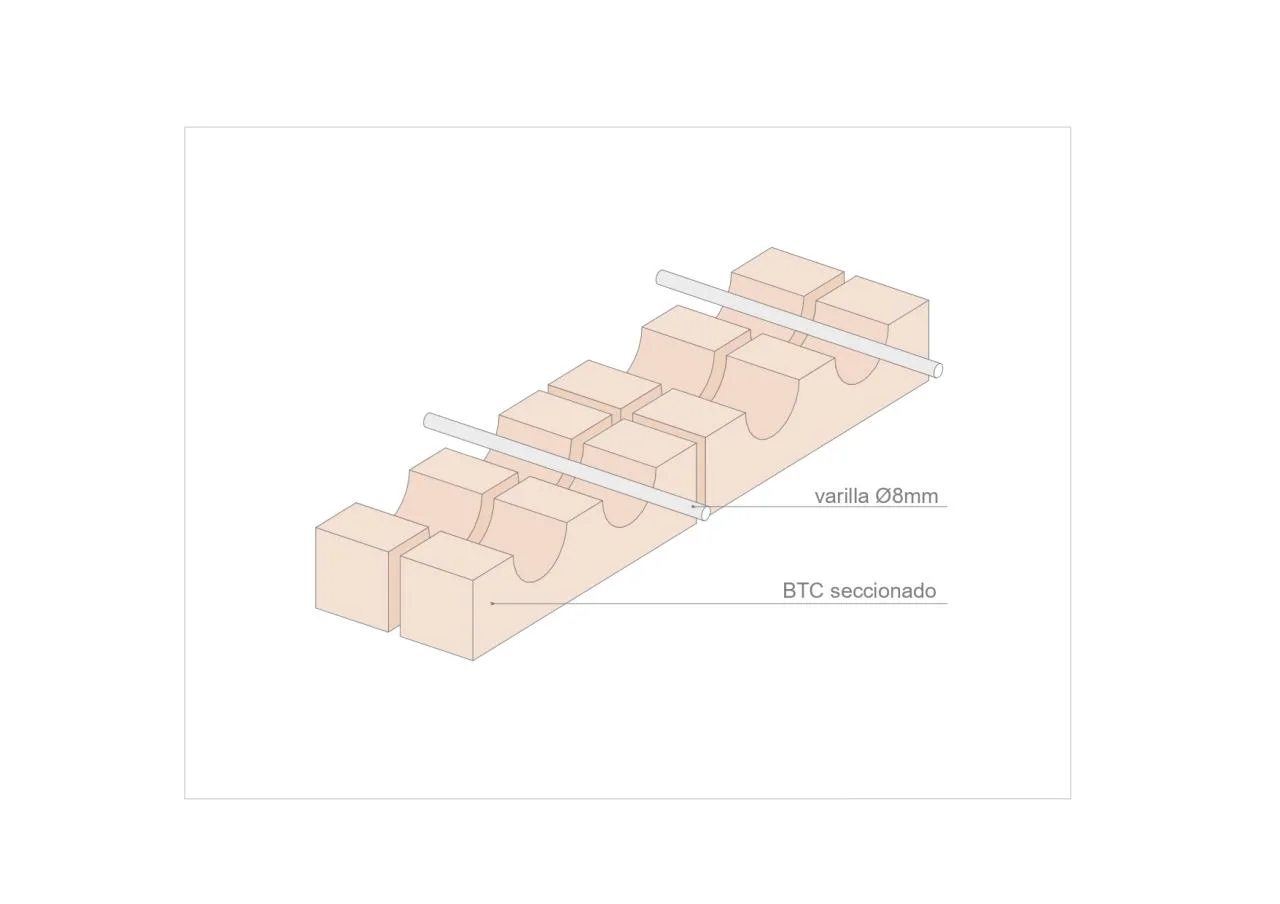
△ Brick structure diagram
Project Information
Architectural Design: Equipo de Arquitectura
Area: 115 square meters
Project Year: 2021
Photographers: Federico Cairoli, Architectural Team
Manufacturer: Orlando Zacarías, Saccaro
Lead Creative Designers: Horacio Cherniavsky, Viviana Pozzoli, Gabriela Ocampos, Franco Pinazzo, Rolph Vuyk
Ironwork: Gabriel González
Carpenter: Marcial Careaga
Landscape Design: Lucila Garay
Location: Paraguay













Must log in before commenting!
Sign Up