
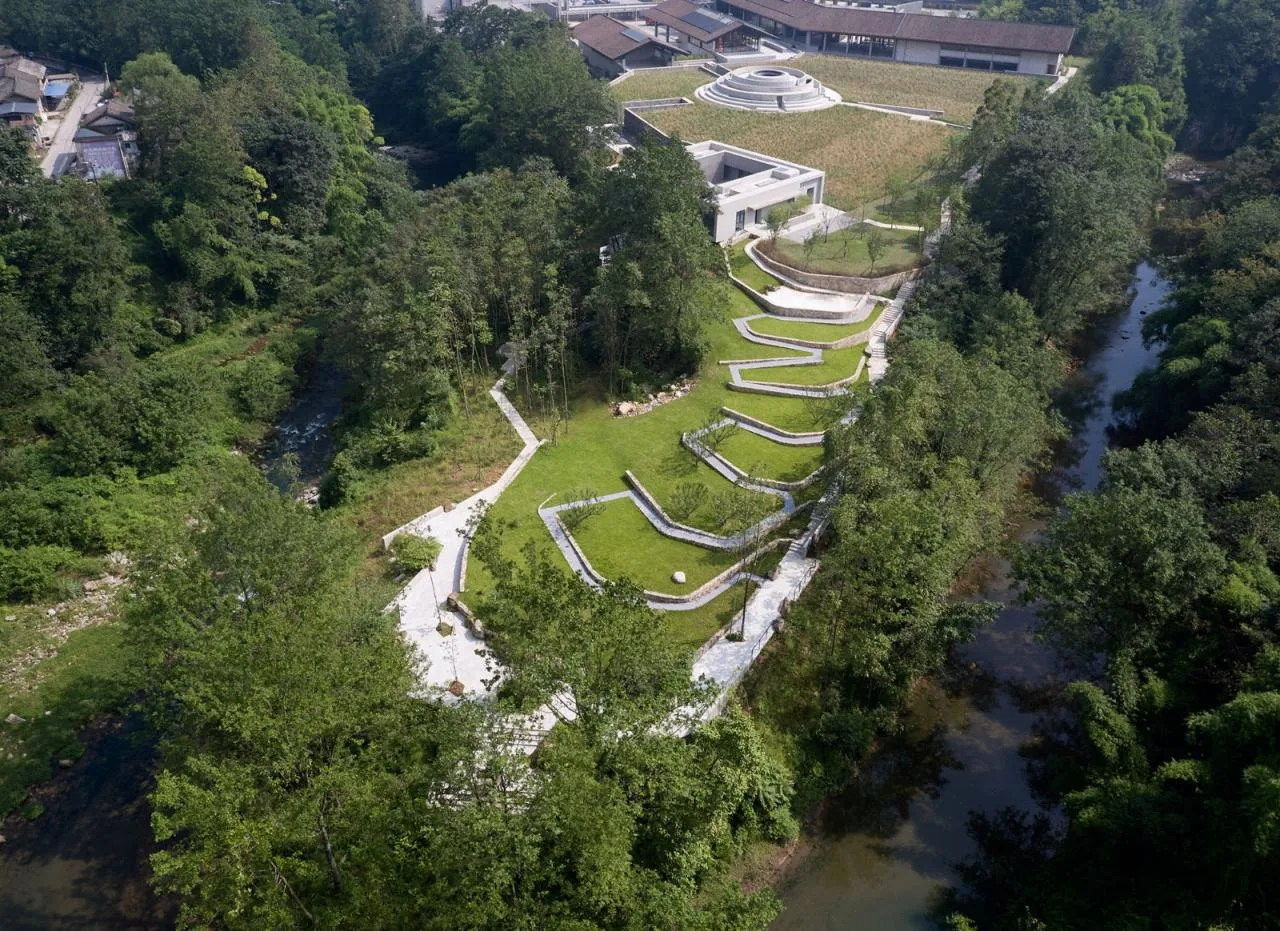
Mount Emei has long been revered as a spiritual sanctuary. Throughout history, emperors, generals, and scholars have paused here to reflect and express their emotions. In 1996, UNESCO recognized Mount Emei’s rich cultural heritage and stunning natural beauty by listing it as a World Heritage site.
This land has witnessed countless battles and disputes, the rise of religious culture, and has become a vital pilgrimage destination. It also served as a key stop along important trade routes. While the ancient architectural relics have not survived, the memories and legends of Mount Emei continue to resonate across the landscape.
Three years ago, Ruen Design Research Laboratory won an international design competition to create the first malt whisky distillery in China for Pernod Ricard. The distillery honors the material and cultural heritage of Mount Emei through timeless architecture.
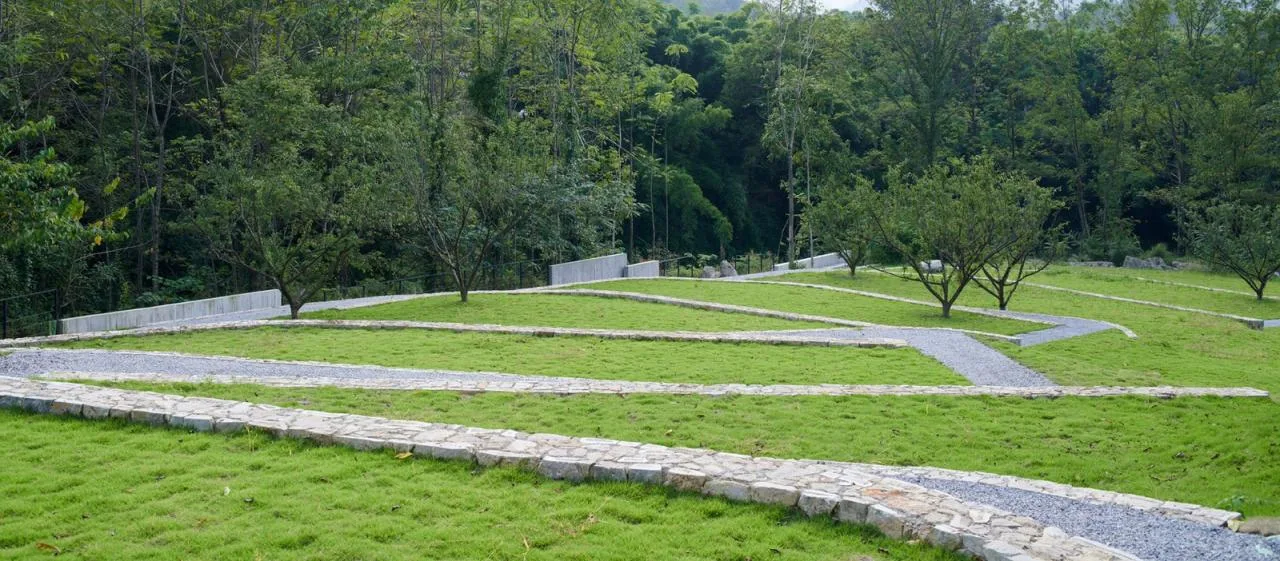
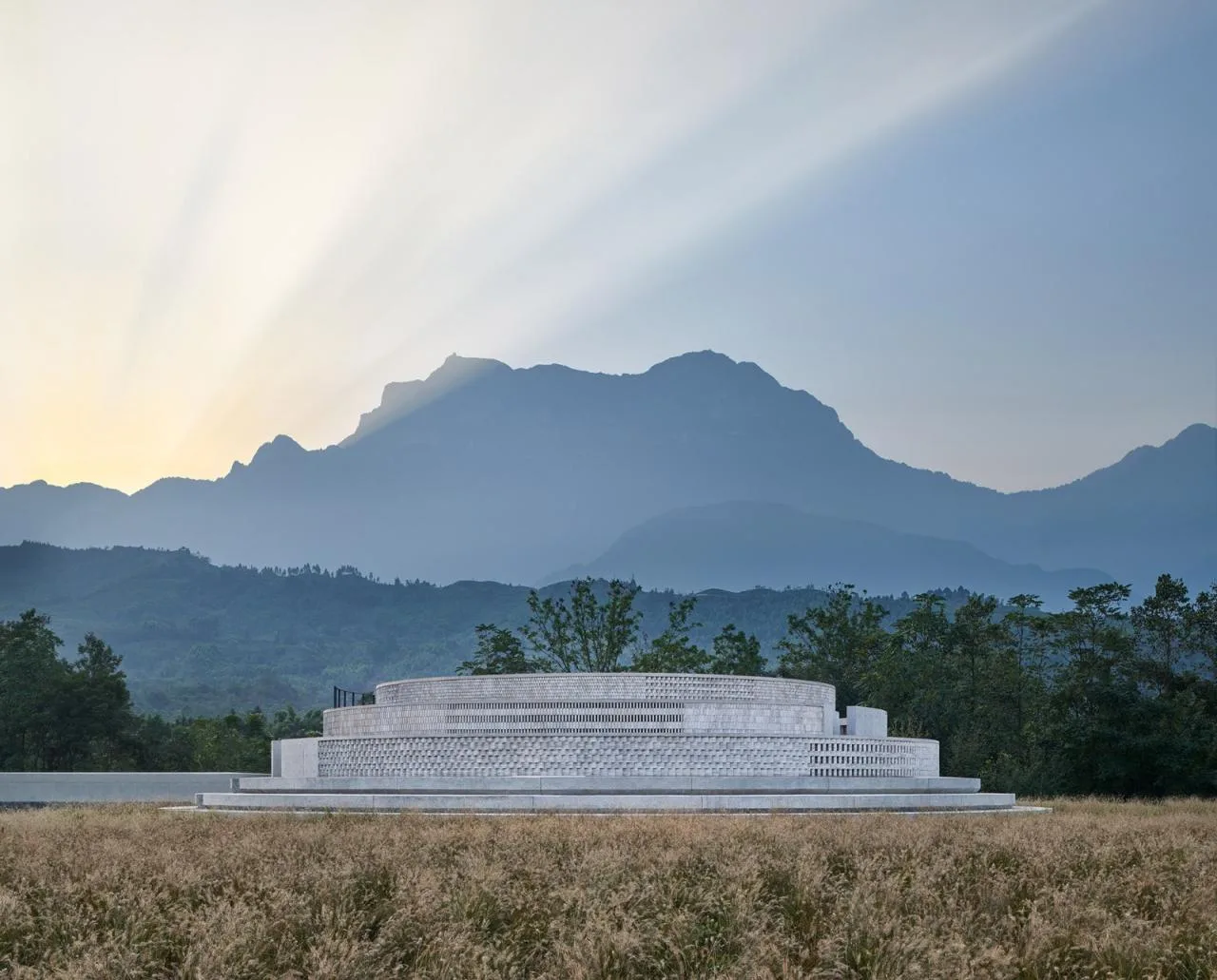
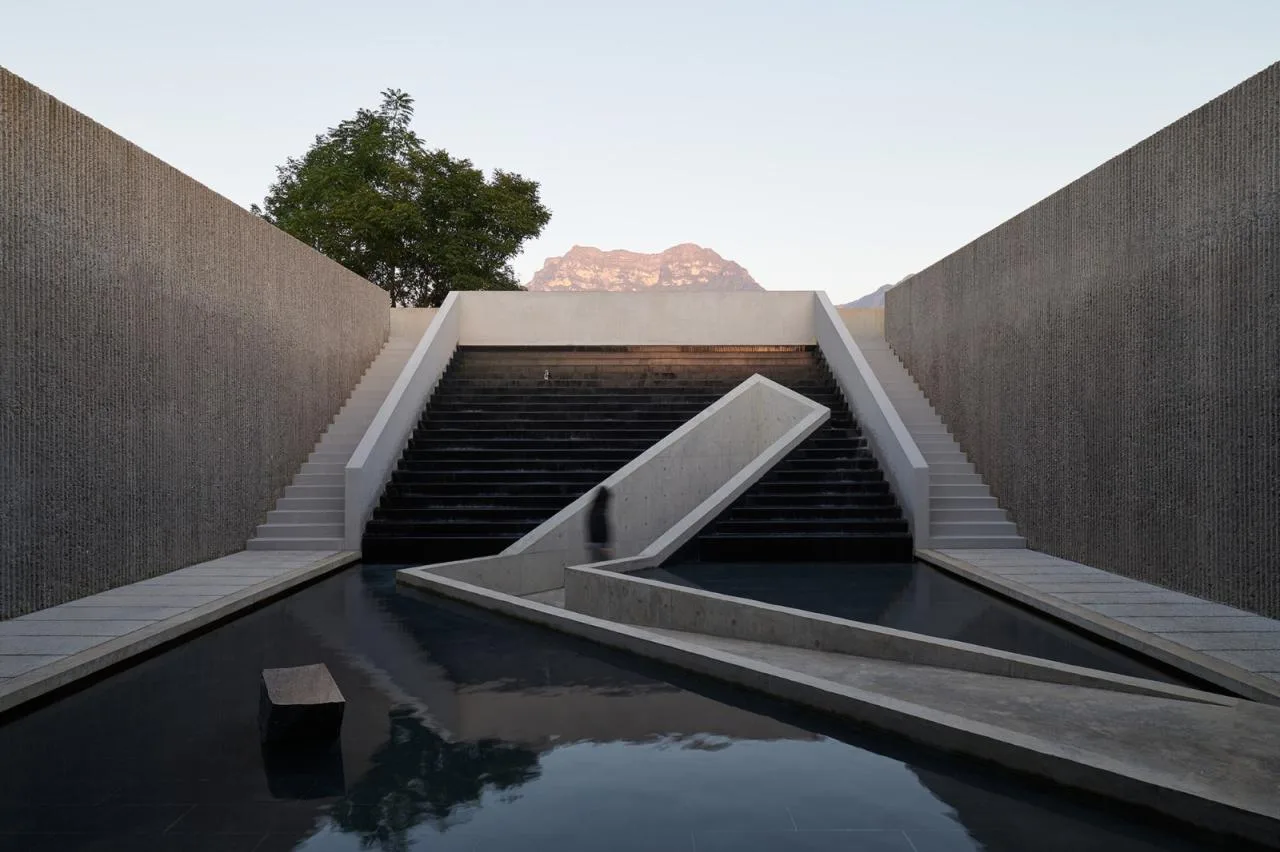
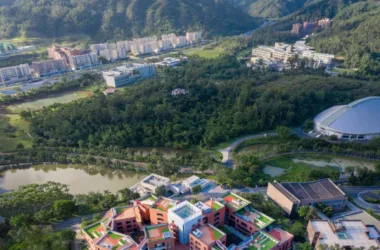
Set against a mountain backdrop and surrounded by water on three sides, the distillery’s design draws on the traditional Chinese philosophy of duality — the interplay of mountains and water. Mountains symbolize strength and eternity, while water represents flow and change. These contrasting yet interdependent elements embody the spiritual essence of Chinese culture.
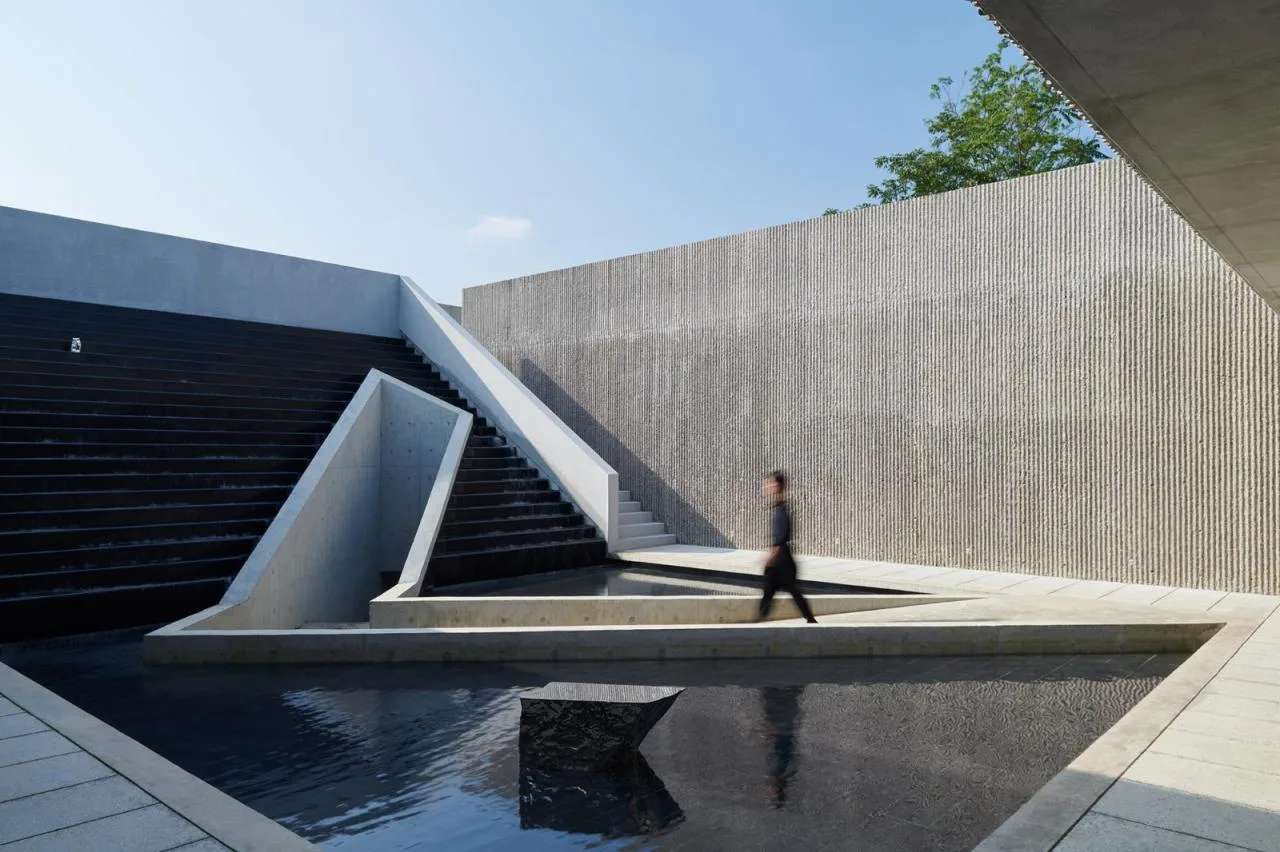
Inspired by this philosophy, the distillery’s design embraces humility and simplicity, respecting nature and embracing deep understanding. Much like traditional Chinese landscape paintings that blend opposing elements to reveal deeper dimensions, the architecture achieves a balance of dualities. The industrial production buildings reflect Ruen’s modern interpretation of traditional Chinese architecture, while the visitor center incorporates embedded geometric shapes as a tribute to this ancient land.
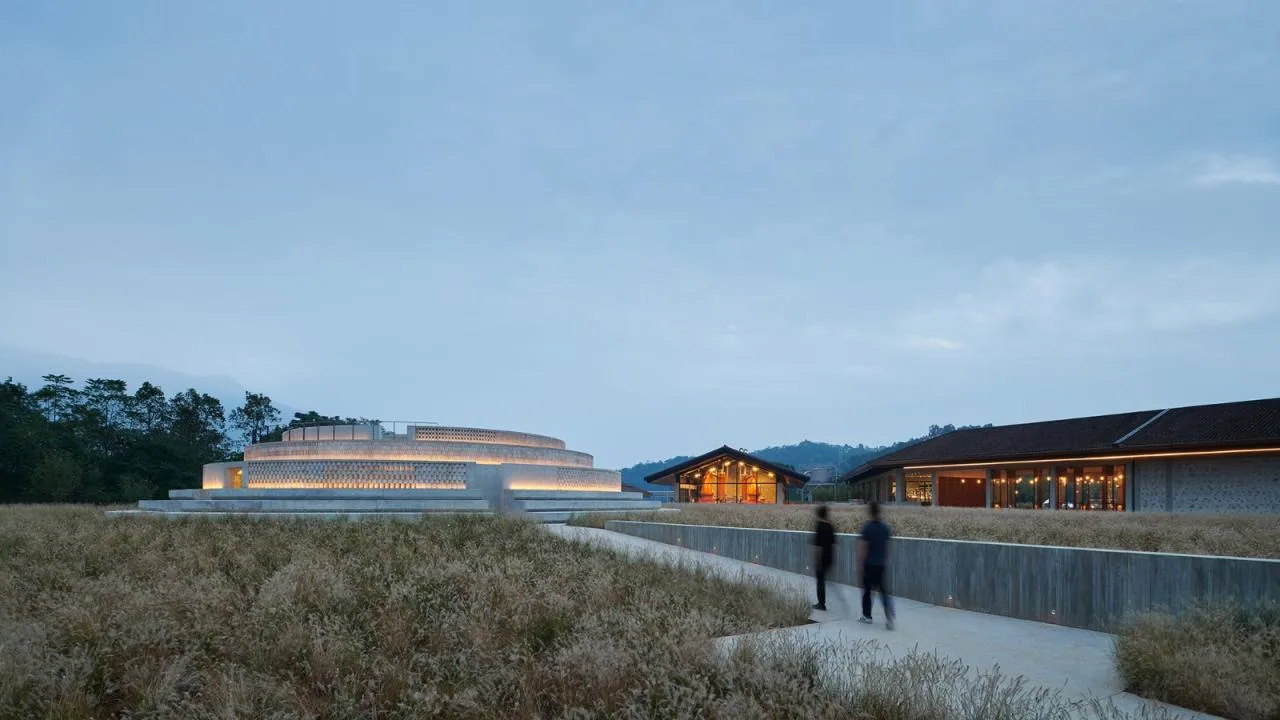
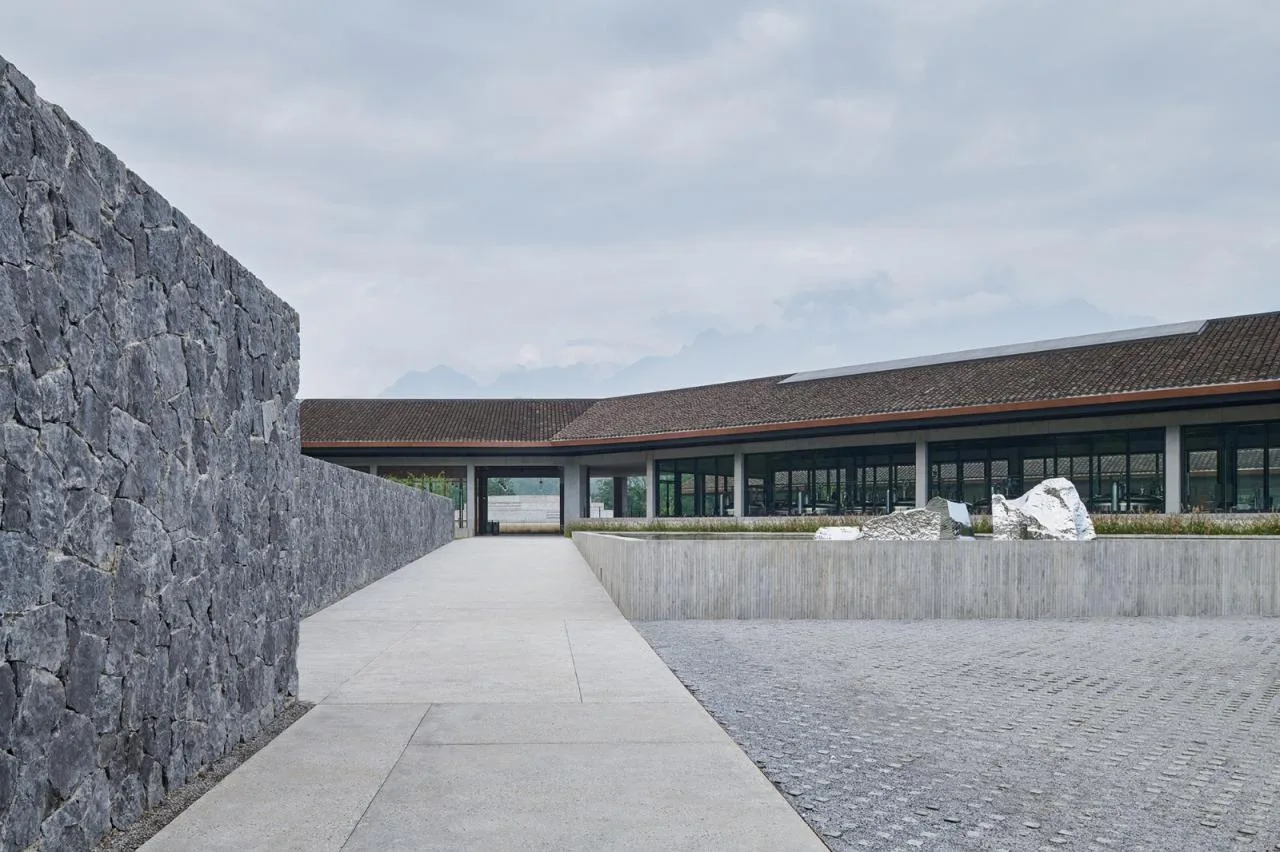
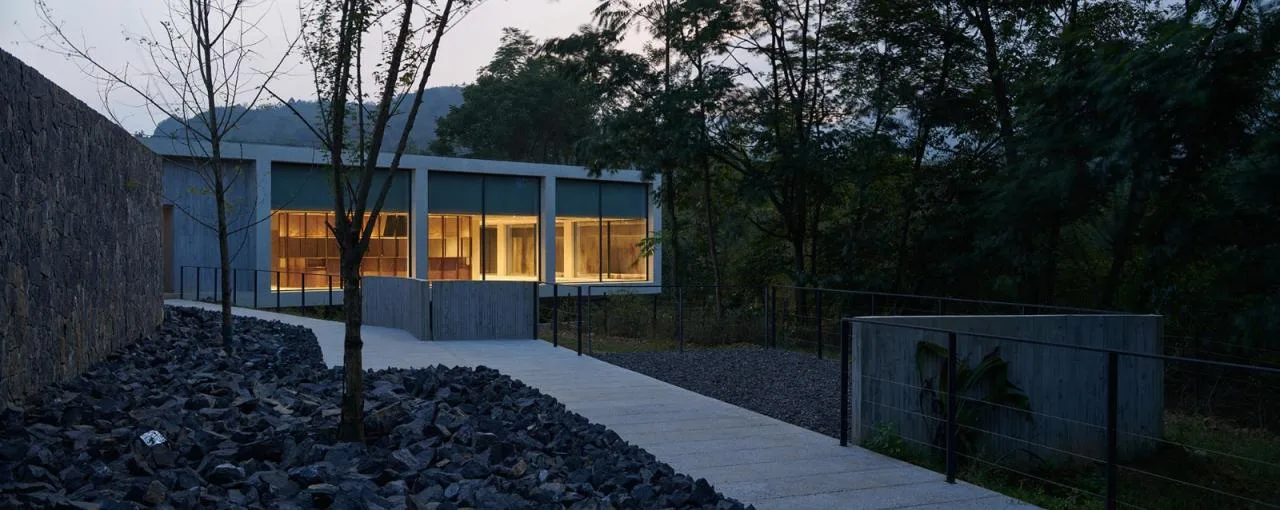
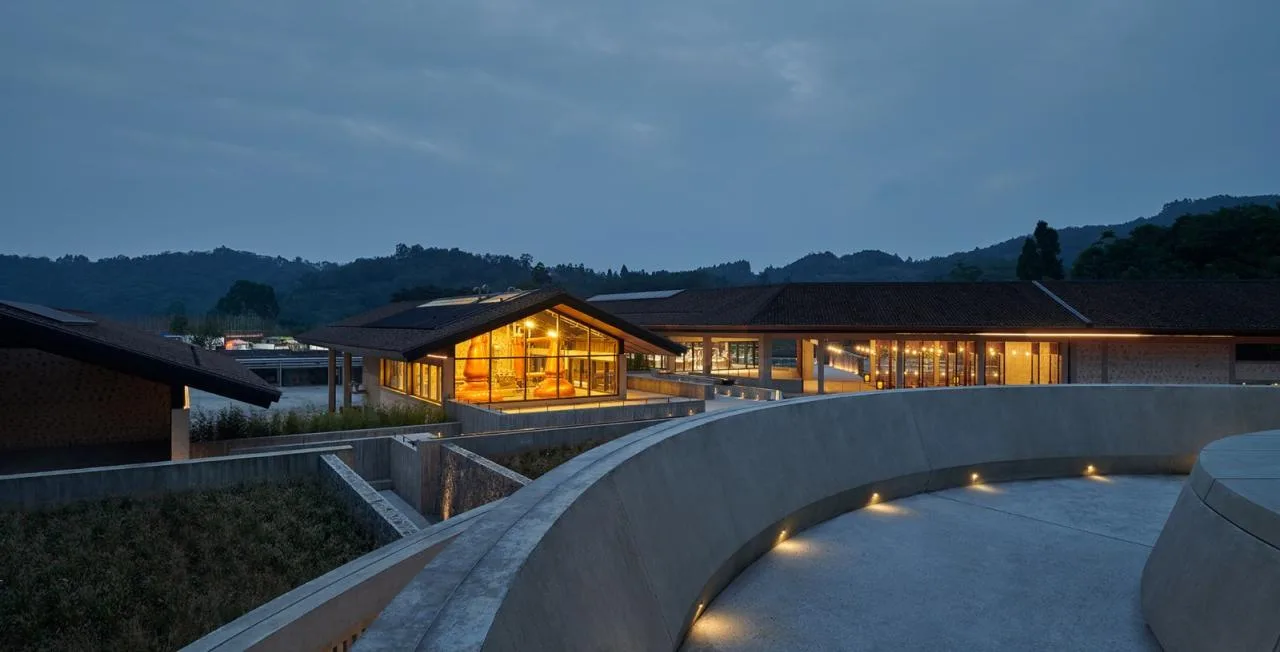
The distillery features three rectangular production buildings aligned along its northern edge. Their rooflines gently slope downward in harmony with the natural terrain, diminishing in height layer by layer. The buildings are constructed with materials inspired by the local environment. Recycled clay tiles from Mount Emei form the sloping roofs, supported by modern concrete columns and beams, imparting a humble and simple texture.
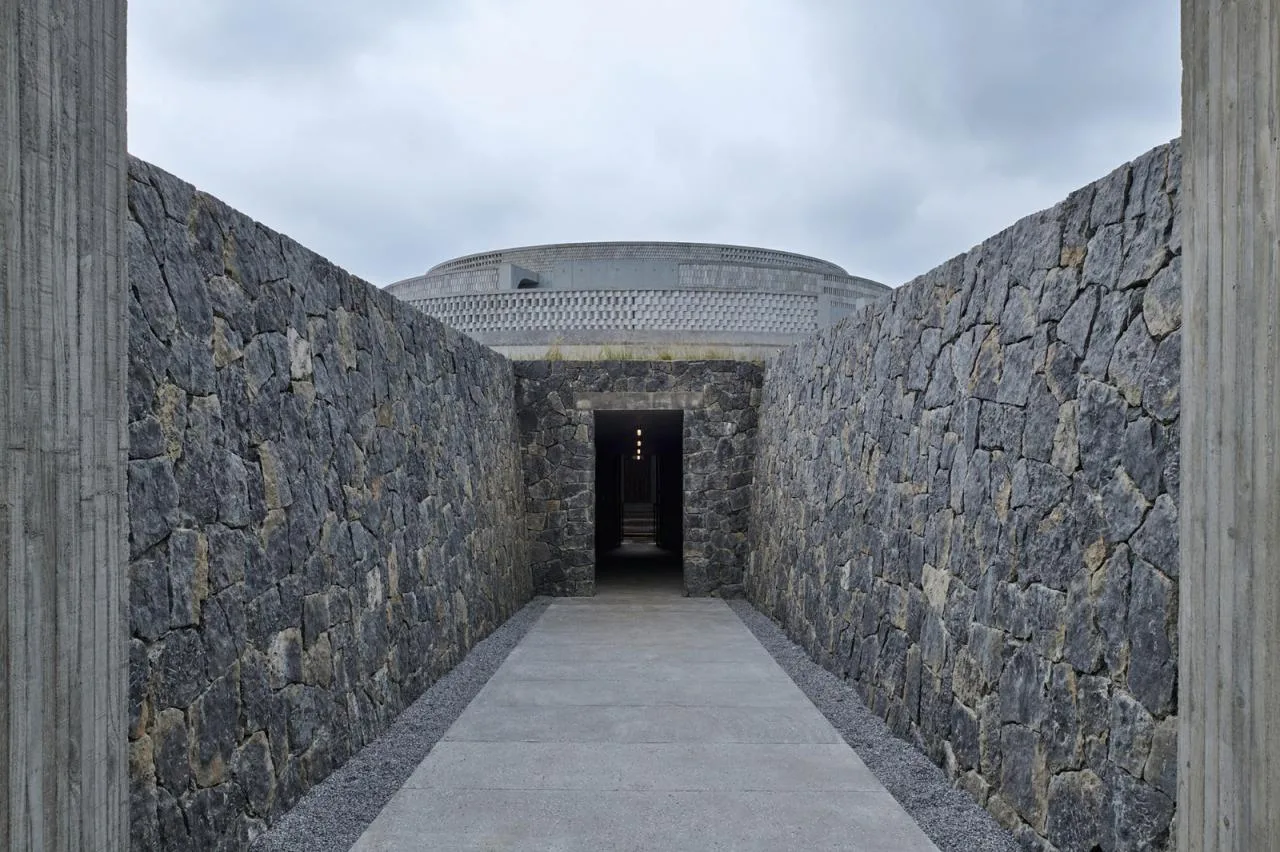
Large stones excavated during site leveling were repurposed as stone walls, reflecting Ruen’s interpretation of local architectural traditions. This practice symbolizes the continuous cycle of destruction and renewal in architecture.
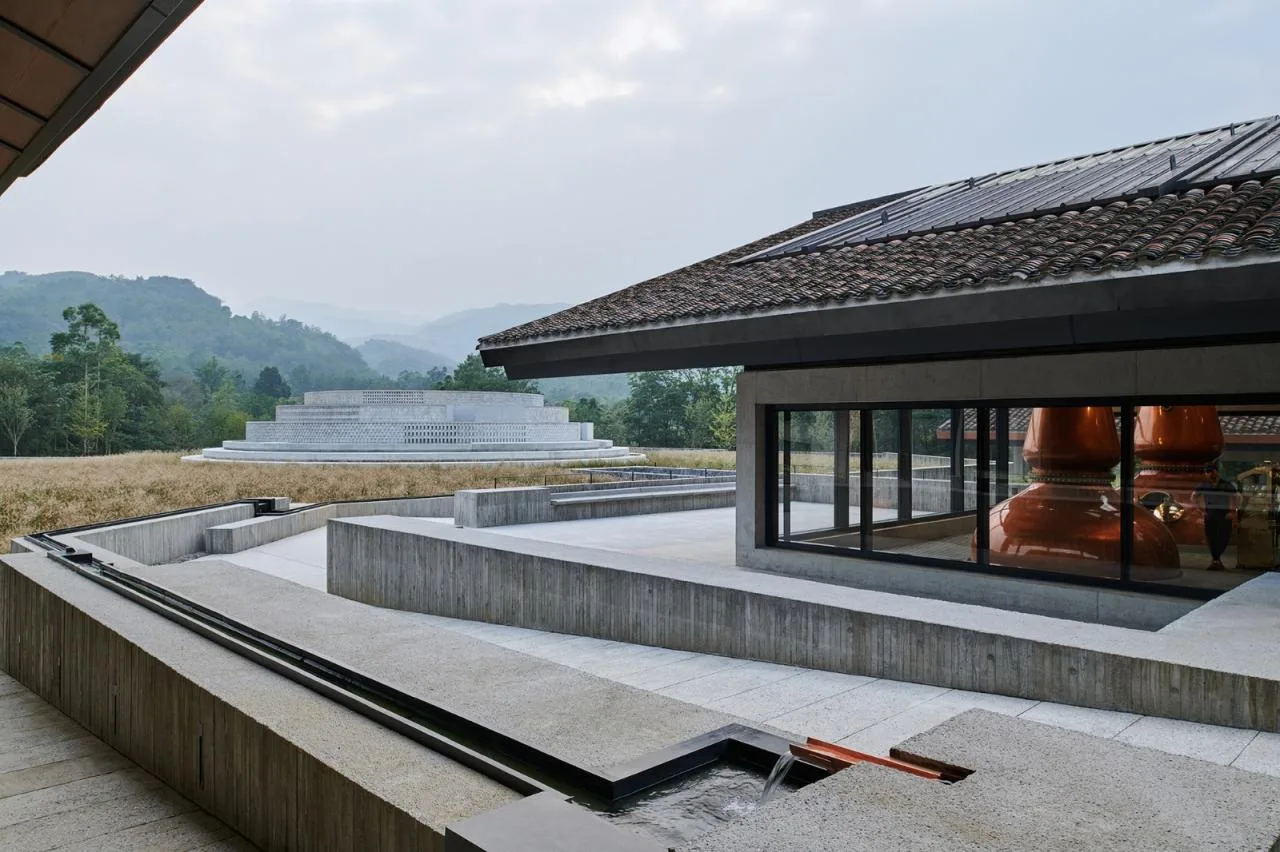
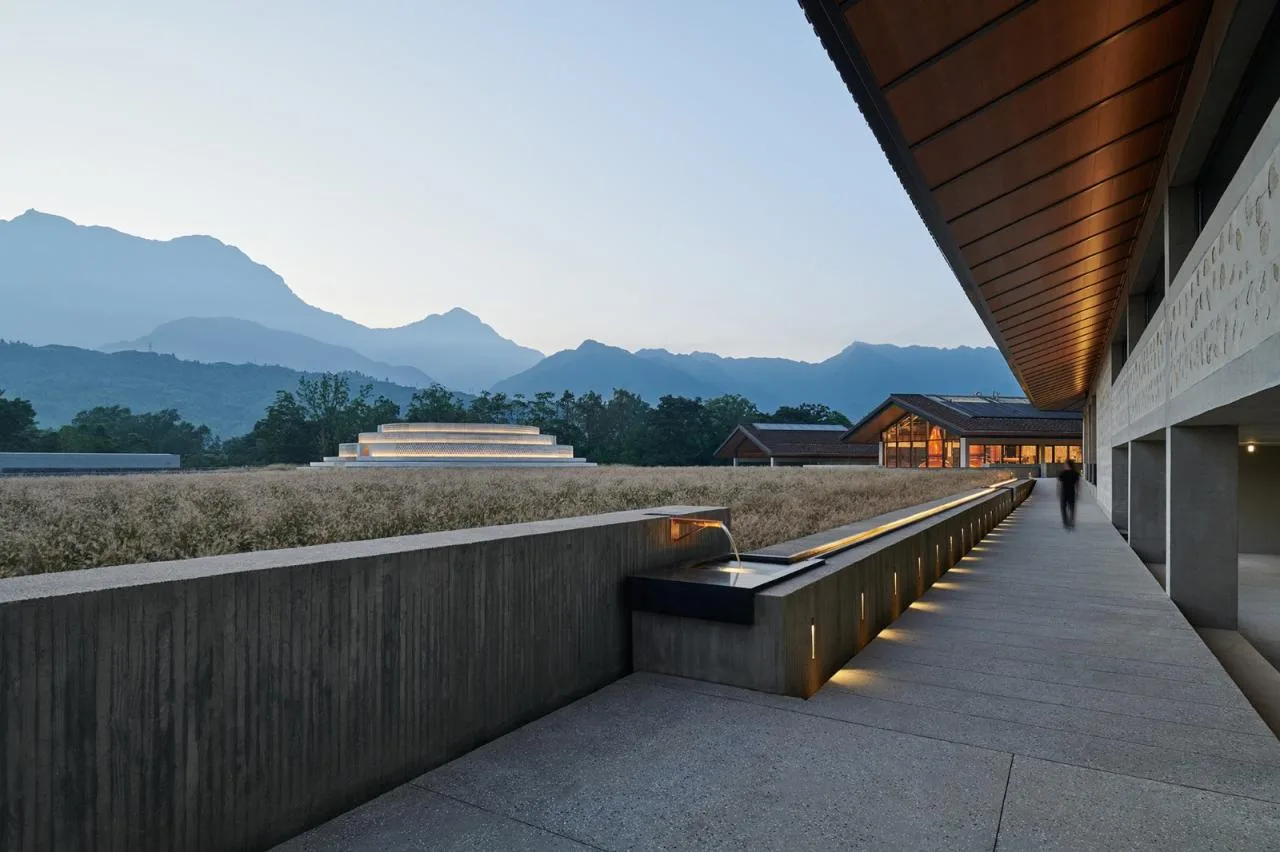
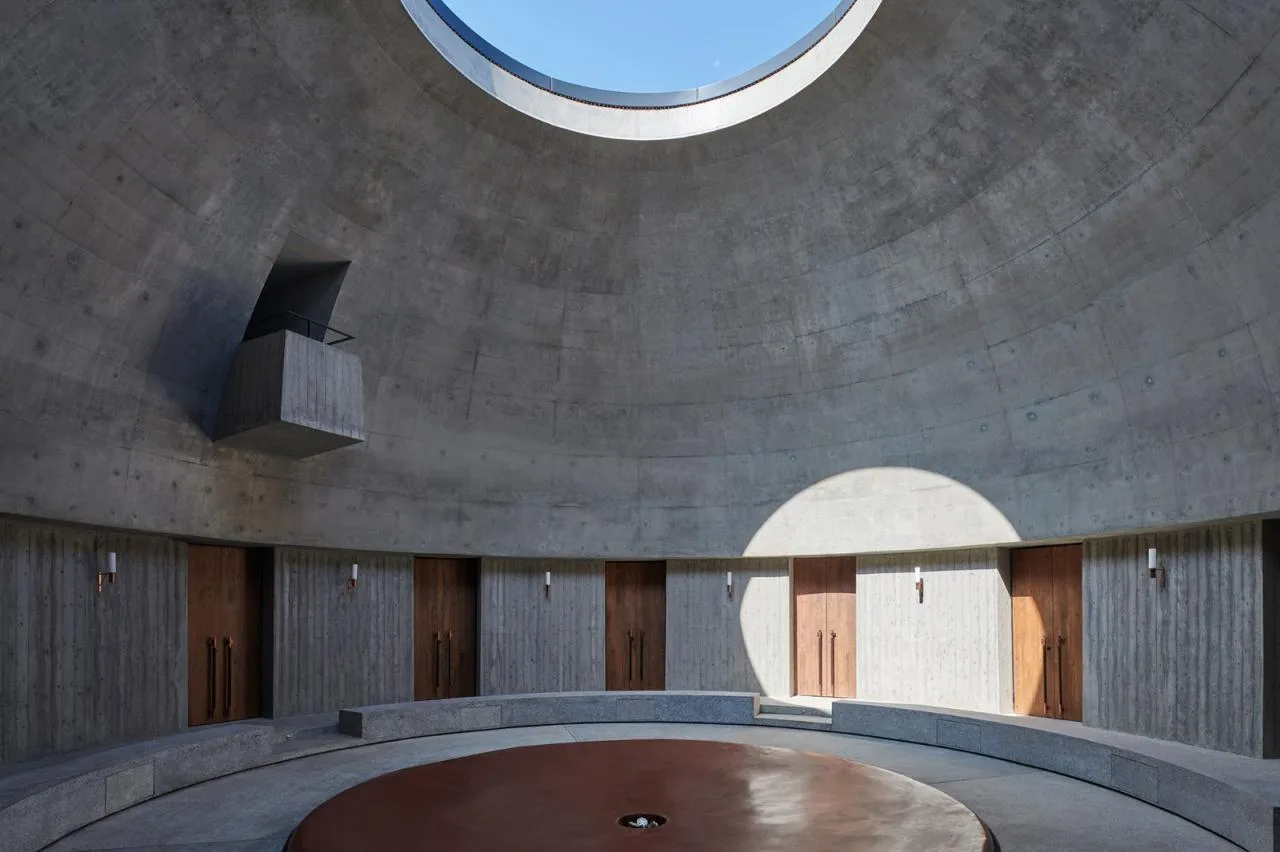
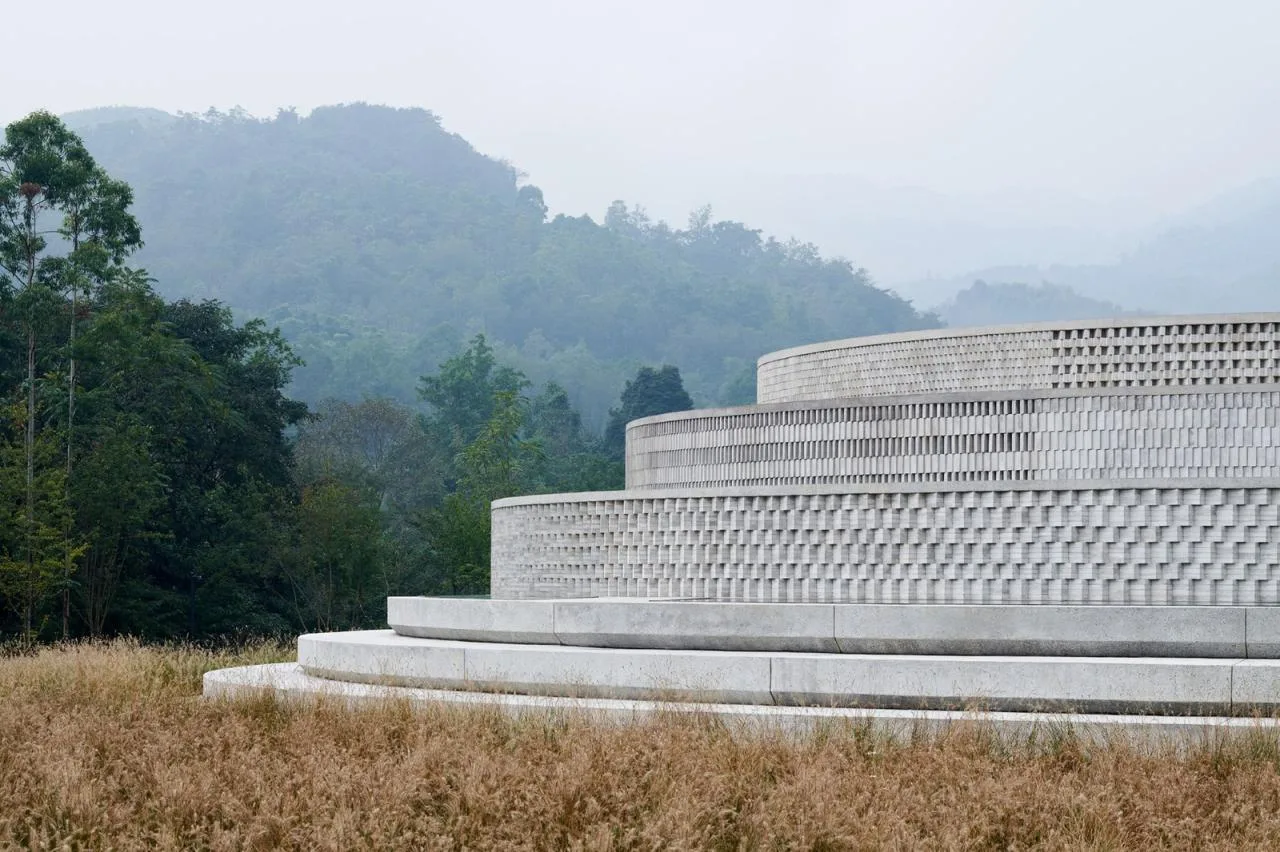
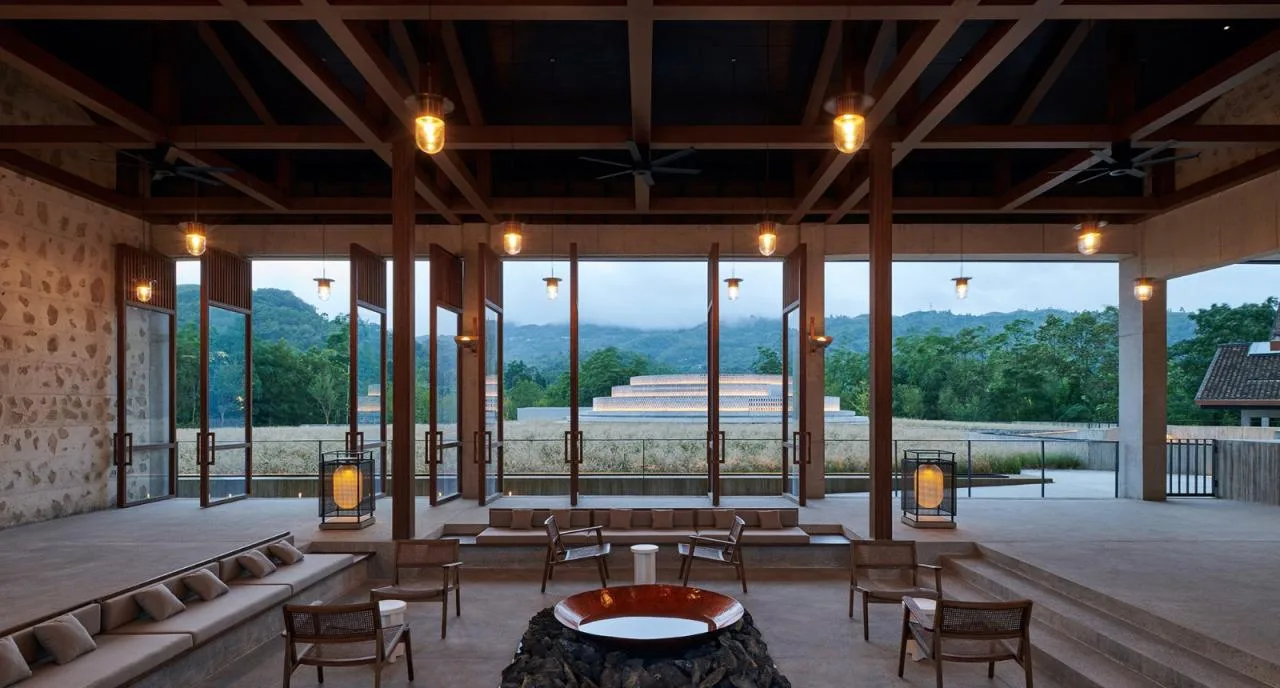
In contrast to the production buildings’ local character, the visitor center incorporates geometric shapes — circles and squares — representing heaven and earth in traditional Chinese philosophy. From afar, the circular center appears mostly underground, with only a dome rising above the surface.
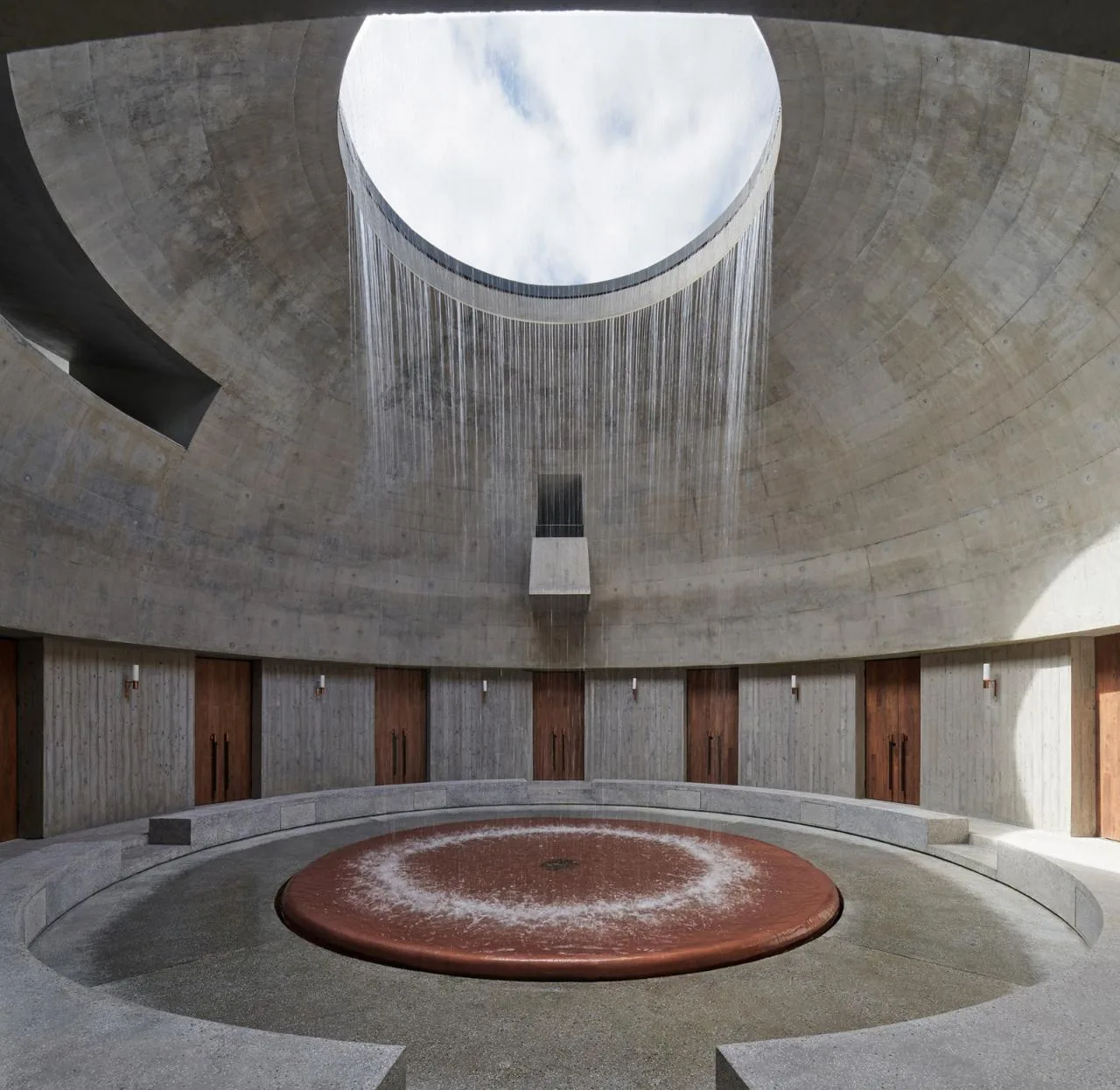
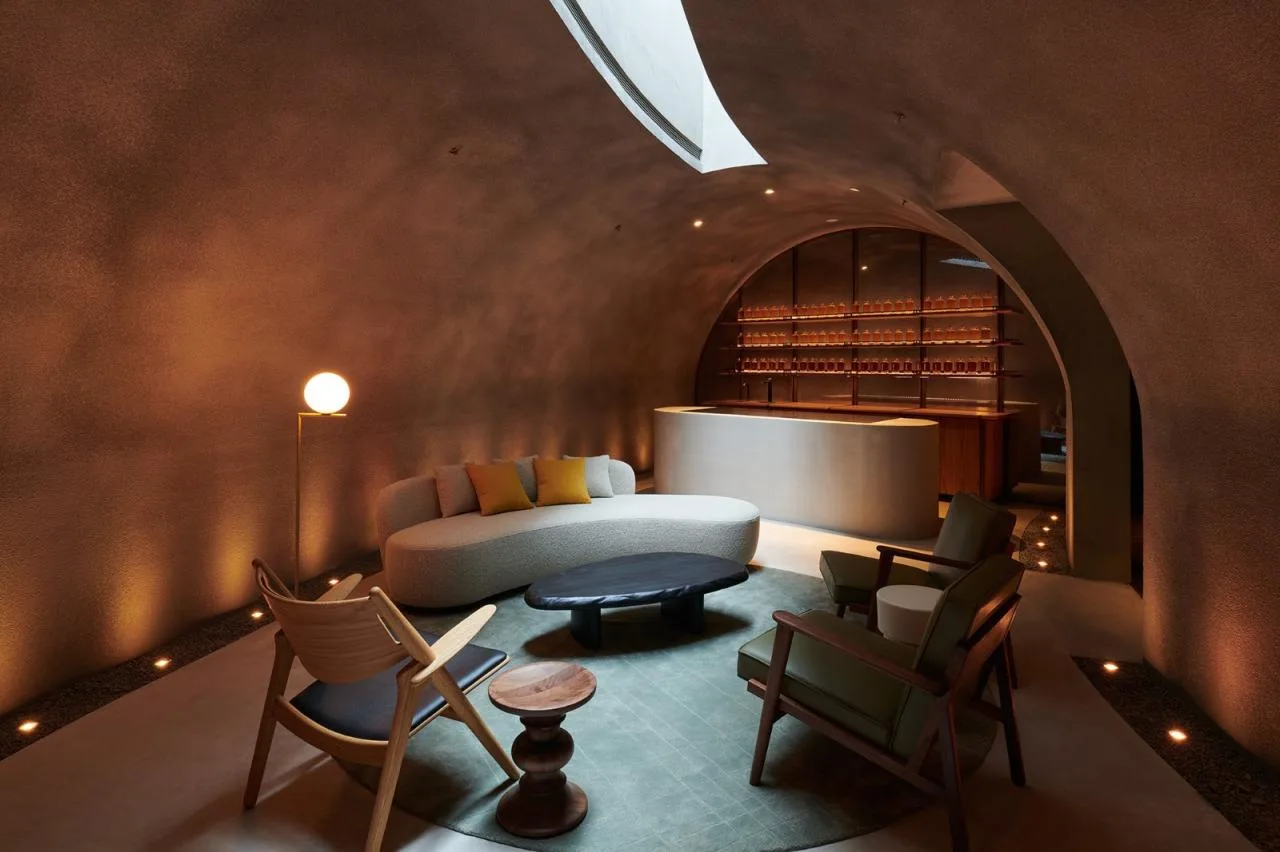
Three concentric brick rings rise in layers, evoking small mountain peaks that echo the silhouette of Mount Emei. Inside, five underground wine tasting rooms are arranged in sequence, separated by a layered water feature resembling a cascading waterfall. This sculptural landscape is set to become an iconic element of the distillery, visible from anywhere on site.
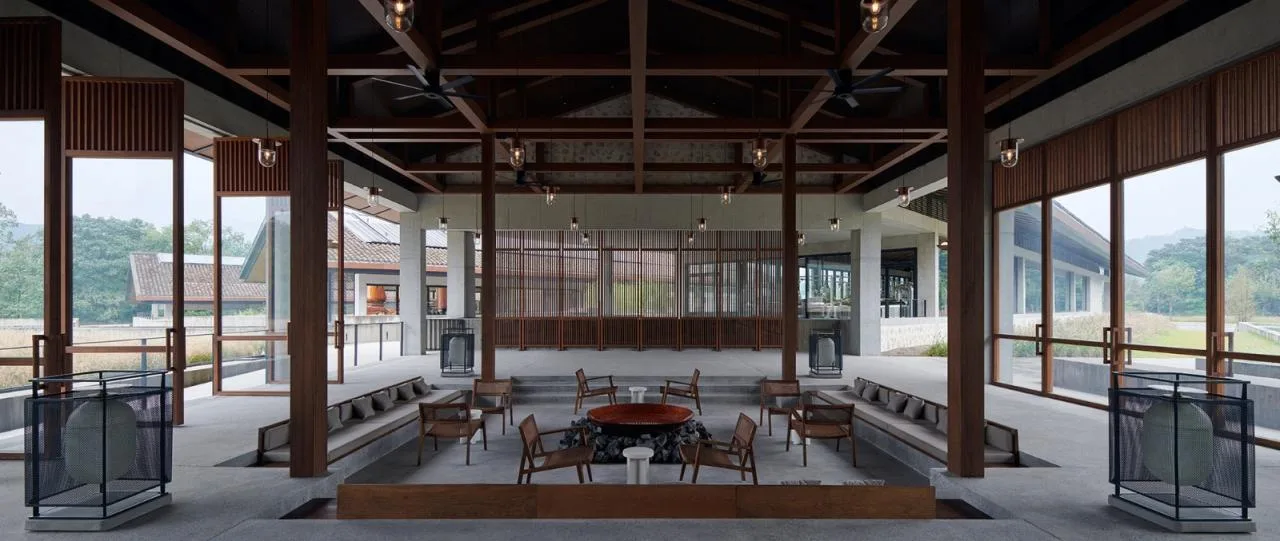
Visitors can also enjoy panoramic views of the distillery and Mount Emei from the dome. The dining spaces, shaped as squares, extend underground along the perimeter, with one corner suspended over the riverbank. Designed by Ruen, the dining area surrounds an open-air courtyard that frames views of the mountain, blending indoor and outdoor experiences.
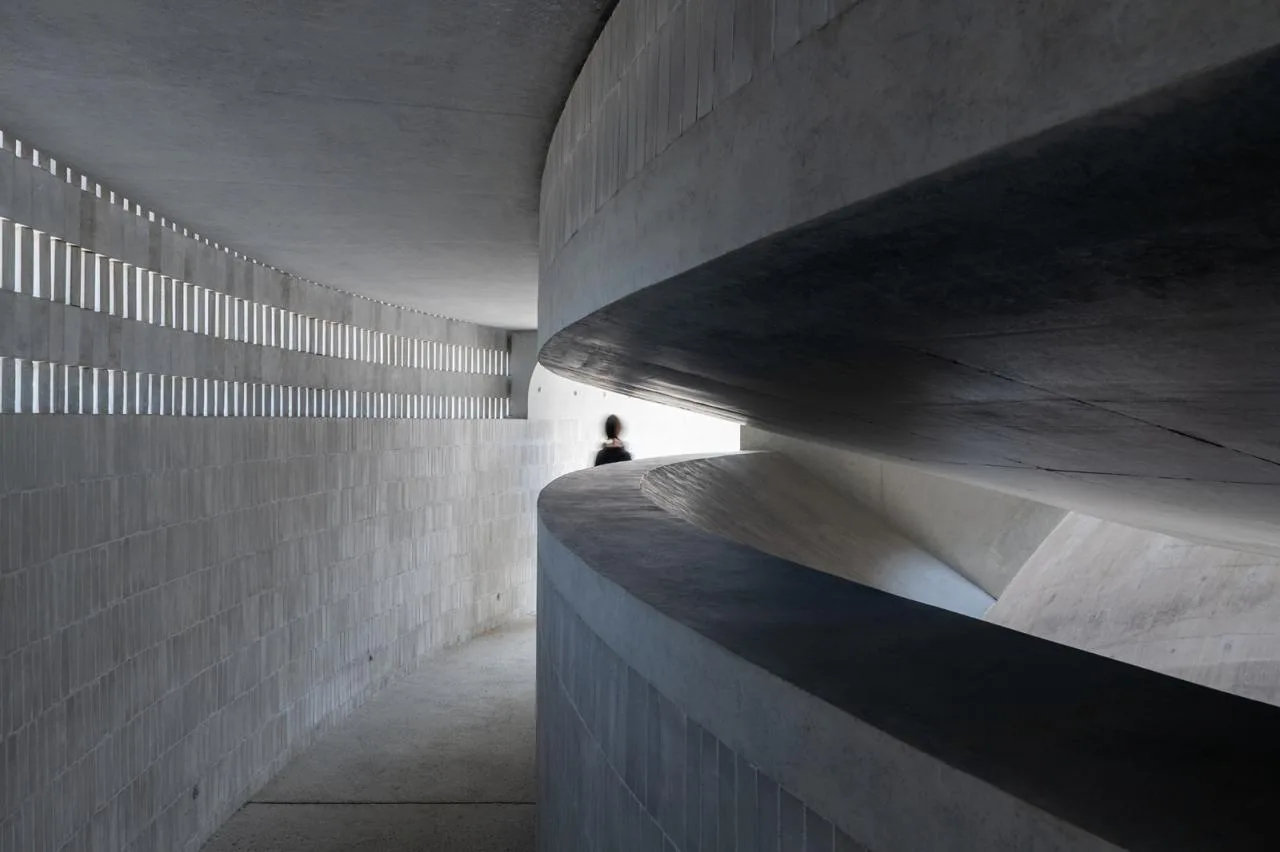
This project reflects not only the architect’s deep respect for Mount Emei’s natural resources but also celebrates the intricate art of whisky brewing and blending. It fosters a harmonious dialogue between traditional Chinese craftsmanship and modern material application.
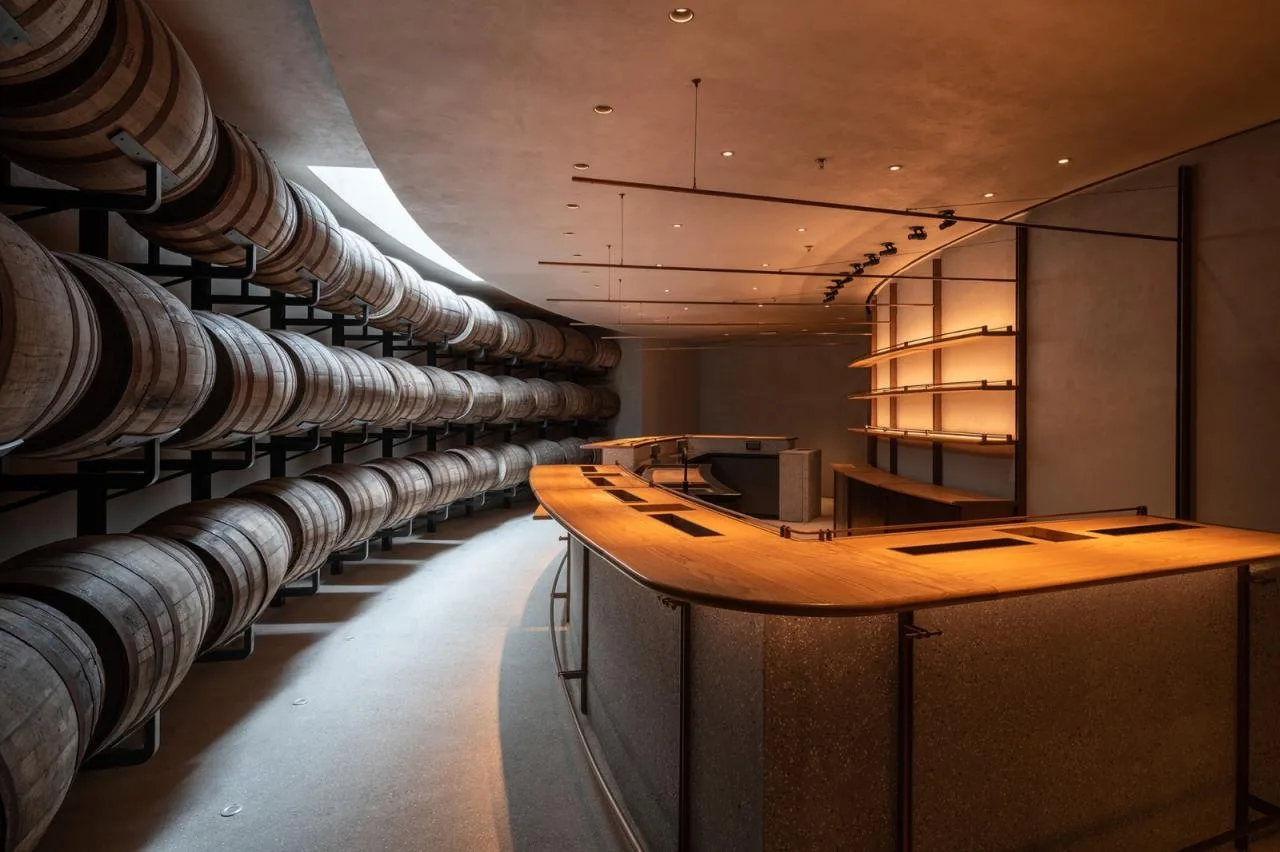
The building’s primary color palette is formed by concrete, cement, and stone, which blend seamlessly with the site’s environment. Wood and copper materials — represented by oak barrels and copper stills used in production — pay homage to the art of whisky making.
Duality is a recurring theme throughout the design of the Diechuan Malt Whisky Distillery. Ruen skillfully balances architecture and landscape, industrial function and visitor experience, as well as the enduring interplay of mountains and water.
Project Information
Architectural Design: Ruen Design Research Laboratory
Area: 7,350 m²
Project Year: 2021
Photography: Chen Hao
Lead Architects: Guo Xi’en, Hu Rushan
Associate Director: Yang Yanhui
Associates: Utsav Jain, Chen Siyu
Design Team: Wang Feng, Guo Peng, Josh Murphy, Fergus Davis, Alexandra Heijink, Bao Haiyun, Yota Takaira, Zeng Yu’en, Nicolas Fardet, Sheng Yin, Lili Cheng, Huang Huizi, Hong Mingyue, Xin Haiou
Principal: Pernod Ricard Group
Soft Decoration Design: Design Republic
Landscape Design: Yiyu Design
Experiential Design: BRC Imagination Arts
Main Contractors: Qi’an Construction Group, Suzhou Hezhan
Interior Construction: Shanghai Haizhi Construction Engineering Co., Ltd
Location: Mount Emei, China















Must log in before commenting!
Sign Up