
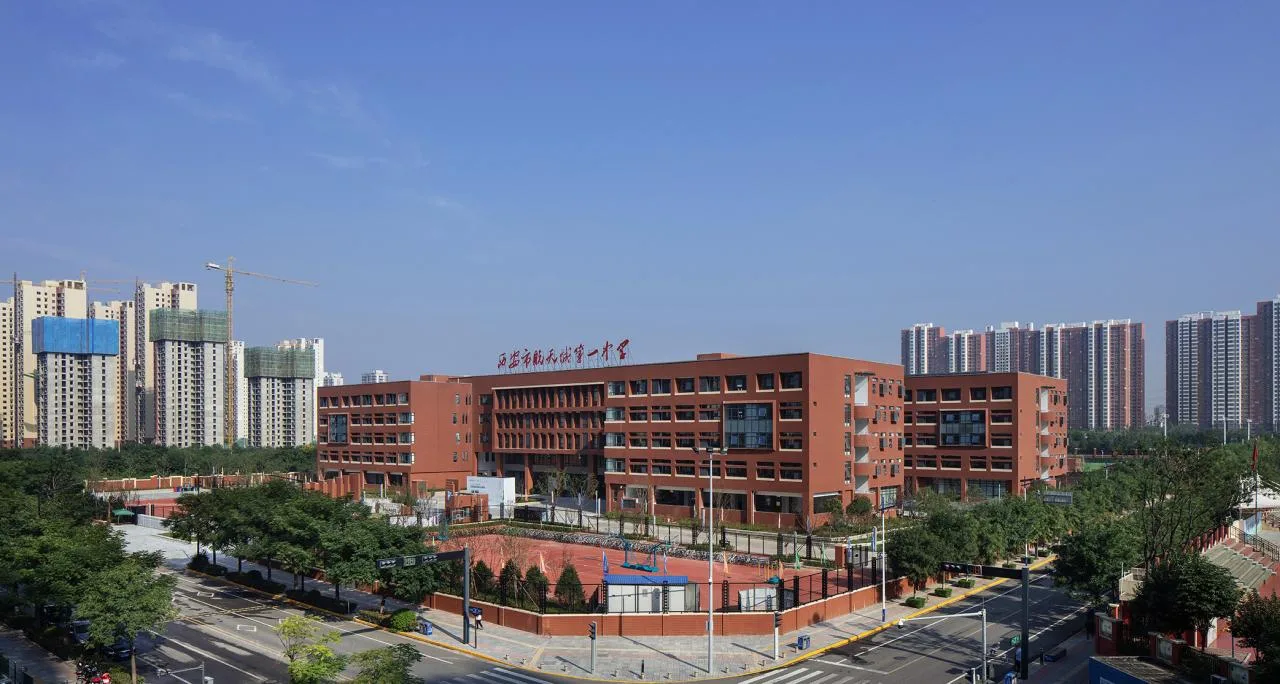
Facing the challenges of limited land and a severe shortage of school space, it is essential to explore models for spatial intensification in large urban schools. Designers must find ways to efficiently integrate campus functional spaces within the floor plan, layering and reconfiguring them vertically to save land while meeting standardized functional department requirements. Creating versatile spaces that support multi-purpose campus activities, open teaching, and shift-based learning is a critical consideration.
Project Overview
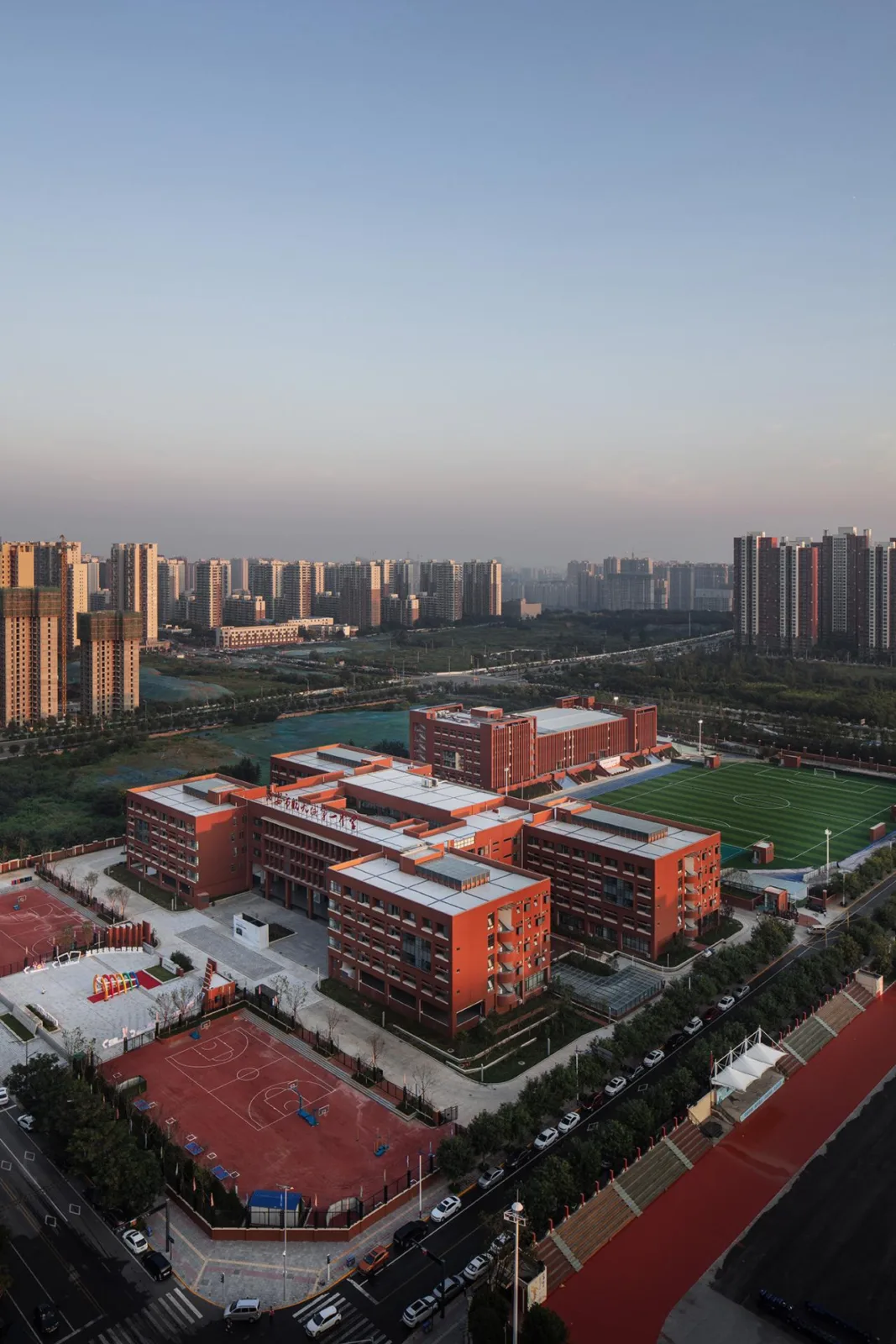
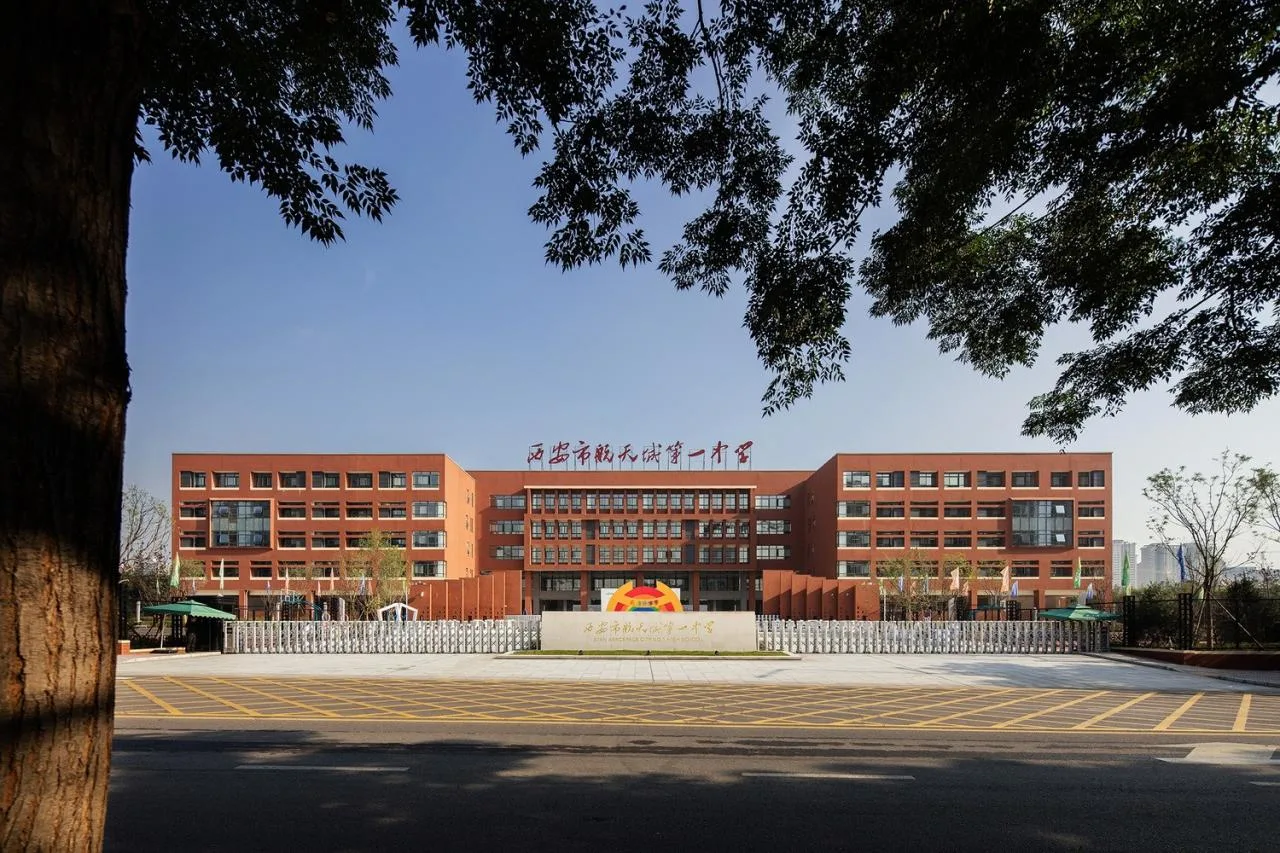
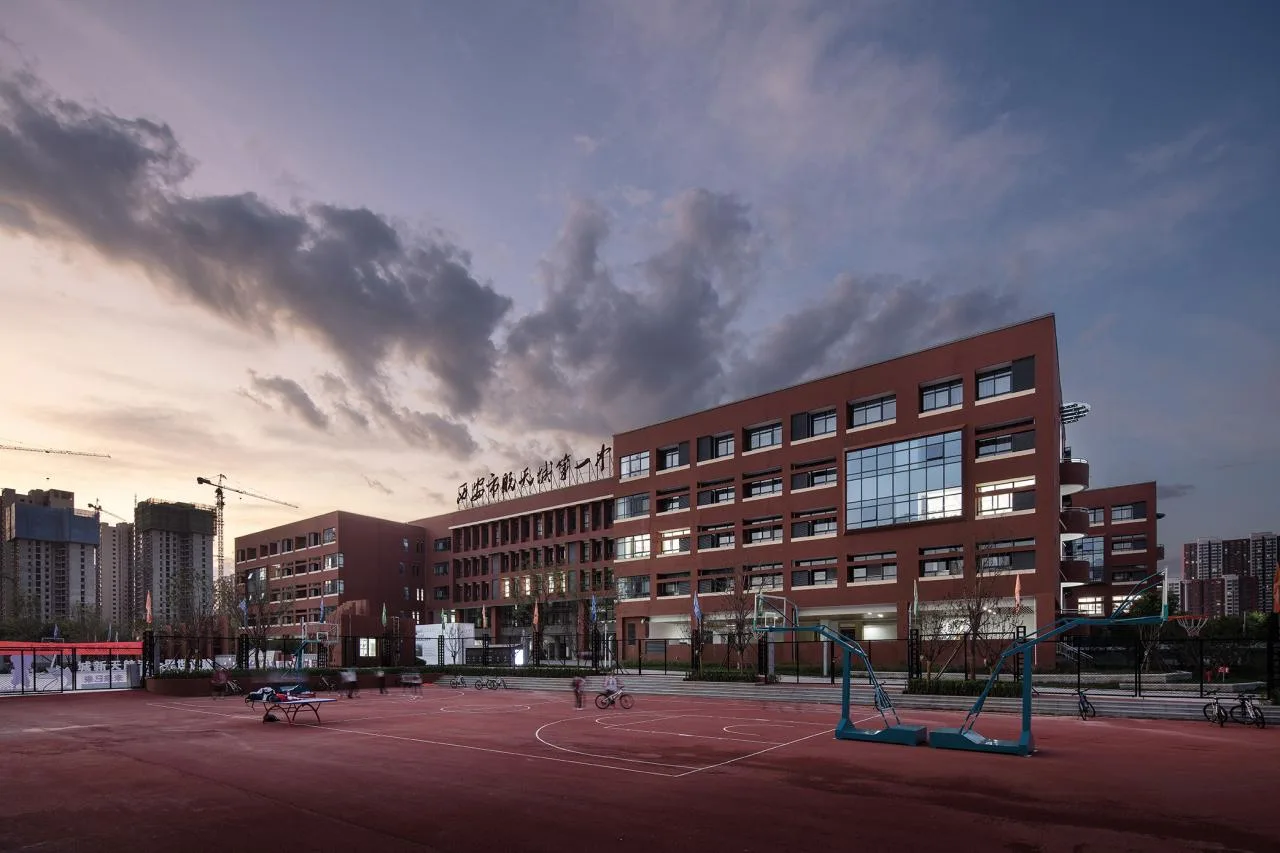
Xi’an Aerospace City No.1 Middle School is situated within the Xi’an Aerospace Base. This public nine-year school covers approximately 53,067 square meters, with a total construction area of around 45,802.91 square meters. It is designed to accommodate 66 classes and roughly 3,000 students. The site is bordered to the north by urban green space, to the south by Hangtuo Road (a main thoroughfare), to the east by a planned road and adjacent to Aerospace City First Primary School, and to the west by reserved residential land.
Design Concept
‘Harmony’ and ‘Harmony’
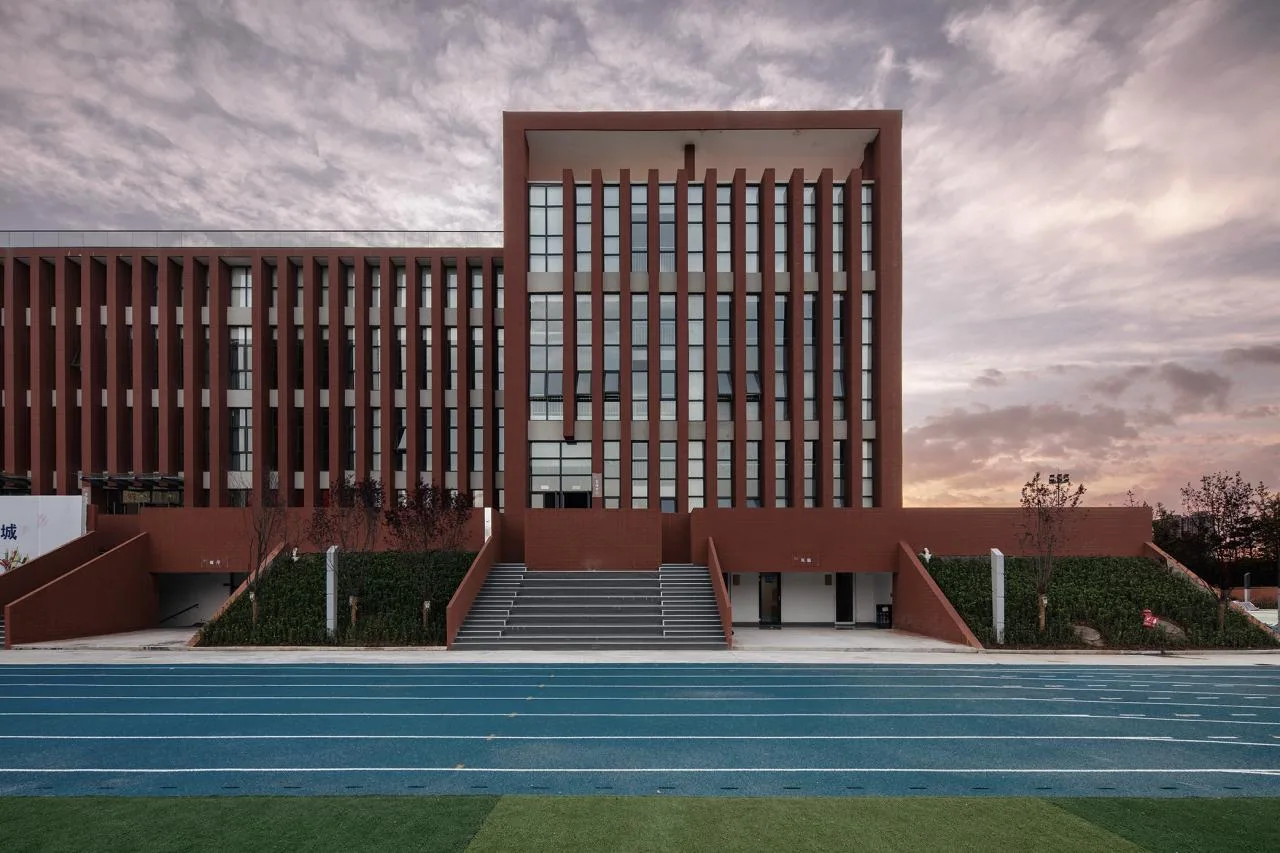
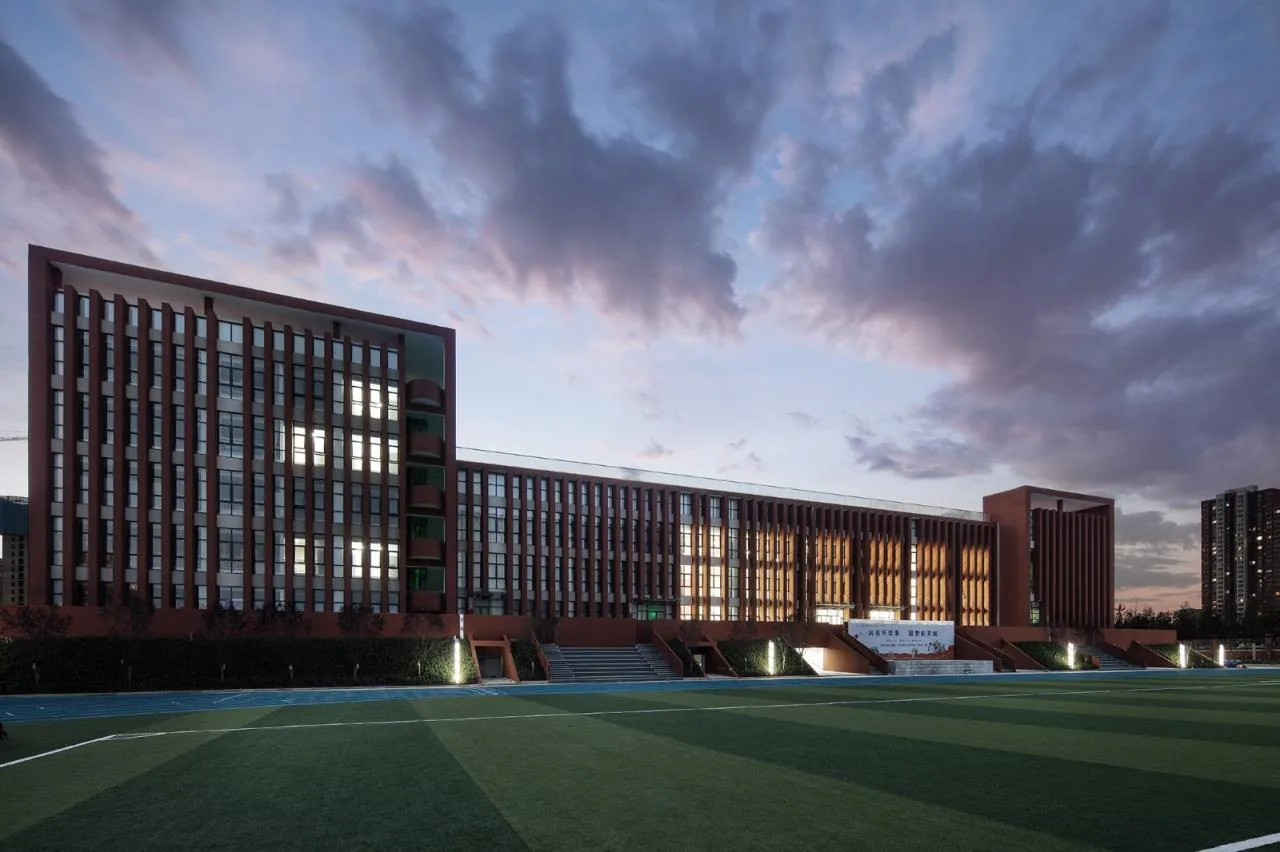
The design draws inspiration from the concepts of harmony and balance, incorporating traditional architectural wisdom of settlements and enclosures to pursue an aesthetic ideal. Simple forms and unified volumes create a harmonious atmosphere. The central design philosophy emphasizes centralization and directionality, realized through geometric arrangements such as interconnected squares. This results in multi-level interactive public and shared teaching spaces, embodying the idea of harmony where heaven and earth converge, nurturing all things.
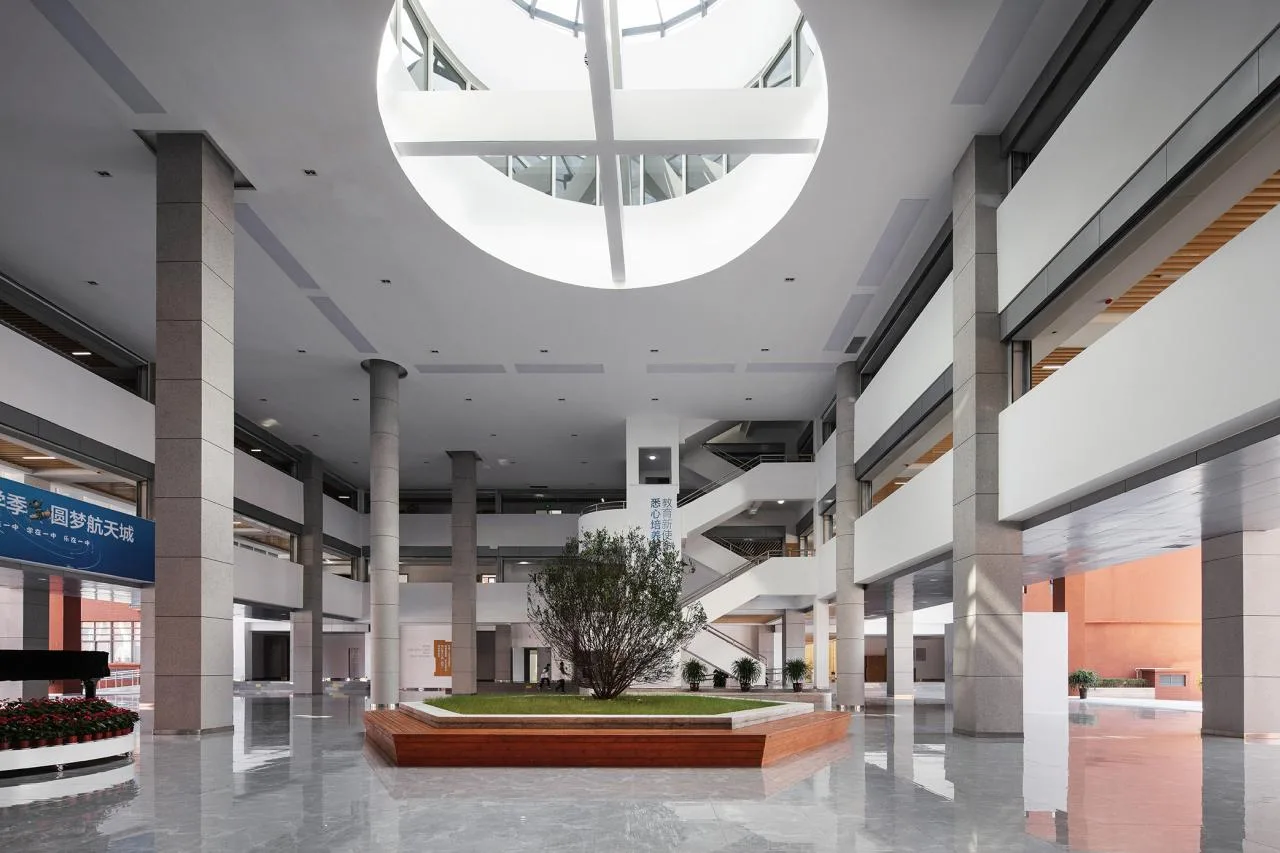
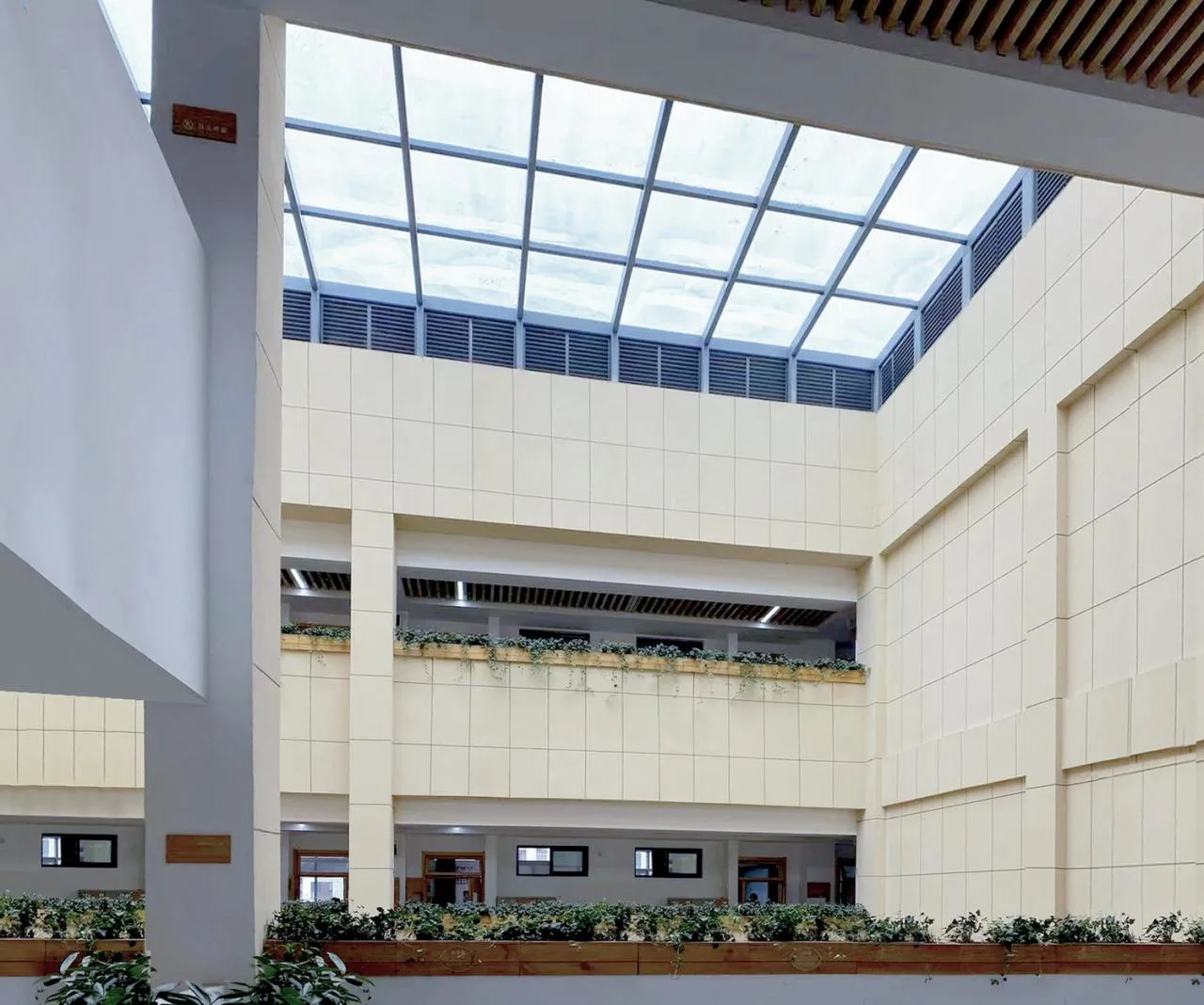
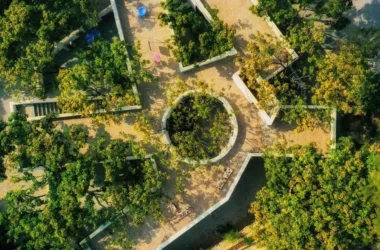
The main teaching building is organized through spatial elements like halls, atriums, and courtyards, arranged sequentially from the exterior inward and from the center outward. The central hall’s scale, openness, and circulation emphasize its pivotal role, enhanced by shared spaces such as the “one grass, one thousand years, one flower, one world” central landscape, a centralized reading area, and a rooftop garden illuminated by skylights. Four teaching groups are connected via four atriums, linking classrooms, administrative areas, and versatile multipurpose spaces oriented northward, fostering diverse opportunities for learning, activities, and social interaction.
Design Strategy
Intensive Mode
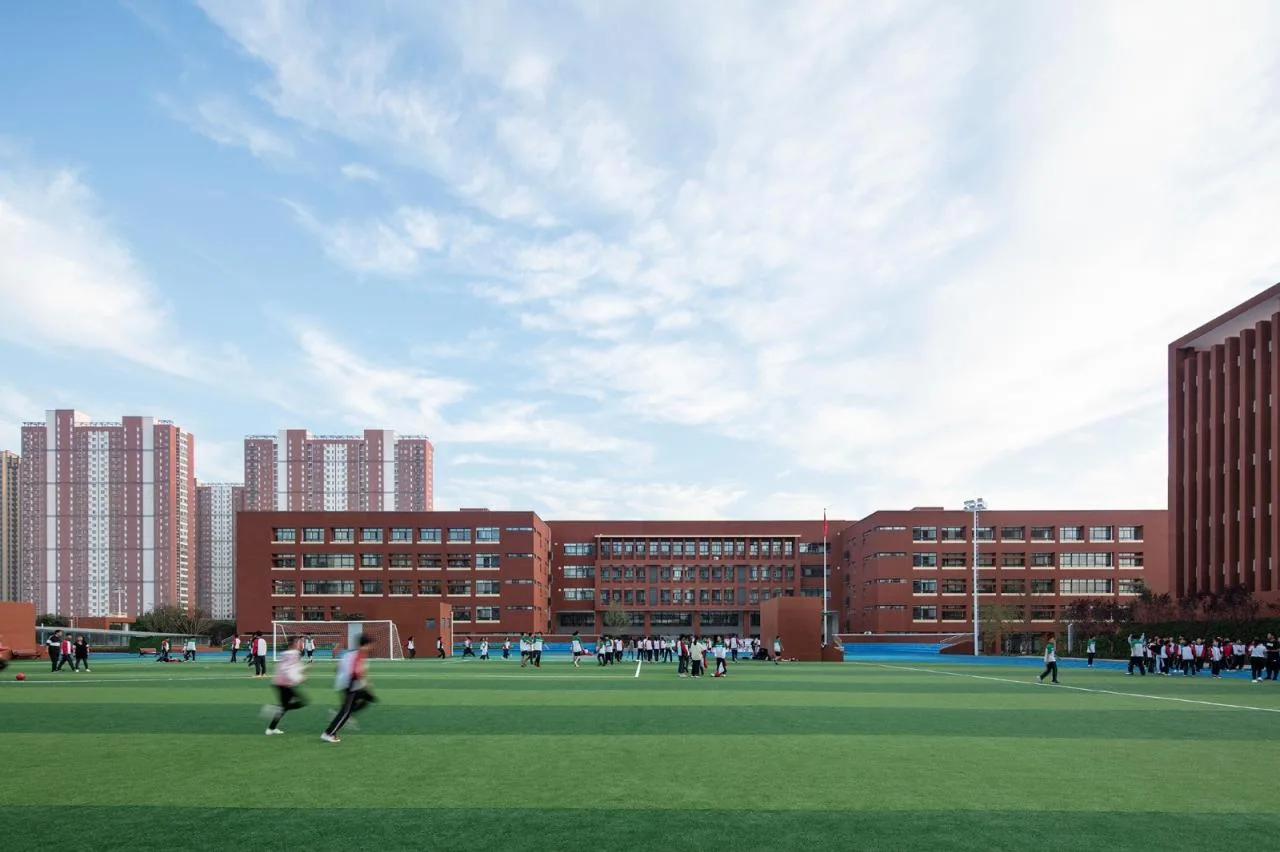
The site spans 53,067 square meters and must accommodate a standard 400-meter track and field, 66 classrooms, an experimental building, reading facilities, administrative offices, a 1,000-seat cafeteria, a 600-seat lecture hall, an indoor standard basketball court, and other support facilities. This creates a clear conflict between land use and functional requirements.
Starting from the site’s context, the design analyzes spatial relationships, functions, and structural organization at ground level, integrating these to realize intensive spatial scenarios. The main teaching building combines the central hall, classrooms, reading areas, activity spaces, administrative offices, joint classrooms, and remote education facilities. The comprehensive building unites the cafeteria, laboratories, lecture hall, basketball court, art and sports rooms, and spectator stands.
Interactive Spaces: Halls, Atriums, and Courtyards
Architect Kenneth Frampton emphasizes that architecture should not merely serve the rational needs of production, construction, and functional use, but should create a “sense of place” by highlighting unique site-related factors and opposing dominant, repetitive architectural orders.
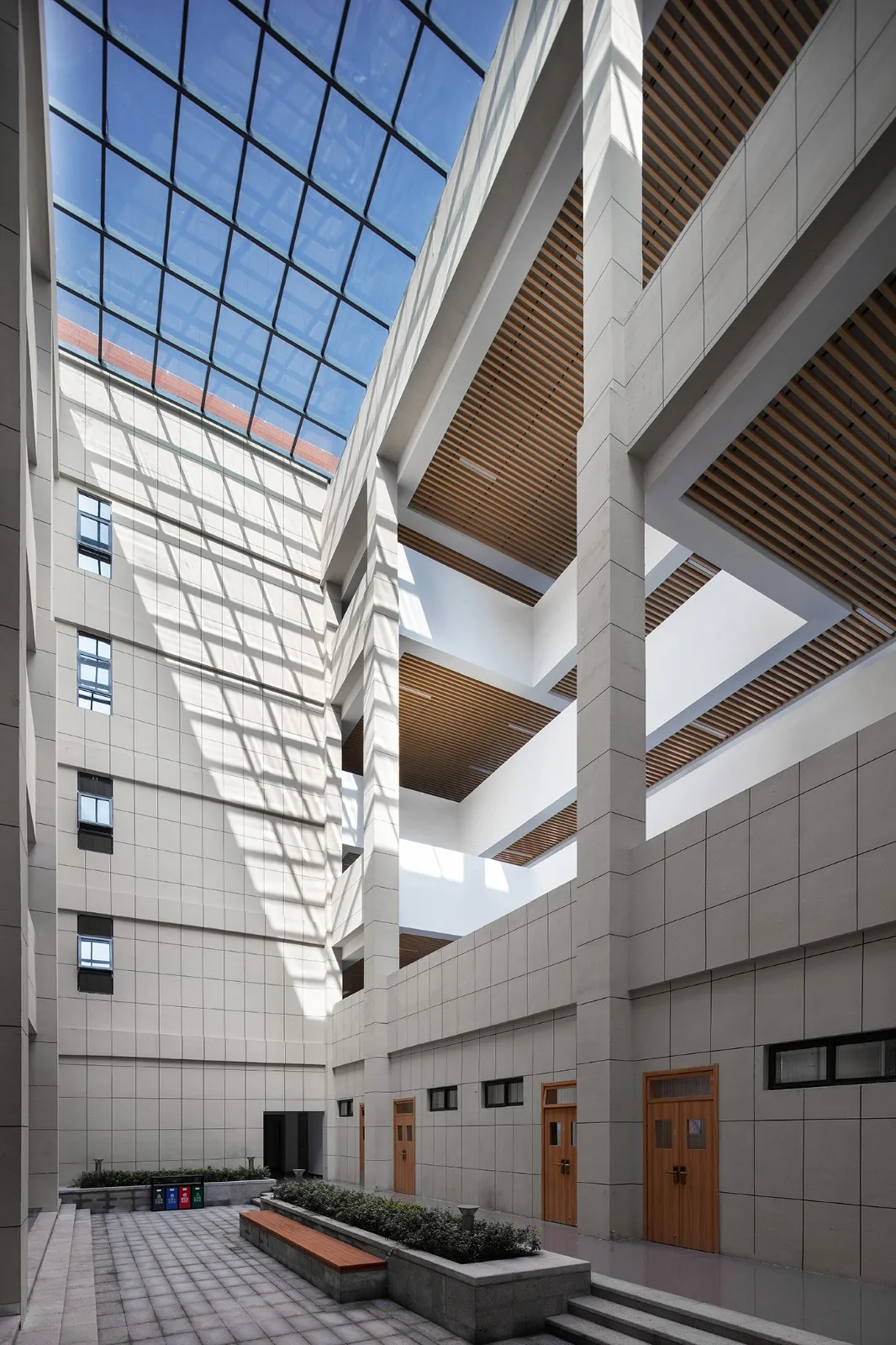
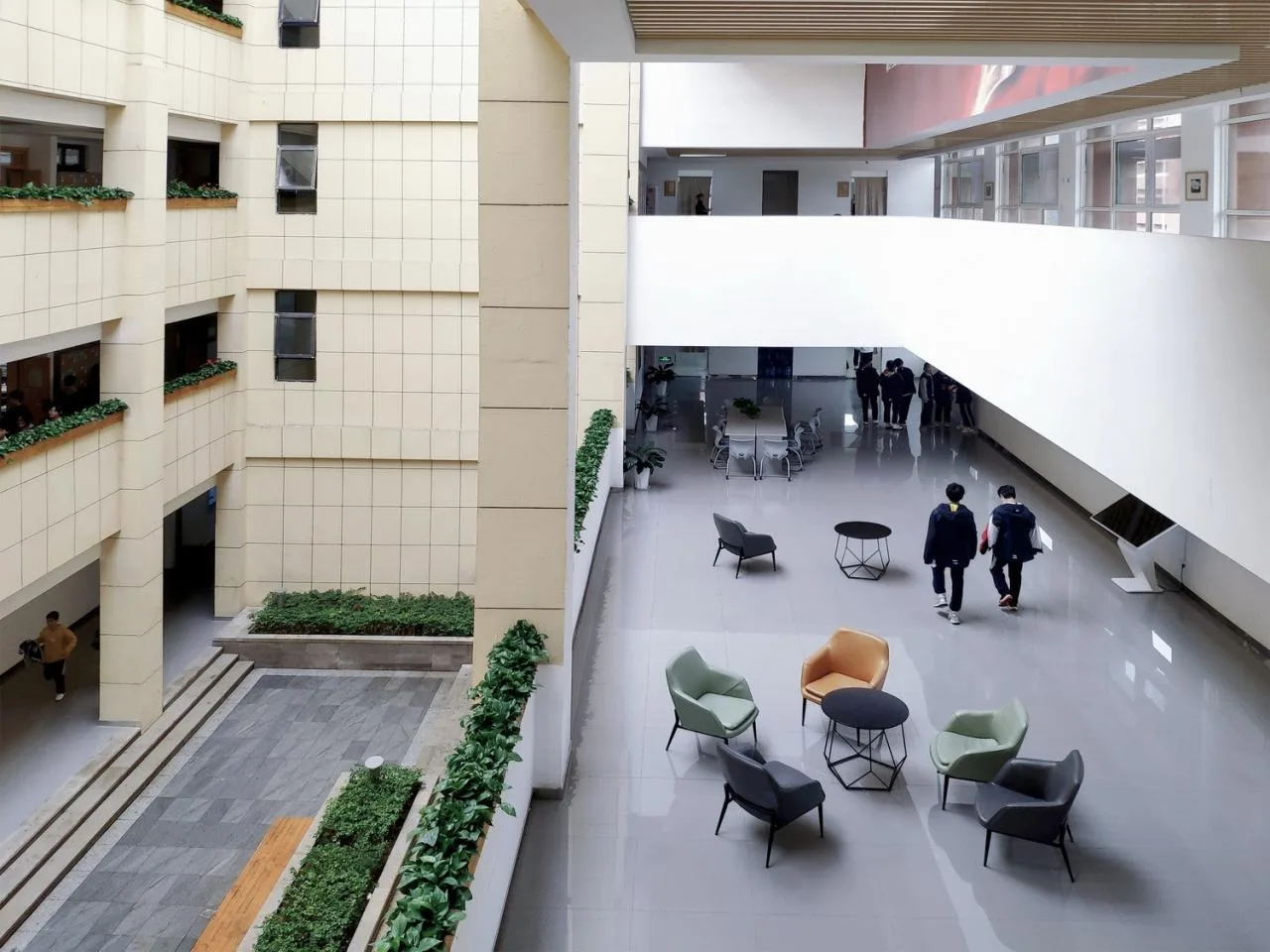
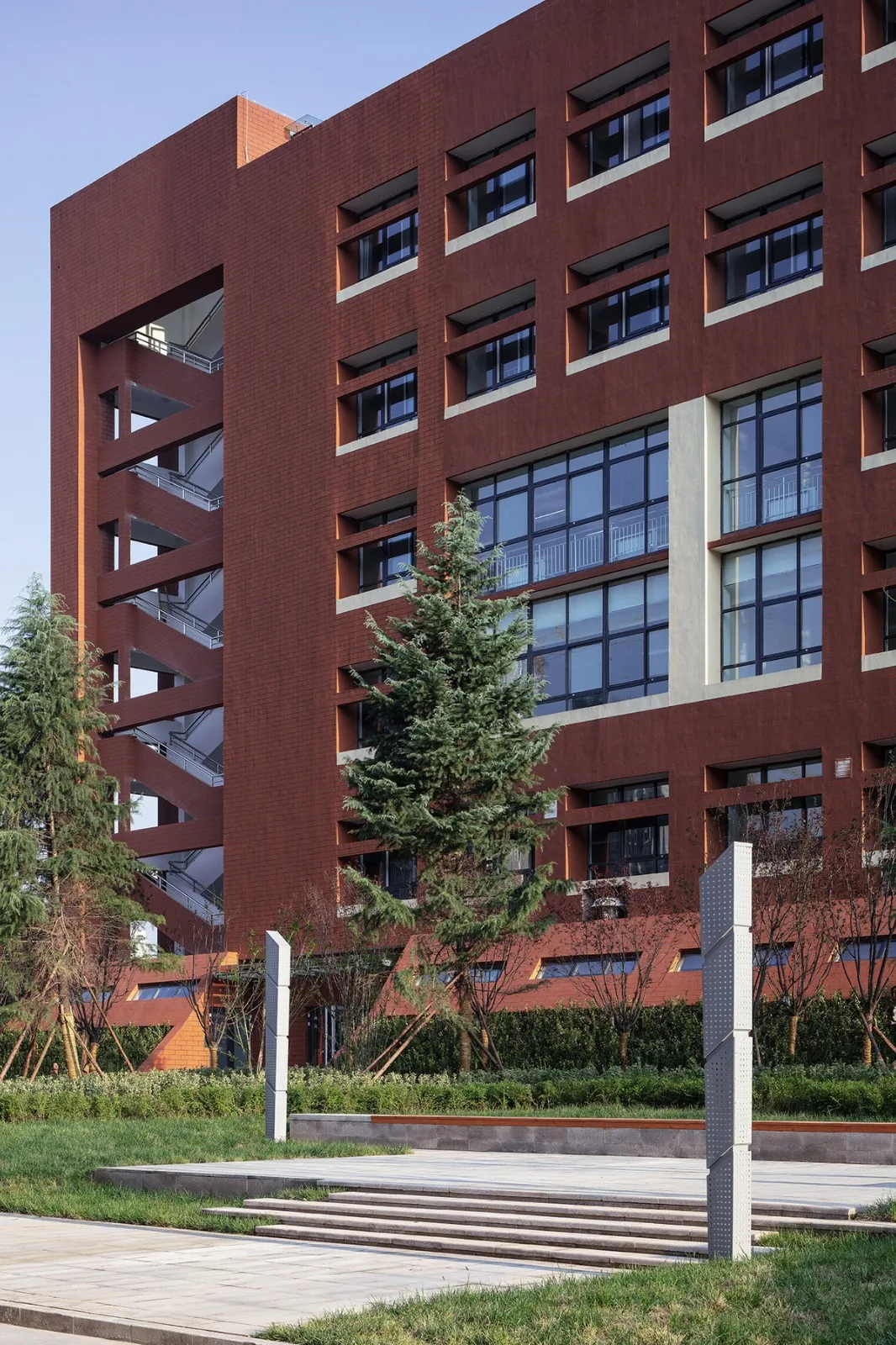
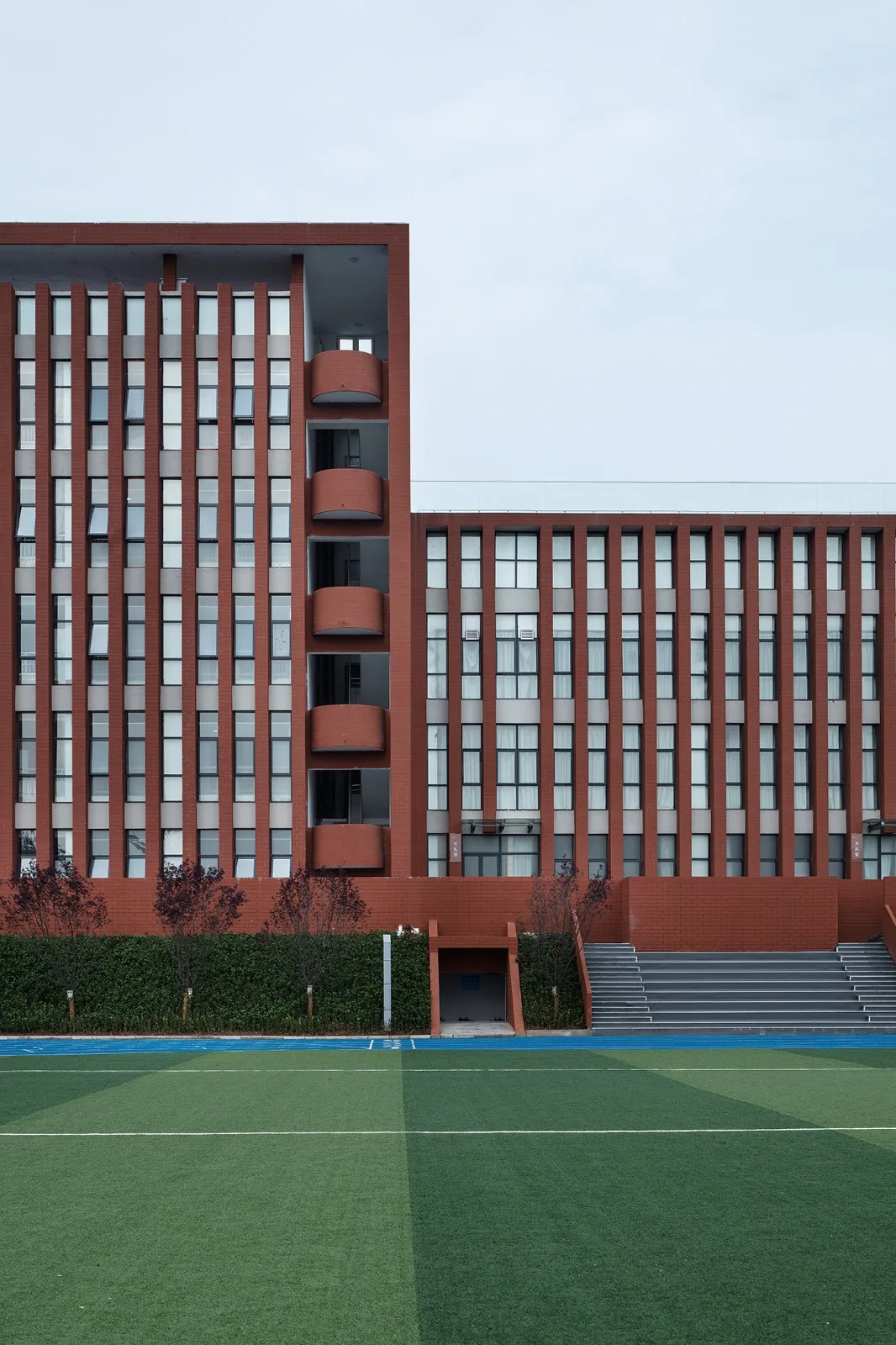
This project embraces a “place-based” architectural approach, creating diverse, open, and fluid public spaces within limited building footprints through elements such as halls, atriums, courtyards, and raised ground floors. This design fosters a welcoming environment where students feel connected and engaged rather than isolated or unfamiliar. By integrating with the site’s unique context, the architecture transcends mere materiality and functionality.
External Transportation
Traffic congestion is a common bottleneck in urban transport systems, especially around primary and secondary schools. This project is adjacent to Aerospace Primary School on the east, with significant traffic pressure on the main road to the south during school hours.
To address this, student transportation is organized via underground parking. Additionally, the campus entrance is set back 60 meters from the southern red line and designed as a flexible space that operates as an open or closed area during specific times—serving as a traffic buffer zone for school commutes to ease urban road congestion. Outside peak periods, the space reverts to a student activity area.
Summary
The architectural language here aims to create a “place” where elements gather and establish their own identity. This project addresses the tension between land use and functionality, focusing on open teaching and shift-based learning models. Through an intensive, interactive spatial design strategy, it creates diverse, open, and flexible public communication spaces within limited site areas. This serves as a valuable exploration of spatial intensification for large urban schools.
Project Drawings
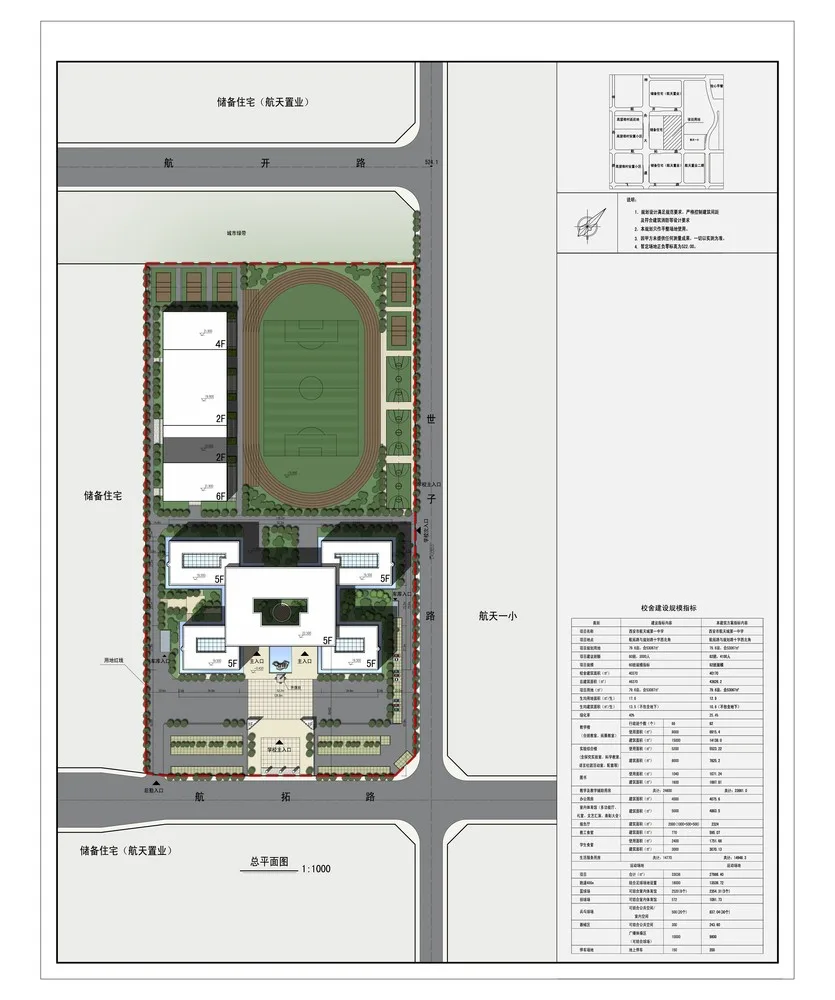
△ General Layout Plan
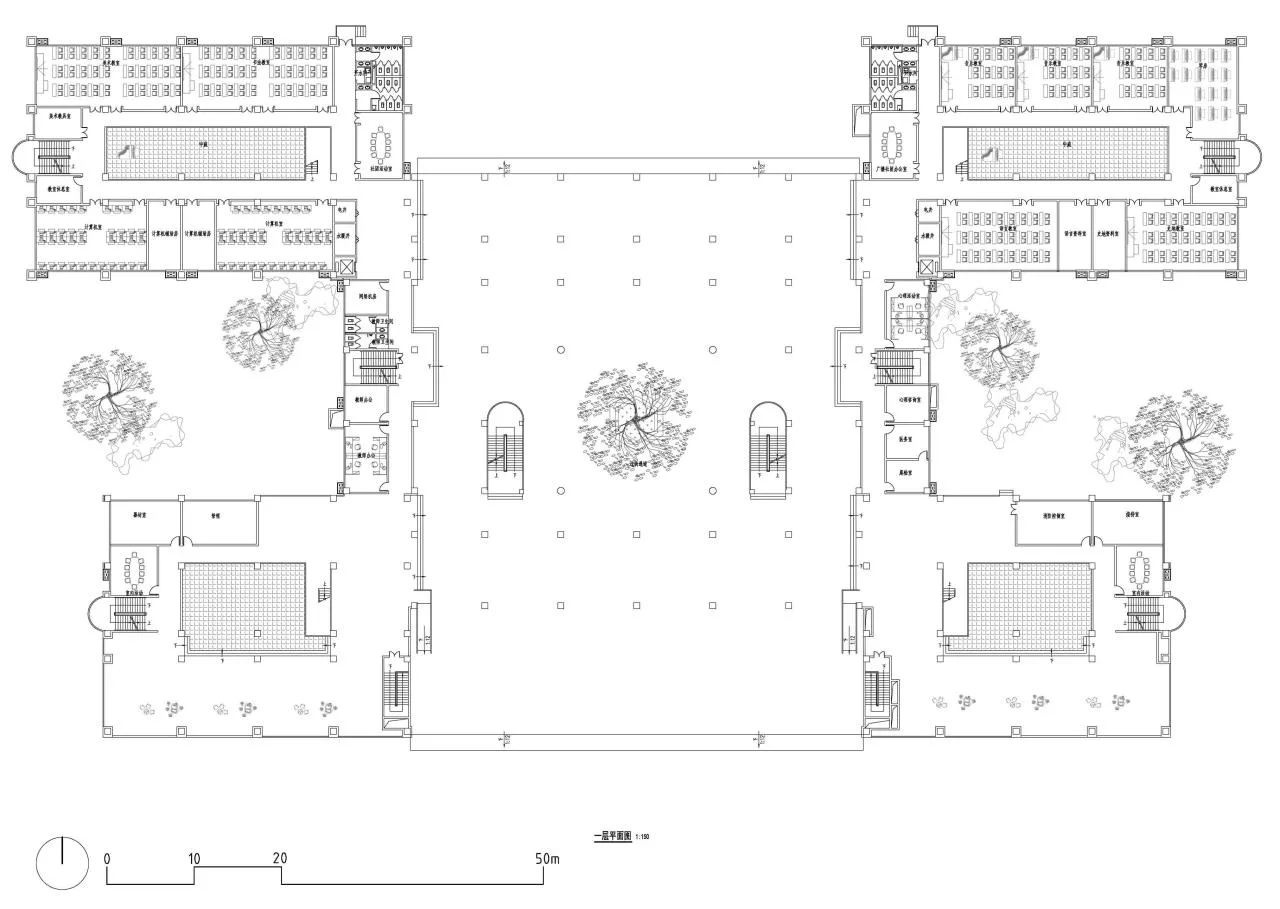
△ First Floor Plan of the Main Building
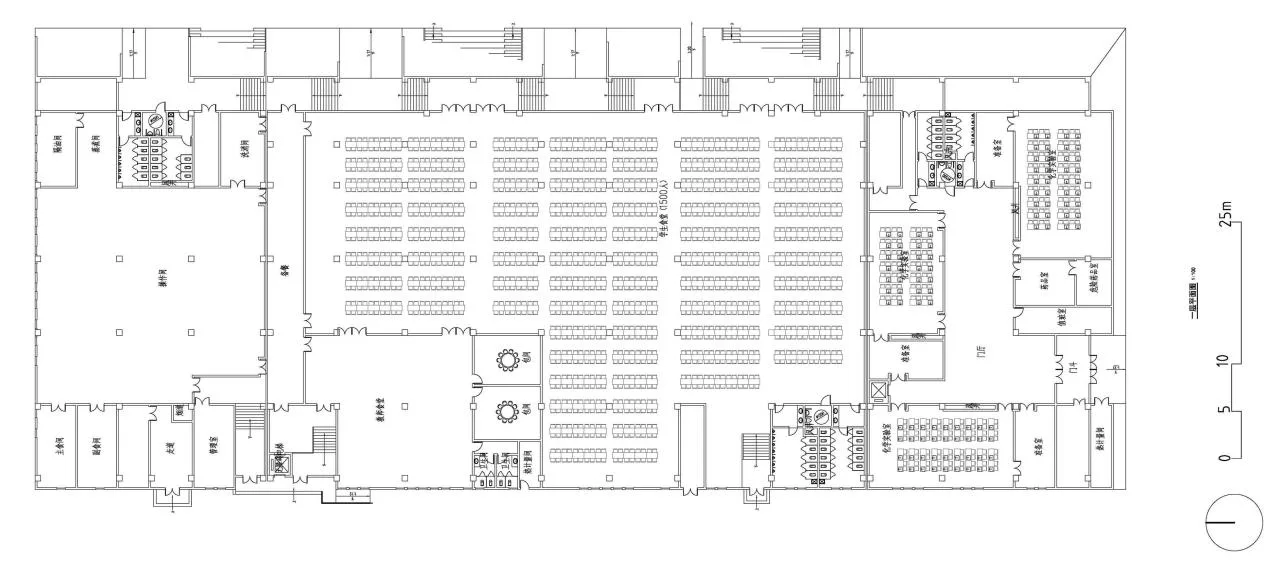
△ Second Floor Plan of the Comprehensive Building
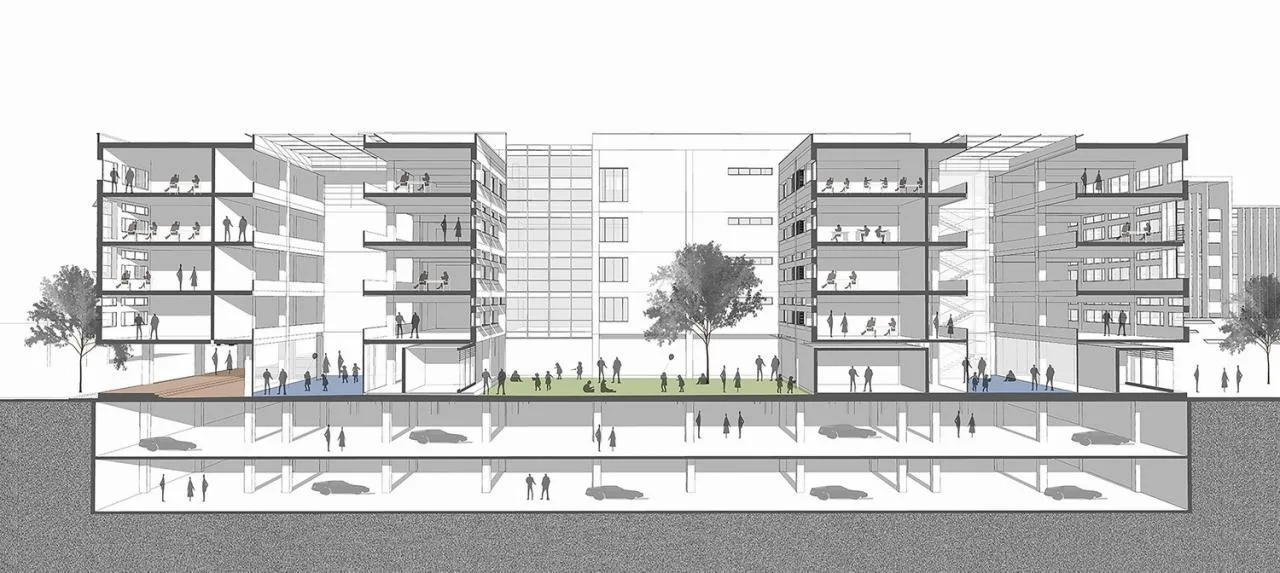
△ Perspective View of Teaching Group
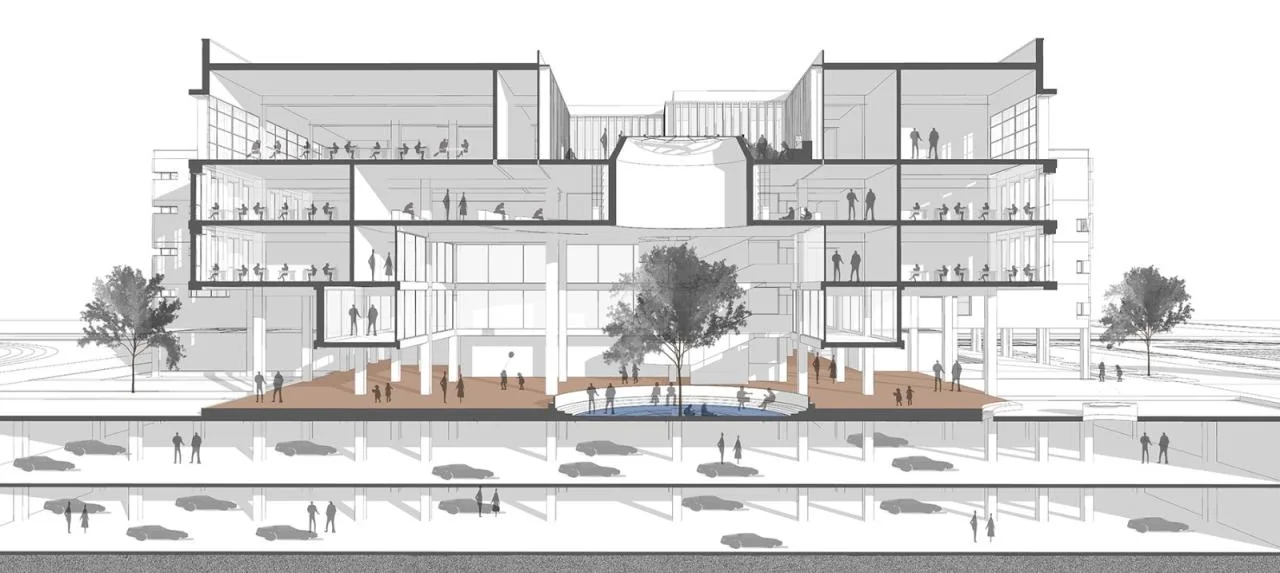
△ Perspective View of the Atrium Section of the Main Teaching Building
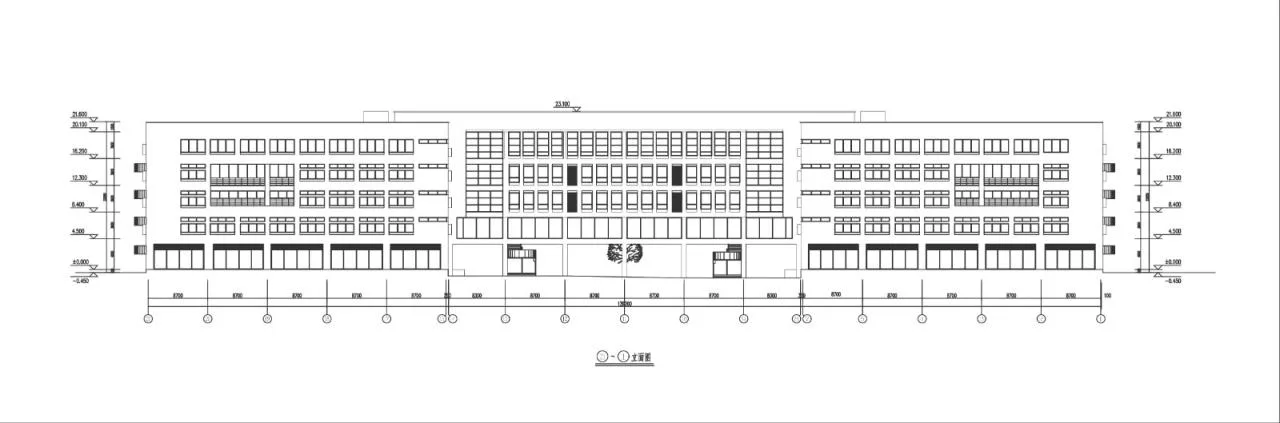
△ South Elevation of the Main Building
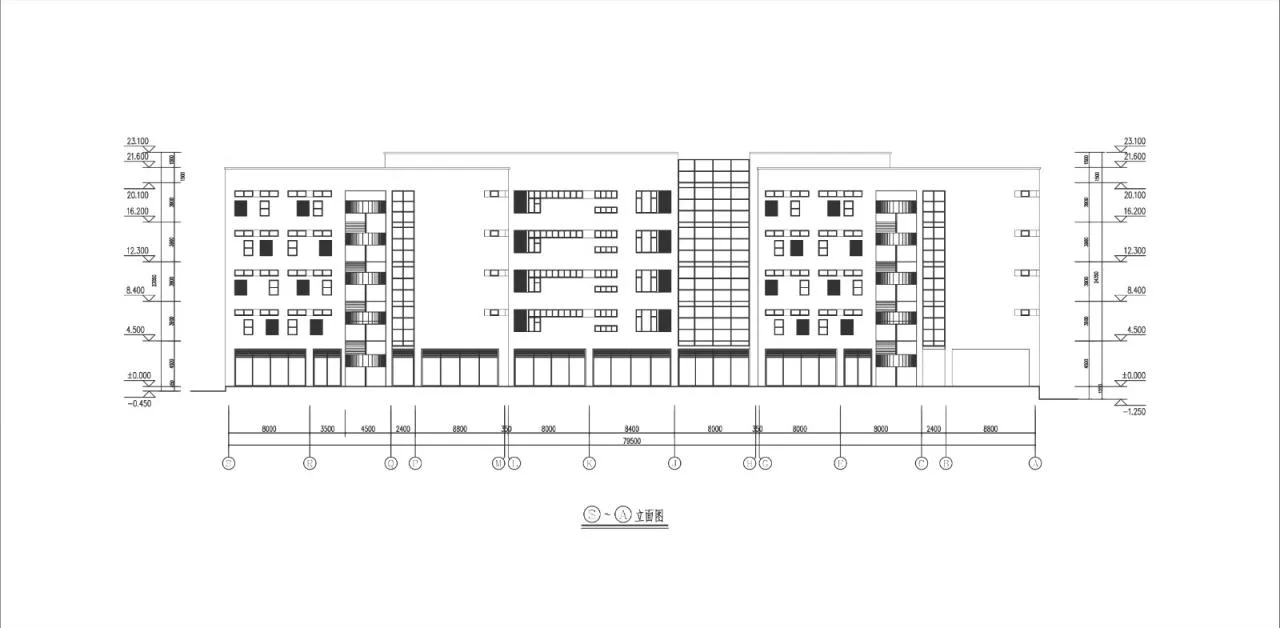
△ East Elevation of the Main Building
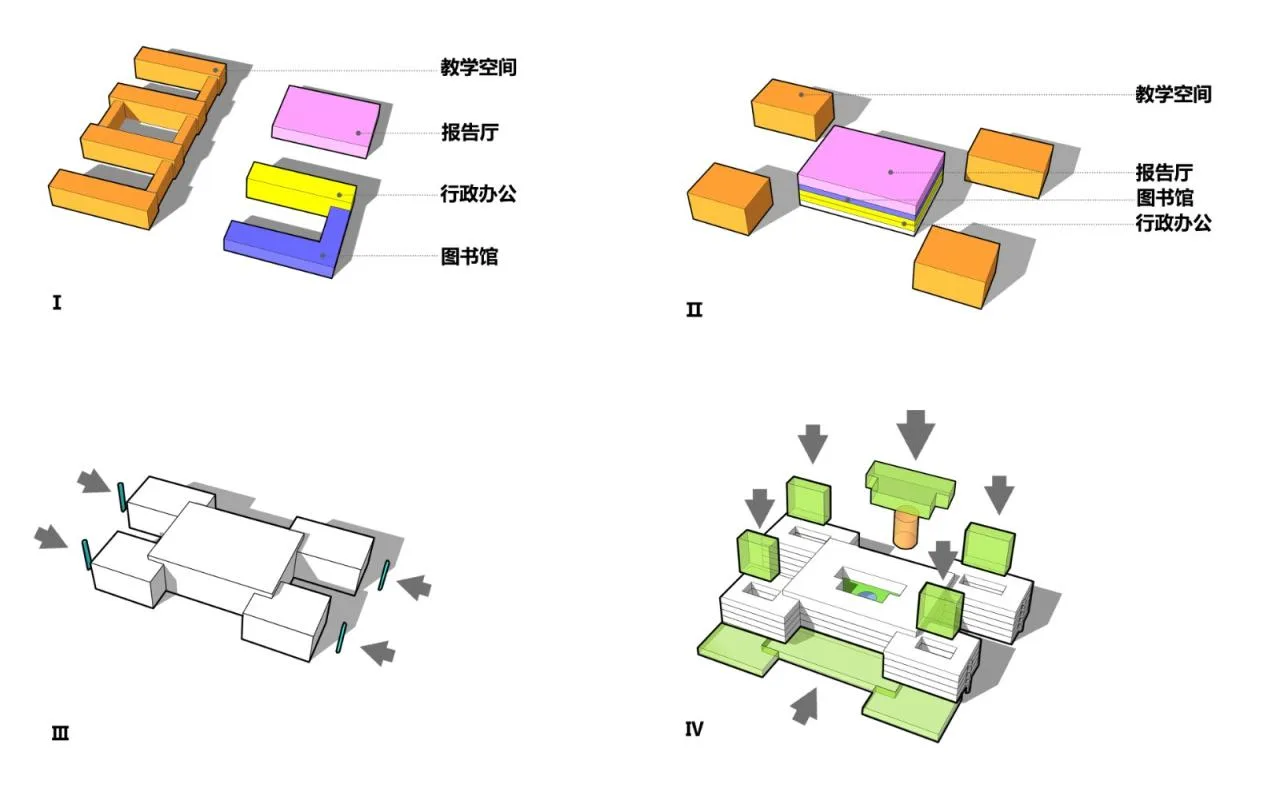
△ Shape Generation of the Main Teaching Building
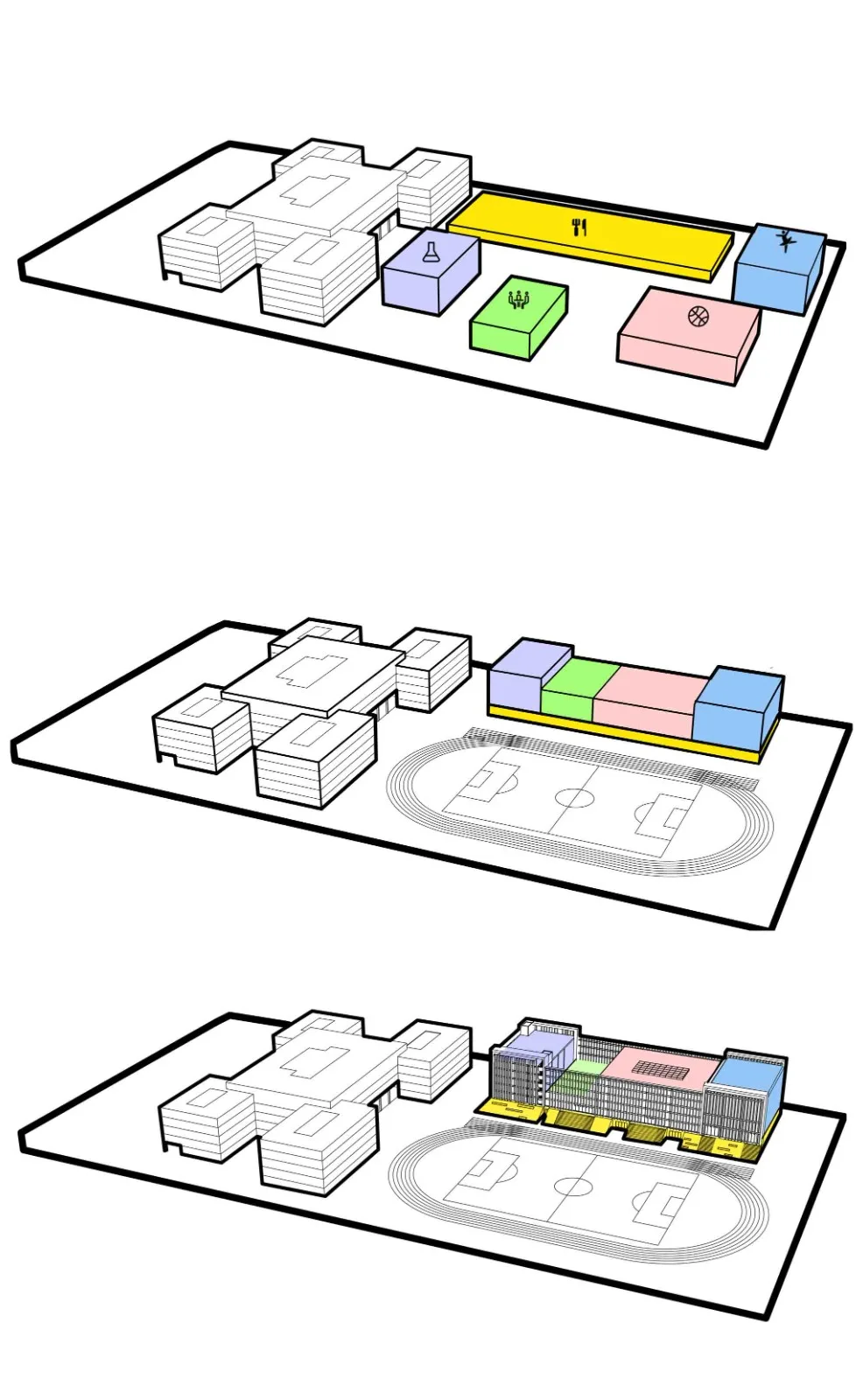
△ Form Generation of the Comprehensive Building
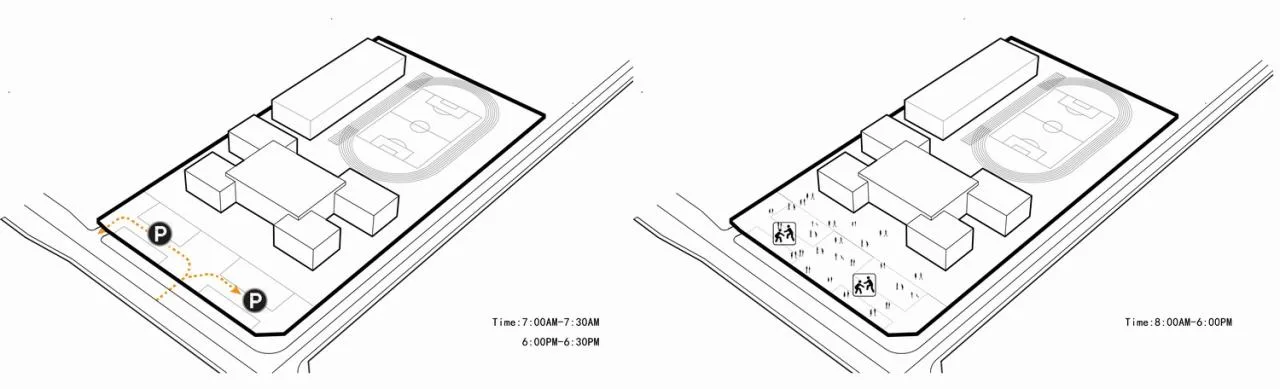
△ Temporal-Spatial Pattern Diagram
Project Information
Project Name: Xi’an Aerospace City No.1 Middle School
Architect: Architectural Design and Research Institute of Xi’an University of Architecture and Technology
Project Area: 76,000 square meters
Project Year: 2017
Photographer: Zhang Xiaoming
Suppliers: CSG HOLDING, Hempel Coatings, JOSME, Qingdao Creek, Zhejiang Jinxiang Board
Lead Architect: Gao Bo
Design Team: Gao Bo, Li Zhimin, Li Yueyan, Wang Yan, Wang Furong, Yang Mengjiao, Zhao Xi, Sun Yi, Han Huihui
Client: Xi’an Aerospace City No.1 Middle School
Structural Engineer: Shi Youliang
Collaborator: Shaanxi Hongji Architectural Survey and Design Engineering Co., Ltd
Construction Contractor: Shaanxi Construction Second Construction Group Co., Ltd














Must log in before commenting!
Sign Up