
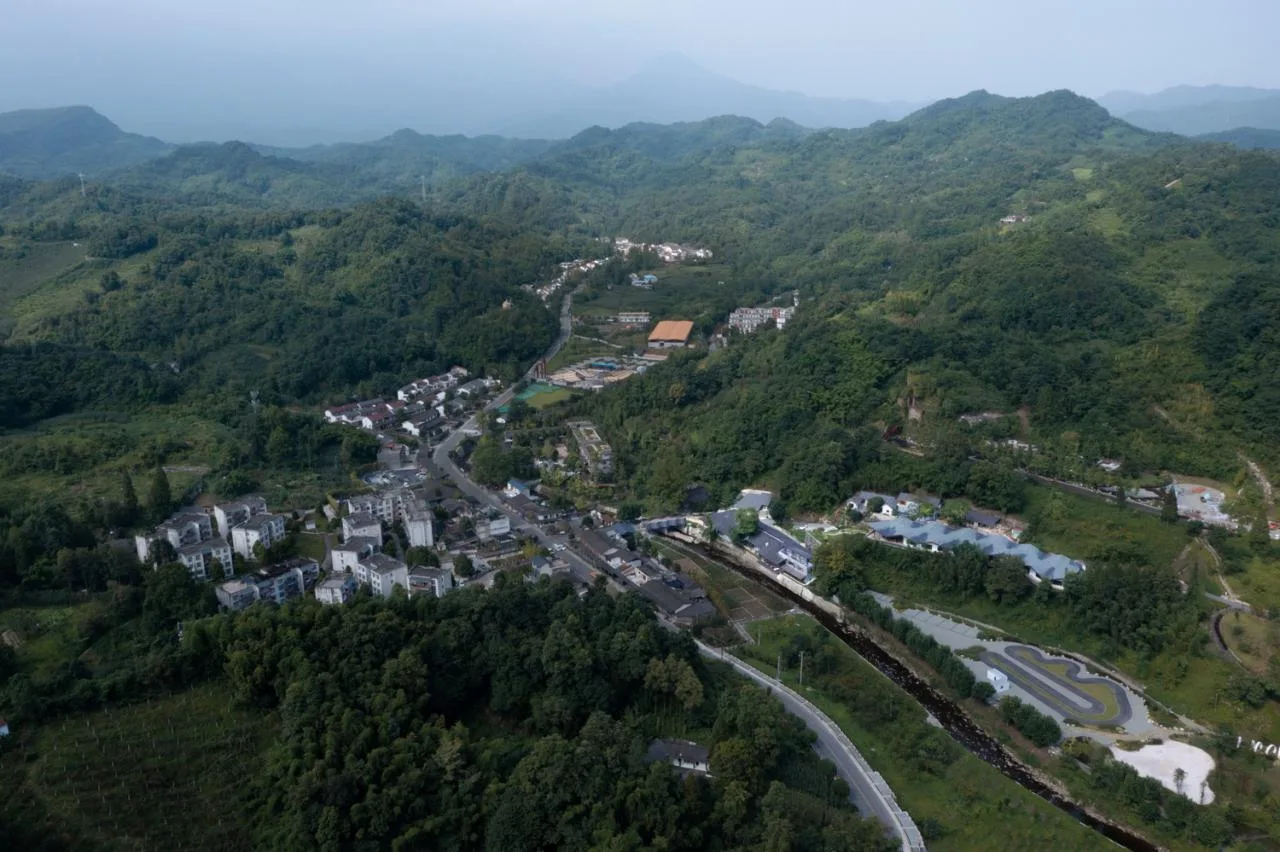
Located in the Longmen Mountains, Xiaoshi Village is rich in diverse natural resources that provide excellent raw materials for food processing. © Existence of Architecture – Architectural Photography © arch-exist
-Little Stone Chronicles Chapter Five-
Rural areas function as complex systems, and architectural practice here demands a holistic approach. Guided by a “shared roof” village-wide design strategy, the Food Sharing Factory introduces a novel industrial sharing model. This model integrates industrial planning, architectural space, cultural and creative industries, management, and publicity.
By incorporating “cultural heritage industries,” the project aims to fuse culture and production, elevate villagers’ income, and redefine the village’s production spaces and local identity. This offers a pragmatic path for rural industrial revitalization.
© Existence of Architecture – Architectural Photography © arch-exist
© Existence of Architecture – Architectural Photography © arch-exist
01 Highly Transparent Volume
Beyond Joy, a Hidden ‘Plan B’
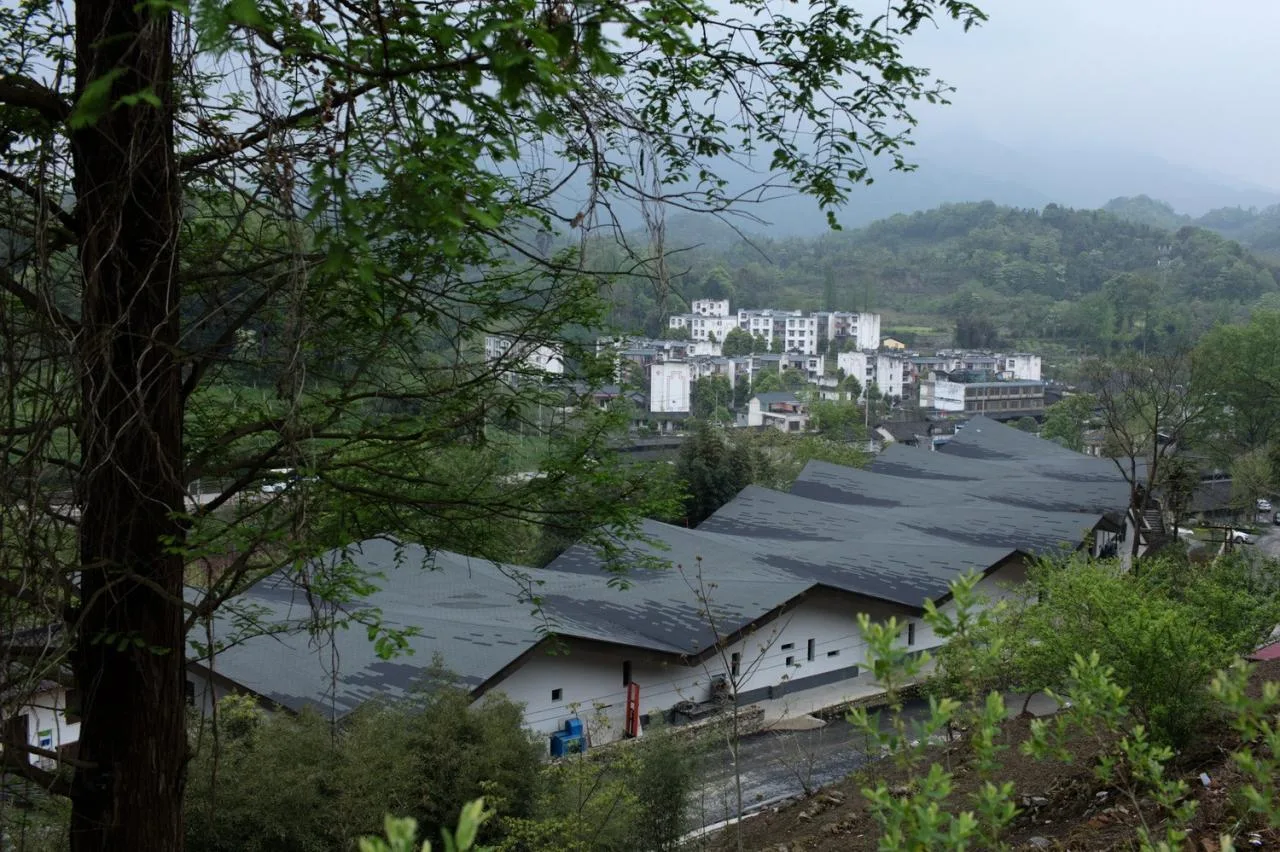
The Food Sharing Factory is situated in Xiaoshi Village, nestled in a valley of the Longmen Mountain Range in Pengzhou City, Sichuan Province. Since coal mining began in the 1960s, the village thrived as a regional economic center. However, after the 1990s, Xiaoshi gradually declined, culminating in the devastation of the 2008 Wenchuan earthquake. The village was nearly destroyed, mines collapsed, the economy lost its backbone, and streets emptied, turning the area hollow.
Despite this, the surrounding mountains, forests, streams, and clouds escaped harm, preserving the village’s natural essence.
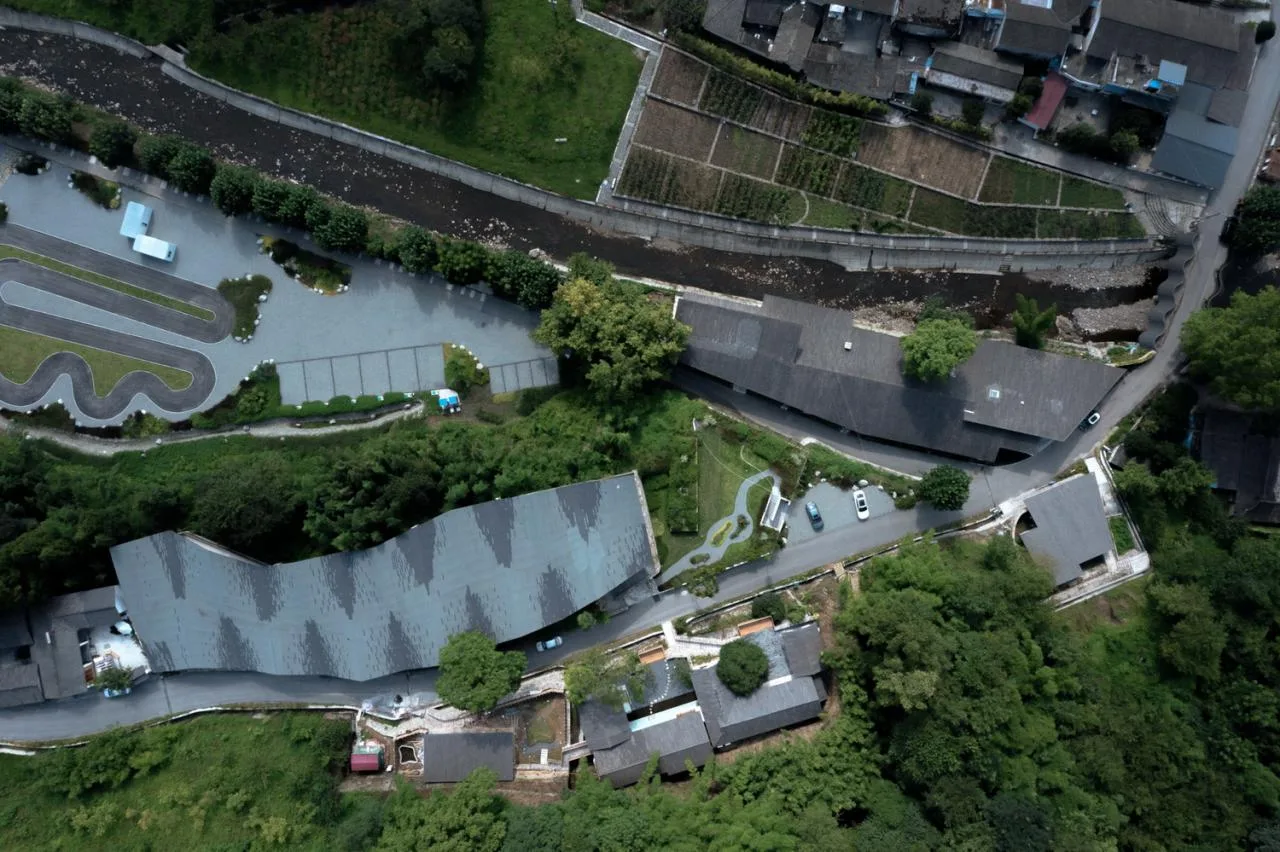
The factory site sits halfway up the mountain, overlooking the main road—the village’s core plot. Originally a primary school, the site was repurposed as a chicken coop after the school relocated. The narrow north-south site measures 86.6 meters long by 20.1 meters wide.
Upon visiting, wild plants nearly obscured the building. Passing through a red iron gate, the pungent smell of chicken manure mixed faintly with bamboo fragrance greeted me. From the inner courtyard, one can glimpse the main street and distant mountains beyond the bamboo forest. To the west lies a steep slope, gradually forming cliffs due to landslides over the years. The factory’s location naturally evokes a blend of “half fireworks, half poetry,” inspiring a shared concept.
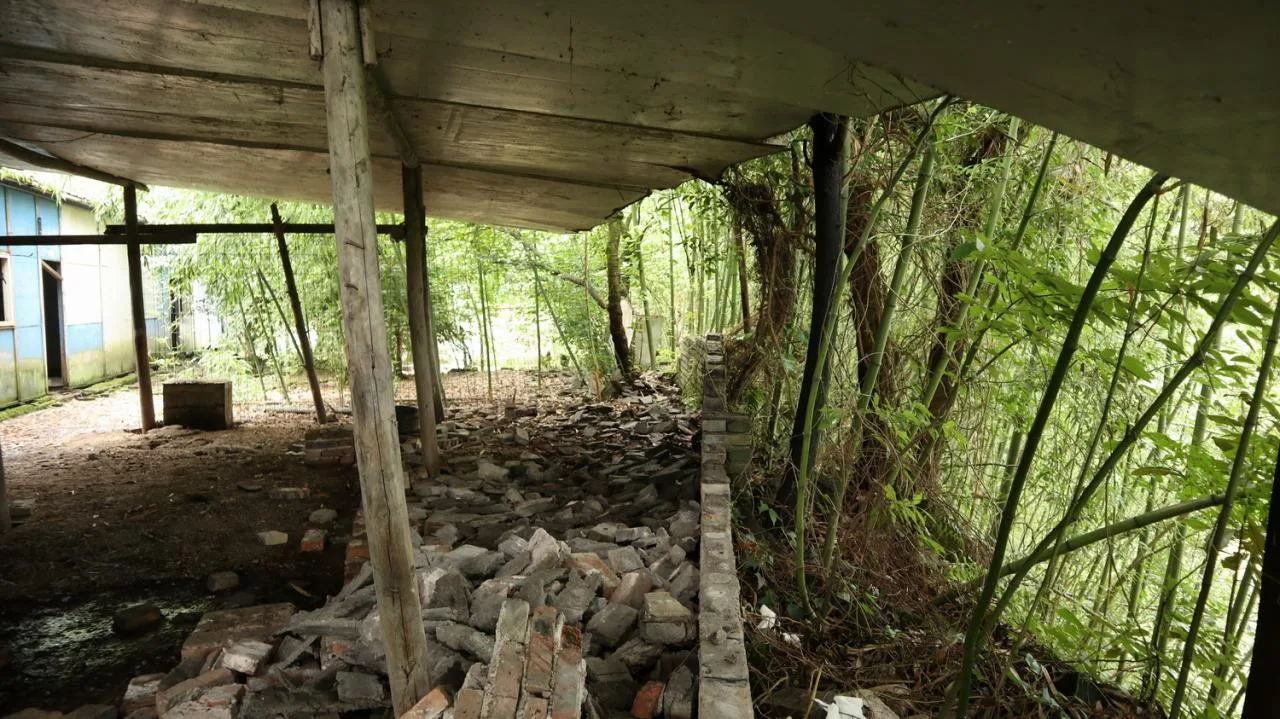
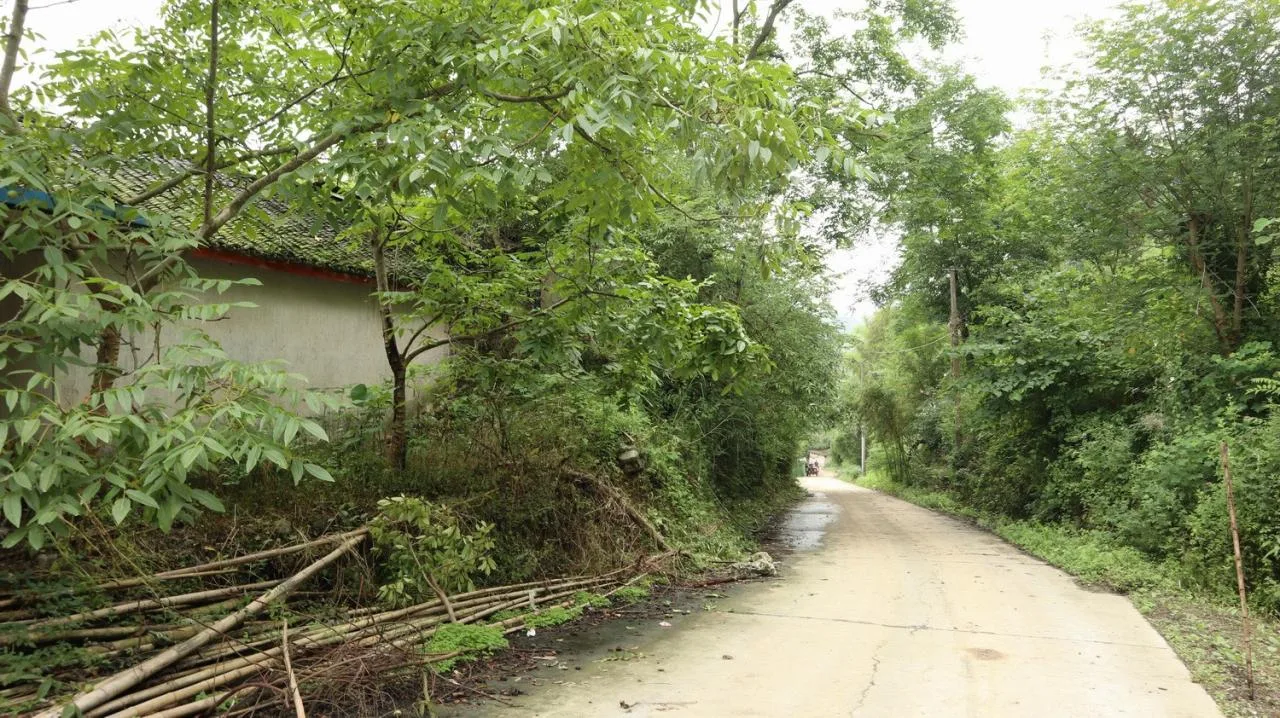
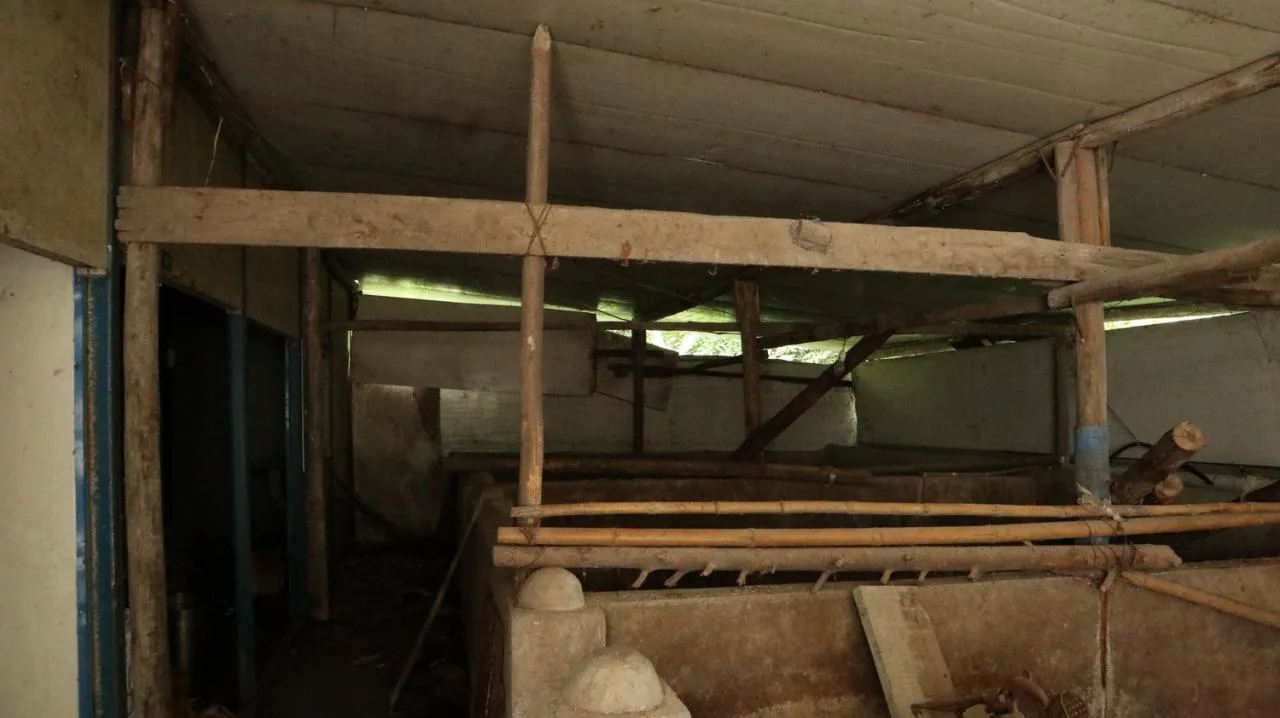
△ Original condition of project site
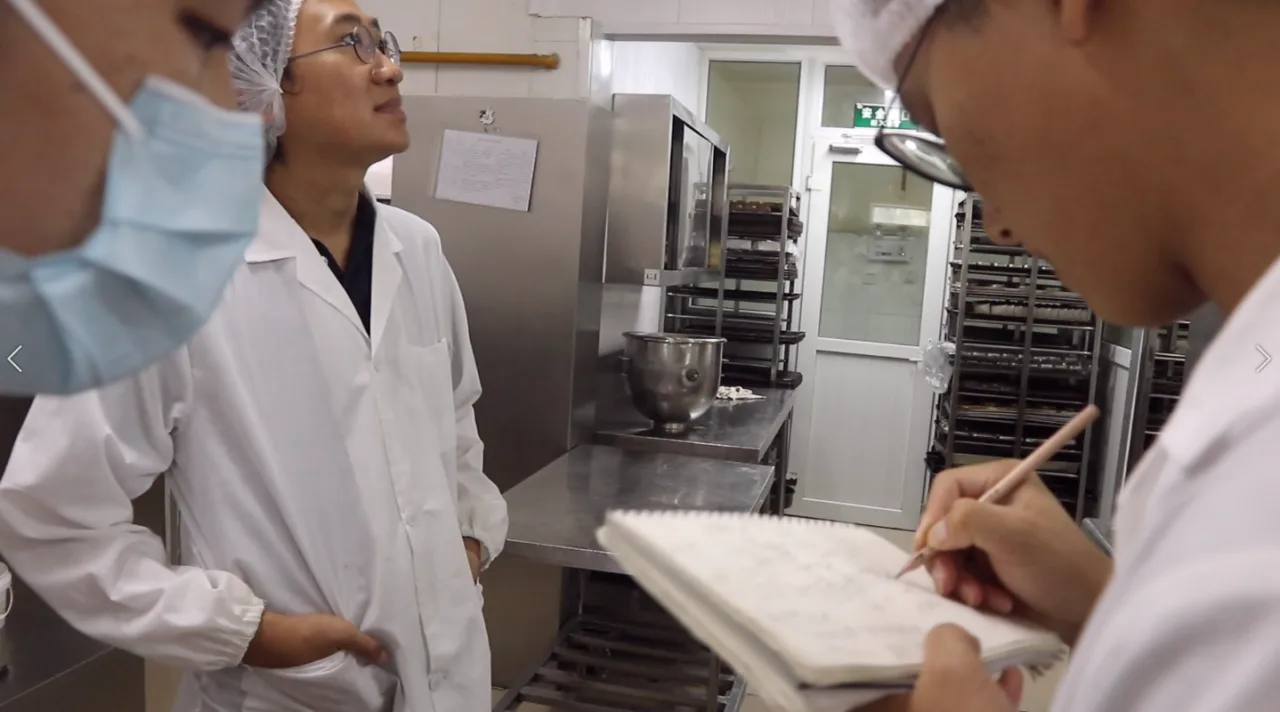
Research on the Original Factory
Before design began, the owner, Mr. Wu, shared our vision: the factory should evolve into a multifunctional, multi-experience public building. Shu Zhong Sugar Gate aims to become a space that combines production, experience, visits, food, and art education, rather than a closed factory.
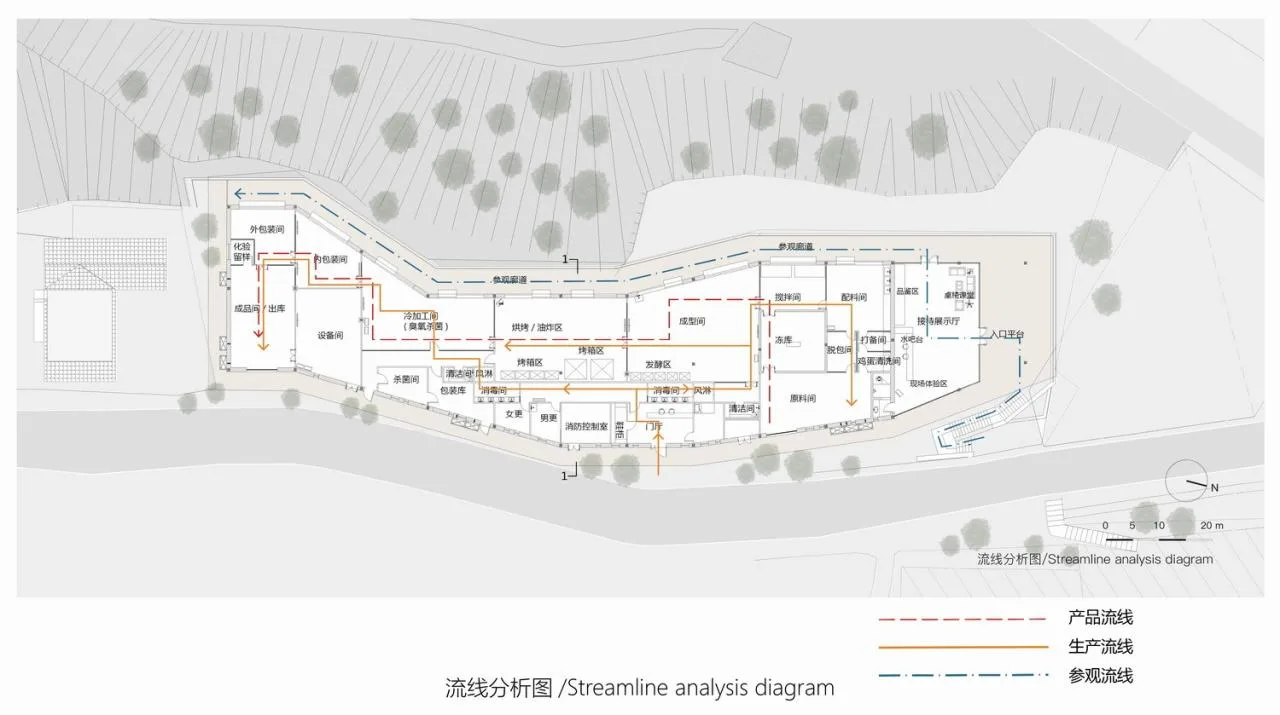
Studying the original factory, I found its workflow fascinating. The paths of people, dry ingredients, and wet ingredients never intersect, creating a unique “no turning back” flow. How to organize this complex, non-overlapping flow within a single building, while allowing visitors to observe and interact, posed both a challenge and an opportunity.
© Existence of Architecture – Architectural Photography
© Existence of Architecture – Architectural Photography
© Existence of Architecture – Architectural Photography
© Existence of Architecture – Architectural Photography
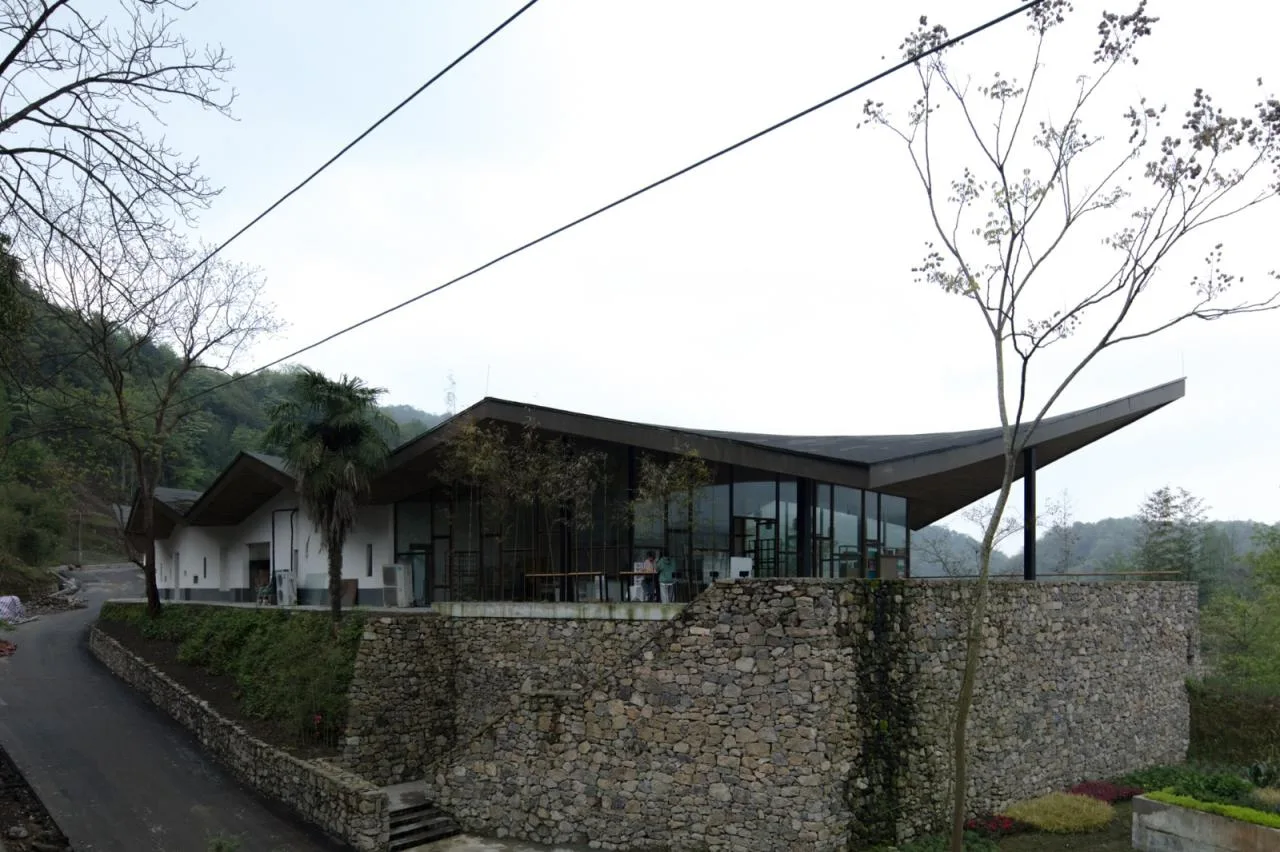
To separate people from logistics, visitors ascend a rubble-built stairway that narrows their view, leading to a public space entrance platform with panoramic views of snow-capped mountains. This moment of clarity connects nature and industry.
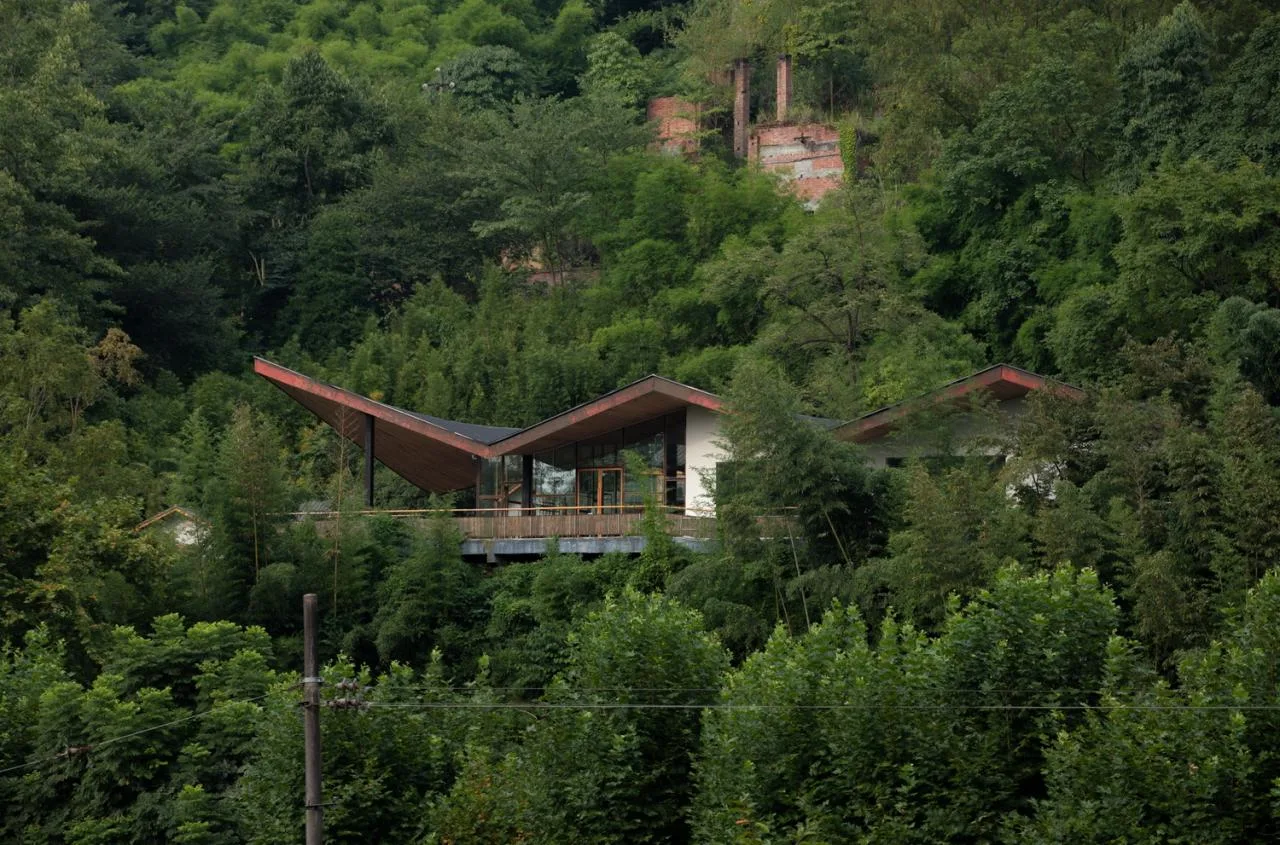
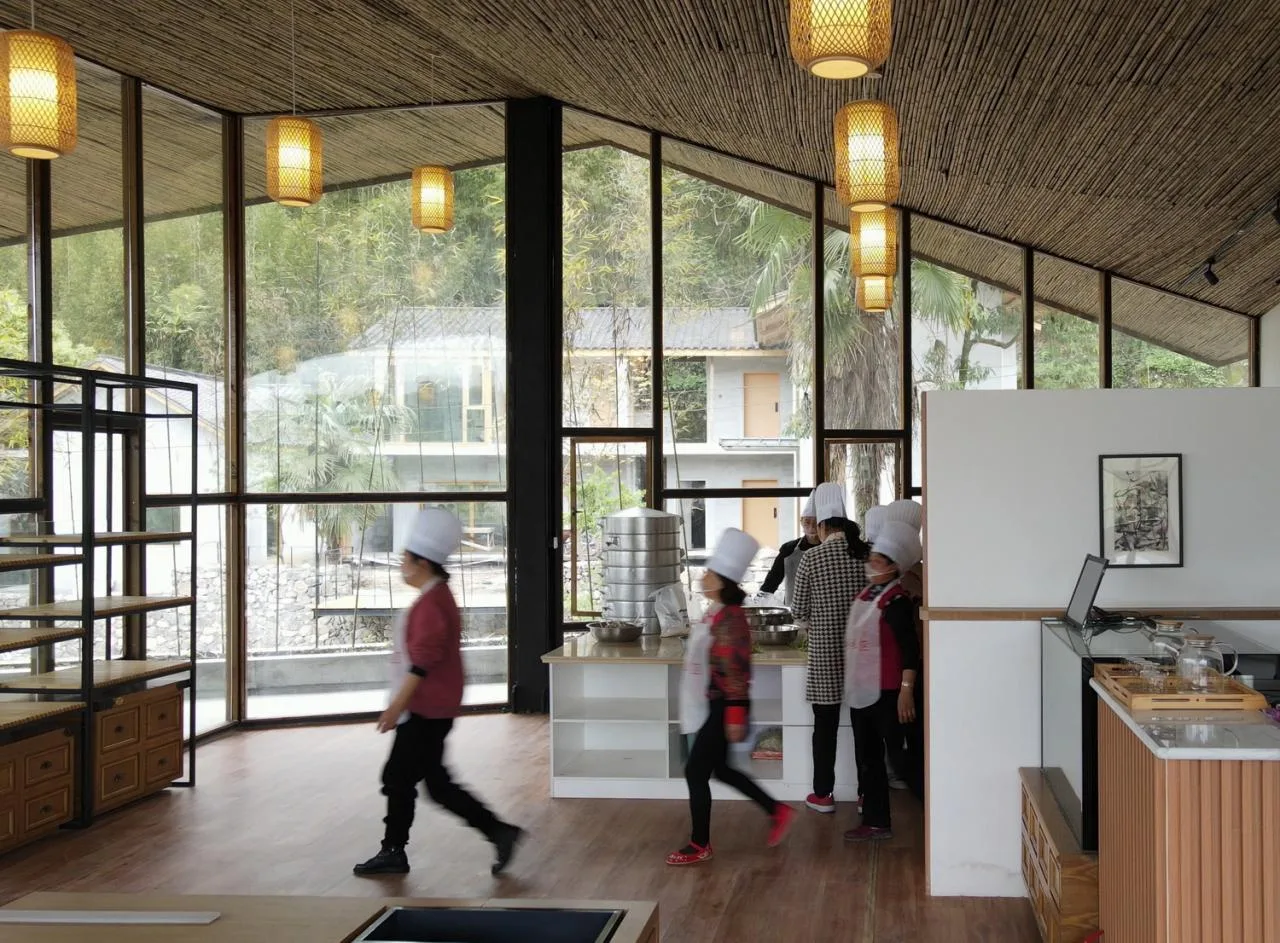
As production opened to the public, the building transformed from a traditional “factory-style black box” into a highly transparent volume flooded with natural light. The production area opens to the eye and connects with a cliffside viewing corridor, breaking the cold, enclosed factory stereotype.
This design not only brings joy to workers and reduces lighting needs but also allows villagers and tourists to closely engage with the entire food production process, fostering participation through observation and interaction.
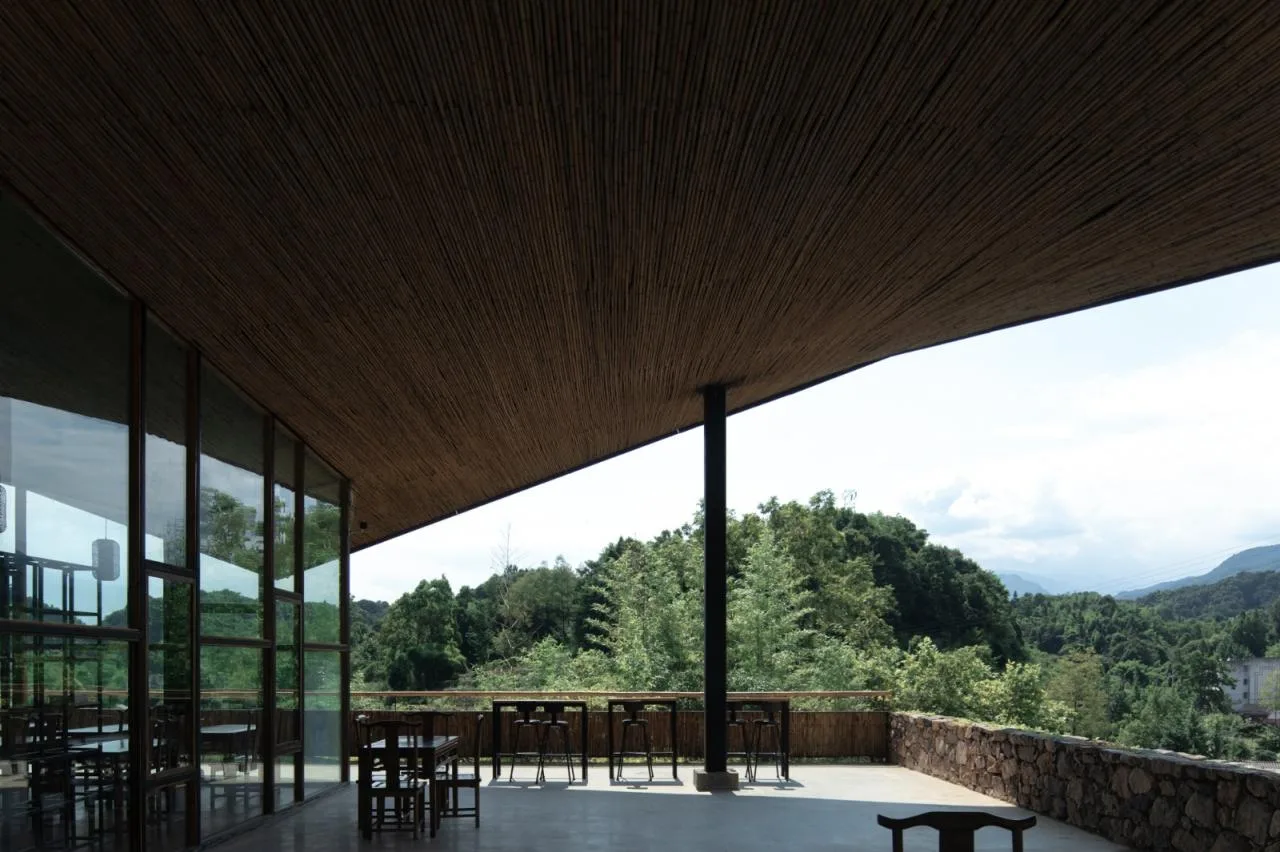
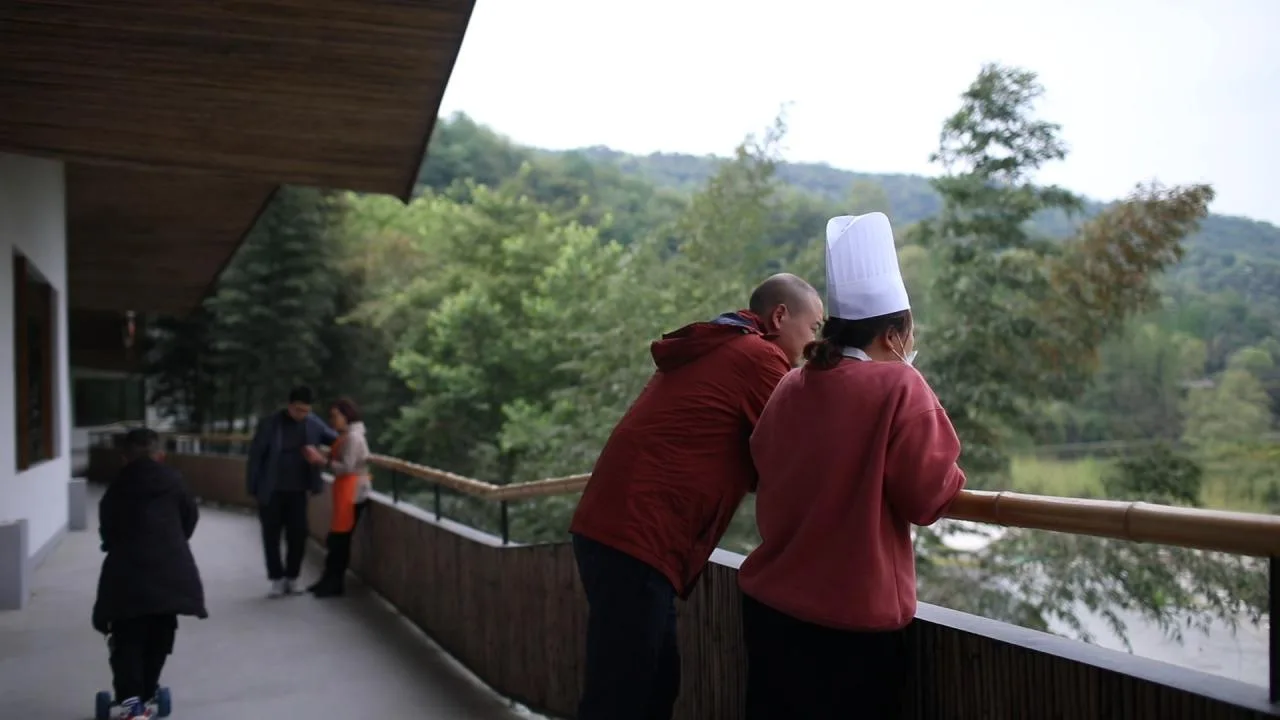
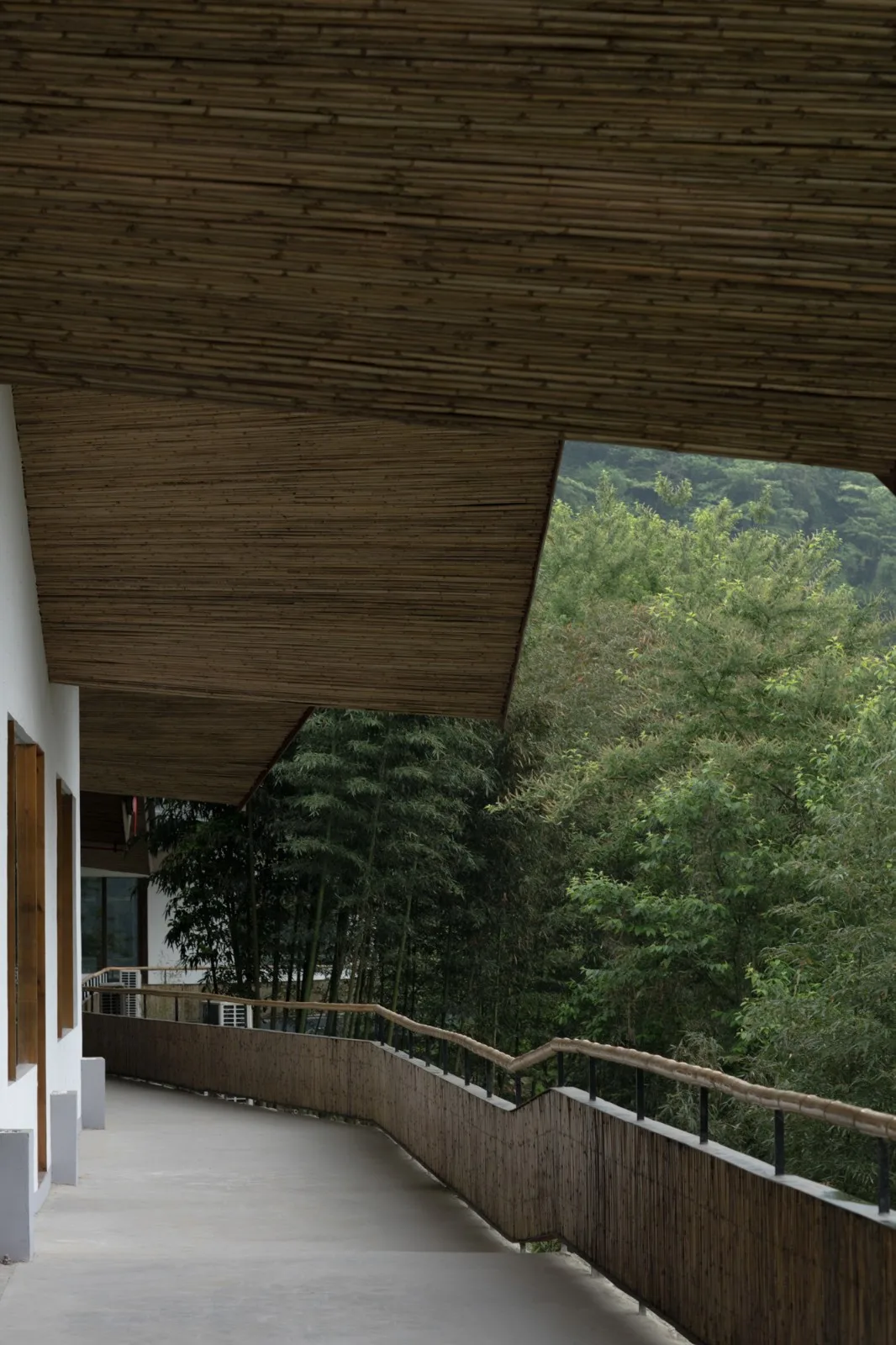
Starting at the experience workshop, visitors walk along a long corridor with large display windows showcasing complete food production. This corridor offers views of distant mountains and Xiaoshi Village through bamboo groves, creating a dynamic dialogue between production and life, people and nature, locals and visitors.
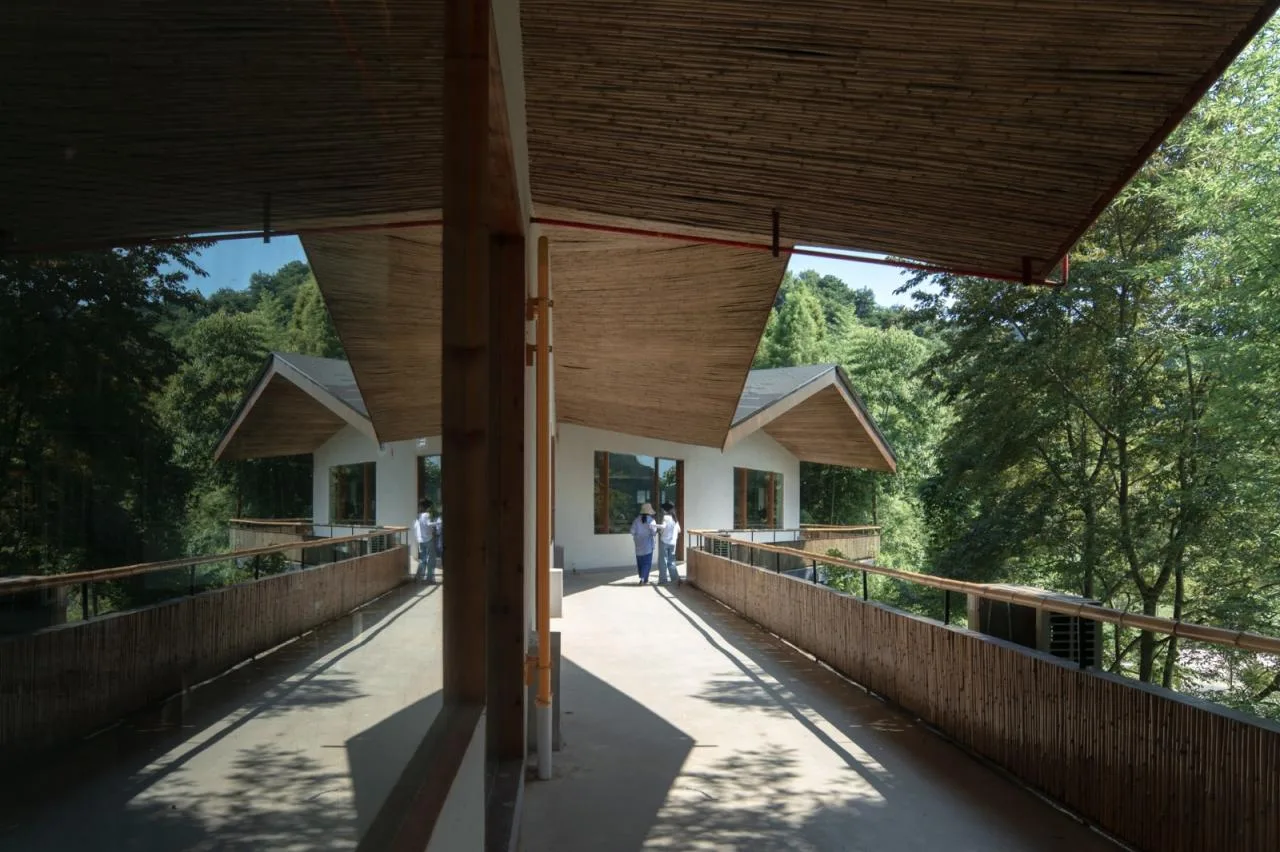
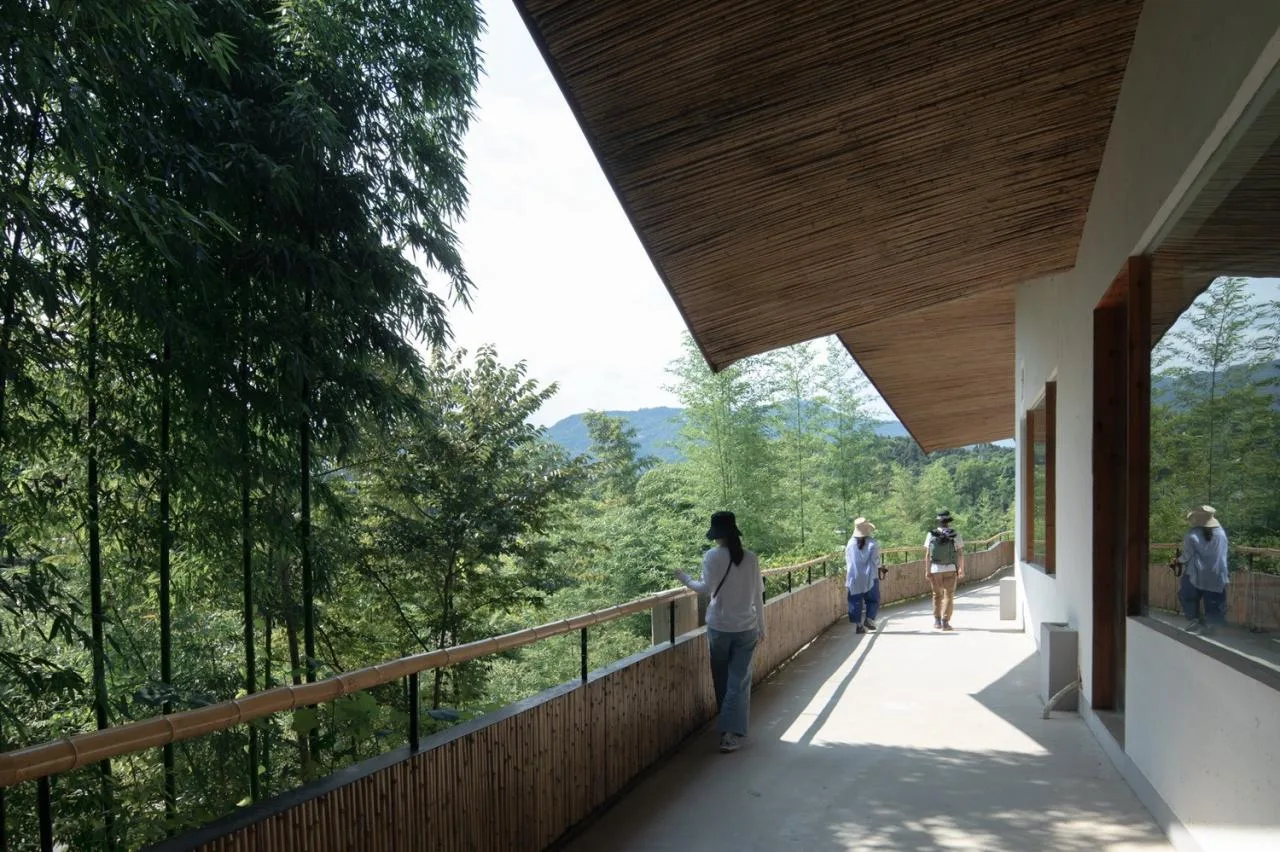
Through expansive display windows, the full food production process is visible. © Existence of Architecture – Architectural Photography © arch-exist
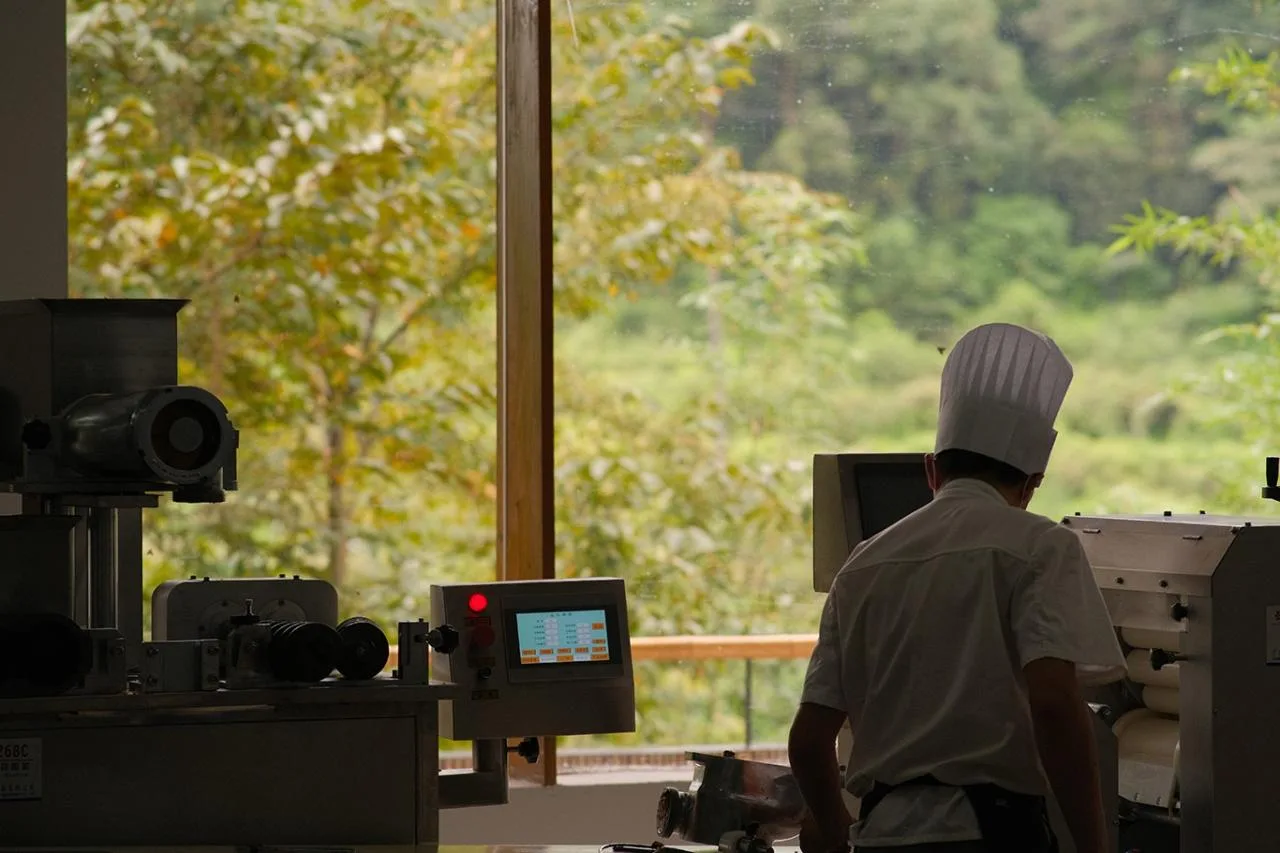
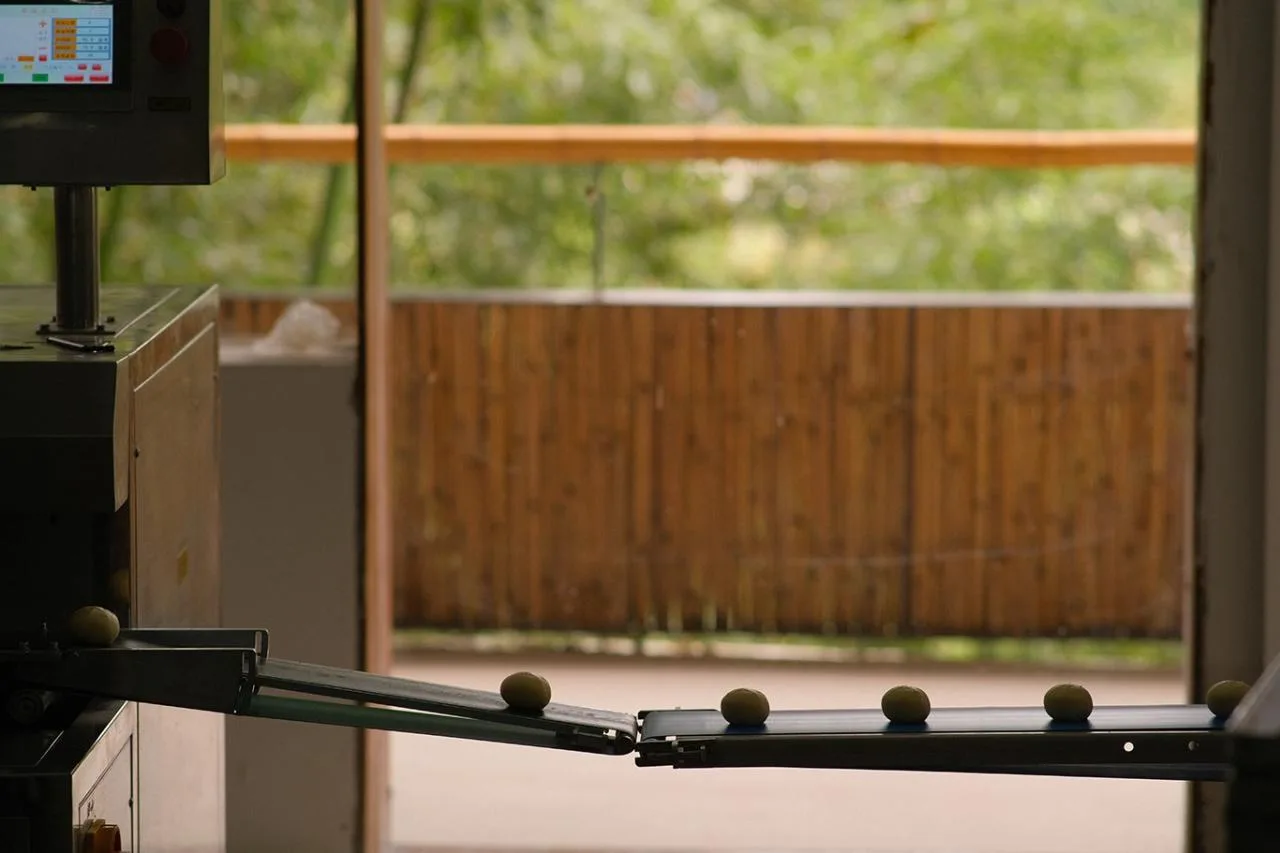

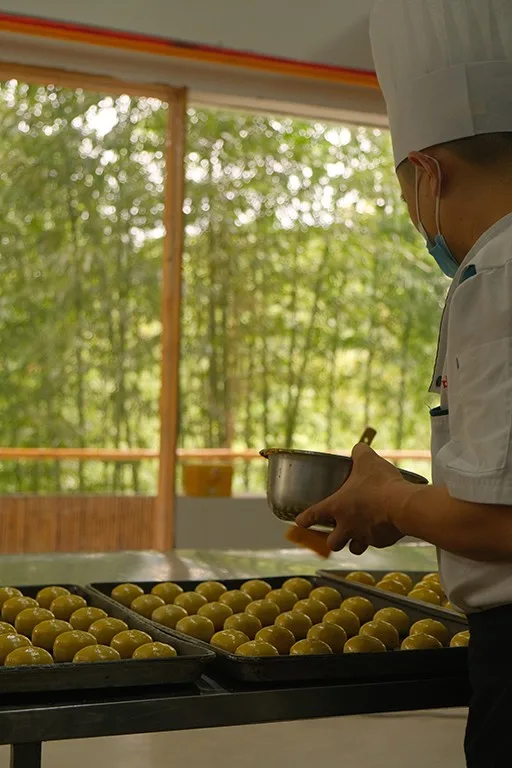
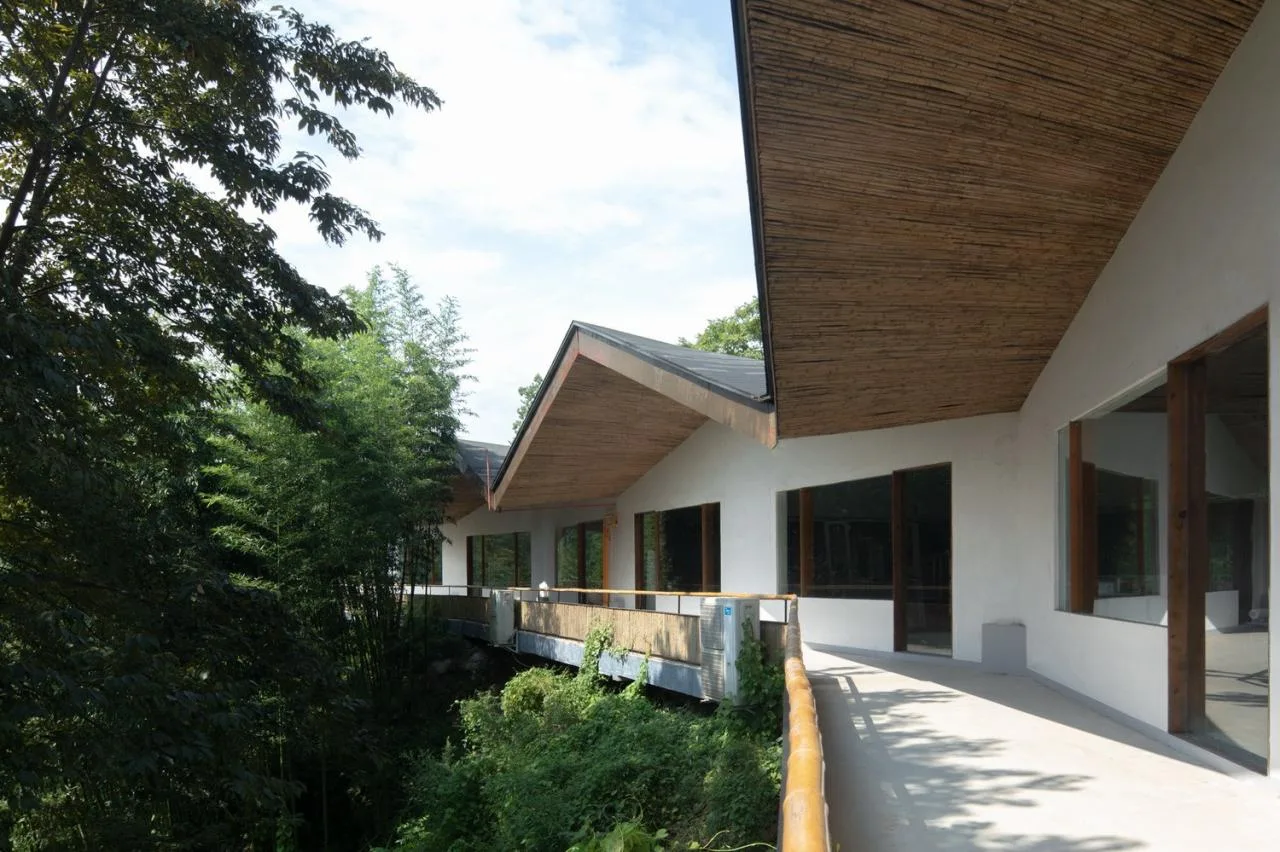
Natural light fills the original “factory-style black box,” creating a joyful environment for workers. © prawn
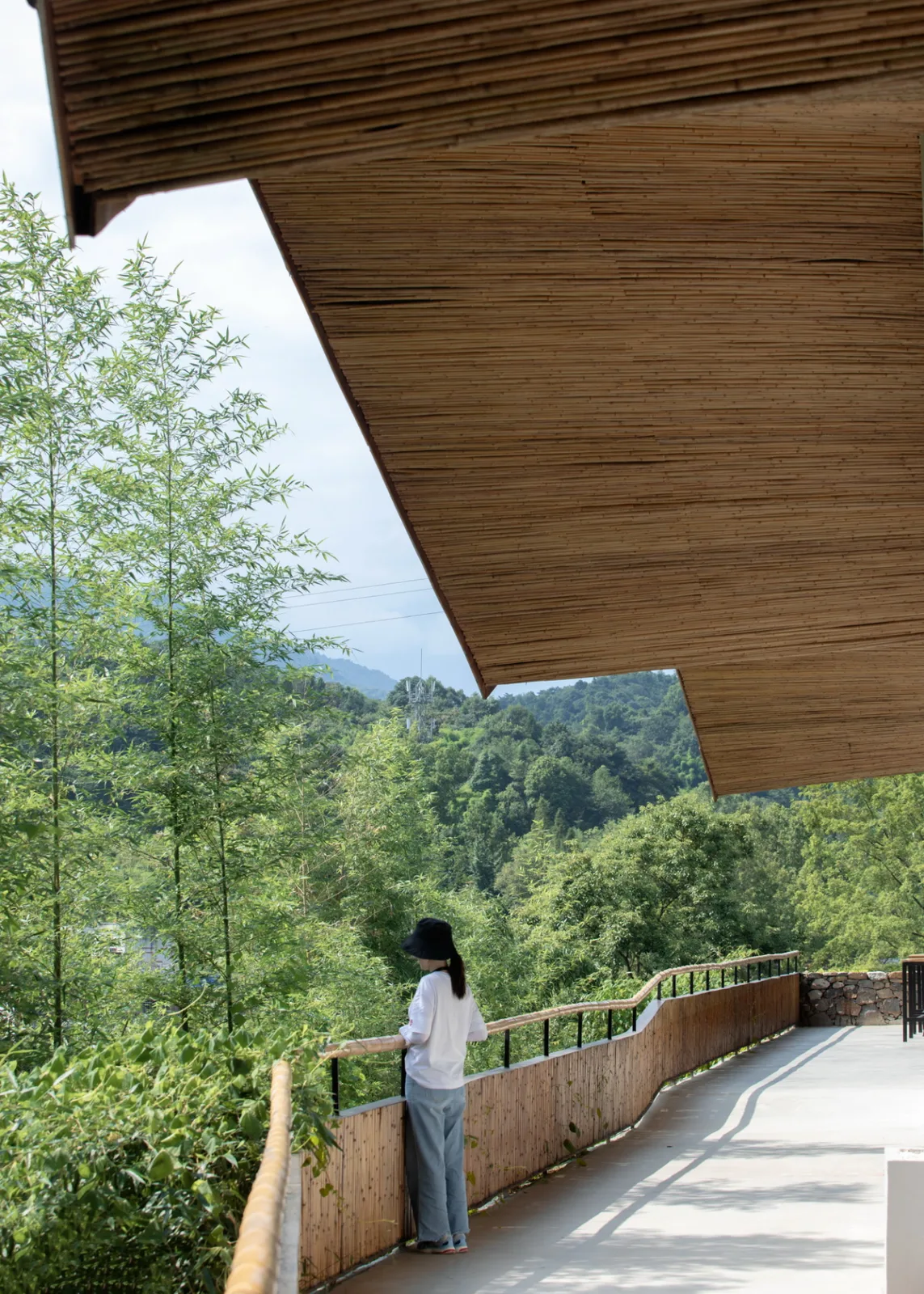
© Existence of Architecture – Architectural Photography © arch-exist
The Xiaoshi practice develops organically by observing local growth patterns, adapting to countless changes. For a village that has been silent since the coal mine’s decline, there is no guarantee that a new brand or manufacturer will succeed.
Initially, the land was planned for homestays. To better allocate resources, the factory was placed halfway up the mountain, centrally within the village.
The building’s design unifies the facade and structure into a single form. Besides following the factory’s workflow, a hidden “Plan B” exists: the building can potentially be converted into a homestay in the future, possibly years or decades from now, as the factory may relocate.
To accommodate this, a modular structural design allows for spatial flexibility. Openable compartments on the facade maintain adaptability for future use changes.
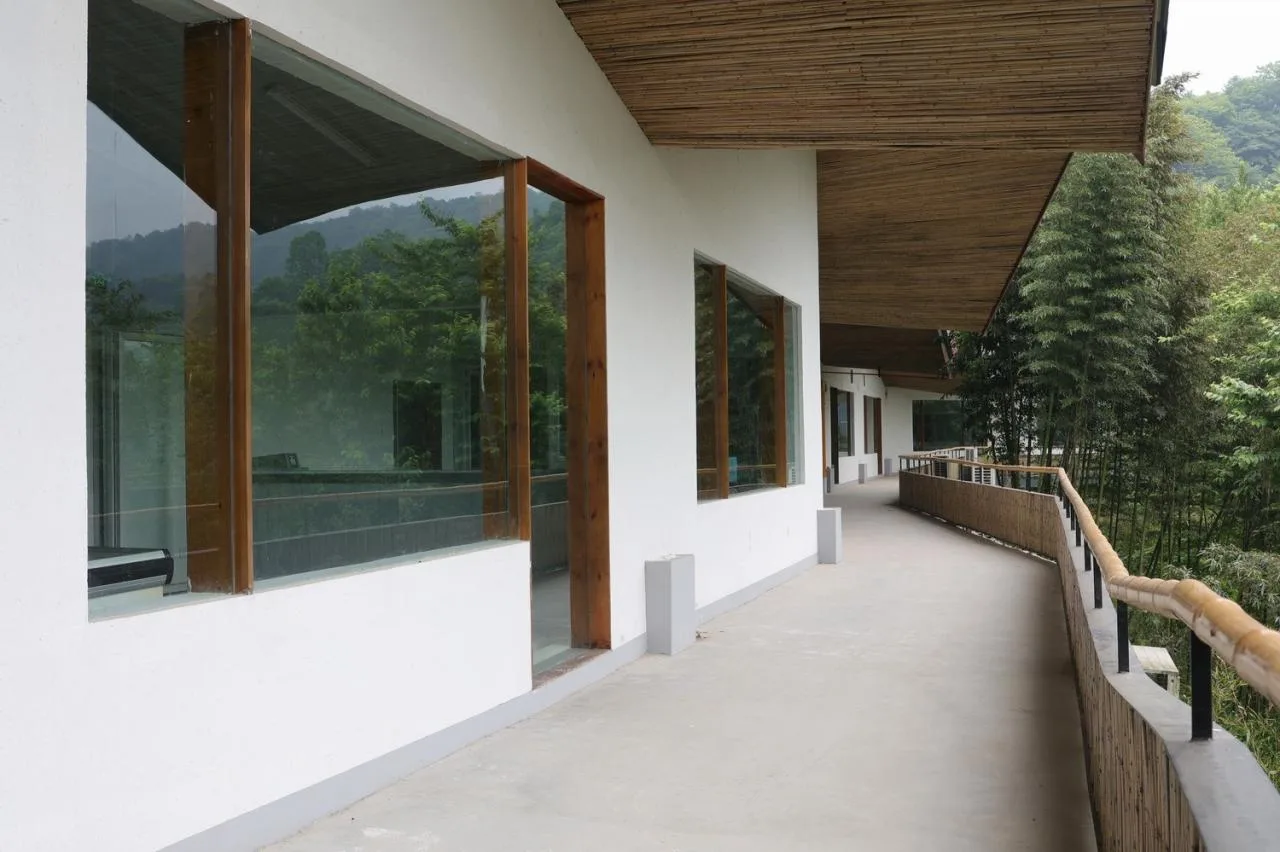
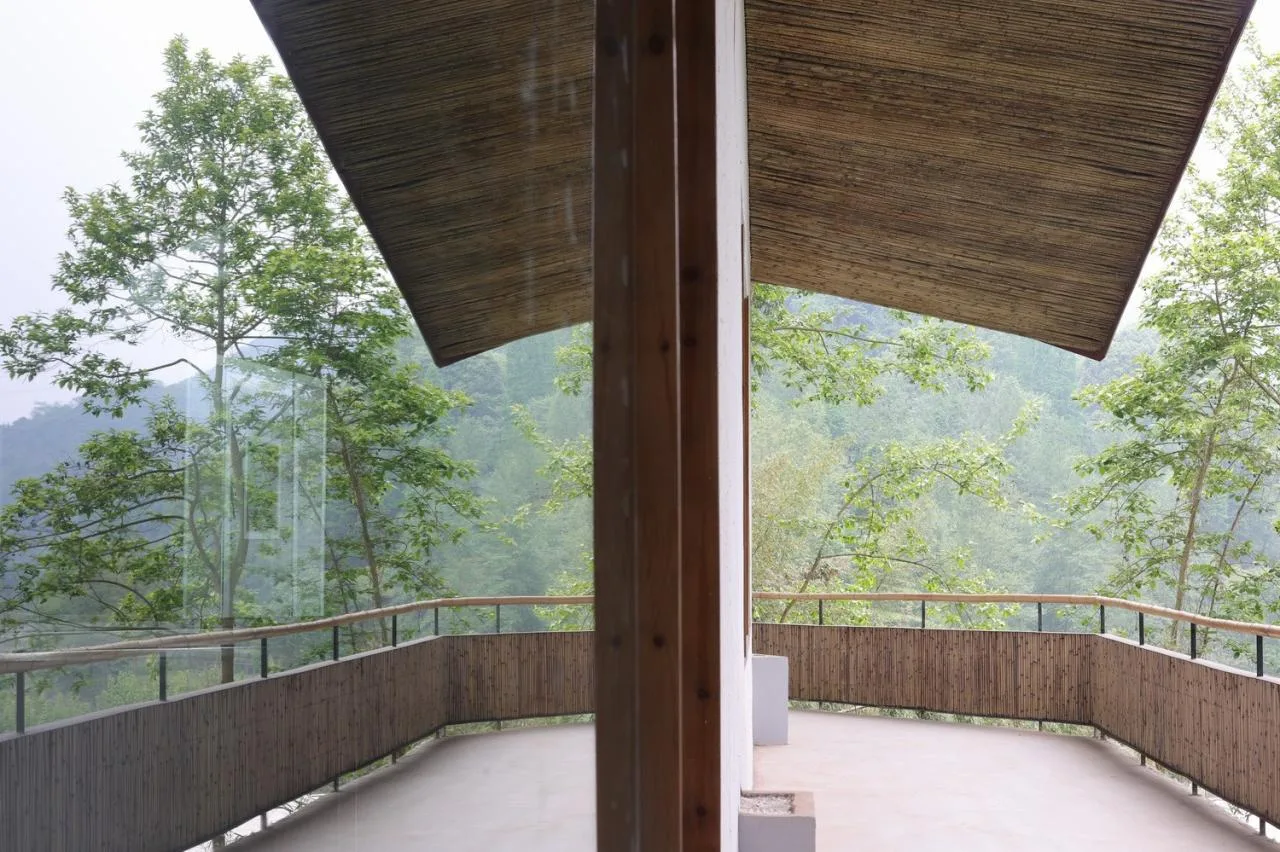
Modular structural spacing was adopted to allow spatial variation. © Zhong Ming
02 Every Inch of Light Flickers
Peaks and Ridges Adorn the Flying Eaves and Walls
All things face the risk of destruction and rebuilding, yet also possess the vitality to rise again. Inspired by mountain shapes and intricate planes, the design uses abstract techniques to capture the distant majesty and spiritual essence of “peaks,” embodying nature’s enduring power.
The mountain’s extension and open, flowing spaces create a stage where humans and nature interact within the factory.
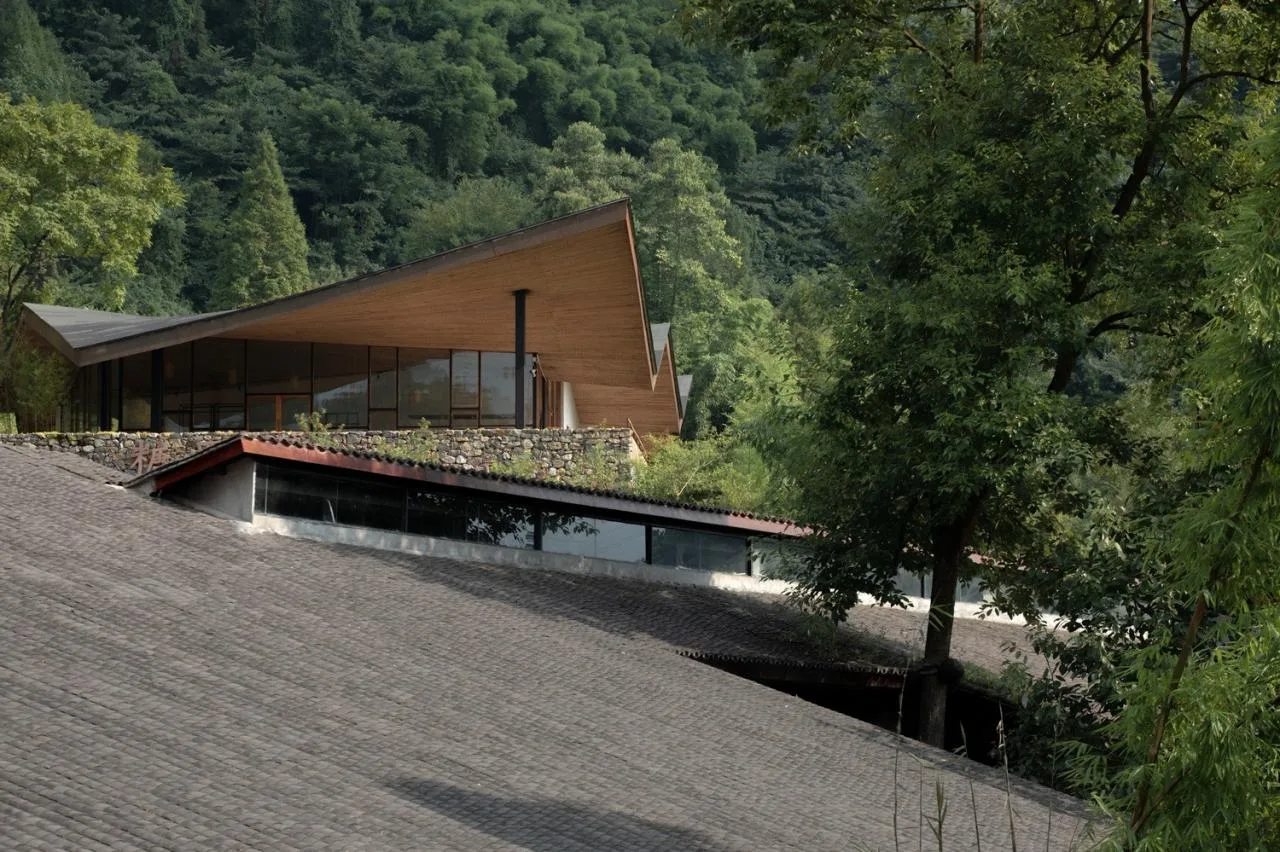
© Existence of Architecture – Architectural Photography © arch-exist
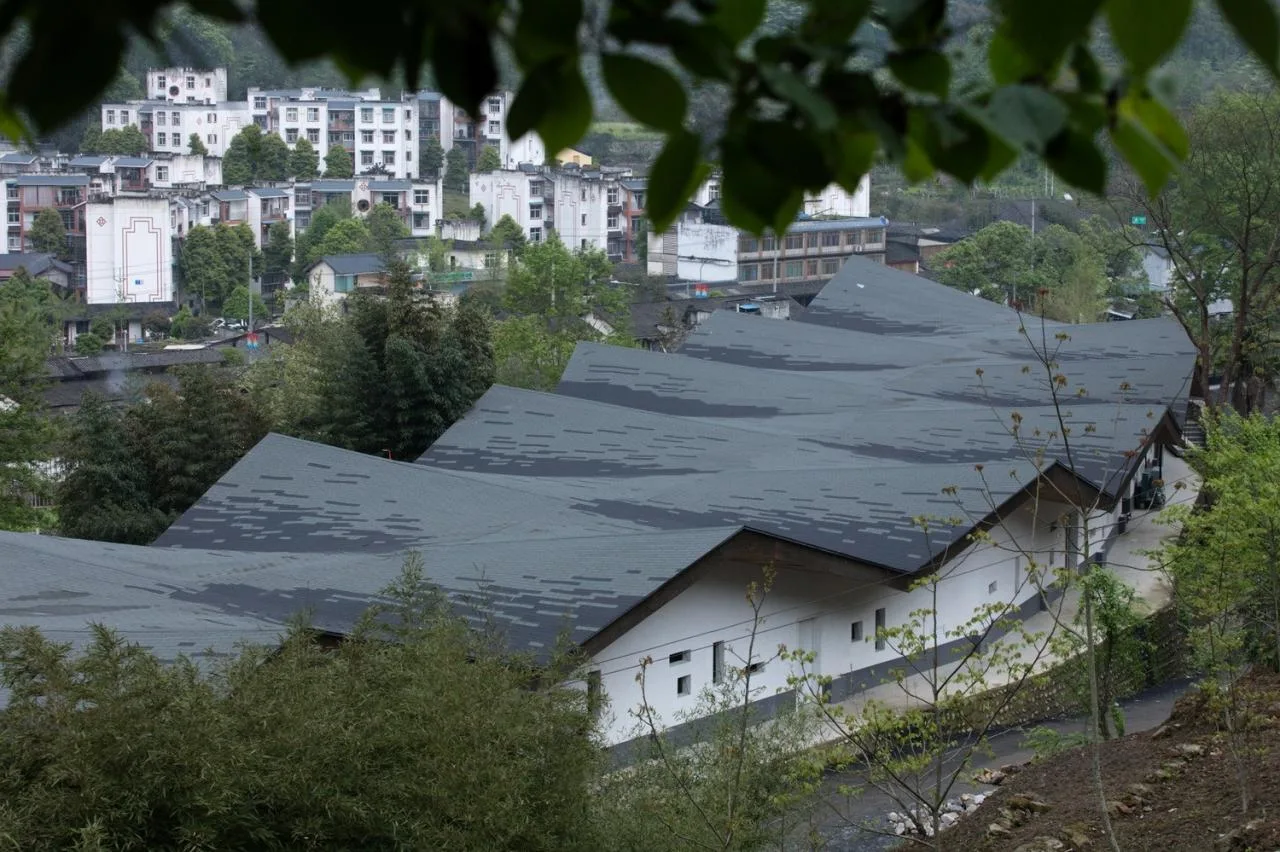
© Existence of Architecture – Architectural Photography © arch-exist
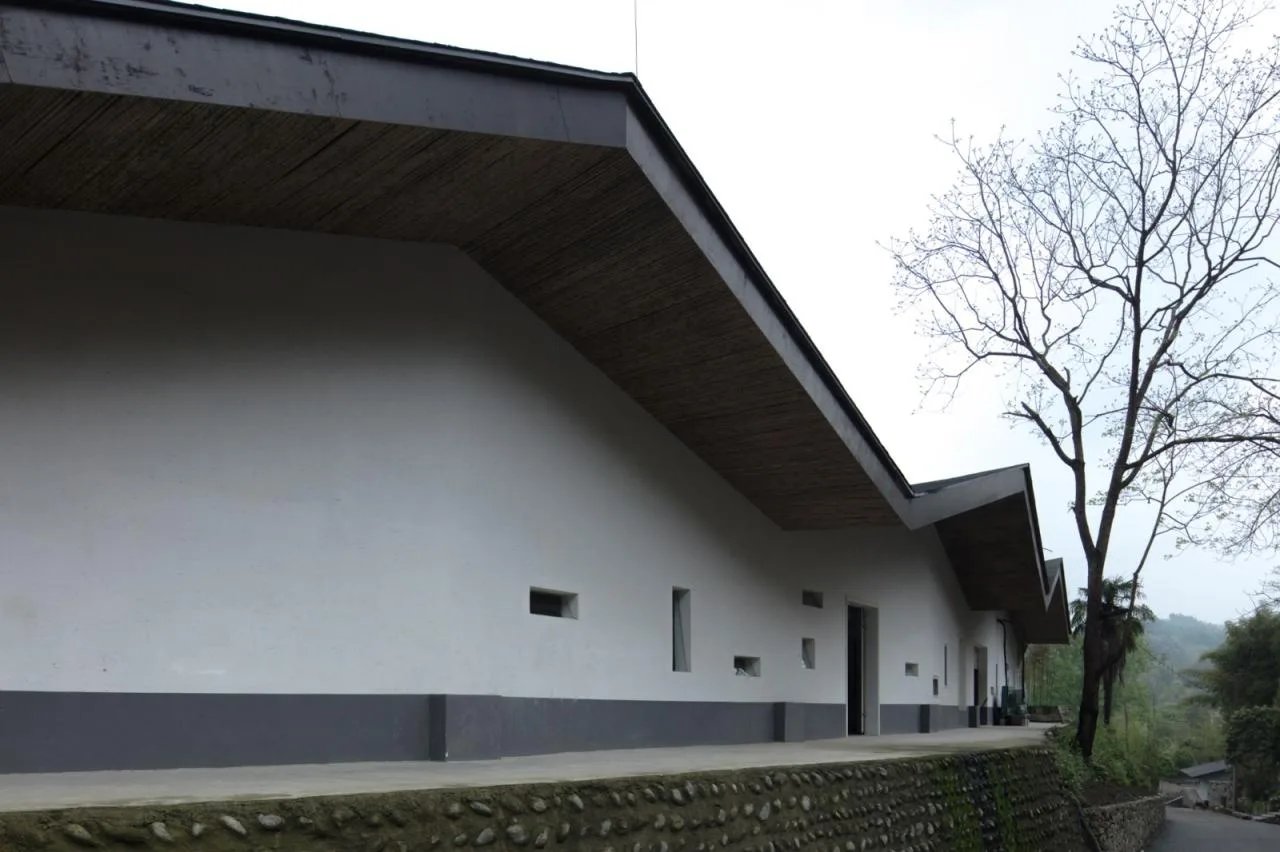
Village buildings tend to be small, forming intimate settlements. Introducing a large factory roof would disrupt this balance. To mitigate this, the roof was designed with twists and turns to break up its mass.
Differently colored tiles further reduce the roof’s scale, helping it blend harmoniously into the rural landscape.
Material choice is key. Our concept was to use familiar materials to express abstract ideas. While the roof and space are abstract, materials like bamboo and rubble—common locally—were employed. This contrast creates a dialogue between familiarity and novelty, localizing the space while embracing modernity.
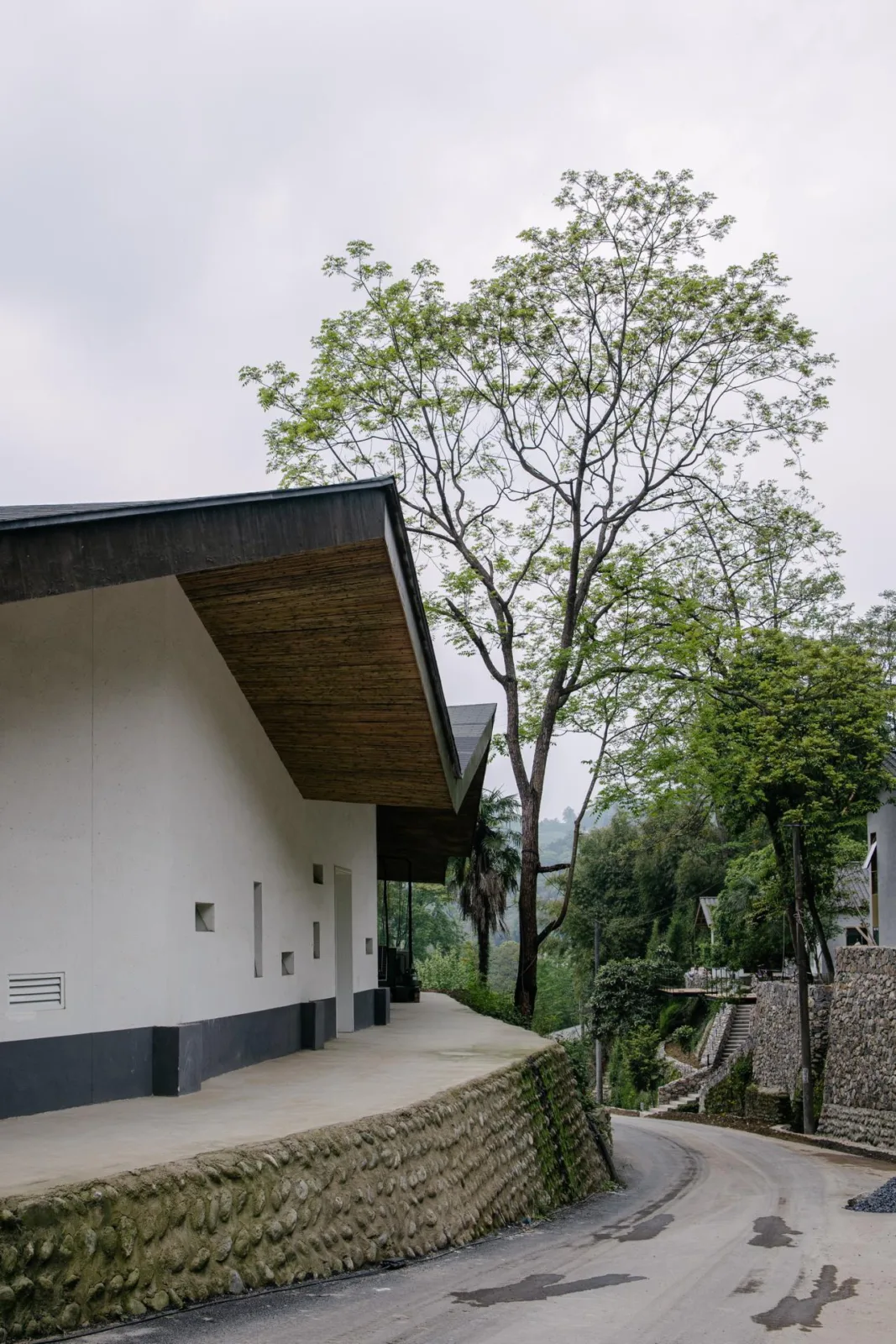
© Zhong Ming
03 A Parallel Model of “Blood Transfusion + Hematopoiesis”
Activating Endogenous Vitality in Rural Areas
China’s rural economy grows rapidly, yet struggles with weak internal development. Xiaoshi Village has faced many upheavals—from earthquake reconstruction to the rise and fall of state enterprises and industrial shifts—resulting in a complex cultural structure.
The “shared roof” plan emphasizes the importance of production spaces and functions. The Food Sharing Factory’s implementation has stimulated local employment and collective life, serving as a practice in “reconstructing cultural ecology.”
By retaining rural production means, activating local vitality, and ensuring sustainable development, the village fosters a culture with strong inheritance, environmentally resilient industry, and an autonomous, harmonious community.
This rural vitality holds unique significance in the urban era, offering indispensable value to cities. When the countryside maintains its authentic “rural nature,” it can contribute intangible value to urban areas, fostering positive, diverse urban-rural interactions and balanced development.
© prawn
© Luo Hui
04 Repeatedly Laying Out Paths, Enduring Landslides
The Ingenious Design of Heaven
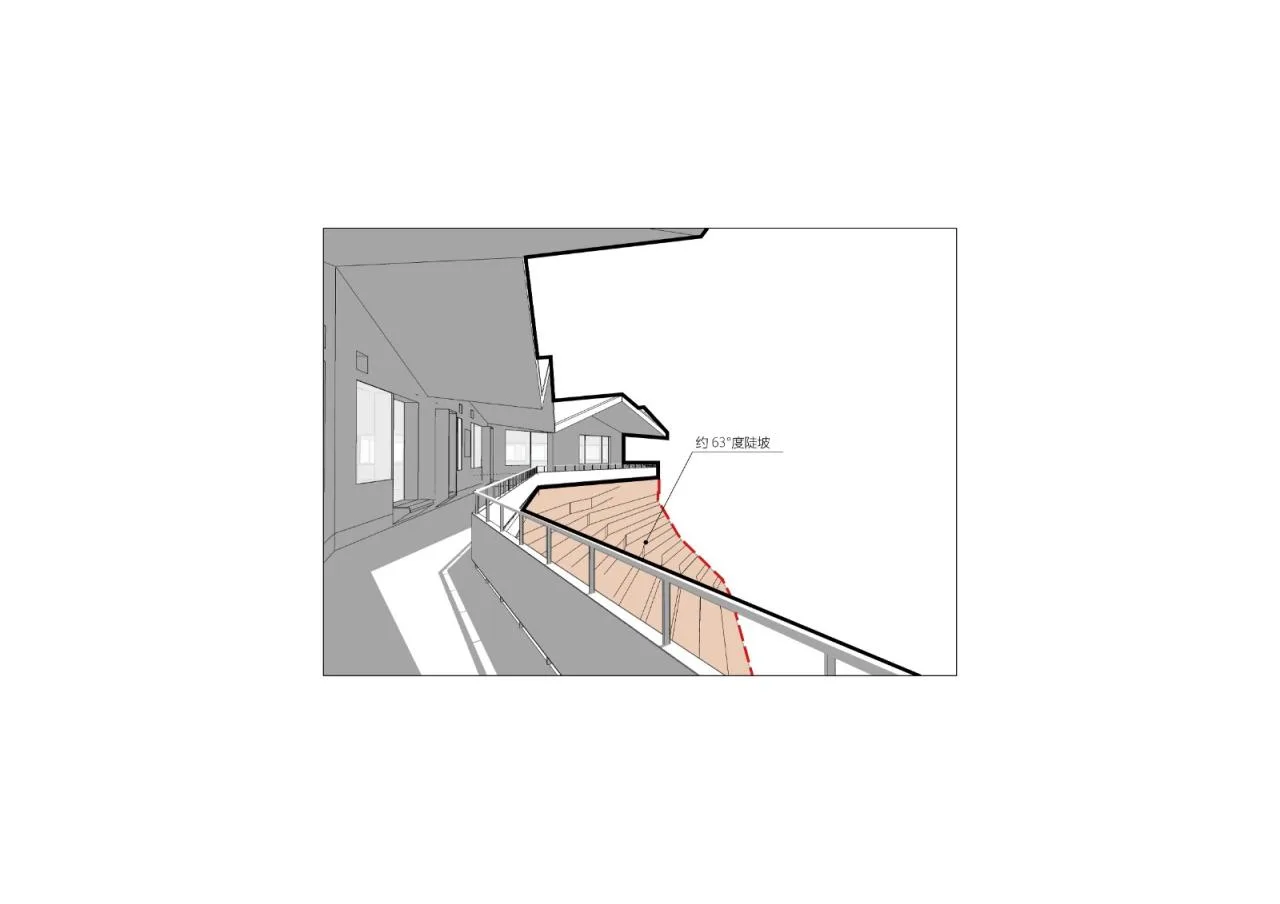
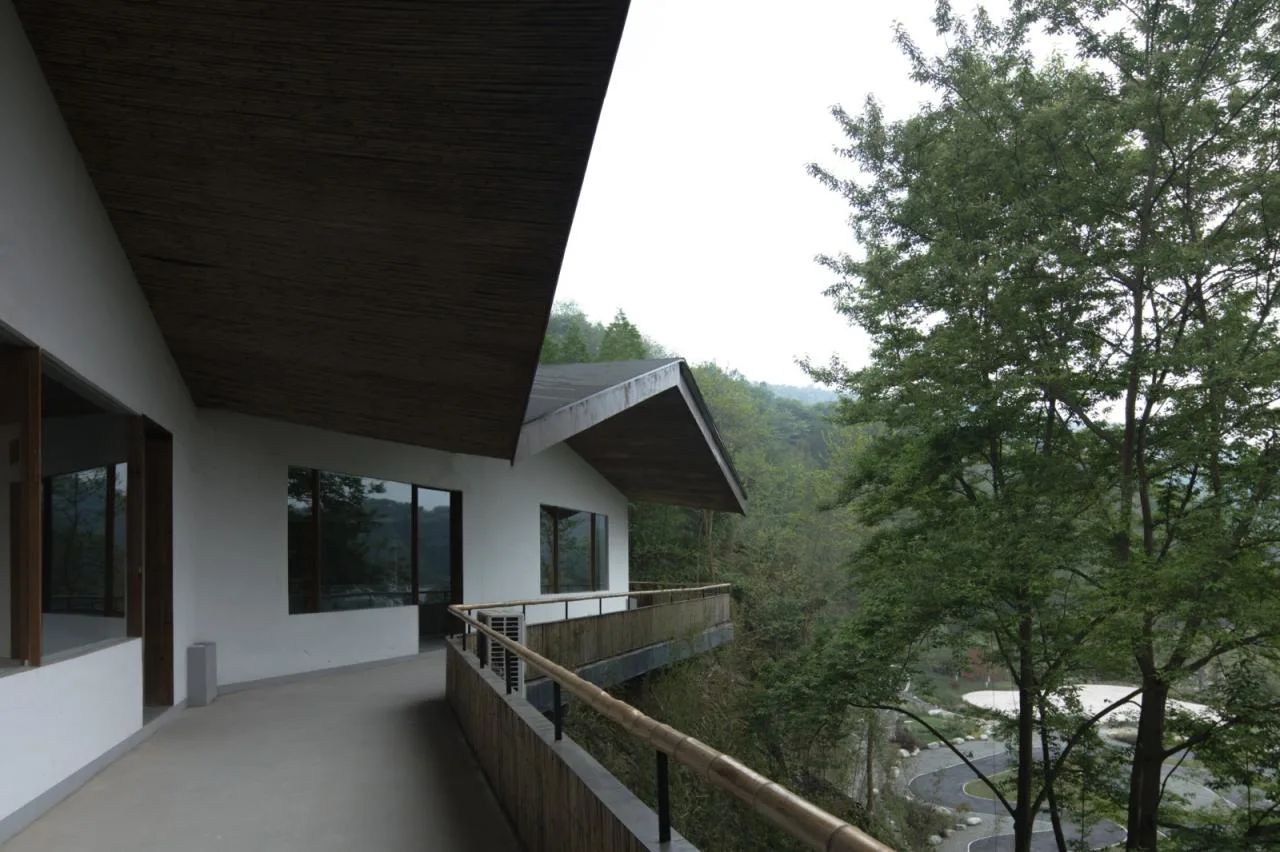
The shared factory project coincided with the rainy season. During construction, heavy rains repeatedly caused landslides that reshaped the site, especially near the cliff center. This unexpected natural intervention deepened the building’s twists and turns.
After completion, the design’s response to the landslide was profoundly moving. The setback created by the landslide invites nature in and brings the building closer to those walking beneath the corridor. The corridor experience is enriched by winding paths and secluded surroundings, creating a unique spatial narrative.
© Existence of Architecture – Architectural Photography © arch-exist
© Existence of Architecture – Architectural Photography © arch-exist
Little Stone Record:
This building occupies a unique spot at the village center on a small plateau. To enter the building’s spatial sequence, visitors ascend stone steps behind it before reaching a platform with distant mountain views. A friend visiting called it the village’s “Parthenon Temple.”
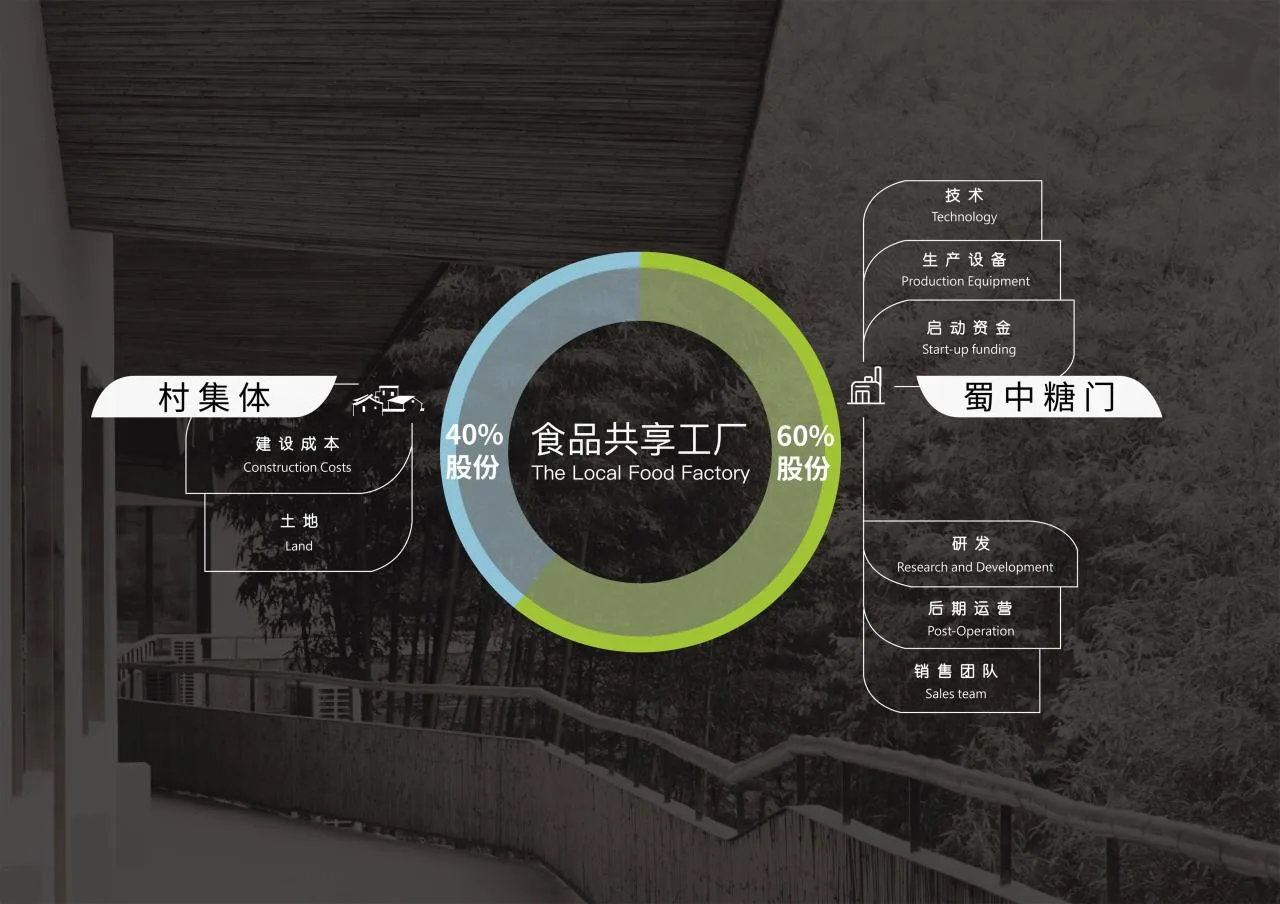
Placing a production space in such a central location profoundly impacts the community, emphasizing the village’s original function: a fundamental unit where natural energy converts into consumable energy for human society. Strengthening production in a contemporary manner sustains village vitality and anchors rural communities against the pressures of tourism-driven economies.
The most inspiring aspect of this project was the entrepreneur’s vision to relocate the factory from the city center to the mountain village to build a healthy, eco-friendly brand. Equally moving was the village secretary’s commitment to the sharing economy model, securing benefits for the village collective and residents.
A successful project requires many factors and the collective effort of all participants and the community, which is why architecture can be called the “sculpture of society.” Only such a building can balance diverse demands, embrace different cultures and lifestyles, and truly achieve the concept of “under the same roof.” – Li Ye
The Food Sharing Factory Model
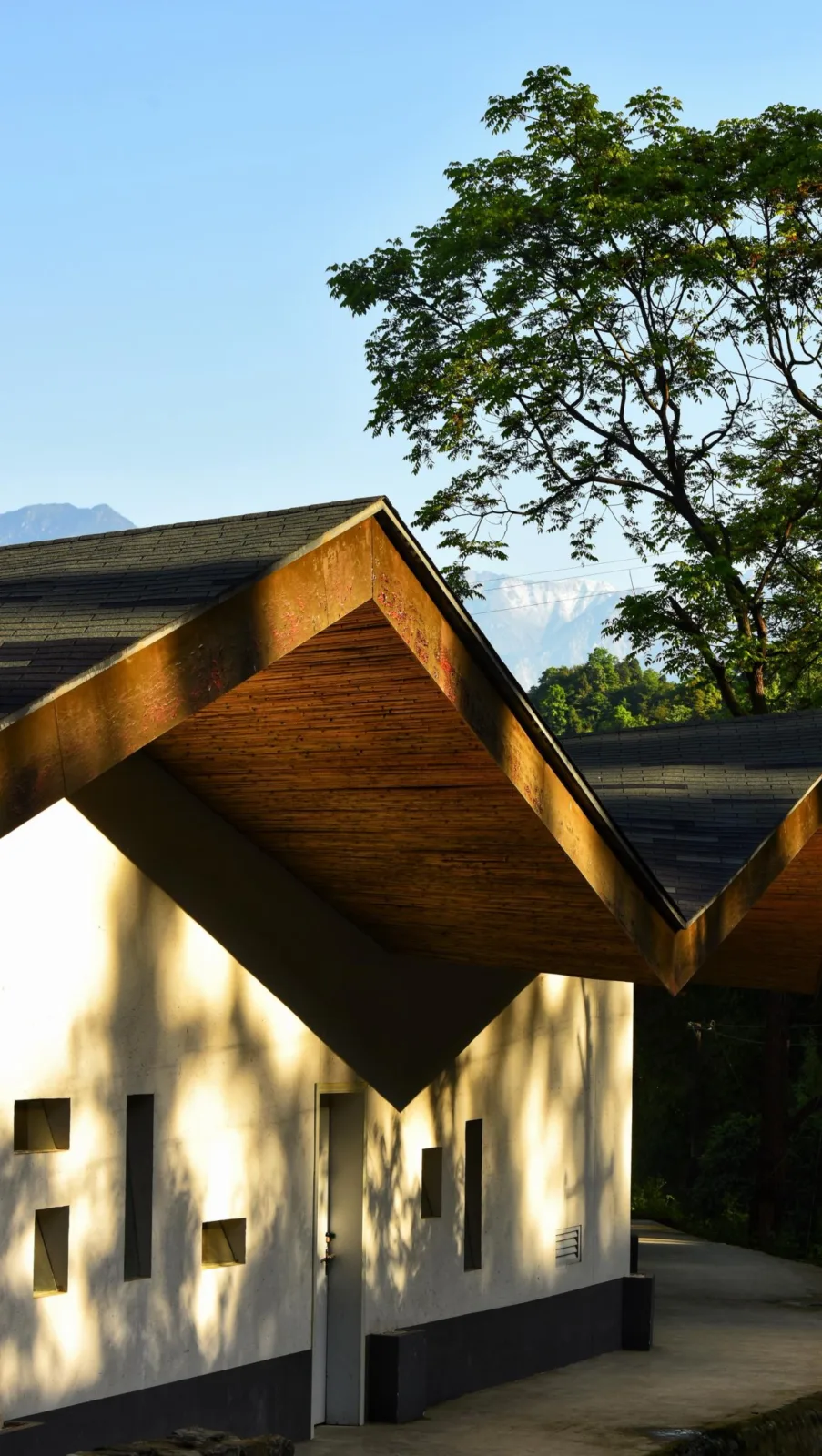
On clear days, you can leap over the eaves and see the snow-capped mountains. © Wu Ruoning
Project Drawings
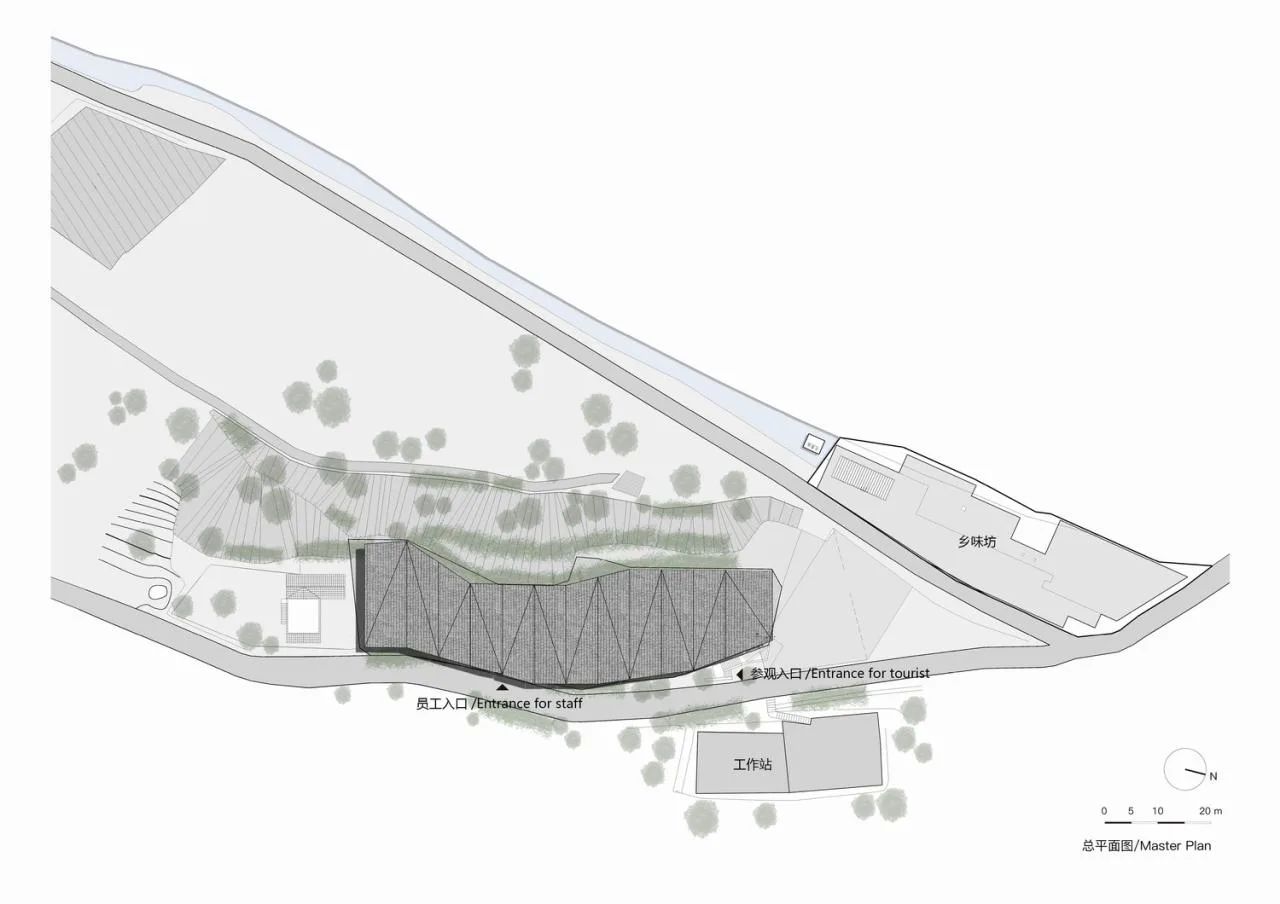
△ General layout of the Food Sharing Factory
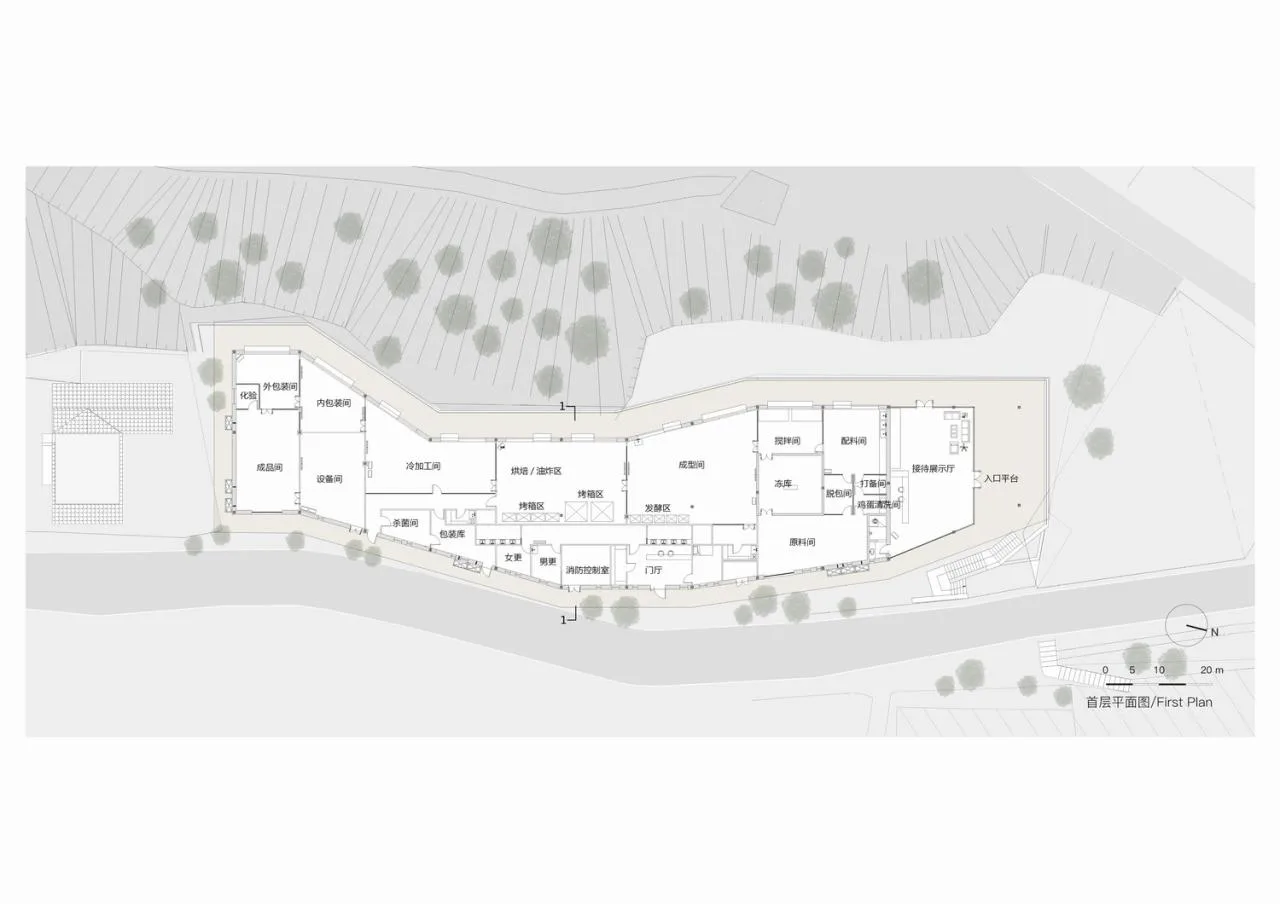
△ First-floor plan of the Food Sharing Factory
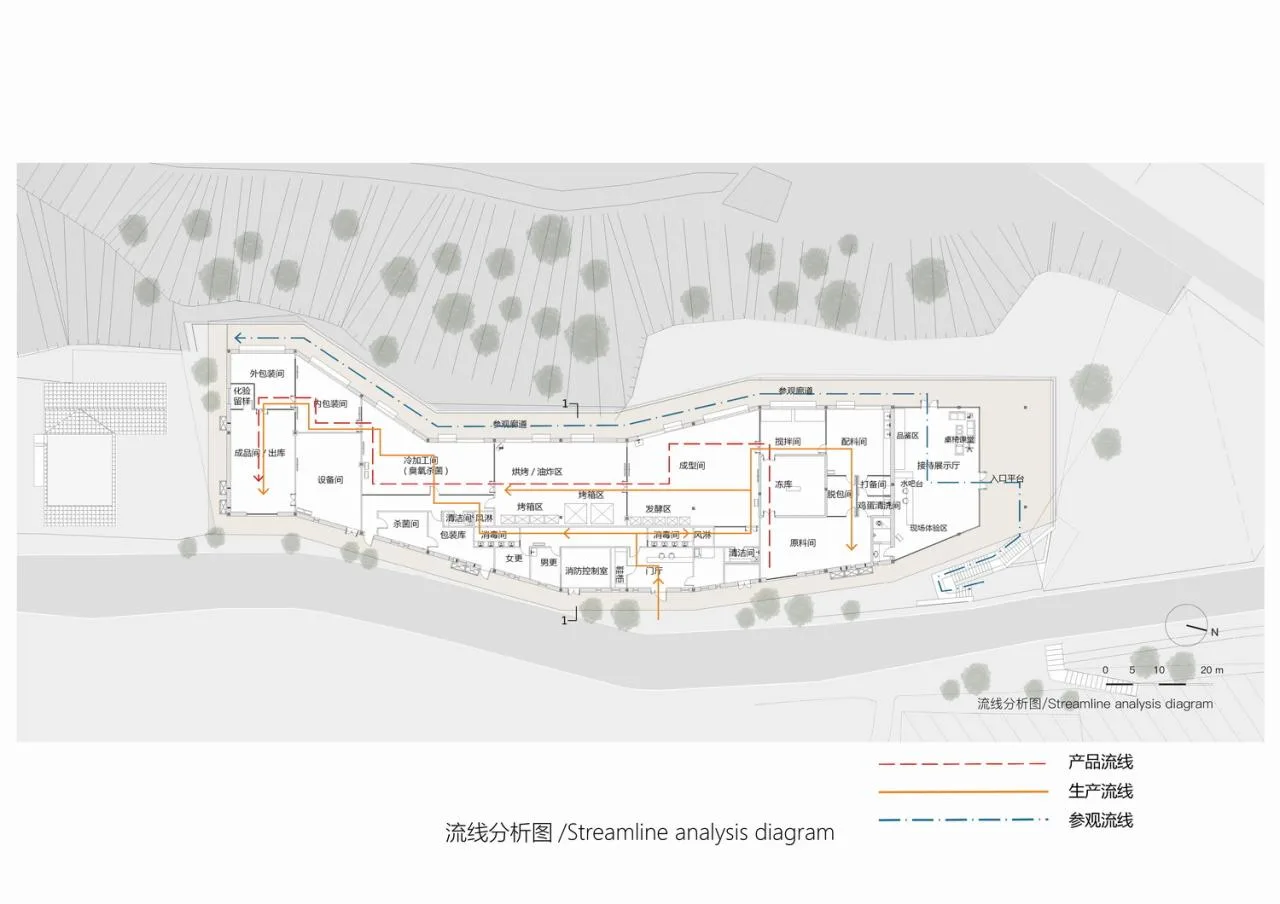
Analysis diagram of the Food Sharing Factory workflow
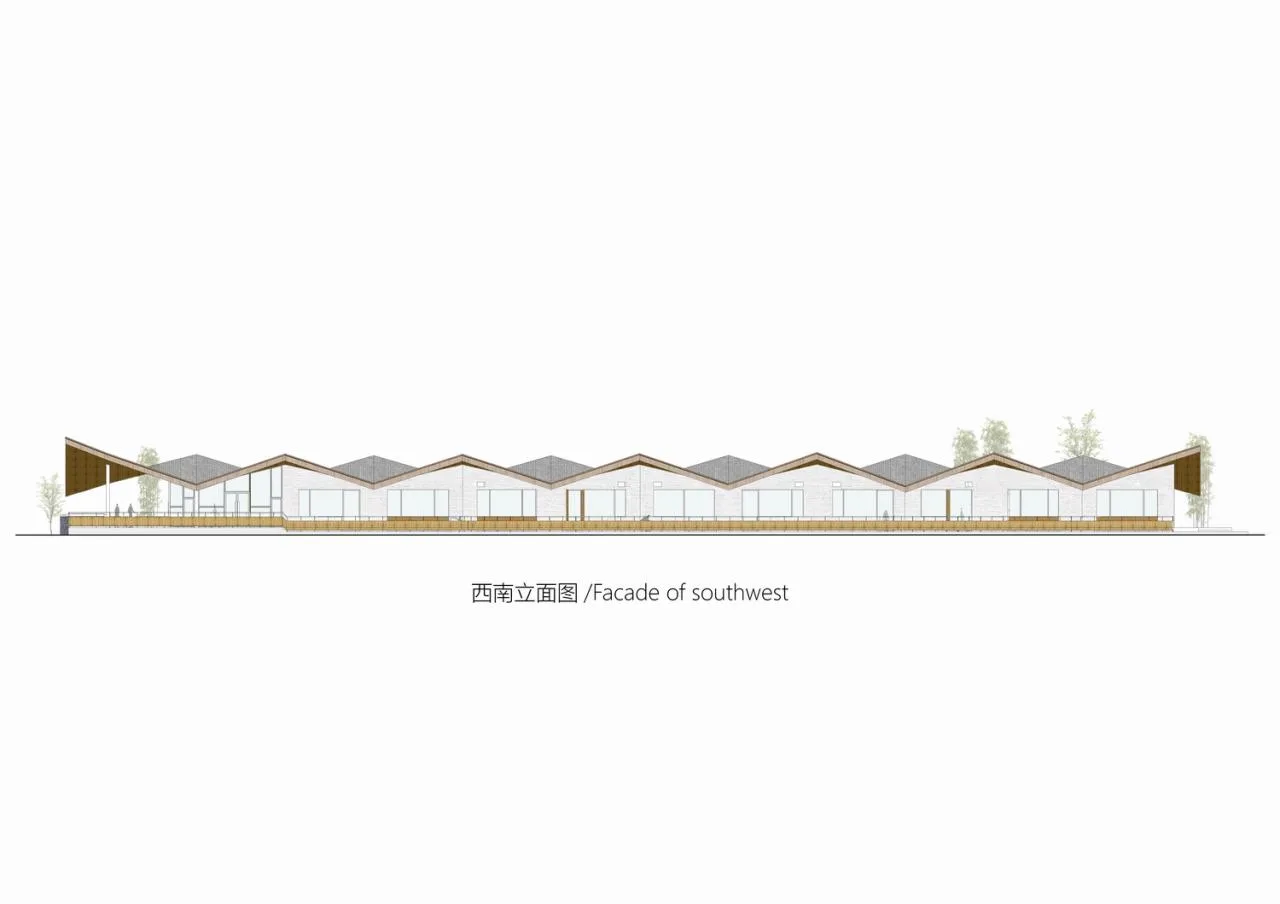
Southwest elevation view
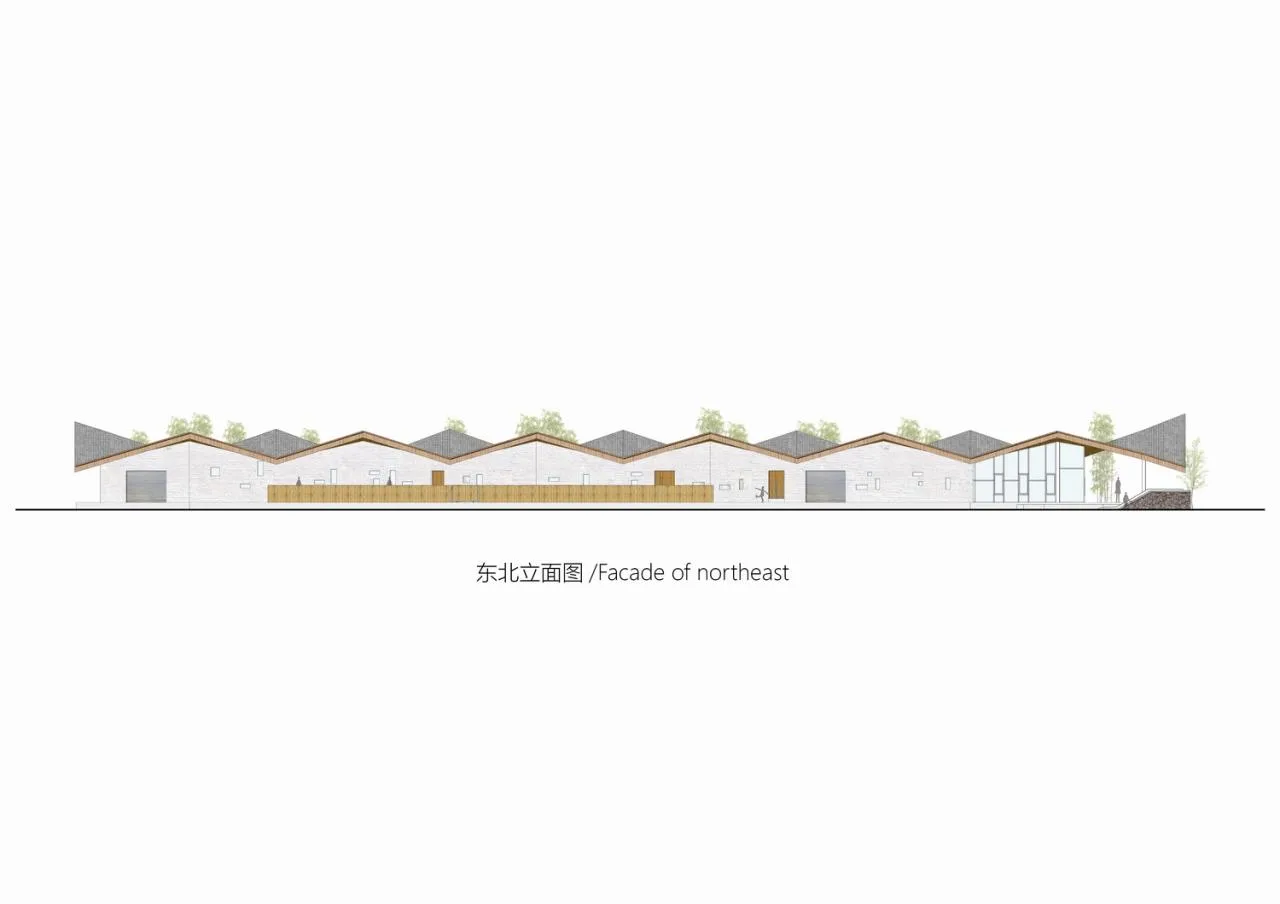
Northeast elevation view
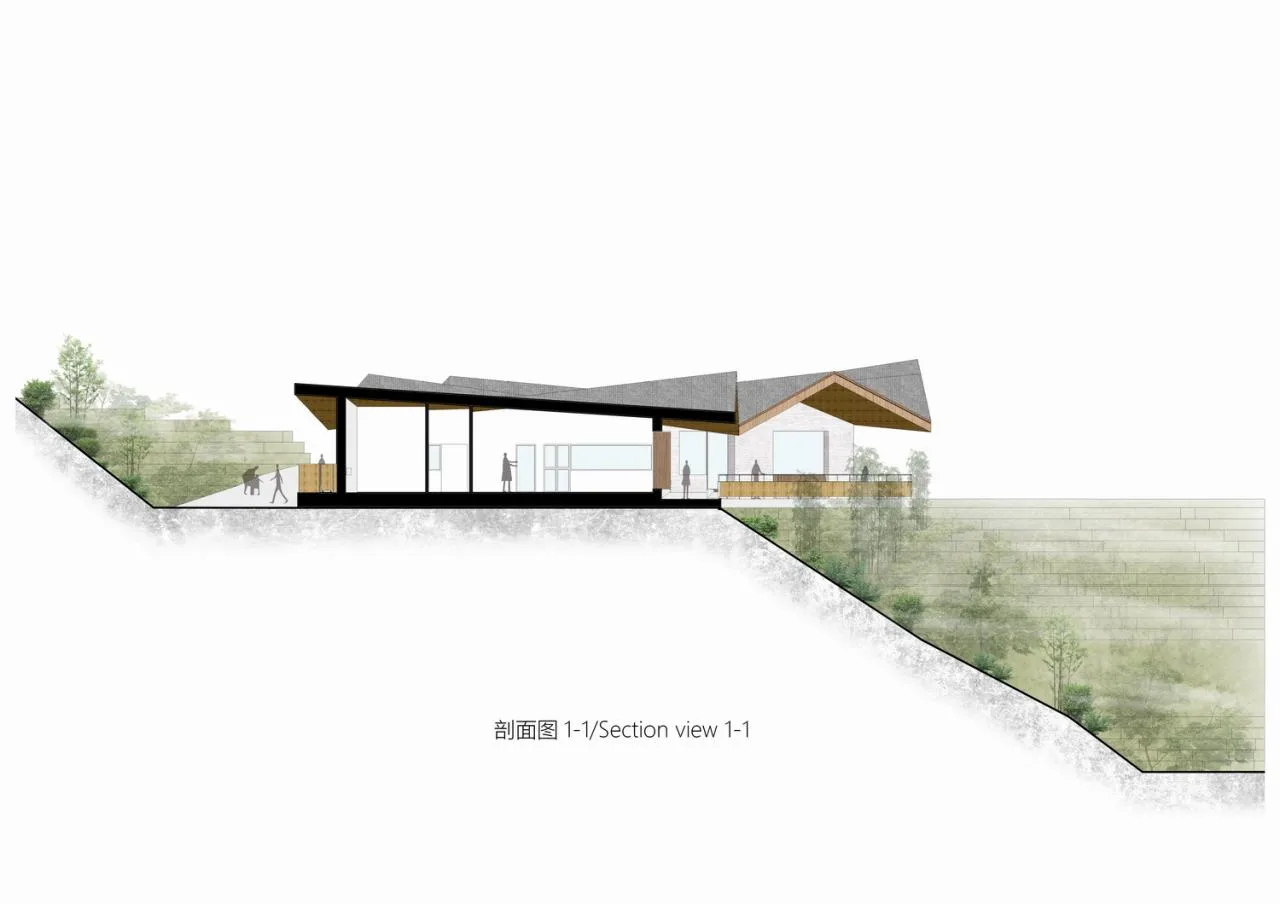
△ Section diagram
Project Information
Project Name: Food Sharing Factory
Project Type: Industrial Building
Location: Jincheng Community, Pengzhou City, Sichuan Province
Design Unit: Time and Space Architecture Studio
Lead Architect: Li Ye
Project Manager/Architect: Li Ye
Design Team: Zeng Xianming, Sun Peng, Zhang Xun, Yang Lijun
Entrusting Agency: Jincheng Community of Pengzhou City + Chengdu Jingufeng Agriculture Co., Ltd
Design Period: June 2019 – September 2019
Construction Start: July 2021
Land Area: 1,540.41 square meters
Building Area: 1,104.82 square meters
Structural Design: Liu Zhi
Community Governance Consultant: Yue Fufei
Resident Architects: Zhang Xun, Yang Lijun
Main Materials: Steel, glass, hollow bricks, straw paint (exterior walls), bamboo (ceiling), dual-color asphalt tiles














Must log in before commenting!
Sign Up